
Henan Mine Crane · Container Terminal and Inland Yard Systems
RTG Crane for Container Yard Operations
Rubber-tyred gantry cranes for high-density ISO container stacking, truck exchange and flexible block-to-block deployment.
Henan Mine Crane configures each RTG around container mass, 5+1 to 7+1 block geometry, stacking height, peak moves, pavement capacity, wind exposure, power infrastructure, automation interfaces and contracted acceptance targets.
PUBLISHED CAPACITY
35 t, 40.5 t, 50 t or Custom
COMMON LAYOUTS
5+1, 6+1 and 7+1
POWER OPTIONS
Diesel, Hybrid and Electric
WORK CLASS
A6–A8
What Is an RTG Crane for a Container Yard?
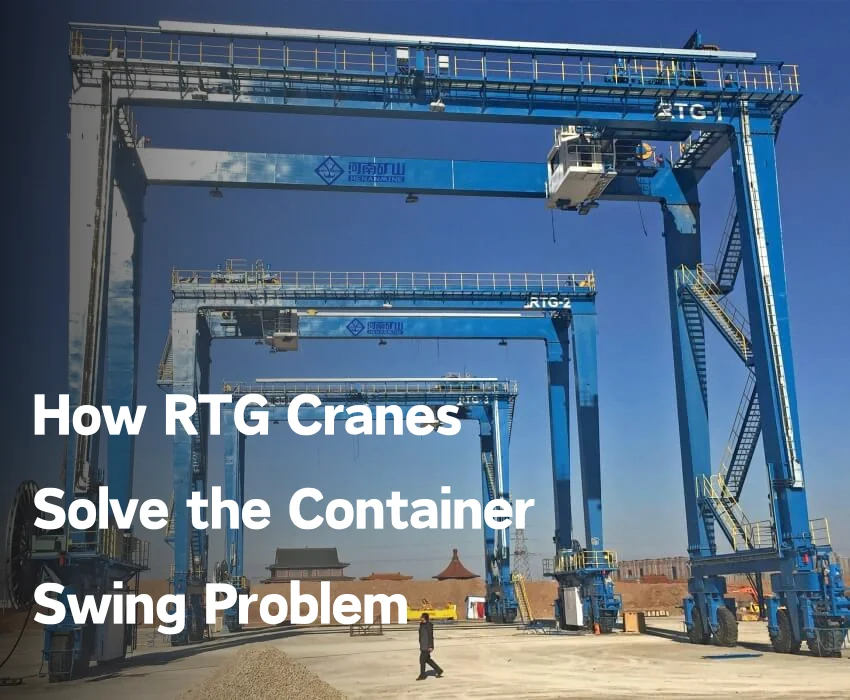
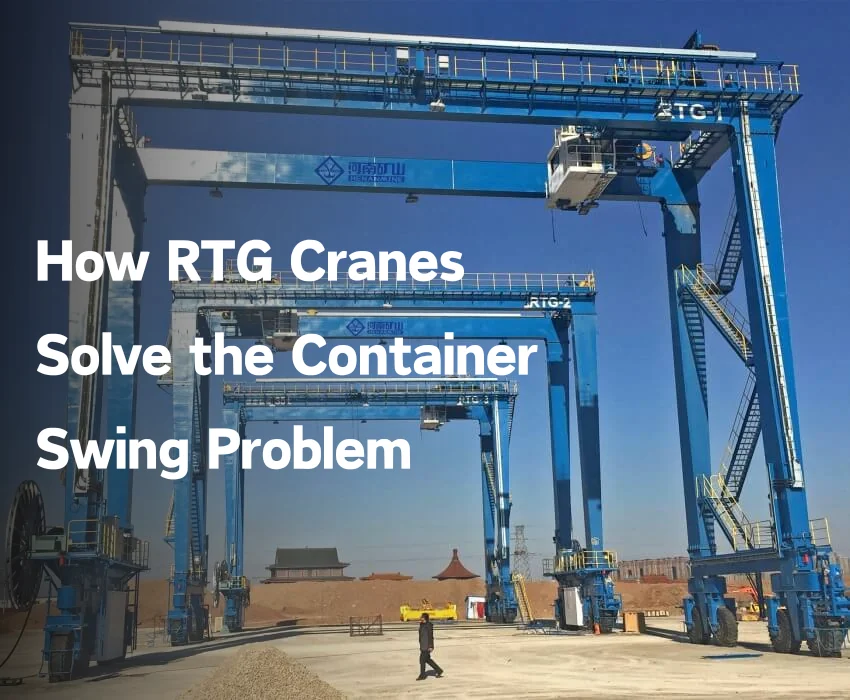
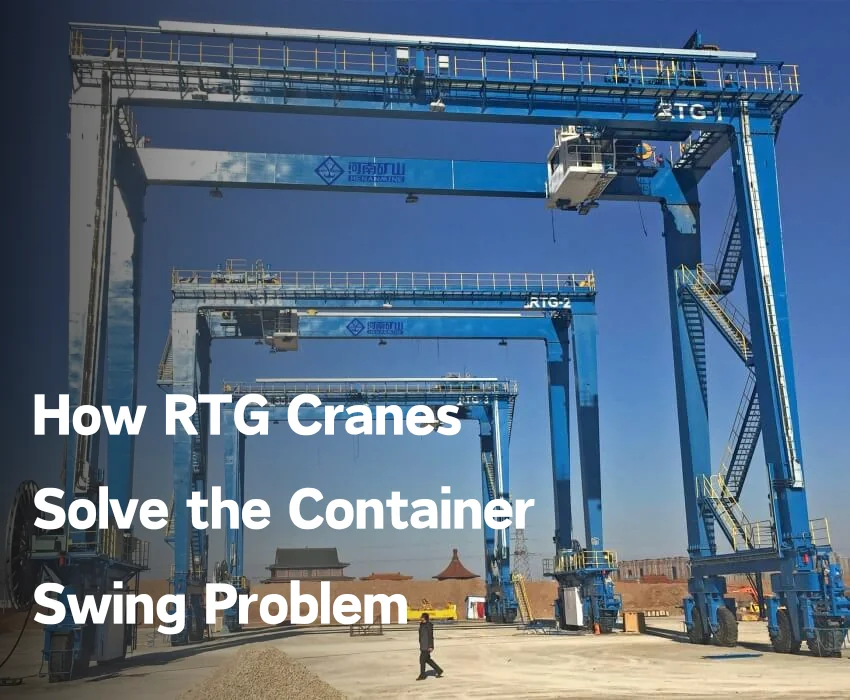
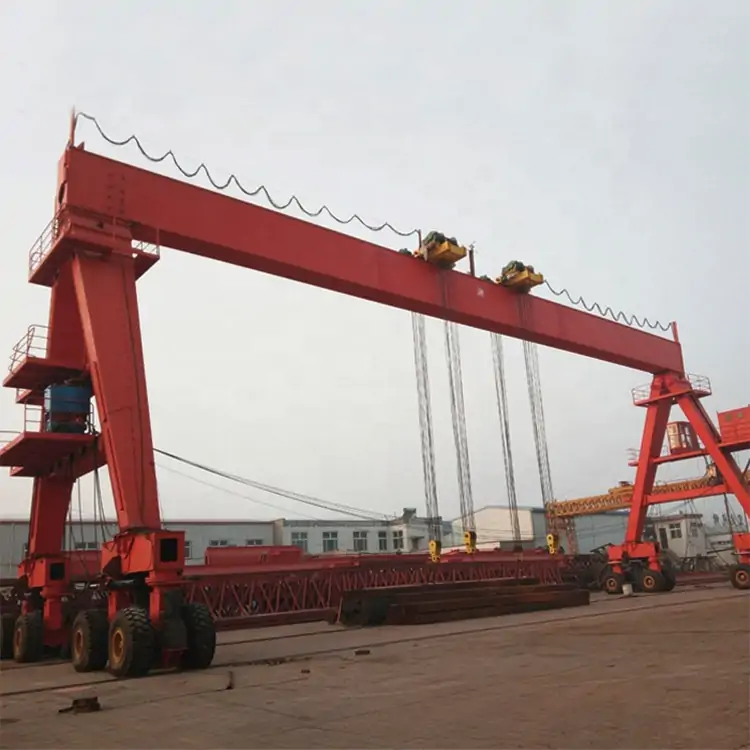
An RTG crane, or rubber-tyred gantry crane, is a mobile container-stacking crane carried by multi-wheel rubber-tyred bogies. It straddles several container rows and a truck or terminal-tractor lane, lifts containers with a telescopic spreader and travels along the storage block without fixed runway rails.
A typical container-yard starting point is 40.5 t under spreader, five to seven container rows plus one vehicle lane, and one-over-four to one-over-six stacking. Final capacity, span, lift height, speed, power source and fleet quantity follow the approved yard plan and operating model.
RTGs are used in marine terminals, inland container depots, rail-intermodal facilities and logistics hubs where storage density and block mobility are both required. The absence of travel rails supports phased expansion and equipment relocation between compatible blocks.
RTG Crane Selection Considerations
Container and Lift Profile
ISO size mix, maximum gross mass, high-cube share, reefer volume, out-of-gauge handling and single- or twin-lift operation establish capacity and spreader scope.
Yard Block Geometry
Row count, truck lane, stack height, row pitch, block length, transfer positions and block-end turning area define the crane envelope.
Throughput and Duty
Annual TEU, peak moves, rehandle ratio, operating shifts, productive hours, transfer-vehicle demand and availability target control mechanism duty and fleet size.
Power and Emissions
Grid capacity, fuel and electricity costs, block-change frequency, cable routes, charging strategy and local emissions targets affect power architecture.
Pavement and Environment
Allowable wheel load, pavement settlement, gradient, drainage, wind, temperature, salt fog, rainfall, dust and seismic criteria require coordinated civil and crane design.
Control and TOS Integration
Cab, remote or automated operation; positioning; OCR; anti-sway; communications; diagnostics; TOS/ECS interfaces and recovery modes require defined ownership.
RTG Crane Configurations Compared
| Configuration | Operating Strength | Project Check | Typical Yard Pattern |
|---|---|---|---|
| Diesel-Electric RTG | Independent power and frequent block changes | Fuel use, engine service, noise and local emissions | Developing yards or blocks without reliable grid access |
| Hybrid RTG | Mobile operation with energy recovery and reduced engine loading | Battery lifecycle, thermal management and control complexity | High-utilization blocks requiring mobility and fuel reduction |
| Cable-Reel Electric RTG | Low local emissions, low noise and reduced engine maintenance | Substation, cable route, changeover and block-transfer method | Stable long blocks with limited cross-block movement |
| Busbar Electric RTG | Continuous grid power along permanent blocks | Conductor infrastructure, transfer interface and isolation safety | Permanent high-throughput container blocks |
| Battery-Electric or Automated RTG | Zero local tailpipe emissions and automation-ready control | Charging cycle, battery sizing, controlled traffic and system integration | Electrified terminals with mature TOS and safety zoning |
Published RTG Crane Specifications
The following values are the published Henan Mine Crane RTG product-family range. Contract values remain drawing-specific because span, lift height, speed and power depend on the approved yard geometry and duty cycle.
| Parameter | Published Range | Project Definition |
|---|---|---|
| Lifting Capacity | 35 t, 40.5 t, 50 t or customized | State under-spreader or hook basis |
| Span | 8–35 m or customized | Rows, truck lane and clearances |
| Lifting Height | 6–21 m or customized | Stack height and service clearance |
| Work Class | A6–A8 | Load spectrum, cycles and design life |
| Published Temperature | −25°C to +40°C | Site extremes and component package |
Planning Speed Range
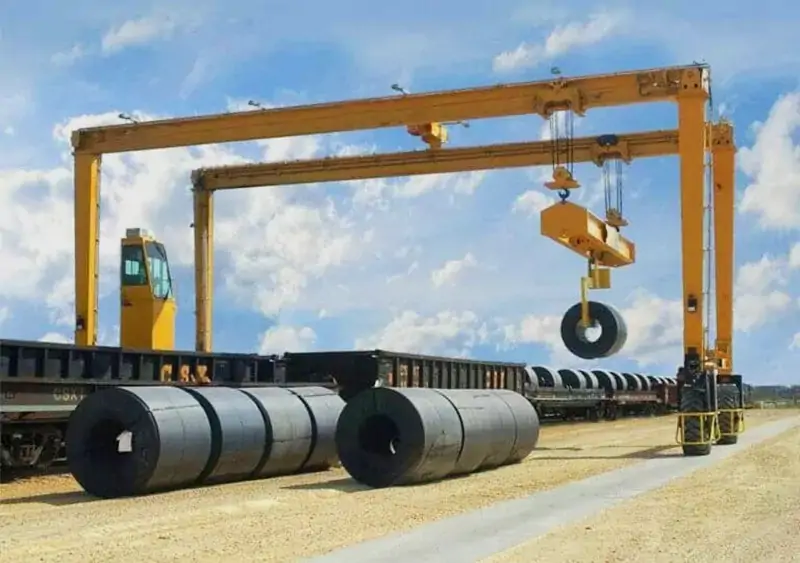
The Henan Mine Crane RTG specification guide lists typical planning ranges of 12–25 m/min for loaded hoisting, 30–60 m/min for trolley travel and 45–90 m/min for gantry travel. Final values follow drive sizing, stability, anti-sway performance and terminal traffic analysis.
5+1, 6+1 and 7+1 RTG Yard Layouts
RTG layout shorthand states the number of container rows plus the vehicle lane under the gantry. A 6+1 RTG spans six storage rows and one truck or terminal-tractor lane. Wider spans increase block coverage but also affect trolley travel, structural mass, wheel loads, drive power and wind response.
| Layout | Yard Effect | Engineering Focus | Typical Application |
|---|---|---|---|
| 5 Rows + 1 Lane | Narrower block and shorter trolley path | Brownfield geometry and moderate density | Inland depot or constrained terminal |
| 6 Rows + 1 Lane | Balanced density and truck interface | Cycle time, lane clearance and wheel load | General marine or intermodal yard |
| 7 Rows + 1 Lane | Higher storage density per block | Longer span, trolley travel and pavement demand | High-volume terminal with planned blocks |
Stacking Height
“One over five” means five stored containers with clearance to carry one container above the stack. High-cube containers, pavement tolerances, tyre deflection, spreader depth, twistlock engagement, structural deflection and operating clearance all enter the vertical envelope.
One-over-four reduces structural height and wheel load. One-over-five commonly balances density and access. One-over-six increases storage density but also raises wind exposure, lift height and rehandle sensitivity.
RTG, RMG and Straddle Carrier Compared
| System | Mobility | Storage Model | Infrastructure | Strongest Fit |
|---|---|---|---|---|
| RTG Crane | Moves between compatible blocks | Dense multi-row blocks | Wheel paths and optional electrical works | Flexible allocation and phased growth |
| RMG Crane | Fixed to a rail runway | Wide, repeatable blocks | Rails, foundations and power distribution | Permanent high-throughput layouts and automation |
| Straddle Carrier | Free-routing carrier | Transport and stacking by one machine | Traffic lanes and maintenance facilities | Fast point-to-point movement and flexible routing |
Compare RTG and straddle carrier operations → Compare RTG and RMG project cost →
Spreader, Anti-Sway, Automation and Yard Infrastructure
Container Interface
A telescopic spreader normally covers 20 ft and 40 ft ISO containers; 45 ft handling, twin lift or special interfaces are specified separately. The rated-load definition must state whether capacity is measured below the spreader and whether spreader self-weight is excluded.
Motion Control
Rope geometry, drive control and active anti-sway reduce residual motion. The performance specification should define allowable sway, positioning tolerance, twistlock confirmation, landing logic and operating behavior under wind.
Automation Scope
Remote or automated RTG operation requires controlled traffic, reliable container identity, communications, safety zoning and exception handling. TOS job data, positioning, cameras, OCR, collision control, recovery modes and acceptance scenarios form one integrated scope.
Pavement and Wheel Loads
Maximum and minimum wheel loads, tyre pressure, dynamic factors, settlement limits, braking cases and storm parking loads are issued for civil coordination.
Steering and Block Change
Straight, cross, pivot or coordinated steering affects turning radius, block-end width, alignment control and the approved transfer route.
Wind and Marine Protection
Operating wind, out-of-service wind, storm travel, anchoring, coating system, enclosure protection and salt-fog exposure require site-specific definition.
Public Fleet Reference
55 Hybrid RTGs for Savannah Ocean Terminal
Published Project Scope
Georgia Ports Authority announced a US$170 million purchase of 55 hybrid RTGs for the Port of Savannah Ocean Terminal in 2023. The published operating geometry was six containers high and seven containers wide.
The authority reported a 47% fuel-consumption reduction compared with an all-diesel crane, estimated annual savings of 8,800 gallons of fuel per crane and an annual emissions reduction of 127 tons per crane.
This public industry reference is not presented as a Henan Mine Crane delivery. It shows how fleet procurement combines equipment, hybrid power, terminal requirements, delivery program and lifecycle emissions objectives.
RTG Crane Price for Container Yard Projects
Public listings support preliminary budgeting but do not represent a delivered Henan Mine Crane quotation. Capacity, span, stacking height, power system, automation, spreader scope, marine protection, destination, civil and electrical works, commissioning and acceptance testing change the final contract value.
| Public Reference | Configuration or Scope | Published Figure | Budget Meaning |
|---|---|---|---|
| Manufacturer guide, June 2026 | 40.5 t conventional diesel, manual | US$165,000–205,000 | Crane-level market guide |
| Manufacturer guide, June 2026 | 40.5 t grid-powered, semi-automatic | US$195,000–235,000 | Site electrical works require separate scope |
| Manufacturer guide, June 2026 | 40.5 t diesel-lithium hybrid, semi-automatic | US$225,000–265,000 | Crane-level market guide |
| Manufacturer guide, June 2026 | 40.5 t full-electric, automated | US$265,000–305,000 | Automation and interface boundary require confirmation |
| Southeast Asia guide, 2025 | 40 t 6-wide diesel to 45 t 6-wide full-electric | US$280,000–550,000 | Regional guide across multiple configurations |
| Georgia Ports Authority, 2022 | US$30.25 million for 12 RTGs and other handling equipment | US$2.52 million order-total equivalent per RTG | Fleet-order context, not a crane-only unit price |
| Georgia Ports Authority, 2023 | US$170 million for 55 hybrid RTGs | US$3.09 million project-total equivalent per RTG | Major fleet program, not a hardware-only unit price |
Public reference record: WEIHUA RTG Crane Price Guide, 2 June 2026; Dongqi Crane Southeast Asia RTG guide, 2025; Georgia Ports Authority announcements, 2022 and 2023. Calculated equivalents equal the announced project total divided by the announced crane count and do not establish a standalone equipment price.
Engineering and Procurement Deliverables
Design Package
General arrangement, wheel loads, swept path, mechanism calculations, electrical single-line diagram, interface schedule and coating specification.
Manufacturing Quality
Inspection and test plan, material traceability, welding records, NDT reports, electrical checks and factory functional testing.
Site Acceptance
Erection supervision, no-load and rated-load tests, safety tests, interface trials, training, spare parts and handover records.
Technical Enquiry
RTG Crane RFQ Checklist
The following information allows structure, mechanisms, power, fleet quantity and commercial scope to be priced on a consistent basis.
- Terminal type, location and applicable standards
- Yard drawing with block length, rows, lane width and turning area
- Container sizes, maximum gross mass and high-cube percentage
- Required 5+1, 6+1, 7+1 or custom geometry
- Stacking height and clearance above the top tier
- Single-lift, twin-lift, reefer and out-of-gauge requirements
- Annual TEU, peak hourly moves and operating shifts
- Diesel, hybrid, grid-electric or battery preference
- Available voltage, frequency and grid capacity
- Cab, remote or automated control and TOS interface
- Temperature, wind, corrosion, seismic and rainfall data
- Destination, Incoterm, erection and acceptance scope
Frequently Asked Questions
What capacity is normally selected for an RTG container crane?
40.5 t under spreader is a common baseline for loaded ISO containers. Henan Mine Crane publishes 35 t, 40.5 t and 50 t ratings, with project-specific customization.
What does a 6+1 RTG crane mean?
It means the crane spans six container rows plus one truck or terminal-tractor lane. Clearances and row pitch establish the final span.
How high can an RTG crane stack containers?
RTGs are commonly configured from one-over-three to one-over-six. Henan Mine Crane publishes a 6–21 m lifting-height range, subject to the approved stack and clearance envelope.
How much does an RTG crane cost?
Public 2025–2026 manufacturer guides reviewed for this page range from US$165,000 to US$550,000 across diesel, hybrid, electric and automated configurations. Delivered fleet programs can be substantially higher when infrastructure, integration and service are included.
Can an RTG crane move between yard blocks?
Yes. Rubber tyres and steering modes permit block changes when the route, turning area, pavement, clearances and power-disconnection method are designed for the movement.
Can an RTG crane be automated?
Yes. Assisted, remote and automated operation can be configured with positioning, anti-sway, cameras, safety zones, communications and TOS integration.
Related Container Yard Crane Products
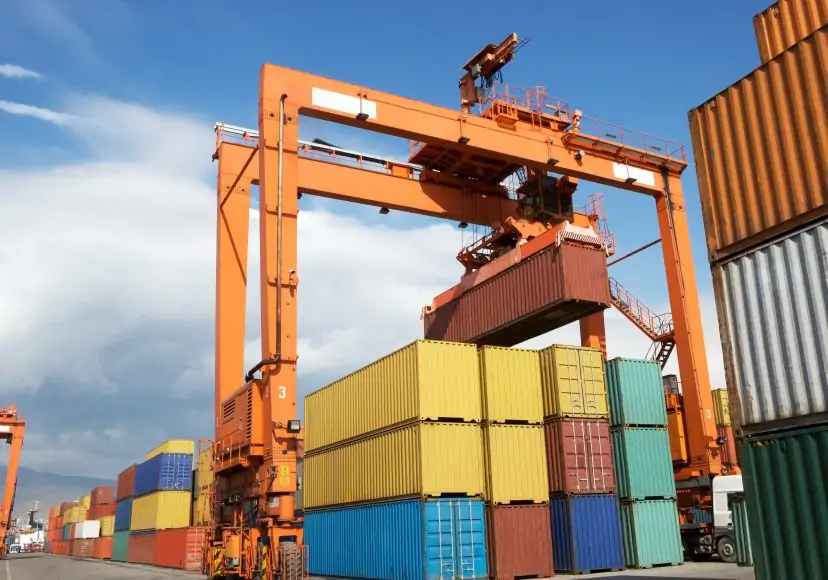
Rubber-Tyred Gantry Crane
Mobile multi-row container stacking with diesel, hybrid or electric power.
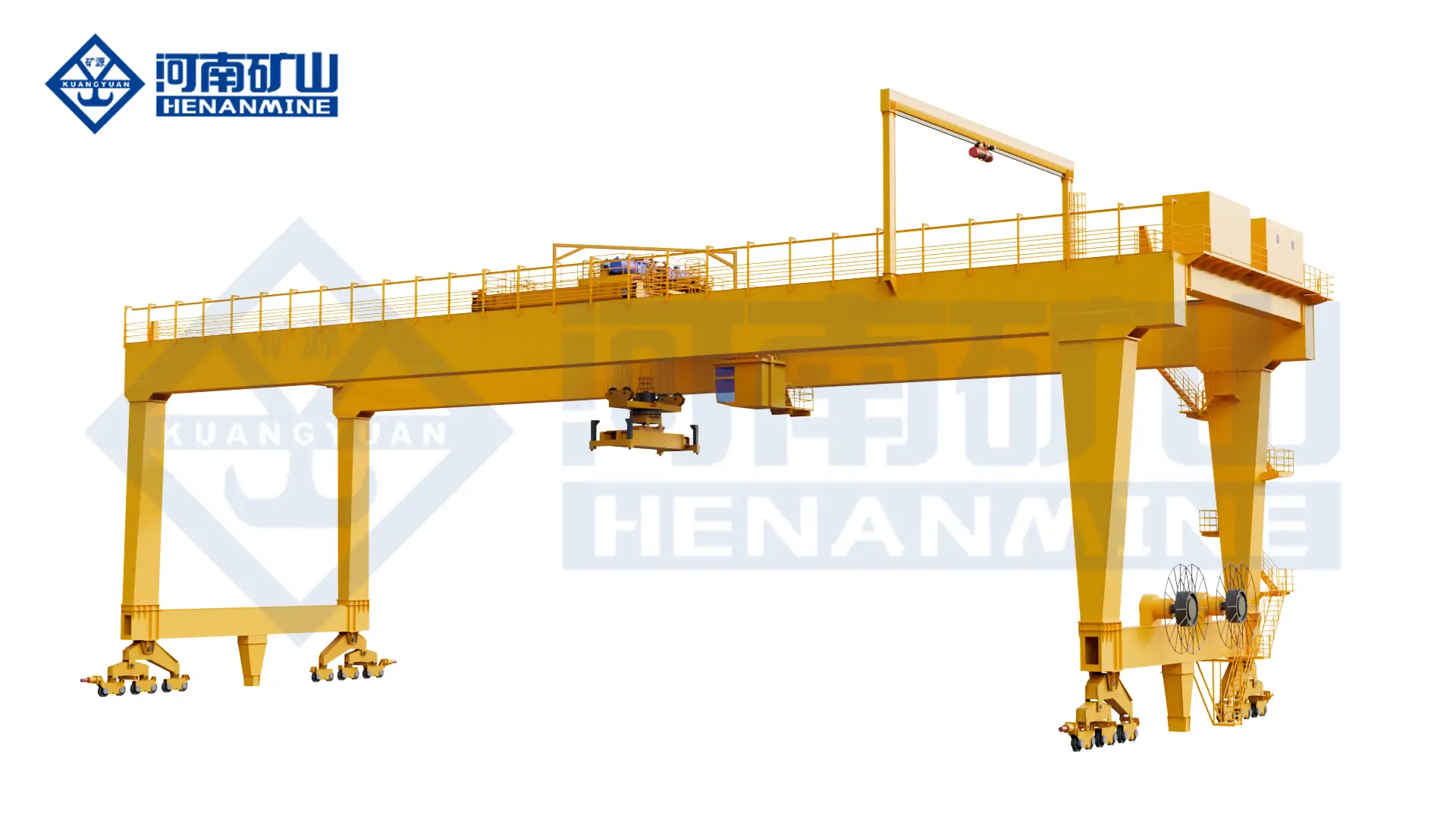
Rail-Mounted Gantry Crane
Rail-guided container blocks for repeatable high-throughput operation.
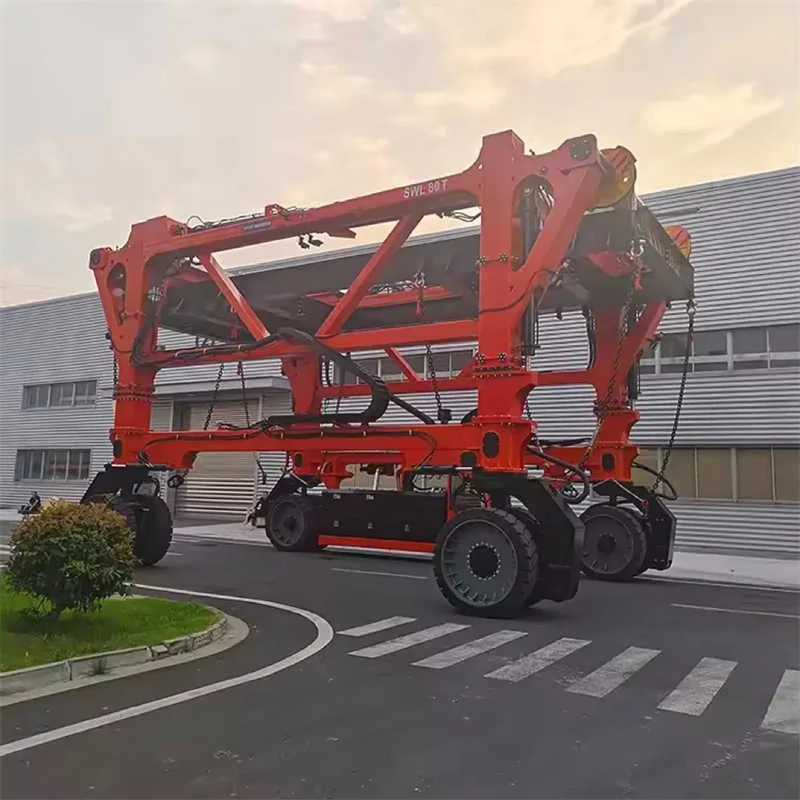
Container Straddle Carrier
Point-to-point container transport and stacking within one mobile machine.
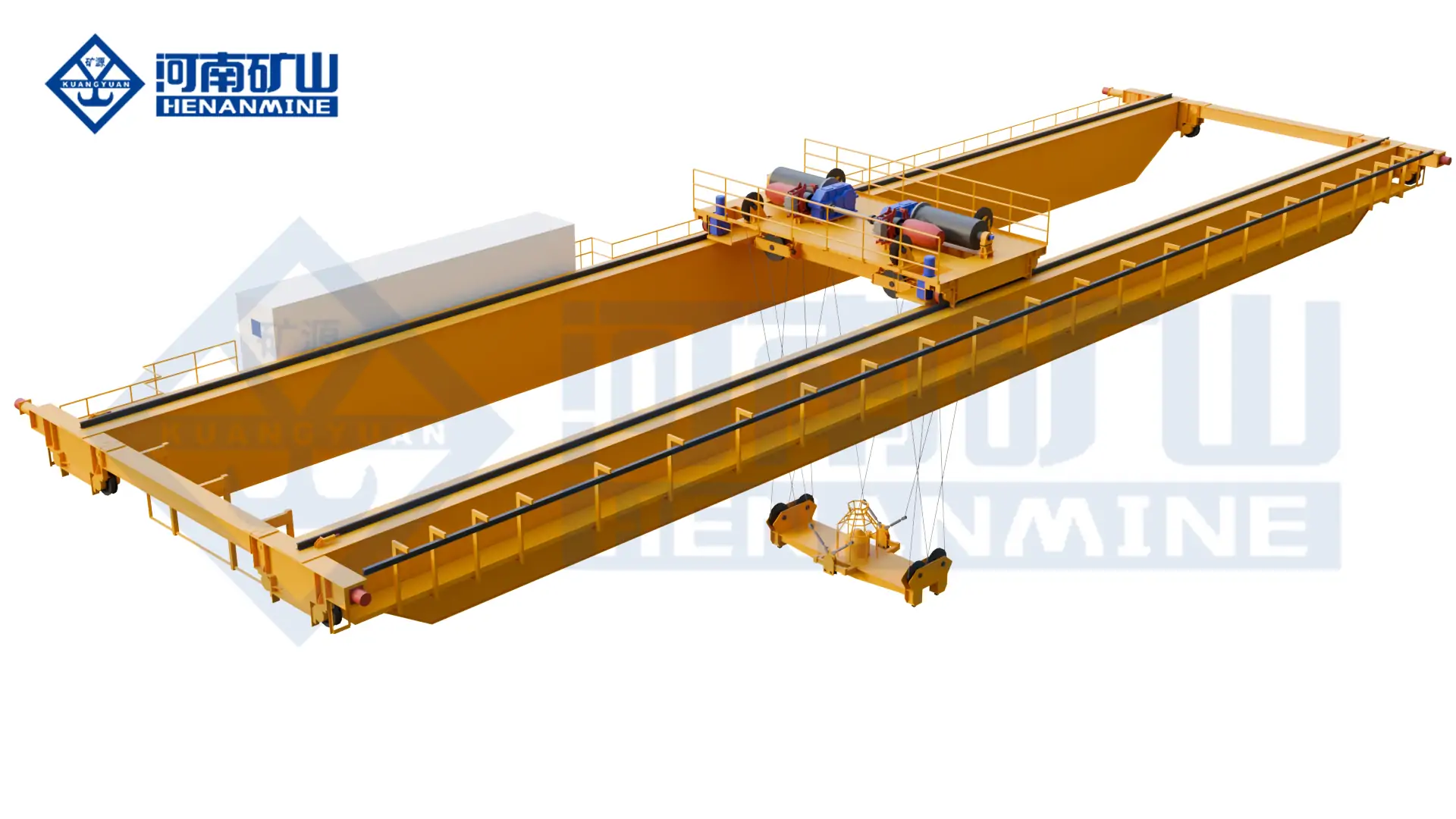
Container Overhead Crane
Fixed indoor or covered-area container handling with runway support.
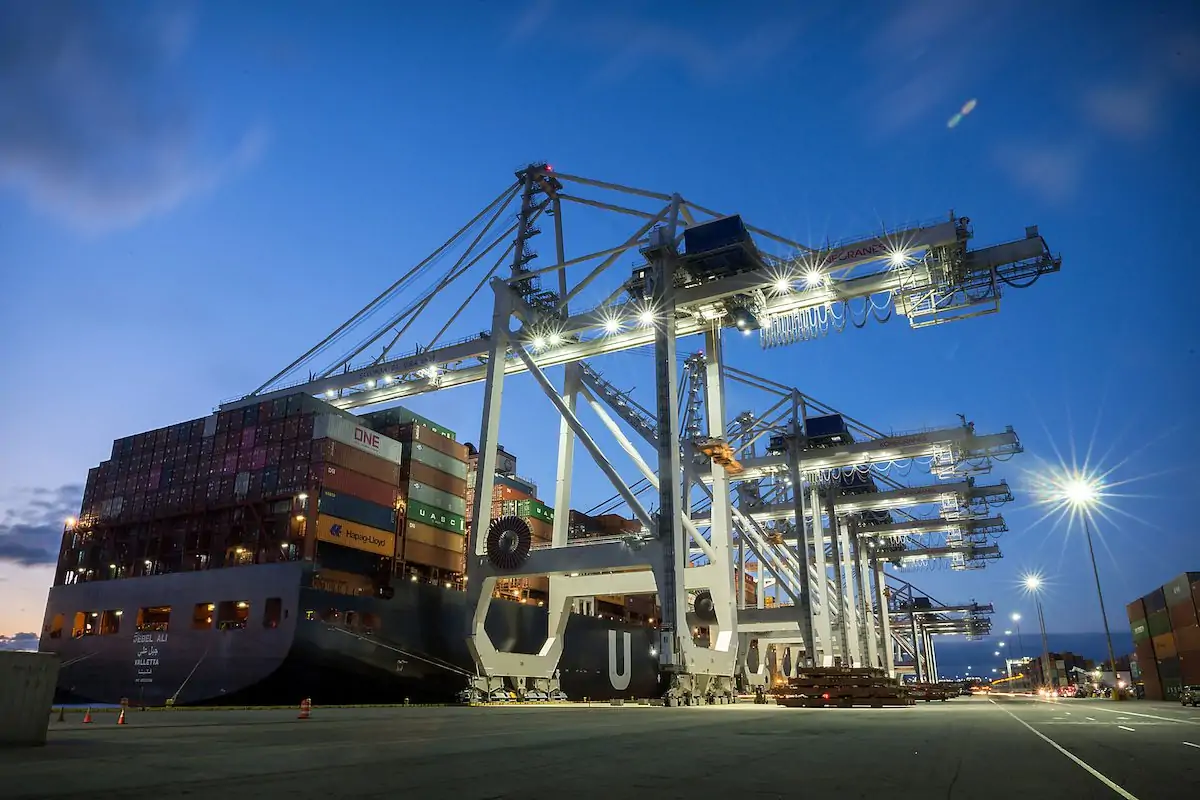
Ship-to-Shore Crane
Quayside vessel loading and unloading for marine container terminals.
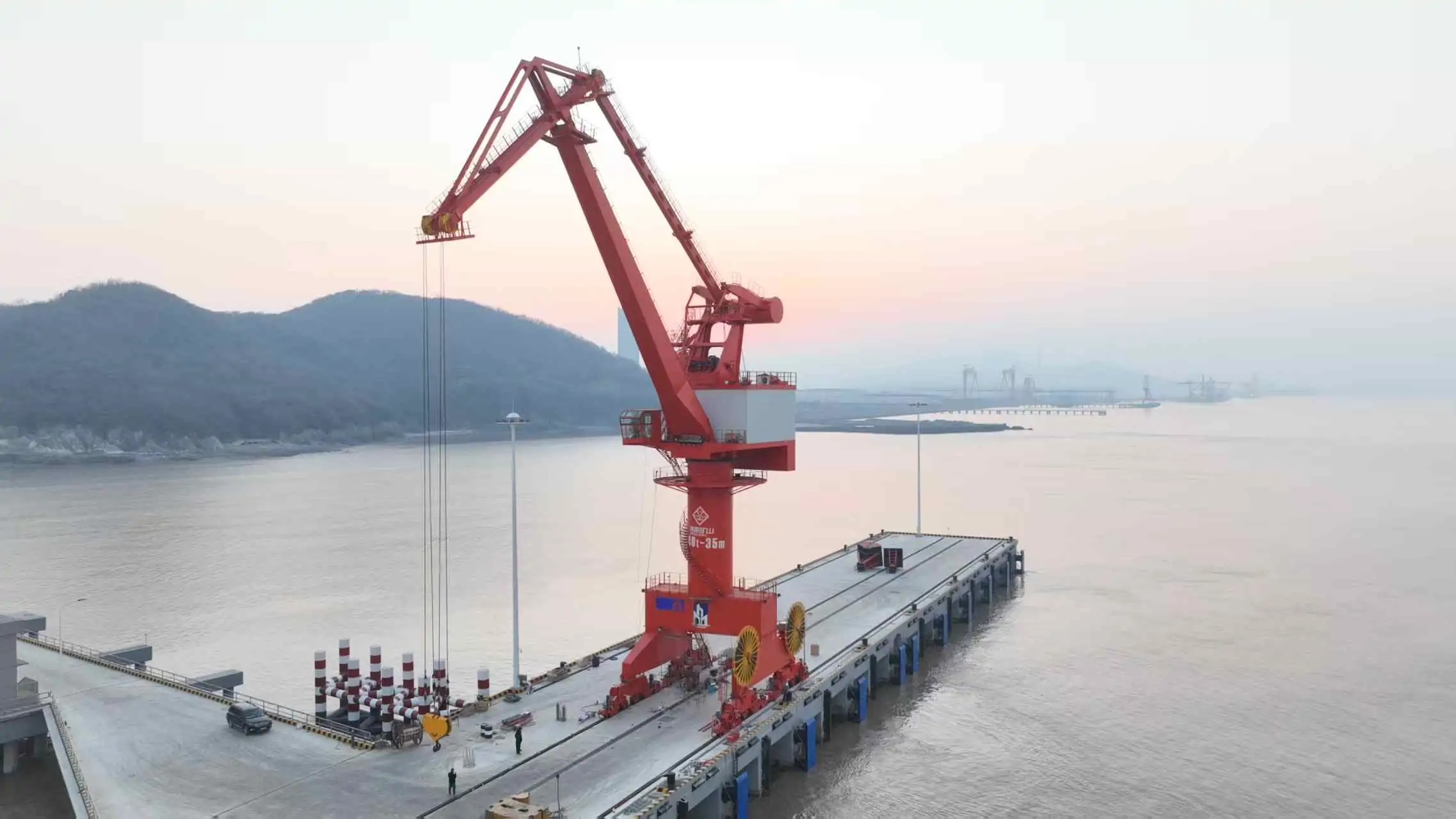
Portal Harbor Crane
Flexible quay handling for containers, general cargo and bulk materials.
Technically reviewed by: Henan Mine Crane Port Crane Engineering Team
Last reviewed: 2026
Request an RTG Crane for Container Yard Quote
Submit the yard plan, container mix, stacking height, throughput duty, power preference, control level and delivery destination for a project-specific RTG configuration and commercial scope.