Engineering · Manufacturing · Project support
info@hnksglobal.comWhatsApp +86 18836207779 ↗

Blog

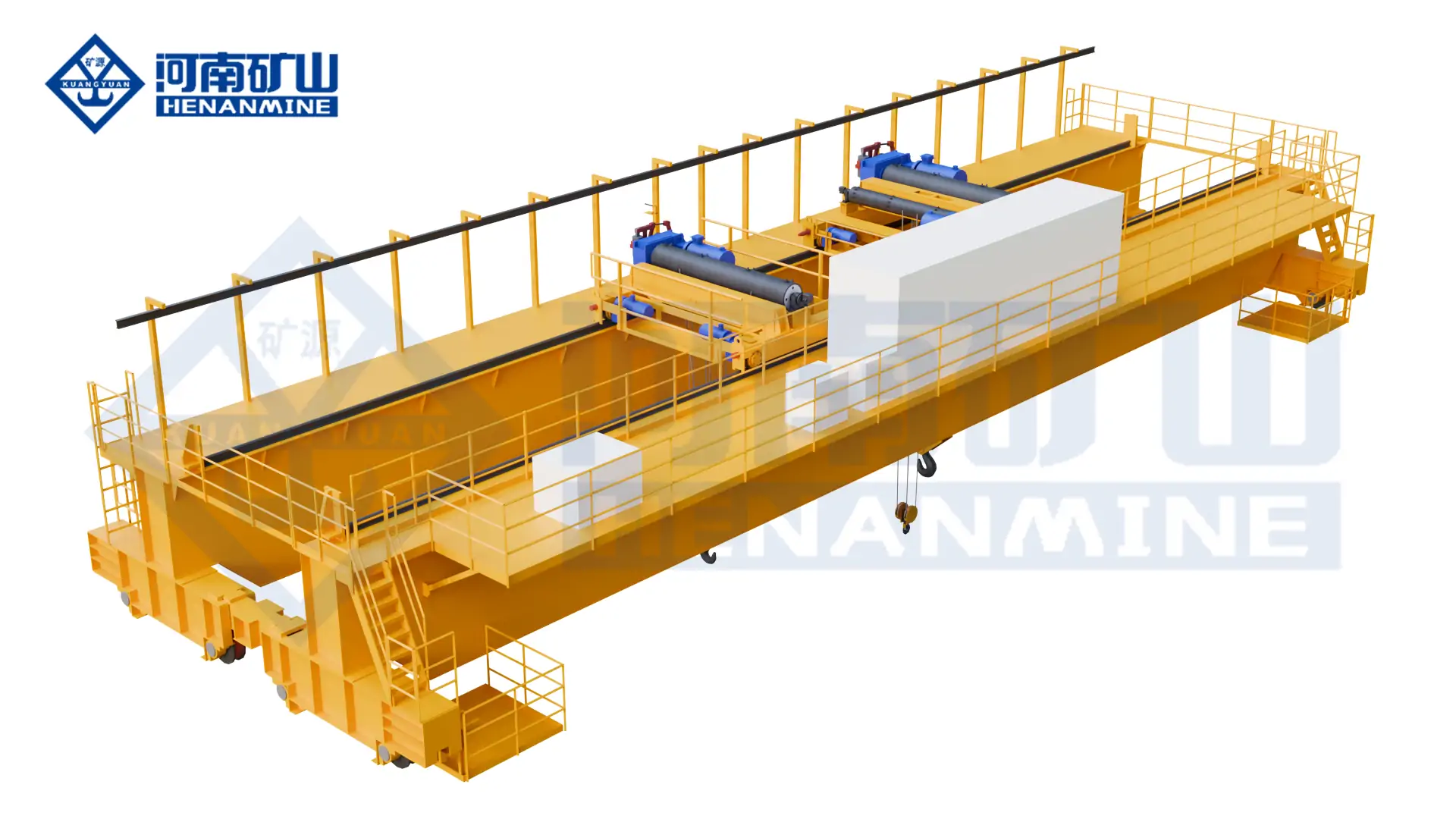
  • Dual Trolley Insulated Overhead Crane

    Dual Trolley Insulated Overhead Crane

    Overhead Cranes / Henan Mine Crane

    Dual Trolley Insulated Overhead Crane

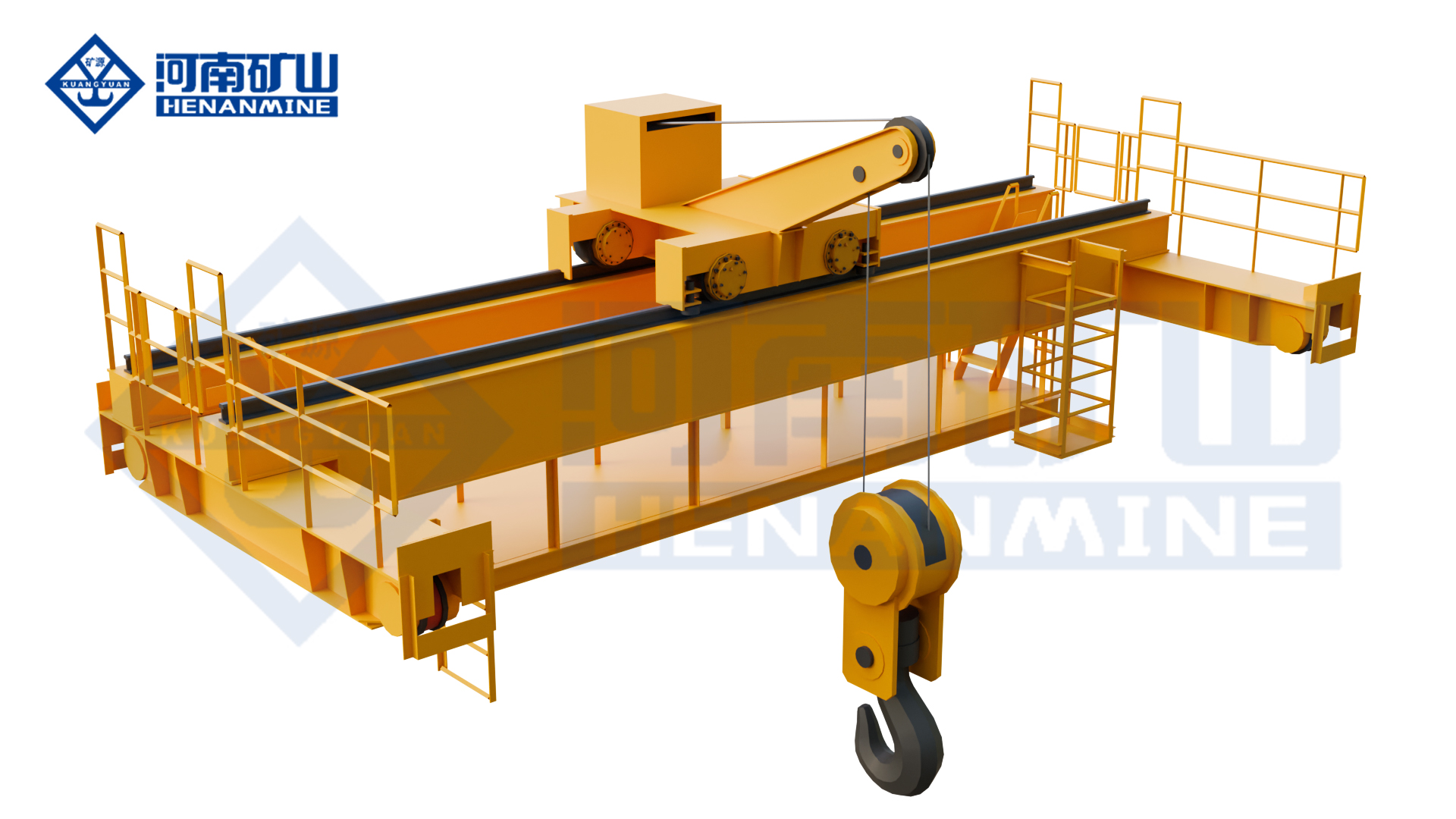
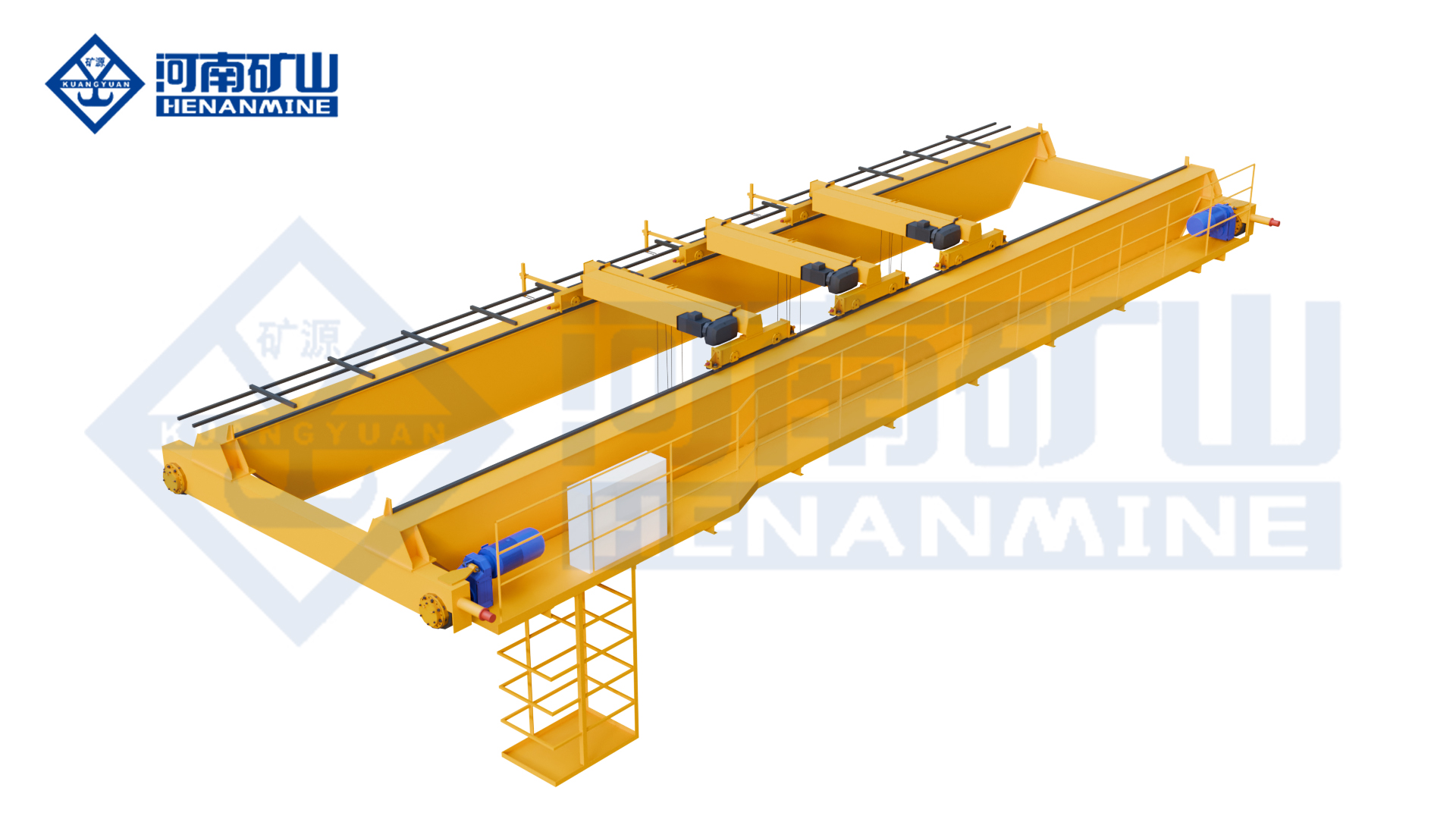
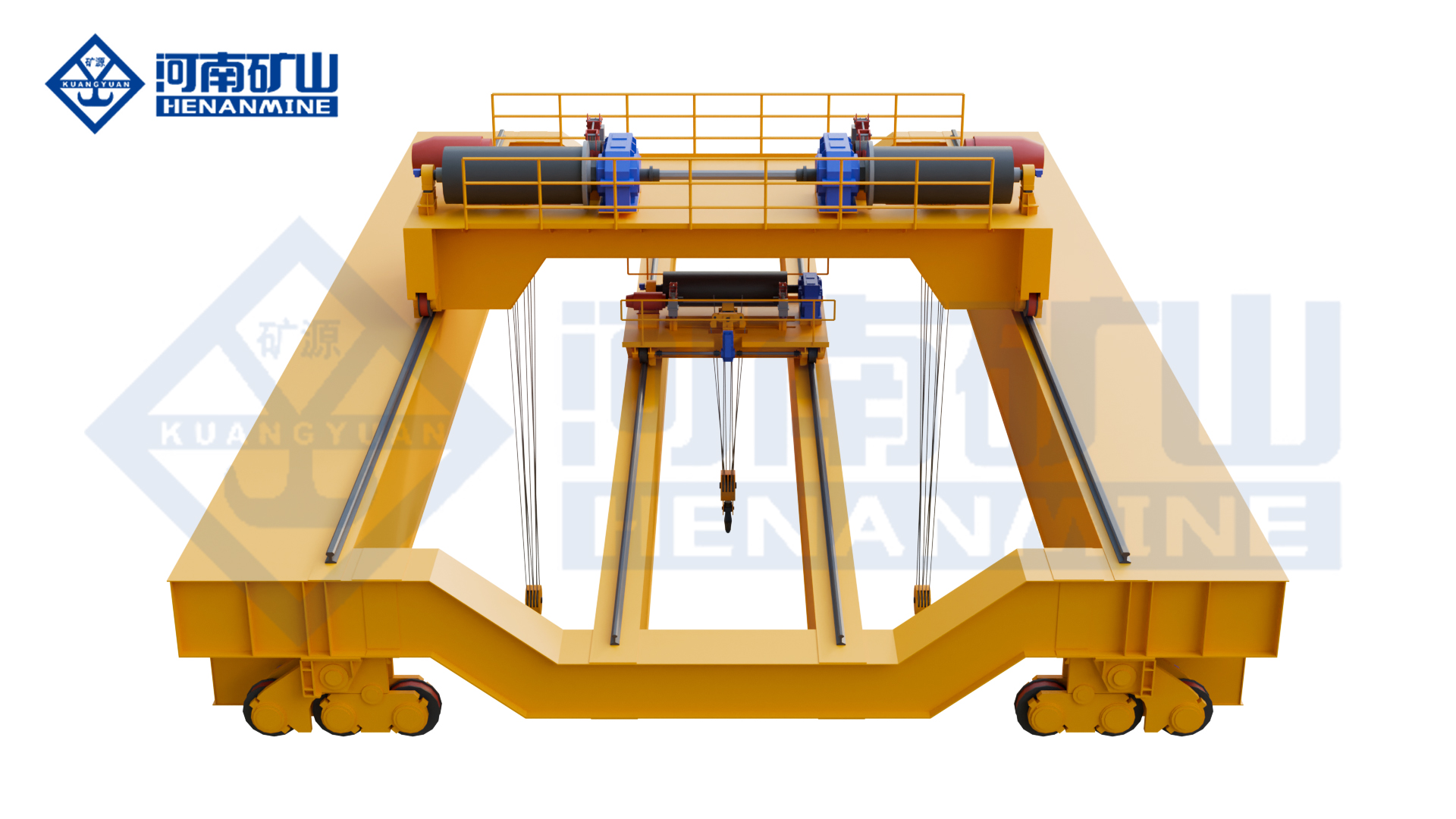
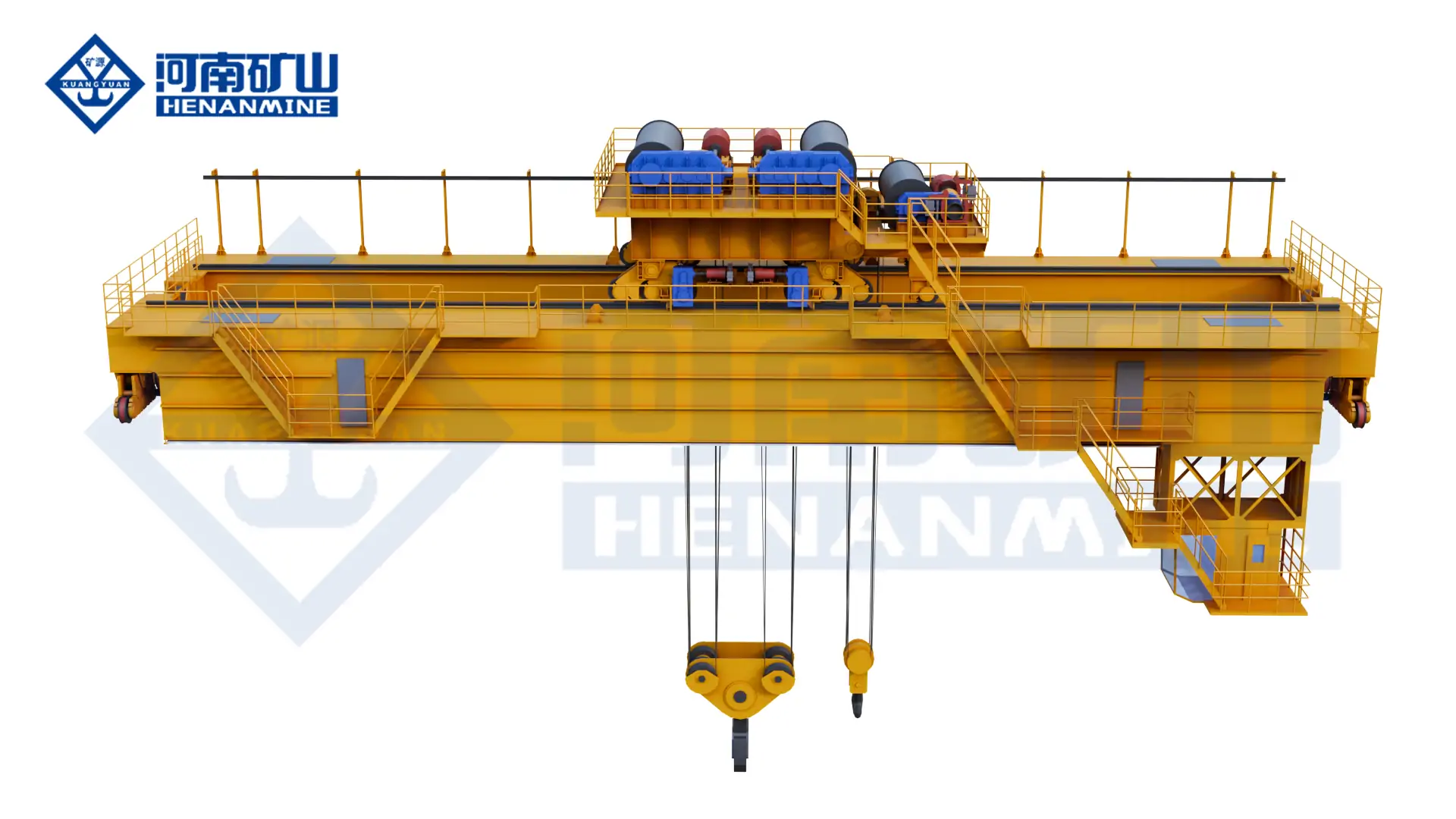
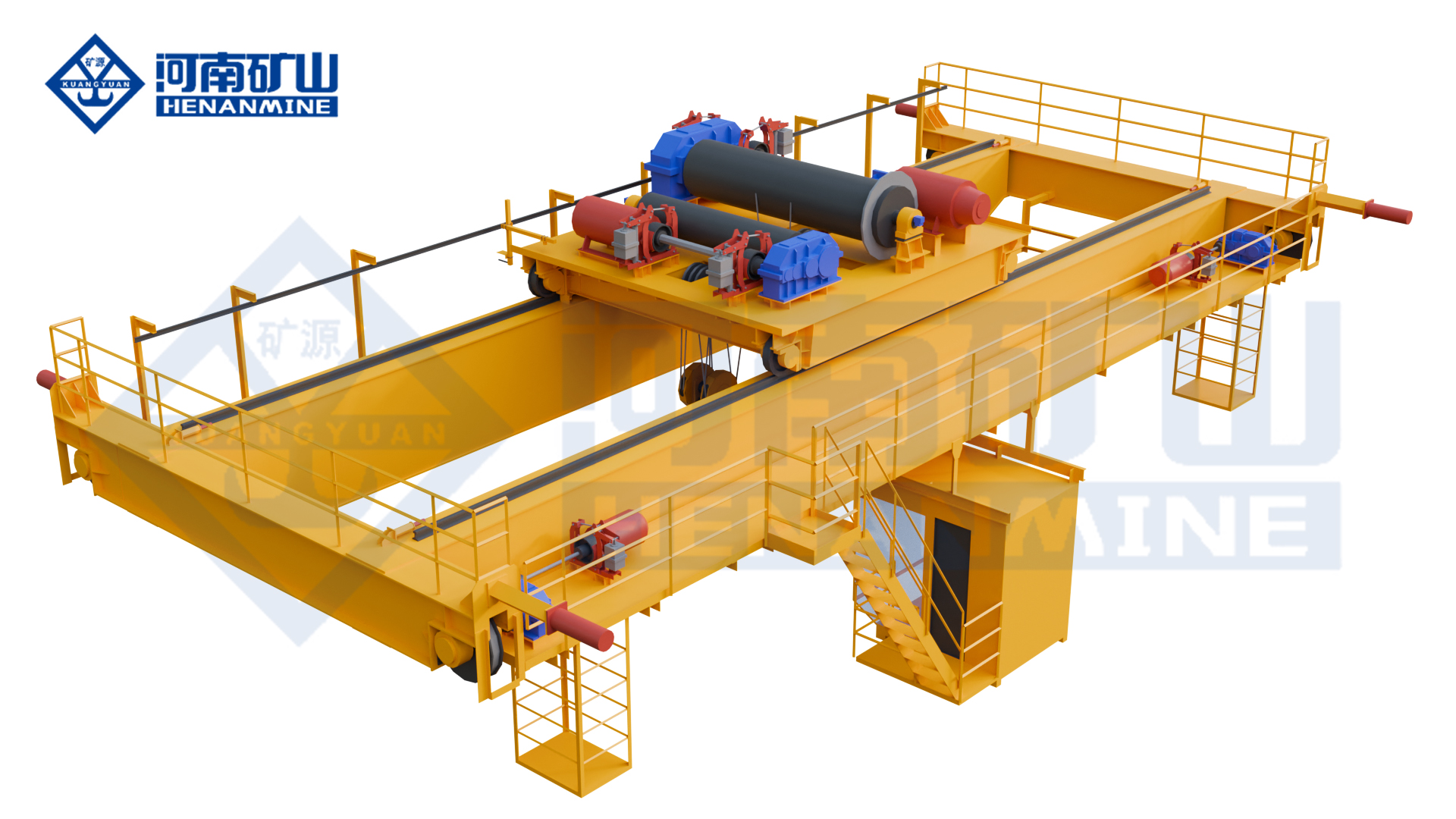
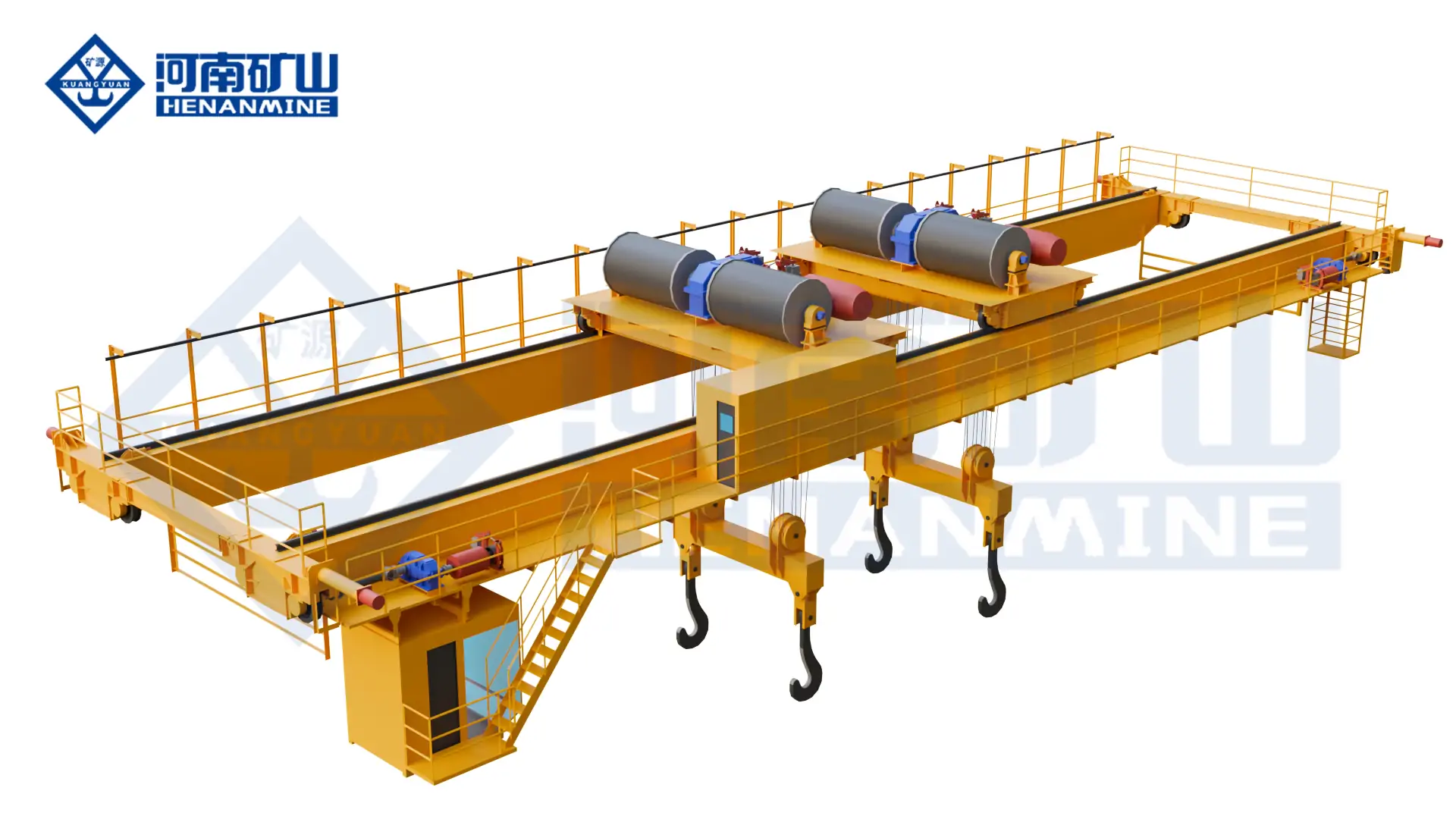
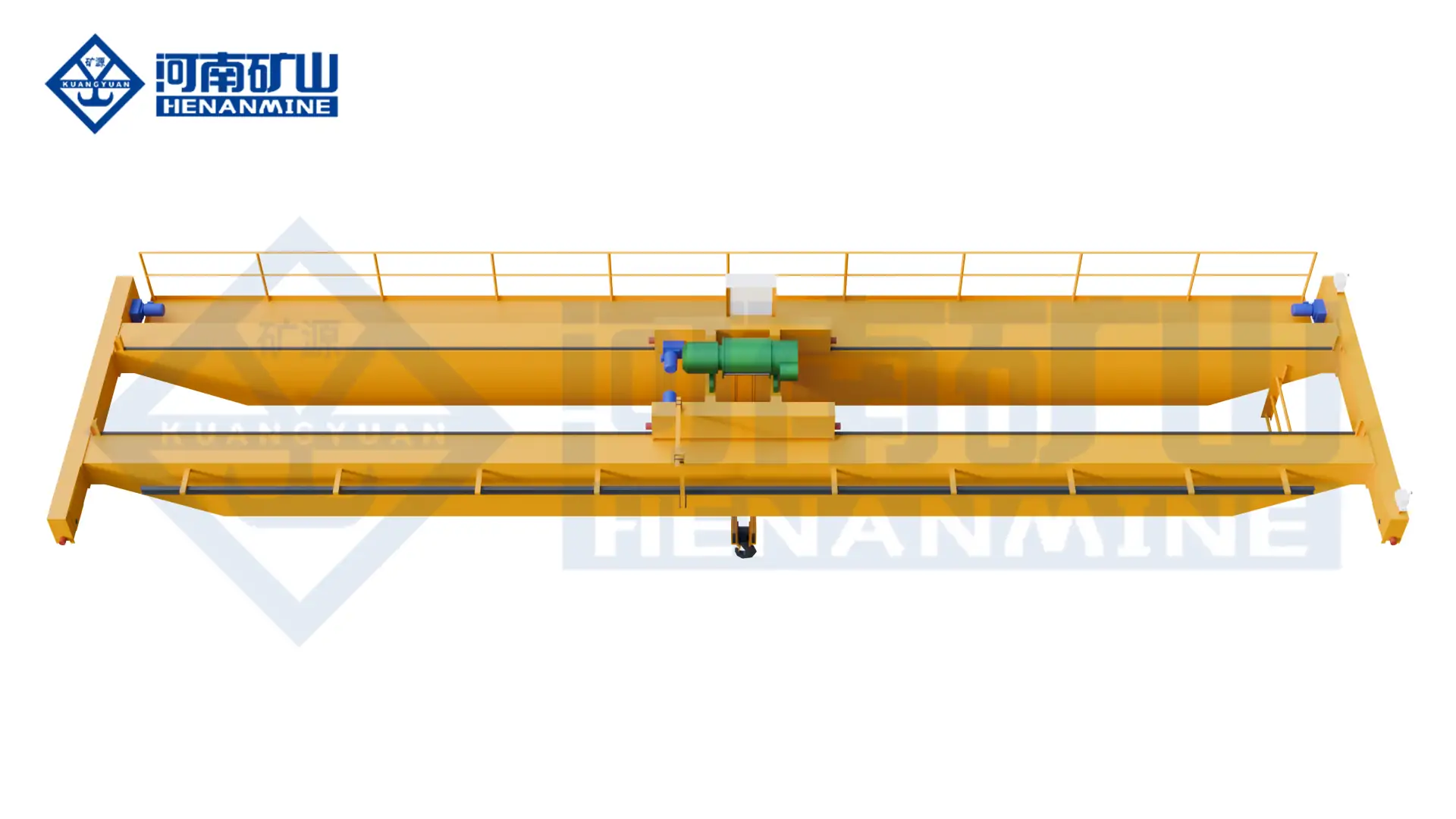
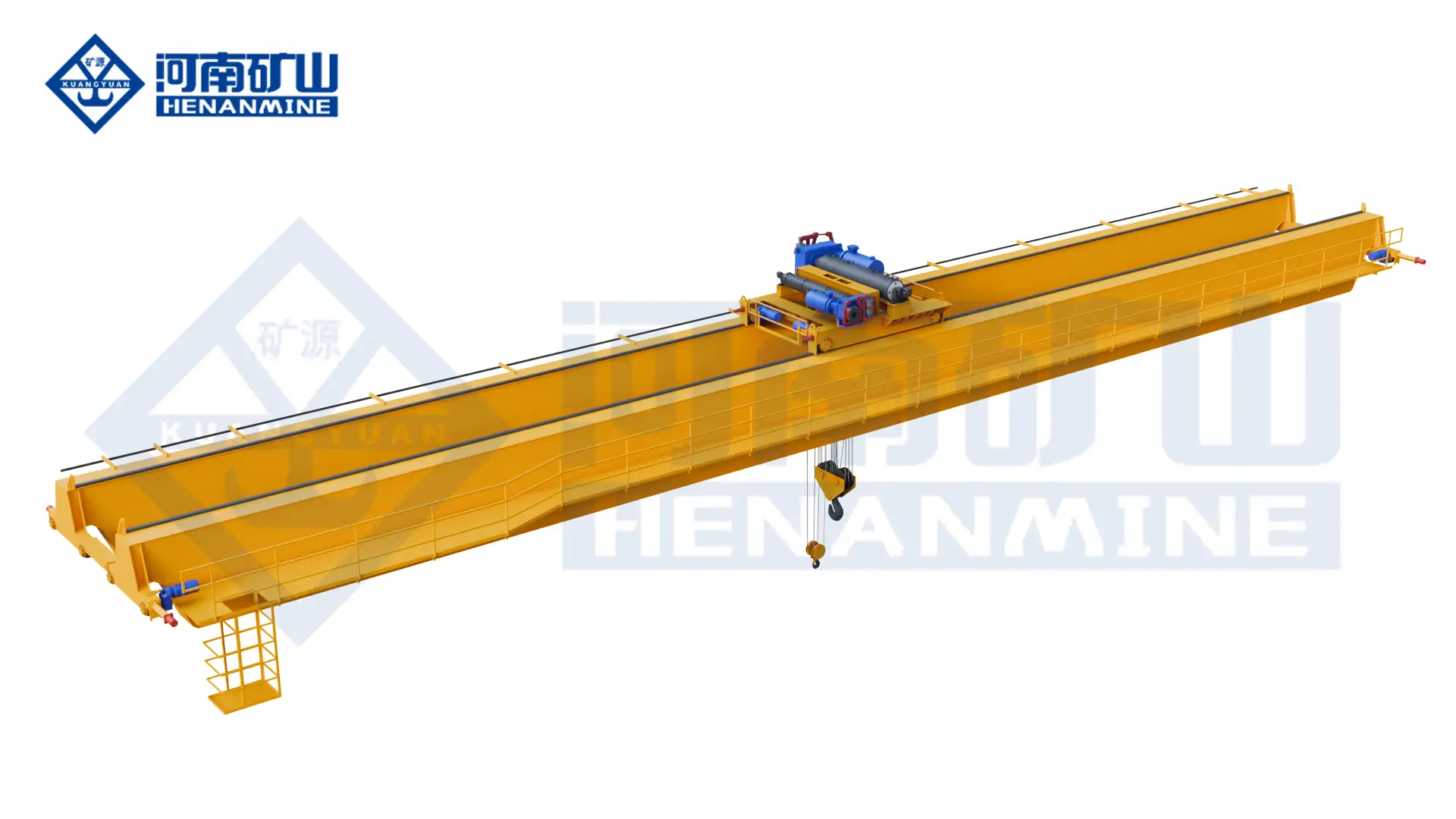
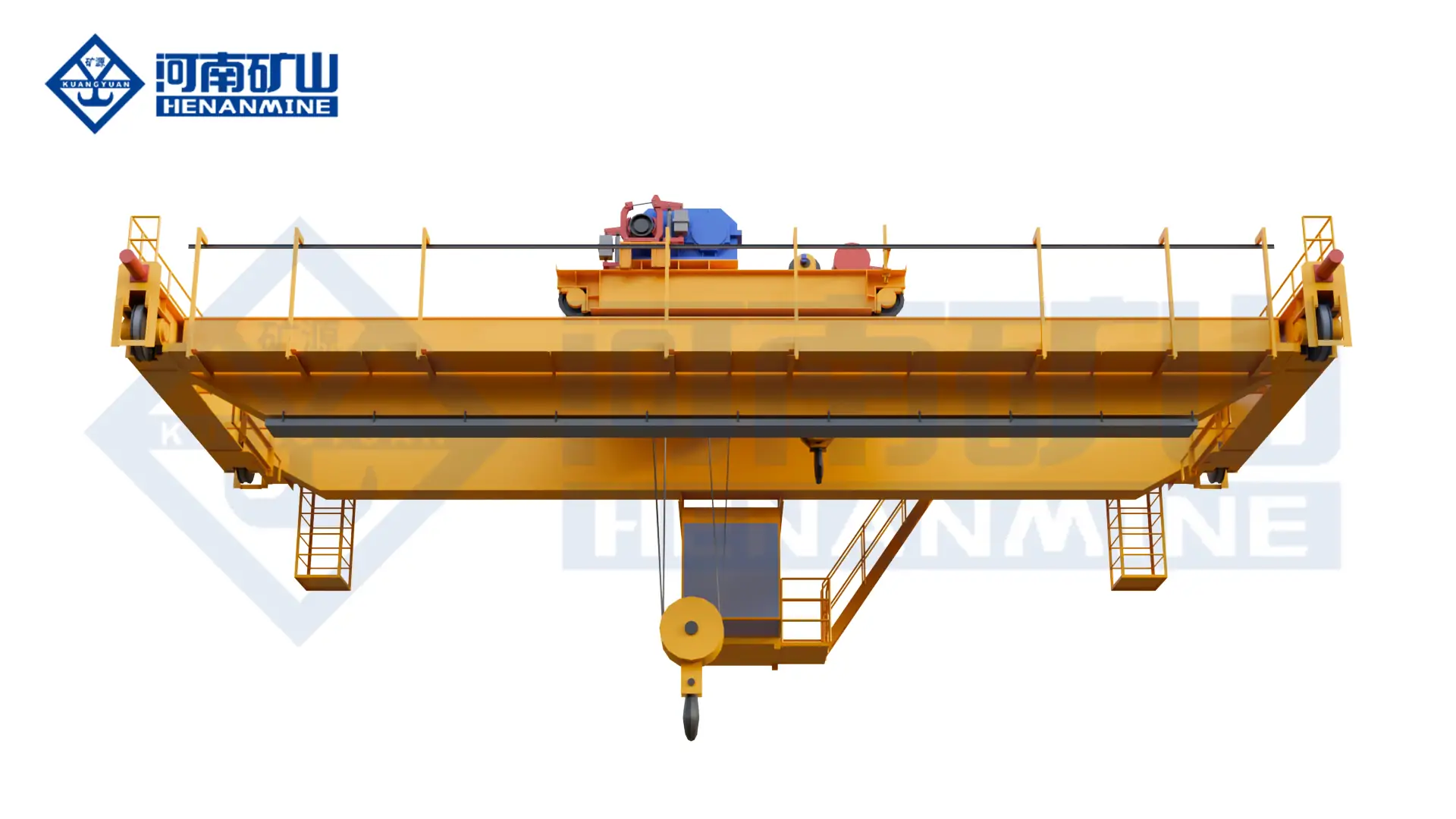
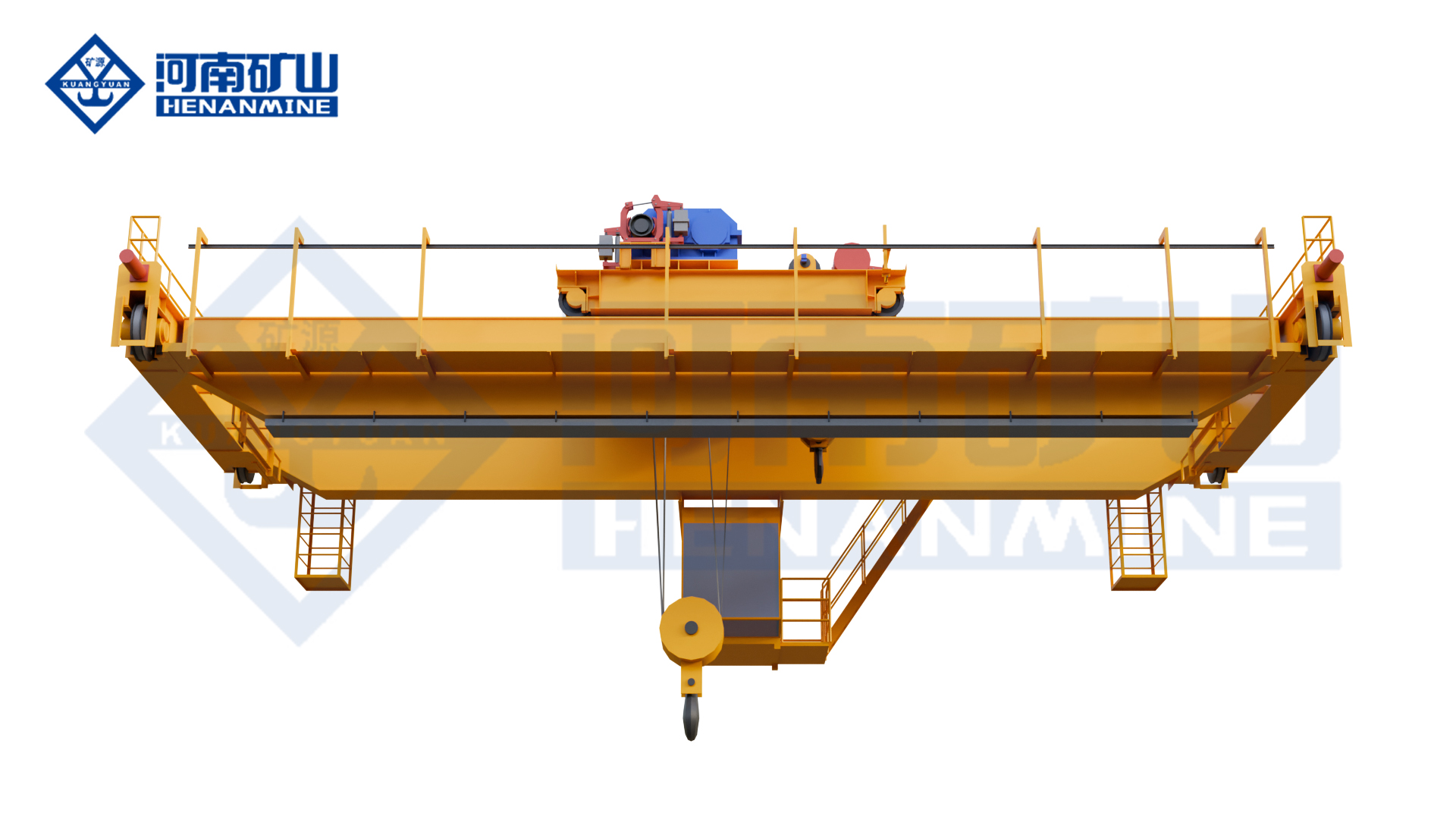
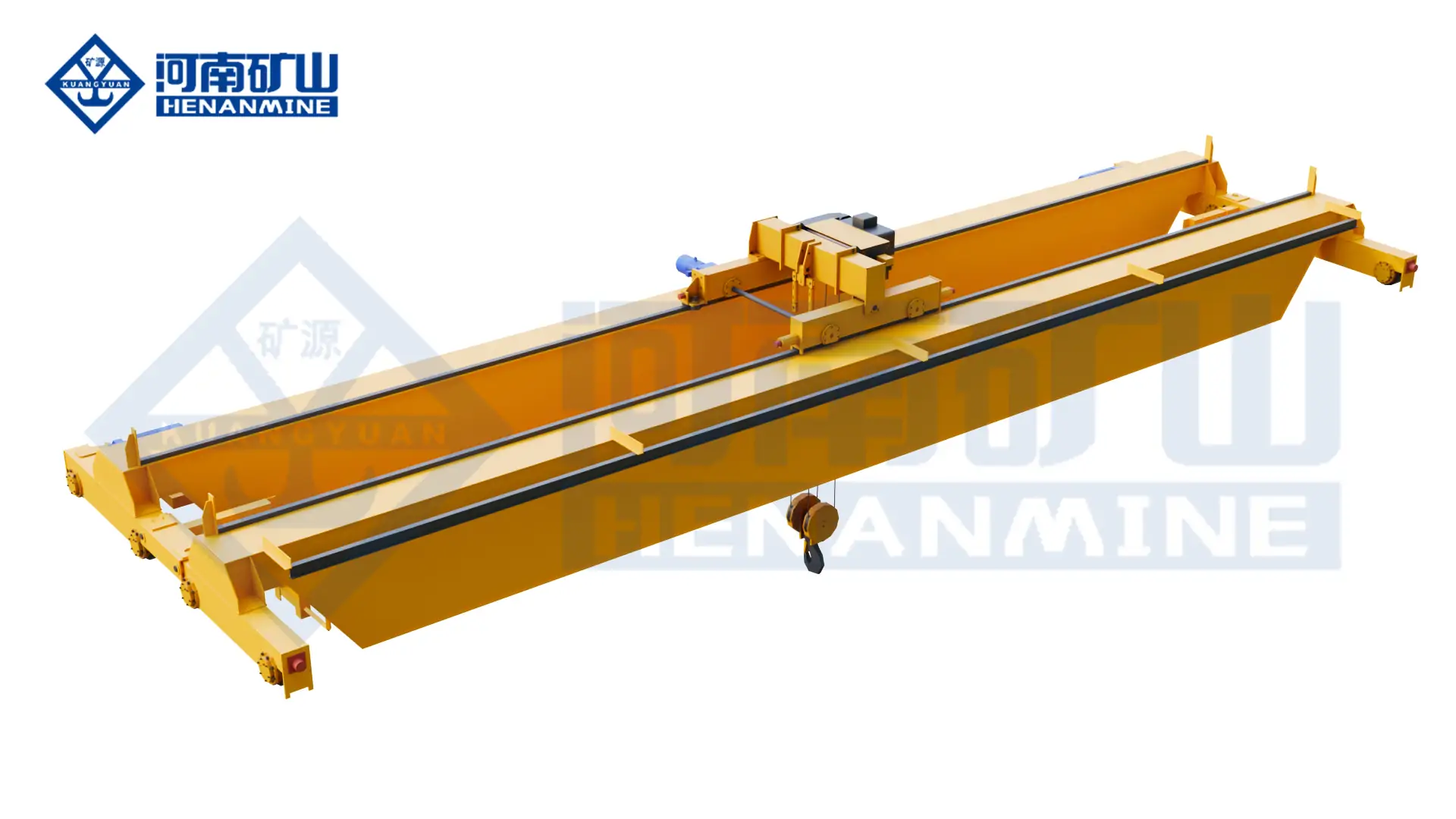
    Coordinate two lifting trolleys within an insulated overhead crane arrangement. Define the load at each hook, electrical isolation requirements and permitted individual or combined movements.

    Lifting capacity32/5+32/5t
    Span10m – 35m
    Working classA4 – A6
    Technical specifications

    Define the total suspended load, duty and site conditions for your project.

    Technical specifications

    Check the load.
    Plan the configuration.

    Parameters and equipment options are matched to the application and confirmed in the technical proposal.

    Discuss your configuration
    Capacity32/5+32/5t
    Span10m – 35m
    Lifting height6m – 30m
    Working classA4 – A6
    Hoisting speed0.8m/min – 10m/min
    Trolley travel8m/min – 25m/min
    Crane travel10m/min – 30m/min
    Power supply380V/50Hz; 220V-660V/60Hz
    ControlsCabin/ground handle/wireless remote

    Final parameters, dimensions, wheel loads and supply scope follow the approved project specification.

    Application & operation

    Matched to the handling task.

    Multiple lifting points

    Support a workpiece using the approved two-point lifting arrangement.

    Electrical process bays

    Coordinate the lifting path and isolation with the surrounding process equipment.

    Selection considerations

    Start with your operating conditions.

    01

    Load & lifting arrangement

    Specify individual hook loads, lifting-point spacing and load sharing. Include lifting-appliance weight and the required lifting positions.

    02

    Site & available space

    Provide trolley travel limits, runway layout and process clearances. Coordinate the installation interfaces with the available site drawings.

    03

    Duty & control sequence

    Define isolation requirements and independent or coordinated lifting sequence. Identify the required movements and control interfaces in the enquiry.

    Configuration comparison

    Compare related lifting arrangements.

    Crane arrangementHandling configuration
    Dual Trolley Insulated Overhead CraneCoordinate two lifting trolleys within an insulated overhead crane arrangement. Define the load at each hook, electrical isolation requirements and permitted individual or combined movements.
    Insulated Bridge CraneUse a QY insulated bridge arrangement for lifting in an electrically demanding industrial process. Coordinate the lifting load, isolation positions and inspection requirements with the site.
    Insulated Double Girder Travelling CraneProvide insulated double-girder lifting for a defined electrical process. The suspension arrangement, lifting appliance and isolation positions are selected from the load path and site conditions.
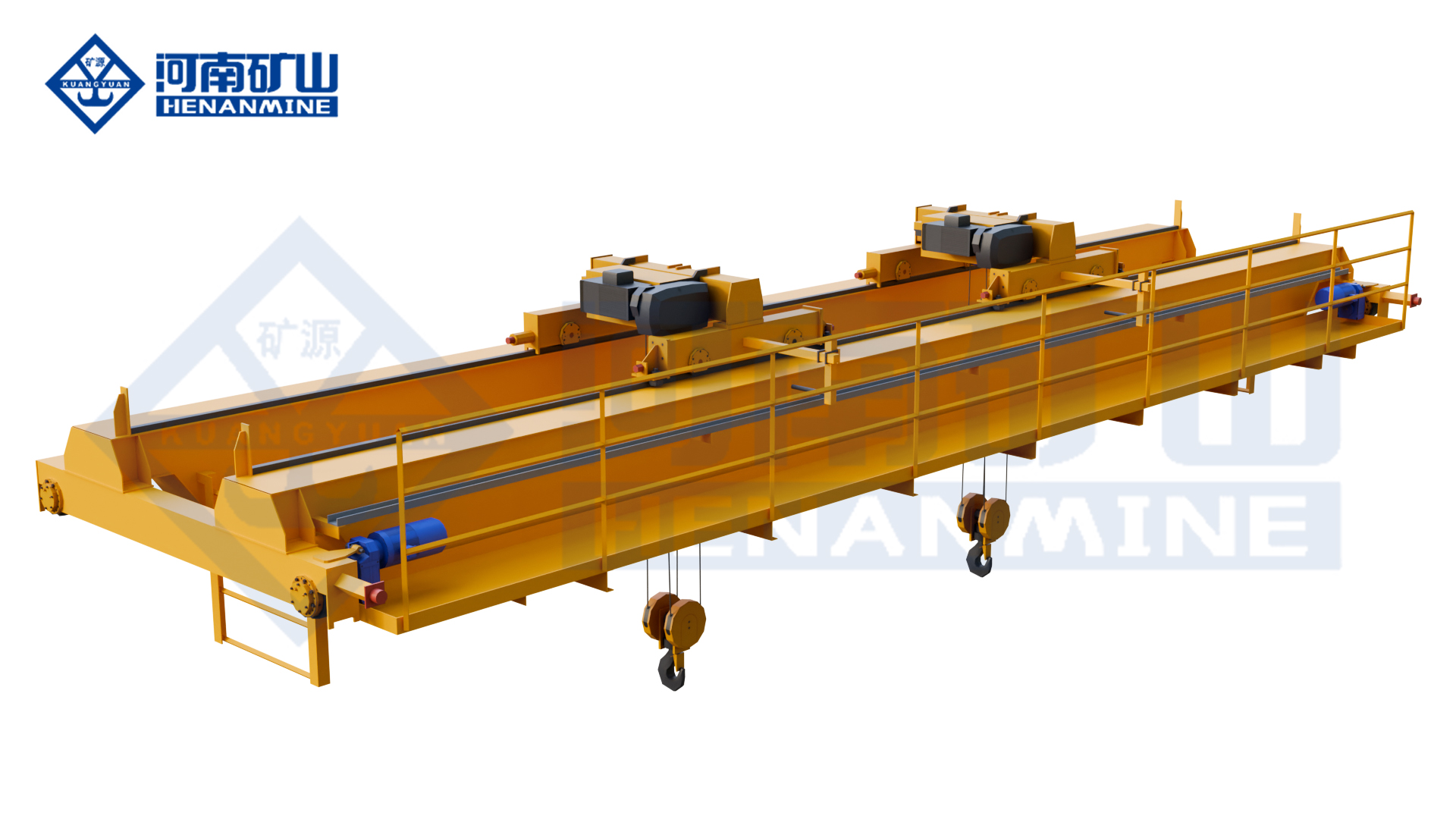
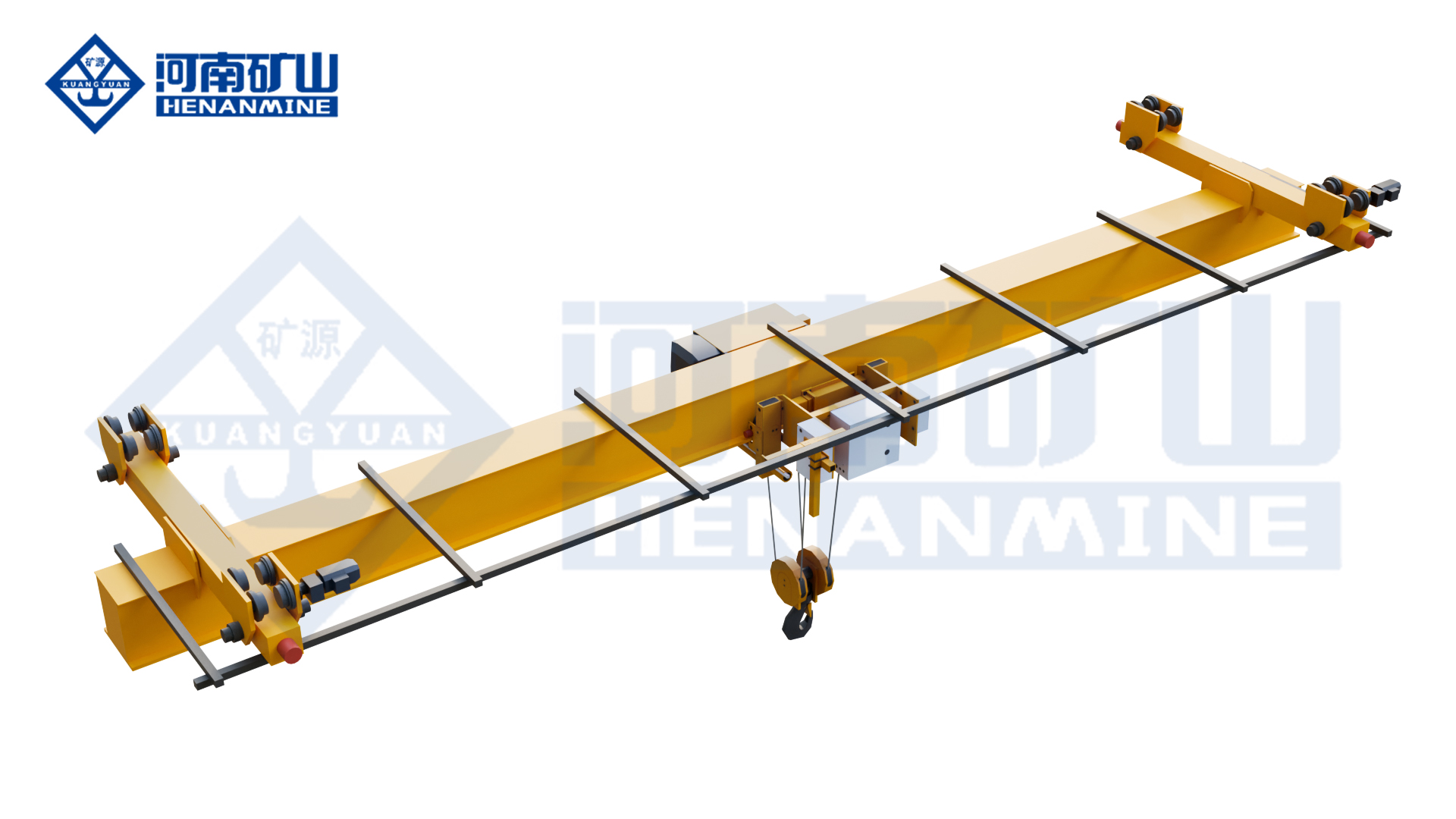
    Double Trolley Electric Hoist CraneLift long components or serve separate working positions with two electric-hoist trolleys on one bridge. Trolley spacing, load sharing and independent or coordinated operation are specified for the task.

    Operating protection & lifecycle support

    Plan beyond the equipment.

    01

    Operating protection

    Confirm overload protection, travel limits, brakes, emergency controls and the required process interlocks for the declared lifting task.

    02

    Installation & commissioning

    Agree runway reactions, structural interfaces, electrical connections, assembly, inspection and commissioning responsibilities before delivery.

    03

    Inspection & spares

    Plan inspection and maintenance of insulating elements, trolley interlocks and hoisting connections. Agree service access, documentation and the required spare-parts scope.

    Questions before the order

    Clarify the details
    that shape the crane.

    What information is needed for a dual trolley insulated overhead crane quotation?+

    Provide individual hook loads, lifting-point spacing and load sharing; trolley travel limits, runway layout and process clearances; and isolation requirements and independent or coordinated lifting sequence. Include drawings and the project destination when available.

    How is combined lifting specified?+

    Provide the load at each lifting point, the centre of gravity and the intended movements. Permissible individual and combined operation and the isolation arrangement are defined in the technical proposal.

    What installation and support scope should be agreed?+

    Agree runway reactions, structural interfaces, electrical connections, assembly, inspection and commissioning responsibilities before delivery. Specify the documentation, training and spare-parts support needed for the project.

    Related equipment

    Explore the alternatives.
    Let’s discuss your project

    The right crane starts
    with your lifting task.

    Share individual hook loads, lifting-point spacing and load sharing, together with your site layout and operating cycle.
    info@hnksglobal.com
  • Insulated Bridge Crane

    Insulated Bridge Crane

    Overhead Cranes / Henan Mine Crane

    Insulated Bridge Crane

    Use a QY insulated bridge arrangement for lifting in an electrically demanding industrial process. Coordinate the lifting load, isolation positions and inspection requirements with the site.

    Lifting capacity5–20/5 t
    Span10m – 35m
    Working classA4 – A6
    Technical specifications

    Define the total suspended load, duty and site conditions for your project.

    Technical specifications

    Check the load.
    Plan the configuration.

    Parameters and equipment options are matched to the application and confirmed in the technical proposal.

    Discuss your configuration
    ModelQY
    Rated Lifting Capacity5–20/5 t
    Span10m – 35m
    Lifting Height6m – 30m
    Motor insulation classClass F (customizable to Class H)
    Control ModeCabin/ground handle/wireless remote
    Working ClassA4 – A6
    Lifting Speed0.8m/min – 10m/min
    Crane Travel Speed10m/min – 30m/min
    Trolley Travel Speed8m/min – 25m/min
    Insulation ProtectionInsulation pad + insulation sleeve + insulation plate
    Power Supply380V/50Hz; 220V-660V/60Hz
    Protection LevelIP65
    Working Temperature-25℃ ~ 120℃
    Structural FeatureHeavy-duty modular assembly

    Final parameters, dimensions, wheel loads and supply scope follow the approved project specification.

    Application & operation

    Matched to the handling task.

    Electrical process handling

    Transfer components while meeting the declared process isolation requirements.

    Industrial maintenance

    Coordinate lifting access around equipment with defined electrical conditions.

    Selection considerations

    Start with your operating conditions.

    01

    Load & lifting arrangement

    Specify workpiece, lifting appliance and main or auxiliary tasks. Include lifting-appliance weight and the required lifting positions.

    02

    Site & available space

    Provide process positions, runway geometry and electrical clearances. Coordinate the installation interfaces with the available site drawings.

    03

    Duty & control sequence

    Define isolation requirements, thermal exposure and inspection provisions. Identify the required movements and control interfaces in the enquiry.

    Configuration comparison

    Compare related lifting arrangements.

    Crane arrangementHandling configuration
    Insulated Bridge CraneUse a QY insulated bridge arrangement for lifting in an electrically demanding industrial process. Coordinate the lifting load, isolation positions and inspection requirements with the site.
    Insulated Double Girder Travelling CraneProvide insulated double-girder lifting for a defined electrical process. The suspension arrangement, lifting appliance and isolation positions are selected from the load path and site conditions.
    Dual Trolley Insulated Overhead CraneCoordinate two lifting trolleys within an insulated overhead crane arrangement. Define the load at each hook, electrical isolation requirements and permitted individual or combined movements.
    LH Electric Hoist Double Girder CraneUse an LH double-girder bridge with an electric-hoist trolley for workshop lifting, assembly and maintenance. Match the hoist arrangement to the suspended load, hook travel and available building space.

    Operating protection & lifecycle support

    Plan beyond the equipment.

    01

    Operating protection

    Confirm overload protection, travel limits, brakes, emergency controls and the required process interlocks for the declared lifting task.

    02

    Installation & commissioning

    Agree runway reactions, structural interfaces, electrical connections, assembly, inspection and commissioning responsibilities before delivery.

    03

    Inspection & spares

    Plan inspection and maintenance of process insulation components, lifting connections and inspection points. Agree service access, documentation and the required spare-parts scope.

    Questions before the order

    Clarify the details
    that shape the crane.

    What information is needed for a insulated bridge crane quotation?+

    Provide workpiece, lifting appliance and main or auxiliary tasks; process positions, runway geometry and electrical clearances; and isolation requirements, thermal exposure and inspection provisions. Include drawings and the project destination when available.

    Is motor insulation class the same as process isolation?+

    Motor insulation and isolation of the crane lifting path serve different functions. Specify the electrical process conditions and the required isolation and verification points.

    What installation and support scope should be agreed?+

    Agree runway reactions, structural interfaces, electrical connections, assembly, inspection and commissioning responsibilities before delivery. Specify the documentation, training and spare-parts support needed for the project.

    Related equipment

    Explore the alternatives.

    Let’s discuss your project

    The right crane starts
    with your lifting task.

    Share workpiece, lifting appliance and main or auxiliary tasks, together with your site layout and operating cycle.
    info@hnksglobal.com
  • 5-Ton Gantry Crane Purchasing: Define the Complete Supply Scope

    5-Ton Gantry Crane Purchasing: Define the Complete Supply Scope

    Selection guide

    5-Ton Gantry Crane Purchasing: Define the Complete Supply Scope

    An equipment offer should identify the gantry arrangement and the work required at the destination. Provide the load and site brief, then clarify support, power, installation and handover responsibilities before ordering.

    Henan Mine CraneSelection guide · Updated 2026Crane selection, project scope and operating requirements
    Henan Mine Crane 5 Ton Overhead Crane
    Henan Mine Crane 5 Ton Overhead Crane
    Project planning notes

    Key points for this crane project.

    1. What Is a 5 Ton Gantry Crane?
    2. 01 · Single-Girder Full Gantry Crane
    3. Selection Considerations
    Read the technical guide

    What Is a 5 Ton Gantry Crane?

    The bridge is supported by legs that transfer operating forces to ground-level wheels, rails, foundations or an approved floor system. An electric hoist or trolley moves across the bridge, while powered end carriages move the complete gantry along its travel path.

    The capacity rating applies to the complete suspended load at the hook. Load weight, center of gravity and lifting-point arrangement therefore belong in the purchasing specification.

    A short-span maintenance gantry with occasional lifts differs materially from a long-span outdoor crane handling fabricated steel throughout two production shifts. Bridge structure, hoist duty, speeds, wheel loads, wind controls, corrosion protection, runway design and electrical supply must match the application.

    For general industrial service, a single-girder electric-hoist gantry is usually the most economical starting point. A double-girder configuration becomes relevant where span, hook approach, lifting height, duty, stiffness, maintenance access or process equipment justify the additional structure. Semi-gantry and offset-leg arrangements solve site-specific access and building-interface constraints.

    01 · Single-Girder Full Gantry Crane

    One box or rolled-section bridge girder carries an electric wire-rope hoist. The arrangement controls self-weight and equipment cost for workshops, yards, fabrication and general material transfer.

    02 · Double-Girder Gantry Crane

    Two bridge girders support a hoist or top-running trolley. Greater bridge stiffness, improved hook height and maintenance access support longer spans, higher duty and process-oriented operation.

    03 · Semi-Gantry Crane

    One end travels at an elevated building runway while the opposite leg travels at floor level. The configuration serves a defined production zone without installing two ground runways.

    04 · Truss Gantry Crane

    A lattice bridge structure reduces exposed area and structural mass for selected outdoor or transportation-sensitive projects. Connection, corrosion and inspection requirements remain part of the engineering basis.

    05 · L-Type or Offset-Leg Gantry Crane

    An offset leg and cantilever can improve side loading, truck access and material transfer beyond the runway. Wheel reactions and lateral stability require project-specific verification.

    They are compact lifting frames rather than automatic substitutes for a powered industrial gantry. Travel under load, floor condition, caster rating, permitted motion, hoist compatibility and assembly procedure must be confirmed from the specific portable-crane design.

    For repeated material flow across a workshop or yard, a rail-mounted powered gantry normally provides better travel control, defined alignment, longer coverage and easier integration with pendant or radio control.

    Selection Considerations

    A technically complete purchase begins with the handling process and operating site. The following inputs determine configuration, structural loads, mechanism duty, protection and commercial scope.

    Record maximum payload, normal payload, attachment, spreader, sling and every component carried below the hook. Confirm center of gravity and lifting points.

    State rail-center span, total crane travel, cantilever length, pickup zones, placement zones, end approach and side-loading requirements.

    Define lowest pickup, highest placement, rail elevation, leg clearance, bridge clearance, load height, rigging depth and required hook approach.

    Provide lifts per hour, shifts, annual hours, average load, full-load frequency, travel distance and any production-critical operating cycle.

    Identify indoor slab, outdoor foundation, rails, embedded plates, drainage, settlement limits, runway straightness and allowable wheel reactions.

    Specify lifting and travel speeds, low-speed range, pendant or radio control, variable-frequency drives, positioning needs and multiple-crane interaction.

    Declare temperature, rain, snow, wind, dust, humidity, corrosive exposure, hazardous classification, washdown and outdoor storage conditions.

    Define destination, power supply, governing requirements, documentation language, inspection authority, installation boundary and load-test responsibility.

    5 Ton Gantry Crane Configurations Compared

    ConfigurationLifting ArrangementTypical ApplicationCommercial Advantage
    Single-girder full gantryElectric wire-rope hoist below one girderGeneral workshops, yards, precast and fabricationLower structural mass and controlled equipment cost
    Double-girder full gantryHoist or trolley supported by two girdersLonger spans, higher duty and process-oriented handlingGreater stiffness, improved hook height and service access
    Single-girder semi-gantryOne elevated runway and one floor-running legProduction zones beside an existing building supportReduced ground-runway footprint and clear access on one side
    Truss gantry craneLattice bridge with full or semi-gantry legsOutdoor yards and transport-sensitive project sitesLower exposed area and structural mass in selected layouts
    Portable steel gantry frameFixed or adjustable beam on casters or V-groove wheelsLocalized maintenance and occasional liftsLow infrastructure requirement and repositioning flexibility

    Double-girder, semi-gantry, truss and offset-leg designs should solve a defined span, clearance, duty, environment or material-flow requirement.

    Technical Specification Framework

    The following framework establishes the minimum technical information for a comparable proposal. Published product-family ranges identify available engineering coverage; final parameters depend on the selected structure and approved site data.

    Specification ItemEngineering RequirementProcurement Control
    Rated capacityGross suspended load includes every below-hook componentLoad list and center of gravity approved before design release
    Gantry structureBox, rolled or lattice structure selected from span and dutyGeneral arrangement identifies rigid leg, flexible leg and cantilever geometry
    SpanMeasured between runway rail centersSite survey and operating clearances govern final value
    Lifting heightHook travel from lowest pickup to highest required positionAttachment depth and below-rail clearance included
    Working classSelected from load spectrum and operating frequencyCrane and hoist mechanism classifications stated in proposal
    Hoisting mechanismSingle or dual speed, variable-frequency optionHoist arrangement matched to headroom, duty and maintenance access
    Crane and trolley travelVariable-frequency control available for smoother accelerationWheel, motor, brake and gearbox basis included
    ControlEmergency stop and operating indications integratedControl station, travel direction and restricted zones defined

    Supply Scope and Quotation Comparison

    Scope PackageTypical ContentRequired DefinitionCommercial Check
    Gantry crane equipmentBridge girder, legs, lower beams, end carriages, hoist or trolley, travel drives and required access componentsApproved arrangement, capacity, span, lift and dutyStructural connections, fasteners and assembly items listed
    Electrical and controlsPanels, pendant or radio, limit switches, alarms, cabling and crane-mounted electrificationVoltage, frequency, control method and enclosure protectionRunway power feed and site cable excluded or included explicitly
    Runway and rail systemRails, clips, base plates, stops, conductor supports and alignment components where contractedTravel length, rail type, gauge and allowable tolerancesCivil foundations and embedded items assigned by party
    Outdoor safety equipmentRail clamps, storm anchors, wind-speed monitoring, wheel chocks and weather protection where requiredOperating wind and parked-crane design basisAutomatic and manual devices identified separately
    DocumentationDrawings, reaction data, manuals, inspection records, electrical diagrams and packing listLanguage, format, approval stages and handover quantityStatutory and third-party documents defined before order
    LogisticsExport packing, inland transport, ocean freight, insurance and destination handling as contractedIncoterm, destination port, package limits and route restrictionsTaxes, duties, unloading and local storage allocated clearly
    Installation and commissioningMechanical assembly, rail alignment, electrification, settings, functional checks and operator familiarization where contractedSite readiness, work permits, access equipment and power availabilityTravel, accommodation, local labor and lifting equipment stated
    Testing and acceptanceFactory checks, site commissioning, proof load and operational acceptance as specifiedTest weights, witness authority, procedure and acceptance criteriaResponsibility for test load and certified weights identified

    A low equipment figure can exclude the electric hoist, powered trolley, rails, foundation work, conductor system, freight, erection or load testing. Commercial comparison should normalize every quotation to the same technical and delivery boundary.

    Applications and Working Conditions

    Fabrication Yard

    Moves frames, beams, welded assemblies and production fixtures between fabrication, inspection and dispatch zones. Side loading and cantilever reach may be important.

    Precast Concrete Operation

    Handles molds, reinforcement cages, inserts and approved precast components. Outdoor duty, load geometry, rigging and frequent travel require early definition.

    Workshop Maintenance

    Removes motors, gearboxes, pumps, dies and machine modules where an overhead runway cannot be installed or the lifting area changes over time.

    Warehouse and Logistics Yard

    Transfers machinery, bundled materials and industrial goods between storage positions and trucks. Clear width, stacking height and traffic segregation control layout.

    Equipment Assembly

    Supports staged assembly, alignment and testing of industrial equipment. Low-speed control, hook approach and radio visibility can be more important than maximum speed.

    Outdoor Stockyard

    Handles steel, timber, building products or long materials along a defined rail path. Wind, rain, drainage, corrosion and storm anchoring become part of the crane specification.

    Environmental boundary: standard weather protection does not establish explosion protection, marine corrosion resistance or high-temperature suitability.

    Project Configuration and Gantry Engineering Experience

    Representative 5 Ton Fabrication-Yard Basis

    Final dimensions and duty remain subject to the actual load cycle, site survey and runway design.

    Delivered Infrastructure Project Evidence

    It demonstrates the engineering process used for load definition, structural optimization, long-lift mechanisms, site constraints, electrical integration, inspection and project documentation.

    Engineering, Manufacturing and Quality Documentation

    Required records should be agreed before manufacturing release.

    Design Package

    General arrangement, wheel reactions, hook approaches, mechanism duty, electrical demand, control narrative and runway interface.

    Structural Records

    Material identification, welding procedures, welder qualifications, dimensions, connections and specified examination records.

    Mechanism Data

    Hoist, motor, gearbox, brake, rope, wheel, bearing, buffer and lubrication information matched to declared service.

    Electrical Documents

    Single-line diagram, schematics, drive data, protection settings, conductor details, control voltage and configured parameters.

    Inspection and Tests

    Inspection plan, dimensions, drives, brakes, limits, alarms, interlocks and contracted load-test records.

    Handover Package

    Final drawings, manuals, test records, spare-parts list, maintenance schedule and commissioning settings.

    Delivery, Installation and Commissioning

    Site Survey and Readiness

    Verify travel length, rail centers, clearance, foundations, embedded items, access route, assembly area, power supply and installation equipment.

    Packing and Delivery

    Separate bridge, legs, lower beams, hoist, electrical equipment and accessories into identified packages compatible with transport and site lifting limits.

    Gantry Assembly

    Assemble the structure in the approved sequence, control temporary stability and verify fasteners, joints, diagonals, platforms and access components.

    Rail and Alignment

    Check rail gauge, straightness, elevation, joints, stops, clips and foundation condition before powered crane travel and final wheel alignment.

    Electrical Installation

    Install crane power supply, festoon or conductor, panels, pendant or radio, grounding, limits, alarms and site isolation equipment.

    Functional Commissioning

    Verify travel directions, speeds, brakes, limits, emergency stop, warning devices, rail clamps, wind functions and control interlocks without load.

    Load and Acceptance Tests

    Complete proof, rated-load and operational checks under the approved procedure with assigned responsibility for test weights and witness points.

    Maintenance Handover

    Establish inspection intervals for structure, rails, wheels, brakes, rope, hook, electrification, weather protection and storm-security equipment.

    5 Ton Gantry Crane Price and Total Project Cost

    Market pricing varies sharply because a portable frame, an electric-hoist gantry and a complete installed rail system are different commercial packages. The following positions support preliminary budgeting only; a binding price requires approved dimensions, duty, environment and supply scope.

    Price control: compare capacity, span, lifting height, working class, hoist duty, travel drives, rail scope, outdoor equipment, electrical supply, documentation, freight and installation on the same basis. Tonnage alone cannot produce a dependable project price.

    Information Required for a 5 Ton Gantry Crane Quote

    A complete inquiry permits faster structural selection, more accurate wheel reactions and a commercially comparable scope. The following information should accompany the request.

    Load Data

    Maximum and normal load, dimensions, center of gravity, lifting points, attachment, sling and any fragile or hazardous characteristic.

    Capacity Basis

    Confirm 5 metric tons at the hook and identify every below-hook component included in the gross suspended load.

    Required Coverage

    Rail-center span, crane travel length, cantilever reach, pickup zones, placement zones and truck or machine access.

    Vertical Dimensions

    Rail elevation, required lifting height, lowest pickup, highest placement, bridge clearance and available installation headroom.

    Operating Cycle

    Lifts per hour, shifts, annual hours, average load, full-load frequency, travel distance and required operating speeds.

    Site and Foundation

    Indoor or outdoor location, slab or foundation information, proposed rail support, drainage, settlement and available drawings.

    Environment

    Temperature, wind, rain, snow, dust, humidity, corrosion, hazardous classification and coating requirement.

    Power and Control

    Voltage, frequency, phase, pendant or radio control, speed requirements, automation interface and preferred power-feed system.

    Commercial Scope

    Destination, Incoterm, packing, freight, rails, installation, commissioning, testing, training and spare-parts requirement.

    Is single girder or double girder better for a 5 ton gantry crane?

    Single girder is normally the economical baseline for general service. Double girder becomes appropriate when longer span, greater stiffness, higher duty, improved hook height, trolley access or process equipment creates a clear engineering advantage.

    Does a 5 ton rating equal 10,000 lb?

    Five metric tons equal approximately 11,023 lb. A 10,000 lb rated crane is approximately 4.54 metric tons and should not be represented as a 5 metric ton crane.

    Can a 5 ton gantry crane operate outdoors?

    Yes, when structure, coating, enclosures, electrification, drainage and wind-security equipment are designed for the declared site. Operating-wind and parked-crane requirements must be established for the project.

    Can the crane be moved while carrying 5 tons?

    A motorized rail-mounted industrial gantry is designed for controlled travel with the rated load under approved operating conditions. Portable caster-mounted frames follow model-specific movement restrictions and should never be assumed suitable for loaded travel.

    Are rails and foundations included?

    They are included only when identified in the commercial scope. Many equipment quotations provide crane wheel reactions and rail requirements while civil foundations, embedded steel, drainage and local installation remain site responsibility.

    What working class is suitable?

    A3–A5 is a common range for general electric-hoist gantries, but final classification follows load spectrum, lift frequency, shifts, annual hours and travel distances. Production service should not be specified from capacity alone.

    How is an accurate quotation prepared?

    Provide the load, span, lifting height, travel length, duty, environment, power supply, site drawings, destination and required delivery scope. The resulting proposal should state inclusions, exclusions, technical assumptions and approval documents.

    Related Gantry Crane Products

    European Single-Girder Gantry Crane

    Compact electric-hoist gantry configuration for workshops, yards and general industrial material transfer.

    Double-Girder Gantry Crane

    Two-girder platform for longer spans, higher duty, improved hook height and process-specific trolley systems.

    L-Type Offset Gantry Crane

    Offset-leg arrangement supporting truck access, side loading and cantilever coverage beyond the runway.

    Truss Gantry Crane

    Lattice bridge option for selected outdoor, large-span and transport-sensitive handling projects.

    Single-Girder Semi-Gantry Crane

    One elevated runway and one floor-running leg for defined production areas beside a building support.

    Compact Electric Hoist

    Space-efficient wire-rope hoist for compatible single-girder and selected double-girder gantry configurations.

    Submit load data, span, lifting height, travel length, duty, environment, power supply, destination and required delivery scope for a project-specific gantry crane proposal.

    Discuss the crane arrangement for your project.

    An equipment offer should identify the gantry arrangement and the work required at the destination. Provide the load and site brief, then clarify support, power, installation and handover responsibilities before ordering. Share the load, available drawings, working cycle and site conditions with Henan Mine Crane so the required configuration and supply boundary can be discussed.

    Related crane configurations

    5 Ton Overhead Crane

    View product parameters
    Lifting capacity: 5 tSpan: Project-specificLifting height: Project-specific; confirm the required vertical hook travel and available headroom

    Specify a 5 t overhead crane around the load, building and operating cycle. Compare single-girder, double-girder and underhung arrangements for your workshop.

    Updated 2026 · Henan Mine Crane

  • Grab Hook Gantry Crane

    Grab Hook Gantry Crane

    Gantry Cranes / Henan Mine Crane

    Grab Hook Gantry Crane

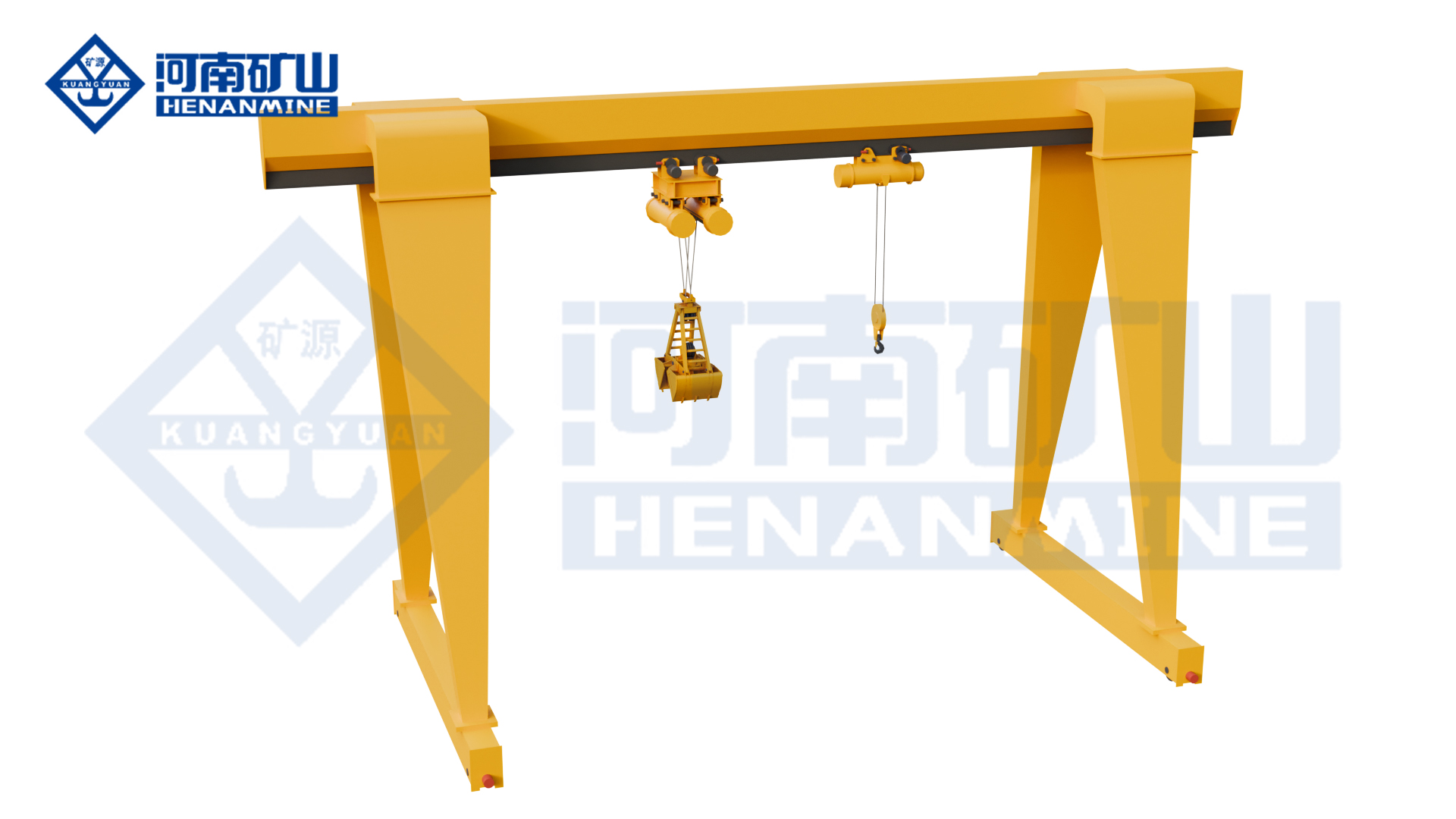
    Combine grab and hook handling on an electric-hoist gantry arrangement. Match the lifting appliance, load cases and changeover method to the outdoor handling layout.

    Lifting capacity1t – 20t
    Span6m – 30m
    Working classA5
    Technical specifications

    Define the total suspended load, duty and site conditions for your project.

    Technical specifications

    Check the load.
    Plan the configuration.

    Parameters and equipment options are matched to the application and confirmed in the technical proposal.

    Discuss your configuration
    TypeMHZE
    Product NameElectric Hoist Gantry Crane
    Rated Lifting Capacity1t – 20t
    Span6m – 30m
    Lifting Height4m – 18m
    Working ClassA5
    Grab Opening & Closing Time3-5s
    Switch ModeQuick change connecting device
    Wheel ProcessForging and rolling composite
    CouplingDrum tooth coupling
    Design FeatureModular design
    Operation ModePendant control / remote control
    Power Supply380V/50Hz; 220-660V/50-60Hz
    Protection LevelIP54
    ApplicationBulk cargo & piece goods mixed handling

    Final parameters, dimensions, wheel loads and supply scope follow the approved project specification.

    Application & operation

    Matched to the handling task.

    Mixed-material yards

    Transfer bulk materials and separately rigged unit loads within the specified area.

    Loading operations

    Coordinate pickup, discharge and vehicle positions with gantry coverage.

    Selection considerations

    Start with your operating conditions.

    01

    Load & lifting arrangement

    Specify bulk density, grab weight and maximum hook load. Include lifting-appliance weight and the required lifting positions.

    02

    Site & available space

    Provide rail span, pickup or discharge points and vehicle clearances. Coordinate the installation interfaces with the available site drawings.

    03

    Duty & control sequence

    Define changeover procedure, lifting duty and outdoor operating conditions. Identify the required movements and control interfaces in the enquiry.

    Configuration comparison

    Compare related lifting arrangements.

    Crane arrangementHandling configuration
    Grab Hook Gantry CraneCombine grab and hook handling on an electric-hoist gantry arrangement. Match the lifting appliance, load cases and changeover method to the outdoor handling layout.
    Grab And Hook Dual Purpose CraneSwitch between bulk-material pickup and hook lifting with a grab-and-hook overhead arrangement. Define each load case, the grab type and the changeover procedure for the working area.
    Single-Girder Gantry CraneCover an outdoor working area with a single-girder electric-hoist gantry crane. Coordinate span, lifting height, leg geometry and any cantilever coverage with the yard and loading route.
    Electromagnetic Hook Double Gantry CraneHandle steel products with a gantry arrangement combining hook and electromagnetic lifting functions. Define the trolley arrangement, load cases and changeover sequence for the yard.

    Operating protection & lifecycle support

    Plan beyond the equipment.

    01

    Operating protection

    Define travel limits, overload protection, traffic clearances and the outdoor operating limits for the proposed arrangement.

    02

    Installation & commissioning

    Agree rail foundations, runway alignment, wheel-load interfaces, erection access, electrical connections and commissioning responsibilities.

    03

    Inspection & spares

    Plan inspection and maintenance of grab connections, hoist equipment and travel mechanisms. Agree service access, documentation and the required spare-parts scope.

    Questions before the order

    Clarify the details
    that shape the crane.

    What information is needed for a grab hook gantry crane quotation?+

    Provide bulk density, grab weight and maximum hook load; rail span, pickup or discharge points and vehicle clearances; and changeover procedure, lifting duty and outdoor operating conditions. Include drawings and the project destination when available.

    Can the same rated capacity be assumed for every operating mode?+

    Provide the appliance dead weight and the material or unit-load weight for each mode. The proposal defines the permissible suspended loads and changeover arrangement.

    What installation and support scope should be agreed?+

    Agree rail foundations, runway alignment, wheel-load interfaces, erection access, electrical connections and commissioning responsibilities. Specify the documentation, training and spare-parts support needed for the project.

    Related equipment

    Explore the alternatives.

    Let’s discuss your project

    The right crane starts
    with your lifting task.

    Share bulk density, grab weight and maximum hook load, together with your site layout and operating cycle.
    info@hnksglobal.com
  • 5-Ton Bridge Crane Projects: Hook Coverage and Runway Interfaces

    5-Ton Bridge Crane Projects: Hook Coverage and Runway Interfaces

    Selection guide

    5-Ton Bridge Crane Projects: Hook Coverage and Runway Interfaces

    A five-ton bridge crane must reach the specified positions within the building. Show the runway geometry, obstructions and load transfer points so the supplier can check the proposed hoist and structural arrangement.

    Henan Mine CraneSelection guide · Updated 2026Crane selection, project scope and operating requirements
    Henan Mine Crane 5 Ton Overhead Crane
    Henan Mine Crane 5 Ton Overhead Crane
    Project planning notes

    Key points for this crane project.

    1. Plot the five-ton handling stations
    2. Review side and end approaches
    3. Coordinate the runway interface
    Read the technical guide

    Plot the five-ton handling stations

    On the workshop plan, mark every pickup and placement station. Show the load position at machines, storage areas and transport vehicles rather than mark only a general rectangle of coverage.

    Add the attachment dimensions and load orientation where they influence access. Check whether the component must rotate or pass through a restricted route between stations.

    Review side and end approaches

    The hook cannot normally reach every point inside the outside dimensions of the crane bay. Ask the supplier to show the closest permitted hook positions at both sides and both ends of travel.

    Overlay those positions on the handling plan. Where a station falls outside the proposed envelope, discuss a layout change or a different arrangement before assuming an extension of travel will solve the problem.

    Coordinate the runway interface

    Provide rail or beam details, support positions and relevant survey information. Request the proposed crane weight, wheel arrangement and reactions for review by the party responsible for the runway structure.

    When replacing an existing crane, compare the actual new interface with the available runway. An unchanged five-ton capacity does not establish identical wheel loads, spacing or clearance.

    Check vertical access and obstructions

    Show the required highest and lowest hook positions on a cross-section. Include roof steelwork, services and the height of the load and attachment above the pickup surface.

    Review maintenance access around the hoist and bridge as well as operating clearance. Identify how components can be inspected or removed without relying on a space that is occupied by the building or production equipment.

    Approve coverage with the interface drawing

    Keep the agreed hook envelope and runway interface on controlled drawings. Record any operating restrictions alongside them so production and installation teams use the same assumptions.

    For a proposal from Henan Mine Crane, send the station plan and runway information together. The selection discussion can then focus on the five-ton crane’s practical reach and structural interfaces.

    Discuss the crane arrangement for your project.

    A five-ton bridge crane must reach the specified positions within the building. Show the runway geometry, obstructions and load transfer points so the supplier can check the proposed hoist and structural arrangement. Share the load, available drawings, working cycle and site conditions with Henan Mine Crane so the required configuration and supply boundary can be discussed.

    Related crane configurations

    5 Ton Overhead Crane

    View product parameters
    Lifting capacity: 5 tSpan: Project-specificLifting height: Project-specific; confirm the required vertical hook travel and available headroom

    Specify a 5 t overhead crane around the load, building and operating cycle. Compare single-girder, double-girder and underhung arrangements for your workshop.

    Grab And Hook Dual Purpose Crane

    View product parameters
    Lifting capacity: 5 – 16 tSpan: 10.5 – 31.5 mLifting height: 6 – 20 m

    Switch between bulk-material pickup and hook lifting with a grab-and-hook overhead arrangement. Define each load case, the grab type and the changeover procedure for the working area.

    Updated 2026 · Henan Mine Crane

  • Grab And Hook Dual Purpose Crane

    Grab And Hook Dual Purpose Crane

    Overhead Cranes / Henan Mine Crane

    Grab And Hook Dual Purpose Crane

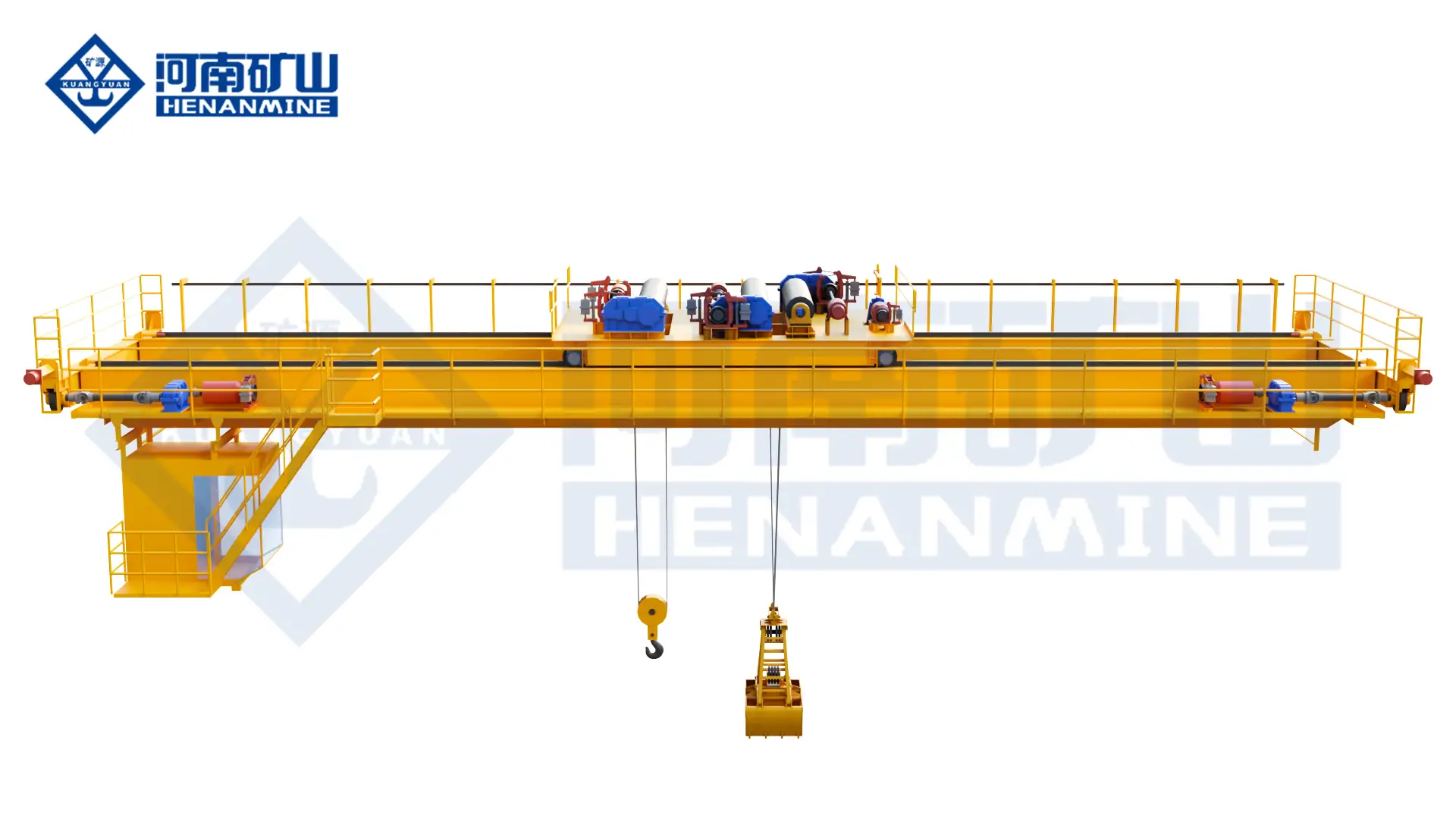
    Switch between bulk-material pickup and hook lifting with a grab-and-hook overhead arrangement. Define each load case, the grab type and the changeover procedure for the working area.

    Lifting capacity5 – 16 t
    Span10.5 – 31.5 m
    Working classA5 – A6
    Technical specifications

    Define the total suspended load, duty and site conditions for your project.

    Technical specifications

    Check the load.
    Plan the configuration.

    Parameters and equipment options are matched to the application and confirmed in the technical proposal.

    Discuss your configuration
    Capacity5 – 16 t
    Span10.5 – 31.5 m
    Lifting height6 – 20 m
    Working classA5 – A6
    Hoisting speed15 – 40 m/min
    Trolley travel5 – 20 m/min
    Crane travel10 – 40 m/min
    Power supply220-690V, 50/60Hz
    ControlsWireless Remote / Cabin Control
    Lifting arrangementDetachable Hydraulic Grab

    Final parameters, dimensions, wheel loads and supply scope follow the approved project specification.

    Application & operation

    Matched to the handling task.

    Bulk materials

    Transfer declared loose materials between receiving and discharge positions.

    Unit loads

    Handle separately rigged components using the specified hook arrangement.

    Selection considerations

    Start with your operating conditions.

    01

    Load & lifting arrangement

    Specify bulk density, material size and separately rigged load cases. Include lifting-appliance weight and the required lifting positions.

    02

    Site & available space

    Provide pickup points, discharge height and hook coverage. Coordinate the installation interfaces with the available site drawings.

    03

    Duty & control sequence

    Define grab type, appliance weight and mode-change requirements. Identify the required movements and control interfaces in the enquiry.

    Configuration comparison

    Compare related lifting arrangements.

    Crane arrangementHandling configuration
    Grab And Hook Dual Purpose CraneSwitch between bulk-material pickup and hook lifting with a grab-and-hook overhead arrangement. Define each load case, the grab type and the changeover procedure for the working area.
    Intelligent Grab Overhead CraneHandle bulk materials with a grab overhead crane configured for the material and working cycle. Select the grab volume, lifting arrangement and operating sequence from pickup and discharge conditions.
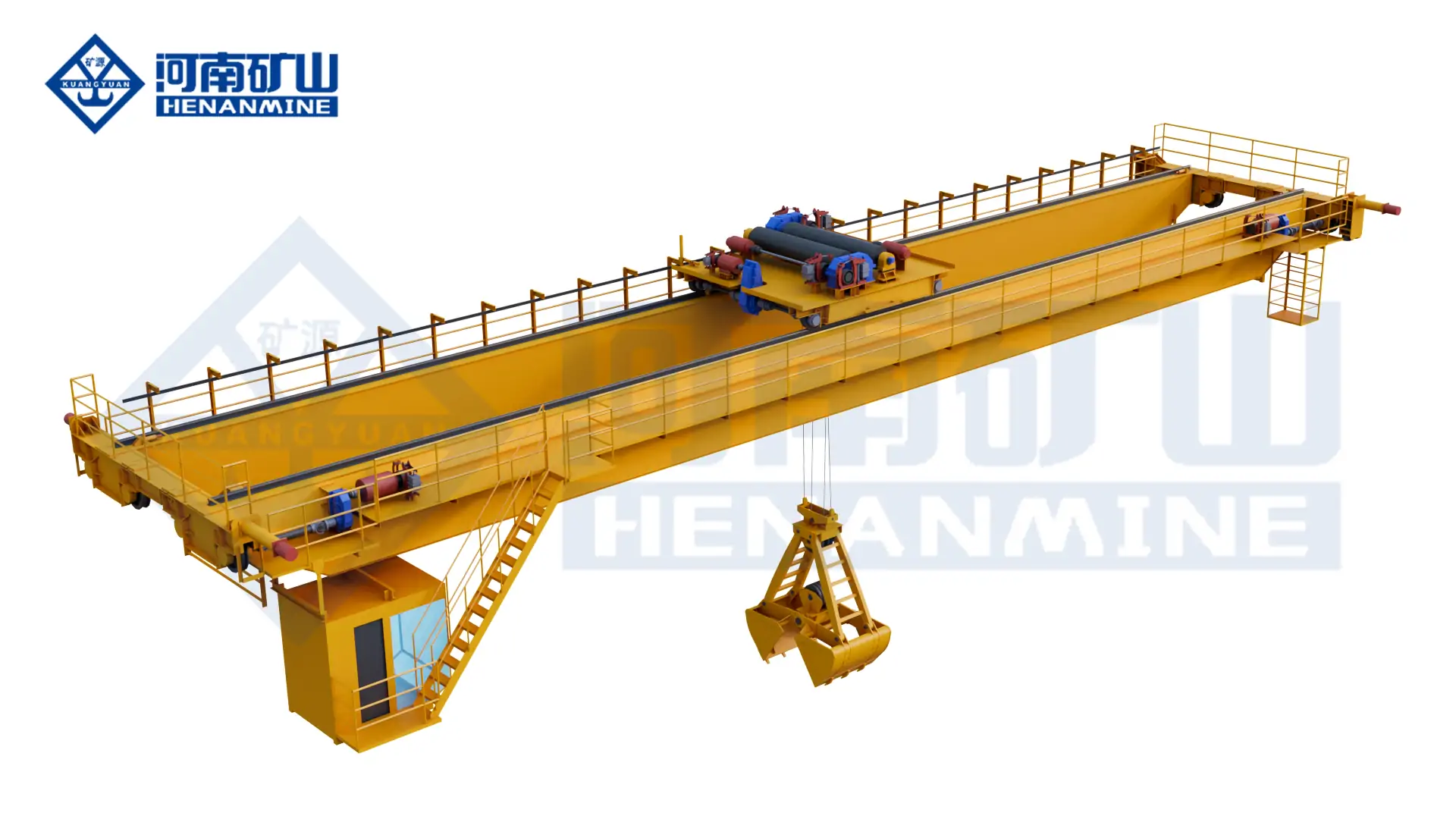
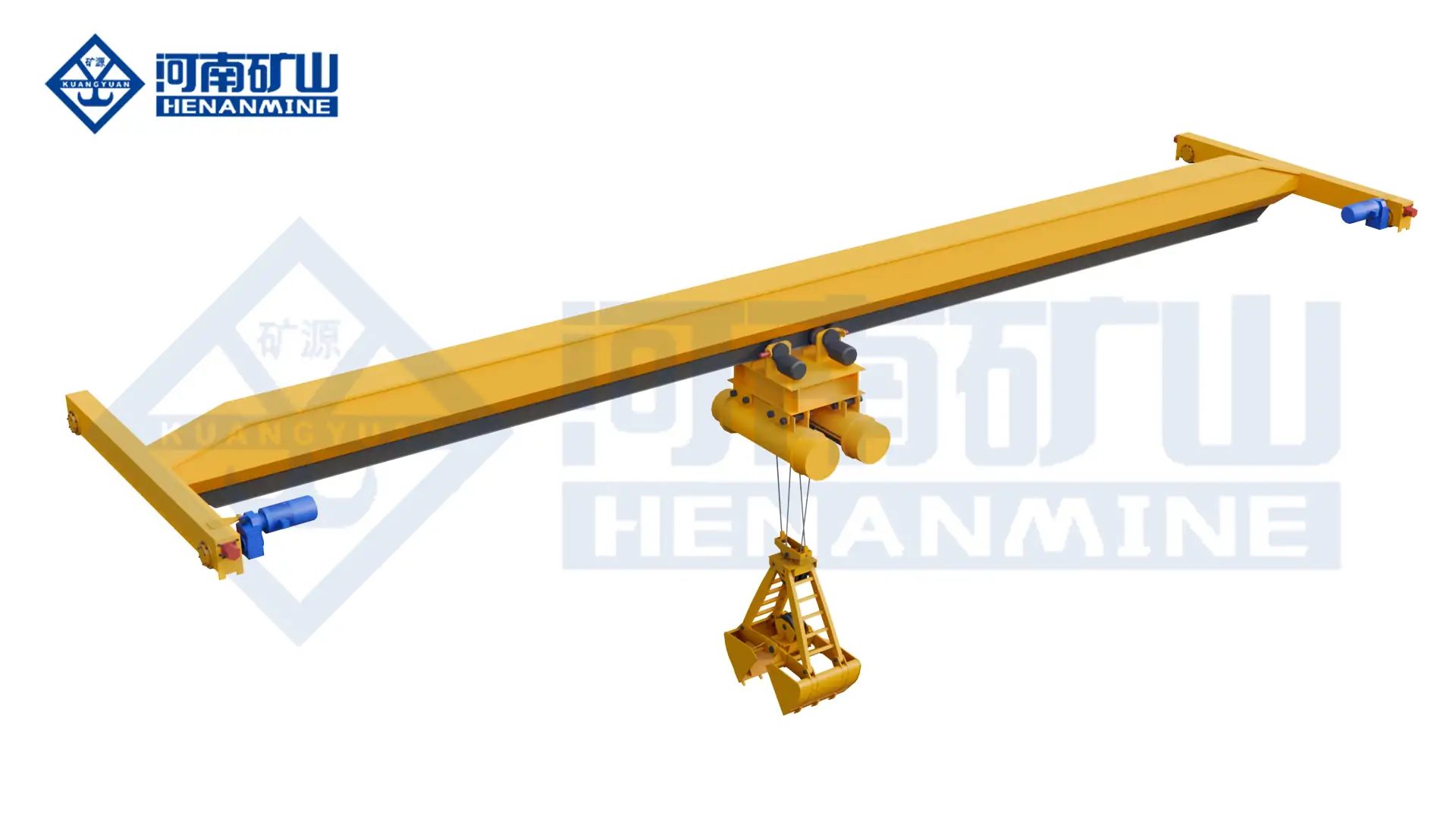
    Single Girder Grab CraneLift loose bulk material with an LDZ single-girder grab crane. Select the grab, complete suspended load and pickup or discharge geometry around the material and working cycle.
    Grab Hook Gantry CraneCombine grab and hook handling on an electric-hoist gantry arrangement. Match the lifting appliance, load cases and changeover method to the outdoor handling layout.

    Operating protection & lifecycle support

    Plan beyond the equipment.

    01

    Operating protection

    Confirm overload protection, travel limits, brakes, emergency controls and the required process interlocks for the declared lifting task.

    02

    Installation & commissioning

    Agree runway reactions, structural interfaces, electrical connections, assembly, inspection and commissioning responsibilities before delivery.

    03

    Inspection & spares

    Plan inspection and maintenance of grab mechanisms, hook connections and hoist rope systems. Agree service access, documentation and the required spare-parts scope.

    Questions before the order

    Clarify the details
    that shape the crane.

    What information is needed for a grab and hook dual purpose crane quotation?+

    Provide bulk density, material size and separately rigged load cases; pickup points, discharge height and hook coverage; and grab type, appliance weight and mode-change requirements. Include drawings and the project destination when available.

    How is the grab capacity selected?+

    Grab volume and dead weight must be checked against material bulk density, pickup conditions and the permissible suspended load. Define the hook load separately for the alternate operating mode.

    What installation and support scope should be agreed?+

    Agree runway reactions, structural interfaces, electrical connections, assembly, inspection and commissioning responsibilities before delivery. Specify the documentation, training and spare-parts support needed for the project.

    Related equipment

    Explore the alternatives.

    Let’s discuss your project

    The right crane starts
    with your lifting task.

    Share bulk density, material size and separately rigged load cases, together with your site layout and operating cycle.
    info@hnksglobal.com
  • Galvanizing Process Overhead Crane

    Galvanizing Process Overhead Crane

    Overhead Cranes / Henan Mine Crane

    Galvanizing Process Overhead Crane

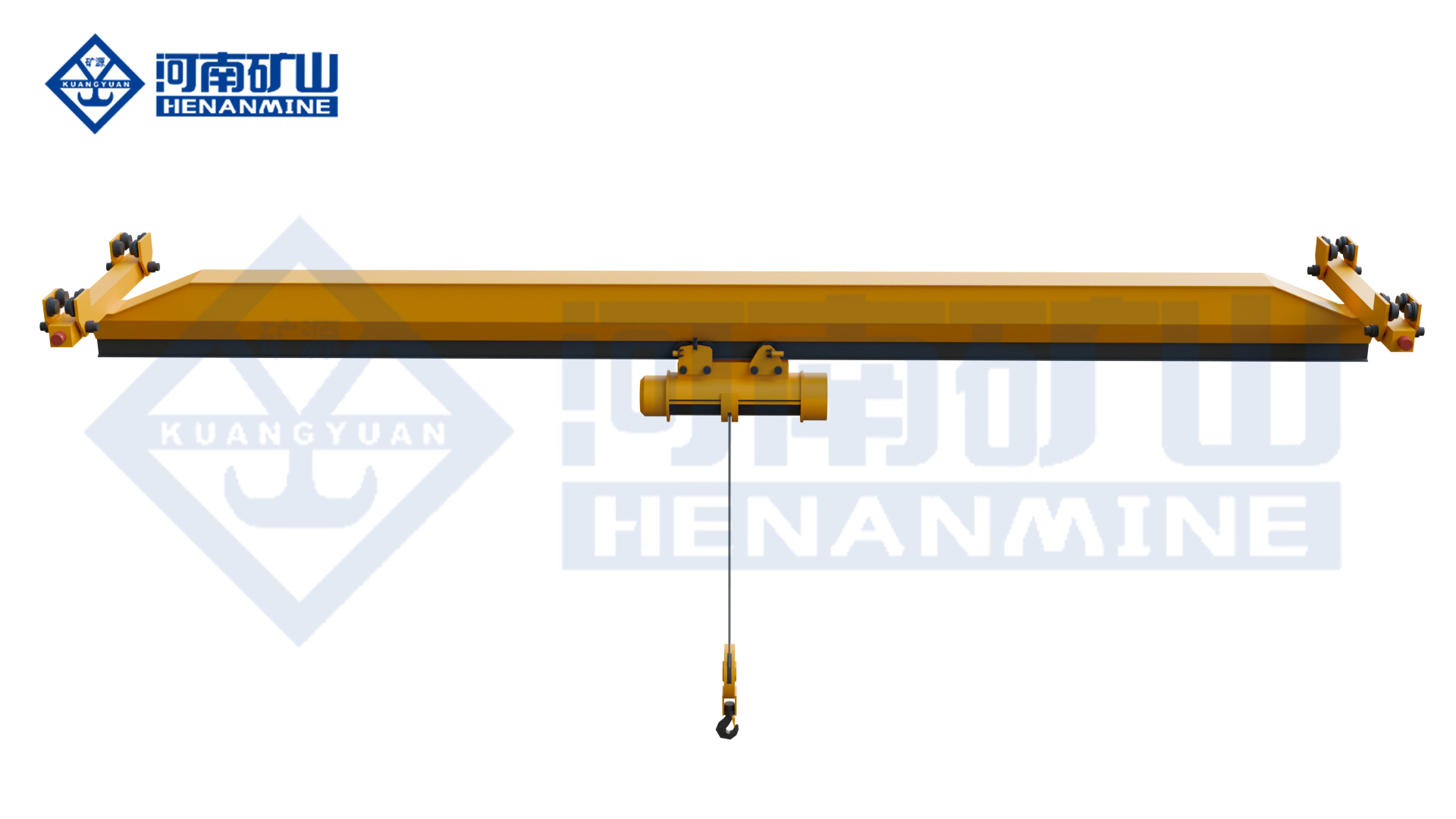
    Transfer suspended workpieces through a galvanizing process with a crane matched to the line. Coordinate lifting points, corrosive exposure, tank geometry and the required handling sequence.

    Lifting capacity5 – 32 t
    Span10.5 – 31.5 m
    Working classA5 – A6
    Technical specifications

    Define the total suspended load, duty and site conditions for your project.

    Technical specifications

    Check the load.
    Plan the configuration.

    Parameters and equipment options are matched to the application and confirmed in the technical proposal.

    Discuss your configuration
    Capacity5 – 32 t
    Span10.5 – 31.5 m
    Lifting height6 – 24 m
    Working classA5 – A6
    Hoisting speed5 – 25 m/min
    Crane travel8 – 40 m/min
    Power supply220-690V, 50/60Hz
    ControlsWireless Remote / Cabin Control

    Final parameters, dimensions, wheel loads and supply scope follow the approved project specification.

    Application & operation

    Matched to the handling task.

    Galvanizing lines

    Move suspended workpieces between treatment and handling positions.

    Long fabricated products

    Coordinate lifting points, orientation and clearances around process tanks.

    Selection considerations

    Start with your operating conditions.

    01

    Load & lifting arrangement

    Specify workpiece dimensions, lifting points and suspended fixture weight. Include lifting-appliance weight and the required lifting positions.

    02

    Site & available space

    Provide tank positions, clearances and the complete process travel path. Coordinate the installation interfaces with the available site drawings.

    03

    Duty & control sequence

    Define corrosive exposure, heat, transfer timing and control interfaces. Identify the required movements and control interfaces in the enquiry.

    Configuration comparison

    Compare related lifting arrangements.

    Crane arrangementHandling configuration
    Galvanizing Process Overhead CraneTransfer suspended workpieces through a galvanizing process with a crane matched to the line. Coordinate lifting points, corrosive exposure, tank geometry and the required handling sequence.
    Double Trolley Electric Hoist CraneLift long components or serve separate working positions with two electric-hoist trolleys on one bridge. Trolley spacing, load sharing and independent or coordinated operation are specified for the task.
    Three Trolley Electric Hoist CraneCoordinate three electric-hoist trolleys for long components or several workshop lifting positions. Define hook loads, trolley spacing and permitted individual or combined movements.
    Modular Electric Hoist Overhead CraneUse a modular electric-hoist overhead crane for production, assembly and maintenance lifting. Select the hoist arrangement, hook coverage and movement control for the workshop and operating cycle.

    Operating protection & lifecycle support

    Plan beyond the equipment.

    01

    Operating protection

    Confirm overload protection, travel limits, brakes, emergency controls and the required process interlocks for the declared lifting task.

    02

    Installation & commissioning

    Agree runway reactions, structural interfaces, electrical connections, assembly, inspection and commissioning responsibilities before delivery.

    03

    Inspection & spares

    Plan inspection and maintenance of lifting fixtures, exposed electrical equipment and corrosion protection. Agree service access, documentation and the required spare-parts scope.

    Questions before the order

    Clarify the details
    that shape the crane.

    What information is needed for a galvanizing process overhead crane quotation?+

    Provide workpiece dimensions, lifting points and suspended fixture weight; tank positions, clearances and the complete process travel path; and corrosive exposure, heat, transfer timing and control interfaces. Include drawings and the project destination when available.

    Why is the process sequence needed?+

    Tank entry, withdrawal, transfer and holding positions determine the movement and control requirements. Include fixture details and any synchronised lifting or line interlocks.

    What installation and support scope should be agreed?+

    Agree runway reactions, structural interfaces, electrical connections, assembly, inspection and commissioning responsibilities before delivery. Specify the documentation, training and spare-parts support needed for the project.

    Related equipment

    Explore the alternatives.

    Let’s discuss your project

    The right crane starts
    with your lifting task.

    Share workpiece dimensions, lifting points and suspended fixture weight, together with your site layout and operating cycle.
    info@hnksglobal.com
  • 4-Ton Gantry Crane Enquiries: Confirm the Load and Site Arrangement

    4-Ton Gantry Crane Enquiries: Confirm the Load and Site Arrangement

    Selection guide

    4-Ton Gantry Crane Enquiries: Confirm the Load and Site Arrangement

    A four-ton handling requirement should be developed into a complete operating brief. Describe the attachments, working envelope, supporting surface and required movements so a suitable configuration can be proposed.

    Henan Mine CraneSelection guide · Updated 2026Crane selection, project scope and operating requirements
    Henan Mine Crane overhead crane inside a workshop bay
    Henan Mine Crane overhead crane inside a workshop bay
    Project planning notes

    Key points for this crane project.

    1. Turn the four-ton task into a complete brief
    2. Decide what movement the site needs
    3. Describe the support surface
    Read the technical guide

    Turn the four-ton task into a complete brief

    Describe the heaviest item, its dimensions and the lifting attachment. Confirm the unit used for the load and identify the required maximum combined suspended load for engineering review.

    Explain whether the work is an occasional maintenance lift, repeated production transfer or movement between storage positions. These tasks can require different travel, control and service arrangements even when the load requirement is similar.

    Decide what movement the site needs

    Mark the pickup and destination points and explain whether the crane must travel while carrying a load. Identify any restricted routes, turns, doors or shared work areas.

    Discuss a stationary, rail-travelling or other engineered arrangement against the actual operating brief. Do not assume a portable-looking gantry is suitable for loaded travel or that an advertised capacity applies under every movement condition.

    Describe the support surface

    Provide information about the floor or ground, available foundations and route condition. Show joints, slopes, drains and other discontinuities where they affect the proposed travel path.

    Ask the supplier for the support and travel requirements of the selected arrangement. The site engineer should review the actual reactions and interface rather than infer suitability from the gantry’s rated load.

    Check the lifting envelope

    State the required clear span and hook levels. Include the height of the load, attachment and any equipment it must clear during transfer.

    Compare the crane’s legs and other structural parts with vehicle and pedestrian routes. Identify where the gantry will be parked and how routine inspection or component replacement will be performed.

    Send an enquiry that exposes assumptions

    Include a site sketch, photographs, load information and a short description of the intended movements. Identify any dimensions or floor data still awaiting confirmation.

    Ask Henan Mine Crane to identify the proposed arrangement, permitted operation, support requirements and supply scope. This is a stronger starting point than selecting a four-ton gantry by appearance alone.

    Discuss the crane arrangement for your project.

    A four-ton handling requirement should be developed into a complete operating brief. Describe the attachments, working envelope, supporting surface and required movements so a suitable configuration can be proposed. Share the load, available drawings, working cycle and site conditions with Henan Mine Crane so the required configuration and supply boundary can be discussed.

    Related crane configurations

    Explore crane product families and technical parameters ↗

    Updated 2026 · Henan Mine Crane

  • Four Beam Casting Crane

    Four Beam Casting Crane

    Overhead Cranes / Henan Mine Crane

    Four Beam Casting Crane

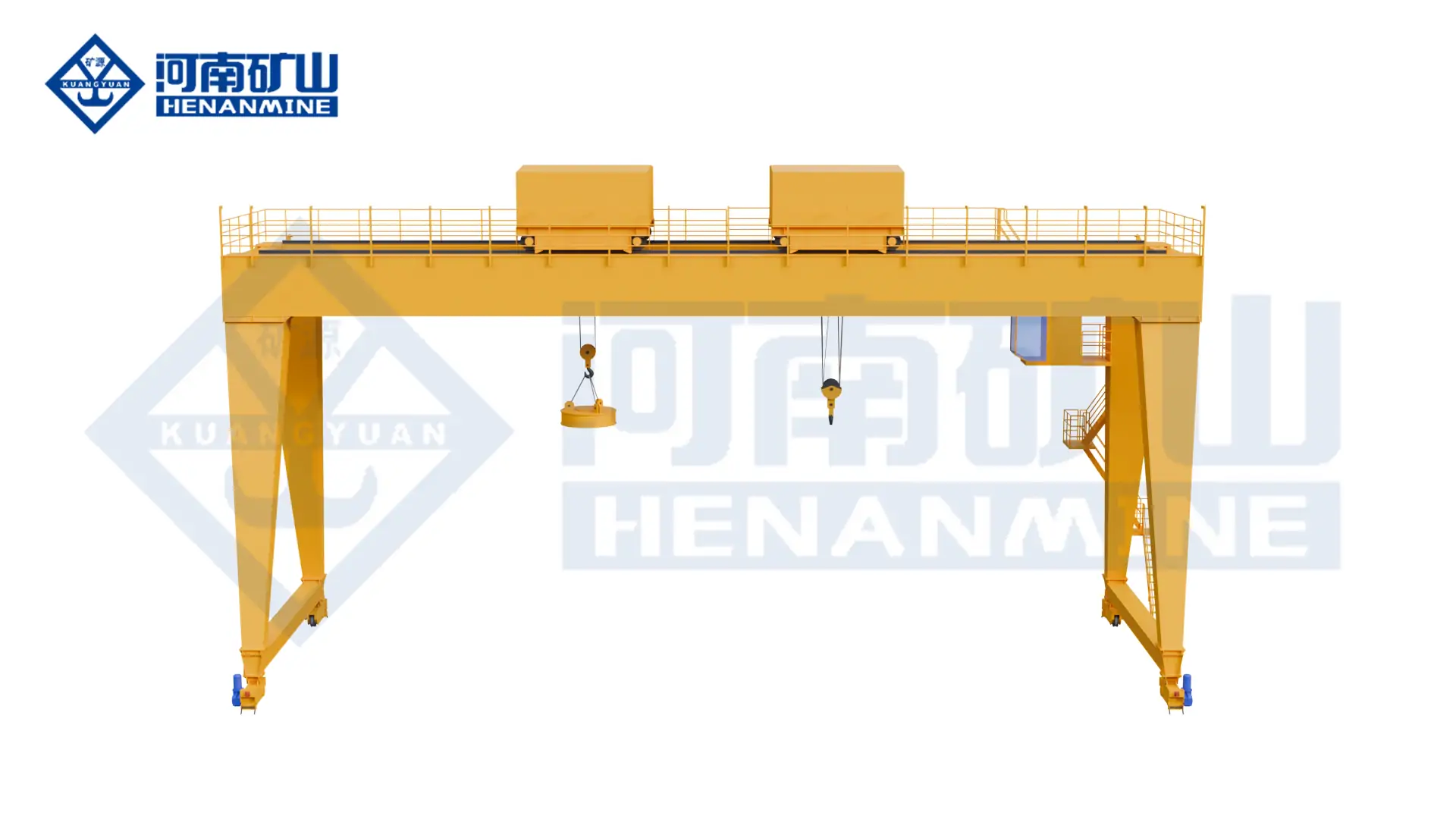
    Handle molten-metal ladles with a YZS four-beam casting crane. Main and auxiliary trolley functions, thermal exposure and the lifting sequence are selected for the casting process.

    Lifting capacity125/32–320/80 t
    Span10m~40m
    Working classA6~A8
    Technical specifications

    Define the total suspended load, duty and site conditions for your project.

    Technical specifications

    Check the load.
    Plan the configuration.

    Parameters and equipment options are matched to the application and confirmed in the technical proposal.

    Discuss your configuration
    ModelYZS
    Rated Lifting Capacity125/32–320/80 t
    Structural FormFour beam four/six rail, double trolley
    Working ClassA6~A8
    Span10m~40m
    Lifting Height6m~30m
    Lifting DeviceMain trolley: gantry type plate hook; Auxiliary trolley: forged hook
    Control SystemPLC module + HMI touch screen + WLK master controller
    Hoisting Anti-collision ProtectionRotary limit (two-level protection) + weight hammer limit
    Control ModePLC + frequency converter communication control
    Safety SystemFull vehicle safety monitoring system
    Heat Insulation ProtectionMulti-layer high-temperature heat insulation material for key parts
    Structural DesignFinite element analysis optimized stress distribution
    Power Supply380V/50Hz; 220V-660V/50Hz/60Hz
    Protection LevelIP60

    Final parameters, dimensions, wheel loads and supply scope follow the approved project specification.

    Application & operation

    Matched to the handling task.

    Steelmaking and casting

    Transfer ladles between furnace, receiving and casting positions.

    Ladle handling

    Coordinate the main lifting appliance and the required auxiliary movement.

    Selection considerations

    Start with your operating conditions.

    01

    Load & lifting arrangement

    Specify ladle gross load, trunnion geometry and auxiliary lifting task. Include lifting-appliance weight and the required lifting positions.

    02

    Site & available space

    Provide process layout, runway geometry and maintenance access. Coordinate the installation interfaces with the available site drawings.

    03

    Duty & control sequence

    Define heat exposure, operating cycle and required monitoring or interlocks. Identify the required movements and control interfaces in the enquiry.

    Configuration comparison

    Compare related lifting arrangements.

    Crane arrangementHandling configuration
    Four Beam Casting CraneHandle molten-metal ladles with a YZS four-beam casting crane. Main and auxiliary trolley functions, thermal exposure and the lifting sequence are selected for the casting process.
    Double Girder Casting CraneLift and transfer molten-metal ladles with a YZ casting crane configured for the full suspended load and casting process. Review ladle interfaces, thermal exposure and the operating sequence together.
    Metallurgical Bridge CraneLift hot process loads with a YZD metallurgical bridge arrangement selected for the complete load and thermal conditions. Specify the lifting appliance, duty cycle and operating-protection requirements.
    YX Metallurgical Bridge CraneLift and turn material boxes with a YX metallurgical crane arrangement. The box interface, centre of gravity, turnover sequence and thermal conditions determine the lifting system.

    Operating protection & lifecycle support

    Plan beyond the equipment.

    01

    Operating protection

    Confirm overload protection, travel limits, brakes, emergency controls and the required process interlocks for the declared lifting task.

    02

    Installation & commissioning

    Agree runway reactions, structural interfaces, electrical connections, assembly, inspection and commissioning responsibilities before delivery.

    03

    Inspection & spares

    Plan inspection and maintenance of ladle lifting connections, hoisting brakes and thermal protection. Agree service access, documentation and the required spare-parts scope.

    Questions before the order

    Clarify the details
    that shape the crane.

    What information is needed for a four beam casting crane quotation?+

    Provide ladle gross load, trunnion geometry and auxiliary lifting task; process layout, runway geometry and maintenance access; and heat exposure, operating cycle and required monitoring or interlocks. Include drawings and the project destination when available.

    What information defines the main and auxiliary arrangements?+

    Provide the ladle drawing, complete suspended load and the auxiliary handling sequence. Trolley functions, hook ratings and permitted operating combinations are defined in the approved specification.

    What installation and support scope should be agreed?+

    Agree runway reactions, structural interfaces, electrical connections, assembly, inspection and commissioning responsibilities before delivery. Specify the documentation, training and spare-parts support needed for the project.

    Related equipment

    Explore the alternatives.

    Let’s discuss your project

    The right crane starts
    with your lifting task.

    Share ladle gross load, trunnion geometry and auxiliary lifting task, together with your site layout and operating cycle.
    info@hnksglobal.com
  • Explosion-Proof Suspended Overhead Crane

    Explosion-Proof Suspended Overhead Crane

    Overhead Cranes / Henan Mine Crane

    Explosion-Proof Suspended Overhead Crane

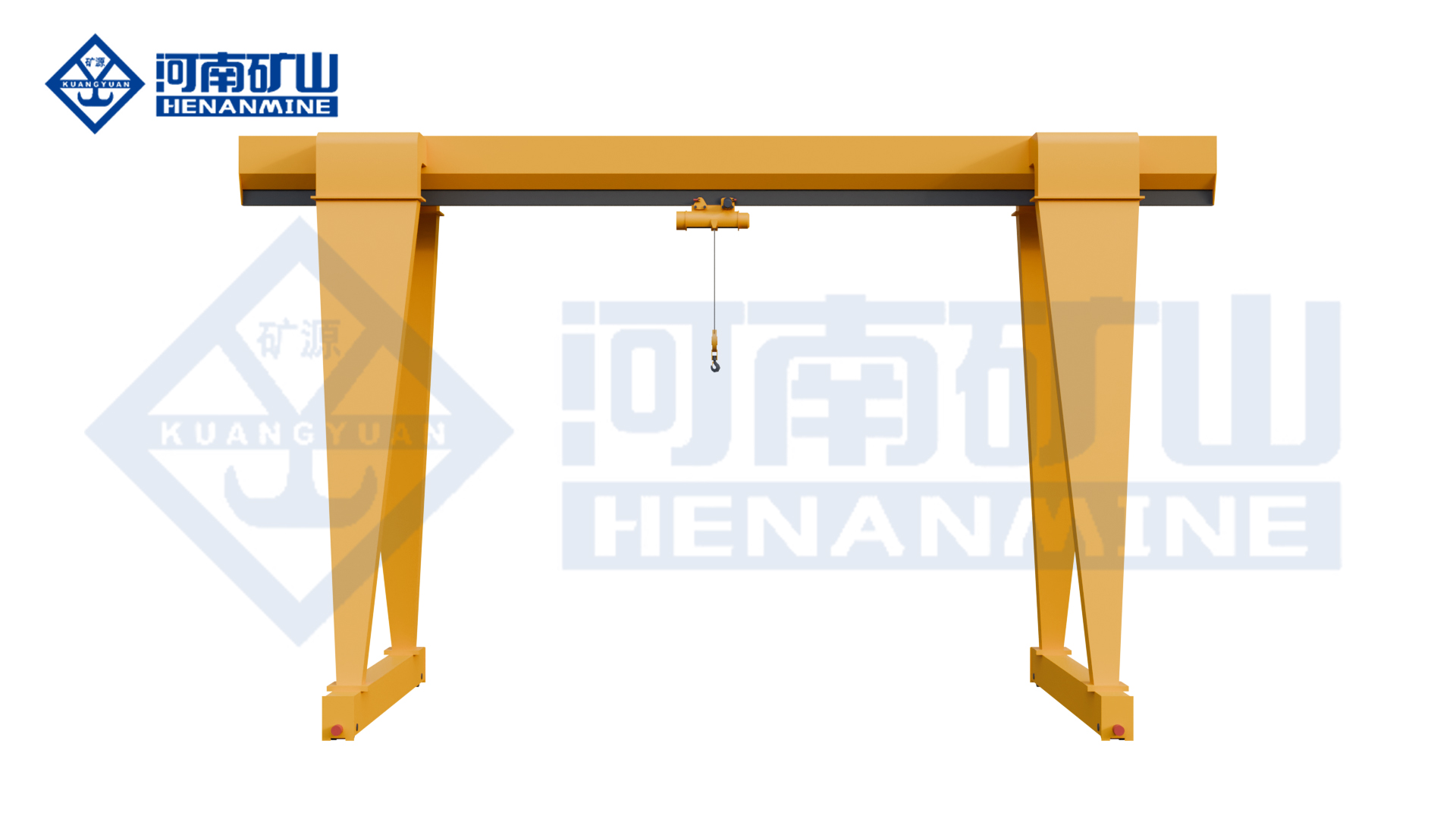
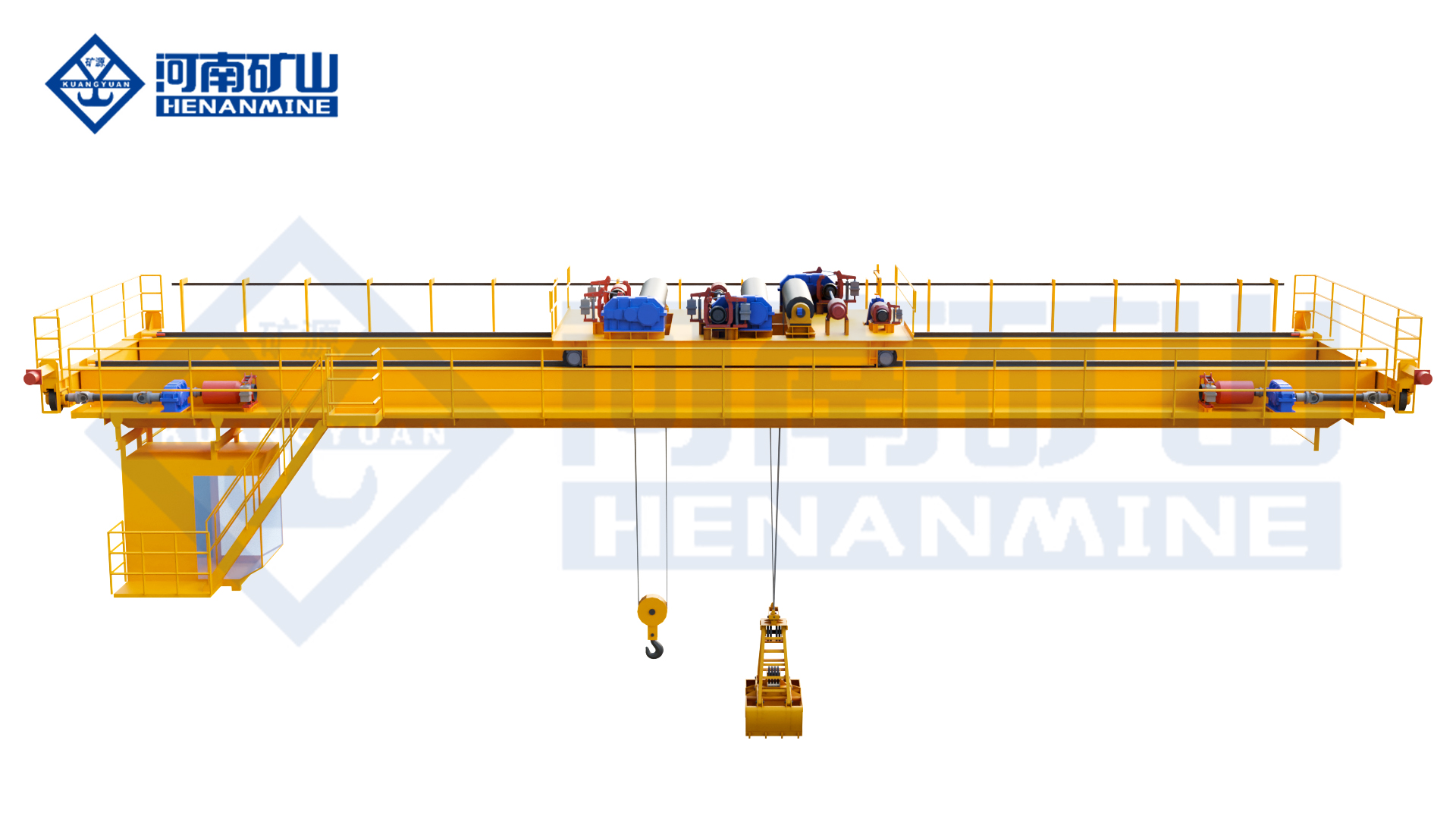
    Provide suspended electric-hoist lifting within a declared hazardous area. Review the overhead support, lifting duty and protection of the hoist, travel drives and controls as one system.

    Lifting capacity1t – 10t
    Span7.5m – 28.5m
    Working classA3 – A5
    Technical specifications

    Define the total suspended load, duty and site conditions for your project.

    Technical specifications

    Check the load.
    Plan the configuration.

    Parameters and equipment options are matched to the application and confirmed in the technical proposal.

    Discuss your configuration
    Rated Lifting Capacity1t – 10t
    Basic Span7.5m – 28.5m
    Lifting Height6m – 20m
    Hazardous-area configurationMatched to the declared area classification, material group and temperature requirements
    Hoist TypeSpecial explosion-proof electric hoist
    Drive MotorExplosion-proof type motor
    Working ClassA3 – A5
    Lifting Speed2m/min – 10m/min
    Crane Travel Speed15m/min – 25m/min
    Control ModeExplosion-proof ground handle / wireless remote
    Power Supply380V/50Hz; 220V-660V/60Hz
    Protection LevelIP55 (IP65 optional)
    Working Temperature-20℃ ~ 45℃
    Structural FeatureModular assembly

    Final parameters, dimensions, wheel loads and supply scope follow the approved project specification.

    Application & operation

    Matched to the handling task.

    Classified workshops

    Provide overhead lifting coverage beneath a suspended runway.

    Process access

    Coordinate the hook positions with maintenance and production equipment.

    Selection considerations

    Start with your operating conditions.

    01

    Load & lifting arrangement

    Specify suspended load, lifting height and lifting attachment. Include lifting-appliance weight and the required lifting positions.

    02

    Site & available space

    Provide runway supports, building reactions and available clearances. Coordinate the installation interfaces with the available site drawings.

    03

    Duty & control sequence

    Define gas or dust classification, temperature limits and operating duty. Identify the required movements and control interfaces in the enquiry.

    Configuration comparison

    Compare related lifting arrangements.

    Crane arrangementHandling configuration
    Explosion-Proof Suspended Overhead CraneProvide suspended electric-hoist lifting within a declared hazardous area. Review the overhead support, lifting duty and protection of the hoist, travel drives and controls as one system.
    Explosion Proof Electric Hoist Bridge CraneUse an electric-hoist bridge arrangement for a declared hazardous area. The hoist, drives, controls and electrical installation are specified for the area classification and lifting duty.
    Explosion-Proof Bridge CraneUse a QB bridge crane for lifting in a declared explosive-gas environment. Select the load rating, main and auxiliary arrangement, electrical protection and control mode for the project.
    Dust-Proof Explosion-Proof Overhead CraneConfigure suspended lifting for a declared combustible-dust environment. Dust classification, surface-temperature limits and enclosure requirements form part of the crane and hoist specification.

    Operating protection & lifecycle support

    Plan beyond the equipment.

    01

    Operating protection

    Confirm overload protection, travel limits, brakes, emergency controls and the required process interlocks for the declared lifting task.

    02

    Installation & commissioning

    Agree runway reactions, structural interfaces, electrical connections, assembly, inspection and commissioning responsibilities before delivery.

    03

    Inspection & spares

    Plan inspection and maintenance of suspension hardware, protected drives and cable systems. Agree service access, documentation and the required spare-parts scope.

    Questions before the order

    Clarify the details
    that shape the crane.

    What information is needed for a explosion-proof suspended overhead crane quotation?+

    Provide suspended load, lifting height and lifting attachment; runway supports, building reactions and available clearances; and gas or dust classification, temperature limits and operating duty. Include drawings and the project destination when available.

    What is required from the building designer?+

    Provide runway and supporting-structure information for review against the proposed crane reactions and clearances. The support arrangement and hazardous-area installation must be coordinated.

    What installation and support scope should be agreed?+

    Agree runway reactions, structural interfaces, electrical connections, assembly, inspection and commissioning responsibilities before delivery. Specify the documentation, training and spare-parts support needed for the project.

    Related equipment

    Explore the alternatives.

    Let’s discuss your project

    The right crane starts
    with your lifting task.

    Share suspended load, lifting height and lifting attachment, together with your site layout and operating cycle.
    info@hnksglobal.com