博客

  • Chinese Crane Manufacturer | Custom Lifting Solutions for Georgia

    Chinese Crane Manufacturer | Custom Lifting Solutions for Georgia

    Chinese Crane Manufacturer | Custom Lifting Solutions for Georgia

    In recent years, Georgia, as a transportation hub in the Caucasus region, has been steadily increasing its demand for lifting equipment with the increase of trade volume in the middle corridor and the concentrated landing of infrastructure projects.Many China crane manufacturers are paying close attention to this market, but they can’t rely on the whole category to distribute goods, but have to match the real local project demand.
    As a crane manufacturer exporting all the year round, Henan Mine Crane has contacted many Georgian engineers, logistics parks and factory customers. On the whole, the local demand is concentrated in industrial workshop, infrastructure construction, logistics storage and port upgrading, and the equipment adapted to different scenarios varies greatly.This article explains clearly the most adaptable types of equipment, procurement precautions and market opportunities. Whether it is local buyers looking for sources of goods or domestic manufacturers doing export planning, there can be references.


    Quick conclusion: Which type of China crane is best for Georgia

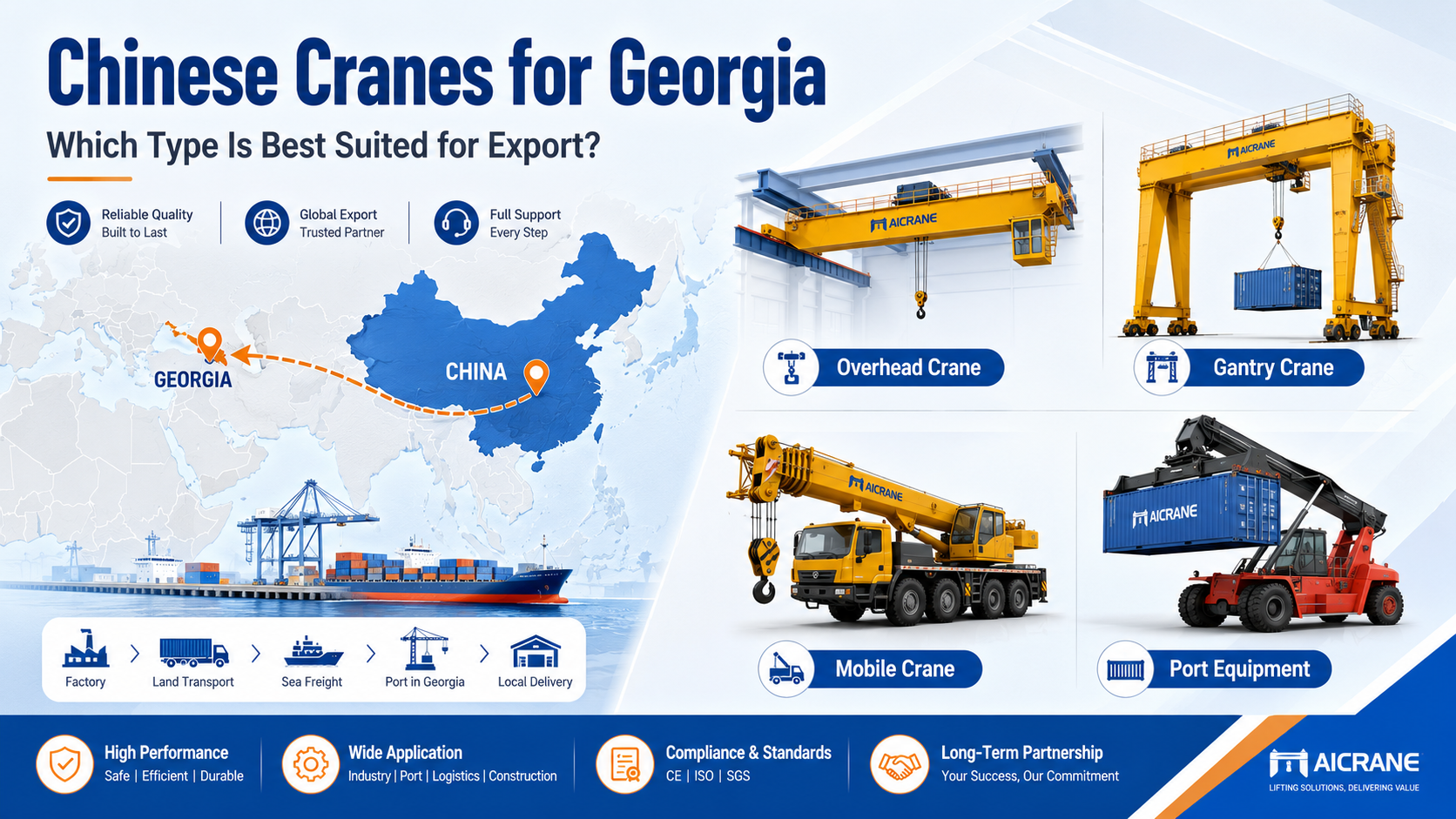
    Facing the Georgian market, bridge cranes and gantry cranes made in China are the most widely applicable categories, which can be used in factories, warehouses and infrastructure prefabrication yards; truck cranes and tower cranes are suitable for road and housing construction projects; container equipment such as port cranes, RTG, RMG and front cranes belong to long-term incremental opportunities, which will follow the expansion of local ports and logistics parks.
    The specific selection shall be determined in combination with the project type, lifting weight, working condition environment, certification requirements and after-sales requirements.

    Chinese Cranes for Georgia

    Why Georgia is a potential market for crane exports

    Strategic location drives logistics demand

    Georgia, which connects Asia, the South Caucasus, the Black Sea and Europe, is a key node in the intermediate corridor.The World Bank recently approved a special loan of US $372 million to support the local railway freight capacity, improve road connection and strengthen the positioning of regional trade hub.Transit trade and local logistics synchronous growth, the construction of logistics park, warehousing, multimodal transport station, directly drive the demand for logistics lifting equipment.

    Centralized release of construction equipment demand for capital construction projects

    At present, there are several large-scale infrastructure projects in the local area: upgrading of east-west expressway, Kvesheti-Kobi north-south corridor including tunnel and bridge project, Tbilisi Ring Road, Natakhtari-Zhinvali new highway, as well as a large number of bridge and tunnel supporting projects.
    These projects will generate a large number of mobile cranes, gantry cranes, bridge erecting machines and construction hoisting equipment procurement needs, and the financial support of ADB and the World Bank also makes the project landing more secure.

    Port expansion brings long-term incremental opportunities

    The Anaklia Deepwater Port has officially entered the construction phase in 2026, with breakwater and dredging works progressing, and is expected to welcome the first cargo ship in 2029.The project adopts the landlord model, the port infrastructure is owned by the state, and the terminal operators are recruited from the world. China enterprises can participate in the equipment supply link.
    The planned capacity of Phase I will be increased with the cargo volume of the middle corridor, followed by Phase II expansion, and the upgrading of the existing wave season and Batumi Port will be superimposed. In the future, the equipment demand for quay crane, yard gantry crane, front crane, wharf tractor and other equipment will be generated for the sixth time.

    China-Georgia Free Trade Agreement Brings Tariff Advantages

    The China-Georgia Free Trade Agreement, which came into force in 2018, is the first free trade agreement signed by China in Eurasia.Georgia immediately implemented zero tariff on 96.5% of China-origin tariff items, covering 99.6% of total imports from China, and most lifting equipment was within the zero tariff range.
    In addition to mature customized production capacity and fast delivery cycle in China, China-made lifting equipment has obvious differentiation advantages in price and flexibility compared with European brands.

    Mainstream crane category suitable for export

    overhead crane

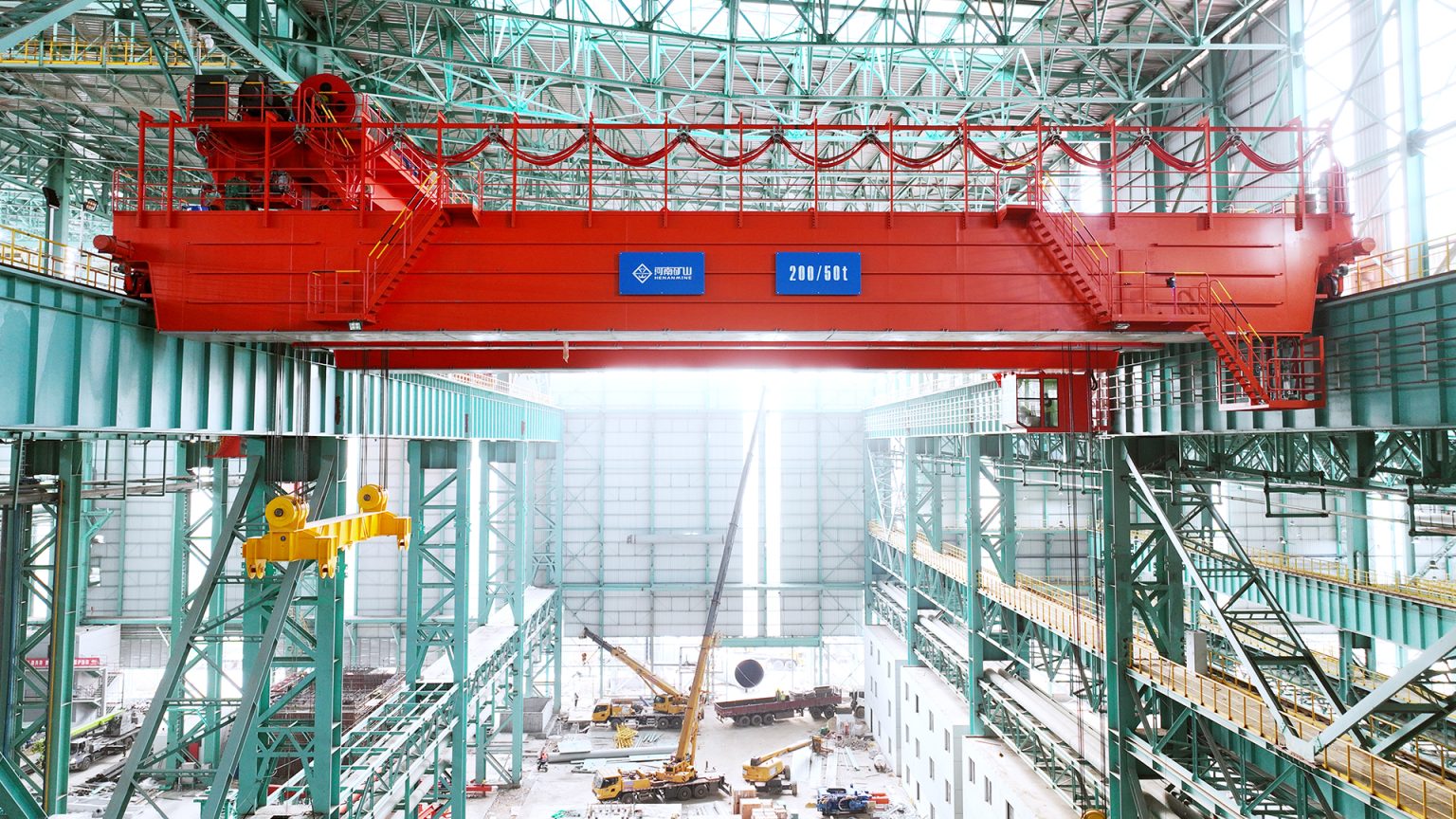
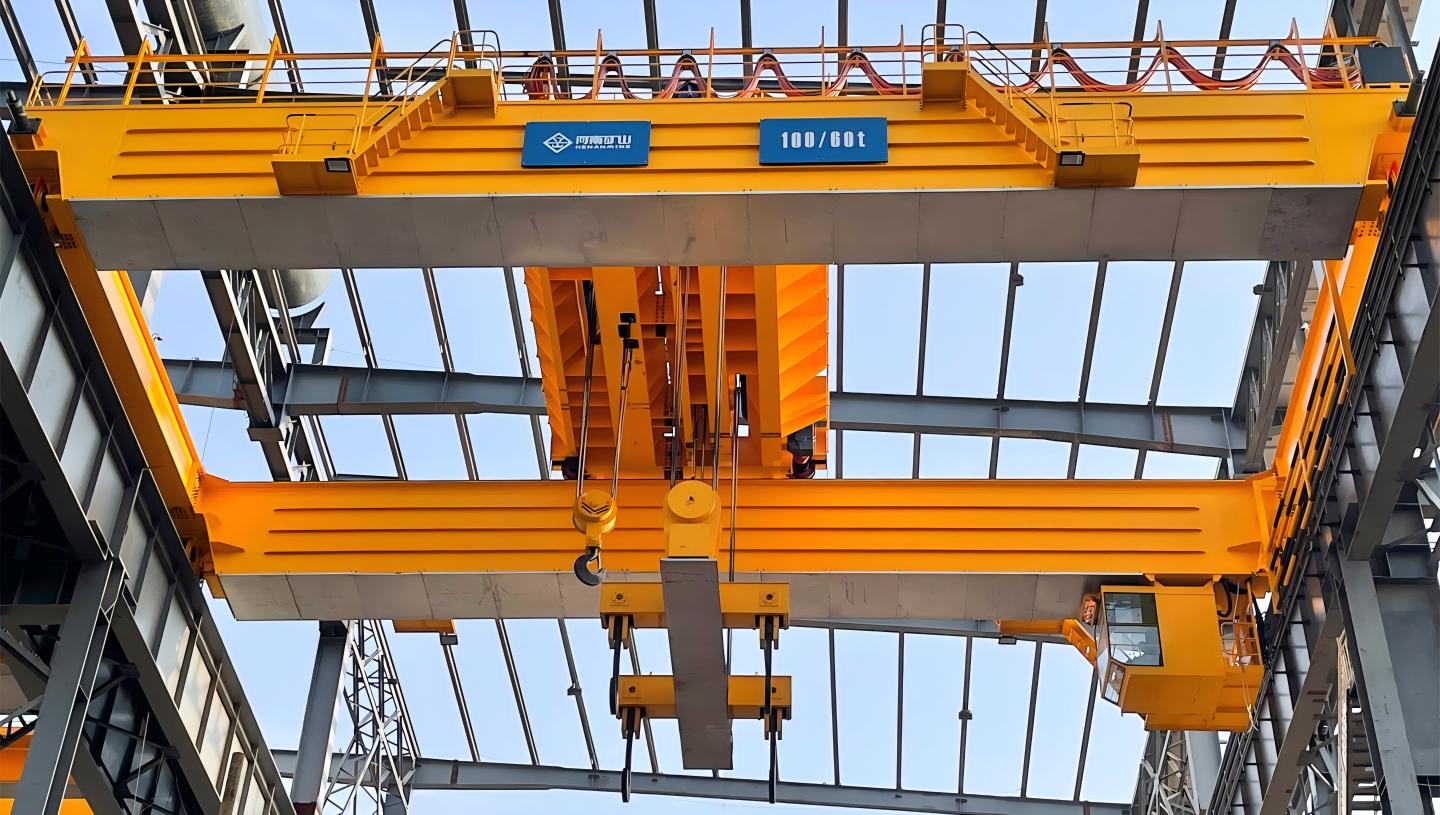
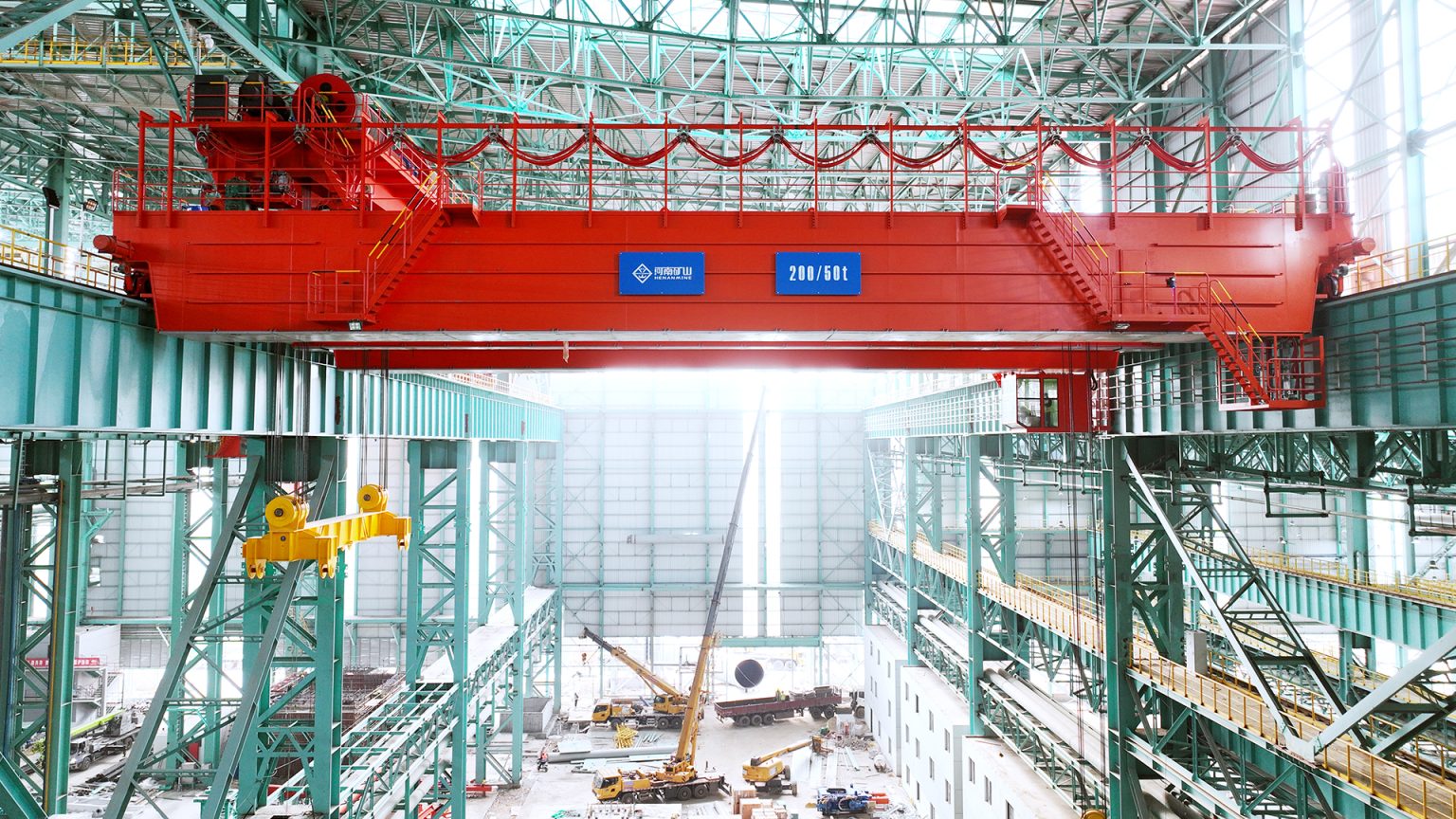
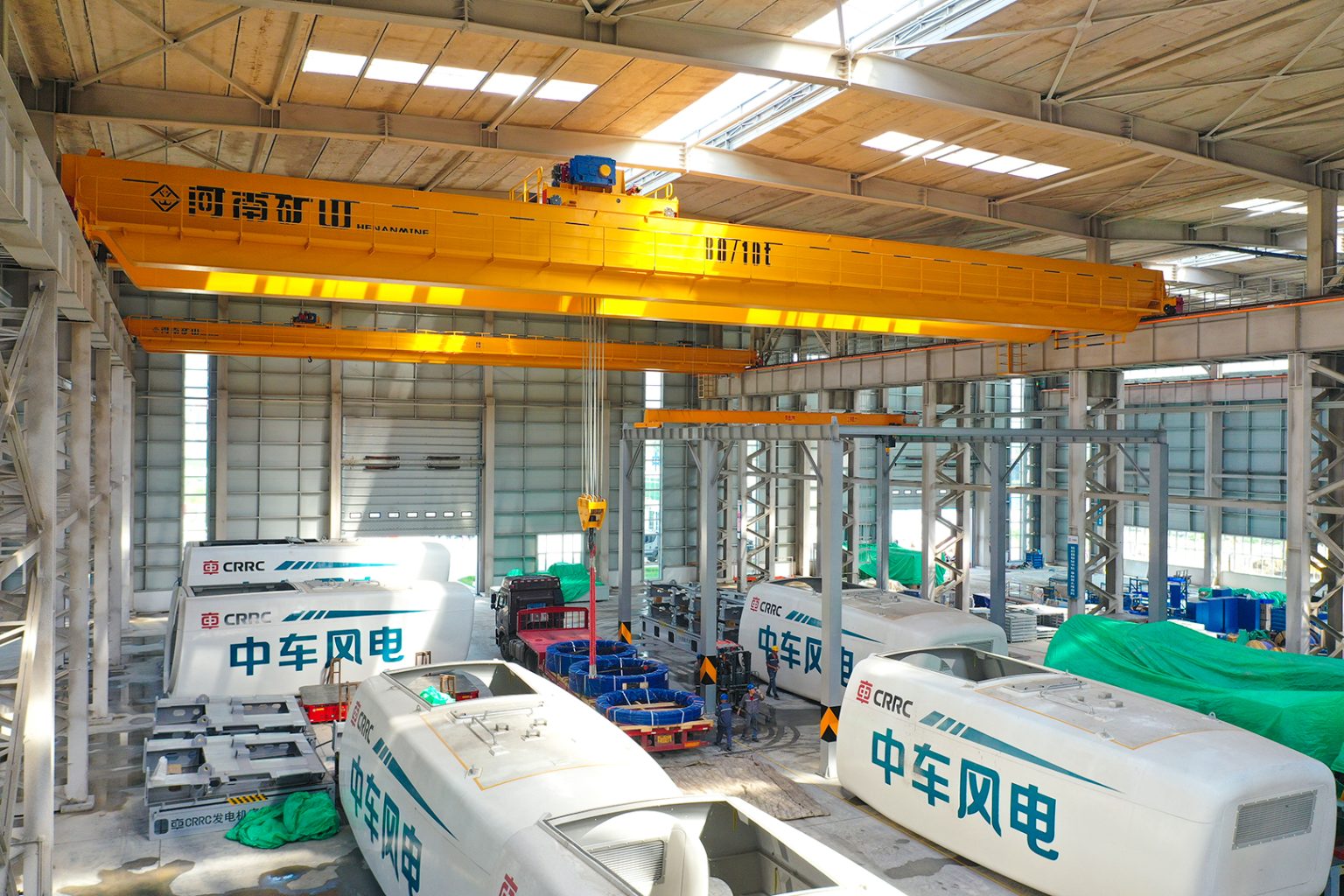
    Bridge crane is the export category with the widest adaptability. Georgia’s manufacturing workshop, steel structure factory, warehouse, machinery processing plant, maintenance workshop, hydropower plant and prefabricated component factory can basically be used.
    Different scenarios correspond to different configurations: single-beam bridge crane is enough for ordinary production workshop, double-beam bridge crane is selected for heavy industrial workshop, electric hoist bridge crane for warehouse replenishment, low clearance style is selected for workshop with limited floor height, heavy working grade for steel structure and machinery factory, and special model for maintenance of hydropower plant.
    Common pain points for local buyers are also clear: limited workshop space, insufficient floor height, budget control, simple installation, and follow-up spare parts.
    The bridge crane made in China can just match these needs. The span, lifting height, lifting weight and control mode can be customized according to needs. The price is much friendlier than that of European brands. The delivery cycle of regular models is also short, which is very suitable for small and medium-sized industrial customers in Georgia.

    portal crane

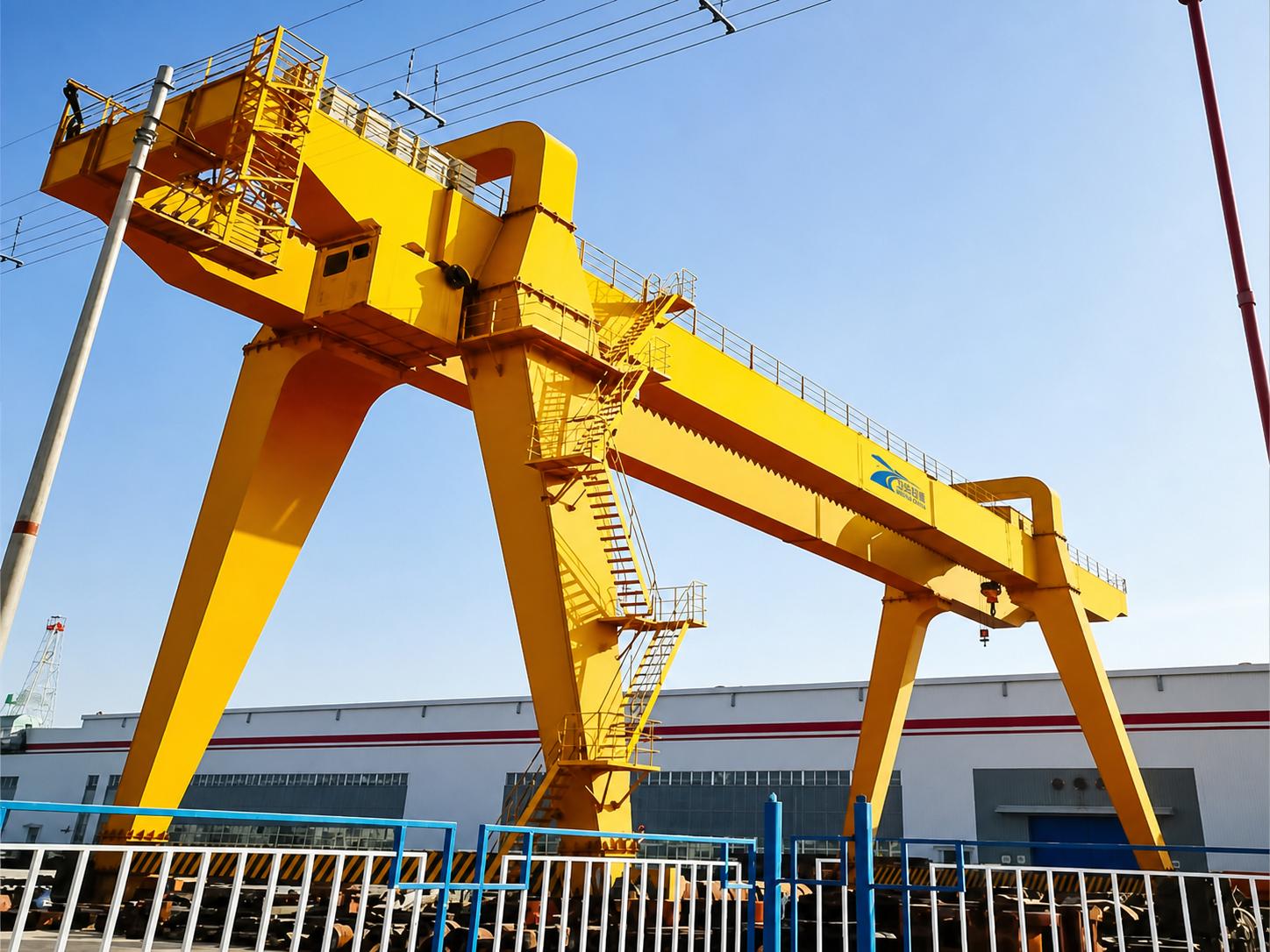
    Gantry crane is suitable for outdoor scene without workshop crane beam, and can be used without relying on building structure and with its own supporting legs.
    Gantry cranes are suitable for local building materials yard, steel structure yard, railway material yard, port rear yard, container repair area and precast concrete component factory.
    In terms of specific type selection, single-beam gantry crane is used for ordinary outdoor stock yard, double-beam gantry crane is used for loading and unloading heavy goods, RMG rail-mounted gantry crane can be selected for railway intermodal storage yard, semi-gantry crane is used for semi-outdoor scene of small workshop, bridge girder erection machine or engineering gantry crane is used for road and bridge construction, and rubber-tyred gantry crane is selected for precast yard requiring frequent transfer.
    Local customers choose gantry crane, the most important thing is not to do complex factory building infrastructure, outdoor adaptability is strong, can handle long size, heavy weight materials, civil construction cost is low.For a large number of infrastructure supporting storage yards and logistics parks in Georgia, China gantry cranes are a cost-effective choice.

    Mobile cranes and truck cranes

    Mobile equipment such as truck cranes and all-ground cranes have strong adaptability, can be used in road construction, bridge construction, municipal engineering, equipment maintenance and building construction, and are convenient to transfer, so that the mobile equipment is very suitable for engineering contractors and equipment leasing companies.
    Georgia’s east-west road upgrading, north-south corridor tunnel and bridge works, and local municipal projects all require a large number of mobile lifting equipment.
    Different scenarios correspond to different models: conventional truck crane is selected for road construction, all-terrain crane or crawler crane is used for bridge project, cross-country crane is selected for Urban area construction, truck crane is selected for pipeline installation, general truck crane is used for equipment maintenance, and multi-purpose crane is the most cost-effective for leasing business.
    The core demands of local contractors are easy transfer, simple maintenance, easy access for drivers and easy availability of spare parts.The truck crane made in China has obvious price advantage, and the configuration can cover most construction scenarios, which is very attractive to cost-sensitive engineers.

    tower crane

    Tower crane is mainly corresponding to housing and commercial real estate projects, high-rise residential buildings, commercial buildings, hotels, urban complexes, and long-term construction sites, all need tower cranes.
    There is a steady demand for tower cranes for urban renewal, real estate development and public building projects in cities such as Tbilisi.
    Type selection, high-rise residential use rotary tower crane, urban commercial projects choose flat tower crane, small construction site with movable arm tower crane, medium-sized construction projects from the lift tower crane, long-term site with fixed tower crane.
    The pain points of local customers are limited construction space in Urban area, high lifting height requirements, long construction period, guidance for installation and dismantling, and stable supply of spare parts.The tower crane made in China has full parameter coverage, flexible customization and much lower procurement cost compared with European brands, which is suitable for local developers and construction contractors.

    Port Cranes and Container Handling Equipment

    Port equipment belongs to the category of high long-term value but long sales cycle, which follows the pace of port expansion in Georgia.
    The promotion of the construction of Anaklia Port, the upgrading of existing ports, as well as the landing of inland dry ports and multimodal transport stations will drive the demand for relevant equipment.
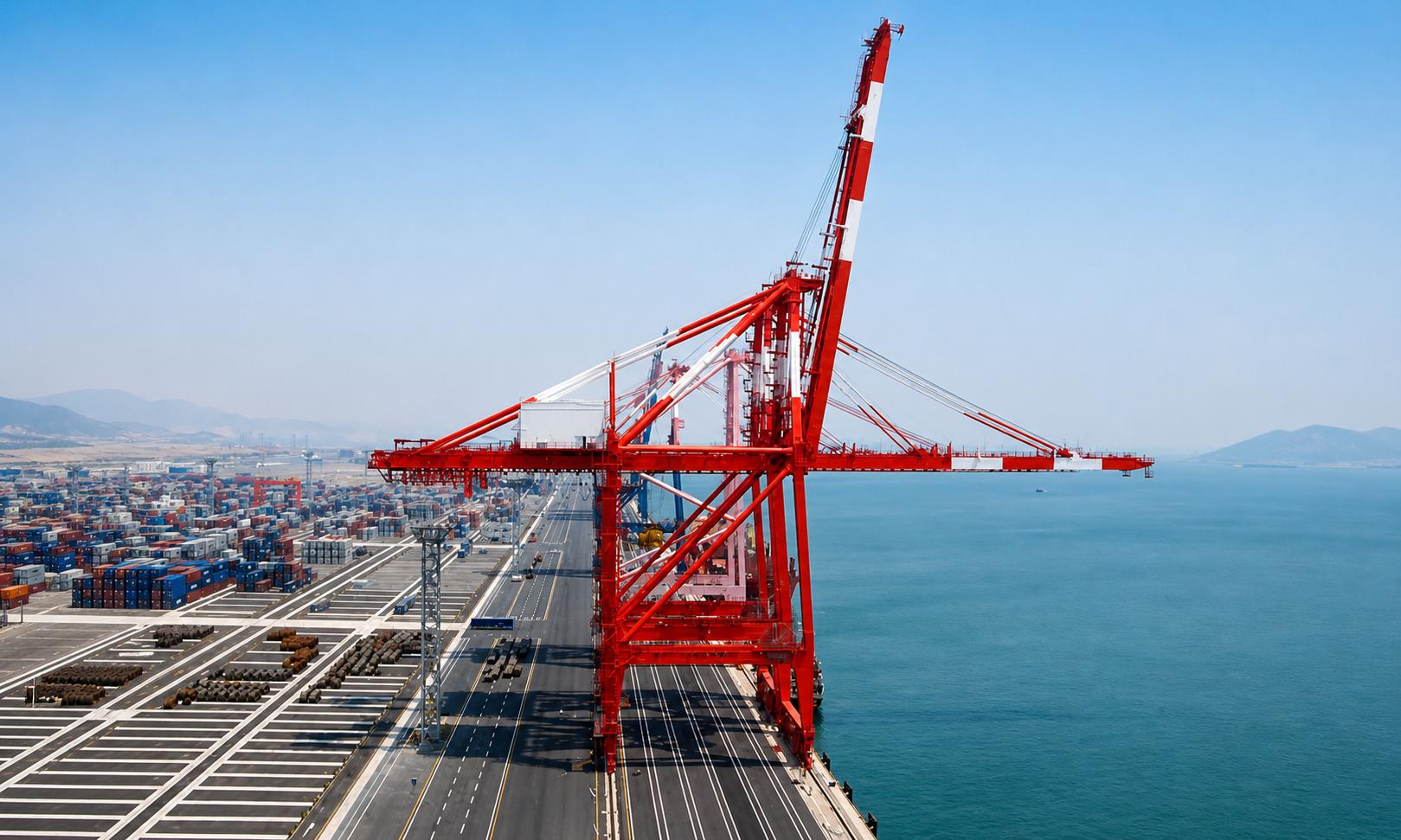
    Specifically speaking, STS quay crane is used for container terminal, RTG rubber-tyred gantry crane is used for storage yard, RMG rail-mounted gantry crane is used for railway connecting storage yard, container front crane is used for inland storage yard, empty container stacker is used for empty container storage yard, wharf tractor is used for horizontal transfer of wharf, and portal grab crane is used for bulk cargo terminal.
    The pain points for local port operators are practical: to improve container throughput, limited yard space, long waiting time for trucks, long delivery cycles for European brands, high prices and slow after-sales response.The port equipment made in China has high cost performance and more flexible delivery and customization. As an alternative, it is very competitive, that is, the project follow-up period is long, and complete technical scheme, installation service and after-sales guarantee are required.

     jib crane and small and light lifting equipment

    Small and light equipment such as jib crane, electric hoist, monorail crane and station crane, with small volume, convenient transportation and simple installation, belong to the export category with very low threshold.
    Maintenance workshops, small factories, warehouses, machinery repair shops, logistics sites, production line stations, can be used.
    Rotary jib crane shall be selected for station hoisting, chain electric hoist for small warehouse, monorail crane for fixed-path transfer, wall-type rotary jib crane for mechanical maintenance, station crane for production line, and manual or electric hoist for light load operation.
    This kind of equipment is corresponding to the small budget customers, the demand is simple: fast delivery, installation is simple, cheap, broken easy to repair.The light and small lifting equipment made in China has sufficient production capacity, low price and fast delivery, which is very suitable for batch export and is also suitable for entry into the local market.

    Recommended models for different buyers

    Buyer Type in Georgia Recommended Crane Type
    Manufacturing Factory Overhead Crane
    Steel Structure Workshop Double Girder Overhead Crane
    Warehousing & Logistics Center Electric Hoist Crane / Jib Crane
    Road Construction Contractor Truck Crane / Mobile Crane
    Bridge Engineering Company Gantry Crane / Crawler Crane / Launching Gantry
    Port Terminal Operator STS Crane / RTG / RMG
    Inland Container Depot Reach Stacker / RMG / Gantry Crane
    Real Estate Developer Tower Crane
    Small Maintenance Workshop Jib Crane / Electric Hoist
    Energy & Hydropower Project Heavy-duty Overhead Crane / Gantry Crane
    Equipment Rental Company Truck Crane / Mobile Crane
    EPC General Contractor Customized Overhead / Gantry Crane

    China crane vs European crane in Georgia


    Factor Chinese Cranes European Cranes
    Purchase Cost More competitive pricing Higher price point
    Customization Highly flexible on span, capacity, height Standard configurations, longer custom lead time
    Delivery Time Shorter for standard models Longer lead time for most models
    Product Range Wide range from hoists to port cranes Focus on mid-to-high end systems
    Spare Parts Bulk supply with initial order, cost-effective Expensive spare parts, longer delivery
    Brand Recognition Growing recognition Strong established brand reputation
    Automation Level Customizable for basic & mid-level automation Premium advanced automation systems
    Certification CE/ISO available, meets project requirements Full EU certification acceptance
    Best For Cost-sensitive projects, factories, contractors, logistics parks High-budget tenders, premium automation projects

    Instead of deliberately positioning China equipment as “cheap,” the more accurate positioning is: for Georgian buyers who value price, customization flexibility, delivery speed and practical after-sales service, China lifting equipment is a highly balanced choice.

    Note to buyer

    The first is to clarify the purpose and scenario of the equipment.First, make clear whether it is for factory, construction, port, logistics or maintenance, indoor or outdoor, whether steel, container, concrete, machinery or bulk cargo is hoisted, and whether it is fixed installation or mobile transfer.The direction is wrong, and cheap equipment is useless.

    Then the parameters and the job level.Rated lifting weight, maximum load, daily working hours, lifting frequency, working level and future capacity expansion demand shall be calculated clearly in advance.
    Georgia is not an EU country, but many international EPC projects will require CE, ISO, EN standards, and government projects or foreign-funded projects may have additional document requirements.Be sure to confirm clearly with the owner, general contractor or local supervision before buying, so as to avoid customs clearance or acceptance problems.

    Logistics and installation should also be planned in advance.Large equipment shall be transported by container or bulk cargo, whether unloading at destination port and inland transfer route can be taken, and how to arrange installation team, commissioning engineer and operation training.
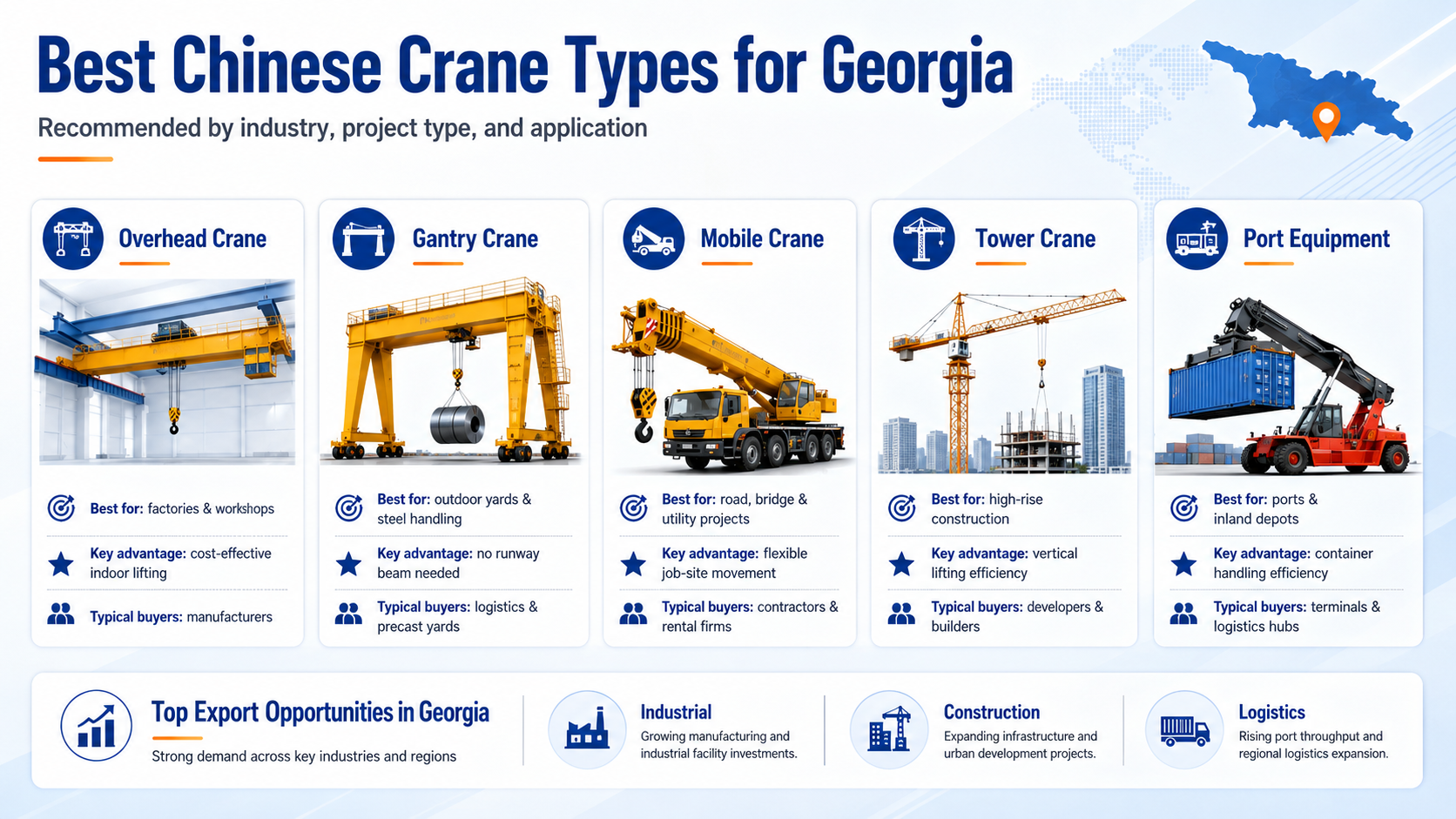
    Chinese Cranes for Georgia
    Export Georgia Fit Ranking

    1st Overhead Crane

    The adaptation scenario is the widest, and it can be used in factories, warehouses, industrial workshops, maintenance stations and energy projects.With a large demand base, convenient transportation than large-scale port equipment, flexible customization and outstanding cost performance, customers from all walks of life can be covered, and it is the most reliable category exported to Georgia.

    2nd Gantry Crane

    Suitable for outdoor storage yard, infrastructure material yard, steel plant, logistics park, prefabrication yard.Without relying on the crane beam of the factory building, the demand for infrastructure construction is obviously pulled, and the customer group and bridge crane are differentiated, which is also a category with stable local demand.

    3rd Mobile Crane/Truck Crane

    Corresponding to infrastructure, roads, bridges, municipal, rental market.With strong liquidity, engineering contractors and lessees are the main customers, following the local infrastructure cycle, there are many project opportunities.

    4th jib crane and electric hoist

    Light and small equipment, low investment, fast delivery, simple installation, suitable for small buyers and scattered orders.It can be used as a lightweight product entering the market, and is also suitable for matching with large-scale equipment for supporting supply.

    5th Port and Container Handling Equipment

    It has large long-term potential and high value of single project, which is deeply bound with the expansion of local logistics ports.The disadvantage is that the sales cycle is long, bidding is required, complete technical scheme is required, installation after-sales guarantee is provided, and the comprehensive ability of suppliers is required.

    FAQ

    Are China cranes suitable for the Georgian market?

    It fits.The price of lifting equipment made in China is competitive, with complete categories, customization support and mature export experience. Corresponding models can be found in different scenarios to meet the needs of most projects in Georgia.With the help of the China-Georgia Free Trade Agreement, most lifting equipment can also enjoy zero tariff treatment, further improving the cost performance.

    Which type of crane is best suited for the Georgian market?

    Overhead cranes and gantry cranes are preferred for industrial customers; truck cranes and tower cranes are preferred for infrastructure construction projects; RTG, RMG, front cranes and other container equipment can be considered for port and logistics projects.

    Which industries in Georgia require lifting equipment?

    Construction, logistics and warehousing, ports and docks, manufacturing, steel structure processing, road and bridge construction, energy and hydropower, equipment maintenance and other industries have stable demand.With the progress of intermediate corridors and infrastructure projects, the growth of logistics and construction equipment will be more obvious.

    Is the China overhead crane suitable for the Georgian plant?

    It fits.The lifting capacity, span, lifting height and working level of bridge crane can be customized according to requirements, which can meet the indoor lifting requirements of various factories, warehouses and workshops in Georgia.

    Are gantry cranes suitable for outdoor scenarios in Georgia?

    It fits.Gantry crane does not need crane beam of factory building, has strong outdoor adaptability, can customize wind-proof and anti-corrosion configuration, and is very suitable for outdoor operation scenes such as storage yard, prefabrication yard and logistics park.

    What documents are required to import cranes from China to Georgia?

    Commercial invoice, packing list, certificate of origin, technical drawings, product certificate, test report, operation and maintenance manual, and certification documents required by the project are routinely required.The certificate of origin is a necessary document to enjoy the zero tariff of the China-Georgia Free Trade Agreement.

    China or European cranes for Georgian buyers?

    China cranes are more suitable for projects that value cost performance, customization flexibility and delivery speed; projects with sufficient budget and rigid requirements for brands and high-end automation.

    What preparations should China crane suppliers make for exporting to Georgia?

    Prepare technical proposal, equipment drawings, certification documents, installation instructions, spare parts list, English manual, transportation plan and corresponding after-sales support plan in advance.

    epilogue

    In general, Georgia is a very pragmatic potential market, infrastructure, logistics, ports, manufacturing, real estate sectors have stable demand for lifting equipment.For China crane manufacturers, bridge crane, portal crane, mobile crane and light and small equipment are the easiest categories to cut into at present, and port container equipment belongs to high-value track worthy of long-term layout.

    Customize Your Solution

    Henan Mine Crane, as a professional crane equipment manufacturer and supplier, can provide all kinds of crane customization, support CE, ISO and other multi-system certification, supporting export packaging, logistics, installation guidance, commissioning training, spare parts supply full process services, adapt to various industrial, infrastructure, port, logistics projects in Georgia.
    If you are carrying out relevant projects in Georgia and need to purchase lifting equipment, you can send us the project type, lifting capacity, span, lifting height, working environment, power supply conditions, installation location, certification requirements, and the engineering team will issue you a suitable plan and quotation.
    Henan Mine CraneDiscuss your requirements ↗
  • CE Certified Rail Mounted Gantry Crane for European and International Projects

    CE Certified Rail Mounted Gantry Crane for European and International Projects

    CE Certified Rail Mounted Gantry Crane for European and International Projects
    Most international buyers for European and Middle Eastern projects focus on CE compliance when sourcing custom rail mounted gantry cranes. Many buyers misunderstand CE certification, believing a single logo or certificate qualifies the crane for European customs clearance and project acceptance.
    A qualified CE certified RMG crane relies on EU-standard design, professional risk assessment, complete safety configurations and systematic technical documents, rather than simple certification labels. As heavy-duty customized equipment for container yards and railway terminals, RMG cranes sold to EU/EEA markets must meet strict safety, electrical and structural compliance standards.


    What Is a CE Certified Rail Mounted Gantry Crane

    Basic Definition of RMG Crane

    An RMG (Rail Mounted Gantry Crane) travels on fixed ground rails, different from tire-based RTG cranes. It features fixed operating tracks and stable performance, suitable for long-term repetitive heavy-lift operations.
    All CE certified rail mounted gantry crane models are fully customizable. Customization covers span, lifting capacity, stacking height, working duty and power supply modes to fit different yard conditions.
    Typical application scenarios include container terminals, railway container yards, inland dry ports, intermodal logistics hubs, port cargo areas and large industrial storage yards.

    What CE Certification Means for RMG Cranes

    CE marking is an official EU market access declaration for machinery. RMG cranes mainly comply with the 2006/42/EC Machinery Directive and EMC Electromagnetic Compatibility Directive.
    It verifies that the crane’s structural design, safety protection and electrical systems are manufactured in accordance with unified EU standards, eligible for legal circulation in EU and related international markets.
    CE compliance is a full-process standardized system covering design, production, testing and delivery, serving as the manufacturer’s official safety liability endorsement.

    Core Values of CE Compliance for RMG Crane Projects

    EU Market Access Qualification

    EU and European neighboring countries enforce strict access control for imported lifting machinery. Non-compliant RMG cranes cannot clear customs or be put into local operation.
    Complete CE compliance proves the crane meets EU health, safety and environmental protection requirements, serving as the basic condition for overseas project delivery.

    Compatibility with International Project Acceptance

    European local projects, international EPC contracts and port & railway tenders explicitly require full CE compliance documents.
    Mandatory verification materials include CE marking, EU Declaration of Conformity, risk assessment reports, technical files, operation & maintenance manuals, electrical drawings, safety device lists and factory test reports. Incomplete documents will delay project acceptance.

    Risk and Liability Control

    Non-compliant cranes usually have defective safety designs and insufficient testing, leading to frequent failures and potential safety hazards, which may trigger legal disputes after operational accidents.
    A complete CE compliance system eliminates design and operational risks, reducing equipment failure, acceptance delay and customs inspection exceptions.

    Mandatory CE Compliance Documents for RMG Cranes

    EU Declaration of Conformity

    The core legal document for CE compliance. It must record manufacturer information, exact crane parameters, applicable EU directives, EN/IEC standards, authorized representative details, signature and date.
    Documents must match the customized CE marked RMG crane completely; generic templates are invalid for non-standard equipment.

    Complete Technical File

    Covers general arrangement drawings, structural design files, electrical schematics, rail connection parameters and wheel load calculation data.
    Also includes welding inspection records, factory test reports and core component certificates to verify full-process production compliance.

    Professional Risk Assessment Report

    Compiled strictly in accordance with EN ISO 12100 safety standards. It evaluates all operational risks including lifting, trolley travel, load swinging, wind load, collision, electrical hazards, emergency stop, maintenance and on-site commissioning.

    Operation & Maintenance Manual

    Provided in English or local official language. It contains standard operating procedures, daily inspection items, maintenance cycles, lubrication points, electrical maintenance guidelines and fault troubleshooting methods.
    It also clarifies emergency disposal processes and common spare part parameters for on-site operation guidance.

    Factory Inspection & Test Report

    Qualified CE RMG cranes must pass full pre-delivery tests: no-load test, static & dynamic load test, limit switch calibration, overload protection test, brake test and electrical insulation test. All test records are archived as core acceptance evidence.

    Core Safety Configurations of CE Certified RMG Cranes

    Safety configurations of European standard RMG crane are mandatory EU standards, not optional accessories, which distinguish compliant cranes from ordinary products.

    Basic Standard Safety Devices

    Equipped with overload limiter, emergency stop button, lifting limit switches, crane & trolley travel limiters, buffers and audible-visual alarms to avoid heavy-lift risks.
    Electrical systems adopt phase loss, short circuit and zero-position protection to ensure stable electrical operation.

    Outdoor Special Safety Devices

    For open container yards: wind speed alarm, rail clamp, storm anchor, lightning protection and rainproof electrical structures.
    Complete with anti-corrosion coating and anti-slip structures to adapt to harsh outdoor environments.

    Container Handling Exclusive Configurations

    Optional anti-sway system, anti-collision system, CCTV monitoring, laser positioning and container alignment system.
    Spreader interlock and remote monitoring devices improve stability and standardization of high-frequency container stacking and transfer operations.

    Maintenance Safety Design

    Equipped with safety ladders, maintenance platforms, guardrails and standard walkways for safe manual maintenance.
    Standard safety signs, lockout devices and night operation lighting cover full-scenario operational and maintenance safety needs.

    Applicable Industry Standards for CE RMG Cranes

    CE-compliant RMG cranes are designed and manufactured following unified EU harmonized standards, covering machinery, electrical and structural disciplines.

    Mechanical Safety Standard

    EN ISO 12100: General machinery safety standards for systematic risk assessment and risk reduction design.

    Electrical Safety Standard

    EN/IEC 60204-32: Standardizes control cabinet protection, cable layout, grounding and emergency stop circuit design.

    Structural & Mechanical Performance Standard

    EN 13135: Regulates steel structure strength, fatigue resistance, wheel load, braking system and travelling mechanism for long-term heavy-duty operation.

    Project Standard Confirmation

    Individual projects may require FEM, ISO, local national standards or customized specifications. Confirming standards in advance avoids rework and ensures one-time acceptance.

    Design Key Points for CE RMG Cranes in Different Scenarios

    Container Yard RMG Crane

    Optimized for container spreader matching and multi-layer stacking. Matches container arrangement and truck lane dimensions, equipped with anti-sway system for stable high-frequency operation.

    Railway Terminal RMG Crane

    Adapted for rail-truck intermodal transfer. Features longer travel stroke, higher positioning accuracy and optimized power supply for stable railway-side continuous operation.

    Inland Dry Port RMG Crane

    Balances operational efficiency and maintenance convenience. Reserved automation upgrade interfaces and universal spare parts for long-term stable operation.

    Industrial Yard RMG Crane

    Customizable with hooks, grabs and electromagnetic lifters for steel, precast concrete and heavy materials. Reinforced structure and braking system for non-standard heavy-duty working conditions.

    Standard Purchasing Process for CE Certified RMG Cranes

    Confirm Project Compliance Requirements

    Clarify project country, contract clauses and local acceptance standards to confirm mandatory CE document scope.

    Sort Out Complete Technical Parameters

    Prepare lifting capacity, span, lifting height, cantilever length, travel distance, working duty, power supply, control mode, working environment and container stacking layers, together with yard layout drawings.

    Lock Compliance Standards & Document Scope

    Confirm applicable EU directives, standards, document languages and third-party inspection requirements, and specify all compliance documents in contracts.

    Review Supplier Technical Proposal

    Qualified proposals include general drawings, parameter list, mechanism & electrical configuration, safety list, wheel load data, supply scope and compliance deviation explanation.

    Confirm Inspection & Acceptance Plan

    Specify factory inspection, pre-shipment verification, third-party testing, load tests, on-site commissioning and final acceptance documents to ensure traceable quality control.

    How to Select a Reliable CE RMG Crane Supplier

    Engineering & Design Capacity

    Professional rail mounted gantry crane manufacturer can complete non-standard customization, structural calculation, wheel load verification, electrical design and CE risk assessment independently.

    Manufacturing & Quality Control Capacity

    Qualified suppliers own complete steel processing, welding, assembly, anti-corrosion painting and factory testing systems, strictly following EU production standards.

    Full Document Output Capacity

    Able to provide English manuals, EU Declaration of Conformity, technical drawings, test records and component certificates without third-party template borrowing.

    Overseas Project Experience

    Experienced suppliers support export packaging, shipping arrangement, on-site installation guidance, commissioning, operator training and remote after-sales service for global projects.

    Common Purchasing Mistakes for CE RMG Cranes

    Relying solely on a single CE certificate: Generic certificates cannot match customized crane parameters and will be rejected in acceptance.
    Ignoring parameter matching: Mismatched tonnage, span and configuration make certificates invalid. Neglecting risk assessment leads to unqualified safety design.
    Unconfirmed document languages cause acceptance failures. Low-price quotations may omit core safety devices, resulting in incomplete CE compliance.
    Non-standard on-site installation and commissioning will disqualify compliant factory equipment.

    Price Influencing Factors of CE Certified RMG Cranes

    Core price factors include lifting parameters, steel consumption, electrical brand grade, safety configuration, automation level and anti-corrosion standards.
    CE compliance increases moderate costs due to refined engineering design, professional document compilation, systematic testing, English manual compilation and third-party verification.
    Buyers shall compare the full scope of supply, safety configurations, compliance documents, after-sales and warranty terms, instead of only focusing on total price.

    Advantages of Henan Mine Crane CE Certified RMG Cranes

    As a professional RMG crane supplier China, Henan Mine Crane has rich experience in European, Middle Eastern and Southeast Asian CE-compliant crane projects, familiar with international acceptance standards.
    We provide full non-standard customization adapting to container yards, railway terminals, dry ports and industrial yards. We deliver complete technical proposals, GA drawings, wheel load data, electrical schematics and safety lists.
    Full CE compliance support includes risk assessment reports, test records and English operation & maintenance manuals. One-stop export services cover packaging, shipping, on-site guidance, commissioning, training and long-term spare parts supply.

    FAQ About CE Certified RMG Cranes

    What is a CE certified RMG crane? A customized rail mounted gantry crane designed and tested per EU machinery directives and EN/IEC standards with complete compliance documents and safety configurations for high-standard international projects.
    Is CE marking mandatory? CE compliance is compulsory for cranes entering EU/EEA markets and is widely required for international EPC and high-end industrial projects.
    Is a single CE certificate sufficient? No. Complete compliance requires declaration of conformity, technical files, risk assessment, test reports and official operation manuals.
    Can Chinese manufacturers supply CE-compliant RMG cranes? Professional original manufacturers like Henan Mine Crane can provide full CE design and document support without third-party agency services.
    Does CE certification raise costs? Yes moderately, due to refined design, complete safety configurations and standardized compliance services. All models support full-parameter customization.

    Conclusion

    Purchasing a CE-certified RMG crane focuses on overall design, safety configuration, testing procedures and complete technical compliance, not merely CE labels or certificates.
    Selecting a supplier with mature CE project experience, independent engineering capacity and complete overseas service system effectively reduces project acceptance risks and ensures long-term stable equipment operation.
    Contact Henan Mine Crane for customized CE-compliant RMG crane technical proposals and competitive quotations for your global projects.
    Henan Mine CraneDiscuss your requirements ↗
  • Casting Crane vs Metallurgical Crane: Which Is Better for Molten Metal?

    Casting Crane vs Metallurgical Crane: Which Is Better for Molten Metal?

    Casting Crane vs Metallurgical Crane: Which Is Better for Molten Metal?

    In Henan Mine Crane do metallurgical crane sales for more than ten years, I meet customers every day to ask the same question: casting crane (casting crane) and metallurgical cranes (metallurgical crane) in the end what is the difference? Lifting molten metal, which one is more suitable?

    Molten metal lifting is one of the most risky scenarios in crane operation. Thousands of degrees Celsius steel, molten iron, once because of the improper selection of equipment leakage, fall, will not only cause equipment damage, workshop production, but also may cause serious safety accidents, and even endanger the lives of personnel.

    The reason why many customers are entangled, the core of the two cranes can not distinguish between the definition and application of the scene, mistakenly thought that “as long as the metallurgical industry with the crane, can transport molten metal”. There are also some customers in order to save costs, with ordinary metallurgical cranes instead of casting cranes, and later either be required by the regulatory authorities to rectify, or frequent failures, but spent more money in vain.

    Today I put aside the stack of terminology, with the perspective of a line of engineers, the difference between the two types of cranes, applicable scenarios, one by one to dismantle the understanding.

    What Is a Casting Crane?

    Definition

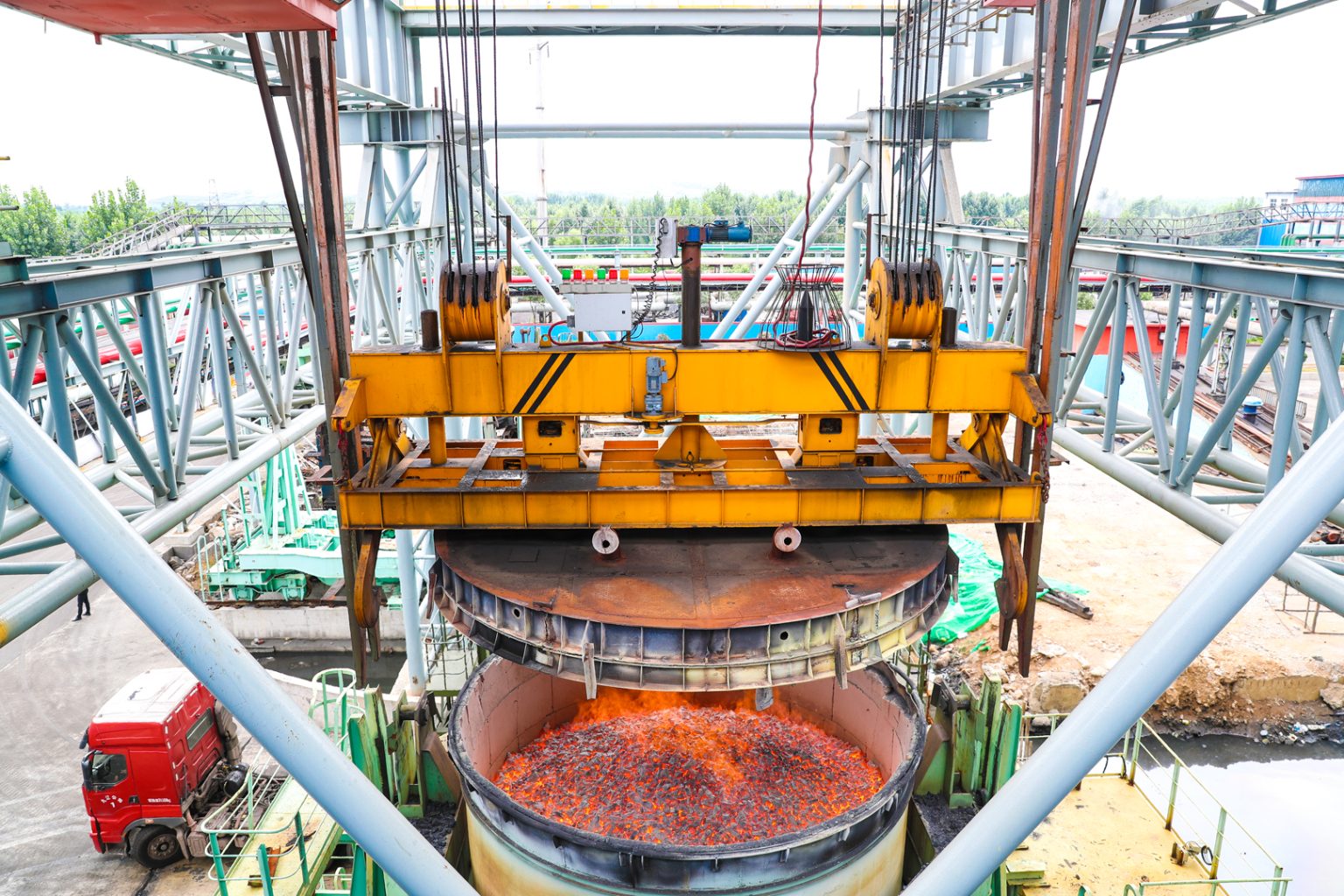
    Casting crane (casting crane), the industry is also often called ladle crane (ladle crane), is designed specifically for steel mills molten metal lifting heavy-duty overhead cranes. The biggest difference between it and ordinary cranes is that all the components are tailored around the “safe lifting of molten metal”, there is no unnecessary design, every detail is designed to cope with high temperature, high-risk working conditions.

    I have been involved in many large-scale steel projects in Henan Mine Crane, and the casting cranes we produce, from design to production, strictly follow the special requirements of molten metal lifting. It is not like ordinary cranes as the pursuit of universal, but precisely focus on the core task of ladle transfer, error tolerance rate is almost zero.

    Simply put, casting crane is “specialized in dangerous work” equipment, as long as it involves the lifting of molten metal ladle, it is the first choice, which is also the most essential difference between it and general metallurgical cranes.

    Typical Applications

    Casting crane application scenes are very focused, mainly around the molten metal treatment of steel mills, each scene has very high requirements for the safety and stability of the equipment.

    The core application is the steel transfer in the steelmaking workshop of the converter (BOF) and electric furnace (EAF). From the converter out of steel, the steel will be lifted to the refining furnace, and then transferred to the continuous casting machine, the whole process needs casting cranes to complete. During this process, the temperature of the ladle is extremely high, and there can not be the slightest shaking during the lifting process, otherwise the molten steel will be easily spilled, causing safety accidents.

    In the continuous casting production line, the casting crane also has to cooperate with the steel casting operation, the ladle will be accurately positioned to the continuous casting machine above the crystallizer, injecting steel at a uniform speed, to ensure the production quality of slabs and billets. In addition, it will also be used for steel slag, slag transfer, as well as ladle maintenance, storage and other auxiliary operations.

    Whether it is 24-hour continuous production in large steel mills or batch production in small and medium-sized steel mills, casting cranes are indispensable as long as there is a need for molten metal ladle transportation.

    Core Characteristics

    The core features of casting cranes are all designed to adapt to the high-risk working conditions of molten metal lifting, and each feature is indispensable, which is also the key to distinguish it from ordinary metallurgical cranes.

    It adopts double girder design with strong rigidity, which can effectively reduce the deflection of the main girder during the lifting process and avoid the shaking of the ladle. Henan Mine Crane produces casting cranes, the main girder adopts heavy-duty welding process and selects high-strength steel, even if it is operated under full load for a long period of time, there will be no obvious deformation.

    Dual braking system is a necessary configuration, a set of mechanical braking, a set of electromagnetic braking, both independent of each other. Even if one of them fails, the other one can brake the equipment in time to ensure that the ladle will not fall, which is also a mandatory requirement for molten metal lifting cranes in the T/SXJP 001-2022 standard.

    The working class must reach FEM A7-A8, ISO M7-M8 or CMAA Class E-F, which can withstand high frequency and high load continuous operation. At the same time, it is also equipped with a complete heat protection system to block the high temperature radiation of steel and splash slag to protect the equipment components from damage.

    What Is a Metallurgical Crane?

    Definition

    Metallurgical crane (metallurgical crane) is a broader category, which covers all cranes used in the metallurgical industry, not limited to molten metal lifting. Simply put, as long as the steel mills, non-ferrous metal smelters and other metallurgical scenes used in the crane, are metallurgical cranes.

    This category contains many models, in addition to the casting cranes we just mentioned, there are also charging cranes, de- ingotting cranes, slab handling cranes and so on. The use of different models varies greatly, and the design standards are also different.

    I often tell customers, metallurgical cranes are like the metallurgical industry, “equipment family”, casting cranes are only members of the family is responsible for “the most dangerous tasks”, other members are responsible for different auxiliary operations.

    Application Scope

    Metallurgical cranes have a very wide range of applications, covering the whole process of metallurgical production, from raw materials to the finished product out of the warehouse, almost every link can see its figure.

    In addition to molten metal lifting, it is also used for scrap charging operations, lifting scrap to the converter, electric furnace, to ensure the supply of smelting raw materials; in the slab, billet production is completed, used for slab, billet handling, stacking; can also be used for maintenance of the furnace, equipment maintenance and other auxiliary operations.

    For example, charging cranes, mainly used to add scrap, ore and other raw materials to the furnace, do not need to withstand high-temperature radiation, the requirements for heat protection is very low; slab handling cranes, mainly handling cooled slabs, the risk level is much lower than the molten metal lifting, the design standard is also relatively loose.

    Metallurgical cranes for different purposes have very different designs, specifications and safety configurations, and the core is to adapt to their respective operating scenarios and risk levels.

    Key Distinction

    Here is a key point that must be made clear to everyone, but also many customers are most likely to be confused: all casting cranes are metallurgical cranes, but not all metallurgical cranes are casting cranes.

    A simple understanding is that casting cranes are a “subset” of metallurgical cranes, which belong to metallurgical cranes, but because of the special purpose, there are higher design standards and safety requirements. Other metallurgical cranes, such as slab handling cranes, charging cranes, although also used in the metallurgical industry, but can not be used for molten metal lifting.

    For example, like cars and buggies, buggies belong to the car, but not all cars are buggies, buggies can cope with complex road conditions, while ordinary cars can not. Casting cranes are equivalent to “off-road vehicles”, which can cope with the high-risk conditions of molten metal lifting, while ordinary metallurgical cranes are equivalent to “ordinary cars”, which can only cope with conventional metallurgical operations.
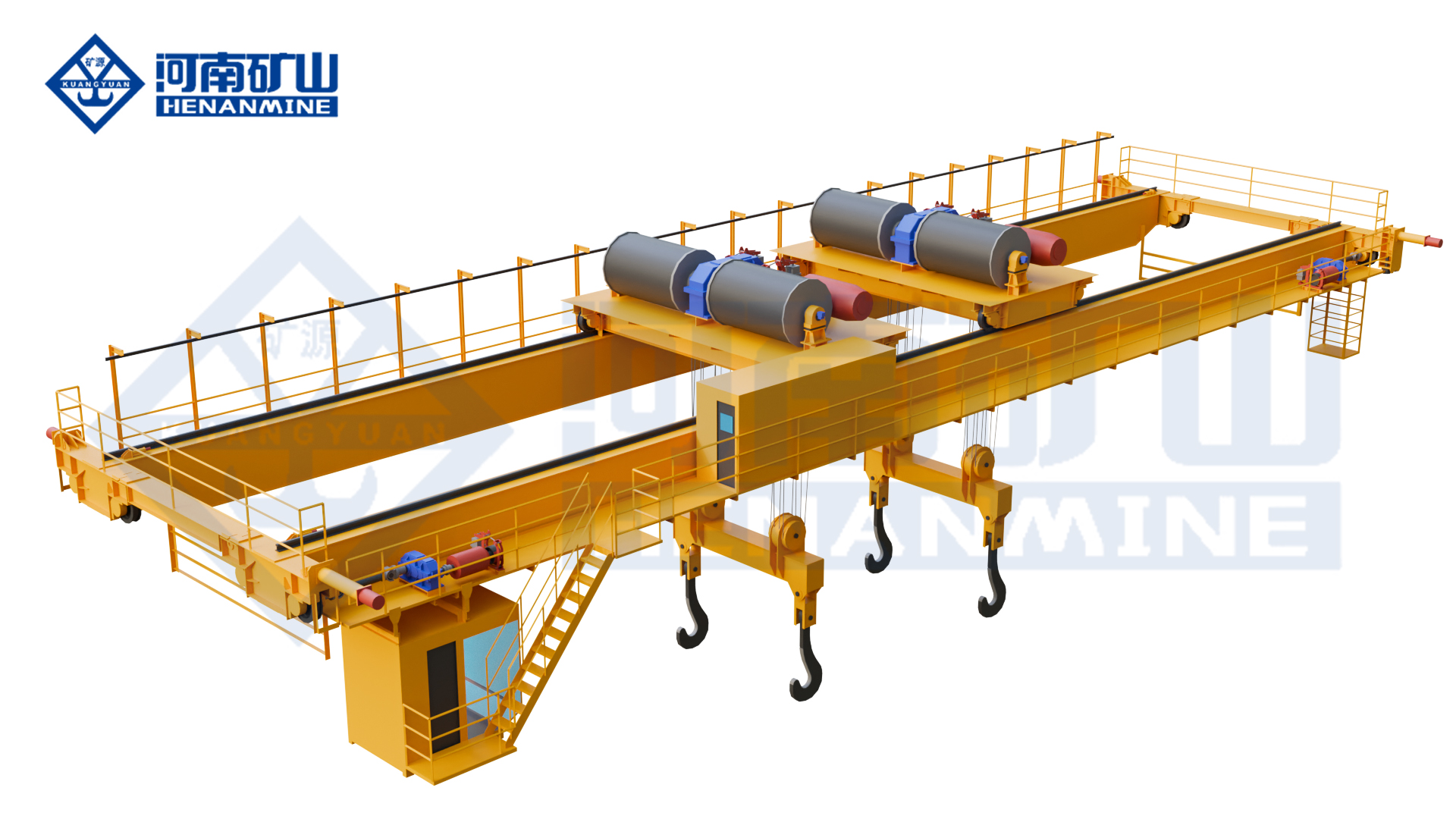
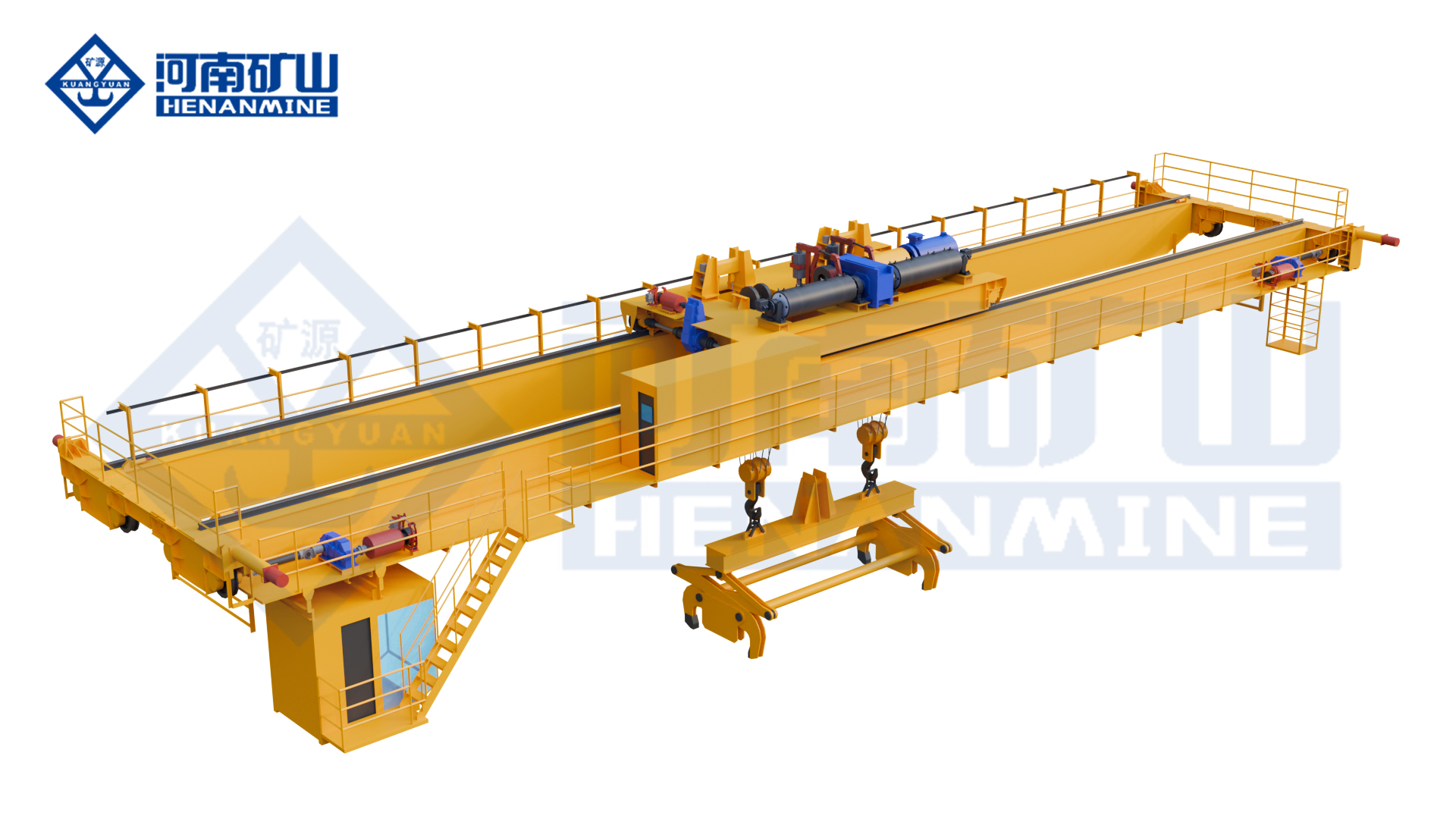
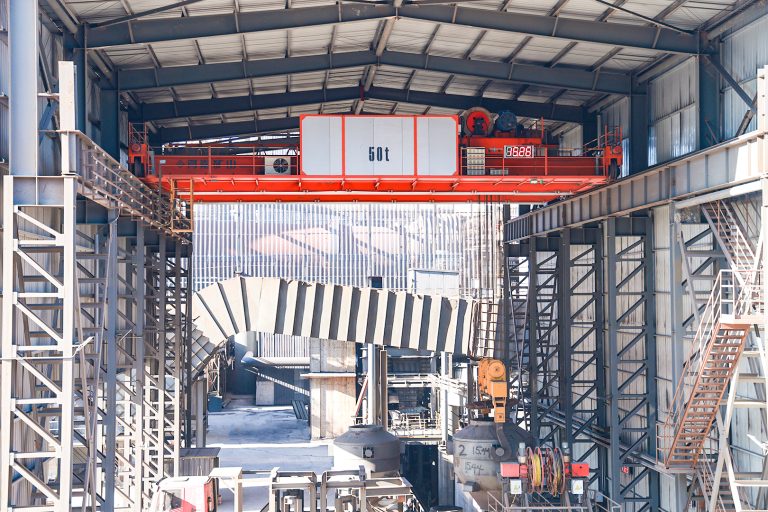
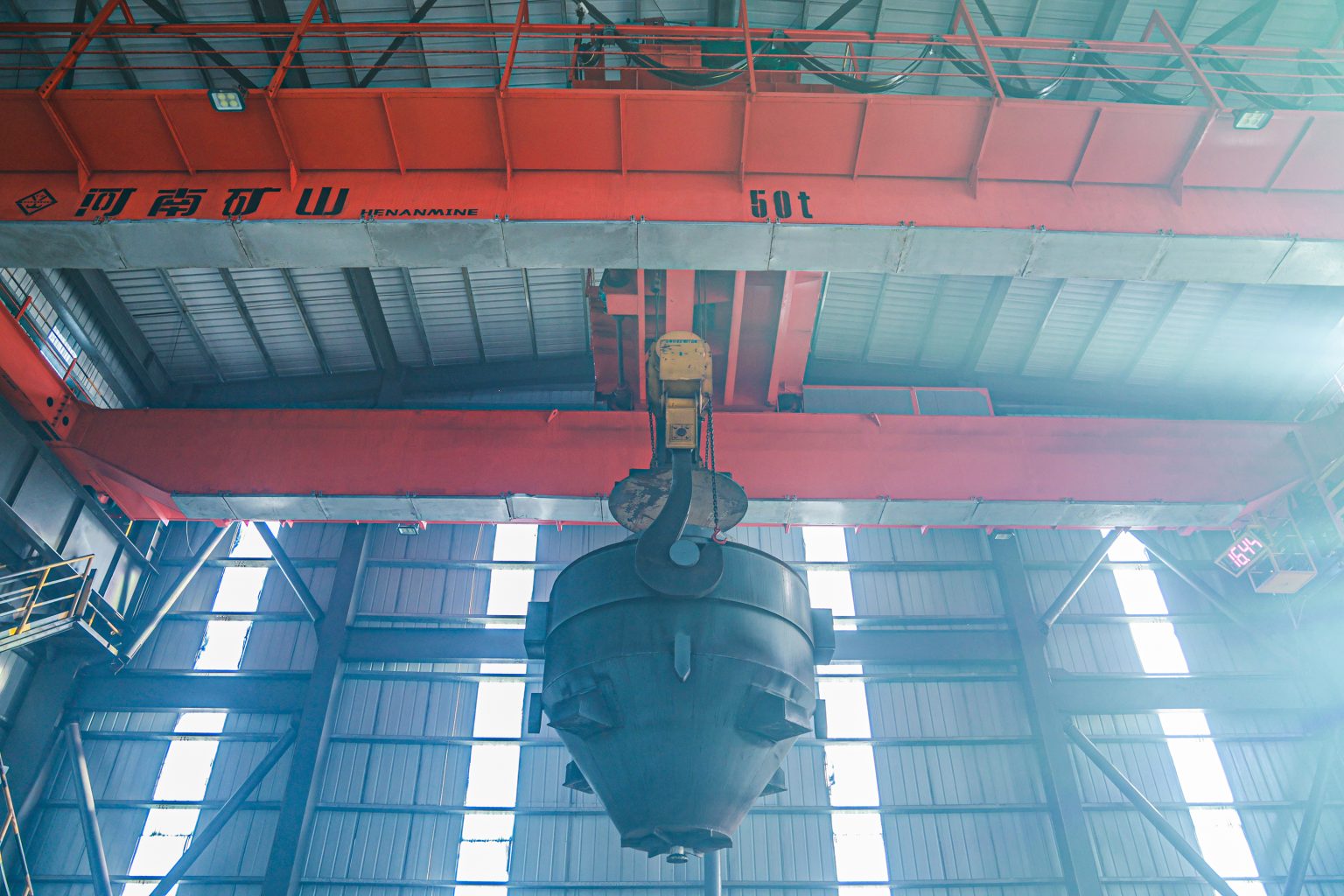
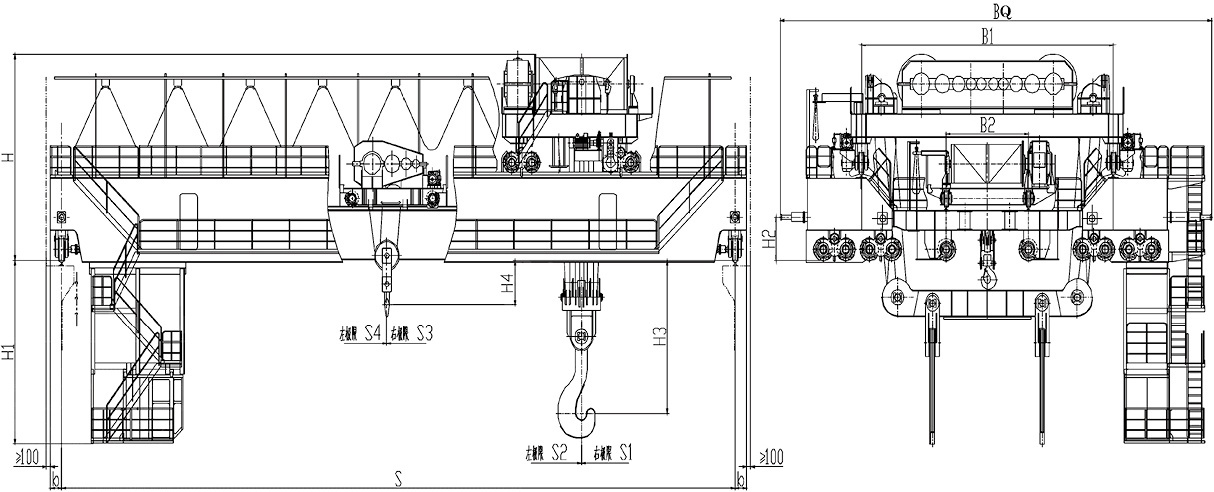
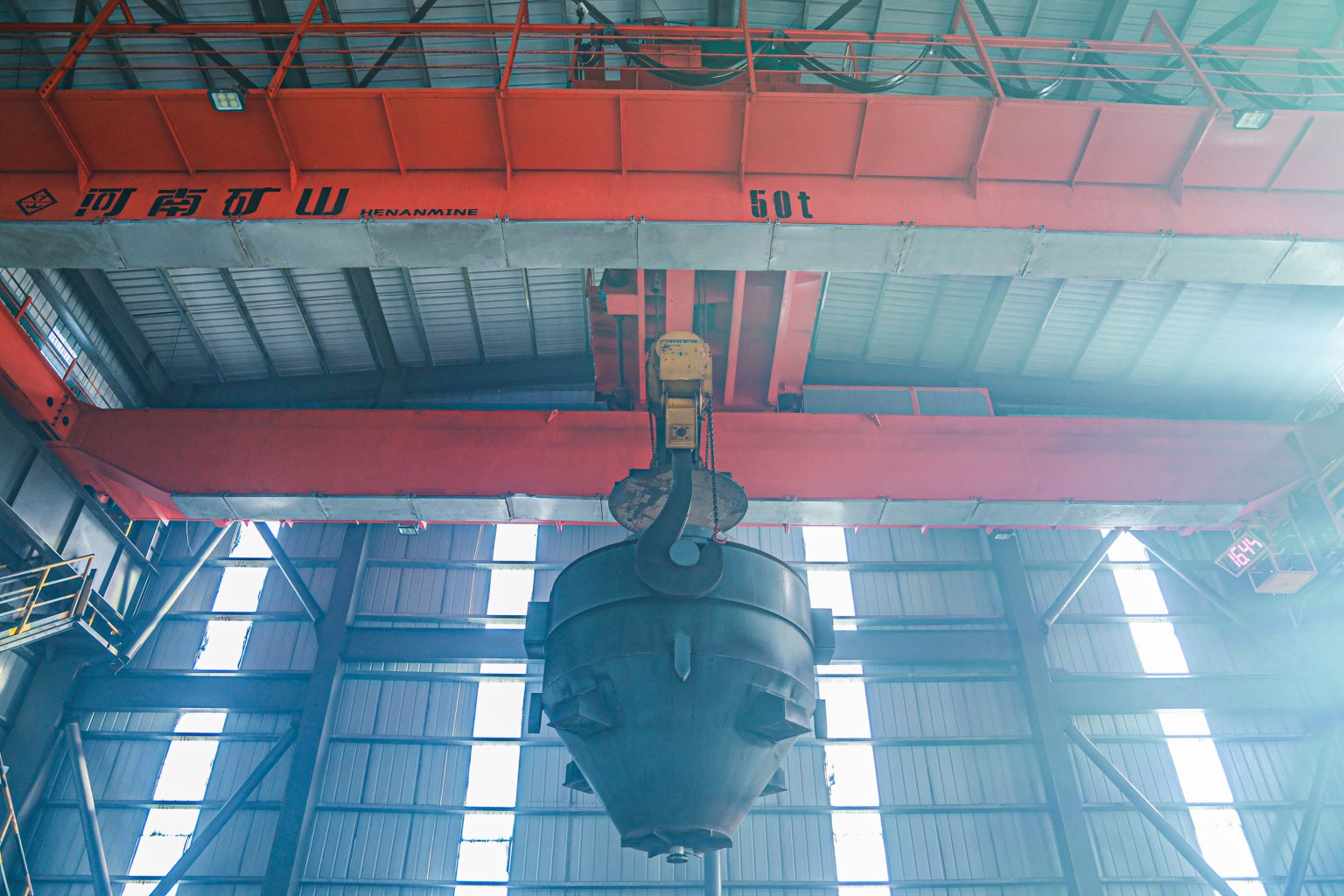
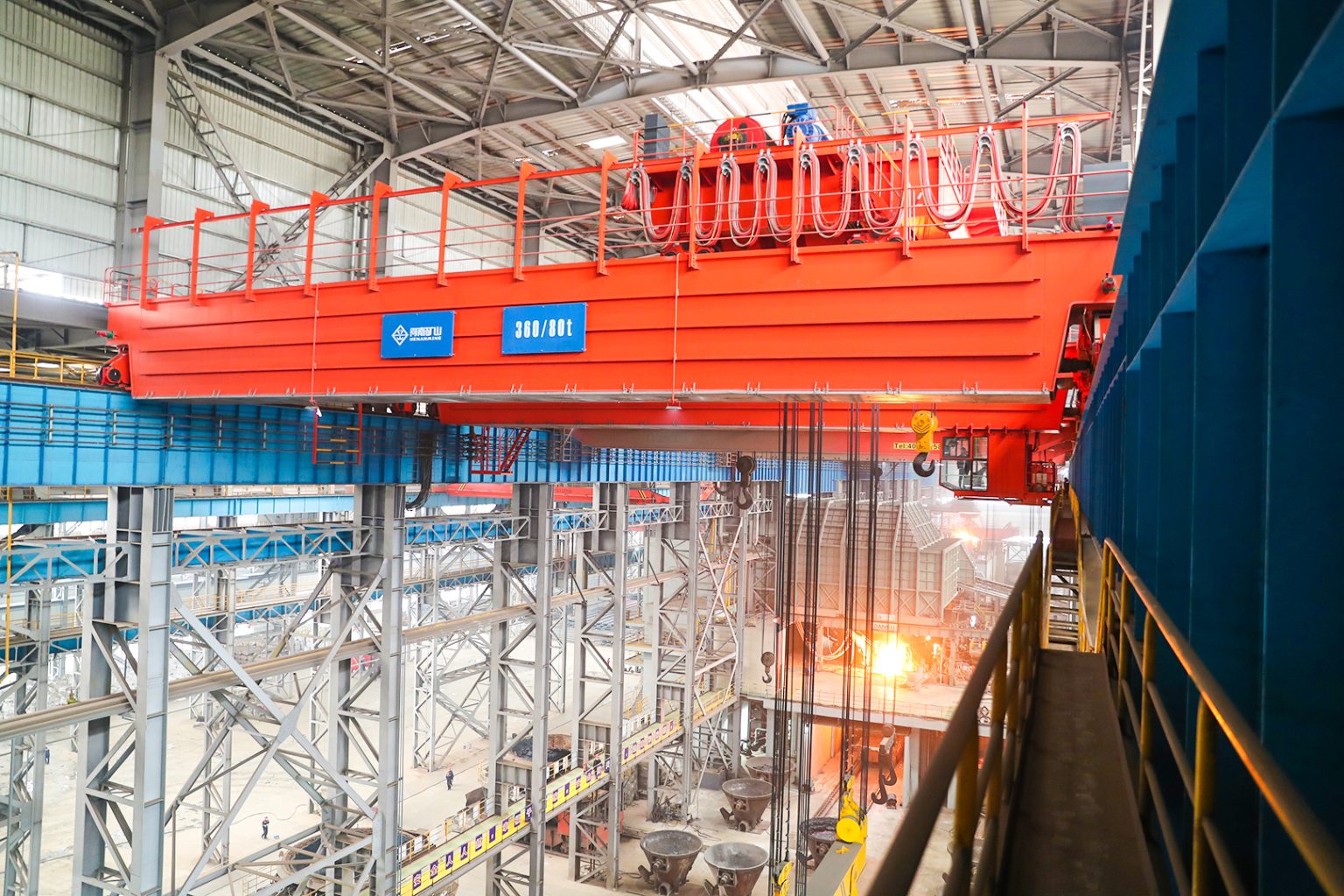
    YZ type Metallurgical Overhead Crane Henan Mine Crane manufactured

    Technical Comparison: Casting Crane vs Metallurgical Crane

    It’s not enough to talk about the concept, I combined with Henan Mine Crane’s production experience and actual project cases, from the five core dimensions, to give you a detailed technical comparison, to help you more intuitively see the difference between the two, but also a better understanding of the core points of the molten metal crane comparison.

    1. Application Focus

    The application focus of the two is very different, one focuses on high-risk molten metal lifting, and the other covers a wider range of metallurgical operations, the specific comparison is as follows:

    Factor Casting Crane Metallurgical Crane
    Primary Use Molten metal ladle transport Broader metallurgical tasks
    Risk Level Extremely high Medium to high
    Operational Criticality Mission-critical Varies by function

    Casting cranes have only one core use: the lifting and transferring of molten metal ladles, with a very high risk level, which may lead to catastrophic accidents in case of failure, and belong to the core key equipment of steel mills.

    Metallurgical cranes, on the other hand, have a wide range of uses, and the risk level ranges from medium to high. For example, the risk of slab handling is low, the risk of charging operations is medium, only the metallurgical cranes involved in molten metal lifting (that is, casting cranes), the risk level is extremely high.

    Its importance also varies according to the use, casting cranes are the “lifeline” of steel production, once the shutdown, the entire smelting production line will come to a standstill; and ordinary metallurgical crane shutdown, will only affect the local operation, will not lead to the whole plant shutdown.

    2. Duty Classification

    Duty Classification directly determines the fatigue life and design strength of the crane, and is the key parameter most easily ignored when selecting the type, especially in the molten metal lifting scenario.

    The duty class of casting cranes is very demanding and must reach FEM A7-A8, ISO M7-M8 or CMAA Class E-F. This is because it needs to withstand high frequency for a long time. This is because it needs to withstand high-frequency, high-load continuous operation for a long time, such as the converter shop of a large steel mill, which has to complete dozens of times of steel lifting every day, and the fatigue strength of the equipment is extremely high.

    Henan Mine Crane produces casting cranes, all of which are designed according to the FEM A8 level standard, and can withstand 24-hour continuous operation to avoid premature structural fatigue and component wear of the equipment.

    The working level of ordinary metallurgical cranes varies according to the use, ranging from A5 to A8. For example, slab handling cranes, operating frequency is low, the working level is usually in the A5-A6 level; charging crane operating frequency is medium, the working level in the A6-A7 level.

    The lower the working level, the lower the design strength and fatigue life of the equipment. If an ordinary metallurgical crane of class A5 is used to transport molten metal, wear and tear of the gear box and deformation of the main girder will occur within a few years, which will not only result in high maintenance costs, but also pose hidden safety risks.

    3. Safety and Redundancy

    Safety and redundancy is the core requirement of molten metal transportation, which is also one of the core differences between casting cranes and ordinary metallurgical cranes.

    Casting cranes must be equipped with a complete safety redundancy system, which is a mandatory requirement and cannot be omitted. Dual independent braking system is the foundation, two sets of brakes are independent of each other, even if one set of failure, the other set can brake the equipment in time to ensure the safety of the ladle.

    At the same time, also need to be equipped with redundant lifting mechanism, such as dual motor, dual gear box, even if one of the set of failure, the equipment can continue to run, to avoid downtime affect production. Emergency safety descent system is also indispensable, in the case of sudden power failure, brake failure, can be ladle smoothly descending to a safe position, to avoid the expansion of the accident.

    As for ordinary metallurgical cranes, complete safety redundancy is not necessarily required according to the operational risk level. For example, slab handling cranes, low risk, usually only need a set of braking system, do not need redundant hoisting mechanism, can also meet the safety requirements.

    4. Heat Protection Level

    High temperatures are a central feature of molten metal lifting scenarios, so the heat protection level is also an important difference between the two, compared as follows:

    Feature Casting Crane Other Metallurgical Cranes
    Heat shielding Essential Application dependent
    Insulated electrical cabinet Required Optional in some cases
    High-temp cable protection Mandatory Depends on environment

    Heat protection is a must for casting cranes and cannot be compromised. The heat-resistant shield will be installed under the main beam to block the high temperature of steel splashing and slag erosion; the electrical control cabinet will be insulated and equipped with a cooling device to avoid high temperatures leading to the aging and failure of electrical components.

    The cables are made of high temperature resistant special cables, which can work stably for a long time under the high temperature environment of more than 150℃, and at the same time, the cables are well protected to avoid being damaged by slag and dust. All these configurations are to ensure that the equipment can operate stably for a long time in a high temperature environment.

    The heat-resistant protection of ordinary metallurgical cranes depends on the operating environment. If it is working in high-temperature areas, such as charging cranes close to the furnace, it will be equipped with basic heat protection; if it is working in room temperature areas, such as handling cranes in slab warehouses, there is no need for specialized heat protection, and ordinary cables and electrical components can meet the needs.

    5. Structural Design

    The structural design of the two, are to adapt to their respective operational needs, the difference is mainly reflected in the structural strength and design focus.

    The casting crane adopts a heavy-duty double girder box structure, which is extremely rigid and can effectively control the deflection of the main girder to avoid shaking when lifting ladles. Core components are made of materials with high safety coefficients, for example, the main girder is made of high-strength steel of Q355B and above grade, and key parts are made of alloy steel to enhance fatigue and high-temperature resistance.

    Henan Mine Crane will also optimize the span of the main beam and the height of the outriggers according to the layout of the customer’s workshop to ensure that the equipment can be perfectly adapted to the workshop space and avoid interfering with the converter, continuous casting machine and other equipment.

    The structural design of ordinary metallurgical cranes varies according to the purpose. For example, slab handling cranes do not need to withstand high temperatures and large loads, so the structure is relatively lightweight; charging cranes need to frequently lift bins, so the structural design pays more attention to flexibility and accuracy.

    Risk Analysis – Which Crane Is Safer for Molten Metal?

    After talking about the technical comparison, let’s talk about the most critical question: which crane is safer for molten metal? The answer is clear: casting cranes, no exceptions.

    Failure Consequences

    Molten metal lifting, once the equipment failure, the consequences are unimaginable. The most serious is steel leakage. Thousands of degrees Celsius of steel spilled in the workshop can burn the equipment, melt the ground, cause fires, and even jeopardize the lives of the operators.

    In addition, equipment failure will also lead to a complete shutdown of the steel plant. Impact on the normal production and operation of the enterprise.

    I have seen many cases in the industry, the customer in order to save costs, with ordinary metallurgical cranes lifting steel, and ultimately because of the failure of the braking system, heat protection is not enough, resulting in steel leakage, not only caused huge economic losses, but also almost caused safety accidents, it is not worth the loss.

    Why Casting Cranes Are Typically Recommended

    The core reason why casting cranes are the first choice for molten metal lifting is that they are “tailor-made” for this high-risk scenario, and every aspect of their design is centered around safety.

    Its safety redundancy system minimizes single-point failures, and even if one component fails, the redundant configuration ensures safe operation of the equipment and prevents accidents from occurring. Dual braking, redundant lifting, emergency lowering and other configurations are all designed to cope with the unexpected situation of molten metal lifting.

    At the same time, its heat-resistant protection and structural strength can meet the requirements of high-temperature, high-load operations, and long-term operation can also maintain stability and reduce the probability of failure. Moreover, the design and production of casting cranes strictly follow the relevant standards for molten metal lifting, which can meet the safety compliance requirements and avoid being penalized by the regulatory authorities.

    Simply put, using casting cranes to lift molten metal is to use professional equipment to do professional things, which can minimize safety risks and protect personnel and equipment safety.

    Lifecycle Cost Comparison

    Many customers in the selection of models, will be entangled in cost issues: casting crane upfront cost than ordinary metallurgical cranes, is not cost-effective? In fact, the selection of equipment can not only look at the initial investment, but also look at the long-term life cycle costs, to calculate the “total account”.

    Initial Investment

    From the initial investment point of view, casting crane costs are indeed higher. Because of its higher design standards, need to be equipped with double braking, redundant lifting, heat protection and other special configurations, the choice of materials and components are also higher quality, manufacturing costs are naturally higher.

    General metallurgical cranes have a lower initial investment, especially models not involving molten metal lifting, do not require special safety and heat-resistant configurations, the structure is relatively simple, the cost is also lower.

    But here to remind you, do not choose ordinary metallurgical cranes to lift molten metal because of the low initial investment. It may seem to save money, but the later risk costs and maintenance costs, will far exceed the initial savings.

    Operational Risk Cost

    Operational risk cost is a part that many customers tend to ignore, but also the biggest difference between the two.

    If an ordinary metallurgical crane is used to transport molten metal, once a failure occurs, it will not only lead to downtime losses, but also may lead to safety accidents, incurring high compensation for accidents, equipment maintenance costs, and even affect the credibility of the enterprise. At the same time, it may also face penalties from regulatory authorities, adding additional costs.

    As for casting cranes, although the initial investment is high, the safety redundancy and heat protection are perfect, and the failure rate is low, which can effectively reduce the downtime loss and the risk of safety accidents. Moreover, it has a longer service life and lower maintenance costs, effectively controlling operating costs in the long run.

    In addition, the insurance rate of the insurance company for molten metal lifting equipment will be based on the safety level of the equipment. Casting cranes with high safety ratings have lower insurance rates, which can further reduce the operating costs of the enterprise.

    Long-Term ROI

    From the perspective of long-term return on investment (ROI), casting cranes have very obvious advantages. Investment in a standard casting crane, although the initial investment is high, but can effectively reduce the frequency of maintenance, to avoid accidental failures and safety incidents, to extend the service life of the equipment.

    Henan Mine Crane casting cranes, in the case of standardized maintenance, the service life can reach 20-30 years, while ordinary metallurgical cranes, if used for molten metal lifting, the service life is usually only 10-15 years, and the maintenance frequency is extremely high, and the annual maintenance costs are also very high.

    For steel mills, stable production is the core, casting cranes can maximize production continuity and reduce downtime losses, which is the core reason for its higher long-term ROI.

    Standards and Compliance Considerations

    Lifting molten metal requires not only choosing the right equipment, but also complying with relevant industry standards and local regulations, otherwise you will not be able to pass acceptance and may face safety regulatory penalties. Especially for export projects, standards and compliance are of paramount importance.

    FEM Standards

    FEM (Federation of European Material Handling) standards, is the global metallurgical crane industry’s common standards, but also the core basis for the design and production of casting cranes. Among them, FEM A7-A8 class is the common working level of casting cranes, which clearly specifies the fatigue design, structural strength and safety requirements of the equipment.

    FEM standards for casting cranes have clear requirements for safety redundancy, heat protection, structural design, to ensure that the equipment can be used in high-frequency, high-load working conditions for long-term stable operation. Henan Mine Crane’s casting cranes are all designed and produced according to the FEM standard to ensure that they meet the international general requirements.

    ISO 4301 & Related Standards

    Among the ISO standards, ISO 4301 mainly regulates the classification of the crane’s working level, and specifies the equipment design requirements corresponding to different working levels; ISO 9927 specifies the inspection requirements for cranes, and specifies the inspection standards for the equipment after leaving the factory and installation to ensure the safety and reliability of the equipment.

    For projects exported to Europe, Southeast Asia and other regions, they must comply with ISO standards, otherwise they cannot pass the local safety acceptance. Henan Mine Crane will customize the equipment to meet the local ISO standard according to the export destination of the customer and provide the corresponding certification documents.

    CMAA Heavy-Duty Classifications

    CMAA (Crane Manufacturers Association of America) standards, mainly applicable to crane projects in North America, of which CMAA Class E-F, corresponding to the high working level requirements of casting cranes, regulating the design, manufacture and inspection of heavy-duty cranes.

    If the customer’s project is exported to North America, the specification of the casting crane must comply with the CMAA standard, especially the working level, braking system, safety protection, etc., to ensure that the equipment can be adapted to the regulatory requirements in North America.

    Local Molten Metal Safety Regulations

    Metallurgical safety regulations in different countries and regions have different requirements for molten metal lifting cranes. For example, China’s T/SXJP 001-2022 group standard clearly stipulates that cranes lifting heavy tanks of molten metal must be equipped with double independent braking, redundant lifting and other safety features.

    The European Union’s CE certification requires that equipment must pass strict safety performance tests before being put into use; the U.S. OSHA standards, also on the molten metal lifting equipment, safety redundancy, heat protection has clear requirements.

    Molten metal lifting is a high-risk operation, so regulations in almost all countries and regions require that this type of equipment meets the highest safety and operating levels, in order to maximize operational safety and avoid accidents.

    When Should You Choose a Casting Crane?

    Combined with Henan Mine Crane’s project experience, as long as any of the following conditions are met, you must choose a casting crane, and can not be replaced by an ordinary metallurgical crane.

    If your operation is specialized in molten metal ladle lifting, whether it is a converter out of steel, refining furnace feed, or continuous casting machine casting, you must choose a casting crane. These types of operations are extremely risky, and only the safety redundancy and heat protection of a foundry crane can meet the demand.

    If your workshop is a continuous high-temperature operating environment, such as a converter or electric furnace workshop, where the equipment needs to run continuously 24 hours a day with high-frequency lifting of ladles, you must also choose a casting crane. With its FEM A7-A8 working class, it can withstand the intensity of high-frequency and high-load operation to avoid premature equipment damage.

    For large steel production lines, or high-capacity ladle systems (e.g., ladles with a lifting capacity of 50t or more), casting cranes must also be chosen. This type of scene on the stability of the equipment, safety requirements are extremely high, casting cranes can be better adapted to protect the production of continuous operation.

    When Is a General Metallurgical Crane Sufficient?

    Not all metallurgical scenarios require casting cranes, as long as it does not involve molten metal lifting, a general metallurgical crane is sufficient and can save costs.

    If your operation is scrap charging, such as lifting scrap into converters and electric furnaces, and you do not need to be exposed to high-temperature radiation and the risk of molten metal, choosing an ordinary charging crane (which is a metallurgical crane) will be fine, and you do not need to be equipped with additional heat-resistant protection and redundant safety systems.

    In the handling and stacking scenarios of slabs and billets, such as the handling operations in the slab warehouse, the temperature of the cooled slabs is low and the risk level is low, the choice of slab handling cranes (belonging to the metallurgical cranes) will be sufficient, with a lightweight structure, lower cost, and also meet the operational requirements.

    Workshop equipment maintenance, furnace overhaul and other auxiliary operations, also do not need casting cranes. Ordinary metallurgical maintenance cranes can meet the needs of small parts, maintenance tools lifting, more cost-effective.

    There are also some low-risk material transfer, such as metallurgical raw materials, finished product handling, as long as it does not involve high temperature, high-risk, ordinary metallurgical cranes can meet the demand, there is no need to spend a high price to choose casting cranes.

    Common Buyer Mistakes

    Combined with so many years of industry experience, I summarized the most common 4 misunderstandings in the selection of customers, many customers have stepped on these pits, I hope you can avoid.

    The most common misconception is that all metallurgical cranes are suitable for molten metal lifting. Many customers see the name “metallurgical crane”, think it can be used in all metallurgical scenarios, including molten metal lifting, and as a result, they can not pass the acceptance after buying back, or frequent failures, and can only be re-procured, wasting time and costs.

    Underestimating the working level requirements is also a common problem for many customers. Some customers only look at the lifting capacity, ignoring the working level, selected A5-A6 level of ordinary metallurgical cranes lifting steel, the result is that the equipment frequently structural fatigue, wear and tear of components, high maintenance costs, and even potential safety hazards.

    Only look at the initial price, ignoring the long-term life cycle costs, is also undesirable. Low-priced ordinary metallurgical cranes, although the initial investment is low, but the later failure, high maintenance costs, downtime losses, but in the long run, more expensive than casting cranes.

    Decision-Making Checklist

    In order to facilitate your quick judgment, I have compiled a decision-making checklist, against the check, you can quickly determine whether you need to choose casting cranes or ordinary metallurgical cranes, to avoid selection errors.

    1. Do you need to lift molten metal ladles? If so, choose a casting crane directly; if not, consider a general metallurgical crane.
    2. What working level does your operation need to reach? If you need 24-hour continuous high-frequency operation, you need to choose FEM A7-A8 class, and give priority to casting cranes.
    3. Are safety redundancy systems required by local regulations? If molten metal is to be lifted, it is usually required and cast cranes are preferred.
    4. What is the ambient temperature of the operating environment? If the ambient temperature is high (near furnaces, molten steel), choose a foundry crane with complete heat protection.
    5. What standards does your operation need to meet? If it is an export project, you need to confirm the requirements of FEM, ISO, CMAA and other standards, casting cranes are more likely to meet the high standards.

    Frequently Asked Questions

    Q1: Is a casting crane the same as a metallurgical crane?

    No, it is not. A casting crane is a type of metallurgical crane, but it is a special type dedicated to molten metal lifting. All casting cranes are metallurgical cranes, but not all metallurgical cranes can be used for molten metal transportation, most of the ordinary metallurgical cranes can only be used for low-risk metallurgical operations.

    Q2: Can a standard metallurgical crane lift molten metal?

    Only if it meets all the requirements for molten metal lifting. Specifically, it must be of FEM class A7-A8 operating level, equipped with double independent brakes, redundant lifting, complete heat protection, etc., as well as complying with local safety regulations and industry standards. Otherwise, ordinary metallurgical cranes should never be used to transport molten metal.

    Q3: Why is dual braking important for casting cranes?

    Because molten metal lifting is extremely risky, and if the braking system fails, a falling ladle can cause a catastrophic accident. Dual independent braking system ensures that in case of failure of one set of brakes, the other set can stop the equipment in time, locking the ladle firmly and avoiding accidents, which is a mandatory safety requirement for molten metal lifting.

    Q4: Which is more expensive?

    The initial investment in a casting crane is usually higher because it has higher design standards and special configurations. However, in the long run, it has a higher long-term ROI due to lower maintenance costs, longer service life, lower failure rates, and reduced downtime losses and safety risks. Common metallurgical cranes have low initial investment, but if used for molten metal lifting, the cost will increase significantly in the later stage.

    Q5: How long do casting cranes last?

    Under the premise of standardized maintenance, the service life of casting cranes usually reaches 20-30 years. Henan Mine Crane casting cranes are made of high-strength steel and high-quality components, coupled with scientific structural design, as long as the regular maintenance is done, they can operate stably for a long time, saving the cost of replacing the equipment for the steel mills.

    Conclusion

    Talking about this, I believe you are already clear about the difference between casting cranes and metallurgical cranes, and also know how to choose to lift molten metal.
    The core conclusion is very simple: casting cranes are “tailor-made” special equipment for molten metal lifting, metallurgical cranes are a broad category covering all metallurgical scenarios, suitable for low-risk routine operations, can not replace the casting crane for molten metal lifting.

    Henan Mine Crane Factory Custom

    Henan Mine Crane has been focusing on the design, production and service of heavy metallurgical cranes for more than 20 years, and has participated in the projects of many large-scale steel mills at home and abroad, and has accumulated rich experience in selection and operation. We will accurately recommend the right equipment for you according to your operational scenarios, risk level, and compliance requirements, and help you avoid selection mistakes, not only to ensure safety and compliance, but also to control long-term operating costs.

    Choosing a suitable crane is not only a purchase investment, but also an investment in the production safety and long-term development of the enterprise. Only by choosing the right equipment can we make production smoother and safer and realize higher long-term returns.

    Henan Mine CraneDiscuss your requirements ↗
  • Casting Crane Specifications and Applications

    Casting Crane Specifications and Applications

    Casting Crane Specifications and Applications

    In the steel plant for more than ten years, I know the casting crane (casting crane) on the production of the significance – it is not ordinary lifting equipment, is the core of the steel smelting plant, from the converter out of the steel, refining to continuous casting, each key link are inseparable from it.

    Many customers in the preparation of RFQ procurement inquiry, the most headache is casting crane specifications (casting crane specification) to determine. The specification is not selected correctly, either to meet the production requirements, frequent downtime to rectify; or cause waste, high maintenance costs. More critically, molten metal lifting belongs to high-risk operations, improper specifications will also lay serious safety hazards.

    Today, I will Henan Mine Crane first-line technical engineer identity, the casting crane specifications parameters, application scenarios, dismantled clearly. Do not talk about false theories, only practical details, to help you in the RFQ preparation stage, accurately determine the specifications, avoid misunderstandings, and select the equipment to match the working conditions of the steel plant, while taking into account the safety, durability and cost-effectiveness.

    What Is a Casting Crane?

    Definition

    A casting crane, also known as ladle crane, is a heavy-duty double girder overhead travelling crane specially designed for lifting and transferring molten metal ladles in a metallurgical environment. The biggest difference between it and ordinary overhead cranes lies in the fact that all the components have been specially designed to adapt to the harsh working conditions of high temperature, dust and high-frequency operations in steel mills.

    Henan Mine Crane produces casting cranes, all of which adopt double girder box structure, the core of which is to enhance rigidity, reduce deflection, and ensure that the ladle is lifted smoothly and without shaking. After all, a spoonful of steel at thousands of degrees Celsius, even a slight shake, may cause irreparable safety accidents.

    Simply put, it is the steel mill “specializing in heavy work, dangerous work” lifting equipment, every specification design, are designed around the “safe lifting of molten metal” to start, which is the core difference between the ladle crane specification and the general This is the core difference between ladle crane specification and common crane specification.

    Core Functions

    The core function of a casting crane may seem simple – lifting ladles – but every function must be adapted to the actual production process in the steel mill.

    The core function is to transfer the steel smelted in the converter smoothly to the refining furnace or continuous casting machine. This process requires a high degree of stability of the equipment, there can not be the slightest shaking, otherwise the molten steel is easy to spill, triggering fires or scalding accidents.

    Secondly, it has to cooperate with the scrap loading operation, lifting the scrap hopper to the converter and electric furnace to ensure the stable supply of smelting raw materials. This requires the equipment’s lifting mechanism to be responsive and able to quickly complete the loading and unloading action without delaying the smelting rhythm.

    In the continuous casting process, it has to lift the ladle to the top of the crystallizer of the continuous casting machine and accurately align the ladle to ensure the smooth injection of steel and guarantee the production quality of slabs and billets. At the same time, it also has to undertake auxiliary lifting tasks for workshop equipment maintenance, such as lifting damaged motors and gearboxes to provide support for workshop overhaul.

    In addition, some of the large steel mills casting cranes, but also take on the steel slag, slag transfer tasks, to achieve the smelting of the whole process of material lifting coverage, enhance the efficiency of the workshop operations.

    Typical Applications of Casting Cranes

    The applications of casting cranes cover almost the entire metallurgical industry, with the core focus on the need to lift molten metal. Different smelting scenarios, the specifications of the equipment are different, accurate matching scenarios, in order to maximize the value of the equipment.

    Basic Oxygen Furnace (BOF) Operations

    Basic Oxygen Furnace (BOF) workshop is the most important application scenario for foundry cranes. Here the operation is characterized by high frequency, high load, every day to complete dozens of times the steel lifting, from the converter out of the steel to the refining furnace feed, the whole process can not have any pause.

    The casting cranes in the converter workshop have to be adapted to the lifting demand of large-capacity ladle, usually with a large lifting capacity, and also able to withstand the influence of high-temperature radiation of molten steel. Henan Mine Crane customized casting cranes for the converter workshop will be installed with heat-resistant protective cover under the main beam to avoid the high temperature of molten steel splash damage to equipment components.

    Moreover, the operation of the converter shop is continuous for 24 hours, which requires a very high working level of the equipment, which must reach the FEM A8 level, in order to withstand the structural fatigue caused by high-frequency starting and stopping, forward and reverse rotation, and to avoid premature damage to the equipment.

    Electric Arc Furnace (EAF) Steelmaking

    Electric Arc Furnace (EAF) steelmaking workshop, the core role of casting cranes is scrap loading and molten steel transfer. When loading scrap, the heavy scrap hopper has to be lifted and accurately poured into the EAF, which requires the equipment to have enough power in the lifting mechanism and to be able to accurately align it to avoid spilling the scrap.

    After the steel smelting is completed, the ladle is then lifted and transported to the refining furnace or continuous casting machine, and the whole process should be fast and smooth to match the smelting rhythm of the electric furnace. There is a lot of dust in the electric furnace workshop, and the sealing performance of the equipment should be well done to avoid the dust entering into the electrical parts and affecting the operation of the equipment.

    Secondary Refining (LF/RH)

    Secondary Refining (LF/RH) operations require the highest level of precision from the casting cranes. Here the steel needs to be adjusted for composition, and the ladle must be positioned accurately without deviation, otherwise it will affect the refining effect and lead to unqualified steel composition.

    Therefore, the casting cranes in the refining workshop are usually equipped with an accurate positioning system to ensure that the ladle can be accurately aligned with the entrance of the refining furnace, while at the same time controlling the amplitude of the ladle’s shaking to avoid collision between the steel and the furnace mouth, which may cause the steel to spill out or damage the equipment.

    Continuous Casting Line

    The casting crane of continuous casting line is mainly responsible for steel transportation and casting assistance. It has to transport the refined steel smoothly to the top of the crystallizer of the continuous casting machine and inject it into the crystallizer at a constant speed to ensure the molding quality of slabs and billets.

    Continuous casting production line work rhythm is very fast, casting crane running speed to adapt to the continuous casting rhythm, can not be too slow, otherwise it will lead to steel cooling solidification, blocking the crystallizer; also can not be too fast, to avoid the steel shaking too much, affecting the casting accuracy.

    Non-Ferrous Metallurgical Plants

    In addition to steel mills, non-ferrous metal smelters (such as aluminum, copper smelting), will also make extensive use of casting cranes. The molten metal in this kind of scene, although the melting point is lower than that of steel, is more corrosive and requires higher anti-corrosion and heat-resistant performance of the equipment.

    Henan Mine Crane will customize the anticorrosive treatment of spreader and equipment surface according to the characteristics of non-ferrous metals to avoid the molten liquid from corroding the equipment parts and prolong the service life of the equipment. For example, the casting crane in the aluminum smelting workshop will adopt corrosion-resistant high-temperature cables and sealing parts to meet the needs of aluminum melt lifting.

    Casting Crane Structural Specification

    The structural specification of the casting crane is the core to determine the stability and safety of the equipment, and every part of the design should be adapted to the needs of molten metal lifting, and there should not be the slightest sloppiness. Many customers have stepped on the structural design of the pit, such as the main beam rigidity is not enough, lifting the ladle shaking seriously, can only be reinforced at a later stage, delaying production and increasing costs.
    Casting-Crane-Product-Specifications

    Crane Configuration

    The main structure of the casting crane, commonly used double girder box structure, the rigidity of this structure, bearing capacity, can effectively reduce the deflection of the main beam in the lifting process, to avoid shaking ladle. Henan Mine Crane’s casting cranes, the main girder adopts heavy-duty welding process, the use of high-strength steel, to ensure the stability of the structure, even if the long-term high load operation, there will be no deformation.

    For large casting cranes with a lifting capacity of 125t or more, we will adopt a four-beam structure to further enhance the stability and load-bearing capacity of the equipment, which is suitable for large-capacity ladle lifting needs. At the same time, the outriggers of the gantry are widened to increase the stability of the equipment during operation and avoid tilting of the equipment due to partial loading of the ladle.

    Main Hoisting Mechanism

    The main hoisting mechanism is the “core power source” of the casting crane, and its specifications directly determine the lifting capacity and lifting capacity of the equipment. The rated lifting capacity of the main hoisting mechanism must include the weight of the ladle and spreader, and also leave a safety margin of 10%-20% to avoid long-term full-load operation of the equipment.

    The main lifting mechanism of Henan Mine Crane adopts high safety coefficient steel wire rope with safety coefficient of not less than 6 times, which can effectively withstand the weight of ladle and the impact force during lifting. At the same time, it is equipped with redundant braking system, even if one set of brakes fails, the other set can brake the equipment in time to ensure the safety of the ladle.

    According to JB∕T7688.5-2012 standard, for casting cranes lifting heavy tanks of steel and iron, the drive chain of the main hoisting mechanism must be equipped with a double driving device, or a safety brake must be installed on the steel wire rope reel to further enhance safety.

    Auxiliary Hoist

    Auxiliary Hoist is mainly used for workshop equipment maintenance and light load lifting, such as lifting maintenance tools, small parts, or with the main hoisting mechanism to dump steel slag, slag. Its lifting capacity is smaller than the main hoist, usually 1/3-1/2 of the weight of the main hoist, and it adopts independent control system, which does not affect the normal operation of the main hoist.

    Many customers will ignore the importance of the secondary lifting mechanism, think that as long as the main lifting enough. However, in practice, the secondary lifting mechanism can greatly increase the utilization rate of the equipment, avoiding the need to call other lifting equipment in order to lift small parts, and saving the cost of workshop operation.

    Trolley Configuration

    There are two main types of trolley configurations: single trolley double lift and double trolley configuration. Single trolley double lifting, that is, a trolley is equipped with the main and secondary two lifting mechanism, compact structure, suitable for the workshop space is small scene, can save the space occupied by the equipment.

    Double trolley configuration, that is, two independent trolleys, each equipped with lifting mechanism, can work alone, can also work together, suitable for large-scale steel mills, high-frequency operation of the scene, can enhance the lifting efficiency. For example, two trolleys can lift two ladles at the same time, or one can lift ladle and one can lift auxiliary materials, which can greatly improve the operation rhythm.

    Key Technical Parameters in Casting Crane Specification

    After determining the structural specifications, it is necessary to focus on the core technical parameters – these parameters directly determine whether the equipment can be adapted to your production needs, not the bigger the better, not the more advanced the better, the adaptation is the key.

    Each parameter should be combined with your workshop layout and work intensity to determine.
    Casting-Crane-Product-Specifications Casting-Crane-Product-Specifications

    Rated Lifting Capacity

    Rated lifting capacity is the core parameter of selection, and it must cover all the operation scenarios. Conventional steel converter workshop, ladle + steel weight is usually between 50t-125t, so the rated lifting capacity of casting cranes, the conventional range of 50t-500t +, depending on the size of the steel mill and ladle size.

    Here we should pay attention to a misunderstanding: many customers only count the weight of molten steel, ignoring the weight of the ladle and spreader. For example, for 40t of molten steel, the ladle weight is about 12t, and the spreader weight is about 3t, then the rated lifting capacity of the crane should be at least 55t, in order to leave enough safety margin.

    Span

    The determination of the span mainly depends on the width of the workshop and the layout of the ladle placement. For example, the span of the converter workshop is usually between 30-40 meters, to ensure that the ladle can be lifted smoothly from the top of the converter to the refining furnace without any obstruction in the middle. If the span is too small, the ladle can not be smoothly transferred, and the layout of the workshop can only be adjusted again, which will delay the schedule.

    Lifting Height

    For continuous casting workshop, the lifting height is also adapted to the height of the continuous casting machine, to ensure that the ladle can be smoothly aligned with the entrance of the crystallizer, and accurately complete the casting operation. If the lifting height is not enough, the ladle can not be put in place, so we can only adjust the equipment or the layout of the workshop, which will increase the extra cost.

    Duty Classification

    Duty Classification is the most neglected but critical parameter in casting crane specifications. Casting cranes in steel mills are basically 24-hour continuous operation, high-frequency start and stop, forward and reverse rotation, the structural fatigue strength of the equipment is extremely high.

    In the common industry standards, the working level of casting cranes is usually FEM A7 or A8, ISO M7 or M8, CMAA Class E or F. Among them, FEM A8 crane is the first choice for 24-hour continuous operation in large steel mills, which can withstand high-frequency, high-load operation and avoid premature structural fatigue and wear of the equipment components.

    Operating Temperature Range

    The operating temperature of the casting crane should be adapted to the operating environment of the steel plant. The ambient temperature of a conventional steel workshop is between 40℃ and 60℃, plus the heat radiation of steel, the temperature around the equipment will be higher, and can even reach more than 80℃.

    Safety Systems for Molten Metal Handling

    Molten metal handling is extremely risky. Safety systems for casting cranes are the last line of defense for the safety of personnel, equipment and goods, and every safety configuration should not be omitted. These safety systems are also an integral part of the casting crane specification.
    Casting-Crane-Structure Casting-Crane-Structure Casting-Crane-Structure

    Dual Independent Brake System

    Dual Independent Brake System is a mandatory requirement for casting cranes – the main hoisting mechanism must be equipped with two sets of independent brakes, one set of mechanical brakes and one set of electromagnetic brakes, which are independent of each other and do not affect each other.

    Even if one set of brake failure, the other set can brake the equipment in time to ensure that the ladle will not fall. According to T/SXJP 001-2022 group standard requirements, lifting heavy tanks of steel, iron casting cranes, the main hoisting mechanism of each set of drive chain, must be installed with two sets of independent work brake.

    Redundant Hoisting Design

    With a two-rope system, two independent ropes are used in the hoisting mechanism, so that even if one rope breaks, the other can temporarily carry the weight of the ladle, buying time for the crew to deal with the fault. This redundant design is almost a must in large steel mills and high-risk operations.

    Overload Protection

    The overload protection system should be able to monitor the lifting load in real time and cut off the lifting power immediately once it exceeds the rated lifting capacity, and send out an alarm signal at the same time, so as to avoid overloading of the equipment, and to prevent accidents such as breakage of wire ropes and deformation of the main beam.

    Emergency Power or Safe Lowering System

    Sudden power failure is a common emergency situation in steel mills, once the power failure, ladle hanging in mid-air, very easy to cause safety accidents. Therefore, casting cranes must be equipped with Emergency Power or Safe Lowering System to ensure that the ladle can be smoothly lowered to a safe position in case of power failure.

    Heat Protection System

    High temperature is the biggest enemy of casting crane, the heat radiation of steel will not only damage the equipment components, but also affect the service life of the equipment. Therefore, a heat protection system is indispensable.

    Heat shields will be installed under the main beam to block the high temperature and heat radiation from steel splashing; the electrical control cabinet will be insulated and equipped with cooling devices to avoid the aging of electrical components caused by high temperature; the cable will be of high-temperature resistant type, which is able to work stably for a long period of time under high temperature environment.

    At the same time, the lower flange plate of the lifting beam of the spreader will be equipped with anti-radiation heat device and fixed with chain suspension to prevent falling when the connection is damaged, which is also a clear requirement in the standard of JB∕T7688.5-2012.

    Standards and Compliance Requirements

    The specifications of casting cranes must comply with the relevant industry standards and local regulations, otherwise they will not pass the acceptance, and may face penalties for safety regulation. Especially for export projects, standards compliance is a top priority.

    FEM Standards

    FEM standards also put forward clear requirements for the structural strength of cranes, braking systems, safety redundancy, to ensure that the equipment can be in high-frequency, high-load working conditions, long-term stable operation. Henan Mine Crane’s casting cranes are all designed and produced in accordance with FEM standards to ensure compliance with internationally recognized requirements.

    ISO Standards

    Projects exported to Europe, Southeast Asia and other regions must comply with ISO standards, otherwise they will not be able to pass the local safety acceptance. Henan Mine Crane will customize the equipment to meet the local ISO standards according to the customer’s export destination and provide the corresponding certification documents.

    CMAA Specifications

    If the customer’s project is exported to North America, the specifications of the casting crane must comply with CMAA standards, especially in terms of working level, braking system, safety protection, etc., to ensure that the equipment can be adapted to the regulatory requirements of the North American region.

    Local Metallurgical Safety Regulations

    Metallurgical safety regulations in different countries and regions have different requirements for casting cranes. When Henan Mine Crane undertakes export projects, it will understand the local metallurgical safety regulations in advance to ensure that the equipment specifications and safety configurations meet the local requirements, so as to avoid compliance problems and delays in the project progress.

    Automation and Modern Control Technologies

    With the enhancement of the level of intelligence in steel mills, the automation and intelligent configuration of casting cranes have become an important part of the specification selection. These configurations not only improve operational efficiency, but also reduce the number of operators on site and minimize operational risks.

    PLC and VFD Control Systems

    PLC and VFD are the core control systems of modern casting cranes, PLC can realize precise control of the equipment, such as lifting, running speed adjustment, precise positioning of the spreader, and also can realize fault diagnosis and alarm function.

    VFD frequency conversion control can realize smooth acceleration and deceleration of the equipment, reduce the shaking of the ladle, especially in the high lifting height and large span operation, it can improve the spreader alignment efficiency, and at the same time, reduce the wear and tear of the equipment components and prolong the life of the equipment.

    Remote Operation Systems

    Remote operation systems allow operators to remotely control the operation of casting cranes in the center control room without having to operate in the high-temperature, high-risk workshop site, which not only improves the working environment of the operators, but also reduces the risk of on-site operations.

    Intelligent Monitoring Systems

    Intelligent monitoring systems can monitor the operating status of the equipment in real time, such as load, vibration, brake wear, temperature and other parameters, once abnormal, immediately send out an alarm signal, so as to facilitate the staff to investigate and deal with the equipment in time, to avoid equipment with sick work.

    Casting Crane vs Standard Overhead Crane

    Many customers will confuse casting cranes and standard overhead cranes when selecting models, and even want to replace casting cranes with standard overhead cranes, which is very dangerous. The core difference between the two, reflected in each specification parameters and application scenarios, using the wrong equipment will only lose more than gain.

    Comparison Factor Casting Crane Standard Overhead Crane
    Application Molten metal handling (molten steel, molten iron, non-ferrous metal melts) General material handling (steel, equipment, components, etc.)
    Duty Class FEM A7–A8, ISO M7–M8, CMAA E–F Typically A3–A5, suitable for low-frequency, light to medium-load operations
    Brake System Dual independent brake with redundant design Single standard brake without redundancy
    Heat Protection Essential (heat shields, high-temperature components, heat insulation treatment) Usually not available, unable to withstand high-temperature environments
    Safety Redundancy High, with multiple safety systems (overload protection, redundant hoisting, emergency lowering) Medium, only meeting basic safety requirements

    Simply put, the core of the design of ordinary overhead cranes is “to meet the ordinary material handling”, while the core of the design of casting cranes is “to cope with molten metal high-risk, high-load, high-temperature conditions. Using ordinary overhead cranes to lift molten metal not only violates the law, but also poses serious safety hazards, and later maintenance costs will also increase significantly.

    Maintenance Strategy for Casting Cranes

    The service life of a casting crane depends not only on the specification and quality of the equipment, but also on its maintenance. A set of scientific maintenance strategy can extend the service life of the equipment by 5-10 years, reduce the downtime rate and lower operating costs.

    Daily Inspection

    Daily inspection is the basis of maintenance. Every day before and after operation, the equipment should be fully inspected without slacking off. Before operation, check the sensitivity of the braking system, the wear and tear of the wire rope, and the anti-decoupling device of the hook to ensure that there is no abnormality.

    After operation, clean up the dust and slag on the surface of the equipment to avoid impurities jamming the transmission parts; check whether the electrical wiring is firm to avoid short circuit caused by dust.

    Monthly Structural Inspection

    Monthly structural inspection of the equipment should be carried out, focusing on checking the main beam, leg welds, to see whether there are cracks, deformation and so on.

    At the same time, the lifting beam of the spreader should be inspected, especially the wear and tear of the lower flange plate, and ultrasonic testing should be carried out on the load bearing parts with a plate thickness of more than 40mm to ensure that there are no structural defects, which is also required by the standard of JB∕T7688.5-2012.

    Annual Overhaul

    A comprehensive overhaul of the equipment should be carried out every year, focusing on overhauling the braking system, gear box, lifting mechanism, and replacing the parts with serious wear and tear; the electrical system should be comprehensively inspected to check the electrical insulation, and replace the aging cables and electrical components.

    Predictive Maintenance Tools

    With the help of predictive maintenance tools, we can foresee the hidden faults of the equipment in advance and reduce the sudden stoppage. The heat sensor can monitor the temperature of the equipment components to avoid overheating and damage.

    Henan Mine Crane provides customers with customized maintenance manuals, specifying the maintenance cycle and standards for each component, and also conducts regular inspections to help customers check for hidden faults and ensure the long-term stable operation of the equipment.

    Common Mistakes in Casting Crane Specification

    Combined with so many years of project experience, I summarized the casting crane specification selection, the most common 5 misunderstandings, many customers have stepped on these pits, I hope you can avoid.

    Underestimation of the working level requirements, is the most common misunderstanding. Many customers only look at the lifting capacity, ignoring the working level, selected the equipment below FEM A6, even if the lifting capacity is enough, with a few years there will be structural fatigue, serious wear and tear of components, maintenance costs rise sharply.

    Neglecting safety redundancy requirements is also a common problem for many customers. In order to save costs, omit double braking, redundant lifting and other configurations, it seems to save money, in fact, buried the safety hazards, once the failure, the consequences are unimaginable. According to the T/SXJP 001-2022 standard, cranes for lifting heavy tanks of molten metal must be equipped with a complete safety redundancy system.

    Failure to consider the effects of heat radiation and selecting equipment without heat protection leads to rapid aging of motors and electrical components, especially in converter and electric furnace workshops, where heat radiation is extremely strong and heat protection should never be omitted.

    Choosing suppliers without metallurgical project experience is also a big mistake. Casting crane specifications design, production, requires extensive experience in the metallurgical industry, many suppliers do not have relevant project cases, the production of equipment can not be adapted to the working conditions of the steel plant, the later emergence of a variety of problems, the after-sales can not be followed up in a timely manner.

    Only look at the purchase price, ignoring the whole life cycle cost, also undesirable. Low-priced equipment often cut corners on steel and components, and later maintenance costs and downtime losses are much higher than the initial purchase price, which is not worth the loss.

    Casting Crane Specification Checklist (For RFQ)

    In order to facilitate your preparation for RFQ procurement inquiry, I have compiled a list of casting crane specifications, fill in against, you can clearly sort out their needs, to avoid omission of demand, so that the supplier’s offer is more accurate, but also to avoid the problem of specification discrepancies in the later stage.

    1. Rated lifting capacity (need to include the weight of the ladle, spreader, leave a safety margin)
    2. Crane span, lifting height, hook limit distance
    3. Working class requirements (FEM/ISO/CMAA, clear A7/A8 or E/F class)
    4. Configuration of hoisting mechanism (single trolley double lift/double trolley, whether redundant design is required)
    5. Braking system requirements (whether dual independent braking is required)
    6. Operating environment temperature, heat radiation intensity
    7. Safety configuration requirements (overload protection, emergency descent, heat protection, etc.)
    8. Automation control requirements (whether PLC, remote operation, intelligent monitoring are required)
    9. Applicable standards and certification requirements (FEM/ISO/CMAA, and local regulations)
    10. Installation, commissioning requirements, and after-sales, spare parts support

    Frequently Asked Questions

    Q1: What is the difference between a casting crane and a ladle crane?

    In fact, there is no difference between the two in essence, they are both specialized cranes for lifting molten metal ladles, just called differently. Casting crane is the common name, ladle crane (ladle crane) is more focused on the function of “lifting ladle”.

    Q2: Why is FEM A8 classification important?

    FEM A8 is a high working class standard, which ensures that the crane can withstand 24 hours of continuous, high-frequency, high-load operation. For casting cranes in steel mills, only A8 classification equipment can resist structural fatigue.

    Q3: Can casting cranes be fully automated?

    Yes, it can. Henan Mine Crane can customize the automation solution according to the customer’s intelligent demand, which can be adapted to the automated production line of steel mills.

    Q4: How long does a casting crane last?

    The service life of a casting crane usually reaches 20-30 years under the premise of appropriate specifications and standardized maintenance. Henan Mine Crane’s casting cranes are made of high-strength steel and high-quality components, coupled with scientific structural design, and as long as they are well-maintained on a regular basis, they can operate stably for a long time, saving the cost of replacing the equipment for the steel mills.

    Q5: Is redundancy mandatory for molten metal cranes?

    Dual braking, redundant lifting and other configurations can avoid single point of failure resulting in safety accidents, and many countries’ metallurgical safety regulations also clearly require that casting cranes must be equipped with redundant safety systems to ensure operational safety.

    Conclusion

    Selection of casting crane specifications is one of the most critical aspects of steel procurement – it directly determines production safety, operational efficiency and long-term operating costs.

    When selecting a casting crane, you can’t just look at the surface parameters of lifting capacity and span, but also pay attention to the working level, safety redundancy, heat protection, standards compliance, and even more importantly, you should avoid the common selection mistakes. Specification selection is right, in order to guarantee decades of stable operation.

    Henan Mine Crane Factory Custom

    Henan Mine Crane has been focusing on the design, production and service of heavy metallurgical cranes for more than twenty years, witnessing the development of countless steel mills and accumulating rich experience in specification selection. We will accurately customize the casting crane specifications for you according to your workshop layout, operating intensity, export demand, and provide professional support throughout the process from RFQ demand combing to equipment installation and after-sales maintenance.

    Choosing a casting crane with appropriate specifications and high quality is not only a purchase investment, but also an investment in the production safety and long-term development of the steel plant.

    Only by choosing the right equipment, can we reduce downtime, lower maintenance costs, and make production smoother and safer.

    Henan Mine CraneDiscuss your requirements ↗
  • Casting Crane Safety Manufacturer | Custom Ladle Crane for Steel Plants

    Casting Crane Safety Manufacturer | Custom Ladle Crane for Steel Plants

    Casting Crane Safety Manufacturer | Custom Ladle Crane for Steel Plants

    Steel plant converter, refining, continuous casting process, casting crane safety is the core of the entire production line safety control. As the core equipment for steel transportation, steel lifting cranes are exposed to high-temperature heat radiation, metal dust and slag splash above 1600℃ all year round, with high work intensity and high risk level. Once there is brake failure, wire rope breakage, hook delocking, will not only cause equipment damage and production line shutdown, but also may cause casualties and major fires.

    Landing reliable molten metal lifting safety measures, can not just rely on the experience of the operator, from the equipment design, operating norms, maintenance system, emergency disposal of the whole chain to build a protective network. As a professional manufacturer of customized metallurgical casting cranes, Henan Mine Crane Casting Crane Industrial combined with more than a hundred metallurgical projects at home and abroad, collated the whole process of safety control guide, covering standards compliance, hardware configuration, operating norms to intelligent upgrading, to help steel mills build a strong safety line of defense for high temperature and high risk operations.

    Applicable regulations and standards

    Compliance is the bottom line of the safety specification of ladle cranes, all design and operation and maintenance should correspond to clear regulations and standards, and can not be downgraded based on experience.

    In the international lifting safety standards for the metallurgical industry, such equipment is usually designed according to FEM A7-A8, ISO M7-M8, CMAA F-E working level, matching the high-frequency and heavy-duty working intensity of metallurgical scenes. Domestic to comply with TSG 51 “lifting machinery safety technology supervision regulations”, GB 6067.5 Overhead Crane safety regulations, as well as JB / T 7688.5 Foundry Crane exclusive technical conditions, “Steelmaking Safety Regulations” also have special requirements for steel transfer operations.

    Metallurgical Crane safety certification standards for hooks, wire ropes, braking systems, limit devices, heat-resistant protection have hard requirements, such as the main hoist must be equipped with a double secondary limit, the spreader must be with an anti-dislodgement mechanism, and heat-resistant components to meet the life of the long-term high-temperature working conditions.

    The operating side should also meet the requirements of regular inspection of casting cranes, enterprises complete at least one comprehensive self-inspection every month, and annually commission a third-party organization to do the statutory full inspection, all inspection and maintenance records should be archived and retained, which is also the basic requirements of the metallurgical crane safety management system.

    Design features and key safety devices

    Reliable molten metal lifting Crane, from the structural design stage to put the safety redundancy in the first place, all the core risk points to do double protection, do not put the safety on a single component.

    The main structure mostly adopts double girder and double trolley wide box girder design, with stronger overall rigidity and carrying capacity. For high-temperature conditions to do special steel lifting crane thermal protection, the bottom of the main girder, the hook area, the trolley frame below the multi-layer casting Crane thermal protection shield, blocking the strong heat radiation from the steel, to protect the steel structure, steel wire ropes and electrical components, to prolong the life of the core components.

    Casting Crane double brake safety design is the core safety barrier, that is, casting Crane double braking system. The main hoisting mechanism is equipped with two sets of completely independent braking system, the conventional brake is responsible for the daily start-stop speed regulation, and the emergency brake immediately locks the drum when the overspeed switch is triggered. Under the extreme working condition of single brake failure, the other set can independently carry the rated load to eliminate the risk of falling ladle, which is the core component of the casting Crane fall protection system.

    The wire rope system adopts multiple high-temperature resistant steel core ropes, and the balance pulley is disabled, so that the rest of the rope set can still carry full load when a single one breaks, which guarantees the safety of steel ropes of ladle cranes. Hooks are forged as a whole, prohibit welding repair, hook mouth with anti-wear saddle and insurance locking mechanism, large tonnage models at both ends of the drum with crane fall protection devices, to deal with the extreme conditions of broken shafts, improve the whole set of casting Crane safety redundancy design.

    The driver’s room and electrical room are fully enclosed and double-layer heat insulation, with temperature control cooling system, electrical wiring all metallurgical crane high-temperature resistant cables, housed in a sealed and heat-insulated electrical cabinet, to avoid high-temperature dust erosion.

    Supporting auxiliary safety devices covering the whole scene: casting crane double limit protection, secondary limit trigger directly cut off the total power supply; casting crane overload protection device automatically locks the lifting action; metallurgical crane wind speed alarm device to cope with outdoor high wind conditions; casting crane emergency stop protection system to cut off all the power of a single key; molten metal lifting collision avoidance system with the same span of the risk of collision with multiple vehicles. Steel ladle lifting safety protection device configuration, according to the actual working conditions of the workshop to make targeted adjustments.

    casting crane for steel plant

    Pre-operation preparation and checklist

    Landing ladle lifting safety operating procedures, the first step is to do a solid pre-shift inspection, many hidden accidents can be detected before the start.

    Operators must be licensed, after special safety training, familiar with the performance parameters of the corresponding models and emergency disposal procedures, master the ladle hoisting safety operation guide all the requirements. Clear the site before operation, confirm that the operation area is free of unrelated personnel and obstacles, pull a good safety cordon, complete with fire and emergency protective equipment.

    To check against the casting crane safety checklist item by item, not a formality. First check the steel structure, the main beam, rail, platform railing without weld cracking, deformation, hooks, insulation boards, shields intact. Then check the wire rope, broken wire, wear and tear, corrosion does not reach the end-of-life standard, reel winding neatly, anti-desludging slot device is normal.

    Braking system is the focus of the inspection, regular braking and emergency braking should be tested action sensitivity, brake pad wear within the allowable range. Electrical part of the emergency stop, limit, overspeed switch, grounding protection all test effective, control cabinet without unusual temperature rise and abnormal noise. Instruments, alarm devices, height indicators are all calibrated and verified to ensure that the signal response is normal.

    Safe Operation Procedures

    Daily operation should strictly follow the safe operation procedures of ladle lifting, each action should be in line with the norms, and should not be illegal operation to save trouble.

    Strictly card quota load operation, overloading, partial load lifting is strictly prohibited, overload protection device will automatically alarm and lock the lifting action when the load is overloaded. Rise and fall are smooth and slow, to avoid violent start and stop leading to violent shaking of the ladle, the normal turn to use the cruising speed, to maintain a safe driving distance.

    Traveling process hooks remain directly below the body, prohibit diagonal side hoisting, turning, crossing in advance to slow down the horn, avoiding other equipment and personnel. Converter workshop casting Crane operation path is fixed, strictly according to the planning route, do not arbitrarily travel through the non-operational area.

    Refining furnace ladle transfer safety control is strict workshop, but also additional verification of the ladle number and transfer station, to avoid the wrong lifting and misplacing.

    Maintain clear communication with ground commanders throughout the process, and turn on sound and light warnings under poor visibility conditions to remind the surrounding personnel to avoid.

    At the end of the operation or when the equipment is abnormal, drop the ladle to the designated safe location, cut off the power, disconnect the main power supply, lock the controller. Maintenance and repair work strictly implement the power outage license plate system, double check confirmation, to eliminate the risk of false start.

    Thunderstorms, gusty winds and other extreme weather directly stop operations, unlicensed personnel are strictly prohibited from operating equipment, but also can not enter the lifting safety management control area of the continuous casting workshop. Casting workshop high temperature lifting operations should also be avoided in the midday high temperature hours, to prevent the equipment and personnel for a long time in a high temperature environment.

    Preventive inspection and maintenance

    Hardware is the foundation, regular maintenance is a guarantee of long-term safety, reference to the steel foundry Crane maintenance guide to build a hierarchical maintenance system, much lower than the cost of repair after the fact.

    After daily operation of each shift, clean up the steel chips and dust accumulated on the surface of the equipment, check the oil level of lubricant and hydraulic oil, replenish the oil on the key articulation points, and visually inspect the appearance of the main beam, bolts and bearings for abnormalities.

    Weekly focus on verifying brake clearance, reel winding layers, wire rope wear, reducer leakage; monthly do a full-scale inspection, tighten electrical wiring, measure insulation resistance, replace gear box lubricating oil, do hook crack detection.

    Every year with the statutory inspection agency to complete the full test, including load test, non-destructive testing, structural strength test, according to the test results to arrange overhaul.

    Conditional steel mills can match the Crane predictive maintenance system, based on operational data to prejudge the life of the components, more in line with the actual wear and tear of the equipment than the fixed cycle maintenance.

    To establish a complete maintenance file, track the failure history and parts replacement records, always have wire rope, brake pads, limit switches, such as wearing parts, to reduce the failure downtime waiting time. Henan Mine Crane, as a metallurgical workshop lifting equipment maintenance service provider, can also provide customers with a full cycle of maintenance technical support and supply of original spare parts.

    Do molten steel lifting equipment selection, we must take the subsequent maintenance convenience into account, modular design of the equipment later maintenance costs are lower.

    casting crane for steel plant

    Emergency response process

    High-risk operations must be accompanied by a perfect casting Crane accident emergency response process, encountered anomalies in the first time to prioritize the protection of personnel safety, and then do the disposal of equipment and materials.

    Once the ladle tilt, mechanism stalled, fire and other emergencies, immediately press the emergency stop switch to cut off the total power supply of the equipment, and at the same time start the sound and light alarm, evacuate the surrounding personnel to a safe area.

    After the safety officer confirms that all the personnel on site have been evacuated, then according to the type of fault to do disposal, such as isolating the faulty system, closing the pipeline valves, blocking the path of molten steel overflow. If there is a risk of decoupling the ladle hook, the safety brake will be triggered immediately, the protective curtains will be used to block the molten steel splash, and the backup equipment will be dispatched to recover the molten steel in a stable manner.

    Immediately after the accident, we investigate the cause of the accident, issue an accident report, and do a comprehensive overhaul and test of the equipment to confirm that there are no hidden problems before resuming production.

    All the molten metal lifting safety measures ultimately have to land on the emergency response capabilities, regularly organized emergency drills, in order to ensure that the process is not chaotic when the danger appears.

    Intelligent monitoring and safety technology upgrade

    Now more and more steel mills choose to do casting crane safety transformation and upgrading, with digital means to make up for the blind spot of manual inspection, to improve the granularity of safety control, but also the core direction of the lifting safety upgrading program for steel mills.

    Mainstream casting Crane intelligent safety monitoring system, with Internet of Things sensors 24-hour monitoring of wire rope tension, main beam stress, braking temperature, ambient temperature, parameter abnormalities immediately automatic warning, all data automatically retained traceable.

    With lifting equipment structural stress monitoring and ladle attitude real-time monitoring technology, can be timely detected structural fatigue, weld cracks, ladle tilting such hidden hidden dangers that are difficult to detect manually. High-order configuration can also ride the Crane digital twin safety monitoring model, based on operational data to project the remaining life of core components, and arrange maintenance in advance.

    Part of the high-temperature workshop will also be equipped with Crane remote safety control program, the operator does not have to be on duty in the high-temperature cab, in the control room can complete the lifting operation, completely away from high-risk environments, but also to enhance the steel mill steel lifting safety control level.

    For steel mills, the investment of steel mill intelligent safety lifting transformation, in exchange for the accident risk reduction, downtime reduction, equipment life elongation, the long-term benefits are very clear.

    Traditional Safety Measures vs Intelligent Upgrades

    Feature Traditional Safety Measures Intelligent Safety Upgrade
    Safety Redundancy Relies on dual brakes and two-stage limit hardware Adds multi-sensor monitoring on top of hardware protection
    Fault Warning Depends on operator observation and fixed alarms Real-time data analysis with automatic early warning
    Maintenance Mode Scheduled manual inspection, breakdown repair Predictive maintenance via data calculation
    Operator Exposure Operators work in high-temperature cabin Remote control available, away from hazardous areas
    Data Traceability Manual paper logs Automatic digital records for full traceability


    Common Safety Negligence

    Many safety accidents are caused by daily negligence of details. The most common are not checking hook cracks and wire rope wear according to the cycle, not testing the effectiveness of emergency brakes, and making pre-shift inspections a formality.

    Violations at the operational level are also common, such as speeding, sharp turns and stops, overloading, not obeying ground command signals, and trying to save time by slanting the crane sideways.

    Maintenance side of the problem is mostly the use of wear and tear over the standard brake pads, aging cable, safety guards are missing after not timely replacement, in order to save trouble short limit switch.

    Management-level omissions include safety gates, warning signs are not complete, maintenance records are not updated, emergency drills are not carried out for a long time, personnel safety training is not in place.

    There are also some factories that modify equipment privately, replacing original parts with substandard hooks and pulleys, instead of planting greater safety hazards.

    casting crane for steel plant

    Conclusion

    Steel lifting safety in steel mills is the result of the combined effect of compliant design, redundant devices, standardized operation, and system maintenance, and the shortcomings of a single link may trigger risks.

    The introduction of intelligent safety monitoring and predictive maintenance can further improve the level of safety control and reduce the probability of accidents.

    Steel mills should take into account their own working conditions, choose compliant equipment that corresponds to the level of work, and build a safety management system for the whole process, in order to ensure the stability and safety of molten metal lifting operations from the root.

    Why choose our casting crane safety program?

    Henan Mine Crane is a professional molten metal lifting equipment supplier, can provide casting crane safety solutions in line with ISO, FEM, CMAA, GB and other types of standards, covering the steel foundry crane customization, safety upgrade of old equipment, maintenance system to build the whole chain of services, to meet the needs of different sizes of metallurgical workshop.

    Our high-temperature workshop lifting safety solutions, from structural design, multiple safety configurations to intelligent monitoring systems, are optimized for metallurgical high-temperature and high-risk working conditions, taking into account the safety and reliability and long-term operation and maintenance costs.

    If you have the need for steel lifting crane procurement, old equipment safety upgrade, maintenance system construction, welcome to contact our engineering team, we will be based on your workshop conditions to provide an exclusive safety program.


    Henan Mine CraneDiscuss your requirements ↗
  • Casting Crane High-Temperature Protection | Steel Plant & Foundry Guide

    Casting Crane High-Temperature Protection | Steel Plant & Foundry Guide

    Casting Crane High-Temperature Protection | Steel Plant & Foundry Guide

    Casting cranes are the core lifting equipment exclusive to steel mills, precision foundries and metallurgical workshops, which are mainly responsible for high-risk operations such as steel ladle and iron ladle transfer, high-temperature casting lifting, and metallurgical equipment shifting, etc. A high-temperature casting crane suitable for steel mill conditions does not rely on a single protective structure to realize heat-resistant operations.

    A high-temperature resistant casting Crane suitable for steel plant conditions, not relying on a single protective structure to achieve heat-resistant operation, but through the entire structure of the machine protection, heat-resistant core components selection, circuit insulation layout, safety warning system combination.

    The main application scenarios of casting cranes

    Casting Crane belongs to the special metallurgical lifting equipment, only adapted to high temperature molten metal operation scenes, ordinary workshop Overhead Crane can not be replaced, the intensity of high temperature in different scenes, the frequency of operation, corresponding to the standard of protection configuration is also different.

    Iron and steel smelting plant

    Iron and steel plant steelmaking workshop is the core application scenario of casting cranes, mainly responsible for steel ladle transfer, molten steel blending, steelmaking supporting heavy equipment lifting and shifting.

    Here there is long-term high-intensity heat radiation, high ambient temperatures, dust burning, equipment needs to be 24 hours non-stop cycle of operation, the heat-resistant design standards for metallurgical Crane is extremely high.

    Industrial Foundry

    Various types of heavy industry foundries, hardware foundries, need to frequently lift molten iron, alloy liquid, complete the mold alignment, casting lifting, finished product transfer and other work.

    The operation area is very close to the furnace and casting station, and the instantaneous heat radiation intensity is large, which is easy to cause continuous loss to the Crane’s electrical, braking and steel structure.

    Continuous casting production workshop

    Continuous casting production line has a fixed operating rhythm and high frequency, and the Crane needs to complete the replacement, transfer and alignment of ladle and intermediate ladle at a fixed point for a long period of time.

    The equipment is in a fixed high-temperature area for a long time, and the local heat stabilization requires strict requirements for high-temperature stability and continuous operation ability of the accessories.

    Supporting area of steel rolling workshop

    There are a lot of high-temperature hot rolling materials around the steel rolling workshop, and the equipment is mainly used for transferring high-temperature steel materials and overhauling and hoisting heavy equipment in the workshop.

    Although there is no direct molten metal heat source, the overall temperature of the environment is high, and there is a large amount of hot dust accumulation, which requires long-lasting heat-resistant and dust-proof protective configurations.

    Metallurgical Equipment Overhaul Workshop

    The metallurgical plant is an exclusive overhaul workshop, mainly responsible for overhauling and hoisting of steelmaking equipment, ladles and old Crane parts.

    The equipment to be repaired has its own residual temperature, the workshop has been in a high temperature state for a long time, the equipment needs to be adapted to intermittent high-temperature operation conditions, to avoid failure problems caused by high temperature.

    Casting Crane working conditions of the core use of demand

    High-temperature metallurgy scenarios are far more risky than ordinary workshops, the core needs of the equipment is no longer limited to the basic lifting, but centered around heat resistance, stability, safety, easy maintenance to start, adapted to long-term harsh working conditions.

    Heat radiation resistance

    Furnace, ladle, molten metal will continue to emit high-intensity heat radiation to the outside, close to the operation of the Crane steel structure, electrical fittings, wire rope will be baked by the continuous high temperature.

    The equipment must be equipped with professional heat insulation protection structure, blocking heat radiation conduction, to avoid high-temperature aging of accessories, structural deformation and other potential safety hazards.

    Stability of operation in high-temperature environment

    Metallurgical workshop is in a high temperature state all year round, the indoor temperature will rise sharply in summer, ordinary Crane motors, brakes, cables, electronic control systems are very prone to overheating failure.

    Steel ladle Crane protection system needs to ensure that the core components in the high-temperature environment continued stable operation, there will be no shutdown, malfunction, brake failure and other problems.

    Heavy-duty continuous operation performance

    Iron and steel smelting, casting production is a non-stop assembly line operation, casting cranes without frequent downtime rest time, the intensity of the operating cycle, high load.

    The overall structure of the equipment and accessories selection must be adapted to high-frequency, heavy-duty, uninterrupted extreme mode of operation, the fault tolerance rate is extremely low.

    High-level safety protection standards

    Molten metal lifting is a high-risk operation, which can cause serious production safety accidents in case of equipment failure or falling objects.

    Compared with ordinary lifting equipment, casting Cranes need to be equipped with multiple redundant safety designs, combined with high temperature protection system, to avoid the safety risks caused by high temperature.

    Convenient maintenance conditions

    High-temperature protection structure can not be overly closed to the core area of the equipment, you need to reserve a reasonable maintenance space. Maintenance personnel can quickly complete parts testing, replacement, maintenance work, reducing equipment downtime.

    casting crane for steel plant

    Casting Crane Models Suitable for High Temperature Working Conditions

    Different metallurgical projects, capacity, working conditions, high-temperature intensity, lifting tonnage is different, suitable for high-temperature Crane design models are also significantly different, according to the need for selection in order to balance the safety and practicality.

    Double Girder Casting Crane

    This is the most widely used standard metallurgical crane on the market, the overall structure is solid, and the load range covers the needs of conventional metallurgical projects.

    Suitable for small and medium-sized iron and steel mills, ordinary foundries, molten metal transfer, casting lifting operations, standard with a full set of high-temperature protection structure of the foundation, cost-effective and practical both.

    Steel Mill Crane Suppliers

    Four-girder casting Crane

    The four-girder structure greatly improves the overall load-bearing strength and structural stability of the equipment, which can be adapted to large-tonnage heavy-duty lifting and ultra-high-frequency continuous operation conditions.

    Mostly used in large-scale iron and steel hub plant, high-strength continuous casting production line, is the core of the high-temperature operation area of the special main equipment, high-temperature protection configuration is fully upgraded.

    Four-Girder Casting Bridge Crane

    Henan Mine Crane  Four-Girder Casting Bridge Crane

    Metallurgical Overhead Crane

    Designed for general high-temperature working conditions in metallurgical workshops, it is suitable for hot rolling workshop, auxiliary casting station, metallurgical equipment overhaul and other non-core high-intensity molten lifting scenarios.

    The heat-resistant protection configuration is adapted to the auxiliary high-temperature operation requirements, which can meet the diversified high-temperature lifting operation requirements in the factory.

    Unmanned Grab Crane solution

    Henan Mine Crane Manufactured Unmanned Grab Crane

    Customized high-temperature casting Crane

    Customized for special working conditions, such as close heat source operation, ultra-high ambient temperature, special workshop layout, high-risk molten metal lifting scenarios.

    Additional reinforced heat insulation layer, multiple redundant safety systems, exclusive heat dissipation structure, fully adapted to the project’s special high-temperature operational needs, is the preferred model for customized molten metal lifting Crane.

    Casting Crane’s Core High Temperature Protection Configuration

    Casting Crane’s ability to withstand high temperatures comes from the machine’s multi-dimensional protection design, each configuration corresponds to the solution of common equipment failures under high-temperature working conditions, but also the core verification of the procurement selection focus.

    Heat shield and heat shield of the whole machine

    This is the most basic and core high temperature protection structure. Equipment trolley, lifting mechanism, motor, electronic control box and other core precision parts on the outside, will be installed with special heat insulation board and cover.

    It can effectively block the heat radiation emitted from the furnace and steel ladle, reduce the direct baking of high temperature, avoid aging and malfunctioning of core components due to high temperature, and reduce high temperature loss from the source.

    High-temperature-resistant special cable

    Ordinary cables in the high temperature, burning dust environment, the outer skin is easy to aging and cracking, line short-circuit, triggering equipment failure and safety hazards.

    Casting Crane adopts high-temperature resistant and flame retardant cables, with high temperature resistance, anti-aging, flame retardant, dust-proof characteristics, suitable for long-term high-temperature wiring environment, to ensure stable operation of the circuit system.

    High-temperature special protection motor

    Motor is the power core of Crane, but also the most vulnerable to high temperature accessories. Ordinary motors operating in high temperature environment, easy to overheat demagnetization, power loss, burned out.

    The motors suitable for metallurgical conditions have been upgraded with special high-temperature resistance and auxiliary heat dissipation structure, which can continuously and stably output power in high-temperature environment without performance degradation due to the rise of ambient temperature.

    Brake System High Temperature Protection

    Brake friction material, spring structure is extremely sensitive to temperature, high temperature environment will lead to brake performance degradation, brake failure, is a major safety hazard of molten lifting operations.

    Crane braking system is equipped with exclusive heat insulation protection structure, with high temperature friction materials, and optimized ventilation and heat dissipation design, to ensure that the braking under high temperature conditions sensitive and stable.

    Closed protection electric control system

    Precision electrical components such as electrical control cabinets, contactors and control modules are highly sensitive to temperature and dust. High temperature and dust accumulation will easily cause poor circuit contact and component burnout.

    Professional casting Crane adopts closed electrical control box, with internal heat insulation, heat dissipation, dust-proof design, isolate the external high temperature and dust, to protect the control system accurate and stable operation.

    Intelligent temperature protection device

    The equipment is equipped with an exclusive temperature monitoring and overheating protection device, which can monitor the operating temperature of the motor, electronic control and steel structure in real time.

    Once the temperature exceeds the safety threshold, the system will automatically trigger warning, overload protection or shutdown protection to avoid equipment damage or safety accidents caused by high temperature continuous operation.

    High-temperature anti-corrosion protection of steel structure

    Crane main girder, end girder and other steel structures are subject to high temperature baking and hot dust corrosion for a long period of time, and ordinary paint is easy to peel and fall off, which in turn leads to structural corrosion and loss of strength.

    Casting Crane whole machine with high temperature resistant special coating, with multi-layer protection process, high temperature resistance, anti-aging, anti-corrosion, and effectively protect the steel structure for long-term stable use.

    Optimized design of equipment layout and heat insulation

    In addition to the passive protection structure, the overall layout of the equipment will be specially optimized. Precise heat-resistant components such as motors, electronic controls, brakes, etc. are arranged in areas far away from high-temperature heat sources.

    Through the optimization of structural layout, reduce the direct heat source and thermal radiation impact, from the design level to reduce the loss of high temperature on the equipment.

    casting crane for steel plant

    Procurement must confirm the core technical parameters

    Adaptation of parameters under high-temperature working conditions is far more demanding than conventional Crane, each parameter is related to the safety and stability of the equipment, the procurement stage must be verified one by one to confirm.

    Rated lifting tonnage

    According to the steel ladle, iron ladle weight, molten metal maximum load, spreader weight comprehensive accounting, must be reserved for adequate load capacity. Eliminate full load and overload operation, and reduce the structural loss of equipment under high temperature working conditions.

    Equipment span

    Strictly match the center distance of the track of the workshop and the layout of the operation area, and adapt to the operation path of the workshop assembly line, so as to ensure that there is no jamming in the operation of the equipment, and no blind zone in the operation.

    Effective lifting height

    Combined with the molten metal transfer process, steel ladle lifting path, plant floor height, equipment safety distance design, to avoid insufficient space and equipment collision problems in the high temperature lifting process.

    Working level

    Metallurgical casting operation is an ultra-high load cycle working condition, and heavy and ultra-heavy duty working level must be selected. Ordinary Crane working level can not be adapted to high-frequency high-temperature continuous operation, and it is very easy to be damaged quickly.

    Ambient temperature and heat source distance

    When purchasing, you need to specify the maximum ambient temperature of the workshop all year round, the minimum distance between the equipment operation point and the heat source of the furnace, and the manufacturer will match the corresponding level of protection and heat dissipation configurations according to the actual high-temperature working conditions.

    Scope of thermal protection configuration

    You need to specify which parts of the equipment are equipped with thermal insulation protection, thickness of the insulation layer, protection materials, heat dissipation structure design, to confirm that the protection configuration can cover all the core heated parts.

    Protection level of core parts

    Focus on checking the motor, brake, cable, electronic control system of the high temperature rating and protection standards, to confirm that the parameters of the accessories are suitable for the project high temperature conditions, to avoid the stability of the equipment is affected by low accessories.

    Maneuvering mode

    According to the safety requirements of the workshop, we can choose cab control, remote control and other modes, and prioritize remote control for high-temperature and high-risk scenarios, so as to reduce the risk of close contact with high-temperature heat sources.

    Multiple safety redundancy configuration

    Overload protection, high temperature warning, emergency braking, double braking, fall prevention and other redundant safety configurations must be verified, multiple protection to avoid the high risk of molten metal lifting.

    Reliable casting crane manufacturers screening criteria

    High-temperature metallurgical equipment on the manufacturer’s technical accumulation and project experience requirements are extremely high, ordinary Crane manufacturers can not meet the special design needs of high-temperature protection, screening suppliers can focus on the following dimensions.

    Verification of metallurgical special production experience

    Priority is given to entity manufacturers that specialize in metallurgical high temperature lifting equipment, as distinguished from ordinary workshop Crane manufacturers. Manufacturers must be familiar with the high-temperature working conditions and safety standards in steel mills and foundries.

    Have mature high-temperature protection structure design, process optimization capabilities, rather than simply adding heat insulation accessories.

    Verification of similar landing project cases

    Focus on checking the manufacturers in the steel mills, continuous casting workshop, large foundries real landing project, especially the same tonnage, the same working conditions of the high temperature equipment cases.

    Rich metallurgical project experience, on behalf of manufacturers can accurately match the demand for working conditions, to avoid all kinds of high temperature adaptation hidden danger.

    Evaluation of special project adaptability

    High-quality manufacturers will take the initiative to match the workshop temperature, heat source location, frequency of operation, working level and other core working conditions to optimize the equipment protection configuration and structural design.

    According to the actual high-temperature environment of the project, customized adapted high-temperature protection program, rather than applying common models.

    Verification of a full set of professional and technical information

    Regular manufacturers can provide equipment assembly drawings, high-temperature protection special instructions, electrical schematic diagrams, wheel pressure parameters, core parts list, adaptive reports and other complete sets of information to meet the project acceptance and operation and maintenance needs.

    Confirm the quality and protection level of core parts

    We focus on verifying the brands and high-temperature resistance parameters of core accessories such as motors, reducers, brakes, high-temperature resistant cables, electronic control systems, hooks, wire ropes, etc., to ensure that all accessories are suitable for high-temperature working conditions.

    Strict factory quality inspection process

    Before the equipment leaves the factory, it is necessary to complete the weld inspection, no-load test run, full-load load test, high temperature protection function verification, and the whole machine performance inspection, and keep complete inspection records to ensure that the high temperature protection performance of the equipment is up to standard.

    Clearly define the scope of installation and commissioning services

    Confirm in advance the supply of manufacturers, on-site installation guidance, machine commissioning, operator training, production acceptance and other services to ensure that the equipment can be quickly adapted to high-temperature conditions after entering the field for production use.

    Verification of after-sales and spare parts protection ability

    Steel plant downtime losses are extremely high, manufacturers need to have a rapid after-sales response, spare parts inventory, remote troubleshooting, on-site maintenance capabilities, and timely resolution of high-temperature equipment failure.

    casting crane for steel plant

    Common Misconceptions in Purchasing and Selection

    A lot of metallurgical equipment failures in the later stages of the procurement stage of cognitive bias, seemingly reasonable selection, will bury long-term safety and operation and maintenance of hidden dangers.

    Only focus on the lifting tonnage of the equipment, ignoring the high temperature protection configuration and level of work, resulting in the equipment can not be adapted to sustained high-temperature heavy-duty operations.

    Overhead Crane instead of special casting Crane, ordinary equipment without professional high temperature protection, short-term use will be burned accessories, structural deformation.

    Ignore the actual high temperature intensity and distance from the heat source in the workshop, and choose the equipment with insufficient protection level, which can’t resist the erosion of heat radiation.

    Do not verify the motor, brake, circuit of the high temperature resistant configuration, only based on the manufacturer’s verbal commitment, the later core components of frequent failures and downtime.

    Neglecting the working level of equipment, replacing heavy metallurgical equipment with light equipment, and rapid aging and damage of equipment under high-frequency operation.

    Omitting the safety redundancy configuration verification link, the equipment lacks multiple protection, increasing the safety risk of melting lifting operation.

    Simply selecting the model based on low price, and low-priced equipment generally has problems such as protection reduction, low fittings, and process simplification.

    If you do not check the metallurgical project cases of the manufacturers and choose suppliers with no experience in high-temperature equipment, the adaptability and safety of the equipment cannot be guaranteed.

    Frequently Asked Questions

    Why must casting Cranes be equipped with exclusive high temperature protection?

    Cranes work in a high temperature environment with molten metal for a long time, facing heat radiation, high temperature airflow and burning dust. Ordinary lifting equipment without heat insulation, heat resistance, heat dissipation design, the core components will quickly fail at high temperatures, the steel structure is susceptible to heat deformation, which is very likely to cause equipment failure and safety accidents, so it must be equipped with a full set of high temperature protection system.

    What is the core difference between casting Crane and ordinary Overhead Crane?

    In addition to higher working level and safety level, the biggest difference is the full set of high temperature protection system. Casting Crane has a heat-insulating structure, heat-resistant accessories, high-temperature warning, exclusive heat dissipation design, can be adapted to high-temperature and high-risk conditions in metallurgy, ordinary cranes are completely irreplaceable.

    Which parts of the Crane are most susceptible to high temperature?

    Motor, brake, electronic control system, cable, wire rope is the most affected by high temperature parts. These precision parts have poor heat resistance, long-term heat radiation baking will appear aging, malfunction, burn, but also the core focus of high temperature protection parts.

    Do all casting Cranes need to be retrofitted with heat shield?

    The vast majority of metallurgical high-temperature working conditions need to be equipped with heat shield. Only away from the heat source of the auxiliary maintenance station equipment, according to the actual temperature can be simplified protection, but the core precision components of the basic thermal insulation protection can not be omitted.

    How to determine whether the high temperature protection of motors and brakes meets the standard?

    You can verify the accessories high temperature parameters, protection level certificate, manufacturers of high temperature working conditions test data, while referring to the same working conditions of the long-term operation of the landing equipment, to confirm that the accessories can be adapted to the project environment temperature for a long time.

    Procurement of casting cranes need to confirm what the core issues to the manufacturer?

    Focus on confirming the working level of the equipment, high temperature protection configuration range, the core parts of the heat level, safety redundancy design, working conditions to adapt to the program, similar project cases, after-sales response time and warranty details.

    Can the same manufacturer support casting cranes and overhaul cranes in steel mills?

    Professional metallurgical equipment manufacturers can provide one-stop high-temperature casting cranes, workshop maintenance cranes, auxiliary lifting equipment and a full range of products, unified equipment process standards and after-sales system to meet the full range of lifting needs of steel mills.

    casting crane for steel plant

    Summarize

    Crane casting high temperature protection, not a single accessory upgrade, but the whole systematic protection project. Covering insulation structure, heat-resistant accessories, circuit protection, brake cooling, temperature monitoring, structural corrosion, layout optimization and other dimensions, is the core of the equipment to adapt to metallurgical high-temperature working conditions.

    When purchasing and selecting, we should not only focus on the basic parameters such as lifting tonnage and span, but also match the corresponding high-temperature protection level and safety configurations with the actual temperature of the workshop, heat source conditions, frequency of operation and working level.

    The core of choosing suppliers is to confirm that manufacturers have real metallurgical high-temperature equipment research and development, production, landing experience, and can provide perfect technical solutions, compliant protection configuration, complete technical information and long-term after-sales protection.

    Henan Mine Crane Industrial (Crane Industrial) ploughs into the field of metallurgical high temperature lifting equipment for many years, focusing on the research and development and production of various types of high temperature casting cranes, adapted to all kinds of steel mills around the world, foundries, continuous casting workshop high-risk high-temperature operating conditions, can provide customized high-temperature protection solutions.

    If you need to adapt to the project’s exclusive equipment solutions, you can provide workshop drawings, lifting parameters, operating temperature, working level, our metallurgical engineering team will provide you with accurate selection, customized casting cranes for a full set of high-temperature protection!

    Henan Mine CraneDiscuss your requirements ↗
  • Casting Crane High Temp Maintenance | Tips, Troubleshooting & Service

    Casting Crane High Temp Maintenance | Tips, Troubleshooting & Service

    Casting Crane High Temp Maintenance | Tips, Troubleshooting & Service

    Casting workshop is always in high temperature, high dust, strong corrosion environment, molten steel temperature of more than 1500 ℃, the workshop room temperature peak can reach 60 ℃, casting Crane High Temperature Maintenance has always been the core of the maintenance team of the steel plant difficulties.

    Equipment to withstand long-term heat radiation, heavy load impact and dust erosion, component aging much faster than ordinary lifting equipment, maintenance is not in place to trigger brake failure, wire rope breakage, electrical insulation aging and other problems, light stop production, or cause safety accidents.

    As a professional metallurgical casting crane manufacturer, Henan Mine Crane Casting Crane Industrial has served hundreds of steel mill projects around the world, and has seen too many premature equipment scrapping and production losses due to irregular maintenance.

    This casting crane high-temperature maintenance guide combined with front-line project experience, from component maintenance, troubleshooting, spare parts selection to intelligent upgrading to organize the practical methods to help companies do a good job of high-temperature lifting maintenance in steel mills, to lengthen the service life of the equipment.


    High-temperature environment on the core impact of equipment

    High temperature is not a single factor, but and dust, corrosive gases, high-frequency heavy load together to accelerate the loss of components, which is the molten metal Crane maintenance program is different from the fundamental reason for ordinary overhead crane.

    Strong heat radiation continues to bake the steel structure, wire rope and electrical components, reducing material strength and accelerating fatigue aging. Metal dust adheres to the surface of electrical components, affecting heat dissipation and insulation, but also wear and tear transmission components. The corrosive vapor and smoke produced by smelting will accelerate the corrosion of steel structure and deterioration of electrical insulation.

    Coupled with the casting Crane is usually 24 hours of continuous operation, heavy load start and stop frequently, lubrication and cooling system long-term high-load operation, it is easy to lubrication failure, overheating of components. Maintenance can not copy the general lifting equipment maintenance standards, must be adapted to the metallurgical industry lifting maintenance standards to do special design.

    Key components of high-temperature maintenance points

    Steel structure and thermal protection

    The main beam, end beams, spreader beams are exposed to heat radiation for a long time, which is easy to appear local stress concentration and micro-cracks. Clean the dust on the surface in a timely manner, regularly check the integrity of the anti-corrosion coating and heat insulation boards, replace the coating damage in time, repair and replace the heat shield deformation in time, and do a good job of casting the Crane heat insulation protection maintenance.

    Focus on the weld and overhanging stress area, regularly with Crane non-destructive testing maintenance to detect hidden cracks, high-temperature radiation can be additional workstation installed reflective insulation to reduce the impact of heat radiation. Do a good job of Crane heat shield maintenance, can effectively extend the life of the steel structure, is the converter workshop ladle crane maintenance of the basic items.

    Wire rope system

    Casting Crane high temperature maintenance of steel wire rope is the most important, ordinary steel wire rope by the heat of the rapid decline in strength, must choose metal core high temperature resistant special steel wire rope.

    Do high-temperature wear testing of wire rope every shift, verification of broken wire, wear and rope diameter changes, more than the end-of-life standard replacement immediately. Regular maintenance with high-temperature resistant grease to keep the rope lubricated to reduce wear. Regularly check the barrel wear and weld status of the reel, and the height of the end flange meets the safety standard to prevent rope removal.

    Replacement of high-temperature-resistant models with ordinary steel wire rope, not only short life, but also the risk of fracture, is a mandatory item in the high-temperature safety inspection of casting cranes, but also the core control points of the refinery lifting equipment maintenance.

    Brake system

    Brake is the last safety barrier for molten metal transportation, friction pads are easy to overheat and wear out under high temperature environment, resulting in longer braking distance and lower braking force.

    Check the wear of friction pads every shift, and replace them if they are more than 50% of the original thickness. Priority is given to the use of high-temperature-resistant friction materials, and the replacement cycle of high-temperature brake friction pads is carried out in accordance with the standard. Regularly calibrate the braking force and brake clearance to ensure that the two sets of independent braking systems can work normally. Hydraulic brakes are regularly checked for fluid leakage and air mixing to ensure reliable braking response.

    Master the correct brake high temperature maintenance methods, brake high temperature failure check, can significantly reduce the risk of brake failure. Crane emergency stop system maintenance should also be synchronized to ensure that the emergency can be reliable action.

    Overhead Rotating Electromagnetic Beam Crane supplier

    Henan Mine Crane  Overhead Rotating Electromagnetic Beam Crane

    Bearing and reducer

    High temperature will accelerate the loss of grease failure, resulting in overheating bearings, gear wear increased.

    Landing professional high-temperature lubrication technology for Crane, selecting high-temperature special grease with high drip point, replenishing and replacing it regularly, monitoring the oil temperature and vibration on a daily basis, and shutting down immediately for investigation when the oil temperature exceeds the threshold. Regularly do Crane vibration analysis maintenance, early detection of bearing wear, gear meshing abnormalities and other problems, to avoid failure expansion.

    Do a good job of monitoring the high temperature oil temperature reducer, can effectively extend the life of transmission components, but also metallurgical cranes in the regular maintenance cycle of the core testing items, while the focus of the Crane maintenance of the electric furnace workshop.

    Electrical system

    High temperature accelerates the aging of cable and component insulation, which is the main cause of electrical failure.

    Do a good job of casting crane motor high temperature protection, must be equipped with H-class insulation metallurgy special motor, do a good job of motor H-class insulation maintenance, regular testing of insulation resistance, below the safety value of timely disposal. All cables are selected high-temperature fire-resistant models, do a good job of high-temperature cable aging test, the joints to do thermal insulation protection. Electrical room sealing insulation, with air conditioning cooling, regular cleaning of dust to ensure smooth heat dissipation.

    Electrical maintenance is the key work of continuous casting workshop Crane maintenance, do a good job can significantly reduce the probability of electrical failure downtime.

    Core components maintenance cycle

    Component Daily/Shift Check Weekly Maintenance Monthly Inspection Annual Overhaul
    Wire Rope Check broken wires & wear Lubricate with high-temp grease Measure rope diameter & tension Full assessment & replacement
    Brake System Check pad wear & clearance Clean brake components Test braking performance Replace worn parts & full calibration
    Motor & Electrical Check insulation resistance Clean control cabinet Measure temperature of motor & cabinet Full insulation test & thermal scan
    Reducer & Bearing Check oil level & temperature Replenish high-temp grease Vibration analysis Oil change & bearing inspection
    Steel Structure Visual check of heat shield Clean surface dust Check coating & welds NDT inspection of critical welds

    Common high-temperature faults quickly troubleshooting

    Mastering the basic casting Crane high temperature fault detection methods, can reduce a lot of unnecessary downtime waiting, is a steel plant high temperature equipment operation and maintenance management of the necessary skills.

    Hook openings become larger, cracks, mostly caused by long-term high temperature radiation plus overload, must be scrapped and replaced, high temperature workstation can be installed heat shield to protect the hook.

    Braking distance becomes long, priority check friction plate wear, oil pollution and spring fatigue, corresponding replacement of clean adjustment can be.

    Frequent overheating motor tripping, first check whether the ventilation and cooling blockage, and then measure the insulation resistance, to confirm whether the insulation is aging, ventilation is not smooth to clean up the cooling ducts, insulation down to do the drying or replacement process.

    Hydraulic system slow action, oil temperature is too high, first of all, do the hydraulic system high temperature oil testing, check the deterioration of the oil, filter blockage, replace the high temperature hydraulic oil, clean the oil circuit can be restored.

    Spare parts selection and cost control

    Do a good job of casting Crane high-temperature spare parts selection is the key to controlling maintenance costs. Don’t choose common parts for cheap, under high temperature working conditions, common parts have short life, frequent replacement, and higher long-term costs.

    Priority selection of high-temperature wire rope, high-temperature lubricating grease, H-class insulated motors, high-temperature seals, these special parts, although the unit price is high, but the service life is long, comprehensive and more cost-effective. Clearly casting Crane wearing parts replacement cycle, the establishment of the key spare parts inventory, to avoid temporary procurement when the failure of production delays.

    Reasonable preventive maintenance program for casting cranes can nip the failure in the bud, significantly reducing the cost of repair and downtime losses of sudden failure. Do a good job of casting Crane maintenance cost analysis will find that the standardized maintenance can pull down the full cycle cost.

    We provide casting crane maintenance services for steel mills, can help customers build a scientific maintenance system, control long-term operation and maintenance expenditures, but also supports metallurgical crane maintenance SOP customization, adapted to the needs of different workshop conditions.

    Overhead Rotating Electromagnetic Beam Crane for sale

    Henan Mine Crane  Overhead Rotating Electromagnetic Beam Crane

    Intelligent monitoring upgrade direction

    Many steel mills are now beginning to land casting Crane intelligent monitoring and maintenance, using digital means to improve maintenance efficiency.

    Installation of temperature, vibration and stress sensors in key parts of the motor, bearings, wire rope, steel structure, with lifting equipment stress monitoring, real-time data collection, abnormal automatic alarm. With infrared thermal imaging lifting detection and vibration analysis, hidden faults can be detected without dismantling the machine.

    High-order predictive maintenance system for Crane can also project the remaining life of components through data trends, and arrange maintenance programs in advance, without having to blindly maintain according to a fixed cycle.

    For continuous production of steel mills, reduce the production losses saved by an unplanned shutdown, can cover the investment in intelligent upgrades, which is also a cost-effective option in the high-temperature life extension program for casting Cranes.

    Conclusion

    Crane maintenance in high temperature working conditions, rely on standardized cycle inspection, suitable special spare parts and scientific maintenance methods. The daily maintenance to do a solid, and then with reasonable intelligent monitoring upgrade, not only can reduce the safety risk, but also can lengthen the life of the equipment, control the full cycle of maintenance costs.

    Henan Mine Crane, as a professional foundry crane supplier, not only provides high-temperature casting cranes in line with metallurgical standards, but also provides molten metal lifting equipment maintenance, spare parts supply, intelligent monitoring and upgrading of the whole chain of support.

    If you have a high-temperature workshop crane maintenance plan construction, equipment high-temperature transformation, spare parts selection needs, welcome to contact our technical team, we will issue a customized program according to your working conditions.

    Henan Mine CraneDiscuss your requirements ↗
  • Cantilever Gantry Cranes: Overhang Calculation & Application Guide

    Cantilever Gantry Cranes: Overhang Calculation & Application Guide

    Cantilever Gantry Cranes: Overhang Calculation & Application Guide

    Cantilever gantry cranes have strong site adaptability and flexible operating range, and are mostly used in factories, depots, shipyards and other scenes.Its external cantilever structure breaks through the limitations of traditional door machine operations and can complete hoisting operations in special areas such as obstacles and site edges.

    Mastering the structural characteristics, cantilever design calculation and selection working conditions of cantilever gantry cranes is the key to equipment safety, quality improvement and cost reduction.This article systematically expounds its structural design, application scenarios, cost points and safety specifications, avoids selection misunderstandings, and provides technical reference for equipment customization, selection, and operation and maintenance.

    What Is a Cantilever Gantry Crane

    Cantilever gantry crane is a special lifting equipment optimized on the basis of standard gantry crane. The core feature is that the main beam exceeds the support legs on one or both sides to form a cantilever operation section, thereby expanding the hoisting coverage.Its complete structure is composed of five core modules, and each component cooperates to ensure equipment stability and operating accuracy.:

    • Main beam and cantilever section: It is the core load-bearing structure of the equipment. The main beam carries all operating loads, and the cantilever has no lower support and is responsible for expanding the scope of operation.The structure mostly uses high-strength profiles, which can effectively resist structural bending and deformation by optimizing the cross-section to take into account strength and light weight.
    • Gantry outriggers and end beams: the outriggers are the vertical support structure of the whole machine, which accepts the load of the main beam and transmits it to the ground foundation and track; the end beams are equipped with walking wheels and are installed at the bottom of the outriggers to cooperate with the track or ground walking system to realize the smooth movement of the crane and adapt to the needs of a wide range of operations in the factory.
    • Lifting trolley and hoist system: the trolley walks laterally along the main beam track, and is equipped with an electric hoist to complete the lifting and translation of materials.For the operation scenario of the cantilever section, the system is equipped with precise speed regulation and anti-swing functions, which can effectively solve the load shaking problem of the cantilever end operation and ensure the accuracy of hoisting.
    • Electrical and control system: it includes modules such as frequency conversion drive, operation console, limit protection, overload early warning, etc., supports manual, remote control and other operating modes, accurately controls lifting, walking, and luffing actions, and adapts to complex indoor and outdoor operating environments.
    • The walking track system is divided into track type and tire type: the track type is suitable for high-frequency operation in fixed factories and has good stability; the tire type does not require track laying and is flexible in movement, and is suitable for temporary and multi-site rotation construction.The cantilever of the equipment is equipped with a buffer and a stroke limit switch, which can effectively prevent the risk of over-range operation.

    Difference between cantilever gantry crane and standard gantry crane

    The core difference between the two lies in the scope of operation and the form of structural force, and the adapted operation scenario is very different from the economy, which is the core basis for equipment selection.:

    Standard gantry crane: the operating range is strictly limited to the span of the outriggers on both sides, with no extendable structure, symmetrical load and force, strong structural stability, simple design, and lower cost.It is only suitable for basic handling scenarios where materials are organized, work areas are concentrated, and cross-domain hoisting is not required.

    Single cantilever gantry crane: The main beam extends on one side to form an outer extension section, and the operating range is only expanded on one side, and the structural force is asymmetrical.The advantage lies in the strong adaptability of the site and the low cost of transformation. It is suitable for scenarios where the factory area is loaded and unloaded on one side, operated against the wall, and the site space is limited, and it can solve the needs of single-sided over-span hoisting in a targeted manner.

    Double cantilever gantry crane: The main beam extends symmetrically on both sides, and the cross-leg operation can be achieved on both sides. The operation covers the broadest range and the structural force is relatively balanced.It is suitable for large-scale factories, shipyards, and prefabricated component factories with open factory areas, multiple operating areas in parallel, and materials that need to be loaded and unloaded on both sides.

    The core logic of selection: the standard gantry crane is suitable for operations within the conventional span; the single cantilever is suitable for unilateral expansion needs and the pursuit of high cost performance; the double cantilever is suitable for global coverage and high-frequency multi-regional operation scenarios.

    Common configuration types

    According to the main beam structure and walking mode, it can be divided into four mainstream models, which accurately match different loads, sites and operating conditions.:

    1. Single-beam cantilever gantry crane: simple structure, light weight, low cost, easy installation, rated load is mostly 1-20 tons, suitable for light-duty, low-frequency material handling, widely used in small processing plants, warehouses, workshops.
    2. Double-girder cantilever gantry crane: The double-girder structure has stronger bearing capacity, better rigidity, and minimal deformation. The rated load can reach more than 100 tons. It can be adapted to heavy-duty, high-frequency, and long-span operations. It is the main model of shipyards, steel structure factories, and large prefabricated component factories.
    3. Tire-type cantilever gantry crane: it adopts rubber tires to walk, without embedded tracks, and the site is not bound. It can be freely turned and flexibly shifted. It is suitable for temporary construction sites, outdoor depots, and multi-site rotation operations, and its mobility is full.
    4. Orbital cantilever gantry crane: walking in a straight line along a fixed track, it has stable operation, accurate positioning, strong carrying capacity and low failure rate. It is suitable for industrial scenarios with fixed operating areas, high-frequency continuous operations, and high-precision hoisting.

    What Is Gantry Crane Overhang

    The extension of the cantilever refers to the horizontal distance from the centerline of the crane’s outrigger to the outermost end of the main beam, which is the core design parameter of the cantilever gantry crane.In the selection and design of the project, the following four items need to be clearly distinguished. It is easy to confuse the key dimensions and avoid the misuse of parameters.:

    1. Crane span: The horizontal distance between the outriggers on both sides or the centerline of the track determines the width of the basic operation of the equipment;
    2. Cantilever extension: The effective length of the main beam extending to the outside of the outrigger directly determines the coverage of the span hoisting;
    3. The total length of the main beam: the sum of the span of the crane and the outer elongation of the single-sided/double-sided cantilever;
    4. Lifting height: The maximum vertical working height of the hook is an independent vertical parameter and is not related to the outer elongation of the cantilever.

    The role and importance of cantilever extension

    The amount of extensibility is not a simple dimensional extension, it directly determines the operating capacity, structural safety and cost of use of the equipment. The core impact is reflected in four dimensions:

    Expand the coverage of operations: no need to move the whole machine, no need to expand the track foundation, you can complete the hoisting of materials on the outside of the outriggers, on the edge of the factory area, and next to obstacles, which perfectly solves the problem of blind spots in standard crane operations and greatly improves the utilization rate of the site.

    Change the force state of the structure: The cantilever section has no support structure, and when the load is applied to the outer extension end, it will produce a huge bending torque and shear stress at the root of the main beam.The longer the outer elongation, the greater the structural force, and the higher the requirements for the material and cross-section strength of the main beam.

    Affect the stability and wheel pressure of the whole machine: When the load is offset to the end of the cantilever, the wheel pressure of the outriggers on both sides is unbalanced, the wheel pressure on the near cantilever side is greatly increased, and the wheel pressure on the far side is reduced. Under extreme working conditions, there may be a risk of rail lifting and derailment, which directly affects the anti-overturning stability of the whole machine.

    The weight and cost of related equipment: The greater the amount of extension, the stronger the rigidity of the main beam and the greater the weight of the structure. At the same time, the carrying requirements of the walking system and the basic track are higher, which directly pushes up the cost of equipment manufacturing, installation and infrastructure.

    Key parameters

    The design of the length of the cantilever is not arbitrarily set. It needs to be iteratively verified based on all working condition parameters. The core parameters include: rated lifting weight, crane span, outer elongation of the cantilever, trolley and hoist weight, load operating position, maximum lifting height, equipment working level (operating frequency), wind load and outdoor environmental conditions, track and ground foundation bearing capacity.All parameters restrict each other and jointly determine the safety and practicality of the cantilever structure.

    Cantilever Gantry Crane Overhang Calculation

    Load and geometric model basics

    The core principle of the calculation of cantilever cranes: the harshest working conditions are used as the design benchmark, rather than the conventional working conditions in the span.The most dangerous load state is: the trolley fully loaded with the rated load walks to the outermost end of the cantilever.

    The bending torque, wheel pressure and overturning risk generated at this time are the greatest, which is the core basis for structural design and strength verification.Different from the standard crane symmetrical force model, the force asymmetry of the cantilever structure is the core difficulty of all calculations.

    Basic bending torque calculation principle

    The core simplified formula of the force of the cantilever structure is the general standard for preliminary estimation of the industry:

    $$M = P \times L$$

    Parameter interpretation:

    M= Bending moment (kN·m), the core force index of the root of the main beam;

    P = Total acting load (kN), including lifting materials, trolley, electric hoist weight;

    L = The distance (m) from the centerline of the support to the point of action of the load, which is the effective force length of the cantilever.

    Important: This formula is only used for preliminary estimates.The formal engineering design needs to take into account the comprehensive working conditions such as the weight distribution load of the main beam, the dynamic impact load of the starting and braking, the horizontal inertial force, and the wind load, and strictly follow the industry design standards.

    Load distribution and support reaction force changes

    When the trolley moves from the middle of the span to the end of the cantilever, the load distribution of the whole machine will be significantly offset: the vertical wheel pressure of the near-cantilever side outriggers increases sharply, and the wheel pressure of the far-side outriggers continues to decrease. In severe cases, upward pull-up force (upward lift reaction force) will occur, causing derailment and overturning hidden dangers.

    Excessive cantilever extension will cause one-sided foundation load to exceed the standard, causing track deformation and foundation settlement, which directly affects the service life of the equipment and operation safety.Therefore, all designs must verify the reaction force and wheel pressure values of the outriggers under extreme operating conditions.

    Structural deflection deformation verification

    Meeting the standard of structural strength does not mean that the equipment is safe and available, and deflection deformation is the core index to ensure the accuracy of the operation.The cantilever structure will undergo vertical deformation under load.

    The longer the outer elongation, the more obvious the deflection deformation.Excessive deformation will cause the trolley to travel stuck, the accuracy of hoisting and positioning will decrease, and the fatigue of the structure will accelerate. Long-term operation will cause the main beam to crack, weld damage and other failures.

    The industry has strict limits on the deflection of crane cantilevers (commonly used L/180 and L/240 standards), and it needs to pass the deflection formula verification.:

    $$\delta = \frac{P \times L^3}{3 \times E \times I}$$

    Ensure that the actual deformation amount is lower than the allowable value of the specification, taking into account the structural strength and equipment performance.

    Check the stability and anti-overturning of the whole machine

    Anti-overturning design is the core safety bottom line of cantilever cranes.In the design process, key verification is required: the overturning torque generated by the full load of the cantilever end, the balanced anti-overturning torque generated by the crane’s own weight, and the minimum wheel-rail contact pressure (to prevent derailment).

    Outdoor operating equipment also needs to superimpose lateral wind loads to avoid the risk of overturning caused by the coupling of wind load and eccentric load, and to ensure that the stability coefficient of the whole machine is up to standard under extreme working conditions.

    How to Determine the Maximum Practical Overhang

    Actual job coverage requirements

    The length of the cantilever is designed to give priority to the working conditions on the site, and the extension size is determined according to the farthest lifting point, obstacle location, and loading and unloading operation area on the site, so as to prevent blindly lengthening the cantilever.There is no need to deliberately increase the amount of extension for the redundant operating range to avoid structural redundancy, cost waste and safety risks.

    Rated load and operating conditions

    All cantilever designs must follow the most demanding operating conditions where the maximum load matches the maximum extension.The structural stress of the full-load operation at the cantilever end is much greater than that of the cross-medium and light-load operation.

    The working level of the equipment and the frequency of the operation (load spectrum) directly determine the fatigue life of the structure.General preliminary experience value in the industry: The outer elongation of the cantilever is recommended not to exceed 1/3 of the main span of the crane, and the final size needs to be verified by professional mechanical calculations.

    Comprehensive verification of main beam strength and deflection

    After determining the initial extension size, it is necessary to fully verify the cross-section modulus of the main beam, the structural geometry, and the yield strength of the steel, and at the same time investigate local compression buckling, fatigue damage in high-frequency operations, etc.By optimizing the cross-section of the main beam and selecting high-strength steel, the weight, strength and deformation of the structure are balanced to ensure long-term stable operation.

    Door frame stability and wheel pressure verification

    Strictly check the outrigger support reaction force and wheel wheel pressure under extreme working conditions to ensure that the values meet the track, wheel and foundation bearing standards.In view of the eccentric load characteristics of cantilever operations, anti-derailment devices are designed and the track foundation is reinforced to avoid problems such as foundation settlement, track offset, and equipment instability.

    Optimized design

    A longer cantilever does not mean better equipment performance.Every increase in the elongation of 1 meter will simultaneously increase the weight of the main beam, bending stress, wheel pressure and infrastructure costs.Professional engineering design takes “precise adaptation to working conditions” as the core, and finds the optimal balance between operating scope, structural weight, manufacturing cost, and operating safety to eliminate over-design.

    Cantilever Gantry Crane Applications

    Shipyard and Offshore engineering manufacturing

    There are a large number of cross-platform and cross-hull hoisting needs in shipyard operations, and standard gantry cranes cannot cover the outer side of the ship and the edge of the platform.The cantilever gantry crane can complete the cross-domain hoisting of hull components, steel plates, and marine equipment through the extension structure, and is suitable for dry dock and dock edge operations, greatly improving the space utilization rate and construction efficiency of the shipyard.

    Steel structure manufacturing and heavy-duty processing

    Steel structure factories often need to hoist ultra-long steel beams, steel columns, pipelines and other components, and both ends of the materials can easily exceed the main span of the equipment.The cantilever crane can easily complete the material loading, unloading and transportation at the end of the production line and at the edge of the factory area, without moving the whole machine, and is suitable for the normal handling of heavy and long components.

    Precast concrete component factory area

    The prefabricated component factory includes multi-area operations such as mold placement, steel bar binding, component pouring, maintenance, and finished product stacking, and the site is clearly zoned.The cantilever gantry crane can cover the maintenance area and stacking area outside the main span, complete the transfer and hoisting of molds, prefabricated wall panels, beams and column components, and adapt to the regularization and zoning operation mode of the factory area.

    Construction and infrastructure engineering

    The construction site is complex, with obstacles, foundation pits, and restricted spaces often present, and the scope of conventional crane operations is limited.Cantilever gantry cranes can cross obstacles and complete the precise hoisting of steel structures, prefabricated components, and construction equipment, adapting to the flexible operation needs of outdoor infrastructure and temporary work sites.

    Yard outdoor material handling

    The edge of the freight yard and storage plant area is adjacent to the road and loading and unloading parking spaces. The cantilever extension structure can directly cover the truck parking area. There is no need to expand the track and plant foundation to complete the loading and unloading of goods and the transfer of materials. It is the core equipment for cost reduction and efficiency enhancement of small and medium-sized depots.

    Selection recommendations: single cantilever is preferred for fixed loading and unloading on one side, limited budget, and narrow site; double cantilever models are preferred for open factory areas, parallel operations in multiple areas, and long-term stable and efficient operations.

    How Overhang Affects Crane Cost

    Steel structure consumables

    After the extension span of the cantilever is increased, in order to meet the requirements of high load-bearing and structural stability, the main beam needs to strengthen its bearing capacity by expanding the cross-section, thickening the plates, and adding reinforced structures, so that the overall weight of the equipment is significantly increased, and the cost of raw materials and consumables and processing and manufacturing increases simultaneously, which is the core factor in the increase in equipment cost.

    Walking and driving system

    The ultra-long extension of the cantilever will produce a large wheel pressure load. In order to ensure the safety of equipment operation and bearing stability, the core walking drive components such as end beams, walking wheels, bearings, and driving motors need to be upgraded to high load adaptation specifications.The comprehensive upgrading and upgrading of core accessories has directly pushed up the procurement cost of the equipment.

    Track and infrastructure

    The ultra-long cantilever operation will form an eccentric load, which will cause the centralized pressure and force load of the foundation on one side of the equipment to be greatly increased.

    In order to offset the safety risks caused by eccentric force, this type of equipment needs to adopt enhanced measures such as thickened concrete foundation, reinforced track bearing structure, and upgraded grounding protection scheme, which directly leads to a significant increase in the cost of civil infrastructure in the early stage of the project.

    Full life cycle cost of use

    Compared with standard models, large cantilever equipment not only has a higher initial input cost, but also has a larger weight and higher operating energy consumption.At the same time, the parts of the equipment structure where the stress is concentrated are prone to fatigue loss, which greatly increases the operation and maintenance costs of daily inspection, maintenance and replacement of accessories, and the overall life cycle use cost is significantly higher.

    At the same time, the parts where the structural stress is concentrated are prone to fatigue loss, which leads to higher costs for daily inspection, maintenance and replacement of accessories, and the overall life cycle cost is much higher than that of conventional standard models.

    Key Safety Considerations for Cantilever Gantry Cranes

    Cantilever gantry cranes have the structural characteristics of eccentric force, and the safety risk is higher than that of ordinary gantry cranes. Therefore, in the process of operation and daily operation and maintenance, the following safety regulations need to be strictly implemented.:

    1. Strictly control the rated load and prohibit overloading of the cantilever.The carrying capacity of the cantilever end of the equipment is lower than that of the trans-central area, and the rated load parameters of the two cannot be mixed. It must be operated strictly according to the calibrated load to prevent illegal operations such as overload and partial load.
    2. It is forbidden to transform the cantilever structure privately.It is strictly prohibited to lengthen, cut, or repair the main body of the cantilever without authorization. Any structural changes or dimensional adjustments must be verified by professional mechanics and can only be implemented after confirmation of compliance to eliminate the structural risks caused by non-standard retrofits.
    3. Regularly check the track and basic working conditions.Normalize the detection of track flatness, straightness and foundation settlement, and promptly investigate hidden dangers such as foundation deformation, offset, and settlement, so as to avoid safety issues such as equipment tilting and unstable operation caused by unstable foundation.
    4. The whole process of operation must ensure that safety protection devices such as stroke limits, buffer devices, overload protection, and emergency shutdown are intact, effective, and put into use normally, so as to accurately prevent various operational risks such as over-range operation and hard collisions.
    5. Outdoor operations need to monitor changes in environmental wind speed in real time. In case of severe weather such as high winds and strong winds, the cantilever end hoisting operation should be stopped immediately to effectively prevent safety hazards such as equipment shaking and overturning caused by wind-borne disturbances.
    6. Carry out inspections of normalized equipment, focusing on key parts such as main beam welds, structural connection nodes, walking wheels and braking systems, and accurately investigate hidden faults such as fatigue deformation, structural cracks, and loose components of the cantilever section to ensure the stable operation of the equipment.

    Cantilever Gantry Crane Selection Checklist

    Before equipment selection, it is necessary to check the core technical parameters and working conditions one by one to ensure that the equipment is accurately adapted to the on-site operation scene, and to avoid problems such as selection deviation and insufficient adaptation from the source. The specific check items are as follows:

    • Rated lifting weight and working level (A3-A8): The rated lifting weight is approved according to the maximum lifting load and operating frequency of the site, and the working level of the equipment is matched as needed.A3-A5 is selected for conventional intermittent light-load conditions, and A6-A8 is adapted for high-frequency heavy-duty continuous operation to ensure the stability and durability of the equipment.
    • Main span and cantilever extension dimensions: Combine site layout and hoisting coverage to determine the main span and single/double-sided cantilever extension dimensions to avoid operating blind spots, while strictly controlling the amount of cantilever extension to prevent problems such as excessive eccentric force and insufficient structural stability.
    • Trolley stroke and effective lifting height: determine the trolley walking stroke according to the layout of the site to eliminate dead ends in the operation; determine the lifting height based on the actual lifting requirements and space constraints, and reserve a safe margin to meet the requirements of vertical lifting operations.
    • Material size and center of gravity (special-shaped eccentric load): The regular material is selected according to the standard load. For ultra-long, ultra-wide, and eccentric special-shaped materials, the center of gravity needs to be accurately approved, and the impact of partial load on the structure, wheel pressure and stability of the whole machine should be checked to avoid the risk of excessive force.
    • Operating environment conditions: distinguish between indoor and outdoor operating scenarios, and adapt outdoor equipment to wind-resistant protection design; combine on-site temperature and humidity, corrosion, dust and other working conditions, match the corresponding materials and protective coatings, and improve the weather resistance and corrosion resistance of the equipment.
    • Track specifications and basic bearing capacity: according to the matching of equipment weight and operating wheel pressure, adapt to the track model and installation standards, verify the on-site foundation strength, bearing capacity and settlement parameters to ensure that the foundation and track can stably carry the operating load of the equipment.
    • Power supply standard and control mode: match the on-site power supply parameters, and flexibly choose the remote control, ground operation, and cab control modes in combination with the operation scene. Complex working conditions can be combined with dual control modes to take into account the flexibility of operation and the safety of operation.
    • Safety configuration and design standards: The equipment is equipped with safety devices such as limit, buffer, overload protection, emergency braking, windproof anchoring, etc. The design, manufacture, and acceptance of the whole machine strictly follow the general specifications of FEM, ISO, ASME and other industries to meet the requirements of safe production.

    Conclusion

    The value of cantilever gantry cranes lies not only in expanding the scope of operations, but also in improving site utilization, hoisting efficiency and equipment adaptability through reasonable cantilever design.The amount of cantilever extension directly affects the structural force, the stability of the whole machine and the cost of equipment, so it is impossible to blindly pursue a larger operating range.

    Regardless of single cantilever or double cantilever, enterprises should combine lifting weight, span, extension, operating frequency and on-site conditions for comprehensive selection, and verify structural safety and operational stability through professional engineering calculations.

    As a professional lifting equipment manufacturer, Henan Mine Crane can provide cantilever gantry crane design, parameter configuration and customized manufacturing services according to actual working conditions.If you are planning a cantilever gantry crane project, please contact us for professional selection suggestions and customized quotations.

    Henan Mine CraneDiscuss your requirements ↗
  • Can One Port Crane Handle Multiple Types of Cargo?

    Can One Port Crane Handle Multiple Types of Cargo?

    Can One Port Crane Handle Multiple Types of Cargo?

    The port crane is the core facility of the terminal, which is related to ship turnover, operation safety and port service efficiency.Terminal planning, operation and procurement parties often pay attention to: can a single port crane load and unload multiple goods?

    The answer cannot be based on subjective conjecture, but depends on the details of the engineering design.This article will introduce the common loading and unloading types of port cranes, the types of cranes suitable for multi-cargo operations, analyze the mechanical and structural factors that determine the adaptability of equipment, and explain the actual limitations that need to be fully considered before choosing a multi-purpose crane. Limitations.

    What Types of Cargo Can a Port Crane Handle?

    Containerized cargo

    Containers are the largest cargo types by sea. The mainstream are 20-foot and 40-foot standard boxes, as well as special boxes such as high boxes and temperature control.The operation requires accurate positioning, sufficient lifting, and fast loading and unloading speed.

    The shore bridge can complete 25 to 35 hoisting boxes per hour.Relying on telescopic spreaders and double-box spreaders for operation, the matching degree of spreaders and equipment determines the operating efficiency, and the alignment deviation will bring safety risks.

    Bulk cargo

    Loose materials without outer packaging such as coal, iron ore, grain, sand and gravel are usually used for grabbing and loading and unloading during terminal operations. The characteristics of the material itself will directly affect the single-time grabbing volume and the stability of the hoisting process.

    The material characteristics will directly affect the amount of material caught in a single time and the stability of hoisting. The operation is usually equipped with hoppers and belt conveyors to complete the material transfer; the loading and unloading process is prone to dust, and dust suppression and dust removal devices need to be configured to meet the requirements of environmental protection control.

    Groceries and major groceries

    There are large differences in the dimensions, weight and location of single-piece goods for non-containerized groceries such as pallets, bagged materials, wood, construction machinery and equipment.

    Rigging supporting operations such as hooks, slings, lifting beams, etc. can be selected.The working conditions of each hoisting are different, which puts forward higher requirements for the professional skills of the operators and the smooth control performance of the equipment.

    Heavy over-limit cargo

    For oversized and overweight engineering goods such as steel coils, steel structures, and wind power components, special operation plans must be prepared before hoisting.This kind of operation has strict requirements for lifting heavy loads, anti-sway and positioning accuracy of hoisting objects. It needs to be equipped with special spreaders such as C-hooks, steel coil clamps, and customized lifting beams to ensure uniform force at the lifting point and avoid damage to components or equipment due to overload.

    Which Types of Port Cranes Are Suitable for Multi-Cargo Operations?

    Multi-purpose port crane

    The design of multi-purpose port cranes takes into account the compatibility of multiple cargo types, and the core advantage is that the lifting accessories can be quickly replaced.Under the premise that the rated lifting weight, lifting speed and control system meet the working conditions, the same equipment can be replaced with container spreaders and mechanical grabbers in different shifts to complete the operation.

    This kind of equipment is very suitable for grocery terminals, integrated port areas, and operating scenarios where the types of goods fluctuate with the season and market conditions.The core advantage lies in improving the utilization rate of equipment: the terminal does not have to purchase multiple special cranes with low utilization rates, and can cover a variety of operating needs by relying on a small number of multi-purpose equipment.

    Mobile port crane

    The mobile port crane has its own walking mechanism, and the tire-type or rail-type models can be transferred between different berths and operating areas, without the need for large-scale civil construction.It has the advantage of mobility, especially suitable for ports with many berths, irregular arrival time of ships, and limited installation space for fixed cranes.

    At the level of cargo type adaptation, mobile port cranes can complete container, bulk, and grocery operations by replacing spreaders and meeting the rated load conditions.This model is generally used in small and medium-sized regional ports. Such ports have a variety of cargo types and ship types, making it difficult to configure special lifting equipment separately for each berth.

    Gantry port crane

    Gantry port cranes generally adopt a rail gantry structure, and the whole machine is arranged at the forefront of the terminal.The legs of the gantry span on both sides of the dock track, and vehicles and railway carriages can pass under the gantry. It is widely used in grocery terminals, integrated berths, and can also be used for special bulk cargo or major parts operations.

    The gantry crane is equipped with an adapted lifting system and replaceable spreader, which can realize multi-cargo operations.The selection of the type needs to focus on the working range, maximum extension distance and terminal plane layout to ensure that the equipment can cover the full operating range of the ship and reduce displacement, while the landside transshipment area is adapted to the terminal logistics plan.

    How Can One Port Crane Handle Different Types of Cargo?

    Interchangeable lifting accessories

    The core of realizing multi-cargo operations is a set of mature spreader interfaces that support the rapid replacement of various operating devices on the hook assembly. The mainstream spreader categories are as follows:

    • Container spreader: telescopic spreader is suitable for 20/40-foot containers, double-box spreaders lift two 20-foot boxes at a time, and flip spreaders are used for ship loading and unloading operations.;
    • Mechanical/hydraulic grab: shell grab handles ordinary bulk materials, orange petal grab is used for scrap steel and irregular materials, and electro-hydraulic grab is convenient for precise control of opening and closing;
    • Hooks, slings and lifting beams: used for groceries and engineering heavy goods to meet various customized rigging hoisting solutions;
    • Special spreaders: steel coil C-hook, steel coil clamp, steel plate clamp, vacuum suction cup, electromagnetic suction cup, respectively, suitable for all kinds of special goods.

    The selection of spreader needs to be combined with the shape of the cargo, the total weight including the weight of the spreader, the available lifting points and the operating method.The mismatch between the spreader and the cargo type will bring safety risks and efficiency losses at the same time.

    Lifting capacity and working range

    The rated lifting weight of the crane is set at the specified working range.The farther the crane is from the center of rotation of the crane (the greater the amplitude), the greater the overturning torque, and the allowable lifting load will decrease accordingly. This is the basic characteristic of crane mechanics.

    To evaluate the working conditions, the operating range and the spreader need to be combined to calculate the effective load, and the load curve should be reviewed when replacing the cargo type and spreader.The self-weight of the spreader will occupy the rated load, and the larger the operating range, the lower the allowable lifting weight; the container operating load margin is sufficient, but the large lifting of heavy parts can easily reach the load limit.

    Control system and operational flexibility

    Modern port crane control system is the key to realizing flexible operation of multiple cargo types.The frequency conversion lifting system can operate at low speed in the heavy-duty and precision-in-place stages, and increase the speed in the no-load stage, taking into account safety and operating cycle efficiency; rotation and trolley walking also support frequency conversion and speed regulation.

    The load monitoring, overload protection and anti-swing system can display the load in real time, stop over-limit lifting, and suppress the swing of the crane.Cooperate with automatic positioning and load memory functions to improve operating efficiency.The equipment can set independent control parameters and switch operating modes according to the type of goods.

    Structural design and product adaptability

    The ability of multiple types of goods cannot rely on late installation and transformation.The crane structure design stage must cover all kinds of load conditions: the container load cycle is stable; there are impact and alternating dynamic loads in bulk cargo grabbing operations; the lifting of groceries and heavy cargo is easy to produce eccentric loads, which need to be accurately controlled at low speed.

    The fatigue calculation in the design stage needs to cover various load combinations throughout the life cycle, and the strength of the spreader connection point must meet all operating conditions.If the crane is initially designed according to a single cargo type, the later transformation into a multi-purpose equipment requires a significant transformation of the structure, and the cost is close to the purchase of a new machine.

    What Are the Main Limitations of Using One Crane for Multiple Cargo Types?

    • Limited load: The weight of the spreader will occupy the rated load, and changes in the operating range will also change the allowable lifting weight. It is suitable for the heavy-duty working conditions of one type of cargo, and may not necessarily meet the lifting needs of other cargo.
    • Time-consuming crane replacement: There are many processes for replacing spreaders, which take tens of minutes to several hours, and the spreaders also need to be stored and maintained regularly; frequent switching of cargo types during the operation of the same ship can easily form operational bottlenecks, causing delays in the departure of the ship.
    • Speed compromise: The requirements for operating speed of containers, bulk cargo, and heavy-duty bulk cargo vary greatly. Multi-purpose cranes can only compromise the parameters. In high-load operation scenarios, the operating capacity is weaker than that of special cranes.
    • Complex operation and maintenance: all kinds of spreaders have different maintenance procedures, and operators need to participate in special training for multiple types of goods; the forms of equipment wear and corrosion caused by different types of goods are different, and the overall maintenance and management are more difficult.

    Multi-Purpose Port Crane vs. Dedicated Crane: Which Is More Cost-Effective?

    Evaluation Dimension Multi-purpose Port Crane Specialized Port Crane
    Cargo Flexibility High flexibility with proper configuration Generally only suitable for specific cargo types
    Initial Equipment Investment Lower upfront cost compared with purchasing multiple dedicated cranes Separate equipment procurement may be required for different operations
    Cargo Type Switching Requires spreader replacement and commissioning preparation Extremely low switching cost for target cargo
    Peak Operational Efficiency Depends on cargo mix and equipment configuration Optimized for specific operations with higher peak efficiency
    Maintenance Planning Multiple spreader types and complex operation modes Single focus with a narrower maintenance scope
    Optimal Application Scenarios Mixed cargo types and volatile operational demands High-volume and repetitive cargo handling

    The lowest purchase price of equipment is not equal to the lowest cost of the whole life cycle.The initial purchase cost of multi-purpose cranes seems to be lower, but the downtime of spreader replacement, reduced throughput, complex operation and maintenance, personnel training and downtime risks will all increase long-term operating costs.Conversely, if the frequency of various types of cargo operations is low, the purchase of multiple special cranes can easily cause equipment to be idle and the asset utilization rate to be insufficient.

    How to Determine Whether One Port Crane Is Enough for Your Terminal

    Analyze the structure of the goods

    Sort out all the current and future cargo types planned to be processed by the terminal; record the typical weight, maximum weight, dimensions, packaging form, spreader requirements of each cargo, as well as special operating requirements such as temperature control, fragile, and environmental protection control; estimate the proportion of operating time occupied by various types of cargo during normal working conditions and peak periods.

    Cargo type analysis is the basis of all subsequent programs.The estimated deviation of this link will be transmitted to all subsequent calculations, relying as much as possible on real ship records, cargo manifests, and customer contract data to reduce subjective assumptions.

    Accounting for the required lifting load

    Determine the maximum total load of a single hoisting, including the weight of the spreader and rigging; confirm the operating range corresponding to the hoisting, compare the crane load gauge, and confirm the allowable load; meet the safety factor stipulated by industry standards and local regulations.

    Each type of goods and supporting spreaders must be checked repeatedly.Cranes need to meet the operating load requirements of all cargo types, not just the heaviest category of cargo.

    Throughput and ship turnover goals

    Estimate the hourly lifting times and daily operating volume of various types of cargo, and calculate the available time for ship loading and unloading based on the shipping schedule plan; evaluate whether the replacement of spreaders will cause delays in the ship; identify the peak period, multiple types of cargo compete for the same crane resources. Scenarios.

    If the calculation finds that frequent crane changes will continue to cause delays in the ship and the throughput target cannot be achieved, then the feasibility of the multi-purpose crane solution will decrease, and special equipment or additional cranes need to be considered.

    Port facilities and operating environment

    The ground carrying capacity of the terminal needs to withstand the walking and operating loads of the crane; the track foundation meets the technical specifications of the manufacturer; the size of the berth ensures that the crane range can cover the entire ship’s operating position.

    Environmental conditions should also be evaluated with emphasis: the high content of chloride ions in coastal port areas will accelerate structural corrosion, and the anti-corrosion scheme of crane structures and parts needs to be adapted.High winds, extreme temperatures, and high humidity will all affect equipment reliability and maintenance cycles.The power supply capacity, maintenance and overhaul channels, and coordination with belt conveyors and other equipment in the terminal must also be evaluated.

    Future demand for goods

    The service life of port infrastructure is very long, generally reaching more than 25 years.The cargo structure that supported the procurement decision-making at the beginning is likely to undergo huge changes in many years: the large-scale ships require greater extension; regional industrial changes bring new cargo types; terminal expansion, increasing the throughput pressure of a single crane.

    Evaluate whether the crane supports the later installation of modular spreaders, control system upgrades, and structural reinforcement.Upgradeable models have higher long-term value, but flexibility must also balance risks: the equipment design is too complex and the performance is insufficient when operating in large quantities of a single cargo.

    How to Choose a Reliable Multi-Purpose Port Crane Manufacturer

    The choice of manufacturer of multi-purpose crane is as important as the technical specifications of the equipment. The evaluation points are as follows:

    1. Engineering customization ability: High-quality manufacturers will customize the design according to the real cargo type, infrastructure, and environmental conditions of the terminal, rather than simply applying standard models.You can request to view similar project cases and engineering design processes.
    2. Lifting capacity and amplitude: Ask for the load graph of each type of spreader (container spreader, grab, hook, lifting beam) that has been verified at different working amplitudes.Only the nominal load of the nameplate is not enough to support the procurement decision.
    3. Spreader compatibility: Confirm that all planned supporting spreaders are exactly matched with the crane head, lifting system, and control interface at the mechanical and electrical levels.It cannot be compatible by default based on experience alone, and you need to check the manufacturer’s design documents for verification.
    4. Safety system: Confirm that safety devices such as overload protection, emergency stop system, and load monitoring are standard, which comply with design standards and local regulations.
    5. Environmental durability: The anticorrosive scheme matches the corrosion level of the port; coastal high-salt spray port areas require higher standards of coatings and materials than inland terminals.
    6. Full life cycle service: evaluate the manufacturer’s long-term spare parts supply, inspection and maintenance services, train operators and maintenance personnel for all operating modes, and provide technical support for control systems and mechanical failures.
    7. Compliance and technical information: Manufacturers should provide equipment design standards, structural mechanics calculations, factory acceptance test reports, commissioning materials, and operation and maintenance manuals covering all types of working conditions.

    Conclusion

    Whether a multi-purpose port crane can efficiently handle a variety of cargo depends on the equipment structure, lifting capacity, spreader configuration and whether the control system is adapted to actual working conditions.When purchasing, the cargo type, load, operating range, throughput and full life cycle cost should be considered comprehensively, and multi-purpose cranes, special equipment or combination solutions should be reasonably selected.

    Henan Mine Crane can provide customized crane design and manufacturing solutions according to the cargo structure, loading and unloading needs and on-site working conditions of the port to help the port improve equipment utilization and loading and unloading efficiency.

    Henan Mine CraneDiscuss your requirements ↗
  • Bridge Crane for Steel Mill Workshop: Types, Specifications & Selection Guide

    Bridge Crane for Steel Mill Workshop: Types, Specifications & Selection Guide

    Bridge Crane for Steel Mill Workshop: Types, Specifications & Selection Guide

    In Henan Mine Crane do metallurgical lifting equipment sales and technical support these years, I have run through the world’s large and small steel mills, from small and medium-sized steel mills in Southeast Asia, to Europe, America and the Middle East, the large-scale joint-steel enterprises, I have seen too many production interruptions and safety hazards due to the selection of the wrong type.

    The production environment of steel mills, and ordinary industrial workshop is completely different, perennial extreme high temperatures, heavy loads, dust, iron oxide wrapped, coupled with 24 hours of continuous operation mode, the lifting equipment requirements are almost harsh.

    As the core equipment for steel mill material transfer and process connection, the selection of bridge crane for steel mill workshop is directly related to the continuity of production, worker safety, equipment reliability, and determines the long-term operating costs.Many steel mills in the expansion or equipment upgrading stage, easy to fall into the “only look at the tonnage, only than the price” of the misunderstanding, ignoring the adaptability of the conditions and safety redundancy, the late frequent parts aging, failure and downtime, but increased additional investment.

    Today I will combine Henan Mine Crane manufactured more than twenty years of metallurgical equipment experience, with a common engineer’s point of view, the type of steel mill bridge crane, core parameters, compliance standards and selection points to make it clear, to help the global steel purchasing and equipment management personnel to avoid pits, and choose the equipment that meets the actual needs.

    Why Steel Mills Require Specialized Bridge Cranes

    The special working conditions in steel mills dictate the use of customized metallurgical bridge cranes, which can be explained in two dimensions: environment and safety.

    Harsh Working Environment

    The harsh environment of steel mill workshop is unbearable for ordinary cranes. The most intuitive is the high temperature, converter, continuous casting area of the radiant heat, can easily reach dozens or even hundreds of degrees, long-term baking will accelerate the aging of electrical components, metal structure deformation.

    Molten metal operation, the splash of steel slag, steel will directly erode the surface of the equipment, and a large number of dust floating in the workshop, iron oxide, will be drilled into the motors, control cabinets, walking mechanism of the gap, resulting in parts jamming, wear and tear.

    More critical is the continuous production mode of steel mills, cranes almost year-round, high-frequency heavy-duty starting and stopping, repeated start and stop, will continue to aggravate the mechanical fatigue of the equipment.

    The structural design, material selection and protection configuration of ordinary industrial cranes are all designed for regular working conditions, and in such extreme environments as steel mills, short-term failures will occur, and simply can not meet the long-term production requirements.

    High Safety Risk

    Lifting operations in steel mills carry a high safety risk, especially in the handling of molten metal, where any equipment failure can lead to catastrophic consequences.

    I have seen a steel plant in Tangshan, due to the crane brake wheel material is not up to standard, there are cracks, in the handling of empty steel ladle brake wheel chipping accident, resulting in casualties and equipment damage, direct economic losses, but also interrupt the production process.

    Steel ladle, heavy slab, billet transfer, multi-process cross operation is frequent, multiple cranes operating in concert with the scene is very common, once the collision, brake failure, the consequences are unimaginable.

    This is the core reason why steel mill overhead cranes must be equipped with redundant safety systems – the single safety protection of ordinary cranes simply cannot cope with the high-risk operation scenarios in steel mills.

    Types of Bridge Cranes Used in Steel Mill Workshops

    Different smelting processes in steel mills require completely different bridge cranes, each of which has its own design focus and is indispensable. Just like the “special tools” of the production line, each one has its own function to ensure the smooth running of the steel mill.

    Ladle Crane (Casting Crane)

    As the core and most critical lifting equipment in the steel plant, ladle crane for steel plant is mainly responsible for lifting, transferring and pouring of ladle, which is centrally deployed in the converter shop and continuous casting operation area.

    Its core design is the double lifting mechanism, the main winch is responsible for lifting the ladle, and the auxiliary winch cooperates with the ladle to complete the tilting and alignment of the ladle, and the two work together to ensure the smooth and accurate transfer of molten steel.

    Considering the high risk of molten metal, the equipment must be equipped with a redundant braking system, even if one set of brakes fails, another set can take over in time to avoid steel leakage.

    The key components of the entire vehicle are made of high-temperature-resistant alloy to resist the erosion of radiant heat from molten steel, and the working level is up to the high grade standards of FEM A7-A8 and ISO M7-M8, which is suitable for 24-hour uninterrupted heavy-duty cyclic operation.

    It can be said that the safety and stability of steel ladle cranes directly determines the success or failure of the steelmaking process in steel mills, and any slight negligence may cause irreparable losses.

    Steel Mill Casting Specialized Crane Manufactured by Henan Mine Crane

    Charging Crane

    Charging crane steel mill is mainly used in the electric arc furnace smelting section, the core task is to lift the scrap hopper to the electric furnace to complete the loading of raw materials.

    Scrap will generate huge impact load when it is put into the furnace, so the frame and traveling mechanism of the equipment are all thickened and reinforced, with strong impact and vibration resistance.

    Its rated load is generally large, can match the feeding needs of different specifications of electric arc furnace, whether it is a small electric furnace of small and medium-sized steel mills, or a large electric furnace of large-scale joint iron and steel enterprises, you can find a suitable model.

    Many customers will ignore its anti-impact design, and as a result, after being put into use, there are frequent problems of loosening of the traveling mechanism and deformation of the machine body, which affect the feeding efficiency.

    Billet Handling Crane

    Billet handling crane is the “main equipment” of hot rolling and cold rolling workshop, specialized in transferring hot billets and mill feeding connection, and it has to complete hundreds of cycle operations every day.

    Long-term contact with high-temperature red billet, equipment hook group, wire rope, motor shell are installed with a special heat protection layer, can effectively isolate high-temperature radiation, to avoid parts due to high-temperature aging.

    Its running rhythm is very compact, walking and lifting speed has been specially tuned, in the continuous operation mode, can still maintain stable operation, there will be no jamming, delay.

    For the steel rolling workshop, the operation efficiency of the billet crane directly affects the production rhythm of the mill, the right equipment can effectively reduce the waiting time of the process.

    Automatic Steel Plate Handling Crane Manufactured by Henan Mine Crane

    Slab Handling Crane

    Slab handling overhead crane is mainly used for inter-area transfer of wide and thick slabs, medium and thick plates, which is widely used between continuous casting workshop and finished product yard, and is the core equipment for transferring finished products in steel mills.

    The biggest feature of this kind of equipment is the large span design, which can be adapted to the layout of large area finished product yard in steel mills, and the rated load covers the handling demand of large tonnage heavy plates.

    The transfer of long-size heavy slabs requires high stability of the equipment, so the body structure has been optimized for balance, which can effectively reduce the load shaking during long-distance handling, avoid collision and deformation of slabs, and at the same time reduce the twisting loss of the equipment structure.

    Many large steel mills are equipped with multiple billet cranes working together in the finished product yard, which requires good anti-collision performance of the equipment to avoid interference during operation.

    Metallurgical Specialized Slab Cranes

    Slab Handling Crane

    Key Technical Specifications to Consider

    Selection of steel mill overhead cranes, can not just look at the tonnage and span, the five core technical parameters, directly determines the service life of the equipment, operational stability and safety, even if you ignore one, may leave hidden dangers.

    Duty Classification

    Duty Classification, equivalent to the crane’s “endurance level”, is the core indicator to distinguish between ordinary cranes and metallurgical cranes, but also the most easily ignored selection points.

    The continuous production mode of steel mills requires lifting equipment to have high-intensity, long-time operation ability, so the duty class must meet specific standards.

    The international standard is very clear: ISO 4301 standard M7-M8 level, FEM specification A7-A8 grade, North America CMAA standard E or F class, which CMAA F class corresponds to the continuous operation mode, more than 20 times an hour cycle, fully adapted to the working conditions of steel mills.

    I have seen many customers use M5 or M6 grade equipment instead of M7-M8 grade in order to save cost. As a result, in less than a year, there are problems of fatigue cracking of the main beam and serious wear and tear of the winch mechanism, which cost more for repair and replacement.

    Lifting Capacity

    Lifting capacity should be selected in accordance with the furnace specifications, material weight and production scale of the steel plant, and should not blindly pursue large tonnage, nor should it be reluctantly adapted.

    Different types of cranes, load range has a clear industry standard: ladle crane load range is generally in the 50 tons to 500 tons, can cover from small converter to large continuous casting production line needs; billet, slab transfer cranes, the conventional tonnage is concentrated in the 20 tons to 150 tons, to meet the conventional rolling production line material turnover.

    Selection, it is recommended to reserve 10% -20% of the load margin, to avoid long-term full-load operation of the equipment, which can effectively lengthen the overall life cycle of the equipment and reduce component loss.

    For example, if a steel mill has a large converter volume and the ladle full load weight is close to 200 tons, we suggest using a 250-ton ladle crane, with enough safety margin to avoid overload operation.

    Heat Resistance & Protection

    High-temperature protection is the “life-saving configuration” of steel mill overhead travelling crane, without perfect high-temperature protection, the equipment simply can’t run for a long time in the steel workshop.

    The electrical control cabinet must be equipped with heat insulation protection panel to isolate the external high temperature radiation and prevent the internal electrical components from aging and short-circuiting; the operator’s cab should be sealed and heat-insulated to improve the working environment and protect the operator’s safety.

    The entire cable should be used for high temperature resistant special models, motor, reducer equipped with an independent cooling system, timely dissipation of heat generated during the work, to avoid damage to components due to high temperature.

    Many small steel mills in order to save costs, omitted these protective configurations, the result is that the motor frequently burned, cable aging fracture, but affect the production schedule, the loss is not worth it.

    Structural Reinforcement

    Steel mill cranes are subjected to heavy loads, high-frequency start and stop for a long time, coupled with the thermal expansion and contraction in the high-temperature environment, the fatigue damage of the metal structure will be very fast, so structural reinforcement is crucial.

    As a professional heavy duty bridge crane metallurgy manufacturer, our Henan Mine Crane adopts anti-fatigue steel structure for the main girder, and the weld seams and stress nodes are strengthened to effectively resist the stress impact brought by long-term heavy load.

    End beams, traveling wheels, connecting base and other wear parts, have been thickened and reinforced, the overall structural rigidity is higher, can be adapted to the complexity of the steel plant, the harsh operating conditions.

    The rationality of the structural design directly determines the service life of the equipment, and the high quality structural design enables the crane to reduce the number of overhauls within the 15-20 year service life.

    Redundancy & Safety Systems

    Redundancy & Safety Systems is a mandatory requirement for steel mill cranes, especially in the section involving molten metal handling.

    Dual brake independent system is the basic configuration, two sets of brake systems are independent of each other, a single component failure, the backup device can take over the operation in a timely manner, to avoid brake failure, which is also one of the key measures to avoid accidents similar to the Tangshan steel mill brake wheel chipping.

    The dual-motor lifting structure ensures the stability of the lifting mechanism, so that even if one motor fails, the other motor can maintain the operation of the equipment to avoid load falling.

    In addition, real-time load monitoring devices, trolley and cart collision avoidance devices, emergency backup power supplies, and other protective features must be in place to form a complete safety protection system, which is the core acceptance item of the safety compliance review of steel mills around the world.

    Safety Standards & Compliance

    Steel overhead travelling crane belongs to special industrial equipment, which is exported to all regions of the world, and must strictly follow the corresponding international standards, not only to meet the requirements of local safety supervision, but also to ensure production safety.

    International Standards

    The global mainstream common standards, is our Henan Mine Crane factory design basis, but also the core reference of the global steel plant procurement equipment.

    ISO 4301 crane classification standards, clear requirements for metallurgical crane work level; FEM European Material Handling Federation specifications, the structural design of the equipment, safety and protection of the detailed provisions; CMAA North American crane industry standards, mainly adapted to the operational needs of the North American steel mills; EN series of metallurgical equipment special standards, is the threshold of entry in the European region.

    Steel mills in different countries and regions, according to local regulations, require equipment to meet the corresponding standards, such as the export of equipment in Europe, must meet the EN standard for metallurgical cranes, otherwise it can not pass the safety inspection and acceptance, can not be put into use.

    Molten Metal Safety Requirements

    The handling of molten materials such as molten steel and steel slag has uncompromising mandatory safety provisions, and any slight negligence may cause catastrophic accidents.

    Dual brake independent braking structure, dual sets of lifting actuators, emergency stop interlocking logic, these three are the necessary configuration of the molten metal handling crane, you can’t have one without the other.

    Emergency stop protocol should be clear, once an abnormal situation occurs, the operator can quickly trigger the emergency stop, the equipment can immediately stop running to avoid the expansion of the accident.

    I have seen a steel plant to omit the double lifting mechanism, the result of the lifting motor failure, the ladle can not fall smoothly, almost causing steel leakage, but fortunately timely emergency measures to avoid major accidents.

    Lifecycle Cost Considerations

    The lifecycle of steel mill cranes is generally 15 to 20 years, the procurement should not only look at the initial price, but also combined with a comprehensive assessment of the whole life cycle cost, otherwise you will face high operation and maintenance costs and downtime losses.

    CAPEX Components

    The initial investment mainly includes five parts: crane main girder structure, hoisting and winching system, a complete set of electrical control modules, exclusive safety guards, as well as on-site installation and commissioning, survey and docking supporting costs.

    Metallurgical customized model equipment procurement costs, will be higher than the same tonnage of ordinary cranes, this is because of its structural materials, protective configurations, safety levels, are higher than ordinary cranes a grade.

    Many customers will choose low-priced ordinary cranes in order to save the initial investment, and as a result, frequent failures in the late stage, but spent more on maintenance and replacement costs, which is not worth the loss.

    OPEX Components

    Post-operating expenses, mainly composed of daily energy consumption, regular maintenance, replacement of original spare parts, wear parts loss, the accumulation of these costs, is also a considerable amount of expenditure.

    As the working conditions in steel plant are harsh, the replacement frequency of wearing parts such as bearings, brake pads, steel wire ropes and filtration elements is much higher than that in ordinary industrial scenarios.

    Establishing a reasonable regular maintenance program can significantly reduce the expenditure on major maintenance and extend the service life of the equipment, such as regular cleaning of equipment dust, checking the braking system, and replacing aging parts, all of which can effectively reduce operating costs.

    Downtime Risk Cost

    The steel production line is a continuous flow operation, once the crane failure and shutdown, the entire production line will come to a standstill, the loss is very huge.

    Therefore, the reliability of the equipment, often more important than the initial purchase price. A crane with high stability and perfect protection, although the purchase price is a little higher, but can reduce the number of breakdowns and downtimes, but in the long run, it can save a lot of money.

    15-20 Year Lifecycle Perspective

    At the selection stage, we must have a long-term vision, focusing on three aspects: anti-fatigue design of the structure, durability of the core components, and the compatibility of the later transformation and upgrading space.

    A good quality metallurgical overhead crane system can maintain stable performance under long-term high-temperature and heavy-duty environments, reduce the number of overhauls, and be suitable for multi-stage capacity upgrades of steel mills.

    For example, some steel mills will consider the needs of later automation upgrades when purchasing, and reserve corresponding interfaces and installation space, so that when upgrading later, there is no need to replace the entire equipment, thus saving upgrade costs.

    Automation & Intelligent Upgrade Options

    With the upgrading of the global steel industry, more and more large-scale steel mills have started to promote the automation transformation of their workshops, and metallurgical overhead travelling crane is also gradually adapting to the digitalized control mode, which is also the development trend of the industry.

    Remote control of bridge cranes is the most widely used upgrade option. Operators can complete all crane operations in the control room far away from high temperature and high-risk operation areas, which can reduce personnel safety risks and improve the operating environment.

    The addition of intelligent anti-shaking system and precise positioning module can make heavy material handling smoother, reduce material collision and structural wear and tear, as well as improve operational efficiency.

    With the equipment condition monitoring system, it can collect real-time operating data of the crane, pre-judge the loss of components, formulate planned maintenance, avoid sudden downtime problems, and reduce production losses.

    Many cranes in old steel mills can also be modularized to gradually realize semi-automated operation, without replacing the entire equipment, can be adapted to the workshop automation upgrade requirements, saving investment costs.

    Common Mistakes When Purchasing Steel Mill Bridge Cranes

    Visiting steel mill projects around the world, I summarized the industry’s most common types of selection misunderstandings, many customers have stepped on these pits, not only increased costs, but also affect production.

    The most common is to choose ordinary industrial cranes, put into metallurgical workshop use. Neglecting the differences in working conditions of high temperature, dust, and heavy loads, problems such as motor burnout, structural deformation, and electrical failures will occur in a short time, and the maintenance cost will remain high in the later stage.

    Neglecting the working level, deliberately depressing the grade, and replacing the metallurgical special model with low-grade equipment. For example, replacing M7-M8 level with M6 level, the equipment will be overloaded for a long time, which will quickly appear the aging of parts and shorten the service life.

    Underestimate the destructive power of high-temperature radiation and omit heat insulation, heat dissipation, and dustproof protection configurations. Especially electrical components, long-term operation in a high-temperature environment is prone to short-circuiting, aging, triggering safety hazards.

    Procurement stage only compare the unit price, do not verify the structure of the material, safety redundancy, material standards. Some low-priced equipment, with poor-quality steel and accessories, seem to save the initial investment, but the later frequent failures and downtime, but increased the overall cost.

    In the section that handles high-risk materials such as molten steel, the omission of dual-lift and dual-brake redundancy systems violates the metallurgical industry’s safety norms, and not only fails to pass the safety inspection and acceptance, but also sows major safety hazards.

    Selection Checklist for Steel Plant Procurement Managers

    Combined with many years of experience in project matching, I have compiled a simple checklist for steel plant procurement managers to check against when selecting a model, you can avoid most of the pits, to ensure that the selection is accurate.

    1. Combine the smelting process with your own, define the rated load and the ultimate operating span required by the equipment, and reserve a reasonable load margin.

    2. Match the furnace volume and ladle specifications to confirm the lifting tonnage to avoid insufficient tonnage or excessive waste.

    3. Verify the working level of the equipment, and lock the M7-M8 / A7-A8 metallurgical grade to meet the continuous operation requirements.

    4. For equipment involved in molten metal operations, verify that the dual brake and dual lift redundancy configurations are complete and meet safety specifications.

    5. Verify that the entire vehicle is equipped with special protection against high temperature, dust, and heat to ensure that it is suitable for the harsh environment of the steel plant.

    6. Confirm that the equipment complies with ISO, FEM, CMAA and other international standards in accordance with local regulations to ensure compliance.

    Frequently Asked Questions

    What is the difference between a ladle crane and a standard overhead crane?

    The core difference between a ladle crane and a standard overhead crane lies in the design purpose and safety configuration. ladle crane for steel plant is designed exclusively for metallurgical high-risk scenarios, equipped with a full set of redundant safety structures, high-temperature protection, impact-resistant structures, and can be adapted to molten metal handling.

    Ordinary standard cranes do not have high-temperature protection and multiple braking design, the structural strength and working level can not meet the requirements of metallurgical working conditions, can not withstand the risk of molten metal handling, and are strictly prohibited from mixing.

    How long does a steel mill bridge crane last?

    Under the premise of standardized maintenance and compliant selection, the service life of a steel mill bridge crane can reach 15-25 years.

    Daily dust cleanup, overhaul of high-temperature components, and structural flaw detection are the keys to extending the service life of the equipment. For example, regular inspection of the brake wheel material and condition, to avoid cracks and other safety hazards, can effectively extend the life of the equipment.

    What duty class is required for steel mills?

    The common standard for metallurgical workshops in steel mills around the world is ISO M7-M8 or FEM A7-A8, while in North America, it corresponds to CMAA E class and F class, of which the F class is suitable for continuous and high-intensity operation scenarios.

    Only light-duty intermittent auxiliary workstations, such as warehouse material transfer, can be downgraded as appropriate, but the core smelting section must be strictly enforced with high grade standards without compromise.

    Can steel mill cranes be automated?

    Absolutely. Remote control, automatic positioning, material anti-shaking, online monitoring and other upgraded programs are now widely used in Europe, America, the Middle East, Southeast Asia, major steel mills.

    Older equipment can also be modularized to achieve semi-automated operation, without having to replace the entire equipment, it can be adapted to the workshop automation upgrade needs, saving investment costs.

    Is redundancy mandatory for molten metal cranes?

    It is mandatory for the global metallurgical industry without exception. Dual brakes and redundant lifting mechanisms are the basic safety guarantee for molten metal cranes, and are mandatory for safety audits, so they cannot be omitted.

    As the Tangshan steel plant accident showed, the lack of redundant safety features can lead to injuries, fatalities and production accidents with unimaginable consequences in the event of a brake or other component failure.

    Conclusion

    The bridge crane for steel mill workshop is never an ordinary lifting equipment, it is an irreplaceable core equipment in the steel production system, carrying the heavy responsibility of continuous production and safe operation of the steel mill.

    Its core value does not lie in basic lifting and handling, but in adapting to the extreme working conditions, high-risk environments and continuous production modes of the metallurgical industry – high-temperature-resistant structure, high-grade working level, complete safety redundancy, professional dustproof and heat-insulating design, all of which are indispensable.

    Whether it is ladle crane for steel ladle transfer, or billet handling crane for billet conveying, or slab handling overhead crane, the core of the selection should be adapted to the needs of the process, the plant environment and long-term compliance requirements, and should not only look at the tonnage and compare the price.

    Henan Mine Crane Factory Custom

    Henan Mine Crane manufactured more than 20 years of metallurgical lifting equipment, familiar with the different regions of the world’s steel mills and safety standards, can be customized for the world’s steel companies in various regions, a full range of heavy duty bridge crane metallurgy and complete workshop lifting solutions.

    From the preliminary survey of working conditions, parameter customization, to on-site installation and commissioning, maintenance and upgrading, we provide a full range of technical support, to adapt to the industrial safety standards of different countries, to help steel mills to stabilize production and control long-term operating costs.

    Whether you are a new steel mill, plant expansion, or equipment renewal and upgrading, you can contact our engineering team, we will be combined with your actual needs, do a free condition survey and program planning, to help you choose the right equipment, less detour.

    Henan Mine CraneDiscuss your requirements ↗