
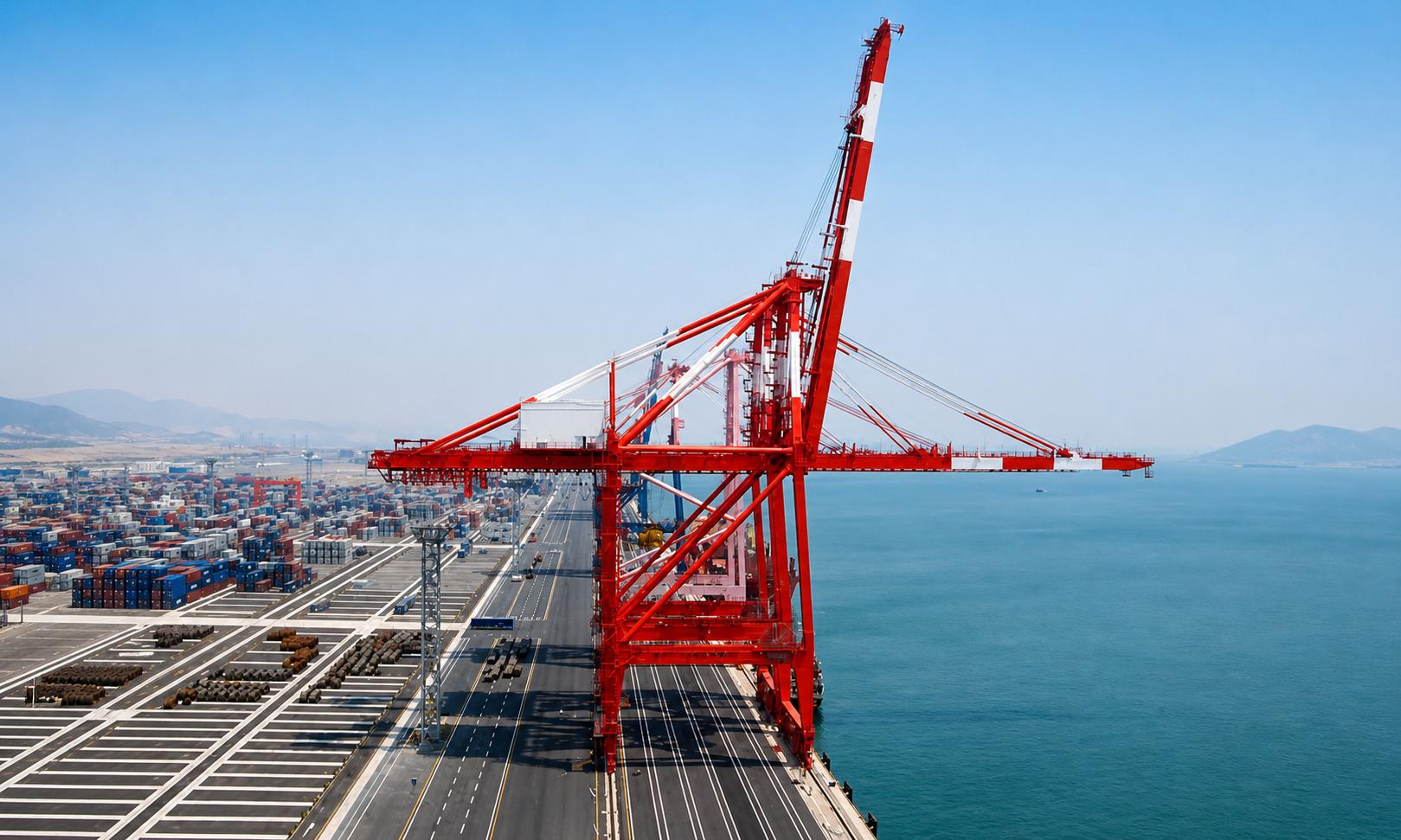
The port crane is the core facility of the terminal, which is related to ship turnover, operation safety and port service efficiency.Terminal planning, operation and procurement parties often pay attention to: can a single port crane load and unload multiple goods?
The answer cannot be based on subjective conjecture, but depends on the details of the engineering design.This article will introduce the common loading and unloading types of port cranes, the types of cranes suitable for multi-cargo operations, analyze the mechanical and structural factors that determine the adaptability of equipment, and explain the actual limitations that need to be fully considered before choosing a multi-purpose crane. Limitations.
What Types of Cargo Can a Port Crane Handle?
Containerized cargo
Containers are the largest cargo types by sea. The mainstream are 20-foot and 40-foot standard boxes, as well as special boxes such as high boxes and temperature control.The operation requires accurate positioning, sufficient lifting, and fast loading and unloading speed.
The shore bridge can complete 25 to 35 hoisting boxes per hour.Relying on telescopic spreaders and double-box spreaders for operation, the matching degree of spreaders and equipment determines the operating efficiency, and the alignment deviation will bring safety risks.
Bulk cargo
Loose materials without outer packaging such as coal, iron ore, grain, sand and gravel are usually used for grabbing and loading and unloading during terminal operations. The characteristics of the material itself will directly affect the single-time grabbing volume and the stability of the hoisting process.
The material characteristics will directly affect the amount of material caught in a single time and the stability of hoisting. The operation is usually equipped with hoppers and belt conveyors to complete the material transfer; the loading and unloading process is prone to dust, and dust suppression and dust removal devices need to be configured to meet the requirements of environmental protection control.
Groceries and major groceries
There are large differences in the dimensions, weight and location of single-piece goods for non-containerized groceries such as pallets, bagged materials, wood, construction machinery and equipment.
Rigging supporting operations such as hooks, slings, lifting beams, etc. can be selected.The working conditions of each hoisting are different, which puts forward higher requirements for the professional skills of the operators and the smooth control performance of the equipment.
Heavy over-limit cargo
For oversized and overweight engineering goods such as steel coils, steel structures, and wind power components, special operation plans must be prepared before hoisting.This kind of operation has strict requirements for lifting heavy loads, anti-sway and positioning accuracy of hoisting objects. It needs to be equipped with special spreaders such as C-hooks, steel coil clamps, and customized lifting beams to ensure uniform force at the lifting point and avoid damage to components or equipment due to overload.
Which Types of Port Cranes Are Suitable for Multi-Cargo Operations?
Multi-purpose port crane
The design of multi-purpose port cranes takes into account the compatibility of multiple cargo types, and the core advantage is that the lifting accessories can be quickly replaced.Under the premise that the rated lifting weight, lifting speed and control system meet the working conditions, the same equipment can be replaced with container spreaders and mechanical grabbers in different shifts to complete the operation.
This kind of equipment is very suitable for grocery terminals, integrated port areas, and operating scenarios where the types of goods fluctuate with the season and market conditions.The core advantage lies in improving the utilization rate of equipment: the terminal does not have to purchase multiple special cranes with low utilization rates, and can cover a variety of operating needs by relying on a small number of multi-purpose equipment.
Mobile port crane
The mobile port crane has its own walking mechanism, and the tire-type or rail-type models can be transferred between different berths and operating areas, without the need for large-scale civil construction.It has the advantage of mobility, especially suitable for ports with many berths, irregular arrival time of ships, and limited installation space for fixed cranes.
At the level of cargo type adaptation, mobile port cranes can complete container, bulk, and grocery operations by replacing spreaders and meeting the rated load conditions.This model is generally used in small and medium-sized regional ports. Such ports have a variety of cargo types and ship types, making it difficult to configure special lifting equipment separately for each berth.
Gantry port crane
Gantry port cranes generally adopt a rail gantry structure, and the whole machine is arranged at the forefront of the terminal.The legs of the gantry span on both sides of the dock track, and vehicles and railway carriages can pass under the gantry. It is widely used in grocery terminals, integrated berths, and can also be used for special bulk cargo or major parts operations.
The gantry crane is equipped with an adapted lifting system and replaceable spreader, which can realize multi-cargo operations.The selection of the type needs to focus on the working range, maximum extension distance and terminal plane layout to ensure that the equipment can cover the full operating range of the ship and reduce displacement, while the landside transshipment area is adapted to the terminal logistics plan.
How Can One Port Crane Handle Different Types of Cargo?
Interchangeable lifting accessories
The core of realizing multi-cargo operations is a set of mature spreader interfaces that support the rapid replacement of various operating devices on the hook assembly. The mainstream spreader categories are as follows:
- Container spreader: telescopic spreader is suitable for 20/40-foot containers, double-box spreaders lift two 20-foot boxes at a time, and flip spreaders are used for ship loading and unloading operations.;
- Mechanical/hydraulic grab: shell grab handles ordinary bulk materials, orange petal grab is used for scrap steel and irregular materials, and electro-hydraulic grab is convenient for precise control of opening and closing;
- Hooks, slings and lifting beams: used for groceries and engineering heavy goods to meet various customized rigging hoisting solutions;
- Special spreaders: steel coil C-hook, steel coil clamp, steel plate clamp, vacuum suction cup, electromagnetic suction cup, respectively, suitable for all kinds of special goods.
The selection of spreader needs to be combined with the shape of the cargo, the total weight including the weight of the spreader, the available lifting points and the operating method.The mismatch between the spreader and the cargo type will bring safety risks and efficiency losses at the same time.
Lifting capacity and working range
The rated lifting weight of the crane is set at the specified working range.The farther the crane is from the center of rotation of the crane (the greater the amplitude), the greater the overturning torque, and the allowable lifting load will decrease accordingly. This is the basic characteristic of crane mechanics.
To evaluate the working conditions, the operating range and the spreader need to be combined to calculate the effective load, and the load curve should be reviewed when replacing the cargo type and spreader.The self-weight of the spreader will occupy the rated load, and the larger the operating range, the lower the allowable lifting weight; the container operating load margin is sufficient, but the large lifting of heavy parts can easily reach the load limit.
Control system and operational flexibility
Modern port crane control system is the key to realizing flexible operation of multiple cargo types.The frequency conversion lifting system can operate at low speed in the heavy-duty and precision-in-place stages, and increase the speed in the no-load stage, taking into account safety and operating cycle efficiency; rotation and trolley walking also support frequency conversion and speed regulation.
The load monitoring, overload protection and anti-swing system can display the load in real time, stop over-limit lifting, and suppress the swing of the crane.Cooperate with automatic positioning and load memory functions to improve operating efficiency.The equipment can set independent control parameters and switch operating modes according to the type of goods.
Structural design and product adaptability
The ability of multiple types of goods cannot rely on late installation and transformation.The crane structure design stage must cover all kinds of load conditions: the container load cycle is stable; there are impact and alternating dynamic loads in bulk cargo grabbing operations; the lifting of groceries and heavy cargo is easy to produce eccentric loads, which need to be accurately controlled at low speed.
The fatigue calculation in the design stage needs to cover various load combinations throughout the life cycle, and the strength of the spreader connection point must meet all operating conditions.If the crane is initially designed according to a single cargo type, the later transformation into a multi-purpose equipment requires a significant transformation of the structure, and the cost is close to the purchase of a new machine.
What Are the Main Limitations of Using One Crane for Multiple Cargo Types?
- Limited load: The weight of the spreader will occupy the rated load, and changes in the operating range will also change the allowable lifting weight. It is suitable for the heavy-duty working conditions of one type of cargo, and may not necessarily meet the lifting needs of other cargo.
- Time-consuming crane replacement: There are many processes for replacing spreaders, which take tens of minutes to several hours, and the spreaders also need to be stored and maintained regularly; frequent switching of cargo types during the operation of the same ship can easily form operational bottlenecks, causing delays in the departure of the ship.
- Speed compromise: The requirements for operating speed of containers, bulk cargo, and heavy-duty bulk cargo vary greatly. Multi-purpose cranes can only compromise the parameters. In high-load operation scenarios, the operating capacity is weaker than that of special cranes.
- Complex operation and maintenance: all kinds of spreaders have different maintenance procedures, and operators need to participate in special training for multiple types of goods; the forms of equipment wear and corrosion caused by different types of goods are different, and the overall maintenance and management are more difficult.
Multi-Purpose Port Crane vs. Dedicated Crane: Which Is More Cost-Effective?
| Evaluation Dimension | Multi-purpose Port Crane | Specialized Port Crane |
| Cargo Flexibility | High flexibility with proper configuration | Generally only suitable for specific cargo types |
| Initial Equipment Investment | Lower upfront cost compared with purchasing multiple dedicated cranes | Separate equipment procurement may be required for different operations |
| Cargo Type Switching | Requires spreader replacement and commissioning preparation | Extremely low switching cost for target cargo |
| Peak Operational Efficiency | Depends on cargo mix and equipment configuration | Optimized for specific operations with higher peak efficiency |
| Maintenance Planning | Multiple spreader types and complex operation modes | Single focus with a narrower maintenance scope |
| Optimal Application Scenarios | Mixed cargo types and volatile operational demands | High-volume and repetitive cargo handling |
The lowest purchase price of equipment is not equal to the lowest cost of the whole life cycle.The initial purchase cost of multi-purpose cranes seems to be lower, but the downtime of spreader replacement, reduced throughput, complex operation and maintenance, personnel training and downtime risks will all increase long-term operating costs.Conversely, if the frequency of various types of cargo operations is low, the purchase of multiple special cranes can easily cause equipment to be idle and the asset utilization rate to be insufficient.
How to Determine Whether One Port Crane Is Enough for Your Terminal
Analyze the structure of the goods
Sort out all the current and future cargo types planned to be processed by the terminal; record the typical weight, maximum weight, dimensions, packaging form, spreader requirements of each cargo, as well as special operating requirements such as temperature control, fragile, and environmental protection control; estimate the proportion of operating time occupied by various types of cargo during normal working conditions and peak periods.
Cargo type analysis is the basis of all subsequent programs.The estimated deviation of this link will be transmitted to all subsequent calculations, relying as much as possible on real ship records, cargo manifests, and customer contract data to reduce subjective assumptions.
Accounting for the required lifting load
Determine the maximum total load of a single hoisting, including the weight of the spreader and rigging; confirm the operating range corresponding to the hoisting, compare the crane load gauge, and confirm the allowable load; meet the safety factor stipulated by industry standards and local regulations.
Each type of goods and supporting spreaders must be checked repeatedly.Cranes need to meet the operating load requirements of all cargo types, not just the heaviest category of cargo.
Throughput and ship turnover goals
Estimate the hourly lifting times and daily operating volume of various types of cargo, and calculate the available time for ship loading and unloading based on the shipping schedule plan; evaluate whether the replacement of spreaders will cause delays in the ship; identify the peak period, multiple types of cargo compete for the same crane resources. Scenarios.
If the calculation finds that frequent crane changes will continue to cause delays in the ship and the throughput target cannot be achieved, then the feasibility of the multi-purpose crane solution will decrease, and special equipment or additional cranes need to be considered.
Port facilities and operating environment
The ground carrying capacity of the terminal needs to withstand the walking and operating loads of the crane; the track foundation meets the technical specifications of the manufacturer; the size of the berth ensures that the crane range can cover the entire ship’s operating position.
Environmental conditions should also be evaluated with emphasis: the high content of chloride ions in coastal port areas will accelerate structural corrosion, and the anti-corrosion scheme of crane structures and parts needs to be adapted.High winds, extreme temperatures, and high humidity will all affect equipment reliability and maintenance cycles.The power supply capacity, maintenance and overhaul channels, and coordination with belt conveyors and other equipment in the terminal must also be evaluated.
Future demand for goods
The service life of port infrastructure is very long, generally reaching more than 25 years.The cargo structure that supported the procurement decision-making at the beginning is likely to undergo huge changes in many years: the large-scale ships require greater extension; regional industrial changes bring new cargo types; terminal expansion, increasing the throughput pressure of a single crane.
Evaluate whether the crane supports the later installation of modular spreaders, control system upgrades, and structural reinforcement.Upgradeable models have higher long-term value, but flexibility must also balance risks: the equipment design is too complex and the performance is insufficient when operating in large quantities of a single cargo.
How to Choose a Reliable Multi-Purpose Port Crane Manufacturer
The choice of manufacturer of multi-purpose crane is as important as the technical specifications of the equipment. The evaluation points are as follows:
- Engineering customization ability: High-quality manufacturers will customize the design according to the real cargo type, infrastructure, and environmental conditions of the terminal, rather than simply applying standard models.You can request to view similar project cases and engineering design processes.
- Lifting capacity and amplitude: Ask for the load graph of each type of spreader (container spreader, grab, hook, lifting beam) that has been verified at different working amplitudes.Only the nominal load of the nameplate is not enough to support the procurement decision.
- Spreader compatibility: Confirm that all planned supporting spreaders are exactly matched with the crane head, lifting system, and control interface at the mechanical and electrical levels.It cannot be compatible by default based on experience alone, and you need to check the manufacturer’s design documents for verification.
- Safety system: Confirm that safety devices such as overload protection, emergency stop system, and load monitoring are standard, which comply with design standards and local regulations.
- Environmental durability: The anticorrosive scheme matches the corrosion level of the port; coastal high-salt spray port areas require higher standards of coatings and materials than inland terminals.
- Full life cycle service: evaluate the manufacturer’s long-term spare parts supply, inspection and maintenance services, train operators and maintenance personnel for all operating modes, and provide technical support for control systems and mechanical failures.
- Compliance and technical information: Manufacturers should provide equipment design standards, structural mechanics calculations, factory acceptance test reports, commissioning materials, and operation and maintenance manuals covering all types of working conditions.
Conclusion
Whether a multi-purpose port crane can efficiently handle a variety of cargo depends on the equipment structure, lifting capacity, spreader configuration and whether the control system is adapted to actual working conditions.When purchasing, the cargo type, load, operating range, throughput and full life cycle cost should be considered comprehensively, and multi-purpose cranes, special equipment or combination solutions should be reasonably selected.
Henan Mine Crane can provide customized crane design and manufacturing solutions according to the cargo structure, loading and unloading needs and on-site working conditions of the port to help the port improve equipment utilization and loading and unloading efficiency.