Engineering · Manufacturing · Project support
info@hnksglobal.comWhatsApp +86 18836207779 ↗

Blog

  • Unmanned Workshop Crane Projects: Process Readiness and Integration Scope

    Unmanned Workshop Crane Projects: Process Readiness and Integration Scope

    Technical guide

    Unmanned Workshop Crane Projects: Process Readiness and Integration Scope

    A workshop needs stable handling tasks and clear interfaces before crane automation is specified. Review the process, transfer equipment and recovery responsibilities to decide which functions the crane supplier must provide.
    Henan Mine CraneTechnical guide · Updated 2026Crane selection, project scope and operating requirements
    Unmanned Workshop Crane Projects: Process Readiness and Integration Scope
    Henan Mine Crane lifting equipment
    Project planning notes

    Key points for this crane project.

    1. What Is an Intelligent Crane?
    2. Why Intelligent Cranes Are Essential for Unmanned
    3. Main Types of Intelligent Cranes for Automated
    Read the technical guide

    What Is an Intelligent Crane?

    Definition of intelligent crane system

    Intelligent crane integration of automation control, sensor positioning, data communications and other areas of technology, can autonomously complete the material grasping, handling, positioning, scheduling, sensing and analysis of decision-making and implementation of closed-loop, and unmanned workshop with other systems to collaborate with the linkage, is the core component of the unmanned crane solution, is not a simple automation and crane superimposed.

    Difference between traditional crane and intelligent crane

    Traditional cranes are operated manually as the core, relying on the operator's experience and judgment, there are problems such as low efficiency, large errors, and many safety hazards. The intelligent crane completely get rid of artificial dependence.

    • Operation mode: Traditional cranes need to be operated on-site, intelligent cranes can realize fully autonomous operation, remote monitoring, without human intervention.
    • Precision control: Traditional crane positioning error in centimeters, intelligent cranes can achieve millimeter-level positioning, suitable for precision material handling needs.
    • Synergy: Traditional cranes run independently and cannot be linked with other systems in the workshop. Intelligent cranes can be seamlessly connected to the MES, ERP system, to achieve global scheduling.
    • Safety: Traditional cranes rely on manual warning, intelligent cranes with active anti-collision, real-time status monitoring and other functions, to avoid safety risks from the source.
    • Operation and maintenance mode: Traditional cranes use after-the-fact maintenance, intelligent cranes support predictive maintenance, early warning failures, reduce downtime losses.

    Key technologies involved

    Intelligent crane intelligence, is dependent on the synergistic support of the four core technologies.

    • Automation control system: PLC as the core, equivalent to the core control unit of the intelligent crane, can independently plan the handling path, adjust the operating speed, to achieve unmanned operation, is the core of the automated crane system.
    • Sensor and positioning system: Laser positioning, visual positioning, encoder and other technologies, combined with MEMS acceleration sensors and fiber grating strain sensors to achieve millimeter-level accurate positioning, real-time sensing of the location of the material, the state of the equipment, to ensure the accuracy and safety of the handling, is the key to intelligent material handling.
    • Data communication and remote monitoring: Through industrial Ethernet, 5G and other high-speed communication protocols, real-time data interaction between the equipment and the workshop control system and remote monitoring platform can be realized, supporting remote scheduling, troubleshooting, and data visualization, and some of the high-end models support 5GVR remote control, which effectively improves the efficiency of operation and maintenance.

    Why Intelligent Cranes Are Essential for Unmanned Workshops

    Intelligent cranes are essential for unmanned workshops, and their necessity is directly related to the productivity, operating costs and market competitiveness of enterprises.

    Reduce labor dependency

    The core demand of unmanned workshop is unmanned, traditional cranes need to be equipped with professional operators, and there are recruitment difficulties, high training costs, personnel mobility and other issues. Intelligent cranes can realize fully autonomous operation, without the need for on-site operators, only 1-2 remote monitoring personnel can manage multiple devices, significantly reducing labor costs, cracking the unmanned workshop labor shortage problem.

    Enable continuous 24 hour operation

    The advantage of unmanned workshop is all-weather production, traditional cranes are subject to artificial rest, shift and other restrictions, cannot realize 24-hour operation. Intelligent cranes do not need to rest, can be continuously operated around the clock, combined with intelligent scheduling system to reasonably allocate handling tasks, maximize the release of unmanned workshop capacity, suitable for large orders, fast-paced production enterprises.

    Enhance safety in high risk environments

    Many unmanned workshops have high risk environments such as high temperature, high pressure, toxicity, radiation, etc., and the risk of manual operation is extremely high.

    Support smart factory transformation

    As the core equipment of the unmanned workshop, the smart crane can be seamlessly connected with MES, ERP, WMS and other systems to realize the digital management of material handling, production scheduling, equipment operation and maintenance, and provide core support for smart factory transformation. Through real-time collection of equipment operation and handling data, it helps enterprises optimize the production process, accurately control costs, and promotes enterprises to upgrade from automation to intelligence, which is in line with the national development trend of intelligent manufacturing.

    Main Types of Intelligent Cranes for Automated Workshops

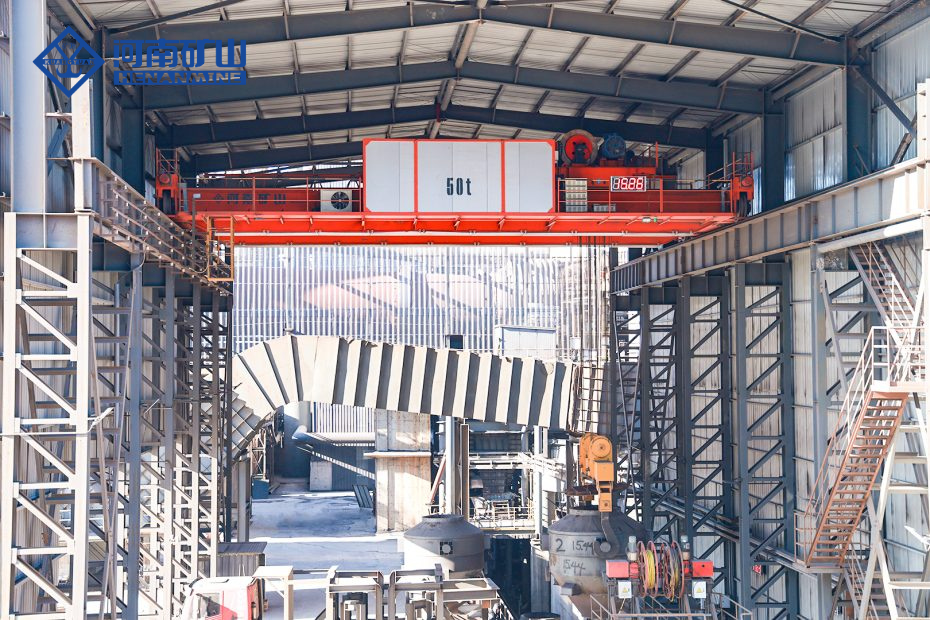
    Intelligent Overhead Crane

    Intelligent Overhead Crane is the main equipment of indoor production line in unmanned workshop, suitable for indoor production workshop and precision manufacturing workshop, with compact structure and small space occupation, which won't affect the operation of the ground equipment, with high positioning accuracy, which can be customized according to the workshop's span and height, and suitable for the handling needs of materials of different weights, and part of the model adopts the design of low headroom, which can enhance the vertical operation space.

    Intelligent Gantry Crane

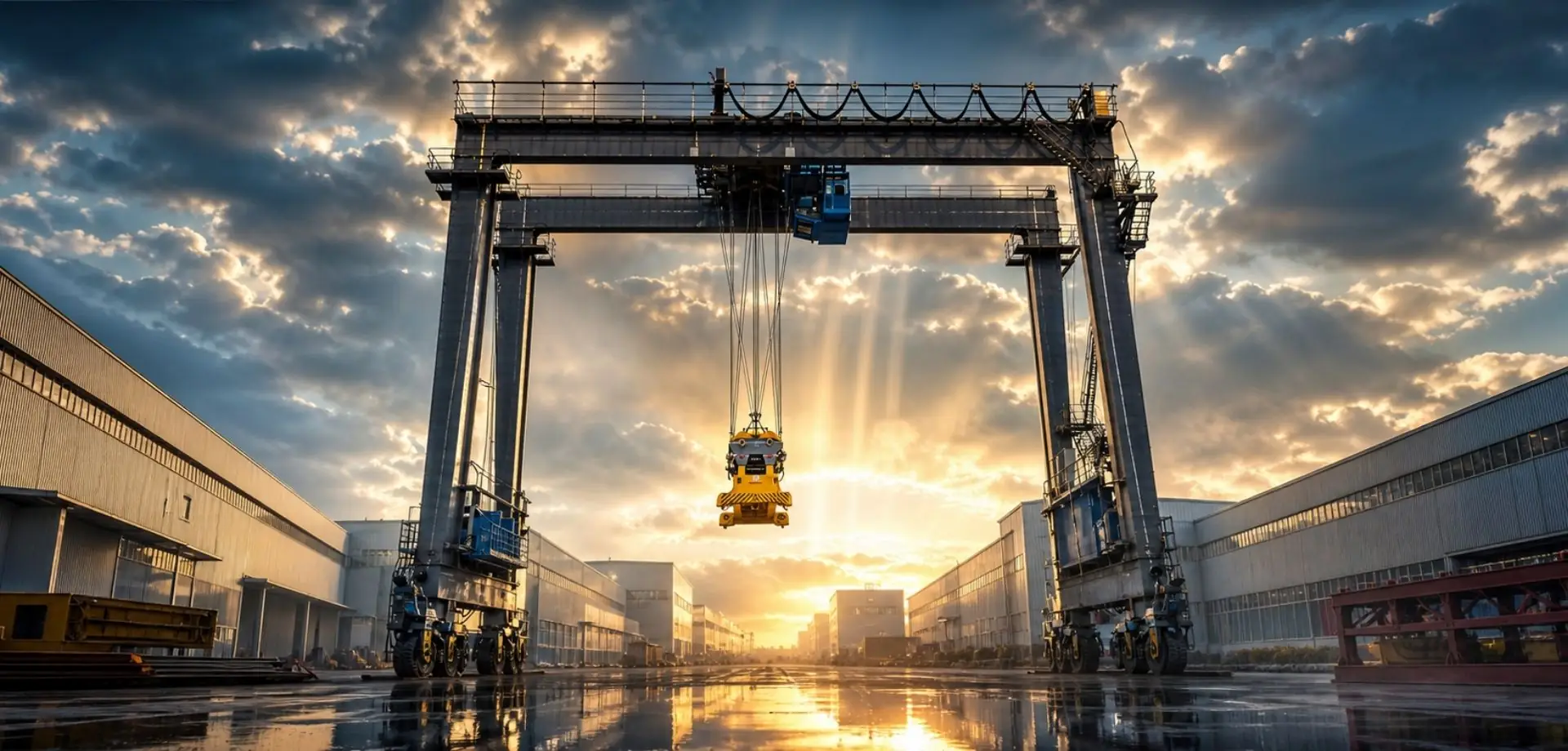
    Intelligent gantry cranes are suitable for large unmanned workshops and outdoor work areas, and are the preferred equipment for heavy-duty scenarios in industrial automation cranes. They can be deployed independently without the need to rely on the roof of the workshop, and have a strong loading capacity, which is suitable for the handling of heavy materials and large parts, and have a high level of protection, which can withstand the harsh outdoor environment, and support all-weather continuous operation, and are suitable for all kinds of heavy-duty work conditions.

    Automated Handling Crane System

    Automated Handling Crane System is an integrated form of unmanned crane solution, mainly applicable to unmanned warehouses and logistics sorting workshops, can be seamlessly connected to the warehouse automation system to realize the full automation of material inbound, outbound, inventory and sorting, which can enhance the utilization rate of the warehouse space, and support the collaborative operation of multiple devices to enhance the logistics handling efficiency.

    Key Factors When Choosing an Intelligent Crane

    The core of selecting an Intelligent Crane is to match the actual needs, without blindly pursuing high-end configuration. A number of key factors directly determine the practicality, stability and input-output ratio of the equipment, these factors need to be combined with the actual working conditions of the unmanned workshop to focus on the investigation, a reasonable balance of indicators, in order to select the appropriate equipment.

    Automation level

    The automation level of intelligent cranes is divided into two categories: semi-automatic and fully automatic. When selecting cranes, it is necessary to combine the automation level of unmanned workshops and production requirements to avoid under- or over-configuration, and at the same time, it is necessary to anticipate the future production plan to ensure that the selected equipment can be adapted to the workshop to meet the subsequent upgrading requirements, and to ensure the long-term usability.

    Positioning accuracy

    Unmanned workshop material handling requires high positioning accuracy, positioning error will lead to material damage and production interruptions, the selection of intelligent cranes need to focus on positioning accuracy indicators, combined with the type of material to determine the appropriate accuracy standards, while understanding the adaptability of commonly used positioning technology to protect the handling accuracy and operational safety.

    Anti sway performance

    sway control performance is crucial for intelligent cranes, especially in high altitude and heavy load handling scenarios, as the swaying of the spreader will affect the operational efficiency and safety of intelligent cranes. When selecting cranes, attention should be paid to the control algorithm of the equipment. High-quality equipment can effectively control the swaying amplitude of the spreader to ensure that there is no obvious swaying during lifting and operation to ensure operational safety and handling efficiency, which is suitable for all kinds of unmanned workshop working conditions.

    Load capacity and duty class

    Load capacity and duty class are the basic indexes of intelligent cranes. When selecting cranes, it is necessary to combine them with the operating conditions of unmanned workshops, determine the load capacity according to the maximum weight of materials to be handled on a daily basis, and at the same time, leave a reasonable margin, and select the appropriate duty class in combination with the frequency of operation and the demand for continuous operation, so as to avoid insufficient loading or wastage of resources.

    System integration ability

    System integration ability is the key to the intelligent crane to play the advantages of intelligence, the selection of intelligent cranes need to confirm that the equipment can be seamlessly connected with the existing system of unmanned workshop to achieve synchronization of production scheduling, material information and inventory data, to ensure that the production and handling of synergies, to avoid the later compatibility issues to increase the cost of transformation.

    Safety design

    Unmanned workshop without artificial on-site supervision, the safety design of the intelligent crane is particularly important, choose the right intelligent crane need to pay attention to anti-collision, overload protection, power failure protection and emergency stop and other functions, while confirming that the equipment has the ability to monitor the real-time operating status, can be an early warning of failures, to avoid safety accidents and interruptions in production.

    Remote monitoring and control

    Remote monitoring and control functions can reduce the cost of unmanned workshop equipment operation and maintenance, selecting intelligent cranes need to pay attention to whether the equipment supports remote centralized scheduling, operation data visualization and handling trajectory traceability, and at the same time, confirm that the remote troubleshooting and parameter debugging capabilities, reduce the input of on-site operation and maintenance personnel to enhance the management efficiency.

    Maintenance and reliability

    The reliability of equipment directly affects the continuous production of unmanned workshop, when selecting the equipment, we need to examine the predictive maintenance ability, the quality of core components and after-sales service, to confirm that the supply of spare parts is sufficient to provide timely maintenance support, while paying attention to the material and process of the equipment, to ensure that the equipment has a low failure rate and a long service life, and to reduce the unplanned downtime.

    Typical Application Scenarios

    Unmanned workshop in different industries, material types, operational needs vary greatly, the following are five typical application scenarios, you can benchmark your own industry, quickly lock the selection direction.

    1. Material handling in steel mills: With heavy load, high temperature and continuous operation as the core demand, intelligent gantry cranes are preferred, requiring strong load capacity, high protection level, high temperature prevention, fully automated handling of billets and steel, and part of the scenarios need to be equipped with multi-modal data fusion safety assessment system.
    2. Automated Warehouse: With high efficiency, precision and synergy as the core demand, the automated handling crane system is preferred, which needs to have the ability to integrate with WMS and AGV systems, support multi-storey shelves and dense storage of materials handling, and realize efficient connection between warehouse and production line without connection fault.
    3. Manufacturing production line: With precision, flexibility and high efficiency as the core demand, intelligent overhead travelling crane is preferred, which is required to have high positioning accuracy and good anti-swinging performance, adapt to the precision material transfer between processes, and be able to collaborate with the MES system to synchronize the production beats.
    4. Paper and pulp industry: With wet, heavy load as the core demand, give priority to intelligent cranes with high protection level and corrosion resistance, requiring stable load capacity, automated handling of paper rolls and pulp, and anti-corrosion process for key components.
    5. Port and yard operations: Outdoor, heavy-duty, all-weather operations as the core demand, giving priority to intelligent gantry cranes, requiring strong adaptability, wind resistance, can realize the fully automated handling of containers, large cargo, some models have blockchain equipment traceability.

    Common Mistakes to Avoid

    Combined with our years of experience in selection services, many companies in the selection of intelligent cranes, easy to fall into the following four misunderstandings, resulting in equipment that cannot be adapted to the needs of the waste of inputs, must be avoided.

    • Choosing low automation level for future needs: Some enterprises choose intelligent cranes with low automation level to save costs, which leads to unmanned workshop upgrading in the later stage, the equipment cannot be adapted to the need for replacement, but increase costs.
    • Ignoring system compatibility: In advance to confirm the compatibility of the crane with the workshop existing MES, ERP and other systems, resulting in the installation of the equipment cannot be integrated, cannot realize intelligent collaboration, reduced to automation crane.
    • Focusing only on price: Some companies choose low-priced equipment, it seems to save the initial cost, but the equipment failure rate is high, high maintenance costs, lagging after-sales service, instead of affecting the production, increasing long-term costs, technological sophistication is not blindly stacked high-end configuration, need to be combined with the actual scenario match.
    • Overlooking after sales service: The operation and maintenance of intelligent cranes require professional technical support, some companies choose the manufacturer of imperfect after-sales service, equipment failure cannot be repaired in a timely manner, resulting in production interruptions, causing huge losses.

    Future Development Trends

    With the continued promotion of Industry 4.0, the technology of intelligent cranes is constantly upgraded, combined with the latest technology trends in 2026, the future will be developed in the following four directions, the selection can be properly pre-judged, choose the equipment with the potential for upgrading.

    • Fully autonomous crane system: Without human intervention, it can realize autonomous path planning, material identification, fault self-healing, and even work with robots to achieve truly unmanned handling.
    • Deep integration with smart factory: Not only material handling equipment, but also will become the data node of the smart factory, which can collect and analyze data in real time to provide more accurate support for production scheduling and process optimization, and combine with digital twin technology to realize real-time mapping and interaction between the virtual and real worlds.
    • Upgrade of digital monitoring platform: The use of big data, artificial intelligence technology, to achieve accurate prediction of the operating state of the equipment, fault warning, and even the integration of remote operation and maintenance and predictive maintenance can be realized, and multiple cranes working together will show more advanced group intelligence.

    Henan Mine Crane

    As a large-scale intelligent crane manufacturer in China, Henan Mine Crane Factory can provide one-stop unmanned crane solution from customized design, equipment supply, system integration to after-sales service, to help enterprises achieve unmanned production upgrade, reduce costs and improve efficiency.

    The selection of intelligent cranes is not about parameterization, but long-term value. Choose a suitable demand, reliable quality, perfect service intelligent crane, in order to escort the efficient operation of unmanned workshop, to achieve the long-term goal of intelligent transformation of enterprises.

    Discuss the crane arrangement for your project.

    A workshop needs stable handling tasks and clear interfaces before crane automation is specified. Review the process, transfer equipment and recovery responsibilities to decide which functions the crane supplier must provide. Share the load, available drawings, working cycle and site conditions with Henan Mine Crane so the required configuration and supply boundary can be discussed.

    Related crane configurations

    Galvanizing Process Overhead Crane

    View product parameters
    Lifting capacity: 5 – 32 tSpan: 10.5 – 31.5 mLifting height: 6 – 24 m

    Transfer suspended workpieces through a galvanizing process with a crane matched to the line. Coordinate lifting points, corrosive exposure, tank geometry and the required handling sequence.

    Modular Electric Hoist Overhead Crane

    View product parameters
    Lifting capacity: 1 – 32 tSpan: 7.5 – 31.5 mLifting height: 6–30 m

    Use a modular electric-hoist overhead crane for production, assembly and maintenance lifting. Select the hoist arrangement, hook coverage and movement control for the workshop and operating cycle.

    Updated 2026 · Henan Mine Crane
  • Automated Electromagnetic Cranes: Material, Magnet and Transfer Inputs

    Automated Electromagnetic Cranes: Material, Magnet and Transfer Inputs

    Technical guide

    Automated Electromagnetic Cranes: Material, Magnet and Transfer Inputs

    Magnetic handling depends on the material condition and the complete attachment arrangement. Describe the workpieces, stacking pattern and handling sequence so the magnet system and automation interfaces can be reviewed for the task.

    Henan Mine CraneTechnical guide · Updated 2026Crane selection, project scope and operating requirements
    Automated Electromagnetic Cranes: Material, Magnet and Transfer Inputs
    Henan Mine Crane lifting equipment
    Project planning notes

    Key points for this crane project.

    1. What Is an Electromagnetic Crane?
    2. Why Electromagnetic Cranes Are Ideal for Automated
    3. Key Factors to Consider When Choosing an
    Read the technical guide

    What Is an Electromagnetic Crane?

    An electromagnetic crane is an overhead or gantry crane that has an electromagnetic lifting head as opposed to the usual hook, sling, grab, etc. The magnet has a coil through which you send direct current; the resulting magnetic field has enough pull to hold ferrous material. Remove the current and the magnetic field collapses and you drop whatever you had clamped. That simplicity is an advantage when automating repetitive operations, such as separation.

    • Electromagnetic lifting chuck: It is a supporting operation device at the lower end of the hook, which can directly contact and absorb various loads. It is the core executive component to realize material grabbing operation.
    • Bridge/gantry crane: composed of bridge, hoist and travel trolley, mainly used to accurately adjust the operation position of electromagnetic chuck, complete the translation, alignment and positioning of load.
    • Control system: the core function is to control the excitation and demagnetization of electromagnet, and at the same time, it can coordinate the whole set of control logic of equipment operation and accurate positioning under automatic working conditions.
    • Power supply and cable reel device: stable supply of DC power for the electromagnetic chuck moving dynamically throughout the whole process, accurate control of current transmission status, to ensure continuous power supply and reliable operation during dynamic operation of the equipment.

    This, compared to a mechanical grab crane, is the contact and control. A grab crane is a grab against a load with hydraulic or mechanical jaws, requires force and is slow and imprecise, an electromagnetic is an instant grip across a wide, even contact zone and as quick to release, however, only works on ferrous metal and load release is wholly dependent on power quality.

    Why Electromagnetic Cranes Are Ideal for Automated Metal Handling

    Increased Productivity

    Since the magnet engages and releases in less than a second automated electromagnetic cranes significantly reduce cycle time when compared to the slower, manually rigged slings or grabs. When incorporated into a controlled sequence such a crane can operate non-stop loading, conveying and stacking product without operator intervention feeding upstream and downstream processes at a consistent rate.

    Improved Workplace Safety

    Automation also removes operators away from suspended loads and away from hot or sharp or unstable material.

    Lower Operating Costs

    Less manual rigging steps means less man hour cost per lift. Even, hands-off contact lessens surface damage to plate & coil products which can be important where material finish has greater eventual resale or downstream processing value. Ultimately, the speed, less damage and less staffing help justify the added cost of an automated electromagnetic crane.

    Key Factors to Consider When Choosing an Electromagnetic Crane

    Type of Material to Be Handled

    Choosing a magnet begins by considering the workpiece; what you are lifting are steel plates, billets, scrap, coils, pipe, beams, rebar, pig iron, ore? The shape of the workpiece determines the shape of the magnet.

    Regular, flat workpieces like plates, coils and slabs require large, flush, even contact points rectangular or square magnets are ideal in this application. Dodge irregular or loosely piled loads, such as mixed scrap or cast ingots by using a circular magnet that extends into the spaces and clutches uneven surfaces. Rectangular or square magnets are suitable for long, round materials such as coiled rebar or pipe.

    Material Weight and Load Capacity

    Define capacity in terms of three figures: the maximum single load you expect to lift, an average load per shift, plus a safety margin above each. Under-sizing leads to a limit and a safety problem; over-sizing leads to capital sitting idle on capacity you never need. Allow for growth in planned production levels if higher capacity is needed it is much easier to add an extra gear or two later than upgrade the crane structure.

    Figures are general planning ranges, always confirm exact load data with your crane supplier before finalizing capacity.

    Material Temperature

    Cold-rolled and ambient temperature material can run on standard (room-temperature) magnets. Hot steels direct from the rolling mill or furnace require special high-temperature electromagnets using heatable coil insulation and materials rated for sustained operation far above ambient. These magnets will usually require forced-air or even water cooling to run in a safe coil temperature range and to prevent early coil insulation destruction. If you have any portion of your process that handles hot material, temperature rating is not and should not be optional: it is the first filter step for your magnet choices.

    Lifting Frequency and Duty Cycle

    Duty cycle is the percent of time the magnet can remain energized safely within a constant cycle (often 10-minute, generally) without over-heating.

    The crane duty rating (see safety section below) should be relative to the operation frequency, not only the peak lifting capacity.

    Automation Compatibility

    An electromagnetic crane bought for automated handling has to function as one node in a larger control system, not a standalone machine. Confirm the crane and its control system can integrate with:

    • Industrial robot: It can carry out parallel cooperative operation with cranes, and can undertake the connection and supporting processing tasks of upstream and downstream processes. Through signal interaction, equipment linkage interlocking is realized to avoid action conflict and meet the continuous automation operation requirements of assembly line.
    • MES and ERP management platform: It can collect and monitor on-site inventory and material flow data in real time, and dynamically update the production and operation status of the whole line. Relying on data linkage, closed-loop management of production planning, material scheduling and warehousing information is realized, and fine control of factories is supported.
    • Automatic production line: strict synchronization and coordination requirements for equipment action sequence, operation rhythm and start-stop logic. Electromagnetic crane shall match the overall rhythm of production line to complete synchronous start and stop and accurate alignment, so as to ensure continuous and stable operation of the whole line.
    • Remote monitoring system: Support operators to complete remote monitoring, status viewing and fault warning of multiple cranes in the central control room. It can realize centralized and unified dispatching of equipment and remote start-stop control, greatly reduce on-site duty intensity and improve operation and maintenance efficiency.
    • Smart Factory and Industry 4.0 Infrastructure: Complete data acquisition, log storage, status archiving, and intelligent analytics capabilities. It can upload equipment operation parameters, operation records and fault data in real time, providing data support for equipment operation and maintenance, capacity optimization and digital upgrading.

    If the electromagnetic crane cannot communicate with the existing industrial system to achieve control signals and data interaction, it will form an automatic island. Even if the peripheral equipment has been fully automated, the equipment still needs to rely on manual trigger operation, which seriously restricts the automation level and production efficiency of the whole production line.

    Common Mistakes When Selecting an Electromagnetic Crane

    In the selection process of automatic electromagnetic crane and electromagnetic chuck, most of the problems such as equipment failure, low efficiency and high cost of transformation originate from unreasonable decision-making in the selection stage. The following are the most common mistakes in the industry:

    • Price alone as the selection criteria: blindly choose low-cost equipment, will lead to electromagnetic chuck specifications are too small, the working load rate is not up to standard, cannot adapt to the actual working conditions
    • Neglecting the working cycle adaptation requirements: not matching the equipment load duration according to the working condition standard, it is easy to cause problems such as overheating of the chuck and unplanned shutdown of the equipment, which greatly shortens the service life of the electromagnetic chuck.
    • Underestimating future production expansion demand: only referring to the current production capacity selection, without reserving equipment performance margin, the equipment cannot meet the demand for production increase after several years of use, and is forced to invest high costs for equipment upgrading and transformation.
    • Electromagnetic chuck type selection error: different structures of electromagnetic chuck adapt to the type of material there are differences, adapt to the plate lifting chuck cannot efficiently grab loose waste, and vice versa, mismatch will directly lead to a significant decline in operating efficiency.
    • Ignoring automation compatibility performance: The system integration capability of the equipment is not considered when selecting, resulting in the crane being unable to interface with the factory automation control system, and the subsequent high cost of equipment modification is required to achieve intelligent linkage.
    • Disregard the convenience of equipment operation and maintenance: The selection of electromagnetic chuck and control system with great difficulty in maintenance and maintenance will significantly increase the difficulty of daily operation and maintenance of equipment and increase the long-term operation cost of production line.
    • Neglecting the environmental conditions of the site working conditions: failure to select equipment with corresponding protection level according to outdoor, high temperature, corrosion and other special working conditions will lead to accelerated aging of the electromagnetic chuck, premature failure, and greatly reduced stability and service life of the equipment.

    Maintenance Considerations Before Purchasing

    • Routine Inspection: Ongoing reliability depends on regular checks of the magnet surface for wear or damage, electrical cables for insulation breakdown, brake systems for wear, and control panels for fault codes or loose connections.
    • Preventive Maintenance: A sound maintenance program includes periodic coil resistance testing , power supply inspection, mechanical lubrication of crane moving parts, and regular verification of every safety system listed above.
    • Expected Service Life: Magnet and crane service life depends on operating hours, load frequency, environmental conditions, and the quality and consistency of maintenance. Ask any supplier for realistic service-life expectations under your specific operating profile, not just a generic figure.

    Discuss the crane arrangement for your project.

    Magnetic handling depends on the material condition and the complete attachment arrangement. Describe the workpieces, stacking pattern and handling sequence so the magnet system and automation interfaces can be reviewed for the task. Share the load, available drawings, working cycle and site conditions with Henan Mine Crane so the required configuration and supply boundary can be discussed.

    Related crane configurations

    Electromagnetic Overhead Crane

    View product parameters
    Lifting capacity: 5 – 32 tSpan: 10.5 – 31.5 mLifting height: 6 – 30 m

    Lift ferromagnetic steel with a matched electromagnetic lifting arrangement. Product shape, contact area, temperature and handling frequency determine the magnet and crane configuration.

    Electromagnetic Hanging Beam Crane

    View product parameters
    Lifting capacity: 5 – 50 tSpan: 10.5 – 31.5 mLifting height: 6 – 20 m

    Support long steel products with an electromagnetic hanging beam. Beam length, magnet spacing and lifting points are configured around product geometry, orientation and stacking requirements.

    Updated 2026 · Henan Mine Crane
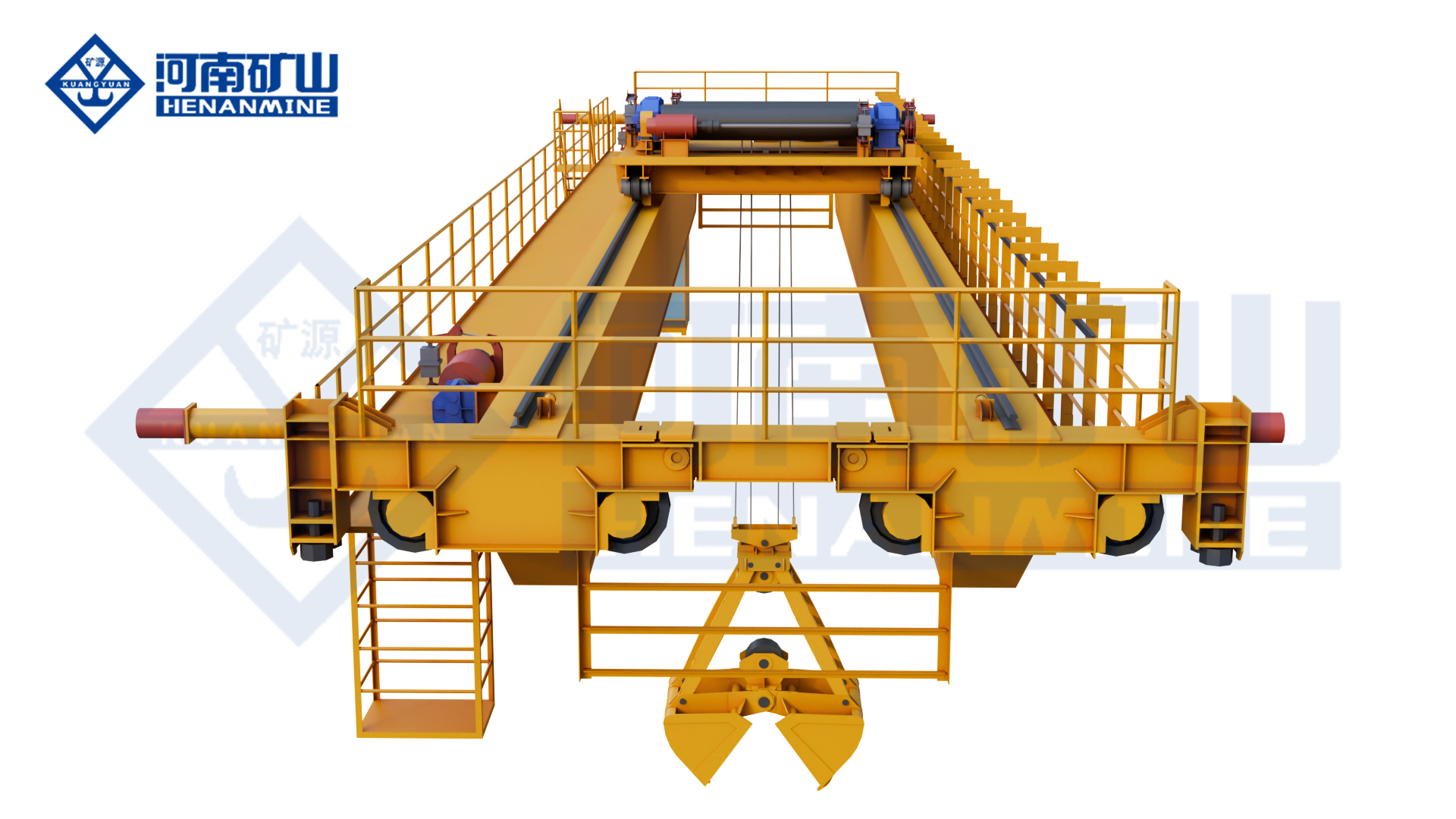
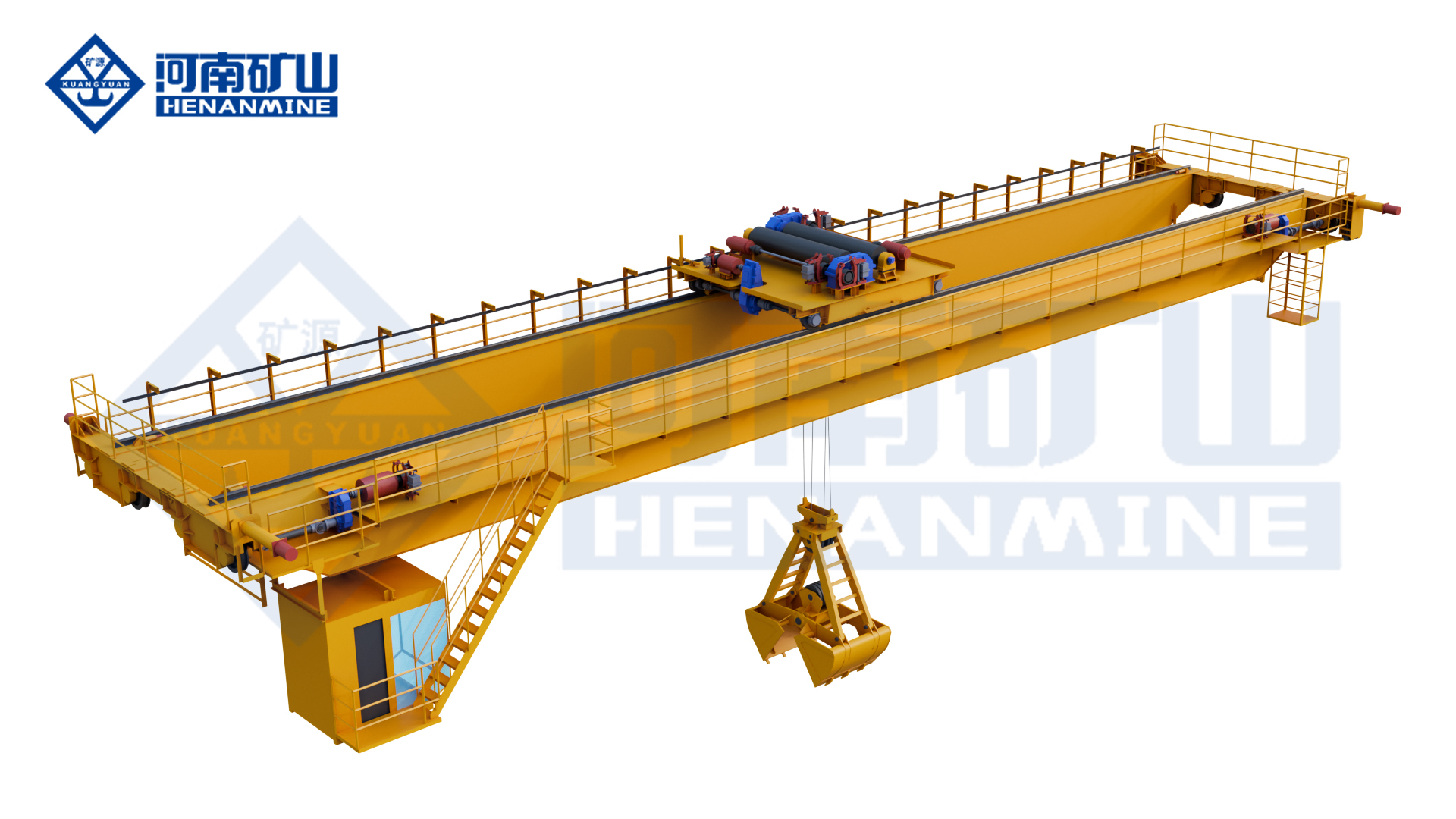
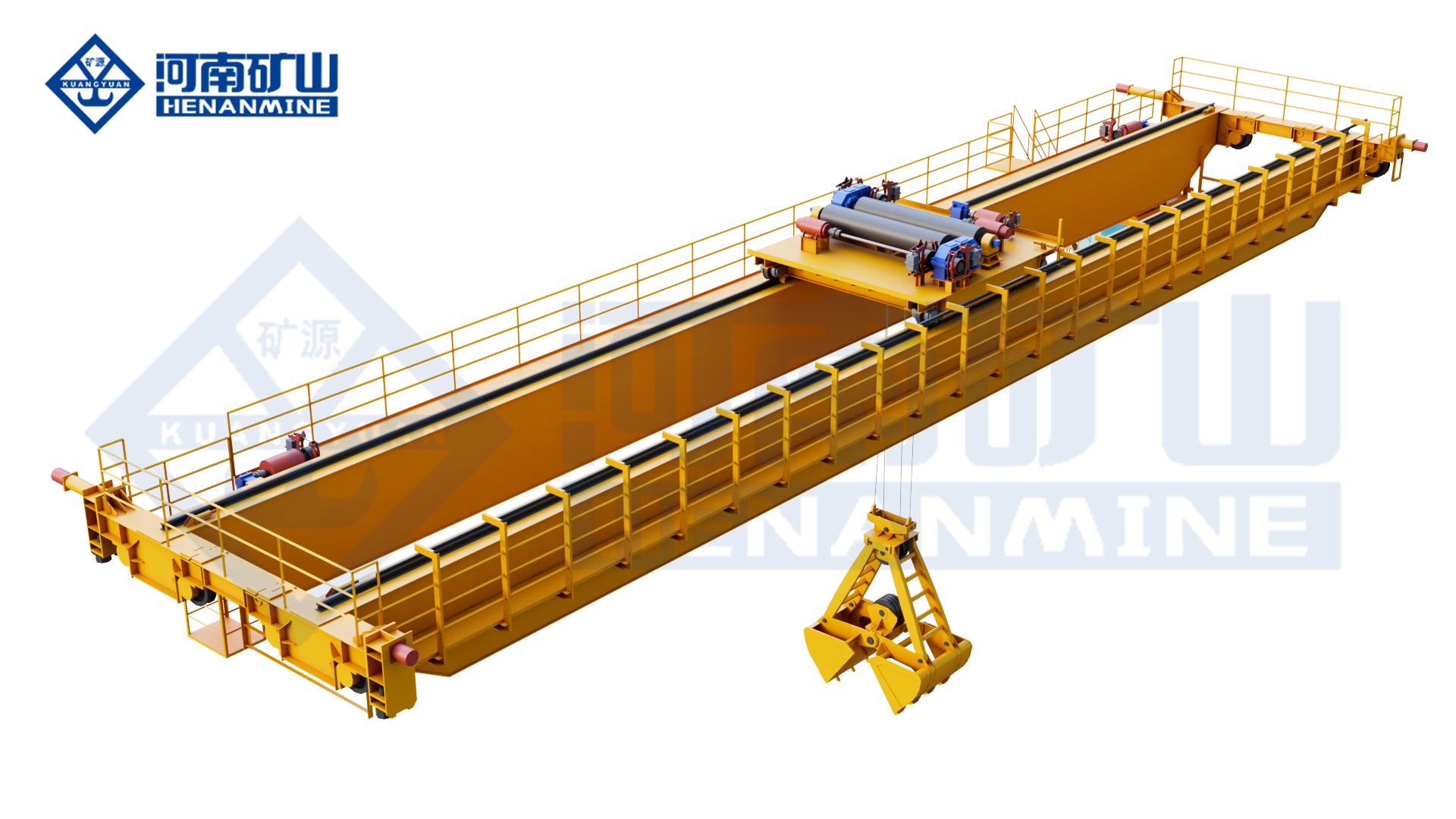
  • Grab Bridge Cranes for Waste Plants: Material Flow and Duty Requirements

    Grab Bridge Cranes for Waste Plants: Material Flow and Duty Requirements

    Technical guide

    Grab Bridge Cranes for Waste Plants: Material Flow and Duty Requirements

    Waste handling brings variable material and repeated operating cycles. Define storage, mixing and feeding tasks together with grab requirements and site conditions before developing the bridge crane specification.

    Henan Mine CraneTechnical guide · Updated 2026Crane selection, project scope and operating requirements
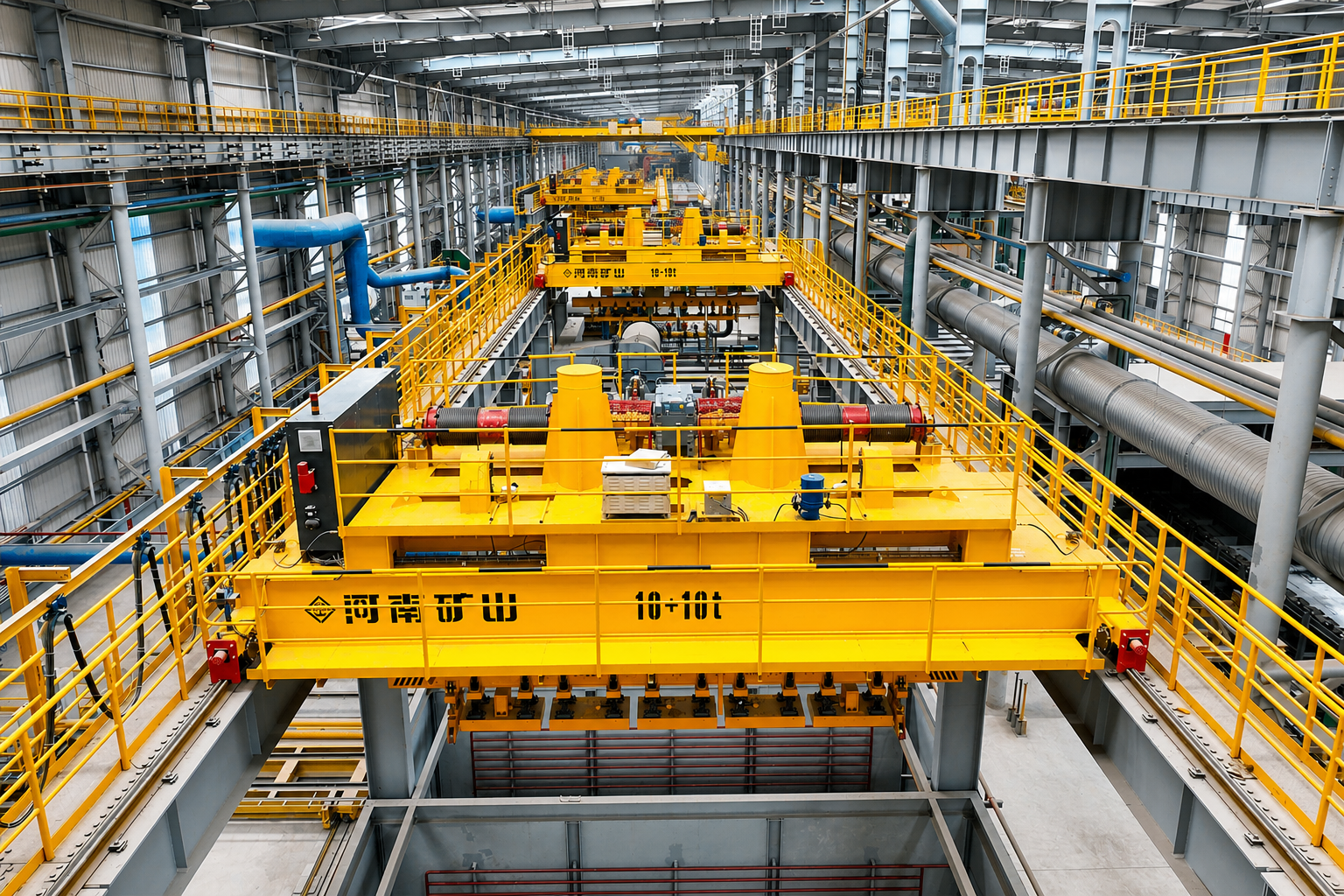
    Bridge cranes for waste treatment plants
    Bridge cranes for waste treatment plants
    Project planning notes

    Key points for this crane project.

    1. First understand the operating conditions of the
    2. Determine the required lifting capacity and grab
    3. Choose the right crane structure
    Read the technical guide

    First understand the operating conditions of the waste treatment plant

    Let’s choose the type, do not rush to see the parameters of the equipment, you have to first feel through the operating environment of their own plant – waste treatment plant conditions and ordinary factories are not the same, continuous operation, harsh environments, variable loads, these characteristics directly determines the configuration of the crane requirements.

    Continuous operation of the mandatory requirements

    We can understand this way, ordinary factory cranes may only run for a few hours a day, while the cranes in rubbish factories, 24 hours a day, there may be 20 hours in the repeated grabbing, transferring rubbish, the motor, transmission, brake loss is extremely large, light load level of equipment cannot carry.

    Harsh operating environment

    How harsh the environment of the rubbish treatment plant, have done the operation and maintenance of friends are clear, this is also easy to wear and tear of the crane core reasons.

    First of all, high humidity, rubbish pit, sorting workshop is always in a humid state, especially in summer, the water vapour in the air mixed with the steam from the rubbish leachate, it is easy to erode the metal parts of the equipment; secondly, corrosive gases, fermentation of rubbish will produce hydrogen sulphide, ammonia and other corrosive gases, these gases will slowly corrode the main beams, electrical cabinets and cables, and after a long time, there will be rusty parts, electrical short-circuit problems.

    Coupled with the high dust and odour in the workshop, the dust will drill into the cracks of the motor and gearbox, wear the internal parts, and will also block the electrical interface, further increasing the probability of failure. So when we select, anti-corrosion, dust and moisture-proof configuration, absolutely cannot be saved.

    Irregular and variable load conditions

    Rubbish and ordinary materials are not the same, its density is not uniform, some places loose, some places lumps, and even mixed with stones, metal and other hard objects, it is difficult to control the load when grabbing.

    In addition, the impact load when the grab falls will also cause additional wear and tear on the structure and components of the crane. These uncertainties have to be taken into account in advance when selecting the type, to avoid equipment in a long-term unstable load state.

    Determine the required lifting capacity and grab volume

    Figure out the working conditions, the next step is to combine the daily handling capacity of the plant, determine the crane’s lifting capacity and grab volume – these two parameters directly determine the equipment can keep up with the pace of production, cannot choose a small enough to use, cannot choose a large waste of cost.

    Combined with the daily handling capacity (TPD) accounting needs

    First of all, we should clarify the daily processing capacity of the plant (unit: t per day, TPD), which is the core basis for calculating the lifting capacity and grab volume.

    We can simply calculate: assuming that the plant operates for 20 hours a day, the number of cycles that the crane needs to complete per hour (grasping, transferring, unloading) is about 15-20 times, combined with the average density of the rubbish, you can calculate the weight of the rubbish that needs to be grasped for each time, and then determine the rated lifting capacity of the crane.

    The key to the selection of grab is to adapt to the characteristics of the rubbish.

    Grab is the crane’s gripper, selection is not right, and then the good use of the crane cannot play a role.

    Hydraulic grabs have large gripping force and tight closure, suitable for viscous, uneven density of domestic rubbish, and are not prone to leakage and jamming problems; electro-hydraulic grabs are relatively simple in structure, easier to maintain, and are suitable for loose rubbish, such as crushed industrial rubbish.

    From the shape point of view, the orange petal grab is suitable for blocky and granular rubbish, with large grabbing volume and high efficiency, such as the crushed rubbish in waste incineration plants; the shell-shaped grab has a small closing gap and is suitable for loose and finely crushed domestic rubbish, which can effectively prevent leakage of materials and reduce the workload of on-site cleaning.

    In addition, the volume of the grab should be matched with the lifting capacity and the density of the rubbish – for dense rubbish, choose a small volume grab; for loose rubbish with low density, choose a large volume grab, so as to ensure that the weight of each grab is up to the standard and to enhance the operational efficiency.

    Sufficient safety margin must be reserved

    The load of the waste treatment plant is unstable, so the lifting capacity must be reserved for safety margin, not just stuck to the actual demand to choose.

    Generally speaking, the dynamic load factor should be considered – when the crane is gripping, lifting and running, the load will produce a certain impact force, and this impact force is the dynamic load.

    At the same time, the equipment must be equipped with a reliable overload protection system, which can automatically stop the crane once the load exceeds the rated value, preventing equipment damage, falling rubbish and other safety accidents, which is also the basic requirement for safe operation of rubbish plants.

    Grab Type Bridge Crane
    Grab Type Bridge Crane

    Choose the right crane structure

    The structure of the crane directly determines its stability, lifting height and operating range. Combined with the size of the rubbish pit of the rubbish plant and the operational requirements, the selection of single girder and double girder, as well as the matching of span and coverage, are the key considerations.

    Priority to double girder structure for rubbish plant

    Many purchasing friends will consider choosing single girder grab type overhead travelling crane in order to save the upfront cost, but combined with the working condition of rubbish plant, I recommend giving priority to double girder structure – not that single girder is bad, but double girder is more suitable for the heavy load and high frequency operation demand of rubbish plant.

    The main girder of double girder crane is more rigid and stable, and it is not easy to deform the main girder when grabbing heavy loads of rubbish and frequently starting and stopping.

    Moreover, the lifting height of double girder is higher, which can make full use of the vertical space of the rubbish pit and increase the rubbish storage capacity.

    In addition, double girder cranes have a larger operating range and can be paired with larger grabs to enhance operational efficiency.

    On the contrary, single girder cranes, rigidity and stability is relatively weak, long-term heavy-duty operation is prone to failure, and the lifting height and operating range is limited, suitable for small daily handling capacity, light load of small waste transfer stations, such as daily handling of 500t or less of the plant, if a large incineration plant, choose a single girder later will certainly be a problem.

    Span and coverage to match the size of the rubbish pit

    Crane span, to strictly match the width of the rubbish pit, the core requirement is ‘full coverage, no dead ends’ – that is to say, when the crane is running, the grab can cover the entire area of the rubbish pit, there will not be a corner of the rubbish cannot catch the situation.

    For example, if the width of the pit is 20m, the span of the crane can be chosen to be about 22m, leaving 1-2m of safe running space to avoid collision with the edge of the pit and the columns of the plant when the crane is running. If the rubbish pit is longer, you can match multiple cranes, or choose a large span double girder crane to ensure that the entire rubbish pit can be covered.

    In addition, the need for precise positioning should also be considered – the position of the inlet of the waste incineration plant is fixed, and the crane is required to feed the waste into the inlet accurately, which requires the crane’s operation and positioning accuracy to be high enough to avoid feeding deviation, which will affect the incineration efficiency.

    Selection of operating level and core components

    Cranes in waste treatment plants need to withstand high-frequency, heavy-duty operations for a long time, so the operating level and the selection of core components must be durable and reliable.

    Operating level must meet the heavy-duty standard

    As we mentioned earlier, the cranes in the waste plant need to reach FEM A7/A8 class or CMAA E/F class, which corresponds to the requirements of heavy-duty and continuous operation, and can withstand frequent starts and stops and heavy-duty loads, and won’t wear out the components too quickly because of long-time operation.

    The choice of operating level directly determines the configuration of core components such as motors, gearboxes, brakes, etc. – heavy-duty level cranes will be paired with more durable motors and gearboxes, which can withstand high-frequency start-stop wear and tear; the braking performance of the brakes is also stronger, and can be used to stop the machine quickly and smoothly under heavy loads to ensure operational safety.

    Core components to adapt to high-frequency operation

    Motor, gearbox, brake, is the crane’s ‘three core components’, their quality directly determines the service life and operational stability of the equipment, selection must focus on.

    Motor, we should use heavy-duty motors suitable for high-frequency starting and stopping, the power should be matched with the lifting capacity and the frequency of operation, to avoid motor overloading and burning problems.

    Gearboxes should use wear-resistant, strong load-bearing capacity models, to adapt to frequent variable-speed operation, reduce gear wear

    Brake to choose redundant braking system, that is, double braking, even if one set of braking system failure, the other set can work normally, to avoid the safety hazards of stopping failure.

    In addition, cables and electrical interfaces should also be well protected, using wear-resistant, corrosion-resistant cables, electrical interfaces to do sealing to avoid dust, moisture intrusion, resulting in electrical short circuits.

    Grab Cranes
    Grab Cranes

    Selection of automation and intelligent control system

    Now more and more waste treatment plants, especially large-scale incineration power generation projects, will consider the automation function of the crane – automation not only reduces the workload of the operator, but also improves the operational precision and efficiency, and safeguards the incineration stability.

    Semi-automatic operation

    For small and medium-sized waste treatment plants with small daily handling capacity and relatively simple operating procedures, semi-automatic operation is sufficient.

    Semi-automatic operation is mainly controlled by remote control, the operator can be in the driver’s cab, or in the safe area around the rubbish pit, through the remote control to control the operation of the crane, the grabbing and unloading, without close contact with the rubbish, not only to improve the working environment of the operator, but also to enhance the safety of the operation.

    It should be noted that the semi-automatic operation of the crane, to ensure that the vision of the cab is good enough, the operator can clearly see the situation of the grapple and the rubbish pit, to avoid operational deviation; at the same time, it should be equipped with a simple positioning system, to facilitate the accurate delivery of the rubbish into the feeding port or the designated area.

    Fully automatic operation

    The fully-automatic system mainly relies on PLC control and 3D rubbish pit scanning technology, which can scan the distribution of rubbish in the rubbish pit in real time and automatically plan the grabbing route to complete the grabbing, mixing, transferring and feeding of rubbish without manual intervention.

    Moreover, the fully-automatic system can achieve even mixing of waste, avoiding the accumulation of single waste, allowing fuller combustion in the incinerator, enhancing power generation efficiency and reducing environmental emissions.

    In addition, the fully-automatic crane can also be paired with a data monitoring system to provide real-time feedback on the operating status of the equipment, the amount of rubbish grabbed and the amount of material fed, which facilitates scheduling and management by the management personnel and realises the automated linkage of the entire production line.

    Anti-swaying and accurate positioning are essential features

    Regardless of whether it is a semi-automatic or fully-automatic crane, anti-swaying and precise positioning functions are indispensable – the operating space of the waste treatment plant is limited, and it is necessary to accurately feed the rubbish into the feeding port, once the grab swings, it will not only affect the operating efficiency, but also may collide with the plant equipment or the edge of the rubbish pit, which will lead to a safety accident.

    The anti-sway function is mainly controlled by a frequency converter (VFD), which can regulate the running speed of the crane, reduce the swaying amplitude of the grab, and allow the grab to run smoothly.

    Precise positioning function can be achieved through the encoder and positioning sensors to achieve precise start and stop of the crane and precise placement of the grab, ensuring that the rubbish can be accurately fed into the feed opening to avoid deviation.

    Corrosion protection and durability

    The high corrosion, dust and humidity environment of waste treatment plants is the main reason for the wear and tear of grab cranes, so anti-corrosion protection and durability configuration must be done sufficiently – this part of the investment can significantly extend the service life of the equipment, reduce the maintenance costs in the later stage, seemingly increasing the budget in the early stage, but in fact, it can save long-term operation and maintenance expenses. .

    Anti-corrosion paint to reach C4/C5 standards

    Specifically, the main structure should first do a thorough descaling treatment to remove the oxide skin and rust on the surface, and then apply primer and topcoat, the primer mainly plays the role of rust prevention, while the topcoat plays the role of corrosion and wear-resistant, and the thickness of the coating should reach the prescribed standard to ensure the anti-corrosion effect. In addition, the welded parts of the main structure, to do additional anti-corrosion treatment to avoid corrosion of the welded seams.

    Selection of closed trolley and stainless steel parts

    Crane trolley is the core running parts, easy to dust and corrosive gas erosion, so it is recommended to use closed trolley design – closed trolley can be motor, gearbox, electrical system and other core components sealed inside, to avoid dust and corrosive gas intrusion, reduce component wear and failure probability.

    At the same time, the trolley guide rail, wheels, hooks and other wear parts, it is recommended to use stainless steel or special treatment of wear-resistant and corrosion-resistant materials, these materials can resist corrosion and wear and prolong the service life of the components, reduce the frequency of replacement. In addition, the bucket body and chain of the grapple should be made of wear-resistant and corrosion-resistant manganese steel to cope with the wear and corrosion of the rubbish.

    Cable and electrical system protection

    Cable and electrical system is the nerve of the crane, once corroded or blocked, it will lead to equipment shutdown, so the protection must be in place.

    Cables should be selected wear-resistant, corrosion-resistant, waterproof special cable, the outer layer of the cable should be done to protect the casing, to avoid wear and tear or corrosion of the cable; electrical cabinets should be made fully sealed, the electrical interface should be selected waterproof and dustproof joints, to avoid the intrusion of dust and water vapour, resulting in an electrical short-circuit; at the same time, the electrical system should be made corrosion-resistant treatment, the selection of corrosion-resistant electrical components, to ensure that the electrical system operates stably.

    In addition, the cable wiring should be reasonable, to avoid the cable being squeezed or worn by the crane operation, but also to do a good job of fixing the cable to prevent the cable from loosening and falling off, triggering safety accidents.

    Essential safety features of waste treatment plant

    Redundant braking system

    As we mentioned earlier, cranes in waste plants need to start and stop frequently, and the load is unstable, so they must be equipped with a redundant braking system, that is, double braking – a set of main braking system, a set of backup braking system, even if the main braking system fails, the backup braking system can also work normally, to avoid cranes from stopping and failing to work, load falling and other safety accidents.

    At the same time, the braking performance of the brake to meet the requirements of heavy-duty operations, can be fast and smooth stopping under heavy loads, the braking distance should be controlled within the specified range to ensure operational safety.

    Basic safety devices should not be missing

    In addition to redundant braking system, there are several basic safety devices are necessary: overload protection system, real-time detection of the load weight, once more than the rated value, automatic shutdown and alarm to prevent overloading operations;

    Lifting height limiter, can limit the maximum lifting height of the grab, to avoid the grab lifting too high to crash the main girder; running stroke limiter, can limit the running range of the crane, to avoid the crane overrun to crash the plant columns;

    Emergency stop button, distributed in the driver’s cab, the ground operating station and the key parts of the equipment, in case of an emergency, can immediately cut off the power shutdown, to avoid the expansion of the accident.

    Fire cables and monitoring and alarm systems

    For waste incineration plant, but also equipped with fireproof cable – incinerator around the high temperature, and there are fire hazards, fireproof cable can be maintained in the high temperature environment, even if a fire, but also can slow down the burning speed of the cable, for the evacuation of personnel and equipment downtime to buy time.

    At the same time, the crane should be paired with a monitoring and alarm system, real-time monitoring of the operating status of the equipment, including motor temperature, gearbox oil temperature, braking system status, load weight, etc., once the anomaly occurs, an alarm signal can be immediately issued to remind the management staff to deal with timely!

    Special Requirements for Electrical System

    Waste treatment plant electrical system, especially incineration plant, need to deal with high temperature, high corrosion, frequent start and stop conditions, so the electrical system selection, to meet the special requirements to ensure stable operation.

    Heat resistance to adapt to the incineration plant’s high-temperature environment

    Incineration plant feeding area and incinerator surrounding, high temperature, so the components of the electrical system, to choose heat-resistant type, can maintain normal operation in a high temperature environment, to avoid the problem of component aging, burning. For example, motors, frequency converters, electrical cabinets, etc., should be selected high temperature models, electrical cabinets should also be done to dissipate heat treatment, to avoid the internal temperature is too high, affecting the operation of electrical components.

    Backup power supply and remote diagnostic function

    Most of the waste treatment plants are in continuous operation, once the power failure, crane shutdown will lead to rubbish accumulation, affecting the production, so the electrical system should be equipped with standby power supply – standby power supply can be used to provide temporary power for the crane in case of a power failure to ensure that the crane can complete the remaining rubbish transfer and shutdown operations, avoiding rubbish accumulation and equipment Damage. In addition, the electrical system should be equipped with remote diagnostic function, so that the management personnel can check the operating status of the electrical system of the equipment in real time through the remote terminal, find out the hidden dangers of the electrical faults in time, and arrange for the maintenance in advance to avoid the expansion of the faults; at the same time, the remote diagnostic function can also realise the remote troubleshooting and the maintenance guidance to reduce the on-site workload of the maintenance personnel and improve the maintenance efficiency.

    Docking to plant DCS system

    Large waste treatment plants, especially incineration power generation projects, will have their own DCS (Distributed Control System), so the crane’s electrical system, to be able to dock the plant’s DCS system, to achieve data interoperability and linkage control.

    By docking the DCS system, the crane’s operating data, the amount of rubbish grabbed and the amount of feed can be uploaded in real time to the central control room of the plant, where the management staff can unify the scheduling and management, and realise the linkage of the crane and other production line equipment such as incinerator and sorting equipment, so as to improve the operating efficiency of the whole plant.

    At the same time, the DCS system can also monitor the operating status of the crane in real time, and once abnormalities occur, it can immediately send out an alarm signal, which is convenient for timely treatment.

    Maintenance and after-sales support

    Waste treatment plant crane is the core equipment, once the failure, it will affect the operation of the entire production line, so the maintenance and after-sales support, but also the selection of the type must focus on the factors to consider – choose a reliable after-sales manufacturers, can reduce the later operation and maintenance trouble, to ensure that the equipment for long-term stable operation.

    Predictive maintenance system

    It is recommended to use cranes equipped with predictive maintenance system – predictive maintenance system can monitor the operating status of the equipment through sensors in real time, including motor temperature, gearbox oil temperature, bearing wear, cable insulation, etc., to detect potential equipment failures in a timely manner, and send out early warning signals to remind the management personnel to arrange for maintenance in advance. This way of maintenance can avoid sudden breakdowns.

    This kind of maintenance can avoid downtime caused by sudden failure and reduce production loss, and also prolong the service life of parts, reduce maintenance cost and realise the fine management of equipment.

    Spare parts supply and after-sales response time

    When selecting the model, we should ask the manufacturer’s spare parts supply and after-sales response time, to avoid the shortage of spare parts resulting in prolonged down time. At the same time, the manufacturer’s after-sales response time should be controlled within 24 hours, it is best to have a local service network, once the equipment failure, the manufacturer can quickly go to the door to deal with the problem, solve the problem in time and restore the equipment to run.

    In addition, it is also necessary to ask about the qualifications of the manufacturer’s after-sales team to ensure that the after-sales personnel have professional maintenance technology and can quickly troubleshoot and solve the problem .FAT and SAT tests must be in place Before the equipment leaves the factory and after installation and commissioning, FAT (Factory Acceptance Test) and SAT (Site Acceptance Test) must be in place – these two tests are the key to ensuring the quality and performance of the equipment, and can avoid unqualified equipment from being put into use. FAT test is mainly carried out in the factory of the manufacturer, focusing on testing the performance of the equipment, safety configuration, operational stability, etc., to ensure that the equipment meets the design requirements and relevant standards; SAT test is carried out at the site of the waste treatment plant, focusing on testing the equipment’s installation accuracy, operational status, docking compatibility, etc., to ensure that the equipment can be adapted to the plant’s working conditions and normal operation.

    Selection of common misconceptions

    Many purchasing friends in the selection, easy to be biased by some of the wrong ideas, resulting in improper selection, and a variety of problems later. These common misunderstandings, must be avoided in advance.

    The first misunderstanding, in order to save upfront costs, choose a light load level crane. It is not worth the loss.

    The second misunderstanding, ignore the anti-corrosion protection configuration. The corrosive environment of the rubbish plant, the crane’s loss is great, if the anti-corrosion protection is not in place, the equipment cannot be used for 1-2 years on the main structure of the corrosion, damage to the components of the problem!

    The third misunderstanding, underestimation of the frequency of operation cycle, resulting in the equipment cannot keep up with the rhythm of production. Many purchasing in the calculation of the lifting capacity and grab volume, only considered the daily handling capacity, but underestimated the hourly frequency of the operating cycle, affecting the operation of the production line.

    The fourth misunderstanding, do not consider the automation upgrade needs, only choose the basic model equipment.

    Nowadays, the automation level of the waste disposal industry is getting higher and higher, and many plants will be upgraded to automation in the later stage. If the crane selected in the early stage does not support automation upgrading, it will need to invest extra money in transformation in the later stage, and even need to replace the equipment, which will increase the unnecessary expenses.

    The fifth misunderstanding, ignore the after-sales support, only look at the price of the equipment.

    Many purchasing feel that the quality of the equipment is the most important, after-sales is not important, but once the equipment of the rubbish plant fails, it will affect the production, if the after-sales response is not timely, the supply of spare parts is not in place, the downtime will be greatly extended, resulting in huge production losses – choose a reliable after-sales manufacturers, more important than choosing a low-priced equipment.

    Case reference

    In order to let you understand the selection process more intuitively, we share with you a selection case of 800TPD domestic waste incineration plant for your reference.

    The final selection plan: choose two sets of 10t double girder grab type overhead travelling crane, with a span of 22m, a lifting height of 16m, and an operating level of FEM A8, to meet the requirements of heavy-duty and high-frequency operations;

    The grapple is a hydraulic shell-shaped grapple with a volume of 5 cubic m, which is suitable for the characteristics of domestic rubbish and avoids leakage and jamming; it is equipped with a semi-automatic remote control system, which allows the operator to operate it in a safe area, and it is equipped with an anti-swinging and precise positioning function, which ensures that the rubbish is accurately fed into the feeding opening.

    Purchasing Selection Checklist

    In order to facilitate quick checking when selecting models, a procurement selection checklist has been compiled, against which you can check one by one to avoid missing key points:

    1. Daily handling capacity (TPD): clarify the daily handling capacity of the plant, and account for the crane’s lifting capacity and grab volume;
    2. Waste pit dimensions: confirm the length, width and depth of the waste pit, matching the span and lifting height of the crane;
    3. Operating level: ensure that the equipment reaches FEM A7/A8 class or CMAA E/F class to meet the requirements of heavy-duty and high-frequency operations;
    4. Crane structure: according to the working conditions, give priority to the double girder structure to ensure the span can cover the rubbish pit without dead angle;
    5. Grab selection: according to the type of rubbish, select hydraulic/electro-hydraulic grab, orange flap/bay grab to match the density of rubbish;
    6. Automation level: according to the scale of the plant, choose semi-automatic or fully automatic operation, equipped with sway control and precise positioning function;
    7. Anti-corrosion protection: confirm that the anti-corrosion paint reaches C4/C5 level, choose closed trolley and stainless steel parts, and provide good cable and electrical protection;
    8. Electrical system: select heat-resistant and corrosion-resistant electrical components, equipped with backup power supply and remote diagnostic function, which can be docked to the DCS system of the plant;
    9. After-sales support: confirm that the manufacturer has mature waste treatment plant cases, can provide 24-hour after-sales response, local service outlets, and timely supply of spare parts;

    Discuss the crane arrangement for your project.

    Waste handling brings variable material and repeated operating cycles. Define storage, mixing and feeding tasks together with grab requirements and site conditions before developing the bridge crane specification. Share the load, available drawings, working cycle and site conditions with Henan Mine Crane so the required configuration and supply boundary can be discussed.

    Related crane configurations

    Grab And Hook Dual Purpose Crane

    View product parameters
    Lifting capacity: 5 – 16 tSpan: 10.5 – 31.5 mLifting height: 6 – 20 m

    Switch between bulk-material pickup and hook lifting with a grab-and-hook overhead arrangement. Define each load case, the grab type and the changeover procedure for the working area.

    Intelligent Grab Overhead Crane

    View product parameters
    Lifting capacity: 5 – 50 tSpan: 10.5 – 31.5 mLifting height: 6 – 30 m

    Handle bulk materials with a grab overhead crane configured for the material and working cycle. Select the grab volume, lifting arrangement and operating sequence from pickup and discharge conditions.

    Updated 2026 · Henan Mine Crane
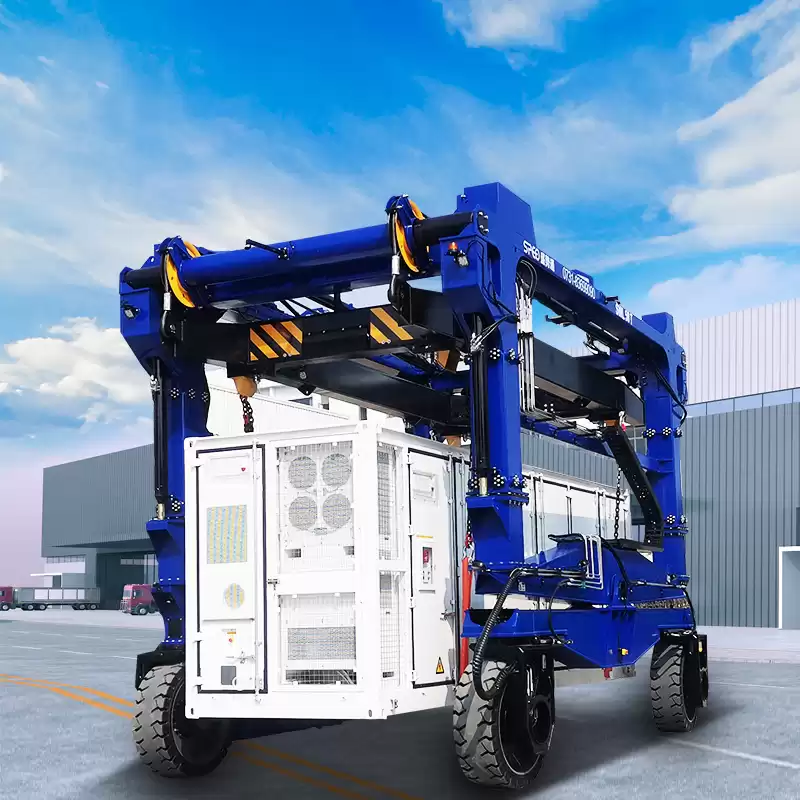
  • Container Straddle Carrier Buying: Load, Route and Stacking Questions

    Container Straddle Carrier Buying: Load, Route and Stacking Questions

    Technical guide

    Container Straddle Carrier Buying: Load, Route and Stacking Questions

    A carrier must suit the container movements and circulation space at the yard. Review the load basis, stacking requirement, ground conditions and transfer interfaces before comparing equipment and support offers.

    Henan Mine CraneTechnical guide · Updated 2026Crane selection, project scope and operating requirements
    Container Straddle Carrier by Henan Mine Crane
    Container Straddle Carrier by Henan Mine Crane
    Project planning notes

    Key points for this crane project.

    1. Basic Understanding of the Equipment
    2. Things to think about when choosing:
    3. Find out how much weight your load can hold and what
    Read the technical guide

    Basic Understanding of the Equipment

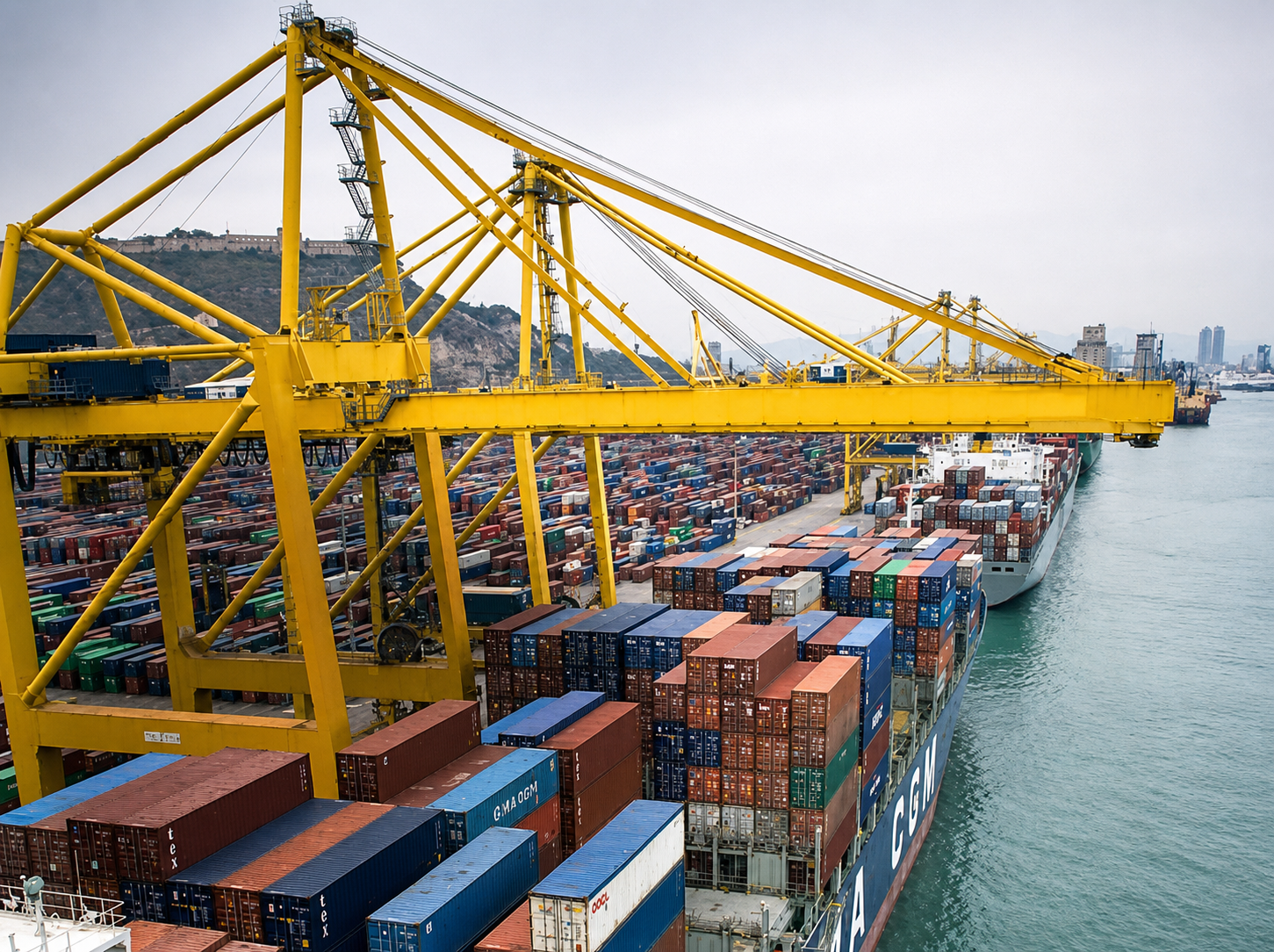
    The main parts of the machine include the gantry structure, lifting frame, telescopic container lifting device, steering system, power unit, hydraulic system, operator cab, and safety sensors. It's pretty straightforward: you put a container to be retrieved, lift it to a safe height, move it around the yard, and then put it down to stack it – and all of this is done by one unit on its own.

    Here are a few things to think about when choosing:

    Equipment TypeInitial InvestmentThroughputLabor Demand
    Straddle CarrierMediumHighLow
    RTG CraneMedium-highMedium-highMedium
    Reach StackerLow-mediumMediumMedium
    Terminal Tractor + ChassisLowMediumHigh

    When picking a container yard straddle carrier, the first thing to do is to work out the actual workload. First, you need to work out the average daily container throughput, peak-hour throughput, and truck turnaround time. Then, you need to work out the ratio of inbound to outbound containers, the proportion of empty versus full containers, and whether there are any special container types, like refrigerated or hazardous materials containers.

    Things to think about when choosing:

    Check how much work the yard can do and what it needs to be able to do that

    When picking a container yard straddle carrier, the first thing to do is to work out the actual workload. First, you need to work out the average daily container throughput, peak-hour throughput, and truck turnaround time. Then, you need to work out the ratio of inbound to outbound containers, the proportion of empty versus full containers, and whether there are any special container types, like refrigerated or hazardous materials containers.

    Find out how much weight your load can hold and what kind of container you need to use it in.

    Stacker Truck Specifications: The rated payload is a key factor. For regular 20-foot and 40-foot standard containers, models with a 35–40 metric ton capacity are enough. But if you need 45-foot containers, double-container lifting or heavy-duty specialty containers, go for models with a 45–60 metric ton capacity.

    Making sure the stacking height and yard utilisation match up.

    The height you can stack them at directly affects how much space you have in the yard. The most common set-ups are 1-over-2 (2-tier stacking), 1-over-3 (3-tier stacking) and 1-over-4 (4-tier stacking).

    The higher the stacking level, the more storage space you get per unit area. But this means you need equipment with a higher lifting height, which costs more to buy, takes longer to operate and means the operators need better visibility. High-level stacking is great for yards on the outskirts of cities where land costs are high, and in core port areas. But for inland yards with plenty of land and fast turnover, 2–3-layer stacking is a better option.

    When picking the stacking height for straddle carriers, it's worth thinking about space reserves for business growth over the next few years. There's no need to go for the highest spec model straight away.

    Choosing the Right Power Type: Diesel, hybrid, electric

    Choosing the power type is a key part of the procurement decision. At the moment, the main options are diesel, hybrid, and fully electric. Lots of customers find it tricky to choose between diesel and electric straddle carriers.

    Diesel models have the most mature technology, are cheaper to buy at first, and don't need as much extra infrastructure. They're great for places with limited power supply or irregular operations, like inland stockpiles in the mining industry.

    Hybrid models add an energy recovery system to the diesel base, which reduces fuel consumption and emissions. They're perfect for yards that want to cut energy consumption but don't have charging infrastructure yet, making them a smart choice during a transitional phase.

    Diesel vs. Hybrid vs. Electric Straddle Carrier

    ItemDiesel Straddle CarrierHybrid Straddle CarrierFull Electric Straddle Carrier
    Purchase CostLowerMediumHigher
    Operating CostHigher (fuel)MediumLower (electricity)
    CO₂ EmissionsHighMediumZero on-site
    MaintenanceMore componentsMediumFewer moving parts
    Infrastructure RequirementLowLowCharging station needed
    Best ForRemote / high-duty yardsTransition scenariosGreen ports & urban yards

    We can adapt the steering systems to fit the yard layout.

    The steering system has a big impact on how adaptable the equipment is to the yard layout. There are a few different types, like two-wheel steering, four-wheel steering, and crab-style steering. When picking a straddle carrier steering system, it's really important to make sure it's the right width for the aisle in your yard and that it can handle the density of containers.

    For standard, open yards, two-wheel steering is enough, but for yards with narrow aisles and dense container areas, go for all-wheel steering straddle carriers, which have a smaller turning radius and are easier to manoeuvre.

    When you need to move stuff around quickly and carefully, like when you're stacking things or working in narrow spaces, diagonal-steering straddle carriers are a better option. They mean you don't have to keep adjusting the vehicle's position, which saves a lot of time.

    Choose the automation levels you need.

    Lots of yards are currently upgrading digitally, and there are custom automated straddle carrier solutions available at different levels, so there's no need to implement everything at once.

    The basic model that you drive yourself is great for small yards that need to be flexible.

    Semi-automated models have automatic positioning and collision-avoidance assistance, which makes them easier to use and more stable.

    With remote-control models, operators can control the vehicle from a central control room, keeping them away from harsh outdoor environments and reducing the number of on-site personnel.

    Fully automated, driverless models are kitted out with GPS, LiDAR, and obstacle detection to automatically plan routes and get jobs done. They work with the Terminal Operating System (TOS) and are great for automated container terminals, cutting labour costs.

    We can’t compromise on safety features.

    Whatever model you choose, you'll need to make sure all the basic safety features are included. Stacker crane collision avoidance systems, load monitoring, wind speed alarms, emergency braking, automatic locking for lifting gear and panoramic video surveillance are all essential.

    For yards on the coast or in open areas, we need wind speed alarms and automatic locking devices that kick in when wind speeds go past safe limits. For hazardous materials yards, we might also add automatic fire suppression systems. And for yards where lots of vehicles are operating at the same time, we need a vehicle-to-vehicle distance anti-collision interlock function. When picking STF safety configurations, upgrades should be made as needed based on the yard's risk level.

    Getting used to the local climate and environment

    The way plants do in different regions depends on the environment there.

    High-temperature ports in the Middle East need heat-resistant cooling designs and dust-proof sealing configurations. Engines and hydraulic systems have to be adapted for high temperatures, and cabs need to be equipped with high-capacity air conditioning. We've already used our customised straddle carrier solutions for high-temperature ports on loads of overseas projects in the high-temperature sector.

    In rainy yards in Southeast Asia, electrical sealing and rust/corrosion protection need to be strengthened to stop rainwater from eroding electrical components.

    Vans used for moving stuff around in coastal salt fog need anti-corrosion coatings that are made for the sea, with important parts made of materials that don't rust to stop salt fog from damaging the equipment and making it last longer.

    Inland yards with high wind and sand must improve air filtration and dust-proof sealing to reduce sand and dust wear on transmission components.

    Just do the maths to work out the total cost of owning it.

    A lot of procurement problems come from focusing too much on the purchase price and not enough on the long-term operating costs. When you're doing a total cost of ownership (TCO) analysis for straddle carriers, make sure you include the purchase price, fuel/electricity costs, maintenance expenses, tire wear, labor costs, downtime losses, and residual value.

    For instance, electric models might cost more to buy, but they use less energy and cost less to maintain. In situations where they're used a lot, the extra cost can be made back in a few years. Diesel models might cost less up front, but you'll be spending more on fuel and maintenance in the long run.

    When working out the total cost of ownership of an inter-yard truck, you've got to base it on a 10–15-year service life. That's the only way to make sure you're getting a good picture of the cost differences between the different options. It's also worth calculating the full return on investment (ROI) for the inter-yard truck, including the benefits of labour savings, efficiency gains and reduced downtime.

    Assessment of the supplier’s capabilities

    It's more important to choose the right supplier than to compare specs. When evaluating suppliers of inter-yard trucks, you shouldn't just base your decision on price.

    It's important to look at how good they are at customising their engineering, and whether they can adapt their designs to your yard layout and operational needs. Next, have a look at their project case studies to see if they've got experience implementing solutions at yards of a similar type and size.

    You should also check out their manufacturing qualifications and quality certifications, like international ones like CE and ISO. It's also really important to have experience with automation and remote diagnostics for container handlers. When it comes to overseas projects, it's really important to focus on after-sales support, like having a global network of spare parts, setting up and getting started on containers, and staff training.

    As a professional straddle carrier manufacturer, Henan Mine Crane offers a full range of services, from designing solutions and manufacturing to installing, setting up, and maintaining your crane over its lifetime. We make customised container straddle carriers that are just right for yards in different regions around the world.

    Here are some common mistakes to watch out for when choosing your models.

    If you only compare the price you pay upfront, you might end up with a low-cost model that breaks down a lot and is off the road a lot, which can end up costing you more in the long run.

    If you go for high-stack models without thinking about the yard layout, you might find yourself with too narrow aisles and difficulty moving equipment around, which can really mess up your efficiency.

    If you don't think about how things might change in the future and only go for diesel models now, you might have to pay a lot more to adapt later when the rules about the environment get stricter.

    If you don't think about how your supplier can help you after you've bought something, you might not get the parts you need when you need them. For example, you could be waiting months for replacement parts, which could cost you more than the price difference between the equipment models.

    Not thinking the cost of replacing tyres will be as high as it is. If the ground conditions are poor, tyres wear out quickly, so when choosing models, check the tyre specifications and durability.

    Here are some recommended configurations for different scenarios.

    We've got these small inland container depots (ICDs). Go for 35–40 metric-ton diesel models with 2–3-layer stacking and basic manual operation – you'll get the best bang for your buck and it'll be a breeze to keep them in good nick.

    Medium-sized dry port logistics parks: Go for 40–45 metric-ton hybrid or electric models with 3-layer stacking and semi-automated assistance. These are great for balancing efficiency and environmental sustainability, and they're perfect for medium-to-large-volume throughput.

    Large international container terminals: Go for 45–60-metric-ton models with 3–4-layer stacking. You can upgrade these to remote control or fully automated operation, integrate with the terminal's TOS system, and they're suited for high-throughput operations.

    High-Temperature Ports in the Middle East: Diesel or hybrid models with extra heat resistance, dustproofing and protection against corrosion, as well as stronger cooling systems, to handle extreme heat.

    Inland Logistics Hubs in Africa: Choose proven diesel models with simple, reliable designs and readily available, interchangeable parts, suitable for environments with limited maintenance resources.

    Discuss the crane arrangement for your project.

    A carrier must suit the container movements and circulation space at the yard. Review the load basis, stacking requirement, ground conditions and transfer interfaces before comparing equipment and support offers. Share the load, available drawings, working cycle and site conditions with Henan Mine Crane so the required configuration and supply boundary can be discussed.

    Related crane configurations

    Container Straddle Carrier

    View product parameters
    Lifting capacity: 30 – 50 tStacking arrangement: 1 over 3 – 1 over 6Working class: A7 – A8

    Move containers between handling positions with a straddle carrier matched to the travel route and stacking layout. Define container load, ground conditions, clearance and the preferred drive system.

    Anode Carbon Block Stacking Crane

    View product parameters
    Lifting capacity: 10 – 30 tSpan: 13.5-40 mLifting height: 6 – 20 m

    Handle and stack anode carbon blocks with a crane configured around block geometry, gripping method and storage layout. Define the transfer sequence and automation interfaces before selection.

    Updated 2026 · Henan Mine Crane
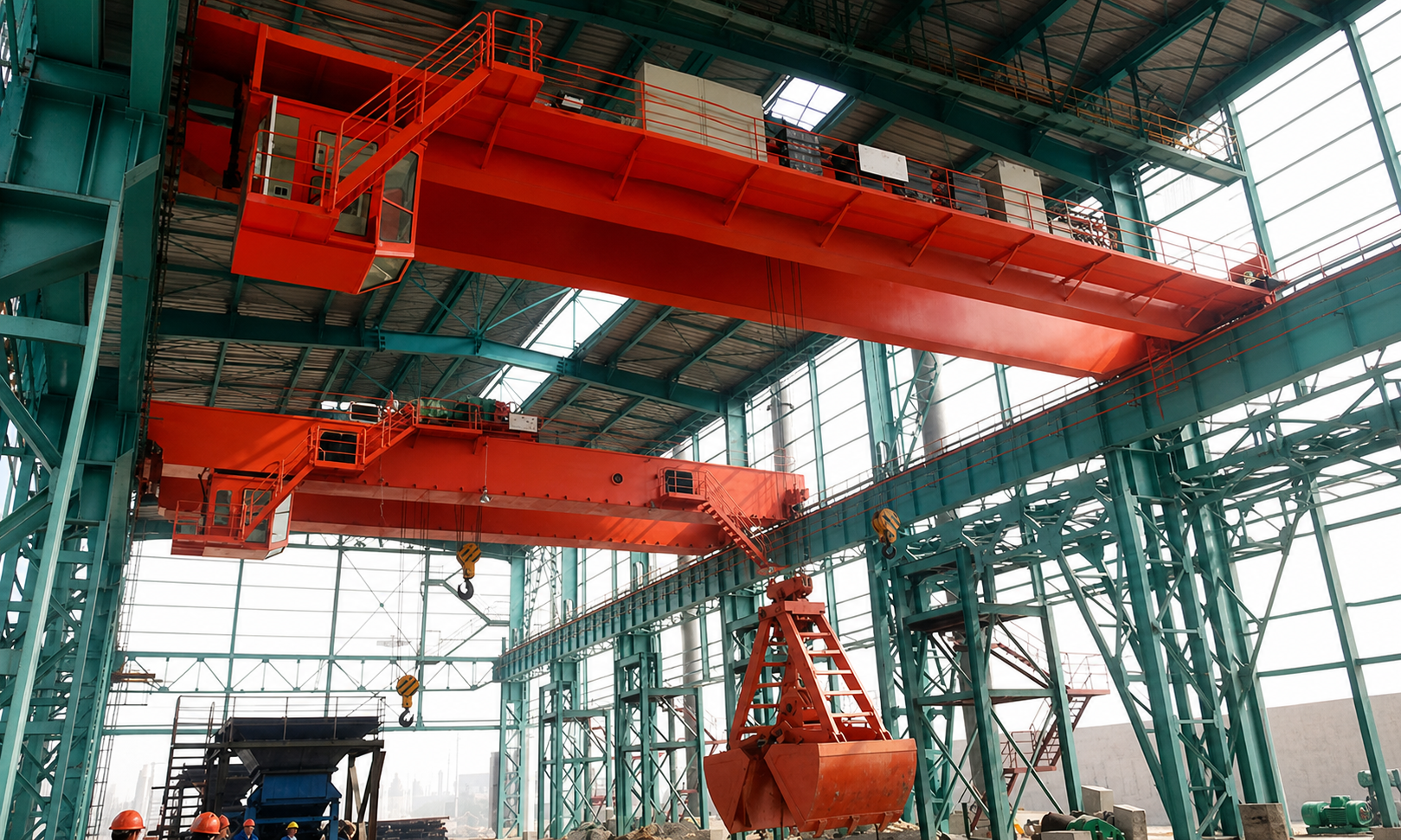
  • STS Crane Procurement: Define the Vessel and Quay Working Envelope

    STS Crane Procurement: Define the Vessel and Quay Working Envelope

    Technical guide

    STS Crane Procurement: Define the Vessel and Quay Working Envelope

    The crane arrangement must be checked against the intended vessels and terminal geometry. Provide the container service, outreach positions, lifting heights and landside transfer requirements before comparing STS proposals.

    Henan Mine CraneTechnical guide · Updated 2026Crane selection, project scope and operating requirements
    STS
    STS
    Project planning notes

    Key points for this crane project.

    1. What Is a Ship-to-Shore Crane and Why the Choice
    2. Key STS Crane Specifications Explained
    3. Step 1: Define Your Design Vessel and Outreach
    Read the technical guide

    What Is a Ship-to-Shore Crane and Why the Choice Matters

    Henan Mine Crane manufactured ship-to-shore (STS) crane, also called a quay crane or portainer, is a large rail-mounted gantry crane installed along a container terminal's berth. Its job is simple to describe and hard to execute at scale: lift containers off a vessel and place them on yard transport equipment, or reverse the sequence during loading. A modern crane repeats this cycle dozens of times per hour, every hour a vessel is alongside.

    Because STS cranes are structurally fixed to the quay and rated for a specific vessel envelope, the specification decision is largely irreversible. A crane with too little outreach cannot be stretched later without a major (and costly) boom replacement. A quay designed for a lighter crane class can't simply absorb a heavier one without civil works. That's why the selection process has to start with vessel and traffic forecasting, not a manufacturer's catalog.

    The financial stakes reinforce this. Vessel turnaround time is one of the most expensive variables in container shipping economics, every extra hour at berth is an hour of lost capacity for both the carrier and the terminal. A well-specified crane fleet directly shortens that time; a poorly specified one becomes a permanent bottleneck that no amount of yard-side efficiency can fix.

    Key STS Crane Specifications Explained

    Before working through the selection framework, it helps to have a shared vocabulary. These are the specifications that appear on every STS crane data sheet and drive both performance and cost:

    SpecificationWhat It Means
    Waterside outreachDistance the boom extends over the vessel from the waterside rail
    Lift height (above rail)Maximum height the spreader can reach, covering deck stacking
    Safe working load (SWL)Maximum rated lifting capacity, single or twin-lift
    Trolley/hoist speedSpeed of horizontal and vertical container movement
    BackreachDistance the girder extends landward of the portal frame
    Rail gaugeDistance between waterside and landside rails

    Two of these, outreach and lift height, are non-negotiable once fixed, which is why Step 1 below is dedicated entirely to getting them right.

    Step 1: Define Your Design Vessel and Outreach Requirement

    Start with the largest vessel your terminal expects to serve over the crane's operating life, not just today's calling fleet. This "design vessel" sets the floor for outreach and lift height requirements.

    Match Henan Mine Crane manufactured STS crane class to vessel class. Use this as a starting reference point, then confirm against your specific design vessel's dimensions:

    • Panamax:fits vessels through the original Panama Canal locks; roughly 13 container rows across; moderate outreach and lift height.
    • Post-Panamax:built for beam widths beyond the original locks; roughly 18 rows across; greater outreach and taller structure.
    • Super-Post-Panamax:designed for the largest vessels in service, 22–24+ rows, with ultra-long outreach and higher lift capacity.
    • ULCV-class:latest generation for mega-ships exceeding 24 rows, typically paired with tandem or twin-lift spreaders.

    Plan for a 20-year vessel outlook, not just current calls. Vessel sizes have grown steadily for decades, and a crane specified only for today's largest ship risks becoming obsolete well before the end of its structural life. Underspecifying outreach is one of the most common and costly mistakes in STS procurement, it's a permanent structural constraint that can't be corrected after commissioning.

    Step 2: Match Crane Class to Terminal Throughput Targets

    Reach defines what vessels the Henan Mine Crane manufactured STS crane can serve. Throughput capacity defines how quickly it can serve them. This step is about matching a crane’s productivity measured in gross moves per hour (GMPH) to your terminal’s business objectives.

    • Medium-scale terminalsgenerally need standard efficiency levels and can operate effectively with single-lift cranes at moderate hoist speeds.
    • High-volume terminals(roughly 5 million TEU or more annually) typically require 25–40 moves per crane hour, which usually means tandem or twin-lift spreader technology capable of handling two 20-foot containers simultaneously.
    • Multi-crane gangsare standard at major hub terminals, with combined gang productivity of 100–150 GMPH across three to five cranes working a single vessel simultaneously.

    Trolley and hoist speed are the mechanical levers behind these numbers, but faster movement also means higher energy draw, a trade-off worth weighing against your terminal's actual throughput requirement rather than defaulting to the fastest available option.

    Step 3: Evaluate Automation Level

    Automation is the point at which STS crane selection most directly addresses labor strategy, safety objectives, and capital budget. There are four major levels:

    1. Manual operation an operator in the crane cab (fully automated movement). Lower capital investment, increase longer-term dependence on labor.
    2. Semi-automated the trolley move and the container positioning over the ship are semi-automated; a remote operator is used to safely perform the final lowering and twist-lock connection.
    3. Remote/remote-assist operators are in a control-room on the deck instead of the crane cab, which results in a better working environment and a single operator is able to operate a number of cranes.
    4. Fully automated systems which involve very little human involvement throughout the cycle and are co-related with the use of automated stacking cranes and AGVS in the yard.

    Two real-world reference points illustrate where terminals land on this spectrum. Shanghai International Port Group's Yangshan Phase 4 terminal operates as a largely automated deep-sea facility, combining automated STS cranes with AGVs and automated stacking cranes. APM Terminals' Maasvlakte II facility in Rotterdam, by contrast, runs semi-automated STS cranes with remote cabin operation from a shore-based control room, a middle-ground approach that many terminals find more operationally practical than full automation.

    The decision should follow from your business case, not from an appetite for the newest technology. Full automation delivers the biggest efficiency gains at high-volume hub and transshipment terminals where consistent, round-the-clock throughput is the competitive differentiator. Mid-size terminals, or those with variable trade patterns, often get better returns from semi-automated or remote-assist configurations that improve safety and consistency without the full infrastructure investment automation demands.

    Step 4: Confirm Quay and Site Infrastructure Readiness

    Henan Mine Crane STS crane is only as reliable as the infrastructure that supports it. Prior to specification closure, check:

    • Rail system:Confirm rail gauge, alignment, and condition, proper spacing and leveling are critical for safe, smooth crane travel along the berth.
    • A ground survey and review of the structural engineer calculations should be undertaken prior to selecting a crane class.
    • Electrical supply:Electric and hybrid cranes need voltage, phase, and connection specifications confirmed against terminal power infrastructure; shore power voltage for modern cranes commonly runs in the 4,000–13,200-volt range.
    • Clearance and obstructions:Check overhead clearance restrictions (for example, near airports), private utility corridors, and existing crane rail spacing if you're adding to an existing fleet.

    Retrofitting an existing quay for a heavier or longer-reach crane class is possible but often involves substantial civil works, reinforcing rails, upgrading electrical capacity, or even widening the quay apron. It's far cheaper to confirm compatibility before signing a purchase order than to discover a mismatch during commissioning.

    Step 5: Build Your Total Cost of Ownership Model

    Purchase price is the most visible number in an STS crane deal, but it's rarely the number that determines whether the investment pays off. A complete TCO model should include:

    • Initial purchase price:New Post-Panamax and Super-Post-Panamax cranes commonly range from roughly 8 to 15 million dollars per unit, with fully automated ULCV-class cranes trending higher depending on scope, region, and customization.
    • Financing structure:Outright purchase, structured financing, and operating leases all shift the cash-flow profile differently; leasing can preserve capital for yard-side investment but typically costs more over the crane's full life.
    • Expected service life:Most STS cranes are engineered for 25–30 years of service; amortize the investment against that horizon rather than a shorter planning window.

    Running these numbers side by side for two or three shortlisted configurations, rather than comparing sticker price alone, is usually what separates a crane investment that pays for itself from one that quietly erodes terminal margins for a decade.

    Step 6: Qualify and Compare Manufacturers

    With specifications and budget defined, the final step is vetting suppliers. Qualified means more than brand recognition.

    • Reference installations:at terminals with a similar vessel profile and throughput target to yours, ideally ones you can visit or contact directly.
    • Component quality and sourcing:Electrical system components from established suppliers (Henan Mine Crane Factory) tend to improve long-term reliability, though they also affect price.
    • Standards compliance:Confirm the manufacturer designs to relevant international standards, including ISO 4301-1 for crane classification, FEM 1.001 for hoisting appliance design, and EN 13135 for safety design requirements.
    • Warranty, spares, and service support:Long-term parts availability and local service capability matter more over a 25-year asset life than a marginally lower upfront quote.
    • Customization capability:Terminals in high-wind, seismic, or extreme-temperature regions need engineering adjustments that not every manufacturer handles equally well.

    Sustainability and Energy Efficiency Considerations

    Energy efficiency has moved from a nice-to-have to a standard evaluation criterion in Henan Mine Crane STS crane procurement. A few features are worth specifying explicitly:

    • Regenerative braking/drive systems, which recapture energy during container lowering and can meaningfully cut overall power consumption.
    • Connectivity to shore power, removing the need for onboard diesel generation and reducing direct emissions at the quay.
    • Variable speed drives are used to increase energy efficiency and allow more flexible control of the hoist and trolley speeds.
    • Hybrid Power configurations where the power system can be switched from shore power or on board generation, as for terminals with weak grid infrastructure.

    These features increase the capital cost but generally pay back in the form of lower energy bills plus, more and more, in premiums attached to meeting port sustainability targets which will be a consideration for carriers in selecting terminals.

    Common Mistakes in STS Crane Procurement

    A few recurring errors show up across terminal projects:

    1. Only defining outreach for the present fleet, as no account is taken of increasing vessel size during the crane’s life.
    2. Treatment of quay infrastructure as an afterthought only learning ground bearing or power restrictions when the crane has been ordered.
    3. This definition is overly reliant on full automation without any throughput or labor-cost business case to justify the premium.
    4. Comparing purchase price alone, ignoring financing structure, energy costs, and maintenance over a 25–30 year horizon.
    5. Underweighting manufacturer track recordin favor of the lowest quoted price, then absorbing the cost of poor spares availability or slower service response later.

    Frequently Asked Questions

    What outreach does an STS crane need to cover a ULCV?

    What is the difference between an STS crane and an RTG crane?

    An STS crane is a fixed, rail-mounted crane that moves containers between a vessel and the quay, while an RTG crane is a mobile, rubber-tired crane that stacks and moves containers within the storage yard. The two work as complementary parts of the same handling chain rather than substitutes for each other.

    Is full automation worth it for a mid-size container terminal?

    Full automation is usually justified only at high-volume hub terminals; mid-size terminals often get a better return from semi-automated or remote-operated cranes that improve safety and consistency without the full infrastructure cost.

    Can an existing quay be upgraded to support a larger STS crane?

    Yes, but it requires engineering review of rail gauge, ground-bearing capacity, and power supply, and may involve significant civil works if the existing quay was not designed for the new crane's weight and reach.

    Henan Mine Crane

    Selecting the appropriate ship to shore crane is simply about designing a dependable container handling package that shall meet the needs of today and tomorrow. From vessel size and handling capacity, to automation needs, infrastructure conditions and life-cycle costs, each factor will influence the long-term efficiency and ROI of the system. A sound STS crane system maximizes a terminal‘s productivity for many years to come by helping minimize vessel.

    Backed by rich experience of producing heavy duty cranes and providing equipment customization, our engineering team specializes in offering STS cranes designed for specific terminal needs, ship conditions and working environments to various customers. From technical consultation and equipment design, manufacturing, installation support to after sales service, Henan Mine Crane Factory is committed to becoming a dedicated partner of your safe, productive and reliable container handling projects for dependable and cost-effective investments.

    Discuss the crane arrangement for your project.

    The crane arrangement must be checked against the intended vessels and terminal geometry. Provide the container service, outreach positions, lifting heights and landside transfer requirements before comparing STS proposals. Share the load, available drawings, working cycle and site conditions with Henan Mine Crane so the required configuration and supply boundary can be discussed.

    Related crane configurations

    Ship-To-Shore Crane (STS)

    View product parameters
    Lifting capacity: 40-65 80-120 tBoom outreach: 40-72 mWorking class: A8

    Transfer containers between ship and quay with an STS crane selected for the berth and vessel envelope. Define the lifting-appliance arrangement, outreach, rail position and handling cycle.

    Container Overhead Crane

    View product parameters
    Lifting capacity: 30-65 tSpan: 18-35 mLifting height: 8 – 20 m

    Transfer containers within a defined overhead runway area using a double-girder bridge and matched spreader. Container size, working clearance and the handling sequence determine the arrangement.

    Updated 2026 · Henan Mine Crane
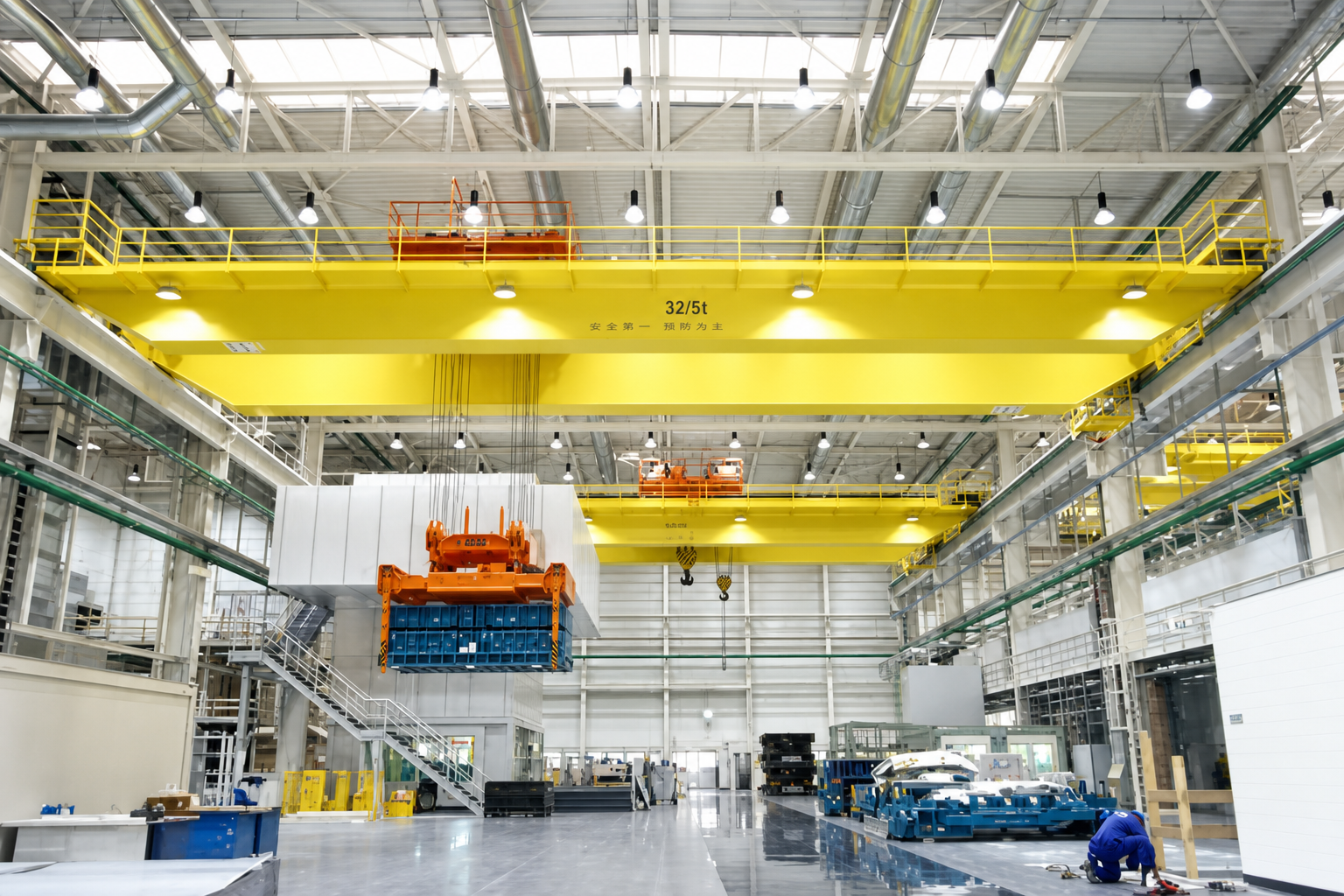
  • RTG Manufacturer Selection: Yard Fit and After-Sales Scope

    RTG Manufacturer Selection: Yard Fit and After-Sales Scope

    Technical guide

    RTG Manufacturer Selection: Yard Fit and After-Sales Scope

    Manufacturer assessment needs to include the actual yard operation and the support expected at the site. Compare technical information, infrastructure interfaces, commissioning and spare-parts arrangements using a common RTG project brief.

    Henan Mine CraneTechnical guide · Updated 2026Crane selection, project scope and operating requirements
    Henan Mine Crane Rubber Tyred Gantry (RTG)
    Henan Mine Crane Rubber Tyred Gantry (RTG)
    Project planning notes

    Key points for this crane project.

    1. What is a tire gantry crane (RTG)
    2. The core value of choosing the right RTG crane
    3. Define the core requirements of your RTG project
    Read the technical guide

    What is a tire gantry crane (RTG)

    Basic Definition

    The tire gantry crane is a mobile gantry lifting equipment equipped with a rubber tire travel system, which is mainly used for standardized yard operations such as container stacking, in-field transfer, cargo loading and unloading. The whole equipment does not need to lay a fixed track, can be hardened and leveled field free travel, flexible steering, adapt to the needs of multi-scene transfer operations.

    Different from ordinary workshop gantry cranes, RTG Crane is designed for outdoor all-weather heavy-duty working conditions, structural strength, travel stability, wind and corrosion resistance are in accordance with the standards of the port yard to build, more suitable for long-term and high-frequency container operation scenarios.

    Mainstream Application Scenarios

    Container terminal yard is the most important application scenario of RTG equipment, which mainly undertakes core operations such as container stacking and storage, on-site transfer, and truck loading after ship unloading. The flexible mobile capability of the equipment can be adapted to the simultaneous operation requirements of multiple berths and regions of the terminal.

    Inland container freight station, railroad freight yard is also the core use of RTG scene. This type of site operating range of flexible, dynamic line of change, no rail restrictions on the container yard Crane, can be better adapted to the railroad container grouping, transit, temporary storage operations.

    Various types of integrated logistics hubs, multimodal transportation parks, RTG cranes are commonly used to complete the road, rail, waterway cargo transfer. The equipment can be flexibly adjusted according to the yard planning operation area, adapted to different cargo flow rhythm and site layout.

    Why RTG manufacturer selection is critical

    RTG Crane does not belong to the ordinary standardized lifting equipment, is a set of integrated steel structure, power drive, travel steering, electronic control system, wind anti-corrosion complex complete sets of equipment. The design and assembly precision of each system will affect the operating status of the whole machine.

    Outdoor port yards have complex working conditions, often experiencing high winds, sun exposure, temperature changes, rain erosion, and some coastal sites also have salt spray corrosion problems. Only port crane manufacturers who are deeply engaged in the field of port equipment can optimize the structure and configuration of the equipment to adapt to the harsh outdoor operating environment.

    Ordinary general-purpose Crane manufacturers lack experience in the design of yard conditions, the production of equipment is prone to rapid tire wear, travel offset, stacking inaccuracy, excessive energy consumption and other problems, long-term use will bring many hidden problems to the yard operation.

    The core value of choosing the right RTG crane manufacturers

    Equipment stability directly determines the yard capacity

    The throughput efficiency of the container yard is completely dependent on the continuous operation capability of the lifting equipment. Once the RTG crane fails and stops, it will directly cause the interruption of container stacking and transfer, and the entire operation rhythm of the yard will be disrupted.

    High-quality manufacturers of tire gantry cranes, low machine failure rate, stable operating conditions, able to adapt to high-intensity, long-time continuous operation of the yard. Inferior equipment frequent breakdowns and downtime, will directly pull down the overall throughput of the yard, resulting in hidden economic losses.

    Engineering design level determines the core performance of the equipment

    The stability of RTG equipment, container stacking accuracy, anti-swaying effect and energy consumption all depend on the engineering design capability of the manufacturer. Reasonable structural force design can effectively reduce equipment operation shaking and ensure neat and accurate stacking of high-level containers.

    Mature power and electronic control matching design can reduce the impact of equipment start and stop, so that the whole machine runs more smoothly. Many common problems of low-priced equipment, such as large alignment deviations, travel jams, and serious shaking, are essentially the result of pre-design defects.

    Manufacturer strength affects the whole life cycle cost of equipment

    Many purchasers are only concerned about the unit price of equipment purchases, ignoring the later long-term operating costs. Professional RTG Crane suppliers will optimize the power system and structural configuration according to the site conditions, effectively reducing fuel or power consumption.

    At the same time, the excellent production process and high-quality parts with, can reduce the frequency of replacement of wearing parts, reduce annual maintenance costs, reduce the loss of unplanned downtime.

    In the long run, the comprehensive utilization cost of equipment from reliable manufacturers is much lower than that of low-priced and low-matched equipment.

    Supporting services to ensure long-term stable operation

    RTG belongs to the high-value port special equipment, the service life can reach more than ten years, later troubleshooting, parts replacement, equipment debugging are inseparable from the manufacturer's support. A perfect after-sales system is an important guarantee for long-term stable operation of the yard.

    Lack of service capability of the manufacturer, equipment delivery response lag, slow supply of parts, small faults dragged into a big problem, will significantly affect the normal operating rhythm of the yard.

    Define the core requirements of your RTG project first

    Confirmation of equipment application scenarios

    First of all, clarify the core operational use of the equipment, whether it is purely used for multi-layer stacking of containers, or taking into account the field of container transfer, truck loading and unloading operations. Different operational focus, the corresponding equipment configuration and parameter design will be significantly different.

    If it is a railroad terminal operation, it needs to adapt to the operational rhythm of railroad container grouping and transfer; if it is an intermodal yard, it needs to take into account the flexible operational needs of multiple cargo flows and multiple lines of movement. Precise positioning of the scene, in order to avoid configuration redundancy or lack of functionality.

    Sort out the core technical parameters

    Before purchasing, you need to sort out the complete equipment parameters, including rated lifting capacity, equipment span, the number of rows of suitable containers, the maximum lifting height, the number of layers of stacked containers. With the cantilever operation needs of the yard, but also clear cantilever length and operating range.

    At the same time need to determine the operating parameters of the equipment, including the traveling speed of large vehicles, trolley operating speed, lifting speed. These parameters directly match the efficiency of the yard operation, and is the core basis for manufacturers to issue customized solutions.

    Determine the type of power drive

    Currently the mainstream RTG equipment is divided into four power forms, suitable for different site conditions and environmental requirements. Traditional diesel-driven RTG is suitable for remote yards without stable utility power, with strong mobility and wide adaptability.

    Hybrid RTGs take into account mobility and energy saving, and can switch power modes according to operation scenarios, making them suitable for small and medium-sized integrated yards.

    Battery-type RTG is a new environmentally friendly model in recent years, with zero emission and low noise, suitable for green smart ports, urban logistics parks and other sites with strict requirements on environmental protection and noise.

    Mapping the site operating environment

    The natural environment of the outdoor yard is an important reference for equipment selection and design. It is necessary to confirm the perennial temperature range of the site, the maximum wind level, rainfall frequency, coastal sites need to focus on verifying the degree of salt spray corrosion.

    At the same time to confirm the yard ground hardening conditions, flatness, and local environmental protection tailpipe emission standards. These environmental parameters, determines the equipment wind level, anti-corrosion process, power configuration and protection standards.

    Verify whether the supplier is the source manufacturer

    Verify the core significance of the identity of the manufacturer

    Source tire gantry crane manufacturer, the whole process of controlling the equipment design, steel selection, structural welding, machine assembly, factory testing. In the program customization, quality control control, schedule adjustment, problem rectification has the absolute initiative.

    Trade suppliers do not have their own production workshops and rely on external OEM for their equipment, so they cannot do in-depth customization according to the site conditions and have very little room for configuration adjustment. Once there is a quality or adaptation problem, the docking process is cumbersome and the rectification efficiency is extremely low.

    Factory strength verification method

    Purchasers can take the initiative to ask for factory photos, production workshop operation video, large-scale steel structure processing equipment information, and visually check the manufacturer's production scale and hardware conditions. At the same time, verify the formal registration qualification of the enterprise and the export record in the past years to confirm the export experience of the manufacturer.

    Focus on requesting the same type of RTG landing project cases, including the same tonnage, the same working conditions, the same area of the yard project records. Regular manufacturers, can be ready to cooperate with online video factory inspection or offline field inspection, the production process is transparent and can be checked.

    Adaptive cooperation scenarios for trading companies

    If the procurement of standardized conventional models, no special working conditions customization needs, no requirements for equipment modification projects, trading companies with mature project coordination capabilities can be included in the alternative.

    This kind of high-quality traders usually have long-term fixed cooperation with reliable factories, in the export documents, international logistics docking, customs clearance and other aspects of experience, can simplify the docking process of overseas customers. However, for complex non-standard projects and demanding port projects, the source manufacturers are still preferred.

    Evaluate the engineering design and customization ability of manufacturers

    Customize the design to fit the actual working conditions of the yard.

    A professional RTG design team will not directly apply common drawings to mass-produce equipment. They will optimize the overall structure and operating parameters of the equipment by taking into account the overall layout of the customer's yard, the logic of container storage, the frequency of daily operations, and the wind conditions of the site.

    The design program will fully match the dynamic line of the yard, avoiding problems such as blind spots, travel interference, stacking deviation, etc., so that the rhythm of the equipment operation is fully adapted to the daily operational needs of the yard, and to improve the overall smoothness of the operation.

    Optimized structure design and wheel pressure parameters

    The degree of tire wear, the stability of the whole machine, the value of ground pressure, and the smoothness of travel of RTG equipment are all determined by the preliminary structural design. Reliable manufacturers will accurately calculate the weight distribution of the whole machine, optimize the wheel pressure ratio, and adapt to the ground loading conditions of the yard.

    Reasonable structural optimization can effectively reduce abnormal tire wear, ground settlement, travel offset and other common problems, reduce the later operation and maintenance costs, and extend the service life of the equipment and the site.

    Diversified customized solutions

    Manufacturers can adjust the container span configuration and cantilever structure style according to customer needs, and install anti-sway system, automatic deflection correction steering, and remote equipment monitoring module as required. For the automated yard, OCR recognition, yard management system linkage and other intelligent supporting functions can be adapted.

    Meanwhile, it can be equipped with energy-saving control system and regenerative braking system to optimize the power solution according to the environmental protection and energy consumption requirements of the site, which can be adapted to different scenarios such as common yard, green port and automated terminal.

    Provide a complete set of technical information

    Regular tire gantry crane manufacturers, delivery of equipment at the same time, will provide a full set of standardized technical documents. Including equipment overall layout drawings, ground wheel pressure data, energy consumption parameters, electrical schematic diagrams, foundation construction reference materials.

    Supporting the provision of equipment operation manuals, maintenance guidelines, factory inspection reports and other documents, to fully meet the acceptance of overseas projects, for the record, the later maintenance and bidding data review needs.

    Examination of production strength and quality control system

    Steel Structure Processing and Manufacturing Capability

    RTG gantry crane main girder, gantry, end beams and other core steel structure, determines the overall stability and service life of the equipment. Professional manufacturers have a full set of large-scale cutting, welding, machining, precision calibration equipment, to ensure that the steel structure size is accurate, solid welding.

    Full control of the whole process of material preparation, assembly, welding, grinding and assembling effectively avoids production problems such as welding deformation, dimensional deviation and structural loosening, and ensures the structural stability of the equipment for long-term outdoor heavy-duty operation.

    Selection standard of core parts

    The core parts of the power system, traveling system and control system of the equipment directly affect the equipment failure rate and operation performance. Focus on verifying the brand and specification of diesel engine/motor, generator set, reducer, brake, PLC control system, container spreader, special tires, steering accessories.

    Reliable manufacturers will choose the industry mainstream mature parts, parts of strong generality, high stability, global replacement procurement is convenient, can significantly reduce the difficulty and cost of late maintenance.

    Standardized factory inspection process

    Perfect quality control system is the guarantee of equipment quality. Regular manufacturers will carry out a number of testing procedures, such as random inspection of raw materials, non-destructive testing of welded seams, review of overall dimensions, and testing of electrical circuits.

    After the equipment assembly is completed, the whole machine will be carried out no-load test run, graded load test, full-load operation test, travel and steering debugging, all-round checking of hidden equipment, to ensure that the performance of each factory RTG equipment is up to standard.

    Outdoor anti-corrosion and anti-rust treatment process

    RTG equipment operates in the open air all year round, so the wind, sun, rain and coastal salt fog will accelerate the aging of the equipment. The surface anti-corrosion coating process directly determines the outdoor service life of the equipment.

    High-quality manufacturers will use professional rust removal process, with multi-layer anticorrosion primer, intermediate paint, weather-resistant topcoat, to form a complete protection system, effectively resisting the harsh outdoor environment, to avoid rusting of the steel structure, paint peeling and other problems.

    Verification of similar RTG project experience

    The importance of similar project experience

    Tire gantry crane belongs to the port yard special equipment, and ordinary workshop gantry crane design standards, working condition requirements, operating logic is completely different. No port yard project experience manufacturers, it is difficult to control the outdoor heavy load, high frequency operation, wind and corrosion resistance and other core details.

    Deeply cultivated in the field of port equipment RTG suppliers, familiar with different regions of the world's climatic conditions, yard operation habits, project acceptance standards, can avoid all kinds of landing pitfalls in advance, to ensure that the equipment adapted to the local working conditions.

    Ask for high matching project cases

    When screening manufacturers, do not just look at the general publicity cases, and prioritize the request and their own projects to highly match the landing project. Focus on checking the same lifting capacity, the same container span, the same stacking height parameters, the same kind of yard scene, the same climate area of the completed project.

    Inland yards, ordinary ports, coastal high corrosion terminal equipment configuration varies greatly, matching the high degree of cases, in order to truly reflect the actual delivery capacity of manufacturers.

    Verification of project authenticity credentials

    Manufacturers can be asked to provide project site photos, equipment operation video, complete project case reports, factory commissioning records. Conditionally, you can verify the end customer feedback, intuitive understanding of the long-term operational status of the equipment.

    Regular export manufacturers will accumulate a large number of traceable overseas landfill project information, which can prove their own project landing strength in all aspects.

    Evaluation of drive system and energy consumption control capability

    Scenarios of various RTG power solutions

    There are obvious differences in the technical accumulation of different manufacturers in various types of power systems. Diesel-driven RTGs are suitable for remote yards without stable utility power and with high mobility requirements; pure electric RTGs are suitable for standardized terminals with regular operations and the pursuit of low operating costs.

    Hybrid RTGs are suitable for small and medium-sized integrated logistics yards, taking into account the needs for flexible transfer and energy saving; battery-driven RTGs are more in line with the construction standards of green ports and low-carbon parks, and are suitable for regions with stringent environmental control.

    Energy consumption determines long-term operating costs

    The energy consumption of equipment is one of the biggest operating expenses of the yard all year round. Excellent manufacturers will reduce the energy consumption of equipment operations through power system optimization, electronic control program debugging, brake energy recovery and other designs.

    The seemingly small difference in energy consumption in a single shift, after years of high-frequency operation, will form a huge cost difference, which directly affects the overall profitability of the project.

    Adaptation to local environmental emission requirements

    The exhaust emission and noise control standards of ports and logistics parks around the world are different. Professional manufacturers will adjust the engine configuration, exhaust gas treatment device, and noise reduction structure according to the environmental policy of the region where the project is located.

    Long-term value of energy-saving design

    The energy-saving design equipped with regenerative braking, frequency conversion speed control, and intelligent start/stop can recover excess energy when the equipment is decelerating, braking, and standing idle. This proven energy-saving solution can continuously reduce equipment fuel or electricity consumption, with obvious cost advantages for long-term use.

    Evaluate automation and intelligent control capabilities

    Adaptation to different levels of control

    Automation planning varies greatly from one yard to another, with some traditional yards retaining manual operation modes and new smart yards adopting semi-automatic or fully-automatic operation modes. Reliable manufacturers will accurately match the corresponding control system according to the actual operation planning of customers.

    They will not blindly pile up high-end automation functions to increase the procurement cost, nor will they reduce the necessary configurations to make it impossible to meet the upgrading needs of the yard.

    Core practical automation functions

    Currently, the mainstream practical configurations include precise sway control control, automatic container alignment, automatic deviation correction, remote troubleshooting, real-time operation data monitoring and other functions. The automated yard can also realize data interoperability and cooperative operation between equipment and yard management system.

    These functions can reduce manual operation errors, lower operational risks, simplify equipment operation and maintenance processes, and meet the management needs of modernized yards.

    Practical significance of intelligent configuration

    Modern ports and logistics yards pay more and more attention to operational safety, labor cost control and digital management. A mature intelligent control system not only improves operational stability, but also provides data support for digital operation and maintenance and fine management of the yard.

    Verification of qualification certification and export compliance capability

    A full set of export documents handling capacity

    Overseas project delivery, need to be supported by a complete set of foreign trade documents.

    All documents are in standardized format, complete information, and can be directly used for customs clearance, project filing, project acceptance, without the need for secondary modification and supplementation.

    The necessity to verify the compliance in advance

    This may result in delayed customs clearance and acceptance of the project after the arrival of the equipment, which may result in port demurrage costs, or affect the overall progress of the project and cause large economic losses.

    Therefore, the compliance qualification and documentation capabilities must be completed in the procurement of a comprehensive verification of the pre-purchase.

    Scientific comparison of RTG Crane offers

    Reject the single price comparison thinking

    Low-priced offers often have hidden shrinkage, many suppliers by simplifying the anti-corrosion process, replacement of low-end accessories, deletion of ancillary services, shrinking equipment materials to suppress the offer. Short-term procurement cost reduction, later operation and maintenance, rectification, downtime losses will increase exponentially.

    Procurement selection should be a comprehensive configuration, process, service, qualification, delivery ability to judge, not just look at the final offer.

    Check the complete scope of supply item by item

    Carefully check all the items included in the offer to confirm whether it covers the main steel structure, lifting mechanism, trolley operation system, power unit, electronic control system, special container spreader, wear-resistant tires, operating cab, a full set of safety protection devices.

    At the same time to clarify whether the offer includes basic spare parts, factory commissioning, technical guidance services, to distinguish between standard items and value-added payment items, to avoid the later generation of invisible add-ons.

    Check the brand specifications of core parts

    The brand and model of core parts such as engine, motor, reducer, PLC control system, spreader, tires, etc. directly determine the operating performance, failure rate and service life of the equipment.

    Need to be clearly labeled in the offer and contract accessories brand specifications, lock the configuration standards, to eliminate the problem of high with publicity, low with delivery.

    Clear foreign trade terms of business

    Finalize EXW, FOB, CIF and other trade terms in advance, and clearly delineate the rights and responsibilities and costs of production and delivery, shipping logistics, customs clearance, and transportation at destination ports, so as to avoid budget overruns and disputes over rights and responsibilities in the later stage.

    Evaluate delivery, project management and docking capability

    Delivery cycle directly affects project progress

    The duration of port and yard projects is extremely rigid, and the delivery time of the equipment directly determines the pace of commissioning and operation of the site. Reliable manufacturers with stable production capacity and standardized scheduling can specify a fixed production cycle and complete production, packing and shipment delivery in strict accordance with the agreed time.

    Professional Project Coordination Capability

    Mature manufacturers will be equipped with an exclusive project docking team to follow up the whole process of drawing review, production progress, factory quality inspection, packing and shipping, and data docking. We take the initiative to synchronize the project nodes and coordinate and solve all kinds of docking problems in time.

    At the same time, we plan in advance for equipment packaging, fixing, moisture protection, to avoid cargo damage, moisture, deformation and other problems in the process of sea transportation.

    Communication efficiency reflects the reliability of manufacturers

    Overseas projects have long docking cycles and many technical details.

    Clear and efficient technical communication can reduce information deviation and program repetition, ensure the smooth progress of the project, and is also a visual reflection of the manufacturer's execution ability.

    Discuss the crane arrangement for your project.

    Manufacturer assessment needs to include the actual yard operation and the support expected at the site. Compare technical information, infrastructure interfaces, commissioning and spare-parts arrangements using a common RTG project brief. Share the load, available drawings, working cycle and site conditions with Henan Mine Crane so the required configuration and supply boundary can be discussed.

    Related crane configurations

    Rubber Tyred Gantry (RTG)

    View product parameters
    Lifting capacity: 20t – 100tSpan: 5m – 30mLifting height: 6m – 30m

    Use a rubber-tyred gantry for heavy handling where the operating layout requires a mobile tyre-supported arrangement. Define the load, steering modes, route and ground conditions for the project.

    Updated 2026 · Henan Mine Crane

  • Gantry Crane Manufacturer Review: Load Cases, Documents and Site Work

    Gantry Crane Manufacturer Review: Load Cases, Documents and Site Work

    Technical guide

    Gantry Crane Manufacturer Review: Load Cases, Documents and Site Work

    A complete proposal should make the equipment arrangement and project responsibilities understandable. Compare supplier drawings, load assumptions and support information before judging offers by headline capacity or price.

    Henan Mine CraneTechnical guide · Updated 2026Crane selection, project scope and operating requirements
    Henan Mine Crane overhead crane inside a workshop bay
    Henan Mine Crane overhead crane inside a workshop bay
    Project planning notes

    Key points for this crane project.

    1. Mainstream application projects of gantry cranes
    2. Core Procurement Requirements for Gantry Crane
    3. Procurement must verify the core technical
    Read the technical guide

    Mainstream application projects of gantry cranes

    Gantry cranes cover most of the open-air industrial lifting scenarios by virtue of their large span, no plant dependency, and adaptability to outdoor work, and are the mainstream lifting equipment for overseas industrial projects. Different projects are suitable for different models, operational use, the following table clearly summarizes the various mainstream application scenarios, to facilitate the procurement of rapid matching needs.

    Application ScenariosRecommended Crane TypesCore Working Functions
    Outdoor Storage YardsSingle Girder Gantry Crane, Standard Gantry CraneHandling stacking, transferring, loading and unloading of steel, pipes, machinery parts, precast components and heavy raw materials for daily outdoor operations.
    Mining & Quarry ProjectsHeavy-duty Industrial Gantry Crane, Double Girder Gantry CraneEquipment maintenance, spare parts replacement and heavy material transportation, adapting to dusty and harsh outdoor mining conditions.
    Precast Concrete YardsSingle/Double Girder Gantry Crane (Optional)Moving production molds, finished precast components and raw materials to support frequent and regular cyclic lifting tasks.
    Shipyards & Fabrication YardsDouble Girder Gantry Crane, Custom Gantry CraneLifting oversized and heavy steel structures and ship components to meet high-load and high-stability assembly requirements.
    Ports, Logistics Bases & Industrial YardsRail-mounted Gantry Crane, Rubber-tyred Gantry CraneCargo transfer, large equipment movement and yard arrangement, adapting to variable outdoor weather and batch cargo operations.
    Workshop Extension & Semi-outdoor AreasSemi-gantry Crane, Light-duty Gantry CraneSuitable for open workshops without complete overhead rail systems, requiring no complex foundation for temporary or long-term semi-outdoor lifting work.

    Core Procurement Requirements for Gantry Crane Projects

    The uncertainty of outdoor working conditions makes the procurement standard of gantry cranes much higher than that of ordinary indoor lifting equipment, and is also the core basis for overseas buyers to screen suppliers of outdoor gantry cranes.

    Stable outdoor adaptability

    Open-air equipment is exposed to wind and rain, sand and dust, and temperature changes all year round, and some coastal and arid areas are also subject to corrosion and strong winds. The equipment must be equipped with basic windproof, rainproof, dustproof and anti-corrosion configurations in order to ensure uninterrupted and stable operation throughout the year.

    Heavy-duty and stable structural design

    Users choose gantry cranes, mostly to solve the heavy-duty, large-scale lifting problems. The material thickness and welding process of the main girder, outriggers and traveling structure of the equipment directly determine the load carrying capacity and service life of the equipment, which is also the key to distinguish the quality of the equipment.

    Adapt to the site layout

    Different plants have different site widths, traveling distances, foundation bearing capacity, and operating lines. High-quality manufacturers will not apply the standard model, but will adjust the equipment span, travel length, and leg height according to the actual layout of the site, so as to adapt to the exclusive working conditions of the project.

    Simple installation and low operation and maintenance costs

    The difficulty of installation and commissioning of outdoor equipment directly affects the progress of the project. The convenience of daily maintenance and parts replacement can also effectively reduce the time and capital cost of long-term operation and maintenance in the plant.

    Complete technical data and engineering support

    Overseas project customs clearance, local acceptance, equipment operation and maintenance, all need a full set of formal technical documents. Reliable gantry crane manufacturers can provide equipment drawings, load data, operation manuals, testing records, as well as supporting the pre-work condition survey, program optimization engineering services.

    Long-term spare parts supply and after-sales response

    Yards, mines, ports project once the equipment downtime, will produce huge production losses. Manufacturers' after-sales response speed, general spare parts reserve capacity, and long-term maintenance services are important guarantees for the stable operation of the project.

    Procurement must verify the core technical parameters

    Parameter adaptation is the basis for stable operation of the equipment, any parameter deviation will result in the equipment not being able to adapt to the site conditions, affecting the commissioning of the project. When overseas procurement selection, you can check the core parameters one by one against the following table to avoid selection errors and ensure that the equipment is adapted to local working conditions and production needs.

    Key Technical ParametersSelection RequirementsSite Adaptation Instructions
    Lifting CapacityCalculated based on maximum load, lifting tool weight and safety marginAvoid overloading operation. Reserve sufficient load margin for long-term heavy-duty working conditions.
    SpanFully match the effective working width of the yardEliminate working blind spots and space waste to ensure full coverage of lifting operations.
    Lifting HeightFit stacking and maintenance height with safety clearance reservedPrevent cargo collision and insufficient limit height during lifting procedures.
    Travel LengthLayout according to on-site operation routeEnsure full coverage of the working area and improve overall yard operation fluency.
    Duty ClassClassified as light, medium and heavy; choose heavy grade for frequent operationsMatch daily operation frequency to avoid excessive equipment wear under long-term high-intensity work.
    Working EnvironmentAdapt to on-site wind, dust, humidity, corrosion and temperature changesEquip customized anti-corrosion, dust-proof, wind-proof and high-temperature resistant devices for complex outdoor conditions.
    Control MethodPendant control, wireless remote control, cabin control optionalSelect according to operation accuracy requirements, working habits and actual application scenarios.
    Power SupplyVoltage and frequency conform to local infrastructure standardsConfirm on-site power parameters in advance to avoid commissioning and operation failures.

    Common Misconceptions in Procurement

    Many buyers are accustomed to simply price selection, ignoring the core differences in equipment configuration, process, service, and later frequent failure and downtime problems.

    Arbitrary application of common models, not combined with the actual working conditions selection, will lead to poor adaptability of equipment, unable to meet the operational needs.

    Neglect outdoor corrosion, sand, high temperature and other environmental factors, omit the exclusive protection configuration, significantly shorten the service life of the equipment.

    Neglecting the working level of the equipment, using light load equipment to cope with high-frequency heavy-duty operations, long-term overload operation is very likely to cause safety hazards.

    Do not verify the manufacturer's experience in similar projects, do not confirm the scope of the offer, ignore the after-sales responsibility, will lead to project delays, additional additions and other issues.

    Summarize

    Selecting a reliable gantry crane manufacturer is never simply looking for a low price quote, the core is a comprehensive solution to match the project conditions. Model suitability, accuracy of technical parameters, production process, quality inspection standards, manufacturer experience and long-term service, far more important than the price of a single purchase.

    Henan Mine Crane, as a professional global gantry crane source manufacturers, with mature overseas project landing experience, can provide model selection, non-standard customization, protection upgrades, technical docking, installation and after-sales service for all kinds of outdoor complex working conditions. We always take the actual needs of the project as the core, and provide highly adaptable and stable gantry crane solutions for global industrial customers.

    There are gantry crane procurement and selection needs, you can provide equipment tonnage, span, lifting height, site conditions and drawings, Henan Mine Crane engineers team for your one-on-one customization of exclusive lifting solutions.

    Discuss the crane arrangement for your project.

    A complete proposal should make the equipment arrangement and project responsibilities understandable. Compare supplier drawings, load assumptions and support information before judging offers by headline capacity or price. Share the load, available drawings, working cycle and site conditions with Henan Mine Crane so the required configuration and supply boundary can be discussed.

    Related crane configurations

    Explore crane product families and technical parameters ↗

    Updated 2026 · Henan Mine Crane

  • QZ Grab Cranes for Coal Power Plants: Grab and Material-Flow Inputs

    QZ Grab Cranes for Coal Power Plants: Grab and Material-Flow Inputs

    Technical guide

    QZ Grab Cranes for Coal Power Plants: Grab and Material-Flow Inputs

    Coal handling should be specified around storage, transfer and feeding movements. Provide the material information, operating cycle and required grab arrangement so the proposed QZ crane can be reviewed for the application.

    Henan Mine CraneTechnical guide · Updated 2026Crane selection, project scope and operating requirements
    QZ Grab Cranes for Coal Power Plants: Grab and Material-Flow Inputs
    Henan Mine Crane lifting equipment
    Project planning notes

    Key points for this crane project.

    1. What Is a QZ Grab Crane?
    2. Why Coal Power Plants Use QZ Cranes
    3. Key Specifications to Match to Your Plant
    Read the technical guide

    What Is a QZ Grab Crane?

    A QZ grab crane is a double-girder overhead traveling crane equipped with a specialized grab bucket instead of a standard hook. It works by lowering an open clamshell or orange peel bucket into a pile of loose material, closing the jaws to capture a load, lifting it, and releasing it at a discharge point. The "QZ" designation is a standard Chinese crane classification indicating a double-girder bridge crane built specifically for grab-bucket operation, distinct from general-purpose QD (hook) cranes.

    QZ cranes matter in coal power plants because they solve a problem hook cranes can't: coal doesn't come in discrete units that can be slung or hooked. It arrives as loose, free-flowing bulk material that has to be scooped, not lifted. The grab mechanism is what makes continuous, unattended handling of thousands of tons of coal per day possible.

    Why Coal Power Plants Use QZ Cranes

    Coal moves through a power plant in a defined sequence, and the QZ crane typically operates at two to three points in that chain:

    1. Coal yard to bunker. Incoming coal is stockpiled in an open or covered yard. A QZ crane grabs coal from the pile and transfers it into intermediate storage bunkers that feed the boiler.
    2. Bunker to feeder. In some plant layouts, an indoor QZ crane moves coal from bunkers directly toward the crushing and pulverizing stage.
    3. Ash and slag removal. The same crane class, often with a different grab, handles bottom ash or slag removal from the boiler area.

    This is why the crane is usually specified for round-the-clock, high-duty-cycle operation rather than occasional lifting it is effectively part of the plant's fuel supply chain, and downtime translates directly into constrained boiler feed.

    Key Specifications to Match to Your Plant

    Before comparing suppliers, four numbers define whether a QZ crane will actually fit your operation:

    • The core error of type selection is that only coal load is calculated, and rated lifting weight must include grab weight.
    • Non-standard span can adapt to special sites, but it will increase procurement costs and prolong delivery cycle.
    • The calculation standard shall not be based on the distance from the ground to the roof, but shall be calculated according to the actual distance from the lowest operating point of the equipment to the highest point of the hook in combination with the height of the coal pile, the depth of the coal bunker and the safety margin.
    • work level: for the selection of the most error-prone key parameters. Low-level selection will cause structural fatigue, premature aging of equipment and greatly shorten service life.

    Sizing the Grab to Your Coal Handling Needs

    Most procurement teams are prone to high-cost selection errors: only based on volume selection grab, ignoring weight load and material density.

    • The rated safe working load (SWL) of the crane is the only core calculation benchmark. This value is the standard rated load calibrated by the equipment manufacturer. It is the upper limit standard to ensure the safe operation of the crane structure, traveling mechanism and lifting mechanism. All grab selection calculations shall not exceed the parameter range.
    • Accurately deduct the self-weight of the supporting grab. The self-weight of the grab is greatly affected by the material, structure form and size size. The self-weight of the small light grab is only several hundred kilograms, and the self-weight of the large grab dedicated to the heavy load of the thermal power plant can reach several tons. It is a core load variable that is easily ignored.
    • By subtracting the grab weight from the rated load, the maximum effective load of coal materials that the equipment can carry can be accurately calculated. This value is the maximum weight of materials allowed to be loaded in actual operation, which is the core basic data for subsequent volume calculation.

    The takeaway for procurement: never give a supplier a target grab volume alone. Give them your crane's SWL, your coal's bulk density range, and your required safety margin. Volume is an output of that calculation, not an input to it.

    Choosing the Right Grab Type for Coal

    Coal is a loose, free-flowing, relatively low-density bulk material, which narrows the grab selection considerably compared to handling scrap metal or ore.

    Bucket Type Selection

    Shell grab is the mainstream choice of coal handling operation in thermal power plants. Symmetrical hinged hopper body opens and closes smoothly, can smoothly cut into coal pile, airtight lock material, effectively reduce material leakage, adapt to the characteristics of strong loose coal fluidity, suitable for stacking and reclaiming operation of coal yard and coal bunker of power plant.

    Plum blossom grab is mostly used for scrap steel, construction waste and other hard irregular materials, relying on multi-petal claw body puncture grab. Coal operation only needs to shovel the stored material, without piercing and biting, so the plum blossom grab has poor adaptability, low operation efficiency and insufficient economy, which is not suitable for coal conveying conditions in thermal power plants.

    Shell Structure Selection

    For coal-burning conditions, the high-sealing closed shell grab with overlapping edge structure is preferred. The enclosed hopper body is specially designed for fluidized fine materials such as pulverized coal and loose coal, which can effectively reduce the material spillage during transportation, inhibit dust overflow, and meet the operation requirements of environmental protection, dust prevention, loss reduction and consumption reduction of power plants.

    The open grab is more suitable for heavy wear-resistant materials such as sand and ore, and the bucket body has poor sealing performance, large operation leakage and serious dust diffusion.

    Drive Mode Selection

    • Mechanical rope grab: simple structure, high cost performance, is a general selection of conventional coal-fired operations. It relies on crane winch mechanism to realize opening and closing, without independent power source, convenient operation and maintenance, low failure rate, and is suitable for conventional extensive stacking and reclaiming operation of power plant.
    • Electro-hydraulic grab bucket: bucket body integrated motor and hydraulic pump, only need a single lifting wire rope to work, accurate opening and closing, strong unloading controllability, suitable for power plant automation, semi-automatic coal bunker loading conditions, suitable for refined operation scenarios.
    • Electric grab: performance between mechanical and electro-hydraulic, control accuracy is better than pure mechanical grab, at the same time do not have to bear the complex operation and maintenance costs of hydraulic system, moderate cost performance.

    closed shell grab is preferred for coal-fired operation in thermal power plant. Mechanical rope type is selected for conventional general scenarios, and electro-hydraulic type is preferred for automatic coal bunker feeding scenarios, which can be flexibly matched according to the automation degree of the plant area.

    Coal Dust and Explosion-Proofing Requirements

    This is the single most commonly overlooked safety requirement in QZ crane procurement for coal service, and it's specific to this application in a way that generic crane buying guides don't address.

    Coal dust is a combustible dust. When airborne in sufficient concentration and exposed to an ignition source, it presents a genuine explosion hazard a risk that doesn't exist in the same way for cranes handling ore, sand, or scrap metal. This has direct implications for how a QZ crane should be specified for coal service:

    1. Electrical explosion-proof configuration: electrical parts such as motors, control cabinets, junction boxes and cable drums in pulverized coal area shall be equipped with dust explosion-proof specifications according to the hazard level of the plant, and shall comply with NFPA and IEC/ATEX standards to prevent dust ignition and explosion risks.
    2. Dust suppression protection measures: dust suppression devices are equipped at the grab material taking and unloading points, which can effectively reduce the risk of dust explosion and reduce the dust on the surface area of the equipment structure. Dust accumulation not only affects the clean operation and maintenance of equipment, but also forms secondary fire hazards. Dust suppression design can avoid safety risks doubly.
    3. Closedgrab advantage: the closed grab structure mentioned above has a double protective effect, not only can reduce the leakage of coal-fired materials, but also can greatly reduce the amount of fine pulverized coal dust, control dust diffusion from the source, adapt to the dust prevention and control of thermal power plants and safety production requirements.

    Buyers should raise hazard classification explicitly with suppliers rather than assuming standard industrial-grade electricals are adequate.

    Throughput and Duty Cycle Planning

    The model selection shall take the hourly coal consumption of boiler as the core benchmark, reverse calculate the number of operation cycles required by crane per hour, and comprehensively consider three key factors: rated loading capacity of single grab, complete operation cycle time (lowering, closing, lifting, travel, unloading and resetting), effective operation time of equipment and standby redundancy capacity of coal bunker.

    Some crane load parameters meet the standard, but the operation cycle frequency is low, and the feeding speed cannot keep up with the boiler consumption speed, which will form the upstream feeding bottleneck of the combustion system. This problem is extremely costly to investigate and rectify after equipment installation and must be avoided in advance at the selection stage.

    At the same time, the A6/A7 high-level work level mentioned earlier is directly linked to device throughput. High-frequency continuous cycle operation crane, need to match the corresponding structure and mechanical performance level, can effectively avoid high-intensity operation of equipment accelerated wear, early aging failure.

    Safety Systems and Standards to Require

    Beyond dust-specific protections, a coal-service QZ crane should include the safety systems standard to heavy-duty grab operation:

    • Full-stroke limit switch: equipped with lifting, cart and trolley operation limit device, accurately limit the equipment operation stroke, prevent over-stroke collision, derailment and other mechanical failures, and ensure the stability of the whole machine operation.
    • laser height measurement configuration: suitable for automatic, semi-automatic coal bunker feeding conditions, can accurately control the discharge height, ensure the height of the operation is uniform, improve the accuracy of automatic operation and operation standardization.
    • electrical safety protection: integrated low voltage, phase sequence protection function, and configuration of emergency stop device, can deal with abnormal voltage, phase sequence fault and other electrical problems, emergency conditions can be quickly shut down to avoid electrical safety risks.
    • Remote control system: It has become the mainstream configuration of coal conveying operation in thermal power plants, which can avoid long-term exposure of operators to dust and noise, and greatly improve operation safety and operation convenience.

    On the standards side, ask suppliers to confirm compliance with recognized frameworks commonly FEM (European crane design standards) and ISO 4301 for duty classification and request documentation, not just a verbal assurance. If your plant operates under an insurer-mandated inspection regime, confirm the crane's duty class rating is compatible with what your inspection authority requires; a mismatch can affect operating certification at annual inspection.

    Discuss the crane arrangement for your project.

    Coal handling should be specified around storage, transfer and feeding movements. Provide the material information, operating cycle and required grab arrangement so the proposed QZ crane can be reviewed for the application. Share the load, available drawings, working cycle and site conditions with Henan Mine Crane so the required configuration and supply boundary can be discussed.

    Related crane configurations

    Grab And Hook Dual Purpose Crane

    View product parameters
    Lifting capacity: 5 – 16 tSpan: 10.5 – 31.5 mLifting height: 6 – 20 m

    Switch between bulk-material pickup and hook lifting with a grab-and-hook overhead arrangement. Define each load case, the grab type and the changeover procedure for the working area.

    Grab Hook Gantry Crane

    View product parameters
    Lifting capacity: 1t – 20tSpan: 6m – 30mLifting height: 4m – 18m

    Combine grab and hook handling on an electric-hoist gantry arrangement. Match the lifting appliance, load cases and changeover method to the outdoor handling layout.

    Updated 2026 · Henan Mine Crane

  • Crane Manufacturer Quality Review: What to Request for the Project

    Crane Manufacturer Quality Review: What to Request for the Project

    Technical guide

    Crane Manufacturer Quality Review: What to Request for the Project

    Quality assessment is stronger when it follows the equipment being ordered. Request the relevant technical, manufacturing and acceptance documents, and agree how deviations and handover responsibilities will be managed.

    Henan Mine CraneTechnical guide · Updated 2026Crane selection, project scope and operating requirements
    Henan Mine Crane overhead crane inside a workshop bay
    Henan Mine Crane overhead crane inside a workshop bay
    Project planning notes

    Key points for this crane project.

    1. How to choose a quality crane manufacturer
    2. The supplier background and credibility
    3. Certification and compliance
    Read the technical guide

    How to choose a quality crane manufacturer

    Cranes are industrial core equipment, directly related to operational safety, productivity and long-term operating costs. If you choose the right one, it will save your heart and durability, but if you choose the wrong one, it will be prone to failure, downtime, and possible after-sale disputes.

    The supplier background and credibility

    Judge whether the manufacturer is reliable, the first thing to find out its ‘background’. Background information can intuitively reflect the strength and stability of the enterprise, to avoid co-operation with the purse company or short-term workshop.

    Years of establishment and shareholding structure are the basic thresholds. Long-established enterprises are more experienced, more mature and more risk-resistant. Priority is given to manufacturers with clear shareholdings, no disputes and their own factories, which are better able to control the production process and are more secure than pure traders.

    The size and capacity of the factory directly determines the delivery capacity, and you need to pay attention to the core information such as its floor space and the configuration of the production equipment. Strong manufacturers are usually equipped with advanced production equipment and have sufficient production capacity. It is recommended to verify through on-site inspections and other means to visually understand their production and management level.

    Export experience and international market layout can side by side confirm product quality and compliance. Manufacturers with stable export business usually have products that meet international standards. Verification of export countries, relevant qualifications and successful cases can be more convincing than manufacturers’ boasts.

    Benchmarking projects and customer testimonials are the most direct endorsement of trust. High-quality manufacturers must have industry cases of cooperation with large customers, you can ask them to provide project information, customer feedback, and even take the initiative to contact past customers to verify the operation of the equipment and after-sales service.

    Certification and compliance

    Welding, electrical and safety certifications are directly related to operational safety. High-quality manufacturers usually have welding certificates such as AWS, EN 1090, etc., and electrical components in accordance with IEC standards, as well as equipment safety devices (anti-overloading, anti-collision, etc.) to meet the standards.

    Third party testing (e.g. SGS, BV, TUV) is an important safeguard. Only look at the manufacturer’s self-inspection report is not enough, give priority to accept the third-party testing of manufacturers, the authoritative report can be issued to avoid quality risks to the greatest extent.

    Engineering and technical capabilities

    The core competitiveness of cranes lies in engineering capabilities. The demand for different working conditions vary greatly, standardised products often cannot be adapted, which requires manufacturers to have a strong R & D and customisation capabilities.

    The core competitiveness of cranes is ultimately reflected in the engineering capabilities. Especially in different industries, different working conditions of the demand varies greatly, standardised products often cannot be fully adapted, which requires manufacturers to have a strong technical research and development and customisation capabilities.

    Internal R&D team is the core of technology. High-quality manufacturers have professional R&D teams covering mechanical, electrical, structural and other fields of engineers. The R&D strength can be verified by the team size, experience of core members and patent achievements.

    Customisation capability is the key to dealing with complex working conditions. In the face of scenarios such as low headroom, abnormal span and special lifting goods, manufacturers need to design adapted solutions through professional modelling after on-site research.

    Load calculation and structural analysis determine the safety and durability of the equipment. High-quality manufacturers use finite element analysis and other tools to calibrate the strength and stiffness of core components, such as main beams and end beams, to ensure the safe operation of the equipment.

    Regardless of domestic and international use, the equipment must comply with the corresponding standards (e.g. GB/T 3811, EN 13000, ASME B30), which manufacturers need to strictly comply with in order to guarantee the availability of the equipment.

    Product Configuration and Core Components

    Equipment performance and life, the core depends on the configuration and quality of core components. Some manufacturers cut corners when competing at low prices, which can lead to a spike in the failure rate in the later stage, but increase operating costs.

    Crane performance and service life, the core depends on the product configuration and the quality of core components. Many manufacturers seem to offer a very low price, but cut corners on the core components, the subsequent failure rate of the equipment will rise sharply, the long-term operating costs are higher.

    Steel grade and manufacturing process is the equipment ‘skeleton’. High-quality manufacturers choose Q355B, Q460 and other high-strength steel, welding precision, rust removal and painting processes, directly affecting the corrosion resistance of the equipment and life.

    Motor, reducer, brake, etc. is the equipment ‘heart’. Priority is given to the core components of Siemens, SEW and other well-known brands of manufacturers, although the cost is slightly higher, but the stability is strong, can reduce the failure and maintenance costs, to avoid the hidden dangers of miscellaneous parts.

    The control system needs to be adapted to the operational scenarios, mainly handheld button box, remote control, automation of three ways. High-quality manufacturers can recommend the right type according to the needs of the site to ensure accurate and stable control.

    Safety devices are the last line of defence for operational safety. The equipment should be fully equipped with overload limitation, position limitation, anti-collision and other devices, and be sensitive and reliable. Special working conditions also need to be equipped with additional special protective equipment.

    Quality control and testing

    Quality design and configuration, need strict quality control and testing support. High-quality manufacturers to establish a full-process quality control system, from raw materials to finished products factory, each link has a clear testing standards.

    No matter how good the design and configuration, without strict quality control and testing process, it is impossible to ensure product quality. High-quality manufacturers will establish a full-process quality control system, from raw materials to the finished product factory, each link has strict testing standards.

    Incoming material inspection is the source of quality control. Steel, core components and other incoming, need to check the qualification and performance test, qualified before put into production, from the source to eliminate quality hazards.

    Load and function test is the core performance verification link.

    Factory Acceptance Test (FAT) is the key to buyers’ rights protection. High-quality manufacturers have standardised FAT process, inviting buyers to witness the test, and all data records are filed and signed by both parties before the equipment is shipped.

    Quality traceability records facilitate follow-up maintenance and responsibility definition. Priority is given to manufacturers who can provide full-process traceability records, covering procurement, production, testing and other aspects, to facilitate troubleshooting and responsibility determination.

    Business and contract terms

    Commercial and contract terms are the core of cooperation, clear and reasonable terms can clarify the rights and responsibilities, avoid disputes and ensure the smooth progress of the project.

    In addition to products and technologies, commercial and contract terms are also the core of cooperation. Clear and reasonable terms can clarify the rights and obligations of both parties, avoid subsequent cooperation disputes, and ensure the smooth progress of the project.

    Clarity of quotation is the key to avoid late additions. When checking the quotation, in addition to the total price, you need to clarify the scope of the cost of equipment, installation, training, transport, etc., to confirm that the parameters of the configuration is clear and there are no hidden clauses.

    Delivery time needs to be agreed in conjunction with the project requirements, the contract is clear production, delivery, arrival and commissioning completion time. Require manufacturers to provide progress plans and regular synchronisation, customised equipment need to set aside sufficient production cycle, to avoid rushing to affect the quality.

    FOB, CIF, DDP and other trade terms, responsibilities and costs are divided into different. You can choose according to your own logistics ability: FOB for mature channels, DDP for worry-free needs, and match according to your needs.

    Payment terms are suggested to adopt the mode of ‘prepayment + progress payment + final payment’ to take into account the rights and interests of both parties. Warranty can be agreed, to be paid after the expiry of the warranty period without quality problems, to further avoid the risk of co-operation.

    After-sales service and support

    After-sales service directly affects the long-term operational efficiency of the equipment and maintenance costs, high-quality manufacturers will provide perfect after-sales service and technical support, which should not be ignored when purchasing.

    Many buyers in the procurement, easy to ignore the after-sales service, but in fact, the quality of after-sales service, directly affecting the long-term operational efficiency of the equipment and maintenance costs. High-quality manufacturers will provide perfect after-sales service and technical support.

    Warranty period and scope need to be clear in the contract. Conventional equipment warranty is mostly 12-24 months, the core components can be extended to 24-36 months, while clarifying the free maintenance, door-to-door service and other rights and responsibilities, to exclude man-made and force majeure factors.

    Spare parts supply capacity is related to fault repair efficiency. High-quality manufacturers have spare parts warehouses at home and abroad, commonly used spare parts can be delivered in 24-48 hours, no more than 7-10 days for special spare parts, while the need to confirm the lifelong spare parts supply capacity.

    Installation and commissioning of professional, high-quality manufacturers to provide free on-site guidance and commissioning services, as well as training of operators to ensure the smooth commissioning of equipment.

    Fast technical response can reduce downtime losses. Domestic customers are preferred to choose 24-hour response, 48 hours to the manufacturer, overseas customers are concerned about the 72-hour response capability, while confirming the 24-hour technical advice channels.

    Logistics and export capabilities

    For buyers exporting or purchasing large cranes, logistics and export capabilities are critical, directly affecting whether the equipment can be delivered safely and on time to protect the project progress.

    For buyers with export demand, or procurement of large, super-large crane buyers, logistics and export capability is a dimension that must be focused on. Whether the equipment can be delivered to the site safely and on time directly affects the project progress.

    Export packaging needs to comply with international transport standards. Cranes are large-scale equipment, and high-quality manufacturers use rust-proof, moisture-proof and shock-proof packaging to reinforce large components and avoid deformation and damage during transport.

    Complete documentation and customs clearance support can avoid delays in customs clearance. High-quality manufacturers with rich export experience can assist in the preparation of a full set of customs clearance documents, provide consulting services to ensure smooth customs clearance of equipment.

    Large transport experience is the core guarantee for large equipment delivery. High-quality manufacturers have long-term cooperation with large logistics partners, according to the weight and size of the equipment, the development of land transport, sea transport, port loading and unloading integrated programme.

    Good co-ordination between ports and freight forwarders can improve transport efficiency. High-quality manufacturers dock with ports and freight forwarders in advance to arrange loading and unloading, warehousing and customs clearance processes, so as to avoid equipment stranded in the port.

    Choosing the right manufacturer is choosing the right long-term partner

    Selecting a high-quality crane manufacturer is essentially selecting a long-term partner, which is directly related to equipment safety, productivity and long-term operating costs.

    Conditions allow, it is recommended to visit the manufacturer on the spot, verify the production process and testing procedures, refer to the feedback of past customers, to maximise the risk of avoiding and selecting a reliable partner.

    Discuss the crane arrangement for your project.

    Quality assessment is stronger when it follows the equipment being ordered. Request the relevant technical, manufacturing and acceptance documents, and agree how deviations and handover responsibilities will be managed. Share the load, available drawings, working cycle and site conditions with Henan Mine Crane so the required configuration and supply boundary can be discussed.

    Related crane configurations

    Explore crane product families and technical parameters ↗

    Updated 2026 · Henan Mine Crane

  • QDY Casting Crane Selection: Ladle Handling and Process Requirements

    QDY Casting Crane Selection: Ladle Handling and Process Requirements

    Technical guide

    QDY Casting Crane Selection: Ladle Handling and Process Requirements

    The casting operation needs to be described as a complete lifting task. Provide the ladle and attachment details, required positions, heat exposure and operating sequence before comparing a QDY crane configuration.

    Henan Mine CraneTechnical guide · Updated 2026Crane selection, project scope and operating requirements
    QDY Casting Crane Selection: Ladle Handling and Process Requirements
    Henan Mine Crane lifting equipment
    Project planning notes

    Key points for this crane project.

    1. What Is a QDY Casting Crane?
    2. Key Applications in Molten Metal Handling
    3. Core Selection Criteria: Load Capacity and Span
    Read the technical guide

    What Is a QDY Casting Crane?

    A QDY casting crane (also called a ladle crane or casting ladle crane) is a double-girder overhead crane engineered specifically to lift and transport ladles filled with molten iron or steel. Unlike a standard bridge crane, it is built to survive continuous radiant heat, dust, and the catastrophic consequences of a dropped load.

    QDY series ladle cranes transport molten iron ladles to the basic oxygen furnace, or transfer molten steel from the basic oxygen furnace and electric arc furnace to the continuous casting machine, and can also be used for teeming and casting. As with charging cranes, safety and reliability come first because the crane is handling molten steel.

    Design and Standards

    QDY bridge foundry cranes with hooks are used wherever molten metal is lifted, with the complete machine rated to working class A7, and a thermal-protective coating added to the bottom of the main girder. Casting ladle crane design and manufacture conforms to the notification requirements of JB/T7688-1 and JB/T7688, along with the National Quality Supervision Bureau's opinions on metallurgy lifting machinery.

    Key Applications in Molten Metal Handling

    QDY cranes appear at nearly every hot-metal handoff point in a steel plant or foundry:

    • Charging operation: Responsible for the transfer of molten iron after tapping from the blast furnace. The ladle is carried by lifting equipment to smoothly lift and transfer the high-temperature molten iron from the blast furnace discharging station to the designated charging station of the oxygen top-blown converter for subsequent steelmaking. The smelting process provides raw material guarantee and is the core transfer process at the front end of steel smelting.
    • Refinery transfer operation: Throughout the whole process of steelmaking production, it can complete the processes of converter molten iron charging, crude steel lifting and refining, and molten steel transportation to continuous casting turntable, realizing efficient connection between smelting and continuous casting processes and ensuring continuous and stable operation of production lines.
    • Casting and forming operation: It belongs to the core process of metal forming. Through precise operation of lifting equipment, qualified molten metal is poured into ingot mold or continuous casting equipment to complete metal shaping and stably produce finished products such as ingot and billet.
    • Casting workshop pouring station operation: adapt to the high temperature, heavy load and high frequency operation conditions of the casting workshop, mainly complete the cross-station transfer of molten metal in the workshop, fixed-point lifting, and the handling of heavy molds and tooling components, so as to ensure the efficient and continuous development of the casting process.

    Because the crane also has to tip the ladle to pour, most QDY units pair a main hoist with an auxiliary hoist. The main hook works as the primary lifting device for the ladle, while the auxiliary hook works with the main hook to dump the molten iron and perform other subsidiary lifting operations.

    Core Selection Criteria: Load Capacity and Span

    Capacity is the first filter, but it's not just about the ladle's dead weight you need headroom for future production growth.

    QDY cranes in this range typically span 10.5m to 31.5m.

    1. Load value shall be calculated according to ladle dead weight + full load total weight of molten metal. It is strictly prohibited to calculate the weight of molten metal alone, so as to ensure that the rated load of equipment completely covers the actual lifting total load and eliminate potential safety hazards caused by load calculation deviation.
    2. Taking into account future capacity expansion: the initial cost of double-beam cranes is higher, but compared with single-beam models, the bearing capacity is stronger, the stability is better, the life is longer, and it is more suitable for enterprise capacity upgrading. The long-term comprehensive value is higher.

    Span and lifting height must match your bay's rail-to-rail distance and the vertical clearance from furnace floor to runway beam get this wrong and the crane simply won't clear your pouring pits or furnace tops.

    Duty Class and Working Environment

    Duty classification (also called working class or FEM grade) tells you how much continuous stress the crane is engineered to absorb, critical for 24-hour steelmaking operations.

    The working class of the complete QDY machine is FEM 4M.

    Confirm the manufacturer's rated ambient range against your plant's actual worst-case shop-floor temperature, not the average.

    Safety Systems That Matter Most

    Given that a single dropped ladle can be fatal and shut down a plant for weeks, safety hardware is where buyers should spend the most scrutiny not the least.

    Redundant Braking and Lifting

    The main hoisting mechanism uses double motors and double brakes on a single drum, and steel-core wire rope rated for high-temperature environments provides a high safety factor. <cite index="10-1">Double sets of independent crane brakes are used on the lifting mechanism to ensure high safety.

    Overload and Limit Protection

    • Anti-sway and load monitoring. Anti-sway controls reduce lateral movement of the ladle during travel, improving control and reducing spill risk, and integrated load monitoring systems continuously measure the weight of the molten metal, alerting operators to overloads or imbalances.
    • Emergency stop and fault protection. Positive and negative contactors are installed to prevent dangerous conditions in case of a power outage, and emergency stop buttons plus limit switches guard against overload.

    Structural and Material Requirements for High Heat

    An insulating layer is installed at the bottom of the main girders to prevent thermal radiation from molten steel damaging the structure and to extend the girders' service life.

    Other structural specs to verify with any supplier:

    • The main girder adopts 16Mn high-strength steel plate welded box structure, which has high overall rigidity, stable structure and excellent fatigue resistance. It can withstand high-frequency, heavy-duty and reciprocating operations in the foundry industry for a long time, and the structure is not easy to deform.
    • The trolley system is equipped with high temperature resistant special power supply cable, which can adapt to the continuous high temperature radiation environment of the casting workshop. It has the characteristics of high temperature resistance, aging resistance and difficult breakdown, and ensures the safety and stability of the equipment power supply.
    • The cab adopts integral heat insulation and sealing design and is equipped with air conditioning system, which can effectively block external high temperature heat radiation and hot air intrusion, create a constant temperature and comfortable operating environment, reduce high temperature fatigue, and ensure safe operation of operators.
    • The core transmission components such as motors, reducers and bearings adopt fully sealed protection structure, which effectively isolates dust, water vapor and corrosive smoke from foundry workshops, avoids component stagnation, wear and corrosion, and significantly improves equipment durability and operation reliability.

    Control Systems: Cabin, Remote, and PLC Options

    Control method affects both operator safety and cycle efficiency. >Ladle cranes can use advanced speed control methods such as stator voltage regulation or frequency conversion, with PLC control used to display speed, crane work status, and safety faults; remote control is also an option to better reflect the crane's performance.

    • Cab control: The operator works in the insulated air-conditioned cab, the environment is comfortable, the vision is clear, especially suitable for continuous high-frequency casting conditions, accurate visual alignment can be ensured, and the lifting casting accuracy and operation stability can be guaranteed.
    • Wireless/handle remote control: keep operators away from high temperature heat radiation areas, avoid high temperature operation risks from the root, and have higher safety factors. It is the preferred solution for casting enterprises that pay attention to safety production.
    • PLC intelligent automation control: support automatic recording and storage of load data, equipment failure, operation cycle and other operation data, provide data support for production control, and lay an intelligent foundation for subsequent access to the Internet of Things and predictive maintenance of equipment.

    QDY vs. YZ vs. YZS: Which Series Do You Need?

    The takeaway: QDY is the right call for most foundries and mid-sized steel mills. Once ladle weight or throughput pushes past the mid-70-ton range, budget for a YZ or YZS solution instead of over-stretching a QDY crane's design limits.

    Total Cost of Ownership and Maintenance

    The purchase price is only the entry cost. Ladle bridge cranes require higher safety performance than ordinary bridge cranes, which makes them more expensive driven not just by design and motor specification but by operating-system customization and ongoing maintenance, with maintenance being one of the main contributors to overall lifetime cost.

    Before signing a contract, evaluate the supplier on:

    • Accessibility for inspection: choose a crane with easily accessible components for inspection and servicing, clear maintenance manuals and lubrication schedules, and a modular design for quick replacement of worn parts
    • Local parts and service support: availability of local service technicians and spare parts inventory should factor directly into the purchase decision
    • Predictive maintenance readiness:sensors monitoring temperature, vibration, motor current, and lubrication in real time can predict failures before they occur, reducing unplanned downtime
    • Energy efficiency:variable frequency drives regulate motor speed to load requirements, cutting unnecessary power use and extending motor life, while regenerative braking can capture and reuse kinetic energy

    Standards and Certification Checklist

    Don't take a supplier's safety claims on faith verify against recognized standards:

    • Domestic industry standards: strictly follow JB/T7688-1, JB/T7688 series standards, fully meet the design specifications and manufacturing acceptance technical requirements of domestic casting ladle cranes, equipment structure, performance parameters and production processes are in line with industry official standards.
    • European FEM standard: standard EN 14492-2 and other authoritative lifting equipment standards and FEM classification specifications, strictly control the safety performance and operation stability of equipment, can meet the strict use and acceptance standards of overseas high-end projects.

    Ask any shortlisted supplier for certificates, not just brochure claims, and request references from plants running a similar tonnage and pour frequency to yours.

    Discuss the crane arrangement for your project.

    The casting operation needs to be described as a complete lifting task. Provide the ladle and attachment details, required positions, heat exposure and operating sequence before comparing a QDY crane configuration. Share the load, available drawings, working cycle and site conditions with Henan Mine Crane so the required configuration and supply boundary can be discussed.

    Related crane configurations

    Double Girder Casting Crane

    View product parameters
    Lifting capacity: 75/20–200/50 tSpan: 10m – 35mLifting height: 6m – 25m

    Lift and transfer molten-metal ladles with a YZ casting crane configured for the full suspended load and casting process. Review ladle interfaces, thermal exposure and the operating sequence together.

    Four Beam Casting Crane

    View product parameters
    Lifting capacity: 125/32–320/80 tSpan: 10m~40mLifting height: 6m~30m

    Handle molten-metal ladles with a YZS four-beam casting crane. Main and auxiliary trolley functions, thermal exposure and the lifting sequence are selected for the casting process.

    Updated 2026 · Henan Mine Crane