Engineering · Manufacturing · Project support
info@hnksglobal.comWhatsApp +86 18836207779 ↗

Blog

  • RTG Cranes for Inland Ports: Yard Routes and Intermodal Transfer

    RTG Cranes for Inland Ports: Yard Routes and Intermodal Transfer

    Technical guide

    RTG Cranes for Inland Ports: Yard Routes and Intermodal Transfer

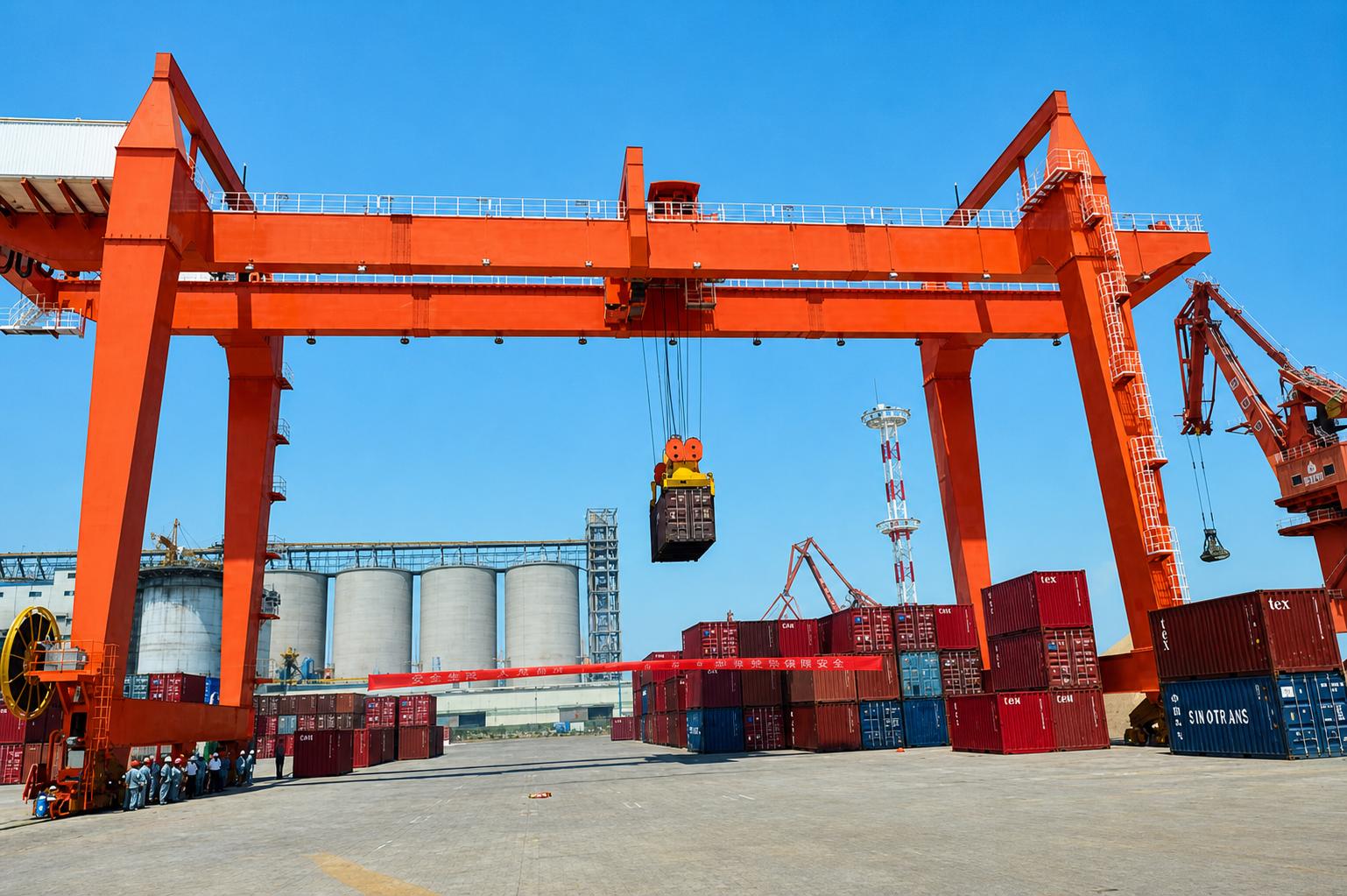
    Inland terminals need container movements coordinated with local road, rail or waterway interfaces. Show the stacking layout, operating routes and transfer points so the RTG arrangement can be reviewed for the actual site.
    Henan Mine CraneTechnical guide · Updated 2026Crane selection, project scope and operating requirements
    RTG Cranes for Inland Ports: Yard Routes and Intermodal Transfer
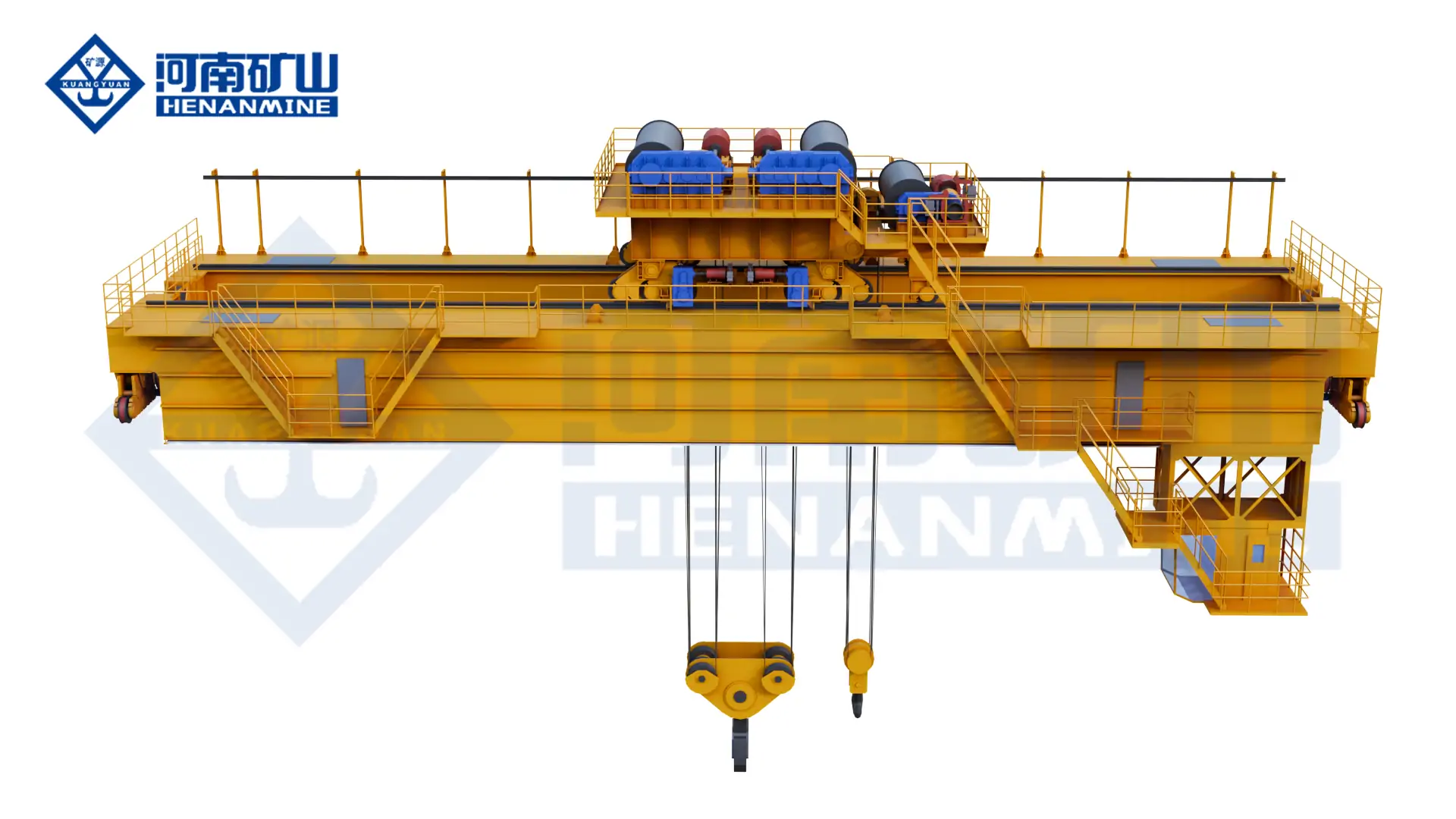
    Henan Mine Crane lifting equipment
    Project planning notes

    Key points for this crane project.

    1. Understanding RTG Cranes in the Inland Port Context
    2. Key Technical Selection Criteria
    3. Foundation Bearing Capacity
    Read the technical guide

    Understanding RTG Cranes in the Inland Port Context

    The core advantages of rubber-tired gantry cranes (RTGs) are their lack of fixed rails, mobility and ease of redeployment, making them the mainstream choice for medium throughput inland ports with limited land, variable cargo flows and uncertain expansion plans.

    Compared with large coastal terminals, inland river ports have obvious differences in RTG application: small tonnage of connecting ships, different requirements for crane outreach distance and span; need to undertake multimodal transportation for loading and unloading, higher requirements for yard flexibility;

    Being located in low-lying areas, it is necessary to pay attention to flood prevention and water resistance; weak power infrastructure, limiting the choice of power system. RTG service life of 20 to 25 years, the selection decision directly determines the risk of long-term operation, so it is necessary to fully grasp the selection of special standards.

    Key Technical Selection Criteria

    Span Width and Stacking Height

    Six-row width is a common choice, which can balance the utilization rate of the yard and equipment costs, and is suitable for small yards in inland ports, and can serve standard density yards with a capacity of about 1,000 TEU/ha.

    The mainstream stacking heights are “1 on 3” to “1 on 6” (i.e., 4 to 7 storeys high), and inland river ports are recommended to choose “1 on 3” or “1 on 4”. Inland river ports are recommended to choose “1 on 3” or “1 on 4” for conservative configuration, which reduces the frequency of turning boxes and meets the needs of turnaround type operation with short cargo stay time (3 to 5 days).

    Anti-sway system performance

    Anti-swaying system is the key to ensure the accuracy and safety of operation. The inertial swaying of container lifting easily leads to cargo damage and safety accidents. Modern RTGs are generally equipped with Active Load Control, which can adjust the movement of the trolley through real-time calculations and control the swinging amplitude.

    Considering the influence of wind in inland river ports, the performance index of anti-sway system should be included in the bidding technical specification when selecting the model, so as to clearly quantify the requirements.

    Foundation Bearing Capacity

    Foundation bearing capacity is an underestimated but costly consideration in the selection of RTGs for river ports.

    The pressure capacity of different road surfaces varies significantly: concrete pavement (5,000 to 10,000 psi) is the most suitable for RTG operations, while asphalt pavement (2,000 to 4,000 psi) is easily damaged by heavy loads. Inland river ports are located along rivers, and underground aquifers or weak interlayers can reduce foundation bearing capacity. Before selecting a model, it is necessary to commission a professional organization to conduct surveys and assessments, and to design reinforcement programs such as pile foundations and soil curing.

    In addition, flood risk and ground settlement are challenges unique to inland waterway ports. Flood water will reduce the foundation's bearing capacity. When selecting an RTG, it is necessary to assess its adaptability to muddy roads and pay attention to anti-skid tires, chassis anti-corrosion and waterproofing of electrical control cabinets (IP55 and above is recommended).

    Historical cases show that flooding can lead to long-term port shutdowns, such as the 2018 Mississippi River flooding that shut down the port for 67 days.

    Power System Selection

    All-electric RTGs (e-RTGs) have the lowest energy costs, which is a clear advantage in whole-life costing for high-throughput ports.

    The main constraints of an all-electric solution are:

    1. the need for a well-established high-voltage power supply infrastructure and the high initial investment;
    2. the cables limit the range of movement of the RTGs, which may affect flexibility in small yards where frequent repositioning is required.

    However, from a long-term perspective, the TCO payback period for all-electric RTGs versus hybrid RTGs is typically 5 to 7 years, and the all-electric direction is becoming more and more strategically justified for port equipment with an expected service life of 20 years or more-especially in the context of increasingly stringent inland ports' carbon emissions regulation.

    Yard Operational Efficiency

    RTG operational efficiency is measured in terms of the number of trailers serviced per hour, with standard configurations capable of servicing 8 to 9 trailers per hour and completing 30 to 40 container movements. Although the throughput of inland river ports is low, the berth window is short and cargo flow is irregular, so the efficiency of a single RTG has a more significant impact on port operations.

    Inland river ports, the problem of secondary overturning of containers is prominent, the cargo owner picks up cargo randomly, short detention time (4 to 5 days), easy to produce non-value-added operations. Selection should focus on RTG positioning accuracy, ensure its seamless integration with port TOS system, and reduce tipping through intelligent scheduling.

    Inland river ports have many foggy days, low visibility, and uneven ground during flood season, all of which will affect RTG operation efficiency and equipment wear and tear. When selecting the model, the supplier should be required to provide relevant adaptability test data and speed reduction operation program.

    Automation and Digitalization

    Under the trend of port automation, RTG automation routes for inland ports need to be carefully selected. Fully automated RTG (ARTG) can realize continuous operation without stationary operators and improve yard efficiency, but the initial investment is high, and the requirements for TOS integration, network stability and maintenance capability are high, making it difficult for most small and medium-sized inland ports to meet the supporting conditions.

    The pragmatic choice is the “semi-automation” strategy: the acquisition of intelligent RTGs that support remote operation, without the need for large-scale transformation of the yard and the highly integrated TOS system, which can improve operational safety, reduce driver fatigue, but also for the full automation of the interface reserved for the mainstream manufacturers to provide the relevant smart-ready architecture.

    Total Life Cycle Cost (TCO) Analysis

    RTG procurement tends to fall into the misunderstanding of focusing only on the initial purchase price (CAPEX) and ignoring the whole life cycle operation cost (OPEX). Diesel RTG procurement price is lower, but fuel, maintenance and other long-term costs are high, 20-year TCO is at a disadvantage, of which fuel costs account for the largest proportion of RTG operating costs.

    The incremental investment in hybrid and all-electric RTGs is typically recouped in 5-7 years through fuel and maintenance savings, and with RTG lifetimes of 20-25 years, the long-term cumulative savings far exceed the initial premium. The residual value of the equipment, supplier service contracts, localization of spare parts, etc. should also be included in the TCO assessment when selecting a model.

    Adaptation to Special Working Conditions

    The selection of RTGs for inland river ports requires attention to two special conditions: flood protection and intermodal connections.

    Intermodal barging needs to be coordinated with RTG operation path and various transportation areas, railroad barging may require larger span or special configuration, and it is recommended to consider mixed configuration of RTG and RMG to optimize efficiency.

    Inland waterway feeder push barge deck height floating with the water level, RTG sea-side lifting arm under the headroom needs to be sufficient, shoreline foundations need to be calculated according to the highest water level, to ensure the safe transfer of loads.

    Discuss the crane arrangement for your project.

    Inland terminals need container movements coordinated with local road, rail or waterway interfaces. Show the stacking layout, operating routes and transfer points so the RTG arrangement can be reviewed for the actual site. Share the load, available drawings, working cycle and site conditions with Henan Mine Crane so the required configuration and supply boundary can be discussed.

    Related crane configurations

    Rubber Tyred Gantry (RTG)

    View product parameters
    Lifting capacity: 20t – 100tSpan: 5m – 30mLifting height: 6m – 30m

    Use a rubber-tyred gantry for heavy handling where the operating layout requires a mobile tyre-supported arrangement. Define the load, steering modes, route and ground conditions for the project.

    Updated 2026 · Henan Mine Crane
  • Industrial Crane Procurement: Match Equipment to the Operating Task

    Industrial Crane Procurement: Match Equipment to the Operating Task

    Technical guide

    Industrial Crane Procurement: Match Equipment to the Operating Task

    A practical specification starts with the load and the route it follows through the facility. Compare working coverage, duty, support arrangements and supplier responsibilities before making the crane type the starting assumption.

    Henan Mine CraneTechnical guide · Updated 2026Crane selection, project scope and operating requirements
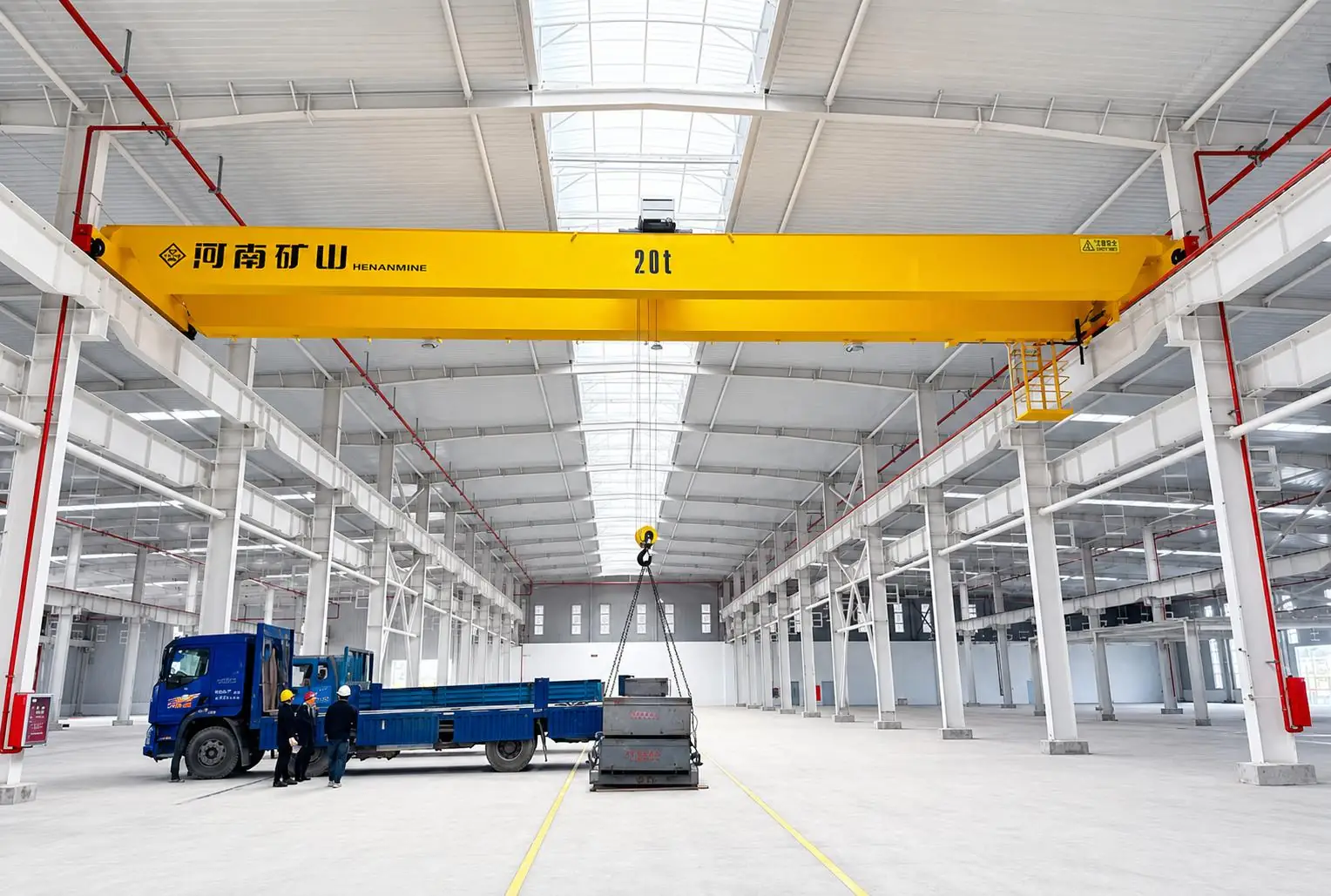
    Henan Mine Crane overhead crane inside a workshop bay
    Henan Mine Crane overhead crane inside a workshop bay
    Project planning notes

    Key points for this crane project.

    1. Key Factors to Consider Before Buying an Industrial
    2. How to Choose the Right Industrial Crane Type
    3. What Crane Specifications Should You Review
    Read the technical guide

    Key Factors to Consider Before Buying an Industrial Crane

    Check load capacity

    The rated load is the most core and basic procurement index of industrial cranes, and it is also the first line of defense to ensure the safe operation of equipment. It is absolutely impossible to estimate or blindly purchase high-capacity and small-tonnage equipment based on experience alone. Before purchasing, it is necessary to accurately count the maximum lifting weight of the company's daily operations, the conventional lifting weight, and the peak weight of occasional heavy-duty operations. It should be noted that the rated load of the crane is a static standard load, and the actual operation will be affected by factors such as lifting inertia, wind influence, material eccentricity, and lifting angle, resulting in dynamic loads.

    Therefore, sufficient load margin must be reserved when selecting the type. At the same time, it is necessary to distinguish the difference between the load of the crane, the load of the hoist, and the rated load of the trolley, so as to avoid the problem of the host meeting the standards and the insufficient load of the core lifting accessories, eliminate the safety hazards of overload from the root cause, and ensure the long-term stable operation of the equipment.

    Confirm lifting height

    The lifting height directly determines the effective working space of the crane and is a key indicator of whether the equipment can be adapted to the plant and construction site. Many procurement errors are due to inaccurate height calculations. During procurement verification, it is not only necessary to refer to the headroom height of the plant. It is necessary to comprehensively measure the vertical distance from the ground to the roof beams, roof trusses, lighting equipment, ventilation pipes, fire-fighting facilities and other obstacles of the plant, and calculate the actual available effective lifting height.

    At the same time, it is necessary to combine the material hoisting requirements, confirm the placement height, stacking height, and equipment installation height of the material after hoisting, and reserve a safe space for the material to float up and down. In addition, it is necessary to consider the height occupied by the crane's own hooks, pulleys, and wire ropes to avoid situations where the hooks cannot reach the preset lifting height and the high-level hoisting operation cannot be completed after the equipment is installed. For high- and low-span factories, special-shaped construction sites, and layered operation scenarios, it is necessary to customize and adapt the lifting height to ensure full coverage of the operation.

    Evaluate working conditions

    Operating conditions are the core basis for determining the configuration, material, and protection level of the crane. Failure to evaluate the working conditions can easily lead to short-term corrosion, aging, and frequent failures of the equipment, greatly shortening the service life of the equipment. Before purchasing, it is necessary to sort out the details of the site's working conditions in all directions, covering indoor/outdoor operations, room temperature/high temperature and low temperature operations, wet and dry environments, dust concentration, corrosive media, explosion-proof requirements, operating frequency and other core conditions.

    In the conventional dry and clean conditions of the indoor plant, standard industrial cranes can be selected. Outdoor open-air operations need to focus on windproof, rainproof, sunscreen, and rust-proof configurations, and are equipped with special windproof anchoring devices, waterproof electrical systems, and anticorrosive coating processes. For chemical, electroplating, and salt spray environments, anticorrosive cranes need to be selected, with stainless steel fittings, anticorrosive motors, and closed electrical control cabinets. For dust, flammable and explosive workshops, explosion-proof cranes must be selected to meet explosion-proof standards in all aspects of electrical and mechanical structures. At the same time, it is necessary to confirm the ground load-bearing and track foundation conditions of the work site to avoid the inability of the foundation to carry the equipment after installation, causing safety issues such as equipment tilting and shaking.

    Define duty requirements

    The work system is a key indicator that many buyers can easily ignore, which directly affects the durability, failure rate and service life of the crane. Henan Mine Crane manufactured industrial cranes have a clear division of work levels, corresponding to different operating frequencies and load continuity rates, and are mainly divided into four categories: light, intermediate, heavy, and extra heavy. The light-level work system is suitable for low-frequency and intermittent work scenarios, such as small warehouses and equipment maintenance. The intermediate work system is suitable for the daily production operations of conventional factories, with moderate daily working hours and uniform load fluctuations.

    How to Choose the Right Industrial Crane Type

    Compare crane types

    There are many types of industrial cranes, and the structural characteristics, operating range, carrying capacity, and applicable scenarios of different models are greatly different. When purchasing, it is necessary to compare the core advantages and adaptation shortcomings of various models in advance to avoid model mismatches. Mainstream industrial cranes on the market include core categories such as bridge cranes, gantry cranes, cantilever cranes, single-girder cranes, double-girder cranes, and electric hoist cranes.

    Single-girder cranes are cost-effective, lightweight in structure and easy to install, and are suitable for light and medium-sized loads and conventional indoor plant operations. The double-girder crane has strong carrying capacity, high stability and stable operation, and is suitable for high-capacity, high-frequency, and heavy-duty heavy-duty operations. The bridge crane is installed on the track of the plant, which is suitable for fixed-point hoisting of large indoor areas. Gantry cranes have no dependence on factories and are suitable for outdoor sites, depots, and construction sites for open-air operations. Cantilever cranes have a small footprint and flexible operation, and are suitable for fixed-point hoisting and small material handling at stations. A comprehensive comparison of the characteristics of the model is the basis for precise selection, which can effectively avoid the waste of procurement and hidden dangers of overkill and overuse of small materials.

    Match application needs

    The core principle of model selection is to adapt on demand, combining the industry, operation scenario, and material type of the enterprise to accurately match the equipment. In the machining, hardware manufacturing, and light-duty warehousing industries, light and medium-sized materials are mainly hoisted. Single-beam bridge cranes and small cantilever cranes can be selected to take into account cost performance and practicality. In the steel structure, heavy industry equipment, and mold manufacturing industries, high-capacity materials are frequently hoisted, and double-girder cranes and high-capacity bridge cranes are preferred to ensure operational stability and safety.

    Outdoor scenes such as construction site construction, material yard, port loading and unloading are suitable for gantry cranes and mobile gantry cranes. Precision equipment installation and refined hoisting of small stations are suitable for cantilever cranes and miniature electric hoist cranes. At the same time, for special industry needs, such as dust-free operations in food workshops, clean operations in pharmaceutical workshops, and explosion-proof operations in chemical workshops, special customized models need to be matched to eliminate the problem that general-purpose models cannot meet special operating standards, so that the equipment can fully meet the needs of production and application.

    Check installation space

    The verification of installation space is a key prerequisite for the smooth installation and normal operation of equipment. After purchasing equipment, many companies cannot install it due to insufficient space and inconsistent dimensions, resulting in waste of funds and delays in construction. Before purchasing, it is necessary to accurately measure the width, length, headroom height, track installation distance, safe reserved space on both sides and other key data of the site.

    For indoor cranes, it is necessary to confirm the size of the track beam, beam spacing, wall obstacles, and column position of the plant to ensure that the crane is running without collision and unobstructed, and safe maintenance space needs to be reserved on both sides. For outdoor gantry cranes, it is necessary to calculate the openness of the site, the space for laying the travel track, and the rotation space of the equipment, while considering the shelter of surrounding buildings, trees, and equipment. For special spaces such as small workshops, special-shaped sites, and low-rise factories, there is no need to force the selection of standard models. Special cranes for lightweight, narrow-gauge, and low-clearance can be customized to maximize the adaptation to site conditions.

    Consider future expansion

    Henan Mine Crane manufactured industrial cranes are large-scale fixed asset equipment with a service life of up to 10-30 years. The procurement selection cannot only meet the current production needs. It must take into account the company's future development plans for capacity expansion and business upgrading to avoid short-term equipment elimination and additional costs of secondary procurement. When selecting models, it is necessary to predict the needs of increasing production capacity, upgrading material tonnage, and expanding the scope of operations in the next 3-5 years.

    What Crane Specifications Should You Review

    Check lifting speed

    Lifting speed directly affects the efficiency of enterprise hoisting operations and is one of the core performance parameters. Different operating scenarios have different requirements for lifting speed. During procurement verification, it is necessary to distinguish the adaptation scenarios of slow, medium, fast, and two-speed lifting modes. Rapid lifting is suitable for light-duty materials and high-frequency conventional handling operations, which can greatly improve operational efficiency. Slow lifting is suitable for hoisting high-capacity heavy objects, precision equipment, and fragile materials, which can effectively avoid material shaking, offset, and collision, and ensure the accuracy and safety of hoisting.

    At present, mainstream high-quality industrial cranes support two-speed frequency conversion lifting, low-speed precise alignment, high-speed and efficient handling, taking into account efficiency and safety. At the same time, the stability of the lifting speed needs to be checked, and the high-quality equipment will start and stop without caton, impact, and jitter, so as to avoid material falling off and equipment damage due to rapid and slow speeds. For synchronous assembly line operation and precision hoisting scenarios, it is necessary to focus on confirming the performance of frequency conversion and speed regulation to ensure controllable speed and stable operation.

    Review travel speed

    The operating speed includes the operating speed of the crane cart and the operating speed of the trolley, which determines the horizontal and vertical movement efficiency of the equipment, and directly affects the overall operation rhythm. When purchasing, the parameters need to be reviewed according to the radius of the operation, the handling distance, and the frequency of the operation: short-distance, fixed-point and high-frequency hoisting scenarios, no need to run too fast, and priority is given to ensuring the stability of the operation. Long-distance, large-scale site handling, and batch material turnover scenarios need to be adapted to high-speed operation configurations to improve overall operating efficiency.

    At the same time, attention must be paid to the speed regulation performance and buffer configuration of the equipment. High-quality industrial cranes are equipped with frequency conversion speed regulation systems, which operate smoothly and start and stop softly to eliminate inertial sliding and emergency stop shaking problems. Both ends of the equipment need to be equipped with special buffers and limit devices to avoid high-speed operation colliding with the end points of the track, causing equipment failures and safety accidents. It is forbidden to blindly pursue high speed and ignore stability, balance speed and safety, and adapt to one's own work rhythm.

    Confirm span and reach

    The span and operating radius determine the operating coverage of the crane, and are the key parameters to ensure that there are no dead ends in the whole operation. The span is mainly for bridge and gantry cranes. It refers to the distance between the center lines of the tracks on both sides. It needs to exactly match the width of the plant or work site to ensure that the equipment can cover the entire work area. The operating extension distance and radius of gyration are for cantilever cranes and mobile cranes, which determine the coverage of fixed-point hoisting of equipment.

    During procurement verification, it is necessary to accurately measure the maximum working width and the farthest hoisting point of the work site to ensure that the crane span and extension distance can completely cover the core work area, while retaining a small amount of safety margin to avoid blind spots in marginal operations. For irregular sites and multi-area segmented operation scenarios, non-standard span and lengthened extension models can be customized, and flexible travel mechanisms can be used to achieve global no-dead-angle hoisting operations, eliminating operational limitations caused by insufficient coverage.

    Evaluate control systems

    The control system is the core brain of industrial cranes, which directly determines the ease of operation, accuracy, safety and intelligence of equipment. At present, the mainstream crane control system is divided into three types: traditional handle control, wireless remote control, and intelligent frequency conversion control system. The traditional wired handle has low operating cost and strong stability, and is suitable for basic conventional operations. The wireless remote control operation is flexible and cable-free, and can be controlled from a long distance to avoid personnel from approaching high-risk operating areas, which is safer and suitable for various high-end operating scenarios.

    How to Ensure Industrial Crane Safety and Compliance

    Check safety features

    Safety configuration is the core guarantee of Henan Mine Crane manufactured industrial cranes and the key to eliminating safety accidents in operations. Safety configuration cannot be simplified or omitted in any scenario. Formally qualified industrial cranes must be equipped with a full set of basic safety devices, including overload limiters, height limiters, stroke limiters, cushioning devices, emergency stop buttons, brake protection devices, wire rope anti-release devices, etc.

    The overload limiter can monitor the lifting weight in real time, automatically alarm the overload and force the shutdown to eliminate the risk of overload operations. The height and stroke limiter can prevent the hook from rushing to the top and the equipment from colliding over the range. The emergency stop button can instantly power off and stop in the event of a sudden failure, avoiding sudden safety hazards. For special working conditions such as outdoor, heavy-duty, and explosion-proof, additional windproof anchoring devices, lightning protection devices, explosion-proof electrical protection, fall protection, sound and light alarm devices, etc. are required. When purchasing, it is necessary to verify the integrity, sensitivity, and reliability of the safety configuration one by one, refuse to reduce the allocation or low-allocation equipment, and build a strong operational safety line of defense in all directions.

    Verify industry standards

    Industrial cranes are special equipment, and there are strict national industry standards for production, manufacturing, installation, and acceptance. Before purchasing, it must be confirmed that the equipment is manufactured in strict accordance with national special equipment standards such as "Lifting Machinery Safety Regulations" and "General Technical Conditions for Bridge Cranes".

    All equipment must have complete special equipment production qualifications, product certificates, factory inspection reports, and type test reports to eliminate three-free equipment and non-standard modified equipment.

    Review protection systems

    A perfect protection system can effectively resist environmental erosion and equipment loss, greatly reduce the probability of failure, and extend the service life of equipment. The industrial crane protection system mainly includes three major sectors: electrical protection, mechanical protection, and environmental protection. The electrical system needs to be equipped with waterproof, dustproof, anti-short circuit, anti-overload protection, closed electric control cabinet, insulated cables, and overheating protection devices to avoid electrical failures that cause downtime and fire hazards.

    The mechanical structure is equipped with wear-resistant protection, anti-loosening protection, and lubrication protection. The core transmission components are made of wear-resistant materials, and the key connection parts are equipped with anti-loosening devices. A centralized lubrication system is standard to reduce mechanical wear. In terms of environmental protection, indoor equipment adopts conventional anti-rust coating, outdoor and corrosive environments adopt multi-layer anti-corrosion coating and stainless steel accessories, and low-temperature environments are equipped with low-temperature antifreeze and anti-cracking protection devices. A comprehensive protection system can adapt the equipment to complex working conditions, reduce the frequency of failures, and reduce operation and maintenance pressure.

    Confirm inspection requirements

    Before purchasing, the testing standards, annual inspection requirements, and daily inspection points of the equipment need to be confirmed in advance to facilitate the establishment of a perfect equipment management system in the later stage. Industrial cranes need to complete regular annual inspections, quarterly special inspections, and daily inspections in accordance with special equipment management requirements.

    When purchasing, you need to confirm with the manufacturer the inspection focus of the equipment, the inspection cycle of wearing parts, and the troubleshooting standards, and obtain the official inspection instruction manual. At the same time, confirm whether the equipment structure design is convenient for later testing and maintenance, and reserve sufficient maintenance space and testing interface to avoid complex equipment structure, difficult maintenance, and high testing costs.

    How to Choose a Reliable Industrial Crane Manufacturer

    Check factory experience

    Manufacturers' industry experience is the basic guarantee of equipment quality and service capabilities. Industrial cranes are heavy-duty special equipment, and long-term industry accumulation is required for production research and development and process polishing.

    Senior manufacturers have mature production technology, perfect technical system, and rich experience in adapting to working conditions. They can accurately match the customized needs of various industries and complex scenarios, and can avoid all kinds of hidden dangers in selection, production, and installation in advance. At the same time, established manufacturers have a large number of real landing cases, and they can conduct on-site inspections of factory equipment and cooperative customer cases to verify the strength and equipment stability of manufacturers. Compared with new manufacturers, product maturity and after-sales stability are more guaranteed.

    Review manufacturing capability

    The manufacturing capacity directly determines the process accuracy, structural stability and quality upper limit of the equipment. When screening manufacturers, it is necessary to focus on verifying the manufacturer's production scale, production equipment, production process, and production capacity strength. Regular high-quality manufacturers have standardized production plants, a full set of CNC processing equipment, and precise testing equipment, from steel cutting, welding, finishing, assembly, coating to factory inspection, to achieve independent production in the whole process, and strictly control the accuracy of each process.

    It can focus on the welding technology of manufacturers, the machining accuracy of the fuselage structure, the assembly standards of accessories, and the coating technology. The welds of the fuselage of high-quality equipment are flat and uniform, the structure is stable, the size is accurate, and the anticorrosive coating is uniform and durable. However, most of the small manufacturers are outsourced processing and simple assembly. The process is rough and the accuracy is insufficient, and the equipment is prone to deformation, shaking, and frequent failures. Priority is given to source manufacturers with independent production in the whole process, sufficient production capacity and mature technology to ensure uniform and reliable equipment quality.

    Verify quality control

    A strict quality control system is the core guarantee for the long-term stable operation of the equipment, and special equipment cannot tolerate the slightest quality defects. Reliable crane manufacturers must establish a full-process quality control system, from raw material procurement, warehousing inspection, production and processing, semi-finished product inspection, finished product inspection to factory acceptance, to control the quality layer by layer.

    Raw materials need to be made of national standard high-quality steel and brand core accessories to eliminate inferior materials and refurbished accessories. During the production process, many special inspections were carried out on the fuselage structure, welding quality, transmission system, and electrical system. Before the finished product leaves the factory, it must complete the full-load test hoisting, no-load test operation, safety device testing, and performance testing of the whole machine to ensure that the parameters of the equipment are up to standard and the performance is stable. When purchasing, manufacturers can be required to provide raw material inspection reports, production quality inspection records, and factory test reports, verify the quality control process, and prevent inferior equipment and defective equipment from leaving the factory.

    Evaluate customization support

    The work sites, working conditions, environments, and production needs of different enterprises vary greatly. Standard models often cannot meet the personalized work needs, and the customization capabilities of manufacturers have become important screening criteria. High-quality source manufacturers have strong non-standard customization capabilities, and can tailor exclusive industrial cranes according to customers' site size, load requirements, working conditions, intelligent requirements, and special industry standards.

    Whether it is a low-rise factory building with low headroom, a lightweight model in a small space, an outdoor high-capacity gantry model, a chemical explosion-proof model, a special anti-corrosion model, or an intelligent automatic hoisting equipment, personalized design, production and adaptation can be realized. At the same time, equipment parameters, operating modes, and protection configurations can be optimized according to customer capacity planning and operating habits. The strong customization ability can completely solve the procurement problems of restricted sites, special working conditions, and unsuitable standard models, and realize the precise matching of equipment to production needs.

    How Much Does an Industrial Crane Cost

    Compare initial costs

    The initial purchase price of equipment is the most intuitive cost expenditure of an enterprise, and it is also the core dimension of procurement comparison, but it is important not to simply compare prices and give priority to low prices. The initial price of Henan Mine Crane manufactured industrial cranes is affected by multiple factors such as tonnage, model, span, height, configuration, material, and degree of intelligence, and the price of equipment with different configurations is greatly different.

    When purchasing and comparing the initial cost, when comparing the price, the price should be compared under the premise that the configuration, standards and quality are consistent. Compare the raw material materials, core accessory brands, safety configuration, control systems, and process standards of the equipment to eliminate low-cost and inferior equipment. Many low-cost equipment compresses costs by reducing safety configurations, using inferior accessories, and simplifying production processes. It seems to be cost-effective, but in fact there are many hidden dangers.

    Estimate installation costs

    Equipment procurement costs are not all pre-investment, and installation costs are important expenses that cannot be ignored, including track laying, embedded parts construction, equipment hoisting, manual installation, commissioning, acceptance and testing and many other expenses. The installation difficulty of different models and different sites varies greatly, and the installation of small indoor cranes is simple and the cost is low. high-capacity double-girder cranes, outdoor gantry cranes, and explosion-proof customized models have complex installation processes, higher labor costs, accessories costs, and testing costs.

    Before purchasing, the manufacturer needs to provide a complete installation quotation details, and clearly include the service items, accessories, materials, and labor standards to avoid invisible charges and price increases in the later stage. At the same time, priority is given to one-stop services for factory package installation, package commissioning, and package acceptance.

    Calculate maintenance costs

    The operation and maintenance cost is the continuous expenditure of the long-term use of the equipment, including daily maintenance, replacement of wearing parts, fault repair, lubricating oil, annual inspection costs, etc., which directly determines the long-term use cost of the equipment. Low-quality and low-cost equipment accessories wear out quickly, have high frequency of failures, and frequent maintenance, and long-term operation and maintenance costs far exceed high-quality equipment. The high-quality regular cranes, with durable accessories, low failure rate and long maintenance cycles, can significantly reduce late operation and maintenance expenses.

    When purchasing, it is necessary to calculate the average annual operation and maintenance cost of the equipment in advance, and to understand the replacement cycle of wearing parts, the price of accessories, and the daily maintenance cost from the manufacturer. Priority should be given to models with general standardized accessories. The accessories are versatile, convenient to purchase, and the prices are transparent, so as to avoid the problems of high prices and difficult procurement of niche customized accessories. At the same time, choose mature models with simple maintenance and low failure rate to reduce downtime and maintenance losses and reduce long-term operating costs of enterprises.

    Consider long-term value

    When purchasing, it is necessary to weigh short-term investment and long-term value, and give priority to equipment with reliable quality, mature technology, strong adaptability, and scalable capacity. An industrial crane with high adaptability, high stability and long life can continuously improve the hoisting efficiency of enterprises, reduce safety risks, reduce operation and maintenance investment, and create long-term economic benefits for enterprises. It is far more cost-effective than low-cost and inferior equipment.

    What After-Sales Support Should You Expect

    Check spare parts supply

    The ability to supply accessories directly affects the speed of equipment failure and maintenance and the length of downtime, which is the core link of after-sales guarantee. Before purchasing, it is necessary to confirm the manufacturer's spare parts reserve capacity, the timeliness of spare parts supply, and the versatility of spare parts. Reliable manufacturers have large-scale parts warehouses, which reserve commonly used wearing parts and core accessories such as motors, reducers, wire ropes, brakes, and limiters, which can achieve rapid delivery and rapid replacement.

    At the same time, it is necessary to confirm that the equipment accessories are general standard parts in the industry, which can be purchased at any time in the later stage, and the price is transparent, so as to avoid the exclusive customization of accessories by manufacturers, and the problems of after-sales monopoly, high prices of accessories, and long delivery cycles. High-quality manufacturers can provide original authentic accessories for a long time to ensure the adaptability and compatibility of accessories, avoid equipment failure and performance degradation caused by the use of alternative accessories, and minimize equipment downtime losses.

    Review warranty service

    Perfect quality assurance service is the basic guarantee for enterprise procurement, which can effectively avoid the maintenance costs of short-term equipment failures. When purchasing, it is necessary to clarify the manufacturer's warranty period, warranty scope, and warranty service standards, and refuse vague verbal promises. The warranty period of the whole machine from regular manufacturers is usually not less than 1 year, and the warranty period of key components such as the core motor, reducer, and control system is longer.

    It is necessary to clarify the specific items of free maintenance, free replacement of accessories, and free maintenance within the scope of the warranty, and distinguish the division of responsibilities for man-made failures, natural losses, and quality problems. At the same time, confirm the on-site service standards and response timeliness during the warranty period, so as to avoid situations where failures are left unattended and repairs are delayed during the warranty period. High-quality manufacturers can provide long-term warranty and lifetime maintenance services, and preferential repair and maintenance services can still be provided after the warranty expires to ensure the stable operation of the equipment in all directions.

    Confirm technical support

    Professional technical support is the key to the normal use and efficient operation and maintenance of equipment, especially for non-standard customized models and intelligent equipment, professional technical guidance is indispensable. When purchasing, it is necessary to confirm that the manufacturer provides full-process technical support, including pre-selection technical docking, site survey, program customization, installation technical guidance, equipment commissioning, operator training, late-stage fault technical troubleshooting, upgrade technical support and other complete services.

    High-quality manufacturers are equipped with a professional technical team, which can provide 7×24 hours remote technical guidance to quickly investigate equipment failures and solve operational problems. Engineers can be arranged for on-site maintenance, debugging, and rectification of complex faults. At the same time, it will provide enterprises with free equipment operation training and maintenance training to help operators quickly master equipment use and daily maintenance skills, reduce the probability of failure caused by operating errors and improper maintenance, and make enterprises feel at ease and worry-free.

    Henan Mine Crane

    The procurement of industrial cranes involves multiple professional considerations. Simply chasing low prices can easily bury safety risks and increase subsequent downtime and maintenance expenses. Combined with on-site operating conditions, current production capacity and future expansion planning to comprehensively evaluate, only then can the lifting equipment that meets the needs be selected. With a mature and reliable source manufacturing solution, Henan Mine Crane Factory takes into account the quality of the whole machine, safe configuration and continuous after-sales support to ensure stable and efficient hoisting operations, effectively control the operating costs of the whole cycle, and help the factory's production advance smoothly.

    Discuss the crane arrangement for your project.

    A practical specification starts with the load and the route it follows through the facility. Compare working coverage, duty, support arrangements and supplier responsibilities before making the crane type the starting assumption. Share the load, available drawings, working cycle and site conditions with Henan Mine Crane so the required configuration and supply boundary can be discussed.

    Related crane configurations

    Explore crane product families and technical parameters ↗

    Updated 2026 · Henan Mine Crane

  • Gantry Cranes for Indonesia Mining Yards: Maintenance Loads and Site Conditions

    Gantry Cranes for Indonesia Mining Yards: Maintenance Loads and Site Conditions

    Technical guide

    Gantry Cranes for Indonesia Mining Yards: Maintenance Loads and Site Conditions

    Mining maintenance yards need lifting equipment matched to the components and outdoor route. Provide load geometry, workshop access, operating surfaces and environmental conditions when developing a gantry crane enquiry.

    Henan Mine CraneTechnical guide · Updated 2026Crane selection, project scope and operating requirements
    Henan Mine Crane overhead crane inside a workshop bay
    Henan Mine Crane overhead crane inside a workshop bay
    Project planning notes

    Key points for this crane project.

    1. Why Indonesia mining projects need reliable gantry
    2. Types of Gantry Cranes Commonly Used in Indonesia
    3. Core application scenarios of gantry cranes in
    Read the technical guide

    Why Indonesia mining projects need reliable gantry crane manufacturers

    Mining operations are high-intensity heavy-duty working conditions

    Indonesia's mining areas are almost all-weather non-stop mode of operation, lifting equipment needs to be repeatedly completed heavy lifting, landing, transit cycle work. Lifting materials are mostly heavy mining machinery, large equipment parts, bulk ore materials, load and heavy body.

    Coupled with the irregularity of the mining site, the frequency of irregular operations, the equipment needs to continue to withstand the high intensity of the load, ordinary lightweight Crane cannot be adapted to these harsh working conditions. Only heavy-duty gantry equipment designed specifically for the mining industry can operate stably for a long time.

    Crane stability directly determines the capacity of the mining area

    Mining production process is closely linked, from material stacking, equipment maintenance to loading and transportation, each link is inseparable from the gantry crane auxiliary operations. Once a sudden equipment failure and shutdown, the corresponding material transfer, equipment maintenance work will all come to a standstill.

    For large-scale Indonesian mines, the loss of production capacity, labor loss and delay costs caused by a single day of production stoppage are much higher than the purchase and maintenance costs of the crane itself, and the stability of the equipment is directly related to the overall profitability of the project.

    Indonesia’s outdoor mining equipment design requirements are higher

    Indonesia belongs to the tropical rainforest climate, high temperature and high humidity throughout the year, frequent rainfall, mining site dust, soil, part of the coastal mining areas there are salt spray corrosion problems. Long-term open-air placement and operation will accelerate the aging of equipment paint, steel structure corrosion, moisture damage to electrical components.

    Ordinary standard gantry cranes do not have targeted protection design, put into use in the mining area, will quickly appear jamming, leakage, rusted parts, running noise and other problems, the failure rate remains high. Henan Mine Crane landed in Sulawesi, Indonesia, Java and other mining projects, are made for the local climate of the exclusive outdoor protection upgrades, suitable for long-term open-air operation scenarios.

    Mining Industry Purchasing Focuses on the Long-Term Use Value of Equipment

    Most of the small and medium-sized mines in Indonesia prioritize low-priced and low-equipped equipment in their early procurement. However, after long-term operation, frequent maintenance, scarcity of spare parts, no one to dock after-sales and other problems will continue to increase operating costs, seriously affecting the production schedule.

    At this stage, Indonesia's large-scale mining enterprises and foreign-funded mining projects, the procurement idea has been very mature. When selecting suppliers of outdoor gantry cranes in Indonesia, they will focus on the durability of the equipment, annual maintenance costs, the speed of supply of spare parts and the ability of manufacturers to provide continuous service, and comprehensively assess the value of the full life cycle use.

    Types of Gantry Cranes Commonly Used in Indonesia Mining Projects

    Single Girder Gantry Crane

    Single girder gantry cranes are simple in structure, light in weight, and cost-effective, and they are mainly suitable for light to medium loads in mining areas in Indonesia. Mostly used for daily small parts transfer, tool stacking, small equipment maintenance, scattered material loading and unloading work in the mining area.

    This type of equipment is easy to install, occupies a small space, low requirements for the site foundation, very suitable for mining auxiliary work areas, small maintenance workshops, is the standard equipment for small and medium-sized mining projects in Indonesia.

    Double Girder Gantry Crane

    Indonesian double girder gantry cranes are the core main equipment in large mining areas, and the preferred model for heavy-duty scenarios in the mining industry. The double girder steel structure has stronger rigidity, greater load carrying capacity, and more prominent deformation resistance, which can be adapted to high-capacity, large span, and high-frequency open-air heavy-duty operations.

    Heavy-duty double girder gantry cranes are basically used for lifting heavy mining machines, transferring large components and stacking bulk materials in large nickel mines, coal mines and quarries in Indonesia. Henan Mine Crane has customized double girder gantry cranes for many large-scale mines in Indonesia, all of which adopt thickened main girder structure and heavy-duty core components, and can be adapted to 24-hour intermittent operation.

    The MN Multi-Function Gantry Crane manufactured by Henan Mine Crane

    Semi-portal Crane

    Cranes run on the walls and columns of existing plants on one side, and lay ground tracks on the other side, which is perfectly suited for mining maintenance workshops with limited space and existing building structures.

    No need to pave the entire track, can save the site renovation and infrastructure costs, mainly used for internal equipment maintenance, semi-finished products transfer, suitable for indoor and outdoor convergence of the work area.

    The MGB semi-gantry crane manufactured by Henan Mine Crane

    Tire Gantry Crane

    Some temporary operation areas and stage material yards in the mining area are not suitable for laying fixed tracks, so the tire gantry crane is the optimal choice. The equipment does not need to be supported by a fixed track, and can be freely moved to a different position, with strong adaptability to the site.

    These models are highly flexible, can follow the mining operation area to adjust the position, suitable for staged projects, temporary material handling, multi-point decentralized operation of the Indonesian mining project.

    Customized Gantry Cranes for Mining Industry

    For ore bulk materials, heavy equipment dismantling, bulk material loading and unloading and other special needs, many Indonesian mines will use customized gantry cranes. They can be equipped with hydraulic grabs, special spreaders, spreads and other accessories to meet all kinds of unconventional lifting scenarios.

    There is no fixed standard for this kind of customized equipment, and manufacturers need to optimize the design one-on-one with the mining conditions, which is also the core service advantage of professional mining gantry crane manufacturers.

    Core application scenarios of gantry cranes in Indonesia’s mining industry

    Mining equipment maintenance yard

    Mining crusher, conveyor pumps, large motors, gearboxes, mining equipment and other heavy machinery, regular maintenance, replacement parts, need to be lifted by gantry cranes to assist in dismantling and reassembly.

    This is the most frequent operating scenario in Indonesia's mining areas, which requires high requirements for equipment starting and stopping smoothness and load stability to avoid damage to the core components of heavy equipment lifting and bumping.

    Outdoor Material Stacking Area

    A large number of steel fittings, pipe profiles, spare machinery and bulk materials in the mining area will be centrally stacked in the outdoor yard. Gantry Cranes cover a wide range, can complete a wide range of material stacking, transfer, finishing work.

    Compared with forklifts and other small equipment, gantry cranes can cover a large span of the field, lifting a larger tonnage, can significantly improve the efficiency of material flow in the yard.

    Overhauling operations in mineral processing plants

    Ore processing and beneficiation production lines require regular downtime for maintenance and replacement of large units, conveying equipment, screening equipment. Gantry Cranes can assist in the dismantling, shifting and lifting of heavy equipment into position.

    It ensures that the overhaul work in the ore processing plant is completed efficiently, shortens the downtime and reduces the loss of production capacity in the mining area.

    Loading and unloading transshipment operation area

    Most of the loading and unloading of project materials, containerized parts and heavy mining consumables in the mining area, as well as transshipment across the field, are completed by gantry cranes. With stable operation and strong carrying capacity, the equipment is suitable for centralized loading and unloading of bulk materials.

    Mining workshop processing support

    Mining supporting maintenance workshop, component processing area, need to assist the gantry crane workpiece handling, equipment assembly, finished product transfer, support the workshop daily processing and equipment repair work, to protect the normal operation of mining equipment.

    Core reasons for the popularity of gantry cranes in the mining project

    Suitable for all-open-air outdoor operation scenarios

    Overhead Cranes need to be installed in factory buildings, while gantry cranes do not need to be supported by closed factories, and can be used directly in open yards, field mining areas, and open work areas.

    Perfectly adapted to the production mode of Indonesia's mining areas, most of which do not have a closed plant, open-air operation is the most suitable type of lifting equipment for mining projects in the field.

    Flexible and Wide Operating Coverage

    Cranes can be customized according to the width of the yard and the span of the operation, and the running track of the truck can be extended according to the need, which can cover a large area of open-air operation.

    Regardless of whether it is a regular material yard or irregular field operation site, the span and running length can be customized to match the actual operating range of the mine.

    Can meet all kinds of heavy-duty lifting needs

    Especially heavy-duty double girder gantry cranes, with a wide tonnage coverage, can be adapted to the lifting needs from a few tons of small accessories to hundreds of tons of heavy mining machines.

    Suitable for remote mining infrastructural shortcomings

    Many remote island mining areas and field mining sites in Indonesia have weak infrastructural support and do not have complete plant and lifting infrastructure. Gantry Crane has low infrastructure requirements, simple installation conditions, and a lower threshold for landing.

    Can quickly land and put into production in remote mining areas with imperfect infrastructure, and quickly make up for the short board of lifting operations in mining areas.

    Indonesia’s mining industry procurement focus on the consideration of the core technical parameters

    Rated lifting capacity

    Tonnage selection needs to refer to the maximum lifting weight in the mining area, including heavy equipment, finished materials, maintenance parts of the maximum load, while leaving enough safety margin.

    Equipment Span

    The span size must accurately match the width of the yard, the spacing between maintenance stations and the width of the material working area. Insufficient span will lead to operational blind spots, and excess span will result in a waste of equipment resources.

    Professional manufacturers will accurately customize the span according to the drawings of the mining site and the actual photographs of the site to ensure that the equipment covers the full range of operations.

    Lifting height

    Combined with the lifting height of the equipment, the height of the material stacking, the site safety clearance is determined comprehensively. Mining equipment overhaul needs enough lifting space to facilitate disassembling, shifting and assembling of heavy equipment.

    At the same time, the top safety distance should be reserved to avoid equipment and material shaking and collision in outdoor windy weather, and to ensure the safety of operation.

    Running length

    The running length of the railroad track determines the overall operational coverage of the equipment. It needs to match the overall layout of the material stacking area, maintenance area and loading area in the mine to ensure that the whole process of operation can be covered in place.

    Working Level

    The use of light civil grade equipment is strictly prohibited on mining projects. Occasional maintenance of auxiliary areas, can choose the intermediate work system; regular material transfer, high-frequency equipment maintenance areas, must choose medium-heavy, heavy-duty work system models.

    Low-grade equipment is subject to heavy-duty, high-frequency operations in the mining industry for a long period of time, which will result in structural fatigue and component damage, and pose a great safety risk.

    Maneuvering method

    Small light-duty gantry cranes are mostly operated by hand-held buttons, which is easy and convenient to operate. Outdoor large-scale, heavy-duty operation scenarios, give priority to the use of wireless remote control, to enhance operational safety.

    high-capacity heavy-duty equipment, fine lifting scenarios, with the cab control, a wider field of vision, higher precision control, suitable for complex operating environments in mining areas.

    Power supply conditions

    Power supply conditions in remote mining areas in Indonesia are unstable, and some sites have no fixed industrial power supply. Manufacturers need to adapt the electrical system according to the site power supply parameters, can be customized cable power supply, temporary power supply adapted to match the mining site power conditions.

    Key points of the harsh operating conditions of mining gantry cranes in Indonesia

    High humidity and rainy climate

    Indonesia has abundant rainfall throughout the year, and the air humidity is extremely high. Open-air equipment is eroded by rain and moisture for a long period of time, which makes it very easy to have electrical short circuits and metal corrosion problems.

    Gantry cranes suitable for mining areas must be well designed for waterproofing and moisture-proofing of the whole machine, and the electrical components need to reach a high level of protection, and the steel structure should be equipped with a professional anticorrosive coating process. Henan Mine Crane's equipment exported to Indonesia's mining areas, are multi-layer anticorrosive painting and sealing protection design, suitable for the local rainy and high humidity climate.

    Dusty and Muddy Site

    Mining operations are accompanied by a large amount of ore dust and dirt debris, which can easily adhere to core components such as motors, brakes, wheels, electrical switches, etc., resulting in jamming, clogging, and increased wear and tear.

    Mining equipment needs to optimize the dustproof structure and install dustproof shields on key operating parts to reduce dust intrusion and the probability of equipment failure.

    Coastal region corrosion conditions

    Many mines in Indonesia, ore terminal yard near the coastline, the air contains salt spray components, corrosive to the steel structure is very strong. Ordinary paint spraying process will cause skinning, rusting and peeling problems in a short period of time.

    For coastal mining projects, Henan Mine Crane will upgrade the heavy-duty anticorrosive coating process, increase the thickness of anticorrosive primer, middle layer paint and weather-resistant topcoat to enhance the equipment's ability to resist salt spray and corrosion, and prolong the service life outdoors.

    Long-time continuous operation mode

    Scale mining areas basically use two shifts, three shifts of continuous operation, gantry cranes run extremely long hours per day, the core components need to continue high-frequency operation.

    This requires that the core equipment motor, reducer, brake, wire rope and other components must be selected for heavy-duty configuration to meet the needs of uninterrupted operation for a long time, to avoid rapid aging and failure of components.

    Unorganized operation site

    The ground level in Indonesia's field mining area is poor, the terrain is complicated, and the basic conditions for track laying are limited. Manufacturers need to adapt the track installation plan according to the topography of the site, or choose the tire-type model suitable for concave and convex sites.

    Avoid the irregularity of the site caused by the equipment running shaking, deflection, uneven force and other problems, to protect the stable operation of the equipment.

    The core standard of high-quality Indonesia mining gantry crane manufacturers

    Complete independent production capacity

    Reliable mining Crane manufacturers must have an independent steel processing, machine assembly, load testing, anti-corrosion treatment of the whole process production line, never a simple equipment assembly or trade intermediaries.

    Independent production in order to control the welding process, structural thickness, component quality, anti-corrosion standards, from the source to ensure that the equipment is suitable for mining heavy-duty working conditions. Henan Mine Crane has a large intelligent production base, can be independently customized for all tonnages, all types of mining outdoor gantry cranes, export qualifications.

    Rich experience in outdoor mining projects

    Ordinary industrial crane manufacturers are only familiar with indoor workshop equipment, do not understand the special working conditions of mining outdoor high temperature, rain, dust, corrosion, the design of the equipment will easily be incompatible with the problem.

    Henan Mine Crane has long been deeply engaged in the Indonesian mining lifting market, landing a number of Indonesian mining outdoor gantry crane projects, familiar with the climatic characteristics of the mining areas of Indonesia's various islands, site conditions and operating habits, can be targeted to optimize the equipment program.

    Professional engineering customization service capability

    Each mining site size, operational needs, environmental conditions are different, standardized general equipment is difficult to fully adapt. High-quality manufacturers can optimize the equipment parameters, protection configuration and functional modules one by one according to customer drawings, site photos and operational requirements.

    They can customize the anti-corrosion grade, protection configuration, control mode, and special spreader according to the needs, which is suitable for the real use scenario of the project.

    Perfect all-dimensional quality control

    The quality control of mining gantry cranes covers welding flaw detection, structural dimension calibration, whole machine load testing, electrical system testing, anti-corrosion paint spraying testing and other aspects.

    No-load, full-load and overload tests must be completed before leaving the factory to check for structural deformation, electrical faults, brake failure and other hidden dangers, to ensure that the equipment can be put into heavy-duty operation directly after arriving at the mine.

    Perfect spare parts supply and after-sales system

    The biggest pain point of overseas mining projects is slow after-sales response and long procurement cycle of spare parts. One day of equipment downtime in the mining area will cause huge economic losses.

    High-quality foreign trade manufacturers can provide English technical docking, remote installation guidance, fault remote troubleshooting services, while reserving commonly used wearing parts, shorten the maintenance cycle, to ensure the continuous and stable operation of the equipment.

    Indonesia mining project gantry crane manufacturers assessment methods

    Verification of the same type of mining landing cases

    Before cooperation, focus on verifying whether the manufacturer has Indonesia mining, quarry, outdoor yard, heavy maintenance project landing experience. Manufacturers with real production cases, program design and equipment quality is more guaranteed.

    Henan Mine Crane has a number of gantry cranes running stably in Indonesia for a long time in Sulawesi, Java and other mining areas, adapted to the harsh outdoor working conditions in the local area, and has a mature reputation for landing projects.

    Verification of a full set of standardized technical data

    Regular manufacturers can provide a complete set of equipment assembly drawings, technical parameter tables, electrical schematic diagrams, wheel pressure data, parts lists, factory quality inspection reports.

    For export projects to Indonesia, we can provide a full set of English compliance information, which is convenient for mine acceptance and documentation, customs clearance and preparation, and later maintenance reference.

    Confirmation of core component brands and configurations

    Core components such as motors, reducers, brakes, electrical components, wire ropes, traveling wheels, etc. directly determine the heavy-duty stability and service life of the equipment.

    When purchasing, it is necessary to clarify the brand, specification, and protection level of each component to prevent manufacturers from replacing them with inferior ones and avoid frequent failures in the later stage.

    Verification of factory testing and quality inspection process

    Require manufacturers to provide a complete factory inspection records, including appearance testing, size verification, no-load test run, full-load load test, electrical safety testing and a full set of quality inspection information.

    Rigorous factory inspection is the basic guarantee that the equipment is suitable for long-term heavy-duty operation in the mining industry.

    Clarify the scope of delivery and installation services

    Confirm the scope of cooperation in advance, and make clear whether it includes the delivery of equipment, track support, installation guidance, on-site commissioning, personnel training and other services.

    Overseas mining projects have a high threshold for installation, and the lack of professional guidance will easily lead to problems of irregular installation and inadequate commissioning, which will affect the safety of equipment use and operational efficiency.

    Common concerns in Indonesia mining project procurement

    Whether the equipment is suitable for long-term outdoor heavy-duty operation

    Many low-priced equipments are labeled with standard tonnage, but with thin structure, insufficient spare parts and no outdoor protection design, they can only meet the short-term light duty operation. Long-term operation under heavy load, sunshine and rain in the mining area is very likely to cause structural deformation and component damage.

    When purchasing, you need to focus on checking the working level of the equipment, the thickness of the structure, outdoor anticorrosion and waterproof configuration, rather than just looking at the nominal tonnage.

    Whether it can safely complete the mining machine maintenance lifting work

    Mining equipment has a great self-weight, high lifting accuracy requirements, unstable equipment start and stop, braking lag, structure shaking, may cause equipment bumping, safety accidents.

    Professional mining gantry cranes will optimize the braking system, smooth starting and stopping design, suitable for heavy equipment lifting operations, to ensure the safety of maintenance work.

    Whether the equipment structure can be adapted to the high humidity and dust environment

    Ordinary gantry cranes without special protection, in the mining environment in Indonesia, just a few months will appear paint peeling, steel structure corrosion, electrical moisture failure and other problems.

    Reliable manufacturers will do dustproof, waterproof, anti-corrosion triple protection upgrade in advance, from the structure and accessories to adapt to the harsh environment of the mining area.

    Whether the accessories can be replenished quickly in the later stage

    Remote mining areas in Indonesia are logistically inconvenient, and the procurement cycle of niche customized accessories is long and costly. When purchasing, you need to confirm the inventory of common accessories, replenishment cycle and cross-border logistics capacity to ensure that the equipment can be quickly repaired after failure.

    Whether the offer includes a full set of supporting content

    Some of the low-priced quotes include only the mainframe equipment, excluding tracks, electrical packages, anti-corrosion treatment, commissioning services, spare parts, which will result in a large number of invisible incremental costs later. Procurement needs to align the list of offers one by one to ensure that the project is landed without additional expenses.

    Can customize the special mining spreader and function

    The lifting of ore materials and heavy components requires specialized grabs, clamps, spreaders and other accessories. High-quality manufacturers can customize exclusive spreaders according to the characteristics of the material, and support the addition of anti-shaking, frequency conversion speed control, overload protection and other functions, to meet the needs of the mining area to refine the operation.

    How to horizontally compare the offer of each manufacturer

    Refuse to single price to determine the advantages and disadvantages

    Mining gantry cranes belong to heavy-duty industrial equipment, price and quality are basically proportional. Most of the low-priced program corresponds to lightweight structure, low-end components, simplified protection configuration, short-term savings, long-term failures are frequent, downtime loss is huge.

    For mining projects, equipment stability and durability are far more valuable than the initial purchase price difference.

    Compare the full set of technical configurations line by line

    When comparing horizontally, it is necessary to unify the details of steel structure material and thickness, lifting mechanism configuration, braking system, electrical protection level, control mode, anticorrosion coating process, safety protection devices, spare parts and commissioning services.

    Only the configuration dimension is unified to achieve a fair comparison and avoid being misled by low-priced and low-matched solutions.

    Focus on checking the working level and design standard

    Be sure to confirm that the equipment is designed in accordance with the mining industry's heavy-duty standards, rather than the general civil lightweight standards. The working level, structural redundancy, and load capacity of components directly determine whether the equipment is suitable for long-term high-frequency and heavy-duty operations in mining areas.

    Focus on warranty terms and after-sales system

    Warranty period, warranty coverage, after-sales response time, cross-border service mode, and spare parts supply capability are the core guarantee for long-term operation. A perfect after-sales system can minimize the risk of downtime in the mining area.

    Information to be provided by Indonesian mine docking manufacturers

    Basic technical parameters

    Organize in advance the rated lifting capacity, operating span, effective lifting height, total length of operation of the large vehicle, on-site power supply parameters, preset working level required by the equipment, which are the basic basis of the manufacturer's program design.

    Detailed working condition information

    Clearly define the type of material to be lifted, the maximum weight of a single piece, the frequency of daily operations, and also mark the operating environment, including open sun, rain, dust, coastal salt spray, muddy sites and other special conditions.

    The clear description of working conditions enables manufacturers to accurately match protection configurations and component levels.

    Site information

    Provide the overall layout of the yard, track foundation parameters, site flatness description, site pictures, so that manufacturers can optimize the structure of the equipment, track installation program, to adapt to the actual conditions of the site.

    Individualized customization requirements

    Define in advance whether there is a need for wireless remote control, cab control, frequency control, anti-shaking system, heavy anti-corrosion coating, special grapple spreader and other customized needs, so that the scheme and quotation in one step, to avoid late additions.

    Procurement cases: how to choose the right gantry crane manufacturers in Indonesia mining area

    A large mining yard in Java, Indonesia, mainly responsible for mining machine maintenance, heavy material transfer, ore material stacking operations, the need to purchase a heavy-duty double girder gantry cranes, suitable for year-round open-air high-frequency operations, a number of manufacturers to participate in the offer bidding.

    A small local manufacturers offer lower, but the program labeling fuzzy, not clear equipment work level, steel structure thickness parameters are not clear, only do the foundation simple painting, no special rain, dust, corrosion protection, and cannot provide complete English technical information and remote commissioning guidance, no similar large-scale mining landing case.

    Henan Mine Crane provides a complete and transparent program parameters, strictly in accordance with the design of Indonesian mining outdoor heavy-duty working conditions, the choice of medium-heavy duty level, thickening the main girder steel structure, supporting multi-layer heavy anticorrosive coating, full-sealed electrical protection, rain and dust-proof structure, fully adapted to the local high temperatures, rainy, dusty and salt spray harsh environments.

    The equipment is equipped with variable frequency smooth start-stop, wireless remote control + ground control dual control mode, suitable for diversified heavy-duty operations in mining areas.

    Discuss the crane arrangement for your project.

    Mining maintenance yards need lifting equipment matched to the components and outdoor route. Provide load geometry, workshop access, operating surfaces and environmental conditions when developing a gantry crane enquiry. Share the load, available drawings, working cycle and site conditions with Henan Mine Crane so the required configuration and supply boundary can be discussed.

    Related crane configurations

    Explore crane product families and technical parameters ↗

    Updated 2026 · Henan Mine Crane

  • Overhead Cranes for India Steel Plants: Process and Workshop Selection

    Overhead Cranes for India Steel Plants: Process and Workshop Selection

    Technical guide

    Overhead Cranes for India Steel Plants: Process and Workshop Selection

    Steel plants require different cranes for production handling and maintenance tasks. Define the material, lifting attachment, heat exposure and work cycle so the proposed overhead arrangement can be assessed for the intended process.

    Henan Mine CraneTechnical guide · Updated 2026Crane selection, project scope and operating requirements
    Henan Mine Crane Galvanizing Process Overhead Crane
    Henan Mine Crane Galvanizing Process Overhead Crane
    Project planning notes

    Key points for this crane project.

    1. Types of Overhead Cranes Commonly Used in Indian
    2. Main application scenarios of Overhead Cranes in
    3. The core technical parameters that Indian steel
    Read the technical guide

    Types of Overhead Cranes Commonly Used in Indian Steel Mills

    Double Girder Overhead Cranes

    Double Girder Overhead Cranes are the most widely used type in Indian steel mills, with two parallel main girders providing greater load carrying capacity and operational stability.

    This type of Crane is suitable for high-capacity material lifting, such as billets, coils, heavy equipment, etc. It is especially suitable for heavy duty operation areas such as steelmaking workshop and hot rolling workshop.

    Single Girder Overhead Crane

    Single Girder Overhead Cranes are relatively simple in structure and low cost, suitable for auxiliary workshops, maintenance areas or light-load material transfer scenarios in small and medium-sized steel mills.

    This type of Crane is usually used for lifting tools, spare parts, small equipment, etc.

    Casting Cranes (Metallurgy Specialized)

    In the steelmaking and casting areas of Indian steel mills, casting cranes are the core equipment, specially used for lifting iron ladle, steel ladle and other high-temperature molten metal containers.

    These Cranes are equipped with multiple safety and redundancy designs, such as dual braking systems, overload protection devices, high-temperature insulation, etc., and the working level generally reaches the M7/M8 heavy-duty standard to cope with high-risk operating environments.

    Scrap handling crane

    Scrap handling cranes are commonly used in steel mills' raw material yards to efficiently grab and transfer scrap materials through hydraulic or mechanical grabs.

    These Cranes need to have strong lifting power and precise grapple control ability to adapt to the irregular shape and uneven density of the scrap, and improve the efficiency of raw material loading and unloading.

    Steel coil / billet specialized Crane

    For the lifting of finished steel products, Indian steel mills use steel coil cranes or billet cranes.

    Equipped with special lifting tools, such as C-hooks, electromagnetic suction cups, billet clamps, etc., these equipment can safely and efficiently lift finished steel products of different specifications, avoid material damage and ensure product quality.

    Main application scenarios of Overhead Cranes in Indian steel industry

    Raw material handling

    Cranes are needed in the raw material yard of steel mills to complete the loading and unloading, stacking and transferring of raw materials such as scrap, iron ore and coke.

    Grab cranes and electromagnetic cranes are the main equipment in this segment, which need to be adapted to the open-air operating environment and have the ability to protect against wind, rain, dust and other protection.

    Smelting and casting area

    Around the core equipment such as converter, electric arc furnace, continuous casting machine, Cranes are responsible for lifting iron ladle, steel ladle, crystallizer and other key components.

    The extremely high temperature and strong radiation in this area impose severe requirements on the heat resistance, electrical insulation level and safety control system of Cranes, which usually require metallurgical cranes of M8 class or above.

    Finished steel handling

    Finished products such as rolled steel coils, steel plates, billets, sections, etc. need to be transferred to the warehouse or loading area by Cranes.

    Steel coil cranes are usually equipped with C-hooks or electric clamps, while billet cranes use special clamps to ensure that the materials do not slide or deform during the lifting process and to protect the surface quality of the products.

    Equipment Maintenance and Installation

    During regular maintenance or equipment upgrades in steel mills, heavy Overhead Cranes are required to assist in the dismantling and installation of large equipment components, such as motors, gearboxes, rolls, etc.

    This type of operation requires high precision control and stability of the Crane, which usually needs to be equipped with remote control operation and micro-motion function to facilitate precise positioning of the operator.

    The core technical parameters that Indian steel mills’ buyers focus on

    Span Size

    The span of the Crane needs to be precisely matched with the width of the plant opening and the center distance of the track to ensure that the Crane can cover the entire working area.

    Henan Mine Crane can be accurately customized according to the customer's plant drawings to match the span, previously customized for SAIL Steel continuous casting workshop 28-meter span double girder cranes, fully matched with the plant's original parameters of the track beams, without the need for customers to transform the infrastructure, 38 working days to complete the full set of production and delivery, significantly saving the cost of transformation of the plant and the duration of the project.

    Lifting height

    Combined with the plant height, material stacking height, equipment installation location and other factors to ensure that the Crane has enough vertical operating space.

    In high-temperature areas, the thickness of the heat insulation layer and the safety distance also need to be considered to avoid the crane components from being affected by high temperature.

    Working level

    The working level directly determines the structural strength, component selection and service life of Crane, which is a core parameter not to be ignored when purchasing.

    Operating speed

    The hoisting speed, trolley running speed and large trolley running speed should be reasonably matched according to the operational efficiency and safety requirements.

    Power supply system

    When purchasing, you need to confirm whether the electrical system of the Crane is suitable for the site power supply conditions, to avoid mismatch of voltage and frequency, resulting in the equipment cannot operate normally.

    Maneuvering mode

    According to the operating environment and operational requirements, choose the appropriate control mode, such as ground button box, wireless remote control, cab operation.

    Wireless remote control is preferred in high-temperature and dusty areas to enhance the safety of operators, while cab operation is suitable for precision work to provide better visibility and control accuracy.

    Why Double Girder Overhead Cranes are popular in Indian steel mills?

    Higher load carrying capacity

    Compared with single girder Cranes, double girder cranes have a larger main girder cross-section, better rigidity, and are less likely to be deformed during long-term heavy-duty operation.

    More suitable for high-frequency continuous operation

    The 24-hour production mode of Indian steel mills requires strong durability and reliability of Cranes.

    Double girder cranes are equipped with better components, such as double braking system, heavy-duty reducer, high-strength wire ropes, etc., which can withstand long-time and high-frequency operation cycles and reduce the probability of failure.

    Higher safety and stability

    The double girder structure runs smoothly and has strong anti-shaking ability, which is especially suitable for lifting materials that require high stability such as steel ladle and steel coil.

    At the same time, double girder Cranes have more comprehensive safety protection configurations, such as overload protection, limit switches, emergency braking, etc., further enhancing operational safety.

    Stronger adaptability

    Double girder cranes can be customized according to the special needs of Indian steel mills, such as increasing the sub-hooks, equipped with special spreaders, and adding heat insulation devices.

    Henan Mine Crane's customized double girder cranes for Indian customers will be designed to optimize the adaptability to local working conditions. For Indian steel mills generally high temperature exposure, workshop confinement dust, long-term continuous operation characteristics, we upgraded the electrical sealing structure, external dust shield and heat dissipation system, in the JSW Steel, SAIL Steel landing equipment, effectively reduce the high temperature and dust caused by the aging of the circuit, the problem of component jamming, the average annual failure rate of the equipment is much lower than the industry's conventional models.

    How to Evaluate Steel Overhead Crane Suppliers in India

    Verify the real manufacturing capacity

    When choosing a supplier, the first thing to do is to confirm whether it has the ability to manufacture heavy Overhead Cranes independently, not just as a trader.

    Conduct a field inspection of the factory scale, production equipment, processing technology, and check the quality control process of key aspects such as steel welding and component assembly to ensure that the supplier has the ability to produce high-quality Cranes in line with Indian standards. Henan Mine Crane has a large intelligent production base, equipped with CNC cutting, automatic welding, non-destructive flaw detection, complete set of equipment for the whole load test, can independently complete the whole process of production of high-capacity metallurgical cranes. JSW, SAIL steel plant equipment delivered by us, before leaving the factory are completed 1.25 times the rated load test pressure, full working condition simulation test, to ensure that the suitability of India's heavy-duty production standards.

    Examining steel industry project experience

    Whether the supplier has experience in Indian steel mills or similar heavy industry projects is an important basis for evaluating its professional ability.

    The lifting needs of the steel industry are different from those of the general industry, requiring suppliers to understand the technical requirements of high temperature, heavy load, continuous operation and other special working conditions.

    Evaluate engineering support capability

    High-quality suppliers should have strong engineering design capabilities, and be able to provide customized solutions according to the customer's plant layout, operating procedures and special needs.

    From the preliminary program design, technical parameters to determine, to the later installation guidance, commissioning training, all need to be supported by a professional technical team. Henan Mine Crane has a professional engineering team, which can provide a full set of English technical drawings, parameter statements, operation and maintenance manuals for Indian export projects.

    Review of quality control system

    Strict quality control is the basis for ensuring the long-term stable operation of Crane. Review the supplier's quality control process, including raw material inspection, welding flaw detection, dimensional inspection, load test and other links.

    Confirmation of after-sales service and spare parts supply

    As India is a vast country, the speed of after-sales service response and spare parts supply capability are crucial. Choosing suppliers with service centers or authorized agents in India can ensure timely technical support and spare parts replacement in case of equipment failure.

    Henan Mine Crane has set up a perfect localized after-sales system in India, set up a permanent docking team and spare parts warehouse, and reserve common wearing parts for metallurgical cranes.

    Common concerns of Indian steel mills when choosing Overhead Crane supplier

    Whether the Crane can withstand the intensity of continuous operation of the steel mill

    Indian steel mills generally use three-shift continuous production mode, Cranes need to run more than 20 hours a day. Buyers will focus on the working level, structural strength and component durability of the Crane to ensure that the equipment can operate stably for a long period of time.

    Whether suppliers can provide heavy-duty special design

    The design standard of common industrial Crane cannot meet the heavy load demand of steel mills. Purchasers will require suppliers to provide specialized designs for the steel industry, such as reinforced structures, heavy-duty components, high-temperature protection, etc., rather than simple standard models.

    Whether the supply of spare parts is guaranteed

    The service life of Crane can be up to 10-20 years, long-term stable spare parts supply is the key to the continuous operation of the equipment. Purchasers will ask the supplier's spare parts inventory, supply cycle and price to ensure that the cost of maintenance is controllable.

    How fast can we respond to technical problems?

    Steel mills suffer huge losses from downtime, and suppliers need to respond quickly when equipment malfunctions occur. Purchasers will pay attention to the supplier's after-sales service system, technical staffing and response time to ensure that problems can be solved in a timely manner.

    Whether the quotation includes all the necessary configurations

    Low-priced quotes may have incomplete configurations, such as lack of safety devices, special spreaders or spare parts packages. The purchaser will carefully check the list of quotes to ensure that all the necessary equipment is included to avoid additional expenditure at a later stage.

    Ability to customize special spreaders and functions

    Different steel mills have different material patterns and operating processes, and may need to customize special spreaders such as electromagnetic suction cups, grabs, C-hooks, etc., or add functions such as remote control operation and anti-shaking system. The buyer will confirm the supplier's customization capability to ensure that the equipment is fully adapted to the site requirements.

    How to Compare Quotes from Steel Mill Overhead Crane Suppliers

    Don’t just look at the price

    Buyers of steel mills in India should avoid basing their decisions solely on price; a low price quote often means a simplified design, downgraded components or reduced service.

    Check the technical configuration range line by line

    Carefully compare the quotation list of each supplier to confirm whether the Crane structure, hoisting mechanism, electrical system, control mode, safety devices, special spreader, spare parts package and commissioning service are complete.

    Pay special attention to whether key parameters such as working level, braking system, insulation level, etc. are in line with the needs of steel mills, which directly affect the safety and durability of the equipment.

    Verify working levels and safety configurations

    Steel mills operate in harsh environments, and the working level and safety configuration are the focus of quote comparison. Ensure that all suppliers' quotations reach the M7/M8 heavy duty working system, equipped with double brakes, overload protection, limit switches and other safety devices.

    Henan Mine Cranes for steel mills are all designed with M8 heavy-duty class, equipped with double brake redundancy system, multiple limit protection, overload emergency protection and other safety configurations as standard, which fully meets the stringent production requirements of Indian steel mills.

    Review of warranty and service terms

    Warranty period, warranty coverage, after-sales service response time, spare parts supply method and other terms directly affect the long-term cost of the equipment.

    Choosing a supplier with a long warranty period, fast service response and stable supply of spare parts can effectively reduce the risk and cost of maintenance at a later stage.

    What information Indian steel mills should provide to Overhead Crane suppliers

    Basic technical parameters

    Define the core parameters such as rated lifting capacity, span, lifting height, running length, working level, supply voltage and frequency of the Crane, which are the basis of the supplier's design program.

    Providing accurate parameters can avoid later design changes and improve project efficiency.

    Detailed application scenarios

    Describe the specific use of the Crane, such as lifting ladles, coils, scrap, etc., frequency of operation, indoor or outdoor use, ambient temperature range, dust and corrosive gas conditions.

    This information helps suppliers to optimize the equipment design, such as adding insulation, upgrading the level of protection, and so on.

    Site and plant information

    Provide information such as architectural drawings of the plant, detailed parameters of the rail beam, rail specifications, site photos, etc. to ensure that the Crane matches the site conditions.

    In particular, the load capacity of the rail beam and the center distance of the rail directly affect the design and installation of the Crane.

    Special Requirements Explanation

    If there are special requirements, such as equipped with electromagnetic suction cups, grabs, remote control operation, anti-shaking system, special safety devices, etc., the supplier should be clearly informed in advance, so that it can be fully taken into account in the program design and quotation.

    Case: How to choose the right Overhead Crane supplier for Indian steel plant

    A medium-sized steel mill in India plans to purchase a 100-ton double girder Overhead Crane for the hot rolling shop, which is used for lifting steel coils, and a number of domestic and foreign suppliers have participated in the bidding.

    One of the local suppliers offered a low price, but the technical proposal showed that the Crane's working class was only M5, the braking system was a single-brake design, and the protection level of the electrical components was IP44, which could not meet the long-term needs of the high-temperature and dusty environment of the steel mill. At the same time, the supplier lacks experience in large-scale steel plant projects, and the after-sales service system is not perfect.

    Henan Mine Crane, as a professional export metallurgical crane manufacturer, the offer is in the industry's reasonable range, the technical program is fully adapted to the standards of heavy-duty working conditions in Indian steel mills: the entire machine M8 heavy duty working system, dual redundant braking system, IP55 high level of electrical protection, plus exclusive high temperature heat insulation layer, the entire machine dustproof sealing structure, the perfect match for the hot rolling workshop, high temperature, dust-intensive, 24-hour continuous operation of the harsh environment.

    After-sales level, relying on India's local spare parts warehouse and resident technical team, to provide 24-hour technical response, 2-year machine warranty and lifelong operation and maintenance support. The project from program confirmation to the equipment put into production, the overall cycle of 40 working days, fully matching the steel plant expansion schedule.

    Finally, the steel mill chose Henan Mine Crane as its partner. After the equipment was put into production, it operated stably with a low failure rate, fully meeting the needs of 24-hour continuous operation of the workshop and creating significant long-term value for the steel mill.

    Common mistakes of purchasers

    Only look at the price but not the quality

    This is the most common mistake in the procurement of Indian steel mills. Low-priced Cranes are often scaled down in structural design, component selection and safety configurations, with high failure rates and high maintenance costs in the later stages, which may even lead to safety accidents and cause greater losses.

    Ignoring the working level requirements

    Some purchasers do not understand the importance of the working level, and choose a working level lower than the actual demand, resulting in early aging and frequent failures of the Crane, unable to meet the needs of continuous operation of the steel plant.

    Not verifying steel plant project experience

    Choosing suppliers without experience in the steel industry, their design solutions may not be able to adapt to the special working conditions of steel mills, such as high temperature, heavy load, continuous operation, etc., resulting in unstable operation of the equipment, or even unable to use it normally.

    Neglect spare parts and after-sales service

    Focusing only on the purchase price of the equipment and neglecting the supply of spare parts and after-sales service may result in the equipment failing to get timely support, causing long downtime losses.

    Provide incomplete technical data

    Inaccurate or incomplete information on technical parameters and site conditions provided by the purchaser may lead to inconsistency between the supplier's design program and the actual demand, requiring frequent changes at a later stage and affecting the project schedule and cost.

    Failure to confirm the actual working environment

    Selecting a standard configuration of Crane without considering site environmental factors such as high temperature, dust, corrosive gases, etc. may lead to rapid aging of equipment components and shorten service life.

    Why overseas manufacturers can also compete in the Indian steel mill Crane market

    Strong price competitiveness

    Overseas manufacturers such as China and Europe are able to provide cost-effective Crane products to compete with local suppliers in India through large-scale production and supply chain advantages.

    Henan Mine Crane, as a large Chinese crane manufacturer, provides Indian customers with high-quality and reasonably priced Crane solutions by virtue of its mature production process and cost control capability.

    Flexible customization capability

    Overseas manufacturers usually have richer technical experience and stronger R&D capabilities, and are able to provide customized solutions according to the special needs of Indian steel mills, such as heat insulation design for high-temperature environments, and electrical systems that comply with Indian standards.

    Experienced in heavy industry applications

    Crane manufacturers in Europe, China and other countries have decades of experience in the steel, metallurgy, heavy machinery and other industries, familiar with the special needs and technical requirements of heavy industry, and can provide more professional solutions.

    Henan Mine Crane has been deeply engaged in the field of metallurgical cranes for more than 20 years, focusing on the development and production of special lifting equipment for iron and steel, foundry and heavy industry, and has cumulatively delivered equipment to iron and steel enterprises in more than 50 countries around the world.

    Perfect export documentation and technical support

    Overseas manufacturers are familiar with the international trade process and can provide complete export documents, such as packing lists, invoices, certificates of origin, inspection reports, etc., to ensure smooth customs clearance of the equipment.

    Meanwhile, they can also provide full English technical documents and professional technical support to meet the internationalization needs of Indian steel mills.

    Frequently Asked Questions about Overhead Crane Supplier for Steel Plant in India

    Which type of Overhead Crane is best suited for steel mills?

    Different areas of a steel plant are suitable for different types of Overhead Cranes: steelmaking and casting areas are suitable for casting cranes; hot rolling and cold rolling workshops are suitable for Double Girder Overhead Cranes; raw material yards are suitable for Grab Cranes or Electromagnetic Cranes; and maintenance areas are suitable for Single Girder Overhead Cranes.

    Are double girder cranes more suitable for steel mills than single girder cranes?

    Yes, double girder cranes have stronger load carrying capacity, better stability, higher safety, and are more suitable for the heavy-duty, high-frequency operating environment of steel mills. Single girder cranes are usually used in light load, auxiliary operation scenarios.

    What working level is usually required for steel mill applications?

    Steel mills need M7/M8 heavy or extra heavy duty cranes for core production areas, and M5/M6 medium duty cranes for auxiliary areas. The working class directly affects the service life and reliability of the Crane and cannot be downgraded.

    Can one Crane supplier provide solutions for different areas of a steel mill?

    Yes, specialized crane manufacturers such as Henan Mine Crane are able to provide crane solutions that cover the entire process of a steel mill. From the high-capacity casting cranes in the steelmaking area of SAIL Steel, to the steel coil-specific double girder cranes in the hot rolling area of JSW Steel, to the raw material yard grab equipment, workshop maintenance of lightweight cranes, can be a one-stop match for the needs of the whole scenario of the steel plant, to ensure the uniformity of the equipment adaptation, the unity of the after-sales system, and to reduce the cost of communication in the latter part of the operation and maintenance.

    What technical documents should be requested before placing an order?

    Crane assembly drawings, technical data sheets, electrical schematics, wheel pressure data, parts lists, inspection reports, operation manuals and maintenance manuals should be requested to ensure that the equipment meets the design requirements and safety standards.

    How important is after-sales service to Steel Mill Crane?

    After-sales service is vital for Steel Mill Cranes. Steel mills suffer huge losses from downtime, and fast technical response and spare parts supply can minimize downtime and reduce production losses. Choosing a supplier with perfect after-sales service is the key to guarantee the long-term stable operation of the equipment.

    Discuss the crane arrangement for your project.

    Steel plants require different cranes for production handling and maintenance tasks. Define the material, lifting attachment, heat exposure and work cycle so the proposed overhead arrangement can be assessed for the intended process. Share the load, available drawings, working cycle and site conditions with Henan Mine Crane so the required configuration and supply boundary can be discussed.

    Related crane configurations

    Galvanizing Process Overhead Crane

    View product parameters
    Lifting capacity: 5 – 32 tSpan: 10.5 – 31.5 mLifting height: 6 – 24 m

    Transfer suspended workpieces through a galvanizing process with a crane matched to the line. Coordinate lifting points, corrosive exposure, tank geometry and the required handling sequence.

    Single-Girder Bridge Crane

    View product parameters
    Lifting capacity: 1–20 tSpan: 7.5–31.5 mLifting height: 6, 9, 12, 18, 24 or 30 m; capacity-dependent

    Use an LDA single-girder bridge and electric hoist for general workshop material handling. Select the lifting capacity, runway geometry and hoist duty around the building and load.

    Updated 2026 · Henan Mine Crane
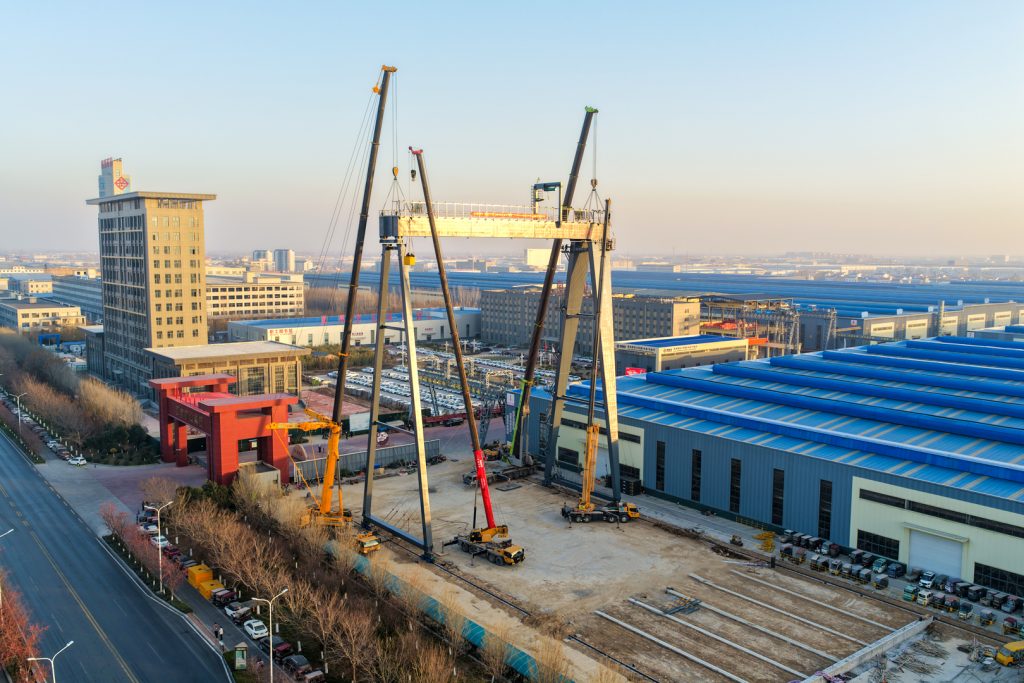
  • Main Girder Lifted for a 2000 t Gantry Crane Test Platform

    Main Girder Lifted for a 2000 t Gantry Crane Test Platform

    Quality & Manufacturing

    Main Girder Lifted for a 2000 t Gantry Crane Test Platform

    The main girder of a 2000 t gantry crane test platform was lifted at Henan Mine Crane’s intelligent industrial park on 29 November 2025.

    Large test-platform main girder suspended during installation
    Large test-platform main girder suspended during installation.

    A construction milestone for testing capacity

    The girder lift is a stage in building the test platform. The company described plans to use the platform alongside existing test facilities for components, hoists and bridge and gantry equipment.

    Distinguish platform rating from product capacity

    The 2000 t figure identifies the test-platform rating. The main-girder lift formed part of its construction sequence. Project testing should be defined in the applicable inspection plan.

    Contact Henan Mine Crane

    For product information, a manufacturing visit or a company enquiry, send the relevant details to our team.

  • Casting Crane Procurement for Vietnam Steel Mills: Define the Process Brief

    Casting Crane Procurement for Vietnam Steel Mills: Define the Process Brief

    Technical guide

    Casting Crane Procurement for Vietnam Steel Mills: Define the Process Brief

    A casting crane enquiry should describe the molten-metal operation and its site interfaces explicitly. Provide the ladle arrangement, handling path, cycle and project responsibilities so suppliers can prepare a comparable technical proposal.

    Henan Mine CraneTechnical guide · Updated 2026Crane selection, project scope and operating requirements
    Henan Mine Crane Double Girder Casting Crane
    Henan Mine Crane Double Girder Casting Crane
    Project planning notes

    Key points for this crane project.

    1. Casting Cranes in the core role of steel plants
    2. What is a casting Crane
    3. Why Vietnam’s steel mills should use professional
    Read the technical guide

    Casting Cranes in the core role of steel plants

    Undertake the core process of molten metal transfer

    In the whole set of steel smelting production process, casting Crane is mainly responsible for ladle lifting, high-temperature molten steel field transfer, and at the same time with the completion of key processes such as casting molding.

    The operation status of this type of equipment, directly linked to the ironmaking, steelmaking, continuous casting and other core production links, is the entire production line cannot be replaced by the basic lifting equipment.

    Safety standards are much higher than ordinary Overhead Crane

    Casting Cranes work under the high-risk environment of high temperature radiation, dense smoke and dust, and frequent lifting and lowering of heavy loads for a long time.

    The industry has developed exclusive safety design standards for metallurgical scenarios, whether it is the structure of the material or protection configuration, than the workshop ordinary traveling crane has more stringent requirements.

    Directly affect the overall capacity of the steel plant

    Once the casting Crane is down, it will directly lead to the steelmaking furnace cannot be normal steel, casting process is forced to interrupt.

    The entire production line will come to a standstill, not only delay the production program, but also cause a series of collateral losses such as raw material loss, manpower idleness.

    What is a casting Crane

    Basic definition

    Casting Crane belongs to the heavy-duty special-purpose overhead cranes, which are specially developed and manufactured for iron and steel mills, large foundries, and are used to lift all kinds of high-temperature molten liquid metal special lifting machinery.

    Distinguished from general lifting equipment, all of its design ideas are centered on high-temperature working conditions and heavy-duty operation of the two core directions to build.

    Mainstream structure and configuration features

    The mainstream double girder casting cranes on the market have the widest range of applications, and some high-capacity heavy-duty scenarios will also use the four-beam structural design.

    The equipment is equipped with a standard combination of main and auxiliary double hooks, which can be adapted to the lifting and fine-tuning operations of different tonnages of steel ladles. The whole machine is equipped with high-temperature resistant protective structure, braking system, electrical control system have made special heat-resistant upgrades, while installing multiple safety protection devices.

    The Difference Between Casting Crane and Overhead Crane

    The most intuitive difference between the two is reflected in the work level, casting Crane all choose high-grade heavy-duty work system, to meet the needs of non-stop high-frequency operations throughout the day.

    In the core safety components, the casting Crane will do redundant design, to enhance the fault tolerance rate of equipment operation. The overall steel structure is made of thicker materials, and all the parts and components are suitable for high-temperature metallurgical scenes, which cannot be replaced with ordinary workshop cranes.

    Why Vietnam’s steel mills should use professional casting Crane

    Expansion of the local steel industry to drive equipment upgrades

    Vietnam's local infrastructure industry continues to develop, directly pulling the steel market demand rose, a large number of new steel plants landed one after another, the original old plant is also expanding capacity.

    Older models of ordinary lifting equipment has been unable to match the operating rhythm of modern steel production lines, the market is in urgent need of a large number of special steel mill cranes suitable for high temperature working conditions.

    Plant production on the operation of a higher demand for safety

    With the steel industry production norms continue to improve, the local steel mills pay more and more attention to the production site operation risk control.

    Traditional simple lifting equipment safety configuration is insufficient, it is difficult to avoid all kinds of unexpected hidden dangers in the process of steel lifting, professional casting Crane has become a mandatory configuration of the plant safety production.

    Procurement concept gradually favoring the comprehensive quality

    Earlier years, some of the local small-scale steel mills procurement equipment, will prioritize the purchase of low budget.

    Now more than large-scale steel mills procurement ideas have changed significantly, no longer focus on low prices, more important to the overall design level of the equipment, the ability to adapt to the site and long-term operational stability, procurement ideas are becoming more and more mature.

    Vietnam steel mills procurement of casting cranes core concerns

    Field operation safety performance

    Multiple redundant braking structure is the focus of the procurement audit, with overload limit protection devices, from the hardware level to avoid the risk of overloading operations.

    At the same time, the equipment needs to have a perfect emergency braking response mechanism, lifting control logic is simple and precise, to minimize the potential safety hazards caused by human operation.

    Heavy load continuous operation ability

    Equipment needs to have a long time continuous operation ability, lifting and running smoothly without obvious shaking, large and small car traveling smooth and smooth.

    The whole structure of the machine can withstand the long term high temperature in the factory baking, dust accumulation and other external influences, will not because of the poor working conditions of the operation of the jam, accelerated aging of components and other issues.

    Long-term stability of the machine

    Vietnam steel mills prefer to choose models with mature structural design and many market applications, and prioritize checking the durability of the load-bearing structure of the whole machine.

    At the same time, we focus on checking the market reputation of the core components to reduce the probability of failures at the later stage and ensure the stable operation of the production line.

    Complete supporting technical data and technical support

    Formal and complete equipment diagrams, load data, electrical wiring drawings, are plant equipment acceptance, daily maintenance of the necessary information.

    In addition, equipment instruction manuals and a full set of factory inspection documents are also required to facilitate daily access by plant operation and maintenance personnel.

    Henan Mine Crane Hot-Rolled Steel Plant Specialized Bridge Crane

    Core technical parameters to be verified in Vietnam steel mills

    Rated lifting capacity

    According to the specifications of the steel ladle used in the plant and the actual weight of fully loaded steel, the rated lifting capacity of the main hook of the equipment should be determined, and a reasonable safety margin should be reserved.

    Equipment span

    Combined with the width of the steelmaking workshop and the center distance of the track, the overall span of the Crane is accurately matched to ensure that the travel range of the equipment is in line with the on-site production layout.

    Effective lifting height

    Combined with the height of the steelmaking furnace discharge, the height of the steel ladle transfer parking height and the height of the casting operation, to meet the space requirements of the whole process lifting operations.

    Equipment working level

    Metallurgical casting scene must choose high working level model, suitable for daily long time, high frequency of repeated lifting operations, which is also the key index to distinguish between professional equipment and ordinary equipment.

    Running speed parameters

    Lifting speed, trolley running speed, trolley running speed need to be reasonably deployed, in order to protect the operational efficiency, while taking into account the smoothness of the steel lifting process, to avoid liquid metal shaking and spilling.

    On-site working conditions

    Confirm in advance the perennial ambient temperature of the plant, the intensity of heat radiation generated by smelting operations, the concentration of dust in the workshop, as well as slightly corrosive gases generated in the production process.

    Adjust the equipment protection level and heat-resistant configuration according to the actual working conditions, so that the equipment is fully adapted to the site environment.

    How to screen casting crane suppliers in Vietnam steel mills

    On-site verification of the manufacturer’s manufacturing strength

    The local procurement team is more inclined to choose the entity with its own production workshop casting Crane manufacturers, simple trade intermediary is difficult to become the preferred partner of large steel mills.

    Purchasers will focus on checking the manufacturer's large-scale steel processing equipment, complete machine assembly line, to confirm that the manufacturer has the hardware conditions for independent production of high-capacity metallurgical lifting equipment. At the same time will verify the manufacturer's local landing performance, such as Henan Mine Crane in Vietnam landed a number of sets of high-capacity casting cranes, the whole plant metallurgical lifting supporting projects, are the core of the purchaser focus on reference basis.

    Verification of similar projects in the same industry landing experience

    Mature steel plants, large casting plant past supply cases, is an important basis for Vietnam steel mills to screen partners.

    The same tonnage, the same working conditions of the actual application cases, far more convincing than the written promotional materials.

    Evaluation of manufacturers of specialized engineering design capabilities

    Excellent supplier manufacturers can combine the steel plant's own production line layout, lifting process, the local structure of the equipment, operation configuration to make targeted adjustments to optimize.

    Instead of directly applying the uniform drawings for mass production, the maximum degree of equipment to adapt to the plant's exclusive production rhythm.

    Examination of the manufacturer’s complete quality control process

    From the raw materials into the warehouse quality inspection, to the steel structure welding flaw detection, and then to the whole machine empty, full load load test, the whole set of quality control process is perfect or not will be verified one by one.

    At the same time, we confirm that the source of core components can be traced to ensure that the quality of each piece of factory equipment is uniform and up to standard.

    Confirmation of technical service and spare parts supply

    Vietnam is far away from the domestic source of goods, after-sales response speed, the efficiency of cross-border delivery of commonly used perishable parts are all the contents that must be finalized before signing the procurement contract.

    A stable after-sales system can minimize equipment downtime and production losses.

    The practical value of similar projects in the steel industry

    Casting Crane industry is highly specialized

    The manufacturing experience of general cranes in ordinary plants cannot be applied to molten metal lifting equipment.

    Manufacturers who are not familiar with the working conditions of the metallurgical industry, the equipment designed is prone to insufficient protection, unstable operation and other practical problems.

    Industry veteran manufacturers are familiar with the site of all kinds of risks

    Manufacturers who are deeply engaged in the field of metallurgical lifting equipment and the Vietnamese market are well aware of the key points of protection of electrical components under high temperature environment and the loss pattern of the braking system under high-frequency operation. Henan Mine Crane in the service of Vietnam Yishan, Ha Jing and other steel plant projects, for Vietnam's perennial high temperature, rain, salt spray corrosion of the working conditions of the equipment insulation, dust, corrosion-resistant structure of the special optimization, from the source to avoid premature failure of the equipment, frequent failures and other issues.

    At the same time, we are familiar with the actual pain points of dustproof, heat insulation, daily operation and maintenance of equipment in steel mills, so that we can avoid a lot of hidden dangers in the program design stage in advance.

    Real on-the-ground cases to enhance procurement trust

    These real and traceable project information can let the buyer visualize the long-term operation of the equipment in Vietnam under local working conditions, and get rid of the limitation of relying solely on the text to judge whether the product is good or bad.

    It allows the purchaser to visualize the actual use of the equipment, and get rid of the limitations of relying solely on text introduction to judge the product good or bad.

    Henan Mine Crane Hot-Rolled Steel Plant Specialized Bridge Crane

    General Technical Requirements for Casting Crane Procurement

    Multiple redundant safety configurations

    Mainstream models are generally equipped with two sets of independent braking system, with real-time monitoring device of the machine's operating status, set up multi-stall emergency stop control line.

    All-round construction of a safe line of defense for molten metal lifting operations.

    Special design for high temperature resistance of the whole machine

    For the motor, cable, electric control console and other parts that are easily affected by heat, the machine is designed with heat shielding and heat-resistant material upgrading.

    Avoid the aging and malfunctioning of electrical parts caused by long-term heat radiation, and prolong the service life of the electrical system.

    Heavy-duty lifting and operating mechanism

    The whole lifting mechanism is configured according to the metallurgical heavy-duty standard by choosing the reducer, reel assembly, steel wire rope and supporting driving motor with stronger load bearing capacity.

    It can withstand the mechanical wear and tear caused by high-intensity operation for a long time.

    Stable and reliable electrical control system

    The control signal transmission is accurate and smooth, and can be matched with frequency conversion speed control system according to the site requirements, so that the equipment starts and stops, acceleration and deceleration processes are more gentle.

    Perfectly equipped circuit protection device can resist the circuit failure caused by dust and high temperature in the factory.

    High-strength anti-fatigue steel structure

    Crane main girder, end beam and other core load-bearing structure, the use of materials and welding technology suitable for long-term repeated heavy load stress.

    They are able to maintain a stable structure under uninterrupted operation all year round and are not prone to deformation hazards.

    Comparison of quotes at the procurement stage of Vietnamese steel mills

    Refuse to rely solely on the total price to determine the advantages and disadvantages

    Local steel purchasing personnel are well aware of the fact that the program with a low price quotation is likely to reduce costs in terms of core component materials, safety configurations, heat protection and other aspects.

    Short-term procurement cost reduction, later production failures occur frequently, the overall operating costs will rise sharply.

    Check the offer contains all the contents one by one

    The purchaser will carefully comb through the quotation list to confirm whether the quotation includes the main steel structure, a complete set of lifting and running mechanism, a complete set of braking system, and high temperature protection accessories.

    Also check whether the electrical control system, exclusive heat-resistant accessories, basic spare parts and factory commissioning services are all included.

    Pay more attention to the whole life cycle cost of the equipment

    The daily failure rate of the equipment, annual maintenance costs, and the frequency of parts replacement are more important to steel mills than one-time purchasing costs.

    Quality standard, reasonably designed casting Crane, can significantly reduce the late hidden expenses, long-term use of more cost-effective.

    Core components brand and configuration verification points

    Power, brake, electronic control components determine the overall stability of the equipment

    Motor, deceleration equipment, brakes and a full set of electrical components, is the most prone to failure of the core components of the casting Crane.

    Under the harsh working conditions of high temperature and heavy load, the poor quality parts will quickly deteriorate, directly affecting the safety of the machine.

    Metallurgical special scenarios require higher standards for parts

    The heat resistance and load capacity of the general parts used in ordinary working conditions are not up to the standards of steel mills and cannot be directly replaced.

    During the procurement process, Vietnamese steel mills will explicitly request manufacturers to use specialized accessories suitable for metallurgical heavy-duty scenarios.

    Confirm the brands and specifications of all accessories in advance

    In the business matching stage, the buyer will ask the manufacturer to list the specific brands, places of origin and model parameters of all core parts.

    Eliminate the verbal commitment to high-matching, the actual delivery of low-matching equipment.

    Finalize the final cooperation depends on the configuration of the matching degree

    Only if the whole set of equipment parts configuration, protection design, operating parameters completely match the actual production needs of the plant, the offer will have practical reference value.

    This is also an important basis for Vietnamese steel mills to finalize the cooperation with the supplier.

    A full set of technical information is necessary for Vietnam steel mills to purchase.

    In the process of equipment acceptance, equipment documentation, daily maintenance and local industry record, the plant needs to provide a complete set of information from the manufacturer.

    This includes the overall layout of the equipment, a complete data sheet of technical parameters, and an electrical wiring diagram of the equipment.

    At the same time, we also need to provide the whole machine load data, track wheel pressure parameters, all the core components brand detailed list.

    In addition, the factory third-party testing and acceptance reports, equipment operation manuals, routine maintenance manuals, are also indispensable documents.

    Common Problems in Purchasing Casting Cranes for Vietnam Steel Mills

    Difficulty in balancing purchasing budget with site safety standards

    Controlling the project procurement investment, and matching a full set of pyrometallurgical safety configurations, has become the most difficult to coordinate in the procurement phase of many small and medium-sized steel mills.

    Difficult to determine whether the manufacturer really understand the molten metal lifting conditions

    Many lifting equipment manufacturers can produce ordinary traveling crane, but no practical experience in the metallurgical industry, the program given out of the actual use of the scene.

    Difficult to compare different manufacturers’ technical solutions horizontally and fairly

    Each manufacturer's design ideas, selection of parts standards, structural optimization direction is different, it is difficult for the purchaser to quickly filter out the optimal technical solution.

    Advance planning for equipment installation and commissioning and personnel training

    Large metallurgical cranes on-site assembly process is complex, commissioning procedures, if the lack of professional guidance, it is easy to delay the commissioning of equipment use time.

    Discuss the crane arrangement for your project.

    A casting crane enquiry should describe the molten-metal operation and its site interfaces explicitly. Provide the ladle arrangement, handling path, cycle and project responsibilities so suppliers can prepare a comparable technical proposal. Share the load, available drawings, working cycle and site conditions with Henan Mine Crane so the required configuration and supply boundary can be discussed.

    Related crane configurations

    Double Girder Casting Crane

    View product parameters
    Lifting capacity: 75/20–200/50 tSpan: 10m – 35mLifting height: 6m – 25m

    Lift and transfer molten-metal ladles with a YZ casting crane configured for the full suspended load and casting process. Review ladle interfaces, thermal exposure and the operating sequence together.

    Four Beam Casting Crane

    View product parameters
    Lifting capacity: 125/32–320/80 tSpan: 10m~40mLifting height: 6m~30m

    Handle molten-metal ladles with a YZS four-beam casting crane. Main and auxiliary trolley functions, thermal exposure and the lifting sequence are selected for the casting process.

    Updated 2026 · Henan Mine Crane
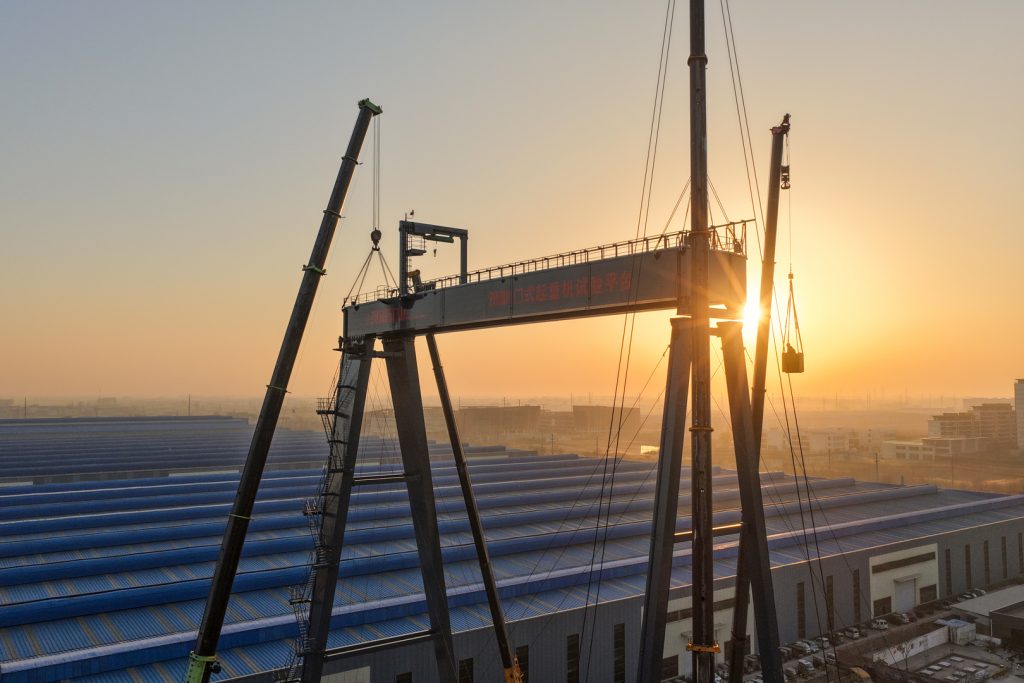
  • Henan Mine Crane Organizes Warm Birthday Banquet for Employees’ Parents

    Henan Mine Crane Organizes Warm Birthday Banquet for Employees’ Parents

    Henan Mine Crane Organizes Warm Birthday Banquet for Employees’ Parents

    Henan Mine Crane launched a warm welfare activity exclusively for employees’ parents. The enterprise will hold a warm birthday banquet for eligible employee elders to deliver humanistic care.
    Henan Mine Crane warm hearted employee welfare
    The event covers the enterprise management, team leaders, and first-line employees with more than five years of service.The families of the 2018 first-line model workers and technical experts are also eligible to participate in this event.
    The conditions for participation are that the employee’s parents are over 60 years old and their birthdays are between the first day of the first month of the lunar year and the twentieth day of the first month of the lunar year. Employees can accompany their parents to the enterprise and participate in the birthday celebration together.
    Henan Mine Crane warm hearted employee welfare
    Cui Peijun, the founder and party secretary of Henan Mine Crane, will personally attend the birthday banquet. On the spot, he will send lilies and sincere blessings to the elders to celebrate their birthdays.
    Henan Mine Crane warm hearted employee welfare
    This exclusive birthday banquet is a concrete practice of Henan Mine Crane’s filial piety culture. Enterprises have always been concerned about the well-being of employees’ families, with warmth to cohesion team centripetal force.
    Deep plowing lifting equipment manufacturing field at the same time, Henan Mine Crane adhere to the moral rule of enterprises. With humanistic care to create a warm enterprise, to show the world the responsibility and sentiment of Chinese enterprises.

    Henan Mine CraneDiscuss your requirements ↗
  • Crane Assembly Specialist Shares Manufacturing Experience with Students

    Crane Assembly Specialist Shares Manufacturing Experience with Students

    Company & People

    Crane Assembly Specialist Shares Manufacturing Experience with Students

    Henan Mine Crane mechanical assembly specialist Li Jie shared his experience at a campus event on 26 November 2025.

    Speakers on stage at the campus model-worker event
    Speakers on stage at the campus model-worker event.

    From workshop learning to project work

    Li Jie spoke about fifteen years in crane assembly, team problem-solving and the value of practising technical skills. He described a work-planning method used before difficult assembly tasks.

    A workforce development story

    The presentation focused on craftsmanship, technical learning and cooperation within assembly teams, showing students how workshop skills develop through practical project work.

    View the event photo gallery

    Contact Henan Mine Crane

    For product information, a manufacturing visit or a company enquiry, send the relevant details to our team.

  • Port Crane Upgrade Planning: Stage the Work Around Terminal Operations

    Port Crane Upgrade Planning: Stage the Work Around Terminal Operations

    Technical guide

    Port Crane Upgrade Planning: Stage the Work Around Terminal Operations

    An upgrade needs a clear technical scope and realistic access to the equipment. Identify the required modifications, interfaces and work windows so implementation can be planned around the terminal's operating constraints.

    Henan Mine CraneTechnical guide · Updated 2026Crane selection, project scope and operating requirements
    Port Crane Upgrade Planning: Stage the Work Around Terminal Operations
    Henan Mine Crane lifting equipment
    Project planning notes

    Key points for this crane project.

    1. Why Port Crane Upgrades Must Minimize Downtime
    2. Assess the Existing Port Crane Before Planning an
    3. Choose Between Partial Modernization and Full Crane
    Read the technical guide

    Why Port Crane Upgrades Must Minimize Downtime

    As the core production equipment of the terminal, port cranes, once they are shut down for maintenance and upgrading, will directly cause chain-type operation problems, bringing high operating and economic costs. This is also the key reason why modern port transformation has always taken “minimum downtime” as the core principle.

    • Operating economic losses caused by downtime: Prolonged downtime of the main crane will cause ship delays, reduced loading and unloading efficiency, and chaotic operation plans, resulting in demurrage, overtime and default compensation costs. The shutdown of large terminals in just a few days can cause huge losses and damage the reputation of the port.
    • Disadvantages of the whole machine replacement plan: Many ports believe that the old crane can only be replaced by the whole machine. The project cycle is 18-36 months. The construction occupies berths, which can easily cause large-scale port closures, high costs, long downtime, and high operational risks.
    • Advantages of modular upgrading and transformation: precise modular modernization, with only short downtime, can repair equipment defects, improve operating performance, and extend the service life of the crane for 10-20 years.
    • The core goals of crane upgrade: minimize downtime, improve equipment operating capabilities, improve safety protection, improve operational efficiency, extend equipment service life, and complete equipment iteration on the basis of ensuring stable terminal production capacity.

    Assess the Existing Port Crane Before Planning an Upgrade

    A complete pre-equipment evaluation is the basis for short-term downtime and transformation. The delay in the construction period and poor effect of most crane retrofits are due to insufficient detailed evaluation. Before formulating a plan, it is necessary to carry out a comprehensive inspection from the three aspects of mechanical structure, electrical control system, and operation bottleneck.

    Mechanical structure inspection

    The mechanical structure is the carrying foundation of the crane, which determines the feasibility and safety of the transformation. The inspection includes the main girder, door leg, trolley, wheel, track, boom and weld connection points, focusing on fatigue cracks, concealed corrosion, structural deformation, wheel and rail wear and fastener status.

    With the help of non-destructive testing, ultrasonic thickness measurement, and finite element analysis, the remaining life of the steel structure is evaluated to determine whether it can carry new components such as high-power motors and automated spreaders. The main steel structure is intact and can be partially modified; if a large area is cracked, severely corroded or the structure is outdated, it needs to be rebuilt or replaced.

    Electrical control system evaluation

    The electrical and control system are the main shortcomings of the old crane, and they are also the core sectors of the upgrade and transformation. The evaluation process requires a comprehensive inventory of the equipment's existing motors, transmission devices, programmable logic controllers, control cabinets, sensors, power cables and switchgear.

    Old cranes that have been in service for more than ten years are mostly equipped with discontinued PLCs, old-fashioned transmission and relay control modules. Spare parts are difficult to purchase, high costs, frequent failures and weak diagnostic capabilities. During the evaluation, it is necessary to verify the compatibility of old and new equipment, compare communication protocols, and investigate problems such as voltage, feedback devices, and installation size mismatches to avoid the risk of modular upgrades.

    Troubleshooting job bottlenecks

    Combine operation data, operation and maintenance records and operator feedback to sort out crane pain points and locate production capacity shortcomings. Common bottlenecks are slow lifting/trolley speed, long spreader alignment time, spreader shaking, unplanned downtime, high energy consumption, lack of remote and automated functions, frequent maintenance and high cost. Quantify shortcomings through operation cycle calculation and energy consumption audit, and give priority to upgrading the modules with the highest benefits.

    Choose Between Partial Modernization and Full Crane Replacement

    There is no need to blindly replace the whole machine for the upgrade of port cranes. It is necessary to combine equipment working conditions, operating requirements, transformation costs and downtime cycles to reasonably choose local modular transformation, structural reconstruction or whole machine replacement plans.

    • Suitable for local system transformation scenarios: the main steel structure of the crane has sufficient life span, and the dimensions can meet the existing ship and yard operations. Only the electrical and transmission systems are aging, and the level of automation is insufficient. There is no need to retrofit the foundation infrastructure to ensure the continuous operation of the port.
    • Scenarios that require structural reconstruction or replacement of the whole machine: the steel structure of the equipment is fatigued and corroded in a large area; parameters such as extension distance and lifting height cannot be adapted to ultra-large container ships; the foundation and power conditions cannot support the upgrade.

    Comparing the three core dimensions of comprehensive cost, downtime, and equipment service life, cranes with intact main structure should give priority to the phased upgrade model, and complete the transformation system by system and equipment by equipment to avoid long-term port suspensions caused by one-time large-scale construction, effectively reduce the risk of operation interruption, and extend the service life of the equipment for more than 10 to 15 years after the transformation.

    Plan the Upgrade Around the Port’s Operating Schedule

    To achieve “non-stop port upgrading", the core is to deeply adapt the transformation construction to the rhythm of port operations, avoid peak operating periods, maximize the compression of on-site construction time, and realize both construction and production.

    Arrange construction at the wrong peak

    Accurately docking the ship's berthing plan and the port's quarterly throughput regulations, and arranging the upgrade construction at night, weekends, off-season freight and other operating trough periods. At the same time, the large-scale renovation project will be disassembled into multiple small maintenance and construction windows, and equipment operations will be resumed immediately after the phased renovation is completed to avoid one-time long-term downtime. In-depth coordination with the terminal operation department, shipping company, and loading and unloading team throughout the process to ensure the seamless connection between construction and scheduling.

    Off-site prefabrication

    Most of the assembly, wiring, and commissioning work will be transferred to the workshop or supplier's factory to complete, and brand new control cabinets, transmission modules, operating platforms, and integrated equipment components will be prefabricated in advance.

    After completing the equipment assembly, line docking, and preliminary commissioning off-site, it will be transported to the terminal site for direct installation and replacement. This mode can greatly reduce the amount of on-site ignition, hoisting, and wiring operations, and greatly compress the on-site construction and commissioning cycle.

    Shutdown emergency plan

    Clarify in advance the equipment functions, downtime, and operation alternatives that need to be suspended during the upgrade process, and prepare construction tools, replacement accessories, hoisting equipment, and professional construction personnel in advance.

    At the same time, a complete rollback emergency plan is formulated. If the equipment fails during commissioning, it can be quickly switched back to the original control system, restore basic operating capabilities, and completely avoid the risk of unplanned long-term downtime. At the same time, daily construction progress assessment standards are set to ensure that the project lands on schedule.

    Upgrade High-Impact Components Without Rebuilding the Entire Crane

    Focus on the precise upgrading of the core components that are cost-effective and high-capacity improvement. Without disassembling and rebuilding the whole machine, the performance of the equipment can be improved by leaps and bounds, and the downtime can be controlled to the maximum extent possible.

    • Upgrade programmable logic controllers and control systems: eliminate old PLC and IO hardware, replace modern industrial control platforms, support intelligent diagnosis, remote operation and maintenance, and connect to terminal systems; try to retain the original adapted equipment, compress the cost of transformation, and realize digital control.
    • Update sensors and equipment monitoring systems: add load, position, anti-collision, temperature vibration and structure monitoring sensors to achieve status maintenance, early warning of failures, reduce unplanned downtime, and provide data for automation transformation.
    • Optimize the operator's control system: update the cab control components and man-machine interface, add remote control and blind spot video monitoring; reduce operator fatigue and improve control accuracy without changing the main structure, and the transformation will be effective quickly.

    Add Automation Without Completely Replacing the Crane

    There is no need for port cranes to blindly pursue fully unmanned automated transformation. The cost of fully automatic transformation of the whole machine is high, the commissioning cycle is long, and the adaptation is difficult. Through gradual automation upgrades, superimposing automation functions on the basis of existing equipment is the optimal solution that takes into account cost, efficiency and stability.

    The lightweight automation upgrade functions that can be landed include: semi-automatic trolley and lifting positioning, automatic control of spreader and linkage of locking pins, electronic sway control system, remote control of the central control room, and data linkage and docking of the terminal operating system.

    All automation modules can be installed and debugged synchronously during the control system upgrade window without additional downtime. The gradual upgrade mode is easier to debug and land, which is convenient for operators and maintenance personnel to gradually adapt to the intelligent operation mode, and steadily improve the level of terminal automation operations.

    Upgrade Safety Systems During the Same Retrofit Project

    • Safety hardware upgrades: redundant emergency stop circuit, safety PLC, overload torque protection, intelligent limit and soft limit, regional anti-collision, wind speed monitoring, storm warning, channel protection and personnel location monitoring system
    • Transformation benefits: Relying on this upgrade, a full set of safety system integration transformation is completed simultaneously, without additional downtime for construction.

    How to Reduce the Actual Crane Shutdown Time

    Adopt modular plug-in replacement scheme

    • Adopt standardized, plug-and-play equipment modules to complete the pre-wiring of the control cabinet, the multi-pin fast docking interface, and the design of standardized transmission components in advance. Only the alignment installation and quick docking need to be completed on site, without the need for complex wiring and debugging, which greatly shortens the on-site construction time.
    • Multi-process parallel construction: coordinate the simultaneous operation of multiple teams of machinery, electrical, control, and commissioning, formulate an integrated construction scheduling and operation permit system, abandon the traditional serial construction model, and advance multiple processes in parallel, greatly compressing the overall transformation period.
    • Full-dimensional testing before leaving the factory: Complete the factory acceptance test before the upgrade module leaves the factory, covering PLC logic, transmission, sensors, communication, working conditions and fault simulation, and investigate hidden dangers in advance to reduce on-site downtime and rework.
    • Hierarchical commissioning and commissioning in stages: follow the step-by-step testing of single-item, no-load, low-load, full-load, and trial production. Support phased recovery operations, adapt to port production, and ensure stable operation after the transformation.

    Common Mistakes That Can Extend Port Crane Downtime

    • Inspection, evaluation and working condition analysis: comprehensively verify the crane structure, electrical system, control module and operating data, calculate the remaining life of the equipment, and sort out the core shortcomings and upgrade needs.
    • Customized transformation plan design: select suitable upgrade components, define the original equipment that can be retained, clarify the scope of transformation, construction process and construction period, and output complete construction drawings and technical plans.
    • Off-site prefabrication and pre-testing: complete the processing, assembly, wiring and factory testing of all upgraded modules to ensure that the components can be installed directly after they arrive at the terminal.
    • Planned short-term shutdown construction: relying on the trough window period of port operations, quickly dismantle old parts and replace prefabricated modular equipment.
    • Hierarchical and step-by-step debugging: carry out single-component functional testing and joint adjustment of the whole machine in turn, verify the performance of the equipment step by step, and investigate potential hidden dangers.
    • Commissioning and long-term monitoring: carry out controlled production commissioning, establish equipment performance benchmarks, complete commissioning acceptance, and continuously track the operating status of the equipment.

    When Should a Port Consider a Crane Retrofit

    Not all old cranes need to be replaced by the whole machine. If the following scenarios are met, the upgrade plan is preferred.:

    1. The steel structure of the main body of the crane is intact, and there is no serious corrosion, large-area fatigue cracks and permanent deformation of key load-bearing components such as the main girder and door legs. After testing and load-bearing verification, the remaining service life is sufficient, the structural strength meets the requirements of port loading and unloading loads, and it has the conditions for continuous service.
    2. The original electrical and control system hardware models are old, and the original equipment factory has stopped the production and supply of this series of products. It is difficult to purchase original accessories, and supporting technical maintenance and fault diagnosis support are no longer provided.;
    3. The procurement channels for equipment supporting spare parts are limited, the supply cycle of original parts is long, the supply of some scarce parts is tight, and the market purchase prices continue to rise, resulting in the long-term high cost of parts procurement.
    4. At present, there are bottlenecks in the operating performance of cranes, and the original operating efficiency and processing capacity of the equipment are limited. It is difficult to adapt to the increasing cargo throughput of the terminal year by year, and it cannot meet the needs of high-intensity and high-density loading and unloading operations.
    5. The terminal has put forward upgrading requirements for the digitization capabilities of the equipment, and it is necessary to add functional modules such as remote control, intelligent monitoring of equipment status, and automated operations to the crane to help the terminal promote the construction of a smart port.
    6. With the increase of the service life of the equipment, the maintenance cost continues to rise year by year, and various electrical and mechanical failures occur frequently, which can easily cause sudden unplanned shutdowns, disrupt the established loading and unloading operation plans of the pier, and affect the efficiency of berth turnover.
    7. The port hopes to extend the service life of the equipment with lower investment and shorter downtime cycles, so as to avoid the huge investment brought about by the replacement of the whole machine and the production risk of long-term berth decommissioning.

    Discuss the crane arrangement for your project.

    An upgrade needs a clear technical scope and realistic access to the equipment. Identify the required modifications, interfaces and work windows so implementation can be planned around the terminal's operating constraints. Share the load, available drawings, working cycle and site conditions with Henan Mine Crane so the required configuration and supply boundary can be discussed.

    Related crane configurations

    Explore crane product families and technical parameters ↗

    Updated 2026 · Henan Mine Crane
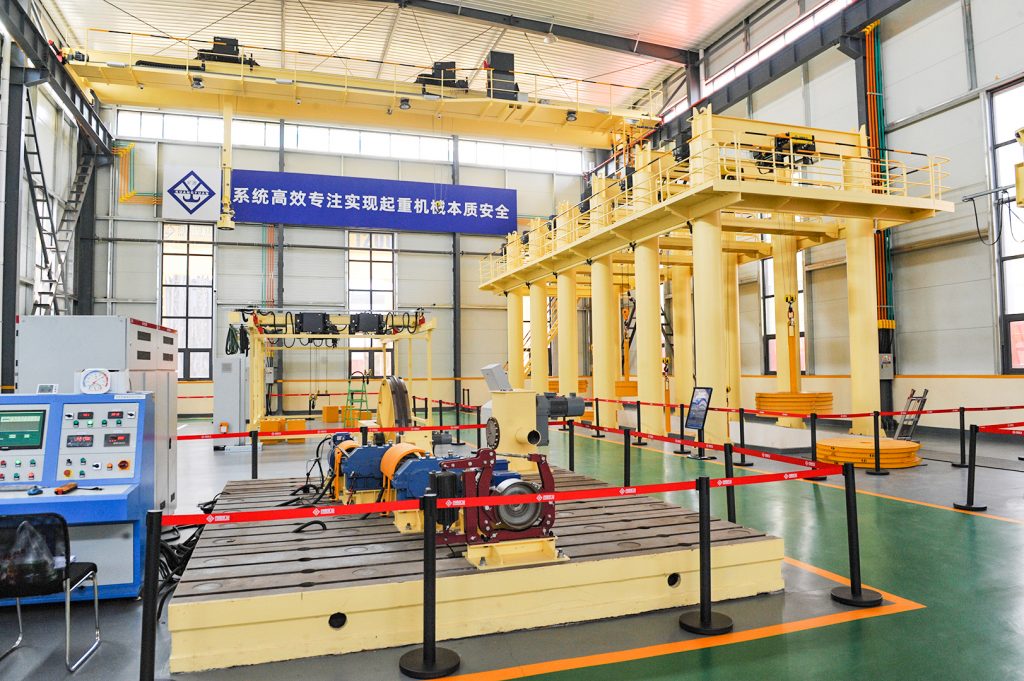
  • Outdoor Crane Specification for Coastal and Humid Sites

    Outdoor Crane Specification for Coastal and Humid Sites

    Technical guide

    Outdoor Crane Specification for Coastal and Humid Sites

    Moisture and salt exposure affect the equipment and its maintenance needs. Describe the site's operating environment, storage conditions and access so the proposed protection and service arrangements can be reviewed together.

    Henan Mine CraneTechnical guide · Updated 2026Crane selection, project scope and operating requirements
    outdoor crane for coastal environments
    outdoor crane for coastal environments
    Project planning notes

    Key points for this crane project.

    1. Key Environmental Factors to Assess Before
    2. How to Specify Corrosion Protection for Outdoor
    3. How to Protect Crane Electrical Systems From
    Read the technical guide

    Key Environmental Factors to Assess Before Specifying an Outdoor Crane

    Salt exposure and coastal distance

    The closer you are to the coastline, the higher the concentration of salt spray sedimentation, and the corrosion rate of crane steel structures, fasteners, and moving parts increases exponentially. Within 1 kilometer from the coast, it belongs to a strong salt spray area, and the chloride ions in the splash area will continue to attach to the surface of the equipment, even if it is simply washed by rain, it cannot be completely removed. Before selecting the type, it is necessary to collect the salt spray level, sea breeze direction, and sea splash range of the project site, and distinguish between two types of scenes: offshore terminals and inland coastal factories. Projects close to the coastline cannot apply the standards of ordinary inland outdoor cranes, and a full set of marine-grade anticorrosive systems must be upgraded.

    Humidity and condensation

    The relative humidity in coastal areas is high all year round, and the temperature difference between day and night is large. Condensate can easily form inside the steel structure box and motor shell. Humid air will continue to penetrate into the crevices of the equipment, and combine with salt to form a highly corrosive electrolyte, which accelerates metal corrosion and the aging of electrical components. In the season of high temperature and humidity, after the equipment is shut down for cooling, the problem of condensate inside the closed cavity will become more prominent, which is also the core cause of frequent failures of the electronic control system of coastal cranes. In the early evaluation stage, it is necessary to record the temperature and humidity changes of the site throughout the year and the length of the rainy season.

    Wind loads and extreme weather

    In addition to the regular monsoon, coastal areas also face extreme weather tests such as typhoons and storm surges. Wind load calculation is the basis for the stable operation of outdoor cranes. The wind load value directly determines the cross-section of the main girder, the strength of the outrigger structure, and the configuration of the windproof device of the cart. If the design is only in accordance with the conventional inland wind load standards, the crane is at risk of slipping and overturning in strong winds. During the evaluation phase, it is necessary to obtain meteorological data at the location of the project to determine the maximum instantaneous wind speed, and at the same time consider the wind resistance requirements of the equipment under no-load parking conditions.

    How to Specify Corrosion Protection for Outdoor Crane Structures

    Protective coating systems

    The coating system of coastal cranes needs to follow the ISO 12944 marine environment anticorrosive standard, and the C5-M marine corrosive environment should adopt a multi-layer composite coating scheme, including sandblasting and rust removal primer, intermediate sealing paint, and weather-resistant topcoat. The sandblasting treatment level of the substrate must be up to standard to ensure the adhesion of the coating and prevent peeling and shedding in the later stage. The coating thickness needs to be adjusted according to the salt spray level, and the thickness of the dry coating film of the whole machine at offshore terminals is higher than that of inland outdoor models. The topcoat gives priority to polyurethane or fluorocarbon coatings that are resistant to ultraviolet rays and chloride ion erosion, and are resistant to continuous aging by sea breeze, rain, and ultraviolet rays.

    Galvanizing vs. Industrial coatings

    Hot-dip galvanized relies on the sacrificial anode protection mechanism of the zinc layer. When the surface surface is scratched and damaged, zinc will give priority to corrosion to protect the internal steel, which is suitable for bolts, guardrails, and small steel components. Industrial multi-layer paint coating relies on physical isolation and protection, which is suitable for large welded structural parts such as main beams and outriggers. Pure galvanized steel loses quickly in a continuous salt spray environment, while once the simple paint coating is damaged, the steel will rust quickly. For coastal high-salt spray scenarios, it is recommended to use a composite dual protection scheme of galvanized and topcoat to take into account sacrificial protection and isolation protection.

    Protecting welds and joints

    Welds and bolted connection nodes are the weakest anti-corrosion locations of Henan Mine Crane cranes. High welding temperature will destroy the original protective layer, and the pores and burrs on the surface of the welds can easily accumulate salt and moisture, giving priority to corrosion. Factory prefabricated welds need to be polished and leveled before coating, and repaired with zinc-rich primer. After the on-site welding is completed, the welding slag must be cleaned up and the welding area must be re-treated with a full set of anticorrosive treatment. Assembly gaps such as bolts and flanges are prone to salt spray and stagnant water. The design should minimize dead corners of stagnant water and avoid groove structures.
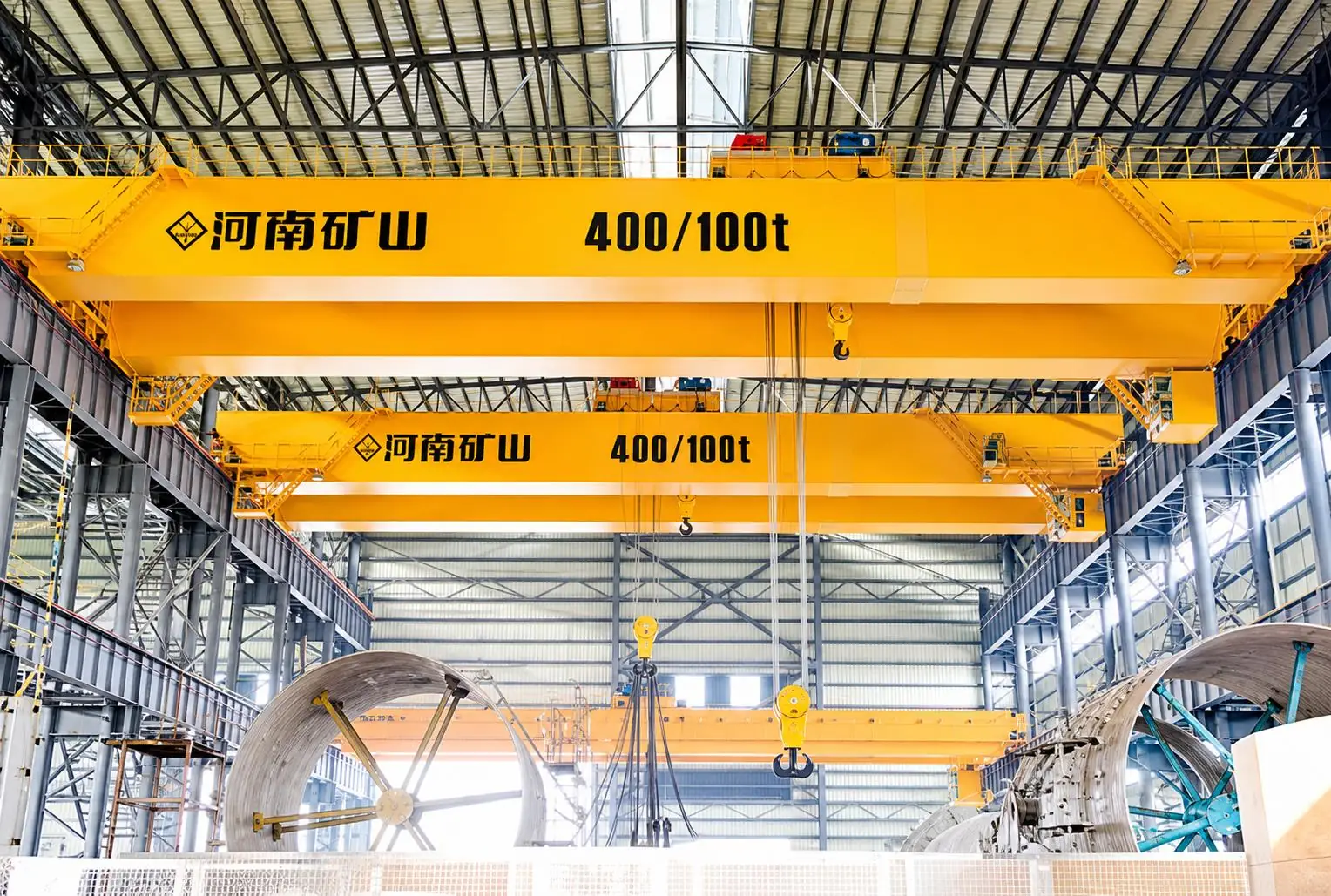
    How to Protect Crane Electrical Systems From Moisture and Salt

    Electrical enclosure IP ratings

    The IP protection level represents the dust-proof and waterproof ability of the electrical shell. Ordinary indoor electric control box IP54 cannot meet the coastal outdoor working conditions. At least IP65 and above protection levels are selected for coastal crane control cabinets and junction boxes. The IP65 shell can block the intrusion of dust, resist high-pressure water spray, and reduce the entry of salt spray and water vapor into the cavity. However, it should be noted that the high IP rating is only a basic condition, and the shell sealing cannot be relied on alone to solve the condensate problem. When selecting the type, it is necessary to distinguish the IP requirements of different electrical components such as motors, control cabinets, limit switches, and remote controls.

    Protecting motors and control panels

    The motor and control cabinet are the core of the crane's electrical system. The attachment of salt spray will cause corrosion of metal terminals and short circuit of circuit boards, and the probability of failure will increase significantly after the shutdown is dampened. For coastal model motors, fully enclosed marine anticorrosive motors are preferred, with anticorrosive coatings for stators and rotors, and sealed anticorrosive treatment for terminal blocks. The internal circuit boards and copper bars of the control cabinet need to be sprayed with three anti-salt spray coatings to isolate chloride ion erosion. Add a rainproof and shading structure outside the cabinet to avoid direct sunlight exposure and rainwater erosion. At the same time, an external cleaning and maintenance interface is reserved to facilitate operation and maintenance personnel to regularly clean up the accumulation of salt and dust inside the cabinet.

    Condensation prevention

    The condensate generated by the temperature difference between day and night in the closed electrical box is the invisible culprit of coastal electrical failure. Simple sealing cannot prevent the generation of condensate. The electronic control cabinet and motor cavity of the coastal crane should be equipped with a constant temperature heater or a semiconductor dehumidification module to control the relative humidity in the cavity and inhibit the condensation of water vapor. The cabinet has a reasonably designed ventilation valve to balance the internal and external air pressure and avoid negative pressure inhalation of humid salt spray air. When the equipment is down for a long time, the dehumidification device is recommended to keep it powered on to prevent water from corroding the components during standing.

    Which Outdoor Crane Type Is Coastal Applications?

    Gantry cranes for ports and yards

    Henan Mine Crane gantry crane does not need to rely on the factory building, and the ground track can be installed, which is suitable for open-air operation scenarios such as port depots, prefabricated parts factories, and seaside yards. The whole machine's outriggers are landing, the wind-resistant structure design is mature, the carrying range is flexible, and it can cover the needs of large-span material transportation. Gantry cranes are commonly used in port depots to carry containers, heavy-duty components, and ship accessories. The models can be made into heavy-duty versions with double main beams, which are suitable for high-level work. When selecting the type, the gantry crane outriggers, the cart travel mechanism, and the track pressure plate all need to be upgraded with marine anticorrosion and equipped with heavy-duty rail clamps to prevent wind.

    Overhead cranes for coastal workshops

    The bridge crane is suitable for coastal workshops and shipyard assembly plants with enclosed structures. The track is erected above the column of the plant, which takes up less ground space and is suitable for hoisting workpieces in the workshop. Although installed inside the plant, the air in the coastal plant still carries salt spray and high humidity, and ordinary indoor bridge cranes cannot be used directly. The main beams, trolleys, hoists, and electrical components must all adopt coastal anticorrosive versions. The sea breeze on the doors and windows of the plant will continue to bring in chloride ions, which will cause corrosion due to long-term accumulation. The bridge crane in the Binhai workshop focuses on the salt spray protection of the hoist and trolley operating mechanism, and the dehumidification system is added to the electrical cabinet.

    Matching crane capacity and duty class

    In coastal scenarios, cranes frequently start and stop frequently and continue to operate. The rated load cannot be selected only based on the maximum lifting weight, but also the corresponding working level must be matched. For continuous operation scenarios in ports and shipyards, it is recommended to choose A4 to A6 high-level models. A3 level can be selected for intermittent light-load operations. The rated lifting weight needs to reserve a safety margin to avoid long-term full-load operation and accelerate component wear. The load and working level determine the cross-section of the main girder, the specifications of the wire rope, and the selection of the reducer bearing. The placement of low-working-level equipment in a high-intensity coastal operating environment will accelerate mechanical loss.

    Essential Mechanical and Safety Specifications for Coastal Cranes

    Hoists, bearings, and gearboxes

    Lifting hoists, bearings, and gearboxes are the core moving parts of cranes. Coastal salt spray and water vapor will invade the sealing gap, causing lubrication failure, bearing jamming, and gear wear. The gearboxes of coastal models use multiple sealing structures, the bearings are made of anticorrosive materials, and they are equipped with long-lasting salt spray-resistant greases. Anti-corrosion coating is added to the shell of the lifting hoist, and the internal parts are passivated to reduce the risk of corrosion and stagnation. The seals are made of aging-resistant fluorine rubber to resist the aging and failure of the humid, hot and salt spray environment. Daily maintenance requires regular inspection of the sealing state and replacement of lubricating oil to prevent water vapor from entering the cavity.

    Wire ropes and lubricants

    Ordinary steel wire ropes are prone to pitting corrosion and broken wire in coastal salt spray environments. It is recommended to choose hot-dip galvanized steel wire ropes, and stainless steel composite steel wire ropes can be used for some construction terminals. The surface of the steel wire rope needs to be coated with marine special anticorrosive lubricating grease, which cannot only reduce friction and wear between the steel wires, but also isolate the attachment of salt spray and water vapor. During the operation and maintenance phase, the surface of the wire rope should be cleaned of salt and dust regularly, and anti-corrosion grease should be applied, and broken wires and corrosion pits should be checked in time.

    Wind protection and storm parking

    Coastal outdoor cranes must be equipped with multiple windproof devices, which generally include manual rail clamps, electric rail clamps, and windproof anchoring devices. Daily operations rely on rail clamps to lock the travel mechanism of the cart. Before the typhoon comes, the equipment drives into the designated storm parking position and uses anchoring bolts to fix the whole machine to prevent it from slipping and overturning in high winds. In the design stage, the anti-overturning stability of the whole machine should be verified according to the limit wind speed of the project, and the track foundation should also be equipped with a windproof embedded structure. The operating specifications need to clarify the storm parking process, and windproof locking must be implemented when the equipment is idle.

    What Should Buyers Include in an Outdoor Crane RFQ?

    Load capacity, span, and lifting height

    The first part of the RFQ inquiry document needs to clarify the basic geometry and load parameters of the crane, including the rated lifting weight, working level, main girder span, effective lifting height, and the length of the operating track of the cart. At the same time, mark the maximum partial load conditions, material type, and the number of daily operating cycles to facilitate manufacturers to calculate the structural strength. It is necessary to specify the basic conditions of the on-site track, the ground carrying capacity, and the power supply voltage. The parameter description should be quantified as much as possible, avoid vague expressions, and prevent suppliers from quoting low-profile models. Complete and clear load and size parameters make it easy for multiple manufacturers to give consistent benchmark quotations, reduce late plan deviations, on-site installation size discrepancies and other problems, and shorten the project delivery cycle.

    Environmental and coating requirements

    The RFQ must indicate the level of corrosion environment where the project is located, the distance from the coastline, salt spray, humidity, extreme temperature, and maximum design wind speed. Clarify the standards of the anticorrosive system, the rust removal grade of the substrate, the thickness of the dry film of the coating, the brand of the coating material, or the dual anticorrosive scheme of hot-dip galvanized and composite coating. Mark the components that need to focus on strengthening anti-corrosion, such as welds, bolts, travel mechanisms, gourds, etc. Write the anticorrosive acceptance requirements into the inquiry document, including the coating adhesion test and salt spray test requirements. Lock in the environment and coating standards in advance to avoid crane suppliers from simplifying the anticorrosive process in order to lower the quotation, and the equipment will rust quickly after delivery, resulting in a large number of maintenance disputes.

    Electrical protection specifications

    Clarify the protection level of all electrical components in the RFQ file, the IP level of the motor, control cabinet, limit switch, and junction box, and require the electrical components to have three anti-salt spray treatments. Specify the configuration requirements of the dehumidification and heating devices of the electric control cabinet, the cables are made of marine-grade weather-resistant and anticorrosive cables, and the terminals are sealed with anticorrosive treatment. The electrical system needs to clarify whether it supports remote monitoring and fault alarm functions. At the same time, mark the brand range of electrical components to prevent suppliers from choosing low-quality ordinary electrical components. Clear electrical protection clauses allow crane suppliers to accurately understand the requirements of coastal working conditions, and reduce the problem that the electrical system is not adapted to the on-site environment and frequent failures after arrival.

    Testing, warranty, and spare parts

    The RFQ document needs to specify the factory test items before leaving the factory and the acceptance test items after on-site installation, including no-load, rated load, overload test, steel structure coating test, and a full set of electrical function tests. Clarify the warranty period of the whole machine, the individual warranty period of the core components, the motor and the reducer, and the timeliness of on-site service response within the scope of the warranty. Make a list of recommended standard parts, such as wire ropes, seals, sensors, contactors, lubricants, etc., and agree on the quotation and delivery cycle of spare parts. At the same time, crane manufacturers are required to provide operation manuals, maintenance manuals, and anti-corrosion maintenance guidelines.

    Henan Mine Crane

    In the coastal high-humidity salt spray environment, the selection of outdoor cranes should not only look at the weight and purchase price, but also consider the anti-corrosion, electrical protection, wind resistance and long-term maintenance needs of steel structures. Henan Mine Crane Factory can provide customized crane solutions according to the lifting weight, span, lifting height, operating frequency and on-site environment of the project to help ports, shipyards, open-air depots and other projects match the actual working conditions to avoid equipment configuration inconsistent with on-site requirements.

    In view of the use challenges brought about by salt spray, strong winds and high humidity, marine-grade anticorrosive coatings, windproof devices and corresponding electrical protection measures can be configured in accordance with the project requirements, and they can be matched in the design, manufacturing, installation, commissioning and follow-up maintenance links. Whether it is a heavy-duty gantry crane in a port yard or a long-span shipbuilding gantry crane used in a shipyard, Henan Mine Crane Factory can provide corresponding customized solutions according to specific working conditions to help customers improve the durability and operational reliability of equipment in the coastal environment.

    Discuss the crane arrangement for your project.

    Moisture and salt exposure affect the equipment and its maintenance needs. Describe the site's operating environment, storage conditions and access so the proposed protection and service arrangements can be reviewed together. Share the load, available drawings, working cycle and site conditions with Henan Mine Crane so the required configuration and supply boundary can be discussed.

    Related crane configurations

    Explore crane product families and technical parameters ↗

    Updated 2026 · Henan Mine Crane