Engineering · Manufacturing · Project support
info@hnksglobal.comWhatsApp +86 18836207779 ↗

Blog

  • Overhead Crane Service Planning: Keep Maintenance and Operation Connected

    Overhead Crane Service Planning: Keep Maintenance and Operation Connected

    Technical guide

    Overhead Crane Service Planning: Keep Maintenance and Operation Connected

    Reliable service depends on information about the actual working duty and equipment condition. Organise maintenance access, inspection records and work responsibilities so operating teams can report problems and plan interventions clearly.
    Henan Mine CraneTechnical guide · Updated 2026Crane selection, project scope and operating requirements
    overhead crane servicing
    overhead crane servicing
    Project planning notes

    Key points for this crane project.

    1. Why is overhead crane maintenance so important?
    2. What are the consequences of poor crane maintenance
    3. Core components requiring regular maintenance
    Read the technical guide

    Why is overhead crane maintenance so important?

    Enhance operational safety

    Crane ropes, hooks, brakes and other components are subject to long-term loads and friction, and are prone to wear and fatigue. Regular maintenance can detect these hidden dangers in time, avoiding safety accidents caused by component breakage and failure.

    I have seen a case, a workshop crane wire rope broken wire more than the standard is still in use, and finally lifting the process of sudden breakage, resulting in hundreds of thousands of dollars worth of equipment damage, but fortunately no casualties. This kind of accident can be completely avoided by doing a good job of daily inspection.

    Ensure stable operation of equipment

    Cranes that are well-maintained will not have abnormal vibrations and rattles when running, and will be smoother when lifting and traveling. On the contrary, equipment that has not been maintained for a long time may have problems such as swaying hooks, deflection of the big car, and brake failure, which affects lifting precision and efficiency.

    For example, the wear and tear of wheels and rails, which is only a slight rattling at the beginning, will lead to chewing of rails if not dealt with in time, which will not only aggravate the wear and tear, but also affect the stability of the plant structure.

    Reduce long-term operating costs

    Many customers feel that maintenance costs money, so save what you can. But small problems are not dealt with, sooner or later will become a big failure. Replacement of a wire rope as long as a few thousand dollars, if the wire rope breakage led to equipment damage, production stoppage, the loss may be dozens of times the maintenance costs.

    Regular lubrication, tighten the bolts of these simple maintenance work, the cost is very low, but can effectively extend the life of parts, reduce the frequency of overhaul.

    Extend the service life of equipment

    Crane steel structure, motor, reducer and other core components, reasonable maintenance can significantly extend the service life. For example, the gear reducer lubricating oil, on-time replacement can avoid gear wear; steel structure regular inspection, can find cracks in time to prevent structural failure.

    A well-maintained crane, the service life can be more than the lack of maintenance of the equipment 5-10 years, which is a considerable savings for the enterprise.

    What are the consequences of poor crane maintenance

    Increased downtime

    Small faults accumulate into big problems, leading to frequent equipment downtime.

    Once a production line is shut down due to a crane failure, the daily loss can be up to tens of thousands of dollars. I have contacted an automotive parts factory, due to crane brake failure, resulting in production line stopped for 3 days, direct losses of more than a million.

    Decline in lifting precision and efficiency

    Swaying hooks, deflections, and unstable lifting speeds are all common manifestations of poor maintenance. In precision assembly workshops, lack of lifting precision affects product quality; in logistics warehouses, a drop in efficiency leads to order delays.

    Rising maintenance and replacement costs

    Waiting until a component is completely damaged before replacing it not only costs more, but may also require the replacement of associated components. For example, a badly worn wire rope may damage reels and pulleys, resulting in double the cost of repair.

    Safety threat to operators and neighboring people

    Cranes are high-altitude operating equipment, and failure of any component can lead to serious safety accidents.

    Hook breakage, wire rope detachment, loss of control of the large vehicle, once these situations occur, the consequences are unimaginable.

    Possible damage to plant structures and lifting materials

    Abnormal vibration and track gnawing during crane operation can cause damage to the steel structure of the plant and track beams. Failure of components during lifting may also cause materials to fall and damage other equipment and products.

    Core components requiring regular maintenance

    Steel structure The main girder and end girder are the load-bearing skeleton of the crane, and should be inspected regularly for cracks, deformation, and rust. The connecting bolts are easy to loosen, especially under frequent lifting and braking conditions, and the tightness should be checked every time maintenance is carried out. Inspection platforms and walkways are also safety priorities, and damage to railings and treads can bring risks to maintenance personnel. The main girder deflection of single girder cranes and the main girder side bending of double girder cranes are problems that need to be dealt with in time.

    Lifting mechanism

    Wire rope or chain is the core of the hoisting mechanism, focus on checking broken wire, wear, deformation, rust and corrosion. The rope groove wear and cracks of the reel, and the deformation, cracks and wear of the hook should not be neglected.

    The rotation flexibility of the pulley block, the oil level and oil quality of the reducer are also the focus of inspection. Reducer oil leakage will lead to insufficient lubrication and accelerate gear wear, which must be dealt with in time.

    Running mechanism

    The running wheels of large and small vehicles should be checked for rim wear, tread wear and cracks. The parallelism and perpendicularity of the wheels directly affect the smoothness of operation, and any deviation should be adjusted in time.

    Motor, gear box, coupling running status, should also be checked regularly. Temperature and vibration of the motor, abnormal noise and oil leakage of the gear box are all signals of potential failure.

    Braking system

    Hoisting brake, trolley brake, large brake, is the safety of the crane. To check the wear of the brake tile, the surface condition of the brake wheel, the size of the brake clearance.

    Brake failure is one of the most dangerous malfunctions, which may be caused by brake tile wear, spring failure, oil contamination, and so on. Test braking performance with every maintenance to ensure reliable braking.

    Electrical system

    Control cabinets, slide wires, cables, limit switches, contactors, these electrical components are susceptible to environmental influences. Dust and humidity can lead to poor contact and short circuit, affecting the operation of the equipment.

    Limit switches are key to preventing overcoiling and overtravel and must be tested regularly for proper function. Cables are worn and aged and must also be replaced in a timely manner to avoid the risk of leakage.

    Safety devices

    Overload limiter, emergency stop button, buffer, alarm, these safety devices should be ensured to be intact and effective. The overload limiter can prevent the equipment from overloading, and the emergency stop button can quickly stop the machine in case of emergency.

    Types of maintenance for overhead cranes

    Daily Maintenance

    Before each day's operation, the operator should do a routine visual inspection. Mainly look for any abnormalities in the wire rope and hook, whether the brake is sensitive, whether the limit switches are effective, and whether there are any strange noises and vibrations.

    Routine maintenance is simple but critical to detect obvious faults in time and avoid running with faults.

    This link cannot be saved, nor can it be a formality.

    Weekly maintenance

    Do a weekly function check and basic cleaning and lubrication. Clean the dust and oil on the surface of the equipment, check the lubrication of each lubrication point, and replenish the grease.

    Also check the bolt fastening, test the function of the braking system and control system to ensure that all parts of the equipment operate normally.

    Monthly Maintenance

    A more detailed inspection should be done every month, focusing on the wear and tear of vulnerable parts. For example, the number of wire rope breaks, the amount of wear on the hook, and the thickness of the brake tile should all be recorded.

    Electrical system terminals and contactors are also checked, and insulation resistance of motors is tested to ensure electrical safety.

    Quarterly or Semi-Annual Maintenance

    Quarterly or semi-annually, a comprehensive inspection of the steel structure, electrical system, and mechanical system should be done. Check the deformation of the main girder, measure the span and diagonal of the wheels, and adjust the parallelism of the wheels.

    Also check the oil quality of the reducer and replace the lubricant if necessary; check the pressure and leakage of the hydraulic system to ensure that the system is normal.

    Annual maintenance

    Every year, do a thorough inspection, performance evaluation, and overhaul if necessary. Annual maintenance should preferably be carried out by professionals, including non-destructive testing, load testing, and a full inspection of the electrical system.

    It is also important to do an assessment of the overall performance of the equipment and develop a maintenance plan for the next year based on the usage.

    Daily checklist for overhead crane

    Check the condition of hooks and wire ropes

    Check the wire ropes for broken wires, broken strands, abrasion, deformation, rust and corrosion, and whether the rope head is firmly fixed.

    Check the hook for cracks, deformation, wear and tear, whether the rotation is flexible or not, and whether the safety catch is intact or not.

    Check brake response

    Test the braking performance of the hoist, trolley, and big trolley to ensure that the braking is sensitive and reliable. There should be no obvious slipping when braking, and the contact area between the brake wheel and brake tile should be sufficient.

    If there is any delay or slippage in braking, adjust the brake clearance or replace the brake tile in time.

    Check the limit switch

    Test the upper and lower lifting limit positions, and the travel limit positions of the trolley and trolley to ensure proper functioning. Limit switches are the key to preventing over-travel of the equipment, which may lead to collision accidents in case of failure.

    Check abnormal sound or vibration

    Run the equipment, listen to any abnormal noise, feel any obvious vibration. The abnormal sound may come from the gear box, motor, wheels, vibration may be due to the wheels are not parallel, track uneven and other reasons.

    When abnormalities are found, stop the machine for inspection, find out the cause and deal with it.

    Check the control device and emergency stop button

    Test the sensitivity of control handles and buttons to ensure smooth operation. The emergency stop button should be able to quickly cut off all power supplies and stop the equipment immediately.

    Malfunctioning controls can lead to misuse and jeopardize safety and must be in good condition.

    Check the track, wheels and running path

    Check the track for deformation, cracks and looseness, and the track surface for oil and debris. Check the wheels for wear and tear, cracks, and whether there is any gnawing phenomenon when running.

    The running path should be free of obstacles to ensure that the equipment can run safely.

    Check the oil leakage or loose fasteners

    Check whether there is any oil leakage in the reducer and hydraulic system, which will lead to insufficient lubrication and may also pollute the environment. Check the bolts and nuts on each part to make sure they are tight and prevent loose parts.

    Best Practices for Preventive Maintenance

    Lubrication Management

    Use different types of lubricants for different parts, such as special wire rope grease for wire ropes, lithium grease for bearings, and gear oil for gearboxes.

    Lubrication points should be regularly filled with lubricants to avoid over-lubrication and under-lubrication. Over-lubrication will lead to accumulation of oil, adsorption of dust and accelerated wear; under-lubrication will lead to dry friction and damage to components.

    The amount of oil injected into the wheel bearing should be 2/3 of the cavity of the bearing body, too much or too little will affect the life of the bearing. Wire rope should be evenly coated with grease to ensure that each wire can be lubricated.

    Common faults and possible causes

    • Unstable lifting speed: it may be brake wear, motor failure, control problem, or gear wear of reducer, loose coupling.
    • Excessive noise during operation: it may be poor lubrication, worn gears, damaged bearings, loose parts, or uneven track, non-parallel wheels.
    • The wire rope wears out too fast: it may be improper winding, insufficient lubrication, overload lifting, or the rope groove of pulley or reel is worn out.
    • Brake slipping: may be brake tile wear, improper adjustment, oil contamination, may also be spring failure, brake wheel surface damage.
    • Frequent electrical failures: may be loose terminals, aging cables, worn contactors, or a humid, dusty environment.

    How often should overhead cranes be maintained?

    According to the working level

    Light load level (A1-A3) cranes, low frequency of use, the maintenance cycle can be appropriately extended. Medium load class (A4-A5) cranes, the daily use of a longer time, maintenance should be more frequent.

    Heavy-duty class (A6-A8) cranes, such as steel mills, port equipment, 24 hours a day, the maintenance cycle to be the shortest, or even need to check every day, weekly overhaul.

    According to the working environment

    Cranes in dusty, high temperature, humid and corrosive environments have faster wear and aging of parts and shorter maintenance intervals. For example, in the seaside, chemical workshop cranes, electrical components and steel structure is more likely to be damaged, need to strengthen the inspection.

    Outdoor cranes also need to consider windproof, rainproof and frostproof, check the anti-freezing measures of the hydraulic system in winter, and check the heat dissipation of the motor in summer.

    According to the number of running hours

    It is more scientific and reasonable to take the number of running hours as the basis for maintenance.

    The running hours can be recorded by the timer of the equipment to ensure that the maintenance is not missed.

    Developing an effective overhead crane maintenance program

    Establish a maintenance schedule

    Establish a detailed maintenance schedule based on the equipment's operating level, environment, and number of operating hours. Specify the items and times for daily, weekly, monthly, quarterly, and annual maintenance, and assign responsibility to each person.

    The maintenance schedule should be posted next to the equipment for easy viewing by operators and maintenance personnel.

    Assigning Responsible Personnel

    Daily maintenance is the responsibility of operators, weekly and monthly maintenance is the responsibility of workshop maintenance personnel, quarterly and annual maintenance can be entrusted to professional organizations or manufacturers.

    Clearly define the responsibilities of each person to ensure that the maintenance work is managed and done by someone.

    Keep inspection and maintenance records

    Each maintenance should be recorded in detail, including inspection items, problems found, treatment methods, replacement parts, maintenance personnel, maintenance time.

    Maintenance records can help trace the operation of the equipment, analyze the causes of failure, and provide reference for subsequent maintenance.

    Prepare spare parts in advance

    Commonly used spare parts such as wire ropes, hooks, brake tiles, bearings, contactors, etc. should be stocked up in advance to avoid downtime due to lack of parts in case of failure.

    The quality of spare parts should be reliable, and it is best to use original parts to ensure that they match the equipment.

    Train operators to report abnormal conditions in time

    Operators are the first users of the equipment, the easiest to find abnormalities. Operators should be trained to recognize common faults, such as abnormal noise, vibration, brake failure, etc., and to stop and report problems promptly.

    Encourage operators to participate in maintenance to improve their sense of responsibility and maintenance awareness.

    Follow proper operating procedures to reduce unnecessary wear and tear

    Correct operating methods can reduce the wear and tear of the equipment and prolong its service life. For example, when lifting, it should be smooth and avoid impact; when running, it should avoid sharp stops and sharp turns; and it should not be overloaded for lifting.

    Safety precautions during maintenance

    Disconnect and lock

    Before maintenance, the power supply must be cut off and locked and tagged to prevent others from mistakenly operating the power. The key is kept by the maintenance personnel to ensure that there is no electricity during maintenance.

    Protection for working at height

    If you need to work at height during maintenance, fasten your safety belt and use a safety ladder or platform to avoid falling.

    Use of qualified maintenance personnel

    Maintenance personnel must have appropriate qualifications and skills, and be familiar with the structure and performance of the equipment. Unqualified personnel shall not carry out maintenance work.

    Test before putting into use after maintenance

    After the maintenance is completed, carry out no-load test and load test to ensure that the equipment operates normally and is free from faults. Only after the test is qualified can it be delivered for use.

    Maintenance under suspended load is strictly prohibited

    Maintenance must ensure that there is no load on the hook to avoid falling loads and injuries.

    Common Maintenance Mistakes to Avoid

    Focusing only on visible faults

    Many people only notice obvious faults, such as wire rope breakage and hook deformation, but ignore hidden problems, such as oil quality of the reducer, insulation of the motor, and cracks in the steel structure.

    These hidden problems are often the root cause of major failures.

    Ignore the slight abnormal sound or vibration

    Slight abnormal sound and vibration during the operation of the equipment, many people feel that it does not affect the use, so ignore it. In fact, these are wear and tear of parts, loose signals, long-term will lead to serious failures.

    Delayed replacement of worn parts

    Some parts have reached the replacement standard, but because of the temporary use and delayed replacement. For example, the number of broken wire rope exceeds the standard, but still continue to use, eventually leading to breakage accident.

    Using incorrect lubricants or spare parts

    The use of poor quality lubricants or non-original spare parts will accelerate the wear and tear of parts and affect the performance of equipment. For example, using common grease instead of special grease for wire rope will lead to faster wear of wire rope.

    Do not keep maintenance records

    Many companies do not pay attention to maintenance records, resulting in the operation of the equipment cannot be traced, the cause of failure is difficult to analyze. Maintenance records are an important basis for equipment management and must be carefully preserved.

    Waiting for failures to occur before maintenance, rather than preventive maintenance

    Preventive maintenance can effectively avoid failure and reduce costs. Many companies wait until the equipment breaks down before repairing it, which not only has high maintenance costs, but also affects production.

    How proper maintenance improves stable operation

    Better lifting performance

    A well-maintained crane with smooth lifting and precise operation can improve lifting efficiency and quality. Stable lifting performance is especially important in precision manufacturing plants.

    More reliable operation and positioning

    Good wheel parallelism, flat track and sensitive braking make the crane run more reliably and position more accurately. Reduce rework and waste due to inaccurate positioning.

    Reduced downtime

    Regular maintenance can find and deal with problems in time, avoiding downtime caused by sudden failure. Improves equipment utilization and ensures production continuity.

    Lower Total Cost of Ownership

    Maintenance costs are much lower than repair costs and downtime losses.

    Preventive maintenance extends equipment life, reduces the number of major repairs and lowers total cost of ownership.

    Longer service life and safer operation

    Proper maintenance reduces wear and tear on components and extends equipment life. At the same time, timely detection of safety hazards ensures safe operation of the equipment and protects the operator and those in the vicinity.

    What information should be provided to the crane supplier or service team

    Crane model and technical parameters

    Including model, rated lifting capacity, span, lifting height, working level, operating speed, etc. This information can help suppliers understand the basic situation of the equipment.

    Working frequency and working level

    Let the supplier know the intensity of the use of the equipment, in order to develop a suitable maintenance program.

    Operating environment

    Such as dust, high temperature, humidity, corrosion, explosion-proof, etc. This information can help suppliers recommend appropriate maintenance methods and spare parts.

    Current Failure Symptoms

    Detailed description of equipment failure phenomena, such as abnormal noise, vibration, brake failure, running off, etc., to help suppliers quickly locate the problem.

    Maintenance History and Replacement Parts

    Provide the maintenance history and replacement parts of the equipment, so that the supplier can understand the equipment's operating condition and history of failures, and better provide services.

    Discuss the crane arrangement for your project.

    Reliable service depends on information about the actual working duty and equipment condition. Organise maintenance access, inspection records and work responsibilities so operating teams can report problems and plan interventions clearly. Share the load, available drawings, working cycle and site conditions with Henan Mine Crane so the required configuration and supply boundary can be discussed.

    Related crane configurations

    Single-Girder Bridge Crane

    View product parameters
    Lifting capacity: 1–20 tSpan: 7.5–31.5 mLifting height: 6, 9, 12, 18, 24 or 30 m; capacity-dependent

    Use an LDA single-girder bridge and electric hoist for general workshop material handling. Select the lifting capacity, runway geometry and hoist duty around the building and load.

    LH Electric Hoist Double Girder Crane

    View product parameters
    Lifting capacity: 3, 5, 10, 16, 20 tSpan: 10.5–31.5 mLifting height: 6, 9, 12 or 18 m

    Use an LH double-girder bridge with an electric-hoist trolley for workshop lifting, assembly and maintenance. Match the hoist arrangement to the suspended load, hook travel and available building space.

    Updated 2026 · Henan Mine Crane
  • Crane-Girder Welding Robots: What Buyers Should Verify

    Crane-Girder Welding Robots: What Buyers Should Verify

    Quality & Manufacturing

    Crane-Girder Welding Robots: What Buyers Should Verify

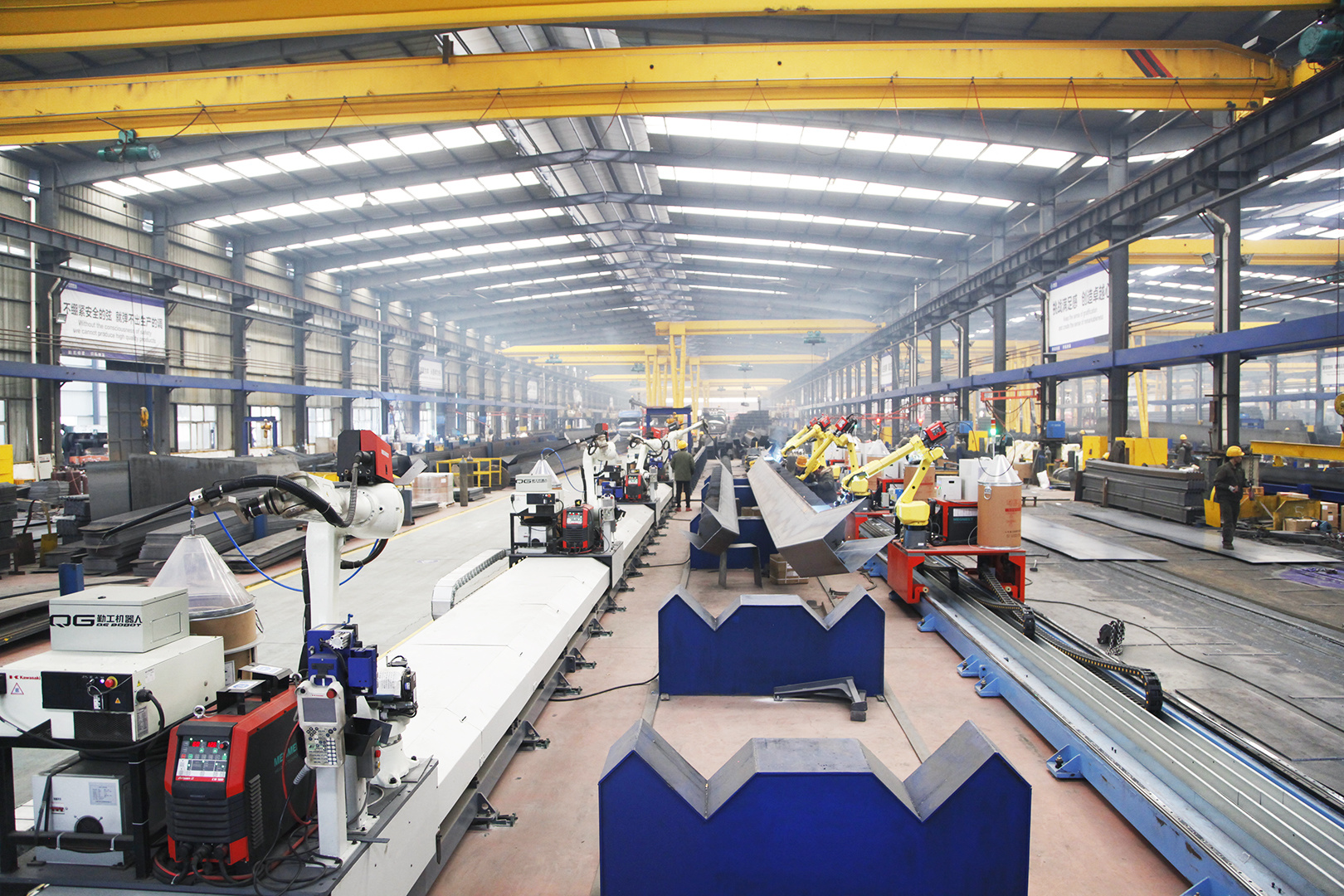
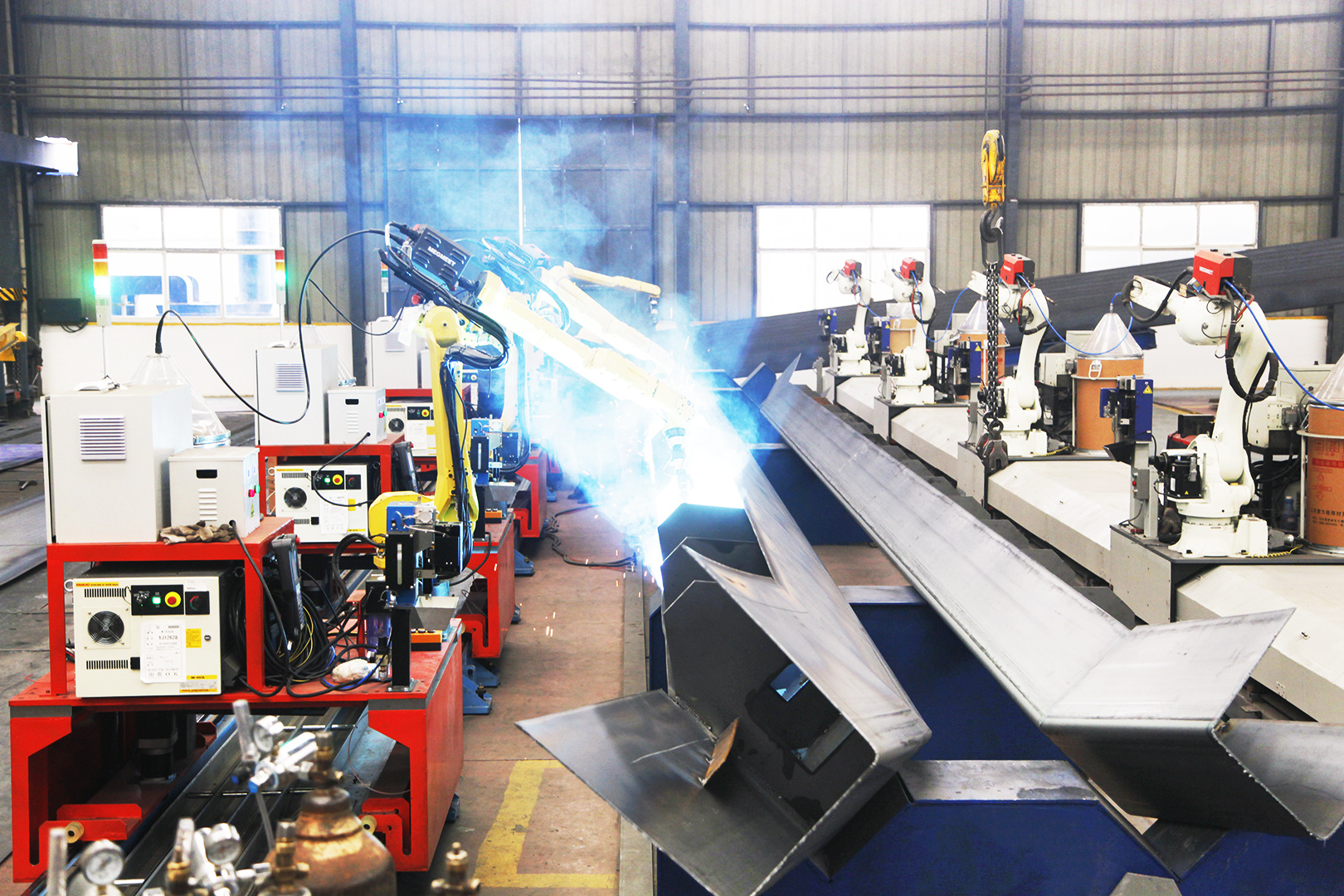
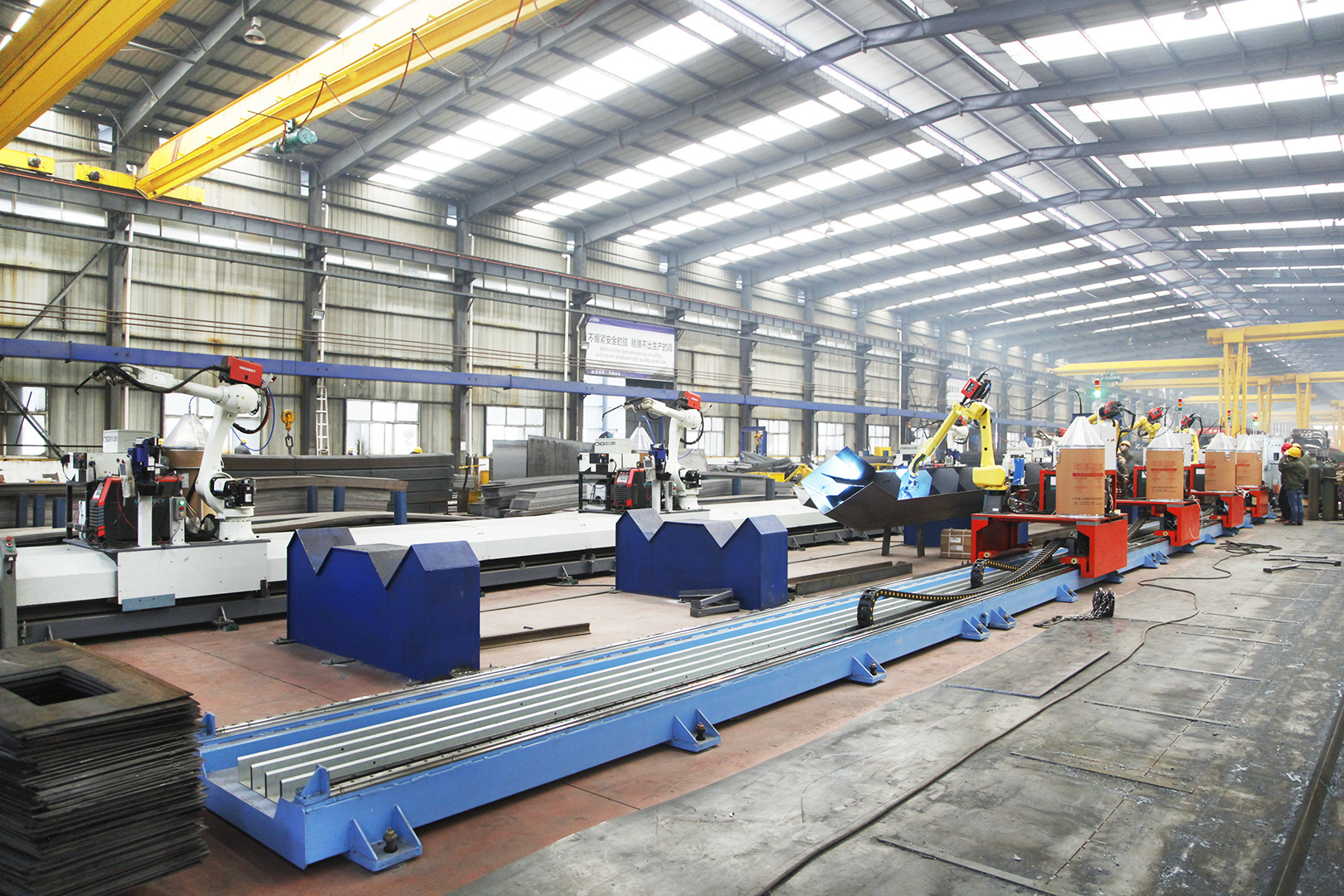
    A Henan Mine Crane archive report describes the introduction of more than 100 internal-seam welding robot units in December 2018. The workshop photographs show robot stations working on long steel components. For a crane buyer, the useful question is how repeatable fabrication is checked and documented for the particular machine being ordered.

    Robot welding station working on a long steel crane-girder component in the Henan Mine Crane workshop
    A welding robot works along a crane-girder component in the workshop.

    What the factory photographs establish

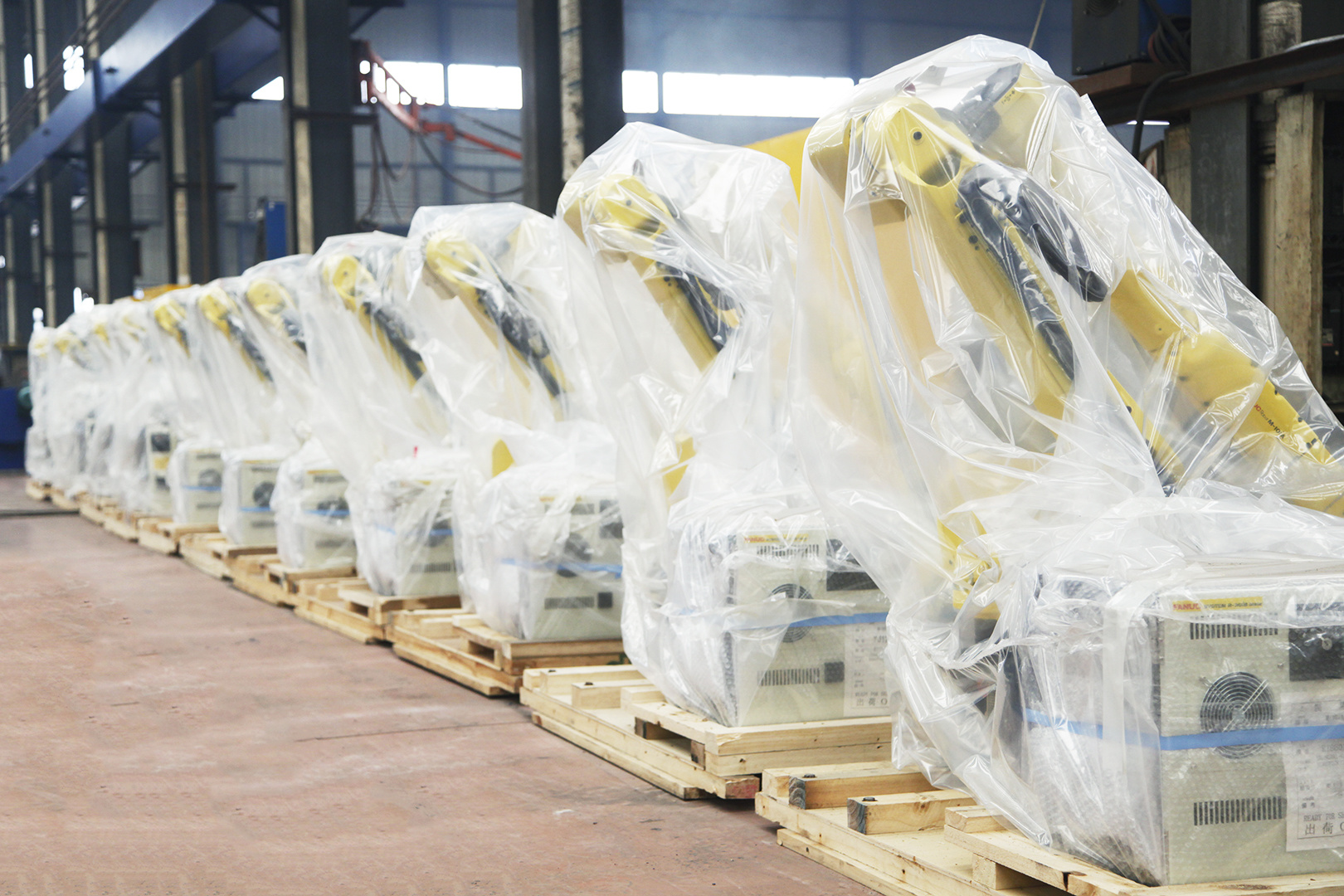
    The first image shows an active welding station working along a long fabricated steel member. Other images show several stations arranged in a workshop line and packaged robot arms. They document the presence of automated welding equipment at the time of the report. A photograph alone cannot establish a weld acceptance grade, a current robot count or a measured improvement in throughput.

    The original company report dates the addition of more than 100 internal-seam welding robot units to December 2018. That historical count should not be mistaken for the equipment configuration available for every crane order today. The manufacturer’s current equipment pages describe a much broader automated production setup, but the applicable production route and inspection plan still need to be agreed for each project.

    How robotic welding relates to crane procurement

    Overhead- and gantry-crane girders depend on controlled fabrication as well as an appropriate structural design. Automation can repeat a programmed motion, yet it does not replace joint preparation, fit-up, material identification, suitable welding procedures, supervision and inspection. Ask which structural components for your order are welded on a robot line and which are welded or finished manually.

    A useful factory review follows the part from material receipt to cutting, assembly, welding, dimensional check, surface preparation and coating. Request a description of how the manufacturer records material grades and plate thicknesses, manages deformation, and handles repairs. For long girders, ask how camber, straightness, span-related dimensions and connection geometry are checked against the approved drawing.

    The photographed line should be treated as evidence of manufacturing capability, not as a guarantee that a proposed crane meets a particular duty class or service life. Those requirements belong in the specification, drawings, welding and inspection documents, and acceptance tests.

    Documents and tests to request before acceptance

    When comparing bids, specify the applicable design and welding standards for the destination country and project. Request the approved general arrangement, material certificates, welding procedure documents and qualification evidence where required, inspection and test plan, weld inspection records, dimensional inspection results and coating records. The scope of nondestructive examination should be agreed for relevant joints rather than assumed from a marketing photograph.

    At factory acceptance, match the serial-numbered crane and its critical components to the approved drawings and records. Confirm electrical and mechanical functional tests, safety devices, load-test method and witness points in advance. If the buyer needs third-party witnessing or specific export documents, include those in the purchase order before manufacturing starts.

    For installation, clarify the division of responsibility for runway tolerances, site power supply, lifting equipment, commissioning, operator training and final handover. This lets a buyer compare manufacturing and inspection scope between suppliers, instead of comparing only the equipment photographs.

    Information to include in an enquiry

    Tell Henan Mine Crane the load range, span, lifting height, travel distances, operating hours, duty, handling method and installation location. Add temperature, dust, corrosion or hazardous-area requirements where applicable, along with the local power supply and required standards. If production documentation or witnessed inspection is mandatory, state that at the enquiry stage.

    The factory can then propose the crane arrangement and a manufacturing and acceptance scope for review. Any performance, delivery or inspection commitment should be confirmed in the project quotation and contract documents.

    Request a Crane Manufacturing Proposal

    Share your load, span, working environment, duty and inspection requirements. Ask for a project-specific crane configuration and quality-document scope.

  • Henan Mine Crane honored as advanced unit in poverty alleviation

    Henan Mine Crane honored as advanced unit in poverty alleviation

    Henan Mine Crane honored as advanced unit in poverty alleviation

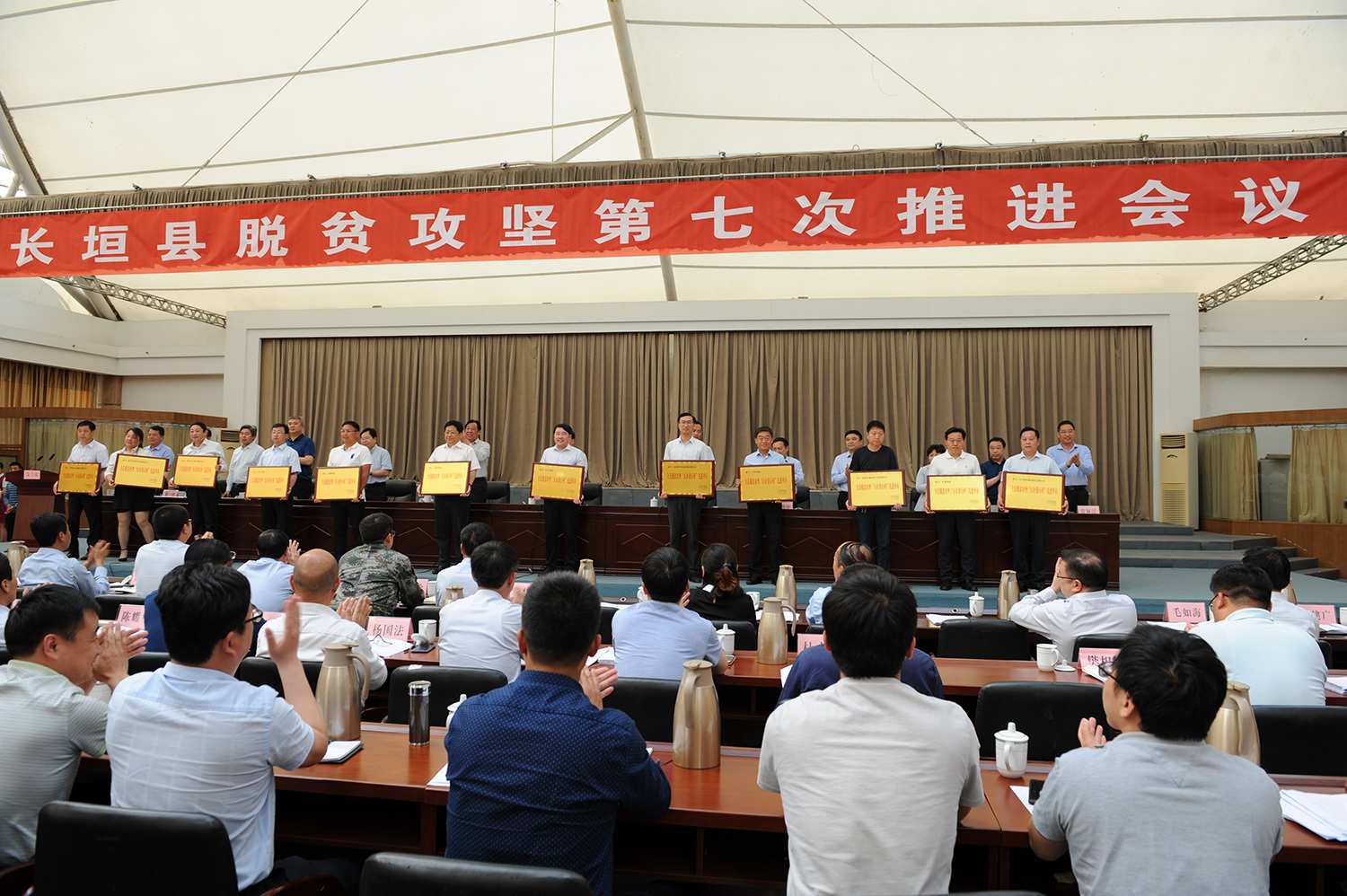
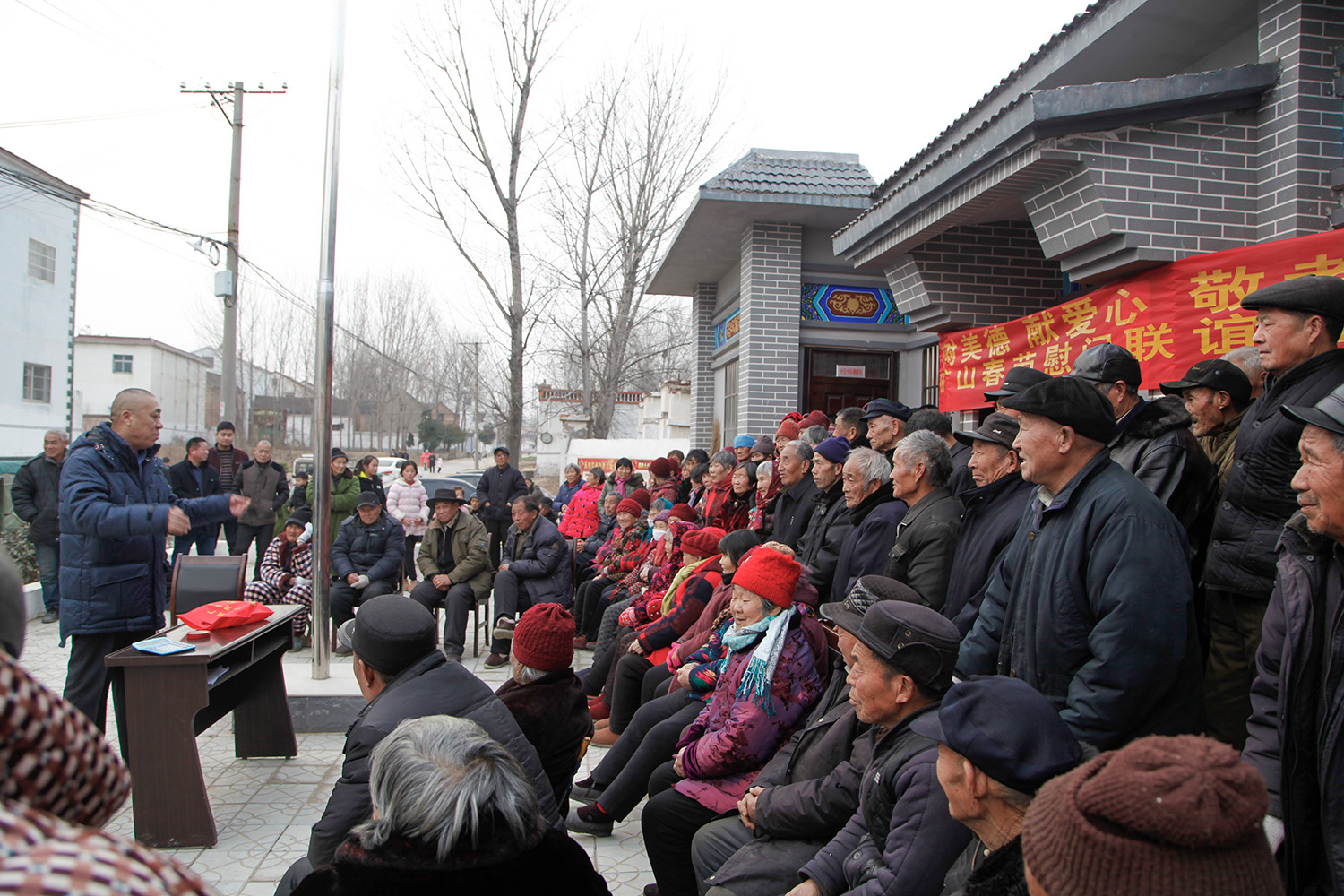
    [Enterprise Global Dynamics] On May 9, 2018, the seventh meeting of Changyuan County poverty alleviation was officially held.

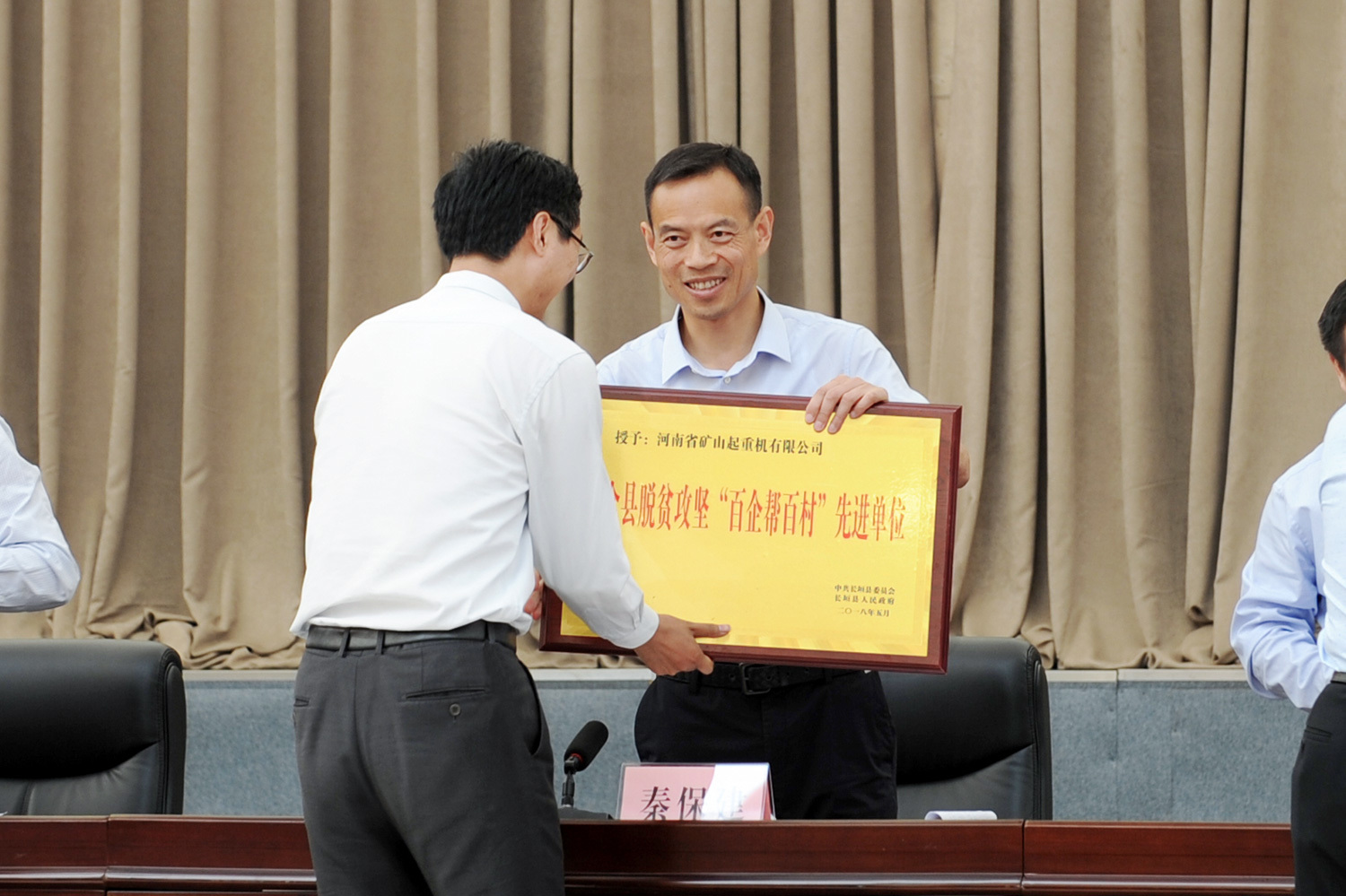
    Henan Mine Crane won the title of Advanced Unit of 100 Enterprises Helping 100 Villages in Poverty Eradication in the county by virtue of its outstanding contribution in the field of accurate poverty alleviation and public welfare help.

    This honor is an authoritative recognition of Henan Mine Crane’s fulfillment of corporate social responsibility, but also to the global customers to show the responsibility and pattern of China’s lifting manufacturing enterprises.

    Since its establishment, Henan Mine Crane has always adhered to the core concept of “enterprise originates from society and returns to society”.
    Henan Mine Crane Awarded the Title of “Outstanding Unit in the Fight Against Poverty”

    Cui Peijun, the founder of the company, made it clear at the beginning of the venture that the development of enterprises can not be separated from the social support, and must be long-term commitment to public welfare, practicing accurate poverty alleviation.

    After 16 years of deep plowing, Henan Mine Crane has constructed a complete public welfare system of poverty alleviation , such as pairing help, donating money to schools and filial piety public welfare.

    Up to now, the enterprise has invested a total of 65 million yuan in poverty alleviation, helping the harmonious development of society with practical actions.
    Henan Mine Crane Awarded the Title of “Outstanding Unit in the Fight Against Poverty”

    In terms of poverty alleviation in education, the enterprise has continuously carried out fourteen donations to schools.

    The accumulated donation of more than 5 million yuan has been used for the construction of school buildings, the establishment of scholarship funds and the improvement of teaching facilities, which has helped a large number of impoverished students successfully complete their studies.

    In the field of industrial poverty alleviation, Henan Mine Crane relies on the main business of lifting equipment manufacturing to drive the local economic development.

    Enterprises absorb more than 12,000 employees, more than 90% of the local villagers, while driving more than 3,300 accessory enterprises, more than 60 service organizations, more than 260 sets of transport vehicles, the development of industry to bring wealth to the people.
    Henan Mine Crane Awarded the Title of “Outstanding Unit in the Fight Against Poverty”

    In the daily help, enterprises to establish a regular mechanism to help the poor.

    Spring Festival condolences to poor families, door-to-door assistance to workers in need of serious illnesses, targeted donations to the construction of the countryside, only for the village after the Senmu “beautiful countryside” construction donated 2 million yuan.
    Henan Mine Crane Awarded the Title of “Outstanding Unit in the Fight Against Poverty”

    “If you have difficulties, look for the mine” has become the real reputation of the local people.

    In the future, Henan Mine Crane will continue to plough into the cause of poverty alleviation.

    While providing global customers with high-quality lifting equipment solutions, it also adheres to its social responsibility and is a firm practitioner of public welfare, demonstrating the responsibility and temperature of China’s smart enterprises.
    Henan Mine Crane Awarded the Title of “Outstanding Unit in the Fight Against Poverty”

    Henan Mine CraneDiscuss your requirements ↗
  • STS Crane Boom Length: Check the Intended Container Ship Envelope

    STS Crane Boom Length: Check the Intended Container Ship Envelope

    Technical guide

    STS Crane Boom Length: Check the Intended Container Ship Envelope

    Boom requirements must be assessed against the vessels and quay arrangement the terminal intends to serve. Provide the relevant ship geometry and container working positions instead of selecting outreach from capacity alone.

    Henan Mine CraneTechnical guide · Updated 2026Crane selection, project scope and operating requirements
    STS Crane Boom Length: Check the Intended Container Ship Envelope
    Henan Mine Crane lifting equipment
    Project planning notes

    Key points for this crane project.

    1. Ship-to-Bridge Boom Structure Analysis
    2. Conversion Relationship between Boom Length and
    3. Container Ship Scale Evolution and Breadth
    Read the technical guide

    Ship-to-Bridge Boom Structure Analysis

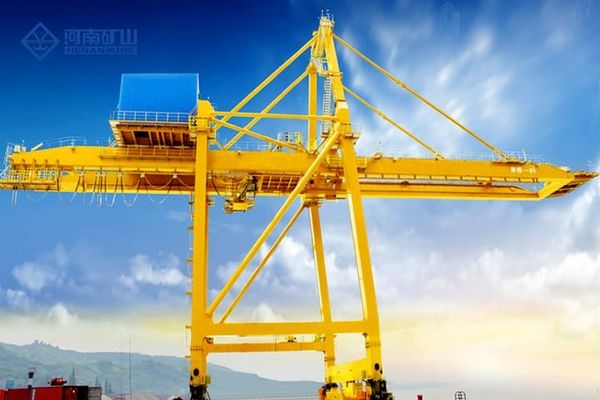
    Ship-to-shore bridge (Ship-to-Shore Crane, referred to as STS crane) is an indispensable core loading and unloading equipment for modern container terminals, and the stable operation of its boom system directly determines the operational efficiency and safety, the core key components are as follows:

    • Boom: the cantilever structure that extends horizontally from the shore to the sea side, as the core intuitive parameter of the service capacity of the shore bridge, it directly determines the width range of the ship that can be covered.
    • Trolley: Installed on the top rail of the boom, the trolley can move back and forth along the rail, and accurately complete the core operations such as grabbing, lifting and horizontal transfer of containers through the suspended spreader.
    • Main Gantry: solidly connected to the boom root, consisting of sea legs and land legs, it can move smoothly along the dedicated track along the quay line, providing solid support for the boom operation.
    • A-frame: located on the top of the gantry, its core role is to bear and evenly distribute the huge bending moment generated by the boom when it is fully loaded, and it is the core load-bearing node to ensure the safe and stable operation of the whole structure of the quay bridge.

    Core performance parameters

    • Outreach: the core service parameter, defined as the horizontal distance from the centerline of the track to the outermost end of the boom (unit: meter).
    • Backreach: The length of the boom extended to the land side, which determines the range of container placement on the land side and influences the setting of the buffer zone for spreader transfer at the quay.
    • Lifting Height (Lifting Height): Divided into two directions, above and below the rail surface, it determines the vertical coverage capacity of the quay bridge, and needs to match the loading characteristics of the target ship type.

    Note: The above three groups of parameters are interrelated and need to be optimized as system parameters, not isolated maximization of a single indicator.

    Conversion Relationship between Boom Length and Outreach Distance

    In actual engineering design, the following geometric relationships need to be taken into account to determine the value of the outreach:

    Therefore, designers need to clearly distinguish the difference between the physical length of the boom and the net outreach when determining the procurement parameters, so as to avoid coverage gaps in actual operation due to conceptual confusion.

    Container Ship Scale Evolution and Breadth Parameters

    Ultra Large Container Vessels (ULCV, ≥20,000 TEU) are the current transportation frontier, with 131 ships worldwide by 2024, mainly deployed by head liner companies on the Asia-Europe mainline.

    Emergence of the Megamax Vessel Type and Its Technical Significance

    In the ULCV spectrum, the industry refers to the ship types with widths corresponding to 23 rows (MGX-23) and 24 rows (MGX-24) as “Megamax”, with rated capacities ranging from about 18,000 TEUs to nearly 24,000 TEUs, respectively.

    From the global shorebridge delivery data, the trend of newly built shorebridges concentrating on large outreach is very obvious:

    Reach, Lift Height and Structural Load

    Planning Logic and Depth Requirements for Backreach

    Backreach often takes a back seat in the discussion of outreach, but its impact on terminal operational efficiency should not be underestimated. Backreach determines the extent to which the bridge can complete the container handover on the landside without berthing, and how far the trolleys can deliver the containers to the landside when the boom is in the horizontal position.

    If the terminal adopts automation design, the reach distance often needs to be appropriately enlarged to match the running track of automated yard equipment and vehicle right-of-way allocation requirements.

    Principle of Determining Lifting Height

    The lifting height is divided into two directions, above and below the rail surface, both of which need to be synchronized to match the loading characteristics of the target ship type.

    Insufficient lifting height and insufficient outreach are equally hazardous, both of which will form a hard constraint in the operation of a particular ship type, and must be uniformly taken into account at the selection stage.

    Engineering Constraints on Boom Structural Deflection and Fatigue Life

    It is an inescapable physical law that the longer the boom, the greater the structural deflection (bending deformation) under full load conditions.

    Lattice Boom design is widely used in modern quay bridges. Compared with the traditional box girder structure, the lattice structure is lighter under the same strength level, which is conducive to the reduction of bending moment at the root of the boom;

    The open structure also facilitates weld inspection, non-destructive testing and structural repair work. Fatigue life is the core checking item in the design of ultra-long boom, generally requiring that the cumulative fatigue damage rate of the key welded nodes does not exceed the normative permissible value during the design life, which requires that the expected annual loading and unloading capacity of the terminal and the average daily number of cycles of operation of a single machine be clearly defined at the selection stage, so as to provide reliable input boundary conditions for the calculation of structural fatigue.

    Operational and Strategic Factors

    Analysis of Target Route Structure and Ship Type Combination

    The selection of the outreach should not only look at the peak parameters of the current docking vessel type, but also need a comprehensive analysis based on the route structure and vessel type combination that the terminal is expected to serve in the next 10 to 20 years.

    Therefore, before selecting a vessel type, it is an essential task to carry out a systematic analysis of vessel type forecasts and refer to the capacity renewal plans and hand-held order data of major liner companies.

    Future-oriented forward-looking Design

    The construction cycle and service life of port infrastructure determine that it must have a certain degree of foresight. The design life of a quay bridge is typically 25 to 30 years, during which time container ship types will continue to evolve, and some studies have conceptualized future ULCVs in the 30,000 TEU and even 40,000 TEU classes.

    In practice, forward-looking design can be realized through two paths:

    The selection phase directly determines the outreach by one class higher than the current maximum ship class (e.g., MGX-24 standard instead of MGX-23 standard);

    Structural design to allow for interfaces for future boom extension modifications, requiring that potential modification loads be incorporated into the strength reserve calculations for the main structure early in the design phase.

    Environmental Constraints

    Ultra-long booms have a quantum difference in environmental load response from standard length booms.

    Wind load is one of the most sensitive environmental factors: the longer the boom, the larger the horizontal exposed area and the significantly higher the combined horizontal wind pressure at the same wind speed, which directly affects the anchorage design of the gantry foundation and the track pressure distribution.

    For ports located in typhoon prone areas or strong monsoon areas, special wind load checks should be conducted on the boom structure with reference to the local standard of wind speed of one in a hundred years, and the difference in structural response between the lifted and horizontally placed booms under extreme working conditions should be evaluated.

    Seismic zoning is also an important design variable, especially for the ports in Asia-Pacific and America along the Pacific Rim seismic zone, which require seismic calculations of the whole structure based on the ground vibration parameters.

    Marine corrosive environments have a particularly prominent impact on the whole life of ultra-long booms. The design life of the anti-corrosion coating system, the quality level requirements for critical welds, and the periodic testing program should be clearly defined in the procurement specifications and included in the assessment of the contract quality assurance provisions.

    Infrastructure Impact and Whole Life Costs

    Cost-benefit Trade-offs

    The comprehensive cost of boom modification or complete replacement is much higher than the incremental investment in the initial stage of over-selection.

    Whole Life Maintenance Cost

    When selecting a boom, it is recommended to ask the manufacturer to provide a whole-life cost model to facilitate quantitative comparisons and avoid simply looking at the purchase price.

    Decision-making Framework for Terminal Planners

    • Define port positioning and target ship type: Combine the port's positioning in the shipping network, route layout and liner company capacity development trend to determine the largest ship type that may call during the 25-year design service period, which serves as the core benchmark for boom outreach selection.
    • Evaluate infrastructure suitability: Comprehensively verify the quay wall's carrying capacity, wheel pressure suitability, gauge matching and electrical supply capacity, determine whether it is necessary to carry out foundation reinforcement works at the same time, and include the relevant costs in the total investment budget.
    • Solicitation of manufacturers' solutions: Invite global mainstream quay bridge manufacturers to provide customized technical solutions and quotations to meet the actual needs of the port, focusing on the verification of core performance indexes such as reach and lifting height, and requesting the provision of fatigue life inspection report of boom structure.
    • Determine the final program: Combine the results of business negotiations, whole-life cost analysis, clarify the acceptance criteria for boom outreach, structural fatigue life assurance and other key terms in the contract, and finally finalize a scientific and reasonable selection program.

    Common Selection Misconceptions and Suggestions for Avoidance

    • Misconception 1: Configure the outreach according to the current maximum ship type; Avoidance: Consider the 2-4 years equipment delivery cycle, combined with the trend of ship type upgrading selection, to avoid the equipment put into operation that is backward.
    • Misunderstanding 3: Excessive attention to the outreach, ignoring the lifting height matching; avoidance: synchronized consideration of the lifting height, to match the number of layers of the ship deck containers, to avoid constraints on the full-load operation.
    • Misunderstanding 4: Disregarding the quality of track foundation and installation accuracy; avoidance: strictly control the track installation standard, avoiding the accumulation of small deviations leading to structural damage and efficiency loss.

    Discuss the crane arrangement for your project.

    Boom requirements must be assessed against the vessels and quay arrangement the terminal intends to serve. Provide the relevant ship geometry and container working positions instead of selecting outreach from capacity alone. Share the load, available drawings, working cycle and site conditions with Henan Mine Crane so the required configuration and supply boundary can be discussed.

    Related crane configurations

    Ship-To-Shore Crane (STS)

    View product parameters
    Lifting capacity: 40-65 80-120 tBoom outreach: 40-72 mWorking class: A8

    Transfer containers between ship and quay with an STS crane selected for the berth and vessel envelope. Define the lifting-appliance arrangement, outreach, rail position and handling cycle.

    Container Overhead Crane

    View product parameters
    Lifting capacity: 30-65 tSpan: 18-35 mLifting height: 8 – 20 m

    Transfer containers within a defined overhead runway area using a double-girder bridge and matched spreader. Container size, working clearance and the handling sequence determine the arrangement.

    Updated 2026 · Henan Mine Crane

  • Henan Mine Crane empowers global lifting equipment manufacturing upgrade

    Henan Mine Crane empowers global lifting equipment manufacturing upgrade

    Henan Mine Crane empowers global lifting equipment manufacturing upgrade

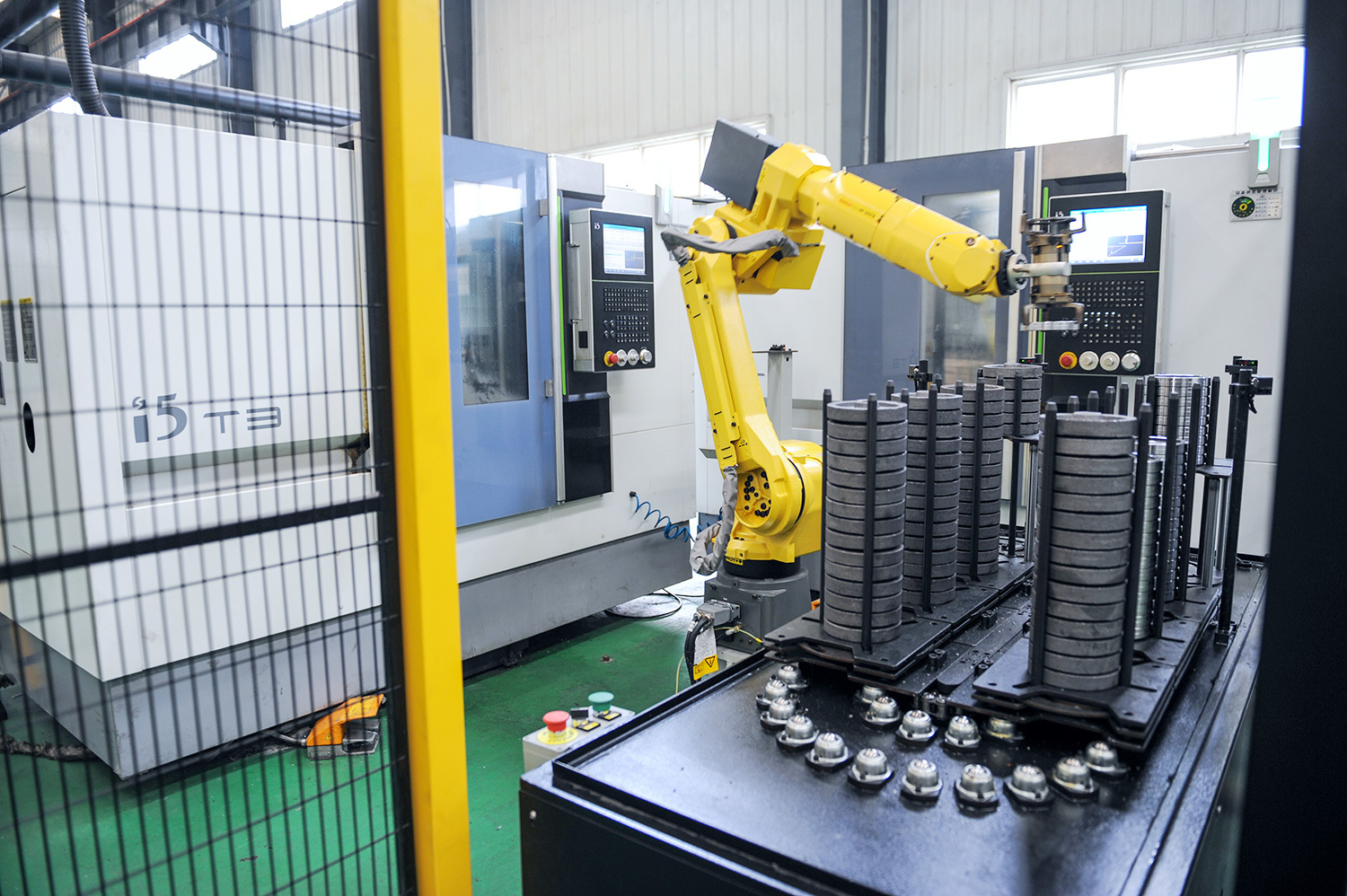
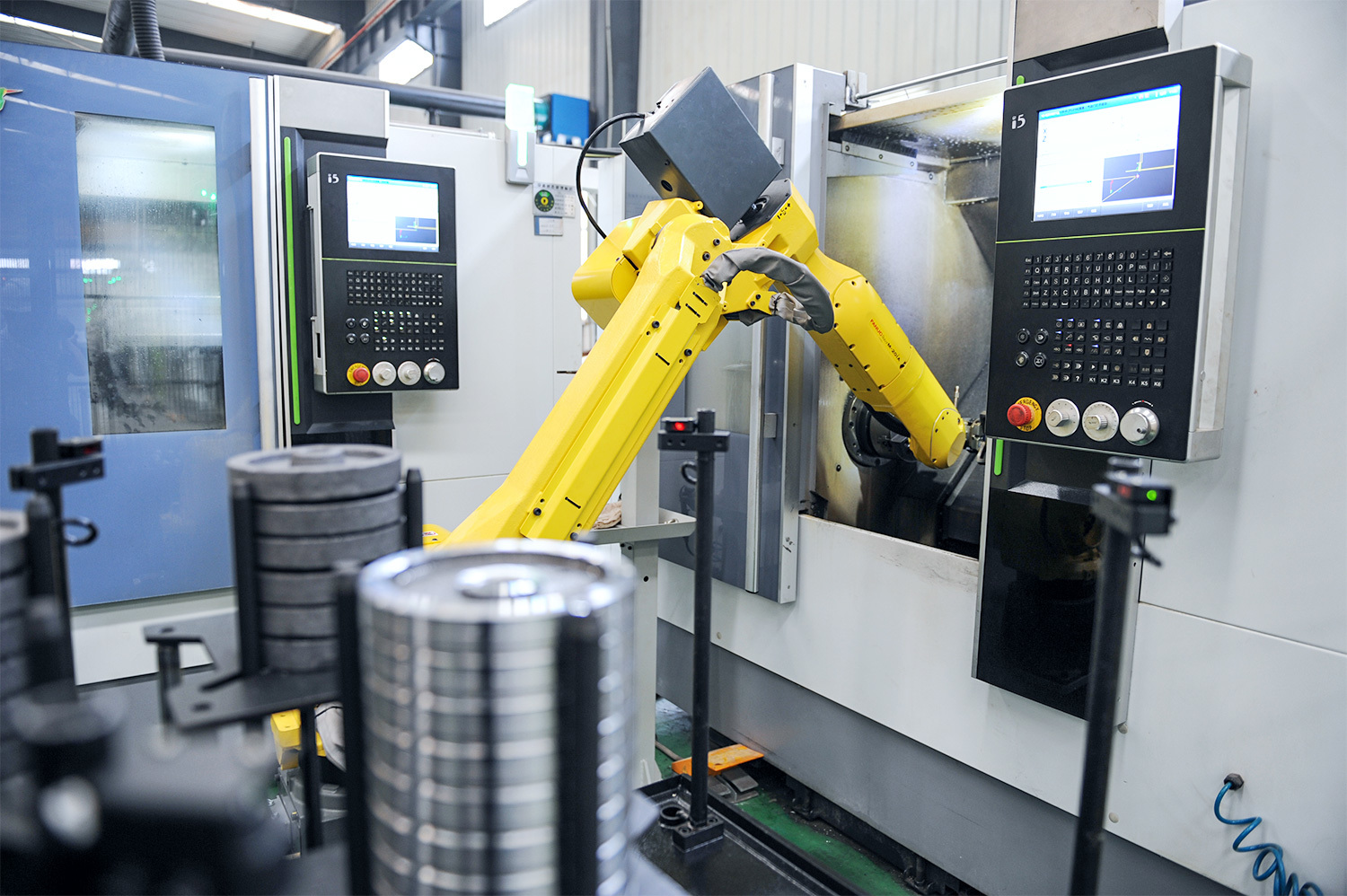
    [International Intelligent Manufacturing Express] In May 2018, Henan Mine Crane Co., Ltd. formally put into use six-axis articulated industrial robots in the CNC finishing center, fully upgrading the gear automatic machining production line.

    The landing of this intelligent equipment is an important initiative of Henan Mine Crane to promote intelligent manufacturing, which will provide high-quality lifting equipment core components for global customers with higher precision and efficiency.

    The gear automatic machining production line on the line, using the international top hardware configuration.

    The production line integrates two Shenyang I5T3 CNC lathes, original imported FANUC-M20iA six-axis articulated robots, German SCHUNK double-station gripper system, with eight-station circulating silo, turning station and safety protection system, to realize the whole process of automated processing.
    Henan Mine Crane intelligent lifting equipment upgrading Henan Mine Crane intelligent lifting equipment upgrading

    The six-axis articulated robot has a gripping capacity of 20 kg, an arm radius of 1811 mm and a repeatability of ±0.08 mm.

    The SCHUNK dual-station pneumatic claw can quickly finish loading and unloading in 12 seconds, and the frequency of material change is up to 4 million times, which is excellent in durability and accuracy.

    The eight-station magazine is compatible with Φ50mm~Φ220mm parts, and can meet 8 hours continuous processing with one time material storage, which is suitable for the demand of mass production.

    The automated production line greatly optimizes the production efficiency, far exceeding the traditional manual mode of operation.

    The processing time of a single finished product is shortened by about 20 seconds, and the effective start-up rate of the equipment is increased by 20%-25%.

    The robot autonomously completes loading and unloading and attitude flip, eliminating human error, ensuring the consistency of product processing, reducing the scrap rate, and comprehensively improving the core competitiveness of lifting equipment.
    Henan Mine Crane intelligent lifting equipment upgrading

    Henan Mine Crane always takes intelligent manufacturing as the core driving force.

    Through the continuous introduction of high-end automation equipment, constantly upgrading the production process and processing quality, to provide customers around the world with highly reliable and stable lifting equipment solutions, highlighting the hard core strength of China’s smart manufacturing.

    Henan Mine CraneDiscuss your requirements ↗
  • Overhead Crane Spare Parts: Build a List from Equipment and Duty

    Overhead Crane Spare Parts: Build a List from Equipment and Duty

    Technical guide

    Overhead Crane Spare Parts: Build a List from Equipment and Duty

    A useful spare-parts list is tied to the actual crane configuration and maintenance history. Identify critical components, part references and replacement responsibilities before deciding what to stock at the site.

    Henan Mine CraneTechnical guide · Updated 2026Crane selection, project scope and operating requirements
    overhead crane spare parts
    overhead crane spare parts
    Project planning notes

    Key points for this crane project.

    1. Why Keeping Overhead Crane Spare Parts in Stock
    2. Wire Rope and Hoisting Components
    3. Crane Brakes and Brake Components
    Read the technical guide

    Why Keeping Overhead Crane Spare Parts in Stock Matters

    Bridge cranes have been in harsh working conditions of heavy-duty start-stop, high-frequency friction, and dust corrosion for a long time. The failure of vulnerable components such as wire ropes, brakes, and limit switches is sudden, which can easily cause sudden equipment shutdown and paralysis. The lack of standing spare parts will cause minor failures to evolve into long-term downtime, which will seriously drag down production progress. Reserve the original factory-adapted core spare parts in advance, which can achieve rapid replacement of failures, effectively avoid the risk of sudden downtime, and greatly improve the overall start-up rate and operating stability of equipment.

    Wire Rope and Hoisting Components

    Wire rope

    Wire rope is the core load-bearing component of bridge crane lifting operations, and it is also the wearing part with the fastest wear and aging speed. It carries heavy loads for a long time, repeatedly bends, friction and wear, and is prone to broken wires, corrosion, diameter shrinkage, deformation and relaxation. It is the main cause of lifting safety accidents. As a high-frequency replacement accessory, enterprises must always have wire ropes adapted to the tonnage and specifications of this machine to avoid equipment downtime and hoisting safety risks due to wire rope failure.

    Rope guide

    The rope guide is mainly used to standardize the arrangement and trajectory of the wire rope, avoid messy rope, stacking rope, slotting, wear and knotting of the wire rope, and ensure the smooth operation of the lifting operation. After long-term use, the rope guide device will have problems such as slot wear, deformation, cracking, etc., which will lose the effect of the guide rope and accelerate the loss of the wire rope. The accessory is small in size, low in cost, and easy to replace. It is an essential standing small piece, which can effectively protect the core wire rope and extend the service life of the lifting system.

    Rope drum

    The reel is the bearing matrix of the wire rope, and it is prone to tank wear, surface rust, and local deformation due to long-term force. In severe cases, it will lead to uneven force and increased wear of the wire rope. Although the frequency of reel replacement is low, it cannot be temporarily repaired once it is damaged, and the customized procurement cycle is long. Reserve an appropriate amount of rolls of suitable models to deal with sudden damage problems and avoid long-term downtime.

    Hook block and sheaves

    The pulley block and the hook pulley assume the transmission role of heavy loads, and continue to rub against the wire rope during operation, which is prone to pulley groove wear, bearing caton, rotation caton and other failures. The caton of the pulley block will directly exacerbate the wear of the wire rope, and even cause problems such as hoisting shaking and unstable load. A complete set of pulley block accessories is always available, which can quickly complete the wear and tear replacement to ensure the stable and safe operation of the lifting transmission system.

    Crane Brakes and Brake Components

    Hoist brakes

    The lifting brake is the core safety component of the bridge crane, which directly controls the lifting, starting, stopping, and hovering braking of heavy objects to prevent the risk of heavy objects slipping and falling. Under high-frequency start-stop operations, the brakes frequently rub and heat up, and they are prone to brake failure, slow braking, slip hooks and other failures, which are the core accessories of the safety level. Once the brake fails, the equipment must be stopped for maintenance, and the standing lifting brake assembly is the key to ensuring the safety of lifting operations and avoiding safety accidents.

    Brake discs and linings

    The brake disc and brake lining are the friction core components of the brake and are ultra-high wear parts. Under normal working conditions, they need to be replaced regularly for 1-3 years. Long-term friction will cause the thickness of the liner to thin, the coefficient of friction to decrease, and the brake disc to wear and groove, which directly reduces the braking performance and causes hidden dangers of braking failure. Such accessories are replaced with high frequency and strong adaptability. Enterprises need to keep them in place according to the crane set and replace them in regular rotation to ensure that the braking performance meets the standards.

    Brake wheels and related components

    Brake wheels and supporting springs, pins, circlip springs and other accessories are subject to dynamic extrusion, vibration and shock for a long time, and are prone to surface wear, spring fatigue failure, pin corrosion, caton and other problems. Although the accessories are small, they directly affect the closing accuracy and response speed of the braking system, and are prone to hidden failures. A full set of supporting small parts of the brake system is always available, which can quickly investigate and repair brake failures to avoid major safety problems caused by the failure of small parts.

    Crane Motors and Gearboxes

    Hoist motors

    The lifting motor provides the core power for the lifting of heavy objects of Henan Mine Crane manufactured crane. Under long-term heavy-duty operation, high-temperature operation, unstable voltage, etc., it is prone to coil burning, bearing damage, insufficient power, abnormal noise, caton and other failures. The motor is a core power component, and the equipment is completely paralyzed after the failure, and the procurement cycle of brand new motors is long. Reserve an appropriate amount of suitable lifting motors, which can quickly replace faulty equipment and minimize downtime.

    Travel motors

    The operating motor is responsible for the travel operations of crane carts and trolleys. Repeated start and stop and track bumps can easily lead to motor bearing wear, rotor failure, power attenuation, and problems such as travel stuck, deviation, and weakness. The failure of the travel motor will directly affect the efficiency of the equipment transfer. The standing backup travel motor can quickly repair the failure of the travel system and ensure the smooth movement of the equipment.

    Gearboxes and gear components

    The reducer and gear components are the core of the power transmission. The lifting torque is increased through gear deceleration. Long-term force is prone to gear wear, tooth surface peeling, lubrication failure, and oil leakage in the box. Gear damage can cause transmission to stall, abnormal noise, and power interruption, making maintenance difficult and long-term. Reserve the reducer assembly and core gear accessories to quickly complete the maintenance of the transmission system and avoid long-term downtime.

    Couplings and shafts

    The coupling and the drive shaft are responsible for connecting the motor and the reducer to transmit power and torque. They are continuously affected by vibration and torque during operation, and are prone to elastomer wear, drive shaft deformation, loose connection and other problems, causing poor power transmission, abnormal equipment noise, jitter and other failures. Such accessories are simple to disassemble and assemble, cost-effective, and standing stock can quickly solve minor faults in the transmission system and ensure the smooth operation of the equipment.

    Wheels, Bearings and End Truck Parts

    Crane wheels

    The wheels of Henan Mine Crane manufactured crane carts carry the weight of the entire equipment and all the loads of lifting heavy objects. They continue to walk on the track for a long time and rub repeatedly. Coupled with the influence of complex working conditions such as workshop dust and heavy-duty impact, they are prone to wear and tear of the wheel surface, thinning of the rim, cracking and deformation. Loss problems. These failures will gradually cause the crane to run off course and the track to bite the rail. In severe cases, there is a safety risk of derailment and shutdown. The wheels are irreversible high-frequency loss accessories. Enterprises need to keep accessories of suitable specifications and replace them with regular inspections to effectively ensure the safety and stability of the equipment.

    Trolley wheels

    The trolley wheels are mainly responsible for the horizontal reciprocating movement of the bridge crane lifting trolley. They are the core accessories for precise hoisting operations. The daily high-frequency start-stop and reciprocating operations of the equipment will greatly speed up its wear rate. After long-term use, it is prone to uneven wheel wear, rotation caton, travel offset and other failures, which directly reduces the accuracy of equipment hoisting and positioning, and affects the efficiency of workshop operations. The accessories are compact in size, easy to disassemble, assemble and replace, and have sufficient stock in stock, which can replace worn parts in time, and continuously ensure that the trolley walks smoothly and the hoisting and positioning are accurate.

    Bearings and bushings

    Bearings and bushings are the basic general accessories of bridge cranes. They are widely used in all rotating operating structures such as wheels, pulleys, motors, and reducers. They are the key support components for the smooth operation of equipment. Under the working conditions of long-term friction, dust intrusion in the workshop, and insufficient loss of lubricating grease, it is very prone to bearing caton, rust, abnormal noise, shaft stuck and other failures, which directly cause equipment downtime. As ultra-high-loss wearing parts, enterprises need to keep suitable models in bulk, and regularly overhaul and replace them to reduce the probability of equipment failure from the source.

    Wheel assemblies

    The wheel assembly integrates a full set of core components such as wheels, precision bearings, wear-resistant bushings, and sealed end caps. Compared with the replacement of scattered accessories separately, the overall assembly has stronger adaptability and higher maintenance efficiency. For old cranes with high-frequency operation in the workshop and long service life, the incidence of failure of the travel system is higher. A complete set of wheel assemblies is always available, which can greatly simplify the maintenance process, quickly investigate and solve travel faults, and effectively avoid maintenance delays caused by inconsistent fitting of accessories, and minimize the length of equipment downtime.

    Hooks and Load Handling Parts

    Crane hooks

    The hook is the core component that directly carries heavy objects. It is subject to heavy loads, shocks, and lateral tension for a long time, and is prone to problems such as increased opening, surface wear, and crack deformation. It is a compulsory inspection accessory for special equipment. In accordance with safety regulations, the opening of the hook exceeds the standard and cracks must be scrapped and replaced immediately, and sick operations are strictly prohibited.

    Safety latches

    Safety and anti-jamming is the core safety protection accessory of the hook, which is used to prevent heavy objects from falling accidents caused by the decoupling of spreaders and wire ropes. Anti-jamming is small in size, easy to damage, and easy to lose. Long-term use will cause elastic failure, fracture, caton and other problems, and the hook will lose its safety protection function after failure. The accessories have low cost and high priority, and require a large number of standing stock, so that they can be damaged and replaced at any time.

    Hook blocks and pins

    The hook set and the pin shaft are the core components connecting the hook and the pulley block. The pin shaft is prone to wear, rust, and deformation due to long-term force, which causes the hook to shake and the gap is too large, which affects the stability of hoisting. After the overall wear and aging of the hook group, the lifting safety factor will be greatly reduced.

    Electrical and Control Parts

    • Limit switches: Limit switches are the core electrical accessories of crane safety protection. They are used to limit the lifting of heavy objects and the limit position of travel, so as to prevent safety accidents such as rushing to the top, hitting rails, and over-range operations. The high-frequency start and stop of equipment, vibration and shock can easily cause the limit switch to fail, the contact to be damaged, and the signal to fail. It is a safety accessory that must be kept in stock. Once the limit switch fails, the equipment needs to be shut down immediately, and the standing inventory can be quickly replaced to restore the safe operation of the equipment.
    • Push button pendants: The button operation handle is the core component of manually controlling the crane. Long-term hand-held operation, bumps, dust and moisture erosion are prone to button failure, circuit breakage, shell damage and other problems, which directly cause the equipment to be unable to be controlled. There is no alternative to handle failure, and a spare button handle is always available, which can completely solve the problem of control failure and shutdown and ensure the normal operation.
    • Radio remote controls: Wireless remote controls are widely used in Henan Mine Crane Factory manufactured modern bridge crane. They have the advantages of easy operation and long safe distance, but they are prone to signal failure, button damage, battery failure, and fuselage bump damage. Damage to the remote control will directly cause the equipment to stop. A complete set of wireless remote control equipment and supporting accessories are always available, which can quickly replace the faulty equipment without affecting the production progress.
    • Contacts, relays and control components: Contactors, relays and other control components are the core of the electrical control system. Frequent on-off and power-off are prone to contact ablation, coil burning, signal failure and other failures, causing abnormal equipment start and stop, power interruption, fault alarm and other problems. This kind of small electrical parts has a high failure rate and easy replacement. Batch standing can quickly diagnose electrical faults and reduce the probability of electrical system downtime.
    • Festoon cables and current collectors: Sliding contact cables and current collectors are responsible for the continuous power supply of mobile trolleys and lifting structures. Long-term stretching, bending, and friction are prone to cable damage, power failure, poor contact with the collector, ignition and other problems, causing equipment power failure, shutdown, and electrical failure. Supporting cables and collector accessories are always available, and aging and damaged parts can be replaced in time to ensure stable power supply and avoid electrical safety hazards.

    OEM vs. Aftermarket Overhead Crane Parts

    For the core load-bearing, braking and exclusive model components of bridge cranes, it is recommended to give priority to original parts. They can perfectly match the load standards and operating conditions of the corresponding models, and can effectively avoid equipment failures and safety hazards caused by parts adaptation deviations and insufficient performance. The use of original parts on key components such as motors, reducers, hooks, brakes, etc. can stabilize the performance of the equipment and greatly extend the overall service life of the equipment.

    Bearings, cables, pins and other general standard small parts, you can choose to comply with the factory accessories, easy to purchase and more cost-effective, effectively control the inventory cost of spare parts of the enterprise. Regardless of the choice of original or sub-factory accessories, the size specifications, rated load and model compatibility must be strictly verified before replacement.

    Henan Mine Crane

    The inventory management of spare parts for bridge cranes is the core link of equipment operation and maintenance, safe production, and production capacity assurance. It is by no means a simple spare parts reserve. Enterprises need to focus on the three core values of high wear, high safety risk, and high downtime impact, and give priority to key accessories such as wire ropes, brake components, hooks, limit switches, bearings, and wheels. All spare parts reserves must match the crane model, working conditions and operating strength, distinguish the applicable scenarios of original and sub-factory accessories, and strictly control the adaptability and quality standards of accessories. A scientific and perfect spare parts inventory system can effectively reduce sudden downtime, shorten maintenance time, and reduce operation and maintenance costs.

    Discuss the crane arrangement for your project.

    A useful spare-parts list is tied to the actual crane configuration and maintenance history. Identify critical components, part references and replacement responsibilities before deciding what to stock at the site. Share the load, available drawings, working cycle and site conditions with Henan Mine Crane so the required configuration and supply boundary can be discussed.

    Related crane configurations

    Single-Girder Bridge Crane

    View product parameters
    Lifting capacity: 1–20 tSpan: 7.5–31.5 mLifting height: 6, 9, 12, 18, 24 or 30 m; capacity-dependent

    Use an LDA single-girder bridge and electric hoist for general workshop material handling. Select the lifting capacity, runway geometry and hoist duty around the building and load.

    LH Electric Hoist Double Girder Crane

    View product parameters
    Lifting capacity: 3, 5, 10, 16, 20 tSpan: 10.5–31.5 mLifting height: 6, 9, 12 or 18 m

    Use an LH double-girder bridge with an electric-hoist trolley for workshop lifting, assembly and maintenance. Match the hoist arrangement to the suspended load, hook travel and available building space.

    Updated 2026 · Henan Mine Crane
  • Unmanned Crane Systems: Working Sequence, Feedback and Recovery

    Unmanned Crane Systems: Working Sequence, Feedback and Recovery

    Technical guide

    Unmanned Crane Systems: Working Sequence, Feedback and Recovery

    An unmanned handling cycle needs defined movements, reliable position information and a controlled response to exceptions. Describe the load, storage or transfer points and process interfaces before selecting automation functions.

    Henan Mine CraneTechnical guide · Updated 2026Crane selection, project scope and operating requirements
    Henan Mine Crane Modular Electric Hoist Overhead Crane
    Henan Mine Crane Modular Electric Hoist Overhead Crane
    Project planning notes

    Key points for this crane project.

    1. What is the intelligent Crane
    2. The core reason for factories to land unmanned
    3. Intelligent Crane to realize the complete logic of
    Read the technical guide

    What is the intelligent Crane

    Intelligent Crane is a new type of lifting equipment based on traditional overhead and gantry cranes, equipped with a full set of sensing equipment, automation control system, precise positioning module and digital management software, and is also the mainstream application form of intelligent overhead crane.

    Differing from the traditional equipment is completely dependent on the operator's experience and judgment, manual control mode, smart crane automation equipment can be directly docked to the factory management system, independent receipt of operating instructions, independent lifting and handling the whole process of operation, without real-time human intervention.

    The following English comparison table clearly distinguishes the core differences between traditional Crane and smart unmanned Crane, which is convenient for overseas factories and EPC projects to quickly standardize and select:

    ItemTraditional CraneIntelligent Crane
    Operation ModeFull manual cabin operationAutomatic cycle & remote operation
    Positioning MethodManual visual judgmentSensor-based automatic crane positioning
    Task DispatchingOn-site manual instructionAuto dispatch via WMS/MES/ERP
    Load Swing ControlControlled by operator skillProfessional crane anti-sway control system
    Safety ProtectionBasic limit & overload protectionMulti-layer intelligent safety perception
    Data RecordingAlmost no effective dataFull operation, fault & maintenance data
    Operation StabilityAffected by operator statusStable and repeatable cycle operation

    The core reason for factories to land unmanned cranes

    At present, all kinds of manufacturing factories, logistics and warehousing centers are generally facing a shortage of skilled lifting drivers. High temperature, dust, high-risk workshops and night shift operation scenes, it is difficult to recruit stable operators for a long time, unmanned workshop crane can reduce the factory's dependence on labor from the root.

    Traditional manual lifting operations have unavoidable safety hazards. Workshop equipment collision, lifting swing offset, put the material is not allowed to position, the wrong personnel into the work area and other issues, mostly from the artificial vision limitations and operational deviations. Intelligent unmanned Crane relies on all-area sensor monitoring, significantly reducing the probability of on-site safety accidents.

    The operation state of manual operation fluctuates greatly, and the lack of proficiency of newcomers and fatigue of long-time operation will affect the total amount of daily handling and operational accuracy. Intelligent Crane operates in accordance with the preset program throughout the entire process, the operational rhythm, alignment accuracy to maintain uniformity, there will be no problem of fluctuations in the state of artificial.

    Traditional lifting equipment cannot retain effective operational data, it is difficult for factories to count the frequency of lifting, equipment utilization, energy consumption and failure records. warehouse crane automation can automatically retain a full set of operational data for the factory's digital management, equipment maintenance, capacity optimization to provide accurate data support.

    Intelligent Crane to realize the complete logic of unmanned operation

    The first step of unmanned operation is that the equipment receives standardized operation tasks. Intelligent Crane will not generate its own operating instructions, all handling tasks come from the upper management system of the factory, including WMS warehouse management system, MES production execution system and ERP enterprise resource system.

    The task issued by the system will specify the material number, pickup location, release location, material weight and type of spreader, crane WMS integration realizes the production, warehousing, lifting and handling of the process through, so that each lifting are in line with the factory production rhythm.

    After receiving the task, the equipment will first complete the material and location verification. Through laser ranging, RFID identification, visual camera and coded positioning technologies, it accurately confirms the actual position, size and weight of steel coils, plates, prefabricated components and other materials, avoiding the problem of wrong lifting and missed lifting.

    The control system will combine the layout of the workshop, the location of obstacles, prohibited areas and the running status of the same track equipment to automatically plan the optimal running path, avoiding ineffective travel and path cross-conflict, and guaranteeing the efficient and orderly advancement of the operation.

    The equipment is controlled by PLC core controller with VFD frequency conversion drive system. All actions such as lifting, trolley travel, trolley running, spreader opening and closing, etc., can realize smooth starting and stopping, stepless speed regulation, reduce mechanical impact and prolong the service life of the equipment.

    Crane swaying is the biggest problem of unmanned operation, and it is also the most experience-dependent part of manual operation. The exclusive crane anti-sway control system will offset the swaying of the crane during acceleration, deceleration, starting and stopping through the algorithmic closed-loop regulation, so as to keep the heavy load in a stable state throughout the whole process.

    Relying on automatic crane positioning technology, the equipment can realize millimeter-level accurate alignment, whether it is picking up material or stacking and discharging material, can accurately fit the preset position, to eliminate material stacking offset, equipment knocking problems.

    With the fully automatic spreader to complete the material grasping and releasing, automatic clamp, electromagnetic lifting beam, grapple, telescopic spreader and other equipment, according to the type of material can be automatically locked, unlocked, the system checks the locking status is correct before starting the lifting operation, to avoid the risk of decoupling from the source.

    The whole operation is monitored in real time by the laser radar, infrared sensor, anti-collision limit, overload protector and other equipments, once detecting the situation of people intruding, obstacles blocking, load abnormality, etc., the equipment will immediately stop and warn to ensure the safety of operation.

    After the completion of the task, the equipment will automatically return the operation data to the management system, including the completion status, operation length, material parameters, equipment operation status and other information, forming a closed loop operation, which facilitates the factory real-time control of warehousing and production progress.

    Unmanned Intelligent Crane Core Support Technology

    PLC control system is the core brain of the whole set of unmanned equipment, coordinating all actions, sensing signals and system data interaction, to ensure that all modules work together to run stably. VFD variable frequency drive technology optimizes the operation of the equipment texture, to achieve smooth speed regulation and reduce mechanical losses.

    The high-precision positioning system and intelligent anti-sway system are the core functional support for unmanned operation, solving the two core problems of accurate positioning and stable lifting. The load recognition system can automatically recognize the material parameters and adapt to the operational requirements of different working conditions.

    The whole-area safety sensing system and fully-automatic spreader system build up a safety defense line for unmanned operation. The WMS/MES system docking, remote monitoring platform and data maintenance system realize the deep integration of equipment and factory digitalization system, which is also the core foundation of remote crane operation.

    Mainstream application scenarios

    Steel coil warehouse is the core application scenario of unmanned Crane, which can realize automatic identification, classification and stacking of steel coils, loading and unloading and production line feeding, and significantly improve the degree of regularity of warehousing and inventory management accuracy. Steel plate and billet warehouses can rely on electromagnetic spreader to complete the automatic handling and stacking of plates to meet the high-frequency operational needs of steel processing enterprises.

    Concrete precast parts yard and automated logistics and storage center can realize 24-hour cyclic operation of heavy components and bulk goods through unmanned cranes, and improve the utilization rate of the site. The unmanned system of garbage grab in garbage incineration power plant can avoid the injury of high temperature and odor high-risk environment to personnel, and stably complete the mixing and loading operation.

    Various types of high temperature, dust, corrosion, explosion-proof high-risk workshop, can be equipped with unmanned lifting system, the operator from the dangerous operating environment, stripped, taking into account the production efficiency and operational safety.

    Advantages and limitations of unmanned lifting operations

    Unmanned mode of operation can completely avoid the risk of artificial high-altitude, high-risk operations, stable operating rhythm, high precision alignment, and effectively reduce the loss of material bumps. The equipment can realize 24-hour uninterrupted cyclic operation, which is suitable for the continuous production needs of the factory, while automatically retaining a full set of operational data to support the factory's refined management.

    Correspondingly, the unmanned Crane equipment, sensing, software and system integration in the early stage of higher investment, the need for supporting professional and technical personnel responsible for equipment maintenance and system debugging. Complex emergencies still require manual remote intervention, low-frequency, sporadic lifting scenarios, the cost-effectiveness of the fully automated configuration is not high.

    Intelligent Crane and Remote Control Crane Core Differences

    Many customers are easily confused between remote control cranes and unmanned intelligent cranes. Remote control equipment still relies on manual control of each action, just transfer the operating position from the overhead cab to the ground.

    The intelligent unmanned Crane can autonomously perform the whole set of tasks, without the need to manually manipulate one by one, the core difference is the “manual control of the action” and “equipment to autonomously perform the task” of the essence of the difference, but also the core value of smart crane automation. This is also the core value of smart crane automation.

    Common Misconceptions in Selection and Procurement

    Many purchasers will equate remote control with unmanned automation, ignoring the importance of system integration. Only focus on the hardware configuration of the Crane, ignoring the WMS system docking, sensor protection, program debugging and other software packages, which will lead to equipment cannot realize the fully automated cycle of operation.

    At the same time, many projects are not reserved for manual standby mode of operation, equipment failure or special conditions cannot be emergency operation. Neglecting the protection of sensing equipment under dusty and high temperature working conditions will also lead to higher failure rate of the equipment in the later stage, affecting the normalized operation.

    FAQ

    In standardized and repetitive operation scenarios, intelligent cranes equipped with a full set of positioning, anti-sway, safety sensing and system integration modules can complete lifting operations autonomously, and only require manual remote monitoring of abnormal working conditions.

    Are unmanned operation and remote control the same mode?

    No, they are not. Remote control relies on real-time manual operation, unmanned operation is the equipment according to the digital task autonomous operation, without human intervention.

    Are unmanned lifting systems suitable for all factories?

    High-frequency, standardized, high-risk repetitive work conditions are suitable for fully unmanned operation; low-frequency, sporadic non-standard lifting scenarios, semi-automatic or remote control solutions are more cost-effective.

    Discuss the crane arrangement for your project.

    An unmanned handling cycle needs defined movements, reliable position information and a controlled response to exceptions. Describe the load, storage or transfer points and process interfaces before selecting automation functions. Share the load, available drawings, working cycle and site conditions with Henan Mine Crane so the required configuration and supply boundary can be discussed.

    Related crane configurations

    Modular Electric Hoist Overhead Crane

    View product parameters
    Lifting capacity: 1 – 32 tSpan: 7.5 – 31.5 mLifting height: 6–30 m

    Use a modular electric-hoist overhead crane for production, assembly and maintenance lifting. Select the hoist arrangement, hook coverage and movement control for the workshop and operating cycle.

    Intelligent Grab Overhead Crane

    View product parameters
    Lifting capacity: 5 – 50 tSpan: 10.5 – 31.5 mLifting height: 6 – 30 m

    Handle bulk materials with a grab overhead crane configured for the material and working cycle. Select the grab volume, lifting arrangement and operating sequence from pickup and discharge conditions.

    Updated 2026 · Henan Mine Crane
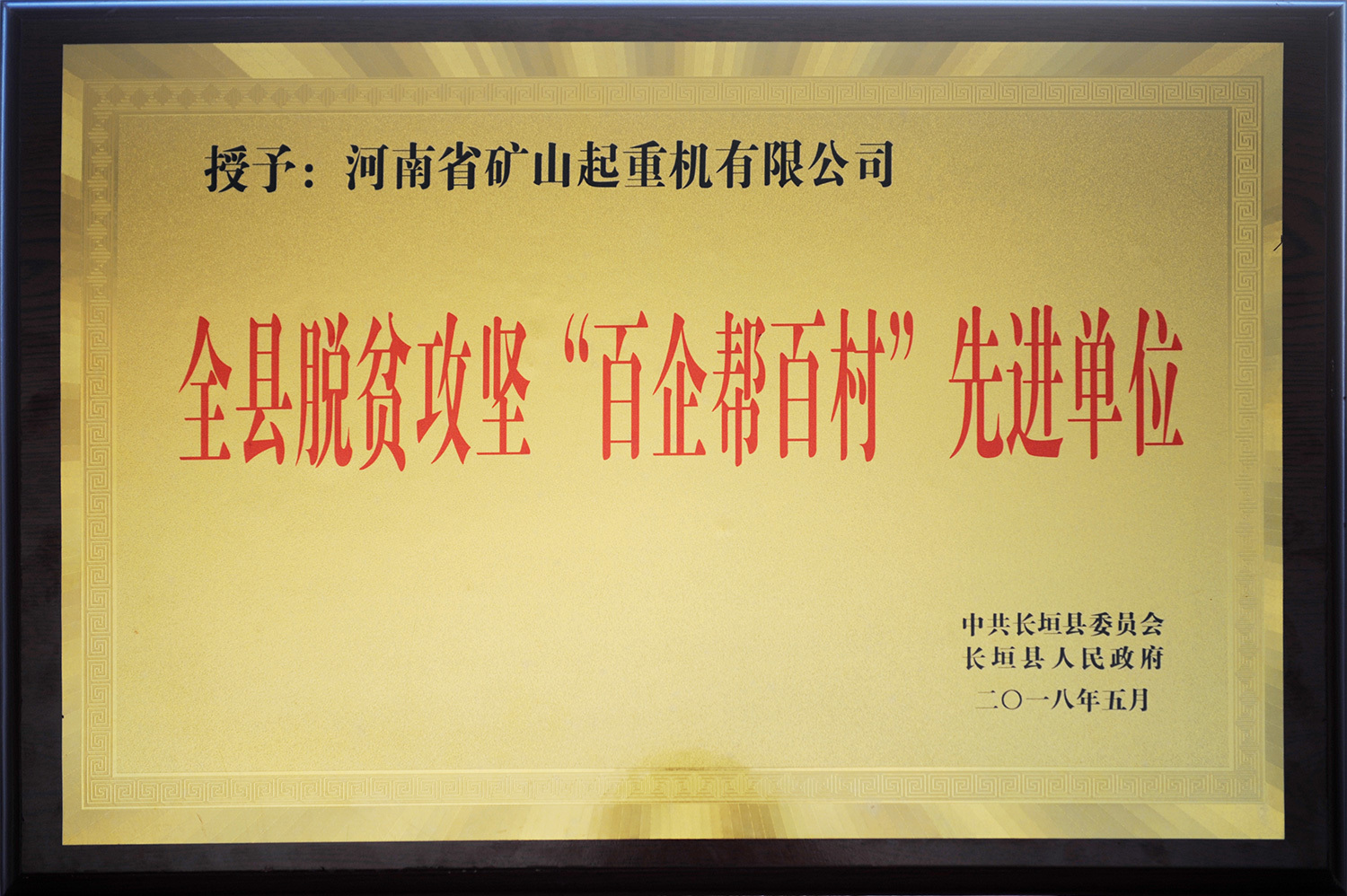
  • Henan Mine Crane Supports a Special-Equipment Design Competition

    Henan Mine Crane Supports a Special-Equipment Design Competition

    Industry & Partnerships

    Henan Mine Crane Supports a Special-Equipment Design Competition

    Henan Mine Crane supported a provincial special-equipment innovation and design competition held at Zhengzhou University of Light Industry in December 2025.

    Audience seated in the equipment-design event auditorium
    Audience seated in the equipment-design event auditorium.

    Student design and engineering exchange

    The competition received 88 submissions and 54 advanced to the in-person stage. Academic and industry participants discussed equipment design and technical development.

    A talent and research activity

    The event connects engineering education with industrial applications. Henan Mine Crane’s participation supported exchanges between students, researchers and manufacturing teams.

    View the event photo gallery

    Contact Henan Mine Crane

    For product information, a manufacturing visit or a company enquiry, send the relevant details to our team.

  • Crane Integration with Production Lines: Signals, Transfers and Responsibility

    Crane Integration with Production Lines: Signals, Transfers and Responsibility

    Technical guide

    Crane Integration with Production Lines: Signals, Transfers and Responsibility

    Production-line integration requires agreement on more than automatic movement. Define handover positions, equipment signals, operating states and exception recovery so the crane and process supplier can coordinate their scope.

    Henan Mine CraneTechnical guide · Updated 2026Crane selection, project scope and operating requirements
    Crane Integration with Production Lines: Signals, Transfers and Responsibility
    Henan Mine Crane lifting equipment
    Project planning notes

    Key points for this crane project.

    1. What is an intelligent Crane
    2. Core logic of production line integration
    3. Intelligent Crane and production line docking method
    Read the technical guide

    What is an intelligent Crane

    Simply put, intelligent cranes are lifting equipment that integrates sensing, automatic control, and network communication modules on the basis of traditional bridge and gantry cranes. Unlike traditional manually operated equipment, it can autonomously complete the whole process of positioning, picking up, transferring, and releasing the material, without the operator's real-time manual control.

    The core technology to support its operation includes PLC control system, industrial Internet of Things sensing, laser positioning, anti-sway algorithms, variable frequency drive, high-level configuration will also be used in machine vision, digital twin, to adapt to more complex production line scenarios.

    Core logic of production line integration

    Intelligent Crane production line integration program is not a simple addition to the equipment to run automatically, but the crane is completely integrated into the factory's automated production system, becoming a fixed station in the production line.

    After integration, the material flow no longer rely on manual scheduling instructions, but real-time synchronization with the production rhythm. The previous process is completed, the system automatically sends the handling task, the Crane autonomously complete the material transfer to the next workstation or cache area. The whole process does not require manual dispatching, no on-site command, material flow and production rhythm is completely aligned.

    Routine docking systems include MES manufacturing execution system, WMS warehouse management system, ERP enterprise resource system, as well as on-site AGV, robots, conveyor lines and other automation equipment, forming a complete material flow closed loop.

    Intelligent Crane and production line docking method

    Automatic material handling is the most basic function. The system automatically completes the whole process of raw material loading, inter-process transfer, and finished product warehousing handling according to the production plan, without manual intervention.

    Real-time data interoperability is the core support. Production progress, material location, equipment status two-way synchronization, line scheduling can grasp the real-time location of materials, but also according to the production rhythm of dynamic adjustment of lifting tasks.

    With the material identification function, through RFID, barcode or machine vision to confirm the identity of the material, to avoid the wrong lifting and misplacing, suitable for multi-species, small batch flexible production line.

    Intelligent path planning will automatically plan the optimal route according to the state of the equipment on site, the location of obstacles, avoiding the workstation and equipment in operation, to reduce ineffective driving.

    Synchronization of production scheduling is the key to improving production line synergy. When the production line is changed and the beat is adjusted, the lifting system synchronizes and updates the operation plan, so there is no need to send new instructions to the overhead crane separately.

    Core functions of the integrated system

    Intelligent Crane automatic positioning is the basic ability, relying on lasers and encoders to achieve millimeter-level precision alignment, adapting to the loading and unloading positions of different work stations.

    Intelligent Crane anti-sway control can inhibit the swaying of suspended objects during transit, which not only improves the speed of alignment, but also reduces the safety hazards caused by material swaying.

    Load monitoring, intelligent crane collision avoidance system constitutes the basic safety protection, overloading, off-loading, path obstacles, automatic warning shutdown.

    Equipment health monitoring and intelligent Crane predictive maintenance function, real-time collection of motor, reducer operating data, prejudge the life of the components, and arrange maintenance in advance to reduce unplanned downtime.

    Energy consumption monitoring and remote monitoring of intelligent cranes are convenient for factories to do equipment management and energy accounting, and multiple equipment can be managed in the same backend.

    The core value of the integrated program

    The most direct change is the material transfer and production line beat alignment, reducing the waiting time between processes and shortening the overall production cycle.

    Field operators no longer need to engage in high-frequency repetitive lifting work, shifting to inspection and scheduling management, which not only reduces manpower dependence, but also reduces the frequency of personnel entering high-risk work areas and improves on-site safety.

    The standardized automatic operation reduces the error of manual operation, the material alignment is more stable, and also reduces the probability of material bump damage.

    All operation data are automatically retained, and the entire material flow is traceable, providing real data support for production management and process optimization.

    Mainstream industry application scenarios

    Iron and steel manufacturing industry, steel mills intelligent lifting system connected to the casting, rolling line, complete the billets, coils of steel between the process of transportation and storage, suitable for high temperature, heavy-duty continuous production scenarios.

    Automotive manufacturing, machining workshop intelligent lifting solutions, docking processing stations, assembly lines, to complete the accurate distribution of workpieces, molds, to adapt to the flexible production needs of the replacement.

    Paper, aviation, new energy production line lifting equipment, but also according to the characteristics of the production line to do customized intelligent Crane system, matching the different material forms and operating rhythm.

    Warehousing and logistics focus on intelligent crane WMS integration to complete the whole process of automatic warehousing of finished products, out of the warehouse loading.

    Key steps for implementation

    Do intelligent Crane production line integration, cannot come up to buy equipment. The first step is to assess the production requirements, sort out the type of material, weight, transit path, production beat, and then determine the level of automation.

    The second step is to analyze the flow of materials on site, find out the current handling bottlenecks, determine the scope of operation of the Crane and docking station.

    The third step is to choose the appropriate equipment configuration, tonnage, span, accuracy level, functional modules should be matched with the demand, without blindly chasing high matching.

    The fourth step to confirm the software compatibility, clear intelligent Crane MES docking, WMS docking interface protocol, to avoid problems in the late data through.

    Followed by the development of a phased integration roadmap, do personnel training, online and gradually debugging optimization. Old plant renovation projects can also do in-service Crane intelligent transformation, do not have to completely replace the equipment, control the initial investment.

    Common Challenges and Responses

    Many factories are concerned about the compatibility of old equipment, in fact, most of the in-service Crane can be integrated by upgrading the electronic control, the addition of sensors, without having to replace all new.

    The problem of data docking, as long as the interface protocol is clear in advance, the mature programmers can do adaptive development.

    Initial investment is a point of concern for many customers, can be landed in stages, the first on the basic automatic positioning and production line docking, and then gradually upgrade predictive maintenance, digital twins and other functions, sharing the investment pressure.

    Network security, system scalability can also be planned in advance in the program design phase, reserved upgrade interfaces, to adapt to the subsequent production line expansion.

    FAQ

    How do Cranes communicate with MES and ERP systems?

    Generally through the industrial Ethernet, standard communication protocols docking, according to the customer's existing system interface to do the adaptation, to realize the task issued, the status of the data back to the interoperability.

    Can the traditional Crane in the old workshop be transformed into a production line integration model?

    Most of them can. As long as the equipment structure is in good condition, by upgrading the electronic control system, adding positioning and sensing modules, and docking the production line system, the basic integration function can be realized, which is much lower than the cost of brand-new purchase.

    What industries are best suited for line integration?

    Industries with continuous production, high frequency of material transfer, and high-risk operating environments have the most obvious benefits, such as steel, automotive, machining, new energy manufacturing, and mass-produced discrete manufacturing plants.

    It depends on the frequency of operation and labor costs. For high-frequency three-shift production scenarios, the incremental investment can usually be recovered within a few years through labor savings, downtime reduction, and efficiency improvement; low-frequency scenarios can be selected as the basic version of the program to control the scale of investment.

    Discuss the crane arrangement for your project.

    Production-line integration requires agreement on more than automatic movement. Define handover positions, equipment signals, operating states and exception recovery so the crane and process supplier can coordinate their scope. Share the load, available drawings, working cycle and site conditions with Henan Mine Crane so the required configuration and supply boundary can be discussed.

    Related crane configurations

    Modular Electric Hoist Overhead Crane

    View product parameters
    Lifting capacity: 1 – 32 tSpan: 7.5 – 31.5 mLifting height: 6–30 m

    Use a modular electric-hoist overhead crane for production, assembly and maintenance lifting. Select the hoist arrangement, hook coverage and movement control for the workshop and operating cycle.

    Intelligent Grab Overhead Crane

    View product parameters
    Lifting capacity: 5 – 50 tSpan: 10.5 – 31.5 mLifting height: 6 – 30 m

    Handle bulk materials with a grab overhead crane configured for the material and working cycle. Select the grab volume, lifting arrangement and operating sequence from pickup and discharge conditions.

    Updated 2026 · Henan Mine Crane

  • Overhead Crane Installation Preparation: Drawings, Access and Acceptance

    Overhead Crane Installation Preparation: Drawings, Access and Acceptance

    Technical guide

    Overhead Crane Installation Preparation: Drawings, Access and Acceptance

    Installation begins with verified interfaces and an agreed site plan. Confirm the runway information, assembly access, lifting resources and acceptance responsibilities before work is scheduled around the new crane.

    Henan Mine CraneTechnical guide · Updated 2026Crane selection, project scope and operating requirements
    Overhead Crane Installation
    Overhead Crane Installation
    Project planning notes

    Key points for this crane project.

    1. What is an overhead crane?
    2. Why do you need to pay attention to the parameters
    3. The core parameters of overhead cranes that must be
    Read the technical guide

    What is an overhead crane?

    Basic Definition

    Overhead crane is what we often call overhead crane, traveling crane, running through the track beams erected on both sides of the workshop, doing horizontal and vertical material lifting inside the plant.

    It relies on the steel structure of the workshop to bear the load, covering the whole workshop operation area, and is the most commonly used lifting and transportation equipment in industrial production.

    No matter it is an indoor processing workshop or an outdoor simple plant, as long as there is a matching rail, it can be installed and used.

    Main components

    The core components of a complete overhead crane include the main girder, the end girder, the lifting trolley / hoist, the running rail, the control system and the power supply system.

    The main girder is the central load-bearing structure. The end girder connects the main girder to the wheelset and is responsible for running along the track.

    The hoist or trolley is responsible for the lifting and lateral movement of the hook, while the rail and power supply system provide the basic support for the operation of the equipment.

    Typical application industries

    Overhead crane are indispensable for the transfer of sections and billets in steel processing plants.

    The assembly of equipment and lifting of parts and components in machinery manufacturing workshops are also mostly accomplished by bridge cranes.

    Why do you need to pay attention to the parameters of the equipment before installation?

    If the parameter match is not up to standard, the subsequent installation and use will be problematic, which is not a trivial matter, but a core link directly related to safety and cost.

    Impact on safety

    Mismatch between parameters and plant structure, such as wheel pressure beyond the track beam load-bearing, will lead to track deformation, cracking, lifting is very easy to cause load falling accident.

    Miscalculation of lifting height and gap size may also cause the hook to collide with the roof and columns, resulting in equipment damage and casualties.

    Impact on equipment performance

    Parameter-matched cranes will not run off, shaking, smooth lifting process, and less wear and tear of parts.

    If the span and speed parameters are wrongly chosen, the equipment will either fail to reach productivity or run overloaded for a long time, and the failure rate will rise sharply.

    Impact on project cost and duration

    If the parameters are wrongly estimated in the early stage, either the structure of the plant needs to be reinforced or the crane size has to be modified again, which directly leads to the delay of the construction period.

    Overhead Crane Installation
    Overhead Crane Installation

    The core parameters of overhead cranes that must be understood

    Rated lifting capacity

    Rated lifting capacity is the maximum load allowed to be lifted by the equipment, which is also the most basic parameter when purchasing.

    Determine the lifting capacity, to count the weight of the material, the weight of the spreader, not just look at the material itself.

    If there is a demand for precision lifting and double hook operation, it is also necessary to consider whether to configure a secondary hook to meet the lifting of different weights of materials.

    Span

    Crane span refers to the horizontal distance between the centerline of two running rails, many customers will directly take the width of the workshop as the span, which is a typical error.

    Workshop columns, safety channels, rail installation gap, will compress the actual available rail spacing, must be measured on-site centerline distance.

    The span directly determines the length of the main girder, and also affects the wheel pressure distribution and track design.

    Lifting height

    Lifting height is the moving distance of the hook from the lowest position to the highest position, and the headroom height of the workshop should be taken into account in the calculation.

    It is also necessary to reserve the top safety clearance to avoid collision with the main girder or roof structure when the hook rises to the limit position.

    Under the same workshop height, the effective lifting height of single girder and double girder cranes will also be different.

    Wagon running length

    It refers to the total running distance of the crane along the workshop track, which should cover all the material lifting areas, and there should be no operation blind area.

    The running length should be determined by combining the total length of the workshop and the spacing of the columns, and at the same time, the buffer gap at the end of the track should be reserved.

    Working level

    The working level is divided into three types: light load, medium load and heavy load, and the core is determined by the daily lifting frequency and running length.

    Just occasionally do equipment maintenance lifting, choose light load level can be; all day continuous high frequency operation, must choose heavy load level.

    If you choose the wrong level of work, the equipment will age quickly and its service life will be shortened by more than half.

    Lifting, trolley, trolley running speed

    There is no uniform standard for the three speeds, and they should be adapted to the actual operational requirements.

    Lifting precision molds, fragile materials, the speed should be slowed down to ensure smooth lifting; transfer bulk common materials, can be appropriate to increase the speed.

    Unreasonable speed matching will either affect the production efficiency or increase the safety hazard.

    Control mode

    The common control methods are handle control, wireless remote control and cab control.

    Ordinary light work with handle control can be, dust, high temperature workshop suitable for wireless remote control, heavy-duty high-frequency operations more suitable for cab control.

    The control mode will also affect the wiring arrangement and wiring process during installation.

    Wheel pressure and track load bearing

    Wheel pressure is the pressure of crane wheels on the rail beam, is the core basis for the design and reinforcement of the rail beam.

    The load-bearing capacity of the rail beam must be greater than the maximum wheel pressure of the equipment, otherwise there will be sinking of the rail and deformation of the steel structure.

    This is also a key parameter that must be checked before installation, and many old plants retrofitted with cranes have to do wheel pressure accounting first.

    Gap size

    Gap includes top gap, side gap, hook approach distance, end approach distance.

    To ensure that when the crane is running, and the workshop columns, walls, other equipment to maintain a safe distance, do not collide.

    Parameter differences between single girder and double girder overhead cranes

    Single girder overhead crane

    It has lower requirements for workshop load bearing, more cost-effective procurement and installation costs, but the effective lifting height is smaller due to structural limitations.

    It is suitable for small and medium-sized span, light and medium load, low-frequency operation of ordinary workshop.

    Double Girder Overhead Cranes

    The trolley is arranged on the top of the main girder, which has high space utilization and greater effective lifting height.

    It can also be equipped with an access platform, cab, and special spreader, which provides more space for customization and is suitable for heavy-duty, high-frequency, and large-span industrial scenarios.

    Selection basis for both

    The final choice of single girder or double girder, do not blindly pursue high matching, combined with the lifting capacity, working level, workshop size and budget judgment.

    Small tonnage, ordinary workshop choose single girder is more economical, high-capacity, heavy production workshop choose double girder is more durable.

    Overhead Crane Installation
    Overhead Crane Installation

    Workshop and track information to be confirmed before installation

    Workshop size

    Check the width, length, roof height, column spacing of the workshop in advance, all the data should be measured on site, not just looking at the drawings.

    These data are the basis for determining the crane span, lifting height, running length, and also the core basis for installation and construction.

    Track beam condition

    If the workshop already has track beams, check the level and straightness of the beams, as well as the load-bearing capacity of the steel structure.

    Most of the track beams in old workshops need to be reinforced to meet the operating requirements of cranes.

    The installation accuracy of the rail beam directly determines whether the crane runs smoothly.

    Rail specification

    The model, size and fixing method of the rail should be matched with the crane wheel set.

    When installing the rail, it is necessary to ensure that the straightness, centerline spacing, and elevation error of the rail are within the standard range to avoid misalignment of the rail.

    Site environment

    Indoor or outdoor installation directly affects the protection level of the equipment.

    Dust, humidity, high temperature, corrosion, explosion-proof and other special environments, to choose the corresponding protection configuration of the crane, the installation should also do targeted processing.

    Technical documents to be confirmed before installation

    Installation is not blind construction, all links should rely on formal technical documents, to avoid operating based on experience.

    Documents to be verified include crane general arrangement drawings, track beam foundation drawings, electrical schematic diagrams, installation manuals, packing lists, and equipment factory inspection reports.

    Incomplete documents or parameters do not match, we should communicate with the manufacturer in time, and cannot force the installation.

    Overhead crane installation step-by-step process

    Step 1: Site survey before installation

    After the construction team enters the site, first review the track size, the condition of the beam, the straightness of the track, as well as the site power supply conditions.

    Confirm that all parameters are consistent with the design of the equipment, mark the installation baseline, and remove obstacles to on-site construction.

    Step 2: Equipment unloading and parts checking

    According to the packing list, check all the components such as main girder, end girder, hoist, electrical components, etc., and check whether there is any transportation damage.

    Missing or damaged components should be replaced in time to avoid stopping the work halfway through the installation.

    Step 3: Track installation or existing track calibration

    Newly installed track should be adjusted for centerline spacing, elevation and levelness, with the error controlled within the standard range.

    The original track should do the second calibration, clean up the debris on the track and tighten the fixed bolts.

    Step 4: Crane bridge assembly

    The main girder and end girder will be spliced, and the bolts should be tightened according to the torque standard to ensure that the bridge structure is stable.

    Single girder crane assembly is simpler, double girder crane to additional calibration of the parallelism of the two main beams.

    Step 5: Lifting the bridge onto the rail

    Use lifting equipment such as truck cranes to smoothly lift the assembled bridge onto the running track.

    The lifting process should be well protected to avoid bumping the main girder, and operate in strict accordance with the safe lifting sequence.

    Step 6: hoist, trolley and power supply system installation

    Install the hoist or trolley on the main girder track, connect the power supply system such as slip wire and cable reel.

    Complete the wiring according to the electrical schematic diagram and fix the lines to avoid pulling and wearing during operation.

    Step 7: Mechanical and electrical commissioning

    Adjust the brake clearance, calibrate the limit switch, and correct the alignment of the wheel set.

    Do the basic circuit test after power on to make sure that the control buttons and emergency stop devices function normally.

    Step 8: No-load test run

    Start the equipment, test the operation of the big car and the small car, and the function of the hook lifting and lowering, and check whether there is any abnormal noise, jamming, and running away.

    Confirm that all actions respond normally and there is no abnormal vibration, then enter the next test.

    Step 9: Load test and debugging

    Do static load test first, hoist 1.25 times rated load, check whether the main girder structure and track load bearing are up to standard.

    Then do dynamic load test, simulate the actual lifting conditions, test the stability of the equipment and braking performance.

    After all tests are qualified, final commissioning is completed.

    Step 10: Operator training and delivery

    Explain the basic operation methods, safety precautions, and daily inspection points to the operators on site.

    Common installation methods of overhead crane

    Installation in a new workshop

    Newly built workshops can plan track beams and power supply lines in advance, and synchronize with plant construction.

    Smoother docking of parameters in the early stage, lower installation difficulty, and avoiding structural modification in the later stage.

    Existing workshop installation

    Old workshop installation needs to focus on doing on-site measurements, checking the headroom, track load bearing, many scenes need to reinforce the steel structure.

    On-site construction space is limited, and the lifting route should be planned in advance to minimize the impact on existing production.

    Integral and Split Installation

    Integral cranes have been assembled at the factory, and only need to be lifted onto the rails at the site, with a short construction cycle.

    Large-span, high-capacity cranes are transported in separate units and assembled on site, which makes the installation process more complicated and more demanding for the construction team.

    Common problems of crane installation

    Rail misalignment

    Excessive deviation from the centerline of the rail will cause the crane to run out of alignment and the wheels to gnaw on the rails, increasing the wear and tear of the rails and wheels.

    Wrong span confirmation

    The span is set according to the width of the workshop, which leads to mismatch between the bridge and the rail, and cannot be installed properly.

    Insufficient headroom height

    The lifting height is not accounted for in the previous period, and the hook cannot be lifted to the specified position after the equipment is installed, which cannot meet the lifting demand.

    Mismatch of power supply parameters

    Voltage, frequency and equipment design do not match, motor failure and control failure after power on.

    The load-bearing capacity of track beam is not up to standard

    Failure to account for wheel pressure, insufficient strength of track beams, deformation and sinking of beams after operation.

    Improper calibration of wheel sets

    Poor wheel alignment, rattling and shaking during operation, long-term use will damage the end beam structure.

    Inadequate site preparation

    The construction site is narrow and the power supply is not connected, which leads to the delay of the installation schedule.

    Safety Precautions during Installation

    Installation must be operated by qualified professional team, unlicensed construction is very likely to cause safety accidents.

    When lifting bridges and working at height, professional lifting equipment should be equipped and overhead protection measures should be taken.

    Cut off the power supply before electrical wiring, and do a good job of locking and tagging to avoid the risk of electric shock.

    Load test must be carried out within the controllable range, arrange for on-site supervision by specialized personnel, and prohibit unrelated personnel from entering the construction area.

    Influence of equipment parameters on installation difficulty

    Lifting capacity and deadweight

    high-capacity cranes have greater deadweight, requiring larger tonnage truck cranes and more complex construction schemes when lifting.

    Before installation, we need to plan the lifting points in advance and calculate the ground load bearing to avoid the site cannot be constructed.

    Span and main beam length

    The calibration difficulty of double girder large span equipment is also much higher than that of ordinary single girder cranes.

    Special Configuration

    Cranes with access platforms, cabs, electromagnetic suction cups, and anti-swaying systems require additional debugging of supporting devices during installation.

    The more special configurations, the more complex the installation and commissioning process.

    How to ensure the smooth progress of crane installation

    Measure all on-site dimensions in advance, do not replace on-site measurement with drawing estimation data.

    Send the workshop drawings and track information to the crane manufacturer as early as possible, so that the manufacturer can match the equipment parameters in advance.

    Clean up the construction site in advance to guarantee the space for equipment unloading and lifting, and avoid site congestion.

    Connect the standardized temporary power supply before installation to meet the commissioning requirements.

    Docking construction progress with civil and electrical teams in advance to avoid process conflicts.

    Discuss the crane arrangement for your project.

    Installation begins with verified interfaces and an agreed site plan. Confirm the runway information, assembly access, lifting resources and acceptance responsibilities before work is scheduled around the new crane. Share the load, available drawings, working cycle and site conditions with Henan Mine Crane so the required configuration and supply boundary can be discussed.
    Related crane configurations

    Single-Girder Bridge Crane
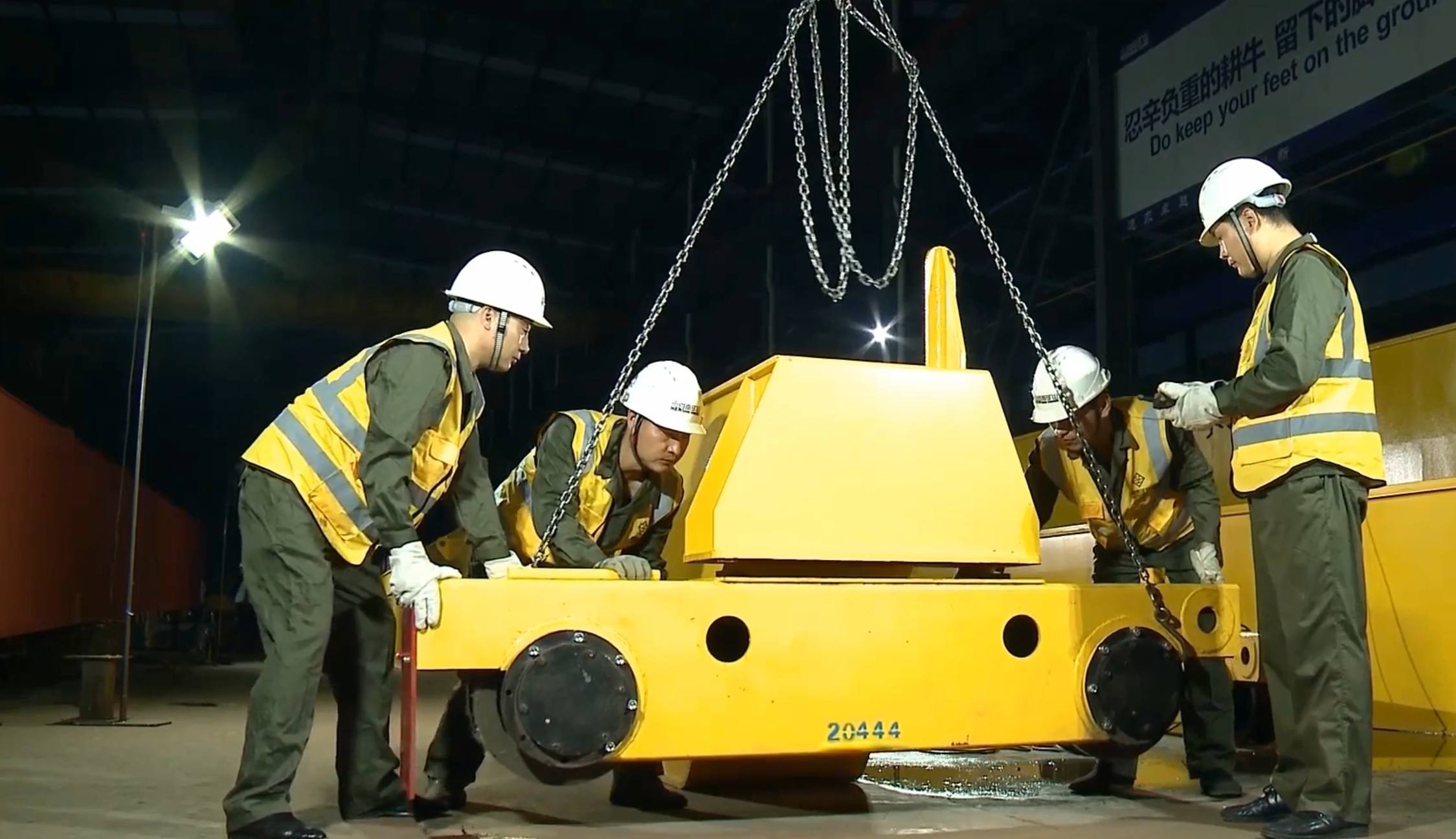
    View product parameters
    Lifting capacity: 1–20 tSpan: 7.5–31.5 mLifting height: 6, 9, 12, 18, 24 or 30 m; capacity-dependent

    Use an LDA single-girder bridge and electric hoist for general workshop material handling. Select the lifting capacity, runway geometry and hoist duty around the building and load.

    LH Electric Hoist Double Girder Crane
    View product parameters
    Lifting capacity: 3, 5, 10, 16, 20 tSpan: 10.5–31.5 mLifting height: 6, 9, 12 or 18 m

    Use an LH double-girder bridge with an electric-hoist trolley for workshop lifting, assembly and maintenance. Match the hoist arrangement to the suspended load, hook travel and available building space.

    Updated 2026 · Henan Mine Crane