博客

  • What Is a Gantry Crane? Structure, Working Principle and Uses

    What Is a Gantry Crane? Structure, Working Principle and Uses

    What Is a Gantry Crane? Structure, Working Principle and Uses

    Gantry Crane is a core equipment with high attendance rate in the material handling site of heavy industry. Whether it is container stockpiling in ports, bridge girder handling in prefabrication yards, or heavy steel assembly in workshops, it silently undertakes key lifting tasks.Many purchasers in contact with this type of equipment, the first by the “tonnage” “span” of these parameters around the dizzy, but also easy to confuse it with the bridge crane.

    In fact, the core advantage of the gantry crane is very clear: it can work independently from the plant building, especially suitable for outdoor and heavy-duty working conditions. Next, I will from the basic definition, core structure, working principle, and then to the actual application and selection points, with a front-line engineer’s point of view, to make these key information clear.
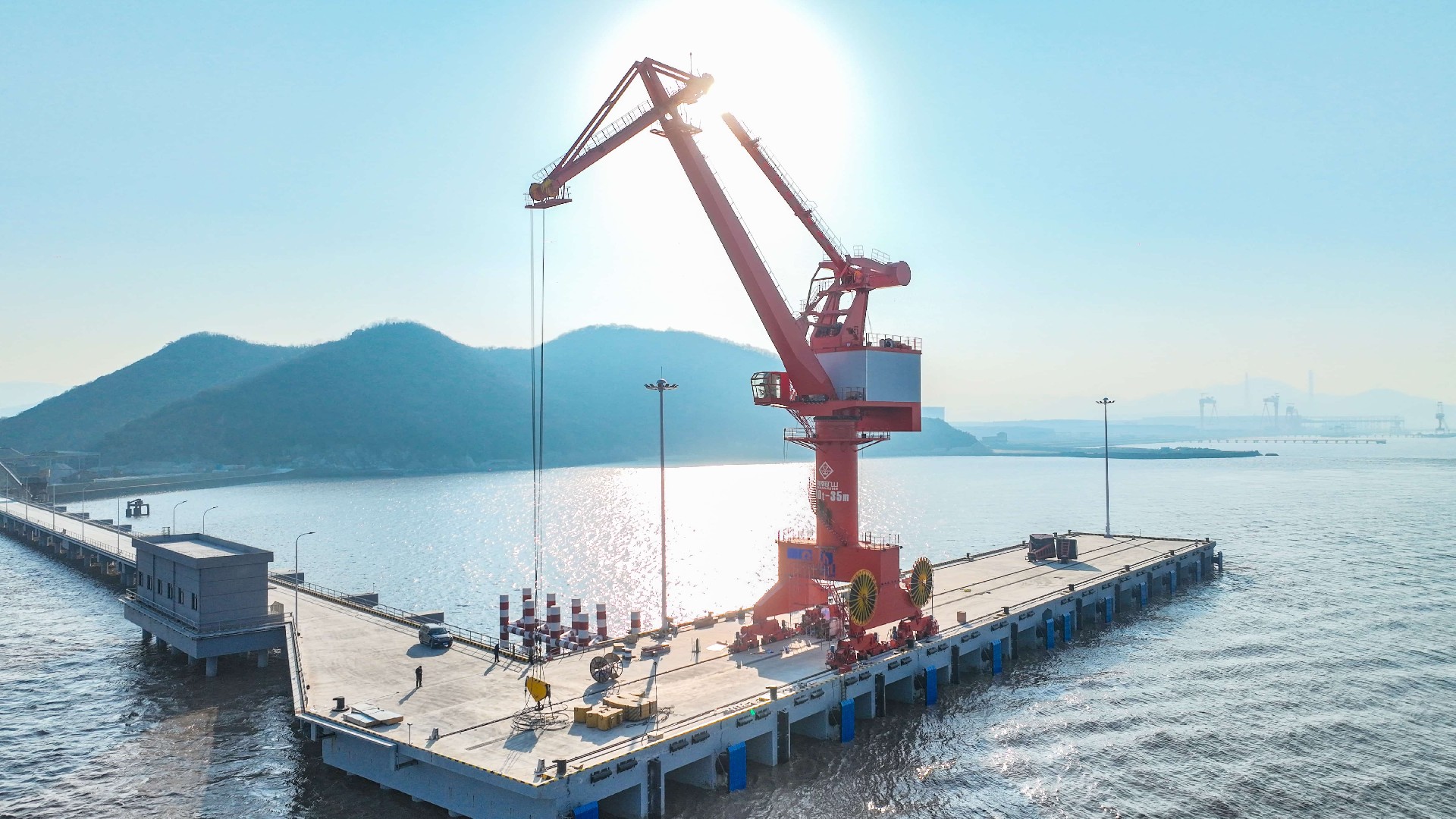
    MGG engineering gantry crane for sale

    What Is a Gantry Crane?

    Basic Definition

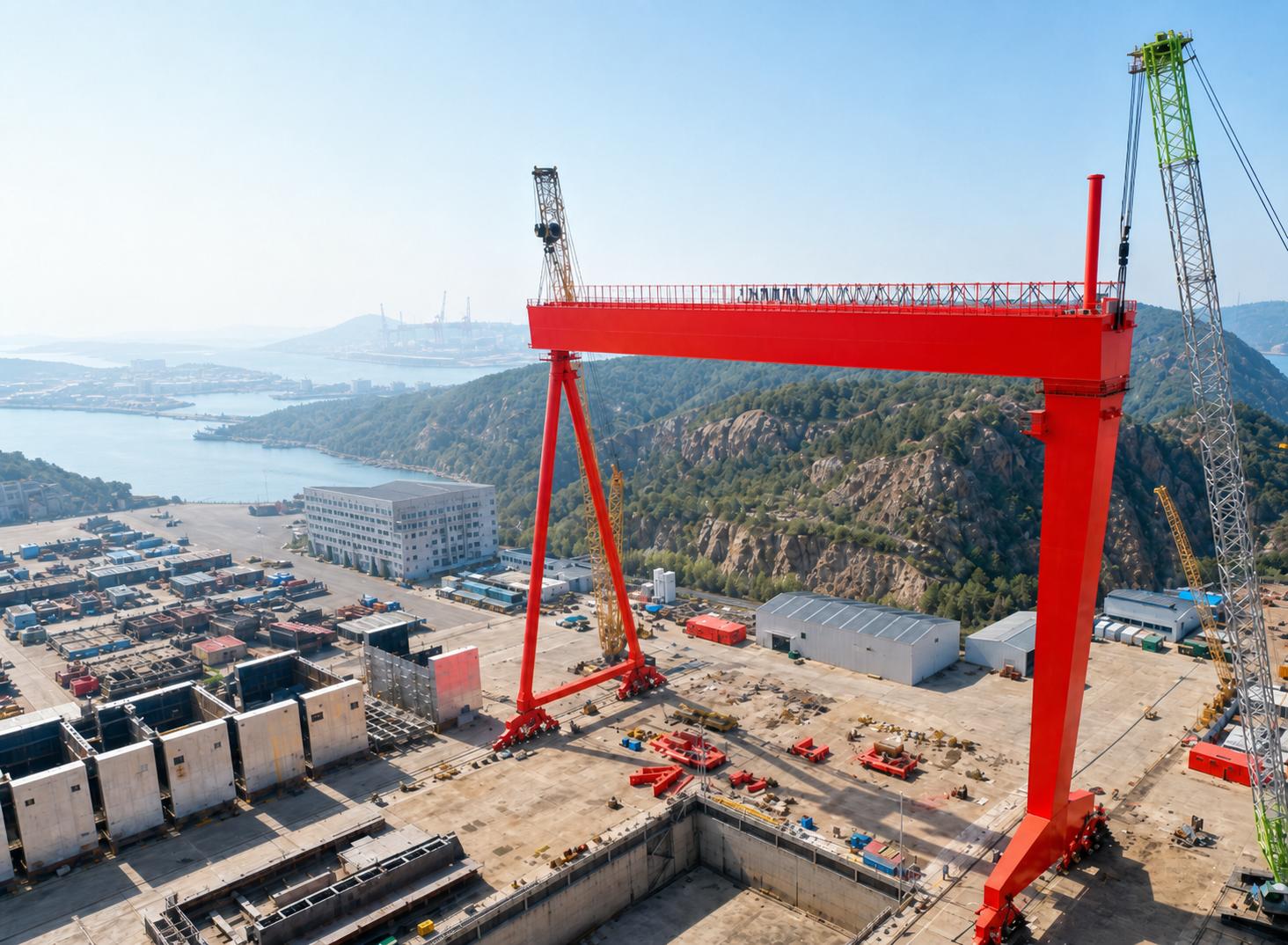
    The core structure of a gantry crane is a horizontal main beam, supported by two or more vertical outriggers at both ends or in the middle, and equipped with a walking device at the bottom of the outriggers – either steel wheels that fit on the track or rubber tires that can be moved freely.

    This structure allows it to accomplish both vertical lifting and lowering of heavy loads, as well as moving horizontally with heavy loads. Unlike ordinary lifting equipment, it forms a complete lifting system on its own, without the use of any external structures, which is the most essential difference between it and a bridge crane.

    Key Characteristics

    The first core characteristic of gantry crane is independent support structure. Its outriggers directly transfer the weight of the whole machine and lifting load to the ground, without having to rely on the columns or roof of the plant as in the case of bridge cranes, which is also the basis for its ability to work in the open field.

    Its operation scenes are not limited to outdoor, indoor large-scale workshop can also be adapted. For example, in a large steel processing plant, when the workshop space is sufficiently open, the gantry crane can connect indoor processing and outdoor yard material transfer, which is very practical.

    Large span and high load capacity is another major feature. According to the demand of working conditions, its span can be customized from a few meters to dozens of meters, and its lifting capacity covers from 5 tons to more than 1,000 tons, which can meet all kinds of lifting needs from light maintenance to heavy shipbuilding.

    Compared with bridge cranes, it is also more flexible in terms of installation. Track-type gantry cranes only need to lay a simple ground track, and tire-type cranes do not even need a track, and can be put into use by leveling the site without large-scale reconstruction of the existing site.

    Main Structure of a Gantry Crane

    Many customers will ask “how to judge the quality of a gantry crane” when inspecting the equipment. In fact, the answer is very simple, look at its six core structural components, you can have a basic judgment on the performance and durability of the equipment. These components work in conjunction with each other, and if one of them is missing, the whole machine will not be able to complete the lifting operation properly.

    Main Girder

    The main girder is the core component of the gantry crane that carries the trolley and the hoisting mechanism, and all the lifting loads will eventually be transferred to the main girder. Its design directly determines the maximum lifting capacity and span of the crane.

    The main girder is mainly divided into two forms: single main girder and double main girder. Single main girder mostly adopts I-beam or combined cross-section, which has lighter deadweight and lower processing and manufacturing cost; double main girder is mainly box beam or truss structure, which has greater cross-section stiffness and can withstand larger load and span, and is the first choice for heavy-duty operation.

    In actual selection, single main girder is preferred for light and medium load scenarios, while double main girder is a safer choice for heavy-duty working conditions such as shipbuilding and harbor.

    Support Legs

    Support legs are the “leg bones” connecting the main beam and the ground, and their core role is to evenly distribute the load transmitted by the main beam to the walking mechanism or track on the ground. Its structural strength and stability are directly related to the safety of the whole machine.

    The shape of the outrigger will be designed according to the operational requirements, and the common ones are L-type and C-type. L-type outrigger has a simple structure and is suitable for regular working conditions; C-type outrigger will be bent or inclined to leave a larger lateral space, so that the extra wide cargo can pass under the outrigger without any problem.

    For semi-portal cranes, one side of the outrigger is on the ground, and the other side is attached to the wall or column of the plant, which can further save space and equipment costs.

    Hoisting Mechanism

    Hoisting mechanism is the “power core” of gantry crane, responsible for completing the vertical lifting and lowering of heavy loads, and it is also the most critical execution part. Its main form is electric hoist or winch system, the specific selection depends on the lifting tonnage.

    Light and medium-sized load (usually 5-30 tons) generally with electric hoist, compact structure, easy to operate; heavy load (more than 30 tons) need to use the winch system, which is more powerful, can withstand a long period of high-intensity operation.

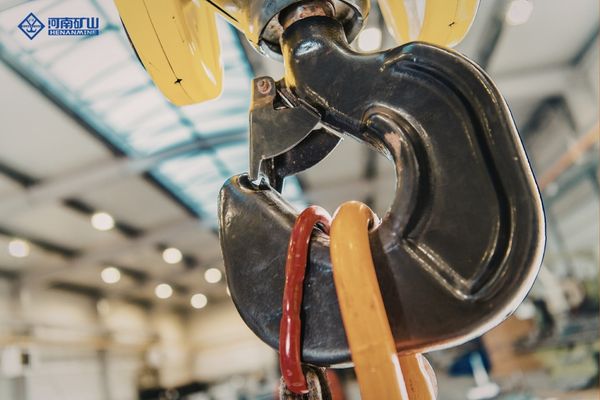
    No matter which form, the hoisting mechanism is composed of motor, reel, wire rope (or chain), hook set and other components. The material of the wire rope and the design of the drum will directly affect the smoothness of the lift and the service life of the equipment.

    Trolley System

    The trolley system is equivalent to the “arm” of the gantry crane, which is erected on the track of the main beam, and can move horizontally along the main beam with the hoisting mechanism, and its core role is to adjust the position of the load in the direction of the span to realize accurate positioning.

    The trolley system mainly consists of frame, traveling wheels, driving device and guiding device. The trolley of double main girder gantry crane usually runs between two main girders for better stability; while the trolley of single main girder adopts under-hanging design, which is directly suspended on the rail below the main girder.

    In the handling of long materials, double trolley configuration is also used. The synchronized action of two trolleys ensures that the materials are always kept horizontal, avoiding tilting during the handling process.

    Traveling Mechanism

    The traveling mechanism is the “mobile foot” of the gantry crane, which is installed at the bottom of the outrigger and is responsible for driving the whole machine to move in the specified direction, thus expanding the operation coverage. Its form corresponds directly to the way the crane moves.

    The running mechanism of rail-type gantry cranes is a steel wheel set, which runs with the pre-embedded steel rails on the ground, with a fixed trajectory and high positioning accuracy; tire-type gantry cranes are equipped with rubber tires and a hydraulic drive system, which can move freely on a flat surface, and are extremely flexible.

    The braking system and buffer device in the operating mechanism are the key safety components, the braking system can make the whole machine stop smoothly, and the buffer device can avoid hard collision between the crane and the end of the rail or other equipment.

    Electrical Control System

    The electrical control system is the “brain” of the gantry crane, from which all the commands are issued and all the safety protection functions are integrated. At present, the mainstream equipment adopts PLC control system, which can realize the precise coordination of movements.

    There are two main operation modes: cab operation and wireless remote control operation. The cab is generally set on the side of the main beam or above the trolley, which is suitable for long time and high frequency operation; the wireless remote control is more flexible, the operator can observe the lifting situation at any position on the site, which is suitable for complex working conditions.

    Overload protection, limit protection, emergency braking and other safety functions are also realized through the electrical system. When the equipment is overloaded, over travel and other abnormal conditions, the system will automatically cut off the power to avoid safety accidents.

    How Does a Gantry Crane Work?

    The working process of a gantry crane is essentially a three-directional movement to transport heavy loads from one position to another. These three movements seem to be simple, but only with the cooperation, can complete efficient and safe lifting operations.

    Vertical Lifting Movement

    Vertical lifting is the most basic movement of the gantry crane, which is completed independently by the hoisting mechanism. When the operator sends out the lifting command, the motor of the lifting mechanism starts and drives the drum to rotate.

    When the drum rotates, the wire rope will be reeled or released, and the hook set will rise or fall accordingly. When rising, the wire rope bears the tension of the weight and lifts the weight from the ground; when descending, the reel slowly releases the wire rope and puts the weight into the specified position smoothly.

    During this process, the inverter drive system of the hoisting mechanism will play a role in making the lifting and lowering action smoother and avoiding the impact on the heavy load or equipment due to excessive speed.

    Horizontal Trolley Movement

    When a heavy load is lifted, it needs to be repositioned within the span of the main beam, which requires the horizontal movement of the trolley system. The operator controls the trolley drive to move the trolley from side to side along the track of the main beam.

    For example, in a steel processing plant, lifting a steel plate from the raw material area to the cutting station requires lifting the plate and then moving the trolley to accurately deliver the plate to the top of the cutting equipment. The movement accuracy of the trolley directly affects the operational efficiency of the subsequent processes.

    For large-span cranes, the traveling speed of the trolley will be divided into two gears, high speed for empty load and low speed for heavy load, taking into account the efficiency and safety.

    Longitudinal Crane Travel

    The movement of the trolley can only cover the span of the main girder, while the longitudinal operation of the whole machine allows the crane to extend its working range to the whole site. When heavy loads need to be transported from point A to point B in the working area, the running mechanism will drive the whole machine to move along the rail or the ground.

    For example, in a container yard, a rail-mounted gantry crane can cover the entire stockpile area along the rail, transport containers from one end of the yard to the other, and move with the trolley to complete the stacking operation at different locations.

    When the whole machine is running, it will be protected by a travel limit device. When approaching the end of the track, the system will automatically slow down and stop to prevent derailment.

    Three-Dimensional Material Handling

    Combining the three actions of vertical lifting, lateral movement of the trolley and longitudinal running of the whole machine, the gantry crane realizes three-dimensional material handling in X, Y and Z directions. This is the core reason why it can be adapted to all kinds of complex lifting scenarios.

    To give a practical example, in the port container loading and unloading operations: first of all, through the lifting mechanism, the container in the truck is lifted vertically; then the trolley moves horizontally to move the container to the designated columns in the yard; and finally the whole machine operates vertically to move the container to the designated rows, and then vertically descends to the stockpile position. The whole process is the perfect cooperation of the three movements.

    Different Types of Gantry Cranes

    There is no “all-purpose model” for gantry cranes, and different operational scenarios and load requirements correspond to different types. Just like the tools should be selected according to the needs, choose the right model, in order to ensure that the operational needs at the same time, control the procurement and operating costs.

    Single Girder Gantry Crane

    Single Girder Gantry Crane is the representative of lightweight design, the overall weight is light, and the processing and installation costs are much lower than double girder models. With a lifting capacity of 5-30 tons and a span of no more than 20 meters, it is suitable for light and medium loads.

    For example, it can be used for precast panel handling in small precast concrete yards, equipment maintenance in machine shops, and heavy load transfer in small warehouses. It is also easy to maintain, with fewer wearing parts and low operating costs.
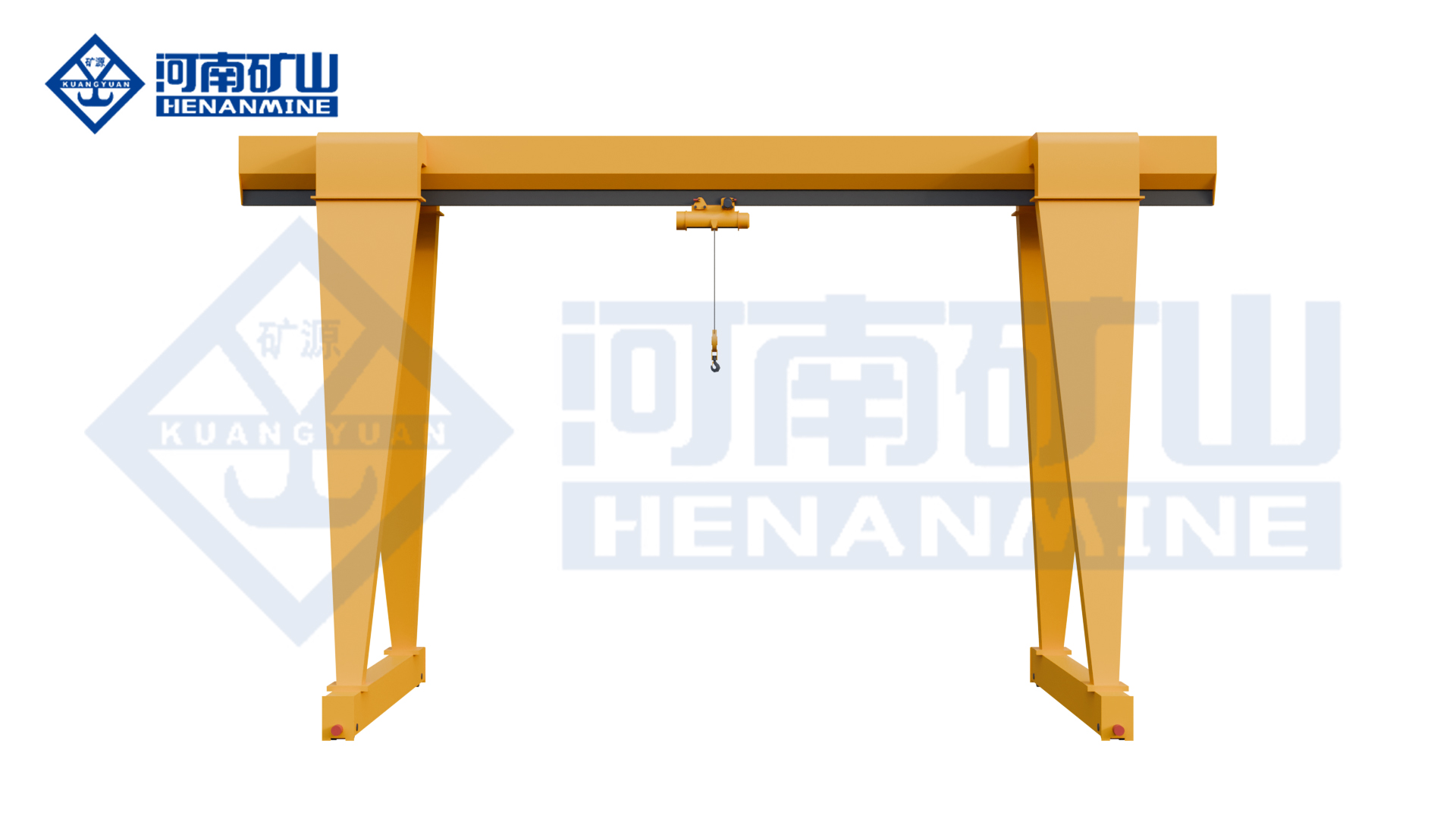
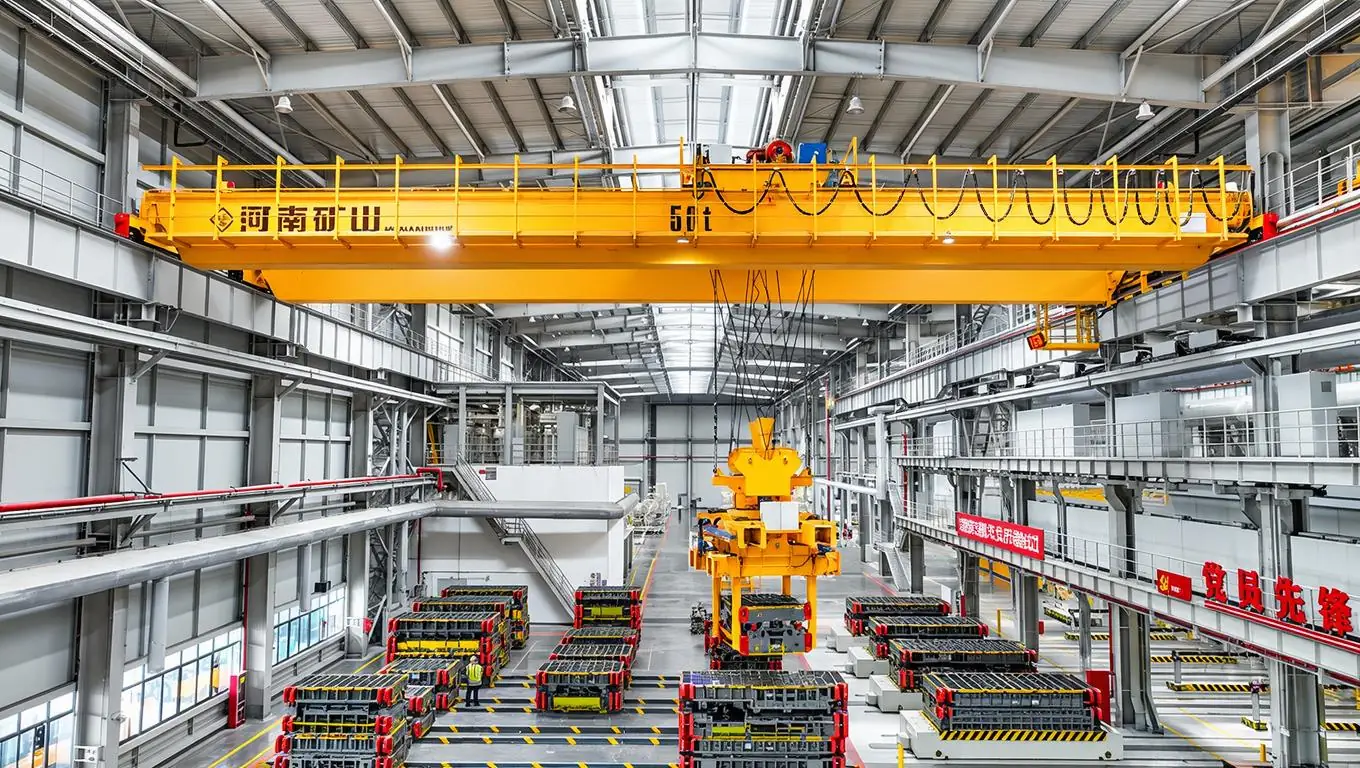
    Single-girder gantry crane 10 ton

    Single-girder gantry crane manufactured by Henan Mine Crane

    Double Girder Gantry Crane

    Double Girder Gantry Crane is the “main force” for heavy-duty operations, with large structural rigidity, strong carrying capacity, lifting capacity from 30 tons to more than 1,000 tons, and greater customization of lifting height and span.

    Hull segment lifting in the shipbuilding industry, heavy container handling in ports, and steel ladle transfer in steel mills are all its core application scenarios. Although the initial purchase cost is higher, its stability and durability are more guaranteed in long-term high-intensity operations.
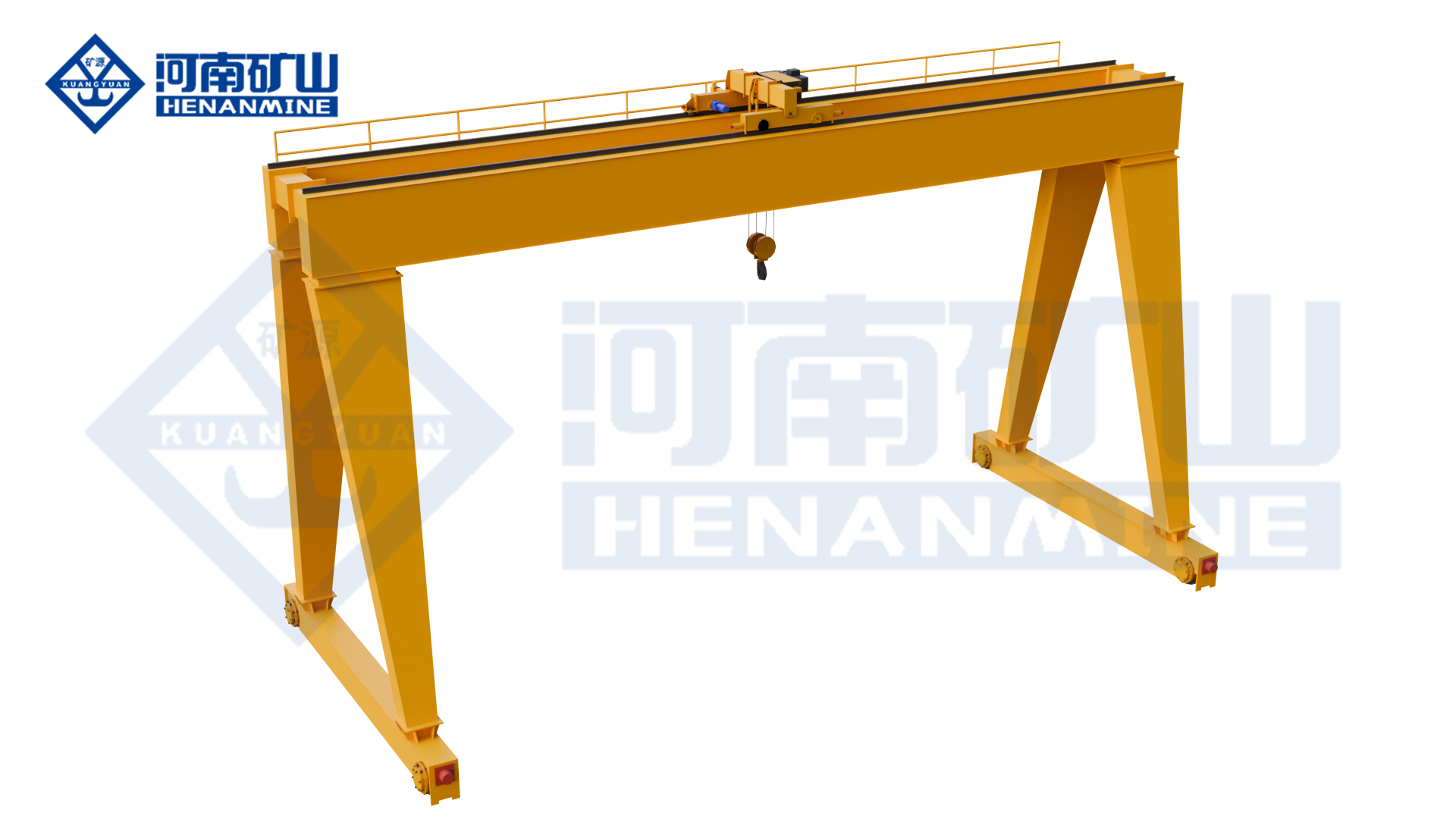
    KSMHS New Dual-Girder Gantry Crane for sale

    Henan Mine Crane’s KSMHS gantry crane

    Rail Mounted Gantry Crane (RMG)

    The core feature of the Rail Mounted Gantry Crane (RMG) is that it runs along a fixed track, and the moving trajectory cannot be changed. Its positioning accuracy can reach centimeter level, which is suitable for operation scenarios requiring high-density stockpiling.

    Container terminals and large logistics hubs are its main application sites. At these sites, RMG can work with automation systems to realize automatic stacking and accessing of containers, significantly improving operational efficiency. It has a relatively high capital cost, but has obvious advantages in long-term stability and efficiency.
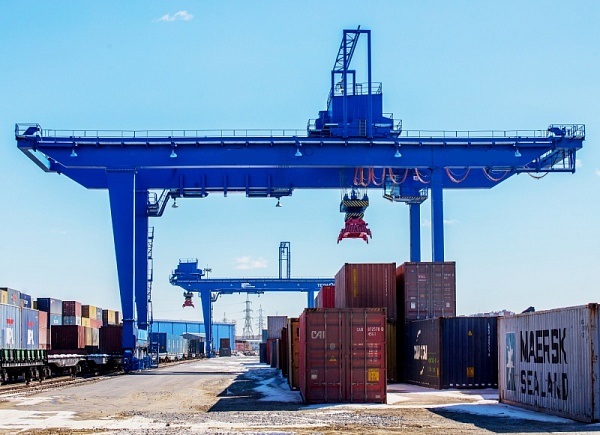
    Rubber Tyred Gantry Crane (RTG)

    Rubber Tyred Gantry Crane (RTG) is free from the limitation of tracks, relying on rubber tires to move freely on the level ground, with great flexibility. It does not need to lay special tracks, has low site modification costs, and can be quickly deployed to temporary operating sites.

    RTGs are commonly used in small and medium-sized ports, temporary container yards, and prefabricated parts processing plants, where they can be moved across container zones and operating areas to accommodate flexible adjustments to the site layout, although the positioning accuracy and stockpiling density are slightly lower than those of RMGs.

    Portable Gantry Crane

    Portable Gantry Crane is a miniaturized and detachable model, with a lifting capacity of 5-10 tons, and the span and lifting height can be flexibly adjusted. It has a simple structure, light weight, and can be disassembled and transported by forklift or trailer.

    Equipment maintenance in factory workshops, temporary small parts lifting in construction sites, heavy equipment handling in laboratories are all its application scenarios. No specialized tools are needed for its installation, and operators can get started after simple training, making it an ideal choice for temporary lifting operations.
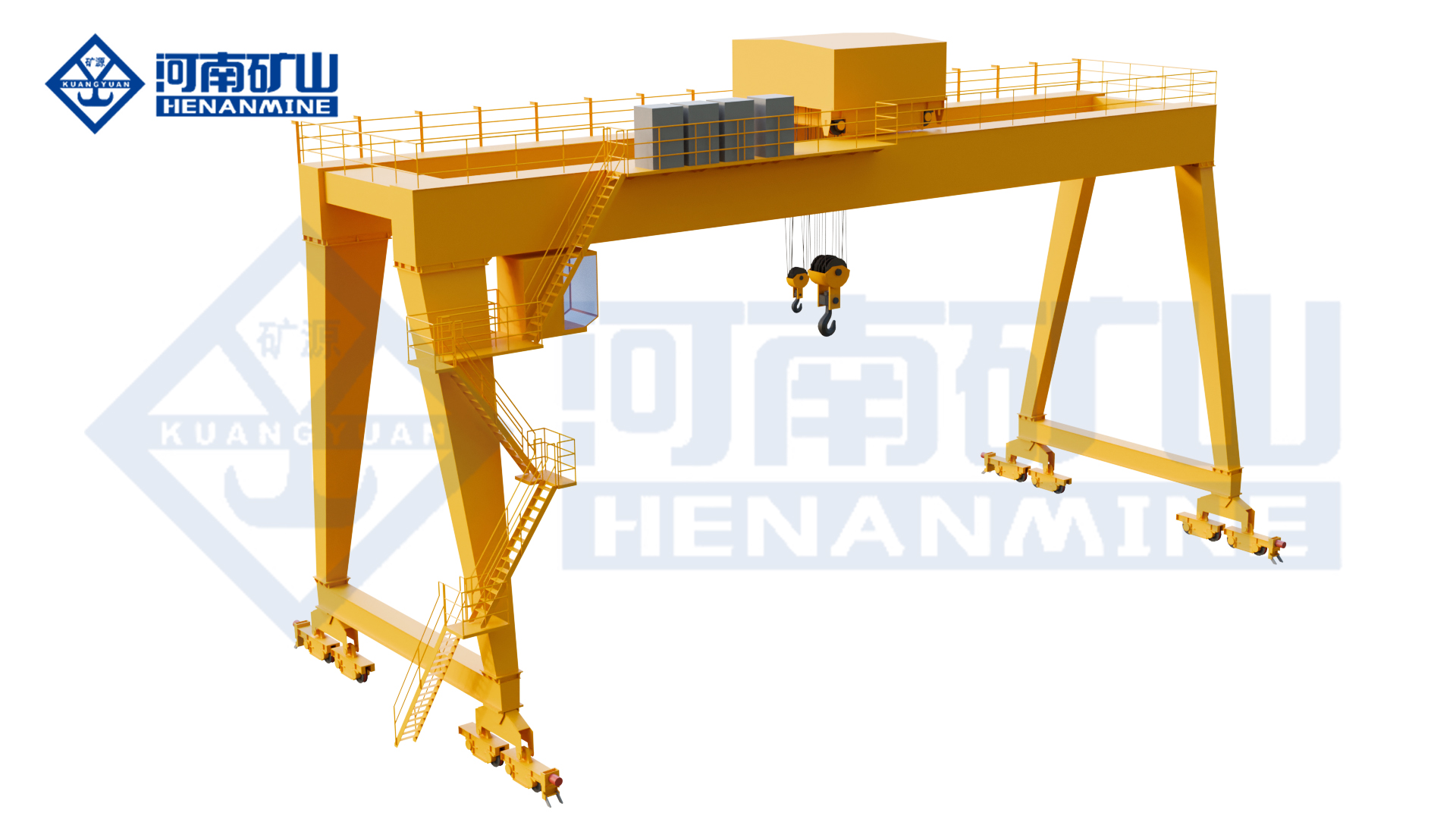
    MHS Double-Girder Gantry Crane supplier

    Henan Mining Manufacturing’s MHS gantry crane

    Major Industrial Applications of Gantry Cranes

    Gantry cranes are used in almost all heavy industries that require heavy material handling. Different industries have different operational requirements, and the suitable models and configurations may also vary, which is why it can become a general-purpose lifting equipment.

    Ports and Container Terminals

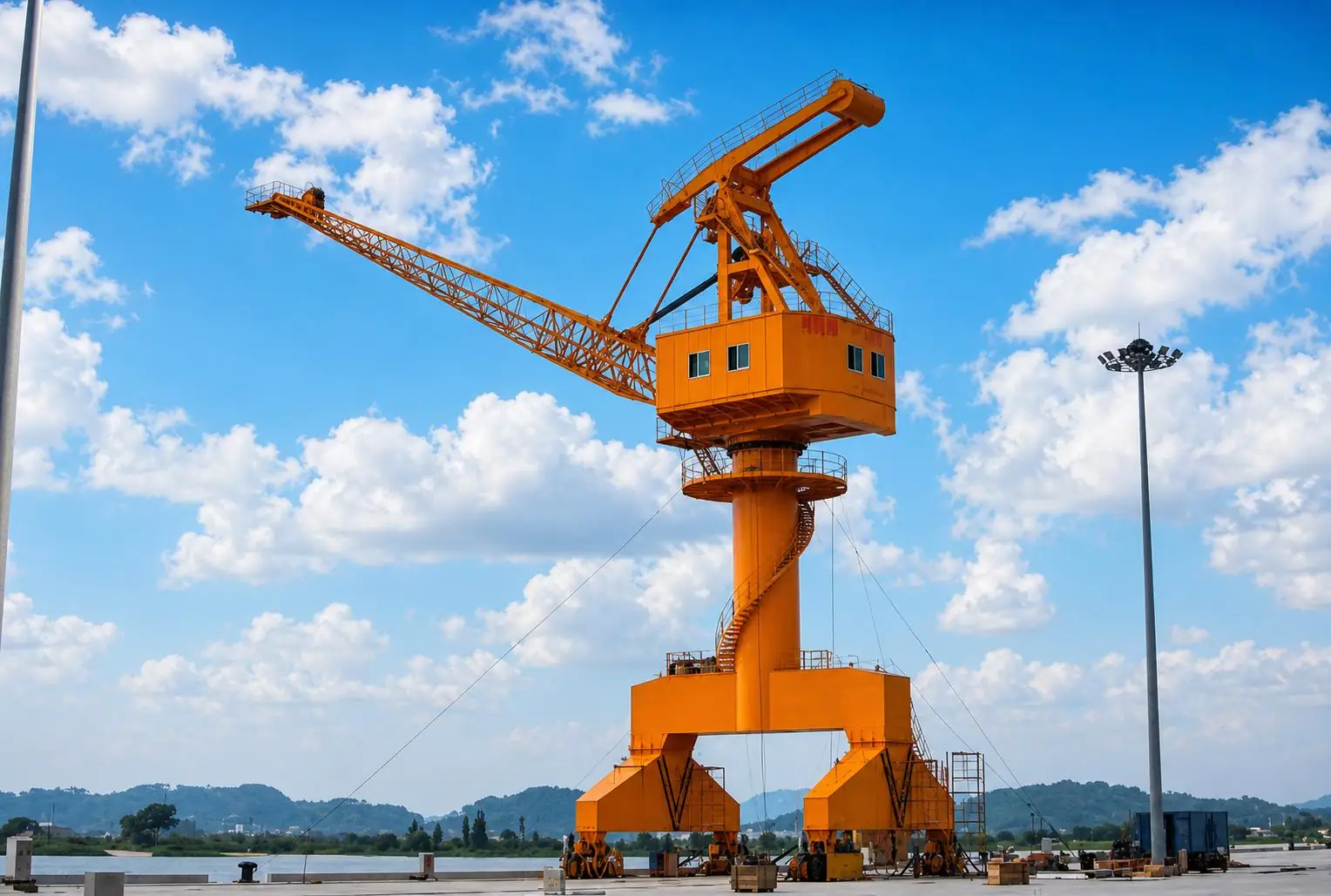
    Ports and container terminals are the core application scenarios of gantry cranes, where RMG and RTG have a high rate of appearance. Their core tasks are container storage, loading and unloading, as well as connecting the port and land logistics transfer.

    Automated yards in large deep-water ports mainly use RMG to realize unmanned stacking of containers with automated systems; small and medium-sized ports or temporary yards prefer RTG, which is adapted to different operational needs by virtue of its flexibility.

    In addition to containers, gantry cranes can also be used with grapples to complete the loading and unloading of bulk cargoes, such as coal and ore, to meet the port’s multi-category cargo handling needs.

    Shipbuilding Industry

    The shipbuilding industry has very high requirements for gantry cranes, which not only need large tonnage, but also need high precision. Here, gantry cranes are mainly responsible for lifting and assembling hull segments, engines, propulsion systems and other heavy components.

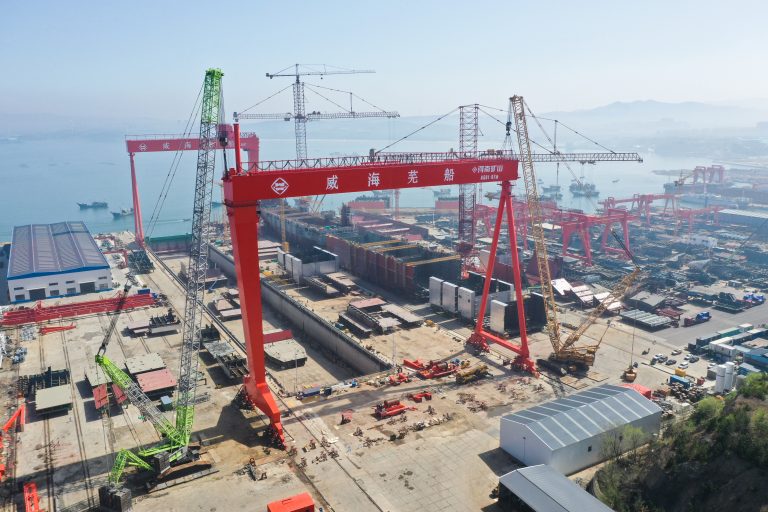
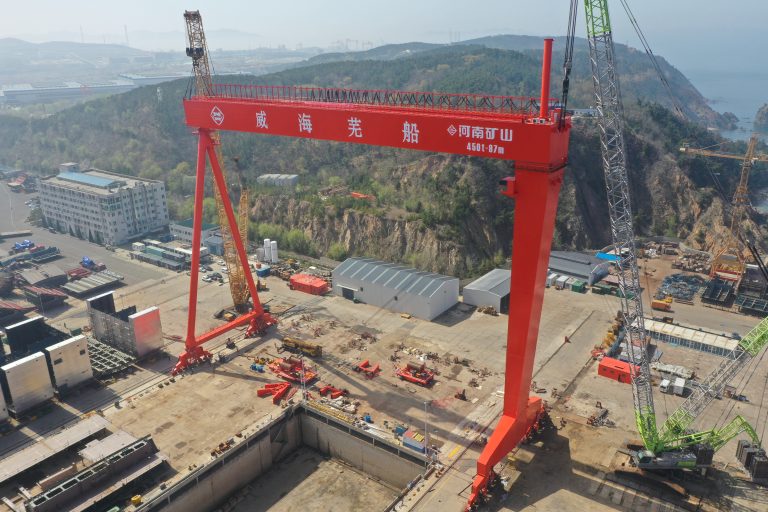
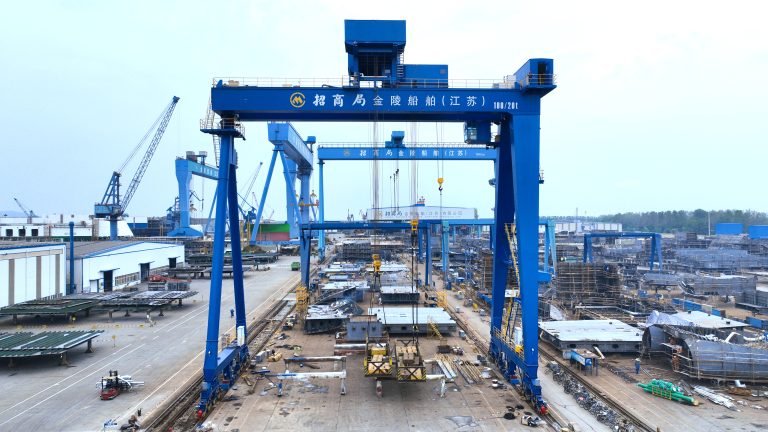
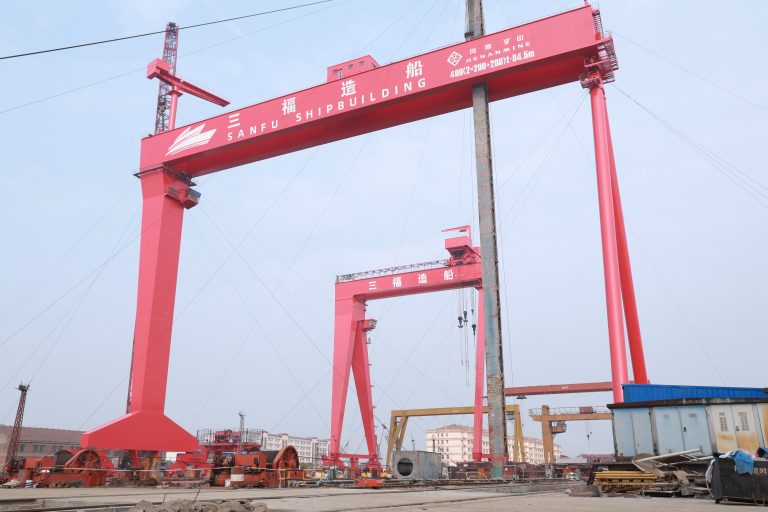
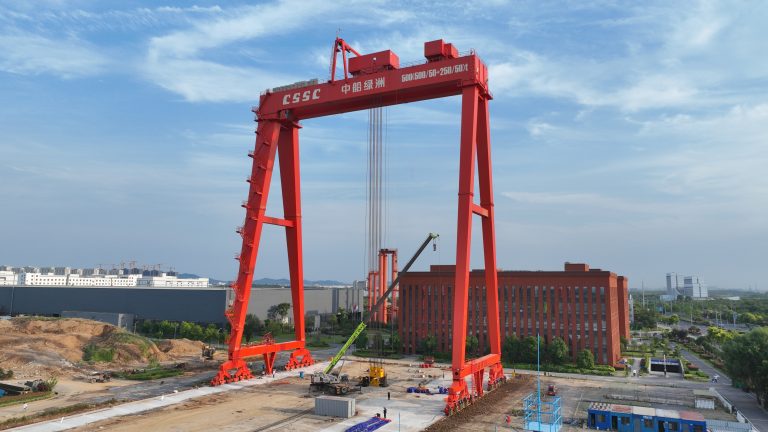
    Above the dry dock of large shipyards, double main girder giant gantry cranes with a lifting capacity of more than 500 tons are usually installed to lift hull segments that are dozens of meters long and weigh hundreds of tons to ensure the precision of segment docking.

    These heavy gantry cranes are also used for lifting modules of offshore platforms for offshore engineering to complete the transportation and installation of oversized modules in the open space of the seashore.

    Precast Concrete Yards

    Precast concrete production sites are mostly open-air layouts without fixed plants, where the independent structure of gantry cranes shows great advantages. Its core task is the handling of bridge girders, precast slabs, precast columns and other concrete components.

    The most commonly used here is the tire-type gantry crane, whose flexible mobility can be adapted to the irregular layout of the yard, lifting precast components from the production line to the yard for stockpiling, or directly loading trucks for transportation.

    For light and medium-sized prefabricated components, single girder gantry cranes have more obvious cost advantages and can fully meet the operational requirements.

    Steel and Metal Fabrication

    In the steel and metal fabrication industry, the gantry crane runs through the entire production process from raw materials to finished products. It is responsible for lifting raw materials such as steel plates and sections from the yard to the processing station, and then transferring the processed steel components to the assembly area or finished product yard.

    For the handling of long steel bars, gantry cranes with double hoist configuration are used, and the two hoists are synchronized to ensure that the steel is always horizontal and avoid bending or collision during the handling process.

    Semi-gantry cranes are also used in some of the workshops to connect the indoor processing with the outdoor yard to minimize the secondary transportation of materials.

    Construction Projects

    On construction and infrastructure projects, gantry cranes are the core equipment for lifting heavy components. In bridge construction, it is responsible for accurately lifting prefabricated girders to the piers to complete the girder installation; in highway and railroad projects, it is also indispensable for the handling of large equipment and the transfer of roadbed materials.

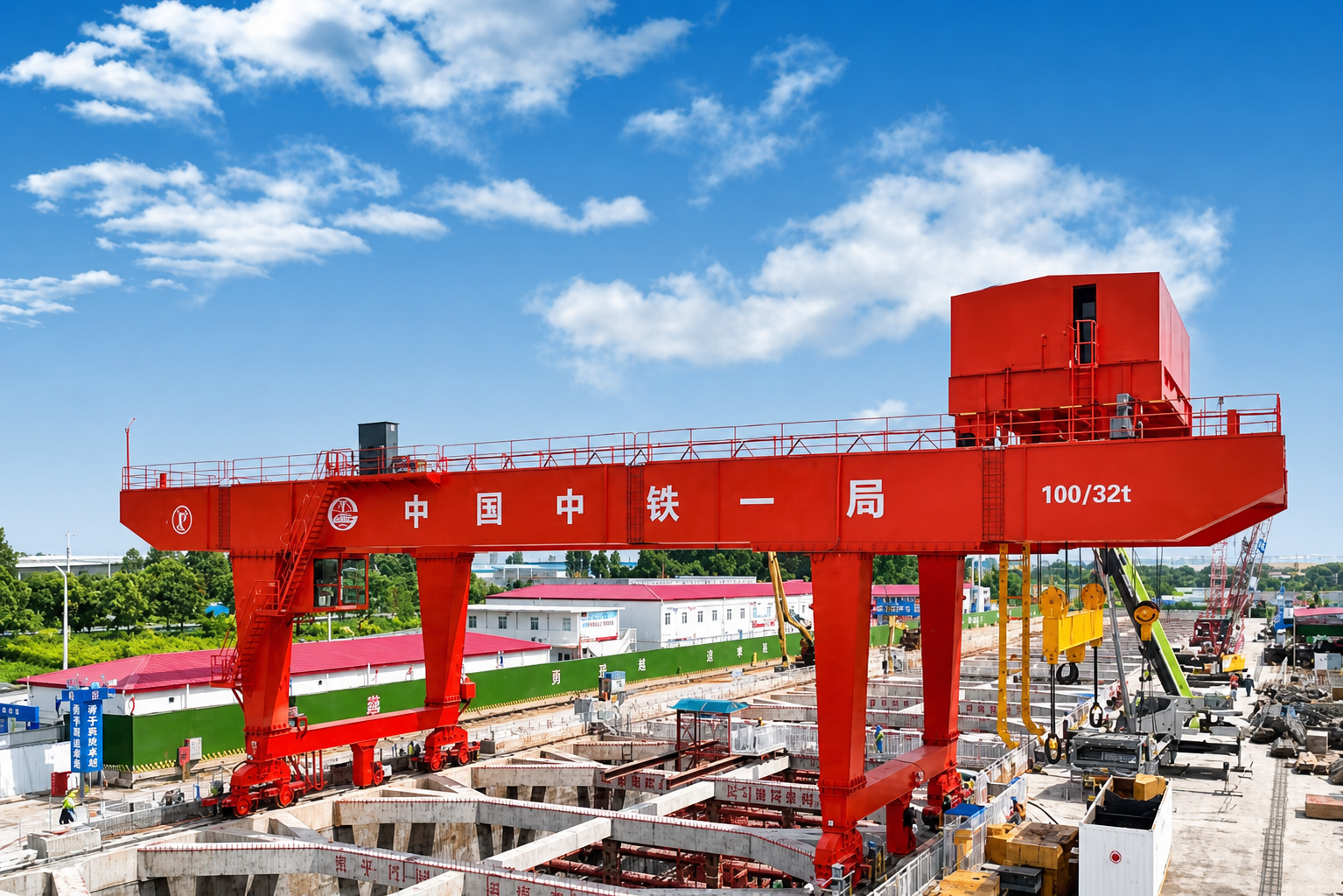
    Tube sheet handling in tunnel projects is a special application scenario for gantry cranes. It can be in the open field at the tunnel entrance, lifting the tube sheet to the designated location in the tunnel, adapted to the special working conditions of tunnel construction.

    The project site is mostly a temporary site, and the quick installation and dismantling characteristics of the gantry crane allow it to be transferred to other sites for reuse after the project is completed, reducing equipment investment costs.

    Warehouses and Logistics Centers

    Large warehouses and logistics centers, especially those with outdoor yards, gantry cranes are the core equipment for outdoor heavy load handling. It is mainly responsible for the handling and stacking of large machinery and equipment, heavy parts and components, and extra-wide and extra-long goods.

    The weight and size of these goods, far beyond the carrying range of ordinary forklifts, can only rely on gantry cranes to complete lifting. The flexibility of the tire gantry crane can be adapted to the dynamic operational needs of the logistics yard, connecting the trucks and warehouses for material transfer.

    The span of the gantry crane can be customized according to the dimensions of the yard to ensure coverage of the entire operating area and enhance the efficiency of material flow.

    Advantages of Gantry Cranes

    The core reason why gantry cranes can occupy an important position in the heavy industry is that their advantages precisely solve the industry’s lifting pain points. These advantages are not theoretical “highlights”, but practical value proven over a long period of time.

    No Need for Building Support

    Self-supporting structure is the core advantage of the gantry crane. It does not need to be attached to the plant columns, roofs and other building structures, and can form a complete lifting system by itself.

    This means that it can be deployed directly in the open field without extensive building modifications to the existing site. This is particularly important in scenarios where there is no fixed plant, such as in ports, mines and prefabrication yards, and can lead to significant savings in capital costs.

    Ideal for Outdoor Operations

    The design of the gantry crane has fully considered the harsh outdoor environment. Its metal structure will use anti-corrosion coating to resist salt spray corrosion in coastal areas and dust erosion in mines; the electrical system is sealed to prevent rainwater and dust from entering.

    For windy outdoor scenarios, it can also be equipped with a windproof device to ensure the safety of equipment and operations in windy weather. These designs allow it to operate stably for a long time outdoors and adapt to all kinds of complex natural environments.

    High Load Capacity

    The gantry crane has a wide range of load capacity, from 5 tons of light work to over 1,000 tons of super-heavy work, all of which can be realized through customization.

    The box girder structure of double main girder gantry cranes can effectively spread the load to withstand the lifting requirements of oversized tonnage; the combined cross section of single main girder can also meet the load requirements of most light and medium-sized working conditions. This flexible loading capacity allows it to adapt to the operational needs of different industries.

    Flexible Installation

    Gantry cranes can be installed flexibly to meet the needs of different sites. The rail-type models only need to lay a simple ground track, and the installation and commissioning can be completed in a few days; tire-type models do not need a track, and can be put into use after leveling the site.

    Portable gantry cranes are simpler to install and can be quickly transferred to a new operating position after dismantling. Such flexible installation characteristics make it suitable for temporary sites, old yards and other complex sites.

    Wide Working Coverage

    The working coverage of gantry cranes is much larger than that of ordinary lifting equipment. Its span can be customized from a few meters to tens of meters, and the running distance of the whole machine can be designed according to the site, so that a single device can cover a large working area.

    In container yards, prefabrication yards and other large sites, a gantry crane can complete most of the material handling operations, without the need to equip multiple small equipment, which not only saves the cost of equipment purchases, but also simplifies the site equipment management.

    Gantry Crane vs Overhead Crane

    Many purchasers will be entangled between gantry cranes and overhead cranes, in fact, there is no “superiority or inferiority” between the two, only “adaptability”. We can clearly distinguish their differences from four core dimensions to facilitate the choice according to their own working conditions.

    In terms of structure, gantry crane adopts self-supporting outrigger structure, the main beam falls to the ground through the outrigger, and the whole machine exists independently of the building; overhead crane has no outrigger, and the main beam is directly suspended on the columns and roof rails of the plant, which is completely dependent on the structure of the plant.

    In the installation mode, the gantry crane installation flexibility is high, the rail type only need to pave the ground track, the tire type does not need a track, less transformation, short cycle; bridge crane installation is fixed, the need to reinforce the plant, lay the roof track, transformation costs are high, long cycle.

    In the operating environment, gantry cranes are more adaptable and can operate both indoors and outdoors, especially suitable for large outdoor venues; overhead cranes are mainly used in indoor workshops, limited by the plant space, and can not operate outdoors.

    In terms of application scenarios, gantry cranes are mainly used in ports, yards, construction sites, prefabrication yards and other scenarios without a fixed plant; overhead cranes are concentrated in factory workshops, steel plants and other indoor venues, responsible for material handling and equipment maintenance in the workshop.

    How to Choose the Right Gantry Crane

    When choosing a gantry crane, do not blindly pursue “large tonnage, high configuration”, the most economical and practical choice is the one that fits your own working conditions. As engineers, we will mainly refer to the following six core factors when selecting a model for our customers.

    First of all, to clarify the required lifting capacity (lifting capacity demand). This is not only to calculate the weight of the goods itself, but also to add the weight of the spreader, such as grabs, electromagnetic suction cups, at the same time to reserve 10% -20% of the safety margin, to avoid overloading operations.

    Next is span length. The span should be determined according to the actual width of the operating site, to ensure that the main beam of the crane can completely cover the operating area, and at the same time, to reserve the outriggers and site equipment, columns and safety clearance to avoid collision.

    Lifting height (lifting height) should not be ignored. It needs to be determined according to the height of the storage of goods, the installation height of the equipment to ensure that the goods can be lifted smoothly, without interfering with other structures in the site, while reserving a small amount of space to cope with the adjustment of future operational requirements.

    Duty classification is directly related to the service life of the equipment. For scenes with high operating frequency and long duration, such as ports and mines, the duty classification of A6 and above should be selected; for scenes with low operating frequency, such as workshop maintenance, the duty classification of A3-A4 can be selected.

    Operating environment is the key basis for model selection. Coastal shipyards should choose C5 anticorrosive equipment, windy sites should be equipped with a perfect windproof system, and dusty mines should strengthen the sealing protection of the equipment.

    The last is power supply requirements (power supply requirements). Outdoor work cranes, usually choose cable reel or slip line power supply; indoor work can be based on the factory grid, choose the appropriate voltage specifications, to ensure that the power supply of the equipment is stable.

    Frequently Asked Questions

    Combined with the daily experience of receiving customers, I have compiled five of the most frequently asked questions, answered in an easy-to-understand way, to help you quickly clear up the selection and use of key questions.

    1. What is the difference between a gantry crane and a bridge crane?

    The core difference lies in the support structure and operating scenarios. Gantry cranes have independent landing legs, no need to attach to the building, indoor and outdoor work, suitable for yards, harbors, construction sites; bridge cranes have no legs, attached to the roof of the plant and columns, can only work indoors in the workshop, suitable for material handling in the factory.

    2. What industries commonly use gantry cranes?

    Gantry cranes are used in a wide range of industries, among which port container terminals, shipbuilding industry and precast concrete industry are the most frequently used. In addition, steel processing, construction, mining, large warehousing and logistics centers, are also its core application areas.

    3. What is the typical lifting capacity of a gantry crane?

    There is no fixed range of lifting capacity, it is completely customized according to the working conditions. The lifting capacity of the conventional model is 5-100 tons, which is suitable for most industrial scenes; the lifting capacity of the heavy model is 100-500 tons, which is used for shipbuilding and port heavy-duty operations; the super-heavy model can reach more than 500-1,000 tons, which is suitable for offshore engineering, large-scale equipment manufacturing and other special working conditions.

    4. Can gantry cranes be customized for specific projects?

    Of course, customization is the core feature of gantry cranes. Almost all the core parameters can be adjusted according to the project requirements, including lifting capacity, span, lifting height, moving mode, and also can be customized spreader (grab, electromagnetic suction cup), corrosion protection level, operation mode, fully adapted to the specific operating scenarios.

    5. What safety features are included in modern gantry cranes?

    The safety features of modern gantry cranes are very complete, the core includes overload protection device (to prevent overloading), travel limit switch (to limit the operating range), wind speed monitoring system (outdoor wind protection), emergency braking device (emergency shutdown), and some of the heavy-duty models will also be equipped with anti-shaking control system and collision avoidance system.

    Conclusion

    Gantry cranes are indispensable core lifting equipment in the heavy industry. Its independent support structure, flexible installation method and wide load range make it suitable for all kinds of complex working conditions from harbor stockpiling to shipbuilding assembly.

    For purchasers, understanding its structure, working principle and application scenarios is the basis for selection. Choosing the right model and configuration not only meets operational needs, but also improves operational efficiency and reduces long-term operation and maintenance costs.

    In the development of heavy industry, the role of gantry cranes will only become more and more important, and its technology will be constantly upgraded to better suit the lifting needs of various industries.
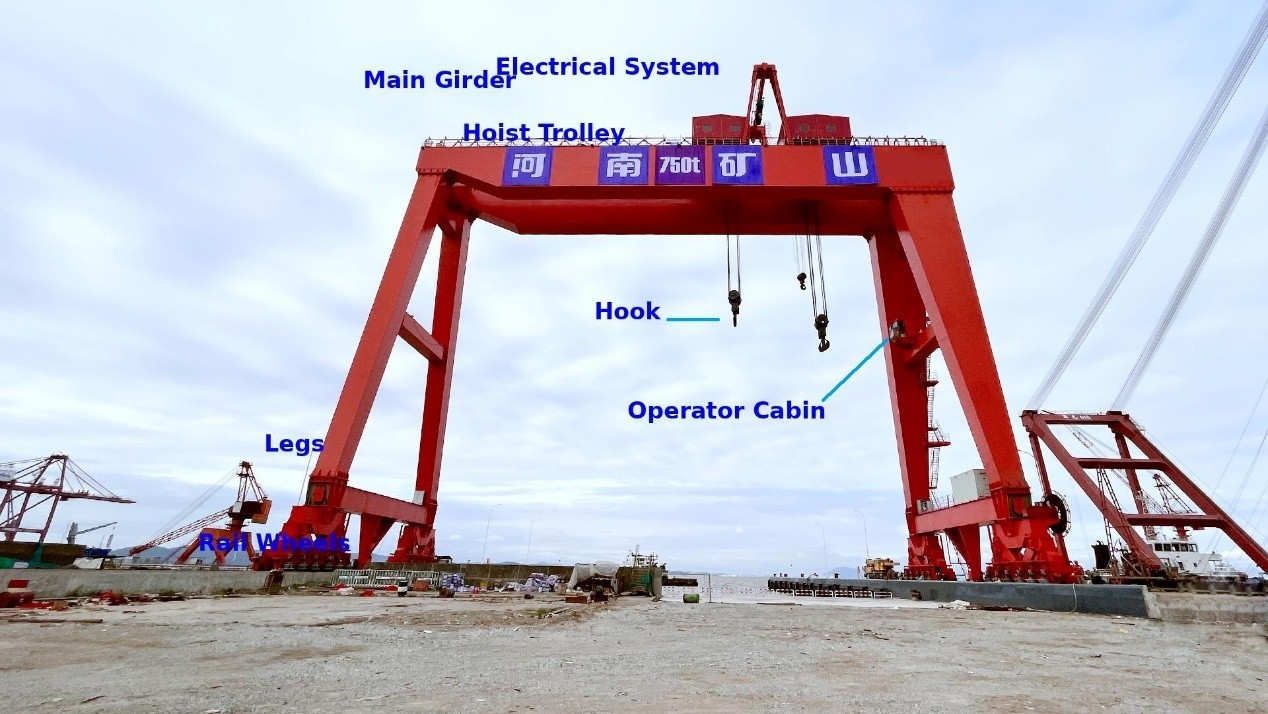
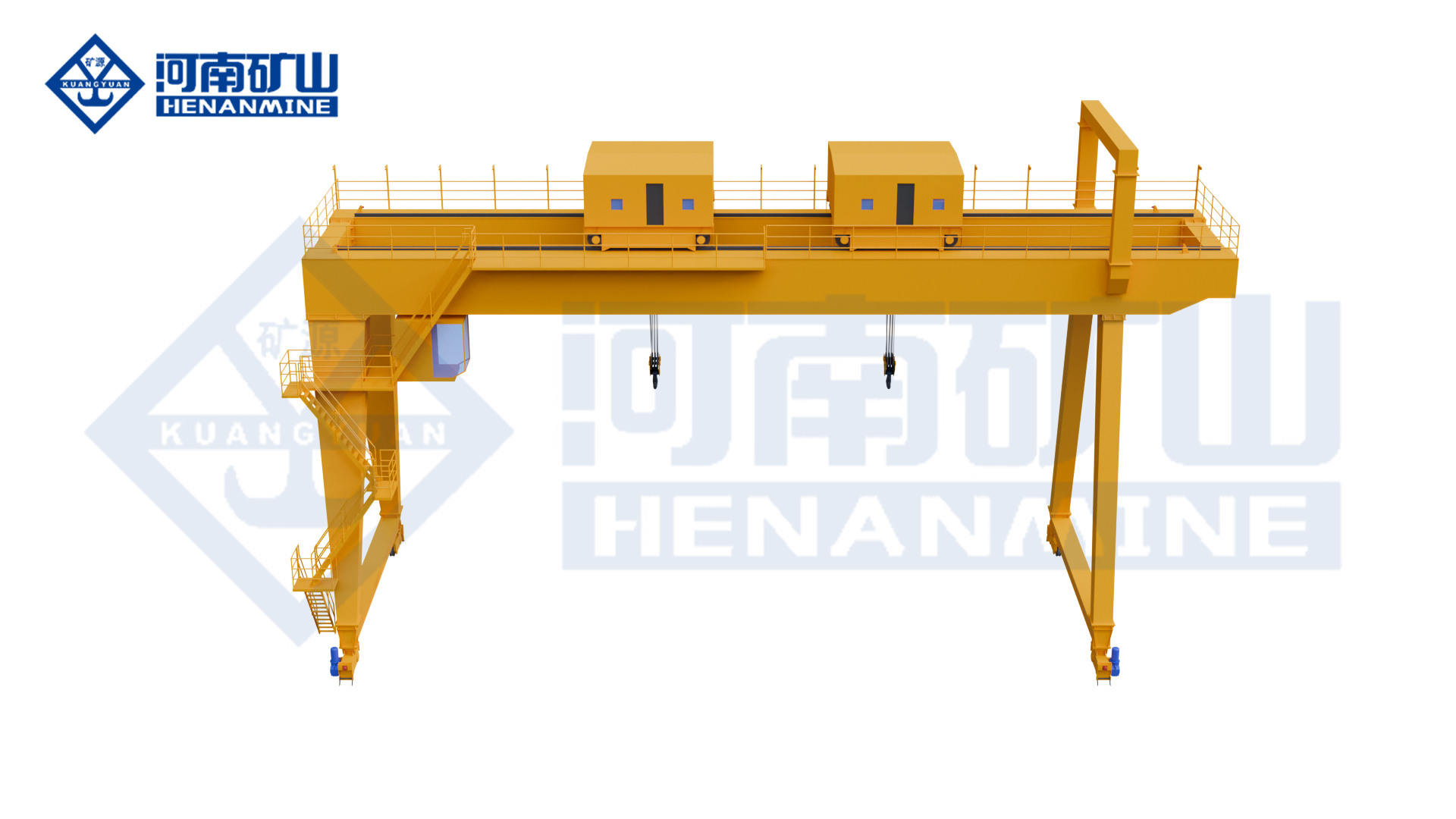
    MG double girder gantry crane for sale

    Henan Mine Crane’s MG double girder gantry crane

    Call to Action

    If you are selecting a gantry crane for your project, and you are not sure whether the lifting capacity, span and other parameters match the working conditions, you may wish to submit the detailed parameters of your project, and we will provide you with free technical advice.

    Henan Mine Crane Factory supply, as a professional crane manufacturer, integrates R&D, design, manufacturing, sales and service to provide customers Please feel free to contact us, we will provide you with free design drawings, and field survey!
     

    Henan Mine CraneDiscuss your requirements ↗
  • What Is a Gantry Crane Definition, Uses, Safety, Inspection and Maintenance Guide

    What Is a Gantry Crane Definition, Uses, Safety, Inspection and Maintenance Guide

    What Is a Gantry Crane Definition, Uses, Safety, Inspection and Maintenance Guide

    In heavy industry manufacturing, port logistics, construction, storage and transfer and other industrial scenarios, gantry crane is an indispensable core lifting equipment, with independent support structure, flexible operation mode, super load capacity, become the outdoor and large space material handling equipment of choice.Many enterprise procurement, equipment operation and maintenance personnel, engineering practitioners often confuse gantry cranes and overhead cranes, and lack systematic knowledge of their model selection, operation specifications, safety control, inspection and maintenance system.This article will disassemble the gantry crane in all directions to create a one-stop gantry crane practical operation guide.It can not only help beginners get started quickly, but also provide professional reference for enterprises.

    What Is A Gantry Crane?

    Definition and basic concept

    Henan Mine Crane Factory supply Gantry crane is a kind of large crane equipment with supporting legs and independent landing operation, which belongs to the core category of bridge crane.The main structure consists of bridge girder, supporting legs on both sides, walking mechanism, lifting mechanism and electric control system. The whole structure is a door-shaped frame structure. It can directly complete heavy lifting, material translation and span operation under the support of ground track or rubber tire without relying on building carriers such as factory roof and wall.

    Compared with traditional lifting equipment, gantry crane is extremely adaptable and compatible with various complex working conditions such as indoor workshops, open storage yards, port terminals, steel plant areas, etc. The load covers from light 3 tons of small equipment to hundreds of tons of heavy industrial models. It is the core equipment for industrial heavy load handling, heavy lifting and batch material transfer. It is widely used in heavy industry production and infrastructure scenarios.

    How gantry cranes work

    The core work logic of gantry crane is three-dimensional cooperative operation, which completes the complete lifting process through multi-mechanism linkage.Firstly, the vertical lifting of heavy objects is completed by the wire rope and hook assembly of the lifting mechanism, and the lifting height and landing speed are accurately controlled.Then the trolley operating mechanism drives the lifting device to move horizontally along the main beam to realize left and right alignment of materials.Finally, the walking mechanism of the whole machine drives the portal frame to move longitudinally along the ground track or tire track for a long distance to complete the large-scale material transfer.

    The whole set of operation process is uniformly regulated by the electrical control system, which can realize manual control, remote control and automatic program control modes. Each mechanism is stable and accurate in coordination, which can effectively avoid the problems of material deviation and hoisting deviation, ensure the continuity and stability of heavy load operation, and meet the requirements of high-frequency and high-intensity industrial operation.

    Common Types Of Gantry Cranes

    Single girder gantry crane

    Single-beam gantry crane is the mainstream crane type with lightweight and high cost performance in industrial field. It adopts simple structure of single main beam with bilateral support legs, and its overall weight is light, installation and debugging are convenient, and the overall cost is economical.This machine has a normal load range of 1-20 tons, moderate span and lifting height, flexible operation and lower energy consumption, suitable for all kinds of light and medium frequency material lifting operations, widely used in small and medium-sized processing plants, workshop material transfer, small warehouses and prefabricated parts storage yards. It is the preferred equipment for lightweight lifting operations in small and medium-sized enterprises.

    Double girder gantry crane

    Semi gantry crane

    Semi-gantry crane adopts unique semi-dependent and semi-autonomous hybrid structure, one side of the landing leg walks independently along the ground track, and the other side relies on the fixed support of the workshop column or wall track, which combines the dual advantages of space-saving gantry crane and independent operation of gantry crane.The equipment occupies a very small area, the space utilization rate is extremely high, the installation and commissioning are simple and flexible, and it is specially adapted to the working conditions with limited space. It is mainly used in semi-open areas such as the edge of the plant and the entrance of the workshop, and efficiently solves the problem of small and medium-sized material transfer at the indoor and outdoor connection positions.

    Rubber tyred gantry crane (RTG)

    Tire gantry crane (RTG) abandons the traditional fixed track design, adopts wear-resistant solid rubber tires as the core component of the traveling mechanism, does not need complicated track laying and infrastructure transformation, can freely turn, flexible transition, site adaptability is very strong.It can stably operate on hardened pavement, open storage yard, flat open space and other sites, perfectly adapt to temporary construction and multi-site rotation operation scenarios, widely used in site lifting, bulk cargo transfer, municipal engineering and small port cargo stacking, and is the preferred model for industrial mobile lifting operations.

    Rail mounted gantry crane (RMG)

    Rail-mounted gantry crane (RMG) belongs to fixed heavy industrial lifting equipment, relying on special heavy rail track standard operation, with stable operation, accurate positioning, high load limit, strong structural stability and many other advantages, can support all-weather long-term, high-frequency, standardized continuous heavy load operations.The equipment has low operation noise, small mechanical wear, low failure rate, convenient operation and maintenance, and is highly suitable for large-scale industrial production scenarios. It is widely used in large-scale port container stacking, steel mill raw material transfer, large-scale logistics park and standardized heavy industrial plant area. It is the core equipment for large-scale heavy-duty large-scale operation.

    Where Are Gantry Cranes Used?

    Manufacturing plants and workshops

    In all kinds of industrial manufacturing plants and production workshops, gantry cranes are the core heavy-duty equipment for material flow, equipment assembly and finished product transfer of production lines, adapting to all kinds of industrial processing scenarios.Light single-beam and semi-portal models are suitable for small and medium-sized machining, hardware manufacturing and equipment assembly workshops to efficiently complete the lifting and transfer of raw materials and finished products; heavy double-beam models are specially designed for heavy equipment and steel structure manufacturing enterprises to accurately lift large components and heavy equipment, effectively improving the automation degree of workshop production and overall operation efficiency.

    Warehouses and logistics centers

    Large storage bases and logistics transfer centers have dense cargo, high circulation frequency and large operation load. Gantry cranes are key equipment to improve storage operation efficiency, which can quickly complete the loading and unloading, stacking and cross-regional transfer of containers, heavy pallet goods and bulk materials.Among them, RTG and RMG special models are adapted to standardized logistics storage yards, which can scientifically utilize storage space, organize cargo stacking, completely replace inefficient manual handling mode, significantly improve logistics turnover speed, and effectively reduce enterprise storage manpower and time operation costs.

    Shipyards and ports

    Port and shipbuilding plant is the core application scenario of heavy gantry crane, which has been exposed to sea wind erosion and humid outdoor conditions for a long time.Large double-beam gantry crane and RMG rail gantry crane have the characteristics of super heavy load, corrosion resistance, wind resistance and wear resistance, and can operate continuously and stably 24 hours a day. They mainly undertake heavy load tasks such as ship segment component lifting, hull assembly, port container loading and unloading, bulk cargo transfer, etc. They are the core infrastructure supporting the operation of port shipping and shipbuilding industry.

    Steel plants and heavy industries

    Steel works, metallurgy and various heavy industry production scenarios have harsh working conditions and large loads, which have extremely high standards for the stability, safety and durability of lifting equipment.Gantry crane with high temperature resistance, dust resistance, heavy load impact resistance, wear resistance excellent performance, can stably complete the lifting, transfer and stacking of steel coils, profiles, heavy castings, metallurgical equipment, can adapt to high temperature, high dust harsh plant environment, continue to ensure continuous uninterrupted stable operation of heavy production line, reduce equipment failure shutdown probability.

    gantry crane types

    Gantry Crane Safety Guide

    Henan Mine Crane Factory supply Gantry crane overseas operation strictly follows the global mainstream lifting equipment safety standard system, covering the United States OSHA, EU EN and international ISO and other authoritative specifications, comprehensively avoid all kinds of overseas lifting operation safety risks, effectively meet the equipment access conditions in Europe and the United States, and adapt to the normalization and standardization of overseas engineering projects.

    Common safety risks during crane operation

    Gantry crane operation conditions are complex, outdoor, heavy load, high frequency operation scenarios are prone to various safety hazards, the core risks are concentrated in four categories:

    1. Overload operation risk: The actual lifting weight exceeds the rated load of the equipment, which will lead to deformation of the main beam, breakage of the wire rope, deformation of the supporting leg, and serious accidents such as equipment collapse and heavy falling. It is the most common and dangerous illegal operation.
    2. Risk of load swing: too fast start and stop of equipment, uneven movement speed, deviation of lifting center of gravity and excessive outdoor wind force will cause heavy objects to shake greatly, which is easy to cause material collision, personnel injury and lifting deviation, resulting in damage to equipment and site.
    3. Mechanical failure risk: wire rope wear and fracture, brake failure, gear box jam, wheel failure, line aging and other equipment problems, will lead to takeoff and landing out of control, walking failure, brake failure, resulting in sudden safety accidents.
    4. Risk of improper operation of personnel: operators take up posts without certificates, operate illegally, lack of operation proficiency, lack of concentration of operation attention, and fail to investigate hidden dangers on site in a standardized manner, which are the core causes of man-made safety accidents.

    Essential gantry crane safety devices

    In order to avoid all kinds of operational risks, compliance gantry cranes must be equipped with a full set of safety protection devices, which meet the rigid requirements of OSHA standards. The core protection devices function as follows:

    1. Overload protection system: strictly comply with OSHA and ISO lifting safety standards, can accurately monitor the lifting load data of gantry crane in real time 24 hours.Once it is detected that the weight of heavy objects exceeds the rated load of equipment, the system will immediately trigger acousto-optic alarm, synchronously cut off the lifting power supply, lock the lifting action, completely prohibit overload operation, and eliminate major safety risks such as structural deformation, wire rope fracture and equipment overturning caused by overload from the source.
    2. Emergency Stop System: This is the core emergency safety feature of gantry cranes and complies with EU EN safety regulations for lifting equipment.The equipment body and operation terminal are equipped with one-button emergency stop button. In case of sudden hidden dangers such as mechanical failure, personnel intrusion, heavy object shaking out of control, etc. during operation, all power supplies can be cut off instantly, so that the equipment can be shut down immediately and locked, and dangerous working conditions can be quickly blocked, so as to effectively avoid accident expansion and ensure the safety of equipment and on-site personnel.
    3. Limit switches: international general safety configuration, including lifting height limit, operating stroke limit, operating range limit three core devices.It can accurately limit the maximum operating range of gantry cranes, monitor the running stroke of equipment in real time, and automatically shut down once it is close to the limit position, so as to eliminate problems such as over-travel operation, component collision, structural pulling deformation, etc., and comprehensively protect the structural safety of equipment.
    4. Anti-collision devices: equipped with high-precision infrared and radar dual sensing system, suitable for various indoor and outdoor operation scenarios.It can intelligently identify obstacles, operators and peripheral equipment within the operation range all day long. When collision risk is detected, the system will automatically slow down and warn, and force shutdown in case of emergency, effectively avoiding safety accidents such as mechanical collision, equipment damage and personnel injury.
    5. Wind protection systems: It is a necessary compliance device for outdoor gantry cranes, which meets overseas outdoor lifting operation standards.The whole system includes wind speed detector, rail clamp and windproof anchoring device, which can monitor the environmental wind speed in real time, automatically send out early warning and lock the walking mechanism in windy weather, fix the position of the whole machine, effectively prevent the equipment from being blown by strong wind, sliding and overturning, and adapt to complex outdoor weather conditions.

    Gantry Crane Inspection Checklist

    Regular inspection is the key to troubleshooting in advance, prolonging equipment life and ensuring compliance operations. The graded daily, monthly and annual inspection system can accurately identify potential faults, improve equipment operation reliability and avoid sudden downtime and safety accidents.

    Daily inspection before operation

    Basic inspection must be done before starting up every day, all-round investigation of hidden dangers in real-time operation, core inspection items:

    • Hook and wire rope condition: Carefully check the overall state of the hook every day to ensure that there are no defects such as deformation, cracks, severe wear, etc., and the hook anti-drop spring and buckle device are complete and effective.At the same time, check that the wire rope is free from broken wire, broken strand, corrosion and extrusion deformation, keep the rope body lubricated sufficiently and arranged orderly, prevent rope clamping damage, and avoid potential lifting and falling hazards from the source.
    • Brake and limit switch testing: During the no-load test run of equipment, it is necessary to comprehensively detect the working state of the brake to ensure that the brake response is sensitive, the engagement is stable, and there is no slip, jamming or abnormal noise.At the same time, check the high and low limit switches and travel limit switches one by one to ensure accurate triggering, timely shutdown due to power failure, no failure delay, and eliminate the risk of over-travel operation.
    • Electrical system inspection: daily comprehensive inspection of the appearance of the electric control cabinet, operating handle, external cable, to eliminate cable damage, aging, leakage and other safety hazards.Confirm that the indicator lamp, display screen and various sensing elements of the equipment operate normally, and all wiring terminals are firmly connected without looseness, so as to ensure the stable and safe operation of the electrical system.
    • Structural component checks: check the core structures such as main beam, supporting leg and key weld through visual inspection to ensure no damage such as cracking, deformation, unwelding and corrosion.Carefully check the fastening state of all kinds of fixing bolts and connecting parts, and ensure that there is no loosening and falling off, so as to ensure that the whole machine structure is stable, and there is no abnormal shaking and deviation during operation.

    Monthly inspection items

    Carry out in-depth special inspection every month to investigate hidden faults and ensure long-term stable operation of equipment:

    • Wheels and travel mechanism: monthly inspection shall carefully check the wear state of walking wheels to ensure uniform wear without partial wear, crack, jamming and other damage problems.Comprehensively detect the operating conditions of the traveling transmission mechanism to ensure that the whole machine runs smoothly without abnormal noise and jitter, the wheels and rails fit closely and smoothly, and the traveling system operates stably for a long time.
    • Motors and gearboxes: Regularly detect the operating conditions of the motor, check whether the operating temperature and working noise of the equipment are within the standard range, and eliminate abnormal heating, abnormal noise and other hidden dangers.At the same time, check that the lubricating oil level of the gearbox is sufficient, the oil quality is clean, and there is no leakage, dryness and blocking problem, so as to ensure the efficient operation of the transmission system.
    • Control systems: monthly comprehensive commissioning of the whole machine electronic control system, check the control gear accuracy, sensitive response, no operation delay, failure, jamming and other problems.Simultaneously check the status of equipment operating procedures to ensure that automated control and manual control functions are stable and normal, and ensure the safe and compliant operation of the equipment control system.
    • Safety devices: Check the complete set of safety devices of gantry crane item by item, including overload protection, emergency stop, limit switch, collision prevention and wind protection equipment.Comprehensively check the sensitivity and operation status of the device, repair hidden dangers in time, ensure that all safety components function in good condition, trigger accurately, and meet overseas safety operation standards.

    Annual inspection and load testing

    Carry out comprehensive whole machine inspection and load test every year, conform to the industry compliance annual inspection standard, and ensure the compliance operation of equipment:

    • Structural integrity assessment: annual inspection needs to comprehensively check the structural strength of gantry crane girder, outrigger and overall frame, focusing on metal fatigue, structural deformation and hidden damage caused by long-term heavy load operation.Evaluate the structural stability and load-bearing performance of the whole machine through professional testing means, investigate structural hidden dangers in advance, and avoid major safety problems such as equipment deformation and collapse caused by long-term strain.
    • Welding and connection inspection: All key welds, bolts, pin shafts and various connection accessories of the equipment shall be inspected comprehensively every year, and hidden dangers such as weld cracking, desoldering, metal corrosion, bolt loosening and accessory wear shall be carefully investigated.Repair, reinforce or replace the defective connection parts in time to ensure that the whole machine is firmly connected and meets the international lifting equipment compliance operation standards.
    • Load performance testing: carry out rated load and overload simulation test in strict accordance with OSHA and ISO industry standards, and comprehensively inspect the core performance of equipment such as vertical takeoff and landing, lateral walking, brake locking, etc.Accurately verify the rated load of the equipment, the operation positioning accuracy and the operation status of the complete set of safety protection devices to ensure that the load performance of the whole machine meets the standard and can be put into operation safely and in compliance.

    Inspection record documentation: annual inspection shall record all inspection data, load test results and hidden danger rectification details, and establish standardized equipment electronic and paper inspection files.The annual inspection report, maintenance records and fault rectification ledgers shall be properly kept to meet the compliance verification requirements of overseas industries, and accurate data support shall be provided for equipment maintenance, parts replacement and equipment upgrading in the later stage.

    Gantry Crane Maintenance Guide

    Scientific full-cycle maintenance system can greatly reduce equipment failure rate, prolong equipment service life, reduce enterprise equipment replacement and maintenance costs, and ensure long-term efficient, safe and stable operation of equipment.

    Preventive maintenance practices

    Preventive maintenance is the core of equipment operation and maintenance, with the core principles of early protection, early investigation and early replacement to avoid failures.Regularly maintain the moving parts, transmission parts and electrical parts of the equipment, fill lubricating grease on time, replace worn parts and monitor operating parameters.Regularly monitor equipment operation noise, temperature, energy consumption, operation status, timely discover abnormal hidden dangers, achieve early detection and early treatment of faults, and prevent small faults from evolving into major equipment problems.

    Mechanical maintenance

    Mechanical maintenance is mainly aimed at the normal maintenance of high-loss core parts of portal cranes. It is necessary to regularly clean wire rope dirt, add special lubricating grease, check wire breakage and corrosion hazards, and simultaneously detect the wear deformation of hooks and the effectiveness of anti-drop devices.At the same time, timely clean up wheel and bearing sundries, regularly supplement grease maintenance and correct wheel alignment accuracy, check gear box oil level and oil quality, change oil on time, adjust brake clearance and brake pad state, and comprehensively ensure stable operation of mechanical structure and sensitive braking.

    Electrical maintenance

    Gantry crane electrical system maintenance focus on accurate control, power safety and stable operation, daily cleaning of motor dust, detection of insulation performance and operating temperature, fastening terminals to avoid motor failure.At the same time, comprehensively check the cable circuit and electric control cabinet, clean up the dust accumulation, check the aging damage and poor contact hidden danger of the circuit, eliminate the leakage short circuit problem, calibrate the sensor and various safety devices regularly, and ensure the sensitive and stable operation of the electrical and safety system.

    Henan Mine Crane Factory Custom

    As the core equipment of industrial heavy load operation, gantry crane’s selection adaptability, equipment quality, safety performance and maintenance system directly determine the production efficiency, operation safety and long-term operation cost of enterprises.Different working conditions, load requirements, site conditions, corresponding to different types of gantry cranes, only matching the exclusive design scheme, can maximize the performance of the equipment, avoid equipment idle, overload loss, safety hazards and other problems.

    Henan Mine Crane Factory professional crane manufacturers can not only provide standardized high-quality gantry crane equipment, but also rely on rich industry experience to provide personalized customization, working condition adaptation, safety optimization, full-cycle maintenance one-stop solutions for enterprises.From equipment structure design, parameter customization, intelligent upgrading, installation and debugging, operation training, regular inspection and fault repair, all-round guarantee of equipment safety, stability and efficient operation, and adaptation to manufacturing, port, construction, logistics, heavy industry and other industrial scenarios.

    Henan Mine CraneDiscuss your requirements ↗
  • What Information Do You Need to Get an Accurate Overhead Crane Quote?

    What Information Do You Need to Get an Accurate Overhead Crane Quote?

    What Information Do You Need to Get an Accurate Overhead Crane Quote?

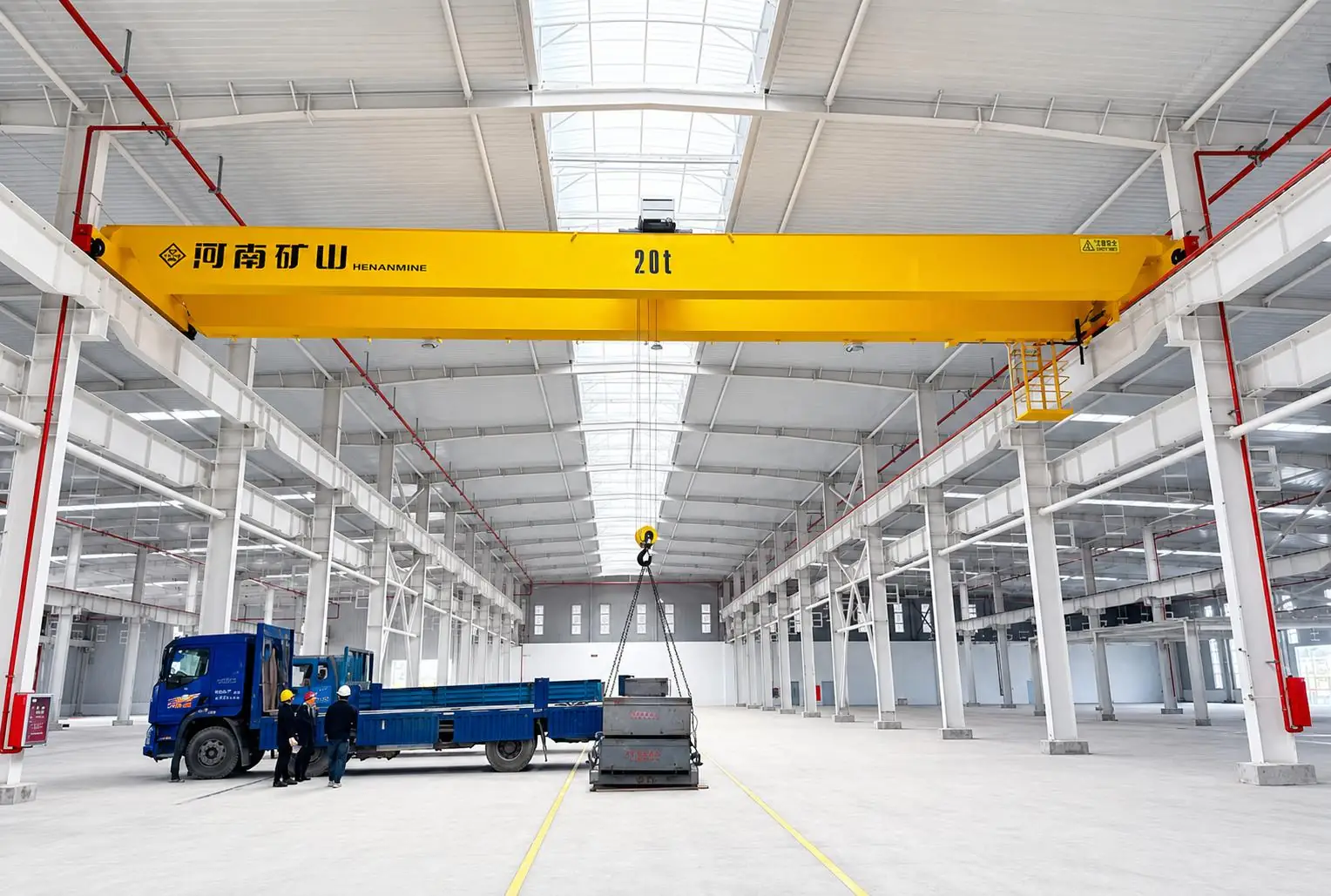
    When inquiring about bridge cranes, many buyers and factory engineers will find that the quotations provided by different manufacturers vary greatly, and the configuration of the proposed solutions is difficult to directly compare.The reason for this situation is often that the project details are not detailed enough or the job requirements are not clear enough, resulting in manufacturers can only make estimates based on different assumptions.If you can provide accurate information at the beginning of the inquiry, you can ensure that each quotation effectively reflects the actual lifting requirements, workshop working conditions and technical requirements, so that you can more easily compare the various options and select the most suitable bridge crane for the project. Crane.

    What Basic Information Is Required for an Overhead Crane Quote?

    The basic project information is the first-hand information of the manufacturer’s preliminary judgment of the crane plan. If any item is missing, the quotation will have a large deviation.

    Lifting capacity

    The rated lifting weight is the primary parameter for the selection of Henan Mine Crane manufactured bridge cranes. It is necessary to clarify the maximum carrying weight of the equipment and strictly distinguish between the rated load and the weight of the workpiece being hoisted daily in the workshop.Don’t just roughly mark about 5 tons or 10 tons. Be sure to confirm the weight of the conventional workpiece and indicate whether there is a need for intermittent heavy-duty lifting.You also need to confirm in advance whether you need a double-hanging point structure of the main and auxiliary hooks. In large-tonnage operation scenarios, the combination of the main and auxiliary hooks will directly change the structure design and production cost of the whole machine.Only by obtaining accurate lifting weight data can engineers initially finalize the specifications of the main beam, lifting trolley and hoist mechanism, so as to avoid fluctuations in the quotation caused by later changes in the plan.

    Crane type

    Bridge cranes are divided into different categories such as single-girder bridge cranes, double-girder bridge cranes, European-style bridge cranes, and explosion-proof bridge cranes. There are obvious gaps between different models in terms of structural weight, carrying capacity, top space occupation, and cost.You need to clarify the direction of project selection, whether it is a general single-beam crane for workshops or a double-beam bridge crane for heavy-duty operations.Whether you need a low-headroom hoist, or special models such as metallurgical and explosion-proof.Once the crane type selection judgment is wrong, the subsequent complete design plan and supporting parts selection will fail, resulting in the quotation completely losing its reference significance, and the project communication cycle will be prolonged.

    Project location

    The location of the project will directly determine the transportation plan, on-site installation conditions, and local special equipment acceptance specifications.Different countries and regions have different manufacturing standards, electrical certification, and on-site inspection requirements for lifting equipment.Overseas projects also need to confirm the location of the destination port and inland road transportation conditions, so as to facilitate manufacturers to calculate freight and export packaging plans, and simultaneously match local voltage levels and safety regulations to prevent equipment from being unable to meet local market access requirements after production is completed.Providing the project location in advance can also evaluate the feasibility and related costs of after-sales on-site service.

    Installation or replacement

    At the inquiry stage, it is necessary to distinguish whether the project is the installation of brand new equipment or the demolition and replacement of the old crane.For new plant projects, the plant structure and track foundation can be planned and designed simultaneously with the crane, making the construction process smoother.For the replacement project of old equipment, it is necessary to fully consider the original cow legs, track load-bearing and on-site space constraints, and evaluate whether the old main beam and old electromechanical components need to be removed.The demolition of old equipment will generate additional labor and safety protection costs. The quotation range corresponding to the two project scenarios is very different, and the unclear information can easily cause the quotation to be missed.

    What Workshop Dimensions Should You Provide?

    The size parameters of the plant directly determine the overall design of the crane. It is the most likely information to be missed in the inquiry. It is recommended to give priority to the provision of plant drawings. When there are no drawings, the following data will be accurately measured.

    Building span and runway length

    The span of the plant refers to the distance between the centerline of the support of the legs on both sides, which is the effective span of the Henan Mine Crane manufactured bridge crane.The total length of the track represents the laying length of the running track of the cart, which determines the maximum walking distance of the cart.The larger the span of the main beam, the more steel plate materials are required, and the cost of the equipment body will increase.The total length of the track directly affects the purchase and consumption of track steel, sliding contact wires, and power supply cables.These two geometric parameters are the core basis for quotation accounting. Even if the parameter error is only a few tens of millimeters, it will affect the main beam cutting and track matching plan, and ultimately cause quotation deviation.

    Lifting height

    The lifting height is defined as the vertical distance from the lowest lifting position of the hook to the highest lifting position.Many customers are accustomed to directly using the total height of the plant to estimate, and often ignore the vertical space occupied by the gourd body itself.The higher the lifting height, the larger the dimensions of the wire rope reel and hoist mechanism, and the height of the whole machine will increase synchronously, and the production cost will also rise.If the estimation of this parameter is not accurate, after the delivery of the equipment is completed, there will be a problem that the hook cannot reach the lifting height required for production, and it needs to be reworked and retrofitted.Therefore, when inquiring, be sure to provide effective lifting height data measured on site.

    Headroom and installation space

    The headroom height and installation space represent the remaining vertical space at the top of the plant that can be used to arrange the crane.For low-rise factory scenes, low-clearance gourds are preferred to minimize the top occupation of the equipment.If the top pipes, ventilation pipes, and bridges of the plant are dense, it is necessary to reserve space for equipment installation and later maintenance operations in advance.Once the on-site space is estimated to be insufficient, there will be situations where the selected model cannot be installed in the field, and high plant renovation costs will be required in the later stage.Providing on-site photos to match the measured dimensions can help engineers quickly judge the adaptability of the model.

    Runway and support structure

    Track and support structure information, including track model, track pressure plate, embedded parts, and plant leg load-bearing capacity.For the new plant project, the manufacturer can simultaneously complete the design of the rail steel structure.For the renovation project of the old factory building, the bearing capacity of the original concrete bull legs or steel structure columns must be verified to determine whether structural reinforcement treatment is required.When the carrying capacity of the leg of cattle is insufficient, even if all the indicators of the crane body meet the standards, the project cannot pass the acceptance of special equipment.Provide the original steel structure inspection report when inquiring, which allows the quotation to include the reinforcement project in the evaluation scope, avoiding hidden additions.

    How Do Operating Conditions Affect Overhead Crane Pricing?

    For bridge cranes of the same tonnage and the same span, the working conditions are different, and the price gap can reach up to 30% or more. The working conditions are a key variable that cannot be ignored when inquiring.

    Duty class and frequency

    The working level and frequency of use of bridge cranes are divided into A1-A8 levels according to ISO standards, corresponding to different daily operating hours and the number of lifting cycles.A3 belongs to the light-load level, which is mostly used for equipment maintenance, and the number of daily hoisting is small.A5 is the most commonly used level in general workshops.A6 and A7 are high-frequency heavy-duty, suitable for continuous operation scenarios in prefabricated parts factories and steel workshops.The higher the level of work, the stronger the thickness of the main beam steel plate, the configuration standards of the reducer, motor, and brake system, and the higher the procurement cost.If the actual working level is underestimated, the equipment is prone to frequent failures after it is put into use, which greatly shortens the service life of the whole machine and brings higher long-term maintenance costs.

    Load type

    The types of lifting materials need to be distinguished from ordinary steel, molds, castings, or high-temperature metallurgical workpieces, flammable and explosive materials, and powdery corrosive materials.Ordinary workpieces only need to be equipped with standard hooks.High-temperature workpieces should be equipped with heat insulation protection and metallurgical special gourds.In the case of dangerous goods hoisting, the explosion-proof configuration of the whole machine is required.Different load types, raw material selection and safety protection schemes are completely different, which will directly affect the quotation of the whole machine.When inquiring, describe the shape, temperature, and chemical properties of the suspended object in detail so that manufacturers can choose matching parts to avoid budget waste caused by insufficient safety redundancy or excessive configuration.

    Operating environment

    The operating environment includes indoor and outdoor scenes, and at the same time confirm whether there are special conditions such as dust, moisture, corrosive gases, and high and low temperatures on the site.The dust workshop needs to improve the dust protection level of the motor.In the chemical corrosion environment, the whole machine should be anticorrosive sprayed, and stainless steel accessories should be selected.Cold-resistant lubricants and low-temperature-resistant electrical components must be replaced in low-temperature areas.Henan Mine Crane manufactured outdoor bridge cranes also need to be equipped with rainproof, sunscreen, and windproof anchoring devices.Such special environmental requirements will bring additional customization costs. If the inquiry stage is not stated, the later equipment transformation will generate a lot of additional expenses.

    Lifting and travel speeds

    The lifting and operating speed are divided into two schemes: fixed speed and frequency conversion speed regulation.Ordinary material handling workshops choose a fixed-speed plan, and the procurement cost is lower.In precision assembly and mold hoisting scenarios, frequency conversion and speed regulation are required to achieve smooth start and stop and reduce the impact of workpiece shaking.The frequency conversion system will increase the cost of the electronic control part, but it can reduce the impact and wear of the structure and extend the life of the equipment.When inquiring, it is necessary to clarify the lifting speed of the hook, the horizontal running speed of the trolley, and the vertical walking speed of the trolley. The manufacturer matches the corresponding motor and drive scheme according to the demand to ensure the stability of the hoisting operation, and at the same time give an accurate electronic control quotation.

    overhead crane quote

    What Technical Specifications Should Be Confirmed Before Quotation?

    After the basic dimensions and working conditions are determined, it is necessary to confirm the core technical configuration of the crane. Different configurations have significant differences in equipment quality, quotation, and service life.

    Girder configuration

    The structure configuration of the main beam is divided into two types: single main beam and double main beam.The single beam has light weight and high cost performance, which is suitable for conventional lifting of small and medium tonnage.The double-beam structure has stronger rigidity and is suitable for working conditions with large tonnage, high working level and high lifting height.At the same time, it is necessary to confirm the main beam steel grade, welding process standards, surface rust removal and painting requirements, and export projects have higher standards for paint film thickness and anticorrosive grade.The main beam is the core load-bearing component of the bridge crane. The material and process standards are different, and the cost gap is obvious. The requirements of the main beam are clarified when inquiring, so that manufacturers can provide horizontally comparable solutions.

    Hoist and trolley

    The hoist and trolley mechanism are the core operating components of the bridge crane, which are divided into two categories: wire rope electric hoist and chain hoist.European-style gourds and domestic standard gourds differ in operating noise, maintenance cycle, and purchase price.The lifting trolley is divided into manual trolley and electric trolley. It is necessary to confirm the driving form of the trolley and whether the core components are original brand parts or domestic accessories.The brand of the core parts directly affects the quotation of the whole machine and the later maintenance cost. Determining the configuration of the hoist and trolley during the inquiry can effectively avoid the inconsistent grade of the parts in the quotation, resulting in price comparison distortion.

    Power supply and controls

    The power supply method and the control system need to confirm the on-site power supply voltage and frequency, and the power supply form is selected from the sliding contact line power supply or the cable reel power supply.The operation mode can be selected from the handle, wireless remote control, and cab operation.Some automated production lines also require PLC linkage and remote operation monitoring functions.The selection of components and on-site wiring schemes corresponding to different electronic control schemes are different. Overseas projects must confirm the local voltage standard in advance to prevent the electronic control system of the equipment from being unable to adapt to the site.The cost changes caused by differences in electronic control schemes can easily be ignored by purchasing personnel when comparing quotations.

    Safety features

    The safety device is a necessary configuration for the Henan Mine Crane manufactured crane, and there are a number of optional upgrade configurations at the same time.The standard configuration generally includes an overload limiter, an upper and lower limit switch, a buffer, and a stroke limit.The upgraded configuration includes laser anti-collision, wire rope condition monitoring, brake protection, real-time load monitoring, and emergency shutdown system.The safety configuration list is different, and the final quotation will be significantly different. When purchasing personnel compare multiple quotations, they must check whether all the safety accessories are included one by one.Low-cost plans often delete safety accessories, and install them separately in the later stage, but the overall cost is higher, and there are still safety risks.

    What Additional Costs Should Be Included in an Overhead Crane Quote?

    Many customers compare prices only to compare the price of the crane host, ignoring the cost of supporting projects, and only when the project landed did they find that the budget was seriously overspent.A complete quotation should clearly state all supporting items.

    Runway and steelwork

    Track and steel structure engineering, including crane track, track pressure plate, embedded parts, beef leg reinforced steel structure and other supporting components.The basic quotation of many manufacturers only includes the crane body, and the track and supporting steel structure need to be accounted for separately.For new-build plant projects, the amount of steel structure engineering is large, which accounts for a relatively high part of the total project budget.When inquiring, it is necessary to confirm whether the quotation includes a full set of track materials, steel structure processing and reinforcement plans, and include this part of the cost in the budget evaluation to prevent the steel structure project from generating large additional expenditures after the host is determined.

    Installation and commissioning

    Installation and commissioning services cover on-site hoisting, equipment assembly, electrical wiring, no-load and load testing, and commissioning of the whole machine.Overseas projects can choose factory technicians to go to the site to guide the installation, or provide complete installation drawings for the local construction team to complete the operation.At the same time, confirm whether the quotation includes special equipment inspection materials and on-site acceptance services to avoid additional commissioning and inspection costs in the later stages of the project.The workload of installation and commissioning is greatly affected by on-site conditions. The scope of service can be clarified in advance so that the quotation can fully cover all the labor costs in the implementation phase of the project.

    Transportation and packaging

    Transportation and packaging costs, domestic projects are mainly road transportation.Export projects require fumigation, wooden box packaging, container loading, and short-distance port transshipment.The heavy-duty main beam is an ultra-long and over-limit cargo, which will result in additional over-limit transportation costs.The quotation of foreign trade orders needs to distinguish between FOB, CIF and other trade terms, clarify the packaging standards of equipment, and use moisture-proof fumigated wooden boxes for export equipment to prevent corrosion and damage during shipping.The corresponding costs vary greatly from different transportation distances, cargo sizes, and packaging grades. The delivery boundaries are locked at the inquiry stage to avoid transportation-related budget gaps.

    Warranty and after-sales support

    For warranty and after-sales support, it is necessary to confirm the warranty period of the bridge crane, the warranty scope of wearing parts, whether to provide remote technical support, and the supply cycle of spare parts.Strong manufacturers will provide long-term spare parts supply and remote fault diagnosis services.The warranty policies of different manufacturers are obviously different. The warranty period of some low-cost plans is short, and the price of spare parts for later maintenance is high.When calculating the full-cycle cost of the project, after-sales related costs must be taken into account.When inquiring, write the warranty period, after-sales response timeliness, and spare parts supply terms into the requirements to facilitate horizontal comparison of the comprehensive service value of different suppliers.

    What Mistakes Can Lead to an Inaccurate Overhead Crane Quote?

    Many procurement inquiries step on the pit. The root cause is not that the manufacturer’s quotation is not accurate, but that there are omissions in the preliminary preparations. The following four types of high-frequency errors are recommended to avoid before the inquiry.

    Providing incomplete specifications

    The parameters are incomplete, only the tonnage is simply given, and key information such as span, lifting height, and working level is missing.Manufacturers can only estimate according to conventional standard models, and the reference value of the quotation obtained is very low.In the subsequent deepening of the design stage, once the parameters are changed, the price will be significantly increased, delaying the overall procurement cycle.It is recommended to organize a complete list of parameters, and attach factory drawings and on-site photos simultaneously to facilitate engineers to quickly evaluate working conditions and output accurate plans at once.Complete parameter information is the most basic prerequisite for obtaining a reliable quotation.

    Overlooking building conditions

    Ignore the original conditions of the plant, and only pay attention to the crane equipment itself when inquiring, and do not check the layout of the plant’s legs, column load-bearing, and top pipeline.When the equipment production was completed and the entry was completed, it was discovered that the structure of the plant could not carry the crane load, and it needed to be reinforced and transformed, and the construction period and budget were both out of control.For the renovation project of the old factory building, the inspection of the building support structure must be completed in advance to obtain load-bearing data.Many project delays and budget overruns are due to ignoring the evaluation of the physical conditions of the plant in the early stage, and waiting until the equipment is manufactured to find that the structure does not meet the requirements for use.

    Comparing different supply scopes

    When comparing quotations from different manufacturers, the boundaries of the scope of supply were not carefully checked.A The manufacturer’s quotation includes host + track + installation.B The manufacturer only reports the crane body, not the track, electronic control accessories and other accessories.If you directly compare the total price, it is easy to make a wrong judgment, choose a low-cost plan by mistake, and continue to add items in the future.The core of the price comparison work is to unify the supply boundaries and check the equipment, auxiliary materials, and service items in the list item by item.Only under the premise that the scope of supply is exactly the same, the price comparison is meaningful, so as to avoid falling into the trap of low-priced quotation.

    Ignoring additional costs

    Ignore all kinds of additional costs, only calculate the payment for crane equipment, and omit transportation, packaging, installation and commissioning, inspection, steel structure transformation and other costs.There was a budget gap in the mid-term of the project, and the safety configuration was forced to be reduced to reduce costs.After getting the quotation, it is recommended to split the mainframe, auxiliary materials, engineering, and service items one by one to see all hidden costs clearly.Many purchases only look at the unit price of the host, underestimating the expenditure on supporting projects, and only when the project is implemented do they find that the total budget is insufficient, and they are forced to adjust the plan, which affects the progress of project delivery.

    Henan Mine Crane Factory Custom

    Henan Mine Crane Factory can provide customized bridge crane solutions according to the hoisting needs of different industrial scenarios, covering single-beam, double-beam, European-style and explosion-proof types.Combining the lifting weight, span, lifting height, plant layout and actual operating conditions, the equipment configuration is reasonably determined.From program design, manufacturing to installation guidance, equipment commissioning and after-sales support, we provide customers with lifting equipment that meets the needs of the project.

    If you are planning to support the lifting equipment of the new plant, or preparing to replace or upgrade the existing bridge crane, you can provide specific lifting requirements, plant drawings and on-site photos to facilitate the engineering team to evaluate the actual working conditions, formulate a suitable equipment plan and provide a detailed quotation.Complete project information helps to clarify the technical configuration, compare the costs of different solutions, and reduce subsequent adjustments.Contact Henan Mine Crane Factory for customized bridge crane solutions and quotations that suit your project needs.

    Henan Mine CraneDiscuss your requirements ↗
  • What Influences the Price of Explosion-Proof Cranes for Chemical Plants

    What Influences the Price of Explosion-Proof Cranes for Chemical Plants

    What Influences the Price of Explosion-Proof Cranes for Chemical Plants

    In the production and operation of chemical plants, explosion-proof cranes are indispensable core lifting equipment, which mainly undertake key operational tasks such as hoisting, transporting, and overhauling flammable, explosive, and corrosive materials.Unlike ordinary cranes, there are a large number of combustible gases, dust and corrosive media in the operating environment of chemical plants. Ordinary equipment can easily cause explosions due to electrical sparks and mechanical friction. Through special explosion-proof design and protection technology, Henan Mine Crane Factory supply explosion-proof cranes can eliminate safety hazards from the root cause and ensure production continuity and personnel life safety. It is an important part of the safe production system of chemical plants.

    The price of explosion-proof cranes in chemical plants is not determined by a single factor, but is affected by multi-dimensional factors such as explosion-proof level, operating parameters, equipment configuration, environmental adaptability, certification qualifications, and later operation and maintenance.For buyers, understanding these core influencing factors can not only accurately calculate the investment cost of equipment, but also avoid safety hazards or waste of resources caused by improper selection, and achieve a balance between safety and cost.

    Explosion-Proof Crane Cost Breakdown

    Explosion-proof grade

    Explosion-proof grade is the core factor that determines the price of explosion-proof cranes. Different grades correspond to different protection standards and manufacturing costs.At present, the internationally common explosion-proof standards mainly include ATEX and IECEx. These standards divide hazardous areas into different levels (such as Zone 1, Zone 2 gas hazardous areas, Zone 21, Zone 22 dust hazardous areas), and the explosion-proof performance requirements of equipment in different areas vary significantly.For example, for explosion-proof cranes suitable for Zone 1, the explosion-proof design needs to be more stringent, while the equipment requirements in Zone 2 are relatively low, and the price is also reduced.

    The higher the level of explosion-proof protection, the higher the manufacturing cost of the equipment, and the price will rise accordingly.Taking flameproof explosion-proof cranes as an example, Ex dCC T4-level equipment, its shell protection, electrical component sealing, spark suppression and other designs need to meet higher standards, compared with the same tonnage Ex dBB T3-level equipment, the price may be 60%-100% higher.In addition, composite explosion-proof (such as equipment with gas explosion-proof and dust explosion-proof at the same time), due to the need to take into account multiple protection requirements, the cost will further increase, which is also one of the core reasons why the price of explosion-proof cranes is much higher than that of ordinary cranes. .

    Lifting capacity and working conditions

    The lifting parameters directly determine the specifications and manufacturing costs of the equipment, which are the basic factors affecting the price.Among them, the larger the load capacity, the larger the specifications of core components such as steel, motors, and wire ropes required for the equipment, and the higher the manufacturing cost.The larger the span and lifting height, the corresponding increase in the length of the main beam of the equipment and the stroke of the lifting mechanism will not only increase the material cost, but also put forward higher requirements for the structural stability of the equipment, thereby increasing the design and manufacturing costs.For example, the price of a 10-ton explosion-proof crane with a span of 20 meters is usually 30%-50% higher than that of similar equipment with a span of 5 tons and 15 meters.

    The duty class and operating frequency directly affect the durability and manufacturing cost of the equipment.Some positions in chemical plants require 24-hour continuous operation, and the corresponding crane work level is higher (such as A6 and A7 levels). This kind of equipment needs to use more wear-resistant components, a more stable transmission system, and a higher safety margin needs to be reserved. The manufacturing cost is significantly higher than that of low-level equipment (such as A3 and A4 levels).The higher the operating frequency, the faster the wear rate of the equipment, the higher the performance requirements of the core components, and the corresponding increase in prices.

    Crane configuration and components

    Explosion-proof motors and electrical systems are the core components of Henan Mine Crane Factory supply explosion-proof cranes, and they are also one of the parts with the highest cost ratio.Unlike ordinary motors, explosion-proof motors need to adopt special designs such as explosion-proof housings, sealed windings, and explosion-proof junction boxes, and need to pass strict explosion-proof tests. The procurement cost is 2-3 times that of ordinary motors.In addition, the explosion-proof electrical system also includes explosion-proof control boxes, explosion-proof cables, explosion-proof switches and other components. These components must meet the corresponding explosion-proof standards. Differences between brands and specifications will directly affect the overall price. The price of explosion-proof electrical components of imported brands is usually 40%-60% higher than that of domestic brands.

    The configuration of hoists, control systems and safety devices will also have a significant impact on the price of equipment.As the core lifting component of the explosion-proof hoist, its explosion-proof level, lifting speed, lifting height and other parameters directly determine the cost.In terms of control systems, equipment with high-end configurations such as frequency conversion speed regulation and intelligent remote control are used to make operation more convenient and stable, and the price is 20%-40% higher than that of equipment controlled by ordinary contactors.At the same time, in order to meet the safety requirements of chemical plants, explosion-proof cranes need to be equipped with multiple safety devices, such as overload protection, limit protection, explosion-proof alarm devices, emergency braking devices, etc. The more complete the configuration of the safety devices, the higher the equipment price, but it can effectively reduce safety risks and reduce later losses.

    How Chemical Plant Requirements Affect Crane Price

    Hazardous environment factors

    The operating environment of chemical plants is complex and diverse, and different hazardous media will put forward different requirements for the design and manufacture of Henan Mine Crane Factory supply cranes, which in turn affects prices.If there are flammable and explosive gases (such as hydrogen, methane, ethylene, etc.) in the operating environment, the corresponding explosion-proof level must be selected according to the explosion limit of the gas, the ignition temperature and other parameters.If there is combustible dust (such as pulverized coal, dust, etc.), it is necessary to adopt a dust explosion-proof design and increase sealing, dust-proof and other processes.If there are corrosive media (such as acids, alkalis, salts, etc.), the steel structure and electrical components of the equipment need to be treated with anticorrosive treatment (such as anticorrosive coatings, stainless steel parts, etc.). These special treatments will increase manufacturing costs and lead to higher prices.

    There are high temperature, low temperature or strong corrosive environments in some areas of chemical plants, which require higher adaptability of cranes.For example, explosion-proof cranes operating in high-temperature environments need to use high-temperature-resistant motors and heat-insulating components to avoid equipment performance degradation or explosion-proof failure due to high temperature.In a low-temperature environment, low-temperature-resistant steel is required to prevent the steel from cracking.In a highly corrosive environment, anticorrosive coating, stainless steel structure or galvanized treatment are required. These special adaptation designs will increase equipment costs, and the price is 15%-30% higher than that of ordinary explosion-proof cranes.

    Custom design requirements

    There are differences in the operating scenarios of different chemical plants, and some scenarios require customized explosion-proof cranes, which will directly affect the price of equipment.For example, for special material hoisting needs, special spreaders and structural forms need to be used.In view of the space constraints of the plant, the structure of the main beam and end beam of the crane needs to be optimized.For highly corrosive environments, special anticorrosive materials (such as Q345E low temperature resistant steel, stainless steel parts, etc.) need to be used. These customized materials and structural modifications will increase design, processing and manufacturing costs, and the price is usually 20%-50% higher than standard equipment.

    In order to improve operational efficiency and safety, some chemical plants will require customized control and monitoring systems, which is also an important factor affecting prices.For example, functions such as remote control, intelligent monitoring, data acquisition and transmission can realize remote operation of the crane, real-time condition monitoring and fault early warning, but these functions need to be equipped with corresponding sensors, controllers, communication modules and other components, and software development and debugging are required, which will significantly increase equipment costs.In addition, the customized control system also needs to be docked with the existing production system of the chemical plant, further increasing the design and integration costs.

    Manufacturing Quality and Certification Costs

    Safety standards

    Explosion-proof cranes are special equipment and must strictly comply with domestic and foreign safety standards. Compliance costs are an important part of equipment prices.In addition to the ATEX and IECEx standards mentioned earlier, there are differences in the certification processes and testing requirements of different standards, and the certification costs are also different.At the same time, the equipment of some export-oriented chemical plants needs to meet the standards of multiple countries at the same time, and the certification cost will be further increased, and these costs will eventually be shared among the equipment prices.

    Explosion-proof cranes need to undergo strict testing and certification before leaving the factory, including explosion-proof performance testing, load testing, safety device testing, etc. The testing process requires professional equipment and technical personnel, and a certification report must be issued by a qualified third-party organization. These testing and certification costs will be directly included in the equipment cost.In addition, the validity period of certification and subsequent re-inspection requirements will also affect the long-term cost of equipment. The higher testing costs of some high-end certifications will lead to a 10%-20% increase in equipment prices.

    Component selection

    The brand choice of core components directly affects the price and performance of the equipment.Imported brands of explosion-proof motors, controllers, electrical components, etc., although the price is higher (40%-60% higher than domestic brands), they have the advantages of stable performance, high reliability, and long service life.The core components of Chinese brands are more cost-effective and can meet the operating needs of most chemical plants.Buyers need to choose component brands rationally according to their own budget and operational needs, so as to avoid blindly pursuing high-end brands that lead to excessive costs, or coveting low-cost selection of inferior parts that cause safety risks.

    The quality and brand of the core components not only affect the price of the equipment, but also directly determine the reliability and service life of the equipment.High-quality explosion-proof components can effectively reduce the incidence of equipment failures, reduce late maintenance costs, and extend the service life of equipment.Although the early procurement cost of inferior parts is low, they are prone to failure, which will not only affect the production schedule, but may also cause safety accidents and increase the later operation and maintenance costs and losses.Therefore, when choosing an explosion-proof crane, it is not only necessary to pay attention to the initial purchase price, but also to consider the impact of component quality on the long-term cost of equipment.

    Installation and Maintenance Costs

    Installation requirements

    The installation and commissioning cost of Henan Mine Crane Factory supply explosion-proof cranes is also an important part of the overall investment, and is significantly affected by on-site conditions.The operating environment of chemical plants is complex, and some sites have problems such as narrow space, uneven ground, and dense pipelines, which will increase the difficulty of installation. Professional installation teams and special installation equipment are required, and installation costs will increase accordingly.In addition, the commissioning of explosion-proof cranes must be carried out by qualified professionals, including explosion-proof performance commissioning, electrical system commissioning, safety device commissioning, etc. The commissioning process must be carried out in strict accordance with standards to ensure that the equipment meets safety requirements. This part of the cost usually accounts for 5%-10% of the equipment procurement cost.

    Due to the particularity of the operating environment of the chemical plant, after the installation of the explosion-proof crane is completed, additional safety inspections and acceptance are required, including explosion-proof performance testing, load testing, safety device verification, etc. These inspections need to be carried out by a third-party professional organization, which will generate additional costs.At the same time, some chemical plants will require regular safety inspections to ensure the long-term stable operation of the equipment. This part of the long-term inspection costs also need to be included in the overall investment accounting.

    Long-term operating costs

    The long-term operation and maintenance cost of explosion-proof cranes is a key factor affecting the overall cost of ownership.The maintenance frequency of equipment with different configurations and different qualities varies significantly.Equipment with high-quality components and high-end configuration has a low maintenance frequency, usually 1-2 times a year.However, poor-quality equipment or low-configuration equipment is prone to failure, and the maintenance frequency may increase to 3-4 times a year, which not only increases maintenance costs, but also affects production progress.In addition, the corrosive environment of chemical plants will accelerate the wear and tear of equipment components, and the maintenance frequency needs to be appropriately increased to further increase operation and maintenance costs.

    The supply of spare parts and after-sales service support will also affect the long-term cost of equipment.A high-quality explosion-proof crane manufacturer can provide sufficient supply of spare parts and rapid after-sales service response to reduce the loss of production due to equipment failure.However, some small suppliers may have problems such as shortage of spare parts and untimely after-sales service, which will increase the later operation and maintenance costs and production losses.In addition, the price of spare parts for imported brand equipment is usually higher, and the procurement cycle is longer, and spare parts need to be stocked in advance, further increasing long-term operating costs.

    Factory Direct vs. Local Supplier Pricing

    Factory direct advantages

    Purchasing directly from explosion-proof crane manufacturers, the biggest advantage is that it can reduce intermediate links and reduce procurement costs.Middlemen, agents and other links will add additional costs, and cooperating directly with manufacturers can eliminate these intermediate costs, usually saving 10%-20% of procurement costs.At the same time, manufacturers can directly provide one-stop services such as equipment design, manufacturing, installation, and commissioning to avoid problems caused by poor communication in intermediate links and improve procurement efficiency.

    Manufacturers have professional design and research and development capabilities, and can provide customized explosion-proof crane solutions according to the actual needs of chemical plants.Whether it is a special operating environment, customized lifting parameters, or personalized control and monitoring systems, manufacturers can design and manufacture in a targeted manner to ensure that the equipment is adapted to the needs of the site.However, local suppliers usually mainly sell standard equipment, and their customization capabilities are weak, making it difficult to meet the needs of special scenarios.

    Local supplier advantages

    The core advantage of local suppliers is the fast response speed of after-sales service.Due to the close distance, when the equipment fails, the local supplier can quickly arrange for technicians to repair it on-site to reduce the loss of production.The response time of after-sales service of foreign manufacturers may be long, especially in remote areas, and the maintenance cycle may be as long as several days, which seriously affects the production schedule.For chemical plants that need to respond quickly, this advantage of local suppliers is particularly important.

    Local suppliers are more familiar with local on-site conditions and installation requirements, and can provide more convenient installation support.During the installation process, the technical personnel of the local supplier can go to the site in time to guide, solve the problems that arise during the installation process, and ensure the quality of the installation.At the same time, local suppliers can also assist in the relevant installation and acceptance procedures to reduce the workload of the purchaser.In addition, local suppliers have more adequate spare parts reserves, which can quickly provide the required spare parts and shorten equipment maintenance time.

    How to Choose a Cost-Effective Explosion-Proof Crane

    Evaluate total ownership cost

    For explosion-proof cranes with a high price-to-price ratio, we should not only focus on the initial purchase price, but should comprehensively evaluate the total cost of ownership, including procurement costs, installation and commissioning costs, operation and maintenance costs, spare parts costs, and shutdown losses.The early purchase price of some equipment is lower, but the later operation and maintenance costs are high and failures are frequent, and the total cost of ownership is higher.The pre-purchase price of high-quality equipment is higher, but the operation and maintenance cost is low, the service life is long, and it is more cost-effective in the long run.The purchaser needs to comprehensively calculate the total cost of ownership based on its own production needs and budget, and choose the most suitable equipment.

    Select the right configuration

    Reasonable selection of equipment configuration is the key to balancing safety and cost.First of all, it is necessary to choose the appropriate explosion-proof level according to the hazardous area level and operating environment of the chemical plant, so as to avoid excessive pursuit of high explosion-proof level leading to waste of costs, and it is not possible to choose a low explosion-proof level in order to reduce costs, causing safety risks.Secondly, according to the actual lifting requirements, determine the reasonable lifting weight, span, lifting height and working level to avoid parameter redundancy and increase costs.Finally, according to the operation requirements, select the appropriate core component brand and safety device configuration, and control the procurement cost under the premise of ensuring the performance and safety of the equipment.

    Henan Mine Crane Factory Custom

    In summary, the price of explosion-proof cranes in chemical plants is not determined by a single factor, but covers multi-dimensional factors such as explosion-proof level, operating parameters, equipment configuration, environmental adaptability, manufacturing certification, operation and maintenance costs, and procurement channels.When selecting models, buyers need to fully consider the total cost of ownership, taking into account the safety and economy of the equipment, in order to select high-quality equipment that meets their own needs.

    As a professional large-scale crane manufacturer, Henan Mine Crane Factory has been deeply engaged in the field of explosion-proof cranes for many years. It has a mature design and development system, rigorous manufacturing technology and a perfect after-sales service network. It can tailor explosion-proof crane solutions that combine high safety and high cost performance for the complex and dangerous operating environment of chemical plants.Whether it is the adaptation of special working conditions, customized configuration requirements, or late installation and commissioning, operation and maintenance guarantees, we can follow up the whole process to help chemical plants build a strong line of defense for safe production, while effectively controlling the cost of the whole life cycle of equipment, and realizing the dual improvement of safety and efficiency.

    Henan Mine CraneDiscuss your requirements ↗
  • What Happens When an Overhead Crane Cannot Reach Every Workstation?

    What Happens When an Overhead Crane Cannot Reach Every Workstation?

    What Happens When an Overhead Crane Cannot Reach Every Workstation?

    In machinery manufacturing, steel structure, and equipment assembly workshops, bridge cranes are the core equipment for heavy material handling, which directly affects production efficiency, operational safety, and operating costs.Many companies only value the rated lifting weight in the selection of models, ignoring the coverage of the operation, resulting in a single crane that cannot cover all stations.

    Although this type of hoisting blind spot does not cause equipment failure, it brings a series of chain problems such as cumbersome material transfer, disjointed processes, increased manual operations, increased safety risks, and higher costs.For lean production workshops, the global coverage of cranes is a necessary condition to ensure stable and efficient production.

    This article will analyze the definition, causes, and effects of insufficient coverage of bridge cranes, and provide a complete set of landing countermeasures such as equipment transformation, installation of auxiliary machines, and process optimization to solve the problem of blind spots in station hoisting.

    When One Crane Cannot Serve the Entire Workshop

    Many factories have misunderstandings: if the lifting weight is up to standard, it means that the crane is adapted to the working conditions of the workshop.In fact, a large rated load does not mean a wide job coverage.The coverage of the crane is limited, that is, its effective operating range cannot cover all hoisting stations, forming a fixed blind spot.

    The effective working area of the crane is determined by multiple factors such as the span of the crane, the total length of the track, the walking stroke of the trolley, the lifting stroke of the hook, and the safe net distance of the site. Various physical obstacles in the workshop will further compress the effective working space. The common restricted reasons are mainly divided into the following categories:

    • The basic parameters of the equipment are limited: the span and track length of the crane do not match the overall size of the workshop, and the walking stroke of the hook is insufficient to cover the edge stations of the workshop.;
    • Building structure blocking: fixed building components such as workshop columns, walls, mezzanines, roof load-bearing structures, etc., block the normal walking of crane carts and trolleys, and cut the working area;
    • Obstacles to production equipment: fixed production lines, conveying equipment, and large-scale tooling equipment in the workshop occupy space for a long time, forming a permanent blind spot for hoisting;
    • Restricted access to work: The stations are densely arranged and the passages are narrow. Even if the hooks are theoretically reachable, the hoisting operation cannot be completed safely.;
    • Safety limit constraints: crane end limit, buffer device, safety protection net distance, to further compress the actual usable operating range.

    In short, if a 100-ton crane with a large bearing capacity has an unreasonable track layout and more on-site blocking, there will still be a large number of blind spots in the operation, which cannot meet the production needs of the whole workshop.The coverage capacity is a matter of spatial layout, not simply a matter of equipment carrying capacity.

    What Happens When an Overhead Crane Cannot Reach a Workstation?

    Decreased transit efficiency

    When the station exceeds the scope of crane operation, heavy objects need to be transported twice by forklifts, pallets, etc., the transportation route becomes longer, the waiting time for the process increases, and the continuity of production is interrupted.

    Rising labor costs

    For materials in blind areas, forklifts, small lifting equipment and operators need to be added.The amount of work assisted by the transportation of heavy-duty special-shaped materials has become larger, and non-professional equipment operations are also likely to cause damage to workpieces and injuries to personnel, increasing the management burden.

    Production bottleneck highlights

    The lag in material supply causes the station to be waiting for materials, and the upstream and downstream processes are out of sync.Semi-finished products are piled up in the transit area, disrupting the rhythm of production, reducing production capacity, and prolonging the order delivery cycle.

    Increased security risk

    Blind spots will increase the cross-operation of people and vehicles and increase the risk of collision.Some operators violate the law by hoisting out of range or using simple spreaders, which are prone to falling and collision accidents; heavy-duty operations of auxiliary equipment also amplify safety risks.

    Increased operating costs

    Blind spots bring a lot of hidden costs: auxiliary equipment purchase and leasing, labor, equipment maintenance, additional energy consumption; downtime losses, workpiece bumps, rework and scrap, etc., continue to compress corporate profits.

    Why Does an Overhead Crane Fail to Cover the Entire Production Area?

    The vast majority of crane operation blind spot problems are not caused by equipment quality failure, but by the mismatch between pre-planning, post-transformation and production iteration. The core reasons can be summarized as six points:

    • The initial layout planning is unreasonable: in the workshop infrastructure and crane installation stage, the layout of the station and the flow of materials are not fully mapped, the equipment is only installed according to conventional parameters, and the coverage plan is not customized in accordance with the actual production needs.;
    • Late expansion and transformation of the production line: After the crane installation is completed, the company will add new production lines and expand processing stations, and the new operating area will exceed the original crane operating scope.;
    • Dynamic adjustment of station layout: product iteration, process optimization, and lean production transformation have led to changes in station location and operating area, and the coverage of the original crane is disconnected from the new layout.;
    • Hard restrictions on building structure: the column spacing, roof height, and load-bearing structure of the workshop are fixed, and cannot be adapted to the layout of the fully covered crane, forming a congenital blind spot.;
    • Single equipment selection criteria: equipment procurement only focuses on the maximum lifting weight, ignoring the relevant parameters such as operating span, track length, hook stroke, etc., and the selection does not match the working conditions.;
    • Differences in production requirements in multiple regions: There are multiple independent production areas in the workshop, and there are large differences in material specifications, hoisting frequency, and transfer paths in each region. A single crane cannot be adapted to the differentiated operating needs of multiple regions.

    How to Solve the Problem of Limited Crane Coverage

    Extend the original track

    If the load-bearing and foundation conditions of the workshop building permit, extending the crane’s operating track is the most cost-effective transformation plan.By lengthening the track of the cart and adjusting the end limit, the walking range of the crane is directly expanded to cover the original blind spot station.

    Before the transformation, professional institutions are required to conduct load-bearing tests on the workshop columns, roofing, and foundations to confirm that the structural bearing capacity is up to standard.The scheme can retain the original equipment, the operators do not need to be re-adapted, and the system is unified after the transformation; the disadvantage is that short-term downtime is required during the transformation, and a small number of blind spots will still remain in the complex structure workshop.

    Added bridge crane

    For large-scale workshops with large spans, multi-stations, and multi-partitions, the transformation of a single crane cannot meet the full coverage requirements, and the addition of a bridge crane is the best choice.The workshop can be divided into independent hoisting areas, and the two cranes operate separately and perform their respective duties.

    With a professional anti-collision control system and zoning operation specifications, it can realize the safe and coordinated operation of multiple cranes, completely solve the blind spots of large-area operations, and adapt to high-frequency and large-workload production scenarios.

    Supporting auxiliary spreader

    For blind spots such as corner stations and small local areas that cannot be covered by the transformation of the main crane, small auxiliary hoisting equipment can be used to accurately fill the gaps without large-scale transformation of the main equipment.:

    • Cantilever crane: installed on columns and walls, suitable for high-frequency small hoisting operations of a single fixed station;
    • Monorail hoisting: customized fixed material transfer path, suitable for repetitive material hoisting on assembly lines;
    • Wall-mounted cranes: suitable for restricted areas where the space is narrow and the bridge crane cannot be installed.

    The main crane is responsible for large-scale and long-distance transportation, and the auxiliary equipment is responsible for local and high-frequency hoisting, forming a three-dimensional hoisting system with primary and secondary collocation, taking into account efficiency and cost.

    Selection of gantry lifting equipment

    For open-air areas of workshops, semi-open stations, or areas without load-bearing structures and where fixed bridge cranes cannot be installed, gantry cranes and portable lifting equipment can be selected.

    There is no need for fixed track installation, the layout is flexible, movable, and adjustable, which is suitable for temporary hoisting operations, outdoor material transfer, and flexible production needs, and perfectly solves the problem of covering blind spots without building structure support.

    Optimize material flow

    Some blind spot problems do not need to be retrofitted with equipment, and can be completely solved through process optimization.By re-planning the location of the station, the material transfer area, and the storage area, the high-frequency hoisting station and the core transfer point are adjusted to the effective operating range of the crane.;

    Optimize the production process and material transfer path, reduce invalid transfer and long-distance handling, so that the material flow direction is accurately matched with the crane’s operating range, and avoid the efficiency loss caused by covering blind spots from the source.

    How to Choose the Right Solution

    The working conditions, budgets, and production requirements of different workshops vary greatly, and a single solution cannot be adapted to all scenarios. Enterprises can compare and select models based on the following core dimensions to accurately match the optimal solution.:

    • Operating parameters: combined with the actual lifting load on site, material dimensions, station lifting frequency and material transfer operation itinerary and other key indicators, multi-dimensional comparison and screening of lifting equipment that highly matches the working conditions of the workshop to ensure that the equipment specifications can meet the needs of various lifting tasks;
    • On-site conditions: fully investigate and evaluate the main structure of the workshop building, the load-bearing capacity of the roof and columns, the available clearance space of the passage, and the layout of the original production tooling equipment, and investigate the various transformation restrictions brought about by the building structure.;
    • Production requirements: clearly distinguish between temporary hoisting tasks and normalized continuous hoisting operations, and on the basis of fully meeting the current workshop capacity requirements, reserve sufficient margin to adapt to future production line upgrades, station adjustments and other expansion plans.;
    • Cost control: Comprehensively account for the whole life cycle costs of equipment procurement, on-site installation and construction, downtime losses during transformation, long-term operation and maintenance, and replacement of spare parts, not only focusing on one-time investment;
    • Safety standards: The complete set of lifting solutions must comply with industry and workshop safety management norms, establish and improve operation control mechanisms, and effectively avoid various safety hazards caused by cross-operation of people and vehicles and illegal hoisting beyond the range.

    In most scenarios, the combination of main equipment transformation + auxiliary equipment matching is the most cost-effective, which can take into account the four core needs of full coverage, high efficiency, low cost and low risk.

    How to Design an Overhead Crane System for Full Workshop Coverage

    When building a new workshop or transforming the workshop as a whole, the crane coverage system needs to be planned in advance to avoid rework in the later transformation. The core design process is as follows:

    1. Comprehensively survey all production stations, material transfer points, storage areas and loading and unloading operation points in the workshop, systematically sort out all hoisting scenarios, and completely figure out the requirements of various hoisting operations in the workshop.
    2. Count the maximum hoisting load of the workshop, the material dimensions and specifications, and the hoisting frequency of each station, organize the on-site working condition data, and determine the core operating parameters of the lifting system.
    3. Combining the overall size of the workshop with the constraints of the building structure, calculate and select the most suitable span of the crane, the total length of the track, and the effective stroke of the hook.
    4. Plan the crane layout in accordance with the production process flow, follow the design ideas of the equipment to adapt to the flow of materials, and avoid the production process being forced to accommodate the limitations of lifting equipment.
    5. Reserve flexible space for equipment expansion and station adjustment during the design phase of the plan to meet the development needs of subsequent production capacity improvement and workshop layout transformation.
    6. Rationally divide the hoisting operation area and pedestrian passages, standardize the safety spacing between the equipment, and reduce the risk of equipment collisions and operation blind spots from the design level.
    7. According to the actual working conditions, supporting systems such as automatic control, anti-swing, and precise positioning are selected to further improve the work efficiency and safety level of lifting operations.

    Conclusion

    Insufficient coverage of bridge cranes will slow down material turnover, increase labor costs and operational risks.Blind spots are often caused by selection errors, track restrictions or production line adjustments.Enterprises can solve it by extending the track, adding lifting equipment, installing auxiliary spreaders, or optimizing the material flow, without blindly replacing large-scale equipment.

    The planning and transformation of the lifting system needs to take into account the station coverage, load, plant structure, material flow direction and long-term expansion.Henan Mine Crane can provide bridge crane planning, customization and transformation services based on plant layout, hoisting requirements and existing equipment to eliminate blind spots in hoisting and improve material handling efficiency and equipment utilization.

    Henan Mine CraneDiscuss your requirements ↗
  • What Factors Affect Overhead Crane Prices

    What Factors Affect Overhead Crane Prices

    What Factors Affect Overhead Crane Prices

    Many companies will encounter the same problem when purchasing bridge cranes in industrial workshops: for vehicles of the same tonnage, the quotation gap between different manufacturers is huge, ranging from tens of thousands to hundreds of thousands. It is difficult to judge whether the quotation is reasonable, whether there is an inflated price or cutting corners.The pricing of bridge cranes is never determined by a single tonnage, but by the combination of different factors.Understanding the influencing factors of the price of bridge cranes in industrial plants can not only avoid the trap of low-cost and low-quality procurement, but also avoid the waste of funds caused by overallocation, accurately match the needs of working conditions, and control the procurement budget.

    Crane Type and Configuration

    The type of model and the overall configuration are the core prerequisites for determining the basic price of bridge cranes in industrial workshops. Equipment with different structural forms vary greatly in production technology, steel usage, structural design, and adaptation conditions, which directly widens the gap in basic cost.The basic price difference of most quotations in the industry stems from the difference in the selection of model structure, which is also the primary reason for the differentiation of procurement quotations.

    Single vs. double girder

    Henan Mine Crane manufactured single-beam and double-beam workshop bridge cranes are the two most mainstream models in the industrial plant scene, with clear price gradients and clear adaptation scenarios.The single-beam bridge crane has a simple structure, light weight, few consumables, and mature production technology. It is mainly suitable for light-load, low-frequency, and short-span workshop operations. The procurement cost of the whole machine is lower and the cost-effective advantage is significant. It is the preferred model for conventional hoisting operations of small and medium-sized enterprises.The double-girder bridge crane adopts a double-girder load-bearing structure, and the overall stiffness, stability, and load-bearing upper limit are fully upgraded. It can be adapted to the harsh working conditions of heavy-duty, high-frequency, long-span, and long-term continuous operation.The amount of steel used in this model is more than 50% higher than that of the single-girder model. The supporting lifting mechanism and walking mechanism have higher specifications, and the production and processing process are more complex. Under the same parameters, the price is 50%-100% higher than that of a single-girder crane. It is mostly used in heavy industry, metallurgy, large-scale machining and other scenarios.

    Top-running vs. under-running

    The difference in the installation structure of the top-row type and the bottom-row type directly affects the difficulty of equipment design, accessory specifications and installation costs, forming a clear price difference.Top-row industrial bridge cranes are conventional mainstream models for plant hoisting. The cart walking mechanism runs on the top of the track beam. The force structure is reasonable, the carrying capacity is strong, and the maintenance is convenient. The accessories are versatile, the degree of mass production is high, and the overall cost is close to the people, and it is suitable for most standard factories.The walking mechanism of the low-clearance downstream bridge crane is suspended under the track beam, which has a higher utilization rate for the height of the plant floor, and is suitable for special space scenarios such as low-rise factories and mezzanine operations.However, the structural design of this model is more precise, the degree of customization of suspension accessories and walking components is high, and the production accuracy requirements are strict. It cannot be mass-produced on a large scale, and the installation and commissioning are more difficult. Therefore, the quotation of the whole machine is significantly higher than that of the top-row crane of the same specification.

    Standard vs. custom design

    The price gap between standard models and customized design models is the most overlooked key point in procurement.The standard modular bridge crane is a general modular design for the industrial industry. The parameters, structure and accessories are all standardized and mass-produced. The production cost is low, the delivery cycle is short, the price is transparent and stable, and it fully meets the conventional indoor, normal temperature, light and medium load standardized working conditions.Customized models are specially designed for special working conditions, special plant structures, and special operating requirements. Structural modeling, mechanical calculations, drawing optimization, etc. need to be re-completed, and the cost of R&D and design has increased significantly.At the same time, most of the accessories of customized models are exclusively processed, and there is no general mass production accessories. The production efficiency is low, the cost of consumables is high, and it needs to pass the inspection and acceptance of special equipment separately, and the overall cost is much higher than that of standard models.

    Lifting Capacity and Span

    The lifting parameter is the core hardware index of the pricing of industrial hoisting bridge cranes, and it is also the most intuitive and core factor affecting the price.The three basic parameters of lifting weight, span, and lifting height directly determine the amount of steel used in the equipment, the structural strength, and the specifications of the core accessories. The larger the parameters, the higher the manufacturing cost of the equipment, and the price shows a stepped upward trend.

    Lifting capacity

    Lifting weight refers to the rated maximum lifting weight of Henan Mine Crane manufactured industrial bridge crane, which is the core driving factor of price fluctuations.Every time the lifting tonnage is increased by one level, the core components such as the main beam, end beam, reel, hook, and wire rope of the equipment need to be upgraded to specifications. The strength, thickness, and dosage of steel have been greatly increased, and the power of power accessories such as motors, reducers, and brakes have been upgraded synchronously.Conventional light-load small-tonnage cranes have simple structure, universal accessories, and low prices.However, large-tonnage and super-heavy cranes require higher safety redundancy design, more stringent structural mechanics calculations, and more high-end customized models are used for core accessories. The price increase can reach 30%-50%, and the price of large-tonnage equipment has even increased geometrically. It is the core expenditure item of the procurement budget.

    Crane span

    Span refers to the horizontal distance between the centerlines of the wheels at both ends of the bridge crane in the plant, which directly determines the length of the main beam and the overall structural materials.Under the same lifting weight, the larger the span, the longer the main beam of the crane. In order to ensure the operating stability of the equipment and avoid deformation and bending of the main beam, it is necessary to thicken the steel plate of the main beam, add reinforcing bars, and optimize the structural mechanics design. The consumption of steel has increased significantly.At the same time, long-span cranes have higher requirements for walking balance and braking stability, and need to match more accurate transmission and braking systems to further increase the cost of accessories.The small-span models have a high degree of mass production and controllable cost, while the large-span models are mostly customized, and the production and testing costs are higher, which is an important factor in the increase in prices.

    Lifting height

    The lifting height is the maximum vertical lifting height of the hook of the bridge crane, and many buyers can easily ignore the impact of this parameter on the price.The higher the lifting height, the larger the length of the wire rope, reel size, and pulley block specifications required. At the same time, it is necessary to match the higher-lift lifting motor to ensure the lifting efficiency and stability.Conventional standard lifting height equipment accessories are universal and the cost is stable.Customized models with ultra-high lifting heights need to be re-matched with the parameters of the lifting mechanism, exclusive processing of wire ropes, reels and other accessories, and the braking anti-fall system needs to be optimized to avoid safety risks of high-altitude hoisting. The cost of accessories and design has risen simultaneously, which directly pushes up the quotation of the whole machine.

    Hoist and Lifting Mechanism

    The lifting mechanism is the core power component of industrial heavy-duty bridge cranes. Its configuration level directly determines the operating efficiency, service life, and stability of the equipment, and it is also the core sector of quotation differentiation.The type, operating speed, and working level of the lifting mechanism are different, and the cost gap of accessories can reach several times, which is the core difference between high-end models and ordinary models.

    Hoist type

    As the core lifting component of the bridge crane, the supporting electric hoist has significant price differences between different types.The mainstream wire rope electric hoists, chain electric hoists, explosion-proof electric hoists, and low-clearance electric hoists on the market have completely different adaptation scenarios and manufacturing costs.Conventional wire rope electric hoists are cost-effective and suitable for ordinary working conditions. They are the preferred configuration for standard models and have the lowest cost.The low-headroom electric hoist has a compact structure, which can maximize the use of plant space and adapt to low-rise plants.The ring chain electric hoist has obvious advantages in light weight and is suitable for precise hoisting of small tonnages.The explosion-proof electric hoist adopts explosion-proof sealing and flame-retardant accessories. It has passed special explosion-proof testing and is adapted to flammable and explosive scenarios. The safety standards are higher and the manufacturing cost is greatly increased.At the same time, the price gap between imported brand gourds and domestic high-quality gourds can reach 2-3 times, which directly affects the quotation of the whole machine.

    Lifting speed

    The hoisting operation speed is divided into three modes: single-speed, two-speed, and frequency conversion speed regulation. The higher the speed configuration, the higher the technical cost.The single-speed bridge crane has a simple structure and universal accessories. It only meets the basic hoisting needs and has the lowest price. It is suitable for low-speed and low-frequency operation scenarios.The two-speed bridge crane has the function of switching between fast and slow speed, which can realize fast lifting and slow alignment, improve the accuracy of hoisting, and adapt to the hoisting of small and medium-sized precision workpieces. The accuracy requirements of accessories are higher, and the price is higher than that of single-speed models.Frequency conversion and speed regulation bridge cranes can achieve stepless variable speed, stable start and stop, no impact, no shaking, greatly reducing workpiece loss and equipment wear, higher configuration of electronic control system, suitable for high-frequency, high-precision, high-stability operations, the highest cost.

    Duty classification

    The working level is the core standard for measuring the operating strength and service life of industrial bridge cranes, and it is also the key basis for price stratification. The industry generally uses A1-A7 classification standards. The higher the level, the higher the equipment configuration standard and the more expensive the price.The A1-A3 low-level work level is suitable for low-frequency and intermittent operations, and the equipment accessories adopt conventional standards, with moderate safety redundancy and low cost.The intermediate work level of A4-A5 is adapted to the conventional continuous operation of the factory, which is the mainstream level of industrial use, and the configuration and price are balanced.The A6-A7 advanced work level is aimed at 24-hour continuous high-frequency operation scenarios such as metallurgy, ports, and heavy industries. The core accessories need to be made of high-end materials that are wear-resistant, high-temperature resistant, and fatigue-resistant. The structural safety redundancy has been greatly improved, and the wear-resistant parts and brake parts have all been upgraded. Manufacturing costs have increased significantly, and the quotation is much higher than that of ordinary-level models.

    overhead crane prices

    Working Environment and Application Requirements

    The operating environment is an important incentive for bridge crane configuration upgrades and customized price increases.The standard model is only suitable for conventional indoor normal temperature working conditions, while outdoor, high temperature, low temperature, explosion-proof, anti-corrosion and other special environments require targeted transformation of equipment structure and accessories, and increase special protection configuration, which is an important invisible factor in the fluctuation of quotations.

    Indoor or outdoor use

    The equipment configuration of indoor and outdoor working conditions is very different, and the price gap is obvious.The indoor plant bridge crane is in a closed and stable environment, free of wind, rain, ultraviolet light, sand and dust erosion, without additional protection configuration, conventional standard accessories and paint can be used, the cost is controllable, and the quotation is transparent.Waterproof outdoor bridge cranes are exposed to wind, rain, sun, sand and dust for a long time. They need to do a full set of outdoor anti-corrosion and anti-rust treatment. The whole machine adopts weather-resistant paint and thickened anti-corrosion coating. The electrical system is equipped with waterproof, dustproof, and sun protection devices. The motor and electric control box are sealed and waterproof. At the same time, rainproof covers and windproof anchoring devices need to be installed to resist the effects of windy weather. A number of special configurations are superimposed to directly increase equipment manufacturing costs and quotations.

    Hazardous environments

    Flammable and explosive, dust, corrosion, high and low temperature and other dangerous environments are the core scenarios for equipment price increases.Ordinary standard bridge cranes cannot be adapted to dangerous working conditions, and must adopt special explosion-proof, anti-corrosion, high temperature resistance, and low temperature resistance configurations.In explosion-proof scenarios, all electrical accessories and wiring devices are equipped with explosion-proof grade accessories, and the whole machine has passed the special explosion-proof certification to prevent sparks and ensure operation safety.The corrosive environment requires the whole machine to be made of anticorrosive materials, sprayed with heavy anticorrosive coatings, and the core metal parts are galvanized and passivated.High-temperature-resistant motors and wear-resistant accessories need to be selected for high-temperature environments, and low-temperature environments need to be adapted to low-temperature antifreeze electronic control and lubrication systems.These special retrofits and the replacement of high-end accessories will increase the price of equipment significantly, and the higher the environmental hazard level, the higher the cost of customized retrofits.

    Special requirements

    In addition to conventional working conditions, the personalized special operating needs of enterprises will also generate additional customization costs.For example, precision alignment operations require the installation of fine-tuning systems, heavy-duty workpiece hoisting requires the strengthening of load-bearing structures, dust-free workshops require dust-free silent configuration, food and pharmaceutical workshops require stainless steel anticorrosive accessories, and high-altitude operations require anti-shaking dedicated structures.In addition, some projects require equipment to meet the needs of special industry certification, expedited acceptance of special equipment, exclusive design, and exclusive parameter adaptation. They all require manufacturers to develop and transform separately and customize production. Standardized production lines cannot be applied, and labor and technical costs have increased significantly, which is ultimately reflected in the quotation of the whole machine.

    Control Systems and Optional Features

    The control system and optional functions determine the level of intelligence, ease of operation, and safety factor of bridge cranes. It is also the core price difference between high-end models and ordinary models.The basic model is only equipped with a simple control system, no additional safety configuration, and the price is low.The high-end models with intelligent frequency conversion, multiple safety protections, and intelligent control have obvious configuration premiums and are more cost-effective for long-term use.

    Control methods

    Henan Mine Crane manufactured bridge crane control methods are mainly divided into three types: ground operation handle, wireless remote control, and cab control. There is a large gap in the configuration cost of different control methods.The ground operation handle is the most basic control mode. It has a simple structure, universal accessories, and the lowest cost. It is suitable for simple routine operations and is the standard configuration of economical models.Wireless remote control control gets rid of cable restrictions, flexible operation, wider operating field of vision, long-distance control of equipment, to avoid the safety risks of close-range operation, the remote control module needs to be purchased separately and adapted, the price is higher than the ground operation mode.The cab control is suitable for large, long-span, and heavy-duty cranes. It is equipped with a dedicated cab, shock-absorbing seats, panoramic view, and dedicated control console. It is comfortable and professional. It is suitable for long-term continuous operation. The cost of the complete set of configuration is the highest, and it is mostly used for large-scale heavy industry projects.

    Variable frequency drives

    The frequency conversion drive system is the core configuration to improve the operating quality of bridge crane equipment, and it is also an important price plus.Ordinary cranes adopt a direct start mode, with large start-stop impact, obvious workpiece shaking, and serious equipment wear. The electronic control system has a simple structure and low cost, which only meets the basic operation needs.The frequency conversion drive system can realize smooth start and stop of the equipment, stepless variable speed, precise control of the hoisting speed, greatly reduce the shaking of the workpiece, avoid damage to the workpiece, and reduce the wear of the motor and transmission components, extend the service life of the equipment, and reduce energy consumption.The accessories of the frequency conversion electronic control system have high accuracy and high technical threshold, making it difficult to adapt and debug, and the overall configuration cost is much higher than that of ordinary electronic control systems. It is the core standard configuration of high-end cranes.

    Safety devices

    The richness of safety protection devices directly affects the safety level and purchase price of equipment.Basic economical bridge cranes are only equipped with basic safety devices such as limit switches and emergency power-off switches, which meet the minimum safety acceptance standards, have simple configuration and low cost.High-end compliance models will superimpose multiple safety protection configurations, including overload limiter, height limit, stroke limit, anti-collision device, wire rope anti-release device, leakage protection, overload protection, automatic fault alarm system, real-time monitoring system, anti-fall protection device, etc.A full set of safety devices needs to be purchased, adapted, and debugged separately to greatly improve the safety redundancy of the equipment, while increasing the manufacturing cost of the equipment. The more complete the safety configuration, the higher the equipment quotation, and it can effectively reduce the safety risks and operation and maintenance costs of later operations.

    Installation, Transportation, and Project Costs

    Many buyers only pay attention to the price of the main body of bridge crane equipment, ignoring the cost of supporting projects such as transportation, installation, and track transformation, resulting in overspending on the final landing budget.The overall landing price of bridge cranes includes a number of hidden costs such as equipment ex-factory prices, transportation costs, installation and commissioning costs, and site renovation costs. The supporting costs of different project working conditions vary greatly.

    Shipping costs

    The transportation cost is mainly determined by the size, weight, transportation distance and transportation method of the equipment.The small and lightweight bridge crane can be transported by conventional vehicles, with low freight and convenient transportation.The main beam of a large-tonnage, long-span bridge crane is ultra-long and ultra-wide, which is an overrun equipment. It needs to go through the procedures for overrun transportation and be transported by special vehicles, which greatly increases the transportation cost.At the same time, the logistics costs of long-distance transportation, cross-provincial transportation, and transportation in remote areas are higher, and the equipment needs to be protected from shock, rust, and anti-collision packaging. Large-scale equipment also needs to be transported in segments and spliced on-site, resulting in additional packaging and segmented logistics costs, which are an important part of the project landing cost.

    Installation requirements

    The difficulty of installation and commissioning directly affects labor and construction costs.The small standard bridge crane has a simple structure and easy assembly, and the installation and commissioning can be completed quickly on conventional sites, with short construction cycles and low labor costs.The installation process of large-scale double-beam, large-span, and customized bridge cranes is complex, and professional lifting equipment is required to cooperate with hoisting and professional licensed construction teams, and the installation and commissioning cycle is longer.At the same time, customized models need to accurately calibrate track level, equipment balance, and electronic control parameters. The commissioning process is cumbersome, and labor costs, construction equipment rental costs, and inspection and acceptance costs increase simultaneously, driving up the overall project cost.

    Runway modifications

    The cost of retrofitting plant tracks and foundation beams is the most easily overlooked hidden cost.In the scenario of retrofitting old factories and replacing old equipment, most of the original track and load-bearing beams cannot be adapted to the parameter standards of the new bridge crane, and projects such as track reinforcement, track replacement, beam reinforcement, and embedded parts transformation are required.If the plant structure does not meet the equipment installation requirements, it is also necessary to transform the infrastructure, adjust the track spacing, and install load-bearing accessories in a targeted manner.Track transformation and structural reinforcement are special projects that require professional teams to design and construct. The high cost of materials and labor will directly increase the total price of the entire crane project.

    How to Get an Accurate Overhead Crane Price

    If you want to obtain accurate, routine-free, and invisible consumption quotations for customized bridge cranes to avoid budget overruns, inconsistent configurations, and low-price traps, you cannot only provide tonnage parameters. You need to improve project information, scientifically compare quotations, and accurately match configurations.The following three core steps can help companies quickly obtain accurate landing quotations.

    Project specifications

    Complete and accurate project parameters are the basis for accurate quotation of industrial bridge cranes. The more detailed the parameters, the more the manufacturer’s quotation fits the actual landing cost, and the smaller the error.When the purchaser consults the quotation, it is necessary to clearly provide the core parameters and working condition information, including the rated lifting weight, plant span, lifting height, operating conditions, operating frequency, working level, control method, whether explosion-proof and anti-corrosion and other special configurations are required.At the same time, it is necessary to inform the manufacturer of the existing track conditions of the plant, whether it needs to be modified, transportation and installation site conditions and other information.The complete project parameters allow manufacturers to accurately match the model, calculate the full cost of materials, accessories, transportation, installation, transformation, etc., and avoid problems such as inflated quotations, missing configurations, and late price increases from the root cause.

    Quote comparison

    Comparing quotations from multiple manufacturers is the key to screening high-quality solutions and avoiding price traps, but comparing quotations cannot only look at the total price, but focus on comparing the configuration and cost performance.Many low-price quotations for bridge cranes on the market have invisible routines such as shrinking accessories, downgraded configuration, lack of safety, and no installation and transportation costs. They seem to be low-priced, and they need to be continuously increased in the later stage of landing.It is recommended that buyers choose 3-5 regular manufacturers with complete qualifications and reliable strength, unified parameters, unified configuration, and unified service standards for price comparison, focusing on comparing the core accessories brand, work level, safety configuration, quality assurance service, after-sales response speed, and whether taxes, transportation and installation costs are included, and comprehensively evaluate the cost performance, rather than simply choosing the lowest price, to avoid the hidden dangers and safety risks of late operation and maintenance caused by low-cost and inferior equipment.

    Custom configuration

    Precise matching of customized configurations is the core of balancing budget and usage needs.In the procurement process, there is no need to blindly pursue high-end full configuration, nor to reduce the core safety configuration in order to save money. It needs to be precisely customized in accordance with its own working conditions.For conventional light-load and low-frequency plant conditions, choose a standard modular bridge crane, which is the most cost-effective, without the need for redundant customized configuration, and saves procurement costs.For bridge cranes with heavy loads, high frequencies, and special environmental conditions, the structure, protection, electronic control, and safety configuration must be customized in a targeted manner to ensure the stability and safety of the equipment, and to avoid frequent equipment failures and shortened service life caused by insufficient configuration.Professional manufacturers will optimize customized solutions for customers according to project working conditions, delete redundant configurations, and make up for just-needed configurations, so as to achieve controllable budgets and optimal adaptability, so that every purchase cost is spent on just-needed.

    Henan Mine Crane Factory Custom

    The final pricing of industrial and commercial bridge cranes is affected by multiple factors such as model structure, operating parameters, working conditions, intelligent configuration and supporting projects. A single tonnage parameter cannot determine the overall cost of the equipment.Scientific selection needs to meet the actual operating needs, reasonably match the configuration specifications, and avoid the problem of insufficient configuration or redundant waste.As a professional crane manufacturer, Henan Mine Crane Factory can customize suitable bridge lifting equipment solutions according to plant conditions, operating intensity and special working conditions, and provide transparent floor quotations to ensure the stable operation of the equipment while strictly controlling procurement costs.

    Henan Mine CraneDiscuss your requirements ↗
  • What certifications are required for suppliers of shipyard gantry crane

    What certifications are required for suppliers of shipyard gantry crane

    What certifications are required for suppliers of shipyard gantry crane

    Shipbuilding gantry cranes are the core heavy-duty equipment for shipyards, dry docks, and offshore engineering prefabrication projects, handling critical operations such as the hoisting of ship sections and the transfer of heavy offshore modules. This type of equipment features high tonnage and wide spans, operating long-term under complex coastal conditions such as salt fog, strong winds, and high humidity. The compliance of this equipment directly determines project construction safety and delivery standards.

    When screening shipbuilding gantry crane suppliers, it is easy to confuse the roles of various certificates. Qualifications on the market are primarily divided into three major categories: enterprise management system certifications, overseas market access compliance qualifications, and specialized certifications specific to shipyard projects.

    The applicable scenarios, validity, and requirements of these different certifications vary significantly. This article combines global shipbuilding project procurement standards to help buyers accurately select compliant shipyard gantry cranes.

    Mainstream Applications of Shipbuilding Gantry Cranes

    The certification requirements for shipbuilding gantry cranes are always determined by specific construction scenarios. Due to the unique nature of heavy-load, outdoor, and marine operating conditions, the compliance standards for this type of equipment are far higher than those for ordinary civil gantry cranes.

    Hull Section Assembly Projects

    Modern shipbuilding commonly employs a construction model involving prefabricated sections and final assembly. Large hull sections have immense dead weight and intricate structures, placing extremely high demands on equipment stability and structural strength during lifting operations.

    The marine gantry cranes used in these core processes are also key equipment whose certifications are rigorously verified by project supervisors and shipowners; compliance documentation must be complete and verifiable.

    Shipyard Steel Prefabrication Workshops

    The shipyard’s daily production of marine steel plates, prefabricated steel components, and modular parts all rely on cranes for routine handling and lifting. The high frequency of continuous operations imposes strict requirements on the manufacturer’s welding processes and production quality control systems.

    Shipyard Dry Dock Repair and Refurbishment Projects

    Ship repairs, structural modifications, and heavy component replacements within dry docks involve complex operating conditions and unpredictable project durations. Equipment must adapt to diverse lifting requirements while meeting the safety and compliance standards of the ship repair industry.

    Installation of Heavy Equipment in Engine Rooms

    The hoisting and positioning of ultra-heavy core equipment, such as main engines and generator sets, constitutes high-precision, high-risk operations. Project owners typically conduct rigorous verification of lifting equipment inspection reports, manufacturing certifications, and compliance documentation.

    Offshore Engineering Prefabrication Projects

    The prefabrication of offshore platforms, jacket systems, and heavy marine steel structures follows the same heavy-load lifting standards as shipyards. Most overseas offshore engineering projects mandate that suppliers possess a full set of compliance certifications and specialized welding certifications.

    Suppliers of gantry cranes for shipyards

    General Compliance Requirements for Shipyard Gantry Crane Projects

    Acceptance standards for lifting equipment in shipbuilding and offshore engineering projects are far more stringent than those for general industrial projects, with core requirements focused on equipment reliability, manufacturing quality, and documentation compliance.

    Stability under Heavy-Load Conditions

    Heavy components lifted in shipyards are typically large in tonnage, have irregular centers of gravity, and often serve as critical load-bearing elements at key construction nodes. The equipment must not exhibit deformation, swaying, or failure-induced downtime; this requires manufacturers to have a mature quality control system for heavy-duty equipment production.

    High-Standard Welding and Manufacturing Processes

    The main structure of shipyard gantry cranes is entirely formed through welding, and the quality of the welds directly determines the overall strength and service life of the equipment. The welding standards of ordinary cranes fall far short of the requirements for heavy-load, long-term use in shipyard environments.

    A high-quality marine gantry crane supplier will establish a dedicated welding quality control system and employ a team of certified welders to ensure the welding precision and stability of large steel structures.

    Safety Assurance for Offshore Outdoor Operations

    Strong winds, high humidity, and salt fog corrosion at coastal sites continuously erode equipment structures and electrical systems. Compliant marine cranes must feature corresponding protective designs and process standards, along with comprehensive safety protection configurations suitable for long-term outdoor operation.

    Complete and Traceable Compliance Documentation

    Overseas shipyards and large-scale offshore engineering projects do not accept equipment based solely on product catalogs. Project audits, customs clearance filings, and subsequent annual inspections all require comprehensive supporting documentation, including certification, construction drawings, inspection records, and traceability data.

    Long-Term Operation, Maintenance, and Inspection Support Services

    Large marine cranes have a service life of up to a decade or more, requiring manufacturer cooperation for periodic inspections, spare part replacements, and equipment maintenance. Reputable, compliant manufacturers can provide long-term inspection documentation and operational support to meet compliance requirements throughout the project lifecycle.

    Suppliers of gantry cranes for shipyards

    Core Qualification Categories for Shipbuilding Crane Suppliers

    Many buyers tend to conflate various types of qualifications, yet their roles and functions differ significantly. These can be broadly categorized into three major groups: enterprise management system qualifications, market access compliance qualifications, and project-specific qualifications.

    Enterprise Quality Management System Qualifications

    These qualifications serve as fundamental proof of a manufacturer’s comprehensive production capabilities, covering the entire production process. They represent the entry-level standard for legitimate crane manufacturers and constitute a basic verification requirement for all shipyard projects.

    Environmental and Occupational Safety Management Qualifications

    Large-scale shipbuilding and offshore engineering projects impose strict requirements on partner suppliers regarding environmentally friendly production and workplace safety. These qualifications demonstrate that a manufacturer’s production processes comply with international industrial standards, meeting the entry thresholds for collaboration on large-scale industrial projects.

    Welding and Manufacturing Process Qualifications

    Specialized certifications for steel structure welding and manufacturing processes in cranes directly determine the structural safety of marine cranes. They serve as the core standard distinguishing general crane manufacturers from specialized shipbuilding equipment manufacturers.

    EU CE Market Access Compliance Documentation

    A compliance mark established specifically for market access in the EU and the European Economic Area. It is not a quality certification but merely certifies that the equipment complies with local machinery safety regulations; it is a prerequisite for equipment to enter the EU market.

    Class Society Marine Specialized Certification

    A specialized qualification for high-end projects, applicable only to high-end projects such as ships and offshore engineering. It is processed on an as-needed basis according to contract requirements and shipowner standards; not all cranes in shipbuilding require this certification.

    Product Testing and Factory Inspection Documentation

    This includes a complete set of records covering factory acceptance testing, load testing, and non-destructive testing. It serves as practical proof of the individual equipment’s quality compliance and, when used in conjunction with certificates, forms a comprehensive compliance system.

    Suppliers of gantry cranes for shipyards

    Essential Qualifications Common to All Shipyard Projects

    The following qualifications are the standard requirements for legitimate heavy-duty shipyard crane suppliers. They constitute the core elements of procurement verification for both domestic and overseas conventional shipbuilding projects.

    ISO 9001 Quality Management System Certification

    ISO 9001 is a globally recognized quality management system standard and a fundamental qualification in the crane manufacturing industry. While not a mandatory certification, manufacturers holding this certification demonstrate standardized control processes across the entire production chain—from raw material procurement and manufacturing to finished product inspection and delivery.

    For specialized equipment such as shipyard gantry cranes, ISO 9001 certification effectively mitigates issues like substandard materials, non-compliant manufacturing processes, and inadequate quality control, serving as the first threshold for screening legitimate manufacturers.

    ISO 14001 Environmental Management System Certification

    Shipbuilding and offshore engineering are high-standard industrial projects that impose clear requirements on the environmental production capabilities of partner manufacturers. ISO 14001 certification demonstrates that a manufacturer’s production processes, emissions control, and waste management comply with international environmental standards.

    Large overseas shipyards and multinational offshore engineering companies prioritize suppliers with environmental management certifications to mitigate the risk of environmental audits during projects.

    ISO 45001 Occupational Health and Safety Management System Certification

    Crane manufacturing is a high-risk industry, and ISO 45001 is the internationally recognized standard for workplace safety and occupational health management. Manufacturers holding this certification ensure that their production equipment, operational procedures, and safety protection systems are more standardized.

    This certification maximizes the stability of the equipment’s manufacturing process and meets the safety audit requirements of large shipyards for suppliers.

    Welding Quality System and Personnel Qualifications

    The core load-bearing structures of shipbuilding gantry cranes are entirely formed through welding, and welding quality directly determines the equipment’s safety factor and service life. Most shipbuilding projects require manufacturers to have a comprehensive welding quality system.

    The ISO 3834 welding quality standard serves as the industry’s universal reference. Additionally, manufacturers must employ certified welders and maintain standardized welding procedure qualification documents to eliminate structural hazards caused by non-standard welding operations.

    EU CE Compliance (Mandatory for EU Projects)

    Many buyers mistakenly view the CE mark as a quality certificate. In reality, CE is a mandatory compliance mark for access to the EU market, proving only that the equipment meets basic EU standards such as the Machinery Safety Directive and Electromagnetic Compatibility (EMC) requirements.

    All shipyard gantry cranes sold to the EU or the European Economic Area must undergo CE compliance assessment, provide technical documentation and a Declaration of Conformity, and affix the CE mark to complete customs clearance and be put into service; this is not mandatory for non-EU projects.

    Project-Specific Certifications

    These certifications are not part of the manufacturer’s standard offerings and must be obtained separately based on the project’s location, shipowner requirements, and contract standards; they are exclusive audit items for high-end shipbuilding and offshore engineering projects.

    Class Society Specialized Certification

    For high-end vessels, offshore marine engineering, and key maritime projects, shipowners or general contractors typically require equipment to be reviewed and certified by member organizations of international classification societies.

    Such certifications are primarily used for high-standard maritime engineering projects; they are generally not mandatory for ordinary shipyard construction or routine vessel maintenance projects and must be confirmed as needed based on contract terms.

    Country-Specific Market Access Qualifications

    CE certification applies only to the European Union. Other overseas countries and regions have their own independent market access requirements, equipment registration procedures, and third-party testing standards.

    Prior to procurement, it is necessary to confirm local compliance standards based on the project location and obtain the corresponding market access documents in advance to avoid issues such as failure to clear customs or pass acceptance inspections after equipment completion.

    Customer-Specific Audit Requirements

    Some large, leading shipyards have their own supplier qualification systems. In addition to general certifications, they may require manufacturers to undergo customized audits, such as on-site factory inspections, welding procedure reviews, and witnessed factory acceptance tests.

    There are no uniform standards for these audits; they are entirely based on the shipyard’s internal procurement specifications and serve as a key method for screening high-end supply chains.

    Suppliers of gantry cranes for shipyards

    Technical and Compliance Documents That Must Be Verified During Procurement

    Paper certificates serve only as basic proof; a complete set of supporting technical documents is required to truly demonstrate that the equipment is compliant, traceable, and meets acceptance requirements throughout the project lifecycle.

    System Certificates and Scope of Validity Documents

    When verifying ISO series certificates, one must not rely solely on certificate images. It is necessary to confirm that the certifying body is legitimate, that the certificate is within its validity period, and to verify the scope of production covered by the certificate to avoid purchasing equipment with borrowed qualifications or produced beyond the authorized scope.

    Complete Set of Welding Compliance Documentation

    This includes welding procedure qualification reports, on-the-job welder certification, and steel structure welding inspection records. This comprehensive set of documents fully substantiates the compliance of welding processes and the controllability of quality for the Crane’s main structure.

    CE Technical Documentation and Declaration of Conformity

    For EU projects, in addition to the CE marking, it is mandatory to request the complete set of technical documentation, risk assessment reports, and the EU Declaration of Conformity. These are essential documents for customs clearance and project acceptance.

    Factory Testing and Load Test Records

    Before each shipyard gantry crane leaves the factory, it must undergo no-load, full-load, and overload testing. Complete test reports and commissioning records serve as practical proof that the equipment meets performance standards.

    Material Traceability and Non-Destructive Testing Documentation

    Core steel components of large marine cranes, such as the main girder and outriggers, require material traceability reports. Critical welds must also undergo non-destructive testing, with inspection records issued to mitigate structural safety risks.

    Equipment Drawings and Operation & Maintenance Manuals

    A complete set of assembly drawings, electrical schematics, and equipment operation and maintenance manuals are essential for subsequent operation, maintenance, repairs, and annual inspections. For overseas projects, complete English versions must be provided.

    How to Screen Reliable Suppliers Based on Certifications

    The number and authenticity of certifications directly reflect the comprehensive capabilities of a shipbuilding gantry crane manufacturer and serve as the core basis for mitigating procurement risks.

    Verify the Manufacturer’s Actual Production Capabilities

    Most trading intermediaries possess only basic certificates and lack comprehensive production, welding, and testing systems. Actual manufacturers can provide a full set of production traceability records, inspection reports, and process documentation, ensuring that qualifications align with production capabilities.

    Verify Experience with Similar Maritime Projects

    Manufacturers with extensive experience in shipyard and offshore engineering projects are familiar with maritime compliance standards and documentation requirements, enabling them to precisely meet various qualification review and project audit needs.

    Comprehensively Compare the Full Qualification System

    Manufacturers holding only ISO 9001 certification can only meet the requirements of basic civilian projects. Only manufacturers with both the three-system certification and specialized welding qualifications are suitable for heavy-duty shipbuilding conditions. For high-end projects, the addition of classification society certifications and specialized market access qualifications makes the gap in comprehensive capabilities immediately apparent.

    Match Market Access Qualifications Based on Needs

    Do not blindly demand specialized certifications such as CE; instead, confirm compliance requirements based on the project’s location. Precisely matching the corresponding access documents ensures compliance with acceptance standards while avoiding unnecessary certification costs.

    Verify a Complete Chain of Evidence

    A single certificate lacks full persuasive power. During procurement, require manufacturers to provide supporting drawings, test reports, process documents, and inspection records to form a complete chain of compliance evidence, thereby eliminating issues with counterfeit or duplicated certificates.

    Clarify the Scope of Third-Party Testing and Commissioning

    Confirm in advance whether the equipment requires third-party witnessed testing, classification society verification, or on-site compliance commissioning. Reputable manufacturers can cooperate to complete various specialized inspections and acceptance procedures, meeting the project’s high standards.

    Common Misconceptions Regarding Qualifications in Shipyard Procurement

    Most compliance risks stem from misconceptions during the procurement phase; seemingly minor judgment errors can directly lead to equipment acceptance failure and project delays.

    Many buyers mistakenly regard the CE mark as a quality certification standard. CE merely indicates compliance with EU safety access regulations and does not prove the quality of equipment production or the level of manufacturing工艺.

    Verifying only the basic ISO 9001 quality certificate while overlooking welding process qualifications and workshop safety management systems can lead to hidden quality risks in the equipment’s steel structure.

    Assuming that all maritime projects require classification society certification unnecessarily increases procurement costs, or failing to confirm specialized qualifications in advance can result in project acceptance failure.

    Suppliers of gantry cranes for shipyards

    Frequently Asked Questions

    Is ISO 9001 certification alone sufficient to meet the procurement requirements for shipbuilding cranes?

    No. ISO 9001 is only a basic quality control standard, while shipbuilding cranes have higher requirements for welding processes, workplace safety, and environmentally friendly production. For projects at formal shipyards, at least three-system certification plus specialized welding qualifications are required to meet standards.

    Is CE certification mandatory for shipbuilding gantry cranes?

    No. CE certification is only mandatory for projects implemented in the European Union and the European Economic Area; shipbuilding and offshore engineering projects in other regions do not require mandatory CE compliance procedures.

    Is CE a quality certification or a market access mark?

    CE is a market access compliance mark, not a quality grading certificate. It merely certifies that the equipment complies with local mechanical safety standards and does not imply that the equipment’s craftsmanship or quality is superior to other products.

    Why are welding qualifications important for shipbuilding crane manufacturers?

    The core load-bearing structures of shipbuilding cranes rely entirely on welded fabrication. If welding processes fail to meet standards, serious safety hazards such as weld cracking and structural deformation may occur. Welding qualifications and certified teams are the core safeguards for the long-term safe operation of the equipment.

    In what scenarios is classification society certification required?

    For high-end ocean-going vessels, offshore marine engineering projects, and major maritime projects, classification society review and approval may be required based on shipowner contracts and project specifications. Ordinary shipyard construction and repair projects generally do not require this certification.

    What certification documents should be requested from the manufacturer before placing an order?

    Basic ISO 9001, ISO 14001, and OHSAS 18001 certificates; welding qualifications and process documentation; factory test reports; material traceability records; complete sets of equipment drawings and operation and maintenance manuals; and, for export projects, additional market access compliance documents.

    Is it sufficient to verify only the certificates without reviewing technical documentation?

    No. Certificates merely serve as proof of qualification. Only comprehensive test records, process documentation, and inspection reports can demonstrate the actual quality of individual equipment, serving as the core basis for project acceptance and subsequent compliance audits.

    reliable gantry crane supplier

    Summary

    When screening for reliable shipyard gantry cranes suppliers, price alone should not be the sole criterion; the key is to verify the manufacturer’s comprehensive compliance capabilities and project-specific qualifications. The roles of various certifications differ, so they cannot be treated uniformly.

    The ISO 9001, ISO 14001, and ISO 45001 tri-system certifications serve as the foundational endorsement of a manufacturer’s comprehensive capabilities; welding quality certifications are the core guarantee of structural safety for marine cranes; CE compliance is the entry requirement for EU projects; and specialized certifications such as those from classification societies are tailored to meet the needs of high-end maritime projects.

    A truly professional manufacturer not only possesses a full suite of foundational certifications but also provides customized compliance solutions, comprehensive technical documentation, and long-term after-sales maintenance support tailored to the project’s location and the shipowner’s requirements.

    As a professional shipyard gantry crane manufacturer, Henan Mine Crane holds a full set of international system certifications and specialized welding qualifications. We offer CE compliance, third-party testing, and project-specific documentation services to meet the compliance and acceptance standards of shipyards and offshore engineering projects worldwide.

    If you are currently evaluating suppliers of compliant shipyard cranes, please provide details such as the equipment’s tonnage, span, working height, the country where the project is located, and any specific certification requirements. Our engineering team will then develop a customized lifting equipment solution that meets local compliance standards.

    Henan Mine CraneDiscuss your requirements ↗
  • What Capacity Gantry Crane Do I Need for Wind Turbine Blade Installation?

    What Capacity Gantry Crane Do I Need for Wind Turbine Blade Installation?

    What Capacity Gantry Crane Do I Need for Wind Turbine Blade Installation?

    Global wind capacity additions keep climbing every year, and the turbines behind that growth keep getting bigger. Rotor diameters that were considered large a decade ago are now the entry-level standard, and blades that once weighed a few tons now weigh dozens. That growth curve has a direct, unavoidable consequence for anyone planning a lift, the Henan Mine Crane manufactured gantry crane capacity for wind turbine blade installation is no longer a one-size-fits-all number.

    Modern wind turbine blades are becoming longer, heavier, more expensive to replace, and harder to transport and position safely. Choosing the wrong crane capacity is not a minor procurement error, it creates real safety risks, causes costly installation delays, damages composite blade structures that can cost hundreds of thousands of dollars to replace, and inflates total project cost through rework or crane substitution mid-project.

    Getting the number right depends on more than blade weight alone. You also need to evaluate the lifting method, the specific wind turbine model, the crane’s working radius, the required lifting height, and the physical conditions of the site. This guide walks through each of those variables, gives you real blade-weight data to work from, and provides a step-by-step method for calculating the wind turbine lifting equipment capacity your project actually requires.

    What Capacity Gantry Crane Is Required for Wind Turbine Blade Installation?

    There is no single universal capacity figure for wind turbine blade installation, because turbine class, blade length, and lifting method all shift the requirement. That said, industry practice groups gantry crane capacity into three broad bands tied to turbine scale. Use these as a starting reference point, not a final spec.

    Typical Gantry Crane Capacity Range for Wind Turbine Projects

    Small wind turbines — 20 to 50 tons

    This range typically covers smaller onshore turbines and maintenance-focused operations rather than full new-build installation. Cranes in this band are common at:

    • Small onshore wind farms with lower rated-power turbines
    • Component maintenance and replacement work
    • Workshop or yard handling of blades before transport

    Medium wind turbines — 50 to 150 tons

    This is the working range for most mainstream commercial onshore wind farms. Typical applications include:

    • Commercial-scale onshore wind farm construction
    • Rotor component replacement on mid-size turbines
    • Staging-yard handling ahead of on-site erection

    Large wind turbines — 150 to 500+ tons

    As turbine size and blade length increase, so does the structural demand on the crane. This band applies to:

    • Large-scale onshore wind energy projects using longer blades
    • Offshore wind turbine construction and port-side staging
    • Purpose-built erection gantries, some of which scale well beyond 500 tons for the heaviest offshore projects

    These bands are a useful starting filter, but the number you actually buy against should come from a calculation specific to your blades, your rigging, and your site, not from a generic table. The next section walks through that calculation.

    How to Calculate the Required Gantry Crane Capacity?

    Sizing a crane correctly means working through four linked variables: load weight, blade length, lifting height, and site environment. Skipping any one of these can leave you with a crane that is rated heavy enough on paper but still fails the actual lift.

    1. Determine the Maximum Blade Weight

    Start with the heaviest single component you will lift, not an average or a nameplate estimate. Crane capacity should be built from:

    • Single blade weight:the actual mass of one rotor blade
    • Complete rotor assembly weight:relevant if blades are lifted as a pre-assembled rotor rather than individually
    • Lifting accessories:slings, spreader beams, shackles, and any lifting yoke add real mass to the hook load
    • Safety margin:a buffer above the calculated load to account for dynamic effects during the lift

    The standard formula used across the industry is straightforward:

    Required Crane Capacity = Maximum Load × Safety Factor

    Selecting a crane rated for exactly the blade’s dead weight is not recommended. Wind gusts, sudden stops, uneven load distribution, and rigging weight all add stress beyond the static blade mass, and a crane running at 100% of rated capacity has no margin for error.

    Worked example: Imagine a commercial onshore project using a blade that weighs 22 metric tons. Add roughly 1.5 tons for a spreader beam and slings, bringing the raw hook load to 23.5 tons. Applying a conservative 25% safety factor (a common margin for outdoor, wind-exposed lifts) gives a required crane capacity of approximately 29.4 tons — which, in practice, would push the buyer toward a 30-ton-rated crane rather than one rated closer to the raw load. This is exactly why the medium-turbine capacity band (50–150 tons) looks generous on paper: it’s built to absorb rigging weight, safety margin, and some room for turbine upgrades within the same project lifecycle, not just the bare blade figure.

    To put blade weight in perspective: onshore turbine blades in the 50–80 meter range typically weigh in the neighborhood of 15 to 30 metric tons each, while offshore blades exceeding 100 meters can weigh 50 to 60 metric tons or more. Blade mass does not scale in a straight line with length, it scales closer to the cube of blade length, which is why a jump from an 80-meter blade to a 120-meter blade produces a far larger weight increase than the length difference alone would suggest. This is the single biggest reason capacity requirements have grown so sharply as turbines have scaled up.

    2. Consider Wind Turbine Blade Length and Size

    • Higher lifting heightis needed to clear the hub and tower structure during positioning
    • Greater stabilityis required because a longer blade has a longer lever arm, making it more sensitive to sway and wind loading during the lift
    • Larger working spaceis needed around the crane footprint to maneuver a long, asymmetric load
    • Stronger crane structureis required to resist the bending and torsional forces a long blade transmits back through the rigging

    A crane sized purely on tonnage without accounting for blade length can be structurally rated correctly and still be unsafe or unworkable in practice.

    3. Evaluate Lifting Height Requirements

    Capacity and reach are only half the equation, height clearance is just as critical. Factors to confirm before specifying a crane include:

    • Hub heightof the target turbine
    • Tower height, which sets the vertical distance the blade must travel
    • Blade installation position, since blades are typically installed at specific rotational angles relative to the hub
    • Hook height, the crane’s own maximum lift height under hook, which must clear the tower plus the blade’s geometry with margin to spare

    A high-capacity Henan Mine Crane manufactured crane with insufficient lifting height simply cannot complete the installation safely, the tonnage rating means nothing if the hook can’t reach the working point. Height and capacity have to be verified together, not separately.

    4. Consider Wind Conditions and Site Environment

    Wind turbine installation sites are rarely forgiving environments. Typical conditions include:

    • Strong and gusting wind, which is the single greatest operational hazard for a long, sail-like blade under lift
    • Uneven terrain, especially at ridge-line onshore sites
    • Remote locations with limited access for oversized crane transport
    • Limited construction space around the tower base

    Given these conditions, the crane itself needs specific features beyond raw tonnage:

    • A stable structure that resists tipping and lateral load under wind pressure
    • Precise positioning control for the final blade-to-hub alignment
    • Weather-resistant design suited to prolonged outdoor exposure, and for offshore or coastal sites, corrosion resistance
    • A reliable braking system that holds position safely if wind conditions require pausing a lift mid-operation

    Different Types of Gantry Cranes for Wind Turbine Installation

    Once you know the target capacity, the next decision is crane configuration. Wind projects generally draw from three categories.

    Heavy Duty Gantry Crane

    Heavy duty gantry cranes are the backbone of large-scale blade handling and wind power construction. They are best suited for:

    • Large wind turbine components
    • Heavy blade lifting on commercial and utility-scale projects
    • Wind power construction projects with sustained, repetitive heavy lifts

    Their defining features are a high rated lifting capacity, strong structural stability under repeated heavy-duty cycles, and a long service life designed for continuous industrial use rather than occasional lifts. In production and staging environments, these are often configured as rail-mounted or rubber-tyred gantry (RTG) systems capable of tonnages that scale from the tens of tons for workshop and staging use up into the thousands of tons for the largest port-side and offshore erection gantries. RTG configurations in particular have become popular at ports and staging yards because they offer mobility across multiple berths and storage zones without the fixed infrastructure a rail system requires, useful for projects moving blades, nacelles, and tower sections through the same yard on different schedules.

    Mobile Gantry Crane

    Mobile Henan Mine Crane manufactured gantry cranes trade some structural capacity for flexibility, and they’ve become a common choice at sites without fixed runway infrastructure. They are best suited for:

    • Remote wind farms where permanent crane infrastructure isn’t practical
    • On-site installation across multiple turbine positions
    • Maintenance operations that need to relocate between turbines quickly

    The advantages are clear: flexible movement across a site without dismantling the crane, reduced setup time compared to fixed installations, and lower transportation cost since the crane can reposition itself rather than requiring a full disassembly-and-haul cycle between locations. Some mobile gantry designs also incorporate dual load trolleys, which allow direct rotation of a blade within a work area, useful for positioning during manufacturing or pre-installation staging without additional handling equipment.

    Customized Gantry Crane System

    Standard, off-the-shelf configurations don’t always fit wind projects, because every project differs in:

    • Turbine model and blade geometry
    • Blade size and weight
    • Installation method (individual blade lift vs. pre-assembled rotor lift)
    • Site conditions and available footprint

    Because of this variability, customized solutions are common across the industry, typically including adjustable span to match staging or foundation layouts, special lifting devices engineered for a specific blade root or spreader configuration, automated control systems for repeatable precision, and remote operation capability for improved operator safety during large lifts.

    Gantry Crane

    Key Technical Parameters Besides Crane Capacity

    Tonnage rating gets the most attention, but it is only one of several specifications that determine whether a crane will actually perform the job safely and efficiently.

    Lifting Speed and Control Accuracy

    Blade installation is a precision task, not a bulk-handling one. During the final positioning phase:

    • Small movements matter,the margin for error at the hub connection point is measured in centimeters, not meters
    • Precise positioning is required to align bolt patterns and pitch bearings correctly on the first attempt

    Recommended crane features to support this include a variable frequency drive for fine speed control, smooth acceleration and deceleration to avoid inducing sway in a long blade, and anti-sway control systems that actively dampen pendulum motion during positioning.

    Span and Working Area

    The crane’s span and working footprint need to be sized against the physical realities of the site, including the wind turbine foundation size, the blade storage or staging area layout, and the space required for assembly operations around the tower base. A crane with a technically sufficient tonnage rating but an undersized span will still struggle to maneuver a 70-meter-plus blade around a congested foundation area, so span and capacity should be evaluated together rather than treated as separate line items on a spec sheet. On constrained sites, this often pushes the decision toward a mobile or customized gantry over a fixed rail-mounted design, simply because the footprint can be adjusted as staging needs change through the project.

    Duty Classification

    Cranes are rated not just by capacity but by duty class, following classification systems such as FEM classification and ISO duty class standards. A higher duty class is required for:

    • Frequent installation cycles across multiple turbines
    • Heavy component handling on a sustained basis
    • Long-term operation across an extended project timeline

    Choosing a crane rated for light-duty, occasional use in a heavy-cycle production or installation environment is a common way projects end up with premature wear or unplanned downtime. It’s worth asking a supplier directly which duty class a proposed crane carries and how that class was determined, since a tonnage rating on its own doesn’t tell you anything about how the crane will hold up across hundreds of repetitive lifts over a multi-year installation program.

    Safety Features

    Given the weight and geometry involved in blade lifts, safety systems are not optional extras. Essential systems include overload protection, an emergency stop system, limit switches to prevent over-travel, load monitoring to track real-time hook load against rated capacity, and wind speed monitoring to halt lifting operations automatically if conditions exceed safe thresholds.

    Gantry Crane Applications in Wind Energy Industry

    Gantry cranes serve several distinct roles across a wind project’s lifecycle, not just the initial blade lift.

    Wind Turbine Blade Installation

    This is the core application: blade lifting from ground or staging position, blade positioning at the hub connection point, and full rotor assembly where blades are joined to the hub before final hoisting.

    Wind Turbine Component Replacement

    Gantry cranes also support ongoing operations after commissioning, including blade replacement following damage or end-of-life retirement, gearbox maintenance on geared turbine models, and generator replacement inside the nacelle.

    Offshore Wind Turbine Construction

    Offshore projects impose additional requirements on top of standard capacity and height specs: corrosion resistance to withstand sustained salt exposure, high reliability given the cost and difficulty of unplanned offshore downtime, and extreme weather adaptability for sites exposed to open-water wind and wave conditions. Because offshore blades routinely fall at the upper end of the weight range, cranes serving these projects — whether at a port staging yard or on an installation vessel — are typically specified at the top of, or above, the 300-ton-plus band, and they’re engineered from the outset for continuous outdoor marine exposure rather than adapted afterward from an onshore design.

    Common Mistakes When Selecting a Gantry Crane for Wind Turbine Installation

    Even experienced project teams make avoidable errors when specifying crane capacity. These four show up repeatedly across the industry.

    Mistake 1: Choosing crane capacity only based on blade weight.

    Blade weight is the starting point, not the finish line. You also need to account for lifting accessories, dynamic loads introduced by wind and motion, and an appropriate safety factor. A crane sized to the bare blade weight has effectively no operating margin.

    Mistake 2: Ignoring future wind turbine upgrades.

    Turbine sizes keep increasing across the industry, and blade lengths that looked ambitious five years ago are routine today. A crane purchased with additional capacity headroom beyond today’s immediate need typically delivers a longer useful service life and better long-term investment value than one sized precisely to current requirements. This matters most for owners and contractors planning to service the same site, or the same class of equipment, over a multi-year or multi-project horizon, a crane that’s already maxed out on a current-generation blade will need early replacement the moment the next turbine upgrade arrives.

    Mistake 3: Selecting a standard crane without customization.

    Wind projects frequently require special dimensions to match site layout, special lifting tools engineered for a specific blade or rotor configuration, and customized control systems for repeatable precision. Forcing a generic crane into a non-standard project usually shows up later as workarounds, added rigging, or reduced lifting speed.

    Mistake 4: Buying without considering manufacturer capability.

    Capacity rating on a spec sheet is only as good as the designer/manufacturer that produced it. Investigate that manufacturer‘s engineering practice, manufacturing location, testing ability and project references on similar wind machines.

    How to Choose a Reliable Gantry Crane Manufacturer for Wind Energy Projects?

    If properly engineered and manufactured, the rated capacities of the crane are just good information. Vet existing suppliers in three fields.

    Check Manufacturing Capability

    Henan Mine Crane Factory has proven heavy steel structure fabrication capability, quality welder performance according to accepted codes, ability to build according to the load on the crane, test equipment on-site for performance before delivery.

    Verify Design and Engineering Support

    Professional Henan Mine Crane Factory would also be happy and willing to give you load calculations suitable for your lift, drawings, not templates, to commission the lift on your site, and continued technical support after delivery.

    Consider After-Sales Service

    Crane ownership continues post delivery. Make sure that the manufacturer has easily available spare parts, remote troubleshooting, maintenance advice, and regular crane inspection services to ensure the crane remains within its rated safe working envelope for its entire anticipated lifespan.

    Gantry Crane Capacity Selection Guide for Different Wind Turbine Sizes

    The table below summarizes recommended starting points by turbine class. Treat these as a planning reference, always confirm with a full load calculation against your specific blade, rigging, and site conditions.

    Wind Turbine Type Blade Weight Recommended Crane Capacity
    Small Onshore Turbine Low weight blades 20–50 tons
    Medium Wind Turbine Medium blades 50–150 tons
    Large Onshore Turbine Heavy blades 150–300 tons
    Offshore Wind Turbine Extra-large blades 300+ tons

    Note: Actual capacity depends on project-specific requirements, including rigging weight, safety factor, and site conditions.

    Henan Mine Crane Factory Custom

    Picking the appropriate gantry crane capacity for wind turbine blade installation is not a matter of just selecting a top-heavy lifting tonnage, a trustworthy answer involves professional engineering, design, precise computation of load, and implementing QC to assure that each turbine‘s unique wind energy solutions deal with the appropriate wind loads. Whether it is dealing with blades, component lift-off, or ongoing maintenance operations, the crane should be durable, safe, and steady.

    With the deep experience in manufacturing, high-end production facilities and tailor-made solutions for heavy duty lifting work, Henan Mine Crane Factory, the gantry crane manufacturer can certainly help wind energy enterprise to find the best solution to install the wind turbines efficiently. By selecting the most suitable crane partner, project owner and contractors definitely can enhance installation efficiency, minimize the installation operation risk and even exploit a more sound basis for the wind power development.

    Frequently Asked Questions

    Q1: What size crane is needed to install a wind turbine blade?

    It varies by the class of the turbine. Small onshore turbines usually operating at 20 50 tons of capacity, medium commercial turbines are between 50 150 tons, large onshore or offshore turbines with longer blades are over 150 500+ tons, depending on actual blade weight and the rigging.

    Q2: How much does a wind turbine blade lifting crane cost?

    Again, this can be a wide variation depending on the capacity, span, duty-classification and standard or custom design of the crane. Custom engineered cranes of higher capacity, for use on offshore projects, are considerably more expensive than a standard yard or maintenance duty crane.

    Q3: Can a gantry crane be used for offshore wind turbine installation?

    Yes. But offshore applications impose much more requirements on application features, such as corrosion resistant, high reliability and structural design according to relatively extreme weather and marine conditions.

    Q4: What is the lifting capacity of a wind turbine installation crane?

    Lifting capacities depend on size and type of installation from approximately 20 tons for small turbine or maintenance work to 500+ tons for large offshore installations based on maximum blade weight, rigging weight and a suitable safety factor.

    Q5: How do I calculate crane capacity for blade installation?

    Begin with the maximum weight of a single blade, include supplementary equipment  and increase by a safety factor. Required Crane Capacity = Maximum Load x Safety Factor, then compare to lifting height required and conditions at site.

    Q6: Why choose a customized gantry crane for wind power projects?

    Since turbine model, blade dimensions, installation procedure and site configuration vary from project to project, a custom crane having an adaptable gantry, dedicated lifting apparatus and machinery and a bespoke control system generally provides a more effective and efficient solution than an off-the-shelf design.

    Henan Mine CraneDiscuss your requirements ↗
  • What Are the Hidden Costs of Buying the Wrong Port Crane?

    What Are the Hidden Costs of Buying the Wrong Port Crane?

    What Are the Hidden Costs of Buying the Wrong Port Crane?

    As the core equipment for loading and unloading operations at terminals and logistics hubs, port cranes directly affect site throughput efficiency, operating costs and overall revenue.Most purchasers focus on the low price of the initial purchase of the machine when bidding for the selection of models, blindly compressing the procurement cost, ignoring the adaptability of equipment working conditions and long-term use value.The short-term savings in machine purchase costs will often be doubled in subsequent operation and maintenance, energy consumption, and operating losses. Equipment with poor adaptability will continue to reduce operating efficiency, increase operation and maintenance expenses, and bury security risks. It has become a core invisible loophole that restricts the long-term stable profitability of ports.

    Hidden Costs of Buying the Wrong Port Crane

    The procurement cost of Henan Mine Crane Factory supply port cranes accounts for only about 20% of the total cost of the entire life cycle of the equipment, and the remaining 80% of the cost comes from hidden expenses such as late operation, maintenance, energy consumption, and downtime losses.Once the selection is wrong and the equipment does not match the working conditions of the terminal, all kinds of hidden costs will continue to accumulate, becoming a huge drag on the profitability of the terminal.The following are the five hidden costs that are the most important and easily overlooked when choosing the wrong port crane.

    Lower productivity and longer handling times

    Insufficient equipment adaptability is the most obvious problem of choosing the wrong port crane, which directly leads to a significant decrease in terminal loading and unloading efficiency and a prolonged cargo handling cycle.Many small and medium-sized ports and general-purpose terminals purchase large-tonnage heavy-duty cranes to handle ordinary bulk cargo and containers, with slow equipment start-stop response and poor operational flexibility.On the contrary, in heavy-duty and high-frequency operation scenarios, small-tonnage and low-configuration models are selected. The equipment frequently runs at full load, and the single loading and unloading capacity is insufficient, which requires repeated take-off, landing and displacement, which greatly increases the length of invalid operations.

    In the standardized port operation process, the loading and unloading efficiency is directly related to the berth utilization rate and the ship turnover speed.Unsuitable crane single-box and single-cargo operations take more than 30% more time. Ship loading and unloading tasks that could be completed in 24 hours require delayed overtime operations, which not only compresses the total daily throughput of the terminal, but also leads to problems such as ship stagnation and queuing for berthing.For foreign trade ports and cross-border logistics terminals, failure to meet the operating timeliness standards will also cause customer complaints and loss of cooperation, which will directly weaken the competitiveness of the terminal market.

    Higher maintenance and spare parts costs

    For port cranes with non-standard adaptation, overloaded working conditions, and unpopular models, the cost of late maintenance and replacement of accessories will far exceed that of standard adaptation equipment, which is the core source of long-term invisible expenditure.Equipment with poor adaptability is overloaded and operated under excessive working conditions for a long time. The wear rate of core components such as steel structures, wire ropes, reducers, and electrical control systems has doubled, and the frequency of failures has been greatly increased. The frequency of daily maintenance and regular maintenance and the consumption of consumables continue to increase.

    More importantly, the versatility of spare parts for niche models, miscellaneous equipment, and non-standard customized cranes is extremely poor. Many core accessories are only supplied by a single manufacturer, and the purchase price of accessories is high and the delivery cycle is long.Regular well-known crane manufacturers can realize the spot supply of commonly used accessories and the continuous guarantee of accessories for more than ten years, while the waiting period for inferior non-standard equipment accessories can reach several weeks, and the premium is serious.In the long run, the annual maintenance cost of such equipment is 40%-60% higher than that of standard adapted models. Accumulated over the years, the total cost of maintenance far exceeds the difference saved by the initial purchase.

    Excessive energy consumption

    Port cranes are 24-hour high-frequency continuous operation equipment. Energy consumption costs are one of the core expenses of the daily operation of the terminal. Selection errors will cause continuous energy waste.Cranes with redundant tonnage, old models, and backward transmission systems have extremely low energy consumption and utilization rates during no-load and light-load operations, which are ineffective and consume power and cause serious losses.However, low-power models are selected for heavy-duty scenarios, and the equipment needs to be operated at high loads to complete the operation. The motor continues to overload and the energy consumption soars. At the same time, it will accelerate the aging of the equipment.

    Compared with the equipment adapted to the same conditions, the energy consumption of cargo loading and unloading units of port cranes with the wrong model is 20%-50% higher.For medium-sized and large-scale ports, multiple cranes operate continuously throughout the year, and the accumulated excess energy consumption is a huge expense.Under the current industry trend of cost reduction and efficiency enhancement in ports and dual-carbon control, ultra-high energy consumption not only increases operating costs, but also leads to non-compliance with terminal energy consumption indicators, affecting corporate compliance operations and ratings.

    Downtime and lost revenue

    The failure rate of non-adapted port cranes is high, the stability is poor, and frequent sudden shutdowns and troubleshooting will cause huge downtime losses and loss of revenue. This is also the hidden cost that is most easily ignored by buyers.The port terminal belongs to an assembly-line continuous operation scenario. The shutdown of a single core crane will directly lead to the stagnation of the corresponding berth operation, the accumulation of cargo, the retention of ships, and the paralysis of the entire loading and unloading assembly line.

    According to statistics on the operation and maintenance of port equipment, a single major failure and shutdown of a large port shore bridge, including demurrage fees, order liquidated damages, and loss of vacant berths, can reach a single loss of more than 300,000 yuan.The average annual failure and shutdown time of non-standard equipment with poor adaptability can reach more than 1,200 hours, far exceeding standard equipment.Long-term frequent shutdowns not only directly reduce terminal throughput and reduce annual revenue, but also disrupt port operation plans, delay cargo delivery, damage corporate reputation, and cause hidden losses in long-term customer loss.

    Costly modifications and retrofitting

    After many companies find that the adaptability of cranes is insufficient and cannot meet the operating needs, they will choose on-site transformation, equipment renovation, and functional upgrading. The cost of transformation and modification of port cranes is extremely high, and most of the transformation is invalid investment.The steel structure dimensions, power systems, control systems, and walking mechanisms of non-standard and mismatched models do not match the working conditions of the terminal. If you want to improve operating efficiency and adapt to the on-site environment through modification, you need to change the core structure, replace the entire electronic control system, and upgrade the transmission components.

    This kind of modification project not only has a long construction cycle and high cost, but the cost of a single modification often reaches 30%-50% of the purchase price of the new machine, and the stability of the modified equipment is greatly reduced, and the probability of failure is further increased. , Unable to meet the original factory standard operating performance.More importantly, port cranes that are privately modified or non-standard retrofits will lose the original equipment warranty, and there will be no after-sales guarantee for subsequent failures, and they will fall into a vicious circle of “broken, broken and modified”, which will continue to consume corporate funds and labor costs.

    port crane selection

    How the Wrong Port Crane Affects Long-term Operations

    The harm of choosing the wrong port crane is not a short-term cost loss, but will run through the full service cycle of the equipment for 15-20 years, and will continue to affect the long-term operation planning, safety management, capacity upgrading and expansion of the terminal.In the short term, it seems that it is only low efficiency and high cost. In the long term, it will form operational bottlenecks and restrict the overall development of the port.

    Reduced equipment service life

    The standard design service life of port cranes is generally 15-20 years. Equipment adapted to working conditions and standardized operation can be stably served to the design life, and even used in compliance with the expiration date.However, the crane with the wrong selection is operating under overload, over-working conditions, and mismatched environments for a long time. The fatigue damage of the steel structure, the wear of core components, and the aging rate of the electrical system are greatly accelerated, and the overall aging rate of the equipment is 1.5-2 times that of standard equipment.

    The actual service life of equipment with frequent failures, repeated repairs, and forced modifications will be shortened to 8-10 years, which is much lower than industry standards.The early scrapping of equipment means that enterprises need to invest a large amount of money in advance to replace new machines, and the depreciation cost of equipment has increased significantly. The original long-term fixed asset investment has become a short-term loss expenditure, which seriously disrupts the enterprise’s equipment renewal budget and long-term investment planning.

    Safety and compliance risks

    Port lifting machinery is a special equipment, with high-risk operating scenarios and strict supervision. Incorrect selection will bring great safety risks and compliance risks, which are a major hidden danger in terminal operations.Cranes with insufficient tonnage, substandard performance, and unsuitable working conditions are prone to safety accidents such as load imbalance, structural deformation, brake failure, slip hook, and overturning during operation, which threaten the personal safety of operators and cause major losses such as cargo damage and equipment scrap.

    At the same time, non-standard mismatched models and privately modified equipment cannot meet the port special equipment testing standards, maritime supervision norms and safety production requirements, and the annual inspection pass rate is extremely low.Once there is a problem of non-compliance, the terminal will be ordered to stop work for rectification, restrict operations, and face administrative penalties.In the event of a safety accident, the company will also have to bear huge compensation and legal responsibilities, which will have an irreversible impact on the company’s brand and business qualifications.

    Limited future expansion

    Modern ports are in the pace of continuous upgrading, capacity expansion, and business expansion. Equipment selection needs to take into account current working conditions and future expansion needs.When purchasing, many companies only adapt to the current cargo type, operating tonnage, and berth size, and choose low-profile, fixed-parameter mismatched models. After the terminal is upgraded, the throughput is increased, and the cargo category is expanded, the existing cranes are completely unable to adapt to the new working conditions.

    The old mismatched equipment is not compatible with automation upgrades and intelligent dispatching systems, and cannot be adapted to large-tonnage cargo and high-density loading and unloading operations, which directly limits the expansion of terminal production capacity.If you want to upgrade the throughput of the terminal and expand new business, you can only eliminate all the old equipment and re-purchase new machines. This not only wastes the investment in the original equipment, but also increases the time and capital costs of secondary procurement, installation, and commissioning, which seriously restricts the long-term development plan of the port.

    How to Choose the Right Port Crane for Your Application

    To avoid the pitfalls of port crane procurement and reduce the hidden costs of the whole life cycle, the core lies in on-demand selection, adaptation to working conditions, and long-term consideration.According to different terminals, different working conditions, and different operating needs, the four core selection principles are summarized to help enterprises accurately select the right port cranes to achieve cost reduction, efficiency enhancement, and long-term operation.

    Match capacity to cargo requirements

    Tonnage matching is the core basis of Henan Mine Crane Factory supply port crane selection. Equipment parameters must be determined strictly according to the main cargo type of the terminal, the maximum load of a single piece, the tonnage of conventional operations, and the average daily throughput.The special container terminal needs to match the standard container load and stacking height parameters, the bulk cargo terminal needs to be adapted to the loading and unloading tonnage of ore, coal, grain and other bulk cargo, and the grocery terminal needs to take into account the lifting needs of special-shaped cargo and large-tonnage equipment.When selecting models, reject the misunderstandings of small tonnage utilization and large tonnage blindly, accurately calculate the peak operating load and high-frequency operating interval, and reserve a reasonable safety margin, not only to avoid overload loss and insufficient efficiency of small-tonnage equipment, but also to eliminate the waste of no-load energy consumption of large-tonnage equipment.At the same time, it combines the frequency of cargo loading and unloading and the rhythm of operations to match the working level of the equipment to ensure that the equipment is adapted to the needs of 24-hour high-frequency continuous operation.

    Choose the right crane type

    The adaptation scenarios of different types of Henan Mine Crane Factory supply port cranes are very different. The wrong model is selected, and no matter how accurate the parameters are, efficient operation cannot be achieved.Mainstream port cranes include shore bridges, gantry cranes, rail gantry cranes, tire gantry cranes, mobile port cranes and other models, which are adapted to different berths, operating modes and site conditions.

    Shore bridge equipment is preferred for shore container loading and unloading, gantry cranes are suitable for yard stacking operations, and gantry cranes and mobile cranes are suitable for small and medium-sized general-purpose terminals and multi-category cargo operations.Automated intelligent terminals need to be equipped with intelligent electronic control and remote dispatching adaptation models, while traditional artificial terminals can choose high-stability conventional models.Only by accurately matching the model according to the operation scenario can the performance of the equipment be maximized and the efficiency shortcomings and waste of resources be eliminated.

    Consider port environment and conditions

    The port operates near the sea and the river, and the environment is complex and special. Harsh environments such as salt spray corrosion, high humidity, high winds, heavy rains, and alternating high and low temperatures require extremely high anti-corrosion properties, windproof capabilities, waterproof and dustproof grades, and structural strength of cranes.When choosing Henan Mine Crane Factory supply port cranes, the geographical location, climatic conditions, and operating environment of the port must be fully considered, and the equipment configuration must be selected in a targeted manner.

    In coastal high-salt spray ports, anticorrosive models with hot-dip galvanized, heavy anticorrosive spraying, and stainless steel core accessories need to be selected to avoid equipment corrosion and aging.Windy and high-altitude ports need to strengthen windproof anchoring and anti-overturning structures, and be equipped with intelligent windproof early warning systems.In rainy and humid areas, the waterproof and dustproof level of the electronic control system needs to be upgraded to prevent circuit short circuits and equipment failures.The selection of models that fit the environmental working conditions can greatly reduce the equipment failure rate and extend the service life of the equipment.

    Evaluate manufacturer support and customization

    The hardware parameters of the equipment are only the basis. The manufacturer’s technical strength, after-sales guarantee, and customization capabilities directly determine the long-term operating cost and stability of the equipment.A high-quality port crane manufacturer can provide process services such as working condition survey, program customization, equipment production, installation and commissioning, operation and maintenance training, and life-long maintenance.

    When selecting models, priority is given to manufacturers with large-scale port equipment production qualifications, rich terminal supporting cases, and perfect after-sales system, focusing on the manufacturer’s parts supply capacity, fault response speed, and equipment customization capabilities.Regular manufacturers can provide more than 10 years of parts guarantee, 24-hour on-site after-sales response, and support the customization of exclusive equipment according to the terminal site, operation requirements, and automation planning, so as to avoid problems such as poor adaptability, difficult maintenance, and difficult upgrades from the source, and significantly reduce the hidden cost of the whole life cycle of the equipment.

    Henan Mine Crane Factory Custom

    When purchasing port cranes, the short-term purchase price has never been the core consideration. The comprehensive cost of the whole life cycle and the long-term operating value are the key to determining the return on investment of equipment.Choosing the wrong port crane seems to save the initial purchase cost, but it will cause a series of hidden costs such as low operating efficiency, excessive energy consumption, surge in maintenance costs, frequent downtime losses, and waste of transformation investment. At the same time, it will bring long-term operating problems such as shortened equipment life, safety compliance risks, and future capacity expansion constraints, which will continue to drag down terminal profitability and development.

    Port crane procurement should not only value low prices and ignore the long-term operating losses caused by equipment adaptability.Port cranes that are accurately adapted to working conditions can effectively avoid all kinds of hidden costs and stabilize terminal operation efficiency and production safety.As a professional port crane manufacturer, Henan Mine Crane Factory is deeply engaged in equipment customization and supporting services. It can customize and adapt equipment according to various port operation scenarios and environmental conditions, and provide perfect after-sales operation and maintenance support to help major terminals reduce operating costs, improve overall operating efficiency, and achieve long-term stable and efficient operation of equipment.

    Henan Mine CraneDiscuss your requirements ↗
  • What Are the Different Types of Lifting Hooks and Sling Hooks?

    What Are the Different Types of Lifting Hooks and Sling Hooks?

    What Are the Different Types of Lifting Hooks and Sling Hooks?

    Lifting hooks and sling hooks are the core components of lifting and hoisting operations, and their functions are focused on each other: lifting hooks directly connect heavy loads to the lifting system, while sling hooks work with slings to fix heavy loads.

    As the “connecting hub” of the operation, they determine the safety and efficiency of the operation, and are key tools in industry, construction, logistics and other fields.

    This article aims to popularize the types, differences and application scenarios of lifting hooks and sling hooks, to provide practical selection guidelines, and to sort out their safety points and best practices, so as to provide references for safe and standardized lifting operations.

    What Are Lifting Hooks?

    Lifting hook is a key component of lifting system used to connect heavy loads with lifting equipment, and its core purpose is to securely suspend heavy loads through its own structure, so as to realize the lifting and moving of heavy loads and other operations.

    It is the direct connection carrier between the lifting machine and the heavy load, widely used in all kinds of lifting equipment, such as bridge cranes, tower cranes, electric hoists, etc., is the core foundation to ensure the smooth operation of lifting operations.

    Core Features

    • The design and manufacture of lifting hooks need to meet the two major requirements of high strength and high durability in order to adapt to heavy loads under different working conditions and to ensure the safety and stability of lifting operations.
    • Most of the lifting hooks adopt curved design, which can evenly distribute the load force to avoid local stress concentration, and at the same time, it is easy for operators to quickly complete the hooking and unhooking operations to enhance operational efficiency.
    • Crane hooks are usually made of high-strength alloy steel or high-quality carbon steel, which have excellent load-carrying capacity, abrasion resistance and impact resistance, and can withstand huge static and dynamic loads to meet the needs of the harsh working conditions of industrial lifting.
    • Durability is one of the core features of lifting hooks, through heat treatment, anticorrosion treatment and other processes, the hook can be adapted to the humidity, high temperature, corrosive and other complex industrial environments, effectively extend the service life and reduce the cost of routine maintenance.

    What Are Sling Hooks?

    Sling Hook is a kind of hook component specially used in conjunction with sling, and its core purpose is to firmly connect heavy objects with sling (chain sling, wire rope sling, synthetic fiber sling, etc.) to realize the lifting operation of heavy objects.

    Unlike lifting hooks, sling hooks are not directly connected to the lifting equipment, but are used as a connecting medium between the sling and the heavy load, and are widely used in scenarios requiring flexible lifting and multi-point lifting, such as the lifting of large-sized components and the transfer of irregular heavy loads.

    Key Differences Between Sling Hooks and Lifting Hooks

    Connection Object

    Lifting hook: directly connected to the lifting equipment (such as crane hook set), as a lifting machine and heavy loads between the direct connection carrier, without the need to use the sling as an intermediate medium, can be directly realized heavy hanging and lifting.

    Sling Hook: not directly connected to the lifting equipment, specially adapted for use with various types of slings (such as chains, ropes, etc.), as the connection medium between the sling and the heavy load, indirectly realize the lifting and fixing of heavy loads.

    Usage Scenario

    Lifting Hook: The core focus is on “direct loading, fixed lifting”, applicable to simple structure, lifting a single point of conventional lifting operations, without the need for flexible adjustment of the lifting angle or point.

    Sling Hook: focusing on “adapting sling, flexible lifting”, it can adapt to different shapes and weights of heavy loads, especially suitable for multiple lifting points and irregular lifting scenarios, such as lifting of large components and transferring of shaped heavy loads.

    Design Focus

    Lifting Hook: The design focuses on load strength and structural stability to meet the core requirements for direct lifting of heavy loads, without the need for additional adapted sling specifications, and is suitable for all types of direct lifting scenarios.

    Sling Hook: The design focuses more on the compatibility with all kinds of slings, its opening size, connection structure, etc. need to accurately match the specifications of the corresponding slings, so the overall operational flexibility is much better than ordinary lifting hooks.

    Different Types of Lifting Hooks

    Standard Lifting Hooks

    Standard lifting hooks are the most common and widely used type of lifting hooks. They are general-purpose hooks and are suitable for most conventional lifting operations. They are simple in design and structure, usually adopting a one-piece curved structure, without complicated additional devices, and are easy to operate, and can quickly complete the hooking and unhooking operations.

    Standard lifting hooks have a wide range of load capacity, from light loads to medium loads, and are widely used in workshops, warehouses, construction sites and other scenes of conventional lifting operations, such as steel, cement, small equipment lifting.

    Swivel Lifting Hooks

    The core feature of the Swivel Crane Hook is the rotatable center pivot around which the load can be freely rotated to adjust the lifting direction. The advantages of this design are obvious:

    On the one hand, it can flexibly adjust the attitude of the heavy load during the lifting process, avoiding tilting and twisting of the heavy load due to the fixed direction, and reducing the stress impact on the lifting equipment and hook;

    On the other hand, it can effectively eliminate the torsional stress of the sling, prevent the sling from tangling, and extend the service life of the sling and hook.

    Rotary lifting hooks are mainly used in dynamic lifting scenarios, such as irregular heavy lifting, operations that require frequent adjustment of the direction of the load, such as the assembly of large mechanical components, the transfer of shaped components and so on.

    Safety Lifting Hooks

    Safety lifting hooks are a type of hooks designed for high safety scenarios. Their core feature is that they are equipped with safety guards, commonly safety latches, locking pins and so on.

    These safety devices can be automatically locked after the hook is hooked, preventing the heavy load from accidentally slipping off, falling off, and maximizing the protection of operational safety.

    The design of safety lifting hooks focuses on “accident prevention”, and is suitable for lifting operations with extremely high safety requirements, such as heavy equipment lifting, overhead lifting, precision instrument lifting, flammable and explosive materials lifting, etc., which can effectively reduce the probability of safety accidents.

    Clevis Lifting Hooks

    Clevis Lifting Hooks (Clevis Lifting Hooks) have a core structure with a fork base and a pin (fork pin), through which the hooks are connected to lifting equipment, spreaders, etc., which are firmly connected and easy to dismantle.

    Its structural design emphasizes stability and detachability, and it can be adapted to a variety of lifting systems, with a flexible connection method that allows the hook to be quickly replaced or the angle of the connection adjusted according to operational requirements.

    Fork lifting hooks are widely used in heavy lifting operations in the industrial and construction fields, for example, used in conjunction with shackles and rings for the lifting of large steel structures, heavy machinery and equipment, construction materials, and so on.

    Different Types of Sling Hooks

    Single and Double Hook Sling Attachments

    Single hook and double hook sling connectors are the most basic classifications of sling hooks, the core difference between the two being the number of hooks and the way they carry the load.

    • Single hook sling connectors have only one hook, simple structure, convenient operation, suitable for simple lifting operations, mainly used for light, medium-sized heavy single-point lifting, such as small goods, parts, small equipment, etc. Double hook sling connectors, on the other hand, have two hooks;
    • Double hook sling connector has two hooks, can realize two-point lifting, the force is more uniform, stronger stability, suitable for large, heavy heavy lifting operations, can effectively disperse the weight of the heavy object, to avoid the single point of excessive force caused by the damage to the hook or tilt of the heavy object, for example, large-scale steel, heavy machinery parts, etc. lifting.

    Grab Hooks

    The core design of Grab Hooks is a specially shaped opening, which is reinforced to securely “grip” the load or sling and prevent it from slipping away. The most important feature is the strong grip and outstanding load carrying capacity, which can be adapted to the needs of heavy load lifting, especially suitable for irregular, easy to slide heavy loads.

    The grappling hook is widely used in heavy industrial lifting operations, such as mines, harbors, steel mills and other scenarios, for lifting steel, ores, large machinery parts and other heavy loads that require additional grip force, which can effectively prevent heavy loads from sliding in the lifting process and ensure operational safety.

    Reeving Sling Hooks

    Reeving Sling Hooks are hooks specially designed for the Reeving Sling System, which can be used with multiple slings to form multiple lifting points to achieve balanced lifting of heavy loads.

    Its structure is designed to meet the needs of wrap-around lifting, and it can flexibly wrap around the slings to form a stable lifting system, which is suitable for the multi-point lifting of large and heavy loads, such as large equipment, bridge components, steel structures in factories, and so on.

    The advantage of the wrap-around sling hook is that it can disperse the load through multiple lifting points, reduce the force on a single hook, improve the stability and safety of lifting, and avoid the damage of heavy objects due to excessive force on a single point.

    Self-locking Sling Hook

    The core feature of self-locking sling hooks is that they are equipped with an automatic locking mechanism. When the hook is hooked to a heavy load, the locking mechanism will automatically close, forming a self-locking mechanism, and the hook can only be unhooked after being manually unlocked.

    This design can minimize the risk of accidental dislodgement of heavy loads, which is extremely safe and especially suitable for sensitive and high-risk lifting scenarios.

    Self-locking sling hooks are widely used in lifting precision instruments, working at height, lifting flammable and explosive materials, lifting personnel (such as rescue at height) and other scenarios, which can provide double safety protection for operators and equipment.

    Factors to Consider When Choosing Lifting and Sling Hooks

    Load Capacity

    Load capacity is the core factor in choosing lifting hooks, it must be ensured that the rated load of the hook is greater than or equal to the actual weight of the loaded object, and overloading is strictly prohibited. Overloading will lead to deformation and breakage of the hook, which in turn will cause serious safety accidents such as falling of heavy objects.

    When selecting the hook, not only the static weight of the load should be taken into consideration, but also the dynamic load (such as the impact force generated during lifting and braking) during the lifting process should be taken into consideration, and a certain safety margin should usually be reserved.

    In addition, the load rating of the hook should be checked regularly to ensure that it is used within its rated range and to avoid potential safety hazards due to a decline in load capacity caused by long-term use.

    Material and Durability

    The material of the hook directly determines its load capacity, durability and applicable environment. Common hook materials include carbon steel, alloy steel, stainless steel, etc. Carbon steel hooks are less costly and more durable than stainless steel hooks.

    1. Carbon steel hooks have lower costs and are suitable for lightweight, conventional lifting operations;
    2. Alloy steel hooks have high strength, good impact and abrasion resistance, and are suitable for heavy and complex lifting operations, and are the most widely used material in the industrial field;
    3. Stainless steel hooks have good corrosion resistance, suitable for wet, corrosive environment (such as chemical, marine, food processing and other fields), can effectively prevent rust and corrosion, prolong service life.

    When choosing the material, it is necessary to combine the humidity, corrosiveness, temperature and other factors of the operating environment to choose the appropriate material to ensure the durability and safety of the hook.

    Safety Features

    Safety features are important considerations in hook selection, especially in high-risk lifting scenarios. Hook safety devices (e.g. safety tabs, locking pins, self-locking mechanisms, etc.) can effectively prevent heavy loads from accidentally slipping off and reduce the probability of safety accidents.

    When selecting hooks, priority should be given to products equipped with perfect safety devices, and the flexibility and reliability of the safety devices should be checked to ensure that they can work properly. In addition, it is necessary to choose the hooks that meet the relevant national standards and have been certified, avoiding the use of poor quality and unqualified products, and safeguarding operational safety from the source.

    Type of Rigging System

    The selection of hooks should be adapted to the type of lifting system, especially for sling hooks, and the corresponding hooks should be selected according to the type of sling (chain sling, wire rope sling, synthetic fiber sling, etc.). Different types of slings have different connection methods and sizes, and the corresponding hook openings and connection structures need to be matched, otherwise it will lead to a weak connection and cause safety hazards.

    For example, chain slings need to choose a grappling hook or a special hook that matches the specifications of the chain, while wire rope slings need to choose a hook that prevents the wire rope from slipping off.

    In addition, it is also necessary to choose the corresponding hook type in conjunction with the lifting method of the lifting system (single-point lifting, multi-point lifting, wrap-around lifting, etc.) to ensure the stability and safety of the lifting system.

    Best Practices for Using Lifting and Sling Hooks

    Inspection and Maintenance

    Regular inspection is a prerequisite for safe hook use, and is centered on the timely detection of potential safety hazards. Before each use, the hook should be thoroughly inspected:

    1. carefully inspect the surface of the hook to make sure whether there are various defects such as wear, cracks, deformation, rust and corrosion;
    2. check the flexibility and reliability of the safety devices (e.g. safety tabs, locking pins, etc.) to ensure that they can play their protective role normally;
    3. confirm the connection parts of the hook one by one to ensure that the connection is firm without looseness or hidden danger.

    If any of the above defects is found during inspection, stop using the hook immediately, replace it in time or have it professionally repaired and processed, and strictly prohibit the use of unqualified hooks to carry out hoisting operations, so as to avoid safety risks from the source.

    Check whether the safety devices (e.g. safety latch, locking pin) are flexible and reliable;

    Confirm whether the connecting parts of the hook are firm.

    If any defects are found, stop using the hook immediately, replace or repair it in time, and strictly prohibit the use of substandard hooks.

    Routine maintenance can effectively extend the service life of the hook and reduce the risk of use. Regular maintenance should be carried out on the hook, including cleaning, lubrication and anticorrosion treatment, etc., so as to avoid degradation of the hook’s performance due to corrosion and abrasion; at the same time, inspection and maintenance records should be made, and detailed information on the hook’s usage status should be retained to facilitate subsequent tracing and management.

    Proper Hooking Techniques

    Correct hooking method can effectively avoid problems such as uneven force on the hook and slipping off of heavy loads, thus guaranteeing the safety of lifting operation.

    When hooking, it should be ensured that the hook is firmly connected with the load and the sling, and the stress point of the hook should be located at the center of the hook to avoid partial loading and prevent the hook from deformation and breakage due to uneven stress;

    At the same time, it is necessary to ensure that the center of gravity of the heavy load coincides with the centerline of the hook, to avoid tilting and twisting of the heavy load, and to reduce the stress impact on the hook and lifting equipment. In addition, the hook needs to be checked again after the connection parts, confirm that there is no loosening, slipping off before starting the lifting equipment for lifting operations.

    In the process of lifting, it is necessary to operate smoothly, avoiding sharp starting, stopping and turning to prevent inertial impact and damage to the hook.

    Conclusion

    Lifting hooks and sling hooks are the core components of lifting and hoisting operations, which directly determine the operational safety and efficiency. This article introduces in detail the four main types of each of the two types of hooks and the applicable scenarios, sorting out the selection of key factors and the use of best practices, to provide practitioners with a comprehensive reference.

    Safety is the first and foremost principle in lifting and hoisting operations. Selection and use of hooks should strictly follow the standards, prioritize safety and adaptability, strictly prohibit illegal operation, and strengthen the training of operators to ensure that they operate in a standardized manner to fundamentally reduce the risk of safety accidents.

    Henan Mine CraneDiscuss your requirements ↗