博客

  • What are the different types of gantry cranes?

    What are the different types of gantry cranes?

    What are the different types of gantry cranes?

    What are the different types of gantry cranes?

    Type of Gantry Crane Lifting Capacity Range Span Range Duty Class Core Application Scenarios
    Single Girder Gantry Crane 1-20 Tons ≤30 Meters A3-A5 Small workshops, warehouses, maintenance yards
    Double Girder Gantry Crane 20-500+ Tons ≤50 Meters+ A5-A8 Steel mills, shipyards, large outdoor yards
    Semi Gantry Crane 5-50 Tons ≤40 Meters A3-A6 Workshops with limited space, indoor-outdoor combined areas
    Portable Gantry Crane 0.5-10 Tons ≤15 Meters A1-A3 Equipment maintenance, small factories, temporary lifting tasks
    Rail-Mounted Gantry Crane (RMG) 30-400 Tons ≤60 Meters A6-A8 Container yards, intermodal terminals
    Rubber Tyred Gantry Crane (RTG) 30-100 Tons ≤40 Meters A5-A7 Container terminals, sites requiring flexible layout

    What is a gantry crane?

    Gantry crane is a gantry structure by the main beam and legs constitute the ground lifting equipment, for heavy lifting and moving, widely used in industrial production and logistics handling.

    Many people will confuse the gantry crane and bridge crane, the core difference between the two is very clear: the bridge crane depends on the plant load-bearing structure installation, while the gantry crane with legs to the ground, without relying on the top of the plant, more flexible.

    This unique structure allows the gantry crane to adapt to a variety of scenarios, outdoor venues, port logistics, precast concrete plant, steel manufacturing plant, etc., are indispensable to ensure smooth operation.

    It can be adapted to the lifting needs of different scenes, whether it is prefabricated components handling, steel, large workpiece lifting, can be a flexible response.

    Different scenes of operational needs vary greatly, so the gantry crane is not a single model, but a variety of types, each type is designed for specific scenes.

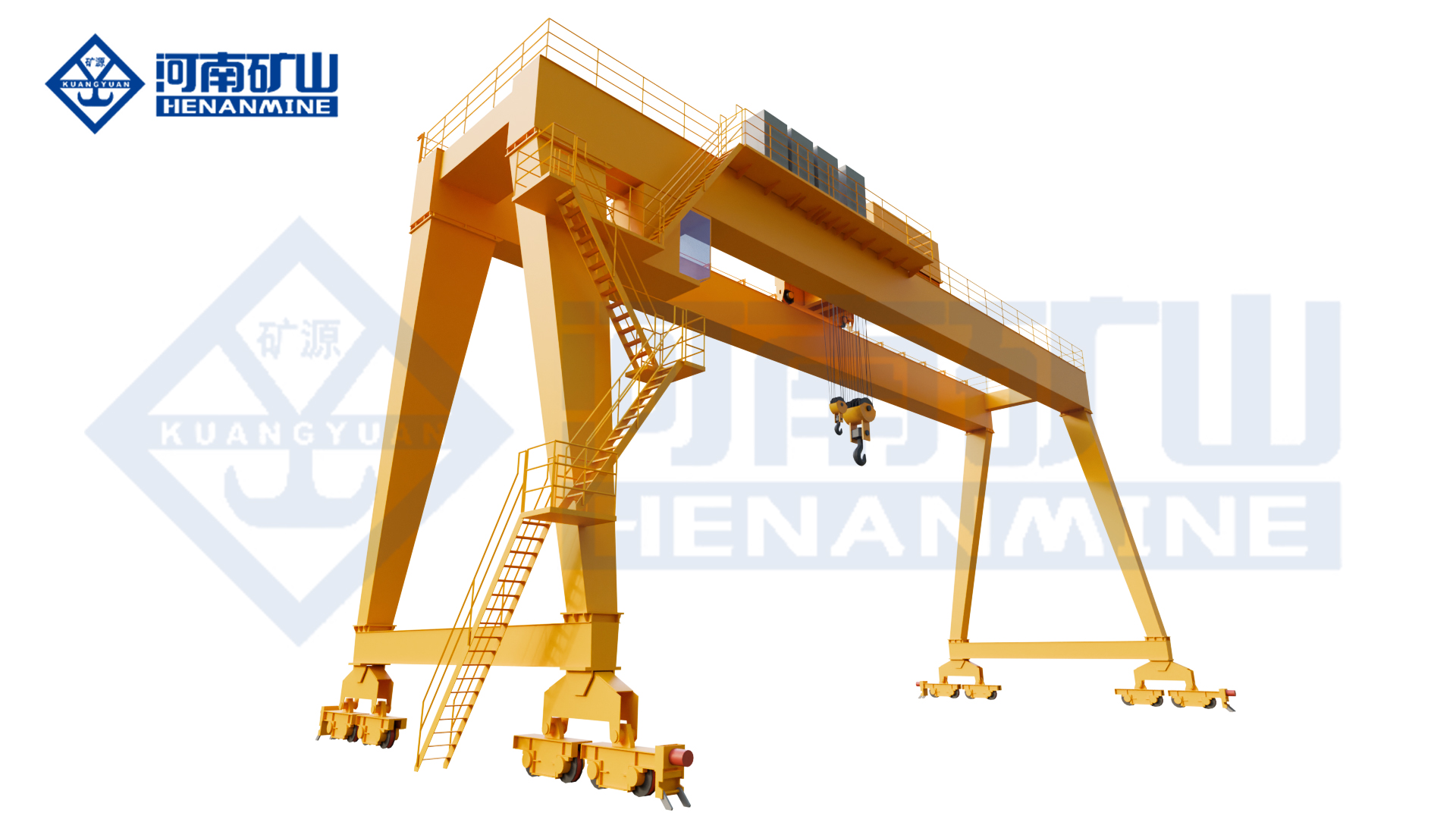
    Mg Double Girder Gantry Crane with 50/10 Ton

    Henan Mine Crane’s MG double girder gantry crane

     the classification of gantry crane

    Make sense of the type of gantry crane, first clear its classification logic. The industry is usually divided from four core dimensions, clear and easy to understand, easy to quickly match their needs.

    The four core dimensions are: structural design (the number and form of the main beam, determining load-bearing and stability), mobility (walking mode, affecting the flexibility of the operation), span and load (the core parameters, matching the load demand), the application environment (adaptable to indoor, outdoor or extreme scenes).

    The following combination of these dimensions, a detailed description of the various types of gantry crane features, applicable scenes and advantages, to facilitate a comprehensive understanding.

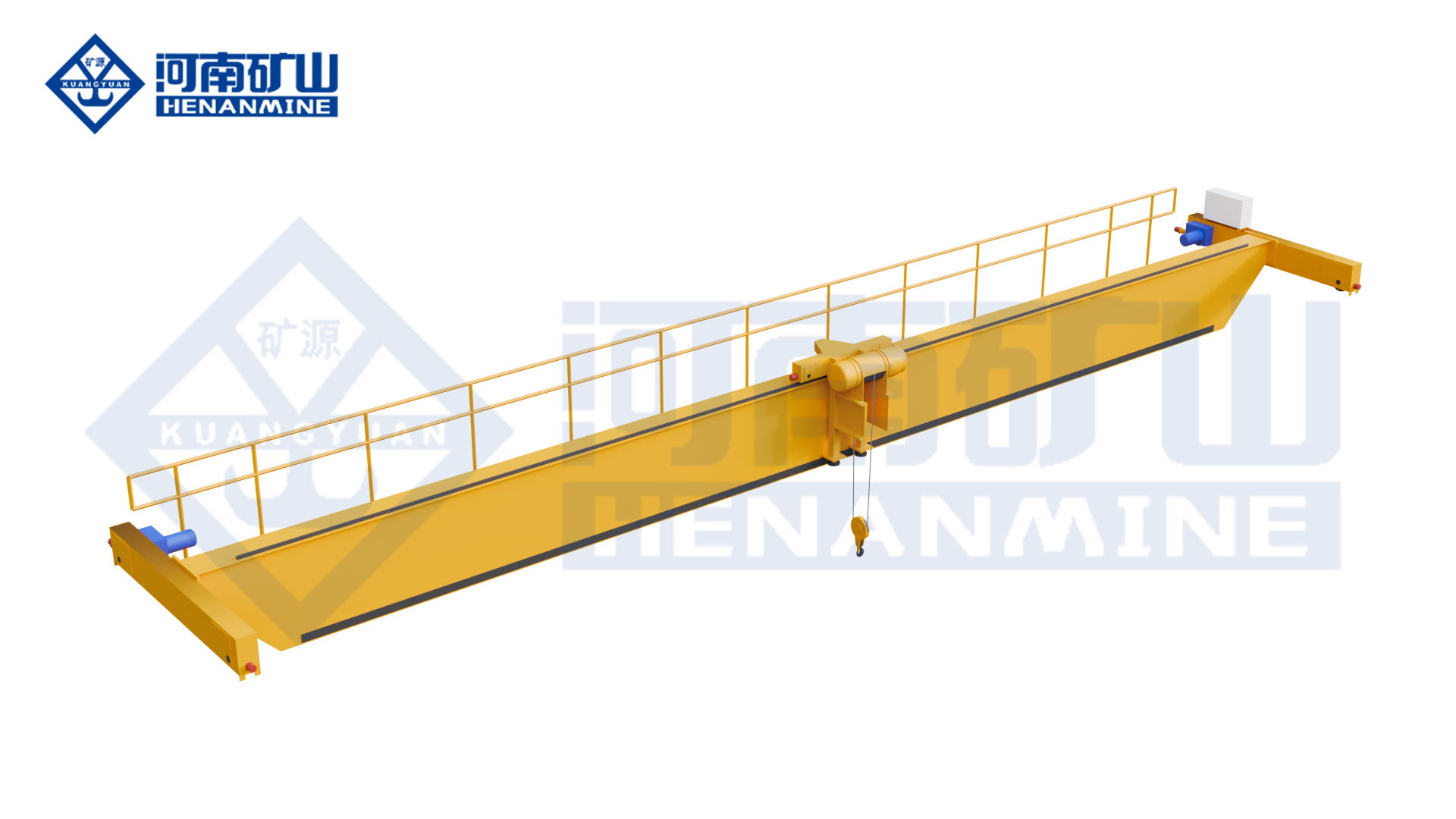
    single girder gantry crane

    Core features

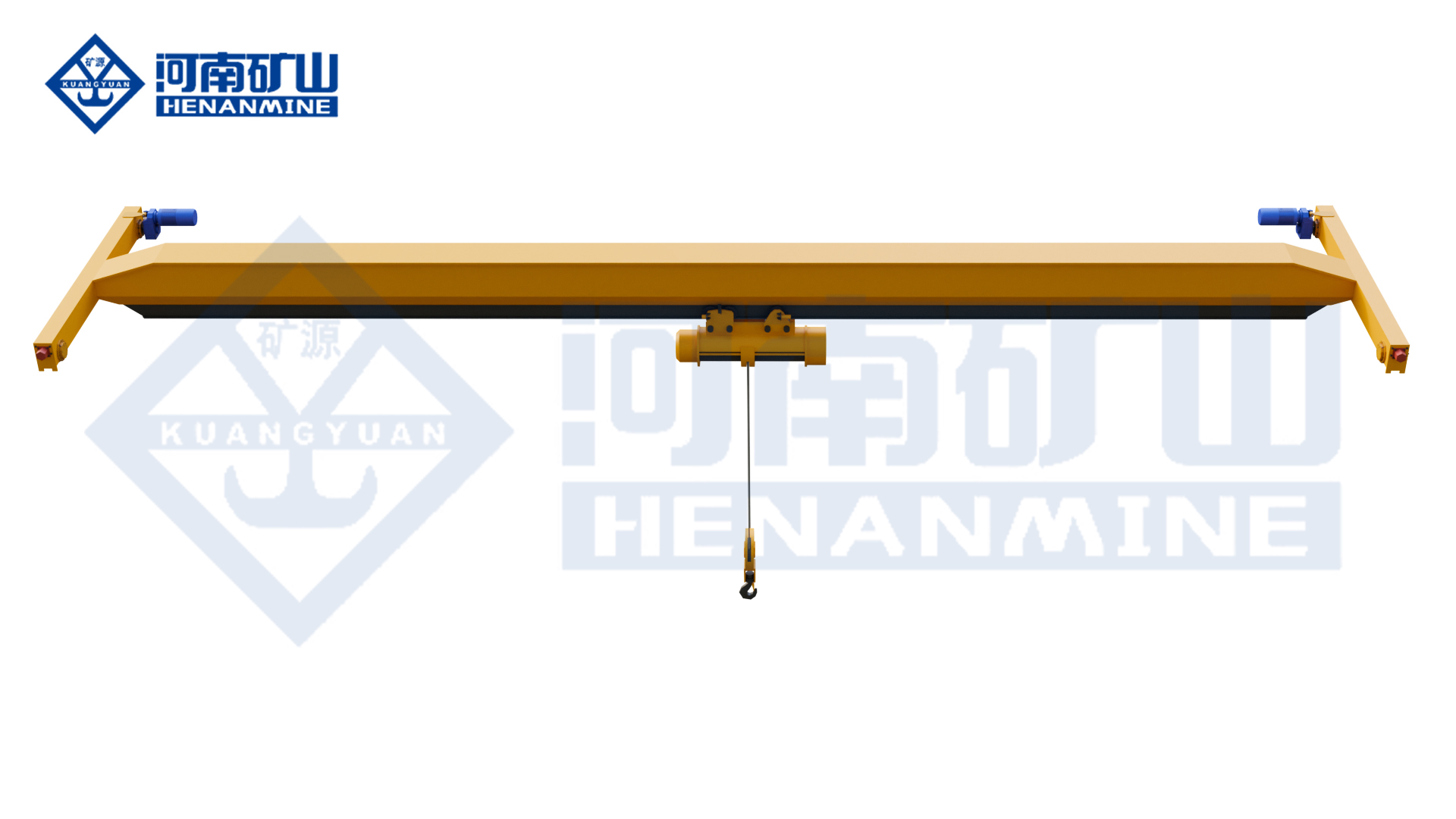
    Single girder gantry crane only has a main beam, both ends supported by the legs, simple structure. Lifting mechanism is mostly electric hoist, installed below the main beam, flexible operation.

    Because of its simple structure, light weight, manufacturing process is not complex, the cost is more advantageous, suitable for users with limited budget.

    Typical parameters

    Single girder gantry crane load usually 1-20 tons, can cover most of the small and medium-sized lifting needs; maximum span of about 30 meters, suitable for small workshops, warehouses and other sites.

    The operating class is mostly A3-A5 (light to medium), suitable for infrequent, light to medium load scenarios, such as daily loading and unloading, small equipment maintenance.

    Optimal Application Scenarios

    Small workshops (e.g. hardware factories, small machinery factories) are the core application scenarios, where raw materials and small workpieces can be lifted to save space and meet the basic lifting requirements.

    Small and medium-sized warehouses, it can be used with shelves to complete the transfer of goods, without the need to invest heavily in building complex lifting systems, cost-effective.

    It is also commonly used in automobile workshops, small repair stations and other places to lift heavy parts, flexible operation, and can improve the maintenance efficiency.

    Advantage

    Cost control is its most prominent advantage, procurement, installation and maintenance costs are lower than large gantry cranes, very suitable for small and medium-sized enterprises.

    It is easy to install, without complex foundation treatment, can be commissioned in a few days; wheel pressure is low, the existing site can be adapted without remodeling.
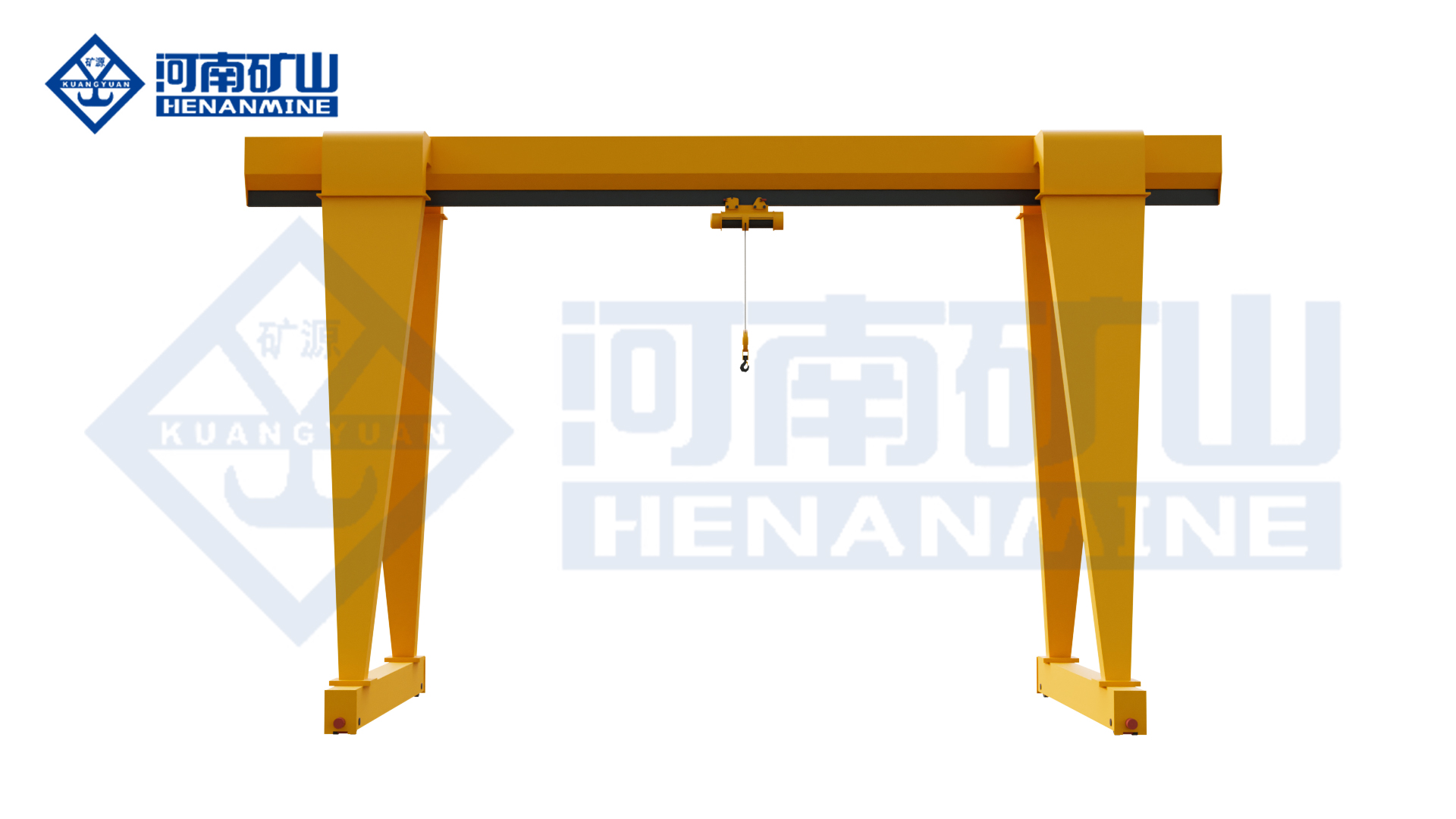
    Single-girder gantry crane 100t

    Single-girder gantry crane manufactured by Henan Mine Crane

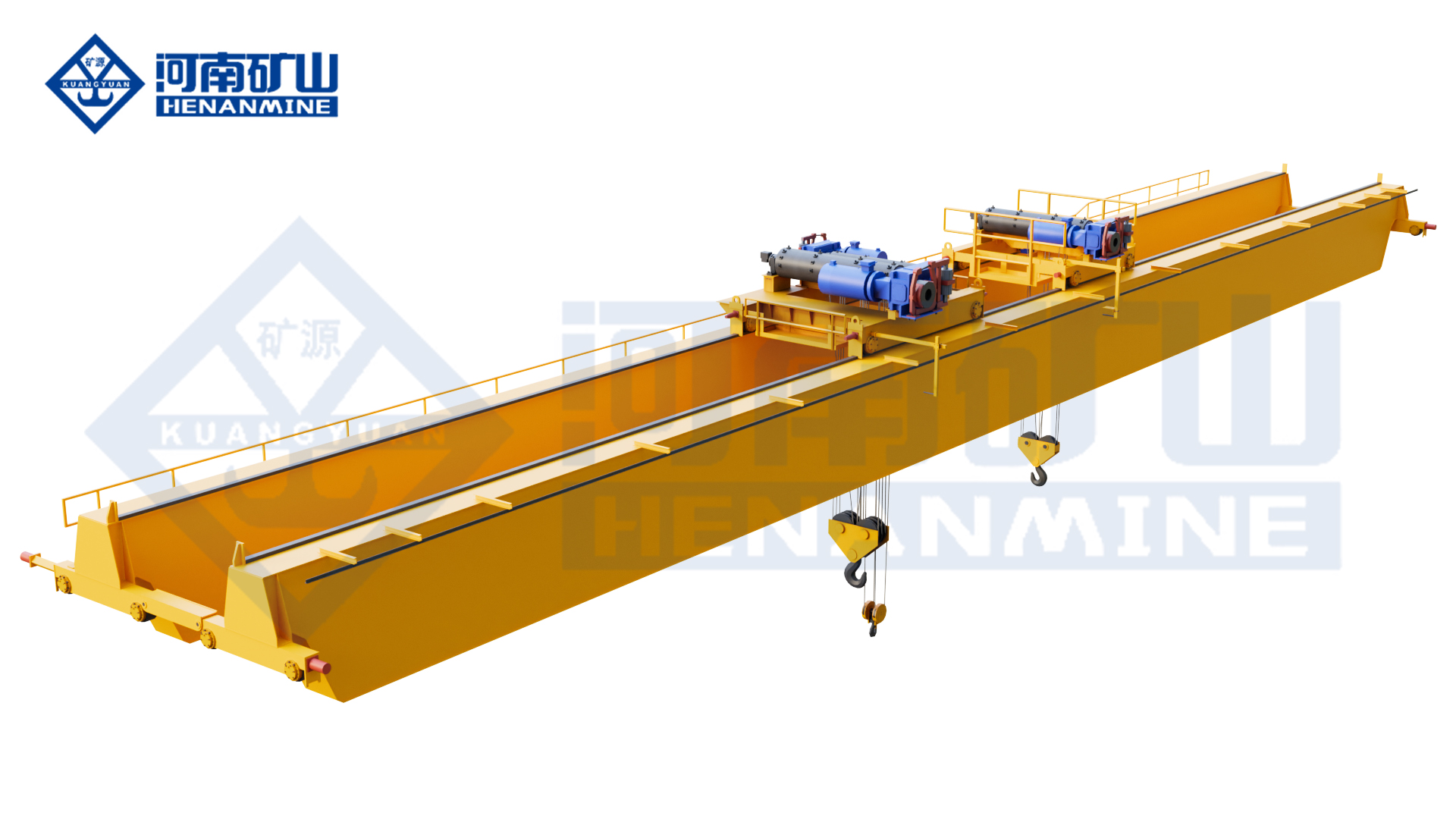
    double girder gantry crane

    Core features

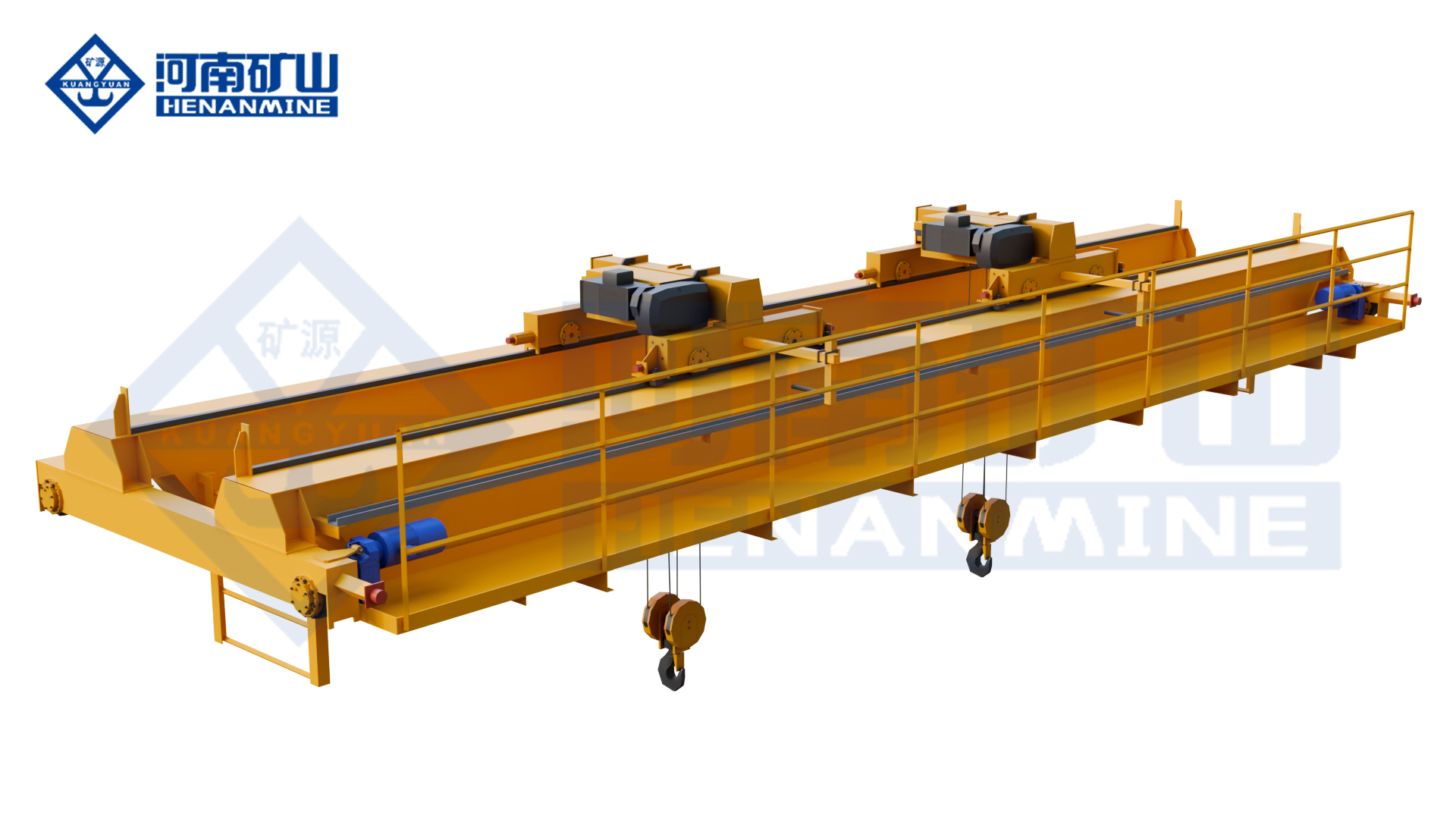
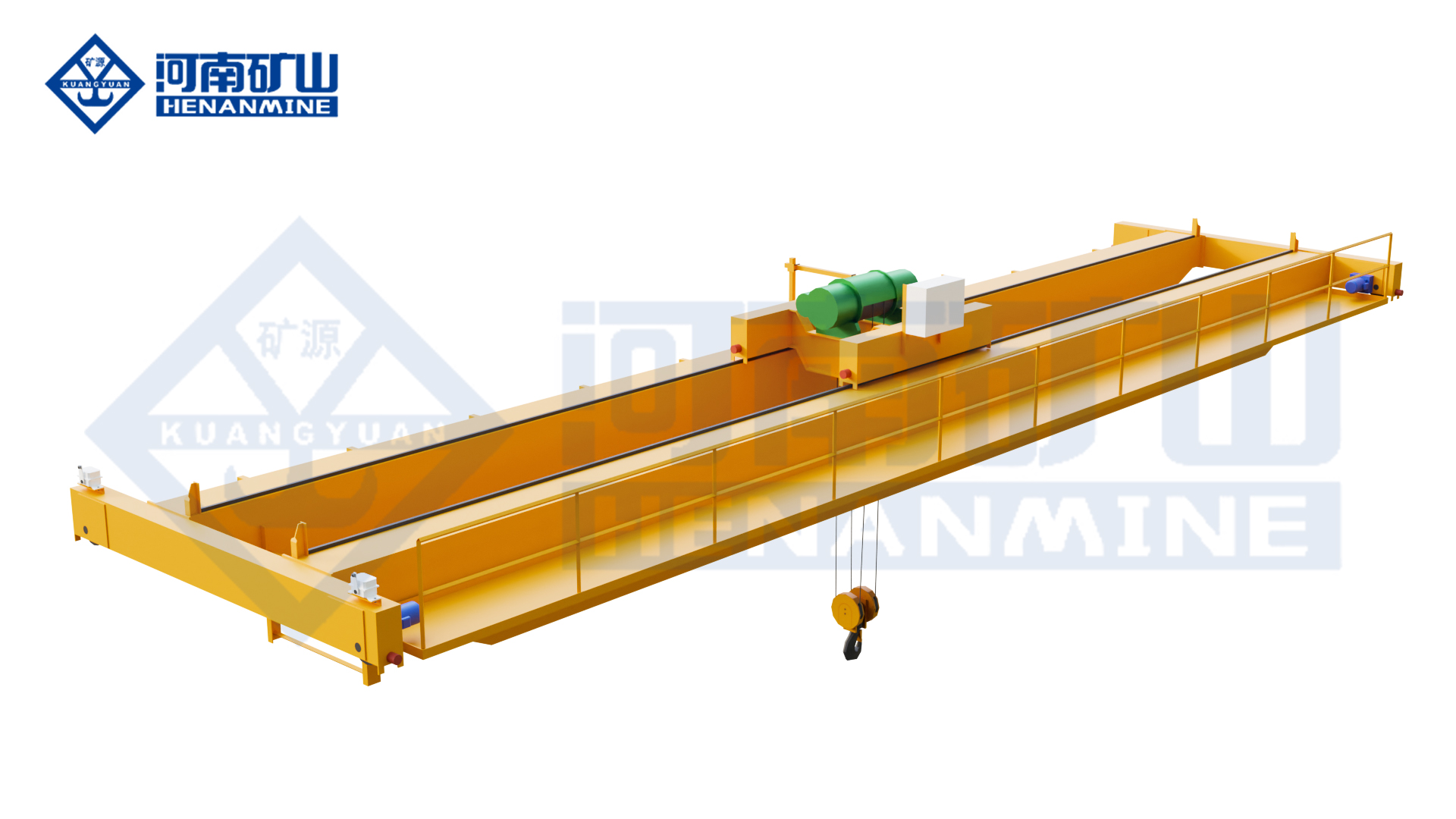
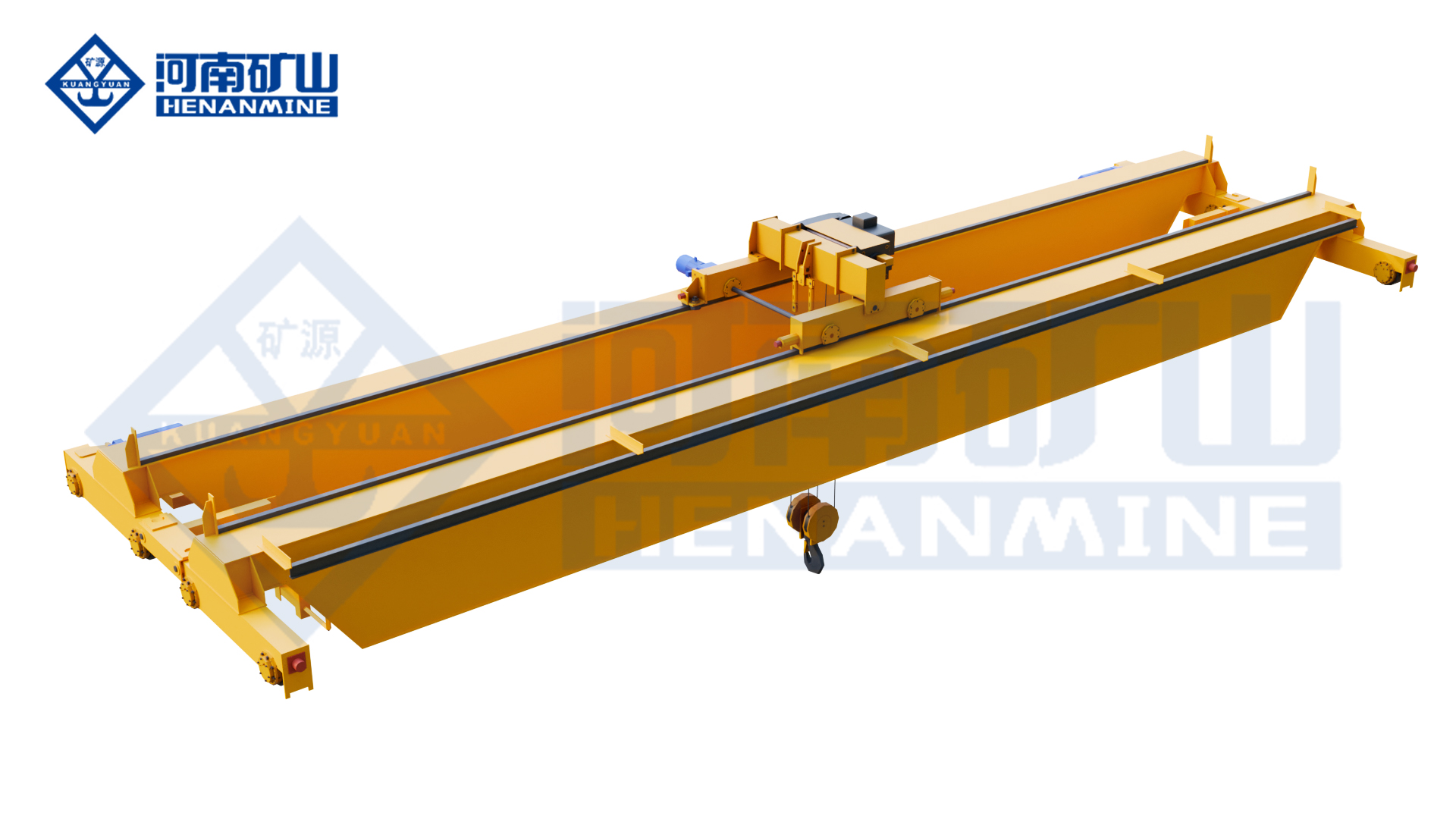
    Double girder gantry crane adopts two parallel main beam structure, strong rigidity, good stability. Lifting trolley running on the top of the main girder, can raise the lifting height and carry more load.

    Compared with the single girder gantry crane, its structure is more complex, greater weight, manufacturing process requirements, designed for heavy-duty, high-intensity operations.

    Typical parameters

    The operating class is A5-A8 (intermediate and advanced), which can be adapted to frequent and continuous heavy-duty operations, such as 24-hour non-stop lifting of steel in steel mills and other scenarios.

    The best application scenario

    Steel mills are the core application scenarios. Steel ladle transfer, billet lifting, finished product handling, etc., all require its heavy-duty capacity and stability to ensure safe and efficient operations.

    Shipbuilding plant on the lifting requirements are extremely high, double girder gantry crane of large span, large load characteristics, can be adapted to the hull segments, engines and other super-heavy parts lifting needs.

    Heavy equipment yard, large component prefabrication plant and other large outdoor sites, it is also commonly used to carry large machine tools, prefabricated bridge components and other heavy objects, adapted to the complex outdoor operating environment.

    Advantages

    Outstanding heavy-duty performance is its core advantage, it can stably carry hundreds of tons of heavy loads, and it is not easy to be deformed and malfunctioned under high-intensity operation, so as to ensure the safety of operation.

    Its strong rigidity, lifting shaking small, accurate positioning, suitable for high-precision needs; at the same time can withstand frequent continuous operation, longer service life, suitable for long-term high-intensity production scenarios.

    Mg Double Girder Gantry Crane with 50/10 Ton

    Henan Mine Crane’s MG double girder gantry crane

     half gantry crane

    Core features

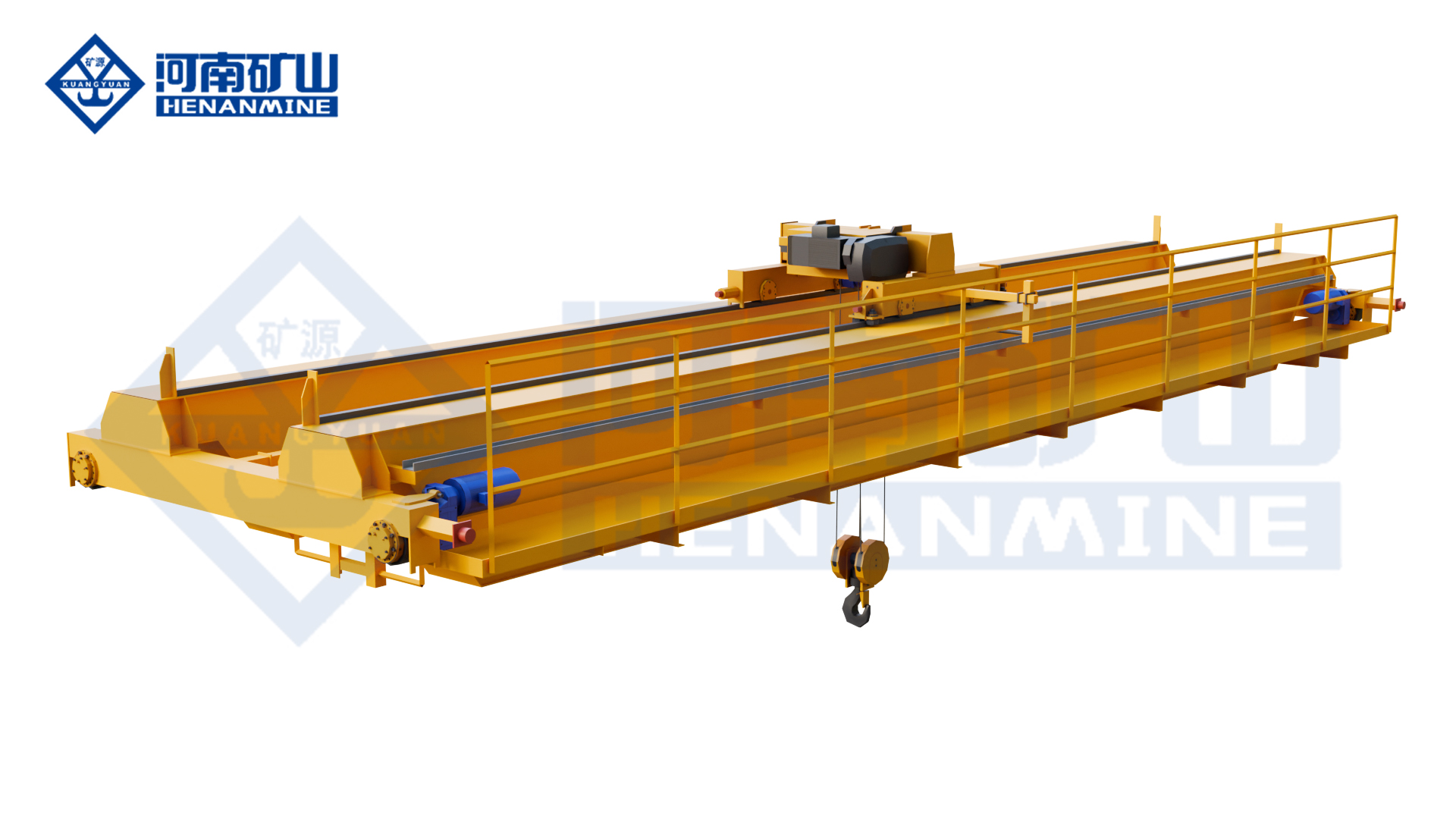
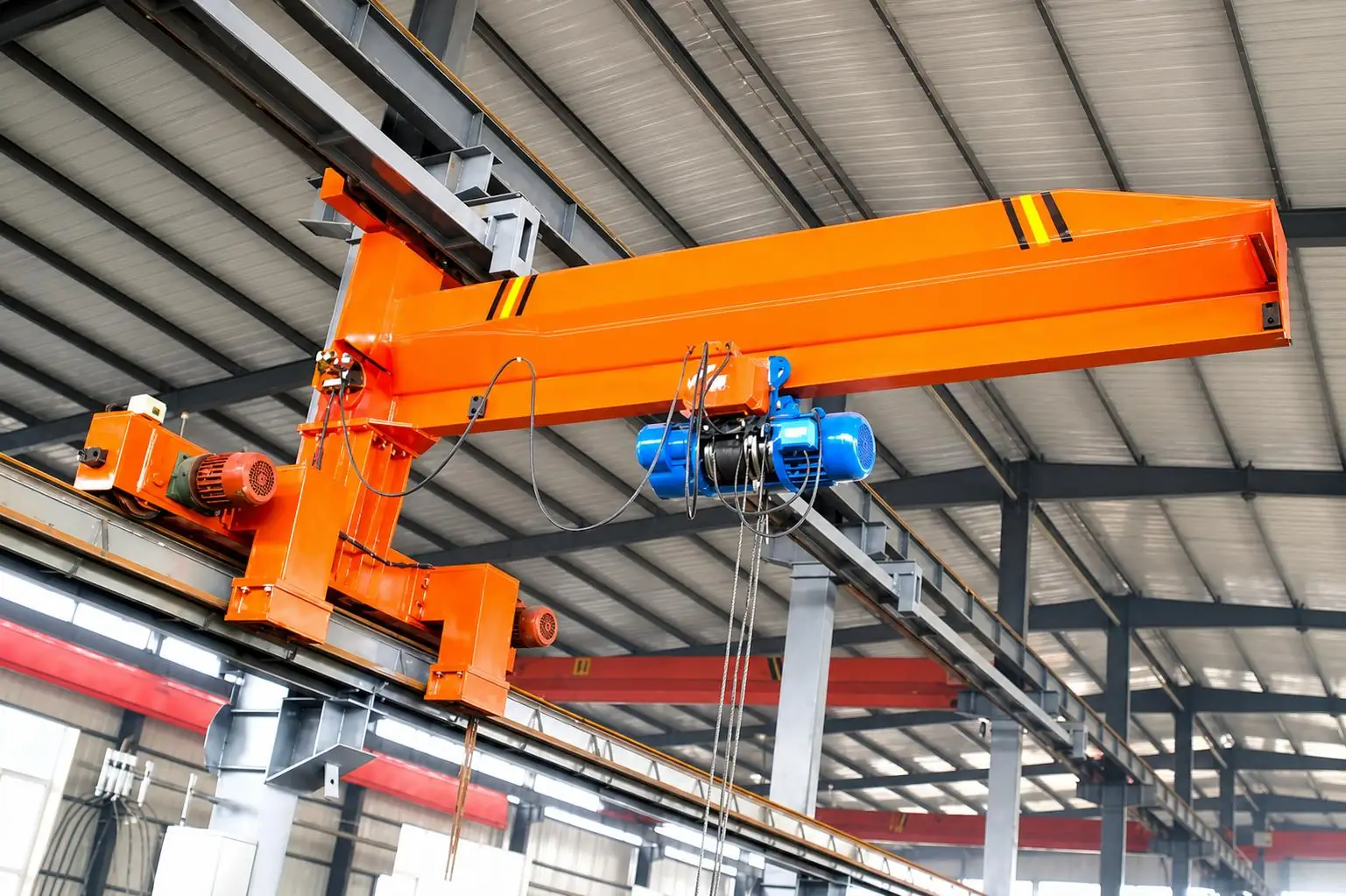
    Half gantry crane structure is special, one side of the legs fall to the ground track, the other side of the wheels run on the factory elevated runway beam, fusion of gantry cranes and bridge cranes, taking into account the advantages of flexibility and space utilization.

    The height and span of the main girder can be adjusted according to the needs, without the need of independent ground foundation on both sides, which is more adaptable to the site.

    Best Application Scenario

    It is most suitable for workshops with limited space (e.g. old narrow workshop). Under the premise that the top structure of the workshop can bear the load, it can make full use of the existing space to complete the lifting of heavy loads without the need to install a full gantry crane.

    It is also suitable for indoor and outdoor combined working areas (e.g. workshop entrances and exits), seamlessly connecting indoor workpiece handling with outdoor cargo loading and unloading, without the need for frequent replacement of lifting equipment.

    Advantages

    One of the core advantages is that it saves space, eliminating the need for ground foundations on both sides of the crane, and enabling a wide range of lifting coverage in confined areas.

    At the same time, the civil construction cost is lower, only need to lay one side of the ground track, the other side of the reuse of plant elevated runway beams; flexible layout, according to the site can be adjusted to run the route, adapted to the different operating procedures.
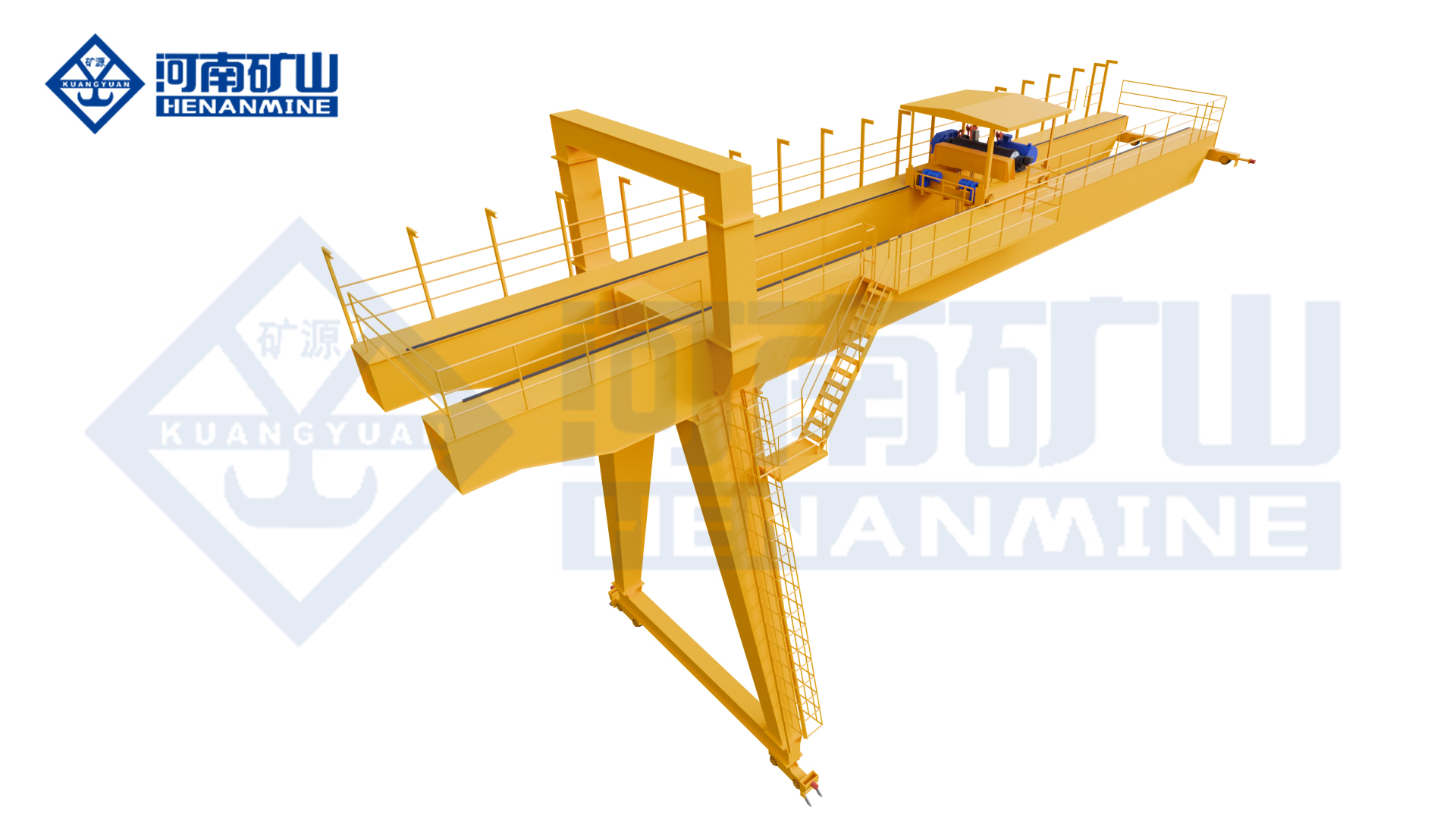
    MGB semi-gantry crane for sale

    The MGB semi-gantry crane manufactured by Henan Mine Crane

    portable gantry crane

    Core features

    Portable gantry crane core features are lightweight and movable, the frame adopts lightweight materials, light weight, easy to carry and assemble; Legs at the bottom of the more universal casters, no track restrictions, mobile and flexible.

    Its structure can be dismantled and adjustable, part of the model height of the main beam, span can be manually adjusted without professional tools, easy to operate, suitable for temporary work scenes.

    Best Application Scenario

    Equipment maintenance is the core application scenario, equipment failure can be quickly transported to the scene assembly, lifting parts without relying on fixed lifting equipment, effectively improve the maintenance efficiency.

    Small factories, workshops lifting demand is infrequent and light load, without investing heavily in the purchase of fixed gantry cranes, which can meet the basic lifting needs of workpiece handling, raw material loading and unloading.

    Site temporary transfer, exhibition equipment construction, warehouse temporary inventory and other scenarios, it can be quickly deployed, dismantled after operation storage, does not take up storage space.

    Advantage

    Strong mobility is its biggest advantage, can be moved to the operating position at any time, no site, track restrictions, especially suitable for decentralized temporary lifting tasks.

    Build fast, 1-2 people can be completed within half an hour assembly and commissioning and put into use; no permanent foundation, without laying tracks, pouring foundations, site selection and equipment migration are very flexible.

    Single-girder gantry crane 100t

    Single-girder gantry crane manufactured by Henan Mine Crane


    rail type gantry crane (RMG)

    Core features

    Rail-type gantry crane (RMG for short) relying on the ground to run on a fixed track, the scope of work is clear, suitable for efficient lifting operations in a fixed area.

    It mostly uses electric power drive, energy saving and environmental protection, low noise, suitable for sites with high environmental requirements; and automation potential, after adding control system can realize unmanned operation.

    Optimal Application Scenarios

    Container yard is the core application scenario of RMG, which can accurately locate containers along a fixed track and efficiently complete the loading, unloading and transshipment of large quantities of containers.

    In intermodal transportation hubs, RMG can stably connect railroad, road and waterway transportation, efficiently complete cargo transshipment and ensure smooth intermodal links.

    Railroad freight stations often use RMG to lift and transfer containers, large equipment and other heavy objects, which is suitable for the efficient throughput demand of railroad freight and ensures the rapid flow of goods.

    Advantages

    High operational efficiency is one of its core advantages. Fixed track operation without frequent adjustment of direction can quickly and continuously handle large quantities of goods.

    Accurate positioning of rail operation, can reduce the risk of damage to the goods, suitable for high-precision operations; at the same time compatible with automation systems, can realize remote control, unmanned operation, reduce labor costs and improve safety.
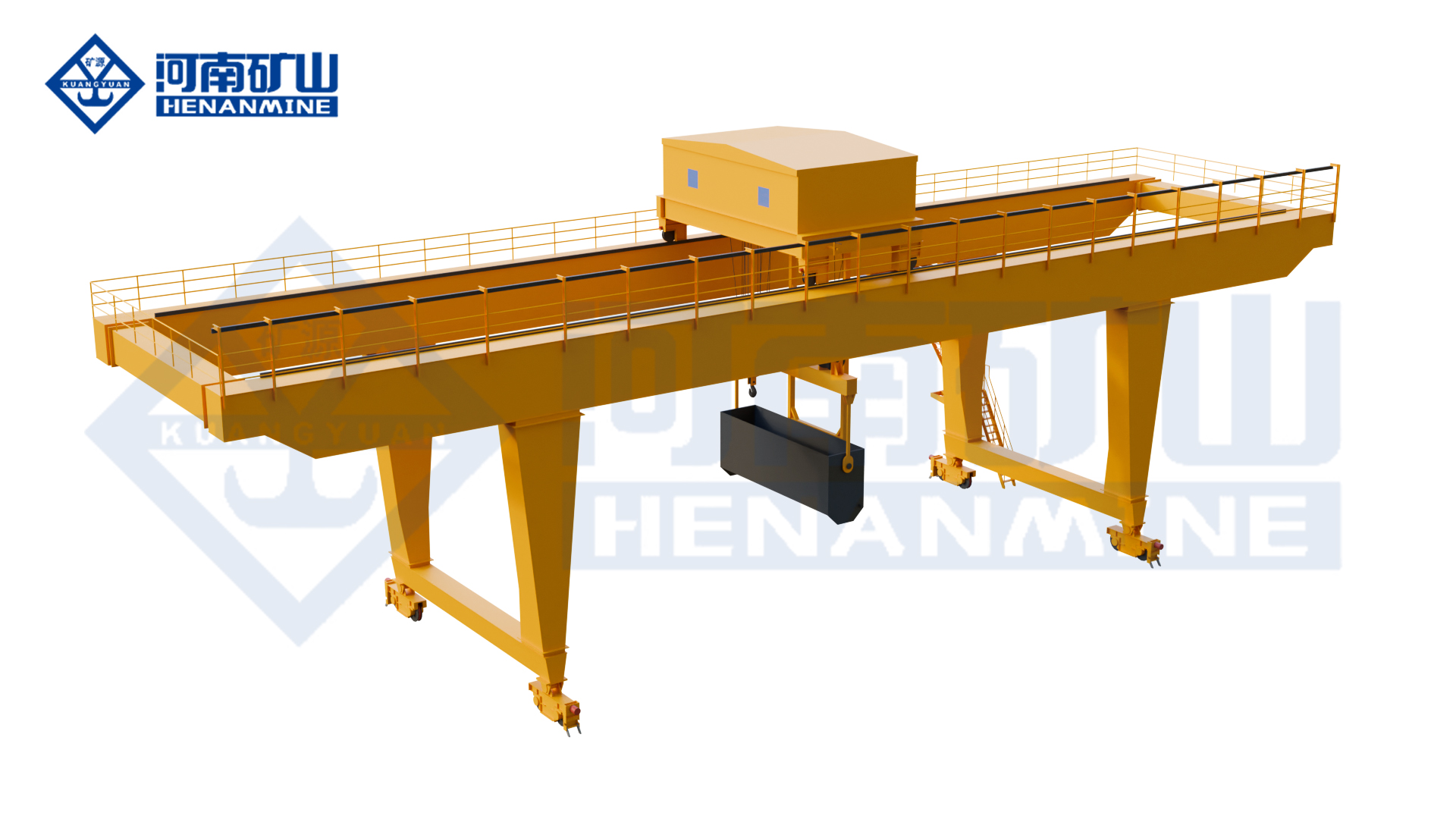
    MGC Slurry Gate Crane for sale

    The MGC Slurry-Discharging Gantry Crane manufactured by Henan Mine Crane

    tire gantry crane (RTG)

    Core features

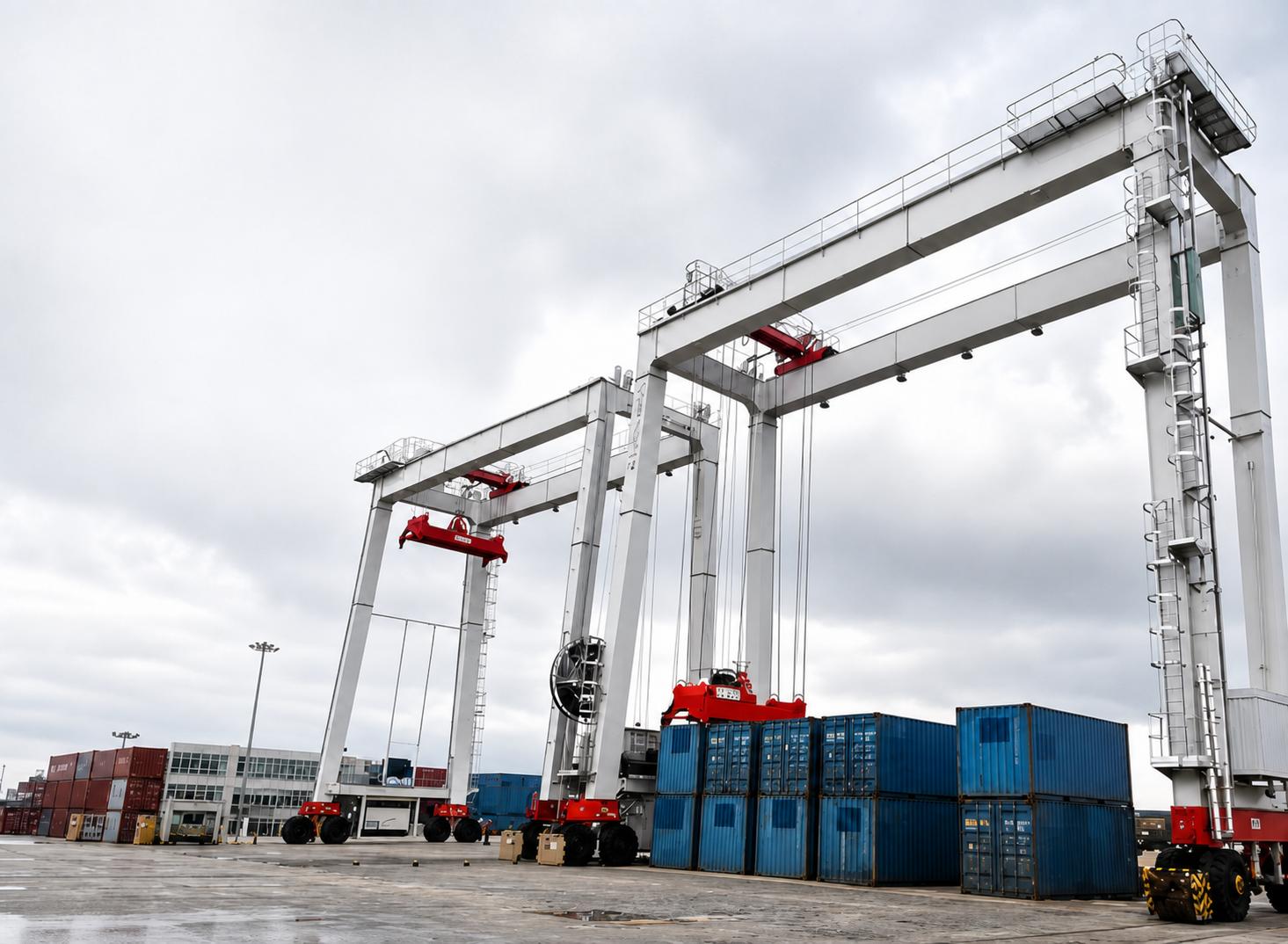
    Tire gantry crane (RTG) and RMG core area is the use of rubber tires to walk, get rid of track restrictions, can be flexible on the ground, a wider range of operations.

    Power for diesel or diesel-electric hybrid power, diesel drive power suitable for outdoor complex scenes, hybrid more energy-saving and environmentally friendly, reduce energy consumption and emissions.

    Best Application Scenario

    Container terminals are the core application scenarios, which can flexibly adjust the operation area according to the cargo throughput, without relying on the rail, and adapt to the dynamic operation needs of the terminal.

    For ports and logistics parks that require high flexibility in layout, RTG can quickly relocate the operation area without the need for track modification, which greatly improves the utilization rate of the site.

    For small and medium-sized ports and inland container yards with small cargo throughput and limited space, RTG does not need to lay rails, with low infrastructure cost and better adaptability.

    Advantages

    The core advantage of RTG is that it is flexible in mobility, free from track constraints, and can be freely adjusted to the operating position and change the area, so that it is suitable for diversified operation layouts.

    No need for track foundation, compared with RMG to save a lot of infrastructure costs, adapted to the site transformation is difficult, limited budget scenarios; and easy to relocate, equipment utilization rate is higher.
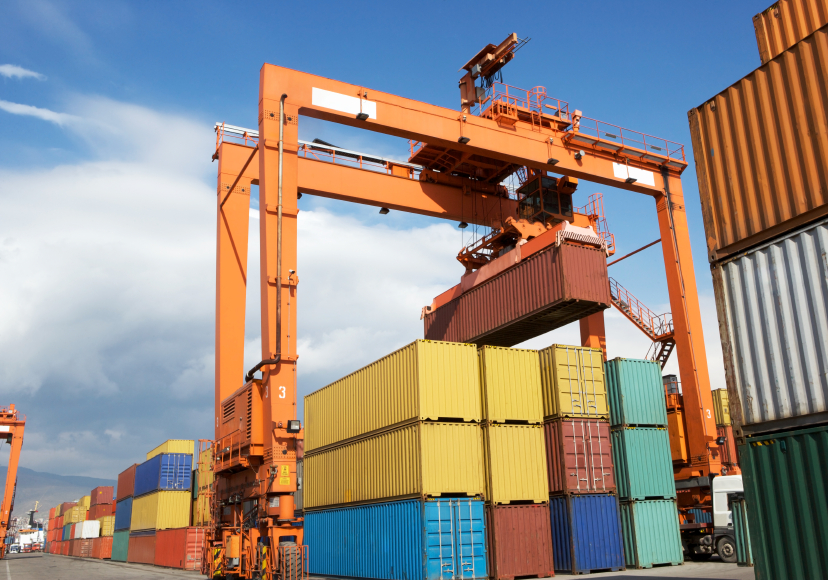
     adjustable and customized gantry crane

    In addition to the standardized gantry crane mentioned above, there is a special category of gantry crane, is adjustable and customized gantry crane, they are mainly for some special operational needs, can not be satisfied with standardized equipment.

    Adjustable gantry crane

    Adjustable gantry crane is mainly divided into height adjustable and span adjustable two categories. Height adjustable models can be adjusted according to the height of the main beam, adapted to the height of the workshop is limited, lifting cargo height of different scenes, to avoid space constraints.

    Span adjustable models can flexibly adjust the width of the main beam, suitable for site width changes, need to work across multiple areas of the scene, without the need to replace the equipment to meet the demand.
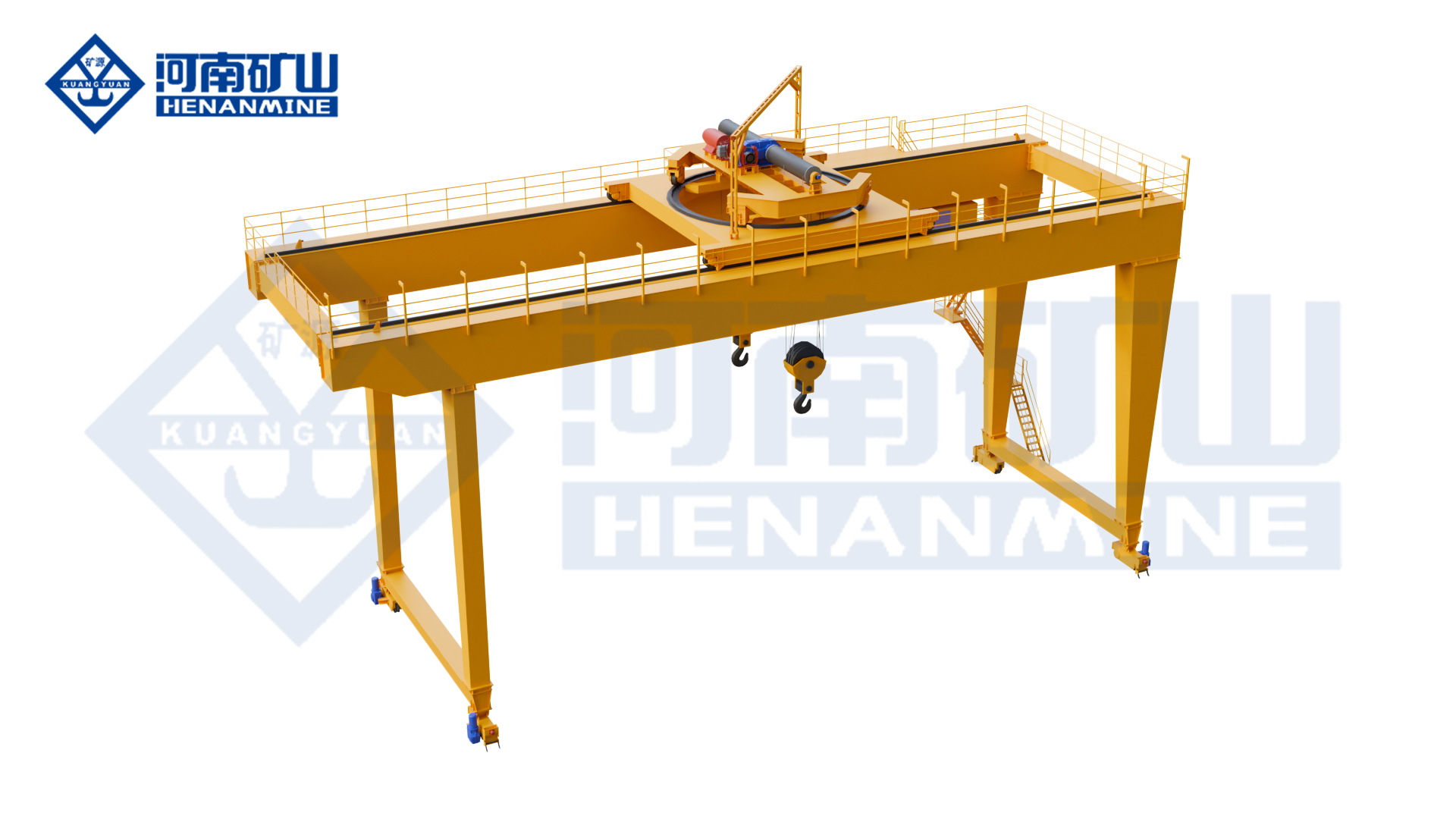
    MC Electromagnetic Gantry Crane for sale

    MC Electromagnetic Gantry Crane

    Customized Gantry Crane

    Customized gantry cranes are tailor-made for special needs, and the core adaptive scenes include special load lifting, extreme environmental operations and non-standard workshop adaptive.

    For ultra-long, ultra-wide and other special shapes of the workpiece, or fragile, precision equipment, standardized equipment can not be adapted to the need to customize the special spreader and the main beam structure.

    High temperature, high salt spray and other extreme environments, need to customize equipment materials and protective measures to ensure that the gantry crane in the harsh conditions of stable operation.

    Workshop shape is irregular, there are obstacles or ground bearing special, need to customize the outrigger structure and running route, adapt to the site layout and make full use of space.

    We have a wealth of experience in manufacturing customized gantry cranes, can be combined with the user’s operational needs, site conditions and budget, to provide one-stop service from design, production to installation and commissioning, to ensure that the equipment accurately match the actual needs.
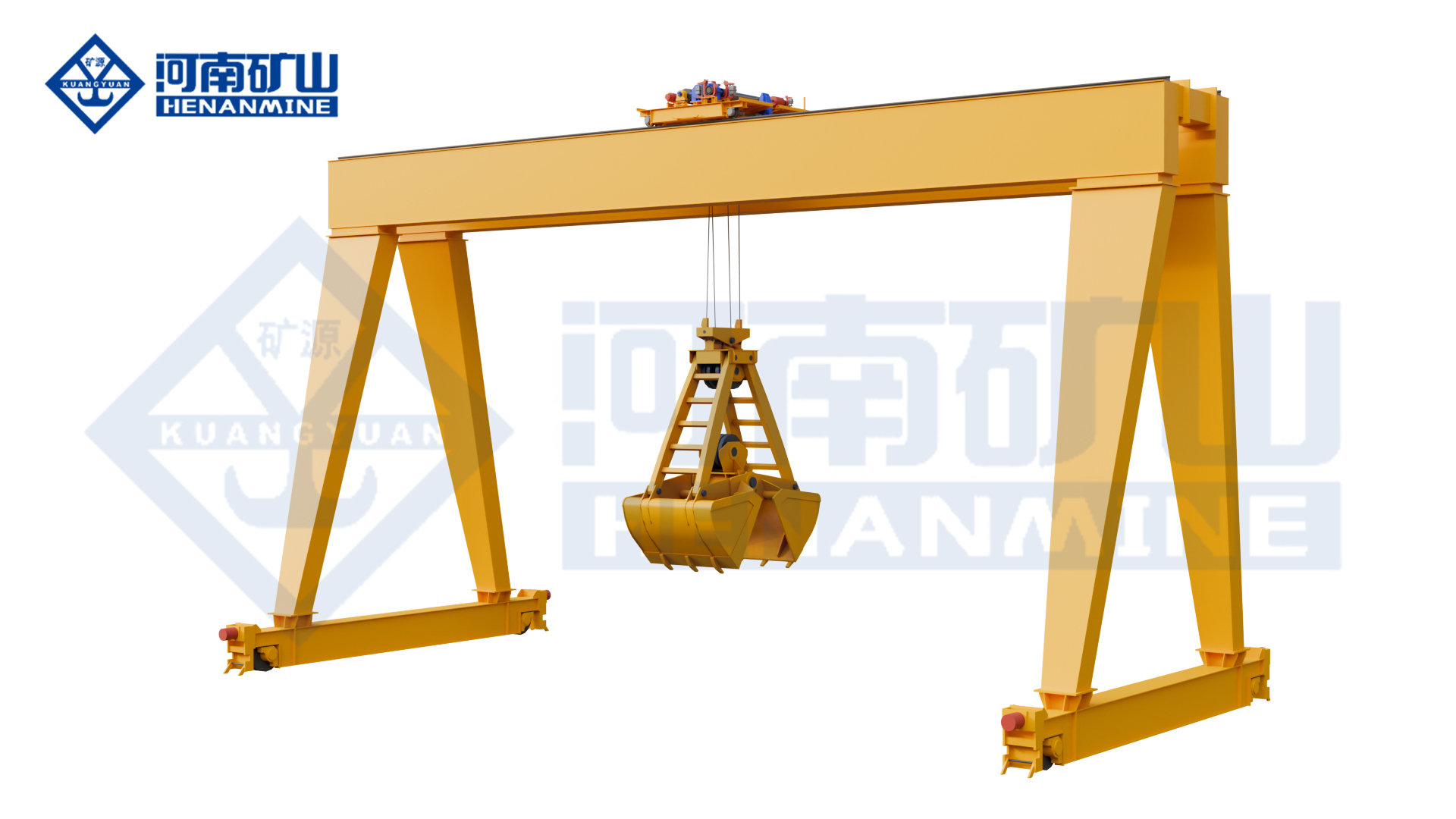
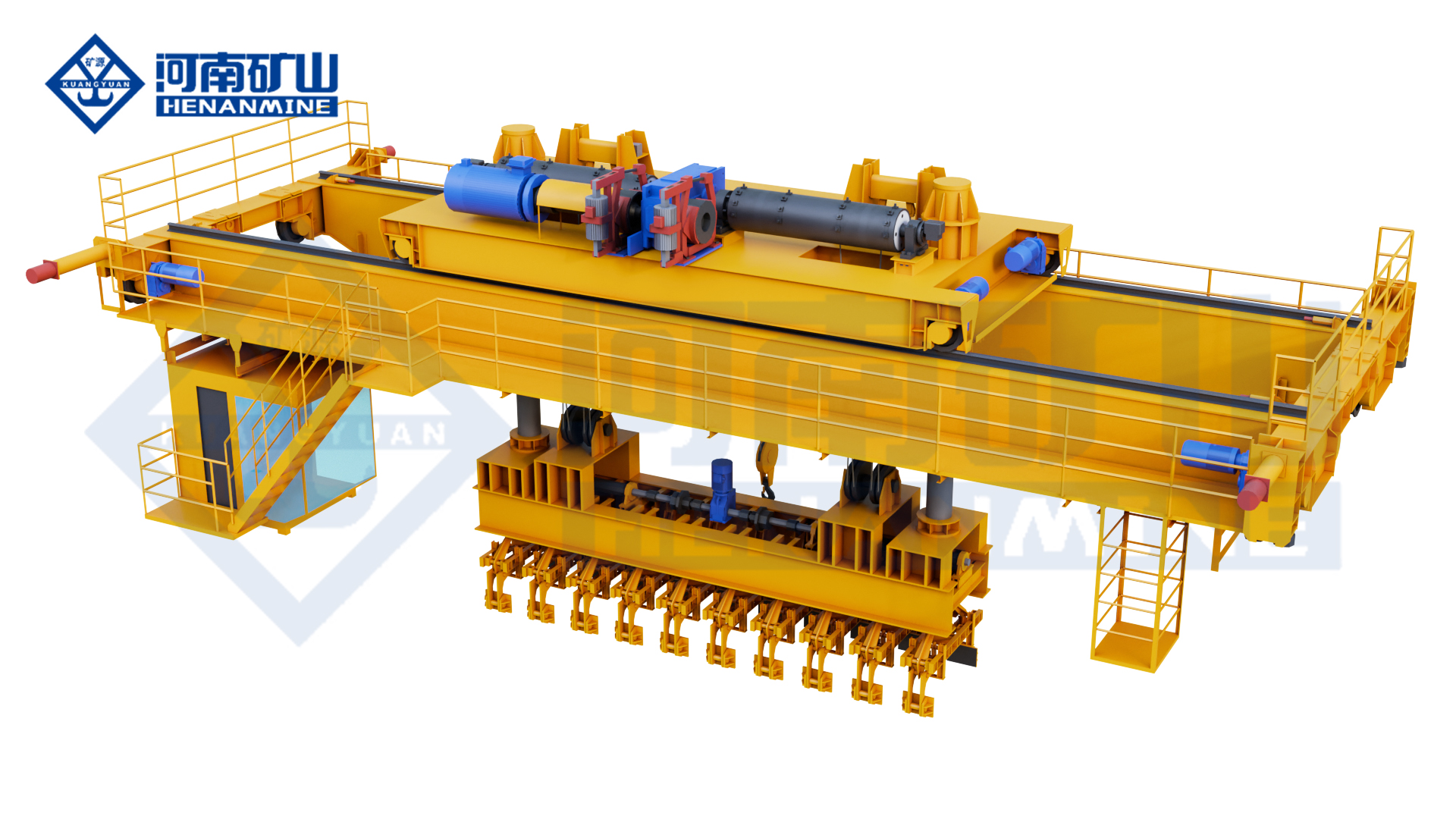
    MZ Grab Gantry Crane for sale

    Henan Mine Crane MZ Grab Double-Girder Gantry Crane

    how to choose the right type of gantry crane?

    Choose the gantry crane should not blindly follow the trend or only look at the price, need to combine their own operational needs of a variety of factors, in order to choose the right equipment. The following comb core decision-making factors to help you clear your mind.

    1. Lifting capacity

    Lifting capacity is the core factor, you need to clarify the maximum weight of the lifting load, and then match the corresponding model: daily 1-20 tons of lifting selection of single girder gantry crane, 20 tons above the heavy load is considered double girder gantry crane.

    Need to reserve a certain amount of load capacity (such as the actual maximum load of 20 tons, it is recommended to choose more than 25 tons of equipment), to avoid long-term full-load operation affects the life and safety of equipment.

    2. Span and lifting height

    The span should match the width of the working place to ensure that the whole working area is covered; the lifting height should meet the height requirement of goods stacking or transferring.

    Example: workshop width of 20 meters need to choose span ≥ 20 meters of equipment; lifting goods to 5 meters high shelves, lifting height ≥ 5 meters (including the height of the goods themselves).

    3. Indoor vs. outdoor use

    Indoor use need to consider the workshop height, width, etc., the height is limited can choose single girder or half gantry crane; outdoor need to cope with the wind and rain, temperature and humidity and other environments, it is recommended to choose the good protection of the double girder gantry crane, RMG or RTG.

    Combination of indoor and outdoor work, half gantry crane or RTG is more adaptable, can be flexible to switch the operating environment.

    4. Frequency of operation

    Frequency of operation determines the level of equipment operation: occasional lifting (daily operating time is short) choose A3-A5 light intermediate single girder gantry crane; continuous and frequent operation (more than 8 hours a day) need to choose A5-A8 intermediate and advanced double girder gantry cranes or RMG, to ensure the ability of high-intensity operation.

    5. Budget and installation conditions

    Budget, single girder, portable gantry crane cost is low, double girder, customized equipment cost is high, need to choose according to need. At the same time, we need to consider the installation conditions, such as site load-bearing, infrastructure space and the feasibility of large installation equipment into the site.

     the conclusion: for your project to choose the most suitable gantry crane

    Gantry crane types, each type is suitable for specific scenes. The key to selecting the type is to clarify their operational needs, and combined with the budget and installation conditions.

    If the needs of special, customized gantry crane is more suitable. Whether you choose a standardized or customized model, please contact us directly for a precise selection plan.
    Henan Mine CraneDiscuss your requirements ↗
  • What are the different types of Bridge Cranes?

    What are the different types of Bridge Cranes?

    What are the different types of Bridge Cranes?

    Overhead crane (often called traveling crane and overhead crane in the industry), the core of which consists of 1-2 main girders spanning the site, running along the top track through the end girders, matching the hoisting mechanism to realize the lifting and handling of goods without occupying the ground space.

    Difference with gantry cranes: bridge type relies on plant column support, no independent legs; gantry type has floor outriggers, track paved ground, more suitable for outdoor scenes.

    Overhead cranes are widely used in industrial places, the core is able to safely and efficiently solve the problem of heavy cargo handling, can be adapted to different loads, space and production process requirements.

    Classification of overhead cranes

    According to the main beam design: the most basic classification, divided into single girder, double girder, the number and structure of the main beam to determine the load, stability and applicable scenes, light load with a single girder, heavy load with a double girder.

    According to the support structure: look at the way of rail fixation, divided into top traveling type and bottom hanging type, different requirements on the space and structure of the plant.

    According to application function: customized to fit specific scenes, such as explosion-proof type for chemical industry, European type for precision manufacturing, and special type for metallurgy.

    According to the working level (A1-A8) and automation level: the working level represents the load and operation frequency, the higher the level, the higher the frequency and heavy load; the automation is divided into manual, semi-automatic and full-automatic, which is adapted to the different intelligent needs.

    Comparison Table: Different Types of Overhead Cranes

    Overhead Crane Type Typical Capacity Span Range Best Applications
    Single Girder Overhead Crane 1–20 tons Up to ~30 m Workshops, warehouses, light manufacturing
    Double Girder Overhead Crane 10–500+ tons Up to 40 m+ Steel mills, power plants, heavy industry
    Top Running Overhead Crane Medium to very heavy Long spans Facilities with strong building columns
    Underhung (Underslung) Overhead Crane Light to medium Short to medium Low-headroom workshops, existing buildings
    European-Style Overhead Crane 1–50+ tons Medium to long Precision manufacturing, automated lines
    Explosion-Proof Overhead Crane Light to heavy Project-specific Chemical plants, oil & gas, hazardous areas
    Metallurgical (Ladle) Crane 50–500+ tons Large spans Steelmaking, foundries
    Grab / Magnetic Overhead Crane Medium to heavy Medium to long Bulk material handling, scrap yards

    Single Girder Overhead Crane

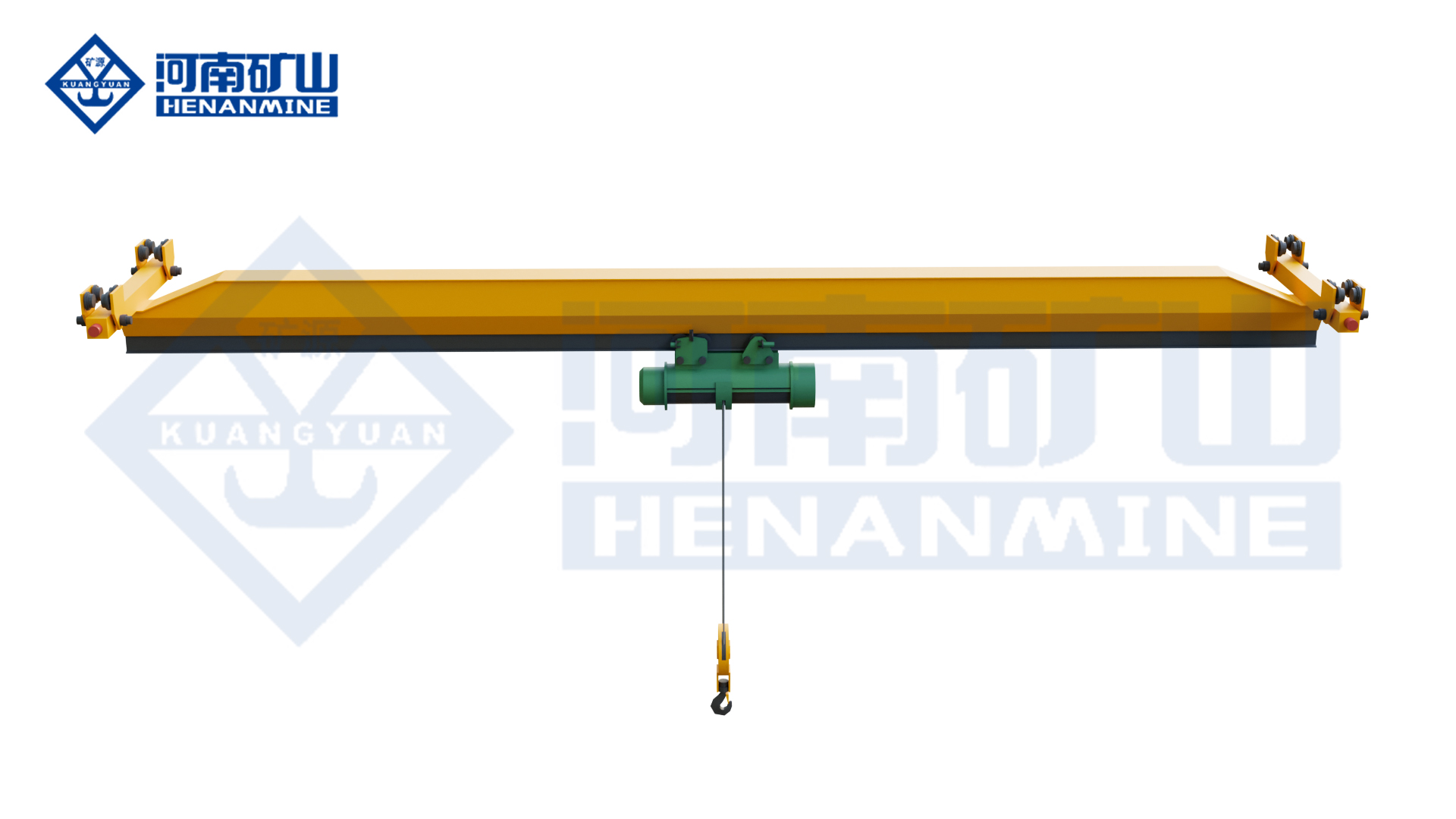
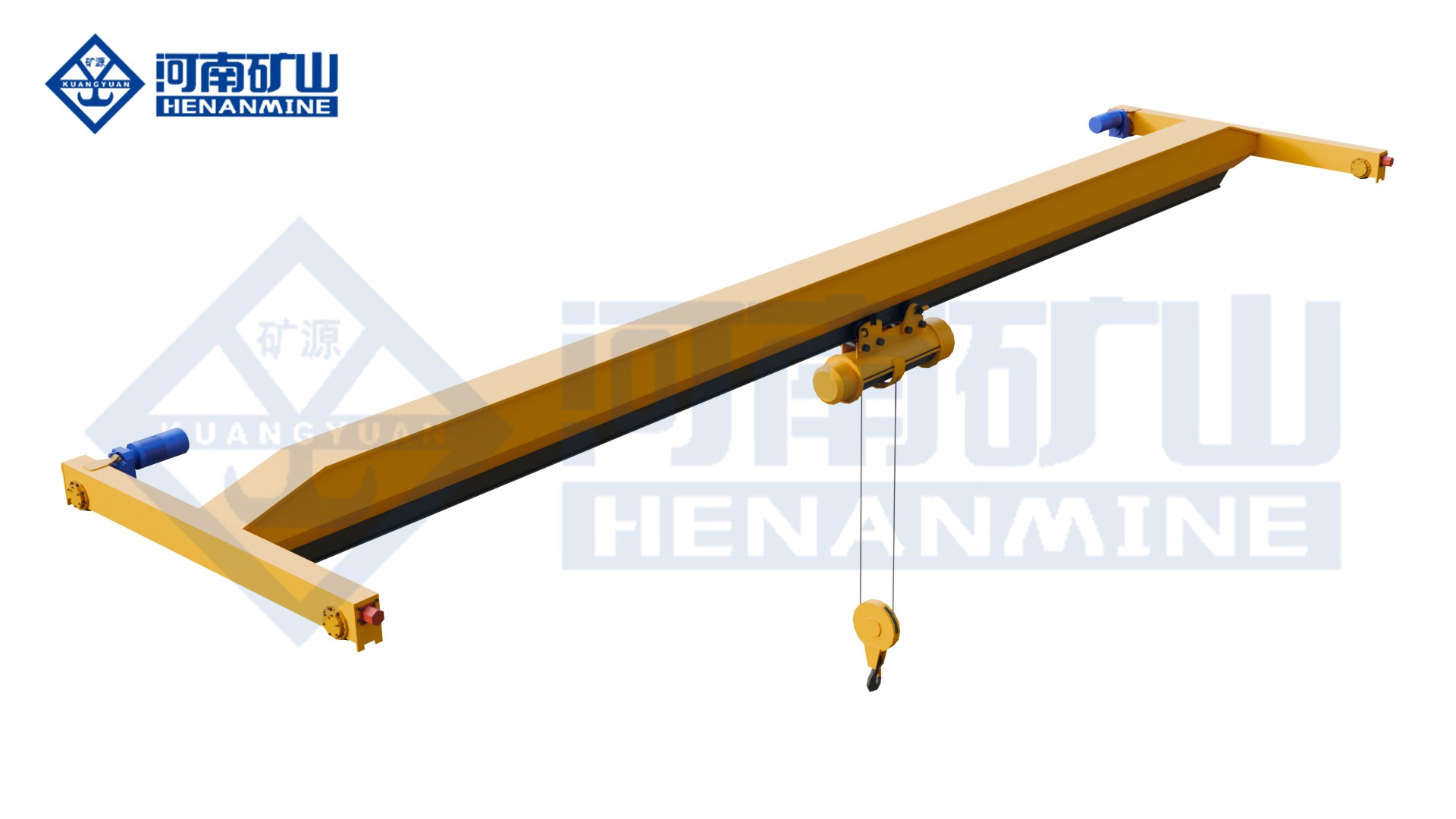
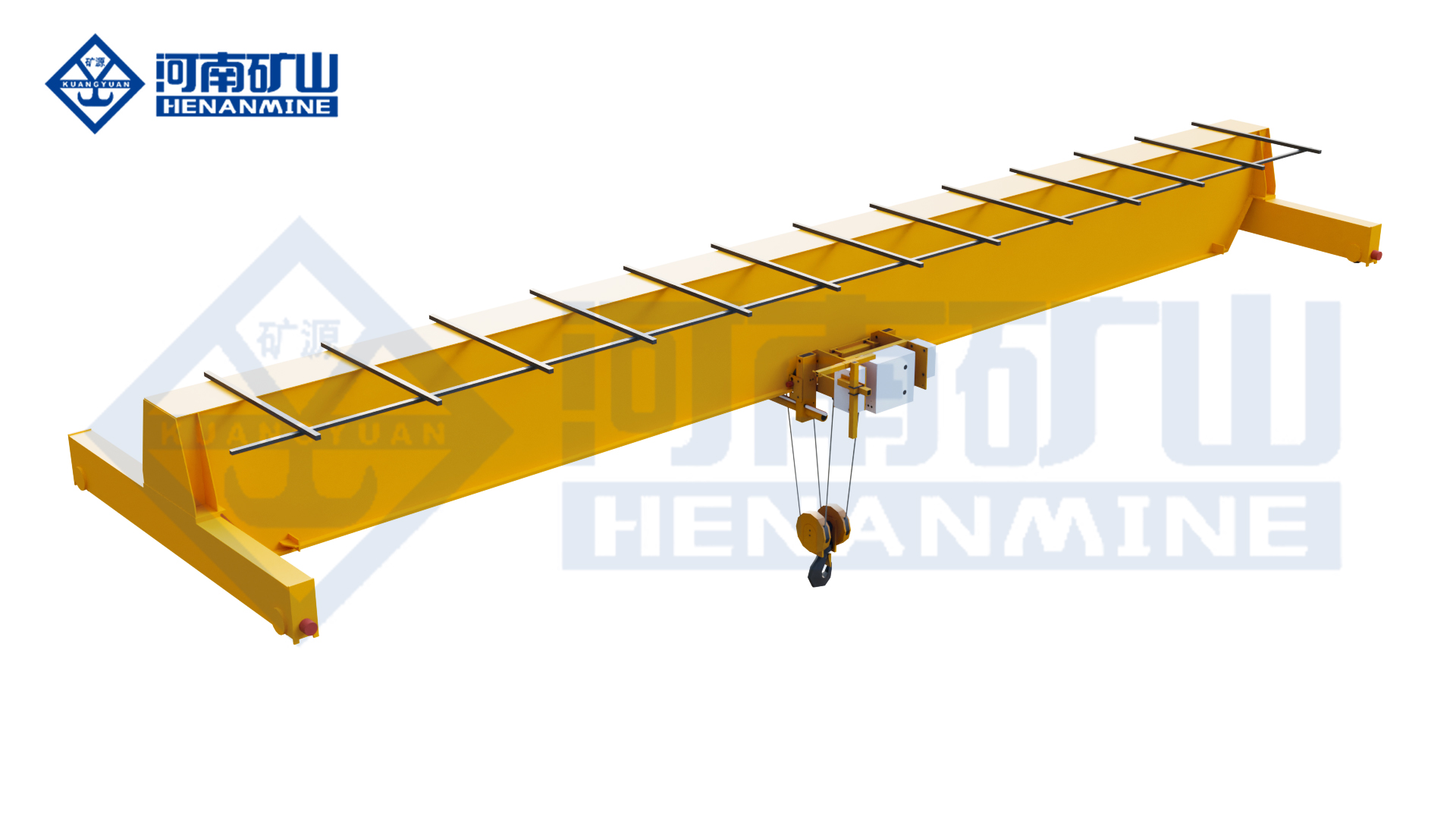
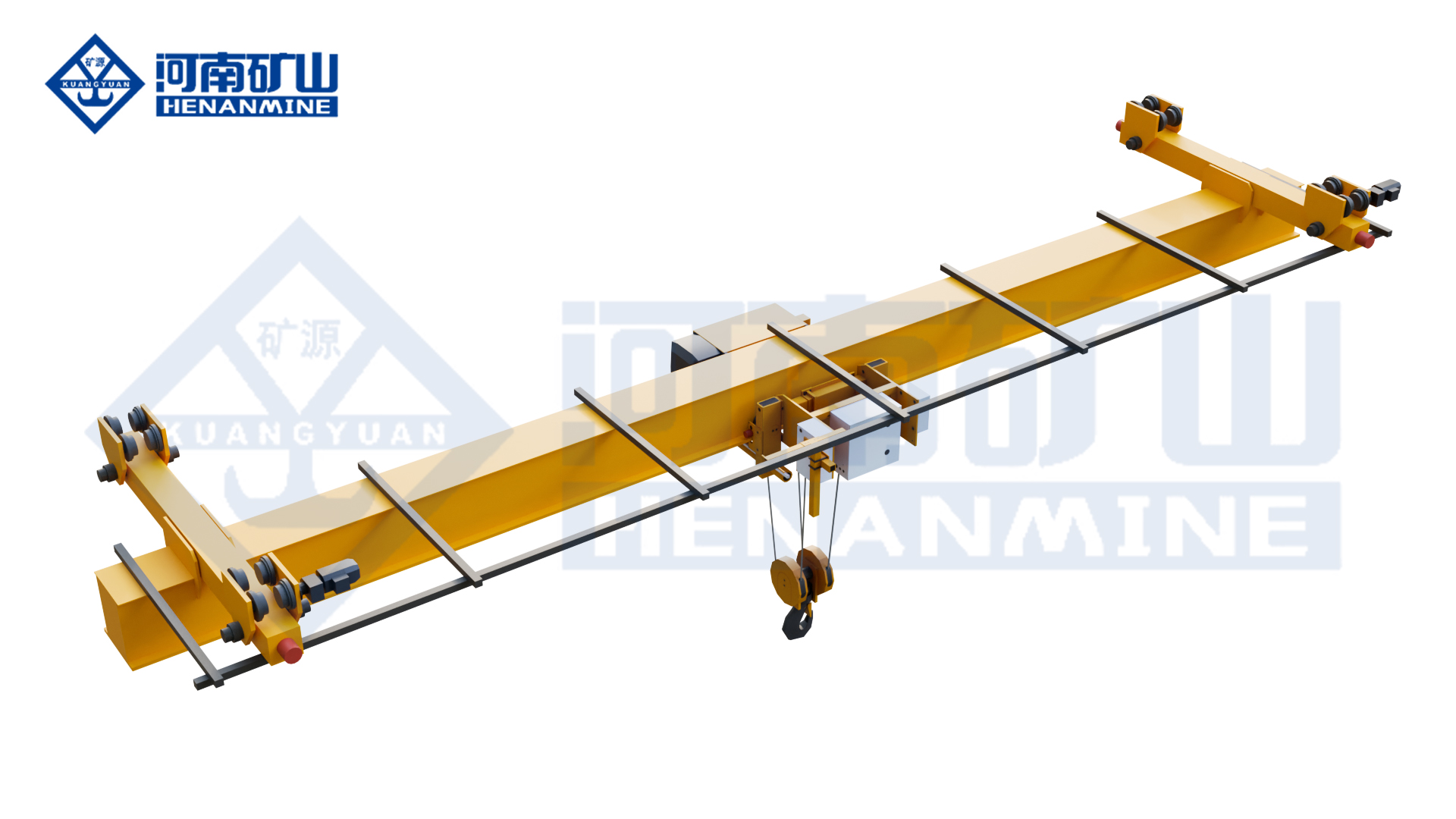
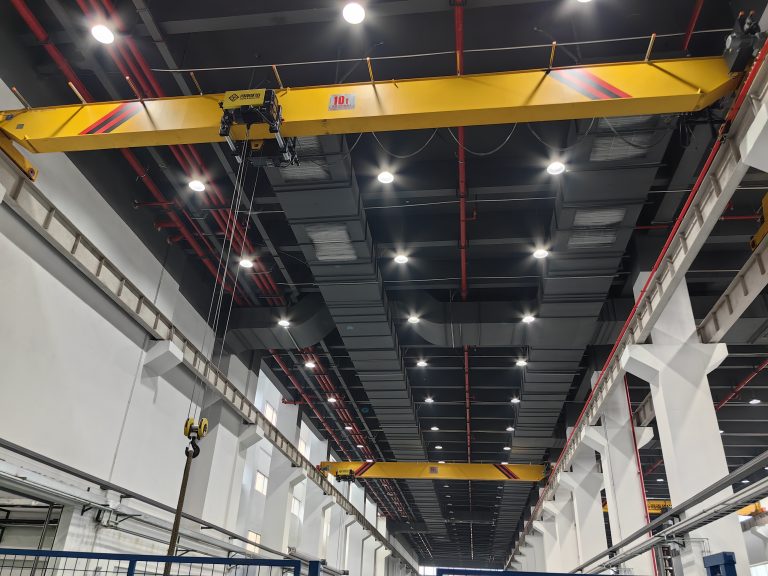
    The core of single girder overhead travelling crane is a single main girder running through the body, and the hoisting mechanism (hoist) is installed directly under the main girder, which is light in weight and compact in structure, and does not take up too much space in the plant.

    The structure is simple, without complicated double girder connection and top running trolley, easy to install and post maintenance, without complicated construction and professional maintenance team.

    Typical parameters: load 1-20 tons, span up to about 30 meters, working class A3-A5, suitable for low and medium frequency operations.

    Suitable for small and medium-sized workshops, warehouses and light to medium load production lines, such as machinery factories handling tooling and molds, warehouses stacking loading and unloading, electronic factories transferring parts and components and other scenarios.

    Core advantages: lower procurement and maintenance costs than double girder cranes; light weight, low load-bearing requirements for the plant, without additional reinforcement; short installation cycle, can be quickly put into use.

    Electric Single-Girder Crane for Sale

    Electric Single-Girder Crane

    Double Girder Overhead Crane

    Double girder overhead travelling crane adopts two parallel main girders, and the hoisting mechanism is mounted on top of the trolley, running along the top of the main girder, and the double girder structure greatly improves the rigidity and stability of the whole machine.

    Compared with single girder model, double girder overhead travelling crane has higher lifting height, smoother and less shaking when running with full load, which is suitable for operations requiring lifting precision.

    Core parameters: load 10-500+ tons, span over 40 meters, working class A5-A8, can meet the needs of high-frequency, high-intensity heavy-duty continuous operation.

    It is mainly suitable for heavy-duty industries, such as steel mills (lifting billets and ladles), heavy machinery factories (handling large parts), power plants (equipment installation and maintenance) and other scenarios with extremely high requirements for load and stability.

    Core advantages: strong heavy-duty performance, stable operation, suitable for high-frequency lifting; durable structure, long service life; flexible lifting height and span, can be adapted to the complex operation of large-scale plant.

    LH Double-Girder Bridge Crane Supplier

    Double-Girder Bridge Crane Manufactured by Henan Mine Crane

    Top Row Type Bridge Crane

    The track of top traveling overhead travelling crane is installed on special track beams, which are fixed on the top of plant columns or independent supports, and the end beams run along the track, which makes the force more reasonable.

    The core advantage of this design is the strong loading capacity, the top load bearing structure can be adapted to large weight and large span operation, suitable for large plant heavy load demand.

    Applicable scenarios: large industrial plants that need to lift heavy goods, such as shipyards, heavy machinery factories, steel mills and other large-load, wide-span scenarios.

    Core advantages: First, the load can be up to hundreds of tons to meet the heavy lifting; second, the span of more than 40 meters is still running stable; third, convenient maintenance, parts of the high installation, not easy to be interfered by the ground operation, and ample operating space.

    QBE Dual-Trolley Explosion-Proof Overhead Crane factory

    QBE  Overhead Crane

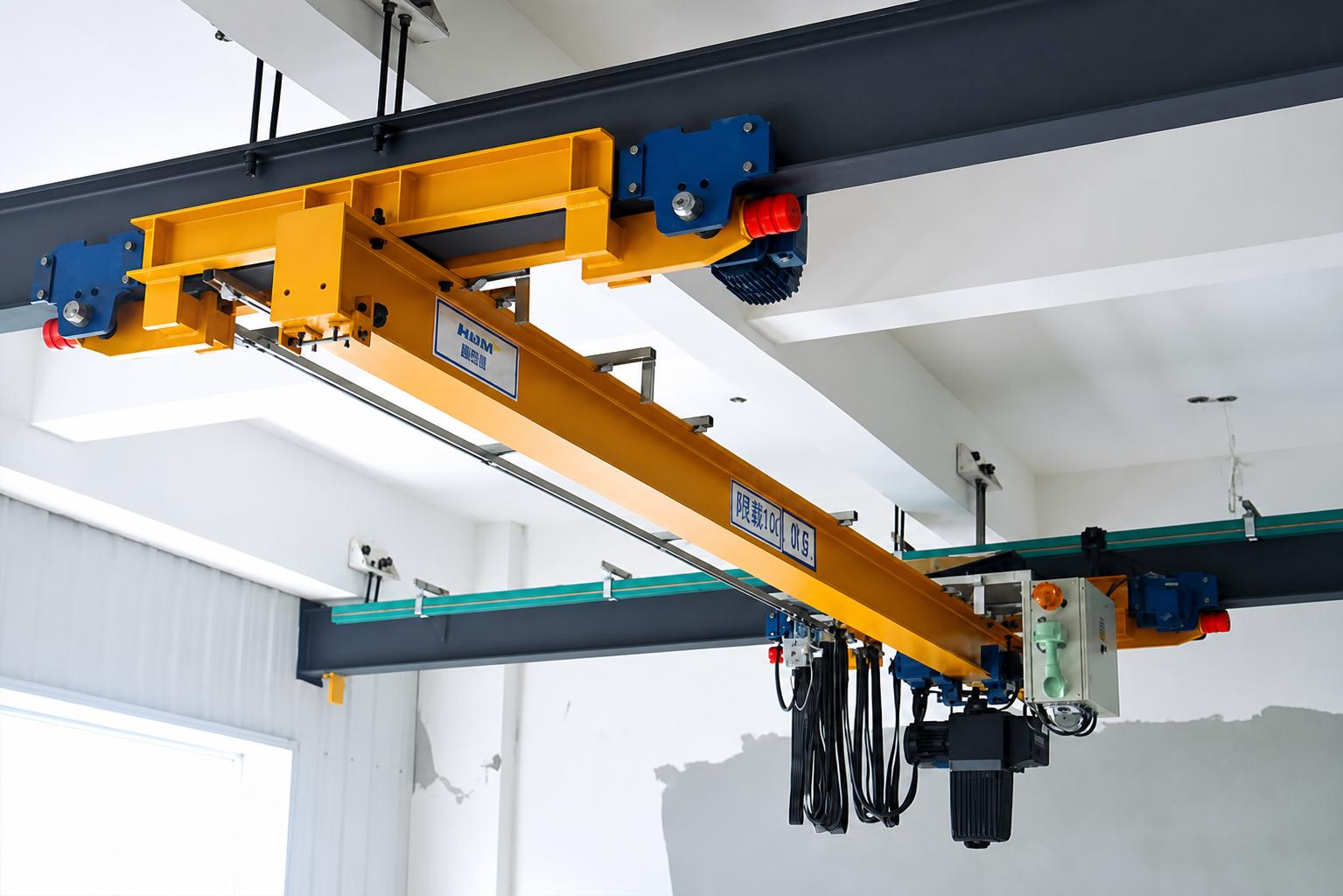
    Lower Suspension Type (Suspension Type) Bridge Crane

    The track of under-suspended overhead traveler is suspended below the ceiling or top load-bearing beams of the plant, and the end girders and main girders are suspended on the track as a whole.

    Its core advantage is high space utilization, no ground support columns, low headroom height requirements, the track can be designed according to the layout of the plant complex path, suitable for irregular work areas.

    It is suitable for low headroom workshop, light load operation place and inconvenient to remodel the roof structure of the plant, such as old machinery factory, electronic factory assembly line, small warehouse and other scenes.

    Core advantages: space-saving, adaptable to low headroom and complex layout; low cost of plant transformation, can utilize the existing roof load-bearing; flexible installation, the track can be laid on demand.

    Offset Electric Single-Girder Crane

    Offset Electric Single-Girder Crane

     European Type Bridge Crane

    European type overhead travelling crane is a commonly used model in precision manufacturing industry, the core is modular design, the main girder, end girder, hoist and other components can be individually combined to meet different operational requirements.

    The lifting mechanism and end girder adopt compact design, which makes its weight lighter. With frequency conversion drive system, the running speed can be adjusted accurately and the positioning accuracy is higher.

    It is suitable for precision manufacturing and high-efficiency production lines, such as automotive parts, electronic components, medical devices and other workshops with high requirements for lifting precision and efficiency.

    Core advantages: light weight, no need to reinforce the plant; frequency conversion drive is more energy efficient; high positioning accuracy, suitable for precision production processes.

    KSSL New Electric Hoist Double Girder Bridge Crane solution

    New Electric Hoist Double Girder Bridge Crane

    Explosion-proof Bridge Crane

    Explosion-proof overhead traveling crane is specially designed for flammable and explosive hazardous environments, and the core components are all made explosion-proof, which can prevent the sparks generated by the operation from causing safety accidents.

    The motor and electrical system are authorized and certified to meet the safety standards in hazardous areas, and the machine body adopts sealed design, which can block the intrusion of flammable and explosive gases and dusts and ensure the safety of operation.

    Suitable for chemical industry, oil and gas, paint shop and other flammable and explosive places, such scenes must use explosion-proof cranes to ensure operational safety.

    Core advantages: strong safety performance, suitable for hazardous environments; in line with industry safety standards, to help companies pass compliance inspections and avoid compliance risks.

    KSSLE New Dual-Trolley Electric Hoist Bridge Crane custom

    New Dual-Trolley Electric Hoist Bridge Crane

    Specialized overhead cranes by industry

    In addition to the above general types, there are also a variety of industry-specific bridge cranes, which are highly targeted, adapted to special operational needs, and are essential equipment for industrial production.

    Metallurgical overhead travelling crane is suitable for steel industry, common ladle and charging crane. Ladle cranes are used to transport ladles of steel, which are high temperature and radiation resistant; charging cranes are used to add materials to steel furnaces, which are fast and accurate in positioning.

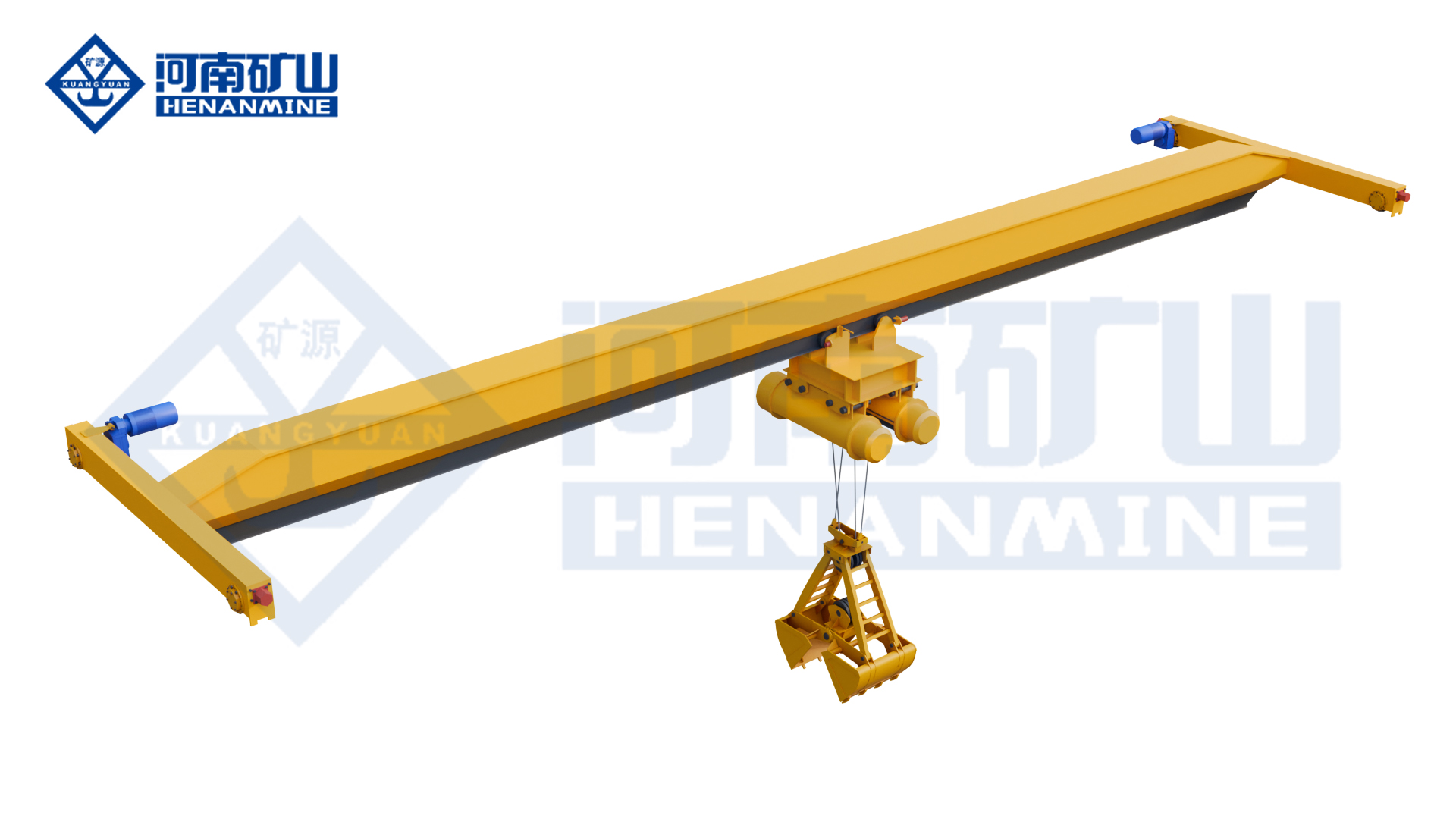
    Grab overhead cranes are equipped with grab devices, specializing in transporting bulk materials such as ore, coal, etc., which can be opened and closed automatically with high efficiency, suitable for mining, wharves, grain warehouses and other scenarios.

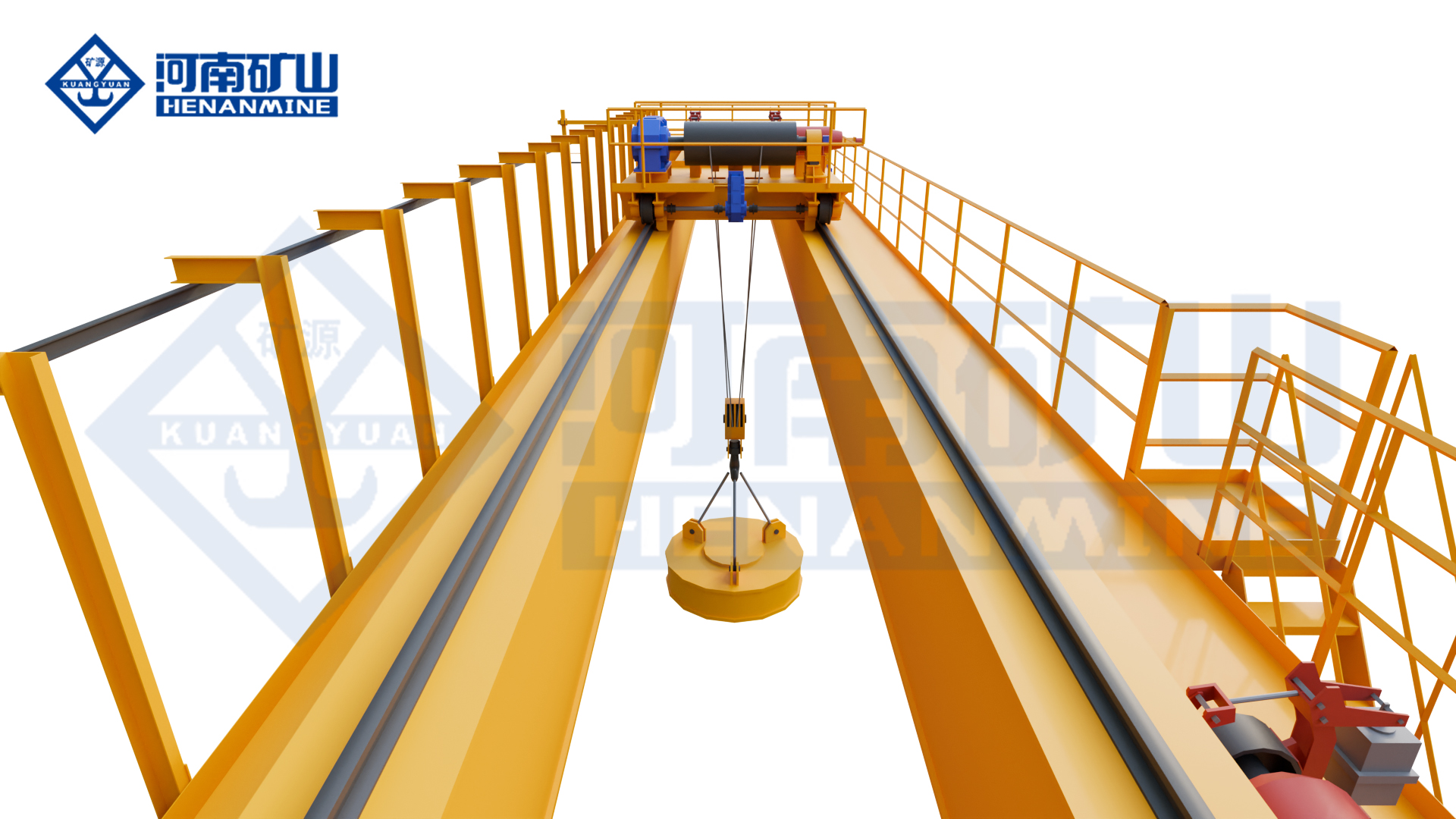
    Electromagnetic bridge crane with electromagnetic suction cups, adsorption of steel plates, scrap steel and other magnetic materials, without manual binding, efficient and accurate, suitable for steel mills, machinery factories material handling.

    Casting bridge crane is suitable for foundry industry, high and low temperature resistance, dustproof, can lift castings, sand boxes and other materials, stable operation, can cope with complex working conditions in the workshop.

    QC Electromagnetic Bridge Crane solution

    Henan Mine Crane’s QC Electromagnetic Bridge Crane

    QLC Lower Rotating Electromagnetic Beam Bridge Crane custom

    QLC Lower Rotating Electromagnetic Beam Bridge Crane

    Under-rotating suspended girder bridge crane solution

    automation and intelligent bridge crane

    Under the background of industrial intelligence, automation and intelligent overhead travelling crane is widely used, which can realize semi-/full-automatic material transfer without manual operation, and improve operation efficiency.

    Semi-automatic models are equipped with remote control or semi-automatic control system, operators do not need to operate in close proximity or in the driver’s cab, which is suitable for complex, manually inconvenient operation scenarios.

    Fully-automated models do not require manual intervention, and can complete gripping, transferring, placing and other actions through preset programs, and can also be integrated with MES and WMS systems to seamlessly connect to the production process.

    Most of the intelligent models are equipped with anti-swaying system, which reduces cargo shaking and improves positioning accuracy. Meanwhile, they support remote monitoring, so that operators can check the operation and load status in real time in the control room and troubleshoot in time.

    Suitable for intelligent factories, logistics and warehousing centers and other scenarios, such as automated automotive production lines, e-commerce smart warehouses, which can meet the needs of efficient and highly intelligent transit and reduce labor costs.

    YZS Four-Girder Casting Crane for Sale

    YZS Four-Girder Casting Crane

    How to choose the right type of bridge crane?

    The core of selection is to adapt to their own needs, no need to blindly pursue high-end heavy-duty or just look at the price, combined with the following key factors can be selected to cost-effective models.

    Clarify the load capacity and type: reserve 10%-20% of the daily maximum lifting weight to prevent overloading, and match the corresponding pick-up device according to the cargo (bulk, magnetic, precision, etc.).

    Confirmation of span and lifting height: the span matches the width of the plant and reserve space for operation, and the lifting height matches the stacking height of the goods and the headroom of the plant to avoid collision.

    Combined with the plant structure selection: according to the column load-bearing, headroom height, etc., low headroom priority to choose the lower hanging type / single beam, insufficient load-bearing not to choose the heavy-duty double girder.

    Match the working level and operation frequency: choose A5 and above for high-frequency continuous operation, and A3-A4 for low-frequency operation.

    Take into account the budget and the full life cycle cost: not only look at the purchase price, but also need to consider the late maintenance, energy consumption, to avoid the pre-cheap late cost is too high.

    YDJ Anode Carbon Block Stacking Crane for sale

    YDJ Anode Carbon Block Stacking Crane

    Twelve: how to choose the supplier of the crane

    First, verify the qualifications – this is the key

    Verify the match with your actual needs

    Verify industry-specific implementation cases

    Evaluate after-sales support capabilities

    Calculate total cost of ownership, not just quotes

    Henan Mine Crane Factory supply, as a professional crane manufacturer, integrates R&D, design, manufacturing, sales and service to provide customers with total solutions and full life cycle services. Please feel free to contact us, we will provide you with free design drawings, and field survey!

    Henan Mine CraneDiscuss your requirements ↗
  • What Are the Best Cranes for Different Facility Layouts?

    What Are the Best Cranes for Different Facility Layouts?

    What Are the Best Cranes for Different Facility Layouts?

    Cranes are the core equipment for industrial handling, processing and assembly.Most companies only value the load, price and brand in the selection of models, and ignore the adaptability of the plant layout, which can easily lead to limited equipment installation, stuck operations, and even high plant renovation costs.

    The layout of the plant is the core prerequisite of crane selection, which is related to equipment installation, operation safety, production efficiency and cost of use.This article combines common plant layout to organize scientific selection plans, core parameters and pit avoidance points to help enterprises accurately select types, reduce costs and avoid risks.

    Why Facility Layout Should Be the First Consideration When Choosing a Crane

    The load level, work level and functional configuration of the crane are of course important, but if the equipment cannot be adapted to the spatial structure of the plant, the material movement line and the carrying conditions of the building, no matter how good the parameters are, they will not be of value.The layout of the plant directly defines the adaptation type and practical application value of the crane from the three dimensions of physical boundary, production efficiency, and cost control.

    Physical space constraints

    The hardware conditions of the plant set an insurmountable hard standard for the installation and operation of the crane, which is the basic basis for the selection work. The core constraints are as follows:

    • Headroom height and top obstacles: the height of the plant floor and the top facilities such as hvac, sprinklers, and lighting will limit the lifting height.In scenes with insufficient floor height and dense obstacles, conventional double-beam bridge cranes should not be used, and compact models such as low headroom, suspension, and single beam should be preferred.
    • Plant span and space width: The span of the plant and the spacing between the columns determine the coverage of the bridge crane.The large-span structured plant is suitable for bridge cranes, and the narrow space and local stations are more suitable for jib cranes and monorail cranes.
    • Ground and wall obstacles: the layout of plant columns, walls, fixed equipment and production lines will constrain the trajectory of the crane.The open factory building is suitable for full-coverage bridge cranes, and the complex factory area with dense equipment is more suitable for local fixed-point lifting equipment.
    • The bearing capacity of the building structure: the bearing capacity of the steel beams, columns and foundations of the plant determines whether the overhead rail crane can be installed.The carrying capacity of old and light steel factories is limited, and the cost of installing bridge-type transformation is high. Floor-standing gantry cranes are a more economical and safe solution.

    Ignoring the above-mentioned physical constraints can easily cause problems such as equipment installation failure, insufficient lifting height, and limited operating range. In serious cases, the plant structure needs to be modified and dismantled, resulting in great waste of funds and delays in construction.

    Layout adaptability

    Cranes are not independent operating equipment, but important supporting tooling for the production process.It fits the layout of the plant and the selection of material moving lines, and can seamlessly connect the whole process of raw material warehousing, processing and production, and finished product warehousing and outbound, effectively reducing the secondary handling of materials, shortening the operating cycle, and avoiding the congestion of on-site moving lines.

    At the same time, the crane that matches the spatial layout can ensure sufficient safe operation clearance, and avoid the safety risks of collision and overturning between equipment and plant structures, assembly lines, and operators.

    Overhead hanging lifting equipment can make full use of vertical space and completely release the ground operating area; floor-standing lifting equipment can be adapted to special scenarios such as non-top load-bearing structures and outdoor depots to maximize site resources and improve space utilization.

    Types of Industrial Facility Layouts

    Industrial plants are divided into four mainstream layout forms according to product type, production capacity scale, and production technology: assembly line type, functional partition type, fixed station type, and unit type.Most enterprises adopt a mixed layout model, and the material flow logic of different layouts directly determines the most preferred direction of the crane.

    Linear Production Layout

    The layout arranges the equipment and stations in sequence according to the production process, and the materials flow along a fixed linear path. It is suitable for standardized and large-scale mass production scenarios, and is widely used in automobile manufacturing, home appliances and electronic equipment assembly industries.

    Open Warehouse Layout

    The layout centralizes similar processing equipment and similar processes, such as lathe processing areas, welding areas, and grinding areas, and the materials are transferred across regions on demand. It is suitable for small-batch and multi-category customized production, and is mostly used for machining, customized sheet metal, and non-standard parts processing workshops.

    Cell Manufacturing Layout

    This layout is suitable for the production of large-scale, heavy-duty, and non-mobile products. The products are fixed in dedicated workstations, and personnel, equipment, and materials are deployed into the operation on demand. Typical scenarios include shipbuilding, aircraft assembly, large-scale unit installation, heavy machinery production, and large-scale infrastructure construction sites.

    Multi-Bay Workshops

    The unit layout integrates the advantages of assembly lines and functional partitions, and integrates equipment and stations into independent production units. Each unit is responsible for the full-process processing of a class of similar products. It is the mainstream model of lean production and is suitable for medium-batch and multi-category product production.

    Best Crane Types for Different Facility Layouts

    Combining the moving line characteristics, operating requirements and site constraints of various factories, and matching lifting equipment in a targeted manner can maximize material handling efficiency and minimize on-site safety risks.The following are the precise selection schemes that have been verified by a large number of industrial experiments.

    Linear Production Layout

    The core appeal of this type of layout is linear, repetitive, and stable standardized material transfer, which requires lifting equipment to fit the moving line of the production line, fully cover the operating area, and do not interfere with the normal production of the assembly line.

    Optimal adaptation equipment: station bridge crane, monorail crane

    Adaptation advantages: Bridge cranes can achieve full coverage of rectangular areas and run along fixed production line tracks, with accurate positioning and stable operation. The modular design supports the expansion of the length of the operation on demand; monorail cranes focus on point-to-point fixed-point material transfer, which can efficiently connect the material transportation of each station and adapt to high-frequency repetitive operations.Both types of equipment are installed above the ground, which does not occupy space on the ground production line, ensuring the continuous and stable operation of the assembly line.

    Applicable scenarios: large-scale standardized production workshops such as automobile assembly lines, home appliance assembly lines, and electronic product production lines.

    Precautions for selection: The operating path of the equipment is fixed, the flexibility is low, and it is more suitable for the long-term fixed production line layout. It can be used with conveyors to work together to further improve the overall circulation efficiency.

    Open Warehouse Layout

    There is no fixed pattern of material movement in this type of layout, frequent cross-zone operations, and changeable production scenarios. The core requirement is highly flexible, movable, and adaptable lifting equipment for multi-scene switching.

    Optimal adaptation equipment: portable adjustable gantry crane, column/wall-mounted jib crane, light aerial lifting system

    Adaptation advantages: Portable gantry cranes do not need to rely on the building structure of the plant, can be freely shifted, quickly adjust the operating range, and adapt to the temporary hoisting needs of each functional zone; jib cranes can achieve fan-shaped and circular local coverage, suitable for fixed-point hoisting of independent stations, flexible installation and small footprint.Both types of equipment can be transformed and shifted at any time with the adjustment of production layout, which is perfectly adapted to multi-category and changeable customized production scenarios.

    Applicable scenarios: machining workshops, customized sheet metal workshops, non-standard parts processing plants, and small-batch customized production workshops.

    Precautions for selection: Multiple small lifting equipment can be used for partitioning operations in complex multi-partition workshops, and models with adjustable span and height are preferred to improve scene adaptability.

    Cell Manufacturing Layout

    This type of layout product is fixed, large in size, and heavy in tonnage. It needs to continuously transport heavy parts and tooling equipment to fixed stations. The core demand is lifting equipment with large loads, global coverage, and flexible deployment of heavy materials.

    Optimal suitable equipment: heavy-duty gantry crane, heavy-duty jib crane, large-span bridge crane

    Adaptation advantages: large-span bridge cranes can achieve global coverage of the plant and meet the all-round hoisting needs of large-scale stations; heavy-duty gantry cranes do not require building structure support, and are suitable for indoor and outdoor fixed-station operations. The ground is unobstructed, making it easy for personnel and equipment to pass; heavy-duty jib cranes can realize precise fixed-point hoisting around the station to assist in refined assembly operations.The combination of multiple equipment can take into account the global heavy-duty transfer and local precise hoisting.

    Applicable scenarios: shipbuilding, aircraft assembly, large-scale generator set installation, heavy machinery assembly, and large-scale infrastructure construction sites.

    Precautions for selection: special models for large tonnage and heavy loads need to be matched. Multi-machine collaborative operation schemes can be used for large-scale engineering projects, and mobile car cranes can be used to assist construction in outdoor working conditions.

    Multi-Bay Workshops

    The unit layout takes independent production units as the core, and each unit independently completes the whole process of product processing. Miniaturized, specialized, and modular lifting equipment is required to meet the needs of single-element refined operations without interfering with the production order of other units.

    Optimal suitable equipment: small station crane (jib, small bridge type, light gantry type), light monorail lifting system

    Adaptation advantages: Each production unit can be equipped with dedicated small lifting equipment, which accurately matches the material hoisting and equipment assembly requirements in the unit, effectively shortens the handling distance and reduces the production line replacement time; modular equipment supports flexible increase or decrease and transformation and upgrading, adapts to production capacity iteration and layout optimization, and is highly in line with the production concept of lean cost reduction and efficiency enhancement.

    Applicable scenarios: lean production workshop, parts batch processing unit, modular production workshop for small and medium-sized products.

    Precautions for selection: match unit equipment on demand to avoid redundant and wasteful equipment, and give priority to modular and expandable models to facilitate later production capacity upgrades and layout adjustments.

    General selection summary

    Gantry cranes have the strongest overall adaptability and are compatible with all kinds of plant layout; for mainstream hybrid plants, the combination scheme of “main work area bridge/gantry crane + station dedicated jib crane” can be used, taking into account global heavy-duty operations and local refined hoisting, suitable for most industrial production scenarios.

    Key Factors to Consider Before Selecting a Crane

    After determining the type of crane to be adapted, it is necessary to combine the ten core parameters to refine the selection, taking into account equipment safety, on-site practicality, investment economy and long-term expandability.

    Load requirement

    The selection needs to combine the conventional average load and the limit peak load comprehensive calculation, reserve 10%-25% safety redundancy, and fully consider the size, center of gravity position and morphological characteristics of heavy objects to avoid the risk of overload from the source, and eliminate problems such as excess equipment performance and waste of resources.

    Work level and frequency of use

    Strictly refer to the CMAA industry classification standards to match working conditions: Class A/B is suitable for low-frequency standby, light-load intermittent operation scenarios; class C/D is suitable for conventional single-shift, medium-load mass production conditions; class E/F corresponds to high-frequency, continuous heavy-duty operations.Accurate matching of work levels can effectively avoid premature equipment wear and frequent failures, while avoiding high redundancy and high costs.

    Space size parameters

    Accurately survey the core spatial parameters of the plant in advance, including the span of the plant, the effective clearance height, the rated lifting height and the safe operating clearance, combined with the distribution of columns, production equipment, and obstacles, accurately approve the crane specifications and effective operation coverage to eliminate space interference.

    Site environmental conditions

    Distinguish between indoor and outdoor operating scenarios, and for special working conditions such as high temperature, high humidity, dust, corrosive media, flammable and explosive, special models for anti-corrosion, explosion-proof, dust-proof, and high temperature resistance are selected as needed to ensure the stable and long-term operation of the equipment in complex environments.

    Layout adaptation

    Strictly conform to the layout of the plant and the law of material flow: the linear standardized production line is adapted to fixed rail-type lifting equipment, flexible customization, and mobile modular equipment is preferred for changeable moving lines. At the same time, the layout adjustment and capacity expansion space are reserved, taking into account the current adaptability and future expansion.

    Automation requirements

    According to the production beat and efficiency requirements, the operating speed of lifting, trolley, and bridge is reasonably matched; the intelligent workshop can optimize the automated lifting equipment, support the docking of AGV, three-dimensional warehouse and other intelligent storage systems, and adapt to the modern intelligent production system.

    Safety compliance standards

    The selection needs to strictly comply with OSHA, CMAA, ANSI and domestic industry safety specifications. The equipment needs to be equipped with core safety devices such as overload protection, travel limit, anti-collision, and emergency braking as standard to fully meet compliance standards and build a strong barrier to on-site safety operations from the hardware level.

    Installation and power supply conditions

    Combined with the actual carrying conditions of the steel beams, columns, and foundations of the plant, the above-ground fixed or ground-standing lifting equipment is scientifically selected; according to the on-site power supply configuration, it is adapted to electric, manual, pneumatic and other drive forms to ensure that the equipment installation is compatible and feasible, and the long-term operation is stable and reliable.

    Full life cycle cost

    Abandon the one-sided selection thinking that only focuses on the purchase unit price, comprehensively calculate the whole life cycle costs of equipment procurement, installation, energy consumption, maintenance, parts replacement, equipment depreciation, etc., and give priority to the selection of high-quality equipment brands with stable performance, excellent cost performance, and perfect after-sales system.

    Operation and maintenance and extensibility

    Priority is given to the selection of lifting equipment with low failure rate, convenient maintenance, and strong versatility of accessories. The selection stage reserves space for equipment installation, transformation, and expansion in advance, which can be flexibly adapted to the subsequent development needs of enterprises for capacity upgrading, process iteration, and plant layout optimization.

    Common Crane Selection Mistakes

    Most of the hidden dangers, efficiency shortcomings and cost waste of crane operation and maintenance in enterprises are due to selection misunderstandings.The following summarizes the industry’s high-frequency errors and standardized avoidance schemes to help companies avoid pitfalls scientifically.

    • Unbalanced load selection: blindly selecting small-tonnage equipment can easily cause overload safety hazards, and blindly pursuing large-tonnage equipment will cause a waste of funds and space resources.Avoidance method: carry out accurate load measurement, reserve standard safety margin, and comprehensively select models based on dynamic lifting conditions.
    • Work level matching error: the selection of heavy equipment in low-frequency and light-load scenarios will increase input costs, while the selection of light equipment in high-frequency and heavy-load scenarios will accelerate equipment wear and cause frequent failures.Circumvention method: Accurately count the average daily lifting times, average load-to-weight ratio and equipment running time, and match the corresponding work level.
    • Separation from the layout and selection of the plant: the installation of fixed bridge cranes in flexible customized workshops and the selection of mobile gantry cranes in standardized production lines will lead to poor equipment adaptability and low production efficiency.Avoidance method: Strictly rely on the layout of the plant and the matching equipment of the selection matrix, and give priority to the material movement line and site conditions.
    • Ignoring site environmental constraints: the use of ordinary standard cranes in special working conditions such as corrosion, dust, explosion-proof, etc. can easily cause equipment corrosion, frequent failures, and safety hazards.Avoidance method: According to on-site working conditions, customize special configurations such as anti-corrosion, explosion-proof, dust-proof, and high temperature resistance.
    • Just look at the low price and ignore the full cycle cost: one-sided reduction of the initial procurement cost and the selection of low-cost and inferior equipment will lead to high maintenance costs and large downtime losses in the later stage, and the overall gain is not worth the loss.Avoidance method: Take the whole life cycle cost as the core evaluation criterion, and give priority to brands with reliable quality and perfect after-sales service.
    • Lack of security configuration: Lack of security configuration and insufficient compliance can easily lead to security accidents and compliance penalties.Avoidance method: strictly implement the standardization and compliance of safety configuration, complete the professional training of operators simultaneously, and standardize the operating process.

    Conclusion

    The key to the scientific selection of cranes is not to blindly pile up parameters, but to fit the layout of the plant and the production process, taking into account the safety of operations and the long-term cost of use.The assembly line is adapted to bridge and monorail cranes; the zoned customized workshops are adapted to gantry and jib cranes; the heavy-duty fixed stations are selected for global heavy-duty lifting equipment; the lean unit workshops are adapted to small modular lifting equipment.

    The selection of enterprises needs to survey the working conditions of the plant in advance, analyze the moving lines and loads, and combine the selection matrix of this article to avoid misunderstandings.Precisely adapted lifting equipment can improve operating efficiency, ensure production safety, pressure drop transformation costs and operation and maintenance losses, and help enterprises improve production quality and efficiency.

    Henan Mine CraneDiscuss your requirements ↗
  • What Are the Application Scenarios of Single Girder Overhead Travelling Crane?

    What Are the Application Scenarios of Single Girder Overhead Travelling Crane?

    What Are the Application Scenarios of Single Girder Overhead Travelling Crane?

    I have been in the crane industry for more than ten years, and I often meet buyers who come up and ask ‘can I use a single girder crane’ without telling them their own workshop conditions and lifting needs – in fact, single girder overhead travelling crane is widely used, but it is not suitable for all scenarios. In fact, single girder overhead travelling crane (single girder overhead crane) is widely used, but it is not suitable for all scenarios.Many people try to purchase it blindly because of its cheap and simple structure, but in the end, either the lifting capacity is insufficient, or it conflicts with the workshop space, and the equipment wears out in advance, and we have to spend money on upgrading at a later stage, which is not worth the loss.What we should really ask is not ‘is the single girder crane cheap’, but ‘is it suitable for my work’.

    LDY Metallurgical Electric Single Girder Crane,

    LDY Metallurgical Electric Single Girder Crane,

    Today, I will combine the daily contact cases – such as many small and medium-sized enterprises choose Henan Mine Crane, its single girder overhead travelling crane series due to strong adaptability, cost-effective, outstanding performance in a number of scenarios – to make it clear to you single girder overhead travelling crane Application scenarios, applicable boundaries, as well as the selection of places to pay attention to, to help you take the road less travelled.

    Whether you are a purchaser in a machine shop or a warehouse manager, if you want to understand single girder overhead crane use cases, where to use single girder overhead crane, you will be able to clear your mind after reading this article.

    What Is a Single Girder Overhead Travelling Crane?

    The core structure of a Single Girder Overhead Travelling Crane is not complicated, so let’s start with a brief description of its main components to make it easier to understand its application scenarios.

    The core is the single bridge girder, which is the load-bearing core of the whole equipment, spanning between the rails in the workshop, with a simple appearance, unlike double girder cranes which have two main girders.

    The two ends of the main girder are equipped with end carriages / end trucks, the wheels on the end carriages drive the crane to move along the top rail, which is its longitudinal movement mechanism.

    Below the main girder hangs an electric hoist (electric hoist), there are two kinds of wire rope hoist and chain hoist, is responsible for the lifting of the material of the core components, but also the most common operation of the whole crane.

    In addition, there are cross travel and long travel mechanisms, which are responsible for moving the hoist and the crane itself; the power supply system provides power to the entire equipment, and the control system is divided into two types: pendant and remote control, which are all relatively simple to operate.

    How It Works

    The logic of its work is very simple and can be understood without too much complex expertise.

    The crane itself moves longitudinally along the runway rails at the top of the workshop, covering the entire length of the workshop, while the electric hoist above it moves horizontally along the main beam, covering the width of the workshop.

    The hoist’s lifting action, together with the longitudinal and transverse movements, enables the transfer of materials anywhere in the workshop, the core of which is the combination of ‘lifting + panning’ to meet basic lifting requirements.

    Why It Is Popular

    The single girder overhead travelling crane can be widely used in the industrial sector, the core of which is its several advantages, which just fit the needs of many small and medium-sized enterprises.

    Firstly, it is compact, unlike double girder cranes that take up too much space, and is suitable for most standard workshop layouts, especially for old factory buildings where space is tight.

    Secondly, the self-weight is light, the load-bearing requirements of the plant is lower, many old workshops do not need additional reinforcement of the track beam, it can be installed and used, saving a reinforcement costs.

    The most important thing is cost-effective, for light to medium lifting tasks, its initial investment than double girder crane is quite low, and the later maintenance is also simple, very suitable for small and medium-sized enterprises, ordinary processing plant use – this is also light duty overhead crane applications, it is the most This is the reason why it is the most popular in light duty overhead crane applications, such as Henan Mine Crane’s single girder products, which accurately meets the needs of this type, taking into account the practicality and economy.

    Key Characteristics That Determine Application Fit

    Single Girder Crane is not universal, its suitability, first of all, depends on the load and operating frequency.

    It is mainly suitable for light to medium load lifting, there is no absolute standard for the specific tonnage, it should be combined with the actual project, but most of them are concentrated in the range of 0.5-20 tonnes, more than this range, you need to consider the double girder crane.

    Frequency of operation, it is suitable for medium-frequency lifting, such as lifting dozens of times a day, not 24-hour continuous operation of high-intensity operations.

    In addition, it is more suitable for standard indoor workshop environment, without extreme high temperature, strong corrosion and other harsh conditions, the cycle of operation is repetitive, but not extremely heavy production cycle.

    Building and Layout Advantages

    The layout advantages of single girder cranes are obvious for enterprises with limited workshop conditions.

    Many old workshops have limited headroom, and the hoist of single girder crane is hung directly under the main beam, unlike double girder cranes with additional bridge structure, which can make better use of the limited headroom to meet the requirements of the lifting height (depending on the configuration of the hoist).

    Its wheel pressure is lower than many double girder cranes, which requires less load bearing on the rail beams of the plant, without additional reinforcement, and it is easier to install, and can be directly adapted to many standard factories.

    This is why single girder bridge crane for workshop is more widely used than double girder crane in small and medium-sized factories.

    Cost and Maintenance Considerations

    From the cost point of view, the initial investment of single girder bridge crane is usually lower than double girder bridge crane, which is the reason why many small and medium-sized enterprises prefer it.

    Its structure is simple, without complex bridge and transmission mechanism, and it is easy to maintain in the later stage. Maintenance personnel do not need to have a high level of professionalism, and daily inspection, lubrication, and replacement of wearing parts can be completed quickly.

    For small and medium-sized enterprises, ordinary manufacturing workshop, its cost-effective just match the demand, do not have to use the large tonnage, high strength performance more money. This

    Electric Single-Girder Crane Manufactured by Henan Mine Crane

    Main Application Scenarios of Single Girder Overhead Travelling Cranes

    For example, raw materials, semi-finished products and finished parts in the workshop need to be lifted from the raw material area to the processing machine tools, and then lifted to the finished product area after processing, which can be easily done by single girder crane.

    The loading and unloading of machine tools is also inseparable from it, such as large machine tool parts, manual transport is not possible, with a single girder crane lifting to the installation location, both energy-saving and safe.

    There are also parts transfer between stations, such as lifting from the stamping station to the assembly station, without manual handling, to reduce labour intensity, but also to avoid material damage.

    This type of scene is common in the industry of machinery manufacturing, metal processing, equipment assembly, and various types of general industrial plants, are the main application areas of single girder cranes, Henan Mine Crane’s single girder series of high popularity in these industries, and can be flexibly adapted to the lifting needs of different workshops.

    Warehouse and Indoor Logistics Handling

    Warehouse and indoor logistics handling is also an important part of single girder EOT crane applications, especially in the field of industrial warehousing.

    Palletised goods in warehouses with the right spreader can be lifted by single girder cranes, unloaded from transport vehicles and stacked on shelves, much more efficiently than manual handling.

    The storage and transfer of moulds, tools and maintenance parts are also suitable for single girder cranes. For example, large moulds in the workshop warehouse need to be lifted and transported to different production stations, and single girder cranes are flexible in operation and can be accurately positioned.

    Why is single girder crane suitable for warehouse scenes? The core is its moderate intensity of operation, most of the lifting in the warehouse is intermittent, not continuous high load; and the indoor environment is stable, there is no bad weather, just fit the characteristics of the single girder crane.

    For cost-sensitive warehouses, single girder cranes are also more cost-effective, which is also the warehouse overhead crane single girder popular reasons, Henan Mine cranes for warehouse scenarios, but also can be customised to the lifting height and operating speed, to further enhance the efficiency of logistics transfer.

    Assembly and Maintenance Bays

    Equipment assembly and maintenance areas, the role of single girder cranes is irreplaceable, especially for cyclical maintenance tasks.

    For example, the workshop motors, pumps, gearboxes, the need to dismantle the fault maintenance, most of these components weigh a few tonnes to more than a dozen tonnes, manual transport is simply not possible, single girder cranes can be easily lifted to the maintenance bench.

    When installing new equipment, it is also necessary to use single girder cranes to assist in lifting and transporting the equipment parts to the installation location, and cooperate with the workers to complete the assembly, to avoid damage to the parts or injuries caused by manual handling.

    This kind of scenario is common in maintenance workshops, power houses, factory maintenance areas, service stations, are mainly cyclical maintenance, not continuous production lifting, just suitable for single girder cranes.

    Light Fabrication and Steel Structure Workshops

    Light Fabrication and Steel Structure Workshops are also common scenarios for single girder cranes, but attention should be paid to differentiate the intensity of operation.

    For example, the handling of steel plates and profiles, the lifting of small steel structure components, and the transfer of semi-finished products between welding and assembly stations, single girder cranes are capable of handling.

    Many small steel processing plants, the daily lifting task is not heavy, the load is also moderate, with a single girder crane is just right, do not have to invest in double girder crane high cost.

    Here is a special reminder: be sure to assess the actual length of the load, lifting mode and frequency of operation. If it is heavy steel structure processing, large load, frequent operations, you need to choose double girder cranes, single girder cranes can not meet the demand; and small steel structure workshop, choose Henan Mine Crane single girder products, can be a good balance between the cost and the use of demand.

    Water Treatment Plants, and Utility Facilities

    Pump Stations, Water Treatment Plants, and Utility Facilities, although not a traditional industrial workshop, is also one of the single girder crane application scenarios.

    These places mainly use single girder cranes to lift pumps, valves, motors and other equipment, as well as accessories required for daily maintenance, the frequency of operation is not high, mostly intermittent maintenance lifting.

    Moreover, the indoor space of these places is usually more compact, single girder cranes are compact and flexible, and can complete the lifting task in limited space without occupying too much space.

    Small Precast / Building Material Workshops (Non-heavy-duty zones)

    Small Precast and Building Material Workshops (Non-heavy-duty zones) can also use Single Girder Cranes.

    For example, the handling of mould fittings for prefabricated components, light building materials, and the transfer of tools and jigs in the workshop, single girder cranes can meet the needs.

    Daily production of equipment maintenance, also need single girder crane assistance, lifting maintenance parts, reduce manual labour intensity.

    Note here: if the high frequency, heavy load of prefabricated components lifting, the level of operation more than the single girder crane range, it is not suitable for use, otherwise it will lead to early wear and tear of the equipment, a potential safety hazard.

    Offset Electric Single-Girder Crane

    Offset Electric Single-Girder Crane

     and Light Industry Plants (Non-hygienic-special versions as applicable)

    Food, Packaging, and Light Industry Plants can also use Single Girder Cranes as long as they are not in areas with special hygiene requirements.

    For example, equipment parts, packaging materials, production accessories in the workshop need to be transferred between workstations, single girder cranes are easy to operate, will not pollute the production environment, just fit.

    Daily equipment maintenance, such as packaging machines, processing equipment dismantling and repair, also need single girder crane lifting parts, enhance the maintenance efficiency.

    If the workshop has washing, corrosion or strict hygiene requirements, you need to customise special materials, coatings and electrical protection of the single girder crane, ordinary single girder cranes can not be adapted to such environments.

    Industries Where Single Girder Overhead Cranes Are Commonly Used

    In addition to the division of the work scene, single girder cranes in different industries also have a clear focus on the application, the following with you, which industries most often use single girder overhead cranes, to facilitate buyers in different industries into the seat.

    Mechanical Manufacturing

    Mechanical manufacturing industry is the most widely used field of single girder overhead travelling crane, there is no one.

    Whether it is the transfer of parts, loading and unloading of machine tools in the machining workshop, or lifting of components in the equipment assembly line, or even the storage and transfer of materials in the spare parts workshop, single girder cranes are indispensable.

    These workshops have moderate loads and medium frequency of operation, which just matches the characteristics of single girder cranes, and it is also the industry that most often chooses single girder cranes in manufacturing workshop crane selection.

    Automotive and Component Workshops

    Automotive and Component Workshops, the application of single girder cranes is also very common.

    The handling of automotive parts, such as engines, gearboxes and other components, from the production station to the assembly station, single girder cranes are required to assist; moulds and fixtures used in the production process also need to use single girder cranes for transfer and storage.

    Single girder cranes are also indispensable tools for lifting and transporting maintenance equipment and parts in the maintenance area of workshops, which can enhance maintenance efficiency and reduce manual labour.

    Electrical Equipment & Appliance Factories

    In electrical equipment and appliance factories, single girder cranes are mostly suitable for transferring parts during the production process.

    For example, large parts of air conditioners and refrigerators are lifted from the production station to the packaging station; parts of electrical control cabinets are transferred at different stages of production, all of which can be used with single girder cranes.

    Single girder cranes also play a role in loading and unloading materials in warehouses and packaging areas, and are suitable for light to medium lifting needs in such workshops.

    Electric Single-Girder Grab Crane price

    Electric Single-Girder Grab Crane

    Warehousing & Distribution Centres (Industrial)

    In industrial warehousing and distribution centres, single girder cranes are mainly used for internal cargo transfer and equipment maintenance.

    For example, boxes of industrial goods, parts, from one area of the warehouse lifting to another area, or from the warehouse lifting to the transport vehicle, single girder crane operation flexibility, can effectively use the warehouse space.

    Maintenance of equipment in the warehouse, such as shelves and conveyors, also requires a single girder crane to lift and transport maintenance parts to ensure that maintenance work is carried out smoothly.

    Utilities & Municipal Facilities

    Utilities and municipal facilities, such as water plants, pumping stations, municipal maintenance workshops, are also areas of application for single girder cranes.

    The main needs of these places are equipment maintenance, lifting pumps, valves, motors and other components, the frequency of operation is not high, single girder crane cost-effective and flexible, just to meet the needs.

    Typical Materials and Lifting Tasks

    Understanding the application scenarios and industries, and then talk to you, single girder cranes can be lifting what materials, to complete what tasks, to help you further judge whether to adapt to their own needs.

    Common Load Types

    Single girder cranes have a wide range of lifting, mainly focused on light to medium loads, common materials are these:

    Various types of mechanical parts, such as motors, pumps, reducers, machine tool spindles, etc. These are the most common materials lifted in workshop maintenance and production.

    Light to medium steel structure parts, such as steel plates, profiles, small prefabricated components, as long as the load is within the rated range, single girder cranes are capable of handling.

    Moulds and fixtures, large moulds and fixtures used in workshop production are of moderate weight and need to be lifted accurately, and the fine-tuning function of single girder crane can meet the demand.

    There are also palletised goods, maintenance equipment, motors, pumps, etc. As long as the rated load is not exceeded, single girder cranes can easily lift them.

    Common Lifting Attachments / Configurations

    The lifting method of single girder crane is mainly realised by different lifting attachments, and these are the common configurations:

    Hook is the most standard configuration, almost all single girder cranes will be equipped with, suitable for most common materials lifting, simple operation, versatility.

    Electric hoists are divided into wire rope hoists and chain hoists, wire rope hoists are suitable for slightly larger load scenarios, while chain hoists are more suitable for scenes where space is tight and precise lifting is required.

    For long materials, such as profiles and steel plates, it can be used with a lifting beam, which can make the materials receive even force and avoid tilting and slipping during the lifting process.

    There are also some workshop-specific fixtures, such as vacuum suction cups for lifting plates and special fixtures for lifting pipes, which can be matched according to the specific lifting needs to improve lifting efficiency and safety.

    Low-headroom Electric Single-girder Crane

    Low-headroom Electric Single-girder Crane

    Conclusion

    Henan Mine Crane manufactured many years of deep ploughing crane research and development, to create a single girder overhead travelling crane, suitable for all kinds of small and medium-sized operating scenarios, the structure is reliable, easy to operate, easy to maintain, can accurately match the workshop maintenance, material transfer, warehouse loading and unloading and other types of demand, we invite you to join hands with Henan Mine Crane manufactured, choose the right equipment, help the production of efficient operation, and build the foundation of industrial development!

    Henan Mine CraneDiscuss your requirements ↗
  • What Are Container Cranes? Types, Applications and Container Gantry Crane Systems Explained

    What Are Container Cranes? Types, Applications and Container Gantry Crane Systems Explained

    What Are Container Cranes? Types, Applications and Container Gantry Crane Systems Explained

    The operation benefit of port, inland depot and railway terminal depends on the adaptability of container crane to a great extent.Many operators often cause operation congestion, waste of resources due to wrong model selection, or old equipment, unable to adapt to intelligent upgrade, increasing operating costs in vain.STS, RTG and RMG mainstream models on the market are very different, which is also the main difficulty in purchasing and selecting models.This article relies on the first-line manufacturing experience, explains in detail the characteristics, scenarios and selection skills of various equipment, helps you accurately avoid pits, and selects the crane system suitable for the station.

    Understanding Container Cranes And Their Importance

    Definition and role

    Henan Mine Crane Factory supply container crane is specially designed for ISO standard container lifting equipment, adapt to 20 feet, 40 feet, 45 feet and other mainstream container specifications, different from ordinary industrial cranes, equipped with special telescopic spreader, automatic lock, anti-swing stability system, accurate positioning control system, can efficiently complete the container lifting, translation, stacking, loading and unloading, transfer and other full-process operations.Its core role is to break down logistics barriers between shipping, railways, highways, and warehousing, and achieve standardized, large-scale, and safe circulation of containers. It is the core hub equipment of the multimodal transport system.

    Importance in ports

    As the core node of global trade, the performance and configuration of container cranes directly determine port throughput, operation efficiency, operation cost and industry competitiveness, and are the core equipment of modern ports.

    • Container cranes support large-scale port throughput operations. The annual throughput of large-scale hub ports can reach tens of millions of TEU. Relying on high-performance crane clusters, rapid loading and unloading of ships and efficient turnover of storage yards can be realized, problems such as ship stagnation and storage yard congestion can be avoided, and berth utilization rate can be greatly improved.
    • Standardized container lifting operation can avoid the risks of box deviation, cargo damage and safety accidents caused by manual lifting and ordinary equipment operation, and comprehensively improve the standardization and safety of port operation.
    • Container crane is the basic carrier of intelligent and automatic upgrading of port. All automatic dispatching, unmanned stacking and intelligent transfer functions of unmanned wharf and intelligent storage yard are realized by automatic container crane system.
    • High-quality container lifting equipment can greatly reduce labor dependence, reduce long-term operation and maintenance costs, and help ports realize cost reduction, efficiency improvement and green and low-carbon operation. It is the core symbol to measure the modernization level of ports.

    Different Types Of Container Cranes Explained

    RTG cranes

    RTG (Rubber-Tyred Gantry) is the mainstream core equipment of port container yard. It relies on rubber tires to walk without laying fixed rails. It has strong site flexibility and scheduling mobility. It is the first choice equipment for small and medium-sized ports, multifunctional yards and dynamic layout parks.The equipment is mainly used for stacking, sorting and stacking of container yard, and transfer and loading and unloading operations between containers and collection cards.

    RTG crane conventional lifting capacity of 30 to 50 tons, can achieve 1 over 5, 1 over 6 layers of container stacking, flexible and adjustable operation span, suitable for multi-row container stacking scenarios.Compared with track-type equipment, RTG’s biggest advantage is freedom of movement, strong site adaptability, arbitrary switching of operation areas according to yard operation requirements, no need to modify ground infrastructure, lower deployment cost and higher flexibility of transformation.The equipment supports diesel and electric dual power modes, and is suitable for open storage yard scenarios without fixed power supply. At the same time, it can be transformed into an automated RTG to achieve remote control and automatic stacking.Its limitations lie in slightly lower walking accuracy, general stability of high-speed operation, wear of tires for long-term operation, and weaker adaptability of high-density automatic storage yard than RMG crane.

    RMG cranes

    RMG (Rail-Mounted Gantry) rail-mounted container gantry crane is a high-end storage yard lifting equipment relying on fixed rails on the ground. It mainly focuses on high-precision, high-speed, high-density and fully automated operations. It is the core equipment of large-scale automatic terminals, high-throughput hub storage yards and railway container central stations.The equipment is mainly used for high-density container stacking, precise homing, unmanned transfer, and adaptation to large-scale, standardized and intelligent high-end logistics hub scenarios.

    RMG crane has stronger structural rigidity, high walking positioning accuracy, working speed and stacking density far exceeding RTG equipment, which can realize 6 to 7 layers of super high stacking, maximize the use of yard space and improve throughput per unit area.The equipment is fully powered, with no exhaust emissions, lower noise, lower operation and maintenance costs, and is suitable for long-term uninterrupted high-intensity operations.Relying on fixed track constraints, RMG can perfectly interface with terminal intelligent dispatching system to realize fully unmanned automatic operation without manual attendance.The disadvantage is that it needs to lay special track infrastructure in the early stage, the one-time investment cost is high, the site is fixed and cannot be moved flexibly, and it is only suitable for professional container yards and railway terminals with fixed layout and large-scale operation.

    container crane

    Container Gantry Crane Systems and Features

    Main components

    Henan Mine Crane Factory supply container gantry crane system is a set of integrated, modular heavy intelligent equipment system, the core consists of mechanical structure, lifting operation, walking drive, intelligent control, safety protection five core modules, all parts work together to ensure efficient and stable operation of equipment.The core main structure includes high-strength steel structures such as main beam, end beam, portal frame and supporting leg, which bear the heavy load operation pressure of the whole machine and have strong stability and anti-deformation ability.The core components of lifting operation include lifting mechanism, telescopic container spreader, automatic locking device and anti-swing mechanism, which are responsible for accurately grasping, lifting and aligning containers to prevent shaking and deviation of containers.

    The walking drive system is divided into tire drive (RTG) and track drive (RMG) according to the model. It is equipped with variable frequency speed motor to realize smooth start and stop and accurate positioning.The intelligent control system includes PLC main control system, frequency conversion control system, positioning induction device and data transmission module, which is responsible for coordinating the operation logic of the whole machine and accurately controlling the operation parameters.The safety protection system includes anemometer, anti-collision device, emergency braking system, overload protection, limit protection and fault alarm device, which can monitor the operation status of equipment in real time, avoid safety risks such as overload, offside and gale operation, and comprehensively guarantee the safety of equipment and goods.The modular design of the whole system is convenient for later operation and maintenance, replacement of accessories and intelligent upgrading.

    RTG vs RMG

    RTG and RMG are the two most commonly used gantry cranes in container yards.The differences in site flexibility, operation performance, input cost and automation capability directly affect the yard operation efficiency and long-term return on investment.The following clear comparisons help users quickly match models to their site:

    Comparison Item RTG Crane RMG Crane
    Mobility & Foundation


    Rubber tire travel, no track required, flexible movement, zero foundation renovation Fixed rail travel, immovable, needs early track infrastructure investment
    Operation Performance Moderate speed and positioning accuracy, suitable for general stacking tasks High precision and fast speed, supports high-density container stacking
    Operation Cost Low initial cost, high long-term maintenance and fuel consumption High upfront investment, low daily maintenance and power consumption, longer service life
    Automation Level Only semi-automatic upgrade available, limited intelligent operation Fully automatic compatible, ideal for unmanned smart terminals
    Applicable Scenarios Small & medium ports, inland yards, temporary logistics parks Large automated ports, railway terminals, high-throughput yards

    Automated systems

    Container crane automation system is the core configuration of modern intelligent logistics hub. Relying on Internet of Things, PLC intelligent control, satellite positioning and big data dispatching technology, it realizes unmanned, precise and intelligent control of container operation.At present, mainstream automation systems are divided into two types: semi-automation and full-automation. Semi-automation systems are mostly used for automated RTG equipment, supporting remote control, automatic anti-swing, accurate alignment, automatic fault warning, manual remote assistance to complete complex working conditions, giving consideration to flexibility and efficiency.

    The full automation system is mainly equipped with RMG and high-end STS cranes, which can interface with TOS yard management system of the terminal to realize automatic container dispatching, automatic picking, automatic stacking, automatic loading and fault diagnosis. The whole process does not require manual intervention and can operate 24 hours without interruption.The automation system has the functions of intelligent error correction, precise positioning and path optimization, which can effectively reduce manual operation errors, control stacking accuracy to millimeter level, and greatly improve the utilization rate and operation efficiency of storage yard space.At the same time, the system can record operation data in real time, provide data support for station operation scheduling, capacity optimization and equipment operation and maintenance, and completely solve the pain points of low efficiency, large error, high safety risk and high labor cost of traditional manual operation.

    Common Applications of Container Cranes

    Port terminals

    Port terminal is the most core and main application scenario of container crane, forming the standard operation configuration of “STS quayside crane +RTG/RMG yard crane”, supporting the whole process of container circulation in port.STS shore cranes focus on ship-shore loading and unloading operations at dock berths, quickly complete unloading and warehousing operations of ocean-going containers, and ensure rapid turnover of ships.RTG and RMG gantry cranes are equipped in the yard area to complete the stacking, stacking and sorting of containers, as well as the transfer and handover of containers and trucks.Large-scale hub ports mostly adopt automatic RMG cluster with intelligent STS equipment to realize full-process unmanned operation and meet the throughput demand of tens of millions of levels; small and medium-sized ordinary ports mostly adopt RTG equipment with higher cost performance, giving consideration to operation efficiency and operation cost.The whole set of equipment covers all container operation scenarios in seaports and river ports, which is the core support for port logistics operation.

    Inland yards

    Inland container yards, logistics industrial parks and storage and transfer stations are important application scenarios of Henan Mine Crane Factory supply container cranes, mainly relying on RTG tire gantry cranes to complete core operations.The inland storage yard does not need large-scale ship loading and unloading. The core requirements are temporary storage, distribution, transit and land loading and transshipment of containers. The requirements for equipment flexibility are higher and the requirements for ultra-high density automatic operation are lower.RTG equipment does not need track infrastructure, rapid deployment, flexible movement, can adapt to irregular sites in inland storage yards, dynamic operation layout, and quickly complete container stacking, vehicle loading and unloading, and cargo sorting operations.At the same time, RTG can adapt to diesel power dual power, solve the unstable power supply problem of inland sites, adapt to remote inland logistics parks, temporary transit yards, cross-border inland ports and other scenarios, and greatly reduce the equipment investment and infrastructure cost of inland logistics hubs.

    Railway terminals

    Railway container terminals, freight stations and railway-railway intermodal transport bases use RMG rail-mounted container cranes as core equipment to meet the requirements of railway standardization, high density and high timeliness.Railway terminal operation has the characteristics of fixed line, centralized operation, large throughput and high timeliness requirements, which require accurate alignment of equipment, high-speed operation and stable and continuous operation.RMG crane relies on fixed track to realize millimeter level accurate positioning, which can quickly complete loading, unloading, stacking and transshipment operations of containers and railway freight trains, and adapt to multi-modal transportation scenarios of large-batch containers revolving iron and iron-to-public.At the same time, the automatic RMG system can be connected to the railway freight dispatching system, realize automatic sorting and accurate storage of train goods, greatly improve the transit efficiency of railway containers, solve the pain points of slow loading and unloading, serious congestion and high labor cost of traditional railway freight, and widely used in national railway container center stations and regional freight hubs.

    How to Choose the Right Container Crane

    Capacity requirements

    Operation tonnage and throughput capacity are the primary core indexes of container crane selection, which directly determine whether the equipment can adapt to the station operation load.First of all, it is necessary to clarify the specifications of conventional operation containers. Ordinary 20-foot and 40-foot standard containers can meet the demand by selecting 30-50 ton lifting equipment; if overweight containers, cold chain containers and double containers are involved in synchronous lifting operations, 80-120 tons of large tonnage models shall be selected.Secondly, it is necessary to determine the equipment operation efficiency and stacking capacity in combination with the annual throughput and daily average operation volume of the station. RTG equipment with conventional stacking height shall be suitable for small inland storage yards and low throughput stations; RMG and high-end STS equipment with high stacking layers and high speed operation shall be selected for large ports, railway hubs and high throughput stations.At the same time, 10%-20% load margin needs to be reserved to avoid excessive equipment loss caused by long-term full-load operation and ensure long-term stable operation of the equipment.

    Automation level

    Automation grade selection should be combined with station operation scale, long-term development planning and labor cost budget comprehensive judgment.Small temporary storage yard, county logistics site, low-frequency sub-operation scenario, no need for high automation configuration, manual, semi-automatic RTG equipment can be selected, higher cost performance, simpler operation and maintenance.Medium-sized conventional ports and inland logistics hubs can be equipped with semi-automatic equipment, equipped with remote control, automatic anti-swing and fault warning functions to balance labor cost and equipment investment.For large-scale hub ports, intelligent terminals, railway core stations and long-term large-scale operation projects, fully automated RMG and automated STS cranes shall be preferred to meet the unmanned operation and 24-hour continuous operation requirements, greatly reduce long-term labor costs, improve the intelligent level and throughput efficiency of stations, and conform to the future development trend of intelligent logistics.

    Power options

    Power mode selection shall be comprehensively selected in combination with site power supply conditions, operation scenarios, environmental protection requirements and operation costs. The main mode is divided into pure electric drive mode and diesel electric hybrid mode.Pure electric mode is suitable for ports, railway hubs and fixed standardized storage yards. The site has stable power supply. It has the advantages of low carbon and environmental protection, zero emission, low noise, low operation and maintenance cost and stable operation. It is the standard power of automatic high-end equipment and conforms to the green port development policy.Diesel-electric hybrid power is mainly suitable for inland temporary storage yards, remote non-fixed power supply sites and mobile operation scenarios. It relies on diesel generators for power supply, which is not limited by power grid. It is flexible in deployment and highly adaptable, which can meet the normal operation requirements of sites without electricity.Users can flexibly select models according to site power supply stability, local environmental protection policies and daily operation time. Large-scale long-term operation gives priority to pure electric power and temporary mobile operation gives priority to hybrid power.

    Smart Technologies And Future Trends

    Smart operation

    Intelligent operation technology is the core development direction of container crane industry, completely subverting the traditional manual operation mode and realizing the intelligent upgrading of the whole operation process.The current mainstream intelligent operation technology includes intelligent automatic alignment, adaptive anti-swing, intelligent path planning, unmanned automatic stacking, remote centralized control and other functions.Relying on high-precision satellite positioning, visual identification and sensor sensing technology, intelligent crane can independently identify container position, size and state, automatically plan optimal operation path, and independently complete the whole process operation of grabbing, lifting, translation, stacking and loading without manual intervention.At the same time, multiple equipment can realize cluster intelligent scheduling, the system automatically allocates operation tasks, avoids equipment conflict and operation congestion, maximizes the overall operation efficiency of the station, and adapts to the large-scale operation requirements of large unmanned terminals.

    Digital monitoring

    The digital monitoring system relies on Internet of Things, big data and cloud monitoring technology to realize intelligent operation and maintenance and status monitoring of container cranes throughout their life cycle.The system can collect core parameters such as lifting load, running speed, fuselage inclination, motor temperature, braking state and energy consumption data in 24 hours in real time, and monitor the health status of equipment in real time.Once overload, fault, abnormal wear, high temperature and other problems occur, the system automatically alarms, emergency braking, and generates fault reports and operation and maintenance suggestions to avoid equipment faults and safety accidents in advance.At the same time, the cloud platform can store long-term operation data of equipment, predict equipment loss law through big data analysis, realize preventive operation and maintenance, reduce equipment downtime, prolong equipment service life, greatly reduce station operation and maintenance cost, and realize digitalization, refinement and intelligence of equipment management.

    Green solutions

    Green low-carbon, energy-saving efficiency is the core development trend of global port crane equipment, green solutions have become the standard attributes of new container cranes.Green technologies in the current industry mainly include energy-saving power system, energy recovery technology, low-carbon structure design, and environmental protection and noise reduction technology.The new Henan Mine Crane Factory supply container crane is equipped with a frequency conversion energy-saving system, which can automatically adjust the power according to the operating load and reduce the ineffective energy consumption; equipped with an energy recovery device, the excess energy in the process of lifting and lowering and braking can be recycled, and the energy saving rate can reach 20%-30%.At the same time, the pure electric drive mode is fully popularized to replace the traditional diesel power and realize zero exhaust emission and low noise operation.In addition, the equipment adopts lightweight and high-strength structure design to reduce the weight and energy consumption of the whole machine, match with environment-friendly anti-corrosion coating, reduce pollutant emission, fully conform to the industry development policy of green port and low-carbon logistics, and help the port realize the carbon neutral operation goal.

    Henan Mine Crane Factory Custom

    A set of container crane system suitable for site conditions is the key to reduce cost and increase efficiency and enhance core competitiveness of logistics stations, which directly affects the overall operation efficiency, operation and maintenance cost and long-term upgrading space.The core advantages and application scenarios of different models have their own emphases. The loading and unloading of seaports depends on professional STS quayside crane equipment, the flexible inland storage yard is more suitable for RTG gantry crane with high cost performance, while the high-density automatic operation of large intelligent terminals and railway hubs cannot be separated from the support of high-precision RMG equipment.

    Many station operation difficulties stem from idle equipment, high energy consumption or inability to keep up with capacity demand caused by blind selection.Henan Mine Crane Factory believes that the truly scientific equipment configuration is never blindly pursuing high configuration parameters, but combining its own operation volume, power supply conditions, automation planning and long-term operation objectives to accurately match.Whether it is the flexible operation requirements of small and medium-sized storage yards or the unmanned and high-throughput operation standards of large smart ports, our customized container lifting solutions can perfectly adapt to working conditions and reduce operation and maintenance costs.Under the general trend of intelligent and green port upgrading, Henan Mine Crane Factory can provide an iterative, high-performance, low-carbon and energy-saving crane system, which can not only solve the pain points of current operation, but also build core advantages for the long-term development of the station

    Henan Mine CraneDiscuss your requirements ↗
  • Wall-Traveling Jib Cranes vs. Pillar Jib Cranes: Layout & Footprint Guide

    Wall-Traveling Jib Cranes vs. Pillar Jib Cranes: Layout & Footprint Guide

    Wall-Traveling Jib Cranes vs. Pillar Jib Cranes: Layout & Footprint Guide

    In industrial scenarios such as workshops, warehouses, and production lines, site space directly determines production efficiency and operating costs.When most companies purchase cantilever cranes, they only pay attention to parameters such as load and lifting speed, ignoring the adaptability of the site, which can easily cause problems such as channel blockage, equipment interference, and inefficient handling.

    Wall-mounted and column-mounted cantilever cranes are mainstream station hoisting equipment, which can meet the needs of refined material handling, but the two differ significantly in structure, floor area, installation conditions, operation coverage and adaptation scenarios, which directly affect the space utilization rate of the plant and the rationality of the layout.

    This article compares the two types of equipment from the dimensions of floor area layout, installation conditions, operating scope, adaptation scenarios and cost to help companies quickly select types: wall-mounted and column-mounted cantilever cranes. Which one is more suitable for your plant space and production layout?

    What Is a Wall-Traveling Jib Crane

    Wall-Traveling Jib Cranes , also known as wall-mounted mobile cantilever crane, is a lightweight space-saving hoisting equipment built on building walls and structural columns. The core advantage is that it does not occupy the effective ground space of the plant at all. It is designed for continuous material handling scenarios along walls and long strip production lines.

    The equipment does not require a floor-to-ceiling foundation, relying on rails and brackets for wall-mounted installation, and supports three-dimensional operations of vertical walking, horizontal movement, and vertical lifting.Compared with the traditional fixed cantilever crane, it has a wider operating range, can cover the entire production line and storage area, and is suitable for long-distance, multi-station continuous material transfer.

    The overall structure is lightweight and runs smoothly. There is no need to transform the ground foundation, and the original passage and production space of the workshop are preserved to the greatest extent, especially for industrial scenes with compact space and dense workstations.

    Standard layout structure

    The structure of the Wall-Traveling Jib Cranes  is simple and regular, and the various components work together to form a stable and continuous modular operating system. The core composition and functions are as follows:

    • Wall/column-type running track: the core walking base of the equipment is fixed to the load-bearing structure of the plant to provide smooth guidance for the longitudinal movement of the whole machine. The length of the track can be customized according to the actual length of the production line.;
    • Mobile trolley assembly: integrated cantilever boom and electric hoist structure, can move smoothly along the track, stable carrying performance, can stably carry the operating load of the whole machine, and ensure the long-term smooth operation of the equipment;
    • Horizontal cantilever boom: extends outward to expand the scope of operation, provides a horizontal operation channel for the electric hoist, and accurately delineates the coverage area of one-sided operations to effectively improve the coverage of operations.;
    • Electric hoist and operating trolley: As the core lifting execution components, it can complete the dual operations of vertical lifting and horizontal precise shifting of materials, with stable operation, accurate positioning, and excellent operating stability.;
    • Linear working area: relying on the wall track to build a long strip of continuous working space, it fully covers the production stations along the line, and is perfectly adapted to the uninterrupted material transfer operation scene of the assembly line.

    Core application scenarios

    With the core advantages of not occupying ground space and supporting long-distance continuous operation, Wall-Traveling Jib Cranes are highly adapted to various industrial scenarios with compact space and stations arranged along the wall. Typical applications are as follows:

    • Long automated production lines and assembly lines: it can fully cover multiple stations along the longitudinal direction of the production line, stably complete batch loading and unloading and parts transfer, and efficiently adapt to large-scale continuous production operations.;
    • Machining and hardware workshops: suitable for machine tools and various processing equipment arranged against the wall, which can accurately complete the loading and unloading, reclaiming and discharging of workpieces at high frequencies, and adapt to the high-intensity operation needs of the workshop.;
    • Space-limited storage workshop: there is no ground occupation throughout the whole process, which does not affect the passage of forklifts and material stacking. It can efficiently complete the lifting, shifting, and regularization of storage materials, and revitalize the small storage space.;
    • Wall maintenance and precision assembly stations: support precise fixed-point hoisting, adapt to fine operation scenarios such as equipment maintenance and precision parts assembly, and effectively improve operation accuracy and operation safety;
    • Low-rise factory buildings and narrow working passages: relying on wall-mounted installation in the top space, it avoids site restrictions such as the height of the factory building and narrow passages, efficiently activates idle overhead resources and maximizes the use of site space.

    What Is a Pillar Jib Crane

    Pillar Jib Cranes are independent floor-standing lifting equipment. They do not need to rely on building carriers such as plant walls and steel structures. They rely on independent columns and special concrete foundations to be fixed to the ground. They are completely autonomous localized hoisting equipment.

    The core of the equipment consists of a vertical load-bearing column and a rotatable horizontal boom. The whole machine is fixed to the ground, and the hoisting operation is completed through the rotation of the boom, the horizontal movement of the electric hoist and the vertical lifting of the material.The equipment supports 270° or 360° rotation, forming a fan-shaped or circular operating interval around the column, and is specially adapted to the high-frequency hoisting conditions of fixed single-point stations.

    Since there is no need to rely on the bearing capacity of the building structure, the installation location of the equipment is not limited by the layout of walls and columns, and can be flexibly arranged in any open area of the plant. It is extremely independent and adaptable. It is the preferred hoisting equipment for open workshops and independent stations.

    Standard layout structure

    The column-type cantilever crane adopts an integrated floor-to-ceiling structure, with a regular overall layout and strong independence, without the need to attach to the building walls and beams and columns.Its core components and functions are as follows:

    -Reinforced concrete independent foundation: the core base for the stable operation of the equipment can effectively carry the weight of the whole machine, offset the overturning torque generated by the boom operation, prevent the equipment from shaking and tilting, and ensure the stable and reliable operation of the whole machine.;

    • Vertical load-bearing steel column: The core load-bearing support structure of the whole machine has high rigidity and strength, which can stably carry all the loads of the boom, electric hoist and hoisting materials, and provide structural protection for the safe operation of the equipment.;
    • Rotatable cantilever boom: supports multi-angle rotation adjustment, effectively expands the operating radius, covers the surrounding global operating range, and adapts to diverse fixed-point hoisting conditions;
    • Electric hoist and walking trolley: the core operation execution unit, accurately complete the vertical lifting and horizontal alignment and positioning of materials, to achieve high-precision and high-efficiency hoisting operations;
    • Circular/fan-shaped work area: A fixed and closed dedicated work area is formed with the column as the center, and independent workstations are served in a targeted manner to meet the needs of single-point centralized material handling.
    • Rotation angle and equipment parameters

    Conventional column cantilever cranes are divided into two rotation modes:

    1. 270° limit rotation: designed for single-sided operation scenarios such as leaning against the wall and facing the passage, it effectively avoids interference between the boom and the wall and peripheral equipment, adapts to narrow boundary working conditions, and is safe and controllable for operation.;
    2. 360° global rotation: it is suitable for the open center station of the workshop, supports all-round rotation operations without dead ends, covers a wider range, and flexibly meets the lifting and transportation needs of multi-directional and multi-station.

    The mainstream VS-type column cantilever crane has a maximum boom length of up to 10 meters and a rated lifting load of up to 6.3 tons. It fully meets the needs of material hoisting, equipment maintenance, component assembly and other operations in small and medium-sized industrial stations, and is suitable for most conventional workshop working conditions.

    Core application scenarios

    • Single-point machine tools and assembly stations: suitable for independent machine tool loading and unloading, exclusive assembly station scenarios, can cope with high-frequency single-point hoisting operations, effectively improve station operation efficiency and production beat;
    • Equipment maintenance and maintenance scenarios: suitable for maintenance workshops and various maintenance stations, it can accurately complete the disassembly, assembly and hoisting of large parts and equipment, and the maintenance operations are more efficient and accurate.;
    • The open central area of the plant: it is adapted to an open station in the center of the plant without wall shelter, not limited by the wall structure, flexible working space and strong scene adaptability.;
    • Weak structure plant scenario: For the workshop environment with insufficient wall bearing capacity and no reliable load-bearing structure, it can effectively avoid the limitations of the building structure and carry out hoisting operations smoothly.;
    • Collaborative operation of large cranes: it can be linked with bridge carts to assist in the completion of local refined and high-precision hoisting processes, improve the overall hoisting process, and improve the degree of operation refinement.

    Wall-Traveling Jib Cranes vs. Pillar Jib Cranes: Key Layout Differences

    Difference in ground floor area

    The floor area is the core difference between the two types of equipment that affect the layout of the workshop.The Wall-Traveling Jib Cranes  adopts a wall-mounted design, with zero ground occupation throughout the process, does not squeeze the passage, station and material stacking space, and only uses the wall and upper space to operate. It is an excellent choice for compact factories and can efficiently activate ground production resources.

    Pillar Jib Cranes need to be poured and fixed with a dedicated reinforced concrete foundation. In order to offset the overturning torque generated by the boom operation, the foundation size is usually more than 3 times the diameter of the column, which is much larger than the cross-section of the column body.The foundation will permanently occupy ground space, and it is impassable to pass, stack materials or place equipment in the area. It is only suitable for open operation scenes with sufficient ground space.

    Wall and building structure requirements

    Wall-Traveling Jib Cranes need to rely on reliable building load-bearing structures such as load-bearing walls and steel columns. The bearing capacity must be verified before installation. It is strictly prohibited to install on lightweight, hollow non-load-bearing walls. Insufficient wall bearing capacity needs to be reinforced in advance to avoid safety risks such as structural deformation and equipment shedding.

    The column-type cantilever crane is completely independent and does not need to be attached to any building structure. It can be installed by relying only on ground carrying and customized foundations. It is suitable for ordinary concrete floors. It is a safe and optimal choice for factories with old structures and no load-bearing walls, and the site has a wider range of adaptations.

    Differences in job coverage

    The operating forms and adaptation scenarios of the two equipment are significantly different.The Wall-Traveling Jib Cranes  can walk along the track and rotate with the boom to form a linear long working area. The coverage can be extended as needed. There are no blind spots and no breakpoints on the whole line, and it is suitable for continuous operation of multiple stations on long-term production lines.

    Pillar Jib Cranes rely on fixed column rotation operations to form a circular/fan-shaped point-shaped operation area with a fixed and limited coverage. They are only suitable for local single-point and independent station hoisting operations, and do not support long-distance continuous transportation.

    Headroom height and vertical space requirements

    The Wall-Traveling Jib Cranes  can be installed in the upper part of the plant, with low requirements for floor height and suitable for low-rise plants.The installation height of the equipment is adjustable, which can avoid all kinds of top obstacles, make full use of vertical space, and increase the effective lifting height.

    The vertical space planning of Pillar Jib Cranes is more complicated. It is necessary to comprehensively consider the total height of the column, the height of the boom and the spacing between the tops, and reserve sufficient vertical headroom to avoid equipment interference. The height of the plant floor and the regularity of the top space are more demanding.

    Footprint Comparison: How Much Space Does Each Crane Need?

    Wall-Traveling Jib Cranes

    The wall-mounted model has no physical ground area, and the core space consumption is concentrated in the wall and the upper air area, which has no interference with ground operations and traffic.The equipment track can be customized according to the length of the production line, with a maximum load of up to 5 tons and a maximum boom length of 10 meters. There is no hard limit on the length of the track, which can be adapted to the layout of the ultra-long production line.

    The only space that needs to be reserved is the operation safety gap: it is necessary to ensure that there is a safe distance between the end of the boom and the opposite wall, equipment, and shelves to prevent collisions during operation, and the overall space utilization rate far exceeds that of floor-standing equipment.At the same time, the equipment can be superimposed with the bridge crane up and down, without interfering with each other, and the space of the plant can be used in a double layer.

    Pillar Jib Cranes

    The actual footprint of the column-type model is much larger than the size of the column visible to the naked eye, and the core contains two major sections:

    1. The reinforced concrete foundation occupies a permanent area, and the foundation needs to be deeply buried and reinforced, occupying a fixed ground area and cannot be reused.;
    2. In the safe area of rotary operation, all equipment, materials, and obstacles need to be emptied within the rotation range of the boom to form an exclusive no-occupation operation area.

    If the foundation construction is not up to standard and the floor area is insufficient, the equipment will shake violently during operation, and there will even be a risk of overturning. Therefore, the foundation size and rotation gap must be reserved in strict accordance with the equipment parameters during planning, and the cost of occupying ground space is higher.

    Safe working interval and material path

    The physical footprint of the equipment is equal to the space required for actual operation. The layout planning of both types of cranes needs to consider the dynamic operating space.In actual operations, it is necessary to reserve the safety clearance of the material swing, the operating space of the operator, and the range of activities of the electronic control handle, while avoiding pedestrian passages, forklift routes, safety exits, peripheral machinery and equipment, and shelves.

    Especially for Pillar Jib Cranes, the material swing range is large during 360° rotation operations, and safety gaps must be reserved in all directions; wall-mounted models have regular linear operation trajectories, controllable material swing, and higher dynamic space utilization.

    Coverage Comparison: Linear Travel vs. Fixed-Point Rotation

    In order to more intuitively distinguish the operating characteristics of the two types of equipment, the following table of core parameters is used for a comprehensive comparison:

    Contrast dimension Wall-Traveling Jib Cranes Pillar Jib Cranes
    Core exercise method Track longitudinal walking + boom rotation Fixed-point rotation of boom only
    Job coverage form Long linear rectangular area, can extend infinitely Circular/fan-shaped fixed area, limited range
    Floor area Extremely low, zero ground occupation Medium, requires exclusive basic land area
    Wall structure dependence Extremely high, must rely on load-bearing structure Extremely low, completely independent landing
    Basic construction requirements No ground foundation is required, only the wall is fixed Reinforced concrete must be made to strengthen the foundation
    Rotation angle ≤180°, single-sided operation 270°/360° global rotation
    Adapt to the scene Multi-station against the wall, continuous operation of long production lines Independent stations, fixed-point operations in the central area
    Relocation flexibility Poor, fixed track, difficult to transform Generally, it can be shifted but the foundation needs to be re-made
    Adaptability to bridge cranes Excellent, no interference in upper and lower layered operations Good, can be adapted to layered operations

    How to Choose Based on Facility Layout

    Choose a Wall-Traveling Jib Crane

    • Suitable for low-rise factories: The upper installation design adopts a fit-type upper installation design to efficiently use the idle air resources of the factory to maximize the effective lifting height. Without the need to transform the structure of the factory, it can be adapted to restricted work sites such as low-rise and small headroom.
    • Suitable for compliance plants: it can be stably installed on walls and steel columns with load-bearing standards and strong structures, with uniform force, stable load-bearing, and high operating safety factor. It can be stably adapted to various standardized industrial plant operating conditions for a long time.
    • Suitable for stations along the wall: it is perfectly adapted to the linear arrangement scene of workshop equipment and storage shelves against the wall, relying on the wall track to achieve full-line station coverage, which can meet the needs of multi-point, high-frequency, continuous hoisting and material transfer, and deeply fit the production mode of the assembly line against the wall.
    • Support long-distance transfer: break the limitations of traditional cantilever crane fixed-point operations, adapt to long vertical production lines, support continuous material transfer across stations and long distances, smoothly connect various production processes, and greatly improve the efficiency of material flow and production beat of the entire line.

    Choose a Pillar Jib Crane

    • Single-point independent operation: the equipment is aimed at a single assembly, maintenance, loading and unloading station at a fixed point, without the need for long-distance transfer of materials, the scope of operation is concentrated, and the working conditions are single and clear.
    • The wall conditions of the plant are limited: The plant has no load-bearing wall, and the building structure has aging problems. It does not have the conditions for mounting and installing various wall-mounted lifting equipment, and cannot rely on the wall to achieve lifting operations.
    • Flexible and controllable station layout: The production site has high requirements for equipment layout flexibility, and independent equipment is required. The position can be freely adjusted according to the production process adjustment and station optimization needs, and it is not subject to the constraints of the wall structure of the plant.
    • All-round operation without dead ends: station operations need to achieve 360° global hoisting coverage, which can complete multi-angle hoisting, flipping and turnover of materials, and adapt to the needs of multi-dimensional and full-angle production operations.

    Common Layout Planning Mistakes to Avoid

    • Most enterprise equipment planning only accounts for static land area, ignoring the dynamic space of equipment rotation, material swing, and personnel operation, resulting in restricted production operations and equipment interference.The layout needs to be designed according to the full operating envelope, with a safety margin reserved to adapt to the deformation of equipment and material shaking requirements under full load conditions.
    • Ignoring the verification of the bearing capacity of the structure and foundation: The bearing capacity of the wall hanging wall and the construction of the column hanging foundation have not been verified, and there are major safety risks.It is strictly forbidden to install wall hanging on old and lightweight walls, and the foundation of column hanging needs to be standardized reinforcement pouring and standardized maintenance to avoid the risk of equipment overturning and structural damage.
    • Underestimate the effective operating coverage of the hook: The selection only refers to the rated operating radius, and it does not fit the actual loading and unloading station, resulting in incomplete coverage of the hook and secondary handling costs.It is necessary to match the parameters of the boom in combination with the layout of the on-site station to ensure full coverage of hoisting and no blind spots in operation.
    • Ignore on-site obstacles and interference: obstacles such as roof beams, ventilation ducts, lighting fixtures, shelves, equipment racks, and plant doorways will limit the scope of equipment operation.Before layout, it is necessary to thoroughly investigate on-site obstacles, optimize the installation height, boom length, and rotation angle of the equipment, and avoid interference with operations.
    • No equipment maintenance space is reserved: the hoists, electrical systems, bearings, rails, and connection fasteners of the two types of cranes need regular maintenance and maintenance.When planning the layout, it is necessary to reserve exclusive maintenance space to ensure that maintenance personnel can operate normally, so as to avoid difficulties in the later maintenance of the equipment, the accumulation of faults, and the impact on the service life.

    Cost and Installation Considerations

    Wall-Traveling Jib Cranes

    The core costs are concentrated in track customization, structural reinforcement, and electrical system installation.If the original building structure is up to standard, no additional reinforcement is required, and the installation cost is low; if the wall carrying capacity is insufficient, the steel structure reinforcement cost needs to be increased.

    The advantage of the equipment is that the expansion cost is low, the track can be directly extended to expand the scope of operation, no need to add a new foundation, and the later transformation is flexible.At the same time, there is no ground foundation maintenance cost, and the long-term operation and maintenance cost is lower.

    Pillar Jib Cranes

    In addition to the cost of the equipment body, it also includes construction costs such as foundation excavation, steel bar laying, concrete pouring, and maintenance, and the installation cycle is longer.The quality of basic construction directly determines the stability of the equipment. If the construction is not up to standard, the equipment will be prone to shaking, loose bolts and other problems in the later stage, which will increase maintenance costs.In addition, the cost of equipment relocation is extremely high, and the foundation needs to be re-constructed for displacement, and the overall renovation cost is much higher than that of wall-mounted equipment.

    Overall, the selection of equipment cannot only look at the initial purchase price. It is necessary to integrate installation costs, operation and maintenance costs, transformation costs, and site adaptation costs to choose the plan with the highest comprehensive price ratio.

    Safety and Design Considerations

    The installation and operation of the two types of cantilever cranes must strictly abide by industry safety regulations to ensure the stability of equipment operation and the safety of personnel operation in all directions. The core compliance requirements are as follows:

    • Standardize load operations: strictly follow the rated load standards of the equipment, and overload and partial load operations are strictly prohibited.The carrying capacity of the equipment will decrease with the increase of the working radius. The load parameters of the corresponding working conditions need to be checked before the operation to prevent illegal operations.
    • Regular special inspections: differentiated implementation of equipment maintenance inspections, wall-mounted cranes need to regularly check the fastening status of the wall base, operating track and bracket to prevent hidden dangers of structural loosening; column cranes need to normalize the detection of foundation settlement and the vertical accuracy of the column to ensure the stable operation of the equipment.
    • Abide by industry standards: the whole process of equipment design, processing and on-site installation must comply with AISC, OSHA, and ANSI related industry specifications to ensure that the use of equipment is in compliance and controllable throughout the process.
    • Perfect safety protection: the equipment is equipped with safety devices such as limit switches, emergency braking, and overload protection as standard to avoid operating risks in all directions; for harsh working conditions such as dust and humidity, it is necessary to do a good job of waterproof and dustproof protection of the electrical system to improve the operating stability of the equipment.
    • Reserved safety zones: Sufficient safety operation gaps need to be reserved during equipment layout and operation. It is strictly prohibited for personnel, equipment and materials to be stacked in the operation area of boom rotation and material lifting to eliminate the risk of interference and collision.

    Conclusion

    There are no absolute advantages and disadvantages between wall-mounted and column-mounted cantilever cranes. The core of the selection is to adapt to plant conditions and operating scenarios.The wall-mounted type relies on the installation of the building structure, saves space, and is suitable for compact factories and assembly lines against the wall; the column-mounted type is independently installed and can be rotated 360°, which is suitable for open workshops and independent stations without load-bearing structures.

    Enterprise selection should not only compare single parameters such as price and rated lifting weight. It is necessary to synthesize plant conditions, equipment parameters, operation frequency and future layout, combined with on-site survey and evaluation, to avoid space waste, restricted operations, late transformation and other issues, and achieve the best match between safety, efficiency and cost.

    Henan Mine Crane can customize suitable cantilever cranes and material handling solutions according to customer plant structure, station layout and hoisting needs, and provide full-process supporting services to help customers efficiently use the site and build a stable and efficient handling system.

    Henan Mine CraneDiscuss your requirements ↗
  • Wall-Traveling Bridge Cranes: Enhancing Workstation Efficiency Under Main Overhead Cranes

    Wall-Traveling Bridge Cranes: Enhancing Workstation Efficiency Under Main Overhead Cranes

    Wall-Traveling Bridge Cranes: Enhancing Workstation Efficiency Under Main Overhead Cranes

    The traditional main bridge crane is suitable for large-tonnage, long-distance heavy-duty transshipment in the workshop, but it is difficult to adapt to the high-frequency, light-weight and repetitive hoisting conditions of the station.Workshop operations are overly dependent on the main traffic, which is prone to problems such as equipment congestion, idle resources, and long waiting periods for hoisting, which seriously restricts the overall production flow efficiency.

    The wall-mounted bridge crane is suitable for hoisting fine chemical stations in the workshop, relying on the embedded installation of walls and columns, and does not occupy ground space.It can form a double-layer handling system with the main vehicle, undertake light and high-frequency hoisting operations, and make up for the shortcomings of traditional equipment.This article explains the principle, advantages, applicable scenarios, selection standards and operation and maintenance specifications of the equipment in detail, and provides a reference for enterprises to optimize the lifting configuration, improve quality and reduce costs.

    What Is a Wall-Traveling Bridge Crane

    Wall-mounted bridge crane is a special lifting equipment for lightweight stations installed on the walls and columns of the plant. The track is directly fixed to the building structure without ground support. It belongs to the category of standard bridge lifting equipment and is suitable for refined and miniaturized material handling operations in the workshop.

    The equipment relies on three-axis linkage to achieve full-dimensional hoisting operations: the end beam walks vertically along the wall track, the lifting trolley moves laterally along the main beam, and the crane lifts vertically. The three-axis coordination can fully cover the lifting area of the station, and the operation is flexible and efficient.

    Wall-mounted bridge cranes are composed of seven core components, and each system operates in concert to form a stable and efficient operating system.:

    1. Main beam bridge: The core load-bearing beam of the equipment, which spans the track spacing area, can walk vertically along the wall track as a whole, carrying all the loads of lifting trolleys, hoists and hoisting materials, and is the core force structure of the equipment.
    2. Lifting trolley: Equipped with the mobile components of the crane, it can run horizontally and back along the main beam track to achieve precise horizontal positioning of materials and adapt to the multi-point hoisting needs of the station.
    3. Hoisting hoists: The core components of hoisting execution are divided into two types: wire rope type and chain type. They are responsible for the vertical lifting of materials and match different models according to the load tonnage and operation frequency to ensure the stability and efficiency of hoisting.
    4. Track beam: Dedicated fixed operating track, which is different from the roof or floor track of traditional cranes. The wall-mounted crane track is anchored to the wall and column structure of the plant throughout the process, and is arranged in parallel and symmetrically to provide stable support for the equipment to walk vertically. Support.
    5. End beam walking mechanism: it consists of a frame, wheels, bearings, axles and driving devices, which drive the main beam bridge to walk smoothly along the track, and is equipped with cushioning and anti-collision devices, which can effectively reduce the impact loss of the equipment from operation to the end of the stroke.
    6. Control system: It supports two operating modes: hand-held button box and wireless remote control. The operator can accurately control the walking, lifting, and positioning of the equipment, which is convenient to operate and has high positioning accuracy.
    7. Power supply system: supporting conductive rail and conductive shoe components, arranged along the track throughout the process, the equipment can take power sustainably and stably during walking, ensure continuous operation, and avoid power failure and caton affecting the production beat.

    Design points of rated load and span

    Wall–mounted bridge cranes are suitable for light and intermediate frequency hoisting operations at stations, with a conventional load range of 250kg-10 tons, which can meet the needs of most stations such as processing, assembly, maintenance, and welding.There is no general standard for equipment load, span and track stroke, and it needs to be designed according to the bearing capacity of the plant structure, track layout, operating frequency and actual load torque.

    It is forbidden to apply common parameters to equipment selection. All core parameters must be verified by professional structural mechanics and matched according to the working conditions of the plant to ensure stable operation, safety and durability of the equipment, and avoid failures, safety hazards and production downtime caused by inconsistent parameters.

    How Wall-Traveling Cranes Work Under Main Overhead Cranes

    Double-layer material handling operation mode

    Modern industrial workshops generally adopt a double-layer material handling structure of “main bridge crane + wall-mounted bridge crane”, which realizes hierarchical operation of high and low positions in the same workshop span, completely solves the problem of chaotic and inefficient operation of a single lifting equipment, and forms a standardized and efficient division of labor system.

    Main bridge crane (high-level core): Focus on large-tonnage, long-distance, and cross-regional operations, responsible for the transfer of heavy raw materials in the workshop, the hoisting of large-scale finished products, the overall feeding of the production line, and the transportation of large materials across stations. Core, low-frequency, and high-load work, giving full play to its long-span and high-load core advantages.

    Wall-mounted bridge crane (low-level auxiliary): focus on station localization, high-frequency, lightweight operations, responsible for parts loading and unloading, workpiece positioning, tooling mold hoisting, semi-finished product transfer, equipment maintenance, disassembly and assembly and other short-distance, repetitive hoisting work.

    Dual-device collaborative operation and safety control

    It is necessary to establish a standardized and collaborative control mechanism for the operation of high and low-level dual cranes on the same site to avoid equipment interference, collisions and operation conflicts, and ensure safe and efficient operations. The core control measures are as follows:

    1. Zoning and isolation operations: Combine the layout of the workshop to clarify the vertical and horizontal operating boundaries of the two cranes, divide independent and exclusive operating areas, strictly prohibit cross-zone operation, and completely avoid the risk of equipment interference from the spatial level.
    2. Intelligent limit anti-collision protection: The equipment is equipped with standard travel limit, lifting limit and close-range induction anti-collision system, which can automatically identify the operating boundary, realize deceleration, start-stop protection, and effectively eliminate failures such as over-range operation and equipment collisions.
    3. Standardize the operation and communication mechanism: formulate a dedicated dual-machine operation process, unified communication standards for operators, operation gestures and scheduling specifications, and plan the path in advance for large-scale hoisting operations to prevent blind operations and rush operations.
    4. A full set of safety protection configuration: Both equipment are equipped with overload protection, emergency stop button, sound and light alarm device, buffer and other safety components. The safety equipment function verification must be completed before operation to ensure that risks can be quickly avoided under sudden working conditions.

    Optimize the efficiency of material flow in the station

    Compared with traditional station lifting equipment such as cantilever cranes and monorail cranes, wall-mounted bridge cranes have a longer stroke and a wider coverage range. They can cover multiple sets of continuous stations along the wall track to achieve uninterrupted material flow and adapt to most processing, assembly, and maintenance conditions.

    The equipment is deployed nearby, used and started at any time, without waiting for the main vehicle to cross-zone operation, greatly shortening the hoisting path and turnover time, effectively speeding up the material flow of the station, and ensuring the continuous and efficient operation of the production line.

    Key Efficiency Benefits for Industrial Workstations

    Speed up high-frequency hoisting operations

    The frequency of hoisting operations such as loading and unloading of parts and components, tooling replacement, etc. at the station is high, and the traditional mode needs to wait for the main traffic to be dispatched, which can easily delay production.The wall-mounted bridge crane is the exclusive equipment of the station, which can instantly respond to hoisting needs, eliminate time-consuming waiting, greatly improve the efficiency of high-frequency operation cycles, and stabilize the beat and production capacity of the production line.

    Relieve main traffic congestion

    A large number of lightweight and repetitive small hoisting takes up the main traffic resources, which is the main cause of congestion on the main traffic and delays in core heavy-duty operations. At the same time, it will exacerbate unnecessary losses on the main traffic, shorten the service life of equipment, and increase maintenance costs.

    Wall-mounted cranes undertake light-duty hoisting tasks at all stations, completely release the production capacity of the main vehicle, give priority to high-value heavy-duty and cross-zone transfer operations, optimize the resource allocation of lifting equipment in the workshop, and improve the overall cost performance of the operation.

    Adapt to refined operations

    The equipment adopts wall-embedded installation, which does not occupy the ground space of the workshop, does not affect the passage of forklifts, personnel operations and material stacking, and maximizes the use of the vertical space of the workshop.At the same time, it can accurately cover small working spaces such as machine tool stations, assembly areas, and maintenance consoles, and efficiently complete the precise hoisting and positioning of molds, fixtures, small equipment, parts, and semi-finished products, adapt to the needs of various fine chemical station operations, and greatly improve the convenience of station operations.

    Increase production flexibility

    The wall-mounted bridge crane adopts a modular track and equipment architecture, which is extremely compatible and adjustable.When the production layout of the workshop is optimized, the number of stations is increased or decreased, and the process flow is upgraded, the track layout can be extended and adjusted to meet the new operating requirements without the need for large-scale infrastructure transformation.

    Compared with traditional fixed lifting equipment, its flexible adaptation ability is stronger, and it can be perfectly adapted to the modern production model of multi-variety, small batch, and dynamic process adjustment.

    Wall-Traveling Bridge Crane Applications

    With the advantages of light weight, high precision, high flexibility, space saving, and easy collaboration, wall-mounted bridge cranes are widely adapted to various industrial station refined hoisting scenarios. The core application areas are as follows:

    1. Whole machine manufacturing and assembly workshop: it is adapted to the multi-station collaborative operation of the assembly line, which can efficiently complete the transfer of parts, precise alignment and docking of semi-finished products, effectively improve the assembly accuracy and ensure the efficient and stable production of the assembly line.
    2. Machining workshop: suitable for supporting operations of CNC machine tools and machining centers, stable completion of workpiece loading and unloading, tooling replacement and workpiece transfer, and completely solve the efficiency pain points of high-frequency repeated hoisting of machining stations.
    3. Automobile production workshop: to meet the needs of high-precision hoisting and alignment of auto parts, engine components and fixtures, adapt to the strict assembly standards and production beats of automobile manufacturing, and ensure the accurate landing of the process.
    4. Steel structure processing workshop: it is suitable for short-distance transportation, precise alignment and welding-assisted hoisting of steel plates, profiles, and small steel components, and is perfectly adapted to the lightweight and refined processing conditions of steel structures.
    5. Equipment maintenance workshop: it can efficiently complete the disassembly, hoisting and reset installation of industrial equipment such as motors, water pumps, gearboxes, hydraulic equipment, etc., reduce the intensity of manual operations, improve maintenance efficiency, and save labor costs.
    6. Warehouse and material temporary storage area: suitable for short-distance transfer and stacking of small materials, station consumables and small finished products, to make up for the inefficient handling of large-scale vehicles and small pieces, and to improve the efficiency of warehousing and circulation.

    How to Select a Wall-Traveling Bridge Crane

    Hoisting load parameters

    The primary core of the selection is to clarify the load standard. It is necessary to distinguish between the conventional working load and the limit maximum load. The load calculation must include the weight of the workpiece, the hook, the spreader, the sling, the spreader bar and other ancillary accessories. Weight.

    At the same time, the working level of the equipment is determined based on the hoisting frequency of the station and the length of a single load. It is strictly prohibited to select the type only according to the maximum load to avoid redundancy in equipment performance under high-frequency and light-load conditions, or overload loss of equipment under low-frequency and heavy-duty conditions, and ensure that the equipment is adapted to the needs of working conditions.

    Station coverage and working space

    Sort out the material flow path of the station and the distribution of work points in advance, and accurately approve the three core parameters: the total length of the wall track (the longitudinal stroke of the equipment), the span of the main beam (the width of the horizontal coverage), and the effective lifting height (the vertical operating range).

    Combined with the operation area, plan the full coverage of the hook to ensure that the equipment can cover all the lifting points of the station, there are no blind spots in the operation, and at the same time avoid the interference between the equipment and the workshop equipment and structure.

    Carrying capacity of buildings and rail structures

    The operating safety of wall-mounted cranes depends entirely on the wall and column structure of the plant. Before installation, professional structural engineers must complete the building structure inspection, focusing on the inspection of column spacing, wall bearing capacity, installation site structural integrity, foundation stability, track force limit and other indicators.All installation plans must pass mechanical verification, and empirical installation is strictly prohibited to prevent safety hazards such as structural overload, deformation, and collapse.

    Gourd and trolley configuration

    Hoisting hoists are the core operating components of the equipment, and they need to be strictly matched to working conditions: wire rope electric hoists are preferred for medium- and heavy-duty and high-frequency operating scenarios, with strong carrying capacity, good stability and long service life.;

    Chain electric hoists can be used in light-load, medium- and low-frequency operation scenarios, which are cost-effective and compact in structure.At the same time, the lifting speed and trolley walking speed are matched according to production needs, and the frequency conversion drive system is used to achieve smooth start and stop, precise positioning, and prevent material shaking and offset.

    Control method and intelligent configuration

    Wired button box control can be used for conventional station operations, which is stable in operation and low in cost; wireless remote control is preferred for large workpieces, complex stations, and scenes with limited field of vision, which is flexible in operation, wide field of vision, and higher safety.

    The variable frequency drive system (VFD) is the standard and preferred configuration, which can realize smooth acceleration and deceleration of equipment, reduce mechanical wear and material shaking.The high-end intelligent workshop can be connected to the production control system and AGV equipment to realize semi-automatic and automated material hoisting and transportation, and improve the overall level of intelligence.

    Henan Mine Crane can provide corresponding crane configuration and customized solutions according to specific working conditions, control requirements and automation levels to help customers achieve safer and more efficient material handling.

    Safety Considerations When Operating Two Crane Systems

    Standardized installation planning

    Complete a full range of on-site surveys before installation, and accurately detect the status of the plant walls, columns, steel frames, and infrastructure; plan the track installation path in combination with the existing main driving layout, and strictly approve the vertical spacing and horizontal safe distance of high and low equipment to ensure that there are no hidden dangers of interference.;

    Verify the power supply capacity of the workshop to ensure the stability of the power when the two equipment are operating at the same time. After the installation is completed, the whole machine must be debugged and load tested, and it can be put into use after passing the acceptance.

    Normalized preventive maintenance

    Establish a hierarchical maintenance system in accordance with industry standards, and inspect vulnerable components such as hoist chains/wire ropes, brakes, limit switches, walking wheels, and buffers at high frequencies; regularly verify the sensitivity of electrical systems, conductive devices, and control systems; check track flatness, fastener firmness, and structural force status.Through normalized maintenance, the hidden dangers of failures are checked in advance to avoid the operation of the equipment with diseases.

    Minimize production downtime

    Reasonably plan the maintenance time, use the downtime and shift handover periods to carry out inspections and component replacement to avoid occupying production working hours; establish an inventory of spare parts for wearing parts, and keep a standing inventory of high-frequency wear-resistant parts such as brake pads, limiters, walking wheels, and wire ropes. When a failure occurs, it can be quickly replaced to minimize downtime and ensure the continuous operation of the production line.

    FAQ

    Q1: Can the wall-mounted crane be installed under the main bridge crane to work together?

    A: Yes, this is the core application scenario of the device.Through the hierarchical layout of high and low positions, dedicated operation partitions, anti-collision limit protection, and standardized collaborative processes, the safe and efficient simultaneous operation of the two machines can be achieved, which is one of the best solutions to optimize the lifting operation system of the workshop.

    Q2: What is the core difference between wall-mounted cranes and cantilever cranes?

    A: The cantilever crane only covers a single fixed station, and the operating range is limited and cannot walk long distances; the wall-mounted bridge crane can move long distances along the wall track, covering multiple consecutive stations, and the hook has a wider operating range and greater flexibility. It is suitable for continuous operation scenarios of assembly lines.

    Q3: What types of lifting loads are wall-mounted cranes suitable for?

    A: Focus on light and medium-tonnage repetitive hoisting operations, suitable for station parts, tooling molds, small equipment, semi-finished products, steel structure small parts and other loads, not suitable for large-tonnage heavy-duty hoisting, mainly refined, high-frequency station operations.

    Q4: Does the wall-mounted crane need a dedicated customized track?

    A: Yes.The equipment must be equipped with exclusive customized track beams, and the track must be customized according to the load of the equipment, walking power, and the force of the building structure. It is strictly prohibited to use a general simple track to ensure the stability and safety of the equipment.

    Q5: How to completely avoid the interference problem of double crane operation?

    A: Avoid risks through four major measures: delineate independent operation zones, install intelligent anti-collision and limit devices, standardize operator communication and operation procedures, implement pre-operation safety verification, and multiple protections to prevent equipment collisions and operation conflicts.

    Q6: Does the equipment support personalized customization of station working conditions?

    A: Support.Track length, span, lifting height, control mode, and safety configuration can be customized according to workshop layout, load tonnage, operating frequency, and special working conditions (dustproof, anticorrosive, and explosion-proof), and can be adapted to the individual production needs of enterprises in all directions.

    Q7: What are the requirements for the structure of the plant for the installation of equipment?

    A: It is necessary that the walls and structural columns of the plant have sufficient load-bearing capacity to carry the weight of the equipment, dynamic hoisting load and walking torque.Professional structural mechanics testing and verification must be completed before installation, and the engineer must confirm that the standards are up to standard before construction.

    Henan Mine CraneDiscuss your requirements ↗
  • How to Choose an Overhead Crane Supplier for Vietnam Manufacturing Projects

    How to Choose an Overhead Crane Supplier for Vietnam Manufacturing Projects

    How to Choose an Overhead Crane Supplier for Vietnam Manufacturing Projects

    Vietnam Manufacturing Overhead Crane Supplier

    In recent years, Vietnam’s manufacturing industry has been expanding at a rapid pace, with industrial parks continuing to be built, and the number of foreign-funded OEM factories and local processing enterprises increasing. The large number of newly built factories and expanded production lines make the market demand for industrial material handling equipment continue to be high, especially Overhead Cranes which are suitable for regular operation in workshops.

    Overhead Cranes have become the standard equipment in Vietnam’s machining, steel production, electronics assembly, warehousing and logistics scenarios. It undertakes all kinds of basic operations such as lifting raw materials, transferring semi-finished products, loading finished products, and overhauling equipment, directly running through the entire production chain.

    Many Vietnamese factories no longer only compare the initial offer when purchasing equipment from Made in Vietnam Overhead Crane suppliers. Most mature factories will pay more attention to equipment suitability, long-term durability, local after-sales response time, and whether the supplier is familiar with Vietnam’s local plant conditions and acceptance standards. This article combines Henan Mine Crane Industrial (Crane Industrial) many batches of Vietnam industrial plant landing project experience, talk about how to select suitable Overhead Crane and reliable cooperation manufacturers in Vietnam manufacturing enterprises.

    Why Vietnam’s manufacturing industry needs reliable suppliers of Overhead Crane

    Manufacturing expansion continues to pull the demand for Crane

    Vietnam relies on the advantages of foreign trade processing, a large number of foreign-funded factories, local manufacturing parks continue to put into production. Steel structure processing plant, machinery manufacturing workshop, automobile parts production line, building materials prefabricated plant, all need stable lifting equipment to support daily mass production operations.

    Ordinary manual handling, small forklift is difficult to meet the large weight, high-frequency lifting needs of the workshop, standardized industrial Overhead Cranes in Vietnam, become the core supporting equipment for new plants before going into production.

    Overhead Crane effectively rationalizes the flow of materials in the workshop.

    Traditional manual handling of heavy workpieces is not only inefficient, but also prone to problems such as workpiece bumping and misplacement, affecting the production rhythm. Overhead Crane has a wide coverage and stable running track, which can fix the fixed point lifting and transportation work in the workshop.

    Continuous and regular material flow can make the production line more smoothly, reduce the waiting time of the work process, which is suitable for the Vietnamese factory’s multi-shift continuous production mode.

    Equipment Stability Directly Controls Downtime Losses

    Manufacturing factories have a very coherent assembly line, once the main lifting equipment fails and stops, raw material transfer, workpiece loading and unloading, equipment maintenance will be forced to pause. For Vietnam’s foreign trade factories that produce at full capacity all year round, short downtimes can cause considerable loss of production capacity.

    Selection of Overhead Crane suitable for working conditions, stable quality of the workshop is essentially for the production line to build a solid foundation for stable operation.

    Procurement side of the more important long-term use of equipment value

    Early in Vietnam, many small and medium-sized factories purchasing lifting equipment, will prioritize the low budget, choose the low-cost, low-compatibility models. However, after long-term use, frequent maintenance, parts are difficult to find, no one after-sales docking and other issues, will increase the overall operating costs.

    At this stage, Vietnamese manufacturing enterprises have matured in their procurement ideas, and when selecting suppliers of Overhead Cranes in Vietnam, they will comprehensively consider the durability of the equipment, maintenance costs, spare parts supply and localized service capabilities.

    Types of Overhead Cranes Commonly Used in Vietnam Manufacturing Plants

    Single Girder Overhead Crane

    Single Girder Overhead Cranes are the most utilized type in small and medium-sized manufacturing plants in Vietnam, focusing on light to medium loads and regular shop operations. It is suitable for machine assembly, small parts processing, warehouse material stacking, and daily maintenance in the workshop.

    With light weight, easy installation and small space occupation, the equipment is suitable for the structure of most standard factories in Vietnam. Henan Mine Crane single girder cranes exported to Vietnam in many batches, optimized for high temperature and high humidity protection structure, suitable for Vietnam’s tropical climate, can be quickly put into mass production after delivery.

    LDY Metallurgical Electric Single Girder Crane,

    LDY Metallurgical Electric Single Girder Crane,

    Double Girder Overhead Crane

    Double girder Overhead Cranes in Vietnam are mostly used in large-scale factories with heavy loads, large spans, and high-frequency operations, such as heavy-duty steel processing, large-scale machinery manufacturing, and prefabricated building materials production and other scenarios.

    The double girder structure has stronger overall rigidity and larger load capacity, which can withstand multi-shift continuous operation for a long time, and is not easy to have structural deformation, component fatigue and other problems. Henan Mine Crane supply customized double girder cranes for many large factories in Vietnam’s industrial parks are fully adapted to the local heavy-duty production conditions, and the stability of the equipment has been verified for a long time.

    1 ton - 50 tons explosion-proof overhead double girder crane

    Explosion-proof Double-girder Bridge Crane

    Low headroom Overhead Crane

    In some of the old renovation plants and low-rise industrial parks in Vietnam, the overall floor height is limited, and the lifting height of ordinary Cranes cannot meet the production requirements. Low headroom Overhead Cranes optimize the trolley structure and lifting layout to maximize the use of vertical working space within the limited height of the plant.

    These models are specially adapted to workshops with restricted floor heights, without the need for enterprises to transform the plant infrastructure, which can effectively save the cost of upgrading and transforming the plant.

    Overhead Cranes

    Suspension Crane is installed on the roof of the plant steel beams, without the need to lay the ground track, suitable for lightweight material transfer, small assembly workshop use. The overall layout is lightweight, with no obstruction to the ground workspace, suitable for Vietnam’s processing workshops with intensive work processes and compact sites.

    Special Customized Overhead Crane

    For the special operational needs of niche industries, many factories in Vietnam will choose customized lifting equipment. Customized Cranes with electromagnetic suction cups, hydraulic grabs, and special fixtures can be adapted to the lifting of steel raw materials, bulk materials, and shaped workpieces.

    There is no fixed standard for this kind of customized model, which needs to be designed one-to-one by the supplier in combination with on-site working conditions, and it is also the core service advantage of high quality Overhead Crane supplier for Vietnam factories.

    Manufacturing industries that mainly use Overhead Cranes in Vietnam

    Steel structure and metal processing plant

    This is the industry that uses the largest amount of Cranes in Vietnam. The loading, unloading, transferring, and splicing of all kinds of steel components, profiles, and metal sheets need Overhead Cranes to work with them. These scenes are mostly medium and heavy duty high frequency operations, and most of them will use single girder or double girder industrial cranes.

    Machinery Manufacturing Workshop

    General mechanical equipment, hardware accessories, industrial mold production and assembly, can not be separated from the lifting equipment to assist. Mould lifting, large unit assembly, finished equipment loading, are Overhead Crane conventional operating scenarios, the smoothness of the equipment control requirements are high.

    Electronic and industrial equipment factory

    Most of the factory buildings in the electronics industry are clean workshops, commonly used single girder cranes with light load, low noise and smooth operation. Mainly used for large-scale equipment, production line modification, finished cabinet transfer and other operations, will not affect the clean environment of the workshop.

    Warehousing and logistics center

    Finished product warehouses and raw material yards in large industrial parks are equipped with Overhead Cranes to assist in stacking, loading and unloading of heavy goods. Compared with forklifts, Overhead Cranes have a wider coverage and can complete the regular stacking of large-span and large-weight materials.

    Auto parts production plant

    The transfer of auto parts molds, large stamping parts and vehicle parts requires stable lifting equipment. This kind of factory mostly adopts frequency conversion control Crane, start and stop smoothly, can avoid the precision workpiece bump damage, adapt to the demand of refined production.

    Building materials and prefabricated components plant

    The production and transportation of cement prefabricated parts, steel building materials, and decorative profiles are characterized by large loads and high frequency, which require high structural strength and durability of cranes, and most of them use heavy-duty double girder Overhead Cranes.

    The core technical parameters that the Vietnamese purchaser focuses on

    Rated lifting capacity

    The rated lifting capacity is based on the maximum material to be lifted in the factory, including the weight of the heaviest workpieces, equipment accessories and finished goods, while leaving a reasonable safety margin. In Vietnam, 3 tons, 5 tons and 10 tons single girder cranes are commonly used in conventional manufacturing workshops, while 20 tons and above double girder models are used in heavy-duty factories.

    Equipment span

    The span needs to strictly match the width of the plant opening and the center distance of the rail, which is the core parameter of the Crane adapting to the site. Parameter deviation will lead to equipment can not be installed or limited operation, professional suppliers will check the plant drawings in advance, accurately customize the span size.

    Lifting height

    Combined with the plant floor height, material stacking height, equipment installation height is determined. Not only to meet the daily production lifting needs, but also to reserve the top safety distance, to avoid collision when the equipment is running. Low plant priority with low headroom exclusive program.

    Running length

    That is, the total laying length of the workshop track, determining the operational coverage of the Crane. Need to match the layout of the production line, raw material stacking area, the location of the finished product loading area, to ensure that the whole process of material transfer can be covered.

    Work level

    Occasional maintenance, low-frequency operation of the workshop, suitable for light and medium work level; multi-shift mass production, high-frequency lifting plant, you must choose medium and heavy work level models. Blindly choosing low-level equipment will quickly lead to problems such as aging parts and frequent failures.

    Maneuvering method

    In Vietnam, ordinary workshops mostly use handheld ground control buttons, which are simple to operate and have a low threshold for getting started. For high-frequency operation and fine lifting scenes, wireless remote control is used; large-tonnage heavy-duty equipment is equipped with cab control, which provides a better view and more precise control.

    Power supply conditions

    The electrical system of the equipment needs to be adapted to the local industrial voltage and frequency in Vietnam, and the supplier will adjust the electrical configuration according to the on-site power supply parameters to avoid problems such as equipment failure and component burnout due to voltage inconsistency.

    overhead crane servicing

    How to choose the right Overhead Crane for your Vietnam factory?

    Selecting the right bridge crane for the actual lifting conditions

    Many purchasing mistakes are to look only at the price or the tonnage, ignoring the actual operating conditions. Light materials, low-frequency operations do not need to be equipped with heavy-duty models, which will result in cost waste; heavy-duty, high-frequency production scenarios with low equipment, which will lay a hidden safety hazard.

    Combined with their own material type, frequency of operation, lifting mode selection, in order to select the most cost-effective industrial Crane.

    Match the size of the plant and building structure

    In addition to width, height, but also check the plant traveling beam load bearing, rail installation conditions, wall structure. Old plant renovation projects, you need to confirm the load-bearing data in advance to avoid equipment installation beyond the plant load-bearing load.

    Combined with the daily frequency of operation selection

    For low-frequency scenarios with only monthly equipment maintenance, standard light equipment can meet the demand. For all-day multi-shift continuous production, the heavy-duty structure must be upgraded and the core components strengthened to match the high-frequency cyclic operation.

    Reserve space for future capacity upgrades

    Most of the manufacturing enterprises in Vietnam are in the state of continuous production expansion, the selection of the appropriate tonnage, span margins can be reserved.

    Subsequent production line upgrades, material weight increase, no need to replace the entire machine, can continue to be used for a long time, saving the cost of secondary procurement.

    Reasons for the popularity of single girder and double girder cranes in Vietnam’s manufacturing industry

    Advantages of Single Girder Crane Adaptation

    Single Girder Overhead Crane has a lower overall cost, light weight, low load bearing requirements for the plant, and is suitable for most of the standard new plants in Vietnam. Simple installation process, short delivery cycle, convenient daily maintenance, strong generalization of accessories, suitable for small and medium-sized factories to purchase in bulk.

    Advantages of Double Girder Cranes

    The double girder model has a larger load capacity, higher ultimate lifting height, and stronger fatigue resistance of the whole structure. In the face of long-term heavy-duty, high-frequency operations, the stability of the equipment far exceeds that of single-girder models, and is less prone to shaking and deformation problems, which makes it suitable for large-scale heavy manufacturing plants.

    Core judgment logic of model selection

    Single girder Overhead Cranes are preferred for low tonnage, small span and low frequency operation.

    Double girder Overhead Cranes are preferred for large tonnage, large span, multi-shift continuous production, and refined heavy-duty lifting scenarios. Combining the working conditions instead of subjective preference is the most secure procurement method.

    Core attributes of a quality Made-in-Vietnam Overhead Crane Supplier

    In-house manufacturing capabilities

    Reliable manufacturers must have complete steel processing, equipment assembly and machine testing lines, not just a trading middleman. Manufacturers of independent production, in order to control the welding process, component assembly, factory testing and other core links, to ensure the uniform quality of equipment.

    Henan Mine Crane manufactured with a large-scale intelligent manufacturing base, can independently complete the customized production of various tonnage Overhead Crane, many batches of industrial cranes exported to Vietnam, are independently manufactured, the whole process of quality control, to match the standards of overseas projects.

    Familiar with the general working conditions of Vietnamese factories

    Vietnam is a tropical monsoon climate, high temperature, high humidity, rainy, and some coastal plants have salt spray corrosion problems. Ordinary inland adapted models are susceptible to problems such as electrical moisture, corrosion of parts and aging of paint surface in long-term use.

    Deep plowing of the Vietnamese market suppliers, will be targeted to do moisture, corrosion, dust upgrades. Henan Mine Crane exported to Vietnam in bulk, all optimized electrical sealing, steel structure anti-corrosion process, adapted to the local special climate, equipment failure rate is lower.

    Professional engineering customization capability

    Different factories have different production line layouts, operational requirements and plant conditions. High-quality suppliers can optimize equipment parameters, adjust structural configurations and recommend suitable models according to customers’ drawings and site conditions, instead of applying uniform templates.

    Perfect quality control system

    Non-destructive testing, size verification, no-load test, full-load load test and electrical system inspection before leaving the factory are indispensable. Strict quality inspection process can check the hidden danger of the equipment in advance, and ensure that the equipment can be stabilized and put into production directly after it arrives at the factory.

    Perfect after-sales and spare parts protection

    The core pain point of overseas projects is lagging after-sales and difficult to purchase accessories. High-quality foreign trade suppliers will provide remote installation guidance, English operation training, regular technical Q&A, and at the same time guarantee the stable supply of common wearing parts to shorten equipment downtime.

    Evaluation method of Vietnam project Crane supplier

    Verification of local cases of similar projects

    Priority reference to suppliers in Vietnam industrial parks, manufacturing plants on the ground cases, real production projects are far more persuasive than publicity rhetoric. Henan Mine Crane has been serving all kinds of manufacturing and heavy industry projects in Vietnam for many years, and many batches of single and double girder cranes and customized industrial cranes have been stably running in Vietnam’s major factories, and have mature local project experience.

    Verification of a full set of technical data

    Regular suppliers can provide a complete set of equipment general drawings, technical parameter tables, electrical schematic diagrams, wheel pressure data, parts list and other information. The full set of compliance information is convenient for plant acceptance and documentation, and also provides the basis for later maintenance and parts replacement. For projects exported to Vietnam, we can also provide full English compliance information.

    Confirmation of the brand configuration of core components

    Core components such as motors, reducers, brakes, electrical components, wire ropes, hooks, etc. directly determine the stability of the equipment. When purchasing, you need to clarify the brand and specifications of the components, to avoid the manufacturer’s low-component replacement, and to protect the long-term operational quality of the equipment.

    Verify the factory testing process

    Confirm whether the equipment has completed no-load, full-load, overload test, whether there is a complete quality inspection records and factory reports. The complete testing process is the basic guarantee that the equipment is suitable for industrial heavy-duty working conditions.

    Define the scope of delivery and installation services

    Confirm in advance whether the scope of cooperation is purely equipment delivery, or includes installation guidance, commissioning, personnel training. Lack of on-site commissioning guidance in overseas projects may easily lead to problems such as non-standardized installation and inadequate commissioning of equipment, which may affect the progress of commissioning.

    MH Single-Girder Gantry Crane Supplier

    Common concerns of Vietnam factory procurement

    Whether the equipment is suitable for daily mass production conditions

    Many low-priced equipments meet the standard labeling parameters, but the actual structure is thin and light, with insufficient spare parts, which is not suitable for long-term high-frequency mass production work. When purchasing, you need to focus on checking the working level, structural thickness, and configuration of core components, rather than just looking at the tonnage parameters.

    Whether to provide pragmatic adaptation program

    Professional manufacturers will optimize the program with on-site working conditions, targeted solutions to plant height, load bearing, climate corrosion and other issues, rather than just pushing low-priced general-purpose models, to truly meet the customer’s production needs.

    Whether the procurement of late accessories is convenient

    Niche customized parts procurement cycle is long and costly. Reliable suppliers will choose a high degree of generality, easy to purchase overseas accessories, while reserving common wearing parts to protect the convenience of maintenance.

    Whether the equipment can be adapted to the structure of the plant

    The track beams, floor heights and installation spaces of different plants vary greatly. Before purchasing, we must check the site data and customize the adapted model, so as to prevent the equipment from being unable to be installed and run at full capacity after arrival.

    Whether the offer contains all the supporting content

    Some of the low-priced offer only includes the host equipment, excluding tracks, accessories, commissioning, warranty services, which will generate a lot of invisible costs later. When purchasing, you need to align the offer list one by one to confirm that there are no missing items.

    Can provide frequency conversion, remote control and other optional features

    Modern factories generally need frequency conversion, wireless remote control, anti-shaking and other functions to improve the convenience and smoothness of operation. High-quality suppliers can flexibly customize all kinds of optional functions to meet the needs of refined production.

    How to horizontally compare the quotations of various suppliers

    Refuse to determine the superiority by the total price alone

    Lower price quotes are likely to have structural reductions, downgraded components, missing safety features and other problems. Short-term procurement costs are reduced, but later frequent failures, downtime losses, and maintenance costs will significantly increase the overall cost.

    Compare the technical configuration list line by line

    Focus on checking the main structure of the Crane, hoisting mechanism, braking system, electrical configuration, handling, safety guards, supporting spreader, spare parts, commissioning services, etc., to ensure that the configuration dimensions of each offer is uniform, to achieve a fair comparison.

    Focus on checking the working level and service life

    The continuous production attributes of the manufacturing plant require high durability of the equipment. Low-matching low-level equipment has a short service life and rapid aging, and medium and high-frequency operation plants must use standard equipment corresponding to the level of work to ensure long-term stable operation.

    Attention to warranty and after-sales terms

    Warranty period, warranty scope, after-sales response time, cross-border service mode, spare parts supply cycle, are the core components of long-term use value. A perfect after-sales system is far more meaningful than a slight price difference in the offer.

    Information to be provided by Vietnam factory docking suppliers

    Basic technical parameters

    Sort out in advance the rated lifting capacity required by the equipment, plant span, effective lifting height, total length of track operation, on-site power supply parameters, equipment operating level, which are the basic basis for program design.

    Detailed working condition information

    Clarify the type of materials to be lifted, the maximum weight of a single piece, the frequency of daily operation, the indoor and outdoor operating environment, the existence of high temperature, dust, corrosion and other special working conditions, so as to facilitate the supplier to do targeted protection and upgrading.

    Plant site information

    Provide architectural drawings of the factory building, parameters of the traveling beam, rail specifications, and actual pictures taken on site to help manufacturers accurately match the equipment size and installation method to avoid installation problems caused by size deviation.

    Personalized customization requirements

    Explain in advance whether you need wireless remote control, frequency control, anti-shaking system, low headroom design, special spreader and other customized features, so that the program and quotation in one step, to avoid late additions and price increases.

    Procurement case: how to choose the right Crane supplier for Vietnam manufacturing plant

    A medium-sized machinery processing plant in Vietnam, mainly producing industrial machinery and equipment and hardware components, need to add a new Overhead Crane for workshop workpiece transfer and equipment maintenance, a number of suppliers to participate in the quotation bidding.

    A local supplier quoted the lowest price, but the technical program is marked vaguely, not clear working level, electrical protection level and anti-corrosion configuration, only provide basic host, does not contain debugging guidance and supporting technical information, and there is no similar mechanical plant landing cases.

    Henan Mine Crane provides a clear and complete program parameters, according to the high temperature and high humidity climate in Vietnam, do the whole machine moisture, corrosion, dust special upgrades, choose to adapt to the multi-shift operation of the medium-heavy duty level configuration, control mode with wireless remote control + ground manipulation of dual-mode, to adapt to the workshop’s diverse operational needs.

    At the same time, we provide a full set of English technical drawings, test reports, operation and maintenance manuals, remote installation and commissioning guidance and personnel training, relying on a number of batches of industrial projects in Vietnam to accurately match the actual working conditions of the plant.

    The plant finally gave up the low-cost program and chose to cooperate with us. After the equipment is put into production, it runs smoothly, has a low failure rate, is fully adapted to the workshop’s normalized mass production operation, has a lower long-term cost, and has a much better overall price/performance ratio than the low-priced models.

    Common purchasing mistakes of Vietnamese buyers

    Relying solely on the price to make decisions, ignoring the equipment configuration, adaptability and after-sales protection is the most common problem. Low-priced and low-matched equipment will not cause problems in the short term, but in the long term, high-frequency operation will cause frequent failures, which will continue to affect the production progress.

    Neglecting to match the working level, replacing medium and heavy equipment with light equipment will lead to rapid fatigue aging of the equipment, significantly shorten the service life, and there is a great safety risk.

    Failure to carefully check the size of the plant and load-bearing parameters will easily lead to problems such as failure to install the equipment upon arrival, restricted operation and exceeding the load-bearing capacity of the plant, resulting in delays in the work schedule and waste of funds.

    Neglecting the supply of accessories and after-sales service in the later stage, equipment failure can not be repaired in a timely manner, which will cause a long time downtime, bringing production losses far beyond the maintenance costs.

    Incomplete site data and technical requirements will lead to inconsistency between program design and actual working conditions, requiring repeated adjustments and rectification in the later stages, increasing project costs and cycles.

    Failure to clarify the scope of responsibility for installation and commissioning in advance is prone to blurring of rights and responsibilities, no one to guide the installation and commissioning of equipment, and delay in commissioning and other issues.

    overhead crane servicing

    Advantages of overseas manufacturers to deeply cultivate the Vietnamese Crane market

    Relying on the advantages of large-scale production, regular overseas manufacturers can give more competitive pricing under the premise of guaranteeing quality, and the price-performance ratio is better than some of the local small workshop products.

    At the same time, overseas manufacturers have stronger customization capabilities, according to various manufacturing scenarios in Vietnam, flexible adjustment of equipment structure, protection configuration, functional modules, to adapt to the needs of different industry segments.

    Overseas market brands have mature export processes and can provide a full set of customs clearance information, English technical documents, compliance test reports to meet Vietnam’s import acceptance standards. Long-term overseas project experience can also better cope with the local climate, working conditions brought about by the use of various types of problems.

    Vietnam Factory Crane Procurement FAQs

    What kind of Overhead Crane is most suitable for Vietnam factory?

    Single girder Overhead Cranes are sufficient for general machining, warehousing, and light assembly workshops. Heavy-duty steel structure, heavy machinery, high-frequency mass production plant, prioritize the use of double girder Overhead Cranes. For plants with restricted floor heights, low headroom customized models can be selected and matched as needed.

    Can single girder cranes meet most workshop operations?

    Yes, it can. More than 80% of small and medium-sized manufacturing workshops in Vietnam have small lifting tonnage and medium operating frequency. Single girder cranes are simple in structure, cost-effective and easy to maintain, and can be fully adapted to daily production and overhaul operations.

    What scenarios require the use of double girder cranes?

    Overhead Cranes are required for large tonnage transportation above 20 tons, span over 20 meters, continuous high-frequency operation in multiple shifts, and refined heavy-duty transportation to ensure the stability of the equipment and operational safety.

    What technical documents do I need to ask for before placing an order?

    Equipment assembly drawings, technical parameter data sheets, electrical schematic diagrams, wheel load data, list of core component brands, factory quality inspection reports, operation and maintenance manuals, and export projects need to provide the corresponding English version of the information.

    Can one supplier meet the needs of multiple scenarios in the factory?

    A professional scale manufacturer can provide one-stop support, whether it is light-loaded single girder equipment for warehousing, heavy-loaded double girder equipment for production, or special customized cranes, all of which can be uniformly designed, uniformly delivered and uniformly after-sales service, which can reduce the cost of factory operation and maintenance docking.

    How important is after-sales service to the factory Crane?

    Manufacturing plant production line continuous operation, lifting equipment failure will directly lead to production stoppage. Timely technical response, convenient supply of spare parts, professional maintenance guidance is the key to ensure the continuous and stable operation of the production line, is the core of the procurement decision can not be ignored.

    Double Girder Overhead Crane Henan Mine Crane Mine Factory supply

    Summarize

    The core of selecting a reliable Overhead Crane supplier for Vietnam manufacturing is not to look for the lowest offer, but to find a long-term partner with stable quality and perfect service that is suitable for your working conditions.

    Vietnam’s manufacturing industry is characterized by diverse production scenarios, with great differences in equipment needs for light assembly, heavy processing, and warehousing and logistics. Only the cranes that fit the site parameters, match the frequency of operation, and adapt to the local climate and working conditions can play a long-term value.

    High-quality suppliers will provide support from the model selection, program customization, quality control, data delivery, installation guidance, and later maintenance of the whole process, to help factories avoid purchasing mistakes, reduce the cost of operation and maintenance, and protect the stability of production.

    Henan Mine Crane Industrial has been deeply engaged in Vietnam industrial lifting market for a long time, relying on many batches of Vietnam plants, industrial parks on the ground project experience, familiar with Vietnam’s high temperature and high humidity, coastal salt spray, special working conditions and local acceptance standards.

    We can customize single girder, double girder, low headroom, special industrial Overhead Cranes, provide full English compliance materials, remote installation and commissioning guidance, long-term after-sales service and spare parts supply services, to meet the lifting needs of all kinds of manufacturing plants in Vietnam.

    Henan Mine CraneDiscuss your requirements ↗
  • Underhung Bridge Crane Buyers’ Guide: What Need to Know Before Purchasing

    Underhung Bridge Crane Buyers’ Guide: What Need to Know Before Purchasing

    Underhung Bridge Crane Buyers’ Guide: What Need to Know Before Purchasing

    Bridge crane is the core lifting equipment in industrial scenarios such as material handling in factory buildings, loading and unloading in production lines, and cargo transfer in warehouses.Among them, Underhung Bridge Crane has become the preferred lifting equipment for small and medium-sized factories, remodeling workshops and precision machining workshops by virtue of its advantages of not occupying floor space, adapting to low-rise workshops, flexible installation and outstanding cost performance.

    However, most purchasers often face problems such as wrong model selection, parameters inconsistent with plant conditions, budget overspending, poor equipment adaptability, high operation and maintenance costs in the later period, which not only affect production efficiency, but also have potential safety hazards.In order to help enterprises accurately select models, avoid procurement errors, and adapt to their own working conditions, this article comprehensively analyzes underhung bridge crane, which is a complete authoritative guide for industrial enterprises to purchase underhung bridge crane.

    What Is an Underhung Bridge Crane?

    Henan Mine Crane manufactured underhung bridge crane is also often referred to as underhung bridge crane, underlung bridge crane, is a suspended installation in the workshop roof steel beam, suspended ceiling rail below the light bridge crane equipment, different from the traditional overhead crane, its main beam, walking mechanism, hoist lifting system all suspended in the fixed rail below the operation.

    Its core working principle relies on the roof bearing structure to carry the weight and lifting load of the equipment, drives the main beam to move along the longitudinal track of the plant through the end beam traveling mechanism, and the lifting hoist runs transversely along the main beam. With the lifting mechanism, the vertical lifting and horizontal transfer of materials can be completed. It can realize the all-round material handling operation without dead angle in the workshop. It is a special equipment suitable for lightweight, high-frequency and small-span lifting operations.This equipment does not require ground column support and completely relies on the original steel structure of the building, which greatly revitalizes the available space of the factory building.

    Why Choose an Underhung Bridge Crane for Material Handling?

    Maximize headroom

    The effective lifting height of the factory building is the core of the lifting operation, especially in the low-rise factory building, the workshop with suspended ceiling and the factory with dense lower equipment. The traditional crane will greatly compress the effective lifting space due to the limitation of the fuselage structure and track installation height, resulting in the normal lifting of materials.

    Underhung bridge crane adopts sinking suspension design, track is installed close to the bottom of roof steel beam, no redundant height of top structure is occupied, and vertical clearance height can be released to the maximum extent.Under the same plant height condition, compared with overhead cranes, it can increase the effective lifting height by 15%-30%, which is perfect for low-rise plants, warehouses and assembly line workshops with a floor height of less than 6 meters, and completely solves the problem of low-space lifting operations.At the same time, its compact end structure allows the hook to run close to the wall and the end of the track, greatly reducing the operation blind area.

    Reduce installation costs

    Traditional bridge cranes need customized columns, brackets, special track foundation, civil construction, steel structure transformation engineering quantity is large, installation cycle is long, comprehensive cost is high, old factory buildings may also be unable to install due to structural constraints.

    Henan Mine Crane manufactured underhung bridge crane can be installed directly by relying on the original roof steel structure of the plant without adding new columns and civil foundations, greatly saving the cost of steel structure customization, civil construction and foundation reinforcement.Modular design of equipment, standardization of accessories, simple installation process, 2-3 days to complete the commissioning of a single equipment, installation period shortened by more than 60%.At the same time, the equipment is light in weight, the load pressure on the original structure of the plant is small, and no additional reinforcement is needed. The investment cost of the enterprise is reduced from the aspects of equipment procurement, installation and transformation, and the cost performance advantage is remarkable.

    Improve workflow efficiency

    In industrial production, material transfer efficiency directly determines production line capacity.Underhung bridge crane adopts full-range suspension operation mode, without column obstruction and ground equipment obstruction, which can realize lifting operation without dead angle inside workshop.The equipment moves accurately, starts and stops smoothly, adapts to the high-frequency, short-distance and high-precision material handling requirements, and can perfectly interface with the production line loading and unloading, mold lifting, finished product transfer, equipment maintenance and other processes.

    At the same time, the equipment is flexible to control, supports wired handle and wireless remote control dual-mode operation, fast response speed, high positioning accuracy, effectively reduces material handling waiting time and dislocation adjustment time, assists the workshop to realize assembly line continuous operation, greatly improves the overall material turnover efficiency, and reduces manual handling costs and operation errors.Lightweight operation structure can also reduce equipment start-stop impact, reduce material collision loss, adapt to precision workpiece handling scenarios.

    Underhung Bridge Crane vs Top Running Overhead Crane: How to Choose?

    Structural differences

    The core structural difference between Underhung bridge crane and top running overhead crane is reflected in the support and operation system.Suspended model is upper hanging structure, track fixed under roof steel beam, end beam suspended at the bottom of the track, the whole machine suspended without ground support, lightweight structure, modular, less parts, low failure rate.

    Top running overhead crane is a jacking structure. The track is laid above the column bracket. The main beam is erected on the top of the track. It needs a complete supporting system composed of supporting columns, brackets and reinforced steel structures. The structure is heavy and strong, but the structure is complex, occupying a large space and inconvenient to disassemble.Simply put, the suspended structure is simple and flexible, and the overhead structure is stable and heavy. The structural characteristics of the two directly determine the difference in adaptation conditions.

    Space requirements

    At the spatial adaptation level, Henan Mine Crane manufactured underhung bridge crane focuses on small space, low-rise and pillar-free scenes.The equipment does not need to be installed on the ground, does not block the workshop passage and equipment placement, and has a wide range of floor heights. The minimum can be adapted to 4.5-meter-high workshops, especially for old workshops, compact workshops, and multi-storey workshops.

    Capacity and application

    Load and application scenario are the core basis for selection, and the division of labor between them is clear and does not replace each other.Underhung bridge crane is mainly used for light and medium loads. The conventional lifting capacity covers 0.5 tons to 10 tons, and the maximum span can reach 18 meters. The working level is mainly A1-A3 light. It is suitable for high-frequency, light load and high-precision handling scenarios. It is widely used in machining, precision manufacturing, electronic workshops, small warehouses, assembly line loading and unloading.

    Top running overhead crane mainly focuses on medium and heavy loads, lifting capacity can cover 5 tons-50 tons or even larger, span can reach more than 30 meters, working level can reach A6-A8 heavy, suitable for heavy machinery manufacturing, steel structure processing, blind equipment assembly, large warehouse heavy load handling and other large loads, long span, high intensity operation scenarios.Enterprises can accurately match models according to their own lifting capacity, operation intensity and workshop space.

    Key Factors to Consider Before Buying an Underhung Bridge Crane

    Lifting capacity

    Lifting weight is the first core parameter of model selection. Overload use is strictly prohibited, and safety redundancy must be reserved.When purchasing, it is necessary to accurately calculate the maximum material weight + fixture weight, and reserve 10%-20% safety margin on this basis to avoid equipment aging, deformation and safety accidents caused by long-term full-load and overload operation.Conventional workshop light handling optional 0.5 tons-3 tons model, mold lifting, medium-sized workpiece transfer optional 5 tons-10 tons model.Don’t blindly pursue large tonnage and waste budget, and don’t select small tonnage equipment to save costs, which will cause equipment overload, shortened service life, safety hazards and other problems.

    Span and runway layout

    Span refers to the distance between the track centers at both ends of the crane, which directly determines the scope of equipment coverage and affects the equipment cost and structural stability.Before purchasing, it is necessary to accurately measure the actual effective operation width of the workshop, determine the equipment span in combination with the production line layout and material transfer area, and avoid the operation blind area caused by insufficient span, or increase the equipment cost and reduce the operation stability due to large span.At the same time, it is necessary to plan the track laying scheme, give priority to relying on the original H-shaped steel and I-steel layout of the plant roof, confirm the bearing parameters, spacing and straightness of steel beams, and customize the suitable suspension brackets and track length.For special-shaped workshops and non-standard span sites, manufacturers supporting customization must be selected to ensure regular track layout and smooth operation of equipment.

    Lifting height

    Lifting height refers to the vertical distance from the lowest position to the highest position of the hook, which directly determines the range of lifting of materials.When purchasing, comprehensive accounting shall be carried out in combination with plant floor height, stacking height, equipment height and operation requirements, not only to meet the lifting of conventional materials, but also to reserve redundant height for maintenance and ultra-high material transfer.Low-rise buildings focus on effective clearance height, taking advantage of the height advantage of suspended models to maximize lifting height.High-level warehouse, three-dimensional operation workshop, can be customized to lengthen the lifting wire rope, increase the lifting stroke, adapt to high-level stacking, high-altitude installation requirements.Parameter selection errors will directly lead to equipment can not meet the production needs, resulting in rework transformation.

    Underhung Bridge Crane

    Duty class

    The work level (working condition level) determines the operating intensity, service life and adaptation scenarios of the equipment. It is a key parameter that is easily ignored by the purchaser and directly affects the long-term operating stability of the equipment.Henan Mine Crane manufactured underhung bridge crane in the industry is divided into light A1-A3, medium A4 two-stage working conditions:

    Light A1-A3: suitable for 2-4 hours per day, intermittent operation, low-frequency handling scenarios, such as small warehouses, intermittent equipment maintenance, sporadic material transfer, high cost performance, to meet basic production needs.

    Medium A4: suitable for more than 8 hours a day, continuous high-frequency operations, assembly line supporting handling scenes, such as precision machining production lines, batch production workshops, equipment structure strengthening, wear resistance, long-term high-intensity operation, not easy to damage.

    Working environment

    The workshop operation environment directly determines the material configuration, protection level and customized scheme of the equipment. Different environments need to match the exclusive model to avoid corrosion, aging and frequent failure of the equipment.Normal temperature, dry ordinary workshop, select standard models to meet the needs.In wet and wet workshop, rust-proof and waterproof treatment shall be done for motor, electrical box and metal accessories to improve equipment protection level.Dust, particulate matter more conditions, need to install dust cover, prevent impurities into the transmission structure affect operation.Chemical, corrosive gas environment, anti-corrosion coating, stainless steel accessories, sealed electrical system.Low temperature cold factory, need to choose low temperature resistance motor, antifreeze lubricating oil, prevent equipment start-up failure.

    Types of Underhung Bridge Cranes Available

    Single girder underhung crane

    Henan Mine Crane manufactured single girder underhung bridge crane is the mainstream popular model in the market. It adopts single girder suspension structure, simple structure, light weight, low cost and convenient installation. It is the first choice for light load material handling.The lifting capacity of this model covers 0.5 tons to 10 tons, the maximum span is 18 meters, the lifting height is suitable for conventional workshops, the operation is flexible, the energy consumption is low, and the maintenance is simple.It is mainly suitable for low and medium frequency light working conditions such as small and medium-sized machining workshops, electronic manufacturing workshops, small warehouses, equipment maintenance, sporadic material transfer, etc. With super high cost performance and low operation and maintenance cost, it has become the preferred model for most small and medium-sized enterprises, with a market share of more than 80%.

    Double girder underhung crane

    The Double girder underhung Bridge crane adopts a double main beam parallel suspension structure. Compared with the single beam model, the structure has stronger bearing capacity, smoother operation, better rigidity, and stronger deformation resistance.The lifting capacity of the equipment covers 5 tons to 20 tons, the span can reach more than 20 meters, the working level is higher, and it can adapt to long-term, high-intensity and high-precision operations.This model makes up for the short board of single beam model with large span and easy to shake and deform under large load. It is suitable for medium and heavy load material handling, high precision mold lifting, continuous assembly line heavy load loading and unloading, medium equipment assembly and other working conditions.Although the cost is higher than that of the single-beam model, the stability, durability and operation accuracy are greatly improved, and it is suitable for medium and high intensity industrial production scenarios.

    Manual and electric systems

    According to the driving and control system, underhung Bridge crane is divided into manual and electric types, which can adapt to different operation frequencies and manpower configuration requirements.Manual underhung crane relies on manual push-pull walking, manual hoist lifting, no electric drive, simple structure, extremely low cost, almost zero failure rate, no electrical maintenance, only suitable for ultra-low frequency, intermittent operation scenarios, such as small workshops, equipment sporadic maintenance, low frequency material handling.Electric underhung crane is equipped with electric walking and electric lifting system, one-button control, labor-saving operation, high operation efficiency, accurate positioning, support long-term continuous operation, adapt to industrial normal production scenarios, is the mainstream selection of industrial enterprises at present, can be equipped with wireless remote control, variable frequency speed regulation system, further improve the stability and convenience of operation.

    Essential Safety Features for Underhung Crane Systems

    Overload protection

    Overload is the most important safety hazard of crane operation, which is easy to cause major safety accidents such as girder deformation, wire rope fracture and machine falling.Regular underhung Bridge cranes must be equipped with intelligent overload protection system to accurately monitor lifting loads in real time.When the lifting weight exceeds 95% of the rated load of the equipment, the system automatically warns.When the load reaches 100% of the rated value, the system immediately forcibly cuts off the lifting power supply, prohibits the lifting action, only allows the load to fall to the ground, eliminates the risk of overload operation from the root, comprehensively guarantees the safety of equipment and operators, and conforms to the national safety specifications for lifting equipment.

    Emergency stop systems

    Emergency stop system is the core life-saving device under emergency conditions, all suspension cranes must be standard.Independent emergency stop buttons are set on the equipment control handle, remote controller and main beam of the fuselage. In case of emergency such as equipment jamming, material shaking, personnel approaching, sudden failure, etc., press the emergency stop button, the equipment can instantly cut off all power supplies, immediately stop all lifting and translation actions, and prevent the accident from expanding.The system has fast response speed, strong stability, and is not affected by the conventional control system. It is the last line of defense for the safe operation of equipment. All regular manufacturers ‘equipment will be standard, and it is also an essential configuration for workshop safety acceptance.

    Anti-collision devices

    In the scene of parallel operation of multiple cranes, dense workshop equipment and compact working space, equipment walking collision is easy to cause damage to the fuselage, material damage and personnel injury.The anti-collision device monitors the distance between equipment and walls, other cranes and workshop equipment in real time through infrared sensing and laser ranging technology.When the equipment runs to a preset safe distance, the system automatically slows down and warns.Forced shutdown when the distance is too close, effectively avoiding collision accidents.At the same time, polyurethane buffers are standard at both ends of the equipment, soft buffer noise reduction and shock absorption, prevent hard contact collision damage, prolong the service life of the equipment, and adapt to intensive workshops and multi-machine parallel operation scenarios.

    Maintenance Tips to Extend Underhung Crane Service Life

    Daily inspections

    Daily inspection is the core basis for timely troubleshooting, avoiding small problems from evolving into major failures and prolonging the service life of equipment. It is recommended that operators complete standardized inspection before starting up every day.Focus on checking whether the wire rope is worn, broken wire, rust, hook deformation, cracking, buckle is sensitive.Check whether the traveling wheels and tracks are stuck, offset and worn.Test whether the emergency stop, limit, and overload protection devices work normally.Check whether the electrical circuit and remote controller are sensitive and reliable.If minor faults, wear and looseness are found during inspection, stop immediately, prohibit equipment from running with faults, avoid fault risk from daily links, and greatly reduce overhaul probability.

    Component lubrication

    The transmission, walking and rotating parts of lifting equipment must be lubricated regularly to reduce metal wear, reduce operating noise and avoid component jamming, which is the key maintenance procedure to extend the service life of the equipment.Core components requiring regular lubrication include traveling wheel bearings, reducers, lifting pulleys, hook bearings, transmission chains, etc.Lubricate once a month in the conventional drying workshop, and lubricate once every half month in the dust and wet workshop. Select special wear-resistant lubricating oil and grease for equipment to eliminate the corrosion and wear of parts caused by inferior oil.Lubricate and clean the dust and oil on the surface of the parts to ensure smooth transmission and effectively reduce equipment running loss.

    Regular maintenance

    In addition to daily inspections, it is necessary to establish a monthly, quarterly and annual three-level regular maintenance system to achieve full-cycle health management of equipment.Monthly maintenance focuses on tightening fixing bolts, checking track flatness, calibrating electrical control system and cleaning dust in electrical box.Quarterly maintenance focuses on detecting the wear degree of wire rope, brake sensitivity, motor operation status, integrity of buffer device, and timely replacement of slightly worn parts.The annual comprehensive maintenance shall be carried out by the professional personnel of the manufacturer to carry out all-round inspection on the main beam structure, load-bearing track, drive system and safety protection system, correct the accuracy of the equipment, replace the aging accessories, do the anti-rust coating of the whole machine, and investigate the potential hidden dangers.Standardized maintenance can extend the service life of equipment by more than 30%, significantly reducing long-term replacement costs.

    How to Select a Reliable Underhung Bridge Crane Manufacturer

    Manufacturing capability

    The manufacturer’s production strength directly determines equipment quality, process accuracy and delivery capabilities, and is the primary consideration for procurement and selection.High-quality suspension crane manufacturers need to have independent R & D, production, processing, testing full process capacity, with standardized production workshops, professional processing equipment, complete machine testing equipment, can independently complete the main beam bending, welding, grinding, assembly, debugging full process.Avoid small workshops, OEM manufacturers, such manufacturers have no standardized production process, equipment welding rough, poor structural accuracy, bearing standards, frequent failures in the later period.Priority shall be given to the source manufacturers with many years of experience in lifting equipment production, stable production capacity, non-standard customization and rapid delivery, so as to ensure that the equipment technology meets the standards and the quality is stable.

    Certifications and quality control

    Regular lifting equipment belongs to special equipment, must have complete qualification certification, can pass the workshop safety acceptance, legally put into use.Reliable manufacturers need to hold a full set of qualifications such as special equipment production license, product type test report, ISO quality system certification, etc. Each equipment has undergone load testing, safety testing, precision debugging before leaving the factory, with complete certificates, test reports, and instructions.At the same time, manufacturers need to establish a strict quality control system, from raw material procurement, processing production, factory inspection to control the quality of the whole process, to prevent unqualified products from leaving the factory.When purchasing, the manufacturer’s qualification must be verified. Equipment without qualification cannot not only pass the safety supervision acceptance, but also cannot be held accountable after safety accidents occur, resulting in great risks.

    Customization options

    The factory structure, working environment and operation requirements of different enterprises are different, and standardized equipment often cannot be perfectly adapted, so the customization ability of manufacturers is very important.High-quality manufacturers can support non-standard span, special lifting height, anti-corrosion explosion, low temperature adaptation, irregular track layout and other personalized customized services.For special working conditions such as low workshop, special-shaped workshop, corrosive environment, high-precision operation, high-frequency sub-assembly line operation, etc., the equipment structure, configuration and protection scheme can be optimized accordingly, and the appropriate lifting solution can be customized to avoid the problems of poor equipment adaptability, waste of budget and inability to meet production needs.

    After-sales support

    Lifting equipment belongs to long-term use of industrial equipment, perfect after-sales service is the key to ensure long-term stable operation of equipment.High-quality manufacturers need to provide free site survey, program design, on-site installation and commissioning, operator training, life-long technical consultation, regular return visit maintenance, rapid after-sales maintenance and other one-stop services.At the same time, it is necessary to guarantee the local parts warehouse and quick on-site service. After failure, it can respond 24 hours a day and quickly repair the door, so as to avoid long-term downtime of equipment affecting production.Refuse manufacturers without after-sales, after-sales prevarication, and only sell without service, so as to avoid no maintenance after equipment failure and difficult procurement of accessories, resulting in long-term shutdown losses.

    Henan Mine Crane Factory Custom

    Underhung Bridge crane procurement selection, the core is to adapt to working conditions, accurate parameters, safety compliance, optimal cost performance, after-sales improvement.As the core equipment of lightweight industrial lifting, its advantages of high space utilization, low installation cost and flexible operation can perfectly meet the material handling needs of most small and medium-sized industrial workshops.

    If you want to choose an underhung Bridge crane that suits the working conditions of the plant and has high cost performance, you don’t need to repeatedly step on the pit comparison.As a professional source crane manufacturer, Henan Mine Crane Factory can customize the exclusive selection scheme free of charge according to your workshop span, lifting height and operation intensity, providing standard and non-standard customized equipment with compliance and durability.One-stop installation and commissioning, after-sales maintenance services, strict control of equipment quality, eliminate hidden charges, help enterprises reduce handling costs, improve production efficiency.

    Henan Mine CraneDiscuss your requirements ↗
  • Top Running vs. Underhung Overhead Cranes: Which Suits Your Facility?

    Top Running vs. Underhung Overhead Cranes: Which Suits Your Facility?

    Top Running vs. Underhung Overhead Cranes: Which Suits Your Facility?

    Bridge cranes are the core hoisting equipment in industrial scenes such as factories, warehouses, workshops, etc., which are directly related to production efficiency, operation safety and site utilization.The mainstream models on the market are divided into two categories: Top Running Overhead Crane and Underhung Overhead Crane.

    The core difference between the two types of equipment lies in the assembly structure of the end beam and the track beam. This key design difference directly determines the load capacity, headroom height, site adaptability and overall cost of the equipment.Deviations in the selection of most plant equipment will cause various problems such as insufficient hoisting performance, poor site adaptation, and surge in late-stage transformation costs.

    This article will carry out a comprehensive analysis from the structure definition, configuration characteristics, comparison of advantages and disadvantages, applicable working conditions, selection process and pit avoidance points, to help enterprises accurately match high-adaptability and cost-effective bridge cranes based on the actual working conditions of the plant.

    What Is a Top Running Overhead Crane?

    Top running overhead crane, also known as top-row bridge crane, is a standard equipment for heavy-duty industrial scenes. It is widely used in large and medium-sized manufacturing plants, steel mills, large storage bases and other scenes with high requirements for hoisting capacity and equipment stability.

    Its core structural characteristics are: the crane end beam walking wheel walks on a fixed track on the top surface of the track beam, and the main beam, the running trolley and the crane move vertically along the track as a whole, forming an essential difference from the structure of the bottom suspension walking under the suspension type.

    Core structure and configuration characteristics

    • Track support form: The track is fixed to the top surface of the track beam, and the overall load of the equipment is transmitted to the ground column, independent support structure or wall leg through the track beam. It does not depend on the load-bearing of the roof of the plant, which can effectively reduce the force load of the roof truss.
    • Optional configuration of double main beam: it is divided into two mainstream structures, single beam and double beam.The single-beam model has a simple structure and outstanding cost performance. It is suitable for light-duty hoisting conditions within 15 tons, and is mostly equipped with a lower-hanging hoist; the double-beam model has stronger structural stiffness, can carry hundreds of tons of heavy loads, and is suitable for long-span operations. The hoist is operated on the top, which can maximize the use of the vertical clearance of the plant.
    • Three-dimensional operation: The equipment can realize the three-dimensional linkage of vertical walking of the track, horizontal movement of the trolley, and vertical lifting of the hoist, covering the whole area of the operation interval and meeting the needs of all-round material hoisting.

    Core advantage

    • Sufficient vertical lifting height: the main beam is installed on the top. Under the same floor height conditions of the plant, the effective lifting height is 3-6 feet higher than that of the lower suspension crane, especially suitable for working conditions where the floor height is limited but high-stroke hoisting is required.
    • Excellent performance for heavy-duty and long-span hoisting: designed for heavy-duty hoisting, the conventional load can reach more than 20 tons, and the maximum can be adapted to hundreds of tons of working conditions. At the same time, it supports the layout of large-span tracks and is suitable for the global operation of large-area factories.
    • Strong structure, suitable for high-frequency heavy loads: the whole machine has strong rigidity and balanced force, and can be adapted to high-level and high-intensity continuous operation for a long time. It is not easy to deform, has a low failure rate, and has a longer service life of the equipment.
    • Convenient and efficient maintenance and maintenance: core components such as walking wheels, rails, and trolleys are exposed, and can be operated directly through the maintenance platform. Maintenance and replacement can be completed without disassembling the whole machine, greatly reducing long-term operation and maintenance costs.
    • Wide range of structural adaptability: the load is transmitted on the ground, and there is no need to rely on the roof of the plant to withstand the force. The new plant can be flexibly planned and laid out without additional reinforcement of the roof steel structure.

    limitations

    • High clearance requirements for vertical installation: The top layout of the track will occupy part of the vertical floor height, which is poor for low-rise factories and low-clearance operation scenarios.
    • Limited operation coverage: due to the constraints of the end beam structure, the hoist cannot be operated close to the wall and the end of the track, and the corners of the workshop are easy to form blind spots for hoisting, and the site utilization rate is slightly discounted.
    • The initial input cost is high: the steel structure of the equipment is larger in volume, and it needs to be equipped with an independent ground column support system. The total cost of equipment procurement, steel structure supporting and installation is higher than that of light-duty under-suspension cranes.
    • There are blind spots in the operation coverage: due to the limitations of the end beam structure, the hoist cannot be close to the wall and the end of the track. There are a small number of blind spots for hoisting in the corner area of the workshop, and the site utilization rate is slightly limited.
    • Weak flexibility of multi-machine linkage: the design of the end beam structure is fixed, and the adaptability of multiple cranes to connect in alignment and cross-zone linkage transfer is poor.
    • Poor adaptability of multi-machine linkage: The unique end beam structure is not conducive to the alignment and connection of multiple cranes, and the flexibility of cross-machine material transfer and linkage industry is low.

    What Is an Underhung Overhead Crane?

    Underhung overhead cranes, also known as bottom-row suspension cranes, are the mainstream equipment in light-duty industrial scenes.Its core structure is that the end beam walking wheel is suspended and mounted on the lower flange of the track beam, and the entire system of main beam, trolley, and hoist is all suspended and operated under the track; the track beam is directly fixed to the roof structure of the plant without the need for ground column support.

    Core structure and configuration characteristics

    • Roof suspension support: The track beam is fixed to the truss or ceiling structure of the workshop, and all equipment loads are transmitted to the roof, without the need for ground support columns, completely freeing up the workshop ground working space.
    • Mainstream single-beam lightweight design: with single-beam structure as the core mainstream, it is suitable for light lifting and short-span operations within 10-15 tons; double-beam models are less used and are only used for some medium-load and special-height customized working conditions.
    • Adaptation to transformation scenarios: the whole machine is lightweight, runs smoothly and has low noise, and does not need to significantly change the original plant structure. It is the preferred solution for installing lifting equipment in old plants.

    Core advantage

    • Excellent adaptability to plant transformation: relying on the suspension and installation of the original plant roof structure, there is no need to dig the foundation and add load-bearing columns. The construction process is streamlined and the transformation cycle is short. It can be perfectly adapted to all kinds of old factories and stock workshops. Equipment upgrade and transformation projects.
    • Light-duty working conditions are cost-effective: the overall structure is simple and the materials are streamlined. In light-duty hoisting conditions of 15 tons and below, the comprehensive cost of equipment procurement and supporting installation is much lower than that of upper rail cranes, which is the preferred solution for light-duty lifting scenarios with high economy.
    • No dead ends in operation coverage: The unique suspension structure design allows the crane to run as close to the wall and the end of the track as possible, greatly reducing the blind area of the operation, and perfectly adapting to special site conditions such as special-shaped workshops and narrow stations.
    • The fuselage is lightweight and the structural load is low: The lightweight design of the whole machine requires lower load-bearing load on the roof of the plant and the main body of the building. It can be adapted to old factories with limited roof load-bearing capacity without significantly strengthening the structure.

    Limitations 

    • Limited vertical lifting height: The whole machine is suspended under the track beam. Compared with the upper rail crane with the same conditions, the effective vertical lifting stroke is reduced by 3-6 feet, which cannot meet the needs of ultra-high-stroke hoisting.
    • There is an upper limit on load and span: the maximum load of the standard model is only 10-15 tons, and it only supports short-span track layout, which is completely unsuitable for heavy-duty, long-span, and high-frequency continuous operation scenarios.
    • Highly dependent on the strength of the roof structure: the entire load of the equipment is borne by the roof. The old plant needs to do structural verification and roof reinforcement in advance, and additional investment in transformation is increased.
    • Operation and maintenance are more difficult and risky: the whole machine is suspended in the air, and special climbing equipment is required for the maintenance and replacement of core components. The maintenance operation is cumbersome and the operation safety risk is higher.
    • Weak durability: the lightweight structure design has limited rigidity and cannot be adapted to long-term continuous heavy-duty operations. Under high-frequency operating conditions, equipment loss is faster and service life is shorter.

    Top Running vs. Underhung Overhead Cranes: Key Differences

    In order to help quickly identify the adaptation boundaries of the two models, the following are accurately benchmarked from the core dimensions of structure, carrying performance, space adaptation, cost operation and maintenance, and visually present the differences between the two.:

    Contrast dimension Top Running Overhead Crane


    Underhung Overhead Crane


    Track support structure The track is topped, the ground column/independent structure is supported, and the load is landed Track bottom hanging, roof truss support, load upload
    Rated carrying capacity 20 tons-hundreds of tons, suitable for heavy-duty working conditions Conventional ≤15 tons, only suitable for light-duty working conditions
    Lifting height Higher, 3-6 feet more vertical travel Low, limited vertical working space
    Track span Support large-span layout, suitable for large-area factories Only suitable for short-span scenes
    Ground space occupied Requires column support and takes up a small amount of ground space No columns, completely free up ground space
    Installation adaptation scenario Newly built factories, heavy-duty workshops, and large-span sites Renovation of old factories, light workshops, compact sites
    Initial cost High, large investment in equipment and supporting structure Low cost, extremely cost-effective in light-duty working conditions
    Operation and maintenance difficulty Low, easy maintenance and easy maintenance of parts High, the floating structure requires special equipment for operation and maintenance
    Intensity of operating conditions Suitable for 24-hour high-frequency heavy-duty operations Only suitable for intermittent light operations

    How to Choose Between Top Running and Underhung Cranes?

    There are no absolute advantages and disadvantages between the upper rail type and the lower suspension type crane, only the working conditions are adapted differently.Combined with the plant structure, hoisting load, operating headroom, budget and expansion requirements, the optimal model can be accurately matched. The specific selection criteria are as follows:

    Hoisting load and operating span

    Load and span are the core basis for selection.When the working conditions meet the load of 15-20 tons, the span exceeds 60 meters, or the 24-hour high-frequency heavy-duty operation, the upper rail crane is preferred.Its structure has strong rigidity, sufficient bearing capacity, fatigue resistance, and can be stably adapted to long-term high-intensity heavy-duty operations.

    Load ≤15 tons, small span, intermittent light load operation, suitable for underhanging cranes.The model has a streamlined structure and low input cost, which can meet the needs of light handling and effectively control the input and idle costs of equipment.

    Consider Your Lifting Requirements

    Combining the selection of plant floor height and process lifting requirements, the headroom for vertical operations can be efficiently utilized.If the floor height of the plant is sufficient and the production requires high-stroke and high-drop hoisting, the upper rail crane is preferred.This model has a larger effective hook distance and can be fully adapted to large-stroke vertical hoisting operations.

    If the floor height of the plant is limited, the vertical clearance is limited, and there is no requirement for ultra-high and ultra-stroke hoisting technology, only the conventional height material hoisting and handling operations need to be completed, and the lower suspension crane can fully cover the operation requirements, adapt to the space constraints of the low-rise plant, and do not waste site space resources.

    Evaluate Your Facility Structure

    Combined with the selection of the bearing capacity of the plant structure, the cost of transformation can be reduced and safety can be guaranteed.For factories with weak roof load-bearing but ground columns can be installed, upper rail cranes are preferred. The load is transmitted to the ground and the safety is high. There is no need to strengthen the roof.

    When the old factory building cannot be installed with uprights, but the bearing capacity of the roof is up to standard, the lower suspension crane is preferred.The suspension installation relies on the original roof, without the need for new civil engineering transformation, and the construction volume is small and the landing is fast.

    Analyze Available Space

    Combined with the site layout and traffic demand selection, it is adapted to the production line of the workshop.When the workshop space is small, the traffic is frequent, and the high site utilization rate is pursued, the lower suspension crane is preferred.It has no column blocking and no blind spots for operation, which can ensure smooth passage and maximize the use of site space.

    If the plant site is open and the ground space is sufficient, the core requirements are the heavy-duty stability of the equipment and the safety of operation, and the upper rail crane with column support is preferred.The column support structure greatly improves the overall stability of the equipment, has stronger anti-shaking and anti-overturning capabilities, and can be adapted to high-precision and high-load hoisting operation scenarios.

    Budget and long-term operation and maintenance

    Combine budget and long-term capacity planning and selection.Short-term light-load operations, strict control of procurement costs, priority is given to the selection of under-suspension cranes, low investment and high cost performance, which can meet the needs of basic operations.

    Long-term high-frequency operation, the pursuit of low operation and maintenance costs and equipment stability, the upper rail crane is preferred.Its structure is durable, has a low failure rate, has a longer life span, and supports load and capacity expansion, and is suitable for long-term production upgrades.

    Top Running vs. Underhung Overhead Crane: Application Comparison

    The hoisting load, operating frequency, and site conditions of different industries vary significantly. The adaptation of the model directly determines the production efficiency and operating safety. The preferred solutions for each industry are as follows:

    • Heavy industry, steel mills, and large–scale equipment manufacturing: Most of these scenarios are 50-500 tons of oversized heavy-duty hoisting and 24-hour continuous high-intensity operations. The bearing capacity, structural stability and fatigue resistance of the equipment are extremely demanding, and they are uniformly adapted to top running overhead crane The upper limit of the load-bearing capacity of the lower suspension model cannot meet the needs of such extreme heavy-duty working conditions.
    • Automobile and aviation manufacturing: The zoning adaptation scheme is adopted, and the heavy-duty assembly stations of the main production line are selected, and the double-beam upper rail cranes with strong rigidity and high stability are selected to ensure high-precision heavy-duty hoisting operations; auxiliary areas such as light parts assembly and equipment maintenance can be used with lower suspension cranes, taking into account flexibility and economy.
    • Large-scale warehousing and logistics centers: for large-span sites and heavy-duty cargo storage scenarios, upper rail cranes are preferred, which are suitable for large-span and heavy-duty normalized transshipment; small zoned warehousing and old-fashioned transformation warehouse areas, subject to site and structure restrictions, lower suspension cranes are preferred to make efficient use of limited site space.
    • Machining and maintenance workshops: The workshop focuses on sporadic and intermittent light-duty material hoisting and equipment disassembly and assembly operations. There is no heavy-duty and high-frequency demand. Priority is given to lower-suspension cranes, which can effectively save ground space, high operational flexibility, and adapt to the pace of lightweight operations in the workshop.
    • Food and pharmaceutical clean workshops: clean production scenarios have strict requirements for site cleanliness, and lower suspension cranes are preferred.The equipment is not obscured by ground columns, and there are no clean dead ends in the workshop. It can realize global killing operations and is perfectly adapted to the production specifications and hygiene standards of the clean workshop.
    • Renovation projects of old factories: old factories that are restricted by the original building structure and cannot add ground columns are adapted to the lower suspension suspension installation plan; factories that can be retrofitted with additional columns and have long-term capacity expansion plans are recommended to use upper rail cranes to take into account stability and late upgrade space.

    Common Mistakes When Selecting an Overhead Crane

    Most of the problems of crane selection failure and transformation cost are due to the neglect of site parameters, working condition adaptation and structural verification in the early stage.The following nine high-frequency selection misunderstandings and streamlined avoidance schemes can help enterprises accurately avoid pits and ensure the safe and stable landing of equipment.

    Myth 1: Judging the load-bearing capacity of the plant based on experience, lack of professional structural verification: Some projects only estimate the load-bearing capacity of the plant and roof based on experience, and directly purchase and install without carrying out professional load verification. Problems such as insufficient roof bearing capacity and unbalanced column force not only leave behind structural safety hazards, but also additional late reinforcement costs.

    Avoidance plan: In the early stage of equipment selection, it is necessary to complete the site survey and structural verification, clarify the load transmission path of the equipment, strictly match the actual load-bearing conditions of the plant, and avoid the risk of structural adaptation from the source.

    Misunderstanding 2: The model is mismatched with the actual working conditions: the selection is out of the on-site working conditions, and the heavy-duty upper-rail model is blindly selected for light-duty hoisting scenarios, resulting in redundant equipment performance and waste of funds; heavy-duty and high-frequency operation scenarios misuse the lower-suspension light-duty equipment, which can easily lead to equipment overload operation, frequent failures, and significant reduction in service life.

    Avoidance plan: Based on the actual lifting weight, track span, operating frequency and intensity of working conditions on the site as the core basis, accurately match and adapt the model to eliminate the problem of misalignment in the selection.

    Myth 3: The selection of equipment parameters is unreasonable: only the maximum lifting weight of a single time is used as the selection standard, ignoring the daily continuous load, operating frequency and industry service level requirements, it is prone to premature failure of equipment due to insufficient parameters, or excessive parameters cause waste of resources and low cost performance.

    Circumvention plan: Carry out load analysis based on the real working conditions of the workshop, synthesize a number of core parameters, and match the corresponding equipment specifications and industry service levels.

    Myth 4: Ignoring the effective lifting safety margin: Only refer to the theoretical lifting parameters of the equipment, and the vertical space occupied by the fuselage, spreader and materials is not accounted for, resulting in insufficient actual effective lifting height after the installation of the equipment, which cannot meet the requirements of the production hoisting process.

    Avoidance plan: Accurately measure the headroom height of the plant on the spot, accurately calculate the effective lifting range of the equipment, and reserve sufficient safety margin to ensure the normal development of actual hoisting operations.

    Myth 5: Only compare prices and purchase, ignoring the whole life cycle cost: one-sided pursuit of low-cost equipment procurement, only focusing on the initial input cost, ignoring hidden expenses such as late operation and maintenance, parts replacement, failure and shutdown, energy consumption and consumption, resulting in high long-term equipment use costs.

    Avoidance plan: Comprehensively calculate the cost of the whole life cycle of the equipment, and give priority to high-adaptable models with stable operation, low failure rate, and convenient maintenance, taking into account the initial investment and long-term use benefits.

    Myth 6: The margin for capacity expansion is not reserved: The equipment selection is only adapted to the current production conditions, and the requirements for later capacity upgrades, lifting load increases, and operating range expansion are not considered. The equipment can only be replaced as a whole when the working conditions are updated in the later stage, and the cost of transformation is extremely high.

    Avoidance plan: Plan the long-term production capacity in advance during the selection stage, reserve 20%-50% of the load margin and lifting height margin, and calmly adapt to future production capacity upgrades and operating conditions expansion.

    Myth 7: Ignoring operation and maintenance conditions and safety specifications: The selection plan does not plan a standardized maintenance space and supporting safety protection devices. The late maintenance operation of the equipment is difficult and the safety risk is high, and it does not meet the industry’s safety operation standards.

    Circumvention plan: Strictly follow industry safety regulations, reserve standardized maintenance channels and protective devices during the design phase of the plan, taking into account the safety of equipment operation and the convenience of later operation and maintenance.

    Myth 8: The support system scheme is customized at will: The support scheme is not customized in accordance with the actual situation of the plant structure, and the column support or roof suspension form is blindly selected. It is easy to have problems that the equipment does not match the building structure and cannot be installed and put into operation normally.

    Design plan: Combining the architectural drawings of the plant with the measured data on the site, tailor-made and adapted track layout and support system plan to ensure that the equipment is perfectly adapted to the site structure.

    Myth 9: Relying on empirical selection, lack of professional survey and calculation: Relying only on industry experience to roughly select the plan, no on-site survey and structural load verification have been carried out, resulting in insufficient adaptability of the plan and frequent landing problems, which affect the normal use of the equipment.

    Solution: Connect with professional lifting equipment manufacturers, complete site survey, structural modeling and load verification, and customize personalized and highly adaptable complete lifting solutions.

    Conclusion

    The two cranes have their own strengths, and the key to the selection is to adapt to the plant conditions and operating conditions.For heavy-duty, long-span and high-frequency operation scenarios, the upper rail type is preferred, which is stable, durable and has strong bearing capacity; for light-duty operations, restricted sites or the renovation of old factories, the lower suspension type is suitable for selection, and the space utilization rate and cost performance are higher.

    Enterprise procurement selection should not have a single reference to tonnage and price. It needs to comprehensively evaluate the load-bearing, lifting height, operating frequency, equipment level and long-term expansion needs of the plant, relying on professional surveys and customized engineering solutions to achieve the optimal configuration of safe, efficient and high-return equipment.

    As a professional lifting equipment manufacturer, Henan Mine Crane provides top running overhead cranes, lower suspension bridge cranes, gantry cranes and intelligent lifting solutions.With rich engineering experience, customized design capabilities and a perfect technical service system, we help customers choose the most suitable lifting system according to different plant conditions and production needs to achieve safe, efficient and stable long-term operation.

    Henan Mine CraneDiscuss your requirements ↗