博客

  • Which Port Crane Features Actually Improve Loading and Unloading Efficiency

    Which Port Crane Features Actually Improve Loading and Unloading Efficiency

    Which Port Crane Features Actually Improve Loading and Unloading Efficiency

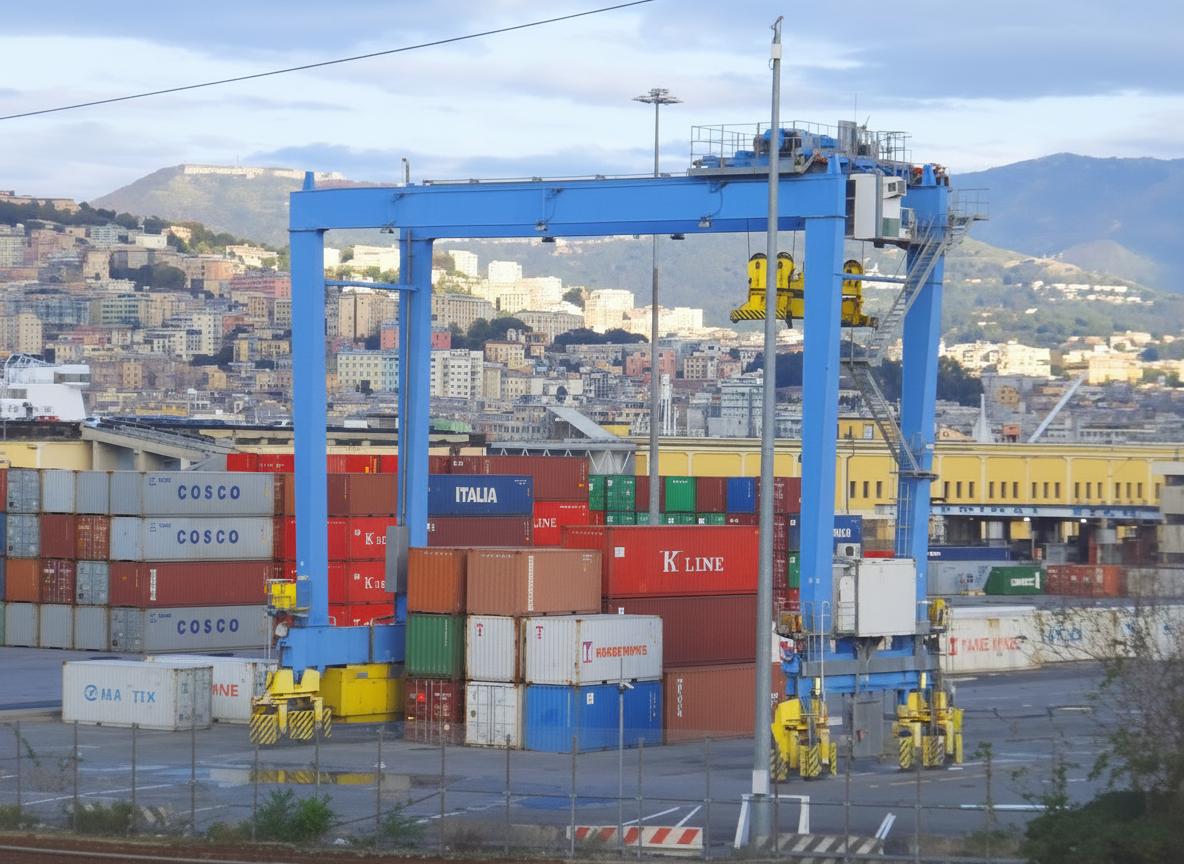
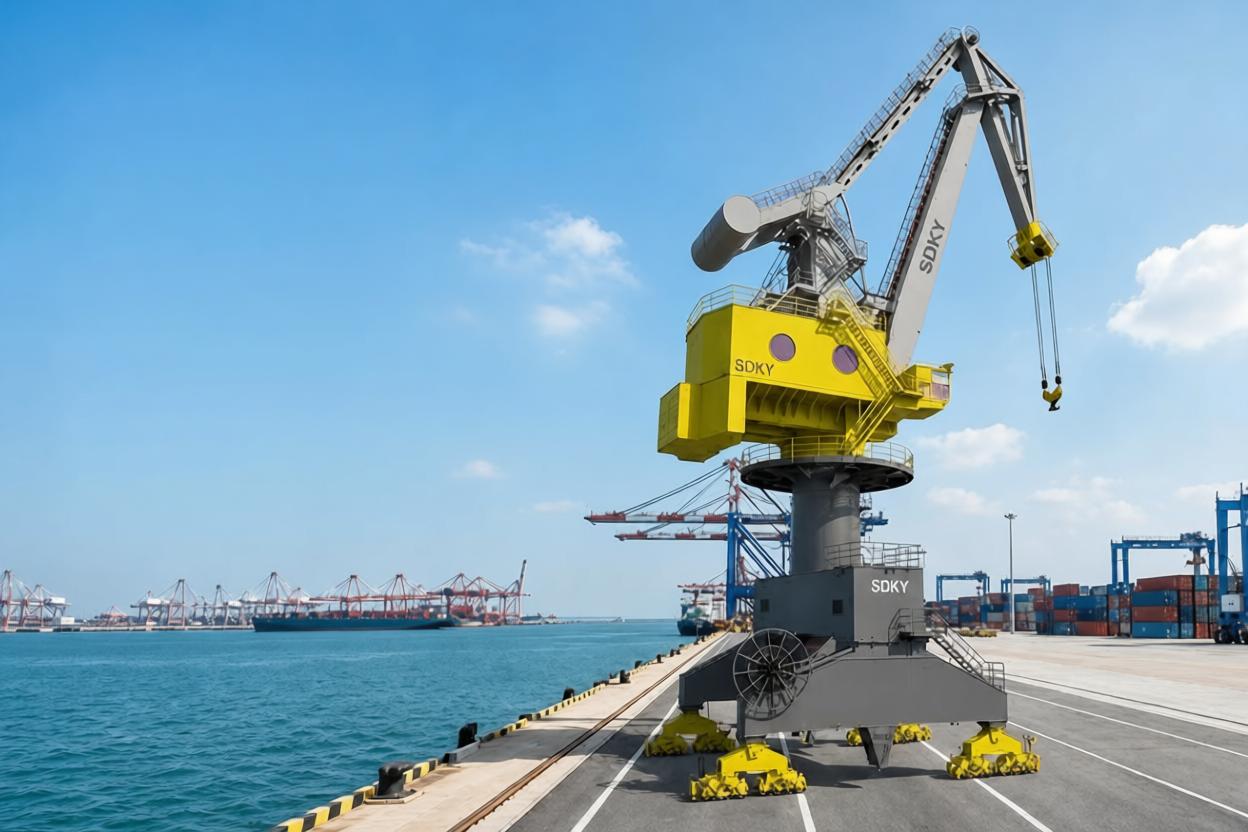
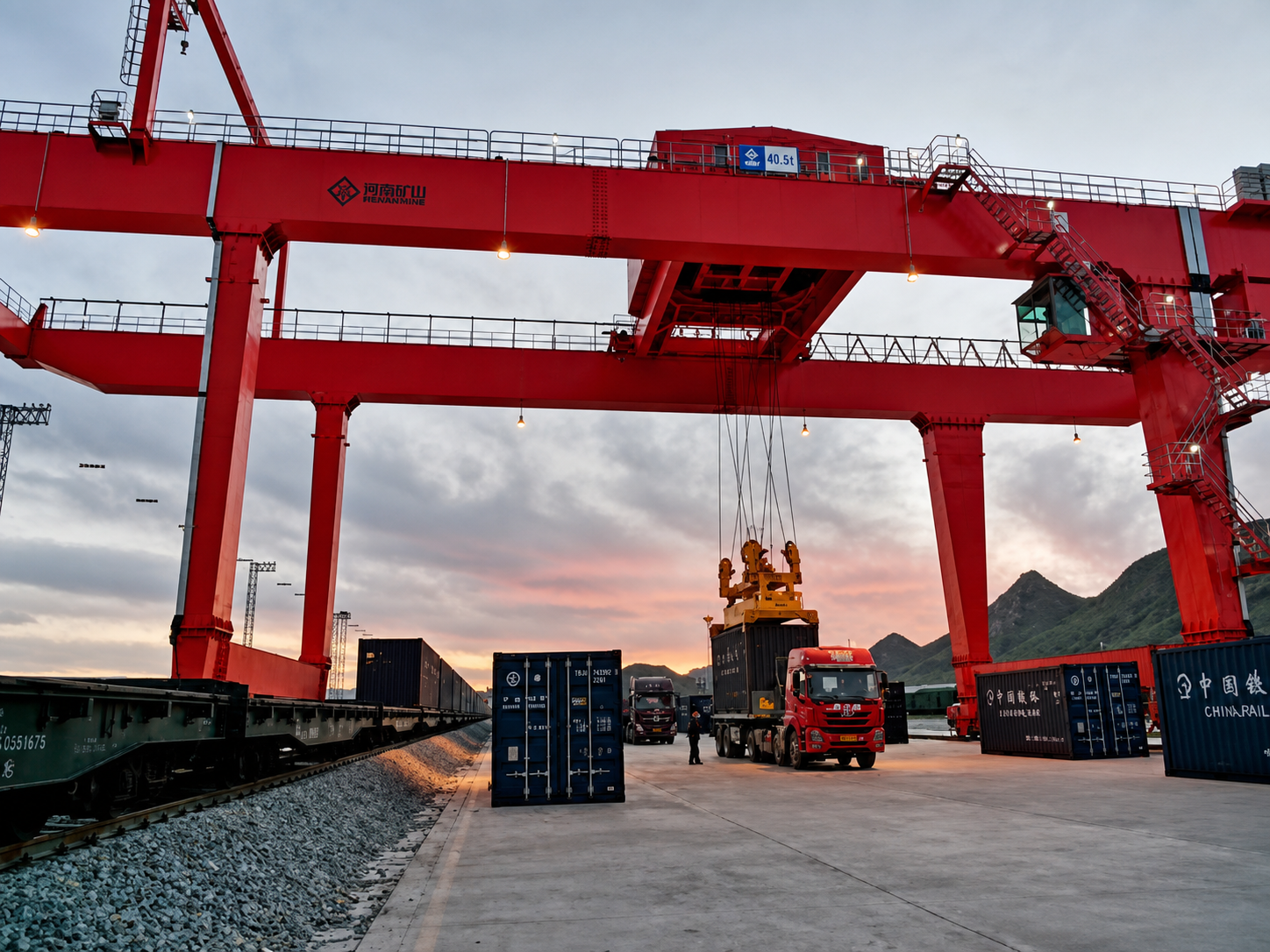
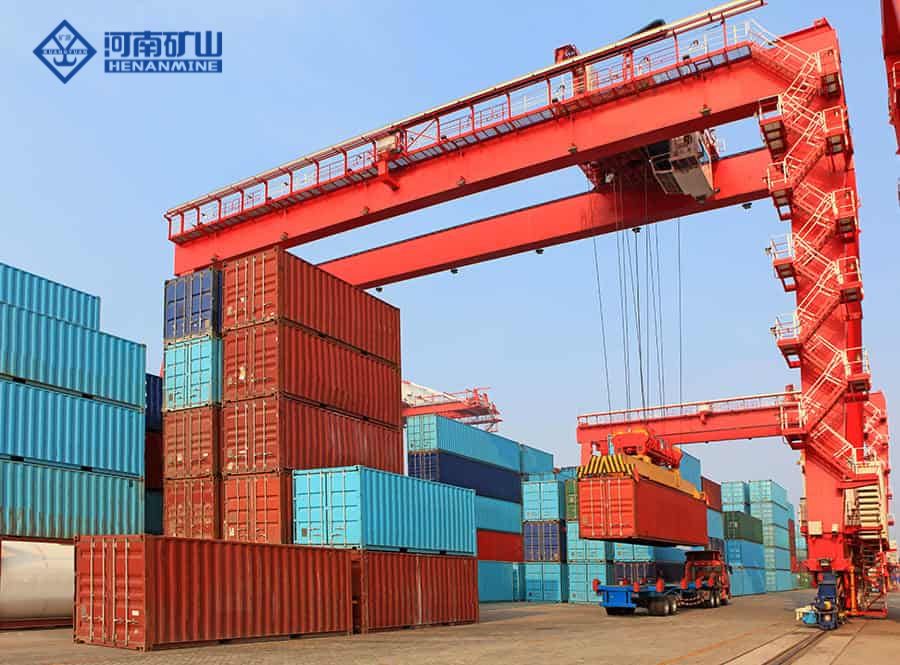
    In the operation of ports and terminals, the efficiency of loading and unloading is directly related to terminal throughput, operating costs and market competitiveness.In the procurement and upgrading of port crane equipment, many ports only pay attention to the basic parameters of the crane, ignoring the core configuration that truly determines the operation accuracy, operating speed and continuous production capacity.Modern port cranes are intelligent operating systems that integrate multiple core technologies. The lifting performance of port cranes, the precise positioning of port cranes, the intelligent automation of port cranes, the adaptation design and equipment stability affect the container loading and unloading cycle speed and the overall operation beat in all directions. It is the key to the efficient operation, cost reduction and efficiency of the terminal.

    How Lifting Performance Affects Loading Speed

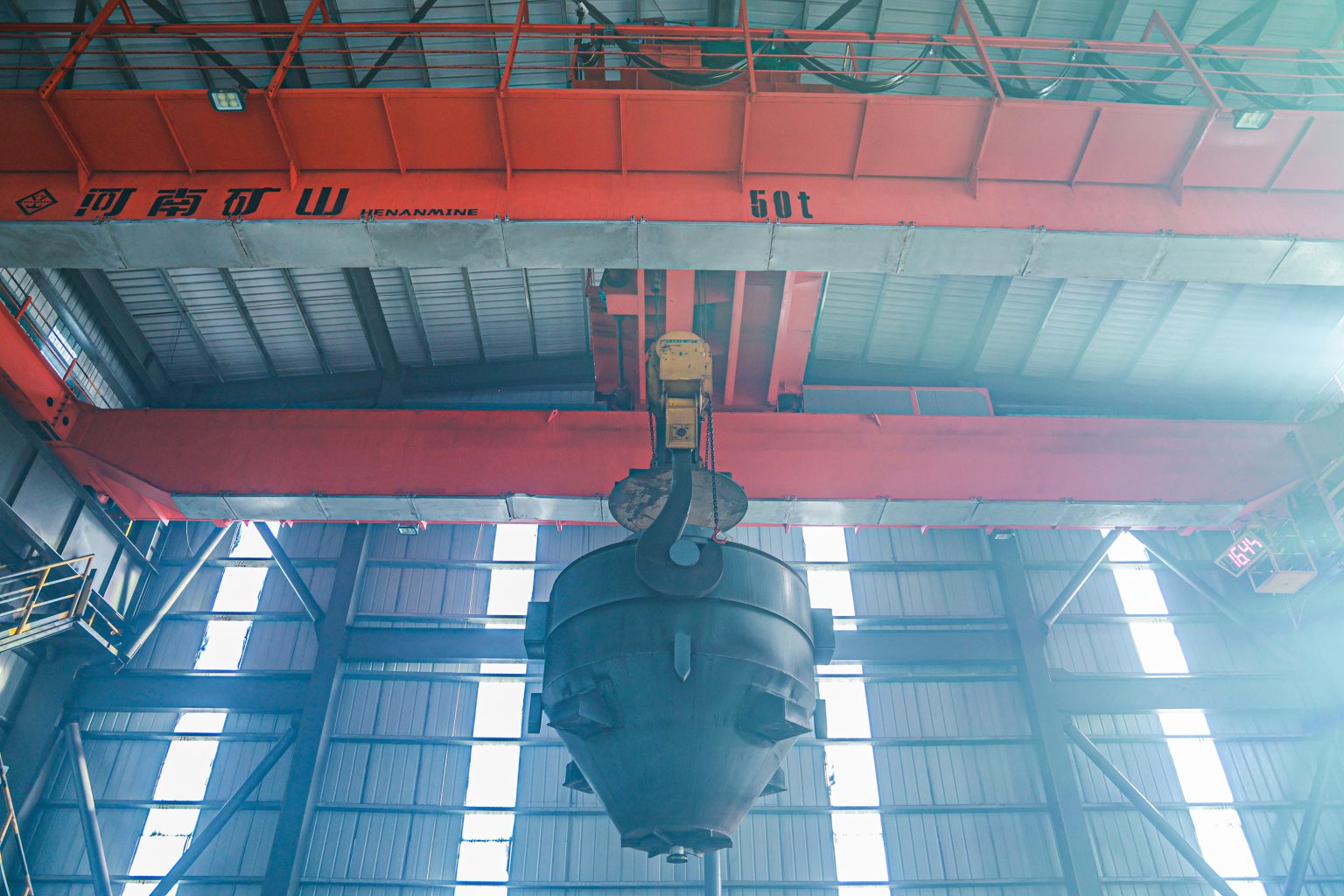
    Lifting performance is the basic core ability of Henan Mine Crane manufactured port cranes, and it is also the core factor that directly determines the basic speed of port crane loading and unloading operations.Different from ordinary lifting equipment, port shore bridges and field bridges need to be adapted to high-frequency, continuous, and large-load operation scenarios. The three parameters of lifting speed, rated load, and trolley operation cooperate with each other to directly determine the efficiency of the single-box cycle operation of the port crane, which is the core guarantee of the basic throughput of the terminal.

    Hoisting speed

    The lifting speed of port cranes is the core dynamic parameter that affects the beat of container loading and unloading, and directly determines the time-consuming lifting and unloading of goods.The lifting speed parameters of traditional ordinary cranes are conservative, with low-speed operation at full load and limited speed-up at no load. In high-frequency batch operations, a lot of time loss will occur, which greatly reduces the overall operating efficiency of port cranes.

    Lifting capacity

    The rated lifting weight of a port crane is not simply the upper limit of the load, but the key index that determines the upper limit of the adaptability and efficiency of the crane operation.Port operations cover 20-foot and 40-foot standard containers, overweight and heavy-duty containers and special cargo. Insufficient lifting capacity will not only limit the scope of operations, but also frequent load-limiting and diversion operations, which will seriously slow down the overall loading and unloading progress.

    Professional port cranes strictly follow international port operating standards. The rated lifting weight under the spreader covers the mainstream range of 35t-65t. Large and ultra-heavy models can achieve heavy-duty operations of 80t and above, and are fully adapted to high-frequency operation scenarios such as 40-foot ultra-heavy containers and double-box stacking cranes.It is worth noting that the lifting performance of the equipment has been optimized by the professional load curve, and the rated load can still be maintained at a stable load under the condition of large extension distance, and the load will not plummet due to the increase of the operating radius. There is no need to repeatedly adjust the operating position and split the cargo operation, which greatly reduces the loss of adaptation to working conditions and ensures efficient and stable operation throughout the process.

    Trolley movement

    Trolley operation is the core action of container horizontal alignment, translation and drop-off. The speed, stability and accuracy of trolley operation directly affect the efficiency of loading and unloading alignment.Traditional crane trolleys mostly run at uniform speed, with large start-stop impact and high alignment deviation. They require repeated manual fine-tuning and consume a lot of alignment time. It is an invisible pain point that restricts the speed of the operation.

    The new generation of Henan Mine Crane manufactured port cranes is equipped with an intelligent frequency conversion trolley operation system to achieve three-stage smooth operation of acceleration, uniform speed and deceleration. The operating speed is controllable and adjustable, taking into account the translation efficiency and operating stability.High-speed translation can quickly complete the horizontal transfer of container ships between the shore and the yard, precise deceleration and buffering can avoid the shaking and offset of the cargo, and greatly reduce the time cost of manual correction and secondary alignment.In batch container loading and unloading operations, stable and efficient trolley operation performance can effectively compress the alignment time of each round of operations and continuously improve the overall operation beat.

    How Positioning Systems Improve Handling Accuracy

    The core of loading and unloading efficiency lies not only in speed, but also in accuracy.Many terminal equipment has excellent speed parameters, but due to insufficient positioning accuracy, problems such as alignment deviation, box bumps, and misalignment of boxes frequently occur, which not only requires rework adjustment and slows down the pace of operation, but also increases the risk of cargo loss and equipment failure.Through intelligent technology, the precision positioning system completely solves the problem of alignment accuracy, realizes one-time precise alignment and drop-off, and accelerates efficiency from the details.

    port crane efficiency

    Anti-sway technology

    Cargo shaking is a common pain point in port lifting operations. During crane lifting, trolley translation, and cart travel, the box body can easily swing due to inertia. In traditional operations, you can only wait for the shaking to subside naturally. A single operation takes a few seconds or even tens of seconds to stabilize the box. The efficiency loss is great under high-frequency operations. At the same time, there are safety risks of the box colliding with the hull, yard, and adjacent cargo.

    Precision positioning

    Precise positioning technology relies on the integration of multiple technologies such as satellite positioning, laser ranging, and encoder real-time monitoring to achieve millimeter-level precise control of crane operating position and spreader landing point.In the traditional manual operation mode, the operator relies on experience to visually align, which is greatly affected by light, field of vision, weather, and operation proficiency. The alignment deviation is large, it takes a long time, and the accuracy of the operation is uneven.

    The modern intelligent positioning system can automatically calibrate the operation coordinates and correct the operating position of carts, trolleys, and spreaders in real time. The accuracy of the drop point can reach the millimeter level, which fully meets the high-precision requirements of high-density container stacking, precise loading and unloading of ships, and small space operations.Precise positioning does not require repeated manual fine-tuning, which greatly reduces the difficulty of operation, while avoiding box-dropping errors and stacking misalignment caused by alignment deviations, and reducing rework. In high-density depots and large-scale ship loading and unloading scenarios, the efficiency improvement effect is particularly significant.

    Automatic container alignment

    Automatic container alignment technology is the core configuration of efficient operation of intelligent ports, completely subverting the traditional manual visual alignment operation mode.The system can automatically identify container box corners, keyholes, ship space and yard positioning signs, match operating coordinates in real time, and independently complete the precise docking of spreaders and containers.The technology can be adapted to complex weather scenarios such as day and night operations, rain, snow and fog, and is not limited by light and field of vision, and maintains high-precision alignment around the clock.Compared with manual alignment, automatic alignment takes more than 60% less time, completely solves the efficiency fluctuations caused by manual operation fatigue and proficiency differences, and guarantees the stable output of terminal operation efficiency. It is the standard core function of large-scale automated unmanned terminals and high-throughput terminals.

    How Automation Improves Crane Productivity

    Rising labor costs, low upper limits on manual operation efficiency, and poor operation stability are the core bottlenecks restricting the increase in the production capacity of traditional port operations.The landing application of automation technology has completely broken the limitations of manual operations, realized the standardized, continuous and efficient operation of lifting operations, greatly improved the production capacity of stand-alone machines and the overall operating efficiency of the terminal, while reducing the risk of human operation failure.

    Automated handling

    The automated loading and unloading operating system can realize the fully automatic flow of containers from the ship, the collection card, and the yard, without manual control throughout the process, and independently complete the whole process of lifting, translation, unloading, locking, and unlocking.The system is equipped with standardized operating procedures, and all operating processes are unified, standardized, and accurate, completely avoiding the arbitrariness, lag, and error rate of manual operations.

    In batch operation scenarios, automation equipment can maintain uninterrupted and stable operation for 24 hours, without efficiency loss such as manual rest, shift changes, and fatigue operations.Taking the domestic automated benchmark terminal as an example, the shore bridge equipped with a fully automatic loading and unloading system can stably reach 35-40 boxes per hour of natural box operation by a single machine, which far exceeds the production capacity of traditional manual operation equipment, and greatly improves the overall daily and monthly throughput of the terminal.

    Intelligent path planning

    Traditional crane operations rely on manual planning of the operating path, and there are problems such as redundant paths, repetitive positions, and untimely avoidance. There are too many invalid trips, which is a serious waste of operating time.Relying on big data algorithms and real-time operation scenario modeling, the intelligent path planning system can independently plan the optimal operation path based on the ship’s docking location, container stacking location, peripheral equipment operation status, and traffic movement lines.

    The system can avoid operating obstacles in real time, actively avoid adjacent equipment, dynamically optimize the trajectory of carts, trolleys, and hoists, and minimize invalid position and waiting time.At the same time, it can realize the optimization of the collaborative operation path of multiple cranes, avoid mutual interference with equipment and operation congestion, greatly improve the overall operation efficiency of the terminal, and maximize the operational value of each equipment operation.

    Remote operation

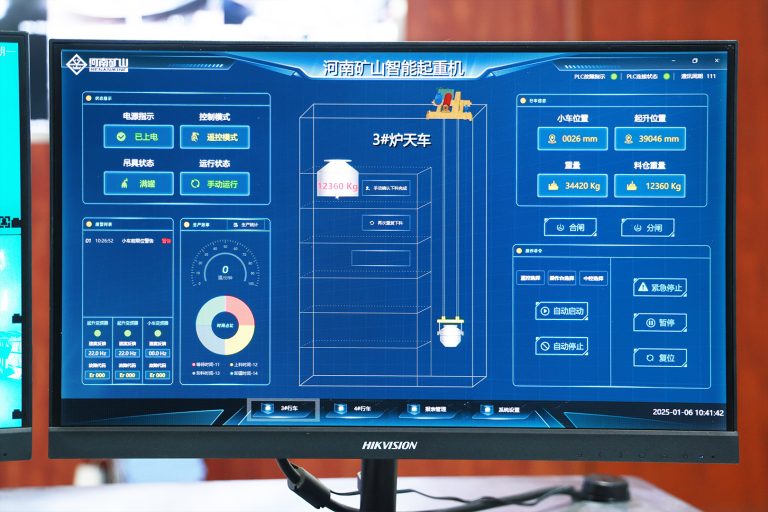
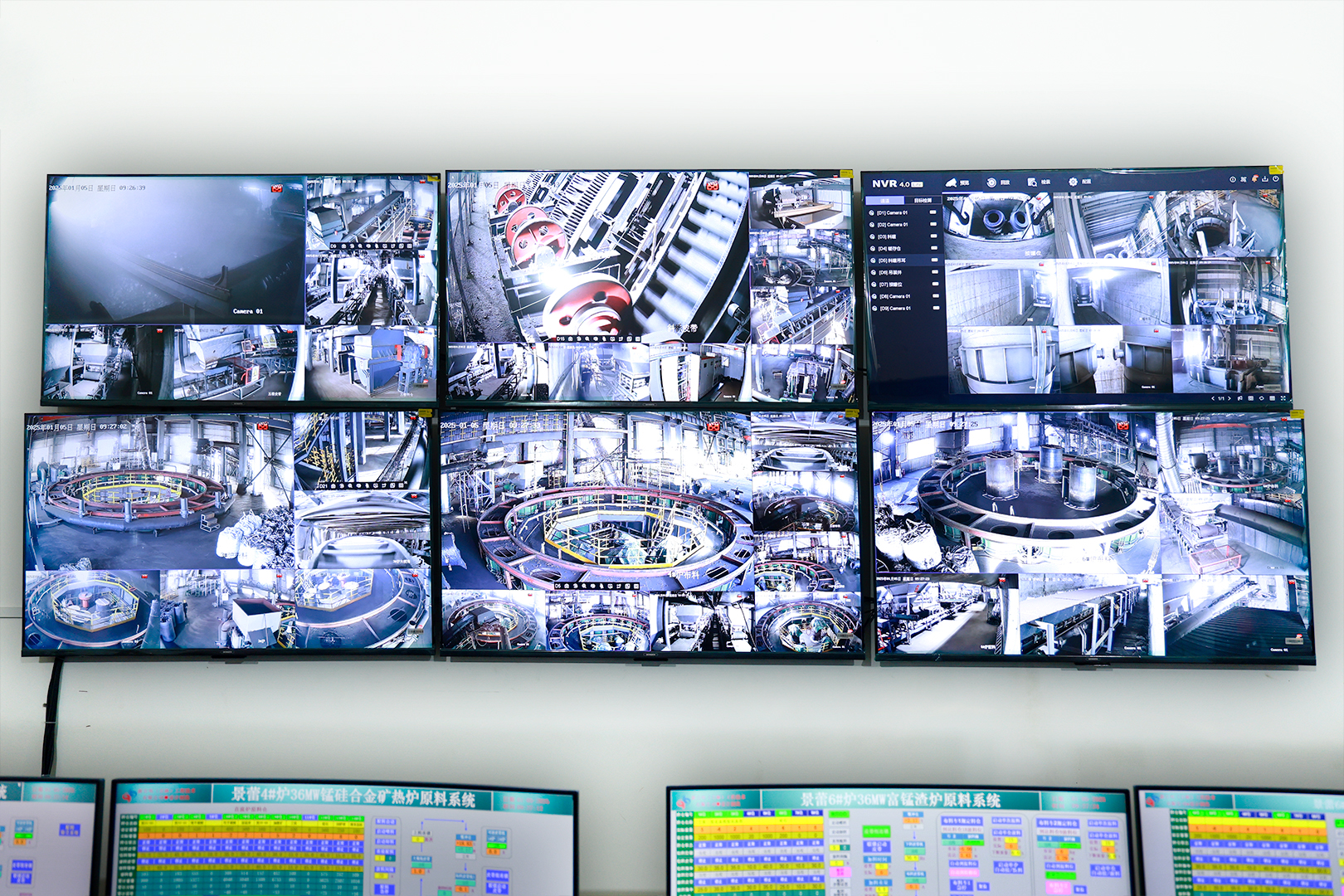
    Remote control technology has completely changed the on-site high-altitude operation mode of the crane. The operator can remotely complete the equipment control in the central control room to get rid of the limitations of the on-site environment and high-altitude operation.This function not only improves the operating environment, reduces the intensity of manual labor, and improves the safety of operations, but also realizes a significant upgrade from the efficiency level.Remote control with high-definition video real-time return, multi-angle monitoring, and accurate sensor feedback, the operation field of view is more comprehensive and the response is more timely, and the operation lag and errors caused by the blind spot of the field of view are eliminated.At the same time, remote control can realize one-person and multiple-machine control, reduce labor configuration costs, and respond faster to equipment start-stop and working condition switching, smoother operation convergence, and effectively improve equipment utilization and overall operating efficiency. It is the core configuration of the smart port upgrade.

    How Crane Design Supports Different Port Operations

    The port operation scenarios are complex and diverse, covering standard containers, special heavy-duty cargo, boxes of different sizes, berths and yard operations under different working conditions.The structural design and adaptability design of the crane directly determine the adaptability of the equipment to working conditions. The universal, modular and flexible design can avoid the stagnation of operations and idle equipment caused by the limitations of the equipment’s working conditions, and ensure efficient operation in multiple scenarios.

    Spreader compatibility

    The spreader is the core component of the crane docking container, and the compatibility of the spreader directly determines the type of cargo and adaptation scenarios that the equipment can operate.Traditional fixed spreaders can only be adapted to single-size containers, and manual replacement of spreaders is required when operating boxes of different specifications, which is time-consuming and laborious, which seriously affects the continuity of operations.The modern port crane is equipped with a modular universal spreader system, which supports fast and adaptive switching of 20-foot, 40-foot, and 45-foot standard containers, and is compatible with a variety of box types such as ordinary containers, reefers, and open-top boxes. Some models support simultaneous operation of double-box spreaders, which can complete double-box loading and unloading in a single time, doubling the operating efficiency.The spreader is equipped with automatic locking and fault self-inspection functions. There is no need for manual assistance for switching, and the adaptation of working conditions is completed in seconds to ensure the fluency of alternating operations of multiple types of goods.

    Working range

    The operating range covers core parameters such as crane lifting height, trolley track gauge, and trolley extension distance. Insufficient operating range is an important reason for the low efficiency of many old terminal equipment.Limited operating radius will cause large ships to be unable to dock, high-rise containers cannot be stacked, and the corner areas of the yard cannot be covered. Frequent adjustment of ship berths and splitting of operating areas will greatly reduce operating efficiency.

    Henan Mine Crane manufactured professional port crane has been designed with optimized structure, and the outer extension distance can cover mainstream large-scale berth specifications such as 48m and 65m. The lifting height is adapted to the needs of multi-layer container stacking and large-scale ship loading and unloading, and the ability to cover a wide range of operations can complete the entire ship and the entire yard at once, without repeated shifting and adjustment.Sufficient operating range allows the equipment to be adapted to the operation scenarios of large-tonnage and large-size ships, greatly increasing the coverage of a single operation, and improving the overall throughput efficiency from the dimension of operation coverage.

    Container size flexibility

    At present, port cargo transportation is showing a diversified trend. In addition to conventional standard containers, the proportion of special-shaped size, ultra-heavy weight, and non-standard box cargo continues to increase. The flexibility of equipment size adaptation directly determines the adaptability of terminal operations and the efficiency of customs clearance.The new type of port crane adopts a flexible adaptation design, combined with adjustable spreaders and intelligent size recognition system, which can be independently adapted to container cargo of different lengths, heights and widths, without the need to retrofit equipment and replace accessories in advance.At the same time, the equipment supports the stable lifting of eccentric loads and irregular cargo, which is perfectly adapted to the needs of bulk collection, special boxes, and overrun boxes.The flexible size adaptation ability allows a single equipment to cover all types of container operations, avoiding idle equipment and short-term adaptation of working conditions, and ensuring efficient customs clearance of all kinds of goods at the terminal.

    How Reliability Affects Loading and Unloading Efficiency

    For continuous port operation scenarios, equipment reliability is the bottom line to ensure long-term efficient operation.No matter how excellent the speed, intelligence, and adaptability of the configuration, once the equipment fails frequently and stops for maintenance, it will lead to interruption of operations, ship stagnation, and yard congestion, resulting in economic losses that far exceed the benefits of operation speed-up.High-reliability design, long-term protection, and intelligent maintenance are the core guarantees for the continuous and efficient output of port equipment.

    Equipment durability

    The port terminal belongs to a harsh working environment with high dust, high humidity, high salt spray, and strong wind. The equipment runs continuously at high frequencies and large loads for a long time, and the structural strength and durability of the accessories are extremely demanding.Ordinary equipment with insufficient durability is prone to structural corrosion, component wear, hydraulic leakage and other problems, which frequently cause minor failures and interfere with the rhythm of operations.The port crane adopts a high-strength alloy steel structure and has undergone special treatment for anti-corrosion, anti-rust and anti-salt spray to adapt to the harsh working conditions of coastal ports.The core transmission, hydraulic, and electrical components are all equipped with high-end configurations in the industry. After millions of fatigue tests, they can withstand 24 hours of uninterrupted heavy-duty operation. The working level of the whole machine reaches the A7-A8 high-level standard, and there is no performance attenuation in long-term operation. Ensure the stability of the operation from the hardware level and avoid frequent minor failures that drag down the efficiency of the operation.

    Preventive maintenance

    Reduced downtime

    The length of downtime is the core index to measure the comprehensive operating efficiency of port equipment. The shorter the non-operating downtime of the equipment, the longer the effective operating time, and the higher the terminal’s production capacity.Relying on highly durable hardware configuration and intelligent preventive maintenance system, the equipment failure and shutdown rate is greatly reduced. At the same time, the equipment adopts a modular disassembly and assembly design, even if parts replacement and equipment overhaul are required, disassembly and assembly maintenance can be completed quickly, greatly shortening the maintenance time.

    The comprehensive utilization rate of high-quality port crane equipment can reach more than 95%, and the effective operation time throughout the year can exceed ordinary equipment to maximize the value of equipment production capacity.Reduce sudden downtime, shorten maintenance downtime, avoid chain problems such as ship stagnation, yard congestion, and operation delays, and continuously improve the overall loading and unloading efficiency and operating income of the terminal from the perspective of long-term operation.

    Henan Mine Crane Factory Custom

    The efficiency enhancement of loading and unloading of port cranes relies on the all-round collaborative optimization of the performance of the whole machine, positioning accuracy, intelligent automation, adaptation of working conditions and stable operation and maintenance. It is difficult to achieve substantial production capacity improvement with a single parameter upgrade.High-quality port lifting equipment can be adapted to various terminal operation scenarios, reduce operation deviations and equipment downtime losses, continuously optimize operation beats and reduce operating costs.As a professional crane manufacturer, Henan Mine Crane Factory can customize and adapt high-efficiency intelligent port equipment according to different terminal berths, freight specifications and operating capacity requirements to help major terminals achieve stable efficiency, improve quality and reduce costs.
    Henan Mine CraneDiscuss your requirements ↗
  • Which Double Girder Gantry Crane is Suitable for Port Outdoor Heavy-duty Hoisting

    Which Double Girder Gantry Crane is Suitable for Port Outdoor Heavy-duty Hoisting

    Which Double Girder Gantry Crane is Suitable for Port Outdoor Heavy-duty Hoisting

    Outdoor heavy lifting operations in harbours have high requirements on the load carrying capacity, wind resistance, working level and anti-corrosion standards of lifting equipment.

    This article focuses on the core of the selection of double girder gantry cranes, and systematically sort out the core parameters and the key to the selection of the four mainstream models of MG type, RMG type, truss type and shipbuilding, to provide scientific references for the port-related decision makers, and help accurate selection.

    Structural Advantages of Double Girder Gantry Cranes

    Core structural components

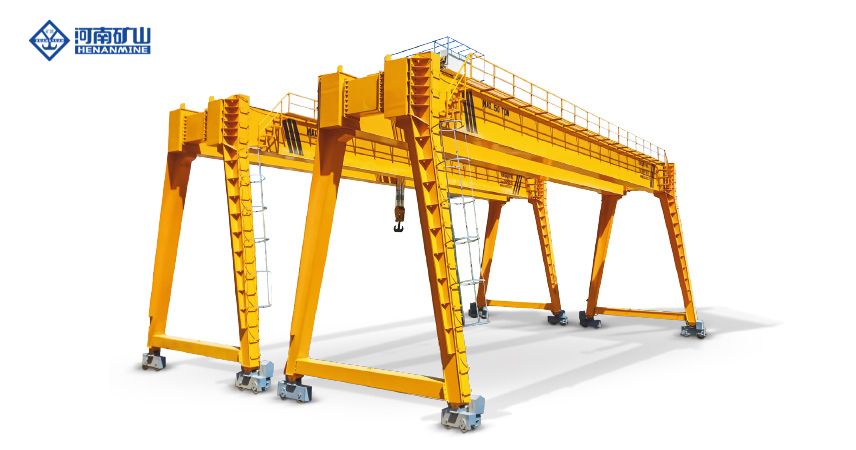
    The core structure of Double Girder Gantry Crane consists of four main components, namely two parallel main girders, outriggers on both sides, ground track travelling mechanism and hoisting trolley system.

    Among them, the hoisting trolley runs along the top rail of the main girder. Compared with the single girder design, the hook position can be lifted above the plane of the main girder, obtaining an additional hook height of 450mm to 900mm, which is especially critical in scenarios such as multi-layer cargo stacking and lifting of tall components in ports, and can effectively adapt to the height requirements of port operations.

    Load-bearing performance advantages

    The core load-carrying advantage of the double girder structure lies in the load dispersal design. The two main girders bear the load independently, which makes the static deflection and dynamic deflection of the whole machine much smaller than that of a single girder crane of the same span, and the structural rigidity is better.

    According to the industry standard, when the lifting capacity exceeds 20 tonnes or the span exceeds 20 metres, a double girder structure must be used to meet the rigidity and fatigue life requirements.

    The basic working conditions of outdoor heavy lifting in ports are cargo weights of 20 tonnes to hundreds of tonnes and spans of 12m to 50m, so single girder structures cannot meet such operational requirements from the design level, and double girder structures become the inevitable choice.

    Functional expansion and maintainability advantages

    Double girder gantry cranes have greater functionality and expandability. The bridge deck space between the two main girders can be installed with an access platform to provide a safe working platform for the main maintenance personnel;

    The top of the main girder can also be integrated with cabs, lighting systems, windproof anchorage devices and other ancillary facilities, solving the single girder structure space constraints, unable to accommodate a variety of ancillary configurations of the pain point.

    Combined with the high-intensity, 24-hour continuous operation characteristics of the harbour, the maintainability of the equipment directly affects the annual downtime and comprehensive operating costs, and this advantage of the double girder design can effectively reduce operational losses and improve operational continuity.

    MG Universal Double Girder Gantry Crane

    MG double girder gantry crane is the most widely used general-purpose gantry crane model in China’s crane industry, and it is also the standard equipment in many harbours and freight yards, railway freight stations and open yards around the world.

    It adopts box main girder, rigid leg and flexible leg (or double rigid leg) design, the whole machine travels along the track, and the hoisting trolley runs on the top of the main girder; MG type covers a wide range of lifting capacity of 5-500 tonnes, span can be customised to more than 35m, and the working class includes A5, A6 and A7.

    The MG model is mainly responsible for bulk cargo handling and bulk material stacking in port yards, which is a cost-effective choice for medium-sized general cargo ports, and the spreader can be flexibly changed to improve the utilisation rate.

    From the parameter selection point of view, port outdoor open-air scene should give priority to the choice of working class A6 or A7 MG type gantry crane. A6 corresponds to the heavy duty working system, the number of working cycles per day, high utilisation rate, to meet the port of the daily multi-shift continuous operation of the intensity of the demand;

    A7 is suitable for all-weather high-frequency operation of busy terminals. In terms of anti-corrosion treatment, coastal ports should require the whole machine structure to adopt anti-salt spray anti-corrosion coating system, and the electrical system is equipped with IP55 or above protection level to resist the corrosive attack of the marine atmosphere.

    MG type universal double girder gantry crane core parameters reference

    • Lifting capacity: 5 tonnes~500 tonnes, single hook or double trolley can be configured to flexibly adapt to different lifting needs.
    • Span: 12m~35m, can be customised to a larger span according to the actual needs of the port yard, suitable for all kinds of site conditions.
    • Lifting height: 6m~20m, can be flexibly customised according to the stacking height of the yard to meet the needs of multi-layer cargo lifting.
    • Working class: covering A5, A6, A7, can be accurately matched according to the intensity of port operations, to ensure the stable operation of the equipment.

    RMG (Rail Mounted Container Gantry Crane)

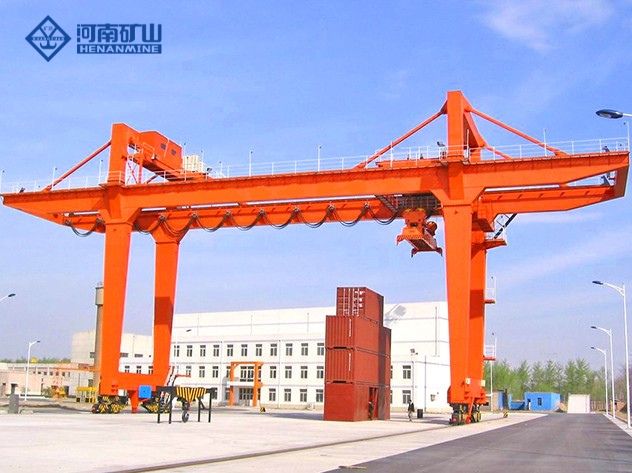
    RMG (Rail Mounted Container Gantry Crane) is the core equipment of container port area, travelling along the ground track, equipped with automatic telescopic spreader, can accurately grab 20 feet, 40 feet standard containers, the operational efficiency is much higher than manual and forklift.

    With a lifting capacity of 26-65 tonnes, a working class of A6-A8, a customised span of up to 50 metres, a lifting height of more than 30 metres, a travelling speed of 45-60 metres/minute, and a positioning accuracy of ±50 millimetres, the RTG is the mature and preferred solution for large-scale ports that handle more than 1,000 TEUs per day.

    Compared with RTG, RMG has better stability, accuracy and lower energy consumption. Ground power supply can reduce annual energy cost by 30%-50%, and the automation transformation is mature, which can be upgraded to ASC seamlessly to match the digital transformation of ports.

    RMG core parameters reference

    • Lifting capacity: 26 tonnes ~ 65 tonnes (suitable for standard container operations), customised models can break through more than 100 tonnes, to meet the special lifting requirements
    • Span: 20 metres ~ 50 metres (including cantilever), can cover 6 to 8 rows of container stacking area, suitable for different sizes of yard layout
    • Main accessories: Equipped with cargo hooks, grabs, electromagnetic suction cups, lifting beams and other commonly used lifting tools, which can be switched on demand to enhance the utilisation rate of the equipment.
    • Applicable port types: widely applicable to bulk cargo ports, integrated freight terminals, railway container freight stations and open-air cargo yards, with strong versatility.
    • Lifting height: up to 30 metres, supporting the high-density stacking mode of ‘1 box pressing 5 boxes’, enhancing the utilisation rate of the yard.
    • Working level: A6~A8, suitable for high-frequency and high-intensity continuous operation in container ports.
    • Travelling speed: 45m/min~60m/min, with precise positioning system to ensure operational efficiency and safety.
    • Applicable port types: large container ports, railway container loading yards, inland container transfer stations.
    • Power supply: cable reel, slip line or bus duct power supply, all-electric drive design, green and low emission, in line with the demand of port environmental protection.

    Truss Double Girder Gantry Crane

    Truss double girder gantry cranes replace the traditional box girder with a triangular truss structure, which has outstanding wind resistance, and the hollow design reduces the wind load factor by 40%-60% compared with the box girder, which is preferred for typhoon-prone coastal ports and island ports.

    It also has the advantage of light weight, reducing the steel consumption by 15%-25% under the same span weight, which can reduce the foundation cost; the rods can be overhauled individually and the maintenance is convenient, which is suitable for remote ports.

    This model is suitable for shipbuilding segment lifting, steel transfer and other scenarios, working class A5-A6, lifting capacity of 20 tonnes to hundreds of tonnes, span can be customised, the procurement of manufacturers with mature truss welding qualification should be selected.

    Heavy Duty Double Girder Gantry Crane for Shipbuilding

    Shipbuilders have very high requirements on the span and tonnage of cranes, the construction of large ship segments requires hundreds of tonnes of lifting and millimetre positioning, so the shipbuilding special heavy-duty double girder gantry cranes with a lifting capacity of 100-1,000 tonnes and a span of 80-230 m are one of the categories of industrial cranes with a large volume.

    Gantry cranes for shipbuilding usually use double trolley configuration: the main trolley is responsible for the lifting of the main segments, the deputy trolley is used for auxiliary positioning and turning, the two cars can work together to complete the super-long, super-heavy workpiece into the position of the precise.

    In order to adapt to the outdoor marine environment, the structural steel is made of high-strength weather-resistant steel, and the thickness of the surface anticorrosion coating is usually more than 250 microns, and it is equipped with multiple safety systems such as high wind alarm, automatic windproof anchoring, and anti-deviation limitation.

    From the technical parameters, shipbuilding heavy gantry crane travelling speed is relatively low (usually 2 to 10 m / min), but the positioning accuracy requirements are very high, need to be equipped with laser ranging, encoder feedback and PLC precision control system.

    The procurement cycle of this type of equipment is usually 12 to 36 months, and it is necessary to synchronise the equipment selection and foundation design work at the dockyard design stage to ensure that the parameters between the track, foundation and crane are coordinated.

    Five Key Dimensions in The Selection of Outdoor Double Girder Gantry Cranes for Harbours

    Lifting capacity and span of the synergistic match

    The selection of port lifting equipment must be based on the actual maximum cargo weight, while leaving a safety margin of no less than 15%. Special attention should be paid to the fact that the rated lifting capacity refers to the combined weight of the hook and all attachments below it (including spreaders, slings, stretcher beams, etc.).

    If grabs or electromagnets are used, their own weight, which often accounts for 20 to 35 per cent of the rated lifting capacity, must be deducted from the net payload. The span should be determined by taking into account the width of the yard, the need for access between the legs (vehicle traffic or forklift operation) and the length of the cantilever, which usually requires special structural calculations for spans of more than 35 metres.

    Precise positioning of work levels

    The working level (defined as Class A by ISO standard, corresponding to GB/T 3811 by Chinese standard) is the most neglected but most far-reaching parameter in the selection of cranes.Class A5 is suitable for general yard operations with medium frequency and medium load spectrum;

    Class A6 is suitable for high-frequency, heavy-load continuous port operations and is the benchmark configuration for most container ports and bulk terminals;

    Class A7 is suitable for 24-hour, high-intensity, continuous production operations, such as coal loading in coal bunkers of power plants and raw material yards of steel mills, etc. Class A8 corresponds to the most severe continuous full-load working conditions. Selecting a low working class can lead to a serious reduction in the fatigue life of the equipment, often resulting in structural problems such as cracks in the main beam within 3 to 5 years.

    Wind resistance and corrosion protection

    In the open-air operating environment of the port, wind load and salt spray corrosion are the two major ‘natural enemies’ of equipment life. Coastal ports should require the whole machine according to the design of not less than 11 gusts of non-working wind resistance, and configure automatic wind anchorage device (typhoon anchorage piles);

    The maximum allowable wind speed in working condition is usually 14 m/s (grade 6 wind), and the equipment should be automatically shut down when exceeding the limit. Anti-corrosion coating shall comply with C4 or C5-M grade in ISO 12944 (coastal and marine atmospheric environment), the surface treatment of steel structure adopts sand blasting and descaling of rust Sa2.5 grade, and the total dry film thickness of primer, intermediate paint and topcoat is not less than 240 microns, and it is recommended to carry out comprehensive anti-corrosion re-checking and re-coating once every 3 to 5 years.

    Power supply and drive system

    Large span, large tonnage double girder door crane electrical drive system is the key to influence the operational efficiency and energy consumption. Modern harbour gantry cranes generally use frequency conversion speed drive, compared with the traditional slip ring motor, wider speed range, smoother operation, energy saving effect of up to 20% to 35%.

    Power supply should be based on the crane travelling distance and port power grid conditions comprehensive decision-making: travelling distance is short (within 200 metres) can choose the cable reel; distance is longer RMG or MG type large-span gantry cranes should be used in the sliding contact line or closed bus power supply, in order to reduce the cable wear and tear maintenance costs.

    The degree of automation and future scalability

    With the advancement of port intelligent upgrading, the potential of automation transformation of cranes has become an important dimension of the procurement decision. For new container ports, it is recommended to reserve automation interfaces during selection:

    The control system adopts PLC architecture and reserves the communication protocol of the upper system (e.g. OPC-UA), the trolley and trolley travelling encoder reserves the absolute value signal output, and reserves the installation space and wire slots for the future addition of laser anti-shaking, machine vision alignment and other modules.

    The initial investment of about 5% to 15% more hardware reservation can save more than 40% of the automation transformation cost in the whole life cycle of the equipment.

    Selection and Procurement Precautions

    Avoid the core misunderstanding when purchasing: Do not take the lifting capacity as the only reference and ignore the working level that determines the life of the equipment, the configuration and price difference between different working levels of the same tonnage (e.g. A5 and A7) can be up to 30%-50%, and choosing a lower level will accelerate the aging of the equipment, resulting in high losses.

    Strict verification of the manufacturer’s qualification is required: as special equipment, the manufacturer needs to have a class A crane manufacturing licence, the product needs to pass the relevant inspection and provide complete information; export equipment needs to comply with the corresponding international standards, give preference to ISO 9001 certified manufacturers, and in the contract, clear acceptance, installation and spare parts agreement.

    Emphasis on after-sales service and spare parts supply: suppliers are required to commit to a 5-year local reserve of key spare parts, 2-4 hours on-site response, and give preference to vendors with local technical service outlets to shorten the troubleshooting cycle and reduce operational risks.

    Conclusion

    Selection of double girder gantry cranes for outdoor heavy lifting in ports needs to take into account multiple dimensions: MG type is suitable for general cargo and integrated ports, with strong adaptability and low investment;

    RMG is suitable for container ports, with high efficiency and energy saving; lattice-type is suitable for high-risk areas with high wind resistance; and the heavy-duty model for shipbuilding is suitable for lifting of large ships and heavy equipment. The selection of the model needs to take into account the cargo, frequency of operation, environment and total life cycle cost, and there is no universal model.

    Henan Mine CraneDiscuss your requirements ↗
  • When Does Remote Control Make Sense for an Overhead Crane?

    When Does Remote Control Make Sense for an Overhead Crane?

    When Does Remote Control Make Sense for an Overhead Crane?

    In industrial plants, steel structure processing, equipment assembly, warehousing and logistics scenarios, the control method of bridge cranes (driving, EOT cranes) is directly related to operation safety, hoisting accuracy and production efficiency.

    The mainstream control methods in the industry are divided into wired handle control and wireless remote control control. Many companies will struggle with whether they need to install a remote control system when purchasing, retrofitting and upgrading cranes, and under what working conditions. The practicality and cost performance of the remote control system are optimal.

    This article will comprehensively analyze the principle, core advantages, applicable scenarios, comparative advantages and disadvantages of the wireless remote control system of bridge cranes, selection points, safety configuration and cost details, to help enterprises quickly determine whether their own working conditions are suitable for remote control, and accurately avoid selection misunderstandings.

    What Is Remote Control for an Overhead Crane?

    The remote control system of bridge crane is an intelligent control system that relies on radio frequency technology to transmit operating instructions to the crane receiving terminal through handheld transmitting equipment to get rid of the shackles of wired cables.Unlike the wired handle control of traditional fixed cables, the wireless remote control allows the operator to freely adjust the operating position, which is one of the core configurations of modern industrial crane upgrades.

    Wireless remote control VS wired handle control

    The wired handle is standard for traditional control. The advantage is that the connection is stable, there is no signal interference, no need to charge, and the cost is low. It is suitable for simple and low-frequency hoisting operations; the disadvantage is that the scope of operation is limited by the cable, there are hidden dangers of cable wear, fracture, and personnel stumbling, and the flexibility is poor.

    The wireless remote control relies on radio frequency signal control to get rid of the shackles of cables. The operator can freely choose the best operating station, with a better field of vision, greater safety and flexibility, and adaptability to complex working conditions.The shortcoming is the need to maintain the battery regularly, avoid radio frequency interference, and the initial purchase cost is higher.At present, the dual-control scheme of “remote control as the main and wired handle as the backup” is generally adopted in high-end industrial scenarios, taking into account high efficiency and safety.

    Core operating functions

    The industrial-grade crane remote control system has full coverage of functions, and can accurately control all the core actions of the crane, adapting to the needs of various hoisting operations.:

    • Lifting control: accurately control the lifting and lowering of the hoist, support multi-speed speed regulation and frequency conversion to start and stop smoothly, effectively eliminate the problem of heavy objects shaking and shifting
    • Vertical operation of the cart: control the entire crane to walk back and forth along the track of the plant to complete a wide range of longitudinal displacement hoisting operations
    • Horizontal operation of the trolley: control the movement of the crane and the trolley left and right along the main beam to achieve precise fine-tuning of the lifting point
    • Emergency shutdown: equipped with an eye-catching red emergency stop button, in case of sudden failure or danger, the power of the whole machine can be cut off instantly, all operating actions can be terminated, and safety accidents can be avoided.

    At the same time, the system comes with a safety self-locking function that stops when you let go to prevent misoperation. Some customized models also support auxiliary functions such as horn warning, light reminder, and magnetic suction cup control.

    Core components

    A complete set of wireless remote control system for industrial bridge cranes, with streamlined structure and strong stability, the core contains five components:

    • Handheld transmitter: divided into handheld button-type and waist-mounted control boxes, integrated buttons, joysticks, batteries, coding chips, and antennas, responsible for sending operation instructions
    • On-board receiver: fixed near the crane electrical cabinet, receives wireless signals and decodes them into operating instructions that can be recognized by the equipment
    • Signal antenna: Strengthen the stability of radio frequency signal transmission and avoid blocking interference. The mainstream frequency bands include 433MHz, 915MHz, and 2.4GHz frequency hopping frequency bands.
    • Relay output module: docking crane contactor, frequency conversion drive, PLC system, precise control of motor start and stop, speed regulation
    • Safety interlock power supply module: stable power supply for transmitter and receiver, equipped with fault self-locking and signal loss protection circuit to ensure operation safety

    When Does Remote Control Make Sense?

    Wireless remote control does not just need to be configured, but in complex industrial conditions, it can greatly improve the safety factor and operating efficiency. The following five types of scenarios are the best applicable scenarios for remote control systems.

    Limited field of vision for work

    Traditional wired control is limited by station position, and operators cannot move flexibly. When encountering scenes with dense plant equipment, complex hoisting paths, and obstructed obstacles, blind spots in the field of vision can easily appear, resulting in hoisting offset and collision accidents.

    After being equipped with wireless remote control, the operator can freely move to the best observation point, observe the lifting, moving, and landing status of heavy objects at close range, maintain a safe distance throughout the process, completely solve the problem of blind spots in the field of vision, and adapt to complex path hoisting operations.

    Precision hoisting operation

    In scenarios such as the installation of machinery and equipment, the construction of production lines, the alignment of molds, and the precise splicing of steel structures, the accuracy of hoisting is extremely high, and millimeter-level offsets may cause equipment damage and construction rework.

    The wireless remote control supports the operator to look directly at the trajectory of heavy objects throughout the process, and can fine-tune the hoisting position and operating speed in real time, without the need for special personnel to assist in observation, greatly improving the alignment accuracy, and perfectly adapting to the precise hoisting needs of various precision components and heavy equipment.

    Harsh operating environment

    Scenes such as metallurgical casting, chemical workshops, dust workshops, high-temperature material handling, high-noise factories, and restricted operating areas have safety hazards such as high temperature, dust, chemical corrosion, and noise pollution. Long-term close-range operations by operators can easily cause occupational injuries.

    Wireless remote control allows operators to stay away from high-risk areas for hoisting and operate in a safe location to reduce personal risks.Note: Remote control is only an auxiliary means of risk control and cannot replace basic safety facilities such as overload protection, limit devices, and labor insurance protection. It needs to be used in conjunction.

    Large working area

    Large-scale steel structure workshops, multi-span factories, and large storage areas have large crane operation spans and wide operation coverage.The cable length of the traditional wired handle is limited, and the operator cannot follow the movement of heavy objects throughout the process, resulting in large blind spots and inconvenient operation.

    The wireless remote control has no operating range limit, and the operator can follow the movement of heavy objects throughout the control process, which is suitable for large-span and large-range hoisting operations, and completely solves the problem of space limitations of wired control.

    Hoisting point dispersion

    The hoisting points in some workshops are not fixed, and operators need to frequently switch operating positions and travel to and from multiple stations.The fixed wired control mode is cumbersome and inefficient to operate, and it is also easy to cause cable entanglement and wear problems.

    The high flexibility of wireless remote control can be adapted to multi-point and mobile hoisting operations, without the need for fixed control stations, reducing the configuration of auxiliary personnel, simplifying the operation process and improving construction efficiency.

    When a Pendant Control May Still Be the Better Choice

    Wireless remote control has outstanding advantages, but not all scenarios are suitable. In some simple working conditions, the traditional wired handle control is more cost-effective and practical.:

    • Suitable for small enclosed workshop operation scenarios, the operation area is narrow, the hoisting operation path is organized and simple, there is no high-altitude cross-operation, large-scale rotation and complex positioning operation requirements, the operation process is single, and the traditional control method is fully adapted to the on-site operating conditions.
    • The overall operating utilization rate of the crane is low, and it is only used for temporary and short-term hoisting operations such as equipment maintenance and material transfer. There is no need to install a wireless remote control system to improve operating efficiency.
    • There are no obstructions such as equipment, walls, materials, etc. on the job site, and the field of vision of the job is transparent and there are no blind spots. The operator can clearly observe the whole process of lifting, translation, and positioning of heavy objects in real time at a fixed and safe station, and the equipment can be accurately controlled and the hidden dangers of the operation can be dealt with in a timely manner, without the need for remote control and long-distance operation.
    • The overall operation and maintenance budget of the project and equipment transformation are limited, and the basic control operation plan with simple structure, convenient operation, zero maintenance and low cost is preferred. The purchase and maintenance costs of wireless remote control equipment are high, and there is no need to install it.
    • The on-site hoisting operation mode has a single structure, mostly simple hoisting operations with fixed points, short distances, and repeatability. The operation process has not changed and the operation difficulty is low. The advantages of intelligence and convenience of the wireless remote control system cannot be used, and the efficiency-enhancing effect is minimal.

    The wired handle does not require charging, no signal interference, zero maintenance costs, and extremely low failure rate. It can fully meet the needs of simple low-frequency hoisting operations without additional upgrades to the remote control system.

    Remote Control vs. Pendant Control: What Should Buyers Compare?

    In order to facilitate the rapid selection of models by enterprises, organize the core differences between the two control modes, covering key dimensions such as operational flexibility, applicability, cost, and risk.:

    Comparison Factor Remote Control Wired Pendant Control
    Operator Mobility High freedom, no space restrictions Limited, restricted by cable length
    Load Visibility Flexible positioning, zero visual blind spots Fixed operating position, prone to blind spots
    Large Workshop Adaptability Excellent, allows full load-following operation Inconvenient with obvious limitations
    Simple Lifting Tasks Overqualified with low cost performance Fully sufficient and well-matched
    Initial Purchase Cost Relatively high Low and cost-effective
    Positioning Flexibility Extremely high, ideal for complex working conditions Moderate, only for basic operations
    Potential Safety Hazards No cable tripping or abrasion risks Cable aging, tripping and breakage risks exist
    Daily Maintenance Requirements Battery management and anti-interference handling required Maintenance-free with stable performance

    Key Factors to Consider Before Choosing Remote Control

    After it is determined that the remote control system needs to be installed, it cannot be purchased blindly. It needs to be combined with the working conditions of the equipment and the environment of the factory to avoid adaptation failures and safety risks.:

    • Crane parameters: reasonable selection based on equipment tonnage, working level and operating frequency, heavy-duty work system, large-tonnage bridge crane, it is recommended to give priority to adapting to high-specification industrial remote control systems to ensure the stability of high-intensity operations
    • Scope of operation: combine the span of the plant and the total length of the crane cart to match the corresponding remote control transmission radius to eliminate problems such as incomplete signal coverage and long-distance control failure.
    • Heavy object characteristics: For precision components, special-shaped workpieces, and large-size heavy-duty materials, a remote control system with high fine-tuning accuracy and stable frequency conversion start and stop is preferred to effectively avoid lifting shaking and alignment deviation.
    • Operating environment: distinguish between indoor and outdoor operating scenarios, outdoor, dusty, high humidity, and corrosive working conditions. High-protection remote control models need to be selected to adapt to complex environments and extend the service life of equipment.
    • Signal anti-interference ability: In scenes where the radio frequency equipment in the factory is dense and the steel structure is severely obscured, a frequency hopping anti-interference remote control system must be installed to avoid the risk of signal serial frequency, interruption, and loss of control.
    • Safety configuration: Be sure to verify that the core safety functions are complete, including emergency shutdown, signal loss self-locking, overload linkage protection, etc., to ensure the safety and compliance of hoisting operations in all directions.
    • Comprehensive cost of use: comprehensively consider the battery life of the equipment, the convenience of charging, the cost of replacement of accessories and the difficulty of late maintenance, taking into account the cost performance of initial investment and long-term operation and maintenance.
    • Equipment compatibility: Ensure that the remote control system is perfectly adapted to the existing hoist, drive motor, frequency conversion drive, electrical control cabinet, and stroke limit device on the site, without the need to significantly transform the original equipment and reduce the cost of transformation.

    Safety Features to Look for in a Remote-Controlled Overhead Crane

    Safety is the core criterion of bridge crane operation.For a high-quality remote-controlled crane system, it needs to be equipped with a complete safety protection mechanism as standard to avoid operational risks and ensure construction safety in all directions. The core safety configuration is as follows:

    • Redundant emergency shutdown system: equipped with a dual safety circuit, the shutdown response is rapid and the operation is stable, and the power of the equipment can be cut off instantly in case of emergency.
    • Communication failure self-protection mechanism: real-time monitoring of wireless signals, once the signal is interrupted, beyond the control range, etc., the equipment will automatically stop and lock
    • Anti-collision and stroke limit protection: equipped with stroke limit and anti-collision protection, it can be adapted to multi-machine parallel operation scenarios to avoid collisions and over-range accidents.
    • Sound and light linkage early warning device: lights and beeps are automatically triggered when the equipment is running, and surrounding personnel are reminded to avoid in a timely manner to ensure the order of on-site operations.
    • Multi-level authority control: support multiple authentication methods such as key switch, password unlocking, RFID authorization, etc., effectively prevent unauthorized personnel from misoperation
    • Overload and limit linkage protection: integrated overload protection, lifting and operating limit linkage functions to accurately avoid the risks of illegal operations such as overload and over-range.
    • Encrypted radio frequency transmission technology: independent equipment coding and encryption frequency hopping transmission mode are used to eliminate signal serial frequency, interference, and theft.
    • Single-action interlocking protection: intelligent avoidance of multi-instruction synchronization conflicts, prevent equipment failure due to incorrect instructions, and ensure operational stability

    Conclusion

    The wireless remote control is flexible and safe, and is suitable for large-scale factories and complex precision hoisting conditions; the simple wired handle is more suitable for small workshops, low-frequency, and simple short-distance hoisting operations.

    Henan Mine Crane can provide wireless remote control system configuration and overall integration solutions for bridge cranes according to crane type, operating environment and control requirements to help users build hoisting control systems that better match actual working conditions.

    Henan Mine CraneDiscuss your requirements ↗
  • When Do You Need a Custom Crane? 10 Warning Signs to Check

    When Do You Need a Custom Crane? 10 Warning Signs to Check

    When Do You Need a Custom Crane? 10 Warning Signs to Check

    In conventional working conditions such as industrial hoisting, heavy-duty production, and port logistics, standard industrial cranes can meet most of the basic operation needs with the advantages of high cost performance, fast delivery, and easy maintenance.However, many companies blindly choose standard models, ignoring the particularity of site structure, operating load, and operating environment, and are prone to problems such as poor equipment adaptability, low efficiency, frequent failures, and high operation and maintenance costs.For all kinds of non-standard and complex special working conditions, customized cranes can be accurately adapted to the needs of the site, effectively reduce the cost of the whole cycle, and build a strong production safety line of defense. It is a high-quality choice that is more suitable for special operating scenarios.

    What Is a Custom Crane and When Is It Needed?

    Customized cranes are non-standard industrial lifting equipment specially designed, individually configured, and optimized by crane manufacturers based on the actual working conditions, site conditions, load parameters, operating requirements, and environmental characteristics of the user’s site.Different from mass-produced standard lifting equipment, customized bridge cranes and gantry cranes are not limited to fixed parameters, fixed structures, and fixed configurations. They can be adapted to various special, extreme, and complex industrial hoisting scenarios, and are widely used in high-end fields such as new energy, chemical industry, metallurgy, ports, heavy industry manufacturing, and special engineering.

    Standard vs. custom crane

    Standard industrial cranes are general-purpose mass-produced models in the industry. The parameters, structure, configuration, and dimensions are all standardized. The span, lifting height, rated load, operating speed, and protection level are all fixed and unified. They are mainly suitable for conventional factories, ordinary material hoisting, and low-frequency operation scenarios.Its core advantages lie in sufficient stock, short delivery cycle, low initial procurement cost, universal accessories, and convenient maintenance. It is suitable for the general hoisting needs of most small and medium-sized enterprises.

    Henan Mine Crane manufactured customized port cranes are one-to-one exclusive design models, all parameters can be adjusted as needed, and the structure, material, control system, protection configuration, and operating logic can be adapted to on-site working conditions.Although the initial procurement cost is slightly higher and the design and production cycle is longer, the fit, operating stability, operating efficiency, and safety factor of the equipment far exceed the standard model, which can solve the problems of various working conditions that cannot be adapted to standard lifting equipment, and eliminate the problems of idle equipment, retrofit and rework, failure and shutdown from the root cause.

    When customization adds value

    Crane customization is not a blind upgrade, but a targeted selection method to solve production pain points and create long-term value.When enterprises face the needs of restricted sites, special loads, harsh environments, high-frequency operations, and automated production, the value of customized transformation and exclusive industrial cranes will be fully highlighted.

    The core value of customization is reflected in four dimensions. One is the adaptation value, which fits 100% of the plant structure, runway conditions, and working space without the need to transform the on-site infrastructure.The second is the value of efficiency, matching exclusive operating parameters, adapting to high-frequency, heavy-duty, and special material hoisting, greatly improving production efficiency.Third, the safety value, targeted configuration of explosion-proof, anti-corrosion, high temperature resistance, anti-overload and other special functions, to avoid safety hazards in extreme working conditions.The fourth is the cost value, which reduces the hidden costs of long-term downtime, maintenance, transformation, and replacement of lifting equipment, and lengthens the service life of the equipment.

    10 Warning Signs You Need a Custom Crane

    Many equipment selection errors in enterprises are essentially ignoring the special signals of working conditions and forcibly adapting standard lifting equipment to non-standard scenarios.The following 10 core warning signals, as long as any one is met, it means that your working conditions are no longer suitable for standard models. Customized industrial cranes are a more scientific, economical and safer choice.

    Required capacity exceeds standard models

    The rated load of standard cranes has strict industry fixed gears, covering conventional light, medium and heavy lifting needs, but for oversized tonnage and unconventional heavy-duty lifting scenarios, the upper load limit of standard models cannot meet the operating requirements.If the weight, combined load, and dynamic load of the materials that need to be hoisted in your production operation exceed the parameter range of all standard lifting equipment, forced use of standard equipment will cause overload operation, structural deformation, insufficient safety factor, etc., which can easily cause safety accidents.At this time, it is necessary to optimize the main beam structure, walking mechanism, and lifting system through customized design to create a large-tonnage exclusive industrial crane to match the needs of heavy-duty operations.

    Span or lift height is unusual

    The span and lifting height of the standard crane are all fixed standardized dimensions, which are suitable for general plant construction specifications.However, many old factories, customized production workshops, and outdoor engineering sites will have non-standard spans and ultra-high/ultra-low lifting requirements.For example, in scenarios where the span of the plant is between two standard gears, ultra-high lifting and hoisting of high-altitude equipment is required, and the height of the fuselage needs to be reduced in low-rise plants, the standard equipment either cannot be installed or the scope of operation is limited.Customized cranes can accurately customize the span and lifting height on demand, adapt to non-standard size scenarios, and maximize the use of working space.

    Working space has clearance limits

    Some production workshops have space limitations such as dense beams and columns, narrow top space, limited passages on both sides, and compact equipment layout.The size of the standard crane fuselage, the reserved clearance for operation, and the fixed end beam structure are very prone to colliding with the structure of the plant, unable to pass normally, and the blind area of the operation is too large.Customized special cranes for small spaces can optimize the fuselage structure, compress the end size, adjust the layout of the lifting mechanism, reduce the safety gap, and complete the complete hoisting operation in a limited space. It is perfectly adapted to small and complex work sites and solves the equipment adaptation problems caused by space constraints.

    Crane duty cycle is extremely high

    Ordinary standard cranes are designed for low-frequency, intermittent hoisting operations, and cannot be adapted to the high-load conditions of assembly line matching, continuous production, and 24-hour uninterrupted operation.In heavy industry manufacturing, assembly line production, port loading and unloading scenarios, cranes start and stop frequently, run continuously, and switch loads frequently. Standard equipment will quickly experience wear and aging, motor overheating, component fatigue, frequent failures and shutdowns.Henan Mine Crane manufactured customized high-work port cranes, which can be upgraded with high-strength wear-resistant parts, high-power adapted motors, enhanced transmission and braking systems, and adapted to ultra-high operating frequencies to meet the needs of continuous operation around the clock, greatly reducing the probability of failure and shutdown.

    Loads require special handling

    Standard spreaders and standard operating logic can be used for hoisting conventional steel, materials, and boxes, but for special loads such as flammable and explosive, precision instruments, high-temperature castings, ultra-long and ultra-wide special-shaped components, and vulnerable materials, standard lifting equipment cannot achieve safe and stable hoisting.Customized cranes under special working conditions can be equipped with exclusive spreaders, fine-tuning the lifting speed, adding anti-swing, precise positioning, and smooth start and stop functions, supporting slow alignment, micro-speed fine-tuning, and anti-impact hoisting, and adapting to the refined and safe operation requirements of special materials to avoid material damage, hoisting offset, and falling risks.

    Operating environment is challenging

    Conventional workshops at room temperature, dryness and dust-free are suitable scenarios for standard cranes, while harsh environments such as chemical industry, metallurgy, mines, ports, alpine, high temperature, dust, humidity, and corrosive gases can quickly corrode and damage the electrical and metal structures and transmission components of standard cranes.Customized anti-corrosion and explosion-proof cranes can be targeted for protection according to environmental characteristics: high-temperature-resistant materials and heat dissipation systems are used in high-temperature environments, low-temperature environments are adapted to low-temperature-resistant electrical components and lubrication systems, and corrosive environments are multi-layer anti-corrosion spraying and sealing treatment. The explosion-proof area is equipped with a full set of explosion-proof electrical equipment, which is fully adapted to complex and harsh working conditions.

    Existing runway cannot fit standard cranes

    The crane runways, leg load-bearing, track spacing, and installation benchmarks of many old factories and retrofit workshops are built in the early years, and the size and load-bearing parameters do not meet the installation requirements of the current standard cranes.If standard equipment is forcibly installed, it will require large-scale renovation of the runway and reinforcement of the plant structure, resulting in high renovation costs and downtime losses.The customized adaptable crane can be adapted to the existing runway parameters in reverse, and the walking mechanism, wheel track, load-bearing structure, and installation size can be adjusted. There is no need to transform the plant infrastructure and directly adapt to the original runway system, greatly saving transformation and construction costs.

    Multiple mechanisms need synchronization

    Scenarios such as hoisting of large-scale equipment, handling of ultra-long components, and synchronous operation of assembly lines require dual-beam synchronization, dual-machine linkage, and multi-mechanism collaborative operation, which require synchronous and accurate alignment of lifting, walking, and trolley operation throughout the process.The standard crane is an independent operating system, which cannot realize the precise linkage of multiple equipment and multiple mechanisms, and it is prone to problems such as uneven force, tilt of hoisting, and offset of components.Customized linkage synchronous cranes can be equipped with synchronous control systems to accurately control the rhythm of multi-mechanism operation, realize synchronous start and stop, synchronous operation, and precise alignment, and meet the needs of complex collaborative hoisting operations.

    Automation or remote control is required

    With the upgrading of industrial intelligence, more and more enterprises need intelligent lifting equipment with unattended, remote control, automatic positioning, intelligent hoisting, and data monitoring.Most standard cranes are manually operated and basic electronic control systems, which are not compatible with automation and intelligent transformation.Customized intelligent automated cranes can be equipped with intelligent control systems, remote control modules, PLC precision control systems, data acquisition and monitoring systems, and unattended operating systems on demand. They can be connected to intelligent production lines in factories to realize automated hoisting, intelligent operation and maintenance, and fault early warning, and adapt to the production needs of modern intelligent factories.

    Standard cranes create costly compromises

    If the selection of standard cranes requires sacrificing operating efficiency, reducing the scope of hoisting, compromising safety standards, frequent downtime for maintenance, and retrofitting plant sites, it means that standard equipment can no longer be adapted to working conditions, which will generate a lot of hidden costs.Long-term equipment failures, production shutdowns, material losses, manual operation and maintenance, and site renovation costs are much higher than the initial price difference of customized industrial cranes.When standard equipment requires layers of compromise to be used, customized solutions can solve all pain points at once and achieve long-term cost reduction and efficiency gains.

    custom crane solutions

    Custom Crane vs. Standard Crane: Which Is More Cost-Effective?

    Most buyers believe that standard industrial cranes are more economical. The core is to only focus on the initial purchase price and ignore the whole life cycle cost of the equipment.In fact, the core of cost-effectiveness lies not in the single purchase price, but in adaptability, stability, operation and maintenance costs, service life and production gain.For non-standard complex working conditions, the comprehensive price ratio of customized lifting equipment is much higher than that of standard models.

    Initial cost vs. lifecycle cost

    At the initial procurement cost level, standard cranes are mass-produced in bulk, the technology is mature, and there is no need for exclusive design. The purchase price is lower and the delivery speed is faster.Customized cranes require exclusive design, customized production, and special testing. The initial procurement cost is slightly higher and the delivery cycle is relatively longer.At the cost level of the whole life cycle, customized non-standard lifting equipment has significant advantages.Customized equipment adapted to working conditions has an extremely low failure rate, slow wear rate, and longer service life, without frequent maintenance and replacement of accessories.At the same time, there is no need to transform the factory building, no need to compromise the production process, and the production efficiency is steadily improved.For forcibly adapted standard equipment, the hidden cost of long-term maintenance, shutdown, transformation, and replacement will far exceed the initial price difference of customized equipment, and the long-term use is more cost-effective.

    Downtime and maintenance considerations

    Standard cranes operate under non-standard operating conditions, and the speed of component loss will increase exponentially. Motors, brakes, main beams, and walking mechanisms are prone to failure. Frequent downtime and maintenance will directly interrupt the production process, resulting in high production losses.Moreover, under non-standard working conditions, the loss of standard equipment accessories is special, the adaptability of general accessories is poor, the maintenance is difficult, and the waiting period is long.Customized industrial cranes are specially designed based on working conditions, with component selection, structural strength, and operating parameters that exactly match the requirements of the operation, uniform wear, extremely low probability of failure, and greatly reduced frequency of operation and maintenance.At the same time, manufacturers will support exclusive maintenance plans and customized accessories systems, which are efficient and convenient for maintenance, minimize downtime and ensure production continuity.

    When partial customization is enough

    Not all non-standard working conditions require a customized crane for the whole machine.If the site, load, and basic operating parameters meet the requirements of the standard model, there are only local functional shortcomings, and local customization can meet the needs, taking into account cost performance and adaptability.Common local customization includes: installing explosion-proof, anti-corrosion, anti-swing, intelligent monitoring modules, upgrading the electronic control system, replacing exclusive spreaders, fine-tuning the operating speed, and optimizing the protective structure.Local customization has low cost and fast delivery, and can quickly fill the functional shortcomings of standard lifting equipment, which is suitable for scenarios with small differences in working conditions.

    How to Specify a Custom Crane

    The selection specifications of customized cranes directly determine the adaptability, safety and practicality of equipment.The scientific customized selection process can effectively avoid problems such as design deviations, inconsistent parameters, and functional redundancy, and ensure that customized industrial lifting equipment accurately matches on-site working conditions.

    Define load and duty requirements

    The first step in customizing the design of Henan Mine Crane manufactured crane is to accurately define the load and operating condition parameters, covering key indicators such as rated lifting weight, maximum dynamic impact load, material shape and size, daily lifting frequency, equipment working system level, daily operating time and start-stop frequency.Accurately defining the load range and operating intensity is the core basis for equipment structure design, core component selection, and motor power matching. It can effectively avoid the cost waste caused by insufficient load and inability to put into production or excessive design, and ensure the long-term stable adaptation of customized lifting equipment to the production rhythm.

    Measure site and runway conditions

    In the pre-survey stage of customized cranes, it is necessary to accurately measure the site and runway working condition data in all directions, including the effective span of the plant, the maximum lifting height, the top clearance size, the overall length and width of the site, the runway track gauge, the load-bearing limit of the track, the structural parameters of the cow leg, the installation point of the equipment and the scope of the blind spot of the operation.Accurate and comprehensive site data can provide reliable support for fuselage size optimization, walking mechanism configuration, installation plan and span customization to ensure smooth on-site installation of customized industrial cranes, no caton operation, and full adaptability.

    Identify environmental requirements

    Comprehensive investigation and combing of the environmental conditions of the operation site is a key part of custom-made cranes. It is necessary to verify the environmental temperature and humidity, dust concentration, whether there are corrosive gases, flammable and explosive media, and take into account the special working conditions such as open-air rain and snow, seaside salt spray, high cold and high temperature.According to different environmental characteristics, the equipment protection level, main material, anti-corrosion spraying process, explosion-proof configuration and high and low temperature resistance structure design are determined in a targeted manner to effectively resist environmental erosion, greatly extend the service life of customized lifting equipment, and ensure stable operation around the clock.

    Confirm controls and safety functions

    It is necessary to combine the actual production process and operation needs of the enterprise to determine the control mode of the crane, covering various methods such as ground operation, wireless remote control, manual control, automated operation and remote linkage.At the same time, it is equipped with a complete set of safety protection functions on demand, including overload protection, travel limit, anti-collision, anti-swing, emergency braking, fault alarm, intelligent monitoring and lightning protection devices.The perfect control system and safety configuration can avoid hoisting risks in all directions and ensure the safe, efficient, intelligent and stable operation of customized industrial cranes.

    When Should You Choose Custom Engineering?

    There is no need to blindly follow the trend in crane selection, the core is to fit its own working conditions.Combining the adaptation scenarios of standard equipment and customized equipment, the selection plan can be accurately judged, so that the selection of industrial lifting equipment can maximize cost performance and practicality.

    Standard crane fits the application

    For standardized plant scenarios that are dry at room temperature, dust-free and corrosion-free, light, medium-load, low-frequency intermittent hoisting of ordinary steel and finished materials, and when enterprises pay attention to budget control and pursue rapid equipment delivery and commissioning, standard cranes are preferred. It is most suitable.This type of mass-produced industrial crane has mature technology, stable technology, high market penetration rate, convenient procurement of general accessories, simple and worry-free daily operation and maintenance, and can meet the basic hoisting needs. Under the premise of saving procurement and operation and maintenance costs to the greatest extent, and adapting to conventional industrial production conditions.

    Custom crane is technically necessary

    When there are special needs such as oversized loads, non-standard span and lifting height, narrow working space, high-frequency continuous operation, special material hoisting, harsh working conditions, etc. on the site, or when multi-mechanism synchronous linkage and intelligent unmanned control functions are required, standard cranes cannot be fully adapted.Forced use will cause a series of problems such as equipment failure, production downtime, and safety hazards, resulting in high hidden costs. At this time, the customized crane of the whole machine has the technical necessity to fully fit the exclusive working conditions, solve the problem of equipment adaptation from the root cause, and ensure the safe and efficient operation of production.

    Partial customization is the better option

    If the plant site, hoisting load, and basic operating parameters are fully adapted to the standard crane model, there are only local shortcomings such as protection performance, intelligent control, and exclusive operating functions, and there is no need for customized transformation of the whole machine.It is most reasonable to choose a locally customized optimization method. Anti-corrosion, explosion-proof, anti-swing, and intelligent monitoring modules can be installed in a targeted manner, and the electronic control system and special spreaders can be upgraded to make up for equipment shortcomings with extremely low transformation costs and extremely fast delivery speeds, taking into account the adaptability and economy of the equipment. It is a cost-effective lifting equipment upgrade plan optimized for small and medium-sized working conditions.

    Henan Mine Crane Factory Custom Custom

    Henan Mine Crane has been deeply engaged in the field of lifting equipment for many years, and has mature non-standard customized R&D and production capabilities. It can be accurately adapted to various complex and extreme industrial hoisting conditions, and perfectly solves the problems of poor adaptation, many failures, and high operation and maintenance costs of standard industrial cranes.Henan Mine Crane Factory can provide a full range of customized bridge and gantry cranes and one-stop landing services, covering multi-industry production scenarios, professional survey and design, precision production, on-site installation and maintenance throughout the process, to help enterprises produce efficiently and safely. If you need it, you can get exclusive customized solutions and quotations for free.

    Henan Mine CraneDiscuss your requirements ↗
  • What Slewing Range Is Suitable for a Portal Slewing Crane in Dock?

    What Slewing Range Is Suitable for a Portal Slewing Crane in Dock?

    What Slewing Range Is Suitable for a Portal Slewing Crane in Dock?

    Slewing range determines how much of the dock a portal slewing crane can reach without repositioning , and that single spec has an outsized effect on cargo handling efficiency and operational safety. A crane with too little rotation forces constant rail repositioning between picks. A crane with unnecessary full rotation in a tight, multi-crane berth can introduce collision risk it doesn’t need to carry.

    Portal slewing cranes are core equipment across modern ports, shipyards, and bulk cargo terminals. Their gantry base, rotating upper structure, and luffing boom let a single unit serve both the vessel side and the land-side stockpile or storage yard from one rail position, cutting the crane movements needed per handling cycle.

    The right slewing range isn’t a fixed number , it depends on dock layout, vessel type, cargo characteristics, and how many cranes share the berth. This guide walks through how slewing range works, what drives the ideal figure for different dock applications, and how to specify it correctly when ordering a crane.

    What Is the Slewing Range of a Portal Slewing Crane?

    Definition of Slewing Range

    Slewing range is the total horizontal angle through which a crane’s upper structure and boom can rotate around its vertical axis, measured in degrees. It works alongside , but is distinct from , working radius, which is the horizontal distance from the slewing center to the load, controlled by luffing the boom in or out. Slewing range defines how far around the crane can turn. Working radius defines how far out it can reach at any given rotation. The two specs are always read together on a load chart, because a crane’s rated capacity at a given radius can shift slightly depending on which side of the portal the boom is slewed toward, especially on asymmetric quay layouts where one side faces open water and the other faces a fixed structure.

    Slewing angle is the term used for the specific arc a Henan Mine Crane manufactured crane is built or limited to , 180°, 270°, or 360° , while working radius is expressed as a distance, typically in meters, from the crane’s centerline. Buyers sometimes confuse the two because both appear on the same specification sheet, but they answer different operational questions: slewing angle answers “which directions can the crane turn,” and working radius answers “how far can it reach once turned.”

    Continuous and limited slewing systems differ in more than just the maximum angle. Continuous (360°) systems use a slip-ring or cable-reel arrangement to carry power and control signals across an unlimited number of rotations in either direction, which adds cost and a maintenance item but removes any need to “unwind” the crane. Limited-slewing systems can route cables directly, since the boom never completes a full turn, which simplifies the electrical design but requires the operator or control system to respect the mechanical or electronic stop points at all times.

    How the Slewing Mechanism Works

    Four components work together to deliver controlled rotation, and each has its own role in both performance and long-term reliability:

    • Slewing bearing: a large-diameter rolling-element bearing connecting the rotating upper structure to the fixed portal frame. It carries the full vertical load of the boom and hoisted cargo, plus the overturning moment created whenever the boom is extended out from center. Because it takes both radial and axial loads simultaneously, the slewing bearing is one of the highest-stress components on the entire crane and is usually the first place inspectors look during periodic structural surveys.
    • Slewing drive: electric or hydraulic motors, geared down through a pinion and large ring gear, that rotate the upper structure at a controlled, adjustable speed. Multiple drive units are often used in parallel on larger cranes to distribute torque evenly around the ring gear and avoid uneven wear on one side of the gear teeth.
    • Boom movement (luffing): raises or lowers the boom to change working radius independently of rotation, using either a wire-rope luffing system or hydraulic cylinders depending on the crane’s size and duty class.
    • Coordinated lifting and rotation: modern PLC-based control systems let hoisting, luffing, slewing, and rail travel run simultaneously rather than one motion at a time. This is what actually shortens cycle times in practice , a crane with a wide slewing range but a control system that only permits one motion at a time will still be slower than a modest-range crane with fully coordinated motion control.

    Why Does Slewing Range Matter in Dock Operations?

    Improving Cargo Handling Efficiency

    A wider slewing range lets one crane transfer cargo directly between the ship’s hold and shore-side receiving points , conveyors, stockpiles, trucks, or rail cars , without repositioning along the quay for each cycle. This matters most on repetitive-cycle work like bulk discharge, where the crane may complete a pick-swing-drop-return cycle every 60–90 seconds; even small reductions in wasted travel compound quickly across a full shift.

    Maximizing Working Coverage

    Combined with rail travel and boom luffing, slewing range extends a crane’s effective footprint well beyond the area directly beneath it, letting a single unit serve a long stretch of berth from a small number of fixed rail positions. In practice, port planners often model the “coverage envelope” of each crane position as an arc-and-radius footprint, then space rail stopping points so envelopes overlap slightly , full slewing range reduces the number of stopping points needed to cover a given quay length.

    Reducing Vessel Turnaround Time

    Every repositioning move , braking, traveling, re-aligning , adds non-productive time to a lift cycle. A slewing range matched to the actual pick-and-place geometry of a berth reduces the number of these moves per shift, and because vessel turnaround time directly affects port fees, berth scheduling, and vessel operating costs, even a modest reduction in repositioning frequency can have a measurable commercial impact over a full port call.

    Enhancing Operational Safety

    Slewing systems are paired with rotary limit switches that track angular position and automatically stop rotation at a preset boundary, preventing the boom from over-rotating into adjacent structures, other cranes, or restricted zones. These switches are especially important where multiple cranes operate close together or near fixed structures, since they play a direct role in collision avoidance and site coordination. On busy multi-crane berths, slewing limit devices are frequently combined with radar, laser, or camera-based anti-collision systems that detect other cranes or obstacles and issue warnings or automatically stop the crane before contact occurs. Together, these systems mean that a wider slewing range does not have to come at the cost of reduced safety, provided the limit and detection systems are specified and commissioned correctly.

    Minimizing Equipment Repositioning

    Henan Mine Crane manufactured crane that can reach both the vessel and the storage or transfer point from one slewing arc removes the need to reposition along the rail between nearly every lift , a meaningful driver of daily lift-cycle counts on high-volume berths. Fewer repositioning moves also mean less wear on the travel drive and rail wheels, which can extend maintenance intervals on that part of the crane even as slewing-system wear increases slightly with higher rotational duty.

    Factors That Determine the Ideal Slewing Range

    Dock Layout and Available Space

    Berths with tight clearances to adjacent cranes, buildings, or overhead structures may need a restricted slewing arc, or a slewing range paired with software-defined “no-go” zones, rather than unrestricted 360° rotation. Older ports retrofitted with newer cranes often face this constraint directly, since the original quay layout was rarely designed with full-circle crane rotation in mind, and moving fixed structures to accommodate a new crane is usually far more expensive than specifying a restricted slewing angle from the start.

    Vessel Size and Berthing Position

    Larger vessels with a wide beam and multiple hatch positions generally benefit from full rotation, since the crane needs to reach across the entire vessel width as well as swing back to the shore side. Terminals that serve a mix of vessel sizes , from small coasters to larger bulk carriers , also tend to favor full slewing, since a fixed berthing position that works well for one vessel class may put a different vessel’s hatches at an angle that a restricted-arc crane cannot reach without moving.

    Cargo Type

    • Bulk cargo(coal, ore, grain) : favors continuous slewing paired with grab attachments for high-throughput, repetitive-cycle discharge, since the crane is typically swinging between the same two or three points hundreds of times per shift and any restriction on the arc directly limits achievable tonnage per hour.
    • General cargo: benefits from full rotation combined with precise hook control for placement accuracy, particularly when handling steel coils, machinery, or palletized goods that need to be set down in a specific orientation rather than simply released.
    • Heavy project cargo: priority is a stable working radius and load chart at the required angle over slewing speed, since project cargo lifts are typically slower, more deliberate operations where positioning accuracy matters more than cycle time.
    • Containers: slewing flexibility matters less than consistent hook height and spreader alignment, since container terminals typically rely on rail-mounted or ship-to-shore cranes for the highest-volume moves, with portal slewing cranes more often used for smaller berths or as supplementary equipment.

    Lifting Capacity and Boom Length

    Load charts change with radius and slew angle: as boom length and rated capacity increase, the achievable combination of radius and full-circle rotation is constrained more by structural and stability limits than by the drive system itself. A longer boom carrying a heavier rated load creates a larger overturning moment at full radius, which can mean the crane’s rated capacity is lower at certain points in the slew arc even on a mechanically unrestricted 360° design , buyers should always check the full load chart across the entire rotation, not just the headline maximum capacity figure.

    Operating Radius Requirements

    The interaction between slewing range and radius determines total working coverage , a crane can have full 360° rotation but still be limited in practical usefulness if its radius doesn’t reach both the vessel hold and the shore-side stacking area. Port planners should map both dimensions against the actual dock geometry before finalizing a specification, since a crane specified with generous slewing range but insufficient radius will still require rail repositioning to reach key pick or drop points.

    Number of Cranes Operating Simultaneously

    Where two or more portal cranes share a berth or travel the same rail, slewing ranges are sometimes intentionally restricted on the inboard side, backed by anti-collision sensors, to prevent boom overlap during simultaneous operation. This is a common design compromise on multi-crane quays: rather than relying solely on operator judgment and anti-collision electronics to prevent contact, some terminals build in a mechanical slewing limit as a hard backstop, accepting a small reduction in coverage in exchange for a simpler, more predictable safety envelope.

    Recommended Slewing Ranges for Different Dock Applications

    Bulk Cargo Terminals

    Full or near-full rotation (270°–360°) is standard, since bulk terminals need the crane to swing repeatedly between the vessel hold and shore-side hoppers, conveyors, or open stockpiles at high cycle rates. Terminals handling coal, ore, or grain typically prioritize continuous slewing specifically because throughput is measured in tonnes per hour, and any repositioning between cycles directly reduces that figure.

    General Cargo Ports

    270°–360° slewing supports the mixed handling patterns typical of general cargo , steel coils, machinery, bagged goods, and break-bulk freight moving between varied pick and drop points. Because general cargo terminals rarely have a single repetitive cycle, the flexibility of a wide slewing arc tends to matter more here than raw slewing speed.

    Shipyards

    180°–360° is common. Full rotation supports hull block turning and section transfer around a dry dock from a single rail position, letting the crane reach every point around the dock without repositioning, which cuts crane movement time during assembly. Where the crane works close to fixed shore structures , outfitting halls, cable gantries, or adjacent slipways , a restricted arc paired with limit switches is used instead, since shipyard layouts are often denser and more permanent than open bulk terminal yards.

    Offshore Engineering Bases

    360° is typically specified, since offshore fabrication and load-out work requires maximum positional flexibility around large, irregular components such as jacket structures, modules, and topside equipment that cannot always be approached from a predictable angle.

    Portal Slewing Crane

    Multi-Purpose Ports

    360° slewing supports the widest range of cargo types , bulk, general, and project cargo , on the same crane without reconfiguration between shifts, which is particularly valuable for smaller or mid-sized ports that cannot justify dedicated single-purpose cranes for each cargo stream.

    Slewing Range by Dock Application

    Application Typical Slewing Range Main Advantage
    Bulk Cargo Terminal 270°–360° Wide cargo coverage, high-cycle discharge
    General Cargo Port 270°–360° Flexible handling of mixed cargo types
    Shipyard 180°–360° Precise component positioning around dry dock
    Offshore Base 360° Maximum operational flexibility
    Multi-Purpose Port 360° Handles multiple cargo types efficiently

    270° vs. 360° Slewing: Which One Is Better?

    Advantages of 270° Slewing

    A restricted arc reduces the risk of boom interference with adjacent structures, other cranes, or overhead cable routing, and can simplify the design of trailing cable or hose management systems since the Henan Mine Crane manufactured crane never has to complete a full rotation. It can also reduce upfront cost slightly, since the electrical system does not need slip rings or a cable-reel assembly rated for continuous rotation, and it gives site planners a simpler, more predictable safety envelope to design around when other fixed infrastructure sits close to the crane.

    Advantages of 360° Continuous Slewing

    Unrestricted rotation lets a single crane position serve the full working arc , both vessel and land side , without ever needing to reposition, which is the main reason full slewing is the default specification for most dock portal cranes. It also gives operators more flexibility to approach a load from whatever angle is most convenient, rather than always having to work within a fixed sector, which can reduce operator fatigue and improve placement accuracy over a long shift.

    Limitations of Each Design

    270° designs limit coverage on the restricted side and can force additional rail travel to reach positions outside the arc, which partially offsets the cost savings if the terminal’s cargo flow regularly requires reaching both sides of the crane. 360° designs require more robust cable management (slip rings or cable reels) and typically depend more heavily on limit switches and anti-collision systems when working in close proximity to other equipment, adding a recurring maintenance and calibration requirement that a restricted-arc crane avoids.

    Which Option Delivers Better Productivity?

    For most dock applications , bulk, general cargo, and multi-purpose berths , 360° slewing delivers higher productivity because it removes repositioning almost entirely. 270° is the better choice specifically where site geometry, adjacent cranes, or fixed structures make full rotation impractical or unsafe, not as a general-purpose alternative. In other words, the productivity comparison should be made against the specific berth layout in question rather than treated as a universal rule , a 270° crane perfectly matched to its site can outperform a poorly positioned 360° crane on the same throughput target.

    How Slewing Range Affects Crane Performance

    Operating Efficiency

    Wider slewing range generally shortens average cycle time by reducing the number of rail repositioning moves per shift, provided the drive system and control logic support smooth, simultaneous slew-and-luff motion. Terminals that track cycle-time data often find that the gap between a well-specified 270° crane and a 360° crane narrows considerably once cargo flow is properly matched to the crane’s arc , the biggest efficiency gains come from matching range to layout, not simply maximizing the angle.

    Load Stability

    Rated capacity typically decreases as working radius increases, regardless of slew angle , the load chart, not the slewing range itself, is what governs safe lifting at any given position. Stability is also affected by wind loading on the boom and load, which is why dock cranes typically carry reduced capacity ratings, or operating restrictions, above certain wind speed thresholds regardless of which direction the boom is slewed.

    Positioning Accuracy

    Variable-frequency slewing drives allow smooth, low-shock rotation, which is what enables precise load placement rather than slewing range alone; a full 360° crane with poor speed control will place loads less accurately than a well-tuned 270° unit. Fine positioning near the end of a slew movement , bringing a load gently into its final position over a stockpile or vessel hatch , depends on the drive’s ability to decelerate smoothly, a control-system characteristic that is independent of the crane’s maximum slewing angle.

    Maintenance Requirements

    The slewing bearing and ring gear are subject to continuous wear proportional to total rotational cycles, so higher-utilization full-slewing cranes generally need closer inspection intervals for the bearing and drive train than limited-arc units doing the same duty cycle. Lubrication schedules for the slewing bearing and gear teeth also become more critical as rotational duty increases, and terminals running 360° cranes at high utilization should budget for more frequent non-destructive testing of the slewing bearing and its mounting bolts as part of routine structural inspections.

    Energy Consumption

    Continuous slewing at high duty cycles draws more cumulative energy than a restricted arc doing an equivalent number of lifts, though the difference is generally small relative to hoisting energy demand on most dock cranes. For terminals tracking energy costs closely, the marginal difference in slewing energy use is rarely the deciding factor in choosing between 270° and 360° , hoisting speed, duty cycle, and cargo weight typically account for a much larger share of total energy consumption.

    How to Select the Right Portal Slewing Crane for Your Dock

    Evaluate Port Throughput

    Match slewing range and speed to your target lifts-per-hour figure , a high-throughput bulk terminal justifies the extra cost of full continuous slewing more readily than a low-volume, occasional-use berth. Modeling expected cycle times against actual dock geometry before finalizing a specification helps avoid over- or under-specifying the crane relative to real operational demand.

    Match the Crane to Cargo Types

    Confirm slewing range against your actual cargo mix (bulk, general, project, or container) rather than defaulting to the maximum available spec. If cargo mix is expected to change over the crane’s service life, it’s worth discussing with the manufacturer whether the base design can accommodate a future range or capacity upgrade.

    Consider Future Expansion Plans

    Specifying 360° slewing even where current operations don’t strictly require it can preserve flexibility if the berth’s cargo mix or layout changes later, since retrofitting a limited-arc crane for full rotation is a major structural and control-system change involving new slewing bearings, cable management, and control logic rather than a simple adjustment.

    Check Safety and International Standards

    Confirm the crane’s duty classification, slewing limit switches, and , where applicable , anti-collision systems meet the relevant structural and safety standards for your region and site conditions. Duty classification in particular should reflect actual expected usage rather than a generic default, since a crane under-rated for its real duty cycle will show premature wear in the slewing bearing and drive components well before its expected service life.

    Choose an Experienced Crane Manufacturer

    Slewing range, boom configuration, lifting capacity, and control systems all need to be engineered together for your specific dock geometry , work with a manufacturer that will model your actual berth layout rather than quoting a standard catalog configuration. A manufacturer familiar with port and shipyard applications can also advise on classification society requirements, spare parts availability, and long-term maintenance planning specific to your slewing system design.

    Frequently Asked Questions (FAQ)

    Q: Is a 360° slewing crane always the best choice?

    No. 360° is the right default for most bulk, general cargo, and multi-purpose berths because it removes repositioning. But in tight, multi-crane berths or sites with fixed overhead structures nearby, a restricted 180°–270° arc paired with limit switches can be the safer and more practical choice.

    Q: What is the standard slewing angle for a portal slewing crane?

    Most dock portal slewing cranes are built for full 360° continuous rotation, since it lets one crane position serve both the vessel and shore-side storage without repositioning. Restricted ranges are specified as exceptions for site-specific space or safety constraints, not as the default.

    Q: Does a larger slewing range improve productivity?

    Generally yes, because it reduces rail repositioning between lifts. But productivity also depends on slewing speed, control system responsiveness, and how well slewing range is matched to the actual cargo flow , a wider arc with a slow drive won’t outperform a well-specified narrower one.

    Q: How does slewing range affect maintenance costs?

    Full 360° cranes operating at high duty cycles put more cumulative wear on the slewing bearing and ring gear than restricted-arc cranes performing the same number of lifts, which can mean shorter inspection intervals for the slewing system over the crane’s service life.

    Q: Can the slewing range be customized?

    Yes. Manufacturers can configure slewing range, along with lifting capacity, boom length, and control systems, to match a specific dock layout, and can adjust limit switch settings to define a restricted operating arc even on a mechanically full-rotation crane.

    Henan Mine Crane Factory Custom

    The right slewing range is determined by the unique requirements of each dock rather than a one-size-fits-all specification. Factors such as berth layout, vessel dimensions, cargo types, operating frequency, and future expansion plans should all be evaluated together to ensure the crane delivers the best balance of productivity, safety, and long-term operating efficiency.

    As a professional manufacturer of heavy-duty lifting equipment, Henan Mine Crane Factory provides customized portal slewing cranes engineered for the specific needs of ports, shipyards, and bulk cargo terminals. From slewing range and boom configuration to lifting capacity, intelligent control systems, and complete project support, our engineering team works closely with customers to deliver reliable, high-performance crane solutions that improve operational efficiency, reduce lifecycle costs, and ensure dependable performance in demanding marine environments.

    Henan Mine CraneDiscuss your requirements ↗
  • What Safety Systems Are Essential for Quayside Container Cranes

    What Safety Systems Are Essential for Quayside Container Cranes

    What Safety Systems Are Essential for Quayside Container Cranes

    Quayside container cranes,also known as ship-to-shore (STS) cranes,are the backbone of global container logistics. Every hour one of these machines sits idle is an hour of lost throughput for a terminal, and every incident involving one carries the potential for catastrophic injury, multi-million-dollar equipment loss, and weeks of downtime. As vessels have grown from Panamax to Ultra Large Container Ships carrying over 24,000 TEU, quayside cranes have grown with them: taller, longer in outreach, faster in cycle time, and increasingly automated.

    That growth has raised the operational stakes. Higher lifting speeds, longer booms, greater exposure to wind, and closer integration with automated guided vehicles and remote-operation systems all multiply the number of things that can go wrong. This is why quayside container crane safety systems are no longer an optional add-on, they are a core specification decision that determines whether a terminal can operate safely, meet international compliance requirements, and protect its multi-million-dollar capital investment over a 25- to 30-year service life.

    This guide breaks down every major safety system found on modern STS cranes, the international standards that govern them, and what terminal operators and procurement teams should evaluate before buying, upgrading, or auditing a crane fleet. Whether you’re specifying a new crane, retrofitting an aging fleet, or building an internal safety audit checklist, the goal is the same: understand not just which devices exist, but how they work together as a single, layered safety architecture rather than a collection of unrelated features.

    Why Safety Systems Are Critical for Quayside Container Cranes

    The High-Risk Environment of Container Ports

    Container terminals are among the most demanding industrial environments in the world for lifting equipment. Quayside cranes routinely operate 24 hours a day, seven days a week, in a workspace shared by trucks, straddle carriers, AGVs, lashing crews, and pedestrian workers, often just meters from a moving crane structure.

    Several factors compound the risk:

    • Heavy lifting operations:single lifts of 40–80 tons under the spreader, and up to 120+ tons in twin-lift configurations
    • High-speed trolley movement: trolleys travel the length of the boom at several meters per second to maximize crane productivity
    • Continuous 24/7 operation: constant duty cycles accelerate wear on brakes, ropes, and structural components
    • Personnel and vehicle interaction: ground crews, lashing gangs, and vehicle traffic operate directly beneath and around the crane’s working envelope

    Unlike a fixed factory crane operating in a controlled environment, a quayside crane’s “workspace” changes with every vessel call: different ship geometries, different stack heights, different weather, and different crews. Henan Mine Crane manufactured STS crane that safely worked a Panamax vessel in calm conditions the previous week may face a ULCS with a completely different cell-guide layout and gusting coastal winds the next. This constantly shifting operating picture is precisely why safety systems on quayside cranes must be automated and sensor-driven rather than relying purely on operator judgment, no operator, however experienced, can track dozens of shifting variables across a 24-hour shift without technological support.

    The scale of the equipment itself adds another layer of risk. Henan Mine Crane manufactured modern STS crane can stand well over 100 meters tall with an outreach of 40 to 80 meters, meaning the operator’s cabin is frequently positioned tens of meters horizontally and vertically from the actual point of container placement. That physical separation between the person making decisions and the point where those decisions take effect is a fundamental safety challenge that every system on this list is, in some way, designed to close.

    Common Hazards on Quayside Container Cranes

    Understanding what can go wrong is the starting point for specifying the right safety systems. The most frequently documented hazard categories include:

    • Container collisions:with the ship’s cell guides, hatch covers, or adjacent stacks
    • Crane-to-crane collisions:when multiple cranes work the same vessel in tandem
    • Overloading:from misjudged container weights, twin-lift errors, or snagged loads
    • High wind conditions:the single largest cause of catastrophic quayside crane loss globally
    • Mechanical failures:brake, rope, or gearbox faults from fatigue and salt-air corrosion
    • Human error:misjudged clearances, procedural shortcuts, and fatigue-related mistakes
    • Electrical faults:short circuits, arc flash events, and grounding failures in the crane’s high-voltage systems

    Each of these hazard categories has a distinct root cause and requires a distinct engineering response, which is exactly why a single “safety feature” is never sufficient on its own, and why the systems described throughout this guide are designed to work as a coordinated set rather than independently.

    Benefits of Comprehensive Safety Systems

    A well-specified safety architecture pays for itself well beyond accident prevention. Terminals that invest in comprehensive, integrated safety systems typically see:

    • Improved operational reliability:fewer unplanned stoppages caused by near-miss incidents or safety-triggered shutdowns
    • Lower maintenance costs:early fault detection prevents small issues from becoming major structural or mechanical repairs
    • Reduced accident rates:fewer lost-time injuries and equipment damage claims
    • Better regulatory compliance:easier certification and insurance renewal under ISO, EN, and OSHA frameworks
    • Increased terminal productivity:automated safety interlocks reduce the conservative, “better safe than sorry” slowdowns operators apply when they don’t trust the equipment

    Insurance and risk-management data from the marine cargo and port equipment sector consistently identifies wind damage as the single largest weather-related cost category for quayside cranes, and structural or tie-down failures, not routine mechanical wear , as the leading cause of total crane losses. That single data point underscores why comprehensive safety system coverage isn’t a marginal improvement; it directly determines whether a multi-million-dollar asset survives its full design life or becomes a total loss during one severe weather event.

    Essential Safety Systems Every Quayside Container Crane Should Have

    Henan Mine Crane Factory supply modern STS crane is not protected by a single safety feature, it relies on a layered architecture of independent systems, each covering a different failure mode. Below are the systems considered essential on any quayside container crane specified today.

    Anti-Collision System

    Anti-collision protection is arguably the most safety-critical system on a quayside crane, given how close cranes, ships, and trolleys operate to one another. A modern anti-collision system typically includes:

    • Crane-to-crane collision prevention:sensors that detect the position of adjacent cranes on the same rail and automatically slow or stop travel before contact
    • Trolley collision avoidance:preventing the trolley from over-traveling into end stops or other equipment on the boom
    • Ship structure protection:preventing the boom or spreader from striking the vessel’s cell guides, hatch coamings, or superstructure
    • Automatic slowdown and stopping:graduated deceleration zones rather than a single hard stop, which reduces mechanical shock loading
    • Laser, radar, LiDAR, and sensor technology:the detection layer that feeds real-time distance data into the crane’s control system

    These systems are particularly important in automated and semi-automated terminals, where multiple cranes may be commanded by a central scheduling system rather than individually supervised by an operator in each cab.

    Overload Protection System

    Overloading is one of the most direct threats to both personnel safety and structural integrity. Overload protection systems combine several layers of monitoring:

    • Real-time load monitoring:continuous measurement of the load on the hoist via load cells or strain gauges
    • Safe working load limits:hard-coded thresholds tied to the crane’s rated capacity
    • Automatic lifting lockout:hoisting motion is disabled the moment a load exceeds the permitted threshold, typically around 110% of rated capacity
    • Load moment protection:accounting for both load weight and outreach position, since the moment (not just the weight) determines structural stress
    • Protection against structural damage:preventing cumulative fatigue damage to the boom, girder, and rope system from repeated overload events

    Because container weights are frequently misdeclared or estimated, overload protection is one of the systems most likely to be triggered in daily operation, making its calibration and reliability essential.

    Wind Monitoring and Storm Protection

    Industry loss data consistently identifies wind as the single biggest cause of catastrophic quayside crane damage, more so than mechanical failure, overload, or collision combined. Insurer analyses of storm-related crane losses have repeatedly found that failure originates not in the main structure, but in the tie-down and stowage-pin systems meant to secure the crane when out of service. A complete wind protection package includes:

    • Anemometers:real-time wind speed sensors mounted on the crane structure, feeding continuous data to the operator and control system
    • Automatic wind alarms:audible and visual alerts when wind speeds approach operational limits (commonly around 20 m/s for normal lifting operations)
    • Storm parking mode:a predefined, manufacturer-specified position for the trolley, boom, and structure when the crane is taken out of service ahead of severe weather
    • Rail clamps:mechanical or hydraulic devices that grip the crane rail to prevent uncontrolled travel in high winds
    • Tie-down systems:chains, slings, or turnbuckles connecting the crane’s four corners to anchor points embedded in the quay pavement
    • Anchoring devices:stowage pins and supplementary anchors designed to hold the crane stationary against extreme, storm-force wind loads

    Because most quayside cranes are designed to a specific design wind speed with a defined recurrence interval, terminals in typhoon-, hurricane-, or cyclone-prone regions should periodically reassess whether current and forecast wind conditions still fall within the original design assumptions, particularly after any crane modification such as leg raising or boom extension.

    Emergency Stop (E-Stop) System

    The emergency stop system is the crane’s last line of defense when any other safety system fails to prevent an unsafe condition. A properly specified E-stop architecture includes:

    • Multiple emergency stop buttons:positioned at every operator and maintenance access point
    • Remote emergency shutdown:allowing ground personnel or terminal control room staff to halt the crane without needing cab access
    • Operator cabin controls:a primary E-stop within immediate reach of the operator’s seat
    • Ground-level emergency controls:accessible to lashing crews and maintenance staff working beneath the crane
    • Restart procedures:a controlled, deliberate re-energization sequence that prevents accidental restart before the hazard is cleared

    Limit Switch Protection

    Limit switches are electromechanical or electronic devices that prevent crane components from traveling beyond their designed range of motion. On a quayside crane, this includes:

    • Hoist upper/lower limits:preventing the spreader from over-hoisting into the boom structure or over-lowering into the ship’s hold
    • Trolley travel limits:stopping the trolley before it reaches the end of the boom or backreach rail
    • Gantry travel limits:preventing the entire crane from traveling beyond the end of the quay rail
    • Boom luffing limits:controlling the raising and lowering of the boom during stow and deploy sequences
    • Preventing over-travel accidents:the cumulative function of all limit switches working together to keep every motion axis within its safe envelope

    Rope Monitoring System

    The hoisting wire rope is a critical, high-wear component subject to constant load cycling, and its failure can be catastrophic. Rope monitoring systems typically provide:

    • Wire rope wear detection:visual or electromagnetic inspection technology that identifies surface wear, corrosion, and diameter reduction
    • Rope tension monitoring:real-time measurement to detect abnormal loading or slack conditions
    • Broken wire alarms:automatic alerts when individual strand breaks are detected, well before the rope reaches a critical failure threshold
    • Remaining service life prediction:data-driven estimates of rope replacement intervals based on cumulative load-cycle history

    Electrical Safety Protection

    Henan Mine Crane Factory supply quayside cranes run on high-voltage shore power and contain extensive electrical control systems, making electrical protection a distinct safety category:

    • Ground fault protection:detecting current leakage to prevent shock hazards
    • Short-circuit protection:automatic circuit interruption to prevent equipment damage and fire
    • Surge protection:safeguarding sensitive control electronics from voltage spikes, including lightning-induced surges
    • Arc flash prevention:engineering controls and PPE requirements to protect maintenance personnel working on energized systems
    • Power failure protection:ensuring the crane fails to a safe state (brakes engaged, no uncontrolled movement) during a power loss
    • Backup power systems:supporting safety-critical functions such as lighting, communication, and controlled shutdown during outages

    Operator Visibility and Monitoring Systems

    Given the scale of a quayside crane and the operator’s distance from the load, sometimes 40 meters or more below the cabin, visibility systems are essential for safe container placement and hazard awareness:

    • HD cameras:providing views of the spreader, hatch covers, and landing zones that are not visible from the cab
    • Blind spot monitoring:covering areas around the trolley, boom, and gantry legs where ground personnel may be present
    • 360° surveillance:a complete situational awareness picture around the crane’s base and rail corridor
    • AI-assisted obstacle detection:automatically flagging personnel or vehicles that enter restricted zones

    Fire Detection and Suppression System

    With extensive electrical cabinets, motors, and hydraulic systems onboard, fire risk is a serious consideration for quayside cranes:

    • Electrical cabinet protection:dedicated detection and suppression within control rooms and switchgear enclosures
    • Engine room / machinery house fire detection:covering drive motors, transformers, and hydraulic power units
    • Automatic suppression systems:clean-agent or gas-based systems that activate without risking further electrical damage
    • Smoke detection:early warning before flame is visible
    • Heat sensors:supplementary detection for areas where smoke may dissipate quickly due to wind exposure

    Safe Access Systems

    Beyond the crane’s operational safety systems, personnel access and fall protection are fundamental to overall crane safety:

    • Anti-slip walkways:treaded surfaces on machinery platforms and boom walkways, particularly important given constant marine spray and rain exposure
    • Safety handrails:along all elevated walkways, ladders, and platforms
    • Maintenance platforms:providing safe, stable access to the boom, trolley, and machinery house for inspection and repair
    • Emergency escape routes:clearly marked paths and secondary means of egress from the cabin and machinery house
    • Fall protection systems:anchor points and harness systems for work at height, particularly on the boom and headblock

    These access-related systems are easy to overlook when the conversation focuses on high-tech collision avoidance and predictive analytics, but they account for a meaningful share of recorded port equipment injuries. A crane can have flawless anti-collision and overload protection and still expose maintenance staff to unnecessary fall or slip risk if walkway and access design is treated as an afterthought.

    The Real Cost of Inadequate Safety Systems

    Before moving into the technology itself, it’s worth quantifying why this matters commercially, not just operationally. A single crane collapse or major structural failure typically results in:

    • Total or near-total loss of the crane:quayside cranes routinely cost several million dollars each, and structural failures are rarely economical to repair
    • Extended berth downtime:a lost crane at a busy terminal can mean weeks or months of reduced throughput while replacement or major repair is arranged
    • Collateral damage:falling structures, swinging booms, and uncontrolled crane travel frequently damage adjacent cranes, vessels, and quay infrastructure
    • Regulatory and insurance consequences:incidents involving inadequate or poorly maintained safety systems can affect insurability and invite regulatory scrutiny of the entire fleet

    Engineering investigations into historical crane collapses have repeatedly found that the initiating failure was not the crane’s primary structure, which is typically over-engineered relative to normal operating loads, but rather secondary systems such as tie-downs, stowage pins, or wheel brakes that were undersized, poorly maintained, or simply not deployed in time. This is a critical insight for procurement and maintenance teams: the systems most likely to determine whether a crane survives a major event are often the ones that receive the least day-to-day attention, precisely because they are rarely used.

    Quayside Container Cranes Henan Mine Crane factory

    Smart Safety Technologies in Modern Automated Container Terminals

    As terminals move toward semi-automated and fully automated operations, safety technology has evolved beyond mechanical and electromechanical devices into intelligent, data-driven systems.

    AI collision avoidance takes the concept of distance sensors a step further; it incorporates machine learning based on data gleaned from terminal trajectories in order to avoid collision before it becomes imminent, rather than reacting to a set threshold.

    An engineered digital twin monitor generates a real-time virtual representation of the machine’s structural and mechanical health, which engineers can then utilize to simulate stress conditions and discover anomalies without having to check each individual element on-site.

    Predictive maintenance relies on monitoring the trends of sensors – vibration, temperature, current draw, detecting a developing problem so that failure can be anticipated, rather than scheduled.

    The individual data points from hundreds of sensors located throughout the crane are combined into a centralized system that cross-references the readings, possibly revealing a problem before it occurs.

    Remote monitoring of cranes enables engineering and safety teams (including maintenance support from the manufacturer) to investigate crane health details from another location, allowing faster diagnosis and less downtime.

    Real-time health diagnostics provide a quick-up picture of the health status of each of the major subsystems, as opposed to requiring periodic human visual inspection.

    Auto-fault Messages, enable the automatic notification of out of range readings to the responsible maintenance or safety engineer without the need to wait until the next scheduled inspection.

    These smart technologies by themselves are not to suggest replacing the mechanical and electrical safety systems mentioned earlier; rather they provide an additional layer of prediction that can identify degradation before the safety event occurs.

    International Safety Standards for Quayside Container Cranes

    Adherence to recognized engineering standards isn’t simply a regulatory checkbox it’s the rule by which a crane’s safety systems are engineered, tested, and maintained to a common, reliable standard.

    ISO Standards for Container Cranes

    The classification of cranes by duty cycle and load spectrum as defined by ISO 4301 translates directly into design margins for structural parts, brakes and ropes. This classification allows two cranes of equal lifting capacity to operate with quite different safety margins depending on the load spectrum used an important consideration, for example, for high throughput, around the clock terminals versus lower velocity feeder ports.

    FEM Design Rules

    The FEM 1.001 rules (Fédération Européenne de la Manutention) provide detailed design guidance for hoisting appliances and remain widely referenced in Henan Mine Crane Factory supply STS crane structural engineering, even where regional standards have since evolved. Many quayside cranes still in service today were originally designed under FEM guidance, which is why understanding this legacy framework remains relevant for fleet audits and modification projects.

    IEC Electrical Safety Standards

    The electrical control system, motor drives and protection devices fitted on every quayside crane are governed by IEC standards, providing an equal level of safety performance between manufacturers and areas. This is crucial for terminals running mixed-vehicle manufacturers, where electrical safety behavior is always consistent between various quayside type and manufacturers, reducing maintenance and driver training effort.

    EN Standards for Crane Safety

    The design requirements for crane equipment listed on EN 13135 and associated EN standards. These covers safety-related design requirements for crane equipment (ranging from access equipment to control and monitoring devices.) and was then followed in 2001 by themangency of EN 13001 which adopted state of the art limit-state design as opposed to the old allowable-stress approach, so that the structural design of cranes conforms more closely to current Eurocode engineering principles. All crane equipment introduced into service in the EU has to be compliant with the EU Machinery Directive (2006/42/EC).

    OSHA and Local Port Safety Requirements

    In the US, nationwide OSHA rules govern crane operation and specify certification for operators and site personnel as well as jurisdiction-specific rules on wind thresholds, inspection frequencies, emergency procedures, etc. for OSHA certification, training, and responsible certification under 29 CFR 1926 Subpart CC, and wind and lightning-related cessation thresholds. Local port authorities and municipal jurisdictions especially those in hurricane and cyclone regions often pile their own requirements for wind-design and storm readiness directives onto the OSHA federal mandates.

    Why Compliance Matters for Long-Term Reliability

    Compliance to standards is not a one-off certification process. Since quayside cranes can operate over 25 to 30 years, standards-based design guarantees that safety systems, design limits, and maintenance procedures can be audited and verified not only throughout the life of the end product but also following any modification, such as boom extensions or the installation of automation retrofits.

    How to Select a Quayside Container Crane with the Right Safety Features

    Evaluate Operational Requirements

    Start with the terminal’s actual operating profile: vessel sizes served, throughput targets, wind exposure, and whether automation is planned now or in the future. Safety system specification should follow directly from these operational realities, not be treated as a generic checklist. A terminal in a typhoon corridor has fundamentally different wind-protection priorities than one in a temperate, low-wind region, just as a fully automated terminal has different visibility and collision-avoidance requirements than one relying on cab-based operators for every lift.

    Verify Built-In Safety Systems

    Confirm that anti-collision, overload protection, wind monitoring, and emergency stop systems are factory-integrated rather than aftermarket additions, since integrated systems typically offer more reliable data sharing and faster response times.

    Consider Automation and Future Expansion

    Even terminals not planning immediate automation should evaluate whether a crane’s control architecture can support future upgrades, retrofitting safety and automation systems onto an older control platform is significantly more costly than specifying for it upfront.

    Assess Manufacturer Experience and Technical Support

    A manufacturer’s track record with safety system reliability, spare parts availability, and technical support responsiveness matters as much as the specifications on paper, particularly over a multi-decade service life.

    Key Buyer Checklist

    • Anti-collision technology
    • Overload protection
    • Wind protection system
    • Emergency stop functions
    • Remote monitoring
    • Intelligent diagnostics
    • Safety certifications
    • Spare parts availability

    Preventive Maintenance for Quayside Container Crane Safety Systems

    Even the most advanced safety system is only as reliable as the maintenance program behind it. Structured inspection and testing routines are what keep these systems functioning as designed over decades of continuous, high-cycle use.

    Daily Safety Inspection Checklist

    • Visual inspection of safety devices
    • Emergency stop button testing
    • Wire rope and hook inspection
    • Brake system checks

    Routine Testing of Safety Systems

    • Anti-collision system verification
    • Overload protection testing
    • Limit switch functionality
    • Wind monitoring calibration

    Predictive Maintenance with Smart Monitoring

    • IoT sensors tracking vibration, temperature, and load data continuously
    • Real-time condition monitoring feeding centralized dashboards
    • Early fault detection that flags anomalies before failure
    • Reduced unplanned downtime by shifting from reactive to condition-based maintenance

    None of these maintenance layers function in isolation. Daily checks catch the obvious, visible issues; routine functional testing verifies that safety systems still respond correctly under real conditions rather than just passing a self-diagnostic; and predictive monitoring catches the slow, gradual degradation that neither daily inspection nor periodic testing would reveal in time. Terminals that rely on only one of these three layers, for example, daily checks without routine functional testing, tend to discover safety system failures only after they’ve already caused an incident or a costly unplanned shutdown.

    It’s also worth noting that maintenance records themselves are a safety asset. Documented inspection histories, wind-event logs, and repair records provide the evidence base needed to validate that a crane’s safety systems have performed as designed throughout its service life, information that becomes critical during insurance claims, regulatory audits, and end-of-life structural assessments.

    Why Safety System Integration Matters More Than Individual Devices

    A crane equipped with excellent individual safety devices can still be unsafe if those devices don’t communicate with one another. Integration is what turns a collection of sensors into a coherent safety architecture.

    Centralized PLC Safety Control

    Data Sharing Between Safety Systems

    If the overload data, wind speed, and collision-proximity values can be communicated system-to-system, then the control logic aboard the crane can respond smarter for example, automatically tightening collision-avoidance margins when wind speed exceeds a selected threshold, or modifying sway-control parameters so they are more appropriate for the current load weight instead of using them default at a given value. This is the sort of inter-system information sharing that distinguishes true intelligent safety architecture from a collection of separate devices that have all solved their problems but may have no knowledge that they are bound together.

    Real-Time Diagnostics and Alarm Management

    Effective integrated alarm management safeguards against “alarm fatigue,” in which operators are overwhelmed by large quantities of inconsequential alarms and fail to respond to an important alarm.

    Reducing Operator Workload

    Good integrated systems perform most of the safety checks and interlocks automatically. The operator is able to concentrate his attention on the lift rather than dozens of independant readouts.

    Improving Equipment Reliability and Terminal Efficiency

    Integration also has benefits for safety as well as improved throughput performance for example, benefits in terms of reduction in false-trigger shutdowns and unnecessary conservative slowdowns in terms of achieving terminal throughput rate targets.

    Choosing a Quayside Container Crane with Advanced Safety Systems

    Evaluate Safety Certifications and Compliance

    Verify that the crane design and build are certified to ISO, EN, FEM and regional regulatory codes, and obtain evidence rather than manufacturer‘s marketing speak.

    Assess Intelligent Safety Technologies

    Focus on the future to include AI-enabled collision avoidance, digital twin monitoring, and predictive maintenance features that prolong the life of the crane and the safety systems.

    Consider Future Upgrade Capabilities

    Verify that the existing control architecture, sensor network, are compatible with future increases in automation levels and/or safety system upgrades so a new control system will not be necessary.

    Partner with an Experienced Crane Manufacturer

    A manufacture’s engineering track record withsafety system design, ie, how theircranesperformed under actual storm events and high cycle operations, can speak volumes to theirlong term reliability.Request references from terminals under similar climatic and throughput conditions, and see if they have documented performance or if they are just quoting published specifications.

    Questions to Ask Before Purchasing

    • What anti-collision technologies are included?
    • Does the crane comply with international safety standards?
    • Can safety systems be upgraded in the future?
    • What remote monitoring functions are available?
    • How are spare parts and after-sales service provided?

    Henan Mine Crane Factory Custom

    Today no single anti-collision device can claim to define quayside container crane safety an integrated safety architecture of anti-collision, overload, wind, intelligent diagnostics, predictive maintenance and internationally approved design and safety systems, is increasingly the overall defining factor. Achieving global safety and reliability standards from the outset allows terminals to mitigate risks and delays, and maximize equipment and port productivity.

    Choosing the right crane for port expansion or crane upgrading is only part of the puzzle however, an industry leading crane manufacturer, such as Henan Mine Crane Factory or similar with the engineering experience, manufacturing strength, quality control and after-sales support will be able to extend port operations with appropriate ideal container crane solutions. Innovative crane technology and international project history will enable the industry partner to enhance automated safety, efficiency and productivity in the long term.

    Frequently Asked Questions

    What safety systems are essential for a quayside container crane?

    The essential systems include anti-collision protection, overload monitoring, wind and storm protection (including tie-downs and rail clamps), emergency stop networks, limit switches, rope monitoring, electrical protection, operator visibility systems, fire detection, and safe access infrastructure. These work together as a layered safety architecture rather than standalone features, no single system is designed to catch every failure mode, which is exactly why terminals should evaluate the completeness of the full set rather than the strength of any one device in isolation.

    How does an anti-collision system work on an STS crane?

    Anti-collision systems employ laser, radar, LiDAR or other proximity sensors to monitor the spacing between the crane, neighboring cranes, ship and terminal equipment at all times. Upon arriving at a predetermined point, graduated deceleration and/or (if necessary) full stop before impact is commenced.

    What wind speed is considered unsafe for container crane operations?

    Most quayside cranes put normal lifting operations on hold at around 20 m/s (approximately 45 mph) sustained wind speed; however the specificity for each type of crane varies across manufactures and their individual rigs. Storm parking and tie-down operations will usually be initiated at a wind speed well below the maximum survival design speed of the crane.

    Why is overload protection important for ship-to-shore cranes?

    Overload protection prevents structural damage from loads exceeding the crane’s rated capacity, which can occur due to misdeclared container weights or twin-lift errors. Beyond the immediate risk of rope or structural failure, repeated overload events cause cumulative fatigue damage that shortens the crane’s operational lifespan.

    How often should quayside container crane safety systems be inspected?

    Functional and visual inspection of the main safety devices (E-stops, brakes, wire ropes) on a daily basis are undertaken as a norm. Additionally scheduled routine inspection is undertaken on anti-collision/overload /limit switch/wind monitor systems and continual predictive monitoring is conducted via IoT sensor systems for which they are installed.

    How does predictive maintenance improve crane safety?

    Predictive maintenance uses continuous sensor data, vibration, temperature, load cycling — to identify component degradation before it results in failure, shifting maintenance from a fixed calendar schedule to a condition-based approach that catches problems earlier and reduces unplanned downtime.

    Henan Mine CraneDiscuss your requirements ↗
  • What Safety Features Should You Look for in a Steel Mill Overhead Crane?

    What Safety Features Should You Look for in a Steel Mill Overhead Crane?

    What Safety Features Should You Look for in a Steel Mill Overhead Crane?

    Anyone who has worked in a steel mill knows that the working conditions here are one of the most extreme in the industrial field – high temperatures and dust all year round, heavy loads are lifted day and night, and the slightest carelessness can lead to big problems.

    I do metallurgical crane sales and technical support in Henan Mine Crane for almost twenty years, I have seen too many hidden dangers and even accidents caused by the lack of safety configuration or not in place. Overhead crane (overhead crane) in steel mills, unlike ordinary workshop equipment is only an auxiliary tool, it is responsible for molten metal transport (molten metal lifting), billet ingot transfer, each operation involves the safety of the entire production line.

    Today I will take the identity of an old engineer, talk to you, choose steel mill overhead crane (steel mill overhead crane), which safety features must be looked at, which configuration can not be saved, to help you avoid those who seem to save money, actually buried mine selection of the misunderstanding, no matter what you are doing equipment procurement, EPC project technical assessment, or compliance review, after reading this can be Mind.

    Why Safety Is Critical in Steel Mill Overhead Cranes

    High-Risk Lifting Scenarios

    Each type of lifting operation in a steel mill harbors a high risk, especially these three scenarios, where the safety requirements for cranes are at their peak.

    The most dangerous is the ladle crane (ladle crane) operation. The temperature of the steel being lifted is as high as 1700℃, and once the crane breaks down and the steel leaks out, the consequences are unimaginable, which not only causes the equipment to burn down, but also may jeopardize the life safety of the operators.

    Heavy billets, ingots transfer is not easy, these loads are often dozens of hundreds of tons, irregular shape, lifting once shaken, tilted, it is easy to collide with the workshop equipment, and even smashed production line, resulting in production stoppages.

    There are also multiple cranes working together in the scene, such as a large steel plant steelmaking workshop, there are usually more than one crane running at the same time, track crossing, overlapping the scope of work, the risk of collision is extremely high, a little improper operation may lead to equipment damage.

    Consequences of Failure

    Any failure of steel mill crane is not a “small problem”, the consequences are often chained.

    The most serious is the risk of personnel safety, high temperature, heavy load environment, once the load falls, steel leakage, the operator is difficult to evacuate in a timely manner, very easy to cause casualties.

    Secondly, equipment damage, the crane itself is expensive, plus collision to the steelmaking furnace, continuous casting machine and other core production equipment, repair costs can easily be hundreds of thousands or even millions of dollars, and a long maintenance cycle, will seriously affect production.

    The most headache is the loss of downtime, steel mills belong to the continuous production industry, a production line downtime for an hour, the loss may be tens of thousands of dollars, the loss of a day’s downtime is incalculable, this cost, no one enterprise can easily afford.

    Therefore, the safety of steel mill cranes is never “icing on the cake”, but “life preserver”, even if it costs a little more, we must put the safety configuration in place.

    Core Safety Design Principles

    Redundancy

    Redundancy design, to put it bluntly, is “double insurance”, which is the core principle of steel mill crane safety design, but also to avoid catastrophic failures.

    Simply put, it means that key components should be equipped with backup systems, even if one of them fails, the other one can be activated immediately to ensure the normal operation of the crane and avoid serious accidents such as falling loads.

    For example, brake, hoisting mechanism, control system, these components directly related to safety, should be redundant design – like our Henan Mine Crane metallurgical cranes, equipped with dual drive, dual electronic control, dual brake, once the first set of failure, the second set of redundant institutions can independently take on the work, to protect the safety bottom line.

    Many customers feel that redundant design is a “waste”, but in steel mills, one more set of backups is one more safety, and can avoid a possible catastrophic accident, which is actually very cost-effective.

    Reliability Under Extreme Conditions

    How extreme the environment of the steel plant, I do not need to say more – smelting workshop temperature is always above 60 ℃, close to the electric furnace, converter area can even reach 150 ℃, coupled with the pervasive dust, iron filings, as well as a strong electromagnetic interference, the ordinary crane components will not take long to fail.

    Therefore, the safety of steel mill cranes, first of all, to ensure the reliability of such extreme environments, the core is three points: high temperature resistance, dust and iron filings, continuous operation.

    High temperature resistance, motor, cable, control box should be designed to withstand high temperatures, such as motor with H-class insulation, cable with metallurgical special high-temperature resistant rubber cable, control box to do thermal sealing treatment to avoid high temperature damage to components.

    Dust and iron filings is also very critical, crane bearings, gearboxes, electrical components, should be used to seal the structure, the sensor should also do the three anti-coating treatment, to ensure stable operation in a high dust environment, will not cause wear and tear of components due to dust into the short circuit.

    At the same time, it also has to have the ability to operate continuously, the steel production line 24 hours a day, the crane must be able to adapt to this high-intensity operation, can not easily fail.

    Compliance with Standards

    Customers doing global business know that the safety configuration of steel mill cranes must comply with international standards, otherwise it will not only fail the local compliance review, but also leave hidden safety hazards.

    There are three core international standards: ISO 4301, which is the global crane safety standard, stipulates the basic safety requirements and classification standards of cranes; FEM A7-A8, mainly for the European market, the safety factor of metallurgical cranes, redundancy design has more stringent requirements; CMAA Class E/F, is the U.S. standard for heavy-duty, continuously operating cranes. CMAA Class E/F, is the American standard for heavy-duty, continuously operating cranes, emphasizing the reliability and safety performance of the equipment.

    All steel mill overhead cranes from Henan Mine Crane are strictly aligned with these three standards, and each piece of equipment has to go through strict compliance testing before leaving the factory.
    Overhead double girder cranes for steel mills

    Essential Safety Features to Look For

    1. Dual Braking System

    Dual braking system is the most core and non-negotiable safety feature of steel mill cranes, especially ladle crane, which is mandatory and non-negotiable.

    It consists of two independent braking systems: the main brake is responsible for braking in daily operations, such as lifting, deceleration and stopping during operation; the safety brake is the “backup insurance”, once the main brake fails, the safety brake will immediately start to hold the drum to prevent the load from falling.

    According to international standards, each set of brakes must be able to independently withstand 125%-150% of the rated load, to ensure that even if one set fails, the other set can still pull the heavy load stably. Our Henan Mine Crane’s double brake system adopts the normally closed design, which can avoid the expansion of the accident to the greatest extent by braking at power failure and the reaction time is no more than 0.2 seconds.

    Don’t choose the single brake system to save money, in the steel mill, a brake failure may cause irreparable losses, how to calculate this account is not cost-effective.

    2. Redundant Hoisting Mechanism

    Redundant Hoisting Mechanism is the core of redundant design, which is mainly used in heavy lifting scenarios, such as steel ladle and large billet lifting, and can further enhance the reliability of the equipment.

    There are two common designs: dual motor drive or dual gearbox system, through the load distribution design, so that two motors or two gearboxes work together to share the load.

    In this way, even if one of the motors or one of the gearboxes fails, the other one can temporarily carry the load and land it safely on the ground without the load suddenly falling. Henan Mine Crane’s heavy-duty metallurgical cranes are equipped with redundant hoisting mechanisms, and dual encoders are also installed at the reel end to realize the double checking of speed and displacement, which further enhances safety.

    3. Overload Protection System

    Overload is one of the most common safety hazards of cranes, especially in steel mills, workers may be in order to catch up with the schedule, illegal overweight lifting, long-term overload will lead to deformation of the crane structure, accelerated wear and tear of the wire rope, and even lead to breakage, load fall.

    The role of the overload protection system is to monitor the lifting load in real time, once the rated load is exceeded, it will automatically cut off the power of the hoisting motor, and at the same time, sound and light alarms will be issued to remind the operator to stop the operation to prevent structural damage to the equipment and safety accidents.

    Our Henan Mine Crane’s overload protection system adopts a dual sensor design with an accuracy of ±2%, which can effectively avoid the misjudgment caused by the failure of a single sensor, and can also record the overload data, which is convenient for the enterprise to follow up to optimize the operation process and standardize the operation behavior.

    4. Limit Switch System

    Limit switch system, is to control the crane operating range of the “safety boundary”, to prevent the crane beyond the prescribed range, collision to the equipment, building or personnel, steel mill cranes must be equipped with a complete limit switch, you can not do without.

    Mainly includes three kinds: hoisting height limit and descending depth limit, to prevent the hook rushing to the top of the damage to the drum, wire rope, and at the same time to ensure that the wire rope in the drum to retain at least 3 turns of the safety circle; trolley and trolley travel limit, to prevent the crane running to the two ends of the track or cross the area when the collision; there is also an emergency limit switch as a back-up, once the main limit switch failure, the emergency limit can be immediately triggered by the shutdown.

    Our Henan Mine Crane limit switches adopt redundant design, each limit has two independent switches, even if one fails, the other can work normally, and also according to the high temperature and dusty environment of the steel mill, the limit switches will be equipped with a protective cover to extend the service life.

    5. Anti-Collision System

    For the steel mill workshop with multiple cranes running at the same time, the Anti-Collision System is an indispensable safety configuration, which can effectively avoid the collision between cranes and between cranes and workshop equipment.

    This system through ultrasonic or laser sensors, real-time monitoring of the distance between neighboring cranes, as well as the distance between the crane and the workshop columns, equipment, when the distance is less than the safety value, it will automatically issue an early warning, followed by deceleration, and if it continues to be close to, it will be directly stopped to ensure safety.

    Our Henan Mine Crane anti-collision system, strong anti-interference ability, can adapt to the steel mill dust, electromagnetic interference environment, but also according to the layout of the workshop, the flexibility to adjust the safety distance, suitable for multiple cranes working together scene, to avoid damage to equipment and shutdown caused by collision.

    6. Emergency Stop System

    Emergency stop system is the “last line of defense” to deal with emergencies, the core requirement is to “stop at any time, everywhere can stop”, to ensure that the operator finds danger in any position, can immediately cut off the power of the equipment.

    This system can not only be set up in the operating room, but also in the ground operating station, remote control, and even the key parts of the crane (such as trolley, big car) are set up emergency stop button, the button should be eye-catching, easy to operate, even wearing gloves can also be easily pressed.

    Henan Mine Crane’s emergency stop system, using the “zero voltage protection” design, press the emergency stop button, the crane immediately cut off all the institutions, brake hold, while sound and light alarms to remind the surrounding personnel to pay attention to avoid the expansion of the accident. For cranes carrying molten metal, we also add the “Emergency Descent” function, which can safely lower the load to the ground through the backup power supply when the main power supply fails.

    7. Heat-Resistant Electrical System

    The high temperature environment of steel mills is a great test for the crane’s electrical system. Ordinary electrical components can easily deteriorate and short-circuit under the high temperature, resulting in equipment failure and even causing safety accidents.

    Therefore, heat-resistant electrical system (heat-resistant electrical system) is a necessary configuration for steel mill crane, mainly including three aspects: high-temperature cables, the use of metallurgical special rubber-coated cables, can withstand high temperatures of more than 150 ℃, stable insulation performance; insulation control panel, to do insulation, sealing, to prevent high temperatures and dust from entering the protection of internal Electrical components; motor cooling system, the motor is equipped with a forced cooling device to avoid motor damage due to high temperature overheating.

    Our Henan Mine Crane’s metallurgical cranes, the electrical cabinet adopts airtight, heat-insulated design, and also equipped with industrial air conditioning, which can maintain a constant temperature inside the cabinet, to ensure that the electrical system operates stably in the high temperature environment, and will not fail because of the high temperature.

    8. Load Monitoring System

    Load monitoring system, equivalent to the crane’s “eyes”, can grasp the status of the lifting load in real time, to find out the abnormality in advance, to avoid potential safety hazards.

    It can display the weight of the load in real time, the operator in the operating room can clearly see whether the current load in the rated range, but also monitor the load tilt angle, once overloaded, skewed slanting lifting and other abnormalities, it will immediately issue sound and light alarms to remind the operator to adjust in time.

    Our Henan Mine Crane load monitoring system can also upload real-time data to the cloud, which can be viewed remotely by the management through cell phone APP or PC, so that it is convenient to grasp the real-time operating status of the equipment, and at the same time, record the load data, so as to provide support for the subsequent maintenance of the equipment and the traceability of accidents.

    9. Anti-Sway Control

    When lifting billets, coils, ladles and other loads in steel mills, load swaying is a big safety hazard, especially for long loads. Once the swaying amplitude is too large, it is easy to collide with the workshop equipment and the steelmaking furnace, and even lead to the splashing of steel.

    Anti-sway control system can monitor the swaying amplitude of the load in real time, and control the swaying amplitude to the minimum by automatically adjusting the running speed and direction of the crane, so as to improve the lifting precision and safety.

    Our Henan Mine Crane’s anti-sway system adopts laser distance measuring and acceleration sensors, with fast response speed and high control accuracy, which can keep the load stable even in high wind or fast operation, and is especially suitable for lifting ladle and large billet, which can effectively avoid accidents caused by load swaying.

    10. Backup Power Supply

    Occasionally, there is a sudden power failure in steel mills, if the crane is lifting heavy loads, especially molten metal, the load is hanging in the air, which will bring great safety hazards – once hanging for a long time, the wire rope may be fatigued and fracture, resulting in the fall of the load.

    Backup power supply, is to cope with this unexpected situation, can be in the main power failure, immediately start, for the crane hoisting mechanism to provide power, the load will be safely landed on the ground, to avoid danger.

    Our Henan Mine Crane’s standby power supply adopts large-capacity battery packs, which can continuously provide enough power for the crane to ensure that the load can be successfully landed in a safe area after a power failure, and it will also be equipped with a power switching device, with a switching time of no more than 1 second, so that the load will not be suspended in the air.

    Advanced Safety Features for Modern Steel Mills

    Intelligent Monitoring Systems

    With the enhancement of the level of intelligence in steel mills, intelligent monitoring systems (intelligent monitoring systems) has become an important safety feature for modern steel mills cranes, which can realize the transformation from “passive defense” to “active warning”. The system can realize the transformation from “passive defense” to “active warning”.

    This system through the high-precision sensor array, real-time monitoring of the crane’s 12 types of core parameters, including lifting height, operating speed, load weight, motor temperature, wire rope wear and tear, etc., once abnormal, it will immediately issue an early warning, and at the same time upload the data to the cloud platform.

    Managers can use mobile APP or PC to remotely view the crane’s operating status, fault information, and can also play back key parameter changes before the accident, providing data support for accident analysis, discovering potential faults in advance and avoiding accidents.

    Our Henan Mine Crane’s intelligent monitoring system also supports cluster management of multiple cranes, allowing managers to monitor the operating status of multiple devices at the same time, significantly improving management efficiency.

    Predictive Maintenance

    Predictive maintenance, the core is “find problems in advance, solve problems in advance”, to avoid sudden failure of cranes, reduce downtime, which is particularly important for continuous production of steel mills.

    It analyzes the wear and tear of key components, such as wire rope, brake pads, gear box loss, through the equipment operation data collected by the intelligent monitoring system, and judges the remaining life of the components in advance, reminding the management to replace them in time, so as not to wait for the failure of the components to be repaired.

    For example, a metallurgical enterprise in Hubei, after adopting a similar predictive maintenance system, the frequency of spare parts replacement has been reduced by 40%, saving more than 1.5 million yuan in annual maintenance costs, while significantly reducing the loss of downtime due to equipment failure. Henan Mine Crane will also equip every piece of equipment with predictive maintenance to help customers reduce maintenance costs and improve equipment reliability.

    Remote Operation Systems

    The smelting area of a steel mill is characterized by high temperature, high radiation, high dust, and high safety risks for operators working on site, and remote operation systems (ROS) can be a good solution to this problem.

    Operators can be away from the dangerous area of the control room, through the remote console or remote control, control the crane to operate, do not have to be close to the high temperature, high radiation area, can protect the safety of the operator, but also does not affect the accuracy of the operation.

    Our Henan Mine Crane’s remote operating system adopts industrial-grade wireless communication system with strong anti-jamming ability, stable signal, precise operation, and real-time display of the crane’s operating screen, so that the operator can clearly grasp the situation on the spot, to ensure that the operation is safe and smooth.
    Overhead double girder cranes for steel mills Overhead double girder cranes for steel mills

    Safety Requirements by Application Type

    Ladle Crane

    Ladle crane (ladle crane) is the crane with the highest safety requirements in steel mills, and there is no one of them, because it directly transports molten metal, and any hidden safety problems may cause catastrophic accidents.

    It has three core safety requirements, one of which is indispensable: dual braking system, which is mandatory and must be equipped with two sets of independent brakes to ensure that nothing goes wrong; redundant lifting mechanism, using dual motor, dual gear box design, to avoid the failure of the lifting mechanism leading to the fall of the ladle; comprehensive high-temperature protection, including high-temperature-resistant electrical systems, heat insulation panels, radiation shielding plate, which can withstand the radiant heat of the steel at 1700 ℃, to protect equipment and operators. Protect the equipment and operators.

    Our Henan Mine Cranes are also equipped with anti-splash devices to further enhance operational safety. All safety features are in strict compliance with FEM A8 and CMAA Class F standards to meet the stringent requirements of steel mills around the world.

    Charging Crane

    Charging crane (charging crane), mainly used to add raw materials to the steelmaking furnace, the operating environment is also harsh, high temperature, dusty, and charging will be material impact, the crane’s safety requirements are also very high.

    Its core safety requirements are anti-impact and overload protection: anti-impact design, can withstand the impact of the material when adding material to avoid deformation of the crane structure; overload protection system, can prevent overload caused by adding too much material to avoid equipment damage.

    Our Henan Mine Crane will use high-strength steel to make the main beam and trolley frame to enhance the impact resistance, and at the same time, equipped with high-precision overload protection system, real-time monitoring of the load, to ensure the safety of the operation.
    YZ type Metallurgical Overhead Crane Henan Mine Crane manufactured

    Slab/Billet Handling Crane

    Slab/Billet Handling Crane is mainly responsible for the transfer and stacking of billets and ingots, which are heavy and irregular in shape, and easy to sway when lifting, so the requirements for safety mainly focus on anti-sway and durability.

    Anti-sway control is a necessary configuration, can effectively reduce the billet, ingot swaying amplitude, to avoid collision equipment; at the same time, the structure of the crane should be durable to adapt to the long-term heavy load, frequent operations, wire rope, hooks and other components should be made of high-strength materials, to extend the service life.

    Henan Mine Crane’s billet handling cranes are equipped with high-precision anti-swaying system, and adopt full hardened gear reducer with high transmission efficiency and high torque, and the wheel set is made of alloy steel forging and surface hardening treatment, which is of high strength, and can adapt to the high-intensity operation requirements of the steel mills.
    Slab-Handling-Crane

    Safety Standards & Compliance

    International Standards

    For steel mills facing global customers, the safety configuration of cranes must comply with international standards, otherwise they cannot pass the local compliance review or be put into use.

    The three core international standards have already been mentioned, and here we will talk about them in detail: ISO 4301, the global crane safety standard, provides for the classification of cranes, safety requirements and test methods, applicable to all types of cranes; FEM, the European Crane Manufacturers’ Association standard, of which FEM A7-A8 is mainly for metallurgical FEM, is the European Crane Manufacturers Association standard, of which FEM A7-A8 is mainly for metallurgical cranes, with more stringent requirements for safety factor, redundant design, and high temperature resistance; CMAA, is the standard of the Crane Manufacturers Association of the U.S.A. CMAA Class E/F is for heavy-duty, continuously operating cranes, emphasizing the reliability of the equipment and safety performance.

    All of our Henan Mine Crane steel mill overhead cranes are designed, produced and tested in strict accordance with these three standards, and each piece of equipment has a complete certificate of compliance, no matter it is exported to Europe, America, Southeast Asia or Africa, it can be successfully passed the local certification, so that customers can rest assured of use.

    Special Metallurgical Requirements

    Steel mill cranes, compared with ordinary industrial cranes, have some special metallurgical requirements, which are the key to ensure the safety of steel mill operations and cannot be ignored.

    The first is a higher safety factor, ordinary cranes usually have a safety factor of 3-4 times, while metallurgical cranes, especially cranes lifting molten metal, have a safety factor of more than 5 times, to ensure that they can withstand extreme loads and emergencies.

    Next is the mandatory requirement of redundant systems, for cranes lifting molten metal, double braking, redundant hoisting mechanism is a mandatory configuration, do not allow any omission, which is the key to avoid catastrophic accidents.

    In addition, targeted environmental protection measures, such as high temperature protection, dust protection, radiation protection, to ensure that the crane can operate stably in the extreme environment of the steel plant, will not be due to environmental factors lead to the failure of the safety devices.

    Common Safety Mistakes to Avoid

    Combined with these years of front-line experience, I summarized a few customers are most likely to step on the safety mistakes, we must avoid when selecting the type, you can avoid a lot of detours, but also to avoid a lot of potential safety hazards.

    The most common misconception is to use ordinary cranes instead of metallurgical crane (metallurgical crane). Many customers figure cheap, think ordinary cranes can be used in steel mills with a little transformation, the results can not be used for a long time, because of high temperatures, heavy loads lead to equipment failure, and even cause safety accidents – ordinary cranes, safety configuration, materials, can not adapt to the extreme environment of the steel mills, seems to save money, but buried a big hidden danger.

    There is also underestimation of the impact of high temperature, think ordinary insulation measures are enough, the result is that the electrical components are baked by the high temperature, control system failure, resulting in crane failure; lack of collision avoidance system, multiple cranes running at the same time, it is easy to collide; there is no perfect maintenance program, the equipment is not maintained for a long time, the gradual failure of the safety devices, and ultimately lead to accidents.

    Safety Inspection & Maintenance Checklist

    Daily Inspection

    Daily inspection of steel mill cranes, although simple, but can find potential hidden dangers in time, to avoid the expansion of the fault, every day before the start, the operator must do these three checks.

    First check the brake, check the brake pads are not worn, whether the brake gap is appropriate, manually test the braking effect, to ensure that the brake can work properly; second check the load limiter and load monitoring system, start the equipment, test the system whether the load can be displayed normally, issued by the early warning; and finally check the emergency stop system, press the position of the emergency stop button, to confirm that it can immediately cut off the power of the equipment, the acoustic and visual alarms can work properly. normal work.

    These inspections may seem simple, but they can effectively avoid many safety accidents caused by aging and malfunctioning equipment, so be sure to develop the habit of daily inspection.

    Periodic Inspection

    In addition to daily inspection, periodic inspection is also very important, usually every six months or once a year, focusing on checking the core components of the equipment, to ensure that the equipment long-term stable operation.

    Firstly, check the structural integrity, check the main beam, trolley frame has no deformation, weld has no cracks, wire rope has no wear and tear, broken wire, hook has no deformation, cracks; Secondly, check the electrical system, check the cable has no aging, breakage, electrical components have no loosening, overheating, control system has no faults; Lastly, check the mechanical components, check the lubrication of the gear box, the motor’s operating status, limit switches, anti-collision system sensitivity. switch, the sensitivity of the anti-collision system.

    After regular inspection, we should make records, replace worn and aging parts in time, do maintenance to prolong the service life of the equipment, and ensure that the safety devices are always in good condition.

    Lifecycle Cost vs Safety Investment

    Higher Safety = Lower Risk

    Many customers when purchasing, will be entangled in the initial cost, think the safety configuration of the crane is too expensive, always want to save a little cost. But in steel mills, safety investment and risk are inversely proportional – the more investment, the higher the safety factor, the lower the risk.

    Safety configuration of good cranes, the initial cost will indeed be a little higher, but can effectively avoid safety accidents and downtime losses. For example, cranes equipped with double braking, redundant lifting, intelligent monitoring system, although the initial period of more money, but can reduce the probability of failure, to avoid accidents resulting in casualties, equipment damage and downtime losses, in the long run, on the contrary, more cost-effective.

    Although the initial investment of our Henan Mine Crane is a little higher than that of small manufacturers, we use high-quality components, complete safety configuration, low maintenance frequency, less replacement of spare parts, which can help customers to reduce long-term operating costs, and this is why many global customers choose us.

    Downtime Cost

    As mentioned earlier, the downtime cost of steel mills is extremely high, a production line downtime of one hour, the loss may be tens of thousands of dollars, the loss of one day of downtime is even more incalculable, and may even affect the orders and reputation of the enterprise.

    The safety failure of the crane is one of the main reasons for steel mill downtime. A safety configuration is not in place of the crane, it is easy to fail, resulting in the entire production line shutdown, bringing huge economic losses.

    Therefore, in the selection of steel mill cranes, “safety investment” is not a waste, but the most cost-effective investment – a little more cost, improve the safety configuration, you can avoid huge losses due to downtime, to protect the continuity of production.

    Selection Checklist

    With this checklist, you can quickly define the safety configuration requirements, avoid missing key devices, and ensure that you select a safe, compliant, and reliable overhead crane for your steel mill, without worrying about safety issues any more:

    ✔ Equipped with dual braking system (a must for steel ladle cranes)

    ✔ With redundant hoisting mechanism (essential for heavy-duty, molten metal lifting)

    ✔ Adequate high temperature protection (suitable for high temperature environments in steel mills)

    ✔ Equipped with anti-collision system (necessary for multiple cranes working at the same time)

    ✔ Installation of load monitoring system (real-time monitoring of load status)

    ✔ Comply with ISO/FEM/CMAA international standards (necessary for export and compliance)

    ✔ Equipped with standby power supply (to cope with sudden power failure)

    ✔ With anti-sway control function (necessary for billet and ladle lifting)

    FAQ

    What is the most important safety feature?

    → Dual Braking System. Dual Braking System is mandatory for ladle cranes, especially for lifting molten metal, to ensure that the load will not fall if one set of braking system fails, which is the bottom line for the safety of steel plant operations.

    Are standard cranes safe for steel mills?

    → Not safe, must use metallurgical crane (metallurgical special cranes). The safety configuration, material and protection measures of ordinary cranes cannot adapt to the high temperature, heavy load and high dust environment of steel mills, and they are prone to failures and safety accidents.

    Why is redundancy important?

    → Redundant design prevents catastrophic failures. The key components of steel mill cranes (such as brakes and hoisting mechanisms) are equipped with backup systems, so that even if one of them fails, the other can be activated immediately to avoid serious accidents such as falling loads and damage to the equipment, and to protect the safety bottom line.

    Do steel mill cranes need special certification?

    → Yes, depending on local and international standards. For example, exporting to Europe requires compliance with the FEM standard, exporting to the USA requires compliance with the CMAA standard, and the globally accepted standard is ISO 4301, all of which our equipment meets, and for which we can provide full compliance certificates.
    Overhead double girder cranes for steel mills

    Henan Mine Crane Factory Custom

    Safety always comes first when choosing overhead cranes for steel mills, and at the heart of safety lies redundant design, reliability in extreme environments, high temperature resistance and compliance.

    With the extreme conditions in steel mills, every lifting operation is a matter of personnel safety, equipment safety and production continuity, and there is no room for error. steel mill overhead crane safety features are never “the more the merrier,” but rather “Configure according to the needs of the indispensable” – double braking, redundant lifting, collision avoidance, high temperature resistance, these core safety features, less one may be buried safety risks.

    Henan Mine Crane has been plowing into the field of metallurgical cranes for decades, focusing on the research and development, production and sales of steel mill overhead cranes. Our products strictly comply with international standards such as ISO 4301, FEM A7-A8, CMAA Class E/F, etc., and are equipped with a full set of core safety configurations, which are able to meet the needs of different working conditions in steel mills around the world. Our products are strictly compliant with international standards such as ISO 4301, FEM A7A8, CMAA Class E/F, etc. They are equipped with a full set of core safety features, which can be adapted to the requirements of different steel mills around the world.

    We provide free site survey, selection consultation, layout design, as well as global installation and commissioning and after-sales protection, no matter which country you are in, no matter whether it is a new steel mill or equipment renewal, as long as you send your steel mill scenarios and lifting needs, we will provide you with free technical solutions and quotations within 24 hours, to help you avoid selection errors, choose the most suitable crane, to guard your production safety and continuity!

    Henan Mine CraneDiscuss your requirements ↗
  • What Safety Features Does QDY Crane Have for Molten Steel Lifting

    What Safety Features Does QDY Crane Have for Molten Steel Lifting

    What Safety Features Does QDY Crane Have for Molten Steel Lifting

    Lifting a ladle of molten steel at 1,600°C is not a task that tolerates equipment failure. A dropped load, a snapped wire rope, or an overheated motor in this environment can shut down a production line for weeks, or worse, put workers in the path of liquid metal. That is why steel mills and foundries don’t rely on standard overhead cranes for this work. They use QDY cranes: a class of double-girder overhead crane purpose-built for handling molten metal, ladles, and other high-temperature materials.

    This guide breaks down exactly what safety features a QDY crane has for molten steel lifting, why each one exists, and what to look for when evaluating a crane for your own steel plant, foundry, or metal processing facility. It’s written for plant engineers, procurement managers, and project teams who need to understand crane safety specifications well enough to compare suppliers and write accurate procurement requirements.

    What Is a QDY Crane?

    Henan Mine Crane manufactured QDY crane is a double-girder overhead crane engineered specifically for lifting and transporting molten metal — most commonly molten steel and molten iron, inside steelmaking and foundry workshops. The “QDY” designation in Chinese crane manufacturing standards distinguishes this crane type from the general-purpose QD double-girder bridge crane by adding a defined set of safety upgrades for high-temperature, high-risk lifting.

    In a typical steel mill, a QDY crane moves ladles of liquid steel between the electric arc furnace (EAF) or basic oxygen furnace (BOF), the refining station, and the continuous casting machine. In foundries, the same crane design handles molten iron or molten metal ladles between melting furnaces and casting stations. Because the cargo is liquid metal rather than a fixed, rigid load, the crane has to manage risks that a standard industrial crane was never designed for.

    The key difference between a QDY crane and a standard overhead crane comes down to redundancy and thermal protection. A standard crane has a single hoisting brake, standard-grade wire rope, and no special heat shielding, adequate for general material handling, but not for a load that radiates extreme heat and that absolutely cannot be dropped. A QDY crane is built around the assumption that any single point of failure in the lifting path could be catastrophic, so nearly every critical mechanical and electrical component has a backup.

    Why Is Molten Steel Lifting So Dangerous?

    Before looking at specific safety features, it helps to understand exactly what risks they’re designed to address.

    Extreme temperatures and thermal radiation: Molten steel sits in the 1,500–1,650°C range. Components positioned near the ladle, wire rope, the hook, the lower trolley structure, and nearby cabling, are exposed to continuous radiant heat that can degrade ordinary steel, insulation, and lubricants over time.

    Risk of molten metal splashes: The potential also exists for a splash or spill of metal if there is a mechanical failure during pouring or transfer. This could damage plant, ignite other parts of the process and endanger operators and the floor staff.

    Heavy concentrated loads: Ladle cranes generally carry loads in the range of around 5 tons up to several hundred tons in a single lift; the load is in these cases fully concentrated at a single hook and lifting point. There is no means of sharing out or passing the load mid-lift in case of a problem.

    Prolonged operation production: Another characteristic of steel mill operation is 24-hour, 7-day-a-week operation. Cranes in such an environment are run under nearly continuous duty cycles instead of random lifts. This increased usage over time causes fatigue of brake, ropes and bearings, and safety factors must consider thousands of cycles of operation, not simply maximum load capacity.

    Human safety and equipment protection requirements: Operators, ladle handlers, and floor crew all work in proximity to the lift path. Any safety system on the crane has to protect both the people nearby and the surrounding furnace, casting, and refining equipment, which represents a major capital investment in its own right.

    Because every one of these risk factors can compound, a hot, heavy, continuously-cycled load with no fallback if a single component fails, QDY crane design treats redundancy as a baseline requirement, not an optional upgrade.

    Core Safety Features of a QDY Crane

    Dual Brake System

    QDY cranes use two independent braking systems on the hoisting mechanism rather than one. If the primary brake fails or doesn’t fully engage, the secondary brake holds the load. This single design choice is widely treated as the defining safety feature of a ladle crane, because it directly addresses the worst-case failure scenario: an uncontrolled load drop. The two brakes act independently, meaning a failure in one electrical or mechanical circuit doesn’t disable both at once. In an emergency stop, both brakes also provide a faster, more reliable stopping response than a single-brake system could.

    Double Hoisting Limit Protection

    A QDY crane is fitted with both a primary and a backup (secondary) upper limit switch on the hoisting mechanism. The primary switch cuts power to the hoist motor when the hook reaches its upper travel limit during normal operation. The secondary limit switch exists purely as a backup, if the first switch fails to trigger for any reason, the second one cuts power before the hook block can be driven into the trolley structure. For cranes with significant hoisting height, a rotary or heavy-hammer limiting device is added as a further layer of protection. This double-limit design prevents over-hoisting accidents, which can otherwise damage the rope, the hook, and the trolley frame, or in a worst case, drop the load.

    Heavy-Duty Heat-Resistant Hoisting Mechanism

    Everything in direct proximity to the ladle is upgraded to handle sustained radiant heat. This includes high-temperature-rated steel wire rope (rather than standard-grade rope, which loses strength faster under heat exposure), heat-resistant hooks, and thermal protection sleeves or shielding on nearby mechanical components. These upgrades aren’t cosmetic, wire rope and hooks are the components carrying 100% of the load, so any heat-related degradation here directly threatens lifting safety.

    Dual Motor or Redundant Drive Design

    On larger or higher-risk configurations, the hoisting mechanism uses a redundant drive arrangement rather than a single motor and gearbox path. If one drive component underperforms or fails, the backup transmission path can maintain control of the load or bring it to a safe stop, rather than leaving the crane with no power transmission at all. This redundancy also reduces unplanned production downtime, since a single motor or drive-train fault doesn’t necessarily take the whole crane out of service.

    Anti-Overload Protection

    Such an overload limiter constantly compares the real load on the hook to the rated capacity of the crane. If the load is too high, it will halt hoisting and set off an alarm, rather than allowing the load to continue to lift into an overload state. Thus the wire rope, hook, the hoisting gear and the steel work of the crane are not subjected to loads they were not designed to take, and there is no human factor of misjudging the load, important when the pounds of load plus contents in the ladle is variable from lift to lift.

    Variable Frequency Drive (VFD) Control

    VFD control allows the hoisting and trolley motors to start, accelerate, and decelerate smoothly rather than in abrupt steps. For molten steel lifting, this matters in two ways: it minimizes load swing during transport (a swinging ladle near furnace or casting equipment is a serious hazard), and it gives the operator precise, fine-grained control when positioning a ladle directly over a casting mold or tundish — a step where a few centimeters of error can mean a spill.

    Emergency Stop System

    A dedicated emergency stop function allows the operator, or in some configurations a remote safety system, to immediately cut power to all crane motions the moment an abnormal condition is detected. This is typically integrated with the plant’s broader safety system, so an emergency stop on the crane can be triggered from multiple points, not just the operator’s cab. Combined with the dual brake system, the emergency stop function ensures the crane can reach a controlled, held stop rather than coasting or free-falling.

    Electrical Safety Protection

    Henan Mine Crane manufactured crane’s electrical system uses insulated components rated for the ambient heat near a molten metal operation, along with heat-resistant cabling that won’t degrade or short under continuous thermal exposure. Built-in short-circuit and overload protection on the electrical side prevents fires and equipment damage that could otherwise result from a fault in a high-temperature environment where standard cable insulation would be at risk.

    QDY

    Structural Safety Features Designed for Molten Metal Service

    Reinforced Box Girder Structure

    Henan Mine Crane manufactured QDY cranes are typically built with a reinforced box-girder main structure rather than a lighter I-beam or truss design. The box girder offers higher structural rigidity under heavy, repeated loading, reduces deformation over the crane’s service life, and provides better long-term fatigue resistance — an important factor given that these cranes often run continuous 24/7 duty cycles for years at a time.

    Heat Shield Protection

    Heat shielding is added at points where the structure or electrical components sit closest to the ladle, most importantly along the underside of the main girders, where radiant heat from the load below would otherwise have a direct line to the steel structure. Motors and electrical cabinets located near the hoisting path are similarly shielded. This protection extends component lifespan significantly compared to an unshielded design operating in the same environment.

    High Safety Factor Design

    Structural calculations for QDY cranes use conservative safety margins well beyond what a standard-duty crane would require, specifically to account for the heavy, continuous-cycle, high-temperature conditions of molten metal handling. This higher safety factor is one of the main reasons QDY cranes are rated for the heaviest standard duty classifications, and it’s a key point to verify when comparing manufacturer specifications.

    Reliable Ladle Hook Design

    The hook itself is not a modification of a more general purpose hook to serve the purpose of handling a ladle. It is specifically made to engage safe and firmly a ladle‘s lifting trunnions or ears so that it does not unhook itself midway through the transfer unlike general industrial hooks it is not specifically designed to prevent this.

    Intelligent Safety Technologies Available on Modern QDY Cranes

    PLC Intelligent Control

    The crane incorporates a programmable logic controller that integrates all of the safety systems, allowing information about the status of the load, brake, motor and limit switches to be continuously fed back to the control system. When loaded conditions are outside acceptable limits, the job can be highlighted automatically by the PLC to the operator, and in certain cases stored for subsequent analysis by maintenance staff that allows individual mechanical safeties to function as part of a integrated monitored system.

    Remote Monitoring System

    Remote monitoring extends that same visibility beyond the cab, allowing maintenance and safety teams to track equipment status, receive maintenance alerts, and collect operating data for predictive maintenance. Catching early signs of brake wear or motor strain before they become failures is one of the most effective ways to keep a crane’s built-in safety systems performing as designed over years of service.

    Anti-Collision System

    In workshops where multiple cranes share the same runway, an anti-collision system uses sensors to detect when two cranes are approaching each other and automatically slows or stops their movement before contact occurs. This is essential for multi-crane bays around continuous casting lines, where collision risk would otherwise limit how closely cranes can safely operate, and avoiding that risk directly improves workshop throughput.

    Load Display and Monitoring

    A real-time load display gives the operator continuous visibility into exactly how much weight is on the hook, rather than relying on estimation. This supports safer lifting decisions on every cycle and adds a layer of operational transparency that overload protection alone doesn’t provide, since the operator can see the load approaching capacity before any automatic safeguard intervenes.

    Safety Standards and Testing for QDY Cranes

    Henan Mine Crane Factory supply QDY crane isn’t safe simply because it has the right list of features on paper, it has to be manufactured, tested, and certified to confirm those features actually perform as designed. Reputable manufacturers put each crane through a defined testing process before it ships, including factory load testing at and above rated capacity, mechanical performance testing of the hoisting and travel mechanisms, electrical safety inspection of all wiring and control systems, non-destructive weld inspection on structural joints, and fatigue and reliability verification appropriate to the crane’s duty classification.

    Industry duty-class systems, including China’s GB/T 3811 standard and Europe’s FEM classification — categorize cranes from light duty (A1–A4) through heavy and extra-heavy duty (A7–A8). Ladle and foundry cranes handling molten metal are almost always rated A7 or A8, reflecting both their heavy, concentrated loads and their near-continuous operating cycles in steel mill environments. When evaluating a QDY crane, confirming its duty classification against your facility’s actual production tempo, and confirming the manufacturer can show compliance documentation, not just a stated rating, is one of the most reliable ways to verify that the safety margins described above are real and not just marketing language.

    Best Practices for Safe Molten Steel Lifting

    Even the best-engineered crane depends on consistent operating and maintenance discipline to stay safe over its service life. Plants running QDY cranes should build their safety program around a few core practices:

    • Daily pre-operation inspectionsof brakes, hooks, limit switches, and visible wire rope condition before the first lift of each shift.
    • Regular brake maintenance, since the dual brake system’s redundancy only protects the load if both brakes are independently maintained and tested,not just the primary one.
    • Wire rope and hook inspectionson a defined schedule, watching specifically for heat-related wear that wouldn’t appear on a rope rated for standard ambient conditions.
    • Documented safe lifting proceduresfor each load type and lift path, particularly around furnace bays and casting stations where clearance is tight.
    • Operator trainingfocused specifically on molten metal handling, not generic overhead crane operation, given how different the failure consequences and warning signs are in this environment.
    • Scheduled preventive maintenanceon the drive systems, PLC controls, and electrical components, rather than a purely reactive maintenance approach.
    • Emergency response planningthat covers crane-specific failure scenarios — a stuck brake, a load swing near a casting station, or a power interruption mid-lift — so floor staff know exactly what to do in the moments that matter most.

    How to Choose a Safe QDY Crane for Your Steel Plant

    Verify Working Duty Classification

    Confirm the crane’s rated duty class (A7, A8, or equivalent under your governing standard) actually matches your production tempo, lift frequency, average load, and hours of continuous operation, rather than accepting a generic “heavy duty” label without supporting documentation.

    Evaluate Redundant Safety Systems

    Ask suppliers to specify, in writing, exactly how braking, hoisting limits, and electrical protection are made redundant on the specific model you’re quoting. Dual brake system and overload protection should be backed by component-level detail, not just listed as bullet points in a spec sheet.

    Consider Environmental Conditions

    Span, lifting height, ambient temperature at hook level, dust levels, and workshop layout all influence which safety and thermal-protection configuration is appropriate. A crane spec that works for one bay’s furnace-to-caster distance and heat profile may be undersized or over-specified for another.

    Work with an Experienced Manufacturer

    Engineering customization, responsive technical support, documented quality control during manufacturing, and reliable after-sales service all affect whether a crane’s safety features keep performing as designed years into operation — not just on delivery day. A manufacturer with direct steel-mill and foundry crane experience is far more likely to flag application-specific risks that a generalist crane supplier would miss.

    Frequently Asked Questions

    Can a standard overhead crane lift molten steel?

    No. Standard overhead cranes lack the dual braking, heat-resistant components, and overload protection that molten steel lifting requires. Using a general-purpose crane for this application creates serious safety risks and typically falls outside what the crane was designed and rated for.

    Why do QDY cranes use dual braking systems?

    Because a dropped ladle of molten steel is one of the most severe failure outcomes possible in a steel mill. A second, independent brake ensures the load can still be held safely even if the primary brake fails or doesn’t fully engage.

    How often should safety inspections be performed?

    At minimum, a visual pre-operation check should happen before each shift, with more detailed brake, rope, and limit-switch inspections on a defined weekly or monthly schedule depending on duty cycle. Continuous, high-duty operations generally warrant more frequent checks than occasional-use applications.

    What is the typical lifting capacity of a QDY crane?

    Capacities vary widely by application, from a few tons for smaller foundry ladles up to several hundred tons for large steel mill ladle handling. The right capacity depends on ladle size, production volume, and the specific bay it will operate in.

    Are QDY cranes suitable for continuous steel production?

    Yes, they’re specifically designed for the high-frequency, continuous-cycle conditions typical of steelmaking and continuous casting operations, which is why they’re commonly rated for the heaviest duty classifications.

    Can QDY cranes be customized for different ladle sizes?

    Yes. Henan Mine Crane manufacturers customize span, lifting height, hook design, and capacity to match specific ladle dimensions, weights, and workshop layouts, rather than offering a single fixed configuration.

    Henan Mine Crane Factory Custom

    Henan Mine Crane manufactured QDY crane delivers safe molten steel handling by combining redundant braking, heat-resistant components, overload protection, reinforced structural design, and intelligent control systems. Together, these features reduce operational risks, improve lifting precision, and support reliable performance in demanding steel mills and foundries where continuous production leaves no room for equipment failure.

    Every steel plant has unique lifting requirements, from ladle capacity and span to workshop layout and operating conditions. Henan Mine Crane Factory can customize a QDY crane to match your application, helping you achieve higher safety standards, greater operating efficiency, and long-term reliability. Whether you’re building a new facility or upgrading existing equipment, a properly engineered molten metal crane solution can provide dependable performance throughout its entire service life.

    Henan Mine CraneDiscuss your requirements ↗
  • What Port Crane Design Is Best for High-Wind Coastal Areas

    What Port Crane Design Is Best for High-Wind Coastal Areas

    What Port Crane Design Is Best for High-Wind Coastal Areas

    Coastal high-wind ports are affected by typhoons, strong gusts of wind and alternating land and sea monsoons all year round, and complex working conditions such as high salt spray and strong wind pressure are superimposed, which can easily cause high-wind-resistant port cranes to slip and shift, structural deformation, stagnation or even overturn, directly affecting the safety of coastal terminal operations and the efficiency of port operations.For coastal deep-water ports, lingang depots and various coastal operating bases, the selection and design of port cranes in high-wind areas are essential. Reasonable port crane models and professional wind-resistant configurations can effectively avoid extreme weather risks, reduce the loss of large-scale port machinery and equipment, stabilize the port’s all-weather operating capacity, and reduce the long-term operation and maintenance costs of coastal port aircraft. It is the core key to the deployment of high-wind coastal port equipment.

    How High Winds Affect Port Crane Design and Operation

    The coastal high-wind marine environment is not simply windy weather, but a composite load condition that includes continuous monsoons, sudden gusts of wind, typhoon-level strong winds, and wind vibration shocks. It will comprehensively affect the design standards of cranes in coastal ports and the daily operation mode of terminals from the three dimensions of structural force, overall machine stability, and operating specifications.The general design scheme of ordinary port cranes is completely unable to adapt to the special marine environment of high wind pressure, high wind vibration, and strong turbulence along the coast. This is also the core reason for the frequent failures and insufficient stability of port machinery and equipment in high-wind coastal areas.

    Wind loads

    The wind load of coastal ports is the core control index of the design of wind-resistant port cranes. Compared with ordinary inland working conditions, the coastal wind pressure is higher and the wind fluctuation is stronger. Accompanied by the effect of high-frequency wind vibration, the national standard stipulates that the wind speed of the non-working design of high-wind coastal port cranes can reach 55m/s, and the ultimate wind pressure load is significantly higher.Continuous wind will produce thrust and pull torque on the main beams, door frames and other structures of the port machinery, causing fatigue deformation. Sudden gusts of wind can easily cause structural resonance and component damage. The corrosion effect of coastal salt spray will continue to weaken the wind-resistant bearing capacity of port lifting equipment and accelerate the aging and damage of large port machinery equipment.

    Crane stability

    The high-wind coastal environment will completely break the force balance of port crane operations, seriously damage the static and dynamic stability of port machinery and equipment, and greatly increase the risk of capsizing of coastal port machinery.During hoisting operations, the center of gravity offset caused by floating hoisting is superimposed on the lateral wind, which will continue to increase the overturning torque of the crane in the coastal port. The orbital port crane is susceptible to horizontal wind and will slip, derail and deform the track, while the mobile port crane will experience uneven force on the outriggers, tilt of the fuselage, and loss of control of the hoisting. Problems.Long-term wind vibration will also loosen the anchor bolts and anchoring structure, completely damaging the stable foundation of the special port machinery for high winds.

    Operational limits

    High coastal wind and weather will strictly limit the operating conditions and operating time of port cranes, which directly restricts the overall operating efficiency of coastal ports. Industry regulations clearly state that the critical wind speed for coastal port crane operations is 15m/s, and the fixed lifting equipment must be stopped immediately after the wind speed exceeds the standard.During the high incidence of monsoons and typhoons, coastal ports need to be frequently closed and shut down, and the effective operation time is greatly reduced, and high winds will cause the hoisting swing to get out of control and the accuracy of hoisting alignment to decrease, making it impossible to complete standardized port loading and unloading operations.Frequent downtime inspections and maintenance of port machinery and equipment have further increased terminal operating costs and reduced port throughput efficiency.

    Which Port Crane Designs Perform Best in High-Wind Areas?

    The wind resistance coefficient, structural stability, and wind resistance carrying capacity of Henan Mine Crane Factory supply port cranes of different structural types vary greatly, and the adapted high-wind coastal working conditions are also different.Combined with many years of experience in the landing of coastal port projects, wind-resistant gantry cranes, mobile port cranes, and ship-shore bridge cranes have become the mainstream and preferred port machinery models in high-wind coastal areas due to their differentiated structural advantages, which are suitable for different coastal terminal sizes and port loading and unloading operations.

    Gantry crane design

    Wind-resistant gantry port crane is the preferred wind-resistant equipment for small and medium-sized coastal terminals and bulk cargo depots. The integrated frame structure has uniform and symmetrical force, low center of gravity, small wind resistance, and excellent anti-overturning performance. It can effectively disperse coastal wind loads and wind vibration shocks.Coastal custom gantry cranes use streamlined main beams to reduce the windward area, with double rigid legs to enhance structural stiffness, and with a full set of port machinery windproof and anti-skid devices, they can maintain zero equipment slippage at high wind speeds of 35m/s, adapt to coastal gusts and monsoon conditions, and have stable port operation capabilities and low port machinery operation and maintenance costs.

    Mobile harbor cranes

    Henan Mine Crane Factory supply wind-resistant mobile port crane is suitable for coastal temporary docks and multi-berth rotating operation scenarios. The chassis counterweight sinking structure has excellent anti-overturning ability, without the need for fixed tracks and civil foundations.Gaofeng customized mobile port aircraft optimized the boom structure, shortened the length of the windward cantilever, and equipped with an adaptive outrigger balance system, which can adjust the support force in real time and keep the fuselage stable.In the non-operating state, the boom can be quickly retracted and the walking mechanism can be locked. It is equipped with a simple port aircraft anchoring device, which can effectively resist medium-intensity typhoons, taking into account the flexibility of port operations and the adaptability of the high-wind marine environment.

    Ship-to-shore cranes

    The ship-shore bridge crane is the core loading and unloading equipment of large-scale deep-water container coastal ports. The original large-span and high-fuselage design has excessive wind resistance, but after special port machinery wind resistance optimization, it can be adapted to high-typhoon coastal working conditions.The equipment adopts high-strength box-shaped main beam and reinforced door frame to strengthen the overall structural stiffness and resist wind vibration and resonance. The boom can be completely retracted in non-operating conditions to minimize the windward load.With intelligent windproof, track locking and multiple anchoring devices, it can withstand typhoon-level wind speeds above 55m/s, taking into account the loading and unloading capacity of large-tonnage ports and the operating stability of port aircraft in extreme weather.

    What Features Make a Port Crane More Wind-Resistant?

    The wind resistance of port cranes does not rely on a single structural optimization, but on a comprehensive combination of structural design + windproof system + locking device.Ordinary inland port aircraft can only meet conventional breeze conditions, while port aircraft adapted to coastal high-wind environments must be equipped with exclusive wind-resistant configurations, from the three dimensions of active windproof, passive protection, and emergency locking, to build a full-scene wind-resistant protection system.

    Anti-wind systems

    The port smart windproof system is the core configuration of the active windproof of port cranes. It relies on high-precision wind speed sensors, intelligent control and sound and light early warning equipment to realize 24-hour real-time coastal wind monitoring, data collection and working condition identification.The system can accurately capture gusts of wind, sustained high winds and the precursor of typhoons. When the wind speed reaches 12m/s, it will automatically warn of shutdown, and if it exceeds 15m/s, it will be forced to interlock and lock the operating mechanism to eliminate the risk of illegal operation of coastal port machinery.The high-end wind-resistant port aircraft model is equipped with a wind vibration damping system, which can offset the structural resonance and effectively adapt to the coastal high-frequency wind power industry environment.

    Strong structural design

    The high-strength structural design is the core foundation of coastal port cranes to withstand strong coastal winds. The special wind-resistant type adopts national standard high-strength alloy steel, which has deformation and bending resistance far beyond ordinary steel, and can withstand the impact of high coastal wind pressure.The high-wind special port machine adopts a streamlined hollow layout to reduce windward resistance as a whole, the main beam, outriggers and other core force parts are thickened and reinforced, and the key welds are tested by non-destructive flaw detection to eliminate structural defects.At the same time, it is equipped with hot-dip galvanized and multi-layer anticorrosive coating to resist coastal salt spray corrosion. After wind load simulation and verification, it can be stably adapted to extreme coastal working conditions of typhoons.

    Rail clamps

    The port machinery rail clamp is an essential windproof and non-slip core component of rail-type port cranes. It is mainly used to lock the walking track and prevent slippage, derailment and collision accidents of coastal port machinery and equipment caused by strong winds.In coastal high-wind conditions, hydraulic automatic rail clamps are preferred, which can be intelligently linked with the wind speed monitoring system, and automatically clamped and locked in windy weather, so as to achieve zero slippage of port machinery and equipment in the 15-35m/s wind speed range.Compared with ordinary models, the special rail clamp for high winds has stronger clamping force and comes with a self-locking anti-loosening structure, which can withstand typhoon-level continuous wind shocks for a long time, and fully complies with the safety regulations of coastal ports.

    Anchoring systems

    The port machinery anchoring system is the ultimate protective device for port cranes to deal with extreme typhoon weather. It consists of embedded anchors, high-strength anchors and locking mechanisms, which can rigidly connect coastal port machinery equipment with the concrete foundation of the terminal.When a typhoon comes or the equipment is down for a long time, the anchoring system can effectively offset the horizontal thrust and pull-up force generated by strong winds, and eliminate the hidden dangers of slippage and overturning of port machinery and equipment from the root cause.Large coastal port cranes are equipped with multiple sets of evenly distributed anchor positions, with balanced and stable force, which can meet the protection requirements of the whole machine at the limit wind speed of 55m/s. It is the core windproof configuration of coastal port cranes.

    high-wind port cranes

    How to Choose a Port Crane for Coastal Wind Conditions

    The selection of cranes in high-wind coastal ports cannot blindly pursue large tonnage and high configuration. They must be combined with local wind conditions, port operation requirements, terminal site conditions, and industry safety standards to accurately match and adapt to port aircraft models and professional wind-resistant configurations, taking into account equipment safety, practicality and project cost performance.The following four core selection dimensions cover the port aircraft selection requirements of all high-wind coastal port projects.

    Wind speed

    The wind speed parameters of the port location are the core basis for the selection of coastal port aircraft. It is necessary to delineate equipment configuration standards based on the perennial monsoon wind speed, extreme gusts and typhoon extreme wind speed.Standard wind-resistant lifting equipment can be used in breeze coastal areas. In areas with high monsoon wind speeds, the reinforced structure of the port machine and the automatic rail clamping device need to be upgraded. In areas with frequent typhoons, the high wind speed area needs to be equipped with the whole machine reinforced structure, intelligent windproof system and multiple anchoring devices.Strictly distinguish between operating and non-operating wind speed standards, which can accurately match the working conditions of Henan Mine Crane Factory supply port cranes to avoid safety risks and cost waste.

    Crane capacity

    The lifting tonnage and operating span of the port crane directly determine the wind area and wind resistance stability of the port crane, which are the key parameters for the selection of high-wind port cranes.Small tonnage, small-span lifting equipment with low center of gravity and low wind resistance, suitable for bulk cargo and small-piece hoisting operations at small and medium-sized terminals, and stable wind resistance.Large-tonnage, long-span shore bridges and gantry port machinery have a large wind-affected area, longer cantilevers, and stronger wind-loaded shocks. They must be equipped to strengthen the main structure and upgrade the clamping rail and anchoring device.The selection of models must follow the principles of tonnage and span adaptation, taking into account the needs of port operations and the safety of high wind conditions.

    Site conditions

    The foundation of the terminal site and the operating environment directly constrain the selection of coastal port machinery and windproof design. The orbital deep-water terminal is suitable for wind-resistant gantry and shore bridge port cranes, relying on fixed tracks and embedded anchoring foundations to ensure high wind stability.The trackless temporary terminal is more suitable for mobile wind-resistant port machinery, relying on the optimization of counterweight and outriggers to achieve stable operation.The wind at the open and unobstructed terminal is stronger, and a full set of windproof configurations of port aircraft need to be upgraded. The configuration of sheltered berths can be moderately streamlined. At the same time, the anti-corrosion design of coastal high-salt spray sites must be strengthened to avoid structural corrosion and weaken the wind resistance of port cranes.

    Local standards

    The selection and design of coastal port machinery must strictly follow the relevant specifications of international lifting machinery design and port machinery wind and anti-skid resistance, and at the same time adapt to the special management standards for wind and platform protection in local ports.Key typhoon prevention and control areas will further increase the wind resistance design threshold and protection configuration requirements of port cranes. Localized compliance standards need to be checked in advance during the selection stage to ensure that the equipment structural strength, windproof and non-slip, anchoring protection and other parameters meet the standards.Priority is given to the selection of compliant wind-resistant lifting equipment with complete inspection reports to ensure the smooth acceptance and safe operation of port projects.

    How to Improve Port Crane Safety During Severe Weather

    Even if the highly adaptable Henan Mine Crane Factory supply high wind-resistant port crane is selected, if there is a lack of scientific extreme weather operation and maintenance plan, equipment safety risks may still arise.Severe weather such as coastal typhoons, strong monsoons, and sudden gusts of wind need to pass standardized preliminary preparations, standardized shutdowns, and emergency protection systems to improve the safety level of coastal port machinery operations in all directions and prevent port safety accidents.

    Storm preparation

    Systematic preparation before the storm is the key to avoiding wind damage to coastal port machinery. It is necessary to rely on the normalized meteorological early warning mechanism to start the wind protection work of port cranes 24 hours in advance.Fully detect the wind speed sensor, rail clamp, anchoring device and braking system to ensure that all windproof components of the port aircraft are sensitive and reliable.Clean up loose debris at the pier in a timely manner, gather the spreaders and cantilevers to reduce the windward area, do a good job of windproof and waterproof protection of electrical equipment, arrange special personnel to monitor wind changes in real time, implement emergency protection plans in advance, and build a strong safety line of defense for port equipment in extreme weather.

    Safe parking

    After the warning of extreme high winds and typhoons is issued, all cranes in coastal ports need to stop operating immediately and transfer to an exclusive safe parking area to avoid wind-concentrated areas such as the tuyere and edge of the terminal.The orbital port machine accurately aligns the anchor point, synchronously locks the rail clamp and the anchoring device to achieve dual protection; the mobile port machine completely retracts the boom, flattens the spreader, expands all the legs to consolidate the support, locks the walking mechanism, and minimizes the center of gravity of the lifting equipment.After the parking is completed, review all port aircraft locking structures to eliminate safety hazards caused by loosening and offset.

    Emergency systems

    A perfect emergency protection system is the key to reducing the loss of port crane equipment and avoiding safety accidents under extreme wind conditions. The standard windproof interlock and emergency braking device of coastal high-wind port machinery can quickly stop and lock the operating structure when the wind speed exceeds the standard to prevent the risk of crane loss of control.The port is equipped with an exclusive emergency operation and maintenance mechanism, equipped with a professional emergency repair team and reinforcement equipment. After the typhoon, the structure, track, windproof device and electrical system of the port machinery are comprehensively tested, and hidden dangers such as deformation and damage are investigated. After confirming safety, port operations can be resumed, and the windproof operation and maintenance system of the port machinery can be continuously optimized.

    Why Custom Port Crane Design Matters in Coastal Projects

    Standardized general-purpose port cranes are only suitable for conventional inland working conditions, and cannot be accurately adapted to the complex high-wind, high-corrosion, and high-load composite working conditions along the coast.The working conditions of coastal port projects are extremely differentiated, with different wind levels, typhoon frequencies, terminal foundations, and operating requirements in different regions. Customized wind-resistant port machinery design has become the core guarantee for the safe landing and long-term operation of high-wind coastal port projects.

    Project-specific design

    The working conditions of coastal ports are extremely unique, and it is difficult for general port machinery to adapt to differentiated high wind conditions, terminal sites and port operation needs.The customized project design of port machinery can combine exclusive parameters such as site limit wind speed, salt spray level, terminal foundation, operating tonnage and span to optimize the structure and wind protection configuration of port crane equipment in a targeted manner.Redundant configurations can be increased or decreased according to the strength of regional wind conditions, equipment safety and project costs can be balanced, and the berth operation mode can be accurately matched to achieve a high degree of compatibility between the performance of wind-resistant port machinery and the working conditions of coastal projects.

    Wind-resistant solutions

    Customized wind-resistant solutions for port machinery can accurately solve the pain points of various high-wind working conditions in coastal ports, which are different from the standardized configuration of general equipment, and can be flexibly matched with intelligent wind speed linkage, multiple anti-skid locking, enhanced anchoring and streamlined drag reduction structure according to site working conditions.Strengthen the wind vibration suppression structure in areas with frequent wind gusts, thicken the main beam of port cranes in areas with high typhoon incidence, upgrade the anchor position, and optimize the counterweight layout of equipment in the open air outlet area to solve the problems of port machinery slippage, overturning, structural deformation, etc. in an all-round way, and adapt to all kinds of extreme high-wind coastal working conditions.

    Long-term reliability

    Customized wind-resistant port cranes can significantly improve the long-term operating reliability of coastal equipment and reduce the operation and maintenance costs of the whole life cycle of port machinery.The service cycle of port lifting equipment can reach 15 to 20 years. General-purpose equipment is in high-wind and high-corrosion coastal conditions for a long time, and it is prone to structural aging, windproof device failure, frequent failures and shutdowns, etc., and the cost of later transformation is high.Customized equipment is adapted to coastal working conditions in all dimensions from material selection, structure to protection, and the failure rate is greatly reduced, which can ensure the continuous and stable operation of the port, reduce downtime losses, and make long-term economic benefits more prominent.

    Henan Mine Crane Factory Custom

    The stability and safety of port cranes in high-wind coastal ports directly determine the efficiency of terminal operations and the operating life of equipment. The customized wind-resistant port crane design adapted to working conditions is far more suitable for complex coastal wind conditions than general-purpose equipment.Deeply cultivating the field of port lifting equipment, it can tailor high wind resistance and high stability port cranes for different coastal wind speeds, terminal sites and operating needs, with a full set of professional windproof protection configurations and safe operation and maintenance solutions to avoid the root causes of port machinery equipment failures and safety hazards caused by high winds, and help coastal ports achieve long-term stable and low-cost normalized operations.

    Henan Mine CraneDiscuss your requirements ↗
  • What Overhead Crane Design Works Best for Long Travel Distances

    What Overhead Crane Design Works Best for Long Travel Distances

    What Overhead Crane Design Works Best for Long Travel Distances

    In industrial scenarios such as large-scale factories, warehousing and logistics centers, heavy industrial production workshops, and port depots, long-stroke bridge cranes are the core equipment for material handling and heavy equipment hoisting.Unlike conventional short-stroke cranes, long-distance operating conditions have extremely high requirements for the stability, accuracy, durability and operating efficiency of the crane.Many companies often face difficult problems in equipment selection. Which bridge crane design is most suitable for long-stroke operation?What are the hidden dangers of equipment caused by long-distance operation?How to improve the performance of crane operations under long track paths through design optimization and selection adjustment?

    What Makes Long Travel Distance Challenging for Overhead Cranes

    Travel distance

    Most of the operating travel of conventional bridge cranes is concentrated within 50 meters, while the operating distance of Henan Mine Crane Factory supply long-travel overhead crane can usually reach 100 meters or even hundreds of meters.The long operating path will directly amplify the mechanical loss and operating deviation of the equipment, which is the core source of all working conditions problems.First of all, the main beam, end beam, and walking mechanism of the crane need to be continuously operated for a long time, and the fatigue and wear rate of the metal structure will be greatly accelerated. Compared with short-stroke equipment, the probability of deflection deformation of the main beam and loosening of components is significantly increased.Secondly, long-distance operation will accumulate positioning errors, and the small walking deviations that can be ignored in the short stroke will be continuously magnified in the 100-meter stroke, which will eventually lead to inaccurate alignment of the hook and reduced operating accuracy, which cannot meet the needs of precision hoisting.At the same time, long-stroke operations will extend the single handling cycle. If the equipment design adaptability is insufficient, it will directly reduce the operating efficiency of the entire production line.

    Runway alignment

    The crane operating track is the basis for the equipment to walk, and the installation accuracy, flatness, and straightness of the track directly determine the stability of long-stroke operations.Under short-stroke conditions, the slight high-low deviation, left-right offset, and gap error of the track will not have a significant impact on the operation of the equipment, but in the long-distance track system, small deviations will form a cumulative effect.Local unevenness of the track will cause bumps and catons when the crane is walking, and long-term operation will wear out the wheels, reducers, and walking motors.The deviation of the left and right alignment of the track exceeds the standard, which will cause the crane to gnaw the rail. Not only will the wheels and the sides of the track be quickly worn, but it will also produce severe noise and vibration. In severe cases, it will cause equipment to deviate and derail. Safety hazards.In addition, long-distance tracks are affected by plant sedimentation, temperature, thermal expansion and contraction, and long-term load extrusion, which are prone to deformation and dislocation, which further exacerbates operating failures and greatly increases the equipment failure rate.

    Load stability

    Heavy object shaking and load offset are common problems in long-travel overhead crane operations.During the long-distance walking of the crane, the inertial force will continue to act on the lifting of heavy objects during the whole process of starting, running at uniform speed, decelerating and stopping.Short-stroke operations start and stop frequently but the stroke is short, and the shaking amplitude is controllable.During the long-stroke uniform speed operation phase, the inertia generated by the continuous movement of the equipment will cause the heavy objects to swing continuously. Once the track bumps, wind speed interference, and motor speed fluctuations are encountered, the load shaking will intensify sharply.Unstable loads will not only reduce the accuracy of hoisting, which is likely to cause material collisions and workpiece damage, but also increase the force load on the equipment, resulting in uneven force on the core components such as the main beam, wire rope, hook, etc., accelerate the aging of the components, and even cause safety accidents caused by heavy objects falling, which greatly limits the safety and stability of long-travel overhead crane operations.

    Travel frequency

    Most of the production scenarios adapted to long-stroke working conditions are continuous and large-volume operations. The daily operating frequency and continuous operation time of the crane are higher than that of ordinary equipment.High-frequency and long-distance reciprocating operation will keep the walking mechanism, transmission system, and electrical control system in a high-load working state for a long time.The transmission components such as motors, frequency converters, and reducers continue to heat up, which is prone to overheating protection and performance attenuation.The high-frequency friction of mechanical components such as wheels, bearings, and brakes doubles the wear speed, and it is extremely prone to problems such as brake failure and walking caton.At the same time, the continuous vibration caused by high-frequency operation will lead to loose equipment bolts, aging lines, and poor contact with electrical components, which will greatly shorten the service life of the equipment, increase the probability of downtime and maintenance, and affect the continuous production of enterprises.

    Which Overhead Crane Design Is Best for Long Travel Distances?

    Single-girder cranes

    Henan Mine Crane Factory supply single-beam bridge crane is widely used in light and medium-sized long-stroke operation scenarios with the advantages of light structure, low cost and easy installation.This model adopts a single main beam structure, with light overall weight, small walking load, lower energy consumption during long-distance operation, stable operating speed, and is suitable for long-distance material handling within 10 tons, low frequency and light load.In long-stroke and low-load working conditions such as light-duty factories, small storage workshops, and assembly line auxiliary hoisting, the cost-effective advantages of single-girder cranes are extremely prominent.However, it is limited by the rigidity and bearing capacity of the single-beam structure, the span and deformation resistance of the main beam are limited, and the main beam is prone to deflection and equipment shaking during long-distance heavy-duty operation. Therefore, it is only suitable for light-load, low-frequency, medium- and small-span long-stroke conditions, and cannot meet the needs of heavy-duty industrial operations.

    Double-girder cranes

    Double-girder bridge crane is the optimal core model for long-stroke, medium- and heavy-duty working conditions.The equipment adopts a symmetrical structure of double main beams, with strong overall rigidity, good load-bearing performance and excellent deformation resistance, which perfectly solves the pain points of long-distance heavy-duty single-girder cranes that are easy to deform and have poor stability.The double-beam structure can evenly disperse the vibration, inertial force and load pressure generated during long-stroke operation. The deflection deformation of the main beam is very small, and the whole process runs smoothly, greatly reducing the probability of heavy objects shaking and equipment deviation.At the same time, the double-girder crane can be equipped with a higher-power drive system, precision control module and anti-shake device, which is suitable for ultra-long travel above 100 meters, high-frequency continuous operation, and wide load coverage, which can meet the needs of heavy lifting from 10 tons to hundreds of tons.In long-stroke heavy-duty scenarios such as heavy industrial plants, large-scale processing workshops, and heavy equipment transshipment, the stability, durability, and operating efficiency of double-girder cranes far exceed that of single-girder models. It is the preferred design for industrial long-travel overhead crane.

    Top-running cranes

    Henan Mine Crane Factory supply upper rail crane is a classic rail design model adapted to long-stroke operation. Its walking wheels are directly laid on the top of the crane beam track, and the track has strong load-bearing capacity, uniform force, and low operating resistance.Compared with side-mounted and bottom-mounted cranes, the overall stability of the upper rail structure is higher, and it is not easy to offset and caton during walking, and the probability of gnawing the rail is extremely low.The core advantage of this design is that it has excellent smoothness and high fault tolerance for long-distance operation, can adapt to small deformation of long-distance tracks, and continuously maintains stable walking.At the same time, the drive system of the upper rail crane is reasonably arranged, the transmission efficiency is high, it supports long-distance high-speed and smooth operation, and the equipment maintenance is convenient, which is suitable for long-term high-frequency and long-stroke operations.Whether it is a single-beam or double-beam structure, with the upper rail design, the performance of long-stroke operations will be greatly improved, which is the mainstream track configuration scheme for long-stroke conditions.

    Long-span applications

    Long-travel working conditions are often accompanied by the needs of long-span operations. The long-span long-travel overhead crane is specially designed for the operation scenarios of wide factories and long passages.This type of model is based on the double-beam upper rail structure. By optimizing the cross-section of the main beam, strengthening the end beam structure, and upgrading the walking balance system, it solves the problems of equipment shaking, deformation, and deviation under long-span and long-distance dual working conditions.The track adaptability of the long-span long-travel overhead crane is stronger, and it can be adapted to a large working space with a stroke of 100 meters and a span of tens of meters. At the same time, it is equipped with an enhanced walking drive and stabilization system, which can maintain accurate, stable and efficient hoisting operations in a wide range of working areas. It is widely used in large steel structure factories, power equipment workshops, large-scale warehousing in ports and other large-space industrial scenes.

    Key Design Features for Long Travel Cranes

    Travel drive system

    The walking drive system is the core power core of long-travel overhead crane, which directly determines the smooth operation and battery life of the equipment.Long-travel overhead crane must adopt a two-sided synchronous drive system to replace the traditional one-sided drive structure to ensure that the power output of the walking mechanism at both ends of the crane is balanced, and the problems of deviation and rail gnawing caused by power deviations are effectively avoided.The drive system needs to be equipped with a hard tooth surface reducer with a reasonable reduction ratio, which has high transmission efficiency, wear resistance and wear resistance, and can be adapted to high-frequency and long-distance continuous operation to reduce transmission loss and the probability of failure.At the same time, the integrated drive module can achieve stable power output, start and stop without impact, reduce equipment vibration and load shaking from the source of power, and adapt to ultra-long-distance stable operation.

    Wheel configuration

    Reasonable wheel configuration is the key to solving the serious problems of long-stroke deviation and wear.Conventional short-stroke cranes use a four-wheel basic configuration, while long-travel overhead cranes need to optimize the wheel structure according to the stroke length, equipment weight, and load capacity, and adopt a balanced multi-wheel configuration.By increasing the auxiliary walking wheels, the contact pressure between the equipment and the track is dispersed, and the problems of excessive wear and track pressure loss caused by excessive pressure on a single wheel are avoided.At the same time, it is equipped with accurate wheel positioning technology to ensure that the parallelism and verticality of the wheels are up to standard, and the phenomenon of rail gnawing and deviation is eliminated structurally.Some ultra-long-stroke heavy-duty cranes will also adopt an adjustable wheel structure, which can fine-tune the wheel spacing and angle according to the deformation of the track, adapt to the slight deviation of the long-distance track, and greatly improve the fault tolerance rate and service life of the equipment.

    long-travel overhead crane

    Motor and VFD control

    Long-travel overhead crane must not use ordinary fixed-speed motors, it must be equipped with a dedicated frequency conversion motor + VFD frequency conversion control system.The frequency conversion control system can realize stepless speed regulation, accurately control the whole process of starting, acceleration, uniform speed, deceleration, and parking of the crane, and completely solve the problem of large start-stop impact and unstable speed of the fixed-speed motor.Speed up slowly at the beginning to avoid the sharp shaking of heavy objects caused by the sudden increase in inertia.Keep the speed constant during operation to ensure smooth long-distance walking.When parking, it descends at a uniform speed, with precise alignment and no offset.At the same time, the VFD system has overload protection, overheating protection, and fault self-test functions, which can effectively avoid motor overload and electrical failure caused by high-frequency and long-distance operation, improve equipment operation safety and stability, and reduce energy consumption and operation and maintenance costs.

    Anti-sway system

    The anti-swing system is the core configuration of long-travel overhead crane to improve the accuracy and safety of operations.Inertial shaking and orbital bumps caused by long-distance walking are the main problems that affect the operation effect.The intelligent anti-swing system can collect equipment operating speed, displacement, and load swing data in real time, accurately correct the start-stop rhythm and operating speed through algorithms, actively offset the inertia of heavy objects, and control the swing amplitude of hoisted heavy objects to a very small range.Even in the working conditions of ultra-long stroke, high-speed operation, and frequent start and stop, the load stability can be guaranteed, and the problems of material collision and workpiece damage can be eliminated.At the same time, the anti-swing system can greatly improve the alignment efficiency, reduce manual fine-tuning time, and significantly improve the overall operating efficiency of long-distance handling.

    Runway design

    The track design adapted to long-stroke working conditions is the basis for the long-term stable operation of the equipment.The long-travel overhead crane track needs to use high-strength special steel rails, which have strong load-bearing capacity, wear-resistant and deformation-resistant, and can withstand the weight and heavy-duty pressure of the equipment for a long time.Track installation needs to strictly control the straightness, level, and parallelism, and accurately calibrate the whole process to eliminate local height differences and left-right offsets.At the same time, the temperature expansion joints need to be reserved to adapt to the thermal expansion and contraction of the track caused by seasonal temperature differences, so as to avoid deformation and extrusion of the track.In addition, long-distance tracks need to be equipped with special track fixtures and cushioning devices to prevent long-term force loosening and displacement of the track, avoid deviation, caton, derailment and other failures from the hardware level, and ensure the smooth operation of the crane over long distances.

    How to Improve Crane Performance Over Long Runways

    Travel speed

    The speed setting of Henan Mine Crane Factory supply Long-runway overhead crane needs to take into account efficiency and stability, and must not blindly pursue high speed.According to different job scenarios, the hierarchical speed mode needs to be optimized. The no-load return journey can appropriately increase the operating speed, shorten the no-load time, and improve work efficiency.Heavy-duty walking needs to reduce the uniform speed, reduce inertial shaking, and ensure stable load.The low-speed fine-tuning mode is used in the close-range alignment stage to improve accuracy.Through the frequency conversion system, exclusive speed parameters are customized to realize the differentiated operating mode of “high-speed rush, low-speed alignment, and stable heavy-duty travel”, and the efficiency of long-stroke operations is maximized under the premise of ensuring equipment safety and stable load.

    Positioning accuracy

    The accumulation of positioning errors in long-track operation is the main problem in precision operations, and the positioning accuracy can be improved through multiple technical optimizations.First of all, it is equipped with an intelligent positioning sensor system to accurately collect crane walking displacement data in real time and automatically correct the position deviation caused by long-distance operation.Secondly, optimize the logic of frequency conversion and speed regulation, and automatically slow down and buffer at the end of the parking stage to eliminate the alignment deviation caused by inertial sliding.Finally, with the dual protection of mechanical limit + electronic limit, the operating point is accurately locked.Through the optimization method of combining hardware and software, the problem of long-stroke cumulative error is completely solved, so that the alignment accuracy of long-distance operation of 100 meters is stable and controllable, and it meets the needs of precision hoisting and precise docking of assembly lines.

    Smooth acceleration

    Sudden acceleration and rapid deceleration are the core causes of heavy objects shaking and equipment loss.Long-runway overhead crane needs to optimize the acceleration curve and set a flexible start-stop program through the VFD frequency conversion system to achieve gradual acceleration and buffered deceleration.Abandon the instantaneous start-stop mode of traditional equipment, let the speed transition smoothly, no impact, no setbacks, and greatly reduce the impact of inertial forces on the load, equipment structure, and transmission components.Stable acceleration and deceleration control can not only completely improve the problem of heavy object swing and improve operation safety, but also reduce the fatigue and wear of mechanical components, reduce the probability of equipment failure, and extend the service life of the crane.

    Rail alignment

    Orbital deviation is the main source of long-travel overhead crane failure, and regular orbital calibration is the key to maintaining the high-performance operation of the equipment.Enterprises need to establish a normalized orbit detection and calibration mechanism, regularly use professional instruments to detect the straightness, level, and spacing deviations of long-distance orbits, and correct orbital deformation, offset, and height inequality in a timely manner.Strengthen, repair, and replace the parts of the track that are loose, have too large gaps, and are severely worn in time to prevent small deviations from accumulating into large-scale failures.At the same time, in view of the problems of foundation settlement and temperature deformation of the plant, the overall track leveling and calibration are regularly carried out to ensure the precise alignment of the long-distance track throughout the process, and to solve the problems of rail gnawing, deviation, and caton from the root cause.

    Maintenance planning

    Long-runway overhead crane operates at high frequencies and long distances for a long time, and the loss of components is faster. Scientific operation and maintenance planning is the core of ensuring the continuous high performance of the equipment.It is necessary to formulate a maintenance plan for exclusive long-stroke equipment, and check the operating status of the walking motor, reducer, wheel, and brake system daily.Weekly detection of track flatness, drive synchronization, and anti-swing system sensitivity.Lubricate the transmission components, tighten the wiring, and calibrate the positioning system every month.Do quarterly structural flaw detection of the whole machine, comprehensive track calibration, and in-depth inspection of the electrical system.Investigate potential faults in advance, replace worn parts in time, avoid small problems accumulating into downtime failures, reduce operation and maintenance costs, and ensure long-term stable and efficient operation of equipment.

    How to Select a Long-Travel Overhead Crane

    Load capacity

    Load is the core and primary basis for selection, and it needs to be accurately selected in combination with the actual maximum lifting weight and the long-term average operating load.For light-load conditions (3-10 tons) and low-frequency long-distance operations, single-beam bridge cranes are preferred, which are more cost-effective.For medium and heavy-duty working conditions (more than 10 tons) and high-frequency continuous long-stroke operations, double-girder cranes must be selected to ensure structural stability and bearing capacity.When selecting the type, it is necessary to reserve 10%-20% of the load margin to avoid accelerated aging, deformation and damage of the equipment caused by long-term full-load operation, and to adapt to the needs of long-term long-distance and high-intensity operations.

    Travel distance

    According to the actual track running stroke, the configuration of the model is matched, and the short and medium stroke within 50 meters can be adapted to the conventional standard model.For a medium-to-long stroke of 50-100 meters, synchronous drive, frequency conversion control, and basic anti-shake configuration need to be upgraded.For ultra-long travel of more than 100 meters, an enhanced double-beam upper rail crane must be selected, with a multi-wheel balance configuration, an intelligent anti-swing system, and a high-precision positioning module to solve the problems of long-distance error accumulation, deviation, and shaking in a targeted manner to ensure the stability of ultra-long-distance operations.

    Span and lift height

    The span of the plant and the lifting height of the material directly determine the structural design and configuration level of the Henan Mine Crane Factory supply crane.When large-span factories are equipped with long-stroke working conditions, high-rigidity double-beam structures need to be preferred to strengthen the main beam and end beam to avoid structural deformation and equipment shaking caused by long-span and long-distance operation.At the same time, the hoist lifting system is matched according to the maximum lifting height to ensure stable lifting operation and accurate positioning, taking into account the dual stability of horizontal long-distance walking and vertical lifting, and adapting to the needs of complex space operations.

    Duty class

    The working level represents the working load and durability level of the crane. It is strictly forbidden to use low-level equipment under long-stroke working conditions.Low-frequency, intermittent long-distance operation, you can choose A3-A4 working level.For high-frequency, continuous 24-hour long-distance cycle operations, and heavy-duty scenarios in heavy industry, A5-A7 high-level cranes must be selected.The structural strength, motor power, wear-resistant components, and electrical systems of high-level equipment have been strengthened and designed to be adapted to long-term, long-distance and high-load operations, with lower failure rates and longer service lives.

    Operating environment

    Different operating environments need to match the long-travel overhead crane with exclusive protection design.For ordinary indoor drying plants, you can choose the standard configuration model.Workshops with high temperature, dust, humidity, and corrosive gases need to be equipped with dust-proof, moisture-proof, and anticorrosive protection systems, motors and electrical components should be sealed, and metal structures should be anticorrosive sprayed.In outdoor and high-altitude windy scenes, anti-swing and wind-proof braking configurations need to be strengthened to improve the wind-resistant stability of the equipment.Targeted environmental adaptation design can avoid environmental factors exacerbating equipment loss and ensure the stable operation of long-travel overhead crane in various scenarios.

    Henan Mine Crane Factory Custom

    The core of the selection of long-stroke bridge cranes lies in relying on a mature double-beam upper rail structure, with frequency conversion control, intelligent anti-shake and optimized walking system, while doing a good job in track construction and normalized operation and maintenance, so as to resolve common problems such as track deviation, load shaking, and rapid loss of components in long-distance operations. Problems.There is no need to blindly pile up the configuration, nor can you blindly compress the budget. Customization that fits the on-site working conditions is the best idea.Henan Mine Crane Factory is deeply engaged in the manufacture of lifting equipment, relying on rich project experience to create long-stroke lifting solutions on demand, taking into account stable operation, operating efficiency and equipment life, to help the factory reduce costs and increase efficiency in the long term.

    Henan Mine CraneDiscuss your requirements ↗