Henan Mine Crane · Container Yard Equipment
Container Gantry Crane
Engineered container gantry cranes for seaport terminals, inland ports and rail intermodal yards. Choose a rail-mounted gantry crane (RMG) for a defined rail-served block or a rubber-tyred gantry crane (RTG) where yard mobility and block reallocation are essential.
Henan Mine Crane develops project-specific lifting, travel, spreader, power and control arrangements around the terminal layout and required operating duty. Equipment proposals distinguish the crane supply from civil works, electrical infrastructure, freight and on-site services.
Container Yard Handling Systems
A container gantry crane travels over a defined yard operating area and uses a container spreader to lift, transfer and stack containers between storage positions and truck or rail interfaces. A rail-mounted crane follows fixed tracks; a rubber-tyred crane travels on the prepared yard pavement. Both are yard-handling systems, not substitutes for a ship-to-shore crane serving the vessel at the quay.
The correct specification follows the terminal’s operating plan: container mix, maximum gross load, stack density, target moves, truck or wagon access, available electrical capacity and site conditions. Capacity must be stated clearly as the permitted load under the spreader, with spreader weight and other lifted attachments accounted for in the crane design.
Container Gantry Crane Selection Considerations
The following inputs determine equipment geometry, cycle capability and the limits of the supply package.
01 · Yard Layout
Confirm block length, container rows, truck or rail lane location, end clearances and permissible crane travel limits.
02 · Load Basis
State maximum container gross mass, rated load under spreader and the spreader type and mass.
03 · Stack Height
Specify target tiers, clearance over the top container, spreader headroom and the highest required lift point.
04 · Operating Demand
Provide projected peak moves, annual volume, operating shifts and the required availability and redundancy plan.
05 · Power Supply
Assess fixed power feed, cable or conductor arrangements, generator use and the feasibility of RTG electrification.
06 · Ground Interface
Check rail alignment and foundations for RMG or pavement bearing, tyre paths and turning space for RTG.
07 · Site Exposure
Establish working and parked wind conditions, seismic criteria where applicable, temperature and salt exposure.
08 · Control Interface
Define operator station, positioning aids, telemetry, yard-system interfaces and the intended level of automation.
RMG vs RTG Container Gantry Cranes
Both configurations handle containers in the yard. The distinction is how the crane moves and how the terminal must support that movement.
| Selection factor | RMG · Rail-mounted | RTG · Rubber-tyred |
|---|---|---|
| Route | Fixed rail-served block | Travels on prepared pavement; movement between blocks depends on yard design |
| Civil interface | Rails, foundations and rail alignment | Pavement bearing, tyre travel paths and turning space |
| Power concept | Usually fixed electrical feed | Generator or electrified arrangement, subject to block layout |
| Best fit | Stable, high-density blocks and rail intermodal terminals | Yards prioritizing operational flexibility and block reassignment |
| Principal trade-off | Less route flexibility; rail infrastructure required | Pavement and tyre loading plus mobile power strategy |
An RMG proposal should include the required rail and power interface data. An RTG proposal should establish pavement loading, turning conditions and the selected power architecture. Neither crane type replaces quay-side ship-to-shore handling.
Engineering Specifications to Confirm
| Parameter | Project definition |
|---|---|
| Rated load | Specify tonnes under spreader; 35 t, 40.5 t and 50 t are configuration examples on the RMG and RTG product ranges, not a universal specification. |
| Span and outreach | Derive from row count, container spacing, truck lane, crane clearance and any cantilever requirement. |
| Lifting height | Derive from planned stacking tiers, container height, spreader dimensions and safe travel clearance. |
| Container handling | Specify 20 ft, 40 ft and any 45 ft units; confirm telescopic spreader, twistlock indication and any twin-lift requirement separately. |
| Duty and motion | Select hoisting, trolley and gantry speeds from duty profile and yard movement study; do not substitute a theoretical cycle for guaranteed throughput. |
| Electrical and control | Confirm voltage, frequency, energy supply, cabin or remote operation and required terminal-system interfaces. |
Final dimensions, speeds, classification and utility demand are stated in the approved technical specification and drawings.
Spreader, Drives and Yard Controls
The spreader specification must match the container fleet and handling method. Telescoping range, twistlock feedback, flipper arrangement, permissible eccentric load and container identification functions should be settled before the crane is ordered. Single-lift and twin-lift operations require different structural, spreader and handling assessments.
Variable-speed drives, controlled acceleration, anti-sway functions and precise trolley positioning can be configured to support repeatable yard handling. Electrical choices also influence maintenance, spare-parts inventory and site power infrastructure. Yard-management integration, remote control and automation are separately defined interfaces—not default inclusions.
Operational safety provisions are evaluated against the actual design and applicable site rules, including overload protection, emergency stops, travel-limit protection, warning devices, storm parking arrangements and safe access for maintenance. The approved specification identifies which features are supplied and how they are tested.
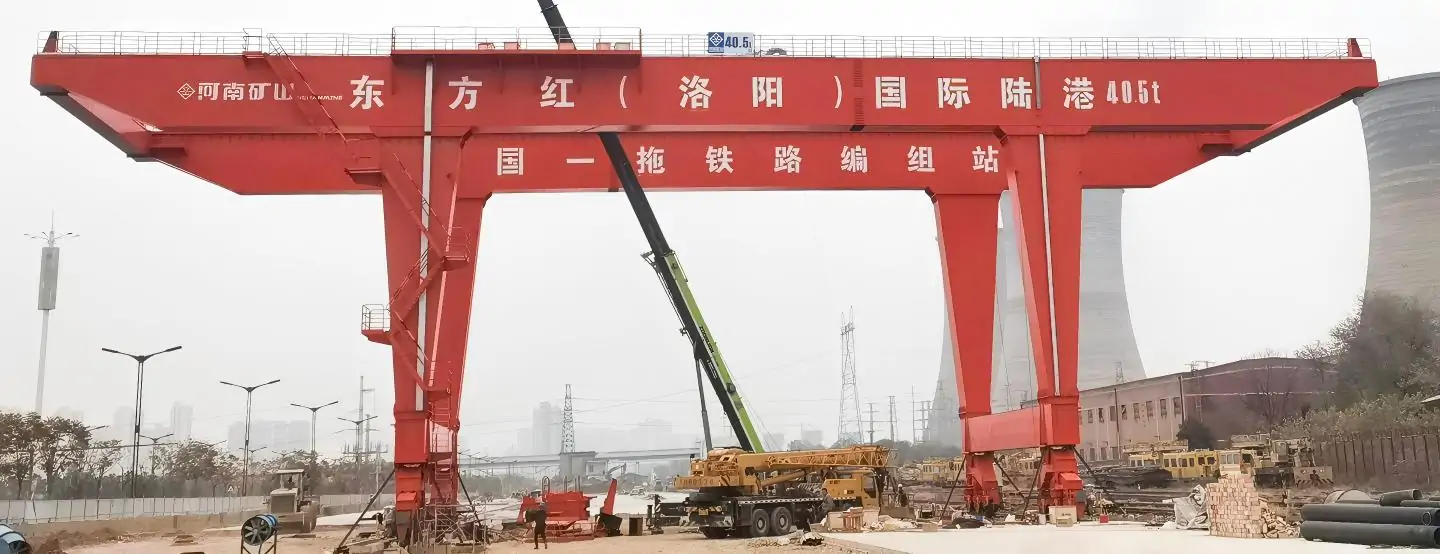
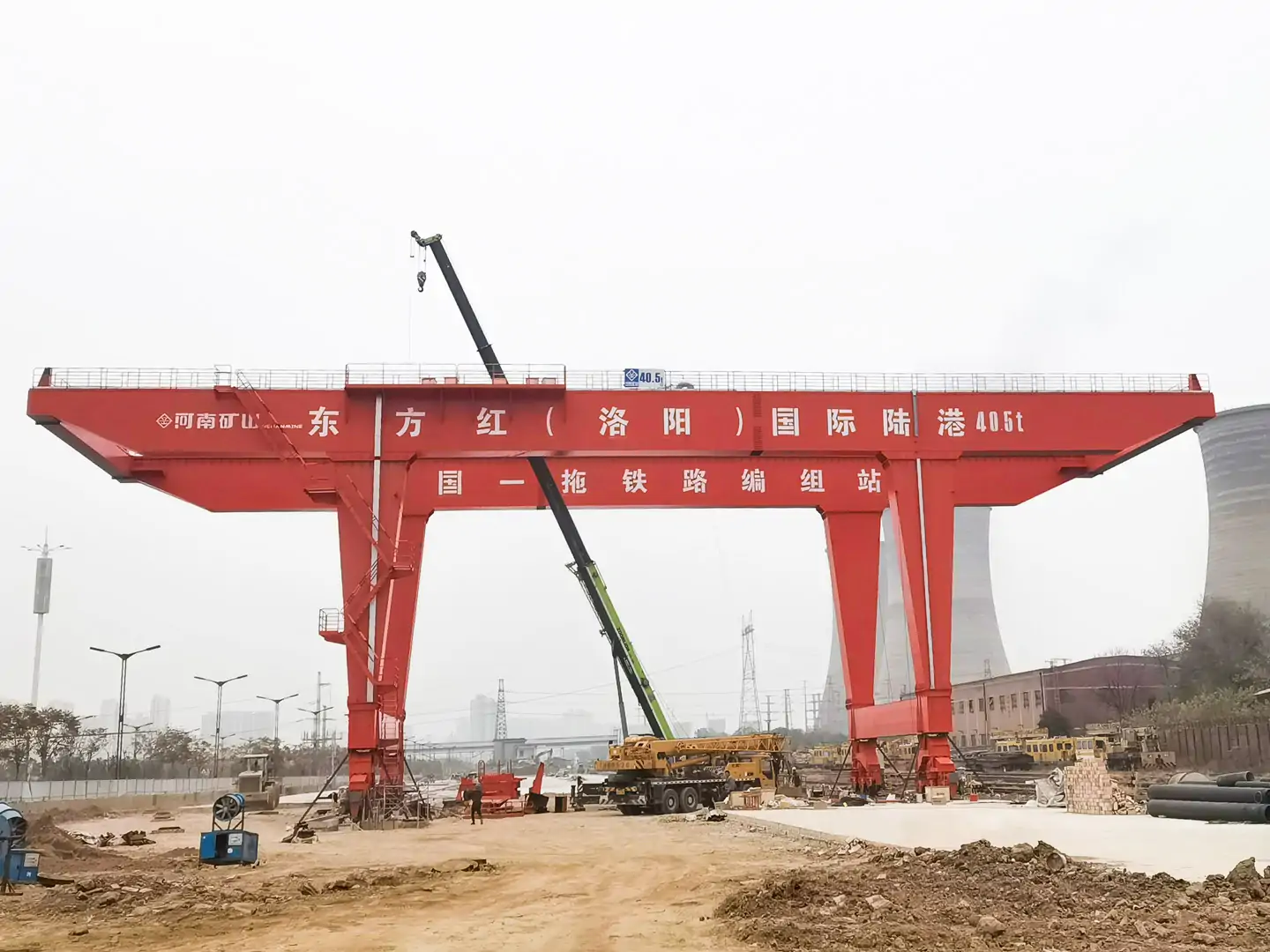
Container Yard Application: 40.5 t RMG Configuration
For an inland-port operating concept, Henan Mine Crane presents a 40.5 t rail-mounted container gantry crane application. Its planning emphasis is rail-served container handling, stack access and integration of the crane with the inland terminal’s traffic flow.
This published application illustrates a proposed configuration; it does not establish a specific delivered terminal, accepted performance figure or operating record. Project-specific evidence, drawings, inspection records and reference availability can be addressed during technical qualification.
Manufacturing, Inspection and Project Handover
Henan Mine Crane designs the crane structure and operating systems to the agreed load case, environmental criteria and project specification. Procurement documentation can define general arrangement drawings, principal component schedule, electrical requirements, inspection and test plan, coating specification, manuals and spare-parts list.
The contract should identify the applicable standards and inspection responsibilities before manufacture. Factory inspection, pre-shipment checks, site assembly, commissioning tests, operator training and acceptance records are specified according to the agreed supply and service scope. Regulatory approvals and independent inspection requirements vary by destination and should be identified in the inquiry.
Installation planning must cover access for oversized components, lifting equipment for erection, rail or pavement readiness, site power, commissioning resources and handover responsibilities. These items materially affect schedule and landed cost.
Container Gantry Crane Price and Project Cost
Container gantry cranes are engineered capital equipment, and a public unit price cannot represent a complete terminal project. RMG and RTG quotations are not directly comparable until rated load, span, lift height, duty, spreader, controls, power supply and site service scope are aligned. Automation and electrification can substantially change both the initial investment and the operating-cost model.
Equipment Supply
Crane structure, drives, electrical cabinets, spreader, controls, safety provisions, factory inspection and specified spares.
Terminal Infrastructure
Rails and foundations or yard pavement, electrical distribution, cable systems, communications and operating-area preparation.
Delivery and Commissioning
Packing, inland and ocean freight, duties where applicable, site assembly, tests, training and post-handover support.
A comparable quotation states the Incoterm, included equipment, exclusions, currency, payment basis, warranty terms and site-service responsibilities. Submit the terminal layout and technical duty schedule for a project-specific commercial offer.
Information Required for a Technical Proposal
A complete inquiry includes the terminal or rail-yard plan; container sizes and maximum gross mass; required load under spreader; target rows, tiers and handling lane; planned peak moves and shifts; RMG or RTG preference; available voltage and power concept; site wind and environmental data; civil status; desired controls and yard-system interface; destination port; and the requested delivery, installation and commissioning scope.
Where the terminal layout is still being developed, concept drawings and throughput targets permit a preliminary configuration. The final equipment design and commercial offer follow confirmation of the operating envelope and interface responsibilities.
Frequently Asked Questions
What is a container gantry crane used for?
It lifts and stacks containers in terminal, depot and intermodal yard operating blocks.
What is the difference between RMG and RTG?
An RMG follows a fixed rail route; an RTG runs on tyres over a prepared yard surface.
Is an RMG suitable for rail intermodal terminals?
Yes, where the crane’s rail-served envelope, wagon access and yard traffic plan are coordinated.
Can an RTG move between yard blocks?
Block-to-block movement depends on the crane’s steering configuration, pavement, turning geometry and power connections.
How is container crane lifting capacity defined?
Specify the permitted container load under the spreader and account separately for spreader and attachment masses.
Can the crane handle 20 ft and 40 ft containers?
A suitably specified telescopic spreader can handle both; 45 ft, twin-lift and special containers require confirmation.
How many container tiers can it stack?
The number depends on lifting height, container height, spreader headroom and travel clearance.
Is an electric RTG available?
Electrified RTG concepts can be evaluated where yard layout and electrical infrastructure support the selected supply arrangement.
Does the price include rails and installation?
Only when expressly included. Civil works, freight, site assembly and commissioning must be identified in the quotation.
What determines the delivery schedule?
Engineering approval, component selection, manufacturing scope, inspection, shipment and site readiness establish the project schedule.
Related Container and Port Equipment
Rail-Mounted Gantry Crane (RMG)
Fixed-track stacking for container yards and intermodal facilities.
Rubber-Tyred Gantry Crane (RTG)
Mobile tyre-mounted container stacking across designed yard blocks.
Container Straddle Carrier
Alternative equipment for container transfer and yard stacking.
Ship-to-Shore Crane (STS)
Quayside vessel handling upstream of container yard operations.
Portal Harbor Crane
Berth-side equipment for multipurpose cargo handling.
Port Crane Product Range
Explore the full terminal and cargo-handling equipment portfolio.
Terminal Equipment Proposal
Request a Container Gantry Crane Quote
Provide the yard layout, maximum container mass, stack rows and tiers, target handling volume, preferred RMG or RTG arrangement, power information and installation destination. Henan Mine Crane will develop a technical configuration and clearly scoped commercial proposal.