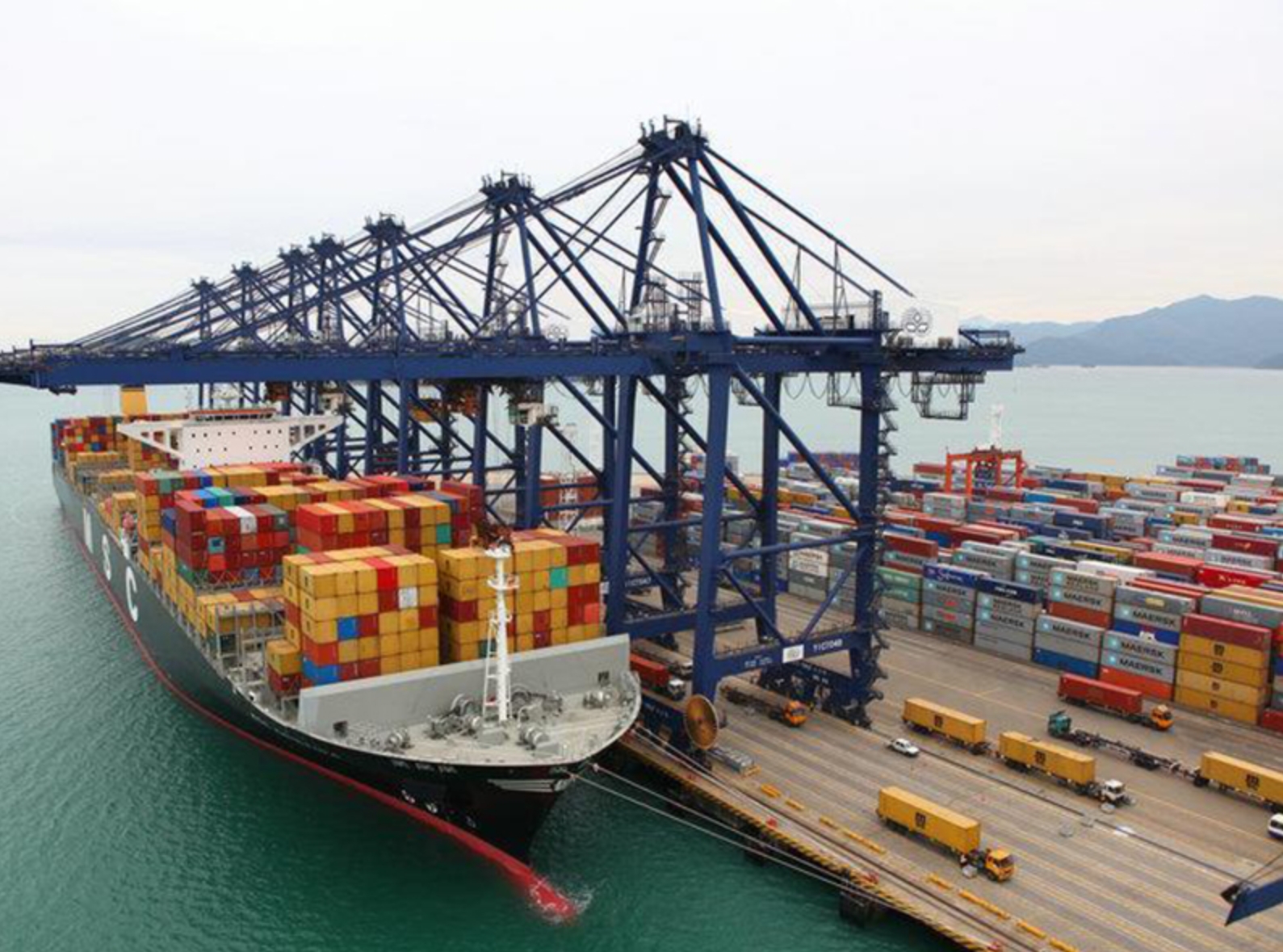
Henan Mine Crane · Berth, Container Yard and Intermodal Handling Systems
Container Terminal Crane Systems
Engineered STS, RTG, RMG, straddle-carrier and container-handling crane systems for marine terminals, inland ports, rail terminals and logistics hubs.
Henan Mine Crane configures each terminal equipment package around vessel profile, berth geometry, annual throughput, yard density, container flow, spreader duty, wind and corrosion exposure, terminal operating system interfaces, electrification strategy and contracted acceptance targets.
TERMINAL ZONES
Berth, Yard, Gate and Rail Interface
CORE CRANES
STS, RTG, RMG and Straddle Carrier
CONTAINER DUTY
20 ft, 40 ft and 45 ft Containers
SYSTEM PRIORITY
Balanced Berth and Yard Throughput
What Is a Container Terminal Crane?
A container terminal crane is a purpose-built crane or coordinated crane system used to transfer ISO containers between vessels, terminal transport, storage blocks, road vehicles and rail wagons. The term can refer to a ship-to-shore crane at the quay, a rubber-tyred or rail-mounted yard crane, a straddle carrier, or a specialized intermodal crane.
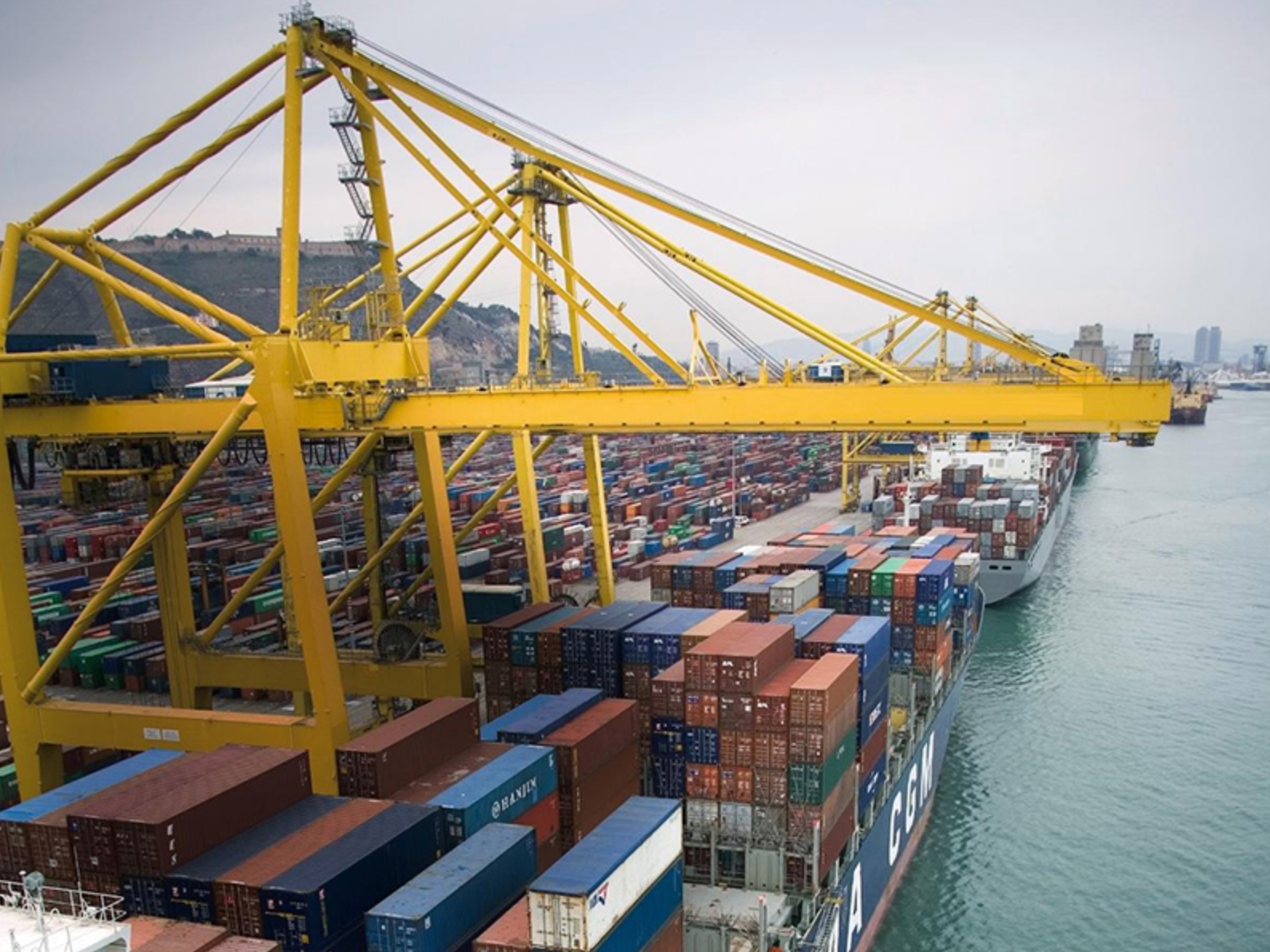
These machines do not perform the same job. An STS crane establishes the vessel interface. RTG and RMG cranes create yard density and serve trucks or transfer vehicles. Straddle carriers combine transport with stacking. Rail-terminal cranes span train tracks, storage lanes and truck lanes. Equipment selection therefore starts with the complete container flow rather than one isolated lifting capacity.
Henan Mine Crane supplies ship-to-shore cranes, rubber-tyred gantry cranes, rail-mounted gantry cranes and container straddle carriers for new terminals, expansions and fleet replacement projects.
Container Flow from Vessel to Gate or Rail
A productive terminal matches the capacity of every transfer stage. Excess STS capacity cannot improve vessel turnaround when horizontal transport or yard blocks are congested. A dense RMG yard cannot reach design throughput when truck exchange positions, rail slots or gate appointments restrict the flow.
The equipment schedule is developed from vessel calls, peak exchange volume, import and export dwell time, transshipment share, reefer demand, empty-container handling, rail share and planned operating hours.
1. Vessel Interface
STS cranes transfer containers between vessel cells and the quay apron according to ship geometry and stow plan.
2. Horizontal Transport
Terminal tractors, shuttle carriers, AGVs or straddle carriers connect the quay with assigned yard blocks.
3. Yard Stacking
RTG or RMG cranes stack containers by service, destination, dwell profile and retrieval sequence.
4. Landside Exchange
Truck lanes, rail tracks and inland-transfer positions complete the handover to road or rail transport.
Container Terminal Crane Selection Considerations
Vessel and Berth Profile
Maximum vessel beam, container rows, hatch-cover arrangement, air draft, tidal range, rail gauge, wharf elevation and allowable quay loads establish the STS envelope.
Throughput and Peak Demand
Annual TEU, peak vessel exchange, operating windows, target berth productivity and acceptable queue time determine fleet size and redundancy.
Yard Layout and Density
Block length, lane count, stacking height, reefer rows, hazardous-container areas, empty stacks and truck or rail interfaces shape the yard-crane configuration.
Container and Spreader Duty
20 ft, 40 ft and 45 ft containers, single-lift, twin-lift, tandem duty, out-of-gauge loads and hatch covers define rated load and attachment functions.
Power and Automation
Grid capacity, cable route, busbar, battery or hybrid strategy, remote operation, OCR, positioning and terminal operating system interfaces are defined early.
Marine Environment
Operating and out-of-service wind, salt spray, humidity, rainfall, temperature, lightning, seismic criteria and storm securing affect structure and protection.
Container Terminal Crane Configurations Compared
| Configuration | Terminal Position | Operational Strength | Main Engineering Check |
|---|---|---|---|
| Ship-to-Shore Crane | Quayside berth | Direct vessel loading and discharge with high hoist and trolley speeds | Outreach, backreach, lift height, waterside clearance and wharf reactions |
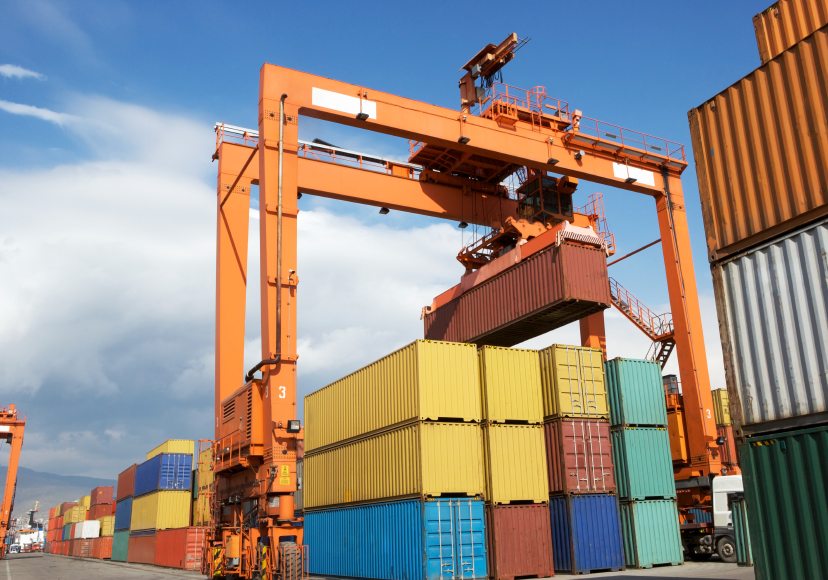
| Rubber-Tyred Gantry Crane | Flexible yard blocks | Block-to-block mobility and phased yard expansion without fixed rails | Pavement loads, steering, travel routes, power source and block-change frequency |
| Rail-Mounted Gantry Crane | High-density yard or rail terminal | Stable rail path, wide spans and strong automation potential | Rail civil works, block commitment, crane interference and transfer zones |
| Container Straddle Carrier | Quay-to-yard transport and stacking | Combines horizontal transport, lifting and stacking in one mobile unit | Traffic control, lane width, pavement, visibility and fleet dispatch |
| Container Overhead Crane | Inland depot, covered transfer or fixed logistics bay | Dedicated fixed-area handling with clear ground routes | Building runway, hook approach, spreader clearance and truck lane |
| Portal Harbor Crane | Multipurpose berth | Flexible handling of containers, project cargo and general cargo | Working radius, lifting curve, berth rail, cargo mix and attachment changes |
Published Container Terminal Crane Ranges
The following ranges are published by Henan Mine Crane for its terminal product platforms. They establish available equipment boundaries, not a preselected terminal specification. Final dimensions and ratings follow the agreed operational model and site data.
Rated capacity is confirmed under the spreader or hook as stated in the project specification. Container weight, spreader deadweight, eccentric loading, wind and dynamic effects are included in the design load cases.
| Crane Platform | Published Capacity | Published Geometry | Published Duty Data |
|---|---|---|---|
| STS Crane | 40–65 t; 80–120 t or customized | Outreach 40–72 m; lift above rail 25–45 m; below rail 15–30 m | A8; hoist 60–150 m/min; trolley 120–240 m/min |
| RMG Crane | 35 t, 40.5 t, 50 t or customized | Span 18–35 m; lift 12.3–21 m | A6–A8; hoist 0–20 m/min; published temperature −25°C to +40°C |
| RTG Crane | 35 t, 40.5 t, 50 t or customized | Span 8–35 m; lift 6–21 m | A6–A8; published temperature −25°C to +40°C |
| Container Straddle Carrier | 30–50 t or customized | Lift 9–18 m; stacking up to 1 over 6 in the published range | A7–A8; unladen travel up to 25 km/h; laden up to 15 km/h |
Terminal Capacity and Fleet Sizing
Crane quantity follows the peak operating scenario, not annual volume alone. The design model covers vessel arrival pattern, simultaneous berths, exchange size, gross crane rate target, planned maintenance, yard occupancy, rehandles, horizontal transport cycle, truck appointments and rail windows.
Berth Crane Demand
Required STS working positions, safe crane spacing, boom profile, hatch access, ship bay sequence and maintenance reserve establish the berth fleet.
Yard Block Demand
Stack height, lane count, dwell time, rehandle strategy, exchange positions and block occupancy establish RTG or RMG quantity.
Transfer Fleet Demand
Distance, route conflicts, charging or fueling, interchange time and dispatch logic determine tractor, AGV, shuttle or straddle-carrier fleet size.
Maintenance Reserve
Planned inspections, rope and spreader service, wheel or tyre work, storm securing and corrective maintenance are reflected in available fleet calculations.
Future Expansion
Reserved rail length, electrical capacity, data network, block extension, additional exchange lanes and larger vessel calls support staged investment.
Performance Acceptance
Contract targets state test conditions, container mix, route, operator mode, weather limit, availability basis and exclusions.
RTG vs. RMG for Container Yard Operations
RTG cranes suit terminals that value flexible block assignment, incremental expansion and the ability to relocate cranes. RMG cranes suit fixed, high-density blocks, rail terminals and automation programs where a stable travel path and grid power justify the rail infrastructure.
The comparison includes pavement or rail civil works, electrical distribution, fleet dispatch, block-change losses, tyres or rail systems, energy use, maintenance access, automation scope and expected service life. Additional technical and lifecycle factors are covered in the RMG vs. RTG cost analysis.
| Decision Factor | RTG | RMG |
|---|---|---|
| Mobility | Can change blocks through approved terminal routes | Committed to a fixed rail path |
| Civil Works | Heavy-duty pavement and wheel paths | Rails, foundations, alignment and power route |
| Power Options | Diesel-electric, hybrid, battery or cable-fed electric | Normally grid-electric through cable reel or conductor system |
| Automation Path | Available with steering, positioning and automated operation | Fixed geometry supports repeatable automated movement |
| Planning Priority | Flexibility, phased growth and shared crane fleet | Density, electrification, rail service and long-term block stability |
Container Spreaders, Load Control and Motion Quality
The spreader is part of the lifting system and acceptance scope. Container sizes, gross mass, eccentric loading, twin-lift duty, twistlock confirmation, telescoping time, flippers, skew and trim functions, cable management and diagnostic interface are specified with the crane.
Single and Twin Lift
Rated load and hoist arrangement reflect single 20/40/45 ft containers, twin 20 ft containers or a project-specific tandem configuration.
Anti-Sway and Positioning
Mechanical rope geometry, drive control, encoders and position references can reduce residual sway and support accurate ship, stack, truck or rail placement.
Load and Twistlock Status
Load measurement, landed confirmation, all-corners lock status and interlocks prevent lifting before the required engagement sequence is complete.
Skew, Trim and List
Controlled adjustment aligns containers with vessel cells, chassis, rail wagons and stacks where the working geometry requires compensation.
Terminal Automation, Remote Operation and TOS Integration
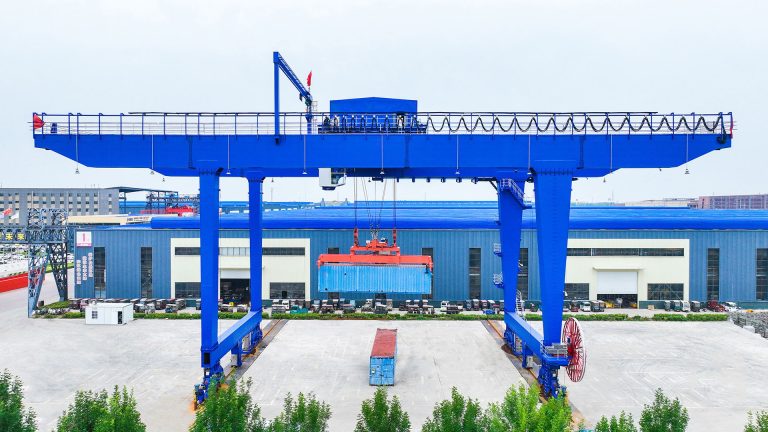
Automation can be introduced in stages: operator assistance, auto-steering, anti-sway, stack profiling, target positioning, remote operation, automated truck handling and fully automated yard cycles. Each stage requires an interface matrix between the crane controls, equipment control system, terminal operating system, OCR, vehicle management and safety systems.
The functional specification states task messages, container identity, target coordinates, permission states, data ownership, network availability, clock synchronization, alarm handling, degraded modes and manual recovery. Cybersecurity architecture covers access control, network segmentation, remote service and software change management.
Acceptance includes normal cycles, exception cases, lost communication, sensor disagreement, emergency stops, obstacle detection, controlled restart and traceable event records.
Electrification and Lifecycle Cost
Grid-Electric RMG and STS
Substations, peak and regenerated power, harmonics, cable reels, conductor systems, emergency supply and energy metering are coordinated with the terminal grid.
RTG Power Options
Diesel-electric, hybrid, battery and cable-fed configurations are compared by block-change duty, grid availability, charging, fuel, maintenance and emissions targets.
Total Cost of Ownership
Civil works, equipment, energy, tyres or rails, ropes, brakes, spreaders, labor, software, planned downtime, spares and modernization are evaluated over the intended service life.
Marine Environment, Wind Limits and Storm Securing
Terminal cranes operate in wind, salt-laden air, rain, heat, cold and intensive ultraviolet exposure. The corrosion category, coating system, sealed and ventilated enclosures, stainless hardware, cable protection, drainage, dehumidification and inspection intervals are specified for the site.
Operating wind, restricted-operation wind and out-of-service design wind are separate values. The storm plan identifies anemometer alarms, boom position, rail clamps, wheel brakes, storm pins, tie-downs, anchors, travel to securing points, backup power and authorized personnel.
Wharf and yard drainage, lightning protection, seismic actions, settlement, rail alignment and pavement condition remain part of lifecycle inspection. Crane wind devices do not replace the terminal storm procedure.
Safety, Standards and Acceptance Testing
The purchase specification identifies the destination regulations and selected design framework. Common references can include ISO 4301-1 for classification, ISO 8686 for load actions, ISO 12488 for crane and rail tolerances, ISO 4302 for wind-load assessment, EN 13001 for crane design, IEC 60204-32 for electrical equipment and ISO container standards for dimensions and corner interfaces. Contract requirements govern the final compliance route.
Protective Functions
Overload, overtravel, boom and trolley limits, anti-collision, gantry skew protection, emergency stop, storm alarms, restricted zones and safe isolation.
Factory Acceptance Test
Document review, drives, brakes, controls, spreader logic, alarms, interfaces, simulated faults, load testing and contracted performance functions.
Site Acceptance Test
Rails or pavement, power, rated and proof loads, spreader engagement, clearances, wind devices, interfaces, operating cycles and emergency recovery.
Operational Acceptance
Representative containers, vessel or yard positions, truck or rail exchange, TOS messages, automation exceptions and agreed productivity conditions.
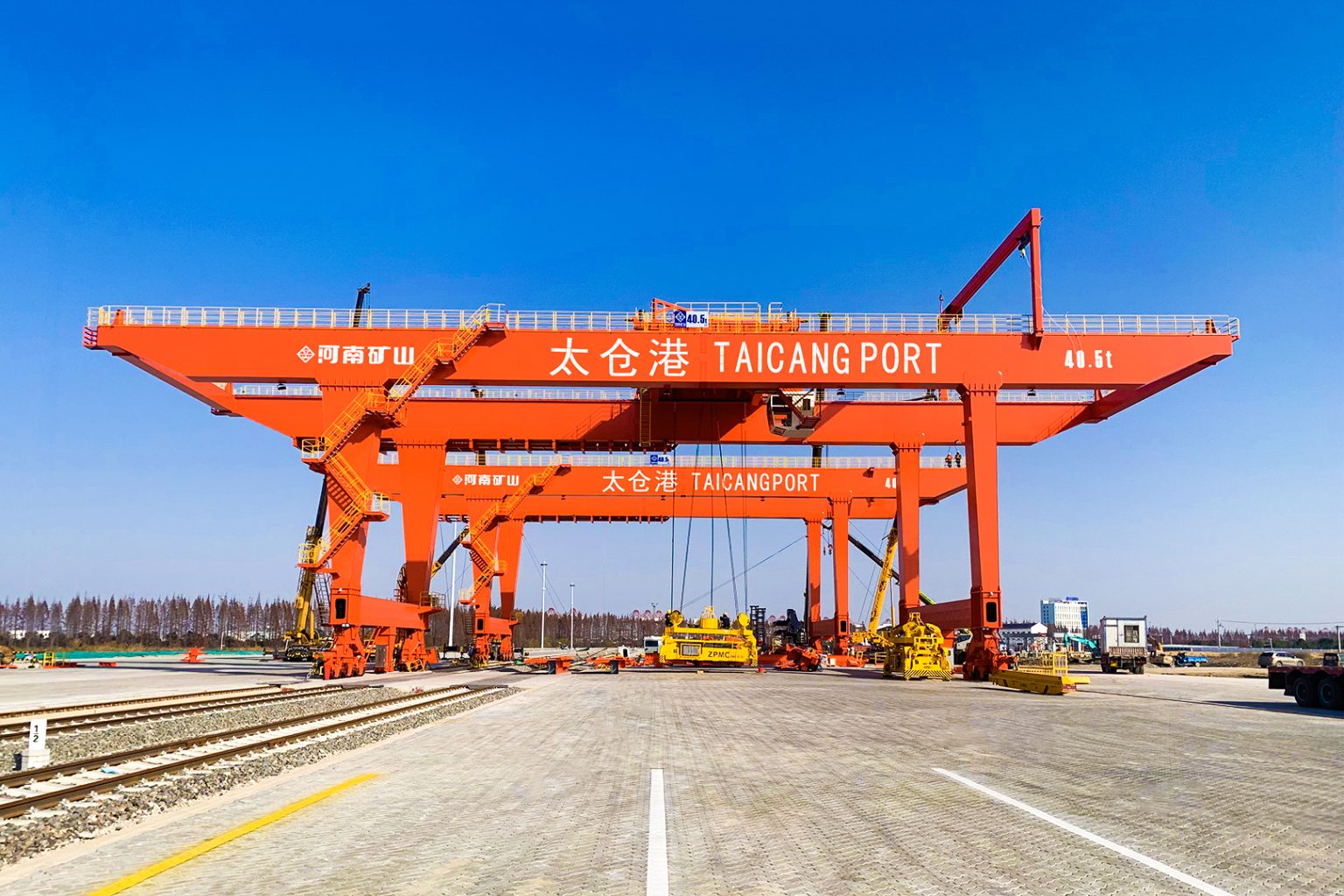
Published 40.5 t RMG Container Terminal Project
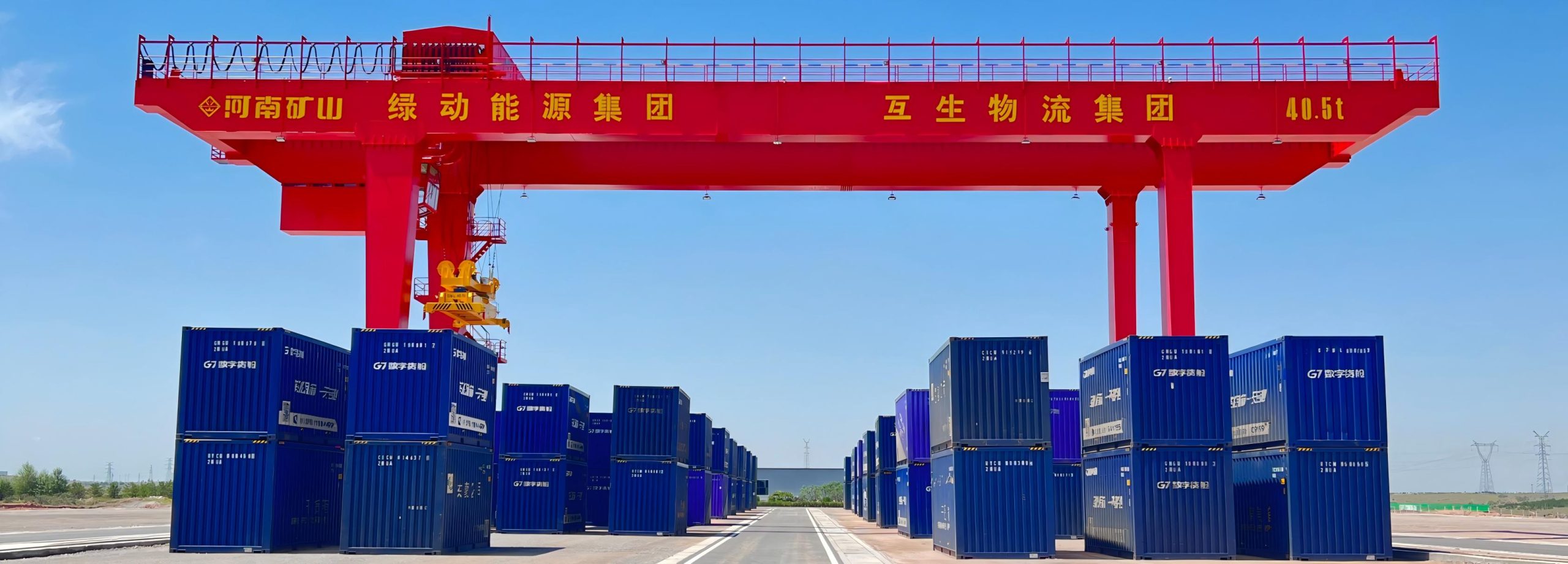
Taicang Port International Hub
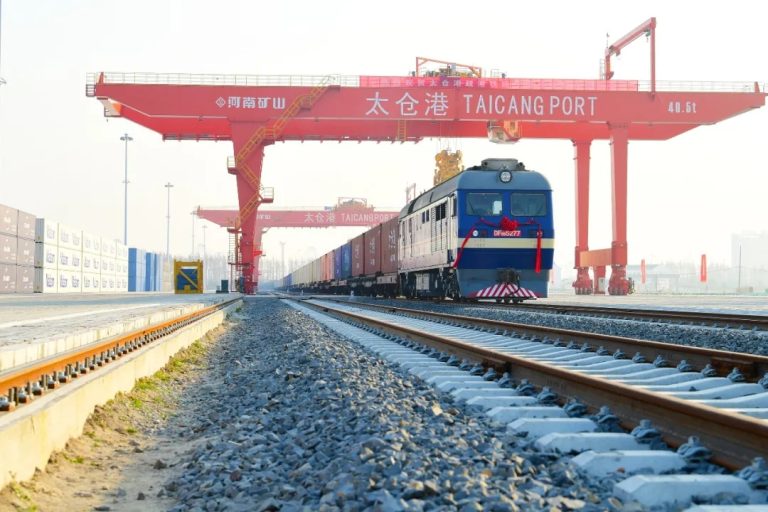
Henan Mine Crane published a 40.5 t rail-mounted container gantry crane project for Taicang Port. The crane serves container-yard handling and was configured for integration with the terminal’s logistics-management platform.
Published functions include variable-frequency motion control, remote equipment monitoring, container-seeking assistance, lifting-device guidance and a changeable lifting-device concept for containers and other approved cargo forms.
This case represents the yard-handling stage of a container terminal. STS berth equipment, horizontal transport, civil works and terminal interfaces remain separate project scopes unless expressly included in the contract.
Container Terminal Crane Price and Project Budget
Public prices reviewed in 2026 show why a container terminal crane cannot be budgeted from a generic gantry-crane listing. Equipment type, outreach, stacking geometry, automation, spreader, marine protection, civil works, electrical infrastructure, freight, erection and acceptance create materially different supply boundaries.
| Public Reference | Published Value | Supply Level | Commercial Boundary |
|---|---|---|---|
| New RTG, Public Ex-Stock Listing, 2026 | US$995,000 per unit | Specific factory-built RTG configuration | A listed unit price; freight, duties, site works, commissioning and terminal integration require confirmation |
| Port Houston, 8 Electric STS Cranes, 2024 | More than US$113 million total | Major public multi-crane order | Portfolio-level average exceeds US$14.1 million per crane; exact unit and support allocation is not public |
| Virginia Port Authority, Up to 3 CRMGs, 2021 | Contract cap US$17.97 million | Cantilever RMG cranes plus related equipment and systems | If all three are supplied, the cap equals up to US$5.99 million per crane-package equivalent before separating system scope |
| Virginia Central Rail Yard, 2024 | US$40 million in federal and state grants | Two rail bundles and three electric CRMGs | Combined infrastructure and equipment reference, not a crane-only price |
| Henan Mine Crane RTG, RMG or STS | Project-specific RFQ | Configured crane and agreed auxiliary package | Price follows duty, geometry, spreader, controls, destination, Incoterm and service scope |
| Automated Terminal Crane System | Project-specific RFQ | Crane fleet, automation, interfaces and site systems | Requires an operating concept, interface matrix, civil and electrical boundaries, cybersecurity plan and acceptance schedule |
Main Cost Drivers
Capacity, outreach, span, lift height, backreach, cantilever, stacking rows and duty class.
Single or twin lift, skew and trim, anti-sway, positioning, remote operation and diagnostics.
Wharf strengthening, rails, pavement, substations, cables, communications and storm anchors.
Ocean transport, erection, commissioning, load tests, system integration, training, spares and warranty.
Engineering and Procurement Deliverables
Design Basis
Terminal flow, throughput, container mix, duty, environment, standards, operating modes, automation level and exclusions.
General Arrangement
Crane envelope, rails or wheel paths, outreach, lift heights, clearances, maintenance access, parking and storm positions.
Civil and Electrical Loads
Wheel loads, rail forces, storm loads, tie-down reactions, pavement loads, connected power, peaks, regeneration and earthing.
Interface Control Document
TOS, equipment control, OCR, network, power, civil works, spreader, transfer vehicles and safety-system responsibilities.
Inspection and Test Plan
Material records, manufacturing checks, load tests, spreader and control tests, interface simulation, site tests and hold points.
Commercial Schedule
Price, Incoterm, milestones, freight, erection, commissioning, acceptance, documentation, training, spares, warranty and exclusions.
Container Terminal Crane RFQ Data
| RFQ Item | Information Required | Engineering Use |
|---|---|---|
| Terminal Operation | Annual and peak TEU, vessel calls, rail share, dwell time, operating hours and target productivity | Equipment type, fleet quantity, duty and reserve |
| Containers and Loads | 20/40/45 ft mix, maximum gross mass, twin lift, out-of-gauge and hatch-cover duty | Capacity, spreader and load cases |
| Berth or Yard Geometry | Vessel profile, wharf section, rails, blocks, lanes, stack height, truck and rail interfaces | Outreach, span, lift, clearance and travel envelope |
| Civil Interface | Allowable wheel or pavement loads, rail gauge, foundation data, settlement and storm anchors | Crane structure, wheel arrangement and securing system |
| Power and Controls | Voltage, frequency, grid capacity, power-delivery method, operator mode and automation functions | Drive, electrical, energy and control architecture |
| Site Environment | Wind, temperature, humidity, salt spray, rain, lightning, seismic and corrosion requirements | Design loads, coatings, enclosures and storm system |
| Commercial Boundary | Destination, code, Incoterm, installation, commissioning, testing, training, spares and warranty | Comparable technical and commercial quotation |
A preliminary concept can be prepared from the terminal layout, throughput target, vessel or yard geometry and maximum container duty. A firm quotation requires verified civil interfaces, environmental data, automation boundaries, destination requirements and acceptance criteria.
Container Terminal Crane FAQ
Is a container terminal crane the same as an STS crane?
Not always. STS refers specifically to the quayside vessel crane. Container terminal crane is a broader term that can include STS, RTG, RMG, straddle carriers and intermodal container cranes.
Which yard crane provides the highest flexibility?
RTG cranes can relocate between blocks and support phased layouts. RMG cranes remain on fixed rails but can provide wider spans, stable grid power and a strong automation platform.
How is STS outreach selected?
Outreach follows the maximum vessel beam, container rows, waterside rail position, fender line, lashing platform and required service margin. Future vessel classes should be included where berth expansion is planned.
Can existing terminal cranes be automated later?
Some cranes can receive positioning, anti-sway, remote-operation or automated functions after structural, electrical, control, sensor, network and safety assessments. Interface capacity and remaining design life affect feasibility.
What is included in a turnkey terminal crane quotation?
The contract can include crane equipment, spreader, electrification, automation, rails or selected civil interfaces, freight, erection, commissioning, testing, training and spares. Every included and excluded item should appear in the commercial schedule.
What determines delivery time?
Concept approval, detailed engineering, long-lead drives and spreaders, structural fabrication, controls, factory testing, ocean transport, civil readiness, erection method and site integration determine the project schedule.
Related Container Terminal Crane Products
Ship-to-Shore Crane
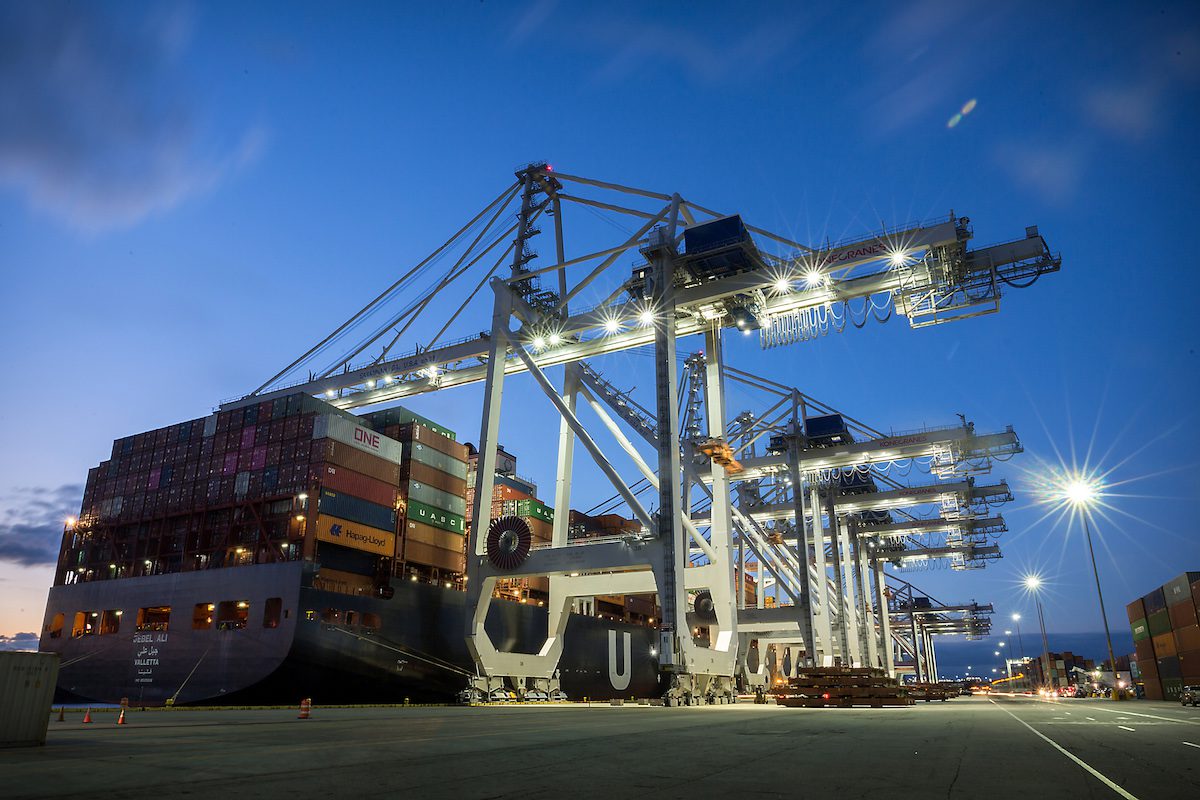
Quayside crane for container transfer between vessels and the terminal apron.
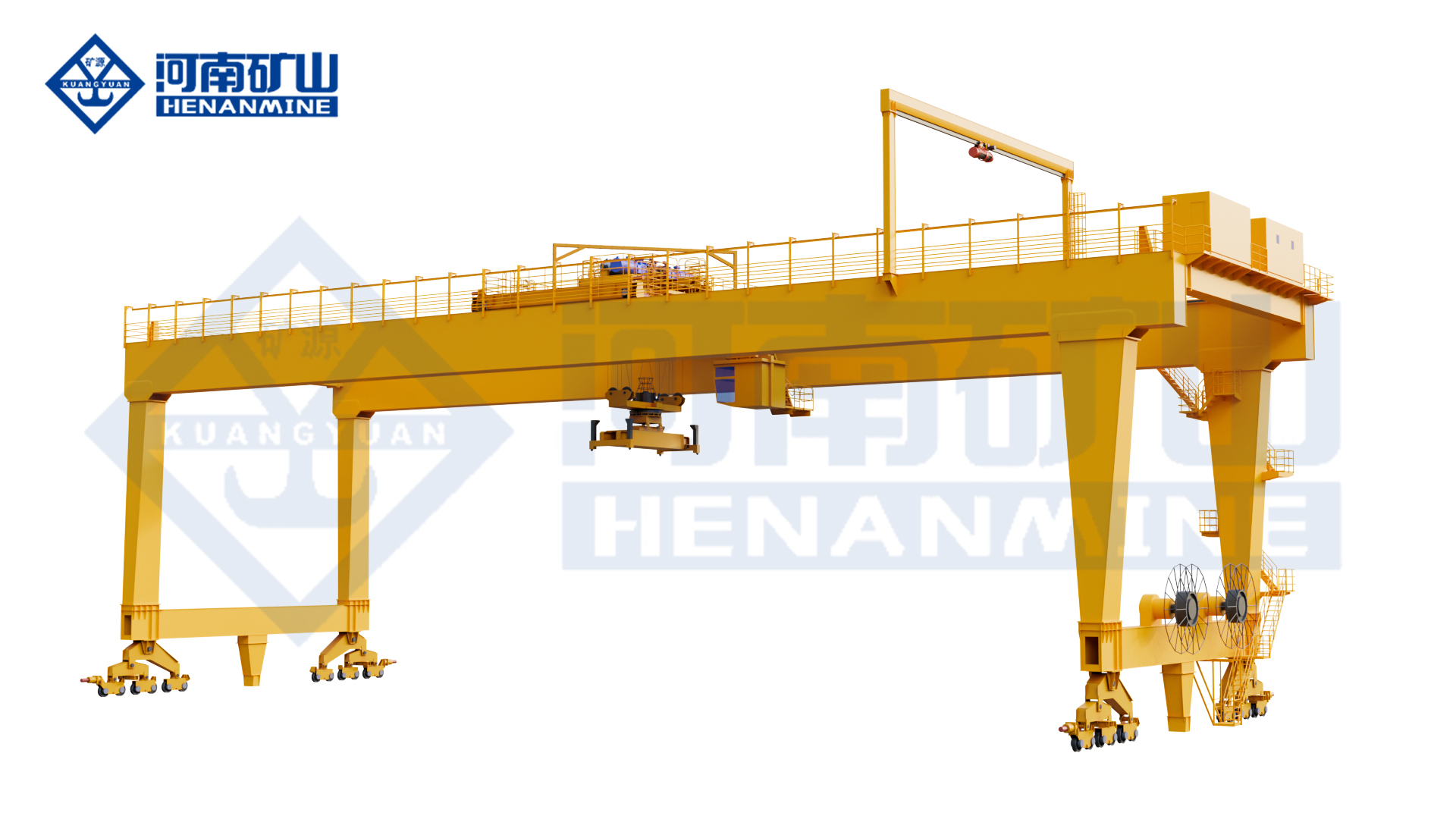
Rail-Mounted Gantry Crane
Electric yard or rail crane for high-density stacking and automated operations.
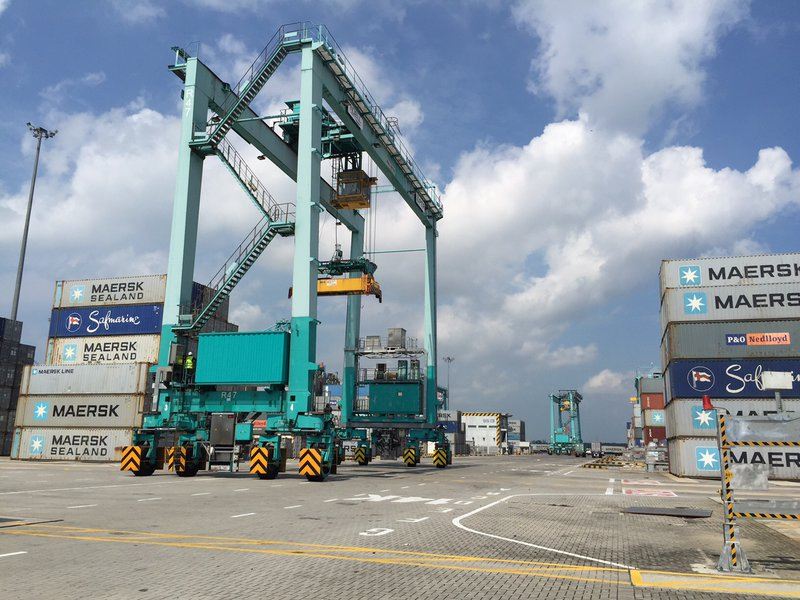
Rubber-Tyred Gantry Crane
Mobile yard crane for flexible block allocation and phased terminal development.

Container Straddle Carrier
Mobile equipment combining container transport, lifting and stacking functions.
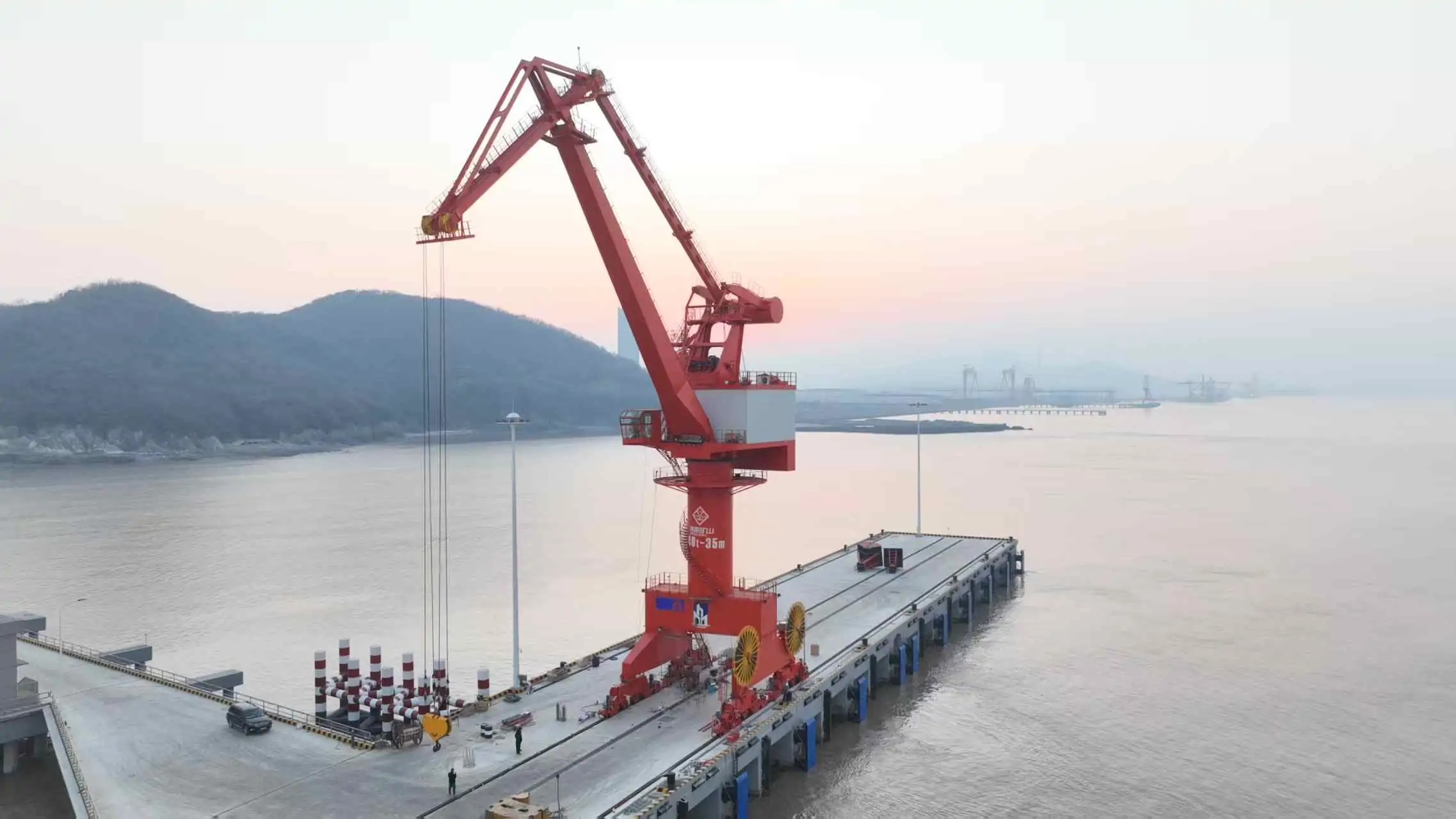
Portal Harbor Crane
Flexible berth crane for containers, general cargo and project cargo operations.
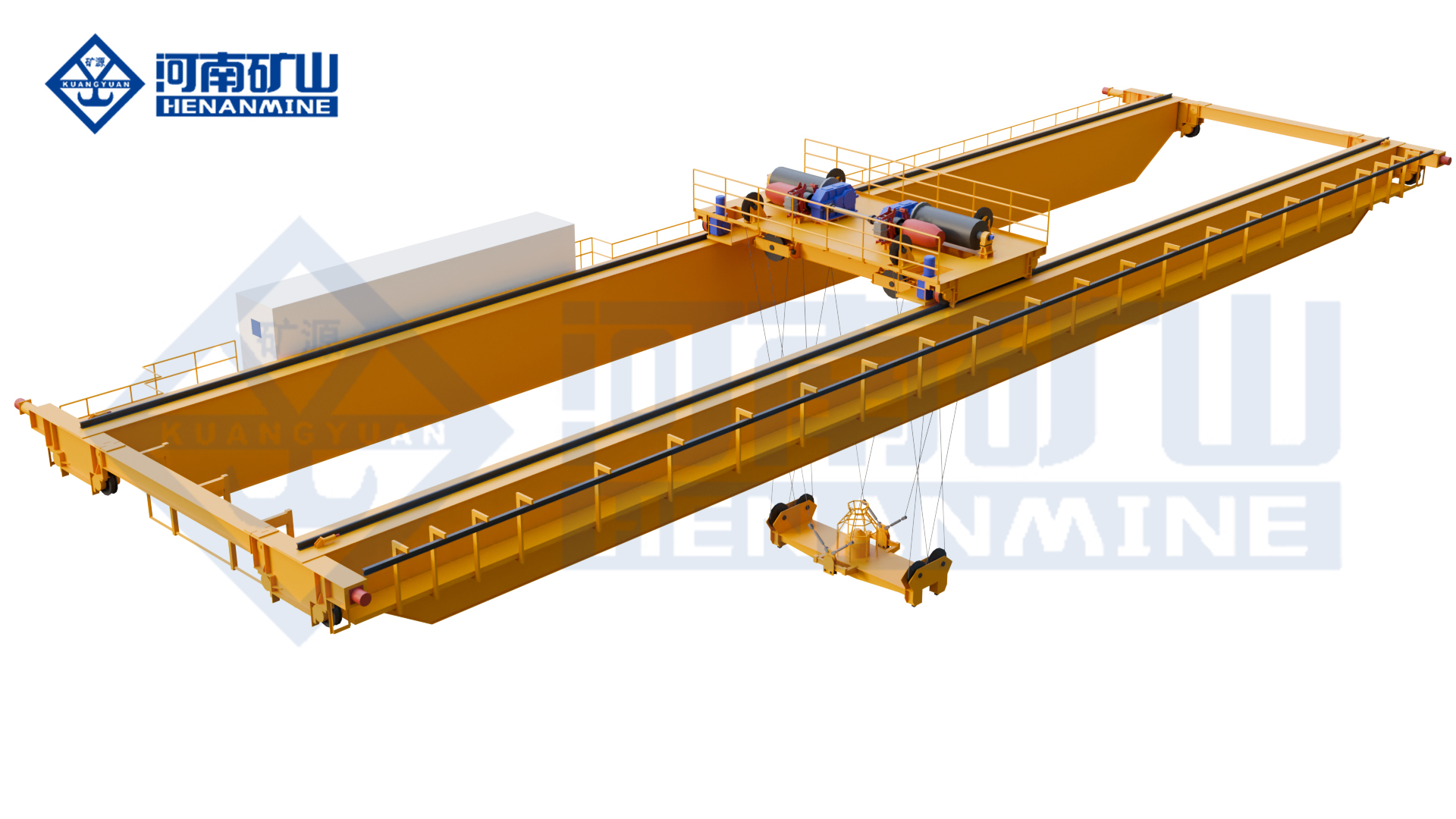
Container Overhead Crane
Fixed-area container handling for inland depots, logistics bays and covered facilities.
Technical review: Henan Mine Crane Engineering
Last reviewed: 2026
Request a Container Terminal Crane Quote
Submit the terminal layout, throughput target, vessel or yard geometry, container duty, site environment, power data, automation scope, destination and installation boundary for an engineered proposal.