
Henan Mine Crane · Aviation MRO and Aerospace Lifting Systems
Aircraft Maintenance Crane
Custom suspended, top-running and workstation crane systems for aircraft MRO hangars, airline maintenance bases, engine workshops, aerospace assembly facilities and component overhaul centers.
Henan Mine Crane engineers each system around the aircraft fleet, maintenance task, component mass and center of gravity, approved lifting points, hook path, hangar structure, tail and wing clearances, positioning requirement, operating duty and destination code.
Facilities
MRO hangars, engine shops, component overhaul and aerospace assembly
Typical loads
Engines, landing gear, APU, control surfaces, tooling and service equipment
Critical design data
Load path, center of gravity, hook coverage, headroom and roof reactions
Commercial basis
Defined crane, runway, lifting-device and site scope
Aircraft Hangar Cranes for Maintenance, Repair and Overhaul
An aircraft maintenance crane is an overhead lifting system configured for the controlled removal, transfer and installation of aircraft components inside a hangar or specialist workshop. It can support engine changes, landing-gear work, APU handling, nacelle and cowling removal, wing and tail-component service, tooling transfer and maintenance-platform positioning.
Aircraft are large, lightweight structures surrounded by work stands, docking systems, doors, lighting, ducts and service lines. The crane must deliver useful hook coverage without introducing unsafe clearances above the fuselage, wings or tail. Smooth acceleration, controlled low speed, reliable brakes, true vertical lifting and a task-specific below-the-hook device are normally more important than maximum travel speed.
The crane rating applies only to the defined load and lifting arrangement. A system intended for engines or maintenance equipment must not be used to lift an entire aircraft, fuselage or major airframe assembly unless that operation, load path, lifting points, synchronization method and supporting structure are separately engineered and approved.
Aircraft Maintenance Crane Configurations
01 · Multi-Point Single-Girder Suspension Crane
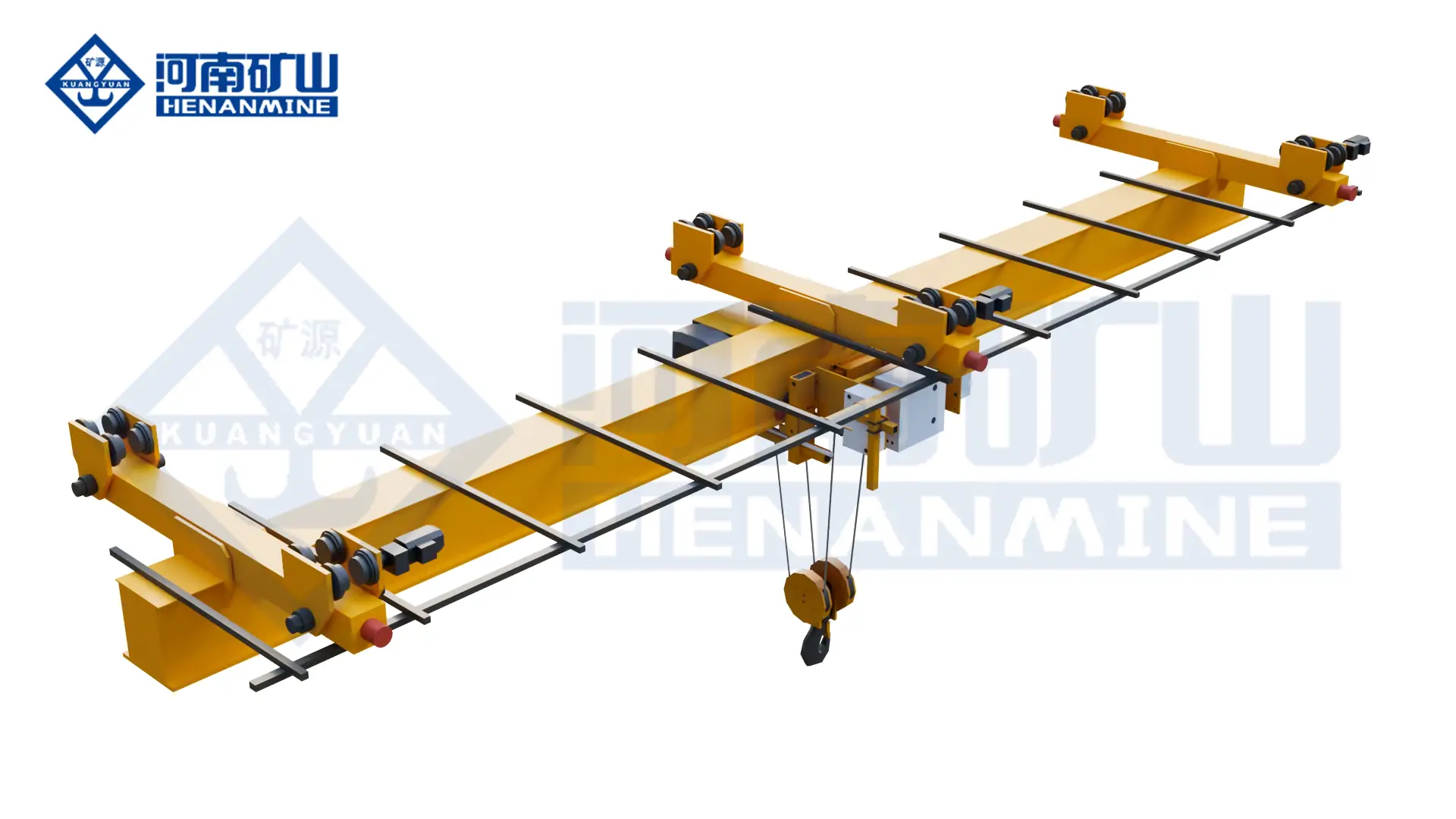
Multiple suspended runway lines distribute crane and lifted-load reactions across the roof structure. The system preserves an unobstructed hangar floor and can cover wide bays where a conventional two-runway arrangement would impose excessive beam depth or concentrated roof loads.
02 · Multi-Support Double-Girder Underhung Crane
A double-girder suspended structure increases capacity, rigidity and trolley options for large components or long spans. Synchronized drives control the multiple support points, while the underhung arrangement keeps columns and runway legs away from aircraft circulation and docking equipment.
03 · Top-Running Bridge Crane
A top-running single- or double-girder crane is suitable when the hangar has dedicated runway beams and sufficient headroom. It provides high capacity and wide hook coverage but requires careful coordination of columns, runway elevations, door pockets, roof trusses and aircraft tail clearance.
04 · Ceiling-Mounted Workstation Crane
A lightweight enclosed-track or modular workstation crane supports localized maintenance tasks, benches and small-component handling. It is appropriate for lighter loads and shorter spans where low manual effort, responsive movement and clear floor space are priorities.
05 · Portable or Motorized Gantry Crane
A floor-running portable gantry provides temporary or movable coverage for engine shops, helicopter maintenance and changing service zones. Wheel loads, floor flatness, steering, stability, clear travel routes and safe movement around the aircraft must be confirmed for every operating position.
06 · Synchronized Multi-Hoist Crane
Two or more hoists can support long, flexible or offset-center components when the complete lifting fixture and control system are engineered as one system. Load sharing, position feedback, skew limits, individual-hoist overloads and safe recovery are defined before tandem lifting is permitted.
Compare Aircraft Hangar Crane Systems
The preferred system follows the hangar structure and maintenance program. Large column-free bays frequently favor multi-point suspension cranes; existing heavy-duty runways favor top-running bridge cranes; localized light work favors workstation systems; and temporary or changing service zones may favor mobile gantries.
| Crane system | Suitable starting point | Primary advantage | Structural interface | Critical purchasing issue |
|---|---|---|---|---|
| Multi-point single girder | Wide hangars, moderate maintenance loads and clear-floor layouts | Distributes roof reactions over several suspended runways | Roof trusses, hangers, lateral restraint and multiple runway tolerances | Multi-drive synchronization and building-load verification |
| Multi-support double girder | Higher loads, long spans, dual hoists or specialized trolleys | Greater stiffness and capacity with unobstructed floor access | Distributed roof reactions and long-span deflection control | Equipment self-weight, trolley arrangement and roof reserve |
| Top-running bridge crane | Dedicated runway buildings and higher-capacity component work | Mature high-capacity platform with broad configuration options | Runway beams, columns, foundations and end approaches | Tail clearance, door geometry and concentrated wheel loads |
| Workstation crane | Localized light components, tooling and bench-service areas | Low moving mass and responsive manual or powered positioning | Ceiling suspension or freestanding support frame | Limited capacity, span and coverage compared with hangar-wide cranes |
| Portable gantry | Temporary maintenance, engine shops and changing work zones | Relocatable without a permanent overhead runway | Floor slab, travel surface, clear route and storage area | Stability, steering, floor loading and movement near aircraft |
Selection rule: choose the crane only after the aircraft envelope, maintenance stands, component routes, hangar door, roof or runway capacity and required hook coverage are placed on one coordinated layout. A structurally efficient crane that cannot reach the engine removal point or conflicts with the tail, docks or door is not a viable MRO solution.
Hangar Layout, Hook Coverage and Building Loads
The crane plan starts with the largest aircraft maintenance position, not the empty hangar. Aircraft nose, wing tips, horizontal stabilizer and tail height are overlaid with docking platforms, mobile stairs, engine stands, tooling, door leaves, light fittings, HVAC ducts, fire systems and maintenance access.
For a suspended system, hanger locations should align with verified roof nodes or purpose-designed secondary steel. Reactions are supplied for dead load, lifted load, travel, braking and lateral actions. The building engineer confirms truss capacity, deflection, connection design, runway straightness and construction tolerances before crane manufacture.
Hook approach at the runway ends and beside the walls can govern whether an engine stand or lifting fixture reaches its service point. Low-headroom hoists, raised runways, compact trolleys or cantilever coverage can be evaluated, but adequate upper clearance and maintenance access must remain.
Where two aircraft positions share one crane, operating zones, anti-collision limits and work permits prevent the crane from entering an occupied or protected maintenance area. If cranes transfer a load between bays, the rail alignment, hoist compatibility, interlocks and transfer procedure are engineered as a complete system.
Aircraft Maintenance Task and Lifting-Device Matrix
| Maintenance load | Preferred starting arrangement | Information requiring confirmation | Engineering implication |
|---|---|---|---|
| Aircraft engine and nacelle module | Precision bridge or suspended crane with approved engine fixture | Engine type, dry or service mass, center of gravity, stand height and removal path | Creep speed, true vertical lift, controlled acceleration and fixture interface |
| Landing gear assembly | Overhead crane or mobile gantry with task-specific beam or fixture | Gear mass, attitude, hydraulic condition, lifting points and installation angle | Rotation control, headroom, side-load prevention and precise final positioning |
| APU, avionics and service modules | Workstation crane, light suspended crane or articulated lifting device | Load range, access opening, service cart, reach and component fragility | Low moving mass, fine control, compact hook block and localized coverage |
| Wing, flap, slat or control surface | Dual-hoist crane or engineered lifting beam where required by the component procedure | Length, mass, flexibility, lifting points, allowable distortion and orientation | Load sharing, synchronized motion, spreader stiffness and tag-line strategy |
| Maintenance platform and tooling | General overhead crane with approved lifting points and rigging | Maximum unit mass, dimensions, storage position and movement frequency | Hook coverage, collision control, floor work zones and standardized rigging |
| Painting or fuel-related maintenance area | Hazardous-area crane only when the area classification requires it | Zone or division, gas group, temperature class, ventilation and coating environment | Certified electrical equipment, anti-static measures, coating and agreed compliance documentation |
Technical Specification Framework
An aircraft maintenance crane specification should identify the maintenance load, approved lifting device, complete movement path and facility interfaces. Capacity, span and lifting height remain essential, but safe component control also depends on speed range, braking, positioning, load swing, hook geometry and operating visibility.
Henan Mine Crane converts the approved task schedule into a general arrangement, runway or suspension plan, load and speed schedule, support reactions, lifting-device interface, control philosophy, safety-function list, inspection plan and commercial responsibility matrix.
| Specification item | Required project input | Engineering output |
|---|---|---|
| Rated capacity | Maximum component mass plus fixture, beam and rigging tare | SWL, load combinations, overload setting and rated operating modes |
| Span and support points | Hangar width, roof or runway grid and allowable reactions | Girder arrangement, runway centers, hanger positions and support reactions |
| Lifting height and headroom | Aircraft and stand elevations, pickup height, set-down height and roof obstructions | Hook path, upper approach, rope travel and service clearances |
| Working duty | Lifts per maintenance event, events per shift, load spectrum and design life | Crane and mechanism classifications based on the actual duty calculation |
| Hoisting and travel speeds | Required service time, final positioning tolerance and load sensitivity | Main and creep speeds, VFD ramps, braking and micro-positioning mode |
| Multiple hoists | Load flexibility, lifting-point spacing, center of gravity and attitude control | Independent and synchronized modes, load sharing, skew limits and recovery logic |
| Control mode | Operator position, visibility, protected zones and process interface | Radio remote, pendant, cabin or workstation controls with permissions and interlocks |
| Below-the-hook device | Approved aircraft lifting points, fixture geometry and component procedure | Hook block, beam, equalizer, adapter or custom fixture interface |
| Environment | Temperature, humidity, corrosion, cleanliness, paint or fuel-area classification | Enclosures, coating, lubricant control and hazardous-area configuration where required |
| Codes and acceptance | Destination regulation, purchaser standard and witness requirements | Agreed crane, structural, electrical and lifting-device code matrix and test plan |
Published Henan Mine Crane reference families include multi-point single-girder suspension cranes rated 1–20 t with 10–60 m spans, 6–18 m lifting heights and A3–A6 duty; and multi-support double-girder underhung cranes rated 3–40 t with 10–80 m spans, 6–30 m lifting heights and A3–A5 duty. These are product-family reference ranges. Final capacity, span, support reactions, speed and duty follow the aircraft maintenance task and verified hangar structure.
Precision Control, Aircraft Protection and Operational Safety
Controlled Low-Speed Motion
VFD hoisting and travel, defined acceleration ramps, creep speed and controlled braking support final positioning. The required tolerance is established from the aircraft maintenance procedure, lifting fixture, load response and operator visibility rather than assumed from the drive system alone.
Hoist and Load Protection
Overload protection, upper and lower limits, service and emergency braking, rope monitoring, hook safety latches and defined emergency-stop functions protect the suspended load. Additional redundancy is selected from the load consequence and purchaser risk assessment.
Aircraft Exclusion Zones
Travel limits, protected zones, anti-collision devices, warning systems and operating permits prevent the crane or load from entering prohibited aircraft, dock, door or personnel areas. Limits are configured from the approved hangar layout and maintenance state.
Synchronized Drive Control
Multi-support cranes use coordinated travel drives with position or speed feedback and skew supervision. Control tolerances, correction behavior, braking sequence and the safe response to an encoder, motor or communication fault are documented in the functional design.
FOD and Clean Maintenance Practice
Fastener retention, enclosed electrics, cable management, drip control, accessible inspection points and controlled maintenance procedures reduce foreign-object and contamination risk. Cleanliness requirements are agreed for sensitive component and assembly areas.
Hazardous-Area Configuration
Painting, coating or fuel-related work may require classified-area equipment. Explosion protection is supplied only against the confirmed zone or division, gas or vapor group, temperature class, ambient conditions and destination certification requirements.
Verified Aerospace Project Experience
Cranes for China Aerospace Component Production
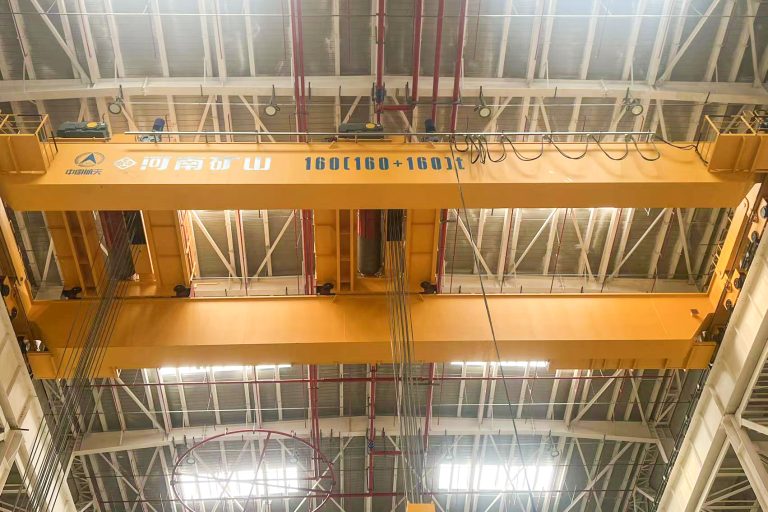
Henan Mine Crane has supplied more than 62 cranes through long-term cooperation with China Aerospace Science and Technology Corporation. Published configurations include 50 t, 16/5 t, 32/10 t and 160 t + 160 t bridge cranes for aerospace production and component-handling tasks.
Applications include the controlled transfer of composite solid-rocket-motor casings, spacecraft structural components and other high-value assemblies. The equipment was configured for long-span facilities, controlled motion, project-specific lifting tools and the required production interfaces.
This aerospace manufacturing experience demonstrates capability in large-span structures and precision component handling. An airline or MRO hangar crane still requires an independent design basis covering the aircraft fleet, maintenance procedure, hangar structure, approved lifting points, duty, safety functions and destination acceptance requirements.
Engineering Deliverables and Quality Records
A procurement-ready proposal defines the aircraft maintenance tasks, crane and lifting device, building interfaces, controls, acceptance criteria and site responsibilities. Henan Mine Crane can prepare project-specific records for technical approval, manufacture and commissioning.
Design basis
Approved load and task schedule, aircraft and hangar envelopes, duty calculation, hook coverage, support reactions, clearances, control philosophy and code matrix.
Interface documents
General arrangement, suspension or runway plan, wheel or hanger reactions, power demand, lifting-device data, interlocks, installation tolerances and maintenance access.
Manufacturing records
Material traceability, welding procedures, welder qualifications, dimensional inspection, NDT reports and component certificates as contractually required.
Factory acceptance
Functional checks, brake and limit tests, VFD motion, synchronization, alarms, interlocks, simulated operating modes and witnessed inspection when included.
Review Henan Mine Crane manufacturing equipment and quality capabilities →
Installation, Commissioning and Maintenance Planning
Before Manufacture
Complete the hangar survey, structural verification and coordinated layout. Confirm roof or runway geometry, clearances, doors, docks, services, aircraft protection zones, power supply, equipment access and the division of civil, structural and electrical work.
Erection and Commissioning
Coordinate unloading, temporary lifting, roof or runway installation, survey, electrical work, control setup, no-load testing, proof load, synchronization, protected zones, lifting-device trials and operator and maintenance training.
Planned Maintenance
Inspect brakes, ropes or chains, drums, hooks, wheels, end trucks, hangers, runway joints, synchronized drives, position feedback, limits, electrical panels, festoons and lifting fixtures under a documented preventive-maintenance program.
Acceptance should include the full hook coverage, end approaches, low-speed positioning, braking, emergency functions, protected-zone limits, synchronization faults, load tests and representative component-handling procedure agreed before shipment. Tests near an aircraft require the purchaser’s approved protection and operating plan.
Aircraft Maintenance Crane Price and Supply Scope
Aircraft maintenance crane price cannot be established from tonnage alone. Hangar width, number of suspended runways, roof or runway reactions, lifting height, hook coverage, speed range, synchronization, specialized lifting fixtures, protected zones, hazardous-area requirements and installation responsibilities all affect the project value.
The following September 2026 observations are preliminary market planning benchmarks in US dollars. They are not a Henan Mine Crane quotation and are not directly comparable without matching capacity, span, runway length, duty, controls, structural scope, delivery term and installation services.
| Budget reference | Indicative public market level | Commercial interpretation |
|---|---|---|
| Approximately 2 t ceiling-mounted workstation system | Approximately US$18,000–US$30,000 | Localized light-duty reference; verify bridge, runway, hoist, electrification and support scope |
| 5 t underhung or top-running crane kit with hoist | Approximately US$19,000–US$30,000 | Standard kit benchmark; runway steel, aviation controls, installation and special fixtures may be excluded |
| Standard 10–20 t bridge crane equipment | Approximately US$25,000–US$100,000 | Wide range reflects span, single or double girder, hoist/trolley, controls and regional supply level |
| Runway or supporting steel reference | Approximately US$8,000–US$40,000 or more | Depends on runway length, columns, roof hangers, reactions, reinforcement, access and local fabrication |
| Installation and commissioning reference | Approximately US$4,000–US$25,000 or more | Site lifting, hangar access, runway work, travel, labor, proof load and acceptance can change the total substantially |
| Long-span multi-point aircraft hangar crane | Project quotation | Multiple runways, synchronized drives, long-span structure, aircraft protection, building integration and specialized fixtures prevent reliable catalog pricing |
| Cost package | Items requiring an explicit quotation boundary |
|---|---|
| Crane equipment | Bridge, end trucks, hoist or trolley, synchronized drives, brakes, controls, electrification, access and standard safety devices |
| Runway and building interface | Rails, beams, columns, roof hangers, secondary steel, reinforcement, foundations, survey, tolerances and structural approval |
| Aircraft handling package | Engine beam, equalizer, adapters, multiple hoists, load cells, protected zones, cameras, anti-sway and maintenance-procedure interfaces |
| Electrical and compliance | Power feed, isolators, control network, hazardous-area equipment, documentation, local inspection and third-party certification |
| Delivery and installation | Packing, inland transport, ocean freight, insurance, unloading, site cranes, hangar access, erection, supervision and local labor |
| Testing and support | Proof load, representative task trial, performance testing, training, maintenance tools, spare parts, warranty and service response |
A valid bid comparison uses the same aircraft and task schedule, lifted-load definition, fixture scope, span, runway length, hook coverage, lifting height, duty, speed and positioning requirements, safety functions, structural boundary, code, Incoterm, currency, validity and installation responsibility.
Aircraft Maintenance Crane RFQ Information
Submit the aircraft models and maintenance tasks; component descriptions, maximum mass, center of gravity and approved lifting points; lifting-fixture details; pickup, travel and set-down coordinates; hangar width, length, height and door layout; roof or runway drawings and allowable reactions; docks, stands and service obstructions; required capacity, hook coverage, lift height, speed and positioning; lifts per shift and design life; control and safety-zone requirements; temperature, humidity and hazardous-area classification; power supply, destination and applicable code; and the required freight, structural, installation, testing, training and spare-parts scope.
A defined crane, building-interface and aircraft-handling scope can then be prepared.
Frequently Asked Questions
What is an aircraft maintenance crane?
It is an overhead, suspended, workstation or mobile crane configured to remove, transfer and install aircraft components and maintenance equipment inside an MRO hangar, airline base, engine shop or aerospace facility.
Which crane is suitable for a wide aircraft hangar?
A multi-point single- or double-girder suspended crane is often suitable where the roof can accept distributed loads and the floor must remain unobstructed. A top-running crane may be preferable when dedicated runway beams already exist.
How is the required crane capacity calculated?
Capacity includes the maximum aircraft component or maintenance load plus the complete lifting beam, fixture, adapter and rigging tare. Dynamic effects, load eccentricity, multiple-hoist sharing and the required design load combinations are then verified.
Can an aircraft maintenance crane remove an engine?
Yes, when the crane capacity, hook path, low-speed control, engine fixture, stand height, center of gravity and removal procedure are designed for the specific engine and aircraft. The approved maintenance procedure remains the governing basis.
Can the crane lift a complete aircraft?
Only if the complete-aircraft lift is explicitly engineered and approved. A crane designed for engines, landing gear or tooling must not be assumed suitable for a fuselage or full aircraft. Lifting points, load distribution, synchronization and airframe limits require separate verification.
What positioning accuracy is available?
VFD drives, creep speed, encoders, controlled braking and anti-sway can support precise handling. The guaranteed tolerance is project-specific and depends on the structure, hoist, lifting fixture, load behavior, sensing and acceptance method.
Can two hoists lift one aircraft component together?
Yes, when tandem operation is part of the engineered design. The system requires defined lifting points, load sharing, synchronized motion, individual overload protection, skew or attitude limits and a safe response to loss of one drive or feedback channel.
Is an explosion-proof crane required in an aircraft hangar?
Not in every hangar. It may be required in paint, coating, fuel or other classified areas. The equipment must be selected against the confirmed zone or division, substance group, temperature class, ambient condition and destination certification rules.
How much does an aircraft maintenance crane cost?
Public benchmarks range from approximately US$18,000–US$30,000 for a light 2 t ceiling workstation system and US$19,000–US$30,000 for a standard 5 t crane kit to US$25,000–US$100,000 for standard 10–20 t bridge equipment. A long-span multi-point hangar system requires a project quotation.
What information is needed for a quotation?
Provide the aircraft and component schedule, masses and lifting points, hangar and structural drawings, hook coverage, capacity, lift height, duty, speeds, positioning, controls, maintenance stands, environment, applicable code, destination and supply and installation boundary.
Technical content record
Prepared by Henan Mine Crane Technical Sales · Technically reviewed by Crane Engineering · Last reviewed September 2026
Related Aircraft Maintenance Crane Products
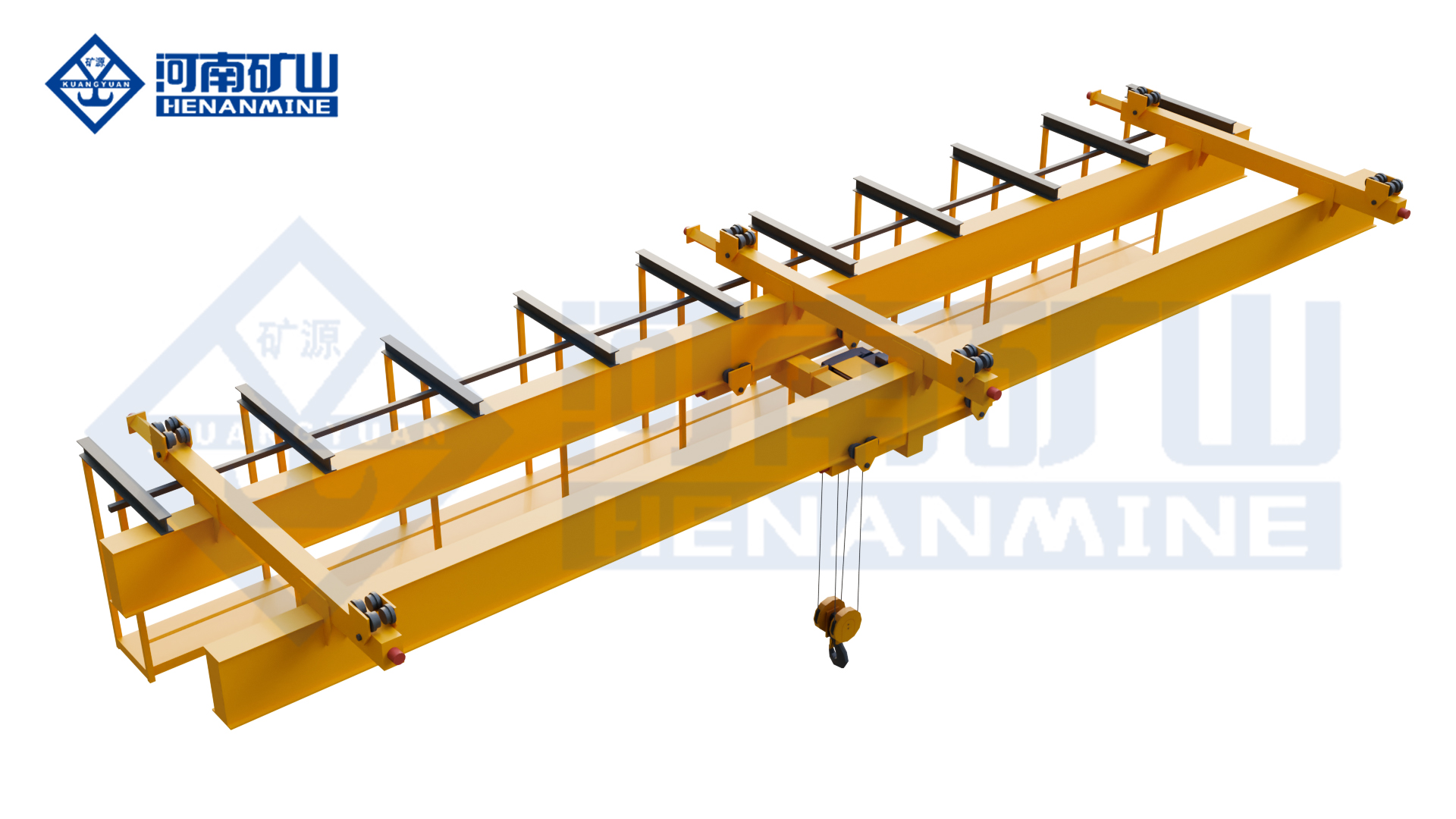
Multi-Point Suspension Crane
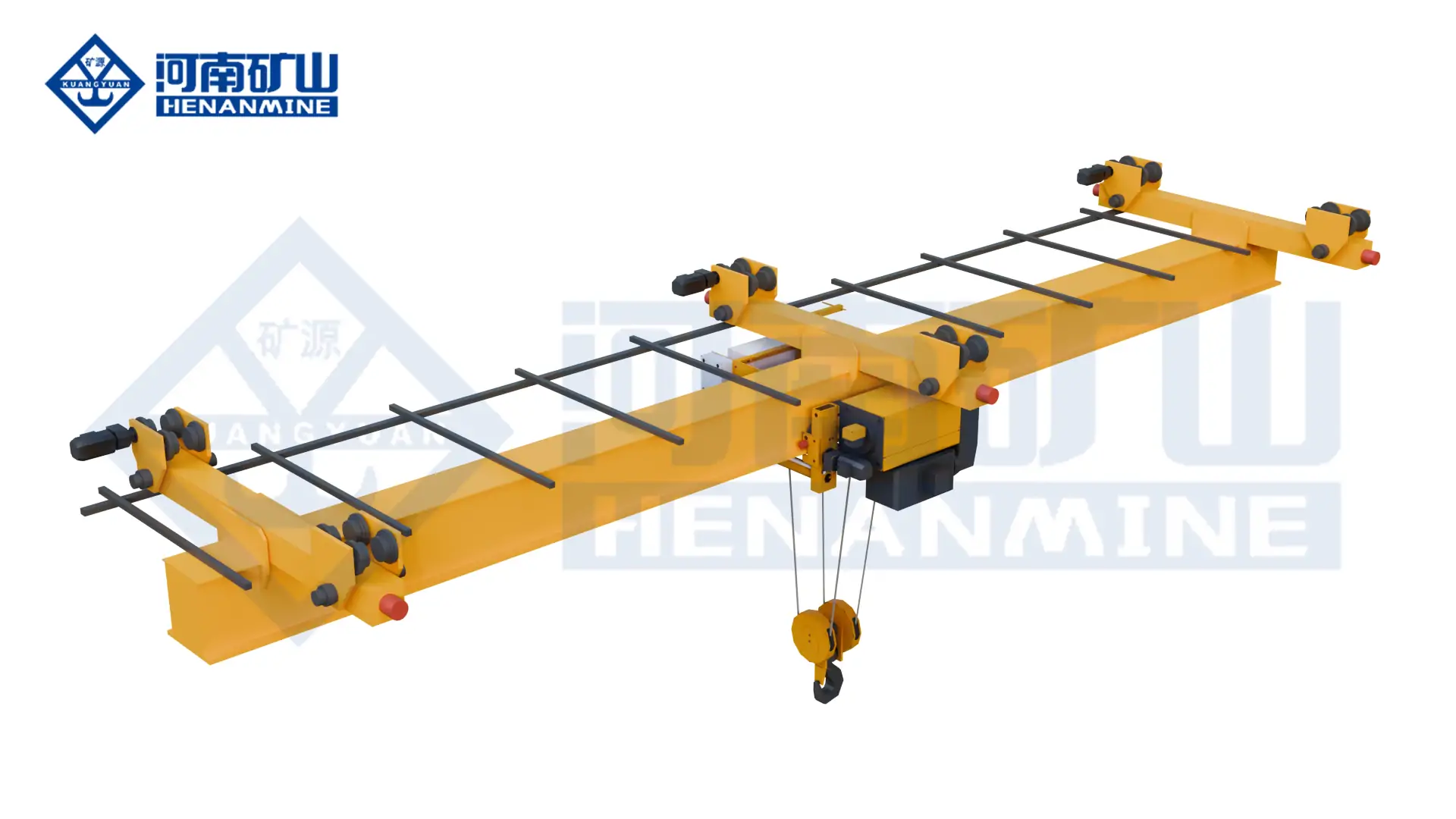
Distributed-roof-load crane for wide-span hangars and workshops requiring unobstructed floor access.
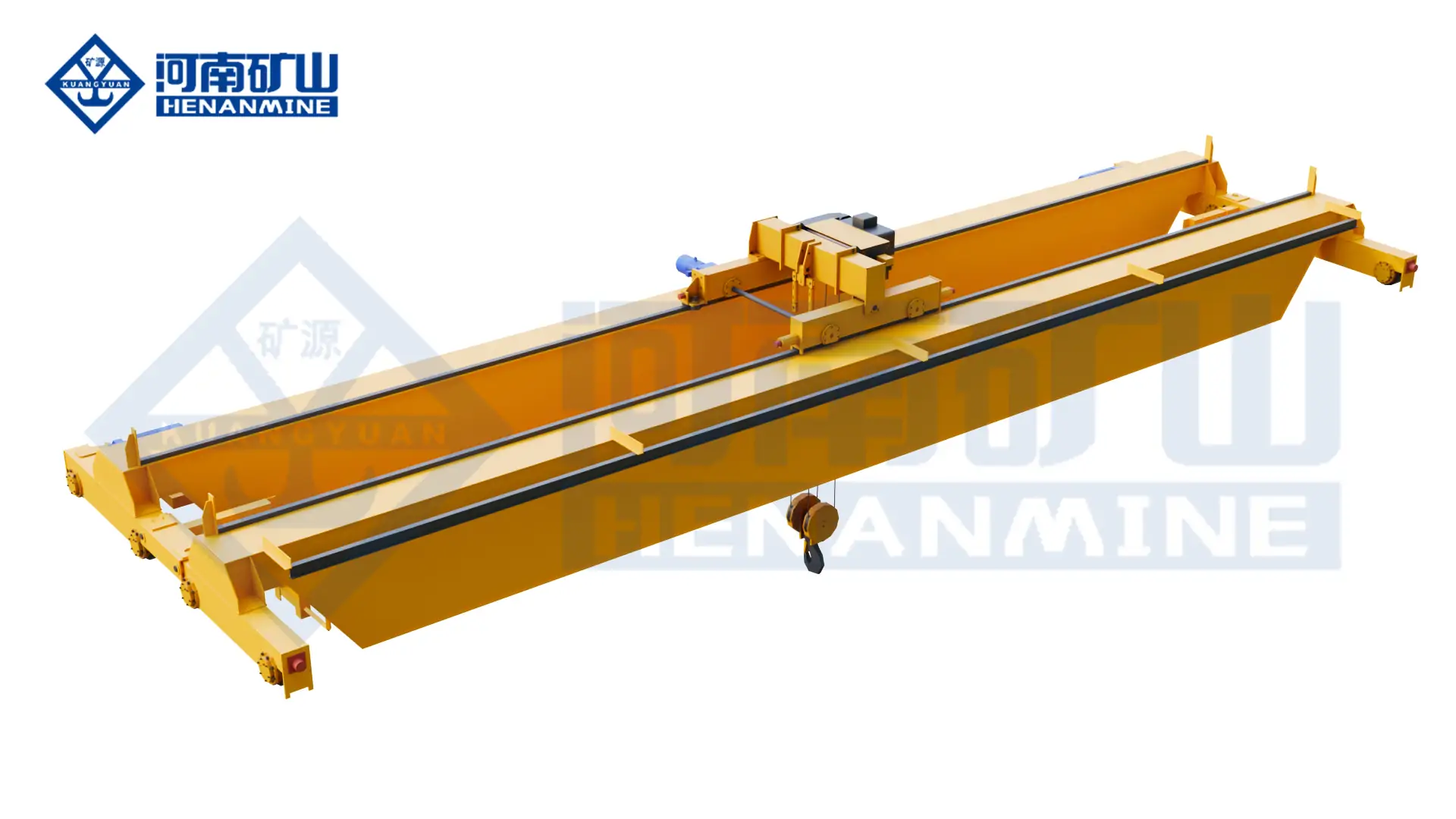
Multi-Support Double-Girder Underhung Crane
Long-span suspended crane for higher maintenance loads, dual hoists and large-component handling.
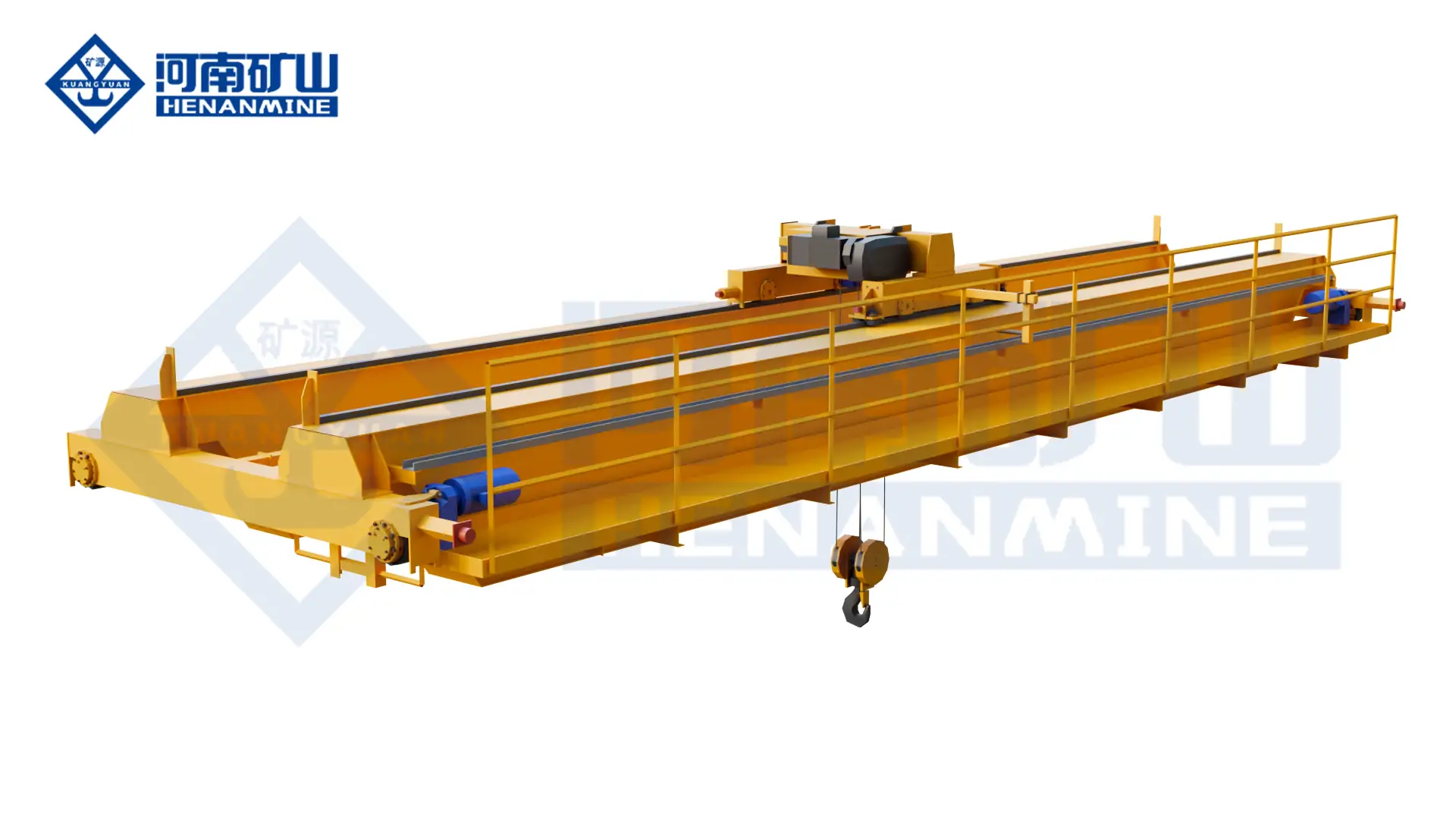
Double-Girder Bridge Crane
Top-running crane platform for higher-capacity hangars with dedicated runway beams and sufficient headroom.
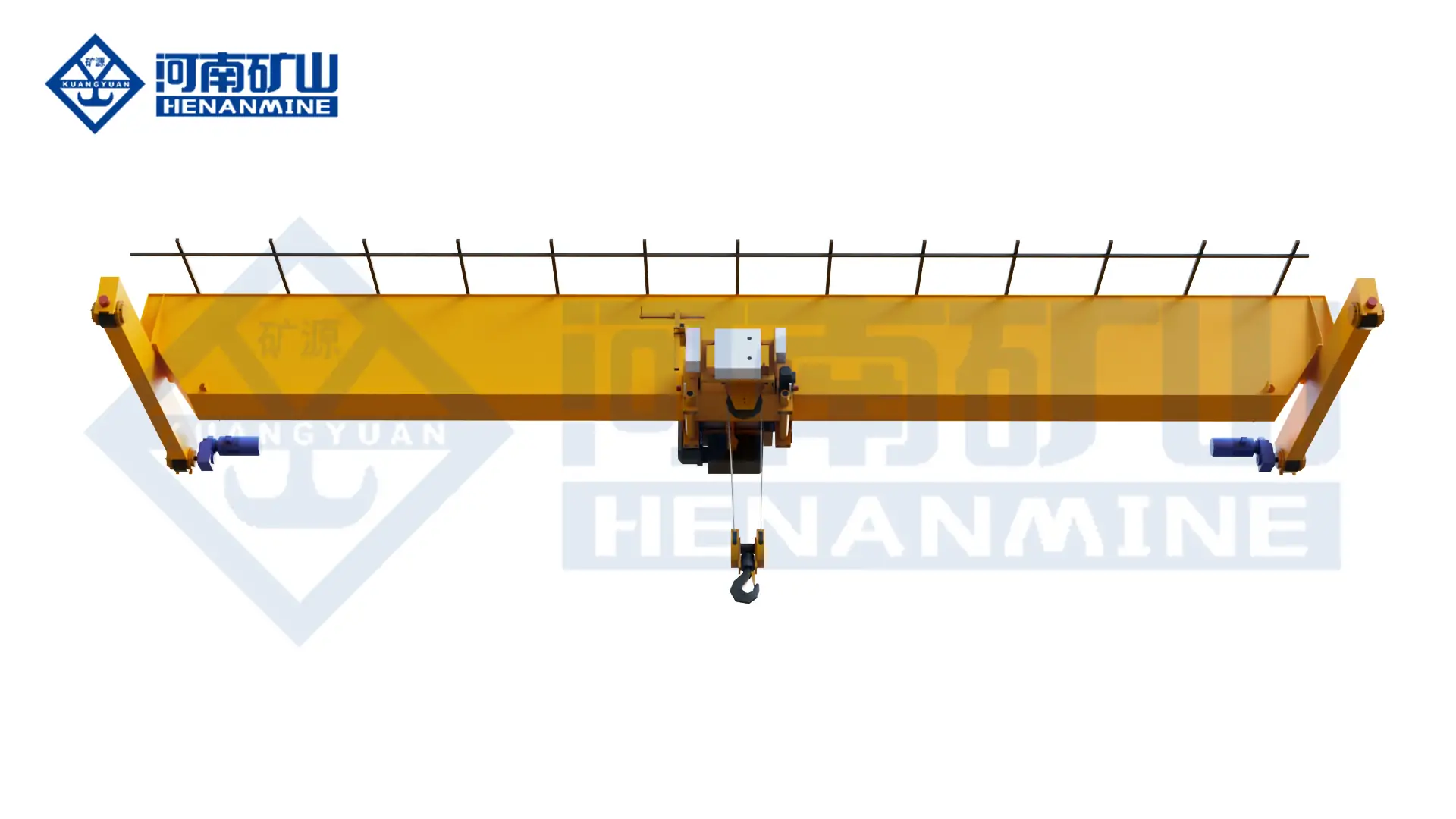
Intelligent Electric Hoist Overhead Crane
Frequency-controlled electric-hoist crane for production and repair workshops requiring controlled motion.
European-Style Single-Girder Crane
Compact low-headroom bridge crane for component workshops, tooling areas and general maintenance support.
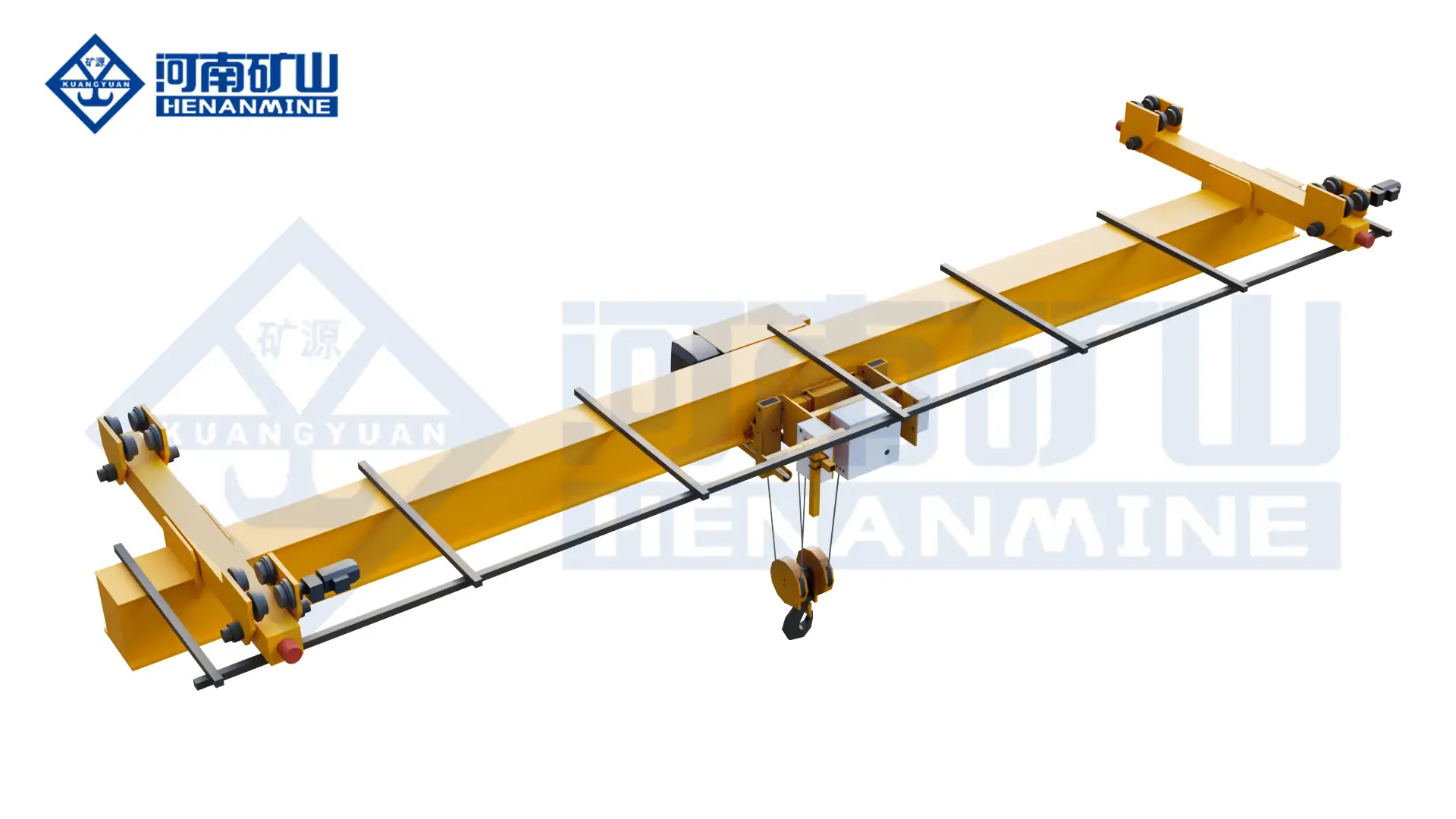
Explosion-Proof Suspended Crane
Suspended crane for confirmed classified painting, coating or fuel-related work areas.
Engineered Aviation MRO Proposal
Request an Aircraft Maintenance Crane Quote
Provide the aircraft fleet, maintenance task, component masses and lifting points, hangar and structural drawings, hook coverage, duty, speeds, controls, environment, destination and delivery boundary. Henan Mine Crane will develop the crane, runway or suspension structure and aircraft-handling interfaces as one defined system.