Engineering · Manufacturing · Project support
info@hnksglobal.comWhatsApp +86 18836207779 ↗

博客

  • Gantry Cranes for Tunneling & Underground Excavation

    Gantry Cranes for Tunneling & Underground Excavation

    Gantry Cranes for Tunneling & Underground Excavation

    In the construction of underground infrastructure, muck removal, material transportation, and equipment hoisting are the keys to controlling the construction progress.The gantry crane is equipped with a high-lifting shaft winch system, which is suitable for complex working conditions of deep wells and deep tunnels. With the advantages of high efficiency, safety and strong adaptability, it is widely used in various underground excavation projects.

    This article focuses on the core equipment of shaft winch system, high-lift shaft winch, and tunnel gantry crane, and comprehensively analyzes its definition, working principle, structural configuration, application scenarios, selection standards, safety protection, and operation and maintenance points, and provides professional reference for equipment selection, construction operation and maintenance, and program customization for underground excavation projects.

    What Is a Tunneling & Underground Excavation Gantry Crane

    Tunnel and underground excavation gantry cranes are special ground lifting equipment suitable for vertical operation of shafts. They can vertically lift heavy loads such as muck, building materials, prefabricated components, and construction machinery. They are widely used in tunnels, subways, water conservancy, mines, and underground municipal projects.

    Unlike the horizontal operation design of ordinary gantry cranes, this equipment mainly focuses on large-depth, high-frequency continuous vertical lifting. The gantry is straddled at the wellhead of the shaft. As the core carrying base of the high-lifting shaft winch system, it can be stably adapted to ultra-deep well operations from tens of meters to 200 meters. It is the core special equipment for deep shaft construction.

    Integrated principle of high-lift shaft winch

    The complete lifting system adopts the integrated design of “gantry bearing + winch drive”, and each performs its own duties and works together to form a complete vertical lifting system for shafts.:

    1. Main body of the gantry: As the main rigid bearing structure of the system, it is straddled above the wellhead of the shaft to provide a stable installation foundation for winches, pulleys and safety components, accurately locate the vertical center of the rope, and effectively avoid the lateral partial load force.;
    2. High-lifting shaft winch: The power core of the complete set of equipment, equipped with a large-capacity rope multi-layer winding reel, which can store 100-meter-long wire rope, relying on frequency conversion and speed regulation technology, to achieve stable and accurate lifting power output under deep well conditions.;
    3. Rope pulley system: responsible for load force conduction and vertical guidance, greatly reducing the friction loss of wire rope, ensuring the vertical and smooth operation of the material spreader throughout the process, and improving the transmission efficiency of the whole machine;
    4. Electronic control and safety system: real-time monitoring of the operating status of all working conditions, integrated speed adjustment, overload protection, emergency braking and fault interlocking functions, to ensure that every lifting operation is safe, controllable, stable and reliable.

    Core components of the system

    A complete set of tunnel shaft gantry lifting system, including seven core components, is indispensable:

    1. Gantry frame: it is made of welded steel box girders or I-beams, which carry all operating loads and span the wellhead. It is the structural foundation of the entire set of equipment, and its stability directly determines the safety of the operation.
    2. Lifting machinery mechanism: it includes a special drive motor, reducer, brake device, and reel assembly to provide power support for load lifting and is suitable for continuous heavy-duty operations.
    3. Shaft winch: The core equipment of the system, large-diameter multi-layer winding reel can accommodate ultra-long wire ropes, with a frequency conversion drive system to achieve controllable speed regulation, equipped with redundant braking structure, suitable for deep well high-lifting operations.
    4. Wire rope and pulley block: special wire rope with anti-rotation, high fatigue and high strength is used to adapt to deep well self-weight loads; customized pulley blocks optimize rope guidance to reduce wear and improve mechanical efficiency.
    5. Lifting hopper/manned cage: end load-carrying device, the hopper is used to clear muck and transport building materials; special manned cage is used for personnel lifting, and it needs to be equipped with a dedicated safety protection structure. It is strictly prohibited to replace the material bucket.
    6. Electrical control system: it consists of a main power distribution cabinet, a frequency conversion drive device, an operation console, a PLC programmable controller, and a working condition monitoring instrument to achieve accurate monitoring and adjustment of speed, load, and depth.
    7. Safety emergency system: it includes overload limiter, upper and lower limit protection, emergency braking, rope monitoring, fault interlocking and other devices to avoid the safety risks of deep well operations in all directions.

    How High-Lift Shaft Winch Systems Work

    Layout design of door frame and shaft

    The gantry crane is precisely erected directly above the wellhead of the vertical well, and the outriggers are fixed to the special foundation on both sides of the wellhead. The span of the gantry completely covers the wellhead and reserves sufficient working space.The layout of the equipment strictly plans the load transfer path and the vertical lifting area, and the falling point of the pulley rope must be accurately aligned with the center of the shaft and the center of the hopper guidance system.

    The precise layout design can avoid the ropes and the side walls of the well from being subjected to lateral tension, effectively reduce equipment wear, avoid the risk of load offset, and ensure the stability of full-depth operations. It is the basic prerequisite for deep well lifting operations.

    Lifting operation process

    The complete set of operation cycle processes is standardized and automated to meet the needs of continuous construction:

    The first step: The bottom loading of the well, the underground construction personnel will load the muck, building materials and construction equipment into the hopper in a regular manner, and connect with the ground operator through a dedicated communication system to confirm, complete the pre-operation preparation, and start the lifting process.

    The second step: the vertical lifting and transportation frequency conversion drive system starts smoothly, driving the winch reel to collect the rope, and the fully loaded hopper rises vertically at a uniform speed; when approaching the wellhead, it automatically slows down and slows down, accurately completing the wellhead alignment to ensure that the lifting process is smooth and impact-free.

    The fourth step: Unloading and cycle reset. The wellhead hopper unloads the material to the silo, conveyor belt or transportation vehicle. After completing a single operation cycle, it is quickly reset and enters the next cycle of operation.The efficiency of equipment cycle operation directly determines the overall excavation and construction progress of the shaft.

    Key points of rope wheel and reel configuration

    1. Deep well wire rope selection core deep well operation wire rope cannot choose ordinary models, and must meet four core standards: 6:1 and above safety breaking coefficient, anti-rotation structure to prevent hopper shaking, high fatigue resistance, adapt to high-frequency bending, take into account the weight and carrying strength of the deep well rope, to avoid the weight of the deep well rope affecting the rated load.
    2. Reel capacity design The reel needs to accommodate all the wire ropes corresponding to the maximum depth of the shaft, and at the same time reserve a safety dead rope ring to prevent the rope from falling off.Multi-layer winding of deep wells will change the effective radius of the reel. The torque change needs to be accurately calculated during the equipment design stage, and the parameters of the motor and reducer need to be matched to ensure the stability of the full-depth operation power.
    3. The pulley block is equipped with a standard top pulley diameter and wire rope diameter ratio of not less than 20:1 to minimize the bending stress of the rope; it is equipped with high-strength wear-resistant bearings, suitable for 24-hour continuous operation, and adopts a single-rope or double-rope winding structure according to the load requirements to balance the bearing capacity and operating efficiency.

    Load control and positioning technology

    Modern high-lifting shaft winch systems are equipped with frequency conversion speed control systems to achieve precise control of all working conditions:

    The multi-gear variable speed mode is adopted to improve the guarantee efficiency at high speed in the middle of the deep well, and the low-speed creep mode is used at the wellhead and bottom to ensure accurate alignment; the system is equipped with a programmable acceleration and deceleration curve to eliminate rope impact and load swing caused by sudden start and stop, and extend the service life of the equipment.

    At the same time, the depth of the shaft is monitored in real time through encoders and depth monitors, the wellhead and bottom operating areas are automatically identified, and the deceleration and precise shutdown are slowed down in advance, which is suitable for the dynamic construction scene of deep excavation of the shaft layer by layer.

    Key Applications in Tunneling & Underground Excavation

    The tunnel gantry crane and shaft winch system are adapted to various complex underground infrastructure conditions. With the advantages of large depth, heavy load and continuous operation, they have become the core supporting equipment for underground engineering construction. The mainstream application scenarios are as follows:

    • Vertical shaft excavation projects are widely used in the excavation of construction shafts, ventilation shafts, and escape shafts, and undertake core processes such as muck removal, building materials transportation, and underground equipment hoisting. It is an essential equipment for shaft excavation and construction.
    • The construction of subways and rail transit is adapted to small urban construction sites to meet the needs of the whole process of subway deep shaft excavation, shield machine origin and reception, tunnel pipe sheet transportation, underground equipment transportation, and muck outbound transportation.
    • The water conservancy and hydropower tunnel project is suitable for hydropower projects with remote mountainous areas and complex working conditions, serving the construction of pressure tunnels, water diversion tunnels, and pressure regulating shafts, and completing tunnel excavation, lining construction, vertical material transportation and other operations.
    • The underground infrastructure project of the mine is adapted to the heavy-duty and 24-hour continuous operation conditions of the mine, and is used for the lifting of ore and waste stone from exploration shafts and temporary mining shafts, and at the same time to complete the transfer and hoisting of underground support materials and construction equipment.
    • Highway and railway tunnel engineering services the construction of mountain roads and railway tunnel shafts, supports the assembly and disassembly of shield structures, the removal of tunnel boring muck, and the hoisting and transshipment of prefabricated components to ensure the efficient advancement of tunnel projects.
    • The municipal pipe network tunnel project is adapted to the construction of urban underground infrastructure and is used for shaft excavation and vertical transportation of materials in water supply and drainage tunnels, sewage tunnels, underground integrated pipe corridors and other projects.
    • Deep foundation underground civil engineering projects are suitable for deep well construction, deep foundation pit support, underground garages, large-scale underground infrastructure and other projects, to complete deep well muck cleaning, heavy building materials and equipment hoisting and other deep well operations.

    Key Performance Requirements for High-Lift Shaft Gantry Cranes

    Large rated lifting capacity

    The rated load of the equipment must match the peak load of the project, and it is strictly prohibited to select the type according to the average load. The load value must cover all heavy-duty working conditions such as muck hopper, steel structure support, concrete prefabricated parts, underground equipment and spreader weight.At the same time, 10%-25% safety margin is reserved to effectively avoid the risk of overload, and it can be adapted to various underground heavy-duty construction scenarios of 3-50 tons and above.

    Ultra-high adaptability

    Shaft construction is a dynamic operation process that deepens layer by layer. The selection and customization of equipment must be based on the final design depth of the project, and should not be based on the shallow depth configuration at the beginning of the construction.

    Sufficient wire rope margin and reel rope capacity need to be reserved in the equipment design stage, taking into account the needs of early construction and late deep excavation operations, effectively avoiding the replacement of equipment due to insufficient lifting depth in the middle of construction, and avoiding delays in the construction period and increased construction costs.

    Continuous operation performance

    Underground excavation projects generally adopt a multi-shift uninterrupted construction mode, which has strict requirements for the continuous operation capacity of the equipment, and the equipment needs to be adapted to the S5 and S6 advanced continuous work systems.

    The drive motor, reducer, brake system and various electrical components of the whole machine have been specially optimized, with excellent heat dissipation performance and fatigue resistance characteristics, long-term stable and uninterrupted operation, effectively avoid high temperature overload, component loss and other failures, and ensure the continuous and efficient advancement of construction conditions.

    Precise speed regulation performance

    The equipment is equipped with a frequency conversion speed control system, which supports flexible start-stop and stepless speed adjustment.Intelligent switching of high and low speeds can be achieved during operation, and low-speed operation ensures accurate alignment of wellhead and bottom, eliminates safety hazards in loading and unloading operations, and effectively improves construction efficiency during high-speed operation.

    At the same time, the programmed smooth acceleration and deceleration mode can greatly suppress the load swing, weaken the impact stress of the wire rope, and reduce equipment wear. It is the core performance guarantee for safe, efficient and stable operation of deep wells.

    Ability to adapt to working conditions

    Harsh conditions such as dust, humidity, large temperature difference, vibration, and slight corrosion are common at the construction site. The equipment needs to have perfect protection capabilities: the electrical components reach the protection level of IP55 and above, the steel structure adopts hot-dip galvanized and epoxy anticorrosive treatment, and the bearings and terminals are sealed and protected, which can adapt to complex construction environments such as open air, high humidity, and dust.

    How to Select the Right Shaft Winch System

    Scientific selection is the core prerequisite to ensure the safe, stable and efficient operation of shaft lifting equipment. It is necessary to combine the project construction parameters, working condition characteristics and long-term construction planning, follow the eight core selection steps, and accurately match the actual needs of the project.:

    1. The approved maximum lifting load comprehensively counts all lifting loads such as muck, building materials, construction equipment, etc., superimposes the weight of the hopper and spreader, reasonably reserves safety redundancy, and determines the rated lifting weight of the equipment based on the peak load as the standard. It is strictly prohibited to choose the type based on the low average load to avoid the risk of overload from the source.
    2. The calculation of the maximum lifting height is based on the depth of the shaft in the final design of the project. The reserved height of the wellhead operation and the safety margin of the wire rope are superimposed, and the total length of the wire rope and the specifications of the winch reel are accurately approved to meet the needs of deep excavation operations throughout the construction cycle of the project.
    3. Determine the lifting speed and the working standard combined with the engineering construction efficiency index, calculate the frequency of single-hour operation cycles, and match the adapted lifting and operating speed; according to the length of continuous daily operation, accurately define the working level of the equipment to meet the long-term heavy-duty construction conditions.
    4. Matching the specifications of the hoisting equipment According to the inner diameter of the shaft, the shape of the construction material and the tonnage, the unloading hopper adapted to the volume and the manned cage of the specified size are selected to ensure the smooth lifting of the hoisting equipment and eliminate safety hazards such as blocking and collision.
    5. Confirm the power supply and control mode, verify the power supply voltage, frequency and power supply capacity of the construction site, and match the power supply scheme adapted to the equipment; combine the site construction conditions and operating requirements, flexibly choose wired control, wireless remote control, cab control and other control methods.
    6. Customized rope wheel and reel configuration combined with the rated load of the equipment, the maximum lifting depth and the weight of the wire rope, high-strength special wire rope is preferred, a reasonable winding method is determined, and a special winch reel corresponding to the rope capacity and standard groove type is matched to ensure the stability of the power of deep well operations.
    7. Equipped with a complete set of safety protection systems, it strictly follows industry safety specifications, and is fully equipped with safety devices such as overload protection, upper and lower limit protection, emergency braking, fault interlocking, and wire rope condition monitoring, to build an all-round and multiple protection system to ensure safe and controllable operations.
    8. Reserved equipment expansion margin For engineering projects with shaft deepening and construction load upgrade planning, sufficient equipment performance redundancy is reserved during the selection phase to adapt to the later engineering upgrading and transformation to avoid delays in construction and cost losses caused by the second equipment replacement.

    Gantry Crane Configuration for Deep Shaft Lifting

    Single-girder and double-girder door frame configuration

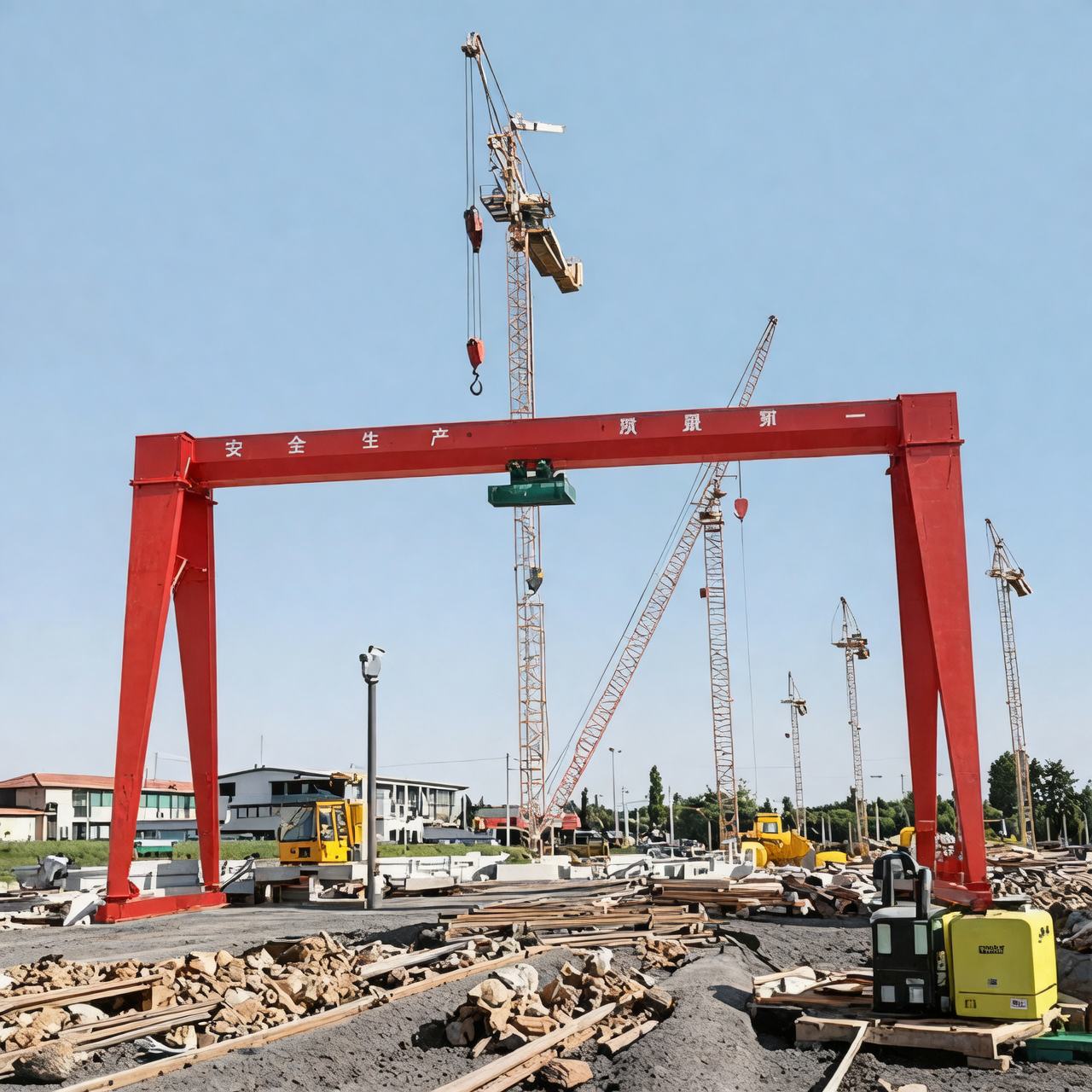
    Single-girder gantry crane: The whole machine has a lightweight structure and excellent cost performance. It can meet the construction needs of medium and shallow depth shafts within 15 tons. It is widely used in small municipal tunnels, shallow shafts and other small and medium-sized underground engineering scenarios.

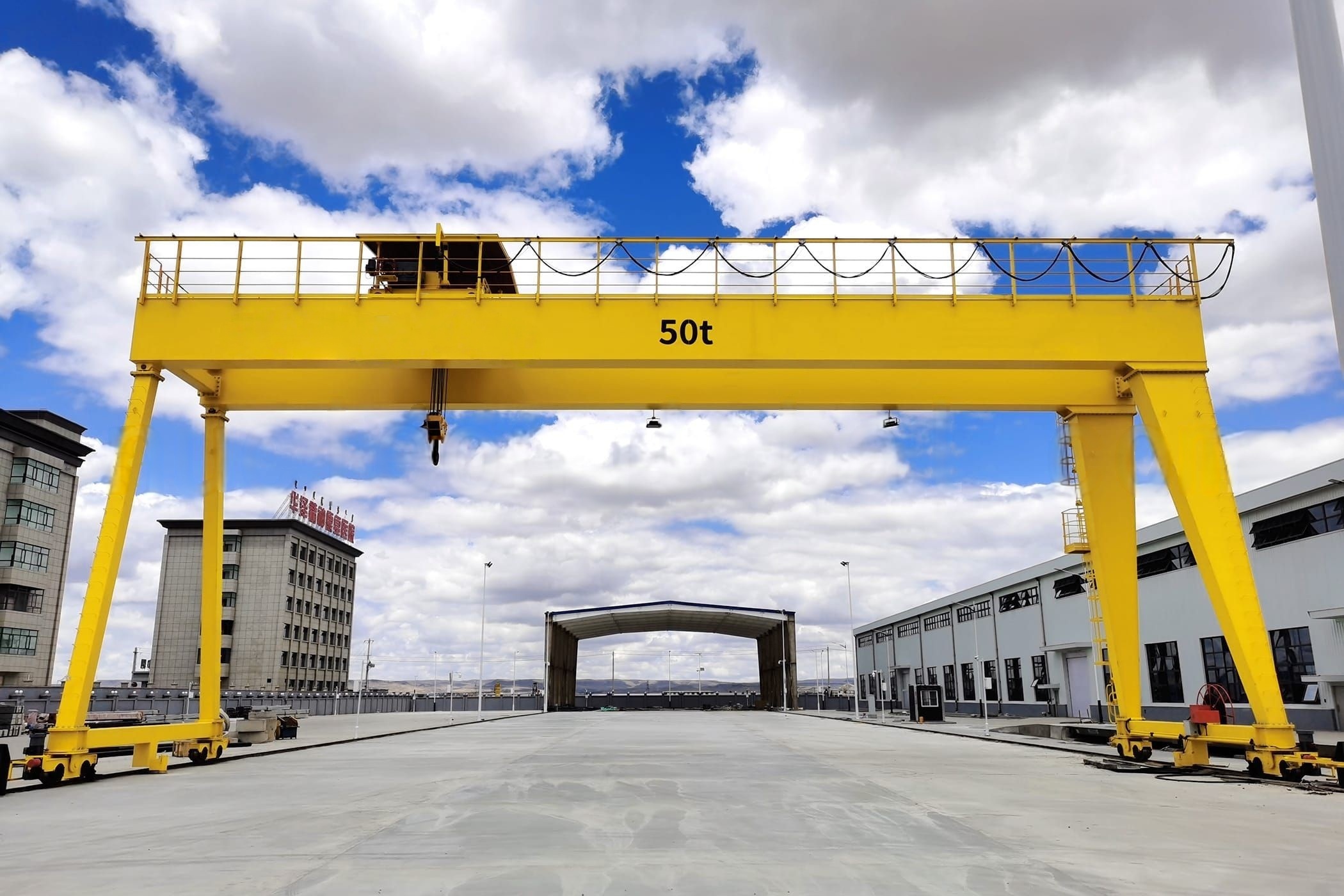
    Double-girder gantry crane: It has sufficient structural rigidity, strong carrying capacity and high operating stability. It is suitable for large-tonnage and ultra-deep well heavy-duty continuous construction conditions. It is the mainstream supporting equipment for major underground infrastructure projects such as large-scale tunnels, subways, and mines.

    Single winch and double winch system

    Single winch system: simple structure, easy operation and maintenance, low cost, suitable for all kinds of conventional shaft lifting operations, can fully meet the basic operation needs of standardized underground construction, and is extremely versatile.

    Double winch system: adopts double-rope independent drive mode, which can not only distribute heavy-duty pressure, but also realize redundant protection of operations, effectively avoid the risk of single-point failure, and is suitable for high-load and high-risk construction scenarios such as large-piece hoisting of shield machines and heavy-duty operations in ultra-deep wells. Outstanding safety and security performance.

    Fixed and mobile door frames

    Fixed gantry: The overall structure is stable and reliable, with strong deformation resistance, stable long-term continuous operation accuracy, no displacement deviation, high safety and reliability, and is suitable for long-term, normalized, and uninterrupted construction scenarios of single shafts. It is a standard supporting facility for fixed wellhead operations.

    Mobile gantry: it supports orbital shift operations, has high flexibility, and can be adapted to working conditions such as alternating construction of multiple shafts and temporary avoidance of wellheads, and is perfectly adapted to multi-station and complex underground construction sites.

    Customized configuration of restricted venues

    For scenes where urban construction sites are small, there are obstacles at high altitude, and the site is restricted, exclusive solutions such as narrow-span door frames, short compact winches, foldable and disassembly door frames, and ground anchoring structures can be customized to adapt to special construction conditions.

    At the same time, the inner diameter of the shaft, the well wall support structure, and the wellhead guidance system will directly affect the span of the gantry, the center distance of the rope, and the design of the load limit. The equipment structure needs to be customized according to the shaft parameters.

    Safety Systems for Underground Shaft Hoisting

    The risk of deep well lifting operations is extremely high. Load falling, over-rolling, rope breaking, and brake failure will all cause major safety accidents. A complete set of safety systems must be fully equipped and checked regularly.

    Overload protection system

    The equipment is equipped with a real-time load monitoring device and an overload limiter. When the load exceeds 110% of the rated value, a sound and light alarm is automatically triggered. Upward lifting operations are prohibited and can only be lowered and unloaded. At the same time, it avoids the overload tension caused by the stuck hopper and protects the equipment and the well structure.

    Emergency braking system

    Using the safety principle of power-loss braking, the brake is released when the power is normally powered on, and the spring force automatically locks the brake during power failure, failure, and emergency shutdown, which can stably lock the full load at any deep well position to eliminate the risk of slipping and falling into the bucket.The mainstream equipment is equipped with a dual redundant brake structure, and a single brake failure does not affect the overall protection effect.

    Limit protection

    The equipment is equipped with a dual upper and lower limit protection structure, the first-level limit realizes the slow transition of operation, and the second-level limit triggers emergency power-off braking.Double protection can effectively eliminate the problem of hopper rushing to the top and falling to the bottom, avoid high-risk hidden dangers such as wire rope release and reel release, and completely solve the failure of over-winding and over-discharging in deep well operations, and ensure the safety of the whole lifting process.

    Regular inspection mechanism

    Focus on investigating wire rope breakage, corrosion, deformation and wear defects, checking the loss of reel rope groove and pulley operating conditions, and regularly checking the wear thickness of brake pads and brake elasticity performance.Carry out maintenance in strict accordance with the ISO 4309 wire rope scrap standard, replace aging and worn-out parts in a timely manner, prevent the operation of equipment with diseases, and avoid mechanical failures and safety hazards from the source.

    Emergency stop and interlock control

    The equipment operation station and key operating areas are equipped with independent hardware-type emergency stop buttons, relying on dedicated circuit control, which can instantly cut off the power of the equipment, start the emergency braking, and quickly deal with emergencies.

    At the same time, it is equipped with an intelligent interlocking protection system. When the maintenance door is opened, the limit device is abnormal, and the core components fail, the system will automatically lock the operating procedures, prohibit the operation of the equipment, and mechanically eliminate safety accidents caused by illegal operations and sick operations.

    Man-machine lifting partition control

    Manned operation of material buckets is strictly prohibited!The safety factor, protective structure, and braking configuration of material lifting equipment cannot meet the needs of personnel lifting.Personnel lifting must use special manned cages, equipped with independent overspeed protection, anti-fall devices, higher safety factor ropes and exclusive protective structures, and strictly follow the industry standards for personnel lifting.

    Common Problems and How to Avoid Them

    1. Consequences of failure with insufficient lifting capacity: motor overload, brake overheating, inability to lift heavy-duty materials, shutdown and delay of construction period.Avoidance plan: Select the type according to the peak load of the project + safety margin, including the weight of the spreader and hopper, not according to the average load.
    2. Consequences of insufficient wire rope length failure: the late shaft cannot be bottomed out after deep excavation, and the rope and reel need to be replaced.Circumvention plan: Design the rope length according to the final construction depth, and reserve the redundant length and reel dead rope ring.
    3. The consequences of failure with a large swing in the load: colliding with the well wall, damaging the equipment and the structure of the well, there are safety risks.Avoidance plan: accurately calibrate the rope center, install a manhole guide device, adopt flexible acceleration and deceleration control, and prevent sudden start and stop.
    4. Consequences of overheating failure of brakes and winches: accelerated aging of components, brake failure, equipment failure and shutdown.Solution: Match the equipment of the continuous working system, choose the motor and brake system with excellent heat dissipation performance, and install temperature monitoring and overheating protection.
    5. Inconvenient maintenance and overhaul, consequences of failure: daily detection is not in place, and the accumulation of hidden dangers causes failure.Circumvention plan: Reserve the maintenance platform and operating space during the equipment design phase to ensure that the core components can be quickly tested, maintained, and replaced.

    Maintenance Checklist for High-Lift Shaft Winch Systems

    Standardized and normalized maintenance is the key to ensuring the long-term stable, safe and reliable operation of equipment. It can effectively avoid safety accidents caused by aging components and hidden failures, and extend the service life of equipment. The complete set of standardized maintenance processes is as follows:

    • Daily inspection: Comprehensively check the appearance status of the wire rope, the regularity of the reel, the bolt fastening of the structure of the whole machine, the flexibility of the pulley rotation, and the sensitivity of the limit switch, test the no-load braking performance, and verify the integrity of the terminal carrying components such as hoppers and spreaders to ensure that the hidden dangers are cleared daily.
    • Special rope inspection: Special investigations of wire ropes are carried out every week, focusing on checking defects such as broken wire, wear, corrosion, deformation, etc., accurately measuring changes in rope diameter and making ledger records, strictly evaluating working conditions against scrap standards, and timely replacement of over-standard and aging ropes.
    • Brake system testing: Carry out daily practical tests of brake functions, complete static load-bearing brake verification regularly, and carefully check the degree of brake pad wear, the elastic state of the brake spring, and the flatness of the brake disc surface to ensure that the brake system is responsive and reliable. Lock.
    • Maintenance of reel and pulley: Regularly check the wear and deformation of the reel rope groove, investigate abnormal problems such as pulley operation caton, abnormal noise, and high temperature, and fill the bearings with lubricating grease in time to ensure the smooth operation and controllable wear of the rope wheel transmission system.
    • Motor and reducer maintenance: Normalize the operating noise, working temperature and vibration of the equipment, regularly test the insulation resistance of the motor, and replace the gear oil of the reducer on time to ensure the stable output of the power transmission system and prevent overload and abnormal noise failures.
    • Electrical system inspection: Regularly investigate hidden dangers such as loose electrical circuits, moisture, and overheating, and comprehensively verify the frequency conversion speed control system, wireless control device, emergency stop button, and safety interlock function to ensure accurate electrical control and timely protection response.
    • Structure and foundation inspection: Regularly check the integrity of the door frame welds and the torque of the connecting bolts to meet the standards, verify the stability of the outriggers and foundation anchoring, and accurately investigate hidden hidden dangers such as fatigue cracking and loosening of steel structures to ensure the structural stability of the whole machine.
    • Regular load testing: After equipment installation, commissioning, overhaul and transformation, it must complete 125% static load and 110% dynamic load performance testing; regularly entrust third-party institutions to carry out professional testing, and keep the test ledger completely to ensure that the load performance of the equipment meets industry specifications and construction standards.

    Conclusion

    Tunnel and underground excavation gantry cranes, combined with high-lifting shaft winches, are important equipment for the construction of deep shafts, tunnels and underground projects.The selection should focus on matching the construction depth, peak load, continuous operation intensity and the harsh underground environment, while improving the safety protection and maintenance system to avoid the construction risks caused by low-profile or non-standard configurations.

    Choosing a professional manufacturer with engineering design, custom manufacturing and after-sales capabilities can ensure that the equipment accurately matches the working conditions of the project.Henan Mine Crane can provide customized lifting solutions according to the lifting depth, load and on-site conditions of the underground project to help the project achieve safe, efficient and stable construction.
    Henan Mine CraneDiscuss your requirements ↗
  • Gantry Crane vs Overhead Crane: Key Differences and How to Choose

    Gantry Crane vs Overhead Crane: Key Differences and How to Choose

    Gantry Crane vs Overhead Crane: Key Differences and How to Choose

    In the manufacturing workshop, warehousing and logistics, port terminals, construction sites and other scenes, heavy lifting equipment is to enhance the efficiency of material transfer, to ensure the continuity of production of the core equipment.

    Among them, overhead cranes and gantry cranes as the most widely used two major crane type, with similar functions but significant differences in structure and application scenarios, many companies often have difficulty in choosing when purchasing.

    In this paper, we will comprehensively dismantle the definition of the two types of cranes, the core differences, advantages and disadvantages, and combined with the working conditions to give professional advice on selection, while relying on the industry experience of Henan Mining Crane, to provide you with reliable procurement reference, to help you accurately match the most suitable lifting equipment for their own operational needs.

    What Are Overhead Cranes?

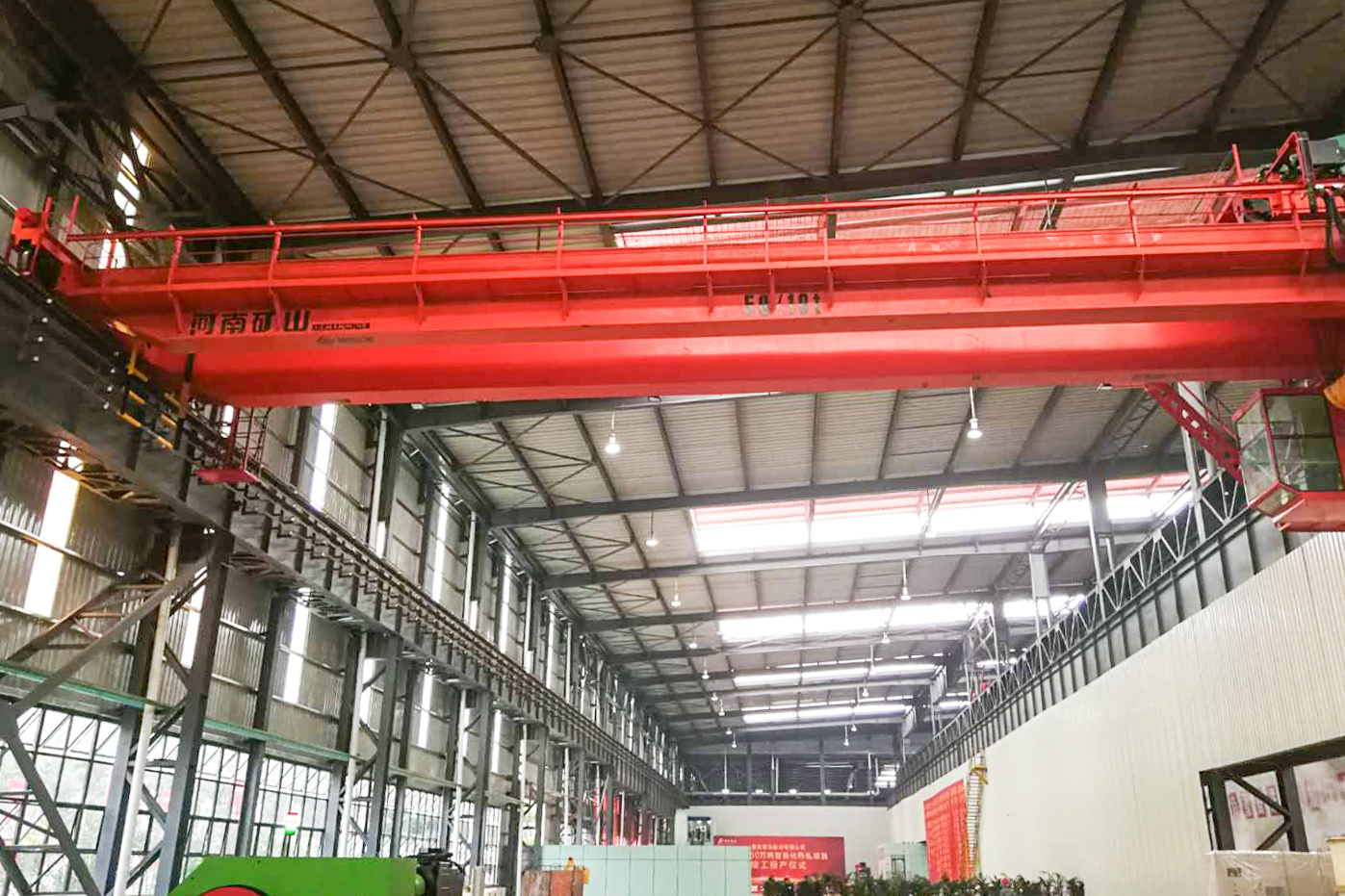
    Bridge cranes, also often called overhead cranes, travelling cranes, is a kind of relying on the building structure to realize the overhead lifting equipment, mainly consists of parallel tracks, running bridge, lifting mechanism of the three core components, the whole suspended from the top of the plant beam structure, does not take up space on the ground.

    The bridge crane completely relies on the existing building load-bearing plant, the bridge runs horizontally along the top track, the lifting trolley moves longitudinally along the bridge, which can realize the transfer of heavy loads in the three-dimensional space, with a fixed running path and high precision of manipulation, which can perfectly avoid the obstacles on the ground and maximize the use of vertical space.

    Mainly used in indoor fixed operation, widely used in machinery manufacturing workshop, automated warehousing, metallurgical plant, assembly line and other scenes, especially suitable for the need for accurate and repetitive lifting operations.

    Common Classification

    • Overhead travelling crane: the bridge is supported on the top of the track, with strong load bearing capacity and large lifting height, suitable for heavy duty operation.
    • Suspension overhead travelling crane: the bridge is suspended from the lower edge of the track, suitable for workshops with low headroom and narrow space.
    • Single girder overhead travelling crane: simple structure, high cost performance, suitable for light and medium loads.
    • Double girder overhead travel ling crane: strong stability, high load capacity, suitable for heavy and ultra-heavy material lifting.

    As a head of the lifting equipment field, Henan Mining Crane can provide a full range of bridge crane customization services for insulation, explosion-proof, clean, dust-proof and other special conditions, to create an exclusive solution to adapt to the operating standards of different industries around the world.

    What Are Gantry Cranes?

    Gantry cranes, commonly known as gantry cranes, have similar functions to overhead cranes, but the core difference lies in the self-supporting structure on the ground, the overall shape of the portal frame, relying on the two sides of the outriggers to carry the weight, the bottom is equipped with wheels or rails, and can be moved to the ground running.

    Gantry cranes do not need to rely on the building load-bearing, relying on their own independent support legs, can be fixed installation can also be flexible and mobile, installation and deployment of fast, not subject to structural constraints of the plant, both stability and mobility, can adapt to the complex and changing operating environment.

    With both indoor and outdoor work, it is more suitable for outdoor work, mostly used in port terminals, open yards, construction sites, shipyards, large-scale warehousing outdoor areas and other scenarios, and can also be used in indoor workshops without load-bearing structures.

    Common Classification

    • Fixed gantry crane: fixed installation position, load-bearing stability, suitable for long-term fixed-point operation
    • Mobile gantry crane: equipped with rubber wheels or track wheels, flexible transfer, suitable for temporary work
    • Tire type gantry crane: mobility pull full, no need for special track, suitable for outdoor scattered operations

    Crane for different working conditions, can be customized for various types of gantry cranes, from light portable models to heavy-duty heavy-duty models, can meet the needs of personalized operations, suitable for all kinds of complex sites.

    Key Differences Between Overhead and Gantry Cranes

    Structure and Support

    Overhead travelling crane: adopts overhead suspended structure, the whole machine has no support point on the ground, and all the loads are borne by the load-bearing beams and columns on the top of the plant, special steel columns and other building bodies, which is a typical building-dependent lifting equipment.

    Overhead travelling crane Henan Mine Crane

    This structural design requires that the plant must have the standard load-bearing qualification, the preliminary structural calculations need to be carried out by professional organizations to ensure the stability of the track and bridge force, to eliminate potential safety hazards.

    Gantry crane: the use of gantry self-supporting steel structure, both sides of the rigid outriggers directly to the ground to carry the entire machine and heavy loads, without relying on any building structure, belonging to the independent self-supporting heavy equipment. The bottom of the outrigger is equipped with steel rails or rubber wheels, and the force is evenly dispersed to the ground, which has lower requirements for the foundation of the site, and does not require any modification to the existing building, and is suitable for all kinds of sites without load-bearing conditions.

    Mobility and Installation Difficulty

    Overhead crane: a permanent fixed equipment, the installation needs to be completed before the site survey, structural reinforcement, track pre-buried and a series of preliminary projects, cumbersome processes, long construction period, and after the completion of the installation of the entire machine can not be shifted, transfer to the field, and only serve the operational needs of a fixed area, suitable for long-term layout of the production scenarios do not change.

    Gantry cranes: the installation process is extremely simple, without building renovation and pre-embedded works, standardized models can be quickly assembled and deployed; support for fixed rail and mobile tire two modes, the tire model can be flexibly switched to the operating point, and even cross-factory, cross-site transfer to be used, perfectly adapted to the temporary works, emergency lifting, scattered operations and other variable needs.

    Lifting Capacity and Space Utilization

    Overhead Crane: The lifting ceiling is extremely high, double girder models can easily carry more than 100 tons of super-heavy loads, load-bearing stability of the full; the whole machine running in the air, zero ground space occupation, can completely release the workshop floor line of motion, to avoid cross-interference between the materials, vehicles and lifting equipment, especially suitable for high-density, intensive production workshop layout.

    Gantry cranes: lifting capacity covers light, medium and heavy loads in all scenarios, which can meet the majority of industrial and construction site conventional lifting needs; although you need to reserve space for walking and slewing outriggers, but the adaptability of the site is very strong, whether it is an open outdoor or small indoor, can be flexibly laid out, and do not need to take up the space on the top of the plant, the headroom height requirements are lower.

    Cost, Maintenance and Safety

    Cost level: gantry cranes have a lower total cost of procurement and installation in the early stage, eliminating the need for building surveys and structural reinforcement costs, and a short payback cycle; overhead cranes have a high overall investment in the early stage, which involves civil construction and steel structure modification, but in the case of long term fixed mass production operations, the equipment has low wear and tear, and the operation and maintenance is efficient, and the full-life cycle is more cost-effective.

    Maintenance level: the core components of gantry cranes are close to the ground, the structure of the exposed easy to check, daily inspection, maintenance, maintenance, replacement of wearing parts easy to operate, low maintenance costs; bridge cranes contain overhead tracks, suspension bridges and other components, need to climb up to overhaul, professional equipment testing, maintenance processes are more complex, the operation and maintenance of personnel with higher requirements for professionalism.

    Safety: gantry cranes have a wide base, low center of gravity, strong outdoor resistance to wind loads and bumps, and excellent stability of ground support, which is suitable for complex outdoor terrain; overhead cranes operate in high altitude confinement, far away from the ground personnel and materials, without the risk of ground collision, with high handling precision, overload protection, limit braking and other safety devices are more sensitive, and indoor operation safety is better.

    Environment and Working Condition Suitability

    Overhead crane: limited to indoor closed environment operation, the site flatness, building structure strength requirements are harsh, wind, rain and other outdoor protection ability is weak, suitable for long-term fixed, standardized industrial production, such as machining, assembly workshop, automated warehousing and other indoor scenes.

    Gantry cranes: indoor and outdoor universal, outdoor adaptability pull full, can cope with open yards, port terminals, construction sites and other harsh environments such as the sun and wind, but also in the absence of load-bearing plant, temporary workshop and other sites, perfect fit for temporary works, outdoor loose lifting, emergency lifting and other non-fixed working conditions.

    Railway Gantry Crane Henan Mine Crane Manufacture

    Technical and Functional Advantages

    Overhead crane: equipped with frequency control, intelligent positioning, overload limitation, anti-collision warning and other high-end technologies, supporting semi-automatic/full-automatic control, smooth operation without impact, lifting positioning error is extremely small, suitable for precision equipment assembly, repetitive heavy-duty lifting, customized for special working conditions (explosion-proof, insulated, clean), and other high-end needs.

    Gantry crane: the main portable mobile + remote control, compatible with multiple hooks, multiple winches, electric hoists and other lifting devices, fast deployment, flexible response, can quickly switch the operating point and lifting mode, taking into account the material lifting, equipment lifting, engineering rescue and other multifaceted needs, strong practicality.

    Pros and Cons of Bridge cranes

    Pros

    • Heavy load capacity: lifting tonnage covers a wide range, double girder models can easily carry more than 100 tons of super-heavy materials, the steel structure of the load-bearing frame is extremely stable, long-term heavy-duty operations without deformation, no loss, suitable for metallurgy, heavy machinery manufacturing and other large load conditions.
    • Space utilization rate is full: the whole machine is set up in the air, does not occupy the workshop floor space, can release all the ground line, convenient for material trucks, forklifts and production equipment layout, especially suitable for the intensive production workshop with tight space.
    • Precise and efficient manipulation: Equipped with frequency conversion speed control and precise positioning system, it runs smoothly without impact, realizes millimeter-level precise lifting, supports automation linkage operation, and is suitable for repetitive lifting in assembly line, precision equipment assembly and other high-precision scenarios.
    • Strong customization and adaptability: The machine can be customized according to special working conditions, such as insulation, explosion-proof, clean, dust-proof, low headroom, etc., to meet the harsh operational requirements of chemical industry, pharmaceutical industry, semiconductor industry, high-temperature workshop and other special scenarios.

    Cons

    • Strong site dependence: It must be supported by load-bearing beams and columns at the top of the plant or special steel columns, and cannot be installed in unenclosed plants or buildings with substandard load-bearing, so the applicable sites are severely restricted.
    • Cumbersome front-end investment and construction: professional survey, structural reinforcement and track pre-burial are required before installation, with a long construction period and high overall cost, and the equipment is completely fixed after installation, and cannot be moved or transferred to another site, and it is difficult to reuse the equipment after the site is changed.
    • High operation and maintenance cost and difficulty: the core components are mostly located in high altitude, daily maintenance and replacement of wear parts need to be elevated, requiring specialized personnel and equipment operation, maintenance process is complex, long-term operation and maintenance costs are high.

    Pros and Cons of Gantry cranes

    Pros

    • Zero-threshold deployment: self-supporting with rigid outriggers, self-supporting load-bearing, no need to rely on any building structure, no need for civil transformation of the site, leveling the ground can be installed, suitable for all types of sites without plant, no load-bearing conditions.
    • Flexible and versatile mobility: support for rail and tire mode of mobility, flexible switching of operating points, and even cross-factory, cross-site transfer and reuse, perfectly adapted to temporary works, emergency lifting, scattered operations and other non-fixed working conditions.
    • All-scene environment adaptation: indoor and outdoor universal, outdoor wind, rain, weather resistance, can cope with port terminals, open yards, construction sites and other harsh environments, can also be used for indoor temporary lifting, scene compatibility is very strong.
    • Cost-effective and maintenance advantages: lower total cost of procurement and installation in the early stage, short return on investment cycle; core components close to the ground, easy to inspect the exposed structure, easy daily inspection and maintenance operations, and greatly reduce the cost of operation and maintenance in the later stage.

    Cons

    • Occupying large space on the ground: the legs on both sides need to reserve space for walking and slewing, which will occupy part of the ground area and have a certain impact on the vehicles and personnel movement inside the workshop, and the layout of the narrow and dense workshop needs to be planned in advance.
    • Heavy load limit is slightly inferior: by the self-supporting structure limitations, the same specification models, gantry cranes rated lifting tonnage is slightly lower than the bridge crane, ultra-hundred-ton extreme heavy-duty working conditions adaptability is weaker.

      Gantry Crane Henan Mine Crane Manufacture

      Henan Mine Crane’s MG double girder gantry crane


    Professional Selection Guide: Should I Choose Gantry or Overhead Cranes?

    Preferred Scenarios for Overhead Cranes

    • The operation site is an indoor fixed standardized workshop, and the beams, columns and steel structure at the top of the workshop have qualified load-bearing qualifications, without additional modification of the building structure, which can meet the requirements of crane track erection and load bearing.
    • The workshop is a long-term fixed production line, which requires high-frequency and repetitive heavy lifting operations, such as metallurgy and smelting, heavy machinery assembly, warehousing and batch storage and other scenarios, the pursuit of operational efficiency and stability.
    • Workshop floor space is narrow, dense layout, forklifts, material trucks have limited space, the need tomaximize the release of the ground moving line, to avoid lifting equipment to occupy the production area.
    • High precision requirements for material lifting, such as precision equipment assembly, mold handling, component transfer and other scenarios, the need for millimeter positioning, smooth and impact-freeautomated/semi-automated lifting operations.

    Preferred Scenarios for Gantry Cranes

    • The operation site is mainly outdoor,such as port terminals, building materials yards, construction sites, shipbuilding yards, etc., no closed dedicated plant, and need to deal with the outdoor environment of the wind and sun.
    • The project is a short-term temporary project, emergency lifting operations, equipment needs to be flexible transfer, repeated reuse, without the need for long-term fixed in a single operating point.
    • Enterprises with limited procurement budget, do not want to invest in additional plant structure survey, reinforcement, track pre-buried and other civil construction costs, the pursuit of low-cost, fast deployment of lifting solutions.
    • The operation site is a simple workshop, open space, no load-bearing beams and columns, special steel columns and other building structures, can not meet the installation of overhead cranes load-bearing requirements.
    • Need to take into account multiple operating areas, scattered lifting needs, can not be fixed at a single operating point, the crane is required to have the ability to move flexibly, multi-point operation.

    Core Checklist for Selection

    1. Accurately confirm the operating environment: determine whether it is an indoor fixed confined plant, outdoor open field, or temporary mobile workplace, matching the environmental suitability of the equipment.
    2. Accurately calculate the core parameters: clearly define the rated lifting tonnage, maximum lifting height, and operating span range for daily operation to avoid substandard equipment parameters or redundant waste.
    3. Full-cycle evaluation budget: not only accounting for the initial procurement, installation costs, but also take into account the later maintenance, energy consumption, replacement of wearing parts and other long-term operating costs.
    4. Core conditions: confirm whether the equipment needs to be moved to a new site, and whether the existing site building has crane load-bearing and installation conditions.
    5. Special working conditions: In advance to clarify whether there are explosion-proof, dust-proof, insulation, clean, low headroom and other special needs, to facilitate the customization of adapted models.

    Conclusion

    Bridge cranes and gantry cranes do not have absolute advantages and disadvantages, only to match the working conditions is the best choice: fixed indoor, heavy-duty high-precision operations choose bridge, outdoor mobile, low-cost flexible operations choose gantry.

    If it is still difficult to judge, or the need for customized lifting solutions, you may want to contact Henan Mining Crane, to get one-on-one professional selection advice, so that lifting equipment to truly empower production and improve efficiency.


    Henan Mine CraneDiscuss your requirements ↗
  • Gantry Crane Type, Parameters and Supplier Selection Full Analysis

    Gantry Crane Type, Parameters and Supplier Selection Full Analysis

    Gantry Crane Type, Parameters and Supplier Selection Full Analysis

    Many industrial project managers focus on the model and parameters of the gantry crane when purchasing equipment, but ignore the screening of suppliers. In fact, choosing the right manufacturer is far more critical than simply choosing the right equipment model. Most of the gantry cranes are used in outdoor open-air scenes, the operating environment is complex, the durability of the equipment, adaptability has very high requirements.

    Different suppliers of gantry cranes deliver equipment quality, production process, material standards are extremely different.

    Combined with years of experience in serving industrial projects at home and abroad, we have put together a set of strong logic of purchase. From the applicable scenarios of portal cranes, project core requirements, adaptable models, key parameters, to supplier screening criteria, common procurement misunderstandings and high-frequency problems, to help industrial buyers avoid procurement pitfalls, matching the project with reliable portal crane manufacturers.

    The main application scenarios of gantry cranes

    The biggest advantage of gantry cranes is that they do not need to rely on the steel structure of the plant, relying on their own gantry structure to work independently, with a wide range of outdoor coverage, adaptable to a variety of scenarios, is the core lifting equipment for all types of open yard, outdoor projects. Different scenes of operational intensity, environmental differences, corresponding to completely different equipment selection criteria.

    Outdoor Material Yard

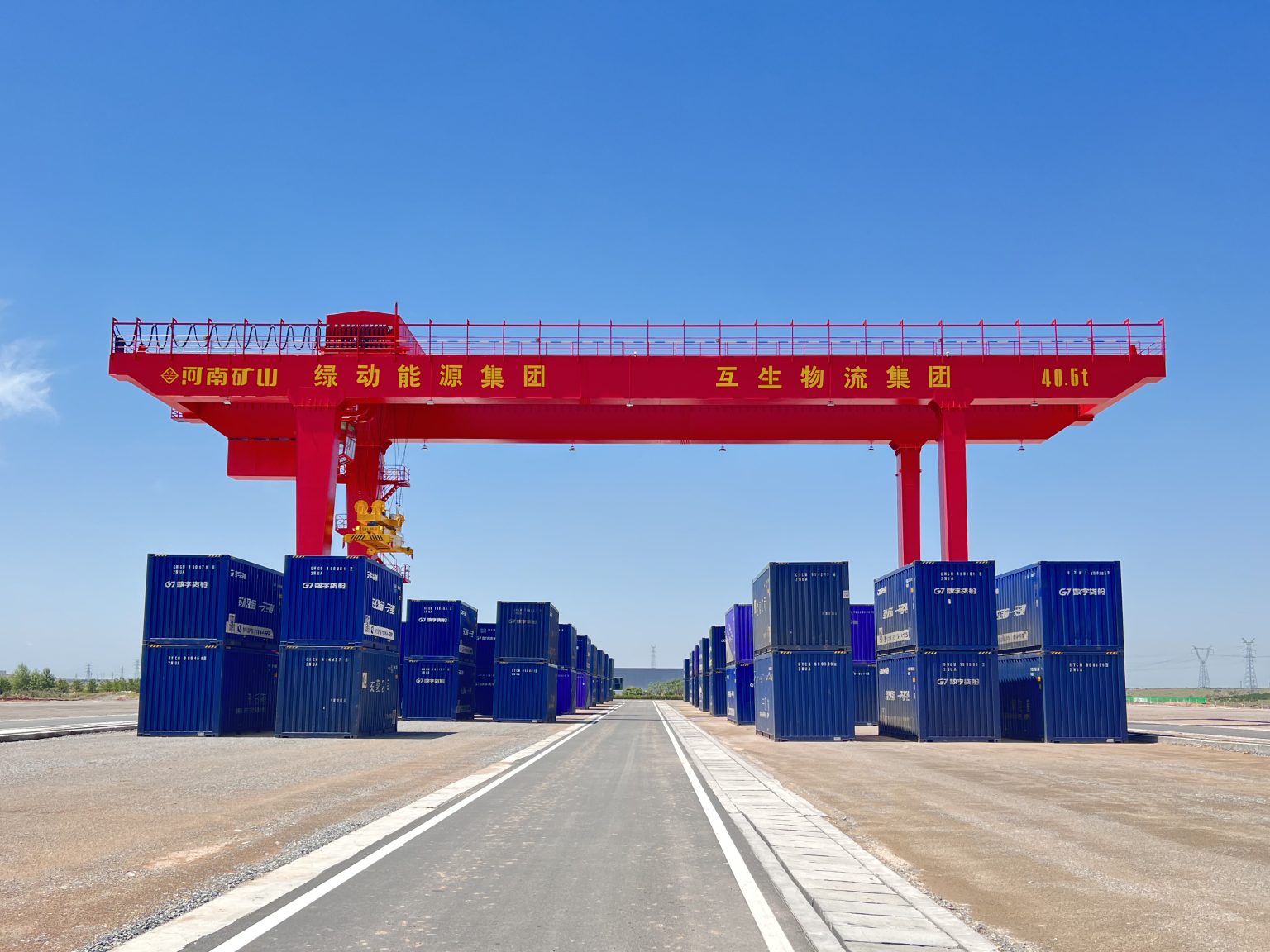
    Steel yards, pipe yards, prefabricated components yards, containerized open-air sites are the most commonly used scenarios for gantry cranes. This type of site is open and unobstructed, requiring a wide range of equipment to cover the operating area.

    It is mainly used for stacking, transferring, loading and unloading of steel, pipes, cement prefabricated parts and heavy materials. The frequency of operation is stable, the load span is large, and there are basic requirements for equipment structural stability and outdoor weather resistance.

    Mining and quarrying projects

    Mines and quarries have dusty operating environments and complex road conditions, and are mostly used for heavy material lifting and large equipment overhaul operations. The gantry cranes here need to adapt to the harsh outdoor working conditions for a long time, and withstand dust, temperature difference and open-air wind and rain erosion.

    The equipment is mainly used for dismantling and assembling mining equipment, transferring heavy parts and lifting mining materials, the overall operating load is large, and the structural strength and wear resistance of the machine body are more demanding.

    Precast Concrete Plant

    The precast concrete production site requires frequent lifting of materials such as molds, finished precast units, sand and gravel raw materials. The lifting load is fixed but the single weight is large, the operation point is relatively centralized, and the equipment starts and stops frequently.

    Most prefabrication plants are semi-open-air or full-open-air layout, and the equipment needs to be adapted to the humid and dusty environment for a long time, and at the same time to ensure the lifting is smooth and avoid the damage of prefabricated components by bumping.

    Shipyard and steel structure processing site

    Shipyards and large steel processing plants have wide outdoor working space, which requires gantry cranes to complete the transfer of large steel components, hull segment assembly, outdoor equipment lifting and splicing work.

    This type of project has higher requirements for equipment span and lifting height, and some scenes require long-time fixed-point heavy-duty operation, so large-tonnage, wide-span double girder gantry cranes are generally used.

    Ports, logistics bases and industrial plants

    Port cargo, large logistics parks, industrial parks in the open area, often using gantry cranes to deal with large equipment, engineering materials, heavy-duty goods on-site transfer.

    Flexible lines of operation and a variety of cargo types require the equipment to be adapted to different tonnages and different types of lifting needs, taking into account the versatility and stability.

    Factory extension and semi-outdoor scene

    Many old factories and factory extensions do not have supporting Overhead Crane track infrastructure, and cannot install indoor traveling crane. Gantry Cranes do not need to rely on the structure of the plant, and can run directly on the ground track or hardened site.

    Able to perfectly cover the plant outside the door, semi-open-air work area, low-cost to make up for the shortcomings of outdoor lifting in the plant, is the preferred equipment for plant expansion and renovation.

    reliable gantry crane supplier

    Core Procurement Requirements for Gantry Crane Projects

    Unlike indoor lifting equipment, the core procurement of outdoor gantry cranes never just look at the tonnage and price. The complex and changeable working conditions outdoors determine that the equipment must have a stronger ability to adapt to the environment and long-term stability.

    Stable outdoor operating performance

    Open-air work to face the wind, rainfall, sun, dust, day and night temperature changes and other natural environmental impacts. The electric control, cable and braking system of ordinary Cranes are prone to aging, malfunctioning, jamming and other problems in the outdoors.

    Qualified outdoor gantry cranes will do special protective treatment, rust-proof body, electronic control dustproof and waterproof, accessories resistant to high and low temperatures, can continue to operate stably in complex weather, will not be subject to minor changes in the environment on the downtime failure.

    Sturdy structure suitable for heavy-duty operation

    Gantry Crane is mostly used for heavy material lifting, and the operation covers a large span, the main beam of the body, outriggers, traveling structure needs sufficient structural strength. Inferior manufacturers will simplify the thickness of the main girder plate, reduce the reinforcement structure, short-term problems can not be seen, long-term heavy-duty operations will appear body deformation, shaking and other hidden dangers.

    High-quality industrial gantry crane suppliers will match the corresponding structural process according to the tonnage and span of the equipment, to ensure that the fuselage will not be deformed under heavy load for a long period of time, and will run smoothly.

    Flexible Adaptation to Site Layout

    The width, operating length, ground conditions and operating line of each yard and factory are different. General standard models may not be able to adapt to the site layout, which may lead to blind spots, track interference, lack of space and other problems.

    Reliable manufacturers will adjust the equipment span, travel length, leg height and structural layout according to the actual measurement data of the site, so that the equipment is completely adapted to the site workflow, and improve the utilization rate of the site.

    Convenient installation and routine maintenance

    The installation conditions of outdoor equipment are more complicated than indoor ones, as the site is open and the infrastructure conditions are different, which requires higher requirements for the installation process. At the same time, the equipment is used in the open air for a long time, and the frequency of daily maintenance and parts replacement will be higher.

    High-quality models with reasonable structural design, easy disassembly and installation, clear fault location, ordinary maintenance personnel can complete the daily maintenance, there will be no maintenance difficulties, accessories difficult to replace the situation.

    Complete technical information and technical support

    Overseas projects and large-scale industrial projects have high requirements for the completeness of equipment technical data. Equipment acceptance, project record, overseas customs clearance, all need a full set of formal information support.

    Regular gantry crane manufacturers can provide assembly drawings, technical parameter tables, wheel pressure data, electrical schematic diagrams, factory inspection reports, operation manuals and other complete sets of information, the whole project with acceptance and filing.

    Long-term parts supply and after-sales response

    The service life of gantry Crane can be more than ten years, during which parts loss and failure are inevitable. Trade intermediaries in the supply, it is difficult to guarantee long-term parts supply and rapid after-sales.

    Entity manufacturers have a complete inventory of spare parts and technical team, can quickly respond to failure problems, timely replacement parts, minimize equipment downtime, reduce project losses.

    Recommended Gantry Crane Models for Various Projects

    There are many subdivided models of gantry cranes, and the load capacity, adaptability scenarios and cost of different models vary greatly. Choosing the right model in combination with the project conditions can not only avoid the waste of performance, but also put an end to the safety hazards of insufficient load capacity of the equipment.

    Single Girder Gantry Crane

    Single girder gantry crane are simple in structure, light in weight and friendly in cost, which are suitable for outdoor work with light and medium loads. Conventional small tonnage, low-frequency material transfer, equipment maintenance scenarios, the choice of single girder models with the highest cost-effective.

    Mostly used in small yards, plant maintenance, light material handling, to meet the basic outdoor lifting needs, low cost of later operation and maintenance, suitable for small and medium-sized industrial projects.

    Double Girder Gantry Crane

    Double girder gantry crane are the preferred model for heavy-duty and large-span scenarios. The double main girder structure has stronger load bearing capacity and better stability of the body, which can be adapted to large tonnage of heavy loads, wide site coverage, and high-frequency continuous operation.

    Widely used in large steel yards, shipyards, prefabricated component bases, harbor heavy-duty operation scenarios, but also the mainstream selection of all kinds of heavy industrial projects.

    Semi-portal Crane

    Semi-portal Crane adopts the structure of single-side outrigger, single-side relying on the existing plant wall or steel structure support, without the need for a complete double-side track site. It is suitable for semi-outdoor operation area at the edge of the factory and the side of the plant.

    It can make full use of the existing building structure, reduce the site infrastructure costs, space adaptability is very strong, is the factory renovation, the corner of the regional operation of the appropriate model.

    Tire Gantry Crane

    Crane does not need to lay a fixed track, relying on rubber tires to walk freely, the operating range is flexible and unrestricted. It is suitable for projects that require frequent adjustments to the working area and temporary construction.

    Many temporary yards, phased construction projects, and logistics sites with changing business patterns will give priority to tire gantry cranes, eliminating the infrastructure costs of track laying.

    Rail-mounted Gantry Crane

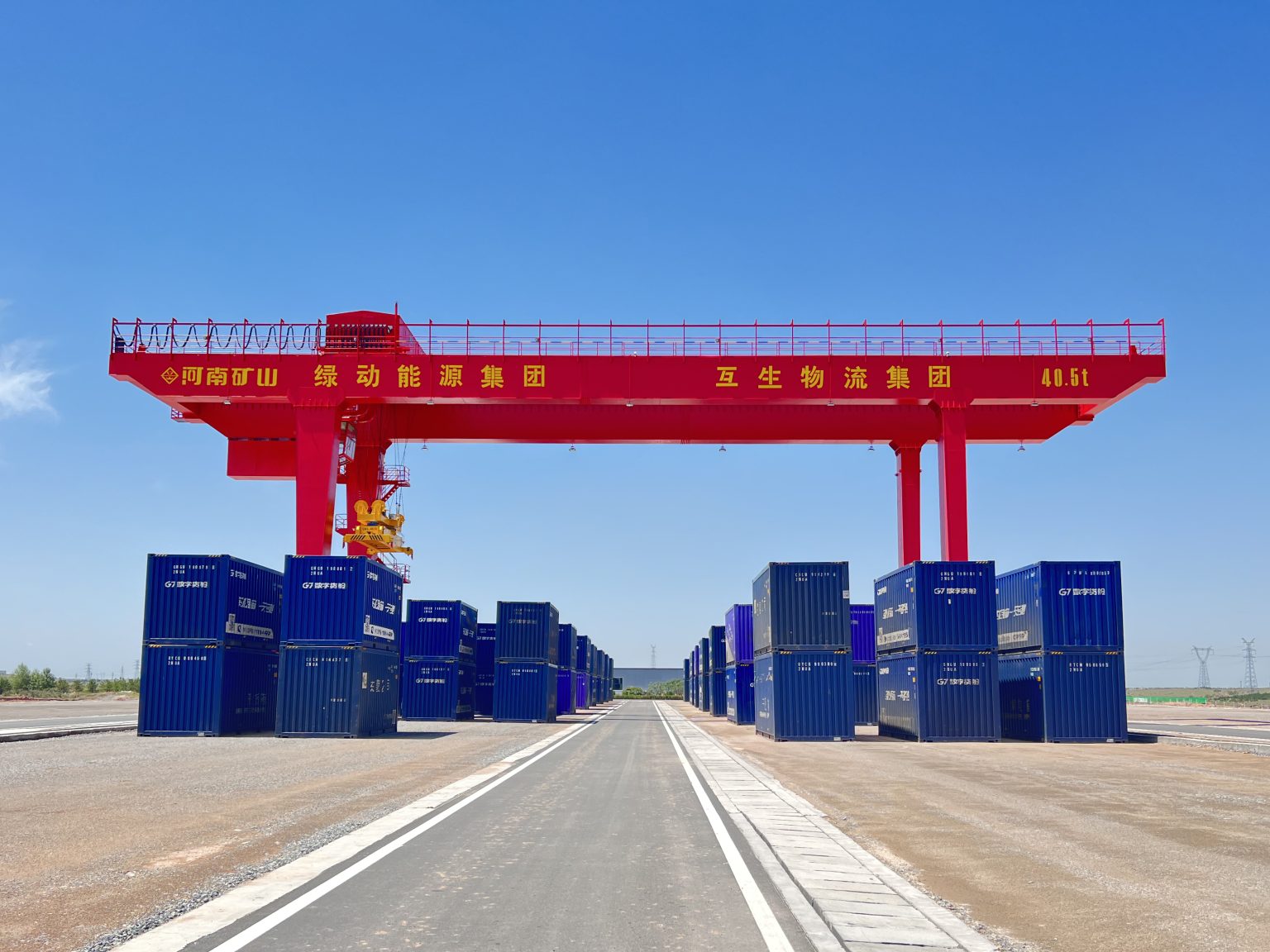
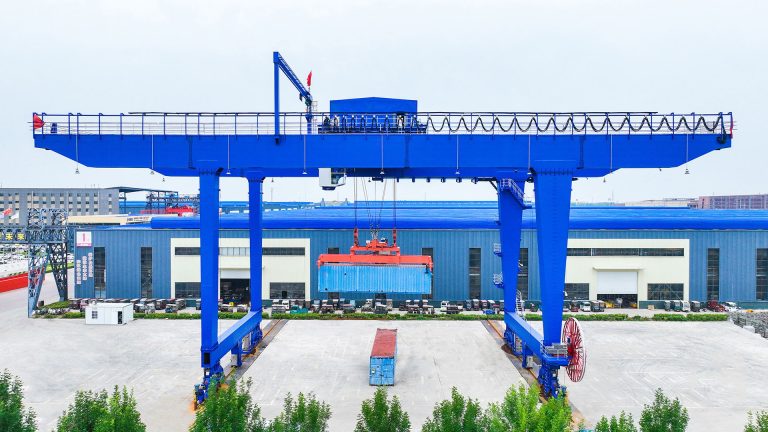
    Rail-type gantry crane rely on fixed track operation, precise alignment, stable operation, and orderly operation. It is suitable for standardized yards and port projects with fixed layout, uniform operation routes and large-scale operation.

    The equipment has small deviation and low failure rate in long-term operation, which is suitable for high-frequency and standardized batch lifting operations, and is more suitable for large-scale normalized operation projects.

    Customized Gantry Cranes

    Crane can be customized for special working conditions, with special spreaders, anti-sway systems, and special protective structures. For example, with grabs, electromagnetic suction cups, special fixtures, suitable for bulk materials, steel, shaped components lifting.

    At the same time, according to the extreme high and low temperatures, strong corrosion, high dust and other special environments, do the targeted equipment modification, fully matching the niche, special industrial operating scenarios.

    reliable gantry crane supplier

    Procurement must verify the core technical parameters

    A lot of procurement deviations and equipment adaptation problems, all stem from the parameters of the verification is not meticulous. Parameters are not simple tonnage matching, but a combination of site, working conditions, the environment of the full range of adaptation, each parameter has a direct impact on the use of equipment and service life.

    Rated lifting capacity

    Lifting capacity selection can not only account for the weight of conventional cargo, need to be superimposed on the self-weight of the spreader, the operation of the dynamic load, while reserving sufficient safety margin. Outdoor heavy-duty working conditions fluctuate greatly, it is strictly forbidden to operate the equipment for a long time with full load or overload.

    If the cargo category is complicated and the maximum load is not fixed, it is recommended to select the model according to the maximum heavy load standard on the site to avoid insufficient carrying capacity of the equipment at a later stage.

    Equipment span

    Span refers to the distance between the two sides of the track center of the equipment, which directly determines the operating width of the equipment. It needs to be strictly matched with the effective working width of the yard, the spacing of cargo stacking, and the space for vehicle traffic.

    Too small a span will exist in the blind spot, too large a span will cause a waste of equipment performance, but also affect the overall stability of the body, must be accurately adapted to the size of the site.

    Lifting height

    The lifting height should be combined with the height of cargo storage, equipment maintenance space, site clearance size comprehensive judgment. It is necessary to reserve a safe distance for lifting to avoid collision with the top of the gantry or the surrounding facilities after the heavy load is lifted.

    For multi-storey cargo stacking and high-altitude maintenance scenarios, it is necessary to raise the lifting height appropriately to meet all operational requirements.

    Running length

    The running length of the equipment truck determines the longitudinal operation coverage of the equipment. It needs to match the overall length of the yard, the cargo distribution area and the operation line to ensure that there is no lifting dead corner in the whole yard.

    Insufficient running length will lead to part of the area can not be covered, need to manually transfer the second time, greatly reducing operational efficiency.

    Working level

    The working level is the core index distinguishing the adaptability of the equipment for light and heavy loads, and it is also the key parameter that is most easily ignored. Light-grade equipment is only suitable for low-frequency overhaul operations, while medium-heavy and heavy-grade equipment can only be adapted to outdoor high-frequency heavy-duty continuous operation.

    Many low-priced equipment will falsely label the tonnage, reduce the level of work, short-term use, long-term high-frequency operation is very easy to structural fatigue, damage to accessories and other issues.

    Operating environmental conditions

    Before purchasing, we must clarify the temperature range, wind level, dust concentration, humidity, and the presence of corrosive media. Seaside sites need to do anti-corrosion and anti-rust treatment, high dust sites need to strengthen the electronic control sealing protection.

    Customized protection configuration according to the environment, in order to protect the equipment in the outdoor long-term stable operation, slow down the aging of the equipment.

    Maneuvering mode

    Conventional small gantry cranes can choose hand-held handle or wireless remote control, flexible, convenient and efficient operation. Large tonnage, large span, high-risk operation scenarios, it is recommended to use the cab control, to protect the operator’s field of vision and operational safety.

    The control mode can be freely matched according to the operating habits and site safety requirements.

    Power supply mode

    Different countries and regions have different voltage and frequency standards, so the power supply parameters must be verified in advance. The manufacturer will match the motor and electric control system according to the local electric power standard, so as to avoid the mismatch of power supply, which may cause the equipment can’t be started and the circuit burned out.

    Rail and foundation conditions

    Rail-mounted gantry cranes have clear requirements for ground foundation bearing capacity and track laying accuracy. The procurement stage needs to confirm the site foundation conditions, and the manufacturer will provide track construction standards and wheel pressure data to guide the site infrastructure construction.

    If the foundation and track are not up to standard, problems such as equipment walking jams, body tilting, running shaking and so on will occur in the later stage.

    Reliable gantry crane supplier screening methods

    Gantry Crane suppliers on the market are divided into physical manufacturers and trade intermediaries, both of which have a huge gap in equipment quality, customization capabilities, and after-sales protection. If you want to avoid procurement traps, you can verify the following dimensions one by one.

    Verify the manufacturer’s entity production qualification

    Many intermediaries only have sales qualifications, no production workshop, processing equipment and quality inspection system, can only sell standardized finished products, can not be customized according to the site conditions of the transformation, and there is no perfect quality control process.

    High-quality gantry crane manufacturers have their own production workshop, CNC machining equipment, a full set of quality inspection equipment, can independently complete the production of equipment, welding, assembly, commissioning, quality control, delivery and stability.

    Verification of similar projects landing cases

    General-purpose Crane manufacturers, may not be familiar with outdoor yards, mines, shipyards and other special conditions. Manufacturers without experience in similar projects, the design of the equipment is difficult to adapt to complex outdoor scenes.

    Manufacturers can be asked to provide the corresponding scene of the project case, on-site photos, customer feedback, and prioritize suppliers with a large number of domestic and overseas outdoor gantry crane project experience.

    Evaluation of the manufacturer’s engineering customization capabilities

    High-quality suppliers are not just simple supply, with professional engineering design team. According to the site drawings provided by the customer, operating conditions, production requirements, optimize equipment parameters, adjust the structural layout, recommend the appropriate model.

    Can be targeted to solve site constraints, special working conditions, non-standard operations and other issues, to provide exclusive customized solutions, rather than applying common standard models.

    Check a full set of technical documents

    Regular manufacturers can provide a complete set of compliant technical documents, including equipment assembly drawings, data sheets of technical parameters, wheel load data, electrical schematic diagrams, list of core accessories, factory inspection reports and so on.

    Overseas projects and large-scale projects are strictly audited, and the complete English technical documents can meet all the requirements for overseas customs clearance, project acceptance, and later operation and maintenance record.

    Confirmation of core parts brand configuration

    The operational stability of the Crane depends entirely on the quality of the core components. Focus on verifying the brand and configuration standard of core parts such as motor, reducer, brake, electronic control system, wire rope, hook, traveling wheels and so on.

    Dependable manufacturers will choose the industry’s well-known brands of parts, to eliminate refurbished parts, low parts, from the source to reduce the probability of equipment failure.

    Verification of quality control and factory testing process

    The formal production process will include non-destructive testing of welds, body size calibration, no-load test run, full load test, safety function debugging and a full set of quality control procedures, each device will be completed before leaving the factory full-featured testing.

    At the same time, complete testing records are kept to ensure that the equipment can be put into production directly after landing, without quality hazards.

    Clear installation and commissioning service scope

    Different manufacturers have different service modes, which are divided into three modes: pure equipment supply, on-site installation guidance, and all-inclusive installation and commissioning. Outdoor Gantry Crane installation precision requirements are high, the installation quality directly affects the service life of the equipment.

    Procurement needs to be clear in advance of the service content, to confirm whether it includes on-site commissioning, technical guidance, equipment acceptance assistance and other services, to avoid the arrival of no one docking installation.

    Verify the warranty and parts supply system

    Priority is given to manufacturers with clear warranty cycles and fast after-sales response. Sudden failure of outdoor equipment can directly lead to project downtime, and the manufacturer’s ability to quickly repair and replenish parts is crucial.

    High-quality manufacturers can provide long-term parts inventory, lifelong technical advice, regular equipment return visit service, to protect the long-term stable operation of the equipment.

    Comprehensive assessment of the overall value, not a single price comparison

    Low-priced offers are often accompanied by hidden shrinkage, such as thinning of the plate, low accessories, lower working level, protection configuration deletion. Short-term procurement cost is low, but the late failure frequency, operation and maintenance costs are high.

    Selection should be comprehensive equipment materials, configuration standards, process quality, after-sales support, service life, to assess the value of the full cycle of the use of equipment, rather than just look at the single purchase price.

    reliable gantry crane supplier

    Procurement of the most easy to step on the misunderstanding

    Most of the problems in the use of gantry cranes stem from poor decision-making at the procurement stage. These common misunderstandings may seem small, but will directly affect the use of equipment for more than ten years of experience.

    Simply finalizing the supplier by price is the most common procurement problem. Low-priced equipment is generally characterized by reduced configuration, simplified process, inadequate protection and other issues, completely unable to adapt to the harsh outdoor working conditions.

    Blindly choose the model without combining the site conditions, such as heavy-duty high-frequency scene selection of light single-beam equipment, temporary site selection of rail-type equipment, there will be insufficient performance or poor adaptability of the equipment.

    Neglect the outdoor wind and rain, dust, corrosion and other environmental factors, do not do special protection configuration, the equipment will be rapidly aging corrosion, failure frequency increases dramatically.

    Neglect the working level parameters, only look at the size of the tonnage, equipment long-term overload fatigue operation, there is a great safety hazard.

    Do not verify the manufacturers of similar projects, gullible general equipment to match all the scenes, resulting in equipment and field operation needs do not match.

    No clear offer contains items, later installation fees, commissioning fees, accessories, information fees and other invisible charges.

    Fuzzy installation, testing, after-sales division of authority and responsibility, equipment problems manufacturers and intermediaries to blame each other, no one to solve the problem.

    Incomplete site dimensions, working conditions, and operational requirements provided during the inquiry stage, the manufacturer’s customized solutions do not match the site, requiring repeated rectification and rework.

    Frequently Asked Questions

    What is the difference between suppliers and manufacturers of gantry cranes?

    Suppliers include trade intermediaries and physical manufacturers, while manufacturers have independent production, customization, quality inspection, after-sales full process capabilities. Intermediaries are only responsible for selling equipment, can not be customized, no quality control capabilities, slow after-sales response. Entity manufacturers can be exclusively customized according to the working conditions, quality control, after-sales service is guaranteed, more suitable for long-term industrial projects.

    What scenarios are suitable for the selection of single girder gantry cranes?

    Light and medium tonnage, low-frequency operations, limited budget scenarios are suitable for single girder models. For example, small material yards, factory daily maintenance, light cargo loading and unloading, temporary construction sites, equipment cost-effective, simple operation and maintenance, can fully meet the basic lifting needs.

    What scenarios prioritize double girder portal cranes?

    Double girder gantry cranes must be used for large tonnage and heavy load, large span coverage, high-frequency continuous operation, and harsh outdoor working conditions. Large steel yard, shipyards, ports, prefabricated component base of heavy-duty operation scenes, double girder equipment stability and load capacity advantage is more obvious.

    Procurement of gantry cranes, in addition to price but also focus on what?

    In addition to price, the core verification work level, environmental protection configuration, core parts brand, body structure process, factory quality inspection report, similar project cases, installation and commissioning services and long-term after-sales protection, these factors determine the long-term use of equipment costs and safety.

    What technical information do I need to request from the manufacturer before placing an order?

    Manufacturers can be asked to provide equipment assembly drawings, detailed technical parameter tables, wheel pressure load data, electrical schematic diagrams, core parts list, factory quality inspection reports, operation and maintenance manuals and other complete sets of information, overseas projects can also provide English compliance information.

    How important is after-sales service for gantry cranes?

    Gantry Cranes operate in the open all year round, and the rate of wear and tear is much higher than that of indoor equipment, so late maintenance and parts replacement are the norm. A perfect after-sales service can quickly deal with equipment failure, replenish matching parts and reduce downtime. There is no after-sales protection of the equipment, once the failure will cause the project downtime loss.

    Can a manufacturer provide a full-scene gantry crane program?

    Professional entity factory can provide one-stop single girder, double girder, semi-gantry, tire, rail, customized gantry cranes full range of models, suitable for yards, mines, shipyards, ports, factory renovation and other scenarios, the quality of the equipment is unified, the after-sales system is unified, the procurement is more worrying.

    MG double girder gantry crane 50 t

    Henan Mine Crane’s MG double girder gantry crane

    Summarize

    The core of selecting a supplier of gantry cranes is never to look for the lowest price, but to find a reliable partner that is suitable for their own project conditions. The quality, suitability and service ability of outdoor lifting equipment directly determine the project construction efficiency and long-term operating costs.

    Whether it is a yard, mine, shipyard or port project, we need to combine the site layout, operating load, environmental conditions, long-term operational planning, matching the corresponding models and parameters. At the same time, we should focus on verifying the production strength, project experience, quality inspection system and after-sales capability of the manufacturers, so as to avoid purchasing mistakes from the source.

    Henan Mine Crane, as a professional gantry crane manufacturer, has been deeply engaged in overseas industrial lifting equipment supporting for many years, and has a wealth of outdoor gantry crane project landing experience. We can provide exclusive customized solutions for different working conditions, a full set of compliant technical information, on-site installation and commissioning guidance and full-cycle after-sales support.

    If you need to adapt to the project gantry crane solutions, you can provide site drawings, lifting capacity, span, lifting height, running length and site conditions, our engineering team will accurately match the optimal equipment program for you.

    Henan Mine CraneDiscuss your requirements ↗
  • Gantry Crane: The Complete Buyer’s Guide for Industrial Lifting

    Gantry Crane: The Complete Buyer’s Guide for Industrial Lifting

    Gantry Crane: The Complete Buyer’s Guide for Industrial Lifting

    Gantry cranes are the core equipment in the field of industrial lifting, from port container storage to shipyard heavy parts lifting, from prefabrication yard components handling to mining bulk cargo handling, almost every heavy industry scene is inseparable from it.

    This guide is written specifically for you to have procurement needs, whether you are an engineer, procurement manager, or project contractor, read through the logic of selection can be clear, avoid purchasing mistakes, choose the most suitable for their own working conditions of the gantry crane.

    MG double girder gantry crane for sale

    Henan Mine crane MG double girder gantry crane

    What Is a Gantry Crane?

    Basic Definition

    Simply put, a gantry crane is a bridge-type lifting equipment with outriggers, the main beam through the two sides of the outriggers fixed to the ground or track, without relying on the plant building, can independently complete the lifting of heavy materials, horizontal handling operations.

    The biggest difference between it and ordinary lifting equipment is that it has a complete gantry structure – the main beam spans the working area, and the outriggers are fixed on the ground, which not only can realize a wide range of work coverage, but also can ensure the stability of lifting, which is suitable for all kinds of heavy materials handling.

    Key Structural Components

    The core structure of the gantry crane is not complicated, each component directly affects the operational performance, the procurement of these components, you can better judge the quality of the equipment.

    The main girder is the “skeleton” of the whole equipment, carrying the lifting load, but also determines the span of the crane and the lifting height of the core components, the material and process directly affects the load-bearing capacity of the equipment.

    Support legs are the “foundation”, symmetrically distributed on both sides of the main beam, responsible for transferring the weight of the machine and lifting load to the ground to ensure the stability of the equipment during operation and avoid tilting.

    The lifting mechanism (hoist/winches) is the “power core”, responsible for lifting and lowering the materials, with the trolley system, it can realize the horizontal movement of the load and complete the complete lifting operation.

    The running system is divided into rail type and tire type, which determines the crane’s moving method and directly affects the equipment’s adaptability; the electrical control system is the “brain”, controlling the accuracy and safety of all movements.

    Gantry Crane vs Overhead Crane

    Many buyers will confuse the gantry crane and overhead crane, in fact, the core difference between the two is the way of support, with a simple comparison table, you can quickly distinguish:

    Comparison Type Advantages Disadvantages Suitable Scenarios
    Single Girder vs Double Girder Single Girder: Low cost Single Girder: Limited load-bearing capacity, suitable for light to medium-duty operations; Double Girder: High cost, complex installation and maintenance Single Girder: Workshop maintenance, small precast yards; Double Girder: Ports, shipbuilding, heavy-duty lifting
    RMG vs RTG RMG: High positioning accuracy, high stacking density, suitable for automation; RTG: Flexible, no track required, low site renovation cost RMG: High infrastructure cost, limited mobility; RTG: Lower accuracy, lower stacking density than RMG RMG: Large container terminals; RTG: Small and medium-sized ports, temporary yards
    Rail Mounted vs Tire Mounted Rail Mounted: Stable, high precision; Tire Mounted: Flexible, strong adaptability, no track required Rail Mounted: Limited mobility, high infrastructure investment; Tire Mounted: High ground requirements, fast wear Rail Mounted: Fixed sites, high-frequency operations; Tire Mounted: Temporary sites, irregular layouts
    Gantry Crane vs Overhead Crane Gantry Crane: Independent structure, strong outdoor adaptability; Overhead Crane: Depends on workshop, convenient for indoor operations Gantry Crane: High initial investment; Overhead Crane: Cannot be used outdoors, limited coverage Gantry Crane: Outdoor, ports, yards; Overhead Crane: Workshops, indoor production lines


    Main Types of Gantry Cranes

    There are many types of gantry cranes, when purchasing, do not blindly follow the trend, the core is based on their own working conditions, according to the main beam design, moving mode, structure configuration to choose, different types of adaptable scenes vary greatly.

    By Girder Design

    According to the main girder design, it is mainly divided into single girder and double girder, which is the most basic classification when purchasing, and it directly determines the equipment’s carrying capacity and applicable scenarios.

    Single girder gantry cranes, with simple structure, light deadweight and low manufacturing cost, are suitable for light and medium lifting operations, such as workshop maintenance and small prefabricated parts handling, with lifting capacity of 5-50 tons and relatively small span.

    Its advantages are convenient installation, small space occupation, simple maintenance in the later stage, for the scene of not much load, not high frequency of operation, cost-effective, do not have to pay extra costs for the extra carrying capacity.

    Double main girder gantry crane, with two main girder structure, high rigidity, strong carrying capacity, can cope with heavy lifting operations, lifting capacity can reach more than 50-1000 tons, suitable for shipbuilding, port heavy duty operations, mining and other scenes.

    It has better stability, and the lifting height and span can be flexibly customized. However, the manufacturing cost and deadweight are higher than single main beam, and the later installation and maintenance are slightly more difficult.

    By Mobility

    By mobility, gantry cranes are mainly divided into rail-type, tire-type and portable, the flexibility and adaptability of the three scenarios differ significantly, the procurement should be combined with the site conditions to choose.

    Rail-mounted gantry cranes (RMG), relying on special tracks laid on the ground, with a fixed trajectory and high positioning accuracy, are suitable for operational scenarios that require high-density stockpiling, such as automated yards in container terminals.

    Its running speed is stable, and it can work with automation system to realize unmanned operation, but the site transformation needs to pave the track, and the preliminary infrastructure investment is slightly higher, suitable for long-term fixed site operation.

    The tire gantry crane (RTG), free from track restrictions, relying on rubber tires to move freely on the level ground, great flexibility, no need to lay tracks, low site modification costs.

    Small and medium-sized ports, temporary container yards, prefabricated parts processing plants, are commonly used RTG, which can move across the box area, across the operating area, to adapt to the flexible adjustment of the site layout, but the positioning accuracy is slightly lower than the RMG.

    Portable gantry cranes are miniaturized and detachable models with a lifting capacity of 5-10 tons, and flexible adjustments of span and lifting height, which are suitable for workshop maintenance, temporary lifting of small parts, and are easy to install and dismantle.

    By Structural Configuration

    By structural configuration, there are three types of gantry, semi-gantry and cantilever gantry, the main difference lies in the structure of the outriggers and the scope of operation.

    Full gantry cranes, with complete outriggers on both sides and a main beam spanning the entire working area, have the widest working range and are the most commonly used type in industrial scenarios, suitable for large-area and large-scope lifting operations.

    Semi-gantry cranes, only one side of the outriggers, the other side is attached to the plant or wall, suitable for indoor and outdoor convergence of the operation scene, such as the workshop and outdoor yard material transfer, saving space.

    Cantilever gantry cranes, with cantilever at one or both ends of the main beam, can extend the working range, suitable for irregular sites, can take into account the main working area and the edge of the area of the hoisting, to enhance the utilization of the site.

    Henan Mine crane Rail-mounted Container Gantry Crane

    Common Industrial Applications

    Gantry cranes are used in almost all heavy industrial fields, different types of cranes are suitable for different operational requirements, and clear application scenarios can be identified before procurement to avoid selection bias.

    Ports and Container Terminals

    Ports and container terminals are the core application scenarios of gantry cranes, mainly with RMG and RTG, responsible for container storage, loading and unloading, as well as connecting the port and land logistics transit.

    For automated yards in large deep-water ports, RMGs are preferred to realize unmanned stacking of containers with automated systems; for small and medium-sized ports or temporary yards, RTGs are preferred to adapt to different operational requirements with flexibility.

    In addition to containers, gantry cranes can also be used with grapples to complete the loading and unloading of bulk cargoes, such as coal and ore, to meet the port’s needs for multi-category cargo handling.

    Shipbuilding Yards

    The shipbuilding industry has very high requirements for gantry cranes, which require large tonnage and high precision, and are mainly responsible for lifting and assembling heavy components such as hull segments, engines and propulsion systems.

    Above the dry dock of large shipyards, double girder gantry cranes with a lifting capacity of more than 500 tons are usually installed to lift hull segments that are dozens of meters long and weigh hundreds of tons to ensure the precision of segment docking.

    Precast Concrete Production

    Precast concrete yards are mostly open-air layouts, where the independent structure of gantry cranes has obvious advantages, and they are mainly responsible for handling bridge girders, precast panels, precast columns and other concrete components.

    RTGs are most commonly used here, with flexible mobility to adapt to the irregular layout of the yard, lifting precast components from the production line to the yard for stockpiling, or directly loading trucks for transportation; single girder gantry cranes can be used for light and medium-sized components, with a greater cost advantage.

    Steel Fabrication Plants

    In the steel processing industry, gantry cranes are used throughout the entire process from raw materials to finished products, responsible for lifting raw materials such as steel plates and sections to the processing station, and then transferring the processed steel components to the finished product yard.

    For the handling of long steel bars, gantry cranes with a double hoist configuration are often used, with the two hoists synchronized to ensure that the steel is always level and to avoid bending or collision during the handling process.

    Construction and Infrastructure Projects

    On construction and infrastructure projects, gantry cranes are mainly responsible for lifting heavy components and handling large equipment, such as prefabricated girders in bridge construction and tube sheets in tunneling projects.

    The project site is mostly a temporary site, portable gantry cranes and RTG are more suitable, can be quickly installed, flexible and mobile, and can be quickly dismantled and transferred after the end of the project, reducing equipment investment costs.

    Mining and Bulk Material Handling

    In the field of mining, gantry cranes are mainly used for bulk material handling and equipment installation, with grabs to complete the loading and unloading of coal, ore and other materials, suitable for the operating environment of open pit mines.

    The gantry cranes here need to have strong anti-corrosion and dustproof ability to cope with the dusty environment of the mines, and to avoid equipment failure affecting the progress of the operation.

    Key Technical Specifications Buyers Must Understand

    Procurement of gantry cranes, the core is to understand the technical parameters, parameters do not match, and then the cheap equipment is useless. These key parameters, directly determine whether the equipment can be adapted to your working conditions, must focus on.

    Lifting Capacity

    Lifting capacity is the core parameter of procurement, refers to the crane can safely lift the maximum load, the unit is tons. When purchasing, you can not only look at the weight of the goods themselves, but also add the weight of the spreader (grab, electromagnetic suction cups, etc.).

    At the same time, it is necessary to reserve 10%-20% of the safety margin, such as the need to lift 50 tons of goods, it is recommended to choose the lifting capacity of 60 tons or more models, to avoid overloading operations, to ensure safety.

    Different working conditions on the requirements of the lifting capacity varies greatly, the workshop maintenance selection of 5-10 tons can be, shipbuilding, port heavy operations require more than 50 tons, or even hundreds of tons of models.

    Span Length

    Span refers to the distance between the outriggers at both ends of the main beam, which determines the operating range of the crane, the unit is meters. Procurement should be determined according to the width of the site to ensure that the main beam can completely cover the operating area.

    For example, in container yard, the span should be able to cover the width of 2-3 rows of containers; for workshop operation, the span should be adapted to the width of the workshop, and at the same time, the outriggers should be set aside for the safety gap with the wall and equipment to avoid collision.

    Lifting Height

    Lifting height refers to the maximum height that the hook can lift, the unit is meter, it should be determined according to the stacking height of the goods, the installation height of the equipment, and also reserve the top safety clearance.

    For example, for container yard, the lifting height should be able to meet the storage demand of 4-6 layers of containers; for workshop operation, the height of the roof should be taken into consideration, so as to avoid hitting the roof when the hook is lifting.

    Duty Classification

    Duty Classification is the “durability index” of the equipment, which is classified according to FEM, ISO or CMAA standards, from A1 to A8, the higher the class, the stronger the durability of the equipment, and it is suitable for high-frequency and long-time operation.

    For low-frequency operations, such as workshop maintenance, A3-A4 grade is sufficient; for high-frequency operations, such as ports and mines, it is recommended to choose A6 grade or above to avoid rapid wear and tear of the equipment.

    Travel Speed & Hoisting Speed

    Travel Speed & Hoisting Speed affects the working efficiency, the unit is meter/minute. For large outdoor sites, such as harbors, you can choose a slightly faster model; for indoor or precision work, you don’t need to go too fast and focus on ensuring accuracy.

    Power Supply Options

    The power supply options for gantry cranes are mainly cable reel, slip line and diesel generator. Indoor work is prioritized to choose cable reel or skidding line, stable power supply; outdoor no power site, you can choose diesel generator power supply.

    How to Choose the Right Gantry Crane

    There is no fixed standard for selection, the core is “fit the working condition”, do not have to pursue high configuration, suitable for their own is the most economical and practical. Share a few practical ideas to help you avoid the pit.

    First clear load demand, calculate the maximum weight of the goods + spreader weight, reserve a safety margin, determine the lifting capacity; then look at the site conditions, outdoor or indoor, with or without a fixed track, site width, determine the crane’s mobile mode and span.

    Then consider the frequency of operation, high-frequency operations choose high working level, double girder models, low-frequency operations choose single girder, portable models, to reduce costs; and finally take into account the future expansion, such as the possibility of increasing the load or expanding the site in the later stage, the selection of a certain amount of margin reserved.

    Gantry Crane Cost Factors

    Many purchasers only focus on the price of the equipment itself, ignoring the later installation and maintenance costs, resulting in total investment beyond the budget. In fact, the cost of the gantry crane is the sum of “equipment price + installation price + maintenance price”.

    What Affects the Price?

    Lifting capacity and span is the core factor affecting the price, the larger the lifting capacity, the longer the span, the more steel is used, the higher the price; double girder models are more expensive than single girder, because the structure is more complex, stronger carrying capacity.

    The level of automation will also affect the price, remote operation, automated stacking, collision avoidance systems and other configurations, will increase the cost; outdoor operation requires anti-corrosion, windproof configurations, will also enhance the price of equipment.

    Customization requirements, such as special spans, lifting heights, and corrosion protection levels, will increase design and manufacturing costs, and the cycle time will be extended accordingly.

    Budgeting Tips for Industrial Buyers

    When purchasing, it is important to consider the whole life cycle costs, not just the initial equipment price. For example, a cheap single-main-beam model has a low initial investment, but high wear and tear during high-frequency operations and high maintenance costs later; a double-main-beam model is expensive initially, but has strong durability, making it more cost-effective in the long term.

    Installation costs should also be accounted for in advance, rail-type models need to lay tracks, installation costs are higher than the tire type; outdoor models should also consider the cost of infrastructure, to avoid additional investment later.

    At the same time, reserving a certain amount of maintenance budget for regular inspection and replacement of parts can extend the service life of the equipment and reduce the losses caused by malfunctions and downtimes.

    Safety Features to Look For

    Industrial lifting operations, safety is the first place, procurement must check the safety configuration of the equipment, the lack of these configurations can avoid many safety accidents.

    Overload protection device is the core safety configuration, when the lifting load exceeds the rated value, it will automatically stop the operation, to prevent equipment damage and load falling; travel limit switch, to limit the lifting height of the hook and the operating range of the crane, to avoid collision.

    Outdoor operation of gantry cranes must be equipped with windproof devices, such as windproof cable, wind speed monitor, to prevent the equipment from being blown over in windy weather; anti-shaking technology can reduce load shaking, enhance the accuracy of lifting, and avoid material collision.

    Emergency braking system can quickly stop the machine in case of sudden failure to ensure the safety of personnel and equipment; some high-precision operation models are also equipped with collision avoidance system to avoid collision with other equipment and obstacles.

    Automation and Smart Technologies

    Nowadays, many industrial scenarios are promoting automation, and gantry cranes are no exception. Appropriate intelligent configurations can enhance operational efficiency and reduce labor costs.

    PLC control system, can realize the automatic operation of the crane, such as automatic positioning, automatic stacking, reduce manual intervention, suitable for high-frequency, repetitive operations, such as container yard.

    Remote operation function allows the operator to control the equipment in a safe area, avoiding the risk of working at height or in a dangerous environment; GPS positioning system, mainly used for RTG, can accurately locate the position of the equipment and improve operational efficiency.

    Anti-collision system and intelligent monitoring system can monitor the real-time operation status of the equipment, timely detection of faults and reduce downtime, but these configurations will increase the cost, and can be selected according to the operational requirements.

    Installation and Maintenance Considerations

    Installation and maintenance of gantry cranes directly affect the service life of the equipment and operational safety, and must be considered in advance when purchasing to avoid trouble later.

    Foundation Requirements

    Rail-type gantry cranes need to lay a special track, the foundation should be able to withstand the self-weight of the equipment and lifting loads, to avoid deformation of the track; tire-type models, the ground is required to be flat, solid, and the carrying capacity to meet the needs of the equipment operation.

    For large gantry cranes, a special foundation needs to be poured to ensure that the equipment does not tilt or shake during operation, and the foundation construction should be in accordance with the specifications, otherwise it will affect the stability of the equipment.

    Inspection and Preventive Maintenance

    After the installation of the equipment, a comprehensive inspection should be carried out to ensure that the components are firmly connected and the electrical system is normal; in daily use, wire rope, hooks, bearings and other vulnerable parts should be checked regularly, and the worn parts should be replaced in time.

    Regularly lubricate the moving parts to prevent rust and wear; outdoor models should be well anticorrosive treatment, and regularly check the anticorrosive coating to avoid rust and corrosion of steel and prolong the service life of the equipment.

    Spare Parts Availability

    When purchasing, make sure that the supplier can provide sufficient spare parts, such as wire rope, hooks, bearings and other wear parts, to avoid the lack of spare parts can not be repaired in time when the equipment fails, affecting the progress of the operation.

    Comparing Gantry Crane Options

    When purchasing, you often need to choose between different types of gantry cranes, using a comparison table can quickly clarify the differences and make the right choice, the following are the most commonly encountered in the procurement of several groups of comparisons:

    Comparison Dimension Gantry Crane Overhead Crane
    Support Structure With independent legs, fixed on the ground, no reliance on workshops No legs, main girder suspended on the track of the workshop roof
    Working Environment Mainly outdoors, also applicable to large indoor workshops Indoor only, dependent on workshop structure
    Cost Investment Requires separate foundation/track laying, slightly higher initial investment Relies on workshop tracks, lower initial investment
    Suitable Scenarios Ports, yards, outdoor construction sites, large precast yards Workshops, indoor production lines, warehouses

    Common Buying Mistakes to Avoid

    Many purchasers because of the lack of experience, easy to make some low-level mistakes, resulting in equipment can not be adapted to the working conditions, and even increase the additional cost, these misunderstandings must be avoided.

    The most common mistake is underestimating the level of work. For example, if you choose a low-level model for high-frequency work, the equipment will wear out quickly, doubling the maintenance cost later on, and even requiring early replacement of the equipment.

    Only look at the price of the equipment, ignoring the whole life cycle costs. Some cheap models, the initial investment is low, but poor durability, frequent maintenance, long-term total investment is higher.

    Ignore the site conditions, such as outdoor operations selected without anti-corrosion configuration of the model, the equipment is easy to rust; site is narrow but selected a large span model, can not be installed and used properly.

    Do not verify the supplier’s ability, some suppliers do not have the appropriate production qualifications, the quality of the equipment can not be guaranteed, the later failure, can not provide timely after-sales support, affecting the progress of the operation.

    Do not pay attention to the safety configuration, in order to save costs, choose no overload protection, limit switch models, easy to cause safety accidents, the loss is not worth it.

    Frequently Asked Questions

    How much does a gantry crane cost?

    The price of a gantry crane has no fixed value, mainly depends on the parameters and configuration. Conventional single girder model, lifting capacity of 5-30 tons, the price is about tens of thousands to hundreds of thousands; double girder model, lifting capacity of more than 50 tons, the price ranges from hundreds of thousands to millions.

    Automation configuration, anti-corrosion grade, customization needs, will increase the cost, procurement should be combined with their own budget and working conditions, reasonable choice of configuration, do not blindly pursue high prices.

    What is the maximum capacity of a gantry crane?

    The lifting capacity of a gantry crane can be customized according to the needs of the conventional models in the 5-100 tons, the heavy-duty models can reach 500-1000 tons or more, mainly used for shipbuilding, offshore engineering and other heavy-duty operation scenarios.

    At present, the largest lifting capacity of gantry cranes in the industry can reach more than 2,000 tons, which is used for the lifting operation of super-large offshore platforms and giant ships.

    Which is better: RMG or RTG?

    There is no absolute advantage or disadvantage between the two, the core depends on the site and demand. For fixed site, high-density stockpiling and automated operation, choose RMG; for temporary site, flexible layout and no rail, choose RTG.

    Port automation yard preferred RMG, small and medium-sized ports, temporary yard choose RTG, more cost-effective, more adaptable.

    How long does a gantry crane last?

    Under normal maintenance, the service life of a gantry crane is 15-20 years, the higher the working level and the better the maintenance, the longer the service life.

    The higher the level of work and the better the maintenance, the longer the service life. The service life of high-frequency operation models may be shortened to 10-15 years; low-frequency operation, proper maintenance, can be used for more than 20 years, or even longer.

    Can gantry cranes be customized?

    Yes, customization is one of the core advantages of gantry cranes. Almost all parameters can be customized, such as lifting capacity, span, lifting height, moving mode, but also according to the operating environment can be customized anti-corrosion, explosion-proof, windproof and other configurations.

    Customized models require a certain design and production cycle, the price will increase accordingly, the purchase should be planned well in advance.

    What certifications are required?

    Different regions have different certification requirements, commonly used in the domestic GB standards, CE certification; export models need to meet local standards, such as North America’s CMAA certification, Europe’s FEM certification.

    Before the equipment leaves the factory, it needs to provide qualified certificates and test reports; after installation, it needs to undergo professional testing and obtain a license before it can be put into operation.

    Why Choosing the Right Manufacturer Matters

    Gantry crane is a long-term investment, the quality of equipment and after-sales support, directly affecting the safety and efficiency of later operations, choose a reliable manufacturer, can avoid a lot of trouble.

    Priority is given to manufacturers with rich engineering experience and production qualifications, who can provide professional selection advice according to your working conditions to avoid selection bias; at the same time, perfect after-sales support can provide timely maintenance and supply of spare parts when the equipment fails to reduce downtime.

    Also pay attention to the manufacturer’s case reference to see if they have experience in supplying equipment for similar working conditions, such as port gantry cranes, give preference to manufacturers with port project cases, the quality is more guaranteed.

    Conclusion

    Procurement of gantry cranes, the core of the “fit for the conditions, taking into account the cost, to protect safety”, it is not simply “buy equipment”, but to choose a long-term adaptability to their operational needs, reduce operating costs, and protect the operational safety of the solution.

    Understand the type, parameters, cost, avoid common misconceptions, combined with their own load requirements, site conditions, frequency of operation, you can choose the right model. If you are not sure, you can let the manufacturer provide professional selection program, combined with the site layout and operational needs, accurate matching equipment.

    Remember, gantry crane is a long-term investment, spend more time in the early stage to clarify the needs, choose the right model and manufacturer, later you can reduce failures, reduce costs, and realize efficient and safe lifting operations.

    Henan Mine Crane manufactured Automated Container Gantry Crane

    Henan Mine Crane manufactured Automated Container Gantry Crane

    Henan Mine Crane Factory Custom

    If you are purchasing a gantry crane for your project and are not sure whether the lifting capacity, span and other parameters match the working conditions, you may want to submit your project site layout and load requirements, our engineers will provide you with a free selection assessment.
    Henan Mine Crane Factory supply, as a professional crane manufacturer, integrates R&D, design, manufacturing, sales and service to provide customers Please feel free to contact us, we will provide you with free design drawings, and field survey!

    Henan Mine CraneDiscuss your requirements ↗
  • Gantry Crane Safety Essential Guidelines for Port and Shipyard Operations

    Gantry Crane Safety Essential Guidelines for Port and Shipyard Operations

    Gantry Crane Safety Essential Guidelines for Port and Shipyard Operations

    A single dropped container can cost a terminal operator millions of dollars, shut down a berth for days, and, in the worst cases, end a worker’s life. Gantry crane safety is not a compliance checkbox. It’s the operational backbone of every port and shipyard that depends on these machines to move thousands of tons of cargo every day.

    Crane-related incidents remain among the costliest and most preventable categories of workplace accidents. Industry data shows that the majority of crane accidents trace back to human error, poor rigging, or skipped inspections, not equipment that failed without warning. That means most incidents are avoidable with the right combination of training, maintenance, and technology.

    The next few sections will cover the essential safety principles of this type of work that ensures it is performed effectively and safely. You will understand how to identify the hazards, know what inspections and maintenance must be done, operate the units effectively during adverse weather conditions and take advantage of modern safety equipment to prevent incidents and reduce downtime.

    Why Gantry Crane Safety Is Critical

    Henan Mine Crane manufactured Gantry cranes, including rail-mounted gantry (RMG), rubber-tired gantry (RTG), and ship-to-shore (STS) cranes, are the workhorses of container terminals and shipyards. They operate continuously, often in three shifts, moving loads that can exceed 60 tons at heights of over 100 feet. Port gantry crane safety matters because the operating environment combines heavy loads, moving vessels, high winds, and dense pedestrian and vehicle traffic in a single workspace.

    Common Hazards in Port & Shipyard Operations

    Several hazards are specific to, or intensified within, port and shipyard settings:

    • Heavy suspended loads:Despite the crane‘s rated capacity containers, plant and break bulk are often delivered approaching its limits leaving no margin for error of rigging or calculation. A container shown as net 20 ton on the bill of lading can actually be much more than the stated weight and reading of the weighing device or load moment indicator is therefore not a safeguard but absolutely essential. An error of a few hundred pounds at this stage can rapidly change into an overload.
    • High winds:Coastal and open-yard environments expose tall gantry structures to sustained winds and sudden gusts that can destabilize loads or the crane itself. Because ports are frequently sited on open coastlines or estuaries with no natural windbreaks, gust loading can appear with little warning even on days that start out calm. Wind acting on a suspended container functions like a sail, amplifying swing forces well beyond what the same wind would do to an unloaded hook.
    • Vessel movement:Due to time-varying tides, currents, and mooring offsets it is impossible for the load path for shore based ship to shore cranes to be perfectly at rest. As a vessel heaves with the tide or swings in its mooring chains the position change of the crane spreader relative to the container stack requires a continual series of micro-coordinates during a shift.
    • Limited visibility:Cab operators 100+ feet in the air at night or in fog can‘t always see their ground crew and must depend on cameras or direct signals. Glare from floodlights, rain streaked across cab glass, and blind spots of the spreader itself adds to the problem, making camera system and hand signals a functional necessity and not a luxury.
    • Multiple cranes operating simultaneously:Container terminals frequently run several RTGs or RMGs in adjacent lanes, raising the risk of boom or spreader collisions. High-throughput terminals may operate a dozen or more Henan Mine Crane manufactured gantry cranes within the same yard block, and without anti-collision sensors and disciplined travel protocols, a momentary lapse in attention during a shift change or handover is enough to bring two machines into contact.

    Consequences of Poor Safety Management

    When gantry crane safety programs fail, the fallout extends well beyond the immediate incident:

    • Equipment damage: repairing a damaged boom, spreader, or rail system can take a crane out of service for weeks, and replacement structural components for large STS or RMG cranes are rarely held in local inventory, often requiring shipment from the original manufacturer.
    • Cargo loss: dropped or crushed containers can destroy high-value cargo and trigger costly claims, and depending on the contents, a single incident can also create secondary hazards such as chemical spills or fire that extend the disruption well past the initial event.
    • Worker injuries: struck-by and caught-between injuries are frequently severe or fatal given the size of loads involved, and even non-fatal incidents often result in long-term disability given the crushing forces a multi-ton container or steel coil can exert.
    • Operational downtime: a single incident can halt operations across an entire berth while investigations are conducted, and depending on the jurisdiction, regulators may require the crane and surrounding work area to remain frozen in place until the investigation is complete, sometimes for days.
    • Regulatory penalties: safety violations can result in six-figure fines and, in cases of willful violations causing death, criminal liability for responsible parties. Beyond the direct fine, a serious incident typically triggers heightened inspection scrutiny across the rest of the terminal’s crane fleet, multiplying the compliance burden well beyond the original event.

    Main Safety Risks Associated with Gantry Cranes

    Understanding the specific failure modes behind gantry crane incidents helps safety teams prioritize controls.

    Load Swing and Dropped Loads

    Uncontrolled load swing ,caused by sudden stops, wind gusts, or improper rigging, is one of the leading causes of dropped loads and struck-by injuries. Once a container or bulk load begins to swing, the pendulum forces involved can exceed what a hoist brake or sling was ever designed to arrest, particularly if the operator attempts to correct the motion with abrupt counter-movements rather than letting it settle. Anti-sway control systems, which use sensors to automatically dampen trolley and hoist movement, and disciplined lift planning that accounts for wind and travel speed in advance, significantly reduce this risk.

    Crane Collision Risks

    Terminals running multiple RTGs or RMGs on shared or adjacent rails face real collision risk, particularly during shift changes, poor-visibility conditions, or when cranes travel at higher speeds than conditions allow. Because these machines often share a single rail corridor or operate in tightly packed yard blocks, even a short lapse in spacing discipline between adjacent units can result in a boom, spreader, or gantry-leg collision that takes both cranes out of service simultaneously. Anti-collision sensors, using laser, radar, or ultrasonic detection to enforce a minimum separation distance automatically, are now considered standard equipment on modern port cranes rather than an optional upgrade.

    High Wind Hazards

    Tall, exposed gantry structures act like sails, and the larger the surface area of a suspended container or bulk load, the more wind force is transferred into the hoist and trolley system. Beyond a crane’s rated wind speed, structural stability, load control, and even the crane’s ability to remain on its rails can be compromised, and in extreme gusts an unanchored crane can be pushed along its rails or, in the worst documented cases, overturned entirely. This is why wind monitoring, automated shutdown thresholds, and anchor devices are treated as core safety infrastructure rather than supplementary equipment at coastal terminals.

    Structural Fatigue and Metal Failure

    Repeated loading cycles over years of operation cause microscopic fatigue in structural steel, particularly at welds, bolted connections, and other stress-concentration points that absorb the greatest share of cyclical load. Because fatigue cracks typically begin below the visible surface and grow slowly before reaching a critical size, a crane can appear structurally sound during a routine visual inspection right up until failure. Without scheduled non-destructive testing and structural inspection at defined intervals, fatigue failures can occur with little visible warning, which is why periodic crack detection is treated as a mandatory maintenance task rather than a discretionary one.

    Electrical Hazards

    Henan Mine Crane manufactured Gantry cranes draw substantial power to operate hoist motors, trolley drives, and control systems, and shipboard or dockside cranes operating near overhead lines, in wet marine environments, or in proximity to saltwater spray face elevated shock and short-circuit risks. Corrosion from salt air also accelerates the degradation of electrical enclosures and connections faster than in typical inland industrial settings, meaning port cranes generally require more frequent electrical inspection than their onshore industrial counterparts to maintain the same safety margin.

    Mechanical Brake Failure

    Hoist and travel brakes are safety-critical components; they are the last mechanical line of defense preventing an uncontrolled load descent or a runaway crane after a stop command is issued. A worn brake lining, incorrect adjustment, or contamination from oil or grease can silently reduce braking torque well below its rated capacity long before the brake shows any obvious external sign of failure. Because brake performance cannot be reliably judged by sight alone, load testing on a fixed schedule , not just visual inspection, is the only way to confirm braking capacity is intact.

    Human Error

    Consistent with the 90% figure cited above, miscommunication, fatigue, complacency, and skipped procedural steps remain the dominant contributing factor across nearly all serious incidents. Long shifts, repetitive tasks, and production pressure to keep cargo moving all create conditions where experienced operators can normalize small deviations from procedure over time, skipping a pre-shift check that “was fine yesterday,” or accepting a load estimate instead of confirming it on the load chart. Because human error is rarely a single dramatic mistake but rather an accumulation of small procedural shortcuts, addressing it requires consistent enforcement of checklists and standard procedures, not just initial training.

    Poor Communication During Lifting

    Ambiguous hand signals, unclear radio communication, or a signal person losing line of sight with either the load or the operator has caused numerous documented incidents, particularly during blind lifts where the operator cannot see the landing zone directly. A single misinterpreted signal during a critical phase of the lift, such as the final seconds before a container is set down, can be enough to cause a struck-by or caught-between injury among ground crew. Standardized signal protocols, a single designated point of communication authority per lift, and a clear stop-work rule whenever line of sight is lost are the core controls that address this risk.

    Essential Safety Features Every Modern Gantry Crane Should Have

    Modern intelligent Henan Mine Crane Factory supply gantry crane systems combine mechanical safeguards with digital monitoring to reduce reliance on manual vigilance alone.

    • Overload Protection System : shuts down the crane if the load is above capacity – the single most widelyacknowledged reason for crane accidents. The latest systems offer warning signals as the load nears the limit, allowing operators to reconsider the lift without the equipment stopping.
    • Anti-Collision Technology :employs a laser or radar sensing between cranes in multi- crane yards to avoid collisions between booms and trolleys. Such anti-collision systems tend to automatically implement a preset minimum margin, to decrease or stop crane movement well in time, even if a distracted or tired crane operator makes a misestimation.
    • Wind Speed Monitoring:System–anemometers that are connected to automated alarms warn operators as winds near dangerous levels; networked systems enable a crane yard to have one set of readings that are sent to every crane operator, rather than just a single measurement from anemometer directly connected to their machine.
    • Emergency Stop Devices:presence of easily accessible, well labeled e-stop buttons at the operator station as well as ground level so that the operation can be stopped pronto in the event of danger. In conventional cars, shouts and hand signals are visible either from within the cab or from the ground, and so we should have redundant e-stop stations so as to be able to put a stop any time a ready person on either side sees an impending danger.
    • Travel and Hoist Limit Switches:these protection devices are designed to guard against over-travel, and over-hoisting which could otherwise damage the structure, or drop the load, especially the phenomena known as “twoblocking” in which the hook is pulled into the boom tip to the extent of severing the hoist line completely.
    • Load Moment Indicators:give instant readouts of load weight compared to capacity, warning the operator of approaching overload situations before they happen. These are not a load chart, which gives maximum safe working limits for different boom lengths at various radii; load moment indicators automatically recalculate capacity limits at the boom angle/radius/configuration in effect as the lift is taking place.
    • CCTV and Blind Spot Monitoring:camera systems that allow the operator to ‘see’ across the entire span of the crane where their cab window cannot, often an important feature on tall STS and RMG cranes where the spreader/load may be out of view during landing.
    • Intelligent PLC Safety Controls PLCs:that incorporate safety interlocks, such as prevents possible unsafe control combinations, like simultaneous hoist and travel commands producing an operating envelope beyond that of the crane.
    • Remote Monitoring & Predictive Maintenance Sensors:connected by the Internet of Things monitor factors such as vibration, temperature and cycle load levels so sensors can forecast emerging faults well in advance of the failure. Maintenance can thus be arranged at a time convenient to the production schedule, rather than as an emergency remedy upon encountering a late-shift breakdown.

    Modern intelligent cranes reduce accident risk while lowering long-term maintenance costs. By catching mechanical issues before they escalate into failures, predictive maintenance systems reduce unplanned downtime alongside the safety benefit, a rare case where safety investment and cost efficiency point in the same direction.

    gantry crane

    Daily Gantry Crane Safety Inspection Checklist

    A disciplined gantry crane inspection checklist is the single highest-leverage control available to any terminal or shipyard. OSHA’s general industry standard for overhead and gantry cranes recommends pre-shift inspections specifically to catch mechanical or structural issues before they compromise safe operation.

    Before Operation

    • Wire ropes: checked for fraying, kinking, birdcaging, or wear beyond manufacturer tolerances; even a small number of broken wires within a single lay length can signal that a rope is approaching the end of its safe service life.
    • Hooks: safety latch integrity, deformation, or cracking; any measurable throat opening beyond the manufacturer’s specified tolerance is grounds for immediate removal from service.
    • Spreader: twist-lock function and structural condition; twist-locks that fail to engage fully are one of the most common causes of a container being dropped during lifting.
    • Brakes: hoist and travel brake response, checked with a no-load test run before any lift begins.
    • Hydraulic systems: fluid levels, pressure readings, and leak checks around hoses, fittings, and cylinders.
    • Tires or rails: wear patterns, alignment, and pressure for RTGs, or rail surface condition and wheel flange wear for RMGs and STS cranes.
    • Electrical cables: insulation damage, connection integrity, and evidence of chafing where cables pass through moving joints or festoon systems.
    • Warning devices: horns, lights, and alarms functioning correctly, including any wind-speed or overload alarm integration.

    During Operation

    • Atypical vibration in the hoist, trolley, or gantry structure; abnormalities here might foreshadow bearing damage, gear failure, or an emerging structural problem, months prior to it manifesting visibly.
    • Unusual sounds emanating from the motors, gearbox or brakes including grinding, squealing, knocking noises that are not characteristic of the normal operating profile of the equipment.
    • Observe the load stability in the lift as it travels along the path; ensure that the load continues to be stable and check the load itself for signs of swing, rotation or movement.
    • The wind conditions relative to the rated operating limits of the crane, monitored constantly rather than visually recorded at the beginning of a shift as wind speed can vary greatly within a few hours.

    After Operation

    • Parking procedure:locking down the crane as per site procedures by engaging the travel brakes and rail clamps, as applicable.
    • Lockout procedures:ensure the power is isolated before access for maintenance, by following a documented lockout/tagout step sequence so the crane cannot be energized when personnel are working on it.
    • Visual inspection:walk-around at the shift‘s end to identify any new damage received that wasn‘t visible during operation.
    • Maintenance records :Recording information for the next shift and maintenance crew, has anything borderline, not necessary to shut down at the time, but need watching in the future.
    Inspection Item Frequency Risk if Ignored
    Wire ropes and slings Daily (pre-shift) Sudden load drop, struck-by fatality
    Hook and safety latch Daily (pre-shift) Load disengagement mid-lift
    Brakes (hoist/travel) Daily + monthly load test Uncontrolled load descent or crane runaway
    Limit switches Daily Over-travel, structural damage, two-blocking
    Structural steel/welds Monthly / annual Fatigue crack propagation, structural failure
    Electrical systems Monthly Shock hazard, fire, control malfunction
    Rail alignment Quarterly Derailment, uneven load distribution
    Anti-wind/anchor devices Before storm season Crane displacement or overturning in high wind

    Any gantry crane that has been idle for more than six months should receive a full inspection consistent with monthly inspection procedures before it’s returned to service, with results documented in the crane’s inspection record.

    Safe Operating Procedures for Gantry Cranes

    Safe lifting operations depend on procedural discipline applied consistently, lift after lift.

    • Lift planning before every operation:Confirm load weight, center of gravity, and travel path before the hook touches the load. For non-routine or unusually heavy lifts, a documented lift plan reviewed by a competent person should be completed in advance rather than worked out on the fly.
    • Proper rigging practices:Remove slack from slings or chains before lifting, and make a preliminary lift of a few inches to confirm the load is balanced before proceeding. This brief pause is one of the simplest and most effective checks available, since it reveals rigging errors while the load is still low to the ground and easy to correct.
    • Safe travel speed:Avoid sudden acceleration or deceleration, which induces load swing, and reduce travel speed further when operating near the edges of the crane’s rated wind envelope or in congested yard areas.
    • Maintaining safe clearance:Keep clear of live electrical cables, other cranes or staff inside the swing radius at all time. Do not presume that warning with voice is enough; use physical cell barriers and/or clearly marked cell limits to establish it.
    • Communication between operator and ground crew:Basic standard hand signs or radio communications should be used in a consistent manner so that there is one clear voice of communication at any one time during a lift.
    • Emergency shutdown procedures:All personnel involved in a lift should know how to trigger an emergency stop and what to do if a load becomes unstable mid-lift, including a pre-agreed default response, typically to stop all motion and let the load settle rather than attempting a rushed correction.

    Weather Safety: Operating Gantry Cranes in Extreme Conditions

    Ports are disproportionately exposed to weather-related crane risk, which is why shipyard crane safety programs must treat weather monitoring as a core operational function, not an afterthought.

    Maximum Safe Wind Speeds

    Every gantry crane has a manufacturer-rated maximum operating wind speed, beyond which lifting operations must stop and, at higher thresholds, the crane must be secured against travel. These thresholds account not just for the crane’s own structural stability but for the increased swing forces acting on a suspended load, which means the safe operating limit for lifting is typically lower than the limit for simply leaving the crane parked and idle. Wind readings should be taken at crane height rather than at ground level, since wind speed increases significantly with elevation and a ground-level reading can understate the actual force acting on the boom and load.

    Crane Type Typical Operating Wind Limit Storage/Survival Wind Limit
    Rubber-Tired Gantry (RTG) ~20 m/s (45 mph) ~50 m/s (112 mph), rail-clamped
    Rail-Mounted Gantry (RMG) ~20 m/s (45 mph) ~55 m/s (123 mph), anchored
    Ship-to-Shore (STS) ~16–20 m/s (36–45 mph) ~60 m/s (134 mph), storm-pinned

    Figures are illustrative industry norms; always defer to the specific manufacturer’s rated limits for your equipment.

    Rain and Reduced Visibility

    Heavy rain reduces both visual range and traction for rubber-tired cranes, and standing water on rails or yard surfaces can also affect braking performance for both RTGs and RMGs. Operations should slow or pause when visibility drops below safe signaling distance, and additional caution is warranted at night or during fog, when rain further degrades an operator’s already limited sightlines from the cab.

    Lightning Precautions

    Tall steel crane structures are natural lightning targets, and a strike can damage sensitive electronic control systems even if it doesn’t cause direct physical harm to personnel. Sites should have a documented lightning action threshold, commonly based on a detected strike within a set radius of the terminal, that halts operations and moves personnel to shelter until a defined all-clear period has passed without further activity.

    Storm Parking Procedures

    Before any operational shutdown for severe weather, cranes should be moved to designated storm parking positions and secured using rail clamps or anchor devices. Storm parking locations are typically chosen in advance based on wind exposure and structural bracing, and the sequence for securing a crane, engaging brakes, applying clamps, and confirming anchor engagement, should be rehearsed well before a storm is actually forecast, since these procedures often need to be completed under real time pressure.

    Typhoon and Hurricane Preparation

    Coastal terminals in typhoon- or hurricane-prone regions rely on anti-wind and anti-skid devices, rail clamps, anchor devices, and iron shoes, to prevent cranes from being blown off their rails. Best practice calls for concentrated inspection and repair of these devices before storm season begins, along with annual anti-typhoon drills that specifically test the operation of wind-protection equipment. Tall outdoor cranes should also carry anemometers and wind-speed alarm systems calibrated to trigger before the crane’s design wind threshold is reached.

    Gantry Crane Maintenance for Long-Term Safety

    A structured crane maintenance checklist extends equipment life while closing the gap where most mechanical-cause incidents originate.

    • Preventive maintenance schedule:Daily, monthly, and annual tasks should be documented and tracked against a fixed calendar, not performed reactively, with a clear owner assigned to each task so nothing falls through the cracks during shift or personnel changes.
    • Lubrication requirements:Wire ropes, bearings, and gearboxes require manufacturer-specified lubrication intervals to prevent premature wear, and marine environments typically demand more frequent lubrication cycles than inland industrial settings because salt air accelerates the breakdown of protective coatings.
    • Structural crack detection:Periodic non-destructive testing,dye penetrant, ultrasonic, or magnetic particle inspection , on high-stress structural poin ts catches fatigue before failure, and the specific inspection points should be identified in advance based on the crane’s design, focusing on welds and connections that experience the highest cyclical stress.
    • Rail alignment inspection:Misaligned rails accelerate wheel wear and increase derailment risk for RTGs and RMGs, and because ground settlement can occur gradually over months or years, rail alignment should be re-surveyed on a fixed schedule rather than assumed stable once installed.
    • Wire rope replacement criteria:Ropes should be replaced according to documented wear thresholds , broken wire counts, diameter reduction, and corrosion, not by visual judgment alone, since a rope can appear serviceable on the outside while individual wire strands beneath the surface have already failed.
    • Brake system testing:Hoist and travel brakes should be load-tested on a defined schedule, not only inspected visually, since braking torque can degrade well before any external sign of wear becomes apparent.
    • Electrical system maintenance:Insulation resistance testing and connection tightness checks reduce fire and shock risk over the crane’s service life, and salt-air corrosion around terminal connections should be checked more frequently at coastal sites than standard maintenance intervals would otherwise suggest.

    Henan Mine Crane Factory Custom

    Gantry cranes safety is not only inspection or safety device but also depend on quality, good safety system and procedures, condition and maintenance of equipment, operator skill, awareness and motivation. These elements combine efficiency and safety of port and shipyard operation and enhancing machinery performance and reliability. ports/shipyards should keep in mind safety as investment in costs and development but also loss/lost of lives and operation.

    As expert at gantry crane design and manufacture, Henan Mine Crane Factory supplies lifting equipment for ports, terminals and shipyards all over the world. All of the company‘s crabs are designed for the highest safety and performance standards. Whether replacing existing equipment or designing a brand new project, selecting a trusted manufacturer leads to greater safety and efficiency over the lifetime of the facility.

    Henan Mine CraneDiscuss your requirements ↗
  • Gantry Crane Installation and Erection Guide for Industrial Projects

    Gantry Crane Installation and Erection Guide for Industrial Projects

    Gantry Crane Installation and Erection Guide for Industrial Projects

    Gantry cranes, as the core key equipment for heavy load handling and material turnover in industrial projects, are widely used in many core scenarios such as harbor loading and unloading, factory production, warehouse storage and transportation, shipyard operation and so on.

    The standardization of the installation process and the professionalism of the operation directly determines the safety, structural stability and long-term service life of the equipment, and also affects the productivity and operational safety of the entire industrial project.

    This article will provide a set of complete and detailed step-by-step installation guidelines to help project managers, installation teams, site engineers and supervisors accurately grasp the key points of the installation to ensure that the entire installation operation is compliant, efficient and safe.

    Pre-Installation Planning & Site Preparation

    Pre-Installation Planning & Site Preparation is the basis for safe installation of gantry cranes, which needs to be deployed in four aspects: technology, site, tools, and compliance, to lay the foundation for subsequent operations.

    Technical Preparation

    The installation team needs to carefully review the equipment design drawings, installation manuals and other relevant information, carefully check the equipment rated lifting capacity, span and other key parameters, combined with the actual working conditions at the site to develop a scientific and feasible installation plan, and at the same time, organize the entire staff to carry out technical briefings and safety training, to make clear the key points of the operation, to ensure that each staff member is proficient in the operation of the norms.

    Site Assessment & Foundation Preparation

    Comprehensively survey and clean up the obstacles at the installation site, reasonably demarcate the exclusive operation area and set up warning signs to ensure that the ground’s bearing capacity is not less than 200kPa, and if the test finds that the bearing capacity is insufficient, it is necessary to take reinforcement measures in time; use reinforced concrete to pour the installation foundation, and accurately control the foundation dimensions, elevation and other key parameters to ensure that the foundation is stable.

    Tools, Equipment & Parts Inspection

    Prepare all kinds of tools required for installation in advance, check the performance of tools one by one to ensure that they are normally available; comprehensively check all parts of the crane, carefully check the model specifications, count the number of missing or unqualified parts in a timely manner to replenish and replace, so as to avoid affecting the progress and quality of the installation.

    Permits & Regulatory Compliance

    Apply for installation permits and submit relevant information to the special equipment regulatory authorities, comply with local safety standards, and commission a third party to carry out on-site hazard assessment to ensure operational compliance.

    Key Components & Tools for Gantry Crane Installation

    Proficiency in the use of the core components of the gantry crane and the installation of the required tools and the use of norms, is to ensure that the installation operation is accurate and efficient completion of the key, the following details of the installation process of the necessary components and tools.

    Core Crane Components

    The core components of the gantry crane mainly include four categories: one is the metal structure, as the skeleton of the equipment, covering the main beam, outriggers, lower beam, of which the main beam is the core load-bearing parts, outriggers are used to support the main beam and connect to the foundation, and the lower beam is used for connecting the two sides of the outriggers and fixing the track; the second is the lifting system, including the winches, hooks, ropes, which is responsible for the realization of the lifting and lowering of the heavy loads; the third is the operation system, consisting of the track and trolley, which guarantees the equipment’s safety and reliability.


    The third is the running system, which is composed of rail and cart to guarantee the horizontal movement of the equipment; the fourth is the electrical system, which includes the control cabinet, limit switch and so on, to control the various actions of the equipment. In addition, it also includes auxiliary parts such as base plate and foot bolts, which are used to fix the equipment and connect the core components to ensure the overall stability of the equipment.

    Must-Have Installation Tools

    Installation tools are divided into three categories according to their functions, which need to be standardized for selection and operation: lifting tools (automobile cranes, wire ropes, etc.) are used for lifting parts; adjustment tools (hydraulic jacks, leveling instruments, etc.) are used to ensure the accuracy of the installation; and electrical tools (cable bridges, testers, etc.) are used for the installation and debugging of the electrical system to ensure the safety of operation.

    Personal Protective Equipment

    Gantry crane installation is a high-risk operation, the installation personnel need to wear a full range of personal protective equipment (PPE) as required, the core including helmets, cut-resistant gloves, non-slip safety shoes, safety belts for overhead work (overhead work needs to be fixed correctly), the welding personnel need to be additionally equipped with protective masks to protect personal safety.

    Step-by-Step Gantry Crane Erection Process

    Gantry crane erection should strictly follow the core principle of “from bottom to top, from foundation to the whole, from static to dynamic”, and advance in an orderly manner according to the following steps, and strictly control the installation accuracy throughout the whole process, so as to ensure that all components are firmly connected and run smoothly.

    Track Installation

    The track is the foundation for horizontal movement of the equipment. When installing the track, it is necessary to accurately fix the base plate in the designated position of the foundation according to the requirements of the design drawings to ensure that the base plate is firmly installed and the positional deviation is in accordance with the specifications. After that, lay the track and adjust the level and straightness of the track. Finally, special track clamps are used to fix the track on the base plate, and the joints of the track are checked to ensure that the joints are smooth and the gaps are even, so as to avoid bumps and rattles when the equipment is running.

    Outrigger & Lower Crossbeam Assembly

    Lift the lower crossbeam to the track datum line and level it to fix it, then lift the outrigger to the designated position, check the verticality with a latitude and longitude meter and adjust it to the standard, then fasten it with high-strength bolts, and at the same time, temporarily fix the outrigger with a steel wire rope or a special support piece to prevent it from tipping over and to ensure the stability of the lower structure.

    Main Beam Installation

    Main beam installation is the key link, before lifting, we need to check the lifting equipment, wire rope and lifting point to avoid hidden danger. The two machines were used for coordinated lifting, the trial lifting was 1-2 meters and stayed for more than 5 minutes, after confirming that there was no abnormality, the main beam was lifted to the top of the outrigger, leveled and aligned and then fastened with high-strength bolts, and finally, the arch was adjusted to comply with the specifications to ensure the load bearing performance.

    Hoist System & Trolley Installation

    The winch is lifted and fixed at the designated position of the main beam and leveled and aligned, then the cart is placed on the track of the main beam and fastened, the winch is connected to the hook, the wire rope is threaded and leveled according to the specification and the tension is adjusted, and finally, the rotating parts are lubricated and the reliability of the brake of the winch is checked.

    Electrical System Installation & Wiring

    Setting up special stable power supply and installing leakage and overload protection devices; standardizing the installation of control cabinets and electrical components, wiring neatly and firmly and marking; installing limit switches and emergency stopping devices, and finally conducting insulation and grounding tests on the electrical lines and system debugging to ensure normal operation.

    Safety Measures & Risk Management During Installation

    Gantry crane installation is subject to various safety risks such as fall from height and object strikes, so it is necessary to establish a safety protection system, standardize the operation, investigate hidden dangers, and ensure the safety of the operation.

    Critical Safety Rules

    Core safety rules: wind speed over 13m/s or bad weather prohibit lifting; designate a person to unify the command; daily inspection of lifting tools, prohibit the use of unqualified equipment; prohibit unauthorized modification of the installation program, need to be adjusted by the audit.

    Stability & Anti-Tipping Protection

    Stability & Anti-Tipping Protection of the equipment: tighten the base and ground bolts, strictly control the weight and lifting points, set up temporary support for the key parts, designate the forbidden zone and set up warnings to prevent accidents.

    Wire Rope & Component Safety

    Regularly check the wire ropes, and strictly prohibit the use of damaged wire ropes exceeding the standard; standardize the bundling method and adjust the tension; regularly check the fasteners and metal structures, and promptly fasten, rectify or replace the unqualified components.

    Testing, Commissioning & Final Acceptance

    No-Load Test

    No-Load Test checks the flexibility of equipment movement and the stability of electrical system, tests the hook, cart movement and electrical components, records the data, and finds the problem timely rectification.

    Static Load Test (125% Rated Load)

    Static Load Test (125% Rated Load) to check the load carrying capacity and structural stability, lifting the weight to a height of 100-200mm to stay for 10-15 minutes, check the deformation, loosening and cracks, to confirm that there is no permanent deformation after passing.

    Dynamic Load Test (110% Rated Load)

    Dynamic Load Test (110% Rated Load) to check the dynamic stability and braking reliability, simulate the actual operation action, check the abnormal noise, vibration and other problems, rectify and retest when abnormal.

    Safety System Validation

    Verify the reliability of safety system, test emergency stop, overload protection, limit switch and grounding device, simulate failure scenarios to ensure effective emergency response.

    Final Acceptance & Handover

    Organize relevant information and prepare acceptance checklist, organize multiple parties to carry out on-site acceptance, sign the report after qualified verification, handle handover procedures and transfer equipment and information.

    Post-Installation Maintenance & Best Practices

    Daily & Periodic Inspections

    Establish a combination of daily and periodic inspections: operators check the key components of the equipment every day to detect simple hidden dangers; professionals carry out monthly, semi-annual and annual inspections according to the plan, and form reports and rectify the problems in a timely manner.

    Preventive Maintenance

    Preventive maintenance is the key to extend the service life of the gantry crane and reduce breakdowns and stoppages: according to the frequency of use of the equipment, the operating environment to develop a scientific lubrication plan, regular chains, bearings, rails and other rotating parts of the appropriate lubricating oil or grease, to effectively reduce the wear and tear of the components and operating resistance; regular comprehensive inspection of wire rope, hooks, fasteners and other wear parts, once found worn, aged or damaged exceeds the standard, and promptly carry out maintenance.

    Once wear, aging or damage exceeding the standard is found, timely replacement is carried out to prevent equipment failure caused by the failure of wearable parts; at the same time, the control devices and safety protection devices of the equipment are regularly calibrated to ensure their precision and reliability, to avoid abnormalities in the operation of the equipment from the source, and to ensure the stable operation of the equipment for a long period of time.
    Double girder electric hoist gantry crane manufactured by Henan Mine Crane manufactured


    Operator Training

    Strengthen operator training, explain the safety operation standard, strictly prohibit illegal operation, carry out emergency response training, and establish an assessment system to ensure that the operators have qualified operation capability.

    Pro Tips for Successful Gantry Crane Installation

    Combined with many years of practical experience in gantry crane installation in industrial projects, the following 5 practical tips are summarized:

    • Strictly control the foundation strength and levelness, foundation construction and testing should be carried out in strict accordance with the specifications to avoid subsequent installation deviation due to foundation problems;
    • With the help of professional measuring instruments such as leveling, latitude and longitude, real-time monitoring of the installation accuracy of each component to ensure accurate assembly and eliminate the operation of experience;
    • Standardize the electrical wiring process, and do a good job in the line insulation treatment and marking, to avoid the aging of the line, short-circuiting and other potential electrical hazards;
    • Commissioning work in a step-by-step manner, in strict accordance with the “no load → static load → dynamic load” order to promote, without skipping any test link; 5. Keep complete installation and test records, the formation of the installation file, for subsequent maintenance, overhaul and troubleshooting to provide reference.

    Conclusion

    Gantry crane installation is a key complex project in industrial projects, and its quality is related to equipment safety, life and project efficiency. This paper describes the core points of the whole installation process, to provide guidance for relevant personnel. Need to be installed by a professional qualification team in accordance with industry standards, acceptance before use, the use of units need to do a good job in the later maintenance, to protect the long-term safe operation of equipment.

    Henan Mine Crane Factory Custom

    If you are preparing for the installation of gantry cranes and are not sure whether the site meets the installation standards, or you need a professional, compliant installation program, you can submit your site layout and equipment parameters, our professional engineers will provide you with free assessment of the installation conditions of the service, the whole one-on-one follow-up guidance.

    Henan Mine Crane Factory, as a professional crane manufacturer, integrating R&D, design, production, sales and after-sales service, is committed to providing customers with one-stop crane customization solutions.

    Welcome to contact us at any time, we will provide you with free design drawings, on-site surveys and other intimate services to help you efficiently promote the project.

    Henan Mine CraneDiscuss your requirements ↗
  • Gantry Crane for Container Yard Operations

    Gantry Crane for Container Yard Operations

    Gantry Crane for Container Yard Operations

    With the rapid development of global international trade, cross-border e-commerce and multimodal transport, the container throughput of major ports, logistics hubs and intermodal stations continues to grow. Modern logistics greatly improves the efficiency and space utilization rate of container stacking, transshipment and loading and unloading. Traditional simple loading and unloading equipment has low operation efficiency, large area, high cargo damage and high labor cost, which has long been unable to meet the operation requirements of large-scale and intelligent modern storage yard.

    Container yard gantry crane is the core heavy equipment of modern logistics station, specially built for standardized container operation, which can realize high density stacking, fast transfer and accurate loading and unloading. It effectively reduces the operation time of single box, activates the limited space of storage yard, adapts to the automatic upgrading demand of intelligent port, widely adapts to seaport, railway station, inland logistics park and other scenarios, and is the core equipment for cost reduction, efficiency enhancement and intelligent upgrading of storage yard.

    What Is a Gantry Crane for Container Yard Operations?

    Overview of container yard gantry cranes

    Henan Mine Crane Factory supply container yard gantry crane is a special heavy lifting equipment adapted to ISO standard. Relying on stable structure and intelligent control system, it can complete automatic loading and unloading, stacking and transshipment of various standard containers. Compared with ordinary gantry cranes, this equipment has higher positioning accuracy, stacking height and operation safety. It is mainly used in seaports, railway stations, inland storage yards and logistics distribution centers to adapt to various standardized container high-frequency operation scenarios.

    Main types of gantry cranes used in container yards

    According to the difference of walking mode, automation degree and adaptation scenario, the mainstream gantry crane of container yard can be divided into three categories: rail-type gantry crane, rubber-tire gantry crane and automatic stacking crane. The structural characteristics, operation advantages and adaptation scenarios of the three categories have their own emphases, which can meet the operation requirements of different scales and different intelligent levels.

    Rail Mounted Gantry Crane (RMG)

    RMG rail-mounted container gantry crane runs along embedded rails, with strong structural rigidity and high operation accuracy, suitable for large automatic container terminals. The equipment is equipped with intelligent positioning and control system, supports unmanned operation and 24-hour continuous operation, can realize high-density multi-layer stacking of containers, effectively improves storage density and operation throughput of storage yard, has low failure rate and stable operation, and is the core equipment for large-scale operation of intelligent port.

    Rubber Tyred Gantry Crane (RTG)

    RTG tire container gantry crane adopts rubber tires to travel, no need to lay rails, site adaptability and flexibility of operation outstanding. The equipment can freely switch operation areas, adapt to the layout adjustment and later expansion requirements of the storage yard, lower infrastructure investment and transformation cost, meet the container stacking and transfer operation of small and medium-sized storage yards and inland logistics stations, and have high comprehensive cost performance and wide application scenarios.

    Automated Stacking Crane (ASC)

    ASC automatic stacking crane is a special high-end equipment for intelligent container terminals. Relying on sensor identification and intelligent positioning technology, it can complete the whole process unmanned operation with terminal management system. The equipment can automatically complete container alignment, stacking, transfer and data recording, optimize the space utilization rate of the yard, avoid manual operation errors and safety risks, and is mainly used for fully automatic unmanned yard. It is the core equipment for intelligent upgrading of port logistics.

    How Gantry Cranes Improve Container Yard Operations

    Maximizing container storage capacity

    The limited land resources and high land cost of the yard are the core pain points that the global container logistics stations generally face, and the high stacking performance of the container gantry crane completely solves the problem of insufficient space utilization of the yard. Traditional forklifts and simple lifting equipment can only stack 3-4 layers of containers, and the stacking spacing is large and space is wasted seriously. Relying on stable structural design and precise positioning technology, professional Henan Mine Crane Factory supply container gantry crane can realize 6-9 storey high standard container stacking, and some high-end models have higher stacking height.

    Through the vertical three-dimensional storage mode, the equipment can fully tap the vertical space potential of the yard, completely change the inefficient mode of traditional planar storage, and realize several times of storage capacity improvement for limited yard land. At the same time, the accurate alignment stacking technology of gantry crane can effectively reduce the stacking spacing of containers, regulate the stacking layout, avoid space waste caused by disorderly stacking, assist enterprises to implement standardized vertical storage strategy, solve the problems of insufficient storage capacity and waste of land resources from the root, and greatly improve the storage efficiency per unit area of storage yard.

    Increasing container handling efficiency

    Operation efficiency is the core factor that determines the throughput and operation income of container yard. Container gantry crane improves the operation efficiency of yard in an all-round way by optimizing the whole process of loading and unloading, transfer and stacking. Compared with traditional operation equipment, gantry crane single container loading and unloading, transfer time greatly shortened, can quickly complete the container approach stacking, unloading, field shift, yard transfer and other operations, the operation speed far exceeds the traditional manual auxiliary equipment.

    Efficient operation capacity can effectively reduce the waiting time of truck collection and cargo ships, solve the problems of vehicle congestion and ship stagnation in ports and stations, and greatly improve the turnover efficiency of stations. For the port yard, it can quickly complete the closed-loop operation of ship unloading, yard storage, truck collection and transportation. For inland stations, rapid container turnover and rapid loading and shipping can be realized. On the whole, Henan Mine Crane Factory supply container gantry crane can significantly improve the daily throughput and monthly operation volume of the yard, help enterprises undertake large-scale freight orders and enhance market competitiveness.

    Enhancing operational safety

    Container belongs to heavy cargo. Traditional manual operation mode has potential safety hazards such as lifting deviation, box collision, overturning and falling, etc., and the cargo damage rate and safety accident rate are relatively high. Container gantry crane greatly reduces manual intervention through automation and intelligent technology, and the core operation process is intelligently completed by equipment, thus reducing the risk of manual operation from the root cause.

    The equipment is equipped with advanced intelligent anti-swing system, which can effectively suppress the shaking deviation of the container during hoisting, ensure the stability of the lifting and translation process, and avoid the collision and falling of the container. At the same time, the high-precision satellite positioning and laser alignment system can realize millimeter-level accurate positioning, and eliminate the problems such as box damage and equipment collision caused by container stacking dislocation and alignment deviation. In addition, the equipment is equipped with multiple safety protection devices such as overload protection, limit protection and emergency braking, which can ensure the safety of yard operation in all weather, reduce the cost of cargo damage and the risk of safety accidents, and assist enterprises to realize safe and standardized operation.

    Gantry Crane

    Gantry Crane Applications in Different Container Yard Scenarios

    Seaport container terminals

    Seaport container terminal is the core application scenario of Henan Mine Crane Factory supply container gantry crane, which has the characteristics of huge throughput, extremely high operation frequency and all-weather uninterrupted operation. The harbor gantry crane mainly undertakes the full-process transfer operation of ship unloading, yard storage, truck collection and transportation, and loading and unloading. It can efficiently connect the quayside crane and truck collection transportation system, and open up the logistics closed loop of ship-yard-vehicle.

    Large-scale seaport terminals mostly select automatic RMG gantry cranes and ASC automatic stacking cranes. Relying on the advantages of high stacking density, high operation efficiency and unmanned operation, they can meet the demand for mass container turnover, maximize the use of scarce land resources in ports, improve the overall throughput and intelligent level of terminals, and adapt to the high-frequency operation demand of large-scale ocean freight transportation.

    Railway container terminals

    Railway container depot is the key hub of multimodal transport, and its core requirement is to realize rapid transfer and efficient turnover of containers between railway freight trains and highway trucks. Container gantry crane can cover the whole operation area of railway station, and quickly complete the whole process operation of train container unloading, temporary storage in storage yard, loading and transportation of truck collection, reverse loading and transportation of trains.

    Through the efficient operation of gantry crane, the pain points of low transit efficiency and turnover lag of railway intermodal transportation are completely solved, the seamless connection between railway and highway transportation modes is realized, the overall transportation efficiency of multimodal transportation is greatly improved, the transit detention cost is reduced, and the efficient operation of regional intermodal logistics network is assisted.

    Inland container depots and logistics parks

    As the core of regional logistics distribution, inland container yard and logistics park undertake the important functions of container storage, turnover, unpacking and regional distribution. They are generally characterized by limited space, flexible operation scenarios and medium throughput. Henan Mine Crane Factory supply RTG tire gantry crane has become the preferred equipment for this scenario by virtue of its flexible mobility, low infrastructure cost and strong site adaptability.

    Gantry crane can realize high-density storage and rapid turnover of containers in inland storage yards, effectively save space, and solve the problems of low land utilization rate and poor operation efficiency in inland logistics parks. At the same time, the equipment can adapt to the flexible operation layout and later expansion demand of the park, support the stable operation of regional cross-border logistics, city-wide distribution and trunk freight network, and improve the storage and transportation capacity of the six logistics hubs.

    RMG Crane vs RTG Crane: Which Is Better for Container Yard Operations?

    RMG rail gantry crane and RTG tire gantry crane are the two most widely used core equipment in container yard at present. They have significant differences in operation mode, mobility, automation level and adaptation scenario. Through the comparison of core parameters, the advantages and adaptation scenarios of the two types of equipment are clearly distinguished, providing accurate reference for the selection of yard equipment.

    Comparison Factor RMG Crane RTG Crane
    Running method Rail-mounted Rubber tires
    Mobility Fixed operation area Flexible movement
    Automation level Higher Medium to high
    Yard capacity Large-scale terminals Medium-sized yards
    Infrastructure requirement Higher Lower


    How to Select the Right Gantry Crane for Container Yard Operations

    Determine lifting capacity

    Hoisting tonnage is the core basic parameter of gantry crane selection, which directly determines whether the equipment can meet the mainstream container operation requirements of the yard. At present, the mainstream operation containers in the industry include 20-ft standard containers, 40-ft standard containers and 45-ft ultra-high and ultra-long containers. The deadweight and load of containers of different specifications are quite different, so it is necessary to match the corresponding lifting capacity of equipment.

    Small inland yards are mainly operated by 20ft containers, and medium and small tonnage gantry cranes can be selected. Mainstream ports and logistics yards shall give consideration to 40ft and 45ft container operations, and shall be matched with large-tonnage heavy-duty models. In high-frequency and large-scale operation scenarios, it can give priority to high-configuration equipment for double-container hoisting, complete the hoisting of two standard containers at a time, and greatly improve the operation efficiency. Certain tonnage allowance shall be reserved during type selection to avoid equipment loss caused by long-term full-load operation and ensure long-term stable operation of equipment.

    Consider working span and stacking height

    Operation span and stacking height directly determine the storage density and operation coverage of the yard, and are the key parameters for optimizing the layout of the yard. The operation span of the gantry crane shall match the width of the single operation area of the storage yard, so as to ensure that the equipment can completely cover the container stacking ranks, reduce the operation blind area and adapt to the overall planning and layout of the storage yard.

    The stacking height shall be selected in combination with the land resources, operation requirements and safety specifications of the yard. For the yard with scarce land and pursuing high storage capacity, the model with high stacking height can be selected to maximize the vertical storage capacity. Conventional small and medium-sized storage yards can match standard stacking heights, balancing operating efficiency and equipment costs. Reasonable span and height collocation can maximize and optimize the storage layout of the yard, improve the storage capacity per unit area, and avoid space waste and excess equipment performance.

    Evaluate automation features

    Intelligent automation configuration is the core consideration factor of modern gantry crane selection, which directly determines the operation efficiency and labor cost of yard. The basic automation configuration includes remote control, intelligent anti-swing and automatic positioning functions, which can greatly reduce the difficulty of manual operation and improve the operation accuracy. The high-equipped intelligent model is equipped with unmanned operation, AI intelligent scheduling, real-time data monitoring, automatic fault warning and other functions, which can seamlessly connect with the intelligent yard management system.

    The enterprise shall plan and select the type in combination with its own intelligent upgrading: the basic automation model can be selected for short-term routine operation to meet the demand of efficient operation. Enterprises with long-term layout of smart ports and unmanned storage yards need to give priority to fully automatic models to adapt to the future trend of intelligent and digital operation and complete the upgrading of equipment infrastructure ahead of schedule.

    Check reliability and maintenance requirements

    Equipment reliability and later operation and maintenance cost are the key factors affecting the long-term operating income of the yard. During model selection, it is required to check the durability of equipment structure, and give priority to equipment with high-strength anti-corrosion steel structure and high-quality core accessories to meet the long-term operation requirements of outdoor heavy load and complex working conditions and reduce the failure rate.

    At the same time, attention shall be paid to the universality and availability of equipment accessories, and the models of general standardized accessories in the industry shall be preferred to facilitate rapid replacement in the later period and reduce the procurement cost of accessories. In addition, the after-sales support capability of the manufacturer is very important. Perfect after-sales operation and maintenance system, quick fault response and regular equipment maintenance service can minimize equipment downtime, ensure all-weather stable operation of the yard and reduce long-term operation cost.

    Henan Mine Crane Factory Custom

    It is not possible to reduce the selection and combination of gantry crane to a standard solution, as various types of terminal, logistics park and industrial yard may have different requirements for lifting capacity, span, stacking height, automation level and working condition. Henan Mine Crane supply gantry crane general design and customized solutions according to the operation requirement, including rail-mounted container gantry cranes, heavy duty gantry cranes and other special lifting equipment to achieve efficient, safe and reliable material handling operation.

    With mature engineering technical strength, complete manufacturing technique and full lifecycle After-Service, Henan Mine Crane Factory is committed to offering the most reliable crane systems to enhance the yard efficiency and decrease the long-term operation cost. Through the whole course of project consultation, tailored design, manufacturing, installing and after-sales service, Henan Mine Crane Mine Crane Factory is dedicated to providing the modern logistics and industrial industries with smarter lifting systems worldwide.

    Henan Mine CraneDiscuss your requirements ↗
  • Foundry Overhead Crane Selection: Heat Insulation & Double Safety Brakes

    Foundry Overhead Crane Selection: Heat Insulation & Double Safety Brakes

    Foundry Overhead Crane Selection: Heat Insulation & Double Safety Brakes

    The foundry workshop has strong high temperature radiation, heavy-duty and high-frequency operations, and high risk of molten metal hoisting, which have strict requirements for the safety, stability, high temperature resistance and durability of the crane.Most companies only pay attention to the load in the selection of models, ignoring high temperature protection and braking redundancy, which leads to easy aging of equipment, frequent failures, and major safety risks.

    The core advantages of special cranes for casting are the redundant design of thermal insulation protection system and dual safety brakes.This article briefly explains the design points, selection parameters, pit avoidance misunderstandings and landing lists of casting cranes to help enterprises take into account safety, efficiency and equipment life cycle costs.

    Why Foundry Overhead Cranes Require Special Design

    Ordinary general purpose cranes are only suitable for normal temperature, intermittent, and light load conditions, and cannot be adapted to the extreme production environment of casting. The core reasons are divided into three points.

    Severe erosion by high temperature thermal radiation

    Furnaces and molten metals will continue to produce high-intensity thermal radiation. Long-term high-temperature conditions will accelerate the aging and attenuation of motors, cables, electronic control components and gearboxes, which can easily cause equipment to stall, malfunction and shutdown. In severe cases, it will also cause safety accidents such as failure of core components and falling loads. It is the core cause of excessive loss and high failure of casting cranes.

    High-risk load

    The casting crane is responsible for hoisting high-risk heavy loads such as steel ladles, iron ladles, and heavy castings. The load stability is poor and the operation risk is extremely high.Once the brake fails and the load is offset, it can easily cause material damage, equipment damage, and even major safety accidents such as high-temperature metal leakage, casualties, etc., which require extremely high positioning accuracy and braking reliability.

    High frequency continuous working system

    The casting production line runs continuously for 24 hours, and the crane needs to be lifted, walked, and positioned at high frequencies, and the fatigue loss is great.Ordinary intermittent crane components cannot be adapted to high-frequency working conditions, and they are prone to premature aging problems such as wire rope deformation, gear wear, and brake failure.

    Heat Insulation: A Critical Foundry Crane Requirement

    High temperature is the primary cause of failure of casting cranes. Thermal insulation and protection are not optional, but the core standard to ensure the stable operation of equipment and extend the service life.

    Core hazards

    Continuous high-temperature thermal radiation can easily cause motor overheating and damage, gearbox lubrication failure, brake caton failure, cable insulation aging leakage, electronic control system parameter offset and other equipment failures, not only greatly increases the probability of equipment failure and daily operation and maintenance expenses, but also accelerates the aging of core components and significantly shortens the service life of the crane.

    Core thermal insulation protection measures

    The professional casting crane is equipped with a complete set of systematic high-temperature thermal insulation protection scheme. Through special thermal insulation baffles and high-efficiency thermal shielding structures, it effectively blocks the direct thermal radiation generated by the furnace and the molten metal, and reduces the thermal erosion of the whole machine and equipment by the high-temperature heat source from the source.;

    Adopt H-class high-temperature-resistant electrical components and IP54 high-protection configuration; do closed thermal insulation and heat dissipation treatment for motors and electric control cabinets; optimize the thermal insulation design of the operation and maintenance area, taking into account equipment protection and operation safety.

    Thermal insulation configuration selection principle

    When actually selecting the type, it is necessary to combine the intensity of on-site thermal radiation, the safe distance between the equipment and the high-temperature heat source, the frequency of daily operations and the length of continuous high-temperature exposure to accurately match the heat insulation and heat dissipation system of the appropriate level, relying on the customized design of working conditions, to eliminate the problem of equipment failure caused by insufficient protection configuration, while avoiding the waste of costs caused by redundant configuration.

    Why Double Safety Brakes Matter on Foundry Cranes

    The single brake system of ordinary cranes has no safety redundancy, and once it fails, it will directly cause slip hook and drop accidents.The dual-safety redundant braking system is the core safety guarantee for high-risk hoisting of casting cranes.

    The core role of the braking system

    The braking system is the core safety barrier for the lifting of molten metal. It can firmly lock the operating load and effectively suppress the swing and offset of high-temperature steel ladles and iron ladles; accurately regulate the lifting and operating speed of the equipment to achieve smooth start and stop throughout the process, flexible alignment, and eliminate impact loads.;

    In the face of emergency working conditions such as sudden power failure, component failure, and power failure, the system can instantly trigger lock-in protection, firmly stabilize the high-temperature melting load, fundamentally prevent falling accidents, and build a strong core safety line of defense for casting operations.

    Working principle of dual brake system

    Using a dual-channel independent redundant architecture of main brake and emergency backup brake, the two systems are completely isolated, do not interfere with each other, and can work independently.The main brake bears the start and stop of the equipment and the load lock and hold under normal operating conditions;

    In the event of abnormal conditions such as failure of the main brake, power failure, failure, etc., the emergency backup brake can be automatically activated instantly, quickly locking the load, effectively eliminating the hidden dangers of falling loads, and ensuring the safety of equipment operations in all directions.

    Core advantages of dual braking

    The dual-redundant brake architecture can avoid the risk of single brake failure from the root cause, effectively offset the safety risks caused by thermal deformation, wear and aging of brake components under high temperature conditions, and greatly improve the locking stability of heavy-duty molten loads.

    The complete braking system responds smoothly and the braking is reliable, which significantly increases the safe fault-tolerant space for high-risk lifting operations, and builds a solid safety guarantee for continuous casting and high-intensity production.

    Key Factors When Selecting a Foundry Overhead Crane

    The selection of casting bridge cranes is a set of systematic working condition matching logic. The rated load cannot be used as the selection standard alone. It needs to be combined with the load working conditions, operating accuracy, high temperature resistance, safety configuration and working level. Multi-dimensional comprehensive determination.

    Rated lifting weight

    When selecting and approving the rated lifting weight, the comprehensive load needs to be fully accounted for, covering all lifting weights such as molten metal self-weight, ladle/iron ladle tank, spreader and lifting aids.The industry’s optimal specifications are: control the daily work load at 60%-80% of the rated load of the equipment, reserve 20%-40% safety redundancy, and strictly prohibit long-term full load and overload operation of the equipment to avoid structural fatigue and premature aging of components.

    Operating accuracy

    Molten metal casting operations have strict requirements for positioning accuracy, and it is recommended to standardize a frequency conversion speed control system.The equipment can realize dual-mode switching of high-speed operation of long-distance hoisting and low-speed creep of station alignment, smooth start and stop without impact, no shaking of load, and accurate completion of ladle alignment operations, effectively taking into account the operating efficiency of the production line and the safety of high-risk hoisting.

    Working condition level

    In view of the characteristics of 24–hour continuous high-frequency operation in the foundry workshop, A6-A7 high-level cranes need to be selected in strict accordance with industry specifications.The core components of the whole machine, such as the motor, brake system, steel structure, and hoist mechanism, need to be uniformly matched to the high working condition level, so as to eliminate the performance shortcomings and early failures caused by the mismatch of component levels, and adapt to the needs of high-intensity cycle operations.

    High temperature protection level

    In order to resist the continuous thermal radiation erosion of the foundry workshop for a long time, the core electrical components need to be equipped with H-class high-temperature insulation, and the protection level of the whole machine reaches IP54 and above standards.With an exclusive thermal shielding and heat insulation structure and an independent heat dissipation system, it protects precision electrical and power components in all directions, greatly improving the adaptability and operating stability of the equipment in the high temperature environment.

    Dual redundant brake configuration

    The equipment is equipped with a power-off self-locking dual-redundant braking system as standard, relying on an independent dual-circuit safety architecture to ensure reliable locking under extreme operating conditions.

    At the same time, it is equipped with real-time monitoring of brake status and wear early warning functions, which can predict component loss in advance, not only improving the safety bottom line of high-risk lifting, but also reducing the difficulty of equipment operation and maintenance and the risk of downtime.

    Other Safety Features Worth Considering

    In order to further adapt to the high-risk operating conditions of casting, professional casting cranes can be equipped with multiple advanced safety configurations to build a three-dimensional and full-dimensional safety protection system, effectively avoid all kinds of hidden operating risks, and improve the operating stability of equipment and the level of intelligent operation and maintenance. The core configurations are mainly divided into four categories:

    Limit and emergency shutdown protection

    Equipped with hook upper and lower limits, cart/trolley operation limit devices, it can accurately limit the operating stroke of the equipment, and prevent mechanical failures such as hook rushing to the top, falling to the bottom, and equipment crossing the boundary collision.With the emergency shutdown system of the whole machine, all power can be cut off with one key in the event of a sudden danger, and the operation of the equipment can be locked instantly to quickly avoid the expansion of accidents.

    Real-time overload monitoring and protection

    Equipped with a high-precision intelligent overload monitoring device, it can dynamically monitor the load status of the hook in real time.In the event of abnormal working conditions such as overload and partial load, the system will automatically trigger sound and light alarms and lock the lifting action to eliminate major safety hazards such as falling loads, equipment deformation, and structural damage caused by overloaded lifting from the source.

    Intelligent anti-collision walking protection

    For the working conditions of dense equipment and compact working space in the foundry workshop, it is equipped with an exclusive intelligent anti-collision system.Relying on the high-precision induction detection module, it can identify peripheral equipment and obstacles in real time, automatically control deceleration and shutdown, effectively avoid collision accidents when multiple machines are operating on the same track and running in a small space, and ensure the safety of equipment walking.

    Intelligent monitoring, early warning and protection

    Integrated intelligent monitoring of equipment status and fault early warning system, real-time collection of equipment operation data and working conditions of core components.It can predict potential failures such as wear and tear of parts and abnormal parameters in advance, realize intelligent preventive operation and maintenance, completely change the traditional passive maintenance mode, greatly reduce equipment downtime and failures, and ensure the continuous and stable operation of the production line.

    Common Mistakes When Buying a Foundry Overhead Crane

    Most casting crane failures, safety hazards and additional operation and maintenance costs are due to cognitive deviations and configuration omissions in the selection stage.Combined with the special working conditions of high temperature, high risk and high frequency of casting, the industry’s high-frequency selection misunderstandings are now classified and sorted out to help enterprises accurately avoid pits.:

    Misunderstanding of working condition adaptation

    In order to control the initial cost, many enterprises directly choose ordinary room temperature general cranes to replace special casting equipment.Ordinary models have no professional high-temperature thermal insulation structure, the working condition level of the whole machine is low, and they cannot withstand the continuous thermal radiation and high-frequency fatigue loss of the foundry workshop. The equipment aging speed is fast and failures occur frequently. It is completely unable to adapt to the harsh production conditions of molten metal hoisting.

    Cognitive misunderstanding of selection

    This is the most common selection misunderstanding in the industry. Only the tonnage of the crane is used as the core selection standard, and the core configurations such as working condition level, high temperature thermal insulation protection, and brake safety redundancy are ignored.Equipment with standard tonnage but insufficient protection and adaptability cannot avoid the risk of high temperature failure and falling load from the root cause, and it is difficult to ensure long-term safe and stable operation.

    Misunderstanding of core components

    On the one hand, electrical components have not been specially adapted for high temperature resistance, and ordinary cables and electronic control components are prone to insulation aging, short circuit leakage, parameter drift and other failures in high temperature environments; on the other hand, the traditional single brake system is used, there is no independent emergency redundant structure, and there is no safe fault-tolerant space for high-risk molten metal lifting operations. Once the brake fails, it will cause a major safety accident.

    Long-term planning misunderstanding

    The blind selection of low-working-condition cranes cannot match the 24-hour high-frequency cycle operation mode of the casting production line. It is prone to gear wear, wire rope deformation, premature aging of the mechanism, etc., and the equipment failure rate has been greatly increased;

    At the same time, ignoring the design of the late operation and maintenance of the equipment, the equipment installation structure is compact and there is no maintenance space, which makes the late maintenance difficult, the maintenance cost is high, and the downtime loss is serious.

    Foundry Crane Selection Checklist

    1. Accurately calculate the fully loaded operating load of the equipment, combine extreme working conditions, dynamic shocks and other scenarios to scientifically reserve sufficient safety redundancy, avoid the risk of overload operation from the source, and ensure the stability and safety of equipment load operations in all directions.
    2. In-depth combination of on-site high-frequency, intermittent, heavy-duty and other different operating frequencies and operating conditions characteristics, accurately match the operating condition level and operating parameters of the equipment, eliminate insufficient redundancy or waste of equipment performance, and highly adapt to the actual operating needs of various on-site.
    3. According to the special operating conditions of high temperature and high heat in the workshop, the exclusive thermal insulation protection structure and protection plan are tailored to effectively isolate external high temperature radiation, reduce the temperature rise of the core components of the equipment, and significantly improve the high temperature resistance and anti-aging properties of the whole machine.
    4. Strictly verify the performance of the dual-redundant system of the main brake and the emergency brake to ensure that the two systems are completely independent, do not interfere with each other, and stand by synchronously, to ensure that the emergency brake responds instantly and reliably in emergencies such as the failure of the main system, power failure, and failure, so as to eliminate the safety risks of falling on the load.
    5. Comprehensively verify the core hardware configuration of the equipment, such as high-temperature-resistant motors and electronic control, and strictly standardize the operating parameters of the high-temperature operating conditions to ensure that the core components meet the standards for high-temperature resistance and attenuation resistance, and can be stably adapted to high-temperature and harsh operating environments for a long time.
    6. The whole machine is equipped with a full set of multiple safety protection devices such as overload protection, travel limit, anti-collision buffer, and emergency shutdown as standard, and an all-round and three-dimensional safety protection system is built to effectively avoid safety accidents caused by operating errors and abnormal equipment.
    7. It can be equipped with an intelligent monitoring operation and maintenance system on demand according to on-site operation and maintenance needs, and collect and analyze core data such as equipment operating temperature, load, and braking status in real time, so as to realize all-weather monitoring of equipment operating status, early warning of faults, and intelligent operation and maintenance management.
    8. The overall design, configuration and performance indicators of the equipment strictly follow national and industry safety standards, are extremely versatile and adaptable, and can be stably adapted to the complex and changeable production conditions of various workshops.
    9. Establish a standardized and normalized equipment inspection, regular maintenance and daily maintenance management system, standardize the operation and maintenance process of the whole life cycle of the equipment, investigate and eliminate potential equipment failures in a timely manner, and ensure the long-term stable, efficient and safe operation of the equipment.

    Conclusion

    When purchasing, enterprises should avoid the misunderstanding of ”only tonnage, only low price” selection, and make targeted configurations according to lifting weight, operating frequency, ambient temperature, span and working level to ensure long-term stable and efficient operation of equipment.The key to the selection of casting bridge cranes lies not in the blind pursuit of large tonnage, but in the realization of high temperature adaptation, safety redundancy and accurate matching of on-site working conditions.Professional thermal insulation protection can effectively resist high temperature erosion and delay the aging of components. The dual safety brake redundancy system with a full set of safety devices is the core safety guarantee for molten metal lifting.

    Henan Mine Crane focuses on customized lifting solutions for high-temperature casting conditions, and can match professional thermal insulation systems, dual safety brakes and a full set of safety protection configurations as needed.If you have any requirements for the selection and customization of casting cranes, you can consult at any time to obtain professional solutions and accurate quotations.

    Henan Mine CraneDiscuss your requirements ↗
  • Flexible Bridge Crane Systems for Harsh Environments

    Flexible Bridge Crane Systems for Harsh Environments

    Flexible Bridge Crane Systems for Harsh Environments

    In heavy industrial scenes such as steel, mining, chemical industry, and coastal terminals, harsh working conditions such as extreme temperature, dust, high humidity, chemical salt spray, and continuous vibration are common.Ordinary standardized cranes have no special protection, and long-term operations are prone to aging of components, frequent failures, and greatly shortened life, which cannot guarantee stable production.

    Flexible bridge cranes for harsh environments support customized structure, hierarchical protection and flexible control, and can be adapted to various complex and harsh working conditions, taking into account operational stability, safety and economy.This article explains the hazards of harsh working conditions, equipment advantages, core design, industry selection, operation and maintenance skills and procurement points in detail, and provides a professional reference for the scientific selection of enterprises.

    What Makes an Environment Harsh for a Bridge Crane?

    The harsh environment in the industrial scene will erode crane equipment in all directions from structure, machinery, electrical, control system, etc.If you want to choose the right suitable model, you first need to clarify the hazard mechanism and scope of influence of various harsh working conditions.

    Extreme temperature environment

    Temperature upheaval is the core factor affecting the operating stability of the crane. High temperature and low temperature conditions will cause irreversible damage to various core components of the crane.

    There is strong thermal radiation in high-temperature scenarios (steel mills, foundries, forging workshops), which can easily cause the motor to overheat and burn, lubrication failure, circuit aging, and thermal deformation of the steel structure, greatly shortening the life of the equipment.

    Low-temperature scenarios (cold chain, high-cold factories) will make the steel brittle and easy to crack, the lubricating grease will solidify and caton the transmission components, and at the same time cause the electrical components to harden and fail, and the electronic control system needs to be equipped with thermal insulation protection.

    Dust and particulate matter pollution

    Dust particles in mining, building materials, metal processing and other scenes are the cause of high crane failures.Dust will clog the motor’s heat dissipation, penetrate the insulation, wear the braking structure, and cause electrical short circuit corrosion and accelerated wear of transmission components.In this scene, a high-protection fully enclosed motor and a sealed electrical cabinet need to be selected to isolate dust intrusion.

    High humidity rainwater environment

    The high humidity environment is a common cause of early crane failure. It is widely present in outdoor operations, water-facing factories, closed and humid workshops and other scenes. It mainly erodes equipment through rainwater erosion, environmental condensation, and high air humidity to accelerate the occurrence of failures.

    Chemical salt spray corrosion

    There are strong corrosive media such as acid-base mist, hydrogen sulfide, and salt spray in chemical, sewage, and coastal scenes, which can seriously corrode steel structures and corrode electrical circuits and contacts.Anticorrosive materials, special anticorrosive coatings and fully sealed electrical systems are required to protect the core components.

    Strong vibration continuous operation

    There is continuous strong vibration and high-frequency continuous operation in forging, stamping, assembly lines and other working conditions, which can easily cause equipment welds to crack, loose screws, poor circuit contact, and premature aging of transmission components.High-frequency 24-hour operation scenarios need to match the corresponding work-level models to avoid fatigue loss and frequent failures.

    Why Choose Flexible Bridge Crane Systems for Harsh Environments

    Standardized bridge cranes are only adapted to conventional indoor and mild working conditions, which are prone to failure, short life, and high operation and maintenance costs in harsh environments.The flexible bridge crane system supports customized design of the whole scene, and can flexibly adjust the configuration according to working conditions, site, and protection needs. It is the optimal solution for harsh scenarios in heavy industry.

    Flexible structure design

    Flexible bridge cranes can flexibly switch single-beam and double-beam structural forms according to site conditions and operating needs: single-beam models are suitable for light-load, low-lifting height working conditions, and are more cost-effective; double-beam models have stronger structural rigidity, greater lifting height, and better operating stability, and are suitable for heavy-duty, harsh and high-intensity operating scenarios.

    At the same time, the equipment span, lifting height, and operating track layout can be customized, which can be perfectly adapted to special sites such as irregular factories, low-lying spaces, and dense obstacles.For restricted working space, special structures such as low-clearance hoists and narrow-range end beams can be customized to solve the problems that standardized equipment cannot be installed and operations are limited.

    Heavy-duty operation performance

    Flexible bridge cranes can accurately match the needs of various heavy-duty operations, and stably lift heavy-duty cargo such as heavy machinery, steel, molds, large components, and bulk materials.

    Different from the fixed parameter design of standardized equipment, this model can accurately match the rated load and working level according to the actual working conditions, so as to eliminate the waste of resources of “overkill” or the hidden dangers of overload of “small materials and large uses”.The structure of the whole machine has been strengthened, the force is uniform, the deflection is controllable, and there is no shaking in heavy-duty operations, which is suitable for long-term high-intensity heavy-duty operation scenarios.

    Customized protection system

    For different harsh working conditions, flexible bridge cranes can build exclusive protection schemes to achieve precise protection: multi-layer protective coatings are constructed through special anticorrosive primers and industrial topcoats to resist corrosion, salt spray, and chemical corrosion.;

    Fully sealed electrical components are used, with corresponding IP protection level cabinets, which are dustproof, waterproof and moisture-proof; key hardware and connectors are made of stainless steel and hot-dip galvanized anticorrosive materials; shading, heat preservation, heat insulation, and airtight protective devices can be installed in outdoor, high-temperature, and low-temperature scenes to adapt to complex environments in all directions.

    Intelligent control system

    The equipment is equipped with a variety of control schemes, which can be adapted to different working conditions and safety standards as needed. It is mainly divided into two categories: basic manual control and intelligent speed control.:

    1. Basic control mode: Wired handle control is used for conventional scenes, with accurate positioning and intuitive operation, which is suitable for daily standardized operations; high temperature, dust, and high-risk operation scenes give priority to wireless remote control, allowing operators to stay away from dangerous areas and ensure personal safety from the source.
    2. Frequency conversion speed control system (VFD): Supports smooth start-stop and stepless speed regulation of equipment, effectively reduces mechanical impact and cargo shaking, greatly reduces the wear of structure, braking and transmission components, and improves the operating stability and service life of equipment.
    3. PLC intelligent automation control: Equipped with a programmable control system, it can seamlessly connect automated production lines and intelligent storage equipment to realize intelligent processes such as automatic positioning, partitioning operations, and linkage transportation, and adapt to the unmanned, high-precision and high-efficiency operation needs of modern smart factories.

    Key Design Features of Bridge Cranes for Harsh Environments

    Anticorrosive structural coating

    Anticorrosion is the core design point of cranes in harsh working conditions.The substrate of the equipment is treated with high-standard sandblasting and rust removal to ensure the adhesion of the coating.

    A multi-layer anticorrosive system is formed through a zinc-rich primer, an epoxy middle layer, and a corrosion-resistant topcoat to effectively resist corrosion and media erosion.

    For marine and enhanced chemical corrosion scenarios, the key load-bearing structures are directly made of hot-dip galvanized steel and stainless steel to improve the corrosion resistance of the equipment from the root cause and greatly extend the service life of the structure.

    Protective electrical system

    The electrical system is the most easily damaged component in harsh environments. Special cranes are designed with graded IP protection: IP54/IP55 electrical cabinets are standard in dust environments, which can prevent dust and particulate matter from invading; IP65/IP66 sealed cabinets are used in outdoor and humid scenes, which are waterproof and spray-proof.

    All electrical components are made of special models for high and low temperature resistance, moisture-proof and dust-proof, the motor is equipped with heat insulation and sealing structure, and the control cabinet has a built-in dehumidification heating device to prevent electrical failures caused by condensation, stagnant water, and dust accumulation, and ensure the long-term stable operation of the control system.

    Hoist motor system

    Both the hoist and the motor have been specially upgraded for harsh working conditions, and the fully enclosed sealed motor is used to adapt to high temperature and dust environments; it is equipped with a sealed disc brake system, which is dustproof and waterproof, and the braking is stable and reliable.

    At the same time, it is equipped with motor overheating protection and thermal monitoring devices to prevent high temperature overload and burning; according to the frequency of operation, the corresponding work level is matched, and the thermal management system is optimized to avoid fatigue damage to components caused by long-term continuous operation.

    Walking transmission parts

    The transmission components such as walking wheels, gears, bearings, etc. are made of high-strength wear-resistant materials and are hardened to withstand heavy loads, high-frequency start-stop and continuous vibration conditions.For dust and humid environments, sealed bearing housings and labyrinth sealing structures are adopted, and gear protective covers are installed to prevent pollutants from invading worn parts.

    At the same time, special lubricating greases are matched according to the ambient temperature and pollution type, and a centralized lubrication system is equipped to avoid component loss caused by lubrication failure and reduce the difficulty of operation and maintenance.

    Intelligent security protection

    The risk of operation in harsh working conditions is high, and the equipment is equipped with a full set of safety protections as standard: overload protection against overload, rapid shutdown of emergency stop devices, limit switches to prevent over-range, anti-collision systems to avoid collisions on the same track, and all-round avoidance of hidden dangers in operations.

    In addition, the equipment is equipped with load monitoring, sound and light alarm devices to warn of operating risks in real time, ensure the safety of equipment and personnel in all directions, and adapt to high-risk and harsh operating scenarios.

    Bridge Crane Configurations for Different Harsh Environments

    The core hazards of harsh working conditions in different industries vary greatly, and the crane configuration needs to be matched in a targeted manner. The following are the professional selection plans for mainstream harsh scenarios.

    Steel mill scene

    The core is suitable for high-temperature and heavy-duty working conditions, equipped with high-temperature protective motors and electrical systems, and the steel structure has an additional thermal insulation shielding layer. It is equipped with a high-level heavy-duty hoist, which supports remote or cab control, can effectively resist high-temperature thermal radiation, and is suitable for long-term continuous heavy-duty operations.

    For foundries

    Suitable for casting high temperature and slag erosion operating environment, the core force and operating components are all configured with high temperature resistance, and the whole machine is sprayed with a special heat-resistant and anticorrosive coating.The hoist has been optimized by special technology and has strong resistance to slag scouring and high temperature erosion.

    The equipment is equipped with a standard remote control system. Through the dual guarantee of high temperature resistant hardware protection and unmanned remote operation, the safety risks of high-temperature casting operations are avoided in all directions, and it is suitable for high-frequency lifting operations around the furnace.

    Mine dedicated

    Customized and upgraded for the harsh working conditions of dust, strong impact and high load in mines, the electrical system adopts high-end dust-proof sealing protection level of IP55 and above.The steel structure of the whole machine is strengthened and reinforced to match the heavy-duty work level standards, and the materials and manufacturing processes of key components such as core transmission and walking are optimized.

    It has the characteristics of high wear resistance, impact resistance, and anti-dust clogging. It can resist the impact of mine gravel, dust erosion, and continuous heavy-duty wear, and is suitable for all kinds of complex operating scenarios in underground and open-pit mines.

    For chemical plants

    The whole machine adopts an exclusive anti-corrosion structure design and is sprayed with a special corrosion-resistant coating for chemical industry, which can resist the corrosion of various media such as acid-base liquids, organic solvents, and chemical fumes for a long time.

    The electrical control cabinet is fully sealed and explosion-proof to eliminate the safety hazards of chemical flammable and explosive environments. All exposed hardware accessories are made of stainless steel anticorrosive materials, which comprehensively enhances the corrosion resistance, rust resistance and anti-aging capabilities of the equipment, and is suitable for all kinds of corrosive operating environments in chemical workshops.

    Dedicated for marina/wharf

    It is suitable for coastal high salt spray, high humidity, and strong corrosion marine working conditions. The whole machine adopts marine-grade heavy anticorrosive coating, and the main steel structure is reinforced with hot-dip galvanized as a whole, and the double anticorrosive protection prevents corrosion problems.

    The electrical system is fully waterproof and salt spray-proof sealed, and all exposed accessories are optimized for salt spray environment adaptation to effectively resist seawater and salt spray erosion, avoid equipment corrosion, aging, and failure, and ensure long-term stable operation of docks and coastal ports.

    Dedicated for outdoor yard

    Suitable for outdoor and open-air changeable climatic environments, the whole machine has waterproof, sunscreen, anti-aging, and weather-resistant characteristics, and is equipped with an exclusive wind-resistant reinforced structure, which can resist strong outdoor winds.

    The surface coating of the equipment has been optimized to be resistant to ultraviolet rays, exposure, wind and rain, and not easy to fade and crack.For low-temperature areas, it can be equipped with low-temperature special core components and antifreeze lubricants to take into account complex outdoor working conditions such as high temperature exposure, rain, snow, frost, wind, sand and dust.

    Dedicated for sewage treatment plants

    It is specially designed for high humidity, hydrogen sulfide corrosion, and humid and airtight working conditions in sewage plants. The steel structure of the whole machine is strengthened with anti-corrosion and moisture-proof treatment to prevent corrosion, paint loss, and structural aging in humid environments.

    The electrical system adopts a fully sealed and protective design, which is waterproof, moisture-proof and gas-proof.The equipment adopts a large number of stainless steel and polymer anticorrosive and wear-resistant accessories, which can be adapted to the high humidity and corrosive working conditions of the sewage environment for a long time, and the operation is stable and the failure rate is low.

    Dedicated for cold chain storage

    It is deeply adapted to the operating environment of the low-temperature cold chain, and the main structure adopts special low-temperature resistant steel that has passed the low-temperature impact test to eliminate the problems of steel brittleness and structural failure at low temperatures.

    Supporting low-temperature special lubricants, cold-resistant cables and antifreeze motors to solve low-temperature caton, lubrication failure, and line hardening failures.The electrical control cabinet is equipped with a heating and heat preservation device to accurately adapt to extremely cold working conditions such as low-temperature storage and cold storage to ensure stable start and stop of the equipment in a low-temperature environment and normal operation throughout the process.

    How to Select the Right Flexible Bridge Crane System

    Precise lifting of heavy loads

    When selecting the type, it is necessary to distinguish between the rated load and the actual commonly used load. The rated lifting weight of the equipment must be greater than the maximum operating load on the site.At the same time, you can’t just look at the peak load. You need to judge the fatigue load of the equipment based on the daily average lifting load to avoid long-term light-load high-frequency operations or heavy-load extreme operations to accelerate the aging of the equipment.In addition, a certain load margin needs to be reserved to meet future production capacity upgrades and heavy lifting needs.

    Span lifting parameters

    The crane span is determined based on the track spacing of the plant, and the lifting height and clearance size are determined according to the net height of the plant, the height of the cargo stacking, and the operation requirements.For low-rise factories and restricted spaces, priority is given to customized models with low headroom to maximize the use of working space, while matching the length of the track and the walking distance to ensure full coverage of the operation.

    Clear working condition parameters

    Comprehensively sort out the core parameters of the on-site environment, including: high and low temperature limit temperature, dust concentration and particulate matter type, environmental humidity and condensation, corrosive media type and concentration, indoor/outdoor installation scenarios of equipment, all parameters will directly determine the coating level, electrical protection, material selection and core configuration of the equipment.

    Adapt to work level

    According to the hourly lifting frequency, the average daily operating time, the average load ratio, and the total number of operating cycles, the corresponding work level is matched with reference to ISO, FEM, and CMAA standards.For 24-hour continuous operation and high-frequency heavy-duty scenarios, high-level models need to be selected to eliminate overload and fatigue operations of ordinary models.

    Optional control mode

    Wired handle control is used for conventional indoor and outdoor industries; wireless remote control is used for high-temperature, dust, and high-risk sites to ensure personnel safety; cab control is used for large-scale heavy-duty and long-span equipment to have a better field of vision; automated production lines and intelligent warehousing scenarios are adapted to PLC automated centralized control to achieve unmanned and precise operations.

    Convenient post-operation and maintenance

    The selection gives priority to the modular structure design that is easy to disassemble and easy to overhaul. The core components such as motors, brakes, electrical cabinets, hoists, etc. are easy to disassemble and assemble, effectively reducing the difficulty of late operation and maintenance.

    At the same time, the operating condition monitoring and intelligent early warning expansion interface can be reserved according to on-site working conditions, supporting predictive maintenance and upgrading, greatly shortening the length of equipment downtime and maintenance, and ensuring production continuity.

    Flexible Bridge Crane Systems vs. Standard Bridge Cranes

    Environmental adaptability

    Ordinary bridge cranes are standardized and universal designs, which are only suitable for normal temperature, clean, low humidity, and light load conventional working conditions. There are no targeted protective measures, and they are easy to corrode, age, and fail in harsh environments.

    The flexible bridge crane adopts scenario-based customized R&D and design, and completes a full range of special protection and structural optimization for various complex and harsh working conditions. The environmental adaptability and operating stability are significantly better than ordinary standard models.

    Operation and maintenance cost

    Ordinary cranes lack special protection for harsh working conditions. In complex environments, components wear out quickly and have a high failure rate. Frequent maintenance and replacement are required. Equipment downtime is frequent, production losses are large, and overall operation and maintenance costs are high for a long time.

    The flexible crane adopts the protection design adapted to working conditions from the source, which effectively delays the aging of components, reduces the failure rate of equipment, greatly lengthens the maintenance cycle, reduces the loss of downtime and missed work, and compresses the operation and maintenance costs of the whole life cycle of the equipment in all directions.

    Service life and reliability

    Ordinary standard cranes have a service life of only 10-15 years under harsh working conditions. After the equipment enters the middle and late stages of use, it is prone to frequent failures and performance attenuation, and the operating stability and reliability are greatly reduced.

    The structure, electrical and mechanical components of the flexible customized models have been strengthened and upgraded, the protection system is perfect, the service life can reach 25-30 years, the long-term operating stability is extremely strong, and the overall price ratio is higher.

    Flexibility and extensibility

    Ordinary cranes are standardized and stereotyped structures with solid parameters and single adaptation. It is difficult to adapt to the needs of special-shaped sites and special process operations. The space for the late transformation and upgrading of equipment is very small, and it is impossible to follow the production iteration and optimization.

    The flexible crane supports flexible customization of all dimensions such as span, load, control method, and protection plan. It can be continuously expanded and optimized according to the needs of site transformation, capacity expansion, and process upgrade, and is adapted to the long-term production iteration and working condition upgrade of enterprises, and the equipment is more reusable and scalable.

    Maintenance Strategies for Bridge Cranes in Harsh Environments

    High-quality customized cranes, combined with a scientific operation and maintenance system, can maximize the life of equipment and ensure the stability of operations.The operation and maintenance of equipment in harsh environments must follow the core principles of preventive and predictive combination.

    Regular structural inspections

    Regularly inspect the main beam, end beam, welds, and connecting bolts to investigate fatigue cracks, coating shedding, structural corrosion, deformation, etc.; Verify the flatness and installation accuracy of the track to avoid walking wear and equipment shaking caused by track offset, and find hidden dangers. Repair and paint in time, strengthen and fasten.

    Special inspection of electrical system

    Regularly inspect cables, terminals, control cabinets, and protective devices, clean up dust and water in the cabinets, and investigate problems such as line aging, terminal corrosion, and seal failure; test functions such as dehumidification heating, overload protection, and limit alarm to ensure the stable operation of the electrical system.

    Hoist brake maintenance

    Check the wire rope/chain, reel, hook, and brake in accordance with the manufacturer’s standard cycle, detect the wear, broken wire, and deformation of the wire rope, and investigate the hidden dangers of plastic deformation and brake failure of the hook; replace the gear oil and brake pads on time to prevent sick operations.

    Lubrication replacement maintenance

    Special lubricating greases are selected strictly according to the ambient temperature and working conditions, high-temperature-resistant greases are selected for high-temperature working conditions, and low-temperature flowing greases are selected for low-temperature working conditions. The dust environment avoids easy-to-stick dust lubrication products.Establish a component loss ledger, replace worn and aging parts in advance, and prevent sudden failures and shutdowns.

    Predictive intelligent operation and maintenance

    Relying on intelligent monitoring methods such as vibration monitoring, temperature monitoring, and load cycle statistics, it can grasp the operating status of the equipment in real time and accurately predict the trend of component loss.From the traditional regular maintenance and fault repair, it has been upgraded to state-driven predictive maintenance, which greatly reduces the probability of failure and operation and maintenance costs.

    Conclusion

    In harsh industrial environments, the core of bridge crane selection is not low price, but adaptation to working conditions, stable operation and full life cycle cost.Through structural customization, environmental protection and intelligent control, flexible bridge cranes can better cope with complex working conditions such as high temperature, dust, corrosion and high-frequency operations.

    Choosing a crane that accurately matches the needs of the site can improve operation safety and continuity, while reducing long-term operation and maintenance costs.Henan Mine Crane can provide customized bridge crane solutions according to the actual environment and operating needs to help enterprises create a more reliable hoisting system in harsh environments.

    Henan Mine CraneDiscuss your requirements ↗
  • FAT vs SAT: What Is the Practical Difference for Crane Acceptance?

    FAT vs SAT: What Is the Practical Difference for Crane Acceptance?

    FAT vs SAT: What Is the Practical Difference for Crane Acceptance?

    In the crane acceptance process, FAT factory acceptance testing and SAT on-site acceptance testing are the two key links to control the quality of equipment and ensure compliance with production, which are directly related to the adaptability of equipment working conditions and production safety.In the industry, there is a widespread problem that equipment successfully passes the factory acceptance of the factory, but fails the on-site factory acceptance, which can easily lead to hidden dangers such as delays in construction, increased rectification costs, and project acceptance disputes.Clarifying the practical differences between the two, the focus of testing and the cause of failure are the core keys for all parties to control the quality of acceptance and avoid project risks.

    FAT vs. SAT: What Is the Difference?

    FAT is the factory acceptance test, which is the compliance acceptance completed in the manufacturer’s standardized workshop before the crane leaves the factory.Relying on a stable and controllable production environment and professional testing equipment, it focuses on verifying equipment parameters, steel structure dimensions, electromechanical functions and a full set of factory information, and completes standard load tests to comprehensively inspect equipment manufacturing accuracy and factory performance, investigate assembly, welding, parts and functional defects, and lock in the original manufacturing quality of the crane from the source. It is the core standard for qualified equipment to leave the factory.

    SAT is the on-site acceptance test, which is the final acceptance carried out at the actual working conditions of the project after the crane is installed and debugged on the site.It focuses on the on-site adaptation capabilities of the equipment, conducts a comprehensive verification of the track accuracy, installation quality, on-site power supply, and control system linkage effects, and conducts full-load operation tests in combination with the real operating environment to verify that the equipment can be adapted to complex on-site working conditions, stable, safe, and compliance operation, which is the final acceptance basis for the crane to be officially put into operation.

    What Should Be Checked During Crane FAT?

    The factory acceptance of crane equipment is the first line of defense to control the original quality of the equipment. The core is to investigate all hidden dangers in the manufacturing process and prevent unqualified equipment from leaving the factory.The whole process of acceptance revolves around drawing standards and industry specifications. The core inspection dimension includes four major sectors, each of which is required for factory acceptance.

    Crane specifications and documentation

    The verification of data and parameters is the first step in the acceptance of equipment, and it is also the basic certificate of equipment compliance.The acceptance personnel need to check one by one whether the parameters, parts models, and technical configurations of the crane machine 100% match the contract requirements and design drawings, and focus on checking the core parameters such as rated lifting weight, span, lifting height, working level, and operating speed to eliminate problems such as parameter shrinkage, configuration replacement, and model discrepancy.At the same time, it is necessary to complete the verification of a full set of factory information, including equipment drawings, parts drawings, material certificates, factory certificates, parts inspection reports, electrical schematic diagrams, hydraulic system drawings, operation and maintenance manuals, third-party type test certificates, etc.All information must be true, complete, and traceable. Missing information, inconsistent parameters, and expired certificates are all judged to be unqualified for FACTORY acceptance, and the equipment is prohibited from leaving the factory.

    Structural and dimensional inspection

    The structural and dimensional inspection directly determines the structural stability and carrying capacity of the Henan Mine Crane Factory supply crane, which is the core hardware inspection item of the company.Focus on testing the welding quality and forming accuracy of core steel structures such as the main beam, end beam, frame, and lifting arm, investigating welding defects such as weld pores, slag, cracks, and non-penetration, and checking that the surface of the steel structure is free of deformation, rust, and bump damage.The dimensional accuracy verification needs to strictly control the drawings to detect key dimensions such as crane span, track gauge, diagonal deviation, main beam arch, side curvature, wheel parallelism, etc. All deviations must be controlled within the allowable error range of the industry.The dimensional deviation of the steel structure exceeds the standard, which will directly lead to the operation of the equipment, uneven force, and late structural deformation, which is a major hidden danger in the quality of the factory.

    Mechanical and electrical functions

    The mechanical and electrical systems are the core power and control core of the crane’s operation, and the acceptance of the crane requires the completion of the full-featured no-load test and simulated working condition test.The mechanical system focuses on detecting the operating status of the lifting mechanism, operating mechanism, luffing mechanism, and rotary mechanism, investigating faults such as start-stop caton, abnormal noise, jitter, brake lag, and slippage, and checking the assembly accuracy and operating flexibility of moving parts such as reducers, couplings, wheels, and reels.The electrical system focuses on the performance testing of control cabinets, frequency converters, contactors, cables, and limit control systems to verify electrical circuit wiring specifications, no short circuits, and no virtual connections, and the control system is responsive and accurate in operation.At the same time, the linkage functions of various institutions are tested to ensure that the mechanical and electrical systems of the whole machine are matched smoothly, with no functional defects and no control failures.

    Safety devices and load testing

    Safety device and load testing are the top priorities of equipment acceptance, which are directly related to the safety of equipment operation.It is necessary to fully verify all safety protection devices, including overload limiters, height limiters, stroke limiters, buffers, emergency stop devices, windproof devices, brakes, etc., To test all safety devices with sensitive trigger, reliable action, and accurate parameters, which can effectively avoid safety risks such as overload, over-range, and collision.The load test is carried out in strict accordance with industry standards, and the dynamic test of 100% rated load and the static test of 125% rated load are completed to test the carrying stability of the equipment, structural deformation, and braking reliability. During the test, the equipment has no permanent deformation, no noise, no leakage, and the safety device is triggered normally, which means that the load test is qualified, and it is also the core basis for the acceptance of the equipment.

    What Should Be Checked During Crane SAT?

    On-site acceptance of crane equipment does not repeat the inspection of the factory manufacturing quality of the equipment. The core focuses on on-site installation quality, adaptability to working conditions, actual operating performance, and system integration effect, and verifies the compliance and practicality of the equipment in real operating scenarios. It is the final verification standard for the equipment to be officially put into operation.

    Installation and runway conditions

    Installation quality and track working conditions are the basic prerequisites for SAT acceptance, and they are also the links that are most prone to acceptance failures.Focus on verifying the installation accuracy of the crane machine, including equipment level, verticality, wheel fit, and fixed reliability of the machine, and troubleshooting problems such as misalignment of installation, poor fixation, and deviation of component assembly.At the same time, comprehensively inspect the state of the crane’s operating track, verify the track flatness, straightness, gauge deviation, track fixed strength, and track joint clearance, and investigate problems such as track deformation, loosening, and height difference exceeding the standard.If the track working conditions are not up to standard, it will directly lead to deviation, rail gnawing, jitter, abnormal noise in the operation of the crane, and damage to the equipment structure in severe cases. It is a high-frequency unqualified item for SAT acceptance.

    Power supply and control system

    The on-site power supply conditions and the adaptability of the control system determine whether the Henan Mine Crane Factory supply crane can operate stably.For crane acceptance, it is necessary to test the stability of the on-site power supply voltage, current, and frequency, investigate voltage fluctuations, insufficient power supply, line overload, and poor grounding, and verify that the power supply system can meet the crane’s full-load operation requirements without hidden dangers such as tripping, power failure, and abnormal voltage.For on-site control systems, it is necessary to test the switching sensitivity of remote control, local control, and linkage control, verify the adaptability of the control system to on-site electrical circuits, monitoring systems, and safety systems, and investigate signal delays, command failures, system errors, abnormal communication, etc. To ensure that the equipment control functions are adapted to the needs of on-site operations.

    Load and operational performance

    On-site load and operational performance testing is the core of SAT acceptance.Unlike FAT’s workshop simulation load test, SAT uses on-site real working conditions to complete the full-dimensional test, and then carries out no-load test operation, half-load test operation, rated full-load test operation, and static verification of overload load.Monitor the operating status of all actions of the crane such as lifting, descending, walking, rotating, and luffing throughout the process, detect the stability, braking accuracy, and smooth operation of the equipment at full load, and investigate problems such as jitter, slippage, brake failure, and abnormal structural deformation at full load.At the same time, the continuous operation performance of the equipment is tested to verify that there is no trouble, no overheating, and no performance attenuation during long-term operation, and it is adapted to the needs of on-site normalization operations.

    Site integration and final handover

    On-site integration, adaptation and final handover are the finishing links of SAT acceptance.It is necessary to verify the compatibility of the crane with the on-site plant, supporting equipment, operating procedures, and safety protection system, and confirm that the operation of the equipment has no space interference, no operating conflicts, and complies with on-site safety management specifications.At the same time, complete a comprehensive re-inspection of the whole machine, sort out the minor defects and rectification problems found during the acceptance process, and confirm that all problems are closed-loop rectification.Finally, check the full set of acceptance information, rectification records, test reports, equipment spare parts, tool accessories, complete the multi-party signature confirmation, formally complete the on-site acceptance and handover of the equipment, and the equipment can be put into production legally and in compliance.

    crane FAT

    Why Can a Crane Pass FAT but Fail SAT?

    In more than 60% of crane acceptance disputes in the industry, FAT is qualified and SAT is unqualified. The core reason is that the ideal environment for standardization of FAT is very different from the complex on-site reality of SAT.All factory-qualified equipment may have performance failures due to on-site variables, and the four core incentives cover 99% of the acceptance rollover scenarios.

    Installation and runway alignment problems

    The installation deviation and the track accuracy are not up to standard, which are the primary reasons for the failure of the FAT qualified SAT.When the crane is assembled in the manufacturer’s workshop, it relies on precision tooling positioning, and the assembly accuracy and structural alignment are fully up to standard.However, the construction level of the on-site installation team is uneven, and it is prone to installation defects such as the installation tilt of the whole machine, the deviation of the wheel alignment, and the misalignment of the structural assembly.At the same time, the track construction on the project site is prone to problems such as gauge deviation, uneven track, excessive straightness, loose fixation, and misalignment of joints. These on-site working conditions cannot be reflected in the project acceptance.The structure of the equipment is qualified at the factory, but the adaptation to the unqualified track and installation accuracy will inevitably cause problems such as rail gnawing, deviation, abnormal structural force, and excessive load deformation during operation, which directly leads to the failure of SAT acceptance.

    Site power and environmental differences

    The difference between the power supply conditions and the on-site environment is the key invisible factor that causes the acceptance failure.The manufacturer’s workshop has a high-quality power supply environment with stable voltage regulation, steady current, and standard grounding, which can ensure the stable operation of the crane’s electrical system, control system, and power system, and there is no abnormality in the test.However, there are generally problems such as large fluctuations in the power supply voltage, unstable temporary power supply, irregular grounding, and insufficient line load at the project construction site, which can lead to errors in the crane inverter, insufficient motor power, control system failure, and false triggering of safety devices.At the same time, environmental factors such as on-site dust, temperature difference, humidity, and wind will also affect the operating stability of the equipment and cause SAT acceptance failures.

    Control, communication, and integration issues

    The problem of integration and adaptation of control systems, communication systems and on-site integration is a hidden danger of acceptance that can easily be ignored.FAT acceptance only tests the performance of the stand-alone control system of the equipment, and there is no need to connect other equipment and management systems on the site.However, the acceptance of the project requires the crane control system to be adapted to the on-site monitoring system, linkage equipment, safety management system, and remote operation and maintenance system.During the docking process of the on-site system, it is prone to problems such as mismatched communication protocols, delayed signal transmission, conflicting system instructions, and abnormal linkage logic, resulting in limited equipment functions, error shutdown, and failure of safety functions.Such software and integration problems cannot be detected at all in the factory FAT test, and can only be exposed in the on-site SAT acceptance.

    Load testing under actual operating conditions

    The difference in load test working conditions is the core and essential reason for the inconsistency between the two types of acceptance results.The FAT load test is carried out in a flat, stable and interference-free workshop environment. The equipment is subjected to uniform force and no external load interference. The test data is accurate and stable, and it is easy to meet the standards.

    The on-site SAT load test relies on real operating scenarios, and there are multiple disturbances such as operating space constraints, wind influence, ground settlement, and track micro-deformation. The actual force state and load distribution of the equipment are completely different from the workshop test.Some equipment passed the simulated load test in the workshop, but under the real load conditions on the site, there will be problems such as excessive structural deformation, brake slippage, and abnormal response of safety devices, which eventually led to the failure of SAT acceptance.

    How to Prepare for a Successful Crane FAT and SAT

    In order to achieve one-time acceptance of crane FAT and SAT, and avoid rectification costs and construction delays, the core is to do a good job of pre-planning, process control, responsibility landing, and hidden danger pre-arrangement.From the early stage of production to the end of the site, the whole process is standardized and prepared, which can completely solve the problem of acceptance and rollover.

    Define test procedures and criteria

    The pre-acceptance standard is the core prerequisite for successful acceptance.Before the start of crane production at Henan Mine Crane Factory supply, both supply and demand parties need to combine the project contract, industry national standards, and on-site working conditions to clarify the factory acceptance process and SAT on-site acceptance process, and refine each test item, test method, data standard, and pass threshold.Lock the load test parameters, structural accuracy deviation range, safety device trigger standards, electrical system operation requirements, and on-site integration adaptation standards in advance to form a written acceptance plan.Eliminate problems such as vague acceptance standards, cognitive differences, and inconsistent standards in the later stage, so that the whole process of production, testing, and acceptance can be followed by rules.

    Clarify all parties’ responsibilities

    Clarify the rights and responsibilities of multiple parties, and avoid the problems of acceptance prevarication and missed inspections.Divide the core responsibilities of the purchaser, crane manufacturer, installation and construction party, third-party testing agency, and supervision unit in advance: the manufacturer is responsible for production quality, factory testing, rectification and optimization.The installer is responsible for on-site standardized installation and pre-commissioning.The purchaser is responsible for the preparation of on-site working conditions and power supply conditions.Third-party institutions are responsible for fair testing and data verification.All responsibilities shall be confirmed in writing, and the docking person in each link, the acceptance participation process, and the party responsible for the rectification of the problem shall be clarified, so as to avoid quality problems and prevarication after acceptance failures, and to ensure rapid response and efficient rectification of acceptance problems.

    Prepare documents and checklists

    Complete a full set of acceptance materials and problem lists in advance to ensure the efficient advancement of the acceptance process.During the production phase, a complete set of information such as equipment drawings, qualification certificates, test reports, parts and components certificates, and material certificates are simultaneously organized to ensure that the information is true and effective and consistent with the equipment parameters.At the same time, formulate FAT and SAT acceptance inspection forms and problem rectification lists in advance, and clarify the test items, eligibility criteria, problem recording methods, and time limit for rectification.During the acceptance process, test data, equipment status, and defects are recorded in real time, so that the problems can be traced and the data can be verified, and the acceptance lag caused by missing data and incomplete records can be eliminated.

    Rectify all non-conformities

    The whole process of closed-loop control of all unqualified items is the key to acceptance and customs clearance.In the factory acceptance stage, if any manufacturing, functional, or performance defects are found, they must be stopped immediately for rectification. All problems are 100% closed-loop and can only be shipped from the factory after passing the re-inspection. Resolutely prevent the entry of equipment with problems.In the on-site acceptance stage, for installation deviations, adaptation of working conditions, system failures, abnormal operation and other issues, they are registered in the rectification list one by one, and the rectification plan, rectification time limit, and re-inspection standards are clarified.After all the unqualified items have been rectified and the re-inspection meets the standards, the final acceptance and handover will be carried out to avoid the hidden dangers left by the acceptance from the root cause.

    Henan Mine Crane Factory Custom Custom

    FAT and SAT are the core dual guarantees for crane compliance delivery and safe operation. The former strictly controls the original manufacturing quality at the factory, while the latter verifies the on-site installation adaptation and actual operating performance. It is indispensable.As a professional crane manufacturer, Henan Mine Crane Factory implements standardized factory factory acceptance and SAT on-site acceptance control throughout the process, accurately avoiding acceptance failures, construction delays, operating failures and other issues, and using a strict quality inspection system to ensure that each equipment is of excellent quality and suitable working conditions, so as to help the project to be put into production efficiently and operate safely and stably for a long time.

    Henan Mine CraneDiscuss your requirements ↗