Engineering · Manufacturing · Project support
info@hnksglobal.comWhatsApp +86 18836207779 ↗

博客

  • How Overhead Cranes Improve Workplace Efficiency

    How Overhead Cranes Improve Workplace Efficiency

    How Overhead Cranes Improve Workplace Efficiency

    In heavy industry, mining, warehousing and logistics, material handling efficiency determines enterprise capacity and competitiveness. As the core industrial lifting equipment, overhead cranes can crack the handling bottleneck by virtue of the advantages of high efficiency, safety and flexibility. This article will analyze the core logic of its efficiency, application and selection, to help enterprises reduce costs and improve production.

    What Is an Overhead Crane

    Overhead Crane, also known as crane, is a kind of lifting equipment running along the top track of the plant or warehouse, the core role is to realize the vertical lifting and horizontal movement of heavy objects, widely used in various industrial scenarios, is to enhance the efficiency of material handling of the core industrial lifting solutions.

    Definition and working principle

    Bridge crane through the bridge across the work area, by the lifting mechanism (hoist), the operating mechanism (trolley, trolley) with the track to achieve the accurate movement of heavy loads in three-dimensional space, the heavy loads from one operating point to another quickly transferred to another operating point, the whole process without the intervention of the ground, to fundamentally solve the traditional material handling cumbersome and inefficient, is to enhance the efficiency of the material handling of the core equipment.

    warehouse lifting equipment

    Key components

    • Bridge: As the main beam of the crane, it carries the weight of the whole equipment and heavy loads. It is welded with high-strength steel to ensure smooth operation and provide basic support for efficient operation.
    • Hoist:The core lifting component, responsible for the lifting and lowering of heavy loads, divided into electric hoist and manual hoist, the industrial scene is mainly electric hoist, Henan Mine Crane Factory supply equipped with high-efficiency motors, the lifting and lowering speed can be flexibly adjusted, significantly improving operational efficiency.
    • Trolley: Drive the hoist along the bridge transverse movement, with the car to achieve a full range of heavy loads covered, running smoothly without lagging, reducing the operating waiting time.
    • Rail: Provide running track for trolley and trolley, adopting high-precision processing technology, easy to install to ensure smooth running of the crane, avoiding the impact of operational efficiency due to rail deviation.

    Common types

    Different industrial scenarios have different needs for cranes, accurate selection is a prerequisite to improve efficiency, Henan Mine Crane manufactured bridge cranes can provide a full range of types.

    • Single girder overhead crane: simple structure, small footprint, load range of 1-20 tons, suitable for small and medium-sized workshops and warehouses, cost-effective, suitable for light and medium-sized material handling, and effectively improve the efficiency of material handling in workshops.
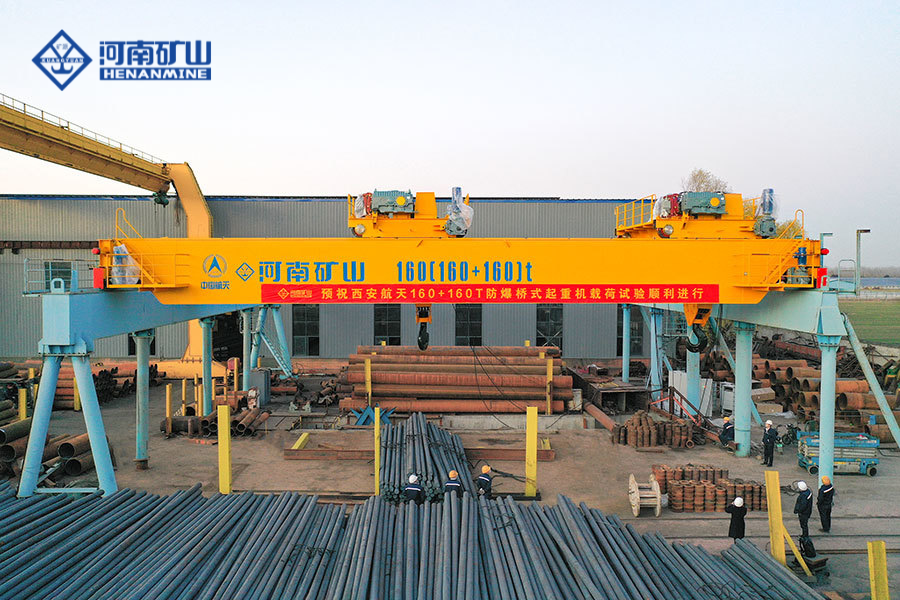
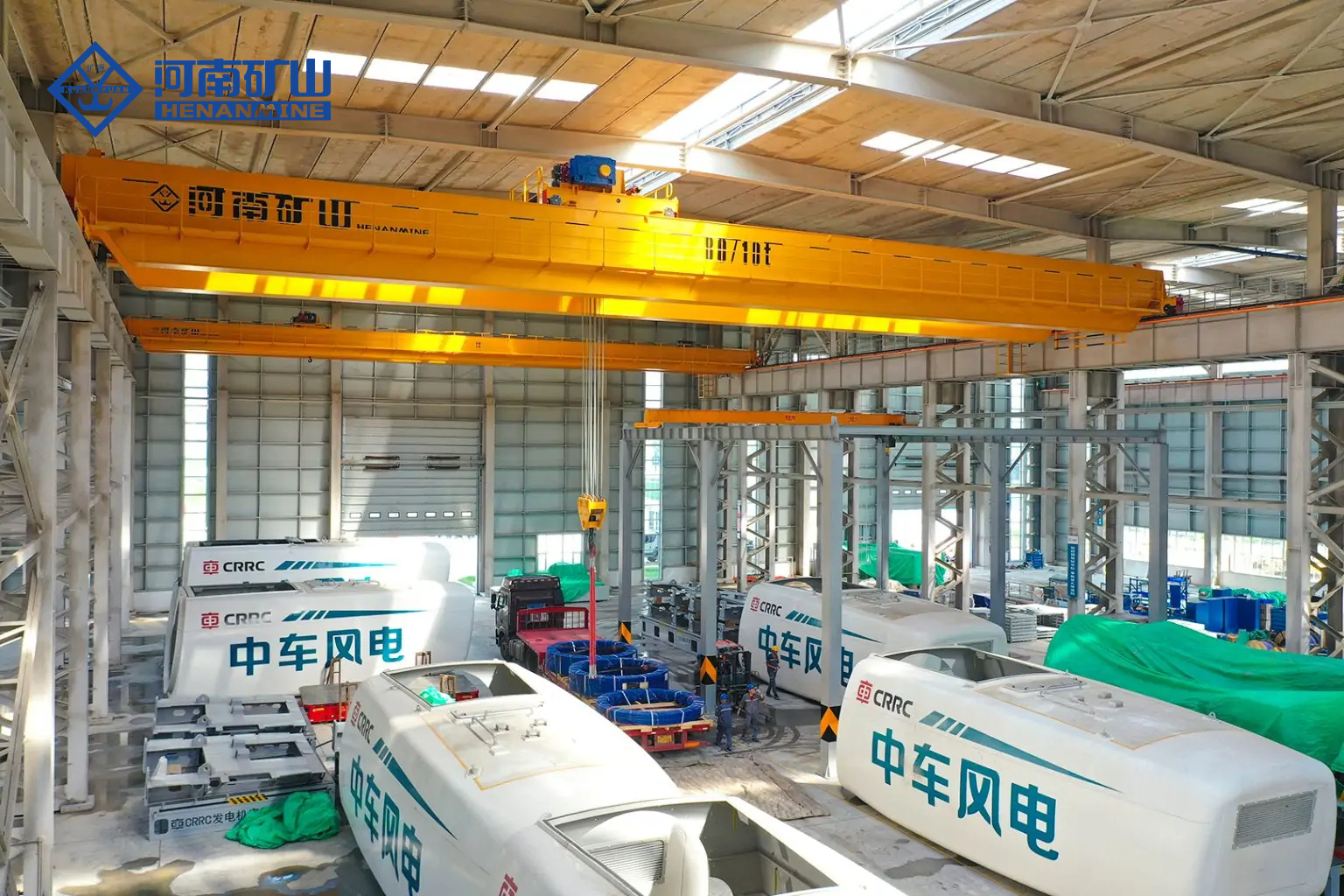
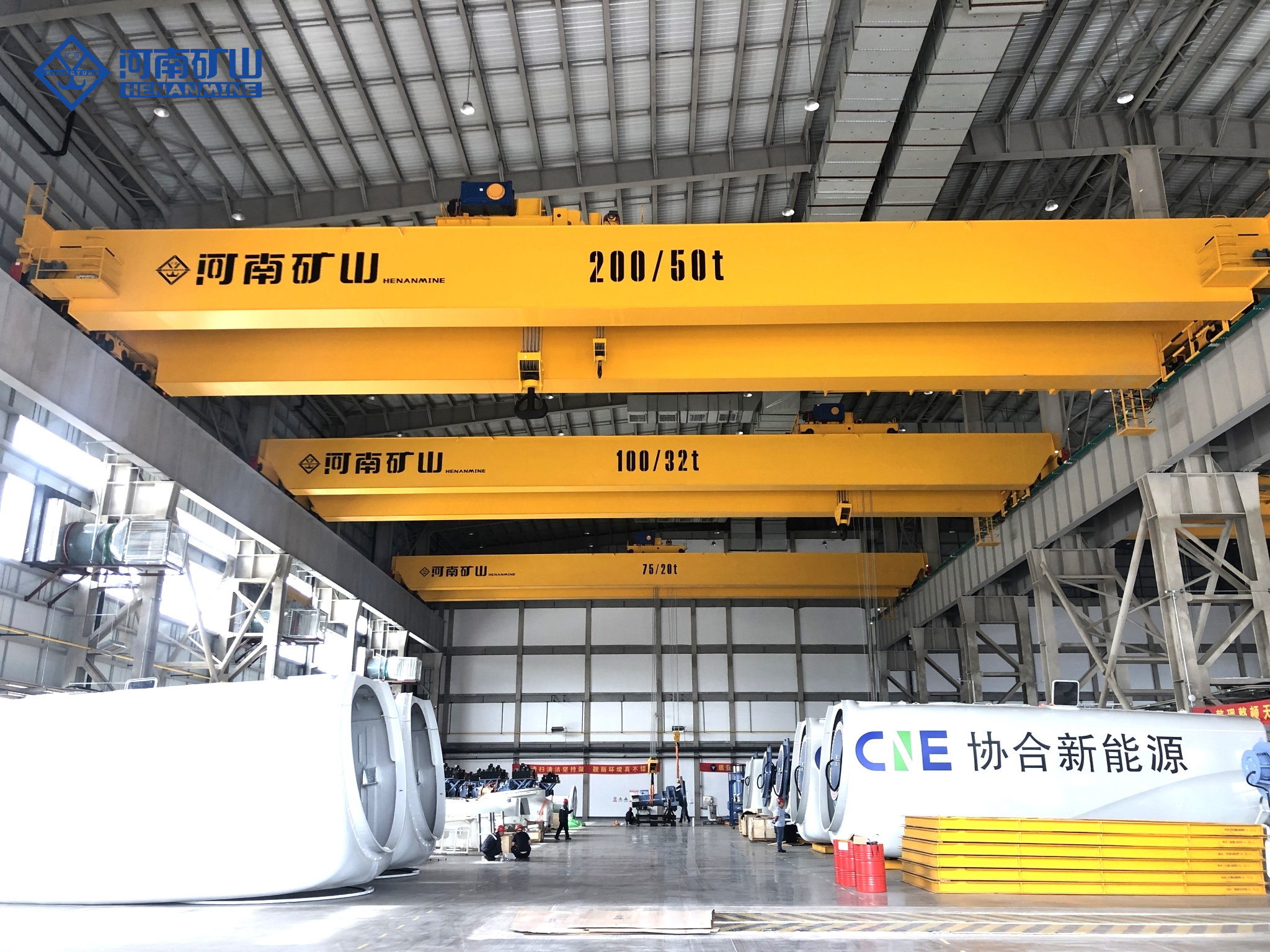
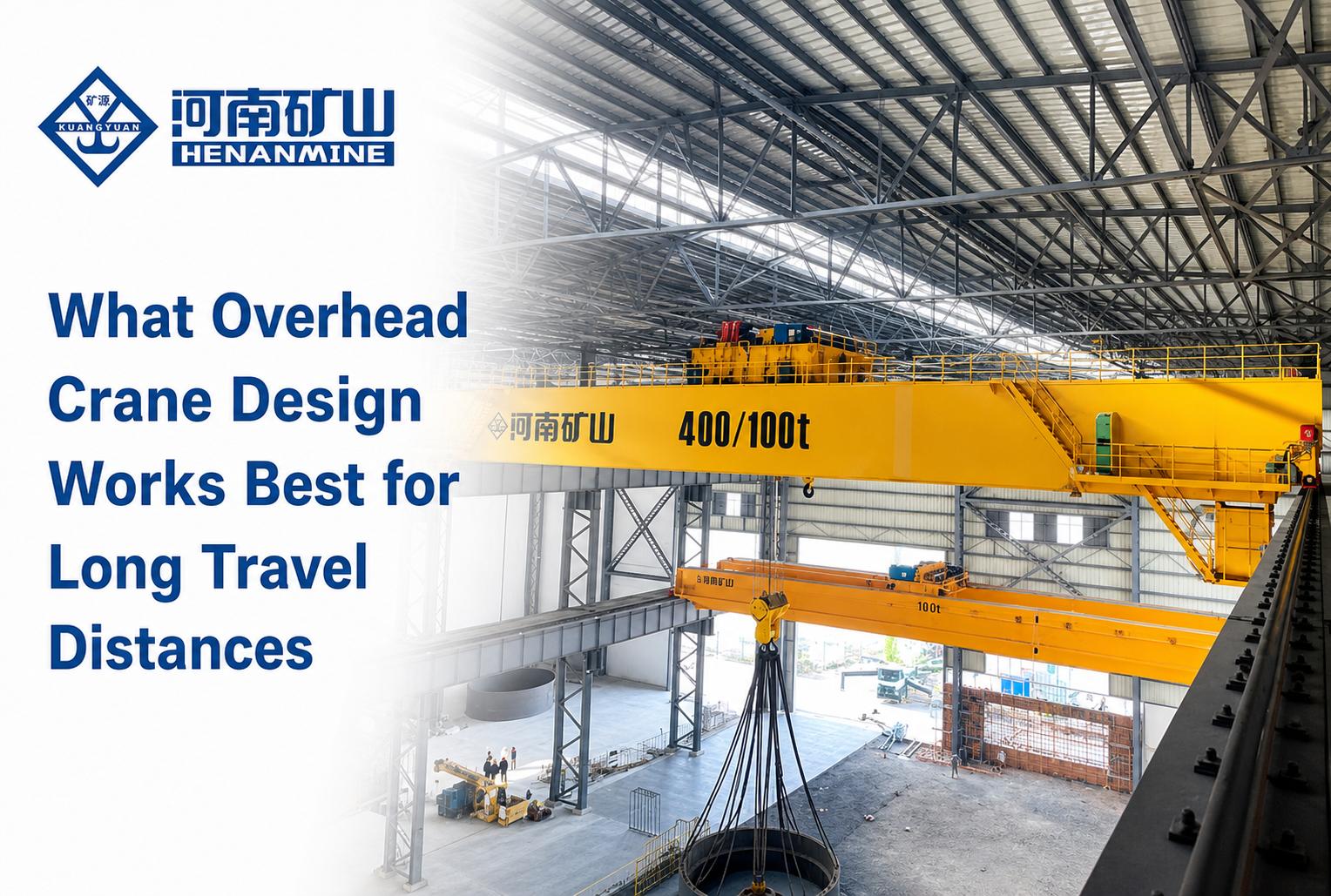
    • Double girder overhead crane: strong load capacity (20-500 tons or more), stable operation, suitable for large-scale mines, iron and steel mills and other heavy-duty scenarios, which can realize efficient continuous operation and crack the problem of heavy-duty material handling.
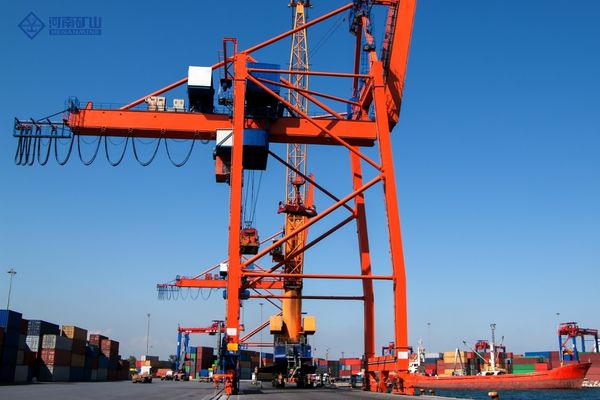
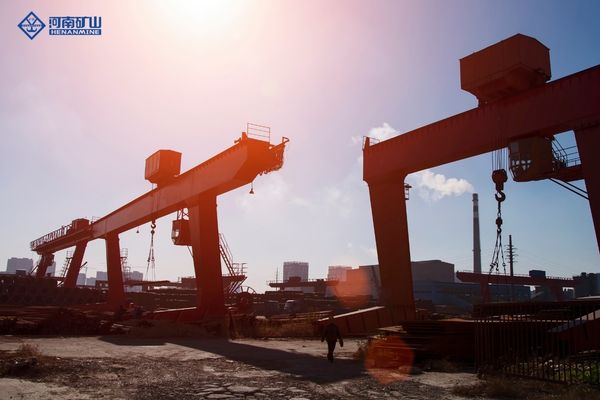
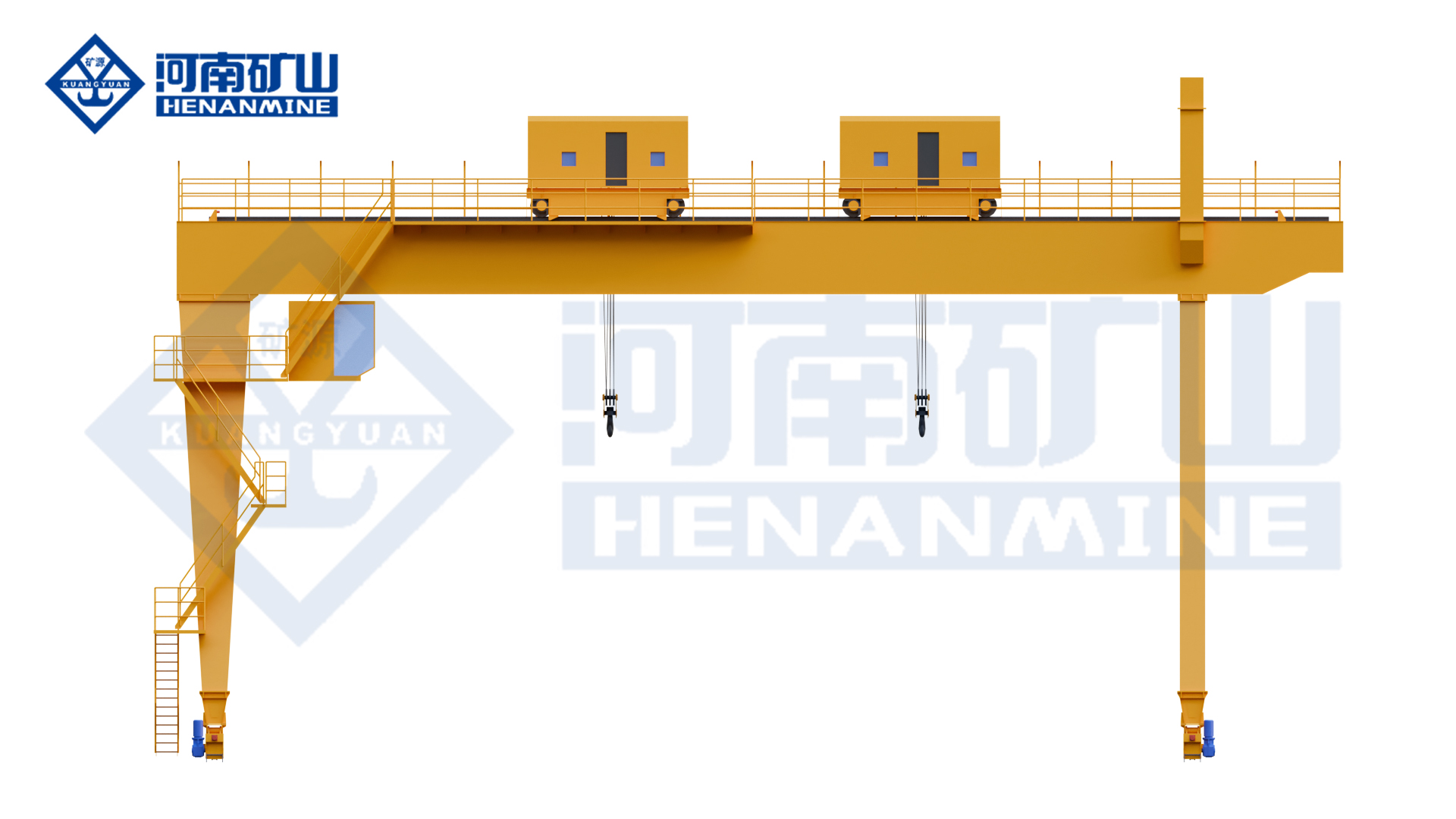
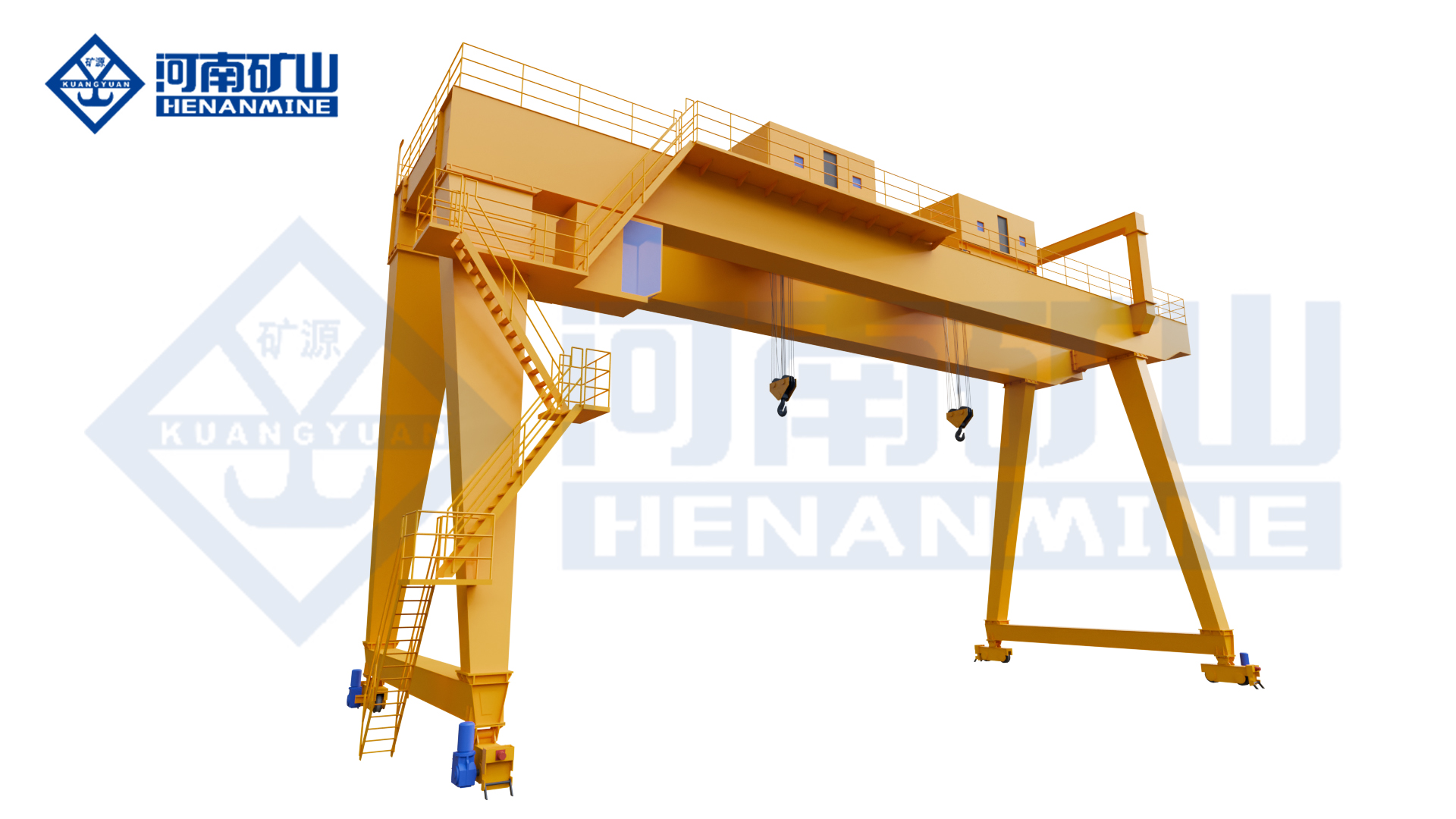
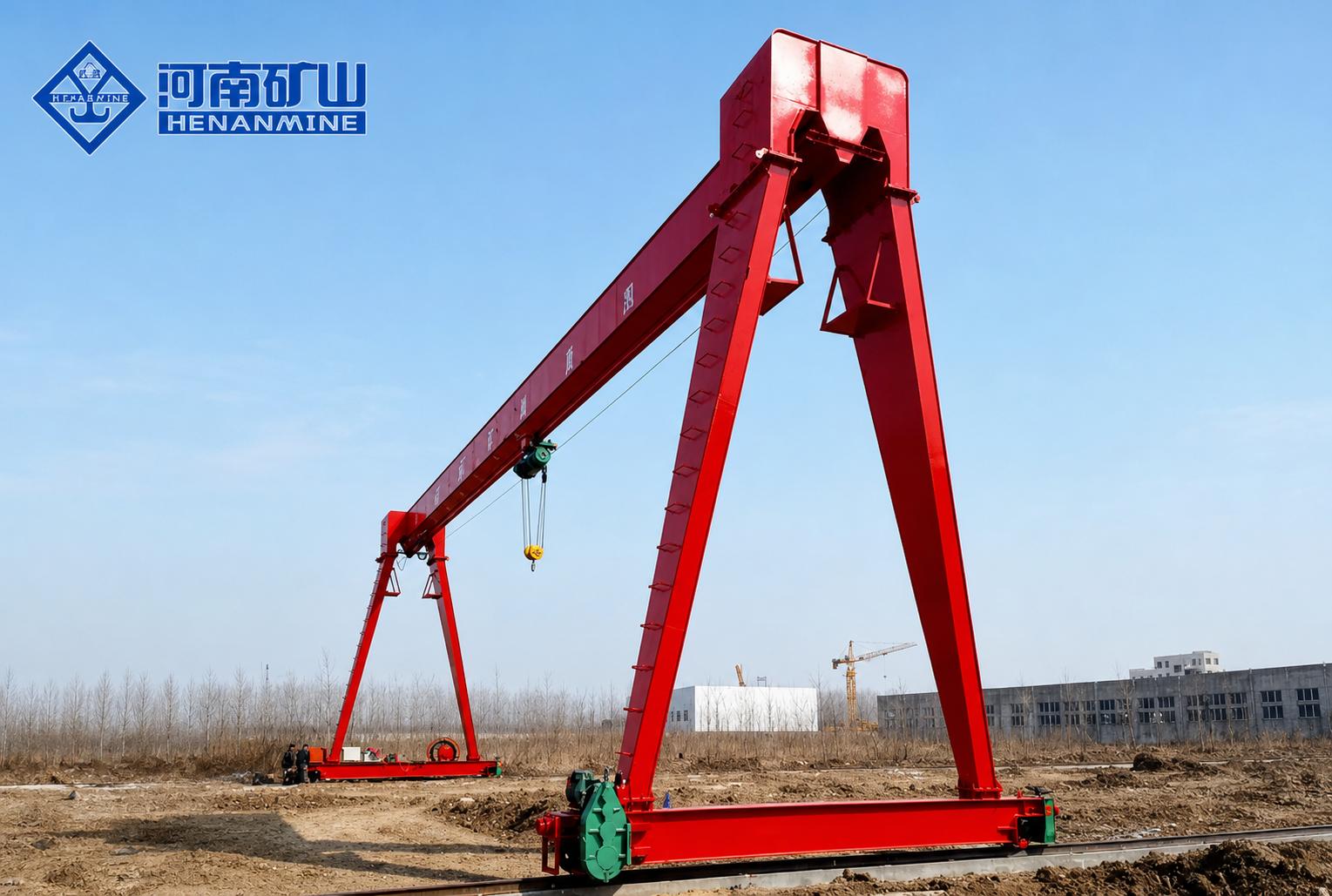
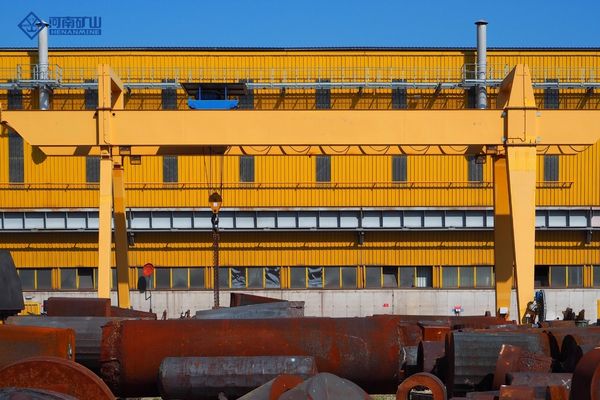
    • Gantry cranes: can operate outdoors without plant support, suitable for ports, yards, mines and open areas, suitable for large equipment and bulk material handling, to enhance the efficiency of outdoor operations.
    • Jib Crane: Highly flexible, suitable for localized workshop operations, small-scale heavy load transfer, make up for the blind spot of large cranes, and enhance the efficiency of localized material handling.

    Why Workplace Efficiency Matters in Heavy Industry

    For mining, steel, logistics and other heavy industry, efficiency is benefit is not a slogan, inefficient material handling will not only drag down production capacity, but also generate a lot of hidden costs, become a stumbling block to corporate profitability. Combined with the current situation of the industry, the harm of inefficient operation is mainly reflected in three aspects.

    Stricter safety regulations

    Labor costs in the industrial field are rising, and traditional material handling relies on a large number of manual labor, which is costly and inefficient, and difficult to meet the large-scale production. At the same time, industrial safety regulations are tightening, manual handling is easy to cause safety accidents, violations will face high fines and the risk of production stoppage. Bridge cranes can replace manual heavy-duty handling, reducing costs and compliance, and avoiding risks at the source.

    Production delays

    Material handling is the centerpiece of heavy industrial production, and inefficiencies can lead to disconnections. Inefficient material handling can lead to disconnections. Ore transfer in mines does not affect subsequent processing, steel transfer in steel mills lags behind production line stoppages, and slow loading and unloading in warehouses delays logistic deliveries. Long-term accumulation will significantly reduce capacity, increase hidden costs, which is the key reason why enterprises choose bridge cranes.

    Industry bottlenecks

    Mining, steel, logistics is the material handling needs concentrated and inefficient disaster areas. Mining environment is harsh, manual handling of heavy ore inefficient and difficult. Iron and steel mills are characterized by heavy materials and high temperatures, which make it impossible for manual labor and small equipment to transfer efficiently. Warehouse goods in large quantities, turnover, the traditional way easy to congestion. Overhead cranes can accurately solve these pain points and double efficiency.

    8 Key Ways Overhead Cranes Improve Workplace Efficiency

    As a professional Henan Mine Crane manufacturer, we combine our own product research and development experience with thousands of customer application data to summarize 8 key ways to improve workplace efficiency with overhead cranes, each of which has been verified in actual scenarios, and actually helps enterprises to reduce costs and increase production capacity.

    Rapid Material Handling

    Bridge cranes run in a straight line at a high altitude without going around, realizing efficient transfer of heavy materials. Compared with manual or forklift handling, it runs faster and can work continuously, significantly shortening the material handling cycle. Mining enterprises use it to transfer ore, the single transfer time is shortened by more than 60%, and dozens of additional transfers can be completed, which directly improves the efficiency of mining operations and factory productivity.
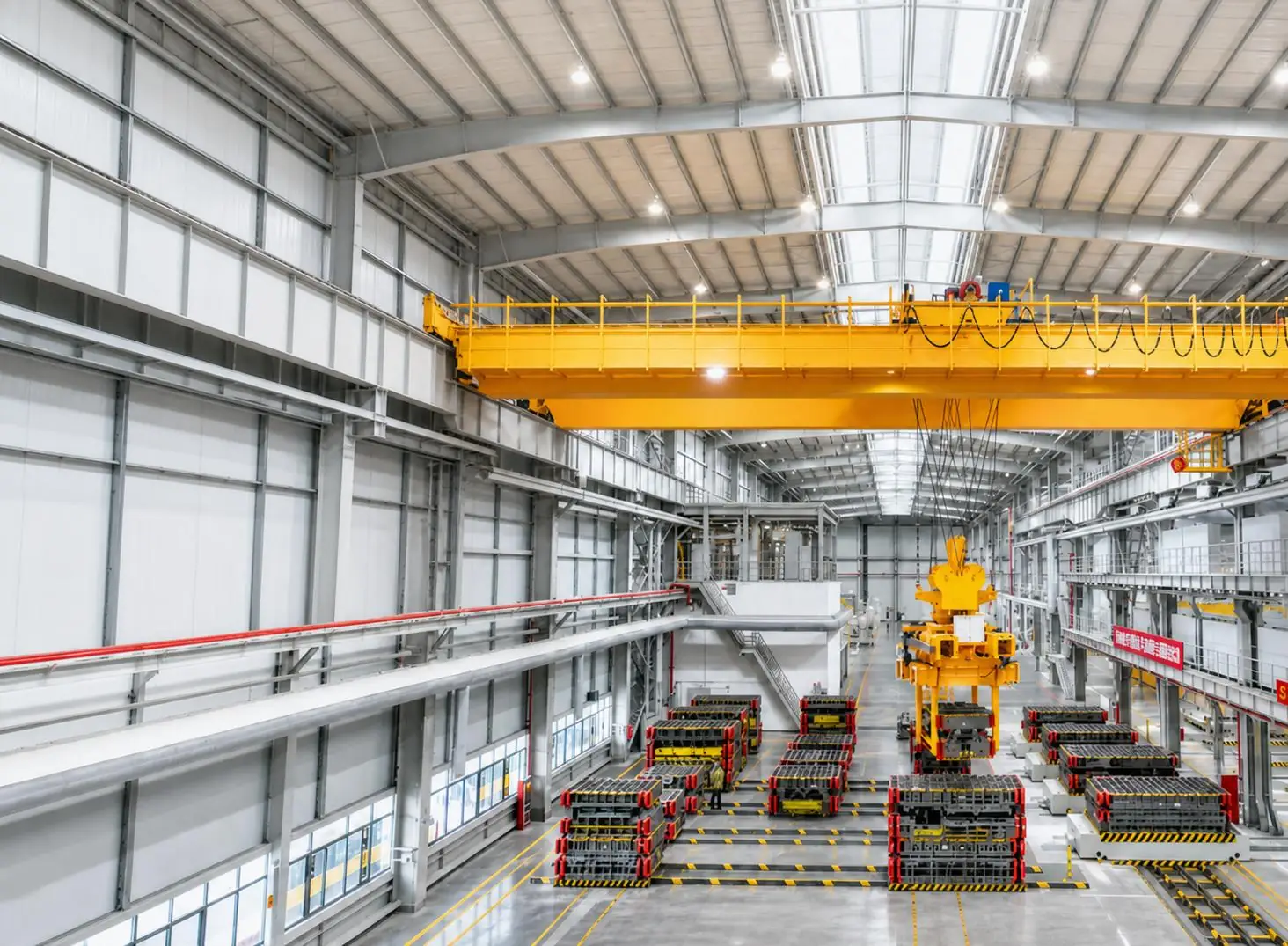
    bridge crane applications

    Reduce Labor Fatigue

    Traditional heavy-duty handling relies on manual labor, which is labor-intensive, inefficient and prone to errors, Henan Mine Crane Factory overhead cranes can completely replace manual heavy-duty handling, reduce the reliance on forklifts, increase efficiency by 3-5 times compared with forklifts, and liberate workers’ labor. At the same time, it reduces labor input, lowers labor costs, relieves worker fatigue, and indirectly improves overall work efficiency.

    Saving ground space

    Bridge cranes run at high altitude without occupying ground space, which can release the ground for arranging production lines, stacking materials and setting up channels. Compared with ground handling equipment, it can reduce operational congestion, so that handling and production do not interfere with each other, and improve layout efficiency. After the warehouse is used, the floor stacking space increases by 30% and the goods turnover efficiency increases by 40%, highlighting the advantage of space utilization.

    Optimizing workflow

    Henan Mine Crane Factory bridge cranes can be deeply integrated with the production process, realizing seamless material connection and avoiding production linkage. In steel mills, it can transfer steel directly to the casting process, and then transfer molded steel to storage. In mines, it can realize the continuous transfer of ore, avoiding the accumulation of stagnant materials, and guaranteeing a smooth and efficient production process.

    Enhancement of operational precision

    Heavy industrial material handling is prone to collision and loss, the bridge crane is equipped with an accurate control system, with a positioning accuracy of ±1mm, which can avoid material collision and fall and reduce loss and rework costs. Precision equipment handling error control in millimeters, steel transfer can prevent leakage, not only to enhance safety, but also effectively improve the efficiency of material handling.

    Enhance operational safety

    Safety accidents can limit the efficiency of the enterprise, which not only cause casualties, but also lead to work stoppages, resulting in high economic and time loss. Equipped with multiple safety protection devices such as overload limiters and limit switches, overhead cranes can effectively avoid potential safety hazards, and operators can operate remotely or at the control center, away from high-risk areas, to ensure operational safety and stable efficiency.

    Reduced operating costs

    Compared with forklifts and other fuel-powered handling equipment, overhead crane adopts electric drive, which consumes less energy, and one overhead crane can replace several forklifts or manual labor, which greatly reduces the operating cost of the equipment.

    At the same time, our bridge cranes are equipped with energy-saving motors and frequency control systems, which reduce energy consumption by more than 20% compared with traditional cranes. Long-term use of the bridge cranes can save a lot of operating costs for the enterprise, and indirectly improve the profitability and efficiency of the enterprise.

    Adaptation to intelligent production

    With the advancement of Industry 4.0, intelligent manufacturing has become the core direction for enterprises to improve efficiency, and overhead cranes can be deeply integrated with intelligent control systems, sensors, PLC and other equipment to realize semi-automated and fully automated operations. Bridge cranes can realize efficiency improvement in many industrial fields, but in mining, steel, warehousing and logistics, construction prefabrication yard and other scenarios, the efficiency improvement is most significant.

    Industry Applications Where Efficiency Gains Are Highest

    Bridge cranes can achieve efficiency gains in a variety of industries, but are most effective in mining, steel, warehousing and logistics, and construction prefabrication yards.

    Mining Industry

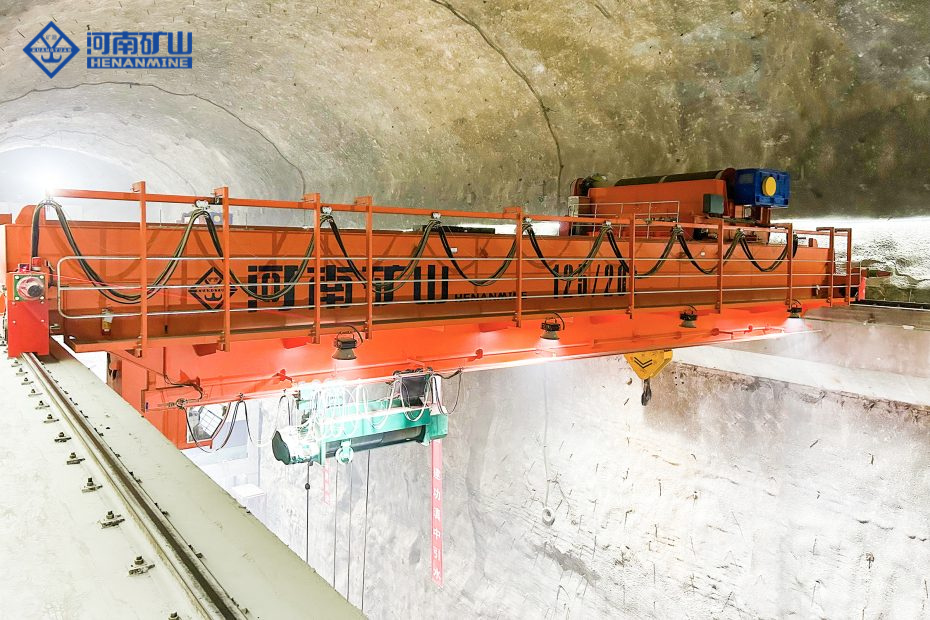
    Mining industry is a core application for overhead cranes, with high material handling volumes, harsh operating environments and high continuity requirements. henan Mine Crane Factory’s overhead cranes can handle ores and large mining equipment, and are suitable for high temperature, dusty and heavy-duty working conditions, realizing 24-hour continuous operation and cracking the handling bottleneck.

    Steel and metal fabrication

    Henan Mine Crane manufactured bridge cranes are precisely adapted to the whole process of steel production, efficiently transferring materials such as molten steel, steel, rolls, etc., avoiding high temperature material loss and guaranteeing operational safety.

    Warehousing and logistics

    The core demand of warehousing and logistics is to quickly complete the loading and unloading, stacking and turnover of goods, and the overhead cranes can be accurately adapted to this scenario. Compared with manual and forklift handling, it can realize overhead stacking, enhance the utilization of warehouse space, avoid operational congestion, and significantly shorten the turnaround time of goods. It can effectively reduce logistics costs, improve logistics time, and highlight the advantages of material handling efficiency.

    Construction and precast yards

    Construction and precast yards material handling is mainly repetitive and heavy-duty, such as steel reinforcement, cement prefabricated parts, large-scale construction equipment, etc., which requires high operational consistency and safety. Overhead cranes can efficiently perform repetitive lifting tasks, reducing labor input, avoiding material damage, and lowering rework costs. They can be used in prefabrication yards to transfer prefabricated parts and in construction sites to transfer large-scale equipment, which can greatly improve the transfer efficiency, shorten the construction period, and ensure the safety and progress of the construction.

    How to Choose the Right Overhead Crane for Maximum Efficiency

    Choosing the right overhead crane is the prerequisite for maximizing efficiency. As a professional manufacturer of mining cranes in Henan, we combine many years of selection experience to provide enterprises with 4 core selection recommendations to help enterprises accurately match the needs to avoid selection errors resulting in efficiency losses and cost waste.

    Load capacity and span requirements

    Need to accurately match the crane type according to the weight of the material, the operating span, the specific points are as follows:

    1. Light and medium-sized materials (1-20 tons), small span operation (6-15 meters): Choose single girder overhead crane, its structure is simple, cost-effective, flexible operation, suitable for small and medium-sized workshops, warehouses and other scenes.
    2. Heavy load materials (more than 20 tons), large span operation (more than 15 meters): Choose double girder overhead crane, with strong loading capacity and stable operation, which can realize efficient and continuous operation, and is suitable for heavy load scenarios such as mines and iron and steel factories.
    3. Outdoor large-span operation: Choose gantry cranes, which do not require plant support, and are suitable for harbor and mine open areas, can efficiently handle large equipment and bulk materials, and are suitable for outdoor harsh working conditions.
    4. Combined with the operating height selection: To avoid the efficiency of the lifting stroke is too long, the lifting height increases by 3-5 meters, the single cycle time may increase by 10%-20%, need to optimize the configuration according to the actual working conditions.

    Working duty classification

    The working duty classification of overhead crane is divided into A1-A8, different levels correspond to different working intensity, the specific points are as follows:

    • Intermittent work: Choose A1-A3 level cranes, suitable for small amount of work, non-continuous operation of the scene, to meet the basic handling needs, to avoid the waste of idle equipment.
    • Continuous operation: Choose A4-A8 class cranes, of which the metallurgical industry casting cranes can work up to A7/A8 class, to ensure the long-term stable operation of the equipment, to avoid equipment fatigue resulting in decreased efficiency or failure.

    Custom attachments

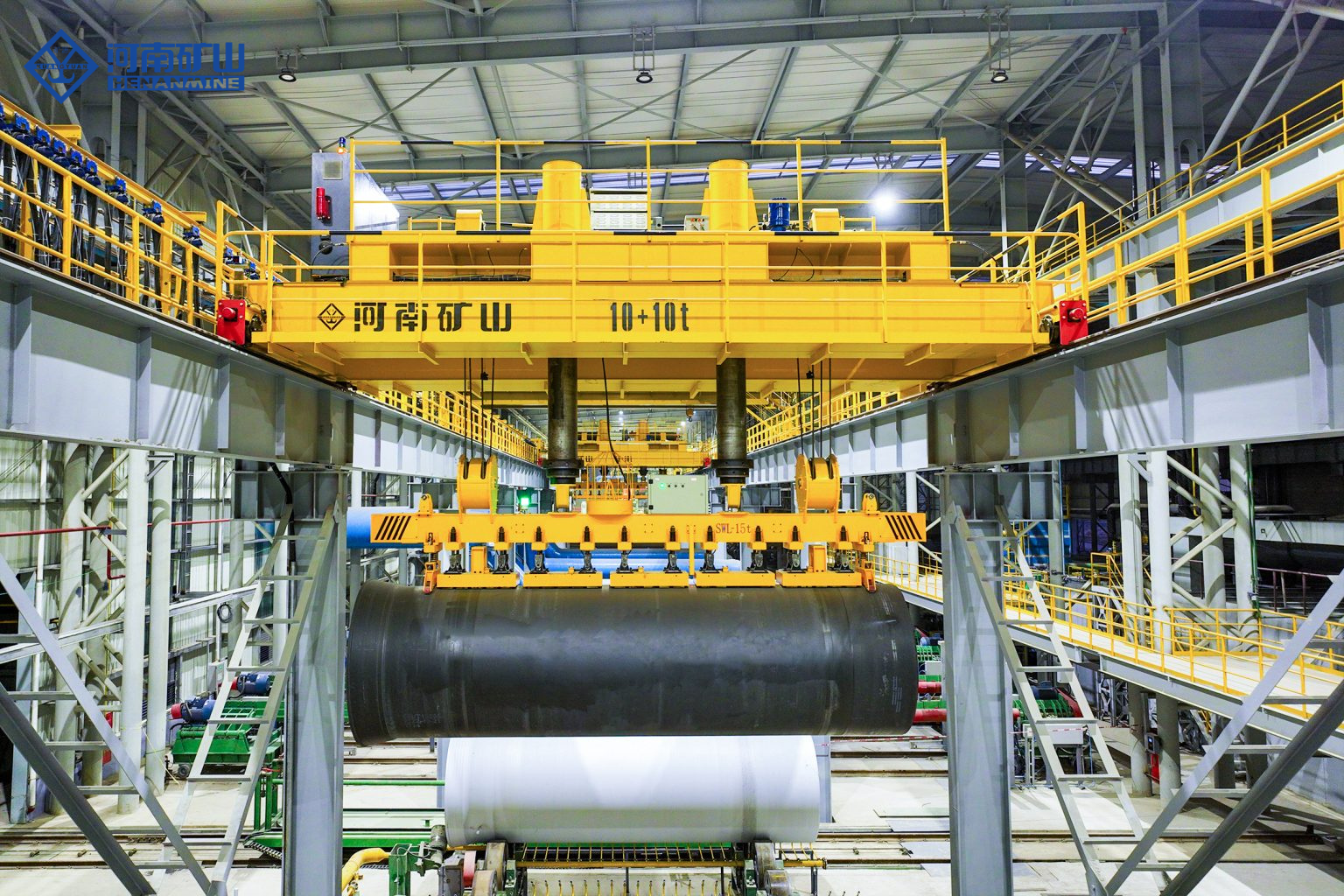
    Different materials have different handling needs, and need to be matched with appropriate customized attachments to enhance operational efficiency. For handling bulk materials, such as ore, coal, etc., the machine can be equipped with grapple attachments to realize batch gripping and fast transfer. For steel and scrap handling, it can be equipped with electromagnetic suction cup attachment to enhance the gripping efficiency. For handling precision equipment, it can be equipped with flexible spreader to avoid equipment damage.Henan Mine Crane manufactured can customize the exclusive attachments according to the specific material types of enterprises, so that the crane can be more suitable for the operational needs, and further enhance the efficiency.
    industrial crane

    Indoor or outdoor application needs

    For indoor applications such as workshops and warehouses, single girder and double girder overhead cranes can be selected without considering the environmental impacts of wind, rain and sand. For outdoor application such as mine open area, harbor, etc., gantry cranes or outdoor type overhead cranes should be selected, with rain cover and windproof anchoring devices, to adapt to the harsh outdoor environment, to ensure the stable operation of the equipment, and to avoid the influence of environmental factors on the operational efficiency.

    Common Mistakes That Reduce Crane Efficiency

    Many enterprises are equipped with overhead cranes, but due to improper operation, selection and maintenance, the efficiency of the crane can not be fully utilized, and even efficiency decline, frequent failures and other problems. The following summarizes the 4 common misunderstandings, to help enterprises avoid the risk.

    Selecting the wrong crane type

    Some companies blindly pursue low prices, choose the load capacity, work level is not enough crane, resulting in the crane can not carry heavy materials, or can not meet the demand for continuous operation, frequent failures, but reduce efficiency. There are also some enterprises choose too large load, too high working level of the crane, resulting in idle equipment, energy waste, increase operating costs.

    Poor workshop layout planning

    Crane track layout, work area planning, directly affecting operational efficiency. Part of the enterprise workshop layout confusion, track setup is unreasonable, resulting in crane running obstruction, detour, increase operating time. At the same time, the ground materials are stacked haphazardly, occupying the crane operating space, will also reduce operational efficiency.

    Lack of operator training

    The operation of overhead cranes requires professional skills, if the operator is not trained systematically, the operation is not skilled, not standardized, which will lead to slow operation speed, inaccurate positioning, and even operational errors, causing safety accidents and affecting operational efficiency.

    Ignoring routine maintenance

    The core components of overhead cranes require regular maintenance. Ignoring routine maintenance will lead to wear and tear of the components, frequent failures, and increased downtime of the equipment, which directly affects the work efficiency. For example, wire rope without regular lubrication will lead to increased wear and tear, shorten the service life, and even lead to breakage accidents. The motor is not regularly serviced, which will lead to a decrease in operating efficiency and an increase in energy consumption.

    Henan Mine Crane Factory Custom

    As an industrial core lifting equipment, overhead crane relies on core components to realize efficient transfer of heavy loads, and is suitable for many types of industrial scenes, which can effectively crack the bottleneck of material handling in heavy industry, and improve operational efficiency, reduce costs and ensure safety through various ways, and is suitable for the development trend of intelligence. Reasonable selection, avoid common misunderstandings, in order to give full play to its value, help enterprises to improve production capacity, enhance core competitiveness, is an important support for heavy industry to reduce costs and improve production.

    As a company with years of experience in the industry, Henan Mine Crane Factory focuses on the research, development, production, and sales of high-quality bridge cranes. We can provide customized industrial lifting solutions based on your specific needs, ensuring that equipment maximizes work efficiency and helps your company reduce costs and expand production capacity.

    Upgrade your production facilities immediately, choose the reliable Henan Mine Crane Factory to unlock new possibilities of efficient production and give your enterprise an edge in the industry competition!
    Henan Mine CraneDiscuss your requirements ↗
  • How Much Does an Industrial Overhead Crane Cost?

    How Much Does an Industrial Overhead Crane Cost?

    How Much Does an Industrial Overhead Crane Cost?

    Bridge cranes vary widely in price, with prices influenced by tonnage, configuration, working conditions, and degree of intelligence. Light shop models have a base price of $4,000, and heavy-duty complete systems for heavy industry and ports cost over $300,000 USD. This article will refine the tonnage offer, installation support costs, and provide a complete budget case, for equipment procurement and construction budget to provide reference.

    What Is an Overhead Crane?

    An overhead crane (also called a bridge crane) is a material handling system that moves loads horizontally along a bridge beam suspended above the work area, supported by runway rails on either side of the building. It’s the standard lifting solution in manufacturing plants, steel mills, warehouses, and assembly lines.

    Overhead crane cost typically ranges from $4,000 for a light-duty 1-ton unit to $300,000 or more for a heavy-duty 50+ ton system, before installation. The biggest price drivers are lifting capacity, span length, girder configuration, and duty class  and most buyers underestimate how much installation, runway, and electrical work add on top of the crane itself.

    This guide breaks down real pricing by tonnage, compares single vs. double girder costs, and shows a full project budget so you can plan accurately before requesting quotes.

    What Determines Overhead Crane Cost?

    No two crane quotes look alike, even for the same rated capacity, because price is driven by a combination of engineering variables rather than a flat catalog number.

    • Rated lifting capacity: the rated lifting capacity is the core influence factor of crane cost. 1-10 tons of light equipment can use standard steel and common accessories, 50 tons and above heavy equipment need to strengthen the structure, more custom box beam, the cost increases significantly.
    • Track span: track span directly affects the main beam steel consumption. 15 meters or less can use standard steel, 30 meters or more span needs to be customized box-type main beam and reinforced support, steel consumption will increase by 30%-50% or more.
    • Main girder structure: single main girder and double main girder structure selection, directly determines the maximum load limit of the crane, but also an important factor affecting the overall pricing of the equipment.
    • Work level: crane work level (CMAA/FEM) corresponds to the intensity of operation and frequency of use, light load low-frequency working conditions equipment cost is lower, steel mills, foundries, high-frequency heavy-duty working conditions of the equipment cost is higher.
    • Hoist type affects the cost of equipment: chain hoist adapted to light load, cost-effective; wire rope hoist load capacity, speed and durability is better but more expensive; magnetic suction, explosion-proof, clamp and other special hoists, the price of the standard model of 1.5-3 times.
    • Control system: crane control system is divided into wired handle, wireless remote control, fully automated system, the price level by level. The automated system costs the most, but can effectively improve the accuracy of repetitive operations.

    Overhead Crane Cost by Capacity (1–100+ Tons)

    Here’s what to expect for the crane unit itself, based on current market pricing (installation, runway, and freight are separate  see below).

    Capacity Typical Price Range Common Use Case
    1–5 tons $4,000 – $15,000 Small workshops, warehouses, maintenance bays
    6–10 tons $8,000 – $30,000 Machine shops, general manufacturing
    11–20 tons $18,000 – $65,000 Structural steel shops, auto production lines
    21–30 tons $35,000 – $90,000 Foundries, steel processing, large assembly
    31–50 tons $60,000 – $150,000 Steel mills, shipbuilding, energy infrastructure
    50+ tons $100,000 – $300,000+ Continuous heavy-duty industrial operations

    Within any single tonnage band, the spread is wide because span and lifting height move independently of capacity. An 80-foot, 20-ton double girder crane costs significantly more than a 40-foot, 10-ton crane, even though both fall in “medium duty” territory  the longer span alone can add tens of thousands of dollars.

    Use these ranges to set a planning budget, but request a formal quote with your specific span, duty cycle, and environment before committing  generic tonnage pricing can be off by 2–3x for non-standard configurations.

    Single Girder vs. Double Girder Cost Comparison

    Single girder cranes use one bridge beam to support the trolley and hoist. They’re simpler, lighter, and cheaper to manufacture and install  generally used for loads up to 20 tons. Expect single girder pricing in the $4,000–$65,000 range depending on capacity and span.

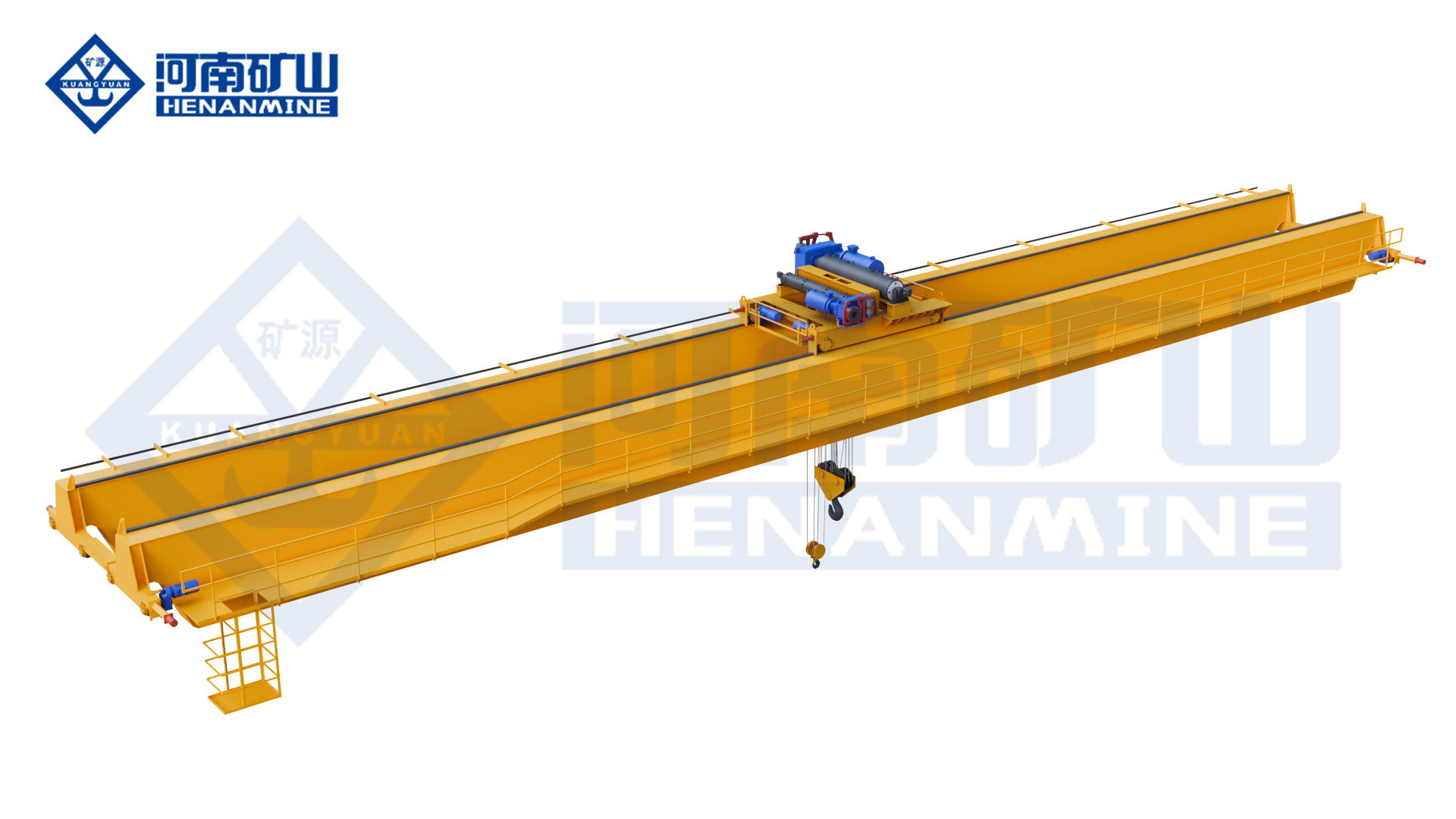
    Double girder cranes use two parallel beams, allowing higher lifting capacity, greater lifting height (the trolley sits on top of the girders rather than underneath), and better long-term durability under heavy cycling. Double girder systems generally start where single girder capacity tops out  around 20 tons  and scale up into the hundreds of tons, with proportionally higher prices.

    The practical rule: if your facility needs more than 20 tons of capacity, or you need maximum hook height in a fixed building, double girder is usually the right call despite the premium. For lighter, intermittent-use applications, single girder delivers the same lifting function at a fraction of the cost.

    Installation Costs: What to Budget Beyond the Crane Itself

    The crane price quoted by a manufacturer typically does not include installation, runway, or site work  and this is where many buyers get caught off guard.

    • Runway systems.Most overhead cranes need a runway (the rails the bridge travels on). Pre-engineered runway packages can add $5,000 to $20,000 to project cost, more if structural reinforcement of the building is required.
    • Site preparation and structural modifications.If your building wasn’t originally designed to support crane loads, you may need foundation work, column reinforcement, or load-bearing upgrades  these can range widely depending on facility condition.
    • Labor and commissioning.Installation labor  including assembly, alignment, and commissioning  typically runs $5,000 to $30,000, with full installation projects (including structural work) landing between $10,000 and $50,000 for standard systems, and $15,000–$25,000 being a common midpoint for moderate-complexity jobs.
    • Electrical and control systems.A basic electrical/control setup costs $5,000–$20,000; advanced systems with automation, wireless controls, or anti-sway technology can add $10,000–$50,000 on top.
    • Oversized crane components often ship as freight, adding $500–$3,000 depending on size and distance.

    Total Project Cost: All-In Budget Example

    To show how these pieces stack up, here’s a realistic all-in estimate for a 10-ton, 20-meter span, double girder crane  one of the most common industrial configurations:

    Cost Component Estimated Range
    Crane unit (10-ton, double girder) $18,000 – $65,000
    Runway system $5,000 – $20,000
    Installation labor & commissioning $10,000 – $30,000
    Electrical/control system (standard) $5,000 – $20,000
    Freight $500 – $3,000
    Total project cost $38,500 – $138,000

    Buyers should plan for 20–40% on top of the bare crane price to cover runway, installation, and electrical work  a margin that’s easy to overlook if you’re only comparing manufacturer quote sheets against each other.

    New vs. Used vs. Refurbished Crane Pricing

    New cranes: carry the highest upfront cost but come with full warranty coverage, current safety compliance (OSHA, ASME B30.2), and predictable parts availability  generally the safer long-term investment for continuous-use applications.

    Used cranes: can cost 40–60% less than new, but carry risk: unknown maintenance history, potential need for re-certification, and possible incompatibility with your span or runway. A pre-purchase inspection is essential.

    Refurbished cranes: sit in the middle  rebuilt with new wear components (hoist, wiring, brakes) and re-certified, often at 50–70% of new-crane cost. This is a reasonable option for budget-conscious buyers who still want documented safety compliance.

    The right choice depends on duty cycle: for light, occasional use, a well-inspected used or refurbished crane can be a smart way to control costs. For heavy, continuous, or safety-critical operations, the warranty and compliance certainty of a new crane usually justifies the premium.

    How to Get an Accurate Crane Quote

    Generic price ranges are useful for budgeting, but actual quotes depend on details specific to your facility. Before contacting manufacturers, have this information ready:

    • Rated lifting capacity: the maximum rated load that the crane is allowed to carry is the core selection parameter, including the total weight of workpiece, material and spreader. Selection needs to match the site’s maximum lifting demand, reserve a safety margin, to avoid the risk of overloading, to ensure the safe and stable operation of the equipment.
    • Span: the center distance between the center lines of the running tracks on both sides of the crane, which determines the coverage of the equipment operation. This parameter needs to be adapted to the plant track installation spacing, affecting the stability of the equipment and operation area, is the core basis for equipment customization and plant layout adaptation.
    • Lifting height: the effective vertical travel of the hook from the ground reference surface to the maximum lifting position. Need to be combined with plant headroom, material stacking and lifting process comprehensive selection to meet the height of various types of material lifting, handling, landing operation needs.
    • Work level: Measure the frequency of crane operation, load intensity of the industry grading standards, which directly affects the service life of the equipment. According to the CMAA A-E or FEM corresponding level, combined with the length of operation, start-stop frequency, load conditions selection, to adapt to different light and heavy operating scenarios.
    • Operating environment: Covering indoor and outdoor operating scenarios, it needs to take into account the climatic conditions such as high and low temperatures, wind, rain, sand and dust, and at the same time, check whether there are special working conditions such as corrosion, dust, flammable and explosive in the operating area. According to the environment matching anticorrosion, explosion-proof, temperature-resistant and other special configurations to ensure the safe operation of the equipment.
    • Plant constraints: equipment installation and operation of the building constraints, mainly including plant beams and columns bearing capacity, headroom height, column spacing, ground loading and so on. Selection and installation need to be adapted to the existing building conditions, to avoid space and structure interference problems, and to ensure that the equipment is installed and operated in a compliant manner.
    • Control mode selection: three mainstream modes can be selected according to operational requirements. Wired handle control is stable and economical, suitable for regular working conditions; wireless remote control operation is flexible and unfettered, suitable for a wide range of operations; full-automatic control is highly accurate, suitable for standardized, high-frequency intelligent lifting scenarios.

    Supplying this upfront typically cuts quote turnaround from weeks to days, and lets you compare apples-to-apples across suppliers rather than vague “starting at” pricing.

    Conclusion

    The price of overhead travelling crane is affected by a number of factors such as lifting capacity, span, lifting height, working level, configuration, installation conditions and site conditions. Procurement selection needs to take into account the cost of equipment and the value of the whole life cycle, taking into account the stability of the equipment, energy consumption, maintenance and after-sales service, to achieve the optimal investment benefits.

    Henan Mine Crane Crane can provide customized bridge crane solutions for manufacturing, warehousing, steel, electric power and other industries, providing one-stop service from design, manufacturing, installation to after-sales service, to provide customers with cost-effective, safe and stable lifting equipment.

    If there is a demand for new crane construction or remodeling project, you can contact our technical team. We will combine the plant layout, lifting needs and production goals, to provide you with exclusive customized offer and professional selection advice.

    Henan Mine CraneDiscuss your requirements ↗
  • How Gantry Cranes Improve Industrial Efficiency and Productivity?

    How Gantry Cranes Improve Industrial Efficiency and Productivity?

    How Gantry Cranes Improve Industrial Efficiency and Productivity?

    Material handling efficiency is the important key for industrial productivity and operation efficiency because the handling efficiency directly influences production and cost control. Gantry crane,  as a special class of cranes,  are the crucial equipment for solving lifting problems and improving industrial efficiency by their unique design structure and powerful functions.

    In this article,  itsbasic skills, types,  benefits, applications in industry,  method of selection and future trendshall be discussed in order to enhance our knowledge about it.

    Understanding the Basics of Gantry Cranes

    Gantry crane,  refers to a specific form of machinery specifically adapted to the robust lifting and handling of heavy loads within confined environments.  These type cranes,  in contrast to stationary ground-based cranes,  are built as a suspended structure, a significant feature that alters the dimension of ground space requirements, providing enhanced maneuverability and flexibility to meet diverse challenging working situations.

    Its basic structure is based on the main beam (ha also known as a bridge) over the work area with a column at each end creating a “gate” shape that is the other name for the T-shaped structure. Agan, it can lift anywhere within its structure including heavy loads,  surpassing traditional crane limits.

    Its equipment is more completely than the floor gantry crane. What ‘s more, it had a suspension design,  and without a complex ground track,  so it can have a relatively large movement. On broad and narrow workplace, accuracy and flexibility are superior and can solve the traditional crane problem.

    Types of Gantry Cranes

    Gantry cranes are not a type of equipment,  based on the operating conditions, load conditions and space conditions are divided into a variety of form. Each variety has its own various advantages and application situation, can be accurately to meet the production requirements of various industries.

    Full Gantry Cranes

    A total gantry crane is the most and widely used types. The columns positioned at both extremity of the main girder have the supported on the ground track that can move freely along the track throughout the forepart of operation zone.  It has the advantage of powerful load capacity and wide zone of operation,  thus suitable for the scene needed lift frequently on heavy load.

    Semi-Gantry Crane

    Semi-gantry cranes provide the installations of more flexible;  one side of the column is fixed along the wall or across a plant column, the other side of column running along ground track.  Structure does not require is used for the entire working area of the ground space,  convenient needs for scenes with ground have been limited.

    By way of example,  in small-sized and medium-sized workshops, warehouses, etc., semi-gantry cranes can carry out a heavy lifting and handling using the crane without interfering other working operations on the ground in terms of working efficiency and space economy.

    Portable Gantry Cranes

    The advantages of portable gantry crane. 1, portable gantry crane lightweight, easy to operate;  can be reassembled, disassembled, moving quickly,  no complex installation and commissioning.2, portable gantry crane load capacity is very low, mainly for lightweight lifting operations.

    For instance, small equipment maintenance, workshop local material transportation, small processing plant etc. The carrying capacity of Portable gantry crane is very strong,  it can be moved according to operational needs at any time, and it can also manly overcome holding-up complicated condition for small enterprise; it can diminish the carrying capacity investment expense of equipment.

    How do Gantry Cranes Enhance Worksite Productivity

    Gantry crane as industrial production“At the efficiency tool“core is how to dimensionality cost, effectiveness, safe, flexible,  etc. for traditional lifting pain points, comprehensive optimization of the entire production process and improve productivity. The following is its core type to enhance industrial efficiency and productivity:

    • Cost-effective lifting solutions: Gantry cranes (especially manual) have lower costs and lower failure rates, which can be deployed by enterprises at low costs and support customized services, which can reasonably adapt to the needs of enterprises and optimize cost efficiency.
    • Stronger mobility and flexibility: gantry cranes (especially portable, semi-gantry type) mobility, can be quickly moved to different operating areas, breaking the fixed operating restrictions; easy to install, ordinary workers can be quickly assembled and commissioned, put into use, reduce waiting time, to ensure smooth production.
    • Reduce manual labor: Gantry cranes can efficiently undertake heavy material handling, significantly reducing labor input, freeing workers to engage in high-value operations, while reducing worker fatigue and safety risks, to ensure the continuity of the production process, and enhance productivity.
    • Enhance operational safety: Gantry cranes have a stable structure and reliable braking, which can effectively reduce the probability of accidents such as falling heavy loads, reduce the downtime losses caused by safety accidents, ensure the continuous advancement of production, and enhance efficiency and productivity.
    • Easy to operate: Gantry cranes (especially manual type) are easy to operate, ordinary workers can get started after simple training, without the need for professional operators, and quick installation and commissioning, reducing equipment preparation time, and improving operational efficiency.
    • Adaptable to a variety of application scenarios: Gantry cranes are highly versatile and can be adapted to a variety of fields such as steel manufacturing, warehousing, construction, etc. They can cope with a variety of material handling needs without the need for special equipment, which improves the utilization of equipment, reduces the cost of investment, and promotes the improvement of overall productivity.
    • Durable and Reliable: Gantry cranes have sturdy structure and excellent materials, can adapt to harsh industrial environments, strong durability and low failure rate, avoiding equipment maintenance downtime, guaranteeing continuous production, and reducing maintenance costs and efficiency losses.
    • Efficient use of space: the gantry crane adopts a suspended structure, mainly using air space, does not take up too much ground area, can be flexibly operated in a narrow area, optimize the operational layout, reduce congestion and improve operational efficiency.
    • Accurate lifting: Gantry cranes operate accurately and can realize accurate lifting and placing of heavy objects, especially suitable for precision equipment and other scenarios, which can avoid damage to materials, reduce cost losses, and protect the quality and efficiency of operations.
    • Optimization of workflow: Gantry cranes can simplify the heavy lifting process, solve production bottlenecks, ensure timely delivery of materials, connect the various operating areas, optimize the overall process. Sourcing quality products can further enhance efficiency, the company also provides related ancillary products and distribution services throughout the UAE.

    How Gantry Cranes Improve Productivity in Various Industries

    Given their adaptability and efficiency, gantry cranes have been employed in many industries and have become the main equipment to increase productivity,  which are summarized as follows for some important industries:

    Construction Industry

    Gantry cranes are essential tools for the industry,  in the construction field, for the transport of loads (steel girders, blocks of concrete,  construction equipment,  etc.), for the assembly of prefabricated elements and for the movement of heavy parts.

    In the meantime,  the full gantry cranes, which have strong load carrying ability and wide working range, have become the earliest option in the building industry, since they can carry out large transport works of the big construction materials in long distance in an effective way. They are it also can decrease the human cost,  speed up construction progress and then meet the required progress of building works.

    Shipping and Port Operations

    Ports and shipping terminals:  one of the main application of gantry crane is a container lift, loading and unloading,  the weight of container may reach dozens of tons,  hand labor and general lifting equipment are not available.

    Gantry crane (especially tire type gantry crane) has high efficiency,  safe and quick lift capacity, which can be achieved loading and discharging containers quickly,  greatly improve the port working efficiency, shorten the ships dock time, reduce port operating costs, so as to promote the efficient development of shipping industry.

    Manufacturing Industry

    Gantry crane are the most commonly applied in manufacturing factory. They are used to transfer the newly arrived materials and production equipment. For instance, in the manufacturing industry of automobile, machinery and so on, gantry crane is used to move heavy parts with production equipment between production lines.

    Others, portable gantry cranes are more appropriate applied into the assembly line. As a high flexibility machinery,  portable gantry cranes can realize the brief completion of shifting heavy parts and optimize the production process and enhance the production efficiency.

    Automotive Industry

    Most heavy work pieces in the production of automotive industry such as engine and the body need to be moved frequently in these production processes. Gantry cranes have been the most indispensable equipment in automotive production.

    The adjustable gantry cranes are capable of flexibly adjusting the parameters of lifting to accommodate various vehicle parts with different sizes and weights to satisfy the requirement of assembly and maintenance,  which greatly enhances the efficiency and quality of automotive production.

    Aerospace

    Aerospace manufacturing is extremely demanding for lifting operations with high accuracy and safety requirements. During handling process of fuselage panels,  wings and other parts, if the deviation happens,  the components could be damaged and cause great losses. Gantry cranes have high lifting and moving accuracy and stability, can accurately carry out the lifting and moving of aircraft components and enable aerospace products assembly works to go smoothly.

    Mining Industry

    Mining industry involves an extremely hostile operating environment,  in which heavy material like ore rocks,  minerals,  etc. is being frequently handled using heavy mining equipment which cannot be done through manual handling and ordinary equipment.

    Gantry cranes have the ability to operate in severe environments and the capability of high load-carrying capacity,  these cranes can realize the handling of the heavy materials,  store people‘s energy,  advance the mining productivity and safety, which will just be conducive to the speedy development of the mining industry.

    Warehouse and logistics

    Gantry crane is mainly used in large-scale warehouse logistics center in inventory sorting,  and operating the large pallets and containers.  Due to the overhead (air) space is not enough,  but the gantry crane can the really turns the limited space of the warehouse to the real utilization of space, obtain a rapid access to the transfer of materials,  and to the best use of the layout of warehousing,  thereby enhancing logistics turnover efficiency, reducing warehousing operation costs.

    How to Select the Right Gantry Crane for Optimal Performance

    Choosing the right gantry crane is the key to give full play to its efficiency advantages and maximize productivity. Enterprises in the selection, need to combine their own operational needs, site conditions, load conditions and other factors, focusing on the following three core dimensions:

    Determine Lifting Capacity

    The first principle of selection is “adaptable and reserve margin”, it is recommended to choose the lifting capacity is slightly larger than the daily operational load of the gantry crane.

    For example, if the weight of materials to be handled in daily life does not exceed 15 tons, it is recommended to choose equipment with a lifting capacity of not less than 20 tons to cope with future load increases, emergencies and other needs, to ensure the safety and reliability of lifting operations, and to avoid damage to equipment or stagnation of operations due to insufficient load.

    Evaluate Span and Track Layout

    Span is one of the core parameters of the gantry crane, which needs to be determined according to the width of the operating area, and the span of the crane needs to be able to effectively cover the entire operating area to ensure that there is no operating blind spot. For example, for a 20-meter wide industrial workshop, a gantry crane with a span of not less than 20 meters should be used, and at the same time, a reasonable track layout should be combined with site planning to ensure flexible and efficient operation.

    Consider Lifting Speed

    The choice of lifting speed needs to be combined with the needs of the workflow: for large quantities, time-sensitive operations (such as production line material transfer), it is recommended to choose faster lifting speed equipment to keep up with the rhythm of production and reduce the waiting time for the operation。

    For the high precision requirements of the operation (such as precision equipment handling, aerospace assembly), it is recommended to choose slower, more accurate control of the equipment, to ensure the quality of the operation, to avoid material damage. Damage.

    Future Trends of Gantry Crane Technology

    With the continuous development of industrial technology, gantry crane technology also continues to iterate, the future will be towards a more efficient, smarter, more durable direction, to further promote industrial productivity, mainly showing the following two trends:

    Innovations in Automation

    Automation will become the core development direction of the gantry crane in the future, by carrying advanced software systems, sensors and control systems, to realize the unmanned operation of the gantry crane, reducing manual intervention.

    Automated gantry cranes can accurately identify the location of materials, automatically complete the lifting, handling and placing operations, not only to improve operational efficiency, but also to further improve operational accuracy and safety, reduce labor costs and accident risk, while reducing operating costs, creating higher benefits for the enterprise.

    Advancements in Material Engineering

    The development of material engineering will provide important support for the performance improvement of gantry cranes. In the future, stronger and lighter new materials will be widely used in the manufacture of gantry cranes, which can not only enhance the carrying capacity and durability of the crane, extend the service life of the equipment, but also reduce the weight of the equipment, improve mobility and energy efficiency.

    This material innovation will make gantry cranes more energy-efficient, environmentally friendly, reliable and durable, and become a more sustainable industrial lifting solution, further promoting industrial productivity.

    Conclusion

    As an indispensable heavy lifting equipment for industrial production, gantry cranes, with their unique design, flexible operation and high cost-effectiveness, enhance industrial efficiency and productivity from multiple dimensions, and play an irreplaceable role as “efficiency engine” in various industries.

    Choosing the right gantry crane can fully unleash its advantages and maximize productivity; with the advancement of automation and material technology, its performance will continue to improve.


    Henan Mine CraneDiscuss your requirements ↗
  • How Gantry Cranes Are Used in Shipyards and Shipbuilding?

    How Gantry Cranes Are Used in Shipyards and Shipbuilding?

    How Gantry Cranes Are Used in Shipyards and Shipbuilding?

    How Gantry Cranes Are Used in Shipyards and Shipbuilding?

    In the modern shipbuilding industry, gantry cranes are absolutely indispensable core equipment – with the increasing tonnage of ships, the popularity of modular construction mode, the global shipyards for large-tonnage, large-span lifting equipment demand continues to grow.

    Many people do not know that the construction of a 10,000-ton ship, from steel processing to hull forming, and then to the installation of equipment, each key link is inseparable from the support of gantry cranes. Especially after the rise of modular construction, gantry cranes have taken up the lifting, transfer and assembly of large hull segments, which directly determines the shipyard’s production efficiency and shipbuilding quality.

    The Role of Gantry Cranes in Modern Shipbuilding

    The biggest difference between modern shipbuilding and traditional shipbuilding is the popularization of modular construction mode, and gantry cranes are the key equipment to support this construction mode. Its role is not only simple “lifting and carrying”, but also to optimize the shipbuilding process and enhance operational safety.

    Supporting Modular Construction Methods

    Nowadays, shipyards basically adopt modular construction method, which simply means that the hull is split into several independent segment modules, such as the hull deck section, cabin section and superstructure section, which are prefabricated in the workshop and then transported to the ship platform or dry dock for overall assembly.

    The core role of gantry cranes in this process is to lift and transfer these large hull segments. The weight of each segment ranges from dozens of tons to hundreds of tons, and the segments of large ships can even reach thousands of tons, ordinary lifting equipment is simply not capable of lifting, and can only rely on heavy-duty gantry cranes.

    When lifting, the crane needs to accurately control the position of the segments, lifting them smoothly to the designated assembly point, and other segments of the precise docking, welding. If the lifting precision is not enough, it will not only affect the assembly efficiency, but also lead to the segment docking deviation, which will increase the subsequent rectification cost.

    Increasing Production Efficiency

    The application of gantry cranes has completely changed the traditional shipbuilding mode of “slow and careful work”, shortening the shipbuilding cycle significantly. In the past, it was not only time-consuming and labor-intensive to carry and dock the segments by manual labor and small lifting equipment, but also prone to safety hazards.

    With gantry cranes, the transfer and lifting of large segments can be completed in one go, without having to reverse several times, greatly reducing the intermediate links and accelerating the assembly cycle. For example, a conventional cargo ship, the use of gantry cranes to assist modular construction, can shorten the construction time by 10%-20% compared with the traditional way.

    At the same time, it can also reduce the workload of manual handling, reduce the error of manual operation, and improve the precision of segment docking. Especially the gantry cranes with synchronized lifting of two hoists can ensure the levelness of large-scale segments, avoiding tilting during docking and further improving the assembly quality.

    Main Types of Gantry Cranes Used in Shipyards

    Shipyards have complex operation scenarios, and the requirements for gantry cranes in different areas and processes vary greatly, so not a single model can meet all the needs. Combined with the actual operational needs of shipyards, there are three main types of gantry cranes that are most widely used, each with its own focus and complement each other.

    Goliath Gantry Crane

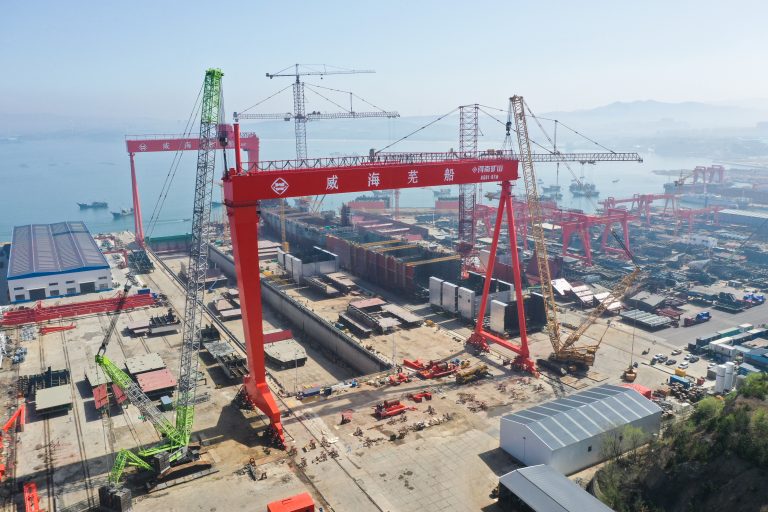
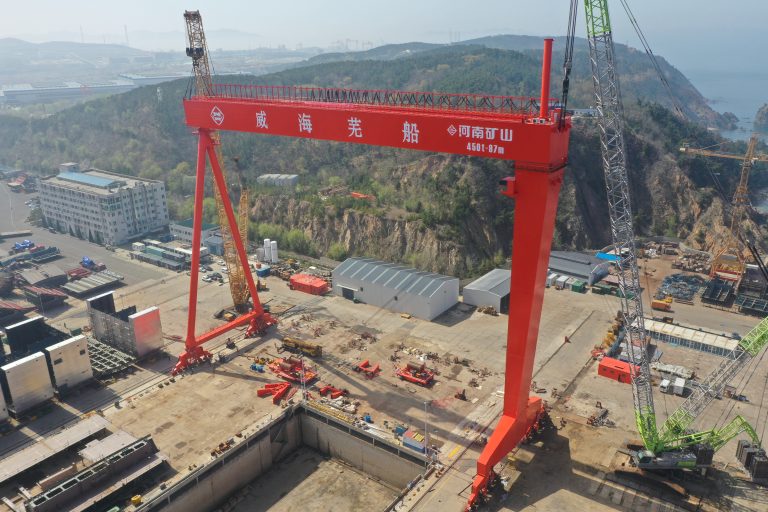
    Goliath Gantry Crane (Goliath Gantry Crane), is the most core of the shipyard, the most conspicuous lifting equipment, but also “heavy duty gantry crane for shipbuilding” on behalf of many large shipyards above the dry dock, you can see it! The most important feature of the crane is its large span.

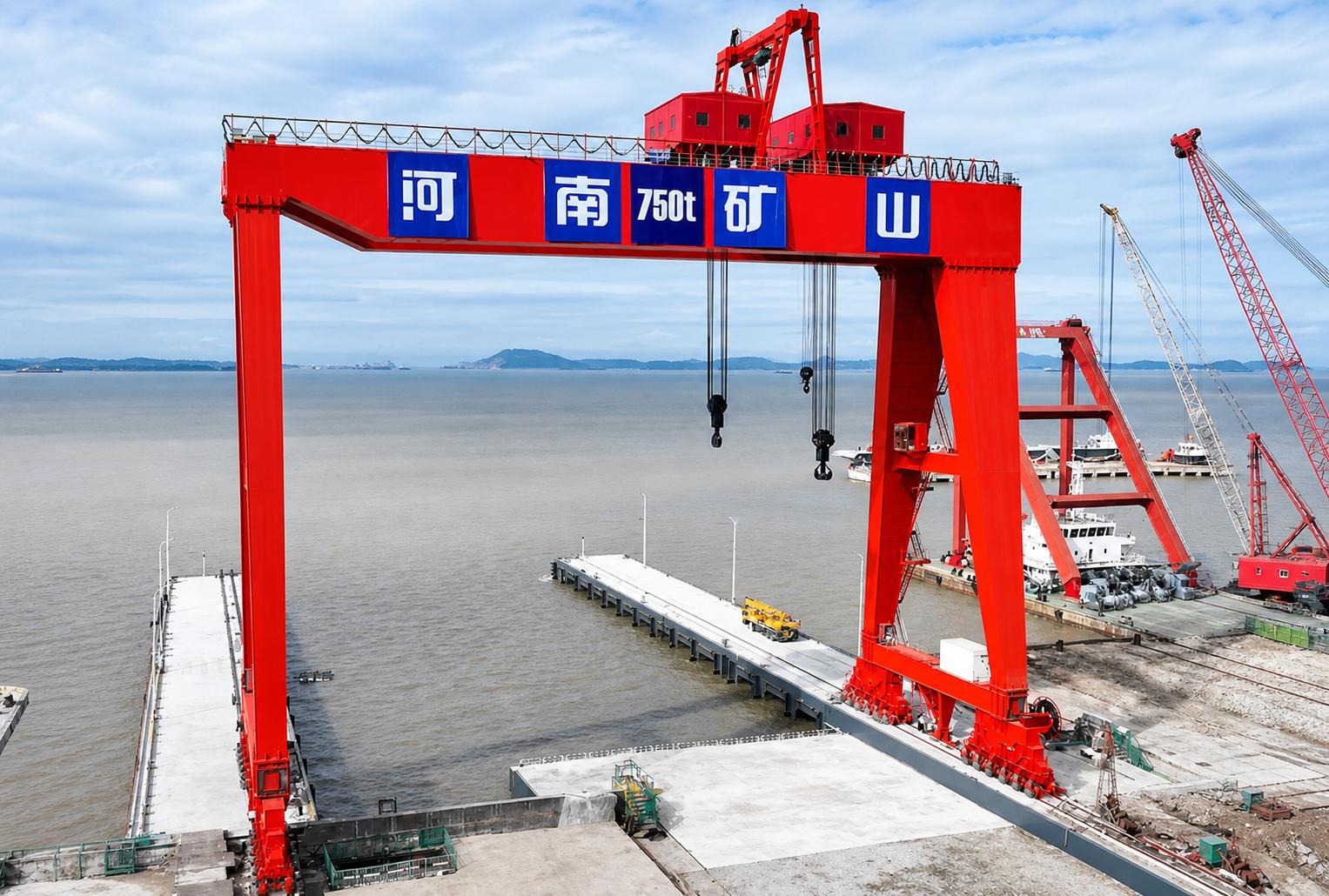
    Its most important feature is the large span and ultra-high lifting capacity, the span usually reaches 50-100 meters, lifting capacity from 200t to 1000t + ranging, specially used for lifting large hull segments, superstructures, and even lifting the entire ship module.

    Most of these cranes are fixedly installed above dry docks or large ship platforms, running along the track and covering the entire operating area. With its sturdy structure and strong stability, it can undertake heavy lifting tasks for a long time in the open environment, and is an indispensable equipment for the construction of large ships.

    Henan Mine Crane manufactured Shipbuilding Gantry Crane

    Henan Mine Crane manufactured Shipbuilding Gantry Crane

    Double Girder Rail-Mounted Gantry Crane

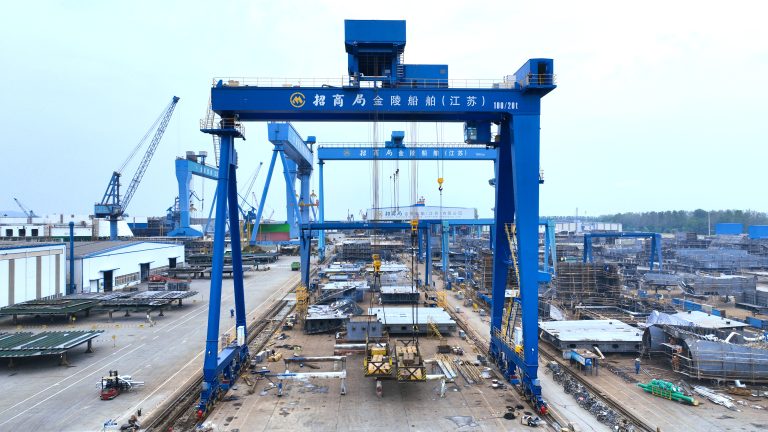
    Double Girder Rail-Mounted Gantry Crane (double girder gantry crane shipyard) is mainly used in the raw material yard and prefabrication workshop of shipyards, to undertake the handling and transfer of steel plates, profiles, and small segments.

    Its lifting capacity is usually between 50-200t, and the span is smaller than that of giant gantry crane, usually between 20-50 meters, running along the fixed rail, with high positioning accuracy, which is suitable for high-frequency material handling operations.

    In the steel plate yard, it is responsible for lifting steel from the raw material area to the processing workshop; in the prefabrication workshop, it is responsible for transferring the processed small segments to the assembly area, connecting all the production links to ensure a smooth production process.

    Semi-Gantry Cranes for Workshop Areas

    Semi-gantry cranes, mainly used in shipyards’ assembly workshops and small processing areas, are a cost-saving solution and are widely used in small and medium-sized shipyards.

    It has a special structure, one side of the outrigger falls to the ground and runs along the ground track, while the other side of the outrigger is attached to the columns or walls of the workshop, which does not need an independent track foundation, and can save space and equipment costs.

    The lifting capacity of this kind of crane is usually between 20-100t, and the span is small, which is suitable for small sectional assembly, equipment maintenance and material handling in the workshop, and the flexibility is strong, which can be adapted to the narrow working space in the workshop.

    Key Applications of Gantry Cranes in Shipyards

    The application of gantry cranes in shipyards runs through the entire shipbuilding process, from raw materials to the ship launching, every key link has its participation. Different application scenarios have different requirements and operation methods for cranes.

    Lifting Ship Hull Blocks

    Lifting ship hull segments is the core application of gantry cranes and one of the most critical processes in the shipbuilding process. The weight and size of the hull segments are large, and the lifting difficulty is high, so the lifting capacity, precision and stability of the crane are highly required.

    Before lifting, it is necessary to adjust the crane’s spreader and lifting angle according to the weight and size of the segments to ensure uniform force. During the lifting process, it is necessary to accurately control the running speed of the crane to avoid shaking of the segments and prevent collision with other equipment or structures.

    Especially for large hull segments, it is usually necessary to use double hoists to synchronize the lifting to ensure the level of the segments and the accuracy of docking. After the lifting is completed, it is necessary to cooperate with other equipment to position the segments accurately, so as to prepare for the subsequent welding operation.

    Moving Large Marine Components

    In addition to hull segments, large components of the ship, such as engines, propulsion systems, deck modules, large valves, etc., also need to rely on gantry cranes for handling and installation.

    The weight of these components usually ranges from dozens of tons to hundreds of tons, and the precision requirements are extremely high, especially for the engine and propulsion system, which may affect the power performance of the whole ship once lifting deviation.

    Gantry cranes, with their precise control system and stable operation performance, can smoothly lift these large components to the designated position of the ship to complete the installation and commissioning. In this process, the anti-shaking performance and positioning accuracy of the crane directly determine the quality of the installation.

    Henan Mine Crane manufactured Shipbuilding Gantry Crane

    Henan Mine Crane manufactured Shipbuilding Gantry Crane

    Steel Plate and Section Handling

    Steel is the core raw material for shipbuilding, and the raw material yard of the shipyard usually stores a large number of steel plates and sections, etc. The handling of these raw materials mainly relies on the double girder rail type gantry cranes.

    The crane will lift the steel plate from the raw material yard to the processing workshop, after cutting, bending, welding and other processes, processing into the required parts of the hull; after processing is completed, these parts will then be lifted to the prefabrication workshop for segmental assembly.

    This kind of high-frequency material handling requires cranes to run stably, operate conveniently, and be able to adapt to long hours of continuous operation. The double girder gantry cranes with sturdy structure and high durability can just meet the requirements of this kind of operation.

    Dry Dock Operations

    Dry dock is the core area for ship construction and maintenance, and gantry cranes in dry dock operations mainly support ship construction and maintenance work.

    In the ship construction stage, gantry cranes are responsible for lifting large segments into the dry dock for overall assembly; in the ship repair stage, they are responsible for lifting out damaged parts of the ship for repair or replacement, and then lifting the repaired parts back to their original positions.

    The operating environment of the dry dock is complex, mostly open-air scene, affected by the wind, which requires the gantry crane to have strong wind resistance and stability, and can work safely in the complex environment.

    Key Technical Requirements for Shipbuilding Gantry Cranes

    Shipyards operate in harsh environments, with large lifting loads and high precision requirements, and also need to operate in open air and coastal environments for long periods of time. Therefore, the technical requirements of gantry cranes for shipyards are higher than those of ordinary industrial gantry cranes, and every parameter should be adapted to the shipbuilding working conditions.

    Henan Mine Crane manufactured Shipbuilding Gantry Crane

    Henan Mine Crane manufactured Shipbuilding Gantry Crane

    High Lifting Capacity

    The lifting capacity of shipyard gantry cranes is usually between 100t and 1000t+, which is determined according to the shipyard’s shipbuilding scale and ship tonnage. Large shipyards constructing ships of more than 10,000 tons require heavy gantry cranes with a lifting capacity of more than 500t.

    The lifting of many large-scale segments requires the use of double hoist synchronous lifting, which requires the crane to have double hoist synchronization control function, to ensure that the lifting speed of the two hoists is the same, the force is uniform, to avoid tilting of the segments.

    At the same time, the design of the crane should also reserve a certain safety margin to cope with the dynamic load in the lifting process, to prevent overloading leading to equipment failure or safety accidents.

    Large Span Design

    The dry dock, shipyard and raw material yard of the shipyard are relatively large in area, which requires the gantry crane to have a large span in order to cover the whole operation area.

    Giant gantry cranes usually have a span of 50-100 meters, which can cover the entire dry dock; double girder rail gantry cranes have a span of 20-50 meters, which is suitable for the raw material yard and prefabrication workshop.

    The large span design requires high structural rigidity of the crane, which requires the use of high-strength steel and reasonable structural design to reduce the structural deflection of the crane during operation and ensure lifting precision and operational safety.

    Wind Resistance and Outdoor Durability

    Most of the shipyards are located in coastal areas, the open-air operating environment, wind, high humidity, and salt spray corrosion, which puts forward high requirements on the wind resistance and durability of the gantry crane.

    Cranes need to have strong wind resistance and be equipped with perfect windproof devices, such as rail clamps, anchoring devices, etc., to prevent the crane from shifting and tipping in windy weather. At the same time, the surface of the equipment needs to be coated with C5 standard anticorrosion coating to resist salt spray corrosion and extend the service life of the equipment.

    In addition, the electrical system and mechanical components of the crane also need to have good sealing performance to prevent rainwater and salt spray from entering and causing equipment failure.

    Precision Control Systems

    Shipbuilding operations require high lifting precision, especially the docking of hull segments and the installation of large equipment, the deviation can not be more than a few millimeters, which requires gantry cranes to have an accurate control system.

    Anti-swaying technology is the core, which can effectively inhibit the swaying of the cargo during the lifting process and ensure the accurate positioning of the segments and equipment; the variable frequency drive (VFD) system, which can realize the smooth lifting and operation of the crane, reduce the mechanical impact, and protect the equipment and cargo.

    For cranes with synchronized lifting of two hoists, synchronized control is also required to ensure that the movements of the two hoists are coordinated to further enhance lifting accuracy.

    Safety Features Required in Shipyard Gantry Cranes

    Shipyard lifting operations are high-risk, large loads, complex operating environment, so the gantry crane safety devices must be complete and reliable, which is the key to protect the safety of personnel and equipment, but also the shipyard selection of key concerns.

    The wind speed monitoring system is a must, which can monitor the wind speed at the site in real time, and when the wind speed exceeds the safety threshold, it will automatically issue an alarm to prohibit the crane from operating, preventing high winds from causing the cargo to sway or equipment displacement.

    Rail clamps and storm brakes can firmly fix the crane on the rail when the crane stops operation or encounters windy weather, preventing the crane from sliding and avoiding safety accidents.

    The overload protection device can detect the lifting load in real time, and when the load exceeds the rated lifting capacity, it will automatically cut off the lifting power and stop the lifting action to prevent the equipment from being overloaded and damaged.

    Redundant braking system is an important safety guarantee, even if the main braking system fails, the redundant braking system can be activated in time to ensure that the crane stops smoothly to avoid the expansion of the accident.

    Collision avoidance system can detect the distance between the crane and other equipment and structures, when the distance is too close, it will issue an alarm and automatically slow down to prevent collision accidents, especially suitable for multiple cranes working at the same time.

    Henan Mine Crane manufactured Shipbuilding Gantry Crane

    Engineering Challenges in Shipyard Crane Design

    Designing gantry cranes for shipyards is much more difficult than ordinary industrial cranes, and requires solving a number of engineering challenges, not only to meet the needs of large span and large tonnage, but also to ensure the stability and safety of the equipment.

    One of the biggest challenges is the structural deflection problem brought about by the large span. The larger the span, the more pronounced the structural deformation during crane operation, which will affect the lifting accuracy and may even lead to structural damage. Therefore, the design needs to use high-strength steel and optimize the structural design to reduce the deflection.

    The second is the load distribution problem of the super heavy module. The weight of large hull segments is not uniform, and it is easy to have uneven force when lifting, which requires crane spreader and structural design that can realize uniform distribution of load and avoid excessive local force.

    Ground and track foundation requirements are also very high. Gantry cranes have a large weight and will generate large pressure on the ground and track when running, so the track foundation needs special reinforcement to ensure the carrying capacity and avoid track deformation or ground settlement.

    In addition, the transportation and on-site assembly of large cranes is also a challenge. Giant gantry cranes are difficult to transport due to their large size and heavy weight, and on-site assembly requires special equipment and professional technology, which is time-consuming and labor-intensive, and needs to be planned well in advance.

    Advantages of Gantry Cranes in Shipbuilding

    The reason why gantry cranes can become the core equipment of shipyards, the core is that its advantages are just suitable for the operational needs of the shipbuilding industry, more practical and reliable than other lifting equipment.

    The most prominent advantage is the independent structure, does not need to be attached to any plant columns or building structures, can be directly deployed in the open dry dock, ship platforms and yards, covering the entire operating area, without the need to carry out large-scale transformation of the site.

    Suitable for outdoor large-scale operation, can adapt to the open-air and coastal environment of shipyards, with strong wind resistance and anti-corrosion ability, and can undertake heavy lifting tasks for a long time with strong durability.

    High load handling capacity, can meet the needs of large hull segments, large equipment lifting, lifting capacity ranging from 100t to 1000t+, can be flexibly customized according to the needs of shipyards, suitable for different tonnage ship construction.

    Strong scalability, with the expansion of shipyards and shipbuilding tonnage, gantry cranes can be upgraded to improve the lifting capacity and span, or new models to meet the needs of expanding production, without the need to replace the whole equipment, reducing long-term investment.

    Henan Mine Crane manufactured Shipbuilding Gantry Crane

    Case Study Example

    Here to share with you an actual case, is a large shipyard equipped with 600t giant gantry cranes, but also the shipyard is more typical of the heavy-duty gantry crane configuration, can be more intuitive understanding of the application of gantry cranes in the shipyard.

    The shipyard mainly builds 10,000-ton cargo ships and container ships, in order to enhance the efficiency of modular construction, equipped with a 600t giant gantry crane for lifting and assembly of large hull segments.

    The crane has a span of 80 meters, a lifting height of 45 meters, and adopts double trolley and double hoist configuration to achieve the maximum lifting capacity of 600t, and the synchronized lifting precision of double hoists can be up to ±5mm, which fully meets the docking requirements of large hull segments.

    Considering the coastal environment of the shipyard, the equipment adopts C5 standard anticorrosion coating and is equipped with perfect windproof system, including wind speed monitor, rail clamp and anchoring device, which can withstand grade 12 gusts of wind and ensure the safety of outdoor operation.

    After the crane is put into use, the shipyard’s large-scale segment lifting efficiency has been increased by 30%, and the shipbuilding cycle has been shortened by 15%, which not only reduces the labor cost, but also reduces the rectification work brought by lifting deviation, and significantly improves the shipyard’s production competitiveness.

    How to Choose the Right Gantry Crane for a Shipyard

    Selection of gantry cranes for a shipyard, can not blindly pursue large tonnage, high configuration, combined with the actual working conditions of the shipyard, such as the scale of shipbuilding, ship tonnage, operating areas, environmental conditions, etc., in order to select the appropriate model, both to ensure operational safety, but also to save costs.

    First of all, the required lifting capacity should be clearly defined, which is determined according to the maximum ship’s segment weight built by the shipyard, and usually there should be a safety margin of 10%-20% more than the maximum segment weight to avoid overloading. If the main lifting of large segments, it is recommended to choose more than 500t giant gantry cranes; if the raw material handling and small segment assembly is the main focus, double girder rail gantry cranes can be.

    Next is the dock width and span, the span of the crane to match the width of the dry dock, ship platform or yard, to ensure that it can cover the entire operating area, but also to leave a safety gap to avoid collision with other equipment or structures.

    Frequency of operation is also very critical, high-frequency continuous operation of the scene, to choose a high working level of the crane, to ensure the durability of the equipment, to reduce downtime; operating frequency of the scene is low, you can choose the ordinary working level of the model, to reduce costs.

    Environmental conditions can not be ignored, coastal shipyards should choose equipment with high anti-corrosion level and strong wind resistance, equipped with perfect wind and corrosion protection devices; if the operating area has dust, salt spray and other pollutants, but also to strengthen the sealing and protection of equipment.

    The automation level can be selected according to the needs of the shipyard. Large shipyards can choose cranes with high automation, equipped with remote control, automatic positioning and other functions to enhance operational efficiency; small and medium-sized shipyards can choose manual or semi-automatic control to reduce equipment costs.

    Finally, we should consider the budget and the whole life cycle cost, not only look at the initial purchase price, but also calculate the maintenance cost, energy cost, spare parts cost and downtime loss, choose cost-effective, after-sales protection of the equipment, to avoid the later investment is too high.

    Frequently Asked Questions

    Combined with the usual shipyard customers consult the most questions, organized a few common questions, with easy-to-understand way to answer, to help you quickly clear thinking, to avoid the selection and use of the process of detour.

    What is a Goliath crane in shipbuilding?

    The shipyard’s giant gantry crane (Goliath crane), is a large span, large tonnage of heavy gantry cranes, mainly installed in dry docks or large ship platforms above, specifically for lifting large hull segments, superstructures and other super-heavy components. Its lifting capacity is usually more than 200t, and the span can reach 50-100 meters, which is the indispensable core equipment for the construction of large ships.

    How much can a shipyard gantry crane lift?

    The lifting capacity of shipyard gantry cranes ranges from 100t to 1000t+, depending on the model and configuration. Small and medium-sized shipyards mainly use 100-200t cranes for small-scale segmentation and equipment handling; large shipyards constructing ships of 10,000 tons or more need 500-1000t+ giant gantry cranes for lifting large-scale segments.

    Why are double girder cranes preferred in shipyards?

    The core reason why double girder gantry cranes are preferred in shipyards is that they have high structural rigidity and stability, and can withstand larger loads and spans. The lifting operations in shipyards are mostly heavy and high-frequency, and the double girder structure can reduce the deformation of the equipment during operation, improve the lifting accuracy, and be more durable and adaptable to the harsh operating environment in shipyards, which is more suitable for heavy-duty operations than single girder cranes.

    How do gantry cranes handle strong coastal winds?

    In response to strong winds in coastal areas, gantry cranes in shipyards are mainly used in two ways: one is equipped with perfect windproof devices, such as rail clamps, anchoring devices, windproof cable, etc., which can securely fix the crane on the track to prevent shifting; and the other is to install a wind monitoring system, which monitors the wind speed in real time, and stops the operation automatically when the wind exceeds the safety threshold, so as to avoid the goods swaying or equipment failures caused by high winds.

    What is the typical lifespan of a shipyard gantry crane?

    The service life of a shipyard gantry crane mainly depends on the quality of the equipment, the level of maintenance and the intensity of operation, usually between 20-30 years. If the equipment uses high-quality components, good regular maintenance, and moderate operating intensity, the service life can reach more than 30 years.

    Conclusion

    For modern shipyards, the gantry crane is the “backbone” of efficient operation, from raw material handling to hull assembly, from ship construction to maintenance, each link is inseparable from its support. Its performance and reliability directly determines the shipyard’s productivity, shipbuilding quality and market competitiveness.

    Selection and design of gantry cranes for shipyards must be adapted to the actual operating conditions, focusing on the lifting capacity, span, wind resistance, corrosion resistance and safety devices, and only through professional engineering design and reasonable selection can we ensure the long-term stable operation of the equipment to avoid safety accidents and downtime losses.

    Investing in high-quality gantry cranes, although the initial cost is high, can significantly improve productivity and reduce long-term maintenance costs, helping shipyards to dominate the fierce competition in the market and achieve sustainable development.

    Henan Mine Crane manufactured Shipbuilding Gantry Crane

    Call to Action

    If your shipyard is planning for equipment upgrades, or need to customize suitable gantry cranes, you may want to submit your shipyard layout and operational needs, we will do a free site assessment for you, accurate matching of suitable models.

    Henan Mine Crane Factory supply, as a professional crane manufacturer, integrates R&D, design, manufacturing, sales and service to provide customers Please feel free to contact us, we will provide you with free design drawings, and field survey!

    Henan Mine CraneDiscuss your requirements ↗
  • How Environmental Conditions Affect Gantry Crane Design

    How Environmental Conditions Affect Gantry Crane Design

    How Environmental Conditions Affect Gantry Crane Design

    As the core heavy-duty hoisting equipment for ports, construction sites, mines, steel mills and other scenes, gantry cranes have been deeply bound to the environmental conditions of the site from the beginning of the design. The stability, service life, operating safety and operating efficiency of the whole machine.The root cause of the problems of premature corrosion of gantry cranes, frequent failures of components, downtime in extreme weather, structural deformation and even overturning in many enterprises is not equipment quality defects, but the inability of general standard models to adapt to special working conditions. Environment.For large crane manufacturers, environmental adaptability design is the core prerequisite for equipment to operate in compliance, reduce operation and maintenance costs, and ensure long-term safety.This article comprehensively disassembles the core influence of environmental conditions on the design of gantry cranes, and provides professional reference for project selection, equipment customization, and technical reform and upgrading.

    How Temperature and Weather Affect Gantry Crane Design

    High-temperature environments

    Long-term high-temperature environments (ambient temperature ≥40℃, steel mills and smelters can reach more than 60℃ in summer) will completely lose the performance of gantry cranes from the three major mechanical, electrical and hydraulic systems, forcing targeted special designs.High temperature will accelerate the thermal expansion and contraction of steel, resulting in thermal stress deformation of the main beam and outrigger structure. Long-term accumulation will cause the main beam to flex and the structural welds to crack, reducing the structural stability of the whole machine.At the same time, high temperature will cause the oil temperature of the hydraulic system to soar, the seals will age and fail, and the viscosity of the hydraulic oil will decrease, resulting in weak hoisting, oil leakage, and movement.

    The electrical system is the most vulnerable core module in a high temperature environment. Conventional motors, frequency converters, and control cabinets have difficulty dissipating heat at high temperatures, and their insulation performance decays rapidly. They are prone to overload, burn-out, short-circuit tripping, program disorders, etc. Faults.Therefore, the design of gantry cranes under high temperature conditions must increase the forced heat dissipation system, choose F-class and H-class high-temperature insulated electrical components, use high-temperature hydraulic oil and sealing materials, and optimize the ventilation structure of the whole machine to avoid heat accumulation and ensure the stability of continuous operation of the equipment.

    Low-temperature environments

    The core influence of the low temperature environment (-10℃ to -40℃ cold area) on the gantry crane is the cold brittleness of the material and the failure of the mechanical transmission, which is also the main cause of equipment failure in the northern alpine areas.Ordinary carbon steel has a significant decrease in toughness and a surge in brittleness in a low temperature environment. When it is subjected to hoisting shock and wind vibration, it is prone to structural cracks and weld fractures, causing major safety accidents.At the same time, low temperature will cause general lubricating grease to solidify and agglomeration, gears, bearings, walking wheels and other transmission components to lose lubrication protection, the wear rate will accelerate sharply, and the equipment will be stuck when walking and lifting, and abnormal noises will occur frequently.

    In terms of electrical systems, low temperature can cause the sensitivity of batteries, sensors, and control modules to decrease, the cables to harden and brittle, and the insulation layer to crack, causing problems such as leakage and signal failure.For the customized design of low-temperature working conditions, special weather-resistant steels for low-temperature such as Q345D/E need to be selected, and the welds of the whole machine should be reinforced with low-temperature flaw detection, antifreeze and low-temperature long-lasting lubricating grease should be replaced, and electrical preheating and thermal insulation devices should be configured to ensure that the equipment can start normally and operate stably in a cold environment.

    Heavy rain and humidity

    The core hazards of rainy and high-humidity environments (coastal and southern rainy season sites, relative humidity ≥80% all year round) are metal corrosion and electrical moisture failure.The open-air gantry crane is exposed to rain and condensation for a long time, and the surface of the steel will continue to oxidize and rust, gradually developing from the surface coating to deep rust, weakening the carrying capacity of the structure.High humidity condensation will also accumulate water vapor in the control cabinet, motor junction box, and sliding contact line interface, resulting in a significant reduction in electrical insulation resistance. After falling below the national standard, it can easily cause interphase short circuit, ground failure, motor burning and other problems.

    At the design level, the protection level of equipment needs to be comprehensively upgraded in high-humidity and rainy conditions. The electrical system of the whole machine adopts IP55 and above sealing protection, and the wiring ports are waterproof and sealed.The steel structure adopts a multi-layer anticorrosive coating process to increase the waterproof primer and moisture-proof topcoat.The mechanical transmission parts are equipped with waterproof and dustproof covers to prevent rainwater intrusion.At the same time, optimize the drainage structure of the whole machine to avoid stagnant water on the main beam and base, and eliminate equipment failures caused by humid environments from the source.

    Snow and ice conditions

    The influence of snow and ice covering environment on gantry cranes is concentrated in the three dimensions of structural load, walking safety, and braking performance.Snow covering the roof, main beam, and outriggers will increase the weight load of the whole machine. After exceeding the design load, it will intensify structural deformation and the main beam will flex, and long-term snow will even damage light structural components.Track icing will greatly reduce the friction between the wheels and the track, causing the gantry crane to slip, shift, and chew the track when walking, and there is a risk of derailment in severe cases.

    At the same time, the ice will wrap the brake mechanism and the rail clamping device, causing the brake to fail, the windproof device to get stuck, and the equipment cannot be locked normally, which can easily cause slippage accidents in windy weather.According to the design of ice and snow conditions, the streamlined structure of the whole machine needs to be optimized to reduce the accumulation area of snow.Standard equipment is equipped with track deicing and snow melting auxiliary devices for the whole machine.The braking and windproof components are optimized for antifreeze and anti-stagnation, and the non-slip track design and low-temperature wear-resistant walking wheels are used to ensure the normal operation of the equipment’s walking, braking, and windproof functions in ice and snow weather.

    Designing Gantry Cranes for Wind and Outdoor Loads

    Wind load and structural stability

    Wind load is the core control index of Henan Mine Crane Factory supply outdoor gantry crane design, and it is also the primary external factor that causes equipment to capsize and slip.The gantry crane has a large span and a wide windward area. It is like a giant wind carrier. Continuous cross winds and gusts of wind will produce huge lateral thrust, which will change the balance of the force of the whole machine, causing structural deformation, orbital offset, and slippage of the whole machine. Problems.In strong wind weather, the lateral torque of a standard gantry crane that has not been designed for wind resistance will exceed the carrying limit of the structure, which will directly cause the outriggers to deform and the whole machine to capsize, causing major equipment and personnel losses.

    In the structural design, manufacturers need to accurately calculate the wind load parameters according to the site limit wind speed and industry specifications, optimize the gantry frame structure, and adopt a lightweight, high-rigidity beam body and hollow wind-resistant structure to greatly reduce wind resistance.Increase the rigidity of the outriggers and the counterweight of the base to improve the anti-overturning torque of the whole machine.For large-span gantry cranes, a transverse reinforced support structure is added to disperse the wind impact load and ensure the structural stability of the whole machine under windy conditions.

    Storm protection and parking systems

    The outdoor gantry crane has been unattended for a long time, and the protection design of extreme storm weather such as typhoons and storms is essential. The special windproof parking system is the core configuration of the equipment safety pocket.Conventional models do not have special storm protection. In stormy weather, the equipment will slip with the wind and collide with the track buffer device, causing derailment and structural damage.The core of customized storm protection design is to build a systematic parking protection system to adapt to different levels of storm conditions.

    In the design, according to the maximum storm level of the site, the fixed parking card position and the limit buffer device of the whole machine will be matched to limit the maximum slip range of the equipment.Optimize the layout of the center of gravity of the whole machine, reduce the height of the center of gravity, and improve the stability of the storm resistance.For strong storm areas in ports and coasts, adjustable windproof support structures have been added. The outriggers can be quickly strengthened when the equipment is parked to offset the lateral impact of the storm and prevent equipment safety accidents in extreme weather.

    Rail clamps, wheel brakes, and storm anchors

    The rail clamp, wheel brake, and storm anchoring device are the three core hardware of the windproof brake of the gantry crane, which directly determines the windproof safety of the equipment parking, and the design needs to be differentiated according to the environmental wind level.The track clamp clamps the track by mechanical locking to prevent the slip and offset of the equipment under windless operation and breeze conditions, and is suitable for daily gale protection.The high-performance wheel brake can quickly lock the walking wheel set to achieve precise braking and avoid the deviation of the walking position caused by force interference during operation.

    The storm anchoring device is the ultimate protection configuration for extreme weather. It is rigidly connected to the equipment through embedded anchors on the ground, and the whole machine is firmly fixed on the basis of the track, which can withstand the impact of super typhoons and storms.In terms of design and selection, a manual simple rail clamp can be configured according to ordinary working conditions.Fully automatic hydraulic rail clamps and reinforced brakes are selected for windy and windy conditions.In areas with frequent coastal storms and typhoons, heavy-duty storm anchoring devices must be equipped as standard to form a triple windproof protection system of braking, rail locking, and anchoring.

    Wind sensors and automatic safety systems

    Intelligent wind monitoring and automatic safety system are the core upgrades of the modern Henan Mine Crane Factory supply outdoor gantry crane environment adaptation design, realizing the transition from passive protection to active early warning and automatic protection.Traditional gantry cranes rely on manual judgment of wind speed and manual protection. There are hidden dangers of lagging response and untimely protection, which can easily cause accidents due to sudden high winds.In the customized design, it will be equipped with a high-precision wind speed sensor to monitor on-site wind speed and wind changes in real time 24 hours a day, and the data will be transmitted to the control system and the operating terminal in real time.When the wind speed reaches the early warning threshold, the system automatically issues a sound and light alarm to remind the operator to stop the hoisting operation.When the wind speed exceeds the safe operation threshold, the system forcibly locks the lifting and walking mechanisms, triggers automatic braking and rail locking, and linkage the parking protection system to complete the equipment fixation.Some high-end models are also equipped with remote monitoring function, which can upload wind data and equipment status in real time, realize automatic wind protection under unattended working conditions, and improve the safety of outdoor operations in all directions.

    Special Design Requirements for Extreme Environments

    Desert and high-dust applications

    Desert, Gobi, and high-dust mining areas are extremely harsh working conditions. The core characteristics are continuous sand, strong sunlight, large temperature difference between day and night, and extremely high dust concentration. The dust-proof, anti-aging, temperature-resistant, and wind-resistant properties of gantry cranes are extremely demanding.Strong desert winds carry a large amount of sand particles, which will wear and tear exposed parts of the equipment at high speed. Long-term exposure to ultraviolet rays will accelerate the aging of the coating and the brittleness of the rubber seals. Large temperature differences between day and night will cause the structure to repeatedly expand and shrink, causing fatigue cracking of the welds.

    Targeted special design needs to focus on four core elements, one is to strengthen the dust-proof seal of the whole machine, all transmission and electrical components are fully enclosed and protected, and it is equipped with an automatic dust removal system.The second is to adopt a heavy anticorrosive coating that is resistant to ultraviolet rays and wind and sand wear to delay the aging and wear of the equipment.The third is to choose steel that is resistant to temperature difference and fatigue, and is suitable for severe fluctuations in temperature day and night.Fourth, optimize the wind-resistant structure, improve the rigidity and windproof level of the whole machine, resist the continuous strong winds in the desert, and ensure the stable operation of the equipment all year round.

    gantry crane design

    Coastal and port environments

    The working conditions of ports and coastal terminals combine harsh conditions such as high salt spray, high humidity, strong wind, and open-air exposure. It is one of the scenarios where gantry cranes are most widely used and have the highest environmental requirements.The equipment can withstand salt spray corrosion, sea breeze impact, rain soaking, and ultraviolet exposure for a long time. Conventional models will experience serious corrosion and frequent failures in 1-2 years, which cannot meet the needs of high-frequency and high-intensity operations in the port.

    The design of the Henan Mine Crane Factory supply gantry crane for the port adopts a systematic adaptation scheme to upgrade the marine-grade heavy anticorrosive system to ensure that there will be no large-scale corrosion for 5-10 years.Strengthen the ultra-high wind resistance structure, standard with multiple windproof anchoring and automatic wind speed protection system to resist typhoon weather.Improve the waterproof, moisture-proof, and dust-proof levels of the whole machine, and adapt it to high humidity and rainy environments.Optimize the wear-resistant and fatigue-resistant properties of the structure, adapt to the 24-hour uninterrupted high-frequency operation of the port, while simplifying the operation and maintenance structure, and reducing the difficulty and cost of port equipment maintenance.

    Steel mills and high-temperature facilities

    High-temperature plants such as steel mills, smelters, and coking plants have high ambient temperatures, strong thermal radiation, large dust, and flue gas corrosion, which are high-temperature composite and harsh working conditions.The equipment has been in a high-temperature thermal radiation environment for a long time. Thermal deformation of the structure, electrical overheating failure, lubrication failure, and flue gas corrosion are the four core problems. Conventional models are prone to deformation of the main beam, motor burning, transmission caton, component corrosion and other failures.

    The design of the special gantry crane for high-temperature factories focuses on the three cores of heat resistance, corrosion resistance and dust resistance. The whole machine adopts high-temperature structural steel to optimize the heat dissipation layout and reduce heat accumulation.All electrical systems are equipped with high temperature resistance, flame retardant, and explosion-proof configurations, and are equipped with forced heat dissipation and cooling devices.The hydraulic and lubrication systems use special media for high temperature resistance to prevent high temperature failure.In view of flue gas corrosion, upgrade the anti-corrosion and dust-proof sealing system to isolate corrosive flue gas and dust, and adapt to the harsh operating environment of high-temperature industrial plants.

    Cold regions and freezing conditions

    In alpine permafrost and extremely cold snow-covered areas, the core working conditions are characterized by long-term low temperature, freezing and thawing day and night, track icing, dry air and large temperature differences. The core risks of equipment are cold and brittle steel, frozen parts, electrical failure, and brake failure.Ordinary gantry cranes cannot start normally in extremely cold environments, the structure is easy to break, the windproof and braking devices are easy to freeze and get stuck, and there are great safety risks.

    Customized design in extremely cold areas must implement special low-temperature adaptation, and the main structure adopts low-temperature weather-resistant steel to prevent cold and brittle fracture.All mechanical moving parts and lubrication systems use special accessories and media for antifreeze and low temperature resistance to prevent freezing and blocking.The electrical system is equipped with thermal insulation and preheating devices to ensure normal start-up and operation at low temperature.The track, braking, and windproof devices are optimized for antifreeze and deicing, and are equipped with an anti-snow structure, which is fully adapted to extremely cold and freezing conditions.

    Seismic and high-risk areas

    In areas with frequent earthquakes and high-risk geological instability, the design of gantry cranes needs to focus on optimizing seismic resistance, sedimentation resistance, and impact resistance.Earthquakes and geological sedimentation can cause track deformation, foundation offset, and imbalance in the center of gravity of the whole machine, causing serious accidents such as structural distortion, derailment and overturning, and component damage. Conventional structural models cannot withstand the impact load caused by geological fluctuations.

    The special design of high-risk earthquake areas needs to optimize the seismic resistance structure of the whole machine, increase structural cushioning, strengthen the support system, and improve structural toughness and impact resistance.Optimize the connection structure between the base and the foundation, adapt to minor geological sedimentation, and reduce structural stress damage.Strengthen the track fixation and limit structure to avoid equipment slippage and derailment caused by earthquakes.At the same time, the rigid connection structure is simplified, the flexible buffer design is increased, the seismic impact load is dispersed, and the safety redundancy of the equipment in the geological high-risk environment is maximized.

    How to Customize a Gantry Crane for Site Conditions

    Assess the operating environment

    Environmental survey and evaluation is the first step in the customized design of gantry cranes and the basis for all adaptation plans. Accurate environmental data can avoid equipment adaptation defects from the source and reduce the risk of late failures.Manufacturers need to combine the project site to survey the core environmental parameters in an all-round way, including the site limit high and low temperature, average annual humidity, wind level, maximum wind speed, rain and snow days, dust concentration, corrosive medium type, geological conditions, earthquake intensity and other key indicators.

    At the same time, combined with the operating attributes of the site, distinguish scenarios such as ports, mines, steel mills, alpine areas, deserts, chemical parks, sort out the core environmental hazard factors, clarify the protection directions that the equipment needs to be adapted to, and form a complete on-site environmental assessment report to provide accurate data support for subsequent load accounting, material selection, and protection configuration to ensure that the customized plan fully fits the on-site working conditions.

    Determine environmental loads and working conditions

    Based on environmental assessment data, accurate accounting of environmental loads and operating condition parameters is the core basis for customized design.The technical team needs to calculate various environmental additional loads such as wind load, snow load, temperature stress, corrosion fatigue load, seismic impact load, etc. in strict accordance with the national standards of the industry, and combine the rated lifting weight, span, lifting height, operating frequency, and working level of the equipment to form a comprehensive load parameter of the whole machine.

    Through load accounting, the design standards for structural strength, rigidity, and safety redundancy of the whole machine are clarified, and special protection levels such as windproof, anticorrosive, dustproof, temperature control, and seismic resistance are determined, so as to eliminate the waste of costs caused by excessive protection, or the safety risks caused by insufficient protection, and achieve accurate matching of environmental load and equipment performance to ensure that the equipment can operate safely and stably under rated operating conditions and extreme environments.

    Select suitable materials and protective systems

    The material selection and protection system configuration directly determine the environmental adaptability and service life of the gantry crane, and it needs to fully match the environmental load and working conditions of the site.Structural steel is selected differently according to temperature, geology, and load conditions. Ordinary carbon steel is selected for normal working conditions at room temperature, weather-resistant low-temperature steel is selected for low-temperature and extremely cold working conditions, and corrosion-resistant special steel is selected for high-corrosion working conditions.

    The protection system is customized on demand. Marine-grade heavy anti-corrosion system is configured for coastal salt spray conditions, high-temperature heat dissipation protection system is configured for high-temperature conditions, fully sealed dust-proof system is configured for dust-proof conditions, multiple wind-proof protection systems are configured for windy conditions, and antifreeze insulation systems are configured for extremely cold conditions.At the same time, supporting the adapted mechanical and electrical accessories, from the main structure, core accessories to the outer protection, form an all-round and systematic environmental adaptation system to maximize the durability of the equipment.

    Match electrical and mechanical components

    The precise adaptation of electrical and mechanical core components is the key to ensuring the stable operation of customized gantry cranes. It is necessary to abandon general accessories and fully fit the selection of environmental working conditions.According to temperature, humidity, dust, and corrosion conditions, the electrical system matches the corresponding protection level, temperature resistance, anti-corrosion, dust-proof motors, frequency converters, sensors, control cabinets, cables and other accessories. High temperature is equipped with high temperature electrical parts, high humidity is equipped with waterproof and moisture-proof electrical parts, and corrosive environments are equipped with anticorrosive sealed electrical parts.

    Mechanical transmission, braking, walking, and windproof components are adapted as needed. Low temperature is equipped with antifreeze and wear-resistant transmission accessories, high temperature is equipped with heat-resistant sealing accessories, wind and sand conditions are equipped with wear-resistant and dust-proof accessories, and typhoon areas are equipped with heavy-duty windproof anchoring accessories.The parameters, performance, and protection levels of all accessories are matched with each other to form a collaborative adaptation ability of the whole machine, avoid the failure of the whole machine caused by insufficient adaptation of a single component, and ensure the long-term efficient operation of the equipment.

    Balance initial cost and long-term operating cost

    The professional customized design will reasonably configure the protection plan according to the level of working conditions, and will not blindly pile up high-end configurations. Under the premise of meeting environmental adaptation and safe operation, the initial investment will be controlled.At the same time, through accurate environmental adaptation design, the equipment failure rate is greatly reduced, the service life is extended, and the downtime loss and operation and maintenance costs are reduced.In the long run, the whole life cycle cost of customized gantry cranes adapted to working conditions is reduced by more than 30% compared with standard models, and the safety, stability, and operating efficiency are comprehensively improved. It is the best choice for all kinds of complex working conditions.

    Henan Mine Crane Factory Custom

    Environmental conditions are the core variables that determine the design plan, equipment performance, service life, and operating safety of gantry cranes. There is no universal gantry crane model suitable for all scenarios.From the conventional weather effects of temperature and humidity, wind, rain and ice, to the continuous loss of wind loads and corrosive dust, to the extreme working conditions in deserts, ports, steel mills, extreme cold, and earthquake areas, each environmental factor corresponds to its own structural optimization, material selection, protection configuration and system upgrade.For equipment buyers and manufacturers, the customized crane design of Henan Mine Crane Factory, which abandons standardized general thinking and is based on the on-site environment, is the core key to avoiding safety risks, reducing operation and maintenance costs, improving equipment operation efficiency, and achieving long-term stable operation.

    Henan Mine CraneDiscuss your requirements ↗
  • How Does Port Crane Automation Affect Terminal Operating Costs

    How Does Port Crane Automation Affect Terminal Operating Costs

    How Does Port Crane Automation Affect Terminal Operating Costs

    With the upgrading of global shipping capacity and the continuous expansion of port throughput, coupled with higher labor costs and a shortage of skilled operators, the disadvantages of traditional manual control of port cranes, port shore bridges, and field bridge equipment are becoming more and more prominent.Large manual operation errors, high energy consumption, frequent equipment downtime, operation and maintenance losses and hidden dangers of cargo damage continue to drive up the overall operating expenses of the terminal.In this context, the automation upgrade of port cranes has become the core direction of the intelligent upgrading of ports. Through standardized, unmanned, and digital operation modes, the cost structure is optimized from multiple dimensions of manpower, energy consumption, maintenance, and operating losses, and the efficiency and profitability of terminal operations are comprehensively improved.

    How Port Crane Automation Changes Operating Costs

    The core operating costs of ports and terminals are mainly composed of labor costs, energy consumption costs, equipment maintenance costs, failure loss costs, and operation error loss costs. It is also a rigid expenditure that is difficult to optimize for a long time in traditional terminals.Henan Mine Crane manufactured port crane automation uses intelligent control system, unmanned operation module, AI intelligent operation and maintenance, and precise scheduling system to reconstruct the terminal cost structure from the root cause, so as to achieve the dual cost-reducing effect of reducing operating expenses and reducing operating losses, and the cost optimization effect will continue to increase with the lengthening of the operation cycle and the increase of throughput.

    Labor and energy savings

    Labor and energy consumption are the two core variable costs of traditional fully automatic port crane operations, and they are also the expenditure sectors with the largest decline after automation transformation.Under the traditional manual operation mode, a single shore container crane requires 4-5 operators to be on duty in shifts, and at the same time it needs to be equipped with command, inspection, and auxiliary docking personnel. Salary, social security, training, shift subsidies, personnel management and other expenses are superimposed. Labor costs remain high all year round, and there are perennial difficulties in recruiting and large mobility of personnel in high-risk port jobs, which indirectly increases management costs and operational risk costs.The intelligent automated port crane adopts remote centralized control + unmanned autonomous operation mode. Only 1-2 monitoring personnel are required for a single equipment to complete the on-duty control of multiple equipment, without the need for on-site high-frequency operation.

    In terms of energy consumption savings, traditional manual operations have problems such as frequent emergency stops, idling, overload operations, and irregular start-stop, and invalid energy consumption accounts for an extremely high proportion.The smart port crane is equipped with an intelligent energy consumption control system, a precise start-stop algorithm, and an energy recovery device. It can automatically match the optimal power according to the weight of the container, the operating distance, and the operating trajectory to eliminate invalid idling and overload energy consumption.The measured data show that automated operations can reduce the energy consumption of a single box by 20%-25%, and the annual power saving of large ports can reach the level of one million degrees, and the long-term energy consumption savings are very impressive.

    Maintenance and downtime

    Equipment maintenance costs and downtime losses are hidden high costs that can easily be ignored by traditional terminals.The uncertainty of manual operation will lead to uneven wear and tear of core components such as wire ropes, spreaders, bearings, motors, and reducers of port cranes, and frequent sudden failures.The traditional maintenance model focuses on regular maintenance and post-failure maintenance. There are dual problems of excessive maintenance, wasteful costs, and delayed maintenance that cause major failures. Unplanned downtime is uncontrollable, which directly disrupts the operation schedule of the pier, causing idle berths and loss of ships in port.

    The fully automatic port crane is equipped with AI intelligent diagnosis, 3D visual monitoring, and real-time acquisition system of equipment status. It can monitor the operation data of the core components of the equipment 24 hours a day, accurately predict the fatigue, wear and hidden faults of the components, and automatically generate preventive maintenance plans, transforming the traditional post-mortem maintenance mode into an active preventive maintenance mode.At the same time, the operation trajectory of automated port cranes is standardized, the operation actions are standardized, and the wear of core components is uniform and controllable, which greatly extends the service life of the equipment, reduces the frequency of replacement of large parts, and further dilutes long-term maintenance costs.The stable equipment attendance rate also completely avoids indirect economic losses such as ship stagnation, yard congestion, and order delays caused by sudden equipment failures.

    Handling errors and losses

    The randomness error of manual operation is the core source of the invisible loss of the terminal.Traditional port crane lifting operations rely on the experience of operators, and are prone to problems such as container alignment deviation, tilt of spreader, unstable grasping, and misplaced placement. Light ones require secondary alignment and repeated operations, which lengthen the operation time and waste energy and manpower. Heavy ones cause container bumps, box damage, cargo damage, and even safety accidents such as container falling boxes and stacking collapses.In addition, operational errors can also lead to chaotic stacking in the yard, chaotic box positions, and mismatches between the documents and the actual goods. Subsequent manual verification, rectification and adjustment are required, which takes up terminal manpower and site resources, and when serious, it will affect the timeliness of delivery of the goods, resulting in additional losses such as cargo damage compensation, customer complaints, and route delays.

    The intelligent port crane relies on a high-precision positioning system, intelligent anti-shake technology, and automatic alignment algorithm. The operating error can be controlled at the millimeter level, and the whole process is standardized and independently completed. Grasping, translation, box dropping, and stacking operations completely avoid human operation errors.On the one hand, it eliminates the invalid costs caused by secondary operations, on the other hand, it greatly reduces cargo damage, safety accidents, box dislocation and other problems, effectively reduces terminal operation losses and compensation costs, and guarantees zero errors and zero additional losses in operations.

    How Automation Improves Terminal Operations

    The core value of modern port crane automation is not only a single-dimensional cost reduction, but also an all-round upgrade of the terminal operation system to solve the traditional terminal efficiency bottleneck, waste of site, chaotic equipment coordination, unstable operation level and other core pain points.Through intelligent, standardized, and digital operation modes, a comprehensive upgrade of terminal throughput capacity, site utilization rate, equipment collaborative efficiency, and operational stability is realized, and a refined and efficient modern terminal operation system is constructed.

    Faster container handling

    Container loading and unloading efficiency is a key indicator to measure the core competitiveness of the terminal, which directly determines the utilization rate of the terminal’s berths, the speed of ship turnover and the daily throughput.Traditional manual operation is affected by the status, experience, fatigue, and weather adaptability of operators. The operating speed fluctuates greatly, and the operating time of a single box is unstable. During peak hours, it is very prone to berth congestion and ships waiting to dock.

    The automated port crane is equipped with optimal path planning algorithm, intelligent anti-shake system, and continuous operation logic. There is no need for manual rest, changing of guards, and adaptation and adjustment, and it can achieve 24-hour uninterrupted continuous operation.The system can predict the operation instructions and plan the operation trajectory in advance, eliminate hesitation, errors, repeated alignment and other invalid time-consuming manual operations, and greatly compress the loading and unloading time of a single box.Landing data show that the container loading and unloading efficiency of automated terminals is more than 30% higher than that of traditional artificial terminals, the turnover efficiency of berths is significantly improved, and the daily throughput of single berths has achieved a significant breakthrough, effectively alleviating the operating pressure during peak port periods.

    Port Crane Automation

    Better yard utilization

    The limited land resources and insufficient site utilization rate of the terminal yard are the common pain points of many traditional ports.The accuracy of manual stacking operations is limited. In order to avoid safety risks and avoid box collisions, the stacking spacing is too large, the stacking height is limited, and there is a large amount of idle space on the site.At the same time, the manual box space planning is highly arbitrary, and similar containers are scattered and stacked, and the height is chaotic, resulting in a serious waste of yard space, and the limited site cannot carry greater throughput, restricting the increase of terminal production capacity.

    Henan Mine Crane manufactured automated crane is equipped with an intelligent yard dispatching system, which can intelligently plan the optimal yard location, yard spacing and yard height according to the container size, type, arrival time, and departure priority, so as to maximize the compression of idle space and organize the yard layout within the range of safety standards.Standardized and high-precision stacking operations can greatly improve the space utilization rate of the yard, allowing the original yard to carry more container stocks, and the storage and turnover capacity of the terminal can be improved without the need for new land expansion, greatly saving the high cost of terminal land expansion and site transformation.

    Improved equipment coordination

    In traditional terminal operations, equipment such as shore bridges, field bridges, collection trucks, and unmanned transport vehicles rely on manual scheduling. There are problems such as lag in information, deviation in instructions, and disconnection of connections, which are prone to equipment waiting, idle resources, and job conflicts.For example, after the loading and unloading of the shore bridge is completed, the collection card is not in place in time, the congestion of the field bridge operation leads to the shutdown and waiting of the shore bridge, and the operation routes of multiple equipment overlap and conflict, which seriously reduces the overall operating efficiency and causes a waste of equipment resources.

    The automated port will build an integrated intelligent dispatching platform, and all port cranes, transportation equipment, and yard equipment will realize data exchange and collaborative linkage.The system can uniformly allocate equipment tasks, plan operation routes, and synchronize operation rhythm according to the ship’s berthing plan, yard inventory, and operation priority, so as to realize the seamless connection of shore bridge loading and unloading, card collection and transshipment, and yard bridge stacking.Through intelligent collaborative scheduling, the invalid waiting time of equipment has been greatly reduced, and the comprehensive utilization rate of equipment has been significantly improved, completely solving the problem of traditional terminal equipment fighting each other and chaotic scheduling.

    Consistent operating performance

    There is great instability in the operating performance of traditional artificial docks. There is a huge gap in the operating efficiency of day and night, sunny and rainy days, newcomers and old employees, and the quality of operations is uneven.Factors such as personnel fatigue, weather effects, human error, and mood swings will directly lead to a decline in operational efficiency and an increase in error rates. The overall operating quality of the terminal cannot be standardized and controlled, and it is difficult to stably undertake large-volume and time-sensitive shipping orders.

    Henan Mine Crane manufactured intelligent port cranes rely on system procedures to operate throughout the process, regardless of personnel status, weather environment, and operating time. Regardless of day and night, cold, heat, rain and snow, they can maintain a unified operating speed, operating accuracy and operating standards, and achieve stable operation around the clock.Stable and consistent operating performance makes core indicators such as terminal throughput, operation timeliness, and operation error rate controllable and predictable, which facilitates the terminal to formulate standardized operating plans, accurately plan production capacity, stabilize service quality, and enhance shipping customer recognition and cooperation stickiness.

    What Does Port Crane Automation Cost?

    Many port companies have a wait-and-see attitude towards automation upgrading. The core concern lies in the high initial input cost and complex input dimensions, making it difficult to accurately calculate the overall budget.The cost of automation transformation of smart port cranes is not a single equipment cost, but covers the whole process costs of hardware equipment, control systems, hardware and software transformation, system integration, installation and commissioning. It is mainly divided into two modes: procurement of new automation equipment and transformation of traditional equipment. The cost investment of different programs is significantly different.

    Crane equipment and control systems

    Hardware equipment and core control system are the core cost subjects of automation upgrade.The hardware terminal includes equipment for automated shore bridges, field bridges, and gantry cranes, as well as supporting hardware such as high-precision positioning sensors, intelligent spreaders, anti-shake devices, data acquisition terminals, remote monitoring terminals, and safety protection equipment. It is the basic carrier for unmanned operations and precise operations.As the core control center of automation equipment, the control system includes core modules such as autonomous operation control procedures, intelligent energy consumption control systems, fault diagnosis systems, safety protection systems, and remote control systems, which directly determine the accuracy, stability and safety of equipment automation operations.The algorithm accuracy, response speed, and compatibility of the high-end intelligent control system are stronger, and it can be adapted to high-frequency and high-throughput port operation scenarios, and the corresponding cost investment is relatively higher. It is the core investment sector to ensure the effectiveness of automated operations.

    New cranes vs retrofitting

    The traditional port crane transformation and upgrading model is a cost-effective and optimal solution for small and medium-sized terminals. There is no need to replace the entire equipment. Only by installing intelligent sensors, upgrading the control system, installing intelligent operation modules, and retrofitting the transmission and energy consumption systems, semi-automatic and even fully automated operations can be achieved.The investment in transformation is only 30%-50% of the purchase of new equipment, which can maximize the activation of existing equipment assets, reduce the threshold for technical transformation, and adapt to the upgrading needs of stock terminals with limited budgets and good equipment conditions.

    Software and system integration

    The integration of hardware and software systems is an easily overlooked but vital cost sector.The automation of a single equipment cannot achieve the overall efficiency enhancement of the terminal. The port crane automation system must be connected with the terminal TOS terminal operating system, yard dispatching system, ship management system, security monitoring system, and energy consumption management system to achieve data exchange and global collaboration.System integration costs include customized software development, interface adaptation, data docking, platform linkage, late iterative upgrades, system operation and maintenance costs.High-quality system integration services can solve multi-device and multi-system compatibility conflicts, realize unified scheduling and control of job data, and solve the problem of non-interoperable intelligent operation of equipment and the overall system. It is a key investment to ensure the landing effect of automation transformation and maximize the release of cost reduction and efficiency. Value.

    Installation and commissioning

    Installation, commissioning and project landing costs are necessary expenses for automation upgrades. They mainly include equipment entry installation, line laying, 5G base station supporting construction, hardware debugging, software adaptation, on-site trial operation, personnel training, project acceptance and other expenses.The installation accuracy requirements of large-scale port cranes in the port are high and the commissioning process is complex. A professional technical team is required to complete the global commissioning to ensure stable equipment operation, accurate system response, and safety protection in place.At the same time, the skills training costs of later operators and operation and maintenance personnel are also included in this section to ensure that the terminal team can skillfully operate, operate and maintain automation equipment, and ensure that the equipment can operate stably for a long time after the technical reform.Complete installation, commissioning and landing services are the basis for avoiding equipment failures, system vulnerabilities, and hidden dangers in operations, and directly determine the landing effect and service life of automation equipment.

    How to Evaluate the ROI of Port Crane Automation

    Henan Mine Crane manufactured intelligent port crane automation upgrade is a medium- and long-term fixed asset investment. It cannot judge the cost performance based on short-term investment alone. It needs to accurately calculate the ROI through the four core dimensions of throughput, single-box operation cost, investment payback period, and long-term value, and objectively evaluate the investment value of automation upgrading to provide data support for terminal technical reform decision-making.

    Terminal throughput

    Terminal throughput is the core basic indicator of the return on automation investment.The increase in operational efficiency, equipment attendance, and yard utilization brought about by automation transformation will eventually be converted into an increase in throughput.Compared with traditional terminals, automated terminals can achieve 24-hour uninterrupted and efficient operation, with no idle equipment, no gaps in operations, and no waste in the yard. Under the same berth and site conditions, the throughput can be steadily increased by more than 30%.The increase in throughput directly drives the increase in terminal revenue, while diluting the fixed operating costs of the terminal, so that the management costs, site costs, and equipment depreciation costs per unit of cargo continue to decline.The higher the throughput, the more obvious the efficiency advantages and cost advantages of automation equipment, and the faster the return on investment, which is the core positive indicator for evaluating ROI.

    Cost per container move

    The cost of single-box operation is the most intuitive core indicator to measure the cost-reducing effect of automation, and it is also the core basis for ROI calculation.The cost of a single box covers all operating expenses such as labor costs, energy consumption costs, maintenance costs, loss costs, and downtime sharing costs for a single box.Combined with the measured data of the industry, after the automation transformation, the labor cost of a single box at the terminal has been reduced by 60%-80%, the energy consumption cost of a single box has been reduced by 20%-25%, and the maintenance and loss costs have been reduced by more than 15%. , The comprehensive single box operation cost can be greatly optimized.For medium-sized terminals with an annual throughput of more than one million, a small decrease in the cost of a single box will bring annual cost savings of tens of millions, and the long-term cumulative cost-reduction benefits are very considerable. It is a key data that reflects the value of automation investment.

    Payback period

    The payback period is the most concerned landing indicator for port companies, and it refers to the cycle in which the investment in automation transformation recovers all costs through the annual cost reduction and efficiency gains.According to different terminal transformation models, throughput models, and regional labor and electricity price costs, there are reasonable differences in the payback period.Industry standardized calculation data show that the medium-sized million standard box terminal adopts the equipment transformation model, and the static investment payback period is about 6-8 years.Adopting a new automation equipment procurement model, the payback period is about 8-10 years.As subsequent technological iterations mature, equipment operation and maintenance costs continue to decline, and throughput steadily increases, the payback period will be further shortened.At the same time, the service life of automated port crane equipment can reach 15-20 years, which can create net income for the terminal for a long time after the return of capital, and the investment stability is extremely strong.

    Long-term investment value

    The core value of Henan Mine Crane manufactured modern port crane automation is not only short-term cost savings, but also has strong long-term investment value and asset appreciation attributes.First, automation upgrading is the core just need of smart port construction, which is in line with the development trend of global port intelligence, and can help terminals break through the bottleneck of traditional operating capacity, enhance market competitiveness, and stabilize shipping customer resources.

    Second, the standardized and digital operation mode of automated port cranes can help the terminal achieve refined management, accumulate massive amounts of operation data, and provide data support for subsequent iterative upgrading of smart ports and global intelligent transformation, and continue to explore the space for cost reduction and efficiency enhancement.Third, the automated terminal has a higher safety factor and stronger operational compliance, which can significantly reduce the risk of safety accidents and policy compliance risks, and avoid large compensation and rectification losses.From the perspective of long-term assets, the value preservation rate of automated port crane equipment is higher. Compared with old manual equipment, the value of late replacement and revitalization is stronger, which can build a long-term, stable and sustainable profit system and operational advantages for the terminal.

    Henan Mine Crane Factory Custom

    Port crane automation can fundamentally optimize the terminal operation mode, effectively control various costs such as manpower, energy consumption, maintenance and operating losses, and comprehensively improve loading and unloading efficiency, site utilization and equipment coordination level, bringing stable long-term benefits and investment value to the terminal.In view of the budget and operational needs of ports of different sizes, Henan Mine Crane Factory can provide new automated crane customization and intelligent transformation solutions for traditional equipment, adapt to various terminal upgrade scenarios, and help ports easily achieve cost reduction and efficiency. Enhance the competitiveness of core operations.

    Henan Mine CraneDiscuss your requirements ↗
  • How Does Explosion-Proof Crane Prevent Sparks in Hazardous Areas?

    How Does Explosion-Proof Crane Prevent Sparks in Hazardous Areas?

    How Does Explosion-Proof Crane Prevent Sparks in Hazardous Areas?

    In hazardous areas of oil, gas, chemical and other high-risk industries, the slightest spark can trigger a fatal explosion, resulting in injuries, equipment damage and huge economic losses, which can also lead to production line shutdowns, compliance penalties and other chain problems. The spark protection capability of explosion-proof cranes is crucial, and its definition, protection mechanism, selection and maintenance points need to be clarified in order to avoid safety and compliance risks.

    What Is an Explosion-Proof Crane?

    Definition and core function

    Explosion-proof cranes are special lifting equipment designed for hazardous environments, mainly used in hazardous areas where flammable gases, vapors or dust exist. Its core function is to eliminate any ignition source that may be generated during the operation of the equipment through a full range of structural design and component optimization, to prevent ignition of the surrounding flammable and explosive substances, and to protect the safety of personnel, equipment and production environment. Compared with ordinary cranes, every component of explosion-proof cranes has gone through strict explosion-proof design, eliminating the possibility of sparks from the root, which is also the core difference between them and ordinary cranes.

    Typical applications

    Explosion-proof cranes are used in all kinds of high-risk industries all over the world, especially in the fields with very high safety requirements.

    • Oil and gas refineries: Used for lifting and transferring crude oil and refined oil products, and dealing with the risk of flammable gas leakage.
    • Chemical plants: Handling of flammable, explosive and corrosive chemical materials, avoiding chemical reactions caused by sparks during operation.
    • Offshore platforms: Adapting to the high humidity and salt spray marine environment, and preventing the risk of explosion caused by oil and gas leakage.
    • Mining and metallurgy: Responding to flammable dust, gas and other hazardous substances in mines to ensure the safety of lifting mining equipment.
    • LNG terminals: Lifting and maintaining LNG tanks and equipment in low temperature and flammable environments.

    Why Sparks Are Dangerous in Hazardous Areas

    Common explosion triggers

    In hazardous areas, sparks are the most important ignition source for triggering explosions, and if there is no special explosion-proof design during crane operation, it is very easy to produce the following three types of sparks, which will become a hidden danger of explosion.

    1. Electrical sparks: Crane motors, junction boxes, control circuits and other electrical components during operation, if there is a short circuit, poor contact, insulation aging and other problems, electrical sparks will be generated, igniting the surrounding flammable gas or dust.
    2. Mechanical friction sparks: Crane hooks, wire rope, gears, braking systems and other mechanical components, in the operation, braking or collision process, due to friction, impact generated by the high temperature sparks, especially metal-to-metal friction, the spark temperature can be as high as hundreds of degrees, enough to ignite flammable and explosive substances.
    3. Electrostatic discharge sparks: Crane operation process, equipment and air, friction between the goods will produce static electricity, if the static electricity can not be exported in time, accumulated to a certain extent will occur discharge, generate electrostatic sparks, triggering an explosion.

    These three types of sparks seem small, but can ignite the flammable material in the hazardous area in an instant, resulting in irreparable damage, therefore, the protection of lifting equipment in hazardous areas of the spark is the core of the key to protect the safety of operations.

    Real-world risk scenarios

    The following three types of scenarios are high-frequency scenarios of explosion triggered by sparks in the hazardous area, which are worthy of vigilance by all enterprises.

    • Crane motor overheating and gas ignition: In Zone 1 hazardous area of petroleum refineries, overloading and poor heat dissipation of ordinary crane motors lead to high temperatures, which not only generate hot surface ignition, but also may trigger internal coil short circuit, generating electrical sparks, igniting leaking natural gas or crude oil vapors, resulting in explosion in the workshop.
    • Metal collision during lifting: During offshore platform operation, crane hooks collide violently with metal goods and equipment, generating mechanical friction sparks, and there may be leaking oil and gas around the platform, and the sparks instantly ignite the oil and gas, triggering a fire or even an explosion, threatening the safety of platform personnel.
    • Poor grounding leads to static buildup: In chemical workshops, cranes are not installed with effective grounding systems, the static electricity generated during operation cannot be exported in time and accumulates on the surface of the equipment, when the electrostatic voltage reaches a certain threshold, a discharge spark occurs, igniting the flammable dust or chemical vapors in the workshop, leading to production line stoppages.

    This shows that spark protection in hazardous areas is a must, and an explosion-proof crane that meets international standards is the key to eliminating such risks.

    How Explosion-Proof Cranes Prevent Sparks

    Explosion-proof crane spark protection is not a single measure, but through electrical, mechanical, structural and other aspects of the synergistic design, from the root to eliminate the possibility of sparks, while blocking the sparks and flammable substances in contact with the following five core protection mechanisms, but also Henan Mine Crane Factory supply explosion-proof cranes of the core technical advantages.

    Explosion-proof electrical components

    The electrical system is one of the main sources of sparks generated by the crane, so explosion-proof cranes need to use all special explosion-proof electrical components to eliminate electrical sparks from the source. Explosion-proof motors are designed with explosion-proof shells, which can withstand internal pressure and prevent sparks and flames from leaking even if there is an internal short-circuit, sparks or explosion, thus fundamentally isolating the electrical sparks from contact with flammable substances, and at the same time, the motors have high efficiency, low energy consumption, and long service life of the key components and very low failure rate.

    Sealed junction box and wiring system adopts fully sealed design, which can effectively prevent flammable gas and dust from entering into the interior, avoiding sparks due to loose wiring and poor contact, and at the same time, the cables are fixed by explosion-proof stuffing box to ensure the sealing integrity. Intrinsically safe control circuits limit current and voltage to a safe range, so that even in the event of a short-circuit or malfunction, there will be no sparks sufficient to ignite flammable substances, which is suitable for hazardous areas where high control accuracy is required.

    Anti-spark mechanical design

    For the spark generated by mechanical friction and collision, the material optimization and structural design can minimize the spark generated by Henan Mine Crane Factory supply explosion-proof crane hooks, pulleys, gears, brake pads and other friction-prone, easy to collide with the parts, are used in bronze, stainless steel alloys, and other non-sparking materials instead of the traditional carbon steel, even if friction, collision, no sparks. Even in the event of friction and collision, no sparks will be generated, and all metal parts are also sprayed with anti-rust and anti-static paint to further reduce safety risks.

    By optimizing the mechanical transmission structure and applying special explosion-proof grease on the gears, bearings and other moving parts, the friction between parts can be reduced, and the heat and sparks generated by friction can be reduced and the service life of the parts can be extended at the same time. The buffer braking system can avoid metal-to-metal impact during braking and reduce braking sparks. With the dual braking system, the load can be safely braked and stopped when either brake fails, preventing collision sparks caused by falling heavy objects.

    Static electricity elimination

    Static electricity discharge is a source of sparks that can be easily ignored in hazardous areas. Explosion-proof cranes need to ensure that static electricity is exported in a timely manner to avoid accumulation through a perfect static electricity elimination system. The main structure of the crane, metal parts, electrical equipment are connected to a special grounding device, grounding resistance is strictly controlled at 4Ω or less, the static electricity generated in the operation process can be timely channeled into the earth, from the root to prevent the accumulation of static electricity.

    Temperature control and heat limitation

    High-temperature surfaces may also ignite flammable substances, so explosion-proof cranes not only to prevent sparks, but also need to strictly control the operating temperature of the equipment, to avoid high temperatures become the ignition source. Motor, brake system and other heat-producing parts are designed according to T1-T6 temperature level, T1 maximum temperature 450 ℃, T6 maximum temperature 85 ℃, according to the characteristics of flammable substances in the hazardous area, matching the corresponding temperature level, to ensure that the surface temperature of the equipment does not exceed the ignition temperature of flammable substances.

    Thermal sensors are installed on key components such as motors and gearboxes to monitor the temperature of the equipment in real time. When the temperature exceeds the safety threshold, the system will automatically shut down to avoid sparks or ignition of flammable substances caused by excessive temperature. Low heat emission brake components can reduce the heat generated during braking to avoid high braking surface temperatures, and with optimized heat dissipation structures, it can ensure rapid heat dissipation and maintain safe operating temperatures.

    Fully sealed and pressurized enclosures

    Fully sealed and pressurized enclosures prevent flammable gases and dust from entering the equipment, avoiding internal sparks from igniting external flammable materials, and protecting the internal components of the equipment. The equipment shell adopts IP65 and above protection level fully sealed design, which can realize dust-proof, water-proof, anti-flammable gas intrusion to ensure that the internal components operate in a clean and safe environment, and avoid the dust from entering to trigger the internal short-circuit sparks.

    Some high-end explosion-proof cranes are equipped with positive-pressure explosion-proof system, which can inject clean air or inert gas into the inside of the equipment shell, so that the pressure inside the shell is higher than the pressure of the external environment, thus preventing flammable gases and dust from entering the inside, and fundamentally eliminating the contact between the internal sparks and the external flammable substances, especially suitable for Zone 1 and other high-risk areas, further enhancing the safety of explosion-proof.

    Key Components That Make a Crane Explosion-Proof

    A qualified Henan Mine Crane Factory crane explosion-proof crane, its spark protection ability depends on the synergistic effect of various key components, the following three core components are the key to ensure explosion-proof performance.

    Explosion-proof hoist system

    The hoist system is the core operating component of the crane, and it is also the key area that is prone to sparks, so it needs to be specially designed. Special steel wire rope or stainless steel chain with anti-friction and anti-breakage is used to reduce the friction with pulleys and hooks to avoid sparks, and some high-end products are equipped with stainless steel load chain to enhance the protection performance; the gear box adopts a fully sealed design and is filled with special explosion-proof grease, which reduces friction sparks and heat, prevents the intrusion of flammable substances, and guarantees the system’s stable operation.

    Explosion-proof control system

    The control system directly controls the operation of the crane, and its explosion-proof performance directly affects the overall spark protection effect, the intrinsically safe design of the wireless remote control can be used, the control signal is stable, even if there is a malfunction, it will not produce sparks, and it has the ability to resist interference, and it is suitable for the operation of complex hazardous areas. If pendant control is used, the buttons and wiring are all explosion-proof design and sealed shell, which can avoid electrical sparks during operation, and at the same time, the operation is convenient, which is easy for the operator to control the equipment accurately.

    Explosion-proof power supply

    The power supply system is the main source of electrical sparks, and needs to adopt all-round protection design, cable through the pipe wiring to avoid exposure, wear and tear, to prevent short-circuit sparks due to breakage, and optimize the routing design to keep away from the area where flammable substances gather. Selection of flame retardant, excellent insulation properties of the armored cable, not only to prevent cable breakage, but also in case of fire to prevent the spread of fire, to avoid internal short-circuit sparks, all-round protection of power supply safety.

    Types of Explosion-Proof Cranes for Different Industrie

    Different industries, different hazardous areas have different operational needs, now there are three mainstream types of explosion-proof cranes to ensure that they are suitable for all kinds of operational scenarios, to achieve precise spark protection.

    Explosion-Proof Overhead Crane

    Suitable for indoor workshops, refineries and other indoor hazardous areas, the bridge structure, running smoothly, and can flexibly complete the lifting of indoor equipment, goods, especially for chemical workshops, pharmaceutical factories and other indoor high-risk scenarios, and its fully sealed design can effectively prevent the intrusion of dust, flammable gases, and eliminate the generation of sparks.

    Explosion-Proof Gantry Crane

    Explosion-Proof Gantry Crane is suitable for outdoor hazardous areas, such as ports, LNG terminals, open-pit mines, etc. It adopts the portal structure, which does not require the support of the plant, and can work flexibly in the open-air environment with strong lifting capacity, and is suitable for the outdoor environment with high humidity, high salt spray, strong winds, etc. It is also equipped with the perfect design of windproof, lightning protection and antistatic, which prevents the risk of sparks caused by outdoor environmental factors, and ensures the safety of outdoor high-risk operations.

    Explosion-Proof Jib Crane

    It is suitable for narrow and confined dangerous space, such as small chemical workshop, equipment maintenance area, etc. It adopts cantilever structure, occupies small space, flexible operation, and can realize 360°rotation lifting, which can accurately complete the lifting of goods in narrow space, and its compact structure design with spark-proof mechanical parts can effectively avoid sparks generated by improper operation in narrow space, which is suitable for the operation needs in confined dangerous area. confined hazardous areas.

    How to Choose the Right Explosion-Proof Crane

    Choosing an explosion-proof crane that meets your needs and international standards is the key to ensuring operational safety and avoiding compliance risks. The following four steps to help you quickly select the type, to avoid selection errors.

    Identify hazardous zone classification

    First of all, you need to identify the hazardous zone classification, which is the core premise for selecting Henan Mine Crane Factory supply explosion-proof cranes. According to international standards, the hazardous zone is mainly divided into Zone 0 (long-term presence of flammable substances), Zone 1 (may periodically presence of flammable substances), Zone 2 (occasional presence of flammable substances), as well as the North American standard Class I Div 1 (frequent presence of flammable gases), Class I Div 2 (occasional presence of flammable gases).

    Different hazardous areas have different requirements for the explosion protection level of cranes, for example, Zone 1 requires the use of Ex d, Ex p and other high-level explosion-proof design, while Zone 2 can be selected according to the needs of the appropriate type of explosion protection, to avoid excessive selection of increased costs or inadequate selection of safety risks.

    Match explosion protection level

    Match explosion protection level according to the classification of the hazardous area, mainly including the equipment category. 2G is suitable for gas hazardous area, 3G is suitable for dust hazardous area. Combined with the type of explosion protection, it ensures that the level of protection matches the hazardous area, eliminating the risk of sparks at the source.

    Consider environmental factors

    • Gas group: The flammable gases in different areas are different, class IIA (such as propane), class IIB (such as ethylene), class IIC (such as hydrogen), the difficulty of ignition gradually decreases, and the degree of danger gradually rises, according to the type of flammable gases in the work area, select the corresponding explosion-proof cranes, for example, hydrogen environment needs to choose the IIC type of explosion-proof equipment, to ensure that sparks will not ignite the hydrogen.
    • Temperature Class Requirements: According to the ambient temperature of the operation area and the ignition temperature of flammable substances, select the corresponding temperature class (T1-T6), for example, high temperature environment needs to choose T6 class (maximum temperature of 85 ° C) of the crane, to avoid the surface temperature of the equipment is too high ignition of flammable substances.

    Advantages of Using Explosion-Proof Cranes

    The use of Henan Mine Crane manufactured explosion-proof cranes in line with international standards not only eliminates the risk of sparks, but also brings a number of core advantages to help enterprises reduce costs and increase efficiency, and compliance operations.

    • Enhance operational safety: Eliminate sparks from the root, effectively prevent explosions, fires and other safety incidents, protect operators and equipment safety, reduce the risk of casualties and equipment damage.
    • Meet international compliance requirements: Passing ATEX, IECEx and other international certifications ensures that the equipment meets the safety standards of the target market, avoiding the risks of penalties and work stoppages due to compliance issues, and smoothly developing overseas markets.
    • Reduce the risk of catastrophic accidents: Eliminate spark-induced explosions to avoid huge economic losses and brand reputation damage due to accidents, and safeguard the normal operation of enterprises.
    • Reduce the cost of insurance and liability: Due to the higher safety performance of explosion-proof cranes, the insurance cost of the enterprise will be significantly reduced, and at the same time, reduce the risk of legal liability caused by safety accidents.
    • Enhance operational continuity: Avoid production line stoppages due to safety accidents and compliance issues, ensure continuous operation and improve production efficiency, as well as low equipment failure rates and low maintenance costs, further enhancing operational stability.

    Maintenance Tips for Long-Term Safety

    The spark protection performance of explosion-proof cranes needs to be safeguarded through standardized maintenance. Long-term neglect of maintenance will lead to a decline in the explosion-proof performance of the equipment, triggering the risk of sparks. The following maintenance tips will help extend the service life of the equipment and ensure long-term safe operation.

    Routine inspection checklist

    It is recommended to carry out routine inspection every day before operation and once a week, focusing on the following three points to detect hidden danger in time.

    • Electrical sealing integrity: Check the sealing of the junction box, cable joints, and the equipment shell to see if the sealing rubber ring is aging and broken, and whether the cable is exposed and worn to ensure that no flammable gas or dust enters the interior to avoid generating electrical sparks.
    • Grounding system effectiveness: Check whether the grounding device is loose, off, with professional instruments to detect the grounding resistance, to ensure that the grounding resistance does not exceed 4Ω, to ensure that static electricity can be exported in a timely manner, to avoid static electricity buildup discharge.
    • Wear and tear of mechanical parts: Check the wear and tear of mechanical parts such as hooks, wire ropes, gears, brake pads, etc., see whether there are cracks and deformation, and replace the parts with serious wear and tear in time to avoid friction and collision sparks.

    Preventive maintenance strategy

    In addition to daily inspection, need to develop a regular preventive maintenance program to ensure that Henan Mine Crane manufactured explosion-proof is the long-term stable operation of the crane.

    • Regular maintenance: According to the frequency of equipment use and operating environment, every 6 months to 1 year to carry out a comprehensive maintenance, check the electrical components, mechanical components of the operating state, replacement of aging parts, optimize equipment performance. Monthly minor inspection, quarterly major inspection, annual in-depth maintenance, forming a complete maintenance file for easy traceability.
    • Replacement of certified parts only: If it is necessary to replace equipment parts, you must choose special parts with international explosion-proof certification, and it is strictly prohibited to use ordinary parts instead, so as to avoid the risk of sparks due to parts not meeting the explosion-proof requirements. Explosion-proof tools must be used during maintenance to avoid sparks caused by metal collision.
    • Environment-adapted maintenance: According to the environmental characteristics of different overseas regions, targeted maintenance is carried out, such as regular rust-proofing of equipment in high salt fog areas, and strengthening of equipment heat dissipation checks in high temperature areas, to ensure that the equipment is adapted to the environment and to avoid the failure of spark protection caused by environmental factors.

    Henan Mine Crane Factory Custom

    In the oil, gas, chemical and other high-risk industries around the world, sparks are the core danger that causes explosions, and explosion-proof cranes, as the core lifting equipment in hazardous areas, their spark protection ability directly determines the safety of operations, compliance and continuity of business operations. Choosing an explosion-proof crane that meets international standards and is suitable for your operation scenario is not an additional cost investment, but a key investment in personnel safety, equipment safety and enterprise development.

    Henan Mine Crane Factory can provide customized explosion-proof lifting solutions according to your industry needs, hazardous area classification, and operating environment, as well as one-stop services to help you achieve safe, efficient and compliant operations in hazardous areas. If you need professional advice, please feel free to contact us, we will provide you with the best quality products and services to protect your safety.

    Henan Mine CraneDiscuss your requirements ↗
  • How Does an RTG Crane Achieve Flexible Movement in the Yard?

    How Does an RTG Crane Achieve Flexible Movement in the Yard?

    How Does an RTG Crane Achieve Flexible Movement in the Yard?

    Modern ports and logistics yards are generally characterized by low site utilization, insufficient turnover efficiency and high transformation costs. Traditional RMG rail cranes are restricted by the fixed rail, the operation area is solidified, weak flexibility, unable to adapt to the dynamic operational needs, easily triggered by operational stagnation, cargo accumulation.

    RTG tire gantry cranes completely get rid of the rail bondage, with excellent yard flexibility, widely used in ports, logistics and construction sites, can be freely moved, cross-area operations, to adapt to various types of complex working conditions.

    This article from the hardware structure, intelligent technology, automation upgrades in three dimensions, dismantling the core principle of flexible movement of RTG cranes in the yard, combined with practical scenarios to analyze its operational value, for equipment selection and yard upgrades to provide reference.

    What Is an RTG Crane?

    RTG (Rubber Tire Gantry Crane) is a trackless mobile lifting equipment, relying on rubber tires to walk, without the need for a fixed track. It is mainly used in container terminals, logistics yards, assembly sites, wind power and steel plants, responsible for lifting, stacking and transferring containers, heavy components and large equipment.

    Compared with traditional lifting equipment, RTG has four core features, which are also the core foundation of its flexible operation:

    • Trackless free movement: equipped with heavy-duty rubber tires, no need for tracks, can walk freely in the hardened field, changing lanes, changing positions, breaking through the limitations of the fixed operating area;
    • Large-span operation structure: the large oversized rack span can cover 5-10 columns of container stacks and truck passages, with a wide operation coverage, and a single operation can take care of multiple columns of stacking area;
    • High stacking and heavy load capacity: supports 4-6 layers of container stacking at high level, rated load can reach 35-65 tons, stable operation and excellent load capacity under heavy load condition;
    • Diversified power adaptation program: standard with diesel, pure electric, hybrid three power modes, can be flexibly adapted to indoor and outdoor, with or without utility power and other different operating scenarios, environmental adaptability is very strong.

    With the above advantages, RTG completely solves the shortcomings of RMG rail cranes, which are fixed in the area and can not be flexibly dispatched. RTG can be freely repositioned and operated across the area according to the working conditions of the yard, and it is the core equipment of the modern flexible intelligent yard.

    Why Flexible Movement Matters in Container Yards

    Port and logistics yard operations are highly dynamic, high intensity, and the volume, schedule, and type of cargo change at any time, making it difficult for traditional fixed equipment to adapt. RTG’s flexible mobility can effectively solve all kinds of operational pains in the yard, and is the key guarantee for efficient operations.

    Adaptation to Dynamic Demands

    Container yard operation conditions are complex and random, and there are large differences in the operational needs of various types of container zones. Traditional rail equipment operating range is fixed, can not cross-regional flexible scheduling, it is difficult to cope with sudden cargo transfer, emergency stacking and other temporary operational needs.

    RTG cranes can be based on real-time operational priorities quickly moved to fill the position, flexible disposal of various types of unexpected tasks, accurately adapt to the dynamic and variable operational rhythm of the yard, effectively make up for the shortcomings of the traditional equipment operations.

    Better Space Utilization

    Port yard land resources, the traditional rail cranes need to be preset fixed operating channel, the site layout is highly solidified, can not flexibly adjust the stacking area, it is difficult to achieve high-density stacking of containers, resulting in a serious waste of space resources in the yard, the overall utilization rate is low.

    On the contrary, RTG cranes, relying on the advantages of trackless flexible operation, can be freely adjusted to the operating blocks, flexible planning access and stacking area, support for high-density, intensive container stacking, to maximize the revitalization of the yard’s limited land resources, and significantly enhance the storage capacity and cargo throughput.

    Reduced Congestion and Faster Turnaround

    The yard is a multi-equipment cross-cooperation operation scene, transportation vehicles, lifting equipment to and from frequent, very prone to channel congestion, vehicle queuing and other problems, directly slowing down the overall cargo turnover rhythm, restricting the yard to improve operational efficiency.

    RTG cranes with flexible cross-area shifting, rapid replenishment capabilities, on-demand deployment of the operating area, effectively clearing the yard operation congestion, significantly reducing the length of standby time of transportation vehicles, shorten the cargo detention cycle, and enhance the overall efficiency of the yard turnover and smoothness of operations.

    Lower Infrastructure Costs

    Traditional rail cranes need to lay special tracks, large infrastructure investment, high maintenance costs, and difficult to change after the track layout is finalized, resulting in yard expansion, block reconfiguration and functional upgrades are extremely limited, the overall flexibility is extremely poor.

    In contrast, RTG cranes do not need to rely on track infrastructure, relying only on leveling the hardened ground can be stable operation. In the face of yard expansion, reconfiguration of the layout and adjustment of working conditions, only flexible changes in the scope of operation can be quickly adapted to the low difficulty of transformation, fast landing, the overall operating costs are better, with significant economic and site adaptation advantages.

    Resilience and Redundancy

    During the operation of the yard, equipment failure, site maintenance, bad weather, operational accidents and other emergencies, it is very easy to cause local operation area blocking restrictions. Traditional rail crane operation path is fixed, can not be detoured, once the area is blocked will be directly shut down, triggering the paralysis of the entire operation block, seriously affecting the overall operating rhythm of the yard.

    RTG cranes, with the core advantage of flexible movement without rails, can easily bypass the obstructed area. At the same time, the equipment can be quickly replaced, seamless succession of operations, effectively avoiding a single point of failure triggered by the whole operation stagnation, and significantly improve the fault-tolerance ability of the yard operation, stability and emergency anti-risk level.

    How Rubber Tyred Gantry Cranes Enhance Mobile Lifting Flexibility

    RTG’s flexible operation ability comes from a full set of special hardware configuration, the walking system, steering structure, operation parameters and power system synergistically, to realize the trackless stable and flexible operation.

    Rubber Tyre without Rails

    Trackless rubber tires are the core configuration that distinguishes RTG from traditional cranes. The equipment is equipped with 8-wheel/16-wheel heavy-duty rubber tires, integrating wear-resistant, load-bearing and shock-absorbing, which can drive smoothly on hardened sites such as concrete, asphalt, gravel, etc., and is suitable for slightly undulating ground without damaging the site, and is suitable for various scenarios such as harbors, prefabricated factories, and construction sites.

    The equipment can run smoothly on concrete, asphalt, gravel and other types of hardened sites without relying on the track to fix the limit. At the same time, the rubber tires have good shock absorption performance, which can be adapted to slightly uneven ground, and will not crush or damage the ground, which is perfectly suitable for port yards, prefabricated component factories, construction sites and other scenes that require ground protection.

    360° Maneuverability

    Equipped with high-precision intelligent steering system, RTG realizes 360° full-area steering without dead angle. With extremely small turning radius, RTG can flexibly complete the change of direction, turnaround and obstacle avoidance operations in narrow yard passages and dense container cargo areas, with strong adaptability to the site.

    Different from traditional lifting equipment, RTG can accurately reach any point of operation in the yard, perfectly combining ultra-high operational flexibility and high-precision lifting and positioning capabilities, fully adapted to the complex, narrow, high-density modernization of the yard operating conditions.

    Adjustable Span and Height

    The gantry span and lifting height of RTG cranes can be adjusted according to individual needs. The flexibly adjustable span of the gantry can be adapted to the different number of container rows and the width of the site aisle, greatly expanding the coverage of the equipment for a single operation;

    The adjustable lifting height is perfectly adapted to differentiated operational requirements such as multi-layer container stacking and overhead component lifting, which is compatible with all kinds of cargo specifications and complex working conditions, further expanding the flexible operational boundaries of the equipment and comprehensively enhancing the adaptability of the site.

    Diversified Power Adaptation Solutions

    RTG provides three power modes: diesel, pure electric and hybrid.

    • The diesel-powered version has a long range and strong independent operation, and does not require external power supply, so it is perfectly adapted to outdoor operation scenarios in the field and without utility coverage;
    • The pure electric version is energy-saving and environmentally friendly, with low noise and zero emission, which is highly suitable for the low-carbon operation standard of green and intelligent harbor;
    • The hybrid version can intelligently switch power modes according to the operating conditions, taking into account the long range and low energy consumption, and guaranteeing the continuous, stable and flexible operation of the equipment in the complex and changeable site environment.

    The Role of Technology in Enhancing Flexibility

    While the hardware realizes the basic flexible movement, the intelligent system upgrades the RTG operation into precise, efficient and controllable flexible operation, which solves the pain points of trackless equipment such as easy to deviate, weak synergy and poor positioning.

    • GPS positioning and fleet management system: high-precision GPS positioning can upload real-time equipment position, speed and operation status, and the supporting fleet management system can intelligently check operation bottlenecks, dynamically dispatch equipment, plan optimal driving routes, avoid congestion and forbidden zones, reduce ineffective movement, improve overall dispatching efficiency, and at the same time, accumulate operation data for operation optimization.
    • Anti-sway and automatic steering system: equipment movement, acceleration and deceleration, and steering easily cause the load to sway, which affects safety and efficiency. RTG intelligent anti-sway system can monitor and offset cargo sway in real time, supporting faster and smoother movement of the equipment. With the automatic steering function, it can accurately travel along the preset path, reduce labor intensity and improve the stability of complex site operations.
    • Obstacle Detection and Collision Avoidance System: Dense equipment in the yard, many blind spots in the field of vision, and high risk of collision, RTG is equipped with multiple detection devices such as radar, camera, and LIDAR, which can identify obstacles for personnel, vehicles, and cargo in real time, and automatically decelerate, avoid obstacles, and apply emergency braking to ensure the equipment operates flexibly and safely in the complex and dynamic site.
    • Remote Monitoring and Predictive Maintenance System: RTG is equipped with sensing devices in the whole area, uploading real-time data such as position, load and working condition to the remote platform. Managers can remotely monitor the status, timely dispatch maintenance, and rely on predictive maintenance to detect hidden faults in advance, reduce downtime, and ensure continuous and stable flexible operation of the equipment.

    Operational Advantages of Enhanced Flexibility

    Relying on the multiple empowerment of hardware, intelligent technology and automation, RTG’s flexible mobility can realize multiple values of cost reduction, efficiency improvement and quality improvement for yards and projects.

    Efficiency Improvement

    Compared to traditional rail cranes, which are fixed and cannot be flexibly dispatched, RTG cranes are completely free from the shackles of the rail, have the advantages of free shifting throughout the region, dynamic and rapid replenishment, and can be flexibly deployed according to the real-time operating load of the yard, congestion in the cargo area and the priority of the operation.

    This feature completely avoids the problems of traditional equipment standby, inter-area operation obstruction, cumbersome and time-consuming transfer, and significantly compresses the ineffective time-consumption of equipment standby waiting and inter-area scheduling.

    In the core operations such as container lifting, stacking and transshipment, RTG can realize seamless and continuous operation, accelerate cargo turnover efficiency, shorten the time spent in the cargo yard, ease the congestion and backlog of cargo in the yard, and effectively increase the daily operation volume and overall cargo throughput of the yard.

    Flexible Adaptation Layout

    With the fluctuation of freight market demand, cargo specifications diversification and upgrading, the traditional fixed equipment supporting the curing of the site layout, very easy to adapt to the lag, site rigidity, transformation difficulties and other issues, seriously restricting the upgrading and development of the yard.

    RTG cranes get rid of the rail infrastructure and the exclusive operation of the boundaries of the channel, no special transformation requirements for the site. In the face of yard expansion, layout adjustment, cargo update and other types of upgrading needs, the equipment can be quickly adapted to the new site planning, without the need for high transformation costs and a long construction cycle, can be efficiently adapted to the dynamic upgrading of the yard and modular reconfiguration, for the flexible iterative development of the yard to provide strong support.

    Multi-scene Adaptation

    RTG crane scene adaptability is extremely strong, breaking the limitations of the traditional lifting equipment operating scene, can be in the port yard, logistics hub, steel factory, assembly site, wind power site, large civil engineering and other types of complex sites stable operation.

    The equipment is suitable for a wide range of categories, not only to complete the stacking and transfer of standard containers, but also capable of heavy steel components, prefabricated building modules, large-scale wind power equipment, construction machinery parts and other types of heavy-duty bulky cargo lifting and shifting operations.

    With excellent heavy-duty performance and trackless flexible operation capability, a single RTG can cover the core lifting needs of multiple industries and working conditions, truly realizing multi-purpose and cross-scene generalization, and significantly improving equipment utilization to meet the diversified and comprehensive operational needs of enterprises.

    Reduce Operating Costs

    RTG all-in-one machine integrated lifting, shifting, stacking, transferring and other multi-functional in one, revolutionized the traditional yard of multiple equipment division of labor mode of operation. Traditional operation requires multiple auxiliary equipments, high investment in procurement, labor and maintenance, complicated operation process and high operation cost.

    However, RTG can cover most of the core operation processes in the yard with a single device, significantly reducing the procurement and deployment needs of forklifts, trailers and other auxiliary equipment, effectively streamlining the on-site operation chain, and avoiding the redundancy of processes and efficiency loss brought about by the cross-operation of multiple devices.

    At the same time, the reduction in the total amount of equipment can significantly reduce the subsequent maintenance of equipment, parts replacement, fuel and power consumption and labor payroll and other ongoing expenses, significantly compressed the overall operating costs of the yard, effectively improve the site operational efficiency and resource utilization, optimize the yard’s input/output ratio in all aspects, and achieve refined cost reduction and efficiency for the enterprise.

    Enhance Operational Safety

    RTG cranes are equipped with a full set of intelligent safety configurations such as intelligent anti-sway, automatic obstacle avoidance, precise positioning and remote monitoring, which builds up an all-round and three-dimensional safety operation protection system. Intelligent anti-sway system can inhibit the swaying of cargo during lifting in real time, and eliminate the risk of cargo shifting when moving, turning, starting and stopping heavy loads;

    The automatic obstacle avoidance device relies on multi-dimensional sensing recognition to accurately avoid the safety hazards brought by the blind area of the site, cross operation equipment and personnel; the high-precision positioning system ensures that each lifting and stacking operation is accurately aligned to reduce operational errors;

    Remote monitoring can monitor the working condition of the equipment in real time and warn of failures in advance. Multiple intelligent configurations collaborate to avoid all kinds of safety hazards, making RTG flexible operations safer and more stable, perfectly adapting to the high-intensity, complex operating conditions in the yard, and enhancing the overall operational safety factor and operational stability in an all-round way.

    RTG Flexibility Application Cases

    • Port Container Yard: The cargo area of the comprehensive port yard is complex, covering general containers, cold containers, hazardous chemical containers and other divisions. Traditional rail equipment can’t work across zones, which is easy to cause congestion and lagging, RTG can freely shuttle between various cargo zones, quickly arrive at the target point, efficiently complete loading and unloading transshipment, and ensure the rapid turnover of port cargo.
    • Industrial production plants: there are a lot of oversized and heavy steel components and machine tool parts in heavy plant areas, which need to be transferred frequently across workshops. RTG can independently complete cross-area heavy-duty transportation by virtue of its heavy-duty capacity and trackless mobility, which simplifies the production process and improves the efficiency of transferring in the plant areas.
    • Construction projects: There is no fixed lifting infrastructure at assembly and civil construction sites, and the operation area changes dynamically with the project, so traditional rail equipment cannot be used. RTG does not need special rails, and can work directly on the hardened ground, and flexibly lift all kinds of building materials and prefabricated modules, which is suitable for the dynamic construction scenarios and ensures the progress of the project.

    Conclusion

    RTG cranes have a solid structure, flexible mobility and high degree of intelligence, and can safely and efficiently complete container loading and unloading operations by relying on multi-directional travel, adjustable parameters, multi-mode power supply and positioning, anti-swing, anti-collision and other intelligent technologies.

    Compared with traditional equipment, RTG has high site utilization rate, low infrastructure demand and wide adaptability, which can help users optimize the layout, reduce costs and stabilize operations. Electric and unmanned RTGs are in line with the trend of intelligent and low-carbon development of ports, and are the key equipment for the construction of smart ports, which will help the upgrading and development of many industries.

    Henan Mine Crane is deeply engaged in the field of crane manufacturing, and can provide customized RTG solutions for ports, logistics yards, industrial handling and other scenarios, helping customers to improve quality and efficiency, safe operation, and enhance long-term operational value.


    Henan Mine CraneDiscuss your requirements ↗
  • How Do Ports Purchase Portal Harbor Cranes? A Complete Buyer’s Guide

    How Do Ports Purchase Portal Harbor Cranes? A Complete Buyer’s Guide

    How Do Ports Purchase Portal Harbor Cranes? A Complete Buyer’s Guide

    Henan Mine Crane manufactured for many years, the port harbor crane has a mature industry positioning on the suitability of working conditions.

    Our rail-mounted gantry harbor cranes are specially adapted to the high-frequency and continuous bulk cargo loading and unloading conditions in ports, and can perfectly match the quay lines with rail layouts, which are the core special equipment for heavy-duty harbor loading and unloading operations.

    For port authorities, terminal operators, EPC contractors and terminal procurement managers, mastering the scientific port portal crane buying guide, can effectively avoid selection errors, waste of resources and other procurement issues, to select the equipment suitable for long-term operation of the terminal.

    what is a Portal Crane?

     Basic definition

    Gantry Harbor Crane is a special lifting equipment arranged on the shore side of the dock, the core structure of the portal gantry, the whole machine relying on the track to realize the shoreline movement, that is, the industry is often referred to as the rail-mounted harbor Crane. the core structural advantage of the gantry frame is the skeleton design of trucks, railroad wagons, conveyor equipment and various types of maintenance vehicles can be freely passed from the underside of the gantry, will not occupy the dock ground access space. The most core structural advantage is the skeleton design of portal frame, trucks, railroad wagons, conveying equipment and all kinds of maintenance vehicles can pass freely from below the gantry, and will not take up the dock floor space.

    Core differences with other port Cranes

    Many port procurement team in the selection, will confuse the various types of port lifting equipment applicable scenes, resulting in misplaced selection.

    The design positioning, operating scenarios and suitable working conditions of different Cranes vary greatly.

    Portal harbor crane (Portal Harbor Crane) based on rail travel, strong equipment stability, stable carrying capacity, specially adapted to the fixed quay shoreline of the normalized, high-load operation, is the bulk cargo and general cargo terminal just need equipment.

    Mobile Port Crane adopts tire walking structure, no need to lay a fixed track, site adaptability is more flexible, can be dispatched between multiple berths, but the stability of the equipment and the ability to sustain heavy-duty operations, as opposed to rail-type gantry cranes.

    The core use of STS shore bridge cranes is container ship-shore docking loading and unloading, targeted service container standardized operations, can not be adapted to bulk cargo, steel and other irregular materials handling needs. RMG, RTG cranes are mainly used for stacking and transferring operations in container yards, and are not responsible for the shore-side loading and unloading of ships, which is completely different from the operation scenario of quay portal cranes.

    Adaptable cargo type

    The versatility of portal cranes is the core reason why they are widely used in various ports, and can cover most of the mainstream cargo types in ports. Among them, bulk cargo portal Crane is the most commonly used type, mainly handling coal, ore, grain, fertilizer and other bulk cargo.

    With different operational attachments, the equipment can be adapted to more scenarios: the addition of magnetic suction cups can be loaded and unloaded scrap steel, steel billets, steel plates and other ferrous materials; equipped with hooks, girders can be completed in all types of general cargo, steel structures, large machinery and equipment lifting; replacement of the spreader spreader, but also to undertake small containers and various types of engineering cargo operations, fully adapted to the diversified needs of integrated terminals operations.

    Define the core demand of harbor operation

    The first step to carry out how to purchase portal harbor crane (Portal Harbor Crane Procurement) is not to compare the equipment parameters and prices, but to sort out the actual operation of the terminal scene, all equipment selection must be centered on the scene demand, to avoid parameter excess or inadequate performance.

    Main operating cargo types

    Cargo type is the primary basis for deciding the configuration of the Crane, genera and core parameters, the density of different materials, forms, loading and unloading methods, directly determines the direction of equipment selection.

    Coal, ore, grain as the core cargo type of bulk cargo terminal, give priority to the use of grab type gantry port cranes, suitable for high-frequency bulk material grabbing operations. To scrap, various types of steel as the main source of cargo terminals, need to match the magnetic suction cup and grab combination of appliances, taking into account the loading and unloading of different steel materials.

    For terminals mainly engaged in equipment, steel structure and general cargo, conventional hook configuration can meet the operational requirements. However, for a comprehensive terminal with mixed cargo types, including bulk cargo, steel and engineering cargo, it is necessary to use multi-purpose gantry cranes to adapt to diversified operation scenarios by replacing the attachments.

    Annual throughput and peak operations

    The cargo throughput scale of the terminal determines the working level of the Crane and the frequency of operation cycle, which is the key reference data for procurement selection. Before purchasing, it is necessary to accurately count the annual total throughput, the maximum loading and unloading capacity per hour, the annual number of ship berthing and other core data.

    If the peak operation volume of the terminal is very large, the ship arrives at the port centrally, and the pressure of short-time loading and unloading is high, it is necessary to configure the equipment with high working level, so as to avoid the equipment malfunctioning and shutting down during the long term full-load operation, which will affect the overall operation rhythm of the terminal. For small terminals with low throughput and low-frequency operation, they can be equipped with conventional level equipment to control the procurement cost.

    Vessel specifications and terminal hydrographic conditions

    The size of the operating vessel, terminal tidal changes, shoreline height, will limit the operating range of the Crane. It is necessary to confirm the maximum ship’s width, cabin opening size, so as to authorize the effective reach of the Crane, to ensure that the equipment can cover all the cabin operating points.

    At the same time, there is a difference in tidal rise and fall in the coastal wharf, need to be combined with the difference between the high and low water levels to calculate the lifting height, to ensure that the low tide can be smoothly deep into the cabin unloading, the high tide will not be lifting limit, equipment collision and other issues, to meet the needs of the terminal all-weather operations.

    Approval of core technical parameters

    After clear operational requirements, you can finalize the core technical parameters of the portal harbor crane one by one, all parameters must be adapted to the site conditions, and never copy the general standard parameters.

     Rated lifting capacity

    Many purchasers will simply take the rated hook lifting capacity as the selection criteria, which is a common purchasing misunderstanding. For bulk cargo portal crane, the actual effective lifting weight needs to be combined with the self-weight of the grab, the density of goods, the frequency of operation cycle comprehensive calculation.

    Ore, fertilizer and other high-density materials, the same volume of grab cargo weight is much greater than grain, coal, if only reference to the rated lifting capacity, there will be a lack of actual cargo capacity, operational efficiency is low. When selecting the type, it is necessary to reserve a reasonable safety margin to meet the loading and unloading needs of different materials, and at the same time to meet the intensity requirements of high-frequency cyclic operation.

     Operating reach

    Outreach directly determines the operating range of the Crane, which is also the core parameter of the ship specifications. When selecting the model, it is necessary to confirm that the maximum operating radius of the equipment can cover the maximum width of the dock, and whether it can take into account the loading and unloading operations of all compartments of the ship.

    At the same time, it is also necessary to reserve a safe distance between the ship and the dock to avoid collision between the Crane structure, spreader and the ship during operation, and to protect the safety and stability of the operation.

     Track gauge parameters

    Rail mounted gantry cranes must be accurately matched with the existing track foundation of the terminal, and incompatible rail gauge will result in equipment that can not be installed and used. Combined with Henan Mine Crane sea port project landing experience, portal harbor crane rail gauge can be adapted to 10 meters to 22 meters of mainstream dock intervals, the gantry headroom height of 4 meters to 8 meters, according to the dock access requirements, material handling equipment size personalized custom adjustment, to adapt to all types of dock infrastructure standards around the world.

    In the pre-purchase stage, it is necessary to check the established track gauge, track type and wheel pressure parameters of the equipment to ensure that the equipment is fully compatible with the terminal’s civil infrastructure, so as to avoid rework and additional costs in the later stage of reconstruction.

    Lifting height

    The lifting height needs to take into account the aerial working height above the rail and the working depth of the cabin below the rail. When calculating, it is necessary to reserve exclusive space for opening and closing of grab, material unloading and hopper passage to avoid problems such as limit jamming and material spilling during operation.

    For the terminal of deep hold ship operation, it is necessary to focus on calculating the depth of underwater operation to ensure that the grapple can be completely deep into the hold to complete the loading and unloading, and there will not be any dead space in the operation.

    Working level and working conditions

    Port Crane‘s working intensity is much higher than that of ordinary industrial equipment, and the working level is the core index to measure the durability of the equipment. The industry follows the ISO 4301-5:2025 standard, which divides equipment into different working levels based on the total number of operating cycles, load fluctuations, and average displacement load.

    Bulk terminals with non-stop operation all day long and extremely high cycle frequency must use quay portal crane with high working level; grocery terminals and small and medium-sized terminals with lower working frequency can be equipped with regular working level equipment to balance the performance of the equipment and the procurement cost.
    Portal Harbor Crane

     Match exclusive equipment configuration

    Combined with the type of cargo, throughput and operational scenarios, can accurately match the corresponding portal Crane configuration, different configurations of the equipment is highly targeted, accurate selection can significantly enhance the degree of operational suitability.

     Grab Portal Crane

    This equipment is the main model of the bulk terminal, specially adapted to coal, ore, grain, fertilizer and other bulk material handling operations. The equipment is equipped with high-strength lifting mechanism, which can withstand high-frequency, continuous gripping, lifting and unloading cycle.

    The equipment can be directly connected to the dock hopper and conveying line to realize seamless transfer of materials from ship to yard, with high degree of automation, which can greatly reduce the cost of manual intervention, and is the mainstream choice for bulk cargo portal crane.

    Hook Type Portal Crane

    The hook type is mainly used for general cargo and bulky cargo lifting, and is suitable for loading and unloading of various steel components, large machinery and equipment, engineering modules and other cargoes. With smooth lifting operation and accurate positioning, the equipment can meet the refined lifting needs of various types of shaped and large cargoes, and is the standard equipment for general terminals.

    Magnetic Gantry Crane

    Mainly used in steel terminals and steel scrap transit terminals, relying on electromagnetic suction to complete the bulk loading and unloading of scrap, billets, steel plates and other ferrous materials. With stable magnetic suction and thorough unloading, the equipment can realize continuous high-efficiency operation, which is perfectly suited to the special loading and unloading scenarios of metal materials.

    Multi-purpose Gantry Harbor Crane

    Comprehensive cargo terminal is the most suitable for the selection of multi-purpose models, according to the operational needs of the rapid replacement of hooks, grabs, magnetic suction cups, lifting beams and other attachments, taking into account the bulk cargo, general cargo, steel, engineering goods and other operational scenarios, a device can cover all the core loading and unloading needs of the terminal, equipment utilization is higher.

    Verification of terminal construction and infrastructure conditions

    Harbor crane procurement can not only focus on the equipment itself, dock construction infrastructure adaptability, directly determines whether the equipment can be successfully installed, stable operation, which is a lot of procurement projects are easy to ignore the key links.

    Track foundation and dock bearing capacity

    Fixed wheel pressure will be generated when the rail-type gantry crane is running, and the strength of the quay beam, foundation bearing capacity, rail type and gauge parameters must be accurately verified before procurement. If the dock foundation bearing capacity is insufficient, long-term operation will appear ground settlement, track deformation, which will lead to equipment failure, operational safety risks.

    When purchasing for the renovation of old terminals, it is especially necessary to complete the civil construction inspection in advance, and assess whether the foundation needs to be reinforced according to the equipment wheel pressure data, so as to avoid the equipment not being able to be used normally after installation.

    Passage clearance below the gantry

    The core advantage of the gantry Crane is the lower passable operation, the height and width of the gantry headroom, need to meet the terminal trucks, railroad cars, conveying equipment, maintenance vehicles of the regular pass demand.

    If the terminal ground transfer equipment size is large, you need to customize the parameters of the gantry headroom in advance, to avoid restricted access, affecting the overall material transfer efficiency of the terminal.

    Wind and Storm Resistance Configuration

    Coastal ports often face strong winds and stormy weather, and the outdoor operation of the portal harbor crane must be equipped with perfect wind protection devices. The conventional configuration includes rail clamps, storm anchoring devices, wind speed monitoring equipment and emergency parking mechanism.

    The windy weather can lock the equipment in time, fix the body, prevent the equipment from slipping and tipping, ensure the safety of the equipment in extreme weather, and adapt to the complex meteorological environment of coastal ports.

    Determine the power supply and drive system program

    Power supply and drive system directly affects the operational stability of the equipment, energy costs and adaptability of the scene, need to be combined with the terminal power supporting conditions selection.

    Pure electric gantry crane

    For mature terminals with perfect electric power facilities, pure electric rail-mounted harbor crane is preferred; the equipment runs without exhaust emission, which is in line with the global trend of green operation of ports, and the energy cost of daily operation is stable and fluctuates little.

    At the same time, electric equipment running low noise, low failure rate, suitable for long-term fixed berths of the normalization of continuous operation, is the mainstream choice for mature ports.

     Diesel-electric hybrid model

    For the terminal with imperfect power infrastructure, in the stage of expansion and construction, or berths requiring temporary operation, diesel-electric hybrid power program can be selected.

    This program does not rely on fixed grid power supply, site adaptability is stronger, can meet the stage, temporary loading and unloading operation needs, when the terminal power supporting perfect, can still switch to pure electric mode operation.

     VFD frequency conversion control system

    No matter which power scheme is chosen, it is recommended to equip VFD frequency conversion control system as standard. Frequency conversion control can make the equipment lifting, luffing, traveling action more stable and reduce the impact of mechanical structure wear.

    At the same time, it can improve the positioning accuracy of the spreader, reduce the energy consumption of the equipment, reduce the loss of parts and components, and effectively reduce the equipment failure rate and maintenance costs in the long term.
    Portal Harbor Crane

    clear necessary safety configuration standards

    Port lifting equipment belongs to the heavy-duty special equipment, safety configuration is the procurement of mandatory standards, need to strictly comply with the relevant OSHA specifications, to eliminate potential safety hazards.

    Overload protection device

    All harbor crane must be equipped with overload protection system, when the lifting weight exceeds the rated load of the equipment, the system will automatically trigger a warning and lock the lifting action to prevent overloading operations caused by equipment damage, cargo fall and other safety incidents.

     Lifting limit switch

    According to OSHA specification, the electric traveling Crane must be equipped with hoist limit switch. It can effectively prevent the spreader from lifting too high and hitting the top structure of the equipment or lowering too much and pulling the wire rope to protect the core structure of the equipment and wire rope accessories.

     Brake Retention Devices

    OSHA specifies that every independent hoisting mechanism must be equipped with at least one set of self-returning holding brakes. In the event of a sudden power failure or shutdown during operation, the brakes can automatically lock the spreader to prevent the cargo from falling from a height and to ensure operational safety.

    Collision avoidance system

    Terminals deploying multiple Cranes on the same track must be equipped with collision avoidance system. When the equipment is running, it can monitor the distance between neighboring equipment in real time, and automatically slow down and stop when the distance is too close to avoid equipment collision and damage, so as to ensure the safety of multi-machine cooperative operation.

    Comprehensive wind safety system

    In addition to the basic rail clamp and anchoring device, the complete windproof system also includes wind speed alarm and storm braking device. Real-time monitoring of wind speed changes in the harbor area, early warning before the arrival of gusts, reminding operators to complete the fixing of equipment to cope with sudden extreme weather.

     Emergency stop and safety stop system

    Remotely operated gantry cranes need to be equipped with signal failure emergency stop function. When the control signal is interrupted or fails, the equipment will immediately stop all actions to avoid uncontrolled operation, in line with international port equipment safety practices.

    Adapt to the port environment protection requirements

    Port high salt spray, high humidity, sandy special environment, will accelerate the corrosion of the equipment aging, environmental protection configuration directly determines the service life of the portal harbor crane, is the procurement of details that can not be ignored selection.

     Marine anti-corrosion protection process

    Coastal dock salt spray corrosion is the main reason for equipment loss, procurement needs to be clear equipment anti-corrosion standards. Priority is given to the use of C4/C5 grade anti-corrosion coating, suitable for marine atmospheric corrosion environment.

    At the same time, the electrical cabinet is required to be fully sealed design, fasteners using stainless steel or anti-corrosion protection, cable with special anti-corrosion protection structure, all-round reduction of the impact of corrosion on the equipment.

     Temperature and humidity and extreme weather adaptation

    The climate of different regional ports varies greatly, tropical ports need to adapt to high temperatures, high humidity, rainstorms, northern ports need to meet the requirements of low-temperature frost protection, coastal areas also need to adapt to typhoons, strong storms and other extreme weather conditions.

    Procurement needs to be combined with the port area perennial climate parameters, requiring manufacturers to adjust the configuration of the equipment electrical, hydraulic, lubrication system, to ensure stable operation of the equipment throughout the year.

    Dust and material pollution prevention design

    A large amount of dust will be generated during the operation of the bulk terminal, which is easy to invade the electrical and mechanical structure of the equipment, resulting in wear and tear of components and circuit failure. The bulk cargo portal crane purchased by the bulk terminal needs to be equipped with fully sealed electrical cabinet and dust-proof mechanical parts.

    At the same time, the equipment lubrication system needs to be well protected against dust, and a convenient access is reserved for maintenance, which is convenient for daily dust removal and maintenance operations and reduces the loss of equipment caused by dust.

    accounting for the full life cycle cost rather than a single purchase price

    A lot of port procurement into a low-priced misunderstanding, only focus on the equipment procurement offer, ignoring the later operating costs. harbor crane procurement is a long-term infrastructure investment, the total cost of the whole life cycle is to measure the cost-effectiveness of the core standards.

     Initial input cost (CAPEX)

    The initial capital investment includes the cost of the entire equipment, track adaptation system, power supply supporting systems, equipment installation and commissioning, factory testing and acceptance of all costs. When comparing quotations, it is necessary to confirm whether the quotation includes a full set of services to avoid invisible incremental costs in the later stage.

     Later operating costs (OPEX)

    The long-term operation cost after the equipment is put into use accounts for a higher proportion, mainly including daily energy consumption, replacement of wearable spare parts, labor maintenance costs, equipment downtime loss, wear and tear replacement costs of grabs, suction cups and other special appliances. The cost of attachments and maintenance is especially prominent in bulk terminals with high-frequency operations.

     Full-cycle Cost of Ownership Analysis

    Low-priced equipment with low configuration is often characterized by insufficient working level, average quality of spare parts and high energy consumption. Long-term use will result in frequent breakdowns and shutdowns, frequent replacement of spare parts, and low operating efficiency, which not only increases operating costs, but also affects the throughput progress of the terminal.

    Suitable for working conditions, stable quality equipment, the initial purchase price is slightly higher, but the failure rate is low, the service life is long, the operation energy consumption is low, and the long-term comprehensive cost is much lower than the low-priced low-compatibility equipment.
    Portal Harbor Crane

     supplier comprehensive strength assessment

    Equipment parameter adaptation is only the foundation, the supplier’s technical ability, project experience, after-sales system, directly determines the quality of equipment delivery and later operation and maintenance guarantee, is the core procurement points of port portal crane buying guide.

    Professional engineering capability

    Reliable suppliers can provide complete technical program information, including equipment assembly drawings, wheel pressure parameter drawings, working condition diagrams, working level adaptation program, electrical schematic diagrams, windproof special design programs and so on.

    At the same time, according to the terminal site construction, hydrology, climate conditions, to provide personalized equipment customization program, rather than applying the general model, accurate adaptation to the port’s exclusive working conditions.

    Experience of similar projects in ports

    Priority is given to vendors with experience in many types of port projects, and their past cases in bulk cargo terminals, steel terminals, fertilizer terminals and coal terminals are verified.

    Vendors with rich experience in overseas port projects are more familiar with international port equipment standards, overseas certification norms and cross-border project delivery process, and can avoid all kinds of compliance and delivery risks in cross-border procurement.

     Manufacturing and Quality Control Capability

    Focus on verifying the vendor’s welding process, machining accuracy, electrical system integration capabilities and factory FAT testing process. Port gantry cranes are heavy-duty special equipment, and welding quality, anti-corrosion process and electrical stability directly determine the quality of the equipment.

    The perfect factory inspection process can detect potential problems in advance, ensure that the delivered equipment meets international quality standards and is suitable for long-term heavy-duty operation.

     Global after-sales service guarantee

    Overseas port procurement needs to focus on the supplier’s global after-sales system, to confirm whether the original spare parts can be supplied quickly, provide remote troubleshooting, overseas on-site installation and commissioning guidance, operation and maintenance training and other services.

    At the same time, manufacturers need to provide complete operation and maintenance manuals to ensure that the equipment later standardized operation and maintenance, reduce downtime and improve the service life of the equipment.

     verification of the necessary documents before procurement

    Before formally signing the contract for procurement, we need to ask the supplier to provide a full set of compliance documents to ensure that the equipment parameters, qualifications and services are all on the ground to avoid disputes arising from verbal commitments.

     A full set of technical documents

    Including special technical solutions, equipment assembly drawings, wheel pressure parameter drawings, civil foundation docking drawings, working condition drawings of reach and lifting height, electrical schematic diagrams, special instructions for safety systems, etc. All documents need to be fully matched with the parameters of the customized equipment.

     Business cooperation documents

    Clearly define the core business terms such as price list, delivery cycle, installation scope, warranty period and warranty scope, list of standard components, payment methods and nodes, etc., and all the contents should be implemented in black and white to avoid subsequent cooperation disputes.

     Testing and Compliance Documents

    Including factory test reports, load test procedures and reports, raw material certificates, welding test reports, anti-corrosion coating test reports, equipment operation and maintenance manuals.

    According to OSHA specifications, before a brand new or rebuilt Crane is put into use, a full set of operational tests must be completed for hoisting, trolley travel, trolley travel, safety limiting devices, etc., and the rated load test load must not exceed 125% of the manufacturer’s standards to ensure that the equipment is compliant with the standards.

    gantry harbor cranes and mobile harbor cranes comparison

    Many purchasers are entangled in the selection of two types of mainstream harbor cranes, the following table from the core dimensions of a clear comparison of portal harbor crane and mobile harbor crane differences, to facilitate accurate selection:

     the port procurement of Portal Harbor Crane common misconceptions

    Combined with the procurement cases of various types of ports around the world, sort out the most common procurement mistakes in the industry to help procurement teams avoid risks:

    Simply selecting the model by lifting capacity, ignoring the matching degree of cargo density and grab volume, resulting in the actual operating efficiency is not up to standard. Neglect the terminal wheel pressure bearing capacity, track gauge compatibility, resulting in equipment can not be installed or later failure frequently.

    Neglect the coastal port windproof, anticorrosion configuration, equipment in the harsh environment of rapid aging, there are security risks. In order to control the cost of low working level equipment, can not cope with the port continuous high-frequency operation, equipment premature aging, failure rate soaring.

    Only comparing the unit price of equipment purchasing, not accounting for the whole life cycle of operation and maintenance, energy consumption, downtime costs, long-term comprehensive investment is higher. No advance planning of spare parts reserves and maintenance programs, equipment failure can not be repaired in a timely manner, affecting the normal operation of the terminal.
    Portal Harbor Crane

    procurement inquiry (RFQ) must list

    Before launching RFQ to suppliers, complete site parameters should be organized in advance to ensure accurate quotation and adaptable solution and avoid repeated modification and communication. Necessary parameters include: cargo type and cargo density, annual throughput of the terminal, required rated lifting capacity, grab volume, operating reach, track gauge, lifting height, terminal shoreline layout, operating vessel size, maximum wind speed in the port area, power supply conditions, equipment operating level, the required appliance configuration, and equipment to be adapted to the industry certification standards.

    Frequently Asked Questions (FAQ)

     What is the core purpose of the portal harbor Crane?

    Portal harbor crane is mainly used for ship loading and unloading operations on the shore side of the port, can be adapted to bulk cargo, general cargo, steel products, large engineering goods and other types of goods, is the core equipment for fixed quay shoreline operations, widely used in various types of specialized, integrated port terminals.

    Which is better, Gantry Harbor Cranes or Mobile Harbor Cranes?

    There is no absolute advantage or disadvantage, only different adaptability scenarios. Fixed berths, long-term high-frequency heavy-duty operation of the specialized terminals, priority to rail-type gantry port cranes; the need for flexible scheduling of multiple berths, temporary operations, the terminal layout of the flexible scenarios, mobile port cranes are more appropriate.

    What basic information do I need to provide when requesting a quotation for gantry port cranes?

    The core necessary information includes equipment lifting capacity, operating reach, track gauge, lifting height, main cargo types and cargo density, equipment operating level, terminal civil engineering drawings, power supply conditions in the port area, these parameters are the basis for manufacturers to customize the program, the basis of accurate quotations.

     What are the most important technical factors for bulk cargo terminal selection?

    For bulk cargo portal crane, the core selection factors are the equipment working level, grapple volume, effective working reach, and the compatibility of the equipment with the terminal’s civil engineering, track, and environmental conditions, which directly determines the equipment’s operating efficiency and service life.

    summarize

    Purchasing a portal harbor crane is not a simple equipment purchase transaction, but an important decision for long-term port operation, capacity upgrade and infrastructure planning. Suitable equipment needs to accurately match multiple factors, such as cargo type, ship specifications, shoreline construction conditions, weather environment, and operating intensity.

    At the same time, the procurement decision needs to be based on the whole life cycle cost, taking into account the quality of the equipment, the safety configuration, the supplier’s technical strength and after-sales protection, rather than simply focusing on the initial purchase price. A set of adaptable and stable quality portal crane for port terminal can continuously improve the loading and unloading efficiency of the terminal, reduce the loss of equipment downtime, and provide solid support for the long-term stable operation of the port and the enhancement of the competitiveness of the market.

    Henan Mine CraneDiscuss your requirements ↗
  • How Do Gantry Cranes Benefit Moving Under The Load?

    How Do Gantry Cranes Benefit Moving Under The Load?

    How Do Gantry Cranes Benefit Moving Under The Load?

    In modern industrial material handling, equipment maintenance and production assembly work, the disadvantages of traditional lifting operation are very obvious. Most fixed lifting equipment can only take off and land at fixed points. Heavy handling requires repeated lifting, landing and manual transfer. The process is complicated and time-consuming, which not only slows down the production rhythm, but also easily causes material collision loss and increases the risk of manual operation errors. The gantry crane with load mobile function, effectively solve this kind of industry problems, suitable for most of the workshop, storage and outdoor operation and maintenance scenarios.

    On-load mobility is the key to measuring the operational flexibility of lifting equipment and the core of optimizing production efficiency. Mobile gantry crane relies on movable structure design, without fixed track and infrastructure support, heavy lifting can be directly loaded after displacement, without repeated landing transport. It can flexibly adjust the operation scope according to the production layout and operation point of the workshop, adapt to the flexible and dynamic production demand, and effectively improve the site utilization rate and lifting operation efficiency.

    What Does Moving a Gantry Crane Under Load Mean?

    Basic working principle

    Henan Mine Crane manufactured gantry crane moves with load, in short, after the equipment lifts the heavy object vertically to a safe height, it does not need to be unloaded to the ground, and relies on its own walking structure to drive the whole machine and the suspended heavy object to move synchronously and smoothly. The whole operation process takes into account both stability and safety. Its core structure is composed of load-bearing main beam, retractable and stable outriggers, load-bearing walking wheels/casters, lifting hoists and brake control system. All structures cooperate to ensure the smooth operation of load-bearing movement.

    Difference from fixed lifting systems

    The fixed lifting system includes bridge crane, fixed column crane, cantilever crane, etc. The biggest limitation of this kind of equipment is that the scope of operation is fixed and the mobility is zero. Such equipment needs to be installed on permanent rails and fixed bases, and the equipment position is fixed for life, and vertical take-off and landing operations can only be completed within a fixed operating radius. Once it is necessary to carry heavy objects across stations and regions, the heavy objects must be landed first, transported through auxiliary equipment such as forklifts and manual carts, and then lifted and aligned twice. The operation process is complicated and the process is redundant, which seriously affects the production efficiency. At the same time, the fixed equipment infrastructure cost is high, the installation cycle is long, once the production workshop layout adjustment, the equipment can not be relocated reuse, can only be idle or dismantled, resulting in waste of equipment resources.

    The mobile gantry lifting operation scheme perfectly solves all kinds of pain points of fixed lifting system. First of all, the equipment does not need permanent infrastructure and fixed track, the whole machine modular design, can be quickly assembled, disassembled, migrated, adapted to all kinds of temporary work scenarios and dynamic layout of the workshop. Secondly, the on-load mobile function realizes the integrated operation of lifting, shifting, positioning and blanking, eliminating the intermediate transfer link. Finally, the scope of equipment operation is not limited by fixed points, can cover workshop, storage, outdoor multi-area operation, flexible adaptation to changing production needs, greatly improve the scene adaptation of lifting operations and equipment reuse rate.

    Key Benefits of Moving Gantry Cranes Under Load

    Improved material handling flexibility

    The ability to move with loads allows Henan Mine Crane manufactured gantry cranes to completely get rid of point-to-point restrictions and realize full-area flexible operation of material handling. In large-scale production workshops, heavy parts, molds and tooling equipment do not need to be transported to the ground many times, but can be directly transported seamlessly between different stations such as stamping, welding, assembly and polishing through gantry sling, thus realizing point-to-point accurate transportation of materials and completely breaking through the connection barriers of stations.

    At the same time, in the face of production changes such as upgrading of enterprise production lines, adjustment of workshop layout, increase and decrease of work stations, the mobile gantry crane can directly adapt to the new operation layout and flexibly match the dynamic production rhythm without modification or reinstallation. Compared with the disadvantages of fixed lifting equipment that cannot adjust the scope of operation and adapt to the new layout, the equipment can continuously adapt to the production iteration requirements of the enterprise, avoid idle equipment caused by layout transformation, and improve the flexibility and adaptability of material handling in all directions.

    Higher workplace efficiency

    The efficiency loss of traditional lifting operations is mainly concentrated in the redundant processes of repeated lifting, landing, alignment and transfer. A single cross-regional handling of heavy objects requires at least 2 hoisting, 1 ground transfer and multiple alignment adjustments, which not only takes a long time to operate, but also requires the cooperation of multiple operators, resulting in extremely high labor and time costs. However, Henan Mine Crane manufactured gantry crane has the on-load movement function, which directly cuts out all intermediate redundant links. After lifting heavy objects once, they can be moved with load and accurately aligned throughout the whole process. The single operation efficiency can be improved by more than 40%, thus greatly shortening the material handling cycle.

    In addition, the smooth movement of the load can effectively reduce the weight of repeated landing, lifting process generated by the bump, offset, alignment error, reduce the workpiece damage rate and job rework rate. For high-value materials such as precision parts and heavy molds, it can not only guarantee the handling accuracy, but also continuously optimize the production rhythm, help enterprises to achieve efficient assembly line operation, and improve the overall production capacity in a long-term and stable manner.

    Reduced installation requirements

    The vast majority of fixed lifting equipment needs to lay special tracks in advance, pour load-bearing foundations and build fixed supports. The infrastructure construction period is long and the cost is high. It will also damage the floor structure of the workshop and cannot be changed after the construction is completed. The gantry crane that can be loaded and moved adopts modular trackless design, without permanent runway structure, without professional infrastructure construction, flat and solid ground can be directly operated, the installation process is simple, the landing speed is fast, greatly reducing the equipment landing threshold and the initial investment cost.

    This feature enables the equipment to be highly adapted to temporary operation scenarios, such as short-term equipment maintenance, phased engineering construction, temporary storage and sorting, exhibition equipment construction and other scenarios. The equipment can be quickly assembled in the site, quickly disassembled and transported after completion, and reused repeatedly, thus completely avoiding the disadvantages of one-time investment and non-reuse of fixed equipment. At the same time, for the rental workshop, temporary plant area, dynamic operation site, the equipment can be perfectly adapted to the site characteristics, do not occupy fixed site resources, greatly reduce the enterprise’s site transformation and equipment input costs.

    Wider application range

    Relying on the core advantages of flexible load-carrying movement, trackless operation and no infrastructure, the application scenario of mobile gantry crane covers the whole industrial scene indoor and outdoor, and is highly versatile. In the production workshop, it can be used for heavy parts assembly, mold replacement, lifting and shifting of machine tools and equipment, and is suitable for narrow work stations and large-span work areas. In the warehouse, heavy cargo stacking, sorting, loading and unloading, cross-regional transfer can be completed to improve the efficiency of storage turnover. In the equipment operation and maintenance area, the disassembly, hoisting, maintenance and reset of large-scale mechanical equipment can be accurately completed to meet the requirements of high-precision operation and maintenance operations.

    At the same time, the equipment can be adapted to outdoor outdoor scenes, including site building materials hoisting, outdoor equipment installation, station equipment maintenance, port light cargo handling, etc., not subject to indoor site restrictions. Whether it is normal fixed operation, or temporary, mobile operation scene, can stably play the advantages of carrying mobile, is a universal lifting equipment covering the whole scene.

    How Gantry Cranes Move Safely With Loads

    Caster and wheel design

    Walking wheels and casters are the core components to ensure the safety of the gantry lifting belt, which directly determine the load-bearing capacity, movement stability and service life of the equipment. Professional Henan Mine Crane manufactured industrial gantry crane casters are designed according to the rated load + safety margin, with a dynamic load safety factor of 1.25-1.5 times reserved, which can fully carry the composite load of the whole machine’s own weight and heavy objects, and prevent wheel deformation, cracking, Caton and other problems under heavy load. Different tonnage equipment match the corresponding specifications of casters, from light 1 ton equipment to heavy tens of tons of equipment, can achieve stable load-bearing.

    In the rolling resistance design, the high-quality casters are made of wear-resistant and anti-skid materials, and are matched with precision bearing structure, which greatly reduces the movement resistance. The load displacement of light equipment can be easily completed by manual pushing. The matching of heavy equipment with motor drive can also reduce energy consumption and improve the smoothness of movement. At the same time, the casters are equipped with exclusive direction control structure and locking device, which can ensure the smooth movement of the equipment in a straight line, prevent the problems of deviation and sideslip in the process of displacement, and can instantly lock the position after braking, thus ensuring accurate loading alignment and safe operation.

    mobile gantry crane

    Manual vs motorized movement

    Gantry sling belt load movement is divided into manual and electric two modes, suitable for different tonnage, different operation scenarios, according to the need to choose can take into account the convenience and economy of the operation. The manual movement mode is suitable for small tonnage, short distance and low frequency operation scenarios, and is usually suitable for 1-5 ton light gantry cranes. The equipment has light weight and low movement resistance, and the operator can smoothly push and move without external power supply. The operation is flexible and unconstrained. It is suitable for small workshops, sporadic maintenance, small material handling and other scenes, and the equipment procurement and operation and maintenance costs are lower.

    The electric drive mode is mainly for large tonnage, long distance, high frequency sub-load operation scenarios, suitable for more than 5 tons of heavy-duty gantry cranes. The motor drive can realize uniform and smooth walking, avoid the problems of uneven speed and unstable force caused by human push, and greatly reduce the labor intensity. At the same time, the electric equipment can be adapted to large-area workshops and outdoor large-scale operation sites, supporting long-term continuous load displacement, matching the speed control system can accurately control the moving speed, meeting the operation requirements of high-precision alignment and long-distance transportation, and is the preferred mode of large-scale industrial production.

    Load stability considerations

    The core of safety with load movement is to ensure the stability of the load and prevent shaking and overturning. In the process of operation, first of all, it is necessary to ensure that the heavy objects are suspended in the center, and the load center of gravity is aligned with the center of the main beam of the Henan Mine Crane manufactured gantry crane and the overall center of gravity of the equipment. Eccentric load-bearing and diagonal slanting are strictly prohibited, so as to avoid the risk of equipment rollover and heavy object deviation from the root. At the same time, it is necessary to check the locking structure of the lifting hoist and the tension of the steel wire rope before operation to ensure that the heavy objects are hung firmly and there is no hidden danger of loosening or slipping.

    Secondly, strictly control the moving speed throughout the process, keep walking slowly at a constant speed, prohibit sudden pushing, sudden stopping, and sharp turns, and minimize inertial shaking of heavy objects. For high-precision operation scenarios, anti-sway auxiliary devices can be used to further weaken the load swing amplitude. Finally, it is necessary to ensure that the working ground is flat and solid, without potholes, sundries and slopes. The soft ground needs to be paved with steel plates and wooden boards to disperse wheel pressure, so as to avoid equipment tilting, blocking and falling, and ensure the smooth, safe and controllable movement process with load in all directions.

    Applications of Gantry Cranes With Moving Load Capability

    Manufacturing and assembly

    In machinery manufacturing, equipment assembly, hardware processing and other industries, the mobile gantry crane with load is the core equipment of flexible operation of the production line. In the production process, heavy workpieces such as large frames, boxes, transmission shafts, molds, etc. can be lifted once by gantry cranes, and the load flow can be transferred to various stations such as processing, welding, assembly, and testing, without the need for secondary transportation on the ground. It can not only ensure the handling of workpieces without collision and accurate alignment, but also break through the connection barriers of various processes, greatly improve the efficiency of assembly line operation, and adapt to various production modes such as mass production and customized production.

    Equipment maintenance

    The daily maintenance and troubleshooting of factory equipment, construction machinery, and assembly line units require extremely high flexibility and accuracy of lifting equipment. The mobile gantry crane with load can flexibly enter the narrow area of the workshop and the gap position of the equipment, accurately lift the heavy accessories such as motor, gearbox, bearing seat, large mold, etc., adjust the position with load, and complete the disassembly, maintenance, reset and installation operations. Compared with the problem that large-scale fixed lifting equipment has many blind areas and cannot be fine-tuned, mobile gantry crane can realize fine operation and maintenance, greatly reduce the difficulty of equipment maintenance, shorten the time of equipment downtime and maintenance, and reduce the loss of shutdown for enterprises.

    Heavy component handling

    For the handling of heavy parts, large steel, prefabricated components and storage of heavy goods, the Henan Mine Crane manufactured mobile gantry crane with load can realize the smooth transfer of heavy load. Traditional forklifts are prone to uneven stress and cargo tilt when handling heavy materials, and cannot complete accurate alignment hoisting. However, gantry cranes have the characteristics of vertical hoisting, centering load-bearing and smooth displacement, which can perfectly meet the safety handling requirements of heavy materials. Whether it is the fixed-point circulation of heavy materials in the workshop, or the short-distance transportation and loading and unloading of outdoor prefabricated components, it can be completed efficiently, taking into account the carrying capacity, handling stability and operation efficiency.

    Henan Mine Crane Factory Custom

    Under the development trend of industrial production quality and efficiency, cost reduction and burden reduction, the load-able mobile gantry crane, with its core advantages of flexible adaptation, high efficiency and energy saving, no infrastructure, and global application, has completely overturned the limitations of traditional fixed lifting operations and become the core equipment in the modern material handling system. Its unique load-carrying mobile capacity effectively solves the traditional lifting operation process cumbersome, inefficient, poor site adaptability, low equipment reuse rate and other industry pain points, from the operation process, site utilization, cost control, safety protection of multiple dimensions, comprehensive optimization of industrial lifting operation system.

    Henan Mine Crane Factory can carry mobile gantry crane to adapt to various industrial scenes such as workshop assembly, equipment maintenance, storage and transfer, outdoor construction, etc. It has extremely strong flexible operation ability and perfectly adapts to changeable production layout and temporary hoisting requirements. Compared with traditional fixed lifting equipment, it does not require complex infrastructure, can be flexible transition, greatly improve operational efficiency, but also can effectively control the enterprise equipment investment and operation and maintenance costs. It is a cost-effective lifting equipment for factories to reduce costs and increase efficiency, optimize material handling processes, and enhance production competitiveness.

    Henan Mine CraneDiscuss your requirements ↗