
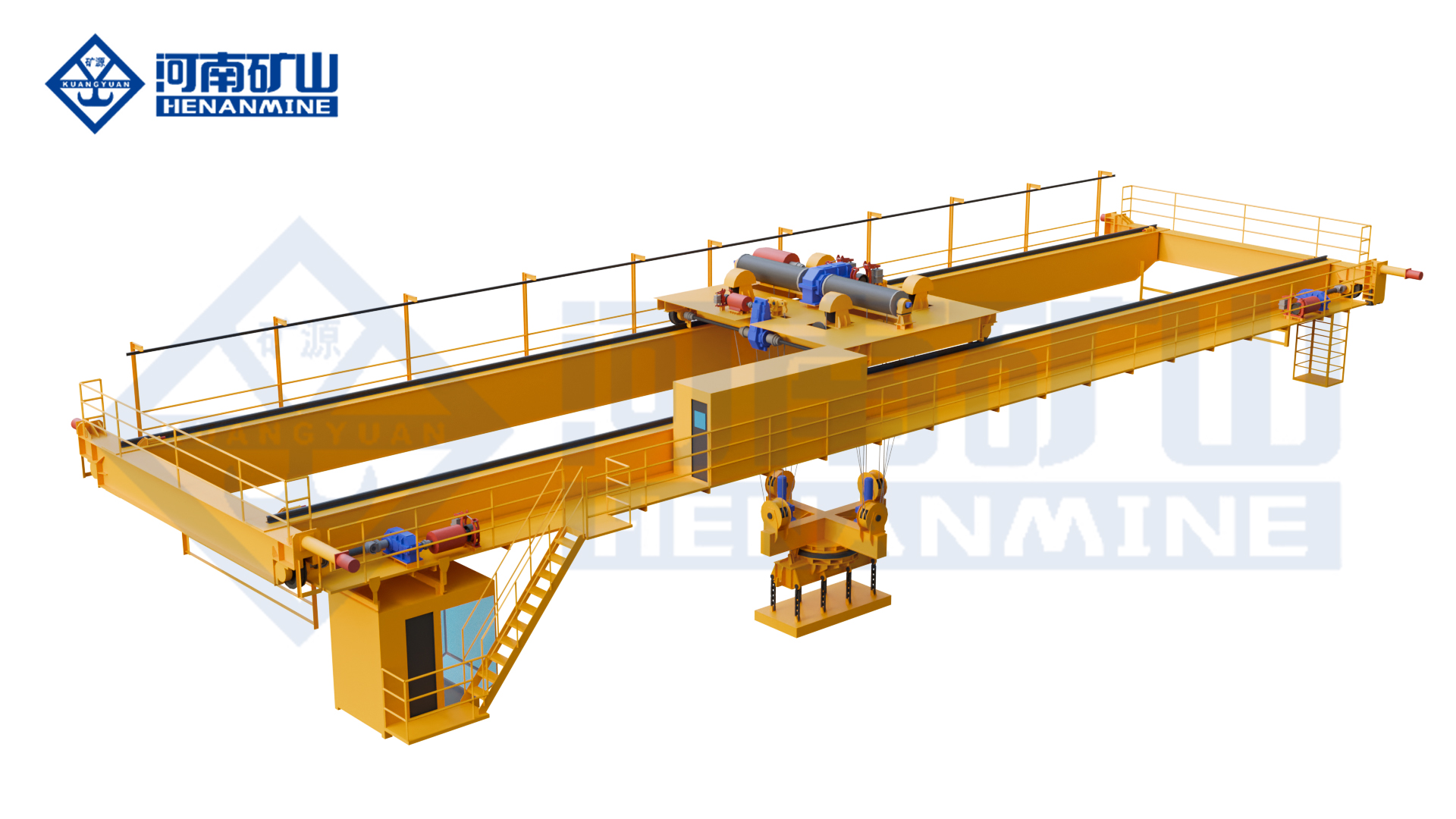
Henan Mine Crane · Engineered Coil Handling Systems
Coil Handling Crane
Custom overhead crane systems with C-hooks, magnetic lifters, mechanical tongs or powered coil grabs for steel mills, coil service centers, processing lines and finished-product warehouses.
Henan Mine Crane engineers the crane, lifting attachment, controls and facility interfaces as one handling system, based on coil weight and dimensions, material, eye orientation, surface condition, pickup geometry, operating cycle and required automation.
Applications
Steel mills, service centers, coil stores and processing lines
Attachment options
C-hook, coil tong, magnet, rotator or approved rigging
Critical coil data
Weight, OD, ID, width, material, eye and surface condition
Commercial basis
Defined technical scope and project quotation
Overhead Crane Systems for Safe Coil Transfer
A coil handling crane is an overhead bridge crane integrated with a purpose-designed below-the-hook device. It can transfer hot-rolled, cold-rolled, galvanized, stainless or other metal coils between a production line, floor saddle, rack, mandrel, truck, railcar or shipping bay. The attachment must match the coil eye direction and the available approach clearance; the crane must then be sized for the total suspended load and operating duty.
Eye-horizontal coils are commonly handled through the bore by a C-hook, by external mechanical tongs or by a verified magnetic system. Eye-vertical coils may require vertical tongs, a specialized magnet or a lifting device designed for that orientation. A device intended for one orientation must not be assumed suitable for the other.
Magnetic handling applies only to compatible ferromagnetic material after the coil grade, construction, temperature, surface condition, air gap and required holding strategy have been verified. Aluminum, copper and other non-ferrous coils require a mechanical lifting method. Surface-sensitive coils may require padded contact zones, controlled acceleration, anti-sway and low-speed positioning to prevent edge damage, telescoping or marking.
Coil Handling Crane Configurations
01 · Overhead Crane with C-Hook
A balanced C-hook enters the bore of an eye-horizontal coil and supports it from the inside. The simple mechanical structure is suitable for repeated transfer where aisle width, bore access and insertion clearance are available. Counterweight, lower-arm length, usable throat, coil-width range and protective lining are engineered for the coil schedule.
02 · Crane with Coil Tongs
Mechanical or motorized tongs grip the coil from the sides or through a dedicated engagement geometry. They can serve close stacking and variable widths where C-hook insertion is restricted. Gripping force, jaw travel, fail-safe locking, coil detection and contact-pad pressure must be validated to avoid slip or product damage.
03 · Magnetic Coil Handling Crane
Electromagnetic or electro-permanent magnetic lifters can eliminate bore insertion for approved ferromagnetic coils. Magnet arrangement, contact area, material test, temperature, power-loss behavior, current monitoring and release logic are part of the safety case. This option is not suitable for non-ferrous coils.
04 · Rotating Coil Crane
A powered rotator, rotating beam or slewing trolley aligns a coil with a line, rack, vehicle or storage lane without ground-assisted steering. Rotation range, speed, cable management, headroom, center of gravity and collision envelope must be coordinated with the attachment and building.
05 · Automated Coil Handling Crane
Position feedback, profile scanning, anti-sway, automatic path control, rack or line interlocks, load identification and MES or WMS communication can support repeatable unmanned transfer. Safe zones, recovery modes, data ownership and manual fallback are defined in the functional specification.
06 · Hook Crane with Coil Rigging
An approved sling or lifting beam can suit low-frequency or mixed-load service where manual rigging is acceptable. The method requires defined lifting points, sling protection, exclusion zones and competent rigging. It is generally less suitable for high-cycle coil production than a dedicated attachment.
Compare C-Hook, Magnet and Coil Tong Systems
Attachment selection is governed by the coil and the pickup geometry, not by lifting capacity alone. The crane and attachment should be technically approved as one system before purchase.
| Lifting system | Best-matched application | Material range | Primary advantage | Critical constraint |
|---|---|---|---|---|
| C-hook | Simple, repeated eye-horizontal lifts with open bore access | Steel, stainless, aluminum, copper and other structurally suitable coils | Few moving parts and direct visual engagement | Requires insertion, side and aisle clearance; shoe must fit the ID and width range |
| Motorized coil tong | Close stacking, variable coil widths and restricted bore access | Ferrous and non-ferrous coils after contact-pressure validation | Powered engagement and adaptable geometry | Grip, pad pressure, jaw travel and fail-safe state require engineering validation |
| Electromagnet | High-cycle ferromagnetic coil transfer with verified contact conditions | Compatible magnetic steel only | Fast pickup without coil-eye insertion | Power-loss holding, coil grade, air gap, temperature and residual magnetism must be controlled |
| Electro-permanent magnet | Automated ferromagnetic handling where retained magnetization is required | Compatible magnetic steel only | Holding does not depend on continuous electrical power | Material/contact testing and controlled magnetize-demagnetize sequence remain essential |
| Slings or lifting beam | Occasional lifts or mixed maintenance service | Material-compatible rigging applications | Flexible for varied loads | Manual rigging time, exclusion-zone exposure and surface protection |
Selection rule: choose a C-hook for straightforward eye-horizontal lifting when the bore and aisle provide sufficient insertion clearance; choose a magnet for verified ferromagnetic steel and high-cycle or automated work with a defined power-loss safety strategy; choose a tong where mechanical gripping, variable widths or close stacking are decisive, after grip force and surface contact have been validated.
Size the Crane for the Coil and Attachment Together
The crane rating must cover every suspended component, not only the nominal coil weight. The governing load includes the heaviest permitted coil, attachment tare, powered rotator or beam, hook interface, shackles and other rigging. An attachment may weigh several tonnes on a heavy-duty system and can materially change trolley size, wheel loads, headroom and runway reactions.
Coil outside diameter, inside diameter and width must be checked as a complete schedule. A C-hook that fits the largest bore may not safely support the narrowest coil; a tong that closes on the smallest width may not clear the largest outside diameter. Load center, eccentricity, telescoped condition and permitted edge contact are also reviewed.
Working class is calculated from lifts per hour, operating hours, load spectrum, travel distance, acceleration, attachment actions and required service life. High-duty A6 or A7 configurations may be appropriate for continuous steel production, but the class is selected from the actual duty calculation rather than from the industry name.
Coil Data and Handling Application Matrix
| Operating area | Typical handling requirement | Engineering priorities |
|---|---|---|
| Hot-rolling coil bay | Frequent transfer of heavy eye-horizontal steel coils | Thermal conditions, heavy duty, attachment stability, controlled motion and coil temperature |
| Cold-rolled or galvanized store | High-value finished coils with strict surface and edge requirements | Padded contact, acceleration limits, anti-sway, precise placement and contamination control |
| Service center or slitting line | Variable sizes between storage saddles, decoilers and processing stations | Coil schedule coverage, line interlocks, low-speed alignment, rotation and cycle time |
| Aluminum or copper coil area | Non-ferrous coil transfer with high sensitivity to marking | Mechanical lifting method, verified contact pressure, protective lining and no magnetic assumption |
| Shipping and vehicle bay | Loading coils to trucks, railcars or export staging positions | Hook approach, vehicle envelope, visibility, rotation, zoning and communication with loading personnel |
| Automated coil warehouse | Unmanned receipt, storage, retrieval and production-line delivery | Coil identification, position feedback, path planning, anti-collision, inventory interface and recovery mode |
Technical Specification for a Coil Handling Crane
The following specification fields define the quotation basis. Values are project-engineered; they are not universal limits for every coil crane.
| Parameter | Selection basis | Available engineering direction |
|---|---|---|
| Rated capacity | Maximum coil plus complete attachment and rigging tare | Custom single- or double-girder configuration |
| Span and travel length | Runway survey, building grid and required working coverage | New runway or verified existing runway |
| Lifting height and approaches | Floor, saddle, rack, mandrel and vehicle elevations | Low-headroom trolley, optimized hook approach and attachment envelope |
| Crane duty | Load spectrum, lifts per hour, travel, starts and service life | Project-selected duty class, including heavy process service where justified |
| Coil envelope | Minimum and maximum OD, ID, width, weight and eye orientation | C-hook, tong, magnet or special device sized to the full schedule |
| Motion and positioning | Cycle time, line alignment, surface protection and process tolerance | VFD motion, micro-speed, anti-sway, encoders and optional rotation |
| Control mode | Operator position, visibility, process interfaces and risk assessment | Radio remote, cabin, station, semi-automatic or automatic control |
| Environment | Temperature, dust, humidity, indoor/outdoor exposure and corrosivity | Project-matched enclosure, cooling, heating, coating and component protection |
| Power supply | Site voltage, frequency, earthing and allowable demand | Configured for destination power and control requirements |
| Design and acceptance code | Destination regulations and purchaser specification | Agreed crane, electrical and below-the-hook-device standard matrix |
Henan Mine Crane magnetic hanging-beam crane configurations can be engineered within ranges including 5–50 t lifting capacity, 10.5–31.5 m span, 6–20 m lifting height and A6–A7 duty. A coil application remains subject to attachment tare, coil test data, contact conditions and project-specific engineering.
Controls, Safety and Coil Protection
Crane Motion Protection
Overload protection, hoist limits, travel limits, service and emergency brakes, buffers, anti-derailment measures, VFD acceleration control and defined emergency-stop functions protect the lifting and travel system.
Attachment-State Interlocks
Hoisting and travel permissives can verify C-hook engagement position, tong open/closed state, gripping confirmation, magnet current or magnetized state, coil presence and attachment identification before a transfer begins.
Magnetic Safety Strategy
Electromagnetic systems require a defined response to power failure, loss of one magnet, insufficient current, overheating and incomplete release. Battery or UPS holding, redundant circuits or electro-permanent technology may be selected from the risk assessment.
Product Protection
Replaceable wear pads, polyurethane or approved lining, contact-pressure limits, reduced acceleration, anti-sway, micro-speed positioning and coil-saddle alignment can protect finished surfaces and coil edges.
Automated Area Control
Position encoders, laser or camera sensing, restricted zones, collision avoidance, obstacle detection, warning devices and controlled access separate automated crane movement from personnel and vehicles.
Identification and Inspection
Each attachment is permanently marked with its rated load and operating range. Inspection points, discard criteria, test records and maintenance intervals cover the structure, contact surfaces, locking elements, sensors, wiring and controls.
Project Case
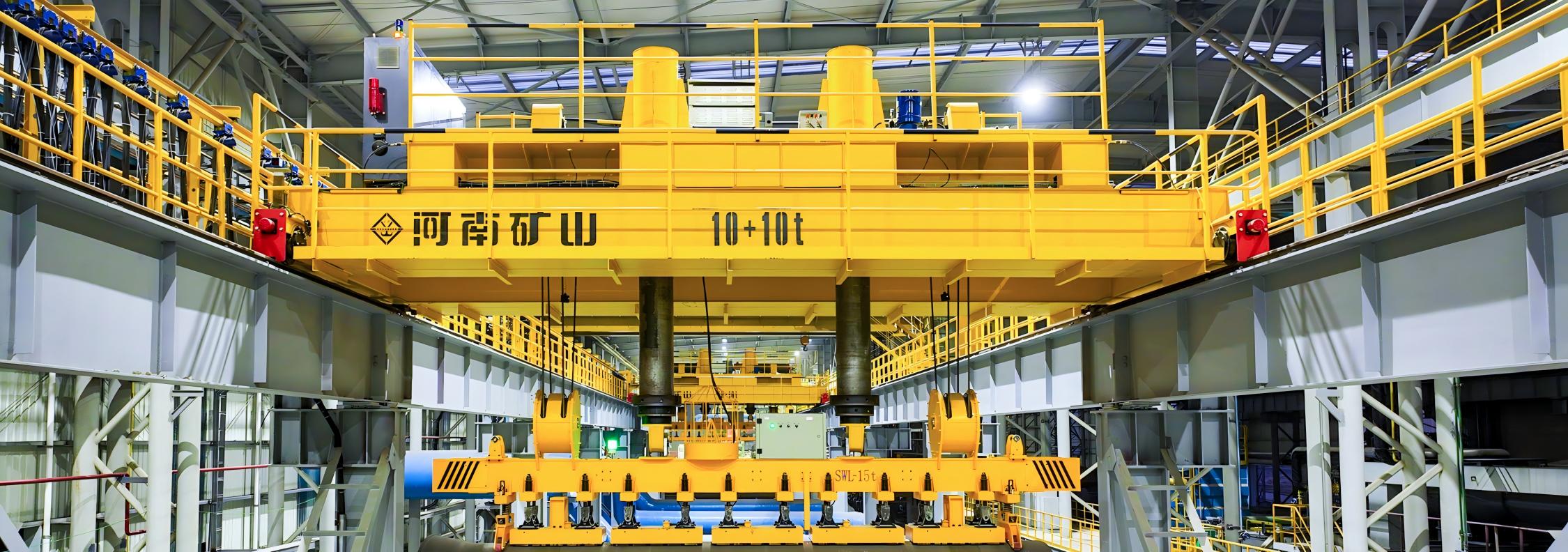
Automatic Electromagnetic Hanging Girder Crane
Henan Mine Crane developed a full-automatic electromagnetic hanging-girder crane for intelligent manufacturing and automated production-line service. The system uses a rigid guide-column anti-sway arrangement for stable positioning, dual-motor hoisting redundancy, an electro-permanent magnetic attachment, automatic scheduling and MES connectivity.
Ground, remote and long-distance operating modes provide controlled fallback options. The electro-permanent attachment is magnetized electrically and retains its holding state without continuous power, addressing a central power-loss consideration in magnetic material handling.
These functions provide a relevant engineering basis for automated coil projects. Final coil suitability is confirmed separately through coil-grade and contact testing, attachment geometry, suspended-load calculation, process layout and the purchaser’s functional-safety requirements.
Engineering Deliverables and Quality Records
A coil handling crane proposal should define the complete lifting system and its interfaces. Henan Mine Crane can prepare project-specific engineering and manufacturing records for technical approval, installation and acceptance.
Design basis
Approved coil schedule, operating sequence, duty calculation, load combinations, wheel reactions, clearances and applicable-code matrix.
Attachment engineering
General arrangement, load path, structural calculations, engagement range, contact protection, controls, interlocks and rated-load marking.
Manufacturing records
Material traceability, welding procedures, welder qualifications, dimensional inspection, NDT records and component certificates as contractually required.
Factory acceptance
Functional checks, brake and limit tests, control simulation, attachment cycle test, magnetic or gripping verification and witnessed testing where specified.
Review Henan Mine Crane manufacturing equipment and quality capabilities →
Installation, Commissioning and Maintenance Planning
Before Manufacture
Confirm runway geometry and capacity, building clearances, pickup and placement coordinates, coil saddle and rack details, access routes, power supply, control interfaces and site responsibilities.
Erection and Commissioning
Coordinate unloading, lifting method, runway survey, mechanical and electrical installation, alignment, no-load testing, proof load, attachment functions, trial coils, line interlocks and operator training.
Planned Maintenance
Maintain brakes, ropes, drums, wheels, rails, reducers, fasteners and electrics together with attachment structure, wear pads, jaws, locks, magnets, backup power, sensors, cables and control logs.
The commissioning plan should include representative minimum and maximum coil sizes, the most demanding pickup and placement locations, loss-of-power behavior, controlled recovery and acceptance criteria agreed before shipment.
Coil Handling Crane Price and Supply Scope
Coil handling crane price cannot be established from coil tonnage alone. Crane capacity and span, attachment type and tare, coil size range, duty, rotation, magnetic or gripping controls, automation, runway scope, destination and installation responsibility all affect the commercial result.
The following September 2026 market observations are preliminary equipment budget ranges in US dollars. They are not a Henan Mine Crane quotation and are not directly comparable without matching capacity, condition, design code, duty, attachment range, delivery term and included services.
| Budget item | Indicative market range | Commercial interpretation |
|---|---|---|
| Conventional 10–20 t double-girder overhead crane | Approximately US$12,000–US$40,000 across observed factory equipment offers | A base-crane budget only; special attachment, rotation, heavy duty and automation are additional |
| C-hook coil lifter | About US$600–US$6,100 for selected commodity and branded small/5 t listings | The wide spread reflects major differences in capacity, certification, protection, testing and supplier scope; large custom hooks cost more |
| Motorized coil tong | About US$6,600–US$34,000+ in selected stock and used-equipment listings | Condition, capacity, jaw range, controls and recertification vary; a new project-specific tong requires quotation |
| Individual industrial lifting magnet components | About US$900–US$6,000 for selected catalog listings | Not the price of a complete coil magnet array, beam, rectifier, backup system, cabling, controls or material validation |
| Complete automated or heavy-duty coil crane system | Project quotation | Requires a confirmed coil schedule, process layout, duty, functional specification, interface matrix and delivery boundary |
Define the Quotation Boundary
| Crane equipment | Bridge, trolley, hoist, drives, electrics, controls, access and crane safety devices |
| Coil attachment | C-hook, tong, magnet array, lifting beam, rotator, sensors, backup power and attachment controls |
| Automation package | Positioning, anti-sway, scanning, cameras, PLC, network, MES/WMS interfaces and functional testing |
| Runway and facility | Rails, supporting steel, columns, foundations, conductor system, platforms, building checks and civil work |
| Delivery and installation | Packing, inland transport, ocean freight, insurance, unloading, erection, supervision and site equipment |
| Acceptance and support | Proof load, representative coil trials, third-party inspection, commissioning, training, spares and warranty boundary |
A valid bid comparison uses the same coil schedule, total suspended capacity, span, height, duty, attachment operating range, design code, automation scope, Incoterm, currency, quotation validity and site responsibilities.
Coil Handling Crane RFQ Information
Submit the minimum, typical and maximum coil weight, outside diameter, inside diameter and width; material grades; eye orientation; temperature, surface, edge, banding and telescoping condition; pickup and placement drawings; saddle, rack, vehicle or mandrel details; required cycle rate; span, travel length, lifting height and approaches; operating hours and load spectrum; runway data; power supply; preferred attachment and rotation; control and MES/WMS interfaces; destination and applicable code; and required freight, installation, testing, training and spare-parts scope.
A defined crane, attachment, interface schedule and itemized commercial scope can then be prepared.
Frequently Asked Questions
What is the best crane attachment for steel coils?
A C-hook is effective for eye-horizontal coils with adequate bore and aisle clearance. A tong suits close stacking or restricted insertion. A magnet suits verified ferromagnetic coils where material, contact and power-loss conditions support magnetic lifting.
Can one C-hook handle different coil sizes?
Yes, within its approved weight, ID, OD and width envelope. The lower arm, usable throat, counterweight, load center and protective surfaces must be checked against every coil in the schedule.
Can magnets lift every steel coil?
No. Magnetic suitability depends on steel grade, coil construction, contact area, air gap, surface condition, temperature and required holding force. Representative material testing is required before final approval.
How are aluminum and copper coils handled?
Non-ferrous coils normally require a mechanical device such as a C-hook or engineered tong. Contact pressure, protective lining and acceleration are controlled to prevent marking, edge damage or deformation.
How is coil handling crane capacity calculated?
Capacity covers the maximum coil weight plus C-hook, tong or magnet tare, lifting beam, rotator and all suspended interfaces. Dynamic effects, load eccentricity, trolley reactions and runway capacity are then verified.
Can a coil handling crane be automated?
Yes. Position feedback, anti-sway, profile scanning, coil identification, path planning, collision avoidance, rack or line interlocks and MES/WMS communication can be integrated within a defined functional specification.
How are finished coil surfaces protected?
Protective pads, controlled contact pressure, reduced acceleration, VFD micro-speed, anti-sway and accurate saddle alignment are selected for the specific coating, edge condition and permitted contact areas.
What crane duty is required for coil service?
Duty is calculated from operating hours, lifts per hour, load spectrum, travel distances, attachment actions and design life. Continuous production service may require A6 or A7, while intermittent warehouse work may justify a lower class.
How much does a coil handling crane cost?
Observed factory equipment ranges for a conventional 10–20 t double-girder crane are approximately US$12,000–US$40,000 before the coil attachment and special controls. A complete heavy-duty or automated coil system requires a project quotation.
What information is needed for a coil crane quotation?
Provide the full coil schedule, material and surface data, eye orientation, pickup and placement drawings, cycle rate, building and runway dimensions, duty, power, controls, destination, applicable code and required delivery and installation scope.
Technical content record
Prepared by Henan Mine Crane Technical Sales · Technically reviewed by Crane Engineering · Last reviewed September 2026
Related Coil Handling Crane Products
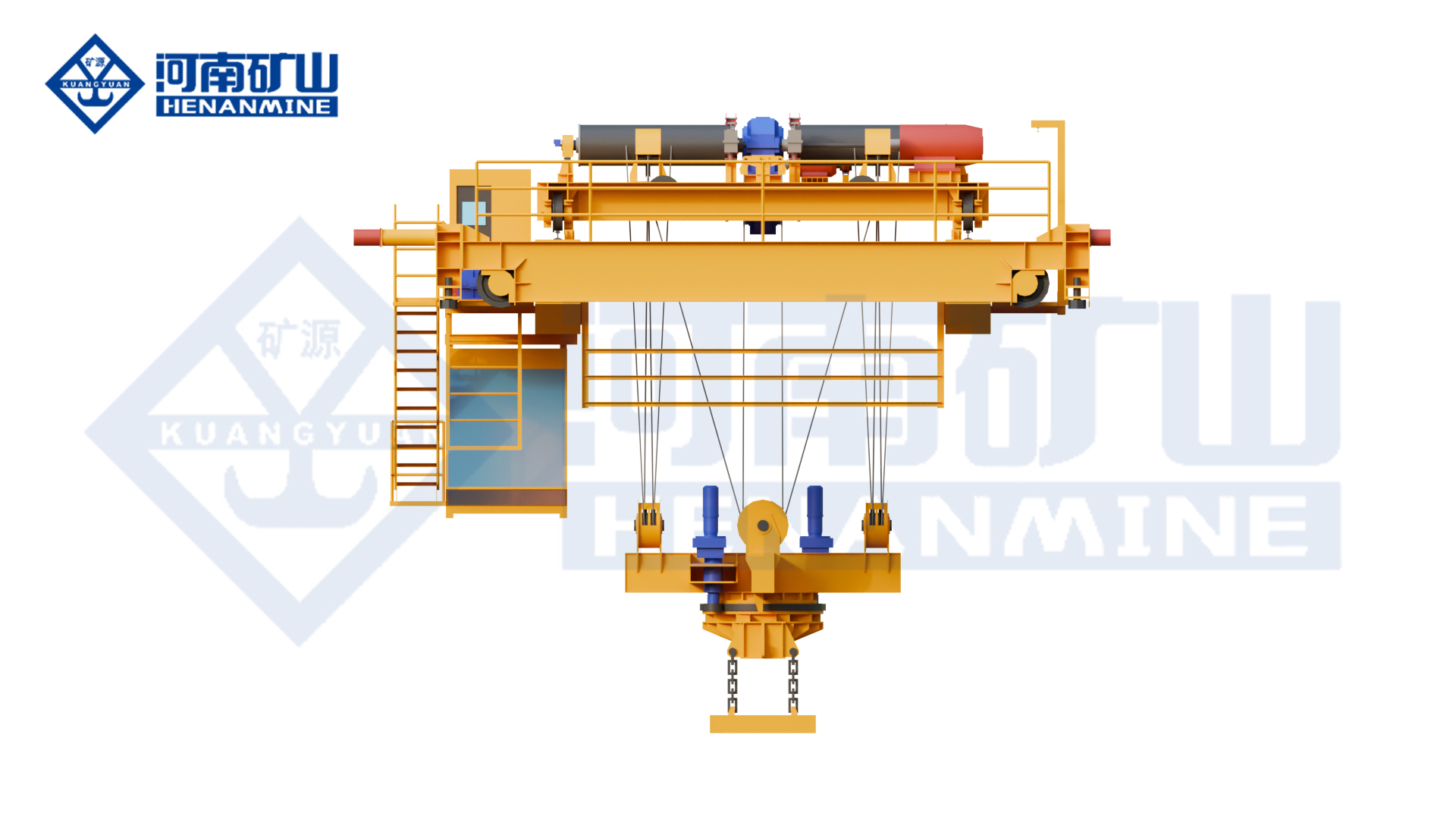
Electromagnetic Hanging Crane
Under-rotating magnetic beam crane for approved conductive steel products, including verified coil applications.
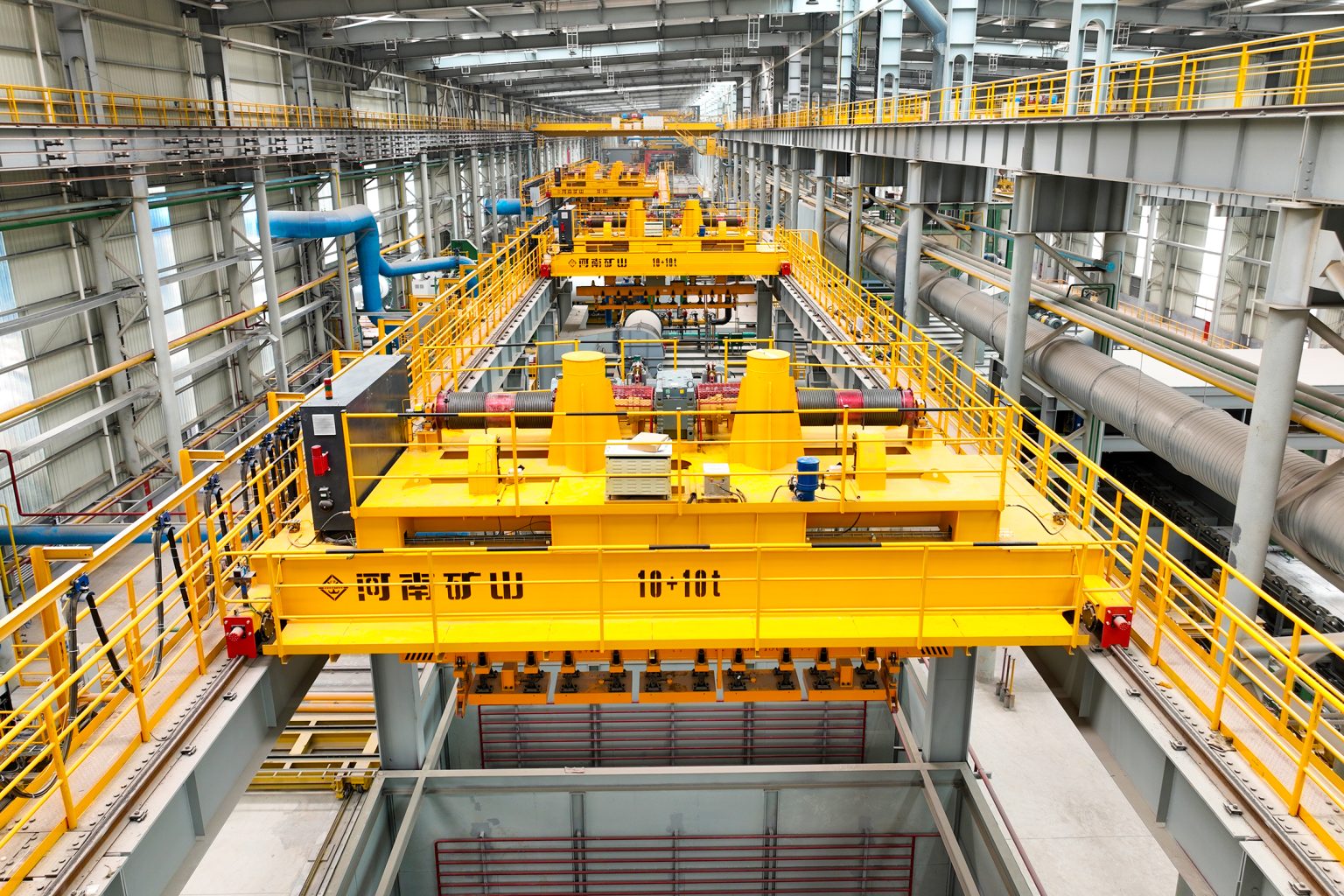
Electromagnetic Bridge Crane
Magnetic overhead crane platform for high-frequency handling of approved ferrous loads.
Upper-Rotating Magnetic Crane
Slewing-trolley magnetic system for multi-angle positioning of approved steel products.
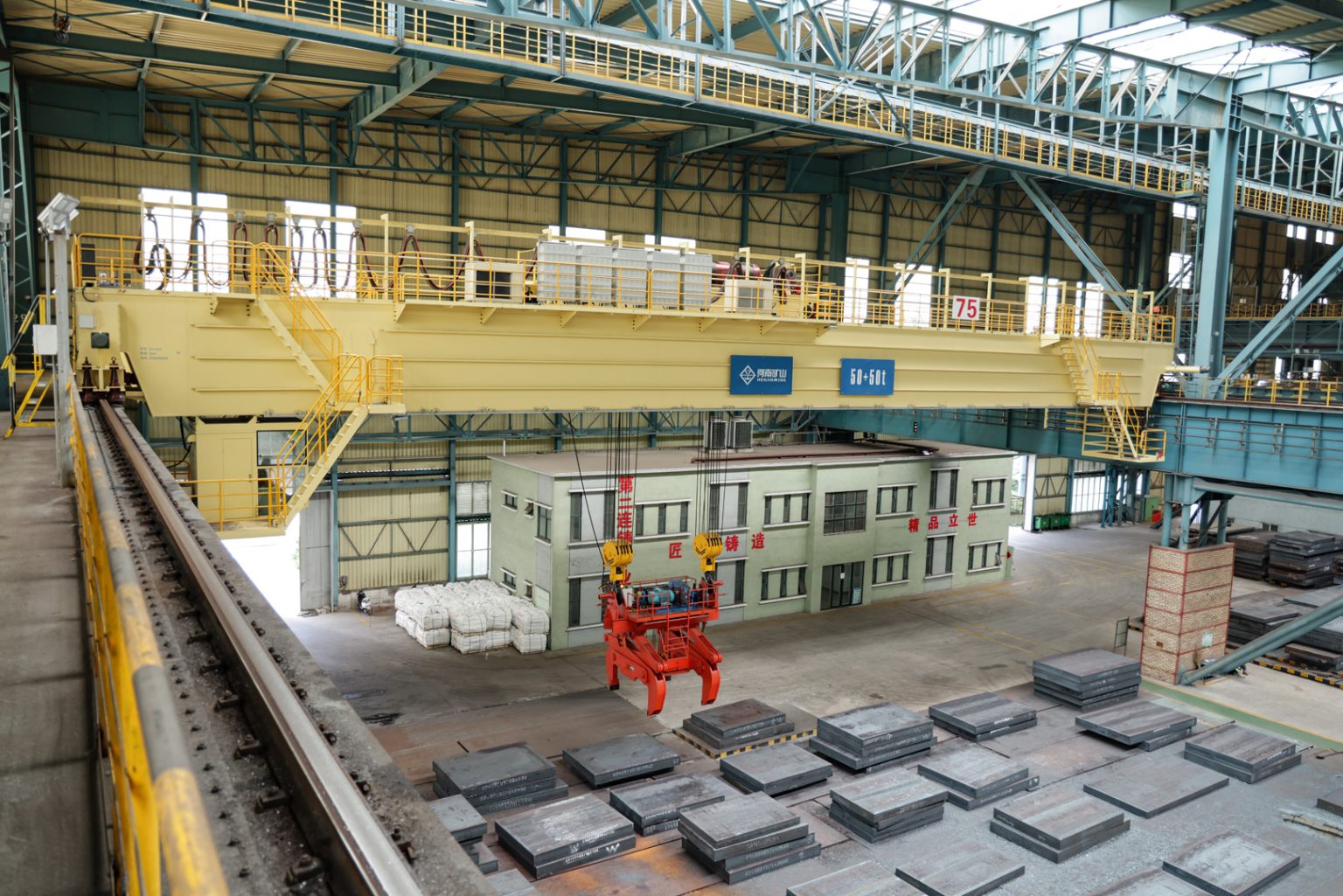
Double-Girder Bridge Crane
Customizable overhead crane platform for C-hook, tong, beam or other engineered attachments.
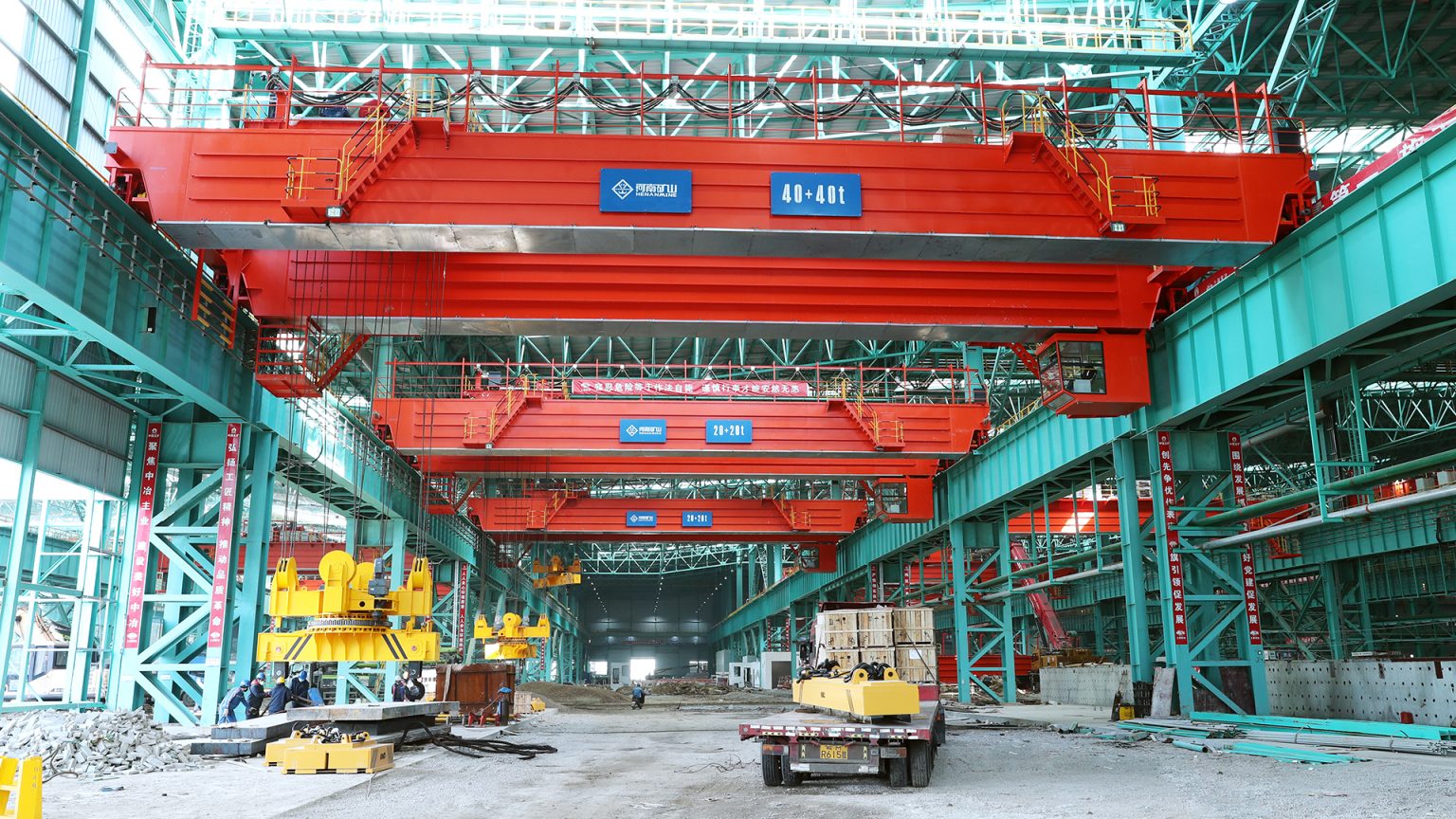
Metallurgical Bridge Crane
Heavy-duty overhead crane family for demanding steel and metallurgical production environments.
Engineered Coil Handling Proposal
Request a Coil Handling Crane Quote
Provide the coil schedule, material and surface requirements, pickup and placement drawings, operating cycle, facility dimensions, duty, controls, destination and delivery boundary. Henan Mine Crane will develop the crane and attachment as one defined handling system.