
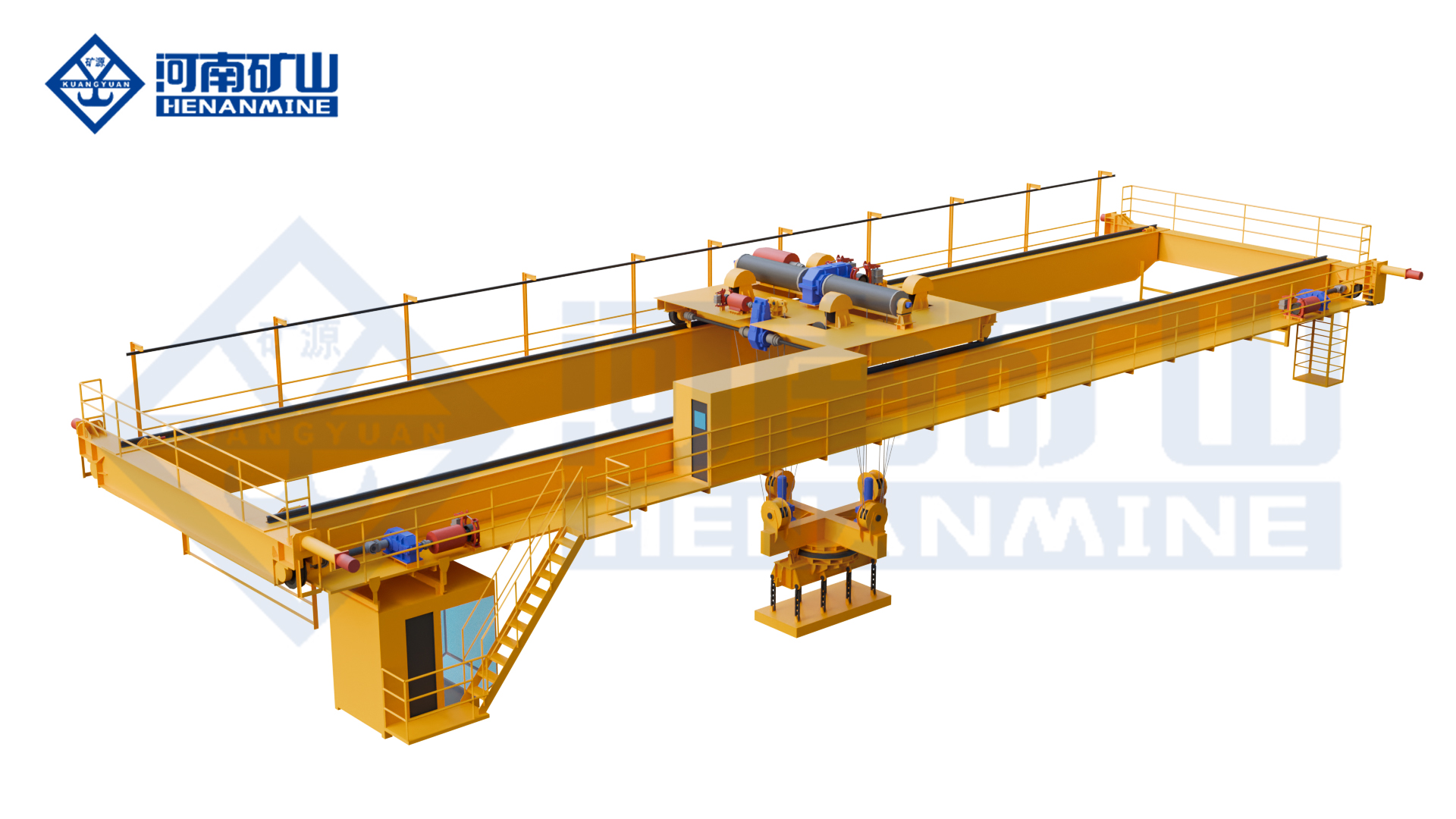
Henan Mine Crane · Engineered Coil Transfer and Storage Systems
Coil Handling Crane Systems
Overhead cranes engineered for steel and aluminum coil receiving, process-line feeding, storage, retrieval, truck or rail loading and automated warehouse logistics.
Henan Mine Crane configures each coil handling crane around the maximum gross suspended load, coil outside and inside diameters, width, eye orientation, attachment, surface-protection requirement, cycle rate, runway interface and control level. Available project concepts include hook cranes with C-hooks, motorized coil tongs, inside-diameter lifters, validated magnetic systems and coordinated automatic warehouse cranes.
PRIMARY ARCHITECTURE
Top-Running Double Girder
COIL ATTACHMENTS
C-Hook, Tong, Mandrel or Magnet
OPERATING PROFILE
Process-Defined Duty
CONTROL OPTIONS
Cabin, Radio, PLC & Automation
What Is a Coil Handling Crane?
A coil handling crane is an overhead process crane equipped to lift, transport, orient and place rolled metal coils. It is used in steel service centers, hot- and cold-rolling facilities, galvanizing and coating lines, slitting operations, aluminum plants, ports and finished-coil warehouses.
The crane is only one part of the handling system. The coil attachment determines how the load is engaged, while the building, runway, storage saddles, process equipment and control system define the available approach and placement accuracy. A safe selection must consider the complete load path from pickup to final release.
Coil mass alone is not an adequate design input. Outside diameter, inside diameter, face width, winding tightness, banding, eye orientation, material temperature, surface finish and center-of-gravity variation affect attachment geometry and stability. The attachment self-weight is included in the gross suspended load used to size the hoist, bridge, wheels and runway reactions.
Henan Mine Crane combines customized coil attachments with double-girder bridge crane, metallurgical bridge crane and electromagnetic hanging crane platforms according to the confirmed process.
Where Coil Handling Cranes Work
The operating zone determines whether the priority is rapid unloading, gentle surface protection, accurate line feeding, high-density storage or automated order retrieval.
Receiving and Unloading
Unload coils from trucks, rail wagons or internal transfer cars. Vehicle clearances, side approach, securing-removal sequence and exclusion zones are coordinated with the crane lift path.
Pickling, Rolling and Annealing
Transfer coils between process lines, buffers and furnace areas. Heat, fumes, moisture, scale and restricted access influence component protection and maintenance arrangements.
Slitting and Processing Lines
Place master coils on uncoilers and remove finished coils or scrap reels. Low-speed positioning, approach limits and attachment clearance are coordinated with line equipment.
Finished-Coil Warehouse
Stack and retrieve coils by order, grade, width and destination. Position feedback, storage maps and inventory integration support higher storage density and traceability.
Truck and Rail Dispatch
Load coils into approved transport saddles or cradles. Loading sequence, vehicle identification and confirmation of stable placement are defined before release.
Outdoor Coil Yard
Outdoor gantry or bridge systems require wind, rain, corrosion, drainage, rail protection and parking or storm-restraint provisions in addition to coil-handling controls.
A process map should identify every pickup position, coil orientation, storage saddle, line center, vehicle lane, personnel route and prohibited zone. It should also record the required cycle rate, queuing logic and production consequence of a crane outage.
For plant-wide planning, steel mill crane systems should separate coil, plate, slab, scrap, roll-change, maintenance and molten-metal duties.
Components and Operating Principle
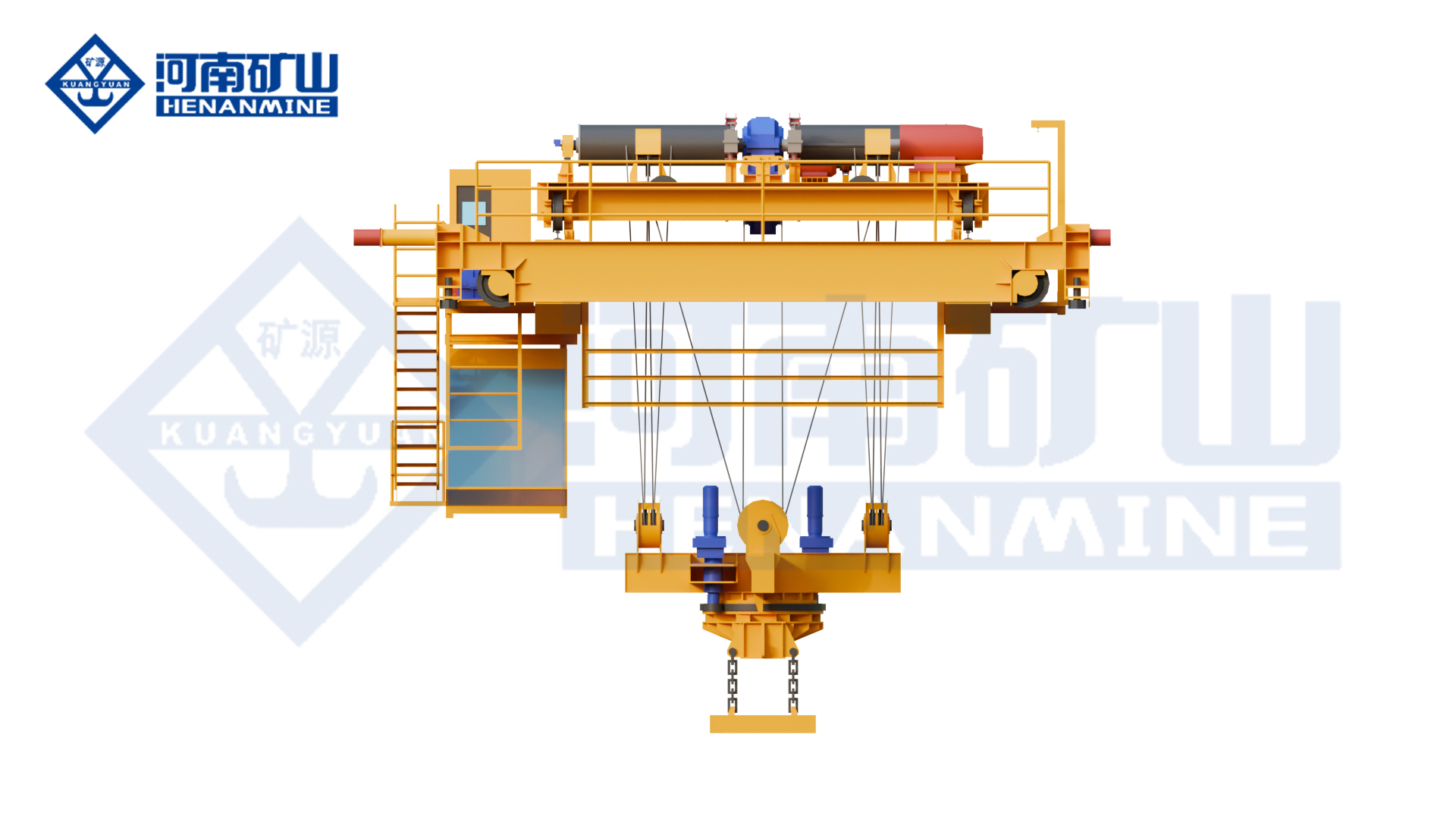
The hoist raises the coil and attachment, the trolley positions the load across the bay and the bridge travels along the runway. Drives, brakes, encoders and controls coordinate these motions so the coil remains stable during pickup, transport and placement.
Bridge and End Carriages
Girders, diaphragms, wheels and travel drives are designed from span, duty, fatigue spectrum, wheel loads, lateral forces and runway stiffness.
Process-Duty Hoist
Drum, wire rope, sheaves, reducer, motor and brakes are selected for gross load, lift, speeds, starts per hour and the required reliability strategy.
Coil Attachment
C-hooks, tongs, inside-diameter lifters and approved magnetic systems engage different coil geometries. Attachment mass and center of gravity form part of the load case.
Engagement Confirmation
Limit switches, proximity sensors, load measurement, tong-position feedback or other validated devices establish a permissive before lifting.
Variable-Speed Drives
VFD-controlled hoisting and travel provide smooth acceleration, controlled creep speed and repeatable approach to storage saddles or process-line centers.
Positioning and Data
Encoders, laser positioning, cameras, barcode or RFID readers and warehouse interfaces can identify coils and confirm storage locations.
Coil Handling Crane Selection Considerations
Selection begins with the coil envelope and handling route rather than a nominal crane capacity. The following inputs define the crane, attachment and controls.
Coil Geometry
Minimum and maximum mass, outside diameter, inside diameter and face width; eye-horizontal or eye-vertical orientation; center-of-gravity variation; winding and banding condition.
Material Condition
Steel or aluminum grade, temperature, surface finish, coating, edge condition, permitted contact pressure and unacceptable marking or deformation.
Duty and Throughput
Lifts per hour, shifts, annual hours, load spectrum, travel distances, queue size, required cycle time and production consequence of an outage.
Pickup and Placement
Storage saddles, stack pattern, line mandrels, vehicle cradles, approach direction, insertion clearance, target tolerance and release confirmation.
Building and Runway
Rail-center span, runway length and elevation, lift, end and side approaches, roof clearance, existing wheel-load limits and installation access.
Control and Integration
Cabin, radio, semi-automatic or automatic operation; anti-sway; coil identification; WMS/MES protocol; traffic zones; manual fallback and recovery logic.
Coil Handling Crane Configurations Compared
The attachment is selected from the complete coil range and process route. No attachment is universally suitable for every coil.
| Configuration | Suitable Handling Pattern | Engineering Advantages | Critical Controls |
|---|---|---|---|
| C-Hook on Double-Girder Crane | Eye-horizontal coils with accessible bore; receiving, storage and line feeding | Simple load path, no powered gripping mechanism and clear visual engagement | Hook-arm length, counterbalance, coil-width range, tip clearance, protective pads and approach space |
| Motorized Coil Tong or Clamp Crane | High-cycle warehouses, automatic pickup and restricted manual access | Powered engagement, coil-width adjustment and positive status feedback | Contact pressure, open/closed indication, mechanical retention, release interlock and edge protection |
| Inside-Diameter or Telescopic Mandrel Lifter | Coils with controlled bore dimensions where outside surfaces must remain unobstructed | Internal engagement and reduced contact with finished outer surfaces | Inside-diameter tolerance, expansion confirmation, insertion depth, core strength and release prevention |
| Electromagnetic Hanging Crane | Only validated ferromagnetic coils and material geometries within the approved magnetic operating envelope | Non-rigged pickup and possible rotation or automated material identification | Material grade, temperature, contact area, air gaps, banding, residual magnetism, backup strategy and release control |
| Hook, Beam and Sling Arrangement | Low-frequency handling, maintenance lifts or exceptional coils with engineered lifting points | Flexible rigging for unusual loads without a permanent powered attachment | Approved lift plan, sling protection, angle effects, manual access and secure connection |
An automatic attachment can improve throughput, but it also adds sensors, powered motion, inspection points, control logic and recovery procedures. The complete lifecycle and outage consequence should be compared with the simplicity of a C-hook.
Coil Handling Crane Technical Specification Framework
Final values are confirmed on the approved technical schedule. Published product-family positions support preliminary configuration but do not establish a guaranteed combination.
| Specification Item | Required Input | Engineering Output | Contract Evidence |
|---|---|---|---|
| Rated load | Maximum coil plus attachment, block and all below-hook equipment | Crane rated load and permitted attachment combinations | Load schedule and nameplate basis |
| Span, lift and approaches | Runway drawings, rail centers, elevations and clearance survey | General arrangement and hook or attachment coverage | Approved GA drawing |
| Duty classification | Load spectrum, cycles, starts, shifts and annual hours | Crane and mechanism classifications | Duty calculation and design basis |
| Motion performance | Cycle target, travel distances and placement tolerance | Main and creep speeds, acceleration and braking profiles | Drive schedule and witnessed cycle test |
| Attachment envelope | OD, ID, width, orientation, temperature and surface limits | Permitted coil matrix and attachment settings | Attachment data sheet and operating limits |
| Runway reactions | Building capacity, rail and support structure | Maximum/minimum wheel loads and horizontal forces | Reaction schedule for civil approval |
| Control and automation | Operating modes, location accuracy, WMS/MES messages and safety zones | Control narrative, I/O, interfaces and fallback mode | Functional specification and acceptance test |
Published Henan Mine Crane Reference Platforms
| Product Platform | Published Position | Possible Coil-Mill Role | Application Boundary |
|---|---|---|---|
| Electromagnetic Hanging Crane | 5–50 t; 10.5–31.5 m span; 6–20 m lift; A6–A7 | Rotating metal-material handling where magnetic pickup is validated | Coil grade, geometry, air gap, temperature and retention strategy require project approval |
| Electromagnetic Bridge Crane | 5–32 t including attachment; 10.5–31.5 m span; 6–30 m lift | Ferromagnetic material transfer and compatible unit loads | Final duty and magnet system are process-defined |
| Metallurgical Bridge Crane | 5–50 t; 7.5–35 m span; 6–20 m lift; A6–A7 | Coil handling in specified high-duty or steel-production environments | Attachment, temperature and production role define the final platform |
| Custom C-Hook or Coil-Tong Crane | Project-defined capacity, span, lift, duty and speeds | Dedicated coil receiving, line feeding, warehousing and dispatch | Final configuration follows the approved coil matrix and process map |
Coil Attachment Engineering and Surface Protection
The attachment must control the coil without crushing the core, marking finished surfaces, opening the winding or allowing the load to migrate. Pads, shoes, hook arms and contact faces are selected from the declared material and surface limits.
Representative-coil testing is required whenever engagement depends on bore size, contact friction, magnet performance, tong pressure or automated recognition. A suspended dead weight does not reproduce every real coil condition.
C-Hook Design
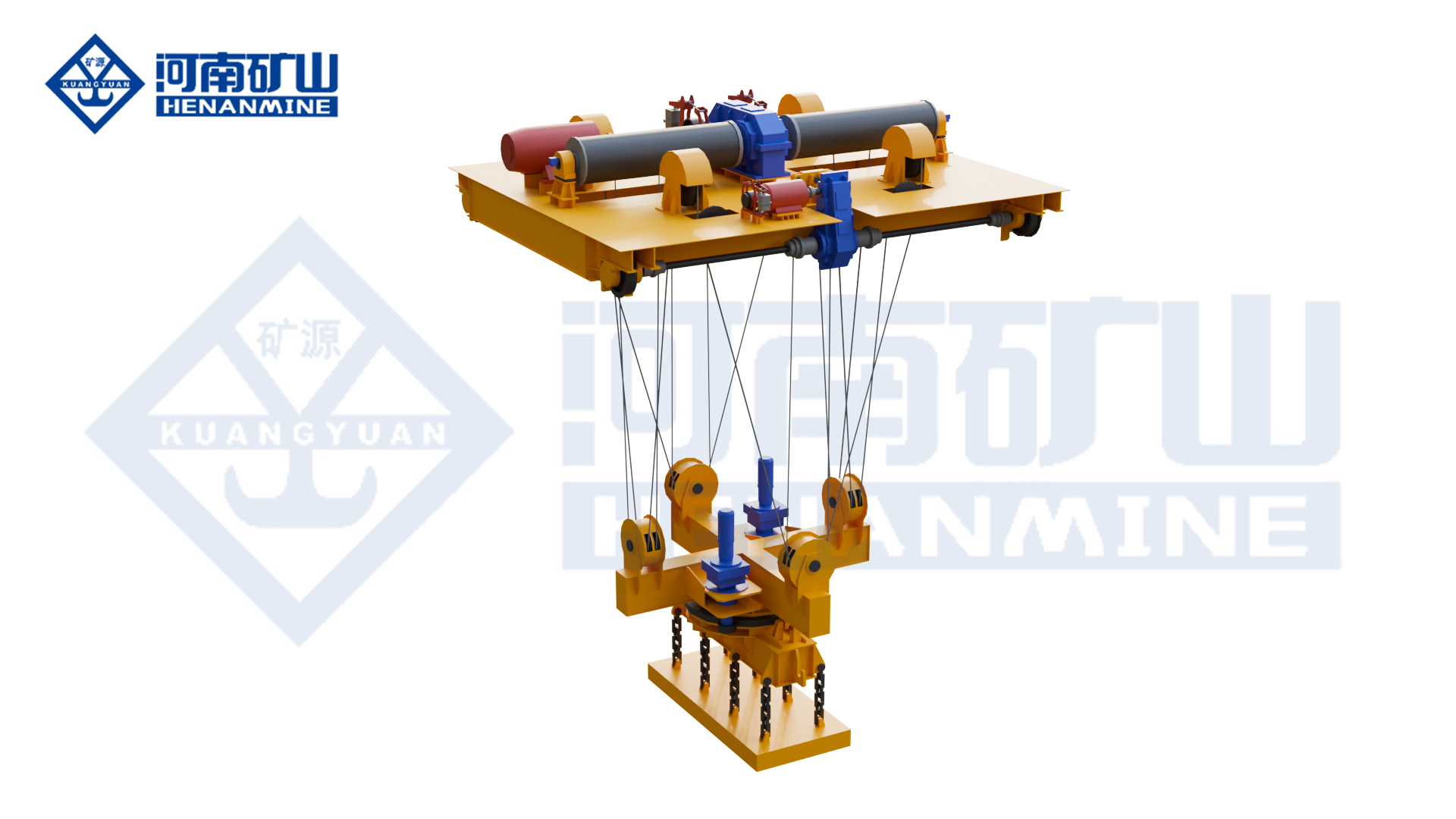
Hook opening, arm length, back height, counterbalance, protective lining, tip shape and rated-load marking are matched to the full ID, OD and width range. The approach path must allow complete insertion without striking the bore or adjacent coils.
Coil Tong Design
Powered tongs require an approved gripping-force range, contact geometry, open/closed feedback, mechanical retention and release prevention while suspended. The control system must identify an incomplete or off-center engagement.
Inside-Diameter Lifter
Mandrel expansion, insertion depth and engagement confirmation are designed around bore tolerance and core strength. The lifter must not release until the coil is supported at the approved destination.
Magnetic Attachment
Magnetic handling is considered only after grade, temperature, air gaps, curvature, banding and contact area are validated. The design defines monitoring, backup retention or power strategy, alarms and controlled release.
Load Stability, Safety Functions and Storage Interfaces
A coil can roll, telescope, unwind or shift if the attachment, storage saddle or transport acceleration is wrong. Safety functions are therefore defined from the complete operating sequence.
| Control | Purpose | Design Inputs | Acceptance Evidence |
|---|---|---|---|
| Load and overload protection | Prevent lifting beyond the approved gross suspended load | Coil and attachment combinations, dynamic effects and calibration range | Calibration and functional test records |
| Engagement permissive | Block hoisting until the attachment is correctly positioned | Sensor coverage, false-positive cases and manual recovery | Representative pickup trials |
| Release interlock | Prevent opening or demagnetizing while the coil is suspended | Supported-load detection, release sequence and override authority | Witnessed normal and failure-mode tests |
| Anti-sway and motion limits | Control swing and prevent collision with coils, equipment or building structures | Load dependence, clearances, stop distance and fallback mode | Approach, braking and repeatability tests |
| Restricted-area protection | Separate suspended coils from personnel, vehicles and process equipment | Zone map, scanners, barriers, warning devices and bypass control | Zone validation and stop tests |
| Saddle and stack confirmation | Confirm stable support before attachment release | Saddle geometry, coil orientation, stack rules and acceptable location tolerance | Placement trials across the approved coil range |
Operating boundary: side pulling, dragging a coil, lifting an unsecured or visibly damaged coil, standing within the roll path and releasing an attachment before stable support are excluded unless a documented engineered procedure specifically permits the condition.
Manual, Semi-Automatic and Automatic Coil Handling
Automation level should follow repeatability, traffic risk, production throughput, coil identification quality and the ability to maintain sensors and software.
| Control Level | Typical Functions | Appropriate Conditions | Required Definition |
|---|---|---|---|
| Manual control | Cabin or radio control, variable speeds, load display, cameras and interlocks | Variable tasks and experienced operator supervision | Sightlines, operator location, communication and safe access |
| Semi-automatic | Automatic positioning or anti-sway with operator-authorized pickup and release | Repeated stations with occasional exceptions | Handover points, confirmation logic and exception recovery |
| Fully automatic | Task receipt, coil recognition, pickup, transport, storage, retrieval and completion feedback | Controlled warehouses with stable data, defined zones and standardized coil conditions | WMS/MES protocol, coordinate system, safe-state logic, cybersecurity and manual fallback |
Coil Identification
Barcode, RFID, production data or machine vision associates each coil with mass, dimensions, grade, order and storage location.
Positioning and Anti-Sway
Absolute or incremental position feedback, target coordinates and load-dependent anti-sway support repeatable pickup and placement.
Inventory Integration
The interface defines task ownership, material identity, destination, status, alarms, time synchronization and recovery after communication loss.
Design Basis, Inspection and Acceptance
The purchase specification identifies one coherent design basis. Local statutory requirements remain applicable at the installation site, and standards from different systems are not combined selectively without an approved compliance matrix.
Possible Design Routes
A project may use the ISO 4301 classification framework with applicable crane and electrical standards, the EN 13001 series with EN 15011 and relevant lifting-attachment requirements, or a North American route using CMAA specifications with applicable ASME B30 requirements. The contract states the selected basis.
Engineering Deliverables
General arrangement, wheel loads, duty basis, coil matrix, attachment data, clearance study, electrical drawings, control narrative, interface list, inspection plan and maintenance-access arrangement.
Manufacturing Inspection
Material identification, welding procedure and welder qualification, specified NDT, dimensional checks, attachment inspection, machinery alignment, panel inspection and coating records.
FAT and Site Acceptance
Functional tests verify motions, limits, brakes, interlocks, attachment engagement, alarms and available automation before shipment. Site testing then covers runway, erection, load testing, representative-coil trials, interfaces, training and handover.
Relevant Steel-Mill and Automation Experience
Project references are evaluated by process similarity. The following Henan Mine Crane projects demonstrate metal-material automation and coordinated crane planning. A coil attachment is still engineered from the new project’s coil matrix.
Metal-Material Automation Reference
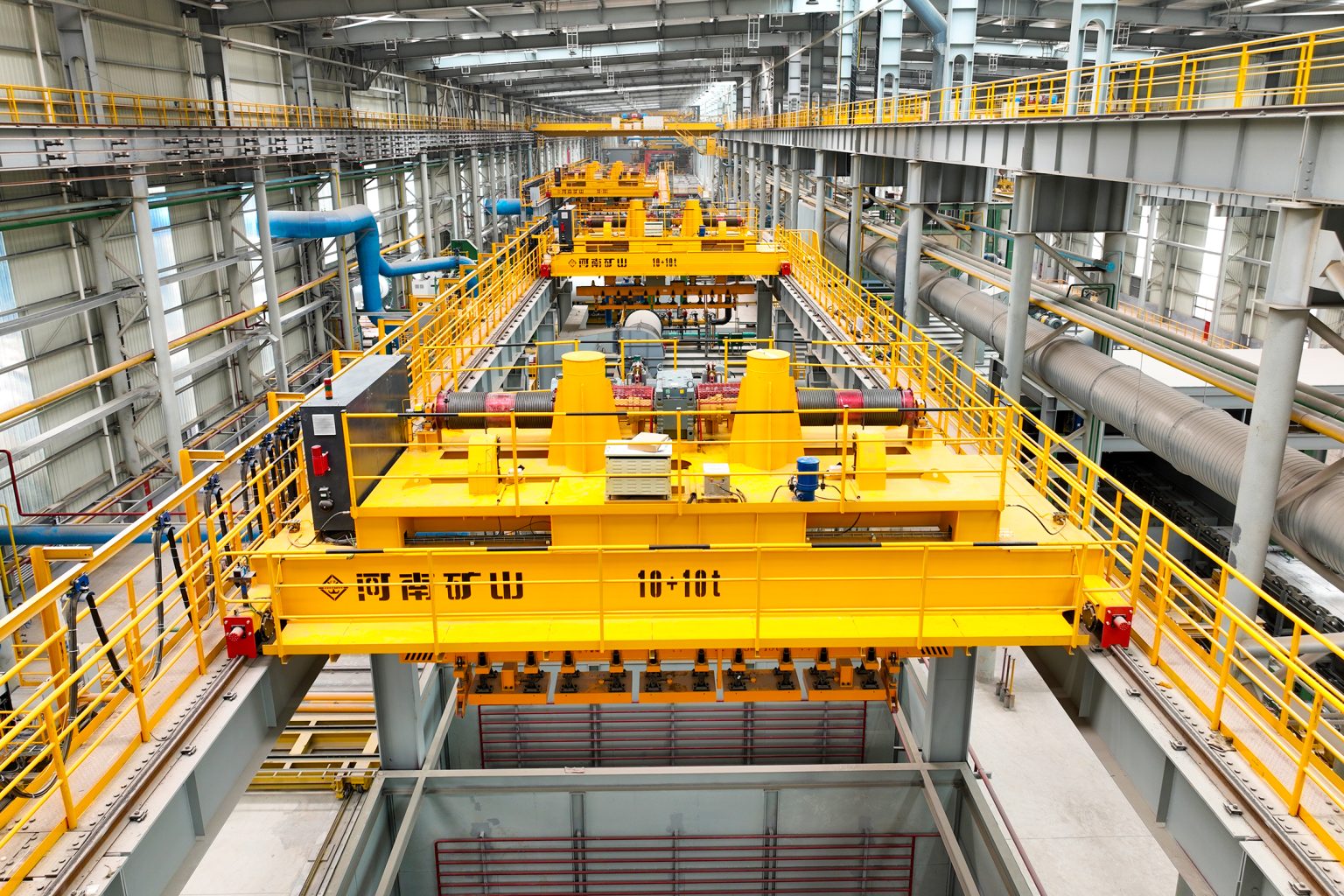
Automatic Electromagnetic Hanging Girder Crane
The published project supports MES connection, unattended material transfer, automatic avoidance and nearby scheduling for cranes sharing a bay.
These control principles are relevant to automatic coil warehouses, while the coil-recognition method, attachment and release logic remain project-specific.
Steel-Mill Fleet Reference
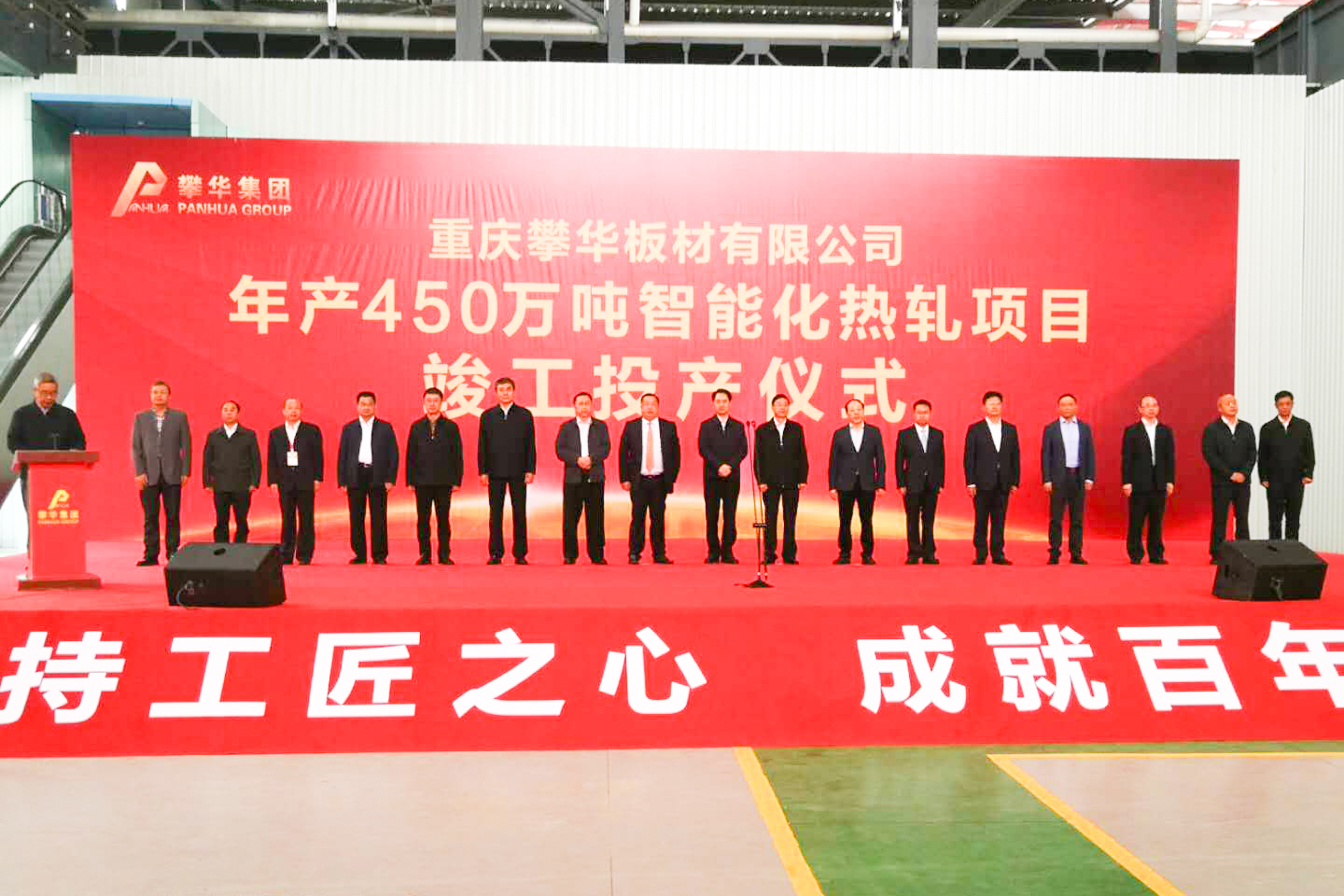
34 Cranes for a 4.5-Million-Tonne Plate Facility
Henan Mine Crane supplied 34 double-girder overhead cranes rated from 10 t to 100 t for production, roll handling, tooling, equipment service and maintenance.
The reference demonstrates process-based fleet planning: coil receiving, line feeding, warehousing and maintenance can require different capacities, speeds and control levels.
Reference boundary: these projects demonstrate relevant crane engineering and automation capability; they do not establish the final capacity, attachment or performance of a new coil handling crane.
Coil Handling Crane Price and Budget Scope
A responsible coil handling crane price requires the coil range, attachment, capacity, span, lift, duty, speeds, controls, runway scope and destination. Public prices are useful only as preliminary market signals.
| Public Market Signal Checked in September 2026 | Published Position | What It Indicates | Commercial Limitation |
|---|---|---|---|
| Generic 50 t double-girder overhead crane guide | Approximately US$9,800–110,000 | Capacity alone permits a very wide equipment range | No normalized coil attachment, duty, controls, runway, delivery or commissioning scope |
| 10 t C-hook or clamp-tong coil crane listing | US$35,000–140,000 published FOB range | A coil-specific attachment and heavy-duty crane can materially change budget | Listing does not define a fully comparable attachment, duty, testing, freight or installation boundary |
| 30 t heavy-duty clamp coil crane listing | Price on request | Specialist suppliers often require project data before pricing | Published attributes do not establish an installed project price |
| Automatic coil warehouse crane | Project quotation | Price is built from crane, attachment, positioning, safety zones and software interfaces | A complete functional specification and site boundary are required |
Major budget drivers: maximum gross load; span, lift and approaches; working class; C-hook, tong, mandrel or magnetic package; coil-recognition system; anti-sway and positioning; WMS/MES integration; cabin and environmental protection; runway and electrification; export packing, freight, erection, tests and local compliance.
The published figures are public market observations, not Henan Mine Crane offers. Marketplace prices may be placeholders or equipment-only values. Contract comparisons require a line-by-line technical and commercial scope reconciliation.
Coil Handling Crane RFQ Information
A complete enquiry allows the crane, attachment, runway reactions, controls and commercial scope to be priced on the same basis.
Coil Data
Material and grade; minimum and maximum mass, OD, ID and width; eye orientation; temperature; surface condition; banding; center of gravity; permitted contact marks; drawings or photographs.
Process and Duty
Pickup and placement stations; storage pattern; cycle sequence; lifts per hour; shifts; annual hours; load spectrum; travel distances; target cycle time; outage consequence.
Building and Runway
Span, runway length, rail section and elevation; required lift; approaches; clearances; existing wheel-load limits; runway drawings; installation access and site survey.
Controls and Commercial Scope
Manual or automatic operation; positioning tolerance; WMS/MES protocol; safety zones; voltage and frequency; environment; destination; design standard; Incoterm; installation, testing and documentation scope.
Frequently Asked Questions
How is coil handling crane capacity calculated?
The starting point is the maximum gross suspended load: coil plus C-hook, tong, mandrel, magnet, hook block and every other item below the hoist. Duty, load distribution and dynamic effects are then applied under the selected design standard.
Is a C-hook or coil tong better?
A C-hook is mechanically simple and effective where the coil bore is accessible. A powered tong supports automated engagement and variable widths but adds mechanisms, sensors and maintenance. Coil geometry, cycle rate, access and automation level determine the selection.
Can magnets safely lift steel coils?
Only when the steel grade, coil geometry, contact area, temperature, air gaps, banding and retention strategy have been validated. A magnetic system cannot be assumed suitable from coil mass alone.
Can one attachment handle the full coil range?
It is possible only when every OD, ID, width, mass, orientation and surface condition falls within the approved envelope. Wide ranges may require adjustable or interchangeable attachments and dedicated storage stands.
How much does a coil handling crane cost?
Public information reviewed in September 2026 included approximately US$9,800–110,000 for a generic 50 t double-girder price guide and US$35,000–140,000 for one 10 t C-hook or clamp-tong coil-crane listing. A final price requires the approved crane, attachment and project scope.
Can an existing runway be reused?
Only after rails, beams, columns, brackets, connections and foundations are checked for condition, alignment, fatigue and the new crane reactions. The crane must remain within verified structural limits or the runway must be strengthened.
Can the crane connect to WMS or MES?
Yes. The interface specification defines tasks, coil identity, coordinates, inventory status, protocol, time synchronization, safety boundaries, cybersecurity, manual override and recovery after a network interruption.
What should be tested before handover?
Testing covers crane motions, brakes, limits, load protection, attachment engagement and release, representative coils, placement tolerance, safety zones, failure responses, interfaces and manual recovery under agreed acceptance criteria.
Related Coil Handling Crane Products and Solutions
Each platform addresses a different load, duty or automation condition. Final selection follows the approved coil and process data.
Double-Girder Bridge Crane
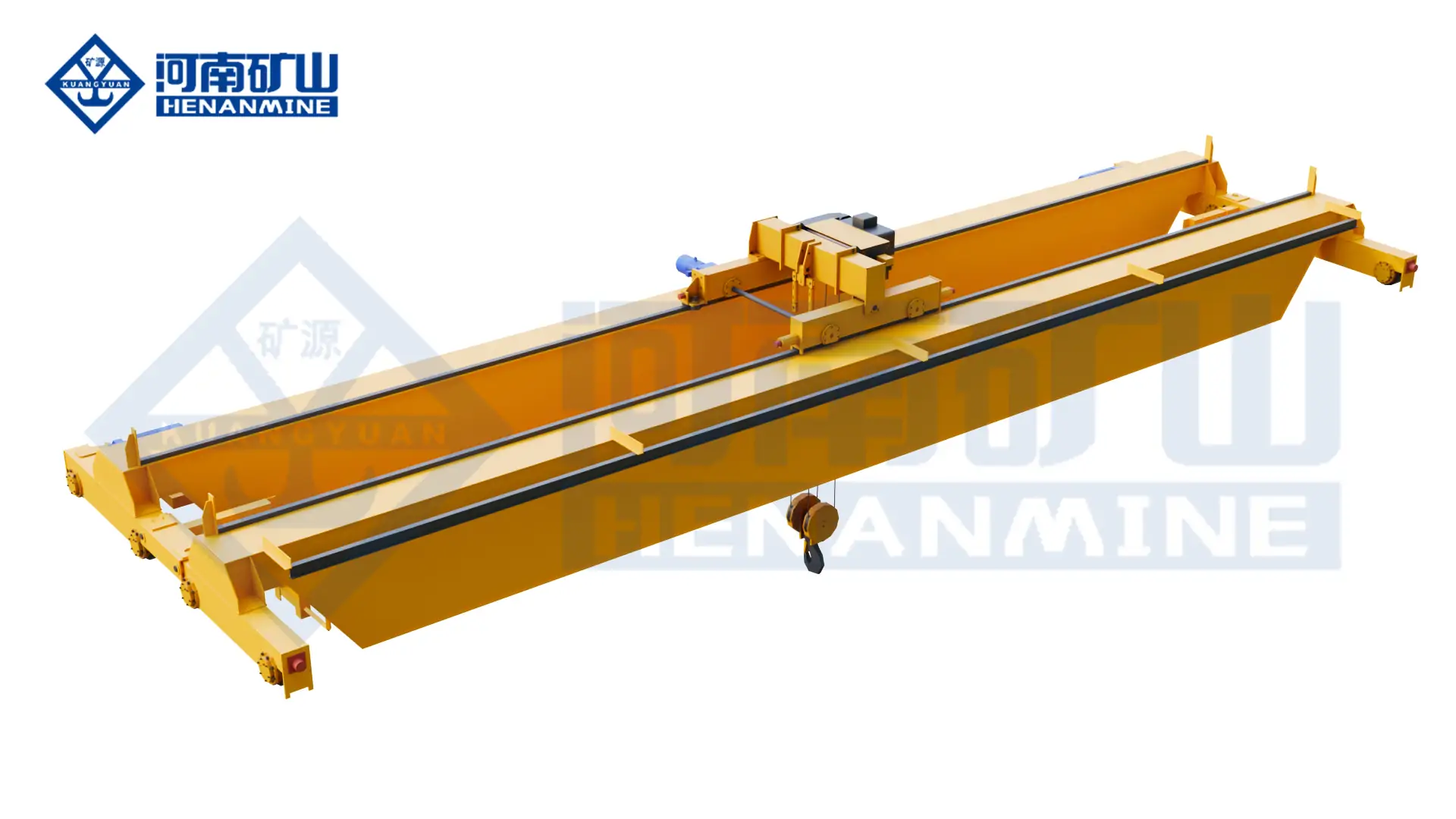
Configurable bridge platform for C-hook, tong and other coil-specific attachments.
Electromagnetic Hanging Crane
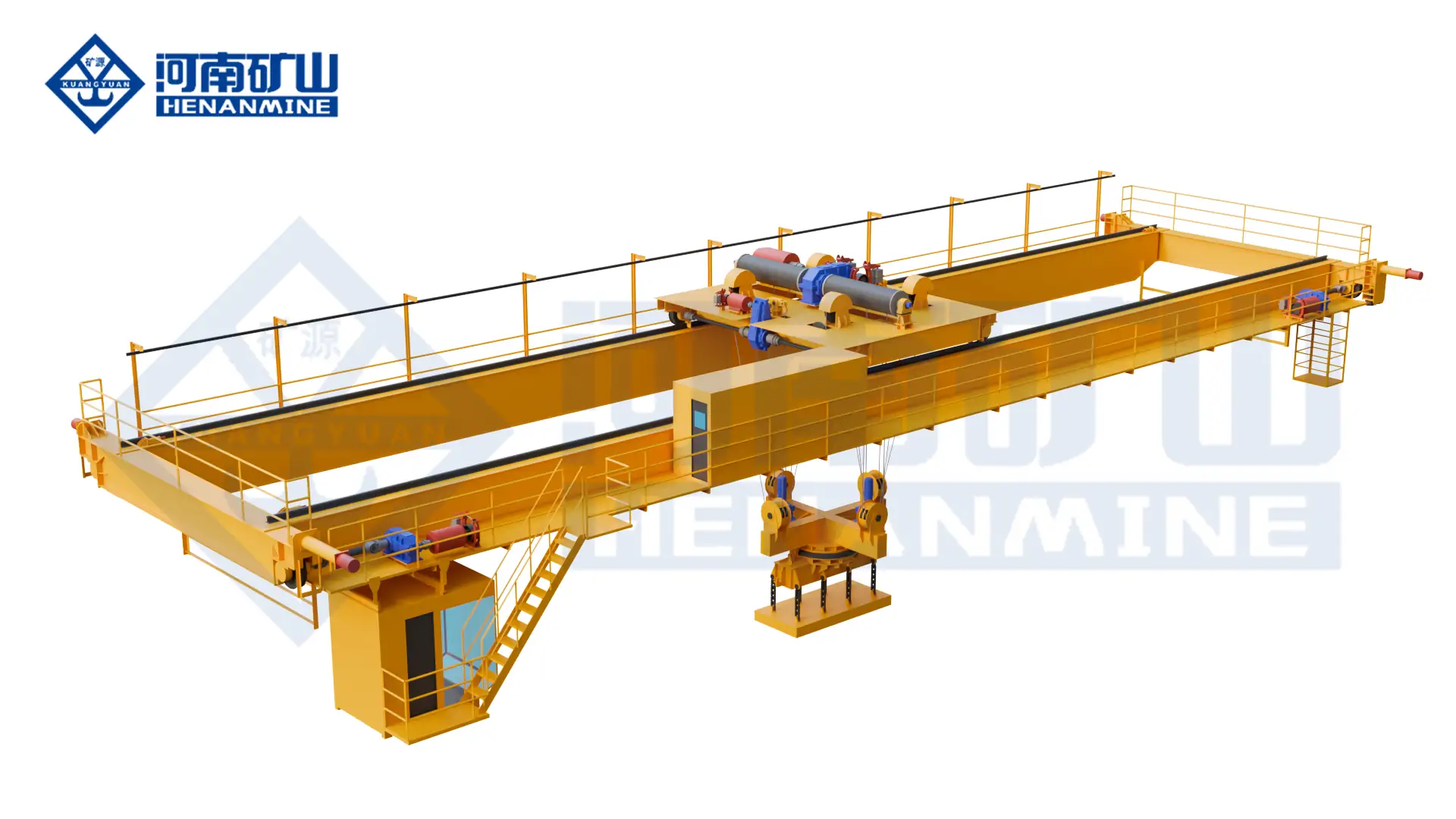
Rotating magnetic-beam platform for approved ferromagnetic materials and coil conditions.
Electromagnetic Bridge Crane
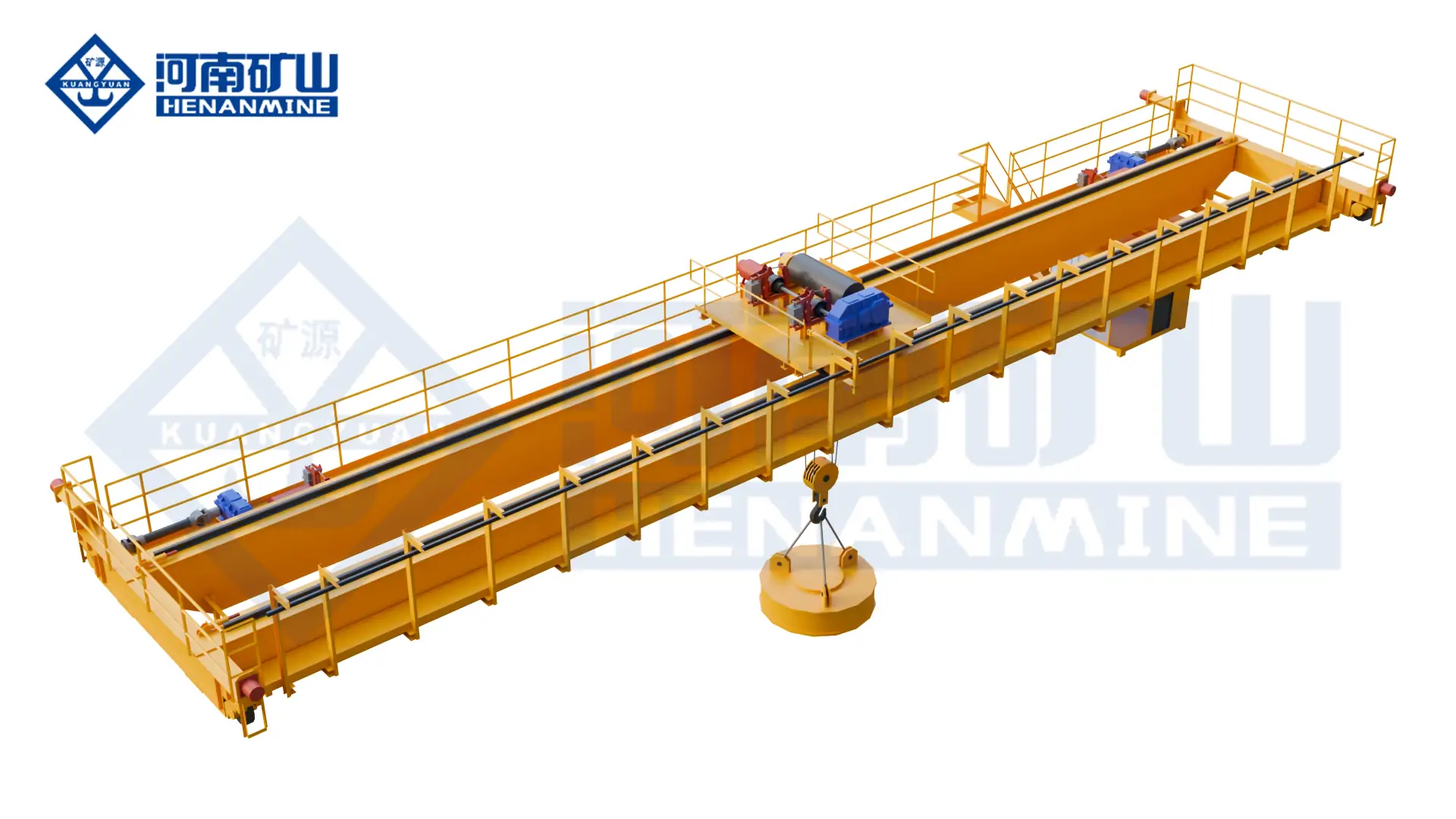
Magnetic pickup platform for compatible metal materials with project-defined controls.
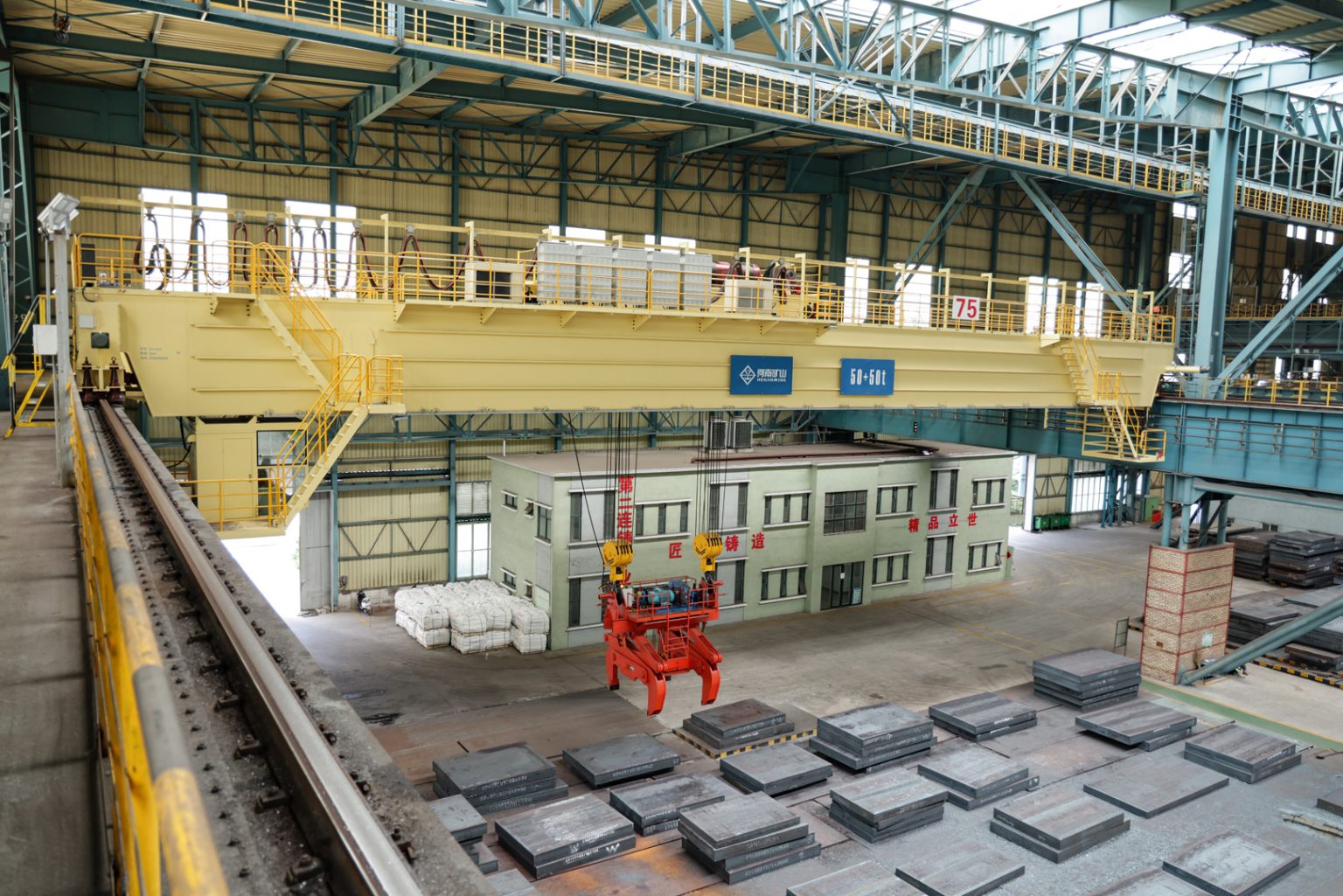
Metallurgical Bridge Crane
Process-duty bridge platform for specified steel-production and high-duty environments.
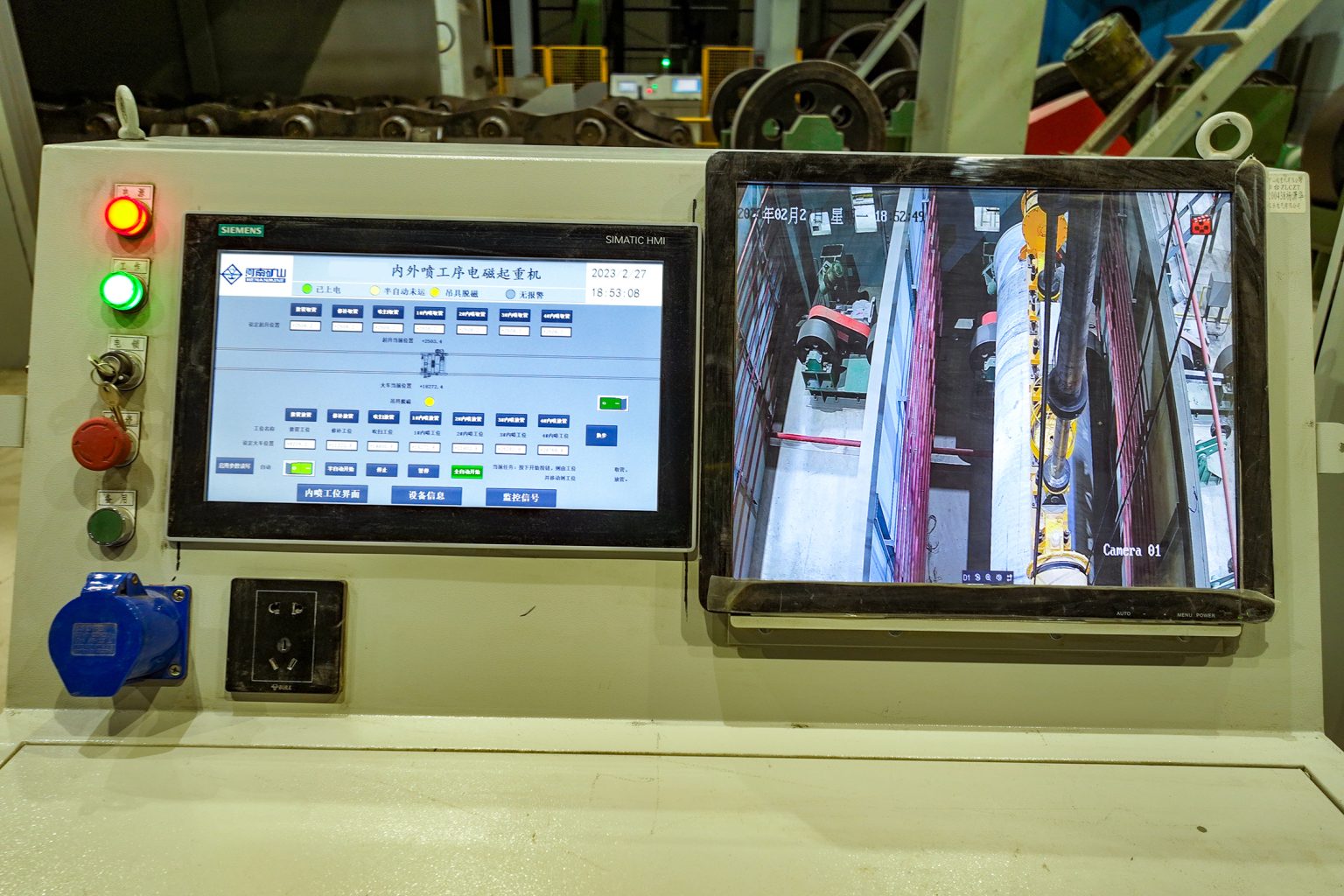
Automatic Metal Handling Crane
MES-connected material-transfer reference with unattended operation and traffic coordination.
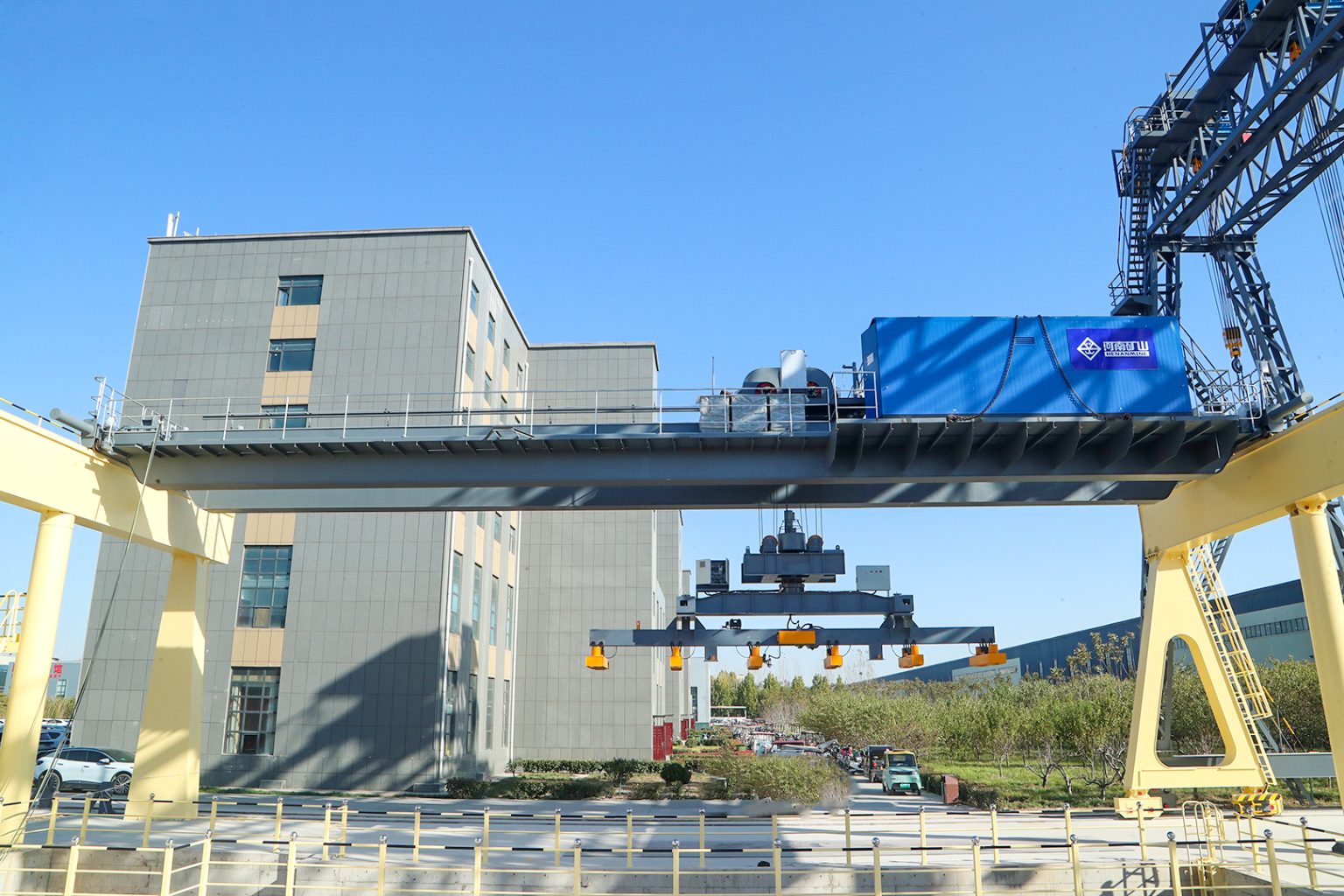
Steel Mill Crane Systems
Plant-wide planning for raw material, production, warehouse and maintenance duties.
Request a Coil Handling Crane Quote
Submit the coil mass and dimension range, eye orientation, temperature, surface condition, required attachment, handling cycle, span, lift, runway data, control level, power supply, destination and supply boundary. Henan Mine Crane will prepare a configuration-based technical and commercial proposal.