Engineering · Manufacturing · Project support
info@hnksglobal.comWhatsApp +86 18836207779 ↗

作者: YUWEI, YUWEI

  • Reliable RMG Crane Supplier China | Factory Direct Rail Mounted Gantry Crane

    Reliable RMG Crane Supplier China | Factory Direct Rail Mounted Gantry Crane

    Reliable RMG Crane Supplier China | Factory Direct Rail Mounted Gantry Crane

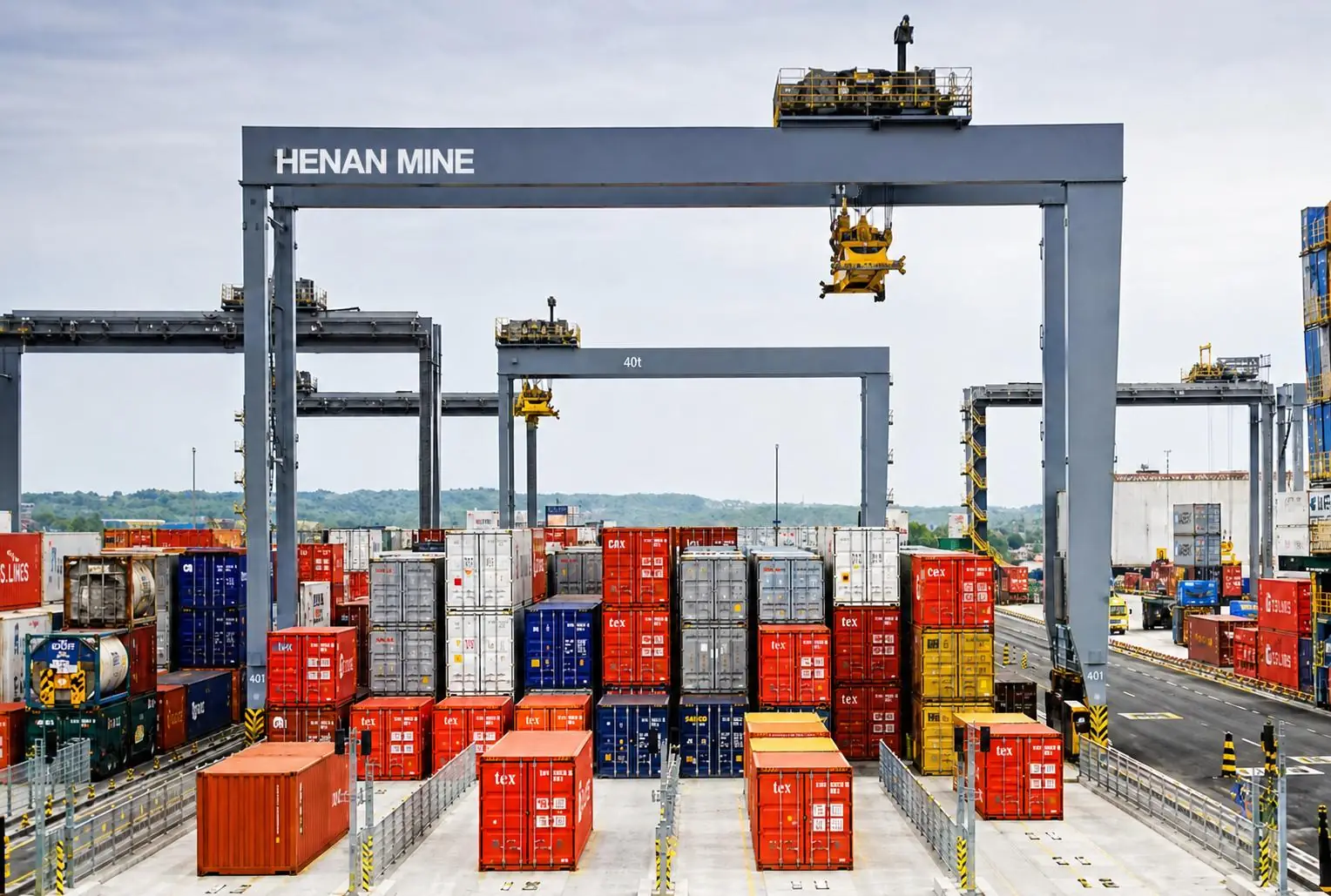
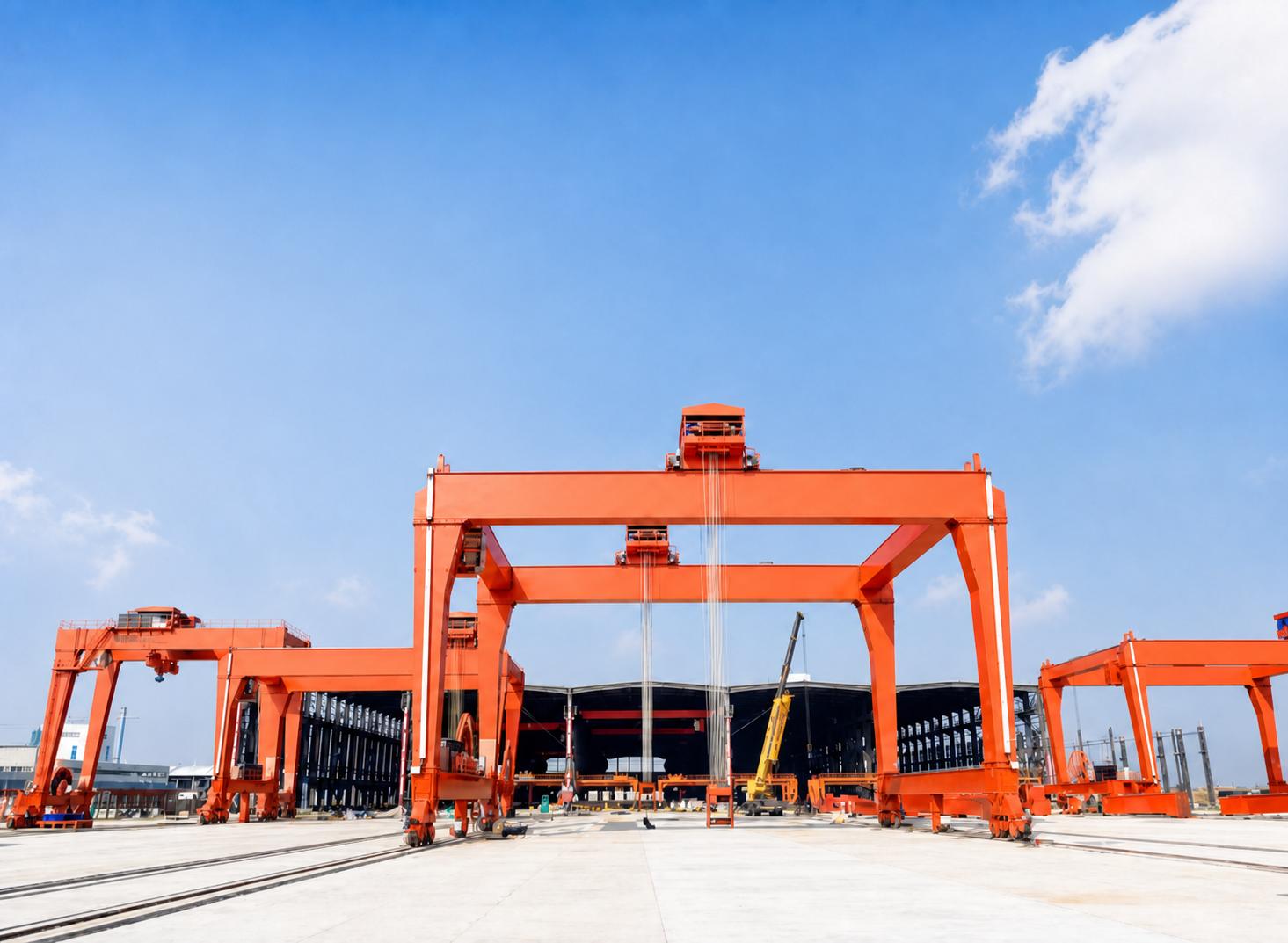
    In the field of global container yard and port lifting equipment procurement, China has always been one of the core supply markets. The mature lifting equipment industry chain in China has created a large number of reliable Chinese RMG crane suppliers, which can provide suitable rail-mounted gantry cranes for global terminals, railroad yards and inland logistics projects.

    Overseas customers purchasing rail mounted gantry cranes have long since stopped comparing offers. Equipment stability, project suitability, engineering strength of manufacturers and long-term after-sales protection is the key to determine the long-term smooth operation of the project.

    As a Chinese RMG crane manufacturer with many years of experience in overseas projects, Henan Mining combines the global experience of various types of yards, combing the RMG crane applicable scenarios, project procurement needs, mainstream models, core parameters, supplier screening methods and common procurement misunderstandings, to help overseas customers to accurately complete the selection of equipment and manufacturers to cooperate and docking.

    What Projects Use This Type of Crane?

    RMG rail mounted gantry cranes rely on fixed rail operation, accurate positioning, stable operation, and are suitable for most standardized container operation scenarios. Different project conditions correspond to different needs, the following table clearly summarizes the mainstream application scenarios, core operational content and adaptability advantages:

    Application Scenario Core Operations Key Advantages
    Container Terminals Container stacking, yard transfer, standardized block handling Fixed rail operation ensures stable performance, matching large-scale and regular terminal container management
    Rail-linked Logistics Terminals Train loading & unloading, intermodal container transfer High positioning accuracy fits rail-container docking, suitable for frequent intermodal handling tasks
    Inland Container Depots Centralized container storage, daily yard inbound and outbound operation Standardizes yard layout, realizes orderly container storage and daily standardized operation
    Dry Ports & Logistics Hubs Large-volume container circulation, rail-connected yard operation Strong structural adaptability to support continuous high-frequency container flow in logistics hubs
    Automated & Semi-automated Yards Remote control handling, automatic container positioning and stacking Good automation compatibility, reserved upgrade space for future intelligent yard transformation

    Common Requirements in RMG Crane Projects

    Global yard projects for container yard crane requirements are highly uniform, the core around the site suitability, long-term operation and cost control, there is no complex redundancy requirements, are adapted to the actual operation of the immediate needs of the conditions.

    All yards want to enhance the density of container stacking in a limited space, so that the layout of the site is more organized, reducing the ineffective operation area. This is the core reason why RMG cranes are gradually replacing traditional mobile lifting equipment.

    RMG cranes belong to high-frequency cyclic operation equipment, starting and stopping, lifting and transferring many times a day. The operational stability of the equipment directly determines whether the yard can continue uninterrupted operation and reduce downtime losses.

    The equipment must be fully adapted to the site track layout, container spacing and truck access planning. Forced application of standard models will easily lead to blind spots, track mismatches and other problems, which will increase the cost of later modification. Most overseas projects also reserve space for automation upgrades to facilitate the later docking of remote control systems.

    In addition, customers are generally concerned about the energy consumption of the equipment, the universality of accessories and the speed of after-sales response. Stable parts supply and convenient operation and maintenance services can effectively control the operation cost of the whole life cycle of the equipment. The basic performance of the equipment, such as anti-sway and accurate positioning, is also the core condition to ensure the safety of operation.

    Recommended RMG Crane Type

    Combined with different yard sizes, operation modes and upgrading plans, we have categorized and adapted the mainstream railroad yard RMG crane types, which is convenient for customers to quickly match the project requirements:

    Crane Type Applicable Projects Core Features
    Standard Container Yard RMG Crane Regular inland yards and small-medium container terminals with fixed operation paths Standard configuration, stable performance and high cost performance for daily conventional handling work
    Rail Terminal RMG Crane Rail intermodal yards focusing on train-container transfer Optimized for rail docking with higher positioning accuracy to adapt to intermodal operation
    Automation-ready RMG Crane New yards and renovated projects with future intelligent upgrade plans Reserved intelligent interfaces, supporting remote control and subsequent automatic operation upgrade
    Heavy-duty RMG Crane Large terminals and high-throughput logistics hubs Reinforced structure and upgraded components to adapt to long-term heavy-load operation
    Customized RMG Crane Projects with non-standard yard layout and special operation demands Customizable span, cantilever, stacking height and control system for personalized site conditions

    Key Technical Parameters Buyers Should Confirm

    Parameter matching is the basis of stable operation of RMG cranes, all core parameters need to be customized with the site conditions, and can not be directly applied to the general standard. The following table summarizes the key parameters that must be verified and the actual project impact:

    Key Parameter Parameter Description Project Impact
    Lifting Capacity Rated load matching container weight and spreader self-weight Guarantees safe load operation and avoids performance waste
    Span Main beam width matching container rows and truck lanes Determines equipment coverage and eliminates operation blind zones
    Stacking Height Max container stacking height complying with site safety standards Directly affects yard storage density and land utilization
    Cantilever Length Side extension length for truck and rail auxiliary operation Ensures unobstructed side handling and complete operation coverage
    Travel Length & Speed Effective rail coverage and matching hoist/trolley running speed Affects single-cycle operation efficiency and overall yard throughput
    Power Supply & Control Mode Adaptable local power standard, optional manual/remote/auto control Ensures stable power operation and reserves long-term upgrade space
    Anti-sway & Positioning Standard anti-sway system and high-precision positioning function Reduces cargo collision risks and improves operation safety
    Environmental Adaptability Wind resistance, corrosion resistance and dustproof design Adapts to outdoor harsh working conditions in different regions

    How to Choose the Right RMG Crane Supplier

    Screening China container terminal crane suppliers, the core is to distinguish between physical manufacturers and trade intermediaries, which is the premise of guaranteeing the quality of equipment and after-sales service. Genuine entity manufacturers have complete production workshop, processing equipment and machine assembly capacity, can independently control the production process and factory standards.

    Priority is given to the manufacturers’ experience in similar overseas projects. Manufacturers that have landed cases in terminals, railroad yards and inland logistics ports know more about the differences in overseas working conditions and international acceptance standards. Henan Mine Crane has been deeply cultivating the overseas market for many years, and its equipment has been exported to hundreds of countries around the world, and it has landed many “Belt and Road” projects, which are suitable for all kinds of overseas complex working conditions.

    Professional engineering supporting capacity is essential. Reliable manufacturers will check the customer’s yard drawings, track layout in advance, combined with the operational process to optimize the equipment program, rather than directly sell standard models. At the same time, manufacturers are required to provide a complete set of technical drawings, wheel pressure data, electrical schematics and other information to meet the acceptance requirements of overseas projects.

    Core parts brand, factory quality inspection process also need to focus on verification. The quality of core parts such as motor, reducer, PLC control system, spreader, etc. determines the service life of the equipment. Regular manufacturers will complete the weld test, no-load load test, the whole machine function debugging, and keep complete testing records.

    Before cooperation, it is necessary to clarify the scope of supply, installation guidance, commissioning training and other services, to confirm the supply of accessories and after-sales response mechanism. Finally, we should comprehensively evaluate the whole life cycle value of the equipment. The long-term operation and maintenance cost of the low-priced equipment is often much higher than the purchase price difference.

    Why Buyers Source RMG Cranes from China

    China has the most complete lifting equipment industry chain in the world, with a complete range of products, covering a full range of port yard lifting equipment needs, is the preferred region for global customers to purchase rail mounted gantry crane manufacturers.

    Relying on the advantages of large-scale production and complete supply chain, domestic RMG Cranes have excellent cost performance, with the same configuration and quality inspection standards, the price advantage is obvious. At the same time, domestic manufacturers have flexible customization capabilities, and can adjust the parameters of the equipment according to the project’s non-standard requirements, to adapt to various types of special yard conditions.

    Head manufacturers have mature export experience, familiar with overseas packaging, shipping, customs declaration and other full set of processes, can avoid cross-border delivery risks. Most of the strong manufacturers can provide RMG, RTG, shore bridge and other categories of port equipment, support one-stop procurement, reduce the cost of multi-supplier docking.

    Common Mistakes Buyers Make

    Many overseas purchasing mistakes are caused by the lack of detail control. Simply selecting equipment at a low price is likely to encounter problems such as parts reduction, process simplification and lack of service. Blindly applying the standard model without matching the layout of the yard on site will result in the equipment not being able to be put into operation normally.

    Neglecting the demand for later automation upgrading and ignoring the track and civil foundation standards will cause the equipment to quickly lag behind the pace of industry upgrading and lay hidden safety risks. Failure to verify the manufacturer’s overseas project cases before purchasing, and failure to clarify the contents included in the quotation are prone to generate a large number of hidden incremental costs.

    At the same time, unclear division of authority and responsibility for installation and commissioning, and incomplete site information provided at the time of quotation can lead to insufficient program suitability, project schedule delays, and affect the overall progress of yard operation.

    Frequently Asked Questions

    Why choose China RMG Crane supplier?

    Chinese manufacturers have a combination of mature manufacturing process, flexible customization capabilities and cost-effective, and have a wealth of overseas project landing and export experience, can provide a full range of services from design, manufacturing to cross-border after-sales service.

    The core difference between RMG Crane and RTG Crane?

    RMG is a fixed rail operation, stronger stability and positioning accuracy, suitable for standardized, high-frequency long-term operation of the yard; RTG is a tire-type, more flexible, suitable for the need to frequently adjust the operating area of the scene.

    What project information do I need to prepare before requesting a quotation?

    Prepare yard layout drawings, track parameters, required span, stack height, cantilever length, local power supply standards and working conditions, which can help manufacturers to quickly issue accurate adaptation programs and quotations.

    How to recognize the real manufacturer?

    We can verify the factory view, production qualification, complete machine test report and overseas export cases of complete machines, and the real manufacturers have independent production, assembly and testing capabilities, without middlemen.

    What technical documents should I ask for before signing the contract?

    You need to ask for equipment assembly drawings, wheel pressure data, electrical schematic diagrams, parts lists, factory inspection reports and warranty statements to ensure that the project acceptance and later operation and maintenance have a basis.

    Can the same manufacturer provide all kinds of harbor equipment?

    Regular head manufacturers can supply RMG, RTG, STS shore bridge and other port lifting equipment at the same time, realizing one-stop purchase, unified after-sales service, simplifying project operation and maintenance management.

    In addition to price, what are the key elements to be verified?

    We focus on checking the brand of core parts, factory quality inspection standards, overseas project experience, engineering adaptability, installation and commissioning services and long-term after-sales protection system.

    Conclusion

    The core of purchasing Chinese RMG Cranes is not to find low-priced sources, but to match the high quality cooperative manufacturers that are suitable for their projects. Equipment parameter suitability, manufacturers engineering strength, quality inspection standards, export experience and after-sales system, far more important than the price of a single purchase.

    Reliable China RMG Crane suppliers, not only provide standardized lifting equipment, but also provide professional engineering consulting, program customization, delivery of technical information, on-site commissioning guidance and long-term after-sales support, all-round protection of long-term stable operation of the yard.

    If you are looking for reliable China RMG Crane manufacturers for terminals, railroad yards and inland logistics projects? You can directly provide the yard drawings, span, stacking height, throughput targets and other project parameters, Henan Mine Crane professional engineers will customize your exclusive RMG Crane solutions, and provide accurate quotes and a full set of technical information.

    Henan Mine CraneDiscuss your requirements ↗
  • Recommendations for Skewing Issues on an Overhead Crane

    Recommendations for Skewing Issues on an Overhead Crane

    Recommendations for Skewing Issues on an Overhead Crane

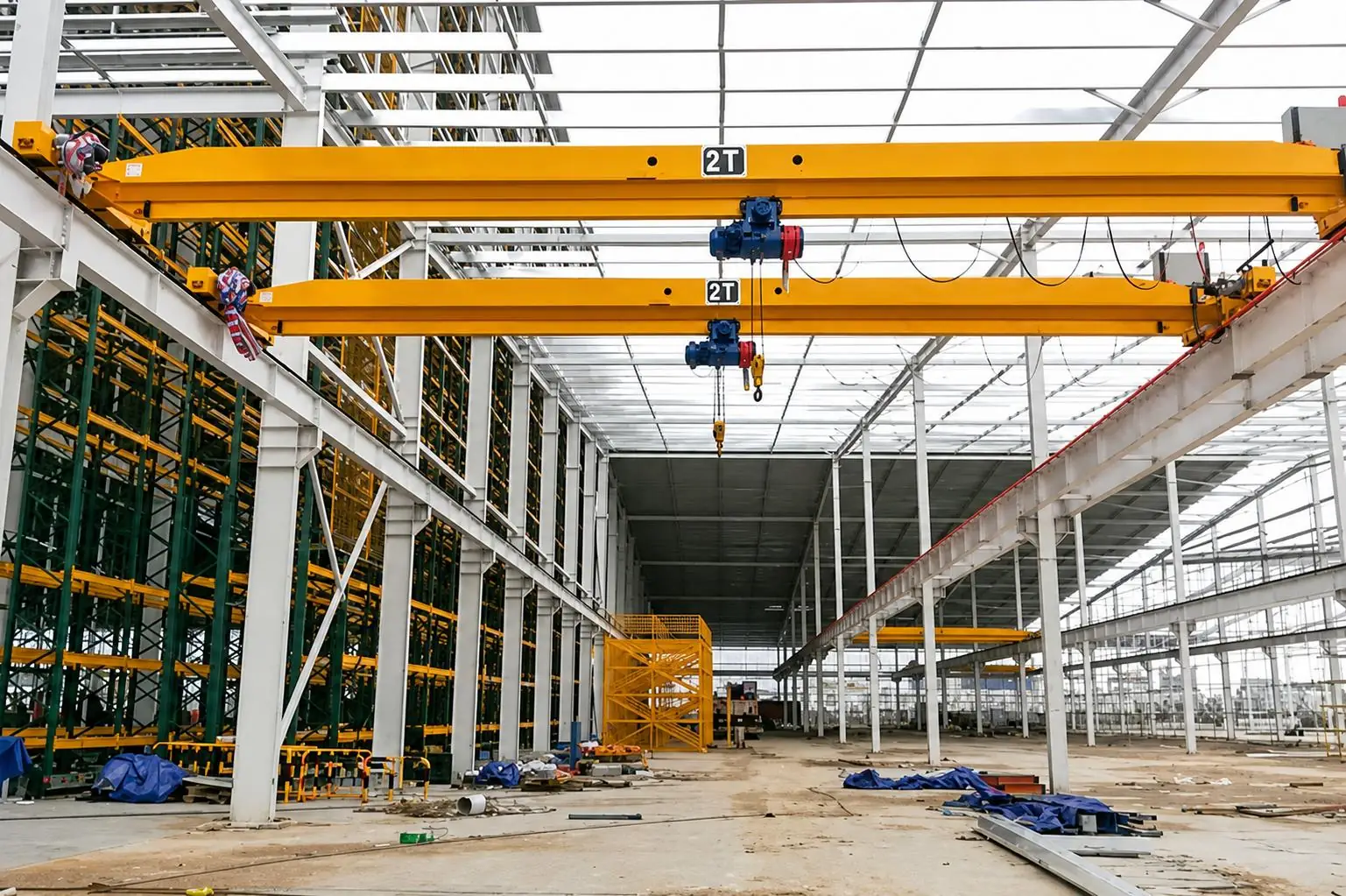
    In factory workshops, warehousing and logistics, heavy industry production and other scenarios, bridge cranes are the core heavy-duty operating equipment, and their operating stability directly determines production efficiency, operation safety and equipment service life.Bridge crane deviation is a hidden failure that occurs frequently after the long-term operation of most bridge cranes. It is only manifested as a slight operating deviation in the initial stage, which can easily be ignored by the operator, but long-term letting it go can cause rail gnawing, component damage, shutdown failure and even safety accidents.If you want to completely avoid the hidden dangers of such equipment, it is essential to accurately identify, trace the source and scientifically deal with the deviation of bridge cranes.

    What Is Overhead Crane Skewing and Why Does It Matter?

    The deviation of the bridge crane is that when the equipment cart is running on the track, the bridge frame cannot maintain a standard straight line and runs in parallel, and there is an abnormal working condition of one-sided advance and overall oblique offset.Normally, the walking mechanisms on both sides of the equipment operate synchronously, and the wheels smoothly fit the track tread, but deviation will cause the bridge frame to produce lateral displacement, causing the wheel rims to continue to rub against the side of the track, which is the core cause of rail failure of lifting equipment.This problem is widespread in all kinds of single- and double-girder bridge cranes, and can occur in old and new equipment of different tonnages. It is a high-frequency hidden danger that equipment operation and maintenance focus on investigating.

    Most companies ignore minor bridge crane deviation failures, as everyone knows that they will cause multiple irreversible equipment losses and production losses.Deviation will greatly increase the operating resistance of the equipment, causing continuous high-intensity friction and wear between the wheels and the track, and causing the risk of deformation, damage and even derailment of the components.At the same time, the load of the motors on both sides is unbalanced, frequent overload and tripping, and heat generation is damaged.Long-term deviation will also cause the main beam and end beam to bear twisting stress, causing structural deformation and cracking of welds, and sudden downtime caused by failures will directly disrupt the rhythm of production and increase the operation and maintenance of enterprises and production costs.

    Common Signs of an Overhead Crane Skewing Problem

    The deviation failure of the bridge crane is obviously gradual, and it will go through a complete process from slight offset to severe rail gnawing and structural damage.Mastering the typical signs of faults can achieve early detection and early correction, so as to avoid small faults from evolving into major hidden dangers. The following are the six core symptoms that are most easily identified on the scene.

    Abnormal noise during crane travel

    Henan Mine Crane manufactured bridge crane runs smoothly, evenly, and without noise.After the deviation problem occurs, the equipment will continue to emit harsh friction, scratching, and impact sounds when running back and forth, especially in the start-stop and uniform speed operation stages.This is a typical signal of forced friction and squeezing between the rim of the wheel and the side of the track. The louder the noise, the greater the deviation and the more serious the rail gnawing problem.

    Uneven wheel or rail wear

    Regular inspection of the wheels and tracks can intuitively determine the deviation failure.Under normal working conditions, the wheel tread and track contact surface wear evenly.Deviation equipment will have severe wear on the rim of one-sided wheels, partial wear on the tread, wear, depression, and blockage on one side of the track, and the degree of wear on both sides of the track is greatly different.If the wear of the wheels and tracks is found to be uneven, it can basically be determined that there is a deviation problem of the bridge crane.

    One side of the crane moving faster than the other

    This is the most intuitive running performance of deviation.The operator can clearly observe that the walking mechanisms on the left and right sides of the bridge crane are out of sync when it is running, and the walking speed on one side is fast and the other side lags behind, causing the bridge frame to gradually tilt and cannot travel in a straight line.This phenomenon is particularly prominent in the start-up and braking stages. Long-term operation will form a fixed offset trajectory, and the failure will continue to increase.

    Increased motor load or frequent overload trips

    The operating resistance caused by deviation will be directly converted into motor load, and the motor current will increase significantly when the equipment is running, and the heat generation of the fuselage will increase.The electronic control system will frequently trigger overload protection tripping, equipment start-stop failure, and midway shutdown.If the circuit and voltage faults are still tripped frequently after troubleshooting, the core cause is probably the load imbalance caused by the deviation of the bridge crane.

    Excessive wheel flange contact with the rail

    During normal operation, only the tread of the wheel is in contact with the track, and a standard gap is reserved between the rim and the side of the track.After the deviation failure occurs, the rim will continue to cling to the side of the track, with high-intensity contact and friction throughout the process, without normal clearance margin.Long-term operation will cause excessive wear and deformation of the rims, and even the rims will tighten the track, causing the equipment to fail to move normally.

    What Causes Overhead Crane Skewing?

    The deviation of the bridge crane is not caused by a single fault, but by the superposition of the four dimensions of track, wheel, drive system, and equipment structure.Combined with many years of equipment maintenance experience, more than 95% of deviation failures come from the following four core causes. Precise positioning of the causes is the key to efficient troubleshooting.

    Runway rail misalignment

    Track installation deviation and late deformation are the primary external causes of bridge crane deviation, and they are also the most common source of failure on site.The settlement of the foundation of the plant, long-term equipment vibration, and irregular installation and construction will all lead to problems such as deviation of the track gauge, inconsistent elevation of the track on both sides, excessive parallelism of the track, misalignment of the track joints, and loosening and tilting of the pressure plate.When the track flatness, parallelism, and gauge do not meet industry standards, and the walking mechanism of the bridge crane cannot maintain synchronous linear operation, there will inevitably be offset deviation and rail gnawing problems, and the greater the track deviation, the more serious the deviation failure.

    Crane wheel wear or incorrect alignment

    The wheel is the core component of carrying and walking, and its state directly determines the operating accuracy.On the one hand, the long-term heavy-duty operation of the equipment will lead to uneven wear of the wheel tread, excessive deviation of the wheel diameter on both sides, and wear and deformation of the rim, resulting in inconsistent walking line speeds on both sides, causing deviation.On the other hand, if the equipment installation and maintenance are not in place, the wheels will be horizontally skewed, vertically skewed, the wheel span and diagonal size deviation, and the tapered wheel installation direction is wrong, which completely destroys the walking balance and induces continuous deviation failure.

    Drive system and motor synchronization issues

    The unsynchronization of the drive systems on both sides is the core cause of the electrical and mechanical transmission levels.After long-term operation, the parameters of the walking motors on both sides do not match, the frequency conversion control parameters are unbalanced, and the braking torque of the brakes is inconsistent, which will cause the motor’s operating speed and power output to be out of sync.At the same time, transmission failures such as gear wear, uneven clearance, loose transmission chain, and offset coupling of the reducer will further amplify the difference in operating speed on both sides, and the deviation phenomenon of fast on one side and slow on the other will occur. The fault performance is most obvious in the start-stop phase.

    Structural deformation or uneven crane geometry

    The structural deformation of the main beam and end beam of the bridge crane is the core internal cause of stubborn deviation.Long-term equipment overload operations, frequent start-stop, hoisting shocks, and perennial stress accumulation will cause the main beam to bend and the end beam to be distorted, and the overall geometry of the equipment will be unbalanced and the diagonal deviation will exceed the standard.In addition, loose equipment flange bolts, cracking of welding parts, and uneven structural force will also cause the installation reference of the walking mechanism to be offset. Even if the wheels are replaced and the track is corrected, the deviation problem will still occur repeatedly.

    How to Diagnose and Correct Crane Skewing

    In view of the deviation failure of the bridge crane, it is necessary to follow the principles of first diagnosis, then correction, and precise implementation to prevent blind maintenance.Combined with the original technical standards, a set of full-process diagnosis and correction plans that can be landed have been compiled, which are suitable for the repair of deviation faults of various bridge cranes.

    Inspect wheel condition and alignment

    First, conduct a comprehensive inspection of the walking wheels, measure the diameter of the wheels on both sides, the degree of tread wear, and the thickness of the rim, and check whether the wheels have deformation, cracks, bearing damage and other problems.Focus on detecting the horizontal and vertical skew of the wheels, and check whether the wheel span and diagonal dimensions meet the factory standards.For wheels with excessive wear, excessive dimensional deviation, deformation and damage, they need to be replaced in pairs.In view of the wheel offset problem, the standard wheel alignment accuracy is restored by adjusting the bearing box gasket and correcting the installation position.

    Check runway rail alignment and gauge

    Use professional measuring tools to detect track gauge, parallelism, elevation difference, and joint flatness, and investigate problems such as loose track pressure plate, rail tilt, track deformation, and foundation settlement.Leveling and correcting tracks with elevation deviations and excessive parallelism, tightening loose track bolts and pressure plates, repairing misplaced and deformed track joints, polishing track wear and raised parts, ensuring that the track parameters on both sides are uniform, flat and parallel, and eliminating the deviation caused by track offset from the root cause.

    Test both sides of the crane travel system

    Under no-load and heavy-load conditions, the operating status of the walking system on both sides of the bridge crane was tested separately, and the operating speed, start-stop synchronization, and operating resistance difference between the two sides were recorded.For different types of deviation such as out-of-sync starting and braking, continuous offset throughout the process, and intermittent rail gnawing, the fault point is accurately determined.By debugging the frequency conversion control system and calibrating the operating parameters, balancing the walking speed on both sides, correcting the transmission error, and solving the problem of out-of-sync walking.

    Inspect motors, gearboxes, brakes, and drive controls

    Comprehensively disassemble and inspect the walking motors, reducers, brakes, and electronic control systems on both sides.Investigate motor aging, power imbalance, and coil heating faults, detect reducer gear wear, insufficient lubrication, and abnormal clearance, and calibrate the braking torque of the brakes on both sides to ensure that the brakes are synchronized and the tightness is consistent.At the same time, overhaul the control components such as frequency converters, contactors, and limit switches, update aging electrical components, unify the drive control parameters on both sides, and completely solve the problem of out-of-sync power and transmission.

    Correct structural or installation-related issues

    For equipment with side bending of the main beam, distortion of the end beam, structural deformation, and excessive diagonal deviation of the main beam, professional correction equipment is used for structural repair, the deformation parts of the main beam and the end beam are corrected, and the standard geometric dimensions of the equipment are restored.Fully tighten the connecting bolts of the whole machine, repair cracked welds, and repair the offset installation reference.For old equipment with serious deformation and structural fatigue, structural reinforcement, component replacement, and machine transformation solutions are provided to completely solve the stubborn structural deviation.

    overhead crane skewing

    How to Prevent Overhead Crane Skewing

    Bridge crane deviation failure can be prevented and controlled. Compared with the high maintenance costs after the failure, normalized preventive maintenance can greatly reduce the equipment failure rate, extend the service life of the equipment, and ensure the long-term stable operation of the equipment.Combined with the original maintenance experience, summarize the four core preventive measures.

    Perform regular wheel and rail inspections

    Establish a periodic inspection system, check the operating status of wheels and tracks every week, and carry out accurate inspections every month.Focus on checking wheel wear, offset, bearing damage, track flatness, firmness, and wear status, and promptly clean up track debris and polish raised wear parts.Regularly maintain the wheels and tracks, and find minor wear and offset problems and fine-tune them in time to avoid the accumulation of small deviations into serious deviation failures.

    Monitor drive system performance

    Pay close attention to equipment operating noise, motor temperature, start-stop status, and current load in daily operations, and regularly carry out comprehensive maintenance of motors, reducers, brakes, and electronic control systems.Replace aging lubricants and worn transmission components in time, calibrate braking parameters and electronic control system parameters, ensure that the power output and operating speed of the drive systems on both sides are completely synchronized, and eliminate hidden dangers of deviation from the transmission level.

    Maintain runway alignment

    Conduct a comprehensive accuracy inspection and calibration of the bridge crane track every quarter, focusing on monitoring the gauge, parallelism, and elevation difference, and promptly correct and repair, tighten and reinforce the track offset and loosening caused by the settlement of the plant foundation and the vibration of the equipment.Long-term maintenance of track installation accuracy in line with industry standards provides a basic guarantee for the linear and stable operation of Henan Mine Crane manufactured bridge cranes.

    Address abnormal wear before it develops into a major failure

    Adhere to the maintenance principle of early detection and early handling. Once problems such as abnormal noise, slight offset, local wear, and abnormal motor load are found in the operation of the equipment, they will be stopped immediately for investigation and precise repair of hidden dangers.Eliminate faulty operation and delay in maintenance, avoid minor wear and tear, small offsets and gradually evolve into major failures such as gnawing rails, structural deformation, and motor damage, and significantly reduce equipment operation and maintenance and downtime costs.

    Henan Mine Crane Factory Custom Custom

    The vast majority of repeated bridge crane deviation failures are not caused by simple failure to debug, but by the attenuation of the accuracy of old equipment, the rough manufacturing process of the equipment, the non-standard structural parameters, and the poor adaptability of the drive system.Relying solely on maintenance and correction can only temporarily relieve symptoms, and cannot completely solve hidden dangers. Long-term sick operations will not only continue to increase equipment wear and tear, increase operation and maintenance costs, but also bring stable safety risks, affecting the normal and efficient production of the workshop.

    Henan Mine Crane Factory focuses on the research and development and manufacturing of high-quality brand-new bridge cranes, relying on precision production technology and mature working condition adaptation system, optimizing and upgrading from the core dimensions of equipment structure, walking accuracy, drive synchronization, etc., to eliminate common faults such as deviation, rail gnawing, and load imbalance from the source.We can customize and adapt brand-new lifting equipment according to the actual working conditions of the enterprise workshop site, load requirements, operating intensity, etc., and replace old and inefficient equipment with original standardized equipment to help enterprises completely get rid of the problem of deviation and achieve long-term safe, stable and efficient heavy-duty operations.

    Henan Mine CraneDiscuss your requirements ↗
  • Port Crane Retrofit vs Replacement: Which Makes More Economic Sense

    Port Crane Retrofit vs Replacement: Which Makes More Economic Sense

    Port Crane Retrofit vs Replacement: Which Makes More Economic Sense

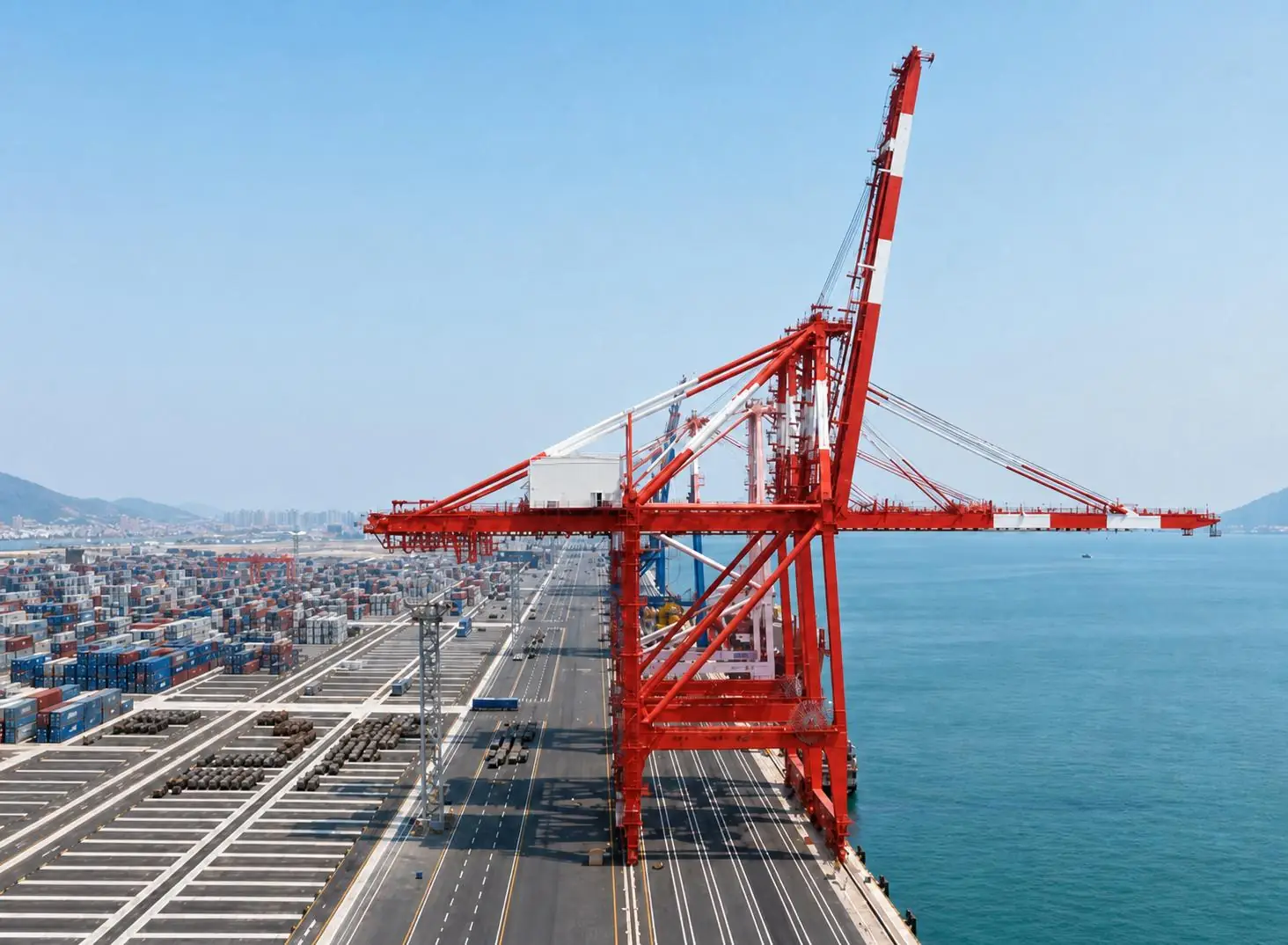
    Global port logistics is rapidly upgrading towards intelligence and efficiency. As the core loading and unloading equipment of the terminal, the port crane is directly related to the throughput efficiency, operational stability and operating efficiency of the terminal.The conventional service life of this kind of main equipment is 15 to 25 years, and various problems such as aging of components, declining performance, increased energy consumption, non-compliance with safety standards, and lagging intelligence generally occur in the middle and late stages of operation.In this regard, terminal operators generally face key choices. For old port cranes, whether to adopt equipment transformation and upgrading or port crane replacement to optimize the equipment, the rationality of the choice of the plan directly affects capital investment, downtime loss, operation and maintenance costs, and the long-term market competitiveness of the port.

    Port Crane Retrofit vs. Replacement: Key Differences

    Port crane transformation and port crane replacement are two completely different equipment upgrade plans. The core differences are reflected in capital investment, equipment life, operating performance, downtime, late operation and maintenance and other key dimensions.It is not that the lower the cost, the more cost-effective, nor is it that the stronger the performance of the new machine, the more suitable it is. Only by combining the port operating conditions, the current situation of equipment, and the comprehensive judgment of the operating budget can the optimal solution be locked in.

    Retrofit and replacement costs

    Cost is the core consideration in the decision-making of port enterprises, and it is also the most intuitive difference between renovation and renewal.Combined with the measured data of the port machinery and equipment industry in 2026, the total cost of port crane transformation is only 30%-40% of the cost of new machine procurement, and the economic advantages are very significant.Judging from the subdivided models, the procurement cost of the new Panama–type shore bridge machine is as high as 10-18 million euros, while the cost of a full set of refined transformation is only 1.5–3.5 million euros.The cost of the new 80-120-ton port mobile crane is 3.5–8 million euros, and the renovation cost is only 60-1.5 million euros.

    On the other hand, the replacement of port cranes, in addition to the high equipment procurement costs, also includes the demolition of old machines, site cleaning, transportation of new machines, hoisting and installation, commissioning and acceptance, qualification reporting and other additional costs, the comprehensive invisible cost is extremely high.The crane transformation is only aimed at the precise upgrading of aging, backward, and substandard components, and the core foundations such as the main steel structure and the frame are preserved in good condition, greatly compressing invalid investment, and the short-term capital pressure is minimal.

    Equipment life and performance

    The remaining service life and operating performance of the equipment directly determine the long-term value of the plan.Henan Mine Crane manufactured brand new port cranes have a factory standard service life of 20-25 years. They are equipped with the latest intelligent control system, energy-saving power system and high-precision transmission structure. They are suitable for the current needs of large-scale ship loading and unloading, high-stacking, and high-load operations, and the upper performance limit is higher.However, the refined transformatioOOn of old cranes does not only solve surface problems. After the all–round upgrade of the electronic control system, hydraulic system, lifting mechanism, and safety protection device, the service life of the equipment can be effectively extended for 8-12 years, fully meeting the medium- and long-term operation needs of the port.From the performance point of view, the transformed equipment can achieve an increase in operating efficiency by 10%-15%, a reduction in energy consumption by 20%-30%, and a decrease in failure rate by more than 60%. It can fully match the standards of conventional port loading and unloading operations, and some of the intelligent transformed equipment can achieve quasi-new machine operating performance.

    Downtime and installation

    The port belongs to a continuous operation scenario, and the length of downtime is directly equivalent to economic losses, which is a core cost item that can easily be ignored.The downtime cycle of the two options is very different, which directly affects the short-term operating income.The transformation of port cranes adopts a modular and segmented construction mode, which can arrange peak construction according to port operations, and some transformation projects can realize semi-shutdown operations.The transformation period of conventional port cranes is only 1-3 months, and the upgrading period of small components and electronic control transformation can be compressed to within 1 month, which has minimal impact on port throughput operations.At the same time, the transformation does not require the demolition of the main equipment, and there is no need for large-scale site transformation. The construction process is simple and the landing is efficient.

    The downtime and loss of port crane replacement is great. The complete process includes the demolition of the old machine, site leveling, customized production of the new machine, transportation and hoisting, installation and commissioning, and acceptance and preparation. The complete cycle is as long as 6-12 months.For ports with stable daily throughput, long-term downtime will directly cause huge order losses and shrinking production capacity. The hidden economic losses far exceed the price difference of the equipment itself. This is also the core reason why many ports give priority to transformation.

    When Is Port Crane Retrofit a Better Option?

    The transformation of port cranes is not suitable for all old equipment, but in most conventional old equipment upgrade scenarios, it is the most cost-effective, lowest-risk, and fastest landing solution.When the main structure of the equipment is intact, only the supporting parts are aging, and the performance lags behind, the economic value of the transformation and upgrading far exceeds the replacement.

    Aging components

    For port cranes that have been in service for 8-15 years, the most common problem is not damage to the main structure, but the aging and failure of vulnerable components, electronic control systems, and hydraulic systems.The core load-bearing structure of the steel structure frame, main beam, outriggers, etc. of this kind of equipment is intact, and there are no structural problems such as deformation, cracks, and excessive corrosion. The basic value of the equipment still exists.If such equipment is directly replaced, it will cause a waste of high-quality main structure resources, and tens of millions of funds will be invested to replace only aging parts, which is extremely cost-effective.The targeted transformation can accurately replace aging motors, reducers, hydraulic valve sets, wire ropes, and limit protection devices, upgrade old electronic control procedures, and completely solve the problems of frequent equipment failures, start-stop caton, and unstable operation.After the transformation, the equipment failure rate has been greatly reduced, and the versatility of spare parts has been significantly improved. It has completely gotten rid of the dilemma of long supply cycles and high prices of imported spare parts, and adapted to the needs of long-term stable operations.

    Capacity and safety upgrades

    In recent years, port safety regulations and environmental protection standards have been continuously updated. Due to lagging safety configuration and insufficient compliance, a large number of old cranes are facing the risk of failure to pass annual inspections and production restrictions and outages.Many old equipment has a load capacity of up to standard, but lacks modern safety devices such as intelligent limit, anti-overturning, anti-collision, overload protection, and emergency braking, which cannot meet the latest port operation compliance requirements.For this kind of equipment, transformation and upgrading is the optimal solution.By installing a full set of intelligent safety monitoring systems, upgrading brake protection devices, and optimizing the load control system, the equipment can fully comply with the current maritime and port safety operation standards.At the same time, the operating parameters of the equipment can be slightly optimized according to the operation needs, and the adaptability of the equipment can be improved. The compliance upgrade can be completed without replacing the port crane, avoiding the suspension penalty, and ensuring the normal compliance operation of the port.

    Improved crane efficiency

    High energy consumption, low operating efficiency, and high labor costs are common pain points for old port cranes.Traditional cranes that have been in service for more than 10 years mostly use old power systems and manual control modes. They consume a lot of energy, have a slow pace of operation, have low per capita operating efficiency, and have high long-term operating energy consumption costs.Through energy-saving and intelligent transformation, all-round quality and efficiency improvement of equipment can be achieved.Oil-to-electricity, frequency conversion electronic control upgrade, and intelligent speed control system transformation can reduce the comprehensive energy consumption of the equipment by 30%-40%.The upgrade of the automated auxiliary control and intelligent scheduling docking system can shorten the time of a single loading and unloading operation and improve the overall throughput efficiency of the port.The measured data show that the average annual energy consumption cost of the old crane after the transformation can be saved by more than 4 million yuan, the annual maintenance cost can be reduced by 60%, and the long-term operating income is very considerable.

    When Should You Replace Your Port Crane?

    Although crane retrofitting is more cost-effective, it is not a panacea.When the equipment has structural damage, the performance is completely lagging, and the operation and maintenance costs are seriously upside down, blind transformation will only invest invalid funds. At this time, the replacement of port cranes is a more economical choice.

    Structural damage

    Insufficient capacity

    With the upgrading of the shipping industry, large container ships and super-heavy bulk carriers have gradually become popular, and port operating load standards, stacking heights, and operating radii have continued to increase.If the rated lifting weight, operating radius, and lifting height of the existing crane cannot be adapted to the existing and future operating needs, it is a fundamental lag in performance, and the transformation cannot solve the core problem.The upper load limit and operating radius of the crane are determined by the main steel structure and the design parameters of the port crane, and cannot be greatly improved through local transformation.If the parameter fine-tuning and upgrading are forcibly passed, the equipment will be overloaded, the stability will be insufficient, and there will be great safety risks.For terminals that need to undertake the loading and unloading of large ships and improve the throughput level of the port, brand new intelligent cranes with large tonnage, long span and high adaptability must be replaced to meet the needs of high-end operations and adapt to the long-term port upgrade plan.

    port crane replacement

    High operating costs

    Some old cranes that are out of service will have serious cost upside-down problems, and the operation and maintenance costs far exceed the output value of the equipment.Data show that for 40–ton gantry cranes that have been in service for more than 12 years, the average annual maintenance cost will soar from 150,000 yuan in the initial period to 450,000-600,000 yuan, an increase of as much as 200%-300%.This kind of equipment generally has problems such as the shutdown of spare parts, difficult maintenance, frequent failures, ultra-high energy consumption, and frequent downtime. Frequent maintenance not only consumes high funds, but also frequently interrupts port operations, resulting in loss of orders and reduced production capacity.On the other hand, the average annual operation and maintenance cost of the new intelligent crane is only 120,000–180,000 yuan, and the energy consumption is lower, there are few failures, and the operating efficiency is higher.When the operation and maintenance costs and downtime losses of old equipment have far exceeded the cost of transformation for three consecutive years, decisive replacement can quickly reverse the upside-down situation of costs and achieve long-term cost reduction and efficiency gains.

    How to Compare Retrofit and Replacement Costs

    To judge the economy of transformation and renewal, we cannot only look at short-term investment. We must rely on the whole life cycle cost (LCC) thinking and comprehensively calculate from the four dimensions of initial investment, long-term operation and maintenance, downtime loss, and return on investment in order to obtain accurate economic comparison results.

    Initial investment

    Initial investment is the most intuitive cost difference, and it is also a priority factor for small and medium-sized enterprises.The initial investment in the transformation of port cranes is extremely low. It is only for the upgrading of faulty, aging, and backward components. There is no excess loss. The overall investment is 30%-40% of the new machine. The capital return cycle is short, and there is no large capital pressure.The initial investment in the replacement of port cranes is extremely high, including a full set of costs such as equipment customization procurement, demolition of old machines, site renovation, transportation and installation, commissioning and acceptance, and qualification processing. The cost of a single large-scale shore bridge new machine can reach tens of millions or even hundreds of millions. Level.Large-scale investment in fixed assets will take up a lot of working capital of the enterprise, which will cause certain pressure on the short-term capital turnover of the port and the expansion of the project.For ports with limited budgets and only need to upgrade conventional operations, the initial investment advantage of transformation is irreplaceable.

    Long-term maintenance

    Long-term operation and maintenance costs are the key to bridging the economic gap between the two.For old cranes that have not been retrofitted, the aging rate of spare parts has accelerated year by year. The procurement of non-standard spare parts is difficult and the price is high. There are many maintenance working hours and frequent downtime. Long-term operation and maintenance costs continue to rise, resulting in an undesirable cycle of increasing maintenance costs year by year and equipment failures becoming more frequent.After the standardization and transformation of the cranes, all of them have been replaced with universal and standard spare parts. The procurement cycle of spare parts has been compressed from 5 months to 7 days, the procurement cost has been significantly reduced, the equipment failure rate has been reduced by more than 60%, and the average annual operation and maintenance cost can be reduced by 30%-50%, and huge operation and maintenance expenses can be saved during the life cycle of 8-10 years.The brand new crane has basically zero failures and low operation and maintenance costs in the first 5 years. After 5 years, it enters a stable operation and maintenance cycle. The operation and maintenance costs are stable and controllable, and the intelligent new crane comes with a fault early warning system, which can avoid major failures in advance and has stronger long-term stability, but the high investment in the early stage requires a longer period of amortization of costs.

    Downtime and ROI

    Downtime loss is the most easily overlooked hidden cost, and it is also the core factor affecting the return on investment (ROI).Crane transformation has a short downtime cycle and can be constructed at peak times, which has very little impact on port throughput, and basically does not produce large revenue losses. The investment return cycle is only 3-5 years, and profitability can be achieved in the short term.The downtime period for the replacement of port cranes is as long as half a year to one year. Long-term downtime has led to the contraction of port production capacity, the loss of customers, and the increase in performance costs. The amount of hidden losses is huge.Although the new machine has a longer service life and better long–term performance, the early investment is large and the downtime loss is high, and the investment return cycle takes 7-10 years.Combined with industry data, it is estimated that in the 10-year life cycle, the comprehensive ROI of the transformation plan is 25%-35% higher than that of the replacement, and the economic advantages are significant.

    How to Choose the Right Port Crane Solution

    There is no absolute standard answer to the choice of the upgrade plan of Henan Mine Crane manufactured port crane, only the optimal solution adapted to its own working conditions.Enterprises need to combine the current situation of equipment, operational requirements, budget planning, and long-term development strategies, step-by-step evaluation and precise decision-making, taking into account safety, economy and practicality.

    Assess crane condition

    The first step is to conduct a full range of professional testing and evaluation of existing cranes, focusing on verifying the core structure and operating status.Through professional equipment, the integrity of steel structures such as main beams, outriggers, welds, and bases is tested, and structural hidden dangers such as corrosion, deformation, and cracks are investigated.Test the operating stability of the electronic control, hydraulic, lifting, and braking systems.Statistics on equipment failure rate, operation and maintenance costs, downtime, and energy consumption data in the past three years.If the main structure of the equipment is intact, there is no structural damage, and only the supporting parts are aging, priority should be given to transformation and upgrading.If there is irreversible structural damage, serious equipment aging, and normalization of failures, the port crane should be replaced directly to avoid safety risks and invalid investment.

    Consider retrofit options

    After confirming the adaptation and transformation of the equipment, it is necessary to customize a refined and targeted transformation plan, refuse to blindly and comprehensively transform, and further control costs.According to the shortcomings of the equipment, modular solutions such as electronic control system upgrade, hydraulic system refurbishment, safety device installation, energy-saving transformation, and intelligent auxiliary system upgrade are selected as needed.Priority is given to the standardized transformation plan, which can not only reduce the transformation cost and shorten the construction cycle, but also ensure the versatility of spare parts and the convenience of maintenance in the later stage.At the same time, it combines the latest safety and environmental protection regulations of the port to ensure that the transformed equipment is fully in compliance, meets the standards of annual inspections and spot inspections, and adapts to the needs of medium- and long-term normalized operations.

    Evaluate new crane design

    If it is determined that the port crane needs to be replaced after the equipment is tested, the adapted new crane plan needs to be selected in accordance with the port development plan.According to the port’s throughput upgrade plan for the next 3-10 years, ship adaptation standards, and automation transformation direction, determine the core parameters of the new machine tonnage, operating radius, intelligent configuration, and energy–saving system.Priority is given to the new crane with low energy consumption, easy operation and maintenance, and high degree of intelligence, taking into account the current operating needs and future upgrade space.At the same time, comprehensively evaluate the procurement cost, operation and maintenance cost, service life, and downtime of the new machine, do a good job of cost accounting for the whole life cycle, and choose the model with the best long-term price ratio to avoid lagging again after the short-term upgrade.

    Henan Mine Crane Factory Custom

    The core of the transformation and replacement options of port cranes is to fit the working conditions of the equipment and the long-term development of the terminal, taking into account safety, compliance and cost-effectiveness.The main body of the equipment is intact, and the old models with only aging parts can be improved at low cost and efficiency through professional transformation, operate in compliance with regulations, and significantly reduce the energy consumption of operation and maintenance.For equipment with structural damage and insufficient load, replacing a brand new intelligent crane is the long-term solution.As a professional port crane manufacturer, Henan Mine Crane Factory can provide customized transformation and new equipment selection services to meet the needs of various terminal operations and help ports reduce costs and increase efficiency, upgrade and improve quality.

    Henan Mine CraneDiscuss your requirements ↗
  • Port Crane Maintenance: A Step-by-Step Guide for Optimal Performance

    Port Crane Maintenance: A Step-by-Step Guide for Optimal Performance

    Port Crane Maintenance: A Step-by-Step Guide for Optimal Performance

    Port crane is the core heavy equipment of wharf freight operation. It runs continuously under the harsh conditions of high load, high frequency and high salt fog for a long time. The equipment wear speed is faster and the failure probability is higher.Industry data show that most of the sudden downtime and safety failures of port cranes are due to irregular daily maintenance and inadequate maintenance, not quality defects of the equipment itself.Regular equipment maintenance is the key to ensuring stable port operations, avoiding safety accidents, and controlling operating costs.

    For port operators, it is necessary to establish a standardized, phased and full-cycle crane maintenance system.Combined with the actual working conditions of marine corrosion and continuous operation in ports, the daily inspection, regular maintenance, intelligent monitoring and troubleshooting can be standardized, which can effectively delay the aging of equipment and reduce unplanned downtime.Relying on professional maintenance process and compliance maintenance mode, it can effectively improve the operation stability of crane, prolong the service life of equipment and ensure efficient and orderly operation of port.

    Key Factors Affecting Port Crane Performance

    The operation performance and service life of Henan Mine Crane manufactured port cranes are jointly affected by the three core factors of working conditions, environment and load, and are also the core basis for formulating differentiated maintenance schemes. Only by accurately controlling various influencing factors can the maintenance work be accurate and efficient and fit the actual working conditions.

    Heavy load cycles and continuous operating conditions are the core causes of equipment wear.Port container and bulk cargo lifting operation has the characteristics of high intensity, repeatability and uninterrupted. Crane lifting, luffing, slewing and traveling mechanism bear alternating load for a long time. The core components such as gears, bearings, wire ropes and brakes are in fatigue working state continuously. It is easy to cause wear aggravation, precision decline and performance attenuation. Long-term accumulation will cause mechanical failure and reduce equipment operation precision and bearing capacity.

    Seawater corrosion, high humidity and bad weather are the exclusive wear and tear factors of port equipment.Coastal port air is rich in salt, salt mist will be adsorbed on Henan Mine Crane manufactured crane steel structure surface, electrical interface, hydraulic pipe fittings and metal fasteners, causing electrochemical corrosion, resulting in paint peeling, steel structure corrosion, component stagnation, poor circuit contact.Long-term high humidity environment will accelerate the aging of electrical components, insulation performance decline.At the same time, extreme weather such as rainstorm, typhoon, high temperature exposure and low temperature condensation will further aggravate the aging of equipment and induce various faults.

    Load conditions and operating environment directly determine the operating status of equipment.The weight, type and flatness of cargo hoisted at different ports are quite different. Overweight operation, partial load hoisting and irregular load will greatly exceed the rated working condition of equipment, resulting in structural deformation and overload damage of components.Site problems such as terminal track wear, site debris accumulation, limited working space, etc. will also lead to crane operation jam, vibration aggravation, accelerated equipment loss, and affect the overall operation performance.

    Step-by-Step Port Crane Maintenance Checklist

    Standardized and flow-based graded maintenance list is the key to efficient operation and maintenance of landing port cranes.In combination with the frequency of equipment operation and the law of loss, we divide the maintenance work into three modules: daily inspection before shift, regular maintenance on a weekly basis and periodic maintenance of core components, forming a step-by-step maintenance system with full coverage, landing and traceability, and adapting to various port lifting equipment such as portal type, quay crane and yard crane.

    Daily inspection before operation

    Henan Mine Crane manufactured Port crane pre-shift inspection is the first line of defense for operation safety, which needs to be completed by the staff before taking up duty, so as to prevent equipment from working with faults.Before operation, check the steel structure and lifting core parts of the whole machine, check whether the main beam, boom and supporting leg have deformation, crack, paint peeling and other damages, carefully check the hook, anti-drop device, wire rope, drum and other key accessories, check the hidden dangers such as broken wire, rust and excessive wear, so as to ensure that the lifting foundation parts are in good condition and compliance.

    After the structural inspection is completed, it is necessary to focus on detecting the brake and safety protection system, check the brake pad, spring state and brake pad clearance, and ensure that the brake is sensitive without slipping and dragging problems.At the same time, limit switches, buffers and other safety devices shall be tested one by one to ensure accurate action and stable signal.Finally, check abnormal noise, vibration and other abnormalities through no-load operation, check whether the hydraulic lubrication pipeline leaks, clean up track sundries, and comprehensively eliminate hidden dangers of equipment operation.

    Weekly and monthly maintenance tasks

    Weekly and monthly maintenance is the key to fine maintenance of port cranes, mainly to make up for the omission of daily inspection, focusing on the hidden wear of equipment.The operation and maintenance personnel shall clean and lubricate the moving structure and transmission parts of the whole machine regularly, remove salt mist, dust and oil stain, add suitable lubricating grease, avoid dry wear aging of bearings, gears and rotating mechanisms, effectively reduce the vibration and noise of equipment operation, and maintain stable working conditions of mechanical transmission system.

    At the same time, it is necessary to systematically repair the electrical control system and equipment fasteners, clean the dust and salt accumulation of the electrical control cabinet and frequency converter, check the integrity of the lines, cables and sensors, and ensure the sensitivity of operation and control and the stability of signal transmission.Tighten bolts, pin shafts and other connecting parts of the whole machine one by one, check the wear conditions of wearing parts such as bushings, seals and brake gaskets, replace aging failure parts in advance, and eliminate equipment shutdown caused by minor faults from details.

    Periodic maintenance for major components

    Quarterly and annual periodic maintenance of cranes focuses on core large parts and complete machine in-depth maintenance, specifically to solve structural fatigue, salt fog corrosion and performance degradation problems caused by long-term operation.Maintenance focuses include flaw detection of the steel structure of the whole machine, inspection of fine cracks and deformation of the main beam, boom and weld, polishing and derusting of the corroded parts, repairing the damaged protective layer, and greatly improving the durability of the equipment in the marine high corrosion environment.

    In addition, it is necessary to maintain the lifting mechanism, walking system, hydraulic and electrical systems in depth.Regularly detect gearbox oil quality and timely change oil to adjust transmission clearance, check wheel and track conditions, and eliminate rail gnawing and deviation faults.At the same time, the hydraulic system pressure, sealing test, electrical system insulation and protection function verification, all-round guarantee crane core components stable, safe, long-term operation.

    Critical Components Requiring Special Attention

    The operation state of the core key components of the Henan Mine Crane manufactured port crane directly determines the safety and stability of the equipment, and it is also the part with high failure rate and fastest loss.Compared with ordinary parts, wire rope lifting system, electrical control system, brake safety system and anti-corrosion structure need targeted special maintenance, which is the most important part of port crane maintenance, and special maintenance standards must be strictly implemented.

    Wire rope and lifting system maintenance

    Steel wire rope is the core vulnerable part of port crane lifting operation, which directly determines the safety of lifting operation, so it is necessary to implement normal special inspection and maintenance.Daily inspection shall be conducted in combination with visual observation and instrument measurement, focusing on checking the arrangement state of steel wire rope, checking the problems such as distortion, knot and extrusion deformation, measuring the diameter of rope body, checking the fixing condition of end, counting the broken wire, wear and corrosion according to industry standards, and strictly prohibiting the equipment from being put into hoisting operation with defects.

    Operation and maintenance personnel shall clarify the replacement standard of steel wire rope and accurately determine the hidden danger of equipment loss.Once there are problems such as concentrated strand breakage, serious rust and peeling, excessive diameter wear, fatigue and collapse of rope body, etc., it is necessary to stop and replace immediately.To adapt to the special conditions of high salt fog in the port, it is necessary to shorten the detection and replacement cycle appropriately, regularly apply special anti-corrosion grease, reduce mechanical wear and isolate salt fog corrosion, and effectively avoid safety accidents caused by wire rope fracture.

    port crane maintenance

    Electrical system maintenance

    Electrical system is the core control center of port crane, electrical fault concealment is strong, high emergency rate, is the main reason for equipment shutdown, must implement refined special maintenance.Daily maintenance of the control panel and frequency converter, timely clean up the equipment internal salt fog, dust accumulation, keep the internal dry and clean.At the same time, check the operation status of buttons, display screen and indicator lights, monitor the temperature and operation parameters of frequency converter, check the hidden dangers such as unstable speed regulation and overload error, calibrate parameters in time, repair faults, and ensure accurate and stable equipment operation.

    During operation and maintenance, cables, sensors and various electrical protection devices shall be thoroughly inspected.Regularly check the integrity of the outer skin of power cables and control cables, eliminate potential safety hazards such as damage, aging and immersion, and ensure that the wiring is regular.Check the sensitivity and data transmission accuracy of various sensing equipment one by one to ensure timely and accurate signal feedback of equipment.Normalized test of leakage, overload, emergency power failure and other protection functions to ensure rapid response in case of sudden failure, effectively avoid electrical safety accidents, and ensure stable operation of equipment.

    Brake and safety system maintenance

    Braking and safety system is the core safety barrier of Henan Mine Crane manufactured port crane, which can effectively prevent major safety accidents such as hook slip, car slip, overload capsizing, etc.Daily maintenance shall focus on verifying the overall performance of the brake, regularly checking the wear degree of brake pad, spring elasticity and hydraulic brake pressure, accurately adjusting the brake clearance, ensuring the sensitivity and stability of braking through no-load and full-load multi-condition test, and eliminating high-risk hidden dangers such as slipping and brake failure.

    In addition to braking performance testing, the staff should regularly verify the emergency protection and overload protection functions of the equipment.Regularly test the response speed of emergency stop buttons, power-off devices, and limit equipment to ensure rapid shutdown and power outage in case of sudden failures.At the same time, simulate overload, over-amplitude, partial load and other illegal working conditions, verify the triggering accuracy of torque limiter and overload protection device, ensure timely alarm and self-locking shutdown of equipment, and avoid safety accidents caused by illegal operation from the source.

    Anti-corrosion maintenance for marine environments

    High salt fog, high humidity marine environment is easy to corrode the metal structure of port cranes, anti-corrosion maintenance is the core of port equipment maintenance.During daily operation and maintenance, the staff shall regularly inspect the anti-corrosion coating of the steel structure and shell of the equipment, and timely check the problems such as peeling, cracking, peeling and bulging.For exposed rust parts, thoroughly polish rust removal and brush anti-corrosion paint layer by layer to effectively isolate salt spray contact, prevent corrosion from spreading continuously, and protect the main structure of equipment in good condition.

    In order to guarantee the equipment condition for a long time, it is necessary to set up an anti-corrosion maintenance system suitable for the harsh working conditions of the port.The operation and maintenance personnel shall regularly clean the salt deposits and dirt in the welding seams and connection dead corners of the equipment, apply special anti-rust grease on the exposed metal parts, and seal and protect the electrical interfaces.Special re-inspection shall be carried out after rainy season and typhoon, damaged coating shall be repaired in time, corrosion loss of equipment shall be continuously reduced, structural aging shall be effectively delayed, and the overall service life of port crane shall be prolonged.

    Advanced Port Crane Maintenance Strategies

    With the intelligent and automatic upgrading of ports, the traditional manual periodic maintenance mode has been unable to meet the high-frequency, efficient and high-precision equipment operation requirements.The introduction of intelligent maintenance technology and optimization of operation and maintenance management system is the core upgrading direction of modern port cranes to reduce cost and increase efficiency, avoid faults and prolong service life, and is also an essential scheme for standardized operation and maintenance of large ports.

    Predictive maintenance with smart monitoring technology

    Intelligent predictive maintenance relies on sensor monitoring and big data technology to change the traditional passive maintenance mode and build a 24-hour global operation monitoring system for port cranes.The core components of the equipment collect operating data in real time, and accurately predict component wear, aging and potential failures through cloud algorithms.Operation and maintenance personnel can complete maintenance and debugging in advance by using operation gaps, effectively avoid sudden failure shutdown, cargo detention and other problems, and greatly improve equipment operation and maintenance accuracy and port operation continuity.

    Maintenance management optimization

    Standardized operation and maintenance management is the key to the long-term and stable operation of port cranes. Enterprises should formulate graded and differentiated maintenance plans in combination with equipment age, operating load and port environment.At the same time, establish a complete operation and maintenance account, record the inspection, maintenance and replacement information in detail, summarize the equipment loss law through data, and optimize the maintenance scheme.With standardized spare parts inventory management, reserve original vulnerable parts, which can effectively improve maintenance efficiency, reduce downtime and reduce overall operation and maintenance costs.

    How to Develop an Effective Port Crane Maintenance Plan

    A set of maintenance scheme suitable for its own port working conditions and scientific landing is the core guarantee for long-term stable operation of equipment.Blind copy of general maintenance standards, easy to appear insufficient maintenance or excessive maintenance problems, combined with the actual situation of equipment customized exclusive maintenance plan, in order to achieve the optimal balance between safety and cost.

    Overall evaluation of actual operating conditions of equipment.Sort out the core data of each crane, such as production life, equipment model, daily operation time, average lifting load, maximum operation load, salt fog concentration in operation environment, site conditions, etc.Distinguish the loss difference between new equipment, old equipment, high-frequency operation equipment and standby equipment, accurately locate the high-frequency fault point and weak link of equipment, and provide data support for customized maintenance plan.

    Scientifically set the frequency of graded inspection and maintenance.Combined with the results of working condition evaluation, the maintenance cycle shall be formulated differently: high-frequency heavy load, old equipment, high salt fog port area, and the daily inspection, weekly monthly maintenance and annual inspection cycle shall be shortened.New equipment, low-frequency operation equipment can be appropriately optimized maintenance frequency.Clarify the maintenance list of daily inspection, weekly key points, monthly deep cultivation and annual full inspection, so as to achieve key maintenance of key parts and standardized maintenance of conventional parts.

    Combine preventive and predictive maintenance models.Abandon single manual maintenance mode, combine traditional regular preventive maintenance with intelligent predictive maintenance depth: based on daily regular maintenance, do a good job of routine maintenance and hidden danger investigation.With intelligent monitoring and prediction as the auxiliary, accurately locate hidden faults and performance degradation problems, form a dual maintenance system of active prevention and accurate prediction, give consideration to the comprehensiveness and accuracy of maintenance, and minimize the probability of failure.

    Henan Mine Crane Factory Custom

    As the core equipment of port logistics transportation, the safe, stable and efficient operation of port crane is the key to safe production, cost reduction and efficiency improvement and core competitiveness enhancement.Normalized, standardized and intelligent active maintenance work is by no means redundant operating costs, but a core investment to avoid safety accidents, reduce downtime losses, extend equipment life and improve equipment return.

    Under the special conditions of high corrosion and high load, the traditional passive repair mode can not meet the needs of modern port operation.Only by combining preventive routine maintenance, predictive intelligent prediction and corrective rapid repair with scientific operation and maintenance management system, standardized equipment operation habits and professional technical service support can the equipment failure probability be reduced from the root cause and the operation and maintenance cost and downtime loss be reduced.

    In the long run, scientific and perfect port crane maintenance planning can continuously guarantee the optimal operation performance of equipment and greatly extend the service life of equipment. Henan Mine Crane Factory helps port enterprises achieve multiple goals of safe production, efficient operation, cost reduction and efficiency increase, and provides solid equipment guarantee for the stable development of port logistics industry.

    Henan Mine CraneDiscuss your requirements ↗
  • Port Container Handling Solutions | Reduce Cost with Smart Equipment

    Port Container Handling Solutions | Reduce Cost with Smart Equipment

    Port Container Handling Solutions | Reduce Cost with Smart Equipment

    In recent years, global container terminals have faced mounting pressure. Rising labour costs, persistent fluctuations in fuel prices, record-high container volumes, coupled with increasingly stringent environmental regulations and shorter vessel turnaround times, all mean that reducing container handling costs will directly impact a terminal’s market competitiveness and profitability.
    In terms of reducing costs and improving efficiency, most terminals believe that the top priority is to lower equipment procurement prices. However, when considering the long-term costs, the price difference for a single piece of equipment is negligible compared to the long-term costs resulting from improper equipment selection, poor scheduling, excessive energy consumption, and equipment downtime.
    Henan Mine Crane is a professional manufacturer of port crane equipment, with a track record of delivering projects of various scales around the world. To achieve cost optimisation, improvements must be made at every stage of the process, from yard planning to equipment selection, energy structure, and maintenance systems. This article summarises some practical strategies that operators can implement to reduce long-term operating costs while ensuring the continued operation of their business.

    Components of Container Handling Costs

    The first category is capital expenditure (CAPEX), which includes ship-to-shore gantry cranes (STS), rubber-tired gantry cranes (RTG), rail-mounted gantry cranes (RMG), container stackers, and terminal tractors, as well as any related infrastructure investments.
    The second category is operating costs (OPEX). The largest proportion of these costs is energy-related, including diesel, electricity, and charging fees. The next item for consideration is labour costs, including driver and maintenance personnel wages. Finally, there are day-to-day expenses to consider, including maintenance, spare parts and tyre wear costs. For wheeled equipment such as RTGs and container handlers, tyre wear represents a significant fixed cost that cannot be overlooked.
    The third category consists of hidden costs that are often overlooked, such as demurrage fees for waiting container trucks, penalties for vessel delays, efficiency losses due to equipment idling or yard congestion, and downtime losses caused by unexpected breakdowns. These hidden costs frequently exceed the amounts shown on the company’s financial statements.

    Optimizing Yard Layout

    Poor planning of the yard can lead to increased travel distances for equipment, higher fuel consumption and an increase in the number of container transfers, which in turn adds to the workload.
    When planning container zones, the most effective approach is to divide the area based on container flow. It is recommended that import and export containers be stored separately. Dedicated areas should be designated for refrigerated and hazardous materials containers. Empty containers should be consolidated to minimise long-distance transfers between zones. Ideally, cold-chain container terminals and dangerous goods container yards would clearly demarcate their operational areas. This would reduce the extra travel distance caused by cross-zone transfer operations.
    It is imperative to minimise container repositioning. In many yards, due to inadequate planning, retrieving a single container often requires the movement of two or three stacked containers – a process that is both labour-intensive and time-consuming. A well-planned yard layout reduces unnecessary movements, lowers the operational load on equipment, and, of course, reduces the handling cost per container. This is the core principle of optimising port yard layout.

    Selecting the Right Equipment Configuration

    Different handling equipment is suited for distinctly different scenarios. The selection of an inappropriate model has the potential to result in increased long-term operating costs. The selection of appropriate equipment for a container terminal is a key factor in achieving cost savings.
    Rubber-Tired Gantry (RTG) Cranes are the primary equipment in many yards and offer the greatest potential for cost reduction. Existing diesel-powered equipment can be retrofitted with electric RTGs, or electric RTGs can be purchased. When equipped with hybrid systems, remote control, and automatic positioning capabilities, they can both reduce energy consumption and improve operational efficiency.
    Rail-mounted gantry cranes (RMGs) are the ideal solution for large, fixed yards. They offer higher stacking density, lower labour requirements, lower electrification operating costs, and significant potential for automation upgrades. They are a popular choice for large hub ports and intermodal container terminals, and their long-term cost-effectiveness is further enhanced by automation upgrades.
    Container transfer vehicles are well-suited for locations with frequent container movement, as well as small- and medium-sized container terminals and inland dry ports. There are a number of ways in which the efficiency of transfer vehicles can be improved and their costs reduced. These include optimising your fleet, switching to electric models and adjusting driving routes.
    The efficiency of STS gantry cranes has a significant impact on a vessel’s time in port. Upgrading to anti-sway technology, automatic crane positioning, and remote control capabilities can shorten the loading and unloading cycle for each vessel, reduce demurrage charges, and improve berth utilisation.

    Common Container Handling Equipment Comparison

    Equipment Type Initial Investment Energy Cost Labor Demand Stacking Height Flexibility Best Application
    Diesel RTG Medium High Medium 4-6 layers Medium Medium-sized conventional yards
    Electric RTG Medium-high Low Medium 4-6 layers Medium Yards with stable power supply
    RMG Crane High Very low Low 5-7 layers Very low Large fixed yards & rail terminals
    Straddle Carrier Medium Medium Low 2-4 layers Very high High-turnover flexible yards

    Advancing the Transition to Electrification

    Diesel prices are rising, and carbon emissions regulations are becoming more stringent in many regions. This has led to an increase in the cost of operating diesel-powered equipment and there is a risk of non-compliance with emissions standards. Electrification is the most effective way to reduce terminal energy costs.
    The optimal solution is to retrofit diesel-powered rubber-tired gantry cranes (RTGs) to electric models. Following retrofitting, there is a significant reduction in energy costs per container, and equipment maintenance requirements are reduced accordingly. In situations where a fixed power supply is not available, hybrid port equipment can serve as a temporary solution to gradually reduce fuel consumption.
    Lithium-ion battery-powered container stackers and terminal tractors are already widely used and are well-suited for short-distance, high-speed transport. When calculating energy-saving benefits, factors such as annual operating hours, fuel consumption, local electricity rates, and battery lifespan must be considered. This allows for precise calculation of the payback period.
    This is also a key component of green port equipment solutions. Many regions offer policy subsidies for low-carbon ports, which can further offset the initial investment.

    Improving Equipment Utilization

    In the event of equipment being inactive, it is important to note that depreciation and fixed costs will continue to accrue, which will in turn naturally increase the handling cost per container. Maximise your investment in port equipment to streamline operations and avoid the need for costly new purchases.
    Integrating a container equipment fleet management system for real-time scheduling and dispatch can reduce empty runs and waiting times. Should conditions allow, it is recommended that you consider integrating this system with an AI-based yard scheduling solution. This approach will ensure a balanced workload, preventing any issues arising from overloading or underutilisation.
    Key performance indicators such as hourly throughput per piece of equipment, equipment availability, empty run rate, energy consumption per container and downtime should be monitored on a daily basis. This will help you to identify areas for improvement through data analysis and to gradually enhance operational efficiency.

    Automation and Intelligent Maintenance

    While the initial investment in automated container terminal solutions is substantial, they offer the potential to enhance operational efficiency over time. The implementation of these systems has been shown to reduce labour requirements and minimise equipment and cargo damage caused by human error. Furthermore, they ensure smoother business operations. It is not necessary to implement all changes simultaneously. Firstly, we recommend upgrading to remote port control and automated stacking. This will allow you to gradually expand your business in order to achieve cost savings through port automation.
    In terms of maintenance, it is essential to transition from the conventional “repair after failure” approach to a proactive predictive maintenance strategy for port equipment. The incorporation of sensors to monitor motor temperature, vibration, brake status, and hydraulic pressure facilitates the early identification of failure, thereby enabling the scheduling of maintenance as required.
    This approach ensures minimal downtime in the event of equipment failure, thereby extending the lifespan of the equipment and reducing maintenance costs. When used in conjunction with a remote equipment monitoring system, it can swiftly identify the causes of failures in overseas projects, thereby reducing the time and money spent on on-site service calls.

    Common Misconceptions About Cost Reduction

    Many terminals are not yet able to demonstrate a full understanding of how to cut costs effectively. The most common misconception is the focus on lowering purchase prices. Low-cost equipment often consumes more energy, has a shorter service life and is more prone to breakdowns, which can lead to increased costs over time.
    It is also important to note that some terminals implement automation without first optimising operational workflows. As a result, automation cannot deliver the expected results if underlying process issues remain unresolved.
    It has been noted that a significant number of projects fail to take long-term electrification plans into consideration, which in turn results in the purchase of diesel-powered equipment. However, due to subsequent changes in emissions regulations, they are obliged to allocate further funds to retrofitting.
    Conducting a total cost of ownership (TCO) analysis for port equipment—which includes all expenditures over a period of approximately 10 to 15 years—is the only way to accurately assess whether a solution offers good value for money. Our port TCO analysis service assists clients in calculating long-term returns.

    FAQ

    How can ports effectively reduce container handling costs?

    This can be achieved by addressing several areas simultaneously—including yard layout adjustments, equipment electrification, automation upgrades, predictive maintenance, and scheduling improvements. It cannot be achieved by relying on a single measure alone; systematic adjustments must be made based on the terminal’s specific operating conditions.

    Do automated terminals have lower operating costs?

    While the initial investment is higher, lower labor costs and more stable operational efficiency in the long term mean that the cost advantages over the full lifecycle will gradually become apparent. The specific payback period depends on the terminal’s throughput and labor cost levels.

    Are electric RTGs more cost-effective than diesel RTGs?

    While the purchase price is slightly higher, energy consumption and maintenance costs are lower. For terminals with sufficient operating hours, the price difference is typically recouped within a few years, making them more cost-effective in the long run.

    Conclusion

    Reducing container handling costs has never been about buying the cheapest equipment, but rather about making adjustments across the entire chain—from yard planning and equipment selection to operations and maintenance.

    Future container terminals will evolve toward greater intelligence, lower energy consumption, and reduced manual intervention. Only by proactively implementing reasonable equipment solutions and operational systems can terminals maintain a cost advantage in the long-term competitive landscape.

    Customized Terminal Cost Optimization Solutions

    As a professional supplier of port lifting equipment, Henan Mine Crane can provide you with a cost optimization assessment for your container terminal. Simply provide your annual throughput, existing equipment status, yard layout, energy costs, and automation goals, and our engineering team will develop a tailored improvement plan covering RTG/RMG upgrades, straddle carrier selection, electrification route planning, smart port solutions, and more.

    You can also contact us to receive a free copy of the “Self-Assessment Checklist for Reducing Costs in Modern Port Container Handling,” which will help you quickly identify areas for improvement in your current operations.

    Henan Mine CraneDiscuss your requirements ↗
  • Overhead Cranes Maintenance Guide Keeping Workplace Safe and Efficient

    Overhead Cranes Maintenance Guide Keeping Workplace Safe and Efficient

    Overhead Cranes Maintenance Guide Keeping Workplace Safe and Efficient

    As the core lifting equipment of industrial plant, warehousing logistics, heavy industry manufacturing and infrastructure engineering, bridge crane undertakes the key tasks of heavy object handling, lifting and shifting, and material transfer. It is an indispensable core equipment for modern industrial production.Equipment long-term high-frequency operation, heavy load operation, outdoor or wet workshop environment corrosion, easy to cause parts wear, line aging, safety device failure and other problems.Scientific and systematic maintenance of overhead cranes is not only the core measure to avoid safety accidents and ensure the safety of workshop operations, but also to greatly reduce the failure rate of equipment, prolong the service life of equipment, reduce downtime losses and maintenance costs, and continuously improve the production and operation efficiency of enterprises.This paper provides a complete set of maintenance guidelines for enterprises, can be landing, high standards of overhead crane maintenance.

    Importance of Overhead Crane Maintenance

    Henan Mine Crane manufactured bridge crane belongs to industrial high-risk special equipment. Standardized maintenance is very important for enterprise safety production, capacity operation and cost control. The core value is mainly reflected in the following three aspects:

    Build a strong line of defense for safety production: crane wire rope breakage, brake failure and other failures are easy to cause heavy accidents such as heavy objects falling, casualties and other major accidents, resulting in property losses and safety supervision penalties.Normalized maintenance can detect hidden dangers in advance, avoid operation risks from the source, and conform to the national safety operation and maintenance specifications for special equipment.

    Improve overall productivity: sudden equipment failure will cause unplanned downtime, not only time-consuming and labor-intensive maintenance, but also disrupt production plans and delay delivery.Regular maintenance can greatly reduce the frequency of equipment failure, shorten the downtime, ensure the continuous and stable operation of lifting operations, and improve the utilization rate of workshop capacity.

    Reduce the overall cost of operation and maintenance: the crane procurement and overhaul costs are high, and the loss of small parts and neglect of maintenance will cause the failure of the whole machine.Fine maintenance can delay equipment aging, prolong equipment service life, reduce replacement, overhaul and shutdown losses, and help enterprises successfully pass annual equipment inspection.

    Main Components Requiring Maintenance

    Bridge crane has complex structure and strong system linkage, and the whole machine depends on multiple core systems to work together.The loss speed, failure risk and maintenance requirements of different components are different. Accurate locking of core maintenance components and targeted maintenance are the key to improve maintenance efficiency and eliminate operation and maintenance blind areas.The core maintenance parts of the whole machine are mainly divided into four systems, and the maintenance priorities and practical operation standards of each system are as follows.

    Hoisting system

    Lifting system is the core operation unit of overhead crane, mainly composed of wire rope, hook, drum, pulley, lifting reducer and lifting motor, directly responsible for lifting heavy objects.The system bears heavy load tension, high frequency friction and alternating stress for a long time, which is the structure with the highest failure rate and the most concentrated safety risk.Parts are prone to wear, aging, deformation and even fracture problems, which are the core and key parts of daily maintenance and regular inspection.

    Hoisting system maintenance shall focus on core parts detection and maintenance, daily check wire rope condition, strictly control wire breakage, wear, kink and other hidden dangers, follow industry safety standards to ensure rope diameter and number of rings up to standard, and regularly add special lubricating grease.Synchronous check hook without crack, deformation and wear problems, excessive parts immediately replaced.In addition, it is necessary to regularly detect the oil quality and oil level of the reducer lubricating oil, motor operating temperature and noise, so as to ensure stable start and stop of the system and accurate operation without abnormality.

    Bridge structure

    Bridge structure is the core of the bridge crane load-bearing support frame, mainly by the main beam, end beam, walking track, wheels, couplings and other components, bear the weight of the whole machine and heavy load pressure.Long-term operation of equipment will continue to be subjected to vibration, impact and alternating loads, easily lead to structural fatigue, parts loose, deformation and corrosion problems.As the basic framework of equipment, once the bridge is damaged, it is easy to cause the risk of rail gnawing, deviation and even equipment overturning. The maintenance difficulty and cost are extremely high, so the normal maintenance work must be implemented.

    The bridge structure maintenance shall be carried out with regular cleaning and comprehensive inspection, dust, oil stain and rust layer on the equipment surface shall be cleaned regularly, and the welding seam of main beam and end beam shall be carefully inspected for completeness and crack, and all kinds of fastening parts shall be free from loosening and falling off.Focus on detecting the wear state of walking wheels and track flatness, clean up track sundries in time, and avoid rail gnawing and derailment faults.At the same time, check the transmission state of the coupling, and make anti-corrosion treatment for the exposed structure. The maintenance frequency shall be increased under wet corrosion conditions.

    Electrical system

    The electrical system is the core control center of the Henan Mine Crane manufactured bridge crane, including cables, sliding contact wires, contactors, frequency converters, operating handles and other key accessories, fully responsible for all operating functions such as equipment start and stop, speed regulation, commutation, limit, etc.Equipment long-term operation in dust accumulation, continuous vibration, temperature fluctuation of industrial environment, easy to appear line aging, insulation damage, poor contact, short-circuit leakage and other faults, directly affect the equipment control accuracy, seriously threaten the overall operation safety of lifting operations.

    Normal cleaning and accurate detection shall be implemented for electrical system maintenance, dust and oil pollution of electrical cabinet, terminal and sliding contact line shall be cleaned every day to ensure smooth heat dissipation of components.Regularly and comprehensively check cable lines, tighten loose wiring in time, replace damaged and aged cables, and eliminate the problem of false connection and leakage.At the same time, detect the operation status of electrical components such as contactor and frequency converter, repair ablation jam fault, calibrate speed regulation parameters, check reinforced grounding device, and additionally provide waterproof and moisture-proof protection under wet conditions to avoid short-circuit burning hidden danger.

    Safety devices

    Safety device is the core safety barrier of overhead crane operation, including lifting limiter, travel limiter, overload limiter, buffer, brake, emergency stop button and acousto-optic warning equipment and other key accessories.This kind of device is the key verification content of annual inspection of special equipment, and must be kept 100% sensitive and reliable at all times.The vast majority of safety accidents in lifting operations are caused by failure of safety devices, inadequate daily inspection and failure to regularly check and maintain, which are key links that cannot be ignored in maintenance work.

    Overhead Crane Maintenance Schedule

    The maintenance of overhead cranes is divided into daily, monthly and annual three-level maintenance cycles according to the equipment operation frequency, operation conditions and component loss rules, forming a standardized and normalized maintenance system to avoid missed inspection, missed maintenance and excessive maintenance, and realizing refined management of equipment operation and maintenance.

    Daily inspection

    Daily inspection is the most basic normalization maintenance work of bridge crane, which is completed by equipment operators before and after shift. The overall operation is simple and highly targeted.The core function of this inspection is to check the obvious potential safety hazards of equipment in real time, avoid the operation risks of the day in advance, effectively eliminate the sudden failure of equipment, and lay a solid foundation for the safe and stable development of daily lifting operations. It is an indispensable key link in the equipment operation and maintenance system.

    Daily inspection requires all-round inspection of equipment status. Before operation, visually inspect the whole bridge for deformation and damage, check whether the wire rope and hook are intact and abnormal, and test the sensitivity and reliability of brake, emergency stop button, limit and alarm device.At the same time, check the normal operation of electrical control parts, check abnormal noise, shaking, deviation, sliding and other faults during no-load trial operation, and timely clean up impurities and oil stains on equipment and tracks.After the operation, power off and clean the equipment, standardize the registration of inspection records, and immediately shut down and report to the authorities if any abnormality is found, so as to prevent the equipment from operating with faults.

    Monthly maintenance

    Monthly maintenance belongs to refined in-depth maintenance work, which shall be implemented by professional operation and maintenance personnel, which is the key link to make up for the shortcomings of daily inspection.Maintenance is mainly aimed at the core parts of cranes that are vulnerable to wear and are prone to hidden faults. Comprehensive cleaning, precision lubrication, bolt tightening, parameter fine-tuning and other operations are carried out to effectively investigate equipment loss hidden dangers that are difficult to find with the naked eye, delay the aging rate of components, and reduce the incidence of equipment failures from the source.

    Monthly maintenance requires comprehensive cleaning of all system components of the equipment, filling special lubricating grease for wire ropes, bearings, wheels and other transmission structures, tightening bolts and terminals of the whole machine.At the same time, fine-tune the brake clearance, replace the slightly worn parts, calibrate the parameters of the limit and overload protection device, check and replace the deteriorated lubricating oil, repair the slight damage of the cable, and perform anti-corrosion treatment on the corroded parts of the equipment. The maintenance data shall be recorded and archived in the whole process.

    Annual inspection

    Annual maintenance requires completion of a number of core operations, nondestructive testing of main beams and end beams, and correction of structural and track deviations.Disassemble and inspect the reducer, motor, brake and other core components, replace aging wear parts and deteriorated lubricating oil.Check the electrical system comprehensively, replace the aging circuit and failed components, calibrate the operating parameters, and verify the accuracy of all safety devices.At the same time, complete the rust removal and corrosion prevention operation of the whole machine, investigate hidden dangers through no-load and load tests, and finally issue a standard annual inspection report for archiving.

    overhead crane maintenance

    Common Crane Problems and Solutions

    Bridge crane long-term heavy load operation, complex working conditions, easy to appear high-frequency common fault.Most enterprises make inaccurate fault judgment and improper handling methods, resulting in small faults evolving into big problems, increasing operation and maintenance costs and prolonging downtime.For the three major high-frequency faults in the industry, sort out accurate fault causes and standardized solutions, quickly solve equipment problems and restore normal operations.

    Wire rope issues

    The wire rope is the component with the fastest loss and the highest failure frequency of the Henan Mine Crane manufactured overhead crane. The common faults include broken wire and strand, excessive wear, corrosion aging, kink deformation, lubrication failure, rope skipping and groove removal, etc., which are mostly caused by heavy load operation, insufficient lubrication, track deviation, debris friction and long-term fatigue operation.Wire rope failure directly threatens the safety of lifting operation, which is the key type of failure control.

    Solution: Daily found a small amount of broken wire, slight wear, timely clean the wire rope, supplement special lubricating oil, check the drum, pulley stuck problem, adjust the operating parameters, to avoid local concentrated wear.If the single lay length exceeds the standard, the rope diameter exceeds the standard, the strand is broken, serious corrosion occurs, and the permanent kink deformation occurs, the new wire rope must be immediately shut down and replaced. It is strictly prohibited to continue to use after repair.For rope skipping, groove out of the problem, correct drum, pulley coaxial, clean rope groove debris, adjust wire rope tension uniformity.In long-term humid and dusty environment, shorten the inspection and lubrication cycle of steel wire rope, regularly remove rust and corrosion, and prolong service life.

    Brake problems

    Brake system failure is one of the most dangerous equipment failures. Common problems are ineffective braking, failure to brake, slipping of the hook, failure to turn on the brake, abnormal brake noise, overheating of the brake, etc. The main causes are brake shoe lining wear is serious, brake gap is too large, main spring fatigue failure, coil burning, obstruction accumulation, brake wheel wear and deformation.

    Solution: For the problem of brake failure and sliding hook, stop immediately to check the wear of brake lining, replace it in time if the wear exceeds the standard, accurately adjust the brake clearance and brake torque, and replace the fatigue aged main spring.To solve the problem of brake failure and jamming, thoroughly clean up sundries and oil stains of brake mechanism, check mechanical jamming fault, repair or replace faulty coil and brake screw rod.In view of abnormal brake noise and overheating, polish and repair brake wheel wear and burr, adjust brake concentricity, ensure uniform brake fit and avoid local friction overheating.Regularly clean the brake system, fine-tune the brake parameters, and eliminate the recurrence of brake faults.

    Electrical faults

    High-frequency faults of electrical system mainly include equipment failure to start and stop, operation jam, unstable speed regulation, short-circuit trip, leakage, alarm failure, limit failure, etc., which are mostly caused by aging of lines, damage of insulation layer, short circuit of dust accumulation, ablation of electrical elements, poor grounding and parameter deviation. The faults are highly random and have a wide influence range.

    Solution: When the equipment cannot be started or stopped, and the operation fails, priority should be given to checking the power switch, terminal, and operating handle, tightening the loose line, and replacing the fault switch.Unstable speed regulation and vibration of equipment, maintenance of frequency converter and contactor, calibration of frequency conversion parameters, replacement of ablated contact parts.In case of frequent short-circuit tripping and leakage, comprehensively check the damaged parts of cable insulation layer, repair or replace aged cables, clean up dust and oil stains in electrical cabinets, check grounding devices and eliminate potential leakage hazards.When the limit and alarm devices fail, recalibrate the accuracy of the devices, replace the faulty sensors and alarm elements, and put them into use only after the test functions are normal.Regularly maintain the electrical system against dust, water and moisture to avoid electrical failures caused by environmental factors.

    Best Practices for Preventive Maintenance

    Preventive maintenance is the core of long-term stable operation of overhead crane, which is different from maintenance after failure. It is the optimal operation and maintenance mode for enterprises to reduce cost and increase efficiency and ensure safety through maintenance in advance, investigation in advance and rectification in advance. The core landing specifications are as follows.

    • Establish a standardized maintenance system and clarify the division of responsibilities.Formulate daily, monthly and annual maintenance plans suitable for enterprise equipment working conditions, clarify the post responsibilities of operators, maintenance personnel and management personnel, refine maintenance items, frequency, standards and assessment mechanisms, eliminate perfunctory maintenance, missed inspection and delayed maintenance, and realize normalization, standardization and traceability of maintenance work.
    • Strictly standardize equipment operation and eliminate man-made loss.Most of the equipment faults originate from illegal operation. It is strictly prohibited to operate in violation of regulations such as overload operation, inclined suspension, violent start and stop, frequent commutation, etc.Regularly carry out professional training for operators and maintenance personnel, master equipment operation specifications, maintenance points and fault identification methods, and reduce equipment losses and faults caused by artificial operation.
    • Adhere to fine graded maintenance and on-demand maintenance.According to the operation frequency, operation condition and service life of the equipment, the maintenance frequency shall be adjusted differentially, the maintenance cycle of high-frequency and heavy-duty equipment and old equipment shall be shortened appropriately, and the maintenance of core load-bearing and safety components shall be strengthened.Eliminate excessive maintenance, ineffective maintenance, accurate matching equipment loss law.
    • Improve account management and spare parts reserve.Establish complete equipment maintenance account, fault account and overhaul account, record each maintenance, overhaul, fault problem and rectification scheme in detail, predict equipment loss trend through data analysis, and avoid potential faults in advance.Prepare wire rope, brake lining, electrical switch, bearings and other common spare parts to achieve rapid repair of faults and reduce downtime.
    • Strictly control the operating environment and reduce equipment loss.Keep the workshop dry and tidy, and clean up dust, sundries and corrosive media in time.In the open air, wet, acid and alkali conditions, strengthen equipment corrosion, waterproof, dustproof protection, reduce environmental erosion of equipment loss.

    Henan Mine Crane Factory Custom

    The safe, efficient and long-term operation of overhead cranes cannot be separated from standardized, normalized and refined maintenance systems.As the core special equipment of industrial production, its operation and maintenance management is not a simple fault maintenance, but a full-process system engineering covering core component maintenance, graded periodic maintenance, accurate fault disposal, preventive management and control, intelligent operation and maintenance and brand selection.

    Scientific and standardized maintenance system is the core key to safe and stable production, cost reduction and efficiency increase of cranes, which can effectively avoid safety accidents, reduce equipment loss and shutdown loss, and greatly prolong the service life of equipment.As a professional crane manufacturer, Henan Mine Crane Factory not only provides standardized maintenance solutions, full-process operation and maintenance guidance and original spare parts support, but also relies on intelligent operation and maintenance technology to help enterprises build refined management systems, bid farewell to extensive operation and maintenance, and protect long-term and efficient operation of enterprise lifting operations with high-quality equipment and perfect after-sales service.

    Henan Mine CraneDiscuss your requirements ↗
  • Overhead Cranes for Power Plant Maintenance: How to Choose the Right Solution?

    Overhead Cranes for Power Plant Maintenance: How to Choose the Right Solution?

    Overhead Cranes for Power Plant Maintenance: How to Choose the Right Solution?

    Overhead crane for power plant maintenance is never a dispensable equipment in power plant operation and maintenance work. It is not involved in power production, but every overhaul of the unit and every replacement of heavy parts can not be separated from its support.

    I have been doing sales and technical support for power plant cranes in Henan Mine Crane for more than ten years, and I have come into contact with too many purchasing and operation and maintenance personnel of hydroelectric power plants and thermal power plants. One of their most common saying is: “Power plant cranes do not need to use every day, but once used, must be foolproof.”

    This is true. Cranes in power plants are not the same as those in ordinary workshops, the frequency of use is really not high, but the requirements for lifting capacity, stability and reliability are harsh to the extreme.

    Today I will take the identity of an old engineer, combined with these years of front-line experience, step by step to teach you to choose the right power plant maintenance overhead crane.
    overhead crane for power plant maintenance,

    Step 1 – Mapping the lifting scenarios of power plant maintenance

    1. Common lifting tasks in power plants

    The lifting needs of power plants are very clear, all around the installation and maintenance of core equipment to start, there is no extra miscellaneous work. The most common is the generator stator lifting, which is also one of the most demanding tasks for cranes.

    For example, in the Jinchang Peaking Coal Power Project, a generator stator net weight of 408 tons, requiring two cranes to lift to complete the lifting of such large parts, the crane’s carrying capacity and synchronization requirements are extremely high.

    In addition to the stator, turbine rotor handling is also a core task, turbine lifting crane (turbine lifting crane) needs to accurately control the strength and angle, to avoid damage to the rotor’s precision structure. In addition, overhead cranes are indispensable for the maintenance and lifting of valves and pumps, as well as for the installation of heavy equipment in new power plants.

    These tasks may seem infrequent, but each time is related to the normal operation of the power plant, no room for error. Especially large generator components, often require extremely high lifting capacity and coordinated lifting capacity, which is the core difference between power plant cranes and ordinary workshop cranes.

    2. The core characteristics of power plant lifting loads

    Power plant lifting load, and the load of the ordinary industrial scene is completely different, three characteristics are particularly prominent, but also the key basis for selection.

    Second is the high value, whether it is the generator stator, turbine rotor, or other core components, the cost is extremely high, once the lifting process of bumping, damage, maintenance costs are staggering, and may even affect the power supply of the entire power plant.

    Finally, the positioning accuracy requirements are extremely high, especially the stator, rotor installation, the coaxiality, perpendicularity of the deviation requirements of 0.1mm or less, a slight deviation may lead to equipment can not operate normally, which requires the crane has accurate positioning capabilities.

    Step 2 – Define the core technical parameters

    1. lifting capacity (the core of the core)

    Many power plants will choose the main and sub-hook configuration of the crane, the main hook is used to lift heavy parts, such as the stator, rotor; sub-hook is used to lift light parts, such as valves, pumps, so as to meet the needs of different loads, but also to improve operational efficiency.

    There are many scenarios that require synchronized lifting of two machines, for example, when the load exceeds the carrying capacity of a single crane, as in the Jinchang Peak Coal Power Project, with two cranes working together, which requires cranes to have synchronized control to ensure that the two sets of equipment movements are consistent, to avoid tilting of the load.

    Here to give a practical advice: when calculating the maximum load, be sure to spreader, the weight of the balance beam is also included, while reserving 10-15% of the safety margin, after all, the power plant lifting operations, safety is always the first place.

    2. Span and Coverage

    Power plant turbine halls are usually very large, the span of the crane must be able to cover the entire turbine hall, to ensure that all maintenance areas can be reached, there is no operational blind spot.

    The span of the crane in the power plant is usually 20 meters to 40 meters or more, the specific size should be determined according to the actual width of the turbine hall. For example, the turbine hall of a large thermal power plant may have a span of 35 meters or more, which requires a customized large-span overhead crane.

    If the span is small, it will lead to part of the area can not be lifted, such as the turbine components on both sides, can only be frequently adjusted to the position of the equipment, which is time-consuming and increases the risk of safety; choose a large span, it will increase the manufacturing cost of the equipment, and the stability of the operation will be affected, the need for accurate accounting.

    3. Lifting height

    The choice of lifting height mainly depends on two aspects: one is the height of the turbine and generator, and the other is the vertical dismantling requirement during operation.

    The core equipment of the power plant is relatively tall, the lifting height of the crane must be sufficient to lift the heavy components vertically, but also reserve enough space for dismantling to avoid collision with the equipment and the roof during lifting.

    For example, when lifting the turbine rotor, the rotor needs to be lifted vertically and then put into the base smoothly, which requires the lifting height not only to exceed the height of the rotor, but also to reserve space for operation, and it is generally recommended to reserve a safety gap of 1-2 meters, to ensure that the operation is carried out smoothly.

    4. Accuracy requirements

    The lifting operation of the power plant requires much higher precision than the common scene. Especially for the installation of generator stator and turbine rotor, the slightest deviation may lead to serious consequences.

    This requires cranes to have high-precision positioning capability, and it is recommended to equip with an anti-sway system. For example, in the case of dual-machine cooperative lifting, the height difference of each lifting point is monitored in real time by a laser range finder, so that the tilt is controlled within the design permissible range (usually no more than 1/1000), and load swaying is avoided.

    For overhead crane for generator maintenance, precise positioning is even more essential to minimize bumps during installation and protect high-value components.

    Step 3 – Choosing the right type of crane

    1. double girder overhead crane (most recommended)

    In power plant maintenance, double girder overhead crane is the absolute mainstream, and it is also the most often recommended model by Henan Mine Crane. It is indispensable for almost all core lifting tasks in power plants.

    Its advantages are obvious: high load carrying capacity, can easily cope with heavy loads of more than 50 tons, and can even be customized for models of more than 500 tons to meet the lifting needs of large hydroelectric generator sets; good stability, double girder structural design, can effectively reduce the shaking of the operation, to ensure accurate positioning; higher lifting height, can be adapted to the tall turbine hall of the power plant.

    The two box-type double girder overhead cranes put into operation in Liu Jiaxia Hydropower Plant, with a main lifting capacity of 400 tons and a secondary lifting capacity of 80 tons, have been in operation for more than 50 years and are still able to work stably, undertaking the task of lifting all kinds of generator overhauling parts, which is the best proof of the reliability of the double girder overhead cranes.

    For power plants, double girder overhead crane can not only meet the demand of heavy parts lifting, but also adapt to the long-term low-frequency, high-load operation characteristics, which is the best choice for power plant maintenance.
    Double Girder Overhead Crane Henan Mine Crane Mine Factory supply

    2. Single girder overhead crane (auxiliary use only)

    Single girder overhead crane can also be seen in power plants, but the use of the scene is very limited, and can only be used for auxiliary maintenance operations.

    Its carrying capacity is limited, usually below 50 tons, and it can’t undertake the task of lifting heavy parts such as generator stator and turbine rotor, and it can only be used to lift light items such as valves, pumps, tools, and so on.

    If the power plant just needs an auxiliary crane to deal with some light lifting tasks, single girder overhead crane is a good choice with lower cost and simple operation; but if it is the core maintenance task, it absolutely can not be used with a single girder crane, otherwise it will bring great safety hazards.
    Electric-Single-Girder-Crane

    3. Dual/linked lifting system

    When the lifting load exceeds the carrying capacity of a single crane, it is necessary to use the dual-machine linkage lifting system, which is very common in large power plants.

    For example, lifting more than 400 tons of generator stator, a single crane simply can not withstand, then you need two cranes to work together, through the synchronization control system, to ensure that the two sets of equipment lifting, running action is completely consistent with the load will be evenly distributed to avoid tilting, shaking.

    The core of this system is synchronization control technology, our Henan Mine Crane’s double machine linkage system, using full digital frequency control, with high-precision rotary encoder, can real-time adjustment of the speed and torque of the two cranes, to ensure that the synchronization deviation is controlled within 0.5%, to ensure the safety of lifting.

    Step 4 – Working Levels and Usage Modes

    Unique working characteristics of power plant cranes

    The working mode of power plant cranes is very special and completely different from that of ordinary workshop cranes: low frequency of use, but high load intensity, and extremely high reliability requirements.

    From the point of view of working class, power plant cranes usually belong to ISO A3-A5 class, because the frequency of use is not high, unlike workshop cranes that operate continuously every day. However, this does not mean that you can choose low-specification equipment, on the contrary, because of the extreme loads to be subjected to, the specifications and quality of the equipment must be up to standard.

    Many customers will fall into a misunderstanding: “Since it is used less, just choose cheaper and lower specifications.” This idea is very dangerous, power plant lifting operations, a failure may lead to power plant shutdown, the loss is much higher than the difference in the price of the crane.

    For example, Liu Jiaxia Hydropower Plant crane, although the number of annual use is not much, but each time to lift hundreds of tons of heavy components, low-specification equipment simply can not withstand this load, long-term use is also prone to failure, affecting the normal operation and maintenance of the power plant.

    Frequency of use and model matching

    Although the frequency of use of power plant cranes is low, but there are differences in the frequency of use of different power plants, the selection of models should also be combined with the actual situation.

    For large power plants, the number of units, the number of annual maintenance is relatively high, it is recommended to choose A5 class double girder overhead crane, stability and durability is better, and can adapt to the relatively frequent high-load operations; for small power plants, the number of maintenance is small, you can choose A3-A4 class double girder cranes, which meets the demand, but also can reasonably control the cost.

    Regardless of the frequency of use, the core principle is: do not look at the frequency of use, but only look at the load strength and reliability, would rather have a slightly higher specification, can not be forced to use low-specification equipment.

    Step 5 – Precision and Control Requirements

    1. Anti-sway technology

    Anti-sway technology is not optional but mandatory for power plant cranes. Especially when lifting turbine rotors, generator stators and other high-value, high-precision components, once swaying, it may cause damage to the components.

    Henan Mine Crane’s power plant cranes are equipped with an anti-swaying system, which can automatically adjust the crane’s operating speed and direction through real-time monitoring of the swaying amplitude of the load, so as to control the swaying in the smallest possible range and ensure a smooth lifting process.

    In the case of dual-machine cooperative lifting, the anti-sway technology can also be used with synchronized control to avoid load tilting caused by inconsistent movements of the two cranes, which further improves the safety and precision of lifting.

    2. Variable frequency speed control (VFD)

    Variable frequency speed control (VFD) is the core technology to realize precise positioning, and is also the recommended configuration for power plant cranes. Ordinary single-speed speed control is not smooth enough for starting and stopping, which easily leads to load shaking and cannot meet the precision requirements of the power plant.

    Variable frequency speed control can realize smooth start and stop, accurately control the crane’s lifting and running speeds, and even realize millimeter-level positioning, which is crucial for the installation of generator stators and turbine rotors.

    For example, in the stator installation, the stator needs to be accurately placed into the machine base, and the frequency conversion speed control enables the crane to move slowly and smoothly, avoiding knocking caused by excessive speed and ensuring that the installation accuracy meets the requirements.

    3. Synchronized control (advanced configuration)

    Synchronization control is mainly used for double machine linkage lifting, which is a necessary configuration for lifting heavy parts in large power plants. Without synchronized control, the movements of the two cranes can not be consistent, it is easy to load tilt, shaking, and even cause safety accidents.

    Our Henan Mine Crane’s synchronization control system adopts the master-slave control mode, setting one crane as the master and the other as the slave, with the slave’s rotational speed and torque completely following the master, and at the same time with real-time encoder monitoring to ensure that the two devices are synchronized in their movements.

    In addition, the system also has a torque following function, when one side of the crane encounters increased resistance, it will automatically increase the torque to maintain the same speed, avoiding runout due to uneven loads, and ensuring the balance of the lifting.

    Step 6 – Safety and Reliability Requirements

    1. Required safety devices

    The safety requirements of power plant cranes are much stricter than those of ordinary industrial cranes. The following safety devices are indispensable and directly related to the safety of operators and equipment.

    Overload protection is the basis to prevent the crane from carrying more than the rated load, to avoid equipment damage and safety accidents; double braking system, can be quickly braked in case of emergencies, to ensure that the load is stable, even if a set of braking system failures, the other set can also work normally.

    Emergency stop button, in any position can quickly stop the equipment, to cope with unexpected situations, such as load shaking, equipment failure; limit switches, including lifting height limit and running stroke limit, can prevent the crane from exceeding the operating range, colliding with the equipment or building.

    Our Henan Mine Crane power plant cranes, all safety devices comply with international standards, and will undergo strict quality testing to ensure that every component works properly for power plant lifting operations.

    2. The importance of inspection and maintenance

    Power plant cranes are used infrequently, but regular overhaul and maintenance still can not be ignored. Many failures are caused by long-term non-maintenance, resulting in aging and wear and tear of components.

    Daily inspection should focus on the wire rope, hook, braking system and other core components, to see if there is wear and tear, corrosion; regular maintenance should be carried out in accordance with the standards, such as the Liu Jiaxia Hydropower Plant, will take advantage of the unit overhaul window, the crane for a comprehensive overhaul, and after the completion of the overhaul, but also to carry out the load test, to ensure that the performance of the equipment is up to standard.

    It is important to know that crane failure in maintenance operations means power plant downtime and huge losses. Good preventive maintenance can effectively avoid failures, extend the service life of the equipment, and ensure that the crane can work properly when needed.

    Step 7 – Structural and Installation Considerations

    1. Integration with turbine hall design

    When building a new power plant, the installation of cranes should be synchronized with the design of the turbine hall, and should not wait until the plant is built before considering the cranes, otherwise it is easy to have adaptation problems.

    Crane track arrangement, support structure, and turbine hall equipment layout, building structure to match, to ensure that the running track of the crane can cover all maintenance areas, while not affecting the normal operation of other equipment.

    We, Henan Mine Crane, will arrange professional engineers to cooperate with the architectural engineers and equipment engineers of the power plant to integrate the design of the crane into the plant design, to avoid the trouble of later modification, optimize the use of space and reduce the installation cost.

    2. Wheel load and structural load

    The load of the power plant crane is very large, the wheel load and structural load on the plant building is also a great impact, must be verified by professional engineering to ensure that the plant can withstand the crane load.

    Especially large double girder overhead cranes with large wheel loads need to be reinforced on the track beams and columns of the plant building to avoid damage to the building structure at a later stage. If this is ignored, the crane may not be able to operate normally after installation, and may even cause safety accidents.

    When selecting cranes, Henan Mine Crane will first survey the structure of the power plant and calculate the load-bearing capacity, and then design a suitable crane program according to the actual situation to ensure that the wheel load and structural loads meet the load-bearing requirements of the plant.

    Step 8 – Life Cycle Cost Analysis

    1. Cost Composition (CAPEX + OPEX)

    When many power plants purchase cranes, they only focus on the initial purchase price, which is a big misunderstanding. The total cost of the crane, including the initial investment (CAPEX) and operating costs (OPEX) two parts, need to be comprehensive accounting.

    Initial investment includes the price of the crane equipment itself, transportation costs, installation and commissioning costs, as well as the cost of reinforcement of the plant structure; operating costs include routine maintenance costs, spare parts replacement costs, maintenance costs, energy consumption and so on.

    Henan Mine Crane will list all the costs in detail when giving the quotation to the customer, help the customer to account for the whole life cycle cost, avoid the hidden cost in the later stage, so that the customer is clear about what each sum of money is spent on.

    2. Core knowledge: reliability is more important than cost

    Power plant downtime costs are extremely high, a unit grounded for a day, the loss may be as high as hundreds of thousands of dollars, or even millions of dollars. The poor quality crane, although the initial price is cheap, but the quality is unreliable, prone to failure, resulting in downtime, this part of the loss is much higher than the difference in the price of the crane.

    Our Henan Mine Crane’s power plant cranes, although the initial investment is a little higher than the small manufacturers, but the use of high-quality components, such as high-strength steel, high-quality steel wire ropes, reliable braking system, low maintenance frequency, the spare parts are supplied globally, and can be quickly replaced to reduce downtime.

    Moreover, our equipment consumes less energy and saves a lot of energy costs in the long run. For power plants, choosing a reliable crane may seem to invest a little more upfront, but in the long run, it is more cost-effective to avoid downtime losses.

    Step 9 – Common Misconceptions in Power Plant Crane Selection

    Combined with these years of experience, I summarized a few customers are most likely to step on the pit, we must avoid when selecting the type, you can take a lot less detours.

    The most common is that “low frequency = low specification”, many customers feel that the crane is used less, choose cheap, low specification equipment, the result is that when lifting heavy parts, either can not carry, or failure, the loss is not worth it.

    Neglecting the need for dual-machine lifting is also a common misconception. Some power plants did not take into account the lifting needs of large stators in the early stage, only the procurement of a single crane, the later need to lift heavy parts, can only temporarily increase the equipment, not only increase the cost, but also affect the maintenance schedule.

    Underestimation of the lifting height, resulting in the crane lifting can not be vertically dismantled components, only to rebuild the crane; do not take into account future upgrades, such as the later increase in the unit, expanding the maintenance needs, the equipment can not be adapted to the equipment can only be replaced again; the lack of synchronization control system, the double lifting can not be guaranteed to synchronize the action, there are potential safety hazards.
    overhead crane for power plant maintenance,

    Step 10 – Quick Selection Checklist

    When selecting a model against this list, you can quickly clarify the needs, avoid missing key parameters, save selection time, and ensure that the right equipment is selected:

    ✔ Maximum lifting weight (weight of generator/turbine components with spreader)

    ✔ Span of the turbine hall (to the nearest centimeter)

    ✔ Required lifting height (with safety clearance)

    ✔ Whether double machine linkage lifting is required

    ✔ Lifting accuracy requirements (e.g. accuracy of stator and rotor installation)

    ✔ Working level (combined with frequency of use and load intensity)

    ✔ Required safety standards and compliance requirements

    FAQ

    What type of cranes are typically used in power plants?

    Mostly double girder overhead cranes, which is a standard model for power plant maintenance, with high load capacity and good stability to meet the lifting needs of heavy components, such as Liu Jiaxia Hydroelectric Power Plant and Jinchang Peaking Coal and Power Project, are using double girder overhead cranes.

    Why do power plants use two cranes?

    Mainly for the safe lifting of heavy components such as large generator stators. When the load exceeds the carrying capacity of a single crane, two cranes are required to work together to ensure even load distribution and smooth lifting through a synchronized control system.

    How much load capacity do power plant cranes need?

    Depends on the size of the generator, usually need more than 100 tons, large hydro generator set lifting, and even need more than 500 tons of carrying capacity. For example, the stator lifting of Jinchang Peaking Coal Power Project requires two cranes of 140 tons or more to work together.

    Power plant cranes need high working level?

    It is not necessary to require high frequency working class, usually ISO A3-A5 class is enough, but must be able to withstand extreme loads. “Low frequency” does not mean “low specification”, reliability and load carrying capacity is the core.

    Conclusion

    Choosing overhead cranes for power plant maintenance is completely different from choosing ordinary cranes. It does not look at the frequency of use, but only three core: maximum load, accuracy, safety and reliability.

    For power plants, overhead crane for power plant maintenance is not a simple equipment purchase, but an investment related to the long-term stable operation of the power plant. Choose the right one, can ensure that the unit maintenance is carried out smoothly, avoiding downtime losses!

    Henan Mine Crane has been deeply engaged in the crane field for decades, focusing on the development, production and sales of overhead cranes for power plants. Whether it is a hydro power plant, thermal power plant, or a large EPC project, we can provide customized solutions.

    Henan Mine CraneDiscuss your requirements ↗
  • Overhead Crane vs Gantry Crane: Which Fits Your Indoor Space Better

    Overhead Crane vs Gantry Crane: Which Fits Your Indoor Space Better

    Overhead Crane vs Gantry Crane: Which Fits Your Indoor Space Better

    Overhead cranes and gantry cranes are the two most commonly used types of lifting equipment. Many procurement professionals and factory managers often find it difficult to choose between them, as both types of equipment can perform basic tasks such as material handling, equipment hoisting, and mold transport.

    Drawing on years of experience in providing lifting equipment for indoor facilities both domestically and internationally, we compare the suitability of indoor Overhead Cranes and indoor Gantry Cranes based on real-world operating conditions to help you select the lifting equipment that best fits your workshop.


    Detailed Explanation of the Two Main Types of Indoor Cranes

    The core difference between overhead cranes and gantry cranes lies in their support structures and operating methods, which are also the fundamental reasons why they are suited for different indoor scenarios.

    What is an Overhead Crane?

    Overhead crane, also commonly known as bridge cranes, are typical overhead lifting equipment. The equipment relies on overhead track beams constructed using factory columns and walls for support, with the entire unit suspended and operating in the space above the workshop.

    Overhead Cranes fully utilize the upper space of the factory for operations, without occupying floor passageways or work areas, allowing the floor space to be fully reserved for production and material storage. Suitable for fixed lifting operations in standardized factories, they offer a wide coverage area and stable operation, making them the most commonly used permanent lifting equipment in industrial facilities.

    What is a gantry crane?

    Gantry cranes rely on their own legs for ground support, with tracks laid on the ground foundation. The entire unit travels along ground-level tracks and does not rely on the building structure for load-bearing.

    Indoor gantry cranes feature an independent structure and flexible installation, making them suitable for indoor scenarios without overhead tracks, where the building structure is weak, or where bridge cranes cannot be installed. Lightweight gantry cranes can also be disassembled and relocated as needed to accommodate flexible operational requirements.

    Scenarios Where Overhead Cranes Are the Preferred Choice

    For standardized new factory buildings, fixed production lines, and high-frequency, routine lifting operations, Overhead Cranes are the preferred choice. These facilities typically feature regular structural layouts, meet load-bearing standards, and allow for easy installation of overhead tracks.

    Overhead Cranes maximize floor space utilization without interfering with production flow. They offer superior stability and adaptability for long-term, fixed operations, making them ideal for sustained, stable, and continuous production-oriented lifting needs.

    Scenarios Where Gantry Cranes Are the Preferred Choice

    Old factory buildings, simple sheds, and warehouse areas often lack supporting overhead load-bearing structures, and retrofitting track beams is extremely costly. In such cases, gantry cranes are more suitable.

    For short-term temporary operations, localized small-scale lifting, and situations requiring equipment mobility, the flexibility of gantry cranes is fully realized, as no structural modifications to the building are required.

    Hybrid Applications (Semi-Gantry Cranes)

    Many indoor environments feature semi-structured conditions: one side has building columns for support, while the other lacks load-bearing structures. This makes it impossible to install a full bridge crane, yet a full gantry crane would waste space.

    In such scenarios, a semi-gantry crane is the ideal choice. It relies on the building structure on one side and uses ground-mounted outriggers on the other, balancing space utilization and installation flexibility to accommodate various non-standard, space-constrained indoor conditions.

    indoor gantry crane

    Core Technical Parameters That Must Be Verified During Procurement

    Most errors in selecting indoor cranes result from insufficient attention to parameter verification, overlooking the compatibility of space, structure, and operating conditions, which leads to equipment being unable to function properly after installation.

    Rated Lifting Capacity

    Select the model based on the maximum weight of materials, equipment, and molds to be lifted in the workshop, and allow for a reasonable margin of capacity. Avoid operating at full load or overloading to ensure long-term, stable operation of the equipment.

    Equipment Span

    The span must precisely match the workshop’s operational width and the lateral dimensions of the production line to ensure full coverage of the work area without any lifting blind spots, while avoiding resource waste caused by excessive span.

    Effective Lifting Height

    Determine this by considering the workshop’s clear ceiling height, equipment stacking height, and lifting/transfer routes. Avoid overhead pipelines, suspended ceilings, and high-level equipment to ensure unobstructed and interference-free lifting throughout the entire process.

    Overall Operating Length

    Determined based on the workshop’s longitudinal operational range, this defines the equipment’s total coverage area to ensure all production points are within the lifting range.

    Workshop Clear Height and Headroom

    This is a key parameter distinguishing between the two Crane types. Workshops with low ceilings and insufficient headroom cannot accommodate the tracks and travel mechanisms of Overhead Cranes, necessitating the use of Gantry Cranes; standardized workshops with high clear heights are better suited for Overhead Cranes.

    Floor Space and Floor Load-Bearing Capacity

    Crane outriggers require floor space; careful selection is necessary for workshops with narrow aisles or dense layouts. Additionally, the concrete floor thickness and load-bearing capacity must meet the travel load requirements of the crane.

    Duty Class

    Classified based on daily lifting frequency: low duty class is suitable for light maintenance operations, while medium to high duty classes are required for high-frequency, continuous lifting on production lines to meet equipment durability needs.

    Control Methods

    Conventional workshops can use joystick controls, while precision assembly and operations in confined spaces should prioritize wireless remote control for greater flexibility and safety, reducing risks associated with personnel working at close range.

    Power Supply Methods

    The equipment’s power supply mode must be compatible with the workshop’s existing electrical system to avoid future circuit modifications and reduce installation and operating costs.

    indoor overhead crane

    Comparison of Core Differences Between Overhead Cranes and Gantry Cranes

    Distinguishing between the two types of equipment across multiple dimensions—including structure, space utilization, installation requirements, and operating costs—allows for a more intuitive match with your workshop’s specific conditions.

    Differences in Support Structures

    Overhead Cranes rely entirely on the building structure, supported by columns at both ends and overhead track beams, with the entire unit suspended in the air. The equipment’s stability depends on the structural strength of the building.

    Gantry cranes feature a self-supporting structure, resting on metal legs that bear the load directly on the ground. They come with a complete support system and do not rely on the building’s walls or roof.

    Differences in Floor Space Occupancy

    Overhead cranes occupy almost no floor space, as all support structures and operating mechanisms are elevated. The floor can be fully utilized for production, storage, and traffic, resulting in extremely high space utilization.

    The four legs of a gantry crane occupy a certain amount of floor space, which can cause passage difficulties in workshops with limited space and narrow aisles.

    Differences in Dependence on Factory Buildings

    Overhead Cranes have extremely high requirements for factory buildings, necessitating a qualified load-bearing structure, regular column spacing, and sufficient headroom. They are not suitable for old or simple factory buildings.

    Gantry cranes have virtually no building dependency; they can be installed as long as the ground is level and meets load-bearing requirements, making them suitable for various non-standard, old, or simple indoor spaces.

    Differences in Installation Difficulty

    Installing an Overhead Crane requires the advance construction of track beams, verification of the building’s load-bearing capacity, and integration with the building structure. The process involves multiple construction steps, a long timeline, and requires precise coordination with civil engineering teams.

    The installation process for gantry cranes is straightforward: the entire unit can be assembled once the tracks are laid on the ground. No facility modifications are required, resulting in a short construction cycle and faster deployment.

    Differences in Operational Flexibility

    Overhead Cranes are fixed installations that cannot be relocated once installed. They are suited for long-term, fixed production lines and offer greater stability.

    Gantry cranes can be disassembled, relocated, and have their track positions adjusted according to production needs, making them ideal for flexible operations such as temporary tasks or changes in production flow.

    Differences in Space Utilization

    In standardized high-clearance facilities, Overhead Cranes offer significantly higher space utilization than Gantry Cranes, maximizing the use of overhead working space.

    In facilities with structural constraints or limited headroom, Gantry Cranes are more practical and often the only viable lifting solution.

    Differences in Cost Structure

    While the equipment cost of an Overhead Crane is moderate, it requires additional civil engineering work and track beam modifications, resulting in higher overall implementation costs. It is suitable for standardized workshops intended for long-term production.

    Gantry cranes require no civil engineering modifications and have lower initial implementation costs; however, they occupy floor space long-term, and their comprehensive operating costs are slightly higher for high-frequency operations.

    How to Select a Reliable Crane Supplier

    There is no absolute “best” or “worst” choice when selecting indoor cranes; it is all about suitability. A reliable manufacturer will provide a precise solution based on the actual conditions of the workshop, rather than blindly pushing equipment.

    Verify the Manufacturer’s Production Qualifications

    Prioritize manufacturers with their own production lines who possess independent capabilities in design, production, customization, and commissioning. Trading companies cannot optimize equipment parameters based on specific workshop conditions, which can easily lead to compatibility issues.

    Verify Experience with Indoor Projects

    Focus on the manufacturer’s implementation cases in various workshops, warehouses, and indoor assembly environments. Familiarity with the characteristics of confined indoor spaces and diverse structural conditions helps avoid compatibility issues.

    Assess Professional Engineering Adaptation Capabilities

    High-quality manufacturers will proactively review factory blueprints, structural parameters, and spatial dimensions. They will compare the advantages and disadvantages of gantry and overhead crane solutions and provide selection recommendations tailored to the customer’s production needs.

    Verify the Complete Set of Technical Documentation

    Reputable manufacturers provide a full suite of documentation, including general assembly drawings, workshop layout adaptation plans, load parameters, electrical schematics, and parts lists, to meet requirements for equipment acceptance, filing, and operation and maintenance.

    Confirm the Quality of Core Components

    Core components such as motors, gearboxes, brakes, wire ropes, travel wheels, and electrical control systems directly determine the stability of equipment operation; it is essential to verify the brands and quality standards of these components.

    Verify the Factory Inspection System

    Before shipment, the equipment must undergo dimensional verification, weld inspection, no-load trial operation, and full-load testing. Complete inspection records must be retained to ensure the equipment can be put into production with zero faults upon arrival.

    Clarify the Scope of Installation and Commissioning Services

    Indoor equipment requires high installation precision. The manufacturer must provide integrated on-site services including installation, commissioning, alignment, and operator training to ensure the equipment is fully adapted to workshop conditions.

    Verify After-Sales Support and Spare Parts Availability

    Downtime of indoor production equipment impacts production capacity. Manufacturers must possess the capability for rapid after-sales response, maintain a stock of spare parts, and conduct regular inspections and maintenance to ensure the long-term stable operation of the equipment.

    Common Misconceptions in Equipment Selection

    Many customers make selection errors due to one-sided judgments, neglecting the compatibility between operating conditions and equipment, which ultimately leads to wasted funds or production constraints.

    Selecting equipment based solely on price, blindly choosing low-cost options while ignoring spatial compatibility and long-term operational stability.

    Completely disregarding the factory’s structural load-bearing capacity and ceiling clearance, resulting in equipment that cannot be installed or poses safety hazards during operation.

    Focusing only on lifting capacity while neglecting space utilization, leading to equipment occupying large production areas and reducing operational space.

    Blindly selecting gantry cranes for narrow aisles or compact workshops, where outriggers obstruct workshop traffic and disrupt overall production flow.

    Forcing the installation of overhead cranes in facilities that lack the necessary structural conditions, resulting in exorbitant civil engineering costs that make the project uneconomical.

    Ignoring headroom and actual lifting paths, leading to restricted high-level lifting capabilities after installation and an inability to meet production demands.

    Failure to provide complete workshop drawings during the quotation process prevents manufacturers from accurately assessing operating conditions, resulting in poorly suited solutions.

    Incomplete workshop data leads to discrepancies in equipment span, lifting height, and travel range parameters, preventing the equipment from being put into normal operation.

    Frequently Asked Questions

    For indoor operations, is an Overhead Crane or a Gantry Crane a better choice?

    There is no single optimal solution. Choose an Overhead Crane for standardized, load-compliant, and long-term production facilities; choose a gantry crane for facilities with structurally weak buildings, no overhead tracks, temporary operations, or older workshops.

    Do Overhead Cranes always save more floor space?

    Yes. Overhead Cranes operate entirely on overhead structures, leaving the floor completely unobstructed, making them the indoor lifting equipment with the highest space utilization currently available.

    Can gantry cranes be used inside a factory building?

    Absolutely. Indoor gantry cranes are specifically designed for confined indoor environments. They feature a compact structure and stable operation, making them suitable for various indoor scenarios where Overhead Cranes cannot be installed.

    What should you choose if the factory building cannot support an Overhead Crane?

    Prioritize indoor gantry cranes or semi-gantry cranes. These do not rely on the building’s load-bearing capacity and can perform operations using their own structural support, eliminating the need for major building modifications.

    Are gantry cranes cheaper to purchase than Overhead Cranes?

    For the same tonnage and span, gantry cranes have lower initial purchase and installation costs. Overhead Cranes require accompanying civil engineering modifications, resulting in higher overall implementation costs.

    What workshop information should be prepared before requesting a quote?

    Workshop length and width dimensions, clear roof height, floor load-bearing capacity, factory structural drawings, maximum lifting weight, frequency of daily operations, and a layout diagram of the work area.

    Can the manufacturer help compare the suitability of the two Crane types?

    Professional manufacturers can conduct a one-on-one comparison of the advantages and disadvantages of Overhead Cranes, Gantry Cranes, and Semi-Gantry Cranes based on the actual conditions of your workshop, and provide the optimal selection plan based on your budget and production requirements.

    indoor gantry crane

    Summary

    There is no absolute superiority between Overhead Cranes and Gantry Cranes; they are simply suited for different indoor operating conditions. Overhead cranes excel in space utilization and stability, making them suitable for standardized, long-term production workshops; gantry cranes excel in flexibility and convenience, requiring no factory modifications, and are suitable for indoor scenarios with structural constraints or temporary operations.

    During the selection process, one should not focus solely on equipment price and lifting capacity; instead, a comprehensive evaluation must consider factory structure, spatial dimensions, operational frequency, and long-term production planning. Only by selecting equipment that aligns with specific operating conditions can one effectively balance safe production, space utilization, and long-term cost control.

    Henan Mine Crane has specialized in customizing indoor lifting equipment for many years. We are well-versed in the operational characteristics of various factories, warehouses, and assembly workshops, enabling us to accurately assess the suitability of Overhead Cranes versus Gantry Cranes and provide tailored indoor lifting solutions for clients worldwide.

    If you are unsure which model is best suited for your workshop, please provide us with your facility dimensions, lifting requirements, and layout drawings. Our engineering team will prepare a professional selection proposal for you free of charge.

    Henan Mine CraneDiscuss your requirements ↗
  • Overhead Crane Sourcing Guide

    Overhead Crane Sourcing Guide

    Overhead Crane Sourcing Guide

    From single girder to double girder, from explosion-proof to metallurgy, from electromagnetism to automation – an article to help you choose the right bridge crane

    Today I will take the perspective of a front-line engineer, the full series of bridge cranes model, parameters, selection logic, and industry adaptation scene, step by step to make it clear. No need for complex terminology, easy to understand, to help you avoid purchasing mistakes, choose the most suitable equipment for yourself.
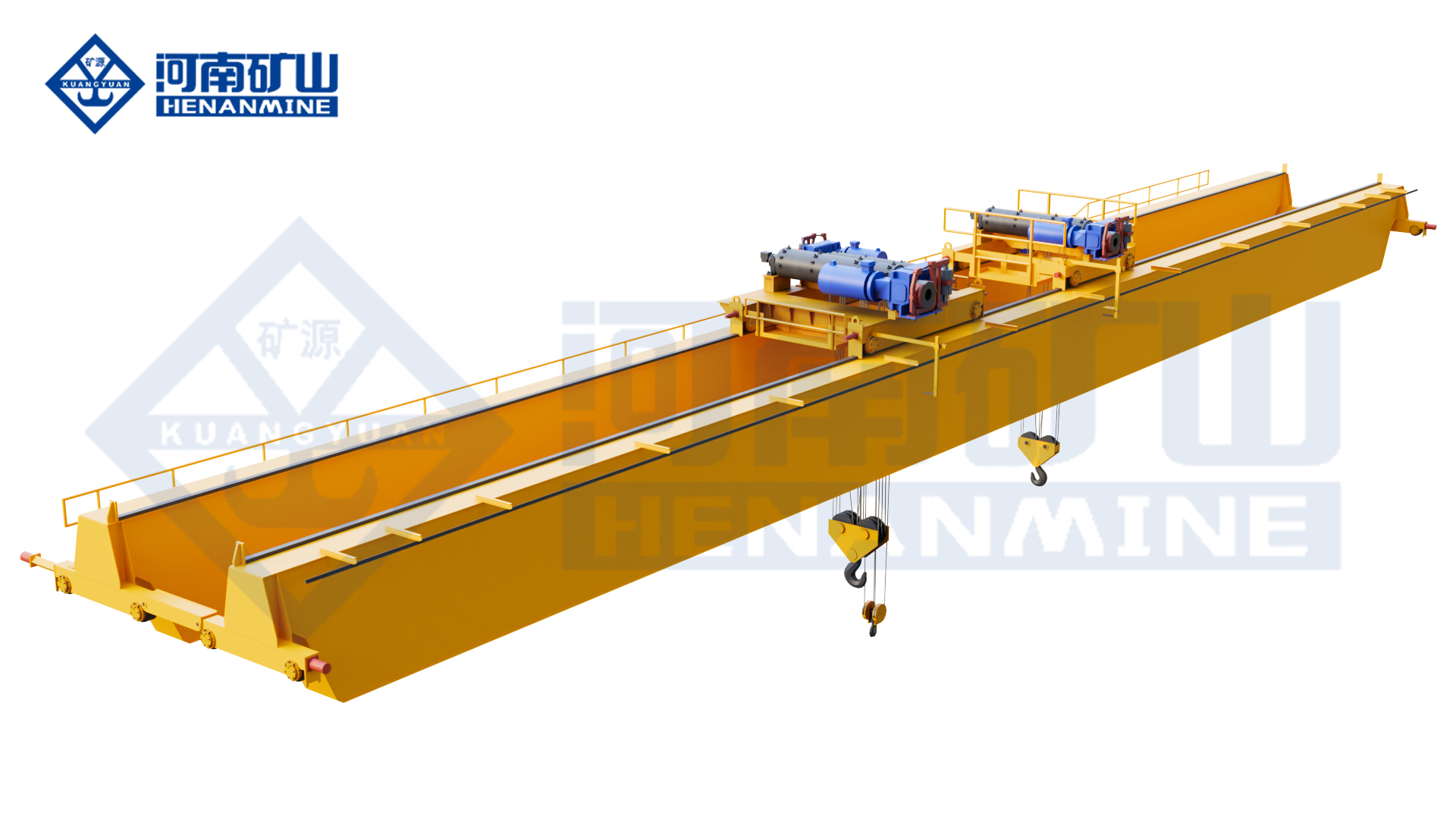
    explosion proof double girder crane

    explosion proof double girder crane

    Five core parameters that must be clear before purchase

    Whether you choose single beam, double beam, or explosion-proof, metallurgical models, these five core parameters are the premise of selection.

    1. lifting capacity (1T-360T)

    Lifting capacity is the maximum weight of the equipment can be safely lifted, is the basic threshold of selection, but also the most can not be wrong parameters.

    Light duty scenarios, such as small processing plants, general warehouses, lifting capacity is mostly 1-20 tons, single girder overhead travelling crane can fully cover.

    Medium-sized heavy industry, machinery assembly workshop, lifting capacity in 20-100 tons, this situation is recommended to choose double girder models, structural rigidity is stronger, more stable operation.

    Heavy metallurgy, large-scale equipment manufacturing, such as steel mill molten metal transfer, heavy components lifting, lifting capacity will reach more than 100 tons, or even 320t, 360t, you must use special casting cranes or metallurgical double girder cranes.

    Here is a reminder, the selection must be reserved 10% -20% of the safety margin, do not just stuck on the maximum load selection. Long-term full-load operation, will significantly shorten the life of the equipment, but also may lay hidden safety hazards.

    2. Span (6m-40m+)

    Span refers to the distance between the two ends of the crane running track, directly determined by the width of your plant, you can not choose arbitrarily.

    Conventional small and medium-sized plant, spanning 6-22 meters, single girder overhead cranes can be adapted to the simple installation, but also to meet most of the operational coverage needs.

    Large-scale heavy industry workshop, steel yard, the span will be more than 22 meters, the longest can reach more than 40 meters, this kind of scene can only choose double girder overhead travelling crane.

    The main girder structure of double girder model is more stable, which can withstand the load bearing pressure under large span and avoid deformation and shaking of the main girder during operation.

    If there is a plan to expand the plant in the later stage, the span allowance must be reserved in advance when selecting the model, so as to avoid that the equipment can not be adapted to the new scope of operation after just a few years of use.

    3. Lifting height

    Lifting height is the distance from the ground to the highest position of the hook, the core depends on two factors: your operational needs, and the headroom of the plant.

    For common workshops and warehouses, a lifting height of 6-12 meters is enough to meet the needs of regular material transfer and workpiece assembly.

    High-rise plant, large equipment installation scenarios, the lifting height needs to reach more than 15 meters, which requires customized design, adjust the crane’s own height and lifting mechanism.

    Old plant transformation is most likely to ignore the headroom restrictions, many old plants have low headroom, conventional cranes can not be installed. In this case, you can choose partial hanging trolley type single girder crane or European low headroom model, which can effectively improve the utilization of headroom.

    4. Working level (ISO 4301 / FEM / CMAA)

    The working level is the “operational endurance” of the crane, which is determined by the frequency of lifting, load utilization and annual operating hours, and directly affects the service life and reliability of the equipment.

    There are three types of global standards,  just choose the one that corresponds to your working conditions.

    ISO 4301 is categorized into M3-M8, FEM is categorized into A3-A8, and CMAA is categorized into Class A-F. The correspondence between the three is roughly as follows: M3 corresponds to A3 and Class A, and M8 corresponds to A8 and Class F. The three standards are also used for light work, such as small maintenance trucks.

    Light work, such as small maintenance workshop, storage and low-frequency lifting, choose M3-M5 (A3-A5, Class A-C) class is enough.

    Manufacturing, assembly workshop, medium frequency operation, choose M5-M6 (A5-A6, Class C-D) class, can adapt to the daily production of lifting needs.

    Steel mills, metallurgical workshops, 24-hour continuous heavy-duty operation, must be selected M7-M8 (A7-A8, Class E-F) class, which is also the core requirement of metallurgical double girder overhead travelling crane standard.

    Many customers only look at the tonnage without looking at the level of work, with M3 class equipment to do M7 class work, less than a year after the main beam fatigue, wear and tear of components, but the loss is not worth it.

    5. Use of the environment

    The use of the environment directly determines the crane protection configuration, but also to distinguish between general-purpose and special-purpose key, choose the wrong environment fit, the equipment is easy to fast aging failure.

    Conventional dust-free, room temperature workshops, warehouses, with standard general-purpose models can be, without additional protection configuration, lower cost.

    Iron and steel mills, foundries, high temperature, heat radiation, need to use metallurgical bridge cranes, the main beam and the electrical system should be done to resist high temperature heat insulation treatment.

    Chemical, oil and gas, dust workshop, there are flammable and explosive risks, must use explosion-proof overhead travelling crane, but also according to the workshop hazardous level, select the corresponding explosion-proof level.

    Aluminum electrolysis, high-pressure operation scenarios, need to insulated overhead travelling crane, do a good job of high-strength insulation protection, to prevent high-voltage leakage.

    Intelligent factory, unmanned workshop, suitable for the selection of automated intelligent overhead travelling crane, can realize unmanned operation, docking workshop MES system.

    Single Girder Overhead Crane Selection Guide

    Single Girder Overhead Crane Application Scenario

    The core advantage of single girder overhead travelling crane is low cost and simple installation, the main girder is a single load-bearing structure, the whole is lightweight, and does not need to occupy too much space in the plant.

    Its lifting capacity is concentrated in 1-20 tons, suitable for light and medium working conditions, mainly used in standard industrial plants, warehouses, small processing plants for routine material transfer.

    For customers with limited budget and low operating intensity, the single girder model is the most cost-effective choice, and the later operation and maintenance is also simple, with strong universal parts and low maintenance cost.

    Single girder overhead crane model analysis

    1️⃣ Electric single girder crane

    This is the most basic and widely used single girder model, belongs to the standard configuration, with electric hoist to complete the lifting operation, the working level in the M3-M5 level.

    Simple structure, low energy consumption, short installation and commissioning cycle, no need for complex foundation remodeling, and can be put into use soon after entering the field.

    Mainly used in manufacturing, warehousing and logistics, light assembly and other conventional scenarios, but also small and medium-sized enterprises to purchase the most models, many customers will be concerned about the price of electric single girder cranes, which has the most advantageous price in the single girder series.
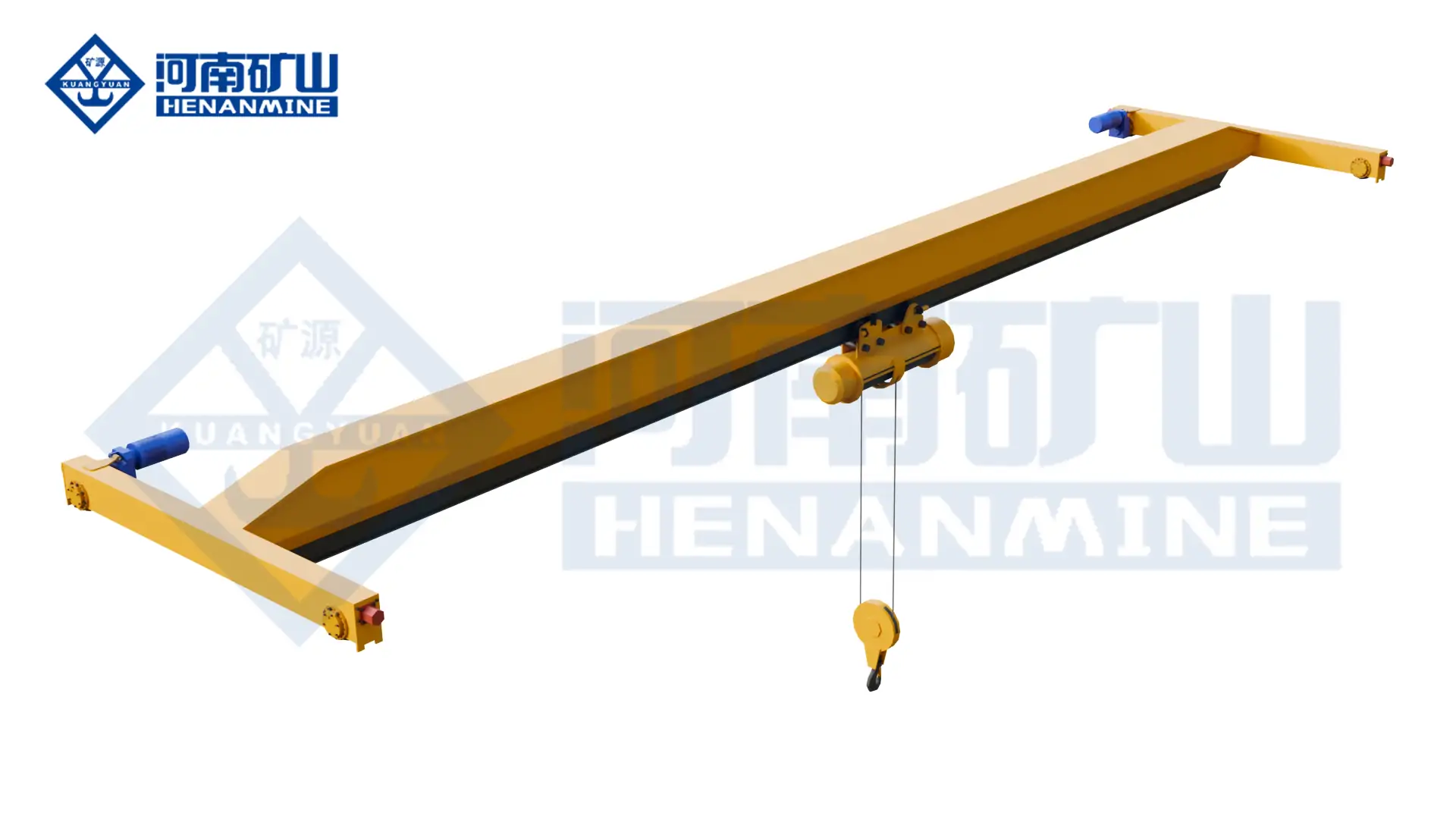
    Electric-Single-Girder-Crane

    2️⃣ Electric Single Girder Suspension Crane

    The biggest difference between the electric single girder suspension crane and the conventional single girder model is that the rail is directly suspended from the steel beam at the top of the plant, without occupying the ground space or building additional support columns.

    Its running track is flexible and covers a wide range, which is suitable for scenes with low plant and limited column spacing, especially for small-span plants.

    Installation will not destroy the ground layout, later if the plant is transformed, the track can also be flexibly adjusted, suitable for transformation type plant, small processing workshop use.
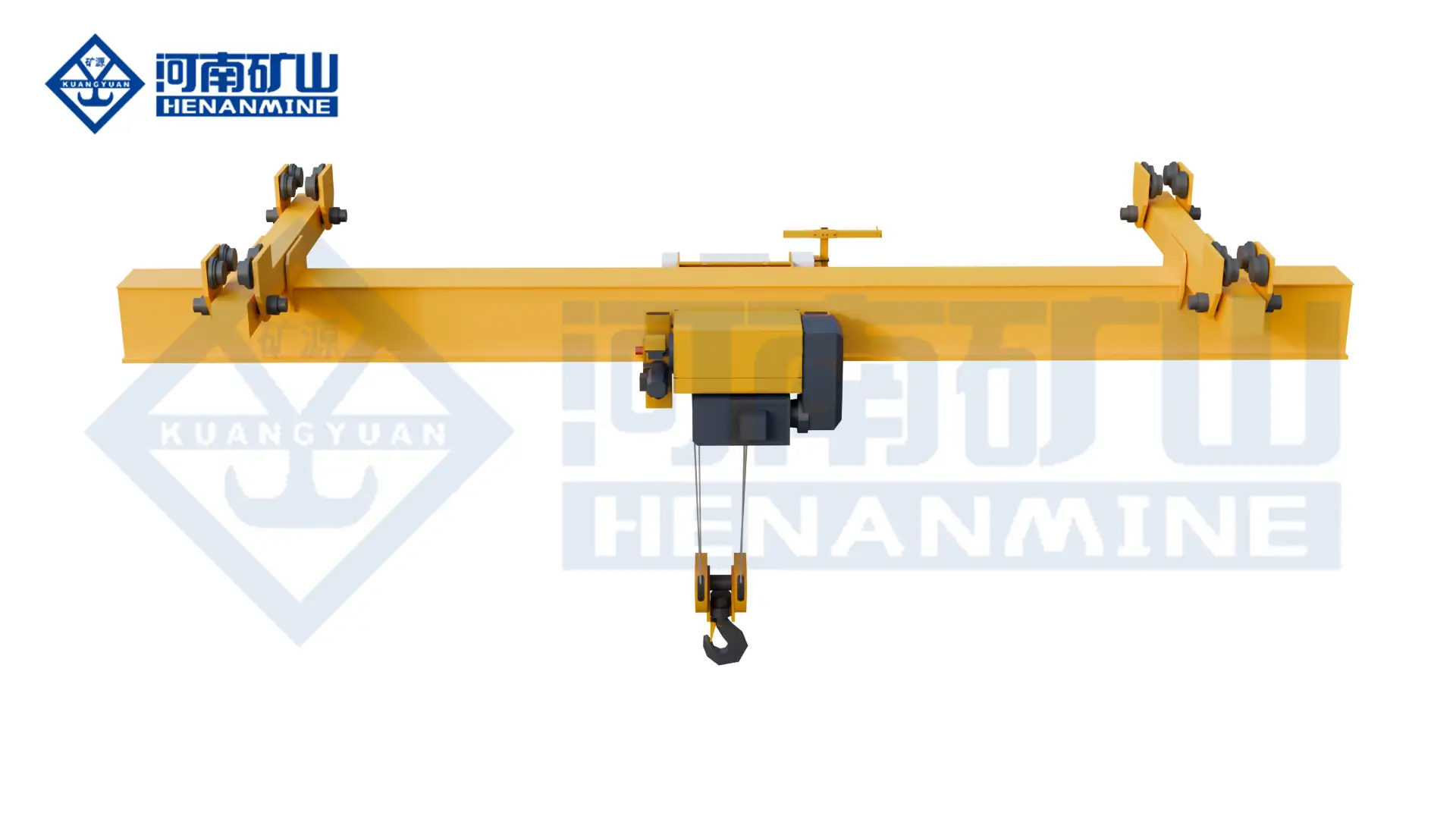
    Variable-frequency-suspended-overhead-crane

    3️⃣ explosion-proof electric single girder suspension crane

    On the basis of the electric single girder suspension crane, the full explosion-proof configuration is added, equipped with Ex explosion-proof motors and explosion-proof electrical appliances, and all electrical components are sealed and protected.

    Eliminate sparks during operation, suitable for chemical, oil and gas, dust and other flammable and explosive suspension operation scenes, can pass the safety acceptance of the hazardous chemical industry.

    Selection should pay attention to, its explosion-proof level needs to match the workshop of the hazardous chemical level, can not be arbitrarily selected.
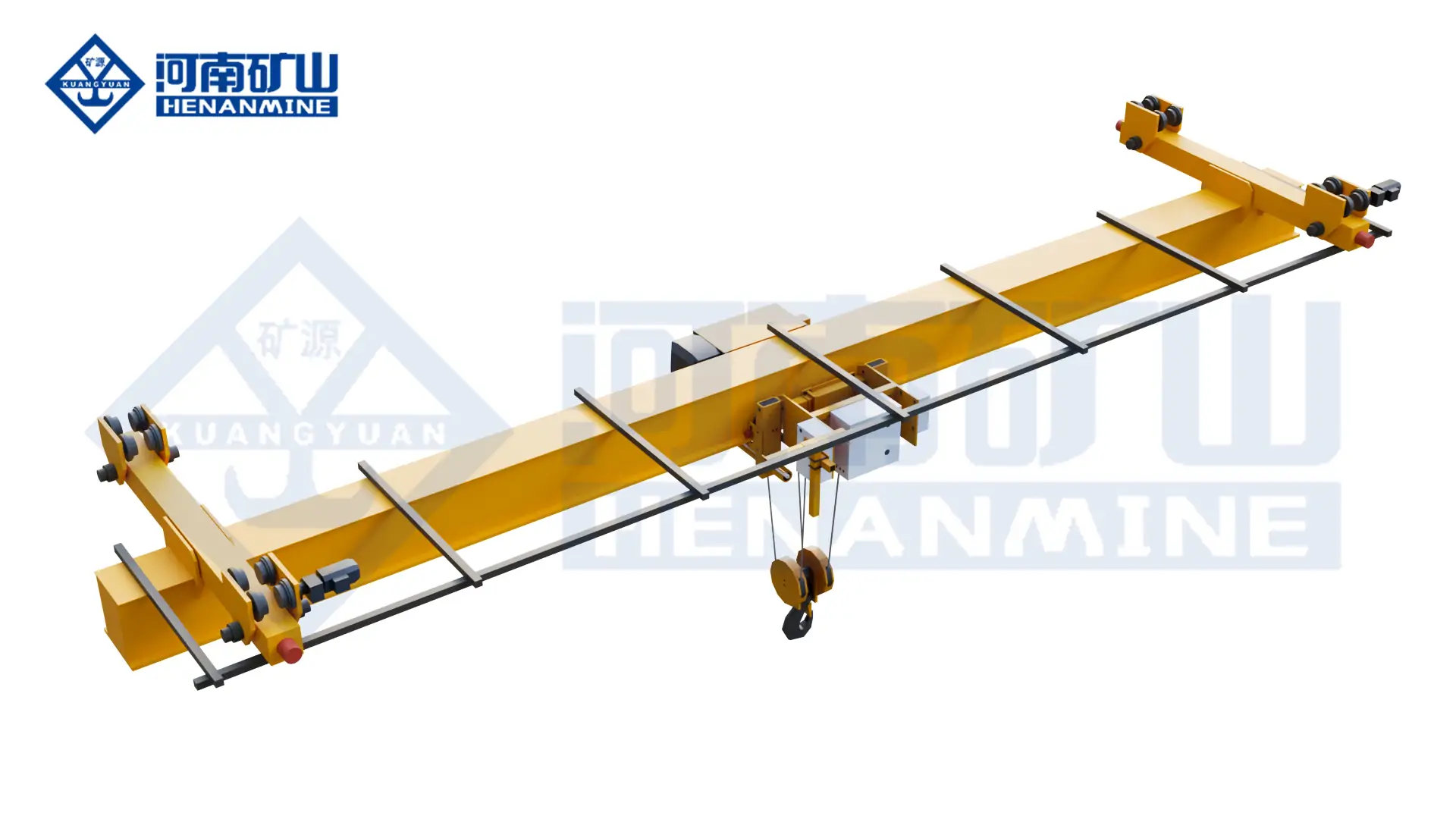
    Explosion-proof-single-girder-suspended-overhead

    4️⃣ explosion-proof electric single girder crane

    It is a ground-supported single girder model with explosion-proof design, which is stronger than the explosion-proof electric single girder suspension model, and the protection level is also higher.

    The body of the machine is made with dustproof and spark-proof treatment, which can cope with workshops with high explosion-proof requirements such as petrochemicals, paints, mines, etc., and is suitable for medium-load explosion-proof lifting operations.

    All configurations are required to comply with GB/IEC explosion-proof standard, which is also the core judgment basis for the grade of explosion-proof overhead travelling crane.
    Crane-for-Flammable-and-Explosive-Dust-Environments

    5️⃣ Metallurgical Electric Single Girder Cranes

    Specially designed for high temperature working conditions, the main girder is made of high temperature resistant steel, the electrical system is insulated and protected, equipped with high temperature resistant motor and double braking system.

    Mainly used in steel mills, hot rolling workshop steel lifting auxiliary operations, can withstand high temperature radiation, to avoid equipment failure due to high temperature aging.

    Although it is a single-beam structure, its working level can reach M5-M6 level, which can adapt to the basic high-temperature working condition of metallurgical workshop.
    Metallurgical-Electric-Single-Girder-Crane

    6️⃣ Manual Single Girder Crane

    Completely rely on manual operation, do not need to access the power supply, the structure is the simplest, the cost is also the lowest, the maintenance is almost no additional costs.

    It is suitable for scenes without power supply, light load and low frequency, such as small maintenance workshops, temporary work sites, and simple factories without power supply.

    Its lifting capacity is small, generally below 5 tons, can only be used for occasional lifting of small and light workpieces, not suitable for high-frequency operations.
    Electric-Single-Girder-Crane

    7️⃣ Offset Trolley Single Girder Crane

    The most important feature is that the trolley off-set design, which can effectively improve the utilization rate of plant headroom, and is suitable for old plants with low headroom height.

    Its lifting height is higher than that of conventional single girder models, which can meet higher lifting requirements in limited space.

    Compact structure, flexible operation, will not affect the stability because of the offset hanging design, suitable for low plant, small span light load operation.
    Multi-point-electric-single-beam-suspended-crane

    8️⃣ New electric single girder crane

    On the basis of conventional electric single girder models, the main girder structure is optimized and lightweight design is adopted, which makes the body weight lighter and energy consumption lower.

    Running noise, better stability, later operation and maintenance costs are lower than conventional models, suitable for energy consumption, noise requirements of the workshop.

    Its adaptable scene and conventional electric single beam consistent, more cost-effective, is a lot of small and medium-sized enterprises of the preferred model.
    Electric-Overhead-Crane

    9️⃣ European-style electric single girder crane

    Adopting European design concept, compact structure, low headroom, equipped with frequency conversion control, smoother operation and more accurate positioning.

    With simple and exquisite appearance, low noise and low energy consumption, it is suitable for high-end factories, precision manufacturing and modern industrial workshops.

    As a preferred model for high-end manufacturing industry, its running accuracy can meet the lifting and assembling needs of precision workpieces, and the later operation and maintenance are more convenient.
    New-Type-Electric-Hoist-Single-Girder-Crane

    Double Girder Overhead Crane Selection Guide

    When must I choose double girder?

    Many customers are confused about how to choose between single girder and double girder, in fact, as long as any of the following conditions are met, double girder overhead travelling crane must be chosen.

    Lifting capacity ≥ 20 tons, heavy load and frequent operation, need high lifting height, or the operation scene is a steel mill, heavy industry and other heavy industry, single girder models of structural strength and stability can not meet the demand.

    The double girder model has two load-bearing main beams, strong rigidity, large bearing capacity, can withstand long-term heavy load, high-frequency operations, and a longer service life than the single girder model.

    Double girder overhead travelling crane model analysis

    1️⃣ Hook Double Girder Overhead Crane (with slow speed)

    This is the most classic and widely used general-purpose double girder model, with strong rigidity of the main beam, large load capacity and smooth operation, suitable for all kinds of heavy-duty general-purpose working conditions.

    Conventional type is mainly used for heavy-duty lifting in heavy industry workshop, machinery factory and storage, while slow-speed type is suitable for precision assembly scenario with slow running speed and accurate positioning, which can avoid collision damage to precision workpieces.

    Its structure is mature, the generality of accessories is strong, and the later operation and maintenance is simple, it is the largest purchasing volume in the double girder series.
    Double-girder-Electric-Hoist-Bridge-Crane

    2️⃣ Double girder overhead travelling crane with double trolley hooks

    Equipped with two independent running trolleys, which can work synchronously or be controlled separately, it can complete the special lifting action that cannot be realized by single trolley.

    It is suitable for overturning and synchronized lifting of extra-long workpieces and large components, such as steel structures and large equipment assembly scenes, which can improve lifting efficiency and ensure lifting precision.

    The synergistic design of double trolleys can adapt to more complex lifting needs, and it is a common model for large heavy industry enterprises.
    Dual-trolley-explosion-proof-bridge-crane

    3️⃣ New electric hook bridge crane

    Optimized transmission system, smoother running, lower energy consumption, lower operation and maintenance costs than conventional hook double girder models.

    The structure design is more reasonable, the weight of the machine body is lighter, which requires less load-bearing for the plant, and the installation and commissioning is more convenient.

    Suitable for medium-sized heavy-duty scenarios, not only to meet the load-bearing requirements, but also to control the later operating costs.
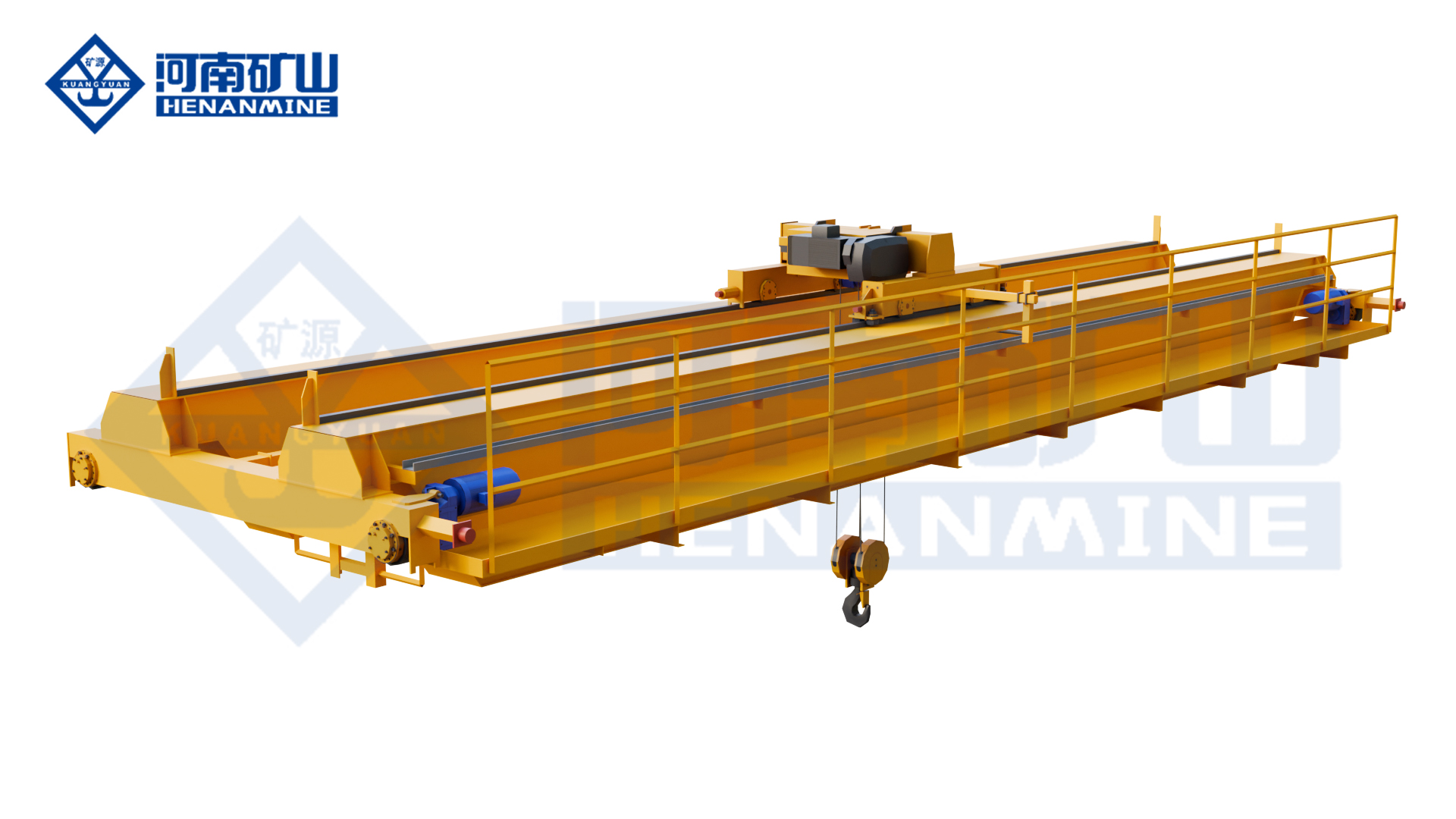
    New Electric Hoist Bridge Crane

    4️⃣ New electric hoist bridge crane

    It belongs to light double girder scheme, with electric hoist lifting, compact structure, flexible lifting, very low failure rate, convenient operation and maintenance.

    Suitable for medium load processing workshop, material transfer scenarios, is the economic double beam selection, budgetary constraints but the need for double beam stability of customers can be prioritized.

    Its lifting capacity is concentrated in 20-50 tons, and the working level is in M5-M6 level, which can meet most of the medium-sized heavy load demand.
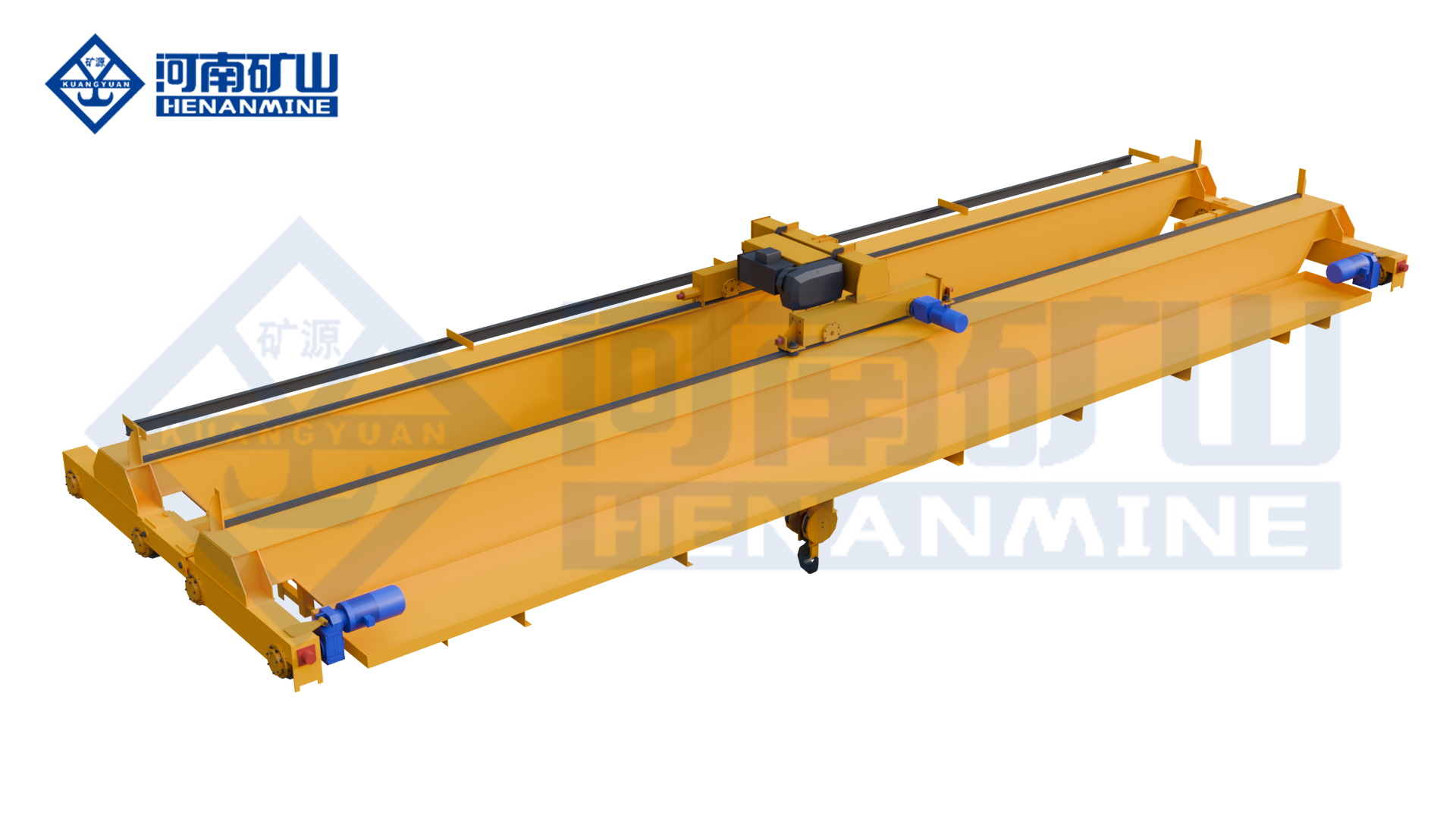
    New Electric Hoist Bridge Crane

    5️⃣ Electric Hoist Bridge Crane

    The most mature structure and economical double girder model, using electric hoist to lift, the cost is lower than the conventional hook double girder, suitable for medium and light load scenarios.

    With stable operation, low failure rate, easy access to spare parts and low maintenance cost in the later stage, it is the preferred model for many medium-sized enterprises.

    Its adaptable scene is similar to the new electric hoist bridge crane, and the advantage is that the price is lower and more cost-effective.
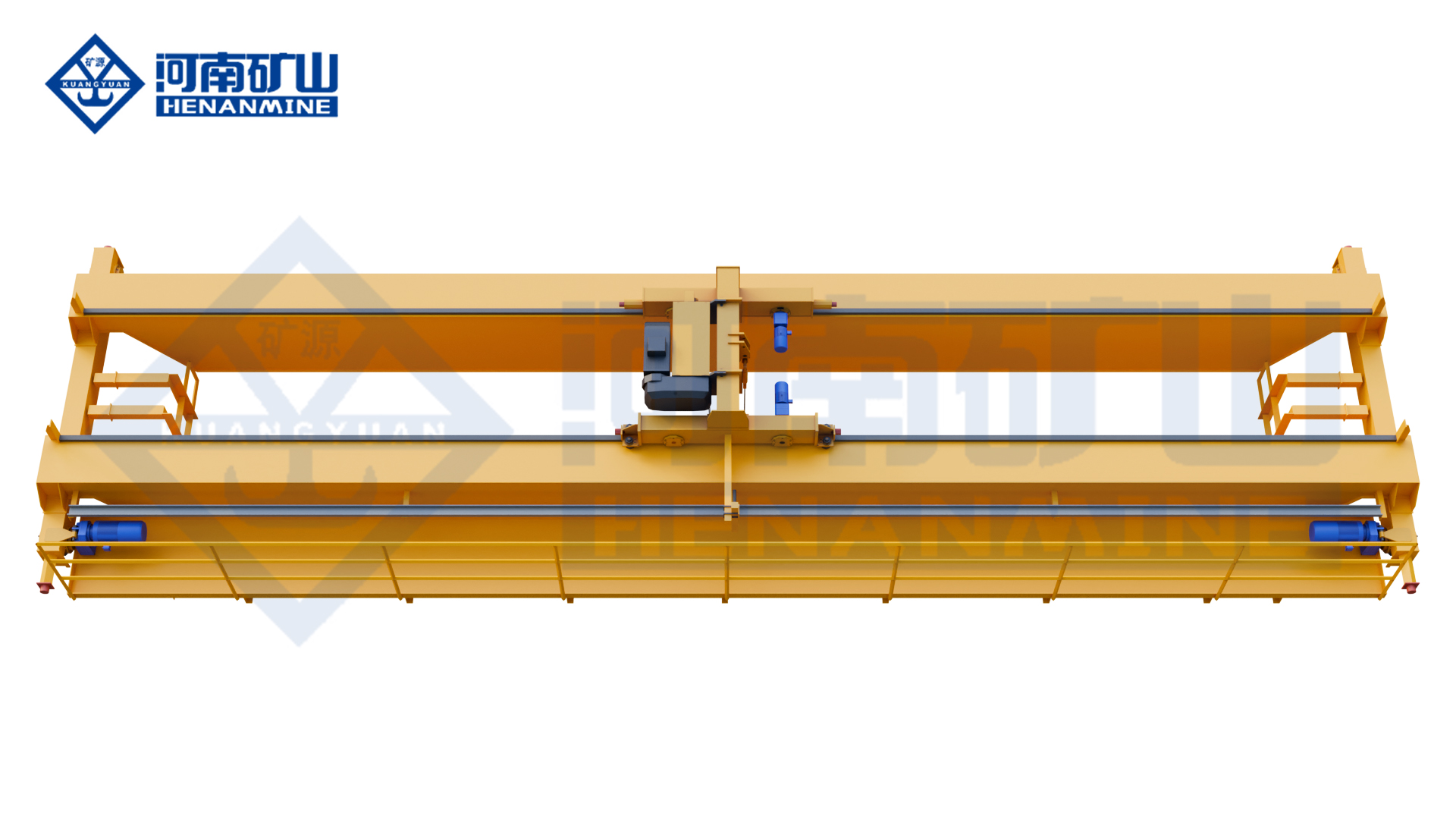
    New Electric Hoist Bridge Crane

    6️⃣ Metallurgical Double Girder Overhead Cranes

    Designed for continuous high-temperature operation in steelmaking and ironmaking, the working class reaches M7-M8, which is the core model of the standard metallurgical double girder overhead travelling crane.

    It adopts redundant configuration of double brake and double drive, and the main girder is treated with high temperature resistance, corrosion resistance and fatigue resistance, which is able to operate continuously for 24 hours.

    Mainly used in steel mills for molten metal transfer, high-temperature workpiece lifting, is the core lifting equipment in the metallurgical industry, can withstand harsh high-temperature working conditions.
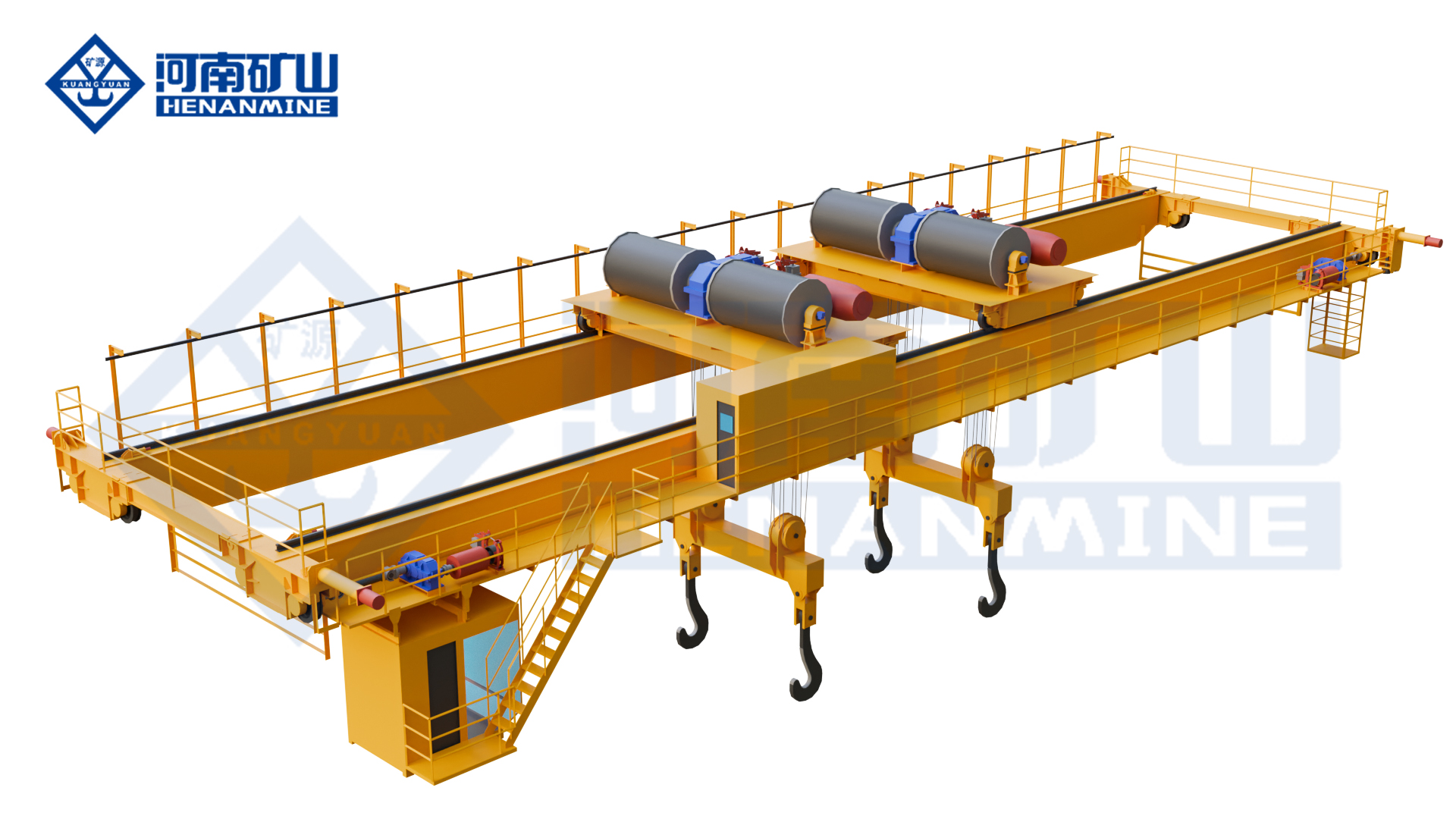
    YZ type Metallurgical Overhead Crane Henan Mine Crane manufactured

    7️⃣ Explosion-proof Electric Hoist Double Girder Bridge Crane

    Equipped with electrical explosion-proof configuration, equipped with explosion-proof electric hoist, belongs to the economic explosion-proof double girder model, the cost is lower than the whole explosion-proof double girder.

    Sealed protection design can eliminate sparks, suitable for chemical, pharmaceutical and other flammable and explosive factories, to meet the needs of medium load explosion-proof lifting.

    Its explosion-proof grade meets the GB/IEC standard, which can pass the safety acceptance of the hazardous chemical scene, and the later operation and maintenance is also relatively simple.
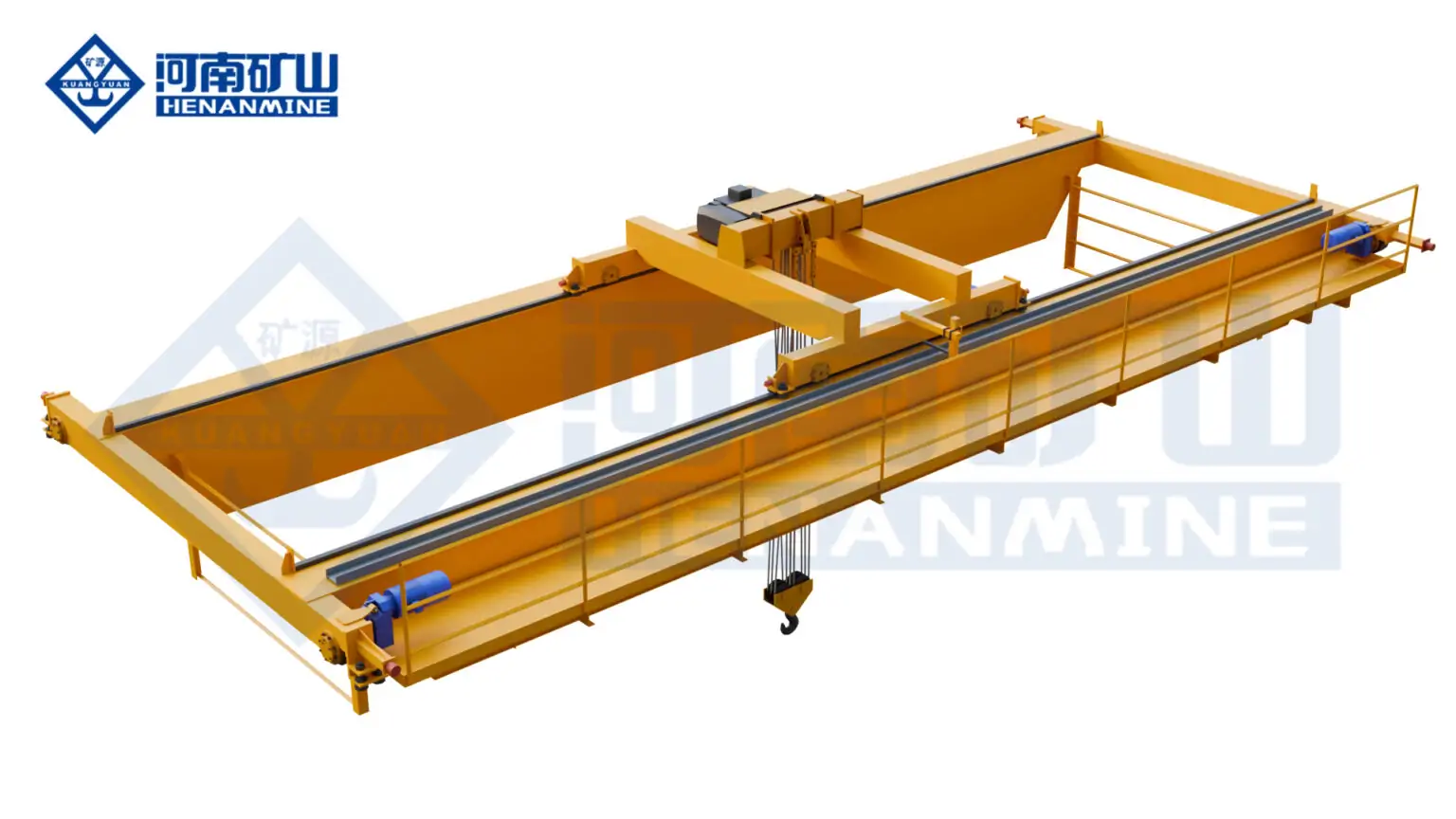
    Clean-explosion-proof-bridge-crane-1536x864.jpg

    8️⃣ Explosion-proof Double Girder Bridge Crane

    Adopting explosion-proof design of the whole machine, the electrical system and mechanical parts are all protected against explosion, with higher explosion-proof level and more comprehensive protection.

    Strictly following the requirements of electrical protection level, it can cope with chemical, oil and gas and other explosion-proof demanding scenes, suitable for heavy-duty explosion-proof lifting.

    It has strong structural rigidity and can withstand heavy loads of 20-100 tons, making it the preferred model for heavy-duty operations in the hazardous chemical industry.
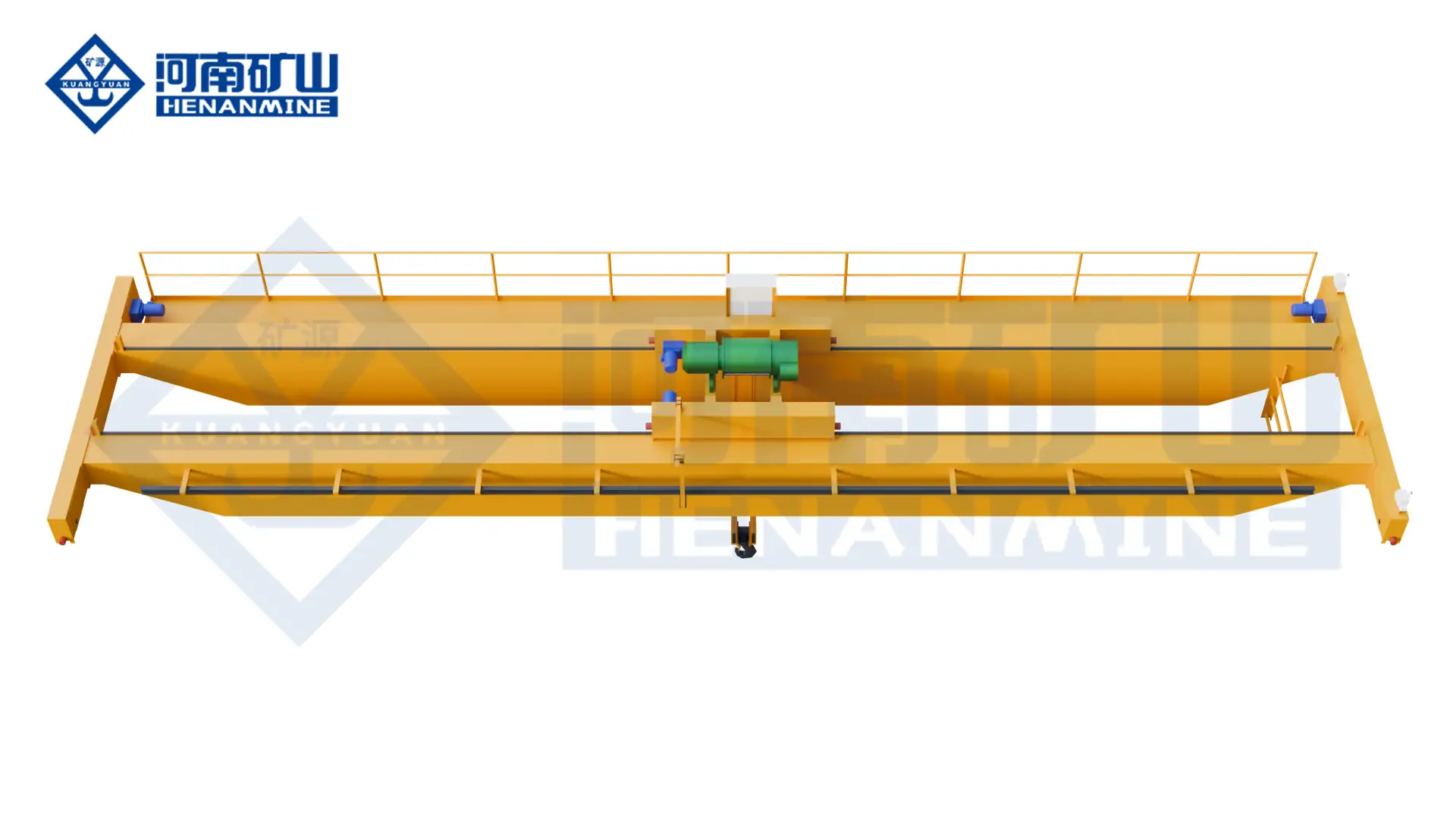
    Explosion-proof-Crane

    9️⃣ New double trolley overhead traveling crane

    On the basis of the conventional double trolley model, the cooperative control system is optimized, the two trolleys are more accurate, and more complex lifting actions can be completed.

    Adopting heavy-duty structure design, it has a larger load capacity and can adapt to heavy-duty scenarios of 30-100 tons, such as the lifting of large components and heavy equipment.

    Suitable for large-scale heavy industry enterprises, ports and other heavy-duty, complex operation scenarios, can effectively improve the lifting efficiency.
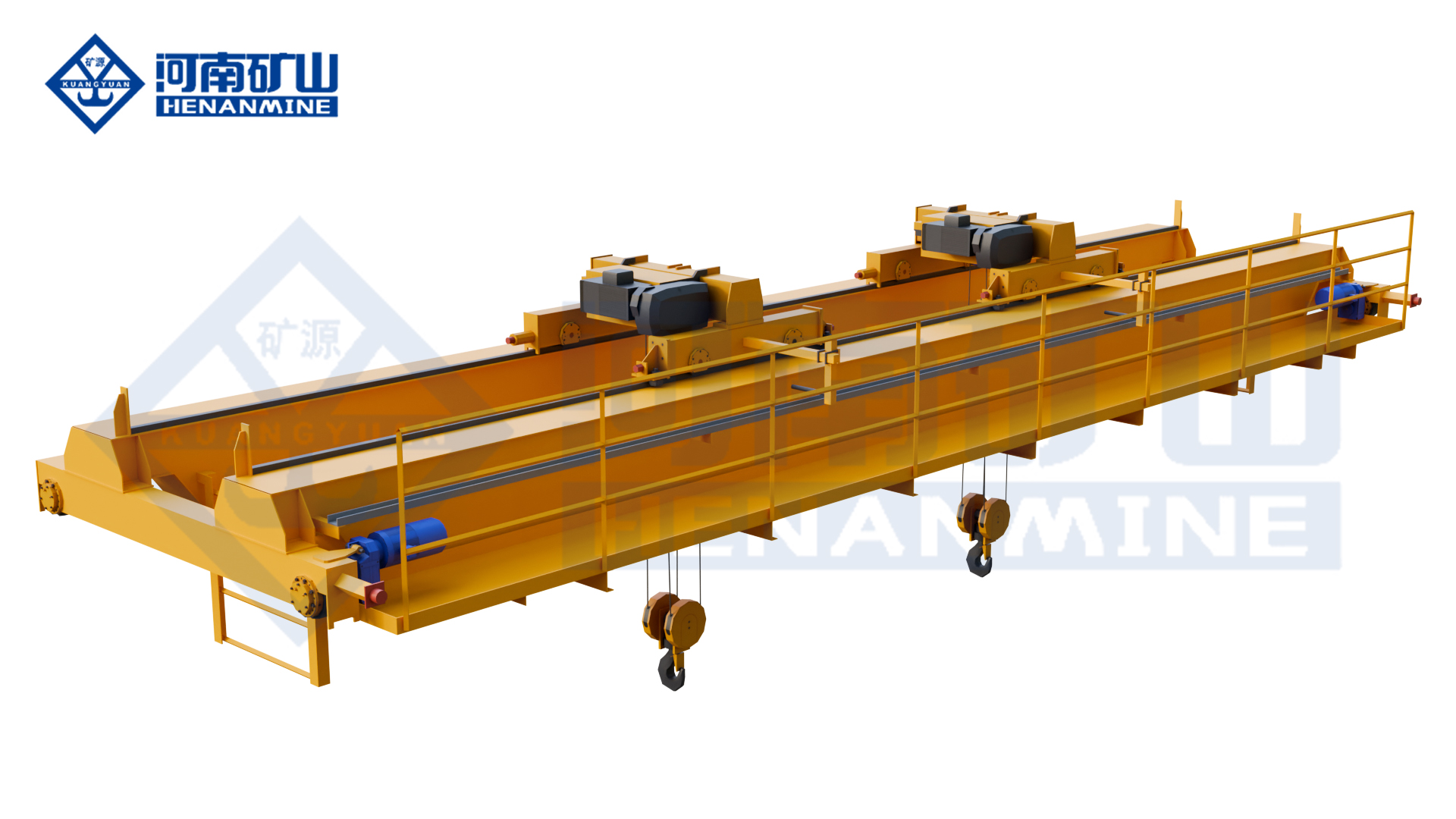
    🔟 New double girder crane

    Adopting European standard structural design, the body is lighter and stronger, with lower energy consumption and smoother operation than conventional double girder models.

    The appearance is simple and exquisite, suitable for modernized plants, which can meet the heavy load demand and enhance the overall aesthetics of the plant.

    Its working level can reach M5-M8, which is suitable for all kinds of heavy load scenarios, and is the preferred model for high-end heavy industry enterprises.
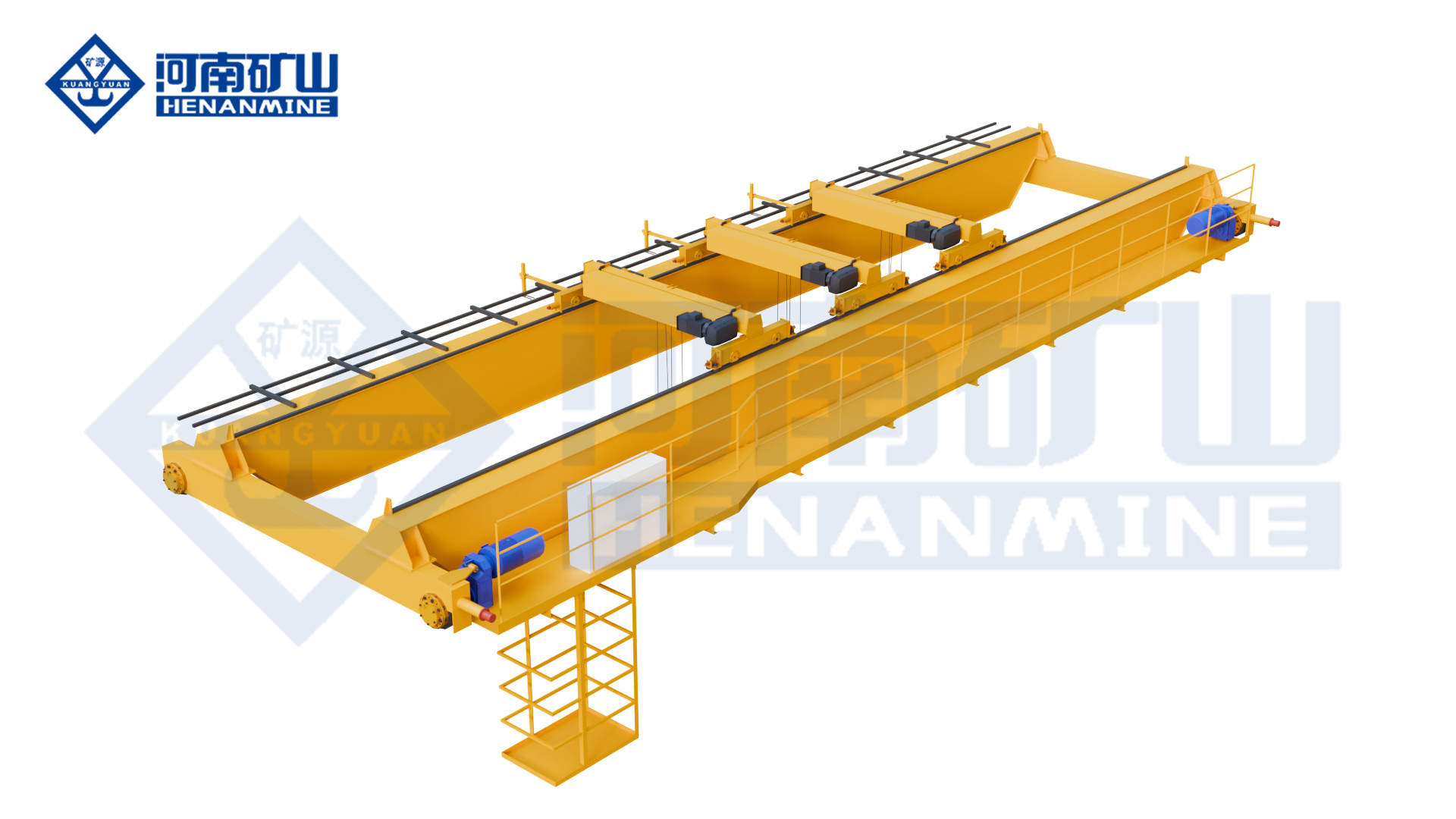
    New three-trolley electric hoist bridge crane

    Specialized / Special Condition Overhead Cranes

    Electromagnetic Bridge Cranes

    Equipped with strong electromagnetic suction cups, it is specially used for the handling of steel plates, scrap steel and ferromagnetic materials, without manual assistance and with high working efficiency.

    Electromagnetic suction cups can automatically suck and unload materials, easy to operate, suitable for scrap yards, steel processing workshop, metallurgical storage area of the material transfer.

    Its lifting capacity is concentrated in 5-50 tons, and the working level is in M5-M7 level, which can meet the batch lifting demand of ferromagnetic materials.
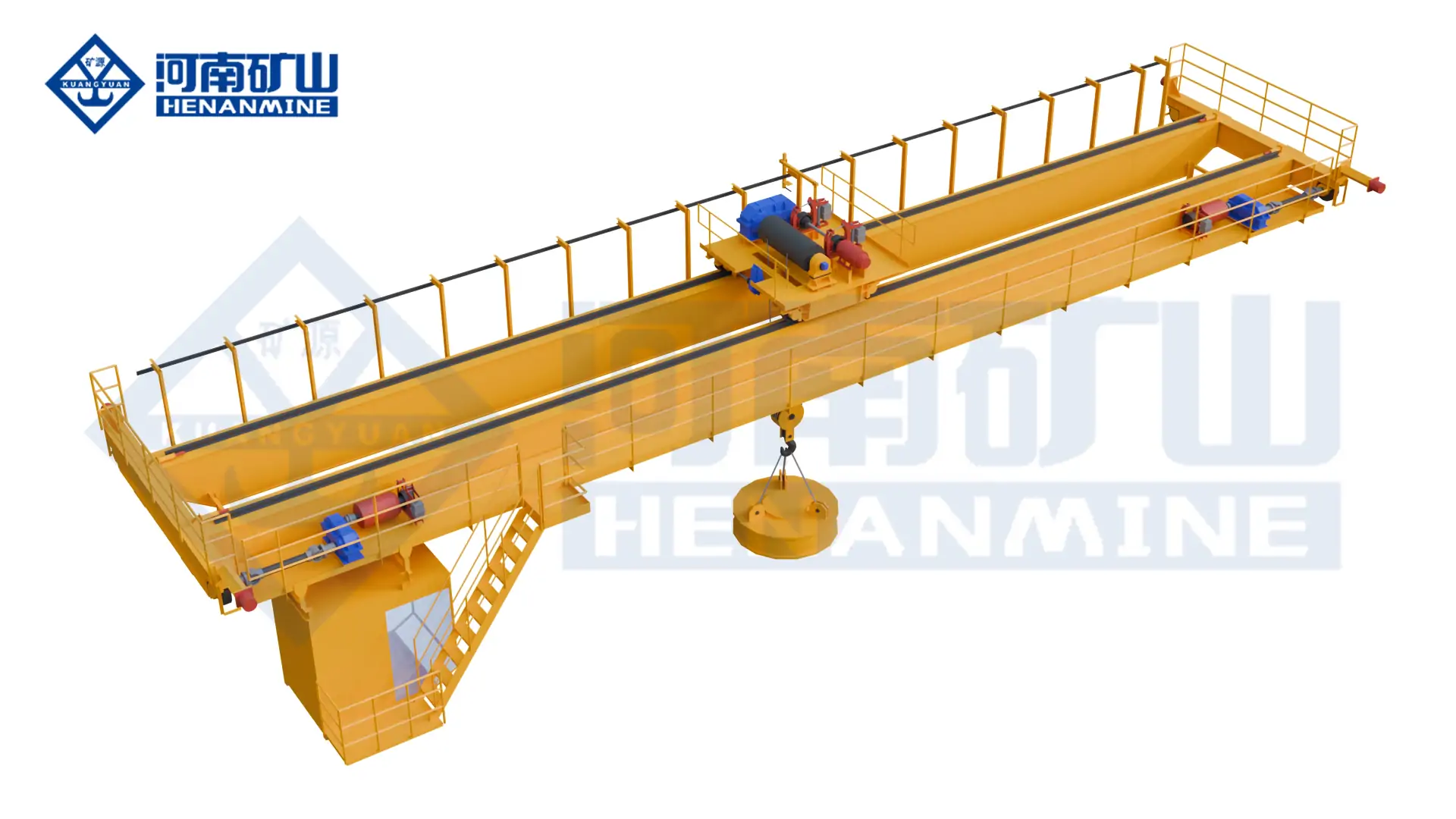
    Electromagnetic-Bridge-Crane

    Grab, electromagnetic dual-purpose bridge crane

    The biggest advantage is that one machine can be used in two ways, and it can be quickly switched between grab and electromagnetic mode, which is suitable for the scene of mixed handling of bulk materials and steel.

    For example, in the raw material yard of a steel mill, there are both bulk materials (coal, ore) and steel, and the lifting of different materials can be accomplished without changing equipment.

    Flexible operation, can effectively improve operational efficiency, reduce equipment investment costs, is the preferred model for multi-category material handling.
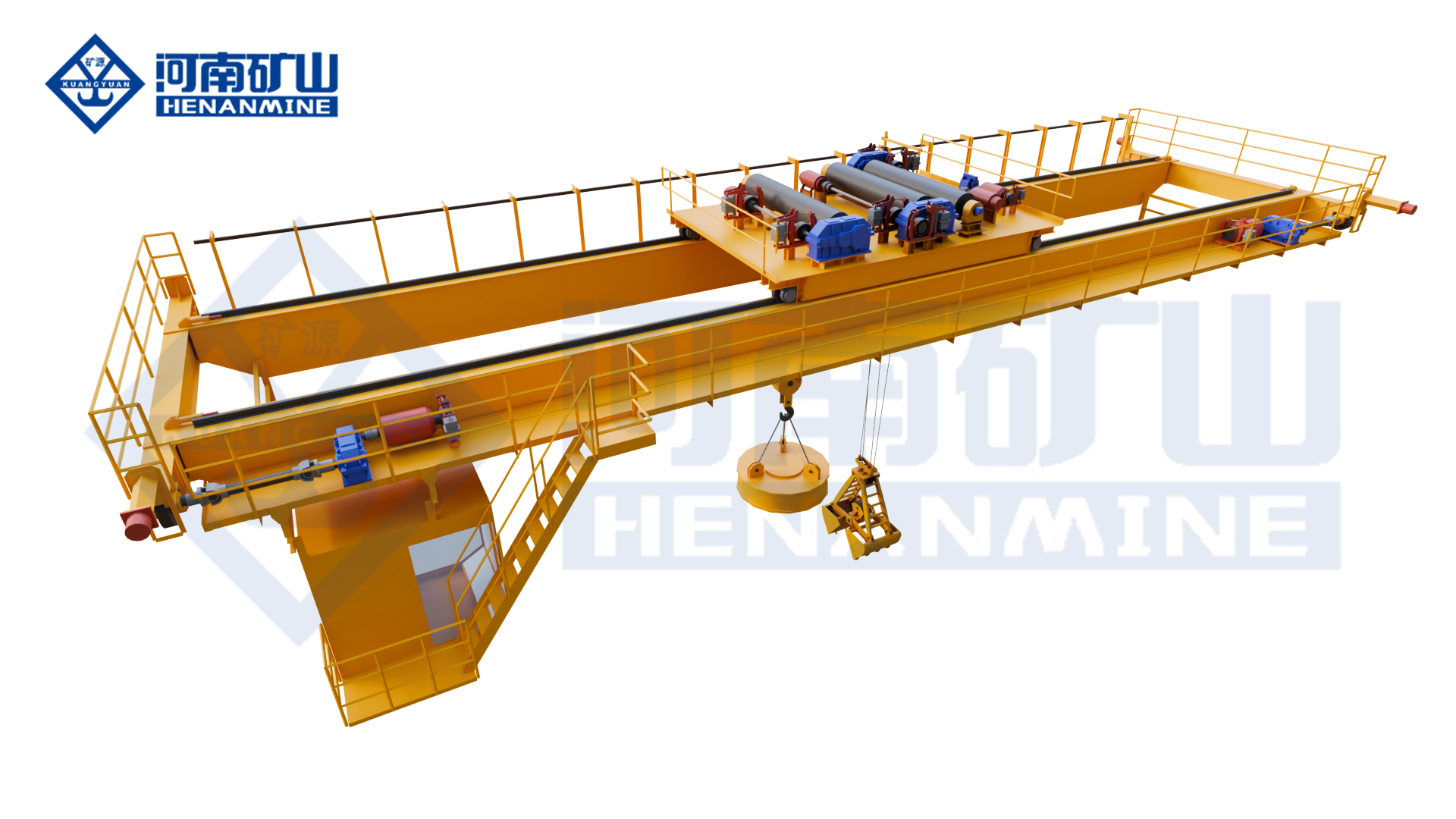
    Grab electromagnetic dual-purpose bridge crane

    Grab and hook dual-purpose bridge crane

    Equipped with dual configurations of hook and grab, it is easy to switch and suitable for the mixed operation of bulk materials and heavy workpieces.

    The grab is used for lifting bulk materials, and the hook is used for lifting heavy workpieces and equipments, so one equipment can meet multiple operational requirements.

    It is suitable for harbor, warehouse, heavy industry workshop and other working conditions, with strong versatility.
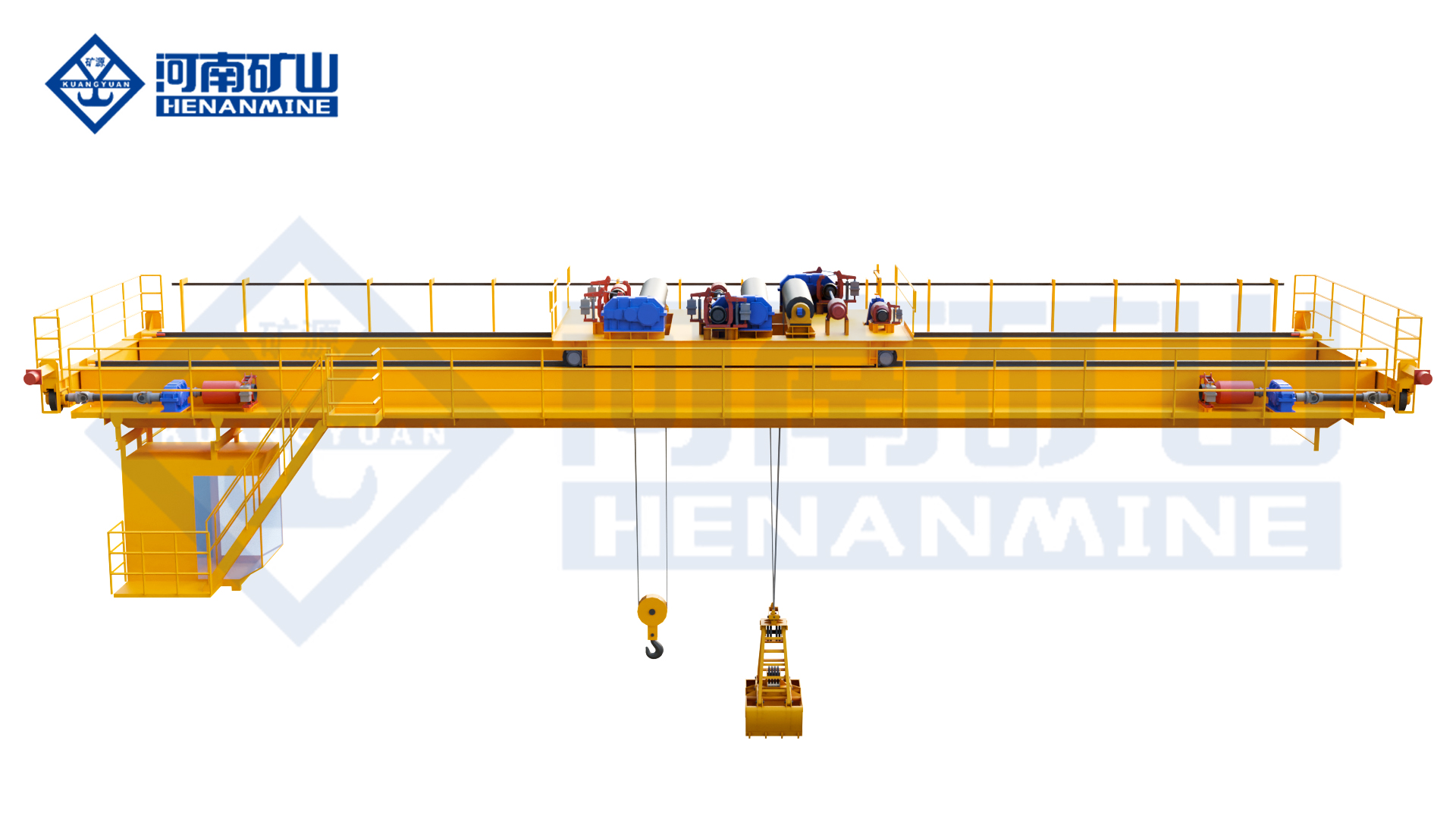
    Grab Hook Dual-purpose Bridge Crane

    Upper Rotating and Telescopic Electromagnetic Hanging Girder Overhead Crane

    Adopting the design of rotating hanging girder, it can work flexibly in 360°, and the hanging girder can be telescopic, which is suitable for the batch transfer of long steel warehouse and steel plate warehouse.

    Electromagnetic suction cups can quickly adsorb steel plates and coils, and the rotating and telescopic functions can expand the working coverage and improve the transferring efficiency.

    It is suitable for metallurgical warehouse and steel processing factory, which can realize the fast and accurate transfer of steel.
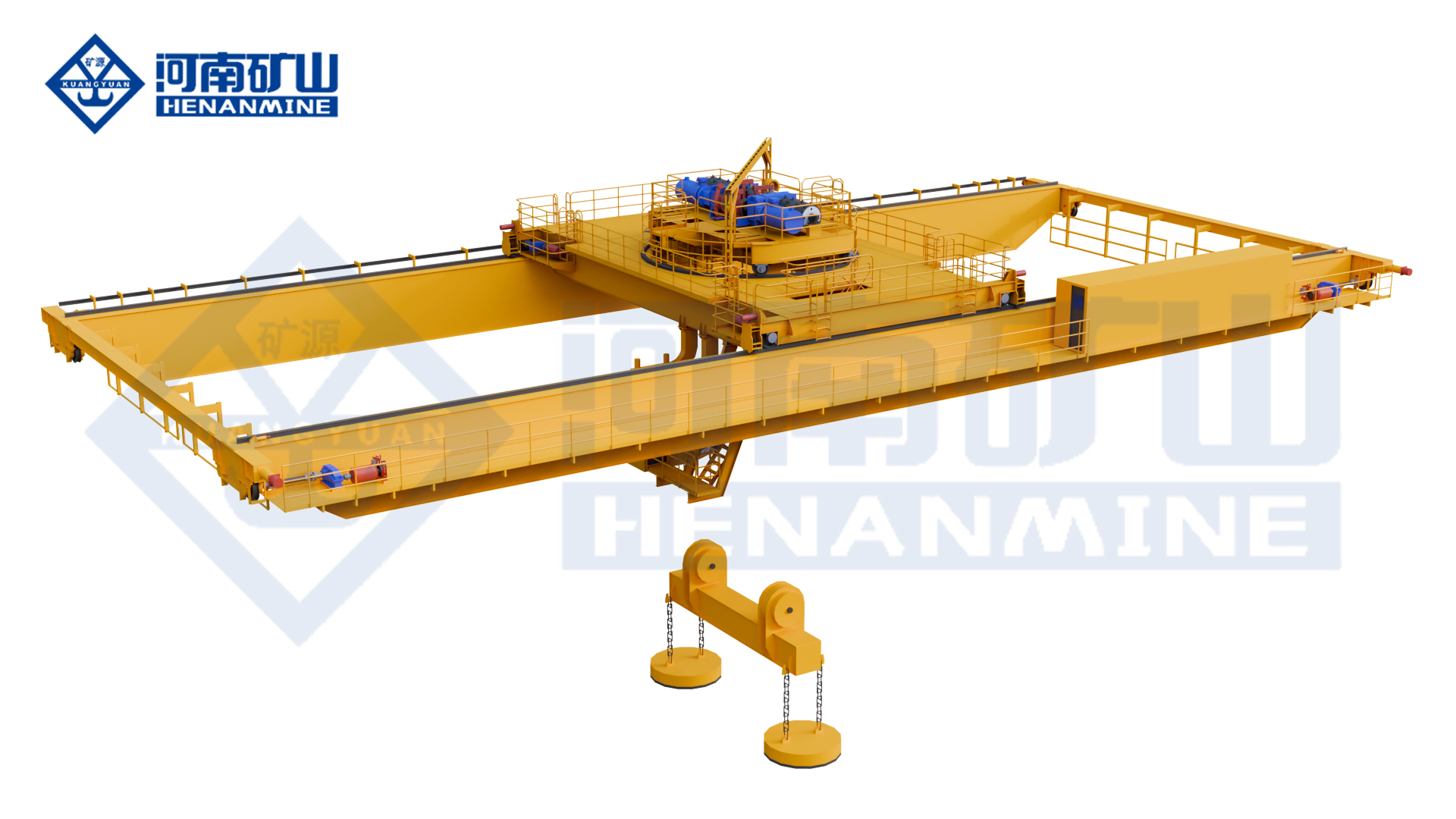
    Upper Rotating Electromagnetic Hanging Girder Bridge Crane

    Lower Rotating and Telescopic Electromagnetic Hanging Girder Overhead Crane

    The difference between the upper rotating model and the upper rotating model is the different direction of rotation. The lower rotating design is more suitable for precise transportation and can avoid collision with the surrounding equipment.

    The flexible telescopic girder and accurate positioning make it suitable for precise lifting and placing of steel plates and coils, such as in precision steel processing workshops.

    Its smooth operation and high positioning accuracy can reduce the loss in the material handling process.
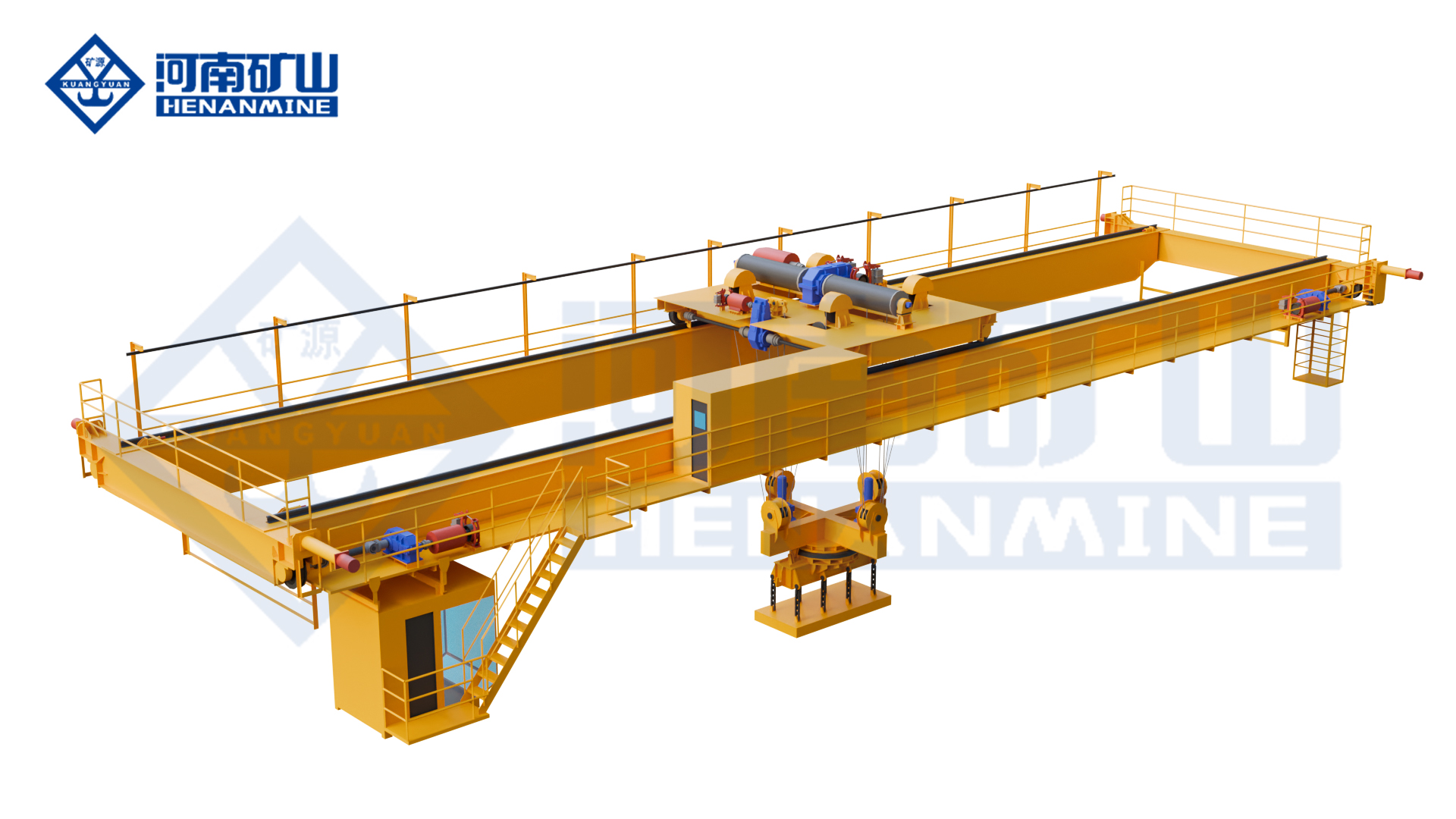
    Lower Rotating Electromagnetic Hanging Girder Overhead Crane

    Rotating Electromagnetic Hanging Beam Bridge Crane

    Specialized in steel plate storage material transfer, the rotating hanging beam design can flexibly adjust the lifting angle, suitable for different specifications of steel plates and coils.

    Electromagnetic suction cups are firmly adsorbed to avoid material falling, easy to operate, suitable for transferring and stacking of bulk steel plates.

    The working level is M5-M7, which can meet the high-frequency lifting demand of steel plate warehouse.
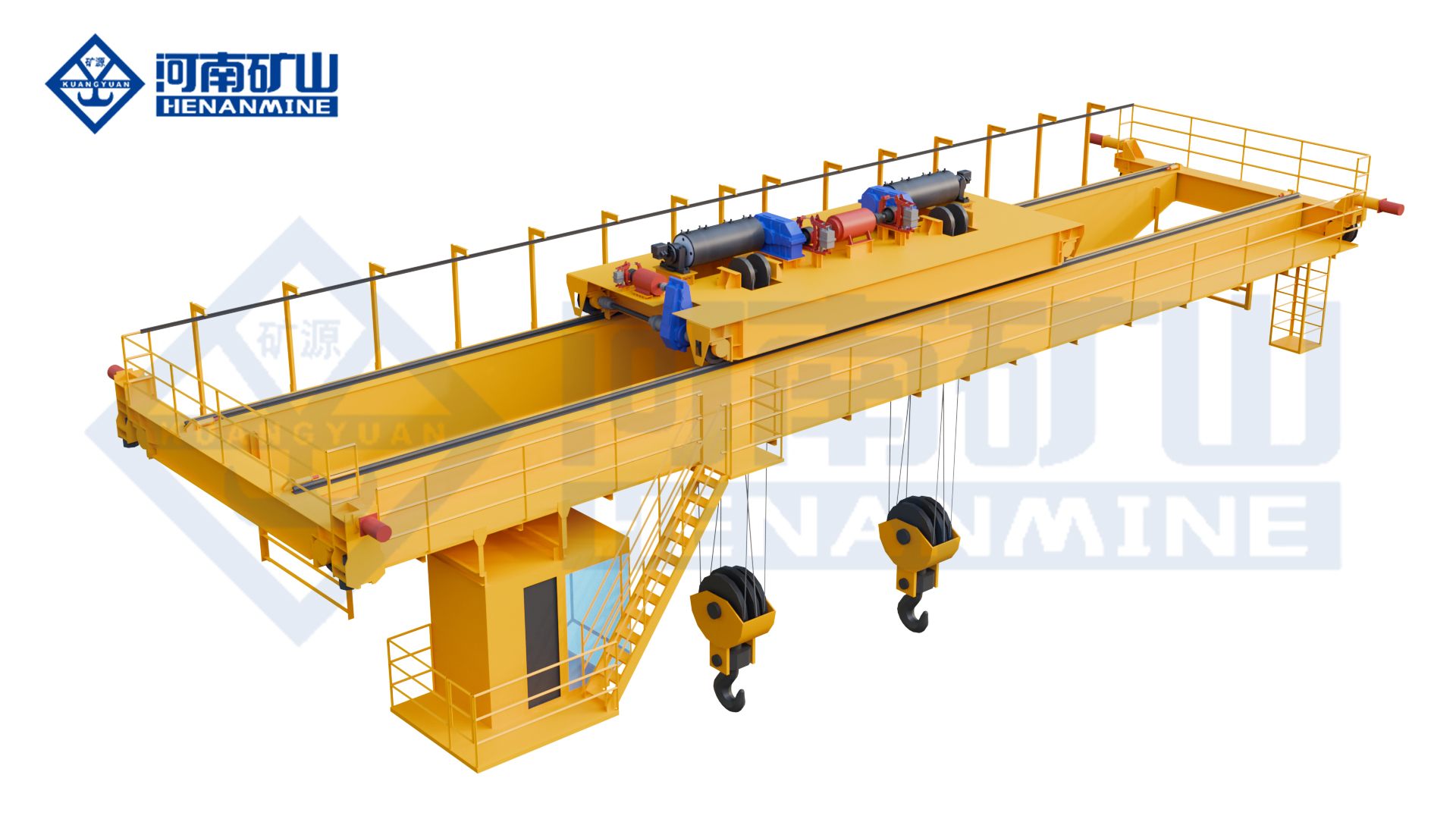
    Electromagnetic Hanging Girder Overhead Crane

    High-end Special Purpose Bridge Crane

    Insulated Bridge Crane

    Specially used in electrolytic aluminum and non-ferrous metal electrolysis industry, it is made with high strength insulation protection, which can effectively prevent high voltage leakage.

    The fuselage and electrical system are made of insulating materials to avoid current conduction and guarantee the personal safety of the equipment and operators.

    Its lifting capacity is concentrated in 20-100 tons, which can be adapted to the high-pressure, heavy-duty operation scene of the electrolytic aluminum workshop.
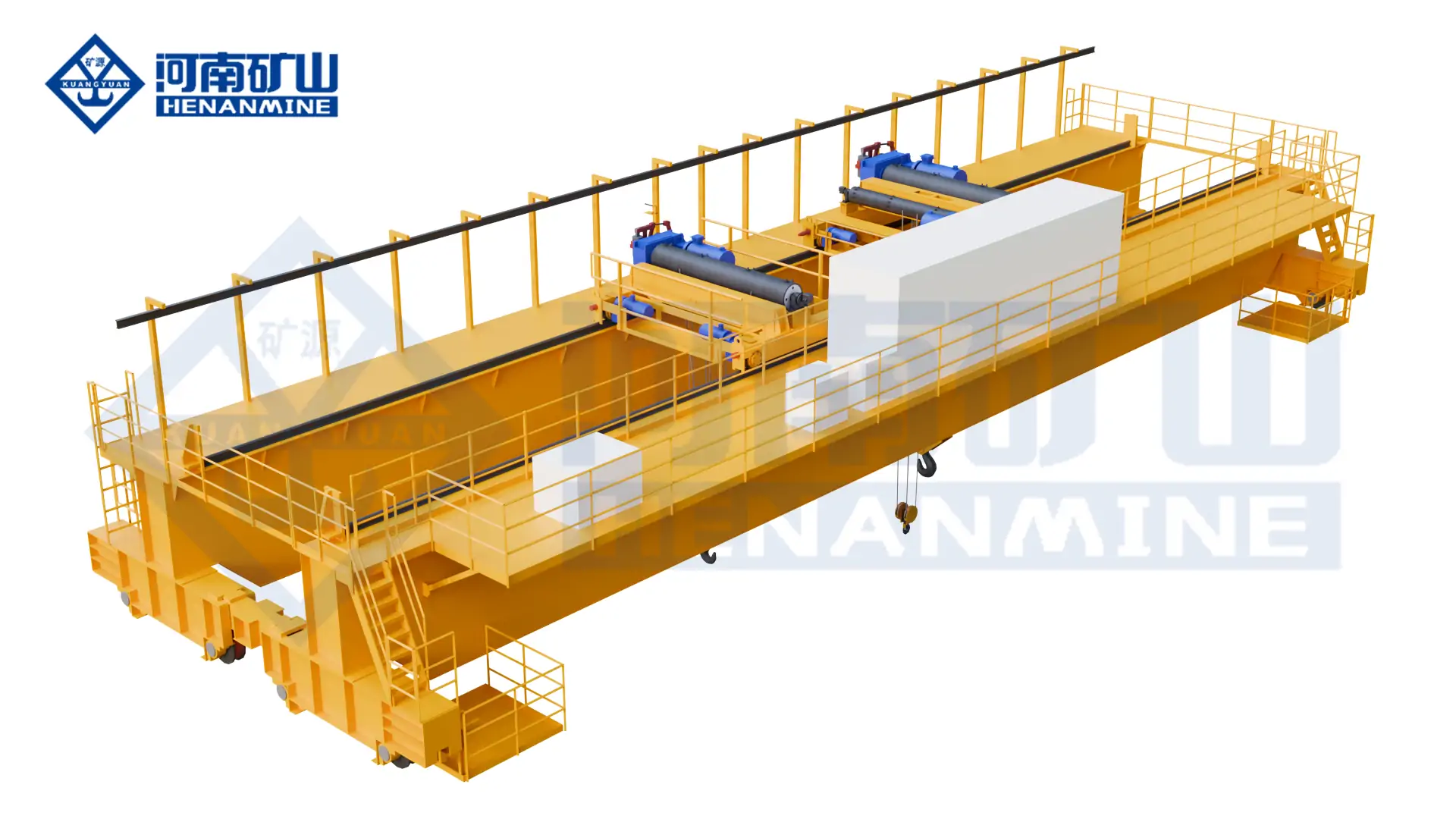
    Dual-trolley-insulated-crane-for-high-current-environment

    Casting crane (320t four girder / 360t double girder)

    It belongs to the special model for ultra-heavy load, divided into 320t four girder and 360t double girder, which is the core equipment of metallurgical industry, mainly used for molten metal transfer.

    Adopting double brake redundancy system, double safety guarantee, avoiding accidents caused by single set of brake failure, which is also a mandatory requirement for metallurgical cranes.

    The main beam is made of high-strength steel, which is resistant to high temperature and fatigue, and can withstand 24 hours of continuous heavy-duty operation, and the working level reaches M8.

    320t casting crane mostly adopts four girder structure, 360t casting crane mostly adopts double girder structure, which can be selected according to the space of the plant and operational requirements, and its structural form covers double girder and double rail, four girders and four rails, etc., which is suitable for different tonnages of ultra-heavy-duty requirements.
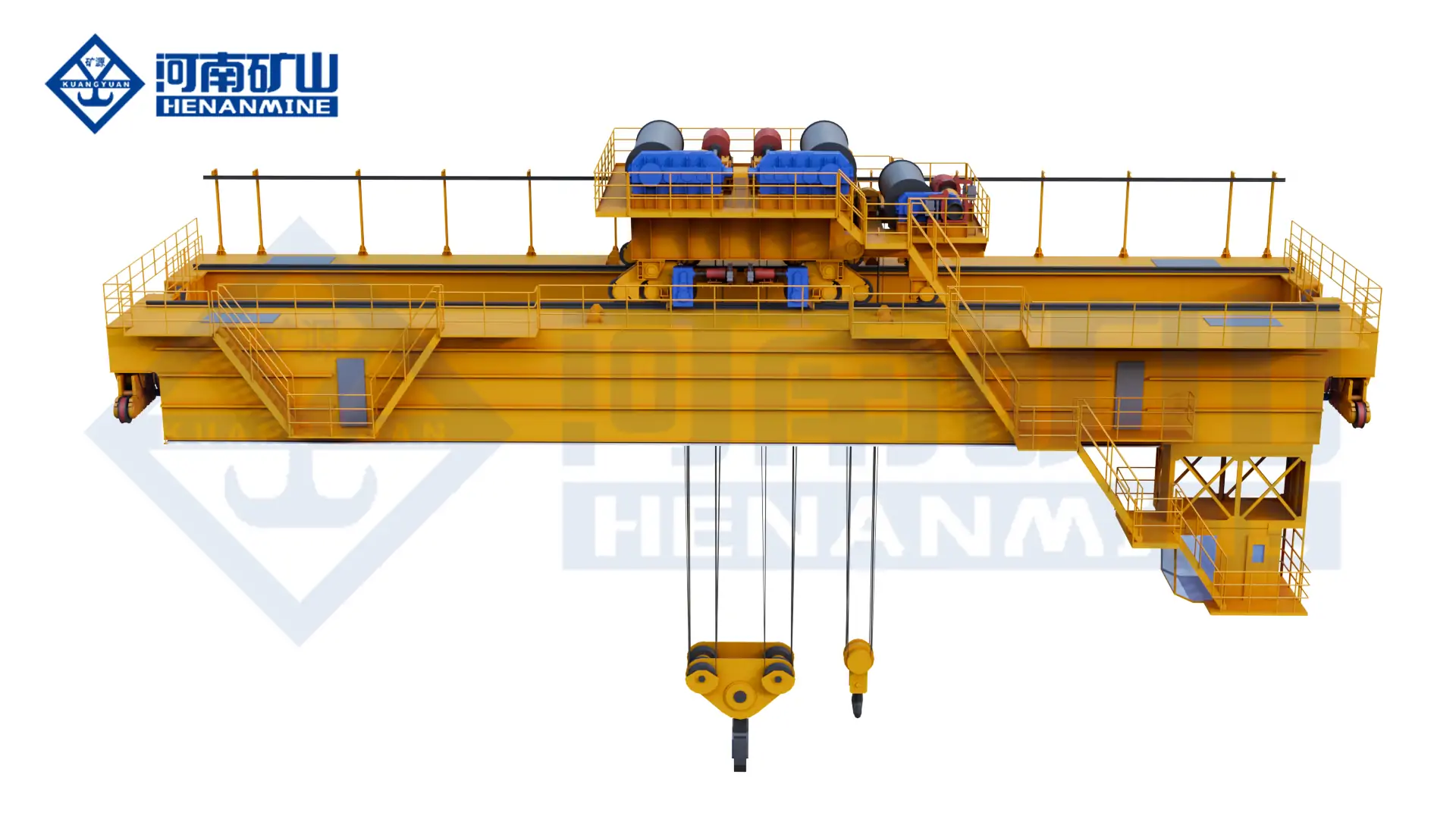
    YZ-type-metallurgical-bridge-crane.jpg

    Clean and Explosion-proof Bridge Crane

    The bridge crane meets both clean and explosion-proof standards, and adopts dust-free painting and sealed dust-proof design to avoid generating dust and sparks.

    It is suitable for medicine, semiconductor, precision manufacturing and other dust-free and explosion-proof scenes, which can avoid contaminated materials and eliminate potential safety hazards.

    Its smooth operation and low noise can meet the precision lifting needs of high-end manufacturing.
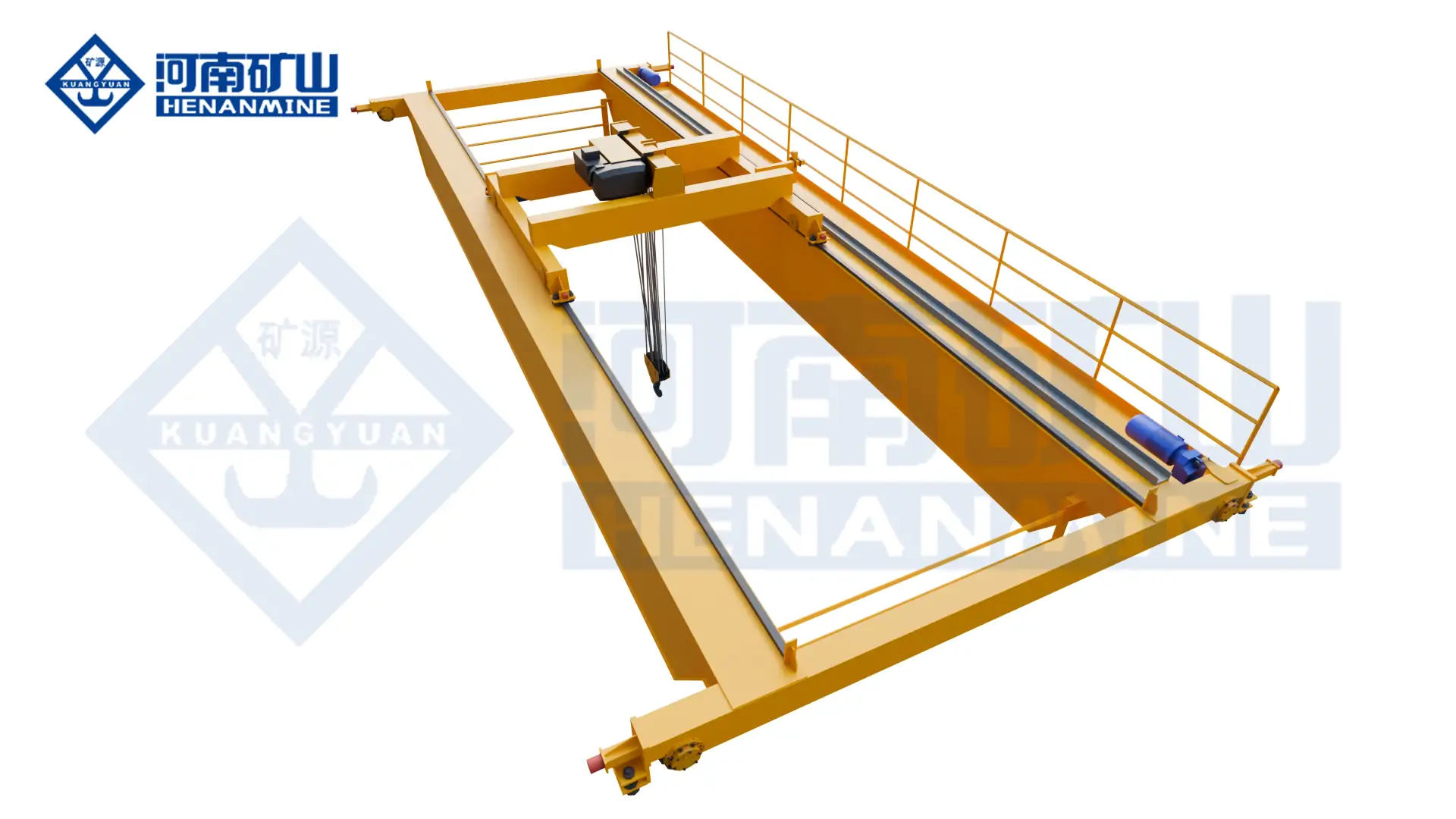
    clean-room-overhead-crane

    Fixed-point crane for aerated concrete

    It adopts fixed trajectory design with high repetitive positioning accuracy, and is specially used for the production and transfer of aerated concrete.

    It can accurately locate the lifting and stacking position of aerated concrete blocks to avoid collision and damage and improve production efficiency.

    With simple structure, stable operation and low failure rate, it is suitable for continuous operation in aerated concrete production workshop.
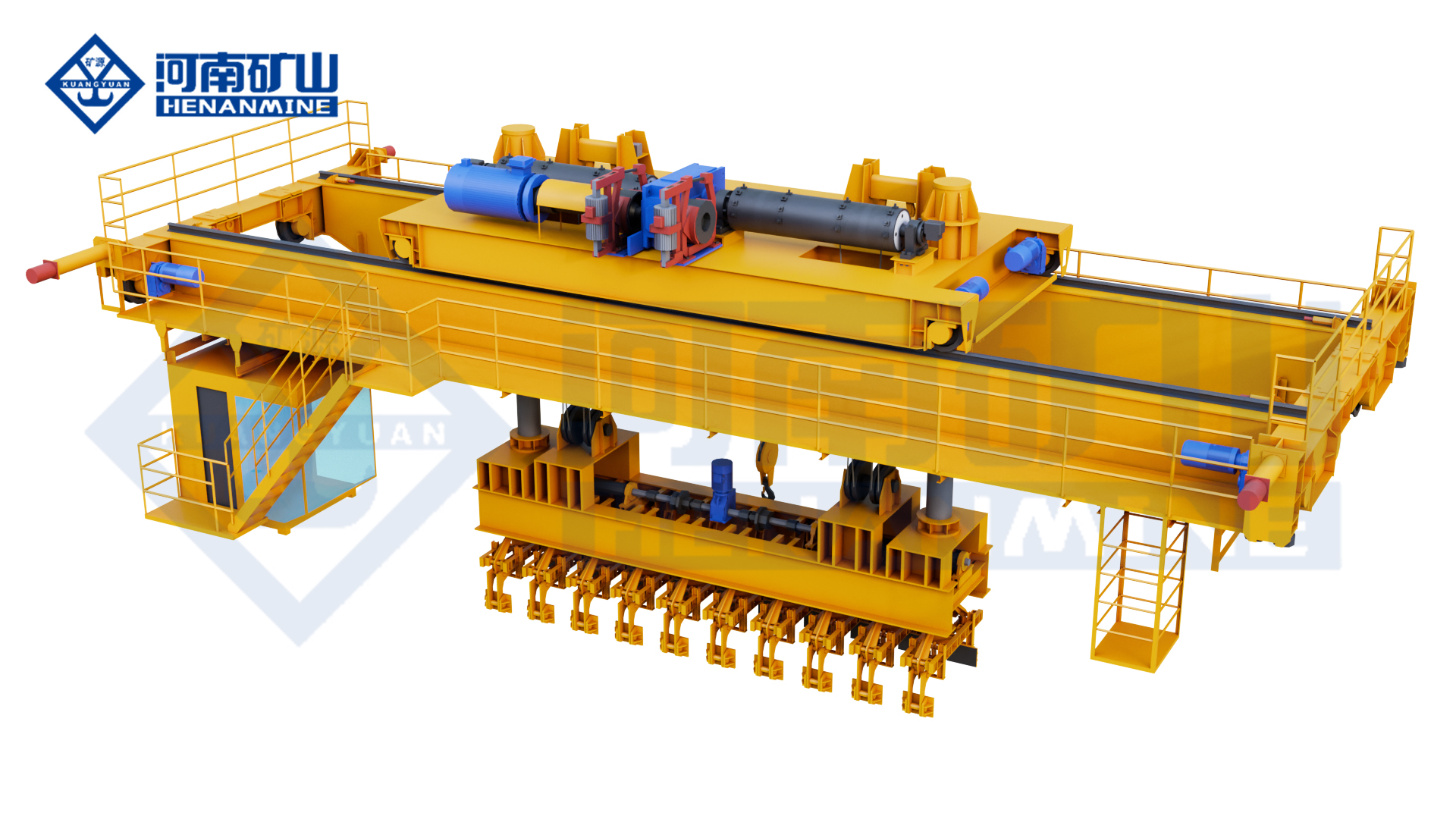
    Cranes for Aluminum Electrolysis Plant

    Automatic Intelligent Bridge Crane

    Equipped with PLC control system, supporting remote monitoring, automatic positioning, able to dock with MES system to realize unmanned operation, it is the core product of automation intelligent bridge crane manufacturer.

    It is suitable for intelligent factory and unmanned workshop, which can reduce labor input, improve operation efficiency and avoid human error.

    It can realize multi-target continuous positioning operation, and the intelligent anti-shaking technology can ensure that the handling error is controlled in a very small range, which is suitable for high-end manufacturing, aerospace and other precision scenarios, and its intelligent control system can realize the functions of laser scanning and positioning, digital twin monitoring and so on, so that the equipment can become a “thinking handling robot”.
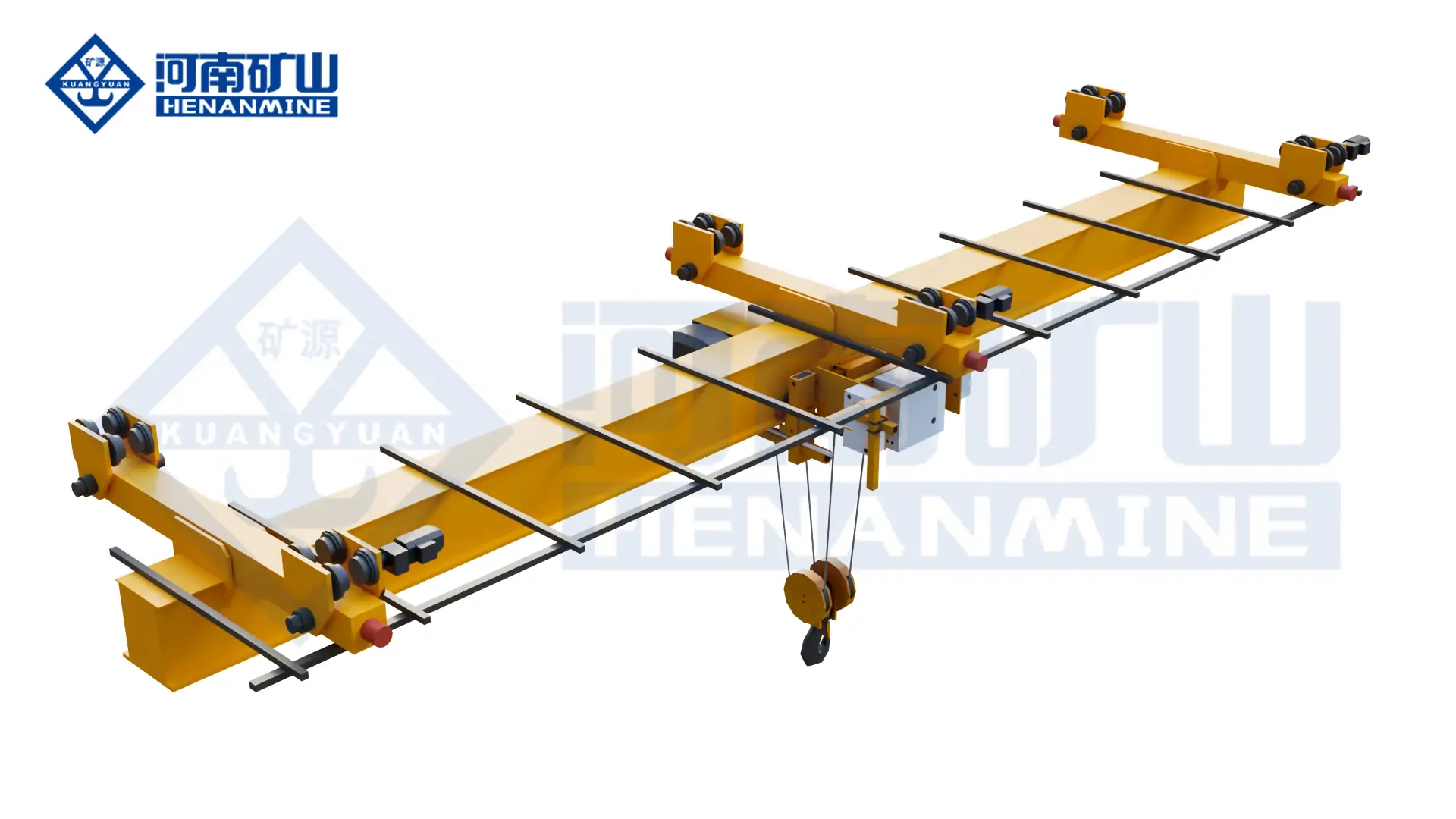
    Large-span-suspended-crane-for-factory

    Steel Plate Automated Handling Bridge Crane

    Equipped with laser positioning system and automatic gripping system, it can automatically recognize the position of steel plate, accurately grasp, transfer and stack.

    It is suitable for batch steel plate handling in steel plate processing plants and steel yards, which can effectively improve operational efficiency and reduce labor costs.

    Smooth running, accurate positioning, avoiding scratches and collisions in the steel plate handling process, reducing material loss.)
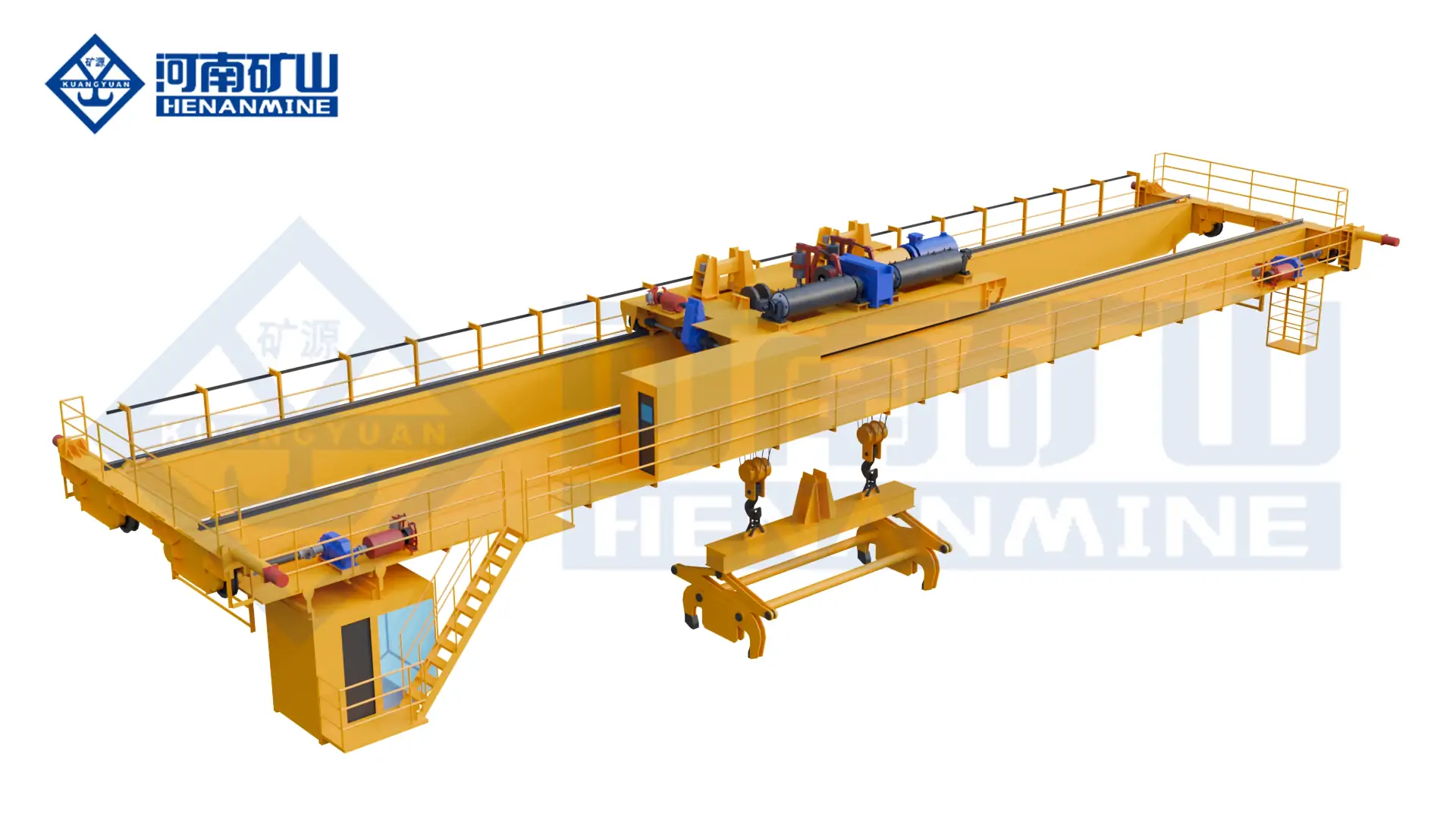
    Slab-Handling-Crane

    Technical Parameters Comparison Module

    Type Tonnage Range Working Class Explosion-Proof Metallurgical Automation Adaptation
    Single Girder General Type 1-20T M3-M5 (A3-A5, Class A-C) Optional Optional (Metallurgical Single Girder) Basic Adaptation
    Single Girder Explosion-Proof Type 1-16T M3-M5 (A3-A5, Class A-C) Yes No Basic Adaptation
    Single Girder Metallurgical Type 5-20T M5-M6 (A5-A6, Class C-D) No Yes Basic Adaptation
    Double Girder General Type 20-100T M5-M8 (A5-A8, Class C-F) Optional Optional Support Adaptation
    Double Girder Explosion-Proof Type 10-50T M5-M6 (A5-A6, Class C-D) Yes No Support Adaptation
    Double Girder Metallurgical Type 20-360T M7-M8 (A7-A8, Class E-F) No Yes Support Adaptation
    Electromagnetic Special Type 5-50T M5-M7 (A5-A7, Class C-E) Optional No Support Adaptation
    Intelligent Automation Type 5-100T M5-M8 (A5-A8, Class C-F) Optional Optional Full Adaptation

    Recommended Comparison for Industry

    Industry Recommended Model Adaptation Description
    Manufacturing Industry Single Girder General Type, European-Style Electric Single Girder Crane Suitable for 1-20T light to medium load, stable operation and high cost performance, meeting the needs of conventional material handling and assembly.
    Warehousing and Logistics Electric Single Girder Suspension Crane, Single Girder General Type Space-saving, flexible operation, suitable for low-frequency and light-load lifting, ideal for warehouses and logistics centers.
    Steel Mill/Metallurgy Metallurgical Double Girder Overhead Crane, Foundry Crane (320t/360t), Electromagnetic Overhead Crane High temperature resistant, double braking, suitable for heavy-load and continuous operation, meeting the needs of molten metal and steel handling.
    Chemical/Oil & Gas Explosion-Proof Electric Single Girder Crane, Explosion-Proof Double Girder Overhead Crane, Explosion-Proof Electric Hoist Double Girder Overhead Crane Full explosion-proof configuration, complying with GB/IEC standards, suitable for flammable and explosive scenarios, eliminating potential safety hazards.
    Electrolytic Aluminum Insulated Overhead Crane High-strength insulation protection, preventing high-voltage leakage, suitable for high-voltage and heavy-load operations in electrolytic aluminum workshops.
    Steel Plate Warehouse/Steel Processing Electromagnetic Beam Crane Series, Automatic Steel Plate Handling Overhead Crane Precise positioning and automatic grabbing, suitable for batch handling of steel plates and coils, improving operation efficiency.
    Smart Factory/Unmanned Workshop Intelligent Automatic Overhead Crane PLC control, MES docking, unmanned operation, suitable for the automated production needs of smart factories.
    Pharmaceutical/Semiconductor Clean Explosion-Proof Overhead Crane Dust-free and explosion-proof dual standards, avoiding material contamination, suitable for high-end precision manufacturing scenarios.
    Aerated Concrete Production Fixed-Point Crane for Aerated Concrete Fixed trajectory, high repeat positioning accuracy, suitable for the production and handling of aerated concrete blocks.

    Common Purchasing Misconceptions

    After so many years of bridge crane sales, we have seen too many customers because of cognitive bias, spending money, but also affect the production progress.

    These misunderstandings are very common and can be avoided by paying more attention to them when purchasing.

    Ignore the level of work. This is the most easy to step on the pit, many customers only look at the tonnage, with M3 level equipment to do M7 level work, less than a year on the deformation of the main beam, wear and tear of components, and even need to replace the equipment in advance.

    Failure to consider the future expansion. Later expansion of the plant, the lifting capacity and span of the equipment is not enough to adapt to the new operational requirements, and can only be re-procured, resulting in double investment.

    Failure to do structural calculations. Neglecting the load-bearing capacity of the plant, after the installation of the crane, the main beam sinking, rail deformation, not only can not be used, but also need to rectify the plant, delaying production.

    Explosion-proof grade selection error. Chemical, oil and gas scene, selected ordinary explosion-proof model, does not meet the workshop hazardous grade, can not pass the safety acceptance, can only rework and replace.

    Metallurgy did not do double braking. Metallurgy scene lifting high temperature molten metal, double braking is a mandatory safety requirement, single brake equipment failure, will cause serious safety accidents.

    FAQ Module

    How much does an overhead crane cost?

    There is no fixed standard for the price, which is mainly determined by the lifting capacity, span, configuration and model, and the price varies greatly with different parameters.

    Single girder universal model price is the lowest, 1-20 tons of the price range is wider; double girder, explosion-proof, metallurgical model prices rise in turn.

    For example, the price of electric single girder cranes is relatively affordable, while 320t casting cranes, automated intelligent bridge cranes, because of the high-end configuration, the price will be much higher, the specific need to combine the parameters of the accounting offer.

    Single girder and double girder difference?

    The core difference in load-bearing capacity, structural stability and adaptability of the scene, not a simple “single beam” and “two beams” difference.

    Single girder models are lightweight, low cost, suitable for 1-20 tons of light and medium load, low-frequency operation, simple installation, low operation and maintenance costs; double girder models have strong rigidity, high load capacity, suitable for heavy loads of more than 20 tons, high-frequency operation, and longer service life.

    Simply put, choose single girder for light load and double girder for heavy load; choose single girder for conventional scenes and double girder for heavy industry and metallurgical scenes.

    Must metallurgical cranes have double brakes?

    It must be equipped with double brakes, which is a mandatory requirement of metallurgical double girder overhead travelling crane standard and the core of safety guarantee.

    Metallurgical scene lifting high temperature molten metal, once a single set of brake failure, will cause material falling, explosion and other serious accidents.

    Dual braking is a redundant safety configuration, which ensures that when one set of brakes fails, another set of brakes will take over in time to avoid safety accidents.

    How to choose the explosion-proof level?

    The explosion-proof grade is mainly selected according to the type and grade of the hazardous chemicals in the workshop, and the core follows the GB/IEC explosion-proof standard, which is also the basis for determining the grade of explosion-proof overhead travelling crane.

    For chemical, oil and gas and other flammable and explosive gas scenes, choose Ex d II BT4 grade; for dust flammable and explosive scenes, choose DIP explosion-proof grade.

    When purchasing, it is better to provide the workshop’s hazardous chemical test report, we will recommend the right explosion-proof grade according to the report to avoid choosing the wrong one.

    How long is the lifespan of overhead cranes?

    The life span mainly depends on the working level, operation frequency and maintenance, the life span of regular model is 15-20 years with reasonable maintenance.

    Metallurgy, explosion-proof and other special models, the working level is high, the structure is more solid, according to the standard operation and maintenance, the life span can reach 20-25 years.

    Regular maintenance is very important, such as lubricating parts, check the braking system, can effectively extend the life of the equipment, reduce the occurrence of failures.

    How much more expensive is an automated bridge crane?

    It is 30%-50% more expensive than a general purpose model of the same tonnage, the exact price difference depends on the complexity of the automation configuration.

    For example, simple automatic positioning, remote control, the price difference is relatively small; complex PLC control system, MES docking, automatic gripping, the price difference will be greater.

    Although the initial investment is high, but the long-term can reduce labor costs, improve operational efficiency, suitable for high-frequency, unmanned operation scenarios.

    Henan Mine Crane Factory Custom

    Henan Mine Crane can provide the full range of bridge cranes mentioned in this article, all products strictly follow the ISO/FEM/CMAA international standards, support customized design, global installation and commissioning, and a full range of after-sales service.
    With our professional technical team and cost-effective equipment solutions, we will accurately match your model, avoid purchasing mistakes, and help you complete lifting operations efficiently and safely, so as to win the global market hand in hand!

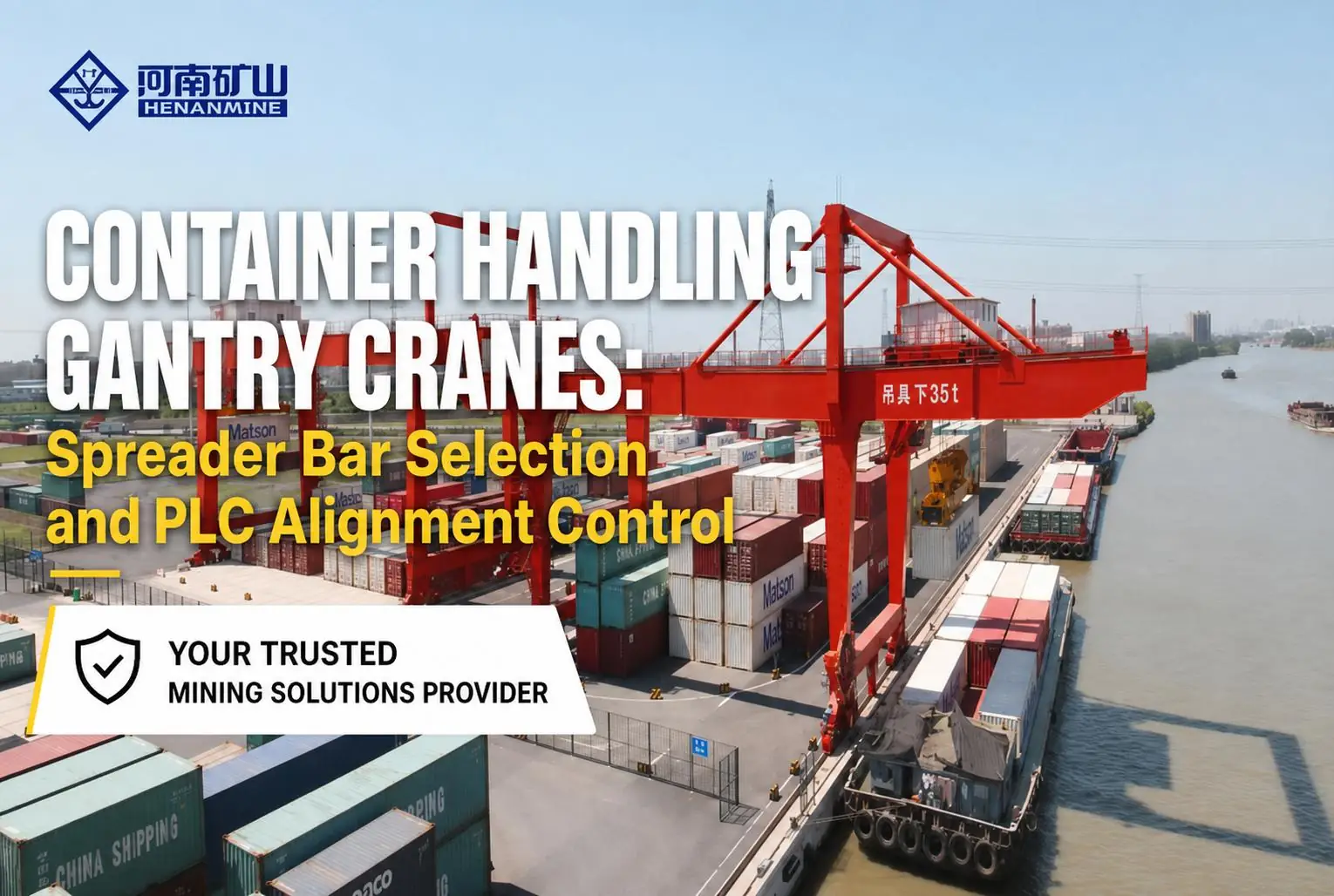
    Henan Mine CraneDiscuss your requirements ↗
  • Overhead Crane Project Case Study From Design To Installation

    Overhead Crane Project Case Study From Design To Installation

    Overhead Crane Project Case Study From Design To Installation

    In the field of industrial production, bridge cranes are the core equipment of material handling. Their project landing is by no means a simple equipment supply, but a system engineering that covers professional design, precision manufacturing, standardized installation and full-cycle support.A qualified industrial bridge crane must not only meet the current production needs, but also adapt to long-term working conditions, ensure operation safety, and reduce operation and maintenance costs. This is inseparable from the professional control of the whole process.Through the real overhead crane project case study, this article will fully present the whole process from the docking of customer needs to the final production of the equipment, highlight the core value of customized crane solution in industrial applications, and provide practical experience for similar projects that can be learned from.

    From the initial demand research to the final equipment acceptance, every link is interlocking. The design stage needs to accurately match the requirements of the working conditions, the manufacturing stage must strictly abide by the quality standards, the installation stage needs to take into account the on-site adaptability, and follow-up support to ensure the long-term stable operation of the equipment.This complete set of project processes is not only the core advantage of professional manufacturers, but also the key guarantee for industrial enterprises to achieve efficient production.

    Project Background: Understanding Customer Requirements

    Customer industry

    The customers of this project are heavy-duty machinery manufacturing enterprises. The core business covers the processing, assembly and transportation of large-scale parts and components. There are obvious material handling pain points in the production workshop. Heavy workpieces of 5-20 tons need to be frequently transported. The average daily operation frequency is more than 50 times, and the internal space of the workshop is limited. The existing production line has a compact layout, and traditional cranes cannot be adapted to on-site working conditions.In addition, there is a small amount of dust in the workshop environment, which puts forward higher requirements for the sealing and durability of the equipment. It is difficult for conventional standardized cranes to meet their personalized production needs, and a set of customized material handling solutions is urgently needed.

    Crane requirements

    Combining the customer’s production scenarios and pain points, we have sorted out the clear requirements for industrial bridge cranes. The core parameters are as follows. The lifting weight needs to cover 5 tons to 20 tons, which is suitable for the handling needs of workpieces of different specifications.With a span of 22.5 meters and a runway length of 80 meters, it needs to cover the core operating area of the entire production workshop.The lifting height is 12 meters to meet the assembly and transportation needs of large workpieces.The work level is A6, which is suitable for high-frequency and high-intensity work scenarios.At the same time, customers require the equipment to integrate a safety protection system, have overload protection, limit alarm and other functions, and support semi-automatic operation to reduce the difficulty of manual operation and improve operational safety.

    Engineering Design: Developing the Right Crane Solution

    Design planning

    As a professional customized overhead crane manufacturer, Henan Mine Crane Factory engineering team first conducts a comprehensive analysis of the customer’s workshop working conditions, load conditions, and operating frequency, and develops an exclusive design plan based on customer needs.Taking into account the limited workshop space and the characteristics of high-frequency operations, it is determined to adopt a Henan Mine Crane Factory supply double-girder bridge crane structure, which has the advantages of strong carrying capacity, stable operation and high space utilization, and can be perfectly adapted to customer production scenarios.At the same time, combined with the characteristics of the dust environment, the sealing performance of the equipment is specially designed to ensure the long-term stable operation of the equipment.

    Component selection

    In the selection of core components, we strictly follow the core principles of durability, safety and high efficiency to ensure that the performance of the equipment is up to standard. The main beam is welded with high-strength I-beam and steel plate to optimize the structural design, taking into account the carrying capacity and light weight.The end beam adopts a modular design, which is easy to install and maintain, and is suitable for the installation accuracy requirements of the runway.The lifting system adopts well-known brand electric hoists, which have functions such as overload protection and voltage loss protection to ensure the safety of lifting operations.The motor and reducer choose high-efficiency and energy-saving models to reduce energy consumption while improving the service life of the equipment.The electrical control system adopts frequency conversion and speed regulation technology to achieve smooth start and stop and reduce load swing.At the same time, safety limit devices, emergency stop buttons, fault alarm systems, etc. are integrated to ensure operation safety in all directions.

    Design optimization

    After the basic design is completed, we have carried out multiple rounds of optimization of the program. Under the premise of ensuring the strength and safety of the equipment, the main beam structure is optimized to reduce unnecessary weight and reduce the pressure of the equipment’s own weight on the runway.Optimize the parameters of the electrical control system, improve the operating efficiency of the equipment, and reduce energy consumption.Choose more durable parts to reduce the frequency and cost of late maintenance, ensure long-term stable operation of the equipment, and adapt to the high-intensity operation needs of customers.

    Manufacturing Process: Turning Design Into Reality

    Component fabrication

    After the design plan is confirmed, we start the standardized Henan Mine Crane Factory supply overhead crane manufacturing process to transform the design drawings into actual equipment.First, steel material selection is carried out, and high-strength steel that meets national standards is selected to ensure the quality of raw materials.Subsequently, the welding and machining processes were carried out, and automated welding equipment was used to ensure the welding quality and accuracy. The dimensional errors were strictly controlled in the machining link to ensure the adaptability of each component.Finally, the surface treatment is carried out, through rust removal, painting and other processes, to improve the anti-corrosion performance of the equipment, adapt to the dust environment of the workshop, and extend the service life of the equipment.

    Quality inspection

    Quality is the core competitiveness of cranes. We have established a strict crane quality control system to conduct full testing of each production link.First, perform dimensional inspection to ensure that the dimensions of each component meet the design requirements.Then the load test was carried out, and the rated load and 1.25 times overload tests were carried out to verify the carrying capacity and safety of the equipment.Conduct a comprehensive inspection of the electrical system to ensure that the circuit connection is standardized and the safety protection device is sensitive and reliable.Finally, the factory acceptance test is carried out, the actual operation scenario is simulated, and the overall operating performance of the equipment is inspected to ensure that the equipment fully meets customer needs and industry standards before leaving the factory.

    Packing & shipping

    In order to ensure that the equipment is not damaged during transportation, we use professional protective packaging methods to treat the core components with moisture-proof and shock-proof treatment.For export projects, packaging and preparation are carried out in strict accordance with international transportation standards, and relevant export procedures are handled.At the same time, formulate a perfect transportation management plan, track the transportation progress throughout the process, ensure that the equipment can be delivered to the customer’s site safely and on time, and lay the foundation for subsequent installation work.

    Overhead Crane Project Case Study From Design To Installation

    Installation Process: From Delivery to Operation

    Site preparation

    After the equipment is delivered to the site, our installation team will first carry out on-site preparation work, conduct a comprehensive inspection of the workshop, and confirm that the installation accuracy and carrying capacity of the runway meet the requirements.Clean up on-site obstacles, plan the installation area, and ensure the smooth progress of the installation operation.At the same time, do a good job of safety preparations, set up safety warning signs, equip safety protective equipment, and conduct safety training for on-site operators to eliminate safety hazards.

    Crane installation

    Following the standardized overhead crane installation procedure, we carry out the installation work in stages, first install the runway system, adjust the level and spacing of the runway, and ensure that the installation standards are met.Then the bridge structure is assembled, and the main beam, end beam and other components are assembled and formed to ensure a firm connection.Then install the lifting system and electrical equipment, standardize the wiring, and ensure that the electrical connections are safe and reliable.Finally, the system is connected and debugged to ensure that the components operate in concert and the overall performance of the equipment is up to standard.

    Testing & commissioning

    After the installation is completed, we carry out a comprehensive industrial crane commissioning work, and first conduct a no-load test to verify the smooth operation of the equipment and the flexibility of each component.Then the load test is carried out, the load is gradually increased, and the carrying capacity of the equipment and the effectiveness of the safety protection device are verified.Conduct a comprehensive inspection of all safety devices to ensure that they are sensitive and reliable.At the same time, professional training is conducted for customer operators to explain equipment operation specifications, safety precautions and daily maintenance methods.Finally, the final acceptance is carried out to confirm that the equipment fully meets customer needs and industry standards, and it is officially delivered to the customer for use.

    Project Challenges and Solutions

    Design challenges

    The design phase of this project faces two core challenges. One is that the installation space in the workshop is limited. It is necessary not only to ensure the carrying capacity of the equipment, but also to control the overall size of the equipment to avoid interference with the existing production line.The second is that customers have special lifting needs, which need to be adapted to the handling of workpieces of different specifications, and require high operating accuracy.In response to these challenges, our engineering team has optimized the structural design and adopted a compact layout to reduce the size of the equipment while ensuring the carrying capacity.At the same time, the lifting system is customized and equipped with adjustable spreaders to meet the handling needs of different workpieces and solve the design problems.

    Installation challenges

    The main challenges in the installation phase include complex on-site working conditions, more existing equipment in the workshop, and limited installation space.The project construction period is tight, and the customer requires the equipment to be put into operation within the specified time, and the installation task is heavy.In order to meet these challenges, we have formulated a detailed installation plan in advance, arranged the installation process rationally, and adopted a modular installation method to reduce on-site operation time.Arrange a professional installation team to work on site and control the installation progress and quality throughout the process.At the same time, strengthen communication and coordination with customers, solve on-site problems in a timely manner, and ensure that the installation work is completed on time.

    Solution approach

    In view of the challenges of the whole process of the project, Henan Mine Crane Factory has established a perfect solution system, provided professional engineering and technical support, participated in all aspects of design, manufacturing, and installation throughout the process, and solved technical problems in a timely manner.Arrange on-site guidance by technical personnel to ensure that the installation operations are standardized and efficient.Provide rapid response services, establish a dedicated service team, respond to customer needs 24 hours a day, deal with problems that arise during the operation of the equipment in a timely manner, and ensure the smooth progress of the project.

    Project Results: Improving Efficiency and Safety

    Operation results

    After the equipment was put into operation, significant operational results have been achieved, and the efficiency of material handling has been increased by more than 40%. The workpiece handling work that originally required multiple people to collaborate can now be completed by only 1-2 operators, greatly reducing the amount of manual operation.The equipment runs smoothly and the load swing is small, which effectively reduces the risk of damage to the workpiece.The production workflow has been optimized, the seamless connection between material handling and the production process has been realized, and the overall production efficiency has been improved.

    Long-term benefits

    In the long run, the customized crane solution has brought many benefits to customers, reducing equipment operation and maintenance costs by 30%, strong durability, low failure rate, and reducing maintenance costs and downtime losses.The equipment has high reliability, can operate stably for a long time, and guarantees production continuity.The comprehensive safety protection system effectively reduces the hidden dangers of operation, improves the overall safety level of the workshop, and provides a strong guarantee for the safe production of enterprises.

    Customer feedback

    The customer gave a high evaluation of this project and expressed satisfaction with the performance, installation quality and service level of the equipment.Customer feedback, customized crane solutions are perfectly adapted to their production needs, effectively solving the pain points of material handling in the past, and improving production efficiency and safety.At the same time, the customer expressed his willingness to cooperate in the future and plans to continue to choose our turnkey crane solution in subsequent workshop expansion projects.

    Why Choose a Professional Overhead Crane Manufacturer?

    Complete project support

    The core advantage of choosing a professional overhead crane manufacturer is that it can obtain full-process project support.From the early engineering consultation, help customers sort out their needs and formulate reasonable solutions.To customized manufacturing, strictly control product quality.Then to the installation guidance, to ensure that the equipment is installed in a standardized manner and put into operation smoothly.Finally, provide long-term technical support and after-sales service to solve customers’ worries.The full-process support system can ensure the smooth landing of the project and achieve the customer’s expected goals.

    Supplier advantages

    Henan Mine Crane Factory As a reliable overhead crane supplier, we have strong manufacturing capabilities, advanced production equipment and professional technical team, which can meet all kinds of customized needs.A strict quality control system has been established, from the procurement of raw materials to the delivery of equipment, the quality is controlled throughout the process to ensure that the products meet industry standards and customer needs.Has a wealth of global project experience, and can cope with the project needs of different working conditions and different scenarios.Provide reliable after-sales service, establish a rapid response mechanism, solve customer problems in a timely manner, and ensure the long-term stable operation of the equipment.

    Henan Mine Crane Factory Custom

    This overhead crane project case study fully proves that a successful bridge crane equipment is inseparable from professional project management and quality control of the whole process.From precise demand analysis, scientific engineering design, to precise manufacturing technology, standardized installation and commissioning, every link directly affects the performance and use effect of the equipment.Choosing the experienced Henan Mine Crane Factory overhead crane supplier can not only obtain customized solutions, but also enjoy the professional support of the whole process to ensure the efficient, safe and stable operation of the equipment, and provide a strong guarantee for the production and development of the enterprise.In the future, we will continue to deepen the field of cranes, continuously optimize our products and services, and provide reliable crane solutions for more industrial enterprises.

    Henan Mine CraneDiscuss your requirements ↗