
Henan Mine Crane · Material-Flow Systems for Steel Fabrication
Steel Fabrication Crane Systems
Overhead, gantry, semi-gantry and magnetic crane systems engineered for plate, beam, section, pipe, frame and welded-assembly handling from receiving through cutting, fit-up, welding, finishing and dispatch.
Henan Mine Crane configures each steel fabrication crane from the complete load matrix, longest component, lifting attachment, required coverage, handling frequency, workstation sequence, building capacity, positioning performance, environment and applicable project standards.
PRIMARY LOADS
Plate, Beam, Pipe & Frames
CRANE OPTIONS
Bridge, Gantry & Semi-Gantry
LOAD-HANDLING OPTIONS
Hooks, Beams, Clamps & Magnets
CONTROL OPTIONS
Pendant, Radio, Cabin & PLC
What Is a Steel Fabrication Crane?
A steel fabrication crane is a material-handling system configured for structural steel, platework, tanks, machinery frames, bridge components, pressure equipment, pipe assemblies and other fabricated metal products. It moves raw steel and work-in-process between stock, cutting, drilling, fit-up, welding, turning, inspection, surface treatment and shipping areas.
The term describes an application rather than one fixed crane design. A small fabrication bay may use a single-girder overhead crane with radio control. Long welded assemblies may require two hoists or a double-trolley bridge. Raw plate handling may justify a magnetic beam. An outdoor stockyard may need a gantry crane, while a side bay or machine station may be served by a semi-gantry crane.
Steel fabrication is also different from primary steelmaking. Most fabrication shops handle solid material at ambient temperature, while foundry and metallurgical cranes address molten metal, extreme heat and a different safety architecture. Henan Mine Crane selects the system from the actual fabrication process using its single-girder bridge crane, double-girder bridge crane, semi-gantry crane and gantry crane platforms.
Steel Fabrication Applications by Process Area
Receiving and Raw Stock
Unload and store plate, H-beams, I-sections, angles, pipes and bars with hooks, approved clamps, spreader beams or magnetic systems matched to the material.
Cutting and Preparation
Feed plasma, laser, oxy-fuel, saw, drill and edge-preparation stations while controlling plate orientation, table approach and clearance above machinery.
Fit-Up and Welding
Position beams, shells, stiffeners, frames and subassemblies at jigs, rotators and welding stations using creep speed and clear operator sight lines.
Turning and Repositioning
Rotate or tail long fabrications only through a documented lifting method using two hooks, two cranes, a turning beam or purpose-designed fixtures.
Blasting, Painting and Finishing
Transfer finished steel through cleaning, coating, curing and inspection zones with environmental protection selected for dust, moisture, paint and solvent conditions.
Assembly and Dispatch
Support trial assembly, dimensional inspection, weighing, staging and truck loading for structural frames, vessels, modules and completed equipment.
System Components and Operating Principle
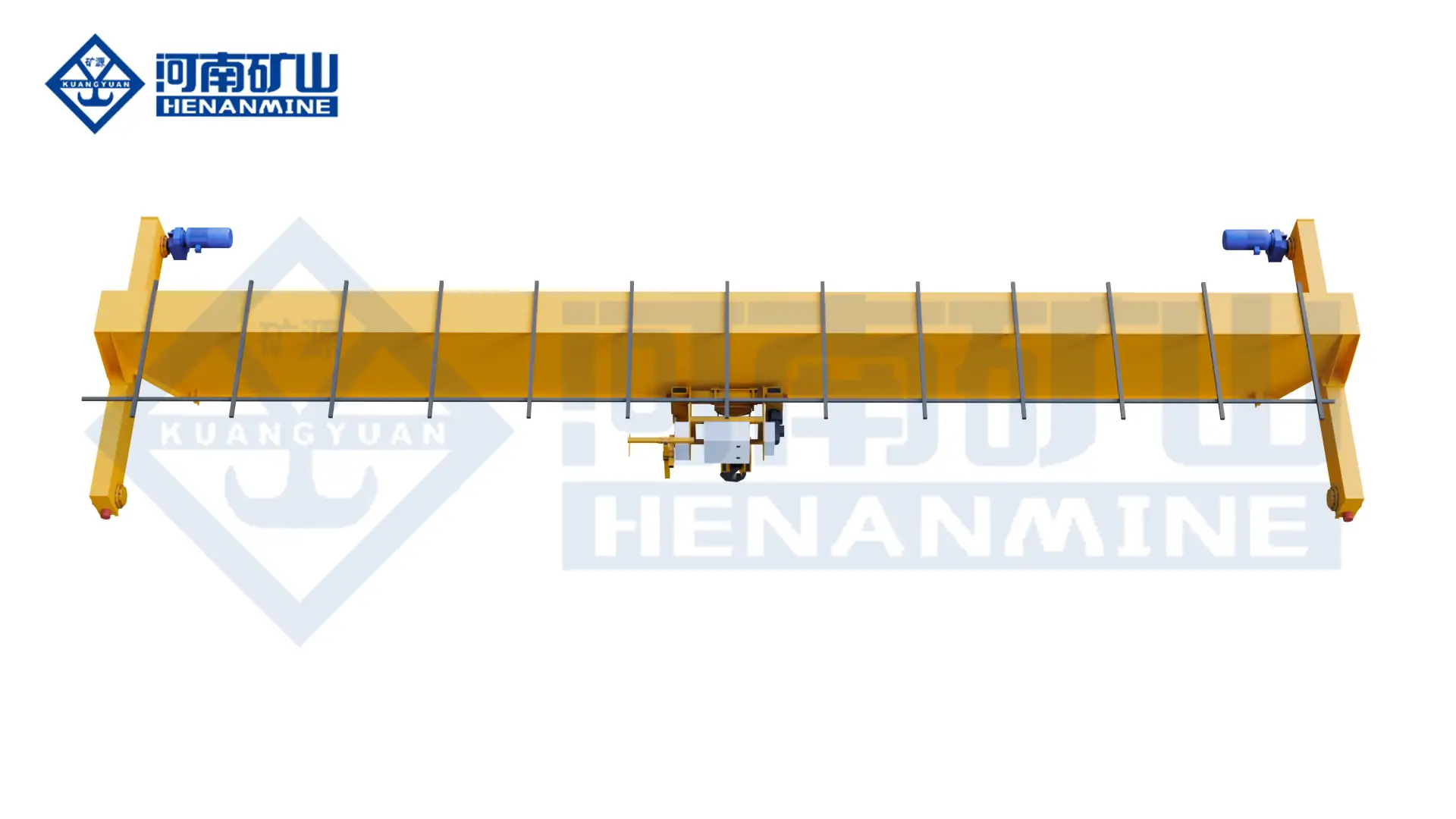
- Bridge, gantry or semi-gantry structure: provides the required work area while transferring vertical, transverse, longitudinal and dynamic loads to the building or ground-supported runway.
- Hoist or process trolley: supplies the capacity, lift, speed, reeving, brakes and duty required for the declared fabrication cycle.
- End carriages and drives: move the crane along the runway with speed control, alignment, braking and wheel loads matched to the structure.
- Below-hook equipment: connects hooks to plate, sections, pipe or assemblies through approved slings, beams, clamps, magnets or custom fixtures.
- Power and controls: coordinate lifting and travel through pendant, radio, cabin or PLC-assisted operation, including limits, overload monitoring and optional anti-sway.
- Runway and electrification: include rails, beams, columns or brackets, conductor system, isolators, access and maintenance provisions where specified.
Rated-load basis: capacity starts with the maximum gross suspended load. Include the steel component, spreader beam, lifting magnet, clamps, slings, shackles, hook block and every suspended accessory. Also define eccentric loads, multiple pickup points, retained blasting media or liquid and approved turning cases.
Steel Fabrication Crane Selection Considerations
Selection begins with the complete material-flow map. The heaviest load establishes only part of the requirement; long-load stability, workstation access, cycle frequency and the building interface frequently determine the final configuration.
Load Matrix
Raw plate and sections, work-in-process and finished assemblies; minimum, normal and maximum mass; dimensions; center of gravity; stiffness; pickup points and attachment mass.
Material Route
Receiving, stock, cutting, drilling, fit-up, welding, inspection, blasting, coating and dispatch locations; required transfers, crossings, buffers and future expansion.
Duty and Cycle
Lifts per hour, starts, travel distance, shifts, annual hours, load spectrum, simultaneous motions, peak production, maintenance window and consequence of downtime.
Long-Load Control
Maximum component length, permissible deflection, hook spacing, two-hoist or two-crane operation, synchronization, load sharing, permitted rotation and tag-line method.
Building and Runway
Rail-center span, runway length and elevation, headroom, hook approaches, column spacing, wheel-load limits, clearances, foundations and installation access.
Attachment and Surface
Hook, slings, beam, clamp, magnet or vacuum device; material grade, surface condition, temperature, edge geometry, coating and acceptable contact marks.
Environment
Indoor or outdoor use, ambient range, welding fume, grinding dust, blasting media, humidity, paint or solvent area, wind, corrosion and wash-down requirements.
Control and Acceptance
Pendant, radio, cabin or automation; creep speed; anti-sway; restricted zones; collision avoidance; proof load; representative-load trial and documentation.
Steel Fabrication Crane Configurations Compared
The comparison separates crane structures and handling functions that can serve the same plant but are not interchangeable.
| Configuration | Typical Fabrication Duty | Main Advantage | Primary Limitation | Selection Trigger |
|---|---|---|---|---|
| Single-Girder Overhead Crane | General stock, parts and assembly handling | Lower self-weight and compact system | Capacity, span, headroom and service intensity must remain within the selected platform | Light-to-medium loads with one principal pickup point |
| Double-Girder Overhead Crane | Heavy frames, machinery structures and intensive production | Higher capacity and flexible trolley arrangements | Greater self-weight and runway reaction | Heavy loads, wide span, high duty or demanding approaches |
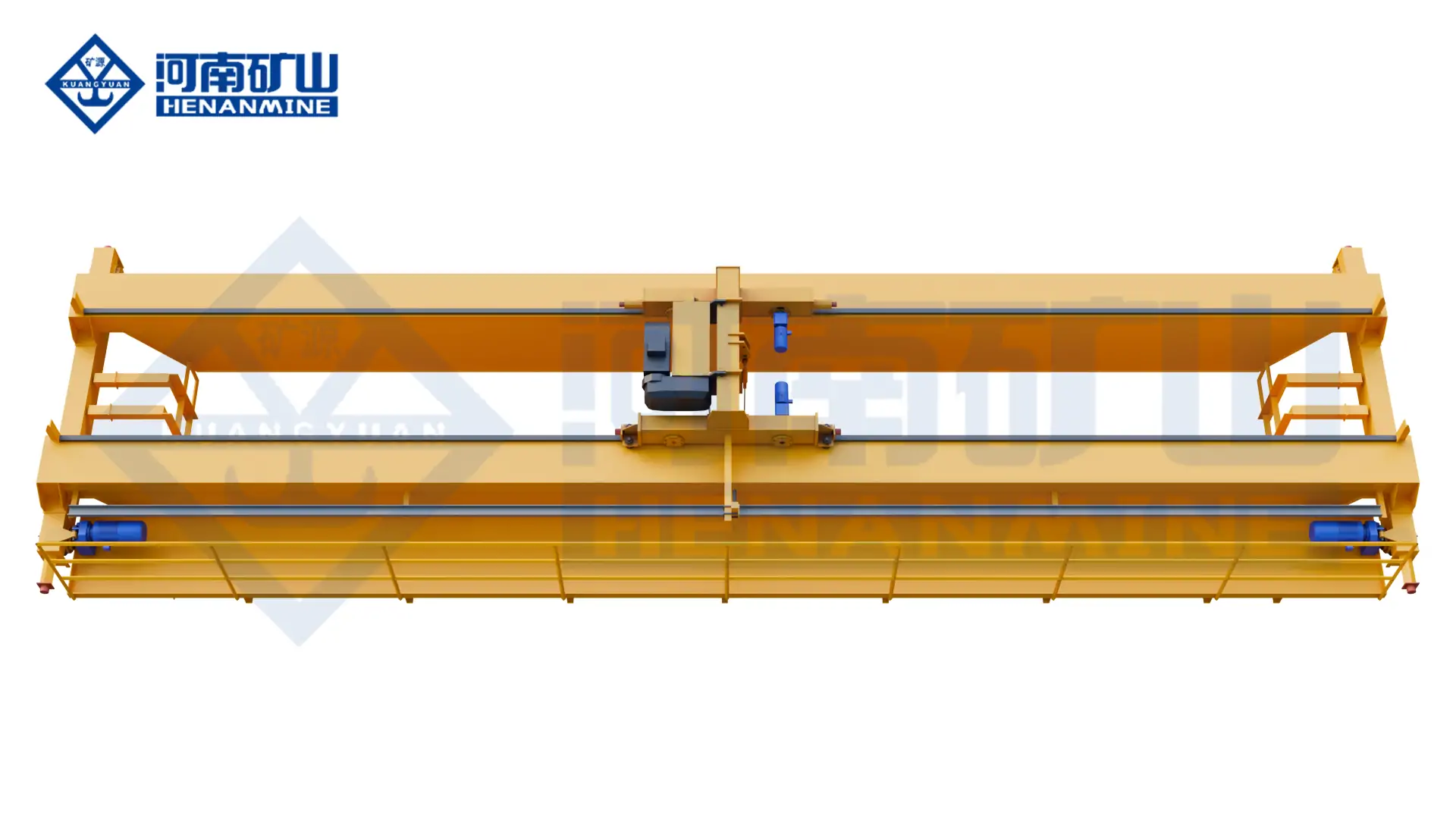
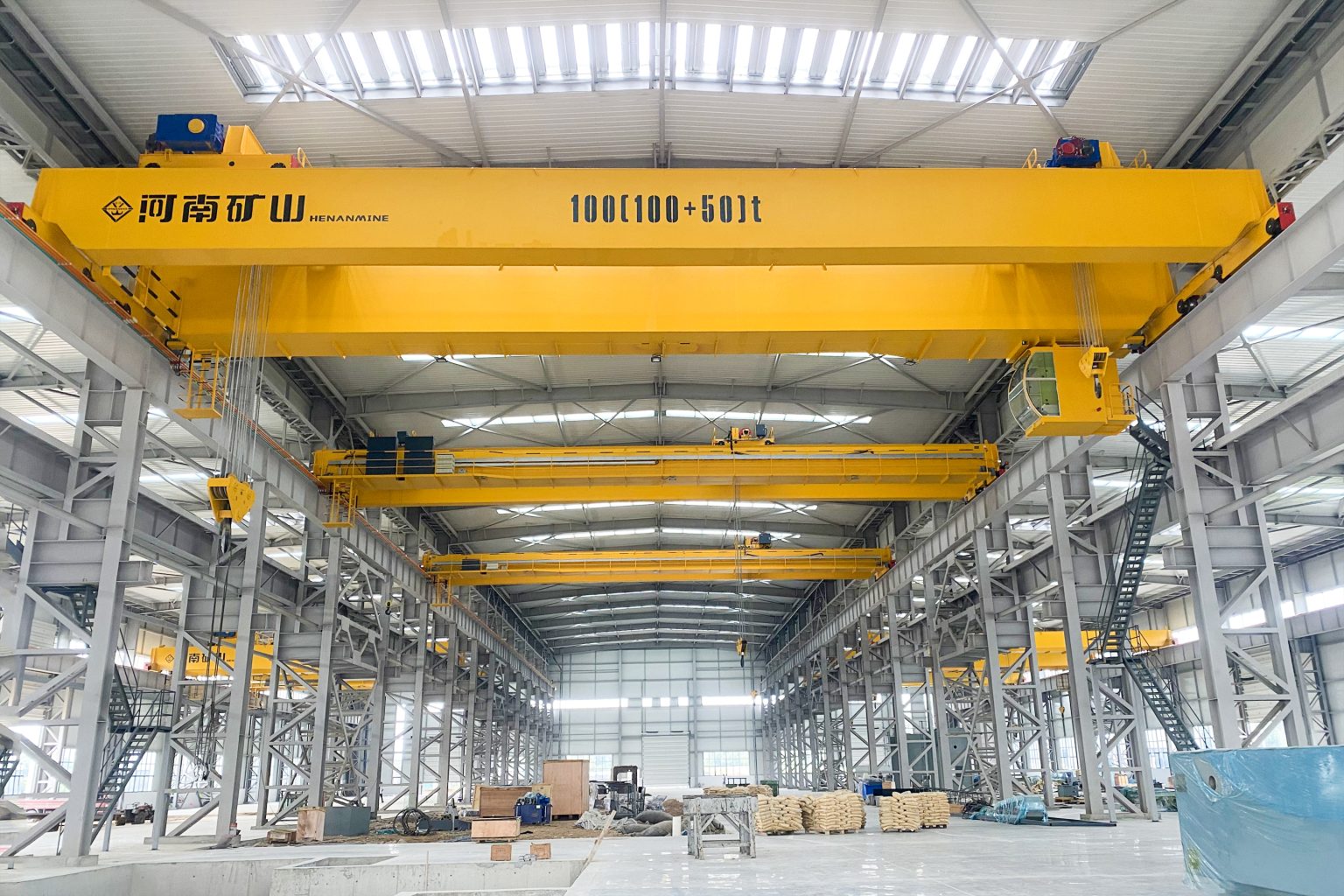
| Double-Trolley Overhead Crane | Long beams, vessels, frames and controlled turning | Two lifting points can operate independently or in an approved synchronized mode | Load sharing and synchronization require defined controls and procedures | Long, flexible or offset assemblies need two-point support |
| Electromagnetic Crane | Ferromagnetic plate, sections, billets and steel offcuts | Fast pickup without manual sling placement | Material, surface, thickness, air gaps and power-loss retention must be validated | Repetitive handling of compatible magnetic material |
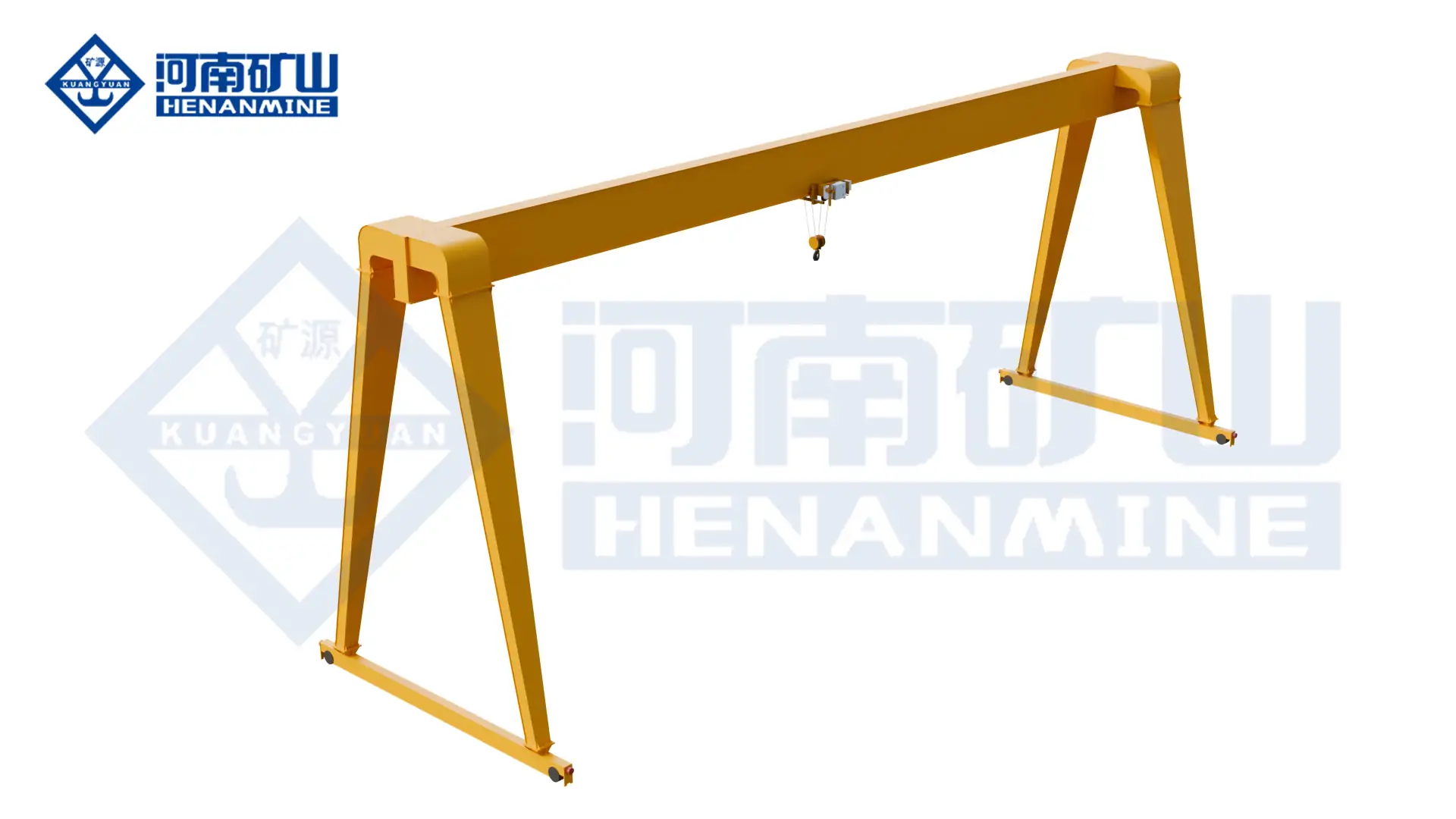
| Semi-Gantry Crane | Side bay, machine line or local production area | One elevated rail and one floor rail reduce the need for a full runway on both sides | Floor rail affects aisle planning and guarding | Only one suitable building runway side is available |
| Gantry Crane | Outdoor steel stock, large fabrications and loading area | Ground-supported coverage independent of the workshop roof | Ground rails, foundations, weather, wind and vehicle crossings require coordination | Outdoor or open-yard material flow |
Published Configuration Reference Ranges
The ranges below summarize published Henan Mine Crane product platforms that can be configured for steel fabrication. They are preliminary selection references rather than one universal steel fabrication crane model.
| Product Platform | Published Capacity | Published Span | Published Lift | Published Class | Typical Fabrication Role |
|---|---|---|---|---|---|
| European-Style Single Girder | 1–10 t | 7.5–28.5 m | 6–30 m | A3–A5 | General workshop handling |
| Electric-Hoist Double Girder | 3–32 t | Up to 31.5 m in the published base range | Project-specific | A3–A6 | Heavier or more intensive production |
| Double-Trolley Electric Hoist Crane | 1+1 to 32+32 t | 7.5–31.5 m | 6–30 m | A5–A6 | Long loads and two-point lifting |
| Electromagnetic Bridge Crane | 5–32 t including magnet weight | 10.5–31.5 m | 6–30 m | A1–A8 published; select by duty | Plate and ferromagnetic stock transfer |
| Single-Girder Semi-Gantry | 1–32 t | 6–35 m | 4–20 m | A3–A5 | Local side bay or machine line |
| European Single-Girder Gantry | 1–32 t | 6–35 m | 4–20 m | A3–A5 | Outdoor stock and dispatch yard |
Long Loads, Two-Point Lifting and Turning
Long beams, trusses, shells, pipes and welded frames may be lighter than the crane capacity but still govern the design. The lift plan must control bending, torsion, pickup spacing, local contact stress, center-of-gravity uncertainty and the effect of unequal hoist motion.
- One hoist with spreader: suitable when the beam or fixture distributes the load and the center of gravity remains within the approved range.
- Two hoists on one crane: supports adjustable hook spacing and controlled load sharing for long components.
- Two independent trolleys: offers broader spacing and separate operation, with synchronization only when engineered and permitted.
- Two-crane tandem lift: requires defined command control, compatible speeds, capacity allocation, communication and a site lifting plan.
- Turning operation: requires a documented sequence, approved attachments, controlled load path and adequate clear space; it is not created by capacity alone.

Tandem-load data: provide the heaviest and longest component drawings, lifting-point coordinates, center-of-gravity tolerance, permissible deflection, required rotation, minimum and maximum hook spacing and the allowable difference between lifting points.
Lifting Attachments for Plate, Sections and Assemblies
| Attachment | Suitable Load | Data Required | Critical Limitation |
|---|---|---|---|
| Hook with Slings | General frames, machinery and approved lifting points | Sling angle, edge protection, headroom, pickup points and load balance | Manual rigging time and safe access |
| Spreader or Lifting Beam | Long beams, pipes, trusses and flexible assemblies | Pickup spacing, adjustment range, load cases, beam mass and storage | Attachment mass consumes crane capacity and headroom |
| Plate or Beam Clamp | Compatible plate edges, flanges and profiles | Thickness, hardness, surface, orientation, jaw range and approved use | Wrong geometry or side loading can invalidate the clamp rating |
| Electromagnet or Magnetic Beam | Ferromagnetic plate, sections and offcuts | Material, thickness, flatness, temperature, surface, air gap, load layers and retained-load strategy | Not every steel grade, shape or surface condition is suitable |
| Vacuum Lifter | Compatible smooth plate where surface contact is acceptable | Surface porosity, condition, temperature, plate size and backup provisions | Scale, rust, holes or rough surfaces can prevent reliable sealing |
| Custom Fixture or Turner | Repeated product families and controlled rotation | All product variants, engagement, fail-safe behavior, changeover and test method | Requires product-specific design and acceptance |
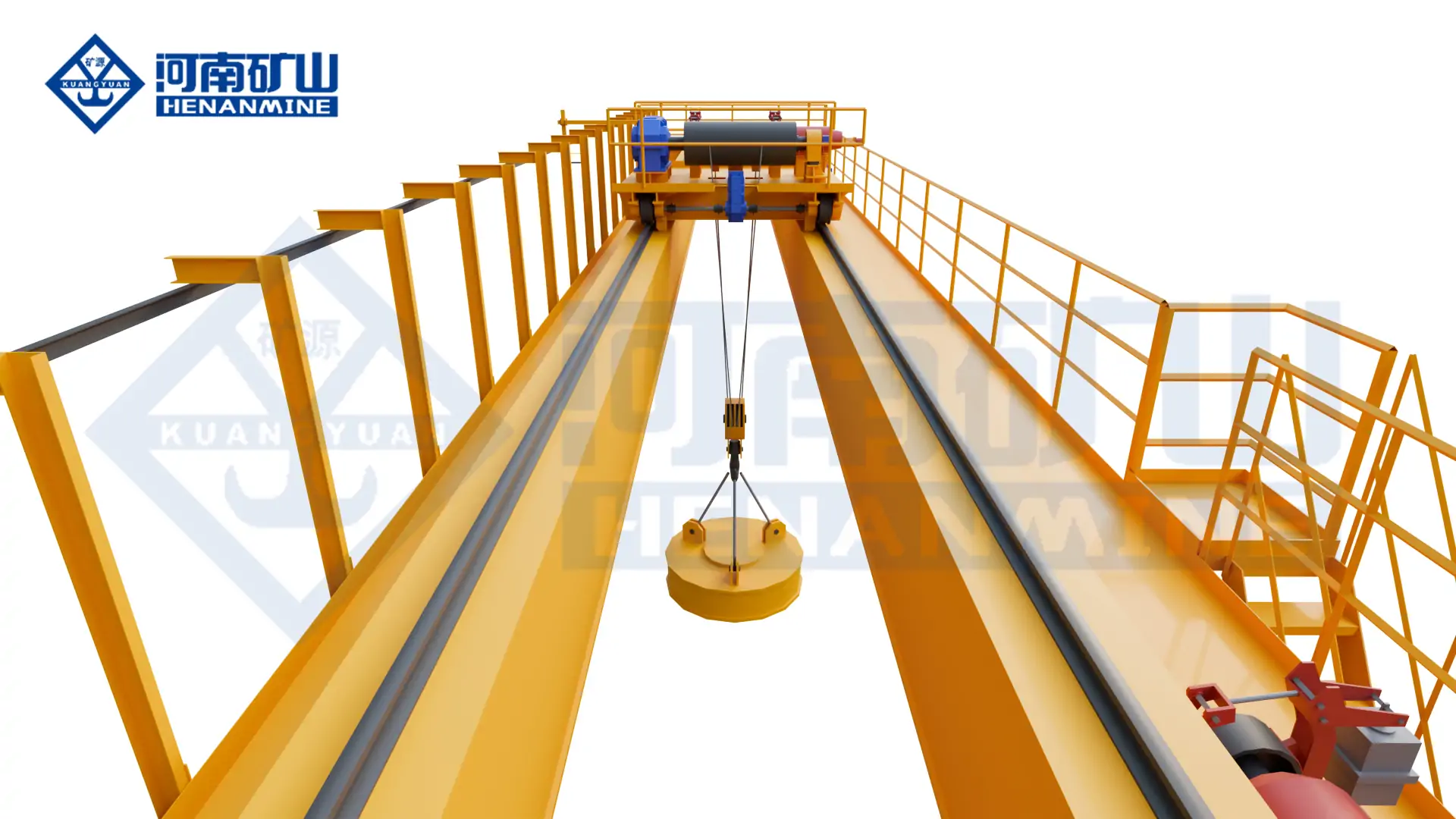
Attachment Capacity Is Part of Crane Capacity
A 10 t workpiece with a 2 t beam and rigging requires more than a 10 t crane. The same principle applies to magnets: the published crane rating may include the magnet mass, so usable material capacity must be confirmed explicitly.
Attachment storage, changeover, electrical connections, identification, inspection status and the prevention of wrong-device selection should be included in the operating concept.
Workshop Layout, Runway and Production Coverage
A fabrication-crane quotation should show the useful hook envelope, not only the nominal span. Columns, end approaches, trolley approach, hook block size, roof bracing, lighting, extraction ducts, machines and maintenance platforms can create blind areas.
New Workshop
Coordinate crane wheel loads, rail elevation, column grid, roof clearance, maintenance access and electrification before structural steelwork is released for fabrication.
Existing Runway
Survey rails, beams, brackets, columns, connections and foundations for geometry, wear, corrosion, fatigue and the reactions from the proposed crane and duty.
Outdoor Yard
Define foundations, rail drainage, vehicle crossings, stormwater, wind operating limits, storm securing, corrosion category, temperature and safe parking position.
Controls, Positioning and Workshop Environment
Control Strategy
Radio control commonly supports mobile fabrication teams and a direct view of the load. Pendant control can suit local, lower-speed work. A cabin may be justified for heavy, repetitive or long-travel service. PLC-assisted functions can add stored positions, restricted zones, anti-sway, collision avoidance, diagnostics and production-system interfaces.
Required positioning should be stated as a measurable tolerance at a defined load, speed and location. Creep speed, brake response, load swing and operator visibility are often more important at a welding jig than maximum travel speed.
Environmental Review
Welding fumes, conductive grinding dust, blasting media, humidity and outdoor corrosion influence motor, brake, cable, bearing, enclosure, coating and maintenance decisions. A paint or solvent area requires a documented hazardous-area review before electrical equipment is selected.
An explosion-protected crane is not selected solely because painting occurs somewhere in the plant. The owner’s area-classification documents, substance data, ventilation and local rules establish whether special electrical protection is required.
Design Basis, Inspection and Acceptance
The contract identifies the destination, governing crane classification, structural and mechanism rules, electrical requirements, below-hook device standard, local inspection and registration route. Depending on the project, the design basis may reference ISO 4301 classification; EN 13001, EN 15011 and EN 13155; or CMAA 70 with applicable ASME B30.2, B30.20 and BTH-1 provisions. Local law and the signed specification govern final compliance.
Design Review
Load and duty matrix, classification, fatigue basis, deflection criteria, wheel loads, attachment, control philosophy, environmental data, access and interface schedule.
Factory Inspection
Material traceability, welding and NDT records as specified, dimensions, mechanism tests, panels, software, limits, alarms, coating and document review.
Site Acceptance
Runway and alignment checks, functional and load tests, attachment trial, long-load sequence, controls, safety functions, training, spares and final documentation.
Published Industrial Manufacturing References
XCMG Manufacturing Program
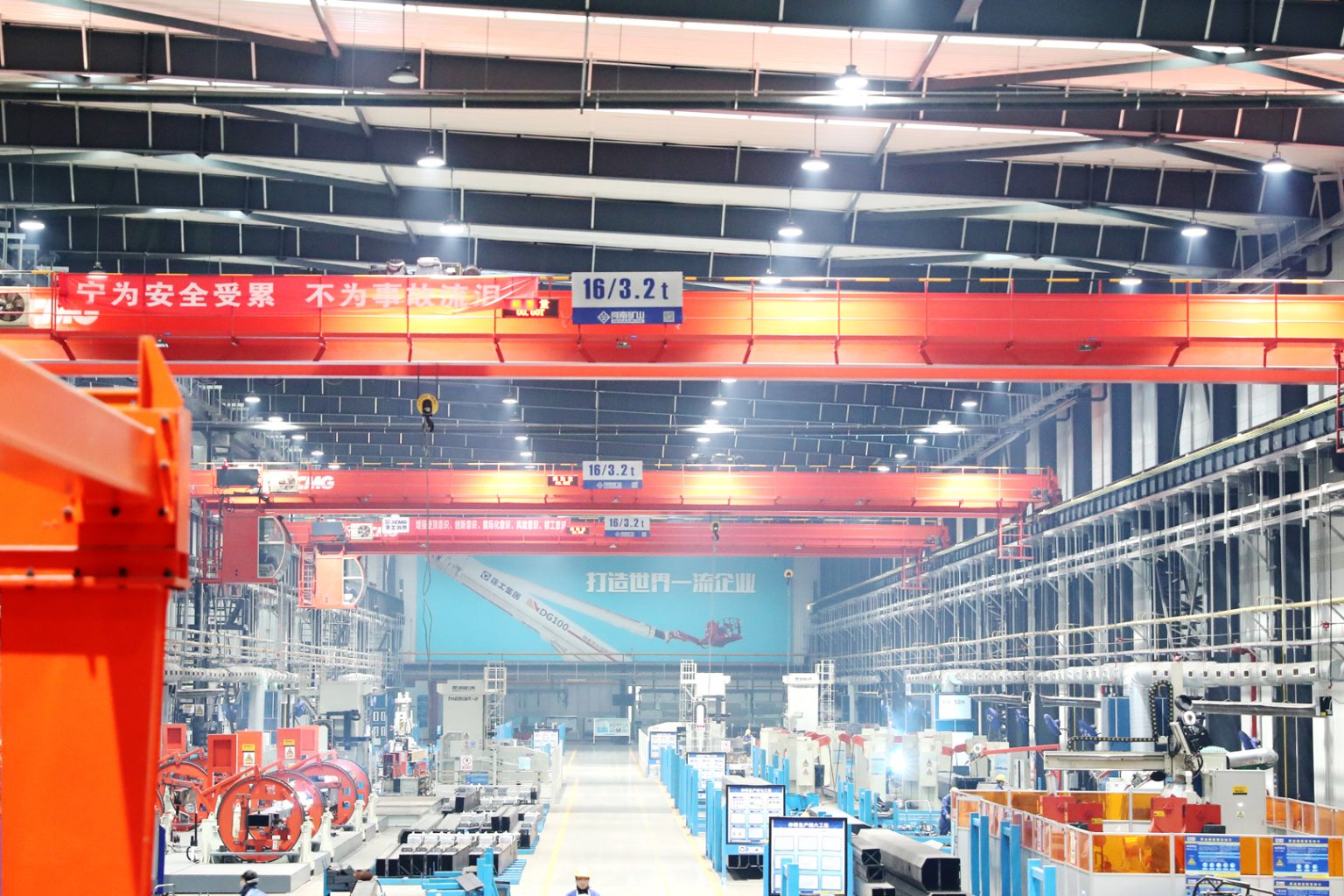
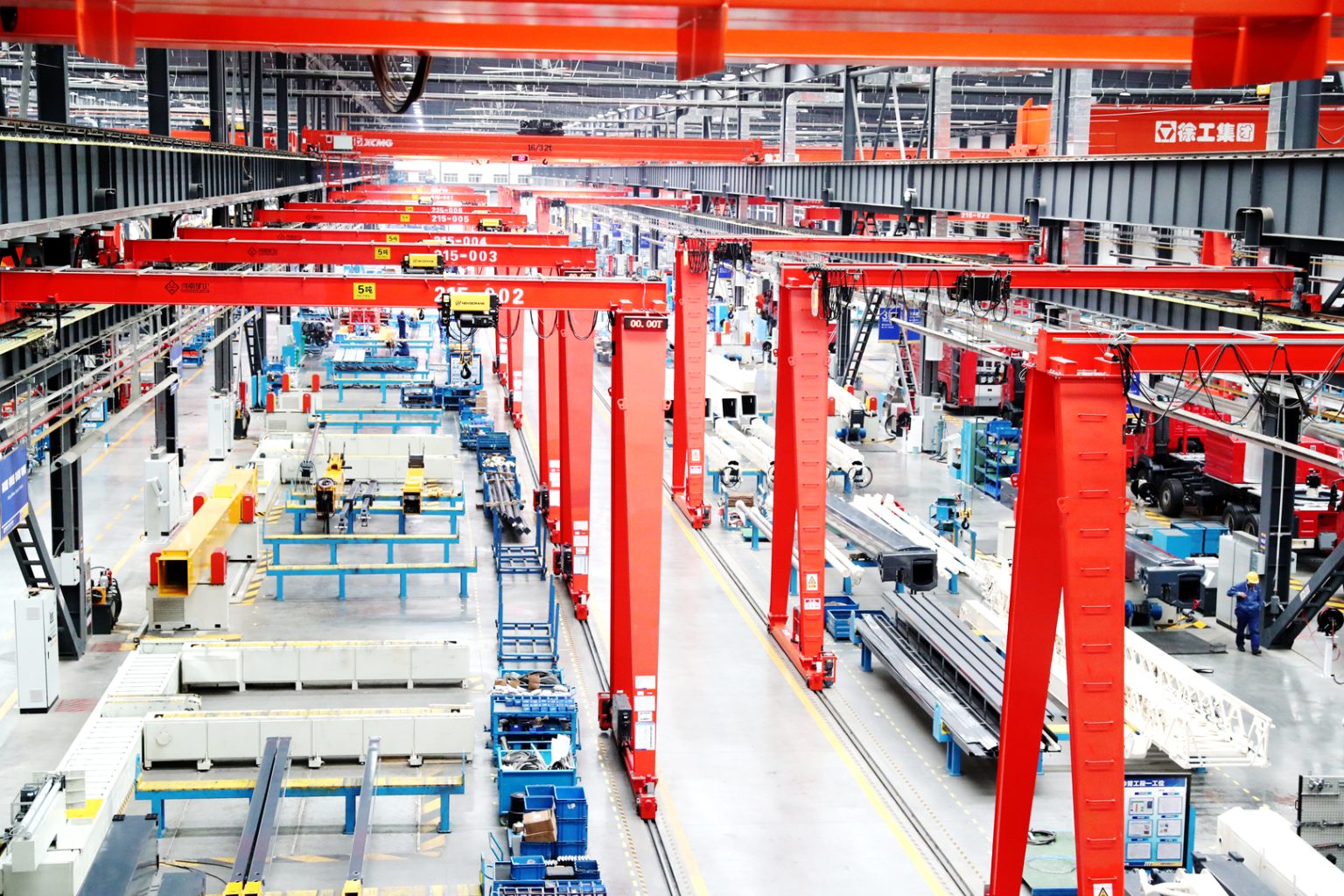
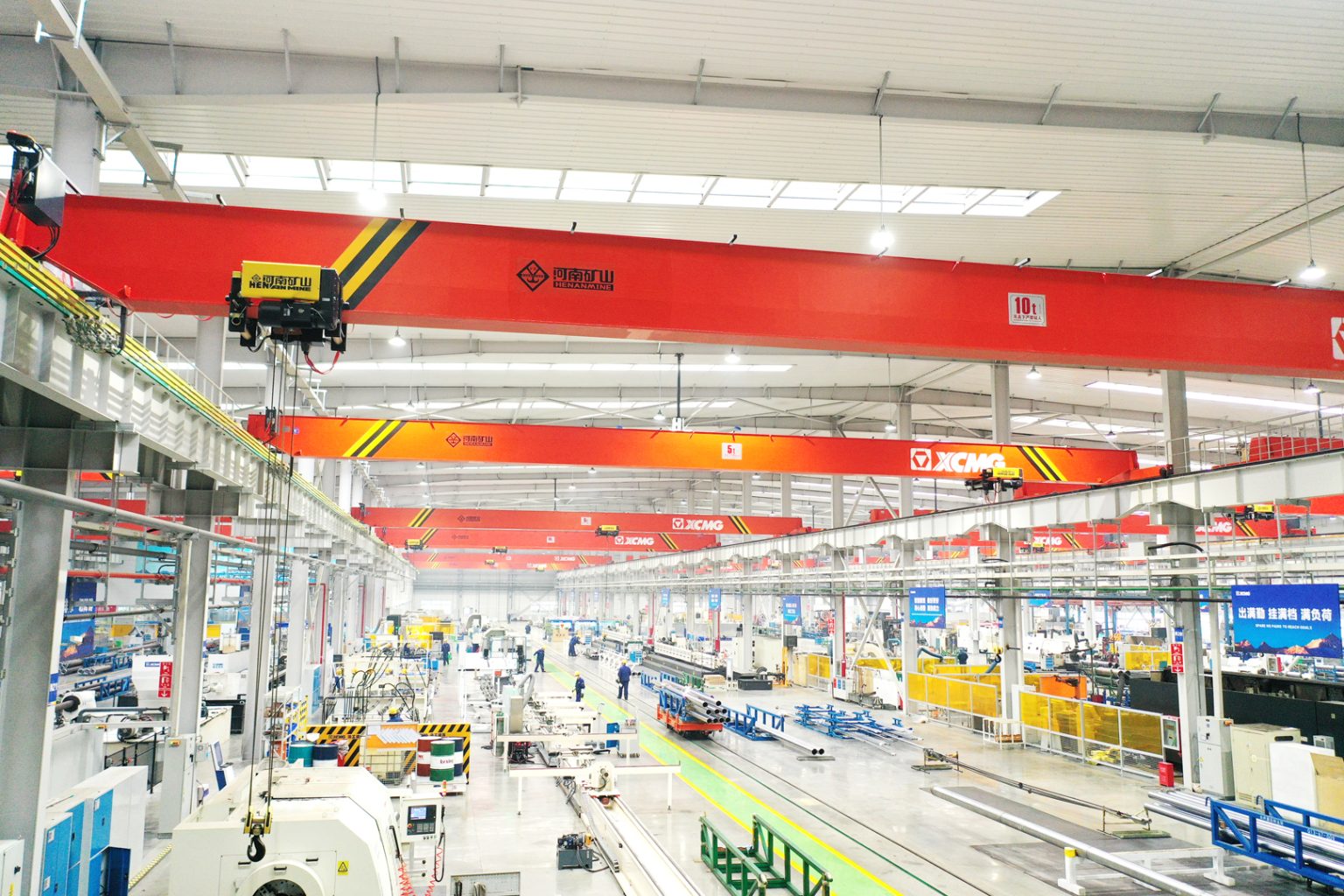
A published Henan Mine Crane industrial-manufacturing reference states that more than 300 intelligent cranes of multiple types were contracted for XCMG Group and used across construction-machinery assembly and structural production processes.
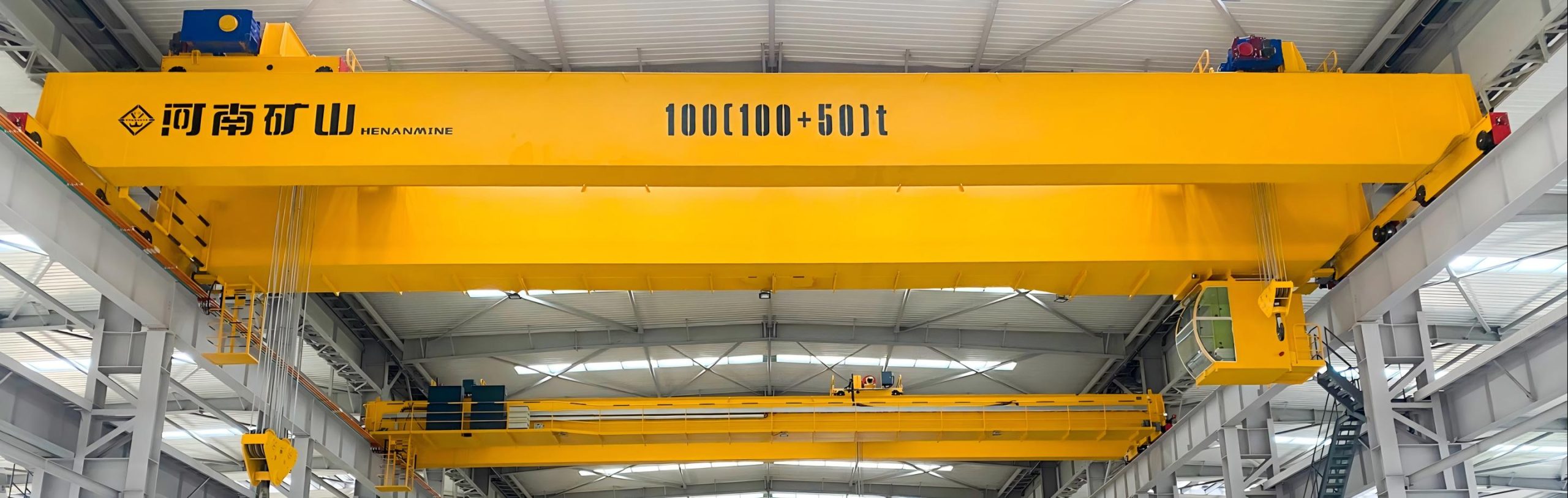
Tangxing Heavy Equipment Plant
A separate published reference reports more than 100 cranes for a trenchless-equipment industrial park, configured for a 25 m-high heavy steel plant and production supporting an annual output of 500 pipe-jacking machines.
Evidence boundary: these references demonstrate batch crane supply for structural production, assembly and heavy equipment manufacturing. They do not establish one standard steel fabrication crane specification; every new system is configured from its own loads, layout, duty and acceptance criteria.
Steel Fabrication Crane Price and Budget Scope
Steel fabrication crane prices vary materially because public listings may describe only a basic crane package or kit, while an operational project can also require bridge girders, runways, electrification, attachments, freight, erection, commissioning and local inspection.
A public market review completed on 20 September 2026 found an ordinary 1–10 t single-girder overhead crane listing at US$2,600–5,500 per set. A separate United States listing showed US$28,500 for a 10 t top-running single-girder crane kit, explicitly excluding bridge beams, runway rails, runway conductor bar, fabrication and installation. These figures are scope examples, not Henan Mine Crane quotations and not complete installed steel-fabrication systems.
| Public Reference | Published Price | Scope Interpretation | Budget Use |
|---|---|---|---|
| Ordinary 1–10 t Single-Girder Listing | US$2,600–5,500 per set | Marketplace FOB reference with limited project boundary | Indicative equipment listing only |
| 10 t Top-Running Single-Girder Crane Kit | US$28,500 | Kit only; bridge beams, runways, runway electrification, fabrication and installation excluded | Useful example of component-scope pricing |
| Complete Steel Fabrication Crane Project | Project quotation | Crane, runway, attachment, interfaces, logistics and site services as specified | Required for a comparable procurement budget |
Main Cost Drivers
Capacity, span, lift, single or double girder, one or two trolleys and working classification.
Rails, beams, columns, foundations, wheel loads, access platforms and structural modification.
Spreader, clamps, magnets, custom fixtures, electrical supply, storage and proof testing.
VFD motion, radio, cabin, synchronization, anti-sway, collision avoidance and automation.
Dust protection, hazardous-area equipment, corrosion system, outdoor wind and temperature.
Freight, duties, erection, electrification, commissioning, testing, training, spares and documentation.
Comparable quotation rule: issue the same load matrix, material-flow plan, duty, building data, attachment requirement, standards and supply boundary to every supplier. Require a priced list of inclusions, exclusions, provisional items, utilities, site services and acceptance tests.
Information Required for a Steel Fabrication Crane Quote
A complete enquiry allows the crane, runway, attachment, controls and site services to be selected and priced on one defined basis.
Load and Attachment Data
Maximum gross load, normal load distribution, dimensions, center of gravity, material and surface, pickup points, lifting beam, clamps, magnets, slings and finished-product drawings.
Production Duty
Process map, lifts and starts per hour, shifts, annual hours, load spectrum, travel distance, simultaneous motion, cycle target, availability and future capacity plan.
Workshop and Runway
Rail-center span, runway length and elevation, lift, headroom, approaches, column spacing, rail and beam details, existing wheel-load limits, foundations and installation access.
Long-Load Operations
Maximum length, stiffness, hook spacing, two-point load sharing, synchronization tolerance, turning sequence, tandem operation and clearance envelope.
Controls and Environment
Pendant, radio, cabin or automatic mode; speed and positioning; anti-sway; collision zones; power supply; dust, fumes, paint area, humidity, corrosion, temperature and outdoor wind.
Commercial and Compliance Scope
Destination, standards, inspection route, Incoterm, freight, runway, installation, electrification, commissioning, load test, operator training, spares, documentation and warranty.
Frequently Asked Questions
Which crane is suitable for a steel fabrication shop?
Single-girder cranes commonly serve light-to-medium general handling. Double-girder cranes suit heavier or more intensive duty. Long loads may require two hoists or trolleys, while outdoor stock normally favors a gantry crane.
How is crane capacity calculated?
Add the heaviest workpiece, beam, magnet, clamps, slings, shackles, hook block and every suspended component. Then evaluate eccentric loading, multiple pickup points, load sharing, dynamics and approved turning cases.
When are two hoists or two trolleys required?
They are considered when a long or flexible assembly needs two support points, when hook spacing must change, or when an approved turning sequence requires separate control. Capacity split and synchronization must be specified.
Can an electromagnetic crane lift every steel plate?
No. Magnetic properties, thickness, flatness, temperature, coating, rust, scale, air gaps and stacked layers affect holding performance. The magnet and power-loss strategy must be validated against each approved load family.
How much does a steel fabrication crane cost?
Public equipment references reviewed in September 2026 ranged from US$2,600–5,500 for one ordinary 1–10 t single-girder listing to US$28,500 for a 10 t crane kit. Neither represents a complete installed project; final price depends on the full technical and commercial scope.
Can an existing runway be reused?
Only after rails, beams, brackets, columns, connections and foundations are checked for condition, geometry, fatigue and the proposed vertical, horizontal and dynamic crane reactions.
Is radio control suitable for fabrication?
Radio control can provide a direct view of the load and mobility between workstations. The risk assessment must still define operator position, emergency stop coverage, travel warnings, restricted zones and control of multiple cranes.
What should be tested before handover?
Testing covers motions, brakes, limits, overload protection, controls, attachments, positioning, collision functions, representative long loads, tandem modes, proof load and the agreed emergency response.
Related Steel Fabrication Crane Products
These product platforms cover the principal indoor, long-load, magnetic and outdoor handling routes used in steel fabrication facilities.
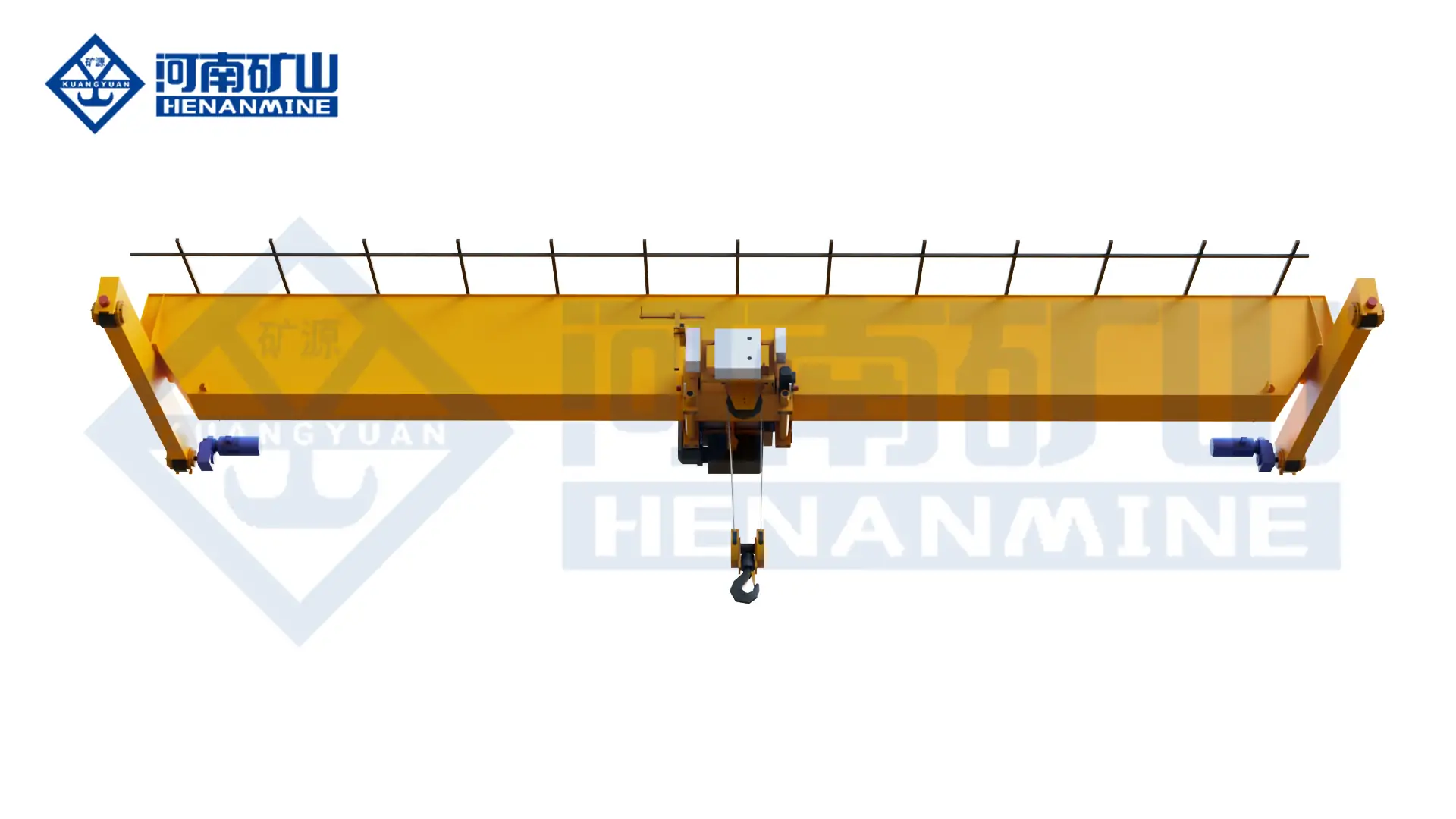
European-Style Single-Girder Crane
Compact overhead platform for general plate, parts and subassembly transfer.
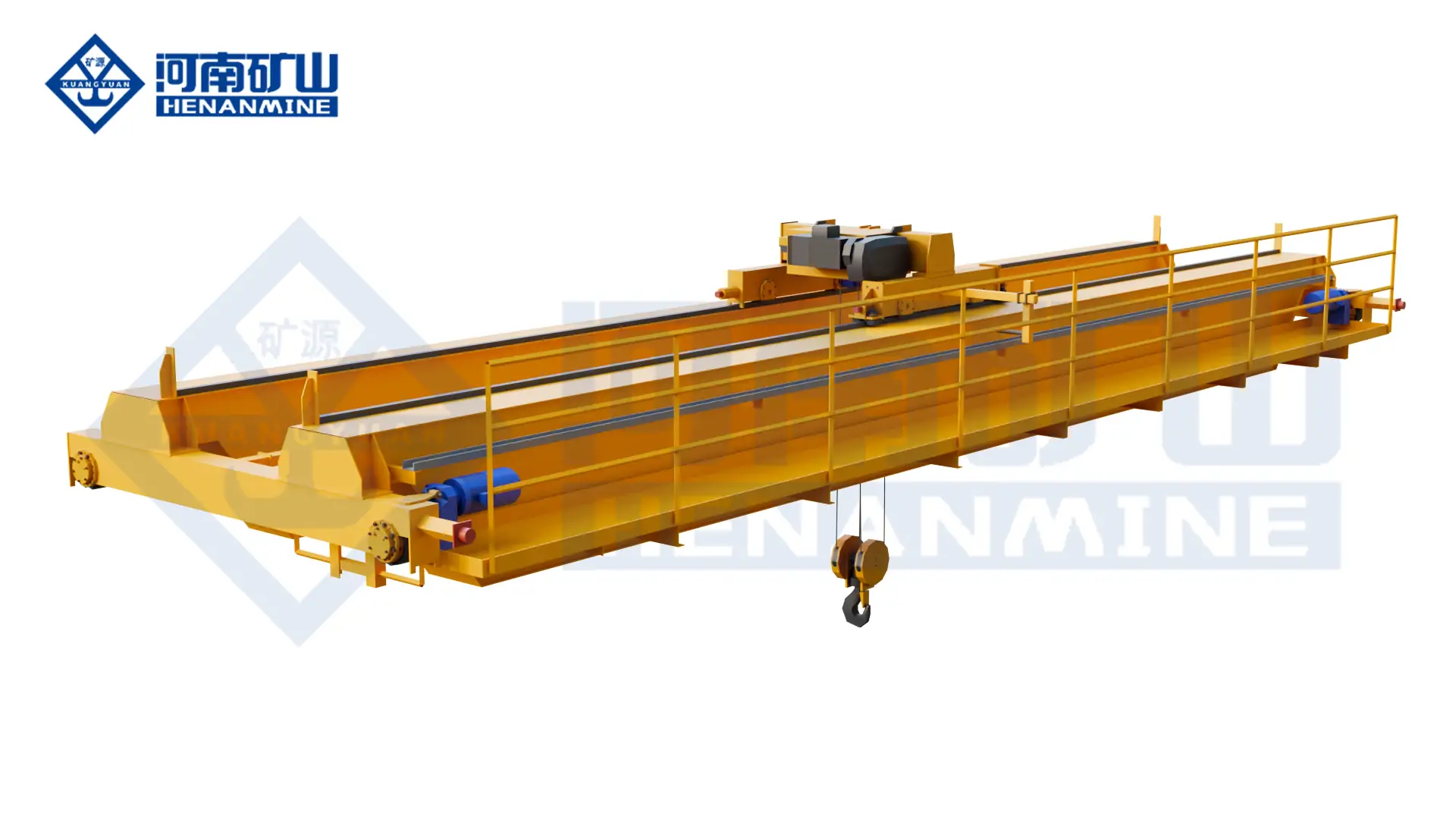
Intelligent Electric Hoist Overhead Crane
Double-girder electric-hoist platform for heavier fabrication and assembly duty.
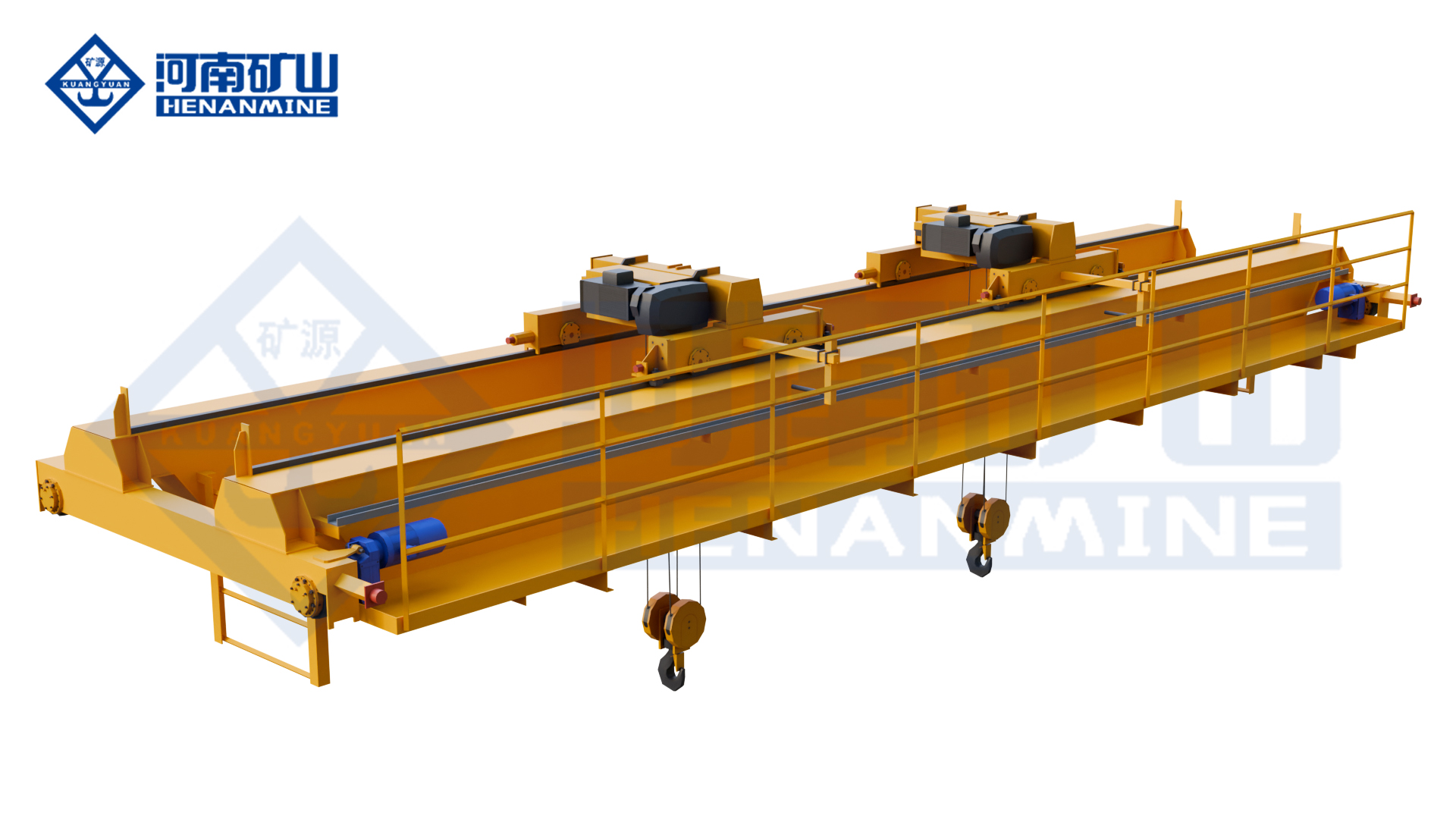
Double-Trolley Overhead Crane
Two-point lifting platform for long beams, frames, vessels and controlled repositioning.
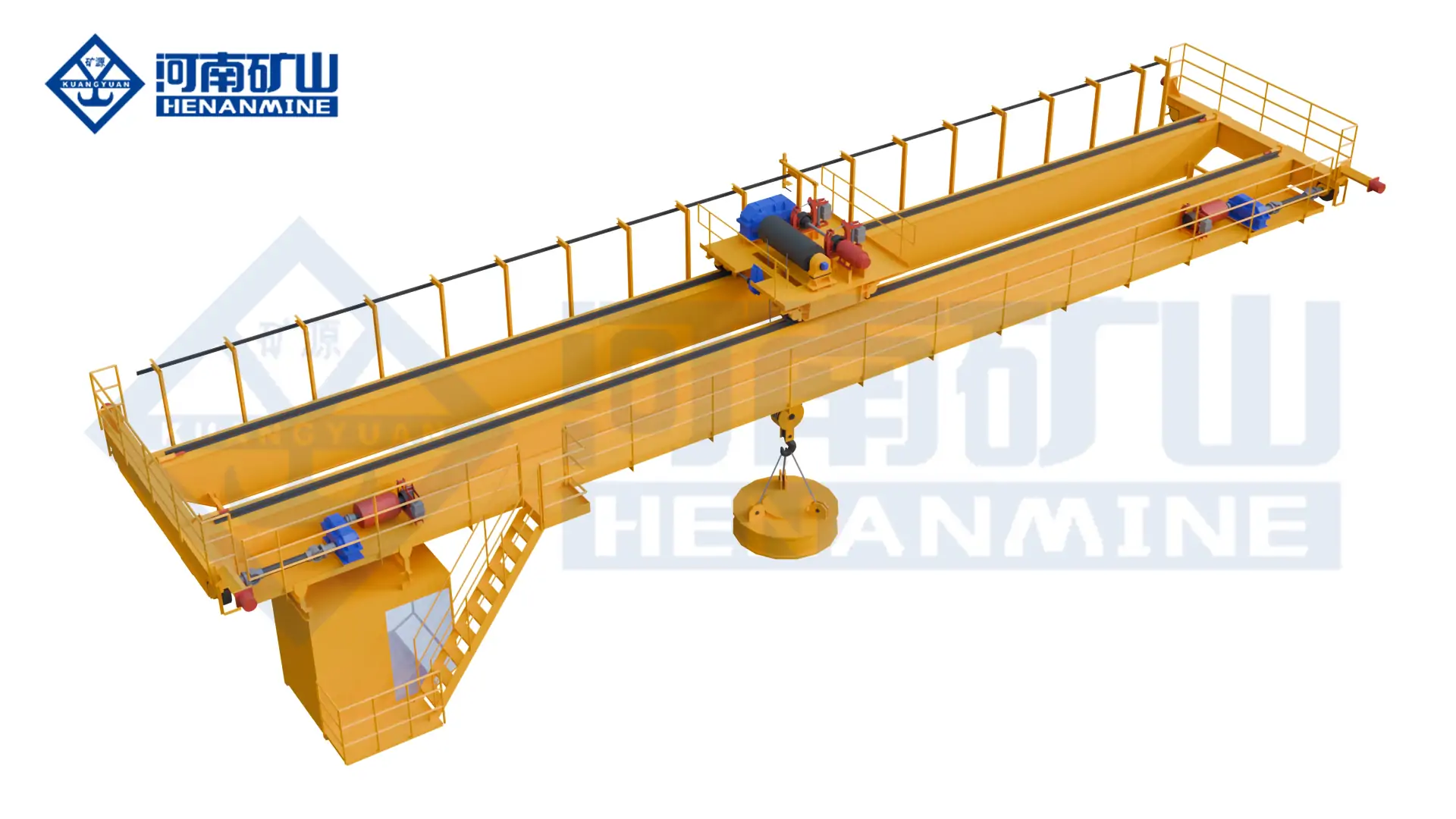
Electromagnetic Bridge Crane
Magnetic handling platform for compatible steel plate, sections and offcuts.
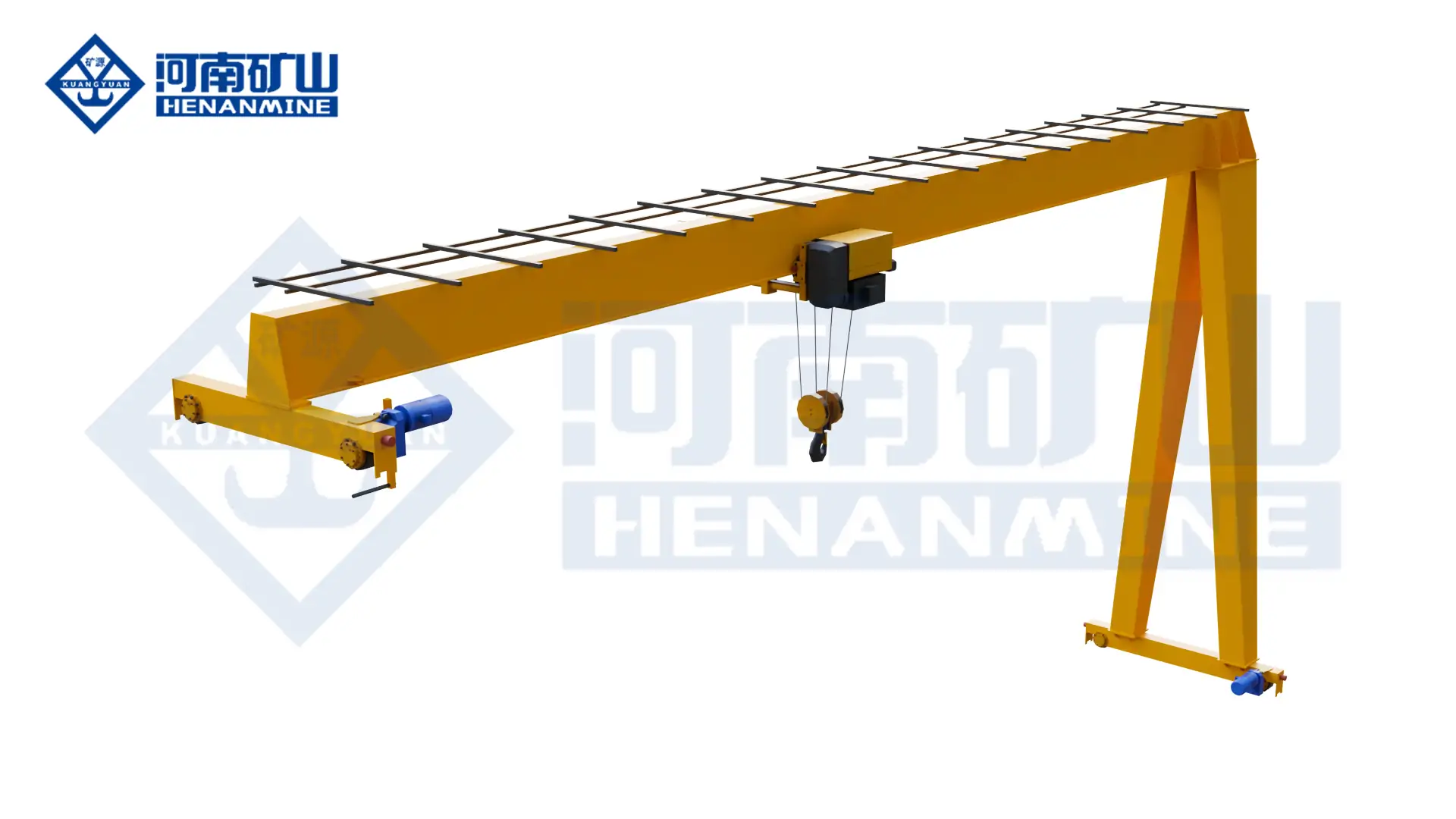
Single-Girder Semi-Gantry Crane
Local lifting solution for a side bay, machine line or workshop extension.

Single-Girder Gantry Crane
Ground-supported system for outdoor stock, fabrication and dispatch areas.
Request a Steel Fabrication Crane Quote
Submit the load and attachment matrix, longest-product drawing, production flow, lifts per hour, span, lift, runway and building data, control requirements, environment, destination and supply boundary. Henan Mine Crane will prepare a configuration-based technical and commercial proposal.