
Henan Mine Crane · Depot and Maintenance Yard Lifting
Railway Maintenance Crane Systems
Overhead, gantry and dual-hoist crane configurations for rolling-stock depots, locomotive repair shops and outdoor maintenance yards.
The right system starts with the maintenance task: the complete suspended load, lifting points, track-to-workstation route, building or yard support, operating duty and site acceptance requirements.
SERVICE AREAS
Depot · Workshop · Yard
CORE EQUIPMENT
Bridge · Gantry · Semi-gantry
TYPICAL LOADS
Bogie · Wheelset · Traction Unit
FIRST DESIGN INPUT
Lift route and full load mass
What Is a Railway Maintenance Crane?
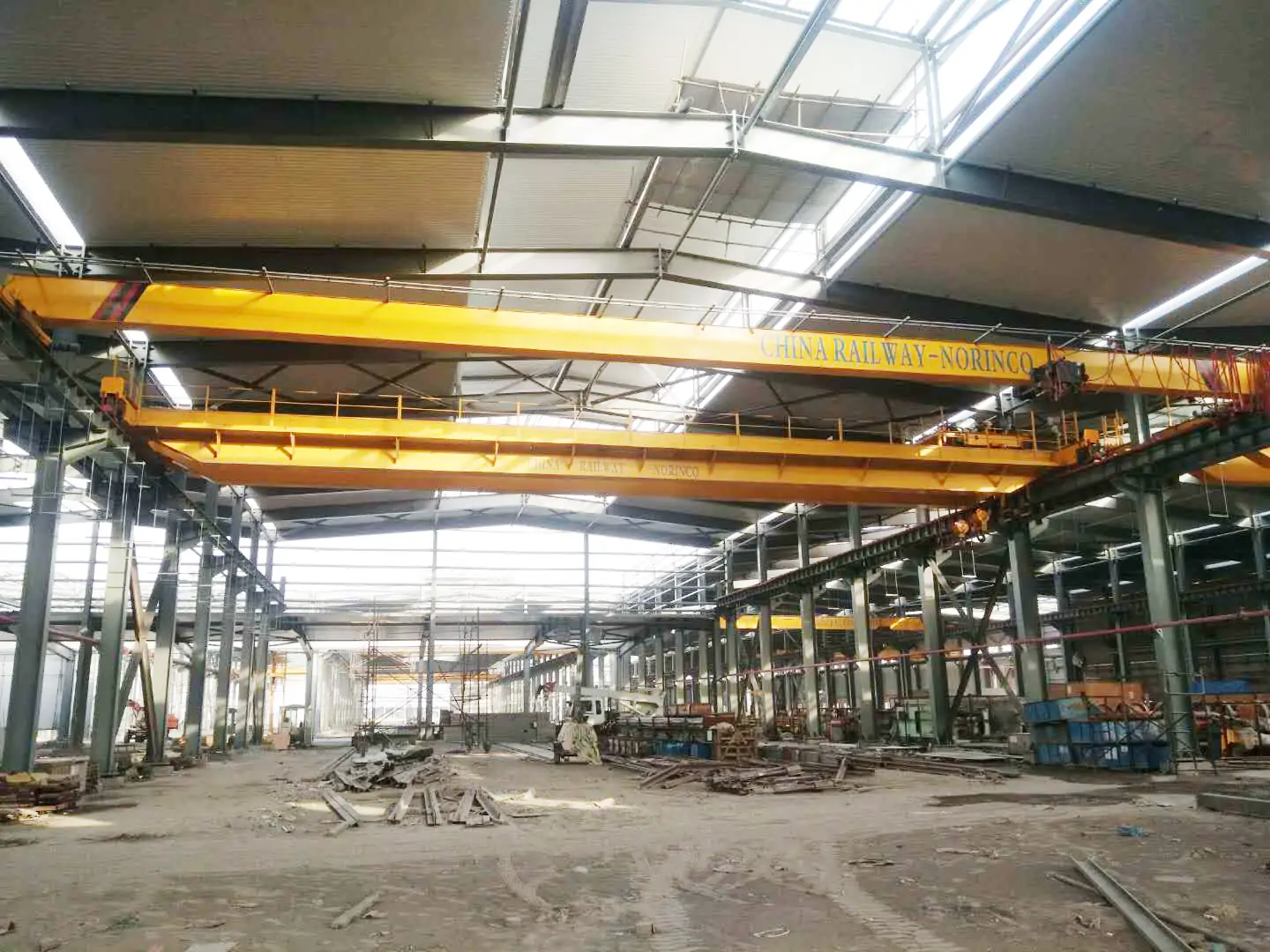
A railway maintenance crane is lifting equipment selected for servicing, overhauling or assembling rail vehicles and railway assets. Inside a depot, a bridge crane moves components above a maintenance road. In an outdoor repair or storage yard, a gantry crane can serve a fixed travel corridor without relying on a roof-supported runway. A semi-gantry crane can connect a building-supported side to a ground-level rail where the layout permits.
The term also appears in searches for self-propelled railborne cranes used for track work and accident recovery. Those machines require rail-vehicle approvals, route compatibility and on-track operating rules. The fixed overhead and gantry systems shown here are for depots and yards; they are not railborne breakdown cranes.
Within one covered workshop, selection narrows to building runways, hook height and the component path. A depot-wide purchase also covers outdoor yards, civil works, simultaneous lifts and fleet availability.
Plan the Lift from Vehicle to Workstation
A crane schedule should follow each component through removal, transfer, repair and reinstallation. In a depot, a traction motor may move from a vehicle on a pit road to a service stand. A bogie may travel from a drop-table area to inspection, washing or overhaul positions. Outdoor storage or loading may need a separate gantry because the indoor bridge does not reach the yard.
- Record vehicle type, maintenance task and approved pickup points.
- Mark the load path across tracks, pits, doors, platforms and workstations.
- Set the heaviest complete suspended mass, including beam and rigging.
- Count ordinary lifts and exceptional heavy or multi-point lifts separately.
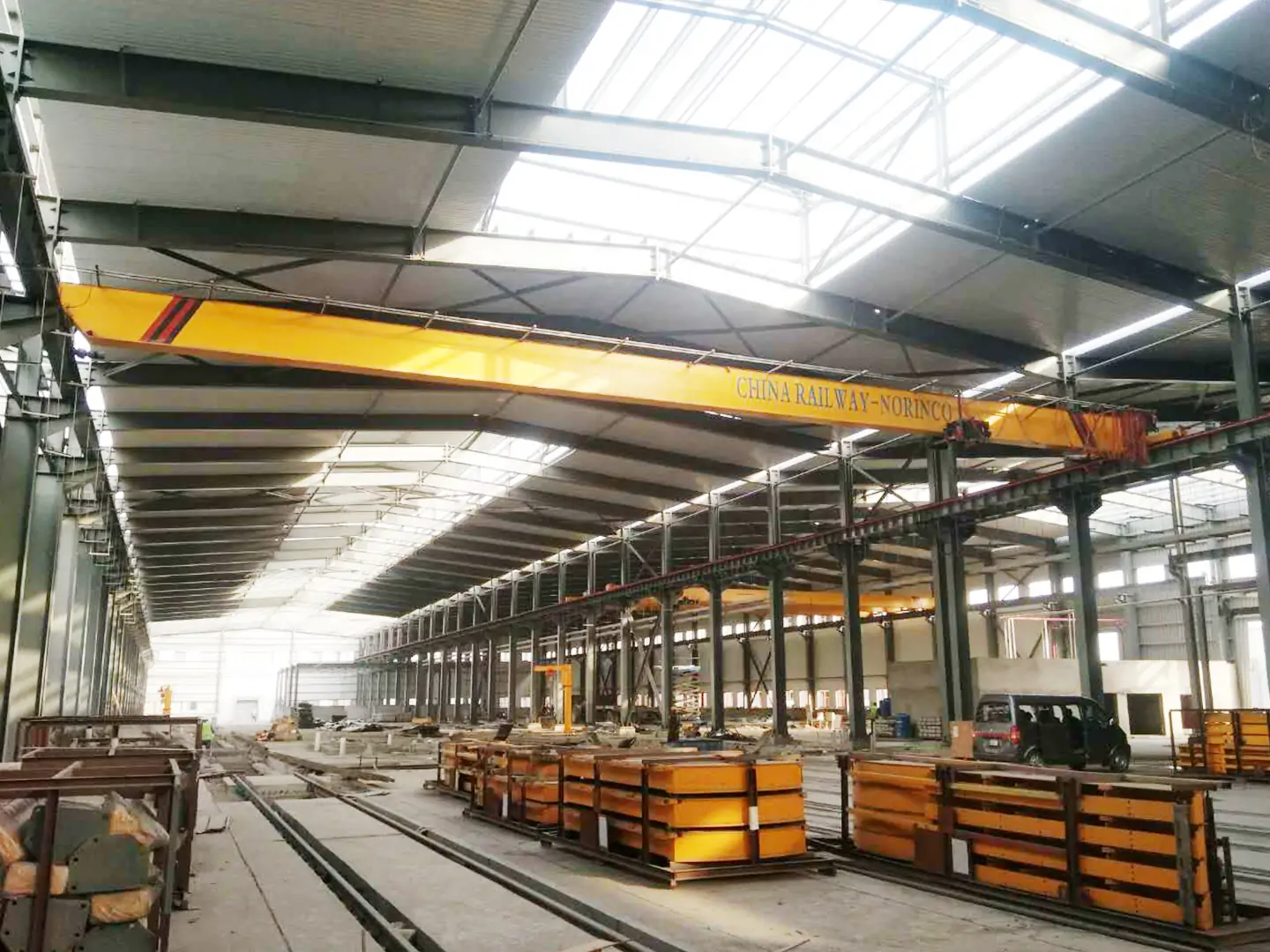
A fleet plan can use one crane type for repetitive general work and a different engineered solution for occasional long or high-consequence lifts. Do not size every bay from a single headline vehicle weight.
Railway Maintenance Crane Selection Considerations
Location and coverage
Choose by where the load must move: under a roof, along a fixed outdoor track or between a building wall and yard rail.
Complete load and lift points
Include the component, beams, slings and clamps; obtain vehicle-maker lifting instructions for bogies or bodies.
Structure and civil works
Check roof or runway capacity for bridge cranes and ground rails, drainage and foundations for gantries.
Duty and availability
Specify lifts per shift, load spectrum, operating hours, maintenance access and the consequence of a crane being out of service.
The procurement comparison should keep crane equipment, civil works, electrical installation, commissioning and lifting attachments as separate priced lines.
Crane Configurations by Maintenance Location
| Maintenance location | Configuration to evaluate | Deciding interface |
|---|---|---|
| Indoor vehicle or component bay | Single- or double-girder bridge crane. | Runway rail centers, roof clearance, hook approach and structural wheel loads. |
| Long assembly or two-point task | Double-trolley bridge crane or a specifically engineered multi-point arrangement. | Individual hook ratings, combined load, synchronization and lift plan. |
| Open maintenance yard | Single- or double-girder gantry crane. | Travel-rail route, foundations, vehicle clearances, power and wind conditions. |
| Building-to-yard edge | Semi-gantry crane where one side has an adequate elevated support. | Wall-side runway, ground rail alignment and differential settlement. |
| Track renewal or derailment response | Specialist railborne or road-rail crane. | Rail vehicle approvals, route limits, outriggers and recovery plan. |
Select a fixed crane from the actual service envelope. A railborne crane is a different procurement category from a depot bridge or yard gantry.
Technical Data That Determines the Crane
| Input | Specify | Purchase consequence |
|---|---|---|
| Capacity | Maximum complete suspended mass and load distribution at each hook. | Sets hoist, bridge, brakes, wheels and support reactions. |
| Geometry | Bridge span or gantry rail gauge, travel length, hook height and approach limits. | Defines which tracks and workstations are truly served. |
| Operating duty | Lifts per hour, shifts, average and maximum load frequency. | Changes machinery life, controls and service intervals. |
| Precision | Positioning requirements at pins, stands, drop pits and fixtures. | May justify variable-speed motions and anti-sway controls. |
| Site | Electrical supply, indoor/outdoor exposure, drainage and maintenance access. | Determines protection, civil work and power distribution. |
For a retrofit, an approved general arrangement should follow an actual site survey. For a new depot, send maximum wheel loads and electrical demands to the civil and building designers before they freeze the structural scheme.
One Crane or a Depot-Wide Fleet?
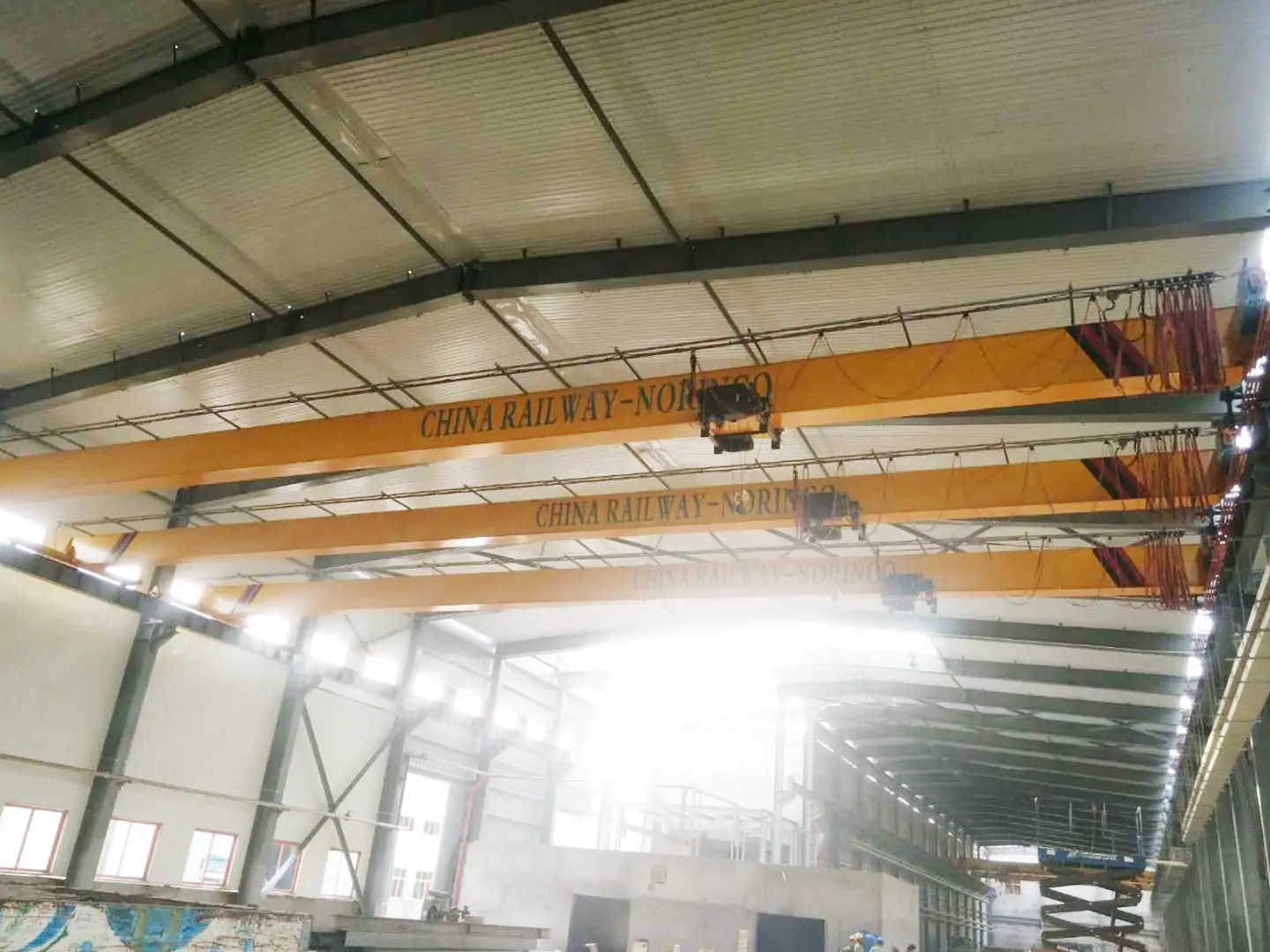
A single bridge crane may cover several adjacent work positions only when its runway reaches them, the operating routes remain clear and simultaneous maintenance demand is low enough. Multiple cranes become relevant when separate bays work at the same time or when an indoor crane cannot reach an outdoor yard.
Estimate peak overlapping lifts by task and bay, then check whether each crane can reach pickup and landing positions without crossing an occupied road. Separate routine handling from rare bogie, carbody or recovery lifts. Availability planning should also state whether maintenance can continue while one crane is isolated for service.
For outdoor work, compare a shared gantry travel corridor with separate local cranes. Rail crossings, road vehicles, parked rolling stock, turnouts and pedestrian access can limit a theoretically large coverage area.
Bridge Crane, Yard Gantry or Railborne Crane?
Bridge crane
Best evaluated where an engineered building runway exists and the lift stays within a workshop. Leaves the floor free but transfers reactions into the structure.
Gantry crane
Best evaluated for a fixed outdoor maintenance route or storage/transfer area. Requires travel rails or an engineered surface and a clear path for legs.
Railborne crane
Used for trackside installation, infrastructure work or recovery at changing locations. Must be selected as a rail vehicle with route and operational approvals.
A container RMG is optimized for container handling at a freight terminal. It should not be specified for bogie or machinery maintenance merely because both gantries run on ground rails.
Bogie, Wheelset and Long-Load Attachments
Component-specific lifting gear
Bogies, wheelsets, traction motors and gearboxes have different centers of gravity and pickup points. The attachment must match the component and the vehicle maker’s instructions. Include lifting beams, hooks, clamps and rigging in the rated load calculation and inspection plan.
Two-point and multi-point lifting
A long load may need two hooks on one crane, or another engineered arrangement. Specify the rating of each hoist, maximum combined load, hook spacing, load sharing, control mode, monitoring and response to a fault. A complete carbody lift needs a vehicle-specific design and approved procedure; a standard crane’s nameplate rating is not sufficient evidence.
Movement quality
Low-speed hoisting and travel, predictable braking and suitable operator sightlines matter during installation onto stands and fixtures. State the required handling task in the RFQ so the control scheme can be evaluated rather than assumed.
Runways, Ground Rails and Power
Bridge cranes need a verified runway span, rail elevation, beam condition and available headroom. Gantry cranes need the travel-rail geometry, ground bearing or foundation design, drainage and safe separation from vehicle and pedestrian routes. Both need a power route that avoids inspection pits, door movements and maintenance access.
At electrified facilities, define the traction-power isolation boundary and which authority controls it. Crane insulation, if separately specified, does not substitute for isolation or site electrical safety rules. Include earthing, conductor position and emergency-stop zoning in the interface review.
For a yard gantry, also establish the parked position, end stops, wind monitoring and storm-securing method appropriate to the site.
Safe Operation and Acceptance
The purchase specification should list overload protection, hoist and travel limits, emergency stop, buffers, alarms, braking and maintenance access. It should also state the local crane rules and railway operator procedures that apply at the destination. Load-test and acceptance arrangements must be agreed before delivery.
Commissioning should prove travel clearances, electrical functions, braking, control modes and each special attachment. Multi-point lifts require a documented procedure, defined exclusion zone and a competent lifting team. Vehicle movement, pit access and adjacent track use must be controlled during the lift.
Provide operators and maintainers with the approved drawings, manuals, inspection records, spare-parts list and a planned maintenance schedule for the installed system.
Published Railway Maintenance Projects
Lahore Orange Line depot, Pakistan
Henan Mine Crane reports supplying 32 cranes of various types for the metro line’s operation and maintenance project. Its case states that equipment in the vehicle section and parking area supports vehicle maintenance and commissioning. The published case does not assign a capacity or crane type to each of the 32 units. View project record
Xi’an locomotive maintenance, China
Henan Mine Crane’s case identifies a KSQ new double-girder crane for Xi’an Railway Bureau’s high-power locomotive maintenance project, dated October 2024. The source describes the crane’s modular layout but does not publish its capacity or span. View project record
These records establish railway-maintenance supply experience. The crane schedule for a new depot must still be built from its own vehicle fleet, lift paths and structural conditions.
Railway Maintenance Crane Price and Project Budget
Public 2026 supplier prices, checked on 28 September 2026, can frame an equipment budget. They describe standard industrial bridge and gantry cranes, not a completed railway maintenance facility. Every price below is in USD and must be matched to the quoted span, duty, hoist and delivery scope.
| Public 2026 equipment reference | Indicative USD price | Source and scope |
|---|---|---|
| 10 t double-girder overhead crane | US$12,000–35,000 | Henan Mine Crane market guide; equipment budget, delivery term not stated. |
| 5 t single-girder gantry, 18 m span | US$11,000–17,500 | Weiying Crane, 10 June 2026; equipment price reference, delivery term not stated. |
| 20 t double-girder gantry, 22 m span | US$39,000–57,000 | Weiying Crane, 10 June 2026; equipment price reference, delivery term not stated. |
| 10 t double-girder gantry, about 20 m span | US$20,000–30,000 | Voitto Crane 2026 guide; FOB factory reference from a separate supplier. |
These are market references, not Henan Mine Crane project offers. Shipping, insurance, taxes, foundations, runway or yard rails, power distribution, installation, commissioning, load testing and vehicle-specific lifting fixtures are outside or not defined in these equipment ranges. Synchronized multi-hook systems and railborne recovery cranes need separate engineered quotations. Compare supplier bids only after the same exclusions and delivery terms are shown line by line.
Lifecycle Planning for a Maintenance Depot
A depot crane is part of the maintenance timetable. The technical offer should therefore state inspection points, access to brakes, drives and ropes, recommended spares, fault reporting and a method to isolate one crane without disabling unrelated bays. Outdoor gantries also need a site-specific corrosion and weather-protection plan.
For a fleet of cranes, standardizing controls and critical spare parts where technically appropriate can simplify maintenance. Ask suppliers to identify which components are common across models and which are unique to a heavy or dual-trolley unit.
Engineering and Procurement Deliverables
- Crane schedule by bay and yard, with rated loads, spans or rail gauges, hook heights and duty.
- General arrangements showing lift paths, obstacles, approaches and maintenance access.
- Maximum wheel loads, foundation or runway reactions, motor power and conductor route.
- Control narrative, safety-device list and drawings for each special lifting attachment.
- Factory inspection, site-test plan, manuals, spares, training and service scope.
The facility structural engineer and railway operator should review the relevant interface documents before fabrication and installation.
Railway Maintenance Crane RFQ Checklist
| Information to send | Required detail |
|---|---|
| Maintenance duty | Vehicle types, components, maximum complete load, lifting points and lift frequency. |
| Location | Workshop, covered edge, yard or on-track work; mark every pickup and landing point. |
| Geometry | Runway span or gantry gauge, travel length, hook height, pit and track levels, obstacles. |
| Site services | Power supply, structural drawings, ground conditions, weather exposure and local rules. |
| Commercial scope | Crane only or installed package, destination, Incoterm, testing, training and spares. |
For a multi-point or whole-vehicle lift, send the vehicle manufacturer’s approved lifting information and request a separate engineered concept.
Railway Maintenance Crane FAQ
What crane is used for railway maintenance?
Indoor rolling-stock maintenance commonly uses a bridge crane; a fixed outdoor service corridor may use a gantry or semi-gantry. Trackside construction and recovery use specialist railborne or road-rail equipment.
How is a railway maintenance crane different from a rail workshop overhead crane?
A rail workshop overhead crane is one indoor bridge-crane solution. Railway maintenance crane is a broader buying category covering depot bridges, outdoor gantries and the question of specialist on-track equipment.
Can a gantry crane lift a railway carbody?
Only when the vehicle lifting points, load sharing, gantry rating, attachments, ground rails and an approved lift procedure have been engineered together. A general-purpose gantry rating alone is insufficient.
Is one crane enough for a depot?
That depends on simultaneous lifts, runway coverage, heavy-lift frequency and whether maintenance can continue during crane service. Build a bay-by-bay task schedule before deciding fleet size.
What should be included in a railway maintenance crane quote?
Rated load, geometry, duty, control, attachments, wheel loads, site interfaces, testing, delivery term, exclusions and service documents should be stated explicitly.
How much does a railway maintenance crane cost?
Public 2026 industrial crane equipment ranges vary from thousands to tens of thousands of US dollars for common bridge and gantry configurations. A depot-ready system depends on civil works, electrical scope, lifting fixtures and installation; railborne recovery cranes are a separate quote category.
Related Railway Maintenance Crane Products
Compare the available product families by maintenance location and support structure. Final suitability follows the approved site and lift calculations.
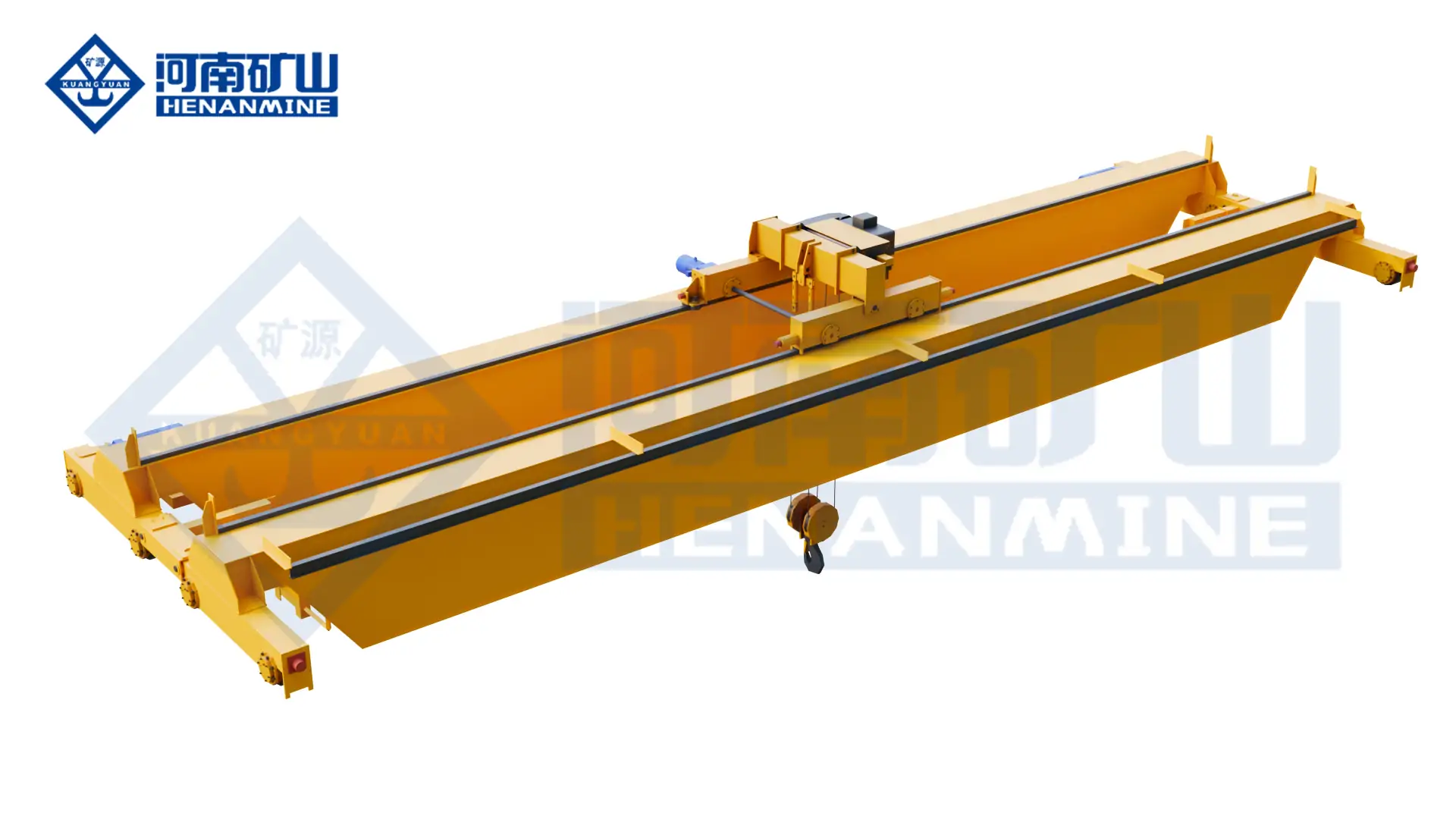
Double-Girder Bridge Crane
Indoor heavy-component handling for locomotive and rolling-stock overhaul bays.

Single-Girder Overhead Crane
An indoor option for routine lighter component transfers.
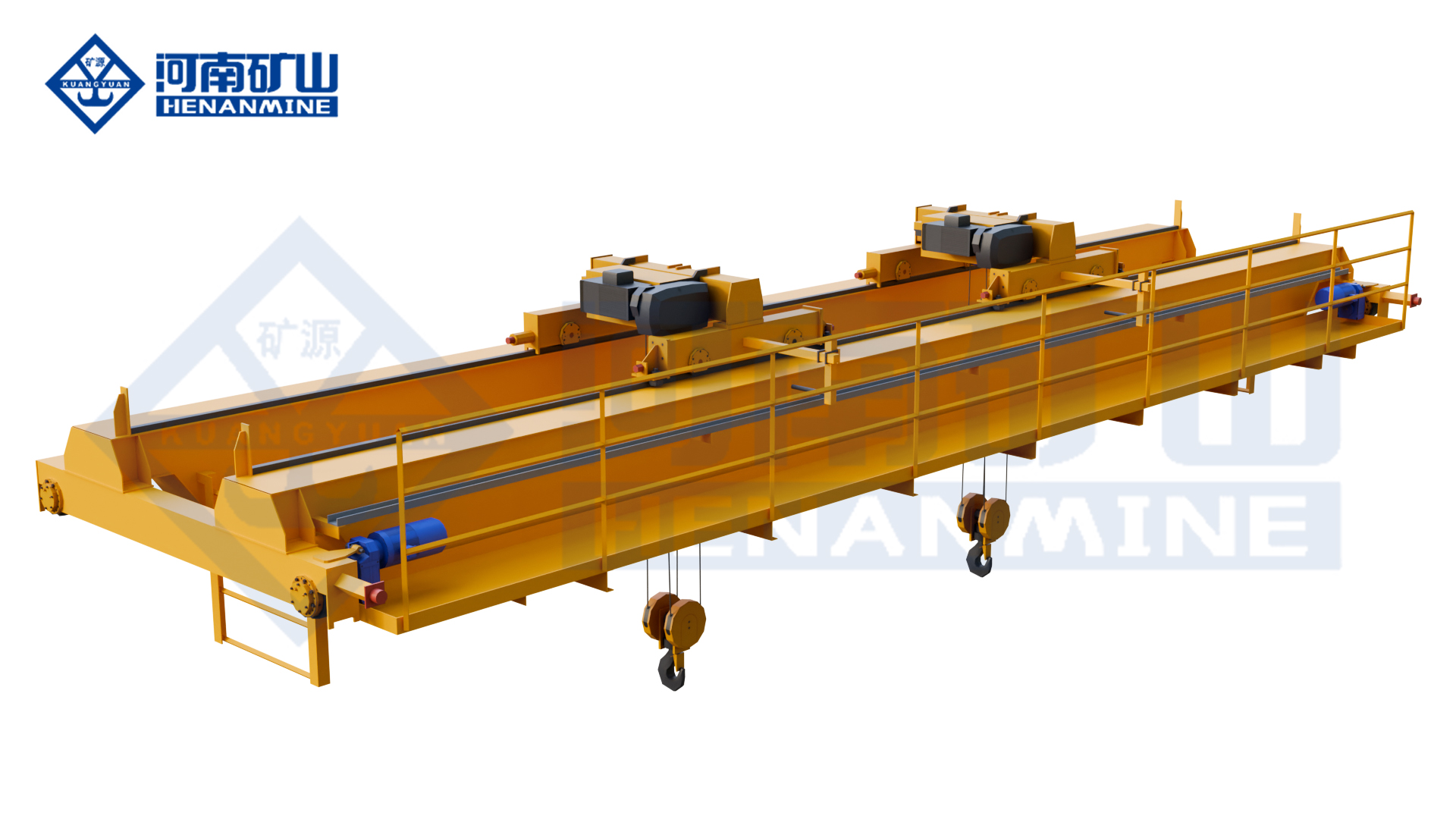
Double-Trolley Overhead Crane
Two-hook platform for an engineered long-load or coordinated lift.

Single-Girder Gantry Crane
Fixed outdoor yard route for suitable lighter maintenance loads.
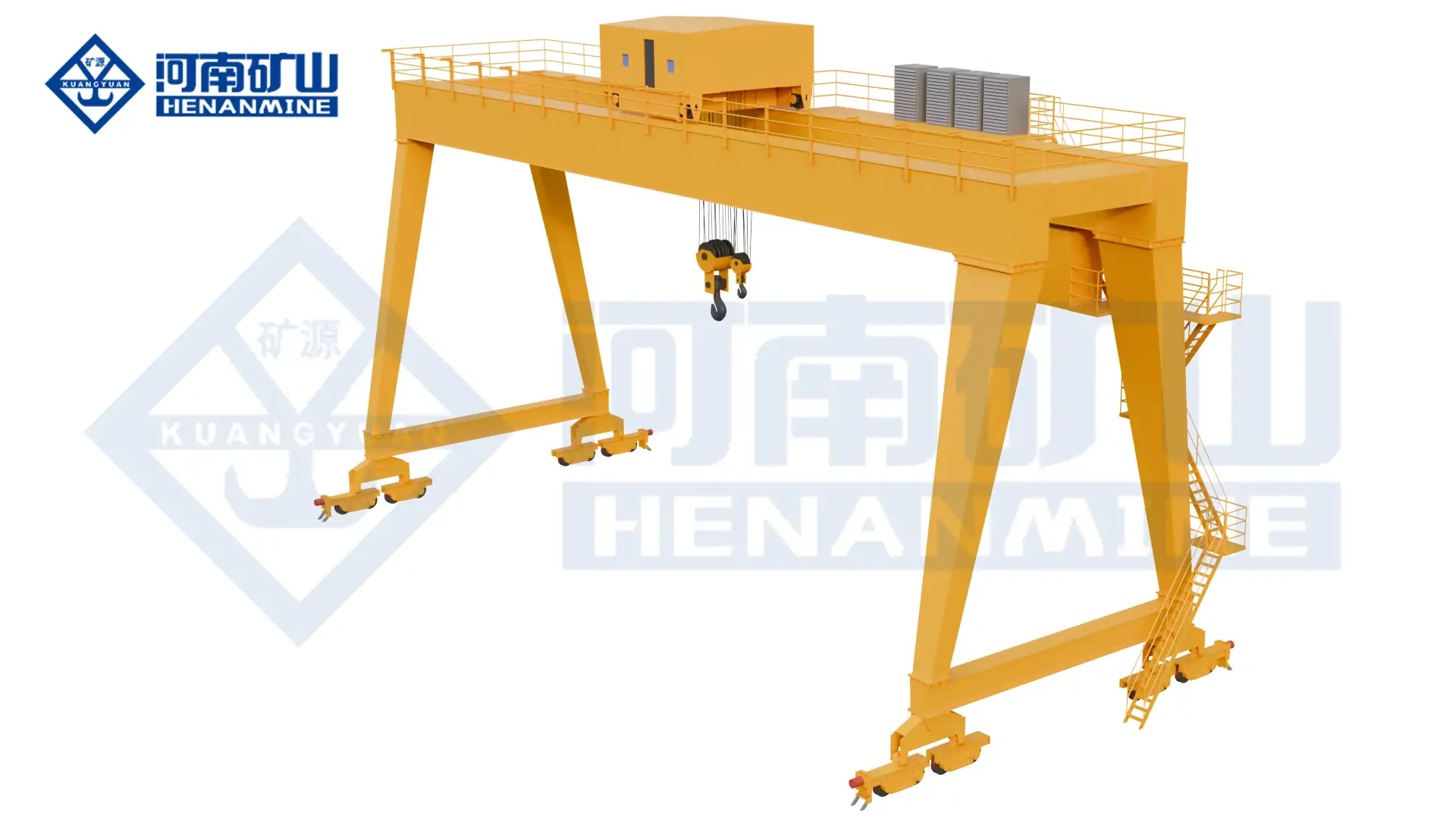
Double-Girder Gantry Crane
Outdoor heavy-component lifting where rail and foundation design allow.
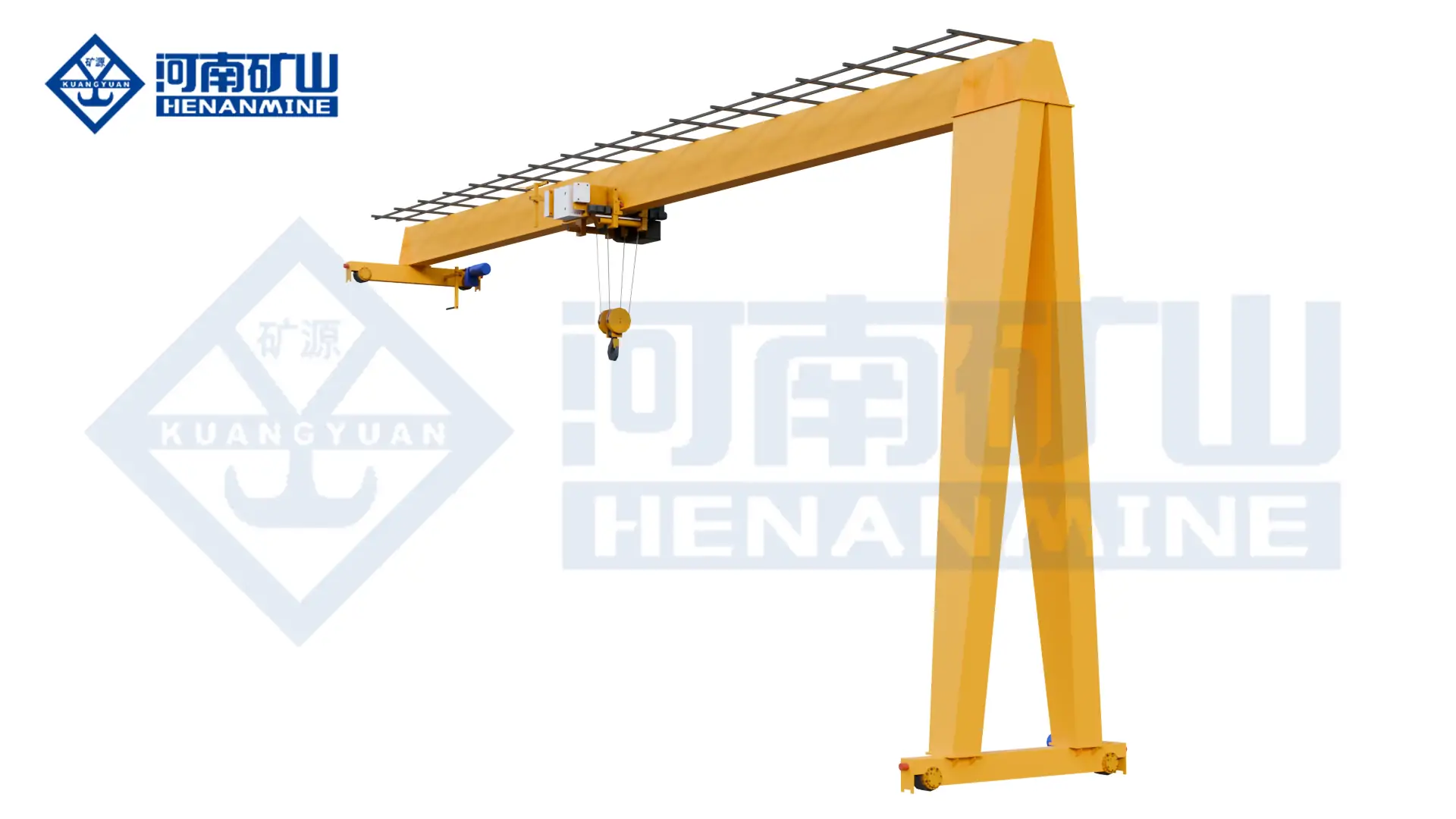
Semi-Gantry Crane
A building-to-yard edge option with one elevated runway and one ground rail.
Build the Crane Schedule Around the Maintenance Plan
Send the bay and yard drawings, heaviest complete lifts, hook routes and operating cycle. Henan Mine Crane can prepare a site-specific equipment configuration and itemized commercial offer.
Request a Railway Maintenance Crane Quote
Written by: Henan Mine Crane · Technical review: source-checked product and project records · Last reviewed: 2026