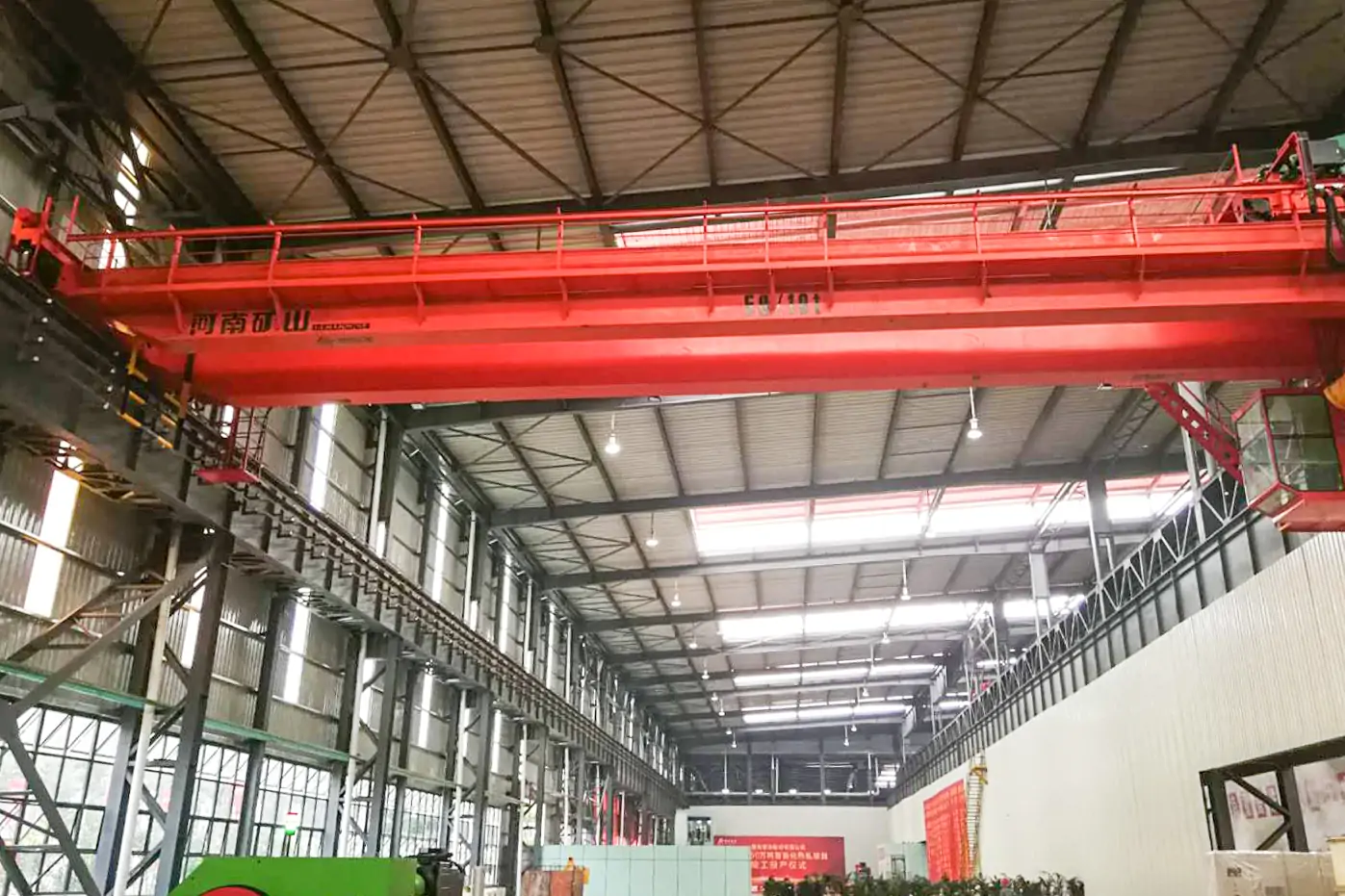
Henan Mine Crane · Hot Rolling Mill Lifting Systems
Hot Rolling Mill Crane Systems for Steel Production
Engineered overhead cranes for slab transfer, reheating-furnace support, roll handling, mill maintenance, plate and coil movement, finished-product storage and coordinated fleet operation.
Henan Mine Crane configures double-girder production cranes, roll-shop cranes, slab cranes, magnetic-beam cranes, coil-handling cranes and service cranes around each process station. Capacity, duty, heat protection, attachment, speed, controls and project scope are defined by the handled load and production route.
PROCESS COVERAGE
Slab to Finished Product
CRANE FAMILY
Production & Service Cranes
ATTACHMENT OPTIONS
Hook, Beam, Clamp & Magnet
CONTROL OPTIONS
Cabin, PLC & Automation
What Is a Hot Rolling Mill Crane?
A hot rolling mill crane is an overhead lifting system designed for the production, storage and maintenance tasks surrounding a hot-rolling line. The term covers several purpose-specific cranes because slabs, rolls, plates, coils, tooling and mechanical assemblies create different load shapes, temperatures, cycle frequencies and failure consequences.
Production cranes may transfer hot or ambient slabs, feed process buffers, move plate or coil products and support continuous material flow. Roll-handling cranes lift work rolls, backup rolls, chocks and roll-changing equipment. Service cranes handle motors, gearboxes, mill stands, guides and other maintenance loads during planned shutdowns. A crane suitable for occasional maintenance is not automatically suitable for repeated production cycles.
The engineering basis combines maximum gross suspended load, attachment weight, span, lifting height, hook approach, runway length, load spectrum, moves per hour, required speed, positioning tolerance and operating environment. Radiant heat, scale, dust, fumes and restricted maintenance access affect component placement, enclosures, cooling, lubrication and inspection frequency.
A complete hot-rolling crane proposal therefore defines each crane by process station and coordinates common controls, documentation, components and spare parts across compatible units. Fleet standardization should simplify operation without forcing unlike applications into one technical specification.
Hot Rolling Mill Crane Configurations
01 · Slab Transfer Crane
Moves hot or ambient slabs between continuous casting, cooling, storage and reheating-furnace preparation. Mechanical clamps, magnet beams or approved lifting beams are selected from slab temperature, geometry and stack access.
02 · Rolling-Line Production Crane
Supports mill-line material movement, tooling exchange and production interventions. High duty, controlled acceleration, protected electrical equipment and clear operating visibility address the heat, scale and production rhythm.
03 · Roll-Shop and Roll-Change Crane
Handles work rolls, backup rolls, chocks, cassettes and roll-changing equipment. Multi-point beams, auxiliary hoists, precise low-speed control and accurate hook approach support alignment and workshop safety.
04 · Plate Handling Crane
Uses magnets, clamps or lifting beams for plates and long products after rolling, cooling and finishing. Load flatness, plate temperature, surface quality and multi-magnet control determine the attachment system.
05 · Coil Handling Crane
Transfers coils with C-hooks, coil grabs, magnets or engineered beams. Coil eye orientation, width, outside diameter, mass, storage saddles and emergency lowering requirements govern configuration.
06 · Maintenance and Service Crane
Provides intermittent access to drives, stands, motors, gearboxes and production equipment. Useful hook approach, low-speed positioning, rigging clearance and shutdown installation access are more important than production throughput.
Compare Hot Rolling Mill Crane Systems
| Crane System | Primary Loads | Typical Attachment | Engineering Priority | Critical Selection Data |
|---|---|---|---|---|
| Slab handling crane | Hot or ambient slabs and blooms | Clamp, magnet beam or lifting beam | High duty, thermal protection and controlled stacking | Slab dimensions, temperature, cycle rate and storage layout |
| Roll handling crane | Work rolls, backup rolls, chocks and cassettes | Roll beam, tong, hook system or dedicated attachment | Precise multi-point lifting and alignment control | Roll set mass, centers, pickup geometry and change sequence |
| Production service crane | Tooling, mill components and process loads | Main and auxiliary hooks or engineered beam | Frequent operation with controlled positioning | Load spectrum, production interface and permitted shutdown windows |
| Magnetic plate crane | Ferromagnetic plates and long steel products | Fixed or rotating electromagnetic beam | Fast pickup with coordinated magnet groups | Plate range, temperature, air gap, power-loss plan and surface protection |
| Coil handling crane | Hot- or cold-rolled coils within approved temperature | C-hook, coil grab, magnet or fork attachment | Stable coil transfer and accurate saddle placement | Coil mass, eye orientation, dimensions and warehouse system |
| Maintenance bridge crane | Motors, gearboxes, stand components and general loads | Hook block, sling and removable lifting beam | Flexible access for scheduled service work | Heaviest maintenance lift, headroom, approach and operating frequency |
Fleet selection rule: build the crane schedule by bay and process task, then standardize controls, component families, documentation and spare parts only where capacity, duty and environment remain compatible.
Crane Applications Across the Hot Rolling Process
| Process Area | Handling Task | Crane Direction | Engineering Data | Control Priority |
|---|---|---|---|---|
| Slab yard and buffer storage | Receive, identify, stack and retrieve feed slabs | Slab clamp or magnetic-beam crane | Slab geometry, residual heat, stack pattern and retrieval sequence | Secure pickup, anti-sway and stack-zone control |
| Reheating-furnace preparation | Deliver selected slabs to charging or transfer equipment | Heavy-duty slab or hook-beam crane | Furnace schedule, buffer capacity, temperature and transfer interface | Production interlocks and controlled placement |
| Roughing and finishing mill | Tooling exchange, process intervention and maintenance support | Double-girder production or service crane | Heat, scale, obstruction, operating window and equipment access | Protected electrics, precise motion and exclusion zones |
| Roll shop and roll storage | Move rolls, chocks, cassettes and grinding-shop loads | Roll-handling crane with dedicated beam or hooks | Roll dimensions, balance, pickup points and storage stands | Synchronized lifting and low-speed alignment |
| Cooling, cutting and plate finishing | Transfer plates between cooling, leveling, cutting and inspection | Magnetic, clamp or beam-equipped crane | Plate temperature, flatness, length and surface requirement | Attachment selection and multi-load control |
| Coil or plate warehouse | Stack, retrieve and dispatch finished products | Coil, plate or automated warehouse crane | Inventory logic, throughput, coordinates and vehicle loading | Positioning, tracking, collision avoidance and recovery mode |
A rolling-mill fleet can include cranes with similar rated capacities but different mechanism classes and safety functions. Production duty, attachment mass, average load and heat exposure determine the design more reliably than capacity alone.
Technical Selection and Specification Framework
Henan Mine Crane has documented a 34-crane hot-rolling fleet ranging from 10 t to 100 t and also publishes specialized hot-rolling bridge-crane configurations for higher capacities. These project values demonstrate available engineering directions; final parameters are approved separately for every crane position.
| Specification Item | Project Input | Required Engineering Output | Procurement Control |
|---|---|---|---|
| Capacity basis | Maximum load plus hook block, beam, clamp, magnet, C-hook, sling and every suspended component | Net product mass and gross suspended load are stated separately | Future lifts are included only when defined and structurally approved |
| Span and coverage | Runway rail centers, bridge travel, equipment centers and side approaches | Dimensioned plan with hook or attachment coverage | Building width is not substituted for crane span |
| Lift and headroom | Lowest pickup, highest placement, rail elevation, attachment depth and roof obstructions | Dimensioned vertical section and maintenance-removal route | Highest hook position and actual load height are verified together |
| Duty and load spectrum | Moves per hour, average load, full-load frequency, shifts, annual hours and travel distance | Crane and mechanism classification for each position | Production and maintenance cranes are classified independently |
| Temperature and contamination | Ambient air, product temperature, radiant heat, distance, scale, dust, fumes and humidity | Protection schedule for structure, motors, brakes, cables, cabinets and lubrication | Product surface temperature is not treated as ambient temperature |
| Attachment and load control | Hook, beam, clamp, magnet, C-hook, grab or roll-handling equipment | Attachment drawing, mass, operating envelope and interlocks | Attachment weight and geometry enter capacity and headroom calculations |
| Speed and positioning | Hoist, trolley, bridge, auxiliary and rotation speeds plus required low-speed range | VFD, brake, encoder and anti-sway description | Cycle performance is checked against stopping distance and load stability |
| Controls and integration | Cabin, radio, local station, PLC, cameras, automation and MES or WMS interface | Control narrative, I/O schedule and fault-recovery philosophy | Manual fallback and data boundary are defined before software approval |
| Runway and building | Rail, beam, column, foundation, power supply, access and multiple-crane arrangement | Wheel loads, horizontal forces, buffer reactions and conductor data | Structural and installation responsibilities are contractually assigned |
| Inspection and acceptance | Destination rules, document language, witness points, factory and site testing | Inspection plan, test procedures and handover records | Load-test weights, labor and statutory coordination are included or excluded explicitly |
Safety and Control Requirements
Hot-rolling crane safety combines conventional overhead-crane protection with controls for hot products, long loads, production equipment, shared runways and restricted work zones. The final architecture follows the governing design basis and plant risk assessment.
Hoisting Protection
Overload limitation, upper and lower limits, brake monitoring, rope guidance, slack-rope protection and low-speed positioning are selected for the load and duty.
Heat and Electrical Protection
Heat shields, protected cabinets, temperature-rated cables, cooling or ventilation and suitable lubrication reduce radiant-heat and scale exposure.
Long-Load and Attachment Control
Synchronized lifting, attachment status, magnet monitoring, clamp locks and controlled release prevent skew, unequal loading and unintended load loss.
Travel and Collision Protection
End limits, buffers, rail sweeps, anti-collision, restricted zones and crane-separation logic address adjacent cranes and fixed production equipment.
Operator Visibility
Cabin position, cameras, lighting, warning devices and communication systems provide visibility around mills, stacks, vehicles and maintenance teams.
Automation and Recovery
Position feedback, anti-sway, permissive logic, safe stop, fault diagnosis, controlled restart and manual recovery govern automated cycles.
Maintenance Isolation
Accessible isolators, lockout points, platforms, walkways and component-removal zones support planned work above active production areas.
Emergency Operating Plan
Load retention, controlled lowering, alternate power, emergency braking and production shutdown responsibilities are documented for credible failures.
Crane Structure, Fleet Logic and Workshop Interface
Top-running double-girder bridges are widely applied in rolling mills because the structure supports higher capacities, open-winch trolleys, main and auxiliary hoists, service platforms and process attachments. Box-girder design, trolley arrangement and wheel distribution are selected from the span, fatigue duty, headroom and building reactions.
Production cranes require motion profiles that combine efficient clear travel with controlled approach near the mill, stack or vehicle. Variable-frequency drives, encoders and suitable braking provide low-speed positioning without abrupt acceleration of long slabs, rolls, plates or coils. Maximum speed alone does not determine throughput; pickup, alignment and safe release often control the cycle.
Fleet planning assigns a unique equipment number, bay, runway, load family and duty to every crane. Common operator interfaces, drive families, brakes, electrical components and documentation can reduce training and spare-parts complexity where ratings remain compatible. Process-specific attachments and protection stay unique to the workstation.
Runway reactions, rail alignment, conductor location, maintenance platforms, mobile-crane access and removal paths should be coordinated with building and process-equipment design before fabrication. Late interface changes can affect hook coverage, wheel loads and installation cost.
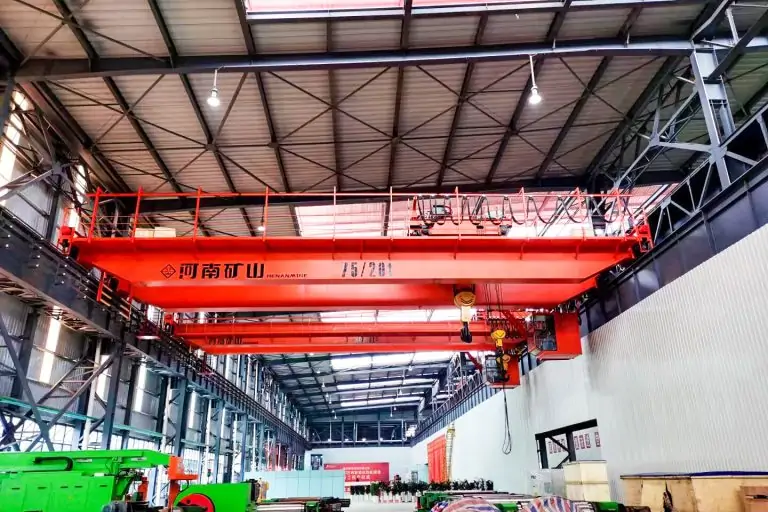
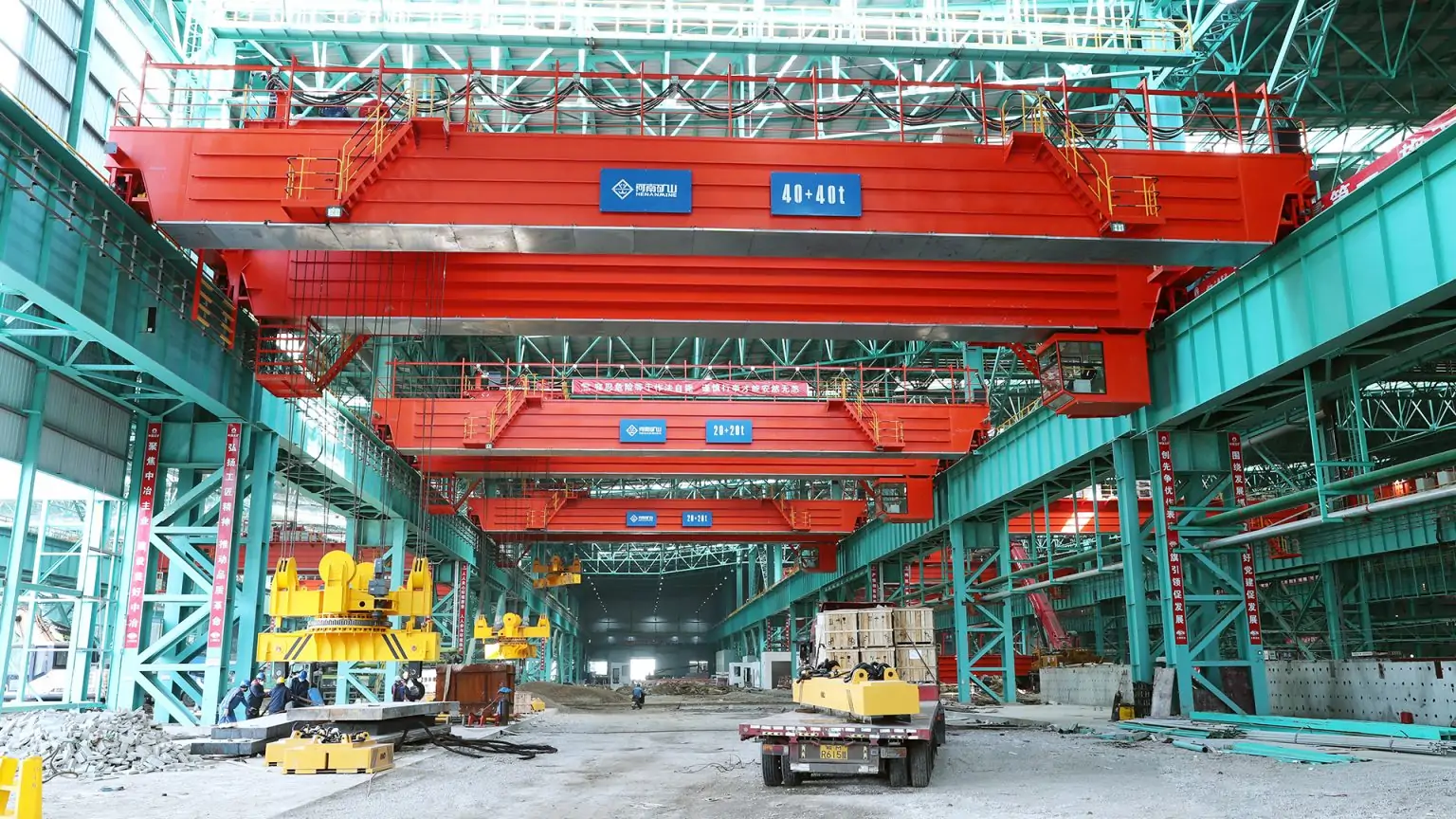
Project Case: 34-Crane Fleet for Chongqing Panhua Plate
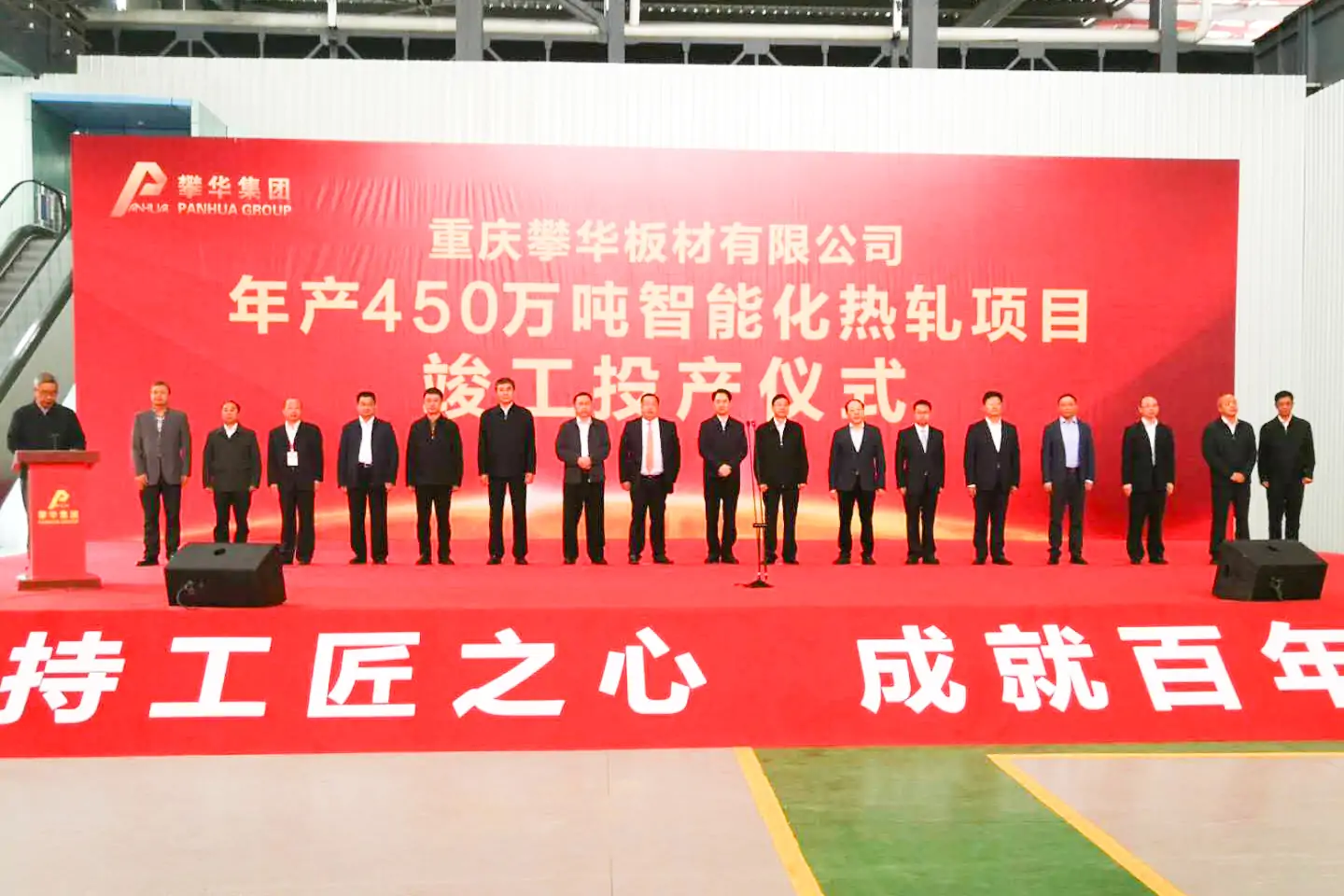
Henan Mine Crane supplied 34 double-girder overhead cranes for Chongqing Panhua Plate’s intelligent hot-rolling project. The documented fleet ranges from 10 t to 100 t and supports a steel-plate production base with an annual capacity of 4.5 million tonnes.
The cranes serve production, roll handling, tooling, equipment service and maintenance positions. Capacity and duty were assigned by workstation, while compatible controls, documentation and spare-parts planning were coordinated across the fleet. This prevents a 10 t maintenance crane and a similarly rated production crane from being treated as identical equipment.
Phased engineering, manufacturing and delivery aligned crane availability with workshop construction and commissioning. The case demonstrates the procurement value of one fleet schedule: every crane retains the required span, lift, duty, attachment and environmental protection while project-wide interfaces remain controlled.
Engineering, Manufacturing and Quality Documentation
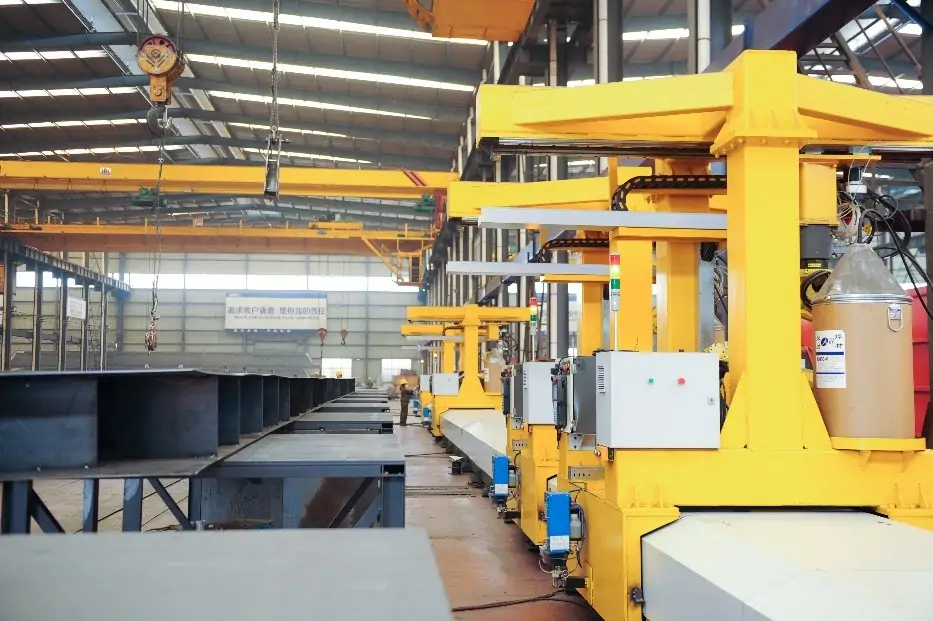
A rolling-mill crane package should connect the approved process data to controlled fabrication, mechanism selection, electrical assembly, testing and handover records. Inspection requirements should be agreed before production release.
Design Package
General arrangement, wheel loads, hook approaches, mechanism class, attachment drawing, electrical demand and control narrative.
Structural Records
Material identification, approved welding procedures, welder qualifications, dimensions and specified non-destructive examination.
Mechanism Data
Motor, gearbox, brake, drum, rope, wheel, bearing, coupling and lubrication information matched to the declared duty.
Electrical Documents
Single-line diagram, schematics, I/O schedule, drive data, protection settings, network boundary and configured parameters.
Inspection and Tests
Inspection plan, witness points, dimensions, mechanisms, brakes, limits, alarms, attachment functions and contracted load testing.
Fleet Handover
Crane-numbered manuals, final drawings, test records, spare-parts lists, maintenance schedules and commissioning data.
Installation, Commissioning and Lifecycle Planning
Fleet Engineering Schedule
List every crane by bay, quantity, capacity, span, lift, duty, attachment, power, control mode and required drawing, manufacturing and delivery date.
Runway and Site Verification
Confirm rail centers, elevation, alignment, support capacity, conductor arrangement, crane separation, end stops and installation access before shipment.
Phased Packing and Delivery
Match bridge sections, trolleys, panels, attachments and loose parts to the equipment number and destination bay. Delivery batches follow site readiness.
Erection and Alignment
Plan mobile-equipment access, assembly areas, lifting method, rail checks, conductor installation, attachment assembly and work near process equipment.
Commissioning and Acceptance
Verify brakes, limits, drives, synchronization, controls, alarms, communications and attachment functions before load and process trials.
Operator and Maintenance Training
Cover operating modes, warning responses, daily checks, isolation, fault recovery, attachment inspection and crane-specific limitations.
Preventive Maintenance
Inspection intervals reflect load cycles, heat, scale, dust and production consequence. Brakes, ropes, wheels, rails, cables and attachments receive defined wear limits.
Fleet Spare-Parts Planning
Standardize compatible brake, drive, contactor, encoder, sensor, limit, rope and seal families while retaining crane-specific critical spares.
Hot Rolling Mill Crane Price and Project Cost
Process cranes and multi-crane rolling-mill fleets require project quotations. The general bridge-crane figures below provide a current North American market baseline only; they are not fixed Henan Mine Crane prices and do not represent high-duty hot-rolling equipment.
| Budget Level | Indicative Market Position | Typical Scope | Main Cost Drivers | Commercial Control |
|---|---|---|---|---|
| 5 t single-girder bridge benchmark | Around US$40,000 | General bridge, base trolley and hoist near or below a 40 ft span | Span, lift, duty, runway, electrification and installation | Not a rolling-mill process-crane quotation |
| 10 t single-girder installed benchmark | Around US$65,000 | Conventional general-duty crane under stated regional conditions | Building, access, controls, labor, testing and site scope | Use only as a lower-level general market comparison |
| 5 t double-girder installed benchmark | Around US$60,000 | Conventional two-girder bridge under stated conditions | Trolley type, headroom, span, runway and installation | Does not include rolling-mill heat or process engineering |
| 10 t double-girder installed benchmark | Around US$100,000 | Conventional double-girder system under stated conditions | Duty, speed, controls, runway, access and regional labor | Not comparable with 50–200 t specialized process cranes |
| Hot-rolling production or roll crane | Project quotation | Heavy-duty bridge, open-winch trolley, process attachment and environmental protection | Gross load, duty, heat, attachment, speed, redundancy and documents | Crane, attachment, freight and site services are separated |
| Automated multi-crane fleet | Project quotation | Multiple cranes, controls, plant interfaces, commissioning and lifecycle package | Quantity, standardization, integration, phasing, spares and acceptance | Evaluate total fleet cost and production responsibility |
Commercial normalization: compare crane equipment, attachment, runway, electrification, thermal protection, automation, documentation, packing, freight, erection, commissioning, load testing, training and spare parts as separate line items.
Information Required for a Hot Rolling Mill Crane Quote
A complete request should contain one crane schedule covering every workshop and process position. Building drawings, equipment layouts, load sketches and project milestones should accompany the following data.
Crane Schedule
Quantity, equipment number, bay, capacity, span, lifting height, runway length, headroom, hook approach and required delivery sequence.
Load and Attachment
Load name, maximum and typical mass, dimensions, center of gravity, pickup points, temperature, attachment type and attachment mass.
Duty and Throughput
Moves per hour, load spectrum, shifts, annual hours, full-load frequency, travel distance, target cycle and production consequence.
Motion and Control
Hoist, trolley and bridge speeds, low-speed range, main and auxiliary hooks, cabin or radio control, anti-sway and positioning tolerance.
Environment
Ambient temperature, product temperature, radiant heat, distance, scale, dust, fumes, humidity, corrosion and electrical enclosure requirements.
Runway and Building
Rail section, runway beam, column spacing, rail elevation, wheel-load limits, conductor position, obstructions and installation access.
Automation and Interfaces
PLC or MES communication, I/O, equipment interlocks, stack or target coordinates, cameras, data records and manual recovery mode.
Commercial and Acceptance Scope
Trade term, packing, freight, runway, installation, load testing, third-party inspection, training, spares and schedule milestones.
Hot Rolling Mill Crane FAQ
Which crane types are required in a hot rolling mill?
Typical systems include slab transfer cranes, production bridge cranes, roll-handling cranes, plate or coil cranes and maintenance cranes. The exact fleet follows process layout, load families and maintenance strategy.
How is crane capacity selected?
Capacity includes the maximum load and every suspended attachment. Roll beams, clamps, magnets, C-hooks, hook blocks and rigging enter the gross-load calculation. Future lifts require defined geometry and duty.
Can one crane handle slabs, rolls and coils?
A shared crane is possible only when capacity, attachment changes, headroom, duty, heat exposure and operating routes remain compatible. Dedicated process cranes normally provide clearer safety and throughput for frequent tasks.
What duty class suits a rolling mill crane?
Duty follows load spectrum, moves per hour, shifts, travel distance and operating consequence. A production crane and an intermittent maintenance crane can require different mechanism and structural classifications at the same capacity.
How is radiant heat addressed?
Thermal design considers product surface temperature, ambient air, exposure distance and duration. Shields, protected cabinets, suitable cables, component placement, cooling and lubrication are selected from the actual heat map.
Can rolling mill cranes integrate with MES?
Yes. PLC-based systems can exchange task, permissive, status, position and fault data with plant systems. Interface ownership, protocol, I/O, cybersecurity boundary and manual recovery are defined before implementation.
What attachment is suitable for steel plate?
Magnets support fast handling of approved ferromagnetic plates, while clamps or beams may suit restricted magnetic use or specific surface requirements. Temperature, air gap, plate range and power-loss strategy govern selection.
How should roll changes be handled?
A dedicated roll beam or multi-point arrangement should match roll centers, mass, balance and storage stands. Synchronized lifting, precise low-speed motion and clear exclusion zones support controlled alignment.
Can a large crane fleet be delivered in phases?
Yes. Drawing approval, production and shipment can follow workshop readiness. Every component and document should retain the correct crane number, bay and delivery batch throughout the project.
What should a commercial quotation include?
The proposal should identify crane and attachment scope, technical parameters, runway interface, heat protection, controls, documentation, testing, packing, freight, erection, commissioning, training, spares, exclusions and schedule.
Related Steel Mill Crane Products
Compare process-crane families after load, duty, temperature, attachment and workshop interfaces have been defined. Each configuration is finalized through project-specific engineering.
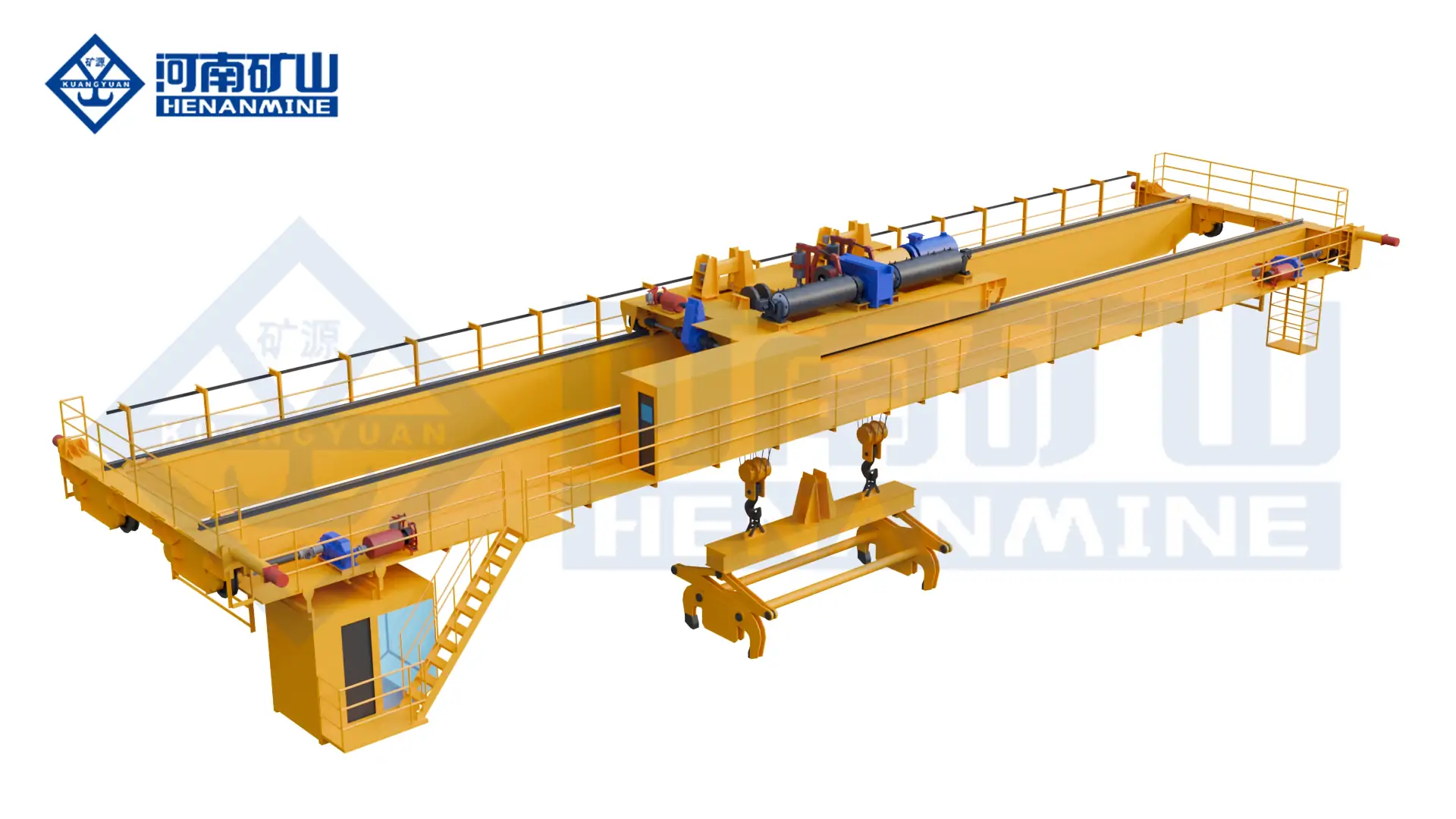
Slab Handling Crane
Process crane for hot or ambient slabs in transfer, stacking, storage and rolling-mill feed operations.
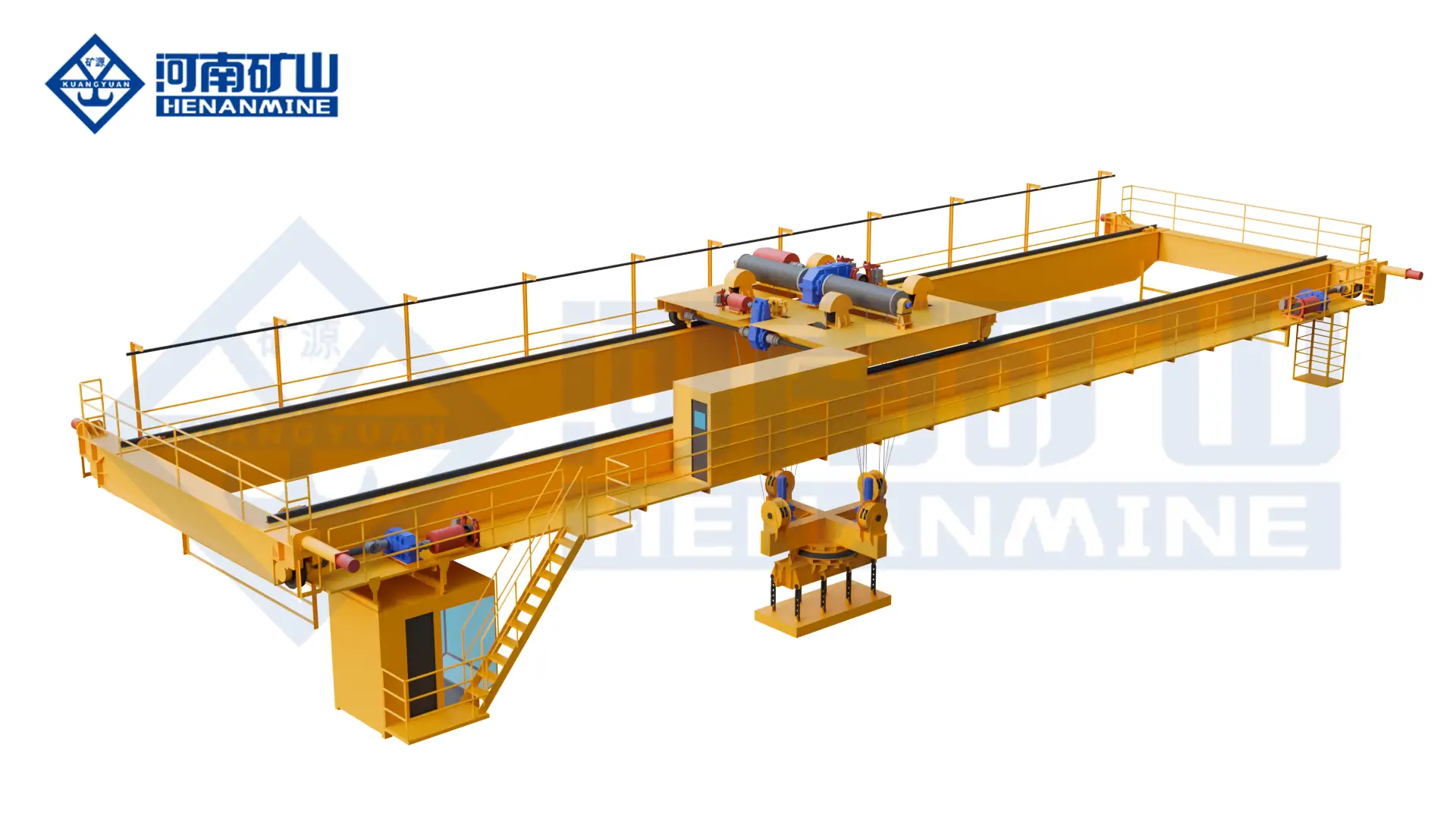
Electromagnetic Hanging Crane
Rotating magnetic-beam system for approved plates, profiles and magnetically responsive steel products.
Upper-Rotating Magnetic Crane
Slewing-trolley magnetic crane for multi-angle positioning across production and warehouse bays.
Double-Girder Bridge Crane
Customizable bridge platform for higher capacity, longer span, maintenance and specialized attachments.
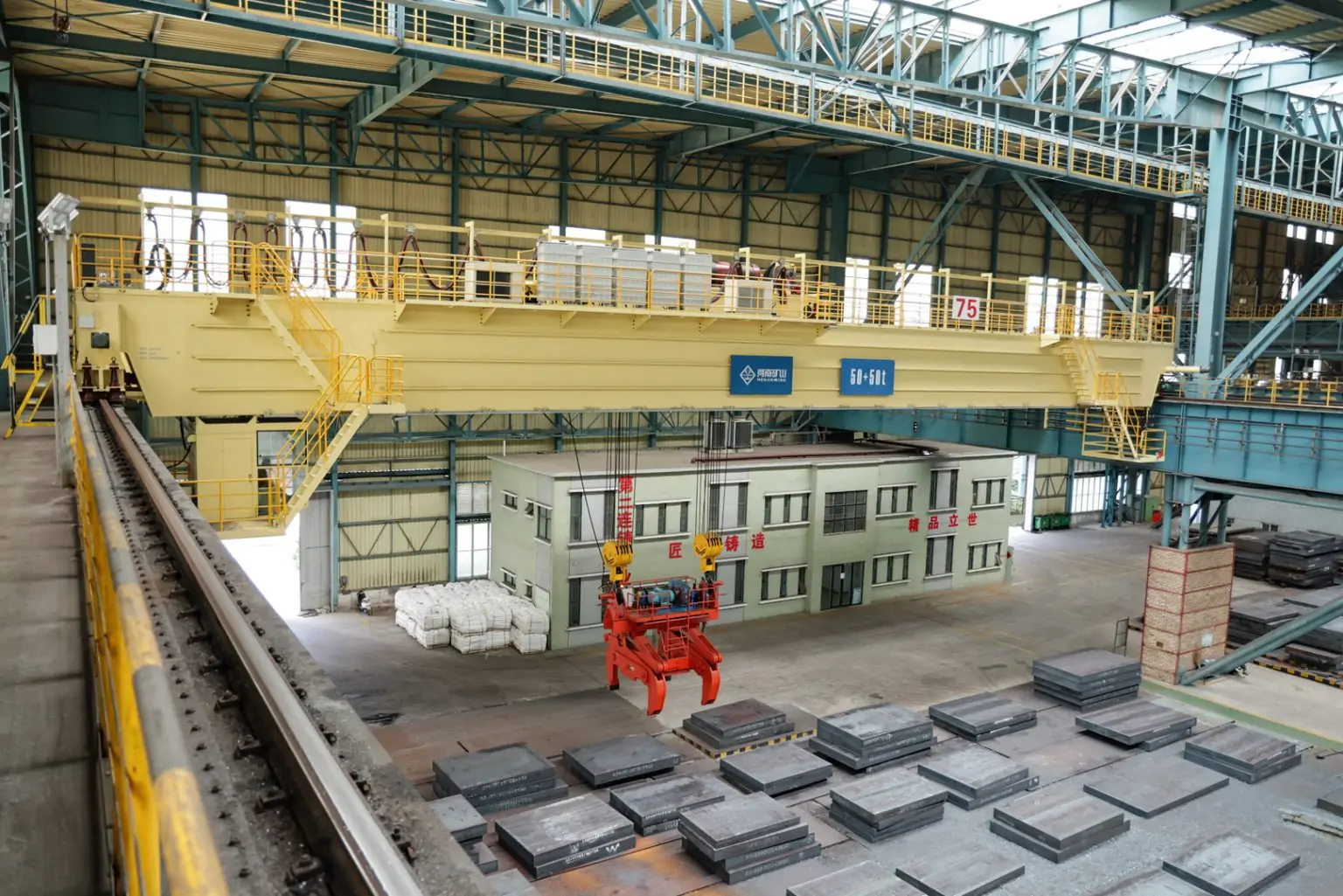
Metallurgical Bridge Crane
Heavy-duty overhead crane family developed for heat, dust and intensive metallurgical service.
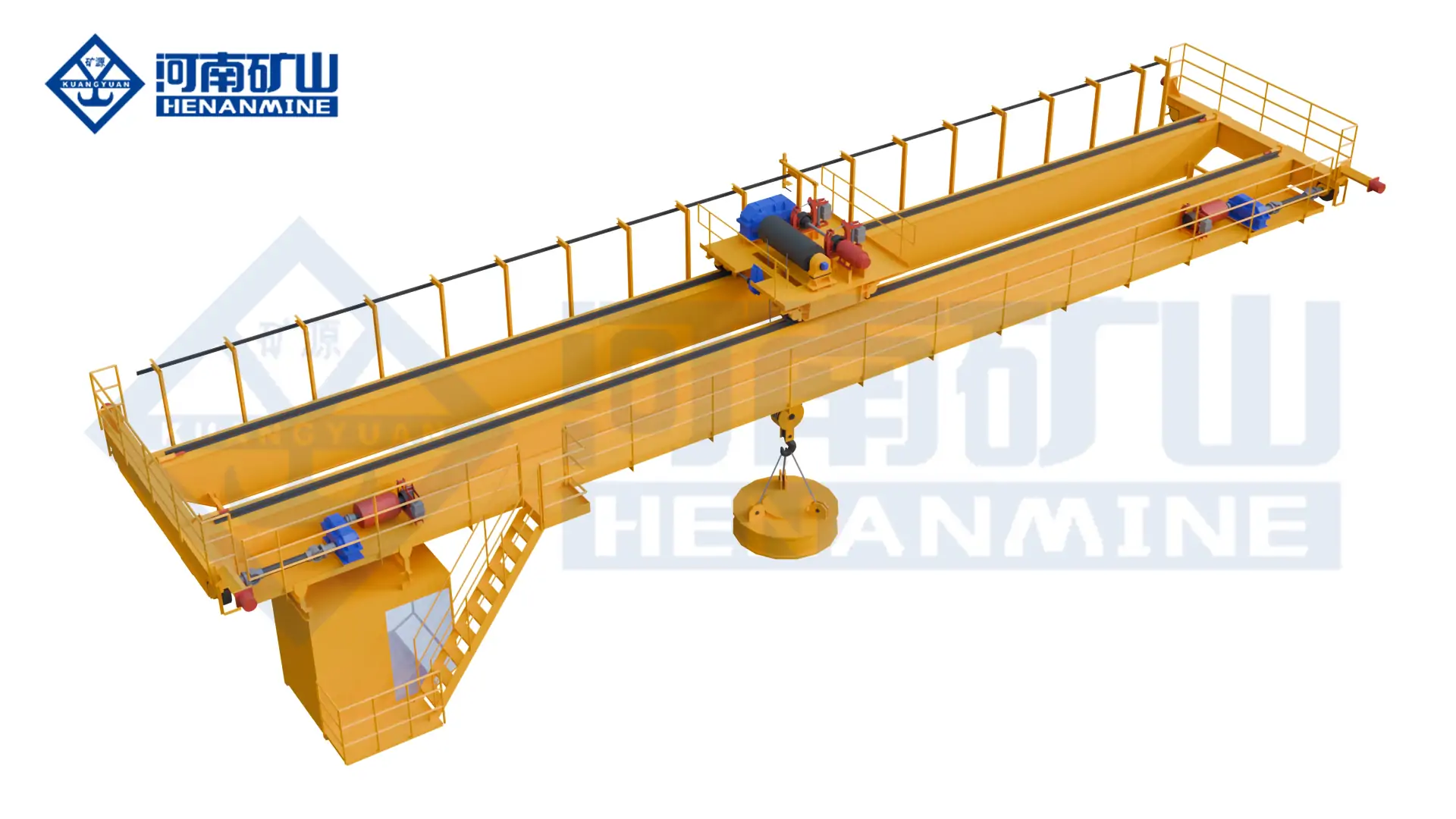
Electromagnetic Bridge Crane
Magnetic overhead crane platform for approved plates, billets and other ferromagnetic materials.
Request a Hot Rolling Mill Crane Proposal
Submit the crane schedule, workshop layouts, load list, attachment requirements, duty, temperature conditions, runway data, power supply, controls, project milestones, destination and delivery boundary. Henan Mine Crane will prepare a coordinated technical configuration and commercial quotation.