
Henan Mine Crane · Engineered Heat-Treatment Lifting Systems
Heat Treatment Crane Systems
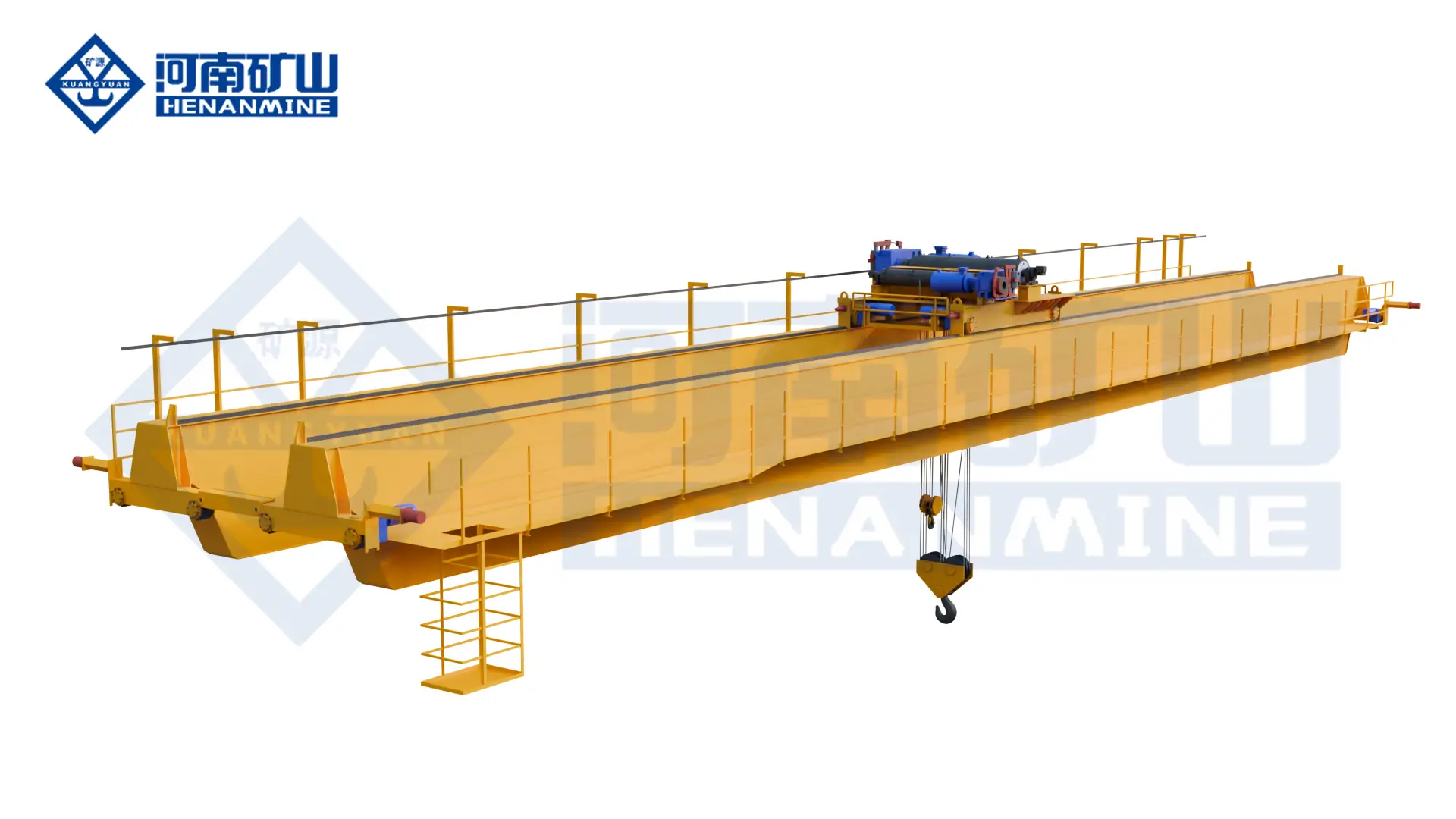
Process cranes engineered for furnace loading and extraction, transfer of hot workpieces, controlled immersion into water, polymer, brine or oil baths, timed recovery and integration with manual or automatic heat-treatment lines.
Henan Mine Crane configures each heat treatment crane from the maximum gross suspended load, workpiece temperature, furnace-to-bath route, required immersion time, lowering and recovery speed, bath medium, duty cycle, attachment, workshop geometry, emergency strategy and applicable project standards.
PUBLISHED CAPACITY PLATFORM
20–150 t or Custom
PUBLISHED SPAN RANGE
7.5–35 m
PROCESS MOTION
Controlled Rapid Immersion
CONTROL OPTIONS
Manual, PLC or Automatic
Published ranges describe the Henan Mine Crane quenching-crane platform, not a universal model. The approved project specification governs final capacity, speed, span, lift, classification and performance.
What Is a Heat Treatment Crane?
A heat treatment crane is an overhead process crane designed to move workpieces, baskets, racks or fixtures between furnaces, quench tanks, wash stations, tempering equipment, cooling positions and inspection areas. The term includes general furnace-transfer cranes as well as high-speed quenching cranes that must immerse a hot load within a specified time and motion profile.
The distinction matters. A general double-girder crane may be suitable for controlled transfer where the process has no rapid immersion requirement and the thermal, vapor, splash and duty conditions remain within its engineered limits. A quenching overhead crane requires a verified lowering speed, brake and overspeed architecture, power-loss response, load stability, bath clearance and recovery method. Substituting a general-purpose crane without this process review can compromise both treatment results and safe load control.
Heat treatment cranes handle solid workpieces. They are not automatically suitable for ladles or molten metal. A foundry or casting crane uses a different load path and safety architecture. Henan Mine Crane develops heat-treatment systems from its quenching crane, metallurgical bridge crane and double-girder bridge crane platforms according to the actual process duty.
Heat Treatment Crane Applications
Vertical Shaft and Roll Quenching
Lift long shafts, rolls or rotors in a controlled vertical orientation and lower them into a tank while maintaining clearance, stability and the specified immersion profile.
Batch and Basket Quenching
Transfer loaded baskets, racks or fixtures from the furnace to water, polymer, brine or oil baths with repeatable pickup, travel, immersion and drainage positions.
Die and Mold Heat Treatment
Handle dies, mold blocks and tool steel between heating, quenching, tempering and inspection stations with an attachment matched to geometry and hot-load behavior.
Gear, Ring and Bearing Production
Move rings, gears, rollers and bearing components through controlled thermal cycles where positioning, batch traceability and repeatable transfer time are required.
Forging Heat-Treatment Bay
Transfer heavy forgings, flanges and pressure-vessel parts from furnaces to cooling or quenching stations, including single- or dual-point handling where approved.
Automatic Heat-Treatment Line
Coordinate crane movements with furnace doors, tank covers, agitation systems, recipes, tracking databases and defined safe zones through an approved signal matrix.
Components and Operating Principle
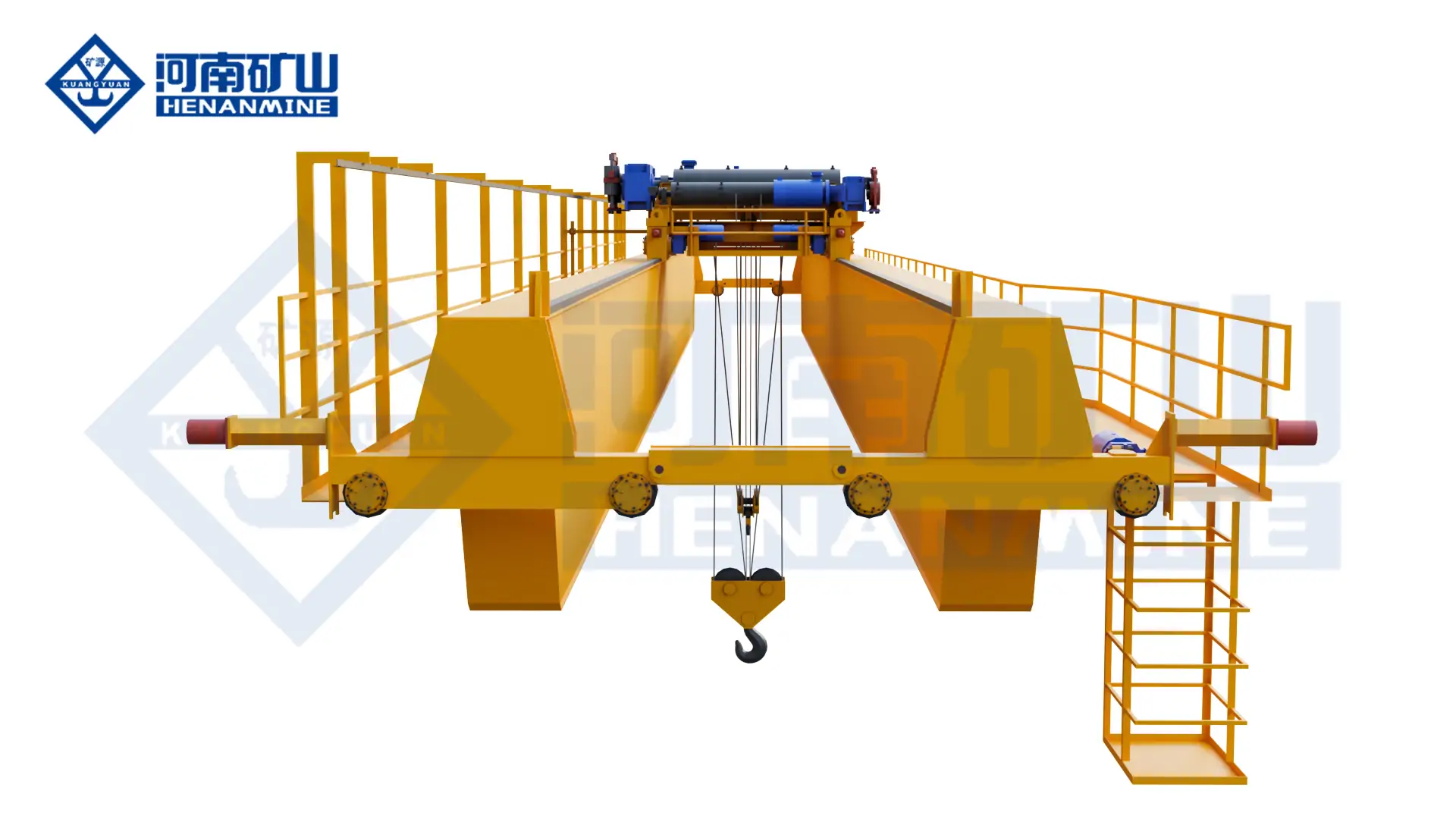
- Bridge and end carriages: distribute trolley, load and dynamic reactions to the runway while maintaining the required approach to furnaces and tanks.
- Process hoist: provides normal lifting, rapid or controlled immersion, recovery and low-speed positioning through a motion profile matched to the treatment recipe.
- Brakes and monitoring: use the project-defined service, holding and emergency functions, with overspeed, position, limit and load supervision where required.
- Below-hook equipment: may include baskets, racks, spreaders, lifting beams, tongs, clamps or vertical lifting fixtures engineered for the hot workpiece and bath.
- Controls and interfaces: coordinate bridge, trolley and hoist motion with furnace doors, tank equipment, restricted zones, process recipes and operator commands.
- Environmental protection: addresses radiant heat, steam or vapor, splash, corrosion, scale, water drainage, oil mist, cable routing, enclosure selection and maintenance access.
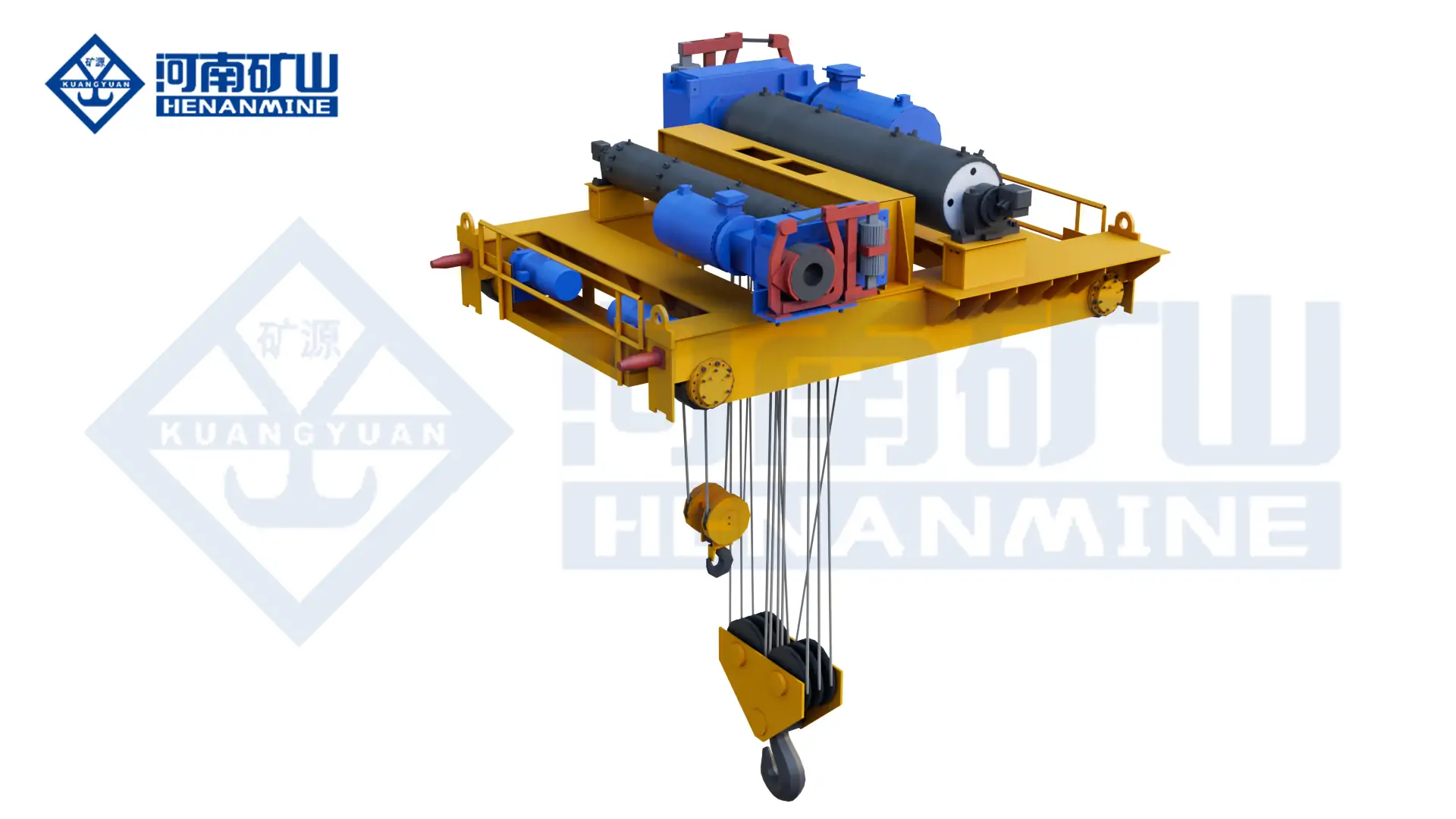
Rated-load basis: crane capacity must cover the heaviest workpiece plus the basket, rack, lifting beam, chains, fixture, hook block and every other suspended item. It must also account for retained liquid, eccentric loading, dual-point load sharing and the approved dynamic case. Workpiece mass alone is not the crane rating.
Heat Treatment Crane Selection Considerations
Selection begins with the treatment cycle and complete load path. Capacity, span and lift are necessary, but they do not define immersion performance, safe recovery or the interface with the furnace and tank.
Load and Orientation
Minimum, typical and maximum gross load; dimensions; center-of-gravity range; vertical or horizontal orientation; single or multiple pickup points; fixture mass and retained liquid.
Transfer and Immersion Time
Furnace-door release to bath entry, travel distance, required lowering profile, entry depth, dwell, agitation interaction, withdrawal speed and drainage time.
Temperature and Exposure
Workpiece temperature at pickup, furnace opening duration, radiant-heat map, steam or vapor plume, splash envelope and measured temperatures at ropes, brakes, motors, sensors and panels.
Bath and Medium
Tank length, width, depth and freeboard; water, polymer, brine or oil; operating temperature; agitation; covers; overflow; ventilation; fire strategy; drainage and contamination controls.
Duty and Availability
Lifts per hour, starts and reversals, shifts, annual hours, load spectrum, required production availability, maintenance windows and the consequence of an interrupted batch.
Power Loss and Recovery
Safe load state, controlled lowering or lifting, emergency power source, brake behavior, manual recovery, tank access and the permitted response at each point in the process cycle.
Building and Runway
Rail-center span, runway length and elevation, available headroom, hook approaches, wheel-load limits, furnace and tank obstructions, ventilation ducts and installation access.
Controls and Acceptance
Cabin, radio or automatic operation; positioning tolerance; anti-sway; recipe signals; traceability; safe zones; FAT, SAT and representative-load test criteria.
Heat Treatment Crane Configurations Compared
The correct configuration follows the process motion, load orientation and failure response. The table separates common arrangements that may look similar in a workshop layout but serve different duties.
| Configuration | Typical Process | Load Arrangement | Defining Engineering Requirement | When It Fits |
|---|---|---|---|---|
| General Heat-Treatment Handling Crane | Furnace charging, extraction, tempering and cooling transfer | Hook, beam, basket or fixture | Thermal exposure, duty, attachment and controlled low-speed positioning | No rapid immersion function is required |
| Vertical Quenching Crane | Shaft, roll, rotor or long-part immersion | Vertical fixture with guided or stabilized pickup | Clearance, vertical stability, immersion speed and emergency recovery | Long components must enter a deep tank vertically |
| Batch or Basket Quenching Crane | Grouped components or mixed production batches | Basket, rack or multi-point spreader | Gross batch mass, even support, retained liquid, drainage and repeatable pickup | Parts are processed in a common fixture |
| Automatic Quenching-Line Crane | Recipe-driven furnace and tank sequence | Standardized fixtures with identification | Positioning, anti-sway, signal ownership, traceability and defined fallback modes | Repeated routes and plant-level integration justify automation |
| Heavy Forging Heat-Treatment Crane | Large forgings, flanges, rings and pressure components | Heavy beam, clamp, tongs or dual-point rig | High gross load, eccentric cases, attachment behavior and intensive duty | Heavy individual components require process-specific handling |
| Foundry or Casting Crane | Molten-metal ladle transfer | Ladle beam and auxiliary hook | Molten-metal load path and applicable foundry requirements | Separate application; not a substitute for a quenching crane |
Preliminary Heat Treatment Crane Specifications
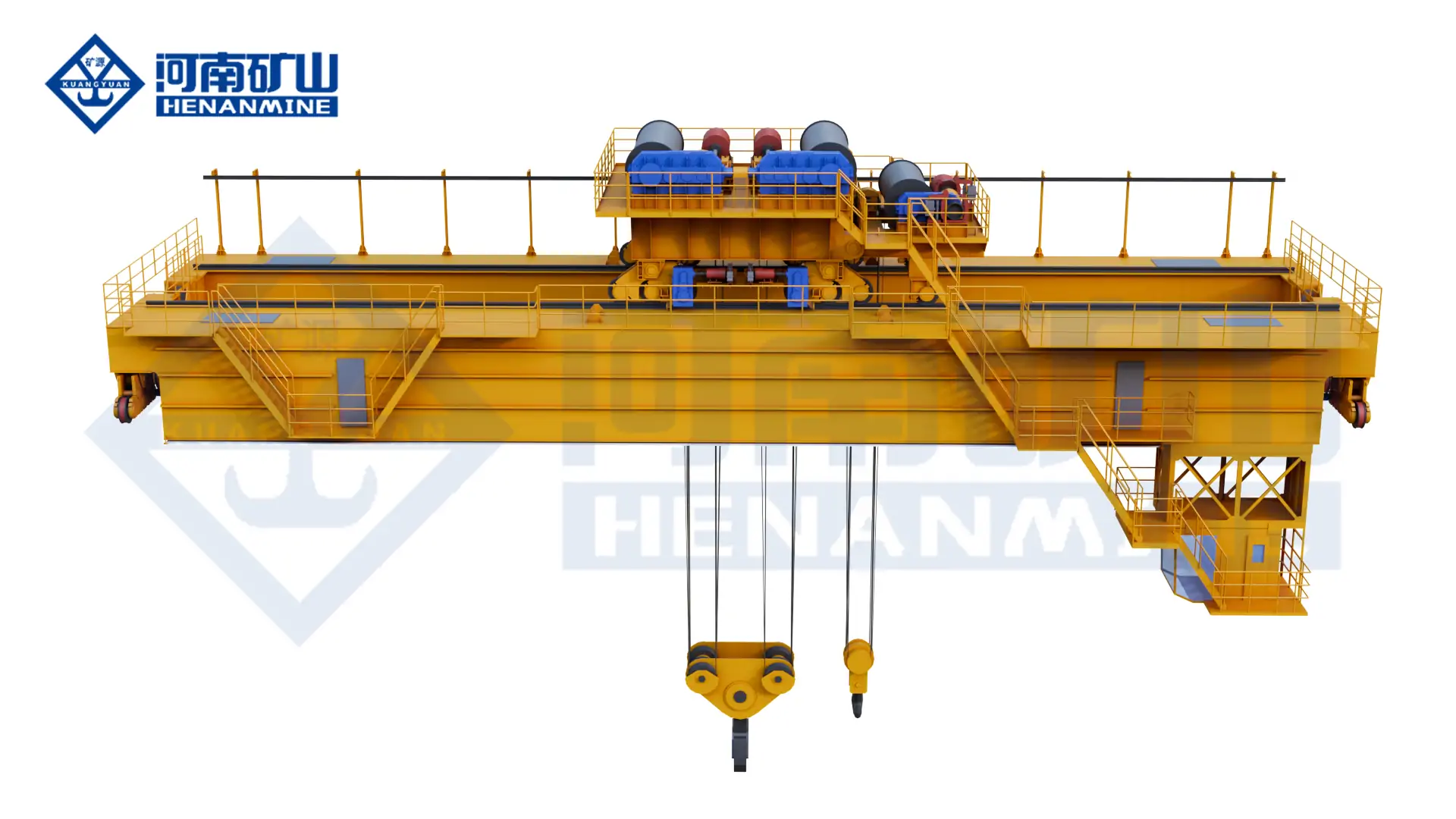
These values summarize the published Henan Mine Crane quenching-crane platform and common project variables. They support an initial enquiry; they are not a substitute for the approved data sheet.
| Parameter | Published Reference or Option | Required Project Confirmation |
|---|---|---|
| Rated Capacity | 20–150 t published platform; custom engineering available | Maximum gross suspended load and all abnormal load cases |
| Span | 7.5–35 m published range | Rail-center dimension, runway condition and hook approaches |
| Lifting Height | 4–20 m published range | Highest pickup, lowest immersion point, freeboard and hook-block geometry |
| Hoisting Speed | 10–30 m/min published platform reference | Normal lift, creep, immersion, withdrawal and emergency motion profiles |
| Working Classification | A7–A8 published platform reference | Applicable classification system, load spectrum, cycles and design life |
| Power Supply | Published options include 380 V/50 Hz and 220–660 V/60 Hz | Site voltage, frequency, earthing, short-circuit data and emergency source |
| Control Mode | Cabin, radio, PLC-assisted or automatic | Operating philosophy, visibility, safe zones, interfaces and fallback mode |
| Positioning | Project-specific | Tolerance at furnace, tank and fixture; speed; sway; load and environmental conditions |
| Environment | Heat, vapor, splash and corrosion protection as required | Measured component exposure, medium, ventilation and enclosure requirements |
Quenching Cycle and Motion Engineering
A useful performance specification describes the entire motion from furnace pickup to bath exit. It states when timing begins, the path and acceleration limits, the liquid-entry point, the required immersion depth, permitted swing, dwell time, withdrawal profile and the condition in which the load may travel again. A single maximum hoist speed does not prove that the cycle can be achieved.
- Pickup and confirmation: verify fixture engagement, gross load and permission to leave the furnace zone.
- Transfer: use the approved bridge, trolley and hoist profile while controlling sway and clearance.
- Immersion: transition to the specified lowering mode and reach the defined depth within the treatment window.
- Bath dwell: hold or move the load only as permitted by the recipe, tank agitation and fixture design.
- Withdrawal and drainage: recover at the defined speed, stop at the drainage position and contain liquid before travel.
- Completion and traceability: release the route only after the load, tank and downstream station meet the agreed conditions.
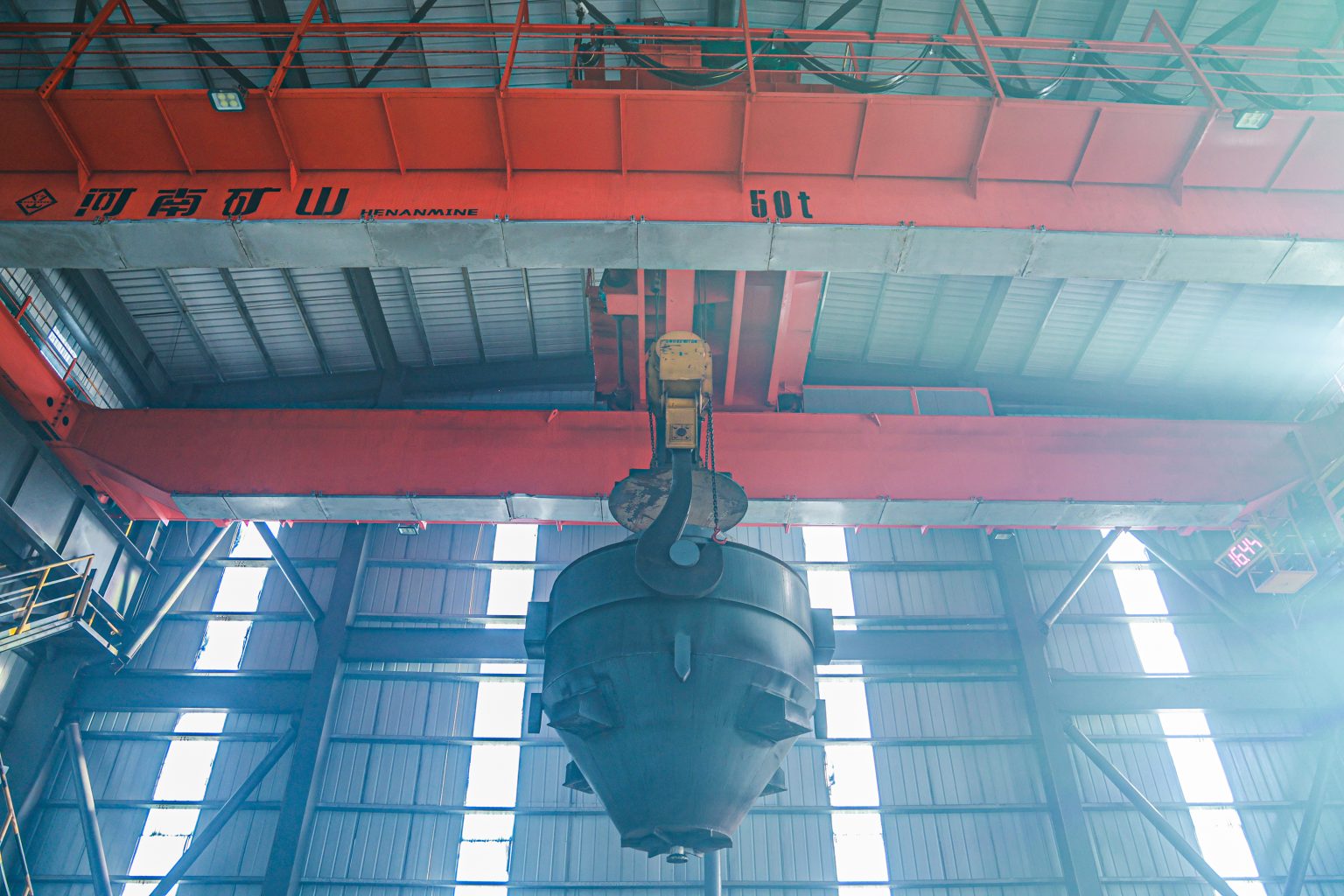
Power-loss scenario: the specification must define the safe response before the load leaves the furnace, during transfer, during immersion, while submerged and during withdrawal. Emergency power, redundant functions or a manual recovery arrangement are selected from the process risk assessment and site infrastructure.
Bath Media, Heat, Vapor and Corrosion Protection
Workpiece temperature is not the same as crane ambient temperature. Thermal design uses exposure at each component, including radiation from the load and furnace, hot vapor above the bath, splash, air movement and the time spent in each zone.
| Process Medium | Crane Interface to Define | Project Measures to Evaluate |
|---|---|---|
| Water | Steam plume, splash, condensation and retained water | Drainage, corrosion system, enclosure and cable selection, visibility and ventilation |
| Polymer Solution | Concentration, residue, compatibility and cleaning method | Material compatibility, wash-down boundaries, slip control and maintenance access |
| Brine | Salt mist, splash and accelerated corrosion | Protective coating, stainless or protected hardware where justified, sealed equipment and inspection intervals |
| Oil | Vapor, mist, surface contamination and fire risk | Site fire strategy, ventilation, electrical-area review, emergency response and contamination control |
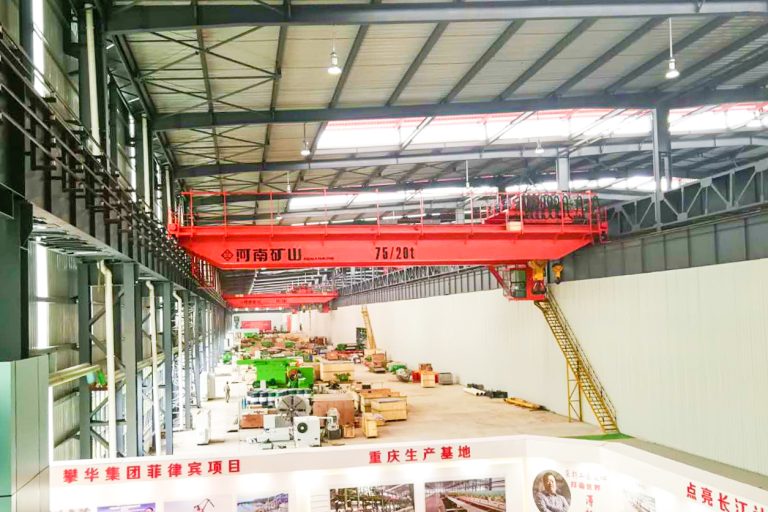
Oil Quenching Requires a Site-Specific Fire Review
Oil type, flash characteristics, bath temperature, vapor control, ignition sources, fire detection, suppression, ventilation and emergency procedures are defined by the process owner and applicable local requirements. Electrical-area classification and equipment selection follow that review; they should not be assumed from the word “oil” alone.
The crane supply boundary should state who provides the tank cover, ventilation, fire system, process sensors, emergency power, cable interfaces, containment and final integrated test.
Attachments, Fixtures and Load Orientation
Baskets and Racks
Define empty and loaded mass, support points, deformation limits, liquid flow, drainage, center of gravity, maximum temperature and positive engagement.
Lifting Beams and Spreaders
Confirm hook spacing, headroom, load equalization, hot-zone exposure, proof testing, storage position and compatibility with every approved load family.
Tongs and Clamps
Establish the gripping principle, acceptable surface contact, engagement confirmation, loss-of-force response and behavior at process temperature.
Vertical Lifting Fixtures
Control long-load alignment, lateral stability, tank clearance and pickup verification through the full lift and immersion depth.
Dual-Point Suspension
Specify capacity split, permitted tilt, synchronization tolerance, load sharing, reeving behavior and the response to unequal motion or sensor loss.
Attachment Changeover
Plan storage, identification, mechanical and electrical connections, interlocks, inspection status and the process for preventing the wrong attachment selection.
Complete load path: bundle bands, temporary ties and handling aids are not treated as lifting points unless they are designed, documented and approved for that purpose. The engineered attachment must retain every component throughout transfer, immersion, agitation, withdrawal and drainage.
Manual, Semi-Automatic and Automatic Control
| Control Level | Operator Role | Typical Functions | Data Needed Before Quotation |
|---|---|---|---|
| Manual | Directly commands each motion from cabin or radio | Variable speed, limits, overload monitoring, permissives and status display | Sight lines, operator location, cycle sequence and restricted zones |
| Semi-Automatic | Selects a destination or cycle and supervises execution | Stored positions, assisted route, automatic immersion profile and interlocks | Position list, tolerance, command ownership and manual takeover rules |
| Automatic | Supervises production and handles exceptions | Recipe routing, load tracking, anti-sway, interface handshake, diagnostics and records | Functional specification, I/O list, network, cybersecurity boundary and recovery modes |
Interface Matrix
Every exchange with the furnace, door, tank cover, agitation system, ventilation, process controller and plant network should identify the signal owner, permissive condition, timeout, fault reaction, reset authority and safe state. Automatic travel should be blocked when equipment is not in the agreed position.
Remote access, event records, user permissions and network segregation are agreed with the plant’s operational technology policy. Automation scope includes the practical means to recover a load after a sensor, communication or drive fault.
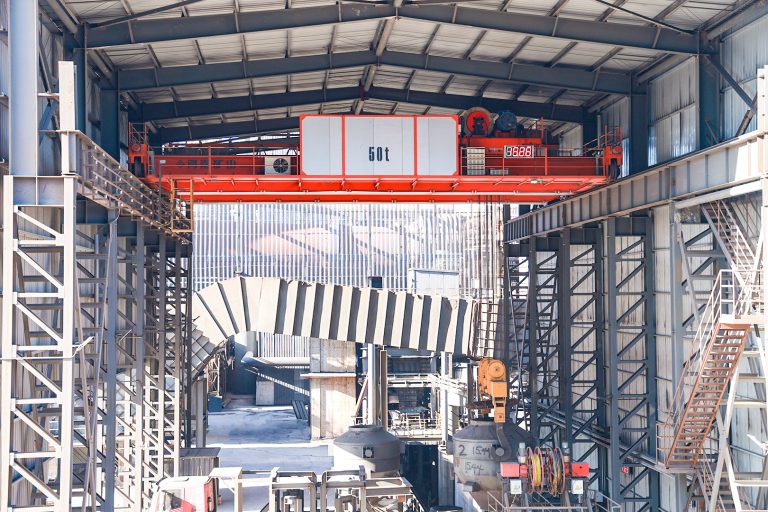
Design Basis, Inspection and Acceptance
The contract identifies the governing country, crane classification, structural and mechanism rules, electrical requirements, below-hook device standard, local registration and inspection route. Depending on destination and project requirements, the design basis may reference ISO 4301 classification; EN 13001, EN 15011 and EN 13155; or CMAA 70 with applicable ASME B30.2, B30.20 and BTH-1 provisions. Local laws and the signed specification take precedence.
Design Review
Approved load cases, mechanism classification, fatigue basis, runway reactions, motion profile, attachment, heat and environmental map, failure analysis and interface schedule.
Factory Testing
Material and fabrication records, dimensional checks, mechanism and brake tests, panel and software checks, simulated I/O, alarms, limits and document review under the agreed inspection plan.
Site Acceptance
Installation and alignment checks, proof and functional tests, representative fixture or load trials, process sequence, emergency response, interfaces, recovery, training and handover documents.
Published Solution and Adjacent Project Experience
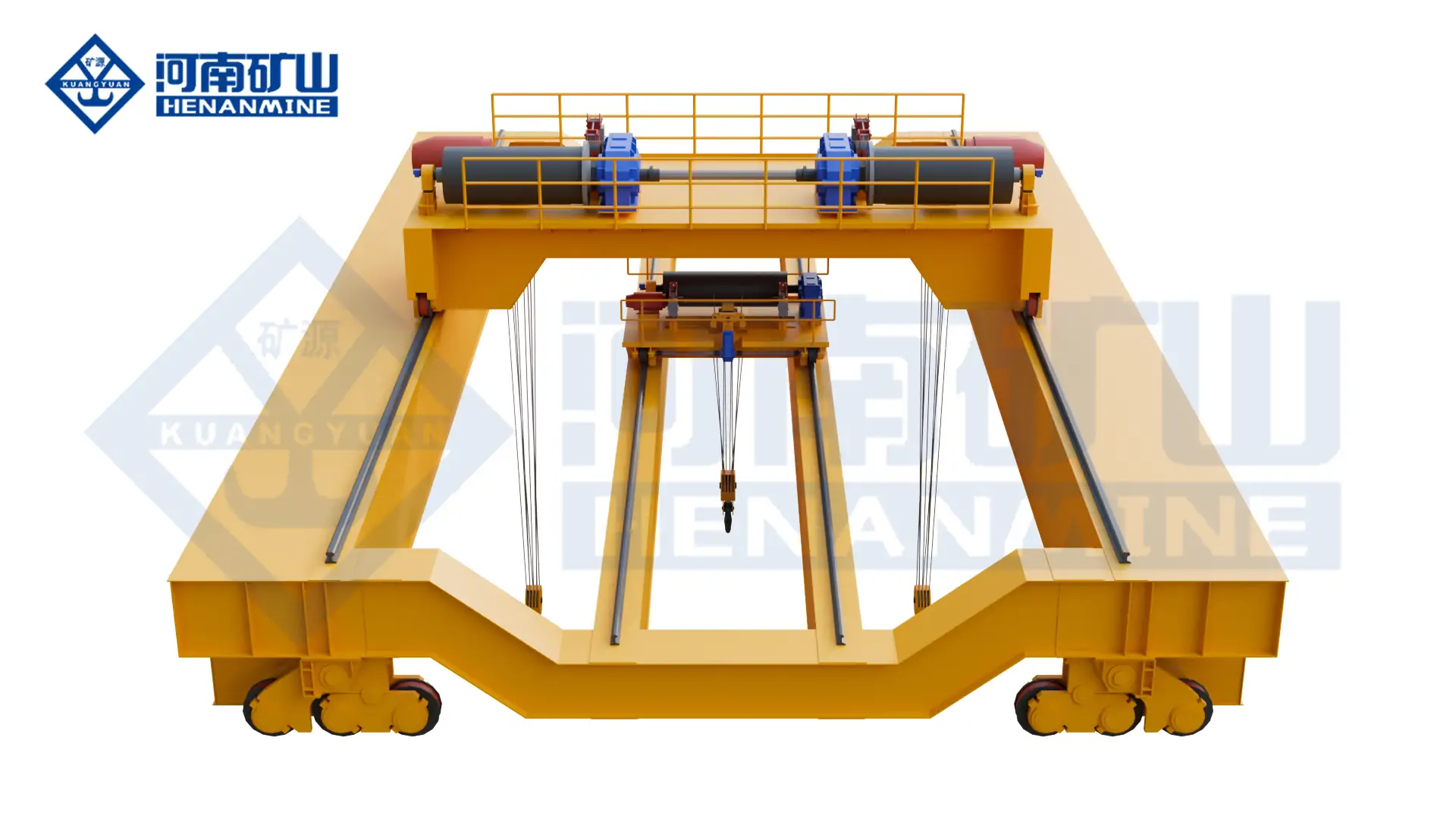
YH Quenching-Crane Product Platform
Henan Mine Crane publishes a quenching-crane platform for rapid immersion of high-temperature workpieces, with project options for thermal protection, dual braking, emergency power, manual or PLC control and automatic positioning. Published applications include steel rolls, mold steel, shafts, gears, flanges, bearing components and high-strength fasteners.
The platform description establishes an engineering starting point. Project performance is confirmed only in the signed technical proposal and acceptance criteria.
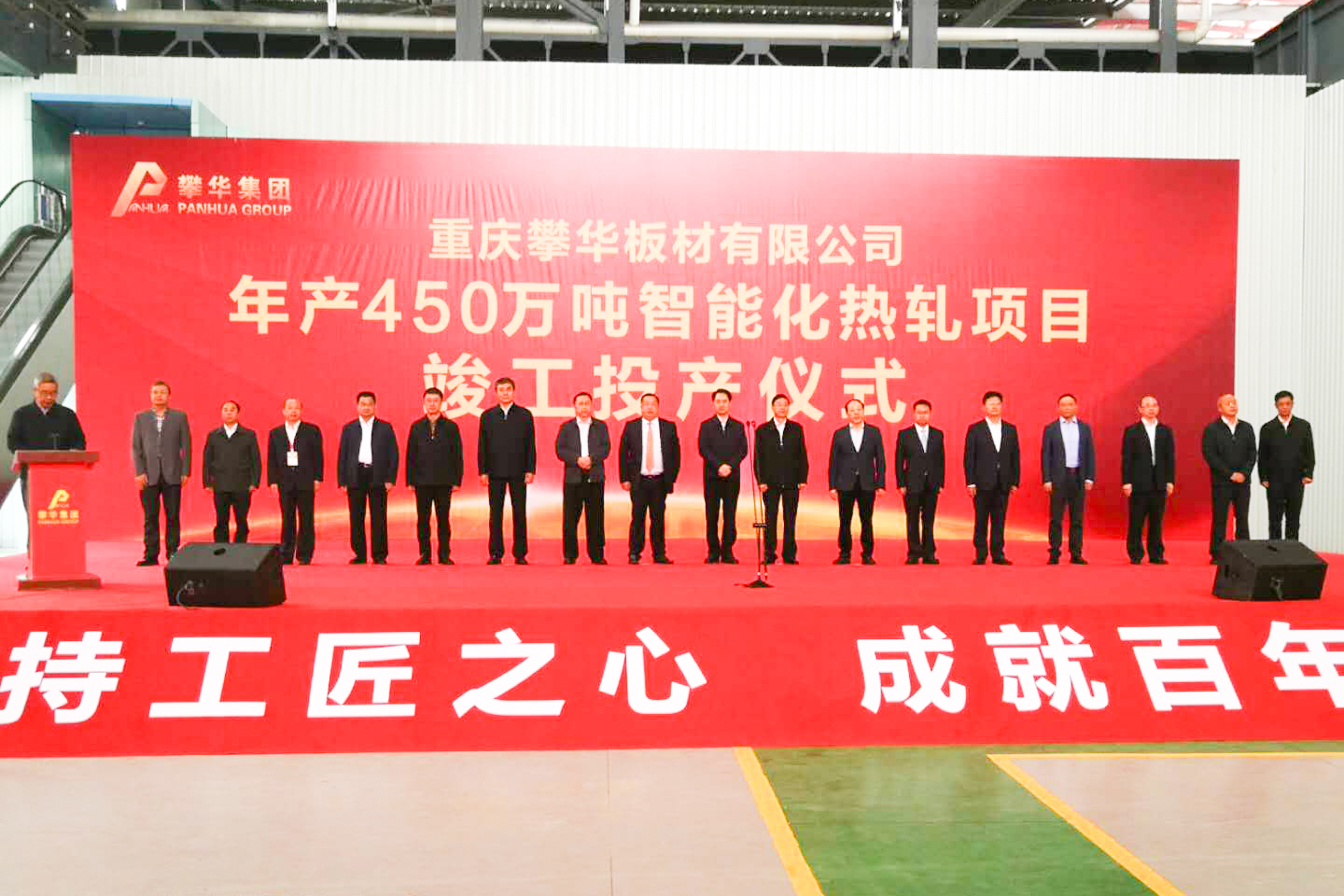
Adjacent High-Temperature and Automation References
Published Henan Mine Crane hot-rolled steel and fully automatic metallurgical-crane projects demonstrate adjacent capabilities in heavy-duty bridge engineering, thermal environments, positioning and production-line integration.
These adjacent references are not presented as heat-treatment deliveries. They illustrate transferable engineering disciplines; the furnace, bath, fixture and quenching cycle require separate project validation.
Evidence boundary: product ranges on this page come from published Henan Mine Crane information. Application descriptions explain engineering routes. Adjacent project photographs show related high-temperature or automated crane work and do not represent the exact configuration offered for every heat-treatment enquiry.
Heat Treatment Crane Price and Budget Scope
Purpose-built heat treatment and quenching cranes are normally priced by project. A public web review completed on 20 September 2026 found specialist suppliers presenting these cranes through request-for-quotation pages rather than comparable numeric prices. No credible like-for-like public price was found for a complete quenching-crane system with a defined load, immersion cycle, bath medium, emergency strategy and delivery scope.
A reviewed marketplace page listed an ordinary double-girder overhead crane at US$15,000 per set. The listing described a general workshop or warehouse crane, not a heat-treatment duty, and is therefore not a dependable budget for a quenching system. A valid comparison must normalize the technical and commercial scope.
| Market Reference | Published Price Status | How to Use It |
|---|---|---|
| Specialist Heat-Treatment or Quenching Crane | Project quotation / RFQ | Obtain a configuration-based proposal against one common duty specification |
| Public Specialist Platform Pages | Capacity and dimensional ranges published; numeric price generally not published | Useful for identifying available engineering envelopes, not for installed-project budgeting |
| Ordinary Double-Girder Marketplace Listing | US$15,000 per set in one reviewed listing | General workshop or warehouse duty; do not compare directly with a quenching crane |
| Henan Mine Crane Heat Treatment System | Project quotation | Price follows approved process, crane, attachment, interface and supply-boundary data |
Main Cost Drivers
Capacity, span, lift, wheel loads, structure, mechanisms, rails and building modifications.
Immersion profile, duty, brakes, redundancy, emergency power, positioning and availability.
Basket, fixture or beam; heat protection; corrosion system; enclosures and special materials.
Cabin or radio, PLC, anti-sway, sensors, automation, plant networks and traceability.
Freight, taxes, erection, electrification, commissioning, testing, training, spares and documentation.
Destination standards, third-party inspection, local registration and documentation language.
Comparable quotation rule: issue the same load matrix, motion cycle, bath data, duty, layout, standards and supply boundary to every supplier. Require explicit inclusions, exclusions, utilities, interface responsibilities, testing scope, spare parts and commercial terms.
Information Required for a Heat Treatment Crane Quote
A complete enquiry allows the crane structure, hoist, attachment, thermal protection, emergency response, controls, runway reactions and commercial scope to be priced on the same basis.
Workpiece and Fixture
Minimum, normal and maximum mass and dimensions; material; temperature at pickup; center of gravity; orientation; basket, rack, spreader or clamp data; drawings and photographs.
Treatment Cycle
Furnace pickup point, route, maximum transfer time, immersion depth and profile, dwell, agitation, withdrawal, drainage, destination, cycles per hour and load spectrum.
Tank and Environment
Bath medium and temperature; tank dimensions and freeboard; covers and agitation; vapor, splash and ventilation; furnace and ambient heat data; corrosion and fire strategy.
Workshop and Runway
Rail-center span, runway length and elevation; required lift; headroom; approaches; rail and beam data; wheel-load limits; cross-section, equipment layout and installation access.
Controls and Emergency Strategy
Manual, assisted or automatic mode; positions and tolerances; interface signals; cameras; anti-sway; power-loss response; emergency source; recovery access and safe states.
Commercial and Compliance Scope
Destination, power supply, standards, inspection route, Incoterm, freight, installation, electrification, commissioning, testing, training, spares, documentation and warranty requirements.
Frequently Asked Questions
Is a heat treatment crane the same as a quenching crane?
A quenching crane is one type of heat treatment crane. It is specifically engineered for timed immersion and recovery. Heat-treatment handling can also include furnace transfer, tempering, annealing and cooling operations without rapid immersion.
How is heat treatment crane capacity calculated?
Start with the heaviest workpiece and add the basket, fixture, beam, rigging, hook block, retained liquid and every suspended accessory. Then evaluate eccentric loading, multi-point load sharing, dynamic motion and abnormal cases.
Can a standard overhead crane perform quenching?
Only if a dedicated engineering review confirms the complete process. Immersion time, hoist profile, brakes, power-loss response, thermal exposure, vapor, splash, corrosion, fixture, clearance and duty can require a purpose-built system.
Which quenching media can the crane serve?
Water, polymer solution, brine and oil can be considered. Each medium creates different vapor, splash, corrosion, contamination, ventilation and fire conditions, so the bath data and site risk assessment are required.
How much does a heat treatment crane cost?
Specialist suppliers normally quote by project, and the September 2026 public review found no dependable like-for-like numeric price. Capacity, immersion performance, attachment, environment, redundancy, automation, runway and installed scope must be defined first.
What happens if power fails during quenching?
The required response is defined for every cycle stage. Depending on the risk assessment, the solution may use emergency power, selected redundant functions, controlled recovery and a documented manual procedure.
Can the crane integrate with furnaces and tank controls?
Yes. Integration can include door, cover and agitation interlocks, route permissions, load identification, recipe selection, position confirmation, event records and plant-system communication under an approved functional specification.
What should be tested before handover?
Tests cover rated and proof loads, brakes, limits, overspeed and overload functions, process motion, positioning, attachment, interfaces, safe states, emergency response, manual recovery and representative treatment sequences.
Related Heat-Treatment and Metallurgical Crane Products
Each product platform serves a different process load and risk profile. Final selection follows the material, temperature, movement, environment, duty and site data.
Quenching Crane
Heat-Treatment Process System
Quenching Crane
Specialized platform for rapid workpiece immersion, bath dwell, recovery and heat-treatment line integration.

Metallurgical Bridge Crane
Heavy-duty bridge platform for declared high-temperature and metallurgical process environments.
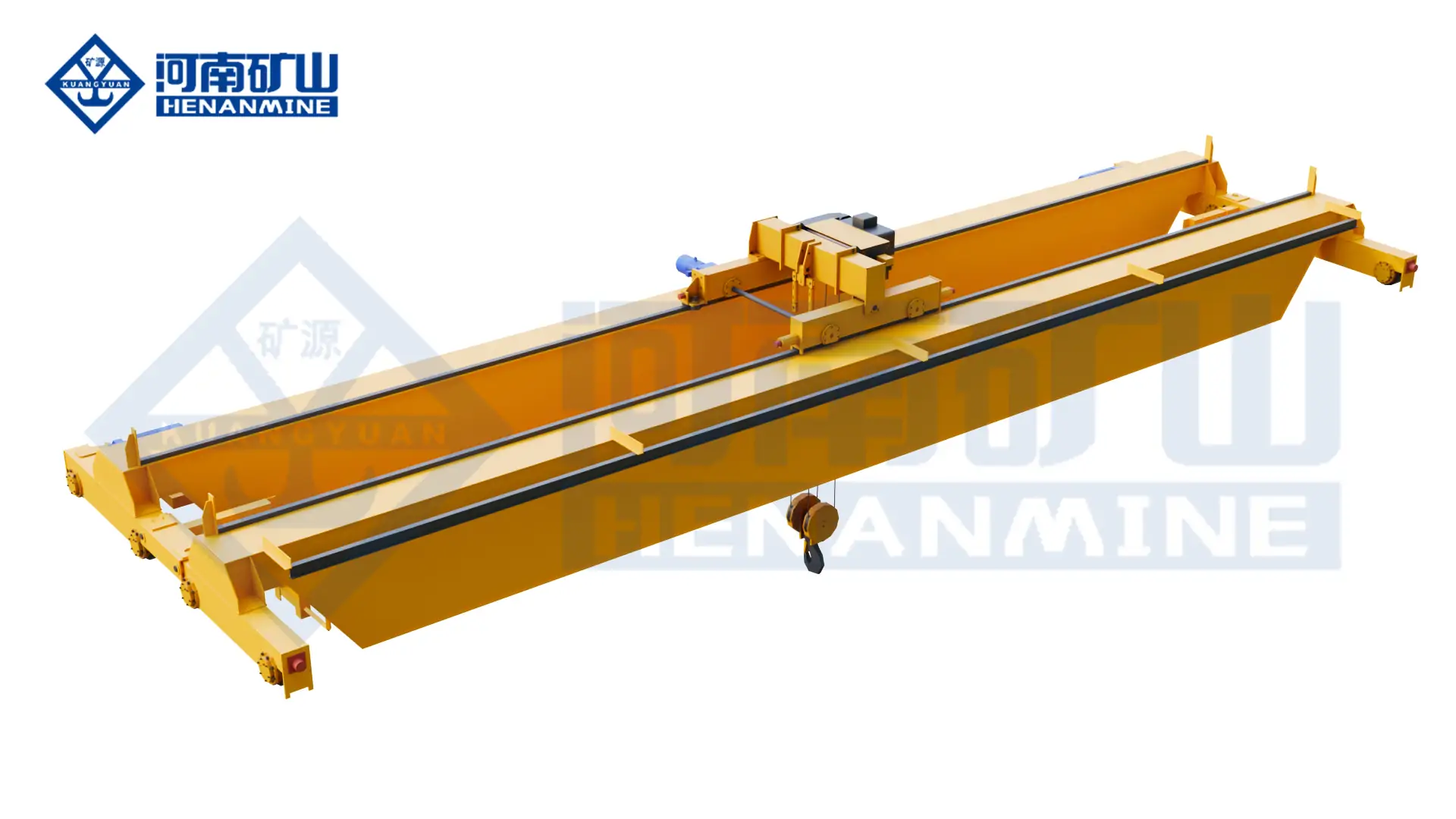
Double-Girder Bridge Crane
Configurable platform for furnace transfer and general handling where rapid immersion is not required.

Double-Girder Casting Crane
Dedicated molten-metal handling platform when foundry ladle transfer is separately in scope.
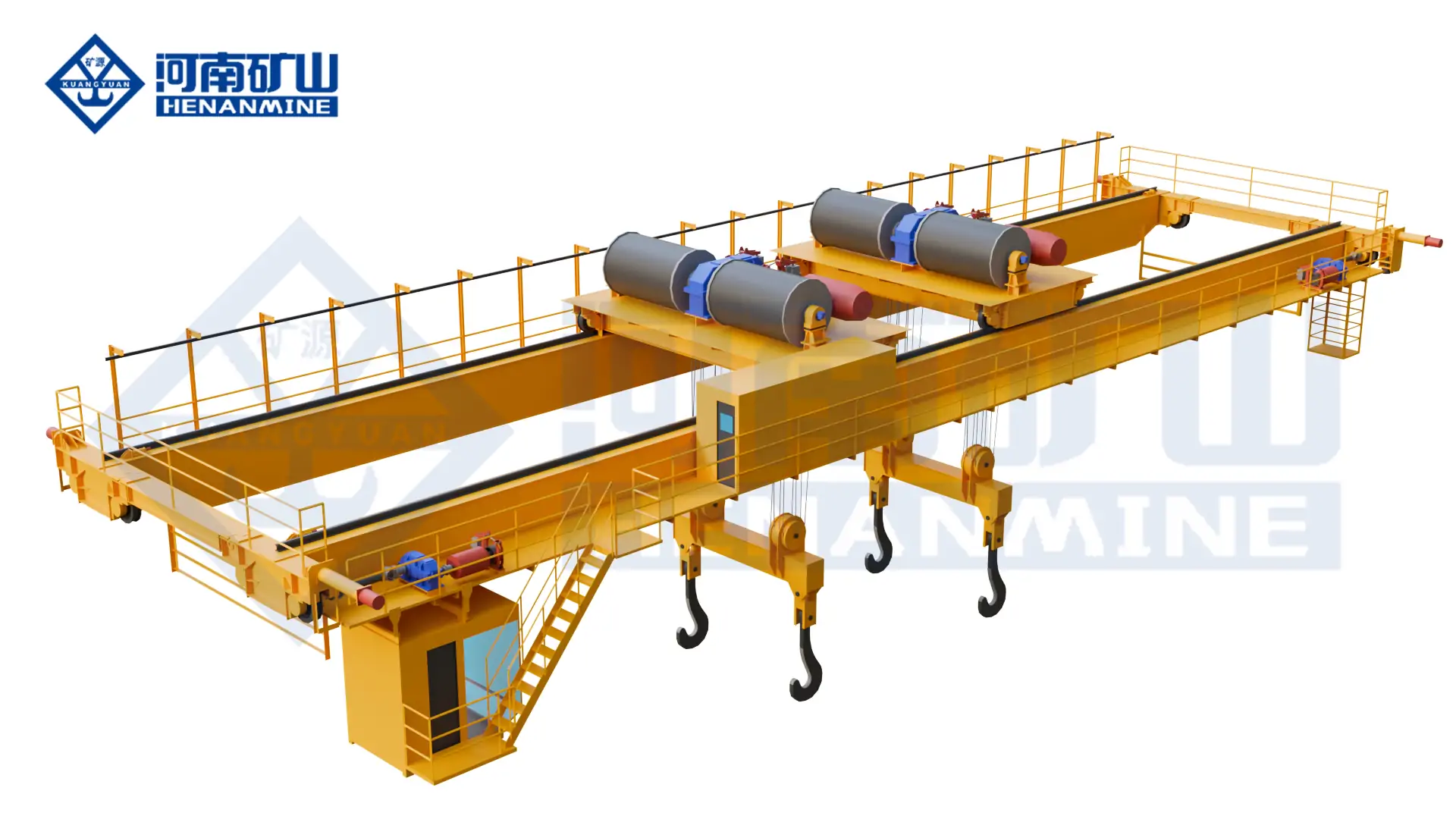
Automatic Metallurgical Crane
Integrated control reference for defined production routes, positioning and plant-system communication.
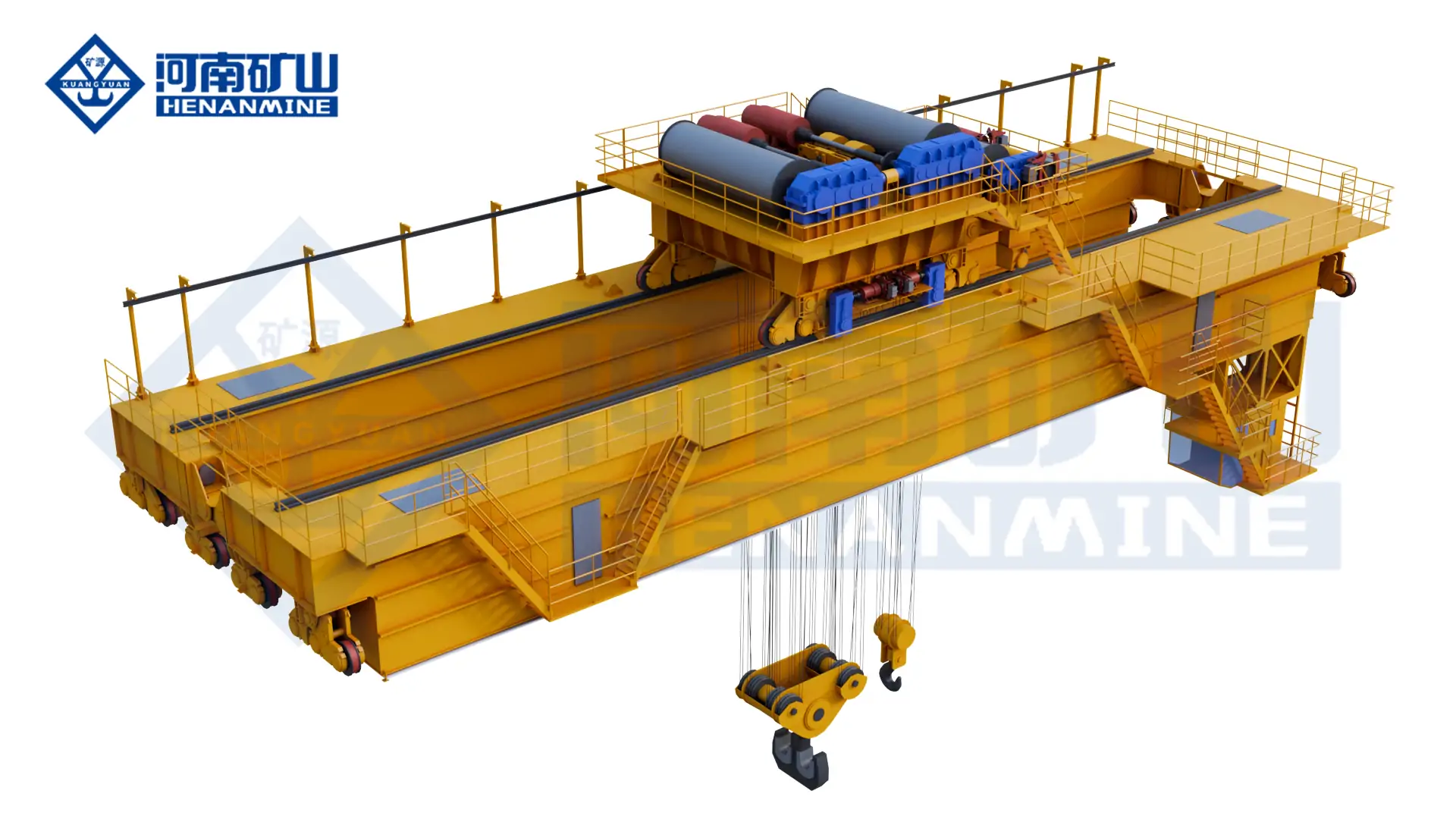
Special Metallurgical Overhead Crane
Project-specific lifting platform for demanding metallurgical process conditions and safety requirements.
Request a Heat Treatment Crane Quote
Submit the workpiece and fixture matrix, pickup temperature, furnace-to-bath sequence, transfer and immersion timing, bath medium and dimensions, duty cycle, span, lift, runway data, control level, power-loss strategy, destination and supply boundary. Henan Mine Crane will prepare a configuration-based technical and commercial proposal.