
Henan Mine Crane · Non-Ferrous Metallurgical Lifting Systems
Copper Smelter Crane Systems
Process-duty overhead cranes for copper concentrate and flux handling, furnace charging, matte and slag pots, blister-copper transfer, anode-furnace service, casting operations, tankhouse handling and plant maintenance.
Henan Mine Crane configures each copper smelter crane from the actual process zone, gross suspended load, vessel and attachment geometry, duty cycle, molten-material risk, heat and fume exposure, corrosion data, runway capacity, control philosophy and governing standards.
PROCESS AREAS
Feed, Smelting, Casting & Refining
CRANE TYPES
Grab, Bin, Casting & Maintenance
PRIMARY EXPOSURES
Heat, Dust, Fumes & Corrosion
PROJECT BASIS
Process, Load, Duty, Route & Risk
What Is a Copper Smelter Crane?
A copper smelter crane is a process-specific overhead lifting system used across primary copper smelting, secondary copper production or electrolytic refining. Depending on the process, it may move bulk concentrate and flux, charge boxes, matte or slag pots, molten blister copper, anode-furnace vessels, casting equipment, copper anodes and cathodes, furnace components or maintenance loads.
The term describes an application family rather than one standard machine. A grab crane for dry concentrate uses a different hoist, attachment and environmental package from a casting crane carrying a full vessel of molten copper. A tankhouse process crane uses mechanical lifting frames and corrosion protection, while a maintenance crane may operate only during shutdowns at a much lower load spectrum.
Henan Mine Crane develops these systems from its intelligent grab crane, metallurgical bin crane, double-girder casting crane, four-girder casting crane and general double-girder platforms according to the declared copper process.
Copper Smelter Crane Applications by Process Area
The crane schedule should follow the flowsheet and separate routine process lifts from maintenance lifts. The processing route varies between flash smelting, bath smelting, batch converting, continuous converting, secondary smelting and other technologies, so the actual plant process remains the design basis.
Concentrate and Flux Handling
Grab and transfer concentrate, silica flux, coke, recycled material or other approved bulk feed between storage, blending, bins and process interfaces.
Furnace Charging and Bin Transfer
Lift, position and empty charge boxes or bins through a controlled sequence coordinated with furnace doors, hoods, feeders and exclusion zones.
Matte and Slag Pot Transfer
Move declared molten or semi-molten vessels between furnace, converter, slag-cleaning and cooling positions using a purpose-designed load path and vessel attachment.
Blister Copper and Anode Refining
Support vessel transfer, furnace service and maintenance from converting through anode refining, with heat protection and interlocks matched to the operating route.
Anode Casting and Product Handling
Handle casting equipment, molds, ladles, anodes and maintenance assemblies around the casting wheel or mold line without conflicting with hot-metal routes.
Electrorefinery Tankhouse
Transfer anode and cathode groups, stripping-line loads or cell-service equipment with mechanical lifting frames, corrosion protection and busbar clearances.
Acid Plant and Off-Gas Systems
Provide maintenance lifting for fans, ducts, pumps, heat exchangers and process equipment with protection based on measured chemical exposure and area classification.
Shutdown and Major Maintenance
Remove furnace, converter, hood, electrode, burner, pump or drive components using planned maintenance clearances, drop zones and laydown areas.
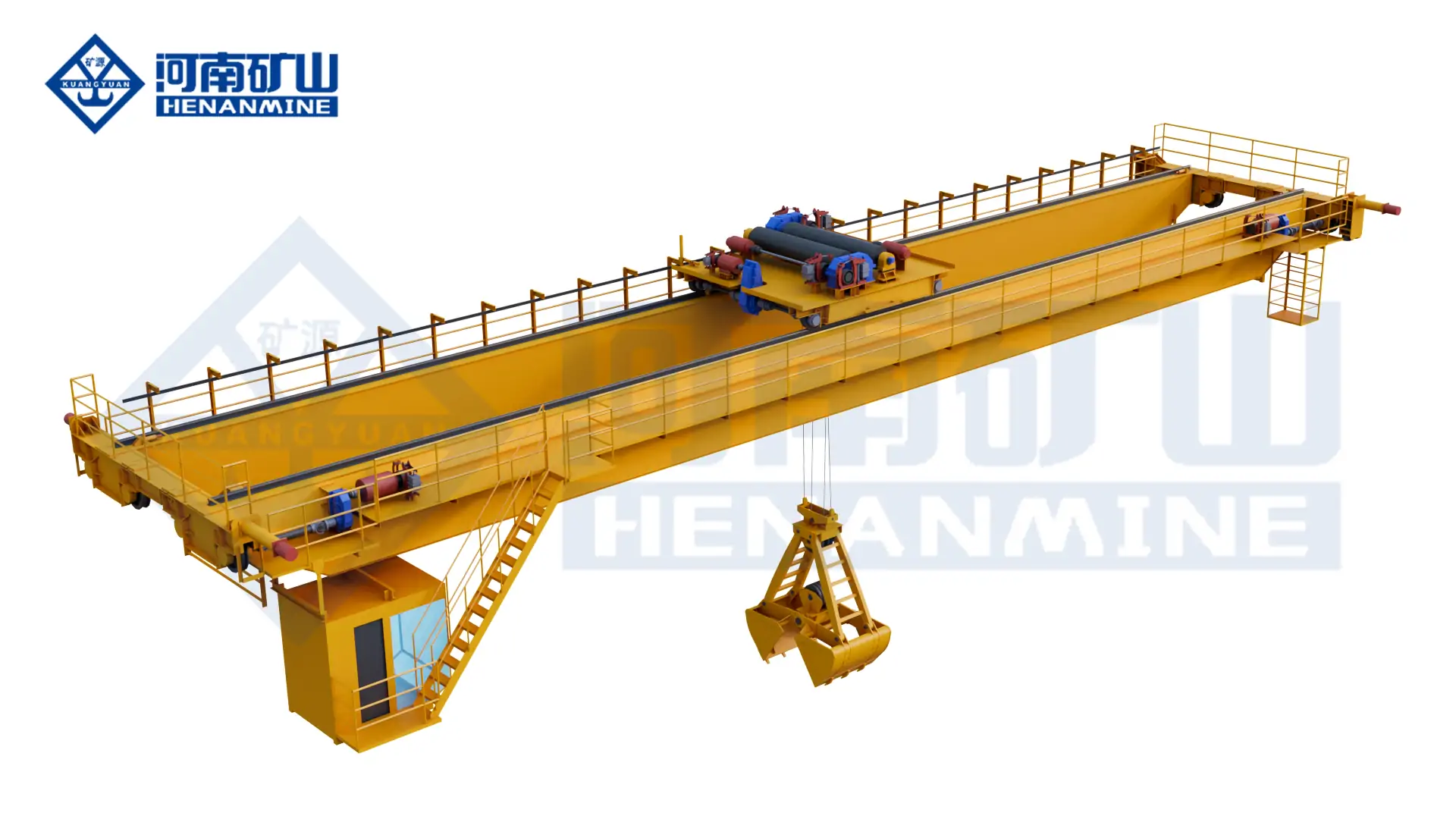
Copper Smelter Crane System Architecture
- Bridge and runway interface: transfer vertical, lateral, longitudinal, buffer and fatigue loads to the smelter building while maintaining furnace, hood and duct clearances.
- Process trolley and hoist: provide the main and auxiliary capacities, reeving, braking, drives, speed range and duty required for the declared vessel or material cycle.
- Load-handling device: connects to a charge box, pot, ladle, lifting trunnion, anode or cathode frame, grab, mechanical clamp, hook or maintenance spreader.
- Thermal and environmental package: protects structure, ropes, brakes, motors, panels, sensors and cab from radiant heat, dust, fumes, acid mist, condensation and corrosion.
- Safety and control system: coordinates limits, load monitoring, brakes, collision protection, restricted zones, process interlocks, safe states and controlled recovery.
- Power and plant interface: covers crane electrification, emergency-energy philosophy, PLC communication, operating modes, event records and interfaces with furnace, converter or casting equipment.
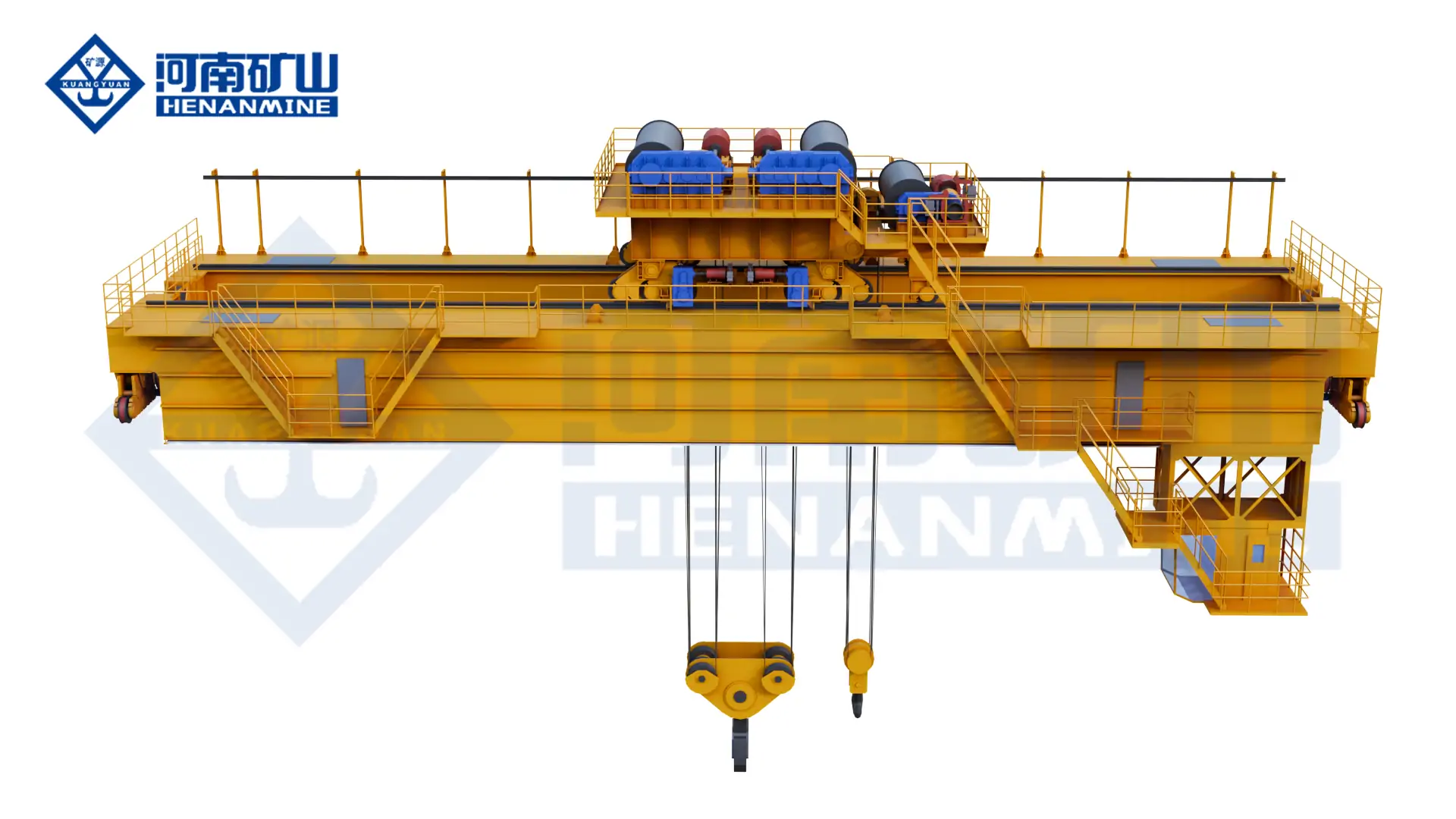
Rated-load basis: capacity is based on the maximum gross suspended load. For a molten-material lift, include the vessel, refractory lining, maximum process contents, skull or adhered material where applicable, gantry beam or lifting frame, hooks, ropes and every suspended accessory. Main and auxiliary hook loads, tipping geometry and simultaneous operation require separate load cases.
Copper Smelter Crane Selection Considerations
Selection begins with the process function and credible operating cases. Nominal lifting capacity does not establish the required hoist redundancy, duty, attachment, heat protection, corrosion system or safe route.
Process and Load Matrix
Material or vessel identity, empty and full mass, temperature, dimensions, center of gravity, trunnions, attachment, normal cycle, abnormal condition and maintenance lifts.
Production Duty
Lifts per heat or batch, starts per hour, average and maximum load, travel distance, shifts, annual hours, standby time, production consequence of outage and maintenance window.
Load Path and Interfaces
Pickup, transfer and placement coordinates; furnace or converter status; casting equipment; vehicle crossings; occupied areas; emergency landing positions and interlocked machinery.
Environmental Data
Ambient and radiant temperature, duration of heat exposure, dust composition, SO₂ and acid mist, humidity, condensation, corrosive chemicals, washdown and hazardous-area classification.
Building and Runway
Rail-center span, runway length and elevation, headroom, hook approaches, wheel-load limits, clearances to ducts and hoods, expansion joints, rail condition and erection access.
Safety and Acceptance
Applicable law and standard, required redundancy, failure-response philosophy, operator location, access control, inspection route, representative-load tests and measurable process acceptance.
Copper Smelter Crane Configurations Compared
Each configuration addresses a different process load. Similar-looking bridge structures can contain materially different hoists, braking systems, attachments, controls and environmental protection.
| Configuration | Typical Copper-Plant Duty | Load-Handling Device | Critical Definition |
|---|---|---|---|
| Intelligent Grab Overhead Crane | Concentrate, flux, coke, return materials or approved dry bulk feed. | Four-rope or application-specific grab. | Material density, moisture, abrasiveness, grab fill factor, dust control and required tonnes per hour. |
| Metallurgical Bin or Charge-Box Crane | Lifting, transferring and dumping charge boxes or process bins near a furnace. | Forged hook, gantry attachment or custom box interface. | Box geometry, tipping sequence, furnace-door and hood interlocks, heat exposure and spill boundary. |
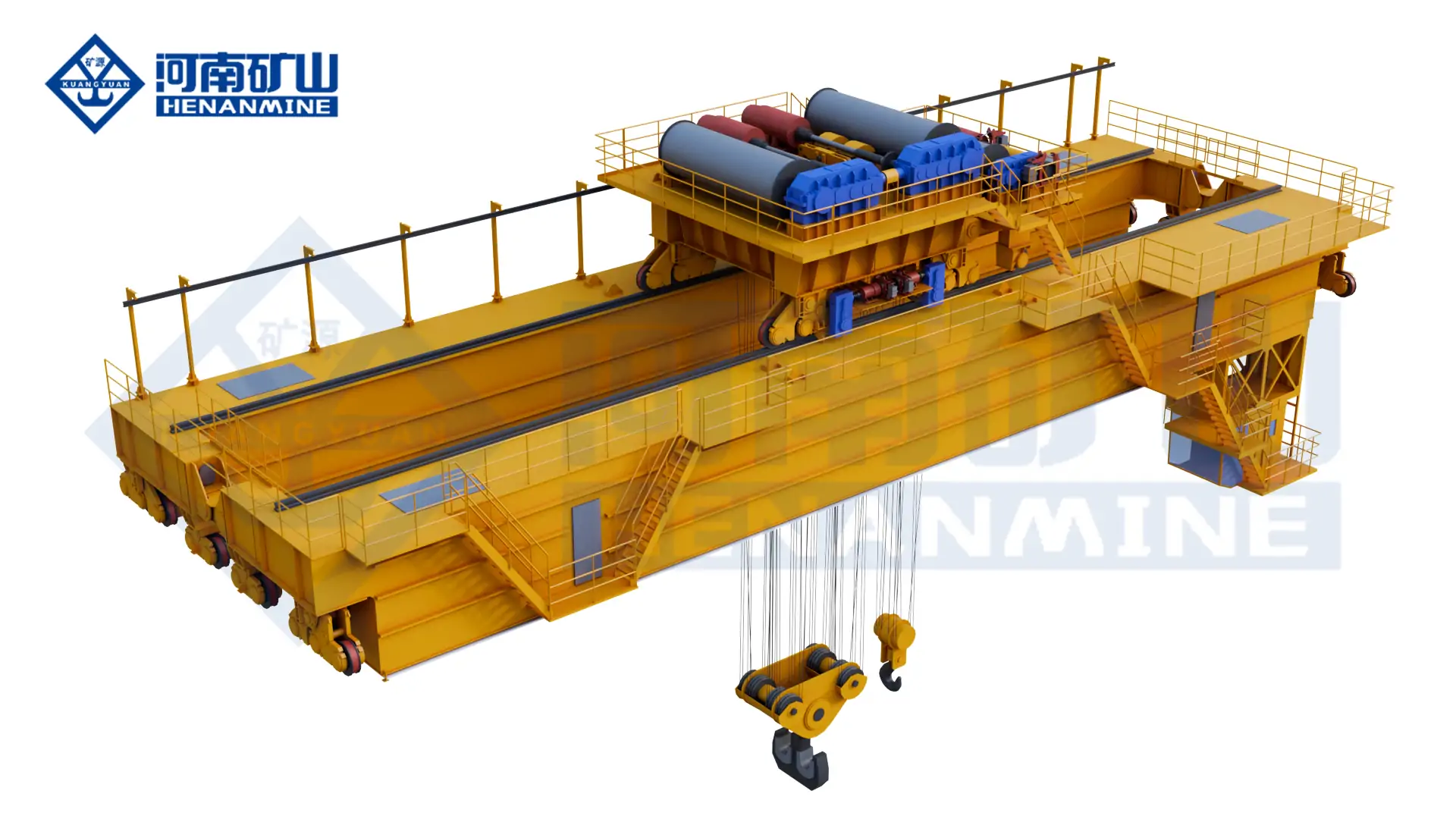
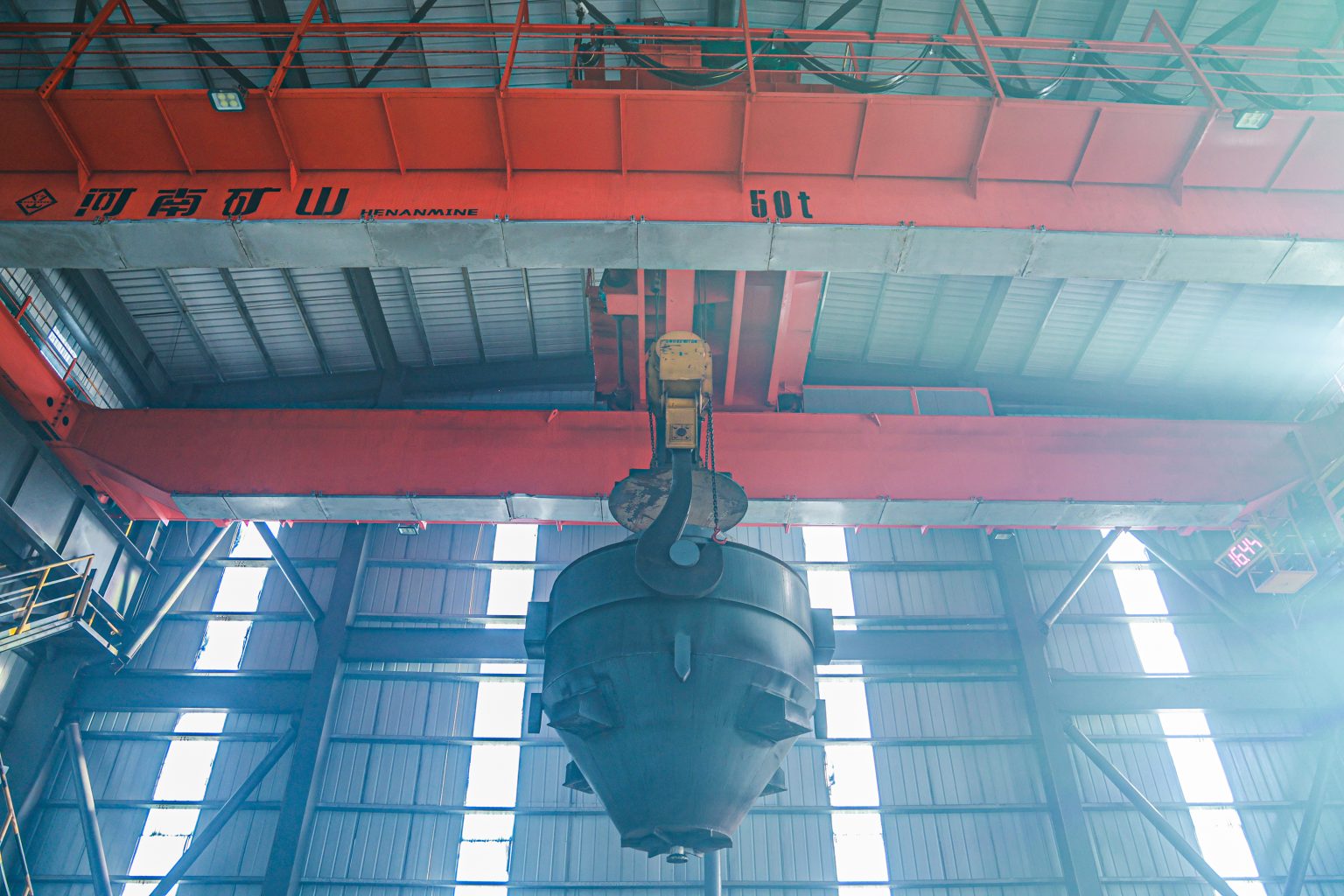
| Double-Girder Casting Crane | Molten matte, slag, blister copper or anode copper vessel transfer within its engineered range. | Gantry-type ladle beam or vessel attachment, with auxiliary hook where required. | Gross vessel load, trunnions, main and auxiliary capacity, redundancy, heat protection and emergency landing. |
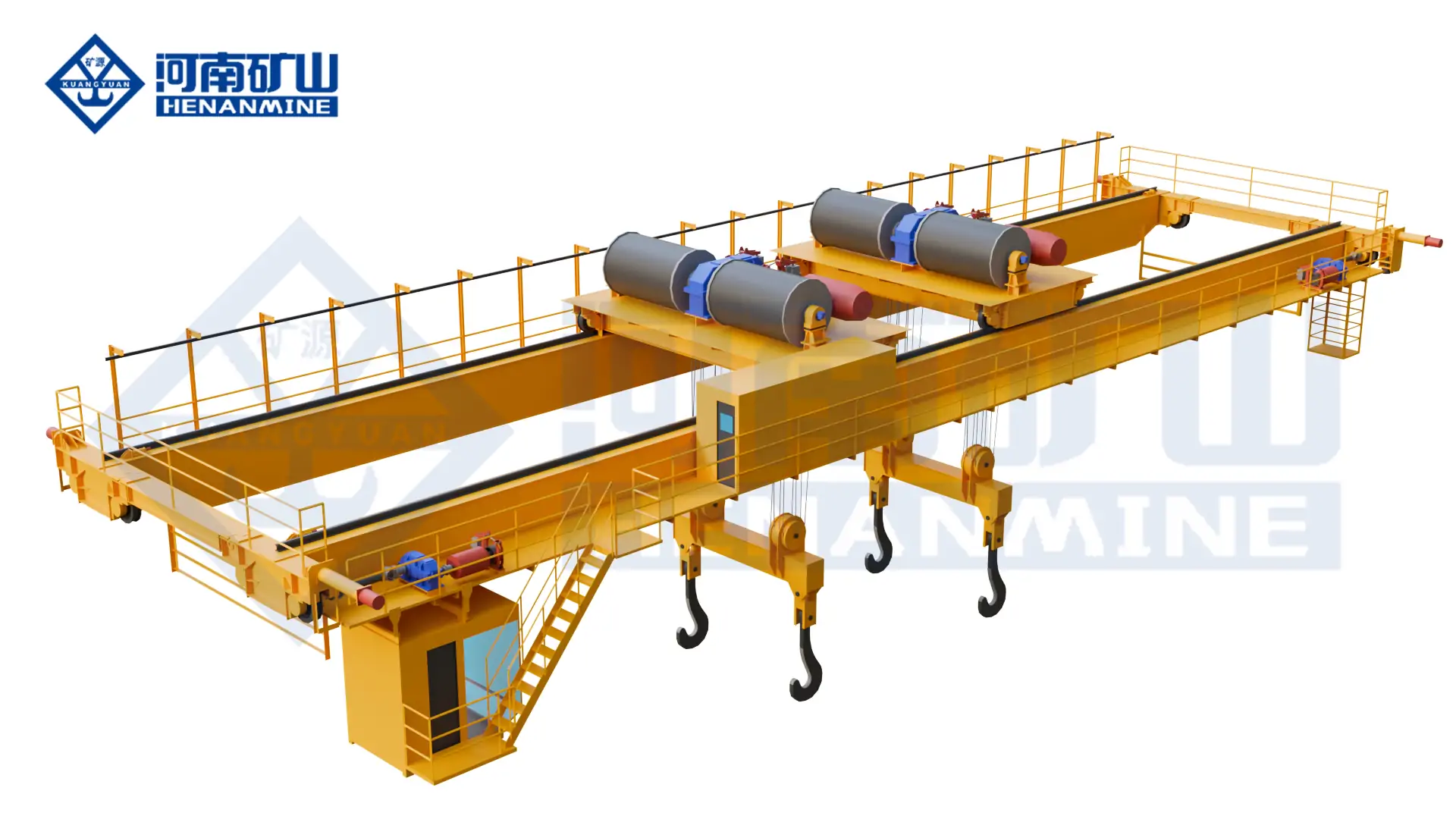
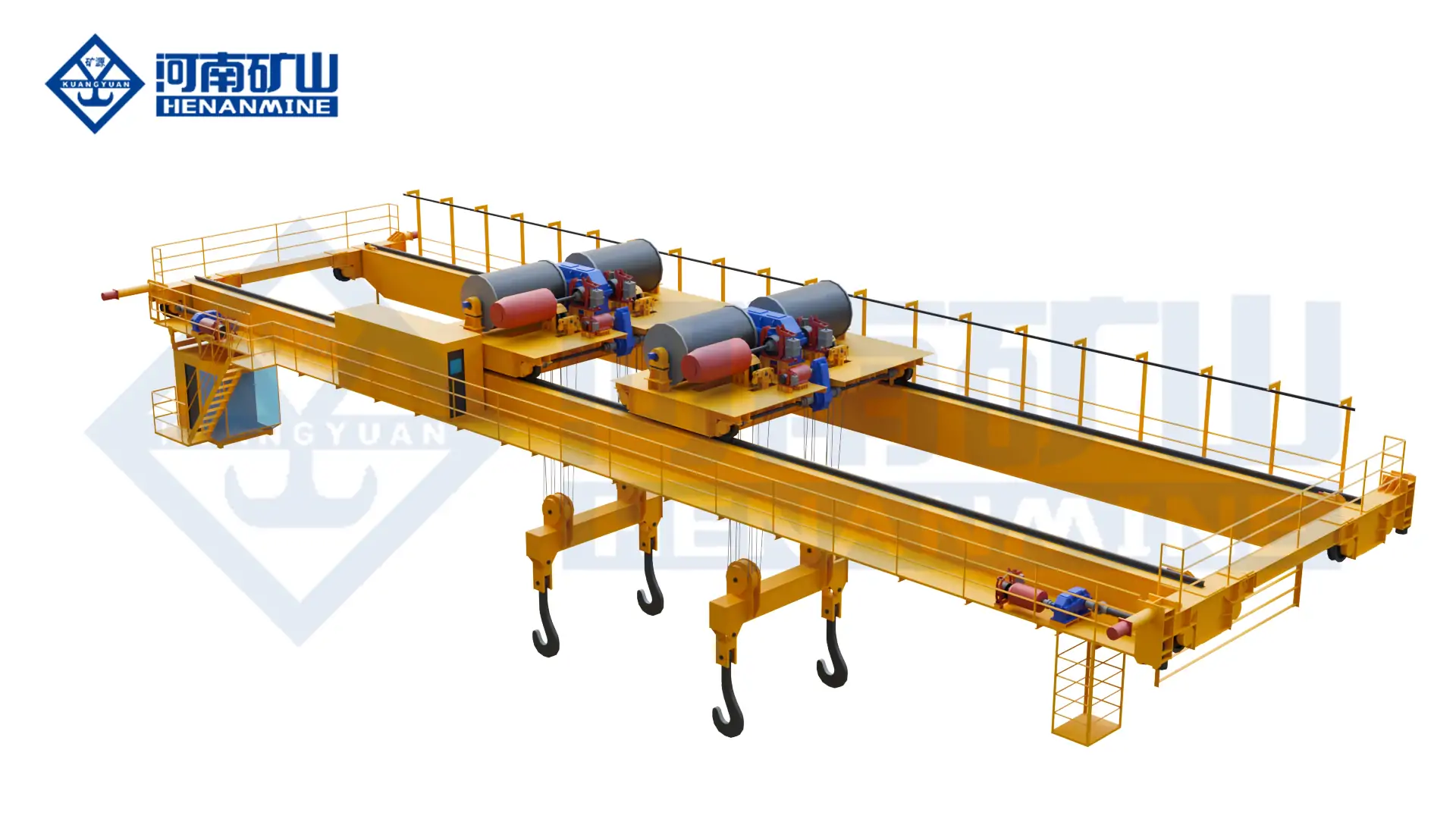
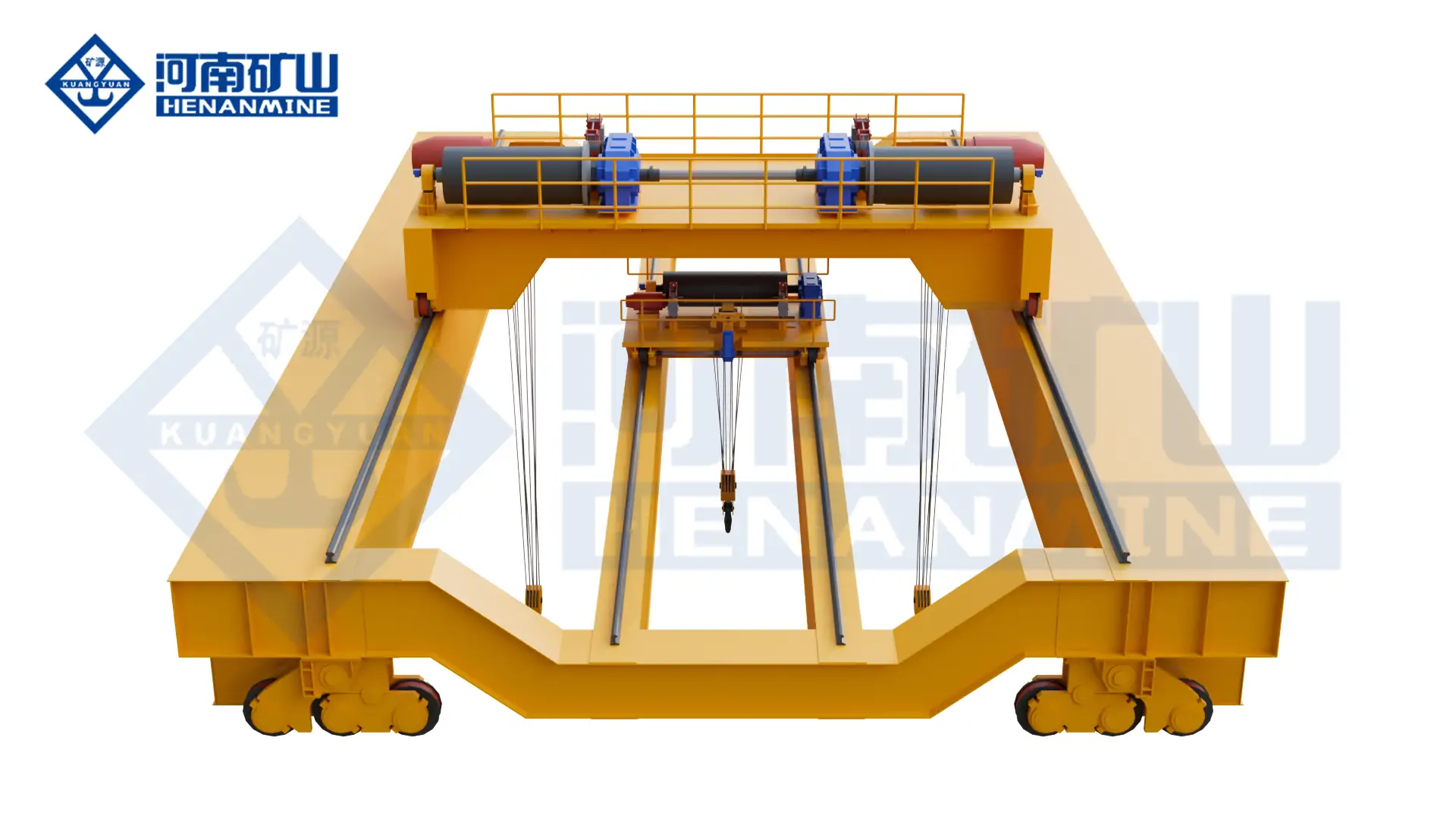
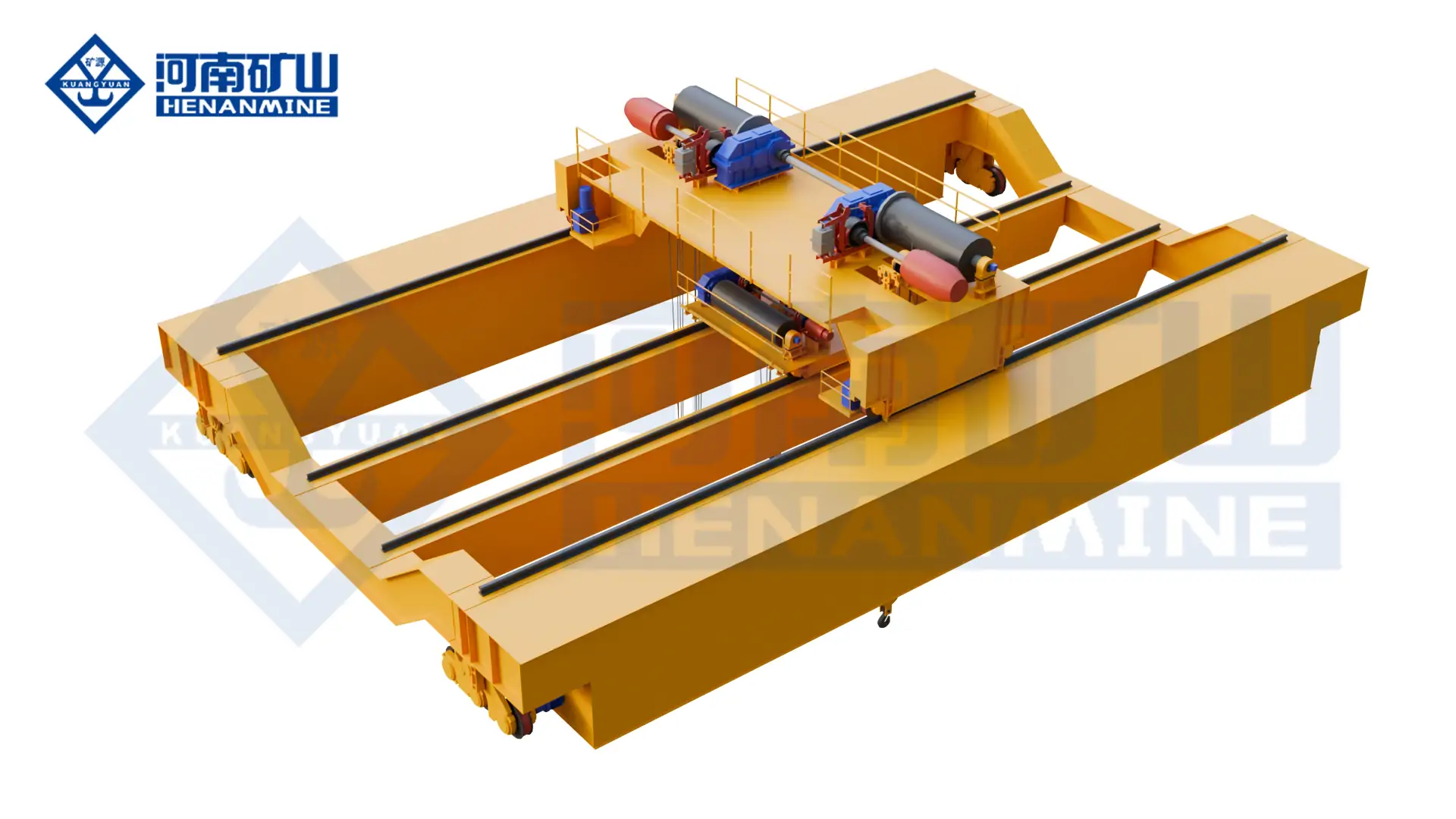
| Four-Girder, Multi-Rail Casting Crane | Ultra-heavy or intensive molten-material duty requiring main and auxiliary trolleys. | Main gantry attachment plus auxiliary forged hook. | Trolley interaction, tipping load cases, wheel-load distribution, runway capacity and maintenance access. |
| Tankhouse Process Crane | Anode and cathode group transfer, cell service and stripping-line interfaces. | Mechanical frame, hooks, clamps or custom group-lifting device. | Plate spacing, electrolyte carryover, busbar clearance, electrical isolation strategy, corrosion and drip control. |
| General Double-Girder Maintenance Crane | Furnace, converter, hood, pump, fan and drive maintenance during planned access. | Hook, sling or maintenance spreader. | Heaviest maintenance assembly, infrequent-load spectrum, laydown area and shutdown access. Not a molten-metal crane unless specifically engineered and approved. |
Copper is not a ferromagnetic lifting load: ordinary electromagnetic lifting magnets used for steel do not provide the required holding method for copper anodes, cathodes, plate or scrap. Copper-product handling requires hooks, mechanical clamps, lifting frames, grabs or another engineered mechanical attachment.
Published Metallurgical Crane Platform Ranges
The following Henan Mine Crane product-page data provides an initial platform reference. These are not preselected copper-smelter specifications. Final capacity, span, lift, class, speeds, redundancy and attachment are determined by the approved process data.
| Published Platform | Published Capacity | Published Span | Published Lift | Published Class |
|---|---|---|---|---|
| Intelligent Grab Double-Girder Overhead Crane | 5–50 t | 10.5–31.5 m | 6–30 m | A6–A8 |
| YX Metallurgical Bin Crane | 5–50 t | 7.5–35 m | 6–20 m | A6–A7 |
| Double-Girder Casting Crane | 50–125 t in the published parameter table; customized | 10–35 m | 6–25 m | A7 published; page header notes A7–A8 options |
| Four-Girder Casting Crane | 200/50–500/200 t published header range | 10–40 m | 6–30 m | A7–A8 published header range |
Copper Smelter Load Attachments
The lifting device is part of the process system. Its geometry, rating, heat exposure, inspection method and failure consequences should be included in the crane design and acceptance plan.
| Attachment | Typical Load | Engineering Checks |
|---|---|---|
| Four-Rope Grab | Concentrate, flux and approved dry bulk material. | Bulk density, moisture, particle size, cohesiveness, abrasion, grab fill factor and closing force. |
| Charge-Box or Bin Attachment | Furnace feed boxes, bins and containers. | Pickup points, latch confirmation, turnover angle, retained material, furnace clearance and release sequence. |
| Gantry Ladle Beam or Vessel Hook | Matte, slag, blister-copper or anode-copper vessels. | Trunnion profile, seating, side clearance, vessel tilt, refractory and contents mass, heat shielding and inspection access. |
| Auxiliary Hook or Tipping Device | Controlled pouring, vessel rotation and maintenance assistance. | Load sharing through the complete angle range, synchronization, rope fleet, prohibited positions and interlocks. |
| Anode and Cathode Lifting Frame | Individual plates or defined groups in the tankhouse. | Plate pitch, mass variation, engagement confirmation, busbar clearance, electrolyte drainage and short-circuit prevention. |
| Maintenance Hook and Spreader | Furnace, converter, hood, pump, fan, motor and structural components. | Approved lifting points, center of gravity, headroom, laydown position, sling angle and shutdown sequence. |
Molten-Material Safety and Failure Response
A molten-copper crane is a process-safety system, not a general overhead crane with additional heat shields. The design basis must define what occurs after loss of one motor, reducer, brake, rope path, encoder, controller, incoming supply or communication link. The required redundant architecture depends on capacity, process risk, local law and the selected design standard.
- Specify the main-hoist load path, service and emergency braking arrangement, upper-limit architecture and overspeed or unintended-motion protection where required.
- Define whether a remaining drive can hold, lower or complete a controlled safe-placement cycle after a single failure.
- Provide a predetermined landing or containment position for a retained molten load; emergency energy must have a stated function and duration.
- Keep routine travel away from occupied rooms, control stations, escape routes and water hazards wherever the plant layout permits.
- Interlock vessel transfer with furnace, converter, hood, door, aisle and casting equipment states as defined by the process hazard review.
- Prohibit tandem or simultaneous operations unless the cranes, controls, load-sharing method and lift plan are engineered for that operation.
Safety boundary: no personnel route should pass beneath a suspended vessel or load. The plant risk assessment defines access control, molten-material exclusion areas, spill response, emergency communications and restart authorization.
Heat, Dust, Fume and Corrosion Protection
Environmental protection should be zoned from measured exposure. Furnace-bay thermal radiation, concentrate dust, converter fumes, tankhouse acid mist and acid-plant chemicals do not produce the same failure mechanisms.
Thermal Protection
Heat shields, insulated structural zones, protected ropes and drums, high-temperature cables, suitable lubricants, remote panels and component-temperature monitoring are selected from exposure and duration.
Dust Management
Enclosures, filtration, positive-pressure cabinets, sealed bearings, accessible cleaning points and cable routing are matched to dust loading, conductivity and abrasion.
Fume Exposure
Cab location, filtered pressurization, HVAC intake position, remote operation, viewing systems and escape route are coordinated with SO₂ and other process-fume mapping.
Corrosion System
Surface preparation, coating, fasteners, enclosure materials, seals and corrosion allowance are chosen from chemical concentration, temperature, condensation and maintenance practice.
Tankhouse Electrical Interface
Busbar clearance, grounding, isolation, conductive-liquid carryover, prohibited bridging paths and fault-current consequences require coordination with the plant electrical design.
Hazardous Areas
Explosion-protected equipment is selected only from a documented zone, gas or dust group, temperature class and protection concept. A copper smelter is not automatically one uniform hazardous area.
Controls, Interlocks and Process Integration
| Operating Mode | Primary Use | Required Definition |
|---|---|---|
| Cabin Control | Intensive furnace, converter or molten-vessel handling with a protected operator station. | Sight lines, camera coverage, fume protection, HVAC, emergency exit, alarms and communication. |
| Radio or Local Control | Maintenance and selected process moves where a safe operator position provides better visibility. | Permitted zones, transmitter authorization, emergency stop coverage and mode-transfer interlocks. |
| Assisted Operation | Operator-initiated moves with protected routes, anti-sway, positioning or automatic approach. | Control authority, target confirmation, obstacle response, restricted-zone logic and manual recovery. |
| Automatic Operation | Repeatable bulk-feed or defined production routes with controlled access and reliable process signals. | Task handshake, permissives, safe states, sensor coverage, communication loss, exception handling and restart approval. |
A process signal matrix should identify command ownership and permissives for furnace doors, converter position, hoods, feeders, casting machines, aisle gates, other cranes and maintenance access. Event records should distinguish operator command, process refusal, safety trip, device fault and communication failure. Automatic operation does not remove the need for a verified local recovery procedure.
Runway, Building and Maintainability Interfaces
Wheel Loads and Fatigue
Provide maximum, minimum and concurrent trolley wheel loads, lateral and longitudinal forces, buffers, fatigue spectrum and rail tolerances for structural verification.
Process Clearances
Coordinate bridge depth, trolley envelope, vessel swing, hook approach, hoods, ducts, stacks, columns, access platforms and operating equipment in every position.
Runway Survey
For an existing building, survey rail gauge, elevation, alignment, joints, wear, fasteners, beams, brackets, columns and foundations before final crane reactions are accepted.
Maintenance Access
Define platforms, guardrails, walkways, lighting, isolation points, component-removal routes, trolley service position and lifting points for crane maintenance.
Critical Spares Strategy
Identify brakes, ropes, wheels, bearings, encoders, drives, PLC modules, contactors, sensors, seals and attachment wear parts from production consequence and replacement lead time.
Erection and Outage Plan
Establish delivery splits, access opening, site lifting method, temporary works, outage duration, hot-work restrictions, tie-in sequence and commissioning area.
Standards, Inspection and Acceptance Testing
The contract should state the governing jurisdiction, standards and editions. A project basis may include ISO 4301 for classification, ISO 9927 for inspection, ISO 12480-1 for safe use, EN 13001 and EN 15011 for crane design, or CMAA 70 with ASME B30.2 requirements for the applicable overhead-crane arrangement. Electrical equipment may reference IEC 60204-32. Safety-related control systems may use ISO 13849-1 or IEC 62061 where applicable. Classified areas require the plant’s selected IEC 60079, ATEX, IECEx or local basis. Local law and the signed project specification remain controlling.
Design Review
Approve classifications, load cases, redundancy, structural and mechanism calculations, attachment drawings, wheel loads, environmental protection and safety functions.
Manufacturing Records
Define material traceability, welding procedure and personnel qualification, nondestructive examination, heat treatment, machining, assembly and coating records.
Factory Acceptance
Verify mechanisms, brakes, limits, overload system, control modes, alarms, process simulation, fault responses, interface signals and documentation before shipment.
Site Acceptance
Confirm runway geometry, commissioning tests, proof load, representative vessel or material handling, interlocks, protected routes, emergency functions and agreed production cycles.
Published Heavy Metallurgical Crane Reference
Henan Mine Crane has published a 360 t foundry-crane project reference for Jinsheng’an Group. The delivered crane uses a four-girder, four-rail, dual-trolley arrangement for ultra-heavy molten-metal service and incorporates project-specific structural, hoisting, braking and thermal-protection measures.
The reference demonstrates manufacturing and commissioning experience with a large-capacity metallurgical crane, including trolley coordination, high wheel loads, heat exposure and molten-material risk controls. Henan Mine Crane also publishes a four-girder casting-crane platform for steel and non-ferrous smelting applications, explicitly including molten copper handling in its application description.
A copper-smelter proposal would still be developed from the copper vessel, trunnion and attachment data; matte, slag or anode-copper process; plant layout; environmental measurements; required compliance basis and acceptance plan.
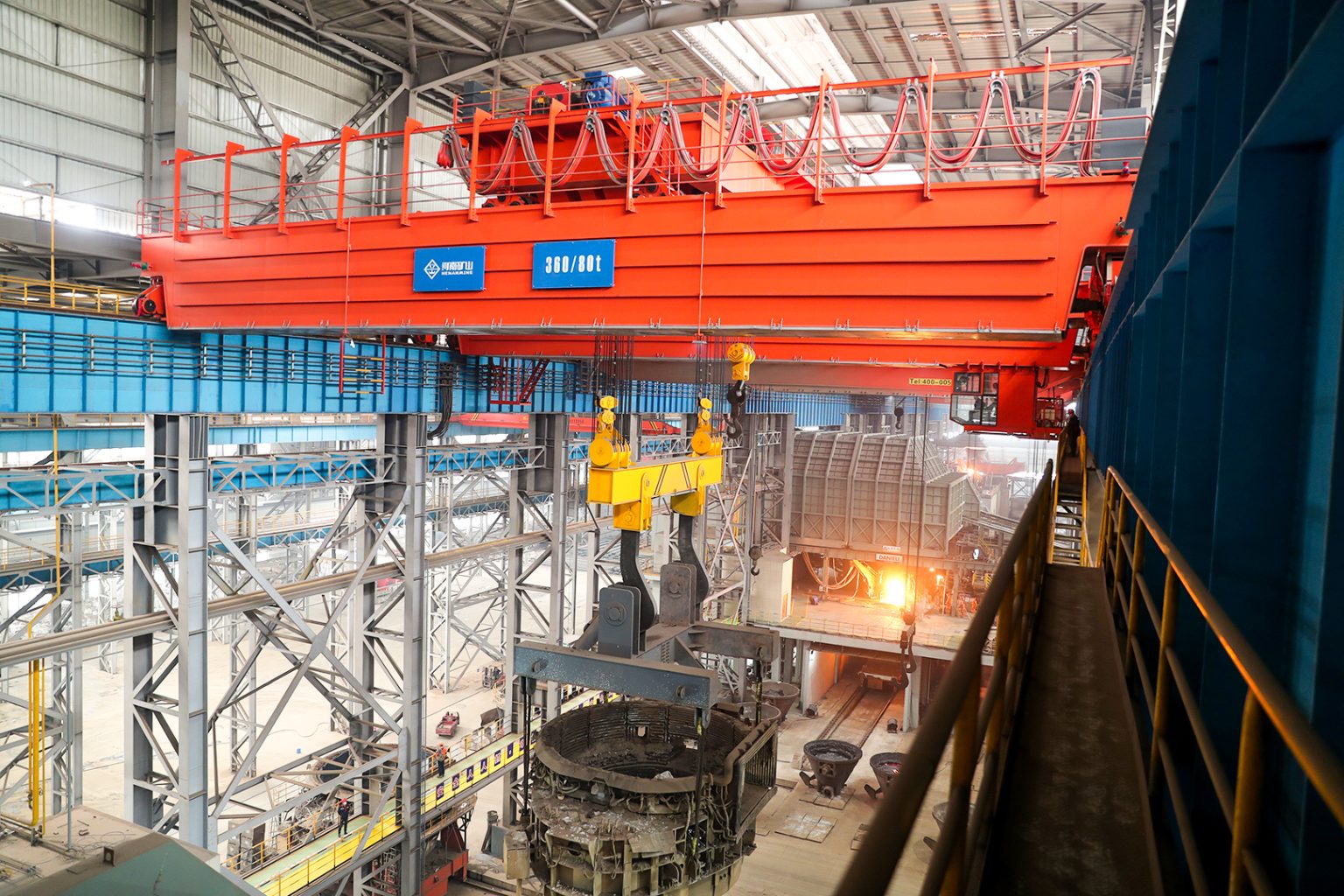
Evidence boundary: the published 360 t project is an adjacent heavy-metallurgical reference, not a stated copper-smelter delivery. It demonstrates relevant engineering and manufacturing disciplines but does not define the capacity, redundancy, duty, attachment, performance, savings or acceptance criteria of another project.
Copper Smelter Crane Price and Budget Scope
A copper smelter crane price is established from process risk and total supply scope, not tonnage alone. Molten-material redundancy, main and auxiliary trolleys, vessel attachment, thermal protection, corrosion system, runway work, plant interfaces, testing and erection can change the investment substantially.
The public market review below was completed on 20 September 2026. Public listings can change and frequently omit decisive engineering information. They are market observations rather than directly comparable installed-project quotations.
| Public Reference | Displayed Price | Displayed Scope | Commercial Boundary |
|---|---|---|---|
| Henan Mine Crane supplier listing: YZ metallurgical foundry double-girder casting crane | US$156,000 for 1–4 pieces; US$146,000 for 5+ pieces | Configurable equipment listing; Qingdao port shown | Capacity, span, vessel attachment, redundancy, freight, installation, runway and copper-process acceptance require a written proposal. |
| Public listing: 400/100 t four-beam casting overhead crane | US$80,000–500,000 per piece; MOQ 1 | Heavy four-beam casting-crane listing | Displayed range does not establish final configuration, compliance, engineering, attachment, shipping or installed scope. |
| Public listing: 15 t grab-bucket overhead crane | US$3,000 per set; MOQ 1 | Generic grab-crane equipment reference | Not comparable to an engineered smelter concentrate crane; grab, duty, dust controls, structure, electrification and site scope require confirmation. |
| Complete copper smelter crane package | Project-specific quotation | One or more process cranes, attachments, controls, runway interfaces and services | Requires the process load schedule, duty, layout, environmental data, risk basis, standards, destination and defined delivery boundary. |
Reference sources: public supplier listings on Made-in-China. The displayed values do not constitute an offer from this page and should not be used as an installed-project budget without a technical and commercial scope review.
Main Cost Drivers
Gross vessel load, main and auxiliary capacities, class, starts, speeds and annual hours.
Drive and brake redundancy, limits, load monitoring, emergency energy and safe-placement logic.
Grab, charge-box device, gantry ladle beam, auxiliary hook or tankhouse lifting frame.
Heat shields, cooling, filtration, corrosion system, sealed equipment and protected cab.
Runway, rails, strengthening, power supply, conductor system, platforms and access.
Freight, inspection, erection, commissioning, load test, training, spares and documentation.
Engineering and Procurement Deliverables
A comparable bid separates crane performance, process interfaces and site services. The procurement package should identify deliverables and approval responsibilities before commercial comparison.
Design Basis
Process description, load cases, classifications, standards, redundancy philosophy, environment, reliability target, interfaces and exclusions.
Calculation Package
Structure, mechanisms, fatigue, ropes, drums, brakes, wheels, wheel loads, attachment, heat protection and safety-related controls as contractually required.
Interface Drawings
General arrangement, vessel and attachment, runway reactions, clearances, electrification, PLC signals, access, maintenance and erection splits.
Inspection and Test Plan
Hold points, traceability, welding records, nondestructive examination, factory tests, proof load, process simulation and site acceptance scenarios.
Operating Documentation
Manuals, inspection schedules, fault-response procedures, rescue and recovery, software backups, attachment register and operator training.
Commercial Schedule
Inclusions, exclusions, Incoterm, freight, civil work, erection, utilities, commissioning, spares, warranty, schedule and local support responsibility.
Information Required for a Copper Smelter Crane Quote
Complete enquiry data allows the crane, attachment, building interface, environmental protection and delivery scope to be selected and priced on one defined basis.
Process and Load Data
Smelting technology and process zone; material or vessel; empty, normal and maximum mass; temperature; dimensions; center of gravity; attachment and operating sequence.
Vessel and Attachment Drawings
Pot, ladle, bin, charge box, trunnion, tipping lug, anode/cathode frame, grab or spreader drawings with allowable contact and clearance zones.
Duty and Production Cycle
Cycles per heat or hour, shifts, annual hours, load spectrum, travel distances, simultaneous motions, speed targets, outage consequence and maintenance window.
Plant Layout and Runway
Plan and cross-section, span, runway length and elevation, rail data, wheel-load limits, process clearances, hot-load route, emergency position and installation access.
Environment and Controls
Ambient and radiant heat, dust, fumes, chemicals, humidity, corrosivity, hazardous-area classification, power supply, control mode, signals and plant communication protocol.
Compliance and Commercial Scope
Destination, standards, inspection route, Incoterm, freight, runway, installation, commissioning, load test, training, spares, documentation and warranty.
Fastest route to a comparable proposal: submit the process flowsheet, lifting-equipment schedule, vessel and attachment drawings, workshop cross-section, load spectrum, environmental design data, runway information and required supply boundary. Unknown items can then be recorded as open points rather than hidden inside assumptions.
Frequently Asked Questions
Which crane is used in a copper smelter?
Grab cranes handle dry bulk feed, bin cranes serve charge boxes, casting cranes handle approved molten-material vessels, tankhouse cranes move anodes and cathodes, and general double-girder cranes support maintenance. Each duty requires a separate specification.
Can an electromagnetic crane lift copper?
No conventional steel-lifting electromagnet should be specified for copper plate, anodes or cathodes because copper is not ferromagnetic. Mechanical hooks, frames, clamps, grabs or purpose-designed attachments are required.
How is casting-crane capacity calculated?
The basis is the heaviest gross suspended load: vessel, refractory, maximum process contents, adhered material, lifting beam, hooks and every accessory. Tipping, eccentric and simultaneous main/auxiliary-hook cases are evaluated separately.
Is every copper smelter crane explosion-proof?
No. Explosion protection is determined by the documented area classification, substance group, temperature class and selected protection concept. High temperature, corrosion resistance and explosion protection are different design requirements.
What duty class is required?
Molten-material and bulk-feed cranes commonly require high-duty classifications, while shutdown maintenance cranes may be lower duty. The correct class follows the load spectrum, cycles, speeds, annual hours and consequence of downtime.
Can an existing runway be reused?
Only after the rails, beams, brackets, columns, connections and foundations are surveyed and checked for condition, geometry, fatigue and the proposed vertical, lateral, longitudinal and dynamic reactions.
How much does a copper smelter crane cost?
Public listings reviewed in September 2026 included US$156,000 for one configurable foundry-crane listing and US$80,000–500,000 for a 400/100 t four-beam listing. A complete copper-smelter crane remains quotation-based because the published scopes are incomplete.
What should be tested before handover?
Testing should cover mechanisms, brakes, limits, overload protection, attachment engagement, representative loads, process interlocks, safe states, single-fault responses, emergency placement, proof load and agreed operating cycles.
Related Copper Smelter Crane Products
These Henan Mine Crane platforms cover principal bulk-feed, furnace charging, molten-material, heavy metallurgical, maintenance and integrated-control duties.
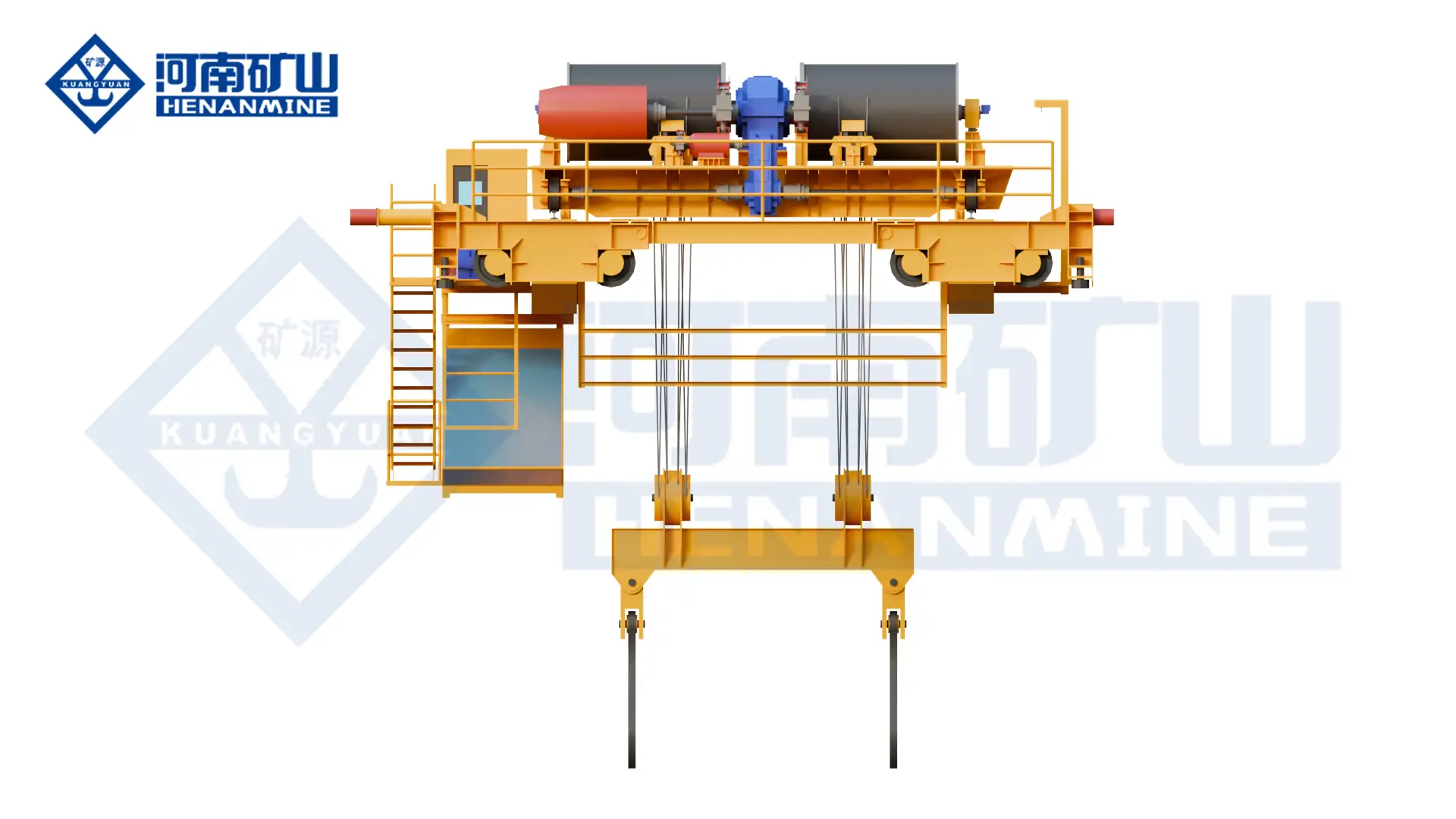
YX Metallurgical Bin Crane
High-duty platform for charge-box lifting, transfer and controlled dumping.
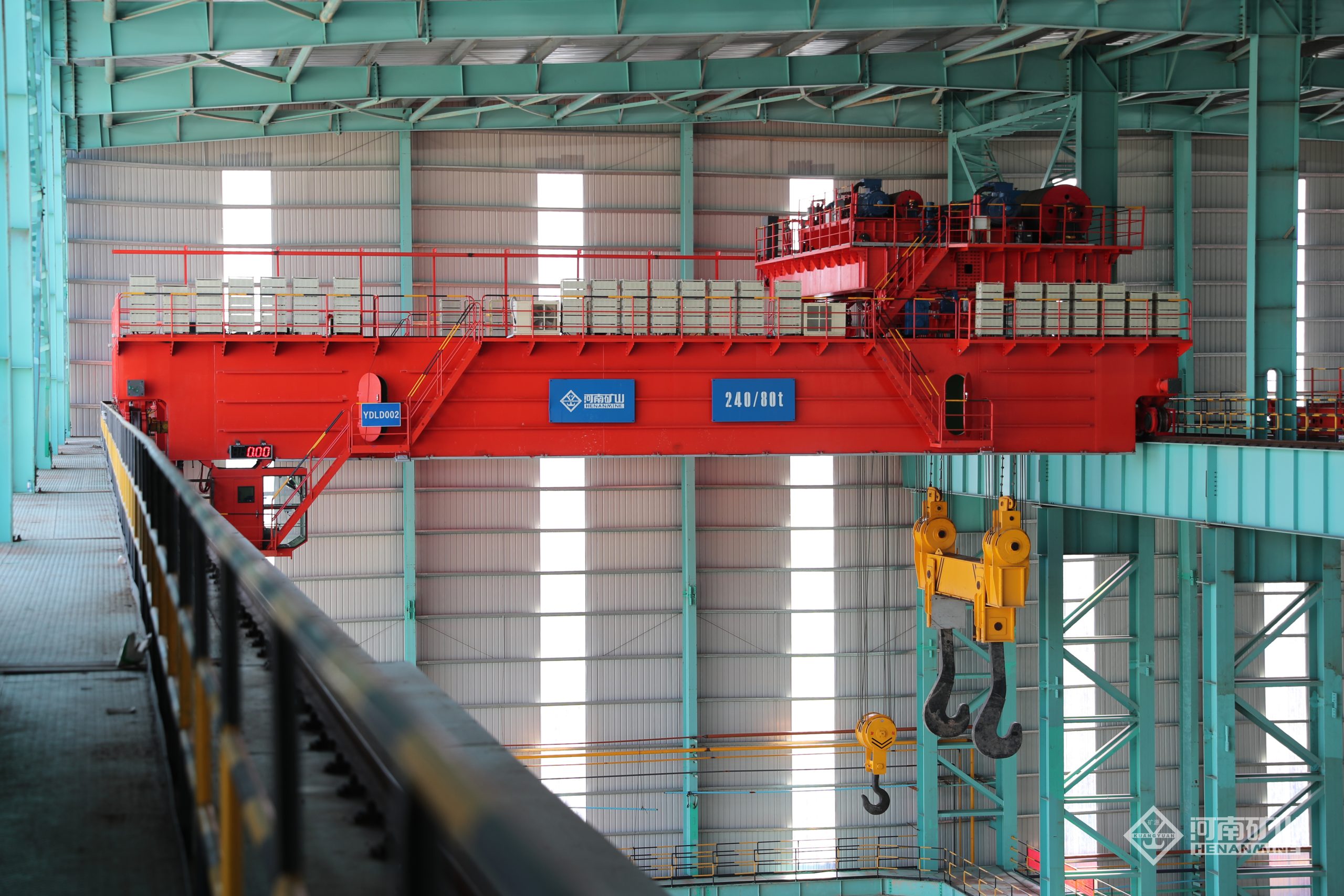
Double-Girder Casting Crane
Dedicated platform for engineered molten-material vessel transfer.
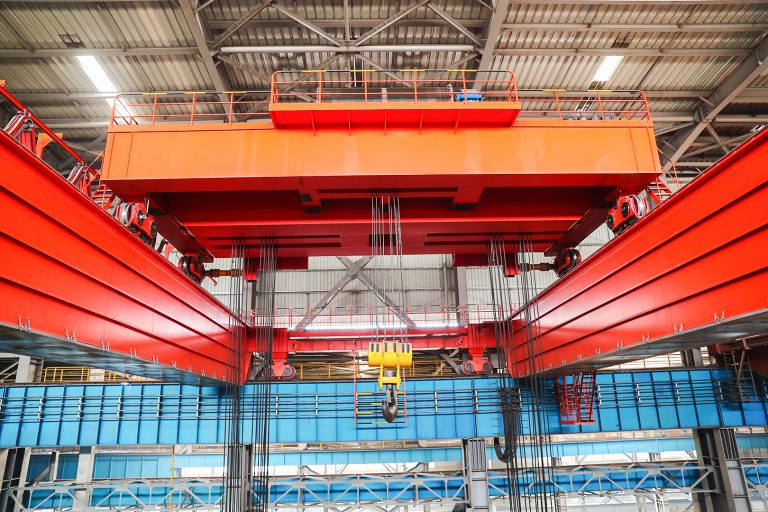
Four-Girder Casting Crane
Multi-rail, dual-trolley platform for ultra-heavy molten-material duty.
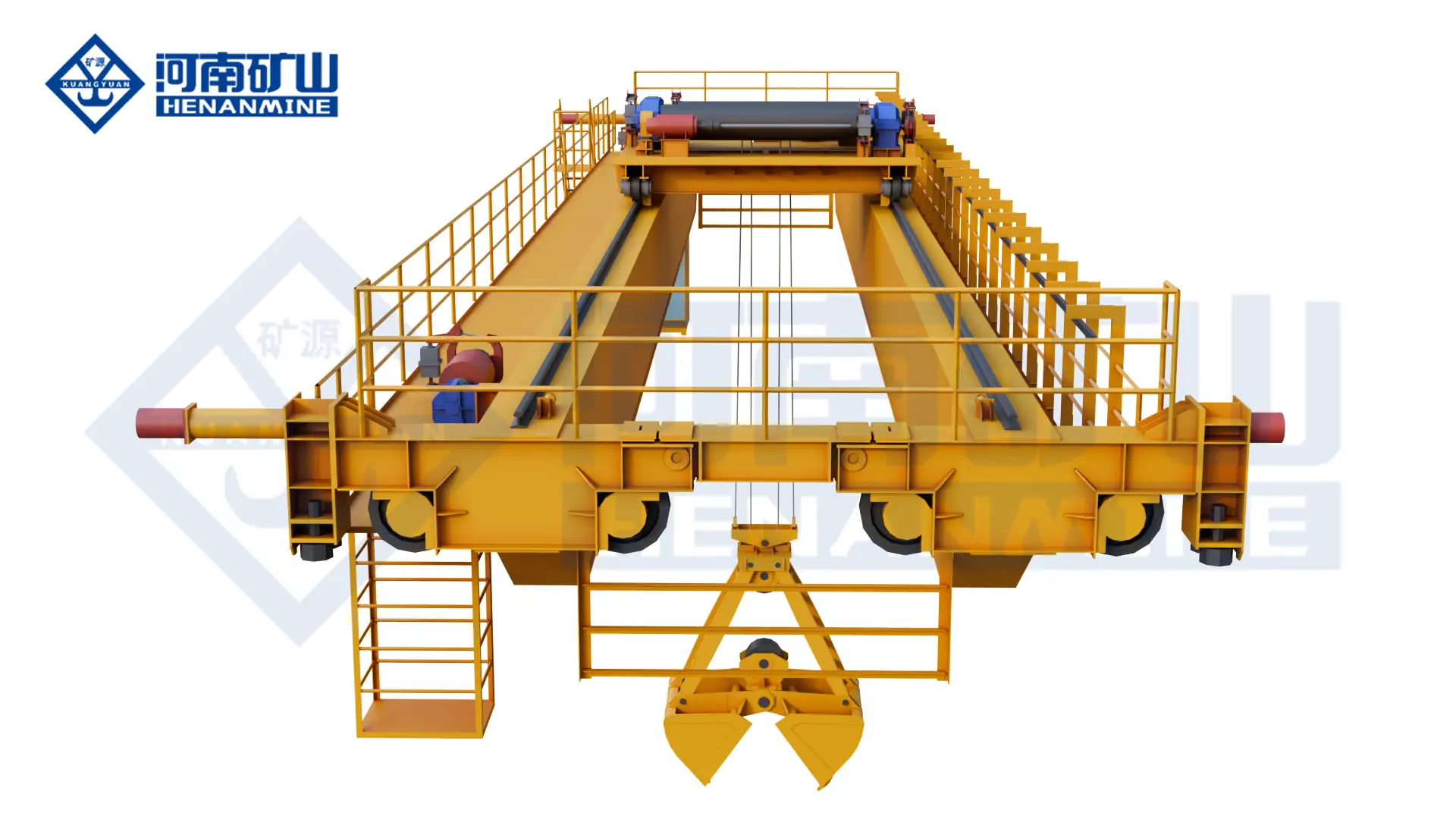
Intelligent Grab Overhead Crane
Four-rope grab platform for declared ore, concentrate, flux and slag duty.
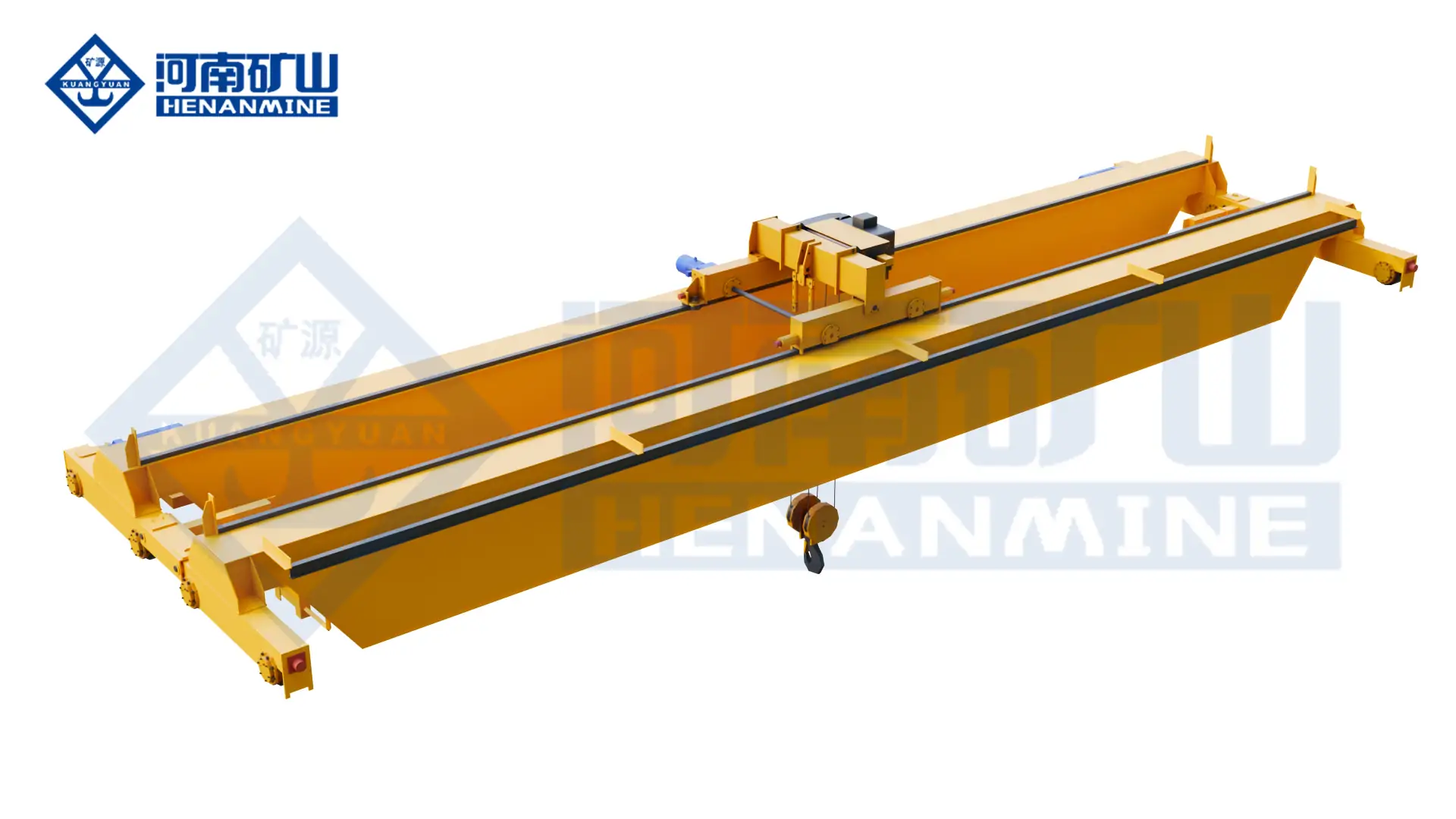
Double-Girder Bridge Crane
General platform for process-area maintenance when molten loads are excluded.
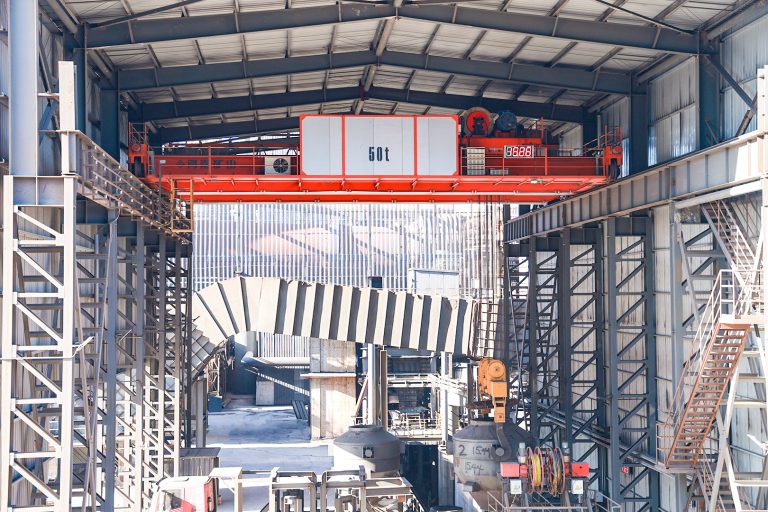
Automatic Metallurgical Crane
Integrated control reference for defined production routes and plant signals.
Request a Copper Smelter Crane Quote
Submit the process area, maximum gross suspended load, vessel and attachment drawings, span, lift, operating cycle, environmental data, runway information, destination and required delivery scope. Henan Mine Crane will prepare a configuration and commercial proposal against the declared operating basis.