

Henan Mine Crane · Lifting Systems for Copper Smelters and Refineries
Copper Smelter Crane
Engineered crane systems for furnace and converter service, molten copper or slag-vessel transfer, anode handling, electrolytic tankhouse operations, bulk-material movement and plant maintenance.
Henan Mine Crane configures each copper smelter crane around the actual process task, handled load, attachment, travel route, production cycle, runway, heat exposure, dust, fumes, corrosion, control philosophy and destination compliance requirements.
PROCESS AREAS
Smelter, Anode Plant, Tankhouse & Maintenance
HANDLING DUTIES
Vessels, Anodes, Cathodes, Bulk Materials & Equipment
DESIGN CONDITIONS
Heat, Dust, Fumes, Corrosion & Intensive Duty
PRICE BASIS
Engineered Project Quotation
What Is a Copper Smelter Crane?
A copper smelter crane is an overhead or process crane engineered for material handling within copper smelting, fire-refining, anode casting, electrorefining and supporting maintenance operations. The term describes an application family rather than one standard crane model. A machine that transfers a hot vessel near a furnace has a different risk profile, attachment and redundancy requirement from a crane that positions anode and cathode plates in an electrolytic cell.
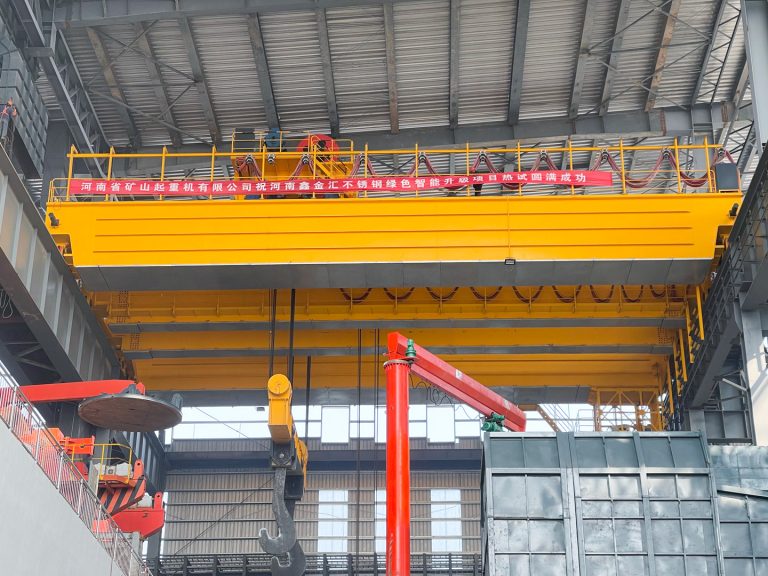
An integrated copper complex may therefore require several crane types: a metallurgical crane for high-consequence vessel handling, a grab crane for approved bulk materials, a purpose-built electrolytic copper or tankhouse crane with a multi-plate spreader, an insulated or corrosion-protected crane for defined special zones, and conventional double-girder cranes for maintenance loads.
The purchase specification must begin with the process duty and load route. Capacity, span and lifting height remain important, but they do not define the required crane without the vessel drawing, attachment tare, load temperature, operating cycle, environmental measurements, availability target, control mode and supply boundary.
Copper Smelter Crane Types
01 · Molten Copper and Vessel Handling Crane
A heavy-duty metallurgical overhead crane for a defined ladle, crucible, slag pot or transfer vessel. The design considers gross suspended load, trunnion or lifting-beam interface, center of gravity, route, radiant heat, motion control, braking, redundancy and emergency load-set-down procedure.
02 · Charging and Bulk-Material Crane
A grab, bin or hook crane selected for concentrates, fluxes, returns, slag or other approved bulk materials. Material bulk density, particle size, temperature, abrasiveness, moisture, dust behavior, required throughput and receiving equipment determine the attachment and crane duty.
03 · Anode Handling Crane
A crane for lifting cast copper anodes between the casting area, cooling or preparation stations, storage and tankhouse logistics. The lifting beam or gripper is matched to anode geometry, quantity per lift, spacing, surface condition and required orientation.
04 · Electrolytic Copper Tankhouse Crane
A process crane with a specialized spreader for grouped anode and cathode handling. It can be configured for cell loading and unloading, plate transfer, stacking and maintenance support, with positioning, corrosion protection, wash-down compatibility and automation selected for the refinery process.
05 · Insulated or Special-Environment Crane
Where the electrical study identifies credible current paths or the zone has exceptional corrosive exposure, an insulated or specially protected crane may be required. Insulation barriers, coating system, materials, enclosures and testing are defined from verified plant conditions rather than assumed from the industry name.
06 · Maintenance and Auxiliary Crane
A double-girder or electric-hoist bridge crane for furnace components, pumps, motors, ducts, molds, tools and shutdown maintenance. This configuration is economical for general lifting but must not be substituted for molten-metal or automated tankhouse duties.
Compare Copper Smelter Crane Configurations
The correct configuration follows the load consequence, process function and operating environment. One nominal capacity can describe several machines that are commercially and technically incompatible.
| Crane Configuration | Primary Duty | Typical Lifting Device | Critical Design Basis | Not a Substitute For |
|---|---|---|---|---|
| Metallurgical Vessel Crane | Transfer of a defined hot vessel or high-consequence suspended load | Gantry hook, plate hook, lifting beam or vessel-specific interface | Gross load, vessel drawing, heat, duty, route, redundancy and emergency procedure | Tankhouse plate handling or routine light maintenance |
| Grab or Charging Crane | Bulk-material receipt, charging, transfer or slag handling | Mechanical or powered grab selected for the material | Material data, throughput, grab fill, dust control and receiving interface | Molten-metal vessel handling or precision plate movement |
| Electrolytic Copper Crane | Anode and cathode loading, unloading, transfer and stacking | Multi-plate spreader, gripper or project-specific lifting beam | Plate geometry, cell pitch, positioning, corrosion, wash-down and automation | Hot-vessel transport near furnaces or converters |
| Insulated Bridge Crane | Approved handling near defined electrical hazards | Hook, beam or maintenance fixture | Electrical study, current paths, insulation architecture and test plan | A tankhouse process crane unless fitted with the required plate-handling system |
| Maintenance Bridge Crane | Equipment removal, shutdown work and general material handling | Hook, maintenance beam or removable fixture | Maximum maintenance load, hook coverage, headroom, frequency and environment | Continuous process duty or high-consequence molten-load handling |
Selection principle: specify each crane by process duty and load consequence. A standard hook crane cannot become a tankhouse process crane by adding a plate beam, and a general double-girder crane should not be treated as a molten-metal crane without the required structural, mechanism, control and safety engineering.
Match the Crane to the Copper Process Area
A plant-wide handling study identifies every pickup point, destination, process time, attachment, operating envelope and interface. It also separates duties that cannot share one machine because of load consequence, contamination, corrosion, incompatible attachments or required availability.
For furnace and converter areas, the study records the vessel or pot drawing, gross mass, contents, temperature, trunnions, lifting points, travel route, pouring or tipping requirement and safe set-down locations. For the anode and tankhouse areas, it records plate dimensions, plate quantity per lift, cell pitch, aisle geometry, stacking arrangement, washing sequence and production cycle.
Maintenance loads, building clearances, runway capacity, fume extraction, electrical zones, access platforms and shutdown windows complete the design basis. The result is a crane responsibility matrix rather than one generic plant-wide specification.
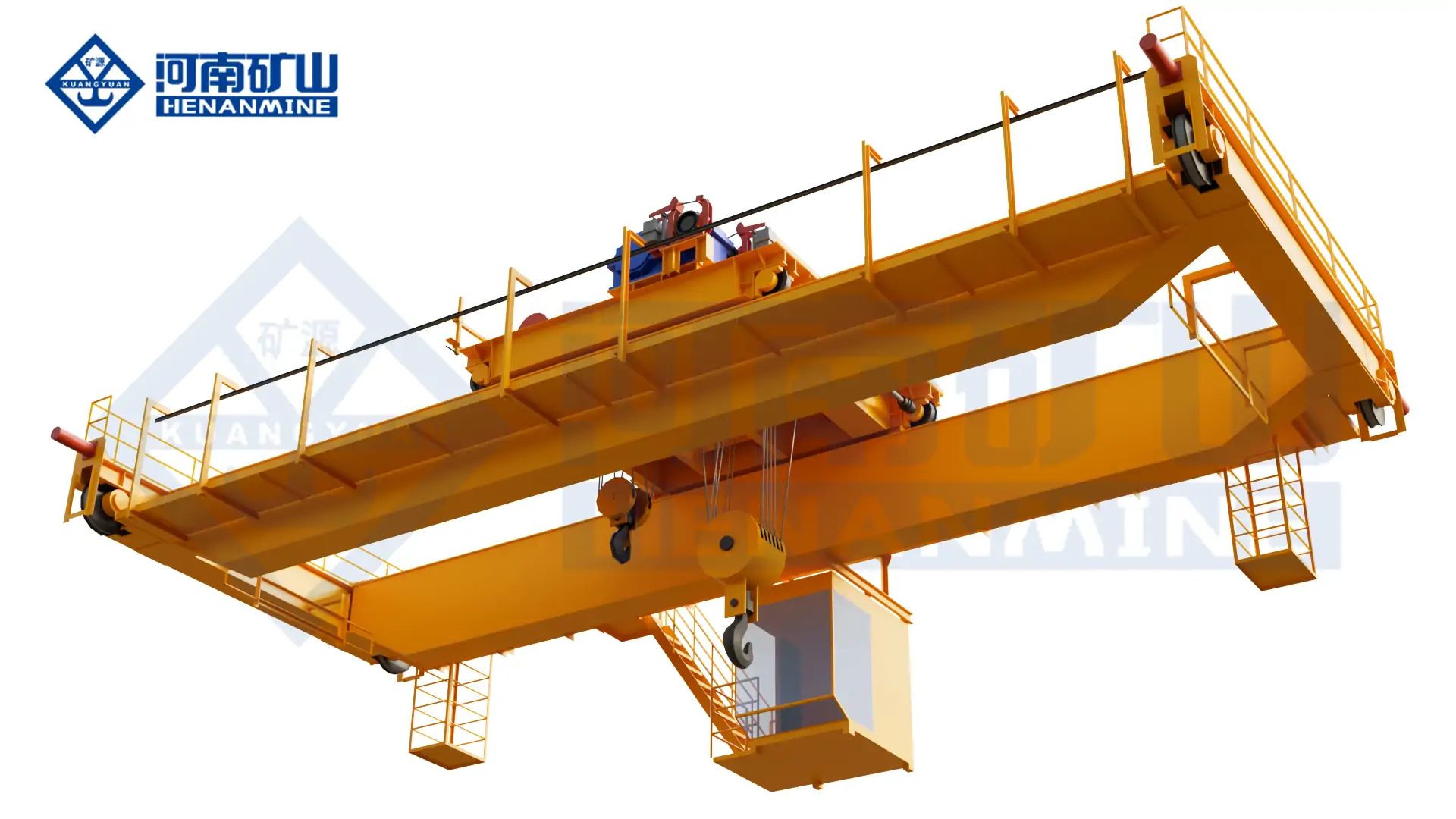
| Process Area | Handling Task | Crane Starting Point | Essential Project Data |
|---|---|---|---|
| Concentrate and charge area | Bulk receiving, blending, stock movement and charging support | Grab, bin or hook crane | Material properties, throughput, pile geometry, pickup and discharge interfaces |
| Smelting and converting | Hot vessel, matte, slag-pot or process-equipment transfer | Heavy-duty metallurgical crane | Vessel drawing, gross load, route, heat map, duty and emergency plan |
| Anode furnace and casting | Refined copper vessel transfer, anode casting support and plate logistics | Metallurgical crane plus anode-handling equipment | Metal/vessel data, anode geometry, cycle, casting layout and cooling route |
| Electrolytic tankhouse | Anode and cathode plate loading, unloading, transfer and stacking | Electrolytic copper process crane | Cell layout, plate drawing, pitch, batch size, cycle, corrosion and automation |
| Maintenance and stores | Component removal, workshop repair, tooling and spare-part handling | Double-girder or electric-hoist bridge crane | Maximum load, hook coverage, headroom, frequency and environmental exposure |
Technical Selection and Specification Framework
A procurement specification should convert production requirements into measurable crane performance and clearly assign every plant interface. Each hoist, trolley, attachment or process tool may require a separate capacity, speed, duty and acceptance criterion.
| Specification Item | Required Project Input | Engineering Output | Risk if Undefined |
|---|---|---|---|
| Rated load and load case | Product load, vessel or attachment tare, contents, center of gravity and operating orientation | Rated loads by mechanism, load combinations, overload settings and structural design basis | Undersized equipment or unnecessary capital cost |
| Span, runway and wheel loads | Rail centers, runway length, elevation, end approaches, building capacity and existing rail condition | General arrangement, wheel-load schedule, rail interface, buffers and building forces | Structural reinforcement, clearance conflict or delayed installation |
| Attachment and coverage | Vessel, anode, cathode or material drawings; pickup, process and set-down coordinates | Lifting-device concept, hook approaches, trolley envelope and interference study | The crane cannot engage, clear or place the load safely |
| Duty and availability | Cycles, load spectrum, shifts, annual hours, process takt time and standby philosophy | Crane and mechanism classifications, thermal checks, fleet quantity and maintenance plan | Premature wear, production restriction or excessive specification |
| Environment and materials | Ambient and radiant heat, dust, gases, acid mist, humidity, wash-down, altitude and zone classification | Materials, coating, sealing, enclosure, cooling, ventilation, cable and sensor selection | Corrosion, overheating, unreliable controls or shortened service life |
| Control and automation | Manual tasks, automatic sequences, positioning, identification, plant network and data ownership | Control modes, permissions, interlocks, HMI, communications and recovery logic | Scope gaps between crane, process and plant-control suppliers |
| Compliance and acceptance | Destination law, purchaser standard, inspection authority, witness points and production-test availability | Code matrix, inspection and test plan, FAT, site tests and handover document register | Unclear compliance, repeated tests or contractual dispute |
Protection, Controls and Safety for Copper-Plant Conditions
High-Consequence Suspended Loads
Molten-metal or slag-vessel duties require a load-consequence review covering hoist arrangement, brakes, limits, overload protection, rope path, attachment retention, emergency power-loss response and approved set-down areas.
Heat and Thermal Exposure
Radiant heat and hot-air exposure are evaluated at the bridge, trolley, cabin, electrical enclosures, cables, sensors, lubricants and lifting device. Shields, separation, cooling and heat-resistant components follow measured conditions.
Fumes, Acid Mist and Corrosion
Coating systems, stainless or corrosion-resistant parts, sealed enclosures, cable materials, fasteners and ventilation are selected from the verified gas, mist, humidity and wash-down exposure in each operating zone.
Dust and Material Containment
Dust-resistant housings, protected brakes and drives, suitable filtration and interfaces to plant extraction limit contamination. Bulk-material attachments are selected to reduce uncontrolled release at pickup and discharge points.
Stable Motion and Positioning
Variable-frequency motion, controlled acceleration, braking, anti-sway functions, position feedback and travel zoning support predictable vessel transfer and plate placement. Required accuracy is stated at the actual load interface.
Operator and Maintenance Access
Cabin position, remote stations, cameras, alarms, access platforms, isolation points, rescue provisions and component replacement routes are coordinated with visibility, heat exposure and the plant work-permit system.
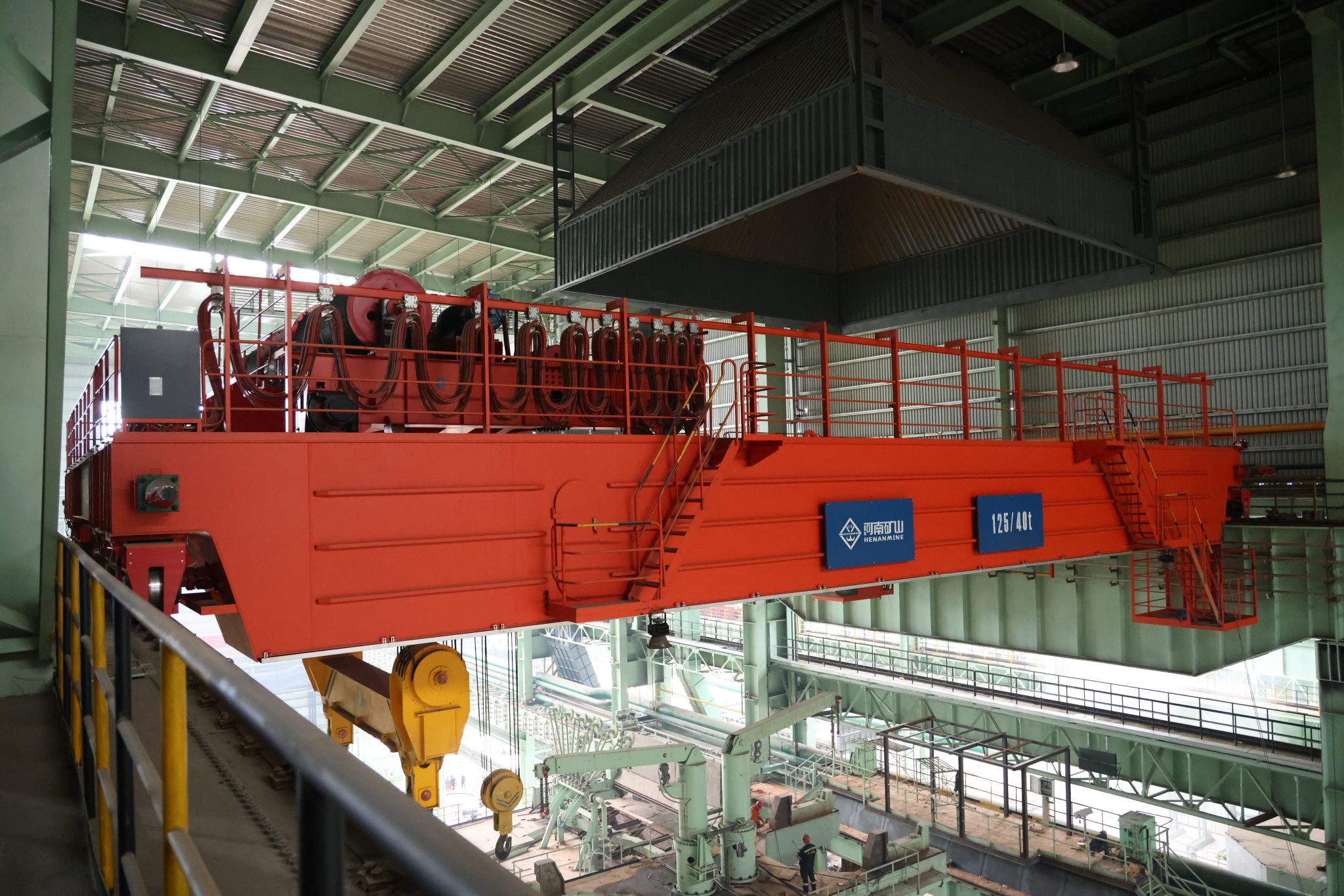
Electrolytic Copper Crane and Tankhouse Automation
In an electrorefinery, the crane is part of the production system rather than a general hook crane. The spreader must engage the specified number of anodes or cathodes, maintain the required pitch and orientation, clear the cell and busbar arrangement, and place plates without unacceptable contact or distortion.
Manual, assisted, semi-automatic and higher-automation operating concepts are possible. Position feedback, cell identification, automatic travel paths, restricted zones, spreader permissions, load confirmation, anti-sway control, plate-washing interfaces and production-data exchange can be integrated where the refinery layout and process controls support them.
The quotation should define the boundary between crane automation, lifting-device controls, cell management, wash equipment, anode preparation, cathode stripping, conveyors and the plant supervisory system. Undefined interfaces are a major source of commissioning delay.
Relevant Heavy-Metallurgy Project Reference
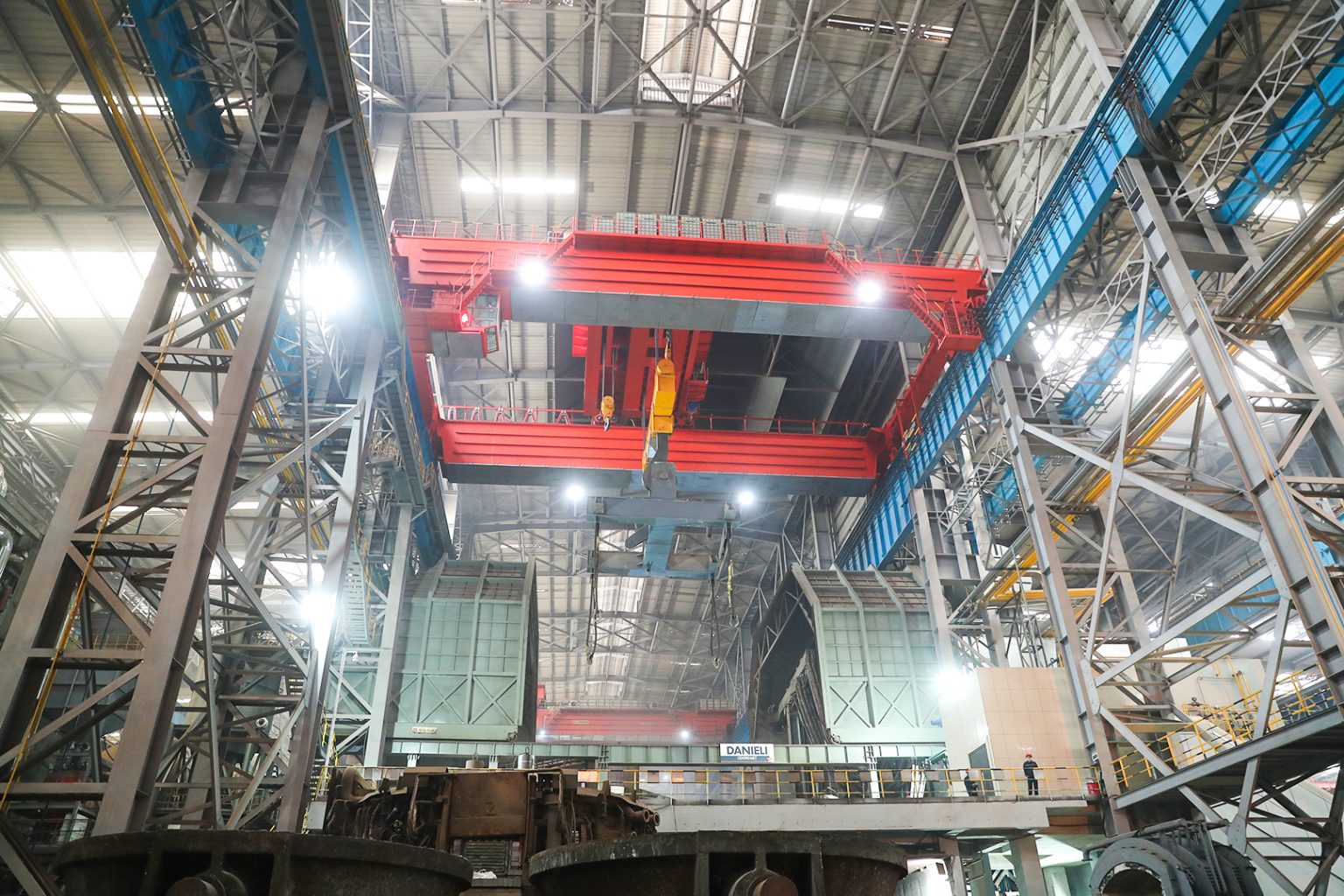
360-Ton Four-Girder Foundry Crane Project
Henan Mine Crane published a 360-ton foundry-crane project supplied for Jinsheng’an Group. The machine uses a four-girder, four-rail, dual-trolley architecture for an ultra-heavy molten-metal duty, with structural analysis, balanced wheel-load distribution, redundant main-hoist arrangements, multiple braking and limit protections, thermal shielding and monitored controls.
The project is relevant evidence of heavy metallurgical engineering, manufacturing and commissioning capability. It is not presented as a copper-smelter operating reference. A copper project still requires independent verification of the vessel, copper-process route, temperatures, fumes, corrosion, runway, duty and purchaser standards.
For copper-smelter procurement, the transferable engineering disciplines are load-path analysis, structural redundancy, high-temperature protection, manufacturing traceability, factory testing and controlled site commissioning—not automatic reuse of the same 360-ton configuration.
Engineering Deliverables and Quality Records
A procurement-ready proposal defines crane performance, process and building interfaces, inspection, acceptance and site responsibilities. Documents should remain traceable from approved inputs through manufacturing, factory testing, installation and commissioning.
Design Basis
Approved load and process schedule, duty calculations, general arrangement, attachment envelope, wheel loads, environment, utilities, code matrix and responsibility boundary.
Control Documentation
Electrical diagrams, PLC and network architecture, operating modes, interlock matrix, alarms, safe states, recovery logic and plant communication schedule.
Manufacturing Records
Material traceability, welding procedures, welder qualifications, dimensional inspection, NDT records, machining checks, coating reports and component certificates as contracted.
Factory Acceptance
Drive, brake, limit, overload, alarm and interlock tests; attachment functions; control modes; communications; simulated sequences and purchaser witness points.
Review Henan Mine Crane manufacturing and quality capabilities →
Installation, Commissioning and Lifecycle Planning
Site Readiness
Confirm runway survey, rail condition, building reserve, erection route, laydown area, power, extraction interfaces, access controls, shutdown window and hot-work restrictions before shipment.
Installation
Bridge and trolley assembly, rail and conductor checks, cabin and platform installation, lifting-device integration, utilities and plant-network connections follow approved method statements.
Commissioning
Testing progresses from no-load motions and safety functions to proof testing, dry sequence simulation and controlled production trials. Loads, materials, witness points and acceptance values are agreed beforehand.
Lifecycle Support
Training covers operation, attachment change, isolation, alarms, recovery and inspection. Preventive maintenance is organized by structure, mechanisms, controls, lifting device and environmental protection.
Copper Smelter Crane Price and Supply Scope
A copper smelter crane has no reliable universal list price. Current public advertisements cover machines with different capacities, structures and included scopes. They rarely define the process attachment, duty, corrosion protection, runway, controls, testing, freight, installation or commissioning.
| Publicly Advertised Category | Observed Advertised Price | Commercial Interpretation |
|---|---|---|
| 100-ton foundry-type overhead crane listing | Approximately US$48,512–US$800,520 per set | Extremely broad advertisement; configuration, redundancy and included project scope must be verified |
| 100-ton double-girder metallurgical crane listing | From approximately US$260,000 per set | One advertised configuration; not a complete copper-smelter installation budget |
| 350-ton four-beam foundry crane listing | Approximately US$569,460–US$2,056,000 per set | Heavy metallurgical equipment range; vessel, duty, controls and delivery boundary remain decisive |
| Electrolytic copper tankhouse crane or complete plant package | Project quotation | Requires plate, cell, spreader, corrosion, automation, interface and acceptance data |
These figures are public market advertisements, not Henan Mine Crane quotations, average transaction prices, landed costs or turnkey project budgets. A valid comparison requires the same technical data sheet and responsibility matrix.
Crane and Lifting Device
Bridge, trolley, hoists, vessel interface, grabs, spreaders, hooks, cabins, platforms and maintenance access.
Controls and Protection
Drives, PLC, positioning, anti-sway, communications, automation, heat protection, corrosion protection and cameras.
Delivery and Services
Engineering, documents, inspection, FAT, packing, freight, insurance, spares, installation, commissioning and training.
Plant Interfaces
Runway, rails, conductor system, reinforcement, extraction, utilities, network connection and production-trial support.
Information Required for a Copper Smelter Crane Quote
A complete inquiry allows the crane configuration, process interfaces, delivery scope and commercial exclusions to be evaluated together. Preliminary drawings are acceptable during concept design when unresolved values are clearly identified.
01 · Plant and process area
New plant, expansion or replacement; smelter, converter, anode plant, tankhouse, maintenance bay or material store; production schedule and crane role.
02 · Building and runway
Layout, sections, rail span, runway length, rail elevation, headroom, columns, end approaches, rail data and allowable wheel loads.
03 · Loads and attachments
Vessel, ladle, pot, anode, cathode, process material or maintenance-load drawings; gross mass, contents, temperature and lifting points.
04 · Process route and coverage
Pickup, operating and set-down coordinates; furnace, converter, casting, cell, wash, stacking or maintenance interfaces; obstacles and restricted zones.
05 · Performance
Required capacity, lift height, speeds, positioning, cycles per hour, shifts, annual hours, availability target and standby philosophy.
06 · Environment
Ambient and radiant heat, dust, gases, acid mist, humidity, wash-down, altitude, electrical hazards and hazardous-area classification where applicable.
07 · Controls and utilities
Power supply, control stations, manual or automatic modes, plant network, communication protocol, extraction, compressed air and other services.
08 · Compliance and acceptance
Destination country, governing codes, purchaser standards, inspection authority, witness points, FAT, load test and production-trial requirements.
09 · Delivery and site scope
Destination port or site, trade term, packing, freight, installation, commissioning, local labor, lifting equipment, training and production support.
10 · Schedule and lifecycle
Required delivery date, shutdown window, documentation language, recommended spares, maintenance capability, response expectations and support plan.
Copper Smelter Crane FAQ
Is a copper smelter crane one standard crane model?
No. The term can cover molten-vessel cranes, charging or grab cranes, anode-handling cranes, electrolytic copper tankhouse cranes and maintenance cranes. The process duty determines the configuration.
What is the difference between a smelter crane and a tankhouse crane?
A smelter crane may handle hot vessels, bulk materials or furnace equipment. A tankhouse crane is a process machine for anode and cathode plates, requiring a specialized spreader, accurate positioning and corrosion protection.
How is the crane capacity selected?
Capacity includes the product, vessel or lifting-device tare and any process contents. Dynamic effects, operating orientation, off-center conditions and required redundancy are evaluated for the defined load cases.
Can a general double-girder crane handle molten copper?
Not by default. Molten-load service requires a project-specific review of the hoist, brakes, limits, controls, load path, attachment, heat protection, emergency response and applicable regulations.
How is tankhouse corrosion addressed?
The verified acid-mist, humidity, chemical and wash-down exposure guides coating, material, fastener, cable, enclosure, ventilation and maintenance-access selection. Generic paint specifications are insufficient.
Can an electrolytic copper crane be automated?
Yes. Depending on plant interfaces, options include automatic positioning, cell identification, sequence control, restricted zones, spreader permissions, plate confirmation, anti-sway and production-data exchange.
Can an existing runway be retained?
Only after the rail geometry, alignment, support condition, wheel-load capacity, longitudinal forces, clearances and erection access are checked against the proposed crane and operating load cases.
Does every copper plant need an insulated crane?
No. Insulation is specified when the electrical study identifies credible current paths and required isolation. Corrosion protection, electrical insulation and explosion protection are separate design questions.
Why do advertised copper smelter crane prices vary widely?
Listings often omit the process attachment, duty, heat and corrosion protection, automation, runway, testing, delivery and commissioning. The same nominal tonnage can represent fundamentally different equipment.
What should final acceptance include?
Acceptance should cover documentation, visual and dimensional inspection, safety functions, load testing, lifting-device operation, controls, communications, dry process simulation, production trials, training and handover records as contracted.
Related Copper Smelter Crane Products
A complete copper-production lifting plan may combine process cranes for high-temperature loads, bulk materials, electrical zones and general plant maintenance.

Metallurgical Bridge Crane
Heavy-duty platform for project-defined hot-vessel and high-temperature process handling.
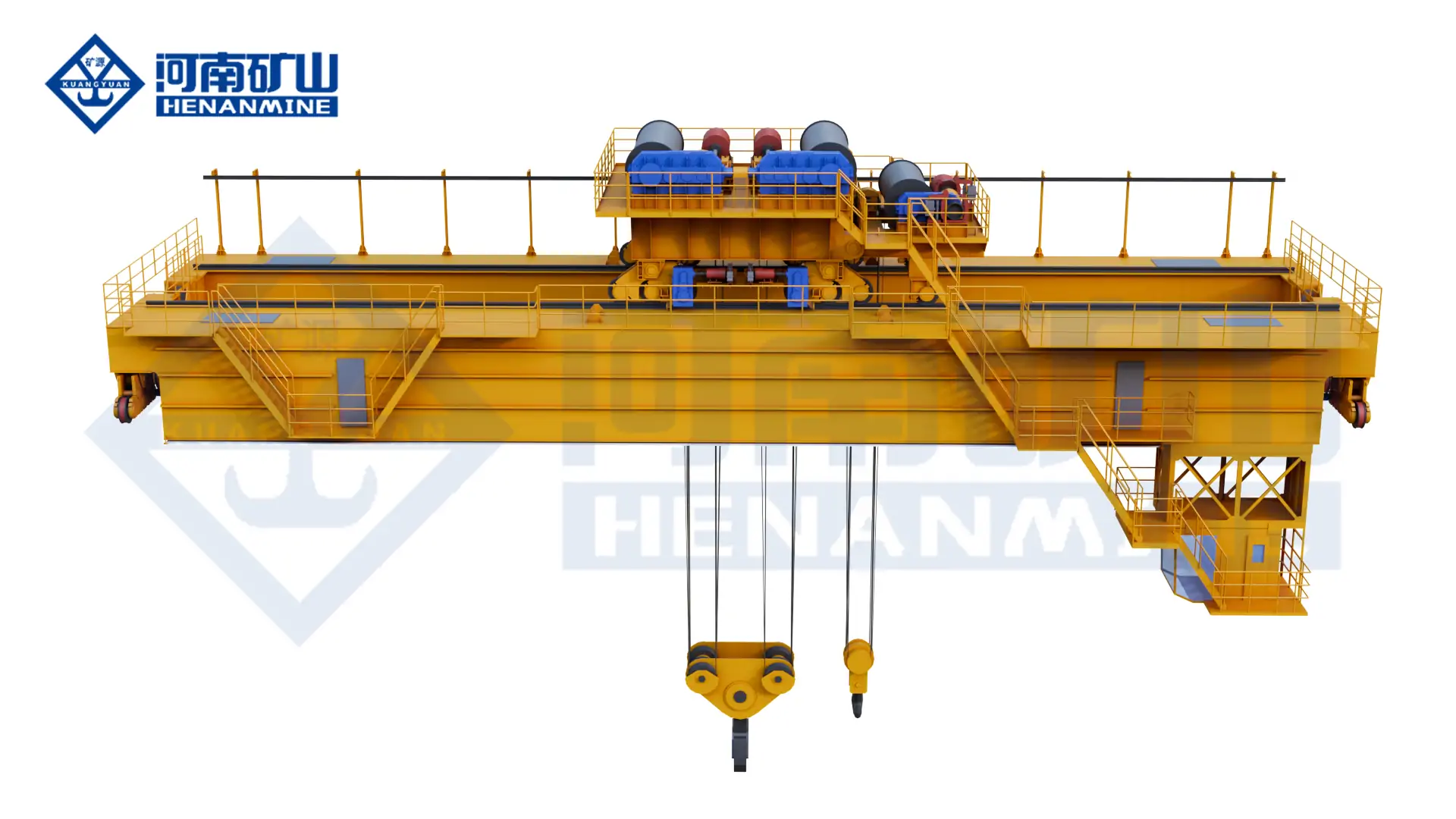
Double-Girder Casting Crane
A7–A8 metallurgical crane family for defined molten-metal lifting and pouring duties.
Four-Girder Casting Crane
Four-girder, multi-rail platform for ultra-heavy and high-consequence metallurgical service.
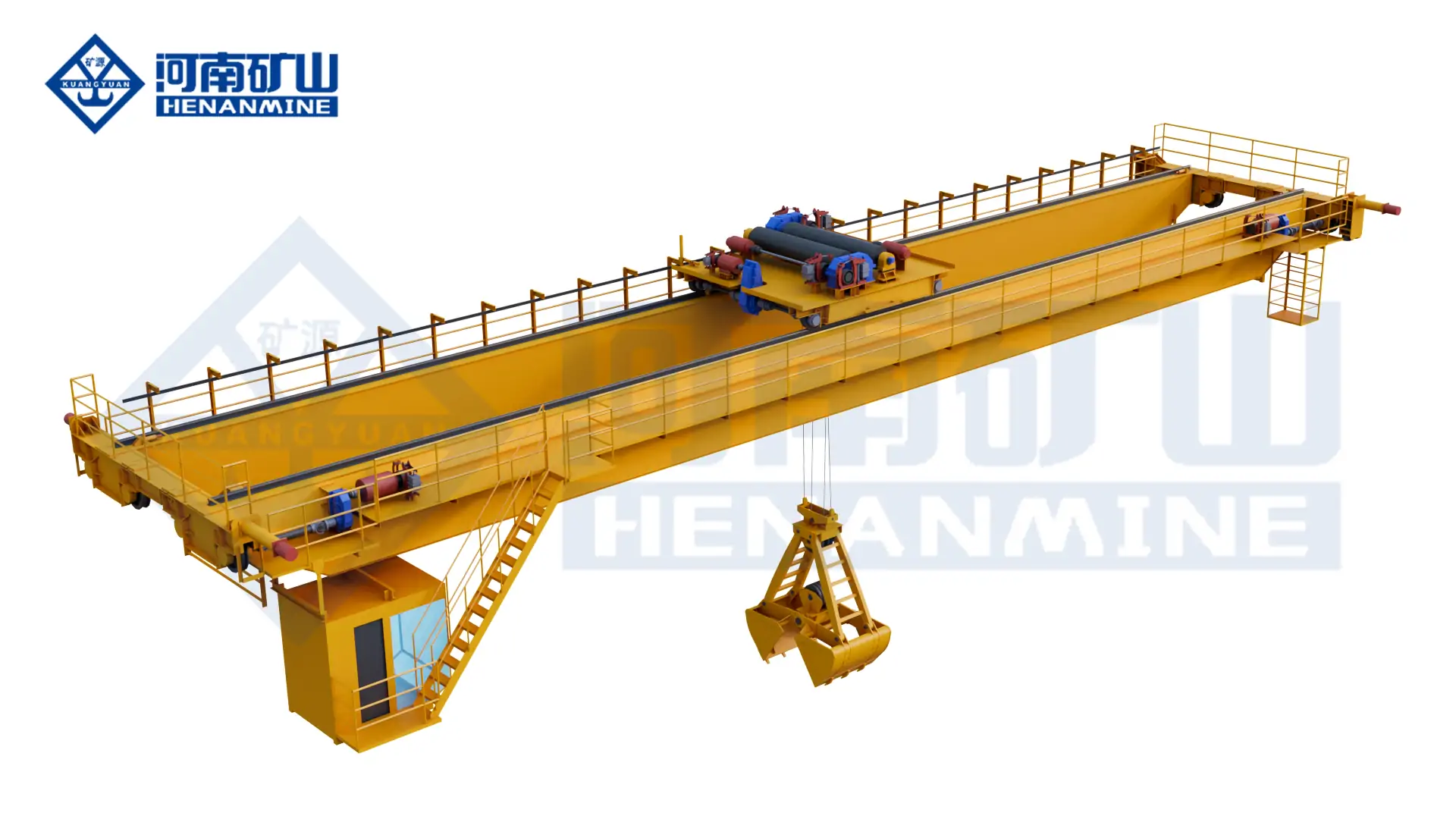
Intelligent Grab Double-Girder Crane
Bulk-material handling with a project-selected grab, duty and automated control configuration.
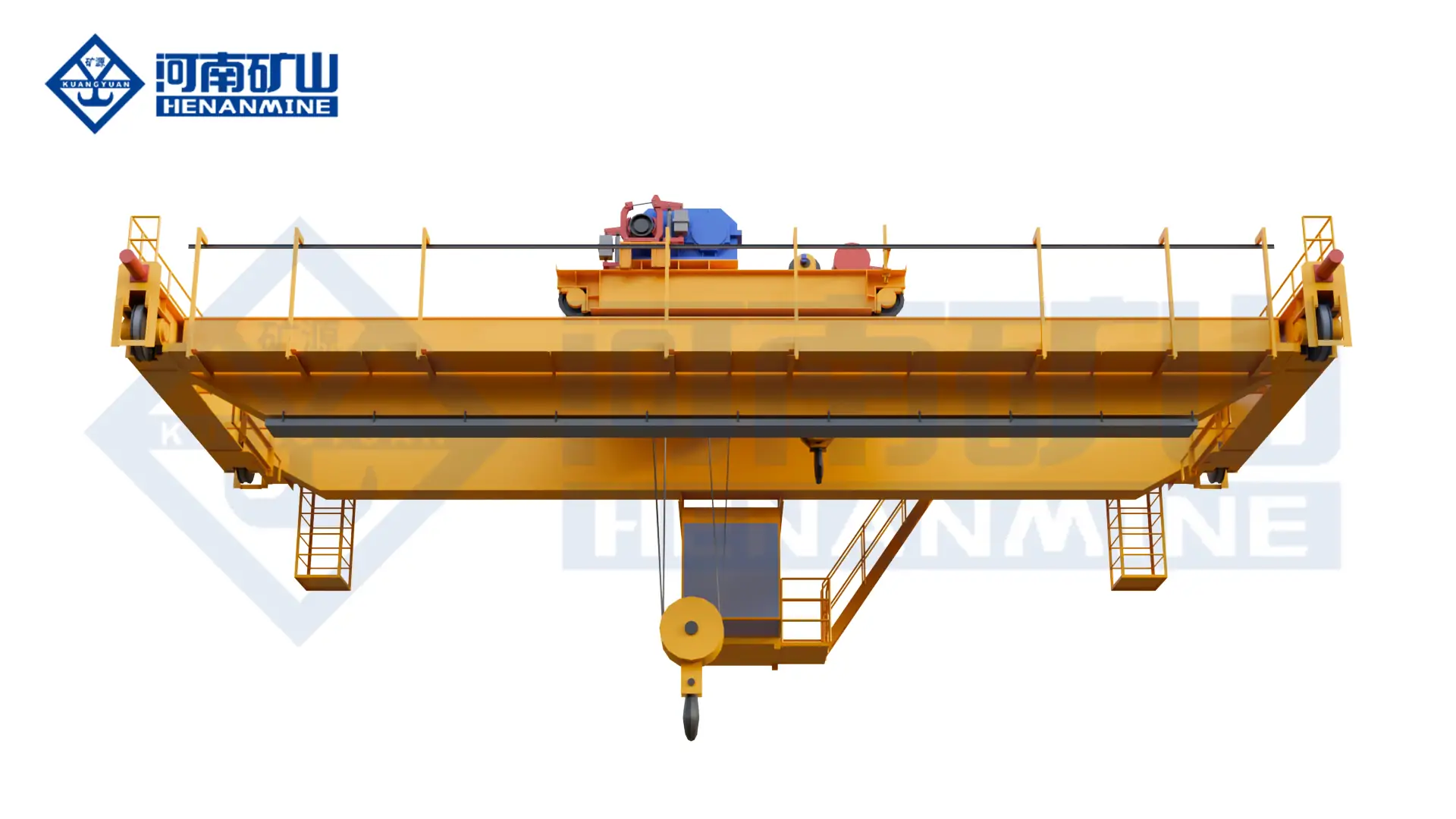
Insulated Bridge Crane
Purpose-designed insulation for approved lifting duties where the electrical study requires isolation.
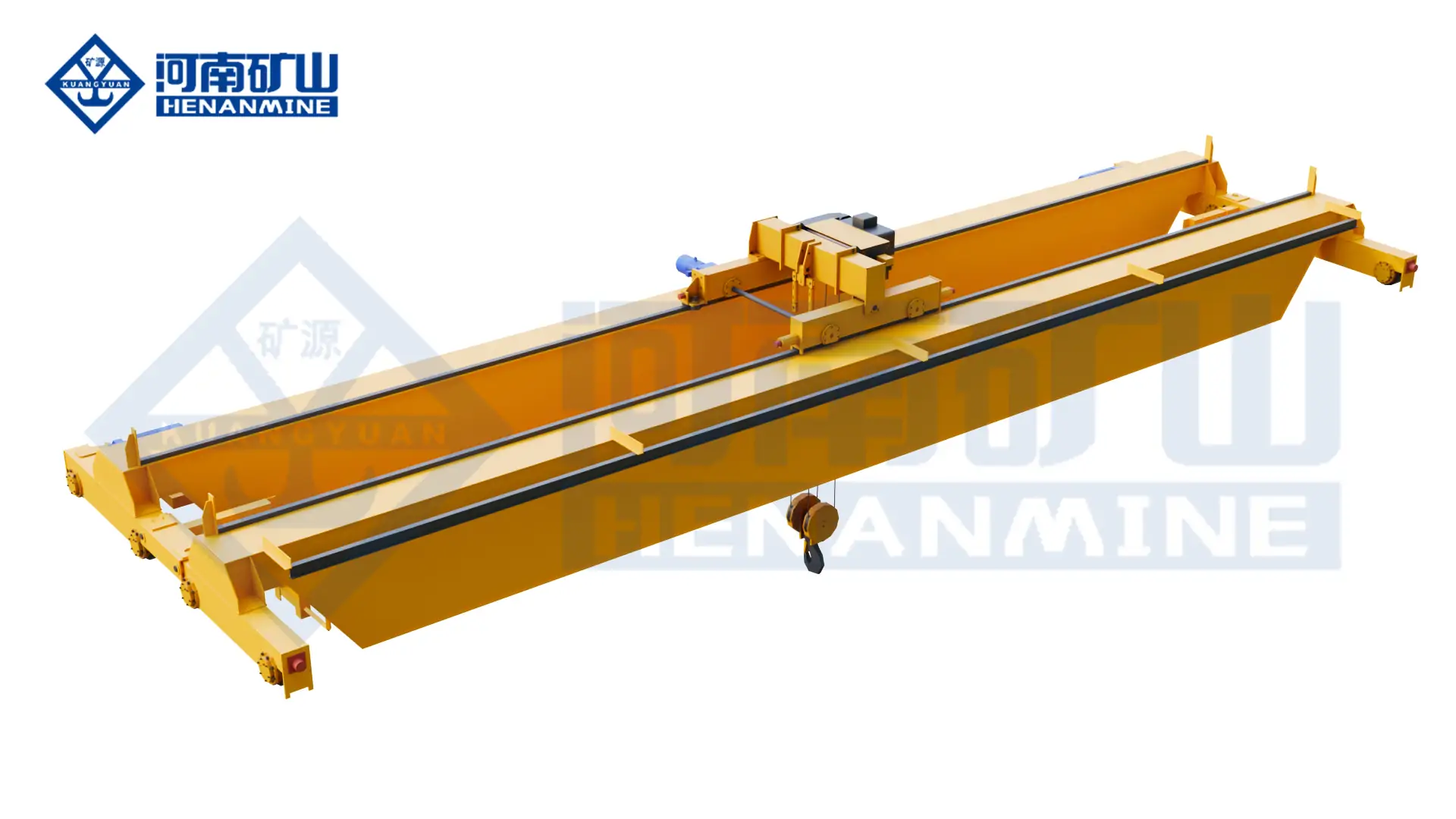
Double-Girder Bridge Crane
Configurable hook crane for plant maintenance, equipment replacement and workshop handling.
Request a Copper Smelter Crane Proposal
Submit the process area, plant layout, load and lifting-device data, runway geometry, operating cycle, environmental measurements, control scope and delivery destination. Henan Mine Crane will prepare a project-specific configuration and commercial proposal.