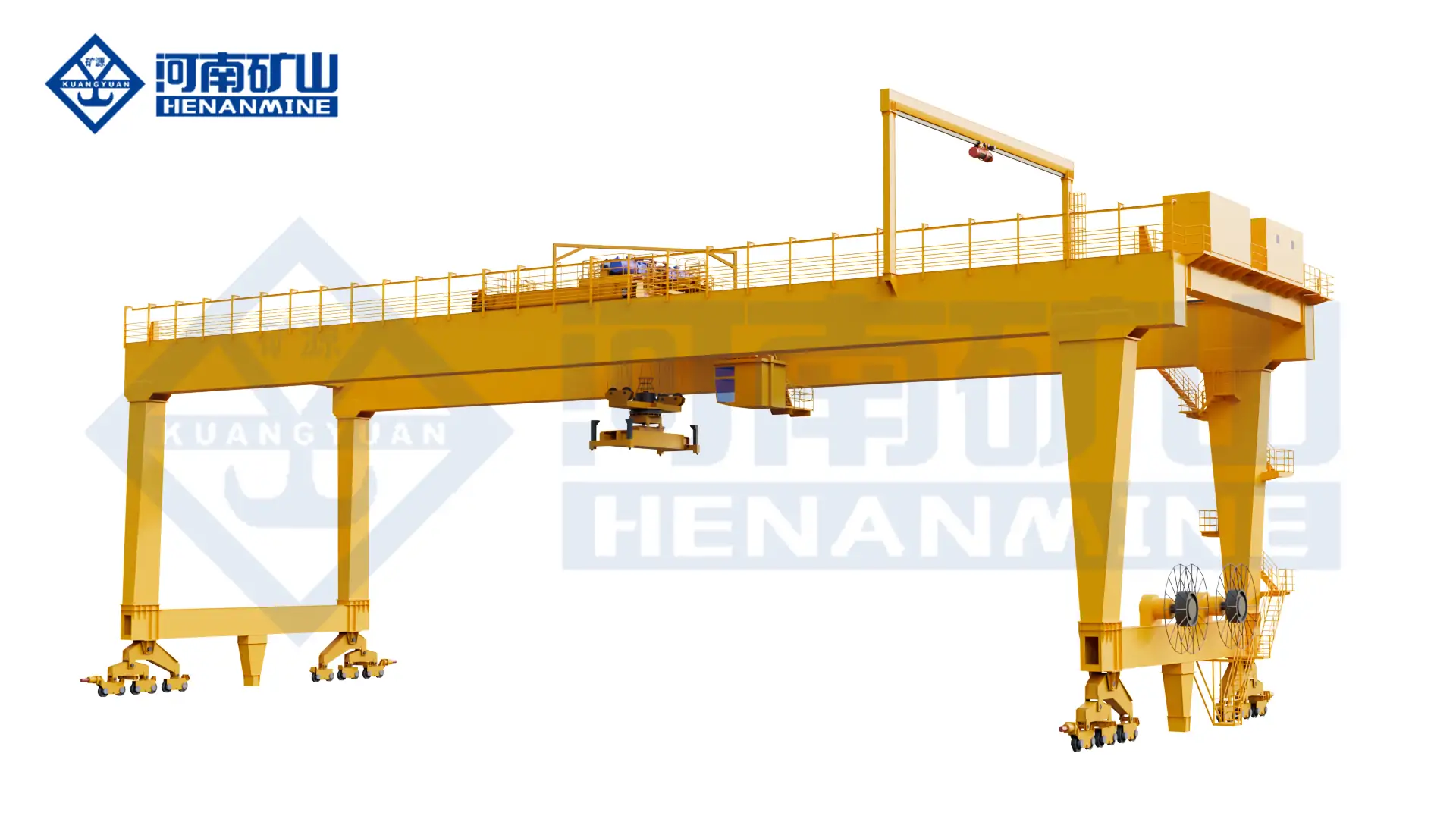
Henan Mine Crane · Container Terminal and Intermodal Yard Systems
Container Yard Crane
Engineered RMG, RTG, straddle carrier and fixed container crane systems for marine terminals, dry ports, railway freight yards, inland logistics hubs and container depots.
Henan Mine Crane configures each container yard crane around the container mix, rated load under spreader, block geometry, stacking height, truck or rail interface, peak move requirement, operating duty, power strategy, automation level and destination conditions.
Applications
Ports, dry ports, rail terminals, logistics hubs and depots
Primary systems
RMG, RTG, straddle carrier and fixed overhead crane
Critical yard data
TEU demand, rows, tiers, lanes, rehandles and peak moves
Commercial basis
Defined interfaces, supply scope and project quotation
Container Handling Systems for Yard Stacking and Transfer
A container yard crane lifts, stacks and transfers ISO containers between storage blocks, terminal tractors, road trucks and railway wagons. The term covers several equipment concepts rather than one standard machine. Rail-mounted gantry cranes provide dense, repeatable coverage over fixed blocks; rubber-tyred gantry cranes combine block stacking with yard mobility; straddle carriers combine transport and stacking; and fixed container overhead cranes serve indoor or structurally supported bays.
The required machine cannot be selected from rated tonnage alone. The engineering basis includes 20 ft, 40 ft and 45 ft container proportions, loaded and empty weights, reefer and hazardous-container rules, single- or twin-lift operation, row count, stacking tiers, truck or rail lanes, cantilever arrangement, peak moves per hour, annual TEU, required availability and planned automation.
A ship-to-shore crane transfers containers between a vessel and the quay and is not normally the yard-stacking machine. The container yard crane receives the flow from quay tractors, rail wagons or road vehicles and controls storage density and retrieval performance. The interface between these systems is therefore included in terminal planning even when the equipment is purchased under separate contracts.
Container Yard Crane Configurations
01 · Rail-Mounted Gantry Crane
An RMG travels on fixed rails and spans container rows plus truck or railway lanes. It supports high stacking density, precise positioning, electric power and advanced automation. Rail foundations, block alignment, storm restraints and a fixed operating envelope are integral to the project.
02 · Rubber-Tyred Gantry Crane
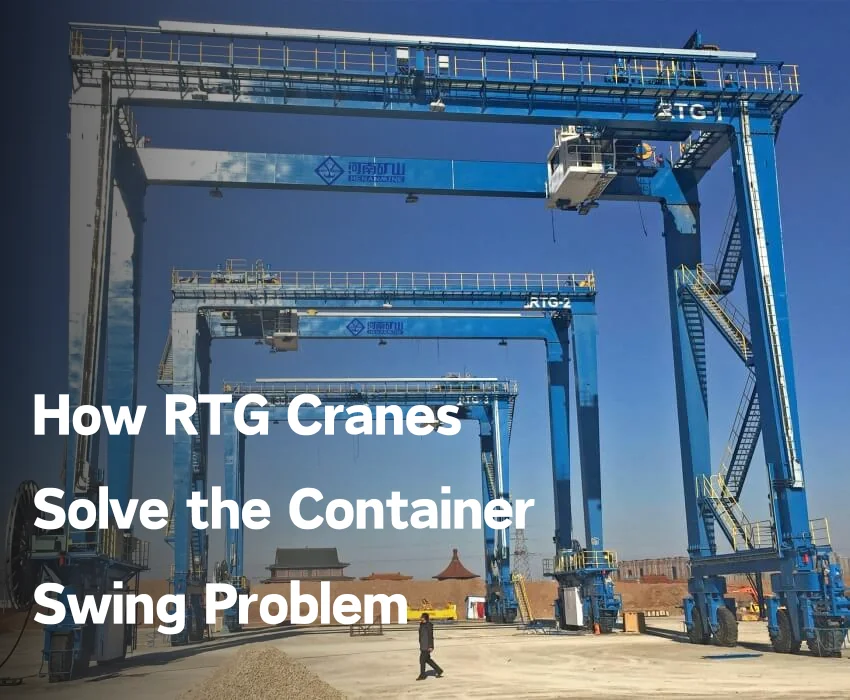
An RTG runs on rubber tyres and can serve different yard blocks when the pavement, steering system and traffic plan permit. Diesel-electric, hybrid, battery or externally electrified arrangements may be evaluated. Mobility must be balanced against tyre care, route control, energy supply and block-change time.
03 · Container Straddle Carrier
A straddle carrier lifts, carries and stacks containers with one mobile machine. It can reduce fixed rail infrastructure and provide flexible transfer between quay, yard and landside interfaces. Fleet sizing, traffic separation, turning space, pavement loading, battery charging or fuel service and maintenance access govern the operating concept.
04 · Container Overhead Crane
A container overhead crane runs on an elevated building or freestanding runway above a fixed bay. It is suitable for indoor transfer, manufacturing logistics, specialized depots or controlled rail and truck interfaces where weather protection and unobstructed floor access are required.
05 · Automated RMG or RTG System
Remote or automated operation can integrate anti-sway, absolute positioning, container recognition, truck-lane guidance, path control, collision avoidance and terminal operating system communication. Automation scope is defined with network architecture, data ownership, cybersecurity, recovery modes and manual intervention points.
06 · Intermodal and Rail Yard Crane
An intermodal yard crane spans railway tracks, truck lanes and storage rows to transfer containers between railcars and the stack. Rail operating windows, wagon profiles, track clearances, locomotive restrictions, grounding, signaling interfaces and terminal peak schedules become part of the design basis.
RMG vs RTG vs Straddle Carrier
The correct container yard crane follows the terminal operating model. Fixed high-density blocks generally favor RMG systems; flexible blocks and phased development can favor RTGs; integrated transfer and stacking can favor a straddle-carrier fleet. A lifecycle comparison should include civil works, energy, tyres or rails, staffing, automation, fleet redundancy and maintenance—not equipment price alone.
| System | Typical operating fit | Primary strength | Critical infrastructure | Key purchasing issue |
|---|---|---|---|---|
| RMG | High-density fixed blocks, rail terminals, dry ports and automated yards | Precise rail guidance, electric operation and strong automation potential | Rails, foundations, electrical distribution, drainage and storm anchoring | Fixed block geometry must be correct before manufacture |
| RTG | Marine and inland yards requiring block mobility or phased expansion | Can relocate between compatible blocks without fixed travel rails | Pavement, marked routes, tyre service and diesel, hybrid, charging or conductor infrastructure | Energy strategy, steering accuracy and safe block-change procedure |
| Straddle carrier | Flexible transfer-and-stack operations and shorter horizontal moves | One mobile unit carries and stacks without a separate terminal tractor | Traffic lanes, turning space, pavement, fleet workshop and energy service | Fleet availability, traffic control and whole-life maintenance |
| Container overhead crane | Indoor or fixed-bay container transfer and specialized industrial logistics | Weather-protected operation with clear floor-level access | Building runway or freestanding steelwork, foundations and power supply | Building loads, clearances and fixed operating envelope |
| Ship-to-shore crane | Vessel-to-quay container transfer | Quayside ship service and outreach over vessel bays | Quay rails, berth structure, power and waterside clearances | It is a quay interface, not a substitute for the yard-stacking system |
Selection rule: specify RMG equipment where fixed block density, repeatable positioning, electric operation and automation justify rail infrastructure. Specify RTG equipment where block mobility and phased yard development have greater value. Specify straddle carriers where integrated horizontal transport and stacking provide the required flexibility. Hybrid layouts can combine systems when quay, rail and landside flows have different operating demands.
Yard Capacity, Stacking Height and Throughput
Annual TEU establishes the overall demand but does not define the crane quantity or speed by itself. Equipment sizing uses vessel, rail and truck peaks; dwell-time distribution; import, export and empty-container balance; reefer and hazardous segregation; rehandle strategy; maintenance windows; and the availability target for the complete yard system.
Practical storage capacity is lower than the theoretical maximum because operational headroom is required for segregation, reshuffling, equipment access, maintenance and peak imbalance. A high nominal stacking tier can also increase rehandles and retrieval time. The preferred 1-over-X arrangement is therefore confirmed with the operating model rather than selected only to maximize static capacity.
Cycle modeling includes spreader approach and engagement, hoisting, trolley travel, gantry travel where applicable, anti-sway settling, truck or wagon alignment, twistlock confirmation, set-down, release and operational delay. Representative long and short travel cases are tested. A single guaranteed moves-per-hour figure is only meaningful after the block geometry and operating assumptions are agreed.
Crane quantity should preserve the required service when one unit is under planned maintenance or when adjacent blocks experience simultaneous peaks. Terminal simulation or a documented cycle model can compare alternative row counts, transfer lanes, cantilevers, stacking policies and fleet sizes before the final equipment schedule is frozen.
Container Yard Application Matrix
| Facility | Preferred starting point | Critical operating data | Engineering focus |
|---|---|---|---|
| Marine container terminal | RTG, RMG or straddle-carrier system selected for the terminal concept | Berth peaks, tractor flow, vessel exchange, stack occupancy and gate demand | Quay-to-yard balance, corrosion, wind, traffic segregation and availability |
| Dry port or inland terminal | RMG for fixed high-density blocks; RTG for flexible phased development | Train schedules, truck peaks, block length, expansion stages and power access | Rail clearances, long travel, landside lanes, automation and future extension |
| Rail intermodal yard | Long-span RMG or mobile container handler fleet | Track count, wagon profile, train length, lift windows and locomotive movement | Rail signaling interfaces, electrification clearances and safe access control |
| Empty-container depot | RTG, straddle carrier or dedicated empty-container equipment | Container tare range, stacking policy, inspection and repair flow | High stacking utilization, lower payload, fast retrieval and damage control |
| Reefer and hazardous zones | Compatible yard crane with controlled access and segregated blocks | Reefer rack layout, plug access, dangerous-goods classes and emergency plans | Clearances, fire strategy, access routes, electrical protection and operating rules |
| Industrial container logistics | Container overhead crane, RMG or compact RTG | Building or yard envelope, truck lanes, production schedule and load status | Facility interfaces, headroom, foundations, controlled positioning and expansion |
Technical Specification Framework
The specification is finalized from the container schedule, terminal layout, cycle model, environment and operating philosophy. Rated capacity under spreader, crane span, stacking height and working duty are important, but they do not define the complete container yard system.
Henan Mine Crane converts the approved basis into a general arrangement, load and speed schedule, wheel or pavement reactions, spreader interface, power concept, control philosophy, safety-function schedule, data-interface list, inspection plan and itemized commercial boundary.
| Specification item | Required project input | Engineering output |
|---|---|---|
| Rated load under spreader | Maximum gross container mass, single or twin lift and special loads | SWL, spreader rating, overload strategy and structural design load |
| Container interface | 20 ft, 40 ft and 45 ft mix, ISO corner fittings and load status | Telescopic spreader, twistlock monitoring, flippers and optional twin-lift arrangement |
| Span and cantilevers | Row count, track or lane widths, clearances and transfer position | Rail or tyre centers, trolley travel, end approaches and landside coverage |
| Lifting height | 1-over-X stacking policy, vehicle or wagon height and required clearance | Spreader path, rope travel, upper clearance and maintenance access |
| Working duty | Moves per hour, operating hours, load spectrum, availability and design life | Crane and mechanism classifications with fatigue and thermal verification |
| Motion performance | Peak cycle requirement, travel distances and positioning tolerance | Hoist, trolley and gantry speeds, acceleration, anti-sway and precision modes |
| Power system | Grid capacity, emissions policy, block mobility and energy objectives | Cable reel, busbar, electric RTG, battery, hybrid or diesel-electric concept |
| Control and automation | Cabin, remote or automated operation and TOS/RCMS interface requirements | PLC/VFD architecture, sensors, networks, data exchange and recovery modes |
| Environment | Temperature, wind, rainfall, humidity, salt fog, dust and seismic conditions | Coating, enclosures, heating or cooling, wind limits and storm protection |
| Codes and acceptance | Destination regulations, purchaser specification and inspection requirements | Agreed structural, crane, electrical and machine-safety code matrix and test plan |
Published Henan Mine Crane reference families include RMG and RTG container cranes with common rated loads of 35 t, 40.5 t and 50 t under spreader, project spans from approximately 8 m to 35 m, lifting heights from approximately 6 m to 21 m and A6–A8 working duty. Container straddle carriers are available in published reference ratings of 30–50 t with 1-over-3 to 1-over-6 stacking arrangements. Final values depend on the agreed container, yard, duty and code basis.
Power, Automation, Safety and Environmental Protection
Electric and Mobile Power
RMG cranes commonly use cable reels or busbar systems. RTG and straddle-carrier projects can evaluate diesel-electric, hybrid, battery or externally electrified arrangements. Grid connection, charging demand, redundancy, cable routes, block mobility and lifecycle energy cost are reviewed together.
Spreader and Load Confirmation
Twistlock position, landed status, all-corners-locked confirmation, container size selection, load measurement and spreader cable management support controlled pickup. Interlocks prevent hoisting or travel when the defined engagement state is not achieved.
Anti-Sway and Positioning
Mechanical or electronic anti-sway, absolute position feedback, laser or camera guidance, truck alignment and controlled micro-speed can reduce settling time and support repeatable placement. Required positioning accuracy is defined for each interface.
TOS, RCMS and Remote Operation
Terminal operating system and crane management interfaces can exchange work orders, container identity, equipment status, alarms and completed moves. Remote-control stations require camera coverage, communications redundancy, ergonomic review and defined degraded-operation procedures.
Collision and Traffic Protection
Travel limits, buffers, anti-collision devices, obstacle detection, lane interlocks, warning systems, emergency stops and controlled access are coordinated with trucks, tractors, railcars, personnel and adjacent cranes. The functional design assigns responsibility for every interface.
Wind and Outdoor Protection
Anemometers, operating and parking wind limits, rail clamps, storm pins or anchors, lightning protection, corrosion-resistant coating, sealed enclosures, drainage and temperature-rated components are selected for the destination and agreed design conditions.
Verified Project Case
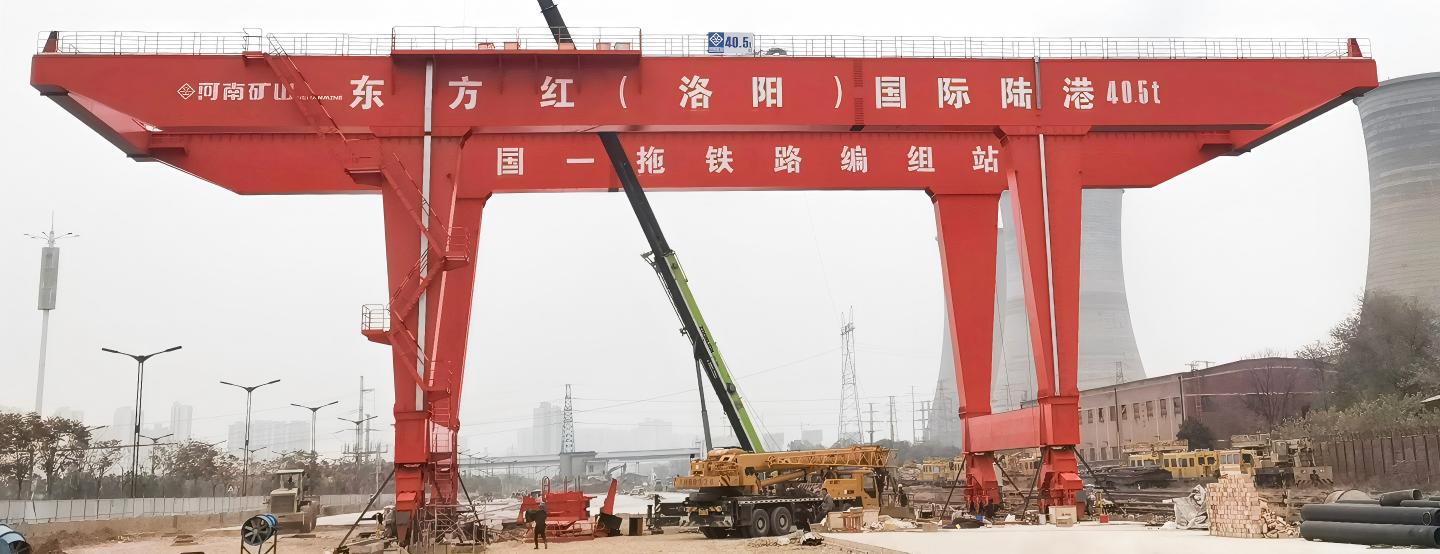
40.5 t RMG for an International Inland Port
Henan Mine Crane supplied a 40.5 t rail-mounted container gantry crane for an overseas international inland-port application serving railway freight grouping, container transfer and logistics-hub operations. The project demonstrates an RMG platform configured around fixed rail coverage and intermodal container handling.
The published system incorporates Siemens PLC and variable-frequency drive control, anti-sway functions, a ring-trolley lifting mechanism and interchangeable upper and lower spreader frames. These functions support controlled positioning and operational flexibility across the defined container-handling tasks.
A new inland-port project requires separate confirmation of rated load, rail and truck lanes, stacking tiers, span, travel length, lift height, duty, power distribution, terminal interfaces, wind conditions, civil loads and required automation. The project case establishes relevant design and delivery experience without replacing site-specific engineering.
Engineering Deliverables and Quality Records
A procurement-ready proposal defines the crane, spreader, power, automation, civil interfaces and acceptance boundary. Henan Mine Crane can prepare project-specific engineering and manufacturing records for technical approval, installation and commissioning.
Design basis
Approved container schedule, block layout, cycle model, load spectrum, duty calculation, wind data, availability target, code matrix and interface register.
Interface engineering
General arrangement, rail or pavement reactions, power demand, spreader data, TOS/RCMS signals, communications, civil tolerances and maintenance access.
Manufacturing records
Material traceability, welding procedures, welder qualifications, dimensional inspection, NDT reports and component certificates as contractually required.
Factory acceptance
Functional checks, brake and limit tests, spreader simulation, control sequences, alarm and interlock verification, data-interface tests and witnessed inspection when included.
Review Henan Mine Crane manufacturing equipment and quality capabilities →
Civil Works, Installation and Commissioning
Before Manufacture
Confirm the topographic survey, yard and lane geometry, rail alignment or pavement capacity, foundations, wheel loads, drainage, storm restraints, power route, substations, communications, maintenance facilities and division of site responsibilities.
Erection and Integration
Coordinate delivery sequence, unloading, site lifting, assembly, rail or tyre-path survey, electrical installation, spreader setup, TOS/RCMS data exchange, network testing, traffic control and access for terminal operations.
Commissioning and Support
Complete no-load and rated-load testing, container pickup trials, braking, anti-sway, travel, wind and emergency functions, interface tests, performance verification, operator and maintenance training, spare-parts handover and acceptance records.
Commissioning should cover representative container sizes and weights, short and long travel cycles, truck or wagon positioning, twistlock states, degraded communications, power interruption, emergency recovery and the agreed wind operating limits. Performance acceptance uses the same operating assumptions defined in the contract.
Container Yard Crane Price and Supply Scope
Container yard crane price is determined by the selected equipment concept, rated load, span, stacking height, duty, motion performance, spreader, power system, automation, environment, civil interfaces, delivery term and installation responsibility. Published equipment prices should not be treated as turnkey terminal budgets.
The following September 2026 ranges are preliminary market planning bands in US dollars. They are not a Henan Mine Crane quotation and are not directly comparable without matching technical scope, condition, design code, Incoterm, automation level, civil works and included services.
| Equipment or project level | Indicative market planning range | Commercial interpretation |
|---|---|---|
| Standard 30–50 t RTG equipment | Approximately US$100,000–US$500,000 | Entry and conventional equipment observations; verify spreader, power pack, duty, controls and delivery scope |
| Port-terminal or high-specification RTG | Approximately US$700,000–US$2.5 million or more | Higher duty, electrification, automation, advanced positioning and terminal integration materially affect price |
| Conventional 35–50 t RMG equipment | Approximately US$250,000–US$1.2 million | Published equipment examples may exclude rails, foundations, substation, installation and terminal software |
| High-specification or automated RMG project | Approximately US$1 million–US$7 million or more | Automation, redundancy, long span, high duty, power distribution and software integration can dominate the project value |
| 30–50 t container straddle carrier | Approximately US$120,000–US$450,000 per unit | Powertrain, stacking height, automation, battery package, charging equipment and fleet support require confirmation |
| Cost package | Items requiring an explicit quotation boundary |
|---|---|
| Crane and spreader | Steel structure, mechanisms, cabin or remote station, telescopic spreader, anti-sway, controls, lighting and standard access |
| Automation and data systems | OCR, position sensors, truck guidance, remote console, TOS/RCMS integration, servers, network, cybersecurity and software licenses |
| Power and energy infrastructure | Substation, cable reel or busbar, e-RTG conductor system, battery and charger, hybrid or diesel package, fuel system and backup supply |
| Civil and yard works | Rails, foundations, pavement, drainage, storm anchors, reefer racks, barriers, road markings, buildings and maintenance facilities |
| Logistics and installation | Packing, inland haulage, ocean freight, insurance, unloading, erection, site cranes, supervision, permits and local labor |
| Testing and lifecycle support | Proof load, performance testing, third-party inspection, training, spare parts, maintenance tools, warranty, remote support and service response |
A valid bid comparison uses the same rated load under spreader, row and lane arrangement, stacking height, span, duty, speed schedule, spreader, power source, automation functions, environmental design basis, applicable code, Incoterm, currency, validity and site-responsibility matrix. Very low online listing prices frequently omit major project packages and should not be used as complete installed budgets.
Container Yard Crane RFQ Information
Submit the annual TEU and peak moves; container sizes, maximum gross mass and loaded/empty mix; reefer and hazardous-container requirements; yard drawing with block length, rows, lanes, stacking tiers and cantilevers; truck, rail and quay interfaces; average dwell time and rehandle assumptions; operating hours, duty and availability target; preferred RMG, RTG or straddle-carrier concept; power supply and emissions policy; control, automation, OCR and TOS/RCMS interfaces; temperature, wind, salt fog and seismic data; destination and applicable code; and the required freight, civil, installation, testing, training and spare-parts scope.
A defined equipment schedule, interface list and itemized commercial scope can then be prepared.
Frequently Asked Questions
What is a container yard crane?
A container yard crane lifts, stacks and transfers ISO containers within a marine terminal, dry port, rail yard, logistics hub or depot. Common systems include RMG cranes, RTG cranes, straddle carriers and fixed container overhead cranes.
Which is better for a container yard: RMG or RTG?
RMG cranes are generally preferred for fixed, high-density blocks with electric power and substantial automation. RTG cranes are generally preferred where block mobility and phased expansion are more important. The final decision follows throughput, infrastructure, energy and lifecycle analysis.
How is container yard crane capacity specified?
Capacity is specified as rated load under the spreader for the defined single- or twin-lift operation. The spreader tare, container gross mass, dynamic loads, eccentricity, wind and structural load combinations are included in engineering verification.
How many container rows and tiers can one crane cover?
Coverage is project-specific. It depends on container width, clearances, truck or rail lanes, cantilevers, span, lifting height and stacking policy. Henan Mine Crane publishes RMG and RTG reference spans up to approximately 35 m and project lifting heights up to approximately 21 m.
Can a container yard crane handle 20 ft, 40 ft and 45 ft containers?
Yes. A compatible telescopic spreader can be configured for the approved container lengths, corner fittings and load range. Container recognition, telescoping interlocks, twistlock status and flippers are defined within the spreader and control specification.
Can an RMG or RTG be automated?
Yes. Anti-sway, absolute positioning, container recognition, truck guidance, obstacle detection, remote operation and TOS/RCMS integration can support semi-automatic or automated service. Functional requirements, network architecture and recovery modes must be agreed before system design.
What power options are available?
RMG cranes commonly use grid power through cable reels or busbars. RTGs and straddle carriers may use diesel-electric, hybrid, battery or external electrification. Site grid capacity, block mobility, emissions objectives, charging schedule and redundancy determine the preferred system.
How is yard crane throughput calculated?
Throughput is modeled from spreader engagement, hoist, trolley and gantry travel, positioning, set-down, release and operating delays. Long and short cycles, rehandles, truck or rail arrival patterns, equipment availability and peak demand are included.
How much does a container yard crane cost?
Market observations vary from approximately US$100,000–US$500,000 for conventional RTG equipment and US$250,000–US$1.2 million for conventional RMG equipment to US$700,000–US$2.5 million or more for high-specification RTGs and US$1–US$7 million or more for advanced RMG projects. Scope matching is essential.
What information is needed for a container yard crane quotation?
Provide container sizes and weights, yard layout, rows, tiers, lanes, rated load, peak moves, annual TEU, duty, operating hours, power strategy, automation interfaces, environment, destination, applicable code, civil information and the required delivery and installation boundary.
Technical content record
Prepared by Henan Mine Crane Technical Sales · Technically reviewed by Crane Engineering · Last reviewed September 2026
Related Container Handling Products
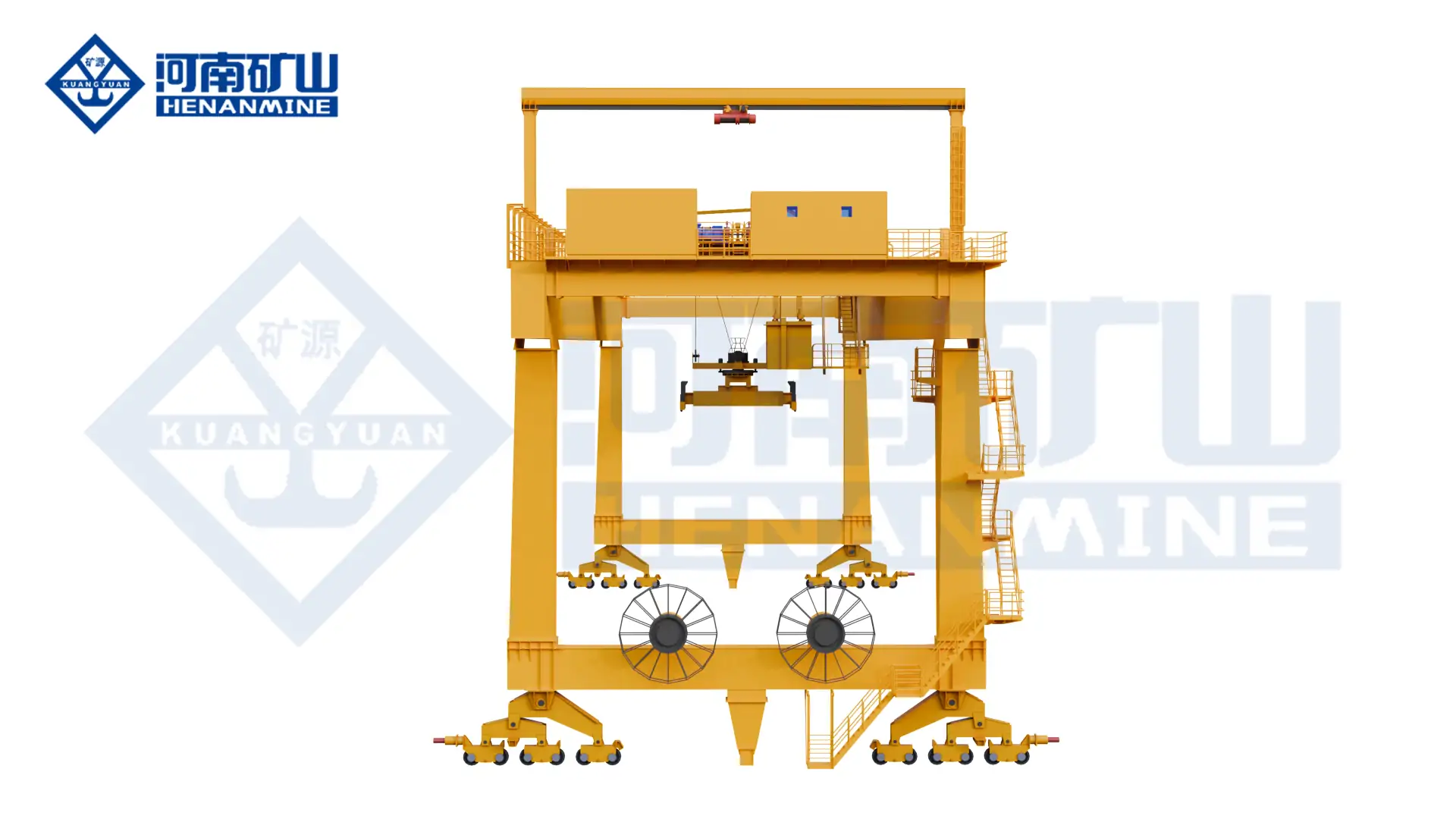
Rail-Mounted Container Gantry Crane
Fixed-rail container stacking system for dense blocks, rail terminals, dry ports and automated yard operations.

Rubber-Tyred Gantry Crane
Mobile container stacking crane for flexible yard blocks with project-selected diesel, hybrid, battery or electric power.
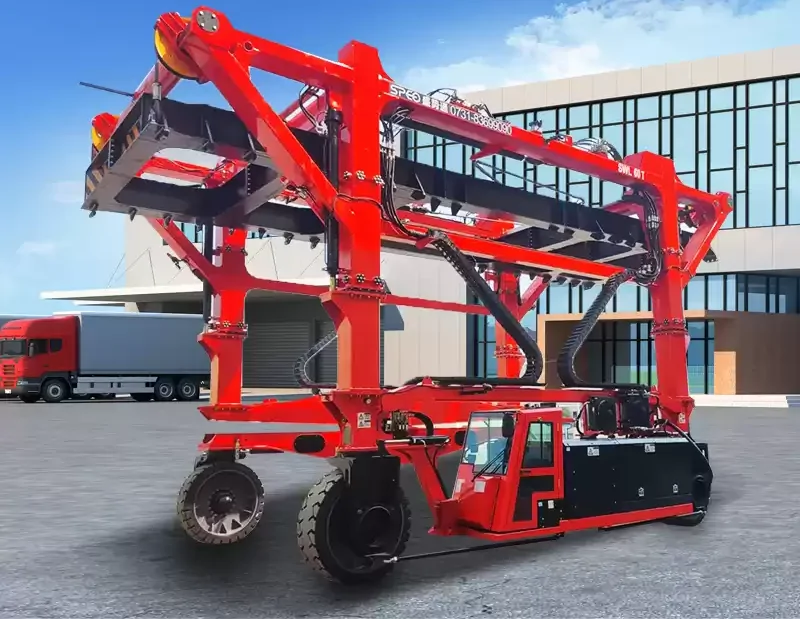
Container Straddle Carrier
Mobile lift, carry and stacking equipment for flexible terminal transport and container-depot operations.
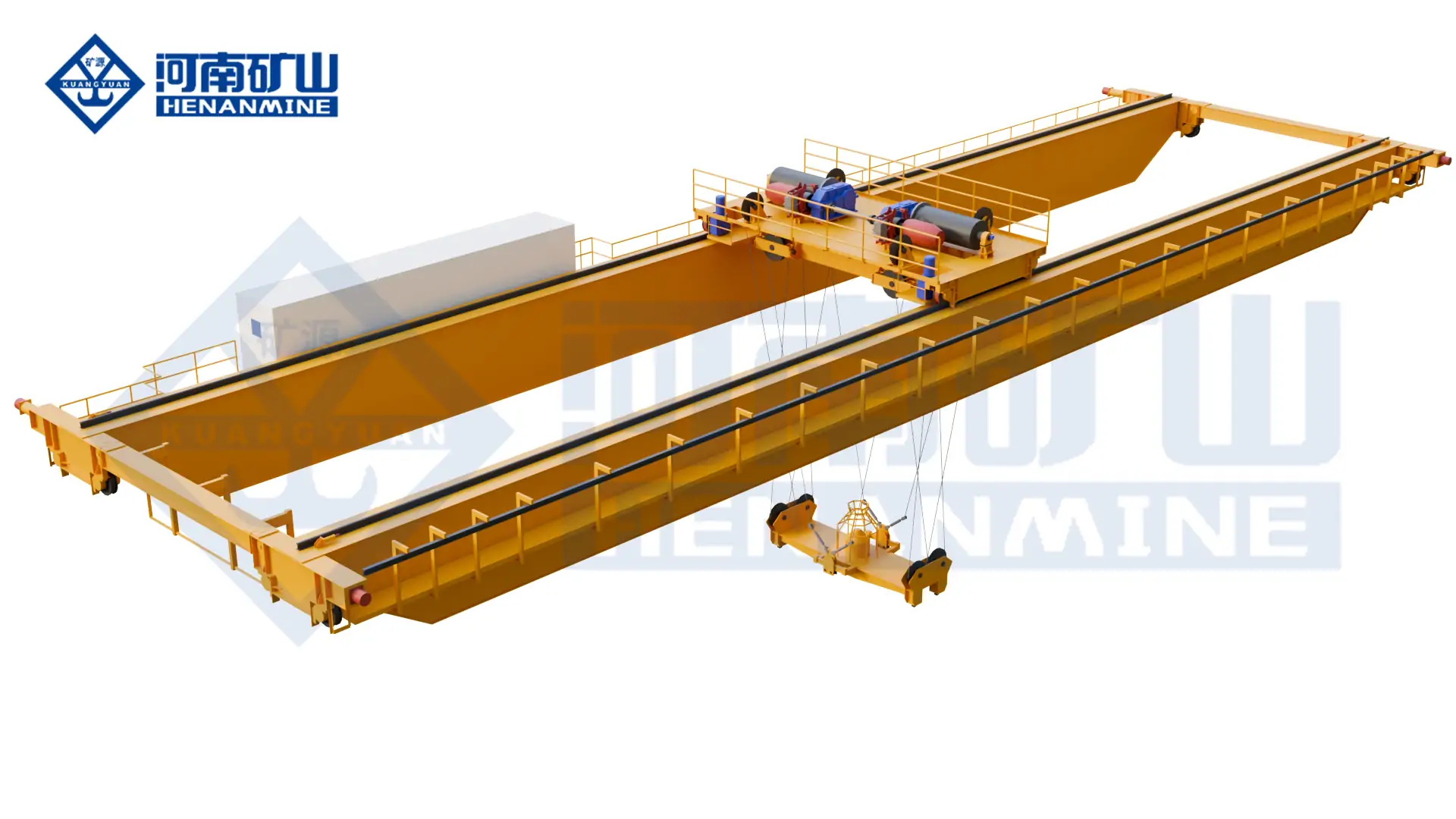
Container Overhead Crane
Elevated fixed-bay container crane for indoor transfer, manufacturing logistics and specialized rail or truck interfaces.
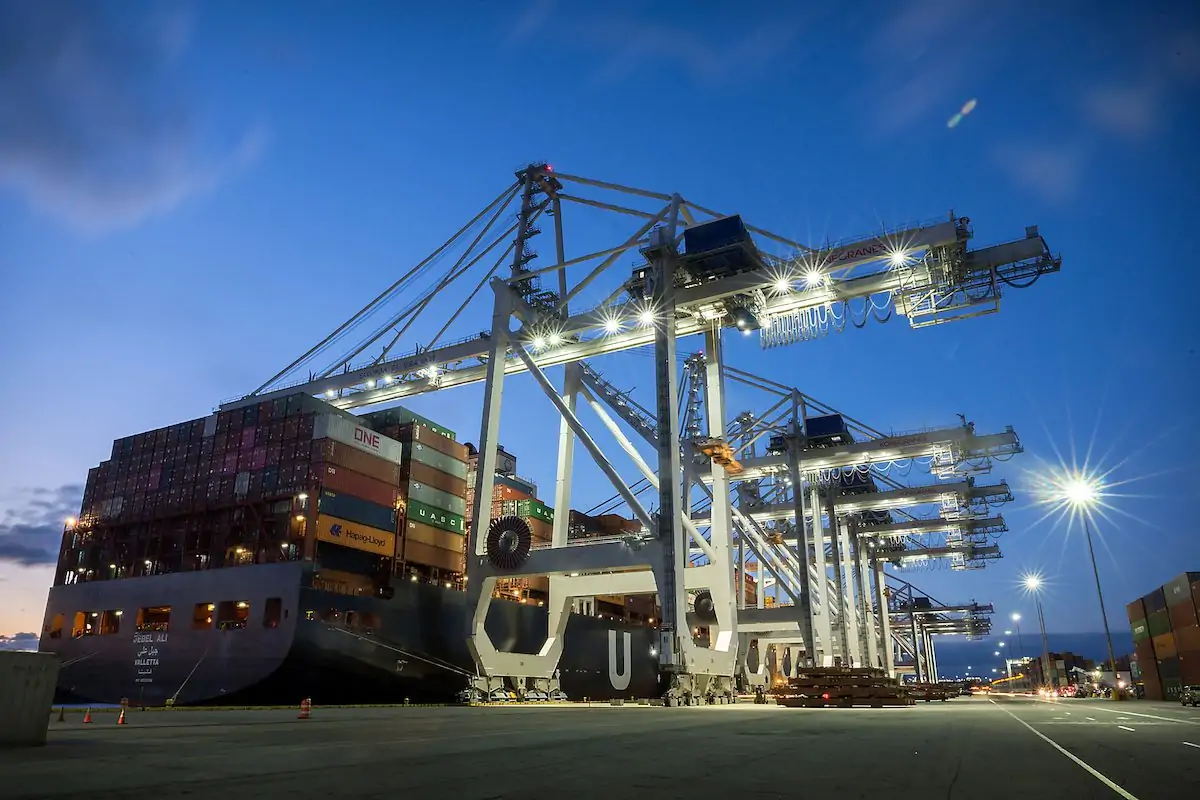
Ship-to-Shore Container Crane
Quayside container crane for vessel loading and unloading, coordinated with the terminal transfer and yard system.
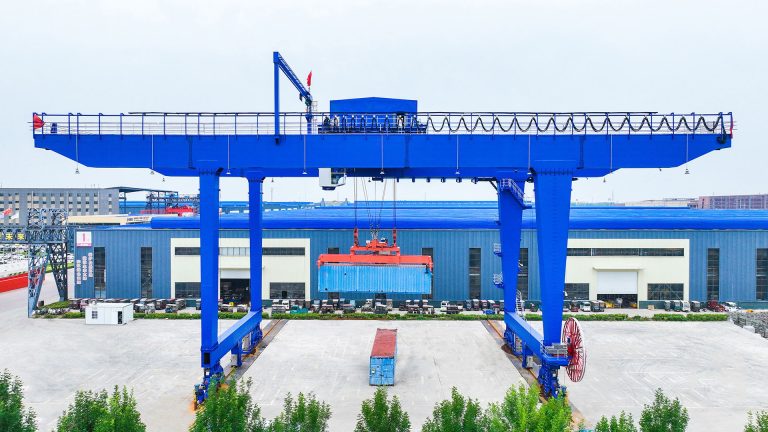
Automated Container Gantry Crane System
A project reference for heavy-duty automated container handling with positioning, control and cold-climate engineering.
Engineered Container Yard Proposal
Request a Container Yard Crane Quote
Provide the container schedule, yard drawing, annual TEU, peak moves, rows, lanes, stacking tiers, truck or rail interfaces, duty, power strategy, automation scope, environment, destination and delivery boundary. Henan Mine Crane will develop the equipment, interfaces and commercial scope around the required terminal operation.