
Henan Mine Crane · Integrated Lifting Systems for Primary Aluminum Plants
Aluminum Smelter Crane
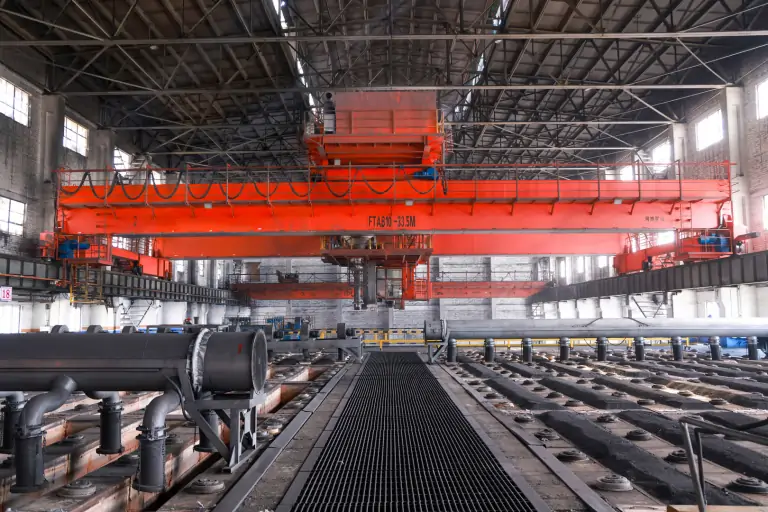
Custom crane systems for anode handling, process-material transfer, electrolytic-cell servicing, molten aluminum handling and maintenance operations across the carbon plant, potroom and cast house.
Henan Mine Crane engineers each aluminum smelter crane package around the production route, load and attachment, potline geometry, runway interface, operating cycle, heat, dust, fumes, electrical and magnetic conditions, automation requirement and destination compliance plan.
PLANT AREAS
Carbon Plant, Potroom & Cast House
HANDLING SCOPE
Anodes, Materials, Vessels & Equipment
DESIGN CONDITIONS
Heat, Field, Dust, Fumes & Duty
PRICE BASIS
Engineered Project Quote
Crane Systems for Aluminum Smelting and Electrolysis
An aluminum smelter crane is a purpose-engineered lifting or process-handling system used within primary aluminum production. The term can describe a pot tending machine, an anode carbon block stacking crane, a suction and material-distribution crane, an insulated overhead crane, a crane for crucible or molten-aluminum transfer, or a maintenance bridge crane. International project documents may also use the term aluminium smelter crane. These machines perform different tasks and must not be selected from the keyword alone.
The purchasing decision begins with the process route. Carbon blocks require stable gripping and repeatable stacking. Pot tending requires dedicated tools for cell-service operations. Maintenance work near energized cells requires an insulation strategy based on the plant electrical study. Crucible handling requires a lifting arrangement, redundancy philosophy and operating procedure appropriate to the load consequence. General maintenance cranes serve equipment removal and workshop handling but do not replace process cranes.
Henan Mine Crane develops the crane structure, mechanisms, attachments, controls and plant interfaces as one project. Final capacity, span, lifting height, duty, speeds, protection level, automation and applicable standards are confirmed through an approved technical agreement; published product-family values are starting references, not automatic project specifications.
Aluminum Smelter Crane Types
01 · Pot Tending Machine / Multifunction Crane
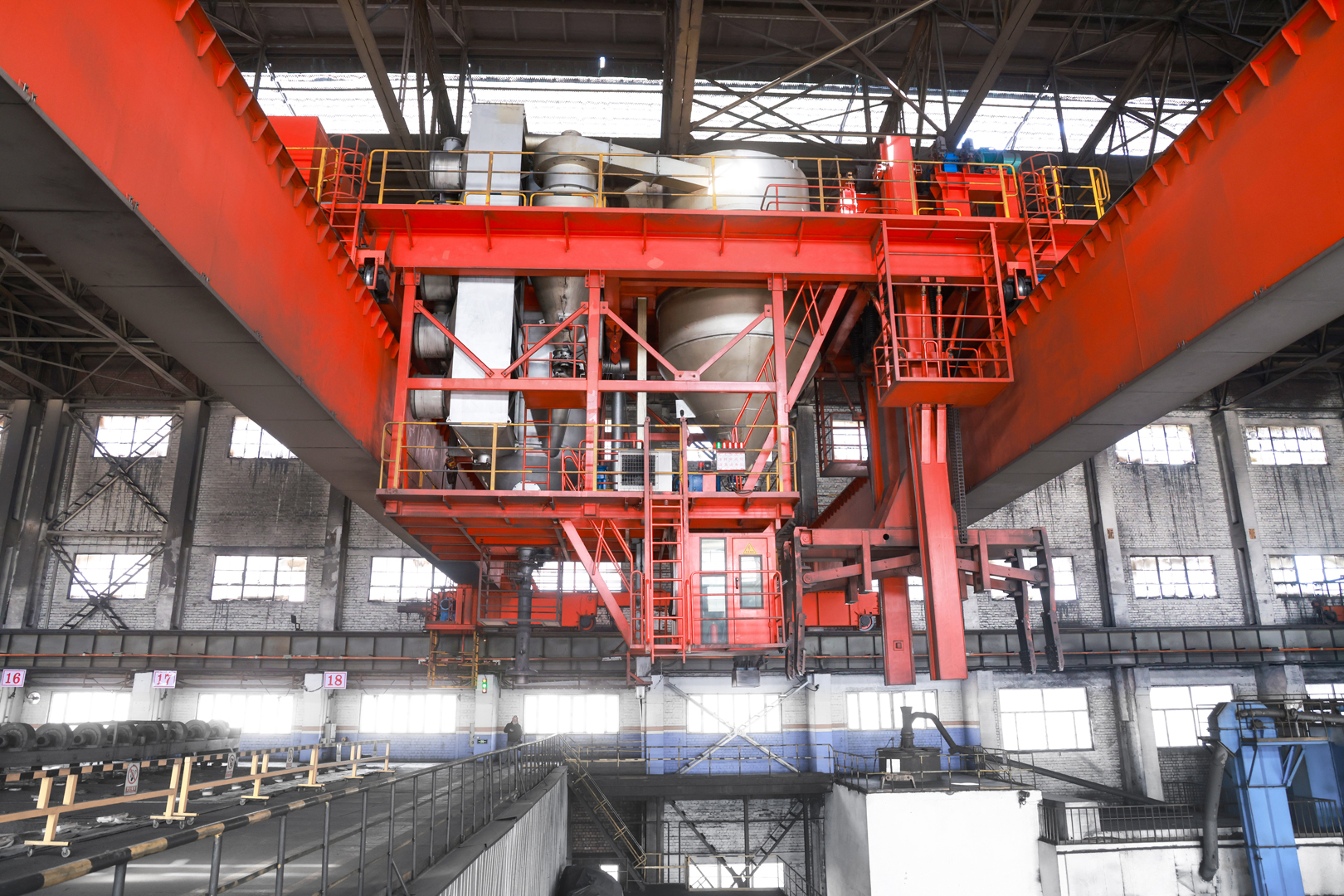
A traveling process machine for prebake potlines. Tool options can support crust breaking, anode handling, residue removal, material feeding, tapping assistance and maintenance handling. Each tool, motion, permission and process interface is defined against the cell technology and approved operating sequence.
02 · Multifunction Suction and Material Crane
A dedicated system for collecting, transferring and distributing approved process material. Suction performance, material path, filtration, discharge control and dust containment are engineered from bulk density, particle size, temperature, moisture, transfer rate and pickup or discharge coordinates.
03 · Anode Carbon Block Stacking Crane
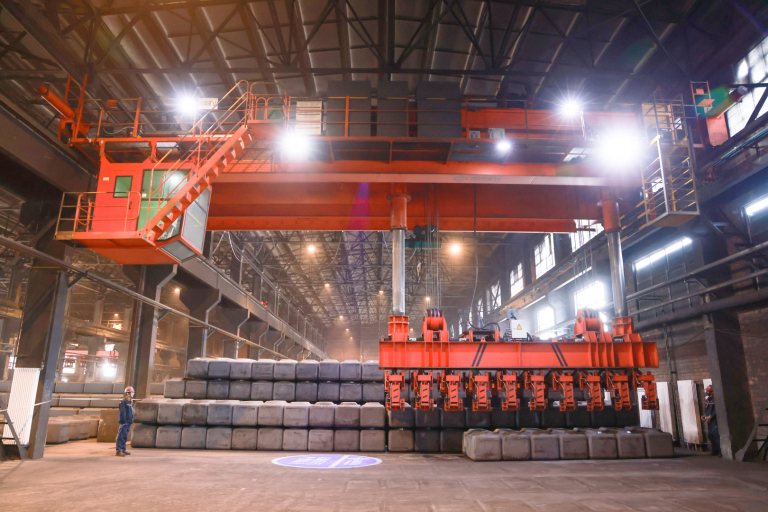
A heavy-duty overhead crane with a mechanical or hydraulic profiled clamp for green or baked anode blocks. The attachment, clamping force, stacking pattern, block protection, positioning system, auxiliary hoist and warehouse-management interface are selected for the production flow.
04 · Insulated Bridge Crane
A single- or double-trolley bridge crane with coordinated insulation barriers for maintenance and material handling near energized electrolysis equipment. The insulation points, monitoring, earthing philosophy, operating restrictions and test criteria follow the plant electrical risk assessment.
05 · Crucible and Molten Aluminum Handling Crane
A project-specific metallurgical crane for transferring a defined crucible, ladle or transport vessel. Capacity includes the filled vessel and all lifting attachments. Hoist arrangement, brakes, limits, heat shielding, route protection, operator location and emergency response must match the process and local rules.
06 · Maintenance and Auxiliary Overhead Crane
A hook crane for pumps, motors, ducts, cell components, workshop equipment and scheduled shutdown work. It can use a compact electric-hoist or open-winch arrangement according to load, duty and headroom, with environmental upgrades where the service zone requires them.
Compare Aluminum Smelter Crane Systems
The correct machine is determined by the task, load form, operating area and process interface. Nominal tonnage alone cannot distinguish a pot tending machine from an anode stacker, insulated maintenance crane or molten-metal handling crane.
| Crane system | Primary task | Load-handling device | Critical environment | Main purchasing decision |
|---|---|---|---|---|
| Pot tending machine | Electrolytic-cell servicing and anode operations | Rotating tool trolley with selected process tools | Heat, magnetic field, dust and fluoride-bearing fumes | Tool list, process cycle, availability and automation |
| Suction/material crane | Collection, transfer and controlled distribution | Suction, conveying and discharge equipment | Abrasive material, dust, heat and fume exposure | Material data, transfer rate, filtration and route |
| Anode stacking crane | Block transfer, stacking and retrieval | Profiled multi-block clamp plus auxiliary hook | Carbon dust, high cycles and block-damage risk | Block geometry, stacking pattern and clamp control |
| Insulated bridge crane | Lifting near energized cells and busbar systems | Hook, beam or approved maintenance attachment | Electrical potential, induced current, heat and dust | Insulation architecture, testing and work procedure |
| Molten-aluminum crane | Crucible or vessel transfer along an approved route | Purpose-designed hook, beam or vessel interface | Radiant heat and high-consequence suspended load | Load consequence, redundancy and route protection |
| Maintenance crane | Equipment removal and shutdown maintenance | Hook, spreader beam or maintenance fixture | Area-specific dust, heat, corrosion or classification | Hook coverage, duty, headroom and facility interface |
Engineering conclusion: specify one coordinated crane package by production area and process task. Forcing an ordinary hook crane to perform anode gripping, suction transfer or electrolytic-cell service creates unsuitable attachments, incomplete protection and unclear acceptance criteria.
Match the Crane to the Smelter Process Area
A plant-wide handling study maps every pickup point, destination, process time, load path and interface. It also identifies tasks that cannot share one machine because of contamination, availability, incompatible attachments or operational risk.
For the carbon plant and anode warehouse, the study covers block dimensions, mass, green or baked condition, blocks per lift, stacking height, aisle geometry and rejected-block handling. For the potroom, it covers cell technology, pot spacing, hood arrangement, anode geometry, service tools, tapping method, busbars, fume-extraction equipment and restricted zones.
For the cast house and maintenance areas, the study defines crucibles, furnaces, casting equipment, coils or billets where applicable, shutdown loads, component removal routes, storage stands and work permits. The result is a responsibility matrix that identifies which crane performs each task and what happens when a primary machine is unavailable.
| Production area | Typical handling task | Suitable crane starting point | Essential buyer data |
|---|---|---|---|
| Carbon plant | Green and baked block transfer, stacking and retrieval | Anode carbon block stacking crane | Block drawing, condition, mass, quantity per lift, stacking plan and cycles |
| Process-material area | Collection, transfer and controlled distribution | Multifunction suction/material crane | Material composition, bulk density, size, temperature, moisture and rate |
| Electrolysis potroom | Crust breaking, anode changing, cleaning, covering and service lifting | PTM / aluminum electrolysis multifunction crane | Cell layout, pot count, anode data, task sequence, tool list and cycle target |
| Energized maintenance zone | Component and maintenance-equipment handling | Insulated bridge crane | Electrical study, credible current paths, load, route and test requirements |
| Tapping or transfer route | Filled crucible or vessel lifting and transfer | Project-specific metallurgical crane | Gross load, vessel interface, heat, route, duty and consequence assessment |
| Maintenance workshop | Motors, pumps, tools, components and shutdown loads | Double-girder or electric-hoist bridge crane | Maximum load, hook coverage, frequency, headroom and environmental zone |
Technical Selection and Specification Framework
A purchasing specification should translate production requirements into measurable crane and process performance. Each mechanism may require its own capacity, speed and duty. A headline crane tonnage does not define an anode tool, breaker, suction system, auxiliary hoist or tapping arrangement.
| Specification item | Required project input | Engineering output | Commercial risk if undefined |
|---|---|---|---|
| Capacity and load case | Load, attachment tare, center of gravity, orientation and operating state | Rated loads by mechanism, load combinations and overload settings | Undersized mechanism or unnecessary structural cost |
| Span and runway | Rail centers, bay length, elevation, end approaches and existing wheel-load limits | General arrangement, wheel loads, buffers, rail and runway interfaces | Building reinforcement, clearance conflict or installation delay |
| Hook or tool coverage | Pickup, work and set-down coordinates, obstacles and maintenance access | Bridge, trolley, slewing and tool envelopes with approach limits | Machine cannot reach the required process point |
| Duty and availability | Cycles, load spectrum, shifts, annual hours, pot count and standby philosophy | Crane and mechanism classifications, thermal checks and fleet quantity | Premature wear or excessive capital expenditure |
| Environment | Measured temperature, radiant heat, dust, fumes, humidity, altitude and magnetic field | Materials, coating, enclosures, cooling, sealing, cable and sensor selection | Control faults, corrosion, overheating or short service life |
| Control and automation | Manual tasks, assisted sequences, positioning, plant network and data ownership | Control modes, permissions, interlocks, HMI, communications and recovery logic | Scope gaps between crane, process and plant-control suppliers |
| Utilities | Power, compressed air, hydraulic service, extraction and communication availability | Demand schedule, connection points, cable routing and service-quality limits | Unplanned plant modifications and delayed commissioning |
| Codes and acceptance | Destination law, purchaser standard, inspection authority and witness points | Code matrix, inspection and test plan, FAT, site tests and document register | Unclear compliance, repeated tests or handover dispute |
Published Henan Mine Crane product-family references: the anode carbon block stacking crane is listed at 10–30 t, 13.5–40 m span, 6–20 m lifting height and A6–A8 duty. The double-trolley insulated crane is listed at 32/5 + 32/5 t or customized, 10–35 m span, 6–30 m lifting height and A4–A6 duty. The double-girder electric-hoist bridge crane is listed at 3–32 t, 7.5–31.5 m span, 6–30 m lifting height and A3–A5 duty. Final values remain subject to the actual smelter task and technical review.
Protection, Controls and Safety for Smelter Conditions
Heat and Thermal Management
Radiant heat, hot air and thermal cycling are evaluated at the bridge, trolley, cabin, electrical enclosure, cable, sensor, lubricant and attachment. Shields, spacing, selected materials, cooling and inspection access are applied where the measured duty requires them.
Magnetic-Field Compatibility
Field data and equipment locations guide the selection and positioning of drives, sensors, communication devices and control hardware. Protection is verified for the specified field conditions; “anti-magnetic” is not treated as an undefined marketing label.
Insulation and Electrical Isolation
The electrical study identifies credible current paths and required barriers. Structural interfaces, hooks or tools, hoists, service connections, earthing, monitoring and maintenance procedures are coordinated as one insulation system with defined inspection and test criteria.
Dust, Fumes and Corrosion Protection
Protected enclosures, selected seals and cables, filtered ventilation, serviceable barriers, suitable coatings and interfaces to plant extraction are specified from the actual carbon dust, alumina, fluoride-bearing fume and cleaning regime.
Motion, Load and Collision Control
VFD motion, controlled acceleration, service and emergency braking, overload protection, travel limits, anti-collision, protected zones and process interlocks support predictable operation. Required redundancy follows the load consequence and purchaser risk assessment.
Operator Protection and Visibility
Cabin location, remote controls, cameras, alarms, access platforms, isolation points and emergency recovery are planned around the task. The operating concept reduces personnel exposure while preserving sufficient visibility for the approved process.
Published Aluminum Industry Project Experience
Baotou Aluminum Smelter Crane Package
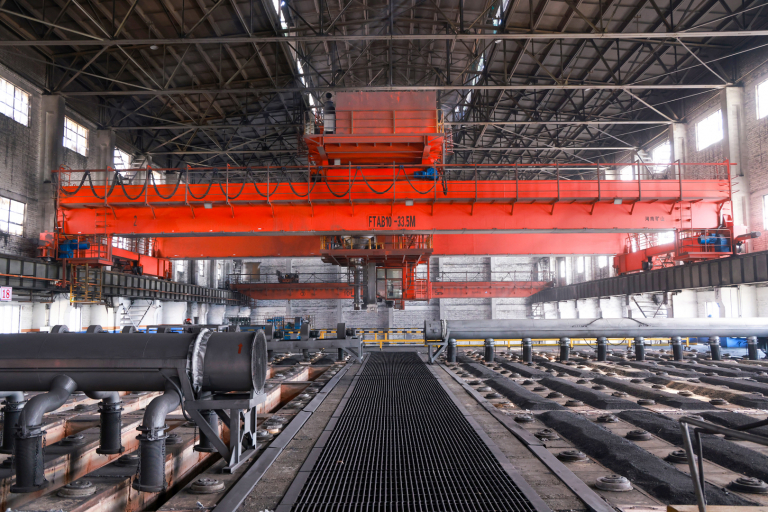
Henan Mine Crane published a customized lifting program for an aluminum producer in Baotou. The project combines a multifunction suction crane, an anode carbon block stacking crane and an aluminum electrolysis multifunction unit, separating incompatible tasks into coordinated process equipment.
The suction crane integrates material collection, transfer and distribution. The anode stacking crane uses an adjustable multi-clamp arrangement for controlled block handling. The multifunction electrolysis unit combines cell-service operations including crust breaking, anode replacement, residue handling and covering-material functions according to the approved process configuration.
The project demonstrates a plant-package approach: crane geometry, attachments, sensors, process logic and automation are matched to the production route instead of purchasing isolated machines by tonnage. A new project still requires independent verification of its cell technology, building, tools, environment, throughput and acceptance requirements.
Engineering Deliverables and Quality Records
A procurement-ready proposal defines machine performance, building and process interfaces, controls, inspection, acceptance and site responsibilities. The document package should remain traceable from design input through manufacturing, factory testing, installation and commissioning.
Design basis
Approved process and load schedule, duty calculation, environmental data, general arrangement, tool envelopes, wheel loads, utilities, code matrix and responsibility boundary.
Control documentation
Electrical single-line diagrams, PLC and network architecture, operating modes, permissions, interlock matrix, alarm list, recovery logic and plant communication schedule.
Manufacturing records
Material traceability, welding procedures, welder qualifications, dimensional checks, NDT records, coating inspection and purchased-component certificates as contracted.
Factory acceptance
Drive, brake, limit, alarm and interlock checks; tool motions; control modes; communications; simulated sequences and purchaser witness points defined in the approved test plan.
Review Henan Mine Crane manufacturing and quality capabilities →
Installation, Commissioning and Lifecycle Planning
Site Readiness
Confirm runway survey, rail condition, building capacity, erection access, lifting plan, laydown area, utilities, extraction interfaces, shutdown windows and potroom work permits before shipment.
Installation
Bridge and trolley assembly, rail alignment, conductor or cable installation, cabin and service connections, process-tool installation and plant-network integration follow approved method statements.
Commissioning
Testing progresses from no-load movement and interlocks to proof testing, dry process simulation and controlled production trials. Acceptance values, materials, cell availability and witness responsibilities are agreed in advance.
Lifecycle Support
Training covers operation, tool change, isolation, alarms and recovery. Preventive maintenance is organized by bridge, mechanisms, process tools, hydraulics or pneumatics, electrics, insulation and environmental protection.
Recommended commissioning and operating spares are selected by failure consequence, installed redundancy, local inventory and lead time. Typical categories include critical sensors, seals, filters, brake wear parts, contactors, tool consumables and selected drive or control modules; the final list follows the approved system architecture.
Aluminum Smelter Crane Price and Supply Scope
An aluminum smelter crane has no dependable standard list price. Publicly advertised values reviewed in September 2026 cover fundamentally different machines and frequently omit the attachment, duty, runway interface, environmental protection, automation, testing, freight and commissioning. They are useful only for recognizing market dispersion, not for approving a project budget.
| Publicly advertised category | Observed advertised range | Procurement interpretation |
|---|---|---|
| Electrolytic multifunction crane advertisement | Approximately US$100,000–1,000,000 per unit | One exceptionally broad supplier listing; tool package and installed project scope remain undefined |
| General insulated overhead crane listings | Approximately US$6,500–100,000 per set | Very broad listing band; capacity, span, hoist, insulation and included steelwork must be matched |
| Published 100 t insulated crane listing | Approximately US$138,000–182,000 per unit | A single advertised configuration; not equivalent to a PTM, anode stacker or installed turnkey system |
| Complete aluminum smelter crane package | Project quotation | Requires process, crane, tool, control, environment, delivery and site scopes to be agreed |
These figures are public market advertisements, not Henan Mine Crane selling prices, guaranteed budget values or landed installed costs. A technically valid comparison uses one common data sheet and one responsibility matrix.
Machine and tools
Bridge, trolleys, hoists, process tools, clamps, suction system, hydraulics, pneumatics, cabin and access platforms.
Controls and protection
Drives, PLC, positioning, communications, automation, insulation, cooling, enclosures, cameras and environmental protection.
Project delivery
Engineering, documentation, inspection, FAT, packing, freight, insurance, spares, training, installation and commissioning.
Facility interfaces
Runway, rails, conductor system, structural reinforcement, utilities, extraction, network integration and production-trial support.
Information Required for an Aluminum Smelter Crane Quote
A complete inquiry allows the crane package, interfaces, delivery scope and commercial exclusions to be evaluated together. Preliminary drawings are acceptable when a project is at concept stage, provided the unresolved values are identified.
01 · Plant and process
New plant, expansion or replacement; pot technology; production area; pot count; operating schedule and required crane role.
02 · Building and runway
Layout, sections, rail span, runway length, rail elevation, headroom, columns, end approaches and allowable wheel loads.
03 · Loads and attachments
Anode, carbon block, crucible, maintenance load or process material data; drawings, mass, temperature and required lifting device.
04 · Process functions
Required tools, pickup and discharge points, stacking pattern, anode-change sequence, tapping support and maintenance operations.
05 · Performance
Capacities, lifting heights, speeds, cycles per hour, shifts, availability target, positioning needs and standby philosophy.
06 · Environment
Ambient and radiant temperatures, dust, fumes, humidity, altitude, magnetic-field measurements, electrical potentials and cleaning method.
07 · Controls and utilities
Power supply, compressed air, extraction, network protocol, manual or automatic modes, MES interface and data requirements.
08 · Compliance and acceptance
Destination country, governing code, purchaser standards, inspection authority, witness points and required certification documents.
09 · Delivery and site scope
Destination port or site, trade term, packing, freight, installation, commissioning, production trials, training and local labor.
10 · Schedule and lifecycle
Required delivery date, shutdown window, spare-parts policy, maintenance capability, documentation language and support plan.
Aluminum Smelter Crane FAQ
Is an aluminum smelter crane the same as a pot tending machine?
Not always. A pot tending machine is one specialized aluminum smelter crane used for electrolytic-cell servicing. A complete smelter may also require suction cranes, anode stacking cranes, insulated bridge cranes, molten-aluminum handling cranes and auxiliary maintenance cranes.
Which operations can a pot tending machine perform?
Depending on the approved tool package, operations can include crust breaking, anode changing, residue handling, material feeding, tapping assistance and maintenance lifting. The final functions follow the pot technology and plant operating sequence.
How is aluminum smelter crane capacity selected?
Each load and mechanism is calculated separately. The rated load includes the handled item and attachment tare, while process tools may need their own force, volume, torque, energy or positioning specification. One nominal tonnage cannot define the complete machine.
Can the crane operate near energized electrolysis cells?
Yes, when the crane and operating procedure are engineered for the verified electrical conditions. The project must identify credible current paths, insulation barriers, monitoring, earthing, testing, maintenance controls and prohibited operating conditions.
How are magnetic fields, heat and fumes addressed?
Measured site data guide equipment selection and location. Typical measures include selected drives and sensors, shielding or separation, heat barriers, cooling, protected enclosures, filtered ventilation, suitable cables and coatings, and serviceable dust or fume barriers.
Can an existing runway be retained?
Only after its geometry, alignment, rail condition, support capacity, wheel-load reserve, longitudinal forces, clearances and erection access are verified against the proposed crane. A runway survey and structural review should precede final manufacture.
Can aluminum smelter cranes be automated?
Manual, assisted, semi-automatic and higher-automation configurations are possible. Options can include position feedback, identification, automatic sequences, tool permissions, vision assistance, data exchange and fleet scheduling where process consistency and plant interfaces support them.
What determines the number of cranes required?
Pot count, bay length, travel distance, cycle time, peak workload, attachment changes, maintenance duration, availability target and standby philosophy determine fleet size. A production-cycle and availability model should support the decision.
Why do public prices vary so widely?
Listings frequently omit span, duty, process tools, automation, environmental protection, runway scope, testing, freight, installation and commissioning. Two products with the same nominal capacity may have entirely different functions and lifecycle obligations.
What should be included in final acceptance?
Acceptance normally covers documentation, visual and dimensional inspection, mechanism and safety-function tests, load testing, tool operation, controls and communications, dry process simulation, controlled production trials, training and handover records as defined in the contract.
Related Aluminum Smelter Crane Products
A complete aluminum-production lifting plan may include dedicated equipment for the carbon plant, potroom, energized maintenance areas, molten-metal transfer and general plant handling.
Aluminum Smelter Multifunction Crane
Process crane for anode changing, crust breaking, material handling and electrolytic-cell service.
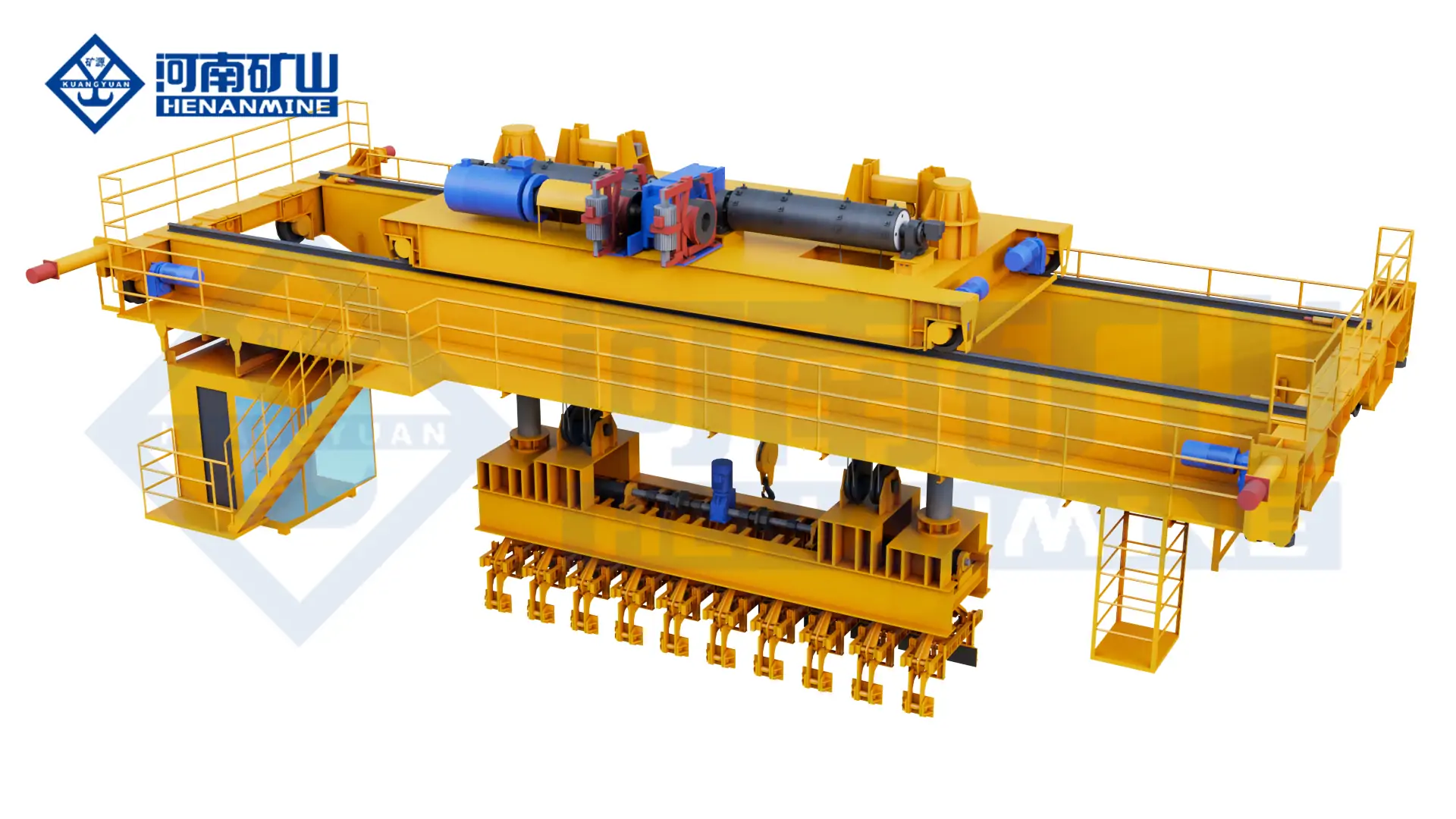
Anode Carbon Block Stacking Crane
Heavy-duty crane with a profiled clamp for controlled block transfer, stacking and retrieval.
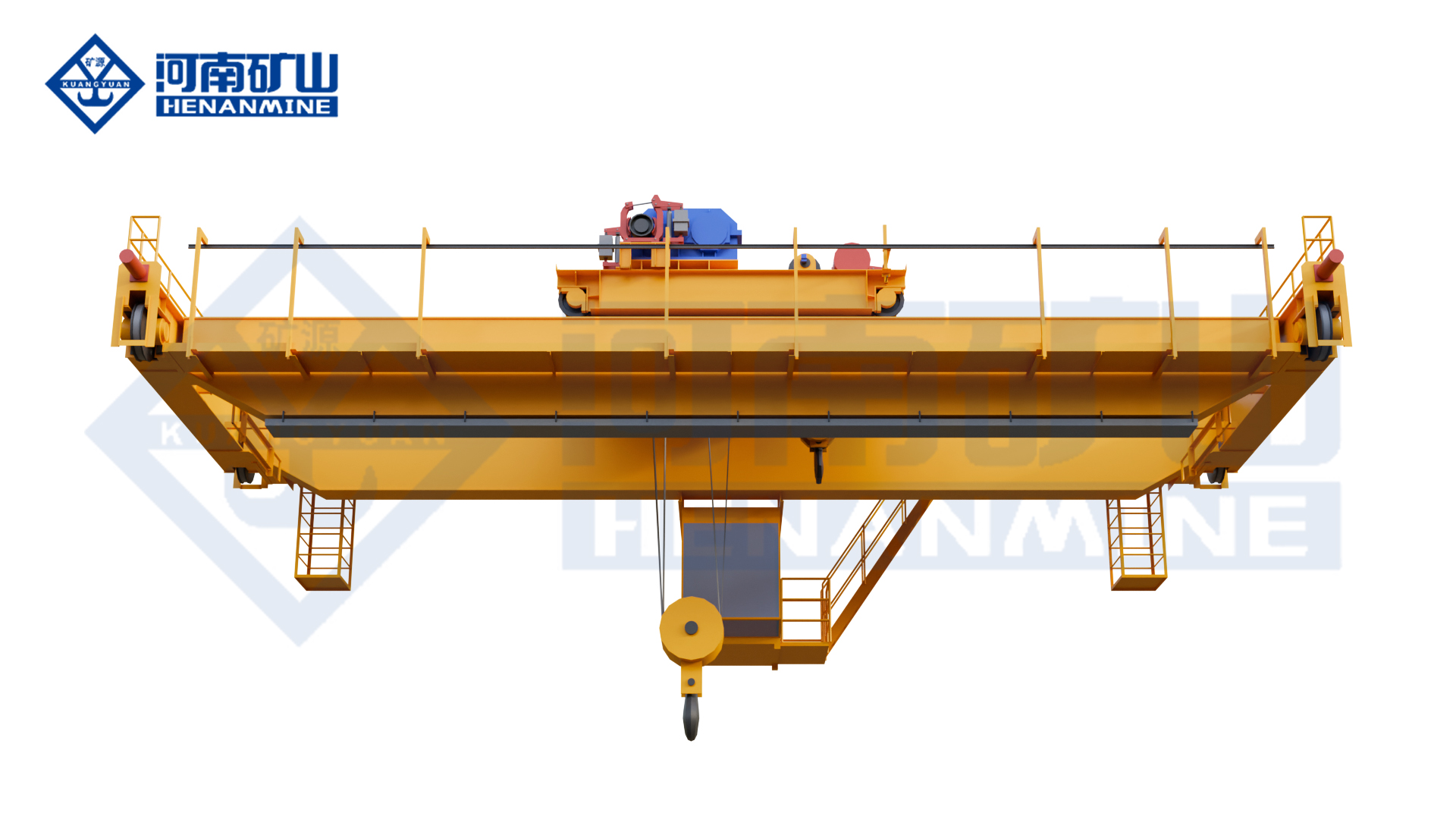
Insulated Bridge Crane
Purpose-engineered bridge crane for approved lifting tasks near energized industrial equipment.
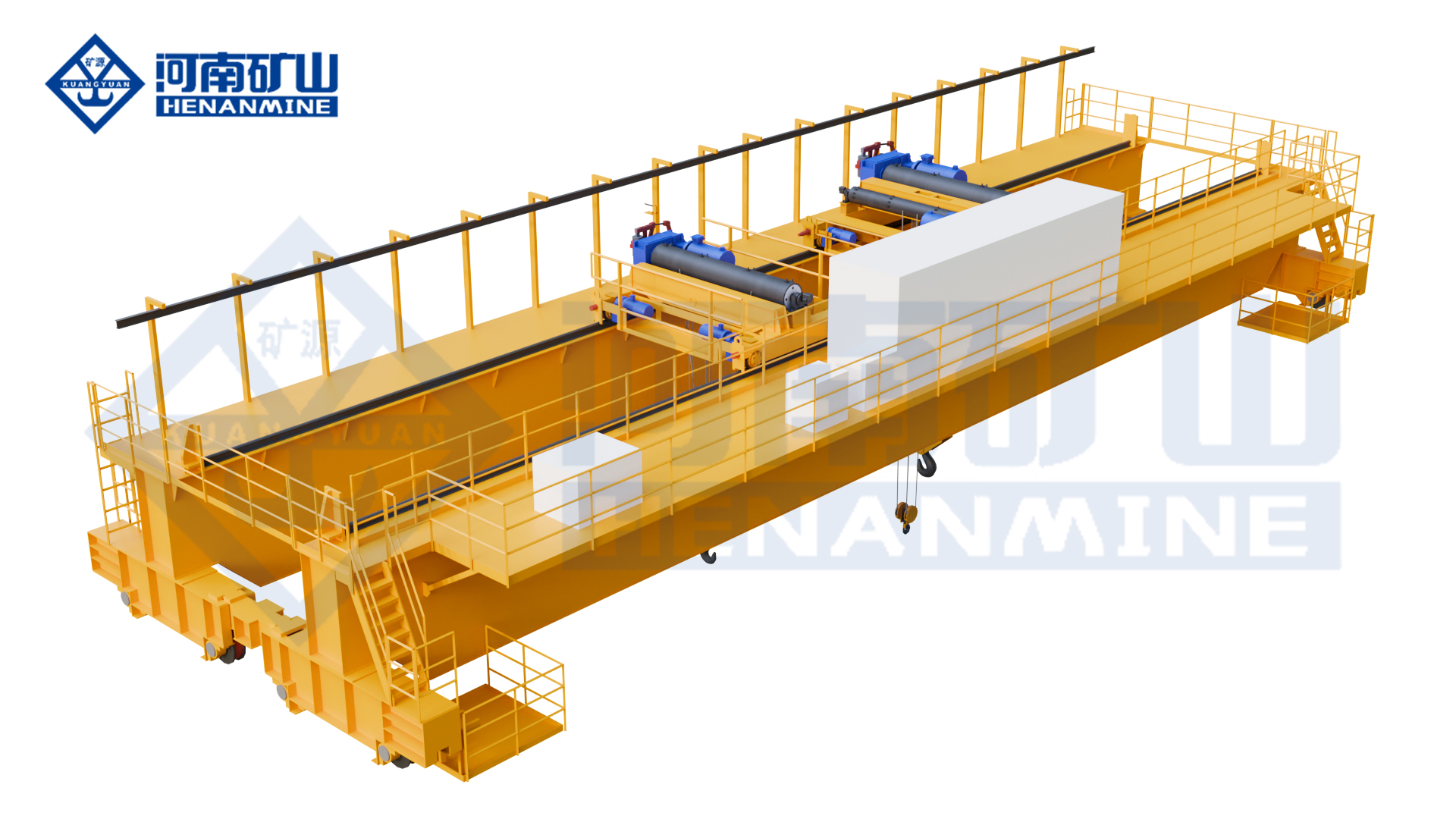
Double-Trolley Insulated Crane
Dual-trolley lifting platform for coordinated handling in specified high-current environments.
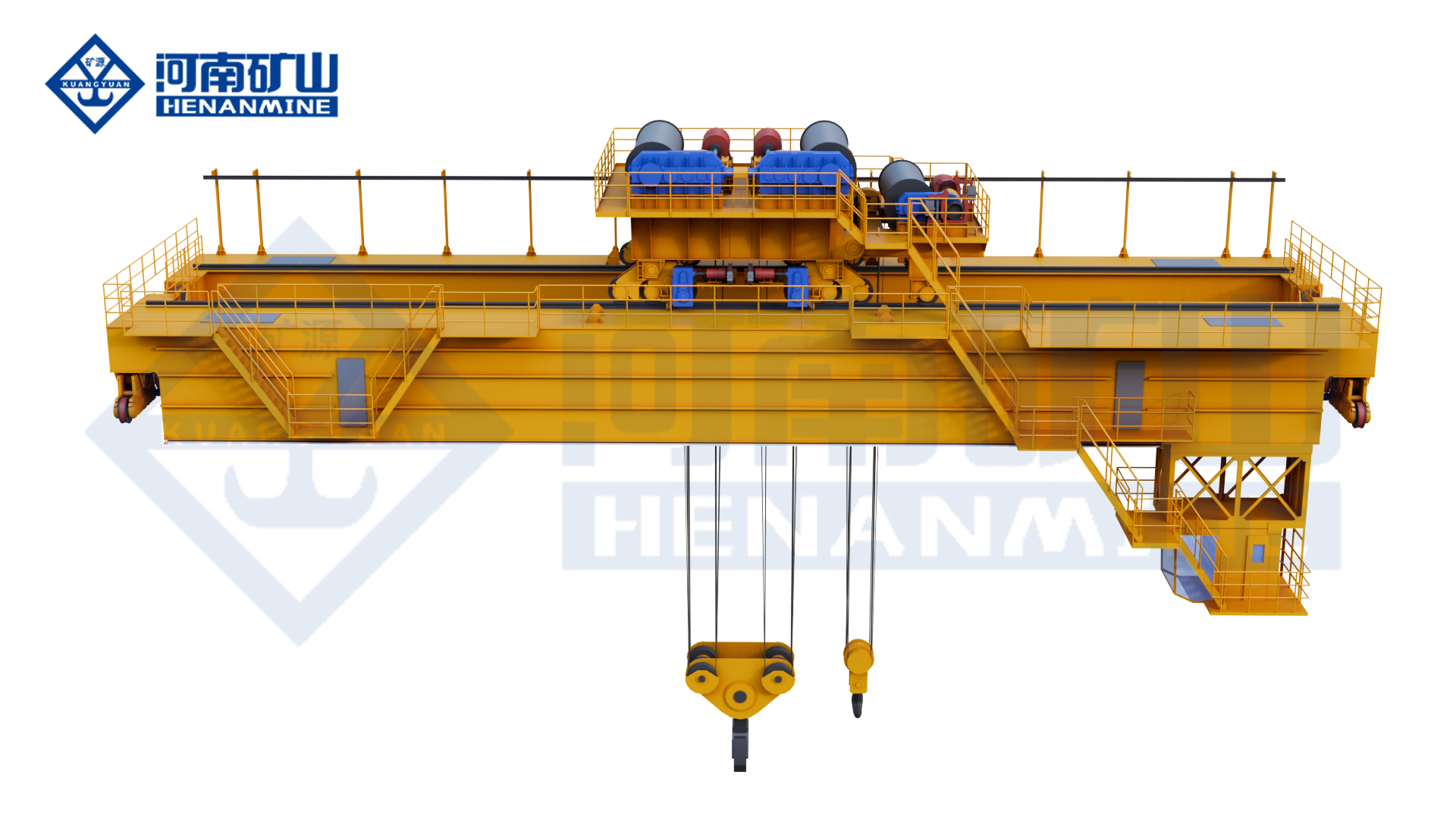
Double-Girder Casting Crane
Metallurgical crane platform requiring project-specific adaptation for the approved vessel and aluminum process.
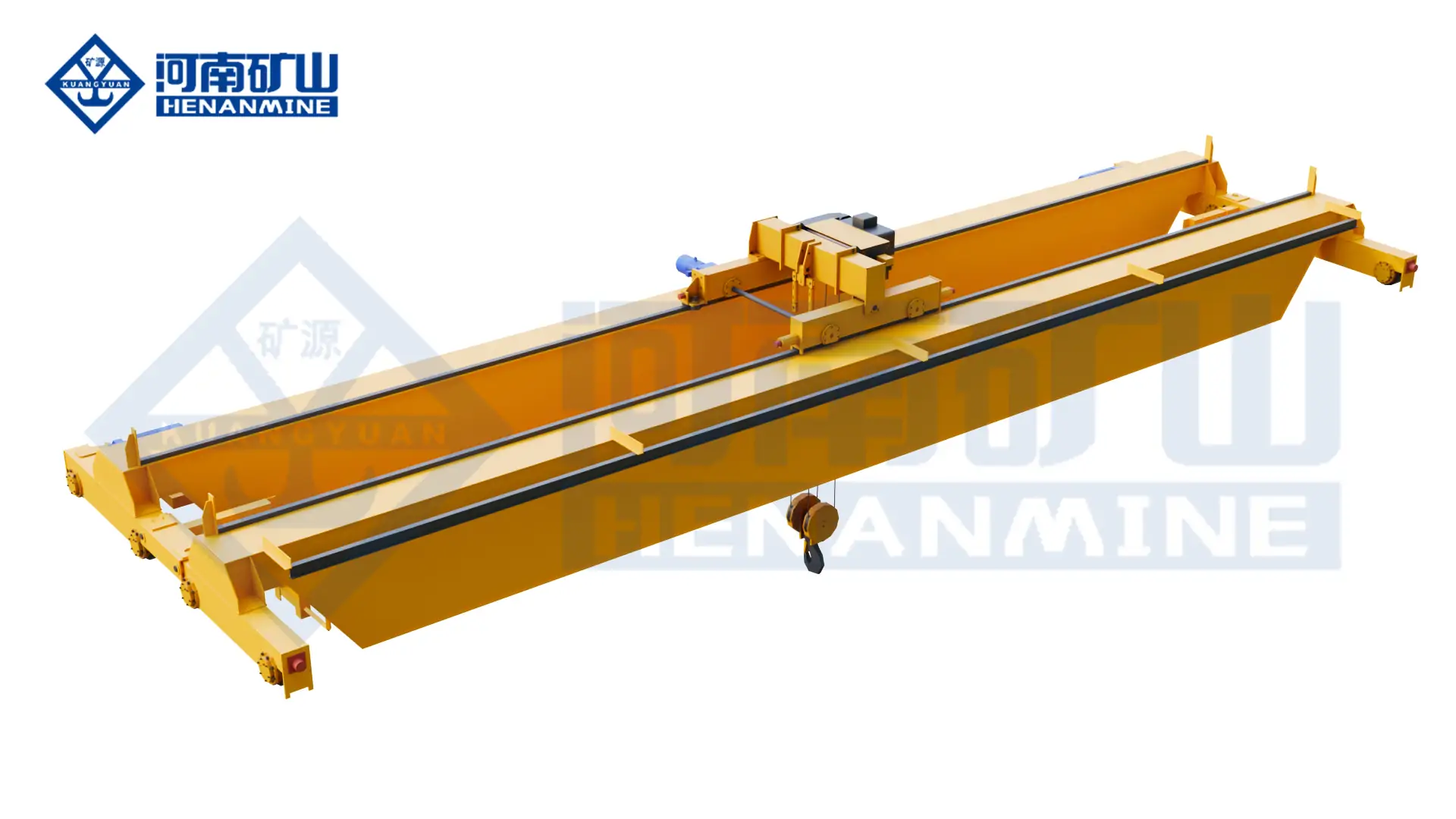
Double-Girder Bridge Crane
Configurable hook crane for plant maintenance, component replacement and workshop handling.
Request an Aluminum Smelter Crane Proposal
Send the plant layout, process area, load and attachment data, operating cycle, environmental conditions, automation requirement and delivery scope. Henan Mine Crane will prepare a project-specific technical and commercial proposal.