
Henan Mine Crane · Aircraft MRO, Engine Handling and Hangar-Wide Maintenance Access
Aircraft Hangar Crane Systems
Engineered overhead and underhung crane systems for aircraft maintenance, engine removal and installation, landing-gear service, component replacement, tooling transfer and elevated access across large hangar bays.
Each aircraft hangar crane is configured around the maintained aircraft fleet, maximum service load, approved lifting interfaces, maintenance sequence, hangar clearances, roof or runway capacity, motion-control requirements and destination compliance framework.
PRIMARY DUTY
Aircraft Maintenance, Repair and Overhaul
TYPICAL LOADS
Engines, Landing Gear, Tooling and Components
SYSTEM OPTIONS
Underhung, Bridge, Monorail and Multi-Point
PROJECT PRIORITIES
Clear Floor, Low Sway and Aircraft Protection
What Is an Aircraft Hangar Crane?
An aircraft hangar crane is an overhead material-handling system designed for maintenance tasks around a complete aircraft. It can lift engines, auxiliary power units, landing gear, flight-control surfaces, cabin modules, maintenance tooling and test equipment, or carry an engineered access platform where the approved maintenance process requires overhead access.
Hangar work differs from repetitive factory production. Aircraft positions change, several aircraft types may share one bay, mobile stands and docks occupy the floor, tail and wing clearances are restrictive, and the crane may remain lightly loaded for long periods before a critical maintenance lift. Capacity therefore forms only one part of the specification. Coverage, hook approach, low-speed control, collision zoning, component protection, runway reactions and recovery from a control fault are equally important.
Henan Mine Crane supplies multi-support double-girder underhung cranes, single-girder suspension cranes, double-girder bridge cranes and project-specific multi-hoist systems for new-build and retrofit hangars.
Aircraft Hangar Crane Applications
The crane schedule should follow the actual maintenance work package and aircraft fleet. A narrow-body engine-change bay, wide-body heavy-maintenance hangar, military depot, business-jet facility and helicopter maintenance workshop can require different spans, service loads, access arrangements and restricted zones.
Separate lifting arrangements can be assigned to high-value aircraft components, general tooling and elevated maintenance access so that each duty receives the appropriate control, attachment and inspection regime.
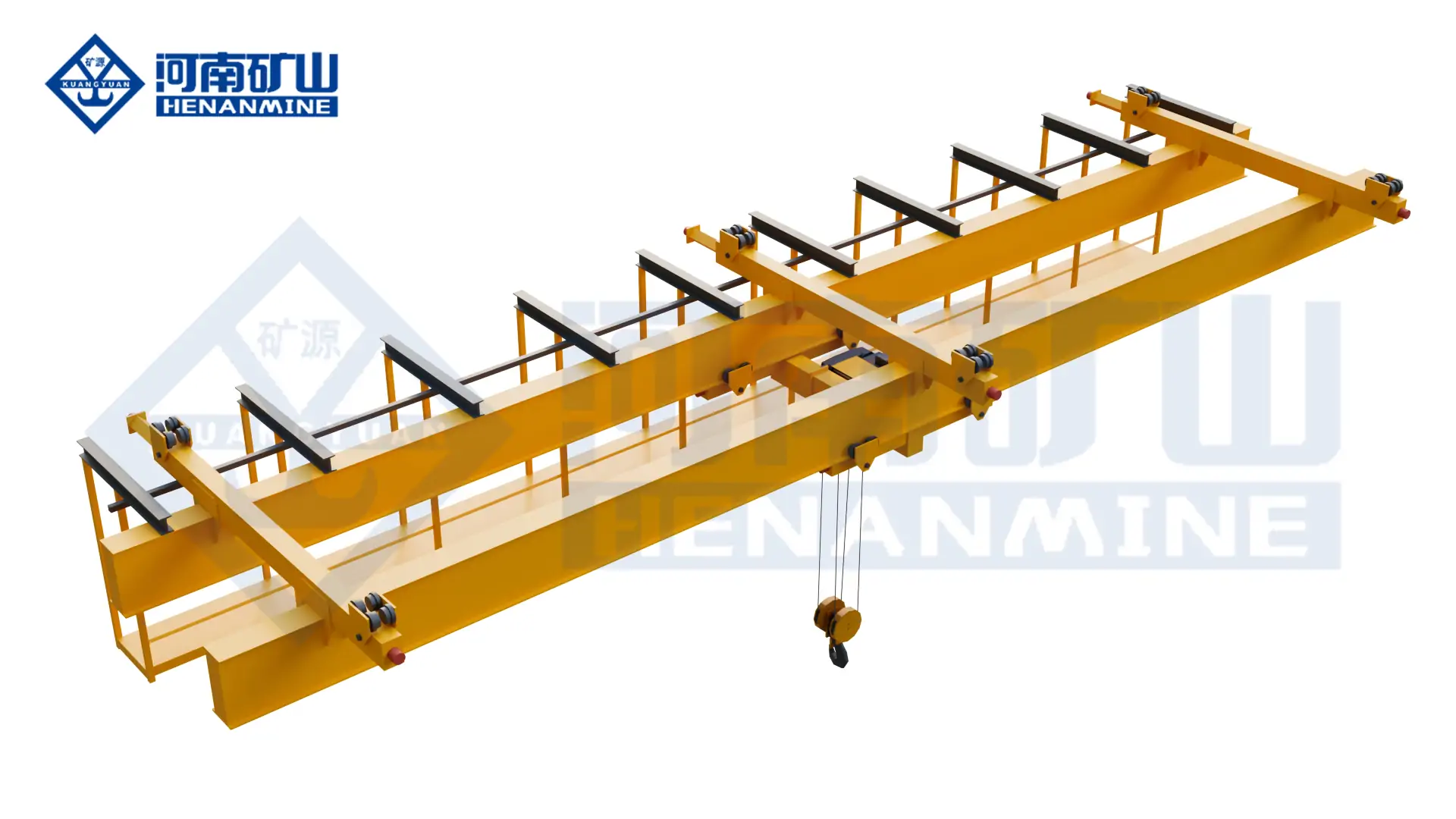
Engine Removal and Installation
Controlled vertical movement, accurate lateral positioning and a compatible engine cradle support disconnection, lowering, transfer and reinstallation without uncontrolled sway.
Landing-Gear Service
Load control and fine positioning help maintain component orientation during removal, overhaul support, replacement and alignment with approved fixtures.
Flight-Control and Airframe Parts
Flaps, rudders, elevators, fairings, doors and structural panels may require long spreaders, protected contact surfaces and several balanced support points.
Cabin and Interior Modules
Monorails, light suspension cranes or service hoists can move seats, monuments, galleys, test equipment and maintenance materials along defined routes.
Maintenance Docks and Tooling
The crane can reposition calibrated fixtures, engine stands, access-dock sections and maintenance equipment while preserving clear marked routes around the aircraft.
Overhead Maintenance Access
A purpose-engineered telescopic platform can provide stable access to upper fuselage, tail and wing areas when platform duty, personnel protection and emergency recovery are included in the system design.
Aircraft Hangar Crane vs. Aircraft Manufacturing Crane
| Project Factor | Aircraft Hangar Crane | Aircraft Manufacturing Crane |
|---|---|---|
| Primary Operation | Inspection, maintenance, repair, overhaul and component replacement | Part fabrication, subassembly, joining and production-line positioning |
| Operating Pattern | Variable work orders, aircraft types, bay positions and maintenance intervals | Defined stations, repeatable load families and production takt |
| Typical Equipment | Suspension bridges, service trolleys, engine hoists, monorails and teleplatforms | Assembly cranes, synchronized multi-hoist systems, process attachments and fixtures |
| Layout Priority | Flexible coverage around complete aircraft, doors, tails, wings, docks and vehicles | Accurate service to fixtures, assembly stations and defined production routes |
Facilities combining final assembly and maintenance can share structural principles, but the load cases, traffic plan, control modes and acceptance tests remain duty-specific. Production applications are covered separately in the aircraft manufacturing crane guide.
Aircraft Hangar Crane Selection Considerations
Aircraft Fleet and Work Scope
Aircraft models, parking positions, maintenance checks, removable components, approved procedures and future fleet changes define the required coverage.
Rated and Net Hook Load
The heaviest component, fixture, spreader, sling, powered attachment and credible center-of-gravity position are included in the load schedule.
Coverage and Hook Approach
Plan and elevation drawings verify service around the nose, wings, engines and tail, including door pockets, roof trusses, docks and parked equipment.
Motion Quality
Low-speed range, acceleration, braking, sway control, travel accuracy and radio-control ergonomics are defined for the most sensitive maintenance task.
Hangar Structure
Roof capacity, runway beams, support spacing, deflection, fatigue, connection details, seismic criteria and erection access govern the structural arrangement.
Maintenance Environment
Temperature, humidity, washing, coatings, lighting, fire systems, paint or solvent areas and required enclosure protection are documented by bay.
Aircraft Hangar Crane Configurations Compared
| Configuration | Suitable Hangar Duty | Operational Value | Critical Engineering Check |
|---|---|---|---|
| Single-Girder Suspension Crane | Engine accessories, tooling, cabin modules and general MRO loads | Low self-weight, clear floor and efficient coverage below roof steel | Roof reactions, hook approach, span and load path |
| Multi-Support Double-Girder Underhung Crane | Large hangars requiring long spans, broad coverage and higher service loads | Load distributed across several support lines with no floor columns | Support tolerances, girder deflection and load equalization |
| Top-Running Bridge Crane | Heavy engine, landing-gear, tooling and facility-maintenance loads | Robust lifting platform with defined runway support | Column locations, runway elevation, hook approach and wheel loads |
| Interlocking Suspension Crane Network | Multi-bay MRO with cross-bay transfer of hoists, trolleys or platforms | Flexible routing without duplicating every service unit in every bay | Bridge alignment, locking logic, transfer interlocks and safe states |
| Monorail or Dedicated Service Hoist | Repeatable engine route, component shop link or maintenance-equipment transfer | Simple controlled route and compact building interface | Route geometry, switches, curves, clearance and rescue access |
| Synchronized Multi-Hoist System | Long or flexible airframe parts, docks and special maintenance fixtures | Controlled load sharing, leveling and orientation at several points | Point loads, synchronization tolerance, fault response and recovery |
| Crane-Mounted Teleplatform | Upper-fuselage, wing and tail inspection or repair access | Wide elevated access from a movable overhead carrier | Personnel-lifting rules, mast stability, collision control and emergency lowering |
Published Multi-Support Hangar Crane Range
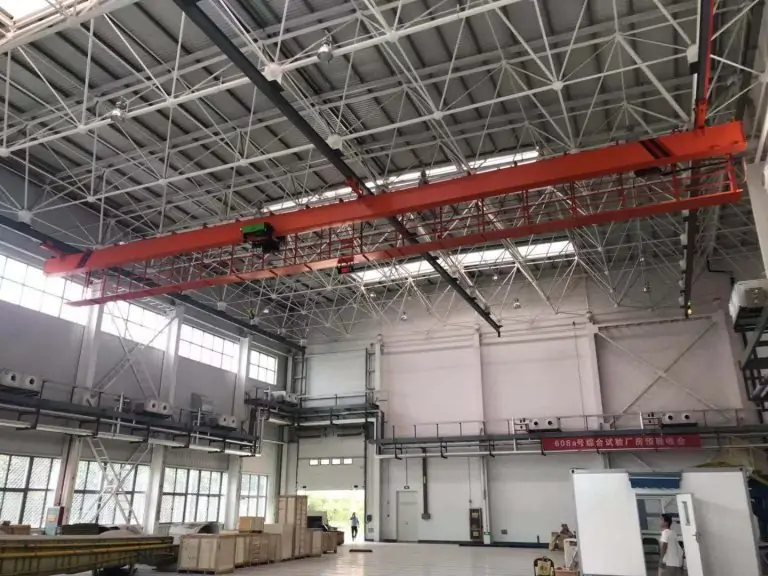
Henan Mine Crane publishes a multi-support double-girder underhung platform for aircraft manufacturing plants and aircraft maintenance hangars. The crane is suspended from several support rails to distribute reactions and preserve an unobstructed floor.
The ranges below define available product boundaries rather than one standard hangar model. Final ratings, motion speeds, number of supports, clearances and structural reactions are selected from the aircraft maintenance duty and verified building data.
| Published Parameter | Available Range | Hangar Project Input |
|---|---|---|
| Rated Capacity | 3–40 t or customized | Heaviest component plus all below-the-hook equipment |
| Span | 10–80 m or customized | Bay width, support grid, hangar door and tail clearance |
| Lifting Height | 6–30 m or customized | Aircraft geometry, maintenance stands and required service elevation |
| Working Class | A3–A5 or customized | Load spectrum, starts, travel, shifts and intended service life |
| Hoisting Speed | 0.5–16 m/min | Maintenance cycle and required low-speed positioning range |
| Trolley Travel Speed | 2–20 m/min | Approach zones, sway limits and traffic restrictions |
| Crane Travel Speed | 5–60 m/min | Runway length, zone speeds and stopping distance |
| Power Supply | 220–690 V, 50/60 Hz | Site voltage, earthing, available power and local electrical code |
| Published Protection Level | IP54 | Actual dust, moisture, washing and classified-area requirements |
Engine, Landing-Gear and Multi-Point Handling
Engine and landing-gear work requires a defined lifting method, not only a hook over the work area. The technical schedule identifies component mass, center of gravity, approved attachment points, fixture deadweight, extraction direction, required orientation and every temporary support state.
Variable-frequency motions provide controlled acceleration and low-speed adjustment. Load monitoring can identify overload or unequal load share. Where two or more hoists lift one component or fixture, encoder feedback, synchronization limits and a safe fault response keep the points within the permitted relative-height window.
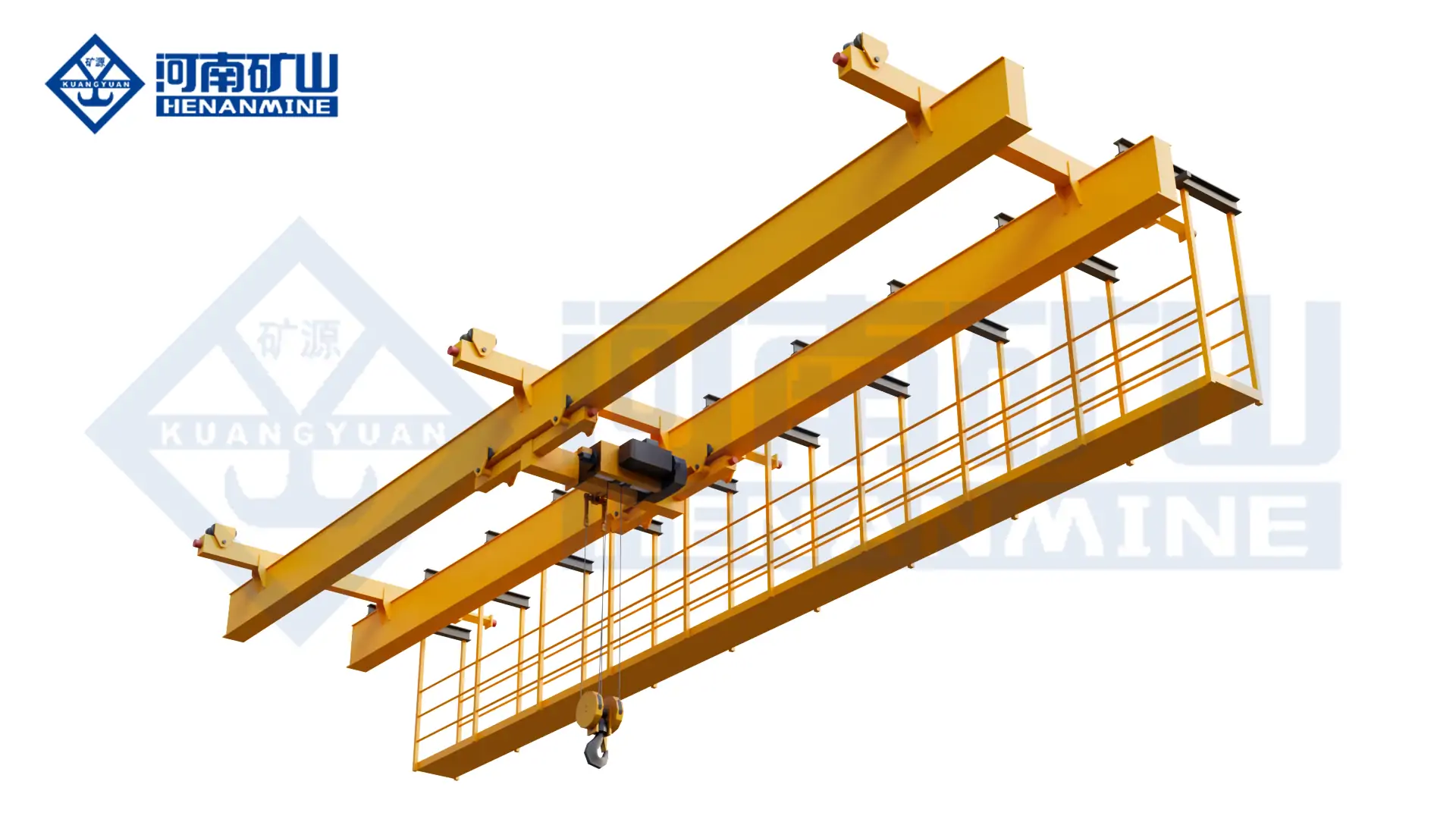
The aircraft multi-point lifting solution covers hangar maintenance, engine handling, landing-gear work and specialized maintenance tooling.
Approved fixture, spreader, sling geometry, positive engagement and protected contact surfaces.
Net hook load, point-load range, overload limit and center-of-gravity envelope.
Defined low speed, acceleration, braking, inching and permissible sway.
Representative load, fixture interface, clearance, positioning and recovery tests.
Service Trolleys, Teleplatforms and Interlocking Crane Networks
A large MRO facility can use several suspension bridges connected by controlled transfer points. A service trolley or telescopic platform moves along one bridge, the bridges align and lock, and the unit transfers into another bay. This architecture extends maintenance access without assigning a complete duplicate equipment package to every aircraft position.
Service Trolley
A hoist trolley supports engines, components and tooling. Capacity, hook approach, power transfer and bridge compatibility are coordinated across every approved route.
Telescopic Platform
A rigid telescopic mast can reduce platform sway and reach upper aircraft zones. Rated occupancy, tools, rescue, emergency lowering and personnel-lifting compliance form part of the design basis.
Bridge Locking and Transfer
Mechanical alignment, positive locking, position confirmation, motion inhibition and load-state logic prevent transfer until both bridge paths are safely connected.
Zoned Motion
Position monitoring can impose slow zones, no-go areas, height limits and defined parking positions around aircraft tails, doors, docks and other cranes.
Power and Communications
Busbars, festoons, cable management, radio control and data communications are arranged to avoid snagging and maintain service across transfer interfaces.
Maintenance and Rescue Access
Inspection platforms, isolation points, retrieval provisions and manual or powered recovery routes are included for bridges, hoists and personnel-access units.
Hangar Building, Door and Aircraft-Clearance Integration
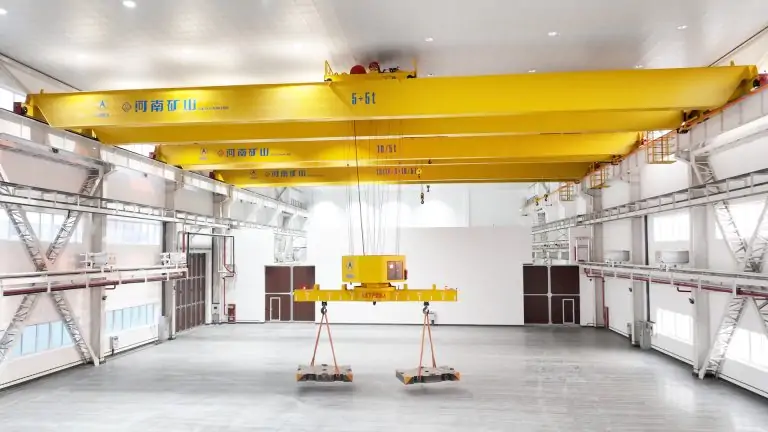
Hangar geometry is developed in plan and elevation using the aircraft envelope, towing route, maintenance docks, tail position, wing-tip clearance, hangar doors, roof trusses and all overhead services. The crane must reach the maintenance point without creating a conflict elsewhere in the bay.
The structural interface schedule states maximum and minimum vertical reactions, transverse and longitudinal forces, buffer loads, simultaneous crane positions, fatigue cycles, support tolerances, runway or roof deflection, seismic actions where applicable, and erection loads. Existing hangars require verified drawings and a condition assessment before support capacity is accepted.
Lighting, sprinklers, smoke extraction, ventilation ducts, door drives, antennas and maintenance walkways are included in the coordinated model. Isolation access and component-removal routes remain available after the aircraft and docking system occupy the bay.
Aircraft Protection, Safety Functions and Acceptance
The control philosophy links each motion to the aircraft protection plan and maintenance method. Safety functions are selected from the risk assessment, destination regulations, crane type and any personnel-lifting duty.
Protective Functions
Overload and overtravel protection, emergency stop, motion limits, anti-collision, restricted zones, warning devices, brake supervision where specified and safe electrical isolation.
Aircraft Surface Protection
Low-sway travel, padded or approved attachments, controlled approach speed, protected hooks, positive fixture locking and exclusion of loose objects from lifting equipment.
Factory Acceptance Test
Mechanisms, controls, alarms, limits, interfaces, simulated faults, load-monitoring functions, synchronized motion and contracted document hold points.
Site Acceptance Test
Runway geometry, travel clearances, electrification, rated and proof loads, zone functions, representative routes, accuracy, recovery, training and handover records.
Maintenance-Task Validation
Approved fixture engagement, engine or component clearance, low-speed placement, route access and defined abnormal-state recovery are verified with a representative load.
Lifecycle Records
Inspection schedules, lifting-accessory records, calibration where required, rope and brake checks, critical spares, software backups, maintenance logs and change control.
Codes and Standards
The purchase specification identifies the governing jurisdiction and selected design basis. Applicable references can include ISO 4301-1 for crane classification, ISO 9927-1 for inspections, EN 15011 for bridge and gantry cranes, ASME B30.2 for applicable top-running cranes, ASME B30.17 for applicable underhung cranes and monorails, OSHA 1910.179 for covered United States installations, and IEC 60079 where a formally classified explosive atmosphere exists. Personnel-lifting platforms require a separate compliance and risk-assessment route.
Wash Areas, Paint Bays and Classified Hangar Zones
A general maintenance hangar does not automatically require explosion-protected construction. Paint, solvent, fuel-system or battery work may create a classified zone only after the facility’s hazardous-area study defines the substance, zone or division, gas or vapor group, temperature class, ventilation basis and equipment category.
Where classification is confirmed, motors, brakes, enclosures, controls, cable systems, limit devices and operating procedures are selected for the declared environment. A crane crossing classified and unclassified bays requires clear equipment boundaries and an approved operating philosophy.
Wash areas and humid coastal hangars can require higher enclosure protection, corrosion-resistant components, compatible coatings, drainage control and a revised inspection schedule. Ambient temperature, altitude and outdoor exposure at the hangar door are included in the equipment data sheet.
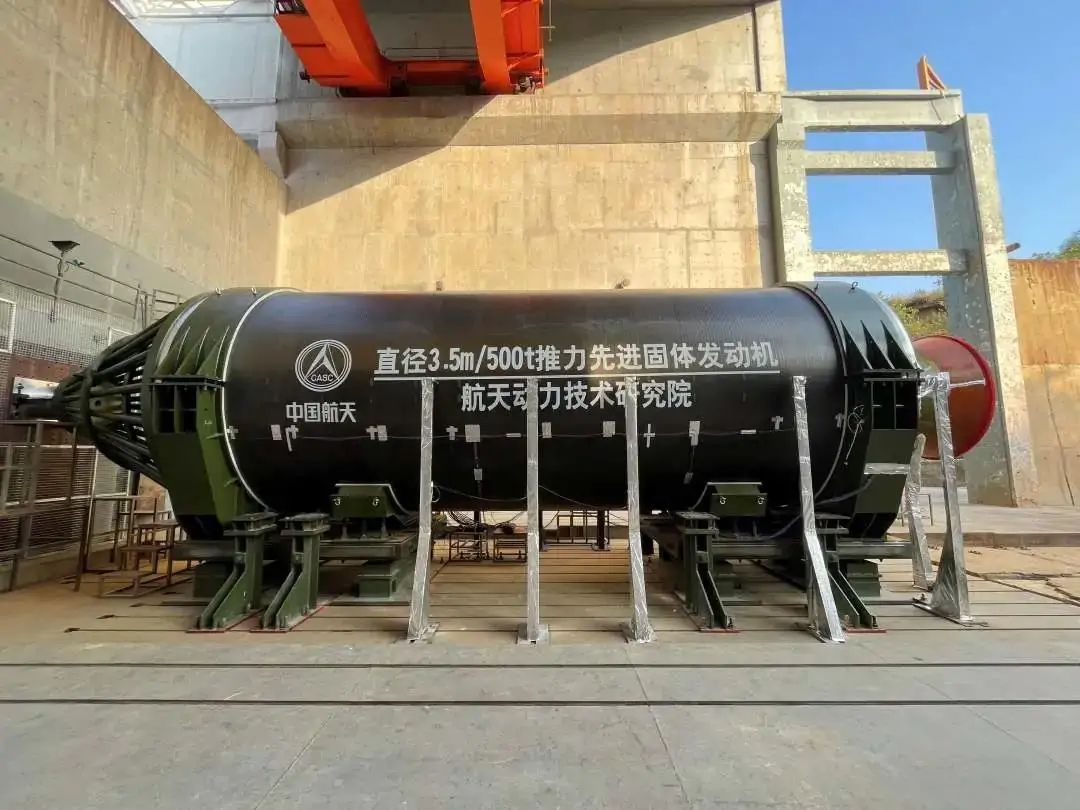
Published Aircraft MRO System Reference
Subang Airport Hangar 3, Malaysia
A public project announcement dated 6 June 2025 describes an integrated MRO crane package for Hangar 3 at the Subang Airport IVP Complex. The announced supply includes two 500 kg teleplatform units, five suspension crane bridges, two service trolleys rated up to 10 t, crane runways and power-supply lines. Bridge latching mechanisms allow the maintenance units to transfer across bays.
Overhead coverage distributed across the MRO work area.
Elevated aircraft access carried by the crane network.
Component and tooling lifting across approved routes.
Bridge locking connects service routes between hangar sections.
Public industry reference: Subang Airport IVP Complex Hangar 3 project announcement, 2025. The reference illustrates MRO system architecture and is not a Henan Mine Crane delivery record.
Henan Mine Crane Aerospace Precision-Handling Experience
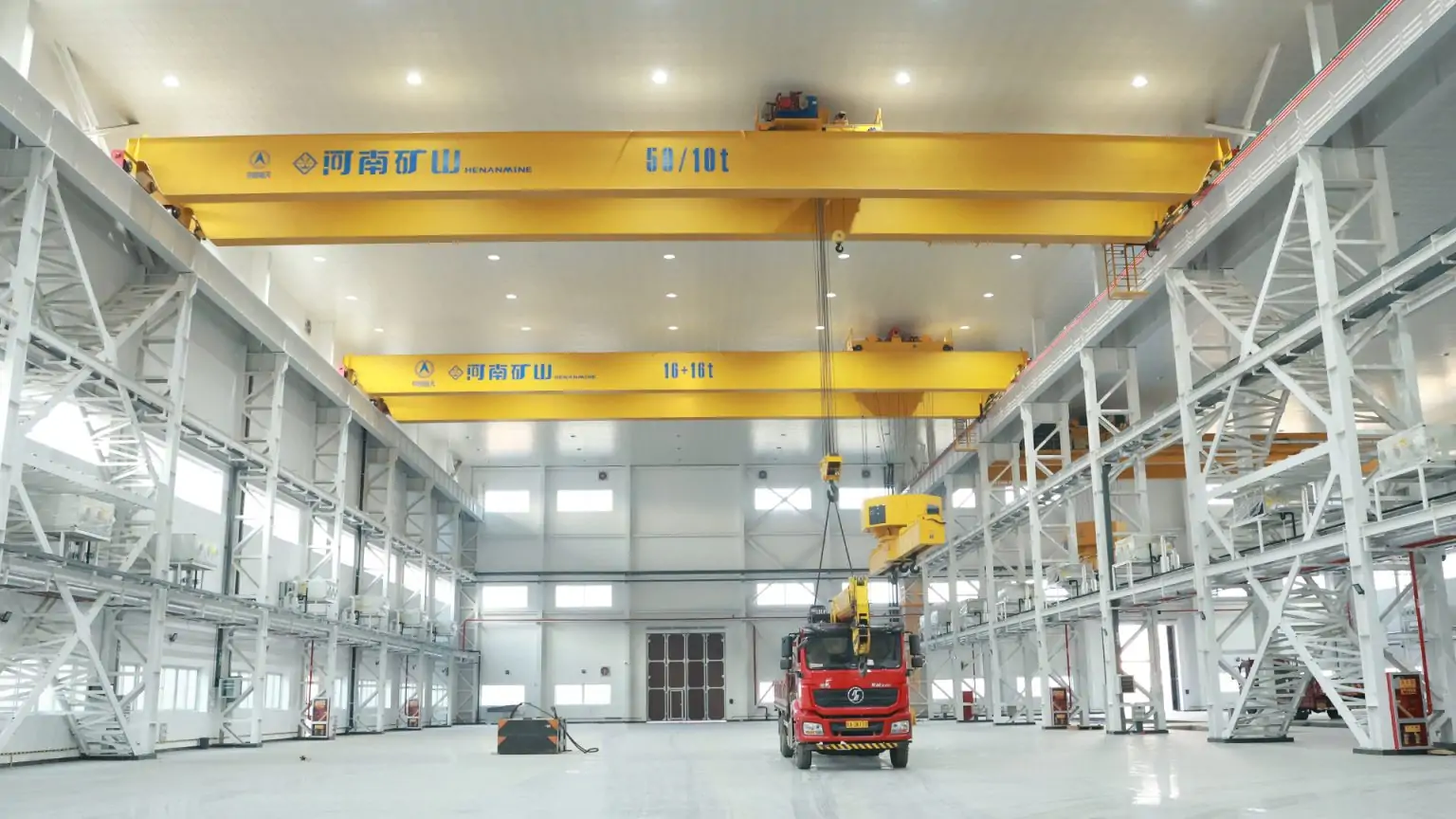
24 Equipment Sets for an Aerospace Research Institute
Henan Mine Crane reports delivering 24 equipment sets to an aerospace research institute, including six lower-rotating girder bridge cranes placed into operation. The published application covers precision transfer of aerospace power components and structural parts.
The equipment uses PLC and inverter closed-loop vector control, remote, manual and tablet operating modes, and a servo-controlled attachment with extension and rotation. Published performance includes positioning accuracy of ±2 mm and attachment rotation accuracy of ±0.5° for the project configuration.
The delivery passed acceptance by the Xi’an Institute of Special Equipment Inspection and Testing. This record demonstrates adjacent aerospace precision-handling capability; an aircraft MRO hangar system is engineered from its separate fleet, building and maintenance requirements.
Aircraft Hangar Crane Price and Budget Scope
Public online prices reviewed in 2026 demonstrate the large difference between a bridge kit, a complete freestanding crane and an integrated aircraft-hangar MRO system. A hangar quotation is developed only after the load schedule, coverage, building interface, control functions and contracted services are defined.
| Public Market Reference | Published Price | Supply Level | Scope Boundary |
|---|---|---|---|
| 2 t Bridge Crane Kit | US$13,830.51 | Gilmore-Kramer online component listing | A configurable bridge kit requiring span and running arrangement; not a complete hangar installation |
| 5 t Crane Kit, 20 ft Span | US$22,384–24,322 | Starke 2026 price-book configurations | Listed kit price varies by festoon, traveling pendant or radio package; runway, erection and hangar integration are separate |
| 2 t Two-Cell Freestanding Bridge System | US$73,487.30 | Listed 20 ft × 40 ft-per-cell system | Complete commercial configuration; aircraft fixtures, local works and MRO control functions remain separate |
| 7.5 t Two-Cell Freestanding Bridge System | US$94,750.80 | Listed 20 ft × 40 ft-per-cell system | Fixed retail geometry; aircraft clearances, attachment and acceptance scope are not included |
| 3 t Three-Cell Freestanding Bridge System | US$114,548.05 | Listed 30 ft × 90 ft-per-cell system | Complete freestanding commercial system; site, freight and aircraft-specific requirements require confirmation |
| Aircraft Hangar Underhung or Bridge Crane | Project-specific RFQ | Engineered crane, runway or roof interface and controls | Price follows span, lift, capacity, support structure, duty, destination and installation boundary |
| Multi-Bridge, Teleplatform or Synchronized MRO System | Project-specific RFQ | Integrated hangar process system | Requires transfer logic, personnel-access scope, zoning, aircraft interfaces and project acceptance matrix |
Main Cost Drivers
Bay dimensions, span, lift, support lines, runway length, headroom and building reinforcement.
Capacity, number of hoists, load monitoring, synchronization, attachments and service trolleys.
Interlocking bridges, transfer routes, teleplatforms, restricted zones and aircraft-protection logic.
Freight, erection, commissioning, load tests, representative-task validation, training and spares.
Engineering and Procurement Deliverables
Design Basis
Aircraft fleet, maintenance tasks, loads, fixtures, duty, environment, standards, operating modes and supply exclusions.
General Arrangement
Plan, elevation, aircraft envelope, hook approaches, transfer routes, parking positions, maintenance access and electrification.
Structural Interface
Support coordinates, vertical and horizontal reactions, buffers, simultaneous positions, tolerances, deflection and erection loads.
Control Description
Speed modes, interlocks, zones, anti-collision, bridge transfer, load monitoring, alarms, communications and recovery logic.
Inspection and Test Plan
Manufacturing records, mechanism tests, load tests, safety-function checks, transfer tests, task validation and document hold points.
Commercial Schedule
Price, Incoterm, milestones, delivery, site services, acceptance, documentation, training, spares, warranty and exclusions.
Aircraft Hangar Crane RFQ Data
| RFQ Item | Information Required | Engineering Use |
|---|---|---|
| Aircraft and Tasks | Aircraft types, parking coordinates, maintenance checks and planned lift sequence | Coverage, routes, zones and operating modes |
| Load Schedule | Component masses, dimensions, centers of gravity, lifting points and fixtures | Capacity, hoist arrangement and below-the-hook design |
| Hangar Drawings | Plans, sections, doors, roof steel, columns, docks, services and floor routes | Span, lift, hook approach, support layout and collision study |
| Structural Data | Permitted reactions, support spacing, deflection and existing-building condition | Runway, suspension and reinforcement concept |
| Performance | Duty, motions, speed ranges, synchronization, accuracy and cycle expectations | Mechanism class, drives, feedback and controls |
| Site Conditions | Power, temperature, humidity, altitude, corrosion, dust and hazardous-area classification | Electrical and environmental configuration |
| Compliance and Supply | Destination, governing code, documentation language, Incoterm and site-service scope | Conformity route, quotation boundary and project schedule |
A preliminary layout and budget can be prepared from an aircraft envelope, hangar plan, maximum service load and required coverage. A firm quotation requires verified structural interfaces, detailed load cases, agreed controls, destination requirements and a defined installation and acceptance boundary.
Aircraft Hangar Crane FAQ
Which crane type is suitable for a large clear-floor hangar?
A multi-support underhung crane is frequently considered where roof or runway support can carry the required load and floor columns would obstruct aircraft or maintenance traffic. A top-running bridge crane remains practical when dedicated columns and runways are available.
Can one crane serve several hangar bays?
Yes. Interlocking suspension bridges can transfer compatible service trolleys or platforms between bays. Bridge alignment, locking, power continuity, transfer interlocks and route clearances must be engineered as one system.
How is capacity selected for aircraft engine handling?
Capacity includes the heaviest approved engine or component, cradle, spreader, slings, attachments and applicable dynamic or eccentric load conditions. The maintenance method also defines hook approach, low speed and required orientation.
Can an aircraft hangar crane carry personnel?
Only a purpose-engineered personnel-access system should perform that duty. A teleplatform requires its own rated load, fall protection, control hierarchy, collision prevention, emergency lowering, rescue plan and compliance assessment. A standard cargo hook does not establish personnel-lifting suitability.
Can a crane be installed in an existing aircraft hangar?
Yes, subject to verified building geometry and structural capacity. Retrofit engineering covers roof or column condition, reactions, reinforcement, access for erection, electrical supply, fire systems and continuing hangar operations.
Does every hangar require an explosion-proof crane?
No. Explosion-protected equipment is selected from the formal hazardous-area classification for a specific paint, solvent, fuel or process zone. The general aviation application alone does not determine explosion-protection requirements.
What determines aircraft hangar crane lead time?
Engineering approval, structural coordination, customized steelwork, hoists and controls, teleplatform or transfer equipment, conformity documentation, factory testing, ocean freight, site readiness and commissioning all affect the schedule.
Related Aircraft Hangar Crane Products
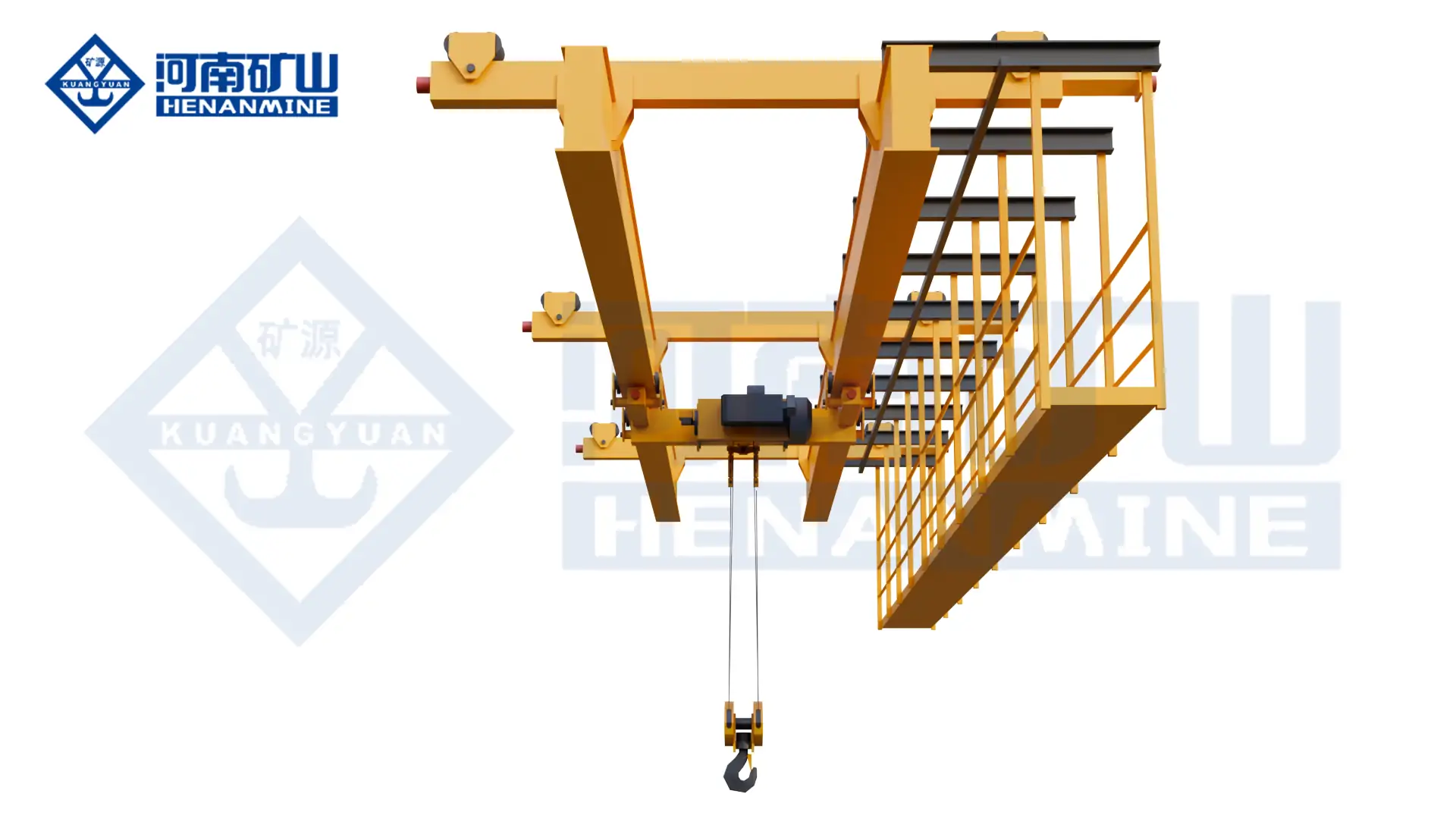
Multi-Support Double-Girder Underhung Crane
Long-span roof-supported platform for wide MRO bays and unobstructed aircraft access.
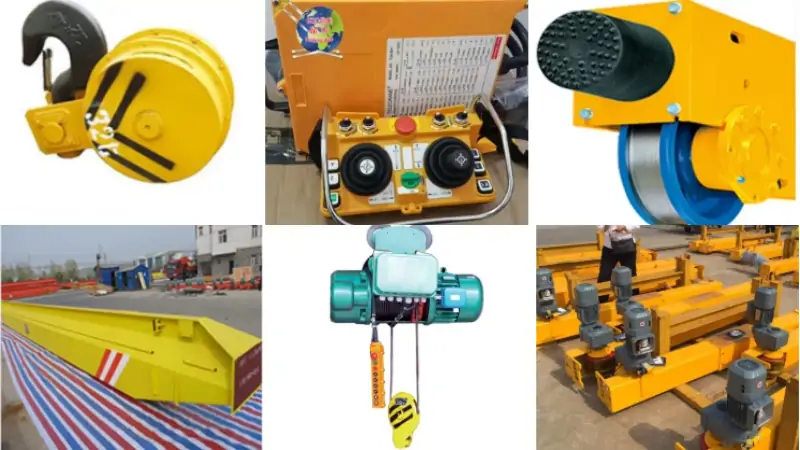
Single-Girder Suspension Crane
Clear-floor coverage for engines, components, tooling and general hangar maintenance.
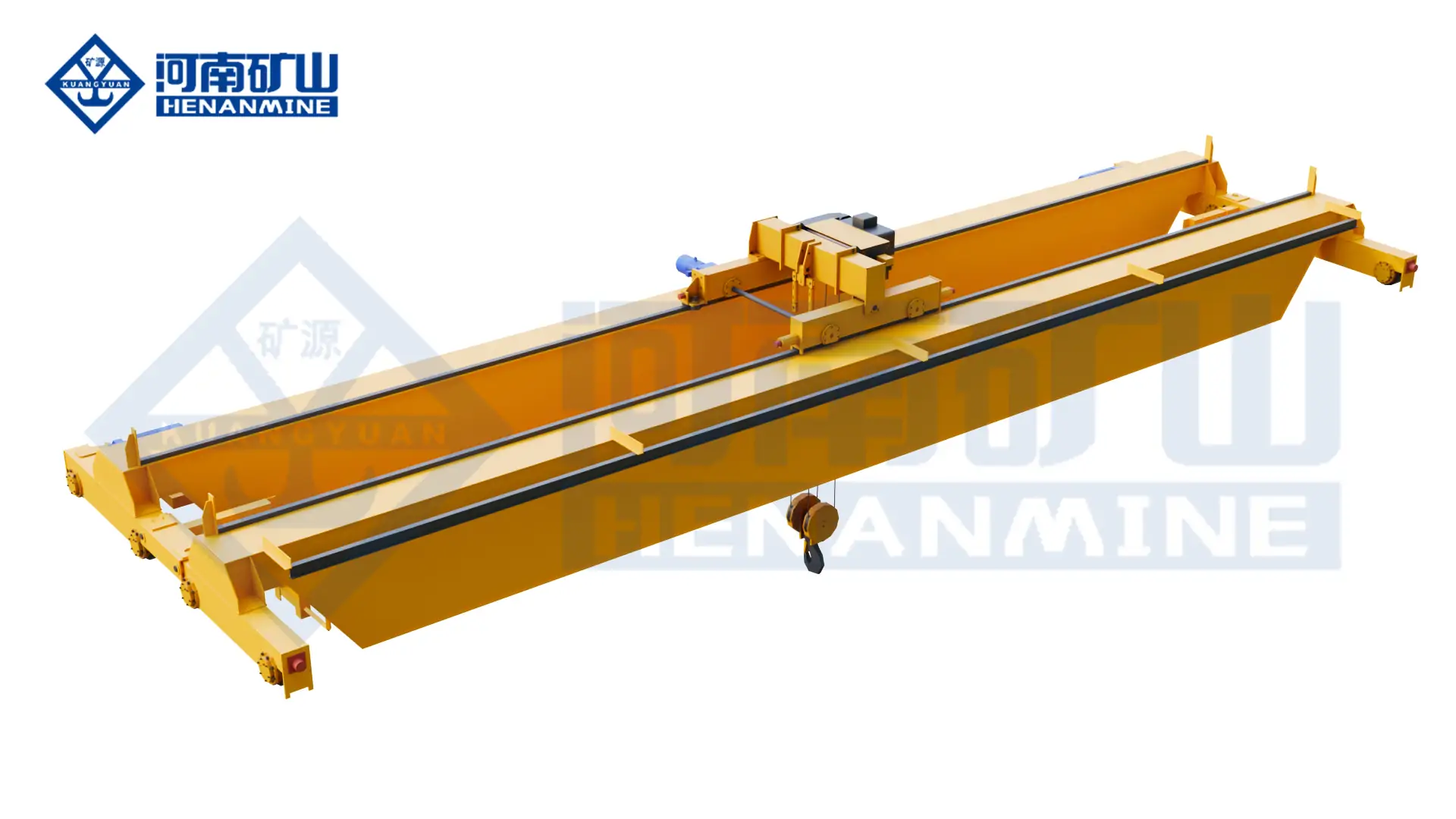
Double-Girder Bridge Crane
Robust crane platform for heavy engines, landing gear, fixtures and facility equipment.
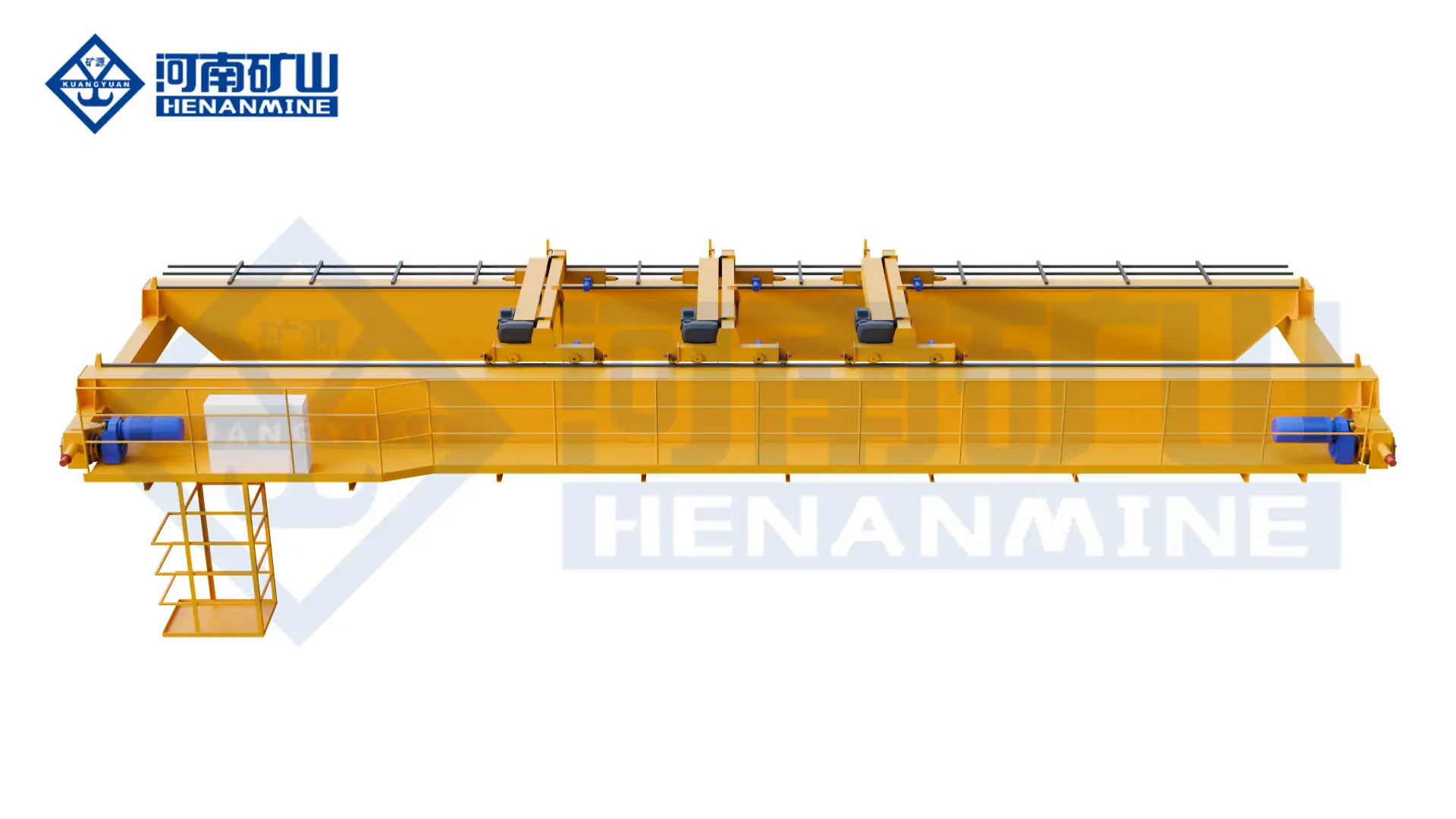
Intelligent Electric-Hoist Crane
Low-headroom lifting with controlled motion and digital monitoring options.
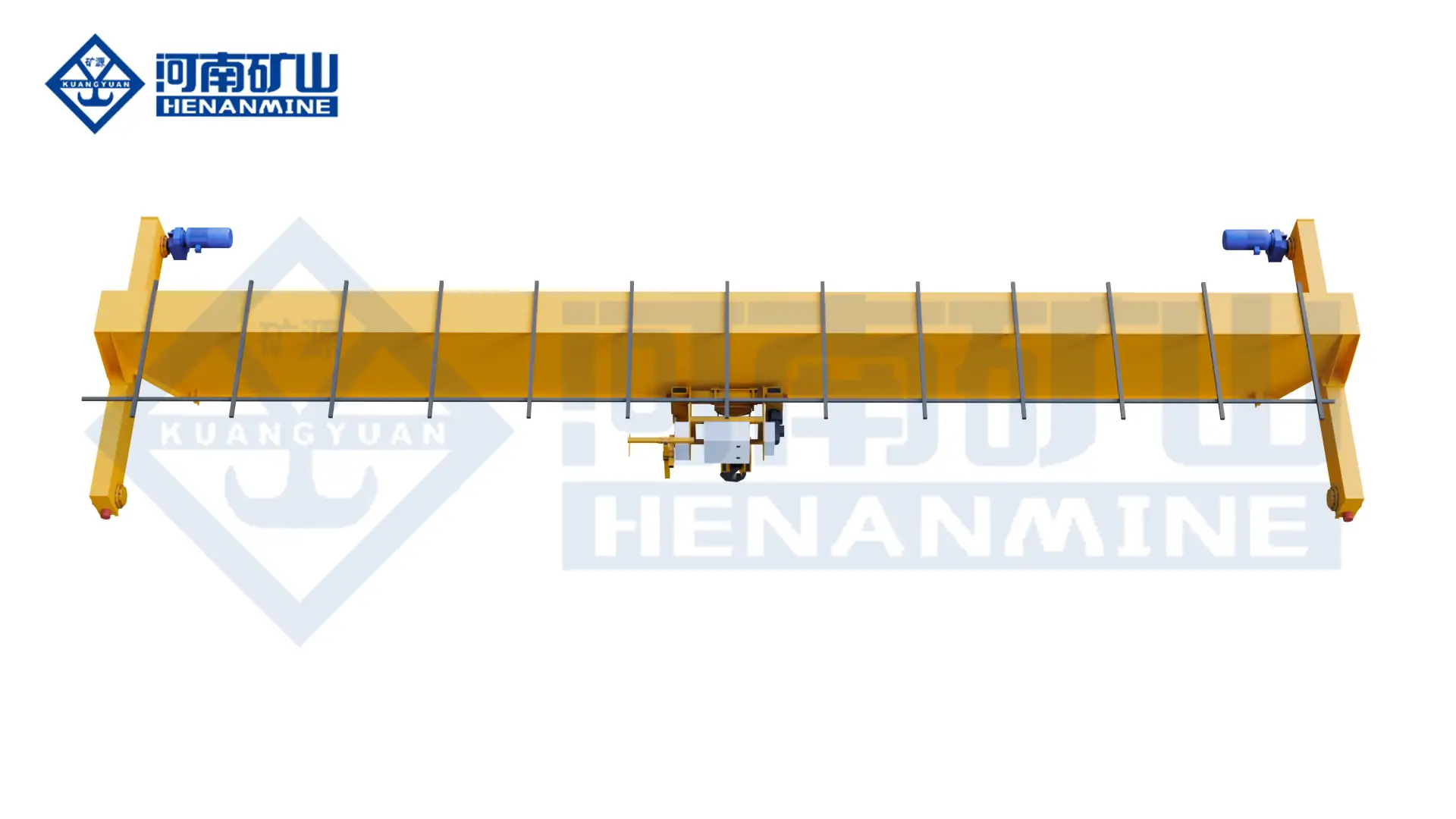
European-Style Single-Girder Crane
Compact workshop crane for parts, maintenance tooling and supporting equipment.
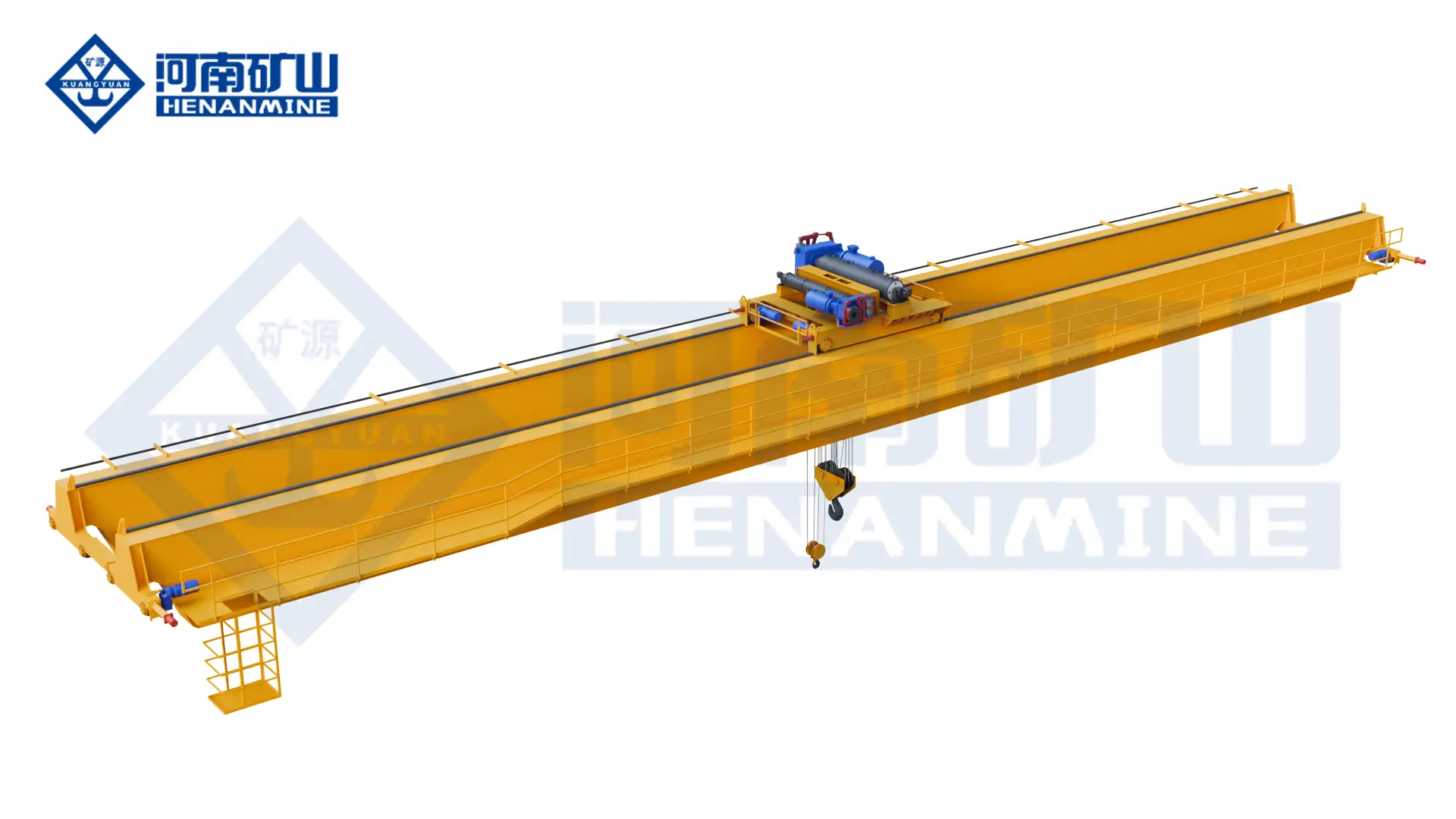
Explosion-Proof Overhead Crane
Protected configuration for a formally classified paint, solvent or process zone.
Technical review: Henan Mine Crane Engineering
Last reviewed: 2026
Request an Aircraft Hangar Crane Quote
Submit the aircraft fleet, maintenance tasks, maximum service load, hangar drawings, required coverage, site power, destination and installation scope for an engineered crane proposal.