Engineering · Manufacturing · Project support
info@hnksglobal.comWhatsApp +86 18836207779 ↗

Blog

  • Importing an Industrial Gantry Crane: Project Costs to Clarify Early

    Importing an Industrial Gantry Crane: Project Costs to Clarify Early

    Technical guide

    Importing an Industrial Gantry Crane: Project Costs to Clarify Early

    An equipment quotation may leave several destination costs outside its boundary. Identify transport, supporting works, electrical supply, installation and acceptance responsibilities before setting a budget for an imported gantry crane project.
    Henan Mine CraneTechnical guide · Updated 2026Crane selection, project scope and operating requirements
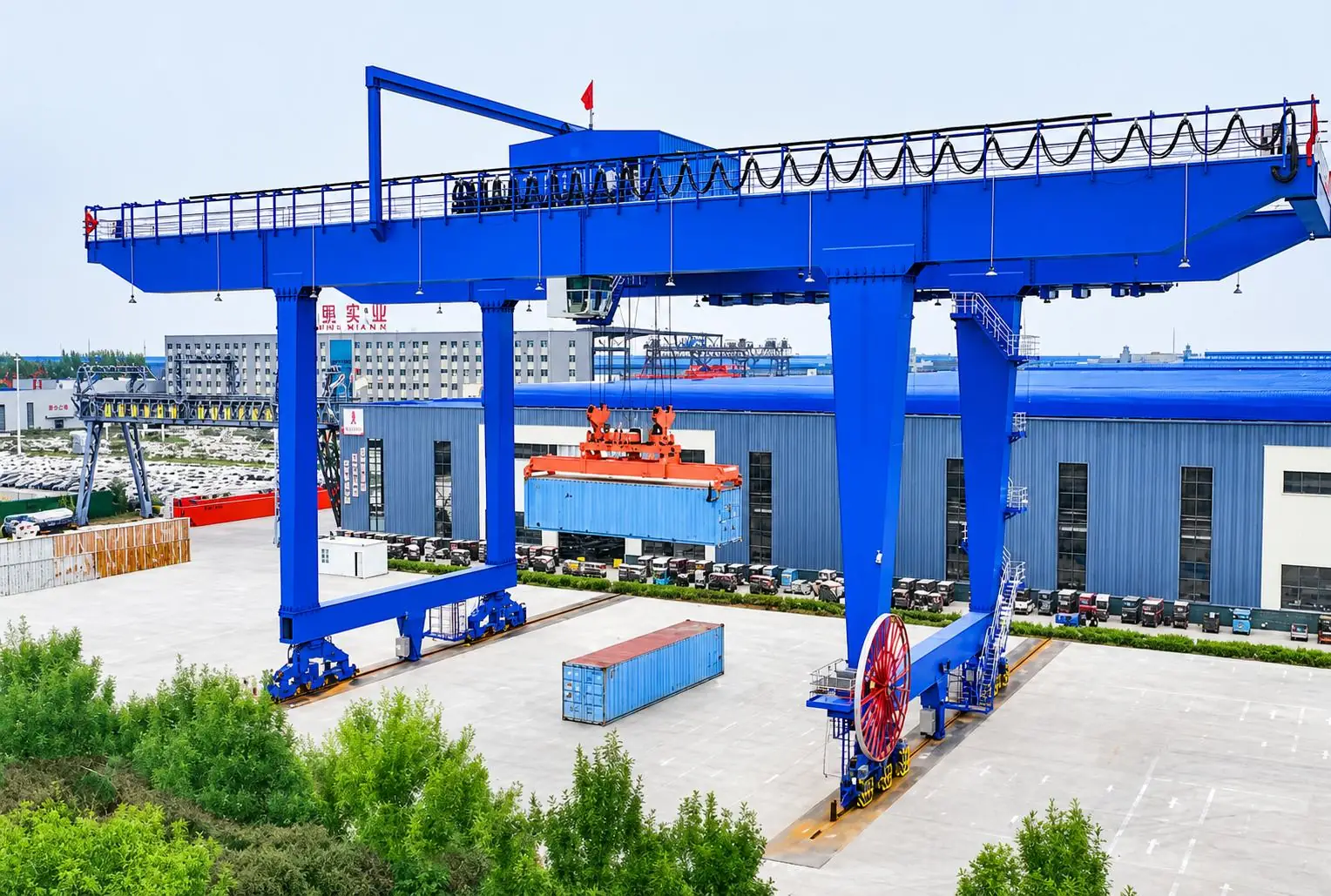
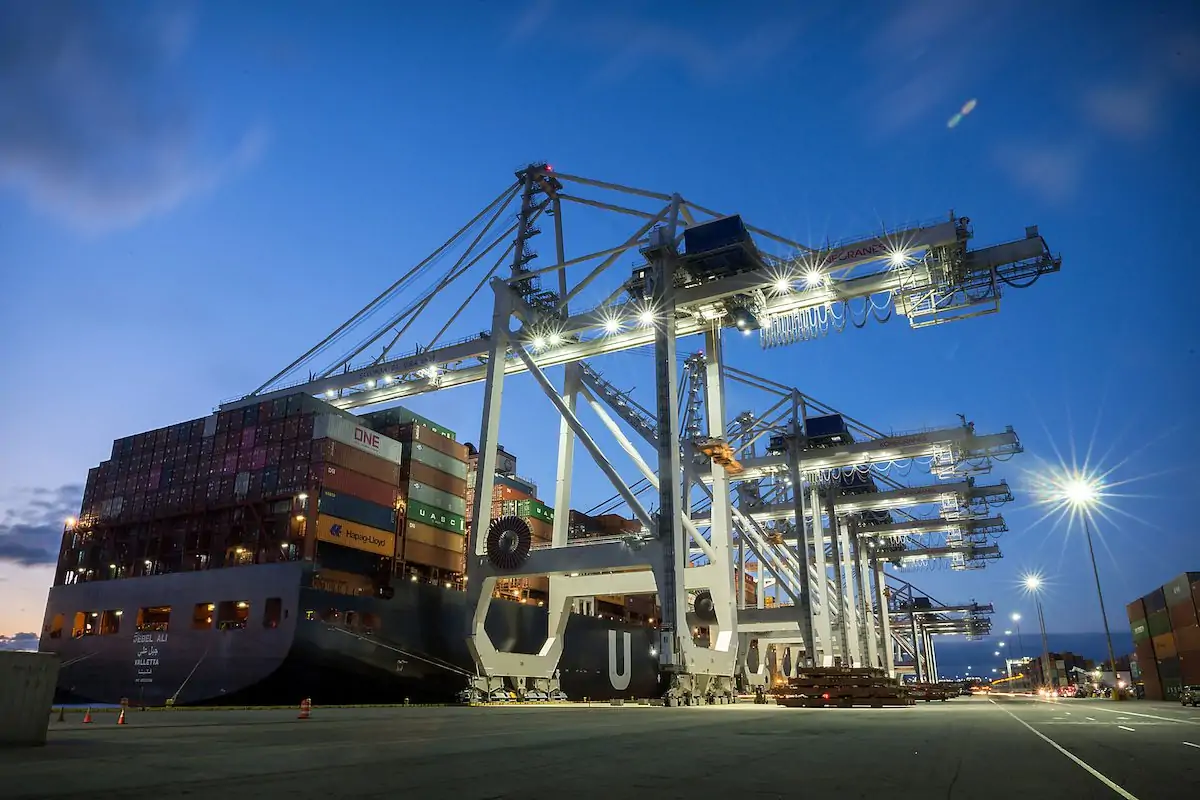
    Henan Mine Crane Ship-To-Shore Crane (STS)
    Henan Mine Crane Ship-To-Shore Crane (STS)
    Project planning notes

    Key points for this crane project.

    1. Hidden Engineering And Customization Costs
    2. Hidden Shipping And Logistics Expenses
    3. Hidden Installation And Commissioning Costs
    Read the technical guide

    Hidden Engineering And Customization Costs

    The application scenarios of industrial Gantry Crane are very different. Different industries and working conditions have very different requirements for equipment, and there are almost no completely common standardized products. Buyers often need to customize the design of Gantry Crane according to their own core requirements such as lifting weight, span, working environment, and operating frequency, and this process can easily generate additional costs.

    On the one hand, design changes will directly increase costs. Some buyers failed to clarify all the requirements during the initial communication, or adjusted the parameters after the design plan was determined, such as modifying the lifting height, adjusting the spacing of the outriggers, and adding special lifting functions. Suppliers need to re-perform structural calculations, drawing designs, and even replace core components. These additional design fees and material loss fees are often not included in the initial quotation.

    On the other hand, special materials and technical requirements will drive up costs. If the operating environment has problems such as corrosion and high-intensity wear, special configurations such as special steel, anticorrosive coatings, and explosion-proof motors are required. If it needs to be matched with automation control systems, intelligent monitoring equipment, etc., additional technology research and development and integration costs will also be incurred. In addition, some customized requirements require suppliers to coordinate the upstream and downstream supply chains and purchase special parts. This part of the premium will also be passed on to the purchaser, becoming an important part of the hidden cost.

    Hidden Shipping And Logistics Expenses

    Cross-border transportation from China to all parts of the world is a link that cannot be ignored in the procurement of Gantry Crane. Gantry Crane is a large-scale heavy-duty equipment. Its logistics cost is much higher than that of ordinary goods, and there are many hidden costs that can easily be ignored. First of all, surcharges for the transportation of oversized cargo are one of the main expenses. Gantry Crane's main girder, outriggers and other components are large in size and heavy in weight. They are oversized goods. Special transportation vehicles and special containers are required. Some sections of the road also need to apply for over-limit transportation permits. These fees are not included in the initial quotation of the equipment.

    Secondly, the cost of port operations and inland transportation is easily underestimated. After the goods arrive at the port of destination, they need to pay port loading and unloading fees, storage fees, customs declaration fees, etc. If the purchaser's factory area is far from the port, inland transportation also needs to consider factors such as road conditions and transportation timeliness, which will generate additional transportation costs. In addition, professional packaging and logistics planning costs cannot be ignored. In order to avoid bumps and corrosion of equipment during transportation, professional packaging with moisture-proof, shock-proof and anti-corrosion is required, and some precision parts need to be individually protected. At the same time, cross-border logistics involves multiple links such as customs declaration, customs clearance, and insurance.

    Hidden Installation And Commissioning Costs

    The delivery of gantry Crane does not mean the end of the project. Professional installation and commissioning are the key to ensuring the normal operation of the equipment, and the cost of this link is often ignored by the purchaser. First of all, basic preparation costs are the primary expenditure. Henan Mine Crane manufactured Gantry Crane has high requirements for the foundation of the installation site. Foundation pouring and track laying need to be carried out according to equipment parameters, including concrete pouring, steel bar layout, track pressure plate installation, embedded bolt fixing, etc. Some sites also need to be ground leveled and reinforced. This part of the infrastructure cost may be as high as tens of thousands of yuan, or even more than part of the cost of the equipment itself.

    Secondly, the labor and technical costs of installation and commissioning are higher. The installation of Gantry Crane requires a professional technical team to operate, which involves component assembly, electrical circuit connection, equipment commissioning and other links. If the purchaser lacks professional installers, it is necessary to hire a third-party team, which will generate additional labor costs. In addition, after the installation is completed, a comprehensive performance test is required, including lifting test, operation test, safety device test, etc., to ensure that the equipment meets the use standards. At the same time, in order to ensure that operators standardize the use of equipment, suppliers usually provide operation training. If this part of the training cost is not clearly marked in the contract, it will also become a hidden cost.

    Hidden Maintenance And Spare Parts Costs

    The service life of Henan Mine Crane manufactured Gantry Crane is as long as decades, and the cost of maintenance and spare parts in the later stage is an important part of long-term operating expenses, but it is often ignored by buyers in the initial procurement. First, component quality directly affects maintenance costs. If the purchased Gantry Crane core components are of poor quality, they are prone to failure in the later stage and require frequent maintenance, which will not only increase maintenance costs, but also cause equipment downtime and affect production progress. In order to reduce the initial quotation, some suppliers choose low-profile or non-standard parts, which may seem to save costs in the short term, but will significantly increase maintenance expenses in the long run.

    Secondly, the availability and price of spare parts are also key factors. Some customized Gantry Crane spare parts need to be purchased from the original factory in China. Not only is the procurement cycle long, but additional costs such as cross-border transportation fees and customs duties also need to be paid. If the supplier's after-sales system is not perfect and the supply of spare parts is not timely, the equipment may be idle for a long time and cause greater economic losses. In addition, the frequency of maintenance and the cost of professional services cannot be ignored. Gantry Crane needs regular maintenance and overhaul, including lubrication, component inspection, replacement of worn parts, etc. If a professional maintenance team is lacking, a third-party maintenance organization needs to be hired to generate additional service costs.

    Hidden Certification And Compliance Costs

    Gantry Crane purchased from China needs to comply with the relevant regulations of the destination.

    Secondly, the cost of testing and documentation cannot be ignored. In order to obtain relevant certifications, it is necessary to entrust a third-party organization to conduct equipment testing, including safety performance testing, material testing, electrical performance testing, etc.

    How To Calculate The Real Gantry Crane Cost

    To accurately control procurement costs, the core is to introduce the concept of total cost of ownership and get rid of the misunderstanding of focusing only on the initial quotation.

    It is recommended that the purchaser clearly request detailed cost details when communicating with the supplier, and include all possible expenses in the contract to avoid vague terms. At the same time, it can be combined with the service life of the equipment, operating frequency, maintenance costs and other factors to make long-term cost calculations, and compare the total cost of ownership of different suppliers, rather than simply comparing the initial quotation, so as to make a more rational procurement decision.

    How to Avoid Hidden Costs When Buying A Gantry Crane

    The key to avoiding hidden costs lies in choosing a reliable manufacturer and doing a good job of pre-planning and communication. Give priority to manufacturers with many years of Henan Mine Crane manufactured Gantry Crane production experience, a sound quality control system and an after-sales system, avoid choosing unqualified, small-scale suppliers, and reduce risks from the source.

    Secondly, before signing the contract, it is necessary to clarify all requirements and cost details. Communicate in detail the customized parameters, technical requirements, and service scope of the equipment, and require suppliers to provide all-inclusive quotations including equipment procurement, transportation, installation, commissioning, maintenance, spare parts, etc., and clarify the bearers of various costs to avoid disputes in the later stage. At the same time, it is necessary to confirm the supplier's after-sales support policy, including spare parts supply cycle, maintenance service response time, technical training, etc., to ensure that later operations are guaranteed.

    Henan Mine Crane

    Purchasing industrial Gantry Crane from China, the initial quotation is by no means the final cost, and the hidden costs of customization, transportation, installation, etc. can easily drive up the total investment. The simple pursuit of low prices can easily lead to budget overruns, equipment failures and other problems. Buyers need to abandon the misunderstanding of low prices, comprehensively evaluate the total cost of ownership, and establish a value-first procurement concept. Henan Mine Crane Factory has been deeply engaged in the field of Gantry Crane customization for many years, has a perfect quality control and after-sales system, and can provide transparent quotation and full-process service support. We accurately match the needs of various working conditions, escort the whole process from design to operation and maintenance, help you avoid hidden costs, achieve cost-effective procurement, and help enterprises operate efficiently.

    Discuss the crane arrangement for your project.

    An equipment quotation may leave several destination costs outside its boundary. Identify transport, supporting works, electrical supply, installation and acceptance responsibilities before setting a budget for an imported gantry crane project. Share the load, available drawings, working cycle and site conditions with Henan Mine Crane so the required configuration and supply boundary can be discussed.

    Related crane configurations

    Ship-To-Shore Crane (STS)

    View product parameters
    Lifting capacity: 40-65 80-120 tBoom outreach: 40-72 mWorking class: A8

    Transfer containers between ship and quay with an STS crane selected for the berth and vessel envelope. Define the lifting-appliance arrangement, outreach, rail position and handling cycle.

    Updated 2026 · Henan Mine Crane
  • Jib Crane Types: Compare Local Coverage and Supporting Structures

    Jib Crane Types: Compare Local Coverage and Supporting Structures

    Technical guide

    Jib Crane Types: Compare Local Coverage and Supporting Structures

    Jib arrangements differ in how they support the load and cover the work area. Mark the required lifting positions and rotation envelope before comparing column, wall and travelling support concepts.

    Henan Mine CraneTechnical guide · Updated 2026Crane selection, project scope and operating requirements
    Jib Crane Types: Compare Local Coverage and Supporting Structures
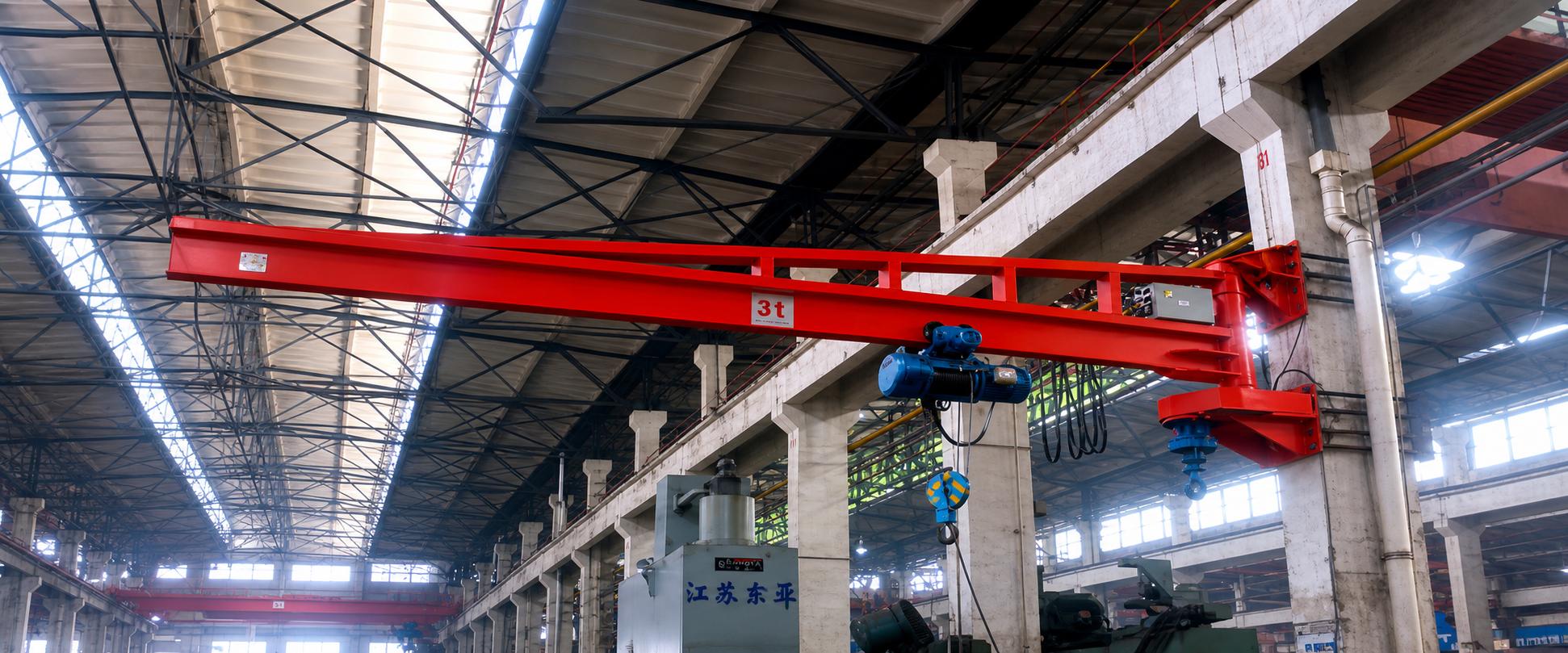
    Henan Mine Crane lifting equipment
    Project planning notes

    Key points for this crane project.

    1. What Is a Jib Crane?
    2. Floor Mounted Jib Crane: A Heavy-Duty Industrial
    3. Wall Mounted Jib Crane: Space-Saving Lifting
    Read the technical guide

    What Is a Jib Crane?

    Cantilever crane is a typical overhead lifting equipment. The core structure consists of a vertical support body, a horizontal spiral arm (boom), and an electric hoist/chain hoist travel mechanism. The equipment relies on vertical columns, walls or building structures to be fixed, and the boom can be rotated to complete the lifting, translation, and positioning of goods in a fan-shaped or circular working area. It is the core equipment for accurate lifting of industrial parts.

    Core features

    • Wide operating range: the boom can rotate at multiple angles from 180° to 360°, covering fan-shaped and circular operating areas in all directions, effectively eliminating dead ends in hoisting, and the operation coverage is comprehensive.;
    • Accurate and stable positioning: optimized design for short-range, high-frequency repetitive hoisting scenarios, high alignment accuracy, perfect for precision assembly, equipment calibration and other refined operation needs;
    • Economical and convenient operation and maintenance: the equipment has a streamlined structure and a small footprint. Compared with large-scale lifting equipment, the procurement is more cost-effective, and the installation, commissioning and daily operation and maintenance are easier and more efficient.;

    Floor Mounted Jib Crane: A Heavy-Duty Industrial Lifting Solution

    Floor-standing cantilever cranes, also known as self-supporting and pedestal cantilever cranes, are the most widely used heavy-duty lifting equipment in industry. The equipment is bolted to the reinforced concrete foundation of the workshop, supported by independent vertical columns, without relying on building walls, beams and columns, and can be rotated at a full angle of 360°. It is the preferred equipment for heavy material handling in open workshops.

    Core advantage

    • No dead ends in the whole area: support 360° all-round free rotation, complete coverage of the circular work area, no structural shielding, and comprehensive and balanced work coverage;
    • Strong independence and adaptability: it adopts a self-supporting structure design, without relying on external structures such as plant walls, building beams and columns, and can be flexibly arranged in open workstations, workshop areas and outdoor work sites.;
    • Stable and durable structure: equipped with I-beam or closed track structure, with reinforced base design, it effectively suppresses deformation in heavy-duty operations, has strong bearing capacity and stable operation, and is suitable for high-frequency and continuous heavy-duty operations in factories.

    Main industrial application scenarios

    With the comprehensive advantages of large bearing capacity, 360° global operation, independent and stable, and strong adaptability, floor-standing cantilever cranes are the core equipment for industrial heavy-duty, high-frequency, and fixed-station hoisting. They are widely used in various heavy industrial production and operation and maintenance scenarios. The core subdivided application scenarios are as follows:

    1. Machining and mold workshop: suitable for large-scale machine tools and machining center operations, it can lift and transport heavy workpieces such as molds, castings, and profiles. Stable load-bearing, suitable for high-frequency mass production, instead of manual handling, effectively improve processing efficiency and production capacity.
    2. Heavy machinery and equipment assembly station: suitable for heavy industry, mining, pump and valve equipment assembly production lines, which can smoothly lift and accurately align heavy parts. Solve the problems of large deviations and high risks of heavy-duty assembly, and ensure assembly accuracy and operation safety.
    3. Casting, welding and thermal processing working conditions scenarios: suitable for high temperature, dust, high load and harsh working conditions, it can complete the mold release and transfer of castings, welded parts, and heat-treated workpieces. The equipment is sturdy and resistant to deformation, has strong stability, and is suitable for continuous high-intensity production of thermal processing.
    4. Fixed loading and unloading and material transfer area of the factory area: it is suitable for the yard, loading and unloading platform and cross-area transfer of the factory area. It can efficiently load, unload and transfer heavy equipment, steel coils, thick profiles and other materials. It is suitable for large-volume and high-capacity assembly line operations, which greatly improves the efficiency of material flow.
    5. Large-scale industrial equipment maintenance scenarios: suitable for the maintenance of power plants, production lines and heavy equipment, and can be quickly disassembled and hoisted. Large equipment accessories. Solve the problem of cumbersome and time-consuming maintenance operations, shorten equipment downtime, and reduce operation and maintenance costs.

    Wall Mounted Jib Crane: Space-Saving Lifting Equipment

    Wall-mounted cantilever cranes (wall-mounted cantilever cranes) do not require independent columns, and can be directly fixed on the walls of factories and building columns. The core advantage is that they do not occupy ground space. The equipment is specially customized for workshop conditions with compact sites and intensive ground equipment. It is suitable for lightweight, high-frequency, and short-distance hoisting operations. It is the mainstream and preferred equipment for industrial flexible hoisting.

    Core advantage

    • The ultimate saving of ground space: the whole machine relies on the floating installation of the wall, with zero ground floor area, will not occupy the station passage and production area, does not interfere with the arrangement of workshop equipment and personnel passage, and is highly adapted to the compact workshop layout.;
    • Cost-effective and efficient installation: no need to pour special concrete foundations, only load-bearing testing and anchoring construction of walls and structural columns are required. The construction process is simple and the cycle is short, which greatly reduces civil construction and installation costs.;
    • High vertical space utilization rate: it can be arranged close to the low position of the ceiling, fully excavating the vertical clearance resources of the workshop, effectively freeing up the working space below, and perfectly adapting to the low-rise and space-restricted factories.;
    • Light operation and labor-saving: the equipment has low operating resistance and sensitive control, and is suitable for high-frequency and repetitive short-distance hoisting operations of light workpieces, which significantly reduces the intensity of manual labor and improves the efficiency of station operations.

    Main industrial application scenarios

    Wall-mounted cantilever cranes rely on the advantages of space-saving, lightweight, stable operation, and economical installation. They are highly adapted to the light and high-frequency hoisting conditions of fixed stations along the wall. The core industrial application scenarios are classified as follows:

    1. Assembly line parts assembly operations: adapt to various assembly production lines, carry out fixed-point lifting and shifting of small spare parts and semi-finished workpieces, to meet the high-frequency, repetitive and synchronous assembly rhythm of the assembly line, and effectively improve assembly efficiency and station standardization.
    2. Material transfer at the wall station: For the processing stations and operation platforms arranged against the wall of the workshop, the short-distance transfer and loading and unloading of light raw materials, tooling parts, and small finished products are completed. It does not occupy the ground channel and is suitable for the needs of compact workshop layout operations.
    3. Maintenance and maintenance of small equipment: it is suitable for the disassembly and maintenance and hoisting of small machine tools, auxiliary equipment, and tooling in the workshop. It can accurately assist in the disassembly, replacement and alignment of accessories, reducing the labor intensity and operating risks of light equipment maintenance.
    4. Warehouse wall-mounted loading and unloading operations: adapt to the wall-mounted loading and unloading points in the storage area to complete the stacking, loading, unloading and regular handling of light goods, replace manual handling, and improve the space utilization rate and material flow efficiency of the corner areas of the warehouse.
    5. Repeated hoisting of precision small pieces: designed for lightweight workpieces such as precision hardware, electronic accessories, and small molds, it has stable operation and accurate positioning. It can be adapted to high-frequency and high-precision precision hoisting operations for a long time to eliminate workpiece bumps and alignment deviations.

    Portable Jib Crane: Flexible Lifting for Multiple Work Areas

    The mobile cantilever crane is a portable and flexible lifting equipment, equipped with heavy-duty casters and forklift adapted to the base, without fixed installation or foundation transformation. It supports the convenient passage of a single person or the overall transfer of a forklift, and can flexibly switch operating scenarios across stations and workshops. It is perfectly adapted to dynamic working conditions such as temporary hoisting, mobile operations, and multi-point rotating construction. It has strong applicability and flexible use.

    Core advantage

    • Strong maneuverability and flexibility: the integrated machine structure is used with heavy-duty mobile casters, which supports displacement and instant positioning at any time, and can be quickly adapted to dynamic production conditions such as workshop layout adjustment and multi-station rotation operations.;
    • No infrastructure construction required: no ground punching, no pouring of special foundations, zero plant structure transformation, perfect adaptation to leased factories, temporary production lines, and phased operation scenarios;
    • High comprehensive price ratio: a single equipment can cover the lifting needs of multiple stations, effectively replacing multiple fixed small lifting equipment, greatly reducing equipment procurement and layout costs, and higher equipment utilization rate;
    • Small storage space: the equipment has a compact structure, and when it is idle, it can be directly moved to the corner of the workshop and the spare area for storage and storage. It does not occupy the core operation channel and production space, and the site adaptability is excellent.

    Parameter specifications

    It is widely adapted to all kinds of light, temporary, and multi-point industrial hoisting conditions.

    Main industrial application scenarios

    With the core characteristics of no infrastructure, flexible displacement, and easy deployment, mobile cantilever hoisting is highly adapted to changeable, temporary, and multi-point industrial hoisting conditions without fixed station constraints. It is the preferred equipment for flexible production, operation and maintenance. The core application scenarios are subdivided as follows:

    1. Temporary maintenance and maintenance of equipment: it is suitable for sudden and periodic maintenance operations of various types of equipment in the workshop, and can be quickly shifted to the operating point to complete the disassembly and hoisting of small accessories and tooling equipment, and efficiently solve the temporary maintenance and hoisting needs.
    2. Multi-station scattered hoisting operations: according to the scattered stations and multi-point sporadic moving conditions in the workshop, the working area can be freely switched, and a single equipment covers the lightweight hoisting needs of multiple stations to improve the comprehensive utilization rate of equipment.
    3. Temporary production line material transfer: suitable for material loading and unloading and short-distance transfer of phased temporary production lines and trial production stations, without civil construction transformation, it can be quickly deployed and flexibly evacuated with the adjustment of the production line, and adapted to dynamic production layout.
    4. Warehouse intermittent loading and unloading operations: it is suitable for non-high-frequency, intermittent loading and unloading and cargo stacking operations in the storage area. It can be stored in idle and does not occupy the passage, which is perfectly adapted to the fragmented and irregular hoisting and handling needs of the warehouse.
    5. Handling and shifting of small molds: it can accurately complete the handling, transposition, and loading and unloading of small molds and fixtures, with stable operation and convenient operation, effectively avoiding manual handling deviations and safety risks.
    6. Flexible operation of leased plant: no foundation punching is required, no damage to the structure of the plant, it is fully adapted to the operating specifications of leased plant areas and temporary work sites, and can be disassembled, assembled and migrated at any time to meet the lifting needs of temporary production and phased construction.

    Articulating Jib Crane: Precision Lifting in Restricted Spaces

    Folding arm cantilever crane is a refined lifting equipment designed for complex and restricted working conditions. It breaks through the operating limitations of traditional straight arm cantilever crane and adopts a two-stage articulated folding arm structure that supports multi-angle folding, telescopic and linkage rotation. The equipment can flexibly avoid various obstacles such as workshop columns, machinery and equipment, walls, etc., and go deep into small confined spaces to complete hoisting operations. It perfectly solves the pain points of the industry where conventional lifting equipment cannot get close and there are many dead ends in the operation. It is the core precision hoisting equipment for intensive stations and complex layout workshops.

    Core advantage

    • Multi-scene installation and adaptation: compatible with floor-to-ceiling fixed, wall-anchoring, and top-ceiling installation schemes, it can be flexibly selected according to the layout of workshop equipment and space structure, and is highly adapted to complex and irregular industrial operation scenarios.;
    • Flexible control, labor-saving and efficient: The joint-type bending structure greatly reduces the operating resistance of the equipment, the control is light and smooth, and the long-term repetition of refined alignment operations is not easy to fatigue, effectively improving the efficiency and stability of hoisting operations in small stations.
    • Precise alignment in small spaces: it supports close-range wall-to-wall and column-to-column bonding operations, and can complete fine-tuning and alignment in narrow stations that cannot be reached by conventional equipment. It runs smoothly and without shaking, and is accurately adapted to the needs of high-precision operations such as precision assembly and small-piece fitting and installation.;
    • Flexible installation in multiple scenarios: compatible with the three mainstream installation methods of floor-to-ceiling fixed type, wall-to-wall anchoring type, and top-to-ceiling type, the installation plan can be flexibly customized according to the workshop equipment arrangement, space structure, and work site location, and can be adapted to all kinds of irregular and complex workshop layout.;
    • Flexible control, labor-saving and efficient: The joint linkage structure greatly reduces the operating resistance of the equipment, the control is light and smooth, and the fine-tuning is accurate. It can be adapted to high-frequency, repetitive and refined hoisting operations for a long time, effectively reducing manual operation fatigue and improving the stability of station operations.

    Parameter specifications

    It is specially tailored for light and medium-sized precision hoisting conditions in small and complex spaces.

    Main industrial application scenarios

    With its excellent obstacle avoidance ability, precise alignment performance and multiple installation forms, the folding-arm cantilever crane is specially adapted to special working conditions where obstacles are dense, space is small, and conventional equipment cannot operate. The core industrial application scenarios are subdivided as follows:

    1. Loading and unloading operations of closed equipment: it can go deep into the cavity of the closed equipment and inside the box to complete the loading and unloading, disassembly and transportation of workpieces, solve the problems that traditional equipment cannot get close and materials are difficult to enter and exit, and adapt to the supporting hoisting needs of various closed processing equipment.
    2. Internal maintenance and overhaul of equipment: For the maintenance, disassembly and replacement of internal accessories of large-scale units and complete sets of equipment, it can flexibly shuttle equipment gaps and small spaces, accurately complete the hoisting and shifting of precision accessories, and greatly improve the efficiency of equipment maintenance.
    3. Intensive precision assembly of stations: It is suitable for precision machining workshops with dense equipment arrangement and compact stations. It can complete the alignment assembly of small precision components and non-standard accessories in a small gap to ensure assembly accuracy and operational safety.
    4. Column blocking area operation: Perfectly avoid the blocking and blocking of workshop columns, beams, and large tooling, effectively use the equipment gap space, complete the material transfer and hoisting operations in the blocking area, and activate the idle working space in the workshop.
    5. Non-standard installation in small workshops: it is suitable for small non-standard workshops and narrow independent stations, which can complete the precise positioning and installation of special-shaped workpieces and customized accessories, and is suitable for small-space, high-precision, and non-standardized industrial hoisting scenarios.

    Mast Type Jib Crane: Reliable Solution for Heavy-Duty Applications

    Mast-type cantilever crane is a special industrial lifting equipment that takes into account heavy-duty performance, installation convenience and space adaptability. It adopts a two-way support structure of bottom ground load-bearing + top building structure auxiliary anchoring.

    Compared with the traditional floor-standing cantilever crane, there is no need to dig deep to reinforce the concrete foundation, and the amount of construction projects is greatly reduced. It is the preferred solution for heavy-duty hoisting in workshops with limited foundation conditions and low headroom.

    Core advantage

    • Suitable for low-clearance factories: The whole machine has a compact structure and takes up little vertical space. The top support structure fits the beam and column layout of the factory. There is no need to reserve ultra-high operating floor heights. It is specially suitable for industrial plants with limited floor heights and tight vertical space.;
    • Strong two-way support stability: the fixed structure of the upper and lower double-point positions effectively limits the shaking and deformation of the boom, greatly improves the stability of heavy-duty operations, can be adapted to high-frequency and continuous heavy-duty hoisting conditions, and the equipment has higher durability and safety.;
    • Controllable comprehensive construction costs: no need to dig deep into the foundation in a large area, no need for large-scale plant transformation, short infrastructure construction cycle, low labor and material costs, taking into account the advantages of heavy-duty operation performance and lightweight installation, the cost performance far exceeds that of heavy-duty cantilever cranes of the same level.

    Main industrial application scenarios

    Relying on the unique advantages of low infrastructure, high stability, and heavy-duty global operations, mast-type cantilever cranes are accurately adapted to special industrial scenarios with restricted foundations, low headroom, and heavy-duty operations. The core application scenarios are as follows:

    1. Heavy-duty machining workshop: suitable for all kinds of heavy-duty machining stations, it can stably lift heavy-duty steel components, mechanical parts, and casting workpieces, and is suitable for continuous heavy-duty processing and production to meet the high-frequency operation needs of heavy industry.
    2. Steel structure welding conditions: For the welding and assembly of large steel structures and non-standard heavy industry components, heavy plates and frame structures can be hoisted smoothly to ensure the accuracy of welding alignment and improve the production efficiency of heavy industry welding.
    3. Large-scale equipment overhaul station: it is suitable for the overhaul and maintenance of heavy-duty units and core equipment of the production line in the factory area. It can efficiently disassemble and transport heavy-duty accessories to solve the problems of difficult heavy-duty maintenance and hoisting and long-term equipment downtime.
    4. Infrastructure-restricted plant operations: it is specially adapted to old factories and transformation workshops where the ground cannot be dug deep and large foundations cannot be poured. Heavy-duty hoisting can be achieved by relying on the original building structure, without the need to transform the plant foundation.
    5. Low-rise and high-global heavy-duty stations: suitable for production areas with limited floor heights but requiring 360° non-dead angle heavy-duty operations, taking into account space utilization and heavy-duty operation capabilities, and perfectly balancing plant structure and production needs.

    Comparison of the Five Common Types of Jib Cranes

    Device typeInstallation method
    Floor-standing cantilever craneConcrete foundation fixation
    Wall-mounted cantilever craneWall/structural column fixing
    Mobile cantilever craneMovable base with wheels
    Folding arm cantilever craneFloor/wall/ceiling
    Mast type cantilever craneGround + top double support

    How to Choose the Right Jib Crane for Your Industrial Application

    The load capacity, space adaptability, and operating form of different types of cantilever cranes are significantly different, and blind selection can easily cause idle equipment, insufficient production capacity, or safety hazards. Enterprises need to combine their own hoisting weight, working space, frequency of working conditions, and plant structure to accurately select the four core dimensions. While ensuring operation safety and production efficiency, they can maximize the control of procurement and operation and maintenance costs. The standardized selection guidelines are as follows:

    Confirm hoisting load requirements

    Based on the actual maximum hoisting weight as the core selection basis, 1.5–2 times the safety load factor is superimposed at the same time to avoid the risk of overloading operations.

    Evaluate workshop space

    Accurately match the model according to the workshop floor space, vertical floor height, and building structure conditions: wall-mounted cantilever cranes are selected for compact ground space and dense workstations; mast-type cantilever cranes are preferred if the floor height of the workshop is limited and the ground infrastructure cannot be transformed.;

    There are many obstacles in the workshop, the layout of the stations is complex, and obstacle-bypassing operations are required. It is suitable for folding-arm cantilever cranes; floor-standing heavy-duty cantilever cranes are directly selected for open and dust-free workshops and independent heavy-duty stations.

    Determine job flexibility requirements

    For fixed and normalized production stations, priority is given to floor-standing, wall-mounted, folding-arm, and mast-type fixed cantilever cranes to adapt to long-term stable production needs; for temporary trial production, multi-station rotation, frequent adjustment of production layout, and phased construction conditions, mobile cantilever cranes are preferred, relying on the advantages of flexible displacement and zero infrastructure to adapt to flexible production.

    Working conditions and environment

    For heavy industrial production with high frequency, continuity, and harsh working conditions (dust, humidity, and high temperature), floor-standing and mast-type cantilever cranes with strong structure, strong stability, and deformation resistance are preferred to adapt to the rhythm of high-intensity operations; for intermittent, lightweight, and low-frequency auxiliary hoisting conditions, wall-mounted and mobile economical equipment can be selected to reduce equipment energy consumption and loss.

    Balance budget and long-term operation and maintenance

    Considering the cost of the whole life cycle, wall-mounted and mobile cantilever cranes have low procurement costs, convenient installation, and simple operation and maintenance, which are suitable for lightweight and short-term production needs. The initial investment of floor-standing and mast-type heavy-duty cantilever cranes is relatively high, but the structure is strong, the service life is long, and the adaptability to a wide range of working conditions can meet the long-term large-scale and high-intensity heavy industry production needs of enterprises, and the overall price ratio is higher.

    Discuss the crane arrangement for your project.

    Jib arrangements differ in how they support the load and cover the work area. Mark the required lifting positions and rotation envelope before comparing column, wall and travelling support concepts. Share the load, available drawings, working cycle and site conditions with Henan Mine Crane so the required configuration and supply boundary can be discussed.

    Related crane configurations

    Explore crane product families and technical parameters ↗

    Updated 2026 · Henan Mine Crane

  • 45-Ton Paper Mill Crane Projects: Roll Geometry and Moisture Exposure

    45-Ton Paper Mill Crane Projects: Roll Geometry and Moisture Exposure

    Technical guide

    45-Ton Paper Mill Crane Projects: Roll Geometry and Moisture Exposure

    A paper mill lifting brief should identify the actual roll or maintenance load and operating area. Provide contact requirements, working positions and local moisture conditions so the proposed crane configuration can be reviewed for the task.

    Henan Mine CraneTechnical guide · Updated 2026Crane selection, project scope and operating requirements
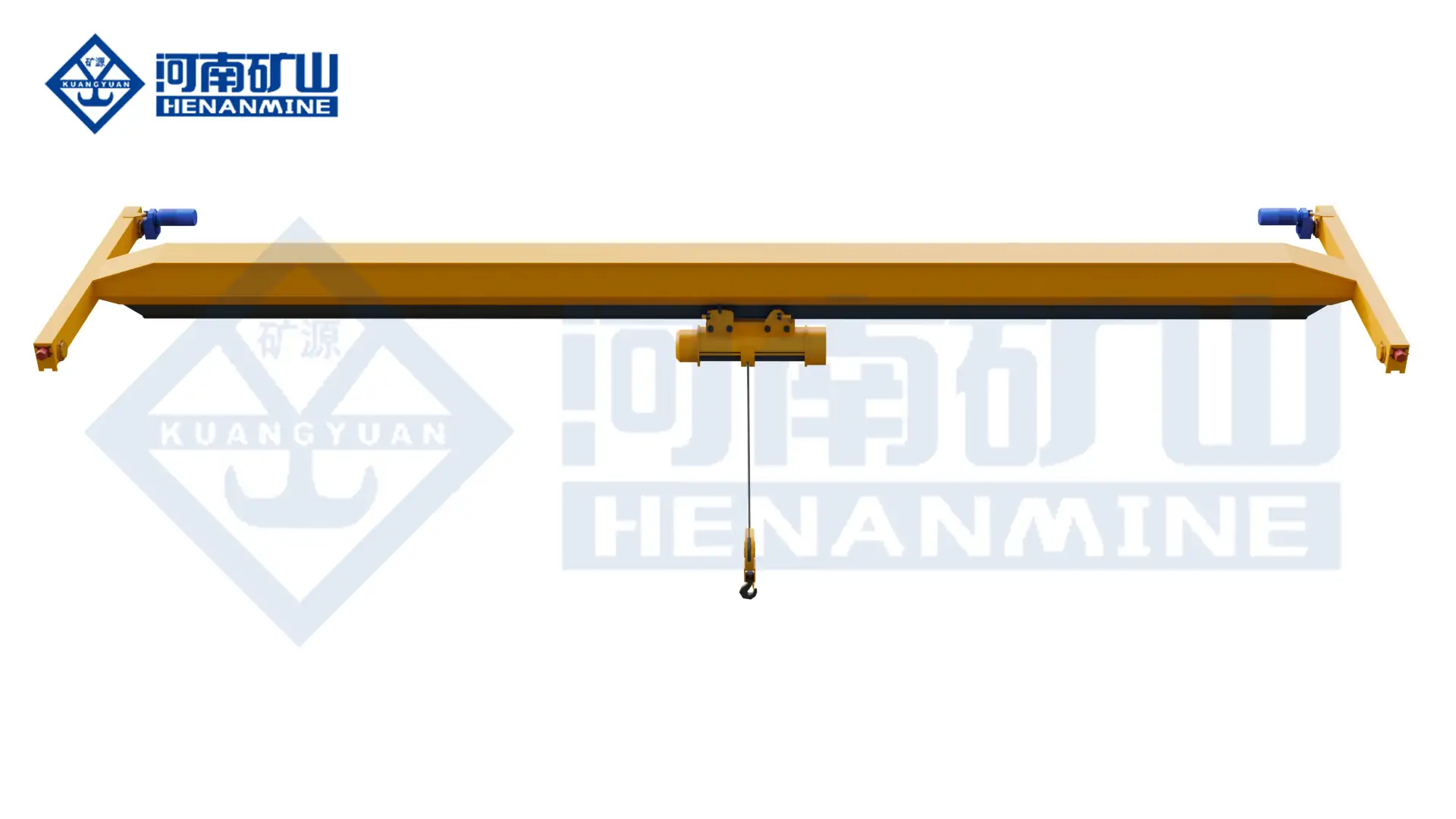
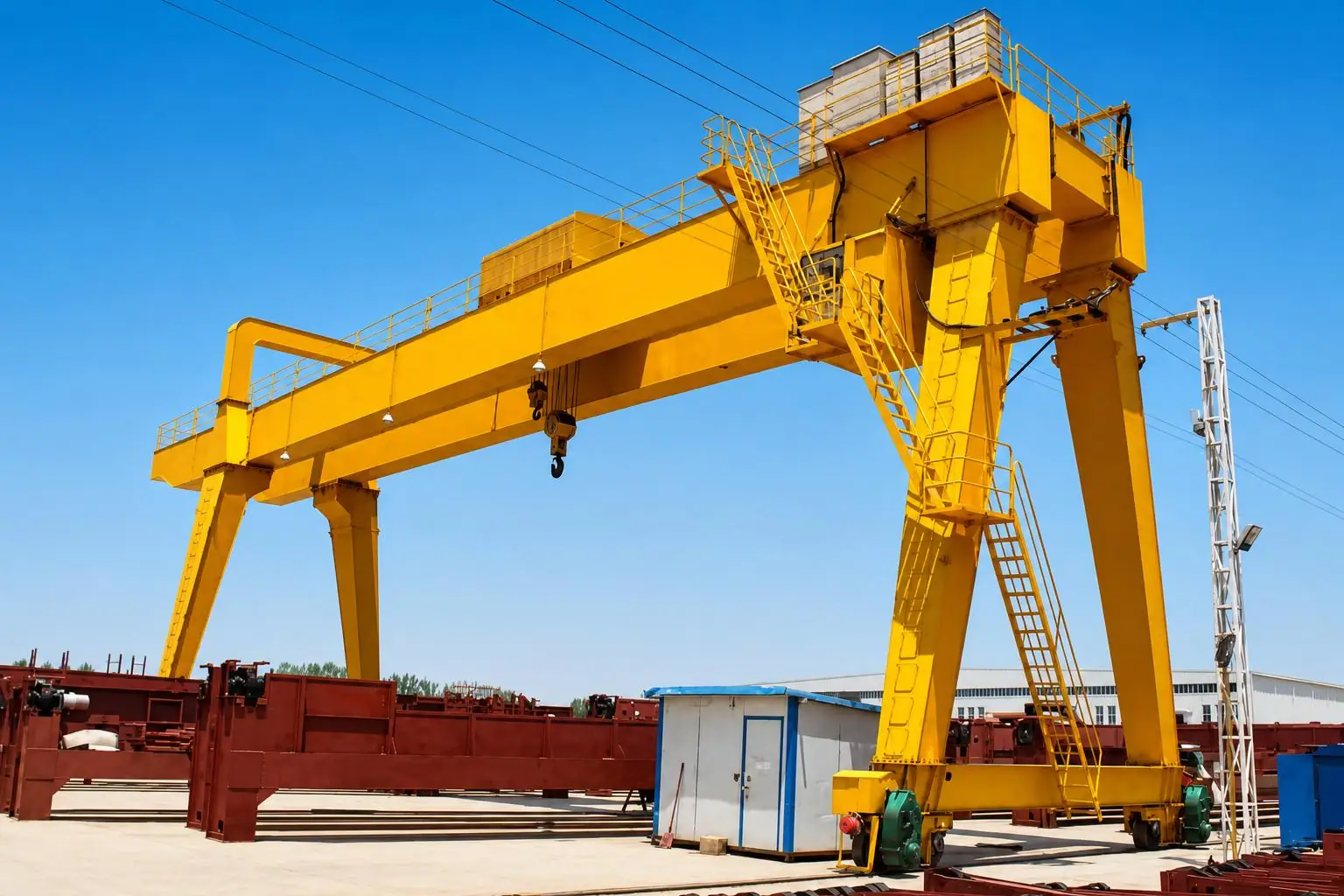
    Henan Mine Crane Single-Girder Bridge Crane
    Henan Mine Crane Single-Girder Bridge Crane
    Project planning notes

    Key points for this crane project.

    1. What Makes the Wet End of a Paper Mill Challenging
    2. Key Design Features of a 45t Paper Mill Overhead
    3. How to Achieve Precise Paper Roll Handling
    Read the technical guide

    What Makes the Wet End of a Paper Mill Challenging for Overhead Cranes

    The wet zone of the paper machine includes core processes such as forming, pressing, and washing. It is the area with the harshest working conditions in the entire paper workshop. The three core problems of high humidity, corrosion, and limited operation and maintenance can easily lead to frequent failures of ordinary industrial cranes and a sudden decrease in life span, which cannot meet the needs of continuous production.

    Continuous erosion of high humidity

    High humidity can damage electrical components such as motors, electric control cabinets, connectors, etc., causing insulation failure, short circuit, and corrosion. Ordinary cranes are prone to frequent failures and shortened life.

    Medium composite corrosion

    Pulping, bleaching, and gluing chemicals are combined with fiber dust and water vapor to form a corrosive environment. It will erode steel structures, wire ropes, fasteners and electrical systems, cause pitting and microbial corrosion, weaken the bearing capacity of the main girder, cause stagnation and electrical failures, and bring high maintenance costs and safety risks.

    Maintenance window is scarce

    The paper machine is continuously produced for 24 hours, and the maintenance window is very short. Crane failure will interrupt the replacement of paper rolls and equipment overhaul, causing the entire line to be discontinued. Wet zone cranes require high reliability, modular structure and easy access points to reduce unplanned downtime.

    Therefore, the crane in the wet zone of papermaking must have ultra-high stability, and at the same time be equipped with a modular structure and convenient maintenance points to minimize the operation and maintenance time, reduce the probability of unplanned downtime, and ensure the continuous and stable operation of the production line.

    Key Design Features of a 45t Paper Mill Overhead Crane

    In view of the harsh working conditions in the wet area of the paper mill, the 45-ton special bridge crane for papermaking abandons the conventional design of ordinary industrial cranes, and is specially optimized from the four dimensions of load adaptation, structural strength, moisture-proof and anticorrosive, and electrical protection, which is perfectly adapted to the heavy-duty, high-humidity, corrosion, and high-precision operation requirements of the paper workshop.

    Heavy-duty adaptation

    The 45-ton rated load is suitable for hoisting and overhauling heavy-duty components such as press rollers and mother rolls in wet areas. The design takes into account the dynamic load and the weight of the spreader, and reserves sufficient safety margin.

    The equipment working condition level can be adapted to FEM 2m/3m/4m, CMAA A6-A8 high-level industrial standards, and can adapt to high-frequency and continuous heavy-duty hoisting operations in papermaking workshops for a long time, eliminating problems such as overload deformation and fuselage shaking.

    High-strength main beam end beam

    The main girder and end beam of the crane are integrated with a thickened box-shaped steel structure, which has been optimized and designed by specialized mechanics, and has strong torsional, fatigue and deformation resistance.

    In view of the working conditions of the large-span plant in the paper-making workshop, the equipment can always maintain the rigidity and stability of the fuselage during long-term high-frequency lifting and vertical and horizontal movement operations, effectively avoiding the structural fatigue and deflection deformation problems caused by long-term heavy-duty operations, and laying the structural foundation for the precise positioning of the paper roll.

    Electrical moisture-proof protection

    • The electrical cabinet is made of fully enclosed stainless steel, with a basic protection level of IP55, and the core area of the wet zone can be upgraded to IP65/IP66 dustproof and waterproof level, with sealed hardware accessories to prevent water vapor and dust from entering.;
    • The full set of lines adopts sealed cables, waterproof connectors and protective wiring tubes to prevent the line interface from being short-circuited by moisture.;
    • The motor adopts H-class insulation configuration, with IP55 and above protection level, suitable for high temperature and humidity environments;
    • Equipped with a cabinet anti-condensation heater, a circuit board three-proof coating, and an independent cooling fan for the inverter to ensure the stable operation of the electrical system in a humid environment in all directions.

    Multiple anticorrosive processes

    In order to cope with the corrosive atmosphere of the papermaking workshop, the equipment is treated with multiple anticorrosive processes: the main body of the steel structure is sprayed with C5-grade high anticorrosive multi-layer epoxy industrial coating, key fasteners and accessories are hot-dip galvanized anticorrosive technology, and exposed parts that are easy to corrode are made of stainless steel corrosion-resistant alloy materials.

    For long-term condensation areas, the accumulation of corrosive media is eliminated by sealing welds and strengthening surface pretreatment. At the same time, the steel wire rope adopts galvanized anti-corrosion customized models, which greatly improves the overall corrosion resistance of the equipment and extends the service life of the equipment.

    How to Achieve Precise Paper Roll Handling

    Large paper rolls and master rolls of papermaking are high-value and vulnerable loads. Edge extrusion, roll deformation, mandrel damage, and roll scratches will all cause the paper to be scrapped, resulting in direct economic losses. The 45-ton paper crane adopts exclusive power, control and auxiliary design to achieve smooth, accurate and non-destructive hoisting of paper rolls.

    VFD frequency conversion soft start precise positioning

    The equipment is equipped with VFD frequency conversion drive and soft start/soft stop technology, and the three operating axes of lifting and lifting, vertical travel of the cart, and horizontal movement of the trolley can achieve stepless speed regulation. There is no mechanical impact during the start-stop process. It not only effectively protects the main girder, wire rope, brake and other mechanical components of the crane, and extends the life of the equipment. It can also realize the precise positioning of the paper roll at the millimeter level through the micro-speed and jog functions, which are perfectly adapted to the refined alignment operation next to the paper machine.

    Customized spreader non-destructive clamping

    For different specifications of paper rolls, with professional customized hoisting aids, suitable for non-destructive operations under all working conditions:

    • Special clamps for paper rolls: fixed and rotary structures are available, and they are equipped with a controllable clamping force system, which can adjust the clamping force according to the specifications of the paper roll, effectively preventing excessive clamping pressure from squeezing and damaging the edges of the paper roll, and achieving non-destructive clamping.
    • C-type/J-type hook: it is specially used for hoisting the mandrel of the paper roll, which can meet the needs of multi-posture handling such as horizontal placement and vertical placement of the paper roll, and is suitable for the diverse transportation conditions of the workshop.
    • Customized hanging beams and extenders: designed for wide-format, large-gram, and large-diameter master paper rolls, it disperses the lifting force points to ensure the stability of the whole process of large-size heavy-duty paper roll-up and hoisting, and prevents deformation of the paper roll.

    Enterprises can choose matching aids according to the diameter, width, weight, mandrel specifications and handling process of the paper roll to avoid damage to the paper roll from the source.

    Crane Control Systems for Accurate Roll Positioning

    The 45-ton paper mill bridge crane is equipped with a diversified intelligent control system, which takes into account the convenience of operation, operation accuracy and operation safety, and is suitable for high-frequency and high-precision repeated hoisting operations in the paper workshop.

    The equipment supports three modes of handle control, wireless remote control, and cab control. Among them, wireless remote control has a wider field of view and safer operation. It is the preferred control method for paper workshops. The full set of operating shafts supports frequency conversion and speed regulation, with multiple intelligent protection and precise positioning configurations: upper and lower lifting limit switch, travel limit device, overload protection device, intelligent sway control system, encoder positioning monitoring, PLC intelligent control system.

    The intelligent anti-sway system can effectively suppress the shaking of paper rolls during the operation of carts and trolleys, the positioning and monitoring module can realize the precise alignment of repeated operations, and the multi-lifting mechanism can operate synchronously and cooperatively, which not only ensures the safety of operations, but also greatly improves the efficiency of paper roll handling and equipment maintenance.

    Selecting the Right 45t Crane Configuration for Different Paper Mill Areas

    The working conditions of the wet area, pressing area, dry area, finished product area, and maintenance workshop of the papermaking workshop are very different, and the protection, accuracy, and functional requirements of the crane are different. The 45-ton crane can be customized and configured to meet the operating needs of different regions.:

    Paper Mill AreaCore Operation RequirementKey Protection & Configuration Requirement
    Wet EndHeavy maintenance lifting (rolls, machine parts)High humidity & corrosion protection, high IP electricals, fully sealed structure, reinforced coating
    Press SectionPrecise equipment positioning & maintenance liftingVFD smooth speed control, basic humidity protection, high-precision positioning
    Dry EndRoutine handling of rolls and medium/small equipmentUltra-high positioning accuracy, heat dissipation optimization, synchronized hoisting
    Finishing AreaBatch transfer and stacking of finished rollsDedicated roll handling attachments, anti-sway system, stable speed control
    Maintenance WorkshopFlexible lifting for multiple heavy equipmentModular flexible configuration, multi-function adaptability, accessible maintenance structure

    Safety Considerations for 45t Paper Mill Crane Operations

    The heavy-duty, high-precision, and continuous operation scenarios of the papermaking workshop have strict requirements for the safety performance of the equipment. The 45-ton special crane for papermaking is equipped with a full set of safety protection configurations to avoid operating risks in all directions.:

    • Overload protection system: it has real-time dynamic load monitoring function, which can track the lifting weight throughout the process. In the event of overload conditions, the system will automatically issue sound and light warnings and perform power failure and shutdown protection, effectively eliminating structural deformation, equipment damage and safety hazards caused by overload operation.
    • Emergency stop device: When the equipment encounters a sudden failure, abnormal shaking or dangerous working conditions, it can trigger an emergency shutdown with one key, instantly cut off the power circuit of the whole machine, quickly terminate the operation of all institutions, and avoid sudden safety accidents to the maximum extent possible.
    • Dual limit protection: configure multiple protective devices for lifting the upper and lower limits and the front and rear limits of carts and trolleys to accurately limit the operating stroke of the equipment and completely avoid over-range displacement, structural impact and equipment wear.
    • High-performance braking system: equipped with a combination of high-reliability mechanical braking and regenerative braking system, the braking response is rapid and the braking torque is stable, ensuring stable start and stop of the crane, accurate positioning, and avoiding the risk of load impact and slippage.
    • Anti-collision system: For multiple cranes sharing track operation scenarios, intelligent real-time monitoring of equipment spacing, automatic distance warning, deceleration buffer and limit protection, effectively prevent collision interference between adjacent cranes.
    • Normalized inspection mechanism: Establish a standardized regular inspection and maintenance process, and carry out normalized inspection and maintenance of all safety protection components, electrical systems, and mechanical structures to ensure that the safety protection system is sensitive, reliable, stable and effective for a long time.

    Maintenance Strategy for Overhead Cranes in High-Humidity Paper Mills

    Under high humidity and corrosion conditions, the loss rate of paper cranes is much higher than that of ordinary industrial cranes. The conventional operation and maintenance cycle cannot be adapted to the operating conditions of the equipment. Special preventive operation and maintenance plans need to be formulated to extend the life of the equipment and reduce the probability of failure.

    Electrical system

    Regularly check the sealing performance of the electrical cabinet, the operating status of the anti-condensation heater, and the sealing of the waterproof joints of the circuit, clean up the dust and moisture in the cabinet, and detect the integrity of the three-proof coating of the circuit board to prevent the circuit from being damp, oxidized, and short-circuited.

    Power and transmission components

    Regularly check the insulation resistance of the motor and the smoothness of the cooling system, clean up the dust of the fan and heat sink fibers; check the braking performance of the brake and the oil status of the gearbox, and replace the special grease for waterproof to avoid moisture, corrosion and caton of the bearings and gears.

    Anticorrosive monitoring of steel structure

    Normalize the inspection of the coating integrity of the main girder, end beam, welds, and fasteners, check the corrosion points, and do timely paint and anticorrosive treatment; regularly check the track flatness and structural deformation to ensure the structural stability of the equipment.

    Loss of hoisting aids

    Regularly and comprehensively inspect core hoisting aids such as wire ropes, lifting hooks, paper roll clamps, and C-hooks, carefully investigate various hidden dangers such as surface wear, corrosion, oxidation, and deformation damage of components, and replace aging, failure, and excessive loss of spare parts in time to continuously ensure the safety, stability and normality of hoisting operations.。

    Optimize preventive operation and maintenance cycles

    Compared with ordinary cranes, papermaking wet zone equipment needs to shorten the inspection cycle, and implement quarterly comprehensive visual inspections and annual in-depth inspections of the whole machine. At the same time, it is equipped with an online vibration and temperature condition monitoring system to predict potential faults in advance through remote diagnosis, realize predictive operation and maintenance, and avoid sudden downtime.

    How to Specify a 45t Paper Mill Overhead Crane

    When an enterprise custom purchases a 45-ton special crane for papermaking, it needs to clarify the core parameters in combination with the workshop working conditions and production technology to ensure that the equipment is accurately adapted to production needs. The core selection parameters are as follows:

    • Lifting height, plant span, track running length: customized design according to the site space layout, plant structure and operating scope of the paper workshop, the size parameters are fully adapted to the site conditions, to meet the needs of equipment maintenance and paper roll transfer space.
    • Equipment working condition level: Based on the actual hoisting frequency, load continuity rate and annual operating time on the site, select the matching FEM/CMAA working condition level to adapt to the long-term, high-frequency continuous heavy-duty operation of the paper workshop.
    • Operating speed: equipped with dual modes of conventional operating speed and micro-speed jog, the conventional speed guarantees the efficient transfer of paper rolls and heavy-duty components; the micro-speed jog mode is used for equipment maintenance alignment and paper roll placement, taking into account operational efficiency and precise positioning.
    • Environmental protection parameters: combined with workshop humidity, condensation conditions and chemical corrosion media types, the IP protection level of the electrical system and the anticorrosive coating level of the steel structure are reasonably selected to resist equipment losses caused by high humidity and corrosive media.
    • Supporting aids: according to the diameter, width, weight, mandrel specifications of the paper roll and the on-site handling process, suitable special lifting fixtures and tooling are selected to achieve non-destructive clamping and smooth lifting of the paper roll to avoid damage to the roll surface.
    • Control method: Priority is given to the wireless remote control mode with a wide field of vision and flexible operation. At the same time, it is equipped with two alternative options, handle control and cab control, to adapt to different operating environments and operator habits.
    • Accuracy requirements: Specify the repeat positioning accuracy of the equipment and the performance indicators of the intelligent sway control system in advance to meet the requirements of refined operations such as the regular stacking of paper rolls, the installation and maintenance of press rollers, etc.
    • Supporting safety configuration: according to on-site working conditions, safety modules such as anti-collision system, overload protection device, travel limit protection, and equipment online status monitoring can be installed on demand to build a multi-layer safety protection system.

    Discuss the crane arrangement for your project.

    A paper mill lifting brief should identify the actual roll or maintenance load and operating area. Provide contact requirements, working positions and local moisture conditions so the proposed crane configuration can be reviewed for the task. Share the load, available drawings, working cycle and site conditions with Henan Mine Crane so the required configuration and supply boundary can be discussed.

    Related crane configurations

    Single-Girder Bridge Crane

    View product parameters
    Lifting capacity: 1–20 tSpan: 7.5–31.5 mLifting height: 6, 9, 12, 18, 24 or 30 m; capacity-dependent

    Use an LDA single-girder bridge and electric hoist for general workshop material handling. Select the lifting capacity, runway geometry and hoist duty around the building and load.

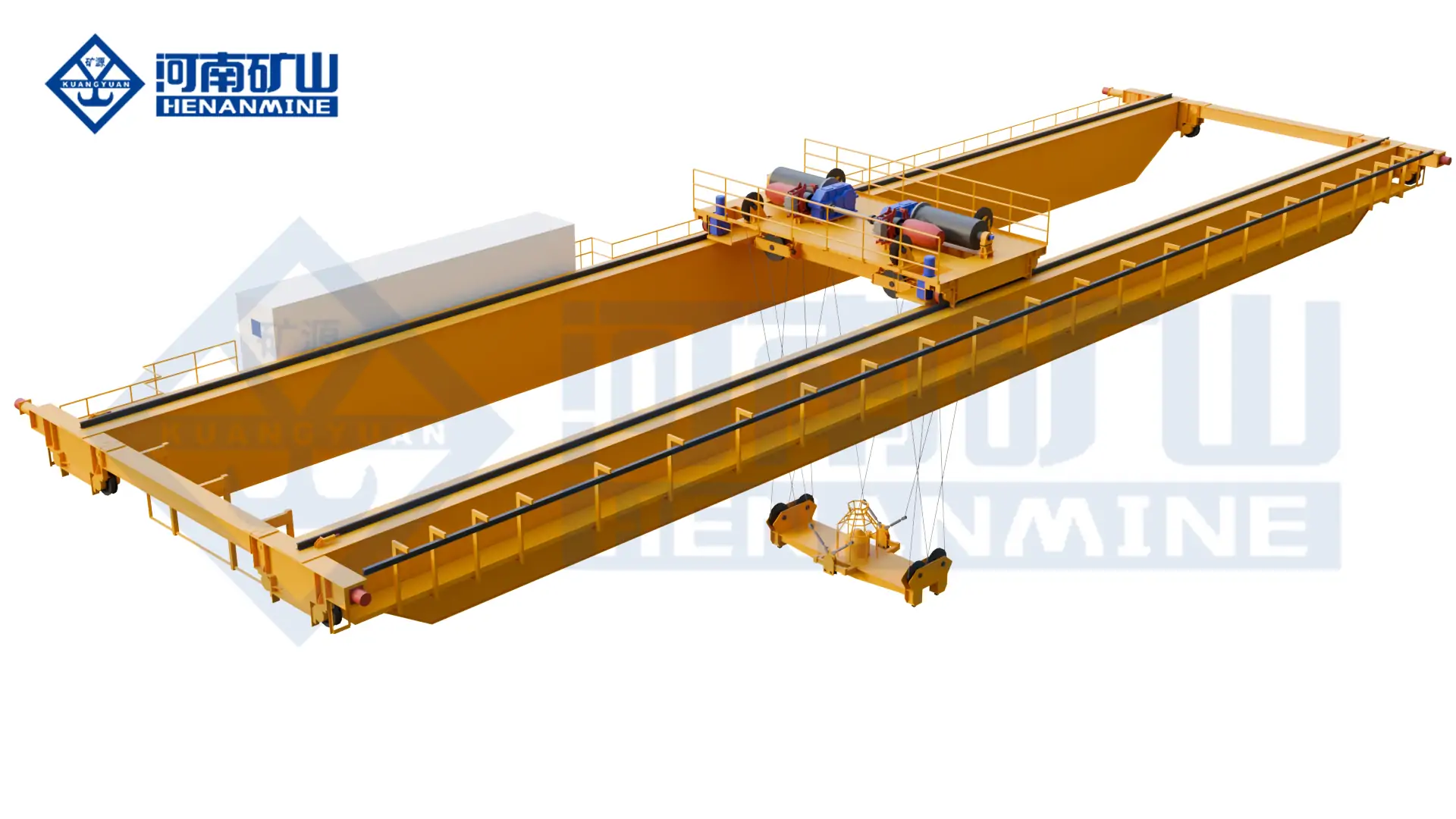
    LH Electric Hoist Double Girder Crane

    View product parameters
    Lifting capacity: 3, 5, 10, 16, 20 tSpan: 10.5–31.5 mLifting height: 6, 9, 12 or 18 m

    Use an LH double-girder bridge with an electric-hoist trolley for workshop lifting, assembly and maintenance. Match the hoist arrangement to the suspended load, hook travel and available building space.

    Updated 2026 · Henan Mine Crane
  • 40-Ton Wind Power Crane Projects: Nacelle Assembly and Lift Interfaces

    40-Ton Wind Power Crane Projects: Nacelle Assembly and Lift Interfaces

    Technical guide

    40-Ton Wind Power Crane Projects: Nacelle Assembly and Lift Interfaces

    Nacelle handling requires verified component information and approved lifting positions. Define the assembly sequence, load orientation and required hook coverage so the crane arrangement can be coordinated with the production or installation task.

    Henan Mine CraneTechnical guide · Updated 2026Crane selection, project scope and operating requirements
    40-Ton Wind Power Crane Projects: Nacelle Assembly and Lift Interfaces
    Henan Mine Crane lifting equipment
    Project planning notes

    Key points for this crane project.

    1. What Is a 40t Wind Power Assembly Crane?
    2. Why Nacelle and Generator Lifting Requires High
    3. Key Specifications for a 40t Wind Power Assembly
    Read the technical guide

    What Is a 40t Wind Power Assembly Crane?

    Unlike the lifting equipment used for on-site installation of wind farms, the 40-ton fan assembly crane mainly works in the manufacturing workshop and pre-assembly plant, and is responsible for a series of handling and assembly operations of components before leaving the factory. Its typical tasks include:

    • Hoisting the cabin shell and internal assembly parts. Key components such as generators are integrated in the cabin, and the crane is required to provide stable and controlled support during the assembly and sequencing process.
    • Handling generators, gearboxes, wheels and transmission chain components. The main transmission chain of the fan covers the hub, spindle and bearing, the generator, and the transmission mechanism between the shaft and the generator. These components need to be handled carefully during the pre-assembly stage.
    • Support pre-assembly and maintenance operations. The cabin will be hoisted multiple times during the production process, from the production station to the storage area, from the storage area to the transportation equipment, and then to the subsequent logistics links, every handling must be completed reliably.

    Actual meaning of 40 tons in the selection

    However, the rated tonnage itself does not determine whether a crane is suitable for a certain application scenario, and the actual available lifting weight is usually lower than the nominal value.:

    • Dynamic loads cannot be ignored. The cabin hoisting beam must not only bear static weight, but also the dynamic load caused by the installation process, crane operation and position adjustment also need to be included in the calculation.
    • Factors such as lifting height, span, duty rating, control accuracy and plant layout are as critical as the rated tonnage. A crane whose tonnage is up to standard but does not match the geometry of the workshop or the frequency of operations does not apply regardless of the nominal tonnage.

    Main model configuration

    There are three common configurations in the fan assembly workshop:

    1. Bridge crane: the preferred solution for indoor fan manufacturing workshops, which runs along the track on the plant structure and can cover the entire workshop work surface.
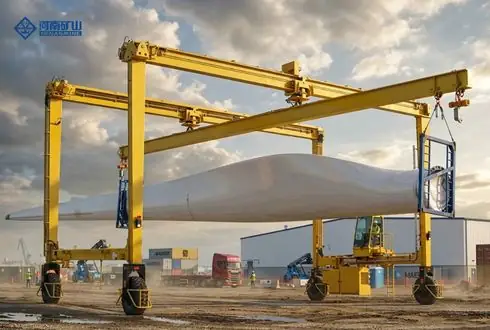
    2. Gantry crane: used in open-air or semi-open-air pre-assembly sites, suitable for occasions where the track cannot be installed on the structure of the plant.

    Why Nacelle and Generator Lifting Requires High Precision

    Difficult to locate large components

    For 40-ton workshop cranes, even if only sub-parts or cabin segments are hoisted, the challenges posed by size are still significant.:

    • Long and wide parts are easy to swing when moving horizontally, making precise positioning difficult.
    • The surrounding headroom of the assembly station is limited, which requires the operation of large vehicles and small cars to be highly controlled.
    • The larger the size of the parts, the more difficult it is to accurately align them.

    Generator precision hoisting control

    The loading of the generator into the cabin frame is one of the links with the highest accuracy requirements in the pre-assembly process, which is specifically reflected in:

    • Precise horizontal positioning to ensure the accurate alignment of the installation flange.
    • Low-speed lifting and descending are used in the final approach stage.
    • Eliminate rapid acceleration and impact loads, and protect parts from misalignment and damage.

    The engine room is usually the heaviest single component in the whole fan machine. Its weight, size, center of gravity position and installation height are superimposed together, making every hoisting a strict test of equipment and solutions.

    Avoid component hoisting impact

    Once the load is unbalanced during the hoisting of the cabin, dangerous working conditions will form. Therefore, in the workshop environment, controllable acceleration and braking, smooth operation of small cars and carts, and active suppression of load swing are all basic requirements in the design of 40-ton assembly cranes.

    Key Specifications for a 40t Wind Power Assembly Crane

    The selection is not just based on the rated tonnage, but requires the system to define multiple parameters:

    Specification ItemWhy It Matters
    Lifting heightDetermines the available vertical assembly space
    SpanMust match the workshop width
    Lifting speedBalances production efficiency and positioning accuracy
    Travel speedControls component movement within the workshop
    Duty ratingSupports high-frequency repeated assembly without overload
    Control systemEnables precise positioning
    Power supplyMust match plant infrastructure

    The parameters that must be clarified before placing an order also include: the maximum weight of the component (including the weight of the spreader below the hook), the maximum lifting height required, the crane span, the operating frequency and the number of daily lifting cycles, indoor or outdoor installation, ambient temperature and working conditions, and the required positioning accuracy.

    Crane Design for High-Precision Nacelle Handling

    Variable speed lifting

    Variable speed lifting achieved by variable frequency drive (VFD) provides two key operating modes: the load is off the ground or runs at a faster speed after assembling the tire frame; the final alignment stage is switched to a low speed to reduce the risk of component impact or misalignment. This two-speed capability also reduces the mechanical impact of the transmission chain components, which are very sensitive to impact loads.

    Smooth operation of small cars and carts

    The controllable acceleration and deceleration of the trolley and the trolley during the journey directly determines the swing amplitude of the load. In a workshop with dense assembly stations and limited headroom, even a small uncontrolled swing may cause component collisions or positioning deviations.

    Anti-shake and positioning technology

    Modern 40-ton fan assembly cranes are usually equipped with:

    • sway control control system, which actively cancels the movement of the pendulum during operation.
    • The drive system based on the frequency converter realizes stepless smooth speed regulation of the three mechanisms of lifting, trolley and cart.
    • Remote control or handle (follow-up) operation options, allowing the operator to choose the best observation position when aligning.
    • On-demand configuration of the position monitoring function to meet the requirements of production accuracy.

    A dedicated hanging beam with multiple hanging points is a prerequisite to ensure balanced lifting, while the smooth and predictable movement of the control system cooperates with the hanging scheme to ensure the safety and accuracy of the entire hoisting.

    How a 40t Crane Handles Generator Assembly

    Loading preparation and working condition verification

    Before the formal hoisting, strictly check the weight, shape parameters and position of the standard hoisting point of the generator to ensure that the hoisting plan matches the actual workpiece. Comprehensively check the integrity and rated carrying capacity of a full set of spreaders such as hanging beams, slings, hooks, shackles, etc., to prevent damage, aging, and overload of the spreaders from being put into use.

    Focus on controlling the angle of lifting force. Cable-stayed and partial lifting will greatly reduce the bearing capacity of the spreader. Standardize the force state of the lifting point in advance to avoid hidden safety risks.

    Vertical and smooth lifting operation

    The lifting stage follows the principle of ”first steady rise, then translation", and slowly lifts the generator so that the workpiece is completely detached from the supporting tire frame, and then performs subsequent displacement operations. Operations such as rapid acceleration, emergency stop, and instantaneous change of direction are prohibited throughout the process, effectively suppressing load swing and inertial offset.

    Maintain a uniform and stable lifting speed, ensure the balance of the initial lifting attitude, avoid tilting and bumping of the workpiece, and lay the foundation for subsequent precise alignment.

    Smooth shift and transfer of stations

    The frequency conversion and controllable operation functions of crane carts and trolleys are used to smoothly transfer the generator to the assembly station. The sway control control system is turned on throughout the process to actively offset the swing of the workpiece and minimize the lateral displacement deviation.

    The speed reduction and slow travel near the assembly area in advance eliminates the inertial shaking caused by high-speed operation, ensures the stability of the workpiece attitude, and improves the controllability and accuracy of the station in place.

    Low-speed fine alignment calibration

    Enter the final assembly link, switch to the low-speed precision control mode, and complete the precise alignment of the generator and the engine room installation flange by fine-tuning the position of the large and small parking spaces to ensure that the installation hole position and the end face fit accurately.

    It adopts handheld remote control or manual operation to flexibly adjust the operating viewing angle, avoid blind spots in the field of vision, and ensure the effect of high-precision assembly alignment.

    Controlled drop hook and safe decoupling

    After the alignment is completed, the workpiece will be smoothly dropped to the installation base surface in a low-speed controlled manner, eliminating shocks and bumps throughout the process, and protecting the precision structure of the generator from damage.

    After the workpiece is fully fitted to the mounting surface, the force is balanced, and the alignment accuracy is verified to be correct, the hook can be slowly loosened and the decoupling operation can be completed to ensure the assembly quality and hoisting safety.

    Safety Features for 40t Wind Power Assembly Cranes

    For hoisting heavy-duty, high-value fan components in a densely populated workshop, the safety system is not an option but a basic requirement. A fully equipped 40-ton crane should include:

    1. Overload protection device: real-time monitoring of real-time lifting load, once it approaches or exceeds the rated tonnage, it will automatically warn and limit the lifting action, so as to eliminate the risk of structural deformation, wire rope damage and overturning caused by overload operations.
    2. Upper and lower limit protection switch: accurately limit the maximum lifting and descending stroke of the hook, avoid extreme working conditions such as the hook rushing to the top and falling to the bottom, and prevent the spreader, wire rope and the whole machine structure from being hard hit.
    3. Emergency stop system: equipped with global emergency stop control, in the event of emergencies such as sudden abnormality, proximity of personnel, shaking of workpieces, etc., the operating power can be cut off instantly and all mechanism actions can be terminated.
    4. Cart travel limit device: Hard limit protection is set at both ends of the track to prevent the crane from running over-range, hitting the rail, and derailing, and to avoid the displacement of the whole machine from getting out of control.
    5. Anti-release safety device of the hook: The spring self-locking anti-release structure is adopted to prevent accidental slippage of the sling and hanging beam during the swing of the hoisting, and to ensure the stability of large-scale hoisting.
    6. Real-time load monitoring system: dynamically displays the actual weight of the hoisting, helps the operator determine the load balance state, and finds hidden dangers such as partial load, weightlessness, and load offset in time.
    7. Power-off safety braking system: It has a power-off self-locking braking function, and automatically locks the lifting and operating mechanism in the event of a sudden power failure or line failure to ensure that heavy objects do not fall or slip.
    8. Sound and light early warning and alarm device: lights and sound prompts are triggered synchronously during the start and stop, travel, and lifting of the crane to warn surrounding personnel to avoid and standardize the order of on-site operations.

    Long-term safe operation and maintenance system

    The safety performance of equipment depends on normalized maintenance and management, which is an important guarantee for long-term high-precision hoisting operations.:

    1. Regular special inspections: conduct periodic inspections of brake systems, wire ropes, electrical control systems, limit devices, and sway control systems to investigate hidden faults in a timely manner.
    2. Preventive maintenance and maintenance: carry out maintenance work such as lubrication, fastening, calibration, and electrical testing according to the frequency of equipment working conditions to avoid safety hazards caused by aging and failure of components.
    3. Working condition recording and condition monitoring: long-term recording of hoisting cycle, load data, and operating status, accurate evaluation of equipment health, and extension of crane service life.

    Common Problems When Choosing a 40t Wind Power Crane

    Load parameters

    • Maximum lifting weight: The maximum lifting load of the whole machine needs to be calculated, including the weight of the workpiece, the hook, the beam, the sling, etc. All the weight of the lower spreader, and the dynamic load safety margin is reserved to eliminate the problem of false standard of rated tonnage and insufficient actual load.
    • Component dimensions: accurately record the length, width, and height of the core components such as the fan cabin and generator, which are used to check the workshop passage space, hoisting headroom, and alignment operation range to avoid collision and interference with large-scale movement.
    • The position of the center of gravity of the component: Clarifying the actual center of gravity of the component is the core basis for formulating a balanced hoisting plan, selecting a hoisting point, and debugging an sway control system, which can effectively avoid risks such as partial load, rollover, and swing offset.
    • Available hanging point layout: count the number, location and load-bearing specifications of the standard lifting points of the workpiece, and match the lifting method with the structure of the hanging beam to ensure uniform force and stable lifting, and meet the requirements of precision assembly alignment.

    Workshop site parameters

    • Crane adaptation span: Determine the standard span of the crane according to the actual width of the workshop to ensure that the operation of the cart covers the entire working area, while matching the track foundation and column structure of the workshop, and adapting to on-site installation conditions.
    • Effective lifting height of the hook: combined with the height of the assembly tire frame, the maximum size of the workpiece, the transfer and loading requirements, determine sufficient vertical lifting stroke to ensure that large pieces can be smoothly removed from the station, free lifting, and barrier-free transfer.
    • Effective track length: calculate the overall laying length of the plant track, match the arrangement of production stations in the workshop, and ensure that the operating itinerary of the crane cart meets the needs of the whole workshop for sequencing, assembly, warehousing and handling.
    • Available headroom under the roof: measure the effective operating headroom under the roof steel beams, pipelines, and ceilings to avoid interference with the superstructure and ensure the operation of the crane and the safety of large-scale hoisting.

    Equipment performance parameters

    • Dual-mode lifting speed: configure the conventional fast handling and low-speed precise alignment dual-gear speed, taking into account the workshop production and transportation efficiency and the low-speed fine-tuning needs of the precision assembly of the generator and the engine room, and reduce the impact of alignment.
    • Trolley running speed: Set the travel speed of the trolley that can be adjusted with frequency to achieve smooth start and stop, low-speed fine-tuning, control the amount of lateral swing, and ensure the precise alignment and assembly of large pieces.
    • The operating speed of the cart: The operating speed of the cart is set to match the work beat of the workshop. The high speed is used for cross-zone transfer, and the low speed is used for precise positioning of the station, effectively suppressing the inertial swing of large parts.
    • Assembly positioning accuracy: According to the requirements of the precision assembly process of the fan, clarify the horizontal and vertical alignment accuracy standards to meet the high-precision operation requirements of generator flange docking and engine room assembly assembly.

    Operating environment parameters

    • Type of installation scenario: It is clear that the equipment is installed in an indoor workshop or outdoor semi-open-air installation, and the protection level, structural design and operating configuration of the whole machine are matched in a targeted manner.
    • Working condition temperature range: combined with the selection and design of the extreme high and low temperature environment in the four seasons of the factory, the steel structure, electrical components, and braking system are guaranteed to work stably at the limit temperature, and low-temperature brittleness and high-temperature failures are eliminated.
    • Environmental working conditions: comprehensive consideration of workshop dust, air humidity, water vapor condensation and other working conditions, sealing and protecting electrical cabinets, motors, and control systems to extend the service life of equipment.
    • Outdoor wind load conditions: open-air operating equipment needs to account for normal and extreme wind loads, strengthen the wind-resistant structure of the whole machine, and configure wind-proof protection functions to avoid shaking and instability in windy weather operations.

    Control and safety configuration

    • Three-mechanism frequency conversion drive system: lifting, cart, and trolley are all frequency conversion and speed regulation, to achieve stepless smooth start and stop, impact-free operation, and completely solve the problem of inertial swing and misalignment of large hoisting.
    • Intelligent sway control control system: Through algorithms, the pendulum movement of large hoisting is actively offset, the operation swing is effectively suppressed, and the alignment accuracy and operation safety of high-precision components such as engine rooms and generators are greatly improved.
    • Fully automatic overload protection function: real-time monitoring of hoisting loads, automatic early warning of overload, locking operation, to prevent structural damage, wire rope fracture and safety accidents caused by overload operations.
    • Multiple limit protection devices: equipped with multiple protections such as the upper and lower limits of the hook, the travel limits of the cart, etc., to limit the limit operating stroke of the equipment and prevent dangerous working conditions such as rushing to the top, falling to the bottom, and hitting the rail.
    • Emergency stop control system: Set up a global emergency stop function, in case of emergency situations such as abnormal equipment, shaking of workpieces, and intrusion of personnel, all power can be cut off instantly and all operating actions can be terminated.
    • Real-time load monitoring display: dynamic display of real-time hoisting weight, real-time monitoring of partial load, weightlessness, and load offset, so that operators can control the hoisting status in real time to ensure stable and controllable operations.

    Discuss the crane arrangement for your project.

    Nacelle handling requires verified component information and approved lifting positions. Define the assembly sequence, load orientation and required hook coverage so the crane arrangement can be coordinated with the production or installation task. Share the load, available drawings, working cycle and site conditions with Henan Mine Crane so the required configuration and supply boundary can be discussed.

    Related crane configurations

    Explore crane product families and technical parameters ↗

    Updated 2026 · Henan Mine Crane

  • Container Crane Roles: Compare Ship, Yard and Transfer Equipment

    Container Crane Roles: Compare Ship, Yard and Transfer Equipment

    Technical guide

    Container Crane Roles: Compare Ship, Yard and Transfer Equipment

    Different container movements call for different equipment arrangements. Separate vessel access, stacking and transfer duties before comparing the working envelope and infrastructure interfaces associated with each crane role.

    Henan Mine CraneTechnical guide · Updated 2026Crane selection, project scope and operating requirements
    Henan Mine Crane Container Overhead Crane
    Henan Mine Crane Container Overhead Crane
    Project planning notes

    Key points for this crane project.

    1. What Is a Container Crane?
    2. Ship-to-Shore (STS) Crane
    3. Rubber-Tired Gantry (RTG) Crane
    Read the technical guide

    What Is a Container Crane?

    Container cranes are large-scale gantry lifting equipment deployed in container terminals and freight yards, specially used for standardized container loading, unloading, stacking, and transshipment. Their core role is to complete the cargo transfer between container ships and terminals, depots and transportation vehicles. It is the core equipment of port logistics.

    Unlike traditional lifting equipment, modern container cranes have four common core characteristics:

    • The exclusive telescopic spreader is equipped with a four-corner rotary locking mechanism, which can accurately lock the corners of the container, fundamentally eliminating the hidden dangers of hoisting and falling off, and the operation safety is higher.;
    • Adopt a three-dimensional linkage motion control system, support vertical, horizontal, and vertical multi-dimensional precise motion, smooth operation and controllable positioning;
    • The degree of intelligence is high, and the new machines are generally equipped with sway control, automatic alignment and remote control systems as standard, which greatly improves operation stability and turnover efficiency.

    Ship-to-Shore (STS) Crane

    STS shore container crane (referred to as shore bridge, also known as terminal shore crane, ship shore crane) is the core heavy equipment at the forefront of the port terminal. It is exclusively used for container loading and unloading operations between the ship and the terminal shoreline. It is the first core process equipment for containers entering and leaving the port, which directly determines the efficiency of ship berthing turnover.

    Core structure and operating characteristics

    The shore bridge as a whole is a large rigid gantry structure, which is permanently installed on the leading track of the pier, and can move parallel to the direction of the ship along the coastline. The equipment is equipped with an ultra-long pitchable cantilever, which can span the deck of the ship and operate deep into the interior of the cabin. The operation cab is suspended on the cantilever operation trolley to provide the operator with an unobstructed operation field of view and ensure accurate operation.

    Compared with ordinary cranes, the shore bridge abandons traditional hooks and comes standard with special telescopic spreaders. The four corners of the container are firmly locked by a rotary locking mechanism, which supports single-box, double-box and even multi-box joint hoisting.

    Job operation principle

    The STS shore bridge is coordinated and linked through three sets of mechanisms to form a standardized and efficient closed loop of ship loading and unloading operations.:

    • Longitudinal travel of the gantry: translation along the shoreline track of the terminal as a whole, accurately aligning the ship's space and the deck container stackage;
    • Horizontal position of the trolley: The cantilever trolley slides laterally along the main girder to accurately calibrate the horizontal drop point of the container;
    • Vertical lifting operation: complete the whole process of container picking, lifting, and dropping through the lifting mechanism.

    The complete operating system is equipped with intelligent anti-sway and high-precision positioning modules to effectively suppress hoisting shaking, greatly improve operating stability and turnover efficiency, and adapt to high-frequency ship berthing, loading and unloading conditions.

    Model size classification

    According to the operating extension distance, lifting height and adaptation ship type specifications, the industry divides the STS shore bridge into three mainstream levels to accurately match the positioning of shipping ships and ports of different tonnages:

    • Panama-type shore bridge: the operating extension distance is 40–45m, which is suitable for small and medium-sized container ships and feeder transport ships that meet the navigation scale of the original Panama Canal, and is widely used in small and medium-sized feeder ports.
    • Ultra-thin shore bridge: The operating extension distance is 50–60m, which can be adapted to mainstream large ocean-going container ships, with balanced performance and strong applicability. It is the main configuration model of modern medium-sized large-scale ports.
    • Super ultra-large (giant) shore bridge: The maximum operating extension distance can reach 65–75m, and it can cover 26 rows of containers on the deck. It is specially adapted to ultra-large container ships (ULCV). It is the core equipment for large international hub ports to improve the loading and unloading efficiency of ocean-going ships.

    Development history and modernization functions

    The world's first modern STS shore bridge was put into use at the California terminal in 1959, which completely promoted the commercialization and popularization of container shipping and reshaped the global logistics pattern.

    The modern new type of shore bridge is equipped with a high-speed lifting system, multi-box joint lifting technology, a fully automatic operating system, and an energy-saving regenerative power system.

    Rubber-Tired Gantry (RTG) Crane

    RTG tire-type gantry crane, referred to as tire crane, is a special mobile lifting equipment for port container depots. It is mainly used for stacking, sorting, and transshipment of containers in the back yard of the terminal, connecting the loading and unloading of shore bridges and the transshipment of land freight. Unlike rail-type equipment, tire cranes use rubber tires to walk, without laying fixed tracks, and have extremely high operating flexibility.

    Core structure and operating characteristics

    The equipment adopts a long-span steel gantry structure, which can operate across 5-8 rows of containers and freight lanes, covering a wide range. The travel mechanism is equipped with 8-16 sets of rubber tires, which can be freely turned and translated, and can be flexibly switched between different operating blocks of the yard without the need to transform the site infrastructure.

    The power mode is flexible. The traditional models are powered by diesel generator sets, and the new models are fully upgraded to hybrid, pure electric, and battery-powered modes, which effectively reduce energy consumption and carbon emissions, and adapt to the needs of green port construction.

    Core advantage

    • Low investment in infrastructure: the trackless travel structure of rubber tires is adopted, and there is no need to lay special tracks and supporting foundation projects, which greatly reduces the cost of civil construction in the early stage of the terminal, and the threshold for equipment landing and deployment is low, which is suitable for all kinds of existing hardened yards.
    • High operational flexibility: it supports in-situ steering, global translation, and cross-block operations, and can flexibly adjust the scope of operations according to the cargo volume of the yard and the operation movement line, which is perfectly adapted to the terminal operation model of continuous expansion and dynamic layout optimization.
    • Strong integrated operation ability: integrated container stacking, interval transshipment, truck loading and unloading and other functions in one, without the need to match a large number of auxiliary equipment, the operation system is simple and stable, and the comprehensive adaptability is extremely strong.

    Applicable scenarios

    • Small and medium-sized conventional container depots: suitable for small and medium-sized depots with medium and low throughput and stable operation scale, which can efficiently complete routine operations such as daily container storage, on-site transshipment, and vehicle loading and unloading to meet basic operating needs.
    • Renovation and expansion of iterative terminals: it is adapted to upgraded terminals with continuous expansion and dynamic layout adjustment. It is not limited by fixed tracks and can be flexibly adapted to the operating area following the expansion of the site and the adjustment of functional partitions.
    • Flexible large-scale yard: suitable for medium-sized large-scale yard stations with fixed operating lines and strong random cargo flow, relying on high maneuverability characteristics to adapt to changeable production operation plans.
    • Cost-effective general operating scenarios: balance equipment procurement costs, infrastructure investment and operating performance, both economical and practical, and are the mainstream standard equipment for small and medium-sized ports and general depots around the world.

    Equipment limitations

    Compared with rail-type equipment, the positioning accuracy of the tire crane is slightly lower, and the adaptability of high-density stacking and fully automated operations is weak; the long-term heavy-duty operation of the tire has a large amount of wear and tear, and the operation and maintenance cost is high; the energy consumption and noise pollution of traditional diesel engines are relatively higher.

    Rail-Mounted Gantry (RMG) Crane

    RMG rail gantry crane, referred to as rail crane, is a high-end yard operation equipment adapted to large-scale automated ports. The operation function is the same as that of RTG tire crane. It mainly completes container stacking, access, and transshipment operations. The core difference lies in the use of fixed steel rail travel, focusing on high-precision, high-density, and fully automated operations.

    Core structure and operating characteristics

    The track crane runs along the preset fixed steel rails of the yard, the travel path is accurate and controllable, there is no offset error, and the positioning accuracy far exceeds that of the tire crane. It is the preferred equipment for high-density depots.

    The equipment is driven by electricity throughout the process, equipped with a busbar and cable reel power supply system, which has quiet operation, low emissions, low energy consumption, and lower long-term operation and maintenance costs. Equipped with a terminal operating system (TOS), intelligent sway control, and automatic alignment system, it can realize fully automatic unattended operation, which is the core standard equipment of the smart port.

    Core advantage

    • Strong operating stability: relying on the rigid guidance of fixed steel rails, the equipment's travel trajectory error is very small, the controllability is extremely high, there is no offset shaking in heavy-duty operations, and the container stacking regularity is excellent, which can meet the requirements of high-standard refined yard operations.
    • High storage density: support 6-8-layer ultra-high stacking operations, fully tap the vertical space potential of the yard, effectively solve the problem of shortage of land resources in the port area, greatly increase the storage capacity per unit area, and adapt to the high-density intensive operation model.
    • High degree of intelligence: it can be seamlessly connected to the terminal TOS operation and maintenance management system, realize fully automatic alignment, stacking, and transshipment closed-loop operations, support all-weather unattended operation, significantly reduce labor costs, and the overall operating efficiency far exceeds that of traditional RTG equipment.
    • Low long-term operation and maintenance costs: the use of all-electric drive mode, silent operation and low noise, energy consumption savings, zero exhaust emissions; no tire wear and loss, low mechanical failure rate, long service life, large-scale long-term operation and outstanding economic benefits.

    Adapt to the scene

    • Large-scale automated hub port: suitable for high-throughput, standardized, and large-scale ocean-going core port areas, it can support high-frequency and large-volume container turnover operations, and is the standard core equipment of smart hub ports.
    • High-density smart container yard: suitable for modern yards with scarce land resources and high storage pressure, relying on ultra-high stacking accuracy and automation capabilities, to maximize the use of site space and unmanned intelligent control.
    • Specialized stations for public railway intermodal transport: it can accurately connect railway freight tracks and container trains, efficiently complete batch container loading, unloading, storage and transit operations, and adapt to the integrated logistics hub of multimodal transport.
    • High-capacity normalized operation terminal: suitable for large-scale specialized terminals with stable cargo flow, high operating intensity, and strict requirements for standardization and timeliness to ensure efficient, stable and normalized operation of the port area.
    • Large-scale and high-capacity terminals: suitable for large-scale specialized terminals with long-term stable operation, large cargo flow, and extremely high requirements for operational efficiency and standardization.

    Equipment limitations

    The initial infrastructure investment is high, special tracks and foundations need to be laid, and site transformation is difficult; the scope of operation is limited by the track, and the operation blocks cannot be freely switched, and the site layout flexibility is poor, which is not suitable for small, dynamically adjusted depots.

    Straddle Carrier

    The transporter is a composite port equipment that integrates hoisting, transshipment, and stacking. It is different from the fixed operation block mode of gantry cranes. The transporter can independently complete the entire container transfer operation without the need to match the transshipment equipment. It is the most flexible container operation machinery.

    Core structure and operating characteristics

    The equipment adopts an open high-frame structure, which stands straddle above the container during operation, locks the container through the top spreader, and suspends the box body under the frame to achieve load-bearing driving. Relying on rubber tires to walk, the driving speed can reach 20-30km/h, the steering is flexible, there are no site restrictions, and it can freely shuttle between the leading edge of the terminal, the yard, and the freight lanes.

    The stacking capacity is “1 stack 2, 1 stack 3”. The power modes cover diesel, hybrid, and pure electric, which are suitable for different operating scenarios and environmental protection requirements. The cab is arranged sideways, the operator has a wide field of view, and the operation safety is high.

    Core advantage

    • Extremely high degree of functional integration: it integrates the functions of container hoisting, on-site transshipment, yard stacking, and vehicle loading and unloading. The whole process can be completed with a single equipment, without relying on auxiliary equipment such as trailers and forklifts, and the operation system is extremely simple and efficient.
    • Ultra-low infrastructure cost: there is no need to lay special tracks and load-bearing foundations, and it can be put into use by relying only on conventional hardened pavement, which greatly reduces the investment in civil construction on the site, and the equipment landing and deployment cycle is short and the threshold is low.
    • Extremely maneuverable operation: it adopts all-rubber tires to walk, supports free steering, global shuttle, and fast driving speed. It can be flexibly adapted to different operating areas such as terminal frontiers, depots, and freight lanes, and can be adapted to changeable operating lines.
    • Wide adaptability to working conditions: it covers diesel, hybrid, and pure electric multi-power modes, can be adapted to different port area power supply conditions and green environmental protection operation requirements, and is compatible with all kinds of standard container heavy-duty operations.

    Adapt to the scene

    • Small and medium-sized feeder ports: it is suitable for feeder terminals with medium and small throughput and moderate operation scale, and can meet the operation needs of the whole process of container loading, unloading, transshipment, and storage in one stop.
    • Characteristic docks with irregular layout: For stations with irregular site shape, irregular functional partitions, and difficult to lay track equipment, they rely on high mobility to adapt to complex site conditions.
    • Large-scale stations with sufficient land resources: ports and inland container transit stations that do not require extreme compression of storage space, and give priority to operational flexibility and low-cost operation.
    • Lightweight and simple operation port area: suitable for simple terminals and temporary work stations that pursue streamlined equipment, convenient operation and maintenance, and do not require high-intensity automated operations.

    Equipment limitations

    The stacking height is limited, and the space utilization rate of the yard is lower than that of RTG and RMG; the energy consumption of on-load driving is high, the tire wear is large, and the long-term operation and maintenance costs are high; the adaptability of automation is general, and it is difficult to meet the high-density and unmanned operation needs of ultra-large ports.

    Comparison of the Four Main Container Crane Types

    In order to visually present the differentiated characteristics and adaptation positioning of the four major container cranes, the following systematic comparison and combing are carried out from the dimensions of core functions, operating scope, mobility, stacking capacity, load specifications, infrastructure investment, automation level and operation and maintenance costs to provide a clear basis for equipment selection.:

    Core job functions

    • STS shore crane: It exclusively serves the ship-to-shore docking process at the forefront of the terminal. It is the core equipment just needed for ship berthing and loading and unloading, and builds a key transit channel for maritime ships and land logistics in the port area.
    • RTG tire gantry crane: focus on yard operations in the back yard of the port area, mainly responsible for container storage regularization, intelligent dispatching and short-distance transshipment in the yard, and adapt to the normalization and standardization of conventional yard operations.
    • RMG rail gantry crane: Mainly focuses on the intensive operation of smart yard, relying on the advantages of high-precision positioning, it realizes ultra-high-density stacking of containers, fully automatic access and efficient batch transfer, and is suitable for high-end smart port areas.
    • Transporter: it integrates multiple functions of container hoisting, global transshipment, yard stacking, and vehicle loading and unloading. It does not require supporting auxiliary equipment, and can independently complete the closed loop of the whole process of container operation in the port area.

    Scope of work area

    • STS shore crane: The operating area is fixed to the leading shoreline of the terminal, and it is only for ship berthing, loading and unloading conditions. The service scenario is specific and the operating boundary is fixed.
    • RTG tire gantry crane: it covers the container yard in the back yard of the port area in a global area, can flexibly shift operations across blocks, has strong site adaptability, and can be adapted to dynamically adjusted yard layout.
    • RMG rail gantry crane: The operating range is strictly limited, and it can only operate in the yard block where the preset track is laid. It cannot expand the operating area across the track, and the scene is highly fixed.
    • Transporter: There is no fixed operating boundary, and it can freely shuttle between the front edge of the terminal, the container yard, and the freight lane. The operation covers no dead ends, and the site has a high degree of freedom of adaptation.

    Mobile flexible performance

    • STS shore crane: the maneuverability is poor, it can only translate vertically along the dock shoreline track, and the operating position adjustment space is limited, which is suitable for fixed shoreline operation mode.
    • RTG tire gantry crane: excellent maneuverability, relying on the rubber tire travel structure, it can freely turn, translate laterally, and change lanes across regions, and the equipment can be adjusted efficiently and conveniently.
    • RMG rail gantry crane: The maneuverability is extremely poor, the travel trajectory is completely subject to fixed steel rails, there is no autonomous displacement, cross-zone operation ability, and the operating mode is cured.
    • Transporter: The mobility flexibility is top-notch in the industry, it can travel unconstrained in the whole area of the port area, quickly align and adjust positions, and is perfectly adapted to complex and changeable operating lines.

    Stacking height ability

    • STS shore crane: there is no yard storage function, and the core function focuses on ship-shore container loading and unloading, which is specially designed for ship entry and exit port transfer operations.
    • RTG tire gantry crane: The standard stacking level can reach 5-6 floors, which can meet the needs of medium-density storage in the port area, and the site space utilization rate is balanced and moderate, which is suitable for conventional yard operations.
    • RMG rail gantry crane: Supports ultra–high stacking operations of 6-8 floors and above, fully taps the potential of the vertical space of the yard, and adapts to the high-density and intensive smart yard operation model.
    • Cross-transporter: The stacking capacity is limited. It generally only supports 2-3 layers of stacking, and the space utilization rate is low. It is more suitable for low-density and flexibility-first operation scenarios.

    Infrastructure input cost

    • STS shore crane: Infrastructure investment costs are high, and it needs to be equipped with heavy-duty dedicated shoreline tracks, high-strength load-bearing dock foundations and exclusive supporting facilities. The initial civil construction and landing costs are extremely high.
    • RTG tire gantry crane: The infrastructure investment cost is low, no special track is required, and the deployment can be completed by relying on conventional hardened pavement. The construction cycle is short and the landing cost is low.
    • RMG rail gantry crane: Infrastructure investment costs are high, and special steel rails, load-bearing foundations and a full set of ancillary supporting projects need to be accurately laid, and the amount of civil construction investment in the early stage is large.
    • Transporter: The infrastructure input cost is extremely low, there are no special civil construction requirements, and it is suitable for all kinds of hardened work sites. The threshold for equipment landing and deployment is the lowest of the four types of equipment.

    Automation adaptation ability

    • STS shore crane: The level of automation is medium and high. The new equipment is generally equipped with semi-automatic, fully automatic alignment and remote control systems. The intelligent operation technology is mature and the operation is stable.
    • RTG tire gantry crane: The level of automation is medium, mainly based on a mature semi-automatic operation mode, which can meet the basic operation needs of conventional intelligent port areas.
    • RMG rail gantry crane: The automation level is top in the industry, and fully automated unattended operation is the standard function. It is the core equipment for unmanned operation of smart ports.
    • Transporter: The level of automation is medium, and it only supports semi-automatic operation and remote control, making it difficult to adapt to all-weather and unmanned normalized operation scenarios.

    Long-term operation and maintenance costs

    • STS shore crane: The operation and maintenance cost of the whole life cycle is moderate, the overall structure of the equipment is stable, the mechanical failure rate is low, the daily maintenance process is simple, and the long-term operation stability is excellent.
    • RTG tire gantry crane: long-term operation and maintenance costs are high, long-term heavy-duty tire wear and loss are large, energy consumption is high, and there are expenses for the replacement of normalized consumables and equipment maintenance.
    • RMG rail gantry crane: long-term operation and maintenance costs are extremely low, pure electric energy-saving drive, no tires and vulnerable accessories, low mechanical failure rate, and significant economic benefits from large-scale long-term operation.
    • Transporter: the operation and maintenance cost is high, the energy consumption and consumption of on-load driving are large, the tire wear rate is fast, the transmission machinery structure is complex, the maintenance frequency is high, and the comprehensive maintenance cost is higher.

    Core adaptation scenario

    • STS shore crane: It is a just-needed equipment for all navigable container ports. It is extremely versatile and can be adapted to the berthing and loading operations of large, medium and small ships.
    • RTG tire gantry crane: suitable for medium-sized and large-scale ports, especially suitable for container depots with continuous expansion, dynamic iteration of layout, and flexible adjustment of operating areas.
    • RMG rail gantry crane: suitable for large-scale smart hub ports and port areas with scarce land resources, focusing on high-end yard scenarios with high-density storage and unmanned intelligent operations.
    • Transporter: suitable for small and medium-sized feeder ports, inland transit stations and irregular port areas, focusing on lightweight, low-cost and highly flexible operating modes.

    How to Choose the Right Container Crane

    The four types of cranes have no absolute advantages or disadvantages, each has its own adaptation scenarios, and professional ports adopt a multi-model combination and collaborative operation mode. The selection needs to combine the five core factors of terminal throughput, site conditions, budget, automation planning, and ship specifications. The specific selection criteria are as follows:

    According to core job requirements

    • Ship berthing and loading and unloading operations: STS shore container cranes are the core equipment just needed for terminal navigation operations. All ports that undertake container ships must be equipped as standard. Panama, super Panama and giant shore bridge models can be flexibly selected according to the scale of the largest navigable ship type in the port area.
    • High-density, unmanned intelligent yard operations: priority is given to the configuration of RMG orbital gantry cranes, relying on the advantages of ultra-high stacking capabilities and fully automatic operations, the ultimate use of limited site resources, significantly reduce labor and operating costs, and adapt to the intensive operation needs of smart ports.
    • Highly flexible and low-cost iterative operation: RTG tire-type gantry cranes are preferred, without fixed track infrastructure, and the site is highly adaptable. They can be adapted to medium-sized large-scale ports, continuous expansion, and dynamic layout adjustment yard scenarios, taking into account economy and operational flexibility.
    • Minimalist full-process transshipment operations: cross-transporter vehicles are selected, relying on the advantages of the integration of hoisting, transshipment, and stacking, and there is no need to match various auxiliary operating equipment to simplify the operation process in the port area and adapt to the needs of lightweight and high-efficiency closed-loop operations.

    By terminal size and throughput

    • Large-scale automated hub port (high throughput): The mainstream configuration of STS+RMG equipment combination, relying on the efficient loading and unloading capacity of the shore bridge and the advantages of high-density unmanned operation of rail cranes, realizes the rapid turnover of ships and intelligent warehousing in the yard, and is perfectly adapted to the operation scenarios of large-volume and high-frequency hub port areas.
    • Medium-sized and large-scale conventional ports: the general standard STS+RTG combination takes into account the efficiency of ship loading and unloading, yard operation flexibility and project infrastructure investment in a balanced manner. It is cost-effective and cost-effective.
    • Small feeder ports and inland transit stations: use a combination of STS+transporter or configure RTG and transporter separately to streamline equipment configuration, reduce early infrastructure and procurement costs, and accurately match the operational needs of small and medium-sized throughput and lightweight operations.

    According to venue and budget conditions

    • Land resources are scarce and site costs are high in the port area: RMG rail cranes are preferred. Relying on the advantages of ultra-high stacking capacity and precise stacking, the storage capacity of the unit site is maximized to solve the problem of limited land resources in the port area.
    • Adequate site, flexible layout, and limited budget stations: RTG tire cranes or transports are preferred, without high rail infrastructure investment, flexible equipment deployment, low landing threshold, and adaptable to a low-cost and iterable operating model.
    • Long-term normalized operation and strict control of operation and maintenance costs Port: priority is given to the selection of electric RMG and RTG equipment, relying on the pure electric energy-saving operation mode to reduce long-term energy consumption and mechanical operation and maintenance costs, and improve the economic benefits of the whole life cycle.
    • Irregular site, multi-format mixed operation port area: priority is given to cross-transport vehicles with strong mobility, which are not limited by fixed operation areas, and can be flexibly adapted to complex site forms and changeable mixed operation scenarios.

    Discuss the crane arrangement for your project.

    Different container movements call for different equipment arrangements. Separate vessel access, stacking and transfer duties before comparing the working envelope and infrastructure interfaces associated with each crane role. Share the load, available drawings, working cycle and site conditions with Henan Mine Crane so the required configuration and supply boundary can be discussed.

    Related crane configurations

    Container Overhead Crane

    View product parameters
    Lifting capacity: 30-65 tSpan: 18-35 mLifting height: 8 – 20 m

    Transfer containers within a defined overhead runway area using a double-girder bridge and matched spreader. Container size, working clearance and the handling sequence determine the arrangement.

    Container Straddle Carrier

    View product parameters
    Lifting capacity: 30 – 50 tStacking arrangement: 1 over 3 – 1 over 6Working class: A7 – A8

    Move containers between handling positions with a straddle carrier matched to the travel route and stacking layout. Define container load, ground conditions, clearance and the preferred drive system.

    Updated 2026 · Henan Mine Crane
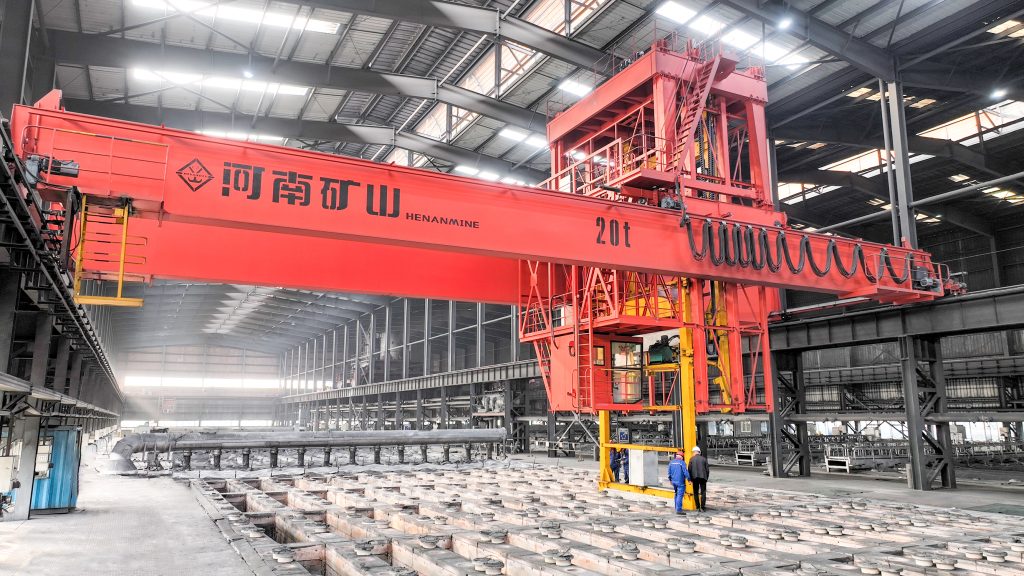
  • 35-Ton RMG Enquiries: State the Load Basis and Rail-Terminal Layout

    35-Ton RMG Enquiries: State the Load Basis and Rail-Terminal Layout

    Technical guide

    35-Ton RMG Enquiries: State the Load Basis and Rail-Terminal Layout

    A rail-terminal crane needs the capacity definition and container service described clearly. Provide the track, stacking and vehicle interfaces so a proposed RMG configuration can be reviewed against the working layout.

    Henan Mine CraneTechnical guide · Updated 2026Crane selection, project scope and operating requirements
    RMG crane manufacturer
    RMG crane manufacturer
    Project planning notes

    Key points for this crane project.

    1. How Do Rail Terminals Manage High-Density Container
    2. What Role Does a 35t RMG Crane Play in Intermodal
    3. How Does Automated Stacking Change RMG Crane
    Read the technical guide

    How Do Rail Terminals Manage High-Density Container Stacking?

    The high-density stacking management of railway terminal containers is the core index to measure the logistics operation capacity of the hub. Unlike open port depots, railway depots are limited by track layout, transshipment routes, and site area. They need to complete the orderly storage and rapid retrieval of large quantities of containers in a limited space and connect with public railway transshipment. The traditional manual operation mode has long been unable to adapt to the needs of high-throughput operations, and the core operational difficulties are concentrated in four scenarios.

    Container transfer between rail and yard

    Container transshipment between the railway and the yard is the core link of terminal logistics, and it is also the link that is most prone to efficiency bottlenecks. In conventional railway terminal operations, containers need to complete the whole process of unloading train carriages, yard transfer, fixed-point storage, and on-demand loading. Traditional hoisting equipment has low positioning accuracy and slow operation pace, which cannot achieve seamless connection between the track and the yard. In the manual operation mode, the alignment of a single transfer takes a long time, and it is prone to problems such as container offset and misplaced placement, which not only lengthens the operation cycle of a single box, but also leads to long-term occupation of track loading and unloading spaces, and the turnover efficiency of train carriages is greatly reduced.

    Multi-row stacking requirements

    In order to improve the land utilization rate of modern railway hubs, a multi-row intensive stacking mode is generally implemented, which puts forward extremely high requirements for the operating span, stacking accuracy, and spatial adaptability of hoisting equipment. It is difficult for manual control equipment to accurately control the spacing and height of multiple rows of stacking, and it is prone to problems such as box extrusion, stacking skew, and insufficient channel reservation. There are both safety risks and standardization. Large-scale intensive storage cannot be achieved.

    Yard congestion during peak periods

    Holidays and peak freight seasons are the high incidence of railway terminal congestion, and they are also the biggest pain points for yard operation and maintenance. During peak periods, large quantities of containers are concentrated in the port and transshipment, and the efficiency of manual operations lags behind, which will directly cause chain problems such as yard storage saturation, blockage of transshipment channels, and retention of public railway vehicles. On the one hand, disordered stacking leads to a waste of effective storage space in the yard. Obviously, the site is not saturated, but there is no available storage space. On the other hand, the response to manual dispatching is slow, the sequence of container retrieval and transshipment is chaotic, and the moving lines of trucks and trains cross and conflict, causing the overall throughput of the terminal to be paralyzed.

    What Role Does a 35t RMG Crane Play in Intermodal Logistics?

    In view of the pain points of high-density stacking at railway terminals and public railway intermodal transport, Henan Mine Crane manufactured 35t automated RMG crane, relying on the hard-core advantages of rated 35-ton lifting load, precise track travel, and intelligent control system, is perfectly adapted to the standard 20-foot, 40-foot, and 45-foot container loading, unloading and storage requirements, and has become the core hub equipment in the multimodal transport logistics system. Its precise, automated, and collaborative operation mode completely solves the problems of low efficiency, chaotic storage, and frequent congestion in traditional depots, and comprehensively upgrades the railway terminal logistics operation system.

    Rail-to-yard container transfer

    The 35t RMG crane is equipped with a dedicated track travel system, which can run smoothly along the fixed track of the railway loading and unloading line, accurately covering the track loading and unloading area and the yard storage area, and realizing zero-distance seamless transfer between the railway carriage and the yard. Compared with traditional hoisting equipment, its track travel has no offset, no deviation, and the alignment accuracy is greatly improved, which can quickly complete the unloading and warehousing of train containers and the loading and unloading of yard containers. It completely solves the problem of track loading and unloading space and slow car turnover, greatly improves the efficiency of freight transportation on railway trunk lines, and adapts to large-volume container centralized transit operation scenarios.

    Precise container stacking

    Precise stacking is the core advantage of the Henan Mine Crane manufactured 35t RMG crane, and it is also the key to achieving high-density storage in the yard. Relying on intelligent positioning system and spreader calibration technology, the equipment can accurately control the placement, spacing and height of the container, and strictly avoid problems such as box collision, skew, and misalignment.

    Coordinated truck and rail handling

    The core of railway multimodal transport is the co-transfer of public railways. The 35t RMG crane can be perfectly adapted to the two-way operation needs of trains and freight trucks, so as to realize the efficient linkage of public railway logistics. The operating scope of the equipment can cover both the railway loading and unloading track and the truck transfer area at the same time. There is no need to replace the equipment and adjust the operating line, so the two-way two-way cargo transfer operation between the train, the yard, and the truck can be completed. The automation system can intelligently schedule operating processes, effectively avoid cross-conflicts between public railway operations, connect trunk railway transportation and short-distance road distribution in an orderly manner, and completely solve the problems of disjointed public railway operations, chaotic scheduling, and vehicle retention in traditional depots, and comprehensively open up multimodal transport logistics links.

    How Does Automated Stacking Change RMG Crane Operations?

    Traditional RMG cranes rely on manual control, manual scheduling, and manual inspection. They have low operating efficiency, large errors, high safety risks, and are extremely dependent on operator experience. The landing of automated stacking technology has completely reconstructed the operating mode of the 35t RMG crane, realized unmanned operation, intelligent scheduling, and digital control, fundamentally improved the operating accuracy, efficiency and stability of the equipment, and adapted to the operation and maintenance standards of modern smart railway terminals.

    Stacking sequence management

    Relying on the terminal intelligent logistics management system, the Henan Mine Crane manufactured 35t automated RMG crane can realize the intelligent overall management of the stacking sequence. The system can synchronize core data such as cargo arrival time, cargo type, turnover priority, and transportation destination in real time, and automatically plan the optimal storage location and retrieval sequence, following the operating principle of “first in, first out, heavy down and light up, nearby storage, and rapid retrieval”.Automatically avoid the problems of wrong stacking, random stacking, and mixed stacking, while reducing the invalid operations of container turning and moving containers in the later stage, greatly reducing the energy consumption and time costs of operation and maintenance, and making the whole process of yard storage and transshipment orderly and controllable.

    Remote operator control

    The new remote control mode completely subverts the traditional on-site operation mode. The operator does not need to board the plane to operate, and can control multiple 35t RMG cranes in real time through a remote terminal in the central control room. The system is equipped with high-definition real-time image transmission, remote attitude control, emergency braking and other functions, supporting single-person and multi-machine collaborative operation, greatly reducing labor costs. At the same time, remote operations avoid the safety risks of high-altitude operations and heavy-duty hoisting sites, and improve the operating environment. In night operations, bad weather operations, and high-intensity operation scenarios during peak periods, the remote control mode can maintain a stable operating state and ensure the uninterrupted operation of the terminal for 24 hours.

    Real-time equipment monitoring

    The 35t automated RMG crane is equipped with a full set of Internet of Things monitoring modules, which can realize real-time digital monitoring of the operating status of the equipment. The system collects core data such as equipment travel speed, lifting height, load status, motor temperature, braking system, and track status throughout the process, and uploads it to the smart terminal platform in real time. In the event of overload, offset, equipment failure, abnormal track and other problems, the system will automatically give early warning, real-time alarm and trigger safety interlock protection to avoid safety accidents in time. At the same time, operation and maintenance personnel can predict equipment loss through background data, carry out maintenance and overhaul in advance, reduce equipment failure and downtime, and greatly improve equipment operation stability and attendance.

    How Should RMG Crane Layouts Be Planned for Terminal Capacity?

    The site layout planning of RMG cranes directly determines the storage capacity, operating efficiency and throughput capacity of railway terminals. Unreasonable layout will lead to limited operating range of equipment, conflict of moving lines, and waste of space. Even if the equipment has excellent performance, it will not be able to maximize its operating value. Scientific layout planning needs to be designed in all directions in combination with railway track parameters, stacking requirements, transportation lines, and site expansion requirements.

    Rail gauge and stacking lanes

    The track gauge and the number of stacking channels are the basic core of layout planning. It is necessary to strictly match the railway standard gauge parameters to ensure that the RMG crane travel track is adapted in parallel with the railway freight track to avoid the transfer obstacles caused by the misalignment of the track. At the same time, according to the average daily throughput of the terminal and the container storage stock, the number of stacking channels and channel spacing are reasonably planned. Conventional scenarios can be adapted to 6+1 and 7+1 multi-channel layout, taking into account the needs of multi-row storage and vehicle traffic. The layout of the channel needs to be clearly zoned and independent of moving lines, and distinguish between heavy box areas, empty box areas, special box areas, and turnover box areas, so as to avoid the problem of chaotic stacking in the layout and improve the level of standardized operation of the site.

    Crane span and stacking height

    The crane span and stacking height directly determine the space utilization rate of the yard. The stacking height can be flexibly planned according to site load-bearing, security standards, and operating requirements, and supports 5-6 layers of high-rise stacking, greatly increasing the storage capacity per unit area.

    Truck access and transfer zones

    The core of public railway intermodal transport is the coordination of moving lines. In the layout plan, standardized truck passage areas and transit connection areas need to be reserved separately, and truck entry and exit channels, stopping points, and loading and unloading areas need to be clarified. Ensure that the operating scope of Henan Mine Crane manufactured RMG crane can fully cover the railway track area, the yard storage area, and the truck transit area, so as to achieve seamless connection between the three areas. At the same time, the width of vehicle traffic and the distance between stops are rationally planned to avoid congestion of trucks and intersections of moving lines during peak periods, ensure efficient and orderly transit of public railways, and improve the overall turnover efficiency.

    Yard expansion considerations

    The logistics throughput of railway terminals continues to grow, and the layout planning needs to take into account the current practicality and future expansion. Sufficient expansion space needs to be reserved for track laying, equipment foundation, and channel planning to support the later addition of stacking channels, the addition of RMG equipment, and the expansion of transit areas. Priority is given to the use of modular layout design, without the need for large-scale transformation of the site foundation, equipment upgrading and site expansion can be completed, the cost of late transformation can be reduced, and the terminal logistics capacity can be continuously upgraded and iterated with freight demand.

    What Affects the Performance of a 35t Automated RMG Crane?

    The operating performance, stability and service life of the 35t automated RMG crane directly affect the overall operating efficiency of the railway terminal. Equipment performance is affected by multiple core parameters. Only by accurately controlling the key influencing factors and doing a good job in equipment selection, commissioning, and operation and maintenance can the value of equipment operations be maximized and the efficient and stable operation of the terminal be guaranteed.

    Spreader compatibility

    The adaptability of the spreader is the core factor that determines the versatility of the equipment operation. The high-quality 35t RMG crane needs to be equipped with adjustable universal spreaders, which are fully adapted to 20-foot, 40-foot, and 45-foot standard containers, and are compatible with some special container loading and unloading needs. The spreader needs to be equipped with automatic calibration, sway control, and precise box locking functions, and the span and locking point can be automatically adjusted according to the size of the box, so as to eliminate problems such as unstable gripping, box shaking, and loading and unloading failures caused by improper adaptation of the spreader. The more adaptable spreader system can greatly broaden the operation scene of the equipment and improve the stability and versatility of the operation.

    Travel and hoisting cycles

    The efficiency of the travel and lifting cycle directly determines the throughput of the equipment's single-day operation. The travel speed, lifting speed, start-stop response speed, and smoothness of the equipment jointly affect the operation cycle of a single box. Henan Mine Crane supply high-quality 35t RMG crane adopts a frequency conversion speed control system, which starts and stops smoothly and without impact, and the travel and lifting movements are smoothly connected, which can greatly shorten the invalid operation time. The stable cycle operation ability can ensure that the equipment does not get stuck or fail for long-term and high-frequency operations, and continuously outputs efficient operation capabilities, which are suitable for the terminal's 24-hour continuous operation requirements.

    Positioning accuracy

    The millimeter-level precise positioning ability cannot only improve the space utilization rate of the yard, but also reduce secondary operations such as turning and moving boxes, reduce equipment energy consumption and cargo loss, and greatly improve operational safety and eliminate hoisting collisions.

    Safety interlocking systems

    The safety interlock system is the core barrier between the stable operation of equipment and the safe production of the site. The 35t automated RMG crane is equipped with a full set of intelligent safety interlock systems, including overload protection, limit protection, anti-collision protection, emergency braking, track failure interlock, personnel intrusion early warning and other multiple protection functions. The various systems are linked and coordinated to monitor operational risks in real time.

    How Can a 35t RMG Crane Be Customized for Different Rail Terminals?

    There are significant differences in site size, track layout, freight type, and operating requirements of different railway terminals, and standardized equipment cannot be fully adapted to personalized operation scenarios. Henan Mine Crane manufactured35t RMG crane supports a full range of customized transformation, and can tailor exclusive intelligent stacking solutions according to the actual working conditions of the terminal, accurately adapting to the operating needs of various railway hubs, logistics parks, and multimodal transport bases.

    Span and stacking height

    According to the space and storage needs of different sites, the equipment span and stacking height can be customized. Small terminals and compact depots can choose small and medium-span models, which are suitable for narrow-channel and low-row stacking scenarios. The stacking height can be flexibly adjusted according to the site's load-bearing standards, security requirements, and storage capacity requirements to achieve multi-layer high-density storage, accurately match the space utilization needs of different sites, and maximize the value of the site.

    Rail layout and cantilever design

    Combining the existing track layout, site boundaries, and transfer lines of the terminal, the exclusive track laying plan and cantilever structure design can be customized. For single-sided track operation scenarios, a single cantilever structure can be configured. For the scene of double-sided public railway intermodal transport, a double-cantilever design can be used to expand the coverage of the operation. At the same time, the layout of the equipment travel track can be optimized according to the terrain, track spacing, and boundary restrictions of the site, and it can be adapted to different scenarios such as the renovation of old sites and the planning of new hubs. There is no need to significantly change the existing site facilities to achieve efficient equipment adaptation.

    Automation and control integration

    According to the progress of the intelligent upgrade of the terminal, the automation and control system can be customized in stages. The traditional retrofit terminal can be configured with a semi-automatic system, with remote control and semi-automatic positioning functions, to complete the intelligent upgrade at low cost. The intelligent new terminal can be equipped with a fully automated unmanned operating system and connected to the terminal's intelligent logistics platform to realize the whole process of unmanned operations such as automatic scheduling, automatic stacking, automatic inspection, and data synchronization. At the same time, it can integrate functions such as data monitoring, video surveillance, intelligent early warning, and remote operation and maintenance on demand to adapt to the needs of intelligent operations at different levels, and help railway terminals gradually complete the intelligent logistics upgrade.

    Henan Mine Crane

    The 35t automated RMG rail gantry crane is the core equipment to solve the high-density storage, efficient transportation, public railway collaboration, and intelligent operation and maintenance of modern railway terminals. It has completely cracked the industry pain points of frequent congestion in traditional depots, low space utilization, lagging operating efficiency, and high labor costs. Through precise automated stacking, intelligent sequence management, remote digital control, and scientific site layout adaptation, the operational efficiency and storage capacity of railway multimodal transport can be improved in all directions.

    At the same time, relying on the flexible customization capabilities of Henan Mine Crane Factory, the 35t RMG crane can be adapted to various types of railway terminals, large, medium and small, and different working conditions of old and new sites, taking into account practicality, economy and foresight. It has become the optimal solution for the intelligent upgrading, throughput expansion, cost reduction and efficiency of railway logistics parks, and it is also the core just-needed equipment for the large-scale development of smart railway hubs in the future.

    Discuss the crane arrangement for your project.

    A rail-terminal crane needs the capacity definition and container service described clearly. Provide the track, stacking and vehicle interfaces so a proposed RMG configuration can be reviewed against the working layout. Share the load, available drawings, working cycle and site conditions with Henan Mine Crane so the required configuration and supply boundary can be discussed.

    Related crane configurations

    Rail-Mounted Gantry (RMG)

    View product parameters
    Lifting capacity: 35 t, 40.5 t, 50 tSpan: 18 – 35 mLifting height: 12.3 – 21 m

    Use an RMG for container transfer along a fixed rail layout. Select the lifting arrangement, yard coverage and positioning controls from the container flow and stacking requirements.

    Rail-Mounted Container Gantry Crane

    View product parameters
    Lifting capacity: 35 t, 40.5 t, 50 tSpan: 18 – 35 mLifting height: 12.3 – 21 m

    Handle containers along a fixed yard runway with a rail-mounted container gantry crane. Coordinate the spreader, stacking geometry, rail layout and transfer positions around the terminal operation.

    Updated 2026 · Henan Mine Crane
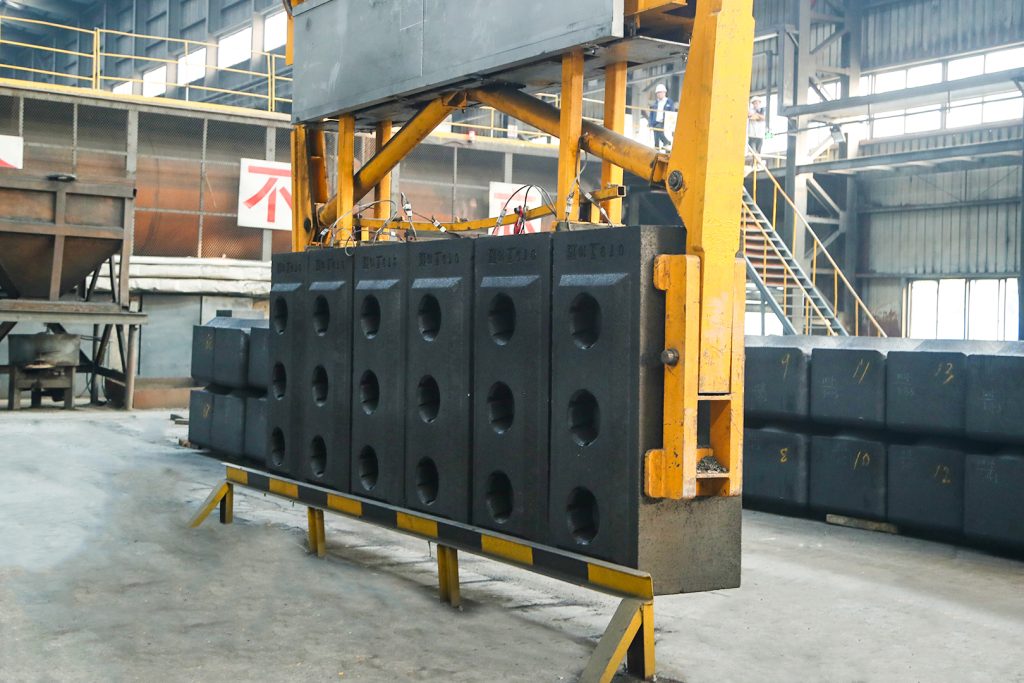
  • 32-Ton Gantry Crane Projects: Outdoor Heat and Component Requirements

    32-Ton Gantry Crane Projects: Outdoor Heat and Component Requirements

    Technical guide

    32-Ton Gantry Crane Projects: Outdoor Heat and Component Requirements

    The operating environment needs to be defined alongside the load and geometry. Describe solar exposure, local conditions and the work cycle so the supplier can explain the component and protection arrangements proposed for the site.

    Henan Mine CraneTechnical guide · Updated 2026Crane selection, project scope and operating requirements
    32-Ton Gantry Crane Projects: Outdoor Heat and Component Requirements
    Henan Mine Crane lifting equipment
    Project planning notes

    Key points for this crane project.

    1. Why 32t Heavy Gantry Cranes Need Advanced Heat
    2. What Makes a 32t Heavy Gantry Crane Suitable for
    3. Forced Air Cooling for 32t Heavy Gantry Cranes
    Read the technical guide

    Why 32t Heavy Gantry Cranes Need Advanced Heat Management

    Source of heat production for crane operations

    During the normal operation of a 32-ton heavy-duty gantry crane, the core power and control components such as the lifting motor, operating motor, braking system, frequency converter, electric control cabinet and lifting mechanism continue to produce heat due to energy loss, which is the main endogenous heat source of the equipment.

    In high-frequency operation scenarios such as mining, heavy industry, and infrastructure, the crane's high-load, short-intermittent work system has insufficient heat dissipation time, and the heat load is significantly increased. The continuous accumulation of heat can easily form a vicious circle, causing motor insulation aging, drive module capacity reduction, control system failure, braking performance degradation and other failures, shortening the service life of the equipment.

    Influence of environmental high temperature working conditions

    The ambient temperature is an important external factor restricting the heat dissipation efficiency of the crane. The higher the ambient temperature, the smaller the heat dissipation margin of the equipment, and the safe operating temperature difference of the parts is continuously compressed. At room temperature, the equipment can quickly dissipate operating heat through natural convection.

    The impact of the high temperature environment on the core components of the crane covers the whole system:

    1. Motor equipment: insufficient heat dissipation margin causes the motor to fail to run at full load, forced to reduce capacity, the winding insulation layer accelerates aging, and it is prone to short circuit and burn-out failure.;
    2. Frequency conversion drive system: power electronic components are highly sensitive to temperature, and high temperature will trigger the drive to protect itself, causing problems such as power drop, shutdown and error reporting, and interrupting the operation process.;
    3. Electrical control cabinet: the PLC, relays, power supplies, terminal blocks and other components in the cabinet are aging at high temperature, and the failure rate is soaring, which is prone to signal disorders and control failures.;
    4. Braking system: mechanical brake friction parts and energy-consuming brake resistors slow down the heat dissipation, and the braking heat declines after continuous operation, the braking accuracy decreases and the wear increases, and there are major safety risks.;
    5. Cables and connecting devices: The high temperature resistance of the cable insulation layer decreases, the oxidation of the joints accelerates, and the contact resistance increases, which can easily cause heat generation, leakage, and line failure.

    Solar radiation

    The outdoor 32-ton gantry crane needs to withstand the additional heat load caused by solar radiation, which is the difference from the core working conditions of indoor equipment.

    The enclosed electrical cabinet is most significantly affected by high temperature exposure. The cabinet has a small volume and high sealing properties, and it is easy to accumulate heat.

    What Makes a 32t Heavy Gantry Crane Suitable for Harsh Outdoor Conditions

    Adapt to the needs of heavy-duty operations

    The equipment is strictly designed, tested and verified in accordance with ISO, FEM, and national standard lifting equipment standards. It should be emphasized that the rated tonnage is not the only criterion for equipment selection.

    The 32-ton gantry crane suitable for outdoor high-temperature and high-frequency operations is different from the indoor light-load model. The equipment will be optimized and designed according to the actual hoisting load, operating frequency, and working system level.

    If the type is selected only by tonnage and the working conditions, working system, and heat dissipation design are ignored, the equipment will overheat frequently and fail frequently under outdoor heavy-duty conditions, and it will not be able to meet the needs of long-term stable operation. The high-quality 32-ton heavy-duty gantry crane can realize all-round adaptation of tonnage, structure, heat dissipation, and working conditions.

    Heavy duty steel structure

    The 32-ton heavy-duty gantry crane adopts a box beam welded steel structure, with the main girder and outriggers as the core load-bearing components. The structure has high structural stiffness and uniform load distribution, which can effectively disperse heavy-duty pressure and control structural deformation to ensure hoisting accuracy and operation safety.

    The steel structure of the equipment is specially optimized for outdoor working conditions, with a margin for thermal expansion reserved and equipped with anti-corrosion coating, which can resist temperature difference deformation, wind and rain corrosion and ultraviolet aging, stabilize the equipment structure, and avoid the problems of travel, track and hoisting deviations caused by deformation.

    Lifting trolley system

    The lifting hoist and trolley operation system are the core actuators of the equipment.

    The trolley can walk smoothly laterally along the main girder, covering the entire working span. The travel and hoisting system is equipped with frequency conversion and speed regulation, which supports flexible start-stop, smooth acceleration and deceleration, effectively eliminates heavy-duty impact loads, reduces mechanical losses, and greatly improves the stability and safety of heavy-duty hoisting while ensuring operating efficiency.

    Stable movement of outdoor global area

    The cart travel mechanism consists of an end beam, a heavy-duty travel wheel, a travel motor, and a deceleration mechanism, which can drive the entire crane to move vertically along the track to achieve a wide range of operation coverage. The equipment adopts a travel wheel set adapted to heavy loads, with strong load-bearing capacity and excellent wear resistance, and can withstand the weight of the whole machine and the heavy lifting load for a long time.

    The equipment travel system is adapted to outdoor working conditions, and the amount of compensation for temperature deformation is reserved to eliminate track deformation and wheel-rail stagnation caused by temperature difference; the key transmission components are sealed and protected in place, which can be dustproof and waterproof to ensure that the equipment walks stably and does not deviate or get stuck.

    Forced Air Cooling for 32t Heavy Gantry Cranes

    The working principle of forced air cooling

    Forced air cooling is an active heat dissipation technology for the heat generated in the crane, which is different from natural convection heat dissipation. Natural ventilation relies on the passive principle of hot air floating to dissipate heat. The heat dissipation efficiency is low, and it is greatly restricted by the environment and equipment structure, which cannot meet the heat dissipation needs of high-frequency and heavy-duty operations.

    Forced air cooling relies on the fan and air duct system, actively directs the air supply, and continuously purges the core heating components such as the motor, control cabinet, and drive module to quickly take away the operating heat. The technology is not limited by the installation angle and ambient temperature, and can accurately regulate the wind speed and air volume, with high heat transfer efficiency and stable and long-lasting heat dissipation.

    Core components

    Forced air cooling is mainly aimed at the directional heat dissipation of the crane's high-temperature and high-precision core components, and the core protection objects are divided into two categories.:

    1. Power components: lifting motors, travel motors and brake resistors have high operating loads and large thermal loads. Heat is easy to accumulate and temperature rises during operation. Long-term high temperature conditions will gradually lose equipment performance.
    2. Electrical precision components: frequency conversion drive devices, electrical control cabinets and various types of enclosed power electronic devices have poor temperature resistance and are extremely sensitive to high temperature environments. They are the core high-frequency parts of crane high-temperature failures.

    Temperature control logic

    Forced air cooling increases the air flow rate around the core components, breaks the dead angle of heat accumulation, quickly replaces the high-temperature air around the equipment, and continuously takes away the heat generated by the operation. Under long-term heavy-duty continuous operation conditions, the working temperature of the motor, drive, and control cabinet can be stably controlled to avoid continuous heat accumulation.

    Through precise temperature control, the equipment can effectively reduce the impact of thermal stress, reduce the fatigue loss caused by the alternation of hot and cold parts, avoid equipment capacity reduction, shutdown, and aging caused by high temperature, ensure the temperature stability under all working conditions, and greatly extend the service life of electrical and power components.

    Dust protection design

    Dust, sand, and suspended particulate matter are common in outdoor industrial and mining scenes. Simple air-cooled systems can easily inhale impurities, causing air ducts to be clogged, components to accumulate ash, and circuits to be shorted. Therefore, the forced air cooling system adapted to outdoor cranes is integrated with an integrated dust-proof design.

    The system is equipped with a high-precision filter air inlet structure, and the air vents are optimized for anti-reverse irrigation, which can be effectively dustproof and waterproof. With regular operation and maintenance cleaning, while ensuring heat dissipation efficiency, precision electrical components can be fully protected, and the dual protection of heat dissipation and dustproof can be realized.

    Solar Heat Shielding for Outdoor 32t Gantry Cranes

    Core principle

    Solar thermal insulation protection is a passive thermal protection technology that does not require electric drive, has no moving parts, and has extremely low operation and maintenance costs. The core principle is to block and reflect solar energy through a protective structure before the heat of solar radiation is transmitted to the core components of the equipment, reduce the external heat input of the equipment from the source, solve the problem of outdoor exposure and heat accumulation, and form a complementary heat dissipation system with active air cooling.

    Special thermal insulation protection

    The electrical control cabinet is the key part of solar thermal insulation protection. Through the installation of customized awnings and protective tops, the equipment directly blocks the cabinet and isolates the high-intensity direct sunlight at noon; optimizes the installation orientation of the cabinet to avoid the direction of perennial exposure and reduce the area of radiation heating.

    At the same time, the cabinet adopts a light-colored reflective coating and a high-thermal insulation sealing plate to reduce the solar energy absorption rate and avoid the cabinet from absorbing heat and heating up. The complete protection plan can effectively prevent abnormal heating in the cabinet caused by direct sunlight, and ensure that the electrical components in the cabinet are always in the standard operating temperature range.

    Motor and drive device

    The exposed lifting motors, travel motors, and frequency conversion drive modules are all equipped with special thermal insulation shields, which can effectively block the heat of solar radiation. The protective structure adopts hollow ventilation design. While achieving sunshade and heat insulation, it does not block the motor's own heat dissipation air duct, and does not form a closed heat accumulation space, so as to avoid the reverse of the protective structure and cause poor heat dissipation of the equipment, taking into account the dual needs of heat insulation and ventilation.

    Operation room and control platform protection

    The 32-ton gantry crane equipped with an operation room greatly reduces the solar thermal radiation in the operation room by installing a sunshade roof, heat-insulating glass, and sun-proof enclosures. It cannot only protect indoor control equipment and circuits from high temperature aging, but also improve the high temperature operating environment of operators, improve the comfort and safety of long-term operations, and avoid operating errors caused by high temperature fatigue.

    Key Design Considerations for a 32t Heavy Gantry Crane

    Adaptation of ambient temperature and working conditions

    The equipment design needs to accurately match the extreme highest and lowest temperatures of the site, while taking into account the temperature difference between day and night and the temperature changes in the four seasons. Strengthen thermal management configuration in high-temperature areas, optimize lubrication and start-up performance in low-temperature areas, and customize heat dissipation and protection plans according to on-site temperature parameters to ensure the stable operation of equipment throughout the season.

    Job level matches work system

    According to the frequency of equipment hoisting, the length of daily operation, and the load interval, the corresponding crane work level is matched. For heavy-duty and high-frequency working conditions, high-level working system models need to be selected, with a strengthened cooling system, to avoid long-term overload and super-thermal load operation of the equipment, and to eliminate fatigue loss and high temperature failure.

    Electrical box protection

    The electrical box of outdoor equipment adopts a high IP protection level design, which takes into account the needs of dustproof, waterproof and sun protection. It is equipped with a dust-proof, ventilated and heat-dissipating structure to avoid heat accumulation in the air while sealing and protecting; the cable is made of temperature-resistant, weather-resistant, and anti-aging materials to optimize the wiring and sealing structure to eliminate line failures caused by high temperature and dust.

    Outdoor wind resistance and stability

    According to outdoor wind conditions, the equipment optimizes the wind resistance design of the steel structure, and is equipped with rail clamps and windproof anchoring devices. In the non-operating state, the position of the equipment can be fixed to resist the impact of strong winds, avoid equipment slippage and offset, and ensure the safety of the equipment during non-operating hours.

    Thermal deformation compensation

    Large steel structures will undergo thermal expansion and contraction with temperature changes. Through professional engineering calculations, the equipment reserves the margin for structural deformation, optimizes the fixed structure of the track and the articulated nodes, compensates for the dimensional changes caused by the temperature difference, avoids wheel-rail offset, structural stress accumulation, component stagnation and other problems, and guarantees the long-term operating accuracy of the equipment.

    Applications of 32t Heavy Gantry Cranes

    In the outdoor operation scene of the mine, the dust is large, the temperature is high, and the hoisting frequency is high. Perfect thermal management and dustproof design can be perfectly adapted to the harsh working conditions of the mine to ensure the continuous operation of the equipment.

    Oil and gas engineering field

    Oil and gas plants and offshore supporting facilities need to be frequently hoisted with pump bodies, heat exchangers, pipeline components, and maintenance equipment, and the operating environment is high temperature, corrosive, and dusty. The 32-ton heavy-duty model is equipped with a professional thermal protection system, which can adapt to complex outdoor working conditions and ensure the safe and stable operation of the equipment.

    Photovoltaic power station scene

    Photovoltaic power plants are unobstructed in the whole area and have extremely strong solar radiation, which is one of the scenarios with the highest demand for thermal protection. The equipment is mainly used for the installation and operation and maintenance of heavy equipment such as transformers, inverters, and power stations. The exclusive solar thermal insulation + forced air cooling system can completely solve the problem of exposure to high temperature and ensure the long-term stable operation of the equipment.

    Heavy manufacturing plant

    In steel structure processing, machinery manufacturing, and heavy industry assembly workshops, large steel components, mechanical assemblies, and welding components need to be hoisted. The heavy-duty capacity of the 32-ton gantry crane is sufficient, and the cooling system can be adapted to the continuous operating conditions of the workshop to improve production efficiency.

    Infrastructure projects

    For bridge construction, municipal infrastructure, and large-scale engineering construction sites, steel structures, prefabricated components, and heavy engineering machinery need to be hoisted. The equipment is operated in the open air and the working conditions are complex. With excellent outdoor protection and thermal management performance, the 32-ton heavy-duty gantry crane can be adapted to various field construction scenarios.

    Maintenance of 32t Gantry Cranes in High-Heat Environments

    Regular inspection of cooling fan and filter

    Regularly check the operating status of the air-cooled fan, detect whether the air volume and speed are normal, and investigate faults such as fan bearing caton and motor heating; according to the dust concentration on the site, regularly clean and replace the dust-proof filter, dredge the air duct, and avoid dust accumulation and blockage affecting the heat dissipation efficiency.

    Special inspection of electrical cabinets

    Normalize the internal temperature and circuit status of the control cabinet, and investigate the hidden dangers of over-temperature such as cable insulation aging, terminal ablation, cabinet discoloration, odor, etc.; Infrared temperature measuring equipment can be used to accurately locate high temperature points to avoid electrical failures in advance.

    System temperature monitoring

    Monitor the operating temperature of the motor, brake resistance, and brake mechanism in real time during operation, compare the temperature data of the standard operating conditions, and immediately investigate problems such as poor ventilation, excessive load, and aging of components in the event of abnormal heating.

    Overhaul of solar protection structure

    Regularly check the integrity and installation firmness of the awning and heat insulation shield, and clean up the surface area of dust and debris in time to ensure full coverage of heat insulation and no blind spots. At the same time, ensure that the ventilation passage is unimpeded and avoid the protective structure hindering the heat dissipation of the equipment.

    Maintenance of structure and walking parts

    Regularly check the working conditions of wheels, rails, end beams, welds, and fastening accessories, and speed up the frequency of grease replacement in high temperature environments to avoid high temperature grease failure; calibrate the track accuracy to compensate for the position deviation caused by thermal deformation, and ensure the stability of the travel system.

    How to Improve the Service Life of a 32t Heavy Gantry Crane

    1. According to the high-temperature and dusty open-air operating environment of the site, special accessories adapted to the working conditions are selected to ensure that the equipment configuration is highly adapted to the on-site environmental parameters and improve the environmental adaptability of the equipment.
    2. The integrated thermal management scheme of forced air cooling and solar thermal insulation is adopted to regulate the temperature of the equipment in both directions, so as to realize the precise control of the operating temperature of the equipment around the clock and normalization, and effectively suppress the accumulation of heat.
    3. Regularly clean up the cooling air ducts and dust and debris inside the equipment, clear the cooling channels, ensure the efficiency of ventilation and heat dissipation, and eliminate the safety hazards caused by heat accumulation in the equipment from the source.
    4. Install a temperature monitoring and alarm device to monitor and collect operating temperature data of core components in real time, predict abnormal high temperature working conditions in advance, and realize early warning and prediction of high temperature faults and active protection.
    5. Strictly implement the preventive maintenance system of equipment, encrypt the frequency of special inspections of electrical and cooling systems during the high-temperature operation season, and control the operating conditions of the equipment in real time to ensure the stable operation of the equipment.
    6. Standardize equipment operating standards, and strictly prohibit long-term continuous operation under overloaded and over-specified working conditions, so as to avoid long-term high thermal stress of the equipment, delay the aging and loss of parts, and extend the service life of the equipment.
    7. Keep the supporting structures such as heat dissipation, ventilation, heat insulation and protection of the equipment intact, and it is strictly forbidden to block or remove the protective accessories without permission to ensure the stable and normal operation of the entire thermal management system.

    Customization Options for 32t Heavy Gantry Cranes

    Mechanical structure customization

    The equipment span, lifting height, and operating speed can be customized according to the needs of the site, and the single/double beam structure and single/double hook configuration can be adapted, and the trolley structure and travel parameters can be adjusted as needed to accurately match the operating space and hoisting requirements of various sites.

    Thermal protection system customization

    Support customized forced air cooling system of the whole machine, special ventilation and heat dissipation equipment for the cabinet, solar shading and heat insulation structure, optional motor special protection, high-precision temperature sensing and monitoring system, and special enhanced configuration for high temperature exposure conditions.

    Environmental protection customization

    It can be upgraded with high-level dust-proof, waterproof, and anticorrosive configurations to adapt to sand and dust, coastal, and corrosion conditions; windproof anchoring and rail clamping devices can be installed to optimize outdoor wind resistance; remote control system and constant temperature operation room can be optional to improve operation convenience and safety.

    How to Select the Right 32t Heavy Gantry Crane

    When users purchase and select models, they can provide complete working condition parameters according to four categories to facilitate manufacturers to accurately customize the equipment structure and thermal protection plan. The core parameters are classified as follows:

    Basic mechanical parameters

    It is the core basic parameter of the 32-ton heavy-duty gantry crane.

    Operating condition parameters

    The operating condition parameters include the operating work system and the working level of the whole machine, which are used to define the operating intensity of the equipment, clarify the frequency of equipment load, operating time and limit operating conditions, and determine the heavy-duty tolerance and continuous operating ability of the equipment.

    At the same time, the working condition parameters are the core basis for matching the cooling system, drive system and main structure configuration of the equipment. They can be tailored to different working modes such as high-frequency heavy-duty and intermittent operations, effectively avoiding heat accumulation and component overload loss under high-load operations.

    On-site environmental parameters

    It covers on-site environmental indicators such as the temperature change interval of the work site, the installation scene of the equipment (indoor/outdoor), the intensity of sunlight exposure, and the concentration of dust and sand. It is the core basis for the customization of the outdoor protection configuration of the equipment.

    Compared with indoor equipment, outdoor gantry cranes have more complex working conditions and are affected by high temperature, temperature difference, dust and sand all year round. Customized protection configurations such as heat dissipation, heat insulation, dustproof, and anticorrosion are matched according to environmental parameters, which can effectively improve the adaptability and stability of outdoor operation of equipment.

    Supporting customized parameters

    It includes personalized parameters such as on-site power supply voltage, power supply stability, equipment control methods, and exclusive heat dissipation and heat insulation customization requirements, and is adapted to the differentiated operating conditions of different construction sites.

    The power supply conditions on the construction site are uneven, relying on exclusive control modes and customized thermal protection schemes, which can be adapted

    Discuss the crane arrangement for your project.

    The operating environment needs to be defined alongside the load and geometry. Describe solar exposure, local conditions and the work cycle so the supplier can explain the component and protection arrangements proposed for the site. Share the load, available drawings, working cycle and site conditions with Henan Mine Crane so the required configuration and supply boundary can be discussed.

    Related crane configurations

    Explore crane product families and technical parameters ↗

    Updated 2026 · Henan Mine Crane
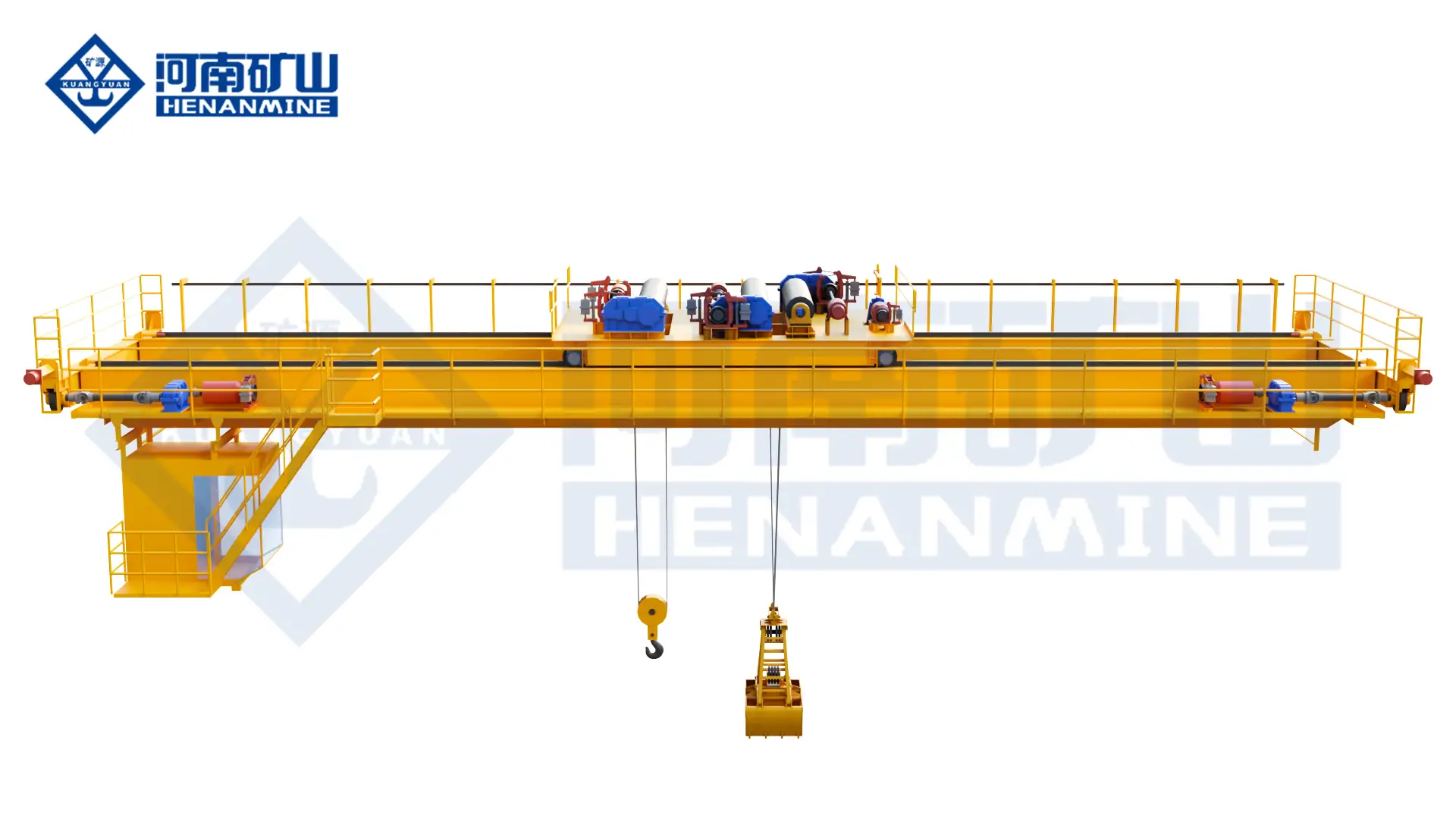
  • Carbon-Block Stacking Crane at a Shandong Baking-Furnace Project

    Carbon-Block Stacking Crane at a Shandong Baking-Furnace Project

    Project Deliveries

    Carbon-Block Stacking Crane at a Shandong Baking-Furnace Project

    A carbon-block stacking overhead crane supplied by Henan Mine Crane entered service at a new carbon-material baking-furnace project in Shandong. Its box-girder bridge, single trolley and two guided grippers are arranged for moving and stacking carbon blocks.

    Orange 20 t carbon-block stacking overhead crane above a block-handling line
    The box-girder stacking crane over the carbon-block handling area.

    Two grippers for block transfer and stacking

    The project design uses two grippers with rigid guide columns and guide wheels. The grippers can operate independently or in a coordinated mode. The official photographs show the overhead crane above the handling line and the gripping assembly holding a group of blocks. A 20 t marking is visible on the photographed bridge; the applicable capacity for another project must be established from its complete load case.

    When specifying this equipment, provide block dimensions, individual and group weights, permitted contact areas, stacking height, pallet or furnace interface, transfer route and the required handling rate. Define how the grippers should retain the load if a block is uneven or displaced.

    Drive and electrical arrangement for the operating environment

    The published configuration includes variable-frequency drives for travel and hoisting, integrated drive units, alarms and a centralized electrical-control arrangement in a separate room with industrial recirculating air conditioning. Hoist limits, emergency switching and safety monitoring are part of the reported design.

    For a hot, dusty workshop, state ambient temperature, airborne dust, expected duty cycle, cleaning methods and enclosure requirements. Ask for drawings that identify the control-room boundary, cable and power route, access for maintenance and the exact alarms and interlocks offered.

    Compare proposals using a defined test plan

    Request a general arrangement, bridge and runway loads, gripper drawings, clamping-force setting, drive and control diagrams, inspection plan and spare-parts list. The factory and site tests should cover independent and coordinated gripping, representative blocks, positioning, limits, emergency stops and recovery from a fault. Agree the installation and commissioning scope before selecting the final crane configuration.

    Specify a Carbon-Block Stacking Crane

    Send the block size and weight, stacking pattern, throughput, workshop conditions and layout drawings for a project-specific proposal.

  • 32-Ton Overhead Cranes: Machinery Assembly and Hook-Coverage Inputs

    32-Ton Overhead Cranes: Machinery Assembly and Hook-Coverage Inputs

    Technical guide

    32-Ton Overhead Cranes: Machinery Assembly and Hook-Coverage Inputs

    Machinery assembly requires lifting support at defined work positions and orientations. Provide verified component information, attachments and bay dimensions so the proposed overhead crane can be assessed for the stated handling task.

    Henan Mine CraneTechnical guide · Updated 2026Crane selection, project scope and operating requirements
    Henan Mine Crane Grab And Hook Dual Purpose Crane
    Henan Mine Crane Grab And Hook Dual Purpose Crane
    Project planning notes

    Key points for this crane project.

    1. Key Specifications of a 32t Overhead Crane
    2. How 32t Overhead Cranes Support Heavy Machinery
    3. Heavy-Duty Design Features for 32t Cranes
    Read the technical guide

    Key Specifications of a 32t Overhead Crane

    Lifting height and span

    Henan Mine Crane manufactured 32t heavy-duty bridge crane adopts a standardized heavy-duty design and supports personalized customization of parameters to fully adapt to the working space requirements of heavy industry workshops of different specifications. The large-span operation design without dead ends does not require frequent adjustment of equipment positions, and can realize the lifting of heavy objects in the workshop, which perfectly matches the large-size and large-space assembly operation scenarios of heavy machinery.

    Hoist speed and travel speed

    In order to take into account the stability of heavy-duty operations and the accuracy of assembly operations, the 32t bridge crane is equipped with a graded speed-regulating crane system, which adopts a fast and slow two-speed control mode. The low-speed gear for heavy-duty lifting can achieve smooth alignment, eliminating the problem of shaking and offset of large hoisting. The high-speed gear can improve the efficiency of no-load and light-load transportation. The operating speed of the equipment cart and the operating speed of the trolley have been industrially optimized. They walk at a uniform speed without setbacks, start and stop without impact, effectively avoiding equipment shaking and workpiece bumps caused by speed mutations during heavy-duty movement, which not only guarantees the assembly accuracy of heavy-duty precision components, but also greatly improves the overall operation beat and adapts to the assembly-line heavy industry production model.

    Duty class and working frequency

    As a special equipment for heavy-duty industry, the core working level of the 32t heavy-duty bridge crane covers A5-A7 and is suitable for industrial operation scenarios of different intensities. Among them, the A5 level is suitable for conventional machinery manufacturing and intermittent assembly operations to meet the daily production needs of small and medium-sized production enterprises. The A6 and A7 high-level work systems are designed for high-intensity, high-frequency, and long-term continuous operation scenarios, and can be adapted to full-load production conditions such as steel processing, mass production and assembly of large-scale construction machinery, and metallurgical equipment manufacturing. The fatigue-resistant structure design of the equipment can withstand daily high-frequency start-stop, heavy-duty lifting and reciprocating travel, long-term continuous operation without trouble and no deformation, completely solving the problems of high-frequency heavy-duty operation of ordinary cranes, easy to lose, short life, and frequent failures, and perfectly adapts to the high-intensity production rhythm of the heavy industry.

    Power supply and control system

    It can be directly connected to the power supply system of mainstream domestic industrial plants. At the same time, it supports the customization of localized power supply parameters according to overseas working conditions and adapts to industrial production scenarios in many regions of the world. The control system is equipped with a PLC intelligent integrated module, which integrates three modes of remote control, ground operation handle, and cab control, which can be flexibly adapted to different operating environments and operating habits. The system has one-key start-stop, precise speed regulation, point memory, and fault self-test functions. It is simple to operate and responsive, greatly reducing the threshold for manual operation. At the same time, it is equipped with complete circuit protection, overload and power failure, and emergency braking circuits to ensure the stable and safe operation of the equipment in all directions from the power supply and control levels.

    How 32t Overhead Cranes Support Heavy Machinery Assembly

    Handling engines and large components

    The core difficulty of heavy machinery assembly lies in the hoisting and transportation of overweight components such as large mainframes, engines, racks, counterweights, and large housings. Such components have large weight, large size, and precise structure, which require extremely high load capacity and stability of lifting equipment. The 32t heavy-duty bridge crane has sufficient rated load and can easily undertake the overall hoisting of the core large parts of various heavy machinery without splitting the components, effectively avoiding the accuracy deviation and working time loss caused by splitting and secondary assembly. The stable lifting and travel performance of the equipment can eliminate shaking and collision during the hoisting of precision parts, protect the surface accuracy and internal structural integrity of the components, and perfectly adapt to the hoisting process of core components of heavy equipment such as excavators, cranes, large fans, and industrial machine tools.

    Positioning heavy assemblies

    Heavy machinery assembly has strict requirements for alignment accuracy, and millimeter-level alignment deviations will lead to problems such as unqualified assembly of the whole machine and equipment operation failure. Relying on a precise speed control system and a stable mechanical structure, Henan Mine Crane manufactured 32t bridge crane can realize fretting alignment and precise positioning under heavy load. By fine-tuning the speed and accurately controlling the travel stroke, the operator can accurately place several tons or even dozens of tons of heavy-duty components in the assembly station and tooling card slot, and accurately complete the docking, installation, fixing and other processes. Compared with traditional cranes, its micro-motion control performance greatly reduces the alignment error of heavy-duty assembly, effectively improves the assembly accuracy of heavy-duty cranes, reduces the rework rate, and guarantees the quality of products leaving the factory.

    Moving equipment between workstations

    The heavy industry production line is an assembly-line operation mode, and the workpieces need to be frequently transferred between different stations such as the assembly area, welding area, grinding area, testing area, and finished product area. Relying on the advantages of long-span global operation, the 32t heavy-duty bridge crane can cover the transfer range of the entire production line, and realize the rapid transfer of heavy semi-finished products and finished equipment across stations. The equipment walks smoothly and has a stable load, and can move at a uniform speed throughout the load, without the need for midway unloading and secondary hoisting, greatly simplifying the material flow process of heavy industry production. At the same time, it can adapt to the needs of long-distance and high-frequency transportation in the workshop, break down the operating barriers between stations, ensure the continuous and smooth operation of the production line, and eliminate material accumulation and process stagnation.

    Improving assembly efficiency and safety

    At the efficiency level, the 32t heavy-duty and large-load design can realize the overall hoisting and transshipment of a single large piece, replacing the traditional small-tonnage crane operation mode of multiple split hoisting, greatly shortening the assembly working hours of a single heavy-duty equipment and increasing the overall production capacity of the production line. Intelligent speed regulation, precise positioning, global operation and other performance, to further optimize the operation process, reduce invalid operation time, and help enterprises reduce costs and increase efficiency. At the safety level, the equipment is equipped with multiple protection mechanisms to avoid safety risks such as overturning, shaking, falling, and overload damage of heavy-duty hoisting throughout the process. At the same time, the standardized airborne operation mode does not require ground-assisted hoisting equipment, reducing the hidden dangers of cross-operation by on-site operators, and improving the operation safety of heavy machinery assembly workshops in all directions, and reducing the probability of safe production accidents in enterprises.

    Heavy-Duty Design Features for 32t Cranes

    Reinforced bridge structure

    The main body of the 32t heavy-duty bridge crane is made of Q345B high-strength alloy steel, which has higher strength, toughness, fatigue resistance and deformation resistance than ordinary carbon steel. The whole machine adopts a double-beam bridge-type reinforced structure, and the main girder, end beam, and beam are treated by integrated welding, annealing, and stress reduction processes to eliminate structural deformation and weld cracking caused by long-term heavy-duty operations. The bridge structure has been mechanically optimized and designed with uniform force and strong carrying capacity. The overall structure is strong and durable, with strong seismic resistance, and can adapt to the harsh working conditions of dust, heavy-duty, and high-frequency operations in heavy industry workshops, and the service life of the equipment is greatly improved.

    High-capacity hoist and trolley

    The equipment is equipped with industrial-grade high-capacity hoists and reinforced travel trolleys to provide strong support for core heavy-duty operating components. The hoist has been strengthened and upgraded with heavy loads. The internal gears, bearings, wire ropes and other core accessories are all made of wear-resistant and high-strength materials, which can be adapted to 32-ton heavy-duty lifting operations for a long time. It is not easy to wear and break, and its carrying performance is stable and reliable. The travel trolley adopts a four-wheel balanced load-bearing design, the travel wheels are wear-resistant and compression-resistant, and the operation is stable without caton and deviation. At the same time, the hoist has a high degree of integration with the trolley, a compact structure, and a high space utilization rate.

    Stable load handling

    In view of the pain points of the industry where heavy-duty hoisting is easy to shake and offset, Henan Mine Crane manufactured 32t heavy-duty bridge crane is equipped with multiple stable load designs. The equipment adopts flexible start-stop and stepless speed regulation technology to completely solve the problems of large start-stop impact and obvious operation shaking of traditional cranes, and realize smooth and no jitter in the whole process of heavy-duty lifting, travel and braking. At the same time, with the precise alignment of the trolley and the synchronous operation technology of the trolley, the swing of heavy objects can be effectively suppressed, and the heavy objects can still be kept stably floating in the air even under the conditions of large span and high lifting height.

    Safety and overload protection

    Safety protection is the core design highlight of the 32t heavy-duty bridge crane. The equipment is equipped with a full range of multiple safety protection systems to build a safety barrier for the whole process of operation. The core configuration includes overload limiter, lifting height limiter, travel stroke limiter, emergency stop button, buffer anti-collision device, power-off protection device, etc. The limit device can accurately limit the lifting height and travel stroke to avoid over-range collisions and equipment damage. The buffer device can weaken the impact of travel and protect the safety of equipment and workpieces. At the same time, the equipment is equipped with sound and light alarm devices, which provide real-time early warning during operation, and ensure the safety of personnel, equipment, and workpieces in all directions.

    Why Choose a Custom 32t Overhead Crane?

    Customized lifting and travel speeds

    The requirements for hoisting and travel speed in different heavy industry assembly processes vary greatly. Large-scale transportation pursues high efficiency, and precision assembly pursues low-speed precision. Customized models can be customized according to the process needs of the enterprise, the lifting speed, the travel speed of the cart, and the travel speed of the trolley can be individually set to achieve accurate adaptation of speed and speed. For the batch transfer process, the operating speed can be adjusted to improve the operating efficiency. For precision alignment and fine assembly processes, heavy-duty bridge cranes can adjust and lower the micro-movement speed to improve the alignment accuracy. Speed customization can be perfectly adapted to the differentiated production technology of enterprises, taking into account production efficiency and assembly quality, and adapting to diversified operating scenarios.

    Integration with existing equipment

    The customized 32t bridge crane can be deeply connected to the company's existing production equipment, tooling systems, and intelligent production lines to achieve seamless adaptation. Customized transformation can be carried out according to existing track specifications, power supply systems, control systems, and automation equipment interfaces, without the need for large-scale transformation of existing facilities in the plant, greatly reducing the cost of production line upgrading and transformation. At the same time, it can be equipped with auxiliary systems such as intelligent positioning, remote monitoring, automatic inspection, and material docking to adapt to the needs of intelligent and automated production, and help enterprises quickly upgrade their traditional production lines, realize equipment collaboration, and improve the overall level of automated production.

    Long-term operating value

    Compared with standardized equipment, customized equipment has stronger adaptability to working conditions and longer service life, and has outstanding long-term operating value. The tailor-made structure, parameters, and configuration are fully in line with the production conditions of the enterprise, the equipment does not need to be overloaded, there is no adaptability loss, the incidence of failure is greatly reduced, and the late operation and maintenance costs and downtime losses are significantly reduced. At the same time, customized bridge cranes can be adapted to the future production capacity upgrading and process iteration needs of enterprises, and have stronger working condition compatibility. There is no need to replace equipment in a short period of time, effectively extend the service cycle of equipment, and save equipment procurement, operation and maintenance, and upgrade costs for long-term production and operation of enterprises, and improve asset utilization.

    32t Overhead Crane Applications in Heavy Industry

    • Heavy machinery manufacturing: In the heavy machinery manufacturing industry, 32t heavy-duty bridge cranes are the core production equipment, which are widely used in the assembly, transportation and commissioning processes of large machine tools, industrial pumps, fan equipment, mining machinery, large reducers, etc. It can easily complete the hoisting and precise alignment of overweight core components such as equipment racks, mainframes, counterweights, and large housings, ensure the assembly accuracy of heavy machinery, and support mass production and standardized production operations. It is an indispensable core lifting equipment for heavy machinery manufacturers.
    • Construction equipment assembly: The construction machinery assembly scene has large loads, heavy components, and high accuracy requirements. The 32t bridge crane is perfectly adapted to the production and assembly of excavators, loaders, cranes, road rollers, shield machines, etc. Engineering equipment. It can efficiently complete the hoisting, docking and installation of oversized and overweight components such as construction machinery engines, boom arms, frames, track assemblies, counterweights, etc., to ensure the stability and accuracy of the structural assembly of large-scale engineering equipment, and greatly improve the production efficiency and factory quality of construction machinery.
    • Industrial equipment production: In the field of large-scale industrial equipment production, this equipment is suitable for the production and processing of electric power equipment, metallurgical equipment, chemical equipment, new energy equipment and other products. It can complete the workshop transfer, assembly, hoisting and placement of heavy workpieces such as large tanks, towers, unit assemblies, heat transfer equipment, industrial kiln components, etc., adapt to the multi-process and multi-station production process of complete sets of equipment, and help the large-scale and standardized production of complete sets of industrial equipment.
    • Steel and metal fabrication: The steel and metal structure processing industry has harsh working conditions and high operating intensity. With the advantages of high strength and heavy load, loss resistance and high stability, the 32t heavy-duty bridge crane is widely used in the hoisting, transshipment, stacking and processing of steel billets, steel plates, large steel structural parts, bridge components, and metal profiles. The high-work-level model can be adapted to the high-temperature, high-dust, high-frequency and heavy-duty operating environment of steel workshops to meet the needs of continuous steel structure processing and production. It is the core heavy-duty equipment of steel structure factories and metallurgical workshops.

    32t Overhead Crane vs. Other Heavy-Lifting Solutions

    Overhead crane vs. gantry crane

    Both 32t bridge cranes and gantry cranes are high-capacity heavy-duty equipment, and the core differences are reflected in the installation scenario and operating scope. The bridge crane is installed on the pillars and roof rails of the workshop. The whole machine is suspended on the top of the workshop, which does not take up ground space, and the workshop space utilization rate is higher. It is suitable for the normal assembly operations of indoor fixed factories, with high operating accuracy and strong stability. The gantry crane relies on the support of the ground gantry column and is suitable for outdoor open-air sites and operation scenarios without plant coverage. The site is more adaptable but the space utilization rate and alignment accuracy are slightly lower.

    Overhead crane vs. mobile crane

    Mobile car cranes and crawler cranes are equipped with the advantages of strong mobility and off-site operation, and are suitable for temporary operations such as field construction, temporary hoisting, and installation of off-site equipment. However, the low operating accuracy and poor stability of mobile lifting equipment cannot meet the needs of precision assembly and precise alignment of heavy machinery, and the high cost of equipment leasing and operation and maintenance cannot be adapted to the normalization, high frequency, and assembly line operations of the workshop. The 32t bridge crane is a special equipment for fixed workshops. It has high operating accuracy, strong stability, and continuous high-frequency operation. It is suitable for long-term, standardized and refined production in factories.

    When a 32t overhead crane is the better choice

    In the scenario of normalized production of fixed factories, precision assembly of heavy machinery, high-frequency assembly line transportation, long-term continuous heavy-duty operations, and limited workshop space to maximize the use of space, Henan Mine Crane manufactured 32t heavy-duty bridge crane has absolute advantages. Compared with gantry cranes, its indoor operation accuracy is higher, the space occupied is smaller, and the operation is more stable. Compared with mobile cranes, their operating efficiency is higher, their accuracy is stronger, their operation and maintenance costs are lower, and they are suitable for continuous production. For companies with heavy machinery assembly, steel structure processing, and industrial equipment mass production as their core businesses, 32t bridge cranes are the most cost-effective and adaptable heavy-duty hoisting solution with stable, accurate, efficient, and durable characteristics.

    Henan Mine Crane

    With its powerful heavy-duty load-bearing, stable structural design, accurate handling performance and complete safety protection, the 32t heavy-duty bridge crane is perfectly adapted to the assembly, precision alignment and high-frequency transfer operations of various large-scale components in the heavy industry. Henan Mine Crane Factory can flexibly adapt to various plant working conditions, support personalized customization, and fully match various production scenarios such as machinery manufacturing, steel structure processing, and engineering equipment assembly. Henan Mine Crane Factory Crane has strong durability, low operation and maintenance costs, and high operational safety. It can continuously optimize production line efficiency and reduce production losses. It is a high-quality choice for heavy industry enterprises to upgrade heavy-duty hoisting equipment and improve production capacity and operation quality.

    Discuss the crane arrangement for your project.

    Machinery assembly requires lifting support at defined work positions and orientations. Provide verified component information, attachments and bay dimensions so the proposed overhead crane can be assessed for the stated handling task. Share the load, available drawings, working cycle and site conditions with Henan Mine Crane so the required configuration and supply boundary can be discussed.

    Related crane configurations

    Grab And Hook Dual Purpose Crane

    View product parameters
    Lifting capacity: 5 – 16 tSpan: 10.5 – 31.5 mLifting height: 6 – 20 m

    Switch between bulk-material pickup and hook lifting with a grab-and-hook overhead arrangement. Define each load case, the grab type and the changeover procedure for the working area.

    Single-Girder Bridge Crane

    View product parameters
    Lifting capacity: 1–20 tSpan: 7.5–31.5 mLifting height: 6, 9, 12, 18, 24 or 30 m; capacity-dependent

    Use an LDA single-girder bridge and electric hoist for general workshop material handling. Select the lifting capacity, runway geometry and hoist duty around the building and load.

    Updated 2026 · Henan Mine Crane
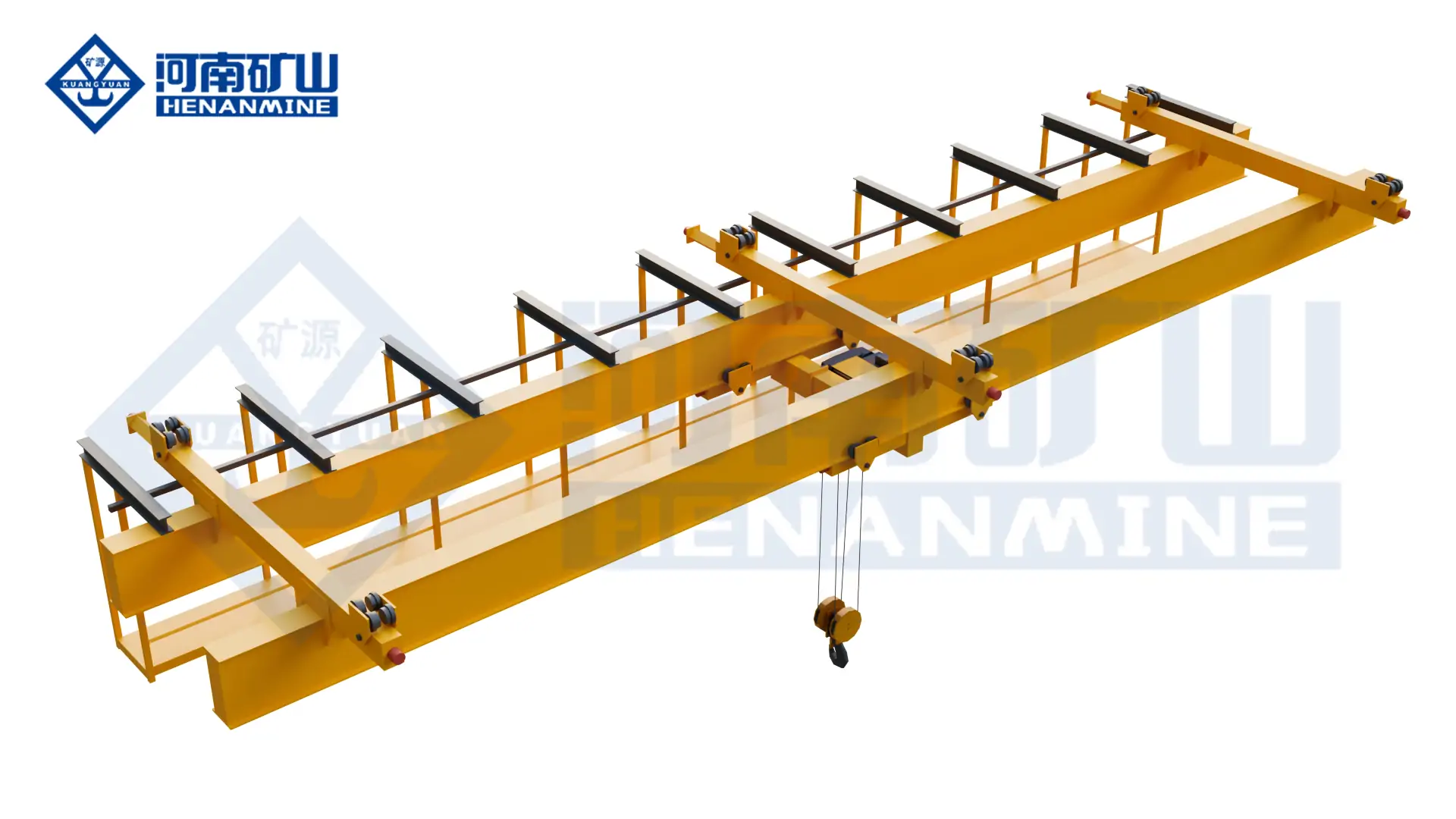
  • 32-Ton Gantry Cranes: Fabrication-Yard Routes and Support Conditions

    32-Ton Gantry Cranes: Fabrication-Yard Routes and Support Conditions

    Technical guide

    32-Ton Gantry Cranes: Fabrication-Yard Routes and Support Conditions

    A fabrication yard needs equipment matched to its products and transfer paths. Describe the load geometry, working area and runway or ground information so the gantry proposal can be reviewed for the actual material flow.

    Henan Mine CraneTechnical guide · Updated 2026Crane selection, project scope and operating requirements
    Henan Mine Crane Multi Support Double Girder Underhung Crane
    Henan Mine Crane Multi Support Double Girder Underhung Crane
    Project planning notes

    Key points for this crane project.

    1. What Makes Material Handling Challenging in
    2. How Is a 32t Gantry Crane Designed for Heavy-Duty
    3. How Can a 32t Gantry Crane Improve Fabrication Yard
    Read the technical guide

    What Makes Material Handling Challenging in Fabrication Yards?

    Material handling operations in steel structure and heavy industry processing plant areas are different from ordinary light material handling, and the whole process is accompanied by large weight, large volume, high precision, and high-risk operation characteristics. Most factories have problems such as poor layout, poor adaptability of heavy-duty equipment, high labor-assisted costs, and large hoisting errors, which have long led to low operating efficiency, delays in construction, and frequent safety hazards. The following are the three core problems of material handling in the processing plant area, and they are also the main bottlenecks in the improvement of production capacity of most enterprises.

    Heavy steel component transfer

    The core processing materials in the processing plant area are mainly heavy-duty steel structural parts, large steel plates, prefabricated racks, and heavy-duty accessories. Such heavy-duty steel components are not only heavy in weight, but also bulky, irregular in shape, and have a high probability of center of gravity offset. Traditional light-duty lifting equipment has insufficient load and unstable force, and cannot complete the overall lifting and transportation. The components can only be split and transported in segments, which greatly increases the operating process and labor costs. At the same time, splitting and handling can easily cause paint wear and structural deformation of steel components, resulting in material loss and rework costs. In addition, the inertia of heavy-duty steel components is large during the transportation process, and the braking performance of ordinary lifting equipment is insufficient.

    Limited yard handling space

    After long-term operation in most mature processing plant areas, equipment placement, material stacking, and production line layout have been basically cured, and the reserved space available for lifting operations is very limited. Traditional automobile hoisting operations require a wide range of rotation space, docking sites and avoidance areas. The fuselage occupies a large area and has a high degree of redundancy in the operating radius. It is impossible to operate flexibly in a narrow factory area. Problems such as difficult equipment entry, difficult hoisting and positioning, and narrow material transfer channels frequently occur. However, ordinary single-girder cranes have a small span and limited coverage, which cannot take into account the transportation needs of large-area material stacking areas and processing areas in the factory.

    Heavy load positioning requirements

    Steel structure processing, component assembly, equipment assembly and other processes require extremely high positioning accuracy for heavy-duty materials. For operations such as splicing, alignment installation, and precise placement of steel components, the deviation needs to be controlled at the millimeter level. Once the positioning is offset, it will directly lead to component assembly failure, weld misalignment, and equipment installation failure, resulting in high rework costs. Due to insufficient structural rigidity, jitter in operation, and low speed regulation accuracy of ordinary lifting equipment, the material shaking amplitude is large during heavy-duty take-off, landing and translation, and precise alignment cannot be achieved. At the same time, manual-assisted alignment is not only time-consuming and laborious, but also increases the safety risk of personnel working at close range, greatly reduces the fault tolerance rate and operating efficiency of hoisting operations, and has become the core obstacle to high-precision heavy industry processing and production.

    How Is a 32t Gantry Crane Designed for Heavy-Duty Operations?

    Henan Mine Crane 32t heavy-duty gantry crane is a heavy-duty lifting equipment specially developed for heavy-duty, high-frequency, high-precision, and narrow-space operating conditions in the processing plant area. The structure, force system, and lifting configuration of the whole machine are optimized and designed around the needs of heavy-duty operations, completely solving the pain points of insufficient load, poor stability, inaccurate positioning, and weak adaptability of traditional lifting equipment. From the main girder structure, load distribution to lifting configuration, all dimensions are adapted to high-frequency heavy-duty handling scenarios in the factory area to ensure long-term continuous and stable operation.

    Double girder structure

    The core of the 32t heavy-duty gantry crane adopts a double-beam box-type main girder structure, which is different from the simple structure of a single-beam gantry crane. The symmetrical force design of the double beam is matched with high-strength Q345B load-bearing steel, and the whole machine has stronger rigidity, anti-distortion and anti-deformation capabilities. Outstanding. The double-beam structure can effectively distribute the heavy-duty pressure, make the force of the whole machine more uniform, greatly improve the service life of the equipment, and reduce the structural loss caused by long-term heavy-duty operations. At the same time, the double-beam structure provides a stable operating track for the electric hoist and the travel mechanism, which can realize the smooth operation of the cart and trolley in both directions, and the operation coverage is more balanced.

    Load distribution and stability

    The core safety guarantee of heavy-duty operations lies in the balanced distribution of load and the stability of the whole machine. The 32t heavy-duty gantry crane has been optimized by professional mechanical simulation and adopts a combination of rigid legs + flexible legs to support the structure. With a widened travel base and a non-slip track design, the grounding stability of the whole machine is greatly improved. The equipment evenly distributes the heavy load to the main girder, end beam, outriggers and track foundation to avoid structural damage and fuselage tilt caused by local force overload. At the same time, the equipment is equipped with a frequency conversion speed control system to achieve smooth start-stop and stepless speed change, completely solve the problem of inertial shaking at the moment of heavy-duty start-stop, and make the material take-off, landing and translation smooth and controllable throughout the process.

    Hoist capacity and duty class

    Henan Mine Crane 32t heavy-duty gantry crane is equipped with industrial-grade heavy-duty electric hoist, the rated lifting capacity accurately matches the 32-ton heavy-duty working conditions, and sufficient safety redundancy is reserved, which can stably carry all kinds of heavy-duty steel components and equipment loads. The working level of the whole equipment reaches the A5-A6 industrial heavy-duty level, which is specially adapted to the 24-hour high-frequency continuous operation conditions in the processing plant area, which is different from the intermittent working mode of ordinary light cranes, and can meet the needs of high-intensity operations such as uninterrupted hoisting of assembly lines, batch material transfer, and repeated alignment assembly. The lifting and lifting speed, the operating speed of the trolley, and the travel speed of the trolley can be adjusted as needed, taking into account the stability of heavy loads and operating efficiency.

    How Can a 32t Gantry Crane Improve Fabrication Yard Productivity?

    For the processing plant area, the lifting and handling efficiency directly determines the overall production capacity. Henan Mine Crane Factory Supply 32t heavy gantry crane is not a simple hoisting equipment, but the core hub of material flow in the plant area. By optimizing the operation layout, shortening the handling time, and standardizing the hoisting process, it can open up the production flow blocking points in all directions, help enterprises realize the multiple values of cost reduction, efficiency, quality, and safety, and help the large-scale and standardized production of the factory area.

    Optimizing yard layout

    The 32t heavy-duty gantry crane can customize the span and lifting height according to the size of the plant site and the distribution of the working area. The equipment runs along a fixed track without occupying the core working space of the plant, which is perfectly adapted to the narrow and rugged layout of the plant. The equipment spans the processing area, material stacking area, and assembly area, which can realize cross-regional and full coverage hoisting operations, completely changing the disadvantages of single-point operation and limited coverage of traditional equipment. Enterprises can rely on gantry cranes to fix the operation trajectory, re-plan the material stacking, workpiece processing, and finished product transfer areas, sort out clear material flow channels, and eliminate problems such as material stacking, channel congestion, and equipment position conflicts, so that the layout of the factory area is more regular, the production movement line is more reasonable, and the site utilization rate is greatly improved, laying the foundation for continuous and large-scale production.

    Reducing material handling time

    Traditional light-duty lifting equipment needs to split heavy-duty components and carry them back and forth multiple times. A single hoisting takes a long time and the process is cumbersome, which seriously slows down the pace of production. The high-frequency and efficient hoisting mode completely solves the problems of waiting for materials, material accumulation, and lagging construction period at the station, greatly improves the overall production turnover rate of the factory, and helps enterprises shorten the project delivery cycle and improve the ability to accept orders.

    Coordinating lifting operations

    Large-scale processing plant areas often have multi-station and multi-process synchronous operation scenarios, and lifting operations are messy and chaotic, and chaotic scheduling can easily lead to job conflicts and efficiency losses. Henan Mine Crane 32t heavy-duty gantry crane has a standardized operating trajectory and a clear operating range. It can realize single-person standardized operation and is equipped with precise positioning functions. It can efficiently cooperate with all processes such as cutting, welding, assembly, and finished product transportation. The equipment can be flexibly scheduled according to the production rhythm, accurately matching the material supply and component assembly needs of each station, realizing the seamless connection of each process, and avoiding inefficient problems such as process disconnection and job waiting.

    32t Gantry Crane Price and Customization

    There is no fixed and unified selling price for 32t heavy-duty gantry cranes. The price of equipment is mainly affected by multiple factors such as customized parameters, working condition configuration, installation and transportation, and after-sales support. Most regular manufacturers support personalized customization services, which can be fully adapted to the site conditions, operating conditions and production needs of different factories. When purchasing, enterprises do not need to blindly pursue low prices. They need to combine their own working conditions and matching parameters to take into account equipment quality, adaptability and long-term use costs to maximize cost performance.

    Lifting capacity and span

    lifting capacity and track span are the core parameters that affect the price of 32t gantry cranes. On the basis of the standard 32-ton load, manufacturers can fine-tune the load redundancy according to user needs to adapt to special heavy-duty working conditions. The span of the equipment can be customized with different specifications of 10m-50m. The larger the span, the more materials are used for the main girder and the higher the structural process requirements, and the overall cost of the equipment will increase accordingly. At the same time, the lifting height is also a key customization parameter. The basic equipment with small span and standard lifting height is more cost-effective and suitable for conventional factory operations.

    Working environment and configurations

    The operating environment of different factories has greatly different requirements for equipment configuration, which directly affects the customized plan and purchase price. The 32t gantry crane operating at room temperature indoors can be configured with conventional anti-rust and electronic control, and the price is relatively close to the people. In outdoor open-air factories, coastal areas with high corrosion, windy sand, low temperature and cold working conditions, additional anti-corrosion coatings, waterproof electronic control systems, wind-resistant braking devices, low-temperature and cold-resistant accessories, etc. are required to improve the environmental adaptability of the equipment, and the cost of customization will increase. In addition, high-frequency heavy-duty operations can upgrade heavy-duty hoist, dual-brake system, and intelligent frequency conversion control system.

    Installation and delivery costs

    The overall landing cost of the 32t heavy gantry crane not only includes the cost of the equipment body, but also covers supporting costs such as transportation, on-site installation, track laying, commissioning and acceptance, and qualification reporting. The equipment has a large weight and a large volume. Special freight transportation is required for long-distance transportation. The transportation distance and mode of transportation directly affect the logistics cost. At the same time, complex factory sites require professional teams for basic construction, track calibration, equipment assembly and commissioning, and there are differences in installation difficulty, construction cycle, and labor costs. Although supporting services will cost a certain amount, they can avoid equipment failures, safety hazards and substandard acceptance caused by self-installation, and greatly reduce later operation and maintenance costs.

    How to Choose a Gantry Crane Manufacturer?

    32t heavy-duty gantry cranes are industrial heavy-duty special equipment. Equipment quality, process accuracy, adaptability and after-sales service are directly related to the safety of factory operations and long-term production efficiency. The qualifications, craftsmanship and services of gantry crane manufacturers on the market are uneven. When selecting models, enterprises should not only pay attention to the price. They need to focus on the manufacturer's production strength, quality control system, customization ability and after-sales guarantee, and choose a reliable source manufacturer to avoid equipment failure, poor adaptability, and after-sales insecurity from the root cause.

    Manufacturing and quality control

    High-quality production technology and strict quality control are the basis for the stable heavy-duty operation of the 32t gantry crane. Regular source manufacturers have complete special equipment production qualifications, standardized production workshops and a full set of processing equipment, from steel material selection, main girder welding, structural processing, machine assembly to factory inspection, the whole process follows the production standards of industrial heavy-duty equipment. High-quality manufacturers adopt fully automatic submerged arc welding technology, the main girder welds are uniform and full, and the structural strength is higher.

    Customized engineering support

    The site size, operating conditions, and production requirements of different processing plant areas are different, and standardized equipment is often not fully adapted. Professional customized engineering services are essential. High-quality gantry crane manufacturers have a professional engineering design team, which can survey the site free of charge, and combine the layout of the factory area, operating procedures, and environmental conditions to tailor span, lifting height, functional configuration, and protection solutions for users, and provide one-to-one exclusive solutions. At the same time, the structural design can be optimized according to special working conditions, and it can be adapted to complex scenarios such as narrow spaces, high-frequency operations, and corrosive environments to ensure that the equipment meets the production needs after landing and maximizes the operating efficiency.

    Installation and after-sales service

    The installation, commissioning and after-sales service of special equipment are the core guarantees for the long-term stable operation of the equipment. At the same time, a perfect after-sales service system is indispensable. Regular manufacturers provide long-term quality assurance, lifetime operation and maintenance, rapid fault response, parts supply, regular maintenance and other services. Equipment failures can be dealt with quickly on-site to minimize downtime losses. For manufacturers without after-sales guarantee, the response after equipment failure is lagging, accessories are difficult to find, and maintenance costs are high, which can easily lead to long-term downtime in the factory, which seriously affects the production schedule. The selection of enterprises needs to give priority to brand manufacturers with perfect after-sales system, good reputation and rich experience in the industry.

    Henan Mine Crane

    With its mature double-beam heavy-duty structure, stable load performance, accurate control experience and strong adaptability to working conditions, the 32t heavy-duty gantry crane perfectly solves the industry problems of heavy-duty steel component transportation, narrow space operation, high-precision alignment, and low-efficiency circulation in the processing plant area. It cannot only optimize the layout of the factory area, shorten the length of material handling, and improve the efficiency of production collaboration, but also adapt to various complex working conditions through personalized customization, taking into account operational safety and long-term cost reduction and efficiency. For steel structure processing and heavy industry manufacturing enterprises, choosing a 32t heavy-duty gantry crane adapted to working conditions, with reliable Henan Mine Crane Factory customization and after-sales guarantee, is the core measure to enhance the production capacity of the factory and strengthen market competitiveness.

    Discuss the crane arrangement for your project.

    A fabrication yard needs equipment matched to its products and transfer paths. Describe the load geometry, working area and runway or ground information so the gantry proposal can be reviewed for the actual material flow. Share the load, available drawings, working cycle and site conditions with Henan Mine Crane so the required configuration and supply boundary can be discussed.

    Related crane configurations

    Multi Support Double Girder Underhung Crane

    View product parameters
    Lifting capacity: 3 – 40 tSpan: 10 – 80 mLifting height: 6 – 30 m

    Use a multi-support double-girder underhung arrangement for wide-span working areas and large components. The building supports, lifting coverage and load distribution are designed together.

    Updated 2026 · Henan Mine Crane