Engineering · Manufacturing · Project support
info@hnksglobal.comWhatsApp +86 18836207779 ↗

Blog

  • Industrial Gantry Crane Buying: Choose the Handling Arrangement First

    Industrial Gantry Crane Buying: Choose the Handling Arrangement First

    Technical guide

    Industrial Gantry Crane Buying: Choose the Handling Arrangement First

    Begin with the cargo route and supporting site before selecting a preferred model. Compare the working envelope, movement system and duty requirements, then develop the crane and installation scope together.
    Henan Mine CraneTechnical guide · Updated 2026Crane selection, project scope and operating requirements
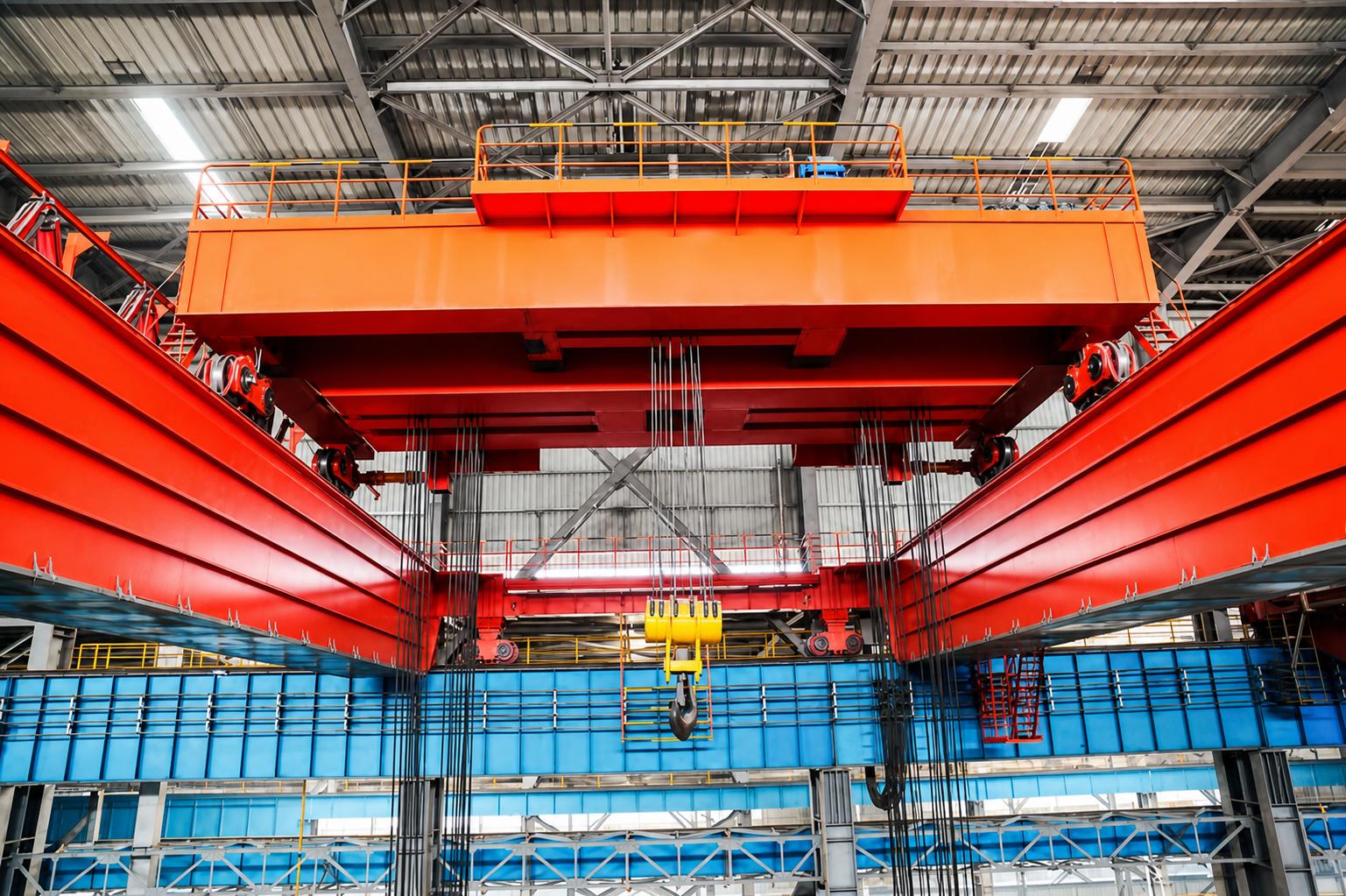
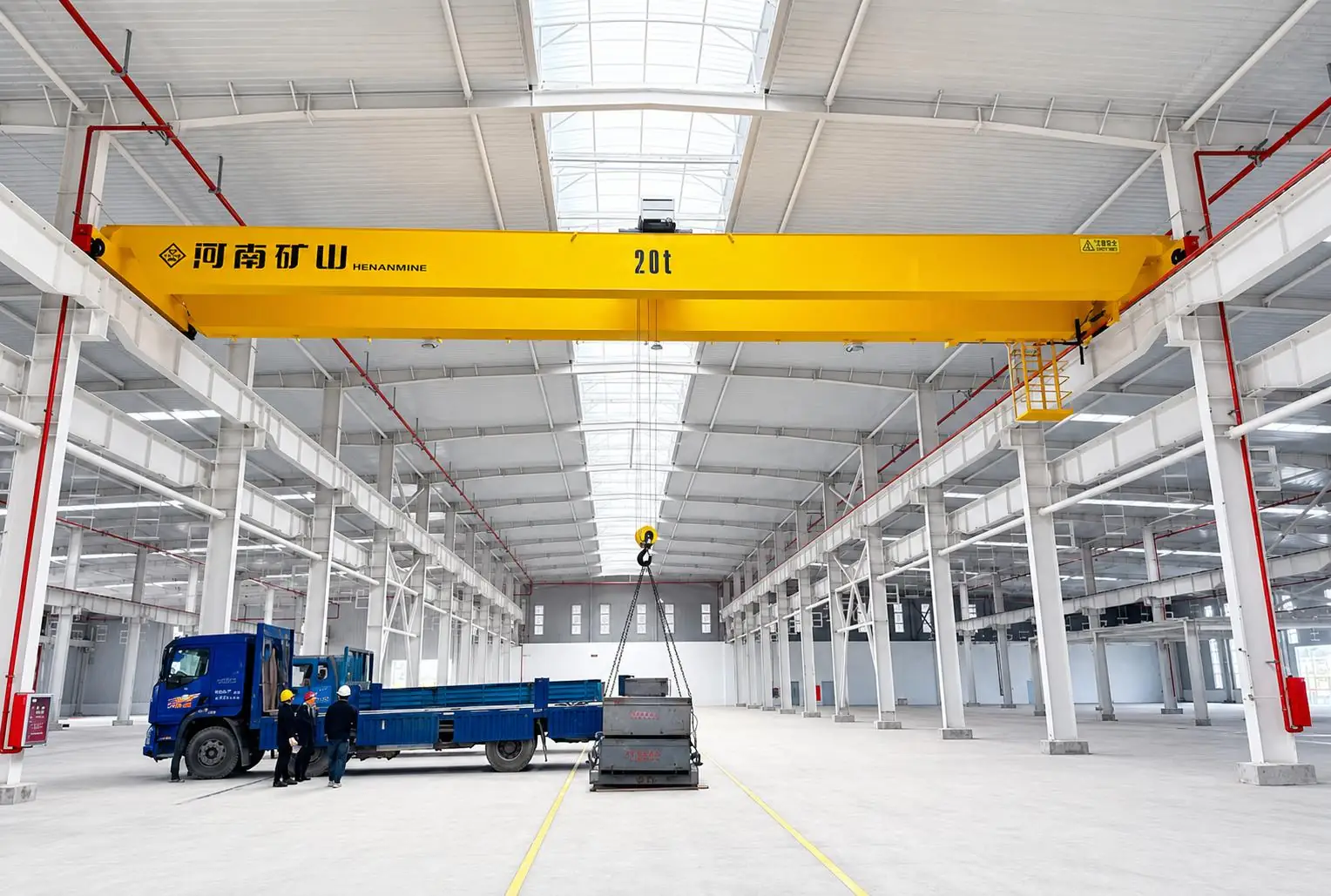
    Henan Mine Crane overhead crane inside a workshop bay
    Henan Mine Crane overhead crane inside a workshop bay
    Project planning notes

    Key points for this crane project.

    1. What Is a Gantry Crane?
    2. Main Types of Gantry Cranes
    3. Common Industrial Applications
    Read the technical guide

    What Is a Gantry Crane?

    Basic Definition

    Simply put, a gantry crane is a bridge-type lifting equipment with outriggers, the main girder through the two sides of the outriggers fixed to the ground or track, without relying on the plant building, can independently complete the lifting of heavy materials, horizontal handling operations.

    The biggest difference between it and ordinary lifting equipment is that it has a complete gantry structure – the main girder spans the working area, and the outriggers are fixed on the ground, which not only can realize a wide range of work coverage, but also can ensure the stability of lifting, which is suitable for all kinds of heavy materials handling.

    Key Structural Components

    The core structure of the gantry crane is not complicated, each component directly affects the operational performance, the procurement of these components, you can better judge the quality of the equipment.

    The main girder is the “skeleton” of the whole equipment, carrying the lifting load, but also determines the span of the crane and the lifting height of the core components, the material and process directly affects the load-bearing capacity of the equipment.

    Support legs are the “foundation”, symmetrically distributed on both sides of the main girder, responsible for transferring the weight of the machine and lifting load to the ground to ensure the stability of the equipment during operation and avoid tilting.

    The lifting mechanism (hoist/winches) is the “power core”, responsible for lifting and lowering the materials, with the trolley system, it can realize the horizontal movement of the load and complete the complete lifting operation.

    The running system is divided into rail type and tire type, which determines the crane’s moving method and directly affects the equipment’s adaptability; the electrical control system is the “brain”, controlling the accuracy and safety of all movements.

    Gantry Crane vs Overhead Crane

    Many buyers will confuse the gantry crane and overhead crane, in fact, the core difference between the two is the way of support, with a simple comparison table, you can quickly distinguish:

    Comparison TypeAdvantagesDisadvantagesSuitable Scenarios
    Single Girder vs Double GirderSingle Girder: Low costSingle Girder: Limited load-bearing capacity, suitable for light to medium-duty operations; Double Girder: High cost, complex installation and maintenanceSingle Girder: Workshop maintenance, small precast yards; Double Girder: Ports, shipbuilding, heavy-duty lifting
    RMG vs RTGRMG: High positioning accuracy, high stacking density, suitable for automation; RTG: Flexible, no track required, low site renovation costRMG: High infrastructure cost, limited mobility; RTG: Lower accuracy, lower stacking density than RMGRMG: Large container terminals; RTG: Small and medium-sized ports, temporary yards
    Rail Mounted vs Tire MountedRail Mounted: Stable, high precision; Tire Mounted: Flexible, strong adaptability, no track requiredRail Mounted: Limited mobility, high infrastructure investment; Tire Mounted: High ground requirements, fast wearRail Mounted: Fixed sites, high-frequency operations; Tire Mounted: Temporary sites, irregular layouts
    Gantry Crane vs Overhead CraneGantry Crane: Independent structure, strong outdoor adaptability; Overhead Crane: Depends on workshop, convenient for indoor operationsGantry Crane: High initial investment; Overhead Crane: Cannot be used outdoors, limited coverageGantry Crane: Outdoor, ports, yards; Overhead Crane: Workshops, indoor production lines

    Main Types of Gantry Cranes

    There are many types of gantry cranes, when purchasing, do not blindly follow the trend, the core is based on their own working conditions, according to the main girder design, moving mode, structure configuration to choose, different types of adaptable scenes vary greatly.

    By Girder Design

    According to the main girder design, it is mainly divided into single girder and double girder, which is the most basic classification when purchasing, and it directly determines the equipment’s carrying capacity and applicable scenarios.

    Its advantages are convenient installation, small space occupation, simple maintenance in the later stage, for the scene of not much load, not high frequency of operation, cost-effective, do not have to pay extra costs for the extra carrying capacity.

    It has better stability, and the lifting height and span can be flexibly customized. However, the manufacturing cost and deadweight are higher than single main girder, and the later installation and maintenance are slightly more difficult.

    By Mobility

    By mobility, gantry cranes are mainly divided into rail-type, tire-type and portable, the flexibility and adaptability of the three scenarios differ significantly, the procurement should be combined with the site conditions to choose.

    Rail-mounted gantry cranes (RMG), relying on special tracks laid on the ground, with a fixed trajectory and high positioning accuracy, are suitable for operational scenarios that require high-density stockpiling, such as automated yards in container terminals.

    Its running speed is stable, and it can work with automation system to realize unmanned operation, but the site transformation needs to pave the track, and the preliminary infrastructure investment is slightly higher, suitable for long-term fixed site operation.

    The tire gantry crane (RTG), free from track restrictions, relying on rubber tires to move freely on the level ground, great flexibility, no need to lay tracks, low site modification costs.

    Small and medium-sized ports, temporary container yards, prefabricated parts processing plants, are commonly used RTG, which can move across the box area, across the operating area, to adapt to the flexible adjustment of the site layout, but the positioning accuracy is slightly lower than the RMG.

    By Structural Configuration

    By structural configuration, there are three types of gantry, semi-gantry and cantilever gantry, the main difference lies in the structure of the outriggers and the scope of operation.

    Full gantry cranes, with complete outriggers on both sides and a main girder spanning the entire working area, have the widest working range and are the most commonly used type in industrial scenarios, suitable for large-area and large-scope lifting operations.

    Semi-gantry cranes, only one side of the outriggers, the other side is attached to the plant or wall, suitable for indoor and outdoor convergence of the operation scene, such as the workshop and outdoor yard material transfer, saving space.

    Cantilever gantry cranes, with cantilever at one or both ends of the main girder, can extend the working range, suitable for irregular sites, can take into account the main working area and the edge of the area of the hoisting, to enhance the utilization of the site.

    Henan Mine Crane crane Rail-mounted Container Gantry Crane

    Common Industrial Applications

    Gantry cranes are used in almost all heavy industrial fields, different types of cranes are suitable for different operational requirements, and clear application scenarios can be identified before procurement to avoid selection bias.

    Ports and Container Terminals

    Ports and container terminals are the core application scenarios of gantry cranes, mainly with RMG and RTG, responsible for container storage, loading and unloading, as well as connecting the port and land logistics transit.

    For automated yards in large deep-water ports, RMGs are preferred to realize unmanned stacking of containers with automated systems; for small and medium-sized ports or temporary yards, RTGs are preferred to adapt to different operational requirements with flexibility.

    In addition to containers, gantry cranes can also be used with grapples to complete the loading and unloading of bulk cargoes, such as coal and ore, to meet the port’s needs for multi-category cargo handling.

    Shipbuilding Yards

    The shipbuilding industry has very high requirements for gantry cranes, which require high-capacity and high precision, and are mainly responsible for lifting and assembling heavy components such as hull segments, engines and propulsion systems.

    Precast Concrete Production

    Precast concrete yards are mostly open-air layouts, where the independent structure of gantry cranes has obvious advantages, and they are mainly responsible for handling bridge girders, precast panels, precast columns and other concrete components.

    RTGs are most commonly used here, with flexible mobility to adapt to the irregular layout of the yard, lifting precast components from the production line to the yard for stockpiling, or directly loading trucks for transportation; single girder gantry cranes can be used for light and medium-sized components, with a greater cost advantage.

    Steel Fabrication Plants

    In the steel processing industry, gantry cranes are used throughout the entire process from raw materials to finished products, responsible for lifting raw materials such as steel plates and sections to the processing station, and then transferring the processed steel components to the finished product yard.

    For the handling of long steel bars, gantry cranes with a double hoist configuration are often used, with the two hoists synchronized to ensure that the steel is always level and to avoid bending or collision during the handling process.

    Construction and Infrastructure Projects

    On construction and infrastructure projects, gantry cranes are mainly responsible for lifting heavy components and handling large equipment, such as prefabricated girders in bridge construction and tube sheets in tunneling projects.

    The project site is mostly a temporary site, portable gantry cranes and RTG are more suitable, can be quickly installed, flexible and mobile, and can be quickly dismantled and transferred after the end of the project, reducing equipment investment costs.

    Mining and Bulk Material Handling

    In the field of mining, gantry cranes are mainly used for bulk material handling and equipment installation, with grabs to complete the loading and unloading of coal, ore and other materials, suitable for the operating environment of open pit mines.

    The gantry cranes here need to have strong anti-corrosion and dustproof ability to cope with the dusty environment of the mines, and to avoid equipment failure affecting the progress of the operation.

    Key Technical Specifications Buyers Must Understand

    Procurement of gantry cranes, the core is to understand the technical parameters, parameters do not match, and then the cheap equipment is useless. These key parameters, directly determine whether the equipment can be adapted to your working conditions, must focus on.

    Lifting Capacity

    Lifting capacity is the core parameter of procurement, refers to the crane can safely lift the maximum load, the unit is tons. When purchasing, you cannot only look at the weight of the goods themselves, but also add the weight of the spreader (grab, electromagnetic suction cups, etc.).

    Span Length

    Span refers to the distance between the outriggers at both ends of the main girder, which determines the operating range of the crane, the unit is meters. Procurement should be determined according to the width of the site to ensure that the main girder can completely cover the operating area.

    For example, in container yard, the span should be able to cover the width of 2-3 rows of containers; for workshop operation, the span should be adapted to the width of the workshop, and at the same time, the outriggers should be set aside for the safety gap with the wall and equipment to avoid collision.

    Lifting Height

    Lifting height refers to the maximum height that the hook can lift, the unit is meter, it should be determined according to the stacking height of the goods, the installation height of the equipment, and also reserve the top safety clearance.

    For example, for container yard, the lifting height should be able to meet the storage demand of 4-6 layers of containers; for workshop operation, the height of the roof should be taken into consideration, so as to avoid hitting the roof when the hook is lifting.

    Duty Classification

    Duty Classification is the “durability index” of the equipment, which is classified according to FEM, ISO or CMAA standards, from A1 to A8, the higher the class, the stronger the durability of the equipment, and it is suitable for high-frequency and long-time operation.

    For low-frequency operations, such as workshop maintenance, A3-A4 grade is sufficient; for high-frequency operations, such as ports and mines, it is recommended to choose A6 grade or above to avoid rapid wear and tear of the equipment.

    Travel Speed & Hoisting Speed

    Travel Speed & Hoisting Speed affects the working efficiency, the unit is meter/minute. For large outdoor sites, such as harbors, you can choose a slightly faster model; for indoor or precision work, you don’t need to go too fast and focus on ensuring accuracy.

    Power Supply Options

    The power supply options for gantry cranes are mainly cable reel, slip line and diesel generator. Indoor work is prioritized to choose cable reel or skidding line, stable power supply; outdoor no power site, you can choose diesel generator power supply.

    How to Choose the Right Gantry Crane

    There is no fixed standard for selection, the core is “fit the working condition”, do not have to pursue high configuration, suitable for their own is the most economical and practical. Share a few practical ideas to help you avoid the pit.

    First clear load demand, calculate the maximum weight of the goods + spreader weight, reserve a safety margin, determine the lifting capacity; then look at the site conditions, outdoor or indoor, with or without a fixed track, site width, determine the crane’s mobile mode and span.

    Then consider the frequency of operation, high-frequency operations choose high working level, double girder models, low-frequency operations choose single girder, portable models, to reduce costs; and finally take into account the future expansion, such as the possibility of increasing the load or expanding the site in the later stage, the selection of a certain amount of margin reserved.

    Gantry Crane Cost Factors

    Many purchasers only focus on the price of the equipment itself, ignoring the later installation and maintenance costs, resulting in total investment beyond the budget. In fact, the cost of the gantry crane is the sum of “equipment price + installation price + maintenance price”.

    What Affects the Price?

    Lifting capacity and span is the core factor affecting the price, the larger the lifting capacity, the longer the span, the more steel is used, the higher the price; double girder models are more expensive than single girder, because the structure is more complex, stronger carrying capacity.

    The level of automation will also affect the price, remote operation, automated stacking, collision avoidance systems and other configurations, will increase the cost; outdoor operation requires anti-corrosion, windproof configurations, will also enhance the price of equipment.

    Customization requirements, such as special spans, lifting heights, and corrosion protection levels, will increase design and manufacturing costs, and the cycle time will be extended accordingly.

    Budgeting Tips for Industrial Buyers

    When purchasing, it is important to consider the whole life cycle costs, not just the initial equipment price. For example, a cheap single-main-beam model has a low initial investment, but high wear and tear during high-frequency operations and high maintenance costs later; a double-main-beam model is expensive initially, but has strong durability, making it more cost-effective in the long term.

    Installation costs should also be accounted for in advance, rail-type models need to lay tracks, installation costs are higher than the tire type; outdoor models should also consider the cost of infrastructure, to avoid additional investment later.

    At the same time, reserving a certain amount of maintenance budget for regular inspection and replacement of parts can extend the service life of the equipment and reduce the losses caused by malfunctions and downtimes.

    Safety Features to Look For

    Industrial lifting operations, safety is the first place, procurement must check the safety configuration of the equipment, the lack of these configurations can avoid many safety accidents.

    Overload protection device is the core safety configuration, when the lifting load exceeds the rated value, it will automatically stop the operation, to prevent equipment damage and load falling; travel limit switch, to limit the lifting height of the hook and the operating range of the crane, to avoid collision.

    Outdoor operation of gantry cranes must be equipped with windproof devices, such as windproof cable, wind speed monitor, to prevent the equipment from being blown over in windy weather; anti-shaking technology can reduce load shaking, enhance the accuracy of lifting, and avoid material collision.

    Emergency braking system can quickly stop the machine in case of sudden failure to ensure the safety of personnel and equipment; some high-precision operation models are also equipped with collision avoidance system to avoid collision with other equipment and obstacles.

    Automation and Smart Technologies

    Nowadays, many industrial scenarios are promoting automation, and gantry cranes are no exception. Appropriate intelligent configurations can enhance operational efficiency and reduce labor costs.

    PLC control system, can realize the automatic operation of the crane, such as automatic positioning, automatic stacking, reduce manual intervention, suitable for high-frequency, repetitive operations, such as container yard.

    Remote operation function allows the operator to control the equipment in a safe area, avoiding the risk of working at height or in a dangerous environment; GPS positioning system, mainly used for RTG, can accurately locate the position of the equipment and improve operational efficiency.

    Anti-collision system and intelligent monitoring system can monitor the real-time operation status of the equipment, timely detection of faults and reduce downtime, but these configurations will increase the cost, and can be selected according to the operational requirements.

    Installation and Maintenance Considerations

    Installation and maintenance of gantry cranes directly affect the service life of the equipment and operational safety, and must be considered in advance when purchasing to avoid trouble later.

    Foundation Requirements

    Rail-type gantry cranes need to lay a special track, the foundation should be able to withstand the self-weight of the equipment and lifting loads, to avoid deformation of the track; tire-type models, the ground is required to be flat, solid, and the carrying capacity to meet the needs of the equipment operation.

    For large gantry cranes, a special foundation needs to be poured to ensure that the equipment does not tilt or shake during operation, and the foundation construction should be in accordance with the specifications, otherwise it will affect the stability of the equipment.

    Inspection and Preventive Maintenance

    After the installation of the equipment, a comprehensive inspection should be carried out to ensure that the components are firmly connected and the electrical system is normal; in daily use, wire rope, hooks, bearings and other vulnerable parts should be checked regularly, and the worn parts should be replaced in time.

    Regularly lubricate the moving parts to prevent rust and wear; outdoor models should be well anticorrosive treatment, and regularly check the anticorrosive coating to avoid rust and corrosion of steel and prolong the service life of the equipment.

    Spare Parts Availability

    When purchasing, make sure that the supplier can provide sufficient spare parts, such as wire rope, hooks, bearings and other wear parts, to avoid the lack of spare parts cannot be repaired in time when the equipment fails, affecting the progress of the operation.

    Comparing Gantry Crane Options

    When purchasing, you often need to choose between different types of gantry cranes, using a comparison table can quickly clarify the differences and make the right choice, the following are the most commonly encountered in the procurement of several groups of comparisons:

    Comparison DimensionGantry CraneOverhead Crane
    Support StructureWith independent legs, fixed on the ground, no reliance on workshopsNo legs, main girder suspended on the track of the workshop roof
    Working EnvironmentMainly outdoors, also applicable to large indoor workshopsIndoor only, dependent on workshop structure
    Cost InvestmentRequires separate foundation/track laying, slightly higher initial investmentRelies on workshop tracks, lower initial investment
    Suitable ScenariosPorts, yards, outdoor construction sites, large precast yardsWorkshops, indoor production lines, warehouses

    Common Buying Mistakes to Avoid

    Many purchasers because of the lack of experience, easy to make some low-level mistakes, resulting in equipment cannot be adapted to the working conditions, and even increase the additional cost, these misunderstandings must be avoided.

    The most common mistake is underestimating the level of work. For example, if you choose a low-level model for high-frequency work, the equipment will wear out quickly, doubling the maintenance cost later on, and even requiring early replacement of the equipment.

    Only look at the price of the equipment, ignoring the whole life cycle costs. Some cheap models, the initial investment is low, but poor durability, frequent maintenance, long-term total investment is higher.

    Ignore the site conditions, such as outdoor operations selected without anti-corrosion configuration of the model, the equipment is easy to rust; site is narrow but selected a large span model, cannot be installed and used properly.

    Do not verify the supplier’s ability, some suppliers do not have the appropriate production qualifications, the quality of the equipment cannot be guaranteed, the later failure, cannot provide timely after-sales support, affecting the progress of the operation.

    Do not pay attention to the safety configuration, in order to save costs, choose no overload protection, limit switch models, easy to cause safety accidents, the loss is not worth it.

    Frequently Asked Questions

    How much does a gantry crane cost?

    The price of a gantry crane has no fixed value, mainly depends on the parameters and configuration.

    Automation configuration, anti-corrosion grade, customization needs, will increase the cost, procurement should be combined with their own budget and working conditions, reasonable choice of configuration, do not blindly pursue high prices.

    Which is better: RMG or RTG?

    There is no absolute advantage or disadvantage between the two, the core depends on the site and demand. For fixed site, high-density stockpiling and automated operation, choose RMG; for temporary site, flexible layout and no rail, choose RTG.

    Port automation yard preferred RMG, small and medium-sized ports, temporary yard choose RTG, more cost-effective, more adaptable.

    How long does a gantry crane last?

    Under normal maintenance, the service life of a gantry crane is 15-20 years, the higher the working level and the better the maintenance, the longer the service life.

    The higher the level of work and the better the maintenance, the longer the service life. The service life of high-frequency operation models may be shortened to 10-15 years; low-frequency operation, proper maintenance, can be used for more than 20 years, or even longer.

    Can gantry cranes be customized?

    Yes, customization is one of the core advantages of gantry cranes. Almost all parameters can be customized, such as lifting capacity, span, lifting height, moving mode, but also according to the operating environment can be customized anti-corrosion, explosion-proof, windproof and other configurations.

    Customized models require a certain design and production cycle, the price will increase accordingly, the purchase should be planned well in advance.

    What certifications are required?

    Before the equipment leaves the factory, it needs to provide qualified certificates and test reports; after installation, it needs to undergo professional testing and obtain a license before it can be put into operation.

    Discuss the crane arrangement for your project.

    Begin with the cargo route and supporting site before selecting a preferred model. Compare the working envelope, movement system and duty requirements, then develop the crane and installation scope together. Share the load, available drawings, working cycle and site conditions with Henan Mine Crane so the required configuration and supply boundary can be discussed.

    Related crane configurations

    Explore crane product families and technical parameters ↗

    Updated 2026 · Henan Mine Crane
  • Port and Shipyard Gantry Crane Operations: Plan the Working Boundaries

    Port and Shipyard Gantry Crane Operations: Plan the Working Boundaries

    Technical guide

    Port and Shipyard Gantry Crane Operations: Plan the Working Boundaries

    Operating arrangements need to reflect the particular crane, cargo and site. Define working zones, communications and inspection responsibilities using the equipment documentation and the approved site procedures.

    Henan Mine CraneTechnical guide · Updated 2026Crane selection, project scope and operating requirements
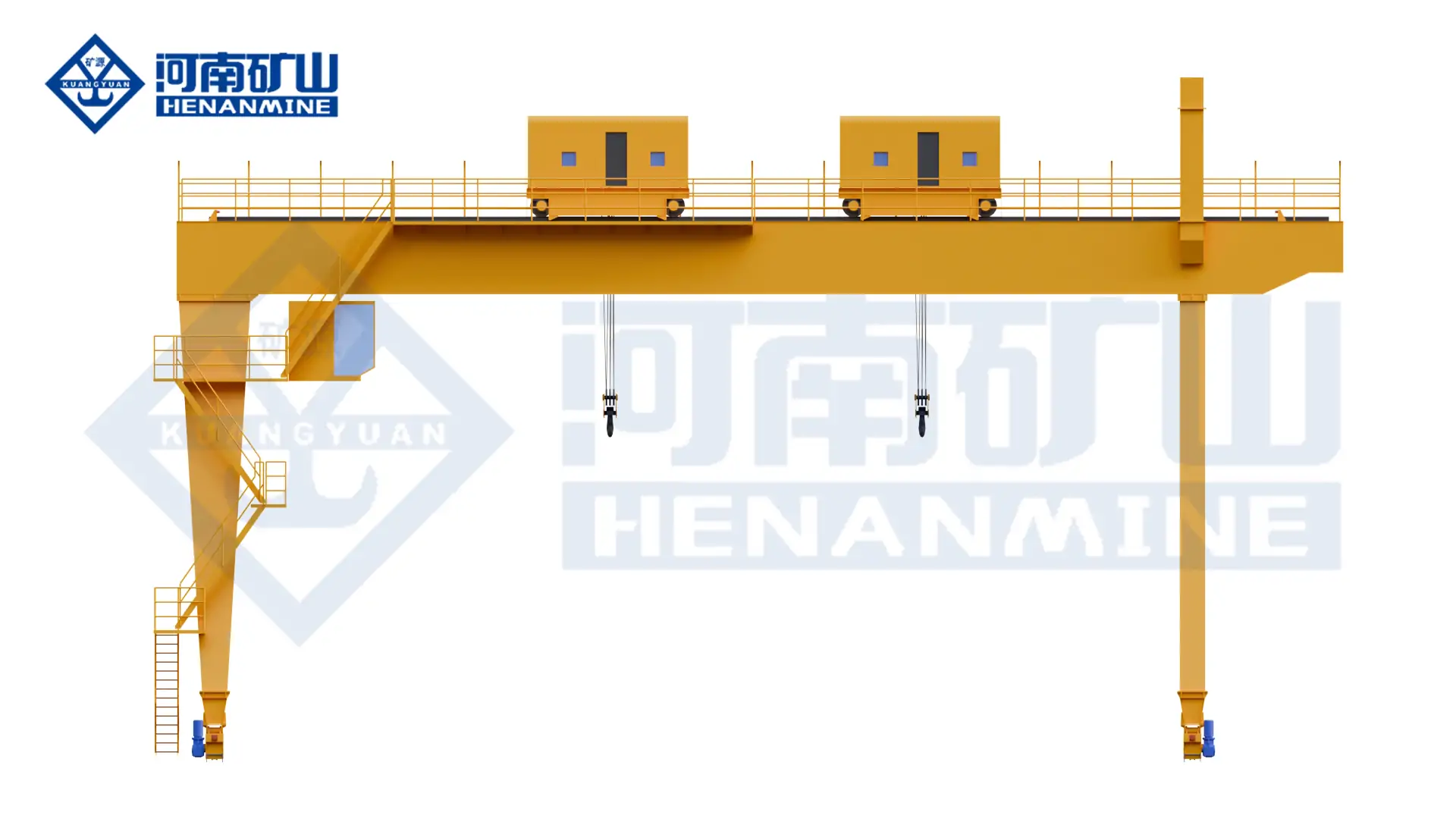
    Henan Mine Crane Shipbuilding Gantry Crane
    Henan Mine Crane Shipbuilding Gantry Crane
    Project planning notes

    Key points for this crane project.

    1. Why Gantry Crane Safety Is Critical
    2. Main Safety Risks Associated with Gantry Cranes
    3. Essential Safety Features Every Modern Gantry Crane
    Read the technical guide

    Why Gantry Crane Safety Is Critical

    Henan Mine Crane manufactured Gantry cranes, including rail-mounted gantry (RMG), rubber-tired gantry (RTG), and ship-to-shore (STS) cranes, are the workhorses of container terminals and shipyards. Port gantry crane safety matters because the operating environment combines heavy loads, moving vessels, high winds, and dense pedestrian and vehicle traffic in a single workspace.

    Common Hazards in Port & Shipyard Operations

    Several hazards are specific to, or intensified within, port and shipyard settings:

    • Heavy suspended loads:Despite the crane‘s rated capacity containers, plant and break bulk are often delivered approaching its limits leaving no margin for error of rigging or calculation. An error of a few hundred pounds at this stage can rapidly change into an overload.
    • High winds:Coastal and open-yard environments expose tall gantry structures to sustained winds and sudden gusts that can destabilize loads or the crane itself. Because ports are frequently sited on open coastlines or estuaries with no natural windbreaks, gust loading can appear with little warning even on days that start out calm. Wind acting on a suspended container functions like a sail, amplifying swing forces well beyond what the same wind would do to an unloaded hook.
    • Vessel movement:Due to time-varying tides, currents, and mooring offsets it is impossible for the load path for shore based ship to shore cranes to be perfectly at rest. As a vessel heaves with the tide or swings in its mooring chains the position change of the crane spreader relative to the container stack requires a continual series of micro-coordinates during a shift.
    • Glare from floodlights, rain streaked across cab glass, and blind spots of the spreader itself adds to the problem, making camera system and hand signals a functional necessity and not a luxury.
    • Multiple cranes operating simultaneously:Container terminals frequently run several RTGs or RMGs in adjacent lanes, raising the risk of boom or spreader collisions. High-throughput terminals may operate a dozen or more Henan Mine Crane manufactured gantry cranes within the same yard block, and without anti-collision sensors and disciplined travel protocols, a momentary lapse in attention during a shift change or handover is enough to bring two machines into contact.

    Consequences of Poor Safety Management

    When gantry crane safety programs fail, the fallout extends well beyond the immediate incident:

    • Equipment damage: repairing a damaged boom, spreader, or rail system can take a crane out of service for weeks, and replacement structural components for large STS or RMG cranes are rarely held in local inventory, often requiring shipment from the original manufacturer.
    • Cargo loss: dropped or crushed containers can destroy high-value cargo and trigger costly claims, and depending on the contents, a single incident can also create secondary hazards such as chemical spills or fire that extend the disruption well past the initial event.
    • Worker injuries: struck-by and caught-between injuries are frequently severe or fatal given the size of loads involved, and even non-fatal incidents often result in long-term disability given the crushing forces a multi-ton container or steel coil can exert.
    • Operational downtime: a single incident can halt operations across an entire berth while investigations are conducted, and depending on the jurisdiction, regulators may require the crane and surrounding work area to remain frozen in place until the investigation is complete, sometimes for days.
    • Regulatory penalties: safety violations can result in six-figure fines and, in cases of willful violations causing death, criminal liability for responsible parties.

    Main Safety Risks Associated with Gantry Cranes

    Understanding the specific failure modes behind gantry crane incidents helps safety teams prioritize controls.

    Load Swing and Dropped Loads

    Uncontrolled load swing ,caused by sudden stops, wind gusts, or improper rigging, is one of the leading causes of dropped loads and struck-by injuries. Once a container or bulk load begins to swing, the pendulum forces involved can exceed what a hoist brake or sling was ever designed to arrest, particularly if the operator attempts to correct the motion with abrupt counter-movements rather than letting it settle. Anti-sway control systems, which use sensors to automatically dampen trolley and hoist movement, and disciplined lift planning that accounts for wind and travel speed in advance, significantly reduce this risk.

    Crane Collision Risks

    Terminals running multiple RTGs or RMGs on shared or adjacent rails face real collision risk, particularly during shift changes, poor-visibility conditions, or when cranes travel at higher speeds than conditions allow. Because these machines often share a single rail corridor or operate in tightly packed yard blocks, even a short lapse in spacing discipline between adjacent units can result in a boom, spreader, or gantry-leg collision that takes both cranes out of service simultaneously. Anti-collision sensors, using laser, radar, or ultrasonic detection to enforce a minimum separation distance automatically, are now considered standard equipment on modern port cranes rather than an optional upgrade.

    High Wind Hazards

    Tall, exposed gantry structures act like sails, and the larger the surface area of a suspended container or bulk load, the more wind force is transferred into the hoist and trolley system. Beyond a crane's rated wind speed, structural stability, load control, and even the crane's ability to remain on its rails can be compromised, and in extreme gusts an unanchored crane can be pushed along its rails or, in the worst documented cases, overturned entirely. This is why wind monitoring, automated shutdown thresholds, and anchor devices are treated as core safety infrastructure rather than supplementary equipment at coastal terminals.

    Structural Fatigue and Metal Failure

    Repeated loading cycles over years of operation cause microscopic fatigue in structural steel, particularly at welds, bolted connections, and other stress-concentration points that absorb the greatest share of cyclical load. Because fatigue cracks typically begin below the visible surface and grow slowly before reaching a critical size, a crane can appear structurally sound during a routine visual inspection right up until failure. Without scheduled non-destructive testing and structural inspection at defined intervals, fatigue failures can occur with little visible warning, which is why periodic crack detection is treated as a mandatory maintenance task rather than a discretionary one.

    Electrical Hazards

    Henan Mine Crane manufactured Gantry cranes draw substantial power to operate hoist motors, trolley drives, and control systems, and shipboard or dockside cranes operating near overhead lines, in wet marine environments, or in proximity to saltwater spray face elevated shock and short-circuit risks. Corrosion from salt air also accelerates the degradation of electrical enclosures and connections faster than in typical inland industrial settings, meaning port cranes generally require more frequent electrical inspection than their onshore industrial counterparts to maintain the same safety margin.

    Mechanical Brake Failure

    Hoist and travel brakes are safety-critical components; they are the last mechanical line of defense preventing an uncontrolled load descent or a runaway crane after a stop command is issued. A worn brake lining, incorrect adjustment, or contamination from oil or grease can silently reduce braking torque well below its rated capacity long before the brake shows any obvious external sign of failure. Because brake performance cannot be reliably judged by sight alone, load testing on a fixed schedule , not just visual inspection, is the only way to confirm braking capacity is intact.

    Human Error

    Long shifts, repetitive tasks, and production pressure to keep cargo moving all create conditions where experienced operators can normalize small deviations from procedure over time, skipping a pre-shift check that "was fine yesterday," or accepting a load estimate instead of confirming it on the load chart. Because human error is rarely a single dramatic mistake but rather an accumulation of small procedural shortcuts, addressing it requires consistent enforcement of checklists and standard procedures, not just initial training.

    Essential Safety Features Every Modern Gantry Crane Should Have

    Modern intelligent Henan Mine Crane gantry crane systems combine mechanical safeguards with digital monitoring to reduce reliance on manual vigilance alone.

    • Overload Protection System : shuts down the crane if the load is above capacity – the single most widelyacknowledged reason for crane accidents. The latest systems offer warning signals as the load nears the limit, allowing operators to reconsider the lift without the equipment stopping.
    • Anti-Collision Technology :employs a laser or radar sensing between cranes in multi- crane yards to avoid collisions between booms and trolleys. Such anti-collision systems tend to automatically implement a preset minimum margin, to decrease or stop crane movement well in time, even if a distracted or tired crane operator makes a misestimation.
    • Wind Speed Monitoring:System–anemometers that are connected to automated alarms warn operators as winds near dangerous levels; networked systems enable a crane yard to have one set of readings that are sent to every crane operator, rather than just a single measurement from anemometer directly connected to their machine.
    • Emergency Stop Devices:presence of easily accessible, well labeled e-stop buttons at the operator station as well as ground level so that the operation can be stopped pronto in the event of danger. In conventional cars, shouts and hand signals are visible either from within the cab or from the ground, and so we should have redundant e-stop stations so as to be able to put a stop any time a ready person on either side sees an impending danger.
    • Travel and Hoist Limit Switches:these protection devices are designed to guard against over-travel, and over-hoisting which could otherwise damage the structure, or drop the load, especially the phenomena known as “twoblocking” in which the hook is pulled into the boom tip to the extent of severing the hoist line completely.
    • Load Moment Indicators:give instant readouts of load weight compared to capacity, warning the operator of approaching overload situations before they happen. These are not a load chart, which gives maximum safe working limits for different boom lengths at various radii; load moment indicators automatically recalculate capacity limits at the boom angle/radius/configuration in effect as the lift is taking place.
    • CCTV and Blind Spot Monitoring:camera systems that allow the operator to ‘see’ across the entire span of the crane where their cab window cannot, often an important feature on tall STS and RMG cranes where the spreader/load may be out of view during landing.
    • Intelligent PLC Safety Controls PLCs:that incorporate safety interlocks, such as prevents possible unsafe control combinations, like simultaneous hoist and travel commands producing an operating envelope beyond that of the crane.
    • Remote Monitoring & Predictive Maintenance Sensors:connected by the Internet of Things monitor factors such as vibration, temperature and cycle load levels so sensors can forecast emerging faults well in advance of the failure. Maintenance can thus be arranged at a time convenient to the production schedule, rather than as an emergency remedy upon encountering a late-shift breakdown.

    Modern intelligent cranes reduce accident risk while lowering long-term maintenance costs. By catching mechanical issues before they escalate into failures, predictive maintenance systems reduce unplanned downtime alongside the safety benefit, a rare case where safety investment and cost efficiency point in the same direction.

    Daily Gantry Crane Safety Inspection Checklist

    A disciplined gantry crane inspection checklist is the single highest-leverage control available to any terminal or shipyard. OSHA's general industry standard for overhead and gantry cranes recommends pre-shift inspections specifically to catch mechanical or structural issues before they compromise safe operation.

    Before Operation

    • Wire ropes: checked for fraying, kinking, birdcaging, or wear beyond manufacturer tolerances; even a small number of broken wires within a single lay length can signal that a rope is approaching the end of its safe service life.
    • Hooks: safety latch integrity, deformation, or cracking; any measurable throat opening beyond the manufacturer's specified tolerance is grounds for immediate removal from service.
    • Spreader: twist-lock function and structural condition; twist-locks that fail to engage fully are one of the most common causes of a container being dropped during lifting.
    • Brakes: hoist and travel brake response, checked with a no-load test run before any lift begins.
    • Hydraulic systems: fluid levels, pressure readings, and leak checks around hoses, fittings, and cylinders.
    • Tires or rails: wear patterns, alignment, and pressure for RTGs, or rail surface condition and wheel flange wear for RMGs and STS cranes.
    • Electrical cables: insulation damage, connection integrity, and evidence of chafing where cables pass through moving joints or festoon systems.
    • Warning devices: horns, lights, and alarms functioning correctly, including any wind-speed or overload alarm integration.

    During Operation

    • Atypical vibration in the hoist, trolley, or gantry structure; abnormalities here might foreshadow bearing damage, gear failure, or an emerging structural problem, months prior to it manifesting visibly.
    • Unusual sounds emanating from the motors, gearbox or brakes including grinding, squealing, knocking noises that are not characteristic of the normal operating profile of the equipment.
    • Observe the load stability in the lift as it travels along the path; ensure that the load continues to be stable and check the load itself for signs of swing, rotation or movement.
    • The wind conditions relative to the rated operating limits of the crane, monitored constantly rather than visually recorded at the beginning of a shift as wind speed can vary greatly within a few hours.

    After Operation

    • Parking procedure:locking down the crane as per site procedures by engaging the travel brakes and rail clamps, as applicable.
    • Lockout procedures:ensure the power is isolated before access for maintenance, by following a documented lockout/tagout step sequence so the crane cannot be energized when personnel are working on it.
    • Visual inspection:walk-around at the shift‘s end to identify any new damage received that wasn‘t visible during operation.
    • Maintenance records :Recording information for the next shift and maintenance crew, has anything borderline, not necessary to shut down at the time, but need watching in the future.
    Inspection ItemFrequencyRisk if Ignored
    Wire ropes and slingsDaily (pre-shift)Sudden load drop, struck-by fatality
    Hook and safety latchDaily (pre-shift)Load disengagement mid-lift
    Brakes (hoist/travel)Daily + monthly load testUncontrolled load descent or crane runaway
    Limit switchesDailyOver-travel, structural damage, two-blocking
    Structural steel/weldsMonthly / annualFatigue crack propagation, structural failure
    Electrical systemsMonthlyShock hazard, fire, control malfunction
    Rail alignmentQuarterlyDerailment, uneven load distribution
    Anti-wind/anchor devicesBefore storm seasonCrane displacement or overturning in high wind

    Any gantry crane that has been idle for more than six months should receive a full inspection consistent with monthly inspection procedures before it's returned to service, with results documented in the crane's inspection record.

    Safe Operating Procedures for Gantry Cranes

    Safe lifting operations depend on procedural discipline applied consistently, lift after lift.

    • Lift planning before every operation:Confirm load weight, center of gravity, and travel path before the hook touches the load. For non-routine or unusually heavy lifts, a documented lift plan reviewed by a competent person should be completed in advance rather than worked out on the fly.
    • Proper rigging practices:Remove slack from slings or chains before lifting, and make a preliminary lift of a few inches to confirm the load is balanced before proceeding. This brief pause is one of the simplest and most effective checks available, since it reveals rigging errors while the load is still low to the ground and easy to correct.
    • Safe travel speed:Avoid sudden acceleration or deceleration, which induces load swing, and reduce travel speed further when operating near the edges of the crane's rated wind envelope or in congested yard areas.
    • Maintaining safe clearance:Keep clear of live electrical cables, other cranes or staff inside the swing radius at all time. Do not presume that warning with voice is enough; use physical cell barriers and/or clearly marked cell limits to establish it.
    • Communication between operator and ground crew:Basic standard hand signs or radio communications should be used in a consistent manner so that there is one clear voice of communication at any one time during a lift.
    • Emergency shutdown procedures:All personnel involved in a lift should know how to trigger an emergency stop and what to do if a load becomes unstable mid-lift, including a pre-agreed default response, typically to stop all motion and let the load settle rather than attempting a rushed correction.

    Weather Safety: Operating Gantry Cranes in Extreme Conditions

    Ports are disproportionately exposed to weather-related crane risk, which is why shipyard crane safety programs must treat weather monitoring as a core operational function, not an afterthought.

    Maximum Safe Wind Speeds

    Every gantry crane has a manufacturer-rated maximum operating wind speed, beyond which lifting operations must stop and, at higher thresholds, the crane must be secured against travel. These thresholds account not just for the crane's own structural stability but for the increased swing forces acting on a suspended load, which means the safe operating limit for lifting is typically lower than the limit for simply leaving the crane parked and idle. Wind readings should be taken at crane height rather than at ground level, since wind speed increases significantly with elevation and a ground-level reading can understate the actual force acting on the boom and load.

    Figures are illustrative industry norms; always defer to the specific manufacturer's rated limits for your equipment.

    Rain and Reduced Visibility

    Heavy rain reduces both visual range and traction for rubber-tired cranes, and standing water on rails or yard surfaces can also affect braking performance for both RTGs and RMGs. Operations should slow or pause when visibility drops below safe signaling distance, and additional caution is warranted at night or during fog, when rain further degrades an operator's already limited sightlines from the cab.

    Lightning Precautions

    Tall steel crane structures are natural lightning targets, and a strike can damage sensitive electronic control systems even if it doesn't cause direct physical harm to personnel. Sites should have a documented lightning action threshold, commonly based on a detected strike within a set radius of the terminal, that halts operations and moves personnel to shelter until a defined all-clear period has passed without further activity.

    Storm Parking Procedures

    Before any operational shutdown for severe weather, cranes should be moved to designated storm parking positions and secured using rail clamps or anchor devices. Storm parking locations are typically chosen in advance based on wind exposure and structural bracing, and the sequence for securing a crane, engaging brakes, applying clamps, and confirming anchor engagement, should be rehearsed well before a storm is actually forecast, since these procedures often need to be completed under real time pressure.

    Typhoon and Hurricane Preparation

    Coastal terminals in typhoon- or hurricane-prone regions rely on anti-wind and anti-skid devices, rail clamps, anchor devices, and iron shoes, to prevent cranes from being blown off their rails. Best practice calls for concentrated inspection and repair of these devices before storm season begins, along with annual anti-typhoon drills that specifically test the operation of wind-protection equipment. Tall outdoor cranes should also carry anemometers and wind-speed alarm systems calibrated to trigger before the crane's design wind threshold is reached.

    Gantry Crane Maintenance for Long-Term Safety

    A structured crane maintenance checklist extends equipment life while closing the gap where most mechanical-cause incidents originate.

    • Preventive maintenance schedule:Daily, monthly, and annual tasks should be documented and tracked against a fixed calendar, not performed reactively, with a clear owner assigned to each task so nothing falls through the cracks during shift or personnel changes.
    • Lubrication requirements:Wire ropes, bearings, and gearboxes require manufacturer-specified lubrication intervals to prevent premature wear, and marine environments typically demand more frequent lubrication cycles than inland industrial settings because salt air accelerates the breakdown of protective coatings.
    • Structural crack detection:Periodic non-destructive testing,dye penetrant, ultrasonic, or magnetic particle inspection , on high-stress structural poin ts catches fatigue before failure, and the specific inspection points should be identified in advance based on the crane's design, focusing on welds and connections that experience the highest cyclical stress.
    • Rail alignment inspection:Misaligned rails accelerate wheel wear and increase derailment risk for RTGs and RMGs, and because ground settlement can occur gradually over months or years, rail alignment should be re-surveyed on a fixed schedule rather than assumed stable once installed.
    • Wire rope replacement criteria:Ropes should be replaced according to documented wear thresholds , broken wire counts, diameter reduction, and corrosion, not by visual judgment alone, since a rope can appear serviceable on the outside while individual wire strands beneath the surface have already failed.
    • Brake system testing:Hoist and travel brakes should be load-tested on a defined schedule, not only inspected visually, since braking torque can degrade well before any external sign of wear becomes apparent.
    • Electrical system maintenance:Insulation resistance testing and connection tightness checks reduce fire and shock risk over the crane's service life, and salt-air corrosion around terminal connections should be checked more frequently at coastal sites than standard maintenance intervals would otherwise suggest.

    Henan Mine Crane

    Gantry cranes safety is not only inspection or safety device but also depend on quality, good safety system and procedures, condition and maintenance of equipment, operator skill, awareness and motivation. These elements combine efficiency and safety of port and shipyard operation and enhancing machinery performance and reliability. ports/shipyards should keep in mind safety as investment in costs and development but also loss/lost of lives and operation.

    As expert at gantry crane design and manufacture, Henan Mine Crane Factory supplies lifting equipment for ports, terminals and shipyards all over the world. All of the company‘s crabs are designed for the highest safety and performance standards. Whether replacing existing equipment or designing a brand new project, selecting a trusted manufacturer leads to greater safety and efficiency over the lifetime of the facility.

    Discuss the crane arrangement for your project.

    Operating arrangements need to reflect the particular crane, cargo and site. Define working zones, communications and inspection responsibilities using the equipment documentation and the approved site procedures. Share the load, available drawings, working cycle and site conditions with Henan Mine Crane so the required configuration and supply boundary can be discussed.

    Related crane configurations

    Shipbuilding Gantry Crane

    View product parameters
    Lifting capacity: 100 t, 200 t, 250 t, 450 tSpan: 40 – 97 mLifting height: 35 – 70 m

    Lift ship blocks and large assemblies with a shipbuilding gantry configured for the dock and production layout. Define lifting points, trolley functions and any block-turning sequence before selection.

    Updated 2026 · Henan Mine Crane

  • Gantry Crane Erection Scope: Coordinate Equipment, Access and Support

    Gantry Crane Erection Scope: Coordinate Equipment, Access and Support

    Technical guide

    Gantry Crane Erection Scope: Coordinate Equipment, Access and Support

    Erection planning requires a verified interface between the supplied crane and the prepared site. Clarify assembly resources, supporting works, electrical connections and acceptance responsibilities before scheduling installation.

    Henan Mine CraneTechnical guide · Updated 2026Crane selection, project scope and operating requirements
    Gantry Crane Erection Scope: Coordinate Equipment, Access and Support
    Henan Mine Crane lifting equipment
    Project planning notes

    Key points for this crane project.

    1. Pre-Installation Planning & Site Preparation
    2. Key Components & Tools for Gantry Crane Installation
    3. Step-by-Step Gantry Crane Erection Process
    Read the technical guide

    Pre-Installation Planning & Site Preparation

    Technical Preparation

    The installation team needs to carefully review the equipment design drawings, installation manuals and other relevant information, carefully check the equipment rated lifting capacity, span and other key parameters, combined with the actual working conditions at the site to develop a scientific and feasible installation plan, and at the same time, organize the entire staff to carry out technical briefings and safety training, to make clear the key points of the operation, to ensure that each staff member is proficient in the operation of the norms.

    Site Assessment & Foundation Preparation

    Comprehensively survey and clean up the obstacles at the installation site, reasonably demarcate the exclusive operation area and set up warning signs to ensure that the ground's bearing capacity is not less than 200kPa, and if the test finds that the bearing capacity is insufficient, it is necessary to take reinforcement measures in time; use reinforced concrete to pour the installation foundation, and accurately control the foundation dimensions, elevation and other key parameters to ensure that the foundation is stable.

    Tools, Equipment & Parts Inspection

    Prepare all kinds of tools required for installation in advance, check the performance of tools one by one to ensure that they are normally available; comprehensively check all parts of the crane, carefully check the model specifications, count the number of missing or unqualified parts in a timely manner to replenish and replace, so as to avoid affecting the progress and quality of the installation.

    Key Components & Tools for Gantry Crane Installation

    Proficiency in the use of the core components of the gantry crane and the installation of the required tools and the use of norms, is to ensure that the installation operation is accurate and efficient completion of the key, the following details of the installation process of the necessary components and tools.

    Core Crane Components

    The third is the running system, which is composed of rail and cart to guarantee the horizontal movement of the equipment; the fourth is the electrical system, which includes the control cabinet, limit switch and so on, to control the various actions of the equipment. In addition, it also includes auxiliary parts such as base plate and foot bolts, which are used to fix the equipment and connect the core components to ensure the overall stability of the equipment.

    Must-Have Installation Tools

    Installation tools are divided into three categories according to their functions, which need to be standardized for selection and operation: lifting tools (automobile cranes, wire ropes, etc.) are used for lifting parts; adjustment tools (hydraulic jacks, leveling instruments, etc.) are used to ensure the accuracy of the installation; and electrical tools (cable bridges, testers, etc.) are used for the installation and debugging of the electrical system to ensure the safety of operation.

    Personal Protective Equipment

    Gantry crane installation is a high-risk operation, the installation personnel need to wear a full range of personal protective equipment (PPE) as required, the core including helmets, cut-resistant gloves, non-slip safety shoes, safety belts for overhead work (overhead work needs to be fixed correctly), the welding personnel need to be additionally equipped with protective masks to protect personal safety.

    Step-by-Step Gantry Crane Erection Process

    Gantry crane erection should strictly follow the core principle of “from bottom to top, from foundation to the whole, from static to dynamic”, and advance in an orderly manner according to the following steps, and strictly control the installation accuracy throughout the whole process, so as to ensure that all components are firmly connected and run smoothly.

    Track Installation

    The track is the foundation for horizontal movement of the equipment. When installing the track, it is necessary to accurately fix the base plate in the designated position of the foundation according to the requirements of the design drawings to ensure that the base plate is firmly installed and the positional deviation is in accordance with the specifications. After that, lay the track and adjust the level and straightness of the track. Finally, special track clamps are used to fix the track on the base plate, and the joints of the track are checked to ensure that the joints are smooth and the gaps are even, so as to avoid bumps and rattles when the equipment is running.

    Outrigger & Lower Crossbeam Assembly

    Lift the lower crossbeam to the track datum line and level it to fix it, then lift the outrigger to the designated position, check the verticality with a latitude and longitude meter and adjust it to the standard, then fasten it with high-strength bolts, and at the same time, temporarily fix the outrigger with a steel wire rope or a special support piece to prevent it from tipping over and to ensure the stability of the lower structure.

    Main Beam Installation

    main girder installation is the key link, before lifting, we need to check the lifting equipment, wire rope and lifting point to avoid hidden danger.

    Hoist System & Trolley Installation

    The winch is lifted and fixed at the designated position of the main girder and leveled and aligned, then the cart is placed on the track of the main girder and fastened, the winch is connected to the hook, the wire rope is threaded and leveled according to the specification and the tension is adjusted, and finally, the rotating parts are lubricated and the reliability of the brake of the winch is checked.

    Electrical System Installation & Wiring

    Setting up special stable power supply and installing leakage and overload protection devices; standardizing the installation of control cabinets and electrical components, wiring neatly and firmly and marking; installing limit switches and emergency stopping devices, and finally conducting insulation and grounding tests on the electrical lines and system debugging to ensure normal operation.

    Safety Measures & Risk Management During Installation

    Gantry crane installation is subject to various safety risks such as fall from height and object strikes, so it is necessary to establish a safety protection system, standardize the operation, investigate hidden dangers, and ensure the safety of the operation.

    Stability & Anti-Tipping Protection

    Stability & Anti-Tipping Protection of the equipment: tighten the base and ground bolts, strictly control the weight and lifting points, set up temporary support for the key parts, designate the forbidden zone and set up warnings to prevent accidents.

    Wire Rope & Component Safety

    Regularly check the wire ropes, and strictly prohibit the use of damaged wire ropes exceeding the standard; standardize the bundling method and adjust the tension; regularly check the fasteners and metal structures, and promptly fasten, rectify or replace the unqualified components.

    Testing, Commissioning & Final Acceptance

    No-Load Test

    No-Load Test checks the flexibility of equipment movement and the stability of electrical system, tests the hook, cart movement and electrical components, records the data, and finds the problem timely rectification.

    Safety System Validation

    Verify the reliability of safety system, test emergency stop, overload protection, limit switch and grounding device, simulate failure scenarios to ensure effective emergency response.

    Final Acceptance & Handover

    Organize relevant information and prepare acceptance checklist, organize multiple parties to carry out on-site acceptance, sign the report after qualified verification, handle handover procedures and transfer equipment and information.

    Post-Installation Maintenance & Best Practices

    Daily & Periodic Inspections

    Establish a combination of daily and periodic inspections: operators check the key components of the equipment every day to detect simple hidden dangers; professionals carry out monthly, semi-annual and annual inspections according to the plan, and form reports and rectify the problems in a timely manner.

    Preventive Maintenance

    Preventive maintenance is the key to extend the service life of the gantry crane and reduce breakdowns and stoppages: according to the frequency of use of the equipment, the operating environment to develop a scientific lubrication plan, regular chains, bearings, rails and other rotating parts of the appropriate lubricating oil or grease, to effectively reduce the wear and tear of the components and operating resistance; regular comprehensive inspection of wire rope, hooks, fasteners and other wear parts, once found worn, aged or damaged exceeds the standard, and promptly carry out maintenance.

    Operator Training

    Strengthen operator training, explain the safety operation standard, strictly prohibit illegal operation, carry out emergency response training, and establish an assessment system to ensure that the operators have qualified operation capability.

    Pro Tips for Successful Gantry Crane Installation

    Combined with many years of practical experience in gantry crane installation in industrial projects, the following 5 practical tips are summarized:

    • Strictly control the foundation strength and levelness, foundation construction and testing should be carried out in strict accordance with the specifications to avoid subsequent installation deviation due to foundation problems;
    • With the help of professional measuring instruments such as leveling, latitude and longitude, real-time monitoring of the installation accuracy of each component to ensure accurate assembly and eliminate the operation of experience;
    • Standardize the electrical wiring process, and do a good job in the line insulation treatment and marking, to avoid the aging of the line, short-circuiting and other potential electrical hazards;
    • Commissioning work in a step-by-step manner, in strict accordance with the “no load → static load → dynamic load” order to promote, without skipping any test link; 5. Keep complete installation and test records, the formation of the installation file, for subsequent maintenance, overhaul and troubleshooting to provide reference.

    Henan Mine Crane

    Henan Mine Crane Factory, as a professional crane manufacturer, integrating R&D, design, production, sales and after-sales service, is committed to providing customers with one-stop crane customization solutions.

    Welcome to contact us at any time, we will provide you with free design drawings, on-site surveys and other intimate services to help you efficiently promote the project.

    Discuss the crane arrangement for your project.

    Erection planning requires a verified interface between the supplied crane and the prepared site. Clarify assembly resources, supporting works, electrical connections and acceptance responsibilities before scheduling installation. Share the load, available drawings, working cycle and site conditions with Henan Mine Crane so the required configuration and supply boundary can be discussed.

    Related crane configurations

    Multi Support Double Girder Underhung Crane

    View product parameters
    Lifting capacity: 3 – 40 tSpan: 10 – 80 mLifting height: 6 – 30 m

    Use a multi-support double-girder underhung arrangement for wide-span working areas and large components. The building supports, lifting coverage and load distribution are designed together.

    Updated 2026 · Henan Mine Crane

  • Container Yard Gantry Crane Planning: Stack, Lane and Transfer Coverage

    Container Yard Gantry Crane Planning: Stack, Lane and Transfer Coverage

    Technical guide

    Container Yard Gantry Crane Planning: Stack, Lane and Transfer Coverage

    The yard plan should define where containers are stored and how they reach transfer points. Compare the gantry arrangement with stacking coverage, vehicle lanes and infrastructure interfaces before finalising the equipment brief.

    Henan Mine CraneTechnical guide · Updated 2026Crane selection, project scope and operating requirements
    Henan Mine Crane Container Overhead Crane
    Henan Mine Crane Container Overhead Crane
    Project planning notes

    Key points for this crane project.

    1. What Is a Gantry Crane for Container Yard
    2. How Gantry Cranes Improve Container Yard Operations
    3. Gantry Crane Applications in Different Container
    Read the technical guide

    What Is a Gantry Crane for Container Yard Operations?

    Overview of container yard gantry cranes

    Henan Mine Crane container yard gantry crane is a special heavy lifting equipment adapted to ISO standard. Relying on stable structure and intelligent control system, it can complete automatic loading and unloading, stacking and transshipment of various standard containers. Compared with ordinary gantry cranes, this equipment has higher positioning accuracy, stacking height and operation safety. It is mainly used in seaports, railway stations, inland storage yards and logistics distribution centers to adapt to various standardized container high-frequency operation scenarios.

    Main types of gantry cranes used in container yards

    According to the difference of travel mode, automation degree and adaptation scenario, the mainstream gantry crane of container yard can be divided into three categories: rail-type gantry crane, rubber-tire gantry crane and automatic stacking crane. The structural characteristics, operation advantages and adaptation scenarios of the three categories have their own emphases, which can meet the operation requirements of different scales and different intelligent levels.

    Rail Mounted Gantry Crane (RMG)

    RMG rail-mounted container gantry crane runs along embedded rails, with strong structural rigidity and high operation accuracy, suitable for large automatic container terminals. The equipment is equipped with intelligent positioning and control system, supports unmanned operation and 24-hour continuous operation, can realize high-density multi-layer stacking of containers, effectively improves storage density and operation throughput of storage yard, has low failure rate and stable operation, and is the core equipment for large-scale operation of intelligent port.

    Rubber Tyred Gantry Crane (RTG)

    RTG tire container gantry crane adopts rubber tires to travel, no need to lay rails, site adaptability and flexibility of operation outstanding. The equipment can freely switch operation areas, adapt to the layout adjustment and later expansion requirements of the storage yard, lower infrastructure investment and transformation cost, meet the container stacking and transfer operation of small and medium-sized storage yards and inland logistics stations, and have high comprehensive cost performance and wide application scenarios.

    Automated Stacking Crane (ASC)

    ASC automatic stacking crane is a special high-end equipment for intelligent container terminals. Relying on sensor identification and intelligent positioning technology, it can complete the whole process unmanned operation with terminal management system. The equipment can automatically complete container alignment, stacking, transfer and data recording, optimize the space utilization rate of the yard, avoid manual operation errors and safety risks, and is mainly used for fully automatic unmanned yard. It is the core equipment for intelligent upgrading of port logistics.

    How Gantry Cranes Improve Container Yard Operations

    Maximizing container storage capacity

    The limited land resources and high land cost of the yard are the core pain points that the global container logistics stations generally face, and the high stacking performance of the container gantry crane completely solves the problem of insufficient space utilization of the yard. Traditional forklifts and simple lifting equipment can only stack 3-4 layers of containers, and the stacking spacing is large and space is wasted seriously. Relying on stable structural design and precise positioning technology, professional Henan Mine Crane container gantry crane can realize 6-9 storey high standard container stacking, and some high-end models have higher stacking height.

    Through the vertical three-dimensional storage mode, the equipment can fully tap the vertical space potential of the yard, completely change the inefficient mode of traditional planar storage, and realize several times of storage capacity improvement for limited yard land. At the same time, the accurate alignment stacking technology of gantry crane can effectively reduce the stacking spacing of containers, regulate the stacking layout, avoid space waste caused by disorderly stacking, assist enterprises to implement standardized vertical storage strategy, solve the problems of insufficient storage capacity and waste of land resources from the root, and greatly improve the storage efficiency per unit area of storage yard.

    Increasing container handling efficiency

    Operation efficiency is the core factor that determines the throughput and operation income of container yard. Container gantry crane improves the operation efficiency of yard in an all-round way by optimizing the whole process of loading and unloading, transfer and stacking. Compared with traditional operation equipment, gantry crane single container loading and unloading, transfer time greatly shortened, can quickly complete the container approach stacking, unloading, field shift, yard transfer and other operations, the operation speed far exceeds the traditional manual auxiliary equipment.

    Efficient operation capacity can effectively reduce the waiting time of truck collection and cargo ships, solve the problems of vehicle congestion and ship stagnation in ports and stations, and greatly improve the turnover efficiency of stations. For the port yard, it can quickly complete the closed-loop operation of ship unloading, yard storage, truck collection and transportation. For inland stations, rapid container turnover and rapid loading and shipping can be realized. On the whole, Henan Mine Crane container gantry crane can significantly improve the daily throughput and monthly operation volume of the yard, help enterprises undertake large-scale freight orders and enhance market competitiveness.

    Enhancing operational safety

    Container belongs to heavy cargo. Traditional manual operation mode has potential safety hazards such as lifting deviation, box collision, overturning and falling, etc., and the cargo damage rate and safety accident rate are relatively high. Container gantry crane greatly reduces manual intervention through automation and intelligent technology, and the core operation process is intelligently completed by equipment, thus reducing the risk of manual operation from the root cause.

    The equipment is equipped with advanced intelligent sway control system, which can effectively suppress the shaking deviation of the container during hoisting, ensure the stability of the lifting and translation process, and avoid the collision and falling of the container. At the same time, the high-precision satellite positioning and laser alignment system can realize millimeter-level accurate positioning, and eliminate the problems such as box damage and equipment collision caused by container stacking dislocation and alignment deviation. In addition, the equipment is equipped with multiple safety protection devices such as overload protection, limit protection and emergency braking, which can ensure the safety of yard operation in all weather, reduce the cost of cargo damage and the risk of safety accidents, and assist enterprises to realize safe and standardized operation.

    Gantry Crane Applications in Different Container Yard Scenarios

    Seaport container terminals

    Seaport container terminal is the core application scenario of Henan Mine Crane container gantry crane, which has the characteristics of huge throughput, extremely high operation frequency and all-weather uninterrupted operation. The harbor gantry crane mainly undertakes the full-process transfer operation of ship unloading, yard storage, truck collection and transportation, and loading and unloading. It can efficiently connect the quayside crane and truck collection transportation system, and open up the logistics closed loop of ship-yard-vehicle.

    Large-scale seaport terminals mostly select automatic RMG gantry cranes and ASC automatic stacking cranes. Relying on the advantages of high stacking density, high operation efficiency and unmanned operation, they can meet the demand for mass container turnover, maximize the use of scarce land resources in ports, improve the overall throughput and intelligent level of terminals, and adapt to the high-frequency operation demand of large-scale ocean freight transportation.

    Railway container terminals

    Railway container depot is the key hub of multimodal transport, and its core requirement is to realize rapid transfer and efficient turnover of containers between railway freight trains and highway trucks. Container gantry crane can cover the whole operation area of railway station, and quickly complete the whole process operation of train container unloading, temporary storage in storage yard, loading and transportation of truck collection, reverse loading and transportation of trains.

    Through the efficient operation of gantry crane, the pain points of low transit efficiency and turnover lag of railway intermodal transportation are completely solved, the seamless connection between railway and highway transportation modes is realized, the overall transportation efficiency of multimodal transportation is greatly improved, the transit detention cost is reduced, and the efficient operation of regional intermodal logistics network is assisted.

    Inland container depots and logistics parks

    As the core of regional logistics distribution, inland container yard and logistics park undertake the important functions of container storage, turnover, unpacking and regional distribution. They are generally characterized by limited space, flexible operation scenarios and medium throughput. Henan Mine Crane RTG tire gantry crane has become the preferred equipment for this scenario by virtue of its flexible mobility, low infrastructure cost and strong site adaptability.

    Gantry crane can realize high-density storage and rapid turnover of containers in inland storage yards, effectively save space, and solve the problems of low land utilization rate and poor operation efficiency in inland logistics parks. At the same time, the equipment can adapt to the flexible operation layout and later expansion demand of the park, support the stable operation of regional cross-border logistics, city-wide distribution and trunk freight network, and improve the storage and transportation capacity of the six logistics hubs.

    RMG Crane vs RTG Crane: Which Is Better for Container Yard Operations?

    RMG rail gantry crane and RTG tire gantry crane are the two most widely used core equipment in container yard at present. They have significant differences in operation mode, mobility, automation level and adaptation scenario. Through the comparison of core parameters, the advantages and adaptation scenarios of the two types of equipment are clearly distinguished, providing accurate reference for the selection of yard equipment.

    Comparison FactorRMG CraneRTG Crane
    Running methodRail-mountedRubber tires
    MobilityFixed operation areaFlexible movement
    Automation levelHigherMedium to high
    Yard capacityLarge-scale terminalsMedium-sized yards
    Infrastructure requirementHigherLower

    How to Select the Right Gantry Crane for Container Yard Operations

    Determine lifting capacity

    lifting capacity is the core basic parameter of gantry crane selection, which directly determines whether the equipment can meet the mainstream container operation requirements of the yard. At present, the mainstream operation containers in the industry include 20-ft standard containers, 40-ft standard containers and 45-ft ultra-high and ultra-long containers. The deadweight and load of containers of different specifications are quite different, so it is necessary to match the corresponding lifting capacity of equipment.

    Small inland yards are mainly operated by 20ft containers, and medium and small tonnage gantry cranes can be selected. In high-frequency and large-scale operation scenarios, it can give priority to high-configuration equipment for double-container hoisting, complete the hoisting of two standard containers at a time, and greatly improve the operation efficiency. Certain tonnage allowance shall be reserved during type selection to avoid equipment loss caused by long-term full-load operation and ensure long-term stable operation of equipment.

    Consider working span and stacking height

    Operation span and stacking height directly determine the storage density and operation coverage of the yard, and are the key parameters for optimizing the layout of the yard. The operation span of the gantry crane shall match the width of the single operation area of the storage yard, so as to ensure that the equipment can completely cover the container stacking ranks, reduce the operation blind area and adapt to the overall planning and layout of the storage yard.

    The stacking height shall be selected in combination with the land resources, operation requirements and safety specifications of the yard. For the yard with scarce land and pursuing high storage capacity, the model with high stacking height can be selected to maximize the vertical storage capacity. Conventional small and medium-sized storage yards can match standard stacking heights, balancing operating efficiency and equipment costs. Reasonable span and height collocation can maximize and optimize the storage layout of the yard, improve the storage capacity per unit area, and avoid space waste and excess equipment performance.

    Evaluate automation features

    Intelligent automation configuration is the core consideration factor of modern gantry crane selection, which directly determines the operation efficiency and labor cost of yard. The basic automation configuration includes remote control, intelligent sway control and automatic positioning functions, which can greatly reduce the difficulty of manual operation and improve the operation accuracy. The high-equipped intelligent model is equipped with unmanned operation, AI intelligent scheduling, real-time data monitoring, automatic fault warning and other functions, which can seamlessly connect with the intelligent yard management system.

    The enterprise shall plan and select the type in combination with its own intelligent upgrading: the basic automation model can be selected for short-term routine operation to meet the demand of efficient operation. Enterprises with long-term layout of smart ports and unmanned storage yards need to give priority to fully automatic models to adapt to the future trend of intelligent and digital operation and complete the upgrading of equipment infrastructure ahead of schedule.

    Check reliability and maintenance requirements

    Equipment reliability and later operation and maintenance cost are the key factors affecting the long-term operating income of the yard. During model selection, it is required to check the durability of equipment structure, and give priority to equipment with high-strength anti-corrosion steel structure and high-quality core accessories to meet the long-term operation requirements of outdoor heavy load and complex working conditions and reduce the failure rate.

    At the same time, attention shall be paid to the universality and availability of equipment accessories, and the models of general standardized accessories in the industry shall be preferred to facilitate rapid replacement in the later period and reduce the procurement cost of accessories. In addition, the after-sales support capability of the manufacturer is very important. Perfect after-sales operation and maintenance system, quick fault response and regular equipment maintenance service can minimize equipment downtime, ensure all-weather stable operation of the yard and reduce long-term operation cost.

    Henan Mine Crane

    It is not possible to reduce the selection and combination of gantry crane to a standard solution, as various types of terminal, logistics park and industrial yard may have different requirements for lifting capacity, span, stacking height, automation level and working condition. Henan Mine Crane supply gantry crane general design and customized solutions according to the operation requirement, including rail-mounted container gantry cranes, heavy duty gantry cranes and other special lifting equipment to achieve efficient, safe and reliable material handling operation.

    With mature engineering technical strength, complete manufacturing technique and full lifecycle After-Service, Henan Mine Crane Factory is committed to offering the most reliable crane systems to enhance the yard efficiency and decrease the long-term operation cost. Through the whole course of project consultation, tailored design, manufacturing, installing and after-sales service, Henan Mine Crane Mine Crane Factory is dedicated to providing the modern logistics and industrial industries with smarter lifting systems worldwide.

    Discuss the crane arrangement for your project.

    The yard plan should define where containers are stored and how they reach transfer points. Compare the gantry arrangement with stacking coverage, vehicle lanes and infrastructure interfaces before finalising the equipment brief. Share the load, available drawings, working cycle and site conditions with Henan Mine Crane so the required configuration and supply boundary can be discussed.

    Related crane configurations

    Container Overhead Crane

    View product parameters
    Lifting capacity: 30-65 tSpan: 18-35 mLifting height: 8 – 20 m

    Transfer containers within a defined overhead runway area using a double-girder bridge and matched spreader. Container size, working clearance and the handling sequence determine the arrangement.

    Container Straddle Carrier

    View product parameters
    Lifting capacity: 30 – 50 tStacking arrangement: 1 over 3 – 1 over 6Working class: A7 – A8

    Move containers between handling positions with a straddle carrier matched to the travel route and stacking layout. Define container load, ground conditions, clearance and the preferred drive system.

    Updated 2026 · Henan Mine Crane

  • Foundry Overhead Cranes: Review Heat Exposure and Lifting Protection

    Foundry Overhead Cranes: Review Heat Exposure and Lifting Protection

    Technical guide

    Foundry Overhead Cranes: Review Heat Exposure and Lifting Protection

    Foundry protection requirements depend on the actual handling process. Provide the load arrangement, exposure conditions and operating cycle so the supplier can explain the proposed protective measures and supporting documentation.

    Henan Mine CraneTechnical guide · Updated 2026Crane selection, project scope and operating requirements
    Foundry Overhead Cranes: Review Heat Exposure and Lifting Protection
    Henan Mine Crane lifting equipment
    Project planning notes

    Key points for this crane project.

    1. Why Foundry Overhead Cranes Require Special Design
    2. Heat Insulation: A Critical Foundry Crane
    3. Why Double Safety Brakes Matter on Foundry Cranes
    Read the technical guide

    Why Foundry Overhead Cranes Require Special Design

    Ordinary general purpose cranes are only suitable for normal temperature, intermittent, and light load conditions, and cannot be adapted to the extreme production environment of casting. The core reasons are divided into three points.

    Severe erosion by high temperature thermal radiation

    Furnaces and molten metals will continue to produce high-intensity thermal radiation. Long-term high-temperature conditions will accelerate the aging and attenuation of motors, cables, electronic control components and gearboxes, which can easily cause equipment to stall, malfunction and shutdown. In severe cases, it will also cause safety accidents such as failure of core components and falling loads. It is the core cause of excessive loss and high failure of casting cranes.

    High-risk load

    The casting crane is responsible for hoisting high-risk heavy loads such as steel ladles, iron ladles, and heavy castings. The load stability is poor and the operation risk is extremely high. Once the brake fails and the load is offset, it can easily cause material damage, equipment damage, and even major safety accidents such as high-temperature metal leakage, casualties, etc., which require extremely high positioning accuracy and braking reliability.

    High frequency continuous working system

    The casting production line runs continuously for 24 hours, and the crane needs to be lifted, walked, and positioned at high frequencies, and the fatigue loss is great. Ordinary intermittent crane components cannot be adapted to high-frequency working conditions, and they are prone to premature aging problems such as wire rope deformation, gear wear, and brake failure.

    Heat Insulation: A Critical Foundry Crane Requirement

    High temperature is the primary cause of failure of casting cranes. Thermal insulation and protection are not optional, but the core standard to ensure the stable operation of equipment and extend the service life.

    Core hazards

    Continuous high-temperature thermal radiation can easily cause motor overheating and damage, gearbox lubrication failure, brake caton failure, cable insulation aging leakage, electronic control system parameter offset and other equipment failures, not only greatly increases the probability of equipment failure and daily operation and maintenance expenses, but also accelerates the aging of core components and significantly shortens the service life of the crane.

    Core thermal insulation protection measures

    The professional casting crane is equipped with a complete set of systematic high-temperature thermal insulation protection scheme. Through special thermal insulation baffles and high-efficiency thermal shielding structures, it effectively blocks the direct thermal radiation generated by the furnace and the molten metal, and reduces the thermal erosion of the whole machine and equipment by the high-temperature heat source from the source.;

    Adopt H-class high-temperature-resistant electrical components and IP54 high-protection configuration; do closed thermal insulation and heat dissipation treatment for motors and electric control cabinets; optimize the thermal insulation design of the operation and maintenance area, taking into account equipment protection and operation safety.

    Thermal insulation configuration selection principle

    When actually selecting the type, it is necessary to combine the intensity of on-site thermal radiation, the safe distance between the equipment and the high-temperature heat source, the frequency of daily operations and the length of continuous high-temperature exposure to accurately match the heat insulation and heat dissipation system of the appropriate level, relying on the customized design of working conditions, to eliminate the problem of equipment failure caused by insufficient protection configuration, while avoiding the waste of costs caused by redundant configuration.

    Why Double Safety Brakes Matter on Foundry Cranes

    The single brake system of ordinary cranes has no safety redundancy, and once it fails, it will directly cause slip hook and drop accidents. The dual-safety redundant braking system is the core safety guarantee for high-risk hoisting of casting cranes.

    The core role of the braking system

    The braking system is the core safety barrier for the lifting of molten metal. It can firmly lock the operating load and effectively suppress the swing and offset of high-temperature steel ladles and iron ladles; accurately regulate the lifting and operating speed of the equipment to achieve smooth start and stop throughout the process, flexible alignment, and eliminate impact loads.;

    In the face of emergency working conditions such as sudden power failure, component failure, and power failure, the system can instantly trigger lock-in protection, firmly stabilize the high-temperature melting load, fundamentally prevent falling accidents, and build a strong core safety line of defense for casting operations.

    Working principle of dual brake system

    Using a dual-channel independent redundant architecture of main brake and emergency backup brake, the two systems are completely isolated, do not interfere with each other, and can work independently. The main brake bears the start and stop of the equipment and the load lock and hold under normal operating conditions;

    In the event of abnormal conditions such as failure of the main brake, power failure, failure, etc., the emergency backup brake can be automatically activated instantly, quickly locking the load, effectively eliminating the hidden dangers of falling loads, and ensuring the safety of equipment operations in all directions.

    Core advantages of dual braking

    The dual-redundant brake architecture can avoid the risk of single brake failure from the root cause, effectively offset the safety risks caused by thermal deformation, wear and aging of brake components under high temperature conditions, and greatly improve the locking stability of heavy-duty molten loads.

    The complete braking system responds smoothly and the braking is reliable, which significantly increases the safe fault-tolerant space for high-risk lifting operations, and builds a solid safety guarantee for continuous casting and high-intensity production.

    Key Factors When Selecting a Foundry Overhead Crane

    The selection of casting bridge cranes is a set of systematic working condition matching logic. The rated load cannot be used as the selection standard alone. It needs to be combined with the load working conditions, operating accuracy, high temperature resistance, safety configuration and working level. Multi-dimensional comprehensive determination.

    Rated lifting weight

    When selecting and approving the rated lifting weight, the comprehensive load needs to be fully accounted for, covering all lifting weights such as molten metal self-weight, ladle/iron ladle tank, spreader and lifting aids.

    Operating accuracy

    Molten metal casting operations have strict requirements for positioning accuracy, and it is recommended to standardize a frequency conversion speed control system. The equipment can realize dual-mode switching of high-speed operation of long-distance hoisting and low-speed creep of station alignment, smooth start and stop without impact, no shaking of load, and accurate completion of ladle alignment operations, effectively taking into account the operating efficiency of the production line and the safety of high-risk hoisting.

    Working condition level

    In view of the characteristics of 24–hour continuous high-frequency operation in the foundry workshop, A6-A7 high-level cranes need to be selected in strict accordance with industry specifications. The core components of the whole machine, such as the motor, brake system, steel structure, and hoist mechanism, need to be uniformly matched to the high working condition level, so as to eliminate the performance shortcomings and early failures caused by the mismatch of component levels, and adapt to the needs of high-intensity cycle operations.

    High temperature protection level

    In order to resist the continuous thermal radiation erosion of the foundry workshop for a long time, the core electrical components need to be equipped with H-class high-temperature insulation, and the protection level of the whole machine reaches IP54 and above standards. With an exclusive thermal shielding and heat insulation structure and an independent heat dissipation system, it protects precision electrical and power components in all directions, greatly improving the adaptability and operating stability of the equipment in the high temperature environment.

    Dual redundant brake configuration

    The equipment is equipped with a power-off self-locking dual-redundant braking system as standard, relying on an independent dual-circuit safety architecture to ensure reliable locking under extreme operating conditions.

    At the same time, it is equipped with real-time monitoring of brake status and wear early warning functions, which can predict component loss in advance, not only improving the safety bottom line of high-risk lifting, but also reducing the difficulty of equipment operation and maintenance and the risk of downtime.

    Other Safety Features Worth Considering

    In order to further adapt to the high-risk operating conditions of casting, professional casting cranes can be equipped with multiple advanced safety configurations to build a three-dimensional and full-dimensional safety protection system, effectively avoid all kinds of hidden operating risks, and improve the operating stability of equipment and the level of intelligent operation and maintenance. The core configurations are mainly divided into four categories:

    Limit and emergency shutdown protection

    Equipped with hook upper and lower limits, cart/trolley operation limit devices, it can accurately limit the operating stroke of the equipment, and prevent mechanical failures such as hook rushing to the top, falling to the bottom, and equipment crossing the boundary collision. With the emergency shutdown system of the whole machine, all power can be cut off with one key in the event of a sudden danger, and the operation of the equipment can be locked instantly to quickly avoid the expansion of accidents.

    Real-time overload monitoring and protection

    Equipped with a high-precision intelligent overload monitoring device, it can dynamically monitor the load status of the hook in real time. In the event of abnormal working conditions such as overload and partial load, the system will automatically trigger sound and light alarms and lock the lifting action to eliminate major safety hazards such as falling loads, equipment deformation, and structural damage caused by overloaded lifting from the source.

    Intelligent anti-collision walking protection

    For the working conditions of dense equipment and compact working space in the foundry workshop, it is equipped with an exclusive intelligent anti-collision system. Relying on the high-precision induction detection module, it can identify peripheral equipment and obstacles in real time, automatically control deceleration and shutdown, effectively avoid collision accidents when multiple machines are operating on the same track and running in a small space, and ensure the safety of equipment travel.

    Intelligent monitoring, early warning and protection

    Integrated intelligent monitoring of equipment status and fault early warning system, real-time collection of equipment operation data and working conditions of core components. It can predict potential failures such as wear and tear of parts and abnormal parameters in advance, realize intelligent preventive operation and maintenance, completely change the traditional passive maintenance mode, greatly reduce equipment downtime and failures, and ensure the continuous and stable operation of the production line.

    Common Mistakes When Buying a Foundry Overhead Crane

    Most casting crane failures, safety hazards and additional operation and maintenance costs are due to cognitive deviations and configuration omissions in the selection stage. Combined with the special working conditions of high temperature, high risk and high frequency of casting, the industry's high-frequency selection misunderstandings are now classified and sorted out to help enterprises accurately avoid pits.:

    Misunderstanding of working condition adaptation

    In order to control the initial cost, many enterprises directly choose ordinary room temperature general cranes to replace special casting equipment. Ordinary models have no professional high-temperature thermal insulation structure, the working condition level of the whole machine is low, and they cannot withstand the continuous thermal radiation and high-frequency fatigue loss of the foundry workshop. The equipment aging speed is fast and failures occur frequently. It is completely unable to adapt to the harsh production conditions of molten metal hoisting.

    Cognitive misunderstanding of selection

    This is the most common selection misunderstanding in the industry. Only the tonnage of the crane is used as the core selection standard, and the core configurations such as working condition level, high temperature thermal insulation protection, and brake safety redundancy are ignored. Equipment with standard tonnage but insufficient protection and adaptability cannot avoid the risk of high temperature failure and falling load from the root cause, and it is difficult to ensure long-term safe and stable operation.

    Misunderstanding of core components

    On the one hand, electrical components have not been specially adapted for high temperature resistance, and ordinary cables and electronic control components are prone to insulation aging, short circuit leakage, parameter drift and other failures in high temperature environments; on the other hand, the traditional single brake system is used, there is no independent emergency redundant structure, and there is no safe fault-tolerant space for high-risk molten metal lifting operations. Once the brake fails, it will cause a major safety accident.

    Long-term planning misunderstanding

    The blind selection of low-working-condition cranes cannot match the 24-hour high-frequency cycle operation mode of the casting production line. It is prone to gear wear, wire rope deformation, premature aging of the mechanism, etc., and the equipment failure rate has been greatly increased;

    At the same time, ignoring the design of the late operation and maintenance of the equipment, the equipment installation structure is compact and there is no maintenance space, which makes the late maintenance difficult, the maintenance cost is high, and the downtime loss is serious.

    1. Accurately calculate the fully loaded operating load of the equipment, combine extreme working conditions, dynamic shocks and other scenarios to scientifically reserve sufficient safety redundancy, avoid the risk of overload operation from the source, and ensure the stability and safety of equipment load operations in all directions.
    2. In-depth combination of on-site high-frequency, intermittent, heavy-duty and other different operating frequencies and operating conditions characteristics, accurately match the operating condition level and operating parameters of the equipment, eliminate insufficient redundancy or waste of equipment performance, and highly adapt to the actual operating needs of various on-site.
    3. According to the special operating conditions of high temperature and high heat in the workshop, the exclusive thermal insulation protection structure and protection plan are tailored to effectively isolate external high temperature radiation, reduce the temperature rise of the core components of the equipment, and significantly improve the high temperature resistance and anti-aging properties of the whole machine.
    4. Strictly verify the performance of the dual-redundant system of the main brake and the emergency brake to ensure that the two systems are completely independent, do not interfere with each other, and stand by synchronously, to ensure that the emergency brake responds instantly and reliably in emergencies such as the failure of the main system, power failure, and failure, so as to eliminate the safety risks of falling on the load.
    5. Comprehensively verify the core hardware configuration of the equipment, such as high-temperature-resistant motors and electronic control, and strictly standardize the operating parameters of the high-temperature operating conditions to ensure that the core components meet the standards for high-temperature resistance and attenuation resistance, and can be stably adapted to high-temperature and harsh operating environments for a long time.
    6. The whole machine is equipped with a full set of multiple safety protection devices such as overload protection, travel limit, anti-collision buffer, and emergency shutdown as standard, and an all-round and three-dimensional safety protection system is built to effectively avoid safety accidents caused by operating errors and abnormal equipment.
    7. It can be equipped with an intelligent monitoring operation and maintenance system on demand according to on-site operation and maintenance needs, and collect and analyze core data such as equipment operating temperature, load, and braking status in real time, so as to realize all-weather monitoring of equipment operating status, early warning of faults, and intelligent operation and maintenance management.
    8. The overall design, configuration and performance indicators of the equipment strictly follow national and industry safety standards, are extremely versatile and adaptable, and can be stably adapted to the complex and changeable production conditions of various workshops.
    9. Establish a standardized and normalized equipment inspection, regular maintenance and daily maintenance management system, standardize the operation and maintenance process of the whole life cycle of the equipment, investigate and eliminate potential equipment failures in a timely manner, and ensure the long-term stable, efficient and safe operation of the equipment.

    Discuss the crane arrangement for your project.

    Foundry protection requirements depend on the actual handling process. Provide the load arrangement, exposure conditions and operating cycle so the supplier can explain the proposed protective measures and supporting documentation. Share the load, available drawings, working cycle and site conditions with Henan Mine Crane so the required configuration and supply boundary can be discussed.

    Related crane configurations

    Double Girder Casting Crane

    View product parameters
    Lifting capacity: 75/20–200/50 tSpan: 10m – 35mLifting height: 6m – 25m

    Lift and transfer molten-metal ladles with a YZ casting crane configured for the full suspended load and casting process. Review ladle interfaces, thermal exposure and the operating sequence together.

    Insulated Double Girder Travelling Crane

    View product parameters
    Lifting capacity: 5t – 50t · two trolleysSpan: 7.5m – 31.5mLifting height: 6m – 20m

    Provide insulated double-girder lifting for a defined electrical process. The suspension arrangement, lifting appliance and isolation positions are selected from the load path and site conditions.

    Updated 2026 · Henan Mine Crane

  • Bridge Cranes in Harsh Environments: Specify the Exposure Conditions

    Bridge Cranes in Harsh Environments: Specify the Exposure Conditions

    Technical guide

    Bridge Cranes in Harsh Environments: Specify the Exposure Conditions

    A general description such as harsh service is not enough to define equipment requirements. Identify the relevant heat, dust, moisture or process exposure and connect it with the operating cycle and maintenance access.

    Henan Mine CraneTechnical guide · Updated 2026Crane selection, project scope and operating requirements
    Henan Mine Crane Single-Girder Bridge Crane
    Henan Mine Crane Single-Girder Bridge Crane
    Project planning notes

    Key points for this crane project.

    1. What Makes an Environment Harsh for a Bridge Crane?
    2. Why Choose Flexible Bridge Crane Systems for Harsh
    3. Key Design Features of Bridge Cranes for Harsh
    Read the technical guide

    What Makes an Environment Harsh for a Bridge Crane?

    The harsh environment in the industrial scene will erode crane equipment in all directions from structure, machinery, electrical, control system, etc. If you want to choose the right suitable model, you first need to clarify the hazard mechanism and scope of influence of various harsh working conditions.

    Extreme temperature environment

    Temperature upheaval is the core factor affecting the operating stability of the crane. High temperature and low temperature conditions will cause irreversible damage to various core components of the crane.

    There is strong thermal radiation in high-temperature scenarios (steel mills, foundries, forging workshops), which can easily cause the motor to overheat and burn, lubrication failure, circuit aging, and thermal deformation of the steel structure, greatly shortening the life of the equipment.

    Low-temperature scenarios (cold chain, high-cold factories) will make the steel brittle and easy to crack, the lubricating grease will solidify and caton the transmission components, and at the same time cause the electrical components to harden and fail, and the electronic control system needs to be equipped with thermal insulation protection.

    Dust and particulate matter pollution

    Dust particles in mining, building materials, metal processing and other scenes are the cause of high crane failures. Dust will clog the motor's heat dissipation, penetrate the insulation, wear the braking structure, and cause electrical short circuit corrosion and accelerated wear of transmission components. In this scene, a high-protection fully enclosed motor and a sealed electrical cabinet need to be selected to isolate dust intrusion.

    High humidity rainwater environment

    The high humidity environment is a common cause of early crane failure. It is widely present in outdoor operations, water-facing factories, closed and humid workshops and other scenes. It mainly erodes equipment through rainwater erosion, environmental condensation, and high air humidity to accelerate the occurrence of failures.

    Chemical salt spray corrosion

    There are strong corrosive media such as acid-base mist, hydrogen sulfide, and salt spray in chemical, sewage, and coastal scenes, which can seriously corrode steel structures and corrode electrical circuits and contacts. Anticorrosive materials, special anticorrosive coatings and fully sealed electrical systems are required to protect the core components.

    Strong vibration continuous operation

    There is continuous strong vibration and high-frequency continuous operation in forging, stamping, assembly lines and other working conditions, which can easily cause equipment welds to crack, loose screws, poor circuit contact, and premature aging of transmission components. High-frequency 24-hour operation scenarios need to match the corresponding work-level models to avoid fatigue loss and frequent failures.

    Why Choose Flexible Bridge Crane Systems for Harsh Environments

    Standardized bridge cranes are only adapted to conventional indoor and mild working conditions, which are prone to failure, short life, and high operation and maintenance costs in harsh environments. The flexible bridge crane system supports customized design of the whole scene, and can flexibly adjust the configuration according to working conditions, site, and protection needs. It is the optimal solution for harsh scenarios in heavy industry.

    Flexible structure design

    Flexible bridge cranes can flexibly switch single-beam and double-beam structural forms according to site conditions and operating needs: single-beam models are suitable for light-load, low-lifting height working conditions, and are more cost-effective; double-beam models have stronger structural rigidity, greater lifting height, and better operating stability, and are suitable for heavy-duty, harsh and high-intensity operating scenarios.

    At the same time, the equipment span, lifting height, and operating track layout can be customized, which can be perfectly adapted to special sites such as irregular factories, low-lying spaces, and dense obstacles. For restricted working space, special structures such as low-clearance hoists and narrow-range end beams can be customized to solve the problems that standardized equipment cannot be installed and operations are limited.

    Heavy-duty operation performance

    Flexible bridge cranes can accurately match the needs of various heavy-duty operations, and stably lift heavy-duty cargo such as heavy machinery, steel, molds, large components, and bulk materials.

    Different from the fixed parameter design of standardized equipment, this model can accurately match the rated load and working level according to the actual working conditions, so as to eliminate the waste of resources of “overkill” or the hidden dangers of overload of “small materials and large uses”.The structure of the whole machine has been strengthened, the force is uniform, the deflection is controllable, and there is no shaking in heavy-duty operations, which is suitable for long-term high-intensity heavy-duty operation scenarios.

    Customized protection system

    For different harsh working conditions, flexible bridge cranes can build exclusive protection schemes to achieve precise protection: multi-layer protective coatings are constructed through special anticorrosive primers and industrial topcoats to resist corrosion, salt spray, and chemical corrosion.;

    Fully sealed electrical components are used, with corresponding IP protection level cabinets, which are dustproof, waterproof and moisture-proof; key hardware and connectors are made of stainless steel and hot-dip galvanized anticorrosive materials; shading, heat preservation, heat insulation, and airtight protective devices can be installed in outdoor, high-temperature, and low-temperature scenes to adapt to complex environments in all directions.

    Intelligent control system

    The equipment is equipped with a variety of control schemes, which can be adapted to different working conditions and safety standards as needed. It is mainly divided into two categories: basic manual control and intelligent speed control.:

    1. Basic control mode: Wired handle control is used for conventional scenes, with accurate positioning and intuitive operation, which is suitable for daily standardized operations; high temperature, dust, and high-risk operation scenes give priority to wireless remote control, allowing operators to stay away from dangerous areas and ensure personal safety from the source.
    2. Frequency conversion speed control system (VFD): Supports smooth start-stop and stepless speed regulation of equipment, effectively reduces mechanical impact and cargo shaking, greatly reduces the wear of structure, braking and transmission components, and improves the operating stability and service life of equipment.
    3. PLC intelligent automation control: Equipped with a programmable control system, it can seamlessly connect automated production lines and intelligent storage equipment to realize intelligent processes such as automatic positioning, partitioning operations, and linkage transportation, and adapt to the unmanned, high-precision and high-efficiency operation needs of modern smart factories.

    Key Design Features of Bridge Cranes for Harsh Environments

    Anticorrosive structural coating

    Anticorrosion is the core design point of cranes in harsh working conditions. The substrate of the equipment is treated with high-standard sandblasting and rust removal to ensure the adhesion of the coating.

    A multi-layer anticorrosive system is formed through a zinc-rich primer, an epoxy middle layer, and a corrosion-resistant topcoat to effectively resist corrosion and media erosion.

    For marine and enhanced chemical corrosion scenarios, the key load-bearing structures are directly made of hot-dip galvanized steel and stainless steel to improve the corrosion resistance of the equipment from the root cause and greatly extend the service life of the structure.

    Protective electrical system

    The electrical system is the most easily damaged component in harsh environments. Special cranes are designed with graded IP protection: IP54/IP55 electrical cabinets are standard in dust environments, which can prevent dust and particulate matter from invading; IP65/IP66 sealed cabinets are used in outdoor and humid scenes, which are waterproof and spray-proof.

    All electrical components are made of special models for high and low temperature resistance, moisture-proof and dust-proof, the motor is equipped with heat insulation and sealing structure, and the control cabinet has a built-in dehumidification heating device to prevent electrical failures caused by condensation, stagnant water, and dust accumulation, and ensure the long-term stable operation of the control system.

    Hoist motor system

    Both the hoist and the motor have been specially upgraded for harsh working conditions, and the fully enclosed sealed motor is used to adapt to high temperature and dust environments; it is equipped with a sealed disc brake system, which is dustproof and waterproof, and the braking is stable and reliable.

    At the same time, it is equipped with motor overheating protection and thermal monitoring devices to prevent high temperature overload and burning; according to the frequency of operation, the corresponding work level is matched, and the thermal management system is optimized to avoid fatigue damage to components caused by long-term continuous operation.

    Walking transmission parts

    The transmission components such as travel wheels, gears, bearings, etc. are made of high-strength wear-resistant materials and are hardened to withstand heavy loads, high-frequency start-stop and continuous vibration conditions. For dust and humid environments, sealed bearing housings and labyrinth sealing structures are adopted, and gear protective covers are installed to prevent pollutants from invading worn parts.

    At the same time, special lubricating greases are matched according to the ambient temperature and pollution type, and a centralized lubrication system is equipped to avoid component loss caused by lubrication failure and reduce the difficulty of operation and maintenance.

    Intelligent security protection

    The risk of operation in harsh working conditions is high, and the equipment is equipped with a full set of safety protections as standard: overload protection against overload, rapid shutdown of emergency stop devices, limit switches to prevent over-range, anti-collision systems to avoid collisions on the same track, and all-round avoidance of hidden dangers in operations.

    In addition, the equipment is equipped with load monitoring, sound and light alarm devices to warn of operating risks in real time, ensure the safety of equipment and personnel in all directions, and adapt to high-risk and harsh operating scenarios.

    Bridge Crane Configurations for Different Harsh Environments

    The core hazards of harsh working conditions in different industries vary greatly, and the crane configuration needs to be matched in a targeted manner. The following are the professional selection plans for mainstream harsh scenarios.

    Steel mill scene

    The core is suitable for high-temperature and heavy-duty working conditions, equipped with high-temperature protective motors and electrical systems, and the steel structure has an additional thermal insulation shielding layer. It is equipped with a high-level heavy-duty hoist, which supports remote or cab control, can effectively resist high-temperature thermal radiation, and is suitable for long-term continuous heavy-duty operations.

    For foundries

    Suitable for casting high temperature and slag erosion operating environment, the core force and operating components are all configured with high temperature resistance, and the whole machine is sprayed with a special heat-resistant and anticorrosive coating. The hoist has been optimized by special technology and has strong resistance to slag scouring and high temperature erosion.

    The equipment is equipped with a standard remote control system. Through the dual guarantee of high temperature resistant hardware protection and unmanned remote operation, the safety risks of high-temperature casting operations are avoided in all directions, and it is suitable for high-frequency lifting operations around the furnace.

    Mine dedicated

    Customized and upgraded for the harsh working conditions of dust, strong impact and high load in mines, the electrical system adopts high-end dust-proof sealing protection level of IP55 and above. The steel structure of the whole machine is strengthened and reinforced to match the heavy-duty work level standards, and the materials and manufacturing processes of key components such as core transmission and travel are optimized.

    It has the characteristics of high wear resistance, impact resistance, and anti-dust clogging. It can resist the impact of mine gravel, dust erosion, and continuous heavy-duty wear, and is suitable for all kinds of complex operating scenarios in underground and open-pit mines.

    For chemical plants

    The whole machine adopts an exclusive anti-corrosion structure design and is sprayed with a special corrosion-resistant coating for chemical industry, which can resist the corrosion of various media such as acid-base liquids, organic solvents, and chemical fumes for a long time.

    The electrical control cabinet is fully sealed and explosion-proof to eliminate the safety hazards of chemical flammable and explosive environments. All exposed hardware accessories are made of stainless steel anticorrosive materials, which comprehensively enhances the corrosion resistance, rust resistance and anti-aging capabilities of the equipment, and is suitable for all kinds of corrosive operating environments in chemical workshops.

    Dedicated for marina/wharf

    It is suitable for coastal high salt spray, high humidity, and strong corrosion marine working conditions. The whole machine adopts marine-grade heavy anticorrosive coating, and the main steel structure is reinforced with hot-dip galvanized as a whole, and the double anticorrosive protection prevents corrosion problems.

    The electrical system is fully waterproof and salt spray-proof sealed, and all exposed accessories are optimized for salt spray environment adaptation to effectively resist seawater and salt spray erosion, avoid equipment corrosion, aging, and failure, and ensure long-term stable operation of docks and coastal ports.

    Dedicated for outdoor yard

    Suitable for outdoor and open-air changeable climatic environments, the whole machine has waterproof, sunscreen, anti-aging, and weather-resistant characteristics, and is equipped with an exclusive wind-resistant reinforced structure, which can resist strong outdoor winds.

    The surface coating of the equipment has been optimized to be resistant to ultraviolet rays, exposure, wind and rain, and not easy to fade and crack. For low-temperature areas, it can be equipped with low-temperature special core components and antifreeze lubricants to take into account complex outdoor working conditions such as high temperature exposure, rain, snow, frost, wind, sand and dust.

    Dedicated for sewage treatment plants

    It is specially designed for high humidity, hydrogen sulfide corrosion, and humid and airtight working conditions in sewage plants. The steel structure of the whole machine is strengthened with anti-corrosion and moisture-proof treatment to prevent corrosion, paint loss, and structural aging in humid environments.

    The electrical system adopts a fully sealed and protective design, which is waterproof, moisture-proof and gas-proof. The equipment adopts a large number of stainless steel and polymer anticorrosive and wear-resistant accessories, which can be adapted to the high humidity and corrosive working conditions of the sewage environment for a long time, and the operation is stable and the failure rate is low.

    How to Select the Right Flexible Bridge Crane System

    Precise lifting of heavy loads

    When selecting the type, it is necessary to distinguish between the rated load and the actual commonly used load. The rated lifting weight of the equipment must be greater than the maximum operating load on the site. At the same time, you can't just look at the peak load. You need to judge the fatigue load of the equipment based on the daily average lifting load to avoid long-term light-load high-frequency operations or heavy-load extreme operations to accelerate the aging of the equipment. In addition, a certain load margin needs to be reserved to meet future production capacity upgrades and heavy lifting needs.

    Span lifting parameters

    The crane span is determined based on the track spacing of the plant, and the lifting height and clearance size are determined according to the net height of the plant, the height of the cargo stacking, and the operation requirements. For low-rise factories and restricted spaces, priority is given to customized models with low headroom to maximize the use of working space, while matching the length of the track and the travel distance to ensure full coverage of the operation.

    Clear working condition parameters

    Comprehensively sort out the core parameters of the on-site environment, including: high and low temperature limit temperature, dust concentration and particulate matter type, environmental humidity and condensation, corrosive media type and concentration, indoor/outdoor installation scenarios of equipment, all parameters will directly determine the coating level, electrical protection, material selection and core configuration of the equipment.

    Adapt to work level

    According to the hourly lifting frequency, the average daily operating time, the average load ratio, and the total number of operating cycles, the corresponding work level is matched with reference to ISO, FEM, and CMAA standards. For 24-hour continuous operation and high-frequency heavy-duty scenarios, high-level models need to be selected to eliminate overload and fatigue operations of ordinary models.

    Optional control mode

    Wired handle control is used for conventional indoor and outdoor industries; wireless remote control is used for high-temperature, dust, and high-risk sites to ensure personnel safety; cab control is used for large-scale heavy-duty and long-span equipment to have a better field of vision; automated production lines and intelligent warehousing scenarios are adapted to PLC automated centralized control to achieve unmanned and precise operations.

    Convenient post-operation and maintenance

    The selection gives priority to the modular structure design that is easy to disassemble and easy to overhaul. The core components such as motors, brakes, electrical cabinets, hoists, etc. are easy to disassemble and assemble, effectively reducing the difficulty of late operation and maintenance.

    At the same time, the operating condition monitoring and intelligent early warning expansion interface can be reserved according to on-site working conditions, supporting predictive maintenance and upgrading, greatly shortening the length of equipment downtime and maintenance, and ensuring production continuity.

    Flexible Bridge Crane Systems vs. Standard Bridge Cranes

    Environmental adaptability

    Ordinary bridge cranes are standardized and universal designs, which are only suitable for normal temperature, clean, low humidity, and light load conventional working conditions. There are no targeted protective measures, and they are easy to corrode, age, and fail in harsh environments.

    The flexible bridge crane adopts scenario-based customized R&D and design, and completes a full range of special protection and structural optimization for various complex and harsh working conditions. The environmental adaptability and operating stability are significantly better than ordinary standard models.

    Operation and maintenance cost

    Ordinary cranes lack special protection for harsh working conditions. In complex environments, components wear out quickly and have a high failure rate. Frequent maintenance and replacement are required. Equipment downtime is frequent, production losses are large, and overall operation and maintenance costs are high for a long time.

    The flexible crane adopts the protection design adapted to working conditions from the source, which effectively delays the aging of components, reduces the failure rate of equipment, greatly lengthens the maintenance cycle, reduces the loss of downtime and missed work, and compresses the operation and maintenance costs of the whole life cycle of the equipment in all directions.

    Service life and reliability

    Ordinary standard cranes have a service life of only 10-15 years under harsh working conditions. After the equipment enters the middle and late stages of use, it is prone to frequent failures and performance attenuation, and the operating stability and reliability are greatly reduced.

    The structure, electrical and mechanical components of the flexible customized models have been strengthened and upgraded, the protection system is perfect, the service life can reach 25-30 years, the long-term operating stability is extremely strong, and the overall price ratio is higher.

    Flexibility and extensibility

    Ordinary cranes are standardized and stereotyped structures with solid parameters and single adaptation. It is difficult to adapt to the needs of special-shaped sites and special process operations. The space for the late transformation and upgrading of equipment is very small, and it is impossible to follow the production iteration and optimization.

    The flexible crane supports flexible customization of all dimensions such as span, load, control method, and protection plan. It can be continuously expanded and optimized according to the needs of site transformation, capacity expansion, and process upgrade, and is adapted to the long-term production iteration and working condition upgrade of enterprises, and the equipment is more reusable and scalable.

    Maintenance Strategies for Bridge Cranes in Harsh Environments

    High-quality customized cranes, combined with a scientific operation and maintenance system, can maximize the life of equipment and ensure the stability of operations. The operation and maintenance of equipment in harsh environments must follow the core principles of preventive and predictive combination.

    Regular structural inspections

    Regularly inspect the main girder, end beam, welds, and connecting bolts to investigate fatigue cracks, coating shedding, structural corrosion, deformation, etc.; Verify the flatness and installation accuracy of the track to avoid travel wear and equipment shaking caused by track offset, and find hidden dangers. Repair and paint in time, strengthen and fasten.

    Special inspection of electrical system

    Regularly inspect cables, terminals, control cabinets, and protective devices, clean up dust and water in the cabinets, and investigate problems such as line aging, terminal corrosion, and seal failure; test functions such as dehumidification heating, overload protection, and limit alarm to ensure the stable operation of the electrical system.

    Hoist brake maintenance

    Check the wire rope/chain, reel, hook, and brake in accordance with the manufacturer's standard cycle, detect the wear, broken wire, and deformation of the wire rope, and investigate the hidden dangers of plastic deformation and brake failure of the hook; replace the gear oil and brake pads on time to prevent sick operations.

    Lubrication replacement maintenance

    Special lubricating greases are selected strictly according to the ambient temperature and working conditions, high-temperature-resistant greases are selected for high-temperature working conditions, and low-temperature flowing greases are selected for low-temperature working conditions. The dust environment avoids easy-to-stick dust lubrication products. Establish a component loss ledger, replace worn and aging parts in advance, and prevent sudden failures and shutdowns.

    Predictive intelligent operation and maintenance

    Relying on intelligent monitoring methods such as vibration monitoring, temperature monitoring, and load cycle statistics, it can grasp the operating status of the equipment in real time and accurately predict the trend of component loss. From the traditional regular maintenance and fault repair, it has been upgraded to state-driven predictive maintenance, which greatly reduces the probability of failure and operation and maintenance costs.

    Discuss the crane arrangement for your project.

    A general description such as harsh service is not enough to define equipment requirements. Identify the relevant heat, dust, moisture or process exposure and connect it with the operating cycle and maintenance access. Share the load, available drawings, working cycle and site conditions with Henan Mine Crane so the required configuration and supply boundary can be discussed.

    Related crane configurations

    Single-Girder Bridge Crane

    View product parameters
    Lifting capacity: 1–20 tSpan: 7.5–31.5 mLifting height: 6, 9, 12, 18, 24 or 30 m; capacity-dependent

    Use an LDA single-girder bridge and electric hoist for general workshop material handling. Select the lifting capacity, runway geometry and hoist duty around the building and load.

    LH Electric Hoist Double Girder Crane

    View product parameters
    Lifting capacity: 3, 5, 10, 16, 20 tSpan: 10.5–31.5 mLifting height: 6, 9, 12 or 18 m

    Use an LH double-girder bridge with an electric-hoist trolley for workshop lifting, assembly and maintenance. Match the hoist arrangement to the suspended load, hook travel and available building space.

    Updated 2026 · Henan Mine Crane

  • Crane FAT and SAT: Define Factory and Site Acceptance Responsibilities

    Crane FAT and SAT: Define Factory and Site Acceptance Responsibilities

    Technical guide

    Crane FAT and SAT: Define Factory and Site Acceptance Responsibilities

    Factory and site acceptance address different stages of the project. Agree the equipment scope, documents, test procedures and responsibility for resolving findings before the crane is manufactured or installed.

    Henan Mine CraneTechnical guide · Updated 2026Crane selection, project scope and operating requirements
    crane FAT
    crane FAT
    Project planning notes

    Key points for this crane project.

    1. FAT vs. SAT: What Is the Difference?
    2. What Should Be Checked During Crane FAT?
    3. What Should Be Checked During Crane SAT?
    Read the technical guide

    FAT vs. SAT: What Is the Difference?

    Relying on a stable and controllable production environment and professional testing equipment, it focuses on verifying equipment parameters, steel structure dimensions, electromechanical functions and a full set of factory information, and completes standard load tests to comprehensively inspect equipment manufacturing accuracy and factory performance, investigate assembly, welding, parts and functional defects, and lock in the original manufacturing quality of the crane from the source. It is the core standard for qualified equipment to leave the factory.

    SAT is the on-site acceptance test, which is the final acceptance carried out at the actual working conditions of the project after the crane is installed and debugged on the site. It focuses on the on-site adaptation capabilities of the equipment, conducts a comprehensive verification of the track accuracy, installation quality, on-site power supply, and control system linkage effects, and conducts full-load operation tests in combination with the real operating environment to verify that the equipment can be adapted to complex on-site working conditions, stable, safe, and compliance operation, which is the final acceptance basis for the crane to be officially put into operation.

    What Should Be Checked During Crane FAT?

    The factory acceptance of crane equipment is the first line of defense to control the original quality of the equipment. The core is to investigate all hidden dangers in the manufacturing process and prevent unqualified equipment from leaving the factory. The whole process of acceptance revolves around drawing standards and industry specifications. The core inspection dimension includes four major sectors, each of which is required for factory acceptance.

    Crane specifications and documentation

    At the same time, it is necessary to complete the verification of a full set of factory information, including equipment drawings, parts drawings, material certificates, factory certificates, parts inspection reports, electrical schematic diagrams, hydraulic system drawings, operation and maintenance manuals, third-party type test certificates, etc. All information must be true, complete, and traceable. Missing information, inconsistent parameters, and expired certificates are all judged to be unqualified for FACTORY acceptance, and the equipment is prohibited from leaving the factory.

    Structural and dimensional inspection

    The structural and dimensional inspection directly determines the structural stability and carrying capacity of the Henan Mine Crane crane, which is the core hardware inspection item of the company. Focus on testing the welding quality and forming accuracy of core steel structures such as the main girder, end beam, frame, and lifting arm, investigating welding defects such as weld pores, slag, cracks, and non-penetration, and checking that the surface of the steel structure is free of deformation, rust, and bump damage. The dimensional accuracy verification needs to strictly control the drawings to detect key dimensions such as crane span, track gauge, diagonal deviation, main girder arch, side curvature, wheel parallelism, etc. All deviations must be controlled within the allowable error range of the industry.

    Mechanical and electrical functions

    The mechanical and electrical systems are the core power and control core of the crane's operation, and the acceptance of the crane requires the completion of the full-featured no-load test and simulated working condition test. The mechanical system focuses on detecting the operating status of the lifting mechanism, operating mechanism, luffing mechanism, and rotary mechanism, investigating faults such as start-stop caton, abnormal noise, jitter, brake lag, and slippage, and checking the assembly accuracy and operating flexibility of moving parts such as reducers, couplings, wheels, and reels. The electrical system focuses on the performance testing of control cabinets, frequency converters, contactors, cables, and limit control systems to verify electrical circuit wiring specifications, no short circuits, and no virtual connections, and the control system is responsive and accurate in operation.

    Safety devices and load testing

    Safety device and load testing are the top priorities of equipment acceptance, which are directly related to the safety of equipment operation. It is necessary to fully verify all safety protection devices, including overload limiters, height limiters, stroke limiters, buffers, emergency stop devices, windproof devices, brakes, etc., To test all safety devices with sensitive trigger, reliable action, and accurate parameters, which can effectively avoid safety risks such as overload, over-range, and collision. During the test, the equipment has no permanent deformation, no noise, no leakage, and the safety device is triggered normally, which means that the load test is qualified, and it is also the core basis for the acceptance of the equipment.

    What Should Be Checked During Crane SAT?

    On-site acceptance of crane equipment does not repeat the inspection of the factory manufacturing quality of the equipment. It is the final verification standard for the equipment to be officially put into operation.

    Installation and runway conditions

    Installation quality and track working conditions are the basic prerequisites for SAT acceptance, and they are also the links that are most prone to acceptance failures. Focus on verifying the installation accuracy of the crane machine, including equipment level, verticality, wheel fit, and fixed reliability of the machine, and troubleshooting problems such as misalignment of installation, poor fixation, and deviation of component assembly. At the same time, comprehensively inspect the state of the crane's operating track, verify the track flatness, straightness, gauge deviation, track fixed strength, and track joint clearance, and investigate problems such as track deformation, loosening, and height difference exceeding the standard. If the track working conditions are not up to standard, it will directly lead to deviation, rail gnawing, jitter, abnormal noise in the operation of the crane, and damage to the equipment structure in severe cases.

    Power supply and control system

    The on-site power supply conditions and the adaptability of the control system determine whether the Henan Mine Crane crane can operate stably. For crane acceptance, it is necessary to test the stability of the on-site power supply voltage, current, and frequency, investigate voltage fluctuations, insufficient power supply, line overload, and poor grounding, and verify that the power supply system can meet the crane's full-load operation requirements without hidden dangers such as tripping, power failure, and abnormal voltage. For on-site control systems, it is necessary to test the switching sensitivity of remote control, local control, and linkage control, verify the adaptability of the control system to on-site electrical circuits, monitoring systems, and safety systems, and investigate signal delays, command failures, system errors, abnormal communication, etc.

    Load and operational performance

    On-site load and operational performance testing is the core of SAT acceptance. Unlike FAT's workshop simulation load test, SAT uses on-site real working conditions to complete the full-dimensional test, and then carries out no-load test operation, half-load test operation, rated full-load test operation, and static verification of overload load. Monitor the operating status of all actions of the crane such as lifting, descending, travel, rotating, and luffing throughout the process, detect the stability, braking accuracy, and smooth operation of the equipment at full load, and investigate problems such as jitter, slippage, brake failure, and abnormal structural deformation at full load. At the same time, the continuous operation performance of the equipment is tested to verify that there is no trouble, no overheating, and no performance attenuation during long-term operation, and it is adapted to the needs of on-site normalization operations.

    Site integration and final handover

    On-site integration, adaptation and final handover are the finishing links of SAT acceptance. It is necessary to verify the compatibility of the crane with the on-site plant, supporting equipment, operating procedures, and safety protection system, and confirm that the operation of the equipment has no space interference, no operating conflicts, and complies with on-site safety management specifications. At the same time, complete a comprehensive re-inspection of the whole machine, sort out the minor defects and rectification problems found during the acceptance process, and confirm that all problems are closed-loop rectification. Finally, check the full set of acceptance information, rectification records, test reports, equipment spare parts, tool accessories, complete the multi-party signature confirmation, formally complete the on-site acceptance and handover of the equipment, and the equipment can be put into production legally and in compliance.

    Why Can a Crane Pass FAT but Fail SAT?

    Installation and runway alignment problems

    The installation deviation and the track accuracy are not up to standard, which are the primary reasons for the failure of the FAT qualified SAT.When the crane is assembled in the manufacturer's workshop, it relies on precision tooling positioning, and the assembly accuracy and structural alignment are fully up to standard. However, the construction level of the on-site installation team is uneven, and it is prone to installation defects such as the installation tilt of the whole machine, the deviation of the wheel alignment, and the misalignment of the structural assembly. At the same time, the track construction on the project site is prone to problems such as gauge deviation, uneven track, excessive straightness, loose fixation, and misalignment of joints.

    Site power and environmental differences

    The difference between the power supply conditions and the on-site environment is the key invisible factor that causes the acceptance failure. The manufacturer's workshop has a high-quality power supply environment with stable voltage regulation, steady current, and standard grounding, which can ensure the stable operation of the crane's electrical system, control system, and power system, and there is no abnormality in the test. However, there are generally problems such as large fluctuations in the power supply voltage, unstable temporary power supply, irregular grounding, and insufficient line load at the project construction site, which can lead to errors in the crane inverter, insufficient motor power, control system failure, and false triggering of safety devices. At the same time, environmental factors such as on-site dust, temperature difference, humidity, and wind will also affect the operating stability of the equipment and cause SAT acceptance failures.

    Control, communication, and integration issues

    The problem of integration and adaptation of control systems, communication systems and on-site integration is a hidden danger of acceptance that can easily be ignored. FAT acceptance only tests the performance of the stand-alone control system of the equipment, and there is no need to connect other equipment and management systems on the site. However, the acceptance of the project requires the crane control system to be adapted to the on-site monitoring system, linkage equipment, safety management system, and remote operation and maintenance system. During the docking process of the on-site system, it is prone to problems such as mismatched communication protocols, delayed signal transmission, conflicting system instructions, and abnormal linkage logic, resulting in limited equipment functions, error shutdown, and failure of safety functions.

    Load testing under actual operating conditions

    The difference in load test working conditions is the core and essential reason for the inconsistency between the two types of acceptance results. The FAT load test is carried out in a flat, stable and interference-free workshop environment. The equipment is subjected to uniform force and no external load interference. The test data is accurate and stable, and it is easy to meet the standards.

    The on-site SAT load test relies on real operating scenarios, and there are multiple disturbances such as operating space constraints, wind influence, ground settlement, and track micro-deformation. The actual force state and load distribution of the equipment are completely different from the workshop test. Some equipment passed the simulated load test in the workshop, but under the real load conditions on the site, there will be problems such as excessive structural deformation, brake slippage, and abnormal response of safety devices, which eventually led to the failure of SAT acceptance.

    How to Prepare for a Successful Crane FAT and SAT

    In order to achieve one-time acceptance of crane FAT and SAT, and avoid rectification costs and construction delays, the core is to do a good job of pre-planning, process control, responsibility landing, and hidden danger pre-arrangement. From the early stage of production to the end of the site, the whole process is standardized and prepared, which can completely solve the problem of acceptance and rollover.

    Define test procedures and criteria

    The pre-acceptance standard is the core prerequisite for successful acceptance. Before the start of crane production at Henan Mine Crane , both supply and demand parties need to combine the project contract, industry national standards, and on-site working conditions to clarify the factory acceptance process and SAT on-site acceptance process, and refine each test item, test method, data standard, and pass threshold. Lock the load test parameters, structural accuracy deviation range, safety device trigger standards, electrical system operation requirements, and on-site integration adaptation standards in advance to form a written acceptance plan. Eliminate problems such as vague acceptance standards, cognitive differences, and inconsistent standards in the later stage, so that the whole process of production, testing, and acceptance can be followed by rules.

    Clarify all parties’ responsibilities

    Clarify the rights and responsibilities of multiple parties, and avoid the problems of acceptance prevarication and missed inspections. Divide the core responsibilities of the purchaser, crane manufacturer, installation and construction party, third-party testing agency, and supervision unit in advance: the manufacturer is responsible for production quality, factory testing, rectification and optimization. The installer is responsible for on-site standardized installation and pre-commissioning. The purchaser is responsible for the preparation of on-site working conditions and power supply conditions. Third-party institutions are responsible for fair testing and data verification. All responsibilities shall be confirmed in writing, and the docking person in each link, the acceptance participation process, and the party responsible for the rectification of the problem shall be clarified, so as to avoid quality problems and prevarication after acceptance failures, and to ensure rapid response and efficient rectification of acceptance problems.

    Prepare documents and checklists

    Complete a full set of acceptance materials and problem lists in advance to ensure the efficient advancement of the acceptance process. During the production phase, a complete set of information such as equipment drawings, qualification certificates, test reports, parts and components certificates, and material certificates are simultaneously organized to ensure that the information is true and effective and consistent with the equipment parameters. At the same time, formulate FAT and SAT acceptance inspection forms and problem rectification lists in advance, and clarify the test items, eligibility criteria, problem recording methods, and time limit for rectification. During the acceptance process, test data, equipment status, and defects are recorded in real time, so that the problems can be traced and the data can be verified, and the acceptance lag caused by missing data and incomplete records can be eliminated.

    Rectify all non-conformities

    The whole process of closed-loop control of all unqualified items is the key to acceptance and customs clearance. In the factory acceptance stage, if any manufacturing, functional, or performance defects are found, they must be stopped immediately for rectification. Resolutely prevent the entry of equipment with problems. In the on-site acceptance stage, for installation deviations, adaptation of working conditions, system failures, abnormal operation and other issues, they are registered in the rectification list one by one, and the rectification plan, rectification time limit, and re-inspection standards are clarified. After all the unqualified items have been rectified and the re-inspection meets the standards, the final acceptance and handover will be carried out to avoid the hidden dangers left by the acceptance from the root cause.

    Henan Mine Crane

    The former strictly controls the original manufacturing quality at the factory, while the latter verifies the on-site installation adaptation and actual operating performance. It is indispensable. As a professional crane manufacturer, Henan Mine Crane Factory implements standardized factory factory acceptance and SAT on-site acceptance control throughout the process, accurately avoiding acceptance failures, construction delays, operating failures and other issues, and using a strict quality inspection system to ensure that each equipment is of excellent quality and suitable working conditions, so as to help the project to be put into production efficiently and operate safely and stably for a long time.

    Discuss the crane arrangement for your project.

    Factory and site acceptance address different stages of the project. Agree the equipment scope, documents, test procedures and responsibility for resolving findings before the crane is manufactured or installed. Share the load, available drawings, working cycle and site conditions with Henan Mine Crane so the required configuration and supply boundary can be discussed.

    Related crane configurations

    Explore crane product families and technical parameters ↗

    Updated 2026 · Henan Mine Crane
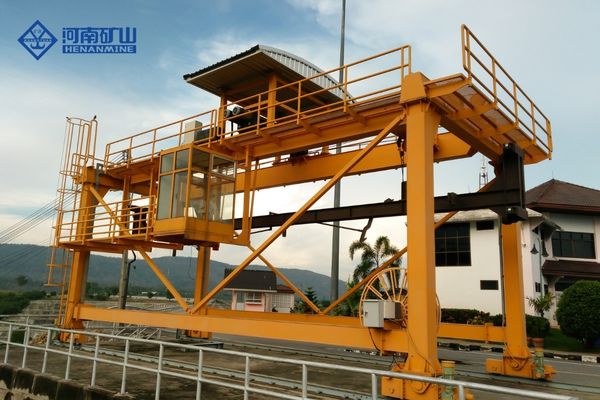
  • Explosion-Proof Gantry and Overhead Cranes: Compare Site Interfaces

    Explosion-Proof Gantry and Overhead Cranes: Compare Site Interfaces

    Technical guide

    Explosion-Proof Gantry and Overhead Cranes: Compare Site Interfaces

    The protection concept must suit the classified area and the crane's support arrangement. Compare the lifting task, travel system and installation conditions before deciding which hazardous-area crane configuration to develop.

    Henan Mine CraneTechnical guide · Updated 2026Crane selection, project scope and operating requirements
    how to choose explosion-proof crane
    how to choose explosion-proof crane
    Project planning notes

    Key points for this crane project.

    1. Mainstream application project scenarios of the two
    2. Core operational requirements of hazardous area
    3. The basic definition of the two types of Crane and
    Read the technical guide

    Mainstream application project scenarios of the two types of Cranes

    Explosion-proof cranes and ordinary cranes are very clear application boundaries, whether or not there is a source of explosive hazards within the scene, is the core premise of the distinction between the selection of different scenarios of the risk level and equipment fitness standards are significantly different.

    Oil and gas facilities

    Oil and gas mining and processing plants belong to the first-class high-risk explosion-proof scene, the operation area is always present in the spread of combustible gas leakage risk. Equipment overhaul, pipeline lifting, heavy equipment shifting and other operations, the whole process needs to eliminate any ignition source.

    Chemical and petrochemical plants

    Petrochemical deep processing, fine chemical plant will store, process all kinds of flammable and explosive solvents, process gases and chemical raw materials. Production process volatile vapors, diffuse harmful gases, will make the workshop in a long-term unstable high-risk state.

    Spraying and solvent treatment workshop

    Paint, coating, solvent storage workshop air, will continue to float in the low-flashpoint volatile vapors. These media are extremely sensitive, and the slightest electrical spark, or high temperature surface of equipment, can trigger a risk of combustion or explosion.

    All lifting equipment into the operating area, need to have explosion-proof attributes, to eliminate the common electronic control, mechanical structure of the safety hazards.

    Grain and oil, powder processing plant

    Flour, feed, sugar, starch and other powder processing, will produce a large number of fine suspended dust. After the dust gathering reaches a certain concentration, a dust explosion environment will be formed, which is a typical solid high-risk explosion-proof scenario.

    Raw material transfer, equipment maintenance, finished product lifting dust explosion-proof Crane, need to be targeted to do a good job of dust sealing, electrostatic discharge, temperature control protection, different from ordinary industrial lifting equipment.

    Coal, carbon black powder plant

    Coal processing, carbon black production, powder transfer stations, high dust concentration, accumulation speed, and high frequency of equipment operations, mechanical friction, electrostatic buildup of risk is prominent.

    This kind of dust high-risk areas, must use explosion-proof cranes suitable for dust conditions, the open structure of the ordinary Crane is very easy to accumulate dust, sparks, cannot meet the requirements of safe production.

    Ordinary plants and conventional warehouses

    Ordinary production workshops, finished product warehouses and logistics yards without flammable and explosive media and without the risk of dust accumulation belong to the conventional industrial environment. The operation process will not produce explosive atmosphere, no ignition source control just need.

    This kind of scene does not need high-matching explosion-proof equipment, regular Overhead C ranes and Gantry Cranes can fully meet the lifting needs, more cost-effective, more convenient operation and maintenance.

    Core operational requirements of hazardous area projects

    The core of lifting operations in high-risk scenarios is not to improve lifting efficiency, but to avoid the risk of explosion in all aspects. All the equipment selection, operation specification, operation and maintenance standards, are centered on the control of hazardous sources.

    All-round control of ignition sources

    The core cause of industrial explosion is all kinds of controllable ignition sources, including electrical sparks generated by the start and stop of electrical fittings, mechanical sparks generated by the friction and collision of equipment, high temperature surfaces formed by long-term operation, and accumulation of static electricity.

    All the design optimization of Ex cranes used in hazardous areas revolves around the elimination of ignition sources, eliminating potential safety hazards from the structural and accessory levels.

    Equipment adapted to the risk of real working conditions

    You can't define the type of equipment based on the industry of the plant alone, and the same plant will be divided into hazardous and safety zones. Part of the chemical plant office, warehousing area without high-risk media, no explosion-proof equipment; while the production process area must be strictly adapted to explosion-proof models.

    The core of the selection is the real environment of the equipment operating point, rather than the overall industry attributes of the plant.

    Distinguish between gas risk and dust risk scenarios

    Gas scenarios focus on electrical sealing, spark prevention and control, dust scenarios focus on dust, temperature control, static electricity export.

    Mixed use of equipment can lead to protection failures, which is the main reason why many projects fail acceptance and leave hidden safety hazards.

    Take into account the practicality of equipment operation and maintenance

    Explosion-proof equipment cannot only pursue the level of protection, excessive closure, structural complexity of the protection design, will significantly increase the difficulty of daily maintenance, parts replacement.

    Qualified hazardous area Crane, will be under the premise of safeguarding explosion-proof safety, set aside a reasonable space for operation and maintenance, suitable for long-term normalized operation and maintenance needs.

    Long-lasting spare parts and exclusive after-sales protection

    The spare parts of explosion-proof equipment are exclusive customized models, which cannot be common with ordinary Crane spare parts. The risk of equipment downtime in high-risk scenarios is extremely high, requiring manufacturers to provide a long-term stable supply of spare parts and professional after-sales guidance.

    The basic definition of the two types of Crane and the applicable scenarios

    Many purchasers cannot accurately distinguish between the core positioning of the two types of equipment, in short, ordinary cranes serve regular industrial scenes, explosion-proof cranes exclusive of various types of high-risk hazardous areas.

    What is explosion-proof Crane?

    Explosion-proof Crane is a special lifting equipment specially designed for explosive hazardous environments, the entire machine from the motor, electronic control, cable, braking system to the mechanical friction structure, all using explosion-proof exclusive configuration.

    What is an ordinary Crane?

    Ordinary industrial cranes are conventional general-purpose lifting equipment, only to meet the basic lifting, transfer, overhaul functions. Equipment accessories, electronic control system, mechanical structure are general industrial configuration, without any explosion-proof protection design.

    Prioritize the use of explosion-proof Crane scenes

    Work area perennial or intermittent combustible gases, volatile vapors, suspended combustible dust, the formation of explosive atmosphere conditions. Equipment running track, operating range covering the calibrated hazardous area, need to enter the high-risk areas throughout the operation.

    Ordinary Crane is fully adequate for the scene

    The factory area has been professionally surveyed, is a non-hazardous ordinary area, normal production operations will not produce any explosive gas or dust atmosphere. Equipment throughout the safe area operation, will not enter any calibration of high-risk areas.

    Conventional warehousing, machining, assembly workshop and other non-explosion-proof requirements of the working conditions, the choice of ordinary Crane more cost-effective, fully meet the production requirements.

    Adaptation program for mixed working conditions

    Many large factories exist in the working conditions of the partition, the safety of the region using ordinary cranes to complete routine operations, only high-risk process areas, maintenance points configured with explosion-proof lifting equipment, partition adaptation, according to the need for selection, balancing safety and cost.

    Part of the project does not require the entire machine explosion-proof, only the electronic control, motor and other core spark-prone components need explosion-proof configuration, can be used with ordinary Crane local explosion-proof accessories customized solutions.

    Core differences between explosion-proof cranes and ordinary cranes

    The appearance of the two types of equipment, lifting function similarity is very high, but the core design, safety standards, adaptable working conditions have essential differences, but also procurement selection must focus on checking the content.

    Applicable working conditions are different

    Explosion-proof Crane is designed for various types of hazardous areas, can be adapted to oil and gas, chemical industry, painting, powder and other flammable and explosive high-risk scenarios, can be in the high temperature, dust, corrosive, explosive and stable operation of complex environments.

    Ordinary Cranes are only adapted to regular room temperature, no flammable and explosive media, no high-strength dust in ordinary industrial environments, cannot withstand the safety risks of high-risk working conditions.

    Different configurations of core parts

    All core accessories of explosion-proof Cranes are exclusive explosion-proof models, including explosion-proof motors, explosion-proof brakes, explosion-proof limit switches, sealed electronic control boxes, flame retardant explosion-proof cables, explosion-proof operating handles and remote control systems.

    All electrical and mechanical components that are prone to sparks and high temperatures are designed with explosion-proof modifications. Ordinary Cranes use common industrial parts without any sealing, flame retardant, explosion-proof optimization treatment.

    Ignition source control capability is different

    The core of explosion-proof Crane design is to eliminate all potential ignition sources, through the sealing of explosion-proof, safety protection, intrinsic safety design, electrostatic discharge, material optimization and other ways to eliminate sparks and high temperature generation.

    Ordinary Crane has no ignition source control design, equipment start and stop, friction, electrical failure process, it is very easy to produce electrical sparks and mechanical sparks, in high-risk environments will directly lead to safety accidents.

    Different equipment cost

    Ordinary Crane mass production of high degree, common accessories, simple process, procurement costs and lower landed costs, suitable for regular working conditions batch selection.

    Different maintenance standards and difficulties

    Explosion-proof Crane maintenance requirements are more stringent, you must use the original explosion-proof special parts, overhaul process, replacement cycle, operating norms have clear standards, improper maintenance will directly damage the explosion-proof performance of the equipment.

    Ordinary Crane maintenance process is simple, strong generality of accessories, conventional factory operation and maintenance personnel can complete the daily maintenance and replacement of accessories.

    Selection decision logic is different

    Professional selection will not be based on experience or subjective preference for equipment, but the site hazardous area survey report, the type of hazardous sources, the scope of operation as the core basis. Eliminate the risk of under-matching and avoid the cost waste caused by blindly over-matching.

    Core technical parameters that must be verified for procurement

    No matter which model you choose, you need to check the core parameters with the project conditions to ensure that the equipment is suitable for the production needs and meets the compliance standards at the same time.

    Hazardous source type

    Make it clear whether the site is a single source of gas, vapor, mist, dust, or a mixed source of gas and powder. Different hazardous sources correspond to different explosion-proof standards, which directly determines the direction of equipment selection.

    Rated lifting tonnage

    Calculate the tonnage according to the self-weight of the lifted goods, the weight of the spreader, the maximum operating load, and reserve a reasonable load margin to avoid long-term full-load operation affecting the stability of the equipment.

    Equipment span

    Strictly match the center distance of the workshop track, plant layout and operation coverage to ensure the smooth operation of the equipment, no blind zone, and adapt to the site civil construction conditions.

    Effective lifting height

    Combined with the equipment lifting path, cargo stacking height, plant floor height, and safety spacing to determine, to meet the height requirements of daily production lifting and equipment maintenance.

    Working level

    Differentiate the use of equipment, whether it is low-frequency equipment maintenance lifting or high-frequency normalized production lifting, different operation frequency corresponds to different equipment working level, to ensure the durability of equipment.

    Environmental conditions

    Comprehensively consider the site environment temperature, equipment surface temperature control needs, humidity, dust accumulation, corrosive media and other factors, targeted optimization of equipment protection configuration.

    Equipment control mode

    High-risk hazardous areas are prioritized to use wireless remote control to reduce the risk of personnel working in close proximity; common areas can choose handle control, cab control and other conventional modes.

    Mechanical risk point protection

    Focus on verifying the protection design of brakes, traveling wheels, transmission friction points and metal contact parts to avoid mechanical friction sparks and high temperature risks.

    Electrical protection principle

    Clarify the electrical protection mode of the equipment, confirm that the protection design is suitable for the hazardous working conditions at the site, meet the local explosion-proof compliance requirements, and ensure long-term stable operation.

    Reliable Crane Supplier Screening Criteria

    Ordinary Crane manufacturers cannot land the customization and production of explosion-proof equipment, high-risk project selection of suppliers, focusing on verification of industry-specific experience and landing capacity.

    Verification of hands-on experience in hazardous area projects

    Priority is given to manufacturers with a large number of explosion-proof project landing experience, as distinguished from manufacturers who only produce ordinary Cranes.

    Verification of similar industry landing cases

    Focus on checking the manufacturers in the oil and gas, chemical, coating, grain and oil powder, new energy and other high-risk industries, real project cases, to verify the suitability of equipment conditions and project landing capacity.

    Evaluation of professional engineering adaptability

    High-quality manufacturers will take the initiative to determine whether the project needs explosion-proof equipment according to the customer site conditions, distinguish between explosion-proof and local explosion-proof, to give a cost-effective cost-effective selection of the project, rather than simply promote the high allocation of equipment.

    Confirmation of core component brands and compliance

    Verify the brands and explosion-proof qualifications of explosion-proof motors, brakes, limit switches, electronic control systems, cables, operating accessories, and all core accessories must be compliant with the standards, and eliminate low-match replacement.

    Clarify the scope of testing and commissioning services

    Confirm the manufacturer's factory testing, performance testing, on-site installation guidance, machine commissioning, personnel training and other services, to ensure that the equipment can be put into production in a compliant manner after entering the field.

    Verify compliance coverage

    Confirm in advance whether the equipment is the whole machine explosion-proof compliance, or local accessories explosion-proof adaptive, matching the project regulatory requirements, to avoid non-compliance with the scope of compliance leading to acceptance failure.

    Verification of after-sales and spare parts protection

    Exclusive accessories for explosion-proof equipment with poor generality, manufacturers need to have long-term spare parts inventory, fast after-sales response, remote operation and maintenance guidance capabilities to reduce equipment downtime losses.

    Procurement selection of common misconceptions

    Many of the project's safety hazards and cost waste, are derived from the cognitive bias in the procurement stage, these high-frequency misunderstandings can be effectively avoided.

    Mistakenly believe that all industrial plants need explosion-proof Crane, blindly high allocation of equipment, significantly increasing the project procurement costs.

    Luck, in the calibration of the dangerous area using ordinary Crane, direct contact with the red line of production safety, buried a major explosion hidden danger.

    Confuse gas explosion-proof and dust explosion-proof conditions, misallocation of equipment types, resulting in equipment protection failure.

    Blindly over-selecting equipment without verifying the real source of hazards on site, resulting in redundant equipment performance and wasted budget.

    Unable to accurately determine the operating range of the equipment, mistakenly classified ordinary equipment into the hazardous area operation.

    Only verify the explosion-proof qualification of the whole machine, ignoring the compliance of the core parts, and there are protection loopholes.

    Failure to plan in advance for long-term maintenance and spare parts replacement program, equipment later explosion-proof performance gradually failed.

    Frequently Asked Questions

    What is the core difference between explosion-proof cranes and ordinary cranes?

    The core differences between the two focus on design logic, parts configuration, safety protection and applicable working conditions.

    All high-risk areas must use explosion-proof Crane?

    Only the labeled hazardous areas need to use explosion-proof cranes. Only standardized hazardous areas require explosion-proof equipment, ordinary storage, office, non-process areas in the plant, no explosive media and atmosphere, the use of ordinary cranes can be, without the need for mandatory high matching.

    Can ordinary Crane be used around the hazardous area?

    If the equipment is running in the safe area throughout the whole process, the operation range and operation track will not enter the hazardous area, and will not contact with high-risk media, ordinary Cranes can be used normally. Once the operation track covers the hazardous area, the explosion-proof equipment must be replaced.

    Explosion-proof Crane purchase price must be higher?

    With the same tonnage and the same span, the cost of explosion-proof Crane is generally higher than that of ordinary Crane.

    How to determine whether the operation area is a hazardous area?

    It can be determined based on the project's professional safety survey report, plant area demarcation markings, and the properties of the production medium. Areas where there are combustible gases, volatile vapors, combustible dusts and explosive atmospheres may be formed are high risk hazardous areas.

    Can the same manufacturer provide both ordinary cranes and explosion-proof Cranes?

    Professional lifting equipment manufacturers can provide one-stop general industrial cranes and a full range of explosion-proof cranes to meet the operational needs of the plant zoning, unified equipment standards and after-sales system to reduce the cost of operation and maintenance of the project.

    Summarize

    Explosion-proof cranes and ordinary cranes selection, the core basis is always the site of the real working conditions, rather than purchasing habits, project name or subjective perception. There is no absolutely better equipment, only more suitable for the project model.

    Not sure whether to choose explosion-proof cranes or ordinary cranes for your project? Provide your industry conditions, hazardous area information, equipment parameters and project drawings, our professional engineering team will customize an accurate and suitable selection plan for you.

    Discuss the crane arrangement for your project.

    The protection concept must suit the classified area and the crane's support arrangement. Compare the lifting task, travel system and installation conditions before deciding which hazardous-area crane configuration to develop. Share the load, available drawings, working cycle and site conditions with Henan Mine Crane so the required configuration and supply boundary can be discussed.

    Related crane configurations

    Clean Explosion Proof Bridge Crane

    View product parameters
    Lifting capacity: 1t – 32tSpan: 7.5m – 28.5mLifting height: 6m – 20m

    Combine overhead lifting with the declared cleanliness and hazardous-area requirements. Specify particle-control expectations, process exposure and area classification for the complete lifting system.

    Dual Trolley Explosion Proof Bridge Crane

    View product parameters
    Lifting capacity: 20+20tSpan: 10m – 35mLifting height: 6m – 30m

    Combine two-trolley handling with the declared hazardous-area specification. Coordinate hook loads, lifting sequence, electrical protection and operator controls for the complete installation.

    Updated 2026 · Henan Mine Crane
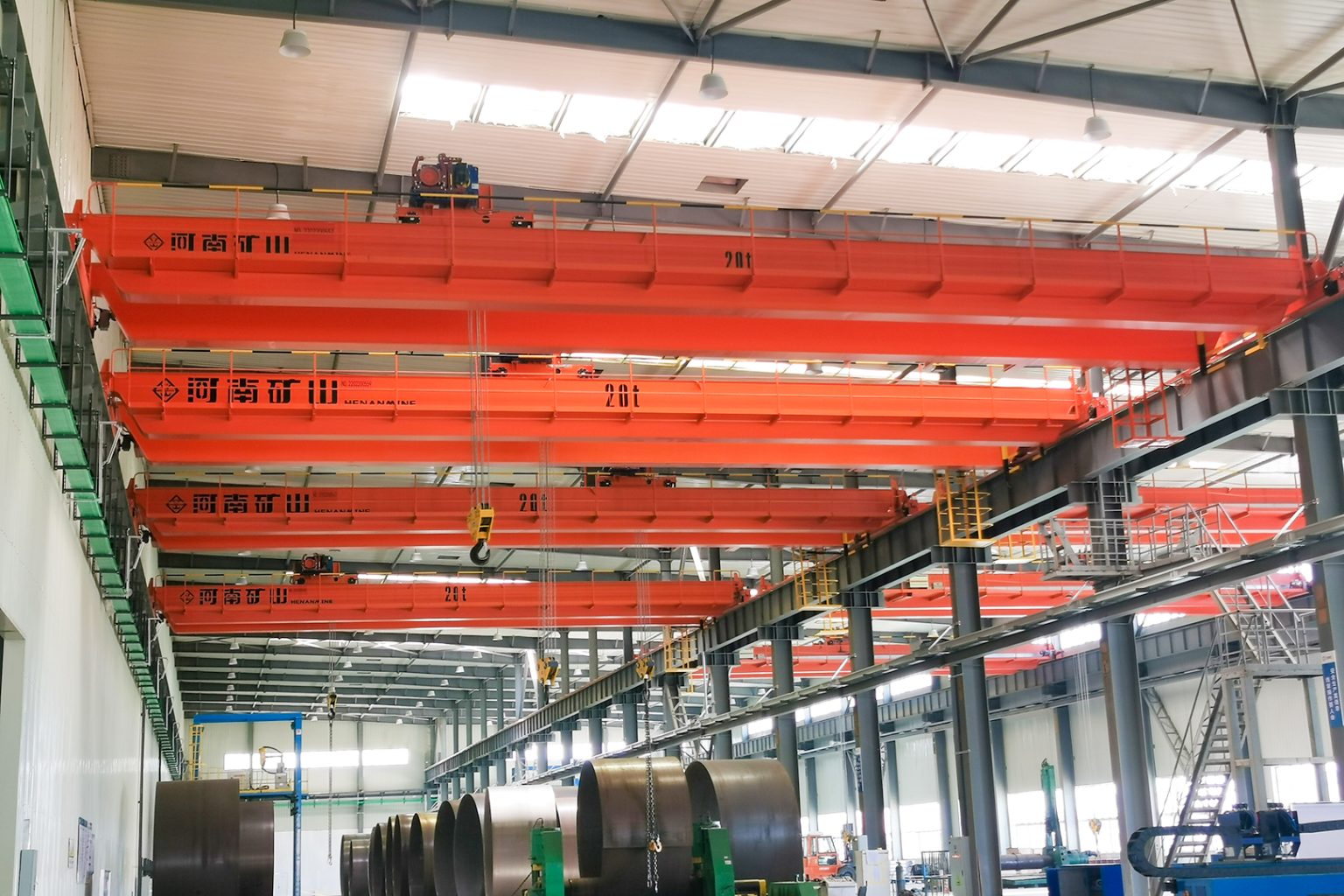
  • Gas and Dust Areas: Information for an Explosion-Proof Crane Enquiry

    Gas and Dust Areas: Information for an Explosion-Proof Crane Enquiry

    Technical guide

    Gas and Dust Areas: Information for an Explosion-Proof Crane Enquiry

    The site classification and substance information need to come from the responsible project team. Provide those details alongside the load and operating requirements so the supplier can review the proposed protection arrangement.

    Henan Mine CraneTechnical guide · Updated 2026Crane selection, project scope and operating requirements
    explosion-proof crane for different scenarios
    explosion-proof crane for different scenarios
    Project planning notes

    Key points for this crane project.

    1. Need to configure explosion-proof equipment for
    2. Different high-risk scenarios of the core selection
    3. Standardized explosion-proof grade selection logic
    Read the technical guide

    Need to configure explosion-proof equipment for industrial scenes

    Explosion-proof lifting equipment and explosion-proof electromechanical equipment are widely used in high-risk industrial scenarios where flammable and explosive media exist. Different scenes of different hazardous properties, the corresponding explosion-proof equipment level selection criteria will be differentiated adjustment.

    Oil and Gas Facilities

    Oil, natural gas mining and processing plants, there is always the risk of flammable gas leakage, air and oil mixed with explosive atmosphere is very easy to form.

    Explosion-proof cranes, explosion-proof hoists, explosion-proof motors, and explosion-proof control systems in the plant are the core equipment for avoiding explosions caused by electrical sparks and mechanical friction sparks, and they are also the mandatory standard equipment for safe production in oil and gas projects.

    Chemical and petrochemical plants

    Fine chemical and petrochemical deep-processing plant will use a large number of solvents, process gases, volatile raw materials. The vapor and mist generated during the production process will be dispersed in the air of the workshop, forming a continuous or intermittent hazardous environment.

    Material handling, equipment maintenance, finished product lifting operations in the workshop, must use the corresponding level of chemical explosion-proof lifting equipment, to prevent the ignition source generated during the operation of the equipment.

    Painting and solvent treatment workshop

    Painting, spraying, solvent storage and processing workshop, volatile combustible vapors floating in the air all year round. This kind of medium has low ignition point and strong diffusivity, slight electrical spark or high temperature surface may cause safety accidents.

    Workshop lifting equipment, mobile lifting tools, electronic control devices, all need to adapt to the explosion-proof standards of the steam hazardous scene, suitable for intermittent high-risk work conditions.

    Grain, oil and food powder processing plant

    Flour, feed, sugar, starch and other food powder processing, will produce a large number of fine combustible dust. After the dust is suspended and piled up, it is very easy to form a dust explosion environment, which belongs to the typical dust high-risk explosion-proof scenario.

    The lifting equipment used for raw material handling, finished product stacking and equipment maintenance needs to be adapted to the dust explosion-proof standard, focusing on dust-proof sealing, surface temperature control and static electricity prevention and control design.

    Coal and powder material processing plant

    Coal, carbon black, ore powder processing plant, dust concentration is high, the accumulation rate is fast, mechanical friction, electrical failure, electrostatic buildup may induce dust explosion.

    This type of scenario requires higher friction prevention and control, dustproof ability and surface temperature control of the equipment, and ordinary gas explosion-proof equipment cannot meet the safety specifications of the powder plant.

    Pharmaceutical and fine chemical workshop

    Pharmaceutical workshops and fine chemical production scenarios, will frequently use low-flammability solvents and ultra-fine powder raw materials. The workshop environment is highly confined, the media diffusion range is concentrated, and the hazardous atmosphere is controllable but the risk of high precision.

    Equipment selection needs to take into account the requirements of clean production and explosion-proof safety standards, the choice of fine protection of explosion-proof equipment, adapted to a small range of high-risk work environment, high precision.

    Battery and new material production workshop

    Lithium materials, new energy powders, high-end new materials production process, the simultaneous existence of solvent vapors and ultra-fine powder double source of danger, belonging to the rare mixed hazardous working conditions.

    This type of scene cannot be applied alone gas explosion-proof or dust explosion-proof standards, need to be combined with dual-risk customized adaptive solutions, but also a composite explosion-proof equipment selection of key difficult scenes.

    Different high-risk scenarios of the core selection requirements

    The suitability of explosion-proof equipment, depending on the existence of on-site hazardous sources, diffusion range, medium properties. Different scenes of the core protection focus is completely different, cannot be uniformly applied to a set of selection criteria.

    Gas, steam, fog high-risk environment

    The core of the danger of this type of scene is the explosive atmosphere formed by combustible gases mixed with air. Risk level by the frequency of the existence of dangerous atmosphere, the duration of the decision, corresponding to the ATEX standard 0 zone, 1 zone, 2 zone gas hazard classification.

    Equipment selection does not need to be blindly high, but only to match the actual working conditions of the site level. Continuously exist in the dangerous atmosphere of the region to choose a high level of protection, and occasionally appear abnormal working conditions in the region, can be adapted to the conventional explosion-proof level, to avoid a waste of resources.

    Combustible dust high-risk environment

    The mechanism of dust explosion and gas explosion is completely different, dust will be suspended to form an explosive cloud, but also in the accumulation of equipment on the surface to form the risk of secondary explosion. The corresponding ATEX 20, 21, 22 dust classification standards, and gas zoning cannot be common.

    Dust scenarios focus on the protection of the whole machine dust sealing, surface temperature control, electrostatic discharge, rather than purely electrical explosion-proof, which is also the key point of many procurement selection is prone to error.

    Reliable ignition source control

    High-quality explosion-proof Cranes and ancillary equipment, from the structure, accessories, electronic control, materials, multi-dimensional avoidance of ignition risk, suitable for complex and high-risk working conditions.

    Fit the actual process conditions of the safety design

    Many factories will be labeled with a clear level of hazardous areas, but the actual production process, ventilation conditions, the scope of work there will be slight differences. Equipment selection cannot only against the area labeling, to fit the real workflow.

    For example, some marginal areas are labeled as Zone 2, but high concentrations of combustible media can occur briefly during abnormal production, requiring a moderate increase in equipment protection redundancy to ensure safety in extreme working conditions.

    Complete Compliance and Technical Documentation

    Industrial high-risk projects around the world require equipment to be provided with complete explosion-proof certificates, rating labels, construction drawings, and technical specifications.

    Long-term maintenance and operation and maintenance adaptability

    Explosion-proof equipment protection performance, rely on long-term standardized maintenance. If the design of the protective structure is too closed and complex, it will increase the difficulty of daily inspection and parts replacement.

    High-quality explosion-proof equipment will protect the protective performance of the premise, set aside a reasonable space for maintenance, so that daily operation and maintenance can be efficient landing, long-term maintenance of explosion-proof equipment performance.

    explosion-proof crane for different scenarios
    explosion-proof crane for different scenarios

    Standardized explosion-proof grade selection logic

    There is no fixed formula for explosion-proof selection, but there is a standardized landing process. Follow the scientific steps selection, not only to avoid safety risks, but also maximize the control of equipment procurement and operation and maintenance costs.

    The first step: distinguish between the source of danger for gas or dust type

    This is the selection of the most basic and most critical step.

    Mixed selection standards, light equipment adaptation failure, heavy leaving major safety hazards, but also the industry's most common selection errors.

    Step 2: Confirm the site hazardous area level

    Hazardous area rating is based on the frequency and duration of explosive atmosphere. 0 zone, 20 zone for the continuous presence of high-risk atmosphere, 1 zone, 21 zone for normal operations occasionally, 2 zone, 22 zone for abnormal working conditions for a short period of time.

    Accurate approval of the regional level, in order to match the corresponding protection level of high-risk area equipment, to achieve a balance between safety and cost.

    Step 3: distinguish between electrical and mechanical explosion-proof equipment properties

    Explosion-proof equipment is divided into electrical explosion-proof and mechanical explosion-proof two plates. Motor, electronic control, switch, remote control belongs to the electrical explosion-proof category, wheels, brakes, wire rope, friction structure belongs to the mechanical explosion-proof category.

    Different equipment focuses on different explosion-proof, some scenes need to meet the electrical and mechanical dual explosion-proof, a single dimension cannot meet the production safety requirements.

    Step 4: Match the corresponding protection program according to the scene

    Different hazardous scenarios correspond to the exclusive protection concept, without the need to pursue the highest level of explosion-proof.

    Scientific selection is to match the needs, rather than blindly high matching, which is the core principle of industrial explosion-proof selection.

    Step 5: check the project’s local compliance system

    Selection needs to confirm the project in advance of the local standards, to ensure that the equipment certification, technical documents, marking specifications fully adapted to the local acceptance requirements.

    Step 6: Approved regional classification attributes

    Part of the plant will exist in ordinary areas, conventional hazardous areas, special control of the division of hazardous areas. Special control areas will have additional temperature, static electricity, airtightness requirements.

    Equipment selection must be based on the site of the professional regional assessment report, cannot be referred to the business publicity rhetoric or general equipment parameters.

    Typical industrial scenarios selection differences

    Different high-risk scenarios have different sources of risk, and the focus of equipment selection and protection configuration varies greatly. Combined with the characteristics of the mainstream industrial scenarios, you can quickly lock the appropriate explosion-proof program.

    Oil and gas process production area

    Oil and gas plants are mainly gas explosion risk, mostly divided into 0, 1, 2 gas hazardous areas. The core risk is the dispersion of flammable gas leakage, the explosion-proof level of electrical equipment, sealing, spark prevention and control requirements are extremely high.

    Solvent and painting workshop

    The core risk of painting workshop is volatile solvent vapors, hazardous atmosphere more intermittent in the operating hours, mostly categorized as Zone 1, Zone 2 gas area.

    This type of scene focuses on safeguarding the explosion-proof performance of the electric control system, hand-held operators, and mobile equipment, to avoid sparks generated during the start-stop and operation of electrical components, and ignition of suspended vapors.

    Flour grain and oil processing workshop

    Grain and oil powder workshop is a typical dust explosion-proof scenarios, corresponding to 20, 21, 22 dust classification. The core risk is the dust suspension explosion cloud and dust accumulation on the surface of the equipment.

    Selection focuses on the dustproof sealing of the entire equipment, the upper limit of the surface temperature, electrostatic discharge structure, to avoid high-temperature surface ignition accumulation of dust, while eliminating the friction of mechanical sparks.

    Carbon black and coal powder plant

    Coal, carbon black powder density, accumulation speed, in addition to the risk of dust explosion, there are also high-intensity mechanical friction, electrostatic accumulation of potential hazards.

    The equipment needs to strengthen the mechanical explosion-proof design, optimize the material and structure of the friction parts such as wheels, brakes, transmission, etc., and at the same time, match with efficient electrostatic discharge device to adapt to high dust and high friction working conditions.

    Battery powder new material workshop

    New energy materials workshop is a mixed risk scenario, there are solvent vapor gas risk and ultra-fine powder dust risk, cannot apply a single explosion-proof system.

    Selection needs to be combined with the characteristics of dual sources of danger, while meeting the gas and dust explosion-proof standards, optimized for temperature control, dust, anti-static, fire flowers multiple configurations.

    High-risk area maintenance lifting operations

    A lot of factory fixed process equipment without moving, but overhaul operations require temporary lifting equipment into the hazardous area. Selection of this type of scenario focuses on the scope and length of the approved equipment into the hazardous area.

    Short-term intermittent maintenance operations, can be adapted to the basic explosion-proof level of the corresponding zone; long-term fixed maintenance operations, in accordance with the normalization of the hazardous area standard selection.

    explosion-proof crane for different scenarios
    explosion-proof crane for different scenarios

    Procurement must verify the core technical parameters

    Hazardous source type

    Clarify whether the site is a single gas, a single dust, or a gas-powder mixture of hazardous sources.

    Equipment category attributes

    Distinguish between the types of procurement equipment, cranes, hoists, motors, electric control boxes, remote controls, lighting equipment, explosion-proof parameters are different, cannot be uniformly applied to a set of standards.

    Surface temperature limits

    The maximum surface temperature during operation of the equipment is one of the core indicators of explosion-proof. It must be lower than the lowest ignition point of the combustible medium on site, to avoid direct ignition of gas or dust on the surface of the high temperature, which is a key parameter that many purchasing is easy to ignore.

    Core protection method

    Refuse to generalize the concept of “explosion-proof”, clear equipment specific protection principles, such as explosion-proof, increased safety, intrinsic safety, dust sealing protection. There are obvious differences in the hazardous scenarios and safety levels for different protection methods.

    Site environmental conditions

    Comprehensive consideration of the site humidity, corrosivity, dust accumulation, ventilation conditions, process residual media and other factors. High humidity, corrosive environments require additional strengthening of equipment sealing and anti-corrosion design to ensure long-term stability of explosion-proof performance.

    Equipment control mode

    According to the operating scenarios to choose the handle control, wireless remote control, cab control mode. Priority is given to remote control in high-risk confinement scenarios to reduce the risk of close contact between personnel, while supporting the corresponding explosion-proof level of control accessories.

    Mechanical risk point protection

    Focus on verifying the explosion-proof design of brakes, traveling wheels, transmission structures, and metal contact points to eliminate mechanical ignition sources such as friction sparks, impact sparks, and electrostatic buildup.

    Operation and maintenance adaptability

    Confirm that the explosion-proof structure of the equipment is convenient for daily inspection, parts replacement and troubleshooting. Protective structure cannot sacrifice the convenience of operation and maintenance, otherwise the long-term use of inadequate operation and maintenance will lead to the failure of protection.

    Reliable explosion-proof equipment supplier screening criteria

    Explosion-proof equipment belongs to special industrial equipment, general equipment manufacturers do not have special R & D and production capacity.

    Verify the professional experience in high-risk working conditions

    Priority is given to manufacturers that are deeply engaged in the explosion-proof field and specialize in high-risk industrial scenarios. Different from ordinary industrial lifting equipment manufacturers, professional manufacturers are familiar with the risk of various types of gas, dust explosion-proof working conditions pain points, can accurately match the appropriate program.

    Verification of similar landing project cases

    Focus on checking the manufacturers in the oil and gas, chemical, powder, new energy, pharmaceutical and other high-risk industries real landing projects. A wealth of similar cases, on behalf of the manufacturer's selection program and equipment quality verified by the real working conditions.

    Evaluation of professional engineering adaptability

    High-quality suppliers will not directly apply the general model offer, will take the initiative to check the site of the source of danger, the level of the region, the operating conditions, targeted recommendations to match the explosion-proof program, to avoid the waste of high matching or low matching unsafe.

    Verification of a full set of formal technical data

    Regular manufacturers can provide equipment assembly drawings, electrical schematic diagrams, explosion-proof protection, accessories, operating manuals, test reports and other complete sets of information to fully meet the acceptance of all types of projects around the world for the record.

    Confirmation of explosion-proof certification coverage

    Ensure that the certificate is real and effective, and fully match the procurement of equipment and project location specifications, to avoid problems such as certificate arbitration, scope inconsistency and so on.

    Verification of core parts compliance

    Explosion-proof motors, brakes, limit switches, electronic control boxes, remote controls, sensors and other core accessories, must all have the corresponding explosion-proof qualifications, not only the host explosion-proof, ordinary configuration of accessories.

    Clear testing, installation and commissioning services

    Confirm in advance the scope of services provided by the manufacturer, including factory explosion-proof performance testing, on-site installation guidance, machine commissioning, personnel training, etc., to ensure that the equipment can be put into operation in a compliant manner after entering the field.

    Verification of after-sales and spare parts security capabilities

    The operation and maintenance of high-risk explosion-proof equipment requires very high standardization, manufacturers need to have a long-term after-sales response, supply of original spare parts, operation and maintenance guidance to ensure that the equipment to maintain long-term explosion-proof performance.

    Procurement selection of common misconceptions

    Most of the problems of explosion-proof selection, are derived from the cognitive bias in the procurement stage, seemingly reasonable choice, will give the plant long-term safety and production of buried hidden dangers.

    The explosion-proof level as a unified standard, mistakenly believe that all explosion-proof equipment can be common, ignoring the essential difference between gas and dust explosion-proof system.

    Confusing gas hazardous area and dust hazardous area selection logic, gas explosion-proof equipment instead of dust explosion-proof equipment, protection is completely substandard.

    The pursuit of the highest level of explosion-proof, not combined with the actual working conditions, resulting in a substantial waste of equipment procurement costs.

    Only focus on the explosion-proof marking, ignoring the equipment surface temperature limits, high temperature surface there is still a risk of ignition medium.

    Default all high-risk areas of the plant need the same type of equipment, ignoring the risk level differences between different operating areas.

    Do not check the explosion-proof certificates to adapt to the region, resulting in equipment certificates do not meet the project's local standards, cannot pass the acceptance.

    Only verify the explosion-proof qualification of the host, ignoring the compliance of the motor, electronic control and other core accessories, there are loopholes in the overall protection.

    Procurement stage did not plan for the later maintenance and operation and maintenance programs, equipment for long-term use after the gradual failure of explosion-proof performance.

    Frequently Asked Questions

    What is the core meaning of explosion-proof grade?

    Explosion-proof rating is a standard for measuring the safe operation of equipment in high-risk explosive environments, which specifies the protection methods, applicable hazardous areas, temperature limits, and ignition source prevention and control capabilities of the equipment. The core role is to define the high-risk scenarios to which the equipment is adapted, and to guarantee that the equipment will not become a source of ignition for explosions in flammable and explosive environments.

    Is the selection for gas and dust hazardous areas the same?

    The gas scenario adopts the 0/1/2 district grading standard, focusing on electrical spark prevention and control; the dust scenario adopts the 20/21/22 district grading, focusing on dustproof sealing, temperature control and static electricity prevention and control.

    Does the project have to use the highest level of explosion protection?

    No, it does not. The highest level of explosion-proof equipment is only suitable for continuous high-risk core process areas.

    How to determine whether the lifting equipment enters the hazardous area?

    The main body of the equipment, its running track, and the scope of operation are subject to whether it covers the labeled hazardous area or not. As long as any part of the equipment operation process into the high-risk area, you must use the corresponding explosion-proof level of equipment, cannot be based on the length of the operation as a criterion.

    In addition to the explosion-proof certificate, what else needs to be verified?

    Need to check the surface temperature parameters of the equipment, the design of the protective structure, the core components of the explosion-proof qualification, local compliance standards, a full set of technical drawings, factory test records, operation and maintenance specifications, etc., the certificate is only the basic conditions of access.

    Summarize

    Henan Mine Crane has been deeply engaged in the field of industrial explosion-proof lifting equipment for many years, adapting to ATEX, IECEx, NEC and other global mainstream explosion-proof standards, and can be customized for oil and gas, chemical industry, powder, new energy, pharmaceuticals and other types of high-risk scenarios, exclusive explosion-proof equipment solutions.

    Discuss the crane arrangement for your project.

    The site classification and substance information need to come from the responsible project team. Provide those details alongside the load and operating requirements so the supplier can review the proposed protection arrangement. Share the load, available drawings, working cycle and site conditions with Henan Mine Crane so the required configuration and supply boundary can be discussed.

    Related crane configurations

    Dust-Proof Explosion-Proof Overhead Crane

    View product parameters
    Lifting capacity: 1t – 10tSpan: 7.5m – 28.5mLifting height: 6m – 20m

    Configure suspended lifting for a declared combustible-dust environment. Dust classification, surface-temperature limits and enclosure requirements form part of the crane and hoist specification.

    Clean Explosion Proof Bridge Crane

    View product parameters
    Lifting capacity: 1t – 32tSpan: 7.5m – 28.5mLifting height: 6m – 20m

    Combine overhead lifting with the declared cleanliness and hazardous-area requirements. Specify particle-control expectations, process exposure and area classification for the complete lifting system.

    Updated 2026 · Henan Mine Crane
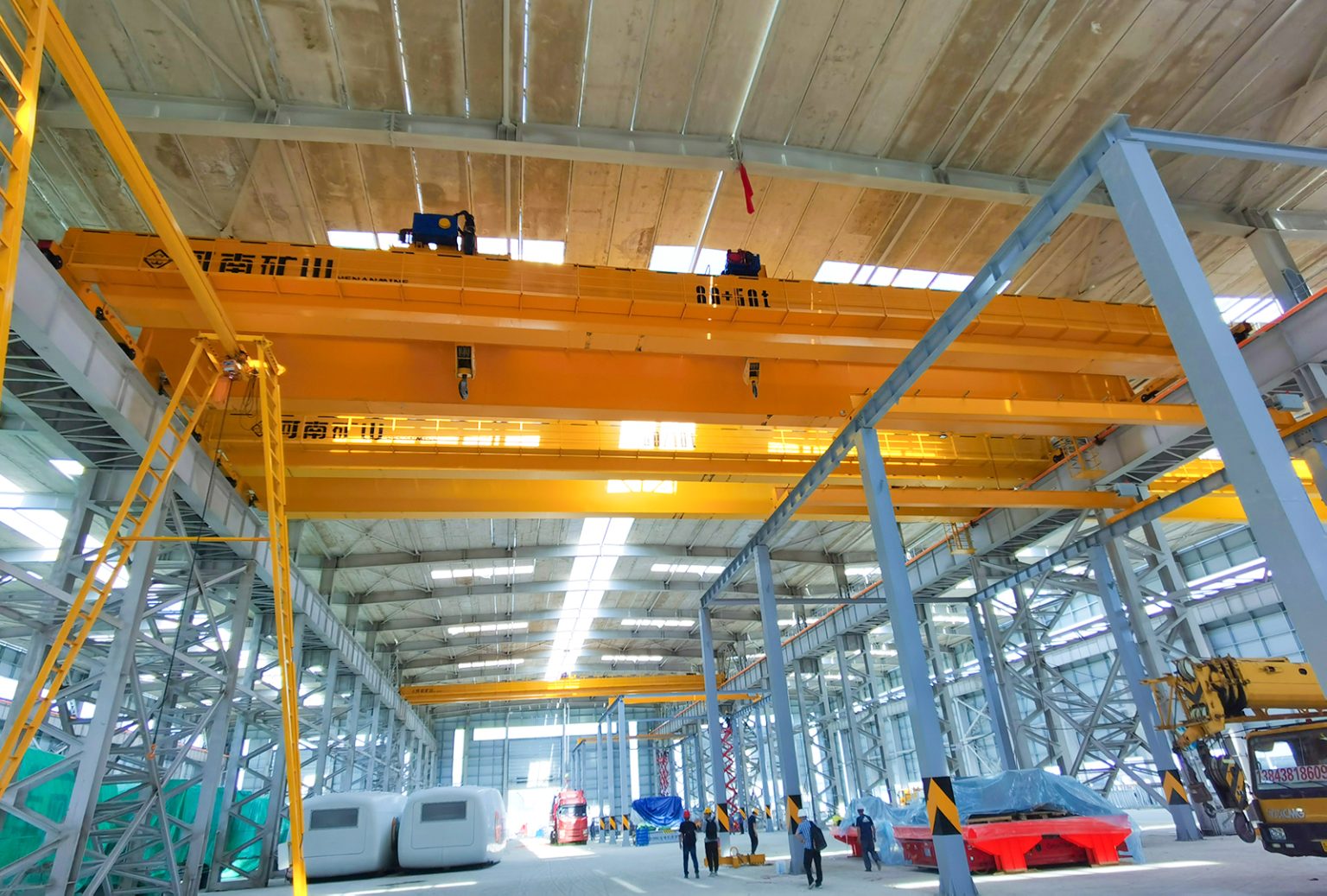
  • Gantry Crane Project Basics: From Load Coverage to Installation Scope

    Gantry Crane Project Basics: From Load Coverage to Installation Scope

    Technical guide

    Gantry Crane Project Basics: From Load Coverage to Installation Scope

    A gantry project connects equipment selection with supporting works and operation. Start with the load and working area, then define the travel arrangement, site interfaces and supply responsibilities required for a complete proposal.

    Henan Mine CraneTechnical guide · Updated 2026Crane selection, project scope and operating requirements
    Henan Mine Crane overhead crane inside a workshop bay
    Henan Mine Crane overhead crane inside a workshop bay
    Project planning notes

    Key points for this crane project.

    1. What Is a Gantry Crane?
    2. How Does a Gantry Crane Work?
    3. Types of Gantry Cranes
    Read the technical guide

    What Is a Gantry Crane?

    Gantry Crane is an independent lifting equipment that does not need to rely on the building support, the outriggers carry the main girder and the lifting and running mechanism, which is widely used in industrial material handling. The core difference between it and overhead cranes is that it does not need to rely on the plant structure to support the weight, and it can run freely on the ground track or level ground, which makes it more flexible in adapting to the scenarios.

    From the basic structure point of view, the gantry crane is mainly composed of four core parts, each part works together to realize the accurate lifting and handling of materials:

    1. main girder: Ss the load-bearing core of the equipment, it bears the main weight of the lifting load and is the skeleton structure of the gantry crane.
    2. Outriggers (with wheels/rails): Support the main girder and contact with the ground, the outriggers with wheels can realize the movement of the whole machine along the ground track, which is the travel part of the equipment and can drive the whole machine to move flexibly.
    3. Lifting trolley and hoist: Installed on the main girder, responsible for the vertical lifting and lowering of materials, is the core of the lifting function of the implementation of components.
    4. Control system: Including operation console, electrical wiring, sensors, etc., coordinates all the actions of the equipment to realize the precise control of lifting and moving.

    How Does a Gantry Crane Work?

    Gantry Crane’s operation process follows standardized steps, the institutions work together to achieve accurate handling of materials from lifting to the designated location, the entire operation process is clear and controllable, even for complex lifting operations, can be completed through standardized steps.

    1. Vertical lifting: Operate the lifting mechanism to lift the material vertically through the hook or spreader, leaving the ground to a safe height to avoid collision between the material and the ground obstacles.
    2. Horizontal movement: Manipulate the trolley system, drive the lifted material to move along the main girder in the horizontal direction, and adjust the material to the longitudinal direction directly above the whole machine. 3.
    3. longitudinal travel: Operate the machine to walk longitudinally along the ground track, carry the materials to the designated working position, and then slowly descend through the lifting mechanism to complete the precise placement of materials.

    With the development of industrial automation, the degree of automation of the gantry crane is also increasing, the current mainstream automation configuration includes PLC programmable control, VFD variable frequency speed control, remote control operation, etc. PLC control can realize the automation of the workflow programming, reducing manual operation. VFD speed control makes the lifting and moving of the equipment smoother and avoids load shaking. Remote control allows the operator to complete the lifting operation in a safe area, enhancing operational safety.

    Types of Gantry Cranes

    Gantry cranes are available in a wide range of types, with different structural designs adapted to different load requirements, operating environments and production scenarios, ranging from light-duty material handling to ultra-heavy-duty industrial lifting, all of which have their own models.

    Single-girder gantry crane

    Single-girder gantry crane adopts the simple structural design of single main girder, the overall weight of the equipment is light, and the manufacturing process is simple, so the manufacturing cost and on-site installation cost are much lower than that of multi-girder model, which is the best choice for light duty operation scenarios.

    Typical application scenarios: Material transfer in small and medium-sized workshops, loading and unloading of goods in warehouses, daily maintenance of factory equipment and parts handling.

    Double-girder gantry crane

    Double girder gantry cranes can be equipped with a variety of advanced configurations, such as double hoist lifting system, which can realize the balanced lifting of large volume materials. The lifting height can also be increased to meet the lifting requirements of high plants and large materials in the open air.

    Typical application scenarios: Billet and steel handling in steel mills, component lifting in precast concrete plants, and large equipment assembly in the heavy machinery manufacturing industry.

    Truss gantry crane

    The main girder and outriggers of truss gantry crane adopt lattice structure design, which greatly reduces the weight of the equipment itself compared with the solid web structure, and at the same time effectively reduces the wind resistance, which ensures the stability of the operation even in the outdoor strong wind environment, and is not easy to be affected by the wind and the equipment shaking. In addition, the steel consumption of truss structure is less, which can meet the lifting demand of large coverage while controlling the cost for large span operation.

    Typical application scenarios: Handling of reinforcement bars, formwork and prefabricated components in construction sites, loading and unloading of materials in open-air cargo yards, and lifting of bridge girders in road and bridge projects.

    Semi-gantry crane

    Semi-gantry crane is a composite equipment that combines the advantages of gantry crane and overhead traveling crane, one side of the outrigger runs along the ground track, and the other side relies on the plant’s bull legs, columns and other architectural structures to build the track, without the need to set up a separate double-sided ground track, significantly saving the space occupied by the site, and also reduces the cost of site infrastructure.

    Semi-gantry cranes not only retain the flexible mobility of gantry cranes, but also use the building structure to realize the load-bearing, suitable for the site space is limited or part of the building structure can be used in the scene.

    Typical application scenarios: Material handling in workshops with existing traveling beams, cargo transfer in indoor and outdoor transition areas, and material transfer between workstations in production lines.

    Shipbuilding gantry crane

    Shipbuilding gantry cranes are equipped with a multi-hook synchronous lifting system, which can realize the balanced lifting of large-volume and shaped components, and at the same time, equipped with a high-precision control system, which can accurately control the lifting position to meet the needs of assembly of large structures.

    Typical application scenarios: Hull segment assembly and ship repair in shipbuilding factories, construction and installation of offshore platforms, and lifting of heavy steel components in large-scale steel structure plants.

    Rail-mounted container gantry crane

    Rail-mounted container gantry crane is specially designed for container handling, the whole machine runs along the fixed rail, the running accuracy and operational stability is very high, is the core loading and unloading equipment for container yard and logistics hub. This model supports fully automatic or semi-automatic control, which can realize precise stacking and fast loading and unloading of containers, significantly improve the efficiency of repetitive container operation and reduce the error of manual operation.

    Typical application scenarios: Container port yard operations, container loading and unloading at railroad freight stations, and container storage and transshipment in large logistics parks.

    Gantry Crane Applications

    Heavy duty gantry cranes for industrial plants have become the core equipment for material handling in various industrial fields due to their flexible structure, wide lifting capacity coverage and multi-scenario adaptability, which can be seen in everything from workshop assembly in the manufacturing industry to outdoor construction in the construction industry, and from loading and unloading of goods in the logistics industry to transshipment of containers in ports.

    Manufacturing and assembly

    Gantry cranes are mainly used in workshops for the handling of production equipment, lifting and loading of large molds, and assembly of heavy parts, such as lifting and loading of body frames in automobile manufacturing and handling of machine tools in machinery manufacturing, which can greatly enhance the efficiency of material flow in workshop production, and reduce the cost and risk of manual handling.

    Construction sites

    Gantry cranes are the core lifting equipment for construction sites, mainly used for steel, rebar, building formwork handling, prefabricated concrete panels, bridge girders lifting, as well as the dismantling of large-scale construction machinery on the construction site, suitable for construction sites in the open air, wide range of operation to meet the needs of various types of materials lifting during the construction process.

    Warehousing and logistics

    Gantry cranes are also suitable for loading and unloading of goods and storage in warehouses and logistics parks, such as loading and unloading of bulky goods on and off shelves, loading and unloading of trucks. Compared with forklift trucks and other equipment, they can realize material handling of greater weight and higher height, enhance the operational efficiency of warehousing and logistics, and meet the demand for efficient flow of modern logistics.

    Ports and shipyards

    In the field of ports and shipyards, gantry cranes are mainly used for loading and unloading of containers and bulk cargoes, as well as yard transfer. In the field of shipyards, gantry cranes are used for the assembly of hull segments, lifting and loading of ship parts and ship repair and maintenance, especially the ultra-heavy shipbuilding gantry cranes, which are the core production equipment of large shipyards, determining the shipyard’s ability to build large-scale ships.

    Maintenance and repair

    Gantry cranes are suitable for daily maintenance of factory equipment, lifting of large engines, maintenance of power facilities and other scenarios, such as turbine maintenance in power plants, steel rolling equipment maintenance in steel mills, and can flexibly enter the work area, complete the dismantling and loading of heavy equipment parts, providing convenient lifting support for equipment maintenance.

    Core Advantages of Gantry Cranes

    Compared with other lifting equipment, gantry cranes can become the mainstream choice of modern material handling, the core stems from its structure and performance of multiple advantages, suitable for different industries, different scenes of lifting needs, the specific advantages are as follows:

    • No need to rely on building structures: Independent load-bearing design, without the use of plant bull legs, columns and other building structures, can be built and used in any site, the scene is very strong adaptability.
    • Indoor and outdoor work: Gantry cranes can be used as fixed lifting equipment in the workshop, but also in the outdoor open space, construction sites, harbors and other areas of operation, to achieve indoor and outdoor continuous material handling.
    • Flexible and movable: Gantry cranes can run freely along the ground track, with a wide range of operational coverage, and some light models can be quickly disassembled and assembled along the track, to adapt to temporary operational scenarios.
    • Lower installation costs: Gantry cranes do not require complex structural transformation of the building, only need to level the site and build a simple track, you can complete the installation, compared with overhead cranes, site infrastructure and equipment installation costs are significantly reduced.

    Gantry Crane Load Capacity And Duty Classification

    One of the core indicators for the selection of gantry cranes is the equipment’s lifting capacity and duty class, which directly determines whether the equipment is suitable for the production and operation needs of the enterprise. Different lifting capacities and duty classes correspond to different operation frequencies and load requirements, which are divided as follows:

    Capacity range

    According to the different rated lifting capacity, gantry cranes can be divided into three categories, which are suitable for different load requirements.

    Duty classes (A/B/C/D/E/F)

    The duty classes of gantry cranes are classified according to the frequency of operation and load status, from A to F, the intensity of work is gradually increased, which is the core index to judge the ability of continuous operation of the equipment.

    Class A/B: light duty working class, applicable to occasional operation scenarios, such as temporary lifting for equipment maintenance.

    Class C/D: Medium duty, suitable for medium frequency operation, such as daily material handling in warehouses.

    Class E/F: Heavy duty, suitable for high frequency, continuous operation, such as steel mills, ports, 24-hour continuous production.

    How to Choose the Right Gantry Crane

    The key to choose the right gantry crane is to combine their own production needs, site conditions and operating environment, comprehensive consideration of various factors, to avoid cost waste and safety hazards due to selection errors, the following is a professional procurement and selection recommendations, including the core factors for consideration and common avoidance of pitfalls:

    Key factors

    1. Span and lifting height: Span is determined according to the width of the working area, lifting height is determined according to the stacking height of the materials, lifting height, both of which directly determine the operating range of the equipment.
    2. Operating environment: Distinguish between indoor and outdoor operation; for outdoor operation, choose the truss model with good wind resistance; for corrosive environment, such as chemical plant area, choose the equipment with anticorrosive treatment.
    3. Mobility requirements: According to the size of the working area, determine whether the equipment needs to be moved frequently, such as the need for temporary work, you can choose the track easy to dismantle the light models.
    4. Working level: according to the frequency of operation, continuous 24-hour operation needs to choose E / F class heavy-duty working level, daily low-frequency operation can choose A / C class.

    Tell us your specific lifting capacity, operating span, lifting height, operating environment and production needs, Henan Kuangshan will customize your exclusive gantry crane solutions, from equipment selection, site planning to installation and commissioning, one-stop service, so that your lifting equipment accurately match the production needs.

    Tips for Effective Gantry Crane Maintenance

    Safe operation and regular maintenance of the gantry crane is to ensure the normal operation of the equipment, to extend the service life, to avoid safety accidents at the core, the daily operation of the need to strictly follow the safety norms, and at the same time to establish a perfect maintenance system, the specific safety points and maintenance list is as follows:

    Daily inspection

    Every day before the operation, need to carry out a comprehensive safety inspection of the equipment, to confirm that there is no fault before starting the operation, focusing on the following parts of the inspection:

    1. Wire rope and hook: Check whether the wire rope has broken wire, wear and tear, loose strand phenomenon, whether the hook has deformation, cracks, and whether the safety catch is intact. 2. control system: check the operator’s console, and make sure that there is no malfunction before starting the operation.
    2. Control system: Check whether the operating table button, remote control is sensitive, limit switch, emergency stop button can work properly.
    3. travel and lifting mechanism: Check the fit of wheels and tracks, whether the lifting trolley is running smoothly, and whether there is any abnormal noise.
    4. Electrical wiring: Check whether the wires and cables are damaged or aging, and whether the wiring is firm and without leakage.

    Preventive maintenance

    Regular professional maintenance of the equipment, timely replacement of wearing parts, lubrication of key parts, to avoid failure due to aging parts, the core maintenance content:

    1. lubrication maintenance: Regularly add lubricant to the rotating parts such as wheel bearings, trolley pulleys, and gears of the lifting mechanism to ensure flexible rotation. 2. structural inspection: Monthly inspection of the main machine, and monthly inspection of the main machine.
    2. Structural inspection: Monthly inspection of the main girder, legs and other steel structures to see whether there are deformation, cracking, welding points off and other problems, and timely reinforcement and repair.
    3. Replacement of wearing parts: according to the frequency of use, regularly replace the wire rope, brake pads, pulleys and other wearing parts to avoid safety accidents caused by wear and tear of parts.
    4. Electrical maintenance: inspect and debug electrical parts such as motors, inverters, sensors, etc. every quarter to ensure the stable operation of the electrical system.

    Safety systems

    Qualified gantry cranes are equipped with perfect safety protection system, the operation needs to ensure that all the safety systems work properly, cannot be arbitrarily disassembled or closed, the core safety systems include:

    1. Overload protection system: When the load exceeds the rated lifting capacity of the equipment, it will automatically cut off the lifting power to prevent overloading.
    2. Limit protection system: Including lifting height limit, trolley travel limit, the whole machine travel limit, to prevent the equipment from over-traveling operation caused by collision.
    3. Emergency stop system: All parts of the equipment are equipped with emergency stop buttons, which can quickly cut off the power supply of the equipment and stop all actions in case of emergency.
    4. Anti-shaking system: Some medium and high-end models are equipped with load anti-shaking system, which reduces the shaking of the material during lifting and moving and improves the stability of lifting.

    Discuss the crane arrangement for your project.

    A gantry project connects equipment selection with supporting works and operation. Start with the load and working area, then define the travel arrangement, site interfaces and supply responsibilities required for a complete proposal. Share the load, available drawings, working cycle and site conditions with Henan Mine Crane so the required configuration and supply boundary can be discussed.

    Related crane configurations

    Explore crane product families and technical parameters ↗

    Updated 2026 · Henan Mine Crane