分类: Technical Resources

Crane selection, technology, operation and purchasing knowledge.

  • Automated Overhead Crane: The Key to Smart Warehousing

    Automated Overhead Crane: The Key to Smart Warehousing

    Automated Overhead Crane: The Key to Smart Warehousing

    Over the years, the warehousing industry is quietly changing

    As an old engineer in Henan Mine Crane sales and technical services for more than ten years, I have seen too many warehouses because of low material handling efficiency, high labor costs and headaches.

    The automatic Overhead Crane system is the key equipment to solve these pain points, but also an indispensable part of modern intelligent warehousing and industrial logistics.

    Today I will make the automatic Overhead Crane system clear, from its definition, working principle, to the advantages, application scenarios, and then to the procurement of what to pay attention to, to help you take a detour.
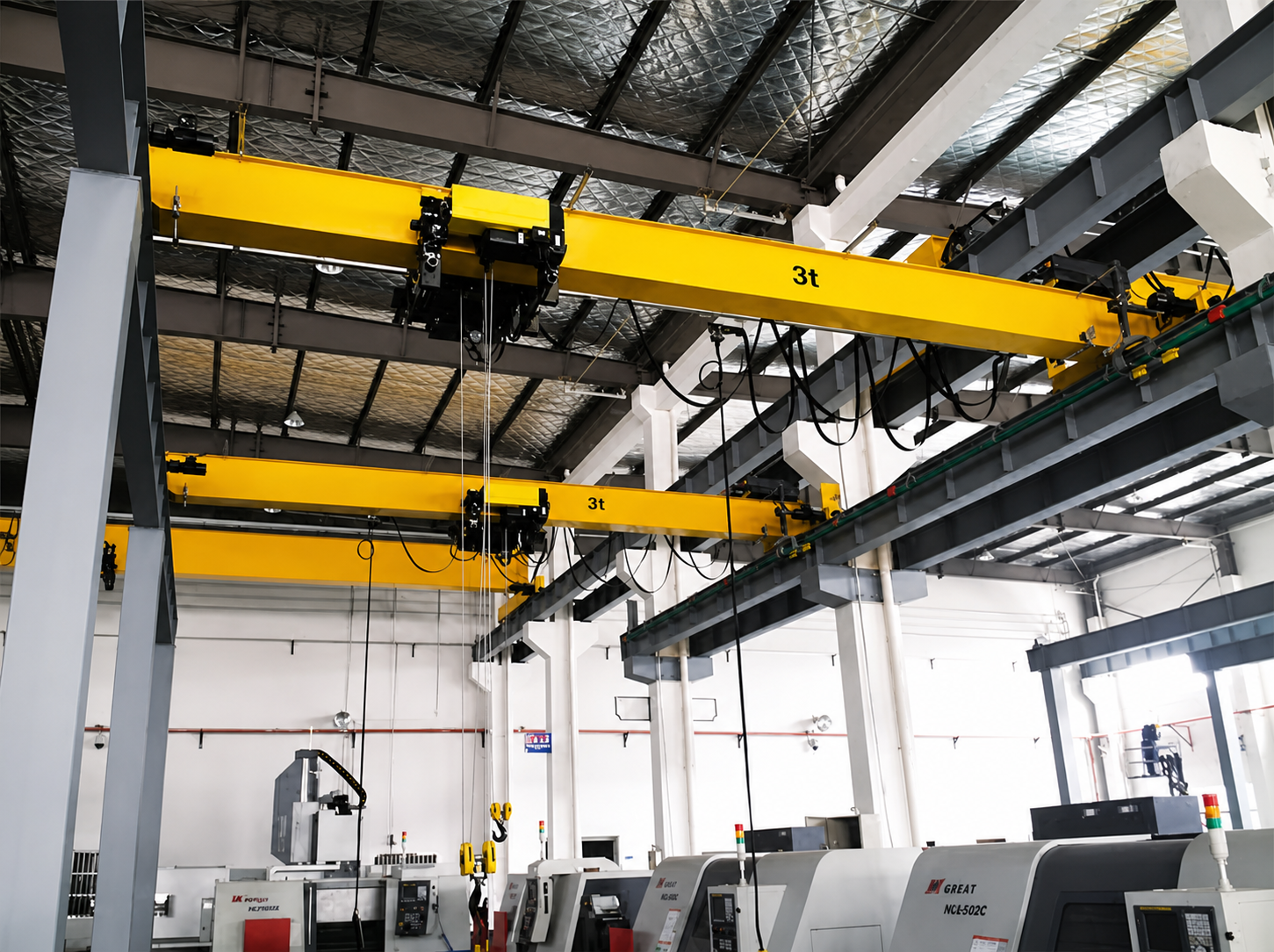
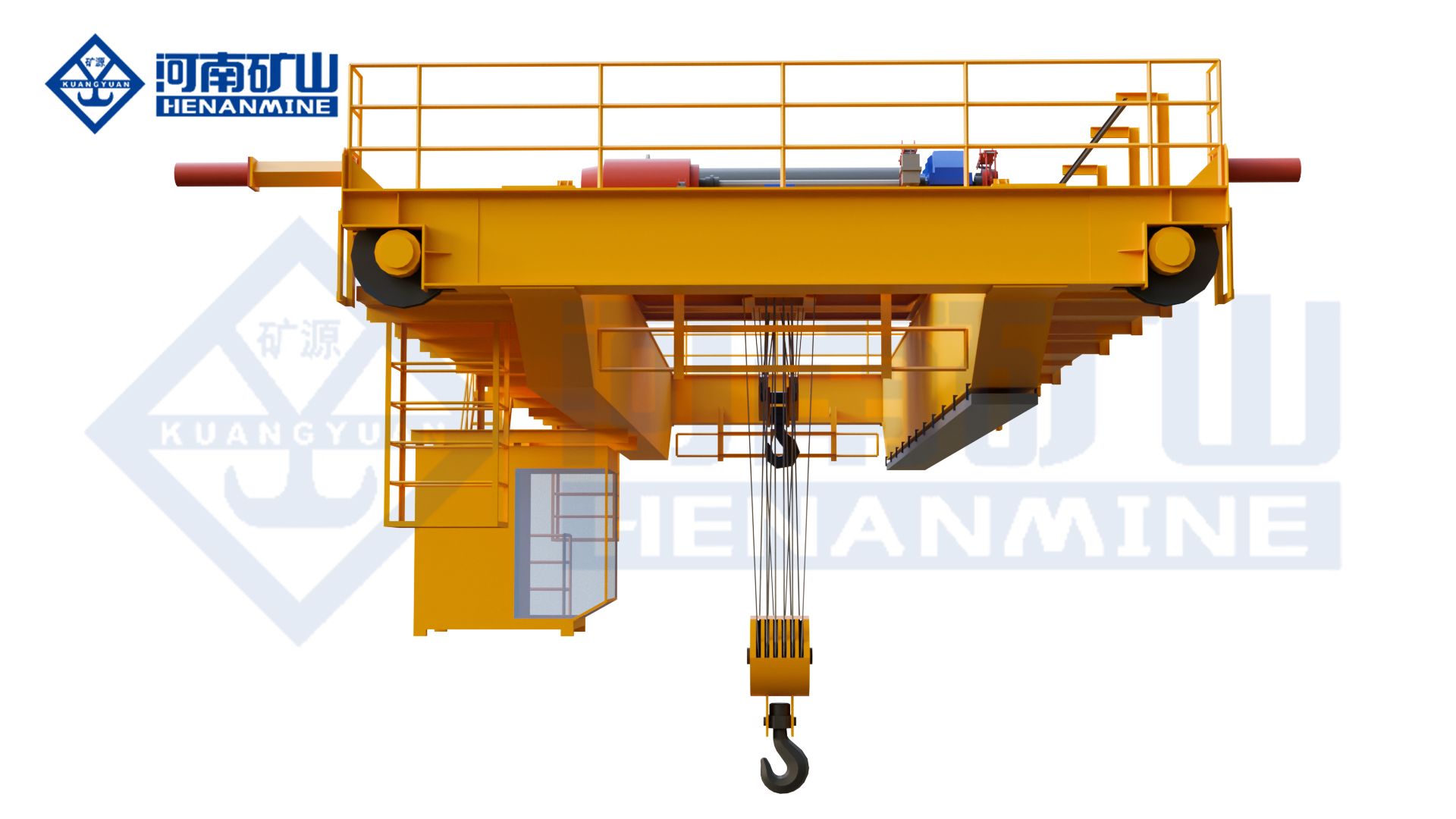
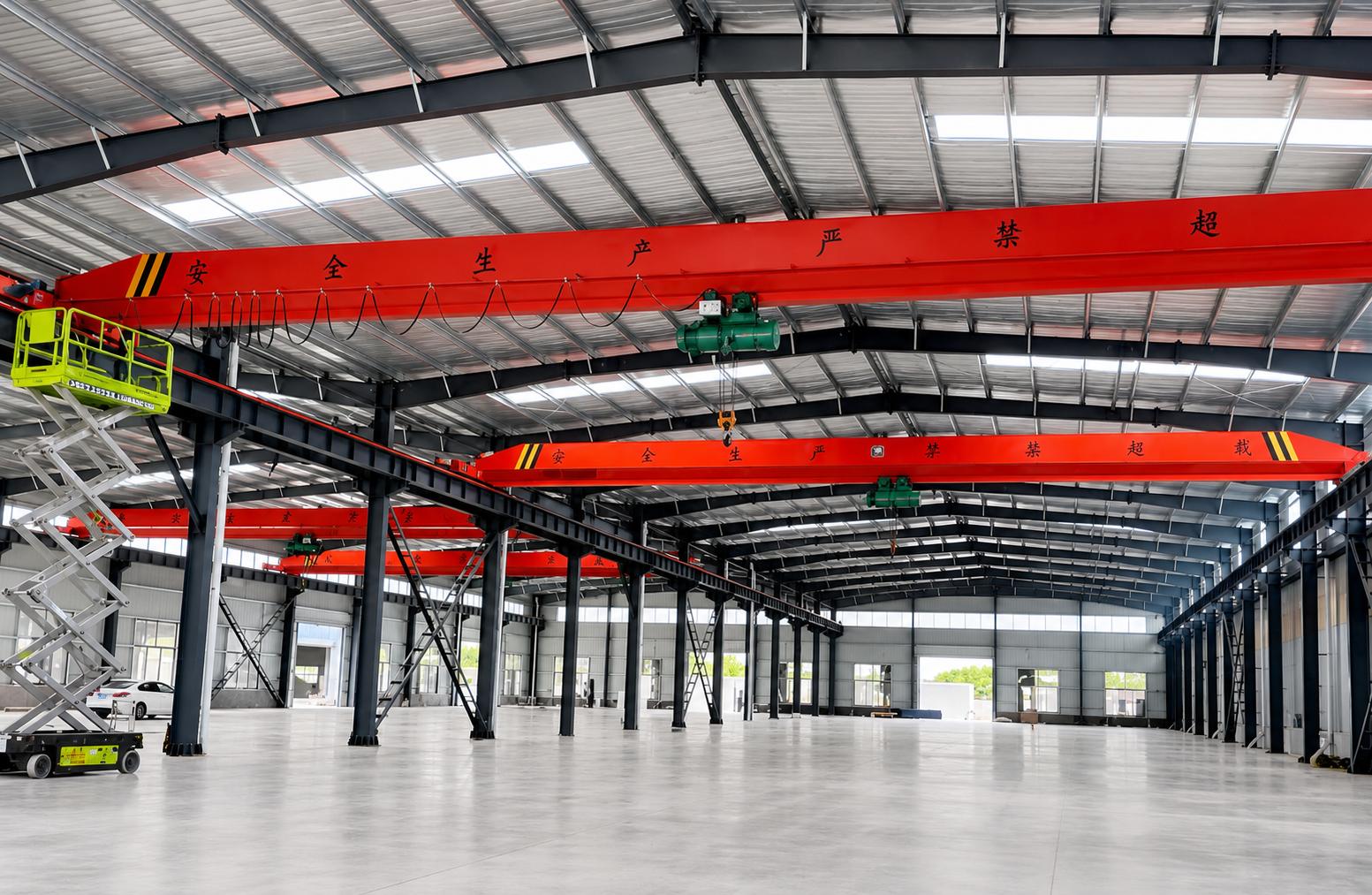
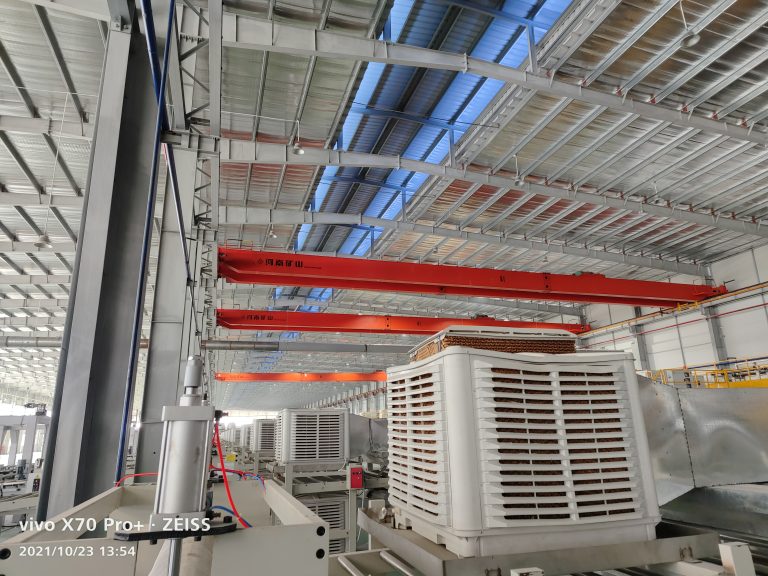
    overhead crane for workshop Henan Mine Crane Factory supply

    What is an automatic Overhead Crane system?

    Basic Definition

    Automatic Overhead Crane System, simply put, is based on the traditional Overhead Crane, integrated with intelligent control, sensors, software and communication technology, without too much human intervention, it can autonomously complete a series of tasks such as lifting, storing and handling of materials.

    It is not like the traditional Crane, must rely on the operator to control the whole process, but through the preset program and real-time monitoring, to achieve unattended or semi-unattended operation, especially suitable for repetitive and regular material handling scenarios.

    Difference with Traditional Overhead Cranes

    Most of the traditional Overhead Cranes are operated manually or semi-manually, the operator has to sit in the cab or control it with remote control on the ground, every action needs manual judgment and operation, which is very dependent on the experience of the operator.

    Automatic Overhead Crane system, on the other hand, relies on the program and the system to make decisions, the operator only needs to monitor in the background and occasionally deal with abnormal situations. The most obvious difference between the two is the difference between “human-controlled” and “self-controlled”.

    Main System Components

    The core components of the automatic Overhead Crane system are actually upgraded on the basis of the traditional Overhead Crane, mainly including these parts:

    The Overhead Crane structure is still the core load-bearing part, which, like the traditional bridge crane, is responsible for supporting the weight of the entire equipment and the loads to be lifted

    Sensors and positioning systems are the “eyes” of automation, such as laser positioning, encoders, limit switches, which can accurately locate the position of materials and Crane, and the error can be controlled in millimeter level

    Warehouse management software (WMS) or central control system is the “command center”, all the actions of the Crane, the
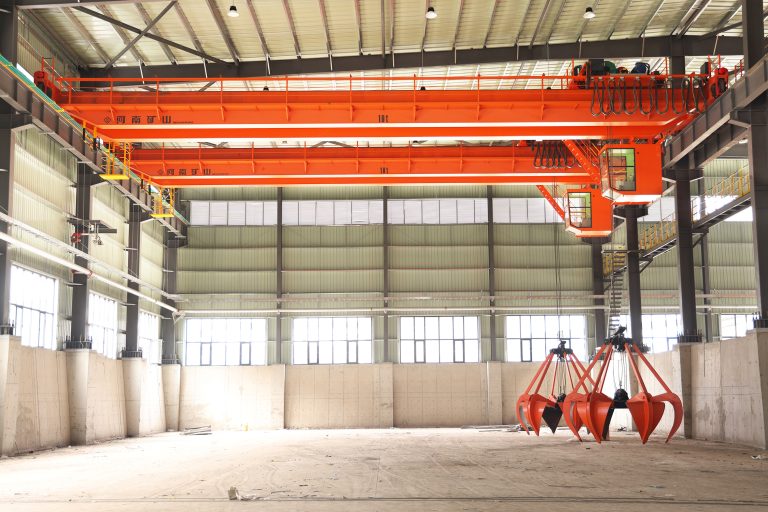
    overhead crane for workshop Henan Mine Crane Factory supply

    Why Smart Warehousing Needs an Automated Overhead Crane System

    The need for faster material flow

    Nowadays, warehouses and production plants have higher and higher efficiency requirements for material handling. Especially in e-commerce warehouses and large logistics centers, thousands of pieces of goods have to be handled every day, and it is difficult to meet the short-cycle and high-frequency handling demand by manual or traditional cranes.

    Automatic Overhead Crane system can realize continuous operation, no need to take a break, and will not be fatigued by the efficiency decline, can effectively shorten the material handling cycle, so that the flow of the entire warehouse speed up.

    Reduce the pressure of labor dependence

    In recent years, labor costs are getting higher and higher, and warehouse handling is repetitive physical labor, young people are not willing to do, resulting in many warehouses are faced with the problem of recruitment difficulties.

    Automation equipment can replace most of the manual operations, such as automatic gripping of materials, transport, storage, do not need manual intervention, both to reduce the number of manual labor, but also reduce the intensity of manual labor, to solve the difficulty of recruiting and retention of the pain point. Many customers feedback, with the use of automated systems, warehouse labor costs can be reduced by more than 30%.

    Demand for higher precision and traceability

    One of the core needs of intelligent warehousing is to accurately manage inventory and reduce handling errors.

    The automatic Overhead Crane system can accurately locate the goods position and materials through sensors and software, and every handling can be recorded in the system, realizing full traceability of materials. This makes inventory management clearer and reduces losses due to errors.

    Demand for safer operations

    Material handling in warehouses, especially for heavy materials, is prone to safety hazards when operated manually.

    Overhead Crane systems can preset safety parameters, such as automatically stopping operations when overloaded, and anti-collision sensors can avoid collisions between equipment and between equipment and warehouse structures, reducing the chances of personnel being exposed to hazardous environments and making operations safer.

    How the Automatic Overhead Crane System Works

    Automatic positioning and operation

    One of the core advantages of the Automatic Overhead Crane system is the precise automatic positioning.

    During operation, after the system sends commands, the Crane automatically recognizes its own position through laser positioning, encoders and other equipment, and then moves along the preset route to the designated pick-up point accurately, the whole process does not require human intervention, and the positioning error can be controlled within 5 mm.

    Load Recognition and Handling

    The system can identify the weight and size of the material through sensors, and can also identify the type and batch of the material through barcode, RFID and other technologies to ensure that the correct material is lifted.

    Integration with warehouse software

    Overhead Crane systems do not operate in isolation, they integrate seamlessly with Warehouse Management Systems (WMS), Manufacturing Execution Systems (MES), Enterprise Resource Planning (ERP) systems and more.

    Data Feedback and Monitoring

    Managers can clearly see the operation of each Crane in the background. In case of malfunction, such as sensor malfunction or motor abnormality, the system will promptly issue an alarm and display the location and cause of the malfunction, which facilitates maintenance personnel to deal with it quickly. At the same time, the data can also provide a basis for subsequent maintenance and optimization, such as the development of a more reasonable maintenance plan based on the frequency of operation.

    Key technologies behind the automatic Overhead Crane system

    PLC and intelligent control systems

    PLC (Programmable Logic Controller) is the “brain” of the automatic Overhead Crane system, which is equivalent to the nerve center of a human being, and is responsible for processing all the commands and logical judgments.

    Sensor and Positioning Technology

    Sensor and positioning technology is the foundation of automated operation, without accurate positioning, there is no reliable automation. Common positioning technologies include laser positioning, encoder positioning, and limit switch positioning.

    Remote monitoring and IoT connectivity

    Most of the automated Overhead Crane systems nowadays support remote monitoring and IoT connectivity. Managers don’t need to be at the warehouse site, just through computers, cell phones and other devices, they can view the Crane’s running status and operation data in real time.

    Anti-Sway and Precise Control

    Automatic Overhead Crane systems are equipped with anti-sway control technology, which can detect the magnitude of material sway in real time through sensors, and then automatically adjust the crane’s operating speed and direction to offset the sway and ensure smooth lifting of materials.

    AI and data-driven optimization

    The application of AI technology in automatic Overhead Crane systems focuses on predictive maintenance, route optimization and job analysis.

    However, it should be noted that the current application of AI in Crane automation is still being gradually improved, do not need to be overly deified, the core is still the basic automation function first, and then gradually upgrade and optimize.

    The main advantages of automatic Overhead Crane systems in intelligent warehousing

    Efficiency Improvement

    Automatic Overhead Crane system can realize 24-hour continuous operation, no need to rest, and will not affect the efficiency because of artificial fatigue and operational errors.

    Moreover, it can realize the cooperative operation of multiple cranes and reasonably allocate tasks to avoid the situation of one busy and one idle, so that the material flow of the whole warehouse is smoother.

    Higher storage and retrieval accuracy

    When manually handling, it is easy to misplace the cargo space and mix up the materials, especially in the warehouse with dense cargo space and many types of materials, the error rate is very high.

    The automated system ensures that each batch of materials can be placed in the correct location through accurate positioning and material identification, and the target materials can be found quickly during retrieval, with an error rate of almost zero. This is very important for warehouses that require accurate inventory management, such as electronic parts warehouses and pharmaceutical warehouses.

    Lower long-term operating costs

    Many customers will initially think that the initial investment of an automatic Overhead Crane system is higher than that of a traditional crane, which is not very cost-effective. But in the long run, it has lower operating costs.

    On the one hand, it can reduce the number of manual labor and lower labor costs; on the other hand, it operates more stably, with a lower frequency of failures than traditional Cranes and lower maintenance costs. And it can reduce the material damage and equipment failure caused by manual operation errors, and indirectly reduce the loss. Generally speaking, the invested cost can be recovered in 1-2 years by the saved labor and loss.

    Safety Improvement

    The automatic system can avoid the safety hazards brought by manual operation, such as overloading, collision and material falling. Its safety protection devices monitor the operation process in real time, and will automatically stop the operation and sound an alarm in case of any abnormality.

    At the same time, the operator does not need to work in the dangerous area, which reduces the risk of personnel injury. Especially in hazardous environments such as high temperature, corrosion, explosion-proof, etc., the advantages of the automatic system are more obvious and can maximize the protection of personnel safety.

    Better data visibility

    The automatic system will collect all the operation data in real time, such as the number of lifting times, load weight, running time, fault records, etc. These data will be uniformly stored in the system, so that the managers can view and analyze them at any time.

    Through these data, you can clearly understand the use of cranes, the efficiency of the material flow in the warehouse, and also find bottlenecks in the operation, such as a certain lifting route is congested, and the load of a certain crane is too high, and then optimize it in a targeted way, so that the warehouse management is more scientific.

    More stable operation

    Manual operation will be affected by emotions, fatigue, experience and other factors, inconsistent movements, which can easily lead to unstable operation of the Crane, such as shaking, running away.

    All the actions of the automatic system are executed in accordance with the preset procedures, with a high degree of standardization, there will be no human error, and the operation is more stable. This reduces the wear and tear of the equipment, extends the service life of the Crane, and also avoids material damage caused by unstable operation.
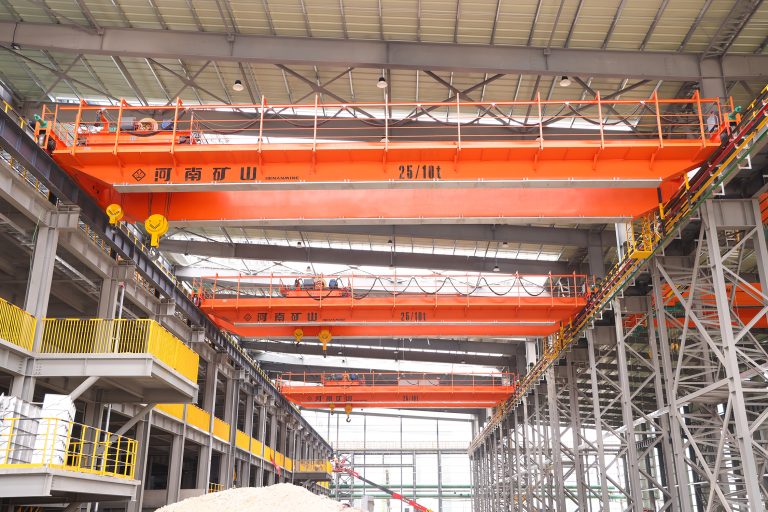
    overhead crane for workshop Henan Mine Crane Factory supply

    Common Applications of Automatic Overhead Crane Systems

    Intelligent Warehouse

    Intelligent warehouses are the most important application scenario for Overhead Crane systems, especially high density storage warehouses. These warehouses are densely populated, and manual handling is difficult and inefficient. The automatic system can make full use of the overhead space to realize automatic storage, retrieval and handling of materials.

    For example, e-commerce logistics warehouses, cold chain warehouses, electronic parts warehouses, every day to deal with a large number of materials, automatic Overhead Crane system can be and AGV, conveyor and other equipment with the formation of a complete automated material flow line, significantly improve the operational efficiency of the warehouse.

    Steel and Metal Handling

    Steel mills and metal processing plants often need to lift heavy materials such as billets, steel plates, profiles, coils, etc. These materials are heavy and frequently handled, with harsh operating environments and high risk of manual operation.

    Automatic Overhead Crane system can adapt to this heavy-duty, high-frequency operation needs, accurate lifting of various types of metal materials, but also with the production line, to realize the automatic feeding of materials, reduce manual intervention and improve production efficiency.

    Manufacturing workshop

    In machinery manufacturing, automobile parts manufacturing and other workshops, the production line requires a large amount of material supply, such as raw materials, parts, finished products and so on. Automatic Overhead Crane system can realize the automatic lifting and conveying of materials, transporting raw materials to the production line, and then transporting finished products to the warehouse, forming the automated closed loop of “Production – Handling – Storage”.

    This not only reduces labor costs, but also avoids production line stoppages caused by untimely material supply and ensures a stable production rhythm.

    Paper Mill and Roll Handling

    Paper rolls in paper mills are heavy, bulky and easily damaged, making manual handling difficult and risky. The automatic Overhead Crane system accurately grabs the paper rolls, lifts and stores them smoothly, and avoids collision and damage to the paper rolls.

    Precast concrete and heavy materials

    Precast concrete plants and building materials plants need to lift heavy materials such as molds and finished concrete components, which are repetitive, labor-intensive and inefficient to handle manually.

    The Automatic Overhead Crane system can adapt to the lifting needs of heavy materials, realize the automatic handling and storage of molds and finished products, reduce manual intervention, lower labor intensity, and at the same time improve the handling accuracy to avoid material damage.

    Dangerous or high temperature environment

    In hazardous or high-temperature environments such as chemical workshops, metallurgical workshops, etc., the risk of manual operation is high, and even normal operation is impossible. Automatic Overhead Crane system can realize unattended operation in these environments to avoid personnel exposure to danger.

    For example, flammable and explosive materials in chemical workshop and high temperature steel ladle in metallurgical workshop can be lifted by automatic system, which not only ensures the safety of operation, but also does not affect the production progress.

    Automatic Overhead Crane System vs Traditional Overhead Crane

    Operation Mode

    Traditional Overhead Crane is mainly operated manually or semi-manually, the operator needs to control every movement of the crane, relying on the experience and skills of the operator, the operation process is flexible, but the consistency is poor.

    Automatic Overhead Crane system is based on program control, the operator only needs to monitor in the background and occasionally deal with abnormal situations, the operation process is standardized and automated, with strong consistency, and does not need to rely on the experience of the operator.

    Labor Requirements

    Traditional Overhead Cranes need to be equipped with specialized operators, a crane needs at least 1-2 operators, high labor costs, and subject to the difficulty of recruiting and the impact of personnel turnover.

    The automatic Overhead Crane system does not require a dedicated operator for the whole operation, only 1-2 managers are needed, responsible for background monitoring and equipment maintenance, which can significantly reduce the number of labor, lower labor costs, and also avoid the impact of personnel turnover.

    Efficiency and consistency

    The efficiency of traditional Crane is greatly affected by the operator’s experience and fatigue, for example, the efficiency of skilled operators is high, while the efficiency of novices is low, and is prone to operational errors, resulting in poor operational consistency.

    Overhead Crane systems have stable efficiency, can achieve 24-hour continuous operation, and all actions are executed in accordance with the preset program, operational consistency is strong, and there will be no human error caused by fluctuations in efficiency.

    Data and system visibility

    The operation data of traditional Crane is difficult to collect and trace, such as the number of lifting, load weight, fault conditions, etc., all need to be recorded manually, which is not only cumbersome, but also prone to errors, and it is difficult for managers to understand the operation status of the equipment in real time.

    The automatic Overhead Crane system can collect all the operation data in real time and feed back to the backstage monitoring panel, so that the managers can check the status of the equipment and the operation data at any time, and also analyze the problems in the operation through the data traceability, which can provide the basis for the management and optimization.

    Initial investment and long-term return

    The initial investment of traditional Overhead Crane is low, which is suitable for customers with limited budget and low operation frequency, but the long-term operation cost is high, which needs to bear high labor cost and maintenance cost.

    Automatic Overhead Crane systems have a higher initial investment, 30%-50% higher than traditional cranes, but have low long-term operating costs and can achieve long-term savings through reduced labor and lower failure losses. long-term returns are more obvious for warehouses with high operating frequency and large scale.

    Is the Overhead Crane system suitable for all warehouses?

    The most suitable conditions

    Automatic Overhead Crane system is not omnipotent, it is the most suitable for these scenarios: high frequency of operation, a large number of repetitive material handling every day; material flow rules, such as fixed pickup point, cargo position, fixed lifting route; high requirements for handling accuracy, the need for accurate inventory management and material traceability; digital warehouse management needs, want to realize the warehouse of intelligence, automation; warehouse scale, low handling efficiency and high cost. handling efficiency is low and high cost.

    Traditional Crane is still sufficient for the situation

    If the operation frequency of the warehouse is low, and only occasional lifting of materials is required every day, such as small spare parts warehouses and small processing plants, traditional Cranes are sufficient.

    There are also warehouses with complex operating processes, many types of materials, different specifications, lifting routes are not fixed, the automation system is difficult to adapt, in this case, the flexibility of the traditional Crane is more advantageous. In addition, the budget is limited, can not afford the initial investment of the automated system customers, choose the traditional Crane more cost-effective.

    Semi-automation as an intermediate option

    If customers want to enjoy the advantages of automation, but do not want to bear the high initial investment, or the workflow has a certain degree of flexibility, semi-automated solutions are a good choice.

    Semi-automated systems do not need to be completely unmanned, but on the basis of the traditional Crane, adding positioning assistance, anti-sway, remote control and other functions, such as the operator can remotely control the Crane on the ground, the system assists in accurate positioning, which not only reduces the intensity of manual labor, but also reduces the cost of inputs, and retains a certain degree of flexibility of operation.

    This solution is suitable for those warehouses that want to gradually transition to full automation, or where there are certain changes in the operating process.
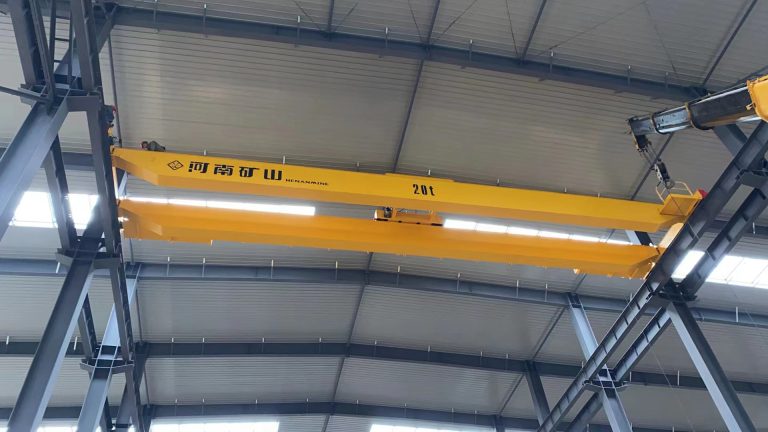
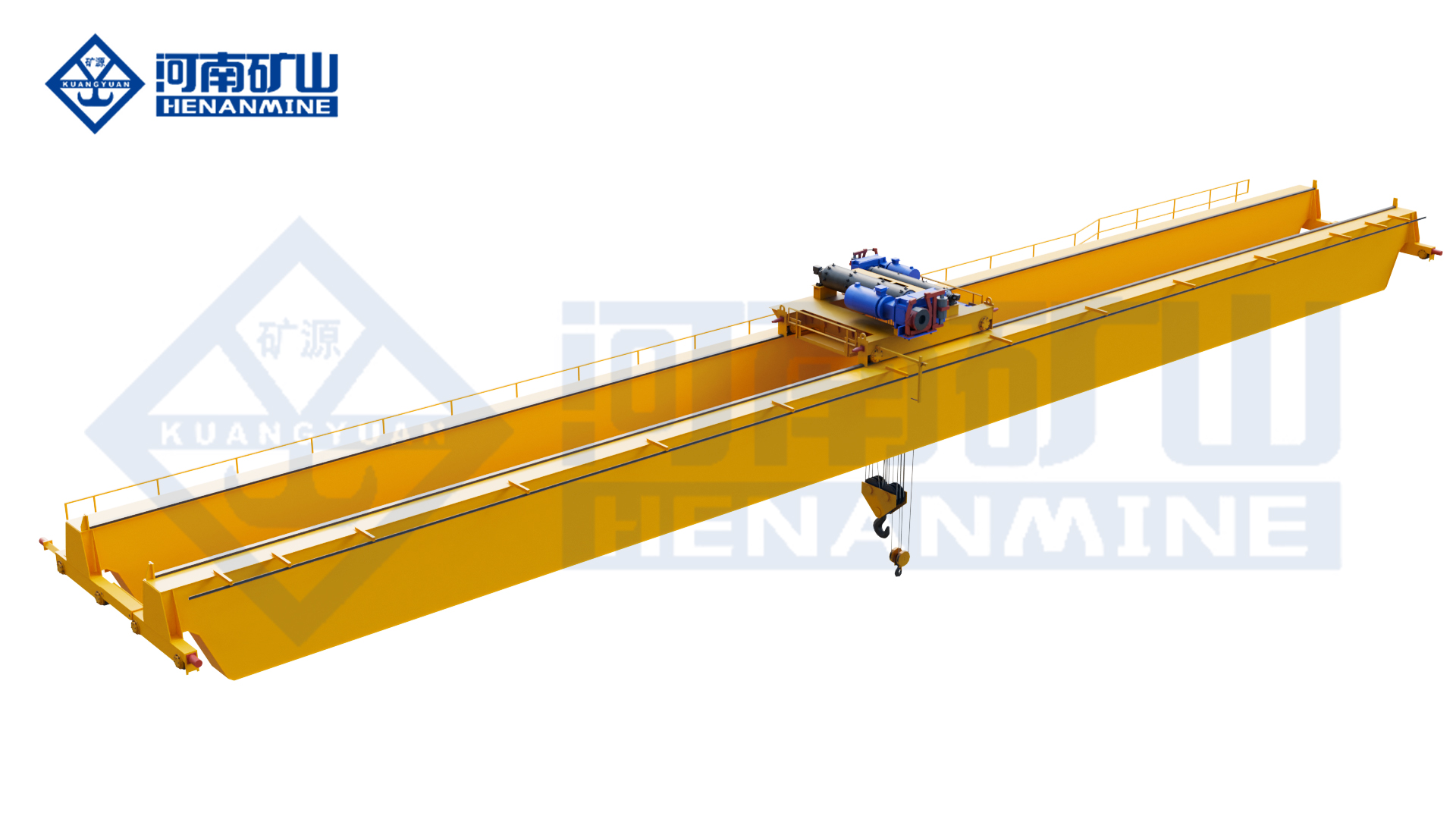
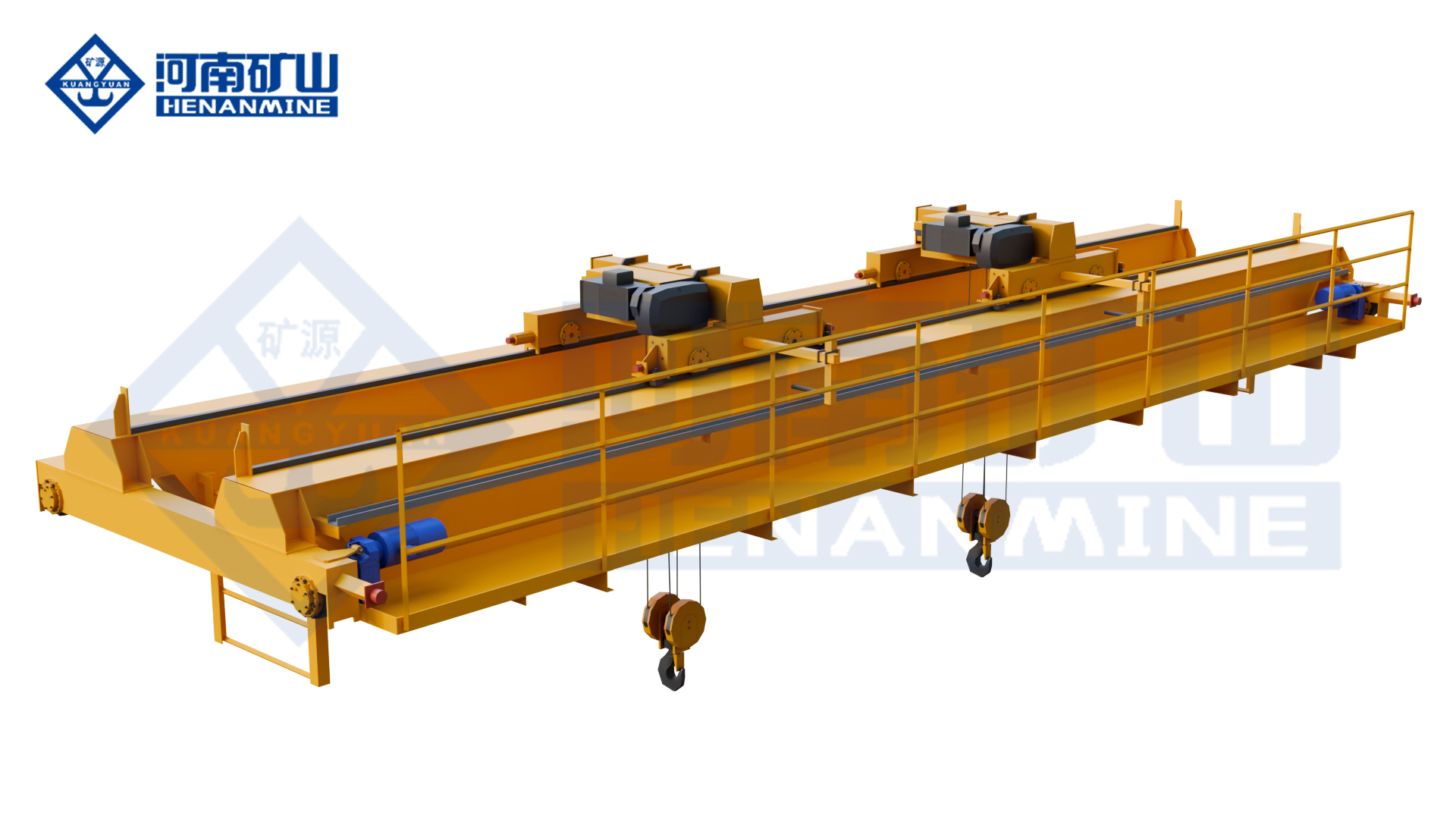
    Double Girder Overhead Crane Henan Mine Crane Mine Factory supply

    Key Factors to Consider Before Choosing an Automated Overhead Crane System

    Material types and handling processes

    First of all, it is necessary to clarify the type of material to be lifted in the warehouse, such as the weight, size and shape of the material, whether it is heavy or light, solid or liquid, and whether it is easily damaged. Different materials have different requirements for the lifting capacity and gripping method of the Crane.

    Warehouse layout

    Warehouse layout is an important basis for the selection of automated systems, you need to provide the warehouse span, Crane running length, lifting height, storage layout, channel width and other data.

    Work level and cycle requirements

    The working level of the Crane determines the durability and stability of the system. Different operating frequency, need to choose a different working level of the system.

    Integration requirements

    The automatic Overhead Crane system needs to be integrated with the existing systems and equipment in the warehouse to maximize the effect. Before choosing, it is important to clarify whether the system needs to interface with software such as WMS, MES, ERP, etc., and whether it needs to work with equipment such as AGVs, conveyors and stacker cranes.

    Safety requirements

    Safety is a prerequisite for automated operations, and different warehouses have different safety requirements. It is necessary to clarify the safety standards of the warehouse, such as whether it needs anti-collision, overload protection, emergency stop, explosion-proof, dust-proof and other functions.

    Maintenance and technical support

    The maintenance of the automatic Overhead Crane system is more complex than traditional cranes, which not only needs to maintain the mechanical components, but also needs to maintain the electrical system and software system. When choosing a supplier, it is important to consider the supplier’s maintenance capability and technical support level.

    Budget and return on investment expectations

    Budget is the main concern of many customers, when choosing an automated system, it is necessary to balance the initial investment and long-term return. You can’t just look at the initial cost, but also consider the long-term operating costs, labor costs, and failure losses.

    Important Features of an Intelligent Automated Overhead Crane System

    Automatic storage and retrieval capability

    This is the most core function of the automatic Overhead Crane system, which can automatically grab materials and transport them to the designated cargo position for storage according to the system instruction, and also can automatically find the target materials and transport them to the designated position according to the retrieval demand.

    This function can realize unmanned handling and storage of materials, reduce manual intervention and improve operational efficiency, especially suitable for high density storage warehouses.

    Accurate Load Positioning

    Accurate positioning is the basis of automated operations, the system can be laser positioning, encoders and other technologies to achieve accurate positioning of the Crane, materials, positioning error control in millimeters.

    Whether storing or retrieving materials, the system can accurately place and grab them, avoiding misplacing and omitting, improving the accuracy of inventory management and reducing material damage.

    Real-time fault diagnosis

    The system can monitor the operating status of the Crane in real time and collect the operating data of the motor, sensors, electrical system and other components. In the event of a fault, such as sensor failure, motor abnormality, or wiring failure, the system will issue an alarm in time and display the location of the fault, the cause, and the treatment recommendations.

    This helps maintenance personnel to quickly locate the fault and handle it in time, reducing downtime and ensuring stable system operation.

    Remote Monitoring Panel

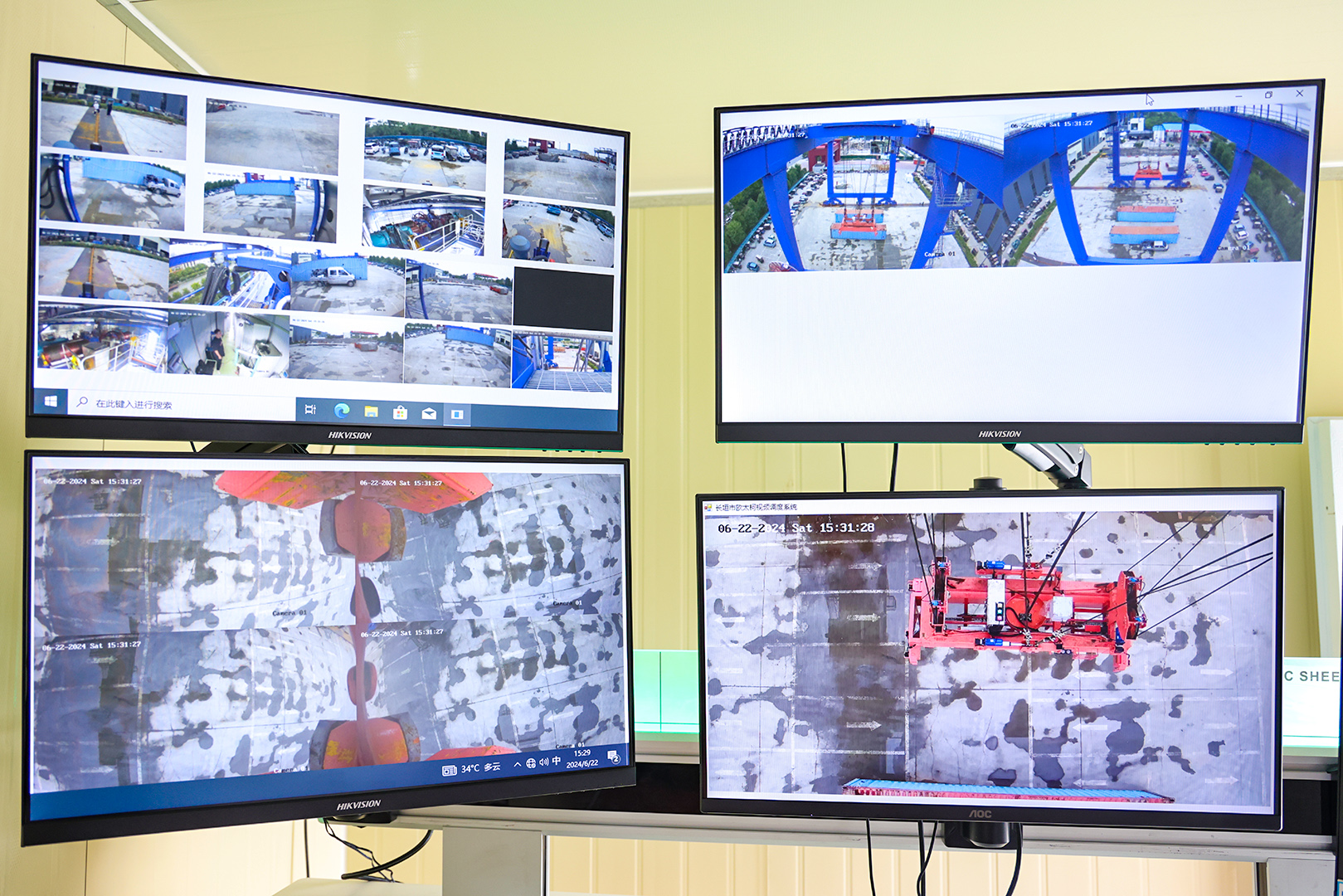
    Managers can view the Crane’s operation status, operation data, fault records, etc. in real time through the remote monitoring panel, which enables comprehensive monitoring of the equipment without the need to be at the warehouse site.

    Predictive maintenance function

    By analyzing the operation data collected by the system, the system can predict the wear and tear of the components in advance, such as the wear and tear of the wire rope, the running status of the bearings, and the aging of the motor, and then send out a maintenance reminder so that the maintenance personnel can carry out maintenance and replace the components in advance.

    Energy-saving operation logic

    The automatic Overhead Crane system is equipped with energy-saving operation functions, such as automatically adjusting the running power of the motor according to the size of the load; automatically reducing the running speed to minimize the energy consumption during no-load operation; and automatically entering into the dormant state to reduce the standby energy consumption when it is not in operation.

    System Expandability

    With the expansion of the warehouse scale and changes in business requirements, the automatic system needs to be scalable, able to upgrade the configuration and increase functionality according to subsequent needs.
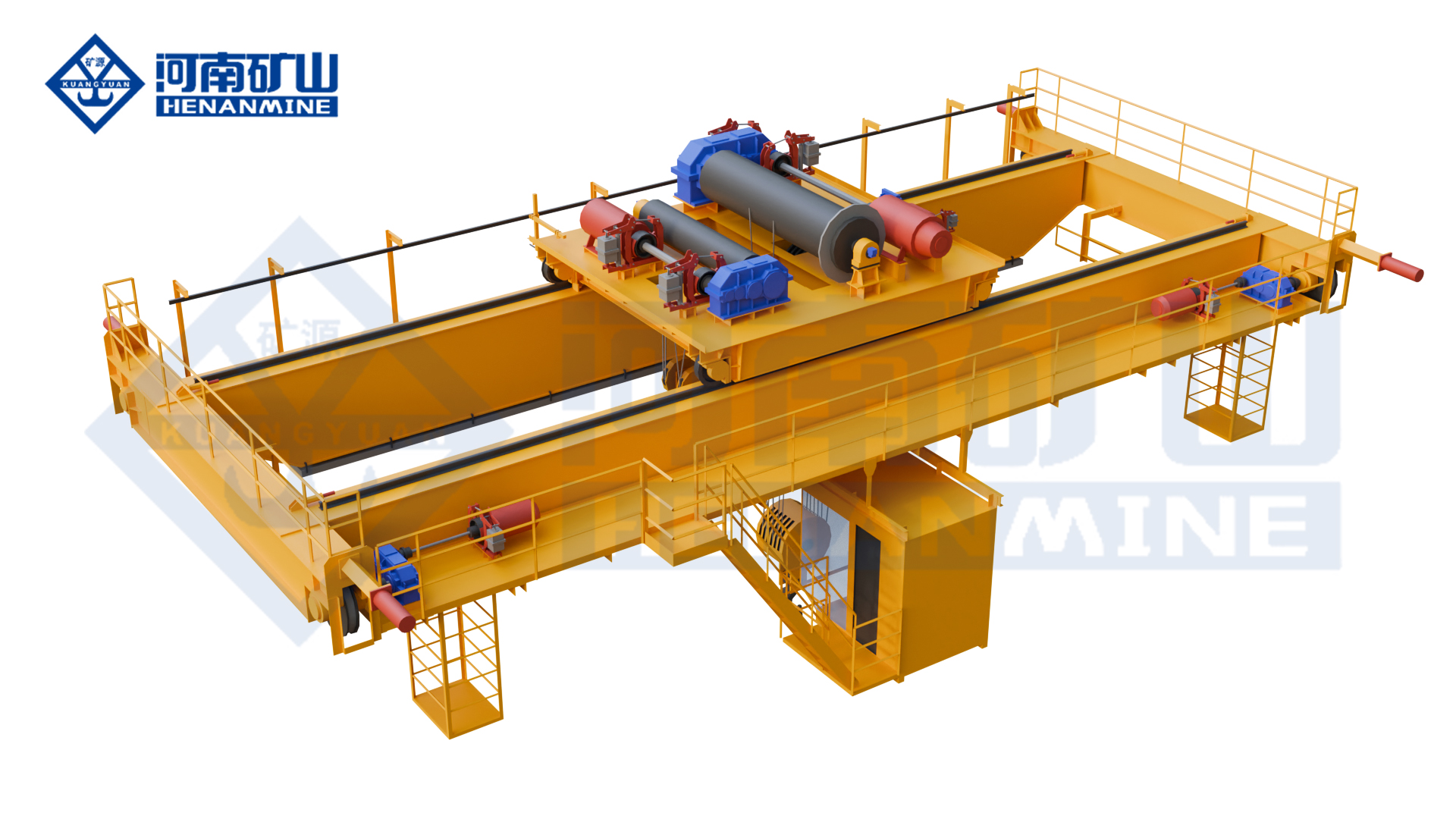
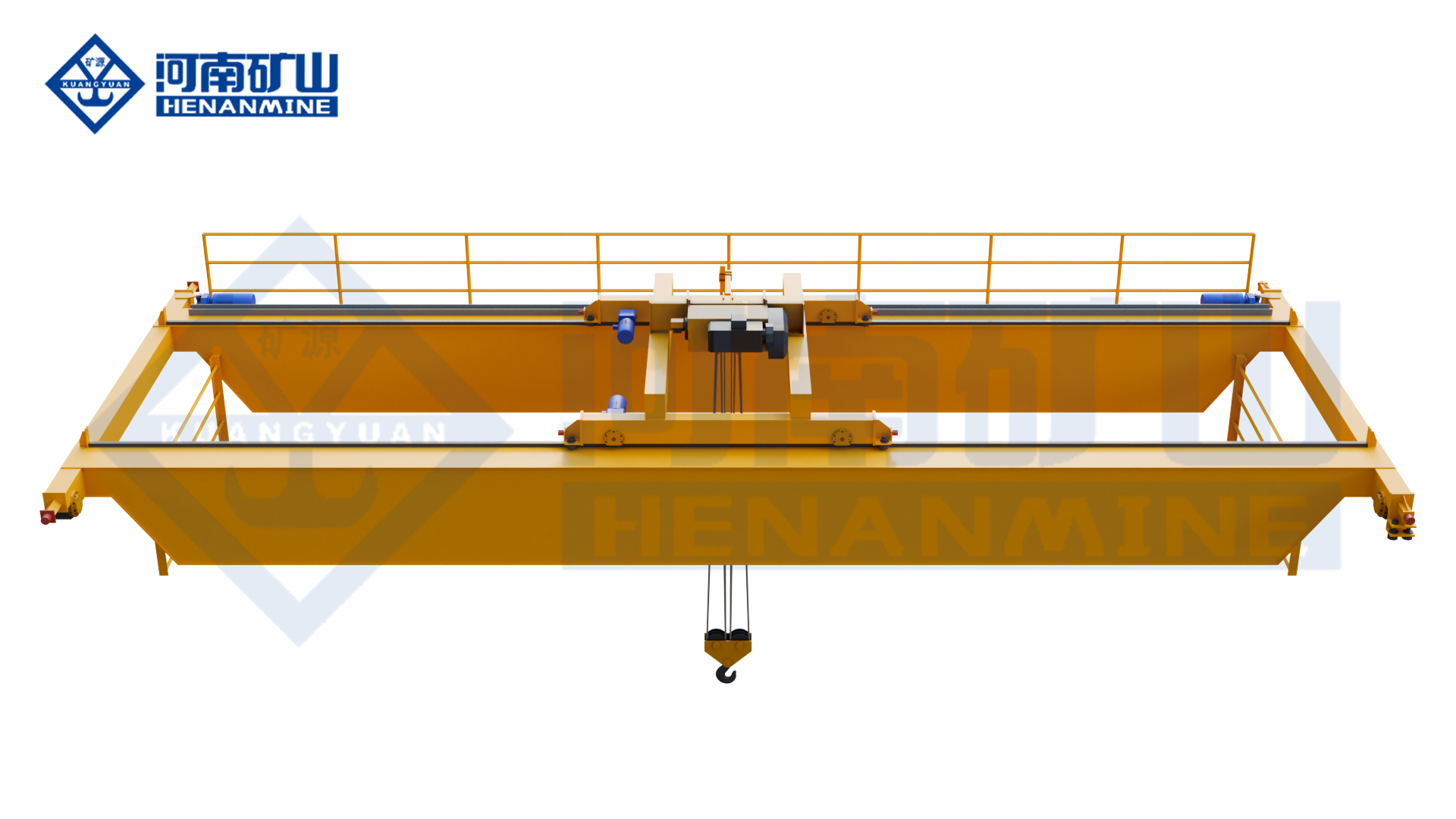
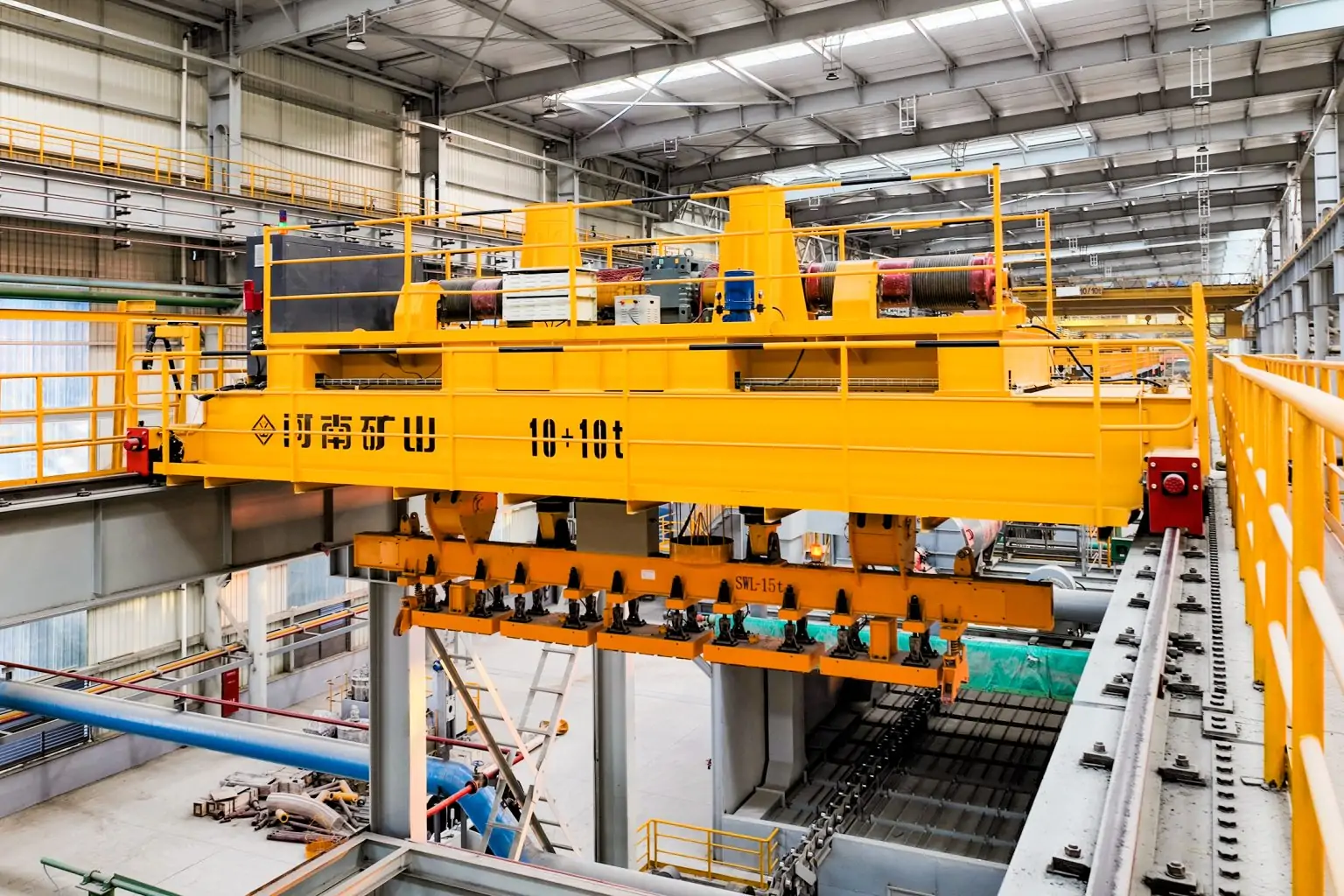
    Double Girder Overhead Crane Henan Mine Crane Mine Factory supply

    Challenges of Implementing an Automated Overhead Crane System

    Higher initial investment

    The initial investment of the automatic Overhead Crane system is quite higher than that of traditional cranes, mainly including equipment costs, installation costs, software integration costs, etc. For SMEs, they may face certain financial pressure.

    Integration complexity

    The automated system needs to be integrated with existing software such as WMS and MES in the warehouse, as well as equipment such as AGVs and conveyors, which is a complicated process and requires a professional technical team for planning and debugging.

    Accurate site data and process planning

    The installation and debugging of automated systems requires accurate warehouse site data, such as warehouse span, lifting height, cargo coordinates, track position, etc. If the data is inaccurate, it will lead to system positioning deviation and poor operation.

    Personnel training and change management

    After the automatic system is put into use, the operation mode of the warehouse will change, and the operators and managers need to adapt to the new way of working, such as learning the skills of backstage monitoring, system operation, and troubleshooting.

    Many old employees are used to the traditional manual operation, and may be resistant to the automation system. It is necessary to do a good job of personnel training and change management, so that employees can understand the advantages of automated systems, master the operating skills and adapt to the new mode of operation.

    Software and control system compatibility

    The software and control system of the automated system needs to be compatible with the existing software and equipment in the warehouse, if the compatibility is not good, it will lead to the system can not run properly

    Therefore, when selecting the system, to ensure the compatibility of the software and control system, it is best to choose a supplier that can provide customized integration services, according to the warehouse’s existing equipment and software, targeted debugging.

    Ongoing maintenance of mechanical and digital systems

    Automatic Overhead Crane systems, with both mechanical components and digital components such as electrical and software, are more complex to maintain than traditional cranes. Mechanical components need to be regularly lubricated, inspected and replaced, and digital components need to be regularly upgraded and debugged to ensure stable operation of the system.

    How Automated Overhead Crane Systems Support Smart Warehouse Strategies

    Better inventory flow management

    One of the core requirements of an intelligent warehouse is to realize accurate management and efficient flow of inventory. Overhead Crane system can be seamlessly integrated with WMS system to update inventory data in real time and realize full traceability of materials.

    Higher Space Utilization

    Overhead Crane system can make full use of warehouse overhead space to realize high-density storage, which can utilize more than 30% more space than traditional manual handling.

    More reliable scheduling and throughput

    The automatic system can realize the cooperative operation of multiple cranes, and reasonably allocate the work of each Crane according to the number of operation tasks to avoid idling or congestion. At the same time, the system can optimize lifting routes, reduce idle time and improve operational efficiency.

    Enhance warehouse digitization level

    Automatic Overhead Crane system can collect real-time operation data, which can provide the basis for the digital management of the warehouse. By analyzing this data, managers can identify bottlenecks in the operation, optimize the operation process, and improve the operational efficiency of the warehouse.

    Laying the foundation for Industry 4.0 development

    The core of Industry 4.0 is intelligence, automation and digitization, and the automatic Overhead Crane system, as the core equipment of intelligent warehousing, can realize the automation and digitization of material handling, and lay the foundation for the transformation of Industry 4.0 for enterprises.

    It can be seamlessly integrated with the production system and management system to realize the whole process automation of “production – handling – storage”, improve the overall operational efficiency of the enterprise and enhance its competitiveness.

    Common Misconceptions to be Avoided on the Purchasing Side

    Focus only on equipment cost

    When purchasing, many customers only focus on the initial cost of the equipment and choose whichever they think is cheaper, while ignoring the subsequent costs of software integration, maintenance, and spare parts.

    Some of the initial cost of equipment is low, but the software integration is difficult, high maintenance costs, the supply of spare parts is not timely, in the long run, the operating costs are higher. Therefore, the procurement should consider the initial cost and long-term operating costs, not just look at the price.

    Neglecting Software Integration Requirements

    The core advantage of the automated Overhead Crane system lies in the integration with warehouse software and other equipment. If the integration needs are ignored and the selected system is not compatible with the existing software and equipment, the advantages of automation cannot be realized.

    Select automation without analyzing the workflow

    For example, the warehouse material handling process is complex, the route is not fixed, the automation system is difficult to adapt, in this case, the choice of traditional Crane or semi-automated system, but more cost-effective. Therefore, before purchasing, you should analyze your workflow and determine whether automation is suitable before choosing the right system.

    Underestimating maintenance and support needs

    The maintenance of automated systems is more complex than traditional Crane, requiring a professional maintenance team and timely technical support, but many customers underestimate the maintenance and support needs when purchasing, and choose a supplier without a perfect maintenance system.

    Excessive automation of simple operations

    Some customers feel that the higher the degree of automation, the better, even if it is a simple operation, but also forced to choose a fully automated system, resulting in over-investment and low cost-effective.

    Not planning for future expansion

    Many customers in the procurement, only consider the current needs, not planning for future expansion, the results of the warehouse scale, business needs increase, the existing system can not be adapted, only to re-purchase equipment, increasing costs.

    Therefore, when purchasing, it is necessary to choose a system with scalability to ensure that the subsequent warehouse expansion, business upgrades, the system can be upgraded by upgrading the configuration, increase the functionality, to meet the new needs, to avoid repeated investment.

    What information should be provided to the automated crane suppliers

    Basic Crane Requirements

    First of all, it is necessary to clarify the basic Crane parameters, such as rated lifting capacity, span, lifting height, running length, operating frequency, which are the basis for the supplier to design the program and select the equipment.

    Warehouse and layout details

    Need to provide the supplier with the architectural drawings of the warehouse, storage layout, distribution of cargo space, aisle width, track location and other details, it is best to provide on-site photos, so that the supplier is clear about the actual situation of the warehouse.

    Material handling process

    It is necessary to explain to the supplier the types, weights, sizes and shapes of materials to be lifted in the warehouse, as well as the material handling process, such as the location of pick-up points and cargo spaces, the planning of lifting routes, the number of lifts per day, and the sources and destinations of materials.

    Automation expectations

    Be clear about your automation expectations, such as whether to choose full automation or semi-automation, whether you need remote monitoring, troubleshooting, predictive maintenance, etc., whether you need to integrate with software such as WMS, MES, etc., and whether you need to work with equipment such as AGVs and conveyors.

    Case: Automatic Overhead Crane in Intelligent Warehouse

    A large e-commerce logistics warehouse: the biggest problem is the high labor cost, requiring 8-10 operators, and low operational efficiency, the number of lifting times per day can not meet the demand, but also often appear misplaced, material confusion, inventory error rate of up to 5% or more, affecting the delivery of orders.

    Later, the customer contacted Henan Mine Crane, according to the actual situation of the warehouse, we designed a set of automatic Overhead Crane system program, equipped with 3 sets of 10 tons of double girder automatic Overhead Crane, docking the warehouse’s existing WMS system, to achieve automatic storage, retrieval and handling of materials.

    After the system was put into use, the number of laborers in the warehouse was reduced to 2 managers responsible for background monitoring and equipment maintenance, reducing labor costs by more than 70%; the number of lifts per day was increased to 1,200-1,500, increasing efficiency by 50%; the positioning accuracy was controlled to within 3 mm, and the error rate of the inventory was reduced to less than 0.5%, significantly improving the efficiency of order delivery.

    At the same time, the system’s real-time monitoring and predictive maintenance features reduce the frequency of failures, downtime has been reduced by 80%, and maintenance costs are 30% lower than traditional Crane. Customer feedback, after this system is put into use, the operational efficiency of the warehouse has been greatly improved, and the invested cost is fully recovered in 1.5 years.
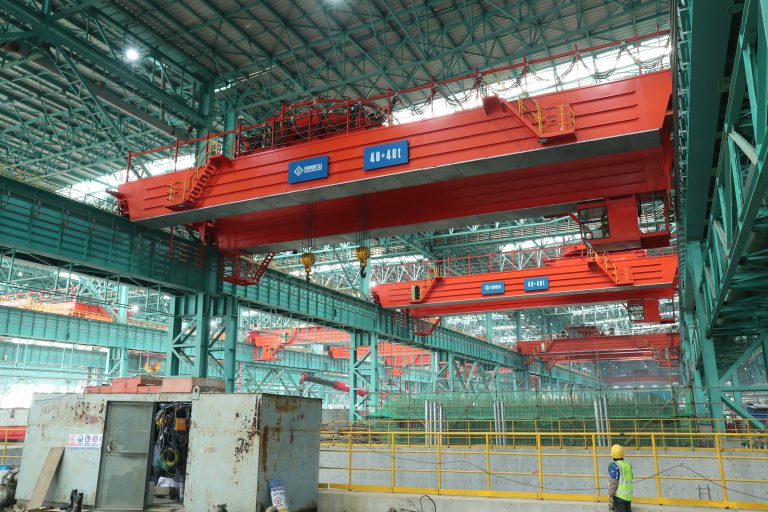
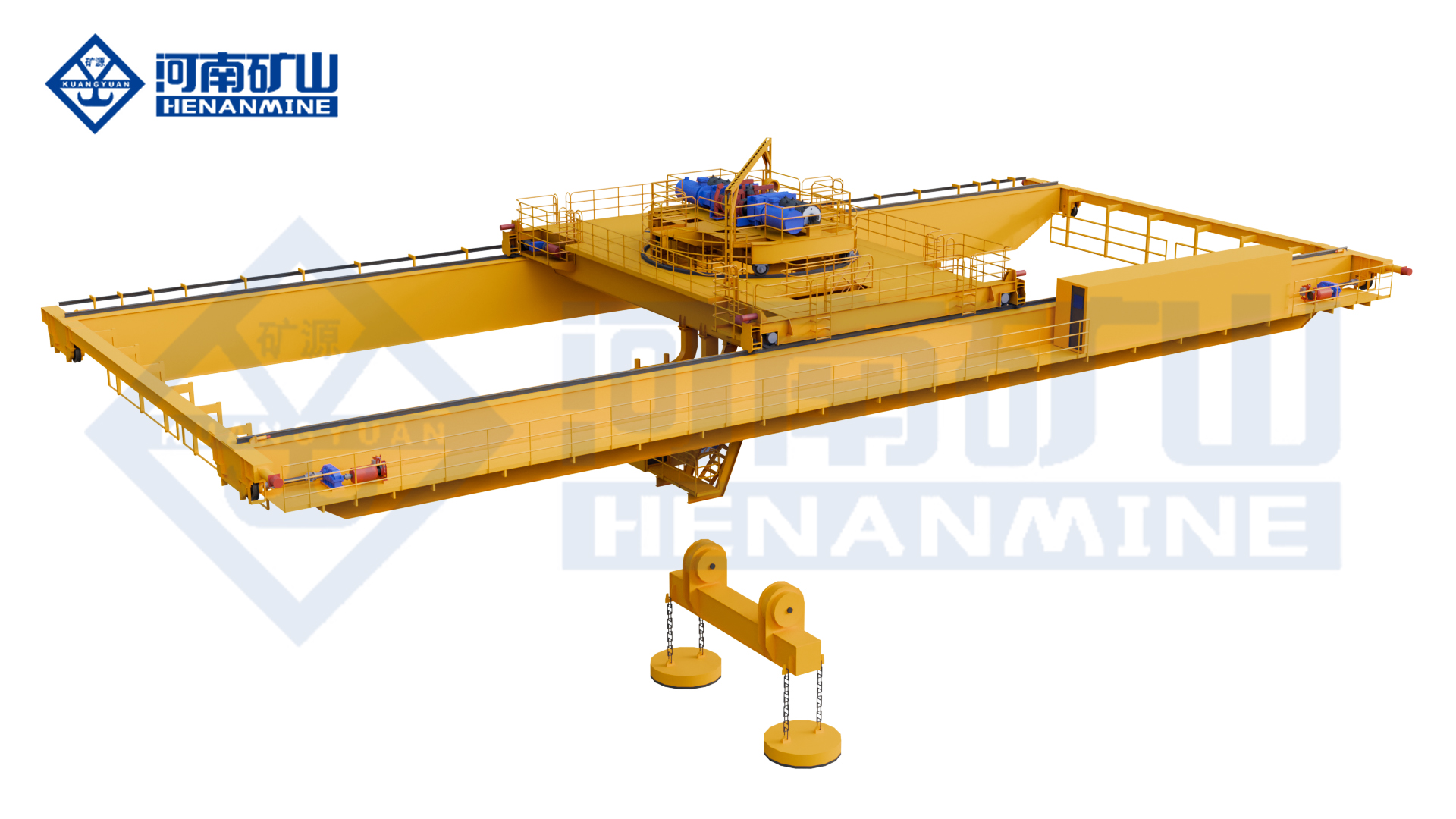
    Upper Rotating Magnetic Electromagnetic Overhead Crane Henan Mine Crane Factory supply

    Frequently Asked Questions about Automatic Overhead Crane Systems

    What is the difference between an Overhead Crane and a Standard Overhead Crane?

    The core difference is the mode of operation and control: standard Overhead Cranes are mainly operated manually, relying on operator’s experience, and the data cannot be traced in real time; automatic Overhead Cranes are mainly controlled by program, realizing unattended or semi-unattended, with real-time monitoring and tracing of data, and higher efficiency and consistency.

    Can Overhead Crane interface with Warehouse Management System (WMS)?

    Yes, and this is one of the core strengths of the Overhead Crane system. It can be seamlessly integrated with WMS, MES, ERP and other warehouse management software to realize the closed loop of order issuance and data feedback.

    Is Overhead Crane only suitable for large warehouses?

    No, it is not only suitable for large warehouses, but also for small and medium-sized warehouses, depending on the frequency of operation and demand.

    Is the Overhead Crane system safe?

    Yes, it is. It is equipped with complete safety protection devices, such as anti-collision sensors, overload limiters, emergency stop buttons, limit switches, etc. It monitors the work process in real time and automatically stops the operation and sends out an alarm in the event of an abnormality.

    Is full automation always necessary, or is semi-automation sufficient?

    Not necessarily, full automation is not the only option, it depends on your operational needs and budget.

    What do I need to prepare before installing an automated Overhead Crane system?

    First of all, it is necessary to organize the detailed data of the warehouse, such as the warehouse span, lifting height, running length, cargo space distribution, track position, etc.,.

    Henan Mine Crane Factory Custom

    Automatic Overhead Crane system, which is becoming the core equipment of intelligent warehousing, is not a panacea, nor is it suitable for all warehouses.

    As a sales and technical expert of Henan Mine Crane, I suggest that before purchasing, you must dock with a professional crane supplier, provide detailed information about your needs, and let the Crane supplier design a customized program according to your actual situation.
    Henan Mine CraneDiscuss your requirements ↗
  • Automated Intelligent Crane Manufacturer | Custom Solutions & Specifications

    Automated Intelligent Crane Manufacturer | Custom Solutions & Specifications

    Automated Intelligent Crane Manufacturer | Custom Solutions & Specifications

    Decision makers who do industrial material handling can feel the accelerated pace of popularization of automated intelligent crane in recent years. Many purchasing managers, factory engineers, operation and maintenance supervisors looking for intelligent crane selection guide, easy to focus only on the rated tonnage and quotation, ignoring the specification suitability, functional utility and total cost of ownership of intelligent cranes, and finally either the configuration can not keep up with the pace of production, or the input exceeds expectations.

    As a professional intelligent Crane manufactured supplier, Henan Mine Crane Automated Crane Industrial has landed a large number of projects with different working conditions at home and abroad. This content of the intelligent crane specifications selection, core functions, scene adaptation, intelligent crane TCO analysis, operation and maintenance management of the core logic of all speak through, to help material handling decision makers clear from the selection of the whole process to the landing, selected to truly adapt to their own conditions of automated intelligent cranes.


    the basic knowledge of intelligent Crane

    Simply put, the intelligent crane is based on the traditional bridge, gantry lifting equipment, integrated sensor acquisition, automatic control, network communications and data management technology, high-end intelligent lifting equipment, but also the current industrial crane automation upgrade of the core carrier.

    Unlike traditional manual cranes, it can complete standardized material handling through automatic positioning, anti-sway control, path planning and other functions, without the need for operators to manually control the whole process. Highly equipped intelligent unmanned Overhead Crane can realize the whole process of unattended operation, in the high temperature, dust, high-risk operation scenarios, the value is particularly prominent.

    With the advancement of intelligent manufacturing, the technical maturity of this type of equipment is getting higher and higher, from the benchmark demonstration project gradually sinking to the regular reconstruction and expansion projects, suitable for more and more rich working conditions, is no longer the exclusive configuration of the port, large-scale steel mills.

    Overhead Crane Application Cases

     the core technology specifications selection points

    Doing intelligent Crane specifications selection, basic parameter matching is a prerequisite for all intelligent functions to land, away from the working conditions to talk about the configuration is of no practical significance. Each parameter should be combined with on-site operational requirements check, blindly chasing a high or downgraded will affect the subsequent use of the effect.

    The rated lifting capacity covers a wide range, 10-50 tons is common in light and medium-sized workshops, and 100-500 tons can be achieved in heavy-duty metallurgy and port scenarios. Single hook, double hook, special fixture support customization, according to the actual lifting weight to reserve a safety margin, do not get stuck in the rated upper limit selection. For example, steel mill intelligent Crane lifting steel coils, billets, load fluctuations, the margin should be left more adequate.

    The span is customized according to the width of the plant, yard, conventional 10-40 meters, special sites can be made larger span. Intelligent cranes in ports and large logistics parks usually have larger spans to cover a wider operating area. Lifting height determines the stacking and operating range, ordinary workshop 9-15 meters mostly, wharf, high warehouse can be raised as needed.

    The running speed should be selected in combination with the frequency of operation, the general 10-30m/min for empty walking, 20-60m/min for heavy walking, and 5-20m/min for lifting speed, which is not the faster the better, but should be matched with the precision of alignment and safety of operation, and can be increased appropriately for the high-frequency transit scene, and increased for the precision assembly scene. The high-frequency transportation scene can appropriately increase the walking speed, while the precision assembly scene should give priority to ensure the stability of low speed.

    Positioning accuracy is the core indicator of intelligent overhead crane, ordinary configuration can do ±0.1-0.5 meters of fast positioning, high-precision laser plus encoder calibration program, can do ±10mm or even ±3mm, to match the needs of precision assembly, precision stacking. When doing intelligent Crane specification selection, according to the actual alignment needs to choose the accuracy level, do not blindly chase the highest matching.

    The working level should match the intensity of operation, refer to the FEM or CMAA standard selection. High-frequency continuous operation scenarios, such as metallurgical intelligent cranes, three-shift production workshop, can not choose low working level equipment, otherwise it will accelerate the aging of the structure and components, significantly shortening the life of the equipment.

    The mainstream power source is utility-powered electric models, low operating and maintenance costs; outdoor scenes without fixed power supply, you can choose diesel, hybrid or lithium solutions. Environmental adaptation should also be considered in advance, the seaport to do salt spray anticorrosion, dust workshop to do sealed dust, extreme high and low temperature scenarios to do special adaptation, IP protection level, corrosion levels should be clearly written into the technical requirements.

     Core Intelligent Functions

    Sensor monitoring is the basis of all intelligent functions, but also the perception layer of the intelligent Crane safety system. Load sensors monitor the lifting weight in real time, triggering overload protection; position sensors track the real-time coordinates of the trolley, trolley, and hook; wind speed, temperature and humidity sensors collect environmental data, and all the data are summarized to the control system to provide data support for automatic operation.

    At the level of automatic control, intelligent Crane anti-sway control and automatic target positioning are the most commonly used basic functions. Dual closed-loop servo control can control the positioning accuracy at the millimeter level, and the path planning algorithm supports the automatic operation of a single device, as well as multi-machine cooperative operation. Many customers do automation upgrades, the first landing is these two features, the investment is not high but the benefits are obvious.

    Advanced configuration can be added to the algorithmic analysis, machine vision to identify the material and the surrounding environment, algorithms to optimize the scheduling rhythm, assessment of structural fatigue state, to further enhance operational stability. Higher-order projects can also do digital twin, the establishment of a virtual model of the equipment, simulation of the operating process, optimize the scheduling program.

    Intelligent Crane remote monitoring through the Industrial Internet of Things to transmit data to the cloud platform, operating parameters, fault alarms synchronized in real time. Operation and maintenance personnel do not have to go to the scene can initially troubleshoot the problem, software upgrades, log management can be completed remotely, cross-regional, multi-site management scenarios advantages are particularly obvious.

    Intelligent Crane predictive maintenance is a practical and strong cost reduction function, the motor, reducer temperature, current, vibration data collected in real time, the system projects the remaining life of the components, and issue an early warning. Compared with the after-the-fact maintenance that is broken and then repaired, it can significantly reduce unplanned downtime, and is also one of the core functions to pull down the full life cycle cost of intelligent Crane.

    The safety system is multi-level, collision avoidance, electronic limit, emergency stop protection, multi-hook synchronization control, with torque-controlled inverter system, safety redundancy is much higher than traditional equipment. Outdoor models should also be matched with wind speed monitoring and wind protection to further enhance the safety of operations in complex environments.

     the mainstream application scenarios

    Port intelligent cranes are the most mature application of the scene, fully automated shore bridge, dock automation gantry crane can be 24 hours of continuous operation, many large-scale global hub port has completed the scale of intelligent transformation, operational efficiency and labor cost advantages are outstanding.

    Steel mill intelligent cranes, metallurgical intelligent cranes are mainly used for steel coils, billets, iron ladle handling, intelligent transformation can reduce the number of operators on the scene, reduce the risk of high-risk environment operations, with the intelligent Crane predictive maintenance can also reduce the loss of production line downtime.

    Workshop intelligent cranes are suitable for automotive, power equipment, machinery manufacturing and other assembly lines, can accurately distribute materials, reduce manual intervention, suitable for automated production line production beat, enhance the efficiency of the entire production line.

    Warehouse logistics intelligent Crane with three-dimensional warehouse to do unmanned loading, unloading and handling, enhance the efficiency of warehousing turnover, suitable for large logistics parks, e-commerce warehousing, empty container yard and other scenes.

    Energy, mining and other industries also have corresponding specialized models, such as mining intelligent cranes, power plant intelligent lifting equipment, to adapt to heavy-duty, high-risk operational needs, to enhance the safety of field operations.

    Saudi Arabia Port Crane Supplier

     Selection and total cost of ownership (TCO)

    Many customers choose to look only at the purchase price of equipment, in fact, calculate the total cost of ownership of intelligent Crane, to cover procurement, energy consumption, maintenance, downtime losses, residual value and other dimensions, short-term low price is not necessarily cost-effective in the long term. Doing intelligent crane TCO analysis is a necessary part of professional procurement.

    First clear core requirements: maximum lifting weight, lifting height, span, frequency of operation, shift arrangements, matching the level of work according to industry standards, do not lower the configuration in order to lower the budget. Reliable intelligent Crane manufacturing suppliers, will first check the working conditions and then report the program, rather than directly push the standard model.

    Automation level according to the need to choose, not the more full the better. Only need accurate alignment, choose the basic automatic positioning models will be enough; to unmanned operation, and then on a full set of sensing and scheduling system. Initial investment in high program, long-term labor saving, improve efficiency, return cycle depends on the actual amount of work, high-frequency operation of the scene will return much faster.

    Environmental protection can not be saved, poor working conditions, the rate of wear and tear of low-cost equipment will far exceed expectations, later maintenance costs are higher. For example, the coastal harbor intelligent Crane, if the corrosion protection level is not enough, three or five years will appear obvious rust, overhaul cost is very high.

    Energy consumption, electric drive than diesel models have lower operating and maintenance costs. Although the intelligent system increases sensing and software investment, operational efficiency is improved, downtime is reduced, and most projects can recover the incremental cost in a few years. The advantage of customized intelligent Crane solutions is that they can be configured flexibly according to budget and demand, without having to pay for features that can not be used.

    Maintenance costs should also be included in the accounting, sensors, PLC, communication module maintenance costs should be reserved in advance. With intelligent Crane predictive maintenance models, long-term maintenance costs will be lower than traditional equipment, downtime losses are also less.

    Intelligent Crane vs Conventional Crane Core Parameters English Comparison Table


    Item Traditional Crane Automated Intelligent Crane
    Operation Mode Full manual control Auto positioning + semi/unmanned operation
    Positioning Accuracy Depends on operator skill 卤3mm to 卤500mm by configuration
    Safety Level Basic limit & overload protection Multi-layer collision avoidance + predictive protection
    Labor Demand High, depends on skilled operators Lower, one person can supervise multiple units
    Maintenance Mode Breakdown + regular maintenance Predictive maintenance + remote diagnosis
    Data Recording Almost no valid data Full operation & fault data traceable
    Initial Investment Lower Higher by configuration
    Long-term TCO Higher labor & downtime cost Lower for high-frequency operation

     installation and commissioning and operation and maintenance management

    Intelligent Crane installation and commissioning has a clear process requirements, can not be as simple as ordinary overhead crane lifting power on the use. Before installation, the site should be verified, the track, beam bearing and flatness should meet the design requirements, grounding and communication lines laid in place in advance.

    After the equipment is lifted and positioned, the electric control cabinet, frequency converter, all kinds of sensors and operation terminals are installed in turn, and the power supply and network are connected. During the debugging stage of the system, configure the PLC and frequency conversion parameters, verify the intelligent functions such as anti-sway and positioning one by one, and complete the load test and safety performance verification. Before delivery, we give special training to the operators and maintenance personnel, and complete the acceptance after passing the test.

    Daily inspection can not be less, bolt fastening, wire rope wear, electrical interfaces, braking devices, safety devices, every shift to check, there are abnormalities in a timely manner. Preventive maintenance is done according to the cycle, regular replacement of lubricating oil, inspection of brakes, reducers, sensors, cables, according to the manufacturer’s manual.

    Equipment with predictive maintenance function, combined with vibration, temperature, current data to prejudge the life of components, the establishment of maintenance database, more accurate than purely regular maintenance, but also can further pull down the full life cycle cost of intelligent Crane. Control system software should be updated regularly to repair loopholes and supplement functions. Operation logs and maintenance records are archived and retained for subsequent optimization.

    During the life cycle of the whole machine, arrange overhaul according to the plan, and replace the core components in time to the life, which can not only prolong the service time of the whole machine, but also protect the safety of operations.

    Frequently Asked Questions (FAQ)

    Do intelligent Crane selection, the core to see what parameters?

    First check the rated lifting capacity, span, lifting height, working level of these basic parameters, and then according to the operational requirements to determine the positioning accuracy, automation level, environmental protection level, and finally combined with the budget and the total cost of ownership of intelligent cranes to make a comprehensive judgment.

    Can intelligent Crane predictive maintenance really reduce operation and maintenance costs?

    It can. Through real-time monitoring of temperature, vibration, current data of core components such as motors, gearboxes, etc., the aging trend of components can be detected in advance, and scheduled maintenance can be arranged to avoid the loss of production downtime caused by sudden failures, which in the long run can significantly reduce the total operation and maintenance costs.

    What site information is required for a customized smart Crane solution?

    At least to provide site drawings, maximum lifting weight, frequency of operation, environmental conditions, automation needs, existing system interface requirements of this information, engineers can issue accurate customized solutions and quotes.

    How much difference is there between the total cost of ownership of intelligent Crane and traditional equipment?

    Depends on the intensity of operation. High-frequency three-shift operation scenario, intelligent cranes, although the purchase price is high, but manpower savings, downtime reduction, efficiency gains are obvious, a few years will be able to recover the difference in price, the full life-cycle cost but lower; low-frequency operation scenario, you can choose the basic automation configuration, do not have to go on the full set of unmanned features.

    Ordinary old cranes can be upgraded to intelligent cranes?

    Most of the in-service Crane can do intelligent transformation, add sensors, upgrade the electronic control system, increase the anti-sway and positioning functions. Specifically depends on the structure of the equipment, electronic control system adaptability, reliable manufacturers will first do site surveys and then out of the transformation program.

    Conclusion

    Intelligent Crane has been the direction of development of industrial material handling, selection without blindly chasing a high match, combined with their own working conditions, budget and long-term planning, choose to match the configuration is good. Do a good job of intelligent crane specifications selection, calculate the total cost of ownership of intelligent Crane, with standardized operation and maintenance management, the equipment will be able to create a stable value in the full life cycle.

    Why choose our intelligent Crane program?

    Henan Mine Crane is a professional automated crane industrial equipment manufacturers and solution providers, engineering team can be customized according to the customer’s working conditions of the intelligent Crane program, products in line with FEM, CMAA, ISO and other types of industry standards, is a trusted intelligent Crane manufacturers customized service providers.

    Our equipment has passed the relevant quality and safety certification, integrated with IoT and automatic control technology, covering the full range of configurations from basic positioning to fully unmanned operation, and can provide a full set of intelligent functions such as predictive maintenance, remote monitoring and safety protection of intelligent cranes, and support the docking of factory management systems, such as ERP, MES, and WMS.

    From site survey, installation and commissioning to operation training, lifelong technical support, the whole process of follow-up services, there are a number of projects at home and abroad landing experience, can quickly respond to the needs of customers around the world. If you have intelligent Crane procurement, intelligent transformation of old equipment needs, welcome to contact our automation technology team, we will be based on your site conditions, issued by the appropriate selection program.

    Henan Mine CraneDiscuss your requirements ↗
  • Automated Crane Systems: The Future of Smart Industrial Material Handling

    Automated Crane Systems: The Future of Smart Industrial Material Handling

    Automated Crane Systems: The Future of Smart Industrial Material Handling

    With the full implementation of industry 4.0 and intelligent manufacturing, traditional manual control cranes have been unable to adapt to the efficient, safe and accurate operation needs of modern factories, intelligent warehousing, ports, heavy industries and other scenarios.

    The automated crane system integrates a number of intelligent technologies to optimize the traditional handling mode and solve pain points such as inefficient and high-risk operations. It has become the core just-needed equipment for industrial intelligent upgrading and safe cost reduction.

    What Is an Automated Crane System?

    The automated crane system is an intelligent lifting equipment that integrates cutting-edge technologies such as artificial intelligence, machine vision, industrial sensing, automatic control, and the Internet of Things. It can independently complete the whole process of material handling operations such as grabbing, lifting, translation, positioning, and stacking of heavy objects with very little manual intervention or even unattended.

    Compared with traditional lifting equipment, the system has realized a leap from “manual control” to “program automatic control, intelligent decision-making, and data operation and maintenance”, and is adapted to various complex, high-risk, and high-frequency industrial handling scenarios with standardized, high-precision, and high-stability operating capabilities.

    After years of technological iteration, automated cranes have been upgraded from simple electronic control equipment in the early days to an integrated intelligent system that integrates frequency conversion drive, intelligent anti-swing, digital twin, and cloud monitoring. It is deeply connected to enterprise WMS warehouse management, MES production execution, ERP enterprise management and other systems, and has become the core supporting equipment of smart factories.

    Core components

    A complete set of automated crane system is an organic whole of multi-layer technical collaboration. Each component performs its own duties and cooperates in linkage to ensure the stable operation of the equipment. The core composition includes seven modules.:

    • l The main structure and lifting mechanism of the crane: The core mechanical carrier of the equipment, including the bridge, trolley, lifting hoist, operating track and other structures, is responsible for heavy object carrying, lifting and translation operations, and is the hardware basis for automated material transfer.
    • l PLC industrial control system: The “brain” of the intelligent crane, which is responsible for co-ordinating all operating logic, accurately controlling all actions such as lifting, trolley movement, and bridge operation, and executing instructions such as safety interlocking, action timing, and motion trajectory to ensure that the operation process is unified and the error can be controlled.
    • l Sensor and positioning system: The “perceptual nerve” of the equipment, including encoders, laser rangefinder, RFID tags, load cells, proximity sensors, etc., collects data such as equipment location, load weight, operating distance, and surrounding environment in real time to provide accurate data support for intelligent control.
    • l Remote control and HMI human-computer interaction system: abandon the traditional wired handle control mode, equipped with wireless remote control, HMI touch screen, SCADA data kanban board, operators can remotely monitor the status of the equipment, issue operating instructions, and view operating data in real time, making the operation more flexible and intuitive.
    • l Machine vision and AI intelligent technology: relying on high-definition cameras and AI algorithms to achieve load recognition, scene perception, autonomous obstacle avoidance, and balance calibration, it can independently judge the operating environment and optimize the operating trajectory without manual intervention, minimizing manual intervention.
    • l Integrated warehousing/production management system: it can seamlessly interface with industrial systems such as WMS warehousing management, MES production execution, ERP enterprise management, AGV robots, etc. To achieve data exchange and equipment collaboration, so that lifting operations can be integrated into the closed loop of enterprise intelligent production.

    How Automated Crane Systems Work

    Automated load handling

    The automated crane can independently complete the whole process of heavy object grabbing, lifting, translation, positioning, stacking, and palletizing according to preset procedures and production tasks, completely replacing manual repetitive operations.

    Through load cell, RFID scanning, and visual recognition technology, the system automatically detects and identifies the load specifications, weights, and models, and starts the operation process after confirming that the material information is correct, effectively eliminating the problem of manual wrong moving and missing moving.

    In scenarios such as intelligent warehouses and production workshops, the equipment can realize unmanned loading and unloading, transshipment, and stacking operations around the clock, greatly shortening the material handling cycle, and solving the problems of low efficiency and fatigue of traditional manual operations.

    Intelligent positioning and navigation

    In order to solve the pain points of large positioning deviations of traditional cranes and the need for manual and repeated calibration, automated bridge cranes are equipped with multi-dimensional positioning technology, integrating laser ranging, absolute encoder, RFID ground sensing tag, visual camera, inertial measurement unit and other equipment to accurately lock the real-time position of hooks, trolleys, and bridges in real time.

    Relying on LiDAR LIDAR space surveying and mapping, ultrasonic ranging, inertial navigation and other technologies, the equipment can realize autonomous navigation and target position recognition under complex working conditions, and the positioning accuracy under high-end working conditions can reach ±5mm, which fully meets the requirements of high-precision operations such as steel processing, precision manufacturing, and high-end warehousing, without manual secondary correction.

    Intelligent anti-swing and precise control

    When operating traditional wire rope cranes, heavy objects are prone to sway drastically. Not only will it take up nearly one-third of the operating time for stabilizing the hook, reducing operating efficiency, it may also collide with peripheral equipment, damage materials, and even cause safety accidents. It is a key bottleneck restricting the automation upgrade of lifting operations.

    The automated crane is equipped with intelligent anti-swing algorithm and motion control system, which can suppress the swing of heavy objects in real time, reduce the swing amplitude by 85%-95%, and run smoothly and controllably. The positioning accuracy is effectively improved, the operating cycle is shortened, and the safety and efficiency of the operation are guaranteed simultaneously.

    Real-time monitoring and data collection

    Through industrial Internet of Things sensors, automated cranes can collect core data of equipment operation around the clock, rely on the cloud platform to realize real-time visualization of equipment status, and support managers to remotely monitor equipment working conditions and query operation data.

    The system combines big data analysis technology to accurately predict equipment failures and evaluate component life, upgrading traditional passive operation and maintenance to intelligent predictive maintenance.The system can reduce the unplanned downtime of the crane by 28% and increase the service life of the parts by 15%, effectively solving the problems of blind operation and maintenance and sudden failures.

    Key Technologies Behind Smart Crane Automation

    The efficient and safe operation of automated cranes relies on the integration and empowerment of a number of cutting-edge industrial technologies, and the core technology system covers all dimensions of control, interconnection, intelligence, and operation and maintenance.:

    • l PLC automation control technology: As the core control unit of the equipment, it integrates modules such as frequency conversion drive, sensor acquisition, and safety interlocking to accurately execute the operation timing, motion trajectory, and safety protection logic to ensure standardized and zero-error operation of the operation.
    • l Industrial Internet of Things (IIoT) interconnection technology: break the silos of equipment data, realize the data exchange of PLC, drive, sensor, and cloud system through standardized industrial protocols, and support multi-device collaborative operation, remote data transmission, and working condition monitoring.
    • l AI and machine vision technology: realize material recognition, environmental perception, autonomous obstacle avoidance, and load balancing calibration, so that the crane has “vision” and “thinking ability”, adapts to complex and changeable operation scenarios, and improves automation adaptability.
    • l Digital twin and simulation technology: build a virtual image of the equipment, which can simulate the operating status of the equipment, reproduce the historical operating process, test the control program, predict the operating risks, and provide accurate data support for equipment debugging, optimization, and troubleshooting.
    • l Edge computing and cloud platform technology: edge computing realizes real-time processing and instant response of on-site data to avoid security risks caused by network delays; cloud platforms realize data storage, big data analysis, remote operation and maintenance, and equipment cluster management.
    • l Wireless communication technology: relying on the advantages of 5G high-speed, low-latency, and multi-device parallel, it realizes real-time communication between cranes, terminal equipment, sensors, and cloud systems to ensure the stability of remote control, data transmission, and intelligent linkage.
    • l Intelligent safety sensing and obstacle avoidance technology: equipped with radar and laser anti-collision sensors, it can accurately identify surrounding obstacles, personnel, and equipment, and automatically delineate virtual safety operating areas to achieve automatic deceleration and emergency shutdown to prevent collision accidents.

    Key Technologies Behind Smart Crane Automation

    Improve the safety level of operations

    Automated cranes have completely changed the mode of manual near-height hazardous operations, stripping operators from dangerous operating environments such as high temperature, dust, heavy load, high altitude, flammable and explosive, and reducing personal safety risks from the source.At the same time, the equipment comes with multiple safety mechanisms such as collision protection, overload protection, emergency shutdown, and limit protection. It relies on sensors and software systems to realize the whole process of safety control, which can avoid more than 90% of safety accidents caused by human operation errors, and build an intelligent safety operation system.

    Improve production efficiency

    Compared with the randomness and hysteresis of manual operation, automated cranes rely on optimized motion trajectories and standardized operating procedures to operate faster and with shorter cycles. There are no problems such as manual fatigue, shift changes, and errors, and they support 24-hour uninterrupted continuous operation.The measured data show that after the enterprise replaces the intelligent lifting system, the material handling efficiency can be increased by 25%-35%, and the equipment downtime can be greatly reduced, effectively cracking the bottleneck of material transfer in the production line and helping to upgrade production capacity.

    Millimeter-level high-precision operation

    Traditional manual hoisting and positioning errors are large, which can easily cause material bumps and misplaced placement, causing material loss and production delays.Through intelligent algorithms and high-precision sensing and positioning, the automated crane realizes the whole process of automation and precise positioning. The positioning accuracy of high-end working conditions can reach ±5mm, and the operation is consistent and highly repeatable, greatly reducing material damage and operating errors, and ensuring the standardization of production processes. Advance.

    Reduce long-term operating costs

    Automated cranes greatly reduce the dependence on skilled lifting operators, and reduce labor wages, training, and management costs.At the same time, the frequency conversion drive system optimizes energy consumption and reduces power loss; the predictive maintenance mode avoids sudden equipment failures and large maintenance costs, and extends the service life of the equipment.Short-term investment and long-term throttling effectively reduce the overall production operation and equipment operation and maintenance costs of the enterprise.

    Visual control of operational data

    Relying on the Internet of Things and cloud monitoring systems, enterprises can grasp the operating status of equipment, job data, load parameters, and fault information in real time, and realize the visualization, traceability, and analysis of the whole process of the job.Through historical data re-disk and performance data analysis, the operation process can be accurately optimized, equipment resources can be allocated, data support can be provided for production decisions and equipment upgrades, and refined operation and management can be realized.

    Automated Crane Systems vs. Traditional Crane Operation

    In order to more intuitively show the differences between the two, a comprehensive comparison of traditional cranes and automated cranes is carried out from the core operation dimension.:

    Contrast dimension Traditional crane Automated crane
    Operating mode Purely manual control, strong randomness of operation Fully automatic/semi-automatic procedural operation, high degree of standardization
    Security Relying on operator experience, high safety risk Sensor + software dual protection, intelligent anti-collision, overload protection, controllable safety
    Positioning accuracy Manual positioning, large error, need to be corrected repeatedly Millimeter-level high-precision automatic positioning without manual intervention
    Data collection Data is limited, relying on manual records, and data is seriously missing IoT collects full-dimensional operation data in real time, and can be traced throughout the process
    Working time Limited by manual shifts, unable to work continuously for a long time Support 7×24 hours of uninterrupted operation, suitable for high-intensity production
    Operation and maintenance mode Regular manual inspection, passive emergency repair of faults Data-driven predictive maintenance, predict failures in advance, and reduce downtime
    System integration The equipment runs independently and cannot be connected to the intelligent production system Seamless integration with WMS, MES, ERP, AGV and other industrial systems, integrated into the closed loop of intelligent production

    Industrial Applications of Automated Crane Systems

    With the core advantages of safety, high efficiency, precision and unmanned, automated cranes have been widely adapted to complex industrial scenarios in multiple industries, covering warehousing, heavy industry, manufacturing, ports, energy and other fields:

    Intelligent storage warehouse

    The automated crane is deeply integrated with the intelligent warehousing system to realize the unmanned operation of the whole process of automatic warehousing, stacking, retrieval, and outbound of goods. It is perfectly adapted to the intelligent warehouse scenarios of high-level shelves, intensive warehousing, and high-frequency turnover, so as to improve the efficiency of warehousing and circulation and space utilization, and help the intelligent upgrading of warehousing.

    Steel and metal processing industry

    For large-weight materials such as steel coils, billets, sheets, and heavy-duty profiles in steel and aluminum processing scenarios, automated cranes can operate stably under harsh working conditions of high temperature and high dust, and are suitable for continuous casting, rolling, finished product transportation, storage and stacking. It is the core supporting equipment of metal heavy industry production lines.

    Modern manufacturing plant

    In the fields of automobile manufacturing, machining, equipment manufacturing, etc., automated cranes can realize the automatic transfer of materials, parts, and large-scale equipment between the various stations of the production line, accurately connect the production beat, adapt to the punctual production mode, and can work with assembly lines and intelligent robots to open up the closed loop of production material flow.

    Ports and container terminals

    In the scenarios of ports, terminals, and logistics hubs, automated lifting equipment can realize the automatic loading, unloading, transshipment, and storage of containers and bulk cargo, support remote centralized control, greatly improve the throughput efficiency of port cargo, reduce labor investment, and adapt to the high-intensity operation needs of large logistics hubs.

    Foundry and heavy industry

    There are high-temperature, high-dust, high-load, and high-risk operating environments in foundry, mining, heavy industry and other industries. Automated cranes can replace manual completion of high-risk operations such as heavy-duty material transfer and equipment hoisting, reducing personnel safety risks from the source and ensuring the stability and continuity of operations under harsh working conditions.

    Energy and high-risk special environment

    In flammable, explosive, high-radiation, and high-hazard energy scenarios such as power plants, wind power, nuclear power, and chemical industry, special explosion-proof automated cranes can realize unmanned remote operation, meet the safety specifications and operating requirements of special working conditions, and solve the problems of manual operation in high-risk environments.

    What to Consider When Selecting an Automated Crane System

    Automated cranes are customized industrial equipment. The selection needs to be combined with the actual working conditions, production needs, and long-term planning of the enterprise. The core selection points are as follows:

    • l Rated lifting weight and lifting height: select the type according to the maximum load of the material and the operating height to prevent insufficient load from restricting production, while avoiding unnecessary cost waste caused by redundant parameters.
    • l Equipment span and operating distance: combined with the actual size of the workshop, warehouse and other work sites, match the crane span and operating stroke, and adapt to the site layout specifications.
    • l Working level and operating frequency: According to the daily operating time, operating frequency and load rate of the equipment, the corresponding operating condition level is selected. High-frequency and heavy-duty scenarios need to be matched with enhanced mechanical structure and electronic control system.
    • l Positioning accuracy requirements: match accuracy parameters on demand, adapt to ±50mm conventional accuracy for ordinary warehousing, and choose ±5mm high-precision systems for high-end scenarios such as steel processing and precision manufacturing.
    • l Operating environment conditions: distinguish between indoor and outdoor operating scenarios, and select appropriate protection and explosion-proof equipment for special operating conditions such as high and low temperature, dust, humidity, flammable and explosive.
    • l Existing system compatibility: Ensure that the equipment can be seamlessly connected to the enterprise’s existing PLC, WMS, MES, ERP and other management systems to break through data silos and achieve global collaboration.
    • l Safety and emergency configuration: Equipment needs to be equipped with emergency stop, limit, overload protection, intelligent anti-collision and other functions as standard, in line with ISO, FEM, OSHA and other international safety standards.
    • l Remote operation and maintenance capabilities: Priority is given to equipment that supports remote monitoring, fault diagnosis, and online debugging to effectively reduce the difficulty and labor costs of late operation and maintenance.
    • l Extensibility: Equipment reserves space for functional upgrades, capacity expansion, and module expansion, which can be adapted to the subsequent capacity upgrades and process iteration needs of enterprises.

    Challenges of Implementing Crane Automation

    Despite the significant advantages of automated cranes, enterprises still face a number of core challenges in the process of upgrading, which need to be avoided in advance and dealt with scientifically:

    • l The initial investment cost is higher: the automation system includes high-end configurations such as electronic control, sensing, AI, and the Internet of Things. The initial investment in equipment procurement, system commissioning, and site transformation is much higher than that of traditional cranes, and there are certain requirements for the initial capital investment of the enterprise.
    • l It is difficult to be compatible with old equipment: The existing traditional cranes of some enterprises are old equipment, the mechanical structure and electronic control system are old, and the adaptability to the new automation module is poor. There are problems of high difficulty and high cost of transformation.
    • l Insufficient sensor stability under harsh working conditions: high temperature, high dust, strong vibration, and humid industrial environments can easily affect the accuracy and stability of sensors, cameras, and communication equipment. Industrial-grade reinforcement accessories are required.
    • l Network and data security risks: After smart devices are connected to the Internet, there is a risk of network fluctuations, data leakage, and system intrusion. It is necessary to build a dedicated industrial network and improve the network security protection system.
    • l The problem of personnel skill transformation: Automation equipment does not require manual operation, but professionals are required to be responsible for programming, debugging, operation and maintenance, and data analysis. Traditional operator skills cannot be adapted to new equipment, and special skills training is required.
    • l Complex system debugging and operation and maintenance: the automation system integrates mechanical, electrical, software, and algorithm technologies in multiple fields, and the equipment debugging, troubleshooting, and daily operation and maintenance are extremely professional, relying on professional technical teams.
    • l The scarcity of high-quality cooperative manufacturers: crane automation upgrading is not a simple addition of assembly parts, it requires the integration of multiple disciplines and technologies, and the selection of inexperienced manufacturers is prone to problems such as poor system adaptation, unstable operation, and unsecured after-sales service.

    How to Maximize ROI From Crane Automation

    In order to enable enterprises to achieve long-term and efficient returns on their investment in automation equipment, seven strategies can be used to optimize the landing effect and improve the ROI:

    • l Give priority to upgrading high-value and high-risk processes: give priority to the automation and transformation of high-risk operations, high-frequency duplication, and efficiency bottlenecks in the handling process, so as to quickly realize safety upgrades and efficiency improvements, and quickly recover costs.
    • l Formulate quantifiable automation assessment indicators: clarify core KPIs such as operation cycle, positioning accuracy, equipment utilization rate, production capacity improvement rate, and failure rate, accurately measure the effect of automation transformation, and continuously optimize the operating model.
    • l Focus on the core improvement goals of safety and efficiency: relying on the safety protection and efficient operation advantages of automation equipment, give priority to solving safety hazards and production capacity bottlenecks, and consolidate core benefits.
    • l Open up the factory-wide data linkage system: connect crane operation data to the factory-level intelligent management system to realize data sharing and collaborative work, and optimize the overall production scheduling efficiency.
    • l Pre-planning scalable architecture: reserve space for expansion and upgrade during the equipment selection and system construction stages to adapt to the future production capacity expansion and process upgrade needs of the enterprise, and avoid waste of secondary transformation.
    • l Choose modular automation technology: choose modular PLC, sensor, and communication modules to support step-by-step upgrades and partial replacements to reduce the cost of late iterative transformation.
    • l Establish a long-term operation and maintenance guarantee system: formulate a standardized regular operation and maintenance plan, rely on predictive maintenance functions to check for faults in advance, reduce unplanned downtime, and ensure the long-term stable operation of equipment.

    Conclusion

    Automated cranes have become the core infrastructure of intelligent manufacturing material handling, which can effectively avoid operational risks, improve handling accuracy and efficiency, rely on intelligent control, data operation and maintenance capabilities to reduce long-term operating costs of enterprises, and help industrial handling digitize and upgrade safely.

    The upgrade of an enterprise needs to combine working conditions, needs and long-term planning to select the type reasonably to avoid waste of high configuration.Henan Mine Crane, a professional manufacturer, can provide customized solutions for bridge, gantry and automated cranes to meet various production scenarios and intelligent transformation needs.If you have any project plans, you can consult at any time to obtain exclusive plans and quotations.

    Henan Mine CraneDiscuss your requirements ↗
  • Aerospace vs Military Grade Crane Which is More Reliable

    Aerospace vs Military Grade Crane Which is More Reliable

    Aerospace vs Military Grade Crane Which is More Reliable

    In mission-critical lifting operations, reliability isn’t a nice-to-have, it’s the entire point of the equipment. A crane failure on an aircraft assembly line can damage a component worth millions of dollars. A crane failure at a forward military depot can stall an operation with no backup equipment for miles. Both scenarios demand exceptional performance, but they demand it in different ways.

    Aerospace cranes and military grade cranes are often mentioned in the same breath, as if they’re interchangeable premium tiers of lifting equipment. They aren’t. They’re designed around different operating environments, different mission requirements, and different definitions of what “failure” looks like. This guide compares their design philosophy, reliability standards, and application scenarios so buyers can choose the right solution rather than the more impressive-sounding label.

    Procurement teams frequently default to whichever label sounds more rigorous, assuming that military grade automatically means tougher, or that aerospace automatically means better engineered. In practice, both labels describe a bundle of design choices, testing regimes, and quality certifications tailored to a specific failure profile. A crane that excels at millimeter-accurate positioning inside a climate-controlled hangar may be a poor fit for a coastal naval depot exposed to salt spray and temperature swings, and vice versa. Understanding what each designation actually guarantees, rather than what it implies, is the first step toward specifying equipment that performs as expected over its full service life.

    What Is an Aerospace Crane?

    Henan Mine Crane manufactured aerospace crane is engineered around precision, stability, and cleanliness. In aircraft and spacecraft manufacturing, the crane isn’t just moving weight — it’s positioning components worth hundreds of thousands to millions of dollars with tolerances that leave almost no margin for error.

    Typical Applications

    • Aircraft manufacturing
    • Spacecraft assembly
    • Satellite production
    • Rocket integration facilities

    In each of these environments, the crane works in a tightly integrated production flow. When parts for fuselage sections, wing configurations, satellite buses, and rocket stages are typical of low production volumes (sometimes one of a kind), handling damage becomes very expensive and can itself cause delays to the entire program.

    Key Performance Requirements

    • High positional accuracy:because assembly operations dictates tolerances at a few millimeters, and realized at the final stages by means of VFD control and ultra-low creep speeds.
    • Smooth lifting motion:which uneven acceleration or deceleration may damage delicate composites, precision-machined surfaces, or sensitive avionics.
    • Low vibration:Essential for precision assembly and for sensitive sensor and optical equipment.
    • Cleanroom compatibility:Numerous aerospace and satellite cranes perform in classified cleanroom environments and FOD control is among the highest safety priorities.

    Beyond these baseline requirements, aerospace cranes are frequently expected to integrate directly with the surrounding production system. That can mean synchronizing with automated drilling and fastening equipment, logging every lift for quality traceability, or supporting tandem dual-hoist operations for long, flexible components like wing sections that can flex and amplify sway if motion isn’t carefully controlled. Because a single dropped fastener or a scuffed composite panel can ground an entire production line, the crane is treated less like a piece of material-handling equipment and more like a precision instrument embedded in the manufacturing process itself.

    What Is a Military Grade Crane?

    Henan Mine Crane manufactured military grade crane is engineered around durability and continuous operational readiness. Rather than optimizing for a controlled indoor environment, it’s built on the assumption that the operating environment itself is the primary threat , extreme heat, cold, humidity, corrosion, dust, and shock.

    Typical Applications

    • Military logistics
    • Ammunition handling
    • Naval bases
    • Vehicle maintenance depots
    • Missile assembly facilities

    These environments share a common thread: equipment failure isn’t just costly, it can directly affect mission readiness. A crane at a naval base or forward maintenance depot often has no immediate backup, so reliability under stress is non-negotiable.

    Key Performance Requirements

    • Heavy-duty operation: built for frequent, high-intensity lifting cycles over long service periods.
    • Shock resistance: structural components engineered to absorb mechanical shock without cracking or losing calibration.
    • Extreme weather capability: validated performance across desert heat, arctic cold, high humidity, and coastal salt exposure.
    • Rapid deployment: some military cranes are designed for mobile or semi-permanent installation in field conditions.
    • High durability: components selected for a long service life with minimal maintenance downtime, since military cranes commonly remain in service for 15–25 years.

    These requirements are rarely evaluated in isolation. A crane serving a naval base, for example, must simultaneously resist salt-air corrosion, operate reliably across a wide temperature band, and remain serviceable by technicians without specialized tooling, because in a deployed or forward-operating context, there may be no realistic option to wait weeks for a replacement part. This is why military procurement places heavy weight on standardized components and interchangeable spares across a fleet: a base with ten cranes from ten different configurations is a maintenance and readiness liability, while a standardized fleet simplifies training, spares inventory, and field repair.

    Aerospace Crane vs Military Grade Crane: Key Differences

    Design Philosophy: Precision vs Durability

    Aerospace cranes are engineered around precision, the ability to place a load exactly where it needs to be, repeatedly, without damaging it. Henan Mine Crane manufactured military grade cranes are engineered around durability, the ability to keep functioning at rated capacity after years of exposure to harsh conditions. Neither design philosophy is “better” in isolation; they solve different problems.

    Operating Environment

    Aerospace cranes typically work inside controlled manufacturing facilities, climate-controlled hangars, cleanrooms, and assembly halls where temperature, humidity, and airborne contaminants are already managed by the building itself. Because the facility handles environmental control, the crane’s engineering budget can be spent almost entirely on motion precision rather than ruggedization. Military grade cranes are built for harsh outdoor environments, including shipyards, desert bases, coastal installations, and forward operating locations where no such environmental control exists. Here, the crane itself has to be the resilient element, since there’s no building system compensating for temperature swings, blowing sand, or salt-laden air.

    Lifting Accuracy

    Aerospace cranes are held to tight positioning tolerances, often in the low single-digit millimeter range for major assembly operations, supported by anti-sway systems and micro-speed motion control. Some automated drilling and fastening operations demand even tighter positioning than general assembly work, pushing precision requirements further still. Military grade cranes are not typically specified against the same accuracy benchmarks, capacity, ruggedness, and uptime take priority over micron-level positioning. That doesn’t mean military cranes are imprecise; it means their engineering priorities are allocated differently, with accuracy sufficient for the task but not treated as the primary design driver.

    Load Capacity

    Both categories span a wide capacity range depending on application. Henan Mine Crane manufactured aerospace double girder cranes commonly range from 5–50 tonnes, with some final-assembly configurations exceeding that for large aircraft sections, and spans of 20–50 meters or more are typical across major assembly bays. Component weight alone rarely tells the whole story, either, lifting attachments such as spreader beams, cradles, and vacuum systems can add significant additional weight, which is why aerospace facilities often specify crane capacity at 1.5–2x the heaviest single component to leave headroom for tooling and future production requirements. Military cranes handling missile containers, ship modules, or armored vehicles often require higher capacities and longer spans to bridge wide hangars, shipyards, or missile silos, and large-span configurations exceeding 70 meters are not unusual for facilities handling entire ship sections or long-range missile systems.

    Environmental Resistance

    This is where the two categories diverge most clearly:

    • Temperature: military cranes are tested across extreme heat and cold ranges; aerospace cranes generally assume climate-controlled conditions.
    • Dust:military cranes must resist sand and dust ingress in field deployments; aerospace cranes rely on facility-level contamination control plus onboard FOD prevention.
    • Humidity: military cranes are validated for high-humidity and monsoon-type conditions; aerospace facilities typically manage humidity through HVAC systems.
    • Corrosion: military cranes near coastal or naval environments require enhanced corrosion-resistant coatings; aerospace cranes need corrosion resistance appropriate to indoor industrial use.
    • Shock: military cranes are engineered to absorb mechanical shock and vibration from transport and field use; aerospace cranes are engineered to minimize vibration transmitted to the load itself.

    Which Crane Offers Better Reliability?

    Reliability in Precision Manufacturing

    In an aerospace assembly environment, the biggest reliability risk isn’t a dramatic mechanical failure , it’s a precision failure: a slight drift in positioning accuracy, a jerky start-stop motion, or excess load sway that damages a component or forces costly rework. Unlike a catastrophic breakdown, a precision failure can go unnoticed until quality inspection flags an out-of-tolerance part, by which point the cost has already been incurred. Aerospace cranes are optimized specifically to minimize this risk, which is why reliability in this context is measured largely through positioning repeatability over the crane’s operating life rather than through simple uptime percentages.

    Reliability in Harsh Field Operations

    In a military logistics or depot environment, the biggest reliability risk is unplanned downtime in a location with limited support infrastructure. A crane failure at a forward base, naval yard, or other critical logistics hub can cause delays with potentially strategic effects which in commercial markets are usually mitigated by back-up units or help on the same day but commercial cranes weren’t designed for the strategic pressures of the U.S. military, requiring instead hardened construction, redundant parts, and structural endurance, and readiness indicated by mission-capable rates rather than accuracy of placement.

    overhead crane

    Maintenance Requirements

    Henan Mine Crane Factory supply aerospace cranes generally require regular calibration checks to preserve positioning accuracy, alongside standard mechanical maintenance. Drift in a positioning sensor or a slight change in drive response can be invisible day-to-day but compound into measurable placement error over months of use, so calibration schedules tend to be tighter and more frequent than in general industrial settings. Military grade cranes are designed to minimize maintenance frequency altogether, since field maintenance access is often limited , this typically means simpler, more standardized components that are easier to service or swap in the field, along with design choices that favor mechanical robustness over sensor-dependent precision systems that could be harder to repair without specialized technicians.

    Expected Service Life

    Military grade cranes are frequently specified with a 15–25 year field service expectation. Aerospace cranes are often tied to the lifecycle of a specific production program, though well-maintained units can remain in service for decades in stable facility environments.

    Failure Risk Analysis

    Failure Mode Aerospace Crane Risk Military Grade Crane Risk
    Precision drift damaging a component Primary concern Secondary concern
    Structural failure under extreme temperature Low (controlled environment) Primary concern
    Corrosion-related degradation Low to moderate Primary concern (coastal/field use)
    Unplanned downtime with no backup equipment Moderate (production delay) High (mission impact)
    Contamination affecting sensitive components Primary concern (FOD) Low priority

    Bottom line: neither crane type is universally more reliable. Aerospace cranes are more reliable for precision handling in controlled environments. Military grade cranes are more reliable for sustained operation in harsh, unpredictable field conditions. The right answer depends entirely on which failure mode your operation is most exposed to.

    Core Technologies That Improve Crane Reliability

    Regardless of grade, several core technologies consistently improve reliability across both categories:

    Anti-Sway Control Systems

    Electronic systems that predict and counteract load swing, reducing sway significantly during transport and positioning , critical for both delicate aerospace components and awkwardly shaped military cargo like missile containers.

    Variable Frequency Drives (VFD)

    Stepless speed control, which connoisseurs would use to smooth acceleration and deceleration, remains one of the early VFDs’s virtues. Jerky contactor controlled drive  has long been relegated to the history books. Aerospace precision work and the mechanical strength stress of military Duty cranes gain from this contribution.

    Intelligent Load Monitoring

    Automated, load-dependent load weighing and handling systems that automatically adapt lifting speed to load weight, enabling uniform handling regardless of component mass, and activating overload warning systems well in advance of force overload conditions becoming safety incidents.

    Redundant Safety Protection

    Secondary braking systems, overspeed protection and load-arrest devices add an additional cushion critical in military missions and aerospace handling that can’t afford a single point of failure.

    Predictive Maintenance

    Monitoring motor temperature, vibration signatures and duty cycles electronically sensors makes it easier for maintenance teams to detect trouble before failure. This results in longer service life for the tool in question and less unplanned downtime in either environment. In an aerospace plant, a monitor may catch a bearing wear condition and prevent an offsetting during a position adjustment. In a military depot provide early warning on a motor about to hit end-of-life measures prior to unexpected failure on active duty.

    Remote Condition Monitoring

    Cloud-connected or networked monitoring systems that report operating hours, fault codes, and performance data, particularly valuable for military installations where technical support may not be on-site, and for multi-crane aerospace facilities coordinating complex lifts from a central control room. For defense applications, remote monitoring also supports fleet-wide readiness reporting, allowing logistics planners to see at a glance which units at which bases require service before they become a mission risk.

    Choosing the Right Crane for Different Industries

    Aerospace Manufacturing

    Prioritize precision motion control, FOD prevention, and AS9100-certified manufacturing quality. Henan Mine Crane Factory supply double girder overhead cranes with VFD control are the standard workhorse for assembly hall operations. Beyond the crane itself, evaluate how well the system integrates with existing jigs, fixtures, and automated tooling — a crane specified in isolation from the rest of the production line often ends up as a bottleneck rather than an asset. Facilities handling composite structures should also confirm the crane’s load-swing performance under partial loads, since uneven or asymmetric components behave differently in transit than uniform loads and can introduce unexpected sway if the anti-sway system isn’t tuned for that load profile.

    Defense Industry

    Prioritize MIL-STD-810/461 compliance, structural durability, and long-term parts standardization across a fleet. Facilities producing military aircraft often require dual compliance with both aerospace and military standards, since the same crane may need to handle a fuselage section with aerospace-level precision while also surviving a coastal or high-vibration environment. Procurement teams in this segment should also weigh interoperability requirements — NATO and allied operations often call for CE marking alongside MIL-STD compliance — and should factor multi-decade support contracts into supplier selection, since defense equipment is expected to remain serviceable long after commercial products of the same era have been discontinued.

    Shipbuilding

    Prioritize large-span capacity, marine corrosion resistance, and shock tolerance. Gantry cranes are popular in shipbuilding shops since they can traverse large open outdoor distances and there are most likely “requirements for specialized coatings and sealed electrical components”, given how they will be subjected to salt air and water all day long. In addition, work at shipbuilding shops often requires uneven, unbalanced loads, such as hull sections or superstructure blocks, so tandem lifting capability and on-the-fly weight-centering/center-of-gravity monitoring should be valued equally with maximum capacity.

    Nuclear Facilities

    In view of the high cost of a damage or accident, emphasis needs to be placed on redundant safety systems, accurate load control and documented certification and inspection. Crane was always a subject of extra regulation over and above normal industrial or defense certification in this environment. Some or all of the following may be required; more regular proof-load testing; more exacting operator certification; utilization of radiation tolerant components; remote operated cranes.

    Heavy Equipment Manufacturing

    Make sure the duty cycle and load capacity requirements take precedence over positioning accuracy and tight tolerances, as the products in this environment are generally tougher and not affected by small handling differences as aerospace parts are. This category of environment is not unusual for cranes to operate at higher duty cycles than aerospace or defense environments, and many Center of Manufacturing and Assembly/Facilities Engineering Management (CMAA/ FEM) duty classifications and wear life requirements on hoist and trolley components should be taken into account during specification.

    Common Crane Types Used in Aerospace and Military Industries

    Double Girder Overhead Crane

    The workhorse of aerospace assembly facilities and military maintenance depots. Delivers the hook height and stability demanded for manipulation of large components, in capacities of 5 50 tonnes in most cases. With a twin-girder set-up, the machine offers superior torsional stability over a single-girder, a benefit that comes into play when manipulating long, asymmetrical loads such as wing sections or vehicle hulls, and this type of Crane commonly offers dual-hoist configurations for tandem lifting of really long or heavy components.

    Single Girder Overhead Crane

    Ideal for lighter lifting applications, and smaller facilities, providing a smaller footprint and easier fit into lower ceiling height spaces, these systems are practical for smaller maintenance bays, parts storage areas or secondary work cells where the full double girder capacity isn’t needed, and their lower cost and simpler design can make them more economical where numerous, lower use lifting points are needed in a facility.

    Gantry Crane

    Gantry cranes are supported by legs instead of an overhead structure and are frequently used in shipyards and outside military facilities, when it is undesirable to have an overhead runway defined. Because they are self-supported they are often used at forward bases on a temporary/semi-permanent basis where the construction of a full overhead runway is not justified.

    Jib Crane

    Jib Crane (Local use): Localized lifting of small payloads. Used where a dedicated overhead crane is not justified, e.g. assembly bays and workplace areas. In aerospace applications, many local-purpose jib cranes are used at individual assembly bays for small job handling, so that the overhead crane for structural lifts can be spared.

    Explosion-Proof Crane

    Infamous for the creation of available sparks, this is an enameled, electrically-sealed unit required in munitions handling plants and combustible atmospheres. Typically terminating in a sealed electrical enclosure, these specialized units are manufactured with non-sparking construction throughout the entire hoist and control system, since the slightest electrical short could be the difference between survival or destruction in a munitions handling application. Explosion proof classifications are generally given according to hazard zone as well as the material class, and specifications should begin with a hazard assessment of a plant, rather than simply an explosion proof label.

    Intelligent Crane Systems

    Cranes integrated with anti-sway control, load monitoring, and remote diagnostics , increasingly used in both satellite assembly (for precision) and military logistics (for remote condition monitoring). These systems increasingly incorporate programmable motion profiles that let operators save and recall precise lift sequences for repeated operations, along with data logging that supports both aerospace traceability requirements and military fleet-readiness reporting from a single underlying platform.

    Application Comparison Table

    Industry Recommended Crane Type Primary Advantages
    Aerospace Manufacturing Double Girder Overhead Crane High precision, smooth positioning
    Satellite Assembly Intelligent Overhead Crane Anti-sway, precise load control
    Military Maintenance Double Girder Crane Heavy-duty lifting, durability
    Ammunition Facilities Explosion-Proof Crane Enhanced operational safety
    Naval Shipyards Gantry Crane Large-span heavy lifting

    Henan Mine Crane Factory Custom

    Aerospace and military applications demand different definitions of reliability, but both require cranes engineered for long-term performance, operational safety, and application-specific requirements. Whether the priority is millimeter-level positioning in aerospace manufacturing or dependable operation in harsh military environments, selecting the right crane depends on matching the equipment to the working conditions, duty cycle, environmental challenges, and reliability expectations of the project.

    As a professional crane manufacturer with extensive experience in customized material handling solutions, Henan Mine Crane Factory provides overhead cranes, gantry cranes, intelligent crane systems, and other heavy-duty lifting equipment for demanding industries, including aerospace, defense-related manufacturing, shipbuilding, steel, and energy. Backed by strong R&D capabilities, rigorous quality control, and full lifecycle service, we help customers develop reliable lifting solutions that improve productivity, reduce lifecycle costs, and support safe, efficient operations for years to come.

    Henan Mine CraneDiscuss your requirements ↗
  • Advantages of Bridge Cranes in various industries

    Advantages of Bridge Cranes in various industries

    Advantages of Bridge Cranes in various industries

    Bridge cranes, also often called overhead cranes, EOT cranes, are set up in the plant, the upper part of the workshop, used to complete the vertical lifting and horizontal movement of heavy lifting equipment.

    It is a modern industrial material handling links, irreplaceable core equipment, bear heavy workpieces, raw materials, finished products transfer work.

    In the past, many factories rely on forklifts, manual handling, or small mobile lifting equipment, not only limited to the scope of work, to deal with heavy loads also have obvious shortcomings.

    More and more industries are giving up traditional handling methods and switching to overhead travelling crane system, the core reason is that this kind of equipment can improve the overall production status from the dimensions of safety, efficiency, cost and capacity.

    QB Explosion-Proof Bridge Crane custom

    Henan Mine Crane QB Explosion-Proof Bridge Crane Product Introduction

     general advantages of bridge cranes

    As long as the bridge crane is equipped with the production scene, can be intuitively felt changes.

    Improvement of operational safety

    Manual handling of heavy loads of materials, it is easy to muscle strain, bumps and other work-related injuries, overhead travelling crane can completely replace this type of manual operation.

    When handling heavy loads, the running trajectory and lifting action of the equipment are more controllable, which can reduce the fall of goods, collision and such accidents.

    The limit, overload protection and braking system of the equipment can make the movement of the load smoother and reduce the possibility of accidents.

    Smoother production operation

    The transfer of materials from one station to another is faster, without waiting for forklifts to avoid, and not subject to the restrictions of the ground channel.

    The production line will not be stopped because of untimely material supply, which can reduce unnecessary downtime.

    It can work continuously with the rhythm of the production line and keep the whole production process coherent.

    Fuller utilisation of space

    Bridge cranes run on the beams and columns at the top of the plant and do not take up any working space on the ground.

    The floor can be used for placing equipment, planning production lines, or arranging storage areas, making the overall layout of the factory more flexible.

    For scenes requiring high-density storage of materials and workpieces, this way of utilising vertical space can significantly increase the site usage rate.

     Lower long-term cost

    Compared with the mode of relying on a large number of manual handling, the number of operators required will be reduced after the bridge crane is put into use.

    The equipment lifts smoothly and is less prone to damage caused by collision and falling of goods, which can reduce material and product loss.

    The durability of the overhead travelling crane structure is much stronger, and its service life is much longer than that of forklift trucks and other mobile lifting equipment, and the frequency of replacement and maintenance is much lower in the later stages.

     Accurate Load Handling and Positioning

    The lifting of the hook and the travelling of the trolley can be finely controlled and the material can be placed in the specified position.

    In the assembly, precision machining and other high position requirements of the link, it can be stable with the production action, to meet the needs of high-precision operations.

    QY Insulated Bridge Crane pricelist

    QY Insulated Bridge Crane

     advantages of overhead travelling crane in iron and steel metallurgy industry

    Iron and steel industry needs to carry billets, steel, castings, and even high-temperature molten metal, the requirements for equipment are much higher than ordinary industry.

    Bridge cranes can be adapted to high temperature, heavy load, continuous operation environment, and safely complete the transfer of molten metal and heavy steel.

    It can be directly connected to the casting and rolling production lines, and work uninterruptedly with the rhythm of the production line, without becoming a bottleneck in the production process.

    Most of these scenarios use A7, A8 class heavy-duty cranes, equipment stability and durability can meet the demand for high-intensity use.

    Commonly used models in the industry include casting cranes, charging cranes and electromagnetic cranes.

    In the high temperature environment, the equipment can reduce the risk of workers operating in close proximity, and at the same time to meet the handling requirements of the oversized load, stable support for the whole process of metallurgical production.

    LHEA Double-girder Double-trolley Hoist Crane for sale

    LHEA Double-girder Double-trolley Hoist Crane

    advantages of overhead travelling crane in manufacturing and assembly workshop

    The production rhythm of manufacturing workshop is compact, the overhead travelling crane can cooperate with lean production and automation process to reduce the waste of material turnover.

    The precise positioning ability of the equipment can improve the alignment accuracy of the assembly process and reduce the time of manual adjustment.

    Heavy machine tools, large components installation and post maintenance in the workshop need bridge cranes to work with them.

    This type of advantage is especially evident in automotive manufacturing, equipment processing, and mechanical maintenance workshops.

    When the speed of material transfer is increased, the overall production cycle time is shortened accordingly.

    The ground is no longer occupied by the handling tools, production bottlenecks are reduced, and the quality of product assembly is easier to control.

    Cleanroom Explosion-Proof Crane

     Advantages of overhead travelling crane in warehousing and logistics industry

    Logistics and warehousing core to solve the problem of rapid turnover and storage of goods, overhead travelling crane can directly complete the loading and unloading of goods and stacking.

    In the face of high-volume, high-frequency material flow, the equipment can continue to work stably, there will be no manpower to keep up with the situation.

    It can also be docked with automated warehousing system to form a complete material transfer system.

    Single girder overhead travelling crane and automated overhead travelling crane systems are commonly used in warehousing scenarios.

    This type of equipment can make full use of the vertical height of the warehouse and enhance storage capacity.

    The efficiency of cargo loading and unloading is higher, the dependence on forklifts is reduced, and the congestion of the ground channel is reduced.

    YDJ Anode Carbon Block Stacking Crane for sale

    YDJ Anode Carbon Block Stacking Crane

    Advantages of overhead travelling crane in power station and energy industry

    In hydroelectric power stations, thermal power stations and nuclear power facilities, the core equipment such as turbines and generators are large in size, heavy in weight and precise in structure.

    Bridge cranes are responsible for the installation, daily maintenance and replacement of these equipments, which are the key equipments in the operation and maintenance of power stations.

    During the critical stage of core equipment shutdown and overhaul, the equipment must be stable and reliable, and must not fail to affect the schedule.

    It can safely handle heavy and sophisticated equipment and reduce the waiting time during maintenance.

    Power station downtime is shortened, the overall operational efficiency will be significantly improved, but also to avoid damage to precision components caused by improper handling of equipment.

    QLC Lower Rotating Electromagnetic Beam Bridge Crane custom

    QLC Lower Rotating Electromagnetic Beam Bridge Crane

     Advantages of overhead travelling crane in shipbuilding and ocean engineering industry

    Overhead travelling crane can complete the lifting, transferring and docking of these components, which is suitable for the modular shipbuilding operation mode.

    In shipyards and workshops, where space is at a premium, overhead travelling cranes can cover a large working area and increase the overall capacity of the shipyard.

    Heavy-duty double girder overhead travelling crane is mostly used in this kind of scenario, as well as specialised workshop cranes for shipbuilding.

    large span and heavy load capacity of the equipment can meet the special size and weight requirements of ship construction.

    YC Overhead Rotating Electromagnetic Beam Bridge Crane custom

    YC Overhead Rotating Electromagnetic Beam Bridge Crane

     advantages of bridge cranes in the construction and precast concrete industry

    Precast production requires the handling of moulds, finished concrete products, heavy steel components, with large loads and high handling frequency.

    overhead travelling crane can match the precast production process and enhance the handling capacity of the whole production line.

    handling of moulds and finished products is smoother, reducing knocks and ensuring the integrity of the precast profile.

    production speed will be significantly accelerated, and workers will not have to come into close contact with heavy components, which is safer and more secure.

    The same batch of prefabricated parts production consistency is higher, can also reduce the emergence of defective products.

    KSSLE New Dual-Trolley Electric Hoist Bridge Crane custom

    KSSLE New Dual-Trolley Electric Hoist Bridge Crane

    bridge crane in the chemical, oil and gas and hazardous chemical industry advantages

    Chemical, oil and gas production environment is flammable and explosive risks, ordinary lifting equipment can not be used directly.

    There are special explosion-proof overhead travelling crane in the industry, which has made explosion-proof treatment from electric and structure.

    The equipment can safely complete material handling in hazardous environments, in line with internationally accepted safety norms.

    The use of such cranes reduces the probability of explosion and fire.

    Even in corrosive, high temperature, humidity and other harsh environments, the equipment can maintain stable operation.

    QY Insulated Bridge Crane solution

    QY Insulated Bridge Crane

     bridge crane support for automation and intelligent manufacturing

    Nowadays, bridge cranes can be connected to the Industry 4.0 system, and the production line, storage system data interoperability.

    equipment supports remote monitoring, and the operation status and fault information can be uploaded in real time, which is convenient for arranging maintenance in advance.

    automatic positioning and automatic walking function can realise unmanned and precise transfer of loads.

    direction of subsequent development is also clear, including AI-assisted operation and fully automated storage crane systems.

    bridge crane is no longer just a simple lifting device, but a part of the intelligent manufacturing system.

     reference factors for various industries to choose the bridge crane

    first thing to determine is the actual lifting capacity required, as well as the working level of the equipment, to avoid the small horse-drawn carriage or over-configuration.

    structure of the plant, span, height, directly determines the size and installation of the crane, can not be separated from the site conditions selection.

    High temperature, corrosion, explosion-proof and other environmental requirements, should also be clear in advance, which will affect the material and configuration of the equipment.

    Whether the need for automation, remote control functions, but also to determine the combination of production planning.

    In addition to procurement costs, the later maintenance, energy consumption, service life and other full-cycle costs, also need to be taken into account.

    Clean Explosion-Proof Crane Manufacturer

    Henan Mine Crane Factory Clean Explosion-Proof Crane

    why bridge cranes are essential equipment for various industries

    From metallurgy and manufacturing to logistics and energy, to hazardous chemicals and shipbuilding, the advantages of overhead travelling crane cover most industrial scenarios.

    It does not just improve handling speed, but also brings long-term value to enterprises in terms of safety, cost, space utilisation and precision.

    The needs of different industries vary greatly, and standardised products may not always be a perfect fit, so professional customisation and engineering support is important.

    If you are not sure which configuration is more suitable for your own industry and production scenarios,  communicate with the crane professional team to get a more practical solution.Brid

    Henan Mine Crane is a professional manufacturer and service provider of cranes and material handling products, integrating research and development, design, manufacturing, sales and service, providing customers with total solutions and full life cycle services.

    Henan Mine CraneDiscuss your requirements ↗
  • A Practical Guide to RTG Crane Tyre Maintenance and Replacement

    A Practical Guide to RTG Crane Tyre Maintenance and Replacement

    A Practical Guide to RTG Crane Tyre Maintenance and Replacement

    All container terminals rely on uptime and uptime from tyres. A sudden rubber-tyred gantry (RTG) crane breakdown due to an unanticipated tyre failure can bring a yard block to a halt, delay the vessel operation and rapidly turn a small maintenance problem into a serious cost concern. However, tyre maintenance is often a secondary task in the routine maintenance of a crane and is often easily overlooked by hydraulic and electrical inspections.

    So this is why this handbook exists. It takes RTG crane tyre inspection, maintenance and replacement in a straightforward, hands-on style, covering everything from types of tyres and how to spot the signs of wear, to the step-by-step process of changing them, safety points and the costs of ownership that operators need to prepare for.

    What Is an RTG Crane and Why Tyre Care Is Mission-Critical

    Henan Mine Crane manufactured rubber-tyred gantry (RTG) crane is a self-propelled, tyre-mounted container handling machine used in port and intermodal yards to stack and move shipping containers without fixed rail infrastructure. It typically runs on 4, 8, or 16 tyres arranged in bogies at each corner, distributing the combined weight of the crane structure and its rated load, often 35 to 70 tons, across the yard surface.

    Because the entire machine rests on tyres rather than steel rails, tyre condition directly affects structural load paths, steering accuracy, and braking performance. A tyre that’s underinflated, misaligned, or worn past safe limits doesn’t just wear out faster — it transfers uneven stress into the bogie frame, axle, and steering linkage.

    This is why tyre care sits at the center of RTG reliability, not at the edge of it. A tyre-related structural failure carries repair time, inspection costs, and crane downtime that far exceed the cost of proactive tyre replacement. Terminal operators who treat tyres as a scheduled wear item — inspected, measured, and replaced on condition, consistently see fewer unplanned stoppages than those who treat tyres as a reactive fix.

    RTG Tyre Types: Pneumatic vs. Solid vs. Polyurethane

    Choosing the right tyre construction is the first lever terminal operators have over long-term maintenance cost. RTG cranes most commonly run on pneumatic tubeless tyres in sizes such as 16.00-25, 18.00-25, or 21.00-25, selected for high load capacity, structural stiffness, and stable movement under repeated container-handling cycles.

    Tyre Type Best For Key Advantage Key Trade-off
    Pneumatic Outdoor yards, uneven ground Shock absorption, lower ground pressure Requires pressure monitoring; vulnerable to punctures
    Solid rubber Debris-heavy yards Eliminates deflation downtime Less cushioning; harder ride transmits more shock to chassis
    Polyurethane High-cycle, abrasive surfaces Long wear life, strong UV/temperature resistance Higher upfront cost; weaker performance on soft or uneven ground

    Pneumatic tyres remain the default choice for most RTGs because terminal yards combine heavy static loads with constant pivoting and scrubbing, conditions where air-cushioned construction reduces stress on the crane’s suspension and steering components. Solid and polyurethane tyres trade that cushioning for puncture immunity and wear life, making them a fit for yards with high debris exposure or where deflation-related downtime is unacceptable.

    The right choice depends on yard surface, load profile, and how much downtime your operation can tolerate for a flat repair versus a higher per-unit tyre cost.

    Common Causes of Premature RTG Tyre Wear

    Uneven or accelerated tyre wear is rarely a tyre-quality problem. It’s almost always a symptom of a mechanical or operational issue elsewhere on the crane. The most frequent root causes include:

    • Steering misalignment:If there is a misalignment between the wheels; the tyres will have less contact patch to transmitthe load, leading to increased load per unit area on the remaining contact patch. This then causes increased wearand rolling resistance.
    • Inappropriate pressures:Excess pressure causes the tread center to bear more load, too little causes contact pressure to be distributed irregularly. Both lead to premature tyre wear and greater chance of a blowout when heavily loaded.
    • Unbalanced cargo or load distribution:Continued unbalanced loading will cause persisting unequal forces on particular wheelsets, resulting in permanent long-term axle misalignment.
    • Too many sharp steering or crab-steering inputs:While tight turning response is acceptable on Henan Mine Crane manufactured RTGs, too much scrub during other steering inputs on the improper was tires increases tire consumption.
    • Yard surface condition:Diverging road surface conditions like uneven pavement, garbage, loose stones can lead to misalignment over time, and even cause damage to tyre tread and tubes directly.

    The practical implication: replacing a worn tyre without diagnosing why it wore unevenly just resets the clock on the same failure. Any time a tyre shows abnormal wear, the inspection should extend to alignment geometry and pressure across the full bogie — not just the tyre itself.

    RTG Tyre Inspection Checklist: Daily, Weekly, and Quarterly

    A structured inspection cadence catches the vast majority of tyre issues before they become downtime events. Build your routine around three tiers:

    Daily (pre-shift, under 5 minutes per bogie)

    • Walk the full perimeter checking for cuts, sidewall bulges, or visibly uneven wear
    • Confirm no exposed cords or embedded debris
    • Visually check for oil or hydraulic fluid pooling near tyres, which accelerates rubber degradation

    Weekly

    • Check pressure on every pneumatic tyre with a calibrated gauge,low pressure on a single corner creates uneven load distribution across the entire crane structure
    • Inspect for early-stage scrub wear or feathering on tread edges
    • Check wheel nut torque and fastening bolt condition

    Quarterly

    • Full four-point alignment check
    • Steering system calibration (angle, pressure, and center-return calibration), since alignment drift and steering faults are the leading contributors to abnormal tyre wear
    • Documented tread-depth measurement across all tyres, logged for trend tracking

    Document every inspection result. A logged trend in tread depth or pressure loss on one corner is often the earliest warning of a developing alignment or axle issue, well before it becomes visible to the naked eye.

    Tyre Pressure and Load Management Best Practices

    Tyre pressure is the single most controllable variable in RTG tyre longevity, and it’s also the most frequently neglected. Both overinflation and underinflation accelerate wear, reduce traction, and raise blowout risk, but they fail in different ways:

    • Overinflated tyresconcentrate load on the center of the tread, wearing that section faster and reducing the tyre’s effective contact area with the yard surface.
    • Underinflated tyresspread contact unevenly, generate excess heat during continuous low-speed travel, and increase the risk of sidewall flexing damage under heavy container loads.

    Set and verify pressure against the manufacturer’s specification for your specific tyre size and crane load rating, not a generic industrial tyre chart. Because Henan Mine Crane Supply RTGs combine sustained static loading (while stacking) with continuous low-speed travel (while repositioning), pressure should be checked when tyres are cold, before the start of a shift, to get an accurate baseline reading.

    Load balance matters as much as pressure. Uneven cargo distribution during lifts creates unilateral stress that no amount of correct tyre pressure can fully offset. Operators should avoid habitually loading from the same side or skewing the spreader unnecessarily, since repeated unilateral loading compounds wear on specific bogies over time.

    Wear Indicators: How to Tell When a Tyre Needs Replacing

    The decision to replace an RTG tyre should be driven by condition, not calendar date. Use these indicators as your primary decision framework:

    Tread depth Measure remaining tread depth against the tyre’s original depth at multiple points around the circumference. Once tread depth approaches the manufacturer’s minimum safe threshold, replacement should be scheduled immediately, running a tyre past that point increases stress on the bogie frame and creates uneven load paths through the crane structure.

    Sidewall condition Classify sidewall damage by severity:

    • Minor surface scuffing: monitor, no immediate action required
    • Visible cracking or weather-checking:schedule replacement within the next maintenance window
    • Bulging, cuts exposing cord layers, or embedded debris: replace immediately; do not return the crane to service

    Wear pattern Even wear across the full tread indicates correct pressure and alignment. Wear concentrated on one edge, the center, or in a serrated pattern signals an alignment or pressure problem that needs correcting in addition to tyre replacement.

    Pressure retention A tyre that repeatedly loses pressure between checks, even without a visible puncture, should be treated as a replacement candidate, since slow leaks are difficult to diagnose definitively in the field and create unpredictable load distribution.

    When any of these indicators crosses into “replace” territory, the cost of delaying replacement, measured in accelerated bogie wear, steering strain, and failure risk, consistently outweighs the cost of the tyre itself.

    RTG

    Step-by-Step RTG Tyre Replacement Process

    Replacing an RTG tyre is a heavy-lift mechanical job that touches structural load paths — it should follow a consistent, documented procedure every time.

    1. Stage the crane and isolate power:Position the RTG on level ground, apply parking brakes, and follow full lockout-tagout procedure before any work begins.
    2. Confirm the load sharing is correct in relation to the type of crane:record the details of the serviced bogie and corner. Check the condition of the neighbouring tyres to ensure the crane is stable when the next corner is lifted.
    3. Lift and crib the corner:Use rated jacking equipment at manufacturer designated lift point and incorporate cribbing or mechanical blocking, never depend on hydraulic jack pressure alone to hold a lifted corner.
    4. Take off the wheel assembly:In the proper order, all wheel fasteners are to be loosened and removed. After that, extract the wheel and tyre assembly from the hub.
    5. Check the condition of the hub, axle and brake parts before fitting the new tyre:Tyre changing is an ideal opportunity for identifying any hub wear, bearing movement or brake part problems.
    6. Fit the new tyre and torque to OEM specification:Torque wheels fasteners to the manufacturer‘s torque setting in the correct order, then re-torque after the first running hours as the assembly settles down.
    7. Lower the crane and remove cribbing:confirming the new tyre seats evenly and pressure (for pneumatic tyres) matches specification.
    8. Run a full alignment check:Perform a four-point alignment verification after any tyre replacement or steering repair, this single step prevents the most common cause of premature repeat tyre failure.
    9. Document the replacement, including tyre batch/serial details, torque values recorded, and alignment results, for maintenance traceability and audit purposes.

    Skipping the post-replacement alignment check is the single most common mistake in RTG tyre replacement, and the most common reason a freshly replaced tyre wears abnormally within weeks.

    Safety Protocols During Tyre Maintenance and Replacement

    Henan Mine Crane Supply RTG tyres support multi-ton structural loads, which makes tyre service one of the higher-risk maintenance tasks performed on the crane. Non-negotiable safety protocols include:

    • Lockout-tagout (LOTO)on all power and hydraulic systems before beginning any tyre work
    • Mechanical cribbing or blockingunder any raised corner, hydraulic jacks can fail or drift and should never be the sole support
    • Rated lifting equipment only, matched to the actual corner load, not a generic estimate
    • Exclusion zonesaround the work area to keep personnel clear of the raised structure and rolling wheel assemblies
    • PPE appropriate to the task, including steel-toe footwear, gloves rated for handling tyre and wheel assemblies, and eye protection during fastener removal
    • Two-person minimumfor any tyre and wheel assembly over manageable single-person handling weight

    These protocols exist because the failure modes for tyre service are severe: a dropped corner or an improperly blocked lift can cause crushing injuries, and incorrect torque on wheel fasteners can lead to wheel separation during operation. Building these steps into a signed-off checklist, not just verbal practice, is what keeps tyre service incident-free across a fleet.

    RTG Tyre Lifecycle Cost and TCO: What to Budget For

    Tyres are one of the largest recurring cost centers in RTG fleet maintenance, and they deserve their own line item in total cost of ownership (TCO) planning, not a buried allowance inside general maintenance budgets.

    What drives the cost:

    • Replacement frequency:High-throughput terminals typically replace RTG tyres every 2 to 4 years, depending on cycle count, yard surface abrasiveness, and how well pressure and alignment are maintained.
    • Tyre construction choice:Solid and polyurethane tyres carry a higher upfront unit cost than pneumatic tyres but can reduce downtime from punctures and deflation in debris-heavy yards.
    • Downtime cost, not just tyre price:The direct cost of a tyre is almost always smaller than the indirect cost of the crane being out of service, lost throughput, redirected container moves to other yard blocks, and potential vessel turnaround delays.
    • Root-cause repairs:Tyre wear driven by misalignment or pressure issues, left undiagnosed, leads to repeat replacements, multiplying tyre spend without fixing the underlying cause.

    Budgeting approach: Track tyre spend per crane, per year, alongside replacement triggers. A fleet with frequent emergency tyre replacements is signaling an underlying maintenance gap, usually in alignment checks or pressure monitoring, that costs more in the long run than the inspection program required to prevent it.

    Best Practices to Extend RTG Tyre Lifespan

    A handful of disciplined habits consistently separate fleets with low tyre spend from fleets replacing tyres reactively:

    • Maintain a written inspection cadence, daily, weekly, and quarterly,and hold technicians accountable to it, not just to “as needed” checks.
    • Calibrate the steering system quarterly, including angle, pressure, and center-return calibration, since steering drift is the leading mechanical cause of uneven tyre wear.
    • Check tyre pressure cold, before the start of a shift, using a calibrated gauge rather than estimating by sight or feel.
    • Keep yard surfaces clear of debrisand report surface damage (potholes, loose stones, spalled concrete) for repair rather than working around it indefinitely.
    • Stock frequently worn parts, including tyres, so replacement happens on schedule rather than being delayed by parts availability.
    • Store spare tyres properly,away from direct UV exposure, chemical contact, and extreme temperature swings, since improper storage degrades rubber before a tyre is even mounted.
    • Log every inspection and replacement, building a trend history per crane that flags developing issues before they cause downtime.

    None of these practices is complex on its own. The fleets that get the most life out of their tyres are simply the ones that apply all of them consistently, every shift, on every crane.

    Frequently Asked Questions

    Q: How often should RTG crane tyres be replaced?

    A: There’s no fixed calendar interval, replacement should be driven by tread depth, sidewall condition, and wear pattern. That said, high-throughput terminals typically see RTG tyres reach replacement condition every 2 to 4 years under normal operating cycles.

    Q: Which tyres are used for RTG cranes?

    A: Almost all RTG gas cranes operate on pneumatic tubeless tyres of 16.00-25, 18.00-25, 21.00-25 or similar, selected for their high load carrying capacity and high structure stiffness in 4, 8 or 16 wheel arrangements.

    Q: What is the difference between pneumatic, Solid and Polyurethane RTG tyres?

    A: Pneumatic tyres can dampen shock and are default for outdoor yards with uneven ground, however need to be monitored for pressure levels. Solid and polyurea tyres do not give flat downtime and are more resistant to debris damage, however transmit more shock to the crane chassis and have a higher initial cost.


    Q: How come RTG tyres are worn out more on one side?


    A: Uneven, biased tyre wear is almost never the result of a tyre fault. It is always due to the tracking being out of specification, a pressure fault, or an uneven load distribution. When re-fitting any tyre exhibiting uneven wear, always carry out a four-point track out measurement and check the pressures.

    Q: What safety precautions are required for RTG tyre replacement?

    A: Full lockout-tagout, mechanical cribbing under any raised corner, rated lifting equipment matched to the actual load, and a documented alignment check after the new tyre is fitted. Hydraulic jacks should never be the sole support for a raised crane corner.

    Henan Mine Crane Factory Custom

    RTG crane tyre maintenance isn’t just another line in routine crane servicing — it plays a key role in keeping terminal operations stable and predictable. When tyre wear is properly monitored, inspections are consistent, and replacements are based on actual condition rather than fixed timelines, unplanned downtime can be significantly reduced.

    The practices outlined in this guide, from inspection routines to wear monitoring and replacement procedures, are most effective when they are embedded into a structured operating system on site.

    For terminal operators looking to improve overall RTG reliability and reduce avoidable downtime, the focus should always be on the equipment system as a whole, including crane design, load behavior, and operational consistency. Henan Mine Crane Factory provides heavy-duty RTG crane solutions to help operators build more stable, efficient yard operations from the ground up.

    Henan Mine CraneDiscuss your requirements ↗
  • A Practical Guide to MG Crane Winch System Maintenance

    A Practical Guide to MG Crane Winch System Maintenance

    A Practical Guide to MG Crane Winch System Maintenance

    As the core lifting mechanism of the whole machine, the hoist system directly determines the operating safety, operating stability and service life of the equipment, and is the top priority of daily maintenance.In order to standardize the equipment maintenance process, reduce the risk of failure, and ensure the long-term compliance operation of the equipment, this article combines the characteristics of the original Henan mining equipment to organize a complete set of standardized maintenance and operation guidelines for the MG crane hoist system that can be landed.

    Understanding the MG Crane Winch System

    MG type crane refers specifically to double-girder gantry crane, which is the mainstream equipment for industrial heavy-duty handling. The core structure includes double main beams, A-shaped/U-shaped outriggers, cart operating mechanism, hoist trolley and electrical control system. It relies on cable reel or sliding contact line for power supply, which can realize the vertical walking of the cart, the horizontal walking of the trolley, and the vertical lifting of the hook. Three-axis linkage industry, widely adapted to various indoor and outdoor heavy material handling scenarios.

    Its core operating parameters: the rated lifting weight is 5-75 tons (the heavy-duty version can reach 500 tons), the operating span is 18-35 meters, and the working level is A5-A7. It has the advantages of high strength, high battery life and high stability.

    How the Winch System Works

    The lifting core of MG crane is an open hoist trolley, which is different from the integrated design of compact hoist. Its motor, gearbox, reel, brake and other core components are installed independently on the trolley frame, which is convenient for maintenance and disassembly, and has stronger adaptability to heavy loads. It is the exclusive configuration of medium and heavy gantry cranes.

    Core components of hoist system:

    • Drive motor: to provide power for lifting operations, mostly industrial-specific motors, adapted to the continuous work system;
    • Deceleration gearbox: reduce the speed, amplify the torque, balance the lifting speed and carrying capacity;
    • Wire rope reel: slotted drum, responsible for the regular retracting and discharging of wire rope;
    • High-strength steel wire rope: the core load-bearing component, which directly carries the operating load;
    • Safety braking system: spring failure-protected brakes, automatic locking after power failure, to prevent the load from falling;
    • Auxiliary parts: trolley frame, walking wheels, hook set, rope guide, outdoor rain cover, etc.

    Working principle: The motor drives the gearbox to run, drives the reel to rotate forward and reverse, realizes the retraction of the wire rope, and completes the lifting operation of the hook.The gear ratio determines the ratio of lifting speed and torque, the braking system is protected in real time throughout the process, and the load is locked instantly during power failure and shutdown to eliminate the risk of free fall.

    Why Regular Winch System Maintenance Matters

    Many companies have the misunderstanding of “heavy use and light maintenance”. As everyone knows, the hidden wear and tear of the hoist system is the primary cause of lifting safety accidents.Normalized maintenance is not a redundant cost, but the core guarantee for the safe, efficient and long-term operation of equipment.

    Avoid security risks

    Hidden faults such as broken wire ropes, worn brake pads, and gear failures cannot be intuitively predicted by the naked eye. Once a sudden failure occurs, it will directly lead to major safety accidents such as falling loads, equipment damage, and casualties.Normalized maintenance can investigate hidden dangers in advance, and at the same time comply with industry safety regulations such as OSHA, which is the basic requirement for compliance operations.

    Reduce downtime

    Sudden failure of the hoist system will directly cause the production line and material handling operations to stagnate, resulting in delays in construction and loss of production capacity.Preventive maintenance can eliminate failures in the bud, transform emergency downtime and maintenance into planned downtime and maintenance, and maximize equipment attendance.

    Extend equipment life

    Timely lubrication, component adjustment, and replacement of consumables can greatly reduce the wear rate of high-intensity operating parts, delay the aging of equipment, and avoid the early replacement of core large parts such as gearboxes, motors, and reels.Compared with the high cost of emergency repair of faults and equipment replacement, daily maintenance investment is extremely cost-effective.

    Stable operating performance

    Neglect of maintenance will lead to wire rope stretching, gearbox lubrication failure, reel groove wear, and then uneven lifting speed, positioning deviation, and reduced carrying capacity, greatly reducing safety redundancy.Standardized maintenance allows the equipment to always maintain the factory rated performance.

    Compliance management

    Lifting equipment is special equipment, and industry regulations clearly require daily and regular maintenance records to be archived.Missing maintenance records and operating equipment in violation of regulations will not only lose the rights and interests of equipment warranty, but will also face strict compliance penalties and legal responsibilities after the accident.

    Hierarchical operation and maintenance plan

    In view of the operating characteristics of the MG crane hoist system, we have compiled a standardized and hierarchical maintenance process, which is simple to operate and has strong landing properties, and is suitable for the daily operations of operators and maintenance personnel.All maintenance work needs to be recorded and archived, and hidden faults need to be stopped and rectified immediately.

    Daily Inspection Checklist for MG Crane Winch Systems

    It is completed by a licensed operator before starting up every day, focusing on visual inspection and functional testing to quickly investigate obvious hidden dangers.

    1. Safety pre-inspection: confirm that the equipment has no shutdown warning labels, the rated load identification and safety warning signs are clear and complete; there are no personnel or obstacles in the operation area, and the emergency stop button and safety protection device are intact and available; outdoor operations confirm that the lighting and weather conditions meet the requirements of safe operations.
    2. Functional inspection of hoist mechanism: check that the motor, gearbox, brake, and reel are free of oil leakage, oil seepage, and abnormal stains; no noise, vibration, caton, and hysteresis during no-load trial operation; test the braking function, and the load does not slip after shutdown; the upper and lower limit switches are sensitive and effective, and can be accurately limited to stop; the bolts of the trolley frame are not loose, cracked, or deformed.
    3. Inspection of wire rope and reel: visually check that the wire rope has no broken wires, loose strands, kinks, extrusion deformation, corrosion, and diameter wear; the wire rope is neatly arranged on the reel, without overlap or entanglement; the reel groove has no wear, burrs, or damage; the fixed fixture at the end of the rope is firm and not loose.
    4. Inspection of the hook and pulley block: the hook has no cracks, deformation, and increased opening, and the safety buckle is flexibly closed; the pulley and bearing rotate smoothly, without caton, wear, and cracks; the pins, nuts, and fasteners are complete and fastened.
    5. Electrical control system inspection: the handle, remote control, and cab control are responsive, and the hand is automatically returned to the center position; the emergency stop button can instantly cut off the power; the cable and junction box are not damaged, exposed, or aging, and there are no signs of burning or moisture.
    6. Trolley walking and structural inspection: the trolley walking wheels and main beam tracks are free of wear, clogging, and deformation, and the walking is stable and no noise; the anti-collision device and the limit device function normally; the frame and main beam have no obvious structural damage, corrosion, or loose parts.

    Weekly Maintenance Procedures

    On the basis of daily inspections, maintenance personnel will complete refined inspections, oil replenishment, cleaning and functional retest, focusing on minor wear and insufficient lubrication.

    1. Lubrication and maintenance operations: check the oil level of the gearbox and replenish the original designated lubricating oil when it is insufficient; fill the reel bearings, pulley bearings, and trolley walking bearings with special grease; check the lubrication status of the wire rope, and replenish the permeable wire rope lubricating oil when it is dry and astringent to clean up excess oil and avoid dust accumulation and wear.
    2. In-depth inspection of the mechanism: carefully check the motor, gearbox, and brake housing for cracks, oil spills, and loose bolts; test the braking performance at light load, without slippage or drift; re-test the limit switch and walking mechanism functions to ensure smooth operation.
    3. Cleaning and anticorrosive treatment: clean up dust, oil, and debris on the surface of the hoist mechanism, reel, and trolley; outdoor equipment focuses on checking the corrosion of steel structures, and does simple protective treatment for minor paint loss and corrosion.
    4. Retest of the function of the whole machine: light load test the whole process of hoist lifting, trolley traverse, and cart walking, confirm that there are no abnormalities, and record the operating status and maintenance of the equipment this week.

    Monthly Preventive Maintenance

    Monthly maintenance is the core of in-depth maintenance, including oil replacement, wear measurement, component adjustment, and electrical overhaul. Professional maintenance personnel are required to power off and lock operations to comprehensively investigate hidden faults.

    1. Comprehensive lubrication and oil change: replace the lubricating oil of the gearbox according to the working conditions of the equipment, and check whether the old oil has metal debris and water inlet deterioration; fully fill all bearings, hinge joints, pulleys, and hook rotation parts with grease; after thoroughly cleaning the wire rope, spray special protective lubricating oil globally.
    2. Wear detection of core components: multi-point measurement of the diameter of the wire rope, the wear exceeds 5%-6% and needs to be replaced immediately; accurately check the wear thickness of the brake pad, and replace and adjust in time if it exceeds the standard; measure the opening of the hook to investigate the hidden dangers of deformation and cracks; check the degree of wear of the reel groove and pulley groove to prevent burrs from damaging the wire rope.
    3. Mechanism and electrical maintenance: tighten all mechanism fixing bolts, correct the coaxiality and verticality of the trolley; comprehensively inspect electrical circuits and terminal blocks, fasten loose joints, and clean up dust and moisture in the electric control box; test all safety interlocking functions such as overload protection, limit, and emergency stop.
    4. Calibration of structure and working conditions: check that the connecting parts of the trolley frame and main beam are free of cracks, deformation, and loosening; calibrate the lifting speed and positioning accuracy of the hoist to ensure that the equipment meets the rated working conditions.
    5. Record archiving and rectification of hidden dangers: record wear data, oil change information, and internal adjustment content in detail, classify and register the hidden dangers found, formulate rectification plans, and prevent sick operations.

    Common MG Crane Winch Problems and Troubleshooting

    Combined with the high-frequency failures of the MG crane hoist system, organize the causes and troubleshooting plans of targeted failures, quickly locate the problems, repair them efficiently, and avoid the expansion of failures.

    Wire rope damage

    Fault phenomenon: the wire rope is broken, kink, bulging, corrosion, diameter shrinkage and wear, and the reel wire rope is wound, stacked, and arranged in a chaotic manner.

    Cause of failure: natural wear and tear caused by long-term heavy-duty operation, insufficient lubrication of the wire rope, damage to the rope guide, crooked lifting of the hoisting cable-stayed, wear and deformation of the rope wheel, resulting in abnormal cable.

    Solution: Check the status of the wire rope in time and replace it immediately if it meets the scrap standard; correct the position of the rope guide and adjust the angle of the rope wheel to ensure the regularity of the cable; apply special lubricating oil to the whole area of the wire rope; standardize hoisting operations, and it is strictly forbidden to cable-stayed crooked hoisting to avoid cable failures from the source.

    Brake lock failure

    Fault phenomenon: After the equipment is shut down, the load slips and falls, the brake operation is abnormal, the heat generation is serious, and the locking ability decreases.

    Cause of failure: The wear of the brake pads exceeds the limit, the brake friction surface is contaminated with oil, the tension of the brake spring is attenuated, and the brake system overheats and fails due to frequent start and stop.

    Solution: Thoroughly clean the oil stains on the brake surface and replace the worn and aging brake pads; accurately adjust the tension of the brake spring to restore braking performance; strictly control the frequency of equipment start and stop, and overload operations are strictly prohibited; before the brake failure is completely repaired, the equipment is prohibited from being put into use.

    Abnormal gearbox noise

    Fault phenomenon: The gearbox is polished and roars abnormally during the hoist operation, and the whole machine vibrates violently and runs unsteadily.

    Cause of failure: insufficient lubricating oil for the gearbox, deterioration of the oil and impurities; wear and aging of gears and bearings; offset of the coaxiality between the motor and the gearbox; loose equipment fixing bolts.

    Solution: Replace all new lubricants in time to ensure adequate and clean lubrication; fasten all fixing bolts of the equipment and correct the coaxiality between the motor and the gearbox; if abnormal noise and vibration continue, the machine needs to be disassembled to detect gear and bearing wear, and the damaged parts should be replaced in time.

    Motor overheating

    Fault phenomenon: the motor body is abnormally hot, frequently overloaded and tripped, the operation is stuck, abnormal noise, and the power output is insufficient.

    Cause of failure: illegal overload operation, unstable power supply voltage, blockage of motor cooling duct, brake drag resistance is too large, and poor line contact.

    Solution: Operate in strict accordance with the rated load to prevent overload; detect the power supply voltage and line connection to investigate circuit failures; clean up the motor’s heat dissipation dust and clear the air duct; accurately adjust the brake clearance to eliminate drag resistance and ensure the normal operation of the motor.

    Limit switch failure

    Fault phenomenon: The hook does not stop when it exceeds the upper and lower limit positions, and the limit switch is unresponsive and cannot be reset normally.

    Cause of failure: shift and offset of the limit switch, caton of the transmission structure, wear and failure of the contacts, and failure of the control line.

    Solution: Clean up the debris stuck in the limit mechanism, and re-accurately adjust the limit position; overhaul the control circuit, and replace the worn and aging switches directly; it is strictly prohibited to short and shield the limit device to ensure that the safety protection function is effective.

    Maintenance Safety Tips

    Lubrication is the core means to extend the service life of the hoist system and reduce failures. Incorrect lubrication methods will accelerate equipment wear and cause safety hazards. The following specifications must be strictly followed:

    General lubrication principle

    • Uniform oil product compliance: strictly select the lubricants and greases supporting the original equipment, and prohibit the mixing of different types and brands of oils to prevent the failure of the lubrication system and cause abnormal wear and tear of parts.
    • Oil selection adapted to working conditions: For outdoor open-air operating equipment, priority is given to the use of special oils that are waterproof, rust-proof, and high and low temperature resistant to adapt to complex and changeable outdoor working conditions to achieve long-term anti-corrosion protection of parts and components.
    • Cleaning and lubrication operations: Before formally filling the lubricating medium, thoroughly remove dust, oil and impurities from the surface of the parts, and prohibit dirty lubrication to ensure the adhesion and lubrication effect of the oil.
    • Control the amount of lubrication: follow the principle of “proper lubrication” to prevent excessive filling.Excess grease can easily absorb impurities such as dust and sand, forming a grinding medium, which accelerates the wear and aging of machine parts.

    Lubrication specifications for key parts

    • Wire rope: regular monthly lubrication, weekly maintenance under dust, humidity, and high temperature conditions; special permeable wire rope lubricating oil is selected, and it is evenly sprayed under low-speed operation to allow grease to penetrate into the rope core, and the excess grease on the surface is wiped in time.
    • Gear box: Check the oil level every week, and change the oil thoroughly for 6-12 months or according to the number of operating hours; drain the oil while it is hot during replacement, check for oil impurities, and choose industrial gear oil with extreme pressure additives to keep the vent holes smooth, waterproof and moisture-proof.
    • Bearings and articulated parts: reel bearings, pulley bearings, trolley walking bearings, and hook slewing bearings are filled with NLGI1/2 extreme pressure grease every month, and can be filled until the new grease overflows. Excessive filling is prohibited.

    Signs Your MG Crane Winch Needs Immediate Repair

    Once the MG crane hoist system has high-risk abnormal working conditions, it must adhere to the principle of “safety first, immediate shutdown”.If any of the following signs of failure occur, the power supply needs to be shut down immediately, listed and locked, and the power supply must be cut off. It is strictly prohibited to operate with illness or fluke. It must be repaired by professional maintenance personnel before it can be restored to use.:

    1. Brake locking failure, lifting slippage: After the operation is stopped, the brake cannot be locked normally, heavy objects appear to slip and fall slowly, the brake response is slow, the brake is abnormal or the brake heating is abnormal, and the stable carrying capacity is completely lost. Accidents may occur at any time, which is the highest level of safety hazards.
    2. Structural damage to the wire rope: The wire rope has concentrated broken wires, partial bulging, severe corrosion, extrusion deformation, significant wear of the rope diameter, or frequent slotting, chaotic rope, and stacking rope on the reel and pulley. The overall structural strength of the wire rope has decreased significantly, and there is a significant risk of sudden fracture and load fall.
    3. Abnormal failure of the power mechanism: severe metal noise occurs during the operation of the hoist motor and gearbox, the whole machine vibrates abnormally, the fuselage is fuming, and the local high temperature is hot, which indicates that the internal gears, bearings, rotors and other core components are seriously damaged, and continuous operation will cause the whole machine to be scrapped or even scrapped.
    4. Electrical system failure is out of control: the electronic control system of the equipment is frequently overloaded and tripped, the line is on fire, the outer skin of the cable is damaged and leaked, the operation button/remote control fails, the action response is chaotic, and the electrical control is completely unstable. It can easily cause safety accidents such as short circuit, electric shock, and equipment malfunction.
    5. Limit limit protection failure: The upper and lower stroke limit switch is completely out of order, and the hook cannot be automatically stopped when it is raised and lowered to the limit position, and the over-range protection function is lost, which can easily cause equipment damage accidents such as wire rope breaking, reel damage, trolley impact, and structural deformation.
    6. Safety defects of the hook assembly: The hook body has cracks, obvious deformation, excessive opening, torsional deformation, and the supporting safety buckle is stuck, cannot be closed, or completely fails. As the final load-bearing component, the hook is at risk of breaking and decoupling, which directly threatens the safety of hoisting.
    7. Oil leakage from the gearbox pollutes the braking system: The gearbox has serious oil seepage and oil leakage problems, and the oil flows into the brake friction surface along the housing, resulting in a significant attenuation of brake friction, brake slippage and failure, completely destroying the brake safety system, and causing a crash accident at any time.
    8. The operation of the hoist is out of control: the hook is frequently stuck during the lifting process, the speed is fast and slow, the operation jitter is offset, the movement is uncontrolled, and the lifting operation state of the whole machine is disordered, reflecting that there is a composite failure of the transmission, braking, and electronic control system, which cannot guarantee stable operation.

    Conclusion

    As the core of heavy-duty lifting equipment, the open hoist system of MG crane is directly related to production safety and operating efficiency.Different from ordinary light lifting equipment, MG hoist system is suitable for high strength

    Henan Mining MG gantry crane relies on seiko quality to create a high-quality hoist system, which is suitable for all kinds of high-intensity, heavy-duty, all-weather industrial operation scenarios.Strictly implement the hierarchical maintenance system of daily inspection, weekly maintenance, and monthly maintenance, and standardize lubrication and maintenance, troubleshooting, and emergency shutdown operations, which can effectively avoid safety hazards and comply with production operations.

    Henan Mine CraneDiscuss your requirements ↗
  • A Practical Guide to Container Straddle Carrier Operation & Maintenance

    A Practical Guide to Container Straddle Carrier Operation & Maintenance

    A Practical Guide to Container Straddle Carrier Operation & Maintenance

    In container ports, multimodal transportation yards and inland logistics parks, container straddle carrier is the core equipment to undertake box transfer and stacking. Many unplanned shutdowns and operational accidents in the terminal do not originate from the quality of the equipment itself, but are mostly caused by the gradual accumulation of non-standardized operation and inadequate maintenance.
    Standardized operating procedures and systematic preventive maintenance can not only reduce safety risks, but also lengthen the service cycle of the equipment and dilute the full life cycle operating costs. This guide combines Henan Mine Crane Industrial’s many years of experience in equipment delivery and overseas terminal services to compile a practical program of operation and maintenance that can be directly implemented to help global users manage and use container trucks well.

    Basic Equipment Awareness

    Container straddle carrier is a tire-type self-lifting equipment, portal frame can be directly across the container above, through the special spreader to complete the box lifting, landing, with its own walking system to achieve the field level transfer, a single device can cover the whole process of loading and unloading handling.

    The core equipment components include steel frame, lifting mechanism, telescopic spreader, hydraulic system, driving system, steering mechanism, operating cab and multi-layer safety protection devices.

    These equipments are widely used in container ports, railroad intermodal terminals, inland yards, logistics parks and empty container storage yards. Different scenarios have different operating intensities and environments, and the operation and maintenance focuses are also different.

    Safety preparation before operation

    Cross-trucks are special lifting equipment, operators must be licensed, and special training should be completed before replacing the new model, and should not be operated directly based on past experience.

    Before starting the machine, it is necessary to complete the pre-shift inspection one by one: check the hydraulic oil level and pipeline leakage, check the tire wear and air pressure, test the spreader retraction, rotary lock function and braking, steering reliability, verification of lights, warning horns and sensing devices, fault state is strictly prohibited.

    Before operation, make sure the site is solid and level, stop outdoor operation in bad weather such as gale, rainstorm, etc., and sound the warning horn for personnel traveling through the operation area, and start the equipment after confirming the evacuation.

    Standard operation process

    Turn on the main power first, start the power unit after the system self-test is completed, and test the lifting, steering and braking without any abnormality before driving into the operation area.

    When picking up the box, slowly lower the spreader to the corner pieces of the container, make sure all the four sets of rotary locks are locked and then lift up smoothly, the box rises to a safe height and then start walking.

    Maintain the safe height of the box during transit, slow down and sound the horn when turning and crossing the intersection, smoothly accelerate and decelerate to avoid shaking of the box, and maintain the safe distance when working in the same area with many vehicles.

    When stacking, slowly drop the box to the target position, make sure the rotary lock is completely unlocked before driving away, multi-layer stacking needs to be aligned with the corner pieces of the lower layer of the box.

    At the end of the operation, park the equipment to the designated area, reset the spreader, load to the ground, turn off the machine in order and make a good record of the operation of the shift.

    Container Straddle Carrier by Henan Mine Crane

    Common operation misunderstanding

    Strictly prohibit overloading, check the weight of the box before heavy box operation, long-term overloading will accelerate structural fatigue.

    Before lifting, must confirm that the rotary lock is fully locked, locking is not in place is the main cause of falling box accident.

    Prohibit forced operation in uneven ground, the ground undulation will increase the risk of rollover, but also exacerbate the uneven wear and tear of components.

    Equipment alarms should be immediately shut down to investigate, do not ignore the alarm to continue to run, the accumulation of small faults can easily lead to major problems.

    Pre-shift inspection should not be skipped. Oil leakage and tire breakage may occur during downtime, so early inspection can avoid risks.

    Hierarchical preventive maintenance guidelines

    • Daily maintenance: Clean the dust and debris on the surface of the equipment every shift, check the oil level and leakage points, and replenish the grease on the key articulation and lubrication points.
    • Weekly maintenance: check the aging, leakage and loosening of hydraulic pipelines, check the tire pressure and tighten the wheel bolts, check the battery status and clean the terminals, and tighten the frame connection bolts.
    • Monthly maintenance: checking brake pad wear and testing brake performance, calibrating steering system parameters, overhauling spreader swivel lock and telescopic mechanism, tightening electrical wiring and testing safety devices.
    • Quarterly maintenance: replace the hydraulic oil filter, check the oil level and quality of reducer, calibrate the four-wheel alignment to reduce the abnormal wear of tires, and check the status of welded seams and joints of steel structure.
    • Annual maintenance: carry out the load test of the whole machine, comprehensively overhaul the electrical system and replace the aging components, complete the comprehensive maintenance of the hydraulic system, repair the damaged anticorrosion coating, and do non-destructive testing of the key stress parts.

    Common operation misunderstandings

    Don’t overload the operation, even if only a small amount beyond the rated load, long-term operation will accelerate structural fatigue, laying a hidden safety hazard. Check the weight of the box before the heavy box operation, and operate strictly within the rated load.

    Don’t save trouble by lifting without confirming the rotary lock, the rotary lock is not fully locked is the direct cause of many accidents of dropping the box, you must confirm that the lock is in place before lifting.

    Do not force the operation in uneven ground, the ground is soft, undulation will lead to equipment tilt, both elevate the risk of rollover, but also exacerbate the uneven wear of tires and frame.

    When the equipment alarms, stop the machine immediately to investigate the cause, and do not ignore the alarm to continue to work. Many major malfunctions are caused by the accumulation of small alarms, and timely investigation can prevent further damage.

    You can’t skip the pre-shift inspection. You can’t just turn on the equipment because it was running normally the day before. Hidden dangers such as oil leakage and tire damage can occur during downtime, so pre-shift inspections can help you avoid risks in advance.

    Hierarchical preventive maintenance guidelines

    Daily maintenance: Clean the dust and debris on the surface of the frame and the electrical cabinet after each shift, check the oil level, see if there is any leakage point, and replenish the grease on the key articulation and lubrication points.

    Weekly maintenance: check the hydraulic pipeline for aging, leakage, and whether the joints are loose. Check tire pressure and tighten loose wheel bolts. Check the battery status, clean the terminals to ensure good contact, and tighten the connecting bolts between the frame and the mechanism.

    Monthly maintenance: check the brake pads wear, replace them in time when they exceed the limit, and test the braking performance. Calibrate the steering system parameters to ensure accurate steering. Comprehensively check the spreader rotary lock and telescopic mechanism, and replace the worn parts in time. Check the wiring of the electrical system, tighten the loose terminals, and test the effectiveness of the safety devices.

    Quarterly maintenance: replace the hydraulic oil filter element to avoid impurity contamination of the oil. Check the oil level and oil quality of reducer and gear box, and replenish or replace as needed. Calibrate four-wheel alignment parameters to reduce abnormal tire wear. Check the welds and joints of the steel structure to detect signs of cracking and deformation.

    Annual maintenance: complete the whole machine load test to verify the lifting performance. Comprehensively check the electrical system and replace the aging wiring and components. Comprehensive maintenance of the hydraulic system and replacement of hydraulic oil as required. Check the anti-corrosion condition of steel structure and repair the damaged coating in time. Do non-destructive testing on key stressing parts, and investigate the hidden danger of internal cracks.

    Quick troubleshooting of common faults

    When encountering common faults in daily operation, you can quickly locate them according to the basic process to reduce the downtime and waiting time. Complex faults need to contact the manufacturer’s professional after-sales personnel to deal with, do not privately disassemble debugging.

    Symptom Possible Causes Recommended Solutions
    Hydraulic pressure drop, slow lifting Oil leakage; filter clogging; pump wear; valve group failure Check oil level & pipeline leakage; replace filter element; inspect hydraulic pump and control valve
    Steering jitter or insensitivity Low hydraulic oil; steering valve failure; uneven tire pressure; steering mechanism wear Replenish hydraulic oil; inspect steering valve group; adjust tire pressure; check steering hinge parts
    Weak braking, long stopping distance Brake pad wear; brake fluid leakage; brake cylinder failure; loose adjustment Replace worn brake pads; check brake fluid circuit; adjust brake clearance
    Spreader fails to expand or lock Spreader motor fault; solenoid valve failure; lock mechanism jammed; signal fault Check spreader power supply; inspect solenoid valve; lubricate lock mechanism; verify control signal
    Frequent electrical tripping Circuit short circuit; overload; component leakage; loose wiring Check circuit insulation; verify load status; tighten terminals; replace faulty components

    Methods to improve equipment reliability

    Landing on a fixed cycle of preventive maintenance system, the cost of maintenance according to the plan is much lower than the fault repair, and will not disrupt the production rhythm.

    Try to use the original genuine spare parts, sub-factory parts price is low, but the dimensional accuracy, material strength is not guaranteed, easy to cause chain failures, but in the long run to increase expenditure. Henan Mine Crane, as an original manufacturer, can provide a full range of genuine spare parts to ensure the suitability of parts and delivery time.

    Regular operator skills and safety training, standardized operation can reduce a lot of human-caused equipment damage.

    Through the equipment operation data monitoring to grasp the status of the equipment, in advance of the discovery of anomalies. Conditional stations can match the Internet of Things predictive maintenance technology to collect operational data to pre-judge failures and proactively arrange maintenance.

    Operation and maintenance safety tips

    Maintenance operations must implement the locking process, cut off the main power supply, release hydraulic pressure, and confirm that the equipment is completely shut down before carrying out operations to prevent accidents caused by false starts.

    Maintenance work at high altitude should be fastened with safety belts, set up a reliable working platform, and prohibit stepping on oil pipes and lines.

    Remove the pressure of the hydraulic system before maintenance, to avoid high pressure oil injection caused by dismantling the pipeline under pressure.

    Electrical maintenance has a licensed electrician to operate, after power outage power test to confirm that there is no electricity before operation, good insulation protection.

    The operation area is equipped with fire-fighting equipment, and fire prevention measures are taken when overhauling oil and electric circuits.

    Formulate a perfect emergency plan, regularly organize emergency drills, equipment failure, safety accidents in accordance with the process specification disposal, reduce losses.

    Frequently Asked Questions

    How often do I have to do maintenance on container trucks?

    Daily inspection is carried out every shift, weekly and monthly maintenance is promoted according to the cycle, and comprehensive annual maintenance is carried out at least once a year. The maintenance cycle should be appropriately shortened for stations with high operating intensity and harsh environment.

    How long is the normal service life of a transporter?

    Under the premise of standardized operation and timely maintenance, the service life of the main structure can reach 15-20 years. With regular replacement of wearing parts and good maintenance of power and hydraulic systems, the design life can be reached.

    How does preventive maintenance reduce operating costs?

    The cost of preventive maintenance is much lower than emergency repairs and avoids production losses due to downtime. Timely maintenance of the equipment life is longer, but also reduces the expenditure on major repairs, which can significantly reduce operating costs in the long term.

    How often should the hydraulic oil be replaced?

    Under normal working conditions, the hydraulic fluid should be replaced once a year, or according to the number of operating hours, usually 2000-3000 hours. For stations with poor environment and high operating intensity, the oil change cycle should be shortened appropriately.

    Conclusion

    The stable operation of container trucks depends on the quality of the equipment and the standardized operation and systematic maintenance. Standardized operation can reduce human losses, preventive maintenance can eliminate hidden dangers in advance, the combination of the two can not only guarantee operational safety, but also enhance equipment reliability, lengthen the service cycle and reduce the whole life cycle costs.

    For stations, good operation and maintenance management is essentially to protect the equipment investment, so that the equipment in the service cycle to create more stable value.

    Why choose our straddle carrier program

    Henan Mine Crane manufactured straddle car, has a mature R & D and manufacturing system, products through the CE, ISO and other international certifications, can be customized according to different station conditions.

    We not only provide high-quality equipment, but also complete operator training, full-cycle maintenance support, global supply of original spare parts, with remote diagnostic technology and global after-sales service network, can quickly respond to the technical needs of customers around the world.

    If your station has the need for cross-docking truck procurement, maintenance and upgrading, contact our technical team, we will customize the appropriate equipment solutions and maintenance services according to your operational scenarios, helping you to improve the attendance rate of the equipment and reduce the whole life cycle costs.

    Henan Mine CraneDiscuss your requirements ↗
  • A Plant Manager’s Guide to Selecting Smart Crane Automation Features

    A Plant Manager’s Guide to Selecting Smart Crane Automation Features

    A Plant Manager’s Guide to Selecting Smart Crane Automation Features

    In the context of digital intelligent manufacturing, traditional manual cranes have low operating efficiency, poor safety, and lagging operation and maintenance, which can no longer meet the production needs of modern factories.Relying on automation, the Internet of Things, and AI technology, intelligent cranes can effectively improve quality and efficiency, avoid risks, and reduce operation and maintenance costs. They are the key to upgrading the factory’s material handling system.

    There is no need for factory selection to blindly pursue high-end functions, and it needs to be adapted on demand in accordance with its own working conditions.This article comprehensively explains the selection method, core functions, automation level, landing points and pit avoidance techniques of intelligent cranes, and provides the factory with a reference for the selection of types that can be landed.

    What Is Smart Crane Automation

    Intelligent crane automation integrates sensors, PLC, Internet of Things, machine vision and AI technology to assist or replace manual lifting, positioning, operation and maintenance operations.The core value is standardization and precision operation to solve the pain points of poor accuracy, unstable efficiency and high risk of traditional equipment. It can independently monitor the status of equipment, predict failures, and link up the factory production system to achieve intelligent material handling.

    Comparison of three types of crane operating modes

    Traditional cranes: purely manual control, the quality of the operation depends on the experience of the operator, the positioning error is large, the load swing is obvious, and the safety risk is high. It is only suitable for low-frequency, non-standard simple hoisting scenarios.

    Semi-automatic crane: manual supervision, automatic equipment to complete repetitive and accurate operations, positioning accuracy of ±1-3cm, taking into account flexibility and stability, is the mainstream upgrade choice of most factories.

    Fully automatic crane: it can be connected to warehousing and production systems, and no one can independently complete the picking and discharging operations throughout the process. It has millimeter-level positioning accuracy and is suitable for high-frequency, standardized, and unmanned large-scale production scenarios.

    Core Support Technology

    The intelligent and automated operation of intelligent cranes, relying on the collaborative support of the seven core technology systems, can be clearly divided into five categories according to functional attributes, covering the whole link of control, perception, driving, communication, and intelligent applications.:

    Control technology

    PLC industrial control system: As the “brain” of intelligent cranes, it coordinates all lifting operation logic, action scheduling, safety interlocking and data operations to ensure accurate, stable and repeatable equipment operation. It is the basic carrier of all automation functions.

    Perception acquisition technology

    Sensors and encoders: they belong to the sensing terminal of the equipment, and accurately collect core data such as crane position, lifting height, walking distance, load weight, and operating spacing in real time to provide accurate data support for automatic control, safety protection, and data monitoring.

    Machine vision positioning: relying on visual recognition and laser detection technology, it realizes millimeter-level accurate alignment, obstacle recognition, and material recognition, and adapts to the needs of high-precision operations and obstacle avoidance in complex working conditions.

    Power drive technology

    VFD frequency conversion drive system: realize flexible speed regulation, intelligent soft start-stop and automatic acceleration and deceleration of the crane, eliminate mechanical impact and load shaking, reduce equipment wear, and realize energy-saving operation, taking into account operating efficiency and equipment life.

    Communication interconnection technology

    Industrial communication protocol: Equipped with standardized industrial protocols, it breaks through the data barriers of PLC, drive, sensor, and host system, realizes multi-device collaborative control, fast data interaction, and guarantees the synchronization and stability of automated operations.

    Intelligent application technology

    Internet of Things monitoring: realize visual traceability and remote monitoring of equipment operating status, job data, and fault information, and help equipment efficient operation and maintenance and working condition analysis.

    AI intelligent analysis: optimize the hoisting trajectory, acceleration and deceleration logic, and anti-swing algorithm based on massive operating data, while predicting the hidden dangers of equipment failure, and realizing continuous optimization of equipment performance and predictive maintenance.

    Essential Smart Crane Automation Features to Consider

    In view of the immediate needs of intelligent upgrading of factories, the following ten intelligent crane automation functions cover most production scenarios. Each function is clearly positioned and has strong landing properties. It can be selected on demand according to working conditions to accurately solve efficiency, safety and operation and maintenance pain points.:

    1. Intelligent anti-swing control: equipped with a dynamic anti-swing algorithm, it adaptively adjusts the crane start-stop, variable speed and walking parameters in real time to effectively suppress the swing of the hoisting load.It can improve the overall operating efficiency by 20%, avoid the risk of material collision and falling, and is especially suitable for high-demand hoisting scenarios such as high-speed transportation and precision workpieces.
    2. Automatic walking and lifting control: Based on the flexible speed regulation technology of VFD frequency conversion partition, it realizes intelligent soft start and stop, smooth acceleration and deceleration, and replaces the traditional hard start and stop mode.It greatly reduces mechanical impact and reduces the wear of core components. While ensuring production efficiency, it effectively extends the service life of the crane.
    3. Intelligent anti-collision and area control: equipped with real-time ranging and position monitoring modules, it can intelligently identify equipment, buildings and obstacles, and automatically warn, slow down and brake.Support for custom virtual no-go areas, work areas and low-speed areas to protect personnel, equipment and plant infrastructure in all directions. It is the core safety function of multi-crane intensive operation plants.
    4. Load monitoring and overload protection: equipped with high-precision load cells, real-time monitoring of hoisting loads 24 hours a day.Once the rated load is exceeded, the system automatically triggers a sound and light alarm and locks the lifting action to eliminate the risk of overload operation.Retain hoisting data throughout the process to meet the traceability needs of factory safety production compliance.
    5. Automatic load identification: integrated RFID radio frequency, two-dimensional code, and machine vision multi-dimensional identification technology can automatically identify material model, specification, and batch information.It can seamlessly link the WMS and ERP management systems, automatically match the hoisting parameters and storage points, and eliminate problems such as material misplaced, misplaced, and chaotic ledger from the source.
    6. Remote intelligent control: It supports multiple operating modes such as wireless remote control and centralized control in the central control room, so operators do not need to enter high-risk operating areas.It is perfectly adapted to harsh working conditions such as high temperature, dust, flammable and explosive, and high altitude. While ensuring the safety of personnel, it realizes uninterrupted and continuous operation of equipment.
    7. Crane fleet Internet of Things monitoring: Build a centralized visual Internet of Things management platform to uniformly monitor the operating status, operating time, load conditions, equipment utilization rate and fault information of all cranes in the factory.Help managers optimize equipment scheduling, reduce equipment idleness, and realize digital and refined fleet management.
    8. Predictive maintenance of equipment: collect vibration, temperature, and operating load data of core components such as motors, brakes, gearboxes, and wire ropes in real time, and rely on AI algorithms to analyze abnormal trends in equipment operation.Upgrading the traditional passive emergency repair to state predictive maintenance can reduce unplanned downtime by more than 50% and significantly reduce maintenance costs.
    9. Automatic fault diagnosis: The system automatically inspects the operating status of the equipment throughout the process, triggers an early warning when an abnormality occurs, and generates accurate fault codes and event logs.Support remote troubleshooting and data analysis, greatly shorten the time for fault location and maintenance, and effectively ensure the continuous and stable operation of the production line.

    How to Match Automation Features to Your Plant’s Needs

    Combined with various typical production conditions of the factory, the following is a precise one-to-one intelligent function adaptation plan, based on the actual production pain points, precise selection, eliminate invalid function stacking, and maximize the cost-effective automation upgrade:

    1. High-frequency repeated hoisting conditions: priority is given to automatic load positioning and programmable walking control functions.Effectively avoid manual operation deviations, greatly improve the consistency and standardization of hoisting operations, simplify repetitive operation processes, and significantly improve the overall handling efficiency.
    2. High-precision alignment operation conditions: suitable for precise positioning of the encoder, laser alignment, and closed-loop automatic control functions.It can achieve precise alignment at the millimeter level, and is perfectly adapted to harsh operating scenarios such as precision parts assembly, precise mold docking, and high-precision material stacking.
    3. High-speed material transfer conditions: it is recommended to be equipped with intelligent anti-swing, VFD frequency conversion speed regulation, automatic acceleration and deceleration control system.While ensuring the efficiency of high-speed material transfer, it suppresses load shaking and cushions the impact of equipment operation, taking into account operating efficiency, material safety and equipment service life.
    4. Multi-equipment intensive operation conditions: it is necessary to have intelligent anti-collision and virtual area control functions.It can monitor the operating status of multiple cranes in real time, avoid the risk of cross-operation collisions, divide standardized operating areas and no-go areas, and ensure the safety of equipment, infrastructure and personnel in all directions.
    5. High-risk and harsh operating conditions: suitable for remote intelligent control, fully automatic unmanned operation, and all-round safety monitoring functions.Completely remove operators from high-risk operating environments such as high temperature, dust, explosion-proof, and high altitude, realize stable and continuous unmanned operation of equipment, and reduce the probability of safety accidents from the root cause.
    6. Working conditions with low equipment utilization rate and high idle rate: with IOT fleet monitoring and global operation data analysis functions.Visually monitor the running time, operating frequency and load status of each crane, assist management personnel to optimize equipment scheduling, activate idle equipment resources, and improve the comprehensive utilization rate of equipment.
    7. Frequent equipment failures and large downtime losses working conditions: predictive maintenance and automatic fault diagnosis functions are preferred.Predict potential equipment failures through real-time data monitoring, realize early maintenance and accurate troubleshooting, effectively reduce the number of unplanned downtime, and reduce production downtime losses and equipment maintenance costs.
    8. Automated warehousing, intelligent assembly line supporting working conditions: suitable for intelligent load identification, high-precision automatic positioning, WMS/ERP system docking functions.Break through the data barriers of material handling, warehouse management, and production scheduling, realize automatic material identification, accurate homing, and data synchronization, and build an intelligent collaborative operation system for the whole process.

    Safety Features Should Come Before Productivity Features

    Cranes are heavy-duty and high-risk operating equipment. Intelligent upgrading must strictly follow the core guidelines of safety first and efficiency as a supplement. All automation and efficiency-enhancing functions must be based on a complete safety protection system.Emergency stop circuit, overload/overspeed protection, intelligent anti-collision control, stroke limit protection, safety-level sensing and control system are indispensable basic safety configurations for intelligent cranes.

    The automation system is only used to assist manual operations, optimize operating processes, and reduce operating loads. It must not replace or exceed standard safety operation specifications and personnel supervision mechanisms.Through the dual background of technical protection and management system, safety hazards such as hoisting collisions, load falls, and equipment overruns are avoided from the source, and the operation of the whole plant is guaranteed to be stable and controllable.

    Integration With Existing Plant Systems

    The core advantage of the intelligent upgrade of intelligent cranes lies in their strong equipment compatibility and scene adaptation capabilities, which can be seamlessly integrated into the existing digital system of the factory, while supporting the low-cost transformation of old equipment, taking into account the cost-effective landing and long-term extensibility, which can be divided into three core dimensions:

    • l System compatibility and data integration: The equipment supports standard industrial protocols, can interface with various mainstream management and control systems of the factory, open up production, warehousing, and handling data, realize real-time data exchange, and build an integrated intelligent production system.
    • l Intelligent transformation of old equipment: The modular upgrade scheme is adopted, without the need to replace the whole machine, and the intelligent functions can be realized by installing core intelligent components.Complete equipment iteration at low cost and in a short period of time, and activate the stock of equipment assets in the plant.
    • l Scalable architecture selection: give priority to open standardized systems and avoid private closed protocols.Support late-stage functional expansion, equipment linkage and system docking, adapt to the long-term development of the factory, and avoid repeated investment.

    Calculate the ROI of Crane Automation

    The automation upgrade of intelligent cranes has a clear and quantifiable return on investment value, which can effectively reduce labor and job training expenses, improve the comprehensive utilization rate of equipment, compress the length of hoisting operations, and reduce maintenance costs and unplanned downtime losses.

    At the same time, it reduces material damage and equipment bumps, and avoids the risk of safety accident compensation and compliance penalties.The vast majority of standardized production plants can complete the return on investment in 1-3 years, and continue to achieve multiple benefits of cost reduction, quality improvement, efficiency enhancement, and safety in the long term.

    Common Mistakes Plant Managers Should Avoid

    In the selection of intelligent crane automation upgrades, factories generally have cognitive biases and decision-making misunderstandings, which can easily cause problems such as waste of funds, idle equipment, inability to iterate the system, and the upgrade effect does not meet expectations.The eight major high-frequency misunderstandings are now classified and sorted out by scene to help enterprises scientifically avoid pits and accurately select models.:

    • l Functional stacking redundancy: blindly pursuing high-end intelligent configuration, away from the actual hoisting conditions of the factory, a large number of functions are idle for a long time and the utilization rate is extremely low, resulting in invalid investment and waste of resources.
    • l Scenario mismatch upgrade: For low-frequency, non-standard, and fragmented simple hoisting scenarios, fully automated transformation is forcibly implemented. The input cost is much higher than the efficiency gain, and the input-output ratio is seriously unbalanced.
    • l Ignoring basic conditions: The basic conditions such as the working space of the plant, the carrying capacity of the infrastructure, and the power supply load of the infrastructure were not surveyed before the project was upgraded, and the blind construction landed, resulting in the inability of smart equipment to be put into use normally, and the upgrade project failed.
    • l One-sided price comparison and selection: only focus on the initial purchase quotation of equipment, blindly drive down input costs, ignoring hidden costs such as late parts replacement, equipment maintenance, failure and shutdown, and system iteration, and the comprehensive cost of the whole life cycle of equipment is higher.
    • l Poor system compatibility: A customized system with a private closed protocol is selected, which is insufficient in openness and versatility, and cannot be connected to the factory’s existing digital systems such as MES and WMS. It is easy to form data silos, and it is difficult to expand and iterate in the later stage.
    • l Lack of long-term planning: the selection only meets the current production needs, and does not combine the expansion of plant capacity and process upgrade planning to reserve space for equipment linkage and function expansion. The equipment is easy to be quickly eliminated, resulting in secondary investment.
    • l Ignoring network security: Ignoring the network protection configuration of smart devices of the Internet of Things, the system has security risks such as data leakage, remote intrusion, and equipment out of control, which threaten the production and data security of the factory.
    • l Weakened operation and maintenance training: Excessive attention is paid to the upgrading of equipment hardware and intelligent functions, and the professional skills training of operators and operation and maintenance personnel is ignored, resulting in the equipment unable to perform optimally, the troubleshooting efficiency is low, and the intelligent upgrade effect is greatly discounted.

    Conclusion

    The key to the automation upgrade of intelligent cranes is not to blindly pursue high configuration, but to choose reasonably based on actual working conditions, based on safety, with efficiency as the goal, and taking into account future expansion.Through scientific automation configuration, enterprises can improve material handling efficiency, reduce labor and operation and maintenance costs, and lay a reliable foundation for intelligent manufacturing upgrades.

    As a professional lifting equipment manufacturer, Henan Mine Crane can provide bridge, gantry and intelligent crane solutions according to factory layout, operation requirements and automation level.If you are planning a crane automation upgrade, please contact us for targeted technical solutions and quotations.

    Henan Mine CraneDiscuss your requirements ↗
  • A Guide to Choosing the Right Lifting Equipment for Your Business

    A Guide to Choosing the Right Lifting Equipment for Your Business

    A Guide to Choosing the Right Lifting Equipment for Your Business

    Lifting equipment is used in construction, warehouses and other scenarios, safe lifting and handling of materials, mechanical equipment, can reduce the intensity of manual labour, improve efficiency, to protect the safety of operations.

    Choosing the right lifting equipment is critical to the enterprise, the right equipment to optimise the process, reduce costs and avoid risk, and vice versa will result in idle equipment, accidents and losses; in this paper, we will dismantle the types of equipment, selection steps and other core points, to help companies select cost-effective equipment.

    The Importance of Choosing the Right Lifting Equipment

    The choice of lifting equipment is directly related to the efficiency of business operations, safety and cost, the importance of which is reflected in a number of core dimensions, is the enterprise to achieve efficient production of basic protection.

    • Enhance operational efficiency: the appropriate lifting equipment can accurately match the operational needs, to avoid redundancy or insufficient function caused by the stuttering, simplify the process, smooth operation, improve overall efficiency.
    • Ensure operational safety: high-quality lifting equipment can avoid falling materials, equipment failure and other hidden dangers, to protect personnel and business assets, reduce the loss and risk of safety accidents.
    • Reduce operating costs: adaptable equipment can avoid waste of resources, compliant and durable equipment can reduce downtime, reduce the purchase, maintenance and other hidden costs.
    • Support the development of enterprises: flexible and adaptable lifting equipment can cope with the changes in demand after the expansion of the business, without frequent replacement, to provide protection for the long-term development of enterprises.

    Main Types of Lifting Equipment and Application Scenarios

    Different types of lifting equipment have significant differences in function and application scenarios. Enterprises need to accurately match the type of equipment according to their operational needs in order to maximise its value. The following are the most commonly used types of lifting equipment in the industrial sector and specific application scenarios analysis.

    Crane

    Crane is one of the most widely used types of lifting equipment, the core function is to achieve the horizontal and vertical handling of heavy loads, according to the installation and use of the scene can be divided into a variety of subtypes, to match the different scales and environments of the operational needs.

    • Bridge cranes (also known as overhead travelling crane), installed on the top of factories and warehouses, are suitable for indoor large-scale heavy loads handling, the core advantage of which is that they do not take up floor space, have a wide range of operations, and are able to efficiently complete the indoor transfer of heavy materials.
    • Gantry cranes function similar to overhead cranes, relying on independent bracket support, no need to rely on the structure of the plant, mostly used in ports, yards and other outdoor scenes, can efficiently handle containers, steel and other large heavy objects.

    Mobile cranes are flexible and mobile, suitable for construction sites and other mobility scenes; tower cranes are used in large construction sites, height adjustable, strong lifting capacity, can meet the demand for high-altitude lifting.

    Forklift and Telehandler

    Forklift is the necessary material handling equipment for warehouse and workshop, core for palletised material handling and short distance transfer, flexible operation, high efficiency, commonly used lifting equipment for small and medium-sized enterprises.

    According to the power can be divided into electric, diesel, LPG three categories: electric models quiet, environmentally friendly, low maintenance costs, suitable for indoor; diesel models strong power, suitable for outdoor heavy-duty operations; LPG models both indoor and outdoor use, strong flexibility.

    Telescopic boom forklift trucks are based on ordinary forklift trucks with a telescopic boom, which has the functions of material lifting, handling and aerial work, and are widely used in construction sites, large warehouses and other scenarios where both handling and aerial work are required.

    Hoist

    Hoist is a small lifting equipment, mainly used for vertical lifting and lowering of heavy objects, simple structure, small size, easy to install, often used in conjunction with cranes, travelling cranes and other equipment, can also be used for small-scale operations alone. According to the type of power, the hoist can be divided into manual hoist, electric hoist, pneumatic hoist and wire rope hoist.

    Manual hoist without electricity, by human operation chain or lever lift heavy objects, suitable for no power, light load scenes; electric hoist to power, precise operation, high efficiency, suitable for stable power supply factories, warehouses;

    Pneumatic hoists are suitable for flammable, explosive, humid and other hazardous environments; wire rope hoists are strong load-bearing, durable and smooth, and are suitable for lifting and lowering heavy loads.

    Winches

    The core function of winches is to achieve traction and lifting of heavy loads by means of wire ropes or chains wrapped around drums. They are mainly used for material handling over short distances, and are widely used in scenarios such as construction sites, mines, ships, and vehicle rescue.

    According to the type of power, winches can be divided into manual winches, electric winches and hydraulic winches.

    Manual winches are operated by manpower, suitable for light load, no power supply scenarios (such as small equipment traction, field rescue); electric winches are powered by electric motors, strong traction, easy to operate, suitable for industrial medium-load operations; hydraulic winches have very strong traction capacity, suitable for mining, ship and other heavy and harsh environment operations.

    Slings and Accessories

    Slings and accessories are necessary auxiliary equipment for lifting operations, used for fixing heavy loads and ensuring lifting safety, common types include chain, wire rope, webbing slings, hooks and buckles.

    Chain slings are resistant to high temperatures and heavy loads, wire rope slings have high strength and good flexibility, webbing slings are suitable for precise and fragile materials, and hooks, buckles and other accessories need to comply with safety standards.

    Jacks and Hydraulic Lifting Equipment

    Jacks and hydraulic lifting equipment, compact structure, easy to operate, suitable for short distances, a small range of heavy lifting and equipment, vehicle maintenance and other scenes, mainly divided into hydraulic jacks, claw jacks, scissor lifts.

    Hydraulic jacks are strong load-bearing and suitable for heavy equipment lifting; claw jacks are suitable for heavy lifting with small ground clearance; scissor lifts have stable operating platforms and can be used for personnel and material lifting at high altitude.

    Lifting Beams and Spreader Bars

    Lifting beams and spreader bars belong to lifting auxiliary equipment, mainly used for lifting irregular heavy objects, by dispersing the weight of the heavy objects, to ensure the balance and stability of the lifting process, to avoid deformation of the heavy objects or slipping.

    Among them, adjustable lifting spreader bars are suitable for heavy loads of different sizes and shapes, with high flexibility; lifting beams, on the other hand, disperse the weight through multiple lifting points, and are suitable for heavy loads that are easy to deform, such as plates, pipes, etc., which are widely used in scenarios of machinery manufacturing, building construction, and so on.

    The Importance of Choosing the Right Lifting Equipment

    The selection of lifting equipment needs to be combined with the company’s own operational needs, safety standards, budget and other factors, and follow the scientific steps in order to avoid blind purchases and maximise the value of the equipment. Below are 9 core steps to guide you through the selection of lifting equipment.

    Assess Your Business Needs

    The premise of the choice of lifting equipment is to clarify their own needs, only accurate matching demand, in order to avoid idle equipment or inadequate function.

    • Analysis of material characteristics: clear daily handling of material weight, size, shape (such as heavy steel, precision parts, palletised or irregular materials), which directly determines the lifting capacity and spreader type.
    • Evaluate the operating space: narrow scenes (such as small warehouses) choose small size, strong mobility of the equipment (such as small electric forklift); wide scenes can be selected lifting capacity, a wide range of equipment (such as gantry cranes).
    • Clarify the operating environment: whether it is indoor or outdoor work; whether the operating environment is flammable, explosive, humid and other special circumstances (such as chemical workshops), these factors determine the type of power and safety protection level of the equipment

    Prioritise Safety and Compliance

    Lifting safety is critical, and companies need to prioritise safety and compliance when selecting equipment. OSHA, ANSI, ISO and other international standards and local regulations should be followed.

    Priority should be given to choosing equipment from regular manufacturers with safety certificates, verifying the relevant qualification documents, and paying attention to built-in safety features such as automatic brakes and load sensors, so as to avoid lifting hazards.

    Lifting Capacity

    Lifting capacity is the core parameter of lifting equipment, which directly determines whether the equipment can meet the operational needs of the enterprise. Enterprises in the selection, need to specify the maximum weight of the daily handling of heavy objects, and based on this increase in a certain margin of safety (usually 10-20%), to avoid overloading equipment failure, material falls and other safety accidents, while prolonging the service life of the equipment.

    Equipment Flexibility

    The flexibility of the equipment should not be ignored. For enterprises with diverse operational needs, priority should be given to multi-functional and adjustable equipment, such as forklifts with replaceable attachments and cranes with multiple lifting modes, which can be adapted to different types of materials and operational scenarios without the need for frequent replacement of equipment to improve operational efficiency and optimise the cost-effectiveness of equipment investment.

    Power Source Options

    The power source of the lifting equipment directly affects its use of the scene, operating costs and environmental protection, enterprises need to choose the right type of power according to their own operating environment and needs. At present, the common power sources are mainly electric, diesel, liquefied petroleum gas (LPG) and manual four.

    • Electric equipment: silent and environmentally friendly, low maintenance costs, suitable for indoor light to medium operations, requires stable power supply, limited range;
    • Diesel equipment: strong power, long range, suitable for outdoor heavy-duty operations, high noise, high emissions, high maintenance costs.
    • LPG equipment: balance between environmental protection and power, flexible switching between indoor and outdoor work, need to change tanks regularly, high cost of use;
    • Manual equipment: low-cost and easy to operate, suitable for no power light load scenarios, high labour intensity, low efficiency, not suitable for long-term high-intensity operations.

    Technological Innovation and Upgrading

    With the development of science and technology, modern lifting equipment is gradually integrated into intelligent, automated technology, these technologies can significantly improve operational efficiency, safety and convenience, enterprises in the selection of equipment, can pay appropriate attention to products with advanced technology, for long-term operational empowerment.

    • Remote control operation: Operators can control the equipment from a safe distance, avoiding dangerous work areas and effectively reducing safety risks.
    • Internet of Things (Telematics) system: Real-time tracking of equipment usage and operation status, providing convenience for enterprise equipment management and daily maintenance.
    • Artificial Intelligence (AI) Predictive Maintenance: By analysing equipment operation data, it can pre-judge failures in advance, reduce downtime and lower maintenance costs.
    • Automated lifting system: realises automatic material gripping, handling and placing, reduces manual intervention and significantly improves operational efficiency.

    Equipment Durability

    Lifting equipment is a long-term investment, its durability and maintenance needs directly affect the service life of the equipment and long-term operating costs. Enterprises in the selection, need to pay attention to the equipment manufacturing materials, technology and manufacturer’s reputation, give priority to the choice of excellent materials, mature technology equipment, this type of equipment durability, low failure rate.

    Maintenance Requirements

    It is recommended to give priority to the choice of spare parts easy to purchase, easy to maintain the equipment, while paying attention to whether the manufacturer to provide perfect after-sales service, in order to reduce equipment downtime losses; durable equipment, although the initial acquisition cost is higher, but in the long term, its maintenance and replacement costs are lower, the overall cost-effective more advantageous.

    Balancing Budget and cCst-effectiveness

    Budget is an important constraint on the choice of equipment, but we need to avoid the ‘heavy initial cost, light long-term cost’ of the misunderstanding, should be considered comprehensively the total cost of ownership of equipment, including the purchase, installation, training, maintenance and so on.

    Avoid choosing cheap equipment (poor materials, inadequate security, easy to fail), quality equipment, although the initial cost is high, but durable and efficient, more cost-effective in the long term, the enterprise needs to meet the demand and safety standards under the premise of combining the budget to choose the best equipment.

    Incorporate Ergonomic Design

    Ergonomic design is often overlooked by companies and has a direct impact on operator comfort, efficiency and safety. Choosing lifting equipment with ergonomic design can reduce the labour intensity of operators, reduce the risk of occupational diseases, and improve operational accuracy and reduce human error.

    Specific attention can be paid to the simplicity and rationality of the operator interface, as well as the comfort details of the equipment (such as adjustable seats, ergonomic handles, etc.), which can enhance the operating experience, reduce fatigue, and thus improve work efficiency.

    Planning Team Training

    Even if the most suitable lifting equipment is selected, if the operator lacks professional training, the performance of the equipment cannot be fully utilised and may even lead to safety accidents. Therefore, enterprises in the purchase of equipment, must plan the perfect team training work, to ensure that operators have professional operating skills and safety awareness.

    • Core training content: covering the basic structure of the equipment, operating procedures, safety precautions, load limitations, troubleshooting methods and maintenance procedures, to ensure that operators have a comprehensive grasp of the relevant knowledge of the equipment.
    • Practical Training Requirements: Arranging on-site guidance by professional personnel, so that operators can practise in person, master the use of equipment and improve their practical ability.
    • Follow-up training guarantee: Regular retraining is carried out to update the knowledge and skills of the operators in a timely manner to ensure that they are proficient in the use of equipment, avoid operational risks and give full play to the maximum value of the equipment.

    How to Ensure Safe Operation and Compliance

    Choosing the right lifting equipment is only the first step, to ensure the long-term safe and stable operation of the equipment to meet the compliance requirements, companies also need to do a good job after the acquisition of safety management and maintenance work, from the daily operation to avoid risk.

    Regular Maintenance

    In accordance with the requirements of equipment manufacturers, develop a regular maintenance programme, usually every 6-12 months for a comprehensive testing and maintenance, including mechanical parts of the equipment, electrical systems, hydraulic systems, etc.,

    Timely replacement of worn parts, troubleshooting hidden problems, to ensure that the equipment is in the best operating condition. At the same time, the establishment of equipment maintenance files, record maintenance time, maintenance content, fault conditions, etc., to facilitate follow-up traceability and management.

    Carry out Continuous Training

    Organise refresher training for operators on a regular basis to update their safety knowledge and operating skills, and provide focused explanations and guidance on problems that arise during the use of equipment, so as to enhance operators’ emergency response capabilities and avoid safety accidents caused by improper operation.

    Regular Compliance Audits

    Regularly audit the operation status, maintenance records and operator qualifications of lifting equipment against industry regulations and safety standards, promptly identify and rectify non-compliance issues to ensure that equipment operation meets the relevant requirements and avoid facing fines or safety risks due to non-compliance.

    Equip with Necessary Overhead Safety Equipment

    For lifting equipment (e.g. tower cranes, scissor lifts) involved in working at height, operators need to be equipped with safety belts, safety ropes, helmets and other overhead safety protection equipment, as well as set up safety warning signs, delineate the hazardous work area to avoid unrelated personnel from entering, to ensure the safety of the operation.

    Common misconceptions When Choicing Lifting Equipment

    Many companies in the selection of lifting equipment, easy to fall into some misunderstandings, resulting in the acquisition of equipment can not meet the demand, and even cause safety accidents. The following are the most common 5 misunderstandings, companies need to focus on avoiding.

    1. Underestimation of the lifting capacity: in order to save costs to choose just to meet the needs of the equipment, did not reserve 10-20% safety margin, easy to cause accidents, shorten the life of the equipment, according to the maximum load reserve safety margin.
    2. Ignore the operating space: only focus on the lifting capacity, did not take into account the size of the operating space, resulting in idle equipment, the need to measure the size of the space in advance, choose the appropriate equipment.
    3. Focusing on initial cost but not long-term value: Preferring cheap equipment with poor durability and high maintenance costs, and need to consider the total cost of ownership and choose cost-effective equipment.
    4. Ignore safety compliance: choose non-compliant, non-certified equipment, there are legal and safety risks, need to follow industry regulations, choose compliant and certified equipment.
    5. Neglect of personnel training: that operators do not need professional training, easy to cause accidents, unable to play the performance of the equipment, need to pay attention to training to ensure that operators have professional skills and safety awareness.

    Conclusion

    Choosing the right lifting equipment is the key to improving efficiency, ensuring safety and reducing costs. Enterprises need to fit their own scenarios, to avoid misunderstandings, and to do a good job of post-purchase maintenance and compliance management. Lifting equipment selection needs to be a comprehensive consideration, scientific decision-making, rather than just look at the price and tonnage; have questions can consult a professional lifting equipment experts.

    Henan Mine CraneDiscuss your requirements ↗