Engineering · Manufacturing · Project support
info@hnksglobal.comWhatsApp +86 18836207779 ↗

作者: YUWEI, YUWEI

  • Single Girder Gantry Crane VS Double Girder Gantry Crane

    Single Girder Gantry Crane VS Double Girder Gantry Crane

    Single Girder Gantry Crane VS Double Girder Gantry Crane

    Manufacturing, construction and other industries, gantry cranes are indispensable, and their selection directly affects production efficiency, cost and safety. In the face of single girder, double girder two mainstream models, this article disassembles the core differences and advantages and disadvantages, to help enterprises accurately select the type.

    What is a Single Girder Gantry Crane

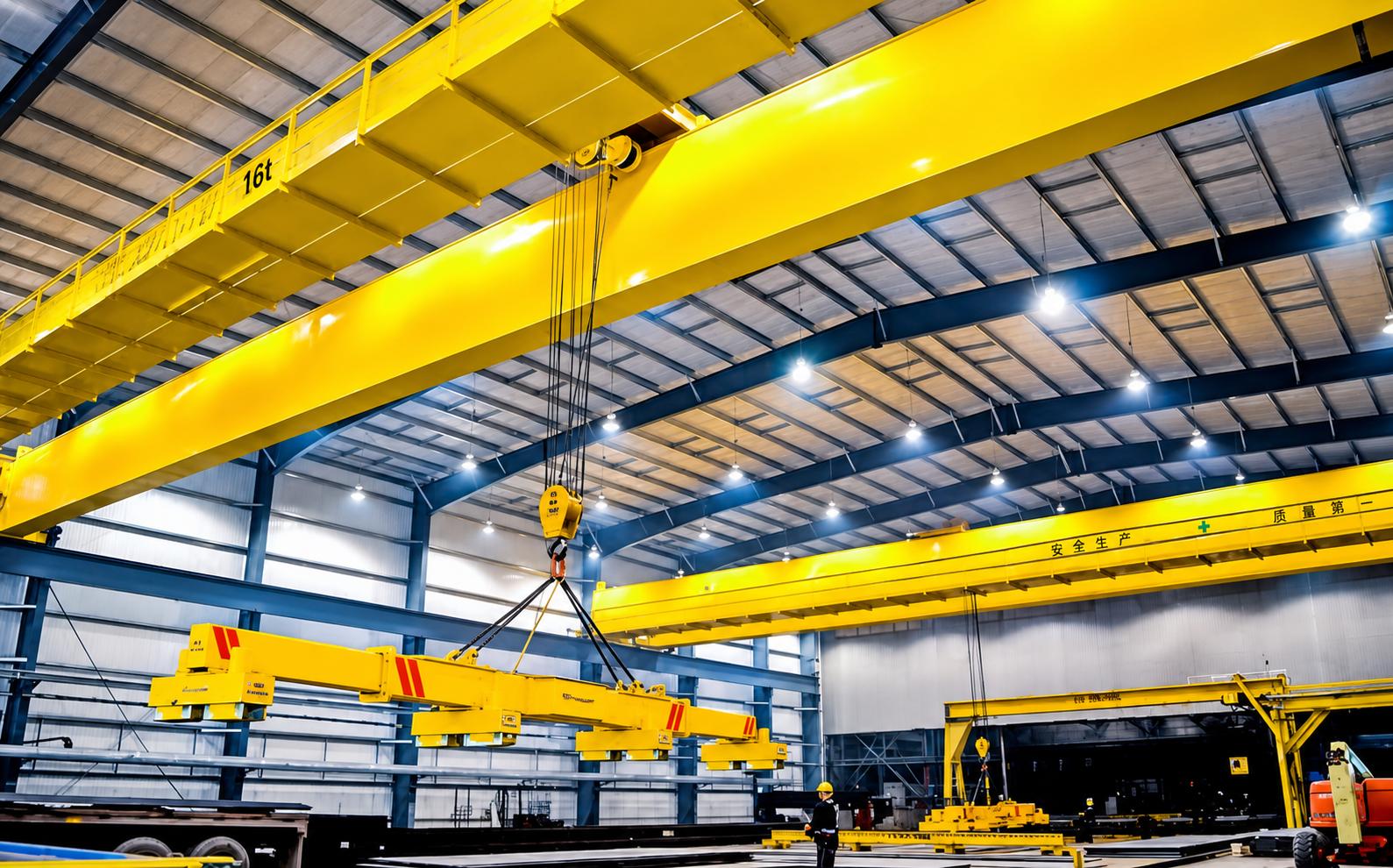
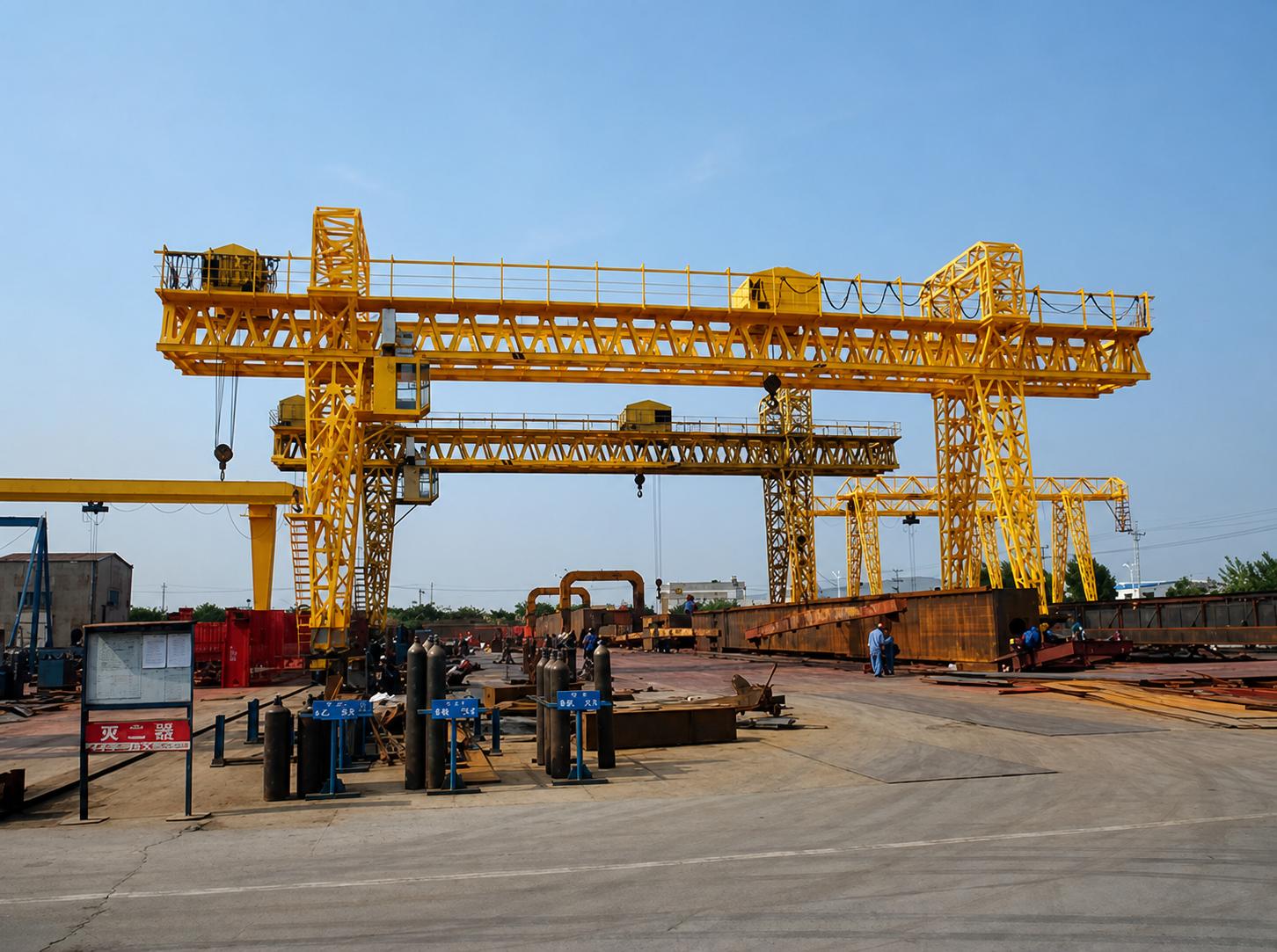
    Single girder gantry crane consists of a main girder, two support legs, the bottom of the support legs are equipped with wheels or rails, mobile operations can be realized; lifting trolley installed in the lower flank of the main beam, the electrical equipment is integrated in one of the support legs of a small control room.

    The core application scenario is light to medium-sized operations, with load capacities typically ranging from 1-20 tons and spans up to 30.48 m (100 ft), making it the mainstream choice for small and medium-sized enterprises.

    Advantages

    • Cost-effective: Compared with double girder gantry cranes, single girder models have a simpler structure, require less manufacturing materials, and have lower upfront procurement costs, making them ideal for small and medium-sized enterprises with tight budgets (keywords: economical gantry cranes, low-cost lifting equipment).
    • Strong versatility: according to the operational requirements of the flexible configuration of spreader, such as lifting beams, electromagnetic suction cups, hooks, etc., can be adapted to a variety of types of cargo handling, covering a variety of areas such as light manufacturing, small warehousing.
    • Convenient installation and maintenance: simple structure, few moving parts, relatively simple installation process, without the need for professional large-scale equipment to assist, low maintenance workload, low cost, can minimize downtime, to protect the continuity of production.
    • Saving space: Vertical occupation of space is smaller, lower requirements for plant floor height, especially suitable for workshops, warehouses and other scenes with limited headroom (keywords: low headroom gantry crane, compact lifting equipment).

    Disadvantages

    • Limited load capacity: can only bear light and medium loads, can not meet the lifting needs of heavy goods, if forced overloading operations, it will seriously affect the life of the equipment and operational safety.
    • Poor stability: the single main girder structure has weak resistance to lateral movement, and is prone to shaking during operation, so the operating speed needs to be strictly controlled to avoid safety accidents.
    • Limited span and lifting height: Compared with double girder models, the span and lifting height of single girder gantry cranes have obvious limitations, which cannot cover large operation areas or meet the demand for overhead lifting.

    What is a Double Girder Gantry Crane

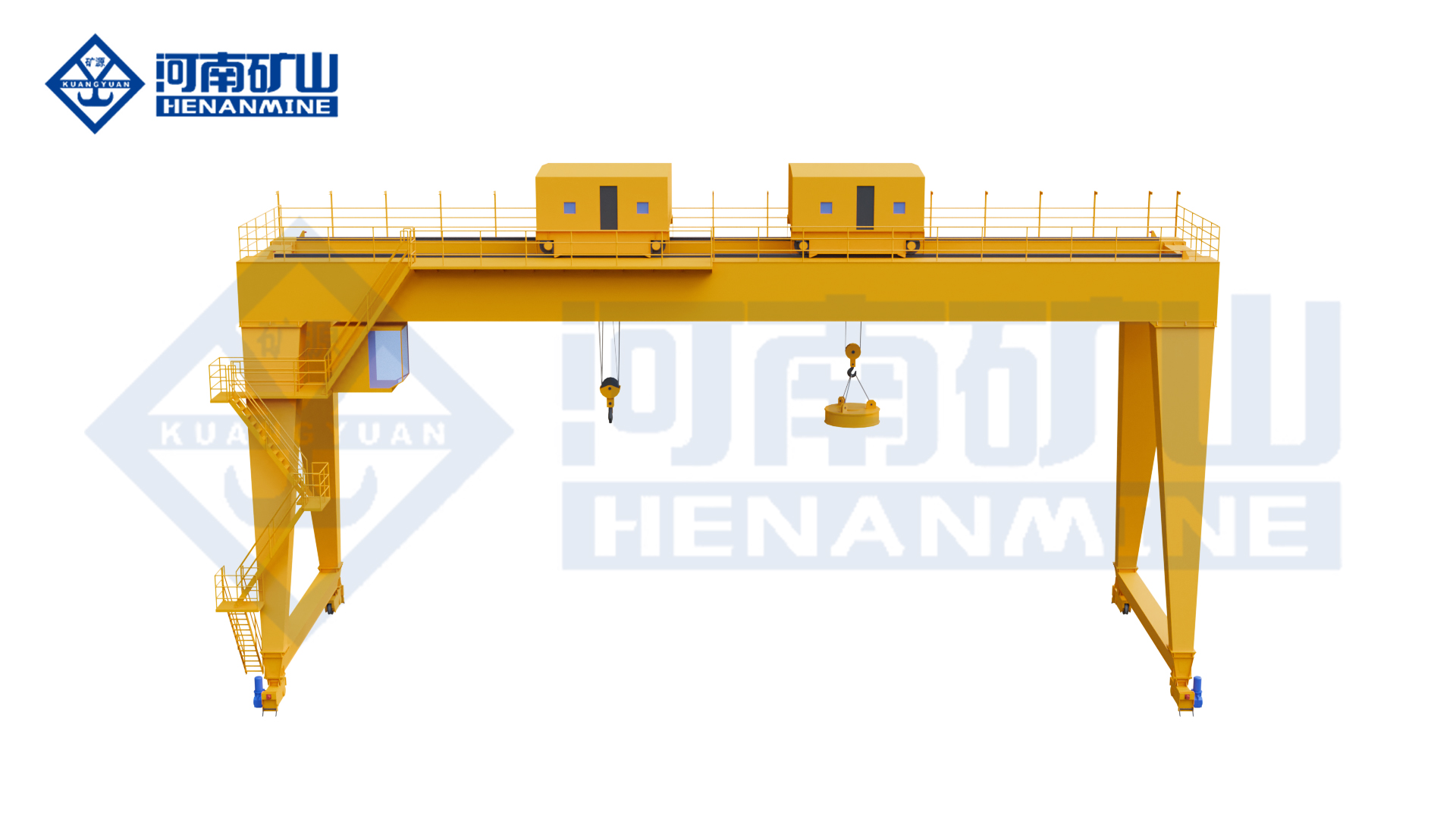
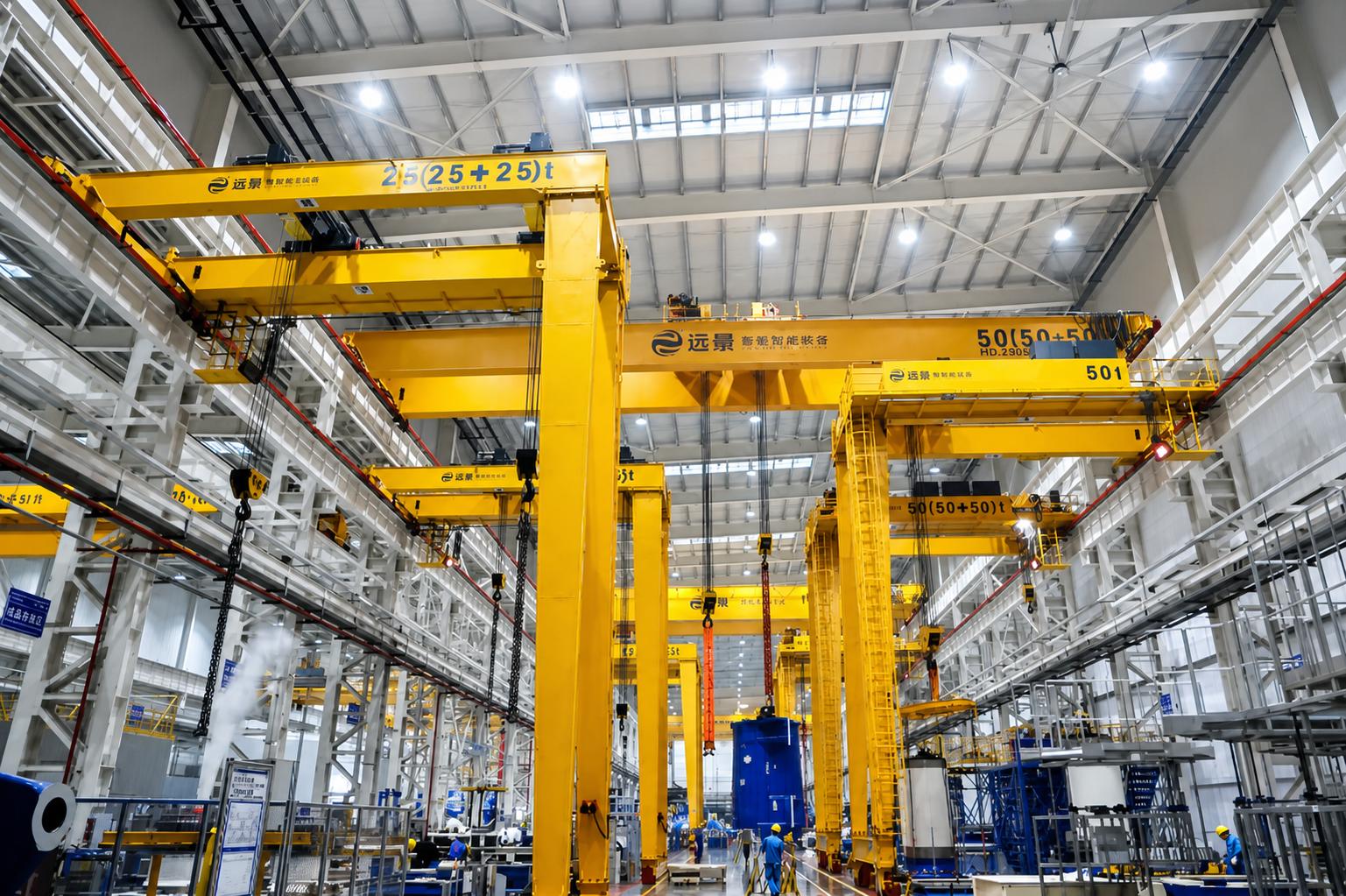
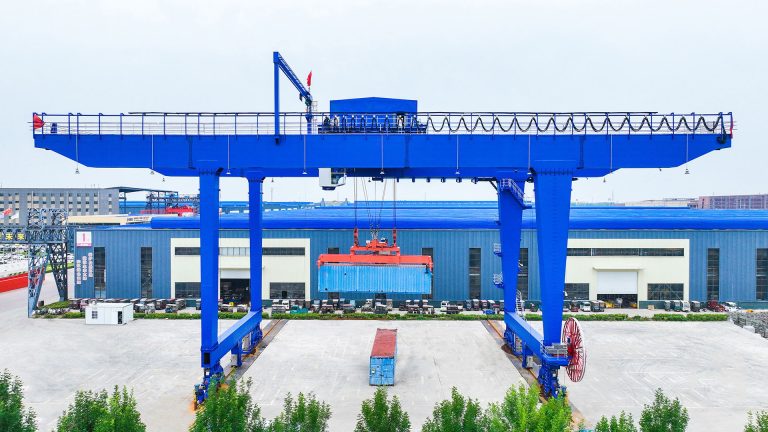
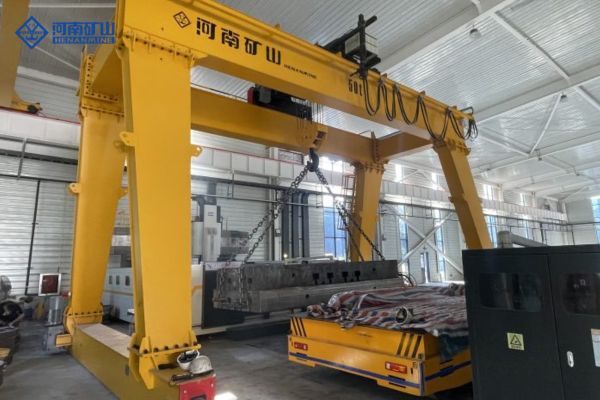
    A double girder gantry crane consists of two parallel main girders, four support legs with wheels or rails at the bottom of the legs, a hoisting trolley installed between the two main girders, and the electrical equipment placed in a separate control room.

    Its core positioning is for heavy-duty operations, with load capacities usually ranging from 5-150 tons or more, and spans that can easily exceed 30.48 m (100 ft), making it a core lifting equipment in the heavy industrial sector.

    Advantages

    • Extremely strong load capacity: can easily bear heavy loads of 5-500 tons or more, adapted to the lifting needs of heavy industry, widely used in steel, shipbuilding, large construction and other industries (keywords: heavy gantry crane, large tonnage lifting equipment).
    • Larger span and lifting height: the double main girder structure is more supportive, the span can reach more than 45.72 m (150 ft), and the lifting height can reach up to 30.48 m (100 ft), which can cover the large operation area and meet the needs of overhead lifting (keywords: large-span gantry crane, overhead lifting equipment).
    • Higher safety: sturdy structure, excellent stability, not easy to shake, tipping and other problems, higher accuracy of load control during operation, and can be equipped with a variety of safety protection devices to further reduce operational risks.
    • Outstanding versatility and durability: the configuration can be customized according to the heavy-duty operation requirements, suitable for a variety of heavy cargo handling; the body is made of high-strength steel, corrosion-resistant, wear-resistant, adaptable to harsh operating environments, and longer service life.

    Disadvantages

    • Higher cost: the double main beam structure requires more materials and more complicated manufacturing process, the initial procurement cost is much higher than the single beam model, and at the same time, the installation process requires specialized equipment and technicians, which further increases the initial investment.
    • Large space requirement: The larger size of the machine body not only requires more space for installation and operation, but also has higher requirements for the height of the factory building and the ground load-bearing, which is unsuitable for the use of small sites.
    • Complicated installation: Complex structure, large weight, cumbersome installation process, requiring a professional engineering team to conduct site surveys, foundation pouring and equipment assembly, which takes a long time.
    • High maintenance and energy cost: more moving parts, more complex structure, the later need for regular professional overhaul and maintenance, maintenance costs are high; at the same time, the equipment operation needs to consume more electricity, long-term operation of energy costs can be considerable.

    Single vs. Double Girder Gantry Cranes: Key Differences

    The core differences between single girder and double girder gantry cranes are centered on the structure, performance, cost and other dimensions, clear these differences is the key to selection, the specific comparison is as follows:

    Structural Design

    Structural design is the most essential difference between single girder and double girder gantry cranes, which directly determines the equipment’s carrying capacity, stability and applicability of the scene, the two in the structure of the construction of the differences are significant, the specific details are as follows:

    • Single girder gantry crane: using a single I-beam or box girder as the main beam, the structure is light and simple, light weight; hoisting trolley mounted on the lower flange rail of the main beam, the design is simplified, the installation of the foundation requirements are low, suitable for small and medium-sized venues and the foundation conditions of the general plant for rapid installation.
    • Double Girder Gantry Crane: two parallel main girders form a solid frame through the end beams, the structure is sturdy and heavy, strong load-bearing; hoisting trolley mounted on the special track between the main girders, which can enhance the stability and disperse the load, and has very high requirements on the foundation load-bearing and stability, which is suitable for large industrial sites.

    Load Capacity

    Load capacity is the primary consideration in the selection of indicators, which directly determines whether the equipment can meet the actual operational requirements, single girder and double girder models of the load capacity difference is obvious, and adaptable to very different operational scenarios:

    • Single girder gantry crane: load capacity of 1-20 tons (conventional 5-15 tons), is a light-medium equipment, by the single main beam restrictions can not bear heavy loads, only suitable for small and medium-sized enterprises daily goods, parts lifting, overloading is strictly prohibited.
    • Double girder gantry cranes: the load far exceeds the single girder, conventional 5-150 tons, customization can be more than 500 tons, is a heavy equipment; double main girder can disperse the load, enhance the stability, suitable for iron and steel, shipbuilding and other industries, heavy cargo lifting, is the core of the heavy-duty operation equipment.

    Span and Lifting Height

    Span (the distance between the support points at both ends of the main girder) and lifting height (the maximum height that the hook can lift) directly determine the operating range of the equipment, and both need to be selected in conjunction with the site conditions and operational requirements:

    • Single girder gantry crane: limited by the single main girder load-bearing, the longest span of 30.48 meters (conventional 10-25 meters), the lifting height of 8-15 meters, the coverage is limited; the vertical occupation of space is small, the height of the plant is low, suitable for headroom is limited, small and narrow workshops, warehouses.
    • Double girder gantry crane: double main girder support stability, span can be more than 45.72 meters (conventional 25-40 meters), the highest lifting height of 30.48 meters, covering a wide range; suitable for large factories, ports and other venues, can be completed with a large span, high altitude heavy cargo handling.

    Design Complexity

    Design complexity directly affects the manufacturing cost, installation cost and later maintenance cost of the equipment. The design difference between single girder and double girder models is large, resulting in a significant difference in the overall cost:

    • Single girder gantry crane: simple structure, streamlined materials, low process difficulty, low procurement and installation costs in the early stage and short cycle; fewer moving parts in the later stage, convenient maintenance operations, cost-controllable, the overall cost-effective advantage is significant.
    • Double girder gantry cranes: complex structure, sufficient materials, process and precision requirements, high procurement costs in the early stage; installation requires a professional team to operate, the cycle is longer and higher costs; later maintenance process is cumbersome, high cost, the overall early and long-term investment are at a higher level.

    Lifting Mechanism

    Lifting mechanism is the core working part of the gantry crane, which directly determines the lifting capacity and operational efficiency of the equipment, single girder and double girder models are equipped with significant differences in the lifting mechanism according to their own load requirements, as follows:

    • Single girder gantry crane: mainly equipped with electric hoist or small wire rope hoist, the lifting mechanism is simple and compact, suitable for light and medium-sized lifting loads, easy to operate and cost-controllable, perfectly suited to the single girder model of light and medium-sized operations of the core positioning.
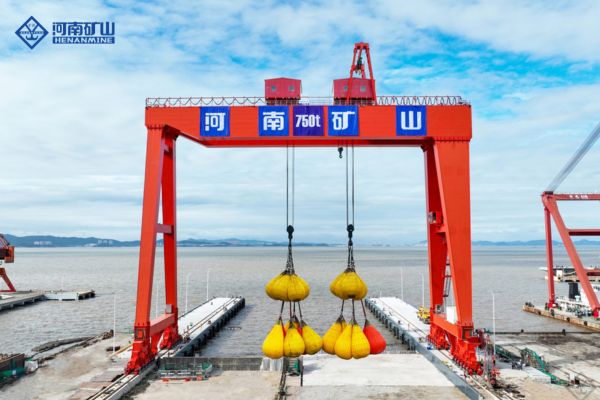
    • Double Girder Gantry Cranes: Equipped with heavy-duty wire rope hoists, the hoisting mechanism has a sturdy structure, strong lifting capacity and stable operation, which is suitable for all kinds of heavy-duty loads, and can realize accurate and smooth hoisting of loads, effectively guaranteeing the safety of heavy-duty operations, which is in line with the core positioning of the double girder model for heavy-duty operations.
    Mobility and Flexibility

    Mobility and flexibility mainly depend on the weight, volume and structural design of the equipment, which directly affects the adaptability and operational flexibility of the equipment in different sites, the differences between single girder and double girder models are as follows:

    • Single girder gantry crane: light body, compact size, excellent maneuverability, flexible mobile operation, adaptable to the narrow operating space, and easy to frequently adjust the lifting point position, enhance operational flexibility and efficiency.
    • Double girder gantry crane: bulky body, large volume, weak mobility, usually semi-fixed installation, more suitable for large, fixed work area of long-term lifting tasks, not suitable for frequent mobile adjustment.

    Control Mode

    The control mode directly affects the ease of operation, precision and safety of the equipment, and needs to be selected in conjunction with the operational scenarios and operational requirements, and the difference between the control mode of single girder and double girder models is obvious:

    • Single girder gantry crane: mainly using handheld button box or wireless remote control, easy to operate, low threshold, no need for professional licensed personnel, suitable for small and simple lifting scenarios, and the control device cost is low, easy to maintain, can effectively reduce the operating costs of enterprises.
    • Double girder gantry crane: mostly adopts cab operation mode, equipped with advanced control system, high operation precision, strong safety, the operator needs to hold a professional certificate, suitable for shipyards, iron and steel mills, and other heavy-duty, high-precision lifting operation scenes.

    Safety Protection

    Safety protection is the core guarantee of gantry crane operation. According to the load capacity and operation risk of the equipment, there is a big difference between the safety protection configuration of single girder and double girder models:

    • Single girder gantry crane: equipped with limit switches, braking devices and other basic safety protection, the core relies on the operator’s standardized operation (to avoid overloading, overspeed), without the need for complex protection systems, to meet the safety needs of small and medium-sized light-load operations.
    • Double girder gantry crane: equipped with perfect safety protection, in addition to the basic devices, also includes overload sensors, anti-collision system, etc., can avoid the risk of heavy-duty operations in all aspects, suitable for high-risk heavy-duty operation scenarios.

    Application Scenarios for Single and Double Girder Cranes

    The core of the selection is “matching scene”, single girder and double girder gantry crane application scenarios are significantly different, combined with their own operational needs can quickly lock the model:

    Single Girder Gantry Crane

    1. Small and medium-sized manufacturing workshops, machining factories and small warehouses, can be used for light goods, various types of parts handling and lifting operations, to match the light load daily operational needs.
    2. Light assembly lines, equipment maintenance workshops, suitable for equipment overhaul, parts assembly, small mold handling, as well as motor disassembly, HVAC equipment installation and other types of daily maintenance operations.
    3. It is suitable for sites with limited headroom and small operating areas, and also for small and medium-sized enterprises with tight budgets and no excessive requirements for equipment loading capacity.

    Double Girder Gantry Cranes

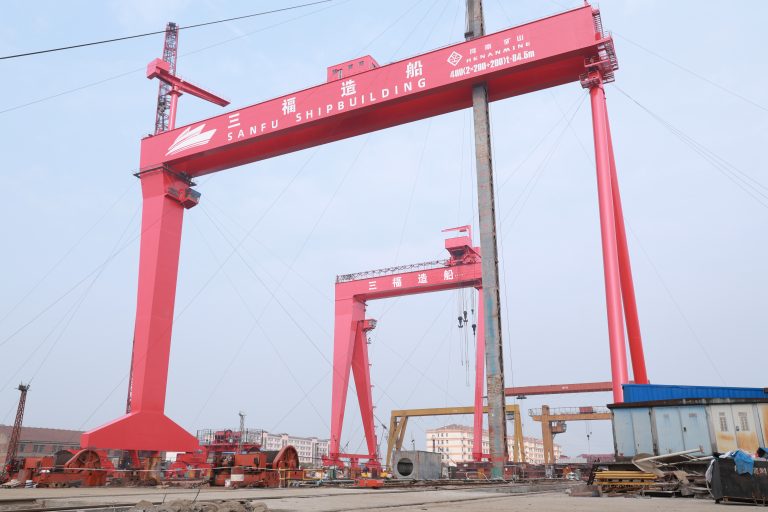
    1. Iron and steel plants, shipyards, large construction sites, mainly used for heavy steel, ship components, large construction materials lifting operations (keywords: shipyard gantry cranes, lifting equipment for iron and steel mills), to meet the core lifting needs of heavy industry.
    2. Heavy machinery manufacturing plants, large processing and assembly workshops, for large machine tools, heavy molds, large components of the handling and assembly, to meet the needs of heavy equipment production and installation.
    3. Large warehouses, port terminals and open-air workplaces, suitable for lifting and handling of large cargoes and containers, and can carry out long-term heavy-duty operations in harsh environments to ensure operational efficiency and stability.
    Cost Comparison

    When selecting the type, can not only look at the preliminary procurement costs, need to consider the long-term operating costs, in order to make the most cost-effective decision, the specific cost comparison is as follows:

    Upfront Cost

    • Single girder gantry crane: low procurement costs, usually 50% -70% of the double girder model; simple installation process, without complex foundation pouring and large equipment to assist, installation costs are low, and the overall upfront investment can be controlled.
    • Double girder gantry crane: high procurement costs, due to differences in materials and manufacturing process, the price is much higher than single girder models; complex installation process, the need for professional foundation survey, pouring, and large-scale equipment lifting, installation costs are higher, the initial investment is larger.

    Long-term Cost

    • Single girder gantry crane: simple structure, few moving parts, low maintenance frequency and low maintenance cost in the later stage; low energy consumption of the equipment, controllable cost of electricity for long-term operation, suitable for long-term light load operation.
    • Double girder gantry crane: complex structure, many moving parts, need to regularly carry out professional overhaul and maintenance, maintenance costs are higher; equipment energy consumption is higher, long-term operation of the electricity cost is higher, and at the same time need to be equipped with professional operators, the cost of labor will also increase.

    Cost-benefit Analysis

    • Single girder gantry crane: outstanding cost-effectiveness, low initial investment, low long-term operating costs, suitable for small and medium-sized enterprises with limited budgets, light operating loads and low operating frequency, which can meet the basic lifting needs at a lower cost.
    • Double girder gantry crane: large investment in the early stage, but strong load capacity, good stability, long service life, suitable for the need for long-term heavy-duty operations, high requirements for operational efficiency and safety of the enterprise, in the long term, its performance advantages can offset the high investment in the early stage, bringing higher operational efficiency.

    Factors to Consider When Choosing Between Single and Double Girder Gantry Cranes

    Combined with their own operational needs, site conditions and budget, follow the following five core factors, you can quickly make the right choice:

    Load Capacity Requirements

    First of all, the maximum load capacity for daily operation should be clearly defined, and at the same time, 20%-30% of buffer space should be reserved to cope with the dynamic load in the lifting process and the future operational needs; usually, the load of 20 tons or less is preferred to single girder models, and 20 tons or more is preferred to double girder models.

    Operating Environment and Space

    If it is indoor operation, small space or limited headroom, single girder model is preferred; if it is outdoor operation, open space, and needs to meet the demand of large span or high altitude lifting, double girder model is preferred. At the same time, it is important to consider the ground bearing capacity, double girder models due to their own weight and load demand, the ground bearing requirements are higher.

    Budget and Cost Effectiveness

    If the enterprise has a tight budget and only needs short-term operation or daily light-load operation, choosing single girder model is more economical; if the budget is sufficient and needs long-term heavy-duty operation, choosing double girder model is more cost-effective in the long term, which can effectively avoid the operation inefficiency or safety hazards due to the lack of equipment performance in the later stage.
    Long-term Expansion Plan

    If the enterprise has plans to increase the work load and expand the scale of operation in the next few years, it is recommended to choose double girder model, which can effectively avoid the additional purchase cost and downtime loss caused by the replacement of equipment in the later stage, and ensure the continuity of production.

    Working Level

    It is necessary to combine the frequency of operation and load intensity to choose the appropriate level of work: single girder models are suitable for light and medium operations of class A-D, which have a low frequency and light load; double girder models are suitable for heavy operations of class E-F, which have a high frequency and high load intensity.

    When to Choose a Single Girder Gantry Crane

    If one of the following scenarios is met, single girder gantry cranes are preferred to minimize cost and improve operational efficiency:

    1. The daily operating load is in the range of 1-20 tons, and most of the operating load is concentrated in the range of 5-15 tons, with no demand for heavy lifting tasks.
    2. The operating span is controlled within 18-20 meters (60-65 feet), the lifting height is not too high, and the operating site is narrow or headroom is limited.
    3. The frequency of operation is low and belongs to A-D light and medium operations, such as daily parts handling and equipment maintenance in small workshops.
    4. When the site conditions are limited, you can choose top row type (load limit 20 tons) or bottom row type (load limit 10 tons) single girder models to effectively save working space.

    Key tip: When selecting the model, be sure to reserve 20%-30% of the load buffer space, to avoid the risk of overloading the equipment and early retirement due to the dynamic load or future increase in operational demand.

    When to Choose a Double Girder Gantry Crane

    If one of the following scenarios is met, double girder gantry cranes are preferred to ensure operational safety and efficiency:

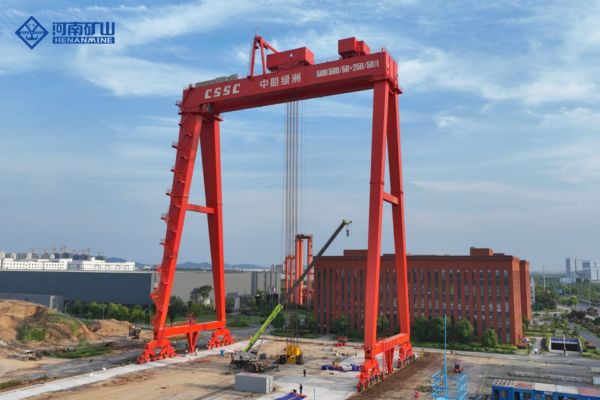
    1. Daily operating loads need to reach 20 tons and above, and even need to lift heavy goods of more than 500 tons, such as heavy steel, ship components, large sets of equipment and other heavy materials.
    2. The operating span is more than 20 meters (65 feet), the lifting height is more than 15 meters (50 feet), and it needs to cover a large operating area or have the need for overhead lifting.
    3. Heavy duty operations with high frequency and high load intensity, such as continuous heavy lifting operations in shipyards and steel mills.

    Key Considerations: When selecting cranes, it is necessary to combine factors such as crane operating speed, work cycle efficiency, maintenance resource allocation, etc., and at the same time ensure that the equipment is equipped with overload protection, collision avoidance system and other perfect safety protection devices, to protect the safety of heavy-duty operations in all aspects.

    Common Mistakes to Avoid When Selecting

    Many companies in the selection of the following misunderstandings, resulting in waste of equipment, increased costs or safety hazards, need to focus on avoidance:

    • Underestimation of load capacity: Considering only static loads and ignoring dynamic loads (e.g. shaking and inertia during lifting) and spreader weights, resulting in long-term overloading of equipment, accelerating wear and tear of parts, and even causing safety accidents.
    • Mismatch between work level and operational requirements: Use light and medium work level single girder models for heavy and high frequency operations, resulting in early aging and frequent failures of the equipment, increasing maintenance costs and downtime losses.
    • Ignoring space and site conditions: blindly choosing double girder models and ignoring the problems of small sites and insufficient headroom, resulting in equipment that cannot be properly installed and operated; or choosing single girder models that cannot meet the needs of large-span and high-altitude lifting.
    • Focusing only on upfront costs: choosing single girder models with insufficient load or span to save upfront investment, and then needing to purchase additional equipment or upgrading and remodeling at a later stage due to the inability to meet the operational needs, which in turn increases the overall cost.

    Conclusion

    Single girder and double girder gantry cranes have no absolute advantages and disadvantages, the core lies in matching their own needs: single girder cost-effective, flexible and convenient, suitable for small and medium-sized enterprises with light and medium lifting; double girder with strong loads and good stability, suitable for heavy industry long-term operations, long-term cost-effective and outstanding.

    When selecting a model, you need to consider the load capacity, operating space, budget, long-term expansion plans and work level, to avoid common misconceptions, in order to choose the most suitable model for you.
    Henan Mine CraneDiscuss your requirements ↗
  • Shipyard Gantry Crane Buying Guide For Large Vessel Construction

    Shipyard Gantry Crane Buying Guide For Large Vessel Construction

    Shipyard Gantry Crane Buying Guide For Large Vessel Construction

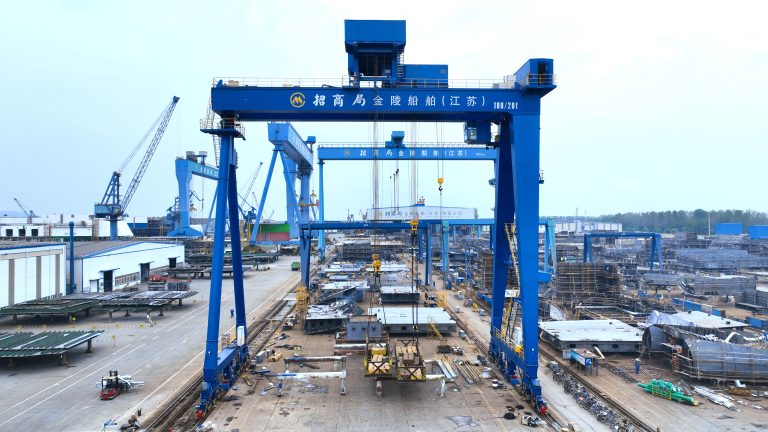
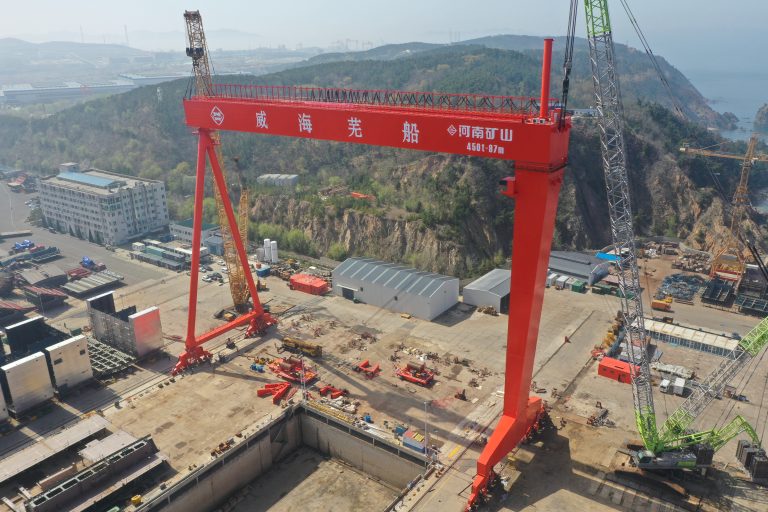
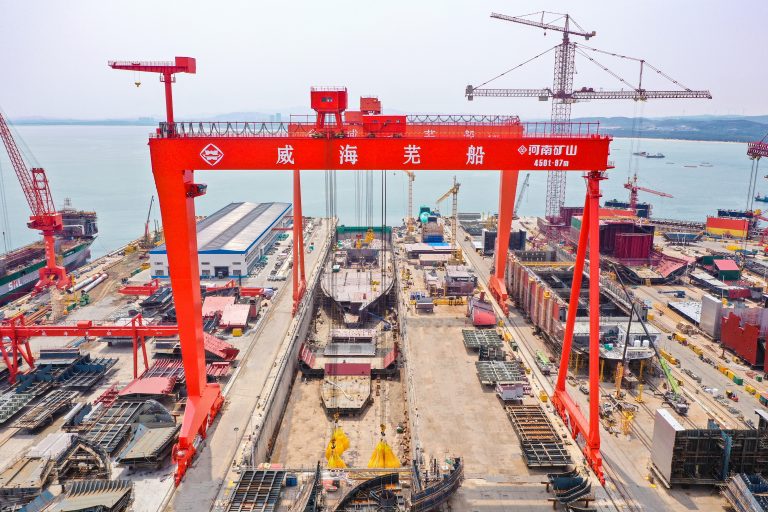
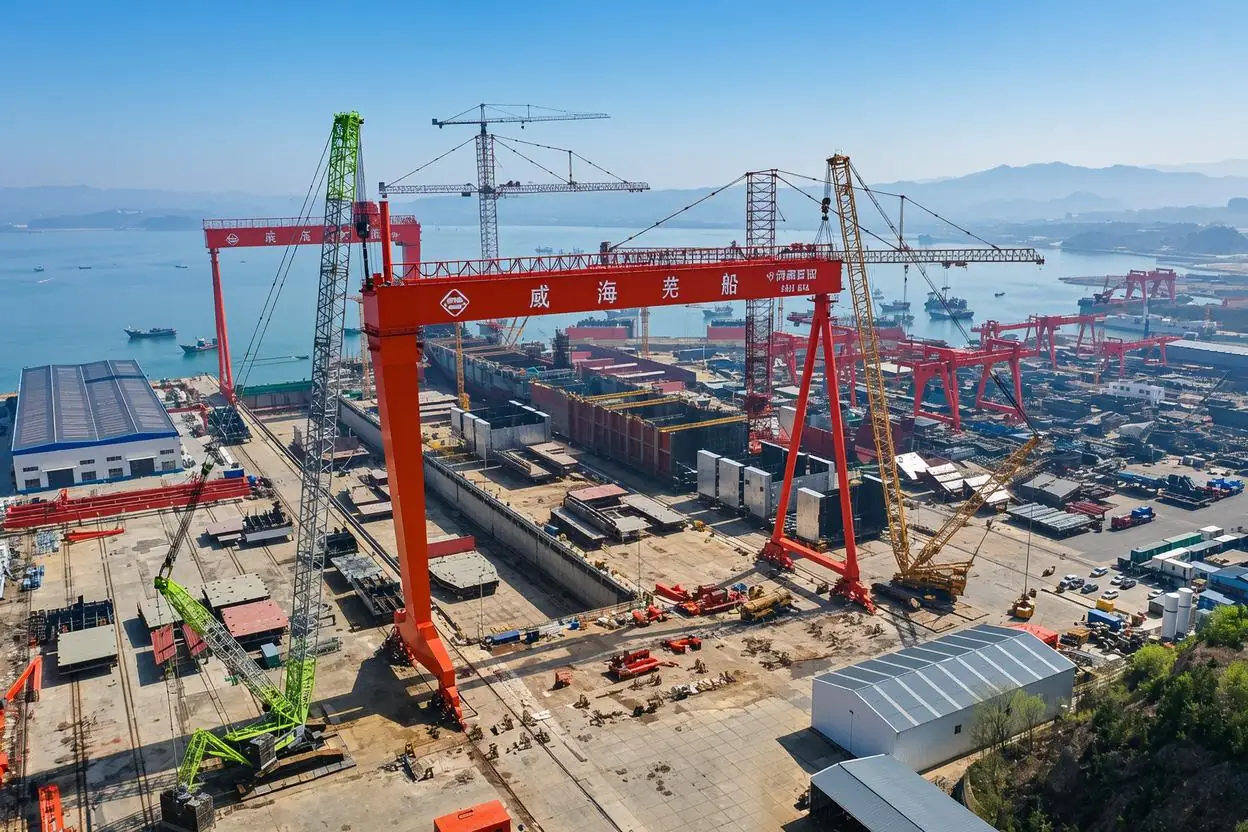
    In the field of modern shipbuilding, shipyard gantry cranes are the core equipment of large-scale ship construction, which directly determines the production efficiency, operation safety and project cost control level of shipping companies.As the demand for large-scale ship construction continues to grow, the selection of gantry cranes is no longer a simple equipment procurement, but a strategic decision related to the long-term competitiveness of shipping companies.Suitable marine gantry cranes can realize efficient hoisting of hull segments and precise assembly of heavy-duty modules, greatly shortening the construction cycle.Conversely, improper selection may lead to low operational efficiency, frequent safety hazards, and even cause project delays and cost overruns.This article will focus on large-scale ship construction scenarios and introduce in detail the core knowledge, selection points, design plans, key components and supporting services of shipyard gantry cranes, so as to provide a comprehensive and professional reference for shipping companies to purchase large-scale ship construction cranes, and help shipping companies choose heavy-duty marine gantry cranes that meet their own needs.

    Understanding Shipyard Gantry Cranes and Their Applications

    What is a shipyard gantry crane?

    Henan Mine Crane manufactured shipyard gantry cranes working principle is to drive the lifting system through an electrical control system to complete the vertical lifting of heavy objects. The lifting system includes hooks, wire ropes, hoisting mechanisms and other components. At the same time, it cooperates with the horizontal movement of carts and trolleys to achieve precise positioning and handling of heavy objects such as hull segments and heavy equipment. The cart is the overall frame, and the trolley is a lifting device that moves along the main beam.The core components work together to ensure the stability and reliability of the equipment under high-load and high-frequency operations. It is an indispensable marine lifting system in the process of ship construction.

    Applications in vessel construction

    Shipyard gantry cranes are the core equipment of large-scale ship construction and run through the whole process of hull construction. The main application scenarios include the following aspects. They are indispensable ship construction equipment in the ship construction process.:

    • Hull segmented hoisting and assembly: Accurately hoisting the prefabricated hull segments to the ship platform or dock, and completing the segmented docking and welding is the core process of hull forming. Hull segments include bottom segments, side segments, deck segments, etc.
    • Segmented hull transportation: Realize the efficient transfer of hull segments between workshops, depots and ship platforms, reduce the workload of manual handling, and improve operational efficiency.
    • Marine equipment installation: responsible for the hoisting and installation of heavy marine equipment such as main engine, steering gear, anchor gear, etc., to ensure that the installation location of the equipment is accurate and meets the performance requirements of the ship’s operation.
    • Handling of heavy-duty components: handle the handling and positioning of heavy-duty steel, modules, outfitting parts and other heavy objects in the process of ship construction, and adapt to the high-load operation requirements of large-scale ship construction.

    Why shipyards need heavy duty gantry cranes

    The particularity of large-scale ship construction determines that shipping companies must be equipped with heavy-duty shipyard gantry cranes. Its core advantages and necessity are mainly reflected in the following points:

    • Carrying extreme loads: the hull segments and heavy equipment of large ships can weigh hundreds or even thousands of tons. Ordinary lifting equipment cannot meet the load requirements. Heavy gantry cranes can easily handle the lifting of heavy objects of extreme weight.
    • Improve construction efficiency: heavy-duty gantry cranes can realize one-time hoisting and assembly of large components, reduce operating processes and time, significantly shorten the ship construction cycle, and improve the production capacity and delivery capacity of shipping companies.
    • Reduce labor risks: reduce the participation in manual handling, avoid safety risks caused by manual operation, and reduce the risk of collision and damage to components through precise control to ensure operation safety.
    • Adapt to the needs of large-scale shipbuilding: With the intensification of the trend of large-scale and modular construction of ships, Henan Mine Crane manufacturedheavy gantry cranes can support the construction needs of large-scale ships, offshore platforms and other equipment, and help shipping companies expand their business scope and enhance their market competitiveness.

    Key Factors When Buying a Shipyard Gantry Crane

    The procurement of gantry cranes for shipyards is a systematic project that needs to be comprehensively considered in combination with the actual production needs of shipping companies, site conditions, future development plans and other factors.The following core selection points can help shipping companies accurately select suitable equipment. This shipyard crane selection guide will provide you with clear decision-making ideas.

    Lifting capacity

    The lifting load is the core parameter of the gantry crane selection, which directly determines whether the equipment can meet the operational needs of ship construction.When selecting the type, it must be comprehensively determined in combination with the size of the ship, the construction process and the future development plan.First of all, according to the type of ship currently under construction, the maximum hull segment and the weight of heavy equipment need to be determined, and the minimum lifting load required must be determined on this basis, and a safety margin of 10%-25% must be reserved to avoid equipment unavailability or safety hazards due to insufficient load. Ship types include bulk carriers, tankers, LNG ships, etc.Secondly, the common load range of gantry cranes in shipyards is 100 tons-1000 tons or more. Heavy equipment of more than 300 tons is usually required for the construction of large ships, and super heavy gantry cranes of more than 500 tons are required for the construction of ultra-large ships or offshore platforms.Finally, it is necessary to consider the future production expansion needs of shipping companies. If they plan to build larger-tonnage ships, the lifting load of the equipment should be appropriately increased to avoid cost waste caused by subsequent repeated purchases.

    Span and lifting height

    The span and lifting height are the key dimensional parameters of the gantry crane, which need to be accurately matched with the layout, operating scope and ship construction requirements of the shipyard, and are also the core content of the specifications of the gantry crane of the shipyard.Span refers to the distance between the operating tracks on both sides of the gantry crane. It needs to be determined according to the width of the platform or dock and the maximum size of the hull segment to ensure that the equipment can cover the entire working area and realize the all-round hoisting and assembly of the hull segment.The lifting height needs to be determined according to the draft depth of the ship, the height of the hull and the operating scene. It is necessary to ensure that the hook can lift heavy objects to the designated location, while avoiding collisions with the hull, platform, etc. The lifting height of large-scale ship construction usually needs to reach 20 meters-35 meters, and higher specifications can be customized for special scenarios.In addition, it is necessary to evaluate the operating coverage of the equipment to ensure that the operating range of carts and trolleys can meet all operating needs and improve the utilization rate of the equipment.

    Working class and duty cycle

    The working level and operating cycle determine the design standard and service life of the gantry crane. It needs to be selected in combination with the operating frequency and load characteristics of the shipping company to adapt to the high load requirements of continuous ship construction.The working level is divided according to the frequency of use of the equipment and the load state. Henan Mine Crane manufactured Shipyard gantry cranes usually need to choose a high working level of A6-A8 to adapt to high-frequency and high-load continuous operation scenarios.The operation cycle needs to consider the daily number of hoisting, the length of a single operation, load changes and other factors. High-frequency operation scenarios need to choose equipment with efficient lifting and operating speed, while optimizing the structural design of the equipment and the selection of components to ensure that the equipment can operate stably for a long time and reduce downtime.In addition, it is necessary to follow relevant industry design standards to ensure that the structural strength and component performance of the equipment can meet the requirements of continuous operation and extend the service life of the equipment.

    Operating environment

    Long-term operation of gantry cranes in shipyards in outdoor environments requires full consideration of the impact of environmental factors on equipment performance and service life, focusing on the following points.First, the particularity of the outdoor operating environment requires consideration of factors such as temperature changes and rainwater erosion. The electrical components and metal structures of the equipment need to have good protective properties to avoid equipment failures due to environmental factors.The second is the problem of salt spray corrosion. The air humidity and high salt content in coastal shipyards can easily cause corrosion to the metal structure and electrical components of the equipment. It is necessary to choose equipment with salt spray protection and corrosion-resistant treatment, such as the use of galvanized, anticorrosive coating and other processes to enhance the corrosion resistance of the equipment.The third is the wind resistance. The outdoor operation of the shipyard is susceptible to windy weather. The equipment needs to have a good wind resistance design and be equipped with windproof devices to ensure the stability of the equipment in extreme weather and avoid safety accidents. Windproof devices include rail clamps, anchoring devices, etc.

    Shipyard Gantry Crane Buying Guide For Large Vessel Construction

    How to Choose the Right Gantry Crane Design for Shipbuilding

    The design type of gantry crane in a shipyard directly affects the performance, applicable scenarios and procurement costs of the equipment. It is necessary to select the appropriate design plan based on the actual needs of the shipping company, site conditions and operating scenarios to ensure that the equipment can be efficiently adapted to the needs of ship construction.

    Single girder vs double girder design

    The single-beam gantry crane has a simple structure, light weight and low procurement cost. It is suitable for small and medium-sized loads and small-span operation scenarios, but its carrying capacity and stability are relatively poor, and it cannot meet the high-load requirements of large-scale ship construction.The double-beam gantry crane adopts two main beams as load-bearing components. It has high structural stiffness, strong carrying capacity and good stability. It can withstand the impact of heavy loads and long-term fatigue operations. At the same time, it has better wind resistance and positioning accuracy, and is suitable for the high-load and high-precision operation requirements of large-scale ship construction.In addition, the double-beam gantry crane has a longer service life, relatively low maintenance costs, and higher cost performance for long-term use, so it has become the mainstream choice for large-scale ship construction.

    Rail mounted vs rubber tyred gantry crane

    Henan Mine Crane manufactured Rail mounted gantry cranes need to lay special tracks on both sides of the ship platform or dock, and the equipment runs vertically along the track. It has the advantages of good operating stability, strong carrying capacity, and high positioning accuracy. It is suitable for large-scale ship construction scenarios with fixed operating areas and high-frequency operations. It is the mainstream choice for shipyards.Tire-type gantry cranes use rubber tires as operating components without laying tracks. They have the advantages of flexible movement and adjustable operating range. They are suitable for scenarios where the site is limited and the operating area is not fixed, but the carrying capacity is relatively low, and the positioning accuracy is slightly inferior to that of rail-type equipment. It is usually used for the construction of small and medium-sized ships or auxiliary operations.Shipping companies need to choose a suitable operating system based on their own site planning, operating scope and load requirements.

    Customized crane configuration

    Customized configuration mainly includes the following aspects: first, customized lifting mechanism, according to the type, weight and lifting needs of heavy objects, design special lifting mechanisms, such as double hook lifting, multi-lifting point lifting, etc., to improve the stability and accuracy of lifting.The second is the configuration of a multi-lifting system. For the lifting needs of large components, multiple lifting devices can be configured to achieve synchronous lifting and collaborative operation, and improve operating efficiency.The third is the intelligent control option, which is equipped with intelligent technologies such as automatic control, remote monitoring, and precise positioning to realize intelligent control of equipment, reduce manual intervention, and improve operational safety and efficiency.Fourth, the remote operating system supports remote control of equipment, reduces the labor intensity of operators, and avoids operators from being in a dangerous operating environment.

    Manufacturing and Quality Standards of Shipyard Gantry Cranes

    The manufacturing quality of the Henan Mine Crane manufactured shipyard gantry crane directly determines the performance, safety and service life of the equipment. When purchasing, it is necessary to choose a shipyard gantry crane manufacturer with professional manufacturing capabilities and strict quality control system to ensure that the equipment meets industry standards and actual needs.

    Engineering design process

    Professional engineering design is the basis for ensuring the performance of gantry cranes. Manufacturers need to have a sound design process and provide personalized design solutions based on customer needs.First of all, in-depth analysis of the actual needs of customers, including ship types, operating scenarios, site conditions, future development plans, etc., to clarify the core parameters and performance requirements of the equipment.Secondly, conduct detailed structural calculations and simulation analysis to verify the structural strength, stability, and wind resistance of the equipment to ensure the rationality and safety of the design plan.Finally, optimize the structural design and component selection of the equipment, balance the performance, cost and service life of the equipment, and provide customers with the best design plan.

    Manufacturing process

    Strict manufacturing technology is the key to ensuring the quality of equipment. Manufacturers need to follow standardized manufacturing processes to ensure that every link meets the quality requirements. The crane manufacturing process mainly includes the following links.First, steel processing, the selection of high-strength steel that meets the standards, cutting, welding, machining and other processing to ensure the dimensional accuracy and structural properties of steel.The second is the welding process. Professional welding equipment and technology are used to ensure the welding quality and avoid damage to the equipment structure caused by welding defects. At the same time, the welding parts are tested for defects to ensure that the welding quality is qualified.

    Third, surface treatment, anti-corrosion treatment of the metal structure of the equipment, such as galvanized, spraying anti-corrosion coating, etc., to enhance the corrosion resistance of the equipment and extend the service life of the equipment.The fourth is the assembly of components. The processed components are accurately assembled to ensure the matching accuracy of each component. At the same time, the assembled equipment is preliminarily debugged to ensure the normal operation of the equipment.

    Testing before delivery

    Testing of equipment before leaving the factory is the last line of defense to ensure the quality of equipment. Manufacturers need to conduct comprehensive testing and verification to ensure that the equipment meets industry standards and customer needs. The core links of industrial crane quality control include.First, load testing, which performs rated load and overload tests on the equipment, verifies the carrying capacity and operating stability of the equipment, and ensures that the equipment can meet the actual operating needs.The second is electrical inspection, which comprehensively inspects the electrical control system, circuits, and components to ensure that the electrical system is operating normally and there are no hidden dangers of failure.The third is the verification of the safety system, and the safety devices such as overload protection, anti-collision system, and emergency stop system are tested one by one to ensure that the safety devices can work normally and ensure the safety of operations.Fourth, the factory acceptance test invites customers to participate in the factory acceptance of the equipment, conduct a comprehensive verification of the performance and quality of the equipment, and can be delivered from the factory after passing the acceptance.

    Henan Mine Crane Factory Custom

    Shipyard gantry cranes are the core equipment of large-scale ship construction. Every aspect of their selection, design, manufacturing, installation and commissioning directly affects the production efficiency, operational safety and long-term development of shipping companies.Choosing the right shipyard gantry crane can not only improve the efficiency and quality of ship construction, reduce operating costs and safety risks, but also help shipping companies expand their business scope and enhance their market competitiveness.

    I would like to remind all shipping companies that when purchasing gantry cranes for shipyards, they need to take into account their actual needs, pay attention to the performance, quality and professional services of the equipment, and choose a reliable Henan Mine Crane Factory. Through reasonable selection, high-quality equipment and professional services, we will create an efficient, safe and reliable ship construction system to promote shipping companies to achieve long-term stable development and build a more competitive modern shipyard.

    Henan Mine CraneDiscuss your requirements ↗
  • shipbuilding gantry crane types, parameters and supplier selection analysis

    shipbuilding gantry crane types, parameters and supplier selection analysis

    shipbuilding gantry crane types, parameters and supplier selection analysis

    Shipbuilding gantry cranes are the core lifting equipment for ship construction, shipyard operation and maintenance, and marine engineering construction, and almost all heavy lifting processes rely on such equipment to complete. Unlike ordinary industrial gantry cranes, marine lifting equipment has been operating in the coastal open air environment for a long time, with greater load bearing, wider operating span, and the complexity of the working conditions far exceeds that of the conventional factory scene.

    Many shipyards in the procurement of marine gantry cranes, it is easy to fall into the misunderstanding of only comparing the offer. Low-priced equipment often exists in the structure of the material shrinkage, insufficient protection of the marine environment, lifting accuracy does not meet the standards and other issues, put into use will be frequent failures, direct delays in the construction of the ship construction period, increasing the overall construction costs.

    Shipbuilding gantry crane suppliers that are truly suitable for shipyard projects are not only able to provide compliant lifting equipment, but also familiar with large-span steel structure design, heavy-duty synchronous lifting process, coastal salt spray corrosion treatment, as well as mature on-site installation and commissioning and long-term after-sales support capabilities.

    The main application scenarios of shipbuilding gantry cranes

    Shipbuilding gantry cranes are designed around the shipyard’s open-air, heavy-duty, wide-ranging operations to build, covering the entire process of ship construction, maintenance, offshore prefabrication, is the core equipment indispensable to port shipyards, offshore engineering bases.

    Hull Segment Assembly Operation

    Modern ship construction adopts the construction mode of segment prefabrication and overall closing, and large hull segments are extremely heavy and bulky, and the requirements for lifting and positioning accuracy are harsh.

    Professional shipbuilding gantry cranes can smoothly complete the lifting, shifting and accurate docking of huge hull segments to ensure the construction accuracy of the hull together, which is the core equipment for the construction of the main body of the ship.

    Shipyard steel structure material transfer

    In the process of ship production, a large number of ship plates, steel sections, prefabricated modules and all kinds of hull supporting components are required. These materials are stacked in scattered, different tonnage, need to be adapted to the heavy-duty lifting equipment to complete the field of normalized transfer.

    Reliable shipyard gantry crane manufacturers will optimize the operating parameters of the equipment according to the material specifications, to adapt to high-frequency, multi-category steel lifting operations, to adapt to the daily production rhythm of the shipyard.

    Construction Scene of Shipyard and Ship Platform

    Dry dock and open platform are the core sites for ship construction, launching and overhauling, and the operation area is open and has a great span. Shipbuilding gantry cranes can fully cover the operation area of the dock, supporting the construction of the entire ship, heavy parts transfer, ship molding supporting operations.

    This type of scenario requires high requirements for equipment stability, wind resistance and continuous operation performance, and ordinary civilian gantry cranes are unable to meet the construction standards.

    Nacelle heavy equipment installation

    Ship main engine, generator sets, large piping equipment and other nacelle core parts, high deadweight, large volume, and installation position precision, the smoothness of lifting and alignment accuracy has high requirements.

    Exclusive offshore gantry cranes can realize low-speed and smooth lifting, accurate positioning, avoiding problems such as equipment bumping and installation deviation, and guaranteeing the quality of nacelle equipment installation.

    Ship Repair and Remodeling Engineering

    Regular overhaul, structural modification, and replacement of spare parts after the ship is in service also require heavy-duty gantry cranes to cooperate with the construction. Maintenance scenarios have flexible operating points and variable lifting conditions, which require higher adaptability of the equipment.

    Gantry cranes suitable for shipyards can be flexibly adapted to dismantling, shifting, lifting and other types of maintenance processes to meet the needs of the ship’s entire life cycle of operation and maintenance construction.

    Offshore Engineering Prefabrication

    In addition to conventional ship construction, prefabrication sites for offshore platforms, pipe rack modules, marine steel structures and other offshore products will also use shipbuilding gantry cranes in bulk.

    These offshore components have large tonnage and special structure, which requires heavy-duty shipyard Cranes to provide stable heavy-duty lifting capacity to suit the production and construction needs of large-scale offshore projects.

    reliable gantry crane supplier for shipyards

    Shipbuilding projects on the core requirements of lifting equipment

    Shipyard lifting equipment selection criteria, and ordinary industrial plants have essential differences. Coastal harsh environment, oversized heavy load, high precision construction requirements, constitute the exclusive selection of shipbuilding Crane threshold.

    Strong heavy-duty lifting capacity

    Most of the hull segments, steel structure modules and cabin equipment lifted in shipyards belong to super-heavy loads, and many of the components have irregular shapes and shifted centers of gravity.

    This requires that the core structure of shipbuilding gantry cranes, such as the main beam, outriggers, traveling mechanism, etc., have sufficient load-bearing redundancy to withstand irregular heavy load operations for a long period of time without structural deformation, operational shaking and other problems.

    Large span and sufficient lifting height

    The operating width of shipyard and ship platform is generally much wider than that of ordinary factory buildings, and the vertical space for the construction of ship hull is also higher. The equipment must have the ability to cover a large span in order to completely cover the whole construction area without any blind spot.

    At the same time, the sufficient lifting height can meet the needs of high-level hull assembly and high level installation of large-scale equipment, and there will be no shortage of lifting space.

    Smooth and synchronized lifting performance

    Large hull segments and offshore modules cannot be lifted at a single point, but require multiple lifting points to work together. If the lifting and running speeds of each lifting point are not consistent, it will lead to uneven force on the components and problems of twisting and offsetting.

    High-quality shipbuilding gantry cranes are equipped with synchronized control systems, which can achieve smooth lifting and precise alignment of multiple points to protect the structural integrity and construction accuracy of large components.

    Suitable for harsh outdoor working conditions along the coast

    The vast majority of shipyards are built near the sea, and the equipment is exposed to strong winds, rainfall, high humidity, and high salt spray environment all year round. Salt spray corrosion, wind attack is the main source of loss of marine Crane.

    Qualified marine cranes must do special anti-corrosion coating, electrical moisture sealing, wind reinforcement treatment, able to withstand the harsh coastal climate for a long time, slow down the aging of the equipment, reduce the frequency of failure.

    High safety factor and structural reliability

    Shipyard heavy lifting is a high-risk operation, once the equipment brake failure, structural failure, will cause huge property losses and safety accidents.

    Regular shipbuilding Crane manufacturers will equip the equipment with multiple safety protection configurations, including reliable braking system, limit protection, collision avoidance devices, with high-strength overall structure, all-round protection of construction safety.

    Long-term operation and maintenance and spare parts supply guarantee

    Shipbuilding gantry cranes belong to large-scale special equipment, the service life of up to more than ten years, the late loss of spare parts, equipment maintenance is the norm.

    Once the equipment is down, it will directly lead to the entire ship construction process stagnation, delaying the schedule. Therefore, the manufacturer’s after-sales response speed, long-term spare parts supply capacity, on-site operation and maintenance support is the key to long-term stable operation of the project.

    Mainstream shipbuilding gantry crane models suitable for shipyard projects

    Different shipyards have different construction scales, operation scenarios and load standards, and a single model cannot be adapted to all working conditions. Combined with the shipyard projects at home and abroad, the following types of cranes are the mainstream choice for shipbuilding and offshore projects.

    Double Girder Gantry Crane

    Double girder gantry cranes are the most widely used models in shipyards, and the double girder structure significantly improves the equipment’s load carrying capacity and structural stability.

    It is suitable for large-tonnage heavy-duty lifting and large-span operation areas, and can meet the core processes such as hull segment closing and heavy steel structure transfer, and is suitable for the regular construction needs of most large and medium-sized shipyards.

    Double Trolley Electromagnetic Hook Dual Purpose Gantry Crane

    Shipbuilding Gantry Crane with Winch Trolley System

    These specialized shipbuilding gantry crane are equipped with customized winch and travelling trolley systems for stronger lifting traction and smoother operation.

    They are highly adaptable to the lifting of large hull blocks, long-distance transfer of super-heavy modules, and large-span dockyard operation scenarios, and are the core models for large shipyards and offshore engineering bases.

    Semi-portal Crane

    Part of the shipyard edge of the work area, semi-open construction sites, one side with plant walls or fixed support structures, without the need for bilateral outrigger layout.

    Semi-portal Crane can be built based on the existing building structure, reduce infrastructure investment, space adaptability is very strong, suitable for shipyard edge area, auxiliary construction area of lightweight heavy-duty operations.

    Rail-mounted Gantry Crane

    In large-scale standardized shipyards, the layout of the dock and operation area is regular, and the construction line is fixed. Cranes run along a fixed track, with precise alignment and stable running order.

    Long-term deviation of the equipment is small, low failure rate, suitable for high-frequency, process-oriented shipbuilding operations, suitable for large-scale mass-production shipyards.

    Customized Shipyard Gantry Crane

    For special offshore projects and large-scale ship construction projects, the standard model cannot meet the special needs of synchronous lifting, multiple lifting point operation, variable speed control, etc.

    Professional and reliable shipyard gantry crane suppliers can customize multi-hook layout, synchronous lifting system, variable speed control system and exclusive anti-corrosion solutions according to the working conditions, which can fully match the niche, heavy-duty and specialized shipbuilding construction scenarios.

    reliable gantry crane supplier for shipyards

    Procurement must confirm the core technical parameters one by one

    A lot of shipyard equipment adaptation problems stem from the procurement stage of parameter checking is not meticulous. The parameters of shipbuilding Crane is not a simple tonnage matching, but a combination of site, working conditions, the environment of the full range of adaptation, each parameter affects the use of equipment.

    Rated lifting capacity

    Equipment tonnage selection can not only refer to the weight of conventional components, you need to account for the hull segments, the maximum deadweight of heavy equipment, while superimposed on the self-weight of the spreader and the operating dynamic load factor.

    We must reserve sufficient load-bearing safety margin to prevent the equipment from long-term full-load and overload operation, and avoid structural fatigue and safety hazards from the source.

    Equipment span

    The span directly determines the operating width of the equipment, which needs to accurately match the width of the dock, the layout of the assembly area and the spacing of the construction channel.

    If the span is too small, there will be a large number of blind zones, unable to cover the hull construction area; if the span is too large, it will cause a waste of equipment performance and affect the overall stability of the fuselage.

    Lifting height

    The lifting height should be determined by combining the hull construction height, large equipment installation position and site headroom size.

    It should be ensured that the heavy load can smoothly cross the construction obstacles after lifting, to meet the space requirements of high-level assembly and high-level equipment installation, and to avoid collision of lifting and restricted operation.

    Running length

    The running length determines the coverage of the Crane traveling along the track, which is directly related to the operational coverage of the whole shipyard and yard.

    It needs to be planned according to the overall construction line of the shipyard, component stacking area, and segment assembly points to ensure that there is no lifting dead space in the whole yard, and there is no need for manual secondary transfer.

    Working level

    The working level is the core index that distinguishes the equipment’s ability to adapt to heavy loads. Shipyard operation is high-frequency, heavy-duty, and year-round continuous construction, which necessitates the selection of medium-heavy and heavy-duty working class equipment.

    Light and medium standard models are completely unable to adapt to shipbuilding conditions, and short-term use will result in structural wear and tear, aging of accessories, and frequent failures.

    Number of hooks and lifting points

    Conventional auxiliary work can use the main and auxiliary hooks to meet the needs of basic lifting. Large hull segments and shaped offshore modules require synchronized and coordinated lifting of multiple lifting points.

    When purchasing, it is necessary to determine the number of hooks and synchronization control mode according to the lifting process of the largest components, so as to ensure the even force and accurate alignment of lifting.

    Operation speed

    The speed ratio of hoisting, traveling of trolley and traveling of the whole machine needs to be adapted to the safety standard of shipbuilding construction. The high-precision assembly process is suitable for low-speed smooth operation, and the material transfer process can be appropriately accelerated.

    Reasonable speed matching can not only guarantee the construction safety and assembly precision, but also match the overall construction rhythm.

    Outdoor environment protection configuration

    Coastal shipyards must focus on verifying the equipment’s wind resistance level, anticorrosion coating process, electronic control of moisture and dust level.

    High-quality marine Crane will use multi-layer anticorrosion spraying, sealed electronic control box, high temperature and salt spray resistant cables, specially adapted to the seaside strong winds, high corrosion, high humidity and harsh environments.

    Power supply standard

    Different countries and regions have different voltage and frequency standards, you need to verify the power supply parameters of the shipyard in advance.

    Manufacturers will match the motor and electronic control configuration according to the local power system to avoid mismatch in power supply, resulting in equipment failure to start, circuit burnout, abnormal operation and other problems.

    reliable gantry crane supplier for shipyards

    Inspection of a full set of compliant technical data

    Overseas shipyards and large-scale offshore projects have very high requirements for technical data compliance, and complete data is needed to support customs clearance, acceptance, filing, operation and maintenance.

    Regular manufacturers can provide equipment assembly drawings, technical parameter lists, structural stress calculations, wheel load data, electrical schematics, a full set of parts lists and factory inspection reports, which can meet the global project acceptance standards.

    Confirmation of core parts brand and configuration

    The operational stability and service life of Crane depends entirely on the quality of core accessories. Focus on verifying the brand and configuration standard of motor, reducer, brake, electronic control system, wire rope, hook, traveling wheel, control system.

    Reliable manufacturers uniformly choose industry famous brand parts, put an end to refurbished parts, low parts, from the source to reduce the probability of equipment failure, to ensure long-term stable operation.

    Verification of factory quality inspection and testing process

    Shipbuilding gantry cranes belong to heavy special equipment, factory quality inspection process is critical.

    Regular manufacturers will strictly implement the weld nondestructive testing, structural size calibration, no-load test run, full-load load test, safety function debugging.

    Each piece of equipment before leaving the factory will complete the whole process of testing, retain a complete record of testing to ensure that the equipment can be stabilized and put into operation, no quality hazards.

    Clearly define the scope of installation and commissioning services

    The installation of large-scale marine gantry cranes requires high precision, and the quality of installation directly affects the operational stability and service life of the equipment. The service mode of different manufacturers varies greatly, divided into pure equipment supply, on-site technical guidance, all-inclusive installation and commissioning of three modes.

    Procurement stage needs to be clear in advance the content of the service, to confirm whether it includes on-site commissioning, technical docking, acceptance assistance and other services, to avoid the arrival of no one docking construction.

    Verify warranty and long-term spare parts support

    Shipyard equipment downtime loss is great, fast after-sales response and spare parts supply is just needed. High-quality manufacturers have a clear warranty system, global after-sales docking channels and standing spare parts inventory.

    They can provide lifelong technical consulting, quick troubleshooting, and quick replacement of spare parts to minimize equipment downtime.

    Comprehensive assessment of the overall value of the project

    Low-priced offers generally have hidden shrinkage problems, such as thinning of main beam plates, downgrading of core accessories, deletion of protective configurations, and reduction of working level.

    Procurement selection needs to synthesize the equipment structure and technology, configuration standards, quality inspection system, service capabilities, service life, assess the value of the full cycle of use, not just compare the price of a single purchase.

    Shipyard procurement of gantry cranes common misconceptions

    Most of the late failure of equipment, poor adaptability, schedule delays, all stem from the procurement phase of the decision-making omissions. These common misconceptions may seem subtle, but will affect the use of equipment for more than ten years.

    The most common procurement problem is to screen suppliers based on price alone. Shipbuilding special equipment, materials, processes, protection, quality control costs are fixed, low prices will inevitably be accompanied by configuration shrinkage, can not be adapted to shipyards heavy corrosive conditions.

    Copying the general model parameters, not combined with the shipyard construction line, dock layout customization and transformation, will lead to more blind spots in the operation of the equipment, operational interference, poor adaptability, and can not be adapted to the actual production process.

    Neglecting the coastal strong wind, salt spray corrosion, high humidity and other environmental factors, omitting the special anticorrosion, wind, moisture-proof configuration, the equipment will quickly rust and aging, the frequency of failures increases year by year.

    Neglect the process requirements of synchronized lifting, the choice of ordinary single-point lifting equipment, lifting of large components is prone to uneven stress, offset deformation, there is a great construction risk.

    Do not verify the manufacturers of shipyard project cases, gullible general lifting equipment can be adapted to shipbuilding conditions, resulting in equipment can not meet the heavy-duty, large-span, high-precision construction needs.

    Not clear the scope of the offer, the late appearance of transportation, installation, commissioning, information, accessories and other invisible charges, the overall procurement costs far exceeded expectations.

    Fuzzy installation, commissioning, after-sales rights and responsibilities, equipment failure after multiple shirking, unable to repair in time, resulting in delays in the work schedule.

    The site dimensions, working load, environmental conditions provided at the inquiry stage are incomplete, and the manufacturer’s customized program is inconsistent with the site, requiring repeated rectification and rework.

    Frequently Asked Questions

    What is the difference between ordinary gantry cranes and shipbuilding gantry cranes?

    Ordinary gantry cranes are suitable for inland general factories, with mild working conditions, stable load and no strong corrosion risk. Shipbuilding gantry cranes are specially designed for shipyards with large spans, heavy loads, coastal corrosion, multi-point simultaneous lifting and other special working conditions, with higher structural strength, stronger protection level and better control accuracy, so the two can’t be used in place of each other.

    What scenarios in shipyards are suitable for the selection of double girder gantry cranes?

    Large and medium-sized shipyards are suitable for double girder gantry cranes for the closing of hull segments, transfer of heavy steel structures, and normalized heavy-duty operations in shipyards. Its carrying capacity and stability can meet the high-frequency, large-tonnage, large-span shipbuilding core processes.

    Why is synchronized lifting vital in shipbuilding projects?

    The center of gravity of large hull segments and offshore modules is scattered and the structure is fragile. Single-point force or uneven lifting speed will cause distortion, cracking, and alignment deviation of the components. Synchronized lifting can ensure that the force at each lifting point is uniform, lifting and lowering are synchronized to protect the integrity of the components and safeguard the construction accuracy.

    Procurement of shipbuilding gantry cranes, in addition to price, but also focus on what to verify?

    Focus on verifying the working level of the equipment, anticorrosion protection configuration, core parts brand, structural welding process, factory quality inspection reports, manufacturers of shipyard project cases, the integrity of the technical data, installation and commissioning services and long-term after-sales service.

    What technical information do I need to request from the manufacturer before placing an order?

    Manufacturers can be asked to provide equipment assembly drawings, detailed technical parameter tables, structural stress calculations, wheel pressure load data, electrical schematic diagrams, parts list, factory quality inspection reports and English operation manuals to meet the needs of global project acceptance and operation and maintenance.

    How important is after-sales service to shipyard gantry cranes?

    Shipyard lifting equipment is the core equipment of the production line, once the shutdown will lead to the stagnation of the entire ship construction process, resulting in a huge loss of time. Perfect after-sales response, spare parts supply, troubleshooting service is the key to ensure the continued construction of the project.

    Can a supplier provide a full scene of shipbuilding and ship repair Crane program?

    Professional entities can provide one-stop construction, maintenance, offshore prefabrication of a full range of gantry cranes, according to the construction of heavy-duty working conditions, maintenance of flexible working conditions to match the different models and configurations, unified equipment quality and after-sales system, to match the full range of scenarios in the shipyard operational needs.

    reliable gantry crane supplier for shipyards

    Summarize

    The core of selecting a reliable supplier of shipbuilding gantry cranes is not to find the lowest price, but to find a partner that is suitable for their own shipyard conditions, construction techniques and long-term development. The specificity of shipbuilding determines that the suitability, stability and service ability of lifting equipment is far more important than the price of a single purchase.

    From model selection, parameter checking, manufacturer strength verification, to installation and commissioning, warranty and operation and maintenance, each link has a direct impact on the service life of the equipment and project construction efficiency. High-quality manufacturers not only provide standardized equipment, but also provide customized engineering solutions, a full set of compliance information and full-cycle after-sales support.

    Henan Mine Crane, as a professional manufacturer of shipbuilding gantry cranes, is deeply engaged in global shipyards and offshore engineering lifting support field, with a wealth of overseas project landing experience. We can customize exclusive gantry crane solutions for different shipyard conditions and offshore engineering scenarios, and provide a full set of technical data, on-site installation guidance and lifelong operation and maintenance services.

    If your shipyard or offshore project needs to match the exclusive lifting equipment, you can provide the equipment lifting capacity, span, lifting height, running length, dock layout and site conditions, our engineering team will customize the optimal solution for you.
    Henan Mine CraneDiscuss your requirements ↗
  • Ship to Shore Cranes: Improving Port Efficiency and Container Handling

    Ship to Shore Cranes: Improving Port Efficiency and Container Handling

    Ship to Shore Cranes: Improving Port Efficiency and Container Handling

    How Ship to Shore Cranes are Revolutionising Port Operations Around the World

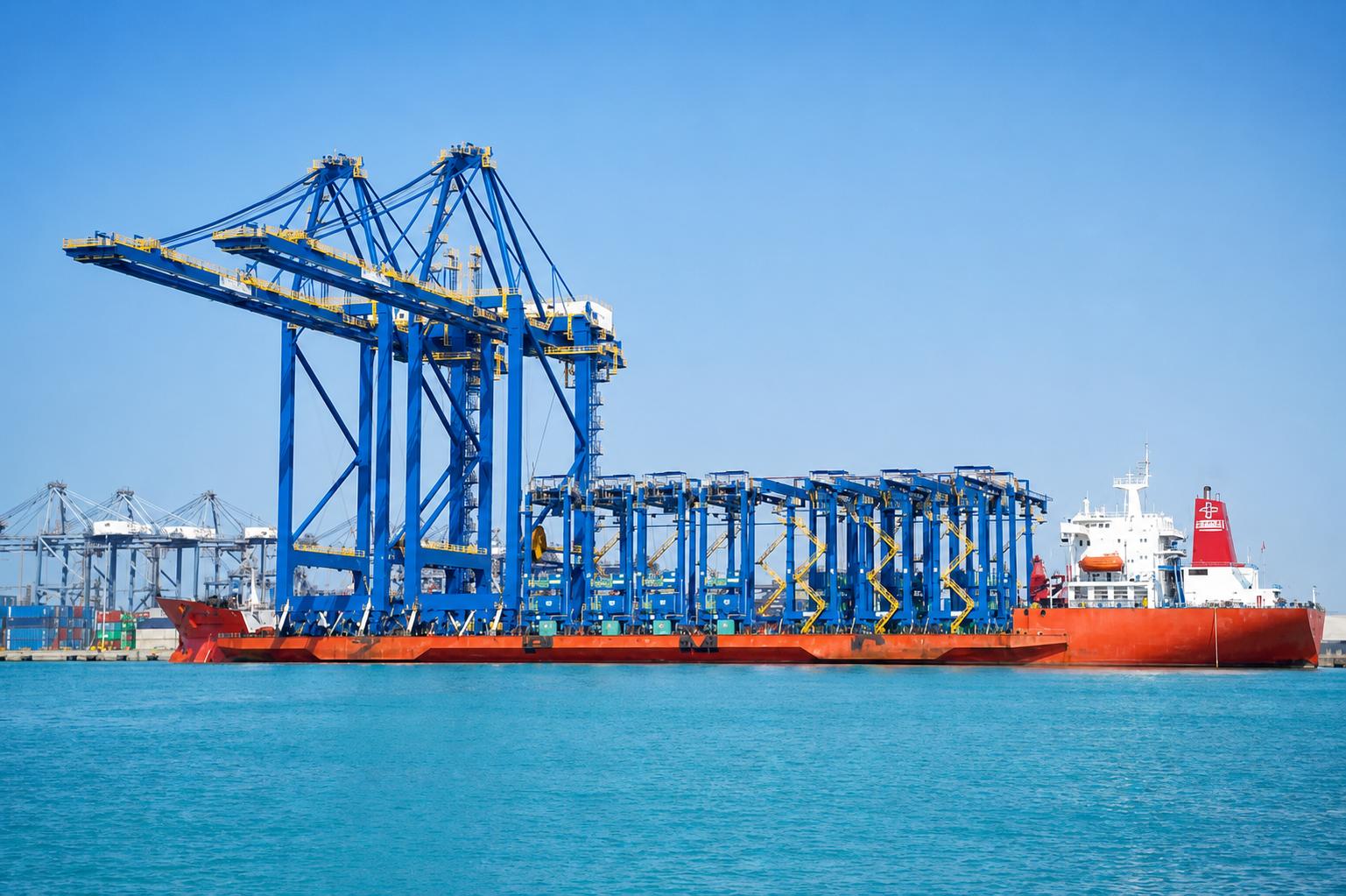
    The continuous expansion of global trade and the accelerated large-scale container ships have made efficient, intelligent and stable loading and unloading capabilities the core competitive barriers for ports.The new generation of Ship-to-shore Crane subverts the traditional port stagnation, inefficiency, and congestion operation shortcomings. Relying on large-load performance, fast loading and unloading technology, intelligent anti-swing, and automatic control technology, it effectively improves the ship turnover speed and the overall throughput of the terminal, comprehensively optimizes the operation process of the port area, helps modern smart ports accurately adapt to the berthing needs of large ships, and continuously improves the efficiency of cross-border logistics operations.

    Why Ship-to-Shore Cranes Are Transforming Modern Port Operations

    The core competitiveness of modern ports has long been transformed from a simple number of berths and site scale to comprehensive capabilities such as ship turnover speed, container throughput efficiency, and operational stability.The traditional old port loading and unloading cranes have a limited operating radius, slow loading and unloading speed, and a single adapted ship type, which is completely unable to match the current pace of development of the global shipping industry.Relying on the core advantages of customization, high performance and high adaptability, modern ship and shore port cranes accurately crack the pain points of modern port operations, become the core driving force for the digitization and large-scale transformation of smart ports, and enable high-quality port operations in all directions.

    Larger vessels

    At present, ocean-going shipping has fully entered the era of large-scale ships, and 24,000 TEU ultra-large container ships have become the main force of shipping. Their wide decks and high-rise container stacking requirements make it difficult for traditional small port shore bridges to adapt, which can easily cause problems such as large ships being stuck in port and low berth utilization.Henan Mine Crane manufactured self-developed new-generation large-scale ship-to-Shore Crane has undergone special structural upgrades. It has a large extension distance, ultra-high lifting height and large rated load. It can realize the loading and unloading of large ships without dead ends in all compartments, and is perfectly adapted to the operation of ultra-large container ships. Comprehensively enhance the port’s ability to undertake large-scale routes.

    Faster turnaround

    Ship turnover efficiency is the core competitiveness of the port. The traditional old STS shore bridge has slow start and stop, poor alignment accuracy, and high failure rate, which can easily cause ships to stay in port for a long time and drive up shipping logistics costs.Our modern and intelligent ship-to-Shore Crane is equipped with an optimized transmission structure and an intelligent control system, which runs smoothly, has fast loading and unloading speed, accurate alignment, and supports 24-hour uninterrupted and stable operation.Multi-equipment collaborative operation can greatly compress the length of single-ship operation, effectively avoid manual errors and equipment downtime problems, and significantly improve the berth turnover rate and the overall logistics timeliness of the port.

    Higher throughput

    As the global container trade volume continues to rise and the frequency of shipping continues to increase, the operating efficiency of traditional port lifting equipment is short, which seriously restricts the increase in port throughput, resulting in idle waste of terminal berths and site resources.Our new generation of efficient Ship-to-Shore Crane has been fully upgraded in performance, relying on faster loading and unloading speed, wider operation coverage and stable continuous operation capabilities, and with a smart port intelligent dispatching system, it can fully tap the potential of berth operations.Practical cases of landing in multiple smart ports have proved that the annual throughput of the terminal can be significantly increased after upgrading the equipment, helping the port to break through the upper limit of capacity.

    How Ship-to-Shore Cranes Improve Container Handling Efficiency

    Container loading and unloading is the core link of port operations, and the efficiency of loading and unloading directly determines the overall operation level of the port and the customer experience.Traditional container loading and unloading operations have cumbersome processes, slow alignment, site congestion, and high loss rates, which not only slow down the pace of operations, but also increase port operation and maintenance and logistics costs.Through the optimization of mechanical structure, simplification of operating processes, and the empowerment of intelligent technology, the new generation of automated ship-to-Shore Crane upgrades the efficiency of port container handling in all directions from the three dimensions of loading and unloading speed, operating range, and site circulation, and realizes refined and efficient operation of port operations.

    Faster loading cycles

    The traditional manual operation of the shore bridge relies on manual operation, the movement connection is blunt, the alignment is repeatedly adjusted, the loading and unloading cycle takes a long time and the stability is poor, which seriously drags down the rhythm of port operations.Our newly upgraded high-speed ship-to-Shore Crane is equipped with an intelligent frequency conversion control system and a dual-car collaborative structure to realize multi-action synchronous linkage, and cooperate with the precise positioning assistance system to automatically complete the alignment, lock the box and drop the box operations, greatly compressing the invalid operation time.The overall loading and unloading efficiency of the equipment has been greatly improved, the operation has been smoother and more stable, and the whole process of loading and unloading of containers in the port has been effectively accelerated, helping the port to significantly increase the volume of single-hour operations.

    Greater outreach

    Reduced congestion

    The unstable rhythm of port loading and unloading, container accumulation, and congestion of transportation vehicles are the core pain points that restrict the efficiency of terminal circulation. Traditional inefficient port lifting shore bridges can easily cause a vicious circle of operations.Henan Mine Crane manufactured modern and intelligent dispatching Ship-to-Shore Crane has a stable and efficient loading and unloading rhythm, which can realize the instant unloading and transfer of containers, and the instant loading and leaving, so as to prevent the accumulation and retention of goods from the source.The equipment can be seamlessly connected to the smart port dispatching system, intelligently match the yard inventory and vehicle movement lines, rationally allocate operating resources, avoid vehicles getting together and waiting, effectively dredge the terminal operation link, greatly reduce the probability of congestion in the port area, and make the port logistics flow more efficient and smooth.

    How Automation Is Changing Ship-to-Shore Crane Operations

    With the rise of the global wave of smart port construction, automation and intelligent technology have become the core directions of the iterative upgrading of the port Ship-to-Shore Crane.The traditional manual operation mode has many shortcomings such as high labor intensity, high labor costs, large operating errors, and restricted operations in bad weather. The full implementation of automation technology has completely reconstructed the operation mode of the port shore bridge, realizing the transformation of port loading and unloading operations from manual leadership to intelligent autonomy, greatly improving operation safety, stability and efficiency.

    Remote operation

    The traditional high-altitude manual operation mode of port lifting machinery has a difficult environment and high labor intensity. It not only has great safety risks, but it is also vulnerable to severe weather such as heavy rains and strong winds, and cannot guarantee all-weather operations.Our remote control ship-to-Shore Crane is equipped with high-definition transmission and high-precision remote sensing system, which supports remote automatic control of the ground central control room, with clear pictures and accurate alignment throughout the process.The new operating mode completely avoids the risk of high-altitude operations, is not limited by extreme weather, can achieve 24-hour uninterrupted operation, and can also realize single-person multi-machine control, greatly reducing the labor operation cost of the port.

    Anti-sway technology

    Container shaking is a common problem in the operation of traditional port shore bridge equipment. It can easily slow down the progress of the operation and damage the cargo equipment. The stability of the operation depends entirely on the experience of the driver and cannot be standardized and controlled.Our new-generation Ship-to-Shore Crane, equipped with intelligent anti-swing technology, can monitor container swing data in real time through high-precision sensors, and dynamically adjust equipment operating parameters relying on intelligent algorithms to quickly offset swing inertia.The technology adapts to various types of wind and operating scenarios without manual intervention, greatly shortens the time to stabilize the box, improves the alignment accuracy, effectively reduces the operation error rate and equipment loss, and significantly improves the safety of port loading and unloading and operating efficiency.

    Smart monitoring

    The traditional old-fashioned shore bridge relies on manual inspection and post-mortem maintenance. The investigation of hidden dangers is not timely, and frequent equipment failures can easily cause the terminal to shut down and operations to be interrupted.We configure a full set of intelligent monitoring systems for intelligent monitoring ship-to-Shore Crane, equipped with multiple types of high-precision sensors, and continuously collect data on equipment operation, mechanical loss and working conditions 24 hours a day.The system predicts potential failures through intelligent analysis of big data, gives early warning and guides accurate maintenance, completely changes the passive operation and maintenance mode, effectively reduces the equipment failure rate, extends the service life of the equipment, and guarantees the continuous and stable operation of port loading and unloading operations in all directions.

    ship-to-shore cranes

    How Ship-to-Shore Cranes Support Global Trade Growth

    The continuous growth of global trade is inseparable from the efficient support of port logistics.With the continuous expansion of cross-border e-commerce, ocean-going trade, and global supply chain layout, global container traffic has maintained a steady growth trend all year round.As the core loading and unloading equipment of the port, the intelligent Ship-to-Shore Crane’s performance upgrades and technological iterations directly match the large-scale and efficient development needs of global trade, and it has become an important hardware support for driving global trade circulation and stabilizing the supply chain system.

    Growing container volumes

    The volume of global container trade has skyrocketed year by year, and the demand for all kinds of cross-border cargo transportation has continued to rise, putting forward higher requirements for the ability of ports to load and unload quickly and efficiently. It is difficult for traditional old port lifting equipment to withstand peak operating pressure.Our modern high-throughput ship-to-Shore Crane has high-intensity, continuous operation capabilities, stable operation and high throughput efficiency. It can calmly cope with the large workload during the peak trade season and effectively avoid problems such as cargo backlogs and route delays.With reliable operating performance, it adapts to the incremental needs of global container trade in all directions, and provides solid equipment support for the efficient logistics and circulation of ports.

    Larger container ships

    The shipping industry has fully entered the era of large-scale ships, and 20,000 TEU-class super-large ships have become the main force of ocean-going transportation, but the old and small port shore bridge equipment cannot be adapted to its operating needs, resulting in most small and medium-sized ports unable to undertake ocean-going main routes.Henan Mine Crane manufactured high-end customized Ship-to-Shore Crane we developed has large loads, ultra-wide extensibility and high stacking capabilities, which can be perfectly adapted to all kinds of ultra-large container ship loading and unloading operations.Help ports open more ocean-going routes, increase the volume of cargo per voyage, reduce overall logistics costs, and effectively promote the large-scale and intensive development of regional and global trade.

    Higher terminal capacity

    Most traditional ports have sufficient berths and yard resources, but they are limited by the performance of old equipment, there is a significant upper limit on terminal throughput capacity, and the resource utilization rate is extremely low.Our new generation of large-scale intelligent ship-to-Shore Crane relies on the core advantages of efficient loading and unloading, intelligent control and stable operation to fully tap the idle potential of terminal berths and yards, and greatly increase the operating capacity per unit time and area.The upgrading of port shore bridge equipment can comprehensively improve the terminal’s freight undertaking capacity and cargo distribution efficiency, strengthen the port’s trade radiation capacity, and provide core hardware support for global trade expansion and cross-border supply chain stability.

    Key Challenges When Upgrading Ship-to-Shore Cranes

    The upgrading and transformation of ship-to-shore Crane is the core measure of the intelligent and efficient transformation of the port, which can enhance the competitiveness of port operations in all directions, but in the process of actual upgrading and landing, port enterprises generally face multiple practical problems.Issues such as terminal infrastructure adaptation, port shore bridge parameter customization, construction and installation planning, etc. directly affect the upgrade cost, construction cycle and landing effect, and need to be combined with the actual working conditions of the terminal for scientific planning and precise landing.

    Terminal infrastructure

    Henan Mine Crane manufactured modern large-scale intelligent ship-to-Shore Crane has been greatly upgraded in weight, load and size, and has strict requirements for infrastructure standards such as dock foundation, track, power supply and communication.Most old port infrastructure is built according to small traditional equipment, with insufficient carrying capacity and aging supporting facilities, which cannot be adapted to the operating needs of new equipment.Direct replacement of equipment can easily cause safety failures, and large-scale refurbishment will drive up costs and shut down work.We can combine the original infrastructure data and equipment parameters of the terminal to customize a lightweight adaptation and transformation plan, taking into account the operation safety, transformation cost and construction efficiency of the shore bridge equipment.

    Crane specifications

    The customization of ship-to-shore Crane parameters is the core key of port upgrading. The berthing conditions, ship type structure, and operating volume of different terminals vary greatly, and there is no universal adaptation to port shore bridge equipment.Too small parameter selection will cause efficiency bottlenecks, and too large selection will cause excess performance and waste of resources. At the same time, it is necessary to take into account the compatibility of the equipment with the terminal dispatching system.Relying on our rich experience in port machinery manufacturing, we can accurately customize parameters such as lifting height, extension distance, and intelligent configuration according to the short-term operating needs of the port and long-term expansion planning to avoid upgrade risks and ensure maximum equipment benefits.

    Installation planning

    Ship-to-Shore Crane is a super-large port machinery equipment. The installation process is cumbersome and the technical threshold is high. The port cannot stop construction for a long time, which brings great challenges to equipment upgrading.The demolition of old equipment, the hoisting and wiring of new equipment, intelligent debugging, and safety calibration require rigorous process planning and professional technical teams.We have a mature on-site construction plan for the installation of port shore bridges, which can scientifically arrange the construction procedures, strictly control on-site safety and installation accuracy, and complete the installation and commissioning of equipment while minimizing the impact of port operations to ensure that new equipment is put into operation quickly and stably. Efficiency increase.

    The Future of Ship-to-Shore Cranes in Smart Ports

    The construction process of global smart ports continues to accelerate, and greening, intelligence, efficiency and energy saving have become the core trends in the development of port equipment.As the core loading and unloading equipment of the port, the technological iteration of the intelligent Ship-to-Shore Crane has never stopped. In the future, it will continue to upgrade in the three directions of deep automation, low-carbon energy-saving, and modular customization, fully adapting to the future unmanned, green, and high-capacity operation needs of smart ports, and continue to lead the innovation of the global port format.

    Advanced automation

    Smart ports are iterating towards completely unmanned operations, and traditional semi-automated port shore bridges still require manual intervention, which is difficult to adapt to the future development needs of high-end terminals.In the future, automated Ship-to-Shore Crane will deeply integrate 5G, artificial intelligence, machine vision and digital twin technologies to realize unmanned and autonomous operation of the whole process of loading and unloading operations.The equipment can automatically complete ship alignment, container identification, precise operations and exception handling, and can also be linked and coordinated with various smart devices in the terminal, cooperate with AI independent learning to continuously optimize the operation logic, adapt to complex working conditions in all directions, and create an efficient and intelligent unmanned terminal operation system.

    Energy efficiency

    Under the dual-carbon policy, green energy conservation has become the core standard for the construction of smart ports. The high energy consumption and large carbon emissions of traditional old-fashioned ship and shore bridges are not in line with the development trend of the industry.In the future, the new energy-saving ship-to-Shore Crane will focus on low-carbon energy-saving design, equipped with a frequency conversion energy-saving control system and an energy recovery device, which can recycle redundant energy during operation and significantly reduce energy consumption and carbon emissions.At the same time, it is equipped with a lightweight structure, low-loss accessories and a silent system to achieve low-energy, low-noise and zero-pollution operations, helping the port to build a green and low-carbon operation model and reduce long-term operation and maintenance costs.

    Future-ready designs

    Port shipping technology and market demand continue to iterate, and the traditional fixed port shore bridge function is difficult to cure and upgrade, and it is easy to be quickly eliminated by the industry.In the future, the new generation of modular ship-to-Shore Crane adopts a forward-looking modular design, and the high-strength lightweight steel structure is adapted to various terminal infrastructure scenarios. At the same time, an intelligent upgrade interface is reserved, which can flexibly expand functions and update the system according to the needs of port development, without the need to replace equipment as a whole.Standardized general-purpose accessories greatly simplify late-stage operation and maintenance, effectively reduce the cost of the whole life cycle of equipment, and adapt to the development needs of long-term iterative upgrading of smart ports.

    Henan Mine Crane Factory Custom

    Ship-to-Shore Crane is the core equipment for the upgrade and iteration of modern smart ports. It has effectively solved various operational problems such as inefficient traditional port operations, congestion, and poor adaptability. With the outstanding advantages of intelligent automation, energy saving and high efficiency, and adaptation to large ships, it comprehensively empowers the development of global ports and cross-border trade.As a professional port crane manufacturer, Henan Mine Crane Factory is deeply engaged in ship-to-shore crane research and development customization, which can solve the upgrading problems of terminal infrastructure adaptation, installation and commissioning, parameter selection, etc. in a targeted manner, and provide high-adaptability and long-life high-quality port shore bridge equipment to help major ports reduce costs and increase efficiency, and embrace the future development trend of intelligence and greening.

    Henan Mine CraneDiscuss your requirements ↗
  • Ship-to-Shore Crane: Specs, Outreach & Procurement Checklist

    Ship-to-Shore Crane: Specs, Outreach & Procurement Checklist

    Ship-to-Shore Crane: Specs, Outreach & Procurement Checklist

    The Ship-to-Shore Crane is the core loading and unloading equipment of the port and terminal. It mainly undertakes the container transshipment work between the ship and the terminal. Its selection parameters, performance configuration and automation level directly determine the port’s throughput capacity, ship turnover efficiency and long-term operating competitiveness.

    This paper systematically disassembles the working principle, structural composition, core technical parameters, extension distance selection, production capacity design and intelligent safety configuration of the Ship-to-Shore Crane. At the same time, it is equipped with a complete procurement checklist, manufacturer selection criteria, procurement pit avoidance points and cost influencing factors to provide professional and practical reference for port operation and maintenance, equipment procurement and engineering planners.

    What Is a Ship-to-Shore Crane

    Ship-to-Shore Crane is a large-scale gantry crane with a leading-edge rail type at the terminal. The whole machine walks along a track parallel to the shoreline of the terminal, relying on a pitchable front girder, a trolley running laterally, a lifting system and a container spreader to complete the two-way loading and unloading of containers on the shore. It is the only port core equipment suitable for berthing operations of large container ships.

    Unlike yard lifting equipment, STS shore bridges are designed for high-altitude, long-span, and heavy-duty continuous operation on the side of the ship. They have large outstretched distances, ultra-high lifting heights, and precise positioning capabilities. They can be adapted to the needs of all types of ship operations from feeder ships and Panama-type ships to ultra-large container ships (ULCV).

    Principle of collaborative working of core institutions

    The efficient operation of Ship-to-Shore Crane relies on the precise coordination of the four core institutions to form a standardized and closed-loop container transshipment system:

    1. The cart walking mechanism drives the whole machine to travel smoothly along the dock track, accurately calibrates the position and aligns the ship’s container space, and completes the preliminary positioning of the whole machine.;
    2. The trolley drive system is equipped with a lifting mechanism and a special spreader, which slides smoothly laterally along the main beam to achieve high-precision horizontal positioning of the container.;
    3. The lifting mechanism relies on the wire rope transmission system to lift smoothly and complete the precise take-off and landing operations in the vertical direction of the container.;
    4. The container spreader locks the box body through a four-corner automatic rotary locking mechanism, which effectively guarantees the operating stability and safety under heavy-duty conditions.

    At the same time, the beam pitch system can adjust the angle according to the height of the ship and the changes in tides, adapt to ships with different draft depths and stacking heights, and adapt to complex terminal operation scenarios throughout the process.

    Main Components of an STS Crane

    Ship-to-Shore Crane is a large-scale integrated lifting equipment. The structure of the whole machine, mechanical transmission, electronic control system, and safety protection system are highly coupled. The core components cover nine modules, which directly determine the stability and service life of the equipment.

    Door frame structure and legs

    As the load-bearing main body of the whole machine, the main beam of the gantry and the sea and land side outriggers are welded with high-strength steel structure to carry the weight of the whole machine and heavy-duty operating loads.

    The dual-track support structure on the land and sea side guarantees the lateral stability of the equipment, and the outriggers reserve sufficient clearance for passage, which can meet the barrier-free passage of terminal card collection, AGV, and stacking equipment, and adapt to the intensive operation scenarios at the forefront of the terminal.

    Girder and pitch system

    The girder is divided into a front extension arm and a rear tie rod structure. The front girder is the core span structure covering the operation of the ship. It can be lifted and put away through the pitch system to meet the storage needs of the ship’s departure and windy weather equipment.The pitch hydraulic/mechanical system has stable speed regulation and overload protection functions, which can be adapted to different ship heights to avoid the risk of hull collision.

    Trolley and trolley drive system

    The trolley is equipped with a lifting mechanism, a spreader and a driving device to move horizontally at high speed along the girder track, which is the core component of the horizontal transfer of containers.Using frequency conversion drive technology, it has the characteristics of stable start and stop and accurate positioning, which can effectively reduce load shaking and shorten the operating cycle time.Unlike ordinary cranes, the power transmission system of Ship-to-Shore Crane is mostly arranged in the machinery room instead of the trolley body, which reduces the weight of the trolley and improves operating efficiency.

    Lifting mechanism

    The lifting mechanism is the core power unit of the STS shore bridge, which consists of a drive motor, a reducer, a reel, a wire rope, and a pulley block, and is responsible for the vertical lifting of containers.Equipped with an electromagnetic +mechanical dual braking system, it has overload self-locking and emergency braking functions to eliminate the risk of load slipping.It can be adapted to single-box, double-box, and multi-box operations in series to meet the operating needs of different throughput terminals.

    Special spreader for containers

    Mainstream STS spreaders are divided into telescopic single box spreaders, double 20-foot double box spreaders, and 40/45-foot series spreaders, which are suitable for standard ISO container specifications.

    The spreader is equipped with four-corner automatic rotary locks, anti-false locking sensors, and tilt correction devices, which can be automatically adapted to container misalignment and tilt scenes without manual assistance, greatly improving operation safety and efficiency. The special spreader for refrigerated containers can also be adapted to the needs of cold chain container operations.

    Electrical and control system

    The core adopts PLC programmable control system + distributed bus technology, with optical fiber communication system, strong anti-interference ability and high operating stability.The whole machine is equipped with a frequency conversion drive system (VFD) to realize stepless speed regulation of each mechanism, and at the same time it is equipped with an energy feedback device to reduce energy consumption.Transformers, control cabinets, and drive modules are centrally arranged in the computer room to facilitate operation, maintenance, and overhaul.

    Operating cab

    The cab is arranged in the optimal observation position under the gantry, and the field of view covers the deck of the ship and the working area of the dock.The automated model can be equipped with a remote control system, without on-site duty, and the operation can be completed only through the remote console, which is suitable for the construction needs of unmanned intelligent terminals.

    Orbital walking mechanism

    The whole machine walks along the preset track of the pier, and the four corners are equipped with balanced walking trolleys. The load is evenly distributed by hinged balanced beams to avoid local force overload.The trolley adopts a combination design of driving wheel + driven wheel, which can walk smoothly and accurately locate, which can meet the needs of long-distance and high-frequency alignment walking.

    Safety and anti-collision system

    Multiple safety protection devices are standard, including the anti-collision system of the whole machine, the travel limit of the trolley, the lifting height limit, the wind speed monitoring device, the emergency shutdown system, and the overload protection device.It can realize anti-collision between aircraft, anti-collision of personnel, and self-locking of stroke overrun. At the same time, it has the functions of automatic locking in high winds and anchoring in storms, and is suitable for the complex outdoor operating environment of the port.

    Key Ship-to-Shore Crane Specifications to Evaluate

    Ship-to-Shore Crane is a long-term heavy-asset equipment with a service life of up to 25-30 years. The selection of core parameters needs to take into account the current operating needs and the future trend of large-scale ships. The five core parameters directly determine the adaptability of the equipment and the operating capacity.

    Rated lifting load

    The rated lifting load refers to the effective safety load (SWL) under the spreader. It is necessary to distinguish between the total gross load of the whole machine and the Net payload. The weight of the spreader itself (8-20 tons) needs to be deducted, which is the core benchmark for selection.

    Mainstream operating load adaptation standards: single box operation 40-65 tons, double 20-foot parallel box operation 50-80 tons, 40-foot double box series operation 80-120 tons.The selection needs to be combined with the mainstream container specifications of the terminal, the branch terminal focuses on the load of a single box, and the hub port needs to give priority to adapting to double-box and series operations to increase the hourly operation volume.At the same time, it is necessary to match the actual weight of the stacker to avoid cost waste caused by insufficient load redundancy or excessive redundancy.

    The number of job columns and the span of the whole machine

    The span of the whole machine refers to the spacing between the center lines of the sea and land side tracks. The mainstream standard gauge in the industry is 30.48 meters. Some large terminals use a 35-meter widened gauge, which can be adapted to more traffic lanes and AGV operating paths.

    The number of operating columns of ship containers is determined by the outer extension distance, not the span.With the iteration of large-scale ships, the number of container columns for ultra-large ships has reached more than 24 columns. The selection needs to match the maximum number of columns of the ship, and at the same time combine the layout of the terminal shoreline and the spacing of berths to avoid blind spots in equipment operations.

    Lifting height and lowering depth

    The vertical operating parameters of the Ship-to-Shore Crane are divided into two core indicators, which directly determine the ship’s adaptability.:

    Lifting height above the rail surface: the mainstream large-scale models are 35-55 meters, which are used to empty the ship’s deck, hatch circumference and upper stacking boxes, and are suitable for high-stacking operations of ultra-large ships; the depth of lowering below the rail surface: conventional 18-20 meters, which can go deep into the bottom of the ship’s cargo hold to complete the loading and unloading of the bottom container in the cabin.

    The selection of the type requires additional consideration of the tidal gap of the terminal. The port area with large tidal changes needs to reserve a height margin to avoid the impact of high and low water levels on the operation. At the same time, it is necessary to predict the future needs of large-scale ship upgrades in advance and reserve redundant parameters.

    Mechanism operating speed (core production capacity)

    The operating speed of the equipment directly determines the amount of work per hour (MPH). It is necessary to distinguish between the no-load speed and the full-load speed. The full-load speed is generally 30%-50% lower than the no-load, which is the key to evaluating the real production capacity.

    Operating parameters No-load standard speed Full load standard speed
    Lifting/descending speed 80-120m/min 40-60m/min(up)、60-90m/min(down)
    Trolley walking speed 180-240m/min 120-180m/min
    Cart walking speed 30-45m/min 20-30m/min

    The speed parameters directly affect the operation cycle time, and reasonable speed matching can greatly increase the hourly operation volume of the stand-alone machine, reduce the waiting time for the ship to dock, and improve the overall throughput efficiency of the terminal.

    Track gauge and overall dimensions of the whole machine

    The track gauge determines the compatibility of the equipment with the terminal infrastructure. The standard 30.48-meter track gauge is suitable for most mature terminals. The existing track elevation, track gauge, and basic carrying capacity need to be strictly checked for the transformation of the terminal to avoid the equipment from being unable to land.

    The height of the whole machine (in the stowed state of the girder) is 80-120 meters, and the clearance height of the outriggers is 14-16 meters, which can meet the all-weather access of the terminal collection card, AGV, and operating equipment. The selection needs to strictly match the existing infrastructure parameters of the terminal to prevent transformation and rework.

    STS Crane Outreach: How Much Outreach Do You Need

    The extension distance is the most critical selection index of the STS shore bridge, which directly determines the tonnage and width of the ship that the equipment can be adapted to, and determines the ship access capacity of the terminal in the next 20 years.

    Three core definitions of extension distance

    Water-side outer extension distance: the maximum operating horizontal distance from the centerline of the water-side track to the front end of the girder, the core is suitable for ship operations; land-side rear extension distance: the extension distance from the centerline of the land-side track to the yard side determines the coverage of terminal stacking and transshipment operations; total operating range: the horizontal operation coverage range of the whole machine is the core basis for the full coverage of equipment operations.

    Extension distance and ship type adaptation standard

    The width of the ship and the number of container columns continue to increase with the upgrade of the ship type, and the selection of the outer extension distance must match the ship type grade:

    Extension distance level Extension range Suitable for ship type Maximum number of container columns
    Short extension model 30-40m Offshore feeder ships, small cargo ships ≤13 columns
    Medium and long-distance models 40-50m Panama-type ship, regional trunk ship 13-16 columns
    Long extension model 50-60m Super Panama ship 16-20 columns
    Large extension model 60-75m 10,000-box super-large container ship (ULCV) 20-24 columns and above

    Accurate extension distance calculation method

    It is strictly forbidden to apply common parameters to the extension distance. It must be calculated in combination with the real-world engineering of the terminal. The core steps:

    1. Figure out the hull width of the largest berthing ship in the port area, and accurately locate the limit position of the outermost container column of the ship;
    2. Superimposed calculation of on-site working condition parameters such as the compression margin of the ship’s fender, the standard distance from the leading edge of the dock to the centerline of the track, etc.;
    3. Reserve a dedicated safety operation gap of 1-2 meters to completely avoid the safety risk of collision between the equipment and the hull;
    4. Combined with the trend of large-scale iteration of ships in the industry, equipment parameters are reasonably reserved for redundancy to ensure long-term use value;

    Productivity Specifications: Designing for Container Moves per Hour

    Difference between total production capacity and net production capacity

    The industry’s production capacity is divided into total hourly work volume (GMPH) and net hourly work volume (NMPH): the total work volume counts all work actions, and the net work volume removes invalid working hours such as weather delays, equipment waiting, and manual adjustments, which are more in line with the real throughput efficiency of the terminal, which is usually 15%-30% lower than the total production capacity.At present, the average effective production capacity of a single terminal in the world is 26 boxes/hour, and the high-end automated terminal can reach 35-40 boxes/hour.

    Core factors affecting the job cycle

    The cycle of single-box operation is restricted by multiple factors such as working conditions and equipment configuration, and can be divided into two categories: objective working conditions and equipment technical configuration. The core influencing elements are as follows:

    Objective working conditions

    Such factors are the inherent external conditions of terminal operations, which directly determine the time-consuming of basic operations, and are the core constraints of the cycle.It mainly includes the operating height difference, the walking distance of the trolley, the frequency of frequent alignment of the trolley, the weight of the container and the ship’s stowage plan.

    The greater the height difference of the operation, the wider the walking span of the trolley, the more frequent the repeated alignment of the cart, and the longer the time it takes for the transfer of a single box; the larger the weight of the container, the more obvious the speed limit of the mechanism; unreasonable ship stowage scheme will increase the difficulty of alignment and retrieval of the box, further lengthening the operation cycle time.

    Equipment technical configuration

    The technical configuration of equipment is the core upgradeable element for optimizing operating efficiency and compressing the cycle, which mainly covers the three dimensions of operating mode, anti-shake system accuracy and automation level.The high-precision intelligent anti-shake system can suppress the shaking of the box, reduce the time-consuming alignment, and shorten the cycle time of a single box by 10%-15%.;

    The dual-box and series multi-box operation modes can break through the bottleneck of single-box efficiency, significantly increase the hourly operation volume, and adapt to high-throughput hub terminals; high-end automated configuration can reduce manual intervention, avoid operating errors, effectively stabilize the operation beat, and improve operation efficiency.

    Matching production capacity with terminal throughput

    The capacity of the Ship-to-Shore Crane must match the RTG/RMG equipment and AGV/collection card transfer capacity of the yard. If the capacity of the shore bridge is too high and the transfer of the yard lags behind, it will cause congestion at the forefront of the terminal; on the contrary, it will waste the ship’s berthing window period.Large hub ports need to be equipped with high-efficiency models of 25-40 boxes/hour, and small and medium-sized branch terminals can be adapted to standard models of 20-25 boxes/hour to achieve full-link production capacity balance.

    Electrical, Automation & Control Requirements

    Power supply and electrification configuration

    The mainstream of large-scale STS shore bridges adopts 6kV/10kV high-voltage power supply, and the power supply methods are divided into cable reel type and sliding contact line type.The cable reel is suitable for the transformation of old docks and is easy to install; the sliding contact line operation and maintenance cost is lower, the power supply stability is stronger, and it is suitable for the newly built automated docks.

    The whole machine is equipped with a regenerative braking system as standard, which recycles excess energy during braking and braking, reduces energy consumption by 20%-30%, and has significant advantages in energy saving and environmental protection.

    Automation and remote work functions

    The modern Ship-to-Shore Crane automation system includes four core functions: automatic trolley alignment, intelligent anti-shake control, automatic container positioning, and remote unmanned control.Among them, intelligent anti-shake is divided into feedforward and feedback dual control.

    It can accurately suppress the shaking of the load, greatly improving the alignment accuracy and operating efficiency.The equipment can be seamlessly connected to the terminal TOS system to realize automatic reception, execution, and data return of operation instructions, and the positioning accuracy can reach ±15mm.

    Digital integration of smart ports

    The high-end models are equipped with a condition monitoring system (CMS) and an equipment operation and maintenance management system (CMMS), which can monitor equipment operating parameters, fault early warning, and remote diagnosis in real time to achieve predictive maintenance and reduce unplanned downtime.

    Access the port smart platform through data networking, complete the real-time synchronization of operation data, energy consumption data, and equipment status data, and adapt to the digital construction needs of smart ports.

    Safety and Environmental Requirements

    Core security protection system

    The whole machine comes standard with multiple safety protection devices: global emergency shutdown system, real-time load monitoring and 110% overload self-locking, inter-machine/equipment anti-collision system, full-stroke limit protection, real-time wind speed monitoring, spreader rotary lock interlocking protection, redundant braking system, all-round elimination of safety accidents caused by equipment failures and human operation errors.

    Wind load and meteorological adaptation design

    The upper limit of conventional operating wind speed is 20m/s, and the wind speed of the storm can reach 72m/s.The equipment is equipped with automatic locking in high winds, track clamping, and storm anchoring devices. The whole machine can be quickly fixed in windy weather to prevent slippage and overturning.At the same time, for the marine salt spray environment, heavy anticorrosive coating and IP68 waterproof electrical accessories are used to resist seawater corrosion and extend the service life of the equipment.

    Energy-saving and environmentally friendly design

    Fully frequency conversion drive and regenerative energy feedback technology can greatly reduce energy consumption and equipment mechanical loss.The pure electric operation mode realizes zero emissions from operations, and the low-noise drive structure meets the environmental protection and noise reduction standards of the port area, and adapts to the increasingly stringent environmental protection control requirements of global ports.

    Ship-to-Shore Crane Procurement Checklist

    • Verification of basic information about terminal berths: verify the length of the coastline, the spacing of available berths, the track gauge and parameters, the compatibility of existing equipment interfaces, the carrying capacity of the terminal foundation, the power supply voltage and capacity, the perennial wind speed of the port area, the salt spray corrosion level, the tidal gap and other basic parameters to ensure that the equipment is fully adapted to the terminal infrastructure.
    • Verification of ship adaptation parameters: confirm the maximum berthing width of the port area, the maximum number of container columns, the number of decks and container stacks in the cabin, and the future ship type upgrade plan, accurately approve the required extension distance, lifting height, and depth parameters, and reserve long-term adaptation redundancy.
    • Verification of equipment performance parameters: clarify the rated load under the spreader, the type of spreader (single/double/series), the no-load/full-load operating speed, the target hourly operating volume, and the adaptability of multi-box operations, quantify all performance indicators, and eliminate vague parameters.
    • Automation and control configuration verification: confirm the PLC control architecture, remote control function, anti-shake system type, positioning accuracy, TOS system docking protocol, remote monitoring and diagnostic functions, clarify the automation configuration standards, and avoid later transformation and upgrading.
    • Verification of compliance and acceptance data: clearly adapt to FEM, EN, ISO and local port standards, verify structural calculations, electrical drawings, load test reports, factory acceptance (FAT), on-site acceptance (SAT) data, and a full set of operation and maintenance manuals to ensure equipment compliance and traceability.

    Conclusion

    Ship-to-Shore Crane is the core equipment for terminal loading and unloading operations. The selection needs to integrate the ship type, extension distance, lifting parameters, operation throughput, automation configuration, terminal foundation and full life cycle costs, taking into account the current operation needs and long-term expansion planning, and cannot only refer to the lifting weight and procurement costs.

    Henan Mine Crane can provide adapted Ship-to-Shore Crane equipment and customized port lifting solutions based on terminal ship type, efficiency indicators and on-site working conditions, balancing equipment performance, input costs and long-term operating value, and can provide professional selection guidance and customized quotations for various shore bridge projects.

    Henan Mine CraneDiscuss your requirements ↗
  • Semi-Gantry Crane Pricing: Is It Cheaper Than a Full Gantry Crane?

    Semi-Gantry Crane Pricing: Is It Cheaper Than a Full Gantry Crane?

    Semi-Gantry Crane Pricing: Is It Cheaper Than a Full Gantry Crane?

    In the selection of lifting equipment in industrial scenarios such as workshops, warehouses, assembly production lines, etc., gantry cranes are the core equipment for material handling.Many companies will struggle when purchasing: which half-gantry crane and full-gantry crane are more cost-effective?Is the price of a half-gantry crane really cheaper than a full-gantry crane?

    The answer is: under most indoor and site-restricted working conditions, the comprehensive cost of half-gantry cranes can save 20%-50% of the total cost compared to full-gantry cranes of the same specifications. It is a cost-effective choice for lightweight and intensive production scenarios.However, not all scenarios are applicable. Under outdoor open-air and large-tonnage heavy-duty conditions, the full-door type is more suitable and cost-effective.

    This article will analyze the equipment definition, core differences, detailed price range, cost comparison, applicable scenarios, hidden costs and money-saving procurement techniques in all directions to help you accurately judge the procurement value of the two types of cranes and avoid the traps of selection and budget.

    What Is a Semi-Gantry Crane? How Does It Differ From a Full Gantry Crane?

    Semi-gantry cranes are also often referred to as semi-gantry cranes. They are hybrid lifting equipment that combines the advantages of bridge cranes and traditional gantry cranes, and are perfectly adapted to the industrial scenarios of existing plant infrastructure.

    Its core structure is single-sided floor-standing legs + single-sided building support: the horizontal main beam is equipped with an electric hoist/trolley, one side walks along the ground track through independent legs, and the other side is directly fixed to the plant column, wall or wall track beam, without the need for bilateral ground track support.

    This special structure makes it extremely space-saving in the workshop, can work in parallel with other lifting equipment, and is widely used in small and medium-sized workshops, machining workshops, warehouses, and assembly line station lifting scenes.

    The full-gantry crane (double-leg gantry crane) is a completely independent lifting equipment. The whole machine is supported by two-sided landing legs, and both legs run along the ground embedded track. It does not depend on the building structure of the plant at all, and its autonomy and stability are extremely strong. It is not limited by the conditions of building walls and columns.

    Core differences between the two types of cranes

    • Support structure: The full-door type adopts double-sided ground legs + double track, which has independent structure and full stability; the half-door type has single ground legs + single-sided building support, eliminating the need for a set of ground tracks and steel structure support.
    • Installation and space utilization rate: The half-door type relies on the existing plant structure, does not require large-area ground construction, and is suitable for narrow workshops and compact stations, greatly saving ground space; the full-door type requires a complete double-sided track and foundation, which occupies a larger site and requires higher indoor space.
    • Applicable working conditions: the half-door type is mainly suitable for indoor small and medium-sized lifting and space-restricted scenes; the full-door type is suitable for outdoor depots, ports, cargo yards, large-tonnage heavy-duty, high-frequency heavy-duty working conditions.
    • Mobility and adaptability: Both can be driven by motors to walk on the track, but the full-door machine is more independent, can be flexibly relocated and adapted to complex outdoor environments, and the half-door type is limited by the building structure and is only suitable for fixed indoor working conditions.

    Is a Semi-Gantry Crane Cheaper Than a Full Gantry Crane?

    Combined with the FOB factory quotations of industry manufacturers in the past two years, the prices of semi-gantry cranes vary greatly with tonnage, span, beam type, and configuration. The prices of conventional industrial standard models are transparent, and the prices of customized models have risen significantly.The following is the precise price range of the general standard configuration (span 9-20m, conventional work system), which can be used as the core reference for the procurement budget.

    Conventional tonnage semi-gantry crane price range

    • 2-5 ton single beam model: the market quotation range is 6400-14000 US dollars.Among them, the basic model with a 3-ton and 9-meter span is quoted at US66,400-10,000, and the mainstream model with a 5-ton and 12-meter span is quoted at US88,570-14,280, which is extremely cost-effective. It is the mainstream choice for lightweight lifting operations in workshops of small and micro enterprises.
    • 10-ton single-beam model: the conventional standard configuration is quoted at 17,000-26,000 US dollars.If the span of the main beam is increased, the lifting height is increased, or intelligent configurations such as frequency conversion and speed regulation are installed, the equipment price can reach up to US660,000, which can be adapted to medium and high-intensity workshop lifting operations.
    • 16-20 ton medium and heavy-duty models: The overall quotation range is 25,700-50,000 US dollars. It is designed for heavy-duty stations in small and medium-sized factories. It can stably cope with high-frequency and large-load indoor lifting conditions, and it is extremely practical and adaptable.
    • BMH series 2-16 ton standard single beam model: The mainstream market quotation is 12,000-40,000 US dollars. This series of models has a wide range of working conditions, stable performance, and large market ownership. It is the general preferred model for industrial indoor half-door lifting equipment.
    • BMG double-beam heavy-duty 5-320-ton models: the basic standard model is quoted from US442,000, and the price of customized models with large span and large tonnage can reach more than US770,000; customized models for 100-ton super-large tonnage and special working conditions, the price range can reach US美元140,000-250,000, which can meet all kinds of heavy industrial lifting needs.

    The minimum basic simple 1-10 ton semi-gantry cranes on the market can be as low as 2000-5000 US dollars, but most of these types are simple modified models and are not industrial standard equipment. Safety and durability cannot be guaranteed, and it is not recommended for industrial production.

    Core factors affecting the price of semi-gantry cranes

    • Tonnage, span and lifting height: The larger the tonnage, the longer the span of the main beam, and the higher the lifting height, the higher the amount of steel required, the higher the specifications of core accessories, and the simultaneous rise in prices are the basic core factors affecting the quotation.
    • Beam type and work system level: The beam structure and work level directly affect the cost of equipment.The A3-A4 light and medium-duty single-beam model is lightweight and cost-effective, and is suitable for conventional workshop operations; the A5-A7 double-beam model, which is suitable for multi-shift heavy-duty work, uses higher materials, accessories and process standards, and the cost is significantly higher.
    • Customized configuration: The price of the basic standard model is the most stable, and customized functions such as frequency conversion speed regulation, explosion-proof protection, rainproof and anti-corrosion, special voltage adaptation, and intelligent control system are installed on demand, which will increase the process cost of the equipment and the cost of accessories, and the overall project cost will usually rise by 10%-20%.
    • Overall project cost: The equipment quotation is only the bare metal price, and the actual landing still needs to be superimposed on transportation, on-site installation, foundation construction, circuit connection, equipment inspection and acceptance, construction qualification approval and other costs. Depending on the site conditions, the additional cost can increase by tens of thousands of dollars.
    • Supply channels and market conditions: the direct supply price of the source manufacturer is lower, and the quotation of local distributors in Europe and the United States and the landing service of the whole package is higher; fluctuations in steel prices and tariffs will also directly affect the final price of the equipment.

    Semi-Gantry Crane vs Full Gantry Crane Cost Comparison

    Conclusion First: Under the same working conditions and the same specifications, the overall project cost of a half-gantry crane is 20%-50% lower than that of a full-gantry crane, and the cost of steel structure can be saved by 25%-40%. It is a cost-effective choice for indoor adaptation scenarios.

    The root cause of the core cost difference

    The price gap between the two types of models is essentially the cost difference caused by the difference in structural design.Full-gantry cranes require complete outriggers on both sides, double-sided ground tracks, and two-way foundation reinforcement, and the amount of steel, civil construction, and labor installation costs have increased significantly; while half-gantry cranes rely on existing plant buildings, eliminating the need for one side of the steel structure, a set of track and foundation engineering, and reducing material and construction costs from the source.

    Full-dimensional cost comparison details

    • Bare metal equipment price: Under special circumstances, the unit price of the full-door simple bare metal may be slightly lower, but the half-door type has no absolute disadvantage; under complex customized conditions, the price of the half-door bare metal is basically the same as that of the full-door type.
    • Installation and civil construction costs: The half-door type has the most obvious advantages. It only requires one-sided ground construction, and there is no need to transform the side foundation of the building. Civil construction, construction, and labor costs are greatly reduced; the full-door type must be made of double-sided track and foundation, and the site construction cost is extremely high.
    • The total price of the overall project: Under the premise that the plant structure is up to standard and can be adapted to support, the overall landing cost of the semi-gantry crane is significantly lower, which is the preferred solution for small and medium-sized enterprises to reduce costs and increase efficiency.
    • Long-term operation and maintenance costs: the half-door structure is streamlined, there are fewer supporting components, the equipment failure rate is low, and the daily maintenance and energy consumption costs are lower; the full-door structure is complex, there are many parts, and the long-term operation and maintenance time and capital costs are higher.

    Price comparison of mainstream models from 2025 to 2026

    Semi-gantry crane: The market price of conventional 2-16-ton single-beam models is US110,000-50,000; the starting price of 5-320-ton heavy-duty double-beam models is US442,000, which is suitable for multi-tonnage indoor operations.

    Full gantry crane: The quotation range for conventional models of the same specifications is 50,000-200,000 US dollars, and the prices of outdoor working conditions, large-span and heavy-duty customized models will rise further.

    Reference to real cases: Among the 5-ton conventional models, the price of full-door bare metal is slightly lower, but after superimposing civil construction and installation costs, the overall landing cost is more than 30% higher than that of half-door models, and the cost performance gap is significant.

    When Should You Choose a Semi-Gantry Crane?

    The core value of semi-gantry cranes is to save space, save budget, and adapt to existing factories. As long as the site meets the load-bearing conditions of one-sided buildings, priority is given to semi-gantry cranes, which can maximize the control of procurement costs.

    Optimal application scenario

    • Narrow workshops and restricted workstations: For compact factories within 10-15 meters, the full-door double-leg structure will squeeze valuable working space.The half-door single-leg design can effectively reserve a passage margin of 1-2 meters to ensure smooth and efficient material transfer, equipment passage and on–site operations.
    • Indoor factories with compliance building support: When the carrying performance of the plant’s columns and walls is up to standard, the tracks can be laid directly on the original building structure, without the need for large-scale civil engineering transformation, which greatly shortens the construction cycle and compresses infrastructure costs.
    • Indoor and semi-open-air light and medium-sized lifting conditions: suitable for machining, mold handling, production line assembly, warehouse loading and unloading and other scenarios, can stably undertake conventional lifting operations of 2-50 tons, and adapt to the daily production needs of most small and medium–sized factories.
    • Budget-controlled, cost-effective renovation project: Under the premise of ensuring stable lifting performance and safe operation, it effectively reduces the cost of equipment procurement, civil construction and installation. It is an economical solution for small and medium-sized enterprises to upgrade equipment.
    • Multi-equipment collaborative operation scenario: it can be nested and installed under the existing bridge crane to achieve a multi-layer three-dimensional lifting layout, the equipment does not interfere with each other, does not occupy additional space, and maximizes the activation of workshop space resources.

    Core advantage

    Compared with full-gantry cranes, the comprehensive adaptation advantages of half-gantry cranes are very prominent. The performance and benefits are accurately adapted to the working conditions of small and medium-sized indoor workshops, without redundant performance and waste of costs. The core advantages can be divided into five dimensions.:

    1. Excellent space utilization, relying on the structural design supported by one-sided buildings, without the need for two-sided floor legs, greatly freeing up ground access and working space, and perfectly adapting to restricted scenes such as narrow workshops and compact workstations.;
    2. The cost of infrastructure is lower, eliminating the need for steel structure, ground track and supporting foundation construction on one side, reducing the cost of civil construction, steel and construction materials from the source, and the comprehensive cost advantage is significant.;
    3. The installation cycle is shorter, the equipment structure is streamlined, and there are fewer on-site construction processes. Relying on the existing plant structure, the layout, commissioning and commissioning can be quickly completed, effectively shortening the project construction period.;
    4. Operation and maintenance are convenient and worry-free, the whole machine has fewer parts, simple and stable structure, low failure rate, low cost of daily maintenance, maintenance and replacement of accessories, and the difficulty of operation and maintenance is much lower than that of complex full-door models.;
    5. The comprehensive price ratio is extremely high. Under indoor conventional lifting conditions, its lifting performance and operating efficiency can completely replace the full gantry crane of the same specification, taking into account equipment performance, landing cost and long-term use benefits, without performance waste and budget redundancy.

    When Is a Full Gantry Crane a Better Choice?

    The money-saving advantage of the half-gantry type depends on the supporting conditions of the plant building. The following scenarios are not applicable. Forced selection will result in high renovation costs. On the contrary, the gains are not worth the losses. Full-gantry cranes are preferred.

    • Outdoor open-air operation scenarios: For open sites such as ports, material depots, construction sites, and open-air yards that have no building structure to rely on, all-gantry cranes adopt a completely independent double-leg structure, which is more wind-resistant, rain-proof, and environmentally adaptable, and can maintain stable and continuous lifting operations in complex open-air environments.
    • Weak structure or temporary factories: The wall and column bearing capacity of old factories and simple temporary factories are generally insufficient. If they are forcibly adapted to semi-gantry cranes, high costs will need to be invested in structural reinforcement and load-bearing transformation. Additional engineering costs will completely offset the inherent price advantages of semi-gantry, and the gains will not outweigh the losses.
    • Large-tonnage, high-frequency heavy-duty working conditions: For the lifting needs of large-tonnage, long-span, and high-lifting heights of more than 50 tons, as well as heavy-industry production scenarios with multiple shifts, the symmetrical structure of the full-door double-leg has uniform force and stronger carrying performance, and the overall stability and operating safety are far better than that of the half-door model.
    • Barrier-free access requirements on both sides of the site: The all-gantry crane adopts double-sided landing legs and a transparent layout in the middle, and there is no shelter on both sides of the site. It can be perfectly adapted to workshop material transfer, large-scale equipment access, and assembly line operations in the whole site to ensure on-site access and unimpeded operation lines.
    • Sites that need to be relocated or dynamically transformed: The all-gantry crane is an independent modular overall structure, does not need to be attached to the building, easy disassembly and assembly, flexible displacement, can be adapted to dynamic production needs such as factory renovation, site change, equipment relocation, and capacity expansion, and is more versatile and reusable.

    Hidden Costs to Consider Before Buying a Semi-Gantry Crane

    Many companies only compare bare metal prices when purchasing, ignoring hidden costs, which eventually leads to budget overruns.If you want to really save money, you must avoid the following expenses in advance.

    • Building structure inspection and reinforcement costs: The unilateral load of the semi-gantry crane depends on the main structure of the plant, and the bearing capacity needs to be professionally verified before installation.Old buildings with insufficient bearing capacity require beam and column reinforcement and structural transformation, which will generate additional engineering expenses and may also cause downtime and missed work.
    • The cost of ground track and foundation transformation: the single-sided outriggers of the equipment have strict requirements for ground flatness and bearing capacity.Ground subsidence, soft soil, weak floor and other working conditions require foundation compaction, thickening of the floor, and track leveling and embedding, which are common hidden civil construction costs.
    • Site cleaning and supporting renovation costs: The installation area often conflicts with the layout of on-site pipelines, equipment, and stations. It is necessary to clean up obstacles, shift pipelines, and organize the site space to adapt to the span and lifting height of the equipment to ensure safe operation without interference.
    • Electrical supporting and compliance acceptance costs: The project includes supporting projects such as circuit laying, circuit transformation, grounding and lightning protection, and power distribution upgrades. At the same time, it is necessary to bear compliance costs such as equipment testing, safety acceptance, and qualification reporting. It is a necessary investment for landing.
    • Large-scale logistics and import and export taxes and fees: the main beam and outriggers of the equipment are oversized components, and the transportation costs are high.Cross-border procurement also requires additional costs such as packaging, customs clearance, customs duties, terminal miscellaneous fees, etc., which greatly increases the overall project cost.
    • Long-term operation and maintenance and structural loss costs: The asymmetric structure of the equipment on one side is easy to produce partial load wear, and long-term operation is easy to lose accessories and shorten the life of the equipment.The lack of regular maintenance will continue to generate additional maintenance and replacement costs, increasing later operation and maintenance expenses.

    How to Reduce Semi-Gantry Crane Purchase Costs

    Relying on the mature product system and supply chain advantages of Henan mining cranes, it can maximize the compression of crane procurement, installation and long-term operation and maintenance costs without reducing equipment safety and operating performance, through scientific selection, standardized procurement and refined landing planning, and achieve cost-effective landing.

    1. On-demand selection to eliminate over-matching: combining the actual lifting load, span and operation system of the workshop with precise selection, the A3-A4 conventional single-beam models are suitable for most ordinary workshop working conditions, with stable performance and cost-friendly. There is no need to blindly purchase double-beam heavy-duty models at a premium, and control the cost from the source.
    2. Verify the bearing capacity of the building in advance: relying on professional pre-sales technical survey services, verify the bearing capacity of the plant structure free of charge before purchasing, accurately match the equipment parameters, avoid additional project expenditures such as beam and column reinforcement and structural transformation in the later stage, and maintain the early cost advantage.
    3. Optimize standard models and reduce customization: standardized mass-produced models have mature technology, sufficient production capacity, short delivery cycles, and perfect after-sales system. The cost performance is much higher than that of non-standard customization; only install exclusive functions on demand according to special working conditions to avoid useless customization premiums.
    4. Multi-channel price comparison, direct procurement from the source: direct procurement from the source manufacturers is directly connected, eliminating the need for middlemen to increase prices layer by layer, and detailed quotations for equipment, accessories, installation, and after-sales can be obtained in the whole process, which is transparent and controllable, and the comprehensive procurement cost is greatly reduced.
    5. Integrate site construction resources: Henan Minie crane can provide technical background and construction guidance, simple site rectification, circuit embedding, and track leveling processes, and can be used with local construction teams to land, flexibly reduce the service fees for manufacturers’ complete equipment, and streamline landing expenses.
    6. Wrong peak procurement, grasp the market situation: relying on the advantages of large-scale production capacity and stable inventory, the factory reserve price can be locked in the low steel price and the off-season of industry procurement, and strive for price concessions and supporting value-added services to further drive down procurement costs.

    Conclusion

    Taken together, semi-gantry cranes are definitely cheaper and more cost-effective than full-gantry cranes when they are adapted to indoor factories, restricted sites, and limited budgets. The comprehensive cost savings are 20%-50%, and the space utilization rate is higher, which can fully meet the vast majority of small and medium-sized industrial lifting needs.

    However, if it is outdoor operation, no building support, large-tonnage heavy-duty, high-frequency heavy-duty conditions, the stability and adaptability of all-gantry cranes are better, and the cost performance is higher.The procurement selection should not only look at the price of bare metal. It needs to be combined with the site conditions, working conditions, hidden costs, and long-term operation and maintenance comprehensive judgment in order to choose the lifting equipment that best meets the needs of the enterprise and is the most cost-effective.

    Henan Mine CraneDiscuss your requirements ↗
  • Selecting Cranes for Modular Steel Construction & Prefabricated Assembly

    Selecting Cranes for Modular Steel Construction & Prefabricated Assembly

    Selecting Cranes for Modular Steel Construction & Prefabricated Assembly

    Modular steel structure assembly construction has the advantages of short construction period, high precision, stable quality, and green environmental protection, and is widely used in modern construction projects.The process is based on factory prefabrication, overall transportation, and on-site assembly, and is highly dependent on lifting equipment.

    Therefore, the reasonable selection of cranes for modular steel construction directly determines the construction efficiency, installation accuracy, operation safety and full cycle cost of the project.This article streamlines and combs the core requirements, mainstream models, selection parameters, safety specifications and common misunderstandings of modular hoisting, and provides accurate selection reference for engineering construction.

    Why Crane Selection Matters in Modular Steel Construction

    Steel module hoisting has the characteristics of large size, eccentric load, high frequency hoisting, and high precision installation, which is far stricter than traditional civil hoisting.Improper selection can easily cause misalignment of modules, damage to components, delays in construction, safety accidents and rising operation and maintenance costs. Accurately adapted lifting equipment is the key to the efficient landing of the project.

    Special hoisting requirements for prefabricated steel modules

    • Large size and concentrated load: The overall size of the steel module is huge, and the load is concentrated at a small number of hoisting points, which is not evenly subjected to force, which puts forward higher standards for the rated load, structural stability and overall carrying capacity of the crane. Requirements.
    • Risk of center of gravity offset: The module has built-in pipelines, decorations, and supporting components, which are prone to uneven weight distribution and center of gravity offset. The lifting process is prone to tilt and shaking. It needs to be equipped with special spreaders and lifting equipment adapted to eccentric loads.
    • High-frequency cycle operation: modular prefabricated production and on-site assembly are continuous assembly operations, with high hoisting frequency and strong repeatability, which requires the crane to have excellent fatigue resistance and high-frequency working conditions adaptability.
    • Ultra-high installation accuracy: The splicing tolerance standards of steel structure modules are strict, and the alignment accuracy is extremely high. The crane is required to achieve smooth start and stop and stepless fine-tuning to ensure that the modules are accurately in place and avoid splicing deviations.

    Difficulties in core operations on the construction site

    • Site space is limited: urban renewal and dense plot projects generally have narrow operating surfaces and limited lifting and maneuvering space, which require strict requirements for crane mobility and small-scale operating capacity.
    • Dynamic changes in construction working conditions: With the stacking and splicing of modules, the on-site assembly layout is continuously updated, and the lifting height and operating point are constantly changing, which requires the crane to have good adaptability to working conditions.
    • Multi-process cross-interference: Multiple types of simultaneous cross-operation on the construction site. If the crane responds slowly and shifts cumbersome, it can easily cause the process to stall and form an overall construction bottleneck.
    • High pressure on construction period control: The overall construction period of modular construction is compact, the processes are closely connected, and the operating efficiency of lifting equipment is insufficient or sudden failure and shutdown will directly disrupt the rhythm of material distribution and assembly, causing delays in the construction period.

    Precise selection of project gain

    • Improve hoisting efficiency and compress construction period: Equipment adapted to working conditions can maximize the effective hoisting cycle, reduce idle and adjustment time, significantly improve the construction cycle, and effectively compress the total construction period of the project.
    • Ensure the accuracy of placement and reduce rework: equipped with frequency conversion speed regulation and intelligent anti-swing system, it can achieve smooth and fretting alignment, effectively control the offset error of the module, and greatly reduce the probability of assembly rework and component damage.
    • Stabilize the pace of construction and reduce downtime: match the cranes corresponding to the working condition level according to the frequency of operation, and the equipment has stronger fatigue resistance, which can significantly reduce the probability of failure and shutdown, and ensure the continuity of assembly line construction.
    • Strengthen safety protection and avoid risks: standard and perfect overload, partial load, limit and anti-collision protection mechanisms are equipped to avoid hoisting safety hazards from the source and comprehensively improve the safety level of on-site operations.
    • Optimize the whole cycle cost and extend the life of the equipment: more adaptable lifting equipment has lower energy consumption and longer maintenance cycles, which can effectively reduce the whole life cycle operation and maintenance costs, and improve the overall service life of the equipment and the return on investment.

    Main Crane Types for Modular Steel Construction

    Modular construction is divided into two scenarios: indoor factory prefabrication and outdoor on-site installation, and the models need to be matched as needed.

    Bridge crane

    The bridge crane is the core main equipment of the steel structure prefabricated workshop. It has stable operation and high positioning accuracy, and can be perfectly adapted to the high-frequency circulating hoisting conditions of the assembly line.Among them, the single-beam bridge crane is cost-effective and lightweight, which is suitable for the transportation and assembly of small and medium-sized steel components.;

    The double-girder bridge crane has stronger structural rigidity, greater rated load, and better operating stability. It can meet the high-precision hoisting needs of heavy-duty and oversized steel modules, but its operating range is fixed and it is only suitable for indoor fixed prefabricated working conditions.

    Gantry crane

    The gantry crane adopts a self-supporting gantry structure, which does not need to rely on the beams and columns of the plant to bear the load, and can be flexibly adapted to outdoor steel yards, open-air prefabricated processing and other work scenarios without building support.Among them, the full-gantry crane has a large span, strong carrying capacity, and wide operating coverage. It is suitable for open-air assembly, welding and centralized storage of large steel modules;

    Combined with the one-sided support of the building structure, the semi-gantry crane occupies a smaller area and has stronger adaptability. It is suitable for outdoor prefabricated conditions where the site is limited and one side is adjacent to the wall of the plant. It is the core hoisting equipment for outdoor modular construction.

    Jib crane

    Jib crane is a lightweight auxiliary hoisting equipment, which has the advantages of sensitive control, fixed-point operation, and fast response. It mainly serves the refined operation of workshop stations and is suitable for short-distance transportation and assembly of small steel components, connecting accessories and sub-components.Limited by the rated load and operating radius, the equipment cannot undertake the large-scale lifting task of the overall steel module, and is only used as auxiliary lifting equipment for the production line.

    Mobile and crawler cranes

    Mobile cranes and crawler cranes are the core main equipment for the final installation of modules on the construction site, and they have the outstanding advantages of strong mobility, convenient deployment, and wide adaptability.Among them, the car crane transition speed is fast, and it is more suitable for conventional construction scenarios where the site is flat and the ground is hardened;

    Crawler cranes have a large grounding area and low grounding pressure, which can adapt to the complex construction site environment of soft and uneven, and can flexibly adapt to the dynamically changing hoisting points and operating conditions of the construction site.

    Intelligent automated lifting system

    The intelligent automated lifting system is specially designed for high-volume, standardized module prefabricated processes, and integrates automatic and precise positioning, intelligent anti-swing, remote real-time monitoring and operation data acquisition functions.The equipment can be deeply linked with the factory’s intelligent manufacturing system, effectively avoiding manual operation deviations, continuously optimizing the stability of hoisting, and comprehensively improving the operation accuracy and production efficiency of modular assembly.

    Key Factors When Selecting a Crane

    • Approval of hoisting load: The total hoisting load must cover the weight of the steel module and the weight of a full set of spreaders, hoisting beams, rigging and other ancillary equipment.It is strictly forbidden to operate at full load during construction. It is recommended that the actual working load be controlled at 75%-85% of the rated load of the equipment, so as to reserve sufficient safety redundancy for dynamic impact loads and center of gravity offsets.
    • Effective lifting height: The selection of lifting height needs to cover the full stroke height from the lowest reclaiming base surface to the highest stacking installation position, and reserve a safe operating gap.At the same time, the special working conditions of indoor floor height restrictions, top pipeline arrangement and multi-layer module stacking construction are comprehensively considered to eliminate the problem of insufficient height.
    • Operation level and hoisting frequency: Modular prefabricated production is a typical medium and high frequency cycle operation condition, and must match the lifting equipment of medium and heavy-duty work standards.If light-grade equipment is misused, it will exacerbate structural and mechanical fatigue, cause premature aging and frequent failures of the equipment, and significantly shorten the service life of the equipment.
    • Hoisting operation speed: Hoisting operations follow the principle of ”stability first, efficiency first”.Equipped with a frequency conversion speed control system, it can realize flexible start-stop, high-speed transfer, and low-speed fretting alignment, effectively balancing construction efficiency and positioning accuracy, and suppressing problems such as swing and positioning offset of hanging objects from the root cause.

    Crane Requirements for Prefabricated Steel Assembly

    • High-precision positioning ability: The equipment supports three-axis independent fine-tuning control, and is equipped with intelligent anti-swing technology, which can greatly suppress the shaking and offset of the hanging object, effectively meet the strict tolerance requirements of millimeter-level precision splicing of steel structure modules, and ensure that the components are accurately in place.
    • High-strength structural rigidity and stability: the main beam and end beam need to have excellent structural stiffness, and the deflection deformation under heavy load is strictly controlled.Among them, the double-beam box-shaped structure has outstanding deformation resistance and lateral impact resistance, and can be fully adapted to the heavy-duty hoisting conditions of heavy-duty steel modules.
    • High-reliability lifting system: equipped with durable transmission hoist and high-strength steel wire rope, it adopts a redundant safety design with dual brakes, and has the dual protection functions of power-off self-locking and emergency braking. It can completely avoid major safety risks such as slip hooks and falling objects, and ensure the safety and stability of heavy-duty hoisting.
    • Professional adaptation of hoisting aids: supporting customized hoisting beams, special fixtures and high-strength slings, which can effectively disperse single-point concentrated loads, accurately adapt to the eccentric center of gravity of steel modules and special-shaped structural characteristics, and prevent component deformation, hoisting tilt and other problems from the source.

    Safety Considerations for Modular Steel Lifting

    Strictly control overload and partial load

    Before construction, it is necessary to accurately verify the actual weight of the module, accurately calculate the position of the center of gravity of the components, and scientifically optimize the arrangement of spreaders and rigging.At the same time, fully consider the dynamic load increment caused by the impact of equipment start and stop, on-site wind load and other factors, eliminate overload and partial load operations, and avoid safety hazards such as lifting capsizing and component offset from the source.

    Braking and emergency protection

    The equipment comes standard with a failure protection brake system, which supports automatic brake locking after power failure, effectively eliminating the risk of the spreader slipping out of control.The whole machine is equipped with an emergency stop device at multiple points, which can stop and brake instantly under sudden abnormal working conditions, quickly block safety risks, and provide a full range of passive safety protection for hoisting operations.

    Limit and anti-collision protection

    The equipment comes standard with multiple protection switches such as the upper and lower limits of the hook and the operating limits of the whole machine, which effectively eliminates the risk of over-range operation.Under multi-machine collaborative working conditions, an intelligent anti-collision system can be installed, which can monitor the spacing of equipment in real time, automatically slow down and stop urgently when the hazard threshold is triggered, effectively avoid equipment scratches and collision accidents, and ensure the safety of multi-equipment parallel operations.

    Optimize the control field of view

    During the operation process, priority is given to the use of wireless remote control with the hook visual monitoring system to effectively eliminate blind spots in the hoisting field of vision; for high-risk scenarios such as high-altitude and intensive operations, remote control mode can be used to achieve man-machine safety isolation and ensure the personal safety of on-site operators in all directions.

    How Automation Improves Modular Steel Assembly

    • Automated and precise positioning function: The intelligent lifting system abandons the traditional manual control alignment mode and relies on intelligent sensing and positioning technology to realize automatic correction and precise placement of steel modules throughout the hoisting process, effectively avoiding the alignment deviation caused by manual operation, meeting the high-precision assembly requirements of steel structures, and greatly improving the pass rate of component splicing.
    • Intelligent anti-swing stability control: The system is equipped with an intelligent anti-swing algorithm, which can dynamically monitor and suppress the shaking of the hoisting object in real time, effectively offset the swing offset caused by the start and stop of the equipment and the wind load, and ensure the stability of the hoisting operation throughout the process, and adapt to high-precision and high-stability modular assembly conditions.
    • Real-time load monitoring and early warning: The equipment has a 24/7 real-time load monitoring function, and can dynamically collect hoisting load data. Once abnormal conditions such as overload and partial load occur, early warning and automatic protection mechanisms are triggered immediately to avoid hoisting safety accidents from the source and ensure the safety of equipment and construction.
    • Full-process data linkage empowerment: The system can be deeply connected to the factory’s intelligent manufacturing management system, and collect core information such as equipment operation data, hoisting frequency, and operation duration in real time, so as to realize the data exchange and linkage of the whole process of prefabrication, transportation, and hoisting, helping to standardize and control the construction process, and comprehensively improve the efficiency and intelligence level of modular construction.

    Common Crane Selection Mistakes to Avoid

    • Heavy-duty and light-duty operating condition levels: The selection only focuses on the rated load, ignoring the working level and fatigue resistance of the equipment, and cannot be adapted to modular high-frequency cyclic operations, which can easily cause premature aging of the equipment structure and frequent failures, greatly shortening the service life.
    • Ignoring the eccentric load characteristics of the module: the size and eccentric center of gravity of the steel module are not accurately calculated, and the layout of the spreader is unreasonable, which can easily cause the lifting tilt and shaking offset, resulting in component alignment deviation and assembly accuracy is not up to standard.
    • Underestimation of operating space parameters: insufficient estimation of on-site lifting height, operating span and radius of gyration, blind areas for hoisting appear in the late stage of construction, which cannot cover the full operating conditions and restrict the development of construction.
    • One-sided pursuit of operating speed: blindly choose high-speed configuration, ignore the stability requirements of hoisting, insufficient start-stop buffer, large swing of the hoisting object, sacrifice the core installation accuracy, and increase the probability of rework.
    • No reserved margin for expansion: it only matches the current construction needs, and the equipment performance and operating capacity are not reserved for redundancy. It cannot be adapted to the upgrading of working conditions and large-scale construction needs in the later stages of the project, and the equipment reuse is poor.
    • Ignoring the attributes of late maintenance: the selection only looks at the cost of equipment, ignoring the structural design, the versatility of accessories and the convenience of maintenance, resulting in the difficulty of late maintenance and the high cost of operation and maintenance.
    • Weaken the safety protection configuration: treat safety configurations such as limit, anti-collision, and overload warning as optional accessories, reduce the investment in safety configuration, and leave behind major safety hazards such as overturning, collision, and falling objects.

    Crane Selection Checklist for Modular Steel Projects

    1. Verification of load and working condition parameters: verify the total lifting weight of the steel module and the spreader, and reserve a reasonable load safety margin; match the lifting frequency of the project, confirm the working condition level of the crane, and ensure that the equipment is adapted to high-frequency cyclic operations to avoid premature equipment fatigue.
    2. Verification of spatial operating parameters: accurately check the effective lifting height, operating span and radius of gyration of the equipment, and investigate the blind spots of hoisting based on the distribution of obstacles on the site to ensure that the operating range of the equipment can fully cover the full working conditions of prefabrication and installation.
    3. Equipment performance accuracy verification: check the speed regulation system, micro-motion alignment and anti-swing performance of the equipment, and confirm that the equipment can meet the requirements of millimeter-level precision assembly of steel structure modules to ensure the accuracy and construction stability of hoisting in place.
    4. Verification of on-site construction conditions: combined with the indoor and outdoor operating environment of the project, verify the basic bearing capacity, operating space, ground flatness and other conditions of the site, match the adapted models, and avoid the construction problems caused by site constraints.
    5. Safety protection configuration verification: Check the core safety configurations such as overload early warning, limit protection, anti-collision, emergency braking, power failure and self-locking one by one to ensure that the protection system is complete and meets the safety specifications of modular hoisting.
    6. Intelligent functional requirements verification: According to the project’s prefabricated production capacity and construction standards, confirm whether it is necessary to configure intelligent systems such as automatic positioning, intelligent monitoring, and data linkage to adapt to standardized and intelligent construction requirements.
    7. Late-stage operation and maintenance expansion verification: verify the versatility of equipment accessories, maintenance convenience and manufacturers’ after-sales guarantee capabilities, reserve equipment performance and capacity expansion space, and adapt to the needs of late-stage project upgrades and reuse.
    8. Full cycle cost verification: comprehensively account for the whole life cycle costs of equipment procurement, leasing, operation and maintenance, energy consumption, etc., abandon the thinking of single low-cost selection, and balance equipment performance and economic benefits.

    Conclusion

    The selection of modular steel structure cranes requires a comprehensive trade-off between load, working conditions, environment, safety and cost.Bridge-type and door-type models are preferred for indoor use, and mobile and crawler-type equipment are adapted for outdoor use, and intelligent control systems and safety protection devices are configured as needed.The selection of models needs to be combined with professional evaluation of on-site parameters to eliminate the selection of models based on experience and price alone, and ensure that the equipment is adapted to the construction needs.

    As a professional lifting equipment manufacturer, Henan Mine Crane can provide bridge, gantry and customized lifting solutions according to the lifting needs of modular steel structure projects.If you are planning a modular construction project, please contact us for professional selection suggestions and customized quotations.

    Henan Mine CraneDiscuss your requirements ↗
  • Saudi Arabia Port Crane Supplier: Lifting Solutions for Ports, Terminals & Logistics Hubs

    Saudi Arabia Port Crane Supplier: Lifting Solutions for Ports, Terminals & Logistics Hubs

    Saudi Arabia Port Crane Supplier: Lifting Solutions for Ports, Terminals & Logistics Hubs

    Saudi Arabia relies on the Red Sea and the Persian Gulf core location, sitting in Jeddah Islamic Port, Dammam Abdulaziz Port, Jubail Industrial Port and other core hubs. Along with the Saudi Arabia 2030 vision to promote the local port expansion, inland dry port, logistics hub upgrading projects continue to land, driven by Saudi Arabia’s port Crane equipment stable demand.

    The special working conditions of Saudi Arabia’s coastal high temperature, high salt spray, and sandy dust have imposed stringent requirements on the corrosion resistance, high temperature resistance, and continuous operation capability of port lifting equipment. Overseas purchasing customers screening Saudi Arabia harbor crane suppliers, no longer only focus on the offer, but more importantly, the suitability of working conditions, equipment stability, cross-border delivery capacity and long-term after-sales protection.

    Henan Mine Crane, as a deep-rooted in the Middle East market source manufacturers, has a number of Saudi Arabia’s local ports, industrial logistics project landing experience, can be accurately adapted to the needs of all types of local lifting scenarios.

    Saudi Arabia Port Crane Core Application Scenarios

    Saudi Arabia’s ports and logistics system scenarios are diverse, different business models suitable for Saudi Arabia’s terminal crane models differ significantly. Container terminals focus on standardized container loading and unloading stacking, high frequency and continuity of operations, is the core application scenarios of STS, RTG, RMG cranes.

    Jubail, Yanbu and other industrial ports, focusing on petrochemicals, iron and steel, heavy equipment import and export, mostly heavy-duty non-standard cargo, requiring heavy-duty, highly adaptable port lifting equipment. General cargo terminals, bulk logistics hubs, inland dry port projects, focusing on equipment flexibility and dustproof durability, suitable for gantry cranes, conventional gantry Overhead Cranes. At the same time, a large number of old port renovation projects, but also a continuous need for customized lifting equipment suitable for upgrading.

    Saudi Arabia Port Crane Supplier

    Saudi Arabia’s core procurement requirements

    Saudi Arabia’s unique climate and operating environment have created procurement standards that are different from those of ordinary industrial scenarios. Most of the port equipment is operated in 24-hour shifts, and must be designed with heavy-duty structures to accommodate high-frequency continuous operation. Coastal high salt fog environment requires equipment equipped with professional marine anticorrosion coating and sealing electrical protection, to avoid corrosion and aging of metal parts.

    High temperature in summer and dusty environment require equipment with high temperature resistance, sealed dustproof structure to ensure stable operation throughout the year. In addition, the smoothness of equipment operation, precise alignment capabilities, long-lasting spare parts supply, customized solutions for multiple categories of goods are the core indicators for local customers to select Saudi Arabia logistics Crane suppliers.

    Mainstream Crane Models for Saudi Ports

    For various types of Saudi port scenarios, a number of mature models can accurately match the needs. Shore-to-shore container cranes (STS) are suitable for loading and unloading large container ships on the shoreline, and are the standard equipment for core foreign trade ports. Saudi Arabia RTG Crane adopts tire traveling structure, which is flexible and suitable for small and medium-sized container yards and inland logistics parks.

    Saudi Arabia RMG Crane rail-type operation, precise alignment, suitable for large standardized container yard intensive operation. Port gantry cranes are highly versatile and perfectly suited for general cargo, industrial heavy cargo and bulk cargo handling. Mobile port cranes and special bridge gantry cranes for logistics hubs are suitable for temporary operation scenarios and inland normalized logistics lifting needs respectively.

    Core technical parameters and supplier selection criteria

    Saudi Arabia’s port project acceptance is strict, procurement needs to accurately check the lifting tonnage, span, lifting height, traveling range, heavy-duty work level, operating speed and other core parameters, while matching the local grid system, wind anti-corrosion, dust and high-temperature resistant environment configuration, complete with a full set of safety protection systems.

    High-quality Saudi Arabian port Crane suppliers need to have independent R & D production capacity, perfect quality inspection system, a full set of compliant technical data, can provide customized solutions, cross-border delivery, installation and commissioning, personnel training, long-term warranty and spare parts supply services. Procurement needs to take into account the value of the whole life cycle of the equipment, to avoid the late failure loss caused by the low-priced reduced model.

    Saudi Arabia Port Crane Supplier

    Henan Mine Crane’s local projects in Saudi Arabia

    Henan Mine Crane has been deeply cultivating the Middle East market for many years, and has continuously participated in Saudi Arabia’s industrial, logistics and port supporting projects, and its products are suitable for Saudi Arabia’s high-temperature, highly corrosive and dusty working conditions. Previously, we have customized and delivered heavy-duty industrial lifting equipments for large-scale steel plant projects in Saudi Arabia, which are suitable for high-frequency and heavy-duty, high-temperature and dusty operating environments in the plant, and the stability of the equipments has been recognized by the customers.

    At the same time, Henan Mine Crane has successfully applied a variety of anticorrosive upgraded portal cranes and gantry cranes in Saudi Arabia’s inland logistics dry port and port supporting yard projects, optimized marine anticorrosive coating and high-temperature electrical protection, perfectly adapted to Saudi Arabia’s coastal and inland harsh working conditions. The company has appeared in five major industry exhibitions in Riyadh, Saudi Arabia for many times, and is deeply committed to the local market, and can quickly respond to the needs of Saudi customers for program customization, equipment delivery and after-sales maintenance, and has the ability to execute mature projects in the Middle East.

    Saudi Arabia Port Crane Supplier

    Common Procurement Myths and FAQ

    Common misconceptions in Saudi Arabia port procurement include simple price comparison, mismatch between models and goods, neglecting working condition protection, not checking local project cases, and ignoring after-sales spare parts service, which will easily lead to poor equipment suitability, frequent failures, and obstacles to acceptance.

    Adaptable models need to be accurately selected according to the scene, container terminals use STS, RTG, RMG, industrial general cargo ports use gantry cranes. Anti-corrosion configuration for coastal projects is a necessity, and it is the core guarantee for the long-term operation of the equipment. Formal source manufacturers can provide a full set of customs clearance and acceptance data, while one-stop coverage of ports and logistics hubs, a full set of lifting solutions, condition fit, technical services, spare parts supply is far more important than a single offer.

    Saudi Arabia Port Crane Supplier

    Get your customized solution

    Saudi Arabia ports and logistics lifting project procurement, the core is to match the local special conditions of the customized solutions, rather than general low-cost equipment. Different ports and logistics scenarios have different models, parameter configurations and protection standards. As a reliable supplier of Saudi Arabia port cranes, Henan Mine Crane can provide highly adaptable and stable lifting solutions for all kinds of ports, terminals and logistics hub projects in Saudi Arabia, relying on mature local project cases, customized equipments adapted to the working conditions, and full-process landing services.

    If you need to adapt to the project’s precise model selection and parameters of the program, you can provide equipment tonnage, span, operating environment and site drawings, we can issue an exclusive customized program.

    Henan Mine CraneDiscuss your requirements ↗
  • Warm Mother’s Day|Henan Mine Crane employees pen to send love

    Warm Mother’s Day|Henan Mine Crane employees pen to send love

    Warm Mother’s Day|Henan Mine Crane employees pen to send love

    [Corporate Humanitarian Dynamics] On the occasion of Mother’s Day 2018, Henan Mine Crane Company Limited ushered in a warm moment of gratitude.
    Employees in all positions of the company have written confessions and blessings to their mothers, using simple words to convey their deep love for their mothers. This heartfelt thanksgiving activities, vividly demonstrated the Henan Mine Crane temperature, sentiments of corporate culture.
    Henan Mine Crane's Mother's Day Gratitude Campaign Henan Mine Crane's Mother's Day Gratitude Campaign Henan Mine Crane's Mother's Day Gratitude Campaign Henan Mine Crane's Mother's Day Gratitude Campaign Henan Mine Crane's Mother's Day Gratitude Campaign Henan Mine Crane's Mother's Day Gratitude Campaign Henan Mine Crane's Mother's Day Gratitude Campaign Henan Mine Crane's Mother's Day Gratitude Campaign Henan Mine Crane's Mother's Day Gratitude Campaign Henan Mine Crane's Mother's Day Gratitude Campaign Henan Mine Crane's Mother's Day Gratitude Campaign Henan Mine Crane's Mother's Day Gratitude Campaign Henan Mine Crane's Mother's Day Gratitude Campaign Henan Mine Crane's Mother's Day Gratitude Campaign Henan Mine Crane's Mother's Day Gratitude Campaign Henan Mine Crane's Mother's Day Gratitude Campaign
    Employees from the Comprehensive Office, Supply Department, Production Department, Technical Department, Sales Department, After-sales Service Department and other departments participated in the activity. Sincere words such as “Mom, you’ve worked hard”, “Only with mom can we have a home” and “Grow old with you” hide the most simple filial piety and attachment. The short words hit the hearts of the people, filling the whole enterprise with the warm atmosphere of Mother’s Day.
    Henan Mine Crane always adheres to the development concept of people-oriented, and attaches great importance to employees’ emotions and family happiness. While the company is deeply plowing into lifting equipment manufacturing and expanding its global business, it always creates a warm and tolerant team atmosphere with all its heart. This strong humanistic care has also become an important soft power of the enterprise to win the recognition and trust of customers at home and abroad.
    With love, the company will gather strength for development. Henan Mine Crane will continue to adhere to the original humanistic heart, care for every employee, guarding the happiness of their families. In order to provide professional lifting equipment solutions for global customers at the same time, to warm corporate culture to convey the responsibility and temperature of Chinese enterprises.

    Henan Mine CraneDiscuss your requirements ↗
  • Henan Mine Crane Ranked in 2018 Henan Top 100 Private Enterprises

    Henan Mine Crane Ranked in 2018 Henan Top 100 Private Enterprises

    Henan Mine Crane Ranked in 2018 Henan Top 100 Private Enterprises

    September 21, 2018, Henan Province Federation of Industry and Commerce in Zhengzhou officially released 2018 Henan private enterprise 100 series list. Henan Mine Crane Co., Ltd. with strong comprehensive strength, successfully won the 2018 Henan Top 100 Private Enterprises, 2018 Henan Top 100 Private Enterprises in Manufacturing two important honors.
    Henan Mine Crane won the 2018 Henan Top 100 Private Enterprises and Top 100 Manufacturing Industries

    The list is based on the province’s total annual operating income of private enterprises in 2017 as the core basis for sorting and selection, is a very authoritative certification of enterprise strength. The two honors have fully confirmed the leading position of Henan Mine Crane in the field of private economy and equipment manufacturing.

    As a professional lifting equipment manufacturer, Henan Mine Crane has always been deeply committed to product development, quality control and global services. With the stable operation ability and mature manufacturing system, the enterprise has won the double recognition of domestic and overseas market and industry.
    Henan Mine Crane won the 2018 Henan Top 100 Private Enterprises and Top 100 Manufacturing Industries

    In the future, Henan Mine Crane will continue to solidify the manufacturing foundation and enhance the technical strength. With better lifting equipment products, more perfect global service system, to provide reliable industrial lifting solutions for customers around the world.

    Henan Mine CraneDiscuss your requirements ↗