Engineering · Manufacturing · Project support
info@hnksglobal.comWhatsApp +86 18836207779 ↗

作者: YUWEI, YUWEI

  • The Complete Guide to Explosion-proof Crane Specification & Application

    The Complete Guide to Explosion-proof Crane Specification & Application

    The Complete Guide to Explosion-proof Crane Specification & Application

    In chemical industry, oil and gas, painting, pharmacy, grain processing and other scenes where flammable and explosive media exist, lifting equipment is never a simple production tool, but also the core link of safety control.
    Electric spark of motor, high temperature of brake friction, electrostatic accumulation and metal impact spark produced by ordinary crane may become ignition source. In the environment with combustible gas, steam and dust, a little hidden danger may cause fire and explosion, resulting in shutdown, personal injury and heavy property loss. This is why explosion-proof cranes are standard in such scenarios.
    Many customers purchase for the first time and feel that the explosion-proof crane is an ordinary crane for an explosion-proof motor. It is a complete system with special explosion-proof design from lifting mechanism, electrical system to mechanical structure. The core starting point of selection is not tonnage, but the classification of danger level of operation area.
    As a manufacturer with many years of experience in the production of explosion-proof lifting equipment, Henan Mine Crane has been exposed to many projects due to selection deviation, either on-site acceptance or safety hazards. This guide clearly explains the core selection logic, certification requirements, and industry adaptation points to help buyers avoid detours.


    What is an explosion proof crane

    Explosion-proof cranes are lifting equipment specially designed for dangerous places where flammable and explosive gases, steam, dust, and fibers exist.
    Its core function is not to “withstand explosive shock”, but to avoid becoming an ignition source from the design source, and to eliminate the risk of igniting explosive mixtures through comprehensive control of electrical, mechanical and temperature.
    A set of qualified explosion-proof crane, not only to change a certain part, but the whole system matching explosion-proof requirements: lifting mechanism to use a fully certified explosion-proof hoist, motor, brake, electric control cabinet, limit switch all to meet the corresponding explosion-proof grade, cable joints with explosion-proof gland, high-risk scenes of the walking wheel, hook also do spark protection design, the whole machine to do a good job of electrostatic grounding and surface temperature control.
    For the purchaser, the most critical principle is only one: the selection of explosion-proof cranes must start from the division of dangerous areas, and cannot only focus on the selection of lifting weights.

    Why is specification selection so important?

    The selection is wrong, first of all, it directly brings safety risks. In hazardous environments, motor sparks, surface overheating, high braking temperature, static electricity, mechanical impact sparks, cable damage, poor grounding, any omission may become the source of accidents. In a normal workshop, these problems may be just equipment failures, but in an explosive environment, the consequences will be much more serious.
    Conversely, blindly selecting the highest explosion-proof level will also cause unnecessary cost waste.
    Zone2 area does not need to use Zone1 high configuration, dust scene and gas scene protection logic is different, spray booth and hydrogen workshop temperature group requirements are also different. Excessive selection not only higher equipment prices, longer production cycle, follow-up maintenance is more complex, spare parts costs will also rise accordingly.
    The most appropriate specification is never the highest, but precisely matched to the hazard level in the field.
    Another problem that is easily overlooked is authentication mismatch. For project acceptance of explosion-proof equipment, EPC contractor, owner and safety auditor will strictly check qualification documents. ATEX, IECEx, NEC these certification systems have their own scope of application, certification is not correct, light safety audit does not pass, installation delay, heavy additional testing, delay project delivery.


    Main application industries and scenarios

    Industry

    Typical Hazard

    Common Crane Solution

    Chemical plant Solvent vapor, flammable gas Explosion-proof overhead crane
    Oil and gas Hydrocarbon gas, vapor Explosion-proof bridge crane or hoist
    Paint workshop Paint mist, solvent vapor Explosion-proof monorail crane or hoist
    Pharmaceutical plant Alcohol vapor, powder dust Explosion-proof cleanroom crane
    Grain processing Combustible dust Dust explosion-proof crane
    Coal handling Coal dust, methane Explosion-proof hoist or overhead crane
    Battery manufacturing Solvent vapor, chemical risk Explosion-proof overhead crane
    Hydrogen facility Hydrogen gas High-grade explosion-proof lifting system
    LNG facility Flammable gas Explosion-proof maintenance crane
    Hazardous warehouse Flammable liquid storage Explosion-proof jib crane or hoist

    Explosion-proof cranes have a wide range of application scenarios, as long as they are lifting operations with flammable and explosive risks, they need to be configured accordingly.

    Industry Application Reference

    Common operations include chemical tank hoisting, reactor mixer displacement, paint solvent barrel handling, pump and valve equipment maintenance, lithium battery production equipment installation, powder material loading and unloading, refining and chemical plant maintenance, compressor workshop parts transfer, etc.
    Main explosion proof crane types

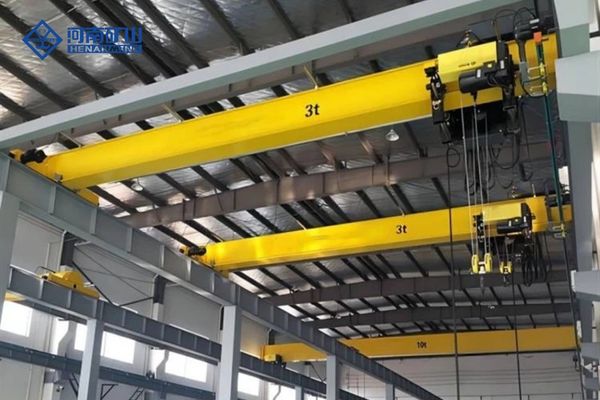
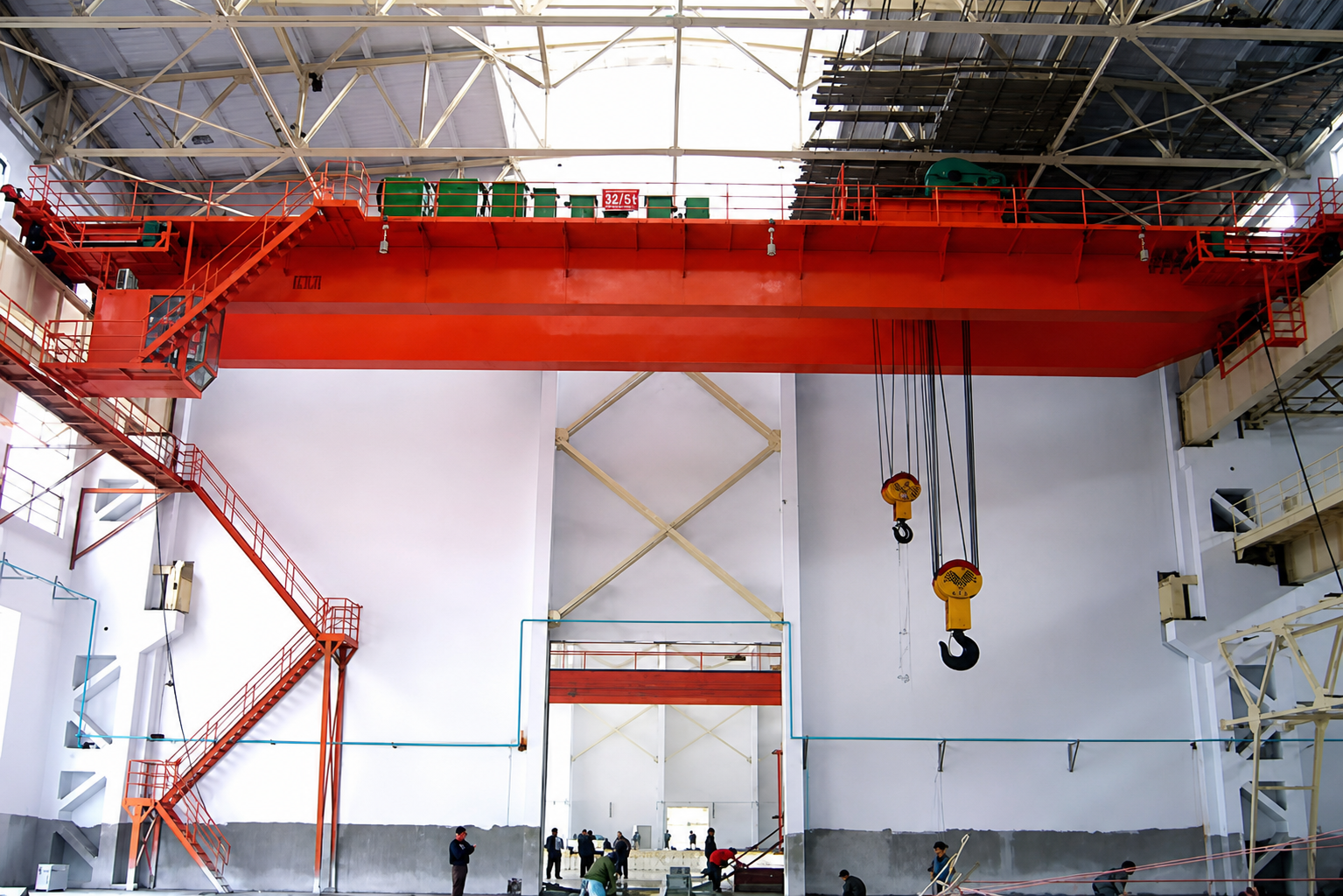
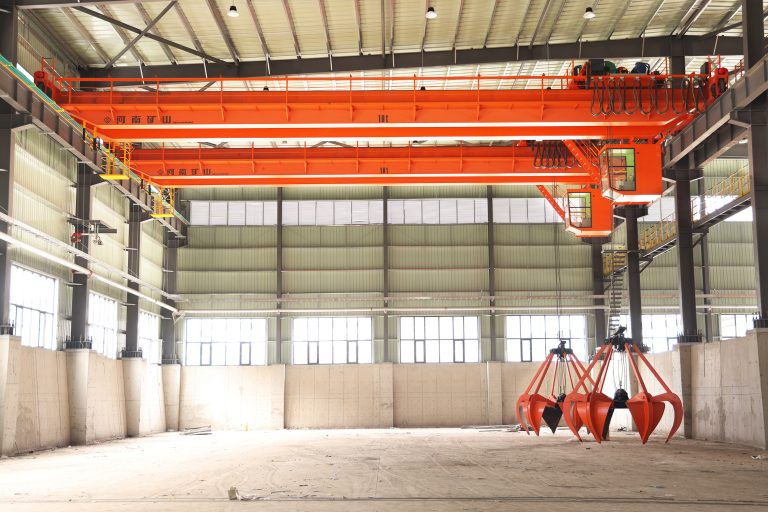
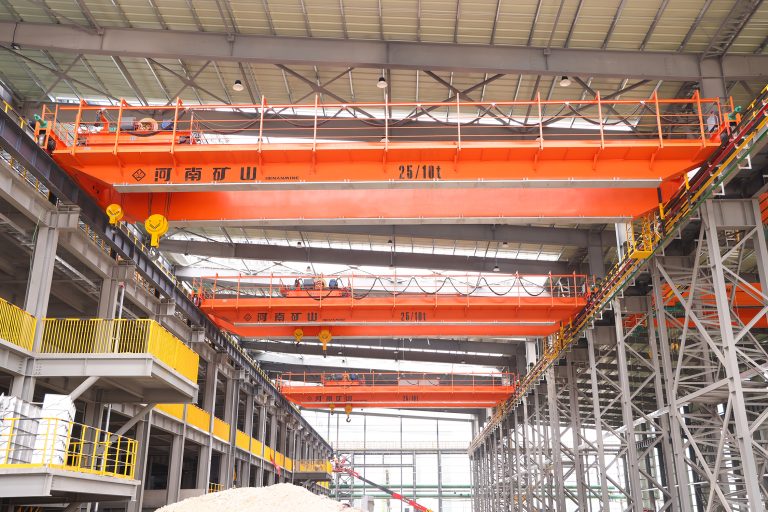
    explosion-proof bridge crane

    Explosion-proof bridge crane is the most commonly used model in chemical, refining and pharmaceutical workshops. It runs along the track of the plant and covers a large working surface. It is divided into two structures: single beam and double beam.
    Suitable for normal lifting of main workshop, heavy equipment maintenance, large span dangerous area, medium and heavy load operation.

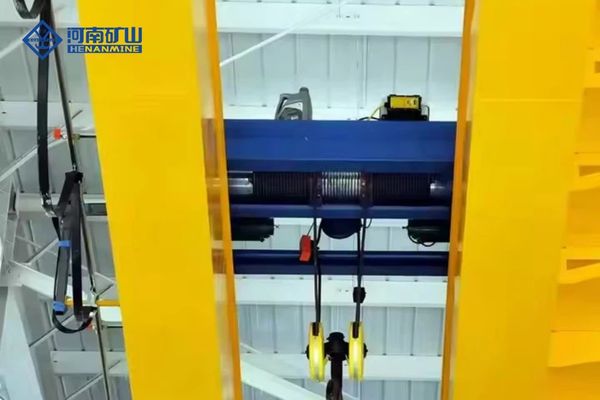
    explosion-proof electric block

    Explosion-proof electric hoist is small in size and flexible in installation. It is mostly used for fixed lifting points, monorail lines and swing arm cranes. It is the mainstream choice for small operation points.
    Suitable for light and medium load, spray booth, chemical workshop, equipment maintenance point, fixed position lifting, chain hoist and wire rope hoist have corresponding explosion-proof models.

    Explosion-proof swing boom crane

    Explosion-proof swing arm crane is divided into wall type and column type. The main position is local hoisting, occupying a small area and flexible deployment.
    Suitable for pump maintenance, small chemical equipment handling, station assembly, dangerous area loading and unloading, local maintenance operations.

    explosion-proof monorail crane

    Explosion-proof monorail crane runs along fixed track, load is transferred according to fixed route, mostly used for coating line, chemical material transportation, production process transfer.
    Suitable for fixed path material handling, production line circulation, coating system, chemical process transfer.

    Explosion-proof manual lifting equipment

    Explosion-proof manual hoist and manual single beam are mostly used for scenes with inconvenient power supply and low lifting frequency, completely avoiding electrical ignition sources.
    Suitable for low-frequency maintenance operations, small lifting points, limited power supply areas, high risk areas with extremely strict electrical equipment control.


    Mainstream certification system and scope of application

    Different regions, different project requirements of the certification system is different, early confirmation can avoid a lot of acceptance trouble.

    Certification System Comparison

    System

    Common Market

    Example Marking

    ATEX Europe & EU projects Zone 1 / Zone 2 / Zone 21 / Zone 22
    IECEx International EPC projects Ex db IIB T4 Gb
    NEC / CEC North America Class I Division 1 Group C/D
    GB/T 3836 China-related projects Ex equipment for explosive atmospheres

    ATEX is a mandatory EU explosion-proof directive, which must be met when exporting to Europe or participating in European EPC projects. IECEx is an international general explosion-proof certification system, recognized by most multinational projects around the world. NEC’s Class/Division classification system is commonly used in the North American market. Domestic projects follow GB/T 3836 series standards.
    Before purchasing, confirm the certification system required by the project with the owner and safety consultant to avoid wrong purchase.


    First determine the dangerous area division, then select equipment

    Hazardous area classification is the basis of all selection, gas and dust should be evaluated separately.

    Gas hazardous environment is divided into three levels: Zone0 is the scene where explosive gas exists continuously or for a long time, which is generally not applicable to conventional electric lifting equipment and requires special engineering evaluation;Zone1 is the area where explosive gas may occur during normal operation and requires high standard explosion-proof design;Zone2 is the area that does not appear under normal conditions and only exists for a short time, and the explosion-proof requirements are relatively low.
    The dust hazard environment is the same: Zone20 is the continuous or frequent occurrence of dust, Zone21 is possible during normal operation, and Zone22 is only temporary. Grain processing, pulverized coal storage and transportation, powder production workshop, all belong to dust explosion prevention scene.
    Special attention should be paid to the fact that equipment suitable for gas hazardous areas may not be directly used in dust hazardous areas. The two sets of protection logic are different and the qualifications must be confirmed separately.

    How to determine the core specification parameters

    Basic performance parameters

    Rated lifting capacity, span and lifting height are basic items, but they cannot be selected only according to average load. The heaviest maintenance load, operation frequency, working level and future expansion demand should be included.
    Small chemical workshops and spray booths are generally 1-10 tons, oil and gas refining maintenance cranes are usually 5-50 tons, and heavy chemical equipment hoisting will use 100-ton explosion-proof double-beam cranes.
    Span and lifting height should be determined in combination with plant structure, column spacing and equipment layout. Crane layout in hazardous environment, but also try to avoid frequent passage from high-risk equipment, chemical tanks, open process areas, personnel channels.
    The working level determines the durability of the whole machine. Low-frequency maintenance crane and high-frequency production crane, the requirements for hoist, motor, brake are completely different, according to the actual operation time, lifting times per hour, load distribution to choose, avoid high waste or low with insufficient.

    Explosion-proof core parameters

    This part is the core of explosion-proof crane, can not be selected by feeling, must be subject to the site dangerous area division report.
    The gas group is divided into IIA, IIB and IIC, and the danger degree increases in turn. Hydrogen and acetylene are required to use IIC configuration.
    Temperature groups from T1 to T6, the higher the number, the lower the maximum allowable surface temperature, which must be lower than the ignition temperature of the field medium. For example, the highest surface temperature of T6 group is 85℃, and T4 is 135℃. If the wrong choice is made, there will be direct ignition risk.

    Complete machine configuration details

    Lifting mechanism is the core, must be certified with a complete range of explosion-proof gourd, can not be used to make up the number of ordinary gourd. Wire rope hoist and chain hoist have corresponding explosion-proof models, according to the load, lifting height, operation frequency selection.
    Electrical system from explosion-proof motor, explosion-proof electrical control cabinet, explosion-proof limit switch to explosion-proof cable gland, all to correspond to explosion-proof grade, any one of the common elements may become a hidden danger.
    The mechanical parts should also be treated accordingly. In high-risk scenarios, spark protection design is required. The collision parts of the walking wheels and hooks are made of copper alloy and other materials that do not produce sparks; the whole machine is grounded statically to avoid static electricity accumulation; and the brakes are well controlled for temperature to prevent excessive friction temperatures.
    Control mode can choose explosion-proof handle, wireless remote control, high-risk scenarios recommended remote control, so that operators away from dangerous areas.

    environment adapting

    In addition to explosion-proof requirements, it is also necessary to take into account the general environmental conditions on site.
    Additional anti-corrosion design may be required for chemical industry area, clean adaptation shall be made for pharmaceutical clean workshop, rain, wind and salt fog prevention shall be made for outdoor oil and gas station, dust collection and sealing protection shall be considered for grain dust workshop. All of this will affect the final configuration and cost.

    How to read explosion proof signs

    Explosion-proof signs look complicated, but in fact each segment corresponds to clear parameters.

    For example, the gas explosion-proof mark Ex db eb IIB T4 Gb: Ex represents explosion-proof equipment, db/eb is explosion-proof type, IIB is gas group, T4 is temperature group, Gb is equipment protection level, corresponding to Zone1 gas area available.
    Dust explosion protection mark Ex tb IIIC T130°C Db: Ex tb is dust explosion protection enclosure, IIIC is conductive dust group, T130°C is maximum surface temperature, Db is equipment protection class, applicable to Zone21 dust area.
    Equipment whose logo does not match the site area will definitely not pass the safety audit.


    Focus on industry selection

    Chemical plant

    Recommended explosion-proof bridge crane, explosion-proof electric hoist, explosion-proof swing crane, explosion-proof monorail crane.
    Focus on gas/vapor classification, corrosion protection requirements, temperature groups, electrical component certification, spark protection design, maintenance accessibility.

    oil and gas refining

    Recommended explosion-proof double-beam overhead crane, explosion-proof maintenance crane, explosion-proof monorail hoist, explosion-proof swing crane.
    Focus on gas groups, outdoor protection, corrosion protection coatings, operational reliability, territorial certification, full compliance documentation.

    Paint shop

    Recommended explosion-proof electric hoist, explosion-proof monorail crane, explosion-proof single beam crane.
    Focus on solvent vapor levels, zoning, handling methods, electrostatic grounding, spark protection components, and easy-to-clean design.

    grain powder processing

    Recommended dust explosion-proof hoist, dust explosion-proof bridge crane, explosion-proof manual hoist, explosion-proof swing crane.
    Focus on dust area class, dust group, surface temperature control, enclosure protection class, dust prevention design, easy cleaning and maintenance.

    Pharmaceutical clean workshop

    Recommended explosion-proof clean crane, stainless steel anti-corrosion hoist, explosion-proof swing crane, explosion-proof monorail system.
    Focus on cleanliness class, surface finish, corrosion resistance, alcohol vapor or dust risk, maintenance space, document compliance.

    Lithium battery workshop

    Recommended explosion-proof overhead crane, explosion-proof electric hoist, anti-corrosion crane, precision lifting system.
    Focus on solvent vapor grade, clean workshop adaptation, fire and explosion risk control, corrosion prevention design, positioning accuracy, electrical safety.

    Hydrogen and LNG

    Recommended high-grade explosion-proof overhead crane, explosion-proof maintenance hoist, outdoor hazardous area lifting system.
    Focus on gas group (mostly IIC), temperature group, certification qualification, low temperature environment adaptation, corrosion protection, safety documents.

    explosion-proof crane for different scenarios


    Explosion-proof vs Ordinary Crane

    Item

    Ordinary Crane

    Explosion-proof Crane

    Application General industrial workshops Hazardous areas with flammable gas/dust
    Motor Standard industrial motor Certified explosion-proof motor
    Hoist Standard wire rope/chain hoist Certified explosion-proof hoist
    Control Cabinet Standard electrical enclosure Explosion-proof electrical enclosure
    Limit Switch Standard limit switch Explosion-proof limit switch
    Surface Temperature No ignition risk control Controlled by temperature class
    Spark Protection Not required Anti-spark design for high-risk areas
    Certification General crane standard ATEX / IECEx / NEC / national Ex standard
    Cost Lower Higher
    Documentation Standard crane files Ex certificates & full compliance documents

    The difference between the two is not a single component, but the design logic of the whole system.


    Common purchasing mistakes

    Just saying “to be explosion-proof” without giving specific area parameters is the most common problem. Without Zone level, gas/dust type, temperature group, certification requirements, suppliers simply cannot make accurate plans, and the quoted prices have no practical reference significance.
    Only for the motor to do explosion-proof, other parts regardless, but also high-frequency step pit point. In an explosion-proof system, limit switches, junction boxes, cable connectors, control handles, any common part, may become an ignition source.
    There are also many projects that ignore the risk of dust explosion. Many people only pay attention to dust scenes such as gas, grain, flour and pulverized coal. The explosion power is also not small. Special dust explosion-proof cranes must be used. Gas explosion-proof models cannot be used directly.
    And ignore the surface temperature. Even without visible sparks, hot surfaces can ignite gases or dust, which is why temperature groups are central parameters.
    The wrong certification can also delay things. European projects to ATEX, international EPC to IECEx, North America to Class/Division, confirmed clearly in advance, to avoid later rework.
    The last is to ignore maintenance and spare parts. Explosion-proof parts are special parts, poor versatility, after-sales can not keep up with the words, a fault shutdown loss may far exceed the equipment price difference.

    Selection Steps Reference

    The first step is to confirm the classification of hazardous areas, collect clear area class, gas/dust type, group, temperature group, EPL class, certification requirements, area drawings.
    The second step is to clarify the lifting requirements, including equipment type, lifting capacity, span, lifting height, speed, working level, working time, load type, accuracy requirements, indoor and outdoor.
    Step 3 Select crane type to match plant layout, lifting path, load weight, explosion limit.
    The fourth step is to determine the configuration of explosion-proof components, including the corresponding grades of hoists, motors, brakes, electronic controls, controls, limits, cables, and accessories.
    Step 5 Confirm mechanical spark protection requirements, and upgrade traveling wheels, hooks, buffers, grounding, coatings and contact parts as required.
    Step 6 Confirm delivery documents, certificates, declaration of conformity, drawings, electrical diagrams, compliance documents, inspection reports, manuals, spare parts lists.
    For many hazardous projects, compliance documents are as important as the equipment itself.

    Selection Checklist

    Item

    Buyer Input Required

    Crane type Overhead / gantry / jib / monorail / hoist
    Capacity Tons
    Span Meters
    Lifting height Meters
    Working duty Light / medium / heavy / custom
    Hazard type Gas / vapor / dust / fiber
    Hazard zone Zone 1 / Zone 2 / Zone 21 / Zone 22
    Gas group IIA / IIB / IIC
    Dust group IIIA / IIIB / IIIC
    Temperature class T1–T6
    Certification ATEX / IECEx / NEC / GB / local standard
    Control method Pendant / remote / cabin / control room
    Power supply Voltage / phase / frequency
    Environment Indoor / outdoor / corrosive / humid / dusty
    Documentation Certificate / drawing / manual / test report
    Installation condition New workshop / existing runway / renovation
    Maintenance support Spare parts / training / remote support

    According to this list before purchasing, the solution given by the supplier will be much more accurate.


    How to choose reliable suppliers

    First of all, we must look at the project experience in the field of explosion protection, not just to see whether ordinary cranes are doing well. It is necessary to confirm whether the other party has actual cases in chemical industry, oil and gas industry, painting industry, pharmaceutical industry and grain industry, and understand the design logic of dangerous area.
    Then it depends on the certification qualification of the core components. The key parts such as hoist, motor, electric control, limit, handle and cable connector must have the corresponding level of certification, which cannot be vague.
    It also depends on engineering customization capabilities. Explosion-proof cranes are basically customized according to the project, industry, layout, hazard source, certification, territorial requirements are different, qualified suppliers can provide complete technical solutions, drawings, electrical design, parts list, compliance documents, supporting installation support.
    Document support capabilities are also critical. EPC, chemical, oil and gas projects, documents to go through several rounds of review, suppliers can not provide a complete set of explosion-proof certificates, material documents, welding data, electrical diagrams, inspection reports, operation and maintenance manuals, directly affect the project acceptance progress.
    Finally, there is after-sales support. The downtime costs in hazardous areas are high. Whether spare parts are in stock, how long critical parts can arrive, whether remote technical support can be provided, whether training and emergency services are available, should be confirmed in advance.

    epilogue

    The essence of choosing explosion-proof cranes is to control safety first and then talk about performance. The correct selection logic is to first find out the hazardous medium, regional grade and certification requirements on site, and then determine the conventional parameters such as tonnage and span.
    Proper explosion-proof configuration can not only meet the operational requirements, but also avoid unnecessary cost waste, while ensuring long-term operation safety compliance.

    Customize Your Solution

    As a professional explosion-proof crane manufacturer, Henan Mine Crane can provide customized explosion-proof lifting equipment for all scenarios of gas and dust. It supports ATEX, IECEx and other multi-system certifications, covering all categories of bridge type, portal type, swing boom crane and electric hoist.
    If you are planning the lifting equipment of explosion-proof workshop, you can send us the explosion-proof grade, lifting capacity, span and working condition requirements of the area, and the engineering team will issue matching schemes and compliance instructions to you.
     

    Henan Mine CraneDiscuss your requirements ↗
  • The Complete Guide to Explosion-proof Crane Anti-Spark Design

    The Complete Guide to Explosion-proof Crane Anti-Spark Design

    The Complete Guide to Explosion-proof Crane Anti-Spark Design

    Petroleum, chemical, mining, pharmaceutical and other high-risk industries operate in complex environments, where combustible gases, volatile vapors and flammable and explosive dusts are common. Conventional cranes are easy to produce electric arc, mechanical friction spark and electrostatic accumulation during operation, which is easy to ignite explosive medium, cause explosion and fire accidents, cause casualties and equipment shutdown losses, and cannot meet the safety operation standards under high-risk conditions.

    The anti-spark design of explosion-proof crane is the core safety guarantee for lifting operations in high-risk scenarios. Different from the traditional passive explosion-proof method, the design eliminates all kinds of ignition sources from the source and actively avoids explosion risks. It is not only a hard condition for overseas high-risk projects to be put into operation in compliance with regulations, but also the key for enterprises to reduce equipment operation and maintenance costs, ensure continuous safe production and avoid responsibility for safety accidents. This paper comprehensively explains its design points, technical standards and industry applications in detail.

    What Is Explosion-proof Crane Anti-Spark Design?

    Definition and working principle

    Its core working principle is mainly divided into three aspects, from the source to eliminate spark generation, the overall equipment for all-round explosion-proof protection, while continuing to release the accumulation of static electricity three logics. Source blocking means replacing metal materials that are easy to generate sparks, optimizing mechanical structure, eliminating friction and impact sparks. Full protection is to do explosion-proof sealing treatment for all electrical components to prevent electric short circuit and electric arc spark generated by leakage. Dynamic discharge is to build a safe operation system without ignition source in an all-round way by means of exclusive antistatic structure, real-time dredging of electrostatic charges accumulated during equipment operation, avoiding electrostatic discharge sparks.

    Key design requirements

    The spark-free explosion-proof design is not a single component transformation, but a systematic engineering of the whole machine, which must strictly meet the four core design requirements.

    • Zero ignition requirements under all working conditions: no open fire, arc, friction spark and high temperature heating point shall be produced in all operation links such as crane lifting, operation, braking and limit, and the surface temperature of equipment shall be strictly lower than the ignition temperature of explosive medium.
    • Material adaptability requirements: All moving parts that are easy to friction, impact and electrostatic accumulation must be made of spark-free, antistatic and corrosion-resistant materials to eliminate mechanical sparks caused by hard steel collision and adapt to humid and corrosive high-risk working conditions.
    • Electrical explosion-proof requirements: The electrical system, circuit, connection port and control elements of the whole machine shall pass explosion-proof certification, and have sealing, explosion-proof and safety protection capabilities to eliminate ignition hazards caused by electrical faults.
    • Static electricity controllable requirements: The entire equipment has a complete static electricity discharge path, and the grounding system is stable and reliable. It can export static electricity generated during operation in real time to avoid static electricity accumulation, breakdown and discharge, and at the same time meet international and domestic explosion-proof level compliance standards.

    Main Spark Sources in Crane Operation

    Electrical spark sources

    Electric spark is the most common and dangerous ignition source in Henan Mine Crane manufactured explosion-proof crane operation, and it is also the core cause of most industrial explosion accidents. Crane electrical system structure is complex, frequent movement, long-term operation is prone to various types of fault spark. Common sources of electrical sparks include: electric arcs and sparks generated when the motor starts, stops, and runs overloaded. Contact sparks generated by frequent switching of control elements such as contactors, relays, switches, and buttons. Cable aging, damage, extrusion wear caused by short circuit, leakage spark.

    At the same time, loose terminals, failure of line insulation layer and lax sealing of electric control box will lead to dust and combustible gas intrusion into the interior, which will aggravate the probability of electrical short circuit and produce continuous electric spark. In addition, frequency converters, sensors and other precision electrical components failure, voltage and current fluctuations overload, will also produce high temperature arc, instantly reach the explosive medium ignition conditions, trigger safety accidents.

    Mechanical spark sources

    Mechanical spark belongs to high frequency recessive ignition source, which is easy to be ignored. It is mostly produced in the friction and impact process of crane mechanical movement. The core moving parts of conventional cranes, such as wheels, rails, hooks, pulleys, brakes, rope guides, etc., are mostly made of ordinary carbon steel. In high-frequency operation, long-term friction between wheels and rails, start-stop collision, will produce a large number of mechanical sparks and high-temperature particles.

    The repeated friction and collision between hook and lifting workpiece, wire rope and pulley groove, and severe friction and heat generation during emergency braking of brake pad will produce dot sparks and high temperature heat sources. At the same time, the wear, deformation and loosening of parts caused by long-term operation of equipment will aggravate the probability of hard impact and continuously generate mechanical sparks. This kind of spark has short duration and strong concealment, but it is enough to ignite light combustible dust and volatile gases, which has great potential safety hazards.

    Static electricity risks

    Electrostatic spark is an invisible killer in high-risk dust and gas environment. In the continuous operation of crane, the relative movement and friction contact of various parts will continuously generate electrostatic charges. Constant friction between wire rope and pulley, cargo and sling, wheel and track, fuselage and air dust will lead to static electricity accumulation.

    If the equipment lacks perfect antistatic design and discharge structure, electrostatic charge cannot be exported in time, and will continue to accumulate in the fuselage, lifting appliance, wire rope and other parts. When the electrostatic voltage reaches the breakdown threshold, electrostatic discharge sparks will be generated. Compared with electrical and mechanical sparks, electrostatic spark energy is small, but it accurately adapts to the ignition threshold of combustible gas and dust, which is one of the main explosion causes in fine high-risk scenes such as chemical industry, pharmacy and aluminum powder processing.

    Key Technologies of Anti-Spark Design

    Explosion-proof electrical components

    Explosion-proof electrical component technology is the core means to block electrical sparks. All electrical components of the whole machine adopt special accessories for compliance explosion protection, and are equipped with systematic explosion-proof protection technology. The core components include explosion-proof motor, explosion-proof contactor, explosion-proof switch, explosion-proof electric cabinet, explosion-proof cable and explosion-proof terminal. All components have passed authoritative explosion-proof certification and have triple protection characteristics of explosion-proof, increased safety and intrinsic safety.

    The electric control box of the equipment is integrally formed by thick steel plate, the joint surface is precisely machined, and the gap is strictly controlled within the explosion-proof standard range, which can effectively block the internal arc and flame leakage. The cable inlet port is equipped with special explosion-proof sealing joint, and the packing sealing technology is adopted to prevent the invasion of combustible medium and the spark of loose line. At the same time, the electrical system is equipped with overload, short circuit, phase loss and overheat multiple protection devices. Once electrical fault occurs, it will automatically shut down, eliminate electrical spark from the source, and adapt to various hazardous gas environments in Zone 1 and Zone 2 and dust environments in Zone 20, Zone 21 and Zone 22.

    anti-sparking mechanical design

    In the structural optimization, optimize the assembly accuracy of components, reduce component clearance and running sloshing, and reduce the probability of friction impact. Braking system adopts stable and flexible braking structure, matched with flame-retardant anti-spark brake pads to avoid severe friction, high temperature and spark caused by emergency braking. Polishing and passivation treatment shall be done to all edges and burrs of metal parts to prevent sparks from collision at sharp parts during lifting operation. At the same time, the transmission system adopts a fully sealed design to avoid dust from entering and aggravating the wear of components, and to ensure long-term stable operation without sparks.

    Anti-static protection

    Anti-static protection design to build a full range of electrostatic discharge system, completely solve the electrostatic accumulation discharge hidden danger. First of all, all parts of the Henan Mine Crane manufactured crane metal structure, track, sling, wire rope and so on are reliably grounded, and the grounding resistance is strictly controlled within 0.1 Ω to ensure that static electricity is quickly exported.

    Secondly, non-metallic parts such as wheels, buffer blocks and seals are made of special antistatic materials, and the surface resistance is controlled in the standard range to avoid electrostatic accumulation. Anti-static discharge devices are installed at key parts of equipment to dynamically remove static electricity generated during operation. At the same time, regularly calibrate the stability of grounding system, eliminate electrostatic retention caused by loose grounding and corrosion, comprehensively avoid explosion risk caused by electrostatic spark, and adapt to various high-dust, high-volatility and high-risk operation scenarios.

    Explosion-proof Crane

    Materials and Components Used in Anti-Spark Cranes

    Spark-resistant materials

    The material selection of anti-spark explosion-proof crane directly determines the explosion-proof safety level. All core friction parts are made of special anti-spark materials with high adaptation, high wear resistance and anti-static. In terms of metal materials, copper alloy materials such as aluminum bronze, brass and beryllium copper alloy are preferred. These materials have moderate hardness and will not produce open flame sparks during friction and impact. At the same time, they have corrosion resistance, oxidation resistance and wear resistance, and are suitable for chemical and wet corrosion conditions.

    For non-metallic materials, asbestos-free flame retardant and antistatic braking materials are used for braking parts, explosion-proof and flame-retardant engineering plastics are used for insulating parts, and corrosion-resistant and antistatic rubber materials are used for sealing parts. All materials have been explosion-proof spark test, electrostatic test, temperature test, can be-20 ℃ to 60 ℃ wide temperature range stable operation, long-term operation without spark, no electrostatic accumulation, fully meet the explosion-proof requirements of high-risk conditions.

    Specialized crane components

    In addition to the core material, anti-spark explosion-proof crane equipped with a full set of professional explosion-proof special parts, to achieve complete explosion-proof no dead angle. Special parts include explosion-proof lifting hook, anti-spark pulley block, anti-static wire rope, explosion-proof walking wheel, flexible explosion-proof brake, explosion-proof limiter, explosion-proof buffer and other mechanical parts. All parts are customized for explosion-proof working conditions to eliminate potential safety hazards of common parts.

    Electrical special parts cover explosion-proof frequency conversion control system, explosion-proof lighting, explosion-proof emergency stop device, explosion-proof signal alarm, etc. All parts have passed IECEx, GB explosion-proof certification, suitable for different explosion-proof scenarios. A complete set of special parts match each other and cooperate with each other to form a complete spark-free explosion-proof system, which not only ensures operation safety, but also takes into account equipment lifting efficiency and durability.

    Explosion-proof Standards and Protection Levels

    Understanding explosion-proof classifications

    The protection level of explosion-proof cranes has strict hierarchy division, which is mainly classified according to the explosive medium type and dangerous area level of the working environment. According to the type of medium, it can be divided into two categories: gas explosion prevention and dust explosion prevention. Gas explosion prevention is suitable for oil and gas, chemical volatile gas scene, dust explosion prevention is suitable for mine, powder processing, pharmaceutical dust scene.

    According to the classification of hazardous areas, the gas environment is divided into Zone 1 (continuous explosive gas environment) and Zone 2 (accidental explosive gas environment). Dust environment is divided into 20 areas, 21 areas, 22 areas. At the same time, according to the explosion-proof protection capability, the equipment is divided into Ex d explosion-proof type, Ex e increased safety type, Ex ia intrinsic safety type and other protection types. Different types are suitable for different danger level scenarios. The higher the level, the stronger the explosion-proof protection capability and the higher the safety redundancy. Enterprise selection should strictly match the site working condition level to avoid safety accidents caused by insufficient protection.

    International safety standards

    The design, production, inspection and acceptance of Henan Mine Crane manufactured anti-spark explosion-proof crane must strictly comply with the global general international safety standards and domestic national standards. International core standards include IECEx international explosion-proof certification standards and ATEX EU explosion-proof standards, which are the core basis for equipment export and cross-border project compliance, and standardize the material requirements, structural standards, electrostatic protection and electrical explosion-proof parameters of spark-free design.

    How Anti-Spark Design Improves Crane Safety and Reliability

    Reducing explosion risks

    At the same time, the systematic explosion-proof protection system can withstand various sudden working condition risks such as equipment aging, component wear, operation errors, and environmental fluctuations, avoid safety accidents caused by single protection failure, and comprehensively ensure the safety of operators, equipment, and production lines., to eliminate major economic losses and safety accountability issues caused by explosion accidents.

    Improving equipment durability

    Standardized anti-spark explosion-proof design not only improves safety, but also greatly prolongs the service life of equipment and reduces operation and maintenance costs. Special anti-spark copper alloy material, anti-static wear-resistant materials, with strong corrosion resistance, wear resistance, impact resistance, can effectively resist chemical corrosion, dust wear, high frequency impact and other working conditions, reduce the aging of parts, damage probability.

    Explosion-proof sealing structure can isolate dust and corrosive gases from invading the equipment, protect electrical components and transmission structures from environmental erosion, and reduce equipment failure frequency. Conventional ordinary cranes have high annual failure frequency and frequent component replacement under high-risk conditions, while Henan Mine Crane manufactured anti-spark explosion-proof cranes greatly reduce equipment loss through material and structure optimization, and the service life of the whole machine can be increased by more than 30%, significantly reducing enterprise equipment procurement and operation and maintenance costs.

    Ensuring reliable operation

    High-risk industrial production requires very high continuity and stability of equipment. Equipment shutdown failure will directly lead to production line shutdown and cause huge economic losses. Spark free explosion-proof crane adopts systematic and refined explosion-proof design, multiple protection of electrical system, stable and wear-resistant mechanical structure, continuous and effective electrostatic protection, greatly improved anti-interference ability and environmental adaptability of equipment.

    The equipment can operate continuously and stably under severe conditions such as high temperature, dust, corrosion, inflammable and explosive, etc., and prevent sudden shutdown and equipment failure caused by spark hidden danger, electrical failure and electrostatic problem. At the same time, the standardized design structure makes equipment operation and maintenance more convenient, troubleshooting is simpler, effectively guarantees the continuous, efficient and stable operation of industrial production lines, and provides core equipment support for large-scale production of enterprises.

    Applications of Explosion-proof Anti-Spark Cranes

    Oil and gas industries

    The oil and gas industry is the core application scenario of spark-free explosion-proof cranes, covering the whole process conditions of oilfield exploitation, oil and gas refining, oil and gas storage, pipeline operation and maintenance, etc. In this kind of scenario, natural gas, volatile gas of crude oil and light combustible oil gas exist all the year round, which is easy to form explosive mixed gas, and the requirements for spark protection of equipment are extremely high.

    Spark free explosion-proof crane can perfectly adapt to the lifting operation of oil and gas platform, refining workshop and storage tank area. In the process of equipment maintenance, material transfer and component lifting, there is no spark and no electrostatic hidden danger in the whole process, effectively avoiding the risk of oil and gas explosion. It is an essential core equipment for safe production in the oil and gas industry. It is widely used in onshore oil fields, offshore drilling platforms, oil and gas processing plants and other scenarios.

    Chemical and pharmaceutical industries

    The chemical and pharmaceutical industries have complex working conditions, and a large amount of volatile combustible gases, chemical dust and organic solvent vapor will be generated during production, storage and transportation. The hidden dangers of explosion are dense and the risks are extremely high. Fine chemical industry, pesticide production, pharmaceutical synthesis, powder pharmaceutical workshops, etc., strict requirements for equipment ignition source control, ordinary cranes are completely unable to adapt.

    Spark free explosion-proof crane through all-round spark-free, anti-static, anti-corrosion design, can safely complete the lifting and transfer of chemical raw materials, pharmaceutical intermediates, finished materials, production equipment, eliminate spark caused by medium combustion explosion accidents, meet the chemical industry, pharmaceutical industry refined, high-level explosion-proof safety standards, adapt to indoor workshops, storage areas, outdoor equipment areas and other multi-scene operations.

    Mining and hazardous areas

    Mining industry and various high-risk explosion-proof areas are important application areas of anti-spark explosion-proof cranes. Coal mine, nonferrous metal mine, powder mine operation process, will produce a lot of coal dust, metal dust, mining combustible gas, dust accumulation is easy to form explosive mixtures, small sparks can cause major mine accidents.

    With the advantages of mechanical friction-free spark, electrical arc-free and static discharge, the sparking-free explosion-proof crane can safely adapt to hoisting scenarios such as underground mine, open-pit Kuangqu, ore bin transfer and mine equipment maintenance. At the same time, it can also be used in grain processing, aluminum processing, spraying workshop, dangerous goods storage and other high-risk areas where flammable and explosive dust and gas exist. It is the core safety lifting equipment for high-risk conditions in the whole industry.

    Henan Mine Crane Factory Custom

    A reliable explosion-proof crane is not only about meeting lifting requirements but also about ensuring safe and stable operation in hazardous environments. Henan Mine Crane Factory focuses on customized crane solutions for industries with strict safety requirements, providing explosion-proof cranes designed for oil and gas, chemical, mining, and other high-risk applications. Through optimized structures, reliable components, and strict manufacturing processes, the cranes help reduce spark risks and improve operational safety.

    With rich experience in crane manufacturing, Henan Mine Crane Factory can customize explosion-proof lifting equipment according to specific working conditions, including lifting capacity, span, lifting height, and protection requirements. From design to production, every detail is considered to achieve reliable performance, longer service life, and efficient material handling, helping customers maintain safe and continuous industrial operations.

    Henan Mine CraneDiscuss your requirements ↗
  • The Complete Guide to Carbon Material Crane Anti-Static Design for Safe Handling

    The Complete Guide to Carbon Material Crane Anti-Static Design for Safe Handling

    The Complete Guide to Carbon Material Crane Anti-Static Design for Safe Handling

    Many factories, when selecting handling equipment, only focus on the basic lifting parameters such as the load and span of the Crane, ignoring the risk of electrostatic detonation of carbon material dust.

    Conventional industrial Crane operation process, friction, suspended dust contact, component insulation isolation, etc., will produce electrostatic buildup. If it can not be released in time to dissipate, electrostatic sparks may ignite the suspended carbon dust, triggering safety accidents.

    Carbon material Crane anti-static design is an indispensable safety configuration for carbon material production, processing and transfer workshop. We dismantle in detail the application of this type of anti-static Crane scenes, working condition requirements, design principles, selection parameters and procurement to avoid the pit points.

    Carbon material anti-static Crane mainstream application scenarios

    Not all carbon material operating scenes need high antistatic cranes, equipment configuration standards depend entirely on the material form, dust concentration and operating environment. Powder concentration, ventilation restrictions, dust suspension of large working conditions, is the core of the anti-static Crane application scenarios.

    Carbon black production and packaging production line

    Carbon black production, filling and packing area will continuously generate a large amount of fine carbon black dust, and the concentration of dust in the air is very easy to reach the critical hazardous value.

    Workshop equipment maintenance, material tonnage bag handling, production line equipment lifting operations, all need special anti-static lifting equipment.

    Carbon material handling Crane in this scenario, need to control the entire static electricity generation and accumulation, to eliminate static sparks, to protect the packaging workshop continuous safe production.

    Graphite and carbon powder deep processing workshop

    High-purity graphite, ultra-fine carbon powder processing, screening, transfer workshop, belongs to the closed dust-free working environment. The space is relatively closed, the dust can not spread quickly, and the risk of electrostatic detonation is extremely high when it is suspended in the operation area for a long time.

    Raw material transfer, hopper lifting, equipment maintenance lifting operations in the workshop must rely on anti-static Overhead Crane to complete, from the equipment level to avoid static electricity safety hazards.

    Lithium battery carbon material production plant

    The production process of new energy battery anode carbon material and composite carbon material requires high safety of the production environment. In addition to the demand for dust explosion prevention, the purity of materials can not be affected by impurities and static electricity generated by the operation of the equipment.

    Anti-static cranes suitable for this scenario can control the risk of static electricity, but also reduce the equipment dust, wear and tear of parts debris, taking into account the production safety and material quality.

    Coal and Coke Processing Workshop

    Raw coal refining, coke milling, coal powder transfer operation area, dust combustible properties, high risk level of the operating environment. The equipment maintenance, material transfer and workpiece lifting in the workshop require lifting equipment suitable for anti-explosion and anti-static working conditions.

    Activated Carbon and Fine Chemical Carbon Materials Plant

    Food-grade and industrial-grade activated carbon processing, as well as various types of fine chemical carbon material preparation processes, mostly completed in a controlled closed workshop. Powder lifting, equipment maintenance process, the slightest static potential may cause safety problems, anti-static design is the standard equipment requirements.

    Dust-sensitive storage and transfer station

    Carbon material finished product warehousing, tonnage bag transfer, distribution conveying area, although there is no continuous production of dust, but the operation process will disturb the residual dust, the formation of the stage of suspended dust environment. This type of scenario also requires lifting equipment with static electricity prevention and control capabilities to avoid the safety risks associated with intermittent operations.

    anti-static overhead crane

    Core equipment requirements for carbon material handling conditions

    Carbon dust conditions of the equipment selection criteria, and ordinary industrial lifting conditions are completely different. Conventional Crane to meet the load and durability needs, while carbon material special cranes, the core around the electrostatic prevention and control, dust control, safety pocket design.

    Perfect static electricity control ability

    When the Crane is running, the friction between the wheels and the track, the wire rope expansion and contraction, the operation of the electrical components, the material shaking friction, will generate electrostatic charge. Ordinary equipment can not release the charge, the long-term accumulation will form high-voltage static electricity.

    Carbon special cranes need to build a complete charge dissipation channel to avoid localized accumulation of charge, and reduce the probability of electrostatic discharge and sparks from the source.

    Dust explosion risk prevention and control

    All types of refined carbon dust are combustible dust, in a confined space, suitable concentration, dry environment, as long as there is a tiny ignition source, it may cause an explosion. Crane as a high-frequency operation equipment, must eliminate the possibility of becoming an ignition source.

    The overall design of the equipment needs to be adapted to high-risk dust conditions, strict control of friction sparks, electrostatic sparks, electrical sparks, three types of core risk points.

    Reliable grounding and jumper system

    Many manufacturers of simple anti-static design only do the whole machine grounding, ignoring the moving parts of the cross-connect conduction. Crane main beam, trolley, hoist, traveling mechanism and other independent moving parts, must all do conductive cross-connection.

    Only all metal components, moving parts to form a continuous conductive path, and then access to the plant grounding system, in order to truly realize the zero buildup of static electricity, which is the core of the Crane grounding anti-static design key.

    Low dust disturbance design

    Crane operation, start and stop, alignment process, can not produce strong airflow disturbance, to avoid stirring the ground, equipment surface dust, exacerbating the workshop dust suspension concentration.

    At the same time, the surface of the equipment adopts smooth sealing design, which is not easy to accumulate dust, easy to clean, and reduces the secondary static electricity hidden danger caused by dust adhesion.

    Adaptability to high-risk zoning conditions

    Part of the carbon deep processing workshop will be divided into explosion-proof high-risk areas, such areas of equipment standards far beyond the ordinary anti-static requirements. According to the level of hazardous areas in the plant, customized anti-explosion and anti-static lifting equipment to match the safety specifications of the zoning.

    Convenient testing and maintenance conditions

    Antistatic structure is not a one-time configuration, long-term use will appear ground aging, wear and tear of conductive parts, line oxidation and other issues. Equipment design needs to be reserved for convenient detection points, convenient daily inspection, resistance testing, component replacement, to protect the long-term effectiveness of anti-static function.

    anti-static overhead crane

    Carbon material working conditions suitable for mainstream anti-static Crane models

    Different plants have different site layouts, operating frequency and risk levels, and different anti-static Crane models are suitable. Selecting the model according to the needs can not only meet the safety standards, but also reasonably control the equipment procurement costs.

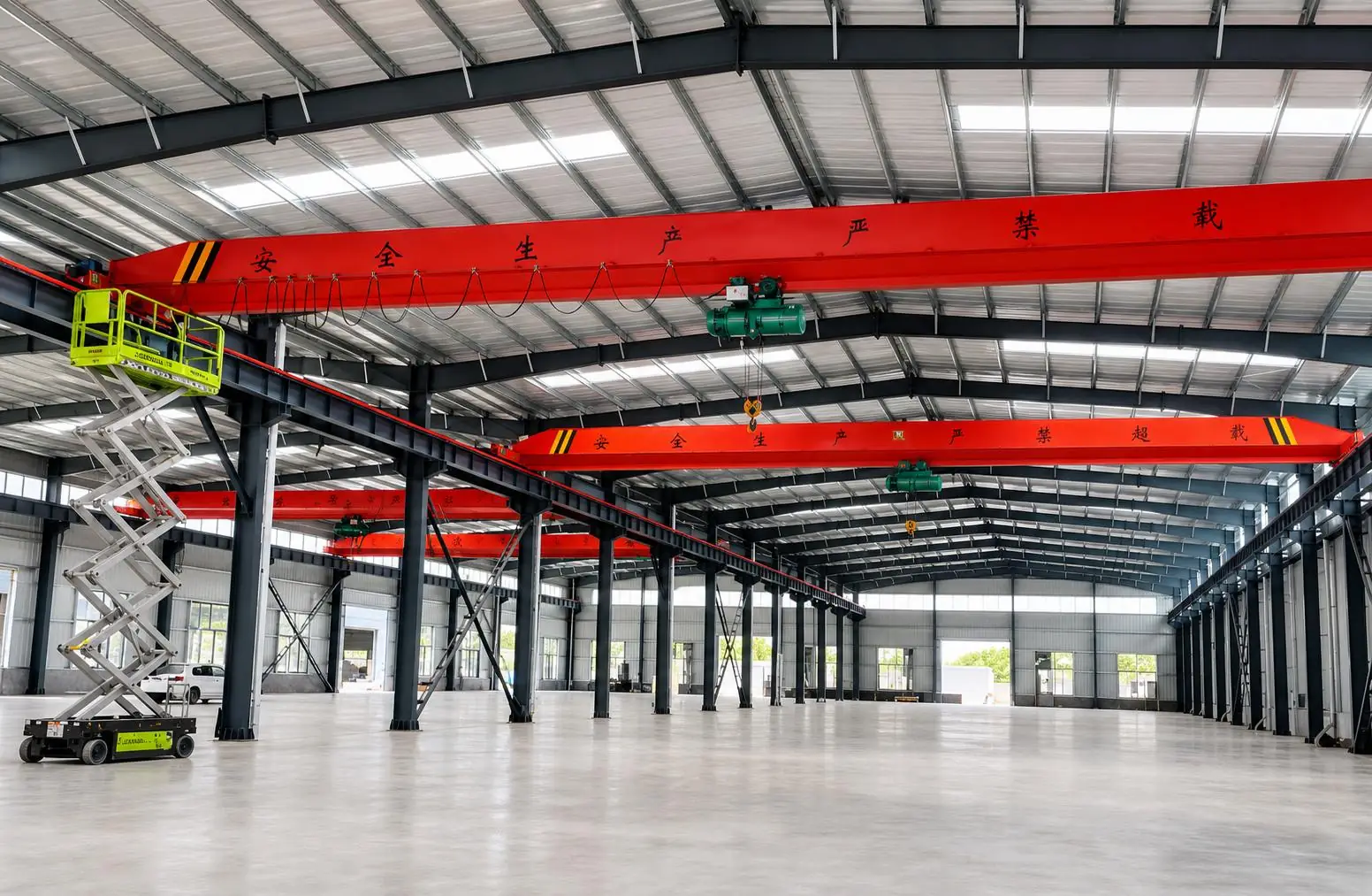
    Anti-static Overhead Crane

    This is the mainstream model for carbon indoor production workshop, suitable for material transfer, equipment maintenance, material lifting operations in the closed plant. The whole machine adopts fully sealed anti-static design, complete conductive path, smooth operation and low dust disturbance.

    Widely used in carbon black, graphite, battery carbon material and other indoor standardized production lines, is the most versatile anti-static Overhead Crane model.

    Anti-static Gantry Crane

    Suitable for outdoor and semi-outdoor carbon material yard, open-air transfer area, outdoor equipment maintenance site. Optimized grounding protection and component sealing design for dry, windy and dusty outdoor conditions.

    It can effectively resist the influence of outdoor environment and maintain stable static electricity prevention and control ability, suitable for bulk carbon material handling operations in the yard.

    Low headroom anti-static Crane

    The height of some old carbon material factories and confined deep-processing workshops is limited, and the conventional Crane structure will occupy too much headroom. Low headroom anti-static hoist cranes optimize the structural layout to save vertical space.

    Under the premise of not lowering the anti-static and anti-dust standards, it is suitable for the lifting needs of low-rise plants.

    Customized explosion-proof cranes for high-risk areas

    For high-risk workshops with extremely high dust concentration and strict explosion-proof level, ordinary anti-static equipment cannot meet the requirements. Need to customize the explosion-proof anti-static integrated Crane, electrical components of the explosion-proof sealing, structure of the frictionless spark design.

    This type of carbon material explosion-proof Crane is specially adapted to high-risk dust explosion conditions, fully adapted to the factory explosion-proof norms.

    Carbon material equipment maintenance Crane

    Specialized for carbon production line mixer, hopper, feeder, dust removal equipment maintenance lifting, low frequency, fixed working conditions. The equipment focuses on static electricity prevention and control and precise alignment, and is suitable for production line operation in narrow space.

    Procurement must verify the core technical parameters

    Carbon material antistatic Crane selection, can not only refer to conventional lifting parameters, electrostatic prevention and control, conductive design, working conditions to adapt to the parameters is to determine the core of the safety of the equipment, the procurement stage must be verified one by one.

    Rated lifting load

    According to the material tonnage bags, raw materials, hoppers, production equipment, fittings and accessories of the actual weight of the selection, set aside a reasonable load margin. Avoid overloading of equipment, which may lead to secondary risks such as increased mechanical friction and heating of components.

    Equipment span

    Accurately match the working width of the workshop, the layout of the production line, and the range of material transfer to ensure that the equipment covers the whole working area, and reduce the dust disturbance and component friction caused by frequent traveling.

    Effective lifting height

    Combined with the workshop headroom, material transfer path, and equipment maintenance height, it can meet the space requirement of high lifting and equipment disassembly, and at the same time avoid the risk of static electricity accumulation brought by high level operation.

    Working level

    Distinguish between equipment use scenarios, production line high-frequency transfer operations need to use high working level equipment, workshop low-frequency maintenance operations can be used for conventional working level. Different working levels of equipment, parts wear-resistant, conductive stability design varies greatly.

    Grounding and cross-connection design

    Focus on verification of the main beam, traveling trolley, hoist, rail, cable system, all moving parts of the cross-connection, to confirm that the entire machine without isolated metal components, conductive path continuous without breaks, grounding resistance in line with industry safety standards.

    Anti-static accessories selection

    Wheels, cables, seals, contact points, surface coatings and other accessories that are prone to static electricity, must use special anti-static, conductive materials. Eliminate the accumulation of static electricity in ordinary insulated fittings, and control the generation of static electricity from the source of fittings.

    Manipulation

    The high-risk dust workshop prioritizes the use of wireless remote control, reducing the personnel close contact with high-risk areas. Conventional workshop can choose handle control, all control parts are anti-static, dustproof sealing treatment.

    Adaptation conditions for on-site working conditions

    Combined with the workshop dust concentration, air humidity, ventilation conditions, explosion-proof zoning level to adjust the equipment configuration. Dry, high dust, closed without ventilation of high-risk conditions, need to upgrade a full set of anti-static explosion-proof configuration.

    Surface treatment and sealing level

    The whole equipment adopts smooth dustproof coating, which is not easy to accumulate dust and easy to clean. Electrical components and transmission structure are all sealed to avoid dust from entering the internal parts and affecting the conductivity and operation of the equipment.

    anti-static overhead crane

    Carbon material crane anti-static core design principle

    The core logic of anti-static Crane is not to eliminate the generation of static electricity, but through scientific design, so that the generated static electricity can be quickly and safely dissipated to avoid the accumulation of discharge, suitable for high-risk working conditions of carbon dust.

    Grounding design of the entire structure

    All metal load-bearing structures and traveling structures of Crane are reliably connected to the special grounding network in the factory to establish a stable charge release channel. The static electricity generated by equipment operation can be directly channeled into the earth, avoiding the accumulation of electricity in the machine body.

    Grounding point, grounding material, grounding resistance will directly affect the anti-static effect, but also the core focus of the equipment acceptance project.

    Conductive spanning of moving parts

    Crane main beam and trolley, trolley and hoist, fixed rail and walking mechanism are relative moving parts, there is an insulation gap. Through the special conductive jumper, conductive cable, all the independent components connected to a single conductive system.

    Reduce the source of static electricity

    Optimize the structure and material of equipment operation, reduce the friction coefficient of components. Choose low-friction, anti-static wheels, wire ropes and sealing accessories to reduce the probability of friction and electricity generation.

    At the same time, optimize the logic of equipment operation to achieve smooth start-stop and even-speed travel to reduce sudden shaking and friction brought about by static electricity increment.

    Electrical protection for dusty working conditions

    All electrical control components, motors and brakes adopt dustproof sealing structure to prevent dust from accumulating on the surface of electrical components. This prevents dust from causing short-circuits, discharges, heat generation and other potential safety hazards.

    Adaptation to the overall safety system of the plant

    Crane anti-static design needs to be matched with the plant dust removal system, ventilation system, explosion-proof control system. Equipment static electricity prevention and control, workshop dust management, environmental ventilation control synergies, in order to avoid the risk of dust explosion.

    Antistatic Crane supplier screening points

    Carbon material special anti-static crane belongs to non-standard customized safety equipment, ordinary crane manufacturers can only produce general-purpose models, are not familiar with the dust explosion, static electricity prevention and control of professional design standards, it is very easy to design loopholes.

    Verification of manufacturers of carbon material working conditions professional experience

    Priority is given to manufacturers with long-term service in carbon black, graphite, battery carbon materials, fine chemical dust projects. This kind of manufacturers are clear about the dust characteristics of different carbon materials, risk level, and can optimize the equipment anti-static program.

    Checking the cases of similar projects on the ground

    Field to see the manufacturers of powder materials plant, explosion-proof workshop, carbon processing project landing cases, real project experience, is a direct reflection of the equipment safety design capabilities.

    Evaluation of professional engineering customization capabilities

    High-quality manufacturers will first verify the plant process, dust concentration, explosion-proof zoning, grounding conditions, and then targeted design of equipment structure, grounding system, accessories configuration, rather than applying the general anti-static template.

    Verification of a full set of professional and technical information

    Regular manufacturers can provide a full set of equipment assembly drawings, grounding cross-connection schematic diagrams, electrical drawings, anti-static accessories list, adaptive instructions for working conditions, daily maintenance specifications and other acceptance information to meet the factory safety supervision, explosion-proof acceptance standards.

    Confirmation of core parts configuration standards

    Check one by one the core accessories such as motor, brake, anti-static cable, conductive wheels, grounding connectors, surface coating, etc., to eliminate the substitution of common accessories for special anti-static accessories, and safeguard the performance of the equipment from the source.

    Clear factory testing and acceptance standards

    Before leaving the factory, the equipment must complete the whole machine grounding continuity test, resistance test, electrical sealing test, no-load full-load test run, and issue a complete test report to ensure that the anti-static function is up to standard.

    Confirmation of the scope of working condition compliance

    Confirm the compliance level of the equipment according to the different standards of ordinary areas, dusty and high-risk areas, and explosion-proof zones in the plant, and match the anti-static or anti-explosion anti-static configurations according to the needs to avoid insufficient configurations or excessive redundancy.

    Verify long-term after-sales operation and maintenance capability

    Anti-static components are wear and tear parts that need to be regularly tested and replaced. Reliable manufacturers can provide long-term inspection, resistance testing, parts replacement, upgrading and transformation of working conditions and other after-sales support to ensure the long-term safe operation of the equipment.

    anti-static overhead crane

    Purchasing selection of high-frequency misunderstanding

    Carbon Crane safety hazards, mostly from the selection stage of cognitive bias, seemingly minor omissions, will be buried for a long time static electricity and explosion-proof risk.

    Only focus on lifting tonnage, span and other basic parameters, completely ignoring the static electricity prevention and control, dust explosion-proof core configuration, ordinary Crane for carbon dust high-risk conditions.

    Subjectively believe that ordinary cranes can be adapted to carbon workshop with simple modification, without realizing the hidden risks brought by isolated components, grounding breaks and common accessories.

    Neglecting the explosive properties of carbon dust, only focusing on the basic safety of equipment, ignoring the risk of electrostatic sparks as the core ignition source.

    Failure to clarify the level of hazardous zoning in the plant, the uniform selection of low or high equipment, either safety is not up to standard, or a waste of cost.

    Only do the whole machine grounding, ignoring the moving parts across the connection, resulting in localized electrostatic buildup of equipment, there is a potential risk of discharge.

    Only look at the manufacturer’s “anti-static” publicity rhetoric, do not verify the specific grounding design, accessories, materials, test reports, equipment in name only.

    Crane design does not combine the plant dust removal, ventilation system, equipment operation and plant safety system does not match, the prevention and control effect is greatly reduced.

    There is no regular anti-static testing and maintenance program, the equipment is used for a long time after the aging of the conductive parts fail, the risk continues to accumulate.

    Frequently Asked Questions

    What is a carbon material-specific antistatic crane?

    This is a special lifting equipment customized for carbon dust combustible working conditions, through the complete grounding across the connection, anti-static accessories, sealed dust-proof structure, smooth operation design, control of static electricity generation and buildup, to eliminate dust safety accidents caused by static electricity sparks, specifically for all types of carbon material powder handling scenarios.

    Do all carbon material factories need anti-static Crane?

    No, they don’t. Only powder suspension, dry confined, there is a risk of dust explosion process needs to be configured. Lumpy carbon materials, storage without dust diffusion, and open-air low-dust operation scenarios can be simplified according to the actual working conditions.

    Are anti-static design and explosion-proof design the same thing?

    No, they are not. The core of anti-static design is to control the risk of static buildup and discharge, while explosion-proof design is to eliminate electrical, friction, static electricity and all kinds of ignition sources. High-risk dust workshop needs to be equipped with both anti-static + explosion-proof dual design, ordinary dust conditions only need anti-static design can be.

    What is the difference between equipment grounding and component cross-connection?

    Grounding is the whole machine charge into the earth, is the overall discharge channel; across the connection is connected to all the independent moving parts, eliminating the potential difference between the components, to avoid partial discharge. The two are indispensable, together form a complete electrostatic prevention and control system.

    Crane which parts of the most important static electricity prevention and control?

    Traveling wheels, conductive cables, movement across the joints, grounding terminals, electrical sealing components, surface coating is the core components, but also the most likely to generate static electricity, the key position of the conduction breakpoints, is the focus of routine testing and maintenance.

    Can ordinary industrial Cranes be converted to anti-static equipment?

    Low-dust, low-risk conditions can do simple transformation, but high-risk explosion-proof conditions can not be transformed to replace. Ordinary equipment insulation accessories, open structure can not be completely rectified, there are permanent safety hazards, must be the original factory customized special anti-static models.

    What information do I need to provide to the manufacturer before requesting a quotation?

    Material type and dust concentration, operating area explosion-proof grade, equipment load, span, lifting height, workshop layout drawings, frequency of operation, to facilitate manufacturers to accurately match the anti-static configuration and customized solutions.

    anti-static overhead crane

    Summarize

    Carbon material Crane antistatic design is not a dispensable additional configuration, but to adapt to high-risk working conditions of powder, to ensure the core of the plant’s safe production. Its core value is to control the risk of static electricity from the end of the equipment, to eliminate the potential danger of dust explosion, matching the special safety requirements of carbon material production.

    Equipment selection should not only focus on the lifting capacity, but should also be combined with the characteristics of the material dust, the workshop hazard level, plant safety system, matching the corresponding static electricity prevention and control, grounding across, dust sealing design. Reasonable equipment configuration can not only avoid safety risks, but also avoid the cost waste caused by excessive investment.

    Henan Mine Crane  has been engaged in dust explosion-proof, anti-static lifting equipment customization for many years, familiar with all kinds of carbon materials, powder chemicals, new energy materials, the risk of working conditions, can be targeted to the design of carbon materials Crane anti-static program, supporting the complete testing information and long-term operation and maintenance services, suitable for global high-risk powder operation projects.

    If you are not sure whether your project needs anti-static Crane, need to match what kind of configuration, you can provide material parameters, workshop conditions, equipment requirements, our engineering team will provide you with an exclusive safety fit program.

    Henan Mine CraneDiscuss your requirements ↗
  • The Complete Guide to Bridge Crane Anti-Wind Design

    The Complete Guide to Bridge Crane Anti-Wind Design

    The Complete Guide to Bridge Crane Anti-Wind Design

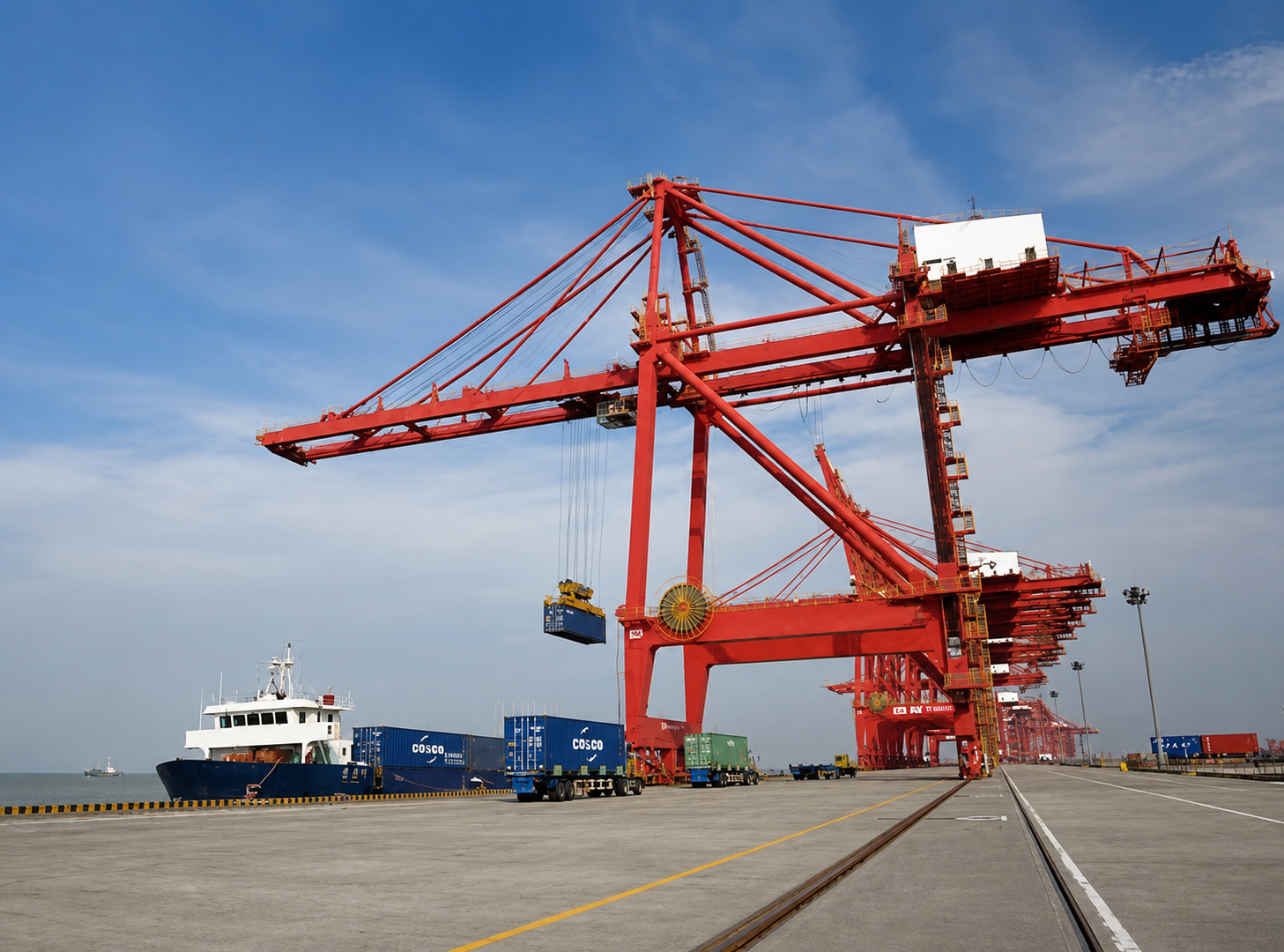
    Bridge crane is widely used in outdoor infrastructure, ports, mines and other conditions, is the core equipment for heavy material lifting. Outdoor equipment has been exposed to natural environment for a long time, and wind is the main hidden danger affecting equipment safety, service life and production schedule. Many enterprises only pay attention to basic parameters such as load and span, ignore wind-resistant design, often cause equipment slip, deformation and shutdown problems, and cause overturning accidents in serious cases, resulting in considerable economic losses.

    The reliable wind-resistant design of overhead cranes is the basic guarantee for safety compliance of outdoor lifting operations, which can effectively reduce equipment failure and operation and maintenance costs. Combined with the actual working conditions, this paper explains in detail the crane wind load principle, wind resistance design points, common windproof devices, industry calculation standards and selection skills, providing practical reference for construction enterprises, procurement personnel and operation and maintenance personnel, and assisting the safe and stable operation of outdoor cranes.

    Challenges Faced by Outdoor Bridge Cranes

    The outdoor complex and changeable wind environment brings multiple irreversible safety and production hidden dangers to the operation of the Henan Mine Crane Factory supply bridge crane. It is also the core pain point that must be solved in the wind resistance design, focusing on three dimensions:

    Strong wind affects the overall stability of the crane: outdoor open field, coastal, mountainous, industrial park and other scenes, instantaneous gust, sustained wind will form lateral thrust and overturning moment on the crane girder, end beam, trolley and lifting load. Crane belongs to high-altitude large-span flexible structure, its own center of gravity is high, wind area is large, wind force will directly break the balance of equipment force, resulting in body tilt, shaking violently, greatly increase the risk of swinging and falling of lifting objects, completely unable to meet the safety requirements of heavy-load operation.

    Risk of crane sliding along the track: When the wind exceeds the friction resistance between the wheel and the track, it will push the bridge crane to slide along the track without control, which is commonly known as “running track” in the industry. This kind of uncontrolled movement is not controlled by operation, which may lead to wheel gnawing, track wear and walking mechanism damage, or cause collision between crane and track terminal, workshop column and other equipment, resulting in equipment damage accident. Especially in the no-load standby state of the crane, the weight is insufficient, and the risk of slip will be greatly doubled.

    Structural damage and production interruption hidden dangers: long-term wind impact, instantaneous strong wind load will continue to wear crane steel structure, resulting in bending of the main beam, weld cracking, loose joints, structural deformation and other structural damage, greatly shortening the service life of the equipment. At the same time, the crane must be shut down urgently to avoid danger in windy weather. The sudden abnormal wind will disrupt the production plan, cause delay of construction period and decrease of production capacity. Frequent equipment maintenance and fault shutdown will continuously increase the operation and maintenance cost of the enterprise and affect the continuous operation of the production line.

    Understanding Wind Loads on Bridge Cranes

    How wind forces affect bridge crane operation

    The effect of wind on the bridge crane is not a single thrust, but an omni-directional, multi-component composite load, mainly in the form of horizontal wind pressure on the core structure of the equipment, omni-directional interference equipment operating state:

    Acting on the crane bridge structure: The overall bridge composed of the main beam and end beam of the Henan Mine Crane Factory supply bridge crane is the main wind-bearing carrier. The large-span bridge has a large windward area. The horizontal wind pressure will generate lateral thrust on the bridge, causing the fuselage to sway and shift., long-term stress will cause fatigue deformation of the steel structure and destroy structural stability.

    Action on trolley and lifting equipment: lifting trolley, winch mechanism, wire rope, hook and other moving parts have compact structure and flexible center of gravity. Under the action of wind force, lateral deviation and swing are easy to occur, resulting in trolley operation jamming and positioning deviation. In serious cases, trolley derailment and mechanism jamming will be caused, affecting the normal operation of equipment.

    Acting on lifting load: lifting materials, equipment without fixed constraints, wind area is irregular, wind will cause a large swing, rotation, not only can not accurately fall, but also produce additional tension and torque, reverse pull crane body, aggravate the shaking of the whole machine, easy to cause lifting objects fall, equipment overturn major safety accidents.

    On the whole, the wind load will completely break the force balance of the crane, reduce the stability of equipment operation, aggravate the track wear and running mechanism failure, and destroy the track flatness and wheel-rail coordination accuracy for a long time, forming a vicious circle and continuously affecting the safe operation of the equipment.

    Key factors influencing crane wind loads

    The wind load borne by the bridge crane is not a fixed value, and is affected by multiple factors such as environment, equipment parameters and operating conditions. The core influencing factors are divided into five categories:

    Wind speed and local climate conditions: Wind speed is the core index that determines the wind load intensity. The greater the wind speed, the exponential increase of wind pressure, and the stronger the impact on equipment. At the same time, climate differences such as coastal typhoon, mountain gust, seasonal monsoon and rainstorm accompanied by strong wind will lead to different wind frequency, duration and peak intensity in different regions, which directly determines the wind resistance level required by equipment.

    Crane span and height: the larger the crane span, the larger the windward area of the main beam, the higher the overall wind load; the higher the installation height of the equipment, the greater the wind speed at high altitude, the air flow is unobstructed, and the wind load effect is more obvious. The wind pressure resistance of the crane at high altitude and high position is much higher than that of the low equipment.

    Structural surface area: The greater the total windward area of the exposed structure of the crane steel structure, electrical room, cab, winch mechanism, etc., the more the wind capacity, the greater the wind load. Cranes with redundant structure design, excessive external parts and square shape have significantly higher wind resistance.

    Lifting load characteristics: the volume, shape and windward area of the lifting material directly affect the additional wind load. Large area plates, frame equipment, bulk materials and other lifting loads are subject to large wind areas, which is easy to generate large wind disturbance loads and greatly increase the mechanical load of the whole machine. At the same time, under no-load and full-load conditions, the center of gravity of equipment is different, and the wind-resistant stability is also obviously different.

    Installation environment: open industrial area, port dock, coastal beach, mountain tuyere and other unobstructed environment, wind no attenuation, wind load is the strongest; and there are factory buildings sheltered, surrounded by buildings, wind will be weakened, wind load is relatively small, is an important reference basis for wind resistance design selection.

    Static Wind Load vs. Operational Wind Load

    The wind resistance design of bridge crane needs to distinguish between two core wind load conditions. The wind standards, protection requirements and stress states of different working conditions are completely different, and the protection scheme must be matched accordingly:

    Normal operating conditions: refers to the normal wind load of crane during normal start and stop and lifting operation, corresponding to daily breeze and small wind environment. Under this condition, the wind speed is relatively stable, and the wind mainly affects the operation accuracy and stability. The design core is to ensure the normal and safe operation of the equipment, avoid the swing of the lifting load and the deviation of the fuselage, and meet the daily production requirements. In the general industry standards, the allowable wind speed of conventional outdoor cranes generally does not exceed Grade 6 wind.

    Non-operation storm conditions: refers to the static wind load of typhoon, strong gust, storm and other extreme weather encountered by crane in standby and unmanned operation. At this time, the equipment has no operation control and is completely fixed by its own structure and windproof device. The stress risk is extremely high, and it is a high-incidence working condition of equipment overturning and sliding. This working condition requires extremely high wind resistance strength, and it is necessary to resist the annual maximum extreme wind speed in the region to ensure the absolute safety of the equipment under shutdown.

    The difference of the two working conditions determines that the crane can not adopt a single windproof design. Only adapt to the working wind load, can not resist extreme storm; excessive strengthening of static windproof structure, and will increase the equipment weight and operation and maintenance costs. Therefore, professional wind-resistant design will configure layered protection system for two working conditions, taking into account operation efficiency and extreme safety.

    Key Elements of Bridge Crane Anti-Wind Design

    Structural design for wind resistance

    Structural optimization is the foundation of bridge crane wind-resistant design. It improves wind-resistant bearing capacity from equipment body and reduces wind load influence from root. The core optimization dimension includes four points:

    Optimize the structural design of the main beam: abandon the traditional heavy and square main beam shape, adopt streamlined and box-shaped optimized section design, reduce the windward area of the main beam and reduce the wind impact on the premise of ensuring the load-bearing capacity. For large-span cranes, transverse stiffeners and auxiliary support structures are added to improve the bending and deformation resistance of the main beam and avoid structural deformation caused by wind impact.

    Improve the overall structural rigidity: by optimizing the steel structure ratio of the whole machine, strengthening the connection nodes between the end beam and the main beam, strengthening the base of the traveling mechanism, etc., improve the overall rigidity of the crane and reduce the shaking and resonance of the fuselage under the action of wind. Effectively avoid weld cracking, bolt loosening and structural fatigue damage caused by long-term wind vibration, and improve the overall stability of the equipment.

    Reduce redundant wind-receiving area: simplify external redundant structure of equipment, optimize installation layout of cab, electrical cabinet and winch mechanism, adopt embedded and flat design, and reduce protruding parts. For the equipment that must be externally installed, add a diversion structure to reduce wind resistance and wind capacity, and reduce wind load from the physical level.

    Selection of suitable materials and safety factors: Henan Mine Crane Factory supply outdoor crane main steel structure selection of high strength weather resistant steel, both lightweight and high strength, to resist wind impact and outdoor corrosion environment. The wind resistance design shall reserve safety margin strictly according to international and national standards. For high wind areas and coastal typhoon areas, the structural safety coefficient shall be appropriately improved to adapt to extreme wind conditions.

    Bridge Crane

    Rail and travel system wind protection

    The track and traveling system are the core of the support and operation of the crane, and are also the key link for wind prevention and anti-skid. The vast majority of outdoor crane wind-caused accidents are related to insufficient protection of the track system. After the wind breaks through the wheel-rail friction force, it will directly push the equipment to run track and derail, so the windproof design of track system is very important.

    Track flatness and alignment accuracy: track installation must strictly follow industry standards to ensure full horizontal alignment, no offset, no settlement, no deformation. The uneven and offset track will greatly reduce the contact friction force between wheel and rail, and it is easy to cause slip under the action of wind force; at the same time, the accurate track layout can ensure uniform stress of equipment and avoid structural damage caused by local stress concentration.

    Optimize wheel-rail contact state: adopt double-rim wear-resistant wheel design to improve the fit and wrapping between wheel and rail, increase contact friction area and improve natural anti-skid resistance. Regularly calibrate wheel/rail clearance to avoid excessive clearance, partial wear and other problems, and ensure the basic anti-slip ability of equipment under static state.

    Optimize the design of walking mechanism: the walking drive mechanism is equipped with a special windproof brake base to optimize the rigidity of the transmission structure and avoid the idling and failure of the mechanism caused by wind reverse thrust. For large-span and large-tonnage outdoor cranes, multi-wheel balanced force design is adopted to disperse wind load and improve the stability of the whole machine in orbit.

    Crane anchoring and fixing systems

    Anchor fixing system is the ultimate protection means of bridge crane against extreme wind, mainly used for rigid fixation under equipment shutdown and extreme storm weather, making up for wheel brake and structural wind resistance performance short board, eliminating the risk of whole machine sliding and overturning, and is the indispensable core windproof configuration of outdoor crane.

    The core function of the anchoring device: under the scenarios of wind speed exceeding the allowable range of equipment work, storm attack, long-term shutdown of equipment, etc., the crane is firmly locked with the ground and track through mechanical rigid fixation, so as to offset the super wind thrust, eliminate track running and overturning accidents from the root cause, and ensure the safety of equipment in extreme weather.

    Mainstream anchoring solutions: Rail clamp is the most commonly used rail anchoring equipment, through mechanical or hydraulic power clamping rail, lock wheel displacement, adapt to daily wind protection; storm brake can cooperate with the walking mechanism to achieve double braking, improve dynamic windproof capacity; mechanical locking device through bolts, snaps to achieve rigid locking of the fuselage and rail, stability is very strong; The ground anchoring system fixes the crane legs, end beams and ground foundation through embedded anchor pits and anchor pins, and is specially designed to cope with extreme conditions such as typhoons and strong winds above Grade 10.

    Common Anti-Wind Devices Used in Bridge Cranes

    Rail clamps and wind brakes

    Rail clamp and windproof brake are the most widely used active windproof equipment for Henan Mine Crane Factory supply outdoor bridge cranes. They are suitable for most conventional outdoor operation scenarios. They are divided into two types: mechanical and hydraulic. They have high degree of automation and stable protection effect.

    Automatic rail clamp system working principle: automatic rail clamp equipped with intelligent induction and power drive mechanism, equipment shutdown, power failure or wind speed exceeds the standard, the system automatically triggers clamping action, jaws closely attached to both sides of the track, relying on mechanical clamping force to produce strong anti-skid resistance, locking crane travel mechanism, to prevent slippage. When the equipment starts operation, it will automatically release the reset, which will not affect the normal operation. During installation, it is necessary to ensure that the contact area between the jaw and the rail is ≥80%, and the gap is controlled at 3-5mm in the loosened state to avoid abnormal noise and wear during operation.

    Core advantages of outdoor application: high degree of automation of equipment, no need for manual high-altitude operation, high safety and fast response speed; can adapt to bridge cranes of different tonnage and span, with strong versatility; can be linked with wind speed monitoring system to realize intelligent protection without manual intervention, greatly reducing operation and maintenance costs.

    Difference between hydraulic and mechanical schemes: hydraulic rail clamp has sufficient power, stable clamping force, no noise, suitable for large-tonnage, large-span heavy bridge cranes, and can cope with high-intensity wind loads; mechanical rail clamp has simple structure, low failure rate, convenient maintenance, high cost performance, and is suitable for small and medium-sized conventional outdoor cranes to meet normal wind protection requirements.

    Crane wheel braking systems

    The wheel brake system is the foundation windproof protection device of crane, which relies on the traveling mechanism brake to realize windproof and anti-skid, and is the first protective barrier of the windproof system of the whole machine. Its core principle is to lock the wheel rotation through the walking brake, prevent the wheel from rolling and sliding, and use the static friction force of the wheel and rail to resist the wind thrust.

    Windproof function of the walking brake: after the equipment stops, the brake automatically locks the wheels, limits the rotation of the wheels, and avoids the problem of track running caused by wind-driven wheel rolling. Under normal light wind and small wind conditions, it can independently realize anti-skid protection, ensure the stability and quiescence of equipment, and is suitable for daily routine weather protection.

    Limitations of single wheel braking: wheel braking can only limit wheel rolling, but cannot prevent the overall lateral slip of the fuselage. When the wind force is too large and exceeds the maximum static friction force of wheel and rail, even if the wheel is locked, the whole machine will still slide along the track, and the protection ability is limited. At the same time, relying solely on wheel braking for a long time will aggravate the wear of brake pads and wheels and shorten the service life of the mechanism. Therefore, wheel braking can only be used as basic protection, and multiple protection systems must be formed with rail clamps and anchoring devices.

    Wind anchoring systems

    Windproof anchoring system is the ultimate protection configuration for extreme weather, belonging to passive rigid protection device, specially for typhoon, strong storm, sustained wind and other conditions beyond the conventional protection capacity, is a necessary configuration of cranes in high-risk wind environment.

    Extreme weather fixed protection principle: through the factory embedded anchor base, anchor pin, connecting rod and other parts, the crane machine and the ground foundation rigid connection, completely lock the fuselage displacement, completely offset the thrust and overturning moment of super wind, eliminate equipment slip, overturning risk, even if encountered more than ten strong winds, but also can ensure that the equipment intact.

    Scenes requiring strengthened anchoring protection: coastal typhoon-prone areas, which are hit by strong typhoons and storms all the year round, with high wind intensity and strong suddenness; plateau, open Gobi, mountain tuyere and other high-wind areas, with frequent strong winds and gusts all the year round, with strong wind persistence; large-scale open-air industrial storage yards, ports, logistics parks and other open operation scenarios without shelter, with no attenuation of wind force and significant wind load effect. All the above scenarios must be equipped with special wind-proof anchoring system.

    Automatic wind monitoring systems

    Intelligent wind monitoring system is the core intelligent equipment of modern bridge crane wind protection, which realizes the upgrade from “passive protection” to “active early warning and intelligent protection”, effectively avoiding the safety risks caused by human operation omissions.

    Wind speed sensor: the equipment is equipped with high-precision wind speed sensor, real-time collection of wind speed and wind data of the operating environment, accurate capture of instantaneous gust and sustained wind data, real-time transmission of data to the operation console and background system, high monitoring accuracy and fast response speed.

    Intelligent alarm system: the system preset safe wind speed threshold, when the real-time wind speed is close to the warning value, automatically trigger the sound and light alarm, remind the operator to stop work, prepare for protection, and avoid wind risk in advance.

    Wind Load Calculation and Design Standards for Bridge Cranes

    Basic principles of crane wind load calculation

    Accurate calculation of wind load is the core basis of Henan Mine Crane Factory supply bridge crane wind resistance design, which directly determines the structural design standard, wind protection equipment selection and safety margin setting. All wind resistance design needs to be based on accurate wind load calculation. The core calculation logic revolves around three core elements.

    Corresponding relationship between wind speed and wind pressure: wind speed is the basic parameter, wind pressure increases exponentially with wind speed, and it is the core pressure source of wind acting on equipment. Wind speed of different grades corresponds to fixed wind pressure standard, which is the basic value of load calculation. It is necessary to strictly follow the local meteorological extreme wind speed value to eliminate insufficient protection caused by parameter underestimation.

    Crane wind area: including the main beam, end beam, trolley, electrical equipment, hanging load and other exposed structures of the total windward area, the larger the wind area, the greater the wind load under the same wind speed, is the core variable of load calculation, calculation needs to fully cover all wind-affected parts, no omission calculation.

    Importance of environmental data: wind load calculation must rely on real meteorological data of project location, including annual average wind speed, extreme maximum wind speed, typhoon frequency, wind duration and other parameters. Accurate environmental data can ensure that the calculation results conform to the actual working conditions, avoid insufficient or excessive design redundancy, and balance safety and economy.

    Factors engineers consider during design

    In the process of wind resistance design and load calculation of bridge crane, engineers need to integrate four core parameters to achieve accurate adaptation of design scheme to scene requirements:

    Local maximum wind speed: collect the meteorological extreme wind speed data of the project location in recent 10-20 years, distinguish between normal working wind speed and extreme storm wind speed, calculate the working wind load and static wind load respectively, and match the double-layer protection standard.

    Crane working conditions: distinguish between no-load, half-load, full load, standby four core conditions, different conditions of equipment gravity, wind state, stability, wind load force difference is very large, need to be calculated one by one, to ensure the safety of all working conditions.

    Maximum lifting load: calculate the additional wind load under the maximum lifting load state in combination with the rated load of the crane, avoid the risk of equipment overturning and lifting out of control caused by heavy load wind, and ensure the wind safety of heavy load operation.

    Equipment installation position: according to different installation positions such as coastal, inland, open factory area, mountain area and tuyere, correct wind load coefficient, adjust structural rigidity and windproof equipment configuration accordingly, and adapt to the wind environment exclusive to the scene.

    Compliance with international crane design requirements

    The wind-resistant design of bridge crane belongs to mandatory compliance design, which must strictly comply with the domestic and foreign general crane design standards. The core includes GB/T 3811-2024, GB/T 47722-2026, ISO, FEM and other international specifications to ensure the compliance and universality of equipment.

    All kinds of standards clearly stipulate the core parameters of crane wind load calculation method, wind resistance structure design requirements, wind protection device configuration standard, extreme working condition safety margin, etc., which are the hard basis of engineering design. Following standardized design, safety hazards, unqualified acceptance, and equipment failure caused by non-standard design can be completely avoided.

    At the same time, according to different operation environments, the standard requires to reserve differentiated safety margin. The safety factor shall be improved in high wind, coastal and typhoon areas. The redundancy design can be reasonably optimized in inland conventional areas, so as to ensure equipment safety, avoid resource waste and realize the optimal balance between safety and cost.

    Conclusion

    The safe and stable operation of outdoor bridge cranes relies on a scientific, perfect and adaptable wind-resistant design system, and a single wind-proof equipment cannot cope with complex and changeable wind conditions. A reliable wind-resistant solution for overhead cranes is an organic combination of multiple technologies. The optimized windproof steel structure improves the anti-load capacity of the equipment from the body, the reliable brake anti-skid system realizes accurate protection under daily working conditions, the professional anchoring device resists extreme storm risk, and the intelligent wind monitoring system realizes active early warning and intelligent risk avoidance.

    For all kinds of outdoor industrial production scenarios, Henan Mine Crane Factory‘s customized wind resistance design scheme can perfectly adapt to different wind environments, different equipment specifications and different operation requirements, avoid equipment failures, safety accidents and production interruption problems caused by wind from the root, greatly improve the safety, stability and long-term performance of outdoor operation of overhead cranes, and provide solid equipment guarantee for safe production, efficient operation and maintenance, cost reduction and efficiency increase of enterprises.

    Henan Mine CraneDiscuss your requirements ↗
  • The Benefits of Using Gantry Cranes for Heavy Lifting

    The Benefits of Using Gantry Cranes for Heavy Lifting

    The Benefits of Using Gantry Cranes for Heavy Lifting

    In heavy industrial scenarios such as harbours, shipyards, construction sites, etc., the safety and efficiency of heavy lifting directly determines project progress and operating costs. As the core of industrial lifting equipment, gantry cranes are replacing traditional lifting systems due to their unique structure and excellent performance. They can move large materials safely and efficiently to meet the needs of modern heavy lifting in terms of stability, efficiency, economy and flexibility, and they are the key equipment for the efficient operation of heavy industry.

    What Is a Gantry Crane?

    Gantry Crane, also known as Gantry Crane, belongs to the bridge type crane. Its bridge through the two sides of the legs, lower beams and running gear, directly supported on the ground track or foundation, the core structure includes the gantry, lifting mechanism, trolley running mechanism and rail wheels. Some of the large equipment is also equipped with windproof devices such as rail clamps, which can withstand high winds and ensure the safety of outdoor operations.

    The working principle of gantry crane is simple and efficient. Through the lifting mechanism to achieve vertical lifting of heavy loads, trolley operating mechanism to drive the lifting device along the horizontal movement of the beam, with the trolley operating mechanism to drive the longitudinal movement of the gantry, the three together constitute a three-dimensional operating space, can accurately handle heavy loads without relying on the support of the building, high flexibility, suitable for a variety of venues and large-scale handling of large and heavy materials over long distances with high precision.

    heavy duty gantry crane

    Key Benefits of Using Gantry Cranes for Heavy Lifting

    Exceptional heavy load capacity

    Heavy Gantry Cranes are specially designed for heavy lifting, with professional mechanical design and high-strength steel, they can lift from several tonnes to hundreds of tonnes, and the customised models can reach thousands of tonnes, and are suitable for all kinds of heavy materials. Compared with traditional lifting equipment, it is not easy to be deformed under heavy load, and can work stably for a long time. It is suitable for heavy load scenarios such as shipyards and steel mills, and provides reliable heavy load solutions for heavy industries.

    Superior stability and safety

    Safety is of paramount importance in heavy lifting operations, and the structural design of the gantry crane guarantees safety from the root. It adopts A-shaped outriggers, double main beams and other enhanced designs to optimise load distribution, and is highly stable under heavy loads, avoiding heavy loads from swaying and tilting. Meanwhile, it is equipped with perfect safety devices such as overload protection, and its structure has undergone strict non-destructive testing, which can significantly reduce the incidence of safety accidents and escort the safe production of enterprises.

    High operational efficiency

    Traditional manual, forklift and other lifting methods are inefficient and limited by the weight of the material and the handling distance, can not meet the needs of modern industry efficient continuous operation. Gantry cranes run smoothly, can quickly and accurately handle heavy loads, the efficiency of port use is 3-5 times that of traditional methods, but also reduces labour input, shortens the project cycle, and indirectly reduces operating costs.

    Excellent mobility and flexibility

    Gantry cranes are extremely flexible and can be selected from rail, rubber tyre (RTG) and portable types according to the operating scenarios, which are suitable for long-term fixed sites, complex outdoor sites and temporary operation needs respectively. It does not require large-scale modification of the site, can be flexibly adapted to indoor and outdoor scenarios, to achieve one equipment to meet a variety of operational needs, can avoid repeated procurement of equipment, improve equipment utilisation and reduce investment costs.

    Cost-effective solution

    Compared with bridge cranes, gantry cranes have more cost-effective advantages, which are centred on saving investment, maintenance and space. It does not need to rely on the building structure, installation and infrastructure costs are lower, the structure is simple and easy to maintain, and can make full use of outdoor space. Data show that under the same conditions, its installation and maintenance costs can be reduced by 20%-30% and 15%-25% respectively, which can significantly reduce the operating costs of enterprises and improve the return on investment.

    gantry crane manufacturer China

    Wide application range

    Gantry cranes have a wide application range, covering all kinds of industrial fields requiring heavy lifting, with core applications in harbours, shipyards, construction sites, steel mills, wind farms, etc., and can be adapted to indoor and outdoor, long-term or temporary lifting needs. Different types of gantry cranes have their own focus, RTG cranes are suitable for harbours, portable cranes are suitable for small and medium-sized enterprises, and full gantry cranes are suitable for large-scale heavy industries, and they have become the core equipment for heavy lifting in various industries due to their advantages of heavy load, flexibility and safety.

    Space optimisation and outdoor suitability

    Gantry cranes do not need to rely on the building structure, do not occupy the workshop column space, can make full use of indoor and outdoor unused space, to enhance the site utilisation, especially suitable for open yards, port terminals, can be achieved in the air lifting, ground access, to avoid site congestion. It also has strong outdoor adaptability, can work stably in high temperature, cold and other harsh environments, and the structure is treated with anti-corrosion and rust prevention, which can effectively resist environmental erosion and reduce equipment failure.

    Gantry Crane vs Other Lifting Crane

    Gantry crane vs Overhead crane

    Both are heavy lifting equipment, but the core differences are in infrastructure requirements and flexibility, as shown below:

    • Infrastructure requirements: Gantry cranes rely on building structures such as workshop columns and roofs for support, requiring reinforcement and modification of the building, with high infrastructure investment. Gantry cranes are supported by independent outriggers, do not need to rely on building structures, easy to install, and low infrastructure investment.
    • Flexibility: Bridge cranes are fixed inside the building, the operating range is limited, and outdoor operation cannot be realised. Gantry cranes can be divided into rail-type, tyre-type, portable and other types, can be flexibly moved to adapt to indoor and outdoor multi-scene operations, a wider range of operations.
    • Applicable scenes: Bidge cranes are more suitable for small and medium-sized lifting operations in indoor fixed workshops. Gantry cranes are more suitable for large outdoor sites, heavy load lifting operations, more adaptable.

    Overall, gantry crane vs bridge crane, gantry crane in flexibility, infrastructure costs, outdoor adaptability is more advantageous, more suitable for modern industrial multi-scene, heavy lifting needs.

    Gantry crane vs Jib crane / Mobile crane

    Jib cranes and mobile cranes are common small and medium-sized lifting equipment, compared with gantry cranes, the core difference is reflected in the load capacity, cost and performance:

    Load capacity: Jib cranes and mobile cranes have limited load capacity and can only undertake lifting tasks of several tonnes to tens of tonnes, which cannot meet the demand for heavy lifting. Gantry cranes can bear several tonnes to hundreds of tonnes of heavy loads, suitable for all kinds of heavy materials lifting.

    Cost and performance: Truck cranes are highly mobile, but the cost of a single lifting is high, suitable for temporary emergency lifting, unable to achieve continuous operation. Jib cranes have simple structure and low cost, but the operating range is narrow and low efficiency. Gantry cranes can achieve continuous, efficient heavy lifting, low long-term operating costs, wide operating range, more cost-effective.

    Applicable scenarios: Jib cranes are suitable for small material lifting in the workshop, and truck cranes are suitable for temporary emergencies and outdoor dispersed point lifting. Gantry cranes are suitable for long-term, continuous, heavy lifting operations, is the core choice for industrial heavy lifting.

    gantry crane vs overhead crane

    Key Industries That Benefit Most from Gantry Cranes

    Gantry cranes play an irreplaceable role in many industries due to their heavy-duty capacity, flexibility, safety and other advantages, of which the following five industries can best reflect their core value, and are also the main application areas of gantry cranes.

    1. Ports and container terminals: As the core equipment for container loading and unloading, transfer, RTG cranes and full gantry cranes can achieve rapid loading and unloading of containers, stacking and transfer, and significantly improve the efficiency of port operations, is the key equipment for the efficient operation of port logistics, and is suitable for all types of containers with heavy lifting requirements.
    2. Steel and metal fabrication plants: Used for billets, steel, heavy duty moulds and other materials handling and lifting, gantry cranes heavy-duty capacity and stability to meet the needs of the steel industry high-intensity, continuous operation, to avoid damage to the material handling process, to enhance production efficiency.
    3. Precast concrete production: Used for lifting, transferring and stacking of precast concrete components, gantry cranes can accurately locate the components to avoid collision and damage to the components, and at the same time improve the handling efficiency, promote the scale and efficiency of precast concrete production.
    4. Wind energy projects: Used for the lifting and loading of heavy components such as wind turbine blades, nacelles and towers, gantry cranes can realise lifting and loading operations with large loads and high lifting heights, which is suitable for the needs of complex outdoor sites of wind power projects, and ensures the safety and efficiency of wind power equipment installation.
    5. Railway and logistics hubs: For the loading and unloading of heavy goods, containers and railway equipment, the flexibility and efficiency of gantry cranes can improve the logistics turnover efficiency and meet the needs of railways and logistics hubs for ‘fast in, fast out’ operations, reducing logistics operating costs.

    How to Choose the Right Gantry Crane for Heavy Lifting

    When choosing the right gantry crane for heavy lifting, you need to combine your own operational needs, focusing on the following four core factors, to avoid safety risks, equipment damage or cost waste due to improper selection. Choosing the right load capacity is the key to avoid safety risks and equipment damage.

    Load capacity and span: Determine the load capacity of the gantry crane according to the maximum weight of materials to be lifted on a daily basis, and it is recommended to reserve 10%-20% redundancy to avoid overloading operations. At the same time, according to the size of the site, determine the span of the crane, to ensure that the operating range covers the entire lifting area, large-span scenarios can choose rigid-flexible outrigger design equipment, to reduce structural deformation.

    Operation level and frequency: According to the frequency of lifting operations, select the corresponding operation level, high-frequency, continuous operations need to choose high-strength, high-stability double girder gantry cranes, low-frequency, temporary operations can choose portable or single girder gantry cranes to reduce investment costs.

    Indoor vs. outdoor use: Indoor work can choose rail-type single girder gantry cranes to save space. For outdoor work, you need to choose gantry cranes with windproof and corrosion-resistant features. If you need to move flexibly, you can choose RTG tyre gantry cranes, which are suitable for outdoor complex sites and harsh environments.

    Mobility needs: For long-term operation at fixed sites, you can choose rail-type gantry cranes, which are more stable. For temporary operation and multi-site switching operation, you can choose portable or tyre-type gantry cranes, which are more flexible and can be put into use quickly without laying fixed tracks.

    As China’s top gantry crane manufacturer, Henan Mine Crane Factory can provide professional selection guidance, combined with the enterprise’s operating scenarios, load requirements, site conditions, for the enterprise to recommend the most suitable type of gantry cranes and specifications, to avoid the selection of misunderstanding, to protect the safety and efficiency of lifting operations.

    Why Choose Our Gantry Cranes

    Henan Mine Crane Factory, as the top gantry crane manufacturer in China, has become the preferred partner of many enterprises around the world with its strong manufacturing strength, professional technical team and perfect service system.

    • Powerful load-bearing: Henan Mine Crane Factory supports heavy-duty customised gantry cranes from 5T-500T and adopts high-strength steel structure design to ensure that the equipment is still stable and reliable in long-term high-load operation, meeting the needs of ports, shipyards and large-scale engineering lifting.
    • Intelligent and efficient: our gantry cranes are equipped with PLC intelligent control and frequency conversion speed control system to achieve accurate positioning and smooth operation, effectively reduce the swing and error, significantly improve operational efficiency and overall production rhythm.
    • Safety and reliability: Gantry cranes have integrated overload protection, limit protection and emergency braking system, multiple safety mechanisms work together to significantly reduce equipment failure and operational risk, to protect personnel and equipment safety.
    • Flexible customisation: Henan Mine Crane Factory gantry cranes can be customised according to project requirements in terms of span, lifting height and functional configurations, flexibly adapting to different industries and working conditions, and providing more targeted lifting solutions.
    • Energy saving and durability: Our gantry cranes adopt high-efficiency motors and optimised structural design, which reduces energy consumption and maintenance costs, and improves the service life of the equipment, helping enterprises to achieve long-term and stable economic returns.

    Henan Mine Crane Factory Custom

    Whether it is ports, shipyards, construction sites, or manufacturing, steel mills, wind farms, gantry cranes are able to solve the traditional lifting pain points by virtue of their own advantages, to promote efficient, safe and cost-effective operation of enterprises. With the development of automation and intelligent technology, gantry cranes will continue to be upgraded and become an indispensable core equipment for modern heavy industry, providing strong support for enterprise development.

    If you are looking for efficient, safe and reliable gantry cranes for heavy lifting, or need a professional customised solution, welcome to contact us. henan Mine Crane Factory, with China’s top manufacturing strength, a professional technical team and a perfect service system, provides you with the right products and services to help enterprises to improve efficiency, reduce costs, and achieve high-quality development, you can contact us now to get a quote and selection guide.

    Henan Mine CraneDiscuss your requirements ↗
  • The Benefits of Regular Overhead Crane Maintenance

    The Benefits of Regular Overhead Crane Maintenance

    The Benefits of Regular Overhead Crane Maintenance

    Bridge cranes are the core heavy equipment for industrial production, widely used in workshops, harbours and other scenarios, and are key to material handling and production advancement.

    Long-term high-load operation can lead to wear and tear of its components, and neglect of routine maintenance can lead to failures, safety hazards and production stagnation. In this article, we will analyse the core benefits of regular maintenance, maintenance warning signals, inspection methods and preventive maintenance programmes to provide reference for enterprise equipment management.

    Why You Should Maintain Your Overhead Crane Regularly

    Regularly carrying out maintenance of overhead cranes is not a simple ‘equipment overhaul’, nor is it a dispensable additional expenditure, but an all-round, multi-level guarantee of production safety, operational efficiency and economic returns, which is an indispensable and important part of long-term development of the enterprise.

    • At the safety level, it can effectively avoid safety accidents such as falling objects and broken parts, and guard the lives of operators and site personnel;
    • At the efficiency level, it can improve the stability and reliability of equipment operation and reduce the impact of unplanned downtime on production; at the cost level, it can deal with minor faults in a timely manner, avoid escalation of faults, and save large amounts of maintenance and equipment replacement costs;
    • From the cost level, it can handle minor faults in a timely manner to avoid escalation and save the cost of maintenance and equipment replacement; from the compliance level, it can strictly comply with the industry safety regulations and annual inspection standards to avoid the risk of legal penalties and damage to brand reputation.

    More critically, normalised and standardised regular maintenance can help enterprises establish a scientific equipment management system, optimise production and operation processes, enhance core competitiveness, and more importantly, achieve sustainable, high-quality production and operation, and build a solid equipment foundation for the long-term development of the enterprise.

    Benefits of Regular Overhead Crane Maintenance

    Enhancing Safety

    Safe production is the bottom line of industrial operation, overhead travelling crane as a high altitude heavy equipment, its operation safety is directly related to the staff’s life safety and the production order of the enterprise, regular maintenance is the key to detect hidden dangers and eliminate accidents.

    Daily maintenance, technicians can find wire rope wear, hook deformation and other minor faults, to avoid its escalation into serious accidents such as falling objects, reduce the risk of work-related injuries, create a safe working environment.

    From the perspective of business operations, pay attention to crane maintenance is not only the responsibility of the staff, but also an important part of the cultivation of safety culture, can enhance the sense of security of the staff, and promote the formation of a good atmosphere of standardised operation.

    Ensuring Reliability and Efficiency

    The operating status of the overhead travelling crane directly determines the efficiency of material handling, which in turn affects the rhythm of the entire production process. A crane in the best operating condition can realise the synergistic and efficient operation of all components, and regular maintenance is the core means to guarantee the performance of the equipment.

    Regular maintenance, technicians will overhaul the core components of the crane, to ensure its optimal operation, from the root to reduce unplanned downtime; industrial production, sudden equipment failure will lead to production stagnation, increase costs, and regular maintenance can enhance the reliability of the equipment, to avoid such problems, to ensure that the production of continuous progress.

    Stable equipment performance is the basis for enterprises to improve the overall production efficiency, efficient continuous operation of cranes can seamlessly connect the various production processes, to ensure that the project is on schedule, and at the same time to enhance the production and delivery capacity and competitiveness of the industry.

    Cost-Effectiveness

    Overhead cranes belong to the enterprise’s major fixed asset investment, its procurement, installation costs are not expensive, and regular maintenance is the key to maximise the value of this investment, can save a lot of long-term operating costs for the enterprise.

    Many companies have ‘heavy use, light maintenance’ of the misunderstanding, ignoring the chain of small faults harm. Crane small wear and tear if long-term indulgence, will evolve into a major component damage, resulting in high maintenance and even equipment replacement costs; regular maintenance can be dealt with in a timely manner to deal with small problems, to avoid the escalation of failures, significant cost savings.

    At the same time, regular maintenance can effectively slow down the aging of the equipment, extend the service life of the bridge crane, so that the original design life of the equipment over the period of efficient operation, maximise the value of fixed assets, to achieve cost-effective and enhance the return on investment.

    Compliance with Regulations

    The operation and maintenance of overhead cranes are strictly bound by national and industry safety regulations and standards, including Canadian safety regulations, OSHA regulations and LOLER annual inspection standards, which must be strictly complied with by the enterprise, which is the basic requirement for complying with the operation and the embodiment of the enterprise’s operational capability.

    Regular maintenance can ensure that the crane performance in line with the industry’s safe operation standards, help enterprises to successfully pass the compliance inspection, to avoid the risk of legal penalties and fines brought about by the violation;

    At the same time, active compliance maintenance can also be transmitted to the industry and customers to the business emphasis on the quality of the operation, adhere to the bottom line of the concept of safety, and enhance the reputation of the brand.

    On the other hand, if a company neglects maintenance and equipment does not comply with regulations and standards, it will not only face legal penalties, but also make customers question the company’s production capacity and management level, which in turn affects the co-operation relationship and has a negative impact on the company’s long-term development.

    Other Core Values of Regular Maintenance

    In addition to the core benefits mentioned above, regular maintenance of overhead cranes can also bring a lot of added value to the daily operation and long-term development of the enterprise, optimising management and enhancing benefits from the details.

    • Firstly, regular maintenance can improve the management of equipment inspection records, professional maintenance service providers can systematically record and sort out the status of the equipment, help enterprises get rid of complicated paperwork, conveniently monitor the operation of the equipment, and provide accurate data support for subsequent equipment management and maintenance planning.
    • Secondly, regular maintenance can enhance customer satisfaction and guard the reputation of the enterprise. Crane failure caused by production stagnation will delay orders, triggering customer dissatisfaction and negative evaluation, affecting cooperation and new business; regular maintenance can eliminate such delays, to ensure that the orders are delivered on time, maintain good customer relations, and lay the foundation for business development.
    • In addition, timely maintenance can quickly identify and solve the complex problems of the equipment, so that the crane is always in normal service, to avoid the decline in production capacity due to long-term equipment downtime, to protect the overall productivity of the enterprise, to provide protection for the growth of corporate revenue.

    Common Signs Your Overhead Crane Needs Maintenance

    Before an overhead travelling crane breaks down, it will often show obvious warning signals, which operators and equipment managers need to pay attention to at all times. Once the following conditions are found, the crane should be shut down immediately and maintenance should be carried out to avoid escalation of the fault.

    • Damaged hooks: Hooks that are bent, permanently stretched, twisted, or cracked can lead to load imbalance, which can affect material handling or cause heavy objects to fall, while the stretching of the sling hook can lead to the separation of the hook from the latch, making it impossible to carry heavy objects stably. Operators need to check the status of the hook before each shift, and deal with the problem in time.
    • Abnormalities of wire rope: there is a risk of breakage if a single strand of wire rope breaks, and the damage to the wire rope may start from the inside, and when there is no obvious problem on the surface, the internal part is already seriously damaged; at the same time, lack of lubrication of the wire rope will cause dryness, which is easy to lead to corrosion and abrasion, so it is necessary to replace the damaged wire rope in time and regularly replenish the lubricant.
    • Wear of brake and buffer parts: brake pads, brakes, clutches are the key parts for controlling the operation of cranes, if there is wear, it will lead to a decline in crane manoeuvrability, unable to stop accurately, and there is a serious safety hazard; brake pads wear is more difficult to find out, if the crane does not run smoothly and the noise increases, you need to check the state of the brake pads in a timely manner.
    • Loose parts: regardless of the size of the loose parts of the equipment should not be ignored, small loose parts may affect the stability of the crane, and more likely to indicate that the equipment due to the load problem of loose fasteners in general, if left unattended, the follow-up may be key bolts loosened, triggering major equipment failures.
    • Component corrosion: steel rust will gradually reduce the bearing capacity of the crane, a small corrosion of the bolt may cause safety accidents, and corrosion may also appear in the wire rope inside, not easy to be found. If rust is found in the joints, bearings, wire ropes and moving parts of the crane, it should be inspected and treated with anticorrosion in time. Meanwhile, high humidity and easy contact with water operating environment should be strengthened to check the frequency of anticorrosion of the equipment.

    How Do You Inspect an Overhead Crane?

    The inspection of overhead travelling crane is not carried out blindly, it should be carried out according to the scientific classification and steps, according to the inspection frequency and depth, it can be divided into two categories of routine inspection and regular in-depth inspection, the different types of inspection have their own focus and complement each other, in order to fully grasp the operating status of the equipment.

    Two core inspection categories

    1. Routine inspection: carried out on a daily, weekly and monthly basis, the inspection focuses on hooks, chains, safety devices and other parts that are easy to wear and directly related to operational safety, and is completed by on-site operators or equipment management personnel, so as to discover obvious faults and hidden dangers in a timely manner.
    2. Regular in-depth inspection: carried out every few months or once a year, including the statutory LOLER annual inspection, to be completed by lifting engineers and other professional and technical personnel, the entire system of the crane for a comprehensive, in-depth inspection, to detect potential hidden faults, to ensure that the equipment as a whole in line with the operating standards.

    Key inspection steps

    • Operation test: Manoeuvre the crane to complete the standard lifting, panning, descending and other actions, carefully observe whether there is any abnormal shaking, noise and other conditions during the operation of the equipment, and synchronously test the response sensitivity of the operating instructions to ensure that the control is smooth and error-free.
    • Component inspection: all mechanical and electrical core components of the crane are checked one by one, focusing on verifying whether there are any abnormal problems such as wear and tear, aging, deformation, leakage, etc., to ensure that the components are in good condition and meet the operating standards.
    • Structural inspection: Comprehensive assessment of the crane frame, running track, support structure and other key parts, check whether there are stress deformation, fatigue damage and other hidden problems, to ensure that the overall structure of the equipment is stable and reliable.
    • Chain and hook analysis: Focus on checking whether there are problems such as broken and worn chains and verifying whether there are deformations, cracks and other abnormalities in the hook, so as to promptly identify the safety hazards of the load-bearing parts and prevent safety accidents from occurring.
    • Brake inspection: accurately test the response speed and braking force of the brake to ensure that the brake can quickly and accurately realise braking, safeguard the safe handling of the crane during operation, and eliminate the hidden danger of brake failure.

    Implementing an Effective Preventive Maintenance Program

    To play the value of regular maintenance, companies need to abandon the ‘temporary maintenance’ thinking, the establishment of preventive maintenance system to meet their production needs, through standardisation, process management of maintenance work, specific can follow the following seven core steps.

    Develop a Maintenance Schedule

    Combined with the recommendations of crane manufacturers, industry norms and standards, taking into account the enterprise’s own production load and operating conditions, to develop a detailed maintenance schedule, specify the core components of the inspection, maintenance, overhaul frequency, to ensure that the maintenance work is fully covered, no omissions.

    Conduct Regular Inspections

    Daily, weekly and monthly routine inspections are fully integrated into the production process to achieve normalisation and standardisation of the inspection work; the scope of the inspection covers all the core components of the crane, such as electrical, mechanical and structural components, and it strictly follows the principle of ‘early discovery and early disposal’ to prevent small faults from escalating into major safety hazards from the root, and to ensure the stable operation of the equipment. Stable operation.

    Utilize Trained Personnel

    The maintenance and overhaul of overhead travelling crane is highly professional, and it is necessary to hire professional technicians with corresponding qualification and rich practical experience to carry out the operation, so as to ensure the precise identification of potential hidden dangers of the equipment, standardise the completion of each maintenance process, effectively avoid the secondary damage of the equipment triggered by non-professional operation, and guarantee the quality of maintenance and overhaul and the safety of the equipment operation.

    Maintain Comprehensive Records

    Detailed records of all inspections, maintenance, repair work, clear maintenance time, specific content, hidden dangers found and disposal methods, through the data tracking equipment operating status and failure patterns, to provide a scientific basis for subsequent maintenance planning.

    Invest in Quality Parts

    When repairing the equipment, we insist on using original, high-quality parts produced by regular manufacturers to prevent early failure of the equipment caused by poor-quality parts, and to protect the reliability and safety of crane operation.

    Implement a Feedback Loop

    Build exclusive communication and feedback channels between operators and maintenance personnel, operators daily contact with the equipment, can be the first time to capture the equipment abnormal sound, vibration and other hidden signals, timely feedback to the maintenance team, to achieve a rapid response to hidden problems, efficient disposal, from the source to avoid the escalation of small hidden problems into major failures.

    Leverage Technology

    The introduction of Internet of Things sensors, predictive maintenance software and other advanced technologies, real-time monitoring of the core components of the crane, through data analysis to pre-judge the possible failure of the equipment, to achieve the change from ‘after the fact maintenance’ to ‘prediction’, and more efficiently arrange for the maintenance work, minimising equipment downtime. Maintenance work, minimise equipment downtime.

    Common Overhead Crane Maintenance Mistakes and How to Avoid Them

    In the actual maintenance work of overhead travelling crane, many enterprises fall into all kinds of maintenance misunderstandings due to cognitive bias or management negligence, resulting in a significant reduction in the effect of equipment maintenance, and even aggravate the aging of the equipment. Only clear common misunderstandings, and master the corresponding avoidance methods, in order to let the maintenance work really play a role.

    Identifying Mistakes

    1. Ignore the routine inspection: in order to save time and cost, skip the daily, weekly and monthly routine inspections, resulting in early hidden equipment can not be found in a timely manner, and ultimately evolve into a major failure.
    2. Ignore small problems: that the small wear and tear of equipment, small loose does not affect the operation, negligent treatment, unaware that these small problems will continue to accumulate, triggering a chain reaction, resulting in more serious equipment damage.
    3. Illegal use of equipment: overloading the crane or using it for work beyond its designed purpose, resulting in additional pressure on equipment components, accelerating wear and aging.
    4. Delayed maintenance period: after the discovery of equipment failure, due to production task tightness and other reasons, do not arrange for timely maintenance, continue to let the equipment ‘run with the disease’, which ultimately leads to the escalation of the failure, the maintenance cost increased significantly.

    Best Practices

    1. Strictly adhere to the inspection schedule: the maintenance and inspection programme is implemented on the ground, no matter how tight the production task is, all inspections are completed according to the frequency, so that the maintenance work becomes a fixed part of the production.
    2. Timely processing of all found problems: no matter how big or small the hidden problems are, as long as they are found during the inspection, they will be shut down immediately to deal with them without taking any chances, so as to prevent the escalation of failures from the root cause.
    3. Strengthen operator training: systematic training for crane operators, so that they are proficient in the operation of the equipment specifications, load limits and use of contraindications, to avoid damage to the equipment due to irregularities in operation.
    4. Establish a standardised maintenance process: standardise all aspects of maintenance work, clarify the content of the inspection, maintenance specifications, responsible personnel, the formation of a regular maintenance mechanism, to avoid the arbitrariness of maintenance work.
    5. Do a good job of the whole process of documentation: all the inspection, maintenance, repair work for archiving, maintenance work to achieve traceability, verifiability, for the long-term management of equipment and subsequent failure analysis to provide support.

    Conclusion

    Regular maintenance of overhead cranes is an all-round safeguard initiative for enterprises around safe production, operational efficiency, cost optimisation and compliance.

    Only by paying attention to equipment maintenance and ensuring its stable operation can we guarantee continuous production, maximise return on fixed assets, guard corporate safety and reputation, and help enterprises achieve high-quality sustainable development.

    Henan Mine CraneDiscuss your requirements ↗
  • The Basic Ways and Skills of Single Girder Crane Purchase

    The Basic Ways and Skills of Single Girder Crane Purchase

    The Basic Ways and Skills of Single Girder Crane Purchase

    Single-girder bridge cranes are suitable for light and medium-sized working conditions, with a load of 1-32 tons, suitable for low-rise factories, and the operation and maintenance cost is better than that of double-girder cranes.Many purchases only rely on peak load or price selection, which is prone to poor equipment adaptation.This article explains the procurement skills of single-girder cranes from the aspects of working conditions, selection, parameters, manufacturers, quotations, etc., to help enterprises choose suitable and reliable lifting equipment.

    Understand Your Lifting Requirements Before Purchasing

    Before comparing equipment models, prices, and manufacturers, the primary core task is to sort out their actual operating needs.The basis for the selection of all single-girder crane parameters is derived from on-site working conditions. Accurate approval of basic requirements is the key to avoid overkill of equipment and small cars.

    Determine the heavy load

    Lifting load is the primary selection parameter of single girder crane, and it is easy to choose the wrong one.Procurement cannot only set the tonnage according to the occasional peak load, but the conventional load and the maximum load must be calculated at the same time to prevent the selection from being too large and wasteful, or too small to cause accelerated wear and tear of components.The selection should also reserve the load margin to predict the future demand for capacity improvement, and the crane life can reach 15-20 years to avoid equipment replacement in the short term.

    Verify the lifting height

    The lifting height is the vertical stroke of the hook, which is related to the usable working space of the plant. Estimation errors are very common.The selection of the type cannot only look at the nominal parameters of the equipment. It is necessary to calculate the headroom of the plant, the height of the main beam and the hoist, and the safety margin, and distinguish the installation height of the whole machine from the effective lifting height.The low-rise plant should also be included in the height occupied by the spreader to prevent insufficient lifting stroke after installation.

    Measuring span and operating stroke

    The span, cart travel, and on-site space determine the coverage of crane operations, which is the basis for customizing the specifications of single-girder cranes.The span is the distance between the centerline of the track, which is usually 5-30 meters. Non-standard customization is required when the on-site dimensions do not match.It is also necessary to determine the longitudinal walking distance of the cart, investigate obstacles such as columns and pipelines, and reasonably plan the track and the whole machine plan.

    Confirm the operating environment

    The operating environment determines the crane material, protection level, electrical and anti-corrosion and explosion-proof scheme.Distinguish between indoor and outdoor installation, and outdoor models need to be windproof, rainproof and rustproof.At the same time, evaluate temperature and humidity, dust, corrosive media, and explosive gases; the working conditions of different industries such as steel mills, chemical industry, and papermaking require targeted configuration, and ordinary standard cranes cannot be directly applied.

    Choose the Right Type of Single Girder Crane

    Single-girder cranes are divided into a variety of structure and configuration types. The installation methods, space adaptability, operating performance, and applicable scenarios of different models are significantly different. Selecting the right model based on on-site working conditions can greatly improve operating efficiency and reduce procurement and operation and maintenance costs.

    Upper rail and lower suspension single girder cranes

    According to the installation structure, the core of single-girder cranes is divided into two categories: upper rail type and lower suspension type (underslung). The core basis for selection is the headroom of the plant, the track structure, and the span requirements.

    The upper-rail single-girder crane installs the track on the upper flange of the driving beam. The structure has strong bearing capacity, wide span adaptation range, and high operating stability. It can be adapted to large-span, medium- and high-frequency operation scenarios. It is mostly used for new factories, heavy-duty material handling, and work spaces with a span of more than 12 meters. There are no special restrictions on the structure of the track beam. It is the mainstream choice for industrial scenarios.

    The under-suspension single-girder crane track is installed on the lower flange of the driving beam. The biggest advantage is to save the top space of the plant, effectively increase the lifting height of the hook, and perfectly adapt to the transformation scenes of low-rise factories and old workshops.

    This model can be installed directly on the steel structure of the original building, without the need to build a special column, and is mostly used in assembly workshops, maintenance workshops, and light material handling scenes, but the upper limit of load-bearing and span is slightly lower than that of the upper rail type model.

    Electric hoist configuration selection

    The electric hoist is the core lifting component of a single-girder crane. Its configuration directly determines the lifting speed, operating accuracy, service life and operation adaptability of the equipment. It is the core guarantee of the carrying capacity and operating efficiency of a single-girder bridge crane.

    Commonly used hoists are divided into wire rope electric hoists and chain electric hoists:

    • The wire rope hoist has large bearing capacity, stable operation, wear-resistant and durable, and is suitable for medium- and heavy-duty and high-frequency continuous operation scenarios. It is the main industrial configuration.;
    • The chain hoist has a compact structure, compact size and high cost performance. It is mostly used in light load, low frequency, precision assembly, and equipment maintenance scenarios.

    At the same time, it is necessary to reasonably match the lifting speed and operating speed: a single-speed configuration can be selected for conventional operations, and a two-speed or frequency conversion speed control configuration can be selected for scenarios that pursue precise positioning and precision hoisting.

    Frequency conversion drive (VFD) can achieve stepless speed regulation, reduce the impact of equipment start and stop, protect the motor and steel structure, and extend the service life of the equipment. It is the preferred configuration for medium and high frequency operations.

    Selection of standard and customized models

    Standard single-girder cranes are suitable for conventional span, standard lifting height, and ordinary indoor room temperature and dust-free working conditions. Mass production is cost-effective and fast delivery speed, which can meet the basic handling needs of most ordinary warehouses and conventional workshops.

    When the working conditions exceed the standard parameters, the crane needs to be customized, such as non-standard span, special lifting height, special power supply, explosion-proof and anti-corrosion, and special control scenarios.The design is tailored according to the working conditions of the plant, and the space is better adapted to reduce failures and improve equipment utilization.

    Key Technical Parameters to Compare Before Buying

    The core of screening the advantages and disadvantages of equipment and comparing the product differences of different manufacturers lies in checking the parameters of the single girder crane. All key parameters must be clearly marked in the quotation and contract to avoid vague and shoddy parameters.The core comparison parameters are as follows:

    • Rated lifting weight: represents the maximum safe operating load of the equipment. When purchasing and selecting models, it is necessary to match the daily conventional operating load and the instantaneous peak load at the same time to ensure reasonable tonnage selection and avoid long-term overload operation or redundant waste of equipment performance.
    • Crane span: Refers to the centerline spacing of the equipment’s operating track, which is the core size parameter. It needs to be checked according to the actual width of the plant to confirm the selection of standard sizes or customize non-standard spans as needed to ensure that the equipment is accurately adapted to on-site installation conditions.
    • Lifting height: For the effective vertical working stroke of the crane hook, it is necessary to reserve the space occupied by spreaders, fixtures, hanging beams and other accessories when selecting the type to ensure that the actual lifting height fully meets the needs of production operations.
    • Work level / work system: strictly refer to FEM, ISO, and CMAA industry standards to distinguish between different work levels of A1-A8, and match the corresponding working condition level with the daily working time, operating frequency, and load rate of the equipment to adapt to the long-term working intensity of the equipment.
    • Lifting and operating speed: it covers the three speed parameters of hook lifting, vertical operation of the cart, and horizontal operation of the trolley. According to the requirements of the operation accuracy, choose ordinary single-speed or frequency conversion speed regulation configuration, taking into account the operation efficiency and smooth operation.
    • Power supply method: Check the voltage, phase, and frequency standards of on-site industrial electricity, confirm whether the power supply configuration of the equipment matches, and confirm in advance whether transformer equipment needs to be installed for non-conforming working conditions to avoid power failure.
    • Control method: At present, the mainstream is divided into three forms: wired control of the handle, wireless remote control control, and cab control. It can be flexibly selected according to the operating scene, operating distance, and operating accuracy.
    • Hooks and lifting mechanisms: including ordinary hooks, rotating safety hooks and other types, it is necessary to focus on verifying the material technology and structural design of the lifting core mechanism to ensure the safety of hoisting and the durability of the structure.
    • Track and installation requirements: check the adapted track model and the carrying parameters of the driving beam, confirm the end limit, buffer device, installation reference and other supporting requirements, and ensure the equipment installation specifications and stable operation.

    The work level is often ignored.Ordinary single-girder cranes are mostly A3-A5 grade, and A6 and above should be selected for high-frequency continuous operation; low-level equipment can easily produce structural, motor, and brake failures due to heavy loads, which shortens the life of the equipment.

    How to Evaluate a Single Girder Crane Manufacturer

    High-quality equipment is inseparable from reliable manufacturers. Parameter matching is only the basis. The manufacturer’s R&D production capacity, quality control system, customization ability, and after-sales guarantee directly determine the quality of equipment and long-term use experience.

    Production and industry experience

    Give priority to manufacturers with many years of special crane production experience, and focus on verifying whether manufacturers have landing cases in the same industry and under the same conditions.The production experience of ordinary warehouse cranes cannot replace the production capacity of equipment under special working conditions such as explosion-proof, high temperature, corrosion, etc.

    At the same time, investigate the manufacturer’s self-research and design capabilities, whether it has finite element analysis, non-standard structural design capabilities, as well as its own production workshop and assembly line, and eliminate small manufacturers that are purely OEM and outsourced processing.

    Quality control system

    Regular manufacturers have a complete full-process quality control system: the welding process of core structures such as main beams and end beams must meet industry standards, and key welds need to be tested for non-destructive testing; electrical components such as motors, switches, brakes, etc. need to be tested one by one before leaving the factory, and they have formal qualification certification.;

    The equipment must complete full load and overload testing and debugging of the whole machine before leaving the factory, and a complete test report, quality inspection documents, and certificate of conformity can be provided.

    Customization ability

    High-quality manufacturers can realize full-dimensional customization according to on-site needs: non-standard structure size, special hoist configuration, customized control system, electrical components adapted to special environments, explosion-proof, anti-corrosion and dust-proof special protection, etc.Perfect customization capabilities are a direct manifestation of the manufacturer’s engineering and technical strength, and can accurately solve the procurement problems of various complex factories and special working conditions.

    After-sales service guarantee

    Cranes are special equipment, and installation, commissioning and post-maintenance are essential.Before purchasing, it is necessary to confirm that the manufacturer can provide professional installation guidance, on-site commissioning, and equipment acceptance services.;

    Verify the inventory and delivery cycle of commonly used accessories to ensure convenient late maintenance and replacement; confirm that manufacturers provide lifetime technical support, regular maintenance return visits, and rapid response to failures to eliminate after-sales unprotected “one-shot sales”.

    Common Single Girder Crane Purchasing Mistakes

    Combined with industry procurement cases, summarize the eight high-frequency procurement misunderstandings to help companies accurately avoid pits:

    1. Only rely on the selection of rated load tonnage, ignoring the working level: for single-girder cranes of the same tonnage, there is a huge gap in the operating intensity and service life of the whole machine that can be adapted to different working levels.If low-level equipment is selected in high-frequency and continuous operation scenarios, various types of failures can easily occur frequently under long-term operation, greatly shortening the service life of the equipment.
    2. Ignoring the calculation of the headroom height of the plant: The height occupied by the crane’s main beam, electric hoist, spreader and other structures was not comprehensively accounted for during the selection of the type. After the equipment is installed, the effective lifting height does not meet the production requirements, and the whole machine cannot be put into production normally.
    3. Failure to accurately measure the original track parameters: When purchasing the crane for the renovation project of the old workshop, the key parameters such as the original track model and load-bearing capacity were not carefully checked, and the walking mechanism of the new equipment cart did not match the track, causing it to be unable to be installed or the operation was stuck.
    4. One-sided pursuit of low-cost procurement: only compare the procurement quotation, ignoring the steel material, component configuration, welding technology, and after-sales guarantee. Low-cost equipment has frequent failures in the later stages and high maintenance frequency, but the overall operation and maintenance cost is higher.
    5. Ignore the on-site power supply conditions: the on-site voltage, phase, and frequency have not been verified in the early stage of procurement, and the equipment cannot be directly powered on and operated after it arrives. Additional procurement and installation of transformer equipment are required, which will increase the additional construction period and cost.
    6. Ignoring the special requirements of the operating environment: using ordinary standard cranes in special working conditions such as corrosion, high dust, flammable and explosive, the equipment will accelerate corrosion and aging, and the electrical components will have safety risks and bury safety hazards.
    7. Failure to verify the manufacturer’s after-sales service capabilities: the manufacturer’s maintenance response and spare parts inventory were not confirmed before the purchase, technical support was lacking after the equipment was delivered, the parts delivery cycle was long, and the failure could not be repaired in time, resulting in workshop downtime losses.
    8. The contract does not specify the technical parameters: the equipment specifications are only communicated verbally, and the key parameters such as load, span, and configuration are not implemented in the written contract. Once the goods are not on the board, there is a lack of basis for rights protection.

    A Practical Single Girder Crane Purchasing Checklist

    In order to facilitate the standardized selection of purchasing personnel, organize a complete set of procurement verification lists, and check them item by item before placing an order to eliminate omissions.:

    1. Operating conditions: Sort out the type of materials hoisted on site, the frequency of daily operations and the moving line planning of material handling, and determine whether the crane is installed indoors or outdoors.Comprehensively collect on-site environmental data, including environmental temperature and humidity, dust concentration, corrosive media, and whether there are explosion-proof requirements, as the basic basis for the overall configuration and selection of equipment.
    2. Load requirements: Carefully calculate the maximum peak load of hoisting and the long-term stable daily operating load, and reserve sufficient load margin in combination with the company’s subsequent capacity expansion plan.The selection cannot only look at the tonnage. It needs to be determined comprehensively based on the dual indicators of operation frequency and actual load to avoid long-term overload of equipment or redundant performance.
    3. Span parameters: Accurately measure the span size between the center lines of the two operating tracks of the plant, and determine whether to choose a standard model or a non-standard customization.At the same time, investigate the location of obstacles such as plant columns, pipelines, and other equipment, and investigate the risk of interference in advance to ensure the normal operation of the crane.
    4. Lifting height: Calculate the actual effective lifting height available for the hook, and reserve a safety margin based on the headroom height of the plant, the height of the main beam and the hoist itself.For low-rise plant scenarios, priority is given to matching low-headroom electric hoists to maximize the use of limited headspace.
    5. Work level: Refer to FEM and ISO industry standards to match the corresponding crane work level, and select the appropriate level according to the actual work intensity and load cycle frequency on the site to prevent low-level equipment from being used for high-frequency operations, causing premature damage to the equipment.
    6. Environmental protection: Determine the electrical IP protection level according to the working conditions and environment. When there are special requirements, special protection programs such as explosion-proof, anti-corrosion, and high temperature resistance are provided to improve the operating stability of the equipment under harsh working conditions.
    7. Hoist configuration: Select the wire rope hoist or chain hoist based on the lifting weight and operation requirements, determine the lifting operation speed, and choose ordinary fixed speed or frequency conversion speed control scheme as needed, taking into account the smooth operation and operating efficiency.
    8. Control system: According to operating habits and operating scenarios, choose wired handle, wireless remote control or cab control method.Check the voltage and phase parameters of the on-site power supply in advance to ensure that the electrical system matches the on-site power supply conditions.
    9. Safety configuration: Itemize the complete set of safety accessories such as hook safety locks, overload protection, stroke limit switches, and end buffer devices, and require manufacturers to provide complete equipment quality inspection and inspection reports to ensure the safety of hoisting operations.
    10. Manufacturer qualification: Carefully verify the factory’s landing project cases in the same industry, evaluate its quality control system, non-standard customization design capabilities, and complete after-sales service system, and give priority to regular manufacturers with their own production workshops.
    11. Quotation contract: Implement all technical parameters, parts configuration, quality assurance scope, delivery cycle, etc. into the written contract, refuse to rely only on oral agreements, and avoid disputes over misplaced goods in the later period.
    12. After-sales guarantee: Clarify detailed service rules such as installation and commissioning, on-site acceptance, regular maintenance, spare parts supply, and technical support during the procurement phase, and determine the timeliness of fault response to avoid after-sales unsecured situations.

    Conclusion

    Single girder crane procurement is not a simple equipment purchase and purchase, but a systematic selection that needs to be combined with the long-term production needs of the enterprise.As a commonly used lifting equipment in light and medium-sized industrial scenarios, its lifting weight, span, lifting height, working level and operating mode will affect the actual use effect of the equipment and the later maintenance cost.

    Professional procurement needs to combine working conditions, equipment parameters, manufacturer strength and full life cycle costs, calculate the plant, load, operating frequency and environment, and match the configuration of single-beam bridge cranes.Henan Mine Crane can provide customized design, production and quotation solutions according to the needs of the plant and hoisting, to help customers choose suitable lifting equipment.

    Henan Mine CraneDiscuss your requirements ↗
  • STS Crane vs RTG Crane: Which is Better for Container Handling?

    STS Crane vs RTG Crane: Which is Better for Container Handling?

    STS Crane vs RTG Crane: Which is Better for Container Handling?

    Global container trade keeps growing, and every terminal expansion project runs into the same bottleneck: equipment selection. Container handling efficiency is no longer a back-office concern, it directly determines whether a port wins premium vessel calls or loses them to a faster competitor down the coast.

    Two machines sit at the center of that equation, the STS crane and the RTG crane . Together they form the backbone of the full container flow chain, vessel unloading, yard stacking, and truck or rail dispatch. Get the balance wrong, and the consequences show up fast: berth congestion, inflated operating costs, and falling productivity per crane hour.

    This guide breaks down STS crane vs RTG crane in full technical, operational, and financial detail, and gives terminal planners a practical framework for choosing, and combining, the right container handling equipment.

    Overview of Container Handling Systems in Modern Ports

    The Full Container Flow, Step by Step

    A container’s journey through a terminal follows a consistent sequence: ship → STS crane → yard transfer → RTG crane → truck or rail. Each handoff point is a potential bottleneck, which is why equipment selection at every stage matters as much as the individual machine’s specifications.

    Key Equipment Categories

    • Quay cranes (STS):vessel-to-shore transfer
    • Yard cranes (RTG, RMG):container stacking and storage
    • Straddle carriers:short-distance direct transfer
    • Reach stackers:flexible, lower-volume yard handling

    Why STS and RTG Dominate Global Ports

    STS and RTG cranes remain the default combination at container terminals worldwide because they deliver the highest efficiency for the lowest operational complexity, scale cleanly from mid-size to mega terminals, and integrate readily with modern automation and terminal operating systems (TOS).

    What Is a Ship-to-Shore (STS) Crane?

    Definition and Role

    Henan Mine Crane manufactured STS crane is a large, quay-mounted gantry crane purpose-built to transfer containers between a vessel and the terminal. It is the single piece of equipment that determines how fast a ship can be turned around — and therefore how much revenue a berth can generate per day.

    Structural System

    The STS crane’s structure consists of:

    • A steel portal frameanchored to the quay
    • A long outreach boom, extending up to 70+ meters over the vessel
    • A trolley systemthat travels horizontally along the boom
    • A hoist systemthat raises and lowers the spreader
    • A spreader with automatic twist-lock mechanismthat grips the container’s corner castings

    Typical Technical Specifications

    Specification Typical Range
    Lifting capacity 40–100 tons (up to 200 tons for tandem/heavy-lift models)
    Outreach 30–70 meters
    Rail gauge 10–30 meters
    Lifting height 20–50 meters

    Types of STS Cranes

    STS cranes are classified by the vessel size they’re built to service:

    • Panamax:fits the original Panama Canal locks
    • Post-Panamax:wider reach for larger vessels
    • Super Post-Panamax:built for ultra-large container ships (ULCS)
    • Megamax:the largest class, servicing 24,000+ TEU vessels

    The STS Automation Trend

    Modern STS cranes increasingly rely on semi-automated operation, remote-control cabins located away from the crane itself, and AI-assisted vessel loading optimization that sequences lifts to minimize cycle time and avoid stack collisions.

    Twin-Lift and Tandem-Lift Spreaders

    One of the most significant productivity upgrades in recent STS crane generations is the shift toward twin-lift and tandem-lift spreaders, which can grip and move two 20-foot containers simultaneously instead of one at a time. On paper, this doubles theoretical lift capacity per cycle, though realized gains depend heavily on vessel bay layout, container mix, and how well the yard-side equipment can keep pace with the faster unloading rate. This is a recurring theme in crane selection: a faster STS crane only improves overall terminal performance if the rest of the chain, especially the RTG fleet, can absorb the extra volume.

    What Is a Rubber-Tired Gantry Crane (RTG)? Full System Analysis

    Definition and Working Principle

    Henan Mine Crane manufactured RTG crane is a mobile gantry crane mounted on rubber tires, purpose-built for stacking and retrieving containers inside the storage yard. Unlike the STS crane, it never touches the vessel, its entire job happens on land, between the yard block and the trucks or rail cars that move containers in and out of the terminal.

    Core Components

    • Gantry framespanning the width of a yard block
    • Rubber tire travel systemfor omnidirectional movement between blocks
    • Hoisting trolleyfor vertical lift and stacking
    • Power system— diesel, hybrid, or fully electric
    • Spreader system, typically adjustable between 20-foot and 40-foot containers

    Typical Specifications

    Specification Typical Range
    Lifting capacity 30–65 tons
    Stack height 1-over-5, 1-over-6, or 1-over-7
    Span 18–30 meters
    Travel speed 100–200 m/min

    RTG Power Systems Evolution

    RTG power sources have shifted significantly over the past decade:

    1. Diesel RTG:the traditional standard, now being phased out at many ports
    2. Electric cable-powered RTG:connected to a fixed power grid, zero local emissions
    3. Hybrid RTG:currently the most widely deployed configuration, balancing flexibility and efficiency
    4. Fully electric RTG (e-RTG):the leading edge of the green port trend, cutting fuel costs sharply and eliminating exhaust emissions entirely

    Why Fleet Size Matters More Than Individual Crane Specs

    Because a single RTG only manages one yard block at a time, terminal yard capacity is really a function of fleet size and block layout, not any one crane’s specifications. This is a key operational difference from STS cranes, where a small number of very large machines carry the entire vessel-side workload. Planners sizing an RTG fleet need to think in terms of blocks-per-hour throughput and tractor-trailer turnaround time, not just individual crane lift capacity.

    STS Crane vs RTG Crane — Functional Role Difference in Container Flow

    STS Crane Role

    Henan Mine Crane manufactured STS crane handles vessel loading and unloading, operating as the direct interface between ship and shore. Because vessel time at berth is the terminal’s most expensive resource, the STS crane runs under constant pressure to hit high-speed cycle targets.

    RTG Crane Role

    Henan Mine Crane manufactured RTG crane handles yard stacking, storage optimization, and container sorting and retrieval. It functions as the buffer between the fast-paced vessel operation and the comparatively slower, more variable landside logistics of trucks and rail.

    Key Insight

    STS and RTG cranes aren’t competing solutions, they’re sequential links in the same chain:

    • STS = the ocean interface machine
    • RTG = the landside logistics optimizer

    Asking “which is better” is really asking two different questions about two different jobs. A terminal doesn’t choose one over the other; it decides how much capacity to deploy in each role.

    STS Crane

    Engineering and Structural Differences

    Foundation and Installation

    The STS crane requires a fixed rail system on a deep quay foundation engineered to handle enormous static and dynamic loads at the waterside edge. The RTG crane, by contrast, operates on a ground-based, flexible yard surface with no comparable foundation demands, which makes it far cheaper and faster to deploy or relocate.

    Mobility System

    Henan Mine Crane Factory supply STS cranes move in a single dimension, linear rail-mounted travel along the quay. RTG cranes move in multiple dimensions, offering rubber-tire omnidirectional mobility across yard blocks, which is what makes them adaptable to changing yard layouts.

    Structural Load Characteristics

    STS cranes are engineered around extreme wind-load resistance, since their tall, exposed boom structure is highly vulnerable to storm conditions at the waterfront. RTG cranes are engineered around dynamic load balancing, since they’re constantly in motion across uneven yard surfaces while carrying heavy loads.

    Durability Requirements

    STS cranes require marine corrosion protection for steel components exposed to salt air. RTG cranes require tire and chassis fatigue resistance, since tires and axles absorb continuous mechanical stress from yard travel.

    Operational Efficiency Comparison

    Cycle Time Performance

    Advanced STS cranes typically achieve 25–40 gross moves per hour (GMPH), with the most modern tandem-lift systems pushing beyond that range. RTG cranes don’t have a directly comparable metric, their contribution is measured as support cycle efficiency, since their throughput depends on how quickly trucks and rail assets can move containers in and out of the yard.

    Container Throughput Capacity

    • STS crane performance determines berth productivity:the primary metric port authorities use to price and prioritize vessel calls.
    • RTG crane performance determines yard bottleneck elimination:how quickly the yard can absorb inbound containers and release outbound ones without stalling.

    Port Congestion Impact

    The two machines fail differently, and the consequences aren’t symmetrical:

    • An STS bottleneck causes vessel delay, which is immediately visible and costly,ships pay demurrage, and shipping lines reroute future calls.
    • An RTG bottleneck causes yard congestion, which is often less visible in the short term but compounds into gate delays and truck queuing over time.

    Coordination Efficiency

    A high-performing STS crane that regularly waits on yard transport vehicles is effectively operating at the yard’s speed, not its own rated capacity. Closing that gap is usually a scheduling and equipment-allocation problem rather than a hardware problem, which is one reason TOS investment often delivers faster returns than incremental crane purchases.

    Cost Comparison — CAPEX vs OPEX Breakdown

    Initial Investment

    Henan Mine Crane Factory supply STS cranes represent an extremely high capital investment, combining the crane’s own cost with the quay infrastructure, rail systems, and deep foundation work required to support it. RTG cranes require moderate, scalable investment, terminals can add units incrementally as yard volume grows, without major civil works.

    Operating Cost

    • RTG operating costis driven primarily by fuel or electricity consumption, which varies significantly depending on whether the fleet is diesel, hybrid, or fully electric.
    • STS operating costcombines maintenance, skilled labor, and peak-demand energy consumption tied to lifting cycles.

    Maintenance Cost Structure

    STS maintenance centers on heavy structural systems, cable management, and trolley mechanisms, repairs that often require specialized contractors and extended downtime. RTG maintenance is dominated by tire wear, engine service, and hydraulic system upkeep, which is generally less specialized but more frequent.

    Long-Term ROI

    STS cranes deliver high ROI at mega ports, where vessel call volume and berth productivity justify the capital outlay. RTG cranes deliver flexible ROI for scalable terminals, where the ability to add capacity incrementally matters more than maximizing any single unit’s output.

    Total Cost of Ownership Beyond the Purchase Price

    Procurement teams often anchor on purchase price alone, but total cost of ownership (TCO) tells a more complete story. An STS crane’s lifespan typically spans several decades, which means financing structure, spare-parts availability, and manufacturer support agreements matter as much as the sticker price. For RTG fleets, TCO is more sensitive to power source: a diesel fleet carries ongoing fuel-price exposure that an electrified fleet largely avoids, even though the electrified units usually cost more upfront. Terminals evaluating STS crane vs RTG crane investment should model TCO over a 15–20 year horizon rather than comparing capex figures in isolation.

    Productivity Impact on Container Terminal Design

    High-Volume Mega Ports

    At mega ports, an STS crane fleet becomes mandatory infrastructure, without sufficient quay cranes, berth productivity collapses regardless of yard efficiency. RTG fleets support this by enabling high-density stacking, maximizing storage capacity within a constrained yard footprint.

    Medium Ports

    Mid-size terminals generally need a balanced STS and RTG system design, sized proportionally to expected vessel calls and cargo dwell time rather than maximized for peak throughput.

    Inland Terminals

    Inland container depots and dry ports have no vessel interface at all, so RTG cranes dominate, their mobility and lower infrastructure requirements make them the practical default for pure yard and rail operations.

    Automation and Smart Port Integration

    STS Automation Systems

    Automated STS operations now commonly include remote-control operation from centralized control rooms, AI-driven vessel stowage planning, and digital twin quay simulation used to test loading sequences before they run on the real crane.

    RTG Automation Evolution

    RTG automation has progressed toward automatic stacking (ARTG), GPS-based yard navigation, and increasingly, fully driverless yard operations at leading automated terminals.

    Integrated Terminal Systems

    None of this automation works in isolation. It depends on:

    • TOS (Terminal Operating System)coordinating every equipment movement in real time
    • IoT-based crane coordinationsynchronizing STS and RTG schedules
    • Real-time container trackingfeeding data back into planning and exception handling

    Energy Efficiency and Green Port Development

    STS Energy Consumption Profile

    STS cranes draw high peak electrical loads during lifting cycles, but many modern units offset this with regenerative braking systems that recover energy during lowering and deceleration.

    RTG Green Transformation

    Henan Mine Crane Factory supply RTG fleet is where the biggest sustainability shift is happening. Hybrid RTG adoption has become the mainstream transition step, while fully electric RTG systems represent the endpoint most green-port strategies are targeting.

    Carbon Reduction Strategies

    Terminals pursuing decarbonization typically combine shore power integration for docked vessels, fully electrified yard equipment, and smart energy scheduling that shifts crane power draw to off-peak periods.

    Safety Systems Comparison

    STS Crane Safety Systems

    • Anti-sway controlto stabilize suspended loads during high-speed trolley movement
    • Wind-load protection systemsthat limit or halt operations above safe wind thresholds
    • Collision avoidance systemspreventing contact with vessel structures or adjacent cranes

    RTG Crane Safety Systems

    • Anti-collision sensorsbetween RTG units operating in the same yard block
    • Tire pressure monitoringto catch mechanical failures before they cause instability
    • Automatic braking systemsfor safe stops during yard travel

    Advantages and Disadvantages Summary

    STS Crane Strengths

    STS cranes deliver maximum vessel throughput, are essential for deep-sea port compatibility with the largest container ships, and offer high automation potential as terminals modernize.

    STS Crane Limitations

    Their core weaknesses are high infrastructure dependency, a fixed rail and quay foundation that can’t easily be relocated, and low mobility flexibility once installed.

    RTG Crane Strengths

    Henan Mine Crane Factory supply RTG cranes offer flexible yard operations, a lower investment barrier than rail-mounted alternatives, and the ability to scale easily as terminal volume grows.

    RTG Crane Limitations

    Their main constraints are limited lifting height compared to STS cranes and, in non-electrified fleets, ongoing energy dependence on diesel supply and pricing.

    Which Is Better? A Decision-Making Framework

    Port Type-Based Selection

    • Mega hub ports:a full STS and RTG system is non-negotiable
    • Regional ports:a balanced deployment of both, sized to actual vessel and yard volume
    • Inland logistics centers:RTG-focused, since there’s no vessel interface to serve

    Cargo Volume Factor

    Terminals with high throughput should prioritize STS crane capacity, since berth productivity is the binding constraint. Terminals with medium throughput get more value from optimizing RTG yard efficiency first, since yard congestion is more likely to be the actual bottleneck.

    Budget Constraints

    A high budget supports a fully automated STS and RTG system built for maximum long-term efficiency. A medium budget points toward a hybrid deployment — selective automation on the highest-impact equipment, with conventional operation elsewhere.

    Future Expansion Planning

    Whichever configuration a terminal chooses, scalability and modular design should be built in from the start. Yard layouts and quay infrastructure are expensive to retrofit, so planning for future volume growth up front is far cheaper than expanding after the fact.

    A Practical Sizing Example

    Consider a mid-size terminal handling 800,000 TEU annually across two berths. A common mistake is over-investing in STS capacity, adding a third quay crane, while the yard remains under-resourced. If average vessel dwell time is already within target range but truck turnaround times at the gate are climbing, the bottleneck is almost certainly on the yard side. In that scenario, adding RTG units or improving RTG-to-tractor coordination through the TOS will typically deliver more terminal-wide throughput improvement per dollar spent than another quay crane. The lesson generalizes: diagnose the actual bottleneck before specifying new equipment, rather than defaulting to STS crane upgrades because they’re the more visible investment.

    Future Trends in Container Handling Equipment

    The next decade of terminal equipment development is converging around a few clear directions:

    • Fully autonomous STS cranesoperating with minimal human oversight
    • AI-driven RTG fleetsthat dynamically reallocate yard capacity in real time
    • 5G-enabled crane coordinationreducing latency between TOS and equipment
    • Hydrogen-powered yard equipmentas an alternative to battery-electric RTGs
    • Digital twin port management systemssimulating entire terminal operations before changes go live

    Frequently Asked Questions

    Can an RTG crane load a ship directly?

    No. RTG cranes are yard-based equipment and cannot reach a vessel. Only STS cranes, mounted on quay-side rails with sufficient outreach, can load or unload containers directly from a ship.

    Which crane is more expensive to install: STS or RTG?

    STS cranes require significantly higher capital investment, since the cost includes not just the crane but also deep quay foundations and rail infrastructure. RTG cranes are comparatively lower-cost and scale more easily.

    What is the difference between RTG and RMG cranes?

    RTG cranes move on rubber tires and offer flexible, omnidirectional yard mobility. RMG (Rail-Mounted Gantry) cranes run on fixed rails, trading mobility for higher stacking precision and automation potential.

    Are electric RTG cranes now standard at ports?

    Electric and hybrid RTG cranes have become the mainstream choice for new installations at ports pursuing decarbonization targets, though fully diesel fleets are still common at older or lower-budget terminals.

    How do STS and RTG cranes work together in a terminal?

    The STS crane unloads containers from the vessel onto yard transport equipment, which delivers them to the yard block. The RTG crane then stacks, sorts, and retrieves containers for onward truck or rail dispatch. Their coordination through the terminal operating system (TOS) determines overall terminal speed.

    Henan Mine Crane Factory Custom

    STS cranes and RTG cranes solve two different problems inside the same container flow chain. The STS crane is the ocean interface, the machine that determines how fast a vessel turns around and how much berth revenue a terminal can generate. The RTG crane is the landside optimizer, the machine that keeps the yard moving and prevents the bottleneck from simply shifting from the quay to the storage blocks.

    The real decision for terminal planners is not choosing between STS and RTG, but designing a system where both work in sync, correctly sized, properly automated, and fully aligned with port type, cargo volume, and long-term expansion goals. That is where overall terminal performance is truly won or lost.

    With years of experience in designing and manufacturing STS and RTG crane systems for global container terminals, Henan Mine Crane Factory supports end-to-end project planning. If you are planning a new terminal or upgrading an existing yard, we can help you build a more efficient, scalable, and cost-optimized container handling solution tailored to your operation.

    Henan Mine CraneDiscuss your requirements ↗
  • STS Crane vs Portal Harbor Crane: Which Is More Suitable for Deep Water Port?

    STS Crane vs Portal Harbor Crane: Which Is More Suitable for Deep Water Port?

    STS Crane vs Portal Harbor Crane: Which Is More Suitable for Deep Water Port?

    As the core hub of ocean-going logistics, deep water ports require specialized bridge equipment that is suitable for large vessels, large throughput and high-intensity berth operations. Many port builders, EPC contractors and terminal operators struggle with one core question when planning berth equipment: should deep water terminals use STS quay bridges or gantry harbor cranes?

    Both types of quay bridge equipment are the mainstream handling equipment in deepwater ports, but the type of cargo, ship type and mode of operation are completely different. There is no universal optimal equipment, but only suitable solutions that fit the port positioning, cargo structure and long-term planning. There is a huge difference in the logic of equipment selection between deepwater ports focusing on mainline container transportation and multifunctional deepwater ports taking into account bulk cargo and general cargo.

    This paper comprehensively compares the practical application differences of STS crane vs portal harbor crane from the dimensions of cargo type fitness, operation capacity, infrastructure investment, full cycle cost and automation fitness, etc., so as to help overseas deep water port projects accurately match the deep water port crane selection program.


    what is the STS shore bridge Crane?

    STS cranes, known as Ship-to-Shore Crane, also often called shore container cranes, is the core standard equipment for specialized deep water container terminals. As the exclusive quay crane for container terminal, it adopts the shore rail fixed installation, specializing in the service of container ships and terminal shoreline between the loading and unloading transfer operations.

    The core design logic of this kind of container terminal crane is container operation specialization. Equipped with special container telescopic spreader, the equipment has extra-long reach and large lifting height, which can cover the whole deck of ultra-large container ships and is suitable for the smooth loading and unloading of high-level stacked containers.

    In actual port operation, STS shorebridge can perfectly match the operation mode of double and multiple containers, and can be linked and adapted with RMG, RTG, AGV and other equipments in the yard, which is suitable for the operation system of automated and semi-automated intelligent terminals. Almost all of the world’s large container deep-water hub ports and ocean-going terminals use STS cranes as the core operating equipment.

    Its limitation is also very clear, the equipment function is highly specialized, only suitable for standard container operation, not compatible with bulk cargo, steel, engineering large parts and other diversified types of cargo, operational flexibility is relatively limited.

    what is a Portal Crane?

    Portal Harbor Crane (Portal Harbor Crane) is a multifunctional terminal general-purpose shore bridge equipment, also using the dock rail installation mode, relying on the portal frame structure design, the lower side of the passage of container trucks, railroad wagons and conveyor equipment, does not take up the effective operating space of the terminal.

    Different from the specialization of STS, the biggest advantage of portal harbor crane for deepwater port is its strong compatibility. According to the type of cargo, the crane can be quickly changed with hooks, grabs, electromagnetic suction cups, special beams and other accessories to meet the needs of a variety of cargo loading and unloading.

    This kind of bulk cargo portal crane is widely used in bulk cargo deep-water ports, general cargo terminals and multi-functional comprehensive terminals, and can stably load and unload various non-containerized cargoes such as coal, ore, grain, fertilizer, steel, large equipment, etc. It is a highly adaptable equipment for the operation of multiple types of cargoes.

    For small and medium-sized deep-water ports with irregular cargo types, both bulk cargo and a small number of container operations, the adaptability and cost-effective advantage of gantry port cranes is very prominent, and can effectively reduce the cost of terminal equipment configuration.

     the core difference: container specialization VS multi-cargo flexibility

    The core value of the STS quay bridge is the ultimate container operation capacity. As a specialized equipment for container terminal, the whole machine structure, lifting system, trolley operation system and spreader system are all designed around container high-frequency cycle operation.

    The specialized structural configuration allows STS cranes to have a higher hourly operating capacity, which can significantly shorten the berthing time of large container ships. At the same time, it can be seamlessly connected to the terminal TOS system, adapted to remote control, automatic alignment, anti-sway control and other functions, which is the most necessary equipment for high throughput container deepwater ports.

    The core advantage of gantry port cranes is the flexibility of operation without limitation of cargo types. It does not have a fixed mode of operation constraints, can be flexible to switch between various types of attachments, suitable for continuous loading and unloading of bulk cargo, large equipment lifting, steel bundled goods transfer and other working conditions.

    In multi-functional deep-water port, the cargo turnover is random and strong, the gantry crane can flexibly adapt to different ship types and cargo specifications, avoiding the operational shortcomings brought about by the limitation of single equipment function, and greatly improving the utilization rate of the quay berth.

    STS cranes and gantry cranes core parameters of the English comparison table

    Combined with the global deepwater port project operation experience, we organize the core performance of the two types of shore bridge equipment and adaptive differences, which visually supports the selection decision:

    Comparison Factor STS Crane Portal Harbor Crane
    Best Applicable Cargo Standard full containers Bulk cargo, general cargo, steel, project cargo
    Main Working Tools Special container spreader Hook, grab, magnetic chuck, lifting beam
    Suitable Terminal Type Dedicated container deepwater terminal Multi-purpose & bulk deepwater terminal
    Handling Productivity High for container handling Stable for bulk/general cargo, low for containers
    Vessel Matching Ultra-large container ships, ULCV Bulk carriers, general cargo vessels
    Operational Flexibility Low, single cargo scenario High, adaptable to multiple scenarios
    Total Initial CAPEX (Crane + Civil Works) High Medium and controllable
    Automation Potential High, fully intelligent compatible Medium, limited by diverse cargo
    Typical Service Life 25–30 years 20–25 years

    Combined with the practical experience of the project, 3 basic criteria can be used to quickly lock the direction of adaptation:

    • Container business accounts for more than 70%, docking fixed large container liner → Prioritize STS shorebridge.
    • Bulk / general cargo is mainly, the cargo type fluctuates greatly, there is no stable container schedule → Priority allocation of gantry port crane
    • Two types of cargo have stable business volume, berths can be zoned planning → use zoning mix and match program

     deep-water container terminals: prioritize the use of STS quay bridge

    Focusing on deep-water container seagoing business, STS cranes are irreplaceable core equipment. Ultra-large container ships have many deck positions and high number of stacking layers, so only ship-to-shore gantry crane for deep water container terminal can cover the complete operation range of the ship with its extra-long forward reach and ultra-high lifting height.

    Usually, deep water container berths with an annual throughput of more than 300,000 TEU will be equipped with 65-ton double-box STS gantry crane as the main operating equipment, which is suitable for the regular port call operation of super-Panamax vessels. High frequency, standardized container loading and unloading operations require equipment with stable cyclic operation capability, and the double-tank operation configuration of STS bridge can continuously improve the operation efficiency of the berth and reduce the waiting time for large ships to call at port, which is suitable for the operation needs of mainline container terminals.

    From the long-term development point of view, modern container deep-water ports are generally upgraded in the direction of automation and intelligence, STS quay bridge can be perfectly connected to the terminal automation system, and yard equipment, transportation equipment to form a linkage operation system, which is suitable for the port’s long-term expansion and intelligent upgrading plan.

    Although gantry port cranes can be installed with container spreaders for temporary loading and unloading of containers, the operation cycle rhythm, alignment accuracy and capacity, completely unable to meet the regular operational needs of high throughput container terminals, is not suitable for use as the main equipment.

    Ship-to-Shore Crane manufactured by Henan Mine Crane,

    deep-water bulk and general cargo terminals: give priority to gantry port cranes

    Coal, ore, grain, fertilizer and other bulk cargo-based deepwater berths, bulk cargo portal harbor crane for deepwater berth adaptability is much higher than the STS shore bridge. This kind of cargo needs grab, hopper, conveyor system supporting operation, which is the core application scenario of portal crane.

    For a bulk cargo deepwater berth with an annual throughput of 3 million tons, a 40-ton gantry crane with a corresponding volume of grab can cover the loading and unloading needs of conventional bulk cargo. For irregular bulk cargoes such as steel, large equipment, engineering parts, etc., the gantry crane can complete the lifting operation by replacing the hooks and special lifting beams, which can be adapted to non-standard cargoes with different sizes and weights, thus providing a wider range of operational adaptability.

    The special container spreader of STS quay bridge can not be adapted to bulk cargo loading and unloading conditions, and the forced modification of attachments not only has extremely low operating efficiency, but also increases the loss of equipment and safety hazards, which is not suitable for the normalized operation of bulk cargo terminals at all.

     Multi-functional deep-water port: the optimal solution for mix and match placement

    Many small and medium-sized deepwater ports belong to multi-functional integrated terminal, while undertaking container, bulk, general cargo and other businesses, a single device can not meet all operational needs. This type of port does not need to choose one or the other, using a mix and match placement is the most suitable for the operation of the program.

    Dedicated container berths can be divided, the configuration of STS quay crane to protect the capacity of container trunk operations; bulk and general cargo berths configured with gantry port cranes, taking into account the flexibility of multiple types of cargo operations.

    This zoning configuration model can not only protect the operational efficiency of the core cargo types, but also cover the operational needs of scattered cargo types, balancing the equipment investment and terminal capacity, suitable for the long-term operation of multi-functional deep-water port planning.

    Difference between infrastructure investment and full-cycle cost

    STS quay bridge has bigger weight and more complicated structure, which requires higher requirements on quay civil foundation, track bearing and high-voltage power supply system, and higher investment in infrastructure and equipment procurement in the early stage. However, under high-frequency container operation scenarios, the equipment failure rate is low, the operational loss is small, and the long-term operation and maintenance costs are controllable.

    Gantry port cranes have lower initial procurement and infrastructure costs, simple equipment structure, short installation and commissioning cycle. However, the frequent replacement of attachments, slewing mechanism wear and tear, long-term maintenance frequency will be slightly higher than the STS shore bridge under multiple working conditions.

    From the STS vs portal crane total cost of ownership point of view, high throughput container terminal, STS shorebridge capacity advantage can wipe out the high price difference; multi-species low-frequency terminals, the low cost of portal crane, high flexibility and more cost-effective.

     automation and intelligent port adaptability

    With high degree of standardization of operation process, fixed operation track and unified operation parameters, STS quay bridge is the core automation equipment of smart container terminal. It can easily realize automatic alignment, automatic loading and unloading, unattended operation, and is suitable for intelligent upgrading of large hub ports.

    Gantry port cranes are more difficult to automate due to the variable cargo types and irregular operation modes. Only the basic remote control, safety monitoring functions, it is difficult to complete the whole process of unmanned operation, more suitable for traditional multi-functional terminal operation mode.

     port selection of common misconceptions

    Many project selection, purely based on equipment procurement price as the basis for decision-making, ignoring the suitability of goods, resulting in insufficient capacity after the commissioning of the equipment, functional idleness. Container terminals use gantry cranes, there will be low operating efficiency, slow turnover of ships.

    Blindly selecting STS quay bridge for bulk cargo terminal will result in waste of equipment function, and it can’t be adapted to the working condition of bulk cargo, and extra investment is needed to modify the equipment in the later stage, which will increase the unnecessary cost. At the same time, many purchasers ignore the quay pressure and infrastructure carrying capacity, resulting in the equipment not being able to operate at full capacity after installation.

    Some overseas procurement projects did not confirm the CE, FEM and other international certification requirements in advance, resulting in equipment arrival in Hong Kong, customs clearance is blocked, the local acceptance does not pass; there are also projects to ignore the environmental standards of the country where the terminal is located, the choice of fuel-driven gantry cranes can not meet the requirements of the local environmental impact assessment, the latter part of the transformation of the investment is huge.

    portal harbor crane manufacturers

     FAQ Frequently Asked Questions

    Is it necessary to use STS bridge for deep water harbor?

    No. STS is only suitable for container deepwater ports, bulk cargo, multi-functional deepwater ports are more appropriate to use gantry port cranes, the core of the equipment selection depends on the terminal’s main types of cargo.

    Can gantry cranes replace STS quay bridges for container operation?

    Can be temporarily adapted to the low volume of container operations, but can not meet the high-frequency, high-efficiency container turnover needs of large terminals, is not suitable as the main container equipment.

    Which equipment is more suitable for long-term port expansion?

    For specialized container ports, there is more room for capacity expansion and automation upgrade of STS; for multifunctional ports, the flexibility of gantry cranes can be adapted to the future adjustment of cargo types, which is more adaptable.

    Specifically for individual deepwater port projects, the final selection needs to be combined with the berth depth, infrastructure capacity, annual throughput and long-term planning to do accurate accounting, there is no uniform solution that can be applied to all.

    Henan Mine Crane Factory supply

    Selecting quay cranes for deep water ports is never simply comparing equipment prices or basic parameters. The core lies in matching crane types with The core lies in matching crane types with terminal positioning, main cargo types, vessel scale and long-term operational goals. Professional specialization and practical applicability are far more important than low initial purchase cost.

    Henan Mine Crane, as a professional port crane manufacturer supplying global deep water terminals, has rich experience in STS crane and portal harbor crane design, manufacturing and overseas project delivery. crane design, manufacturing and overseas project delivery. We can provide targeted equipment selection, parameter customization, anti-corrosion We can provide targeted equipment selection, parameter customization, anti-corrosion upgrade, technical docking, on-site installation guidance and full after-sales service for container terminals, bulk terminals and multi-purpose harbor projects.

    If you have port crane procurement and selection demands, you can provide your terminal cargo type, vessel condition, berth parameters and throughput targets. Our professional engineer team will customize exclusive and cost-effective quay crane solutions for your deep water port project.

    Henan Mine CraneDiscuss your requirements ↗
  • STS Crane for Container Terminal Operations

    STS Crane for Container Terminal Operations

    STS Crane for Container Terminal Operations

    These numbers are critical for a container terminal to survive or thrive:  the critical metric is largely how quickly a vessel is discharged,  transloaded, and sent back to sea.  In the heart of the process lays the STS — the ship-to-shore — the machinery that moves every single container on or off of the vessel deck. Choose the best STS equipment, optimize its utilization, and maintain it well, and a terminal will enjoy premium vessel calling. Fail to do so, and congested berths,  schedule delays, and higher cost will necessarily result.

    This article discusses the function of STS cranes, the most important specifications, current industry standards, automation and electrification direction in 2026, safety compliance needs, cost of ownership and a guideline for choosing the right STS crane supplier for container terminal operations.

    What Is an STS Crane?

    An STS (ship-to-shore) crane, also known as a quay crane or container crane, is a ship-to-shore rail-mounted gantry crane positioned on the quay of a container terminal. It loads and unloads containers directly to and from a vessel‘s cargo hold or decks, by means of a spreader that latches onto the ISO standard container corner castings.

    STS cranes are the key pieces of equipment that will determine port productivity. Being at the front end of the ship/shore interface their quayside speed directly influences vessel turnaround time the key factor that the shipping lines and port authorities focus on when selecting a terminal to win a call.

    All STS crane is controlled by the landside handling systems, i.e. RTG and RMG cranes in storage yard, and AGV and terminal trucks that carry the containers between the crane and storage yard.

    How STS Cranes Work: The Lift Cycle

    The quayside container crane is equipped with three sets of motion mechanisms that can work together. The whole set of equipment relies on programmable logic controller (PLC) or frequency conversion control system to realize accurate synchronous operation of the three.

    1. Cart travel: the whole crane moves along the dock track, adjusts the position, and aligns with the berth of the ship.
    2. Trolley walking: the crane trolley moves back and forth along the cantilever and the girder, and accurately stops the spreader right above the target container slot.
    3. Lifting mechanism: with the help of wire rope and drum to drive the spreader and container vertical lifting action.

    Conventional container lifting operations have a standardized cycle:

    1. Crane alignment berthing vessel, operator or automated system check container number;
    2. The lifting appliance is lowered, and the container is clamped and fixed through the rotary lock structure;
    3. The lifting mechanism lifts the container off the deck of the ship;
    4. The trolley carries the cargo across the bridge and eventually lands the container on a pallet truck, AGV or yard stack.

    This process is repeated throughout the ship’s loading and unloading operations.  Small losses occur in any link in a single operation, and after hundreds of cycles of operation, the overall efficiency loss will continue to stack.

    Anti-sway control is an indispensable component of modern cranes.  This function can actively suppress the shaking of goods during the process of lifting and trolley high-speed operation, which can not only reduce the time of single lifting, but also greatly reduce the workload of manual correction of deviation by operators.

    Key Technical Specifications

    The technical specifications determined by the terminal at the equipment procurement stage directly lock in the upper limit of its operational efficiency for decades to come.  Crane selection should focus on evaluating the following core parameters:

    • Outward reach: horizontal working coverage distance of crane dock track outward.  The equipment suitable for very large container ships (ULCVs) has an outreach of 50 – 70 meters, which can meet the container loading and unloading operations of ships with 24 rows and more.
    • Lifting rated load: Conventional spreaders have a rated lifting capacity of 40 to 65 metric tons and are suitable for lifting all standard fully loaded International Organization for Standardization (ISO) containers, including heavy 45-foot containers.
    • Lifting height and rear extension: Lifting height shall meet the lifting clearance requirements of the highest container stacking layer on the ship deck; rear extension standard shall be 15 to 25 meters, which can cover the buffer area on the land side of the wharf and ensure the smooth handover of containers and automatic guided vehicles (AGVs).
    • Lifting and trolley running speed: lifting speed of lifting mechanism and trolley walking speed are core dynamic performance indexes, which directly determine the cycle period of single box operation, directly affect the crane’s hourly operation volume and the overall loading and unloading operation efficiency of the terminal, and are key parameters to ensure the high throughput capacity of the terminal.
    • Gauge and structural load: crane gauge and structural load bearing parameters must be accurately matched with the civil design standards of the wharf.  Since retrofitting after completion is extremely costly and infeasible, relevant parameters must be identified at the procurement stage in one go.

    At present, the top quayside container crane suitable for very large container ships can generally reach a total height of 80 to 120 meters when the cantilever is fully lifted.

    Types of STS Cranes

    Quayside container cranes (STS) are generally classified according to the tonnage and ship type specifications of the ship to be adapted to the loading and unloading needs of different routes and ship types, and the mainstream models are divided as follows:

    1. Panama/ultra-Panama type: the operation extension is small, suitable for small and medium-sized feeder ships, old container ships, mostly used for regional short-distance route terminal operations.
    2. Super Panamax: Optimize and upgrade the extension distance and lifting height, adapt to large ocean-going container ships, and can meet the loading and unloading requirements of mainstream ocean-going trunk ships.
    3. Special type of ultra-large container ship (ULCV): the extension distance can reach more than 60 meters, the operation coverage is wide, and it can be adapted to ultra-large ships with 24 rows or more of containers wide, and it is suitable for the operation scene of deep-water big port trunk line.

    Each level of model can be matched with different spreader operation scheme, adapt to the needs of differentiated loading and unloading efficiency, the industry mainstream configuration is divided into three types:

    1. Single-box operation mode: only one 20-foot or 40-foot standard container is hoisted in a single operation cycle, with high operation stability and wide adaptation scenarios, which is the basic general operation mode.
    2. Dual -666.66cm synchronous operation mode (double lifting): It supports lifting two 20-foot containers at the same time, which can effectively improve the single-cycle operation volume, and is the general mainstream configuration for improving the throughput efficiency of the terminal at this stage.
    3. Series double-box operation mode: high-end intelligent operation configuration can realize double-box crane for about 80% of 40-foot containers of super-large ships, greatly improve the berthing and loading and unloading efficiency of large ships, and adapt to high-throughput deep-water terminals.

    STS Crane Productivity: Benchmarks and KPIs

    Operation efficiency is the core assessment index of terminal operators, and the relevant data should be based on the measured value, not the publicity data.

    Total Operation Box Per Hour (GMPH) is a standard assessment indicator for a single STS quay, covering all delays throughout the operation. The efficiency of conventional quay bridge is 25-40 boxes/hour, and the performance of high-performance and double spreader equipment is better. After more than 20 shore bridges of a large wharf in Asia have been remotely controlled and modified, the average efficiency of waiting delays including collecting cards is 29 boxes/hour, with a peak value of 44 boxes/hour.

    The comprehensive efficiency of berths is the overall index for the operation of multiple shore bridges on the same ship. The industry standard is 100-150 boxes/hour, and the automatic wharf is also applicable. When the working condition is good, the efficiency of a single shore bridge is about 35 boxes/hour.

    In addition to GMPH, the terminal core monitoring three auxiliary key indicators:

    1. Operation cycle: the whole cycle of single-box operation is time-consuming, covering the lifting mechanism action, equipment operation and the whole process waiting time-consuming.
    2. Quay bridge standby time: invalid standby time of equipment due to factors such as not in place of collection card, occupation of storage yard box, lag of binding operation, team handover, etc.
    3. Equipment availability rate: the proportion of the normal operation time of the equipment to the total planned operation time, and the high throughput capacity terminal usually requires this index to reach more than 95%.

    The bottleneck of terminal operation is not equipment hardware problems, but various standby delays. Even if the equipment is in good condition, it will be limited due to supporting process problems. Only increasing the operating speed of the equipment cannot solve the process card point.

    Automation and Electrification Trends in 2026

    Two forces are reshaping STS crane procurement decisions this year: automation and electrification.

    Electrification is now the default

    Not the exception. In 2024, 82% of newly delivered STS cranes had electric drives supplied by electricity instead of diesel gensets and electrically powered units emitted about 34% less greenhouse gases over a working cycle, with noise production close to 75 dB(A) – an important factor for terminals subject to tight environmental restrictions such as California‘s At-Berth Rule and Europe‘s Fit for 55.

    Modern units utilize regenerative braking, returning 15–25% of operating energy during each cycle due to typical levels of 150–400 kWh consumed per hour of operation. The Port of Los Angeles has over 30 electric STS cranes in operation, reducing crane-related emissions by about 70%, while the Port of Hamburg‘s hybrid fleet has improved energy efficiency by around 30%.

    Remote and semi-automated operation is now standard

    Not experimental.  The adoption of remote and semi-automated controls is commonplace in most of new STS cranes, and the digital twin technology used for more than 310 STS cranes around the world in 2023-2024 is improving predictive maintenance systems to reduce unplanned downtime by an estimated 28%,  and increase lifespan of assets by about 17%.

    Full automation is few and far between. Instead, the majority of so-called “automated” ports employ semi-automated or remote-controlled straddle carriers, because human oversight still needs to be a regulatory and safety requirement at just about every large terminal in the world.  At the few fully automated terminals (Rotterdam, Qingdao, Tuas Port in Singapore), the productivity improvements are significant, with some fully automated terminals achieving around 40% higher productivity and a drastic reduction in operating costs.

    What this means for procurement

    Define electric drive as early as possible. The incremental cost over diesel can usually be repaid through fuel/maintenance savings within 4 6 years (per most operating models) and automation ready electrical & control architecture avoids pricey retrofit down the road.

    Safety and Compliance Standards

    The design and operation of the Quayside Container Crane (STS) shall follow the exclusive specification system, and the procurement and operation team shall incorporate the relevant standards into the technical specifications of the equipment at the beginning of the project:

    • ISO 8686: General criteria for specifying crane design loads, providing a core basis for the design of equipment load-bearing structures
    • EN 13001 / EN 13135: EU official standard, specifying rigid specifications and compliance requirements for structural safety and equipment design of quay bridges
    • FEM 1.001: Industry-wide standard, widely adopted by major equipment manufacturers for equipment grading and full-cycle maintenance management.

    Modern quay bridges come standard with a full set of safety protection systems. The core includes: equipment anti-collision system, automatic wind speed monitoring and over 25 m/s automatic shutdown device, seismic limit device adapted to working conditions, load torque limiter, emergency shutdown system, and constant temperature control cab.

    The automation control system shall obtain EN/IEC 61508 functional safety certification, and shall be accompanied by OSHA or CE compliance documents according to territorial requirements.

    The above configurations and certifications are mandatory requirements. CE, GL, ABS and local equivalent compliance certification, is a necessary provision for quay bridge procurement, not optional configuration.

    Maintenance and Total Cost of Ownership

    The purchase price of the equipment is only the initial input cost, and the true full life cycle cost (TCO) of the equipment requires a comprehensive accounting of a number of expenses, including the following dimensions:

    • Capital expenditure (CAPEX): covers the cost of purchasing, site installation and commissioning of shore bridge equipment. As of 2025, the cost of a new shore bridge is about $5 million to more than $25 million per unit, and the average market price is about $11 million per unit due to the extension distance, rated load and automation level.
    • Operational expenditure (OPEX): includes equipment energy consumption, labor operation and maintenance, daily maintenance and other expenses. The annual maintenance cost is usually 2%-4% of the initial investment in the equipment, equivalent to 200000 to 800000 US dollars per year, covering all operations such as equipment inspection, lubrication and maintenance, wire rope replacement, structural repair and electrical system maintenance.
    • Automation upgrade premium: an additional investment of US $2 million to US $5 million is required to install an automation system for equipment, but a 25%-35% increase in operating efficiency can be achieved while reducing labor costs by 40%-50%. The payback period is generally 5 to 8 years, with significant economic benefits.
    • Equipment renovation cost: A major overhaul and renovation is required for 15 to 20 years of service of the quay bridge. The cost of a single renovation is about 2 million to 5 million US dollars, which can extend the overall service life of the equipment to 25 to 30 years and above.

    In the whole life cycle cost planning, the quality of the shore bridge track is easily ignored, but it has a great impact on the operational efficiency. Poor track condition will force the trolley to slow down and cause equipment shutdown failure. Taking the standard berth with 3 shore bridges and a total length of 300 meters as an example, the loss of operating efficiency caused by the aging and damaged track can reach $100000 per day, which is often underestimated by the procurement team.

    How to Select an STS Crane Supplier

    For this large-scale procurement project, the structured evaluation framework can effectively reduce procurement risks. The specific evaluation criteria are as follows:

    • Adapt to long-term ship operating conditions: Equipment parameters should match the ship type and operation demand expected to dock in the next 10 – 15 years, and work coverage and carrying capacity standards should be formulated based on long-term ship configuration to avoid only adapting to current operating conditions, and eliminate the high cost and practical operation problems of equipment transformation and expansion in the later stage.
    • Calculation of full life cycle cost: procurement evaluation is not limited to equipment unit price, but needs to calculate the full life cycle cost as a whole, horizontally compare the input cost, operation energy consumption, maintenance expenditure, renovation cycle and other core indicators of each supplier’s equipment, and comprehensively evaluate the long-term cost performance of equipment.
    • Verification of compliance qualification certification: check the full set of compliance qualifications of equipment in advance to ensure that the equipment meets ISO 8686, EN 13001, EN 13135 and other international standards, and at the same time have compliance documents from local port authorities to avoid compliance risks from the source.
    • Assessment of automation upgrade potential: there is no need to pursue full automatic configuration at this stage, but it is necessary to check the upgradability of equipment electrical and control systems, reserve space for iterative transformation of automation, and avoid the problems of incompatibility and high transformation cost of subsequent system architecture.
    • Compared with the surface purchase price:the perfect warranty service of core components for 1 to 2 years or more and the operation and maintenance performance of the whole life cycle of equipment possessed by suppliers for 25 to 30 years are more critical evaluation indicators, which can effectively guarantee the long-term stable operation of equipment.
    • Evaluate MOQ and delivery flexibility:For single-berth expansion scenarios, prioritize suppliers that support MOQ per unit. This mode can avoid excessive investment of funds at one time, effectively reduce the risk of capital occupation, and enhance the flexibility of procurement funds.
    • Consider supply chain security and system risk control capability: strictly control equipment supply chain and control system security, focus on verifying supplier firmware transparency, vulnerability repair and patch management capabilities, avoid remote access and firmware traceability risks, and adapt to high security control port requirements.

    Conclusion

    The shore bridge is a long-term core asset that determines the efficiency of terminal operations, ship turnover and long-term expansion capacity. In the 25-30 year service cycle, equipment operation coverage, automation expansion, energy efficiency, structural reliability, full-cycle operation and maintenance and full life cycle cost are the core criteria for measuring the comprehensive value of equipment, rather than simply lifting parameters.

    Along with the ship’s large-scale and intelligent port upgrade, with scalable architecture and intelligent control system of the shore bridge, can effectively lock the investment value of equipment, avoid the later high investment in transformation, while taking into account the current operational efficiency and future throughput, technology iteration needs.

    Henan mine crane focus on heavy lifting equipment manufacturing, can provide quayside, all kinds of gantry crane, intelligent lifting system and other customized port handling solutions. Relying on professional engineering technology, full-process technical support and long-term operation and maintenance services, we can provide complete equipment solutions for port, EPC and logistics enterprises to meet the needs of the project.

    Henan Mine CraneDiscuss your requirements ↗