Engineering · Manufacturing · Project support
info@hnksglobal.comWhatsApp +86 18836207779 ↗

作者: YUWEI, YUWEI

  • Straddle Carrier vs Reach Stacker:Which is Better for Port Yard

    Straddle Carrier vs Reach Stacker:Which is Better for Port Yard

    Straddle Carrier vs Reach Stacker:Which is Better for Port Yard

    For a container terminal, the decision which piece of equipment to buy straddle carrier or reach stacker isn’t a question of size or cost. An incorrect selection can result in bottlenecks, restriction of yard space or operators paying for features they‘ll only seldom need.

    The other true distinctions are the ways in which each vehicle manages container flow, yard configuration, stacking needs, running costs and future expansion opportunities. This guide looks past the basic specifications to make a straight-ahead operational comparison of straddle carriers and reach stackers, allowing the terminal operator to see which one offers the most appropriate solution for his tonnage and aims.

    What Is a Straddle Carrier vs. a Reach Stacker?

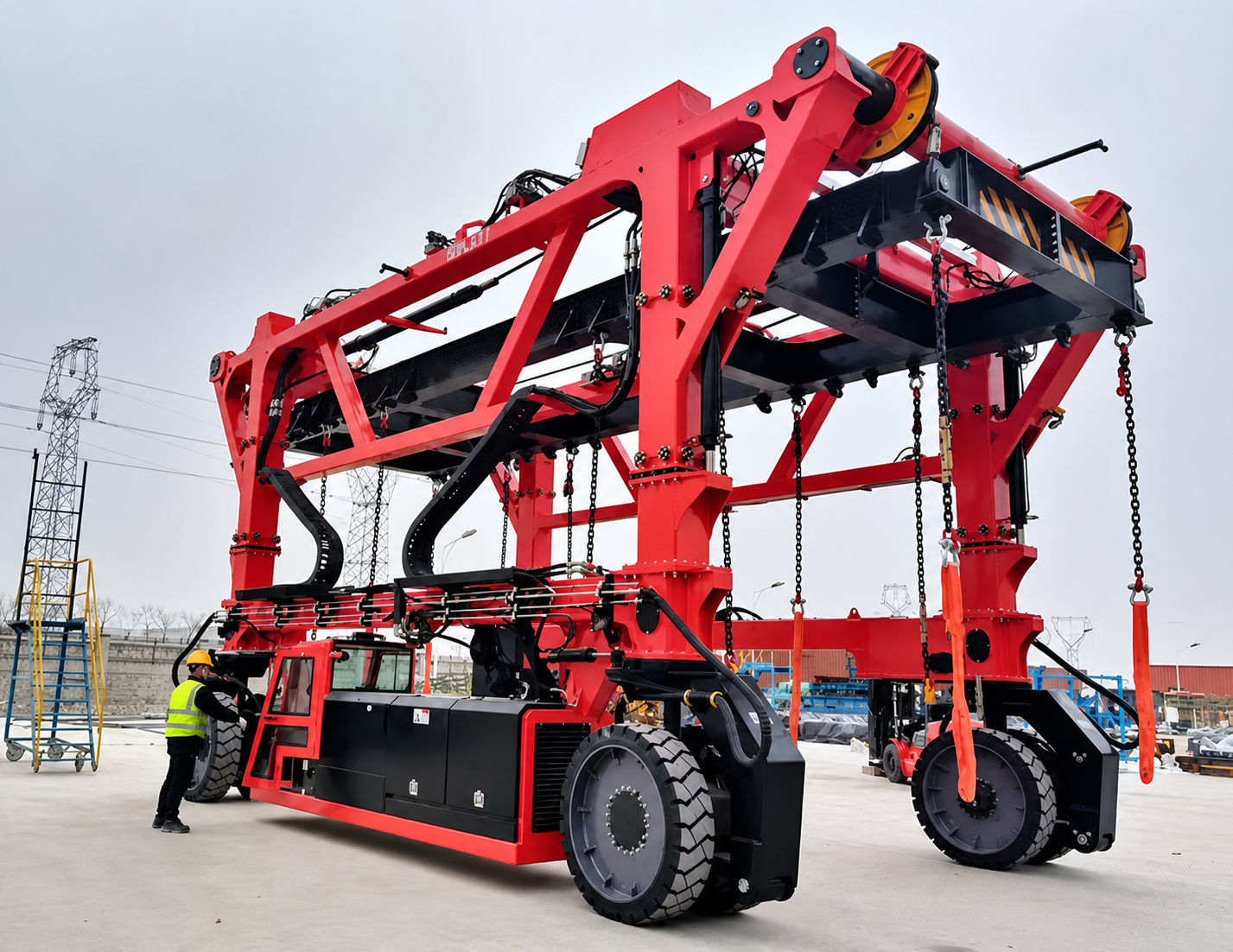
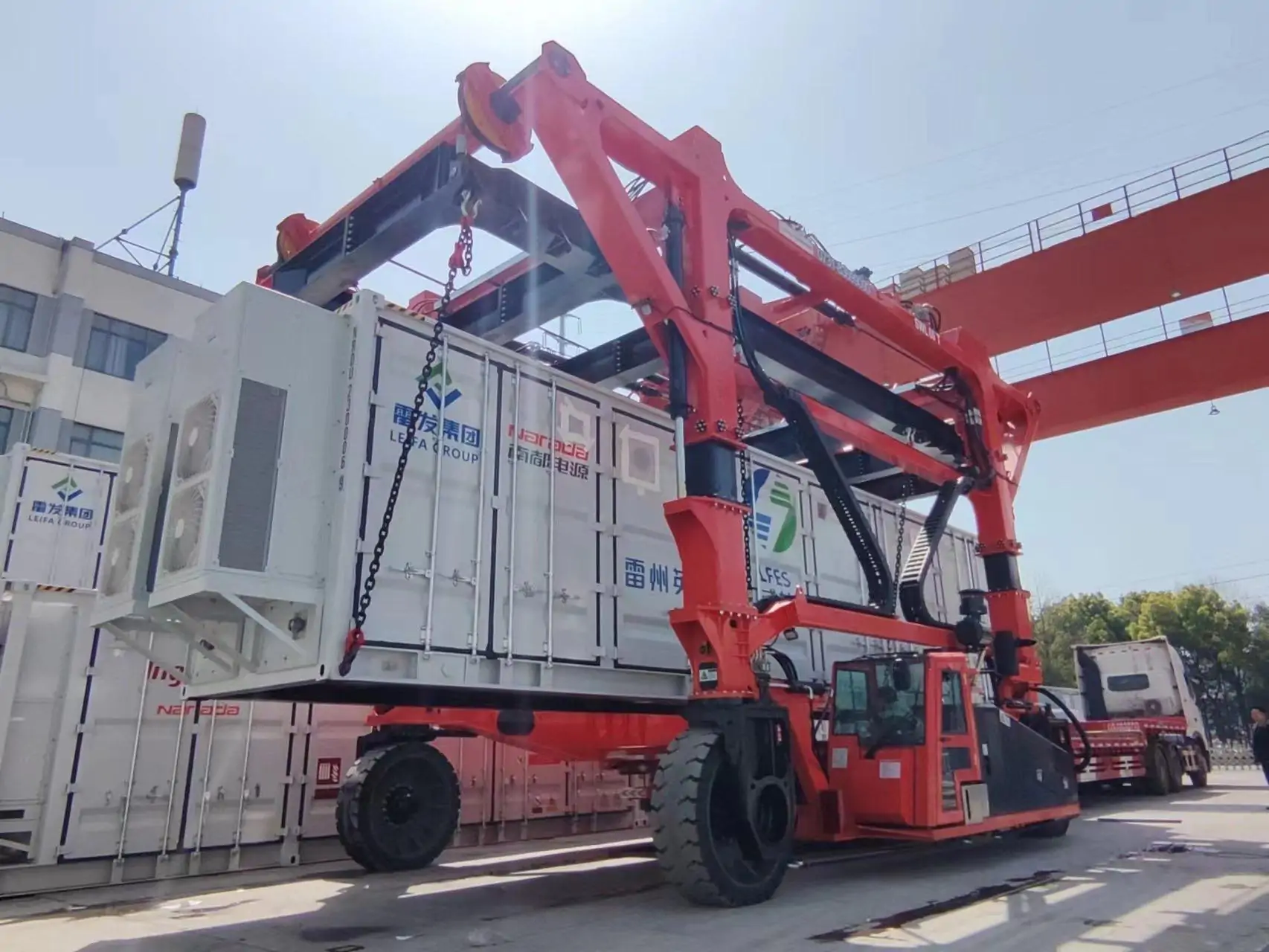
    Henan Mine Crane Factory supply straddle carrier is a freight-handling vehicle that lifts and carries its load underneath its own frame, rather than on top of it like a conventional truck. It drives directly over a container, lowers a hoist mechanism, lifts the box off the ground, and drives away , no crane or forklift required. Straddle carriers have been a standard at container terminals since the 1970s and remain one of the only machines that can handle every horizontal container movement in a terminal, from quay to stack to truck, with a single equipment type.

    A reach stacker is a rubber-tired container handler built around a front-mounted telescopic boom and spreader. Instead of straddling the box, it rolls up alongside a stack, extends the boom forward and up, and lifts the container from above using a spreader that locks onto the corner castings. The boom can extend far enough to reach over one or two rows of containers to access boxes stored behind them.

    The core distinction: straddle carriers move under and around a container, reach stackers move up and out to reach one. That single mechanical difference drives nearly every operational tradeoff that follows.

    How Each Machine Works: Core Design and Mechanics

    Henan Mine Crane manufactured straddle carriers run on a four-column gantry frame with wheels at each corner, giving the machine a wide, stable stance. A hydraulic lifting mechanism — typically wire-rope-and-cylinder assemblies — raises and lowers the spreader inside the frame. Most modern units offer four-wheel steering, letting the carrier turn in place or “crab” sideways for fine positioning in tight lanes. Power comes from diesel, diesel-electric, hybrid, or increasingly lithium-ion battery drivetrains.

    Reach stackers are built on a counterweighted chassis, similar in concept to a heavy forklift but engineered around a telescoping boom rather than a vertical mast. The boom pivots and extends hydraulically, and the spreader at its end can often telescope independently to fit 20-, 40-, or 45-foot containers. Because the load is carried out in front of the machine rather than underneath it, the chassis needs significant counterweight to stay balanced — which is part of why reach stackers run heavier per wheel than straddle carriers of similar lifting capacity.

    Straddle Carrier vs. Reach Stacker: Head-to-Head Spec Comparison

    Factor Straddle Carrier Reach Stacker
    Lifting capacity Up to 60 tonnes (roughly two full containers) Typically 41–50 tonnes; up to 90+ tonnes on specialized heavy-lift models
    Stacking height Up to 4 containers high Typically 3–5 high in the first row, fewer rows deep
    Reach depth None — drives directly over the target box Up to 2–3 rows deep
    Travel speed (loaded) Roughly 8–15 km/h Roughly 10–20 km/h
    Handling rate Higher in continuous, high-volume operation Roughly 20–25 moves per hour in optimal conditions
    Footprint / lane width Narrow — carries load lengthwise, single-lane access Wider — carries load sideways, larger turning/access space needed
    Automation maturity High — fully automated fleets in commercial operation since 2006 Limited — largely operator-dependent

    The capacity and speed numbers look close on paper. The two rows that actually decide most equipment purchases are footprint and automation maturity — and neither gets the attention it deserves in most comparisons.

    Throughput and Yard Density: Which Moves More Containers

    Because a straddle carrier carries its load lengthwise and doesn’t need to swing or angle into position the way a reach stacker does, it can operate in narrower lanes — generally requiring rows spaced at roughly 4–5 meter centers. A reach stacker, which approaches and lifts from the side, typically needs a wider access road to maneuver into position.

    That difference compounds at scale. A terminal that switches from reach stackers to Henan Mine Crane manufactured straddle carriers without changing its physical footprint can fit more stacking lanes into the same yard area, which directly increases container moves per day — terminal operators report throughput gains in this range when making the switch without expanding the yard.

    Reach stackers, however, win on flexibility within a single move. Their boom lets one machine service multiple rows from a single position, which is valuable in smaller yards where laying out dedicated straddle lanes isn’t practical. For a terminal moving fewer than a few hundred containers a day, the speed and reach of a single reach stacker often outweighs the lane-density advantage a straddle carrier would offer.

    Ground Conditions and Pavement Impact

    This is the factor that gets the least attention and causes the most expensive surprises after purchase.

    Straddle carriers distribute their load across up to eight wheels, which keeps individual wheel loading relatively low, generally in the range of 8 to 16 tonnes per wheel. Reach stackers and forklifts, by contrast, concentrate the load’s weight at the front of the machine for counterbalance, which can push wheel loading up to 45 tonnes per wheel on the same lift.

    That gap has real construction consequences. Pavement engineered for high point-loads and tire scuffing, the kind reach stackers and forklifts produce when turning under load — needs to be built to a heavier-duty, more expensive specification. Industry pavement-engineering estimates put the difference at up to $60 per square meter in construction cost, multiplied across an entire yard footprint. Terminals that install straddle carrier infrastructure on existing or lower-spec pavement have, in some cases, avoided six-figure ground-reinforcement costs that a reach stacker fleet would have required on the same surface.

    If you’re evaluating equipment for a yard with older pavement, soft subgrade, or a tight capital budget for groundworks, run the wheel-loading numbers before you run the throughput numbers. The equipment savings from a reach stacker can be erased entirely by a pavement reinforcement bill.

    Total Cost of Ownership: Price, Maintenance, and Payback

    On sticker price alone, reach stackers win the entry-level comparison: a standard unit can be acquired for a fraction of a straddle carrier’s footprint-equivalent capacity, with no yard redesign or specialized operator training required.

    But total cost of ownership tells a different story over a 10–15 year equipment life:

    • Maintenance intensity:A reach stacker’s telescopic boom, hydraulic extension system, and drivetrain see continuous wear under high-intensity cycling, and components requiring specialized service add up over time. Straddle carriers have fewer moving load-bearing assemblies relative to their lifting capacity, which tends to translate into lower per-unit maintenance costs over the equipment’s life.
    • Tire life:Straddle carriers use true rolling steering geometry that largely eliminates the tire scuffing problem inherent to reach stackers and forklifts turning under load — extending tire life by a meaningful multiple and cutting a recurring operating cost most TCO models underweight.
    • Labor and training:Reach stackers require less specialized operator training to get started, which lowers onboarding cost — a real advantage for smaller or seasonal operations.
    • Depreciation:Henan Mine Crane manufactured straddle carriers, particularly automation-ready models, tend to hold value and operational relevance longer because they can be upgraded into automated fleets rather than replaced outright.

    Bottom line on cost: if your time horizon is under five years or your volume is moderate, a reach stacker’s lower upfront cost usually wins. If you’re planning a 10+ year terminal investment at meaningful volume, the straddle carrier’s lower per-move operating cost tends to overtake the price gap well before the equipment is fully depreciated.

    Automation Readiness: AutoStrad, AGVs, and What’s Coming

    This is where the gap between the two machines is widening fastest. Automated straddle carrier programs aren’t experimental, fully automated straddle carrier terminals have been in continuous commercial operation since 2006, and the technology has matured through nearly two decades of real-world data.

    The economics are now well documented. Terminals that convert from manual to automated straddle carrier operation typically report throughput improvements in the 15–30% range, concentrated heavily in overnight and early-morning shifts where manual staffing is hardest to sustain. For a mid-size terminal handling 200,000–500,000 TEU annually in a high-wage labor market, a realistic full payback period on combined equipment and infrastructure investment runs 7 to 12 years.

    The market is scaling accordingly: the global automated straddle carrier market was valued at roughly $502 million in 2025 and is projected to grow to around $767 million by 2034. Major terminal operators are already committing at fleet scale — DP World’s London terminal runs a fleet of dozens of Kalmar straddle carriers feeding nearly 80 automated stacking cranes, and multiple European and Mediterranean transshipment hubs have placed orders for 10–20 unit automated or hybrid straddle carrier fleets in the past two years.

    Reach stackers, by comparison, remain largely operator-dependent. The boom-and-spreader operation requires continuous human judgment for positioning, extension, and load placement in ways that haven’t been automated at commercial scale. That’s not a flaw, reach stackers were never designed for unmanned operation the way straddle carriers, with their simpler over-the-top lift path, were. But it does mean that any terminal planning a multi-decade automation roadmap is, in practice, planning around straddle carriers, not reach stackers.

    automated straddle carrier

    When a Straddle Carrier Is the Right Call

    Reach for a straddle carrier when your yard matches most of the following:

    • You’re moving high daily container volume and need to maximize moves per square meter of yard
    • Your terminal layout has narrow lanes or limited expansion room
    • Your existing pavement is older, lower-spec, or expensive to reinforce
    • You’re planning automation within the next decade
    • You need one machine type to handle quay, stack, and truck-loading operations without switching equipment

    When a Reach Stacker Is the Right Call

    Reach for a reach stacker when your operation matches most of the following:

    • Your volume is moderate,a regional depot, inland terminal, or backup yard rather than a high-throughput gateway port
    • You handle mixed cargo: coils, flat racks, general freight, or non-standard loads alongside containers
    • Capital budget is tight, or you need equipment in operation quickly without yard redesign
    • Your yard has open space and doesn’t depend on narrow-lane stacking density
    • You don’t have the volume to justify automation investment in the foreseeable future

    Can You Run Both? The Hybrid Fleet Approach

    Most large terminals don’t actually choose one machine exclusively, they zone their equipment. Straddle carriers handle the high-density quay-to-stack and stack-to-stack movements where lane width and automation matter most. Reach stackers get deployed in landside zones, empty-container yards, rail interchange areas, or anywhere mixed cargo and flexible single-machine reach matter more than raw throughput density.

    This hybrid model is common at major intermodal hubs precisely because it matches each machine to the task it’s mechanically built for, rather than forcing one machine type to cover every job in the terminal. If your yard has genuinely different zones with different demands, a high-volume quay apron and a lower-volume inland rail interchange, for example, a mixed fleet is often more cost-effective than standardizing on either machine alone.

    Frequently Asked Questions

    Q: What is the main difference between a straddle carrier and a reach stacker?

    A straddle carrier lifts a container from directly above by driving over and straddling it, carrying the load underneath its frame. A reach stacker stays beside the stack and uses a telescopic boom to reach in, lift, and place containers from the front. The straddle carrier’s design favors high-density yards and narrow lanes; the reach stacker’s boom favors flexibility and reach into multiple rows from one position.

    Q: Can a reach stacker replace a straddle carrier in a busy port terminal?

    In low-to-moderate volume yards, yes. In high-throughput container terminals, reach stackers generally can’t match the lane density and continuous-cycle throughput of a straddle carrier fleet, and most busy port terminals use straddle carriers as their primary horizontal-handling equipment for that reason.

    Q: Do straddle carriers cause less pavement damage than reach stackers?

    Yes. Straddle carriers spread their load across more wheels, generally producing 8–16 tonnes of wheel loading compared to up to 45 tonnes per wheel for reach stackers and forklifts. Lower wheel loading and reduced tire scuffing mean straddle carriers can operate on lighter-duty pavement, which can lower construction costs by tens of dollars per square meter across a yard.

    Q: Can a port yard use both straddle carriers and reach stackers?

    Yes, and many large terminals do. A common hybrid approach uses straddle carriers for high-density quay-to-stack movements and reach stackers for landside, rail interchange, or mixed-cargo zones where flexibility matters more than continuous throughput.

    Henan Mine Crane Factory Custom

    The decision to go with a straddle carrier or a reach stacker depends on your terminal priorities, space, throughput and future expansion plans. The straddle carrier excels in dense container handling, pavement loading and automation, whereas a reach stacker is more flexible, quicker to start up and has a lower cost for smaller or mixed cargo ports.

    Nowadays, with container terminal becoming more and more efficient and intelligent yard, choosing the right equipment with a combination of short time needs and long term development plan is more and more significant for the terminal. Effectiveness of equipment plan can benefit throughput, lower cost of operation as well as better long term development.

    Drawing on years of experience with container handling equipment and custom material handling systems Henan Mine crane Factory offers proven straddle carrier products for ports, intermodal yards, logistics centers and industry yards around the world. Whether you are starting a new terminal or expanding an old one, our engineers can work with you to assess your yard conditions, major flow volumes and operational needs to propose the ideal solution.
    Henan Mine CraneDiscuss your requirements ↗
  • Straddle Carrier Manufacturer | Diesel, Hybrid & Electric Solutions

    Straddle Carrier Manufacturer | Diesel, Hybrid & Electric Solutions

    Straddle Carrier Manufacturer | Diesel, Hybrid & Electric Solutions

    Container terminal and yard selection straddle carrier, many buyers first reaction is to compare equipment procurement quotation. However, in actual operation, it will be found that fuel, maintenance, downtime losses, compliance costs and other long-term expenses are the largest proportion. Especially now that fuel prices fluctuate and environmental emission requirements are tightened, more and more operators are beginning to calculate the full life cycle accounts, struggling with which is more cost-effective between diesel and electric models.
    As a manufacturer of port handling equipment, Henan Mine Crane has been exposed to many storage yard projects of different scales, and the conclusion is actually very clear: diesel straddle carrier has lower initial investment and flexible deployment; electric straddle carrier has more obvious long-term TCO advantage under the scenario of high load and multi-shift system. The specific selection shall be comprehensively judged in combination with operation time, energy price, infrastructure conditions and emission requirements.


    What exactly is included in the TCO of straddle carriers

    TCO is also the total cost of ownership, which refers to the sum of all related expenses during the whole service life of a straddle carrier from purchase to retirement, not just the price of buying equipment.
    The general accounting logic is: straddle carrier TCO = procurement cost + energy cost + maintenance cost + infrastructure cost + tire loss + labor cost + downtime loss + power system replacement cost-equipment residual value.
    Many people step on the pit is only staring at the initial quotation, diesel straddle transport seems cheap, a few years of oil money and maintenance costs down, the total expenditure is higher instead. From the project data that has been landed in the industry, although the initial investment of battery-powered straddle carriers is high, the energy consumption and maintenance savings can completely cover the price difference in the whole cycle of equipment, and even achieve a lower total cost of ownership.

    Cost structure of diesel straddle carrier

    The biggest advantage of diesel straddle carriers is their low initial investment. No supporting battery pack and charging infrastructure are needed. The equipment itself has mature structure and can be put into operation after commissioning. There is almost no additional requirement for site supporting facilities.
    Fuel costs are the bulk of daily expenses, and the specific amount is directly related to local diesel prices, annual operating hours, load rates, driving distances, and idling ratios. The heavier and longer the operation, the higher the fuel expenditure, and the fluctuation of oil price will directly affect the stability of operating costs.
    Maintenance projects are relatively more. Diesel engine, fuel system, exhaust gas after-treatment, three-filter oil, cooling system, hydraulic transmission should be regularly maintained, components have many fault points, and long-term maintenance costs are not low. The maintenance and replacement of aftertreatment systems is also an expense, especially as emission requirements are tightened.
    There are also easily overlooked emission compliance costs. More and more ports and Urban area impose strict emission restrictions on non-road mobile machinery, old diesel engine models may face the risk of retrofitting, limiting or even early elimination, and there may be additional carbon tax-related expenses in the future.
    This type of equipment is more suitable for remote ports with unstable power grids, storage yards with small operations, sites without charging conditions, or projects with limited budgets and priority control of initial investment.

    Cost structure of electric straddle carrier

    The initial investment of electric straddle carrier is obviously higher, power battery, electric drive system, power electronic device and charging interface all push up the equipment cost, usually the purchase price of single unit is about 30% higher than diesel model of the same specification. If charging piles, substation expansion, distribution line reconstruction and charging area planning are included, the initial investment will be higher.
    But its energy cost advantage is obvious. In areas where electricity prices are stable, the electricity cost per hour is much lower than diesel consumption. With peak-valley electricity price and valley charging strategy, the cost can be further reduced. According to industry data, the annual energy expenditure of electric models is usually much lower than that of diesel models.
    Maintenance costs are also lower. The diesel engine and exhaust gas aftertreatment system are removed, and the wearing parts are greatly reduced. The daily maintenance is mainly battery inspection, electrical system inspection and routine maintenance of hydraulic parts. The overall maintenance workload and cost are about 20% lower than those of diesel models.
    Infrastructure construction is a one-time investment that cannot be ignored. Charging piles, power grid upgrades, cable laying, and charging management systems should all be included in the total investment. Megawatt fast charging technology can reduce the recharge time to 45-50 minutes, reducing the impact of charging on operations, but the cost of fast charging equipment will also be higher.
    This kind of equipment is more suitable for multi-shift terminals with sufficient operation time, green ports with emission reduction targets, areas with high oil prices and ports around Urban area with noise requirements. The cost advantage will gradually appear after long-term operation.

    container straddle carrier manufacturer

    Diesel vs Electric Straddle Carrier TCO Comparison

    Cost Factor Diesel Straddle Carrier Electric Straddle Carrier
    Initial Purchase Cost Usually lower Usually higher (~30% premium)
    Energy Cost Volatile, depends on diesel price Lower with stable electricity tariff
    Maintenance Cost Higher (engine & aftertreatment) Lower (fewer moving parts)
    Infrastructure Cost Low (fueling facility only) Higher (chargers & grid upgrade)
    Local Emissions Higher tailpipe emissions Zero tailpipe emissions
    Noise Level Higher Significantly lower
    Refuel/Recharge Speed Fast, familiar process Depends on charging strategy
    Best Fit Low-infrastructure / remote sites High-utilization & low-carbon terminals
    Long-Term TCO Higher with high fuel prices Lower over full lifecycle
    Core Risk Fuel price volatility & emission rules Battery lifecycle & grid dependency

    What factors determine who has a lower TCO

    The first core factor is the length of the year. The more hours the equipment works per year, the more significant the energy and maintenance savings are, and the easier it is for electric straddle carriers to recover the difference. For terminals with 24-hour multi-shift operation, the TCO advantage of electric models is usually outstanding; if the annual operation time is very short, the cost savings may not cover the initial price difference.
    The second is the difference between diesel and electricity prices. The higher the local oil price and the more stable the electricity price, the more cost-effective the electric model will be; if the electricity price is high or the cost of grid transformation is too high, diesel or hybrid is more pragmatic.
    The third is the charging strategy. Reasonable planning of opportunity charging, energy supplement between shifts and low valley charging can not only reduce the impact of charging on operations, but also reduce the cost of electricity. A poor charging strategy will not only reduce equipment availability, but may also push up peak electricity bills and offset energy consumption advantages.
    The fourth is fleet size. If there are only one or two devices, it is difficult to dilute the cost of charging infrastructure; the larger the fleet size, the lower the infrastructure cost shared by a single device, and the better the economy of the electric solution.
    There are also factors such as maintenance capability, battery life and emission policies. Diesel and electric require different maintenance technical capabilities, battery attenuation and replacement costs should also be included in the calculation in advance, and increasingly stringent carbon emission reduction requirements will also increase the long-term compliance costs of diesel equipment.

    Select boundaries for applicable scenarios

    Not all projects are suitable for electric. If the power grid of remote ports is unstable and there is no condition to install charging facilities, diesel is still a more pragmatic choice; for small storage yards with short annual operation time, the energy-saving benefits of electric vehicles cannot cover the price difference; in the case of continuous operation without charging window and no standby equipment, the energy supplement efficiency of diesel is more advantageous; for projects with tight short-term budget, diesel can also be selected first for transition.
    The advantage scenario of electric model is very clear: the dock with high load and multi-shift production industry saves considerable oil money and maintenance money after long-term operation; Green port with clear carbon emission reduction target, electric straddle carrier is the core equipment of zero emission yard; In areas where oil prices continue to be high, the cost advantage of electric models will be more obvious; Close to the Urban area, the port with noise limit, the operation noise of electric equipment is lower, and it is easier to meet the environmental protection requirements. Electric is also a more consistent long-term trend option for 5-to 10-year fleet renewal planning.
    If there is no condition for full electrification, hybrid straddle transport is a very practical transition program. It saves about 40% more fuel than pure diesel models, reduces emissions and does not have to rely entirely on charging infrastructure, making it suitable for terminals in transition.

    A few points to note when calculating TCO

    When analyzing the total cost of ownership of straddle transport vehicles, do not only calculate the accounts of one year, but suggest to calculate them according to three cycles of 5 years, 8 years and 10 years respectively. The investment in the first year of electric models is definitely higher, but as the years lengthen, the savings in operating costs will gradually be reflected, and the longer the cycle, the more obvious the advantages.
    Also include hidden costs. The hidden costs of diesel models include oil price fluctuation risk, engine overhaul cost, after-treatment maintenance, idle fuel consumption and future carbon cost; the hidden costs of electric models include charging pile construction, power grid modification, peak electricity price, battery replacement expectation, high-voltage maintenance personnel training and charging downtime.
    If these hidden expenses are omitted, the actual cost will be much different from the expectation.

    epilogue

    To make a comparison between diesel vs electric straddle carrier, we should not only focus on the purchase quotation to draw conclusions, but also pull through the accounts of the whole life cycle. Diesel straddle carriers are suitable for scenarios with limited infrastructure conditions and small workload, and the deployment flexibility threshold is low; electric straddle carriers perform better in TCO performance under high load and long-term operation scenarios, which is more in line with the direction of low-carbon transformation of ports; hybrid vehicles are transitional options that give consideration to cost and emission reduction.

    Customize your own solution

    As a professional straddle carrier manufacturer, Henan Mine Crane can provide customized solutions for diesel, hybrid and electric full series of container straddle carriers, supporting flexible selection of different configurations. We can also help customers do straddle TCO calculation services, combined with local energy prices, operating conditions, fleet size, give real cost comparison and selection recommendations. If you are doing fleet renewal or yard electrification planning, you can send us the annual operation time, oil and electricity price, processing tank quantity, shift system arrangement, and the engineering team will issue a suitable plan for you.

    Henan Mine CraneDiscuss your requirements ↗
  • Storage Crane vs Overhead Crane: Which Fits Indoor Warehouse

    Storage Crane vs Overhead Crane: Which Fits Indoor Warehouse

    Storage Crane vs Overhead Crane: Which Fits Indoor Warehouse

    In the material storage and handling scenarios of indoor warehouses and industrial plants, storage cranes and overhead cranes are the two types of core lifting equipment with the highest utilization rate. Many warehouse managers and factory purchasers often fall into a dilemma when selecting equipment: it is not clear whether the indoor warehouse should be equipped with storage crane or overhead crane, and it is easy to have problems such as equipment selection dislocation, space waste, capacity mismatch, operation and maintenance cost exceeding the standard, etc.

    Both types of equipment seem to be able to complete cargo lifting and handling, but there are great differences in core dimensions such as applicable scenarios, space utilization, load capacity, automation level and input cost. This article will comprehensively disassemble the basic characteristics, core differences, selection standards, cost differences and common mistakes of storage cranes and overhead cranes, help all kinds of indoor storage and production warehouses accurately match the equipment, and improve the efficiency of storage operations and long-term return on investment.

    Storage Crane and Overhead Crane Basics

    What is a storage crane?

    Storage crane is an intelligent lifting storage equipment specially customized for storage scenarios. Relying on the core working principle of track walking, precise lifting and intelligent dispatching, it completes the whole process operation of automatic access, displacement, inventory and homing of goods with storage management system. Different from traditional lifting equipment, it does not take “heavy handling” as the core, but takes “refined storage management, efficient use of space, unmanned operation” as the design core, and is the standard equipment of modern intelligent warehouse and high three-dimensional warehouse.

    At present, storage cranes are widely used in automated three-dimensional warehouse, high-shelf storage, cold chain storage, electronic component storage, precision material storage and other scenarios, especially suitable for batch regular, various categories, high-frequency access, long-term static storage of goods operations. Whether it is standard pallet goods, regular box materials, or small precision industrial materials, standardized storage management can be realized through storage cranes.

    Its core advantages are very suitable for modern storage needs. The first is high-precision operation. The positioning error of equipment can be controlled at millimeter level, which can accurately connect high-level shelves and avoid deviation and collision damage of goods. The second is to save space extremely. The equipment runs on the top track without occupying the ground passage space, which can greatly reduce the width of the warehouse roadway and maximize the storage area. The third is highly automated, which can be connected to WMS, WES and other intelligent storage systems to realize unmanned access, automatic inventory and intelligent scheduling without manual intervention and adapt to 24-hour uninterrupted storage operations.

    What is an overhead crane?

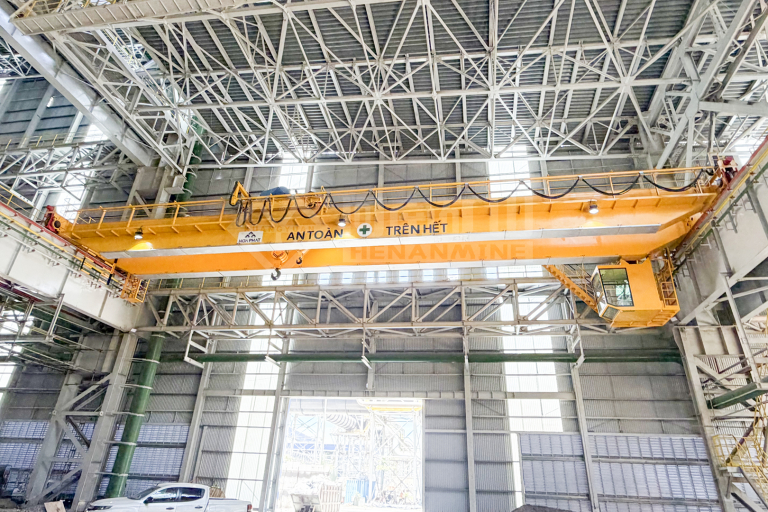
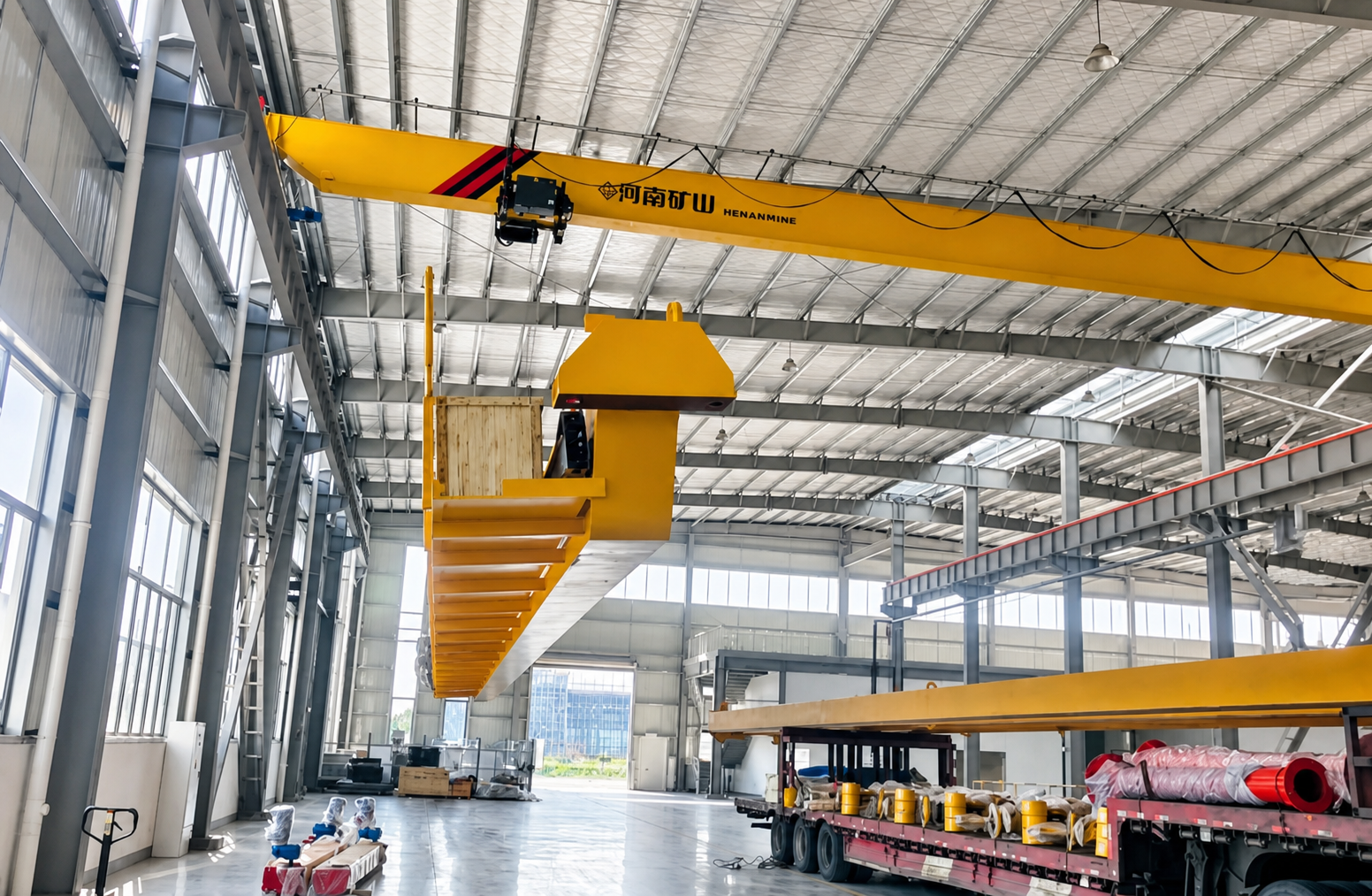
    Henan Mine Crane manufactured bridge crane is also often referred to as crane, crane, is a common heavy lifting equipment in the industrial field, mainly composed of main beam, end beam, electric hoist, walking track, control system, track fixed on both sides of the plant column or top steel beam, can cover a large area of the plant, to achieve three-dimensional space cargo lifting, translation, transfer operations. Equipment structure is stable, bearing capacity is strong, is the core of traditional industrial plant lifting equipment.

    The application scenarios of overhead cranes are more inclined to production processing and heavy material transfer, mainly used in industrial production workshops, heavy material warehouses, finished product storage, equipment maintenance workshops and other scenarios. Common operations include loading and unloading of heavy raw materials, transfer of large finished workpieces, docking of materials in production processes, lifting and maintenance of heavy equipment, etc., which are essential basic equipment for production-oriented factories.

    The core features of this device focus on overload and flexibility. First of all, it has super heavy load capacity, which can adapt to the lifting and handling of heavy goods from several tons to hundreds of tons to meet the needs of industrial heavy material operations. The second is flexible operation and strong universality, manual control and wireless remote control. The operation scope covers the whole plant span, which is not limited by fixed location. It can meet the temporary handling and cross-regional transfer requirements of various irregular and heavy materials. At the same time, the equipment structure is durable, the anti-loss ability is strong, and it is suitable for high-frequency and high-intensity industrial production operation scenarios.

    Key Differences Between Two Crane Types

    Application differences

    The core application scenarios of storage cranes focus on automated storage and retrieval operations, and the core services are warehousing, cargo management and inventory turnover. Its operating logic is “precise access, fixed-point homing, and batch management”, which is suitable for standardized warehousing scenarios where goods are organized, have large inventory, require long-term storage, and are frequently in and out of warehouses. For example, e-commerce intelligent warehouse, auto parts three-dimensional warehouse, precision electronic storage, food cold chain high-level warehouse, etc., the core requirements are efficient storage, accurate retrieval, less labor, Henan Mine Crane manufactured storage crane can be perfectly matched, effectively solve inventory chaos, low manual access efficiency, difficult utilization of high-level shelves and other problems.

    Bridge crane main production operations and heavy material handling, core services in production processing, temporary transfer, heavy lifting. It does not focus on cargo storage management, but focuses on dynamic handling of materials, which is suitable for raw material loading, semi-finished product transfer, finished product loading, heavy equipment displacement, equipment maintenance lifting and other scenarios in production workshop. Mechanical processing, steel structure manufacturing, heavy industry production and other industrial warehouses, goods are mostly heavy, irregular workpieces, no need for refined storage management, more flexible heavy-duty handling capacity, this is the core advantage of the bridge crane.

    Space utilization

    The design core of the storage crane is to maximize the use of vertical storage space, specifically optimized for high-level three-dimensional warehouses. Traditional forklifts and manual access are limited by equipment height and manual operation limits, unable to utilize high-rise warehouse space, and need to reserve wide working lanes. The storage crane can adapt to ten meters or even dozens of meters of high shelves, fully excavate the vertical space of the warehouse, and at the same time, the equipment operation roadway is narrow, without reserving a large amount of ground operation space, which can double the storage capacity in the limited warehouse area, perfectly solving the pain point of insufficient space in small and medium-sized warehouses and low storage density in large warehouses.

    The core of space optimization of Henan Mine Crane manufactured overhead crane is to improve the overall handling efficiency of workshop, and the space utilization logic is completely different from that of storage crane. It is erected on the top of the plant, completely does not occupy the ground operation space, the ground can be freely arranged production equipment, material stacking area, access channels, mainly to solve the heavy material ground handling congestion, manual handling limited problems. However, it can not optimize the vertical storage space, can not dock high-level shelf storage, can only complete the plane, three-dimensional space of material transfer, can not improve the storage capacity of warehouse goods.

    Load capacity

    Storage cranes do not pursue ultra-large loads, but focus on precise material storage operations. The loads are mostly light and medium weights, and the conventional load range is 0.5 tons to 5 tons. Suitable for pallet goods, boxed materials, small regular industrial products and other lightweight, standardized goods, the operation focus is not “heavy”, but “accurate, stable, fast”, to the greatest extent to protect precision materials, regular goods from loss, to ensure the standardization and integrity of storage inventory.

    Bridge crane mainly heavy industrial material handling, load coverage is very wide, conventional industrial models load 5 tons to 50 tons, large custom models can reach hundreds of tons. Specially deal with steel, heavy machinery parts, large molds, heavy equipment and other heavy weight materials, can meet the industrial production of high strength, large tonnage lifting transfer needs, is the only preferred equipment for heavy material operations, this is also the storage crane can not replace the core advantage.

    Automation level

    Storage crane is the core component of intelligent storage system, which originally supports fully automated and intelligent operation. The equipment can be seamlessly connected with WMS warehouse management system, AGV dispatching system and intelligent sorting system, realizing automatic warehousing of goods, accurate positioning and storage, automatic delivery on demand, automatic inventory counting and automatic fault warning without manual operation in the whole process, realizing unmanned operation of warehouse with extremely high automation degree and intelligent precision, and meeting the upgrading requirements of modern intelligent warehouse.

    The degree of automation of the Henan Mine Crane manufactured bridge crane is relatively basic, and the core function focuses on the basic lifting operation. Conventional models are mainly manual control and wireless remote control. They can only complete basic actions such as lifting, translation, start and stop, and have no intelligent storage scheduling and automatic access functions. Some customized models can be equipped with simple automation modules, but they can only realize fixed path repeated operations, cannot connect intelligent storage systems, do not have inventory management and intelligent scheduling capabilities, and their core value is always to efficiently complete heavy material handling rather than intelligent storage management.

    bridge crane

    How to Select the Right Warehouse Crane

    Choose storage crane when

    1. High-density storage is required: If your indoor warehouse core needs are to improve storage capacity and achieve high-density cargo storage, especially with high-level shelves and three-dimensional storage architecture, you need to maximize the use of warehouse space, and storage cranes are the best choice. It can fully excavate the vertical storage space, reduce the occupied area of the roadway, greatly improve the storage capacity per unit area, and adapt to the storage scenario with large inventory and regular goods.
    2. Automated operation is preferred: If the enterprise pursues unmanned and intelligent warehouse operation, it wants to reduce labor costs, reduce manual operation errors and improve access efficiency, and give priority to storage cranes. The equipment can realize full-process automatic operation, adapt to 24-hour uninterrupted operation, greatly improve storage turnover efficiency, and adapt to intelligent storage upgrading requirements.
    3. Warehouse space is limited: For small and medium-sized warehouses, expensive storage sites, indoor warehouses with fixed floor space, space resources are limited, and it is impossible to reserve wide forklift passages and a large amount of operation space. Storage crane narrow roadway, high space utilization characteristics, can achieve maximum storage in a limited site, perfect solution to space constraints.

    Choose overhead crane when

    • Heavy loads need frequent handling: If the warehouse is dominated by heavy materials, large workpieces, and large-tonnage equipment, and the daily handling frequency is high and the operation intensity is high, Henan Mine Crane manufactured bridge crane must be selected. Its super heavy load capacity and stable structural performance can easily cope with high frequency and heavy load operation, ensure efficient propulsion of production and handling, and have no load limitation problem.
    • Flexible transportation is important: if there is no fixed location in the operation scene, the cargo form is irregular, and flexible transportation across regions and multiple directions is required, the operation flexibility is extremely high. The bridge crane has a large range of three-dimensional operation capability and flexible control characteristics, which can adapt to the handling requirements of various non-standard materials. The degree of freedom of operation far exceeds that of storage cranes.
    • Production operations are involved: if the warehouse has production, processing and maintenance functions, it belongs to production-type industrial warehouse, and needs to connect production processes to complete production supporting operations such as material loading and unloading, workpiece transfer and equipment hoisting. The overhead crane is more suitable for the scene demand, which can perfectly connect the whole production process and ensure production continuity.

    Consider future needs

    Expansion plans: When selecting models, it is necessary to plan the future expansion demand of the warehouse in advance. If it is planned to increase the number of shelves, expand the storage scale and increase the storage capacity of goods, the expandable storage crane system will be preferred to support the expansion of shelves and the extension of equipment tracks in the later period. If heavy production lines will be added in the future and heavy load operation requirements will be lifted, space for upgrading and transformation of overhead cranes can be reserved.

    Automation upgrades: For enterprises with long-term intelligent upgrade planning, priority is given to the layout of storage cranes, and their original intelligent systems can be iteratively upgraded to adapt to subsequent storage system optimization and unmanned scenario expansion. If the bridge crane is selected, the automation module can be reserved in advance to install the interface to avoid the high cost of the later transformation.

    Long-term operation efficiency: Based on the judgment of the company’s long-term operating model, it has long focused on warehousing, storage and inventory turnover, focusing on efficient, low-cost, and refined management. Warehousing cranes have higher long-term cost performance. Long-term production processing, heavy-duty handling, the pursuit of stability and versatility, bridge crane more suitable for long-term operation needs.

    Cost Comparison of Storage and Overhead Cranes

    Initial investment

    Equipment cost: The unit price of storage crane equipment is relatively higher, because it integrates intelligent control system, precision positioning module, automatic dispatching system, high-level walking mechanism and other precision accessories, intelligent and precise configuration increases the basic cost of equipment. Bridge crane structure is simple, accessories universal, mature technology, the same load specifications, equipment procurement unit price is lower, the basic hardware investment is more cost-effective.

    Installation requirements: The installation process of storage crane is complex, and it needs to be matched with high-level shelves, storage rails, intelligent electric control system and signal transmission system for synchronous construction. The installation cycle is long, the construction accuracy is high, and the professional team is required for accurate debugging. The installation labor and construction costs are high. Bridge crane installation process standardization, only need to fix the track, build the main beam, debugging lifting system, simple construction, short cycle, lower installation cost.

    Building conditions: Storage cranes have strict requirements on warehouse building conditions, requiring sufficient indoor floor height, regular building structure, stable load-bearing walls and beams, and some old warehouses need to be renovated before installation, which will generate additional renovation costs. Henan Mine Crane manufactured bridge crane adaptability is stronger, conventional industrial plants, warehouses can be installed, the building height, structure requirements are lower, no large-scale transformation, adapt to a wider range of scenarios.

    Maintenance cost

    Control system maintenance for storage cranes: The core loss of storage cranes is concentrated in precision components such as intelligent control systems, sensors, positioning modules, scheduling software, etc. Daily maintenance requires regular detection of circuit signals, calibration of positioning accuracy, upgrading of system programs, and maintenance of sensing equipment. It requires high professionalism of operation and maintenance personnel, and annual maintenance costs are relatively high. However, the mechanical structure loss of the equipment is small, the incidence of mechanical failure is low, and the overall failure is mainly fine tuning of the electronic control system.

    Mechanical maintenance for overhead cranes: bridge cranes are mainly mechanical structures, simple electric control systems, and the core of operation and maintenance is concentrated on mechanical components such as main beams, end beams, electric hoists, wire ropes, and traveling wheels. Under long-term heavy load operation, the probability of mechanical wear, loosening and loss is high, and it is necessary to regularly lubricate, tighten and replace vulnerable mechanical parts. The operation and maintenance threshold is low, the price of accessories is cheap, and the daily maintenance cost is low. Ordinary technicians can complete basic maintenance work.

    Long-term value

    Labor savings: storage crane can realize fully unmanned operation, completely replace manual access, inventory, handling positions, greatly reduce the storage manual configuration, long-term can save a lot of labor salary, management costs, labor saving advantages. Bridge cranes still need special personnel to control, can only replace heavy physical handling, can not reduce the core operator, labor cost saving space is limited.

    Efficiency improvement: storage crane standardization, automatic operation, stable access speed, no manual error, 24 hours of uninterrupted operation, storage turnover efficiency greatly improved, effectively reduce the cost of cargo detention. The operation efficiency of overhead crane depends on the operator, the operation speed is not fixed, and it can only complete the handling, and the storage efficiency cannot be optimized. The overall efficiency improvement is limited to the production and handling process.

    Return on investment: In the short term, overhead cranes cost less and return faster. In the long run, the storage crane under the intelligent storage scenario, with the advantages of low labor cost, high turnover efficiency, low cargo loss and long-term iteration, can recover the excess investment in 3-5 years, and the long-term return on investment far exceeds that of the traditional bridge crane, which is suitable for the long-term development of enterprises.

    Storage Crane or Overhead Crane: Which One Fits?

    Quick selection guide

    Storage crane for automated warehouses: If your site is an indoor intelligent warehouse, a three-dimensional high-rise warehouse, and an automated storage center, the core requirements are high-density storage, unmanned operations, refined inventory management, and storage space saving. The goods are mainly standardized and regular materials, and the storage crane is preferred. It is the core equipment of modern intelligent storage, which can comprehensively improve the storage automation level, space utilization rate and turnover efficiency, and adapt to e-commerce, auto parts, electronics, cold chain, logistics storage and other scenarios.

    Overhead crane for industrial lifting: If your site is a production workshop, heavy industry warehouse, equipment maintenance site, the core requirements are heavy material handling, flexible cross-regional transfer, production process docking, goods are mostly heavy, irregular industrial workpieces, no high-density storage requirements, overhead crane is the best choice. Strong equipment stability, sufficient load, flexible operation, perfect for mechanical manufacturing, steel structure, heavy industry, mold processing and other industrial production scenarios.

    Customized crane solutions

    Standardized cranes on the market are difficult to adapt to the personalized needs of all warehouses. The site layout, floor height, load bearing, load demand, automation planning and operation flow of different warehouses are different. Blind selection of standard equipment is easy to cause poor adaptability, low efficiency and high cost. At this time, customized lifting solutions from professional manufacturers are particularly important.

    Reliable crane manufacturers can customize the exclusive equipment scheme one-to-one according to the actual load demand, site size, floor height condition, operation mode and automatic upgrade planning of the warehouse, and comprehensively adapt the scene from the aspects of equipment specification, track layout, control system, automation configuration, etc., so as to avoid the waste of funds caused by excessive equipment performance, eliminate the operation limitation caused by insufficient configuration, and maximize the improvement of equipment adaptability and long-term operation value.

    Henan Mine Crane Factory Custom

    Henan Mine Crane Crane Factory has been deeply engaged in the research and development, design, manufacturing, installation and operation of lifting equipment for decades. It focuses on providing customized storage cranes and bridge cranes for various indoor warehouses and industrial plants. Relying on mature production system, professional technical team and perfect service system, it helps global customers to accurately select and efficiently implement lifting equipment projects.

    Henan Mine Crane Factory has full process professional design and manufacturing capabilities. It can customize intelligent storage cranes of different specifications and various overhead cranes according to the spatial layout, floor height, cargo load, operation frequency, automation requirements and long-term expansion planning of customers ‘warehouses. All equipment adopts national standard high-quality steel and precision core accessories. After multiple quality inspection and performance debugging, it has the core advantages of strong stability, low failure rate, low energy consumption, wide adaptability and long service life, which can perfectly adapt to various indoor storage and industrial production scenarios.

    Henan Mine CraneDiscuss your requirements ↗
  • Steel Mill Heat Resistant Crane | Casting Crane & Double Girder Crane Guide

    Steel Mill Heat Resistant Crane | Casting Crane & Double Girder Crane Guide

    Steel Mill Heat Resistant Crane | Casting Crane & Double Girder Crane Guide

    Many steel mills, foundries, purchasing and engineering personnel will have a confusion. casting crane vs standard double girder crane appearance and structure is highly similar, the same use of double girder bridge structure, trolley trolley running mechanism and cab control mode, rated load can also be done to the level of 100 tons.

    This also makes many users mistakenly think that the two kinds of equipment can be common in the steelmaking workshop. However, after the actual production and use, there will be frequent cable aging, motor overheating, brake failure and other problems, the root cause is that most people ignore the difference between the two high temperature design. In the steel, iron, high temperature heat radiation metallurgical conditions, heat-resistant overhead crane configuration standards, directly determines the operational stability of the equipment and site operation safety.

    This paper combines Henan Mine Crane years of steel mill overhead crane project landing experience, from the working conditions, heat-resistant structure, safety configuration, service life and other dimensions, compared with the core differences between ordinary double girder cranes and casting cranes, to help users of global steel mills to accurately select lifting equipment suitable for high-temperature working conditions.

    Quick conclusion: who is more suitable for high-temperature working conditions in steel mills?

    In the metallurgical scenario of high temperature, heat radiation, molten metal lifting, casting crane for steel plant is better than ordinary double girder cranes in terms of heat resistance, and it is the special equipment for steel making, continuous casting, and melting furnace stations.

    Crane for molten metal handling is also known as casting crane, which is specially designed for steel ladle and iron ladle lifting scenarios, and the whole vehicle structure, electrical fittings, and protection system are all suitable for long-term high temperature radiation, dust erosion and high-frequency heavy-duty operation.

    Ordinary double girder cranes are only suitable for routine industrial lifting, can only cope with room temperature or slightly high temperature environment, can not withstand the continuous heat radiation impact of the steelmaking workshop, and absolutely can not be used for ladle lifting and other high-risk processes.

    The heat resistance of the equipment never depends only on the steel material of the main beam. The core depends on the motor protection, braking system, cable configuration, thermal insulation structure, lubrication system and metallurgical grade working level, which is the core logic of metallurgical crane heat protection design.

    Basic Introduction of Common Double Girder Overhead Crane

    Standard double girder cranes are general-purpose heavy-duty overhead cranes, relying on double main girder bearing and trolley mobile lifting mechanism to complete material handling, which is one of the most widely used lifting equipments in industrial scenes.

    This kind of equipment is mostly used in machining workshop, steel structure yard, common warehouse, equipment maintenance station and other conventional scenes, the main general heavy-duty, cost-effective, mature structure, easy installation and maintenance.

    Ordinary double girder crane for steel mill is only adapted to steel mill operation in normal temperature area, such as finished steel stacking, equipment maintenance, auxiliary materials handling and other scenes. It is not designed for metallurgical high-temperature working conditions, and the core parts are all common industrial standard configuration.

    Long-term in the furnace heat radiation, high-temperature dust environment, equipment parts will accelerate aging, the failure rate rises sharply, can not meet the operating requirements of continuous metallurgical production.

    overhead crane

    Metallurgical Casting Crane Basic Introduction

    Crane is also often called ladle crane vs double girder crane comparison of specialized metallurgical equipment, is the core of steel mills, foundries, special lifting equipment, focusing on molten metal transfer operations.

    The equipment mainly serves in the converter, electric arc furnace, refining furnace, continuous casting machine and other core stations, responsible for steel ladle, iron ladle lifting, pouring, transfer of the whole process of operation, is to ensure the continuity of steel production of key equipment.

    Compared with ordinary lifting equipment, casting cranes from the factory to adapt to high-temperature radiation, metal dust, frequent start and stop, heavy load impact and other harsh conditions, the entire vehicle to follow the metallurgical design standards for special equipment, heat resistance, safety, stability are much higher than general-purpose cranes.

    In response to the harsh needs of high temperature crane for steel plant, casting cranes from structural protection, electrical systems, braking configuration to lubrication, all made special upgrades, suitable for 24-hour continuous metallurgical production.

    Upper Rotating Magnetic Electromagnetic Overhead Crane Henan Mine Crane Factory supply

    Comparison table of core parameters of high temperature resistance

    The following table shows the comparison of the English parameters of two types of Cranes in terms of high temperature resistance, working condition suitability and safety configuration, which is suitable for overseas project selection, EPC project preparation and technology benchmarking:

    Item Standard Double Girder Crane Casting Crane
    Main Application General heavy material handling, workshop maintenance Molten steel & molten iron ladle handling
    Heat Resistance Level Normal industrial temperature resistance Professional metallurgical high temperature resistance
    Trolley Heat Shield No standard configuration Equipped with integrated heat insulation shield
    Motor & Electrical Protection Ordinary industrial protection grade Heat-resistant motor & sealed insulated electrical cabinet
    Cable & Lubrication Common cable & standard lubricating grease High-temperature resistant cable & special heat-resistant lubrication
    Brake System Single standard brake Dual redundant safety brake system
    Cabin Design Basic operation cabin Heat-insulated cabin with cooling system
    Working Duty Class Medium and general duty Heavy metallurgical duty (A6-A8)
    Molten Metal Operation Not allowed Professional design for molten metal handling

    Core difference 1: Applicable working conditions and environmental resistance

    The standard double girder Crane is designed based on the conventional industrial workshop, with stable ambient temperature, no strong heat radiation, low dust content, and relatively smooth operation frequency and load fluctuation.

    The working condition of steelmaking workshop is completely different, the furnace, ladle will continue to emit high intensity heat radiation, the workshop local temperature is high all year round, accompanied by metal oxide skin, soot and dust accumulation.

    Ordinary double girder cranes operating in this environment for a long time, the motor insulation will be rapidly aging, the cable sheath is prone to cracking and failure, the trolley running parts of the lubricating grease will fail at high temperatures, which will directly lead to equipment failure.

    Casting Crane designed in accordance with the metallurgical harsh working conditions, can withstand long-term thermal radiation from the furnace, high temperature dust erosion, suitable for steelmaking workshop uninterrupted, high-load production rhythm, will not be due to the high temperature environment of the sudden downtime failure.

    Core difference 2: Specialized heat-resistant protection structure

    Heat-resistant protection is the most intuitive difference between the two types of equipment. Ordinary double girder Crane does not have a targeted high-temperature protection design, all accessories are general industrial configuration, can not withstand continuous heat radiation.

    Casting Crane trolley bottom is equipped with a standard integrated heat insulation baffle, which can block the high temperature radiated upward by the steel package, and protect the core components such as trolley frame, hoisting motor, brake, wire rope and so on.

    The electrical control cabinet is fully sealed and heat-insulated with temperature-controlled cooling system to avoid short-circuiting and malfunctioning of electrical components due to high temperature. The wiring of the equipment all adopts high-temperature-resistant special cables, and the location of the wiring avoids the direct heat radiation area.

    The moving parts, including the hook set, bearings and reducer, all adopt high-temperature-resistant lubricating medium to ensure smooth operation under high-temperature environment, and there will not be any stagnation or increased wear and tear.

    Core difference 3: Lifting system and safety redundancy design

    The hoisting system of ordinary double girder cranes is only adapted for conventional material lifting without redundant safety design. Once the brake, motor failure, it is easy to load slip problem.

    Crane as molten metal handling crane, the hoisting mechanism adopts metallurgical grade heavy-duty configuration, higher structural strength, anti-fatigue, impact resistance is stronger.

    The most critical is the difference in braking system configuration, casting Crane is equipped with a standard dual redundant braking system, two sets of brakes work independently, a single set of failures, another set of independent locking load, to eliminate the risk of falling ladle.

    At the same time, the equipment is equipped with overspeed protection, load monitoring, limit limit multiple protection, the whole process of monitoring the lifting status, to adapt to the high-risk operation requirements of molten metal lifting.

    Core Difference 4: Electrical System High Temperature Resistance

    Ordinary Crane’s electrical parts are only suitable for room temperature workshop environment, high temperature environment, insulation degradation, very easy to leakage, short-circuit, signal disorders and other problems.

    Casting Crane’s full set of electrical systems are upgraded for high temperature resistance, cables, sensors, contactors, controllers are metallurgy-specific models, adapted to high temperature, dusty working conditions.

    The equipment comes with motor temperature monitoring, fault alarm function, real-time feedback of the core electrical components operating status, in advance to avoid high temperature overload triggered by equipment failure and production downtime.

    Core difference 5: operating level and continuous operation capability

    Most ordinary double girder cranes are of medium and light working level, which are not suitable for 24-hour uninterrupted, high-frequency heavy-duty start-stop operation, and long-term high-intensity operation will accelerate the wear and tear of components.

    Crane casting cranes unified A6-A8 metallurgical heavy-duty working system, specifically adapted to the continuous production mode of steel mills, can withstand high-frequency start and stop, heavy load impact and high temperature aging.

    Many users in order to save costs, in the steelmaking high-temperature workstation selection of ordinary heavy-grade double girder cranes, can be used in the short term, the later will be frequent brake damage, motor burnout, wire rope wear and tear and other problems, hidden operation and maintenance costs are extremely high.

    Can ordinary double-girder cranes be modified to adapt to high-temperature conditions?

    Conventional high-temperature areas, such as hot billet stacking area, auxiliary materials lifting station, can be installed through the addition of heat-resistant baffles, replacement of high-temperature resistant cables, upgrading the control cabinet protection, a small increase in the heat-resistant capacity of ordinary double girder cranes.

    However, this type of transformation can not change the core shortcomings of the equipment, the working level, lifting redundancy, braking configuration, structural strength is still an ordinary standard, can not meet the requirements of metallurgical special equipment.

    Ladle lifting, furnace periphery, continuous casting machine and other core high-risk high-temperature workplace, absolutely can not rely on the modified ordinary double girder Crane operation, there are great safety risks. Such scenes must use special casting crane for steel plant.

    Comparison table of equipment selection for each scene in steel plant

    Steel Plant Working Area Recommended Crane Type Selection Reason
    Ladle Transfer & Pouring Bay Casting Crane High radiant heat + molten metal safety requirements
    Continuous Casting Workshop Casting Crane Long-term high temperature and continuous heavy-duty operation
    Furnace Tapping Area Casting Crane Strong heat radiation and critical lifting tasks
    Steel Coil & Finished Product Warehouse Standard Double Girder Crane Normal temperature and general material handling
    Plant Maintenance Workshop Standard Double Girder Crane Low-frequency and conventional lifting work
    Hot Billet Storage Area Custom Metallurgical Double Girder Crane Moderate heat resistance required, no molten metal handling

    Common Procurement Misconceptions

    Many overseas steel plants and EPC projects only compare the tonnage and purchase price of equipment, ignoring the high-temperature resistant configuration and metallurgical work level, which is the most common selection error.

    Simply relying on large tonnage ordinary double girder crane instead of casting Crane, can not withstand high temperature working conditions loss, not only the equipment life is significantly shortened, but also lead to production line downtime, safety accidents and other serious problems.

    There are also some users ignore the heat radiation distance, workshop ambient temperature and other parameters, do not do special protection customization, resulting in frequent failures after the commissioning of the equipment, increasing the large number of operation and maintenance costs.

    FAQ Frequently Asked Questions

    Is the heat resistance of casting cranes better than that of ordinary double girder cranes in all aspects?

    Yes, the heat resistance of cast cranes is better than that of ordinary double girder cranes. Casting Cranes are customized for metallurgical high temperature working conditions from structural protection, electrical configuration, braking system to working level, and their heat resistance and safety are much higher than that of general double girder cranes.

    Can ordinary double girder cranes temporarily lift ladles of steel?

    No, it can’t. Ordinary Cranes without metallurgical heat-resistant protection, dual brake redundancy and heavy grade working level are strictly prohibited to be used for molten metal lifting, which involves significant safety risks.

    What is the core configuration of heat-resistant Crane?

    The core configuration consists of a heat-resistant protective structure, heat-resistant cables and lubrication media, dual redundant braking system, sealed electrical protection, metallurgical heavy duty class and real-time condition monitoring system.

    Henan Mine Crane Factory supply Conclusion

    In terms of appearance and structure, casting crane vs standard double girder crane is very similar, but there is an essential gap in high temperature resistance, safety redundancy, and adaptability to working conditions.

    Ordinary double girder crane is a general-purpose heavy-duty equipment, adapted to normal temperature routine operations; casting crane is a metallurgical special high temperature crane for steel plant, designed for molten metal, high temperature radiation, continuous heavy-duty working conditions.

    Steel plant lifting equipment selection, can not only look at the tonnage and price, combined with the operating scene, environmental temperature, frequency of operation and safety level comprehensive judgment. Appropriate equipment configuration can not only ensure production stability, but also reduce the full life cycle operation and maintenance costs.

    Henan Mine Crane can provide customized heat-resistant lifting equipment solutions for global steel mills, foundries, and EPC projects, accurately matching ordinary double girder cranes, metallurgical modified double girder cranes, and special casting cranes according to the workshop conditions, adapting to different budgets and production needs.

    Henan Mine CraneDiscuss your requirements ↗
  • steel mill crane type, parameters and supplier selection full analysis

    steel mill crane type, parameters and supplier selection full analysis

    steel mill crane type, parameters and supplier selection full analysis

    Steel mills are the most demanding scenario for lifting equipment in the industrial sector. High temperature radiation, high concentration of dust, 24 hours non-stop heavy-duty operation, will continue to wear Crane equipment. Ordinary workshop Overhead Crane, completely unable to adapt to the special production environment of steel mills.

    Many steel plant purchasing in the selection, only focus on the equipment offer high and low, ignoring the equipment working conditions adaptability, the original factory process standards and long-term operation and maintenance guarantee.

    The core of choosing reliable steel plant overhead crane supplier is not to choose low-priced equipment, but to find a partner who understands the working conditions of the steel plant, understands the lifting process of metallurgy, and can provide long-term stable service.

    What Projects Use Steel Plant Overhead Cranes?

    Raw material handling areas

    Steel plant raw material yard and loading workshop is the area with high utilization of cranes, which is mainly responsible for loading and unloading of scrap, steel, production auxiliary materials and bulk materials, as well as on-site transfer work. The operation here is characterized by high frequency, miscellaneous loads and large amount of dust, which requires high wear resistance and continuous operation capability of Cranes.

    Heavy duty overhead crane supplier will customize the lifting equipment for high frequency operation according to the working condition of raw material transfer, to meet the regular production needs of steel mills for daily loading and material preparation.

    Steelmaking and casting areas

    Steelmaking and casting areas are high-risk and high-temperature operation scenarios, where the core operations are heavy-duty and high-risk processes such as ladle transfer, molten metal lifting, ingot pouring, etc. The safety redundancy of cranes in these scenarios is very important for steel mills. This type of scene has the ultimate requirements for the safety redundancy, braking performance, and high temperature protection of the Crane.

    Ordinary lifting equipment on the market cannot cope with such working conditions, and you must use a professional casting crane supplier to provide metallurgical casting cranes to avoid the safety risks of high temperature lifting from the structure and configuration.

    Rolling mills and processing lines

    Rolling mills and processing lines require frequent transportation of finished and semi-finished steel products such as coils, billets, plates and profiles. The work load is stable but the number of cycles is high, which requires the Crane to start and stop smoothly and align accurately to avoid steel bumping and damage.

    A professional bridge crane supplier for steel plants will optimize the operating parameters of the equipment according to the working conditions of the rolling line, to match the continuous operation rhythm of the assembly line, and to ensure the integrity of the finished steel products.

    Maintenance workshops

    Maintenance workshops in steel plants are mainly for equipment downtime maintenance, large unit replacement, dismantling and assembling of production line parts, etc. The frequency of these operations is irregular, but the work is not always easy to perform. The frequency of this type of work is not fixed, but a single lifting load, the location of the work is not regular, the need for Crane to adapt to the changing maintenance conditions.

    The stability and adaptability of the equipment directly determines the efficiency of the steel plant maintenance, which can effectively shorten the production line downtime.

    Warehouses and internal logistics zones

    Warehouses and internal logistics zones are mainly responsible for the on-site transportation and storage of spare parts, tools, industrial consumables and finished steel products. The operating environment is relatively mild, but the requirements for equipment stability and versatility are high, and it is suitable for the lifting of multiple types of goods.

    Steel Mill Crane Suppliers Steel Mill Crane Suppliers Steel Mill Crane Suppliers

    Common Requirements in Steel Plant Projects

    Heavy-duty continuous operation

    Most of the production lines in steel plants have non-stop production throughout the year, and the lifting equipment needs to follow the production line to start and stop continuously and be lifted repeatedly. This high-frequency, uninterrupted heavy-duty operation mode will continue to test the structural strength of the equipment and the durability of accessories.

    Ordinary lightweight Cranes are subjected to overload and high-frequency operation for a long period of time, and are prone to structural deformation, wear and tear of fittings, circuit failures and other problems, and are unable to meet the demands of steel production.

    High safety requirements

    Lifting operations in steel mills are mostly heavy-duty high-altitude operations, and some scenes involve the lifting of high-temperature molten metals, which can cause serious safety and production accidents in case of equipment failure.

    Reliable steel mill cranes must be equipped with reliable braking systems, overload protection devices, emergency stop devices and other basic safety features to protect the safety of operations in all aspects.

    Heat and dust resistance

    Steelmaking, casting, rolling workshop is always in a high temperature, high dust environment, fine dust is easy to enter the motor, brake, cable and electronic control system, high temperature will accelerate the line aging, parts loss.

    Specialized lifting equipment for steel mills will do special protection treatment, through the sealing structure, high temperature resistant cables, dust-proof electronic control box, adapted to the harsh working conditions, reduce the probability of failure.

    Stable and reliable performance

    Steel production lines are highly coherent, any one lifting equipment failure will directly lead to the entire production line stalled, resulting in a huge loss of production capacity.

    Compared with the purchase price of the equipment, steel mills are more interested in the stability of the equipment, reducing the hidden costs of production stoppages, maintenance and labor losses caused by sudden failures.

    Long service life and easy maintenance

    Steel mill lifting equipment belongs to heavy industrial equipment, procurement cycle is long, high replacement costs, the industry generally require equipment with a long service life. At the same time, the structural design of the equipment needs to be easy for daily maintenance, parts replacement.

    A quality steel mill crane manufacturer will simplify the operation and maintenance structure, and at the same time guarantee the long-term supply of spare parts to reduce the difficulty of full-cycle operation and maintenance of the equipment.

    Support for different handling methods

    The materials lifted in different areas of a steel mill vary greatly, requiring different spreader solutions. In addition to conventional hooks, customized accessories such as electromagnetic suction cups, grabs, coil spreaders and billet clamps are also available.

    Professional suppliers can match the corresponding lifting solutions according to the type of material, so that Crane can be adapted to the diverse operational needs of the whole plant.

    Recommended Crane Types for Steel Plants

    Double girder overhead cranes

    Double girder Overhead Cranes are the most versatile heavy lifting equipment for steel plants, with strong load carrying capacity and wide span coverage, which can be adapted to high-frequency heavy-duty working conditions.

    This type of equipment is suitable for most of the steel plant areas such as raw material workshop, finished product warehouse, maintenance workshop, etc. It is the main lifting equipment in most of the small and medium-sized steel mills, with well-balanced price-performance ratio and adaptability.

    Metallurgical overhead cranes

    Metallurgical overhead cranes are exclusive equipment developed for steel mills with high temperature and bad working conditions. The overall structure is strengthened, and the electrical system and power system are protected against high temperature, dust and corrosion.

    As a core metallurgical crane supplier, our metallurgical cranes can operate stably in high-temperature radiation and dusty workshop for a long time, which is suitable for the core working conditions such as steelmaking and steel rolling.

    Casting cranes

    Casting cranes belong to the high-risk core equipment in steel mills, specialized in transferring and pouring of steel and iron ladles. The equipment adopts redundant design, braking, load bearing, electronic control system have multiple safety protection.

    This type of equipment does not pursue the speed of operation, the core lies in the ultimate stability and safety, is an indispensable key equipment in the steelmaking workshop.

    Scrap handling cranes

    Scrap handling cranes are mainly used in raw material workshop for scrap grabbing and feeding operations, generally used with grabs or electromagnetic suction cups, with flexible operation and large grabbing capacity, suitable for high-frequency bulk material transfer work in raw material yards.

    Coil and billet handling cranes

    Cranes for steel coils and billets are suitable for rolling production lines and finished product storage areas. They are equipped with special fixtures for accurate lifting and positioning, which can effectively avoid surface bumps and deformation of steel and ensure the quality of finished products.

    Maintenance overhead cranes

    Maintenance overhead cranes have comprehensive load coverage and stable operation, and are suitable for dismantling and overhauling all kinds of large-scale equipment in steel mills to meet the occasional operation and maintenance needs of the mills.

    Steel Mill Crane Suppliers Steel Mill Crane Suppliers

    Key Technical Parameters Buyers Should Confirm

    Lifting capacity

    Lifting capacity should not only refer to the weight of conventional materials, but also need to be superimposed on the self-weight of the spreader and the operational dynamic load factor, so as to reserve sufficient safety margins. Under high temperature and heavy load conditions, it is strictly prohibited to operate the equipment at full load for a long period of time.

    Span

    The span of the equipment needs to strictly match the steel structure layout of the plant and the center distance of the rail, and the accurate span design can avoid the interference of the equipment operation and ensure the smooth operation of the whole process.

    Lifting height

    Lifting height should be combined with the height of production line, the height of material stacking, and the size of plant headroom, and at the same time, a safety distance should be reserved to avoid the risk of collision of lifting.

    Duty class

    Duty class is the core parameter of steel plant Crane selection. High-frequency heavy-duty conditions in steel mills must choose medium-heavy, heavy duty class equipment, light equipment is completely unable to adapt to long-term continuous operation.

    Operating speed

    Lifting, trolley operation, trolley operation speed needs to match the production rhythm. High-risk and high-temperature areas are prioritized for smooth and low speeds, while finished product transfer areas can appropriately increase the speed, balancing safety and production capacity.

    Working environment

    Before purchasing, you need to specify the site temperature, dust concentration, humidity, corrosive media and other environmental conditions, the manufacturer will customize the corresponding level of protection according to the working conditions, to match the site of harsh environments.

    Control method

    Conventional warehousing, maintenance area can choose handle control or wireless remote control; steelmaking, rolling and other high-risk areas, give priority to the use of cab control, to protect the operator’s field of vision and safety.

    Safety features

    Standardly equipped with overload limiter, emergency stop device, travel limit switch, high-risk working conditions need to be additionally equipped with collision avoidance device, dual brake redundancy system, all-around avoidance of operational risks.

    Power supply

    The voltage and frequency of the equipment need to match the power supply system of the plant, to avoid mismatch in power supply leading to equipment failure, circuit burnout and other problems, and to ensure stable power supply operation of the equipment.

    Steel Mill Crane Suppliers

    How to Choose the Right Supplier

    Check whether the supplier is a real manufacturer

    Many foreign trade intermediaries only do equipment resale, no production, customization, commissioning capabilities, can not be adapted to the transformation of special conditions in the steel plant, no after-sales protection.

    Purchasing priority should be given to verify the manufacturer’s production workshop, processing equipment, production qualifications, and choose a real steel mill crane manufacturer with independent production capacity, to ensure the quality of the equipment from the source.

    Review similar steel plant project experience

    Ordinary workshop Crane manufacturers are not familiar with the special needs of high temperature, heavy load, high-frequency operation of the steel plant, the production of equipment is prone to incompatibility problems.

    High-quality suppliers need to have a large number of domestic and overseas steel mills, metallurgical workshop landing cases, familiar with all kinds of steel plant working conditions and process requirements, can accurately match the customized program.

    Evaluate engineering support

    Reliable manufacturers not only simply supply, but also according to the customer’s plant drawings, production processes, operational scenarios, optimize equipment parameters, recommended models, to avoid selection errors.

    The professional engineering team can customize lifting solutions for the differences in working conditions in different workshops to meet the needs of steel mills in the whole process of production.

    Check technical documents

    Overseas steel mill projects have high requirements for data compliance, and manufacturers are required to provide complete assembly drawings, technical parameter tables, wheel pressure data, electrical schematics, parts lists, and other complete sets of English data to meet the needs of customs clearance, acceptance, and filing requirements before purchasing.

    Review major component brands

    Crane core components directly determine the stability and service life of the equipment, focusing on verifying the brands and configurations of motors, gearboxes, brakes, electronic control systems, hooks, wire ropes and bearings, and eliminating low-match refurbished parts.

    Confirm quality control and testing

    Before leaving the factory, regular manufacturers will complete weld testing, size calibration, no-load test run, full-load load test, functional debugging, and keep complete testing records to ensure that the equipment can be stable and put into production.

    Clarify installation and commissioning scope

    Clarify the service scope in advance, and distinguish between pure equipment supply, on-site installation guidance, and all-inclusive commissioning of the whole machine and other service modes. Heavy equipment installation in steel mills requires high precision, and professional on-site service can avoid hidden problems in later operation.

    Check after-sales service and spare parts support

    Steel plant equipment downtime loss is extremely high, the need for manufacturers to have a rapid response after-sales system, while guaranteeing the long-term supply of spare parts, software debugging, troubleshooting services, to minimize downtime.

    Compare lifecycle value, not only purchase price

    Low-priced equipment often exists in the working level of shrinkage, low accessories, insufficient protection level and other issues, short-term seemingly cost-saving, long-term operation and maintenance, replacement, shutdown losses will increase dramatically. Selection needs to be a comprehensive assessment of the full life cycle value of the equipment.

    Common Mistakes Buyers Make

    Selection of suppliers only by the price of the high and low is the most common misconceptions of the steel plant lifting equipment procurement, it is easy to choose the wrong low equipment, can not be adapted to the harsh working conditions.

    Do not distinguish between the different working conditions of different workshops in the steel plant, the uniform selection of common Crane, will lead to high-risk areas of insufficient equipment security, common areas of equipment performance redundancy and waste.

    Ignore the working level parameters of the Crane, the choice of light, intermediate equipment instead of heavy equipment, long-term high-frequency operation is very likely to cause equipment damage and safety hazards.

    Neglect the high temperature, high dust of the harsh working conditions, did not require the equipment to do special protection, will cause rapid aging of the equipment, frequent failures.

    Do not verify the manufacturers of steel plant project cases, gullible general lifting equipment suitable for all industrial scenarios, resulting in mismatch between equipment and production requirements.

    Not clear the scope of the offer includes the absence of standard equipment, installation and commissioning of separate charges, accessories are not included and other invisible consumption.

    Failure to confirm the installation, commissioning, after-sales rights and responsibilities in advance, equipment failure after landing no one to dock, maintenance lag and other issues.

    The size of the plant, working conditions, operating parameters provided in the inquiry stage is incomplete, resulting in the customization of the manufacturer’s program deviation, the need for repeated rectification and adjustment.

    Frequently Asked Questions

    What type of overhead crane is best for a steel plant?

    There is no generalized optimal model, it needs to be matched according to the working conditions. The steel casting area uses Metallurgical Casting Cranes, the raw material area uses Grab and Electromagnetic Cranes, and the rolling line and storage area uses Double Girder Overhead Cranes, which is the most reasonable type according to the needs.

    When is a casting crane required?

    Where steel, iron and other molten metals involved in lifting, ladle transfer pouring process, must use a special casting crane, this type of equipment has multiple safety redundancy, is an ordinary crane can not be replaced.

    Why is duty class so important in steel plant crane selection?

    The duty class determines the fatigue load carrying capacity and continuous operation capability of the equipment. As steel plants operate 24 hours a day with high frequency and heavy loads, low grade equipment will be quickly fatigued and damaged, posing a great safety risk and failing to meet production demands.

    What should I check besides crane price?

    What should I check besides crane price? In addition to price, we should focus on checking the working level, environmental protection level, core parts brand, factory inspection report, steel plant project case, installation and commissioning service and long-term after-sales guarantee.

    What documents should I request before ordering?

    What documents should I request before ordering? We can request manufacturers to provide a full set of compliant technical information such as assembly drawings, technical data sheets, wheel pressure parameters, electrical schematic diagrams, accessory lists, factory inspection reports, etc.

    How important is after-sales service for steel mill cranes?

    After-sales service is the key to the stable operation of steel mill cranes. Timely fault repair, spare parts replacement and equipment debugging can effectively avoid the loss of long-term downtime and ensure the continuous operation of production lines.

    Can one supplier provide different crane solutions for multiple steel plant areas?

    Can one supplier provide different crane solutions for multiple steel plant areas? Professional manufacturers can provide one-stop crane solutions for casting cranes, metallurgical cranes, scrap cranes, coil cranes, overhaul cranes, etc., which are suitable for all operation scenarios of the plant, with unified after-sales service and quality standards.

    Steel Mill Crane Suppliers

    Conclusion

    Selecting a reliable steel plant Overhead Crane supplier is never as simple as just comparing prices. Steel mill lifting equipment in harsh environments for a long time to undertake heavy-duty, high-frequency, high-risk lifting operations, the quality of the equipment is directly related to the production safety of the steel plant and the overall operational efficiency.

    High-quality suppliers must have mature steel plant project landing experience, professional engineering customization capabilities, perfect quality inspection system and long-term sustainable after-sales protection. Can be combined with the actual production process, plant conditions and operational needs of steel mills, to provide targeted Crane supporting programs.

    Henan Mine Crane, as a professional steel mill crane manufacturer, has served a large number of steel mill projects at home and abroad, and has accumulated a wealth of experience in metallurgical lifting support. We can provide customized crane solutions, a full set of compliant technical data, on-site commissioning services, and full-cycle after-sales support for all types of steel production, metallurgical conditions.

    If you are looking for a reliable Crane solution to meet the steel plant conditions, please feel free to provide the plant drawings, rated lifting capacity, span, lifting height, working level and site conditions, our engineering team will match you with the most suitable steel plant lifting equipment solutions.

    Henan Mine CraneDiscuss your requirements ↗
  • Steel Mill Crane Solutions: Choosing The Right Equipment For Heavy Manufacturing

    Steel Mill Crane Solutions: Choosing The Right Equipment For Heavy Manufacturing

    Steel Mill Crane Solutions: Choosing The Right Equipment For Heavy Manufacturing

    Cranes are the core equipment of the whole process of steel manufacturing, and their selection directly determines the efficiency of the production line, operation and maintenance costs, and operation safety.Steel mills have extreme working conditions such as high temperature radiation, high dust, high frequency continuous operation, and heavy irregular loads. The structural performance, safety configuration and working condition level requirements of cranes far exceed ordinary industrial equipment.

    Most steel mill equipment failures, production shutdowns and safety hazards are due to the mismatch between crane selection and actual working conditions.This article systematically combs the application scenarios, equipment selection, core parameters, safety configuration and common misunderstandings of steel mill cranes, and provides professional landing selection solutions for steel companies.

    Why Crane Selection Is Critical in Steel Mill Operations

    Steel production is a continuous, high-intensity, and high-risk heavy-duty manufacturing process. As the core equipment for material transfer and process matching, cranes are adapted to extremely harsh operating environments throughout the process, and the fault tolerance rate of selection is extremely low.Every selection deviation will be directly transmitted to the production, cost and safety levels. The difficulties of specific working conditions and the consequences of selection errors are as follows:

    Harsh operating conditions

    • Heavy-duty and irregular loads: steel mill hoisting loads cover 100-ton steel ladles, heavy steel billets, steel coils, bulk scrap steel, etc. The load has a large weight span, an irregular center of gravity, and irregular shape. The structural stability and load adaptability requirements of the crane far exceed ordinary lifting equipment.
    • High-frequency continuous operation mode: The steel production line runs without interruption, and the crane needs to operate continuously in multiple shifts. The frequency of start-stop, lifting, and translation cycles is extremely high. It is under full load conditions for a long time, which is a great test for the wear-resistant, fatigue-resistant, and continuous operation capabilities of the equipment.
    • High-temperature radiation operation area: There is high-intensity thermal radiation in steelmaking furnaces, continuous casters, and molten steel transfer areas. The ambient temperature can reach 50-80℃. High temperature will accelerate the failure of lubricating oil, the aging of electrical insulation, and the deformation of structural parts. Ordinary cranes are prone to failure.
    • Multi-impurity, strong corrosion and harsh environment: the factory area is filled with metallurgical dust, iron oxide, and steam all year round. With high-frequency vibration of production equipment, it is easy to invade the core components of the equipment, causing wear, caton, and corrosion of parts, greatly reducing the service life of the equipment.

    Problems caused by improper selection

    1. Loss of production downtime: Steel production is a continuous process, and crane failure will directly cause the entire production line to stagnate, causing problems such as scrap of molten steel, interruption of the casting process, and damage to the lining of the furnace body, resulting in huge production capacity losses.
    2. Early aging and loss of parts and components: Cranes with small selection and mismatched working conditions will be overloaded for a long time, which will cause rapid wear of core components such as motors, brakes, wire ropes, and gears, far exceeding the normal loss rate.
    3. Operation and maintenance costs continue to rise: frequent equipment failures will break the rhythm of planned maintenance, and enterprises need to continue to invest a lot of manpower and funds for parts replacement and emergency maintenance, greatly increasing the cost of equipment throughout the life cycle.
    4. Major safety operation risks: Molten steel and heavy steel hoisting are high-risk operations. Brake failure, structural deformation, and load overload caused by improper selection can easily cause major safety accidents such as material fall and equipment collapse, threatening the safety of personnel and the plant.

    Common Crane Applications in Steel Mills

    The hoisting requirements, working conditions, environment, and accuracy requirements of each process of steel production vary greatly, and dedicated crane equipment needs to be matched in a targeted manner in order to achieve efficient and safe operation.The following are the crane application scenarios and adaptation equipment for the four core production links of steel mills:

    Raw material treatment

    The raw material yard is the first process of steel mill production. It is mainly responsible for the loading, unloading, stacking, and loading of bulk raw materials such as scrap steel, iron ore, coke, and limestone.This kind of material is loose, irregular in shape, and has a large volume span. It cannot be hoisted by conventional spreaders, and special gripping equipment is required.

    Core operations: scrap steel sorting and transshipment, ore and other bulk material handling, charge filling and loading, the overall operation is characterized by high-frequency circulation, large-volume transshipment, and no precise positioning requirements.

    Suitable equipment: grab crane, general purpose bridge crane, special material hoisting crane, can be used with hydraulic, mechanical grab or electromagnetic suction cup, suitable for efficient transportation of various bulk raw materials.

    Steelmaking and furnace body operations

    The furnace area is the core area with the highest temperature and the greatest risk in steel mills. The crane is close to the electric arc furnace, converter furnace, and ladle furnace operation, facing the risk of high-temperature thermal radiation and molten steel splashing, and the heat resistance, safety, and stability of the equipment are extremely stringent. Requirements.

    Core operations: furnace body raw material filling, high temperature molten steel transfer above 1500℃, ladle handling, molten steel pouring and transfer, the fault tolerance rate of the operation is zero, and any equipment out of control is prohibited.

    The core requirements of the equipment: standard heat-resistant structure, thermal insulation protective layer, redundant safety braking system, and high-temperature protection treatment of electrical components to eliminate the risk of high-temperature failure.

    Casting and continuous casting

    The continuous casting process determines the forming quality of billet and ingot. The crane mainly serves the transfer of ladle and tundish, as well as the transfer of hot and cold billet and slab. The core requirements have shifted from “heavy-duty and heat-resistant” to “precise positioning + stable operation”.

    Core operations: The fully loaded ladle is transferred to the continuous casting rotary table, the tundish is installed and preheated, and the cast billet/slab is transferred to the cooling zone and rolling zone.

    The core requirements of the equipment: ultra-high positioning accuracy, smooth start and stop without jitter, avoid offset of molten steel pouring, misalignment of billet, and eliminate production defects and equipment collisions.

    Rolling and finished product processing

    The rolling and finished product section is responsible for the finishing of steel, producing finished products such as steel coils, steel plates, shaped steel, steel rods, etc. The core requirements of hoisting are high-speed circular operation, stable and non-destructive transportation, and ensuring the appearance quality of finished products.

    Core operations: horizontal/vertical transfer of various steel coils, handling of finished steel plates, steel beams, and steel rods, and high-frequency flow of finished materials, it is necessary to avoid deformation and surface scratches of finished products.

    Suitable for spreaders: C-hook, special steel coil grab, electromagnetic spreader, with high-speed and stable lifting equipment, suitable for the high-frequency operation rhythm of the assembly line.

    Choosing the Right Steel Mill Crane Type

    In view of the differentiated needs of different processes in steel mills, the industry has formed six major special lifting equipment systems. Each equipment has its own design advantages and adaptation scenarios, which accurately match all kinds of heavy lifting needs.

    Heavy bridge crane

    As the main general-purpose equipment of steel mills, heavy-duty bridge cranes are suitable for most heavy-duty general-purpose hoisting scenarios in the factory area, covering the whole process of auxiliary transportation of raw materials, finished products, and workshops, and are extremely versatile and adaptable.

    Core advantages: wide load coverage, stable operation, adaptability to a variety of spreaders, strong adaptability to working conditions, can meet the needs of heavy-duty manufacturing normalization hoisting.

    Structure selection: Double-girder bridge cranes are preferred for the core production processes of steel mills. They have stronger structural rigidity, higher carrying stability, and larger hook stroke. They can be equipped with large-scale hoist equipment and safety protection devices; single-girder cranes are only suitable for light auxiliary operations in the workshop, not for heavy-duty conditions on the main production line.

    Ladle crane

    The special core equipment with the highest safety level in steel mills is specially designed for the transfer of high-temperature molten steel. It is an indispensable special crane for high-risk operations in the steelmaking section and belongs to the first-class safety-level lifting equipment.

    Core configuration and advantages: equipped with a 100-ton super-large load design, standard dual independent lifting mechanisms and multiple redundant braking systems, a single system failure can independently carry a full load of molten steel; the whole machine is equipped with thermal insulation protection, cab thermal insulation shielding, high temperature resistant electrical components, all-round resistance to high temperature damage, to ensure the safety of operations under extreme working conditions.

    Feeding crane

    Focusing on the filling of raw materials in steelmaking furnaces, it is suitable for high temperature, high dust, and high frequency operating conditions in the furnace area. It is the key equipment for connecting raw materials and steelmaking processes.

    Core advantages: high positioning accuracy, can accurately complete the alignment and filling of the furnace mouth; strong impact resistance of the structure, can withstand the dynamic impact of hopper loading and unloading; the whole sealing protection is in place, high temperature resistance, dust resistance, suitable for the harsh environment of the furnace area, high-frequency cycle operation without pressure.

    Special crane for slab/billet

    It is specially designed for the transfer of hot and cold steel billets and thick plates, and is suitable for the transfer of materials in the continuous casting and rolling sections. It can be equipped with exclusive spreaders according to the material temperature and shape.

    Core configuration: it can be equipped with special spreaders such as electromagnetic suction cups and mechanical clamps, which are suitable for the transfer of steel billets at room temperature and high temperature; it has accurate positioning and stable operation, and can be accurately connected to heating furnaces and rolling equipment to ensure the continuous operation of the production line and avoid material offset and caton.

    Special crane for steel coil

    Specially designed for the circular structure of steel coils, easy to deform, and afraid of scratches, the core guarantees the appearance quality and structural integrity of finished steel coils, and is widely used in cold-rolled and hot-rolled finished product workshops.

    Core configuration: suitable for three types of spreaders: C-hook, steel coil special grab, and lifting magnet, and supports two types of steel coil transfer modes: horizontal and vertical; the control system starts and stops softly and runs smoothly, which can effectively disperse the load and eliminate quality problems such as steel coil collapse, surface wear, and deformation.

    Bulk material grab crane

    The exclusive equipment of the raw material yard focuses on the loading, unloading and stacking of loose materials such as scrap steel, ore, slag, coke, etc., to solve the problem that bulk materials cannot be hoisted routinely.

    Core selection points: the capacity of the grab needs to be matched according to the material density and accumulation volume to avoid overload or inefficient operation; it is divided into hydraulic grab and mechanical grab. The hydraulic grab has accurate opening and closing, stable clamping force, and is suitable for refined material transfer; the mechanical grab has a simple structure, low operation and maintenance costs, and is suitable for extensive bulk material operations.

    Key Specifications to Evaluate Before Buying

    After the equipment type is determined, the parameter selection is the key to ensure that the equipment is adapted to working conditions and long-term stable operation.It is necessary to combine the layout of the factory area, production rhythm, and working conditions to verify the five core parameters one by one to eliminate the problem of parameter mismatch.

    Rated lifting weight

    It is necessary to strictly distinguish between the rated load and the actual working condition load. The rated lifting weight of the equipment must reserve sufficient margin, which not only includes the weight of the material, but also includes the weight of the spreader and tooling.At the same time, consider the dynamic impact load in the hoisting process to avoid instantaneous overload damage to the equipment.In addition, the margin for capacity upgrade needs to be reserved to meet the needs of future capacity expansion.

    Span and lifting height

    The crane span needs to accurately match the track spacing of the plant to eliminate structural adaptation problems caused by dimensional deviations.The lifting height, headroom size, and hook stroke need to be combined with the comprehensive accounting of plant floor height, equipment layout, and material transfer height to eliminate blind spots and dead ends in hoisting and ensure barrier-free operations in the entire area.

    Work level and operating conditions

    The working level is the core index of crane selection in steel mills. According to ISO 4301 and FEM industry standards, the main production line cranes of steel mills need to be adapted to A6-A8 heavy-duty working conditions, corresponding to high-frequency start-stop and full-load cycle operating modes.

    All core components such as motors, brakes, gears, steel structures, etc. must match the corresponding working condition level. It is strictly forbidden to replace high-level equipment with low-level equipment to avoid equipment fatigue and failure.

    Running and lifting speed

    Balancing production efficiency and positioning accuracy is the core of speed selection.High-speed operation can improve the efficiency of material transfer, and low-speed fretting can ensure accurate alignment and smooth blanking.At present, the industry comes standard with a VFD frequency conversion speed control system, which can realize flexible start-stop and stepless variable speed, greatly reduce mechanical impact and extend the service life of equipment, while meeting the dual needs of high-speed transportation and precise positioning.

    Temperature and environmental adaptability

    For high-temperature and high-dust working conditions in steel mills, electrical components need to be equipped with high-temperature insulation configuration of grade F and above, and the protection level of the electric control cabinet is not lower than IP54, and it is equipped with dust-proof, heat-insulating and heat-dissipating devices.Equipment in high-temperature areas needs to be equipped with thermal insulation shields, high-temperature steel wire ropes, and special high-temperature greases to prevent equipment failures caused by dust erosion and high-temperature aging.

    Essential Safety Features for Steel Mill Cranes

    Steel mill lifting operations are high-risk industrial operations, and safety configuration is the bottom line guarantee for equipment operation. All main production line cranes must be equipped with multiple protection systems to eliminate safety hazards.

    1. Redundant dual braking system: For high-risk working conditions such as molten steel hoisting, the equipment is equipped with an independent dual braking mechanism as standard.When a single set of braking devices fails, the backup system can instantly lock the load, effectively prevent vicious safety accidents such as molten steel falling, and build a solid safety bottom line for high-risk operations.
    2. Intelligent overload protection device: equipped with a real-time load monitoring module, it dynamically collects hoisting load data. Once the overload threshold is triggered, the system automatically alarms and locks the equipment action to eliminate hidden dangers of overload operations from the source and protect the equipment structure and operation safety.
    3. Full-stroke limit switch: precise limit control of the operating stroke of lifting, cart, and trolley, to avoid equipment over-range operation, track derailment, and structural collision problems, and to ensure the stable operation of the crane in a safe zone.
    4. Multi-point emergency stop system: Multi-point emergency stop switches are configured in the cab, equipment fuselage, and remote console. In case of sudden failure or abnormal working conditions, all power can be cut off with one key, and it can be stopped quickly to avoid risks and minimize accident losses.
    5. Intelligent anti-collision system: adapted to multi-machine common rail operation scenarios, real-time identification of equipment spacing through sensing equipment, automatic early warning, intelligent deceleration, effectively avoid the risk of collision between multiple cranes, and ensure the safety of multi-equipment collaborative operation.
    6. Real-time load monitoring system: dynamic display of hoisting weight and equipment operating parameters throughout the process, allowing operators to grasp the operating conditions in real time, realize standardized and refined hoisting operations, and avoid human operation errors.
    7. Fault self-locking safety control system: It has the functions of voltage loss and fault self-locking. When the equipment is powered off or the system is abnormal, all operating actions are automatically locked, and the suspension load is stabilized to prevent the load from getting out of control, falling and other safety hazards, and realize the protection of the bottom of the fault pocket.
    8. Thermal insulation protection and remote control system: The high-temperature section is equipped with a closed thermal insulation cab, and at the same time supports a remote unmanned control mode, allowing operators to stay away from high temperature, dust, and high-risk operating areas, and improve the overall operating safety from the human-machine operation level.

    Common Crane Selection Mistakes to Avoid

    The misconceptions about crane selection in steel mills are mostly concentrated in the one-sided pursuit of low prices and ignoring the adaptation of working conditions. Short-term savings will cause long-term high-cost and high-risk problems. The eight high-frequency misunderstandings need to be avoided.:

    1. Only the misunderstanding of tonnage selection: Many companies only select the type based on the rated lifting weight, ignoring key parameters such as working condition level, high temperature resistance, and operating speed, resulting in equipment that does not match the actual production conditions and cannot be adapted to the continuous and high-intensity operation needs of steel mills.
    2. Underestimating the operating condition level: blindly selecting low-level cranes to deal with high-frequency start-stop and full-load cycle operations in steel mills, long-term overload and fatigue operation of equipment, it is prone to premature aging of parts, frequent failures, and significant shortening of equipment service life.
    3. Ignoring the adaptability of high-temperature working conditions: putting ordinary industrial cranes into high-temperature radiation areas such as steelmaking and casting can easily cause electrical insulation aging, high-temperature grease failure, equipment structure deformation, and cause continuous equipment failure.
    4. Standard parts replace special accessories: the use of general standard motors, electronic control and sealing accessories under harsh working conditions of high temperature, high dust, and strong vibration cannot withstand industrial erosion and high-frequency losses, and the stability and durability of the equipment are greatly reduced.
    5. Insufficient safety redundancy of high-risk equipment: high-risk core equipment such as ladle cranes are not equipped with redundant braking systems, and only rely on a single braking structure to operate, and there are major safety production hazards such as runaway molten steel loads and falling.
    6. Ignoring the adaptability of the spreader system: After the crane selection is completed, non-standard spreaders are randomly matched, resulting in uneven lifting force and poor load stability, which is not only likely to cause damage to finished products such as steel coils and billets, but also cause safety accidents.
    7. No long-term capacity reservation design: the selection only meets the current production capacity, and the load, span and working condition margin are not reserved. The equipment needs to be replaced as a whole when the production line is upgraded and the production capacity is expanded in the later stage, resulting in extremely high transformation and replacement costs.
    8. Ignore maintenance and convenience of accessories: Ignore the difficulty of equipment maintenance and the supply system of accessories when selecting models, choose equipment with complex structure and scarce accessories, and cannot be repaired quickly after failure, resulting in long-term downtime of the production line, resulting in serious loss of production capacity.

    Conclusion

    The selection of steel mill cranes is a system engineering that takes into account process adaptation, working conditions and environment, safety redundancy and full life cycle costs. It is by no means a simple tonnage and size matching.Enterprises need to abandon the thinking of low-cost single-point selection and accurately match models, parameters and safety systems according to the working conditions of each process in order to adapt to the high-strength and continuous production characteristics of the steel industry.

    For different working conditions such as raw material processing, steelmaking casting, and finished product rolling, Henan Mine Crane can provide customized special lifting solutions for steel mills, which are accurately adapted to complex and harsh working conditions, helping enterprises to improve production efficiency, reduce failure rates and operation and maintenance costs, and achieve safe and efficient production.

    Henan Mine CraneDiscuss your requirements ↗
  • Steel Mill Crane Selection Guide: Types, Applications, and How to Choose

    Steel Mill Crane Selection Guide: Types, Applications, and How to Choose

    Steel Mill Crane Selection Guide: Types, Applications, and How to Choose

    Steel Mill Crane Selection Guide · Henan Mine Crane

    How to Select Cranes for Each Steel Mill Process

    Steel mill crane selection should begin with the production process and the complete suspended load—not tonnage alone. Raw materials, scrap, molten metal, hot slabs, coils, plates and maintenance assemblies require different crane structures, lifting attachments, duty classifications, controls and protection systems.

    Coverage: Raw Materials to Finished-Steel Storage
    Method: Process–Load–Duty–Environment
    Reviewed: September 2026
    Henan Mine Crane overhead cranes installed across a steel mill production bay
    A steel plant normally requires a coordinated crane fleet because load form, temperature, cycle rate and operational consequence change from one process bay to the next.

    Direct Answer

    Match each crane to the material state and production task in its own bay. Use grab cranes for suitable bulk materials; magnetic or grab systems for defined scrap; dedicated casting or ladle cranes for molten metal; slab or billet handling cranes after continuous casting; process cranes with C-hooks, tongs, clamps or magnetic beams for rolled products; and general-purpose cranes only for lower-risk maintenance duties. Final capacity and classification must be calculated from the complete suspended system, load spectrum, movement frequency and selected design standard.

    Start With

    Process flow and material form

    Calculate From

    Loads, cycles and movement profile

    Separate Clearly

    Molten-metal and general duties

    Define in RFQ

    Crane, runway and service boundaries

    A steelworks is not one lifting environment. A raw-material yard emphasizes bulk throughput; a melt shop adds radiant heat and the consequence of a suspended ladle; continuous casting introduces hot slabs, billets and production synchronization; a coil warehouse prioritizes surface protection, orientation and traceability. Specifying one “heavy-duty overhead crane” for all these areas conceals the differences that determine structural fatigue, attachment safety, operating speed, electrical protection and maintainability.

    The process-first method below can be used for a new plant, an expansion or a crane replacement. It supports early equipment planning, but it does not replace site measurements, runway verification, load-path review or engineering under the project’s applicable national and contractual requirements. The complete steel mill crane system should be reviewed as one material-flow network, even when individual cranes are procured in separate packages.

    Process Selection Matrix

    Which Crane Fits Each Steel Mill Process?

    The table identifies the normal starting configuration for each process. It is not a universal model schedule: the final crane depends on the plant route, material range, temperatures, operating cycle, building geometry, local rules and the consequences of a single failure.

    Steel Mill Process Material / Task Typical Crane and Attachment Primary Specification Inputs
    Ore, coke and flux handling Unloading, reclaiming and feeding loose bulk material Grab overhead crane or grab gantry crane; four-rope or project-specific grab Bulk density, particle size, moisture, required t/h, grab mass and volume, bunker geometry, dust and corrosion
    Scrap receiving and preparation Unloading, sorting, stockpiling and charging-basket preparation Electromagnetic crane, grab crane or a validated dual-purpose system Scrap composition, piece size, bulk density, residual heat, cycle rate, magnet duty, power-loss strategy and exclusion zones
    Furnace charging Scrap baskets, charging boxes or process vessels moved to BOF/EAF equipment Dedicated charging crane or process crane with engineered beam, hooks or vessel interface Complete basket/vessel mass, pickup geometry, furnace interface, heat exposure, positioning sequence, clearance and failure consequence
    Molten-metal transfer Hot-metal or steel ladles between furnace, refining and casting stations Casting / ladle crane with project-defined main and auxiliary hoisting arrangement Filled ladle system, trunnion interface, pouring or tipping duty, load path, redundancy, braking, heat shielding and emergency response
    Continuous casting Ladle and tundish positioning; mold, segment and caster maintenance; hot product transfer Casting/ladle crane, tundish or maintenance crane, followed by slab handling crane Each load case and path, hot-product temperature, pickup device, caster uptime, maintenance access and interlocks
    Slab, bloom and billet transfer Cooling-bed transfer, stacking, reheating-furnace feed and yard logistics Slab/billet crane with clamp, tong or approved magnetic beam Product size matrix, maximum temperature, stack layout, orientation, surface limits, cycle time and pickup verification
    Rolling mill and roll shop Mill feed, product transfer, work-roll and backup-roll change, equipment maintenance Double-girder process crane; roll-handling or maintenance attachment where required Heaviest roll assembly, lifting points, removal route, precision speed, production window, heat and mill-equipment clearances
    Coil, plate and long-product storage Stacking, order picking, line feeding and truck/rail loading Coil crane with C-hook/tong; plate crane with clamp/magnet; rotating magnetic crane for approved long steel Product mass and dimensions, temperature, eye orientation, surface protection, stack coordinates, loading sequence and traceability
    Maintenance workshop Motors, gearboxes, pumps, rolls and plant assemblies during planned maintenance Single- or double-girder overhead crane selected for the actual maintenance envelope Heaviest maintainable component, lift path, service frequency, hook approach, low-speed positioning and future equipment replacement

    The process name is only the first filter

    Two cranes in the same process can require different classifications and controls when their load spectra, travel distances, shift patterns or outage consequences differ. The RFQ should therefore describe the movement sequence rather than listing only capacity, span and lift.

    Upstream Material Handling

    Raw Materials, Scrap and Furnace Charging

    Bulk raw materials and scrap are both “loose materials,” but they should not automatically use the same lifting device. Ore, coke, coal and limestone are normally specified from bulk density, particle size, moisture, bunker geometry and required hourly throughput. Ferrous scrap adds irregular shapes, variable packing density, possible residual heat and a different dropped-load risk. Furnace charging then introduces a defined process vessel and a high-consequence interface with the furnace.

    Grab crane for bulk feedstock

    Select the grab and hoist together. Material density and grab fill determine the lifted material mass; the grab’s own mass consumes hoisting capacity. Required throughput must be checked against pickup, hoist, travel, discharge and return times—not against grab volume alone.

    Magnet or grab for scrap

    A magnet is appropriate only for compatible ferromagnetic scrap and validated material conditions. Mixed or bulky scrap may require a grab. Define the largest pieces, expected packing density, temperature, magnet duty cycle, retention strategy after power loss and the controlled drop area.

    Dedicated furnace charging duty

    A charging basket or process vessel should be treated as an engineered load case. State its empty and full mass, lifting points, required rotation or tipping, approach to the furnace, heat exposure, clearance envelope and interlocks with furnace equipment.

    Specification note

    For a grab or magnetic crane, “lifting capacity” must be defined on a common basis. Clarify whether the quoted rating includes the grab, magnet, beam, cables and other below-hook equipment; otherwise two technically different offers may appear to have the same tonnage.

    High-Consequence Lifting

    Molten-Metal Cranes for Steelmaking and Casting Bays

    A crane that lifts a filled hot-metal or steel ladle is not interchangeable with a general double-girder crane of the same nominal capacity. The specification must address the complete ladle system, operating sequence and consequences of loss of control. The project’s applicable safety rules determine the required braking, redundancy, limiting, monitoring and inspection provisions.

    The published Henan Mine Crane double-girder casting crane is positioned for ladle transfer and metallurgical duty, with a published A7 working class for that product range. Larger or more demanding projects may require another structural and trolley arrangement. A class designation should never be copied into a tender without the corresponding cycles, load spectrum and mechanism classifications.

    Henan Mine Crane metallurgical casting crane with heat protection in a steel plant
    Molten-metal crane engineering combines the ladle load case, process movements, heat exposure and safety architecture; heat shielding alone does not convert a general crane into a ladle crane.

    Define every operating load case

    Include the filled ladle, empty ladle, lifting beam or gantry, hooks, auxiliary handling, slag or charging tasks and any tipping or pouring operation. State the center of gravity and permitted load combinations.

    Map the load path and occupied areas

    Show pickup and discharge stations, travel corridors, personnel restrictions, obstructions, furnace and caster interfaces, safe parking positions and recovery paths after an interruption.

    Specify safety functions by requirement

    Define holding brakes, overspeed and overload protection, upper limits, emergency operation, power-supply behavior, operator visibility, communications and monitoring according to the governing local and project rules.

    Semi-Finished and Finished Steel

    Continuous Casting, Rolling, Coil and Plate Handling

    After casting, the principal selection variables shift from the containment of molten metal to product geometry, temperature, surface condition, orientation and production rhythm. A slab crane may work around hot products and a reheating furnace; a roll-shop crane must support precise removal and replacement of mill rolls; a cold-coil warehouse may prioritize damage prevention, accurate positioning and automatic inventory control.

    Product / Task Common Lifting Method Suitable When Checks Before Selection
    Hot slab, bloom or billet Mechanical clamp or tong; approved magnetic system where material and temperature permit Transfer, stacking and furnace feeding require a dedicated pickup method and heat-aware design Maximum temperature, thickness/section range, stack gap, pickup face, scale, surface condition and positive gripping confirmation
    Coils C-hook, mechanical tong or engineered magnetic pickup C-hooks suit accessible bores and defined orientation; tongs support powered engagement; magnets require validated coil conditions Mass, OD, ID, width, eye orientation, temperature, banding, telescoping risk, contact marks and storage saddles
    Plates and sheets Magnetic beam or mechanical/hydraulic clamp Magnetic handling suits approved ferromagnetic products; clamps suit defined thickness and edge/contact conditions Plate length, width, thickness, number per lift, flatness, air gaps, surface finish, temperature and power-loss behavior
    Billets, bars and sections Fixed or rotating magnetic beam; mechanical beam and slings for defined loads Long products require controlled orientation, balanced pickup and adequate aisle/stack clearances Bundle composition, length range, sag, rotation angle, pickup spacing, stack arrangement and travel corridor
    Work and backup rolls Hook/beam or dedicated roll-handling attachment Roll changes require controlled low-speed positioning and a verified extraction route Roll assembly mass, lifting points, chocks, center of gravity, maintenance stand, headroom and outage duration

    For plate logistics, compare an automatic steel plate handling crane with a manually controlled process crane only after defining throughput, product identification, stack mapping and exception handling. Automation is most effective when pickup conditions and storage locations are controlled; it does not remove the need for a safe manual recovery mode.

    Engineering Definition

    Six Inputs That Convert a Process Map into a Crane Specification

    A process map identifies the crane family. The following inputs determine the actual structure, mechanisms, speeds, controls, protection and commercial scope.

    01

    Complete suspended load

    List the product or process vessel together with the beam, magnet, clamp, tong, C-hook, rigging and every approved load combination. State clearly how the rated capacity is defined.

    02

    Load spectrum and cycles

    Provide lifts per hour, shifts per day, days per year, expected design life, percentage of lifts in each load band and average travel distances. ISO 4301-1 classifies cranes and mechanisms from service conditions including cycles, load spectrum and movement.

    03

    Heat, dust and corrosive exposure

    Record ambient temperature at crane level, radiant sources, hot-load temperature, exposure duration, dust type and concentration, fumes, moisture and corrosive agents. “High temperature” without locations and values is not a design input.

    04

    Pickup and release verification

    Define how the control system confirms that a clamp, tong, magnet or other device is correctly engaged before travel. Include load detection, permissives, interlocks and the response to incomplete pickup or loss of power.

    05

    Speed, positioning and automation

    Derive motion speeds from travel distance and target cycle time, then define low-speed control, stopping accuracy and sway limits. For automatic operation, add coordinates, traffic rules, safety zones, MES/WMS interfaces and recovery logic.

    06

    Runway, building and supply boundary

    Confirm span, rail elevation, lift, approaches, clearances, runway condition and allowable reactions. State who supplies rails, conductors, access platforms, installation, commissioning, load-test weights and local approvals.

    Do not translate duty-class names by assumption

    ISO, FEM, CMAA and GB-based classifications use different structures and terminology. A tender should identify the governing standard, crane and mechanism classes, calculation inputs and required design life. A label such as “heavy duty” is not a substitute for the load spectrum.

    Project Evidence

    100+ Crane Fleet for a Southeast Asian Steel Mill

    Henan Mine Crane steel mill overhead crane prepared for a Southeast Asian steel project
    The published steel-mill project combined different crane and attachment types instead of applying one standard configuration across every production area.

    Why the fleet approach matters

    Henan Mine Crane’s published project record reports more than 100 lifting units for a large steel mill in Southeast Asia. The disclosed scope includes a 160-ton double-girder overhead crane, slab clamping cranes, lower-rotating electromagnetic hanging-beam cranes and double-girder double-trolley gantry cranes for the plant’s harbor waste yard.

    • Different load forms were assigned to different lifting attachments.
    • Indoor production duties and outdoor yard duties used different crane platforms.
    • Fleet planning connected production transfer, material storage and waste handling.

    This reference demonstrates configuration coverage, not a ready-made specification. A new project still requires its own load matrix, process routes, building data and local compliance review.

    View Steel Mill Project Reference →

    Technical Enquiry

    Steel Mill Crane RFQ Checklist

    A useful enquiry describes each crane position separately and provides one plant-level material-flow drawing. This allows suppliers to align capacity, attachment, classification, runway reactions, controls and supply scope before quotations are compared.

    Process and Load Matrix

    Crane number and bay; pickup and discharge stations; load types; minimum/maximum mass; dimensions; temperature; center of gravity; attachment; permitted load combinations; drawings and photographs.

    Operating and Availability Data

    Lifts per hour; shifts and annual hours; load-band distribution; travel distances; target cycle; production interlocks; outage consequence; maintenance windows; required standby or recovery arrangement.

    Building and Environment

    Span, rail length/elevation/section, lift, hook approaches, clearances, runway drawings and reaction limits; ambient and radiant heat; load temperature; dust, fumes, corrosion, wind and installation access.

    Controls, Compliance and Scope

    Cab, remote or automatic control; positioning and sway targets; MES/WMS protocols; power supply; governing standards; destination; language; Incoterm; rails, conductors, installation, testing, training and documents.

    Frequently Asked Questions

    Can one crane serve both molten-metal handling and general maintenance?

    Only when every intended load case, path and operating mode is included in the approved design and risk assessment. A general maintenance crane must not be assumed suitable for a filled ladle because its capacity appears adequate.

    How is steel mill crane capacity determined?

    Start with the heaviest approved suspended system and define what the rating includes. Check all attachments, vessels, rigging and permitted combined loads, then apply the governing design rules, dynamic effects and load combinations.

    Does every steel mill crane need A7 or A8 duty?

    No. Classification must follow the selected standard and actual service conditions. A ladle crane and a maintenance-bay crane in the same plant may have very different utilization and load spectra.

    Is an electromagnet better than a clamp or C-hook?

    Not universally. Magnetic suitability depends on material, geometry, temperature, contact conditions and retention strategy. Clamps, tongs and C-hooks have different access, engagement, surface and product-range constraints.

    When is an automatic steel mill crane justified?

    Automation is strongest where load identity, pickup geometry, coordinates and traffic rules are controlled and repeatable. Evaluate throughput, labor exposure, inventory accuracy, interface reliability and recovery from sensor or network faults.

    Can an existing runway be reused for a new process crane?

    Only after the rails, beams, brackets, columns, connections and foundations are surveyed and checked against the new vertical, horizontal and fatigue demands. Remaining clearances and installation access must also be verified.

    Written by: Henan Mine Crane Technical Sales Team
    Technically reviewed by: Henan Mine Crane Metallurgical Crane Engineering Team
    Last reviewed: September 2026

    Technical basis: Henan Mine Crane’s published casting-crane, slab-handling, magnetic-crane, grab-crane and steel-mill project information was reviewed for this guide. Crane classification principles were cross-checked against ISO 4301-1, and the inspection context against ISO 9927-1 and ISO 9927-5. Final capacity, classification, safety functions, compliance and performance are governed by the approved project specification, applicable local rules and contract.

    Request a Process-Based Steel Mill Crane Proposal

    Submit the plant process flow, crane list, load and attachment matrix, operating cycles, temperatures, span and lift, runway drawings, control requirements, power supply, destination and supply boundary. Henan Mine Crane will develop a bay-by-bay crane configuration and a coordinated technical and commercial scope.

    Henan Mine CraneDiscuss your requirements ↗
  • Standard vs Automated STS Crane: Which Is Better for Container Terminal?

    Standard vs Automated STS Crane: Which Is Better for Container Terminal?

    Standard vs Automated STS Crane: Which Is Better for Container Terminal?

    Ship-to-shore equipment is the core carrier of container terminal operation. The selection of standard ship-to-shore crane and automated STS crane directly determines the efficiency of ship turnover, stability of berth operation, manpower allocation mode and long-term operation cost. Whether it is a new deep-water container terminal, or in-service terminal bridge system upgrading and remodeling, most port operators, EPC contractors and equipment procurement managers will face the same core selection problem.

    In the planning of terminal equipment configuration, many customers are torn between the purchase of ordinary manual STS bridge, or higher investment costs of automated STS bridge. There are no absolute advantages and disadvantages of the two container terminal crane, only the difference of the adapted scene.

    The annual throughput of the terminal, the specifications of the vessels in port, the local labor cost, the level of terminal automation, the ability to dock the TOS system and the long-term development plan are all key factors affecting the selection. Common STS bridge is simple to operate and maintain, flexible to adapt, suitable for most small and medium-sized terminals. Automated STS bridge has strong operational stability, high safety coefficient and perfect data linkage, but it has higher requirements on terminal infrastructure, software system and technical operation and maintenance team.


    What is a standard STS bridge?

    Ordinary standard STS crane is the most basic and widely used manual quay container crane, the core of which relies on the operator to complete the whole operation in the overhead cab, which is the main loading and unloading equipment of traditional container terminals.

    This kind of standard STS crane machine structure is mature, simple control logic, mainly relying on manual control to complete the lifting, trolley walking, trolley running, spreader alignment and other full set of operational actions, support for single-box, double-box conventional loading and unloading modes, to adapt to the vast majority of standard container operating conditions.

    The automation configuration of the equipment is extremely low, almost no intelligent sensing and automatic control module, the threshold of troubleshooting and daily maintenance is even lower. On-site operation and maintenance personnel do not need to master complex software and digital technology, but only need to be familiar with the mechanical structure and basic electrical system to complete the daily maintenance.

    Relying on high adaptability and low O&M threshold, ordinary STS shorebridge is widely used in small and medium-sized container terminals, feeder ports, ports in emerging markets, as well as terminals with irregular vessel call schedules and flexible operating conditions. For terminals with weak automation infrastructure and limited budget, it is a very cost-effective basic configuration.

    What is an automated STS bridge?

    Automated STS bridge is a high-end port equipment adapted to container terminal automation. On the basis of the traditional mechanical structure of the bridge, it is equipped with a full set of sensor monitoring, visual recognition, automatic control and remote operation and maintenance system, which greatly reduces the proportion of manual intervention.

    The professional automated STS crane is equipped with laser positioning equipment, container OCR recognition system, anti-sway control system and special port management software, which can realize the automation functions such as automatic trolley alignment, intelligent control of lifting path, precise positioning of spreader, and collision avoidance and warning of equipment.

    Different from the traditional manual operation mode, the remote-controlled quay crane can support centralized control in the remote control room, so that the operator does not need to station in the high-altitude cab, which greatly optimizes the operating environment. At the same time, it can be deeply linked with AGV, automated yard gantry crane and terminal TOS system, which is suitable for the whole process operation mode of smart port.

    At present, the STS bridge automation in the industry is divided into three mainstream levels, namely, intelligent auxiliary manual bridge, remote control semi-automatic bridge, and highly automated bridge adapted to the whole process of intelligent terminal, the terminal can be upgraded step by step according to its own throughput and development planning.

    Ordinary STS VS Automated STS Core Parameters Comparison Table

    Combined with the global container terminal operation experience, we organize the core differences between the two types of ship-to-shore cranes, which is convenient for overseas projects to quickly select the model for reference:

    Ship-to-Shore Crane manufactured by Henan Mine Crane,

    Core difference 1: Terminal operating capacity performance

    The operational capacity of ordinary STS shoreline crane depends entirely on the operator’s operational experience and status. The operating rhythm of senior operators is faster and more accurate, while novice operators are prone to delayed rhythm and alignment deviation.

    The capacity of this type of equipment is also affected by the ship loading program, yard congestion, weather changes and other factors, the operation data fluctuations. However, the advantage lies in the high degree of manual flexibility, encountering container misalignment, sundry obstruction and other unconventional working conditions, can be quickly adjusted manually to adapt to the complex emergency scene.

    The automated STS shorebridge completely avoids the unstable production capacity problem caused by the fluctuation of manual status. The equipment relies on the fixed program, laser positioning and anti-swing system to complete the cycle of operation, and the rhythm, path, and alignment accuracy of each round of loading and unloading process remain uniform.

    In high-frequency, high-volume container operation scenarios, STS crane automation can continuously output stable capacity, and the linkage with automated yard equipment and transportation equipment is much smoother. The only limitation is that under extreme special working conditions, manual intervention is still required for adjustment, and it is not possible to completely disengage from manual assistance.

    Core Difference 2: Manpower allocation and operation safety

    The traditional STS bridge requires operators to stay in the overhead cab for a long time. The high-altitude operating environment is always affected by wind and rain, vibration, temperature difference, and the operator is easily fatigued by long-time operation, which not only affects the operation efficiency, but also has certain safety risks.

    This mode of operation is highly dependent on mature licensed operators, and many emerging ports and remote terminals are often faced with a shortage of skilled drivers and high personnel mobility, indirectly restricting the normal operation of the terminal.

    The automated STS bridge revolutionizes the traditional manpower operation mode, transferring the operator from the overhead cab to the remote control room on the ground. The operating environment is more comfortable and safe, which reduces the risk of overhead operation and personnel fatigue from the root.

    Core Difference 3: Pre-CAPEX input cost

    Ordinary STS shorebridge has lower procurement and infrastructure investment, simple equipment structure, no need for supporting sensing system, remote control room, high-speed data network and exclusive TOS docking module, short installation and debugging cycle, suitable for terminal projects with limited budget and urgent need for commissioning and operation.

    For new feeder terminals with unstable throughput and short-term planning, the common STS bridge will not cause idle equipment costs, and the risk of capital investment is lower.

    The upfront investment of automated STS bridge is higher, in addition to the cost of the entire mechanical structure, but also includes OCR recognition equipment, laser positioning system, automation control software, network security systems and remote control platform and other ancillary costs.

    At the same time, the equipment needs to be put into production before the completion of the terminal infrastructure renovation, system debugging, hardware and software adaptation work, the overall landing cycle is longer. This kind of investment is more suitable for large-scale deep-water container terminals with long-term operation, high throughput, and intelligent upgrading planning.

    Core difference 4: Long-term OPEX and full-cycle costs

    The long-term operation cost of ordinary STS quay bridge mainly focuses on the salary of front-line operators, regular machinery maintenance, spreader loss and safety management. The equipment structure is simple, the parts are common, the maintenance threshold is low, and there is no need to hire a professional technical team with high salary.

    However, the instability of manual operation will occasionally lead to problems such as operation errors and slight collision of equipment, indirectly generating additional downtime loss and maintenance costs.

    The automated STS shorebridge significantly reduces the front-line labor costs, but adds the costs of system operation and maintenance, sensor replacement, software upgrades, network security maintenance and so on. The maintenance of the equipment digitalization module is more specialized and requires regular overhaul by a fixed technical team.

    From a full-cycle perspective, automation equipment in high throughput terminals can quickly recover the initial investment by relying on stable capacity and low fault loss. For small and medium throughput terminals, the comprehensive operation cost of ordinary STS bridge is more advantageous.

    Core difference 5: terminal infrastructure supporting requirements

    Ordinary STS bridge has lower requirements on terminal infrastructure, only need to meet the standard quay wall bearing, track laying, conventional power supply and basic operation and maintenance channels, which is suitable for most of the traditional container terminal renovation and new projects.

    On the basis of conventional infrastructure, automated STS bridge also needs stable high-speed data network, uninterrupted power supply system, independent remote control room, and at the same time, it has to match the docking standard of terminal TOS system, automated yard equipment, and shore-side identification system.

    If the terminal yard is still purely manual mode of operation, even if equipped with high-end automation STS bridge, but also can not play the full performance of the equipment. Port automation is a whole set of system engineering, a single equipment upgrade can not realize the overall capacity enhancement.

    Selection program for different scale terminals

    For small and medium-sized container terminals, ordinary STS bridge is preferred. These terminals have moderate throughput, irregular port call frequency and limited budget, so the flexibility and low operation and maintenance cost of common equipment can fully meet the daily operation requirements.

    Small and medium-sized terminals can install anti-sway system, remote diagnosis, energy consumption monitoring and other intelligent auxiliary modules as required, which can slightly improve the stability of operation without increasing the high cost.

    Large-scale deep-water container hub port and smart terminal projects are more suitable for automated STS shore bridge. These terminals have high throughput and intensive ship turnover, and need stable operation capacity and digital management system, and the automation equipment can perfectly match the cooperative operation mode of AGV and automated stacking equipment.

    Automation upgrade program for in-service STS bridge

    Many terminals do not need to directly eliminate the old bridge and replace the new automation equipment. As long as the main steel structure of the equipment is intact and the basic electrical system can be modified, the automation upgrade can be completed step by step.

    Common low-cost upgrade projects include the addition of anti-sway system, remote control module, container visual identification system, equipment condition monitoring system, etc., which can gradually realize semi-automated operation and reduce the dependence on manual labor.

    If the old equipment outreach, lifting height can not be adapted to large ships, or the equipment structure is aging seriously and has no value for transformation, directly replacing the brand new automated STS bridge will be more in line with the long-term development plan of the terminal.

    Automated STS bridge selection risk and avoid pit points

    When purchasing automation equipment, many customers only focus on the configuration of the equipment itself, ignoring the overall process of the terminal to adapt, resulting in the equipment can not run at full capacity after the commissioning, resulting in cost waste.

    Automation equipment not only relies on mechanical performance, but also relies on software system, network stability and TOS docking accuracy. Network failure, system compatibility problems, sensing equipment loss, will directly lead to equipment downtime.

    At the same time, the automated terminal needs to be supported by a professional technical operation and maintenance team. If the team’s technical ability is insufficient, it cannot investigate software and hardware failures in a timely manner, which will greatly affect the terminal’s operational efficiency.

    Terminal equipment selection decision matrix

    For terminals with moderate throughput, controllable labor cost, limited budget and manual operation in yard, standard ship-to-shore crane is preferred.

    For terminals with high throughput, intensive ship turnover, high labor cost, smart port construction, and yard automation upgrades, the automated container terminal crane is preferred.

    For terminals that want to upgrade steadily, avoid the risk of full automation, and have medium budget, semi-automated STS crane can be selected, and the step-by-step upgrading mode can be adopted to match the development rhythm of the terminal.

    ship to shore container crane manufacturer

    Common Misconceptions

    Simply comparing the unit price of equipment procurement, ignoring the full cycle of operating costs, blindly configuring fully automated equipment for low throughput terminals, or sticking to the old purely manual equipment for terminals with high capacity for a long period of time are all common selection mistakes in the industry.

    In addition, neglecting TOS system adaptation, network security protection, personnel technical training, as well as failing to reserve manual backup operation mode, will lay hidden dangers to the long-term operation of the terminal.

    RFQ List for Terminal Purchase

    Before docking with the equipment supplier, you need to sort out the core parameters and requirements in advance, including the target ship type, maximum number of deck container rows, equipment reach, lifting height, rated load, single and double container operation requirements, hourly operation target, track gauge, wind resistance level, power supply parameters, yard operation mode, automation level and after-sales training requirements.

    FAQ Frequently Asked Questions

    Does an automated STS bridge always have a higher operating capacity?

    Not necessarily. The advantage of automated equipment is capacity stabilization, not absolute speed. If the terminal yard is congested, the ship allocation is chaotic, and the TOS system is poorly adapted, the advantage of automation equipment can not be realized, and the production capacity is not as good as that of the normal bridge operated by skilled manpower.

    Can the existing ordinary STS bridge be modified and upgraded to automation equipment?

    Yes. In-service equipment with intact structure and rebuildable electrical system can be retrofitted with automation module step by step to realize semi-automatic operation, which is the optimal solution for low-cost upgrading. Old aging equipment is not recommended for retrofitting, direct replacement is more cost-effective.

    Is it still necessary for small and medium-sized terminals to purchase ordinary STS quay bridges?

    It is absolutely necessary. Ordinary STS bridge has simple operation and maintenance, controllable cost, flexible adaptation, and with basic intelligent auxiliary module, it is enough to meet all the operational needs of small and medium-sized terminals, and the short-term return on investment is higher.

    Henan Mine Crane Factory supply

    Selecting between standard and automated STS cranes is not a simple choice of new technology versus traditional equipment. The core is matching crane configuration with terminal throughput, vessel frequency, and other factors. The core is matching crane configuration with terminal throughput, vessel frequency, labor cost, infrastructure conditions and long-term smart port planning.

    Henan Mine Crane, as a professional global STS crane manufacturer, provides reliable standard ship-to-shore cranes, semi-automated and highly automated STS crane solutions for containerization. Henan Mine Crane, as a professional global STS crane manufacturer, provides reliable standard ship-to-shore cranes, semi-automated and highly automated STS crane solutions for container terminals of all scales. We support parameter customization, system docking, on-site installation guidance and full lifecycle after-sales service for global port projects.

    If you have STS crane procurement and upgrading demands, you can provide your terminal throughput, vessel parameters, berth conditions and automation planning. Our professional engineering team will customize exclusive and cost-effective container terminal crane solutions for your project.

    Henan Mine CraneDiscuss your requirements ↗
  • Smart Port Cranes: The Future of Automated Container Terminals

    Smart Port Cranes: The Future of Automated Container Terminals

    Smart Port Cranes: The Future of Automated Container Terminals

    The volume of global trade continues to grow, the throughput of shipping containers rises steadily, and super-large cargo ships dock at major ports on a regular basis.The traditional terminal relies on manual operation and extensive management operation mode, with low efficiency, large error and many potential safety hazards. It has been difficult to adapt to the high-intensity and high-turnover operation demand of modern ports. The intelligent upgrading of ports has become the industry demand.

    Henan Mine Crane Factory supply Intelligent port crane is the core equipment of automatic container terminal, which completely innovates the traditional loading and unloading, stacking and transshipment process.Relying on automation and digital technology, it can effectively solve the bottleneck of port efficiency, reduce operation cost and improve operation safety.This paper comprehensively analyzes the principle, technology, category, advantages and development trend of intelligent port crane, and provides practical reference for port upgrading and equipment selection.

    What Are Smart Port Cranes and How Do They Work?

    Smart crane definition

    Intelligent port crane is a new generation of intelligent lifting equipment specially developed for automated container terminals. It is a high-end port equipment integrating mechanical engineering, automatic control, Internet of Things, artificial intelligence, big data analysis and other technologies.In short, intelligent port crane is an automatic lifting equipment with independent perception, independent decision-making, automatic execution, intelligent operation and maintenance, remote control capability. It can automatically complete the whole process operations such as loading and unloading, stacking, translation, alignment and transfer of containers according to the instructions of port dispatching system without manual on-site control. At the same time, it has additional functions such as real-time monitoring, fault warning, data uploading and intelligent optimization. It is a special core equipment suitable for modern intelligent port construction.

    System components

    The intelligent operation of Henan Mine Crane Factory supply intelligent port cranes relies on a complete and coordinated intelligent system architecture. The core consists of five core components. Each module has a clear division of labor and linkage to ensure efficient and stable operation of the equipment.

    • IoT monitoring: Internet of Things monitoring system is the core sensing module of equipment, equipped with multiple types of high-precision sensors, continuously collecting core data such as equipment operation and dock environment 24 hours a day, transmitting to the background in real time through 5G network, which can timely identify equipment abnormalities and potential safety hazards, give early warning in advance, and ensure stable and safe operation of equipment.
    • AI operation platforms: AI intelligent operation platforms have independent learning and dynamic optimization capabilities, rely on massive operation data to adapt to real-time terminal conditions, ship berthing and yard status, and independently optimize operation processes.It can quickly respond to various unexpected scenarios, adjust the operation scheme independently, effectively avoid risks and improve the overall operation efficiency.
    • Remote control technology: Remote control technology relies on low latency 5G and HD transmission technology to support remote monitoring and control equipment in the central control room.The equipment in conventional scenarios is fully automatic, and manual remote intervention can be carried out under special conditions, so as to get rid of the limitation of on-site operation, avoid high-risk risks, realize one-person multi-machine control, and effectively save labor costs.

    Smart Port Cranes

    Why Are Ports Moving Toward Smart Crane Automation?

    Higher efficiency

    Henan Mine Crane Factory supply intelligent crane automation operation completely broke the efficiency bottleneck of traditional manual operation.The traditional manual crane is limited by the physical strength, energy and operation proficiency of personnel, the effective operation time in a single day is limited, and the operation rhythm is unstable, the error rate is high, and it is easy to cause repeated handling, stacking and rework.The intelligent port crane is fully standardized and operated at high speed, with smooth movement connection, no invalid waiting, no operation errors, single loading and unloading of containers, greatly shortened stacking cycle, and daily operation volume of single equipment can be increased by 30%-50%.At the same time, the equipment can cooperate with the full-automation system of the terminal to reduce the ship detention time, yard turnover time and card collection waiting time, and comprehensively improve the overall throughput efficiency of the port.

    Lower risks

    Cost optimization

    In the long-term operation dimension, intelligent crane automation can help ports achieve all-round cost optimization.First of all, labor costs are greatly reduced, without a large number of on-site lifting operators and on-site management personnel, only a small number of background operation and maintenance personnel are required to complete the control of multiple equipment, and labor salaries, training and management expenses are greatly reduced.Secondly, reduce equipment loss and material loss, intelligent system accurately control operation action, avoid equipment wear, container damage, wire rope loss and other problems caused by brutal operation, and reduce equipment maintenance cost and material replacement cost.Finally, efficient turnover efficiency reduces ship demurrage fees, yard storage fees and logistics detention costs, greatly improving the overall profitability of the port.

    24/7 operation

    Traditional port operation is affected by factors such as personnel rotation, night operation restriction, severe weather shutdown, etc., so it is impossible to realize all-weather continuous operation, a large amount of operation time is wasted, and it is difficult to meet the demand of global uninterrupted logistics transportation.The intelligent port crane is not limited by personnel, rest and fatigue factors. Under the premise of normal operation and maintenance of the equipment, it can realize uninterrupted and uninterrupted continuous operation for 24 hours, and only stop briefly during regular maintenance period.Whether it is daytime, night, holidays or regular weather, the equipment can operate stably, maximize the use of terminal site and equipment resources, and greatly improve the saturation degree of port operations and annual throughput.

    Key Technologies Behind Automated Container Terminal Cranes

    AI technology

    Artificial intelligence technology is the core support for intelligent port cranes to realize high-level automation and intelligence, running through the whole process of equipment operation, scheduling and operation and maintenance.AI vision recognition technology can accurately identify container number, size, posture and position, and adapt to container operation of different specifications.AI intelligent scheduling algorithm can dynamically allocate equipment tasks according to the real-time operation pressure of the terminal, optimize the operation sequence, and avoid idle equipment and operation congestion.AI autonomous learning function can continuously accumulate operation data, continuously optimize operation path and operation parameters, continuously improve equipment operation accuracy and efficiency, and adapt to complex and changeable dock operation scenarios.

    IoT sensors

    Internet of Things sensor is the core carrier of equipment data acquisition, and it is also the basis for intelligent crane to realize accurate sensing and intelligent early warning.The equipment is equipped with dozens of intelligent sensing devices such as high-precision positioning sensors, weight sensors, vibration sensors, temperature sensors, wind speed sensors, vision sensors, etc. to collect equipment operating parameters, operation scene data and environmental data in an all-round way.All data are synchronized to the background system in real time, realizing equipment status visualization, operation process traceability and hidden danger problem early warning, providing accurate data support for equipment automation operation, intelligent operation and maintenance and troubleshooting.

    Digital twins

    Digital twin technology realizes intelligent management and control of equipment life cycle by constructing 1:1 virtual simulation model of intelligent crane and dock operation scene.The background system can synchronize the operation status, operation progress and position information of physical equipment in real time based on the digital twin model, and the management personnel can visually monitor the whole process of equipment operation through the virtual model.At the same time, it can simulate the operation effect under different operation scenarios and different equipment working conditions in advance, predict the operation risk in advance and optimize the operation scheme.It can also complete equipment failure simulation and maintenance plan formulation through simulation test, greatly reduce field commissioning and operation and maintenance costs, and improve the refined level of equipment management and control.

    Anti-sway systems

    In the process of container lifting, due to the influence of equipment walking, ship shaking and wind force, it is easy to cause sling swing problems, resulting in inaccurate alignment, operation jam and even potential safety hazards.The intelligent crane is equipped with high-precision intelligent anti-swing system, which can monitor the swing amplitude and direction of the lifting appliance in real time, accurately compensate and adjust the movement of the equipment through the algorithm, quickly suppress the swing of the lifting appliance, and control the swing amplitude in a very small range.The technology ensures the operation accuracy and stability under the high-speed operation state, makes the container alignment, dropping and stacking more accurate and efficient, effectively improves the operation efficiency, and eliminates the safety accidents and operation rework problems caused by the swing of the spreader.

    Types of Smart Cranes Used in Automated Terminals

    Automated RMG cranes

    Henan Mine Crane Factory supply automatic rail-mounted gantry crane (RMG) is the core intelligent operation equipment of container yard, which is mainly used for stacking, sorting and transshipment of container yard.The equipment runs along fixed track, with high positioning accuracy, good operation stability, fixed operation range and adaptability to standardized container yard layout.Automatic RMG crane can realize unmanned automatic stacking, container retrieval and yard arrangement, with high stacking layers, high site utilization rate and stable operation efficiency. It is widely used in large automatic container yards, inland dry ports and bonded port areas. It is the main equipment for intelligent upgrading of storage yards.

    Automated RTG cranes

    Henan Mine Crane Factory supply automatic Tire Gantry Crane (RTG) has the advantages of flexible movement and no fixed track, which is suitable for flexible terminal operation scenarios.Compared with RMG crane, automatic RTG crane adopts tire walking structure, which can switch operation area freely, without modifying dock ground track, adapting to intelligent transformation of old dock and flexible operation requirements in multiple areas.The equipment is equipped with intelligent positioning, automatic correction and unmanned operation system, which can independently complete container stacking, transfer and dumping operations in the storage yard, giving consideration to flexibility and intelligence, and adapting to the automatic upgrading requirements of small and medium-sized terminals and multi-function terminals.

    STS container cranes

    Quayside Container Crane (STS) is the core equipment of terminal front, mainly responsible for container handling between ships and terminals, and is the core guarantee of port throughput capacity.The intelligent automatic STS quayside crane is equipped with a complete set of intelligent control system, AI vision recognition, anti-sway system and remote control module, which can automatically complete the alignment, lifting, unloading and loading operations of ship containers and meet the operation requirements of super-large container ships.The equipment has high operation precision, strong bearing capacity and wide adaptability. It is the core main equipment for the automatic upgrading of large-scale hub ports, which directly determines the turnover efficiency of port ships.

    Yard cranes

    Intelligent crane is a general intelligent equipment suitable for container yard transfer, temporary storage and rapid sorting, covering all kinds of small automatic gantry cranes, intelligent stacking cranes and other models.This kind of equipment has compact structure, flexible operation and fast response speed. It is mainly used for auxiliary operations such as scattered container sorting, short-distance transfer and card docking loading and unloading in storage yard. It can cooperate with large-scale intelligent quayside crane, RMG and RTG crane to supplement the short board of full-process automatic operation of wharf, so as to realize unmanned closed-loop operation in the whole link of wharf loading and unloading, transfer and storage.

    Benefits of Smart Port Cranes for Modern Terminals

    Faster handling

    Relying on automation and intelligent operation mode, intelligent port crane completely solves the problems of low efficiency, slow rhythm and excessive jamming of traditional operation.The whole process of automatic continuous operation of the equipment, accurate and smooth movement, no manual operation pause, error rework, container single loading and unloading turnover time greatly shortened.At the same time, AI intelligent dispatching can optimize the operation sequence of equipment, avoid idle equipment and operation congestion, realize coordinated and efficient operation of multiple equipment, greatly improve the container handling capacity per unit time of the terminal, accelerate the turnover speed of ships and trucks, and comprehensively improve the overall operation efficiency and throughput capacity of the port.

    Improved safety

    Lower costs

    Henan Mine Crane Factory supply intelligent cranes can help ports achieve multi-dimensional cost reduction in manpower, operation and maintenance, energy consumption and management.At the manpower level, the on-site operation personnel are greatly reduced, and only a small number of background operation and maintenance personnel are required, and the long-term labor cost is significantly reduced.At the operation and maintenance level, intelligent monitoring can predict equipment failures in advance, reduce maintenance costs for sudden failures, accurately operate to reduce equipment wear and prolong equipment service life.At the energy consumption level, the intelligent system optimizes the operation rhythm, accurately controls the power output, and reduces the ineffective energy consumption.At the management level, standardized and automated operations reduce hidden costs such as material loss, operation rework and logistics detention, and comprehensively improve the economic benefits of port operations.

    Space optimization

    Traditional manual crane operation accuracy is limited, container stacking spacing is large, the number of layers is limited, and the utilization rate of storage space is low.With millimeter operation accuracy, intelligent port cranes can realize tight stacking and regular arrangement of containers, reasonable compression of stacking spacing, improvement of stacking layers of storage yard, and maximum excavation of space value of terminal site.On the premise of not expanding the terminal site, the storage capacity of the yard will be greatly improved, the spatial layout of the terminal will be optimized, the contradiction between the throughput growth of modern ports and the limited site resources will be solved, and the intensive and efficient operation of ports will be realized.

    Henan Mine Crane Factory Custom

    Relying on core technologies such as automation, Internet of Things and digital twins, intelligent port cranes have completely changed the extensive operation mode of traditional container terminals.It solves the industry pain points such as low manual operation efficiency, large error and poor safety, and realizes the standardized operation of the whole process of loading and unloading, stockpiling and transshipment at the wharf.With the continuous upgrading of technology, the adaptability and stability of intelligent lifting equipment continue to improve, continuously promoting the steady transformation of global ports towards digitalization and intelligence.

    At the moment when the competition in the port industry is white-hot, intelligent lifting equipment has become the core weapon for improving the quality and efficiency of the terminal and seizing the market.The high-quality intelligent port crane solutions manufactured by Henan Mine Crane can effectively reduce labor and operation costs, improve site utilization and eliminate safety accidents.If you want to upgrade the automatic terminal and create the core competitive advantage, the adaptive intelligent lifting equipment is the best choice to help the port realize long-term stable, green and efficient operation.

    Henan Mine CraneDiscuss your requirements ↗
  • Single Girder Overhead Crane vs Double Girder Overhead Crane

    Single Girder Overhead Crane vs Double Girder Overhead Crane

    Single Girder Overhead Crane vs Double Girder Overhead Crane

    Single girder overhead crane and double girder overhead crane are two of the most commonly used overhead cranes in workshops, warehouses, machine shops and all types of heavy industry.

    Many buyers have difficulty quickly determining which crane is better suited to their production situation.

    Depending on the plant structure, lifting capacity and frequency of operation, the appropriate type of crane varies greatly.

    In this article, we will compare the structure, performance, cost and scope of application of these two types of equipment from the perspective of practical application to help you clarify your selection ideas.
    Single Girder Overhead Crane

    What is a single girder overhead crane?

    Basic structure

    The core load-bearing part of single girder overhead crane is the main girder, and the overall frame consists of the main girder and the end girders on both sides.

    Most of the crane is installed under the main girder and moves horizontally along the main girder track.

    There are no extra complex parts, the overall assembly logic is simple, and it is a light lifting equipment commonly used in workshops.

    Main Features

    The equipment itself is light in weight and will not cause excessive pressure on the load-bearing structure of the workshop.

    Simple structural design, production, processing and on-site installation procedures.

    The initial purchase and installation of the overall investment is low, suitable for projects with limited budget.

    Mainly used for light and medium lifting operations, can meet the basic handling needs of most traditional workshops.

    Typical applications

    Parts transfer and assembly in general mechanical engineering workshops.

    Lifting, stacking and short distance transfer of goods in warehouses.

    Auxiliary lifting and dismantling of parts in equipment maintenance areas.

    Small material handling in light manufacturing workshops.
    Single Girder Overhead Crane

    What is a double girder overhead crane?

    Basic structure

    Double girder overhead crane adopts two parallel main girders as the core load-bearing structure and combines with end trolleys to form a stable traveling bridge.

    The lifting trolley is directly arranged on the upper track of the two main girders, which makes the running track more stable.

    Compared with the single girder type, the overall structural rigidity is higher, the load-bearing foundation is more solid, and it is suitable for heavy-duty operation.

    Main features

    The upper limit of rated lifting capacity is higher, which can cope with the continuous lifting of heavy materials.

    The effective lifting height of the hook is larger, which can fully utilize the vertical space of the workshop.

    Adapt to a larger working span, to meet the requirements of the lateral operation of large workshops.

    Easy to install accessories such as grabs, electromagnetic suction cups and special spreaders to expand the scope of use.

    Typical applications

    Transfer of profiles and billets in steel processing enterprises.

    Assembly of large equipment components in heavy machinery workshops.

    Lifting of concrete components in precast production plants.

    Handling and loading of large diameter paper rolls in paper mills.

    Handling and loading of large diameter paper rolls in paper mills Heavy and high frequency lifting in foundries and large industrial plants.
    Double Girder Overhead Crane

    What are the main differences between single girder overhead cranes and double girder overhead cranes?

    Structural differences

    The most intuitive difference between the two types of equipment is the number of main girders: single girder overhead cranes have only one main girder, while double girder overhead cranes have two main girders.

    The number of main girders directly determines the load carrying capacity and overall structural rigidity of the equipment, and also affects the stability of subsequent operations.

    Lifting mechanism and trolley arrangement

    The lifting mechanism of single girder overhead crane adopts the lower suspension type, which is located below the main girder and occupies part of the vertical space.

    The trolley of double girder overhead crane is arranged on the top of the main girder, with a more regular running track and more reasonable space utilization.

    Overall Performance Differences

    Influenced by structural differences, double girder overhead cranes have obvious differences in lifting capacity, lifting height, running span, utilization level and running stability.

    These parameters are not paper data, but directly affect the actual operating efficiency and service life of workshop equipment.

    Detailed comparison between single girder overhead cranes and double girder overhead cranes.

    Comparison Items Single Girder Overhead Cranes Double Girder Overhead Cranes
    Lifting Capacity Focus on light to medium load range; not suitable for long-term heavy-duty lifting Wider lifting capacity range; mainstream choice for heavy-duty lifting scenarios
    Span Suitable for small to medium span workshop layout; easy to shake with excessive span Adaptable to longer spans; stable for cross-area operation in large workshops
     Lifting Height Lower effective lifting height due to under-slung hoist; occupies vertical space Higher space utilization; hook can reach closer to the roof with the same workshop clear height
     Duty Class & Working Frequency Suitable for moderate daily operation frequency; not for continuous heavy-duty work Higher structural strength; adaptable to high-frequency, all-weather continuous heavy-duty operation
     Crane Self-weight Lighter weight; easier to transport and install Heavier weight; higher requirements for workshop runway beams and overall load-bearing
    Cost Lower purchase and installation costs; controllable later maintenance costs Higher initial investment; better long-term comprehensive cost-effectiveness in heavy-duty, high-frequency scenarios
     Maintenance & Access Simple structure; convenient replacement of conventional wearing parts and daily inspection Equipped with special maintenance platforms; easier maintenance of large components such as trolley and bridge
    Customization Capability Limited customization space; mostly suitable for standard lifting needs Strong customization adaptability; can be modified for special industry needs

    Advantages of single girder overhead crane

    Lower initial purchase cost, suitable for small and medium-sized workshops with limited budget.

    Lower wheel loads, reducing wear and stress on the workshop track beams.

    Lower requirements on the load-bearing capacity of the workshop building, which can be easily adapted to the remodeling of the old workshop.

    Simple installation process, short construction period, can be quickly put into use.

    It can fully meet the standard lifting operation of traditional workshop and adapt to most light load handling situations.
    Single Girder Overhead Crane

    Advantages of double girder overhead crane

    Wider range of lifting capacity to cope with all kinds of lifting needs from conventional to heavy duty.

    High vertical space utilization and better effective lifting height performance.

    Better operational stability and durability at large spans and high load levels.

    Customized adaptability to meet the precise lifting requirements of special industrial production.

    Sufficient structural rigidity to maintain good use in long-term heavy load operation.
    Double Girder Overhead Crane

    When to choose a single girder overhead crane?

    Applicable working conditions

    Daily lifting of materials with light to medium loads, without the need for overweight lifting.

    The project budget is limited, and you want to control the initial investment in equipment.

    The layout of the workshop is conventional, with no special space constraints or complex operation requirements.

    The frequency of daily operation is moderate, not a continuous high-intensity heavy-duty operation.

    Daily operation frequency is moderate, not a continuous high-intensity heavy-duty operation. Only used for regular material lifting, no need to install special spreaders or accessories.

    Application Examples

    Lifting and loading and unloading of small parts in machinery assembly workshop.

    Transferring, stacking and accessing of spare parts in warehouses.

    Routine material handling operations in small fabrication shops.

    Equipment dismantling and component lifting assistance in general maintenance workshops.

    When to choose a double girder overhead crane?

    Suitable conditions

    Heavy materials need to be lifted and the lifting capacity is medium to heavy duty.

    The daily operation frequency is high and belongs to the continuous heavy load operation mode.

    The workshop has a large span or requires a large effective lifting height.

    Need to cooperate with special spreader to complete precise lifting or special process operation.

    Considering the future expansion of production capacity, the equipment needs to reserve space for upgrading and remodeling.

    Application Examples

    Handling of heavy steel and billets in steel warehouses and fabrication shops.

    Lifting and changing of large molds in mold shops.

    Assembly of complete machines and docking of components in heavy equipment assembly workshops.

    Handling of large diameter paper rolls and loading and unloading of production lines in paper mills.

    Full process material lifting and transfer operations on large industrial production lines.

    Key factors to consider before selection

    Lifting Capacity

    First calculate the maximum weight of material to be lifted in the workshop per day, taking into account the weight of the spreader and slings.

    Reserve a reasonable safety margin. Don’t blindly choose large tonnage, and don’t affect production due to insufficient tonnage.

    Do not blindly choose a large tonnage, nor should production be affected by insufficient tonnage.

    Accurately measure the distance between the two columns in the workshop to determine the required span size of the equipment.

    Improperly matched spans will not only affect operational efficiency, but also pose a safety hazard.

    Lifting height

    Combine the net height of the workshop, the stacking height of materials and the travel of the spreader to calculate the actual lifting height required.

    Avoid that the lifting height is not enough to complete the lifting operation after the equipment is installed.

    Workshop structure

    Understand the load-bearing capacity of the workshop, the specification of track beams and the installation conditions.

    When remodeling an old workshop, focus on checking the building load-bearing data to avoid overweighting the equipment.

    Daily working time and working level

    Select the equipment with the appropriate working class according to the daily working time and frequency.

    Using low load rating equipment under high frequency operation will accelerate equipment aging and increase the probability of failure.

    Budget

    Comprehensively consider the full-cycle costs of initial purchase, installation and post maintenance.

    Do not focus only on the initial price and ignore the hidden costs of long-term use.

    Future Production Needs

    Consider the possibility of future capacity increases and material weight increases.

    Reserve space for equipment upgrades or remodeling in advance to avoid repeated investment at a later stage.

    Reserve space for equipment upgrading or remodeling in advance to avoid repeated investment at a later stage.

    If there are special environments such as high temperature, dust, corrosion, explosion-proof, etc. in the workshop, the equipment with corresponding protection level should be selected.

    The special environment will affect the selection of equipment and configuration plan, and can not be generalized.

    Common mistakes made by buyers when comparing single girder cranes and double girder cranes

    Selection based on initial price only

    Compare only the price, ignoring the quality of the equipment, working level, adaptability and after-sales guarantee.

    Low price choices may seem to save money, but subsequent failures and frequent downtime will add more costs.

    Ignoring workshop height restrictions

    Without prior calculation of the lifting height, the equipment is installed and the hook is found to be unable to reach the specified height.

    The space occupation of single girder underslung hoists is a detail that many buyers tend to overlook.

    Neglecting the working load

    Using equipment with a low working load rating for high-frequency heavy-duty operations leads to fatigue of the equipment structure and rapid wear of components.

    This not only shortens the service life of the equipment, but also increases the safety risk during lifting.

    No consideration for future expansion

    Only meet the current production demand. After the future capacity increase, the equipment can not adapt to the new operating requirements.

    The equipment can only be replaced, resulting in a waste of resources and delays.

    Assuming that double girder is always a better choice

    Blindly choosing double girder cranes in small and light workshops will cause budget waste and space occupation.

    The core of selection is to adapt to local conditions, and not blindly pursue high-end equipment.

    Mismatch between crane type and actual application

    The use of single girder for heavy loads and double girder for light loads will reduce operational efficiency.

    Mismatch between equipment and working conditions will also increase the difficulty of maintenance and the cost of use.

    What information should you provide to the crane supplier?

    Basic technical details

    Specify the rated lifting capacity, running span and effective lifting height of the equipment.

    Inform about the length of the trolley run, the voltage and frequency of the workshop power supply.

    These basic parameters are the core basis for the manufacturer’s customized solutions.

    Workshop details

    Provide architectural drawings of the workshop, indicating the location, dimensions and load-bearing data of the runway beams.

    Indicate the available clear height of the workshop and attach site photos.

    Facilitate the manufacturer to judge the feasibility of equipment installation and give a reasonable installation plan.

    Application details

    Describe the type, shape and unit weight of the lifted material.

    Inform the frequency of daily operation, working environment and shift arrangement.

    If special lifting gears such as grabs and electromagnetic chucks need to be installed, please state the special needs in advance.
    Double Girder Overhead Crane

    Frequently Asked Questions

    Is a double girder crane necessarily stronger than a single girder crane?

    In terms of structural rigidity and load capacity, double girder is indeed more advantageous.

    However, under the regular situation of light load and low frequency, qualified single girder equipment can also operate stably, and there is no absolute difference between strong and weak.

    Is the maintenance cost of single girder crane lower?

    Single girder has a simple structure, easy replacement of wearing parts, and lower labor hours and costs for routine maintenance.

    It is suitable for workshops with limited budget and only basic lifting needs.

    Which crane has a higher hook height?

    In the case of the same net height of the workshop, double girder overhead crane has higher space utilization and better effective lifting height.

    While single girder cranes lose some vertical space due to insufficient lifting height.

    Can single girder cranes be used for heavy duty work?

    The upper limit of lifting capacity of single girder crane is limited. The upper limit of lifting capacity of single girder crane is limited. Prolonged heavy-duty work will damage the structure, so it is not recommended for heavy-duty occasions.

    To ensure safety and equipment longevity, double girder overhead cranes are preferred for heavy duty work.

    Which type is more suitable for new workshop projects?

    When choosing a crane for a new workshop, a comprehensive judgment should be made based on capacity planning, material weight and span size.

    Choose single girder for light conventional production and double girder for heavy or large workshops, which can be reserved for upgrading in advance.

    There is no absolute difference between single girder and double girder.

    There is no absolute difference between single girder overhead cranes and double girder overhead cranes.

    The final choice depends on the workshop’s lifting capacity requirements, the structure of the workshop, the frequency of operation, the project budget and the long-term production planning.

    The equipment that suits your working conditions can improve lifting efficiency, reduce costs and minimize potential safety hazards.

    It is recommended to consult with professional crane manufacturers before selecting a model to get targeted technical solutions.

    Henan Mine Crane can provide free accurate span measurement, selection advice and customized technical solutions for your overhead crane project, helping you to avoid selection errors and choose the most suitable lifting equipment.

    Henan Mine CraneDiscuss your requirements ↗