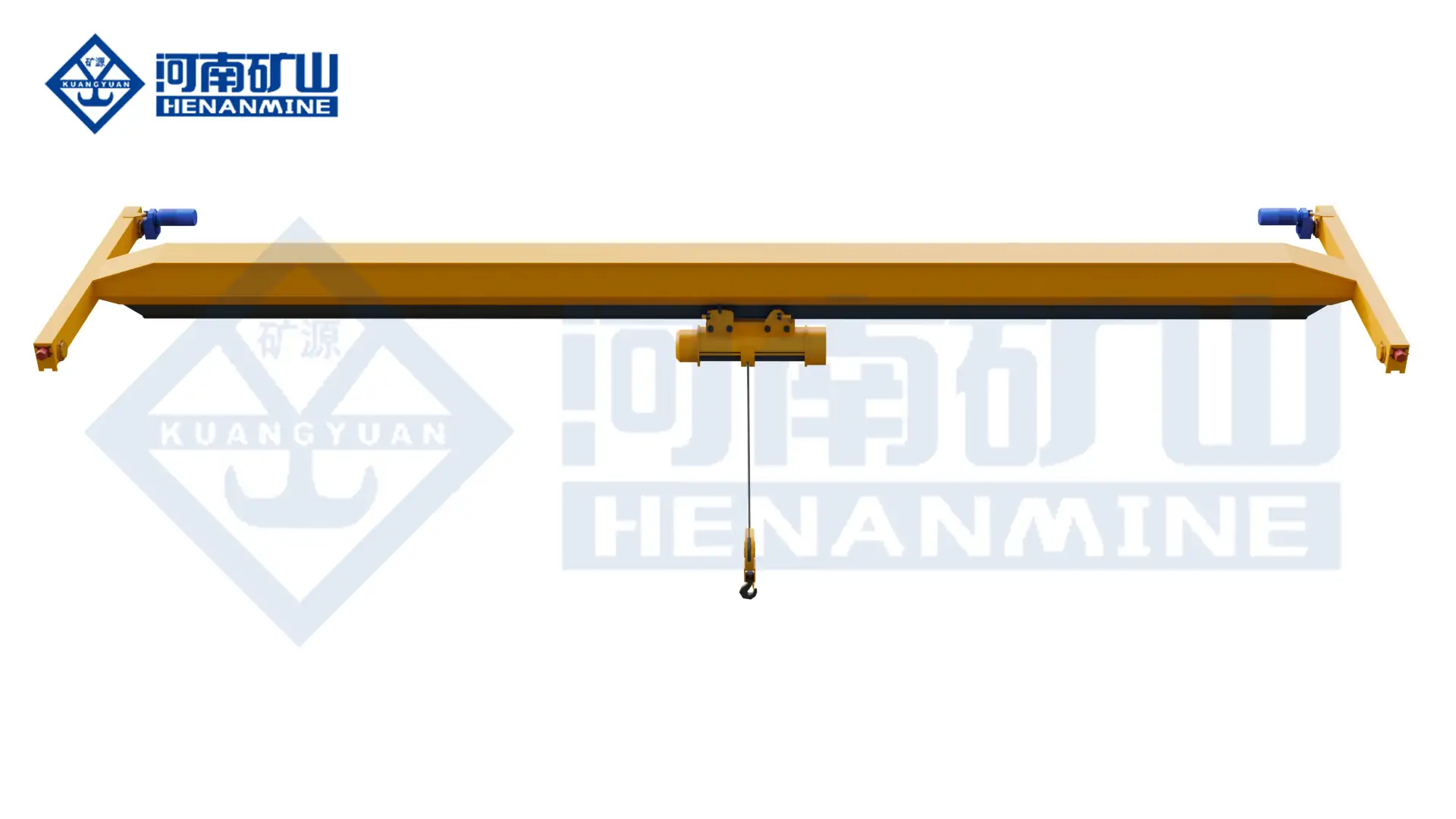
Henan Mine Crane · Engineered Single-Beam Lifting Systems
Single Girder Crane
Single-girder overhead, underhung and gantry crane configurations engineered around rated load, span, lifting height, duty, headroom, runway structure and production cycle.
Henan Mine Crane supplies electric single-girder crane systems for workshops, warehouses, assembly areas, maintenance bays, fabrication plants and material yards. Each proposal defines the bridge, hoist, end carriages, controls, safety functions, runway interface, electrical boundary, delivery documentation and requested site services.
PRIMARY CONFIGURATION
Top-Running Overhead Crane
ALTERNATIVE SUPPORT
Underhung or Gantry
HOIST OPTIONS
Wire Rope, Chain & Low Headroom
CONTROL OPTIONS
Pendant, Radio, Cabin & PLC
What Is a Single Girder Crane?
A single girder crane uses one primary bridge girder to carry the hoisting unit across the working area. In the most common overhead arrangement, an electric wire-rope or chain hoist travels beneath the girder, while powered end carriages move the complete bridge along parallel runway rails. Hoist lifting, cross travel and bridge travel provide vertical, lateral and longitudinal load movement.
The search term covers more than one support arrangement. A top-running single-girder overhead crane travels on rails installed above runway beams. An underhung single-girder crane travels beneath compatible runway beams. A single-girder gantry crane places the bridge on travelling legs and ground rails. These systems can use similar electric hoists, but their structural interfaces, wheel loads, clearances and site work are different.
Single-girder construction is commonly selected for general industrial handling where capacity, span, duty and hook-height requirements remain within an efficient electric-hoist design. One girder normally reduces bridge deadweight, wheel reactions, fabrication, freight and erection scope compared with a comparable double-girder bridge. The resulting cost advantage depends on the complete system rather than the girder count alone.
A single girder is not automatically a light-duty or low-capacity crane. Henan Mine Crane publishes broad product-family ranges, including engineered top-running models extending to high capacities and spans. Practical selection still follows structural calculation, hoist capability, fatigue duty, hook coverage, maintenance access and destination requirements. Where a process trolley, very high duty, greater hook height, walkway access or special attachment cannot be integrated efficiently, a double-girder design may provide the stronger lifecycle solution.
Components and Operating Principle
The crane structure, hoist, end carriages, power distribution and controls form one coordinated load-handling system. The main girder transfers the suspended load and bridge self-weight into the end carriages. Wheels transfer vertical and horizontal reactions through the rails into the runway or gantry legs. The selected hoist controls lifting performance and much of the hook approach.
A purchase specification should identify every interface. Bridge steel and lifting machinery do not automatically include runway beams, rails, support columns, foundations, incoming plant power, installation, test weights or local statutory inspection. Defining these boundaries before quotation prevents equipment-only prices from being compared with complete installed systems.
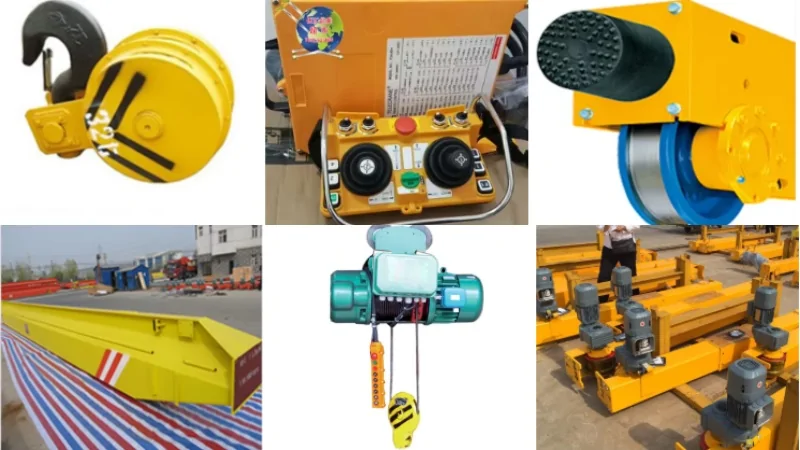
01 · Main Girder
A rolled section, composite beam or welded box girder carries the moving hoist and transfers load into the end carriages. Span, capacity, deflection, fatigue and hoist-wheel loading establish the design.
02 · Electric Hoist
The lifting unit includes motor, brake, gearbox, drum or load chain, rope or chain guide, hook block and limits. Capacity, lift, reeving, speed and duty must match the handling cycle.
03 · End Carriages
Wheel assemblies support the bridge and provide longitudinal travel. Wheel diameter, spacing, rail profile, drives and guide arrangement are coordinated with runway geometry and reactions.
04 · Electrification
Conductor bars or festoon systems supply the bridge, while a festoon, cable track or energy chain supplies the moving hoist. Voltage, travel length and environment determine the arrangement.
05 · Controls and Protection
Pendant, radio, cabin or PLC controls operate the motions with emergency stop, brakes, upper and lower limits, overload protection and project-specific alarms or interlocks.
06 · Runway Interface
Rails, beams, brackets, columns and foundations receive crane forces. New and existing structures require approved wheel loads, side thrust, alignment tolerance and end-stop design.
Single Girder Crane Configurations
Top-Running Single-Girder Overhead Crane
Bridge wheels travel on rails above the runway beams, while the electric hoist normally runs beneath the girder. This is the principal configuration for production workshops, warehouses, fabrication bays and maintenance facilities.
Underhung Single-Girder Crane
Bridge end carriages travel on the lower flanges of suspended runway beams. The arrangement can improve floor utilization and end approach, but roof beams, hangers, connections and runway flanges must be verified for crane reactions.
Low-Headroom Electric-Hoist Crane
A compact or offset hoist arrangement reduces the vertical distance between runway level and upper hook position. It is developed for low roofs or existing buildings where usable hook height has direct production value.
Single-Girder Gantry Crane
Travelling legs support the bridge on ground rails. This configuration serves yards, workshops without elevated runway steel and production zones where building loads should remain independent.
Intelligent Single-Girder Crane
Variable-frequency drives, load monitoring, anti-sway, positioning, diagnostic functions and PLC communication can be integrated where motion quality, process repeatability or production data are required.
Special-Environment Single-Girder Crane
Explosion-proof, cleanroom, insulated, corrosion-resistant or metallurgical electric-hoist variants require environment-specific equipment, materials, enclosures and protective logic defined by the operating hazard.
The support arrangement is selected before the final hoist and bridge dimensions are released. Top-running and underhung systems are not interchangeable without structural review. A gantry crane is also a separate project type because leg geometry, ground rails, wind actions, travel lanes and foundations become part of the load path.
Selection Considerations
A commercially complete single-girder crane specification begins with the load and operating cycle, then coordinates the lifting mechanism with building geometry and project scope. Capacity alone cannot establish girder size, hoist duty, wheel loads, motor ratings or price.
01 · Gross Suspended Load
Include payload, lifting beam, slings, clamps, magnets, grabs and every below-hook component. State maximum, normal and future loads rather than nominal product weight alone.
02 · Span and Travel Length
Span is normally the runway rail centreline distance. Runway length determines longitudinal coverage, electrification length and installation quantities.
03 · Lift and Headroom
Provide lowest pickup, highest placement, rail elevation, roof clearance, load height and rigging depth. Required hook height must be checked on a dimensioned arrangement.
04 · Working Duty
Define lifts per hour, full-load frequency, load spectrum, travel distance, shifts and annual operating hours. These data determine structural and mechanism service requirements.
05 · Hook Coverage
End approach, side approach, obstructions and safe operating zones determine whether the hook can reach every required pickup and placement point.
06 · Building and Runway
Existing or new runway beams require rail data, support spacing, wheel-load checks, alignment tolerances and an assigned structural approval responsibility.
07 · Motion Control
Specify lifting and travel speeds, low-speed range, acceleration, radio or pendant operation, anti-sway, positioning accuracy and any coordinated motion.
08 · Environment and Compliance
Temperature, dust, humidity, corrosion, washdown, hazardous-area classification, destination rules and inspection authority influence component and documentation selection.
Single Girder Crane Compared with Other Configurations
The most economical structure is the one that meets the complete operating requirement without transferring excessive cost into the runway, building, maintenance plan or production risk. The following comparison separates common arrangements by load path and application.
| Configuration | Structural Arrangement | Typical Application | Commercial Advantage | Selection Limit |
|---|---|---|---|---|
| Top-running single girder | One bridge girder on rails above runway beams; hoist below girder | General manufacturing, assembly, warehousing and maintenance | Low bridge deadweight, economical structure and broad electric-hoist selection | Hook height, duty, span and special accessories must remain practical |
| Underhung single girder | One bridge girder suspended below compatible runway beams | Lighter production bays, extensions and buildings designed for suspended runways | Clear floor area and potentially improved end approach | Roof reactions, hangers, lower flanges and connections govern feasibility |
| Double-girder overhead crane | Two bridge girders carrying a hoist trolley or process trolley | Higher capacity, longer span, demanding duty and specialized lifting | Improved hook height, stiffness, access and process-equipment integration | Higher self-weight, wheel loads, fabrication and installation scope |
| Single-girder gantry crane | One bridge girder supported by travelling legs on ground rails | Outdoor yards or facilities without suitable elevated runway support | Independent support and optional cantilever coverage | Ground rails, foundations, travel lanes, wind and leg clearances are required |
| Workstation bridge crane | Light enclosed track with floor or ceiling support | Ergonomic handling and localized repetitive work | Low rolling resistance and precise manual or powered movement | Lower capacity and span range; not a substitute for an industrial bridge crane |
A double-girder crane is not automatically superior, and a single-girder crane is not automatically limited to occasional service. The final decision follows calculated bridge behavior, selected hoist duty, usable hook envelope, required access and total installed cost.
Technical Specification Framework
Henan Mine Crane maintains several single-girder product families. Published ranges describe available engineering platforms rather than guaranteed combinations. Final capacity, span, lifting height, speeds, working class and wheel loads are confirmed on the approved general arrangement and technical schedule.
| Product Family | Capacity Position | Span Position | Lifting Height | Working Class / Control | Electrical Position |
|---|---|---|---|---|---|
| Top-running single-girder bridge family | Published table: 3.2–80 t | 4–31.5 m | Lifting height configured for the site | A5 published base; project duty confirmed | 220–690 V, 3-phase, 50–60 Hz |
| Intelligent electric-hoist overhead family | 1–32 t | 7.5–31.5 m | 6–30 m | A5–A6 | Configured for destination grid |
| Underhung single-girder family | 0.5–20 t | 3–16 m | 6 m, 9 m, 30 m or customized | A3–A5 | Configured for destination grid |
| European single-girder gantry family | 1–32 t or customized | 6–35 m | 4–20 m | A3–A5 | 220–660 V, 50–60 Hz available |
| Control and protection options | Matched to rated load | Matched to bridge geometry | Upper and lower limits coordinated with lift | Pendant, radio, cabin or PLC | IP54/IP55 options within published overhead family |
A capacity shown within a family range does not confirm suitability at every span or duty. Long spans, high capacities, severe load spectra and demanding hook-height requirements require a project-specific bridge and hoist check. The single-girder bridge crane product data supports preliminary selection; the contract specification and approved drawings control the delivered equipment.
Hoist Selection, Headroom and Hook Coverage
The hoist is the principal operating mechanism on a single-girder crane. Its body position, trolley wheelbase, drum or chain arrangement, hook block and reeving determine lifting speed, upper hook position, side approach and maintenance envelope. A low acquisition price has limited value when the hook cannot reach the required machine, rack or assembly position.
Electric Wire-Rope Hoist
Common industrial selection for broader capacities, lifting heights and speed options. Drum capacity, rope reeving, fleet angle, brake, gearbox and trolley duty are matched to the operating cycle.
Electric Chain Hoist
Compact solution for lighter loads and localized handling. Chain container, reeving, duty, lifting speed and upper-limit arrangement must fit the available vertical envelope.
Low-Headroom Hoist
Offset geometry positions the hoist body around the girder to improve the highest hook elevation. The complete dimensional drawing must also preserve inspection and removal access.
Variable-Frequency Motion
VFD control supports smooth acceleration, controlled low speed and reduced load swing. Required minimum speed and positioning performance should be stated numerically.
Two-Hoist Handling
Two lifting units can support long loads where permitted by the bridge design. Individual capacities, combined loading, hook spacing and allowed control modes must be defined.
Below-Hook Attachment
Lifting beams, C-hooks, clamps, magnets and grabs add suspended weight and change load geometry. Attachment mass is included in crane capacity and headroom calculations.
Approval drawings should state span, rail elevation, crane top clearance, highest and lowest hook positions, left and right hook approaches, end approaches, bridge depth and maintenance clearances. These dimensions establish usable coverage more accurately than capacity and lifting height alone.
Runway, Building and Electrical Interface
A bridge crane and its runway form one structural system. The crane supplier provides crane weight, maximum wheel loads, wheel spacing, horizontal forces and relevant operating data. The responsible structural party verifies runway beams, brackets, columns, connections, foundations and building stability. Existing runway reuse requires condition, geometry and capacity checks before manufacturing dimensions are frozen.
Rail and Alignment
Rail section, gauge, straightness, elevation, joint condition and end stops influence wheel contact, skewing and travel quality. Crane runway tolerances are normally tighter than general building-steel tolerances.
Wheel Loads and Reactions
Maximum and minimum wheel loads, impact, side thrust and braking forces are assessed with the crane in governing hook positions. A replacement crane can impose different reactions at the same rated capacity.
Clearance and Access
Roof bracing, ducts, lights, sprinklers, cable trays and adjacent equipment require clearance throughout bridge travel. Safe access is required for hoist, drives, panels and wearing parts.
Incoming Power
Voltage, frequency, phase, isolation point, grounding and available fault level are confirmed before electrical design. Runway conductor scope and the interface to plant power are assigned in the offer.
Freestanding Runway
Independent columns can avoid loading an existing building. Column spacing, floor use, foundations, aisle traffic and future expansion become project design inputs.
Underhung Support
Suspended systems require beam-flange, hanger, connection and roof-reaction checks. The ability to hang a static load from a roof does not by itself establish crane runway suitability.
Industrial Applications
Machining and Fabrication
Moves plate, profiles, fixtures, machine parts and welded assemblies between cutting, machining, welding, inspection and dispatch stations.
Assembly and Production
Supports component positioning, subassembly transfer and line-side material supply where smooth low speed and accurate hook approach improve process control.
Warehouse and Logistics
Handles machinery, tools, dies, steel products and unit loads across storage bays without consuming the permanent floor lanes required by mobile lifting equipment.
Maintenance Facilities
Provides coverage for motors, pumps, gearboxes, vehicle components and production machinery during removal, inspection and reinstallation.
Precast and Building Materials
Transfers molds, reinforcement assemblies and finished components when load weight, lifting points, span and operating environment suit an electric-hoist bridge or gantry system.
Controlled or Hazardous Areas
Cleanroom, explosion-proof, corrosion-resistant or insulated variants are configured only after the required cleanliness, zone, gas or dust group, temperature class and material restrictions are declared.
Standard single-girder cranes are intended for defined general-service conditions. Molten metal, suspended permanent magnets, high-temperature loads, explosive atmospheres, corrosive exposure and unattended automation require dedicated product selection and risk controls rather than additions to a conventional specification.
Project Experience: 300+ Intelligent Cranes for XCMG Manufacturing
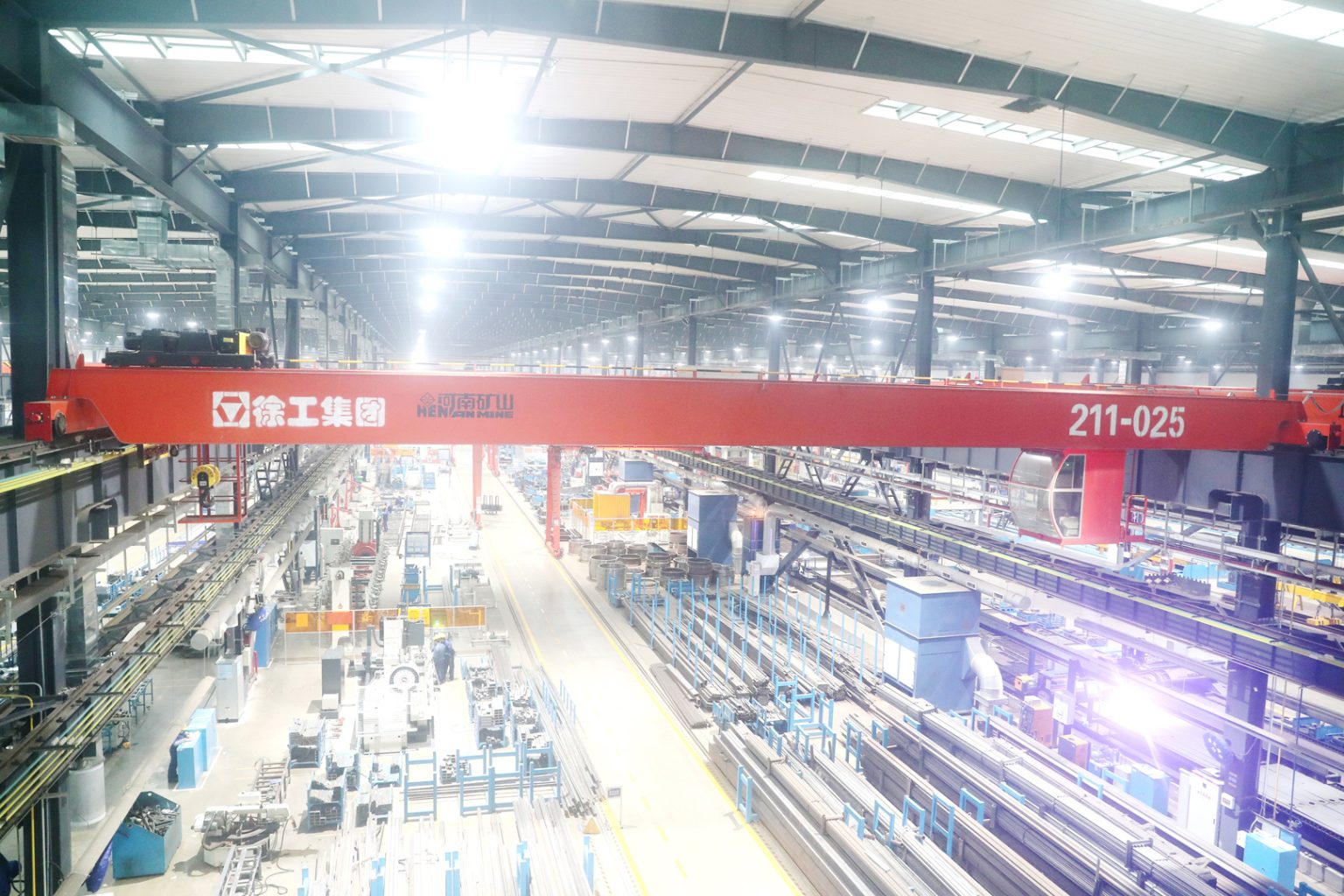
Henan Mine Crane reports the successive supply of more than 300 intelligent cranes of various types for XCMG manufacturing operations. The equipment supports assembly and structural-component movement across engineering-machinery production processes, with project configurations covering bridge, gantry and specialized crane forms.
The program emphasizes high-precision positioning, digital controls, remote monitoring, fault warning and production-system integration. Reported project capacities extend from 5 t to 1,000 t across the complete mixed fleet. This range confirms that one factory program can require several crane architectures rather than one repeated model.
For a single-girder package within a comparable manufacturing environment, the transferable engineering priorities are load-path definition, repeatable low-speed motion, verified hook coverage, appropriate working duty, maintainable electrification and consistent control logic. The final design remains specific to each bay, capacity and production task.
Engineering, Manufacturing, Delivery and Acceptance
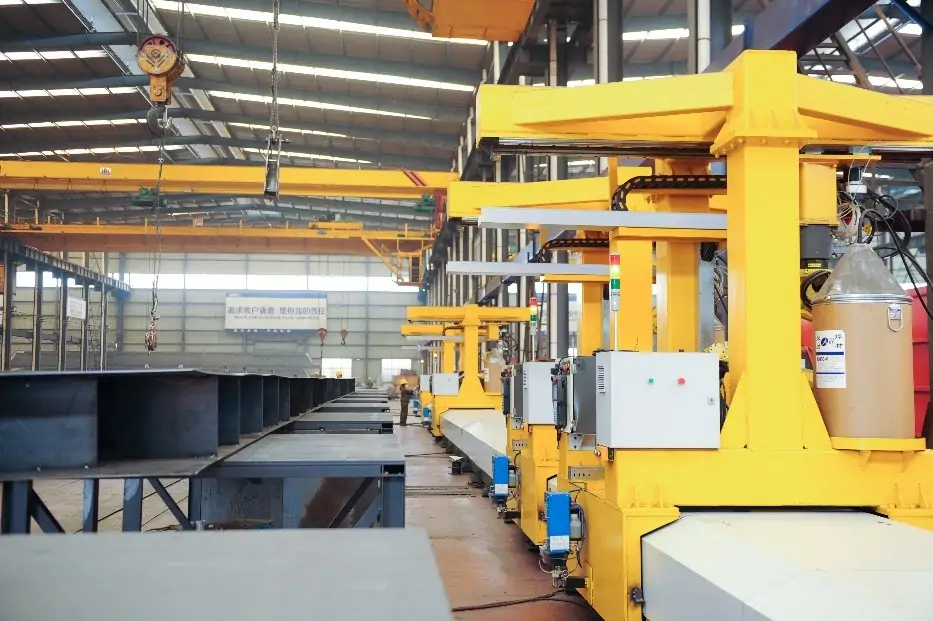
A reliable single-girder crane project connects approved operating data to structural design, mechanism selection, fabrication, inspection, packing, erection and handover. General arrangement drawings and interface loads are approved before bridge dimensions or runway connections are released.
Manufacturing control can include material identification, welding procedures, dimensional inspection, mechanism records, electrical diagrams, coating checks and factory functional tests. Site control can include rail survey, bridge assembly, electrical verification, protective-device settings, no-load checks, rated-load testing and commissioning records.
| Supply Package | Typical Content | Technical Control | Commercial Boundary |
|---|---|---|---|
| Crane bridge package | Main girder, end carriages, wheels, drives, buffers, connections and specified access items | Capacity, span, duty, deflection basis and wheel reactions approved | Assembly hardware and shipping splits listed |
| Hoist and lifting equipment | Hoist, trolley, rope or chain, hook block, brakes, limits and overload protection | Lift, headroom, speeds, reeving and service duty confirmed | Below-hook attachment and rigging boundary stated |
| Electrical and controls | Panels, pendant or radio, VFDs, crane wiring, alarms and moving electrification | Voltage, frequency, control philosophy and enclosure rating confirmed | Incoming supply and runway feed responsibility assigned |
| Runway and supports | Rails, clips, beams, brackets, columns, stops and foundations where contracted | Travel length, rail section, support spacing and structural reactions approved | Building and civil work explicitly included or excluded |
| Documents and inspection | Drawings, manuals, certificates, electrical diagrams, inspection records and packing documents | Language, approval stages and witness points agreed | Factory and site acceptance criteria identified |
| Logistics and site services | Export packing, freight, unloading, erection, alignment, wiring, testing and training as contracted | Incoterm, access, lifting equipment, labor and test weights assigned | Taxes, permits and local inspection responsibility stated |
Single Girder Crane Price and Total Project Cost
Public international pricing shows why a single figure cannot represent every single-girder crane. A component kit, complete bridge package and installed system contain different scope. Capacity, span, lift, duty, hoist, controls, runway, freight and site access materially change the project value.
| Budget Position | Indicative Public Market Position | Typical Included Basis | Common Exclusions or Variables |
|---|---|---|---|
| 5 ton underhung crane kit with hoist | Approximately US$25,000 | Commercial component-kit position with hoist | Bridge beam, runway, support structure, freight, installation and testing require confirmation |
| 5 ton top-running crane kit with hoist | Approximately US$27,700 | Commercial top-running component-kit position | Girder steel, runway, electrification, freight, erection and local electrical work may be separate |
| 5 ton base single-girder bridge crane | Approximately US$40,000 | Published North American benchmark for a base bridge, trolley or hoist package at 40 ft span or less | Installation is excluded in the stated benchmark; runway and building work depend on site |
| 5 ton packaged single-girder crane with hoist | Approximately US$47,600–52,300 | Current public retail positions for specified packaged bridge-crane configurations | Span, runway, support steel, shipping, installation, electrical feed and acceptance vary |
| 10 ton installed single-girder bridge crane | Approximately US$65,000 | Representative North American installed position | Actual span, runway condition, access, permits, local labor and load test affect final cost |
| Custom high-duty or special-environment crane | Project quotation | Engineered bridge, hoist, controls and protection for the declared process | Runway, automation, certification, freight, site work and local inspection must be defined |
Commercial comparison: capacity, span, lifting height, working class, speeds, hoist model, controls, bridge steel, runway scope, electrification, documentation, freight, installation and testing should be normalized before quotations are compared. A low kit price is not equivalent to a commissioned crane system.
Indicative positions were checked against public market information in September 2026 and are intended for preliminary capital planning. They are not fixed Henan Mine Crane quotations. Currency, destination, steel cost, specification and site conditions can change contract value.
Quote Information and Frequently Asked Questions
A complete request for quotation should provide maximum gross suspended load, normal load spectrum, load dimensions, lifting attachment, span, runway length, lifting height, rail elevation, headroom, operating cycle, required speeds, control method, environment, power supply, building or runway information, destination, delivery term and required installation boundary.
Load and Process Data
Maximum and routine loads, attachment mass, dimensions, center of gravity, lifting points, cycles per hour, travel route and production consequence.
Building and Coverage Data
Span, runway length, rail elevation, highest hook position, roof obstacles, column spacing, hook approaches and existing runway details.
Operating and Control Data
Working shifts, load spectrum, lifting and travel speeds, low-speed positioning, pendant, radio, cabin, PLC and anti-sway requirements.
Commercial and Site Data
Destination, voltage, Incoterm, governing requirements, inspection authority, installation resources, test weights and commissioning scope.
What is the difference between a single girder crane and a single girder overhead crane?
Single girder crane is the broader term. A single-girder overhead crane travels on elevated runway beams, while a single-girder gantry crane is supported by legs travelling on ground rails.
How much does a single girder crane cost?
Current public positions range from approximately US$25,000–27,700 for selected 5 t component kits with hoists to approximately US$40,000 for a base 5 t bridge crane and US$47,600–52,300 for listed packaged configurations. Installed and engineered project values depend on scope.
When should a double-girder crane be selected?
Double girders are considered when capacity, span, duty, hook height, stiffness, trolley arrangement, service access or process equipment cannot be integrated efficiently into a single-girder system.
Can a single-girder crane use an existing runway?
Reuse is possible after structural capacity, rail section, gauge, alignment, end stops, clearances and proposed wheel loads are verified. Matching rated capacity alone does not confirm compatibility.
Which hoist is suitable for a single-girder crane?
Wire-rope hoists cover a broad range of industrial capacities, lifts and speeds. Chain hoists serve lighter compact handling. Low-headroom hoists improve upper hook elevation where building height is restricted.
Can a single-girder crane be supplied with radio remote control?
Pendant and radio control are common options. Cabin, PLC, variable-frequency motion, anti-sway, load monitoring and positioning functions are configured when justified by the process.
Does the crane quotation include runway and installation?
Runway steel, rails, columns, foundations, freight, erection, electrical feed, test weights and local inspection are included only when expressly listed. Every offer should contain a scope and exclusion schedule.
What documents support acceptance?
The handover package can include approved drawings, wheel-load data, electrical diagrams, manuals, component records, inspection results, factory test documents, commissioning settings and site load-test records.
Related Crane Products
Product selection follows the approved load, span, duty, runway arrangement, environment and handling process. Each linked model represents a separate configuration platform.
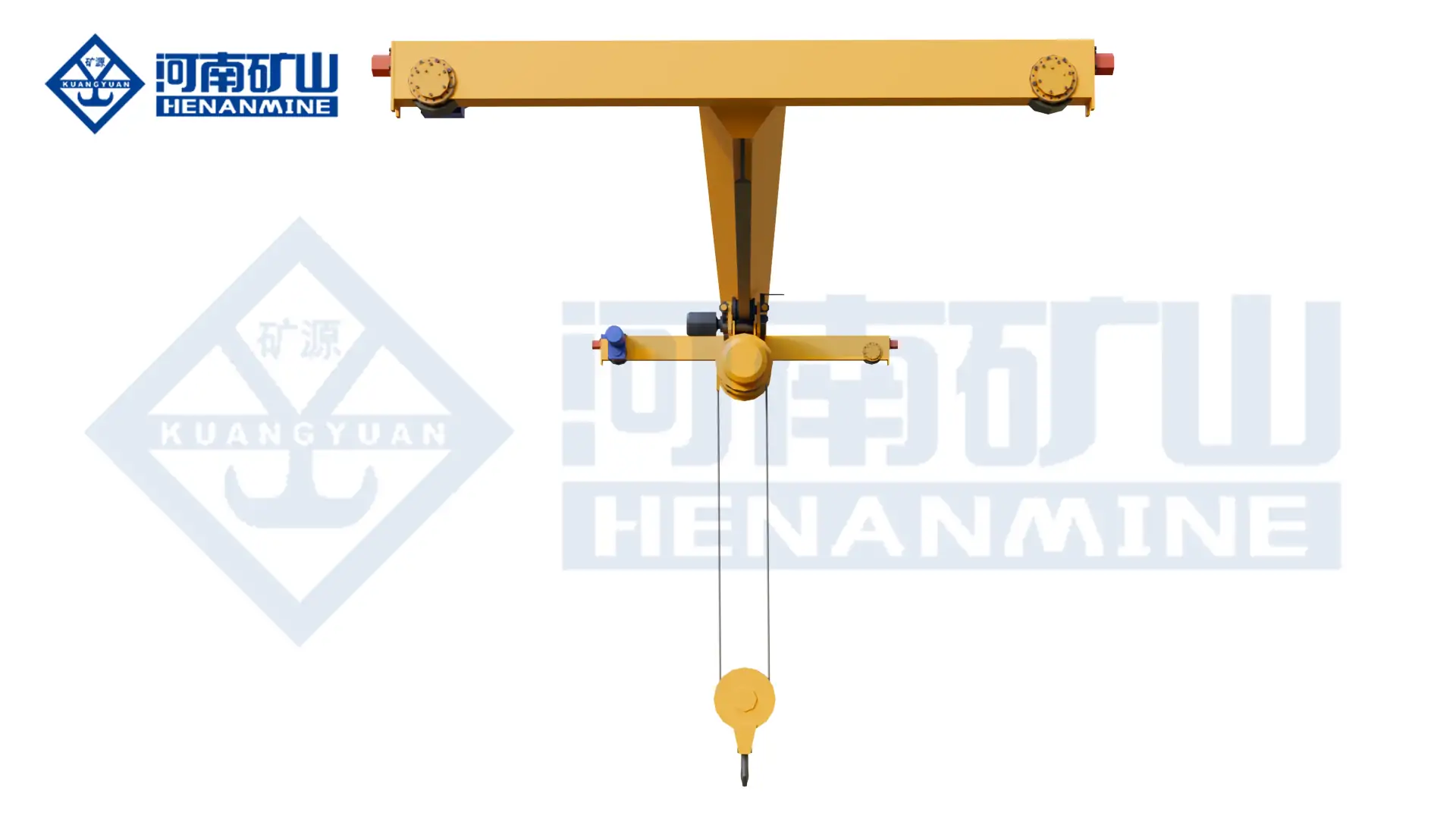
Single-Girder Overhead Crane
Top-running electric-hoist bridge for general manufacturing, assembly, warehouse and maintenance service.
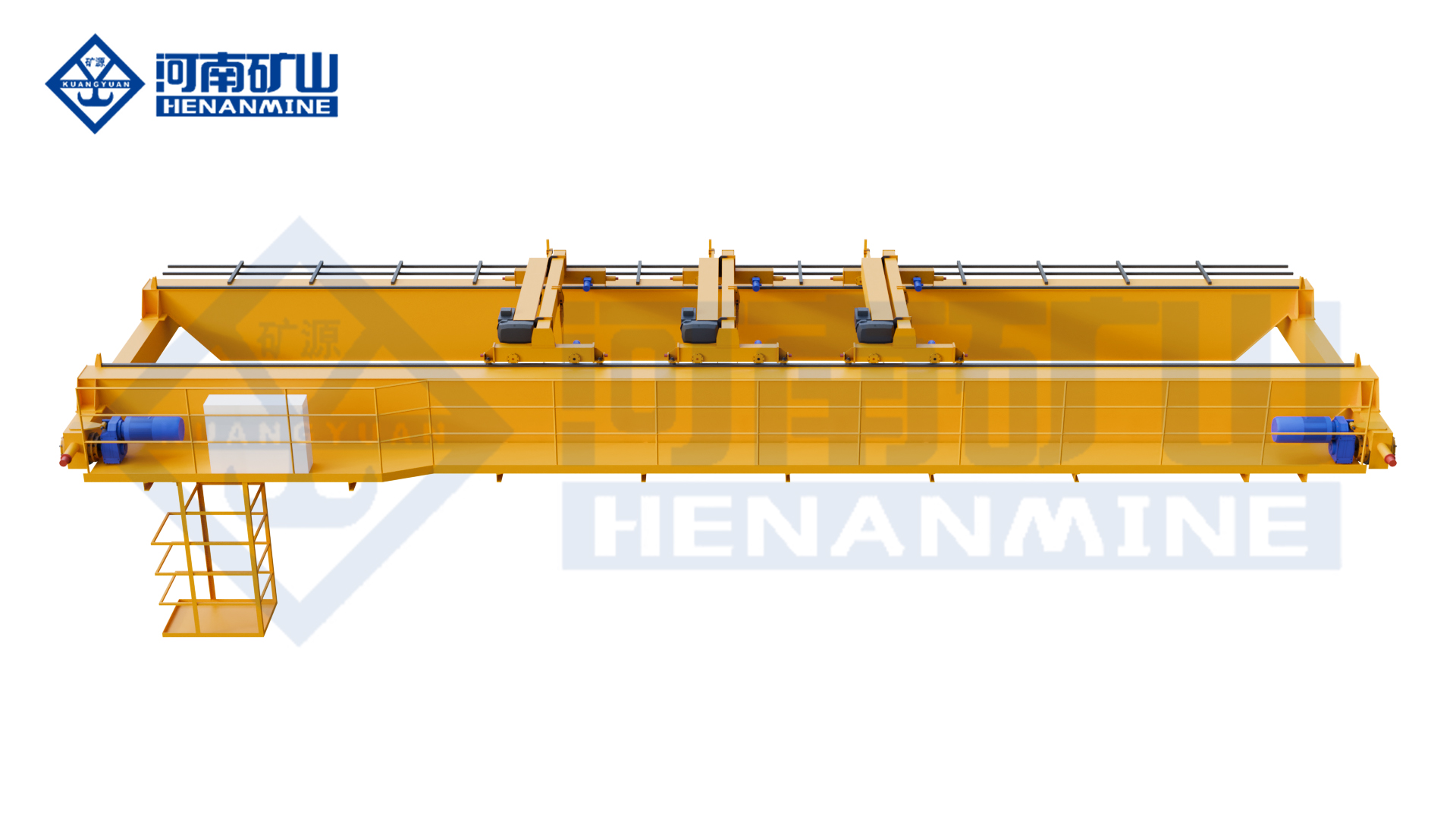
Intelligent Electric-Hoist Crane
Compact electric-hoist configuration with controlled motion options for modern industrial production.
Underhung Overhead Crane
Suspended bridge arrangement for compatible runway beams and verified building support.
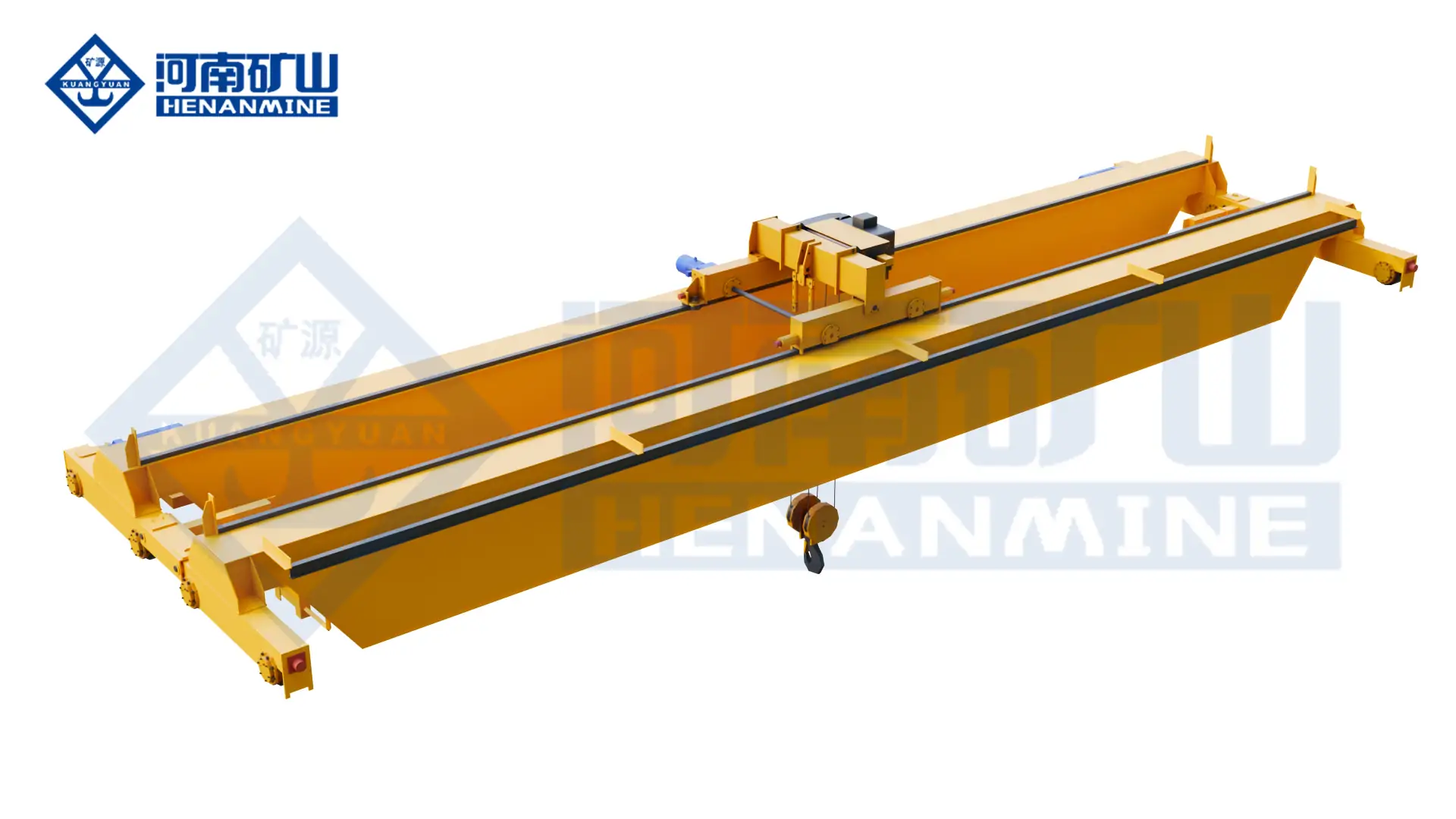
Double-Girder Overhead Crane
Two-girder bridge for higher capacity, longer span, demanding duty and improved hook height.
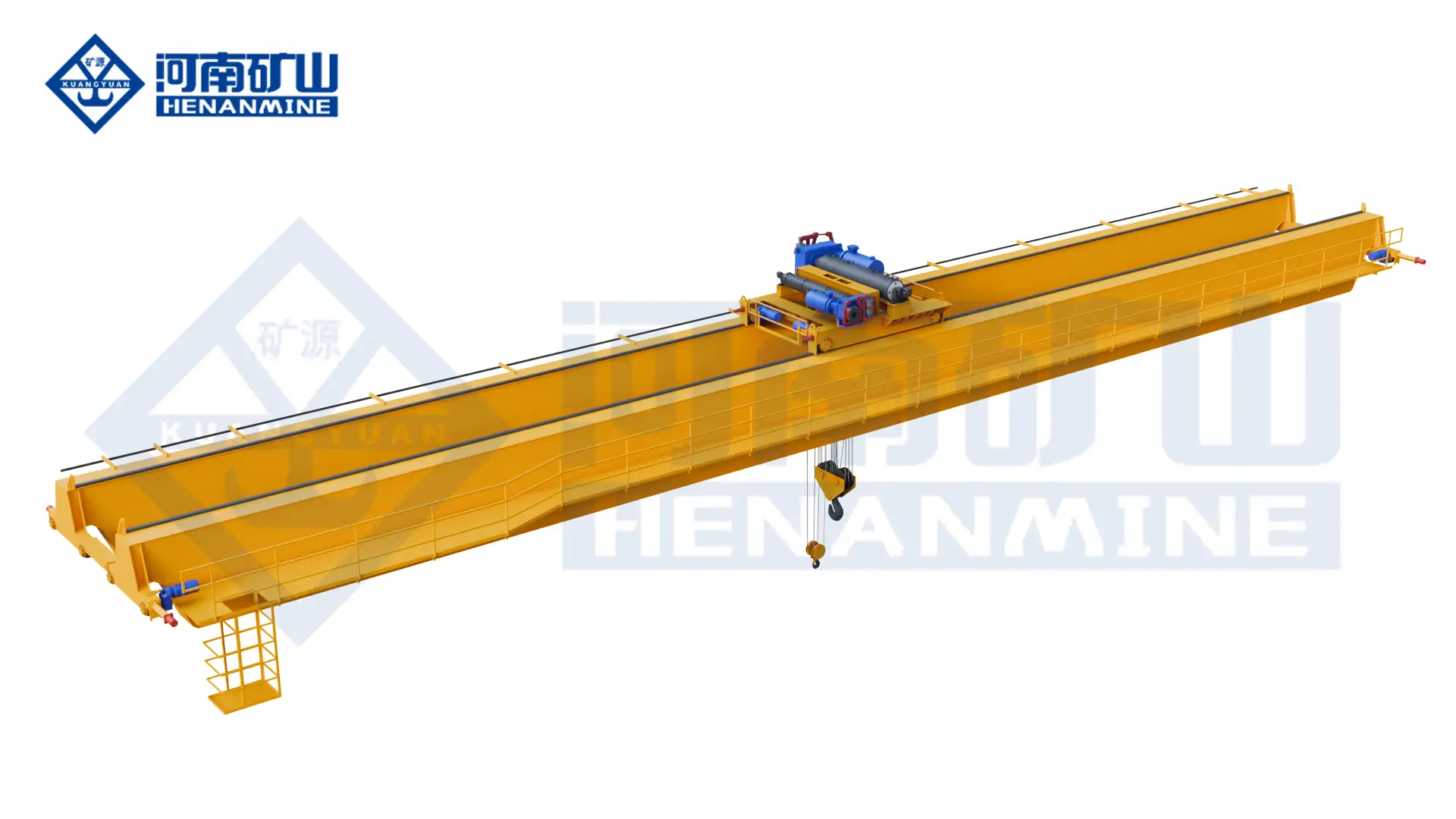
Explosion-Proof Overhead Crane
Dedicated electrical and mechanical configuration for a formally classified hazardous area.
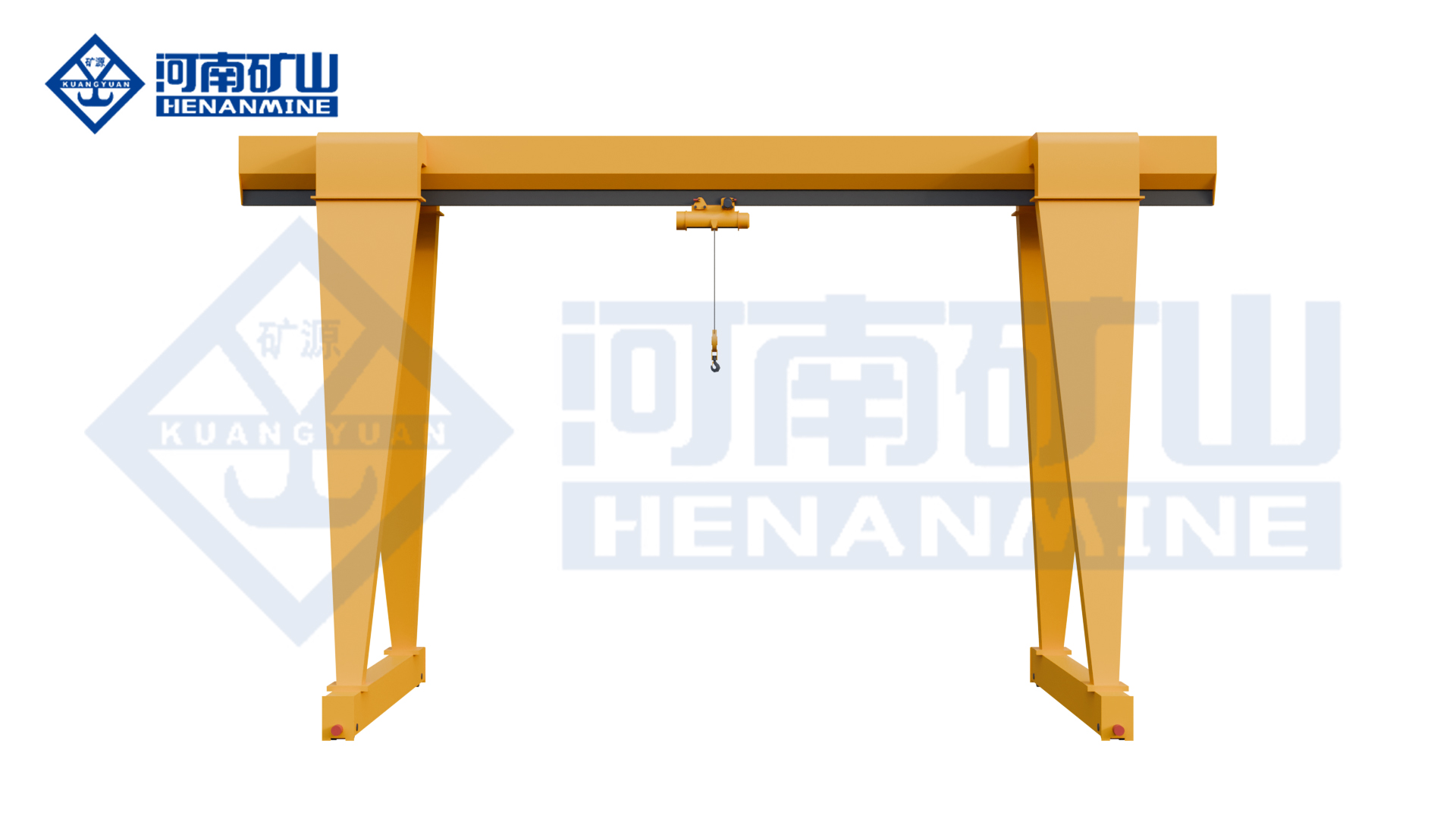
European Single-Girder Gantry Crane
Ground-supported electric-hoist gantry for workshops, material yards and logistics areas.
Request a Single Girder Crane Quote
Submit the maximum gross load, span, lifting height, runway length, duty cycle, hook coverage, building information, power supply, control requirements, operating environment, destination and required supply boundary. Henan Mine Crane will prepare a configuration-based technical and commercial proposal.