
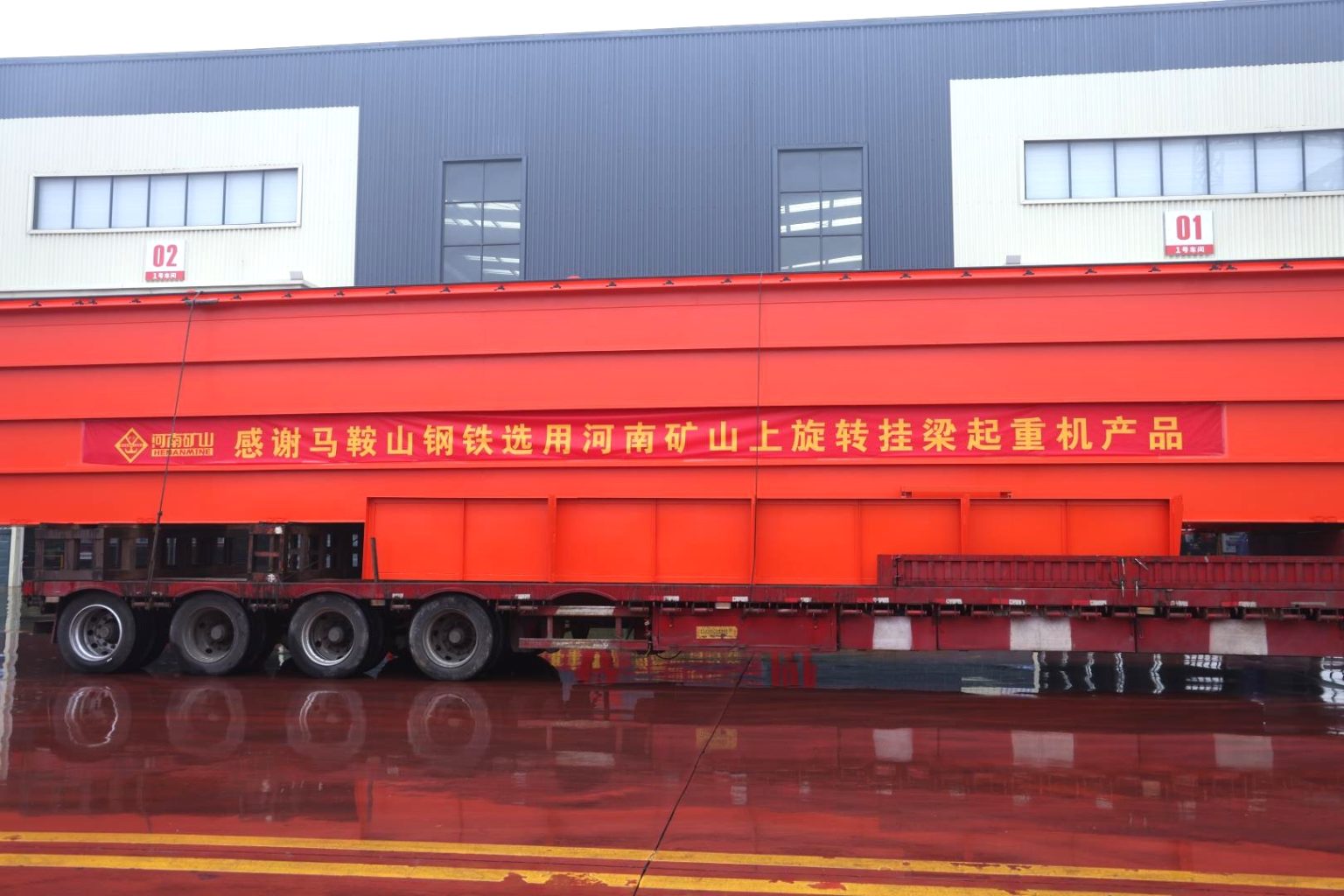
Henan Mine Crane · Engineered Long-Steel Transfer Systems
Rebar Handling Crane Systems
Overhead cranes engineered for receiving, transferring, stacking, retrieving and dispatching straight rebar bundles, reinforcing steel bars and compatible long-steel products.
Henan Mine Crane configures every rebar handling crane from the declared bar material, bundle length and diameter, maximum gross suspended load, bundle condition, surface coating, storage layout, cycle rate, runway limits and required control level. Available concepts include fixed or rotating electromagnetic beams, hook cranes with multi-point spreader beams, purpose-designed clamps and coordinated automatic warehouse systems.
PRIMARY ARCHITECTURE
Top-Running Double Girder
LOAD FORM
Straight Rebar Bundles & Long Steel
LIFTING SYSTEMS
Magnet, Spreader, Sling or Clamp
CONTROL OPTIONS
Cabin, Radio, PLC & Automation
What Is a Rebar Handling Crane?
A rebar handling crane is an overhead process crane equipped to lift and position straight reinforcing bars or bundled long steel. It supports rolling-mill finishing bays, rebar production lines, steel service centers, reinforcement fabrication plants, distribution warehouses, truck-loading areas and construction-material logistics facilities.
Rebar creates a different lifting problem from compact unit loads. A bundle may be 6–18 m long, flexible relative to its length and secured by multiple ties. Its center of gravity can shift when bars are unequal, loose or partly withdrawn. The lifting system must distribute support along the bundle, maintain orientation, avoid excessive sag and place the material within the available rack, truck or processing-line clearance.
Magnetic handling is efficient for validated ferromagnetic black rebar, but it is not automatically suitable for every reinforcing product. Steel grade, bar diameter, rib geometry, rust or scale, surface coating, temperature, air gaps, bundle shape and the number of bars retained by each magnet all affect the lifting result. Epoxy-coated, galvanized or stainless reinforcing bar may require a protected mechanical system instead.
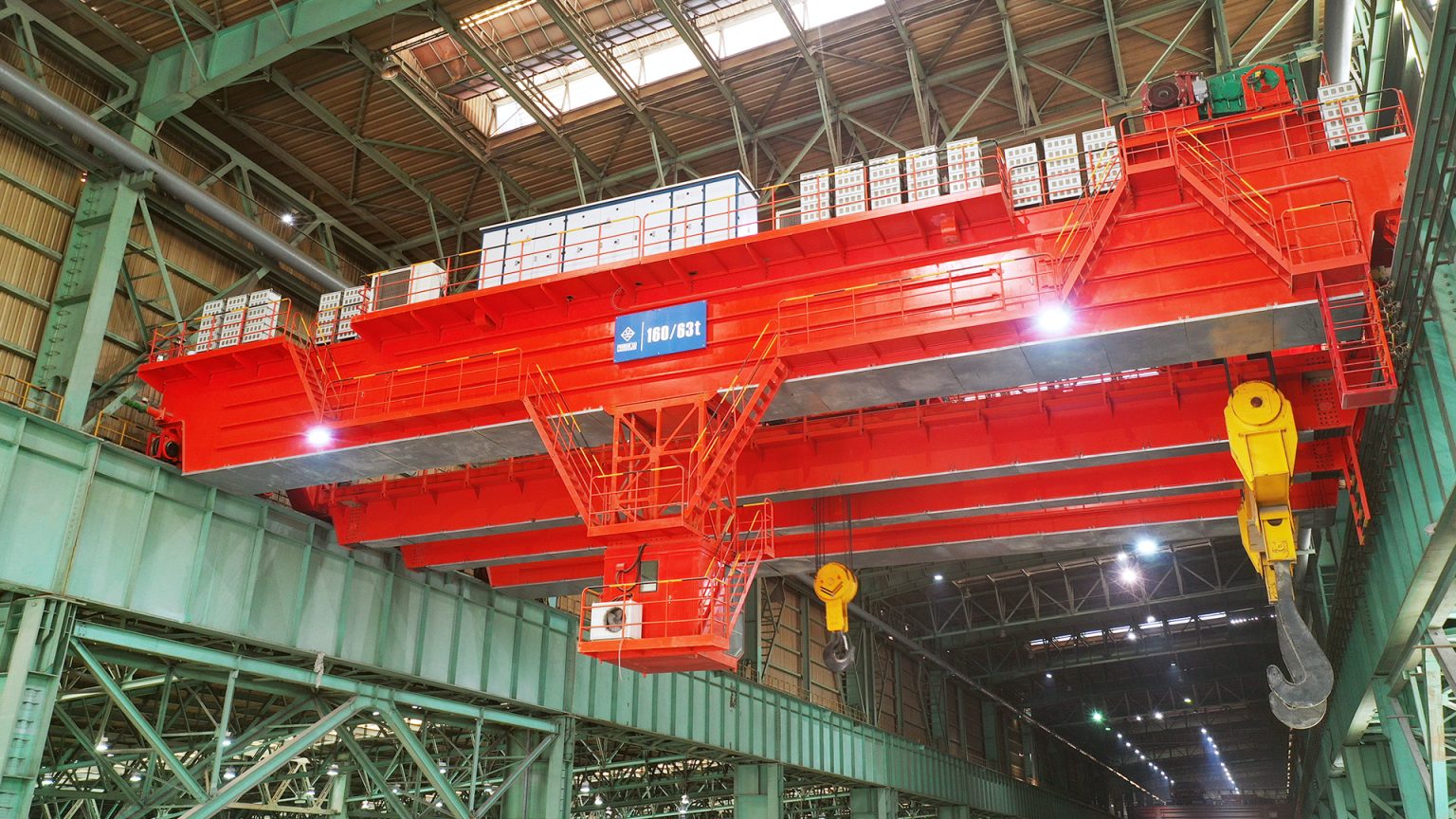
Henan Mine Crane combines the lifting attachment with an electromagnetic hanging crane, electromagnetic bridge crane, double-girder bridge crane or process-duty metallurgical platform according to the approved load and operating route.
Rebar Handling Crane Applications
Rolling-Mill Finishing Bay
Transfer cut-to-length bars from collection beds to inspection, bundling, weighing, storage and dispatch positions.
Finished-Rebar Warehouse
Stack, retrieve and sequence bundles by heat, diameter, length, grade, customer order or vehicle-loading plan.
Rebar Fabrication Plant
Feed straight bars to cutting and bending equipment and move prepared reinforcement assemblies within defined handling zones.
Steel Service Center
Handle mixed long-steel inventories where rebar, round bar, sections and fabricated bundles require controlled segregation.
Truck and Rail Loading
Load or unload bundles while respecting vehicle geometry, exclusion zones, trailer support points and secured-load procedures.
Outdoor Rebar Yard
Serve covered or open storage with project-specific wind, rain, corrosion, temperature and electrification provisions.
Components and Operating Principle
- Bridge and end carriages: carry the trolley and distribute vertical, longitudinal and transverse reactions to the runway.
- Hoisting and trolley mechanisms: provide main and creep speeds selected from cycle time, placement tolerance and load control.
- Lifting beam: establishes the pickup-point spacing needed to control long bundles and may be fixed, rotating or telescopic.
- Load-engagement system: uses purpose-selected magnets, sling points, protected hooks, clamps or a combination arrangement.
- Power and controls: coordinate crane motions, magnet circuits, attachment status, limits, alarms and optional WMS/MES communication.
- Safety and feedback: monitor overload, position, travel limits, skew or anti-collision functions, magnet state and permitted release conditions.
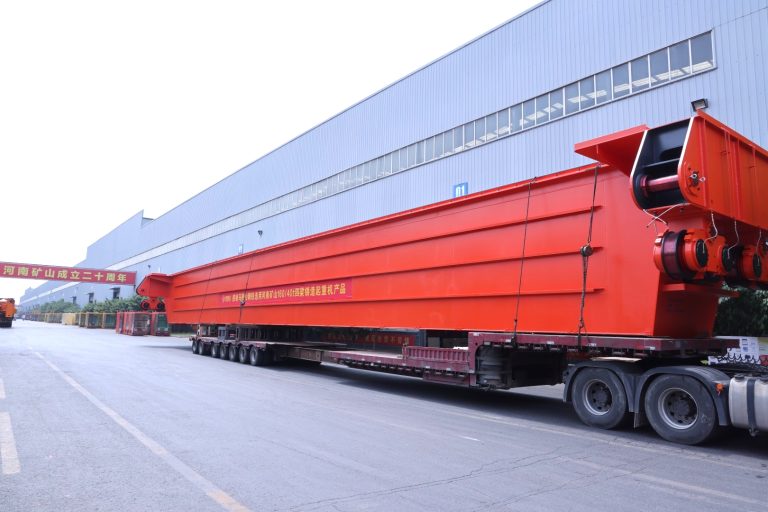
Capacity basis: the crane is sized for the maximum gross suspended load, including rebar, lifting beam, magnets or clamps, hook block, cables and every other below-hook component. A bundle payload cannot be used as the crane rating without adding the attachment mass and design effects.
Rebar Handling Crane Selection Considerations
Selection begins with the complete rebar and route matrix rather than a nominal tonnage. The following inputs determine the crane, beam, pickup method and controls.
Bundle Matrix
Minimum and maximum mass, bar length and diameter, bundle diameter or width, bars per bundle, number of bundles per lift and center-of-gravity variation.
Material and Surface
Steel grade and magnetic response; black, galvanized, epoxy-coated or stainless surface; temperature, scale, oil, moisture and acceptable contact marks.
Bundle Integrity
Tie type, quantity and position; loose or nested bars; permitted sag; overhang; separation method; damaged-bundle and partial-bundle handling procedure.
Duty and Throughput
Lifts per hour, shifts, annual hours, load spectrum, travel distances, required cycle time, peak dispatch rate and production consequence of downtime.
Storage and Vehicle Interface
Rack or dunnage geometry, stack height, aisle width, truck or rail-car profile, pickup clearance, release height, exclusion zones and required rotation.
Building and Integration
Rail-center span, runway length and elevation, wheel-load limits, headroom, approaches, power supply, cabin visibility, positioning tolerance and WMS/MES protocol.
Rebar Handling Crane Configurations Compared
The lifting method is selected from the rebar grade, coating, bundle condition, throughput and layout. No single configuration is appropriate for every reinforcing-steel product.
| Configuration | Suitable Handling Pattern | Engineering Advantages | Critical Limitations and Controls |
|---|---|---|---|
| Fixed Electromagnetic Beam Crane | Repeated transfer of validated ferromagnetic black-rebar bundles in one principal orientation | Fast pickup and release without manual sling connection; multiple magnets distribute support | Magnetic test, bundle retention, air gaps, temperature, power-failure strategy and fixed orientation |
| Rotating Electromagnetic Beam Crane | Warehouses or loading bays requiring bundle alignment at different angles | Combines magnetic pickup with controlled horizontal orientation and compact stacking | Higher headroom, rotation envelope, slewing lock, cable management, controls and maintenance scope |
| Hook Crane with Spreader Beam and Slings | Mixed grades, coated bars, low-to-medium cycles and nonmagnetic or uncertain materials | Broad material compatibility and visible mechanical support at defined pickup points | Manual rigging exposure, sling-angle effects, coating protection, tag-line rules and longer cycle time |
| Mechanical Rebar Clamp or Tong Crane | Standardized bundle sizes requiring powered engagement without magnetic pickup | Positive mechanical engagement and possible automation for a controlled bundle envelope | Contact pressure, bundle-size range, open/closed feedback, retention and protected contact faces |
| Automatic Rebar Warehouse Crane | High-volume storage with stable product data, fixed coordinates and controlled traffic zones | Automated task execution, inventory traceability, sequencing and repeatable placement | Reliable identification, position feedback, zone control, WMS/MES interface and recovery logic |
A rotating magnetic beam can reduce manual intervention and improve storage density, but it adds slewing machinery, magnet circuits, sensors, emergency-power provisions and software. Lifecycle maintenance and production-critical spares should be evaluated together with the initial equipment price.
Rebar Handling Crane Technical Specification Framework
Final values are confirmed on the approved technical schedule. Published product-family positions support preliminary configuration but do not establish a guaranteed rebar-handling combination.
| Specification Item | Required Input | Engineering Output | Contract Evidence |
|---|---|---|---|
| Rated load | Maximum rebar plus complete beam, magnets, rigging and block | Crane rating and permitted attachment combinations | Load schedule and nameplate basis |
| Bundle envelope | Length, mass, diameter, bar count, grade, coating and bundles per lift | Approved handling matrix and pickup-point arrangement | Attachment data sheet and operating limits |
| Span, lift and approaches | Runway drawings, rail centers, elevations, rack and vehicle clearances | General arrangement and complete load coverage | Approved GA and clearance study |
| Duty classification | Load spectrum, lifts, starts, shifts, annual hours and process criticality | Crane and mechanism classifications under the chosen standard | Duty calculation and design basis |
| Motion performance | Cycle target, travel distances, placement tolerance and permitted sway | Main/creep speeds, acceleration, braking and anti-sway functions | Drive schedule and witnessed cycle test |
| Runway reactions | Building capacity, rail, supports and permissible horizontal loads | Maximum/minimum wheel loads and longitudinal/transverse forces | Reaction schedule for structural approval |
| Controls and interfaces | Operating modes, location accuracy, identification, zones and WMS/MES messages | Control narrative, I/O, protocols and fallback mode | Functional specification and acceptance test |
Published Henan Mine Crane Reference Platforms
| Product Platform | Published Position | Possible Rebar Role | Application Boundary |
|---|---|---|---|
| Upper-Rotating Magnetic Overhead Crane | 5+5 t to 25+25 t; 10.5–31.5 m span; 6–20 m lift; A6–A7 | Long bars requiring rotation, alignment and grouped magnetic pickup | Published notation must be reconciled with total payload, beam and magnet mass |
| Electromagnetic Bridge Crane | 5–32 t including electromagnet; 10.5–31.5 m span; 6–30 m lift | Ferromagnetic steel transfer using a project-selected magnet system | Bar geometry, bundle retention, duty and magnetic performance require validation |
| Electromagnetic Hanging Crane | 5–50 t; 10.5–31.5 m span; 6–20 m lift; A6–A7 | Fixed or rotating-beam long-steel handling | Final magnet array, temperature range and retention strategy are process-defined |
| Custom Spreader, Sling or Clamp Crane | Project-defined capacity, beam length, span, lift, duty and speeds | Coated, nonmagnetic, mixed or irregular reinforcing-steel products | Final configuration follows representative-load trials and the approved handling matrix |
Published ranges describe product families. They are not a promise that every capacity, span, lift, duty and attachment can be combined in one crane.
Rebar Bundle and Lifting-Attachment Engineering
Long bundles need several support or pickup points. Magnet quantity and spacing, sling separation or clamp location are established from the maximum length, minimum bundle stiffness, permissible sag and center-of-gravity range. The outer pickup points must control end droop without overstressing individual bars or bundle ties.
Representative-load trials are required when lifting performance depends on magnetic contact, friction, coating, bar nesting, tie condition or automated bundle recognition. A solid test weight does not reproduce the air gaps and bar-to-bar movement of a real rebar bundle.
Magnet Array
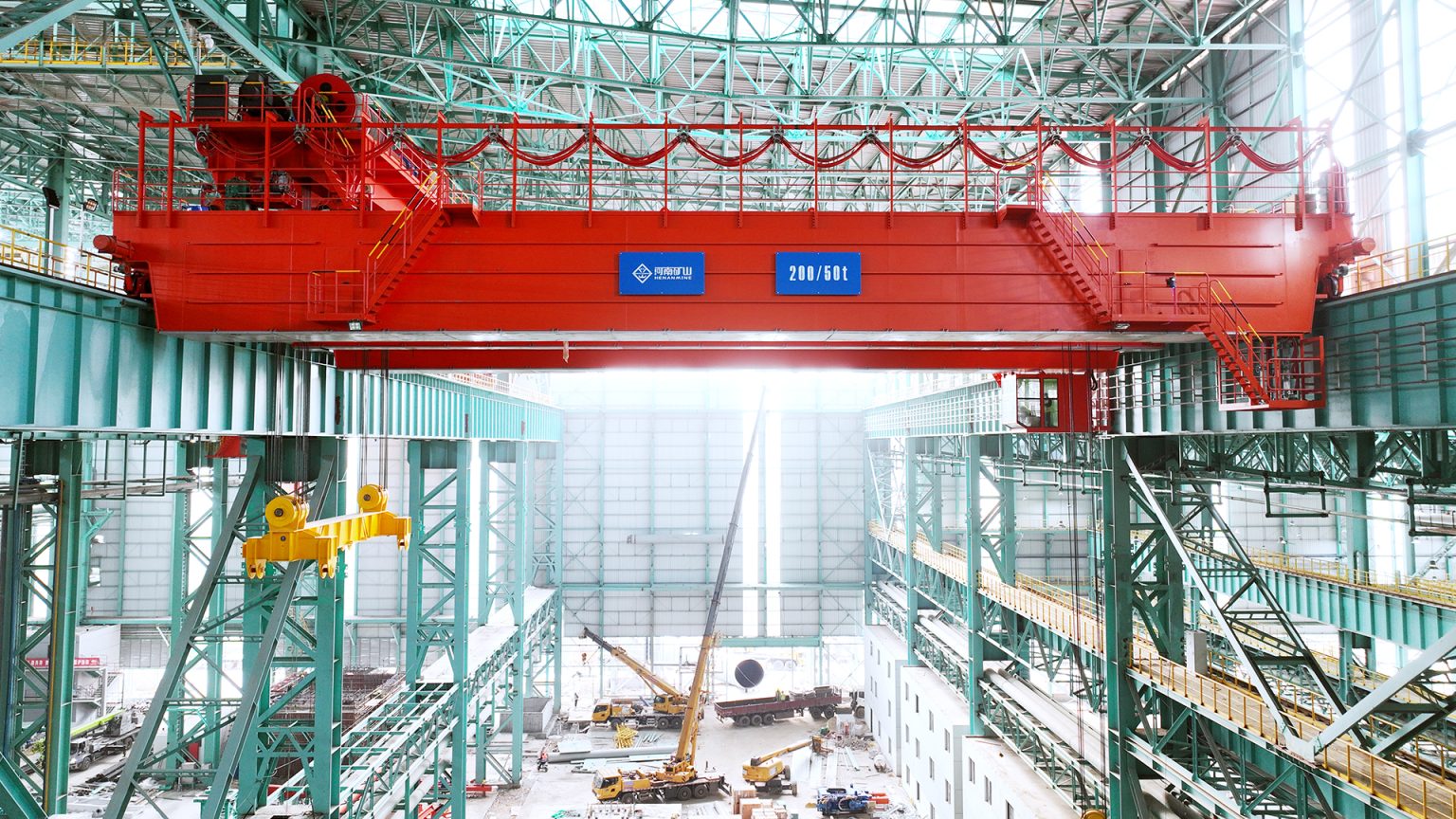
Magnet type, pole geometry, grouped excitation, current control and spacing follow bar diameter, bundle profile, air gaps, temperature and required pickup combinations.
Spreader and Sling Geometry
Beam length, sling angles, rated components, protective sleeves and pickup spacing prevent excessive bending and coating damage.
Rotation and Telescoping
Rotation is justified by the rack and vehicle approach; telescoping is justified by a wide length range. Both functions require mechanical limits, interlocks and maintenance access.
Illustrative Long-Rebar Duty
For an illustrative duty involving three bundles at 3.5 t each and 9–12 m long, the payload is 10.5 t before adding the beam, magnets, cables and block. Crane capacity, magnet grouping, beam deflection, emergency retention and runway reactions must therefore be calculated from the gross suspended mass—not from a single 3.5 t bundle. This example explains the sizing method and is not a standard rating or delivered-project claim.
Handling Black, Galvanized, Epoxy-Coated and Stainless Rebar
| Rebar Condition | Primary Handling Concern | Typical Engineering Direction | Required Verification |
|---|---|---|---|
| Black carbon-steel rebar | Irregular rib contact, scale, rust, air gaps and bundle movement | Validated magnetic beam or multi-point mechanical lift | Worst-case representative bundle and secure retention of all bars |
| Galvanized rebar | Zinc surface marking, abrasion and contamination | Protected slings or qualified contact system; magnet only after testing and surface approval | Permitted marks, contact material and customer coating requirements |
| Epoxy-coated rebar | Chipping, scratching, local pressure and impact damage | Padded spreader, synthetic slings or approved protected clamp; avoid unprotected chains and dragging | Applicable coating specification, allowable damage and repair procedure |
| Stainless or specialty rebar | Magnetic response varies by alloy and processing condition; ferrous contamination may be prohibited | Dedicated protected mechanical system unless magnetic suitability is formally proven | Alloy, magnetic test, contamination controls and segregated rigging requirements |
Load Stability, Magnetic Safety and Release Control
Magnet-Proven Load Envelope
Every approved grade, diameter, bundle shape, temperature and pickup combination is documented.
Power-Failure Retention
Emergency supply or electro-permanent strategy, monitoring and safe-lowering time are defined by risk assessment.
Release Interlock
Demagnetization or clamp opening is permitted only inside the defined placement zone and release-height window.
Traffic and Collision Control
Crane separation, restricted zones, vehicle presence and end approaches are supervised by agreed devices and logic.
Motion Control
VFD acceleration, braking, creep speed and optional anti-sway reduce bundle movement near racks and vehicles.
Inspection Access
Walkways and service positions support inspection of ropes, brakes, beam structure, magnets, cables and attachment pins.
Manual, Semi-Automatic and Automatic Rebar Handling
Automation level follows product repeatability, inventory data quality, traffic risk, throughput and the facility’s ability to maintain sensors, networks and software.
| Control Level | Typical Functions | Appropriate Conditions | Required Definition |
|---|---|---|---|
| Manual control | Cabin or radio control, variable speeds, load display, cameras, magnet controls and interlocks | Mixed products, irregular bundles and experienced operator supervision | Sightlines, operator location, communication, rigging access and exclusion zones |
| Semi-automatic | Automatic travel or rotation to stored positions with operator-authorized pickup and release | Repeated racks or loading stations with occasional exceptions | Target coordinates, handover points, confirmation logic and exception recovery |
| Fully automatic | Task receipt, bundle identification, pickup, transport, stacking, retrieval and completion feedback | Controlled warehouses with standardized bundles, stable data and segregated traffic | WMS/MES interface, coordinate system, safe-state logic, cybersecurity and manual fallback |
Bundle Identification
Barcode, RFID, production data or machine vision associates each bundle with heat, grade, diameter, length, mass, order and storage position.
Positioning and Anti-Sway
Absolute position feedback, rotation sensing and load-dependent motion control support repeatable pickup and placement.
Inventory Integration
The interface defines task ownership, material identity, source, destination, status, alarms, time synchronization and recovery after communication loss.
Design Basis, Inspection and Acceptance
The purchase specification identifies one coherent design route. Local statutory requirements remain applicable at the installation site, and standards from different systems are not combined selectively without an approved compliance matrix.
Possible Design Routes
A project may use ISO crane-classification principles with applicable crane and electrical standards; EN 13001 with EN 15011 and EN 13155 where applicable; or a North American route using CMAA specifications with applicable ASME B30.2, B30.20 and ASME BTH-1 requirements. A Chinese-standard route may reference the applicable bridge-crane and lifting-magnet standards. The contract states the selected basis.
Engineering Deliverables
General arrangement, wheel loads, duty calculation, rebar matrix, beam and attachment data, magnetic study where applicable, clearance study, electrical drawings, control narrative, interface list, inspection plan and maintenance-access arrangement.
Manufacturing Inspection
Material traceability, welding procedures and welder qualification, specified NDT, dimensional checks, machinery alignment, beam and attachment inspection, electrical-panel inspection, cable management, coating and documentation records.
FAT and Site Acceptance
Functional tests verify motions, brakes, limits, overload protection, rotation, attachment engagement, alarms and available automation. Site tests then cover runway, erection, load testing, representative rebar bundles, power-loss response, placement tolerance, interfaces, training and handover.
Relevant Long-Steel and Steel-Mill Experience
Project references are evaluated by process similarity. The following Henan Mine Crane references demonstrate rotating electromagnetic material handling and process-based crane-fleet planning. A new rebar crane still requires its own bundle matrix, lifting study and acceptance criteria.
Magnetic Long-Material Reference
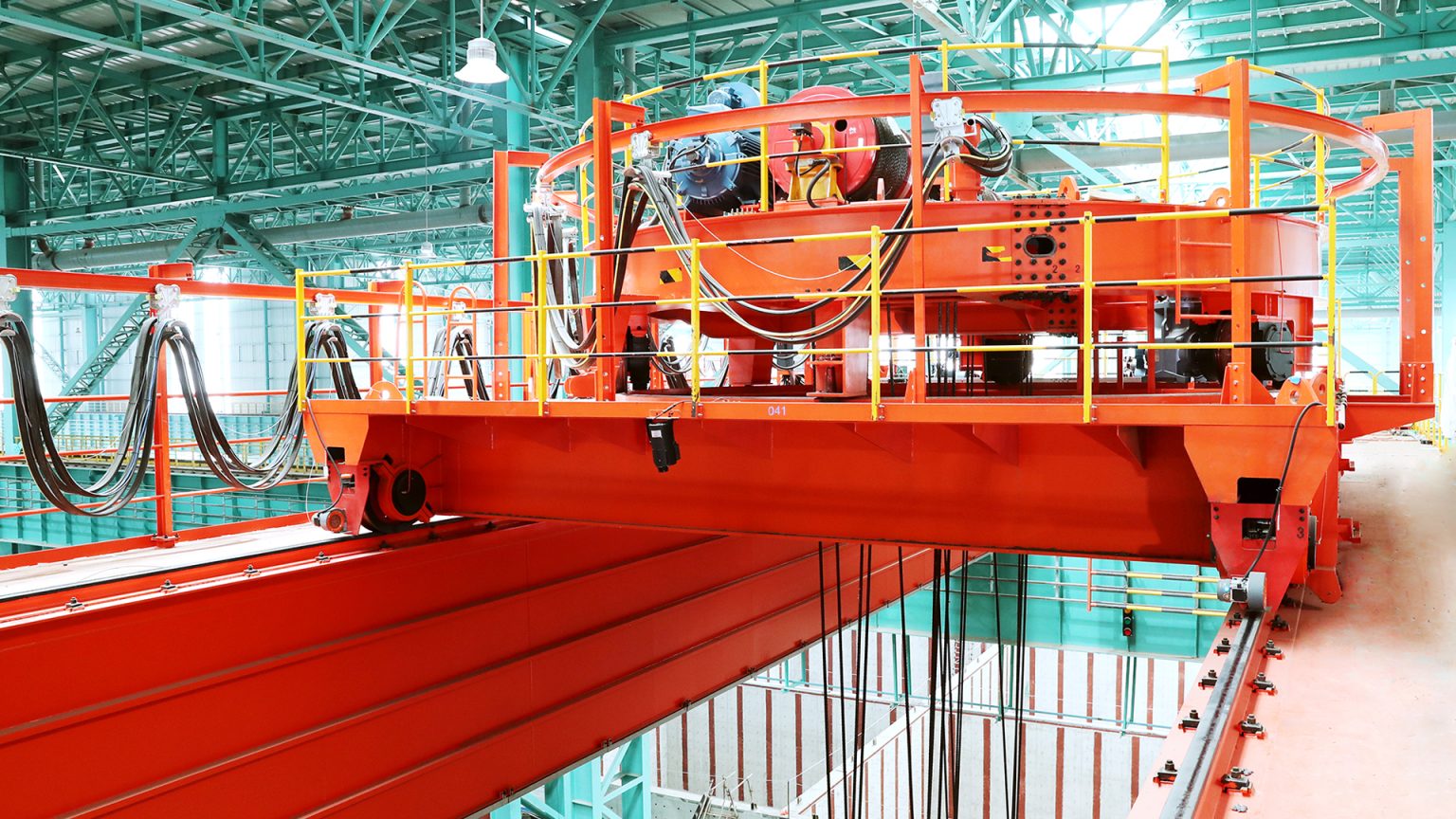
Overhead Rotating Electromagnetic Beam Crane
The published platform combines a rotating trolley, electromagnetic beam, grouped magnetic control and variable-frequency motion for ferromagnetic steel-material transfer.
These structural and control principles are relevant to straight-rebar warehouses, while the magnet geometry, bundle envelope and retention strategy remain rebar-specific.
Steel-Mill Fleet Reference
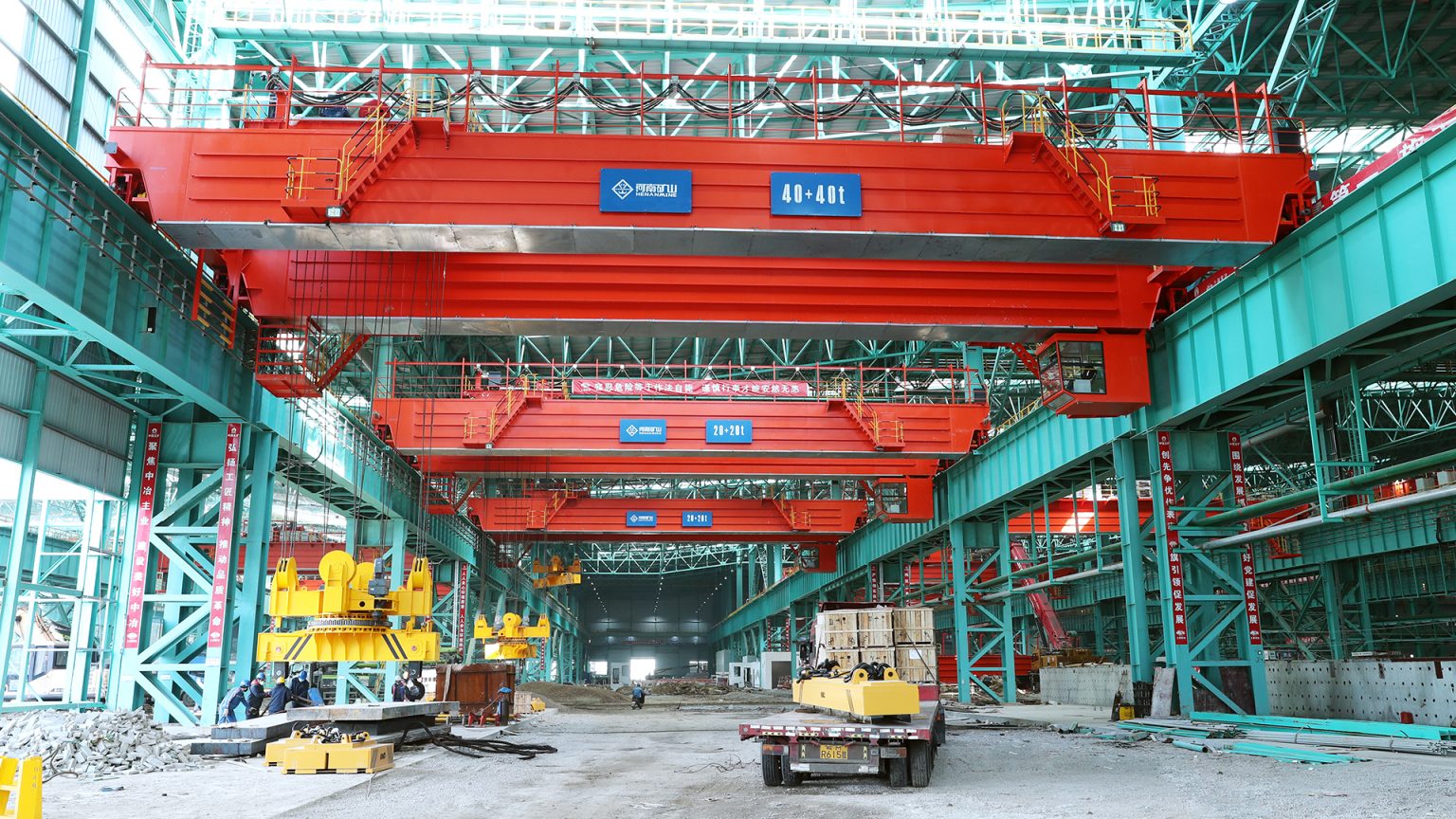
34 Cranes for a 4.5-Million-Tonne Plate Facility
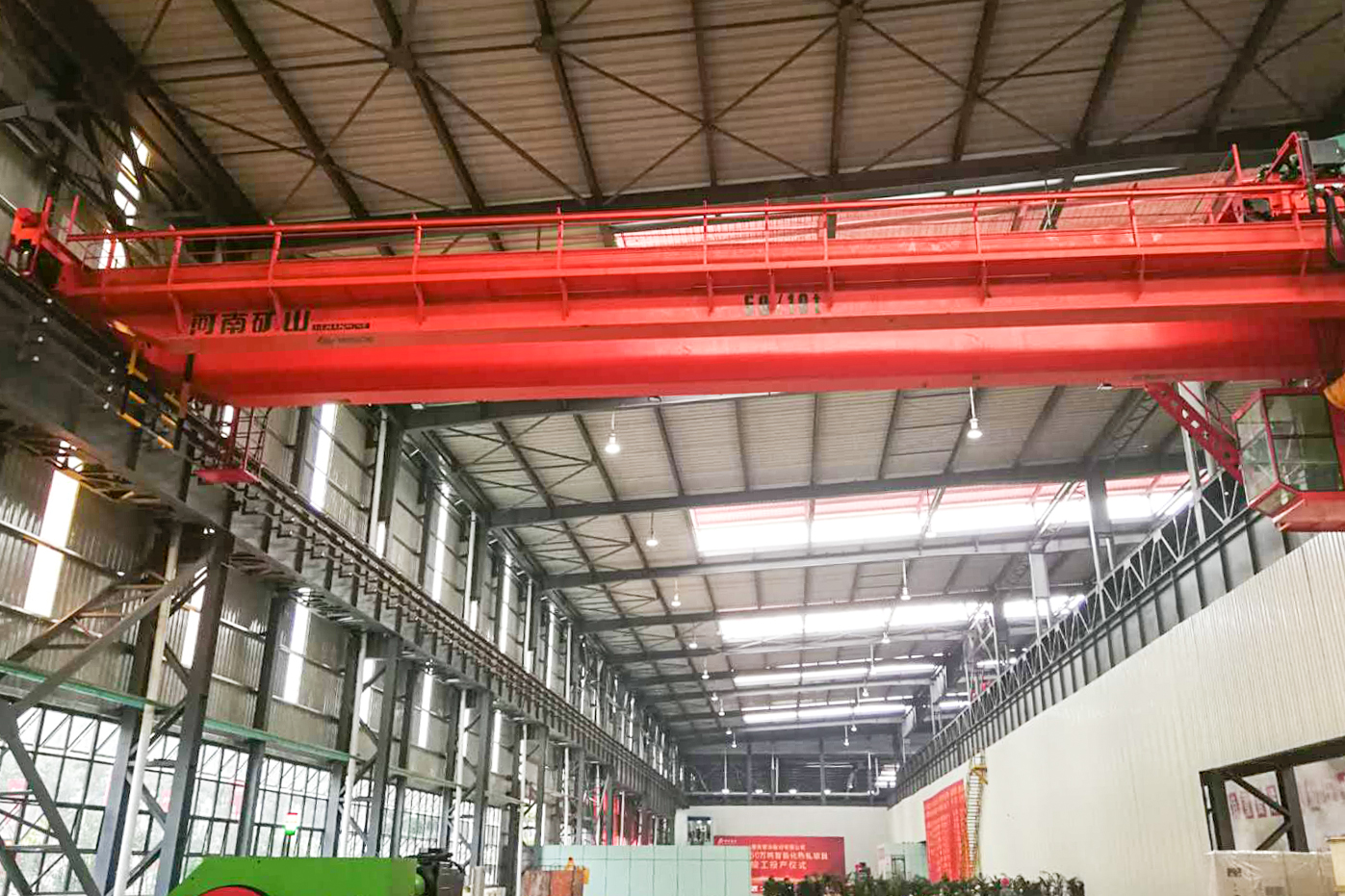
Henan Mine Crane supplied 34 double-girder overhead cranes rated from 10 t to 100 t for production, roll handling, tooling, equipment service and maintenance.
The reference demonstrates process-based fleet planning: rebar production, bundling, warehousing, dispatch and maintenance may require different capacities, speeds and attachments.
Reference boundary: these projects demonstrate relevant crane engineering, magnetic-material handling and steel-mill integration capability; they do not establish the final rating, magnet array, cycle performance or price of a new rebar handling crane.
Rebar Handling Crane Price and Budget Scope
A responsible rebar handling crane price requires the bundle matrix, lifting method, gross load, beam length, span, lift, duty, speeds, runway scope, controls and destination. Public prices are preliminary market signals rather than comparable project quotations.
| Public Market Signal Checked in September 2026 | Published Position | What It Indicates | Commercial Limitation |
|---|---|---|---|
| 10 t rotating electromagnetic hanging-beam listing | US$12,000 for 1–4 units; US$10,500 for 5+ units | A low public equipment-listing entry point for a nominal magnetic-beam crane | Does not normalize magnet array, true rebar duty, runway, freight, erection, testing or compliance |
| 10 t steel-bar handling crane listing | US$26,000 for 25 m span, 12 m lift and A6 published duty | A long-span, process-duty steel-bar crane carries a higher stated equipment value | Attachment, controls, delivery boundary and acceptance tests are not fully normalized |
| 5+5 t steel-mill electromagnetic-beam project | US$135,100 for 34 m span, 16 m lift and A6 published duty | Large span, heavy-duty platform, cabin and project accessories can materially increase cost | Published application is steel-pipe handling, not a like-for-like rebar quotation |
| Automatic rebar warehouse crane | Project quotation | Budget includes crane, beam, identification, positioning, safety zones and software interfaces | A complete functional specification, data interface and site boundary are required |
Major budget drivers: maximum gross suspended load; rebar length and bundles per lift; fixed, rotating or telescopic beam; magnet quantity and emergency supply; protected rigging or clamps; span, lift and approaches; working class; positioning and anti-sway; WMS/MES integration; cabin and environmental protection; runway and electrification; export packing, freight, erection, load tests and local compliance.
The figures above are third-party public market observations, not Henan Mine Crane offers. Marketplace values may be placeholders, volume prices or equipment-only figures. Contract comparisons require a line-by-line technical and commercial scope reconciliation.
Rebar Handling Crane RFQ Information
A complete enquiry allows the crane, beam, pickup method, runway reactions, controls and commercial scope to be priced on the same basis.
Rebar and Bundle Data
Grade and magnetic properties; black, galvanized, epoxy-coated or stainless condition; minimum/maximum bundle mass, length and diameter; bar diameter; bars and bundles per lift; tie details; temperature; drawings and photographs.
Process and Throughput
Pickup and placement stations; storage sequence; lifts per hour; shifts; annual hours; load spectrum; travel distances; target cycle time; peak vehicle loading; production consequence of an outage.
Building and Storage Layout
Span, runway length, rail section and elevation; required lift; approaches; headroom; rack, dunnage, truck and rail-car drawings; existing wheel-load limits; installation access and site survey.
Controls and Commercial Scope
Manual or automatic operation; rotation; positioning tolerance; identification and WMS/MES protocol; voltage and frequency; environment; destination; design standard; Incoterm; runway, electrification, installation, testing and documentation scope.
Frequently Asked Questions
How is rebar handling crane capacity calculated?
Capacity begins with the maximum total rebar payload and adds the lifting beam, magnets or clamps, rigging, hook block and all other suspended equipment. Duty, unbalanced loading and dynamic effects are then applied under the selected design standard.
Can magnets safely lift rebar bundles?
Only after validating steel grade, bar diameter, rib profile, bundle shape, air gaps, surface condition, temperature and retention of every bar. Representative bundles must be tested across the approved operating envelope.
Is a fixed or rotating beam more suitable?
A fixed beam is simpler where pickup and placement share one orientation. Rotation is justified where racks, lines or vehicles require different angles, but it adds headroom, machinery, controls and inspection requirements.
How should epoxy-coated rebar be handled?
The lifting system should use protected contact faces, padded spreaders or suitable synthetic slings under the applicable coating specification. Unprotected chains, sharp edges, dragging and uncontrolled impact should be excluded.
How much does a rebar handling crane cost?
Public information reviewed in September 2026 ranged from US$10,500–12,000 for one nominal 10 t rotating magnetic-beam listing, to US$26,000 for a published 10 t steel-bar crane, and US$135,100 for a large-span 5+5 t steel-mill magnetic-beam project. A final price requires a fully reconciled technical and commercial scope.
Can an existing runway be reused?
Only after rails, beams, brackets, columns, connections and foundations are checked for condition, alignment, fatigue and the new crane reactions. The magnetic beam and long-span load distribution can change wheel loads materially.
Can the crane connect to WMS or MES?
Yes. The interface specification defines tasks, bundle identity, coordinates, stock status, protocol, time synchronization, safety boundaries, manual override and recovery after a network interruption.
What should be tested before handover?
Testing covers crane motions, brakes, limits, overload protection, rotation, attachment engagement and release, representative bundles, emergency power response, placement tolerance, safety zones, interfaces and manual recovery under agreed criteria.
Related Rebar and Long-Steel Handling Products
Each platform addresses a different load, material condition, duty or automation requirement. Final selection follows the approved rebar and process data.
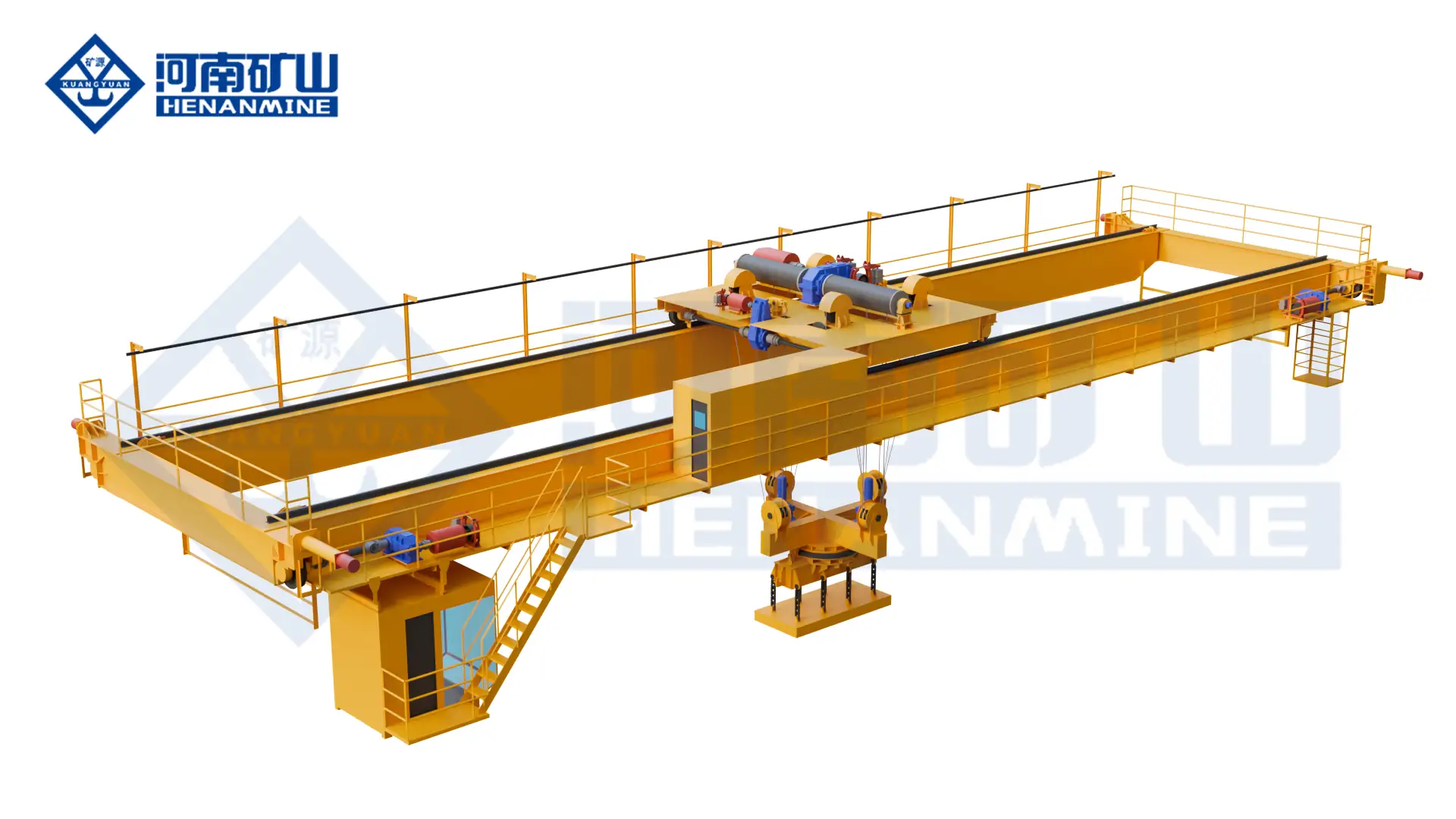
Electromagnetic Hanging Crane
Fixed or rotating magnetic-beam platform for approved ferromagnetic long-steel loads.
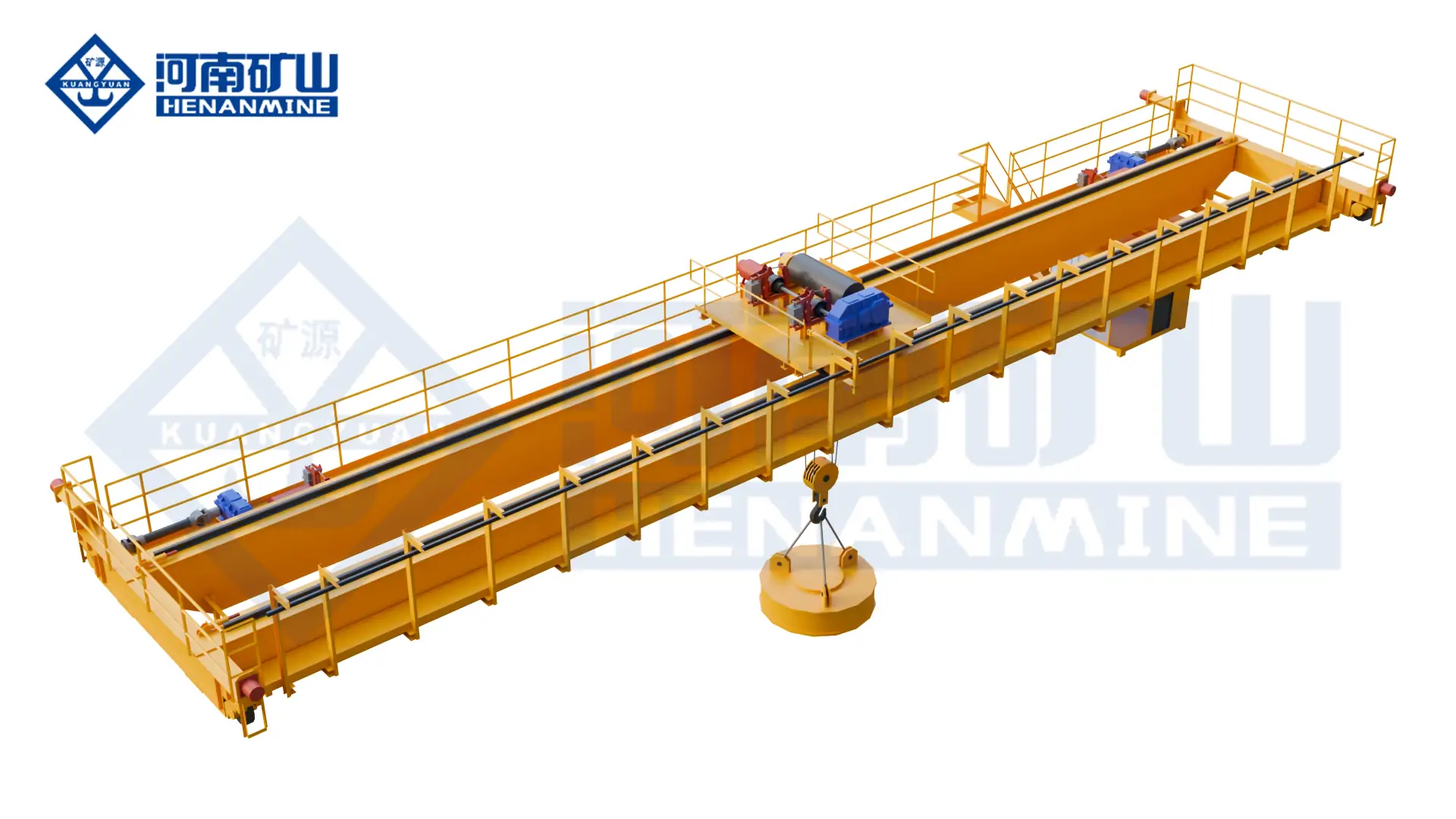
Electromagnetic Bridge Crane
Magnetic pickup platform for compatible steel materials with project-defined controls.
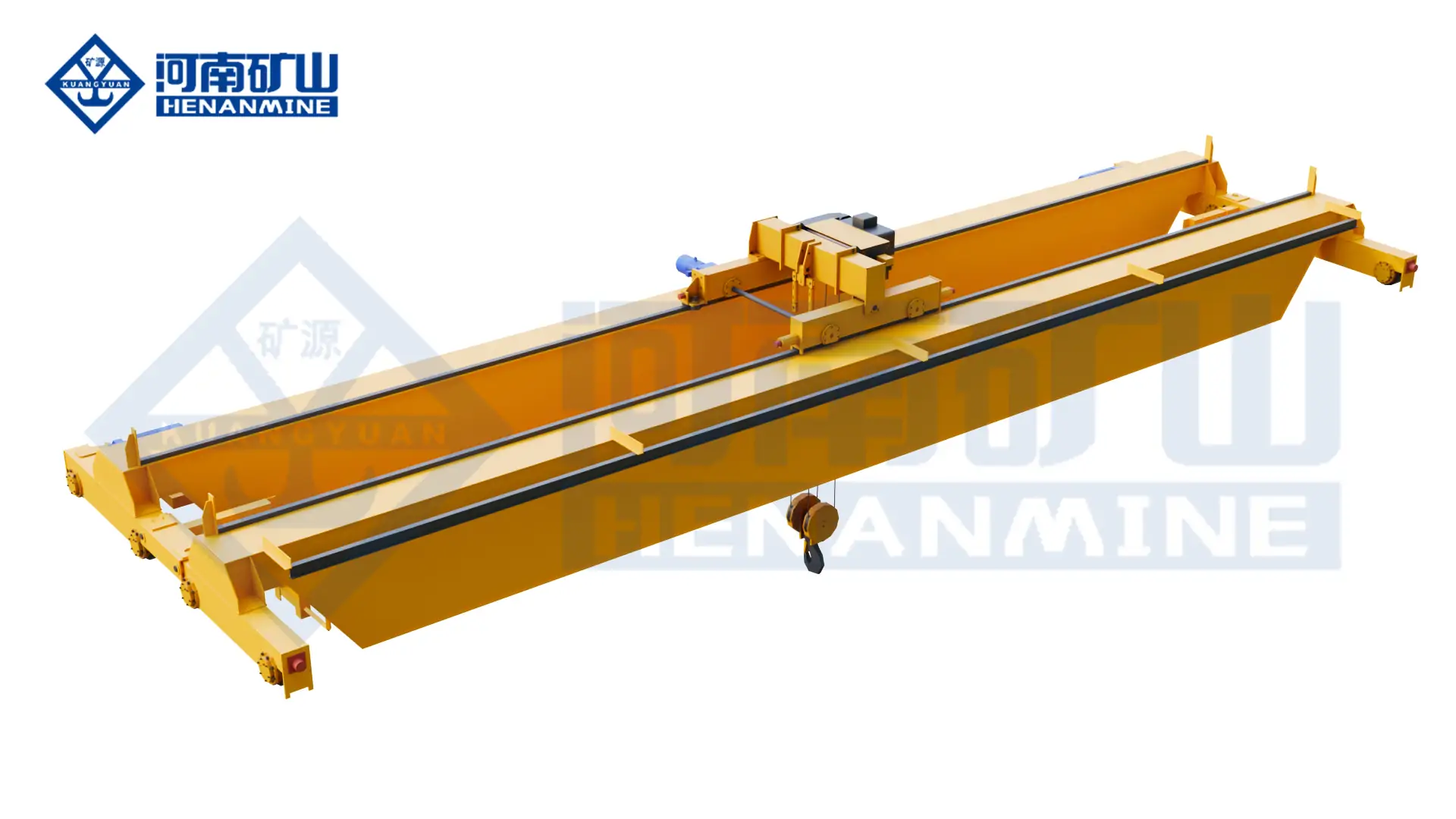
Double-Girder Bridge Crane
Configurable platform for protected spreaders, slings, clamps and other long-load attachments.
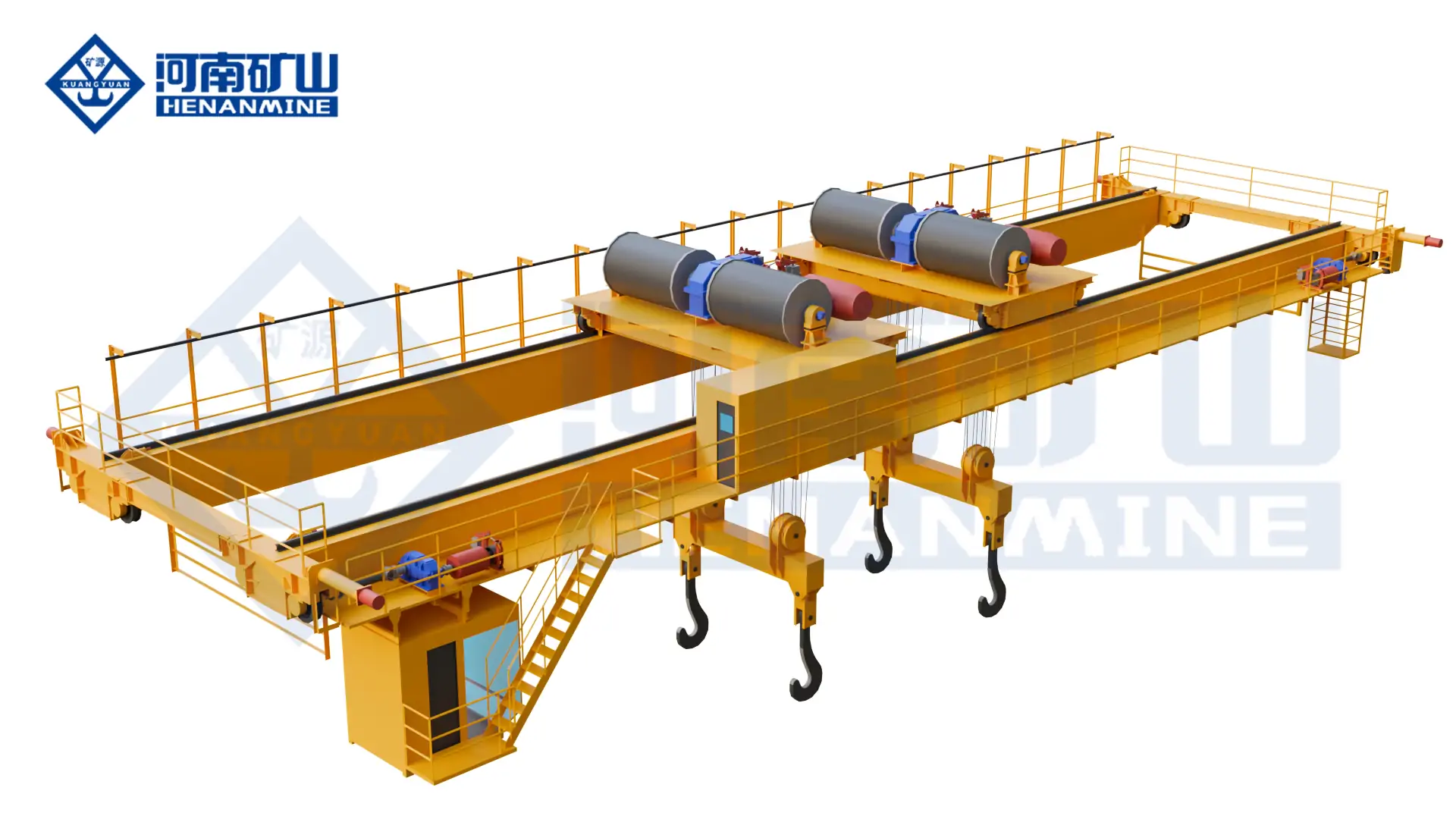
Metallurgical Bridge Crane
Process-duty bridge platform for specified steel-production and high-duty environments.
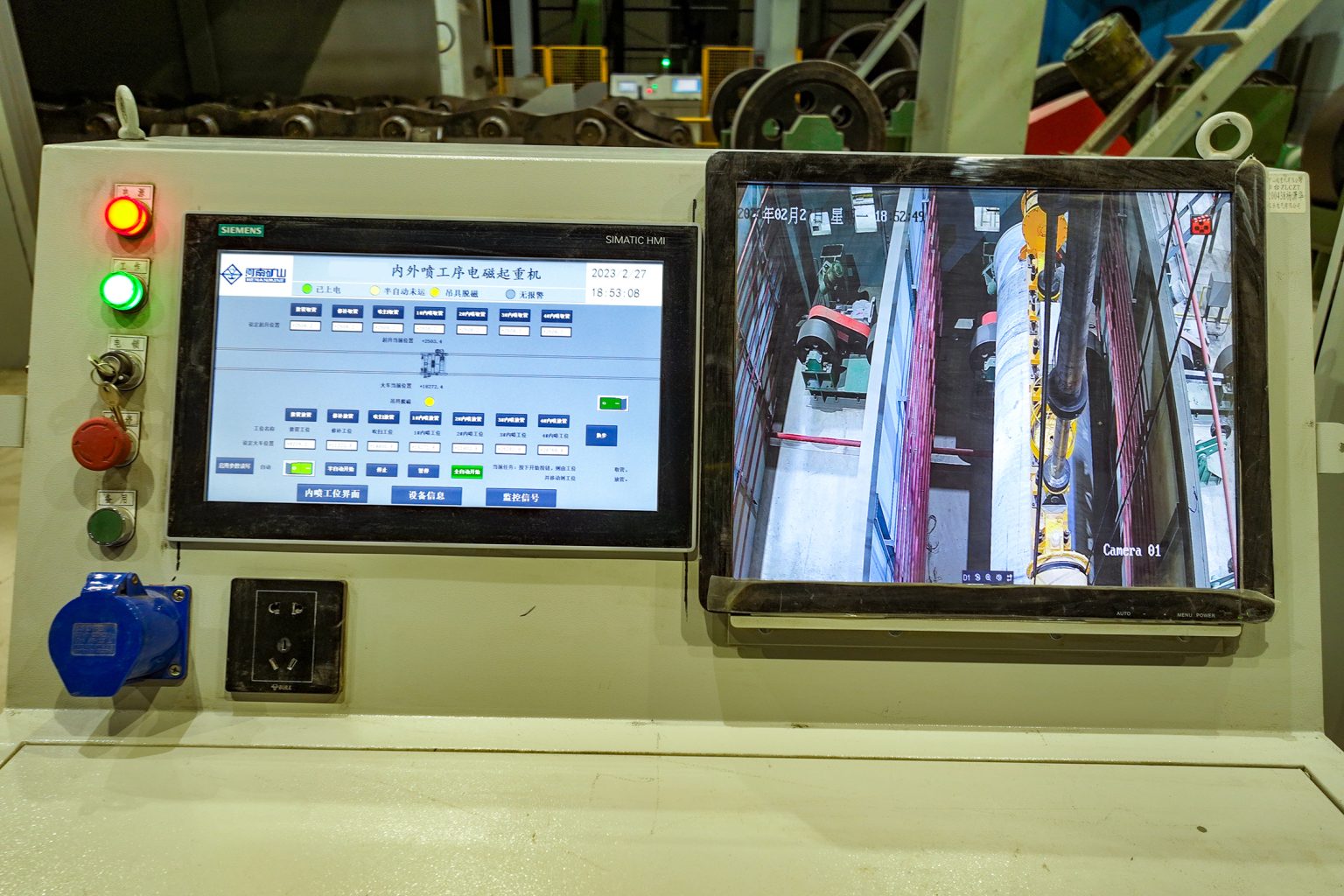
Automatic Magnetic Handling Crane
MES-connected material-transfer reference with unattended operation and traffic coordination.
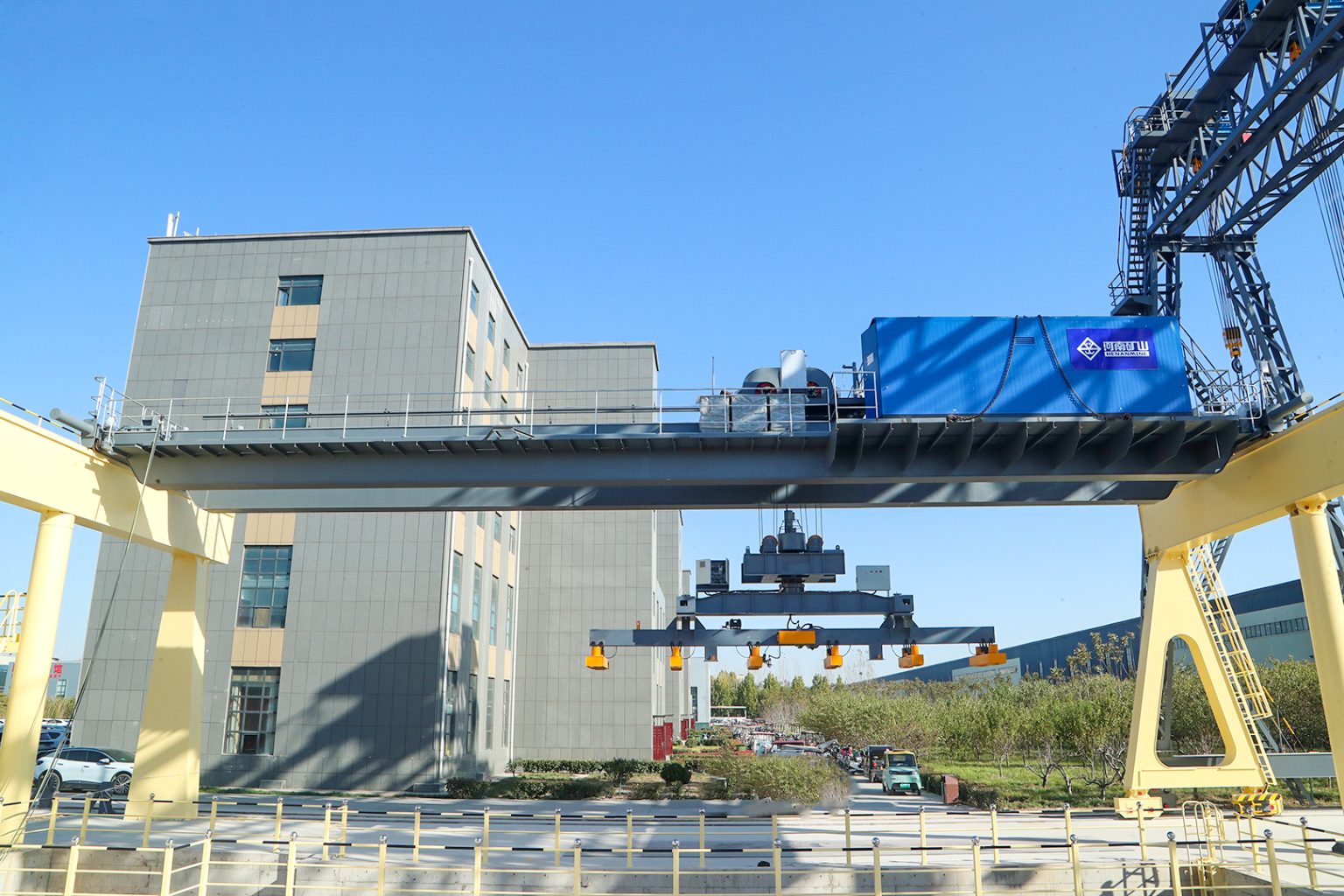
Steel Mill Crane Systems
Plant-wide planning for production, long-steel storage, dispatch and maintenance duties.
Request a Rebar Handling Crane Quote
Submit the rebar grade and surface condition, minimum and maximum bundle mass and dimensions, bar diameter, bundles per lift, tie arrangement, handling route, cycle rate, storage and vehicle drawings, span, lift, runway data, control level, power supply, destination and supply boundary. Henan Mine Crane will prepare a configuration-based technical and commercial proposal.