
Henan Mine Crane · Engineered Crane Systems for EAF Melt Shops
EAF Crane for Electric Arc Furnace Steelmaking
Process-engineered overhead cranes for scrap receiving, charge-bucket handling, molten-steel ladle transfer, slag handling and furnace maintenance in electric arc furnace melt shops.
Henan Mine Crane configures each electric arc furnace crane system around the charge practice, bucket and ladle geometry, furnace layout, production cycle, thermal exposure, operating duty, automation boundary, runway capacity and destination compliance requirements.
PROCESS DUTIES
Scrap, Charging, Ladle, Slag & Maintenance
CRANE SYSTEMS
Magnet, Grab, Charging, Casting & Service
OPERATING DUTY
Process-Specific Heavy Duty, A7–A8 Available
PRICE BASIS
Engineered Project Quotation
What Is an EAF Crane?
An EAF crane, or electric arc furnace crane, is a process crane serving one or more material-handling stages in an electric arc furnace melt shop. The term does not describe one universal crane model. It can refer to a scrap-yard crane, a charge-bucket crane, a molten-steel ladle crane, a slag-pot crane or a maintenance crane. Each duty has a different suspended load, attachment, thermal zone, operating cycle and consequence of failure.
The charging sequence typically begins with scrap receiving and preparation. Magnet or grab cranes sort and load scrap into a charging bucket. A dedicated charging crane then lifts the complete bucket, travels to the furnace and positions it for the approved charging sequence. After melting and refining, a casting or ladle crane transfers the full steel ladle from the furnace tapping area to secondary metallurgy or continuous casting. Service cranes handle furnace roof sections, electrodes, water-cooled panels, refractory equipment and maintenance components only within their engineered duty.
A procurement specification should define the complete process route before equipment selection. Combining scrap charging, ladle transfer and maintenance in one crane can create incompatible attachments, cycle conflicts and availability risks. Henan Mine Crane evaluates the melt shop as a handling system, assigns each task to the appropriate crane and develops the required capacity, structure, controls and safety functions.
EAF Crane Types for Electric Arc Furnace Melt Shops
01 · Scrap Yard Magnet or Grab Crane
Handles incoming scrap, stockpile management, sorting, blending and charge-bucket loading. Electromagnets suit ferrous scrap with an approved magnet-control strategy; orange-peel grabs suit loose or mixed scrap. The crane is selected from scrap density, attachment mass, pile geometry, bucket volume and hourly throughput.
02 · Scrap Charging Crane
Lifts the filled charge bucket from the preparation area and transfers it to the EAF charging position. Capacity includes the bucket, scrap charge, lifting beam or chains and all below-hook components. Furnace roof, electrode mast, fume duct, platform and building clearances govern the approach envelope.
03 · Ladle Transfer or Casting Crane
Transfers the full molten-steel ladle from the tapping area to LF, VD, VOD, RH or continuous casting. Double-girder and four-girder configurations use a metallurgical trolley, gantry beam and plate hooks, with main and auxiliary lifting functions selected for transfer and pouring duties.
04 · Slag Pot Handling Crane
Moves slag pots between the furnace, cooling area and downstream slag-treatment stations. The crane and attachment are designed around gross pot mass, trunnion geometry, radiant heat, possible deposits, route conditions and the approved tipping or set-down method.
05 · Furnace Maintenance Crane
Handles furnace roof sections, electrodes, panels, burner assemblies, refractory equipment and maintenance loads during planned work. It is not a molten-metal or scrap-charging crane unless its structure, mechanisms, controls and acceptance basis explicitly cover those operations.
06 · Automated EAF Crane System
Adds position feedback, variable-frequency motion, route zoning, anti-sway functions, load monitoring and plant handshakes. Automatic or assisted sequences are engineered with the furnace supplier and plant integrator so that every permissive, safe state and manual recovery method has a defined owner.
Compare EAF Crane Configurations
Crane selection should follow the handled object and process function rather than the shared location inside the EAF building. The same nominal capacity can require a substantially different attachment, duty classification, heat protection, control architecture and acceptance plan.
| Crane Configuration | Primary Load | Typical Attachment | Principal Selection Basis | Important Boundary |
|---|---|---|---|---|
| Scrap Handling Crane | Loose ferrous scrap and prepared charge material | Electromagnet, orange-peel grab or combined attachment | Scrap density, pile profile, bucket volume, throughput, duty and attachment deadweight | Magnet rating and backup strategy must match the load and operating risk |
| Scrap Charging Crane | Filled EAF charge bucket | Charging-bucket lifting beam, hooks or project-specific rigging | Maximum gross bucket mass, pickup geometry, furnace approach, charging cycle and clearance study | Furnace permission, roof and electrode status and personnel exclusion must be integrated |
| Double-Girder Casting Crane | Full steel ladle and process tooling | Gantry beam with paired plate hooks and auxiliary hook where required | Gross suspended load, ladle trunnions, heat, cycle histogram, transfer route and pouring method | General double-girder construction alone does not qualify a crane for molten steel |
| Four-Girder Casting Crane | Ultra-heavy full ladle with main and auxiliary duties | Separate main and auxiliary trolleys on four or six rails | Main/auxiliary capacities, structural stiffness, redundancy, wheel loads and production availability | Higher self-weight, building reactions, erection scope and maintenance demand require early review |
| Furnace Service Crane | Roof, electrodes, panels, refractory tools and maintenance components | Forged hook, beam or dedicated maintenance tool | Component mass, headroom, outage sequence, access and maintenance frequency | Not permitted for full ladles or charge buckets unless engineered for those loads |
| Integrated Automated Package | Multiple process loads handled by dedicated cranes | Crane-specific attachments with shared supervisory interfaces | Production route, station coordinates, traffic management, plant signals and recovery philosophy | Functional boundaries between crane PLC, furnace control and plant safety systems must be documented |
System principle: the EAF process should determine the crane package. A scrap charging crane, ladle crane and maintenance crane may share a building, but they should not share an assumed design basis.
Match the Crane to Each EAF Process Area
The crane study begins with a coordinated plan and elevation of the scrap yard, charge-bucket preparation area, EAF bay, tapping aisle, secondary metallurgy stations, continuous caster, slag bay and maintenance zones. Pickup and set-down coordinates are checked against the furnace shell, retractable roof, electrode mast, fume-extraction duct, platforms, ladle cars, transfer cars and adjacent crane envelopes.
The route analysis identifies load elevations, hook approaches, bucket swing, ladle pickup tolerances, obstructions, crane passing rules and emergency set-down locations. A process-ready arrangement also provides inspection access outside uncontrolled heat and traffic zones.
Separating production and maintenance functions protects throughput. A ladle crane remains available for tapping and caster supply while service equipment supports furnace work. Shared runways require collision avoidance, traffic priority and recovery procedures.
| Process Area | Handled Load | Crane Function | Critical Interfaces | Design Emphasis |
|---|---|---|---|---|
| Scrap receiving and storage | Baled, loose or heavy ferrous scrap | Unload, sort, blend, stockpile and reclaim material | Truck or rail unloading, stock bays, pile height and pedestrian segregation | Attachment selection, duty, throughput, visibility and magnet or grab controls |
| Charge-bucket preparation | Scrap fractions loaded into the charging bucket | Controlled loading and weight distribution | Bucket size, loading sequence, weighing system and preparation stations | Load distribution, bucket protection, cycle time and traceable charge data |
| EAF charging aisle | Complete scrap charging bucket | Lift, travel, position and support the approved charging sequence | Furnace roof, electrodes, fume duct, platform, charging opening and exclusion zone | Gross mass, clearance, sway control, slow approach and permissive logic |
| Tapping and ladle transfer | Full molten-steel ladle | Pickup at tapping position and transfer to the next process | Ladle car, furnace platform, trunnions, tapping aisle and emergency set-down | Metallurgical load path, heat protection, braking, redundancy and availability |
| Secondary metallurgy | Full ladle at LF, VD, VOD or RH station | Place, retrieve and reposition the ladle at treatment stations | Electrodes, vacuum equipment, covers, cars and station coordinates | Accurate positioning, restricted zones, process signals and anti-sway control |
| Continuous casting | Full and empty ladles, covers and related tooling | Deliver the ladle to the caster and remove it after the sequence | Ladle turret, casting platform, tundish route and queue management | Repeatability, production priority, traffic control and recovery planning |
| Slag and maintenance areas | Slag pots, roof sections, panels, electrodes and refractory equipment | Slag transfer, shutdown maintenance and component replacement | Cooling zones, tipping stations, service platforms and access routes | Dedicated attachments, heat exposure, contamination and safe maintenance access |
Technical Selection and Specification Framework
An EAF crane inquiry should define production duty and acceptance criteria rather than capacity and span alone. These inputs establish the structural, mechanical, electrical and control basis for each crane.
| Specification Item | Information to Provide | Engineering Decision | Why It Changes the Crane |
|---|---|---|---|
| Maximum gross load | Bucket or ladle, contents, lifting beam, hooks, chains, blocks, attachment and every suspended component | Rated capacity, load combinations, overload basis and mechanism sizing | Controls hoist, ropes, drums, brakes, trolley, girders, wheels and runway reactions |
| Load geometry and interface | Bucket drawings, ladle trunnions, centers of gravity, pickup points, tilt point and permitted tolerances | Beam, hook, plate-hook or rigging geometry and engagement method | Determines secure pickup, headroom, load stability and inspection criteria |
| Span, lift and approaches | Rail span, runway length and elevation, lowest pickup, highest operating position and end approaches | Girder form, hoist range, rope capacity, trolley layout and limiting dimensions | Confirms access to every station without furnace, duct or building interference |
| Cycle and duty spectrum | Lifts per heat, heats per day, travel distances, load distribution, shifts, annual hours and availability target | Mechanism classification, fatigue design, motor and brake thermal ratings | Production cranes are selected by repeated duty and criticality, not nominal load alone |
| Motion performance | Hoisting and travel speeds, creep speeds, acceleration limits, positioning tolerance and cycle target | Drive power, VFD control, feedback, anti-sway functions and brake response | Balances production throughput with stable bucket and ladle handling |
| Thermal environment | Ambient and radiant temperatures by location, exposure duration, hot surfaces, splash zones and ventilation | Heat shields, cooling, component placement, insulation, cables and enclosure rating | Protects mechanisms and electrical equipment in the verified exposure zone |
| Dust, fumes and contamination | Scrap dust, conductive dust, furnace fumes, scale, slag, water exposure and housekeeping practice | Sealing, pressurization, filters, cabinet location, cable protection and maintenance access | Reduces contamination-related faults and supports reliable inspection |
| Runway and building | Rail section, runway capacity, allowable wheel loads, deflection limits, columns and building reserve | Wheel quantity, wheel base, end carriage, rail gauge and structural reactions | Can govern crane configuration and building reinforcement cost |
| Power and controls | Available voltage and frequency, conductor system, PLC platform, network protocol and plant signal list | Electrical architecture, control stations, communications, redundancy and interfaces | Defines the boundary between crane, furnace, melt-shop and safety systems |
| Codes and acceptance | Destination, applicable crane and electrical standards, buyer specifications, inspection body and witness plan | Compliance matrix, documentation, FAT, proof testing and site acceptance | Prevents late redesign and establishes the certification boundary |
Double-Girder Casting Crane Range
Henan Mine Crane product-family data covers 50–150 t capacity, 10–35 m span, 6–25 m lift and A7–A8 duty, with final values customized to the project.
Four-Girder Casting Crane Range
YZS product-family data covers 200/50–500/200 t capacity, 10–40 m span, 6–30 m lift and A7–A8 duty. Final selection follows the EAF project.
EAF Crane Safety, Redundancy and Heat Protection
Load Path and Attachment Verification
The bridge, trolley, hoist, ropes, blocks, beam, hooks, plate hooks, chains and bucket or ladle interface are evaluated as one load path. Engagement geometry, wear limits, inspection access and permissible load orientation are documented for the specific handled object.
Hoisting Brakes and Protective Functions
Service and emergency braking functions, operating and final limits, overspeed detection, overload monitoring and safe response to power or drive failure are selected from the governing standard and project risk assessment. The molten-metal crane receives its own critical-function architecture.
Furnace Charging Permissions
Charging motion is permitted only within the plant-approved furnace state. Roof and electrode position, charging opening, extraction equipment, crane location, load condition and personnel exclusion can form part of the interlock matrix developed with the furnace supplier and plant integrator.
Thermal, Dust and Fume Protection
Heat shields, protected equipment locations, ventilation or cooling, suitable insulation systems, heat-resistant cables, sealed or pressurized cabinets and guarded access are selected from measured environmental data rather than a single assumed furnace temperature.
Controlled Motion and Collision Management
Variable-frequency drives, controlled acceleration, creep speeds, position feedback, anti-sway functions, inter-crane spacing, restricted zones and traffic priority support stable movements through the furnace, refining and casting bays.
Emergency Set-Down and Recovery
Approved set-down positions, backup functions, manual recovery boundaries, communications, rescue access and incident response are established with plant operations. Recovery planning addresses a loaded charge bucket, a full ladle and a maintenance load as separate scenarios.
Scrap Charging, Ladle Transfer and Process Automation
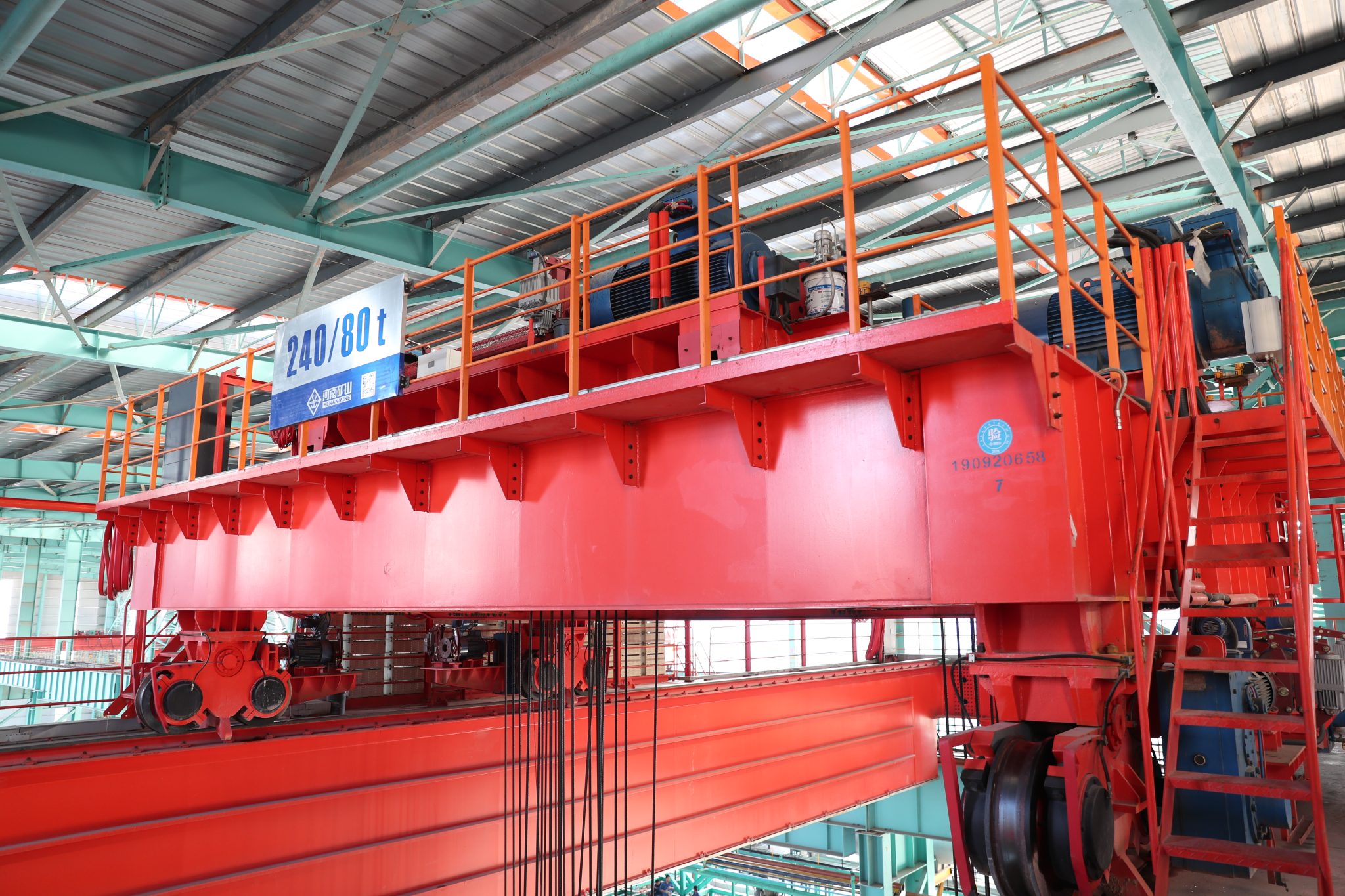
A charging cycle starts after the scrap bucket has been prepared and released for transfer. The crane engages the approved pickup points, raises the bucket to travel height and follows the permitted route to the EAF. Final approach uses controlled speed. Charging proceeds only after the furnace system confirms the required roof, electrode, extraction and exclusion-zone conditions.
Molten-steel transfer follows a separate sequence. The ladle crane engages both trunnions through the gantry beam and plate hooks, lifts from the tapping or ladle-car position and travels to secondary metallurgy or continuous casting. Controlled acceleration, low-speed approach, route permissions and emergency set-down provisions protect the load and process equipment.
Automation can coordinate positions, speed zones, load identification, anti-sway functions, weighing, collision avoidance, monitoring and plant handshakes. The control narrative defines crane and plant responsibilities, communication-failure behavior and recovery of an interrupted cycle. Higher automation follows validation of routes, sensors and safe states under production conditions.
Documented Electric Furnace Steelmaking Project
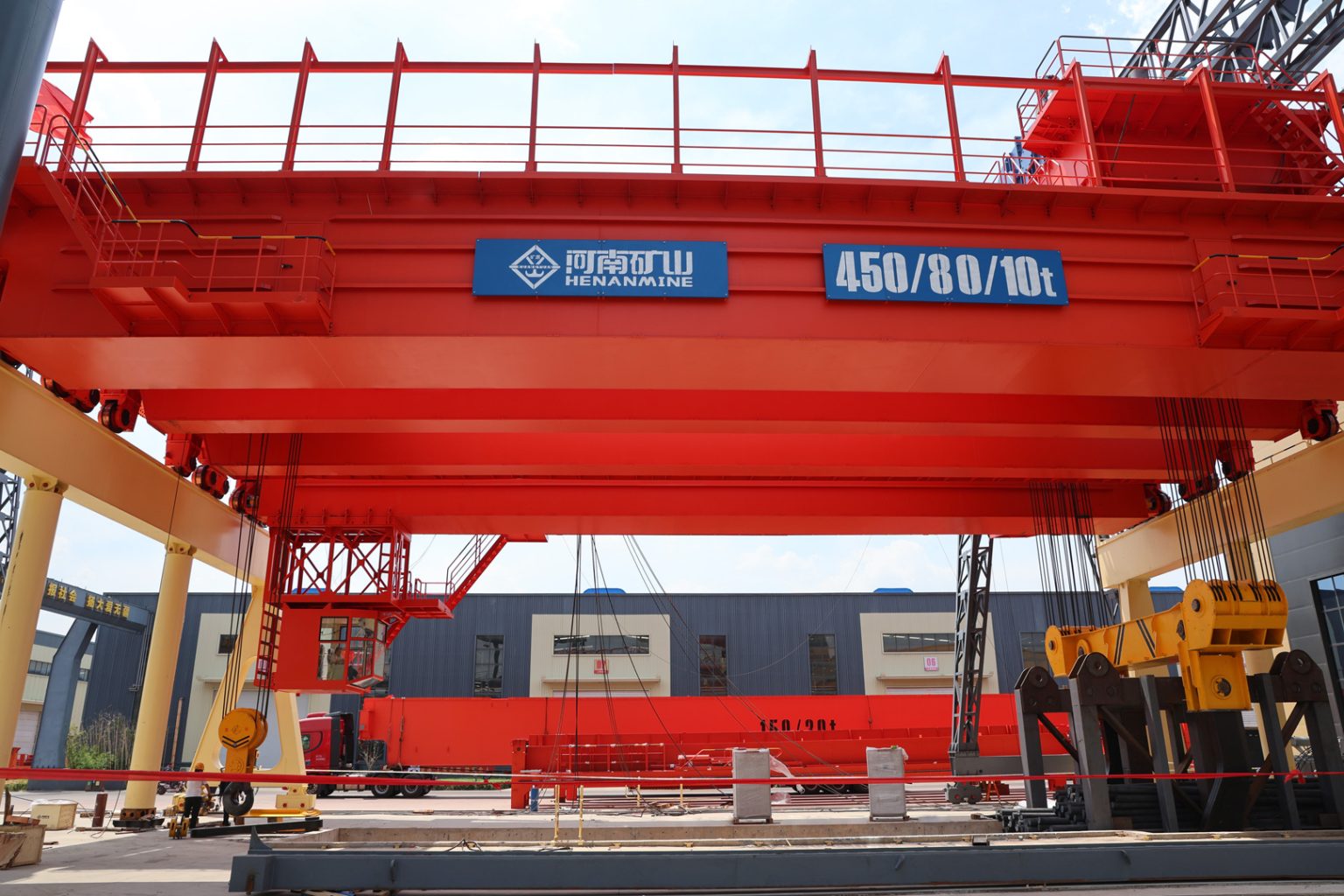
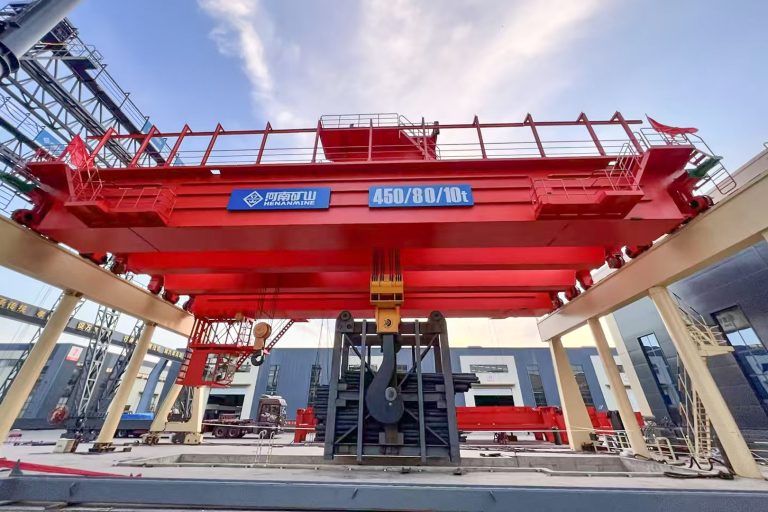
450 t Four-Girder Casting Crane for an EAF Steelmaking Plant
Henan Mine Crane engineered a 450 t four-girder, four-rail casting crane for a metallurgical enterprise upgrading its electric furnace steelmaking capacity. It serves ultra-heavy molten-metal transfer and was configured around the plant layout, thermal environment and production duty.
The project uses heavy-duty lifting machinery with PLC control, industrial Ethernet and safety monitoring for coordinated operation and status supervision. Structural analysis, trolley-frame machining, assembly control and functional testing formed part of project execution.
This installation represents the ladle-transfer portion of an EAF system, not scrap charging. Charge buckets and full steel ladles require different attachments, routes, hazards and permissions. A new melt shop may therefore combine casting, scrap-yard, charging and maintenance cranes.
Engineering Deliverables and Quality Records
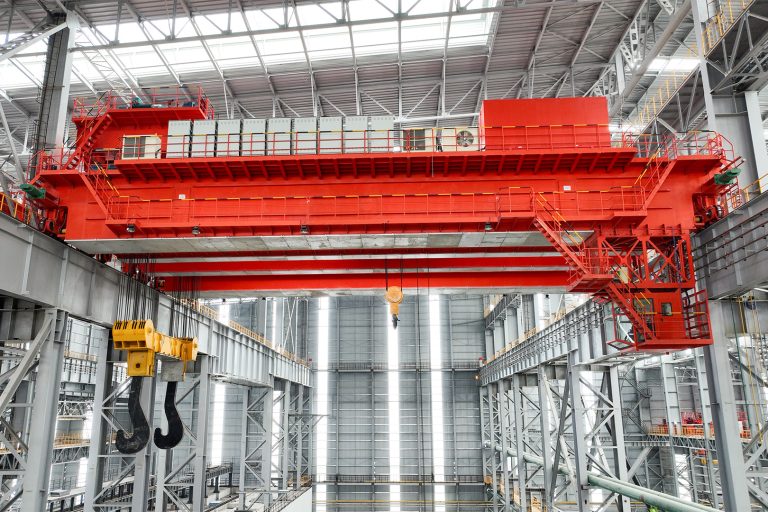
A procurement-ready proposal defines process assumptions, safety functions, plant interfaces, verification activities and site responsibilities. Contracted records support technical approval, manufacturing traceability and commissioning.
Design Basis Package
Approved load schedule, charge bucket and ladle drawings, cycle histogram, general arrangement, clearance study, duty calculations, wheel loads, runway reactions, heat-zone map, station coordinates and compliance matrix.
Safety and Control Documents
Functional description, operating modes, brake philosophy, limit and interlock matrix, PLC and network architecture, safe states, charging permissions, emergency set-down logic, alarm list and recovery procedures.
Manufacturing Quality Records
Material traceability, welding procedures, welder qualifications, dimensional inspection, NDT, heat treatment or stress-relief records, machining checks, assembly records and coating reports as defined in the contract.
Factory and Site Acceptance
No-load and functional tests, brake and limit verification, overload functions, travel motions, communications, fault simulation, proof-load plan, site commissioning, dry process trials and operator-maintenance training.
Review Henan Mine Crane manufacturing and quality capabilities →
Installation, Commissioning and Lifecycle Planning
Runway and Site Readiness
Survey rail span, elevation, alignment and runway capacity; confirm furnace, duct, platform and station clearances; verify erection access, electrification, control networks, construction sequence and shutdown windows before shipment.
Installation and Assembly
Bridge sections, end carriages, trolleys, reeving, beams, attachments, heat shields, conductor systems and control cabinets are assembled under approved lifting, alignment, bolting, welding, torque and electrical procedures.
Commissioning and Process Trials
Testing progresses from no-load motions and protective functions to proof loading, brake verification, positioning, interlocks, communications, dry charging-route simulation, ladle-route simulation and controlled production trials.
Inspection and Maintenance Strategy
The program covers ropes, drums, sheaves, brakes, hooks, plate hooks, beams, bucket interfaces, structures, wheels, heat shields, cables, sensors, cabinets and controls. Intervals follow actual duty, environment, regulation and manufacturer instructions.
EAF Crane Price and Supply Scope
An electric arc furnace crane has no reliable universal list price. A valid budget depends on whether the scope covers scrap handling, charge-bucket transfer, ladle handling, maintenance or an integrated package. Attachments, duty, heat protection, redundancy, automation, runway interface, compliance and site services materially change the price.
| Quotation Level | Typical Included Scope | Principal Cost Drivers |
|---|---|---|
| Scrap Receiving Crane | Bridge or gantry crane, magnet or grab, attachment power and controls, cabin or remote station | Scrap throughput, attachment mass, pile area, duty, magnet controls and outdoor protection |
| Scrap Charging Crane | Heavy-duty crane, bucket lifting interface, controlled drives, heat protection and furnace permissions | Gross bucket load, furnace approach, clearance, cycle rate, duty, interlocks and process integration |
| Ladle or Casting Crane | Double- or four-girder bridge, metallurgical trolley, ladle beam, plate hooks and safety package | Gross ladle load, main/auxiliary ratings, redundancy, A7–A8 duty, heat and wheel loads |
| Furnace Maintenance Crane | Service crane, hook or dedicated tooling, access provisions and maintenance controls | Component weights, headroom, thermal zone, outage plan, access and lifting frequency |
| Integrated EAF Crane Package | Coordinated cranes, engineering, process interfaces, documentation, freight, installation and commissioning | Crane count, automation level, destination, trade term, site access, statutory inspection and schedule |
General-crane advertisements commonly exclude process attachments, safety functions, automation, runway work, freight, erection, testing and statutory acceptance. Compare bids against one approved data sheet, functional specification, document list, delivery term and site-service matrix.
Crane Equipment
Bridge, trolley, hoists, drives, brakes, ropes, wheels, platforms, access and electrification.
Process Attachments
Magnet, grab, charging beam, bucket rigging, gantry beam, plate hooks and slag-pot interface.
Safety and Automation
Limits, monitoring, VFDs, PLC, positioning, zoning, plant signals and process sequences.
Project Services
Engineering, FAT, packing, freight, erection, commissioning, load tests, trials and training.
Information Required for an EAF Crane Quote
A complete inquiry allows each crane, attachment and process interface to be evaluated against one operating basis. Preliminary drawings are suitable when assumptions are identified.
01 · Melt-Shop Process
EAF size and heat schedule, scrap practice, tapping route, LF/VD/VOD/RH stations, continuous casting interface, shifts, annual hours and required availability.
02 · Crane Responsibilities
Identify separate duties for scrap receiving, bucket loading, furnace charging, ladle transfer, slag pots, furnace maintenance and general service.
03 · Maximum Gross Loads
Scrap, bucket or ladle, refractory, slag, beam, plate hooks, chains, blocks, magnet or grab and every suspended component for each permitted load case.
04 · Load Drawings
Charge bucket dimensions and pickup points; ladle diameter, height, trunnion size and spacing; center of gravity, tilt point and interface tolerances.
05 · Building and Runway
Plans, sections, rail span, runway length and elevation, rail type, allowable wheel loads, headroom, end approaches, building reserve and erection access.
06 · Stations and Clearances
Scrap bays, charging position, furnace roof and electrodes, ducts, platforms, ladle cars, refining stations, caster, slag bay and emergency set-down coordinates.
07 · Duty and Performance
Lifts per heat, cycle time, travel distances, load spectrum, main and creep speeds, acceleration limits, positioning accuracy and load-sway requirements.
08 · Environment and Protection
Ambient and radiant temperatures by zone, dust, fumes, scale, splash, humidity, altitude, outdoor exposure, ventilation and operator environment.
09 · Controls and Compliance
Control stations, manual or automated modes, PLC and network preferences, signal list, destination standards, inspection body, FAT and acceptance requirements.
10 · Commercial Scope
Delivery location and trade term, packing, freight, runway and electrification boundary, erection, commissioning, local labor, training, spares and target schedule.
EAF Crane FAQ
Is an EAF crane one specific crane type?
No. The term covers cranes serving an electric arc furnace melt shop. Scrap handling, charge-bucket transfer, ladle handling, slag handling and maintenance should each be assigned a defined crane configuration and operating boundary.
What is the difference between an EAF charging crane and a ladle crane?
A charging crane handles the scrap-filled bucket and approaches the furnace charging position. A ladle crane handles a vessel containing molten steel after tapping. The load interface, hazard, route, redundancy and process permissions are different.
How is scrap charging crane capacity calculated?
Use the maximum filled bucket mass plus the bucket, lifting beam, hooks or chains, blocks and all suspended tooling. Include all permitted charge recipes and abnormal but approved load cases in the load schedule.
Can one crane handle scrap charging and molten-steel ladles?
Only after a project-specific engineering and risk assessment demonstrates compatible attachments, load paths, duty, clearances, heat protection, controls and production availability. Dedicated cranes are often the more robust plant arrangement.
When is a four-girder casting crane considered?
Four-girder multi-rail construction is considered for ultra-heavy ladles, intensive duty, separate main and auxiliary trolleys, high structural stiffness and critical availability. Building reactions, erection and lifecycle maintenance must support the choice.
What data is needed to check furnace clearances?
Provide coordinated plan and elevation drawings for the furnace shell, roof, electrodes, mast, extraction duct, platforms, bucket, lifting attachment, crane rails and neighboring equipment in every operating position.
Can EAF crane operation be automated?
Yes. Position feedback, VFD motion, anti-sway functions, route zoning, load identification and plant handshakes can support assisted or automatic operation. Safe states, signal ownership and manual recovery must be validated.
Which standards apply to an EAF crane?
The applicable basis depends on destination, buyer requirements and crane duty. The contract should identify the governing structural, mechanical, electrical, functional-safety, inspection and load-testing standards in a compliance matrix.
What determines EAF crane price?
Crane duty, gross loads, span, lift, bridge and trolley structure, attachments, heat protection, safety architecture, automation, wheel loads, documentation, shipping, erection and commissioning determine the commercial scope.
Can an existing runway be reused?
Reuse requires survey and structural verification of rails, runway beams, columns, foundations, wheel-load capacity, fatigue condition, alignment and clearances. The assessment must also consider the new crane duty and thermal environment.
Related EAF and Metallurgical Crane Products
An electric furnace steel plant normally combines several crane types to cover molten-steel transfer, scrap logistics, hot-material handling and downstream production.
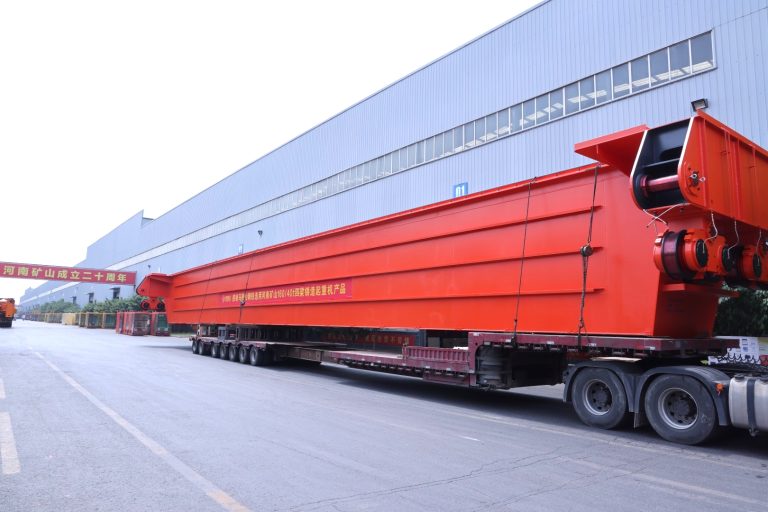
Four-Girder Casting Crane
Four-girder, four- or six-rail crane with main and auxiliary trolleys for ultra-heavy molten-steel service.
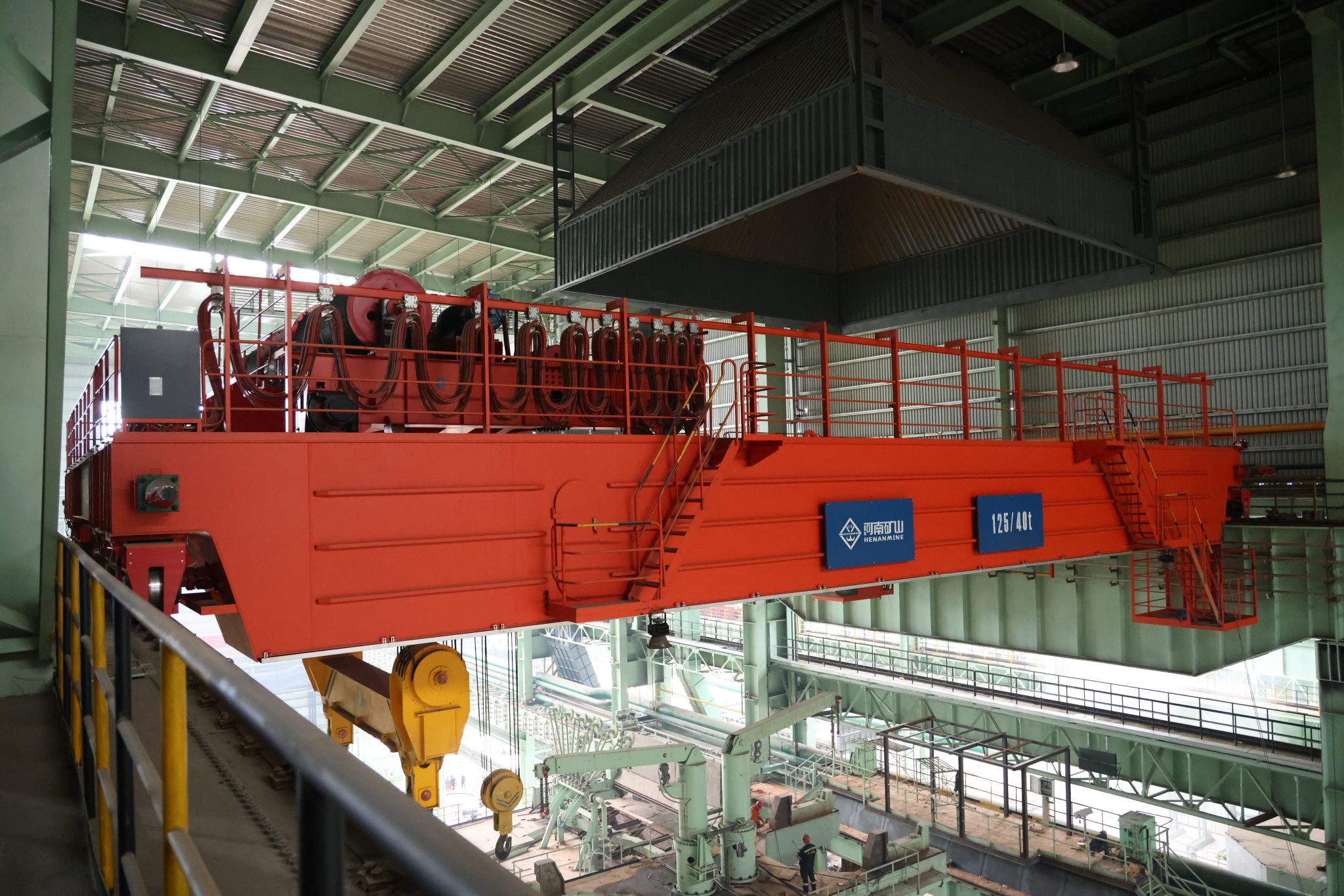
Double-Girder Casting Crane
Heavy-duty double-girder crane configured for ladle transfer, controlled pouring and steelmaking production.
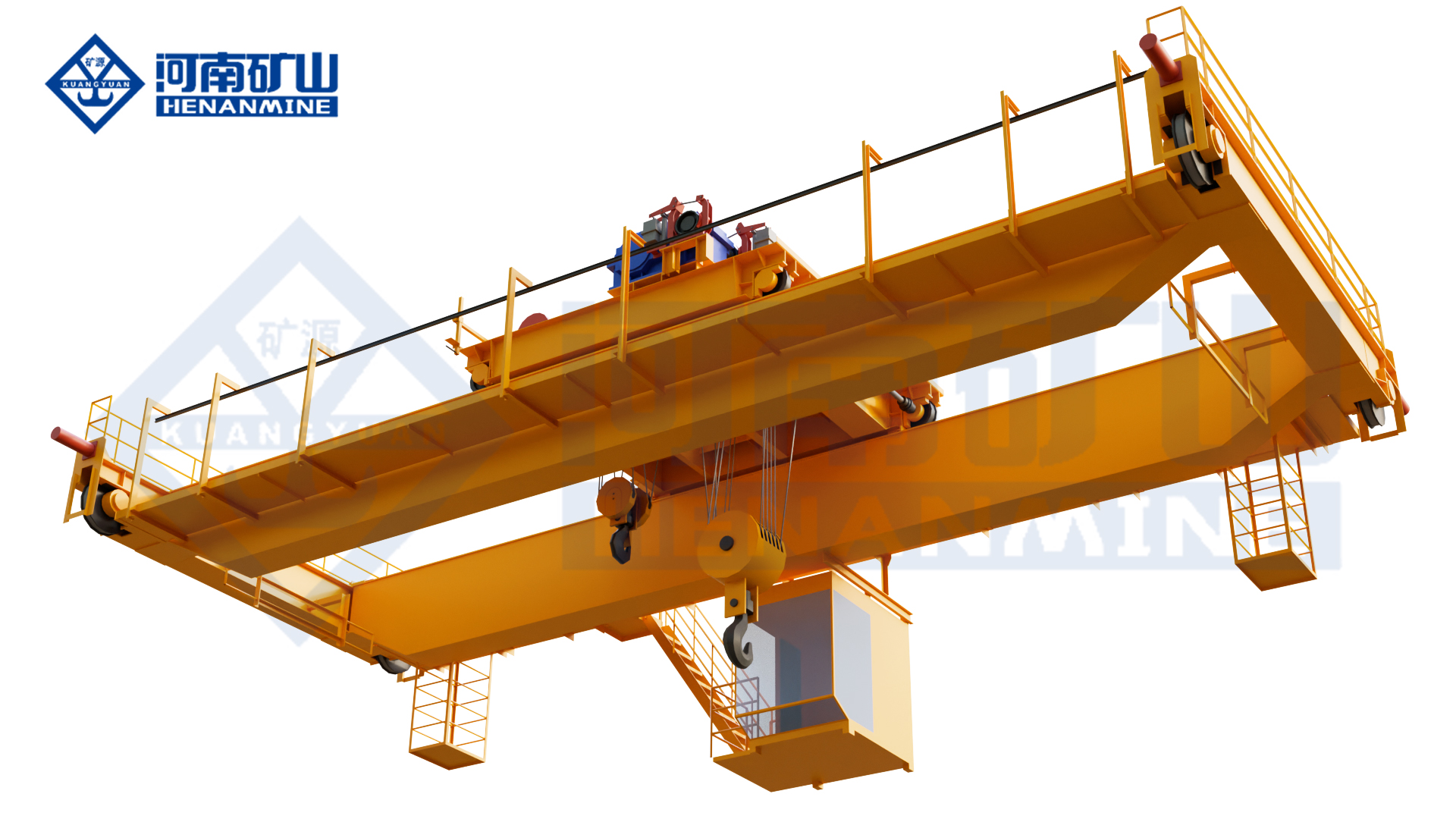
Metallurgical Bridge Crane
Process-specific overhead crane platform for hot materials, molten metal and demanding metallurgical duties.
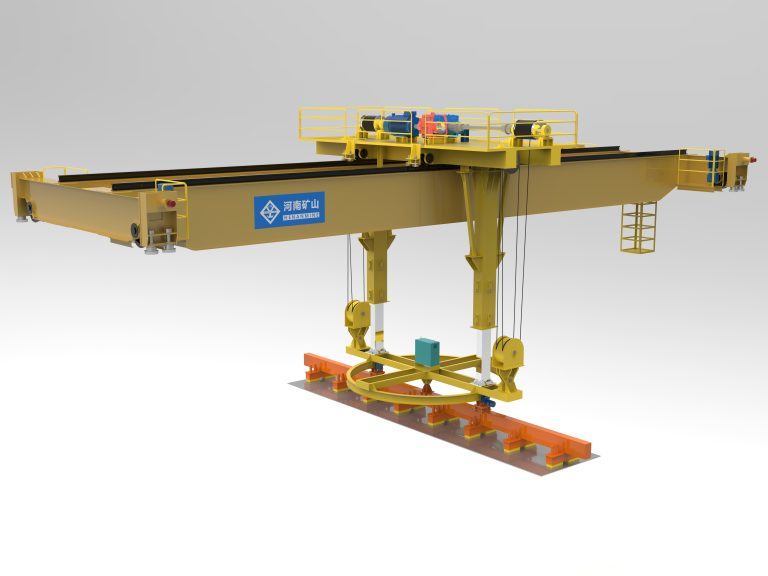
Electromagnetic Bridge Crane
Magnetic lifting crane for ferrous scrap, billets, plates and other magnetically conductive steel materials.
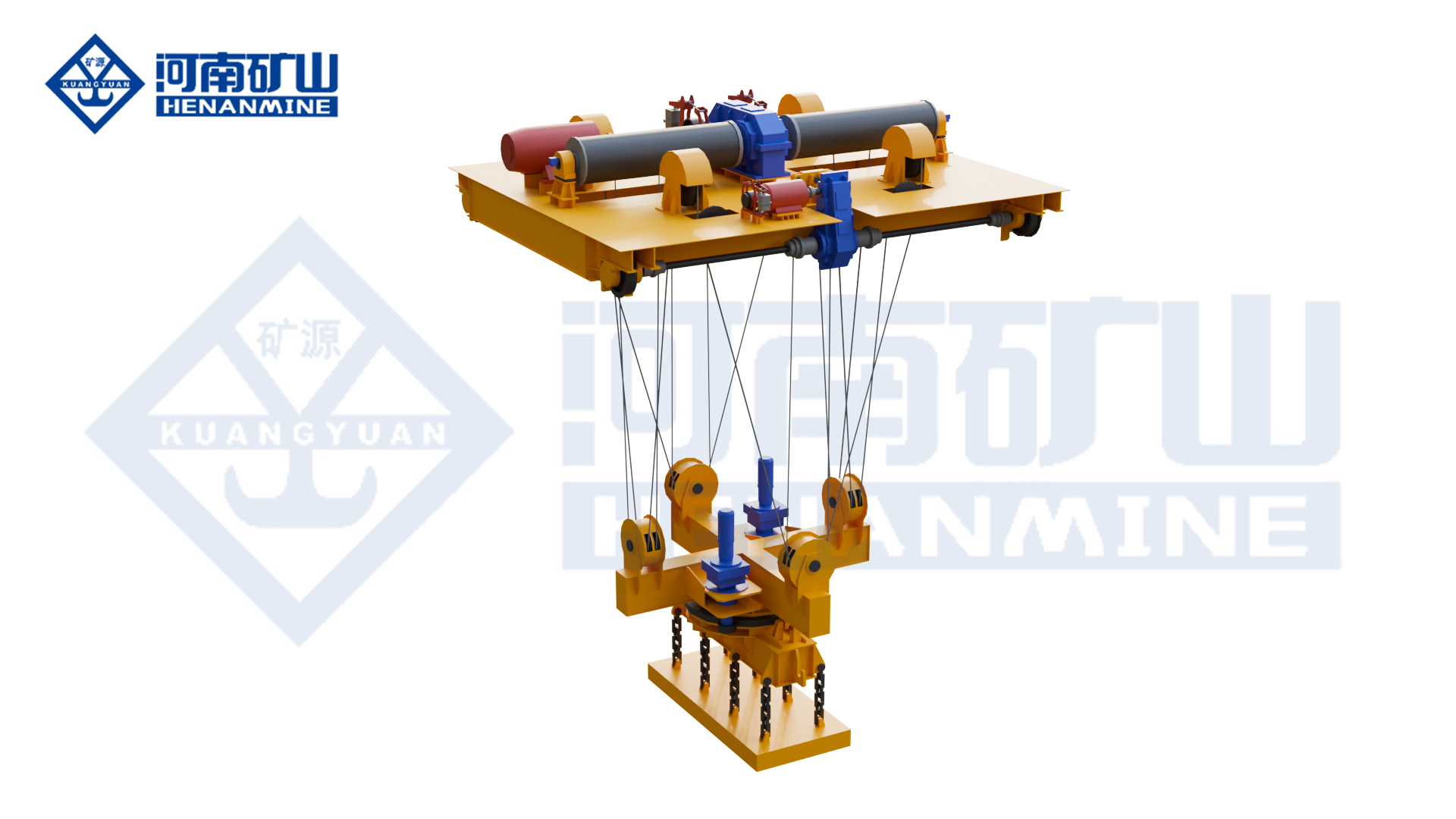
Electromagnetic Hanging Crane
Rotating electromagnetic-beam crane for controlled handling and positioning of long steel products.
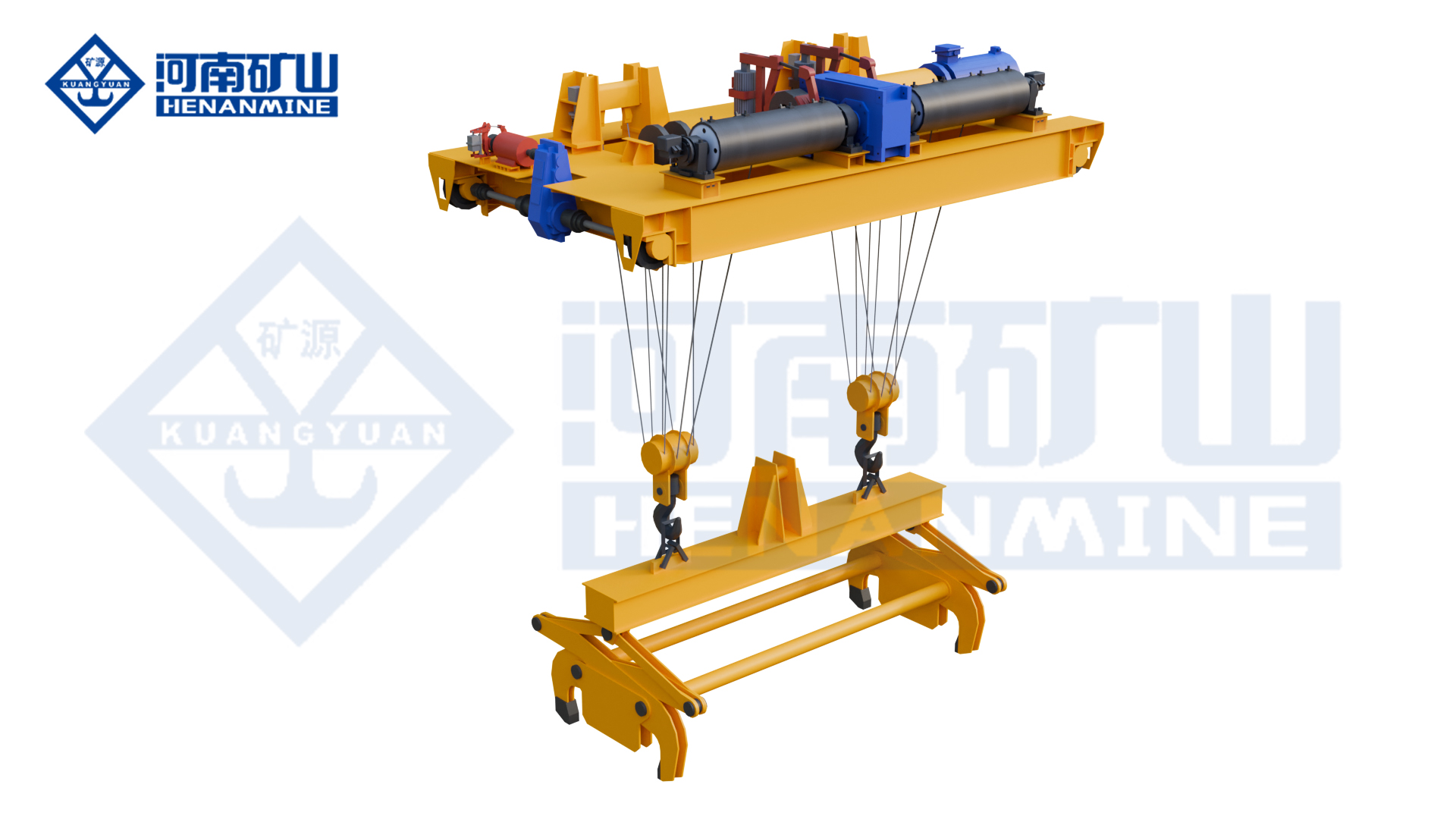
Slab Handling Crane
Special crane for hot or ambient slabs in continuous casting, storage, stacking and loading operations.
Request an EAF Crane Proposal
Submit the EAF melt-shop layout, crane responsibilities, charge bucket and ladle drawings, maximum gross loads, span, lifting heights, duty cycle, thermal conditions, process interfaces, destination standards and delivery location. Henan Mine Crane will prepare a project-specific technical and commercial proposal.