
POWER PLANT & HYDROPOWER OVERHEAD CRANES
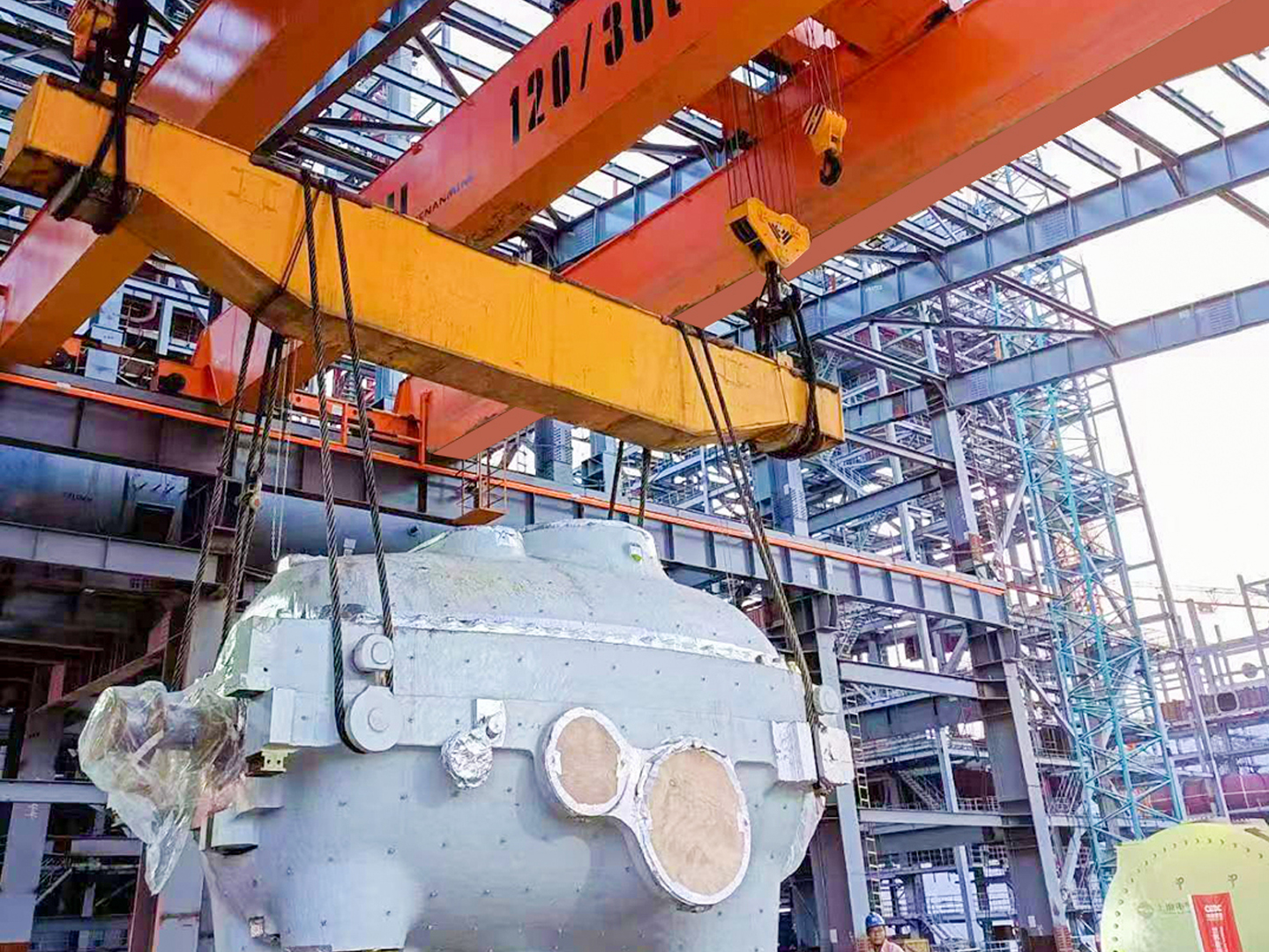
Generator Maintenance Crane
Lift a generator rotor clear of the unit, carry it to the overhaul floor, then return it within the clearances the OEM requires. That sequence—not the generator’s MW rating—defines the crane.
Henan Mine Crane configures powerhouse overhead cranes around component weights, lifting gear, hook travel and building loads. Main and auxiliary hooks, low-headroom trolleys and synchronized lifting are specified where the lift plan calls for them.
PRIMARY TASK
Rotor removal and overhaul
PRIMARY ARRANGEMENT
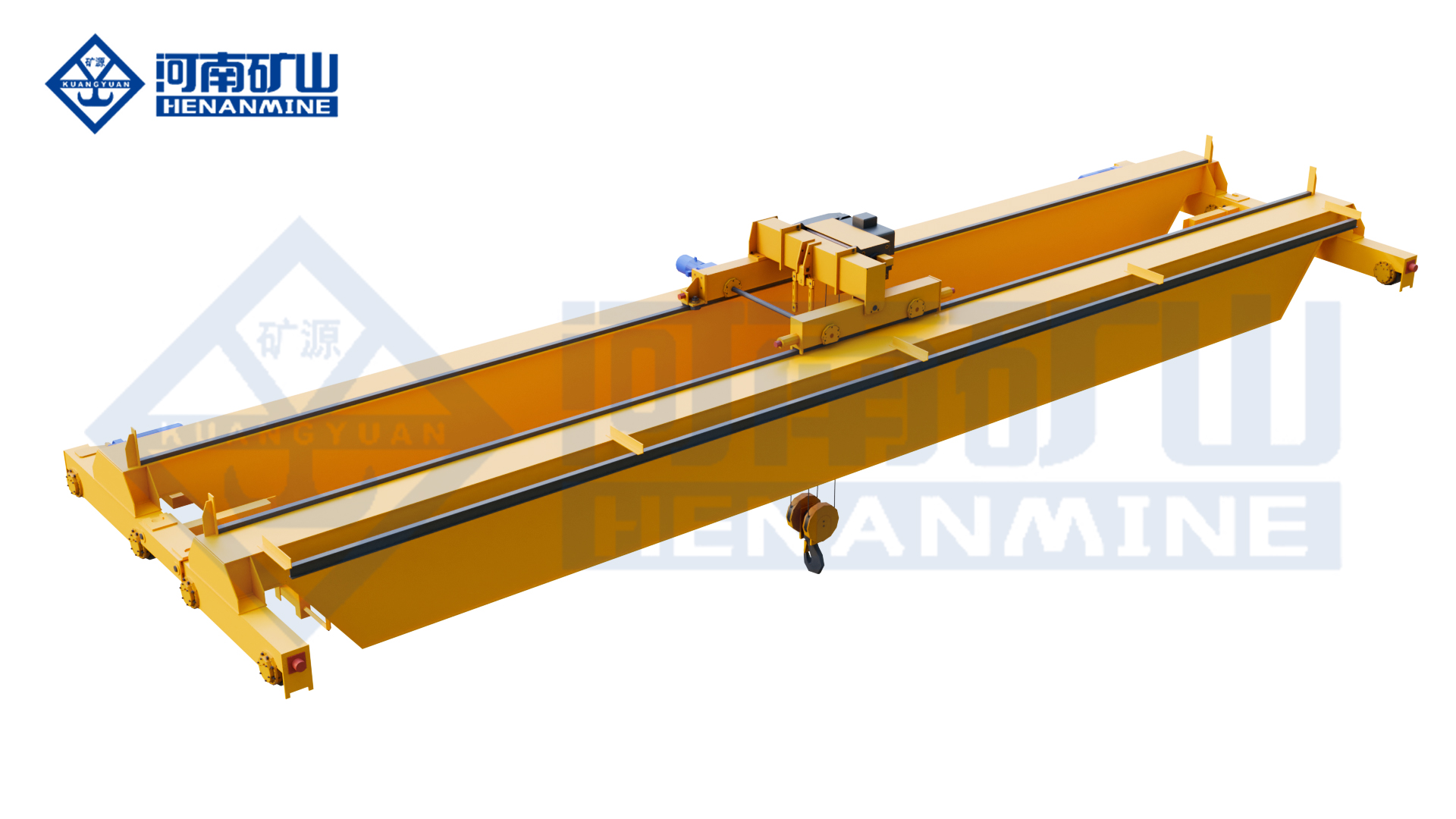
Double-girder overhead
OPTIONAL CONFIGURATION
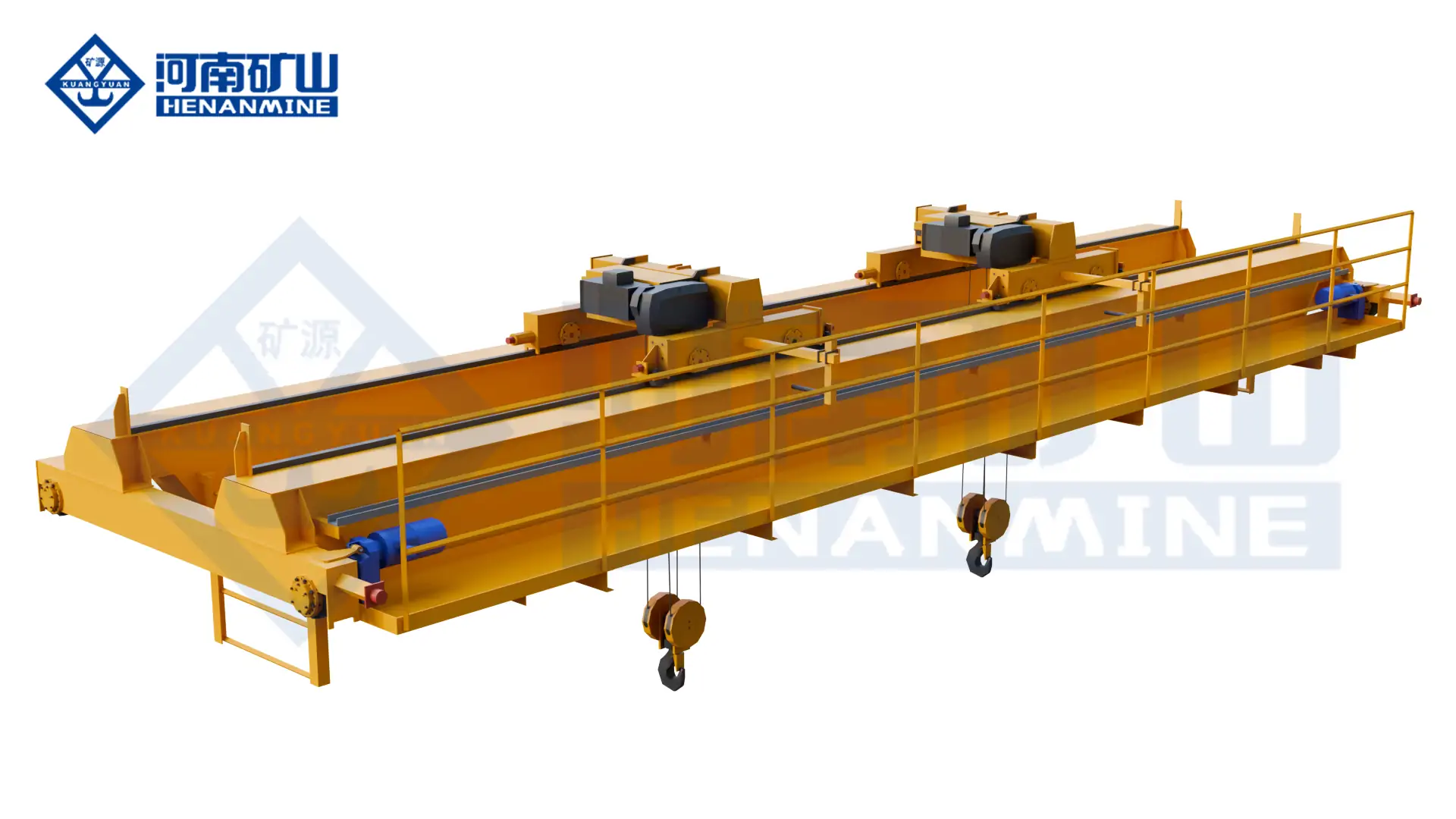
Main/auxiliary or synchronized hooks
DESIGN BASIS
Load path and powerhouse drawings
What Is a Generator Maintenance Crane?
A generator maintenance crane is the overhead lifting system used to remove and transfer heavy generator parts during a power-plant outage. It normally spans the turbine hall or hydropower machine hall and serves the unit and overhaul area. The governing load might be the complete rotor, a turbine component or, where replacement is planned, the stator. The overhaul strategy decides whether an exceptional stator lift belongs in the crane specification.
Lifting beams, slings, shackles and other below-hook gear add weight and use headroom. Rotor withdrawal may also require a separate OEM-approved extraction frame or skid arrangement before the overhead hook can take the load. Put those steps on the drawing before ordering the crane.
| Lift | Information to obtain | Crane implication |
|---|---|---|
| Generator rotor | Assembly mass, center of gravity, lifting points, extraction tooling and maintenance-stand location. | Main-hook rating, vertical stroke, hook approach and clear travel path. |
| Stator or generator-motor assembly | Whether removal is required, lifting-point reactions, spreader dimensions and allowable tilt. | Potential high-capacity or synchronized lift; assess each hook and runway. |
| Covers, bearings and auxiliaries | Individual masses, pickup locations and lifting frequency. | An auxiliary hook or separate service hoist may suit routine jobs. |
Generator Maintenance Applications
The crane should cover the actual dismantling, transfer and reassembly operations on the maintenance schedule. The rotor often needs a separate extraction tool before the bridge crane can lift it.
| Operation | Lifting route and equipment | Crane duty |
|---|---|---|
| Rotor overhaul | Pick up the rotor from its approved tool or support, clear the unit, move to the service stand and return it. | Verify hook access at both ends, rigging height, travel route and precise lowering. |
| Stator or generator-motor replacement | Handle the complete assembly only where the plant plan requires it and lifting points permit. | Check total suspended mass, lift-point loads, hook spacing, runway and any synchronization. |
| Bearings, covers and auxiliaries | Move parts between the generator, laydown floor and service positions. | Use an auxiliary hook or smaller service hoist where it offers better coverage. |
| Future unit modernization | Remove replacement assemblies after surrounding pipes, platforms and cable routes are complete. | Reserve hook approach and clearance for the fully built plant, not only the construction stage. |
Generator Maintenance Crane Selection Considerations
A double-girder, top-running overhead crane is the usual starting point for a heavy generator lift. The number of hooks and their rated duties depend on how the actual component is supported.
| Arrangement | Suitable lift | Critical design check |
|---|---|---|
| Main and auxiliary hooks | Heavy rotor handling plus smaller covers, bearings and service components. | State each hook’s rating and travel envelope separately. The auxiliary hook is not automatically a second lifting point for the main load. |
| Two synchronized main hooks | Large assemblies with two engineered lifting points. | Set hook-height difference, load-sharing, fault-response and test criteria. |
| Two coordinated bridge cranes | Exceptional lifts supported by the runways and lift plan. | Calculate each crane’s load throughout the motion; nameplate capacities cannot simply be added. |
| Separate auxiliary crane or hoist | Routine work outside the heavy generator lift. | Check its supports and coverage independently. |
The rated capacity and control scheme are established from approved component and rigging data.
Generator Maintenance Crane Compared with Other Lifting Arrangements
Compare the alternatives against the same rotor weight, lifting points, machine-hall drawing and laydown position.
| Arrangement | Coverage | When it fits | Limitation to check |
|---|---|---|---|
| Main double-girder overhead crane | Full turbine or machine-hall bay | Heavy rotor and generating-unit lifts | Runway strength, hook height and end approach |
| Low-headroom heavy bridge crane | Full bay in constrained underground hall | Large generator-motor assembly with restricted roof clearance | Trolley envelope and maintenance access |
| Electric-hoist double-girder crane | Service or auxiliary bay | Smaller components within product rating | Not automatically suitable for primary rotor or stator lift |
| Local electric hoist | One station or limited route | Covers, bearings, tools and small equipment | No full-bay transfer capability |
Powerhouse Layout, Headroom and Existing Runway
A crane can have enough rated capacity and still fail the lift. Check the rotor and lifting beam at the highest obstruction, hook position above the machine centerline, the route past platforms and pipework, and the floor area where the load will be set down.
New powerhouse
Freeze the crane envelope and wheel loads with the building design. Show rail elevation, hook approach, trolley height, walkway and equipment access on a coordinated general arrangement.
Existing powerhouse
Survey rails, runway beams and supports. The new bridge’s wheel loads, trolley positions and braking forces can differ from the old crane even at the same hook rating.
Underground hydro hall
Confirm the lift above the generator pit and roof-to-rail depth. A low-headroom arrangement can recover hook height, but it must still permit crane inspection and parts removal.
Capacity and Technical Parameters
Published Henan Mine Crane catalogue families include the QD hook bridge series below. These are model-family ratings, not preselected generator-maintenance packages. Span, lift, working class, speeds and wheel loads are confirmed against the particular powerhouse.
| QD hook bridge catalogue family | Nominal main/auxiliary rating | Selection note |
|---|---|---|
| QD 75/20–100/20 | 75/20–100/20 t | Compare the heaviest suspended maintenance load and auxiliary work. |
| QD 125/32–250/50 | 125/32–250/50 t | Evaluate rotor or turbine assembly weight and the hall runway. |
| QD 300/40–350/75 | 300/40–350/75 t | Review major component lifting points, hook coverage and maintenance access. |
| QD 400/80–450/80 | 400/80–450/80 t | Confirm civil loads, erection access and acceptance scope. |
| Project-specific high-capacity system | 600 t published pumped-storage example | Requires a separate engineered configuration; not a catalogue QD rating. |
A “100/20 t” rating denotes a 100 t main hook and a 20 t auxiliary hook; it does not mean 120 t combined lifting capacity.
Power Station Project References
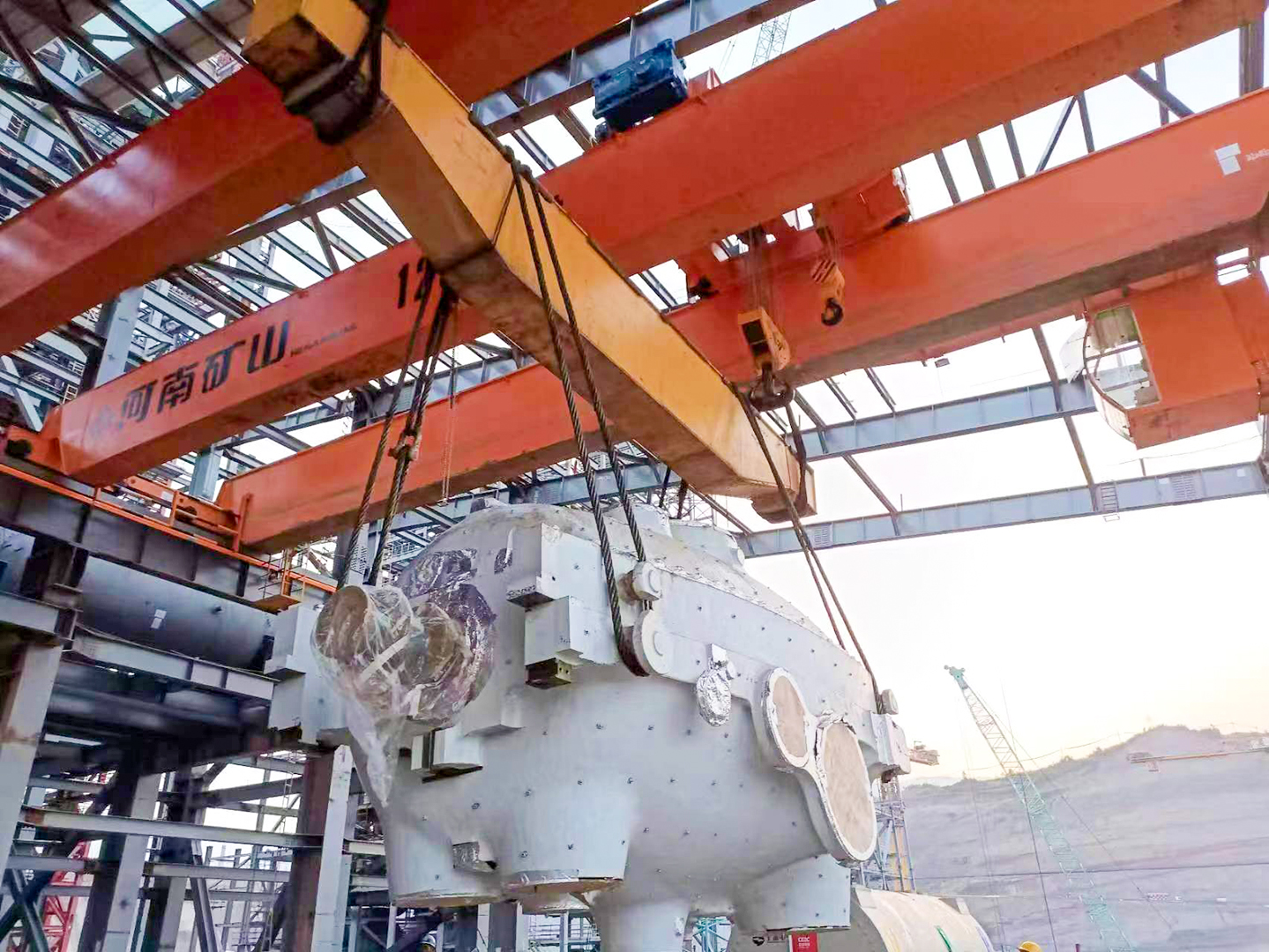
Indonesia: two 120 t turbine-hall cranes
For a project with three 380 MW generating units in Morowali, Henan Mine Crane supplied two 120 t double-girder bridge cranes. The cranes handled generating equipment during construction. For future outages, the rotor weights and completed turbine-hall clearances determine the overhaul lifts each crane can perform.
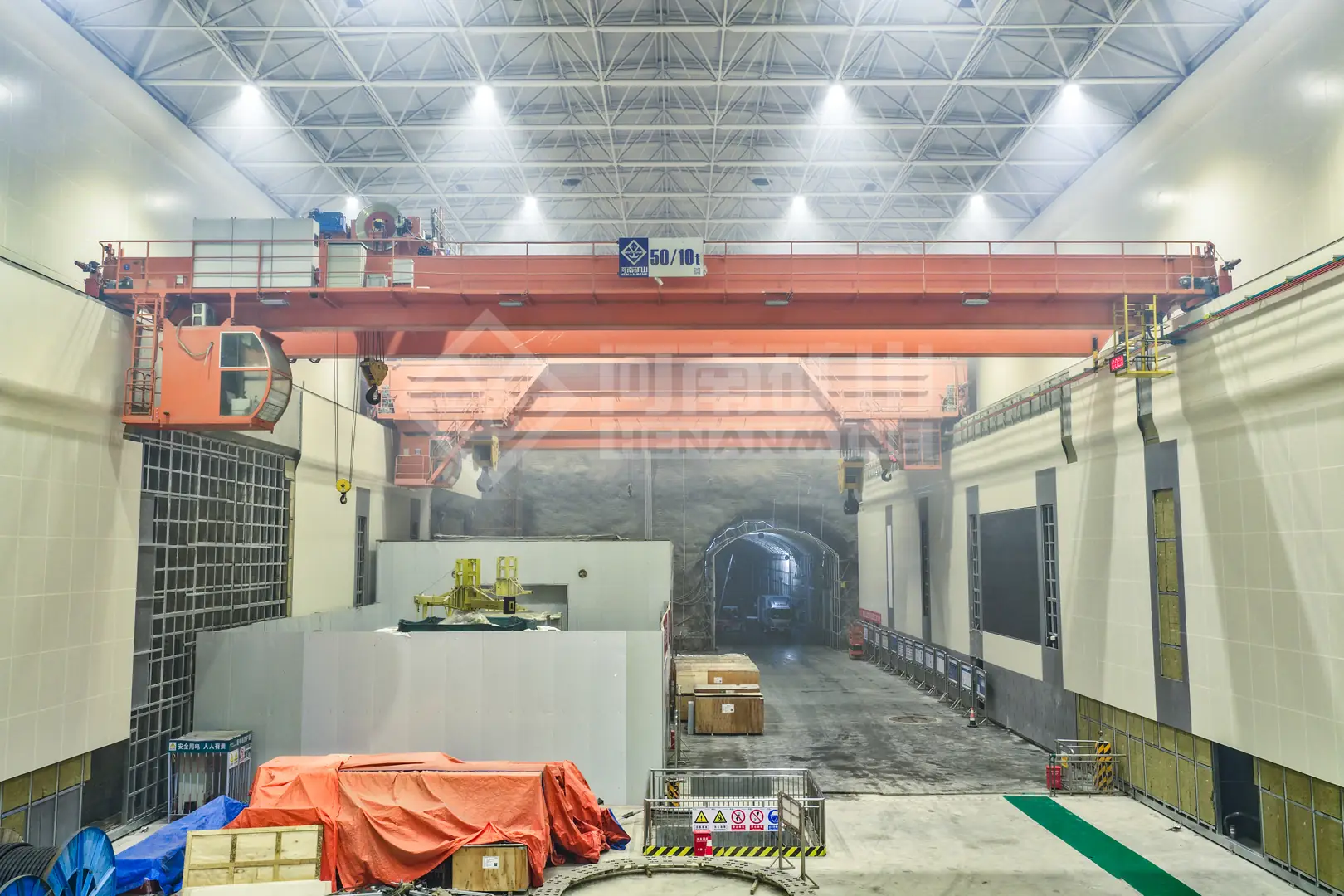
Pumped storage: 600 t low-headroom crane
Henan Mine Crane describes a 600 t crane supplied for a pumped-storage project, with synchronized double-hook lifting, variable-frequency control and anti-sway. The low-headroom design addresses the confined powerhouse envelope. Its final maintenance duty is defined by the generator-motor lift schedule and powerhouse geometry.
Hoisting, Control and Outage Reliability
Low-speed handling
State loaded hoisting and travel speeds for final approach, plus acceleration and stopping behavior. A VFD is a control choice; the acceptance requirement is stable movement with the specified load.
Load protection
Identify limits, overload protection, brakes and emergency stop in the technical schedule. Define how a suspended load is held and recovered after power loss.
Two-point lifts
Agree on maximum hook-height difference, load-share limits, alarms and loaded testing before manufacture.
Outage readiness
Provide access to brakes, ropes, drives, wheels and controls. Match critical spares and functional checks to the outage plan.
Generator Maintenance Crane Price and Budget
There is no reliable list price for a complete generator-maintenance installation. Public manufacturer tables can support an early equipment budget if their listed span and lift remain visible. These figures are independent manufacturers’ reference prices, not Henan Mine Crane quotations.
| Published example | Listed geometry | USD reference |
|---|---|---|
| DGCRANE 50/10 t double-girder crane | Span 10.5–31.5 m; lift 12/16 m | $49,500–$72,000 |
| Kino Cranes 50 t double-girder crane | Span 28 m; lift 6 m | $70,000–$120,000 |
| DGCRANE 100/20 t double-girder crane | Span 13–31 m; lift 18/20 m | $115,000–$166,700 |
| Kino Cranes 100 t double-girder crane | Span 32 m; lift 6 m | $120,000–$200,000 |
Sources: DGCRANE, “Top Running Overhead Crane Price”; Kino Cranes, “Overhead Crane Price”. Public tables checked October 2026. These examples have different specifications and are not like-for-like bids. Neither source provides a dependable installed price for a 600 t powerhouse crane.
Scope, Inspection and Acceptance
A useful quotation can be checked against the lift plan and building, not just a capacity label. Include:
- General arrangement with rail elevation, hook limits, trolley envelope, walkways and maintenance access.
- Main and auxiliary ratings, load spectrum, duty basis, speeds, motors and brakes.
- Maximum wheel loads and horizontal actions for the civil engineer.
- Control description and measurable synchronization criteria, if applicable.
- Inspection plan, factory witness points, commissioning method and acceptance records.
- Scope exclusions, delivery term, installation responsibility, manuals, spares and warranty.
Apply the standards and statutory inspection requirements of the installation country. Final load-test and acceptance values belong in the signed specification and approved procedure.
Request a Generator Maintenance Crane Quotation
Send the powerhouse plan and section with the maintenance lift schedule. For a replacement crane, include the existing crane and runway drawings and recent structural inspection records.
Load and lift plan
Component mass and dimensions; lifting gear; center of gravity; pickup points; extraction sequence; overhaul-floor route; one-hook or two-point handling.
Building and project data
Rail span and length; rail elevation; hook height; obstructions; runway capacity; power supply; destination country; delivery and outage dates.
Send drawings for a quotation
Contact Henan Mine Crane
info@hnksglobal.com | +86 188 3620 7779
Generator Maintenance Crane FAQ
How do I size the crane for a generator rotor?
Use the maximum suspended weight under the agreed rating basis, including the rotor assembly and lifting gear. Confirm pickup geometry, vertical stroke and the route to the maintenance stand. MW output does not determine crane capacity.
Is a 100 t main hook enough for a 100 t component?
Not on component mass alone. The lifting beam and rigging add weight; the design rules and lift procedure establish the allowable load. Obtain the complete suspended-load schedule first.
Can two cranes lift a generator stator together?
Yes, when a qualified plan verifies the load on each crane and lifting point throughout the operation, plus uneven loading, differential motion, runway reactions, communication and a stop or fault response.
Can the original runway be reused?
Possibly, after structural and condition checks against the new crane’s wheel loads and horizontal forces. A different trolley layout can require strengthening even when the span is unchanged.
What lead time should the project allow?
Set separate dates for drawing approval, fabrication, factory inspection, dispatch, runway readiness, erection and commissioning. The schedule depends on the approved configuration and destination.
Related Henan Mine Crane Products
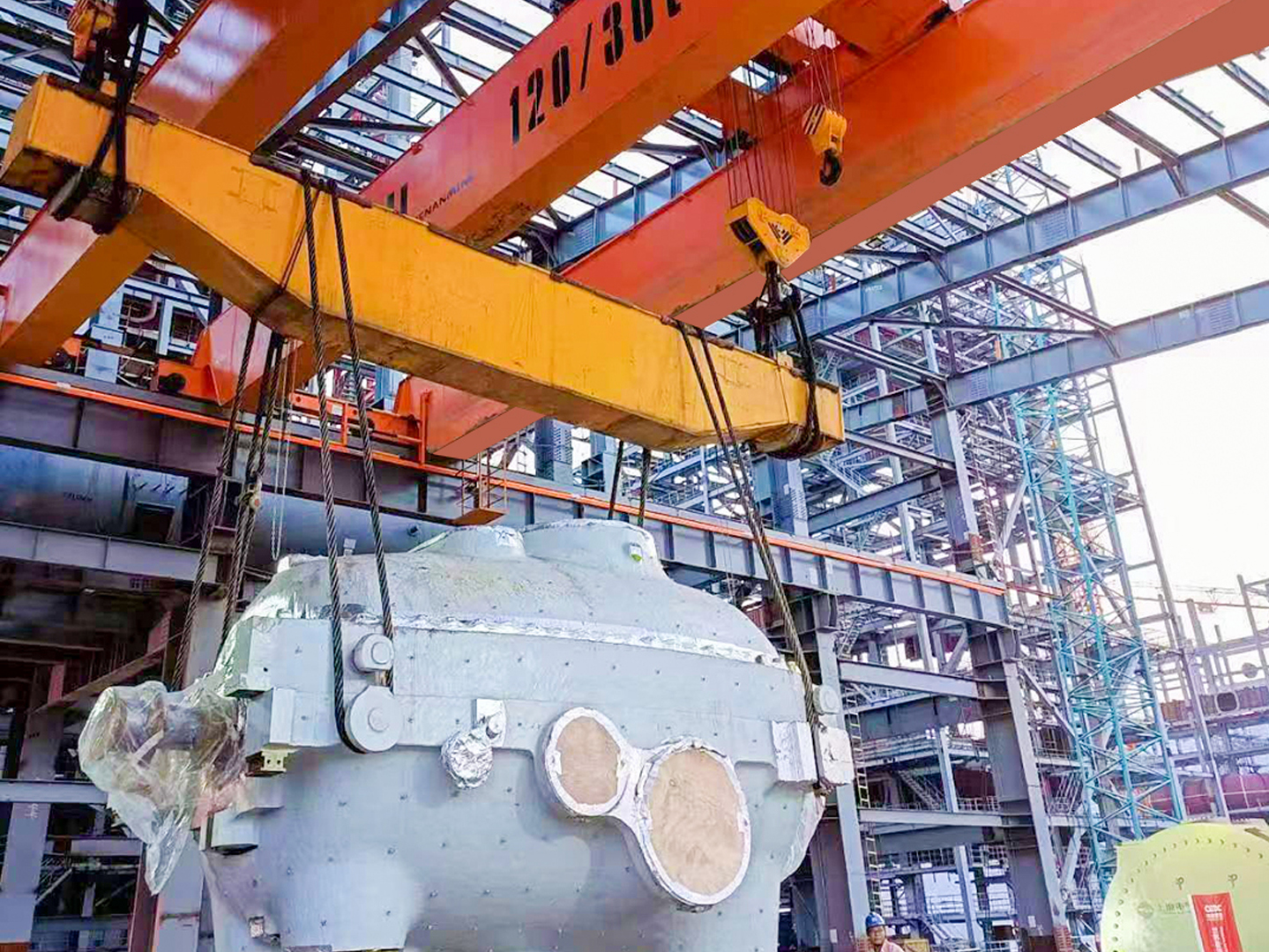

Request a Generator Maintenance Crane Proposal
Submit the component lift schedule, rigging masses and powerhouse drawings. Henan Mine Crane can develop the hook arrangement, runway interface, acceptance scope and itemized commercial proposal.