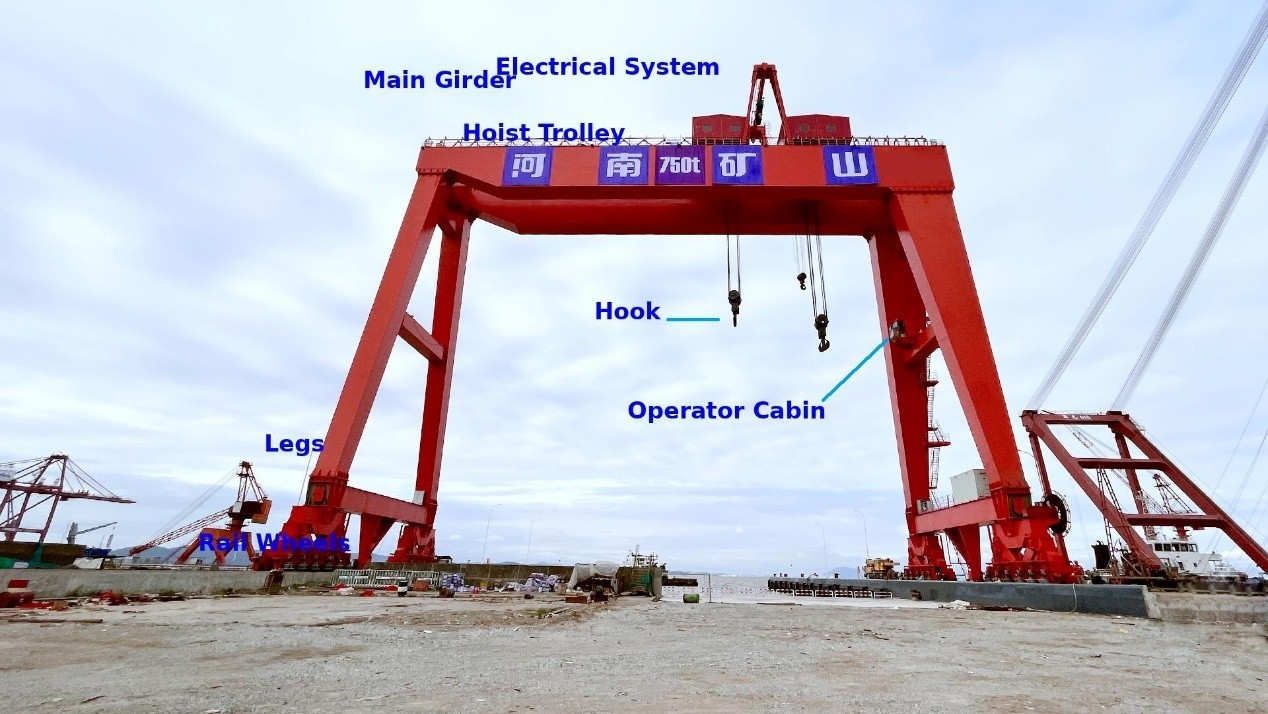
Henan Mine Crane · Engineered Gantry Crane Manufacturer & Export Supplier
Gantry Crane Suppliers
Custom gantry crane systems for factories, material yards, precast operations, shipyards, container terminals and heavy construction projects.
Henan Mine Crane develops single-girder, double-girder, semi-gantry, truss, rubber-tired, rail-mounted and heavy-lift gantry cranes. Each proposal defines the engineering basis, equipment scope, runway or travel interface, controls, inspection documents, packing, delivery and requested site services.
PRODUCT RANGE
1–1000 t Standard Families
TRAVEL ARRANGEMENTS
Rail-Mounted & Rubber-Tired
CONTROL OPTIONS
Pendant, Radio, Cabin & PLC
SUPPLY BOUNDARY
Equipment to Site Services
What an Engineered Gantry Crane Supplier Must Provide
A gantry crane supplier must convert the handling requirement into a complete load path. The suspended load passes through the hook or attachment, hoist, trolley, bridge girders, legs, end carriages, wheels, rails and foundations or operating surface. Capacity is only one input; span, lifting height, duty, wind, travel length, skew control, ground conditions and site interfaces establish the actual system.
A commercially complete proposal identifies the crane configuration, rated capacity, span, lift, speeds, working class, power supply, control method, environment, structural reactions, safety functions and governing acceptance basis. It also separates crane equipment from rails, foundations, runway power, freight, unloading, erection, commissioning, test weights and statutory inspection. This scope definition allows quotations from different gantry crane companies to be normalized.
Manufacturing capability is evaluated through approved design inputs, material traceability, welding control, dimensional inspection, mechanism selection, electrical documentation, factory testing and packing plans. Project capability is demonstrated through completed installations with comparable capacity, span, duty or operating environment—not through a general product catalogue alone.
Henan Mine Crane supplies standard industrial gantry platforms and project-specific heavy-lift systems. Published product-family ranges support preliminary selection, while the contract specification, approved general arrangement, calculation basis and signed scope schedule control the delivered crane.
Gantry Crane Product Range
Single-Girder Gantry Cranes
Electric-hoist systems for general production, warehouses and yards. Published Henan Mine Crane families extend to 32 t and spans up to 35 m, subject to the selected model and project verification.
Double-Girder Gantry Cranes
Hoist-trolley or process-trolley systems for higher capacity, longer span, demanding duty and improved hook height. Published families extend from 5 t to 500 t.
Semi-Gantry Cranes
One side travels on an elevated runway and the opposite side travels on a ground rail. The arrangement serves building edges or production areas requiring partial independent support.
Truss Gantry Cranes
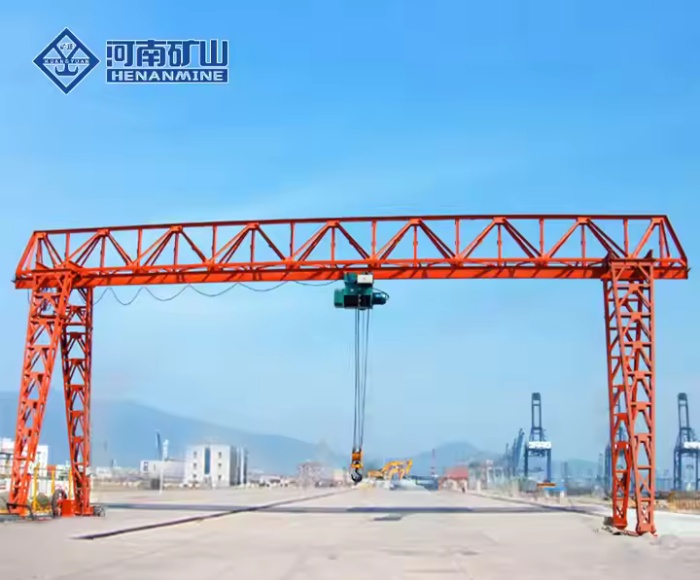
Open-web bridge construction reduces wind area and can suit long outdoor spans, construction yards and precast operations. Published families extend from 5 t to 100 t.
Rubber-Tired Gantry Cranes
Mobile systems provide flexible yard travel without fixed longitudinal rails. Steering, pavement loading, power system, stability and operating route require project-specific coordination.
Container and Heavy-Lift Gantry Cranes
RMG, RTG, shipbuilding and custom heavy-lift systems combine process-specific spreaders or lifting beams, higher working duty, coordinated drives and advanced control functions.
Published capacity and span ranges are not universal combinations. Long spans, high lifts, high wind exposure, severe duty and special attachments require structural and mechanism calculations before a model is confirmed.
Engineering and Manufacturing Scope
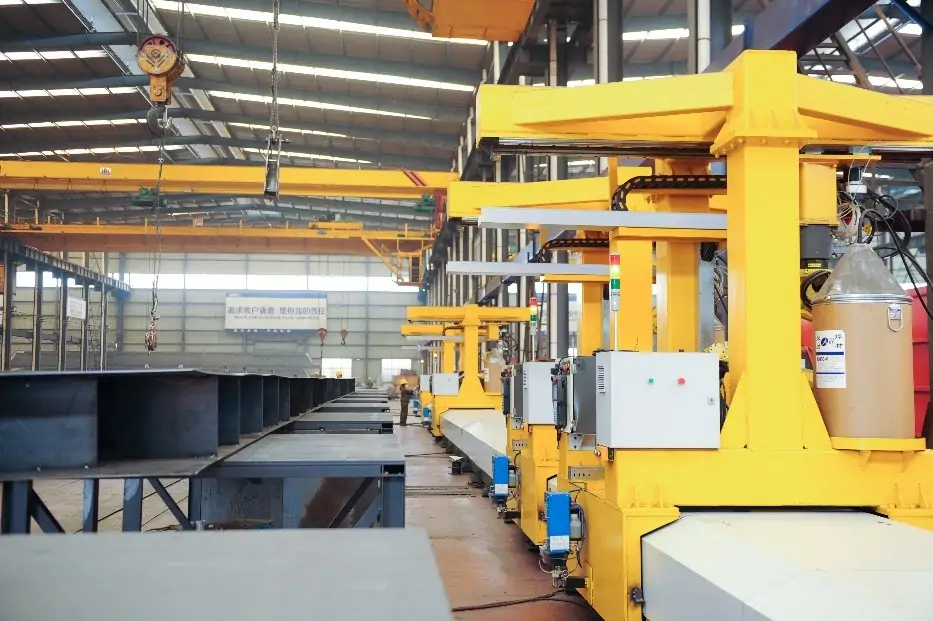
A gantry crane is engineered as a coordinated structure rather than assembled from isolated components. Bridge stiffness, leg geometry, wheel base, trolley position, wind load, braking forces and rail tolerances influence wheel reactions and travel behavior. The electrical and control design must match the selected mechanisms, duty cycle and operating environment.
Manufacturing records can include material identification, welding procedures, welder qualifications, nondestructive examination where specified, bridge camber and span inspection, wheel-alignment records, gearbox and brake information, electrical diagrams, coating checks and factory functional tests. Required records and witness points are agreed before production.
Structural Engineering
Capacity, span, lift, duty, wind, trolley reactions, fatigue, deflection, transport splits and erection method define bridge, leg and end-carriage design.
Mechanism Selection
Hoist, trolley and gantry travel motors, brakes, gearboxes, wheels, drums, ropes and limits are selected for load spectrum, speed and operating hours.
Electrical Integration
Panels, VFDs, conductor or cable systems, pendant, radio, cabin or PLC controls are coordinated with voltage, enclosure, alarms and interlocks.
Quality Planning
Inspection stages, acceptance criteria, hold points, records and release documentation are linked to the contract specification and agreed standards.
Transport Engineering
Shipping dimensions, lifting points, packing protection, container or break-bulk strategy and assembly sequence are developed before dispatch.
Site Interface
Rail, foundation, pavement, power, access, erection equipment, test weights and local inspection responsibilities are defined in the scope schedule.
How to Evaluate Gantry Crane Suppliers
Supplier evaluation should compare technical compliance, manufacturing evidence, project control and lifecycle support on the same basis. The lowest initial price can create additional cost when structural interfaces, freight, site services or acceptance documents are omitted.
01 · Relevant Product Platform
Confirm that the proposed configuration is a proven family for the required capacity, span, duty and environment. A portable gantry and a process gantry require different engineering capability.
02 · Design Input Control
The quotation should state load, span, lift, working class, speeds, wind condition, power, attachment, control philosophy and structural assumptions.
03 · Verifiable Manufacturing
Request evidence for structural fabrication, welding, machining, assembly, electrical production, inspection and functional testing relevant to the proposed crane.
04 · Transparent Scope
Equipment, rails, foundations, electrification, freight, installation, commissioning, training and inspection must be listed as included, optional or excluded.
05 · Document Package
General arrangement, wheel loads, electrical diagrams, manuals, certificates, inspection records, packing lists and acceptance results require defined submission stages.
06 · Comparable Project Experience
A useful completed project shares meaningful technical conditions such as heavy capacity, long span, outdoor exposure, process duty or advanced control.
07 · Installation Method
Erection sequence, lifting equipment, site access, rail survey, alignment, temporary works and test-load arrangements should be established before shipment.
08 · Service and Parts
Commissioning response, remote support, recommended spares, wear components, troubleshooting information and maintenance training support long-term availability.
Gantry Crane Configurations Compared
Configuration is selected by load path, operating area and duty. The comparison below provides a commercial and technical starting point before project calculations are completed.
| Configuration | Typical Application | Published Family Position | Principal Advantage | Critical Interface |
|---|---|---|---|---|
| Single-girder rail-mounted | Workshops, yards, maintenance and general production | 1–32 t; spans 4–35 m across relevant families | Lower bridge mass and efficient electric-hoist package | Headroom, duty, ground rails and foundations |
| Double-girder rail-mounted | Heavy fabrication, precast, steel and high-duty handling | 5–500 t; spans 8–40 m in the broad published family | Higher capacity, stiffness, hook height and trolley flexibility | Wheel loads, transport splits, erection and runway geometry |
| Semi-gantry | Building edge, mixed indoor/outdoor or partial runway support | Published single-girder family 1–32 t; spans 6–35 m | Uses one elevated runway while preserving floor coverage | Building reaction on one side and ground rail on the other |
| Truss gantry | Outdoor long-span yards, construction and precast work | 5–100 t; spans 18–35 m in the published truss family | Reduced wind area and efficient outdoor bridge form | Fatigue details, corrosion protection and transport assembly |
| Rubber-tired gantry | Flexible yards and container or precast movement | 35–50 t published container RTG family; custom industrial systems available | Travel route flexibility without fixed longitudinal rails | Pavement pressure, steering, stability and power system |
| Rail-mounted container gantry | Container stacking and terminal operations | 35–50 t; spans 18–35 m in the published RMG family | High stacking productivity and automated control potential | Terminal layout, spreader, rail system and process integration |
| Shipbuilding or heavy-lift gantry | Block assembly, bridge construction and large-module handling | 100–450 t published shipbuilding family; custom heavy-lift projects | Synchronized high-capacity handling over large working envelopes | Site-specific structure, controls, wind, erection and acceptance |
Published ranges describe product platforms and do not confirm every capacity-span-duty combination. The approved technical schedule and general arrangement determine the contracted configuration.
Gantry Crane Supplier Qualification Checklist
A pre-award review should convert broad claims into project deliverables. The following checklist supports technical clarification, commercial comparison and factory assessment.
| Review Area | Evidence to Request | Acceptance Question | Contract Deliverable |
|---|---|---|---|
| Company and project capability | Relevant product catalogue, organization, comparable installations and project team | Has the proposed team delivered a crane with comparable engineering demands? | Named contacts, responsibility matrix and project schedule |
| Design control | Design-input sheet, preliminary layout, wheel loads and technical deviations | Are all stated assumptions compatible with the site and process? | Approved technical specification and general arrangement |
| Structural fabrication | Material controls, welding procedures, welder records and inspection plan | Are critical welds, dimensions and tolerances controlled? | Material and fabrication inspection records |
| Mechanisms and electrical | Selected makes, data sheets, duty ratings, circuit concept and protection list | Do motors, brakes, gearboxes, ropes, controls and enclosures match the operating cycle? | Component schedule and electrical drawings |
| Factory acceptance | Test procedure, witness plan and calibrated inspection equipment | Which functions and records are verified before release? | Factory test and release package |
| Packing and logistics | Packing method, shipping splits, lifting points and preservation plan | Can the equipment reach the site without damage or unplanned rework? | Packing list, marks and handling instructions |
| Site completion | Erection method, commissioning procedure, test-load plan and training content | Are labor, tools, access, power and test weights assigned? | Site acceptance and handover records |
| Lifecycle support | Recommended spares, maintenance schedule and response arrangement | Can routine and critical components be identified and replaced efficiently? | Manuals, spare-parts list and service contacts |
Technical Specification and Quotation Data
An accurate gantry crane quotation requires measurable operating data. The gross suspended load includes the payload, lifting beam, spreader, grab, magnet, slings and every component below the hook or trolley. Future load growth and exceptional handling conditions should be declared during the design stage.
Load and Attachment
Maximum and normal load, dimensions, center of gravity, lifting points, attachment mass, load temperature and any rotating or guided handling requirement.
Geometry and Coverage
Span between rail centers, lifting height, rail length, cantilevers, hook approaches, rail elevation, ground clearance and obstructions.
Operating Cycle
Lifts per hour, load spectrum, travel distances, shifts, annual hours, production peaks and consequence of downtime.
Motion Performance
Main and micro speeds, acceleration, positioning tolerance, anti-sway, synchronized lifting, steering or skew-control requirements.
Site Conditions
Indoor or outdoor location, wind, temperature, humidity, dust, corrosion, seismic basis, altitude, hazardous classification and drainage.
Power and Controls
Voltage, frequency, phase, available supply, cable route, pendant, radio, cabin, PLC, network and remote diagnostic requirements.
Civil and Rail Interface
Rail section, foundation or pavement data, allowable reactions, tolerances, end stops, storm anchors and travel-lane restrictions.
Delivery and Acceptance
Destination, Incoterm, packing, unloading, installation, inspection authority, test weights, training and required documentation language.
Manufacturing, Inspection and Quality Records
Inspection requirements should be proportional to crane duty and project risk. A standard industrial unit and a heavy-lift process crane require different witness plans, but both need traceability from approved specification to completed equipment. Deviations and concessions should be closed before dispatch.
The inspection and test plan identifies review, witness and hold points. Records are compiled into the final data book with approved drawings, component information, factory results, packing documentation and site acceptance records as contracted.
| Project Stage | Typical Control | Typical Record | Release Basis |
|---|---|---|---|
| Design approval | Input review, calculations, general arrangement, interfaces and technical deviations | Approved specification, drawing register and interface schedule | Engineering approval before fabrication release |
| Material and welding | Material identification, procedures, qualifications, weld preparation and specified examination | Material records, weld logs and examination reports | Inspection-plan acceptance |
| Dimensional inspection | Span, camber, diagonals, leg geometry, wheel alignment and connection fit-up | Dimensional report and assembly marks | Compliance with approved tolerances |
| Mechanism and electrical checks | Motor, brake, gearbox, rope, limit, panel, wiring and protection verification | Component data, settings and functional-test sheets | Approved component schedule and test procedure |
| Factory acceptance | No-load functions, controls, alarms, interlocks and document review within available setup | Factory acceptance and punch-list closure | Release authorization |
| Site acceptance | Rail survey, assembly, alignment, insulation, limits, no-load and specified load tests | Commissioning, load-test and handover reports | Signed site acceptance criteria |
Export Packing, Shipping and Logistics
Export logistics should be engineered before fabrication is completed. Girder and leg shipping lengths, lifting points, container dimensions, port restrictions, inland route limits and site crane capacity influence structural splits and assembly joints. Protective packing must match open-deck, break-bulk, container or long-distance road transport exposure.
Shipping Split Plan
Bridge, legs, end carriages, platforms and rails are divided into transportable sections with identified mass, center of gravity and connection sequence.
Export Protection
Machined surfaces, electrical equipment, motors, ropes and loose components receive appropriate wrapping, sealing, bracing and corrosion protection.
Marking and Inventory
Package numbers, assembly marks, packing lists and photographs support customs clearance, unloading and controlled site inventory.
Freight Basis
Incoterm, departure point, destination, container or break-bulk basis, insurance and abnormal-load permits are stated in the commercial offer.
Unloading Requirements
Package weights, lift points, spreader needs, storage surface and weather protection are issued before arrival.
Site Preservation
Storage duration, periodic inspection, moisture control, coating repair and mechanism preservation are defined when erection is delayed.
Installation, Commissioning and Lifecycle Support
Site completion begins with rail or travel-path verification. Gauge, straightness, elevation, joint condition, end stops, foundation interfaces and electrical supply are checked before crane assembly. Erection proceeds under an approved method statement with appropriate lifting equipment, temporary stability and exclusion zones.
Pre-Installation Review
Confirm civil completion, rail survey, access, laydown area, lifting equipment, labor, power, permits and environmental conditions.
Mechanical Erection
Assemble bridge and legs, install wheel groups, platforms, hoist trolley, rails or cables, buffers, anchors and safety devices.
Electrical Commissioning
Verify supply, grounding, phase sequence, motor direction, brake settings, limits, overload protection, alarms and control logic.
Functional and Load Testing
Complete no-load checks, progressive functional tests and contract or statutory load testing with calibrated instruments and approved weights.
Operator and Maintenance Training
Cover controls, inspections, abnormal conditions, lockout, lubrication, brakes, ropes, wheels, rails and record keeping.
Parts and Service Planning
Define commissioning spares, operating spares, wear parts, critical components and the information required for accurate replacement.
Project Case: 700 t Gantry Crane for a Yangtze River Bridge Project
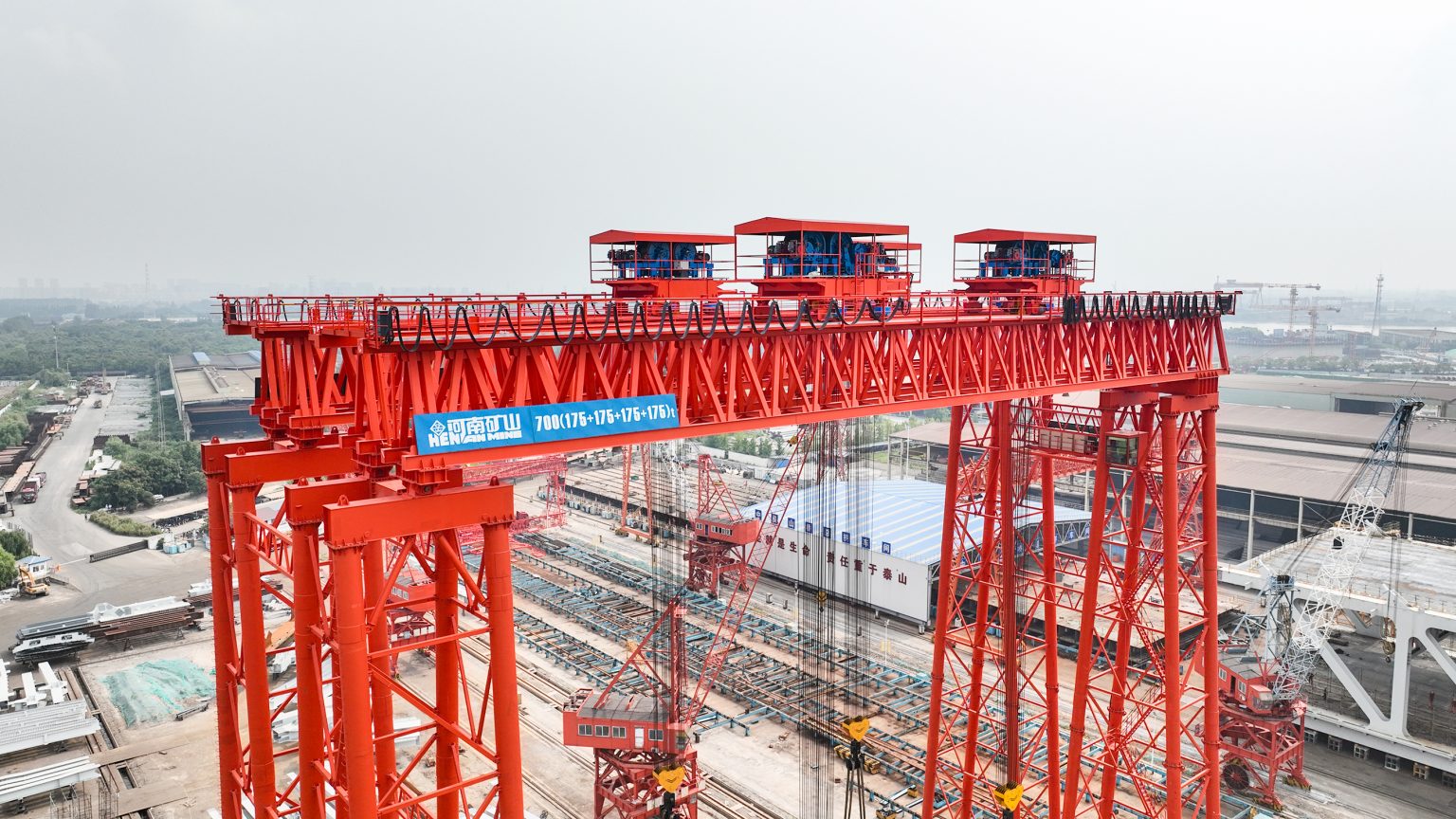
Henan Mine Crane supplied a 700 t gantry crane for the construction of a major Yangtze River bridge steel tower. The tower reaches approximately 350 m, while principal lifted components were reported in the 500–650 t range. The project required a custom heavy-lift system rather than a standard catalogue configuration.
The procurement significance extends beyond rated capacity. A project of this scale requires controlled structural design, transportable fabrication modules, coordinated lifting mechanisms, synchronized travel, defined wind limits, engineered foundations or rails, erection planning and a project-specific inspection and commissioning program.
Comparable heavy-lift enquiries should include component mass and geometry, lifting points, center of gravity, required travel path, assembly sequence, wind conditions, allowable ground reactions, synchronization tolerance and acceptance authority. These inputs establish the safe operating envelope and contract scope.
Gantry Crane Price and Commercial Scope
Public market positions vary widely because portable gantries, equipment-only industrial cranes and installed systems represent different supply boundaries. The table supports preliminary budget classification; a binding price requires project dimensions, duty, destination and an agreed scope.
| Budget Category | Indicative Public Market Position | Typical Basis | Principal Cost Variables |
|---|---|---|---|
| Portable fixed or adjustable gantry, 1–3 t | Approximately US$2,960–11,410 in current public retail listings | Steel or aluminum portable frame; product scope varies by listing | Span, adjustable height, material, casters, trolley, hoist and freight |
| Portable fixed or adjustable gantry, 5 t | Approximately US$10,070–13,754 in current public retail listings | Commercial 5 t steel or aluminum frame with differing dimensions | Height, span, material, trolley, hoist, accessories and delivery |
| 5 t semi-gantry, 40 ft span | Approximately US$130,000 in a published North American project benchmark | Hoist, trolley and railway included in the stated benchmark | Building interface, civil work, local labor, permits and site access |
| Full engineered gantry | Approximately US$160,000–170,000 in a published North American benchmark | Two-leg structural system within the stated project basis | Capacity, span, lift, runway, electrification, installation and testing |
| Industrial rail-mounted gantry, 5–20 t | Project quotation | Single- or double-girder crane configured for the declared duty and site | Structure, hoist trolley, travel length, wind, rail system, freight and erection |
| Heavy-lift, process, container or automated gantry | Project quotation | Custom engineered crane and project services | Structure, mechanisms, automation, attachment, wind, logistics, erection and acceptance |
Quotation normalization: capacity, span, lift, duty, speeds, hoist or trolley, bridge and legs, rails, electrification, controls, documentation, freight, installation, testing and taxes should be compared line by line. Equipment price and total installed cost are not interchangeable.
Indicative market positions were checked in September 2026 and are intended for preliminary capital planning. They are not fixed Henan Mine Crane quotations. Currency, steel cost, destination, specification and site conditions can change the final contract value.
Request for Quotation and Frequently Asked Questions
A complete enquiry should include gross suspended load, load dimensions, attachment, span, lift, travel length, cantilevers, working cycle, speeds, control method, indoor or outdoor environment, wind basis, rail or pavement information, power supply, destination, required Incoterm and site-service boundary.
Technical Data
Capacity, load spectrum, span, lift, duty, speeds, attachment, hook coverage, wind, temperature and required control functions.
Site Interface
Travel length, rails, foundations, pavement, power, obstructions, erection access, ground pressure and available site lifting equipment.
Compliance and Documentation
Destination requirements, inspection authority, document language, approval stages, witness points and acceptance testing.
Commercial Boundary
Freight term, unloading, installation, commissioning, training, test weights, local labor, taxes and requested spare parts.
How should gantry crane suppliers be compared?
Compare compliance with the same technical specification, included equipment, structural interfaces, controls, documents, freight, installation, acceptance testing and lifecycle support. Total installed scope provides a stronger comparison than headline price.
Which gantry crane type is suitable for general industrial service?
Single-girder rail-mounted cranes commonly suit moderate capacity and general duty. Double-girder systems support higher capacity, longer span, demanding duty, better hook height and specialized trolleys. Site and process data determine the final selection.
What information is required for an accurate price?
Rated and normal load, span, lift, travel length, duty, speeds, control, environment, rail or pavement data, power, destination and supply boundary establish the principal cost basis.
Does a gantry crane quotation include rails and foundations?
Rails, foundations, pavement work, electrical feed, freight, erection and test weights are included only when expressly listed. The offer should identify every included, optional and excluded item.
Can a gantry crane operate outdoors?
Outdoor cranes require declared operating and parked wind conditions, corrosion protection, drainage, environmental enclosures, storm anchors or rail clamps where applicable, and a safe operating procedure.
What documents should be supplied with the crane?
Typical documents include approved drawings, wheel loads, electrical diagrams, manuals, component schedules, inspection records, certificates, packing lists and factory or site acceptance results.
How is installation responsibility divided?
The contract assigns rail and civil readiness, unloading, erection equipment, labor, supervision, wiring, test weights, permits, statutory inspection and final handover. The installation method should be agreed before dispatch.
How long does a custom gantry crane project take?
Schedule depends on engineering approval, material procurement, capacity, span, control complexity, inspection points, shipping route and site readiness. A contract schedule should show drawing approval, manufacture, testing, dispatch and commissioning milestones.
Related Gantry Crane Products
Each product platform serves a distinct load, span, duty and travel arrangement. Final model selection follows the approved project specification.
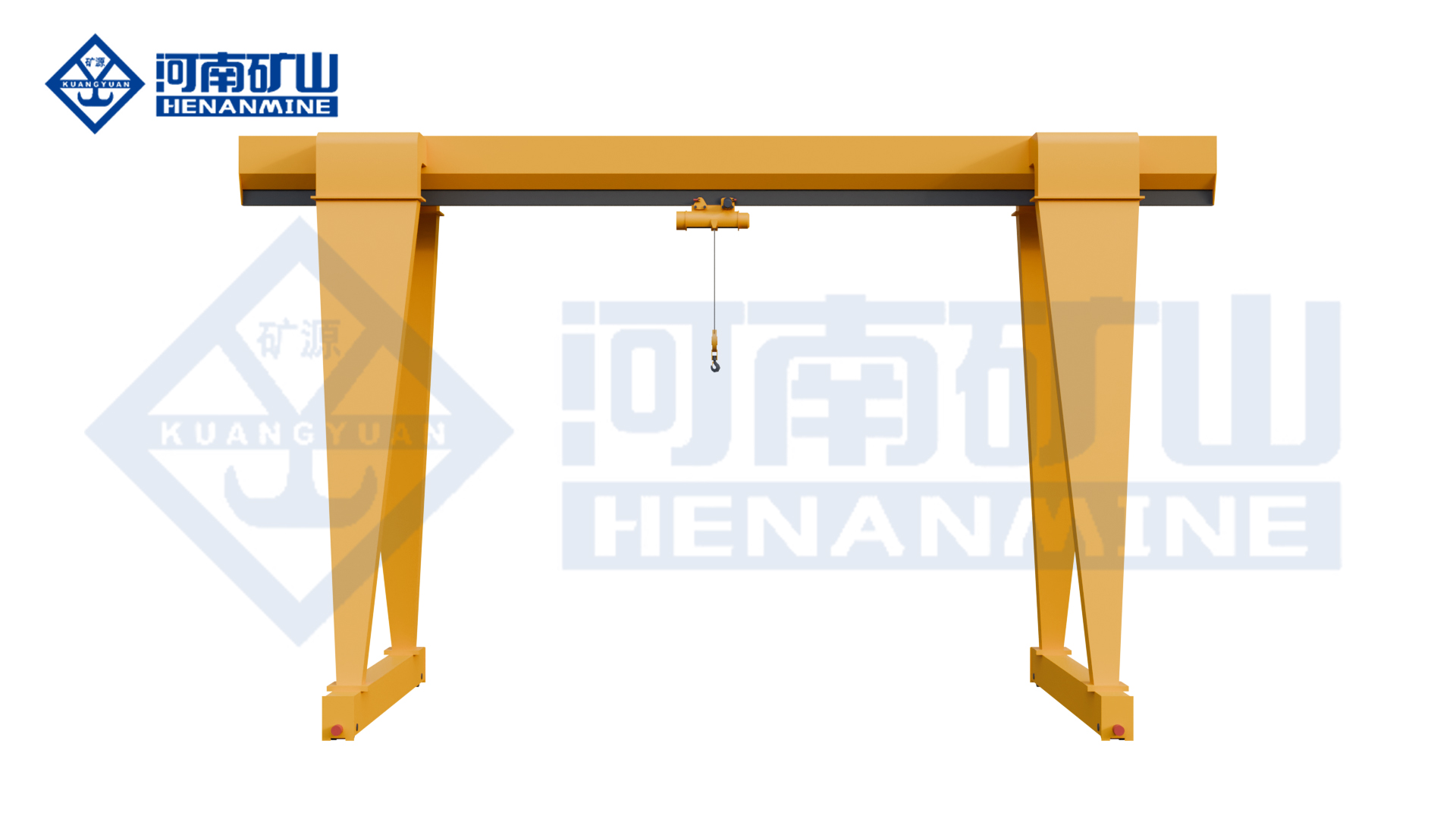
Single-Girder Gantry Crane
Efficient electric-hoist gantry for workshops, material yards, maintenance and general production.
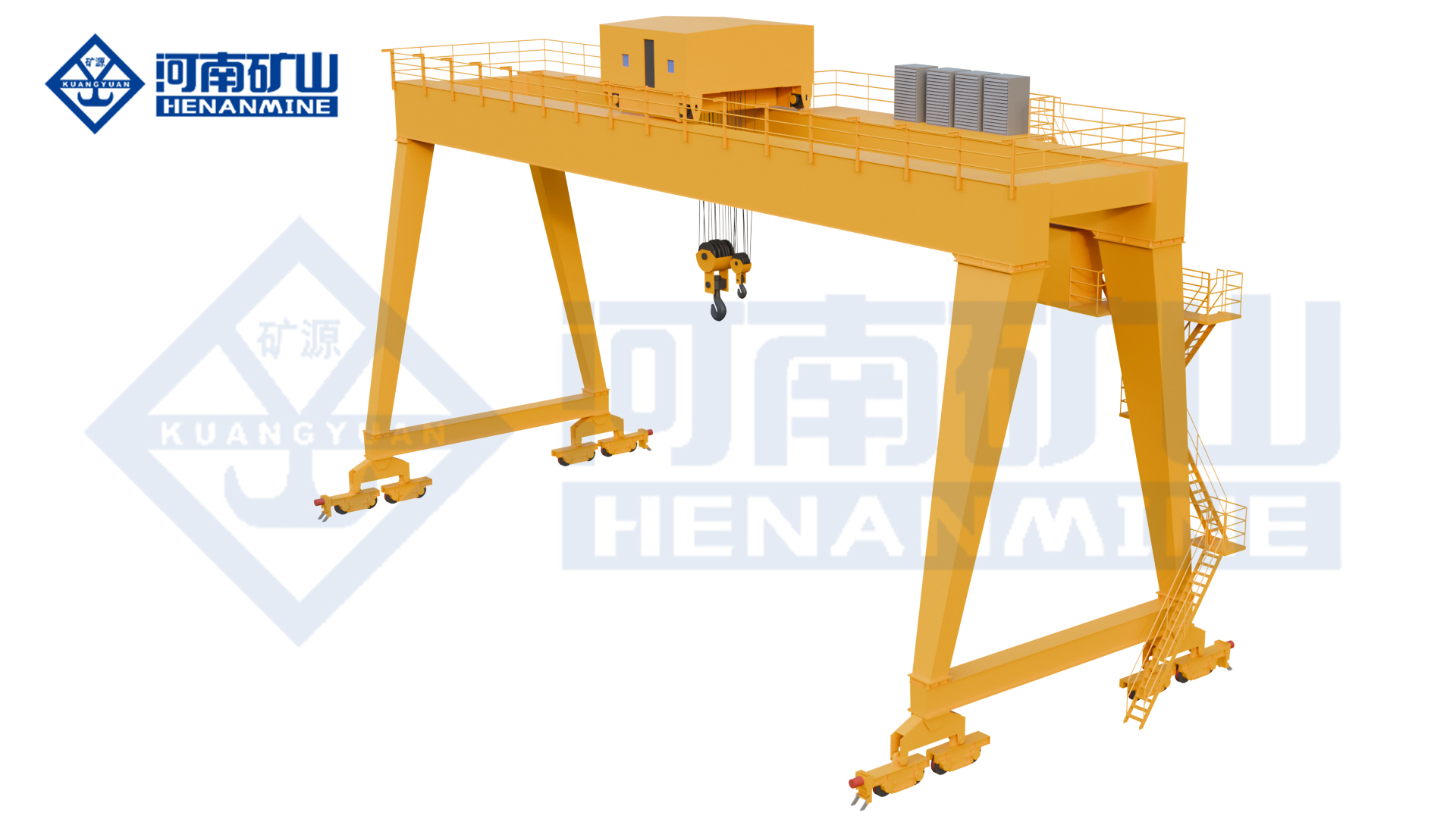
Double-Girder Gantry Crane
High-capacity two-girder platform for demanding duty, longer spans and specialized trolley arrangements.
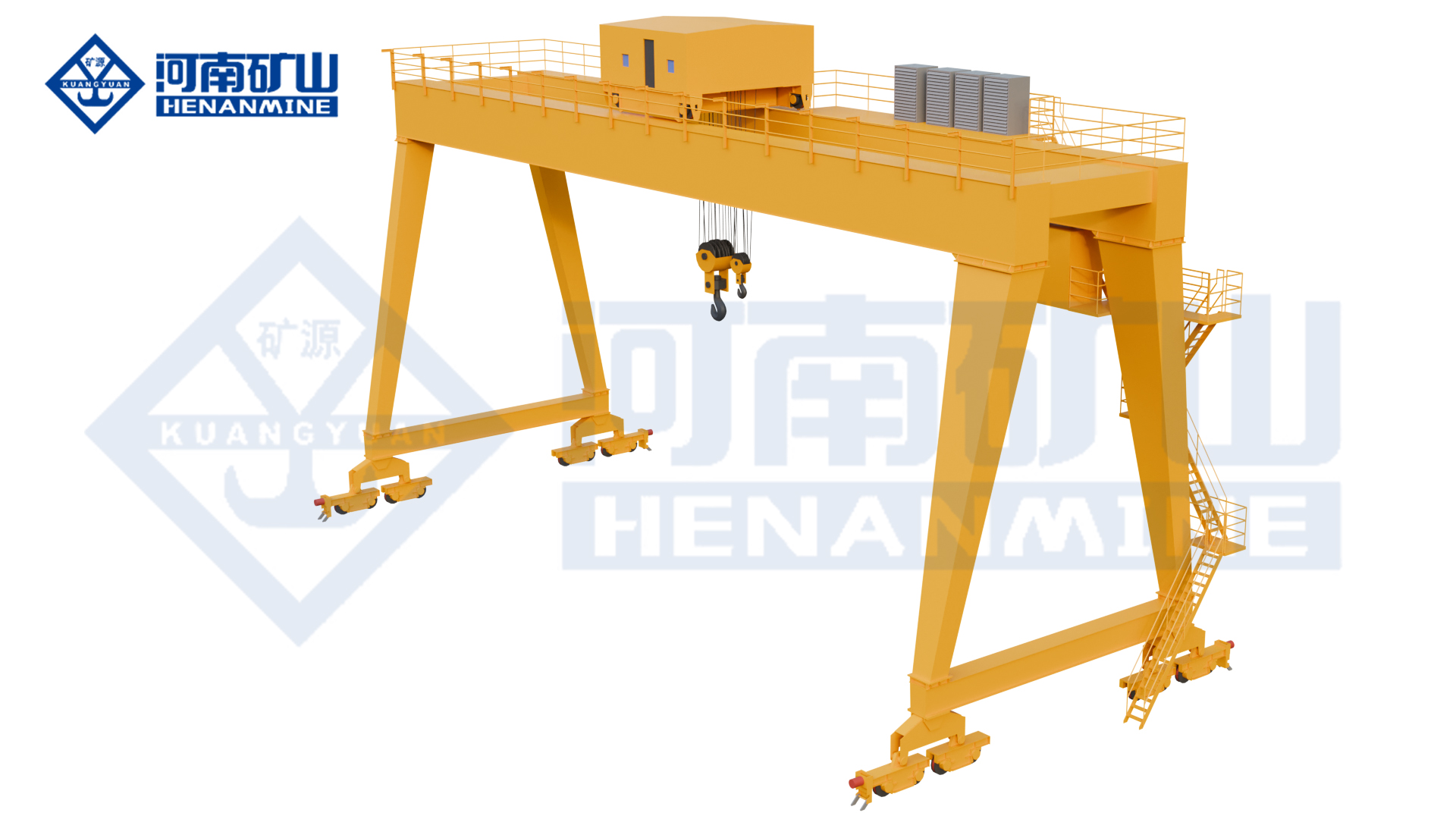
Double-Girder Electric-Hoist Gantry Crane
Two-girder bridge combined with electric-hoist lifting for industrial handling and maintenance service.
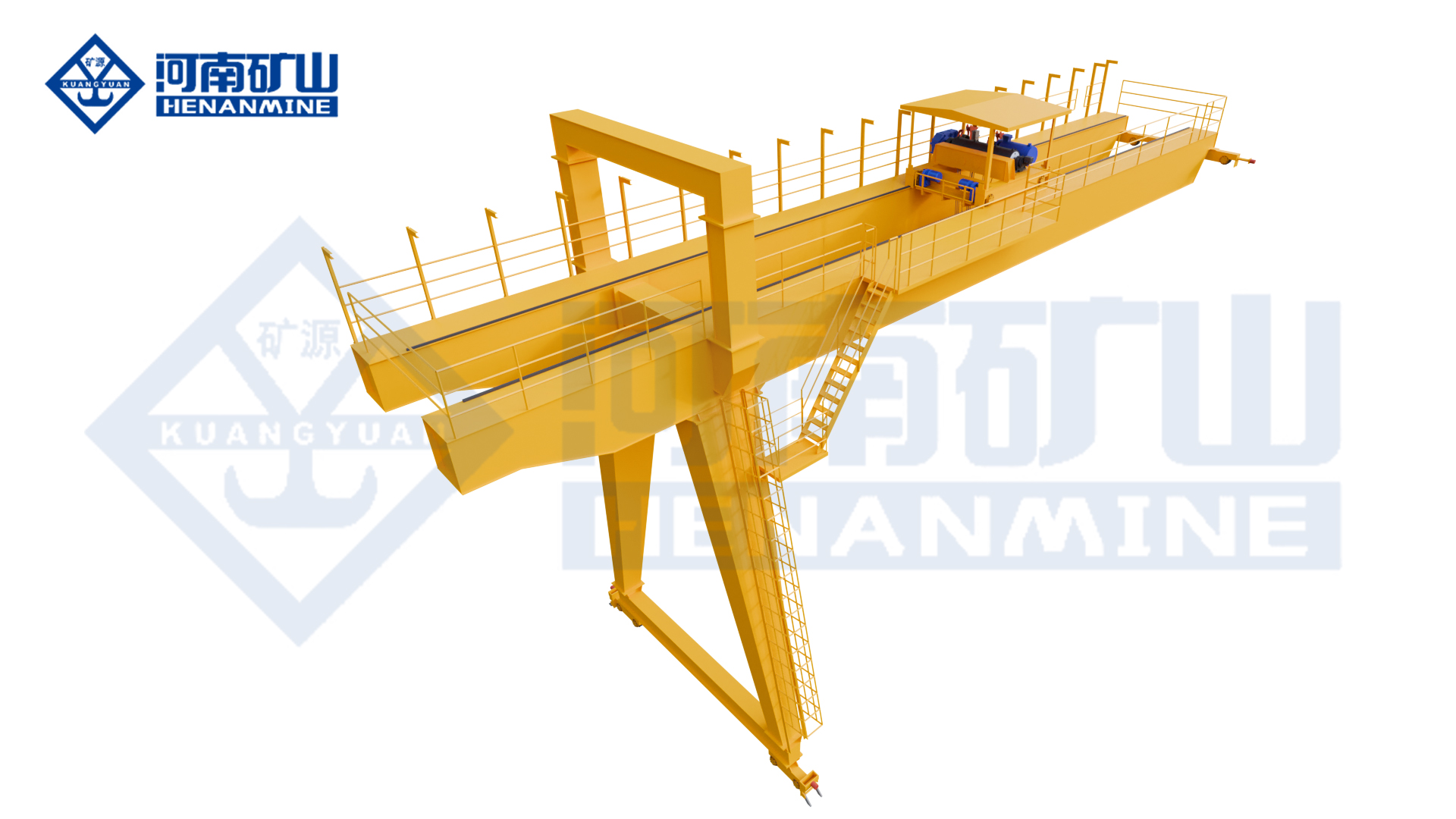
Semi-Gantry Crane
Mixed elevated and ground-running support for building edges and partially covered production areas.
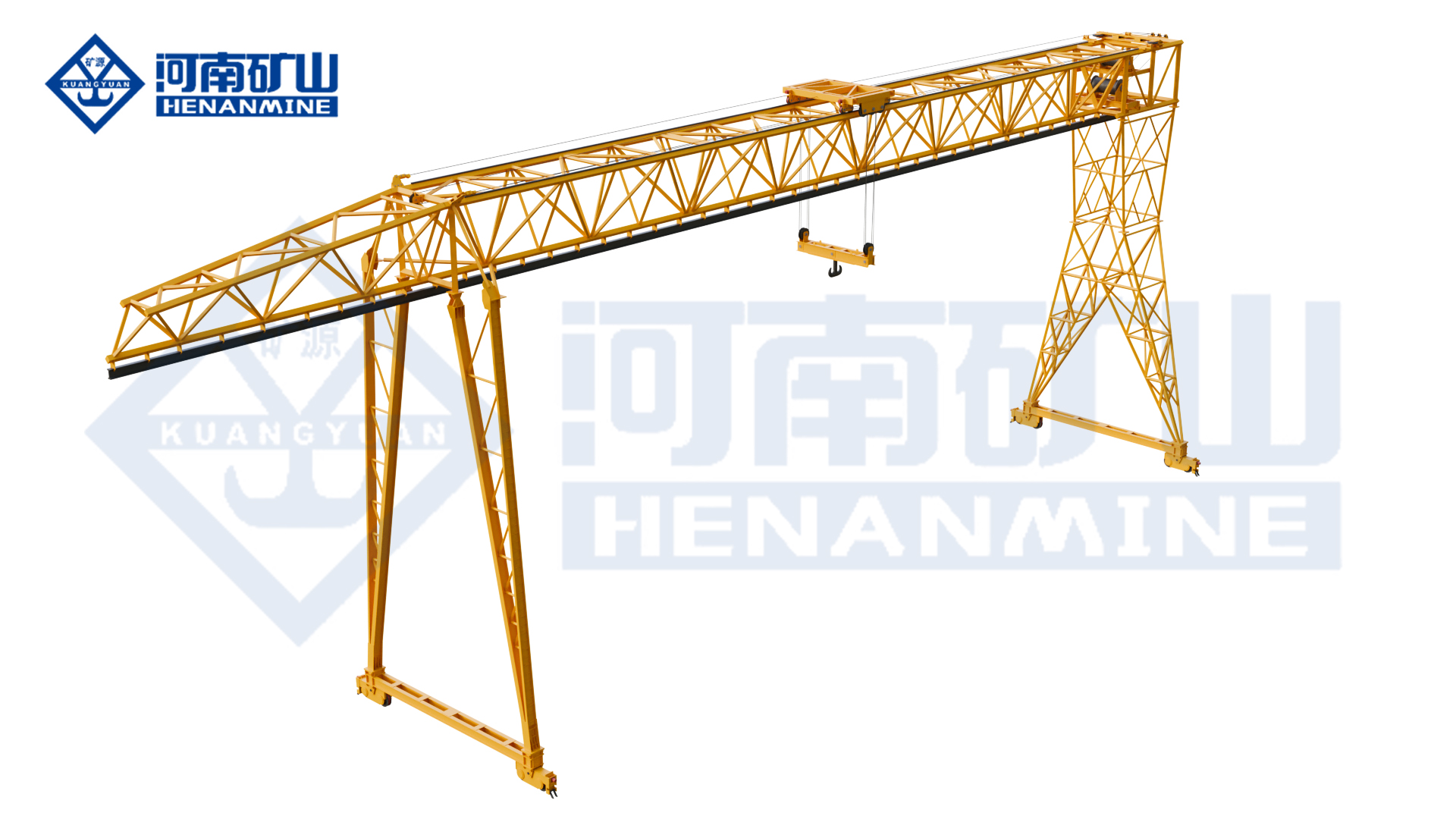
Truss Gantry Crane
Open-web structure for outdoor yards, construction work and long-span material handling.
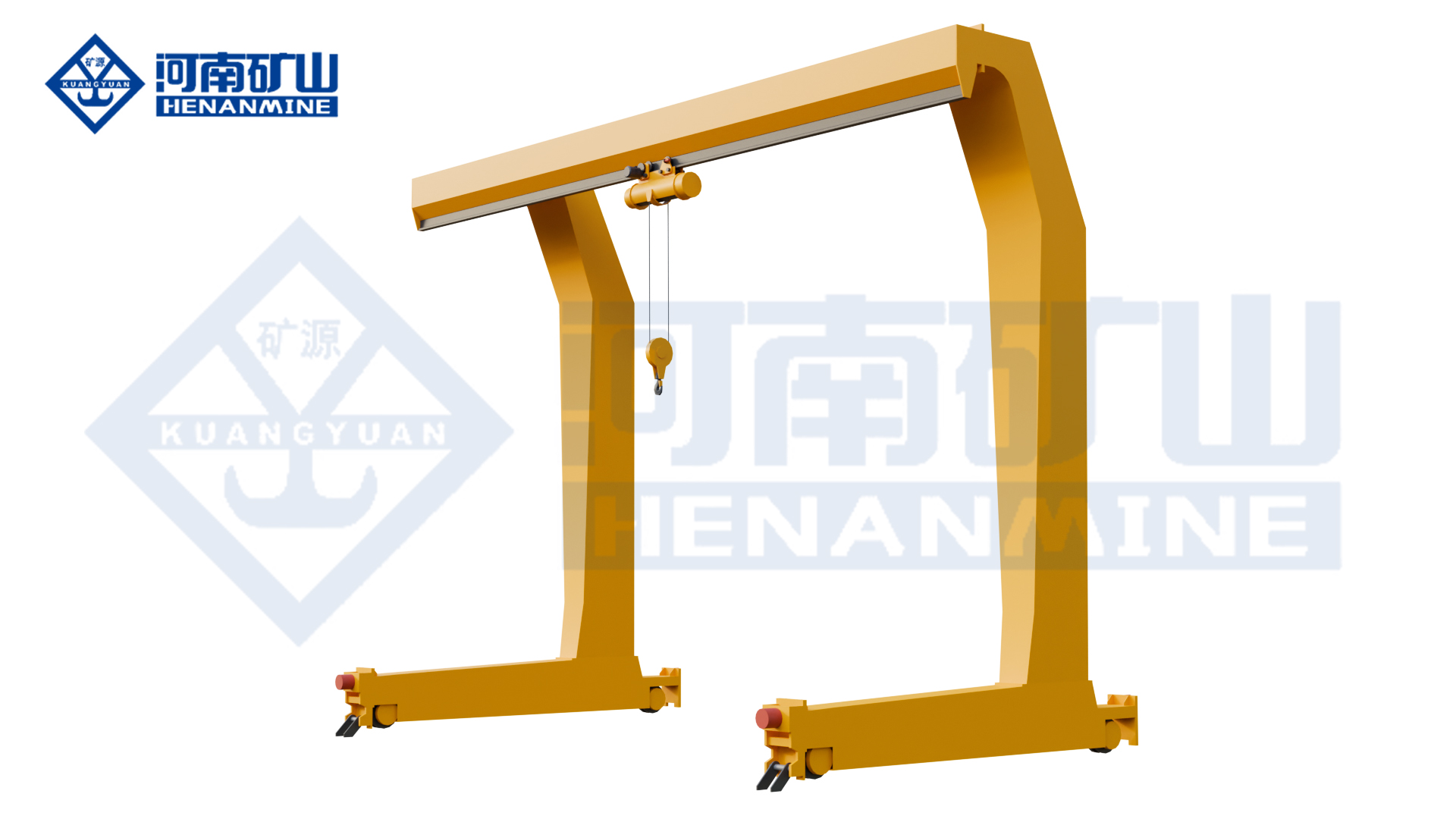
L-Type Offset Gantry Crane
Offset-leg arrangement providing side approach and cantilever handling for long or bulky materials.
Request a Gantry Crane Proposal
Submit the gross load, span, lifting height, travel length, duty, speed, attachment, operating environment, rail or pavement information, power supply, destination and required delivery boundary. Henan Mine Crane will prepare a configuration-based technical and commercial proposal.