Henan Mine Crane · Waste-to-Energy Equipment
Waste Handling Crane
Engineered grab crane systems for municipal solid waste reception, bunker mixing and incinerator feeding. Select the crane, grab, controls and operating duty as one coordinated plant system.
Henan Mine Crane supplies project-specific overhead grab crane configurations for waste treatment facilities. Crane capacity, grab volume, throughput, redundancy and automation are established from the waste stream and bunker layout—not from a generic crane tonnage alone.
Primary application
MSW storage pits and waste-to-energy feed hoppers
Handling functions
Receiving, mixing, stacking, weighing and feeding
Control options
Operator control, assisted cycles or engineered automation
Commercial scope
Quoted against plant drawings and operating requirements
A Crane Designed Around the Waste Bunker
A waste handling crane works above the storage pit, transfers incoming municipal waste between zones, mixes material to support a consistent feed and delivers defined batches to the incinerator hopper. These operations involve repeated starts, reversals and grab cycles in an atmosphere that can contain moisture, dust and corrosive contaminants. The equipment specification must address both production demand and maintainability.
The overhead bridge, hoisting mechanism, opening-and-closing system, bucket, runway interface and controls are specified together. A crane selected only by its nominal lifting capacity may not deliver the required tonnes per hour, cover the entire pit or provide the operational reserve needed when one unit is unavailable.
For recycling or scrap facilities, Henan Mine Crane can assess an alternative grab-and-hook arrangement or a separate material-specific lifting system. A waste-to-energy feed crane is not interchangeable with a ferrous-scrap magnetic crane or an occasional-duty warehouse hoist.
Choose the Right Waste Handling Configuration
01 · MSW Bunker Grab Crane
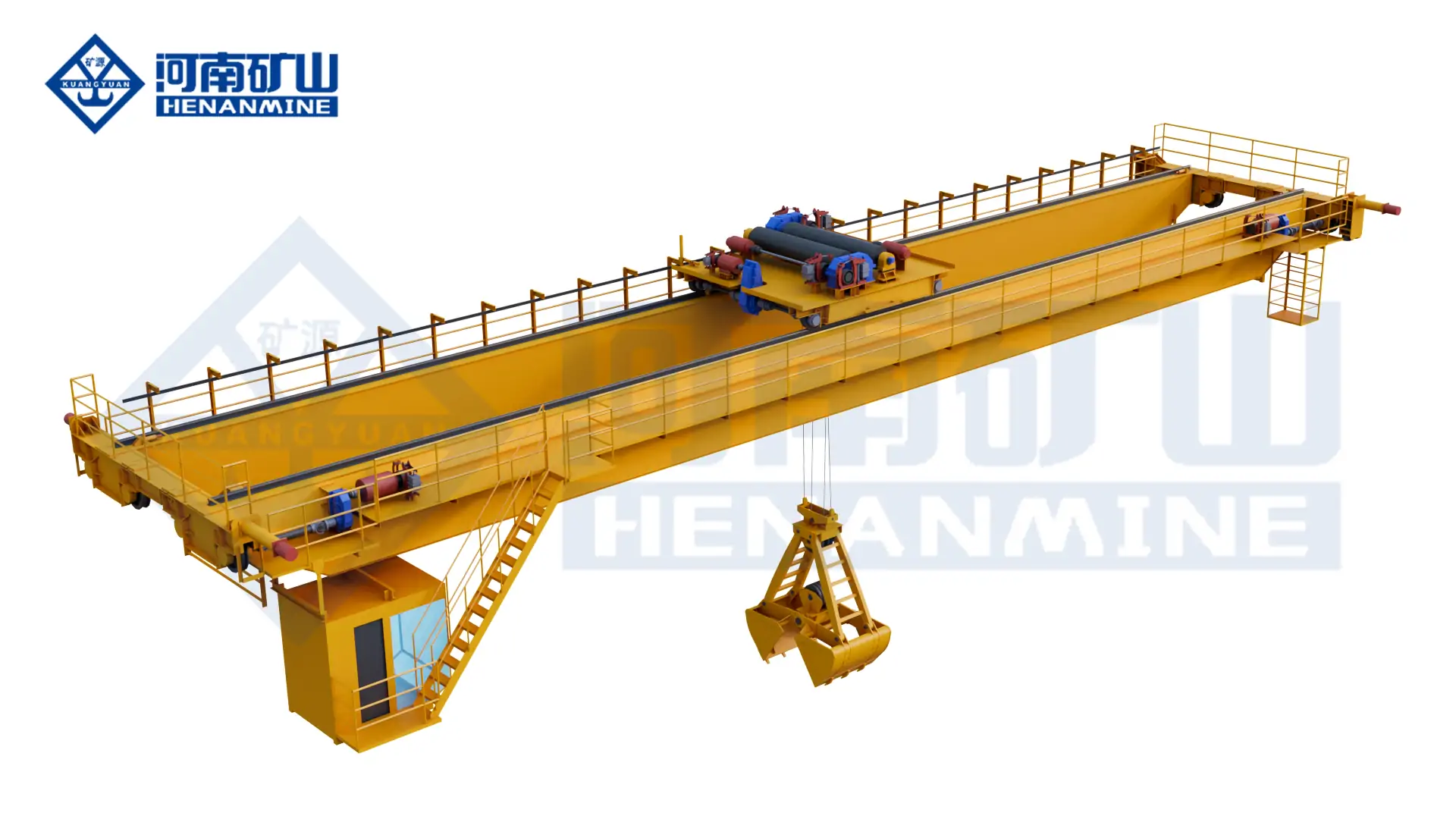
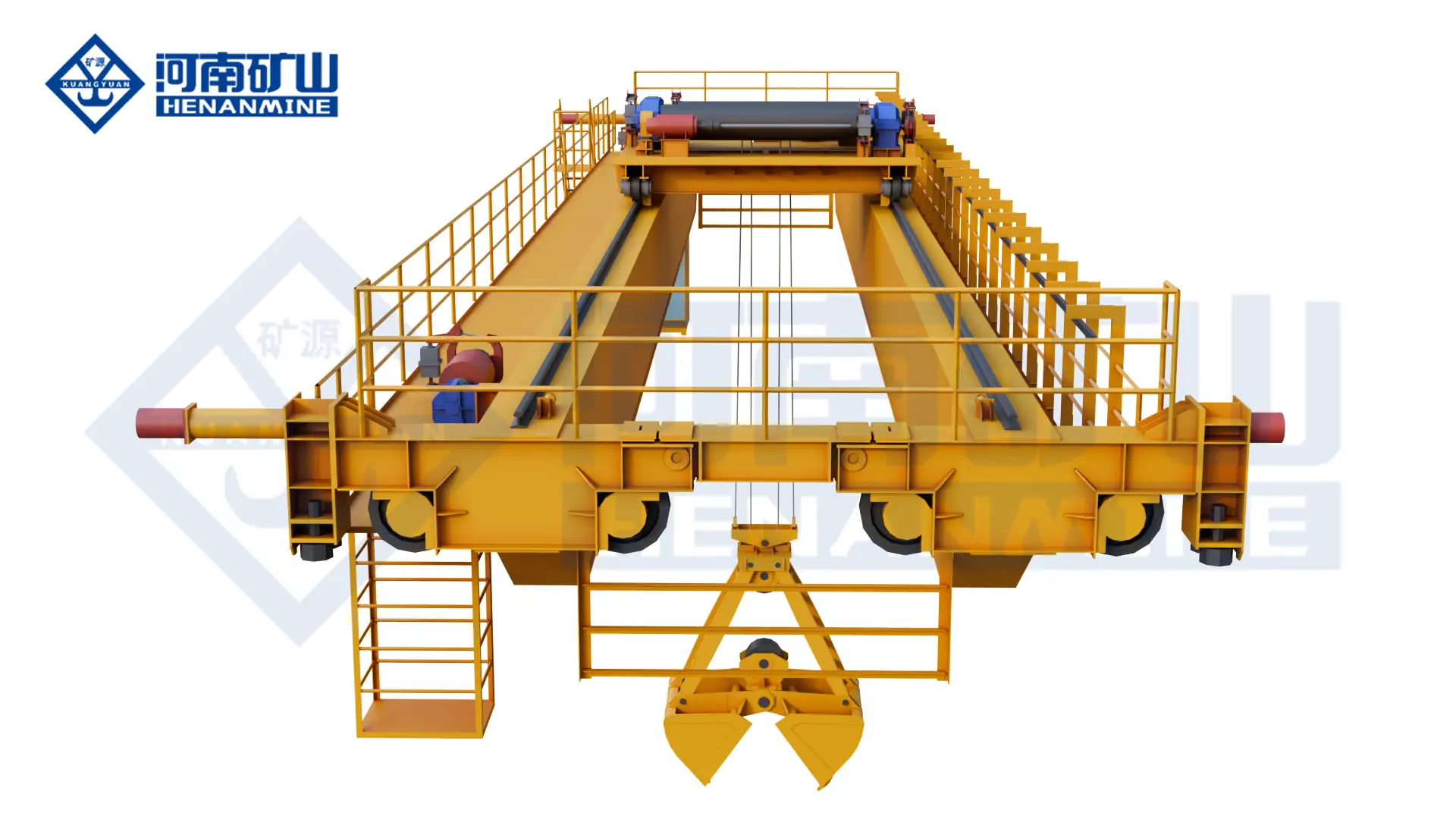
A double-girder overhead crane with an application-matched grab for wide pit coverage, waste homogenisation and reliable hopper charging.
02 · Manual or Assisted Control
Operator-directed pickup and feed, with defined travel limits, speed control, load indication and optional positioning assistance.
03 · Automated Grab Cycles
Engineered repeatable pickup, distribution and hopper-feed sequences with approved operating zones and operator intervention provisions.
04 · Dual-Crane Bunker Coverage
A duty and standby arrangement where incinerator availability demands an alternative crane during servicing or a unit fault.
05 · Grab and Weighing System
A bucket selected for waste density and fill behavior, paired with a weighing arrangement when the process requires batch or feed records.
06 · Corrosion-Conscious Package
Coating, sealed electrical equipment and accessible service points specified for the site’s moisture, leachate and cleaning regime.
07 · Smaller Transfer Station
A lighter grab-crane option may suit intermittent sorting or transfer work after actual cycle frequency and materials are confirmed.
08 · Recycling and Scrap Handling
Grabs or hook-and-grab systems are selected for the actual material; magnetic lifting is considered only for suitable ferrous loads.
Waste Crane Configuration Comparison
The selection is based on the operating cycle and the material, not solely on the lowest equipment price.
| Configuration | Best-fit operation | Design priority | Key limitation to assess |
|---|---|---|---|
| Double-girder MSW grab | Frequent bunker mixing and hopper feed | Duty, reach, bucket payload and availability | Total installed system scope |
| Automated MSW grab | Defined repeatable feed and distribution cycles | Positioning, interlocks and plant integration | Commissioning and exception handling |
| Single-girder grab | Smaller, intermittent transfer duties | Building load and cost efficiency | May not suit intensive WtE feed duty |
| Hook-and-grab | Separate approved loose and unit-load tasks | Attachment change and load control | Not automatically suitable for continuous MSW feed |
Sizing the Grab for Real Waste, Not a Catalogue Number
Bucket volume is only one input. Actual lifted waste depends on bulk density, grab fill, the moisture and composition of the stream, and the weight of the empty bucket. The crane’s rated load must cover the bucket, its maximum permitted contents and the applicable lifting arrangement. Waste that bridges inside the grab or contains bulky objects may reduce the practical fill and increase cycle time.
The required hourly handling rate must include incinerator feed and material turning, pit redistribution and time reserved for grab inspection. Travel distances from pickup zones to each feed hopper and permitted motions around pit walls determine a workable cycle. Henan Mine Crane can develop the preliminary grab and drive configuration from a pit plan, waste description, throughput target and operating schedule.
A nominal 10-tonne crane, for example, does not necessarily lift 10 tonnes of waste per grab: the bucket dead weight is part of the suspended load. The allowable payload must be calculated for the final grab and operating conditions.
Project Specification: Parameters to Confirm
The following schedule is the basis for an engineered proposal. Values are selected from the facility’s drawings and production demand; no single capacity or span applies to every waste handling crane.
| Parameter | Information required for selection |
|---|---|
| Waste and process capacity | MSW or other material; tonnes per day and required peak feed rate |
| Material properties | Density range, moisture, bulky items, abrasive content and fill characteristics |
| Bucket and crane rating | Required grab volume; empty bucket mass plus allowable material payload |
| Pit and runway geometry | Rail gauge, travel length, rail-top elevation, pit depth and service access |
| Hopper arrangement | Number and coordinates of receiving hoppers, opening sizes and exclusion zones |
| Operating duty | Shifts, lifting cycles, load spectrum, permitted downtime and standby policy |
| Controls and interfaces | Operator station, automation functions, weighing signals and plant control interface |
| Site conditions | Power supply, ambient conditions, washdown, dust, corrosion and local compliance |
Automation That Fits the Plant’s Operating Plan
Operator-Directed
A trained operator supervises pickup, blending and charging. Control stations, sightlines, camera views and override arrangements are established against the bunker layout.
Assisted Sequences
Selected travel and discharge moves can be repeatable while the operator retains responsibility for irregular waste, blocked grabs and exceptional loads.
Integrated Automation
Defined pickup areas, hopper destinations, weighing, anti-sway functions and operating-state signals can be incorporated after interface and safety review.
Automatic operation is a specified project function, not an implied feature of every grab crane. The automation proposal should identify its covered zones, interlocks, manual recovery mode, data exchange with the plant and acceptance tests.
Safety, Availability and Maintenance Access
Define the Operating Envelope
End limits, hook/grab travel limits, overload protection, emergency stops and crane-to-crane separation are assessed in the complete layout. Travel restrictions must keep the grab clear of hopper edges, bunker walls and accessible personnel areas.
Fire detection, waste-bunker ventilation, hazardous-area classification and local electrical requirements are plant-level inputs. Explosion-protected equipment is specified only where the site’s formal classification requires it.
Plan for Service Continuity
Where continuous furnace feed is essential, evaluate two-crane coverage, a defined standby sequence and safe access to one crane while the other remains available. The arrangement should be checked against the number of hoppers and feasible service positions.
Inspection points for ropes, brakes, wheels, bucket pins, hydraulic components where fitted and electrical panels should be reachable without unnecessary exposure above the waste pit. Spare parts and a planned maintenance schedule are included in the operating concept.
Commissioned Project Example
Automatic Grab Crane in a Waste-to-Energy Project
In 2025, Henan Mine Crane placed an automatic grab crane developed for a waste-incineration power-generation project into operation. Its operating functions include automatic fixed-point grabbing and constant-weight repetitive cycles.
The project crane combines variable-frequency speed control and encoder-based positioning with anti-sway functions. It provides manual, wireless-remote and fixed-point unloading modes and an interface reserved for future automation upgrades. These functions illustrate the available engineering approach; the control scope for each new plant is defined in its project specification.
For a comparable installation, Henan Mine Crane assesses the purchaser’s bunker geometry, waste stream, required feed rate, operating cycles and plant interfaces before selecting the grab, crane mechanisms and control functions.
Project Functions
Application: waste-incineration power generation
Operation: fixed-point automatic grabbing and repeatable constant-weight cycles
Motion control: variable-frequency control and position feedback
Project status: entered operation in 2025
Waste Handling Crane Price and Quotation Scope
A waste-bunker crane cannot be priced responsibly from a lifting-capacity figure alone. Advertised grab-crane prices online often concern a basic crane or attachment and do not establish the cost of a waste-to-energy bunker system. An equipment-only price and an installed, automated two-crane plant package are different commercial scopes.
Henan Mine Crane prepares a project quotation that identifies the priced items, specified functions and exclusions. For procurement comparison, request an itemised offer covering:
Crane equipment
Bridge, trolley, hoists, drives, controls and number of units.
Material handling
Bucket type, rated volume, spare grab and weighing scope.
Plant interfaces
Automation, power feed, runway, structural works and fire-system interfaces.
Delivery and support
Testing, shipping terms, installation, commissioning, training and spares.
Final pricing follows the agreed technical specification and destination. An accurate offer states the quotation currency, trade term, validity period, schedule, warranty scope and responsibility for site installation.
Prepare a Waste Crane RFQ That Can Be Engineered
Send the bunker plan with rail elevations, pit dimensions and hopper locations; waste type and daily or hourly throughput; expected grab cycles and operating hours; desired control mode; number of cranes; site electrical supply; destination; and any project specification or applicable local code. An existing plant can also submit crane and runway drawings for retrofit assessment.
Frequently Asked Questions
What is a waste handling crane used for?
In a waste-to-energy plant, it lifts waste from the reception pit, redistributes and mixes it, and feeds the incinerator hopper. The same term can also describe different equipment at recycling or transfer facilities.
How is the crane’s lifting capacity determined?
The suspended load includes the empty grab and the maximum approved waste payload. Grab volume, density and filling behavior must be checked together with the selected lifting mechanism and project safety requirements.
How is the required throughput calculated?
Assessment considers practical payload per cycle, travel distance, hoisting and grab operation, time spent mixing and feeding, and planned interruptions. Incinerator daily capacity is an input, not a crane cycle specification.
Is a single-girder crane suitable for an incinerator?
It may suit a limited or intermittent task, but continuous bunker feeding needs an operating-duty, handling-rate and availability review. A smaller catalogue crane should not be specified as a direct replacement for a high-cycle process crane.
Does every waste plant require two cranes?
No fixed number fits every plant. Where furnace feed must remain available during maintenance or a unit fault, dual-crane coverage is commonly evaluated against throughput, hopper positions, operating policy and allowable downtime.
Can the crane operate automatically?
Automatic pickup, transfer, weighing and discharge functions can be engineered for defined zones. The proposal must state the supplied functions, safety interlocks, plant communication, exception handling and manual recovery procedure.
Which bucket is used for municipal waste?
Grab geometry and actuation are selected for the density, bulky content, abrasiveness, moisture and required volume of the actual waste stream. A bucket intended for coal or ore should not be assumed suitable without evaluation.
Is an explosion-proof crane required?
That decision follows the facility’s documented hazardous-area classification and applicable local rules. The waste application alone does not establish a universal explosion-protection rating.
What affects a waste handling crane’s price?
Crane rating and duty, span and runway length, grab design, redundancy, controls, environmental protection, test requirements and the delivery and installation scope. A project-specific offer is needed to compare complete systems.
Can an existing waste bunker be upgraded?
A retrofit can be considered after reviewing runway condition, wheel loads, rail gauge, available headroom, power supply, hopper geometry and the access needed for installation and future maintenance.
Related Waste and Bulk-Handling Crane Products
Intelligent Grab Double-Girder Crane
A double-girder grab platform for engineered bulk-handling and control configurations.
Single-Girder Grab Crane
An option for selected smaller or intermittent bulk-material duties after duty verification.
Grab-and-Hook Overhead Crane
Separate hook and grab tasks in approved transfer or recycling operations.
Double-Girder Bridge Crane
A bridge-crane structural family for engineered industrial lifting applications.
Unmanned Grab Crane Application
Automation concepts for defined bulk-material handling processes and facility interfaces.
Waste-to-Energy Crane Proposal
Request a Waste Handling Crane Quote
Provide your pit and hopper drawings, daily throughput, waste properties, operating schedule, preferred control level and destination. Henan Mine Crane will assess the grab, crane duty, bunker coverage and commercial scope for your facility.