Engineering · Manufacturing · Project support
info@hnksglobal.comWhatsApp +86 18836207779 ↗

作者: YUWEI, YUWEI

  • How Are Cranes Using AI To Improve Safety And Efficiency

    How Are Cranes Using AI To Improve Safety And Efficiency

    How Are Cranes Using AI To Improve Safety And Efficiency

    In the industrial fields such as construction, port logistics, heavy manufacturing, warehousing and transportation, cranes are the core equipment for heavy-duty operations. The safety, stability and efficiency of operations directly affect the project duration, production costs and personnel and equipment safety. The short board of traditional crane operation is very prominent, highly dependent on the experience of the operator, there are problems such as large blind area of vision, slow prediction of obstacles, inaccurate load control, easy sudden failure of equipment, messy scheduling and so on, which can easily lead to safety accidents, resulting in the decline of operation efficiency, cost loss and so on.

    With the continuous popularization of industrial intelligent technology, AI are comprehensively innovating the operation and management of cranes. Unlike traditional equipment that can only monitor and warn, AI cranes combine visual recognition, laser perception and big data algorithms to actively avoid operational risks, complete lifting independently, predict equipment failures in advance, and optimize operational processes. At present, intelligent cranes have been widely used in various industrial scenarios to effectively solve the safety hazards and efficiency problems of traditional operations. This article explains in detail the core application of AI in crane safety and efficiency improvement, and shares reliable equipment purchase methods.

    How AI Improves Crane Safety

    Intelligent obstacle detection

    The construction site, storage workshop, port yard and other operation scenes have complex environment, frequent personnel movement, disorderly material stacking, many temporary components and narrow operation space. Crane hooks, boom and body are easy to collide with surrounding personnel, equipment and buildings, which is the cause of high-frequency safety accidents. The traditional operation completely relies on the operator’s naked eye observation, there are many problems such as blind area of vision, reaction lag, fatigue and distraction, and the fault tolerance rate of artificial protection is extremely low.

    The AI intelligent obstacle detection system is equipped with industrial cameras, lidar and infrared sensing equipment. Relying on deep learning algorithms, it can scan the working environment at 360 degrees without dead corners and accurately identify on-site personnel, materials, building components and various obstacles. The system can determine the position and moving track of obstacles in milliseconds, predict the risk of collision, trigger sound and light warning in time, and can also automatically limit the speed and emergency brake to avoid danger. For dynamic personnel and temporary obstacles, the avoidance path can be planned in advance to greatly eliminate the hidden danger of visual blind spots, and the operation safety is much higher than that of manual operation.

    Smart load monitoring

    Overload operation, load imbalance, slanting and slanting crane and center of gravity deviation are the core fatal hidden dangers causing wire rope fracture, hook damage, crane overturning and material falling, and are also illegal operations explicitly prohibited by lifting operation. Traditional load monitoring can only achieve a simple weight numerical display, can not real-time monitoring of load attitude, force distribution, lifting angle, the operator only by experience to judge the lifting state, prone to misoperation.

    The AI intelligent load monitoring system is equipped with a variety of high-precision sensors, which collects key data such as lifting weight, angle, wire rope force and load center of gravity in real time, and analyzes the operation status in real time through intelligent algorithms. The system can accurately identify illegal working conditions such as overload, partial load, inclined crane, center of gravity offset, etc. Once the safety threshold is touched, it will immediately warn and lock the operation authority. At the same time, it can intelligently match the smooth lifting rhythm, reduce the risk of equipment loss and material falling, effectively prevent manual fluke illegal operation, and avoid heavy-duty operation safety accidents from the source.

    Predictive maintenance

    Henan Mine Crane Factory supply cranes are high-frequency and heavy-duty special equipment. Core components such as wire ropes, brakes, bearings, motors, steel structures, and rails are affected by alternating loads, friction, and vibration for a long time, and are prone to hidden wear, fatigue damage, and aging failures. Traditional equipment maintenance adopts the maintenance mode of traditional regular maintenance and maintenance after failure, which either increases the cost of excessive maintenance or omits hidden faults, resulting in sudden shutdown of equipment and component failure, causing safety accidents and construction period delays.

    AI predictive maintenance has completely changed the traditional regular maintenance and fault repair mode of cranes. The IoT sensor on the device collects key data such as vibration, temperature, force, and electrical operation around the clock, and analyzes the health status of the device in real time with the AI big data model. The system can accurately predict the wear trend and failure risk of core components, push maintenance reminders 7 to 30 days in advance, and guide staff to accurately repair. This kind of intelligent maintenance can greatly reduce the downtime rate of equipment failure, reduce the cost of invalid maintenance, put an end to equipment with disease operation, and effectively extend the service life of the crane.

    Operator safety assistance

    The operator is the core subject of the lifting operation and is also the biggest uncertain safety factor. Long-term high-altitude operation and repeated operation are easy to cause fatigue, inattention, illegal operation, drunken work, non-wearing protective equipment, irregular operation posture, unauthorized change of operation process and other behaviors, which are all high-frequency potential safety hazards on site. Traditional manual supervision is difficult to control in real time and correct in time.

    The AI operator safety assistance system relies on machine vision technology to monitor the operating status and operating behavior of operators around the clock. The system can accurately identify dangerous behaviors such as fatigue operation, leaving the post, not wearing protective equipment, illegal operation, etc., and send out sound and light early warning in time and upload it to the background synchronously. At the same time, it can correct novice operation deviation, push standard operation guidelines, and reduce human error. In addition, the system can retain operational data and generate analysis reports to help enterprises optimize personnel training and on-site management and ensure the safety of human-machine operations.

    How AI Improves Crane Efficiency

    In industrial production and engineering construction, the efficiency of lifting operation directly affects the project duration, capacity output and labor cost. Traditional crane operation relies on manual control, which has problems such as slow operation rhythm, path redundancy, chaotic scheduling, low equipment utilization, and serious energy waste. Through the three core capabilities of automatic control, intelligent scheduling and data optimization, AI technology simplifies the operation process, reduces manual intervention, avoids invalid operation, optimizes the operation status of equipment, improves the comprehensive efficiency of lifting operation in all aspects, and helps enterprises reduce costs and increase efficiency.

    Automated lifting control

    Traditional manual lifting operation requires extremely high operator experience. Problems such as hook shaking, lifting pause, drop deviation, repeated adjustment of position are common. Single lifting operation takes a long time, has low accuracy, and greatly reduces the efficiency of batch transfer operation. Especially for high-precision equipment hoisting and dense material transfer scenarios, manual fine-tuning is time-consuming and laborious, which can easily affect the overall construction progress.

    The AI automatic lifting control system integrates path planning, intelligent anti-sway and precise positioning algorithms, and supports semi-automatic and fully automatic operation modes of cranes. Before operation, the system automatically plans the optimal lifting route to reduce invalid travel. During operation, the hook can be stably restrained from shaking, thus realizing smooth lifting and accurate positioning without manual repeated fine-tuning. For repetitive standardized operations, it can also save process templates and run in a one-key cycle, effectively improving the accuracy and speed of operations and greatly shortening the construction transfer cycle.

    AI-powered crane

    Intelligent operation management

    Large-scale construction sites, ports, and industrial parks often have multiple cranes operating simultaneously. The traditional manual scheduling mode relies on the experience of management personnel. There are problems such as uneven task distribution, idle waste of equipment, cross-conflict of operations, and lagging process connection. It is very easy to have uneven busy hours, site congestion, and delay in construction period. The overall operation coordination efficiency is extremely low.

    The AI intelligent operation management system supports unified intelligent scheduling of multiple cranes and multiple operation points, and collects equipment running status, operation progress, load and location data in real time. The system relies on dynamic algorithm to intelligently allocate tasks, reasonably plan the operation period and area, and effectively avoid cross-conflict and idle equipment. At the same time, it can follow up the construction progress in real time, adjust the scheduling scheme in time, ensure the smooth connection of processes, realize one-person multi-machine control, greatly save labor costs, and significantly improve the overall operation scheduling efficiency.

    Data-based performance optimization

    Traditional crane operation lacks data control, enterprises can not accurately grasp the equipment operation efficiency, energy consumption, operation short board, manpower time and other core data, can only rely on subjective experience to optimize the operation mode, the optimization effect is limited, long-term ineffective energy consumption, inefficient operation, waste of resources and other problems.

    Henan Mine Crane Factory supply AI intelligent crane can collect operation duration, lifting frequency, load status, equipment energy consumption and operation data in the whole process, and rely on big data algorithm to accurately analyze operation short board, effectively identify problems such as path redundancy, long standby, excessive energy consumption, unreasonable scheduling, etc. The system will automatically optimize equipment operation parameters and operation modes, streamline invalid operation processes, reduce energy consumption losses, improve equipment utilization rate, help enterprises to optimize scheduling, operation and maintenance and construction schemes based on real data, realize fine intelligent management, and steadily improve the overall efficiency of operation.

    AI Applications in Different Crane Industries

    AI intelligent lifting technology is not a single scene adaptation, but can customize differentiated intelligent solutions according to the working conditions, load requirements and working environment of different industries. At present, it has been widely applied to many core fields such as intelligent manufacturing, port logistics, storage and transportation, heavy industry, etc., adapting to the safety and efficiency requirements of different scenes, and helping various industries to realize intelligent upgrading of lifting operations.

    Smart manufacturing

    The lifting operation in the intelligent manufacturing workshop and the heavy industry production plant has the characteristics of high operation frequency, high precision requirement, close process connection and high equipment density. The traditional manual operation is prone to precision deviation, process stuck and hidden danger of workshop collision, which affects the continuous production of the production line. The AI intelligent crane can adapt to the standardized production process of the workshop, and realize the automatic transportation, lifting and assembly of parts and heavy workpieces through the functions of automatic lifting, accurate positioning and intelligent obstacle avoidance. The system can be linked with the MES system of the production line to synchronize the production schedule, automatically match the lifting tasks, ensure the efficient and continuous operation of the production line, and eliminate the risk of collision of workshop equipment and workpiece falling, thus greatly improving the automation level and production efficiency of the intelligent manufacturing production line.

    Port and logistics operations

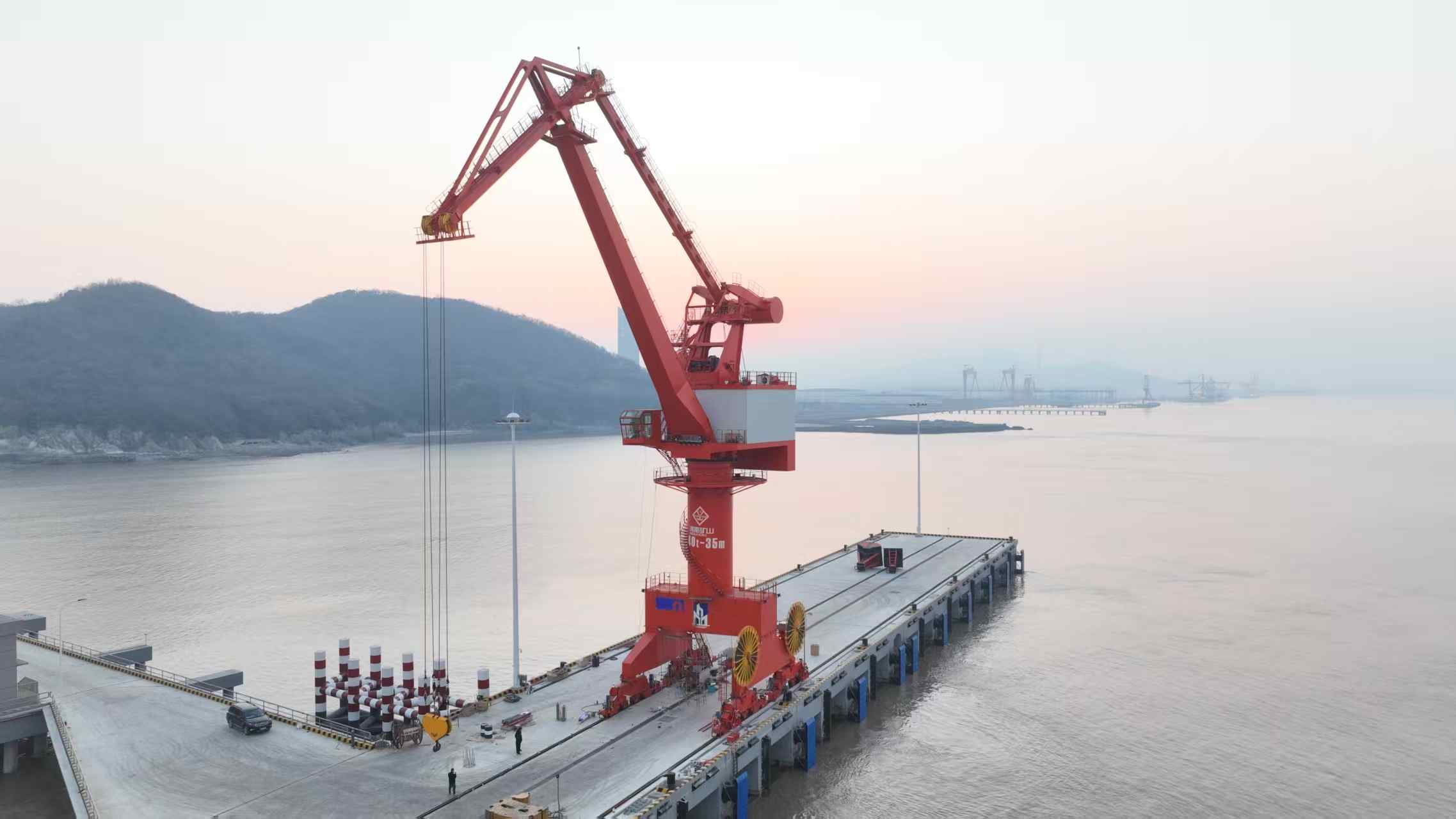
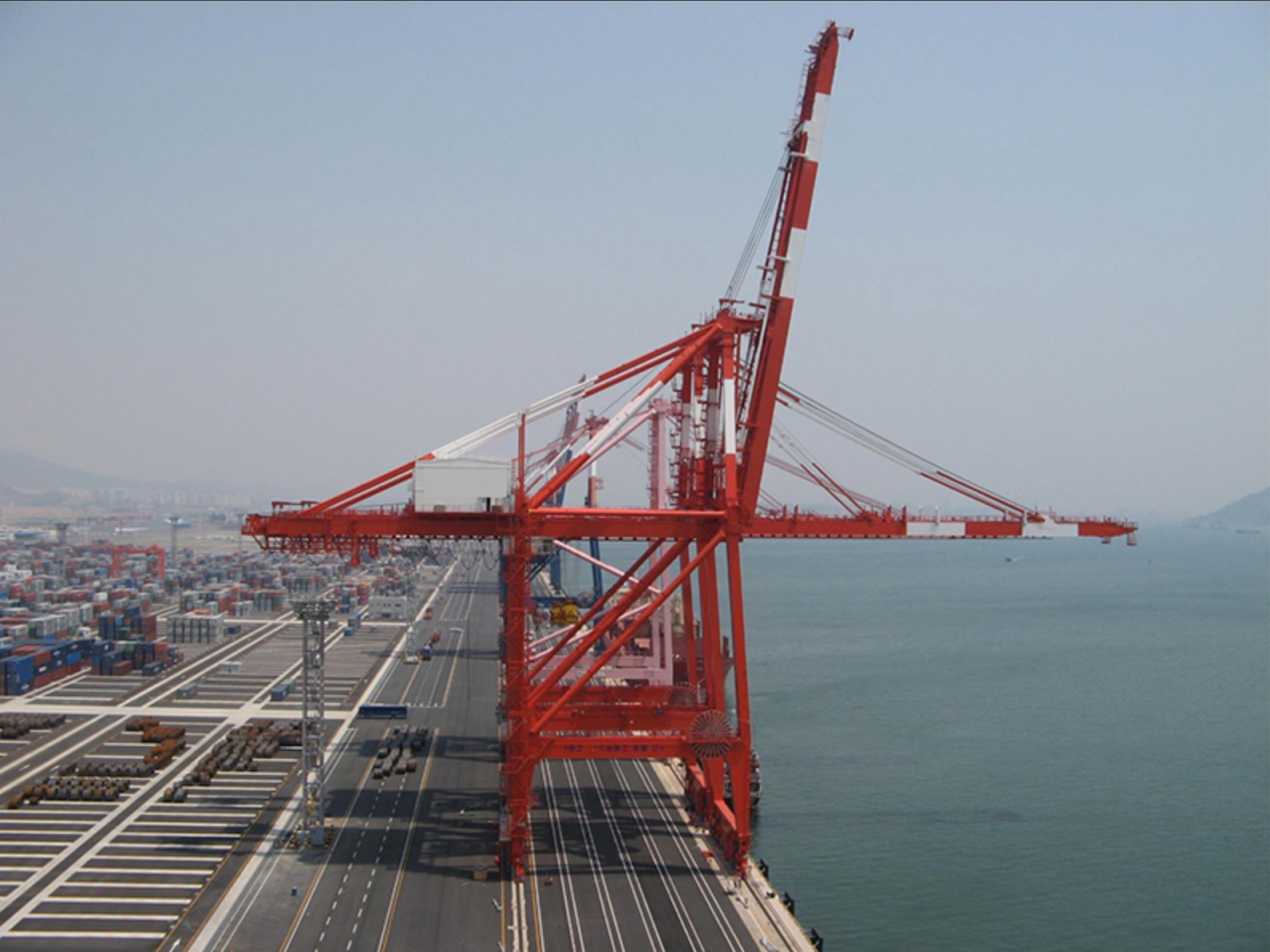
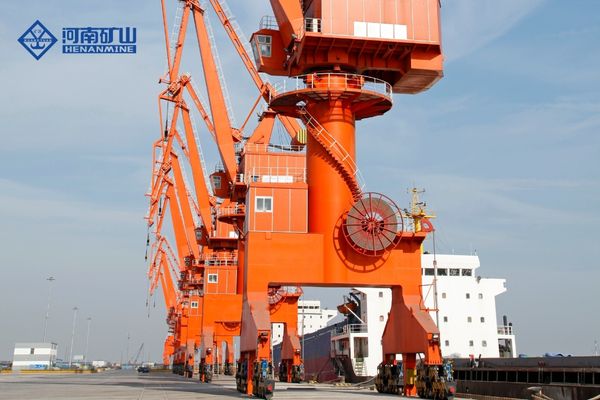
    As the core scene of bulk cargo distribution, crane operation has the characteristics of large load, large operation volume, all-weather operation, complex environment, high labor cost of traditional operation, limited operation efficiency and high risk of bad weather operation. Henan Mine Crane Factory supply AI-enabled port gantry cranes and shore bridge cranes are equipped with independent path planning, intelligent anti-sway, unattended operation and remote monitoring functions, which can realize automatic loading and unloading, stacking and transferring of containers and bulk cargo. The system can adapt to complex outdoor conditions such as strong winds, rain and fog, optimize the operation posture in real time, ensure the safety and stability of the operation, and realize the intelligent scheduling of multi-device cluster, greatly improve the port cargo throughput efficiency, reduce the cost of manual duty, has become the core standard equipment of intelligent port construction.

    Warehouse material handling

    The material transfer operation of large-scale three-dimensional warehouse and logistics storage park is mainly based on high frequency, light weight and repetitive lifting. The traditional manual operation is time-consuming and laborious, inefficient, and prone to the problems of material stacking confusion and transfer dislocation. The AI intelligent storage crane can realize automatic identification, accurate grasping, intelligent classification, automatic storage and on-demand retrieval of materials without manual intervention. The system can intelligently plan storage transfer routes, avoid channel congestion, optimize material storage layout, greatly improve storage turnover efficiency, reduce material stacking errors and transfer losses, and help the storage industry to achieve unmanned, intelligent and efficient operation.

    Heavy industry applications

    In metallurgy, mining, electric power, infrastructure and heavy industry and other industries, lifting operations are faced with the problems of heavy load, high temperature, high dust, high risk and bad working conditions. The safety risk of manual operation is extremely high, and the equipment loss is fast and the failure probability is high. Henan Mine Crane Factory supply AI intelligent heavy industry crane is targeted to adapt to harsh working conditions and is equipped with an intelligent sensing module with high temperature resistance, dust prevention and anti-interference, which can monitor the running status of heavy-duty equipment, component loss under high temperature working conditions and operation risks in complex environments in real time. Through predictive maintenance to avoid sudden failure of equipment, through intelligent safety protection to prevent heavy-duty operation safety accidents, through automated operations to reduce manual participation in high-risk environment, all-round adaptation of heavy industry high-risk, heavy-duty, continuous operation needs, to ensure the safe and efficient promotion of heavy industry production operations.

    How to Choose an AI-Powered Crane Solution

    With the rapid development of intelligent lifting equipment market, the market AI crane solutions are uneven, some products only equipped with basic monitoring functions, no core intelligent algorithm and landing adaptation capabilities, can not really achieve safety upgrades and efficiency improvements. When purchasing AI intelligent cranes, enterprises should not blindly follow the trend. They should combine their own industry needs to purchase intelligent solutions with high adaptability, high cost performance and high stability.

    Evaluate intelligent functions

    When purchasing AI cranes, enterprises should pay attention to the practicability of intelligent functions and abandon the flashy gimmick configuration. It is necessary to check whether the equipment has the core functions of intelligent obstacle avoidance, load monitoring, automatic lifting, predictive maintenance and so on. At the same time, it should be confirmed that the system can be adapted to different working conditions such as workshops, ports and heavy industries, support automatic mode switching, and can connect with the existing management system of the enterprise to ensure that intelligent functions can effectively solve the practical problems of inefficient operation and troublesome operation and maintenance.

    Consider safety monitoring features

    Safety is the core bottom line of lifting operations, and the integrity and accuracy of the intelligent safety monitoring system should be checked when purchasing. High-quality AI crane solutions need to have six safety capabilities: all-round environmental awareness, load anomaly warning, equipment failure prediction, personnel behavior supervision, emergency braking protection, and traceability throughout the operation. It is necessary to confirm whether the monitoring accuracy, response speed and early warning mechanism are perfect, whether it has the safety functions of power failure protection, fault self-locking, emergency avoidance, etc., whether it supports real-time uploading of operation data and tracing of fault records to meet the industry safety supervision standards. Eliminate low-end smart devices that only have simple alarm functions and no active intervention mechanism, and fully ensure job safety and compliance.

    Choose an experienced crane manufacturer

    AI intelligent crane is a technology-intensive special equipment, equipment stability, technology maturity, after-sales maintenance services directly affect the long-term use of the effect. Ordinary manufacturers in the market lack core algorithm research and development capabilities and industry landing experience, equipment is prone to intelligent system stuck, identification bias, poor adaptability and other issues. Enterprises should give priority to professional large-scale manufacturers with many years of crane R & D and production experience. High-quality brands can provide customized intelligent solutions, door-to-door debugging and adaptation, technical training, life-long maintenance and upgrading services, while ensuring that the equipment meets international industry standards, has perfect qualification certification, avoids equipment compliance risks, and provides reliable protection for long-term intelligent upgrading of enterprises.

    Henan Mine Crane Factory Custom

    The traditional lifting operation relies on manual experience, passive protection and extensive management mode, which has been unable to adapt to the development needs of modern industrial efficiency, safety and intelligence. The in-depth empowerment of AI technology has completely solved the industry pain points of crane operation, such as many potential safety hazards, low operation efficiency, high operation and maintenance cost, and difficult management. The bottom line of operation has been strengthened through intelligent safety protection, and the operation efficiency has been comprehensively improved through automation, data and intelligent control, thus realizing a brand-new operation mode of “zero safety accident, maximum efficiency and fine cost” for crane operation.

    With the continuous upgrading of industrial intelligent technology, AI intelligent cranes have become the core equipment for cost reduction and efficiency improvement and safety compliance in major construction sites, ports and factories. As a professional crane source manufacturer, Henan Mine Crane is Factory equipped with a self-developed AI intelligent system to realize full-featured landing such as intelligent obstacle avoidance, automatic lifting, pre-judgment and maintenance, and adapt to industry-wide operation scenarios. Say goodbye to the high-risk, low-efficiency problems of traditional equipment, one-stop customized intelligent lifting solutions, to help enterprises worry about operation and maintenance, strict risk control, significantly reduce construction and production costs.

    Henan Mine CraneDiscuss your requirements ↗
  • How a Gantry Crane Gets Set Up?

    How a Gantry Crane Gets Set Up?

    How a Gantry Crane Gets Set Up?

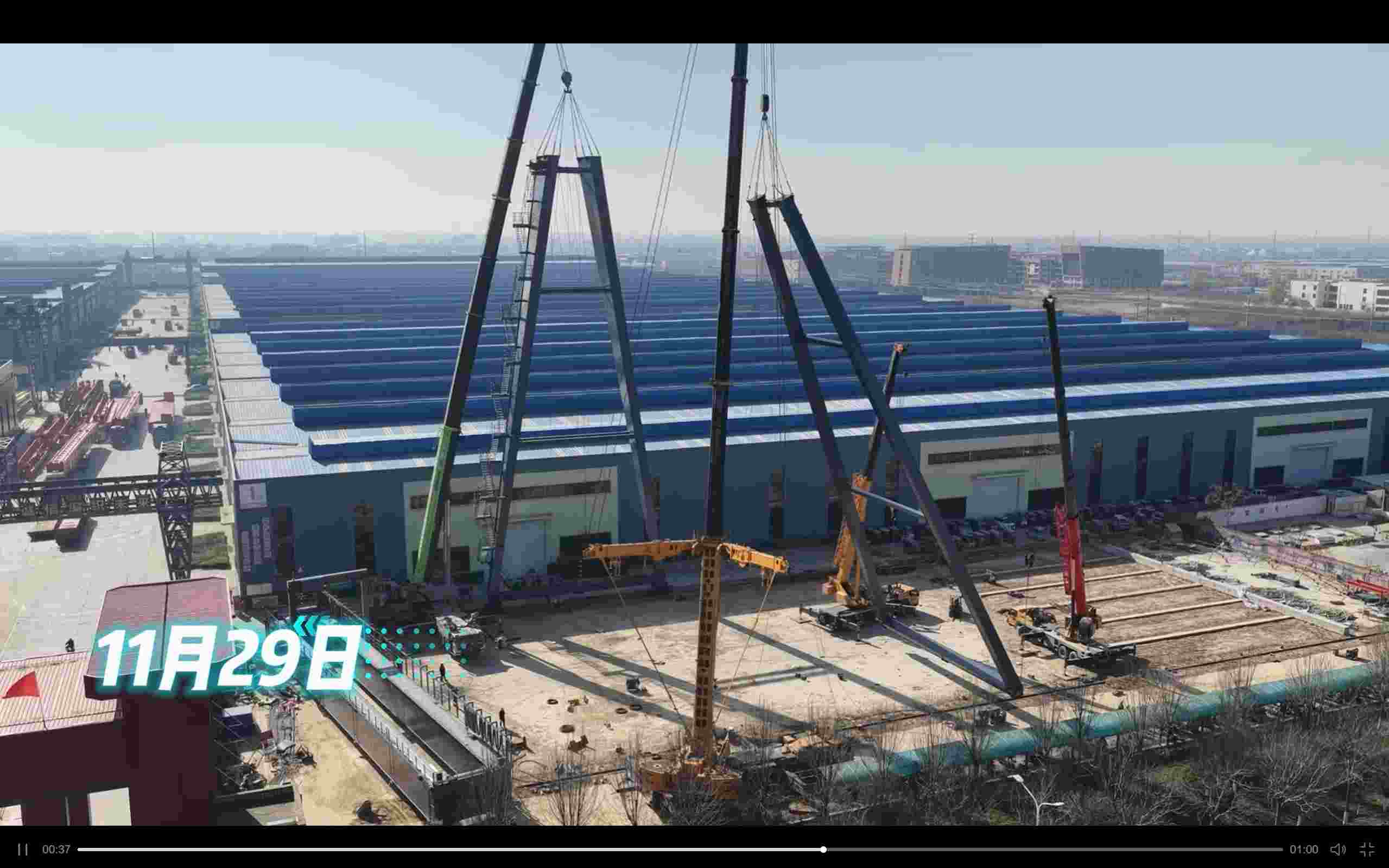
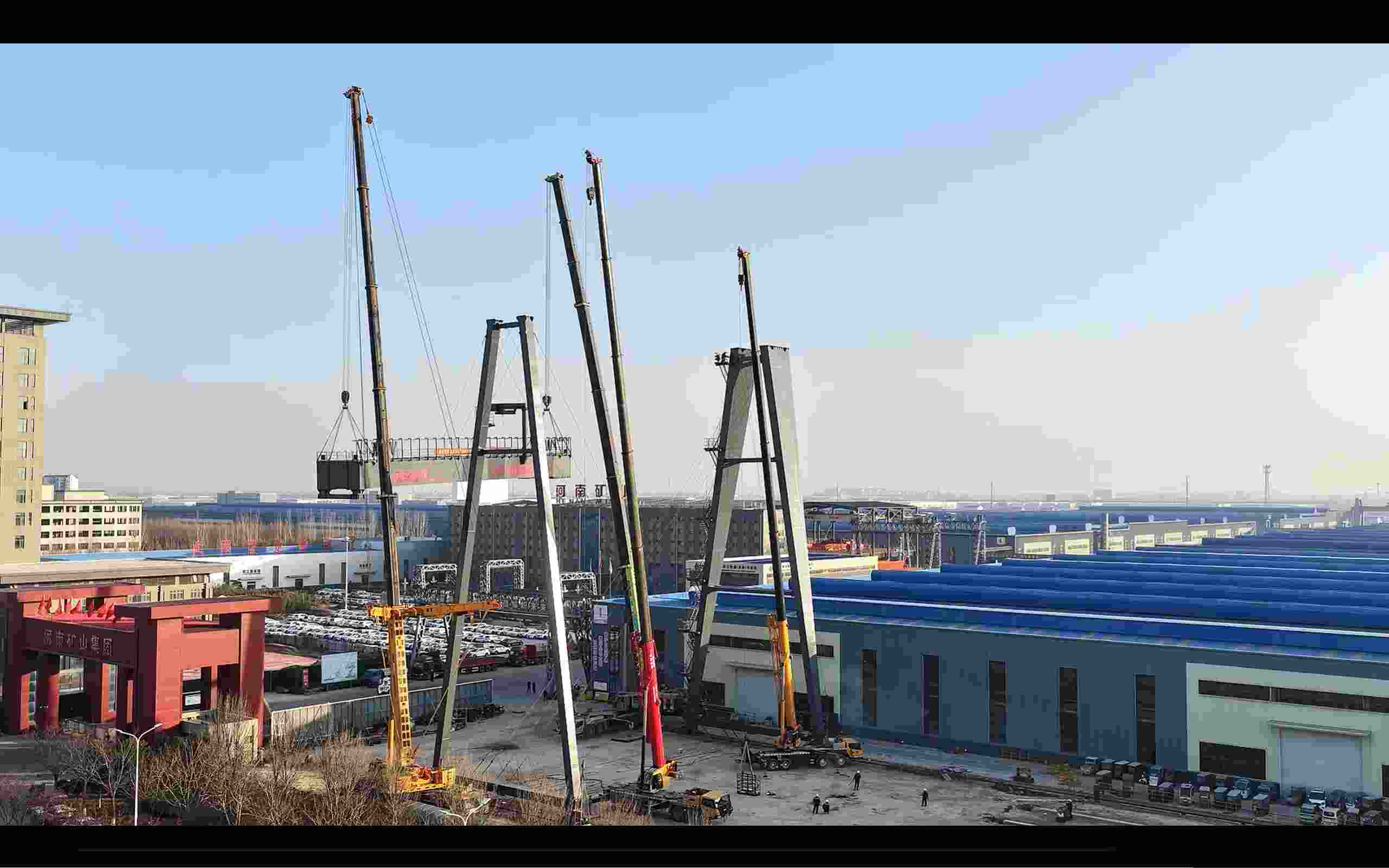
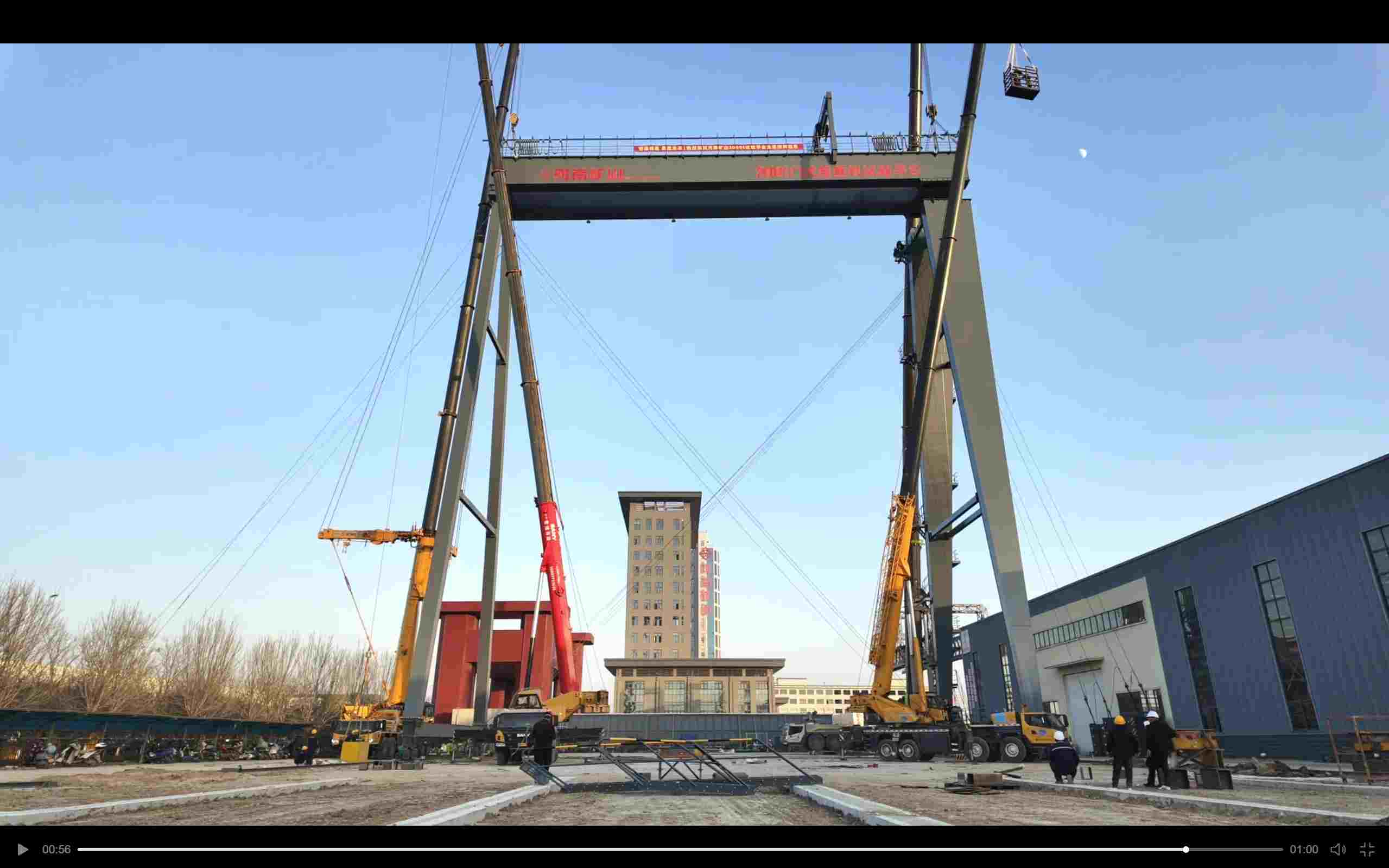
    The installation of a gantry crane is never as simple as putting the parts together. Many people mistakenly think that the installation is just a physical work, as long as the main beam, outriggers docked on the line, but do not know that the accuracy of the pre-planning, assembly details, debugging rigor, directly determines the stability and safety of the equipment for the next few years, or even more than ten years of operation.

    Many companies because of improper installation, crane running jam, wheel wear too fast, main beam deformation and other problems, not only affects the production efficiency, but also lay hidden security risks. Today, I will take the perspective of a front-line engineer to make the complete process of gantry crane installation clear – from pre-installation planning to final acceptance, the key points of each link, considerations, are combined with the actual conditions of dismantling, to help you avoid the installation of misunderstandings.

    Pre-Installation Planning – What Must Be Done Before Setup

    The success of installation depends on 70% of the pre-planning. If you skip this step and directly start assembling, it is very likely that you will not be able to install or use the product. Pre-planning should be centered around the three core elements of site, foundation and power supply, and all details should be confirmed in place.

    Site Evaluation and Layout Confirmation

    The first thing to do is site survey, with the design drawings to check the actual situation. The length, width and height of the working area must be measured accurately, especially the span and running length, without the slightest deviation.

    Span is the distance between the outriggers at both ends of the main beam, to confirm whether the site width can accommodate the entire size of the crane, but also set aside the outriggers and the surrounding equipment, wall safety clearance, generally retained at least 50 centimeters, to avoid collision during operation.

    The running length is related to the crane’s operational coverage, to confirm that the track laying path (rail-type models) or tire driving area (tire-type models), there are no obstacles such as bumps, depressions, etc., and the ground should be flat, no debris that affects the movement of equipment.

    We also need to focus on checking airborne obstacles, such as plant beams and pipelines, to ensure that when the crane is lifted, the hook and the cargo can be lifted smoothly without any interference.

    Foundation and Rail Preparation

    Foundation is the “foundation” of the gantry crane, especially the rail-type models, the foundation is not solid, subsequent operation is prone to track offset, equipment shaking and other issues.

    The strength of the concrete foundation must be up to standard, the conventional requirements of C30 and above, large double girder gantry cranes need more than C40, and maintenance time of not less than 28 days to ensure that the concrete is completely cured. The surface of the foundation should be flat, and the horizontal error should not be more than 2 mm/m, otherwise it will lead to tilting of the track laying.

    The positioning of the anchoring bolts is key, and the holes should be drilled in strict accordance with the coordinates of the design drawings, and the perpendicularity and spacing error of the bolts should not be more than 3 millimeters. The bolts should be fixed by secondary grouting after installation, and subsequent track installation can only be carried out after the grout is solidified.

    There are clear requirements for the track alignment tolerance of the rail type model, the straightness error of the rail centerline should not exceed 1mm per 2 meters, and the cumulative error of the whole length should not exceed 5mm; the level error of the top surface of the rail should not exceed 0.5mm per meter, and the height difference of the two rails should not exceed 1mm. The ground bearing capacity should also be calculated in advance to ensure that it can withstand the sum of the crane’s dead weight and the maximum lifting load to avoid ground settlement.

    Power Supply and Electrical Preparation

    The electrical system of gantry crane has high requirements on power supply, unstable voltage and wrong wiring will cause the equipment to fail to operate normally and even burn the motor.

    First of all, we should confirm that the voltage and frequency of the power supply meet the requirements of the equipment, conventional industrial gantry cranes are mostly 380V/50Hz, and large equipment may require high-voltage power supply, which should be coordinated and docked with the power department in advance.

    Cable routing should be planned in advance to avoid the cable being crushed and pulled. Rail-type models usually use cable reels or skid lines for power supply, and the channel for cable laying should be reserved to ensure that the cables can be smoothly expanded and contracted with the crane operation without the risk of entanglement.

    Grounding system is the core of electrical safety, must be set up separately grounding pole, grounding resistance can not be greater than 4 ohms. Grounding cable should be multi-stranded copper core wire, cross-section area of not less than 16 square millimeters, the connection point should be firm, good anti-corrosion treatment to avoid poor contact after long-term use.

    Delivery and On-Site Inspection

    After the equipment is shipped to the site, don’t rush to unpacking and assembly, first do a comprehensive inspection to confirm that all parts are intact, complete, to avoid subsequent assembly to half of the problems found, delaying the work schedule.

    Component Verification

    Check each component one by one against the delivery list: main beam, outrigger, lifting mechanism, trolley, electrical control cabinet, bolts, pins and so on, to make sure there is no omission.

    Focus on checking the structural integrity of the main beam and outriggers, checking whether there are cracks, pores and other defects in the welds, whether the surface paint is intact, and whether there is any deformation caused by the transportation process. The motor, reel and wire rope of the hoisting mechanism should be carefully inspected, and the wire rope should not have broken wire or corrosion, and the motor junction box should be sealed and intact, with no traces of water ingress.

    The components of the electrical panel should be complete, with no damage to the indicator lights, buttons, circuit breakers, etc., and the wiring should be firmly connected, with no looseness or detachment. If you find any damaged or missing parts, contact the manufacturer for replacement in time, and do not use defective parts reluctantly.

    Pre-Assembly Checks

    Before formal assembly, you should also do pre-assembly checks on key components. For example, check whether the connecting flange surface of the outrigger and the main beam is flat, and the fitting degree should be more than 90% without obvious gaps; the threads of the high-strength bolts should be intact without corrosion or deformation, and the supporting nuts and washers should be complete.

    Check the braking system of the lifting mechanism, manually rotate the reel, the brake should be sensitive, reliable, no stagnation phenomenon; the wheels of the trolley should rotate smoothly, the bearings do not have abnormal noise.

    Also check the anticorrosion condition of the equipment, especially for outdoor use of gantry cranes, the bottom of the outrigger, bolt joints and other corrosion-prone parts, make sure that the anticorrosion coating is intact, there is no bare metal surface, and the anticorrosion paint can be repainted if necessary.

    Step-by-Step Gantry Crane Installation Process

    After doing the pre-preparation and inspection, you can enter the formal installation process. The entire process should be carried out step-by-step, and each step must be inspected and passed before proceeding to the next step, and should not be rushed.

    Step 1 – Install Runway Rails (For Rail-Mounted Gantry Cranes)

    Installation of runway rails for rail-mounted gantry cranes is one of the links with the highest precision requirements. Excessive deviation of the runway installation will lead to fast wheel wear when the crane is running, and even the risk of derailment.

    First of all, the line should be placed according to the position of the design drawings to determine the centerline of the track, and mark the foundation with an ink line. When the track is laid, the track should be placed on the pad first, adjust the position and level of the track, and measure point by point with a level meter to ensure that the top surface of the track is level and the height difference between the two tracks does not exceed the allowable range.

    The gauge of the track (distance between two rails) should be precisely controlled, and the error should not exceed ±2mm. The rail butt joints should be flat, with gaps not exceeding 1mm and height differences not exceeding 0.5mm, to avoid impacts when the crane wheels pass through.

    The track is fixed with pressure plates or bolts, and fixed every 60-80 centimeters to ensure that the track will not be loose and shifted. After the fixing is completed, the straightness, levelness and gauge of the rail should be fully checked again, and all parameters are in line with the requirements before subsequent equipment installation.

    Step 2 – Assemble Support Legs

    The assembly of the support legs should be carried out on the ground to avoid the risk of overhead work. Clean the upper and lower flange surfaces of the support legs, remove oil and rust, and make sure that the connecting surfaces of the support legs and the main beams are tightly fitted.

    If the outriggers are segmented, the segments should be docked and fastened with high-strength bolts, the tightening torque of the bolts should be in accordance with the design requirements, generally M24 high-strength bolts should be tightened with torque not less than 450N-m, and should be double-checked with torque wrenches after tightening.

    After the outriggers are assembled, they should be straightened and checked for vertical alignment, and the verticality of the outriggers should be measured with a latitude and longitude meter, with a deviation of no more than 1mm/m, to ensure that the two outriggers are parallel and vertical, without tilting. The legs can be fixed with temporary brackets to prevent tipping and prepare for subsequent lifting of the main girder.

    Step 3 – Lift and Position the Main Girder

    Main girder lifting is the core of the whole installation process, which requires professional lifting equipment and experienced operators. Main girder lifting of large double girder gantry cranes usually requires two cranes to work together (double lifting).

    Before lifting, a detailed lifting program should be formulated to clarify the location of the lifting point, lifting sequence, rope specifications and so on. The lifting point should be selected at the design lifting point of the main beam, and the angle between the rope and the main beam should not be less than 60 degrees, so as to avoid excessive force on the rope or deformation of the main beam.

    Lifting should be lifted slowly, when the main beam leaves the ground about 50cm, pause the lifting, check whether the main beam is horizontal, whether the rope force is uniform, after confirming that there is no error, then continue to lift.

    Lift the main beam to the top of the outrigger, slowly lower it, align the connecting flange of the outrigger, adjust the position of the main beam, make sure the bolt holes are perfectly aligned, then put in the high-strength bolts and tighten them symmetrically. After the bolts are tightened, check the level of the main beam and measure it with a level meter, the error should not be more than 0.5mm/meter.

    Step 4 – Install Hoist and Trolley System

    After the installation of the main beam is completed, it is time to install the trolley and lifting mechanism. Slowly lift the trolley onto the rail of the main beam, make sure that the wheels of the trolley fit well with the rail, rotate smoothly, and there is no stagnation.

    When installing the lifting mechanism, the winch or electric hoist should be fixed on the trolley first, and the fastening bolts should be tightened to prevent loosening during operation. Then install the wire rope, the winding of the wire rope should be in accordance with the design requirements, there can be no cross, twisted situation, the number of pressure plate at the fixed end of the wire rope is not less than 3, to ensure that it is firmly fixed.

    Install the hook set, check the rotation flexibility of the hook, and make sure that the anti-dislodgement device of the hook is intact. Finally, check the braking system of the hoisting mechanism, manually operate the brake handle, the brake should be sensitive and reliable, and can effectively stop the hook from sliding down.

    Step 5 – Electrical System Installation

    Electrical system installation should follow the principle of “standardized wiring, safety and reliability”, and it is recommended to be operated by professional electricians. Firstly, fix the electrical control cabinet in the electrical box of the leg, connect the power cable, the wiring of the cable should be carried out according to the drawing, and the phase line, zero line and ground line should not be connected incorrectly.

    Install the cable reel or slip contact line to ensure that the cable can run smoothly with the crane expansion and contraction, no dragging, extrusion. Connect the control lines, including the control lines for hoisting, trolley operation and whole machine operation, as well as the lines for limit switches and emergency stop buttons.

    The installation position of the limit switch should be precise, the lifting limit should ensure that the power can be cut off in time when the hook rises to the highest position, and the running limit should ensure that the crane can be stopped automatically when it runs to both ends of the track. The emergency stop button should be installed in a position easily accessible to the operator and clearly labeled.

    Mechanical Alignment and Precision Adjustment

    After the installation is completed, the crane cannot be put into use directly, it must be mechanically aligned and precision adjusted, which is a key step to ensure smooth operation and prolong the service life of the equipment.

    Wheel Alignment and Track Contact

    Check the wheel alignment of the crane to ensure that the wheels are perpendicular to the track, and that the tread surface of the wheels is in good contact with the top surface of the track, and the contact area is not less than 70%. If the wheels are skewed, it will lead to rapid wear and tear of the wheels during operation, or even the phenomenon of “chewing the rail”, which will seriously damage the rail.

    Adjust the level and verticality of the wheels, the horizontal error of not more than 0.5 mm / m, vertical error of not more than 1 mm / m. For rail-type models, also check the side clearance between the wheel and the rail, and generally keep it at 3-5 mm to avoid friction during operation.

    Girder Deflection Measurement

    The deflection (bending deformation) of the main girder should be in accordance with the design standard. Under no-load condition, the maximum deflection of the main girder should not be more than 1/1000 of the span, and the deflection of the double girder gantry crane is more stringent, generally not more than 1/1200 of the span.

    You can use a laser range finder or level meter to measure at the midpoint and both ends of the main girder, and record the deflection value to ensure that it is within the permissible range. If the deflection exceeds the limit, it may be due to the installation deviation of the main beam or structural problems, which need to be adjusted in time or contact the manufacturer to deal with.

    Brake and Limit Switch Calibration

    Calibrate the brakes, the brake of the hoisting mechanism should be able to withstand 1.25 times of the rated load, and the brake of the running mechanism should be able to ensure that the crane stops smoothly at the rated speed without skidding.

    Re-check the sensitivity of the limit switches, manually trigger the hoisting limit and running limit to make sure that the corresponding power can be cut off in time and the equipment stops running. Adjust the position of the limit switches to ensure that there is enough safety margin to avoid limit switch failure.

    Commissioning and Load Testing

    After the precision adjustment is completed, it enters the commissioning and load testing stage, which is the final test of the installation quality, and must be carried out in strict accordance with the standards, and can not be omitted in any step.

    No-Load Testing

    No-Load Testing first, turn on the power, operate the crane for lifting, trolley operation, machine operation and other actions, each action should be repeated 5-10 times, to observe whether the equipment runs smoothly.

    Check whether the lifting speed of the lifting mechanism is uniform, no jamming, noise; trolley and machine operation is smooth, wheel rotation is flexible, no deflection phenomenon; whether the electrical control system is normal, the indicator lights, buttons function properly, limit switches are sensitive and reliable.

    Also check the noise and vibration of the equipment, the noise during operation should not exceed 85 decibels, the vibration amplitude should be small, there is no obvious shaking.

    Static Load Test

    After passing the no-load test, carry out the static load test, the test load is 125% of the rated load. Lift the test weight smoothly off the ground about 100mm, hold it for 10 minutes and observe the structural deformation of the crane.

    During this period, check whether the deflection of the main beam is within the permissible range, whether the connection between the outrigger and the foundation is firm, without loosening and shifting, and whether there is no sign of deformation and damage at the bolt joints. 10 minutes later, slowly lower the load and check whether the crane can be restored to its original state, without permanent deformation.

    Dynamic Load Test

    After passing the static load test, carry out the dynamic load test, the test load is 110% of the rated load. Operate the crane to carry out the combination of hoisting, descending, trolley operation and whole machine operation to simulate the actual operation scene.

    Check the performance of the brake, the brake should be smooth when lifting and descending, without the phenomenon of slipping hooks; the brake should be sensitive when running, and can be stopped quickly; the crane’s running speed is even, without impact, jitter.

    Also test the emergency stop function, press the emergency stop button in the dynamic operation process, the equipment should be able to immediately stop all actions to ensure safety.

    Safety Considerations During Gantry Crane Setup

    Safety during installation is more important than the speed of installation. Gantry Crane components are large and heavy, and there are many overhead and lifting operations, so safety measures must be taken.

    When installing outdoors, pay attention to the wind speed changes, when the wind speed is more than grade 6, should stop working at height and lifting operations to prevent heavy objects from swaying or equipment tipping.

    Workers at height must fasten safety belts and wear helmets, and stand firmly on their feet to avoid falling from height; ground workers should stay away from the lifting area and set up a warning line to prevent heavy objects from falling and injuring people.

    Electrical work, to cut off the power supply first, do a good job of electrical isolation, hanging “prohibit the closing of the gate” signs, to avoid electrocution; the use of power tools, to ensure that the insulation is good, reliable grounding.

    All hoisting equipment, such as cranes, wire ropes, hooks, etc., must be tested and qualified, and the use of unqualified hoisting equipment is strictly prohibited; in the process of hoisting, there should be a person in command, and the command signal should be clear and uniform.

    Installation Timeline – How Long Does It Take?

    The installation time of gantry crane depends on the type, size and site conditions of the equipment, there is no fixed standard, the following is the reference time of common models:

    Small single girder gantry crane (lifting capacity 5-10 tons, span 10-15 meters): 3-7 days, mainly including track installation, outrigger and main beam assembly, electrical wiring and commissioning, the process is relatively simple.

    Medium-sized double girder gantry crane (lifting capacity 20-50 tons, span 15-30 meters): 1-2 weeks, due to the more complex structure, track installation and precision adjustment will take longer, and requires more manpower and equipment to cooperate.

    Large industrial or port cranes (lifting capacity of more than 50 tons, span of more than 30 meters): it takes weeks or even months, the components of this type of equipment are larger and heavier, the process of foundation preparation and installation and commissioning is more complex, and may also involve multi-disciplinary coordinated operations.

    There are many factors affecting the installation time, weather condition is an important factor, rainy and windy days will affect the outdoor work; foundation preparation will also affect the progress, if the foundation is not completed on time or does not meet the requirements, it will lead to delay in the installation; the complexity of the equipment and the experience of the construction team is also very critical, the experienced team can deal with the problems in the installation process more efficiently to shorten the construction period.

    Rail-Mounted vs Rubber Tyred Gantry Crane Setup Differences

    The core differences between rail-mounted and rubber-tired gantry crane installation focus on foundation requirements, track preparation and mobile system commissioning, which are compared as follows:

    Comparison Item Rail-Mounted Gantry Crane (Rail-Mounted) Tire-Mounted Gantry Crane (Rubber Tyred)

    Rail-mounted Specialized track must be laid, precise positioning and leveling are required, and the initial infrastructure investment is large No track is required, only flat and solid ground is needed, and the site modification cost is low.

    Foundation requirements High, need to pour special concrete foundation, bear the equipment weight and load Medium, the ground needs to be compacted, the bearing capacity to meet the requirements of the equipment can run

    Fixed, can only run along the track, limited working range Flexible, can move freely on level ground, suitable for different working areas

    Installation Complexity Higher, strict track installation and alignment requirements, longer time consuming Lower, no track installation, focus on tire pressure adjustment and steering system debugging

    Common Installation Mistakes to Avoid

    Many installation problems can be avoided in advance, but the following common mistakes must be paid attention to:

    Poor track alignment is the most common error of rail-type models, track offset, too large a difference in height, will lead to crane running jams, wheel wear and tear too fast, or even derailment, the track accuracy must be repeatedly checked after installation.

    Insufficient foundation strength, such as insufficient concrete strength and insufficient maintenance time, will lead to ground settlement when the equipment is running, affecting the force of the track or tires, and will damage the structure of the equipment in the long term.

    Neglecting load testing, skipping static or dynamic load testing in order to meet deadlines, unable to detect potential problems in equipment installation, and prone to failures in later operations.

    Improper electrical grounding. Excessive grounding resistance or poorly connected grounding lines increase the risk of electrocution and may also affect the normal operation of the equipment’s electrical control system.

    Skipping the commissioning documentation, not recording data during installation and commissioning, and not being able to trace the cause of subsequent problems with the equipment, making it difficult to repair.

    When Should You Use the Manufacturer’s Installation Team?

    Although some companies may choose to install the equipment themselves, it is recommended to prioritize the use of the manufacturer’s professional installation team in the following cases:

    Heavy gantry cranes (lifting capacity of more than 50 tons), the structure of such equipment is complex, the installation of high precision requirements, the manufacturer’s team is more familiar with the structure of the equipment and the key points of installation, to ensure the quality of installation.

    Systems with large span and high lifting height, gantry cranes with a span of more than 30 meters or a lifting height of more than 20 meters, which are difficult to install and require specialized lifting equipment and technical solutions, the manufacturer’s team is more experienced.

    Export projects, involving local installation standards, certification requirements, the manufacturer’s team can ensure that the installation meets local specifications and passes acceptance smoothly.

    For projects that require official certification, such as ports, power plants and other scenarios with strict requirements for equipment safety, the manufacturer’s installation can provide complete installation reports and acceptance data for subsequent certification.

    Frequently Asked Questions

    How long does gantry crane installation take?

    There is no fixed standard for installation time, it mainly depends on the type and size of the equipment. Small single girder models can take 3-7 days, medium sized double girder models 1-2 weeks, and large industrial or harbor models can take weeks or even months. Weather, foundation preparation, and the experience of the team will all affect the schedule.

    Do I need a reinforced concrete foundation?

    A rail-mounted gantry crane must have a reinforced concrete foundation with a strength of at least C30; a tire-mounted model does not need a special concrete foundation, but the ground needs to be compacted to meet the requirements of the equipment operation and to avoid ground settlement.

    Can a gantry crane be relocated after installation?

    Yes, but the difficulty and cost vary according to the model. Tire type crane relocation is relatively simple, only need to level the new site; rail type crane need to remove the old track and re-lay the track and foundation in the new site, which is more costly and requires a professional team to operate.

    What certifications are required after setup?

    Domestic projects need to provide installation acceptance report, equipment certification, special equipment use registration certificate (gantry cranes with a lifting capacity of more than 3 tons belong to special equipment, and need to be filed to the local market supervision department for certification); export projects need to comply with the local standards, such as CE certification, FDA certification.

    Is installation included in the purchase price?

    Not necessarily, usually the installation of small models may be included in the purchase price, the installation of large models is mostly a separate charge. When purchasing, it should be clearly agreed with the manufacturer whether installation, commissioning, acceptance and other services are included to avoid additional costs.

    Conclusion

    Installation of gantry cranes is a systematic project of “pre-planning – on-site inspection – step-by-step assembly – precision adjustment – load test”, and every aspect should not be sloppy. The quality of installation directly affects the safe operation and service life of the equipment, and professional installation can reduce maintenance costs and improve operational efficiency.

    For enterprises, do not ignore the importance of installation in order to save costs or rush the schedule. Choose an experienced installation team, operate in strict accordance with the standard process, and do a good job in each step of the acceptance work, in order to make the gantry crane long-term and stable for the production service.

    If you are not sure about the installation process and technical requirements, it is recommended to consult the engineering team of the manufacturer in time to get professional guidance and support, so as to avoid losses caused by improper installation.

    Henan Mine Crane Factory Custom”

    If you are preparing for the installation of gantry cranes and are not sure whether the site meets the requirements, or you need a professional installation program, you may want to submit your site layout and equipment parameters, our engineers will provide you with a free installation assessment.

    Henan Mine Crane Factory supply, as a professional crane manufacturer, integrates R&D, design, manufacturing, sales and service to provide customers Please feel free to contact us, we will provide you with free design drawings, and field survey!

    Henan Mine CraneDiscuss your requirements ↗
  • High Efficiency Container Gantry Crane for Port Handling

    High Efficiency Container Gantry Crane for Port Handling

    High Efficiency Container Gantry Crane for Port Handling

    With the acceleration of global trade, container throughput continues to rise, ports as the core hub of international trade, loading and unloading efficiency is crucial. At present, most of the world’s ports are deeply trapped in the container stranding, slow ship turnover, yard congestion, high operation and maintenance costs, inefficient loading and unloading equipment has become a bottleneck to enhance the competitiveness of ports. In this paper, we will analyze the core value and technical characteristics of high-efficiency container gantry cranes to provide professional reference for port operators to crack the pain points and reduce costs and increase efficiency.

    What Is a Container Gantry Crane in Port Operations

    Container Gantry Crane is the core container handling equipment in port container yard and terminal, mainly used for container stacking, transfer, loading and unloading operations, is the key hub connecting ships, trucks and railroads, and directly determines the turnover efficiency and operational capacity of the port yard. Among them, the two most widely used types are Rubber Tyred Gantry Crane and RMG Crane Rail Mounted Gantry Crane, both of which have different structural characteristics to meet the needs of different port scenarios.

    Definition of container gantry crane

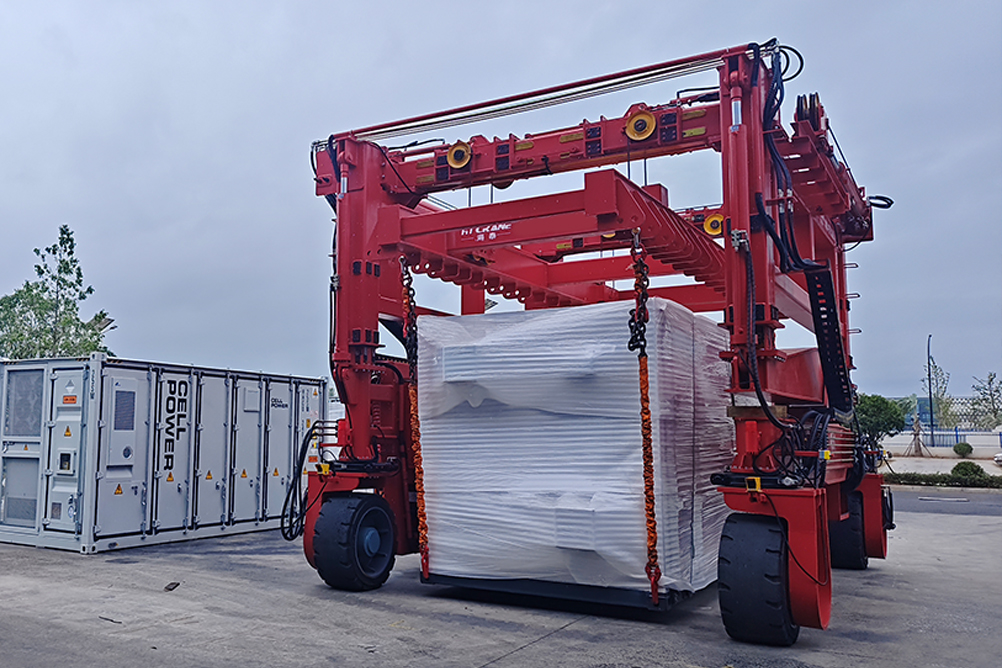
    1. RTG crane: Rubber tires as a walking device, no need to lay tracks, can be flexibly moved within the yard, suitable for a variety of site layout, is the first choice for small and medium-sized ports, multi-yard linkage operation equipment.
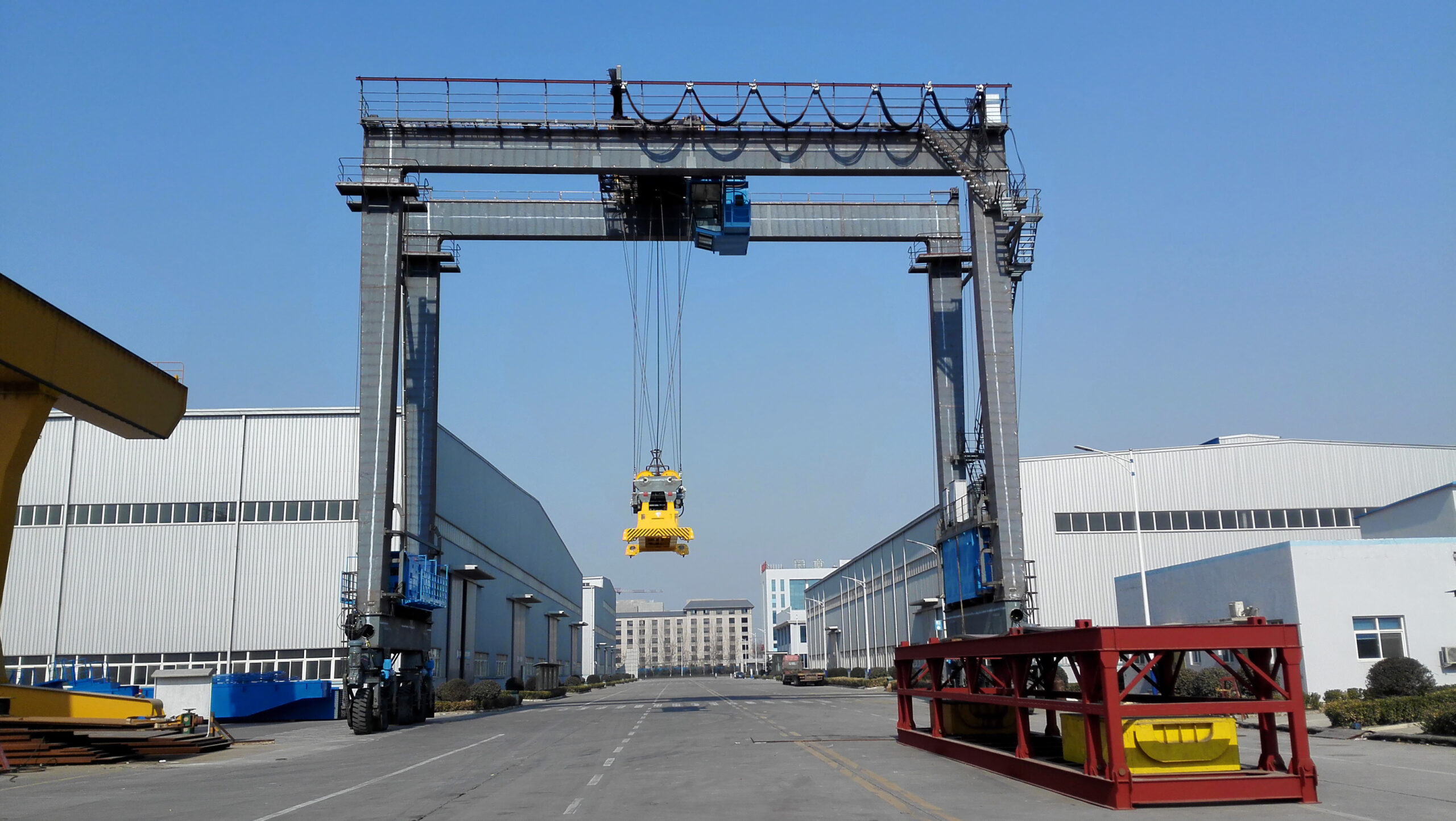
    2. RMG cranes: Rely on rail travel, stable operation, accurate positioning, automation transformation potential, more suitable for large-scale container terminals, automated yard scale operations, can achieve efficient continuous container loading and unloading transfer.

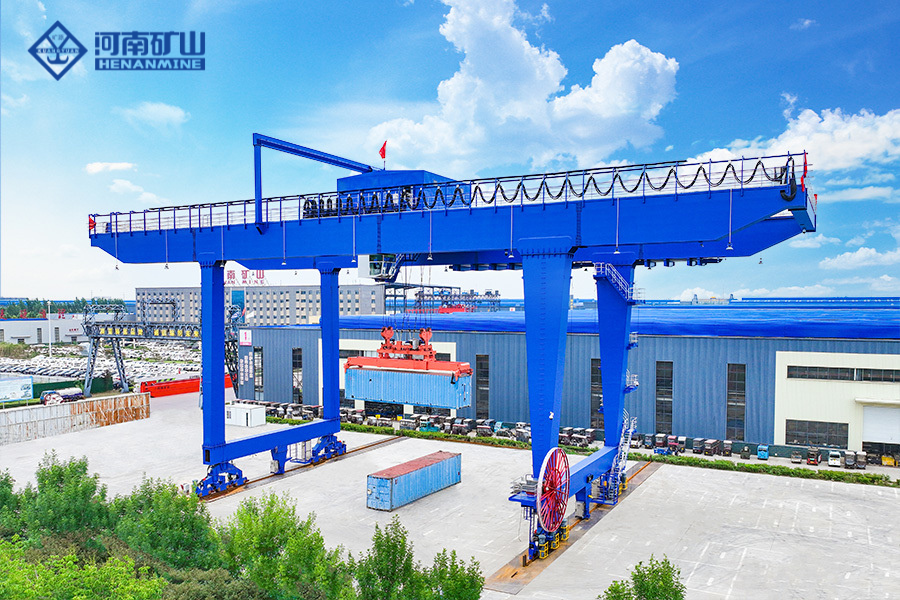
    RMG crane

    Difference between RTG and RMG

    Many port operators will be confused by the difference between RTG and RMG when selecting the model, the core difference between the two is mainly focused on four aspects, accurately matching different port scenarios:

    • Walking Mode: RTG adopts rubber tires to walk, no track restriction, free transfer, cross-area operation, turning radius ≤ 15 m. RMG walks along the track, can only work within the fixed track, weaker maneuverability, but stronger operational stability.
    • Operation efficiency: RTG is suitable for small and medium scale operation, single machine can complete 20-25 TEUs per hour, RMG has accurate positioning and fast running speed, single machine can complete 30-40 TEUs per hour, more suitable for large scale and high density yard operation.
    • Site adaptability: RTG does not need to lay tracks, low upfront investment, adaptable to flexible and variable yard layout, tire grounding pressure ≤ 0.8MPa, lower requirements for the site ground, RMG needs to lay special tracks, higher upfront investment, suitable for large container terminals with fixed sites and stable throughput, track foundation load needs to be ≥ 200kN/m².
    • Automation potential: RMG has stable structure, fixed walking track, easy to realize automation transformation, and can be quickly upgraded to ARMG. RTG is a little more difficult to automation transformation because of its flexible walking, and is mainly used for semi-automatic operation.

    Why High Efficiency Matters in Port Handling

    The recovery of global trade has pushed up the container throughput, and the competition in ports is becoming more and more fierce, and efficiency has become the core competitiveness. Inefficient loading and unloading equipment leads to ship turnover delays, yard congestion and increased operating costs, which are the core pain points of most ports. Long cargo hold-ups, long vessel waits and high labor costs are all directly related to the lack of crane efficiency.

    Increasing global container throughput pressure

    Global container throughput is growing at an average annual rate of 5%-8%, with core ports in Asia and Europe experiencing particular pressure. According to IAPH data, in 2023, 65% of ports to start intelligent transformation, 28% for automated terminals, the core is to cope with throughput growth. Insufficient crane efficiency can lead to container stacking and vessel demurrage, affecting the supply chain and even triggering claims, with one medium-sized port losing nearly a million dollars a month as a result.

    The core impact of efficiency on port operations

    The impact of high-efficiency container gantry cranes on port operations is reflected in four key dimensions, which directly determine the port’s profitability and market competitiveness:

    • Vessel turnaround time: High-efficiency cranes can shorten the ship loading and unloading time by 4-6 hours, and enhance the amount of ship calls. The efficiency of a single crane in the three major hub ports such as the Port of Singapore reaches 28-32 natural containers/hour, significantly shortening the ship turnaround time.
    • Yard productivity: Henan Mine Crane Factory supplyhigh-efficiency cranes can quickly stack and transfer containers, improve the efficiency of yard turnover 30%-50%, the same area of the yard can be stacked 20%-30% more containers, improve site utilization.
    • Labor cost reduction: The automation system of high-efficiency cranes can reduce labor, one remote operator can replace 3-4 on-site personnel, saving hundreds of thousands of dollars per year, but also reduce operational errors and safety accidents.
    • Bottlenecks caused by low-efficiency cranes: High-efficiency cranes can solve the problems of slow operation and easy failure of traditional equipment, and reduce the average annual downtime of domestic harbor cranes from 200 hours to less than 100 hours.

    Key Features of High Efficiency Container Gantry Cranes

    As a leading crane manufacturer in China, the high efficiency gantry crane supplied by Henan Mine Crane Factory integrates automation, intelligence and energy-saving technologies, and its core advantages are embodied in four major aspects, including efficiency, energy saving, safety and flexibility, which are suitable for the operational needs of different ports, and at the same time meet the requirements of the automated container crane, energy-saving, safety and flexibility. It also meets the market demand for automated container crane and energy saving crane.

    Advanced automation systems

    Automation is the core to improve the efficiency of cranes, high-efficiency container gantry cranes are equipped with semi-automated and fully automated solutions, integration of 5G + AI and PLC intelligent control technology, remote control, precise positioning, can reduce manual operation and error.

    High lifting speed and precision

    The core competitiveness of Henan Mine Crane Factory’s high-efficiency container gantry cranes lies in speed and precision. By optimizing the mechanical structure and control technology, the lifting, trolley and lorry operation speed is increased by 40%-50% compared with the traditional models, and with the advanced anti-swinging system, the swing angle is controlled within 3°, the containers are placed accurately, and the time of aligning is reduced, which improves the operation efficiency significantly.

    port handling container crane

    Energy efficiency and eco-friendly design

    Under the goal of “double carbon”, energy saving and consumption reduction in ports is a must. High-efficiency container gantry crane adopts environmentally friendly and energy-saving design, optional pure electric, hybrid drive, energy consumption is reduced by 30%-50% compared with diesel models, equipped with regenerative braking technology, power recovery rate of 20%-30%, with low noise motors and environmentally friendly coatings, in line with the development trend of green ports, helping ports to reduce costs and increase efficiency.

    Flexible yard coverage

    Different ports have different yard layouts and operational needs, high-efficiency container gantry cranes achieve wide yard coverage with flexible structural design, with a span of 20-40m and a lifting height of 18-24m, which can realize 8-layer container stacking and cover 6-12 columns, and at the same time, it is also suitable for 2-3 lanes of trucks, which reduces the waiting time, optimizes loading and unloading processes, and improves the utilization rate of yards and the efficiency of the turnaround process.

    Types of Container Gantry Cranes for Port Use

    According to the different port yard layout, throughput, automation needs, container gantry cranes are divided into three main types, each with unique advantages, suitable for different port scenarios.

    Rubber Tyred Gantry Crane (RTG)

    RTG cranes are one of the most widely used container gantry cranes in ports, and their core advantage lies in their flexibility and adaptability to a variety of scenarios.

    • Advantage of mobility: Rubber tires are used to walk, no need to lay tracks, free to move within the yard, cross-area operations, flexible transfer, small turning radius, suitable for complex yard layout, wheelbase range of 10.5m ~ 12m, axle distance of 6m ~ 8m, suitable for a variety of site conditions.
    • Applicable scenarios: Small and medium-sized container ports, multi-yard linkage operations, ports with flexible yard layout, as well as temporary yards, inland container yards, low upfront investment, little difficulty in transformation, can be quickly put into use.
    • Core features: Flexible operation, strong adaptability, can be equipped with semi-automatic control system, moderate operational efficiency, suitable for ports with medium throughput and limited space.

    The windproof device adopts hand-pull windproof anchor and wheel side brake, and some models are equipped with windproof cable, which can cope with regular windy weather.

    Rail Mounted Gantry Crane (RMG)

    The core advantages of Henan Mine Crane manufactured RMG cranes are high stability and high automation potential, making them the first choice for large ports and automated yards.

    • High automation potential: Walking along the track, fixed trajectory, easy to realize automation transformation, can be quickly upgraded to fully automated operations, to meet the development needs of the smart port, is the core equipment of the current automated container terminal.
    • Applicable scenarios: Large container terminals, ports with high throughput and fixed yard layout, and automated container yards, which can realize large-scale and continuous operation and improve yard turnover efficiency. The gauge and span are the same, and the windproof device adopts three-in-one rail clamp, windproof anchor and top rail, which has a higher windproof grade.
    • Core features: Stable operation, accurate positioning, high operating efficiency, low energy consumption, low failure rate, suitable for long-term high-intensity operation, and can be adapted to the needs of high throughput operations.

    Automated Rail Mounted Gantry Crane (ARMG)

    ARMG is the automated upgraded version of RMG crane, which represents the development trend of port cranes, and the core advantage is unmanned and intelligent.

    • The trend of unmanned operation: The use of fully automated control system, can realize unattended, remote control, without the need for on-site operators, significantly reducing labor costs, while improving operational efficiency and safety.
    • Intelligent Port Integration: It can be seamlessly connected with the port intelligent management system, AGV, and intelligent yard management system to realize the whole process automation of container loading and unloading, transshipment, and stockpiling, and help the construction of intelligent port.
    • Application Scenario: Large-scale intelligent ports, fully automated container terminals, and ports with high requirements for efficiency and automation can realize 24-hour continuous operation, break through the limit of human physiology, and significantly enhance the core competitiveness of ports.

    Applications in Modern Ports and Terminals

    Henan Mine Crane manufactured high-efficiency container gantry cranes are used in a wide range of application scenarios, covering all kinds of ports and terminals, and are core applied to the whole process of container stacking, transshipment, loading and unloading.

    Container stacking yards

    This is the most core application scenario of container gantry cranes, whether RTG, RMG or ARMG, can be realized in the stacking yards for multi-layer storage of containers, fast transfer. It can effectively improve the utilization of yard space, adapt to the storage needs of different scale ports, solve the problems of container stacking, and ensure the orderly and efficient promotion of yard operations.

    Intermodal rail terminals

    In the railroad container terminals, Henan Mine Crane manufactured container gantry cranes undertake key transshipment duties, responsible for transferring containers from trucks to railroad wagons or from railroad wagons to trucks, realizing the seamless connection of highway and railroad multimodal transportation, opening up the channels between inland transportation and port transportation, and enhancing the transshipment efficiency of containers across modes of transportation.

    Inland container depots

    Inland container depots are the key nodes connecting ports and inland areas, with flexible site layouts and moderate throughputs, which are very suitable for RTG cranes, whose flexibility can be adapted to the operational needs of inland depots, helping containers turnover efficiently between ports and inland areas, and supporting the smooth operation of logistics in inland areas.

    Smart ports and automated terminals

    With the rapid development of smart ports, ARMG cranes have become the core equipment of automated terminals. It can be seamlessly connected with the port intelligent management system, AGV and other equipment to realize unmanned operation in the whole process of container loading and unloading, transshipment and stockpiling, which significantly improves the operational efficiency and intelligence level of automated terminals.

    container crane efficiency

    How High Efficiency Gantry Cranes Improve Port Productivity

    Henan Mine Crane Factory supply High Efficiency Container Gantry Cranes improve port productivity, not a single dimension of speed, but the whole process of efficiency optimization, cost reduction, safety enhancement.

    Faster container turnaround

    High-efficiency container gantry crane operating speed than the traditional models to increase 40% -50%, can significantly reduce the container in the yard detention time, accelerate the turnaround efficiency. Equipped with high-efficiency equipment in the port, the container turnaround efficiency can be increased by 30% -50%, the port throughput can also be synchronized to increase by 20% -30%, effectively solving the problem of container stacking, and strengthening the competitiveness of port operations.

    Reduced operational downtime

    High-efficiency container gantry cranes use high-strength steel and high-quality components, with intelligent failure warning system, the failure rate is 60%-70% lower than the traditional models. Its annual downtime can be controlled within 100 hours, equipment utilization rate increased to more than 85%, much higher than the utilization rate of 50% -60% of traditional cranes, to ensure continuous and stable operation.

    Improved safety performance

    Henan Mine Crane Factory supply high-efficiency container gantry cranes are equipped with automated and intelligent control system, which reduces the reliance on manual operation, lowers the operation error, and with multiple safety protection devices, the safety accident rate can be reduced by more than 90%. At the same time, it avoids the risk of working at height, improves the operating environment, and protects the personal safety of the operators and the safety of the equipment operation in an all-round way.

    Lower operating costs

    High-efficiency container gantry cranes can reduce port operating costs in terms of labor, energy consumption, operation and maintenance. Automated operation reduces operating personnel by 60%-70%, energy consumption by 30%-50%, and operation and maintenance costs by 40%-60%. A single unit can save 500-1 million RMB per year and significantly shorten the return on investment to 3-5 years.

    Henan Mine Crane Factory Custom

    Global trade competition is becoming increasingly fierce, port efficiency is the core competitiveness, container gantry cranes as the core equipment for port loading and unloading, its efficiency, stability and energy saving directly affects the port operating costs and profitability, can effectively crack the low efficiency of ports, high costs, safety hazards, helping ports to realize automation, green upgrading, and to meet the needs of the global supply chain development.

    Henan Mine Crane Factory is deeply engaged in the field of port cranes, and develops and produces container gantry crane, port gantry crane, RTG crane, RMG crane and other products, which have the advantages of high efficiency, intelligence and energy saving, and can provide customized solutions for different scenarios, such as small and medium-sized ports, large-scale automated terminals, and inland container yards. They can provide customized solutions for different scenarios such as small and medium-sized ports, large automated terminals, inland container yards, etc., helping ports to improve efficiency and reduce costs.

    Contact us now for customized solutions and detailed quotes, and work together to build a modern, efficient, intelligent and green port!

    Henan Mine CraneDiscuss your requirements ↗
  • Henan Mine Crane vs Konecranes: Which Crane Supplier Fits Your Project Better?

    Henan Mine Crane vs Konecranes: Which Crane Supplier Fits Your Project Better?

    Henan Mine Crane vs Konecranes: Which Crane Supplier Fits Your Project Better?

    In the global industrial lifting equipment procurement field, many engineering contractors, plant operation and maintenance managers, port project owners, will simultaneously research and compare two very representative lifting equipment brands: Henan Mine Crane and Konecranes.

    These two brands have a lot of overlap in the business map, both covering industrial plant lifting, outdoor yard lifting, port terminal loading and unloading and other core scenarios. Many comparisons on the market are used to directly determine the brand’s strengths and weaknesses, but in reality, there is no absolute good or bad in industrial procurement.

    Henan Mine Crane is a full range of domestic scale crane manufacturers, focusing on high adaptability and customization, working conditions and cost-effective cost-effective solutions.Konecranes, as a globalization of the old lifting brand, relying on years of precipitation in overseas markets, in the standardization of equipment, brand recognition, the whole life cycle of operation and maintenance services have a unique advantage.

    The core of most procurement problems is that it is not clear which brand is more suitable for different project scenarios, budget standards and service requirements. This article combines real overseas project selection experience, from the applicable scenarios, product system, technical capabilities, service system, selection logic and other dimensions, neutral dismantling of Henan Mine Crane vs Konecranes fit differences, to help customers accurately match the project with the optimal program.

    Crane Suppliers|Henan Mine Crane

    China Crane Museum

    Often used to compare the two brands of project types

    Screening Henan Mine Crane vs Konecranes projects at the same time, most of them are medium and large-scale industrial and infrastructure projects with high requirements for equipment stability, compliance, and landability, basically focusing on four major types of lifting scenarios.Customers compare the two brands of the core procurement requirementsOverseas professional procurement team in the comparison of crane suppliers, will not only look at the brand name, more around the actual needs of the project landing, assessment of the five core dimensions.

    Product system that highly matches the working conditions of the project

    The complete product category is only the basis, the purchaser is more important to manufacturers whether there is an exclusive model corresponding to the project. Many brands have complete catalogs, but there are no mature products under the detailed working conditions, which cannot match the actual lifting needs.

    Customers want to lock the supplier to be able to accurately provide their own tonnage, span, the operating environment of the special lifting equipment, rather than generic models to apply.

    Professional engineering customization ability

    Standardized plant, conventional lifting project equipment threshold is low, most of the major manufacturers can meet. Really open the gap is the steel, petrochemicals, ports, shipyards and other complex conditions of customized transformation capabilities.

    Different projects have different spatial layout, frequency of operation and environmental risks, which require manufacturers to provide targeted structural optimization, protection upgrades and control system adaptation solutions.

    Standardized and complete set of technical data

    Overseas projects rely on complete technical documents for acceptance, customs clearance, local qualification filing, and later operation and maintenance. General drawings, load data, electrical schematic diagrams, parts lists, operation manuals, test reports, are all necessary information.

    A formal and complete data system can significantly reduce the resistance to acceptance of overseas projects, and is also a mandatory assessment standard for procurement of large-scale projects.

    Stable and efficient project delivery capability

    Overseas project process is cumbersome, covering the whole process of drawing confirmation, customized production, cross-border shipping, on-site installation and machine commissioning. Purchasers attach great importance to manufacturers’ project coordination ability and delivery time.

    Whether they can produce and ship on schedule, provide remote installation guidance, and complete the commissioning and delivery of the whole machine directly determines the overall progress of the project.

    Full life cycle after-sales and spare parts protection

    Lifting equipment belongs to the heavy special equipment, service cycle up to more than ten years. The single purchase price is only part of the cost, and the cost of fault repair, spare parts replacement, equipment maintenance, upgrading and transformation is also critical.

    Fast after-sales response, universal spare parts system, and long-term technical support are the core factors for overseas customers to consider.

    Detailed Comparison of Two Brands

    Henan Mine Crane and Konecranes both belong to the full range of lifting equipment suppliers, but there are obvious differences in their product development focus, category deep plowing direction, and adaptive scenarios.

    Henan Mine Crane Product Matrix

    Henan Mine Crane focuses on mass production and non-standard customization of all types of industrial lifting equipment, the core product covers Overhead Crane, Gantry Crane, supporting electric hoist, small and medium-sized port lifting equipment in four basic categories.

    The brand is deeply committed to the segmentation of industrial scenarios, targeted research and development of metallurgical cranes, chemical explosion-proof cranes, electric power insulated cranes, logistics and warehousing lifting equipment, to adapt to all kinds of complex industrial working conditions.

    The products cover light, medium and heavy work levels, and can be customized according to the size of the customer’s plant, environmental parameters, frequency of operation, to meet the individual needs of small, medium and large industrial projects.

    Crane Suppliers|Henan Mine Crane

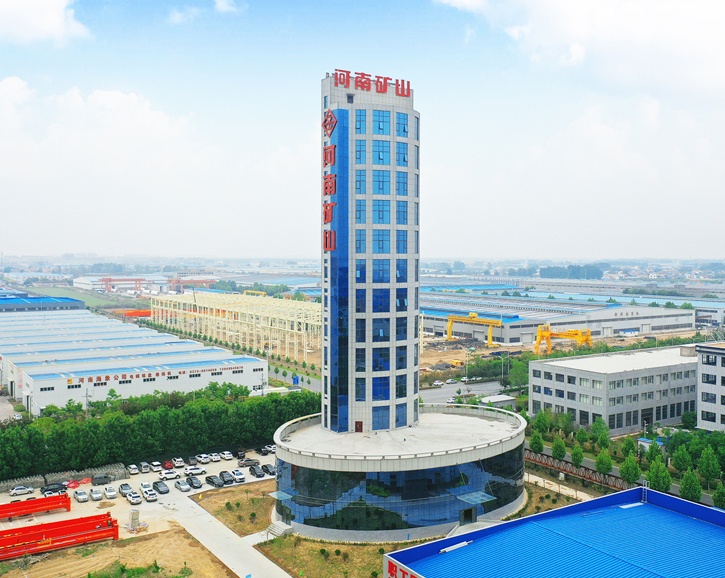
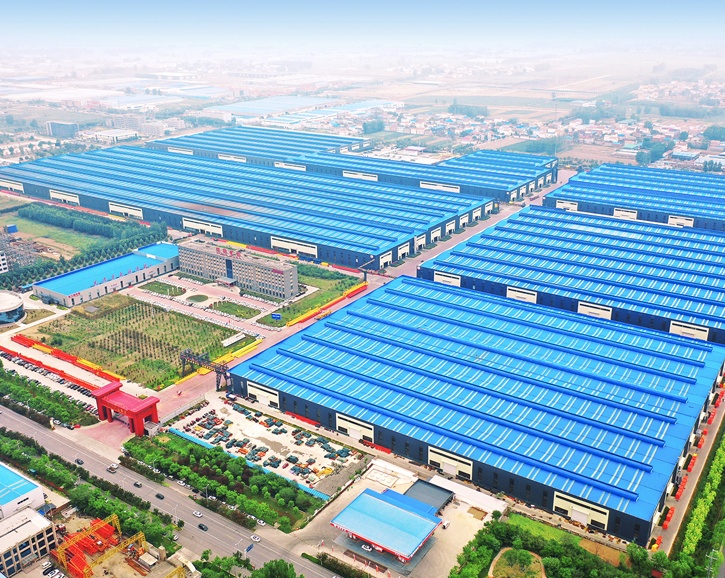
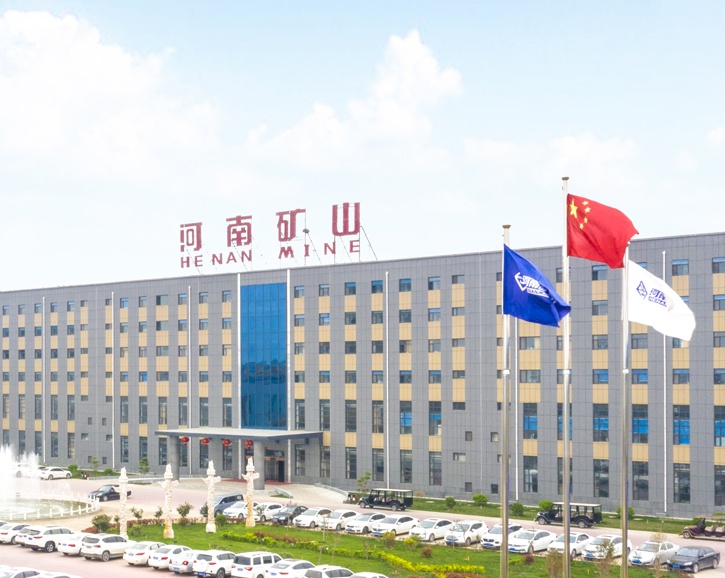
    Aerial view of Intelligent Industrial Park

    Konecranes Product Matrix

    Relying on the global R&D system, Konecranes mainly focuses on standardized industrial lifting equipment and high-end port equipment, and is equipped with perfect equipment operation and maintenance, upgrading and transformation, testing and maintenance services.

    The core strengths of the brand focus on standardized heavy-duty industrial cranes and large port terminal equipment, with a high degree of product standardization and strong universal adaptability overseas, and a high popularity rate in high-end port projects and large-scale heavy industry projects around the world.

    In addition to hardware equipment, the brand focuses on the layout of the whole life cycle of equipment services, covering equipment maintenance, old equipment renovation, system upgrades, operation and maintenance training and other ancillary services.

    Procurement of real comparison of the core

    Procurement does not need to compare the brand’s overall number of categories, focusing on verifying whether the manufacturer has its own project requires the exclusive models and mature technology solutions. General standardized projects, both can be adapted; non-standard customized, subdivided special conditions, small and medium-sized port projects, the adaptability gap will be significantly opened.

    At the same time, it is necessary to distinguish the project attributes, standard normal operation, the pursuit of brand recognition can focus on global brands; the pursuit of accurate adaptation of working conditions, customized transformation, cost-effective complete sets of solutions, can focus on reference to domestic head manufacturing brands.

    Comparison of Industry Scenario Adaptability

    Different brands have their own technical accumulation and project experience, so it is more reliable to select the model in combination with the industry to which the project belongs than simply comparing the brand awareness.

    Henan Mine Crane’s advantageous scenarios

    In steel metallurgy, petrochemical, warehousing and logistics, aviation support, new material processing and other industrial fields, Henan Mine Crane has more experience in project implementation.

    For high temperature, explosion-proof, insulation, dust corrosion, space limitations and other non-standard complex working conditions, the brand can quickly complete the equipment customization, structural optimization, protection upgrades, and accurately match the lifting needs of the segmented scenes.

    Various types of small and medium-sized industrial plants, yards, inland waterway terminals, customized lifting projects, the brand’s working conditions to adapt to the degree of flexibility and landing.

    Advantageous scenarios for Konecranes

    Large ocean port terminals, standardized heavy-duty industrial bases, and global industrial chain projects are more suitable for Konecranes.

    These projects highly value equipment standardization, globally unified operation and maintenance service system, international brand recognition, and long-term stable equipment reliability, which are also the brand’s core strengths.

    For multinational enterprise projects that have high requirements for equipment universality, brand endorsement, and standardized services throughout the life cycle, the brand is more adaptable.

    Scenario adaptation is prioritized over brand scale

    The large scale and high popularity of globalized brands do not mean that they are suitable for all segmented working conditions. Many niche special lifting scenarios, niche customization needs, large standardized brands are difficult to do accurate adaptation.

    Only suppliers that fit their own industry conditions, can solve the actual lifting problems, and have a large number of similar cases on the ground can guarantee the long-term stable operation of the equipment.

    Henan Mine Crane and Konecranes precise selection method

    If you want to choose the right equipment for your project, you need to go beyond the inherent brand perception and start from the actual needs of the project and make a comprehensive comparison in multiple dimensions.

    Benchmarking the technical advantages of exclusive models

    Don’t just look at the overall publicity on the brand’s official website, but focus on checking the exclusive technical introduction, parameter configuration, and working conditions of the required model, and compare whose technical program is more suitable for your project.

    Verify the project cases in the same industry

    Focus on verifying the manufacturers in the steel manufacturing, shipbuilding, port terminals, chemical plants, special working conditions of the real landing cases, the more cases of similar projects, the more mature equipment adaptability.

    Evaluation of professional engineering docking ability

    High-quality suppliers will not directly apply the standard model offer, will be combined with the customer site drawings, operating procedures, environmental parameters, optimize the equipment configuration, to give rationalization of the selection of recommendations, to avoid the late adaptation of hidden problems.

    Comparison of a full set of standardized technical data

    Regular manufacturers can provide a full set of information such as general drawing, wheel pressure parameters, electrical schematic diagrams, list of core parts brands, operation and maintenance manuals, test reports, qualification certificates, etc., to meet the needs of overseas acceptance and customs clearance.

    Check the whole process service system

    Compare one by one the service contents of installation guidance, machine commissioning, personnel training, spare parts supply, equipment maintenance, fault repair, equipment upgrading, etc. A complete service system can significantly reduce the project operation and maintenance costs.

    Focus on the value of the whole life cycle rather than a single offer

    Low-priced equipment, if there is a working level of shrinkage, inadequate protection configuration, lack of services and other issues, the later failure rate and operation and maintenance costs will increase significantly. Selection requires comprehensive consideration of equipment quality, adaptability and long-term service capabilities.

    Crane Suppliers|Henan Mine Crane

    Pursuit of Excellence

    Frequently Asked Questions

    Is it better to choose Henan Mine Crane or Konecranes for Overhead Cranes?

    Both brands can be stably adapted to regular standardized plant overhead cranes. If it is a non-standard special Overhead Crane project such as chemical industry, metallurgy, explosion-proof, insulation, etc., Henan Mine Crane’s customized adaptability is more flexible; for multinational standardized industrial projects and scenarios with high requirements for brand endorsement, Konecranes is more advantageous.

    Which brand of gantry cranes has stronger overall strength?

    Small and medium-sized non-standard gantry equipment, outdoor complex working conditions customized projects, Henan Mine Crane adaptability is higher; large-scale standardized heavy-duty gantry projects, overseas standardized yard projects, Konecranes equipment versatility and stability is more in line with the needs.

    Which one is more suitable for port Crane projects?

    For large ocean ports and standardized container terminal projects, Konecranes is preferred because its large port equipment technology and global service system are more mature. For inland small and medium-sized ports and customized port equipment projects, Henan Mine Crane has more advantages in terms of on-the-ground adaptability and cost-effectiveness.

    Do you prioritize brand reputation or project suitability?

    Priority is given to project suitability. Brand reputation only proves the overall scale and market recognition, but does not represent the adaptability of a single project. The best choice is the equipment that meets the lifting needs on site, has similar cases on the ground, and matches the technical program.

    What technical information should be requested from the manufacturer before finalizing the cooperation?

    You can ask for the general drawing of the equipment, electrical schematic diagram, wheel pressure load data, the list of core parts brands, factory test reports, equipment operation and maintenance manuals, qualification certificates, similar project case information.

    Which is more important, price, service or technical support?

    Short-term small-scale projects can moderately refer to the procurement price, medium and long-term industrial projects, large-scale special equipment projects, technical suitability and long-term service is the highest priority. Technical mismatch will lead to the equipment can not be used, the lack of service will significantly increase the later operation and maintenance costs.

    Can both brands undertake special crane projects?

    Both can undertake special lifting projects, but with different focuses: Henan Mine Crane is good at non-standard customized special equipment, adapting to all kinds of subdivided and complex working conditions; Konecranes is good at standardized high-end special equipment, adapting to standardized and standardized high-end industrial scenarios.

    Summary

    Henan Mine Crane and Konecranes are both highly recognized lifting equipment suppliers in the global market, with mature production system and project landing ability, there is no absolute advantage and disadvantage.

    Henan Mine Crane as a domestic head manufacturing brand, the core advantage is focused on non-standard customization, detailed and complex working conditions, cost-effective complete sets of solutions, flexible project landing services, suitable for all kinds of small and medium-sized large-scale industrial non-standard projects, inland waterway ports, special working conditions projects.

    Konecranes, as an established global brand, has advantages in standardized high-end equipment, mature port solutions, and globally unified brand service system, which is suitable for large-scale standardized heavy industry, ocean ports, and multinational industrial projects.

    The core logic of procurement selection is to abandon the brand stereotypes, and match the most suitable suppliers according to their own equipment types, working conditions, customized needs and service expectations. The brand that fits the actual needs of the project and can provide long-term stable support is the best choice.

    Comparing the two brands can not determine the selection program? You can provide the type of equipment, lifting tonnage, span, lifting height, operating environment and project drawings, we can help you sort out the exclusive selection of the comparison list, accurate matching of the appropriate program.

    Henan Mine CraneDiscuss your requirements ↗
  • Henan Mine Crane vs Henan Weihua: Which Crane Supplier Fits Your Project Better?

    Henan Mine Crane vs Henan Weihua: Which Crane Supplier Fits Your Project Better?

    Henan Mine Crane vs Henan Weihua: Which Crane Supplier Fits Your Project Better?

    In the global industrial lifting equipment procurement market, Henan Mine Crane and Henan Weihua are two Chinese crane manufacturers with the highest frequency of consultation and comparison with overseas customers. Both companies are rooted in Henan lifting industry base, plowing the industry for many years, with large-scale production capacity, product categories covering most of the industrial lifting scenarios.

    Many overseas engineers, terminal factories and traders are in a dilemma when choosing a model. The evaluation of various brands on the market is uneven, and most of the comparisons are either black or white, but there is no absolute advantage or disadvantage in the actual industrial procurement.

    Both brands are positioned in the full range of industrial crane suppliers, the core product line is highly overlapping, covering Overhead Crane, Gantry Crane, Harbor Crane and other mainstream equipment.

    The real key to selection, not in which brand overall strength is stronger, but in which products, technology, engineering services, industry cases more closely match the specific project conditions. Different industries, loads, working conditions, customized needs of the project, the appropriate brand is very different.

    This article stands in the neutral procurement selection point of view, from the applicable project type, procurement of core requirements, product system, industry suitability, technical parameters, supplier service capabilities and other dimensions, a comprehensive comparison of the two brands of Crane Mine Crane vs Henan Weihua, to help overseas customers accurately screen for their own projects to adapt to the crane manufacturers.

    Henan Mine Crane VS Weihua Crane

    Usually compare the two brands of project types

    The vast majority of customers compare Henan Mine Crane and Weihua Crane at the same time, basically to undertake medium and large-scale industrial infrastructure, plant renovation, port support, special industrial lifting projects. This type of project on equipment compliance, customization capabilities, full engineering services have hard requirements, will not arbitrarily choose a niche brand.

    Comprehensive Comparison of Product Systems of Two Major Brands

    Henan Mine Crane and Weihua are both full range of lifting equipment manufacturers, covering general-purpose, heavy-duty, special, port full range of models, but the two brands of products focus on slightly different, suitable for different mainstream scenarios.

    Henan Mine Crane Product Matrix

    Henan Mine Crane’s core focus on all kinds of standard and non-standard Overhead Cranes, gantry cranes, supporting electric hoists, the basic general-purpose models have a complete range of categories and specifications, which are suitable for most of the conventional industrial plants.

    At the same time, the brand is deeply engaged in many types of special customized cranes, the launch of metallurgical cranes, explosion-proof chemical cranes, insulated cranes, logistics and warehousing special lifting equipment, highly adaptable to the segmented industrial scenarios.

    In the field of port equipment, the brand has mature port gantry cranes, dock transfer crane product system, which can be adapted to small and medium-sized ports, inland waterway terminals, yards of cargo transfer operations.

    Henan Weihua Weihua Crane Product Matrix

    Weihua also has a complete bridge, gantry, electric hoist general product system, small and light lifting equipment, conventional industrial cranes, large-scale mass production, market coverage.

    The brand focuses on large-scale heavy-duty equipment and a full set of port equipment, covering RTG, RMG, STS, gantry cranes, straddle carriers and other large port terminal equipment, large gantry heavy-duty models in a variety of categories.

    In addition, the brand has a complete range of ancillary services, and can provide casting special cranes, heavy industry ancillary equipment to meet the needs of large-scale heavy industry, large-scale infrastructure projects and complete sets of procurement needs.

    The core comparison focus of customer selection

    Procurement comparison need not be purely obsessed with the number of product categories, the two major manufacturers of category coverage is comprehensive enough. The key is to check whether the manufacturer has the corresponding project exclusive models, mature programs and landing cases.

    For example, for explosion-proof chemical industry, aviation new materials, logistics and warehousing projects, the key is to check the customized cases of mining; for large port terminals and large-span heavy-duty infrastructure projects, the key is to refer to Weihua’s experience in landing large-scale equipments.

    Henan Mine Crane VS Weihua Crane

    Comparison of Industry Scene Adaptability

    The overall scale of the brand does not represent the adaptability of a single project, and the differences in working conditions in different industries determine the selection advantage zones of the two brands. Combined with the official positioning of the two brands and the global landing projects, we can clearly divide the adaptability of the scene.

    Scenarios where Henan Mine Crane has more advantages

    Henan Mine Crane has been focusing on steel metallurgy, petrochemical, logistics and warehousing, aerospace, new materials and other industry segments for a long time, and mainly focuses on fine customized lifting solutions.

    For chemical explosion-proof, high-temperature metallurgy, dust-free workshop, new materials, powder, lightweight aerospace support and other precision, special working conditions, the brand’s equipment modification, protection upgrades, non-standard customization experience is more abundant, suitable for small and medium-sized special industrial projects.

    Conventional plant, warehousing, processing workshop standard Crane project, equipment cost-effective, adaptability of working conditions also has a stable advantage, suitable for the pursuit of fine adaptation, segmented scene customization of overseas customers.

    Weihua more advantageous scenes

    Weihua’s advantages are concentrated in large-scale heavy-duty industrial projects, large-span gantry crane projects, standardized port equipment, mainly in the field of large-scale engineering solutions.

    The brand is more complete in the overall project design, equipment upgrading, on-site installation and commissioning, later operation and maintenance training and other ancillary services, which is suitable for large-scale heavy industry bases, large ports and terminals, large-scale infrastructure projects, complete sets of procurement.

    Henan Mine Crane and Weihua Final Selection Methods

    Neutral and objective selection method is not to compare the overall strength of the brand, but to standardize the precise fit of the project, combined with a number of core dimensions to make a comprehensive judgment.

    Benchmarking the technical advantages of exclusive models

    Open the official product pages of the two brands, focus on checking the exclusive introduction of the corresponding procurement models, technical parameters, working conditions and adaptations, and compare whose program is more suitable for their own projects, rather than just looking at the brand home page publicity.

    Verification of cases in the same industry

    Focus on verifying the manufacturers in the steel mills, shipyards, port terminals, mining yards, special industrial scenarios of the real landing projects, the more similar cases, on behalf of the more mature equipment condition suitability.

    Evaluation of professional engineering docking ability

    High-quality suppliers will not directly apply the standard model offer, but combined with customer drawings, working conditions, operational needs, optimize the equipment program, give rationalization of the selection of recommendations, to avoid the fitness of the hidden problems.

    Compare the integrity of the full set of technical data

    Regular manufacturers can provide a full set of information such as general drawing, wheel pressure parameters, electrical schematic diagram, parts list, operation and maintenance manuals, test reports, compliance certificates, etc., which can fully meet the requirements for acceptance and customs clearance of overseas projects.

    Verify the whole process service scope

    Confirm whether the manufacturer can provide full-process services such as program design, manufacturing, delivery, on-site installation guidance, machine commissioning, personnel training, and post maintenance, etc. A complete service system can significantly reduce the difficulty of project landing.

    Focus on the full life cycle value, rather than a single offer

    Low-priced equipment, if the work level is insufficient, protection configuration shrinkage, lack of after-sales service, the failure rate, operation and maintenance costs will increase dramatically. Selection needs to take into account the quality of the equipment, adaptability, service capabilities, taking into account the value of long-term use.

    Frequently Asked Questions

    Is it better to choose Henan Mine Crane or Weihua for Overhead Crane?

    For regular Overhead Cranes in general plants and warehouses, the quality and stability of both brands can meet the demand. If it is chemical explosion-proof, metallurgical high temperature, new materials segmentation conditions, Henan Mine Crane’s customized solutions are more suitable; large-scale heavy-duty standardized plant projects, both can be adapted.

    Which brand of gantry crane is stronger?

    Small and medium-sized conventional gantry equipment, the gap between the two is very small. Ultra-large span, ultra-heavy, port supporting gantry projects, Weihua large-scale projects have more experience; outdoor subdivision of anti-corrosion, non-standard customized gantry equipment, Henan Mine Crane adaptability is more flexible.

    Which one has more complete categories of special cranes?

    Henan Mine Crane in explosion-proof, insulation, metallurgy, dust-free, logistics special sub-division of special cranes on the category is more refined; Weihua in the large casting, port special equipment on the category is more complete, each has its own sub-division advantages.

    Is brand size or project suitability the priority for comparison?

    Priority project suitability. Brand size represents the overall capacity, does not represent the adaptability of a single project. The optimal choice is the manufacturer that fits its own working conditions, has the same kind of landing cases, and matches the technical program.

    What information do I need to request from the manufacturer before finalizing the cooperation?

    You can ask for the general drawing of the equipment, electrical schematic diagram, wheel load data, parts list, factory inspection reports, equipment operation and maintenance manuals, compliance certificates, similar project case information.

    Which is more important: price, service or technical support?

    For short-term projects, the price can be moderately referred to, while for medium- and long-term industrial projects, technical suitability and long-term service are given higher priority. Technical mismatch will directly lead to the equipment can not be used, the lack of after-sales will increase a lot of operation and maintenance costs.

    Can both brands undertake harbor and industrial Crane projects?

    Both have the production and delivery capacity of industrial cranes and harbor cranes; Henan Mine Crane is more suitable for small and medium-sized ports, inland waterway terminals, and industrial yard equipment; Weihua is more suitable for large-scale ocean ports, and large-scale terminal set equipment projects.Henan Mine Crane VS Weihua Crane


    Summarize: Henan Mine Crane and Henan Weihua Crane

    Henan Mine Crane and Henan Weihua, as the leading crane manufacturers in China, have the ability to produce all kinds of equipment, deliver large-scale projects, and provide compliance services, and there is no absolute difference between their advantages and disadvantages.

    Overall, Henan Mine Crane is better at segmented industrial scenarios, special customization, explosion-proof metallurgy, logistics and aviation projects; Weihua has outstanding advantages in large-scale heavy-duty infrastructure, standardized port equipment, and full-process engineering services.

    The core logic of overseas procurement selection is to abandon the brand curing cognition, to project conditions, technical parameters, customized needs, long-term service as the core criteria, matching the most suitable suppliers. The most well-known brand may not be the most suitable brand for the project.

    If you are comparing the two brands, can not accurately determine the model suitability, you can provide the type of equipment, tonnage, span, lifting height, operating environment and project drawings, we will provide you with an exclusive comparison of the selection program, to avoid selection errors.

    Henan Mine CraneDiscuss your requirements ↗
  • Heavy Industry EOT Cranes: Selecting Soft-Start and VFD Control Modules

    Heavy Industry EOT Cranes: Selecting Soft-Start and VFD Control Modules

    Heavy Industry EOT Cranes: Selecting Soft-Start and VFD Control Modules

    Bridge cranes (EOT cranes) are the core handling equipment of heavy industries such as steel, casting, machining, logistics and warehousing. Their operating safety, stability and service life are directly related to factory production efficiency and operation and maintenance costs, and the motor control system is the core key to determining the operation quality of the crane.

    Soft start and VFD frequency conversion are the two mainstream electronic control solutions for heavy industry EOT cranes, and the two are adapted to different working conditions.Improper selection can easily cause load shaking, inaccurate positioning, accelerated wear of components, and increase failure rate and operation and maintenance costs.

    This article analyzes the working principle, core differences and adaptation working conditions of the two control modules in depth, explains the application value of high-end motion control in detail, organizes a full set of selection standards, pit avoidance points and operation and maintenance plans, and provides professional and landing selection reference for industry engineers, equipment managers and purchasing personnel.

    What Are Soft-Start and VFD Control Modules?

    Both soft start and VFD frequency conversion control are intelligent control solutions for crane motors. The core role is to replace the traditional direct start mode and avoid the electrical and mechanical shocks caused by hard start, but there are essential differences in the control logic, functional range, and operating capabilities of the two.

    Soft-Start Control for EOT Cranes

    The soft-start controller is an electronic control equipment optimized for the start-up phase of the motor. The core adopts thyristor (SCR) voltage regulation technology, which does not change the power supply frequency, but only adjusts the motor input voltage step by step, gently increasing the motor torque and operating speed, completely abandoning the traditional start-up mode of full pressure and full torque at the moment of direct start.

    During the start-up process of the equipment, the soft starter will start from a preset initial voltage (usually 30%-60% of the rated voltage), and gradually boost to the rated voltage within an adjustable time of 1-30 seconds, allowing the motor to speed up smoothly to the rated speed.

    This working mode brings two core improvements: one is to significantly reduce the start-up current, reducing the traditional direct start 6-8 times the rated current to 2-4 times, avoiding power grid voltage fluctuations and impact on the precision electrical equipment in the plant; the second is to eliminate instantaneous torque shocks and significantly reduce the mechanical vibration and shock of the crane transmission structure.

    The soft-start control structure is simple, the operation is stable, and there is no need for complex programming. It is mainly suitable for standard EOT cranes with simple motion logic and fixed speed operation to meet the needs of basic smooth start and stop operations. It is a cost-effective control solution for lightweight and conventional cranes.

    VFD Control for EOT Cranes

    VFD inverter drive is a high-end motor control equipment for all working conditions and all periods of time, with a control dimension far beyond soft start.Its working principle is: first convert the power frequency alternating current into direct current, and then synthesize the adjustable frequency and adjustable voltage alternating current through inverter technology. By synchronously adjusting the voltage and frequency, the motor’s speed, torque, acceleration and deceleration are accurately controlled, and the crane’s full operating cycle is refined and controlled.

    Compared with the soft-start technology that only optimizes start-up, VFD frequency conversion control can fully cover the entire operating process of the crane. With the advantages of stepless speed regulation, precise positioning, and intelligent braking, it is adapted to the three major motor mechanisms of the whole machine, effectively eliminating equipment shaking, positioning offset, start-stop caton and other working conditions. Problems.

    With the decline in the cost of frequency conversion technology and the upgrading of industrial production accuracy, VFD has become the standard configuration of EOT cranes for heavy-duty, high-frequency and high-precision operations, and is widely used in high-end heavy industry scenarios such as steel smelting, precision casting, and heavy machinery assembly.

    Why Heavy-Duty EOT Cranes Need Advanced Motion Control

    EOT cranes in heavy industry scenarios generally have the characteristics of large tonnage, high load, and high frequency operation. Frequent start and stop, heavy-duty movement, and precise hoisting are the norm. Traditional hard start and simple control modes can easily cause safety hazards and equipment loss.Equipped with soft start and VFD high-end motion control system, it is the core means to ensure the safe, efficient and long-term operation of heavy industry cranes.

    Improve job safety

    When the crane starts, stops, and shifts speed, it is easy to produce a load pendulum effect. The shaking of heavy objects will not only slow down the rhythm of the operation, but may also collide with equipment and workpieces, causing safety accidents.Under conventional control mode, instantaneous torque mutation is the core cause of load shaking.

    The controllable acceleration and deceleration functions of soft start and VFD can completely avoid instantaneous power shocks. Among them, VFD can further optimize the motion curve through a programmable anti-shake algorithm, minimize load swing, and allow heavy objects to start and stop smoothly and move smoothly, thereby reducing the safety risks of heavy lifting operations from the root cause.

    Buffer mechanical impact

    Crane gears, brakes, wire ropes and other core components are affected by the instantaneous torque of start and stop for a long time, and they are easy to wear and age.The traditional direct start method will exacerbate mechanical stress loss, increase the probability of component damage and equipment operation and maintenance costs.

    The high-end motion control system can realize a smooth transition of torque, evenly disperse the mechanical stress to the transmission structure, greatly reduce the wear strength of each component, effectively extend the service life of the crane’s mechanical structure and core accessories, and reduce the frequency of downtime and maintenance.

    Improve positioning accuracy

    Heavy loads such as steel coils, molten metal ladles, large molds, heavy machinery and equipment have extremely high requirements for hoisting and positioning accuracy. Small positioning deviations can lead to workpiece damage, assembly errors, and even major production accidents.

    Relying on the VFD stepless low-speed fine-tuning function, the crane can achieve precise alignment at the end, solve the problems of high-speed start-stop and inertial offset of traditional equipment, and perfectly adapt to high-end heavy industry scenarios such as precision pouring, heavy-duty assembly, and precise steel palletizing, greatly improving the operation pass rate.

    Optimize the operating environment

    Cranes without intelligent control are frustrated when starting and stopping, and the load is shaking violently. The operator needs to frequently correct the position, the labor intensity is high, and the operating stability of the equipment is poor, which can easily cause misoperation.Soft start and VFD control can achieve smooth and controllable operation of the equipment, no sudden start and stop, no uncontrolled shaking, greatly reducing the probability of operator errors, and ensuring the safety of on-site personnel and equipment.

    Soft-Start Control Modules: When Are They the Better Choice?

    With the advantages of simple structure, high cost performance, and convenient operation and maintenance, the soft-start controller is still the mainstream choice for EOT cranes under standard operating conditions, and it is accurately adapted to conventional, lightweight, and fixed-speed hoisting operations.

    Core advantage

    1. Suppress the start-up inrush current: effectively suppress the instantaneous high current of the motor start-up, avoid the voltage fluctuations of the power grid, protect the stable operation of precision electrical equipment in the factory, and reduce the load impact of the power grid.;
    2. Weaken the impact of mechanical start and stop: realize the gentle output of motor torque, buffer the instantaneous stress of crane transmission system, significantly reduce the fatigue and wear of mechanical components, and reduce the frequency of equipment failures;
    3. The system is simple and stable: the control logic is simple, no complex program debugging is required, the equipment failure rate is low, and the adaptability is strong, which greatly simplifies the daily operation and maintenance work.;
    4. The comprehensive cost advantages are obvious: the cost of equipment procurement, installation and commissioning is lower, and the matching of new machines and the transformation of old equipment adapted to most standard working conditions take into account performance and economy.

    Adapt to crane working conditions

    1. It is suitable for light and medium-sized EOT cranes under standard working conditions, and is mainly suitable for conventional handling and intermittent operation scenarios in the workshop.The frequency of equipment operation is low, the load fluctuation is small, and the start-stop interval is long. There is no need for long-term continuous high-intensity operation. The soft start is sufficient to meet the needs of stable start-stop and conventional handling.
    2. The equipment adopts a constant speed operation mode throughout the process, and the operation process is fixed and single. There is no need for refined speed control functions such as stepless speed regulation, low-speed fine-tuning, and variable-speed switching. Conventional uniform speed start and stop can complete all the moving procedures.
    3. The hoisting and positioning accuracy requirements are moderate, and the fault tolerance space is large. There is no need for precision processes such as precise alignment and fine-tuning of the end at low speed. Relying on manual operation and mechanical braking, the conventional positioning standards can be met, and there is no high-precision assembly, precision pouring and other demanding working conditions.
    4. It is suitable for the basic control of the walking mechanism with simple motion logic and stable load such as cart walking and trolley running horizontally. It only needs to start and stop smoothly and move at a uniform speed. There is no need for complex curve control and anti-swing speed regulation functions, and the degree of matching of working conditions is extremely high.

    Core limitations

    1. Lack of speed regulation ability throughout the process: soft start is only responsible for the voltage regulation during the start-up phase, and the motor will run at constant full speed after the start-up is completed. It does not have the ability to adjust the speed and deceleration in the middle of the process, and the operating mode is single.;
    2. Insufficient flexibility of motion control: it only supports fixed start-stop logic, cannot adapt to complex variable-speed operation curves and dynamic operating condition adjustments, and can only meet the basic and simple start, restart and stop operation requirements.;
    3. The positioning accuracy of the operation is limited: the low-speed precise fine-tuning function is missing, and the final alignment of the equipment is completely dependent on manual experience operation and mechanical braking. It is prone to inertial offset and positioning deviation, which cannot meet the needs of precision hoisting.;
    4. Weak adaptability to heavy-duty and high-frequency operating conditions: For high-frequency start-stop and continuous heavy-duty operating modes in heavy industry scenarios, soft-start cannot continuously and stably control the temperature, which can easily cause motor overheating and equipment overload failure. It is not suitable for high-intensity and high-load continuous production conditions.

    Selection conclusion: Soft start is the best cost-effective solution only when the crane does not require variable speed, low positioning requirements, and general operating intensity; once precision, heavy-duty, and high-frequency operations are involved, soft start cannot meet production needs.

    VFD Control Modules: When Should You Choose a VFD?

    VFD frequency conversion control is the core configuration of heavy-duty, high-precision and automated EOT cranes. With the ability of refined control of the whole process, it solves many pain points of traditional control solutions and adapts to the complex working conditions of high-end heavy industries.

    Global precision speed regulation

    VFD supports stepless speed regulation in all dimensions of crane lifting, descending, traversing, and walking. The speed can be customized according to the operation stage: long-distance handling adopts high-speed operation to improve efficiency, and the end alignment is switched to low-speed fine-tuning to ensure accuracy, which perfectly matches the operation needs of different loads and processes, taking into account efficiency and safety.

    Programmable smooth acceleration and deceleration

    High-precision load positioning

    VFD’s ultra-low steady-speed operation ability can achieve millimeter-level precise alignment, completely solving the problems of inertial sliding and load offset.In scenarios such as steel smelting, casting mold hoisting, heavy equipment assembly, and steel structure finishing, the hoisting accuracy and operation pass rate can be greatly improved, and the operation efficiency of ordinary control equipment can be increased by more than 60%.

    Optimize motor performance

    VFD can dynamically match the output power of the motor according to the real-time load, avoiding the waste of energy in the no-load and light-load operation of the motor at full speed.It should be emphasized that the energy-saving effect depends on the operating conditions of the equipment: cranes with frequent variable speed and intermittent operation have a significant energy-saving effect, and equipment with long-term constant operation at full speed has limited energy-saving space. The core value of VFD is still focused on control performance rather than energy saving.

    Intelligent diagnosis linkage

    Modern industrial VFD has perfect fault monitoring, overload protection, abnormal voltage protection, and motor overheating protection functions. It can monitor the operating status of equipment in real time, quickly investigate faults and warn of hidden dangers.At the same time, it supports PLC system linkage, industrial communication docking, and programmable parameter storage, which can be seamlessly integrated into intelligent factory automation production lines and adapted to the needs of modern heavy industry intelligent manufacturing.

    Soft-Start vs. VFD for EOT Cranes: Key Comparison

    In order to facilitate quick selection, the following intuitively compares the core differences between the two control schemes of soft start and VFD frequency conversion from the dimensions of core performance, operating performance, system characteristics, input cost and adaptability to working conditions:

    1. Start-up current suppression ability: Both soft start and VFD can efficiently suppress the motor start-up inrush current, effectively avoid sudden drops in the power grid and electrical disturbances, and ensure the stable operation of the plant’s power distribution system. The performance of the two is comparable.
    2. Full speed regulation and control performance: Soft start only supports voltage regulation during the start-up phase, and the equipment runs at a constant speed after steady speed, without speed regulation capability; VFD has the function of stepless speed regulation throughout the process, which can dynamically match various operating speed requirements to achieve refined speed control under all working conditions.
    3. Acceleration and smooth performance: soft start can achieve smooth start, effectively weakening the start-up impact; VFD supports custom programmable acceleration curves, which can flexibly speed up according to load and equipment characteristics, and the operation is smoother and more controllable.
    4. Hoisting positioning accuracy: soft-start positioning accuracy is medium, the final alignment is highly dependent on manual operation and mechanical braking, and the fault tolerance rate is low; VFD supports low-speed fine-tuning and precise position control, which can meet high-precision processes such as heavy industry precision hoisting and end alignment.
    5. System adaptation flexibility: the soft-start control logic is fixed, the function is single, and the system is generally scalable; VFD supports programmable parameters and customizable operating modes, which can be adapted to multiple conditions and multi-device linkage, and the system is extremely flexible and compatible.
    6. System control complexity: the soft-start architecture is simple, the debugging is simple, the operation and maintenance threshold is low, and the adaptation to basic working conditions is quickly implemented; the VFD functional system is comprehensive and rich, and targeted parameter debugging and working condition adaptation are required, and the overall control complexity is higher.
    7. Initial input costs: soft-start procurement, installation, and commissioning costs are low, cost-effective, and suitable for standardized projects with controllable budgets; VFD hardware costs, system integration, and commissioning costs are higher, and the initial investment in equipment is relatively larger.
    8. Intelligent diagnosis and protection: soft start only has the basic fault warning function, and the monitoring dimension is limited; industrial-grade VFD integrates a full set of intelligent systems such as fault self-inspection, overload protection, abnormal voltage protection, and equipment status early warning, which has higher operation and maintenance safety.
    9. Adaptability to heavy-duty working conditions: soft start is only suitable for light and medium-load conventional working conditions, and cannot be adapted to harsh production scenarios with high-frequency start-stop and continuous heavy loads; VFD is specially designed for heavy-duty and complex working conditions, which can be stably adapted to the continuous operation requirements of large tonnage, high precision and high load.

    In summary, there is no absolutely optimal control scheme, and the scheme adapted to the working conditions is the best choice. It needs to be combined with the crane’s working level, load characteristics, motion requirements, and operating environment to make a comprehensive determination.

    How to Select the Right Control Module for a Heavy-Industry EOT Crane

    Selection needs to abandon the thinking of single-parameter judgment, and comprehensively evaluate equipment working conditions, motion mechanism, hardware matching, operating environment, and safety standards in multiple dimensions to avoid selection errors.

    Approved tonnage and work grade

    First of all, clarify the rated load of the crane, FEM/ISO working level (A3 light load, A5 medium and heavy load, A7/A8 heavy load), the number of starts and stops per hour, and the continuous/intermittent operating mode.For light-load and low-frequency A3/A4-level cranes, soft-start can be fully adapted; for medium- and heavy-duty and high-frequency start-and-stop equipment A5 and above, VFD frequency conversion control must be used to avoid equipment overload and aging and frequent failures.

    Differentiated selection of extension institutions

    The working conditions of the three major mechanisms of crane lifting, trolley traversing, and cart walking are different, and there is no need for unified configuration. A hybrid selection scheme can be used to reduce costs and increase efficiency.:

    1. Lifting mechanism: carrying the core heavy load, the torque, braking, and positioning requirements are extremely high, and VFD must be equipped as standard to ensure stable, safe and accurate lifting of heavy loads.;
    2. Trolley rampant: VFD is selected for precision operation scenarios, and soft start can be selected for conventional fixed-speed handling.;
    3. Cart walking: ordinary workshops move at a uniform speed over long distances, and soft start can be satisfied. It is recommended to configure VFD for high-precision workshop transportation.
    4. Motor and controller parameter matching

    The selection cannot only refer to the motor power, but must fully match the rated current of the motor, the motor type, the rated voltage frequency, and the braking requirements.Focus on verifying the compatibility of the controller with the motor, brake, and control cabinet. In heavy-duty lifting scenarios, more than 150% of the overload torque needs to be reserved to adapt to the heavy-duty start-up requirements to avoid failures caused by small cars.

    Clarify the requirements for speed and positioning accuracy

    Fixed speed, ordinary handling, no need for precise alignment, priority is given to soft start; variable speed operation, terminal fine-tuning, precision alignment, and anti-shaking operations are required, and VFD frequency conversion control must be selected to give full play to its speed regulation and positioning advantages.

    Adapt to complex heavy industry operating environments

    There are harsh working conditions such as high temperature, dust, metal particles, high humidity, equipment vibration, and electromagnetic interference in heavy industry scenes such as steel mills and foundries.Conventional ordinary control cabinets cannot be adapted, and special electrical cabinets with up-to-standard protection, high temperature resistance, anti-vibration, and anti-interference must be selected for VFD and soft-start modules to avoid the failure and shutdown of the electronic control module caused by harsh environments.

    Verify safety and brake configuration

    The electronic control module is only an auxiliary control device and cannot replace the safety protection device.When selecting the model, it is necessary to match the core safety mechanisms such as emergency shutdown, overload protection, stroke limit, fail-safe braking, and emergency braking to ensure that the control system and the safety system complement each other and linkage to ensure the safety of lifting operations in all directions.

    Practical Selection Guide: Which Control Method Fits Your Crane?

    Select the soft start scenario

    If the following four types of working conditions are met, the soft-start control scheme can be preferred, taking into account practicality and economy.:

    • The operating conditions are fixed and single: the crane runs at a constant and uniform speed throughout the process, and the operating process is standardized. There is no need for refined control functions such as stepless speed regulation, low-speed fine-tuning, and dynamic variable speed. The basic start-stop and uniform speed operation can meet the production needs.;
    • The hoisting and positioning standards are loose: only smooth start-stop and conventional material placement need to be completed, and the hoisting fault-tolerant space is sufficient, and there is no need for rigorous and high-precision operations such as precision alignment, high-precision assembly, and refined pouring.;
    • Low operating load intensity: the equipment is mainly in intermittent and low-frequency operating modes, with few starts and stops, small load fluctuations, and no continuous heavy-duty, high-frequency start-and-stop high-intensity heavy-duty operation scenarios.;
    • Focus on equipment cost performance: The project adopts standardized equipment configuration, giving priority to electronic control solutions with simple structure, simple commissioning, convenient operation and maintenance, and low failure rate, so as to effectively control equipment input and operation and maintenance costs under the premise of meeting production needs.

    Choose the scene of VFD frequency conversion

    If any of the following working conditions are met, it is recommended to give priority to the VFD frequency conversion control scheme to adapt to the needs of high-precision, high-strength, and intelligent heavy industry operations.:

    • Variable speed is required for refined operation: the operation process requires high and low speed switching, low-speed fine-tuning at the end, and stepless speed regulation control. It is impossible to rely on a fixed speed to complete the precision hoisting process.;
    • The positioning accuracy requirements are strict: it involves high-precision scenarios such as heavy-duty mold assembly, precision pouring, and precise steel alignment, and the control standards for hoisting drop point error and load offset are extremely high.;
    • High-frequency heavy-duty operating conditions: the crane has a high working level, intensive equipment start-stop frequency, long-term continuous heavy-duty operation, and strict requirements for motor torque output, heat resistance and compression resistance of the equipment, and continuous stability.;
    • Anti-shaking safety standards are high: hoisting precious, vulnerable, and high-precision workpieces, load shaking is not allowed, and it is necessary to rely on frequency conversion and smooth curve control to suppress the swing to avoid collision loss and safety risks.;
    • Adapt to intelligent automation upgrade: the workshop layout is intelligent production line, the equipment needs to be connected to PLC control system, industrial communication and automation linkage, and supports digital operation and maintenance scenarios with programmable parameters and traceable data.;
    • Complex scenarios of high-end heavy industry: suitable for harsh heavy industry operating environments such as steel smelting, casting processing, heavy equipment assembly, and large-scale steel structure finishing.
    • Scenarios for optimal hybrid solutions

    In view of the differences in the operation of different crane mechanisms, a VFD+ soft-start hybrid scheme can be used to accurately adapt to differentiated conditions and balance performance and cost. It is a cost-effective choice for small and medium-sized heavy industry workshops. The specific adaptation criteria are as follows:

    • The lifting mechanism is equipped with VFD frequency conversion: The lifting mechanism undertakes the core heavy-duty lifting tasks, and has extremely high requirements for smooth operation, braking safety, and positioning accuracy.Equipped with VFD, it can realize flexible start and stop of heavy loads, stepless speed regulation and precise alignment of the ends, effectively eliminate the hidden dangers of heavy-duty shaking, offset, and impact, and ensure the safe and precise operation of the core processes.
    • The walking mechanism is equipped with soft start: most of the walking mechanisms of carts and trolleys are for long-distance transportation at uniform speed, the working conditions are fixed, the control requirements are simple, and there is no requirement for high-precision fine-tuning.Adapt to soft start to achieve a smooth start and stop, meet the basic operation needs, and significantly reduce the overall equipment procurement and commissioning costs.
    • Outstanding comprehensive application advantages: The hybrid scheme distinguishes the core heavy-duty precision mechanism from the conventional walking mechanism in a targeted manner, which not only guarantees the safety and accuracy of key operating links, but also avoids the performance redundancy and cost waste caused by the configuration of the whole machine VFD, and is perfectly adapted to the complex operation scenarios of conventional heavy-duty and standard transportation in small and medium-sized factories.

    Conclusion

    There is no distinction between soft start and VFD frequency conversion. It needs to be scientifically selected in combination with the crane’s operating condition level, control accuracy, and operating frequency.Soft start is suitable for light load, fixed speed, and standardized routine operations;

    VFD is more suitable for harsh working conditions with heavy loads, high frequencies, high precision and high stability.The selection and upgrading of enterprise equipment needs to abandon the misunderstanding of blindly high-allocation and low-cost allocation, and rely on scientific electronic control solutions to balance equipment operation safety, operating efficiency and input costs.

    Henan Mine Crane can customize professional crane electronic control solutions such as soft start and VFD frequency conversion according to equipment tonnage, work level and operation requirements to help the equipment operate efficiently and stably.If you need selection guidance and project quotation, welcome to consult and connect.

    Henan Mine CraneDiscuss your requirements ↗
  • Heavy Duty Pillar Jib Cranes: Motorized Slewing Drives for Heavy Fabrications

    Heavy Duty Pillar Jib Cranes: Motorized Slewing Drives for Heavy Fabrications

    Heavy Duty Pillar Jib Cranes: Motorized Slewing Drives for Heavy Fabrications

    In the fields of steel structures, pressure vessels, machinery, and shipbuilding heavy industries, the transfer and alignment of heavy workpieces is related to workshop efficiency, safety, and machining accuracy.The carrying capacity and positioning of light-duty spreaders are insufficient, making it difficult to operate with high frequency and heavy loads; bridge cranes are expensive and have poor flexibility, and are not suitable for fine hoisting of stations.

    The heavy-duty column jib crane comes with an independent landing base, large load and flexible working radius, and is equipped with an electric rotary drive, which can smoothly and accurately automatically complete the rotation and alignment of heavy-duty workpieces, and overcome the laborious manual rotation, inaccurate positioning, and low efficiency.This article explains its structure, rotation principle, application, selection, safety and procurement points in detail, and provides a professional basis for the selection of heavy factory equipment.

    What Is a Heavy-Duty Pillar Jib Crane?

    Heavy-duty column-type jib crane (floor-standing independent jib crane), facing heavy-duty high-frequency fixed stations, relying on independent ground columns and rotating boom frames, to achieve workpiece lifting, translation and alignment in circular/semicircular areas, suitable for heavy industry processing, assembly and maintenance stations.

    Compared with light-duty jib cranes, it has a higher rated load (conventional 5-10 tons, customized up to 15 tons), strengthened structure and rotary system, and can carry large special-shaped welded parts and mechanical parts without relying on plant walls or driving tracks, and has strong adaptability.

    Infrastructure 

    The overall structure of the heavy-duty column jib crane is simple, compact and extremely rigid. The five core components work together to ensure the stability and safety of heavy-duty operations.:

    • Self-supporting vertical column: it adopts thickened steel pipe or box-shaped welded steel structure, which is the core load-bearing body of the equipment, carrying all vertical loads and torsional moments.The bottom of the column is equipped with a thickened bottom plate, which is fixed to the reinforced concrete foundation by high-strength anchors, with strong overall rigidity and excellent deformation resistance.
    • Horizontal spiral arm (boom): I-beam, wide flange steel or customized box beam structure are mostly used to determine the working radius of the crane.The lifting trolley can walk horizontally along the boom to achieve radial displacement of heavy-duty workpieces, and the thickened and strengthened structure can effectively control the deflection deformation under heavy loads.
    • Hoist and walking trolley: equipped with electric wire rope or chain hoist, it is responsible for the vertical lifting of the workpiece; supporting manual or electric walking trolley, it moves smoothly along the spiral arm track, adapting to the needs of lifting operations of different tonnages and frequencies.
    • Slewing mechanism: The core moving parts are made of tapered roller bearings or large slewing bearing structures, and the supporting spiral arms rotate flexibly around the column. The self-supporting structure can achieve a maximum of 360° rotation without dead ends, smooth operation and strong bearing capacity.
    • Foundation and anchoring system: customized reinforced concrete load-bearing foundation, with high-strength anchoring bolts, can effectively resist overturning torque, vertical load and dynamic impact force in lifting operations, and eliminate safety hazards such as equipment shaking and offset.

    How Motorized Slewing Drives Work on a Heavy-Duty Jib Crane

    The rotary mechanism is the core moving part of the jib crane, which directly determines the positioning accuracy and operating efficiency of the workpiece.Compared with traditional manual slewing, the electric slewing drive system completely solves the problems of laborious operation, inaccurate positioning, and low efficiency in heavy-duty operations. It is the core configuration of heavy-duty jib cranes adapted to heavy-duty working conditions.

    Comparison of manual rotation and electric rotation

    Manual rotation relies on human push-pull or handwheel drive, and is only suitable for light-duty workpieces and low-frequency operations; under heavy-duty working conditions, the resistance is large, the labor intensity is high, and the workpiece is prone to shaking, inaccurate positioning, and high safety risks.

    The electric rotary automatically drives the boom through the motor reducer, without manpower. It has advantages in control accuracy, speed, positioning stability and efficiency. It can accurately adjust the angle of heavy-duty workpieces and adapt to heavy-duty welding and precision assembly. The difference between the two is reflected in the four items of control, speed, positioning, and labor cost.

    Core components of electric rotary system

    A complete set of heavy-duty electric rotary drive system consists of five modules: power, transmission, bearing, control, and safety. All components work together to ensure the smooth and safe operation of heavy-duty rotary operations.:

    • Rotary motor: fully enclosed air-cooled industrial motor with sufficient power, high protection level, high temperature resistance and dustproof, suitable for harsh working conditions in the workshop, and sustainable and stable power output.
    • Deceleration gearboxes: helical gears, worm gears or planetary deceleration structures are used to greatly reduce motor speed and amplify output torque to meet the needs of heavy-duty and low-speed rotation conditions. They are equipped with oil bath lubrication, wear-resistant and durable.
    • Slewing bearing bearings: core bearing components, which can withstand vertical load, radial load and overturning torque at the same time, with ring gear structure and drive pinion gear, to achieve smooth drive rotation, strong bearing capacity and smooth rotation.
    • Transmission drive mechanism: Heavy-duty equipment comes standard with a gear meshing transmission structure and a torque limiter, which can effectively buffer the impact of heavy loads, avoid equipment overload damage, and ensure transmission stability.
    • Control system: including electric control box, handle operator or wireless remote control, it supports one-button start and stop, speed regulation, and reversing, and the operation is simple and convenient.
    • Limit and safety devices: equipped with rotary limiter, overload protection, power-off braking, and emergency stop devices, the rotation range can be accurately defined to prevent safety accidents caused by over-range, overload, and misoperation.

    Electric rotation improves heavy-duty positioning accuracy

    The electric rotary system drives the boom to rotate at a constant and controllable low speed, and the conventional rotation speed is stable at about 0.5RPM, which completely solves the problem of uneven manual rotation speed and shaking of the workpiece.

    The stable power output can achieve impact-free and uniform displacement of heavy-duty workpieces, greatly reducing the swing amplitude of hoisting.At the same time, with a frequency conversion speed control system, soft start and soft stop can be achieved to avoid mechanical impact and workpiece offset at the moment of start and stop.

    The system not only completely liberates manpower and reduces the labor intensity of operators, but also realizes highly repetitive and accurate positioning, with uniform rotation angle and displacement accuracy for each rotation, perfectly matching high-precision processes such as welding alignment, precision assembly, and workpiece calibration, greatly improving the pass rate of finished product processing.

    Why Heavy Fabrication Applications Benefit From Motorized Slewing

    In heavy-duty processing scenarios such as steel structures, pressure vessels, ship accessories, and large mechanical components, the workpieces are large in size, high in weight, and irregular in shape, making it extremely difficult to carry and align.The installation of electric rotary drive system has solved many pain points in heavy industry production in a targeted manner, reducing costs and increasing efficiency for enterprises and improving operational safety.

    Handling of large special-shaped components

    The core workpieces of heavy-duty processing are mostly heavy-duty steel structures, pressure vessels, large-scale mechanical assemblies, welding assemblies, industrial racks, etc. These components have large weight, offset center of gravity, and irregular shape. Manual alignment cannot be assisted, and ordinary lifting equipment is difficult to control smoothly.

    With the advantages of high torque drive, smooth rotation and strong bearing capacity, electric rotary jib cranes can easily lift all kinds of heavy-duty special-shaped components, keep the workpieces stable and non-shaking throughout the process, and adapt to the handling needs of various complex workpieces.

    Welding assembly alignment optimization

    In the welding and assembly production of workpieces, the angle and position of the workpieces need to be adjusted frequently to complete precise docking, spot welding, full welding, assembly and other processes.The electric rotary system can drive the workpiece to rotate flexibly and accurately in the working area, and quickly complete the splicing and calibration of parts.

    There is no need to manually pry and move the workpiece.At the same time, it can realize the rapid transfer of workpieces between different stations, connect cutting, welding, grinding, assembly and other processes, and coherently produce processes to reduce process faults.

    Shorten material handling time

    Traditional heavy industry production relies on forklifts and manual lifting equipment to assist in handling. Secondary transshipment and repeated alignment occur frequently, which is time-consuming and laborious.A jib crane equipped with an electric rotary system.

    It can quickly complete the lifting, rotation, and translation of heavy-duty workpieces within a fixed working radius, and complete the positioning operation at once without secondary adjustment.Effectively reduce the investment in auxiliary handling equipment, improve the utilization rate of stations, significantly shorten the processing cycle of single workpieces, and improve the overall production line efficiency.

    Heavy-duty operation of high-frequency assembly line

    Scenarios such as mass-produced heavy-duty component production, equipment assembly, and equipment maintenance require high-frequency start-stop, rotation, and hoisting of lifting equipment.The electric rotary system is adapted to the continuous cycle operation mode, which can operate stably for a long time without manual operation fatigue and efficiency degradation. It is perfectly adapted to assembly-line and high-frequency heavy-duty operating conditions to ensure production continuity and stability.

    Key Specifications to Consider When Selecting a Heavy-Duty Pillar Jib Crane

    The selection of equipment directly determines the adaptability of the operation, production efficiency and safety of use. When purchasing, enterprises need to combine workshop working conditions, workpiece parameters, and production frequency, and focus on the following core indicators to avoid problems such as equipment idleness and overload failure caused by inconsistent parameters.

    Rated lifting capacity

    It is necessary to select the type according to the maximum weight of the workpiece processed in the workshop, distinguish the rated load from the actual working load, and reserve a safety margin at the same time.When selecting the type, it is necessary to consider the weight of the workpiece, the weight of the spreader, and the dynamic impact load of the hoisting. Long-term full load and overload operation are strictly prohibited.In view of the occasional peak loads in production, redundant bearing capacity needs to be reserved in advance to ensure the long-term stable operation of the equipment and extend the service life of the equipment.

    Spiral arm length and working radius

    The length of the spiral arm determines the effective operating coverage of the equipment, which must be determined in combination with the layout of the station, the transfer distance of the workpiece, and the placement of the equipment.When selecting the type, it is not only necessary to meet the requirements of the maximum workpiece transfer radius, but also to reserve a safety gap to avoid the rotation of the spiral arm and the collision of workshop equipment, walls, and pipelines during the movement of the workpiece.The conventional operating radius of heavy equipment can reach 10-12 meters, which can be adapted to the operating needs of most heavy industry stations.

    Lifting height

    The lifting height is determined by the net height of the workshop, the size of the workpiece, and the working process.It is necessary to ensure that the lowest and highest stroke of the hook can meet the requirements of lifting, alignment, and landing of the workpiece, and at the same time reserve the top safety gap to avoid the hook rushing to the top and the workpiece colliding with the boom.For ultra-high and heavy-duty components, the lifting height needs to be customized to ensure sufficient working space.

    Rotation angle and rotation range

    The mainstream configuration is divided into three rotation modes: 180°, 270°, and 360°.180° and 270° restricted rotation are suitable for stations against walls and obstacles; 360° full-angle rotation is suitable for open independent stations, which can achieve full coverage without dead ends.The selection needs to strictly match the layout of the workshop, avoid obstacles such as columns, equipment, and walls, and ensure that the rotating operation is unobstructed.

    Rotation speed and motor power

    For heavy-duty workpiece operations, a low-speed and controllable rotation speed is preferred to avoid the workpiece shaking and alignment deviation caused by excessive rotation speed.For precision welding and fine assembly scenarios, it is necessary to use a frequency conversion speed control system to achieve fast and slow switching.The motor power needs to be accurately matched according to the equipment load, operating radius, and rotation torque to ensure heavy-duty start-up, non-stuck rotation, and sufficient power.

    Work level and frequency of operation

    The working level directly corresponds to the fatigue resistance and continuous operation ability of the equipment, and it needs to be selected in combination with the daily operating time, the number of lifting cycles per hour, and the frequency of load use.Heavy-duty processing assembly line operations require the use of high-level equipment, which is adapted to high-frequency and continuous heavy-duty cycle conditions to avoid structural fatigue and component wear and failure caused by long-term high-frequency operations.

    Motorized Slewing Drive Options for Heavy Fabrication

    According to different machining accuracy, operating frequency, and process requirements, the electric rotary system is divided into a variety of configuration options, and enterprises can choose the type on demand, taking into account practicality and cost performance.

    Fixed speed rotation

    The structure is simple, the failure rate is low, and the cost is high. The equipment completes the rotation operation at a fixed speed, which is convenient to operate.It is suitable for conventional heavy-duty handling, loading and unloading procedures with fixed operating processes, unified workpiece specifications, and no need for fine alignment. It is the basic and preferred configuration of standardized heavy-duty stations.

    Frequency conversion rotation

    Control method

    Standard suspension handle operator, the operator can observe the status of the workpiece at close range and accurately control the equipment; optional wireless remote control, get rid of the shackles of cables, expand the operating range, and keep the operator away from welding sparks, high temperature, dust and other dangerous areas, not only to improve the flexibility of operation, but also to ensure the safety of operations.

    Frequency conversion control system

    Integrated frequency conversion speed regulation, overload protection, fault early warning, speed adjustment and other functions in one, stable operation and high degree of intelligence.It can accurately control the acceleration, deceleration, and uniform speed operating conditions, minimize equipment and mechanical wear, reduce failures and downtime, and adapt to long-term continuous heavy-duty processing and production conditions.

    Heavy-Duty Pillar Jib Crane Applications in Fabrication

    Relying on the advantages of heavy-duty capacity, precise positioning, flexible operation, and independent installation, heavy-duty column jib cranes equipped with electric rotary systems are widely used in various heavy-duty manufacturing and maintenance fields.:

    • Steel structure processing workshop: Steel structure processing workshop: complete the transfer, turnover and alignment of steel beams, steel plates, steel frames and large welded components, covering the whole process of cutting, welding and splicing.
    • Machinery manufacturing industry: it is suitable for the assembly, installation and precise positioning of heavy-duty parts such as large racks, motors, gearboxes, etc., which can effectively reduce the difficulty of workpiece alignment and improve the machining accuracy and overall operating efficiency of mechanical assembly.
    • Pressure vessel and tank processing: suitable for large cylindrical tanks, high-pressure containers and other special-shaped heavy-duty workpieces, which can complete the lifting, turning and welding of workpieces and accurately align the welding stations to meet the needs of pressure vessel welding production operations.
    • Shipbuilding and marine heavy industry: it is suitable for the transfer and assembly of heavy-duty ship components, deck accessories and marine equipment modules, and can meet the requirements of large-scale and heavy-duty shipbuilding heavy industry manufacturing conditions.
    • Equipment maintenance workshop: it can efficiently complete the disassembly, replacement and maintenance hoisting operations of large engines, industrial complete sets of equipment, and heavy-duty assembly components, adapt to the maintenance and maintenance conditions of heavy-duty equipment in various workshops, and greatly improve the safety and convenience of heavy-duty equipment maintenance operations.

    Structural and Safety Considerations for Heavy-Duty Jib Cranes

    Heavy-duty lifting equipment can withstand heavy loads, dynamic shocks and cyclic loads for a long time. Structural reliability and safety protection system are the key to ensuring long-term stable operation. The whole process of design, installation, operation and maintenance needs to be strictly controlled.

    Basic anchoring specification

    The equipment foundation needs to be poured with high-strength reinforced concrete, and the foundation size and burial depth are calculated based on the equipment load, height, and operating torque to adapt to the soil bearing capacity of the site.With high-strength anchoring bolts and floor grouting technology, it effectively resists overturning moments, vertical loads and dynamic impact forces in the operation of the equipment, and eliminates problems such as foundation settlement and equipment shaking.

    Main structure strength

    The structure of the whole machine needs to strictly control the deflection deformation of heavy loads, and improve the overall rigidity by strengthening the ribs, optimizing the load distribution, and strengthening the joint structure.At the same time, special design is carried out for the structural fatigue problems caused by long-term cyclic operations to avoid structural deformation and cracking caused by long-term high-frequency operations and ensure the service life of the equipment.

    Overload protection system

    The equipment comes standard with multiple overload protection devices, including load limiter, hoist overload protection, motor thermal overload protection, and emergency stop system.When the hoisting load exceeds the standard, the equipment is stuck, or there is a sudden failure, the system automatically shuts down and locks the operation to prevent safety accidents such as overload collapse and workpiece fall.

    Rotary walking limit

    It is equipped with a dual mechanical and electrical limiting device to accurately define the rotation angle of the spiral arm and the walking stroke of the trolley to prevent collisions and equipment damage caused by over-range operation.The limit system can accurately divide the safe operating area, adapt to the layout of the complex workshop, and effectively avoid the risk of equipment collision.

    Inspection and maintenance

    It is necessary to establish a regular maintenance system in accordance with industry norms, focusing on checking the lubricating oil of the slewing gearbox, the wear of the slewing bearing, the loss of the wire rope/chain, the reliability of the hook and brake system, the stability of the electrical circuit and the control system, and the fastening status of the basic bolts.Regular maintenance can check for hidden faults in advance, reduce the failure rate of equipment, and extend the service life of equipment.

    Conclusion

    The heavy-duty column jib crane is equipped with electric rotary drive, which is suitable for hoisting stations such as heavy industry processing and mechanical assembly.The self-supporting structure is flexible in installation, and the heavy-duty fuselage supports high-frequency lifting of large-tonnage workpieces; electric rotation improves operating flexibility and positioning accuracy, and reduces manual load.

    The selection of equipment cannot only look at the procurement cost, but also the workpiece parameters, operating range, operating frequency, installation conditions and other elements need to be integrated.Rationally configure the load and rotary system, cooperate with standardized installation and maintenance, and ensure the stable and efficient operation of the equipment.Henan Mine Crane can provide customized solutions for heavy-duty column jib cranes and electric rotary systems based on station layout and hoisting conditions.

    Henan Mine CraneDiscuss your requirements ↗
  • Harbor Crane Suppliers: Complete Selection Guide for Port Buyers

    Harbor Crane Suppliers: Complete Selection Guide for Port Buyers

    Harbor Crane Suppliers: Complete Selection Guide for Port Buyers

    Harbor Cranes are the core equipment in terminals, container yards, shipyards and coastal logistics hubs, and they are constantly working in the open air, high salt spray, strong wind loads and under complex working conditions. The stability and durability of this type of heavy equipment directly determines the efficiency of cargo turnover in ports and the pace of daily operations in factories.

    When purchasing for many overseas port projects, it is easy to make decisions only focusing on the equipment offer and ignoring the comprehensive strength of the supplier. Selecting reliable harbor crane suppliers is never a simple price comparison, but a comprehensive screening of equipment safety, working condition suitability, delivery capability and long-term service system.

    Unsuitable suppliers will give the project buried schedule delays, frequent equipment failures, customs clearance and acceptance of obstacles, later operation and maintenance difficulties and other types of hidden dangers. This paper combines many years of hands-on experience in overseas port projects, sorting out a complete set of supplier evaluation logic, to help global buyers accurately screen suitable for their own projects reliable harbor crane manufacturer.

    Harbor Crane suppliers can provide what products and services

    Professional harbor crane equipment suppliers, not just simply sell finished equipment, but for ports, shipyard projects to provide a full chain of supporting solutions, covering equipment customization, production, delivery, landing and operation and maintenance of the whole process.

    Mainstream Port Crane Equipment Types

    Different harbor operation scenarios, the corresponding crane models vary greatly, the mature industrial harbor crane supplier will cover the full range of harbor equipment to meet the needs of diversified operations.

    The core models include quay container cranes, which are mainly used for container loading and unloading operations between ships and terminals, and are the core equipment for large container ports. Tire gantry cranes and rail gantry cranes are mostly used for stacking and transferring containers in yards, and are suitable for automated and semi-automated port yard scenarios.

    Port gantry cranes and port jib cranes focus on the lifting operation of bulk cargo, general cargo and large materials, and are widely used in general-purpose terminals and small and medium-sized cargo ports. Shipyard gantry cranes and mobile harbor cranes are suitable for ship construction, maintenance and temporary dock maneuvering scenarios.

    Supporting products and services

    A qualified Crane can not be separated from a perfect supporting system to support the operation. Regular suppliers will provide complete electrification control system, special spreaders and lifting accessories to meet the lifting needs of different specifications of containers and bulk cargoes.

    At the same time can provide rails, traveling runway system and other basic supporting accessories to protect the integrity of the equipment installation landing. In addition to hardware, we can also provide equipment installation and commissioning, pre-service training for operators, lifelong spare parts replenishment and regular maintenance support to solve the problems of overseas project landing and long-term operation and maintenance.

    Core Value of Supplier Strength

    Port lifting equipment belongs to heavy industrial equipment, large operating loads, harsh working conditions, and most of the port projects have strict schedule requirements. Small manufacturers and ordinary equipment vendors, it is difficult to manage this kind of high-demand projects.

    Strong port crane supplier, familiar with the construction standards of overseas port projects, environmental fitness requirements and delivery tempo, can accurately adapt to the program, to avoid mismatched working conditions, delivery delays, equipment corrosion resistance and other common problems.

    RMG Crane

    The core significance of choosing the right port Crane supplier

    Equipment stability directly determines the efficiency of port operations

    Port operations are continuous assembly line operations, a main crane failure and shutdown, will cause the entire yard loading and unloading jams, cargo accumulation, and directly reduce the overall throughput of the port.

    Weak suppliers, equipment technology and materials are not up to standard, long-term open-air heavy-duty operations are prone to structural deformation, electrical failures, travel jams and other problems, frequent downtime for maintenance will form a continuous operational bottleneck, increasing the pressure of port operations.

    Deliverability affects overall project duration

    New port construction, yard expansion, and equipment upgrading projects all have a fixed commissioning time plan. Any delay in the production of equipment, shipping and delivery of documents will disrupt the overall project schedule.

    Insufficient production capacity and unstable supply chain suppliers are prone to production delays, delayed shipments, lagging information and other problems, resulting in the completion of terminal infrastructure equipment can not be in place, the project can not be put into operation on time, resulting in idle loss.

    Technical strength determines the adaptability of equipment working conditions

    Port equipment design logic and ordinary workshop cranes are completely different, need to focus on the consideration of sustained operating intensity, coastal wind load, salt spray corrosion, high-frequency start-stop and other special working conditions.

    Suppliers who lack experience in port projects will only apply the parameters of common models, and will not optimize the anti-corrosion structure, windproof configuration and operating level. The final delivery of the equipment seems to meet the parameters of the standard, but can not be adapted to the harsh conditions of the port, the long-term operation of the failure rate remains high.

    After-sales support to control long-term operation and maintenance costs

    Port Crane use cycle up to more than ten years, the late replacement of wearing parts, troubleshooting, equipment maintenance is a regular demand. A perfect after-sales system can quickly respond to the technical advice and spare parts needs of overseas customers.

    Reliable suppliers can solve equipment failures in a timely manner to reduce downtime, while standardized maintenance guidance can slow down equipment aging and significantly reduce long-term operation and maintenance investment.

    Define the core requirements of your harbor project first

    In contrast to all kinds of harbor crane suppliers and offer program before sorting out the real needs of the project, is to avoid selection errors, program mismatch of the foundation, but also allows the supplier to give the precise fit of the offer and design program.

    Determine the appropriate model of Crane

    Different operational scenarios correspond to the exclusive model, without blindly pursuing large and highly equipped equipment. Container loading and unloading operations, give priority to the use of shore bridge Cranes, rail and tire gantry cranes. Ore, gravel and other bulk cargo handling, suitable for port gantry cranes.

    Ordinary general cargo lifting, temporary transfer of plant, can choose port jib cranes, mobile harbor cranes. Ship construction, hull lifting operations, the need for large tonnage shipyard gantry cranes to match the operational needs.

    Clear core technical parameters

    The core parameters directly determine the operating capacity of the equipment, which needs to be precisely defined in conjunction with the daily operation scenarios, and cannot be arbitrarily applied to the general standard. Key parameters include rated lifting capacity, operating reach, equipment span, effective lifting height, trolley running length, working level, operating speed, power supply and control mode.

    Port equipment has very high requirements on working level, and terminals with high-frequency continuous operation must be matched with high working level models to avoid long-term overloading of the equipment and minimize potential failures.

    Sorting out on-site operating environment conditions

    The vast majority of port equipment in the open coastal environment for a long time, salt spray, high humidity, strong sea breeze is the norm, some areas also exist extreme high temperature, low temperature or earthquake-prone and other special circumstances.

    These environmental conditions directly determine the equipment’s anti-corrosion coating standards, windproof anchorage configuration, electrical protection level and structural seismic design. By defining the environmental parameters in advance, suppliers can optimize the equipment configuration to ensure that the equipment is suitable for the local working conditions.

    Define the scope of project cooperation

    The cooperation requirements of different projects vary greatly, some customers only need to supply bare equipment, and their own team is responsible for installation and commissioning. Most of the overseas port projects require suppliers to provide a full set of services such as installation supervision, machine commissioning and load testing.

    Some customers also need value-added services such as long-term maintenance contracts and bulk spare parts packages. Define the scope of cooperation in advance, to avoid omission of items in the offer, new invisible costs later.

    Portal Harbor Crane

    Core qualities of a quality harbor crane supplier

    Solid physical manufacturing capacity

    Port Crane belongs to large-scale heavy steel structure equipment, cutting, welding, assembly, precision machining technology requirements are extremely high. Reliable manufacturers have their own standardized production workshop and a full set of processing equipment, which can independently complete the molding of large steel structures, precision parts assembly and dimensional calibration.

    Independent production can control the whole process standards and production progress, eliminating the uneven quality and uncontrollable progress brought about by outsourcing, and guaranteeing the precision and stability of each factory equipment.

    Professional port engineering design team

    Ordinary lifting equipment manufacturers can only do standardized model production, while the quality harbor crane manufacturer has an exclusive port engineering design team. According to the port layout, cargo type, frequency of operation, site constraints, customized and optimized equipment structure and functional configuration.

    The design team is familiar with the construction standards of ports around the world, and can adapt to the working conditions of different regions, avoiding the problem of incompatibility after the landing of general-purpose models.

    Rich experience in outdoor heavy-duty port equipment

    The design, production, operation and maintenance logic of harbor lifting equipment is completely different from that of ordinary indoor workshop Cranes. Outdoor strong winds, salt spray corrosion, 24-hour high-frequency heavy-duty operation, the equipment structure, protection configuration, durability requirements are more stringent.

    Deeply plowed in the field of port equipment suppliers, has accumulated a lot of experience in complex working conditions projects, and is clear about the design pain points and operation and maintenance difficulties of various scenarios, and can avoid the hidden dangers of equipment adaptation from the source.

    Complete full-process project delivery capability

    Mature suppliers can realize the whole chain of delivery from solution design, customized production, full-process quality inspection, export packaging, shipping, to overseas installation guidance, equipment commissioning, after-sales maintenance.

    The whole process is followed up by our own team, with smooth project connection, which can timely deal with various issues such as production adjustment, data review and on-site docking to ensure the steady landing of the project.

    Distinguish between suppliers: source factory or trading company

    When doing harbor crane procurement, distinguishing the type of cooperation body is a key step to avoid procurement risks, and the gap between the project landing ability of two cooperation modes is very obvious.

    The impact of the main body type on the project

    Entity manufacturers hold the core authority of design, production and quality control, can independently adjust the process, optimize the configuration, control the delivery cycle, fast technical response speed and clear quality responsibility.

    Pure trading companies have no production capacity, all equipment outsourcing procurement, can not control the production process and quality control standards, customization and transformation ability is weak, encountering quality problems and technical difficulties, can only docking and coordination of multiple parties, the efficiency is extremely low.

    Supplier strength verification method

    You can take the initiative to ask for live factory videos, photos of workshop production lines, and lists of core processing equipment to visually verify the production scene. At the same time, you can verify the enterprise registration information, export customs records over the years, overseas port landing project cases, to confirm the real capacity and export experience.

    Formal source manufacturers support video factory inspection and field inspection, all production and export information is transparent and verifiable, and will not deliberately avoid strength verification.

    Adaptable scenarios for trading companies

    Not all traders are not suitable for cooperation. Some trading companies that are deeply engaged in exporting port equipment have long-term docking with fixed high-quality source factories, and have mature capabilities in project coordination, logistics docking, and document finishing.

    If it is a small and medium-sized project with standardized conventional model procurement and no complex customization demand, this kind of high-quality traders can also guarantee the smooth landing of the project. However, for large-scale heavy-duty, non-standard customization and high-standard overseas port projects, the source factory is preferred.

    Evaluate the supplier’s product system and technical customization ability

    Complete port equipment product matrix

    The richness of the supplier’s product categories can intuitively reflect its deep-rooted experience in the field of port equipment. Can supply all categories of container, bulk, shipyard, yard all kinds of port cranes manufacturers, technology accumulation is more profound, more experience in working conditions to adapt.

    At the same time, the supply of multiple categories of equipment, but also to facilitate one-stop procurement of port projects, reducing the cost of communication between multiple parties and docking risk.

    Customized transformation capability for special projects

    Most of the overseas port projects have non-standard customization requirements, and conventional standard models cannot be fully adapted. High-quality manufacturers can customize equipment with special span, reach, and wheel pressure parameters according to the project requirements, and at the same time adapt anti-sway system, remote monitoring, automated control and other functions.

    For special cargoes and sites, we can also customize exclusive spreaders and travel systems to accurately match the project’s operational needs.

    Adaptability to special working conditions

    Strong winds and salt spray corrosion in coastal ports are normal working conditions, and some chemical ports and special terminals also have special requirements such as explosion-proof and high temperature resistance.

    Reliable suppliers can target to do high strength windproof structure design, marine grade heavy anti-corrosion coating, waterproof and dustproof electrical protection, and at the same time, can be customized according to the needs of explosion-proof, high temperature resistant solutions to meet the standards of various special port working conditions.

    Complete English technical data delivery capability

    Customs clearance, acceptance and annual inspection of overseas port projects require strict requirements on technical data. Regular manufacturers can provide a full set of English data, including equipment assembly drawings, wheel pressure load data, electrical schematic diagrams, factory quality inspection reports, operation and maintenance manuals, commissioning and acceptance documents.

    With standardized format and complete data, the information can be directly adapted to overseas customs clearance and acceptance standards of owners and port authorities.

    Verification of manufacturers’ production strength and quality control system

    Strength of steel structure processing technology

    Steel structure is the core skeleton of port cranes, which directly determines the equipment’s wind resistance, corrosion resistance and load-bearing capacity. Professional manufacturers use precision cutting, standardized welding, precision machining, overall assembly calibration process, the whole process of controlling the structural dimensional accuracy.

    Each welding process has standardized criteria, and after completion of the overall plastic calibration, to eliminate deformation of the main beam, dimensional deviation, weld defects and other process problems, to protect the equipment for long-term heavy-duty operation and stability.

    Quality of core parts supply chain

    Motor, reducer, brake, PLC electrical system, bearings, traveling wheels, special spreader and other core parts determine the equipment failure rate and service life. High-quality manufacturers uniformly use industry mainstream well-known brand parts, stable performance and strong versatility.

    Standardized procurement of spare parts also ensures convenient procurement of spare parts for overseas customers and avoids the problem of discontinuation and difficult replacement of niche parts.

    Full-process quality inspection and load testing

    Regular manufacturers carry out full-process closed-loop quality inspection, from the verification of raw materials into the factory, non-destructive testing of welds, structural dimensions verification, to the electrical system power test, no-load test run, full load test, layers of control.

    Each unit will complete a full set of functional testing before leaving the factory, confirming that there are no faults, parameters up to standard and then packaged for shipment, from the source to control the quality of the factory.

    Marine-level anti-corrosion protection process

    Anti-corrosion treatment is the core process that distinguishes harbor cranes from ordinary Cranes. Coastal salt spray environment is extremely corrosive, ordinary painting in just a few years will fall off, rust, affecting the structural safety of the equipment.

    Equipment suitable for port conditions, will use shot blasting rust removal, multi-layer epoxy zinc-rich primer, intermediate paint, weather-resistant topcoat heavy-duty anti-corrosion system, part of the key parts of the special anti-corrosion enhancement, can withstand long-term salt spray erosion, prolonging the service life of the equipment.

    Hisilicon K3

    Verification of the supplier’s practical experience in similar port projects

    Importance of similar project experience

    The operation logic, protection standards and installation requirements of port equipment are very different from those of ordinary industrial cranes. Manufacturers who do not have hands-on experience in port projects can easily overlook key details such as wind protection, corrosion prevention, load matching, etc., resulting in the equipment not being able to adapt to the working conditions after landing.

    Suppliers with a lot of experience in similar projects are familiar with the pain points and standards of various port scenarios, and the program design and equipment production is more in line with the actual operational needs.

    Key verification of the reference project dimensions

    Before procurement, we can ask for landing cases with the same tonnage, the same type of operation, the same port environment and the same export area. Focus on projects with high matching degree such as container handling, bulk cargo terminal, shipyard lifting, etc. Priority is given to cases with similar working conditions, loads and environmental conditions.

    Project Supporting Information

    Real project photos, completion videos, complete case descriptions, customer acceptance feedback, is the most intuitive proof of the manufacturer’s practical ability. Through these materials, you can intuitively determine whether the manufacturer has the ability to deliver real overseas port projects and avoid being misled by false propaganda.

    Verification of qualification and export compliance

    Enterprise and product core qualifications

    Regular port equipment manufacturers need to have ISO quality management system certification, export equipment needs to match the CE, FEM, EAC and other international general certifications, some countries and regions have exclusive port authority access standards and local compliance requirements.

    All qualification certificates should be real and verifiable, within the validity period, and can be directly used for overseas customs clearance and project acceptance.

    Full set of export documents delivery capability

    Professional export manufacturers can provide a full set of compliance documents, including factory quality inspection reports, packing lists, commercial invoices, certificates of origin, product quality certificates, shipping supporting documents, complete information, standardized format.

    Mature documentation team can adapt to the customs clearance rules of different countries to avoid customs clearance problems caused by inconsistent documents and missing information.

    Necessity to verify compliance in advance

    Many delays in overseas port projects are due to the neglect of qualification and document verification in the early stage. When the equipment arrives at the port and is found to have incomplete qualifications and non-compliant information, high demurrage costs will be incurred, and in serious cases, the equipment will not be able to clear customs and the project acceptance will fail, resulting in huge economic losses.

    Scientific comparison of port crane supplier quotes

    Comparison of quotes is a necessary part of procurement, but simply competing with the total price is the biggest procurement misunderstanding. Different suppliers of the offer range, configuration standards, service content varies greatly, low price does not mean cost-effective.

    Put an end to the single price thinking

    Far below the industry’s normal range of offers, there are basically configuration shrinkage issues, such as thinning steel structure plate, replacement of miscellaneous accessories, simplify the process of heavy corrosion, delete safety devices and supporting services.

    Carefully check the full scope of the offer

    Verify the quotation details one by one to confirm whether the quotation includes the main body of the steel structure, lifting trolley, special spreader, a full set of electrical systems, rail systems, windproof locks, anchoring devices, installation consumables and spare parts.

    Verify the core accessories brand model

    Core parts of the brand and specific models, directly determine the stability and service life of the equipment. Be sure to specify the brand parameters of the motor, reducer, brake, PLC electrical system in the offer and contract, to prevent manufacturers from stealing and replacing the low-cost parts when delivering.

    Clarify the terms of international trade

    Confirm in advance that the trade terms are EXW, FOB, CIF or site delivery mode, clearly delineate the responsible party and cost scope of production and shipment, ocean transportation, customs clearance and delivery, and put an end to invisible charges and liability disputes.

    Evaluate supplier communication and project coordination ability

    Response speed guarantees the efficiency of project promotion

    Port projects have complicated details and high frequency of changes, parameter adjustments, drawing modifications, and data verification all require fast docking. A supplier with delayed response and inefficient communication will seriously slow down the project progress.

    Reliable partners will respond to all kinds of inquiries in a timely manner, quickly clarify project details, and efficiently handle program adjustment needs.

    Professional technical communication ability

    The technical team of high-quality suppliers can clearly answer professional questions on working conditions, parameter selection, anti-corrosion standards, windproof configuration, etc. They dare to explain technical details transparently and will not avoid core issues.

    Clear technical communication can effectively avoid procurement risks such as program mismatch and parameter inconsistency.

    Mature overseas project coordination experience

    Manufacturers with rich export experience are familiar with overseas equipment packaging standards, shipping planning, customs clearance document specifications and remote docking process, and can avoid all kinds of cross-border project problems in advance, such as shipping loss, document error, docking deviation, etc.

    Ship-to-Shore Crane manufactured by Henan Mine Crane,

    Verification of installation and commissioning and after-sales spare parts guarantee

    Hierarchical installation service support

    For overseas long-distance projects, regular suppliers can provide remote installation guidance, online debugging assistance, and arrange engineers to go to the site to supervise the installation of complex projects, and solve the technical problems on the ground.

    Commissioning test and personnel training

    After the equipment installation is completed, the manufacturer will guide the completion of the full-function test, no-load and full-load load test to ensure that the equipment runs up to standard. At the same time for the site operators, maintenance personnel to provide professional training to explain the operating specifications, daily inspection and basic troubleshooting methods.

    A full set of handover information will be provided at the end of the project to ensure the smooth acceptance and handover of the project.

    Warranty policy and spare parts supply

    In advance, we will clarify the warranty period, warranty coverage, after-sales response time, differentiate between free maintenance items and charges, and implement all the terms into the contract. Manufacturers always have various types of wearing parts, electrical parts, brake parts in stock, which can be quickly shipped across the border to shorten the downtime.

    Long-term operation and maintenance upgrade support

    Mature suppliers can provide long-term preventive maintenance recommendations, equipment troubleshooting support, while supporting the old equipment renovation, functional upgrades, structural optimization and other value-added services to meet the port’s long-term operational iteration needs.

    Core questions to ask port crane suppliers before placing an order

    When docking suppliers, through the following core questions, you can quickly screen high-quality partners to avoid procurement risks.

    Is your company its own production plant or an export trading company? Can you provide the same conditions, the same tonnage, the same export region of the port landing project cases?

    What international qualification certificates and compliance acceptance data can you provide? What are the items included and excluded in this quotation?

    What brands are used for the core parts of the equipment? How long is the standard production and delivery cycle?

    Does it provide installation and commissioning guidance and personnel training services? What are the warranty policy and cross-border spare parts supply process?

    Common Misconceptions in Procurement of Port Cranes

    A lot of procurement risks, are derived from one-sided judgment in the early stage, to avoid these misunderstandings, can significantly improve the procurement success rate.

    Simply take the lowest price as the selection criteria, ignoring the core details such as equipment anti-corrosion, windproof, quality of accessories. Do not pay attention to the port-specific anti-corrosion requirements, equipment put into use after rapid rust aging.

    Do not verify the manufacturer’s practical experience in port projects, misuse of ordinary industrial crane program to adapt to port conditions. Neglect of export documentation and compliance capabilities, resulting in customs clearance and acceptance blocked.

    Failure to clarify the scope of responsibility for installation, commissioning and acceptance, and shifting responsibilities to each other when problems occur later. Do not carefully check the brand and technical parameters of the accessories, after delivery of the configuration shrinkage problems.

    Quality harbor crane supplier screening process

    First of all, complete sorting project technical parameters, working conditions, service requirements, locking clear procurement criteria. Screening 3 to 5 qualified suppliers with complete qualifications and experience in similar port projects.

    Prioritize the comparison of technical solutions, working condition suitability, configuration standards and service system, rather than a single price competition. Verify the manufacturers’ real production capacity, quality inspection process and real landing cases.

    Comprehensively evaluate the delivery cycle, after-sales response speed and document compliance ability, and finally choose the supplier with the highest comprehensive value.

    Sourcing Example: Port Buyer Supplier Evaluation Example

    An overseas coastal general purpose terminal needs to purchase a harbor gantry crane for daily general cargo and large materials lifting operations, and initiates a request for quotation from a number of suppliers.

    The first supplier offers the lowest price, but the offer range is vague, no clear anti-corrosion technology standards and accessories brand, can not provide complete English export documents, no similar coastal port project cases, after-sales docking process is not clear.

    The second supplier offers moderate price, the program is fully adapted to the coastal strong wind, salt spray conditions, clearly marked marine grade heavy corrosion configuration and well-known core parts brand, has a large number of the same type of overseas terminals on the ground case, can provide a full set of compliance information and full after-sales support.

    The buyer finally chose the second supplier. Although the upfront investment is slightly higher, the equipment is highly adaptable, stable in operation and worry-free in compliance, which completely avoids the risks of rectification, downtime and acceptance failure in the later stage, and the long-term operational value is higher.

    Port Crane Supplier FAQs

    What is the difference between a harbor crane supplier and an ordinary crane supplier?

    Ordinary Crane manufacturers focus on indoor workshop standardized equipment, not familiar with the port outdoor strong winds, salt spray corrosion, high-frequency heavy load special working conditions. Port equipment suppliers are deeply engaged in the field of maritime lifting, targeted optimization of corrosion, wind, seismic configurations, familiar with the port project standards and export compliance requirements, program suitability and landing ability is stronger.

    Should we choose the source factory or trading company to cooperate?

    For large-scale port projects, non-standard customized projects, and high-standard export projects, it is preferable to choose the source production factory, which has more guaranteed technology, quality control, customization, and after-sales capability. Conventional standardized model procurement, you can choose to have a fixed high-quality factory cooperation of professional export trading company, docking more efficient.

    Port Crane need to have what core certification?

    The basic must have ISO quality management system certification, export projects need to match the CE, FEM, EAC and other international general certification, coastal, explosion-proof and other special working conditions also need to correspond to the special qualifications, and at the same time, need to meet the local access standards of the port of the target country.

    How important is maritime anti-corrosion protection?

    Extremely important. Coastal salt spray corrosivity is extremely strong, no professional heavy corrosion protection design equipment, just 2-3 years will appear large-scale corrosion, structural aging, seriously affecting the safety and service life of the equipment, is the core of the port equipment selection just need.

    What core information should be requested before placing an order?

    You need to ask for equipment assembly drawings, electrical schematics, technical parameter tables, factory quality inspection reports, qualification certificates, operation and maintenance manuals, as well as a full set of export customs clearance documents and formal warranty agreements.

    How important is the after-sales support of harbor Crane?

    Port equipment is the core operating equipment of the terminal, downtime for an hour will cause a large amount of cargo accumulation and economic losses. Perfect after-sales and spare parts supply, which can quickly deal with faults and reduce the length of downtime, is the key to guarantee the continuous operation of the port.

    To summarize

    Screening quality harbor crane suppliers, the core is not to find the lowest price, but to balance the manufacturer’s engineering design capabilities, manufacturing strength, port project experience, delivery stability and long-term after-sales protection.

    Harbor Crane belongs to the heavy assets, long cycle of industrial equipment, short-term offer advantage is far less important than the long-term stable operation, compliance landing, low operation and maintenance costs of the comprehensive value.

    Henan Mine Crane, as a professional source of port lifting equipment manufacturers, has a wealth of overseas ports, terminals, shipyards, project delivery experience, can provide a full range of port crane customization, production, export, operation and maintenance of one-stop services, a full set of qualifications and certificates, to adapt to the project standards of various countries around the world.

    If you are screening port crane suppliers, not sure of the program suitability and manufacturer strength, you can provide project parameters at any time, we will provide you with exclusive technical solutions and transparent offer.

    Henan Mine CraneDiscuss your requirements ↗
  • Grab Crane Selection Guide for Biomass, Sand, and Clinker Bulk Handling

    Grab Crane Selection Guide for Biomass, Sand, and Clinker Bulk Handling

    Grab Crane Selection Guide for Biomass, Sand, and Clinker Bulk Handling

    Grab cranes are widely used in biomass, cement building materials, sand and gravel yards, ports and other scenes. They are the core bulk material equipment for handling biomass, sand and gravel, and cement clinker.The density, wear resistance, and temperature properties of the three types of materials vary greatly, and general cranes generally have problems of low efficiency, fast wear, easy overload, and high failure rate.

    In order to help enterprises accurately select types, reduce costs and improve efficiency, this article combines the principle of equipment, material characteristics, working conditions, environment and intelligent configuration to comprehensively disassemble the selection plan of special grab cranes for biomass, sand, gravel and cement clinker, and comb through the selection misunderstandings and supplier screening points.

    What Is a Grab Crane

    Grab crane is a special lifting equipment equipped with a special grab device. It is different from ordinary hook crane. It can independently complete bulk material grabbing operations without manual assistance. It is widely adapted to various loose and non-fixed bulk material handling scenarios. It has the core advantages of high degree of automation, flexible operation and strong adaptability.

    Core infrastructure

    The complete set of equipment consists of five core systems, and each module operates in concert to ensure efficient and stable operation.:

    1. The main structure of the bridge/gantry: it is divided into two mainstream models, bridge type and gate type, including single-beam and double-beam structures.The double-beam structure has stronger stability and higher load-bearing upper limit, which is suitable for heavy-duty and high-frequency operations; the single-beam model is cost-effective and suitable for light and medium-load and intermittent operation scenarios.The equipment can be landed in indoor factories, outdoor depots, and port yards, and does not occupy additional ground work space.
    2. Lifting mechanism: As the core of the power, the grab is suspended through four wire ropes, which is responsible for the lifting and closing power output of the grab.After the grab is closed to grab the material, the lifting mechanism is evenly forced to complete the material lifting operation smoothly, which is a key module to ensure the safety of the operation.
    3. Trolley operating mechanism: equipped with a lifting mechanism and a grab, it moves smoothly laterally along the bridge frame, cooperates with the main cart to walk, realizes the three-dimensional space transfer of materials, and completes the whole operation from the reclaiming point to the unloading point, and adapts to the needs of irregular material yards and multi-regional material handling.
    4. Grab device: The core operating component of the equipment is composed of double-lobed and multi-lobed jaw plates, which complete the material excavation, grabbing and unloading through the opening and closing action.According to the characteristics of the material, the grab of different structures can be replaced to adapt to various bulk material working conditions.
    5. Electrical control system: integrated operation, speed regulation, protection, and monitoring functions, responsible for precise control of grab opening and closing, equipment walking, and lifting speed, and equipped with overload protection, fault early warning and other functions to ensure the automated and safe operation of the equipment.

    Bulk material handling operation process

    The core operating logic of the grab crane is “opening and closing cycle operation”, the whole process is automated without manual assistance, and the specific process is divided into four steps.:

    • Alignment and decentralization: The equipment accurately hoists the no-load grab directly above the material pile, and the hook is smoothly dropped through the control system, so that the grab fits the surface of the material completely, avoiding problems such as floating grabbing and partial reclaiming, and laying the foundation for a sufficient amount of material.
    • Closed reclaiming: The grab relies on a stable closing force to cut into the inside of the material pile, and uses a scientific jaw structure to dig deep into the material, and adapts the bite according to the compactness of different materials such as biomass, sand, gravel, clinker, etc. To ensure that the material is full and free of empty materials, and the throughput of a single operation is improved from the source.
    • Smooth transfer: After the reclaiming is completed, the lifting mechanism lifts the fully loaded grab at a uniform speed, cooperates with the cart and trolley to walk smoothly together, and relies on the anti-swing and frequency conversion speed control system to suppress the shaking of the equipment, avoid material spilling and load fluctuations, and safely and efficiently transfer to the preset discharge point.
    • Gravity unloading: After arriving at the designated location, the grab accurately opens the jaw plate, relying on the gravity of the material itself to quickly complete the automatic unloading, without manual intervention throughout the process, the operation cycle is consistent and smooth, and it can be adapted to high-frequency and continuous industrial bulk material handling conditions.

    Among them, the shape structure of the grab and the size of the closing force directly determine the full material rate and whether the material is leaking, which are the key factors affecting the efficiency of the operation.Reasonable bucket geometry and sufficient closing torque can ensure that the material is fully grasped and transported without leakage.

    Grab crane vs other bulk material handling equipment

    There are many types of bulk material handling equipment on the market. Compared with traditional equipment, grab cranes have significant advantages in flexibility, adaptation scenarios, and material compatibility.:

    • Comparison of conveyors: The conveyor is only suitable for fixed route and continuous material transportation, and cannot flexibly switch the reclaiming and unloading points, and the site adaptability is poor.The grab crane can cover the entire site without retrofitting the infrastructure, and can be flexibly adapted to multi-area and irregular material pile handling.
    • Compare bucket hoists: bucket hoists only support vertical point-to-point material transportation, and the operation dimension is single.The grab crane can realize all-round three-dimensional operations in horizontal, vertical and lateral directions, and is suitable for complex yard and multi-condition cross-operation scenarios.
    • Comparison with electromagnetic cranes: Electromagnetic cranes can only absorb iron materials, and material compatibility is extremely limited.The grab crane can be adapted to all dry bulk materials, not affected by the magnetism of the material, and perfectly covers mainstream bulk materials such as biomass, sand and gravel, and clinker.

    Overall, in multi-material, multi-point, non-fixed route, and high-frequency bulk material handling scenarios, the flexibility and practicality of grab cranes are irreplaceable.

    Material Characteristics: The Starting Point for Grab Crane Selection

    The physical properties of the material such as density, particle size, wear resistance, temperature, moisture content, etc. directly determine the grab structure, equipment load, protection configuration and the working condition level of the whole machine.The characteristics of the three materials, biomass, sand and gravel, and cement clinker, are significantly different, and the selection needs to be tailored.

    Biomass materials

    Biomass is a lightweight, irregular bulk material. The core operating difficulties are fluffy, easy to wrap, and unstable material volume. The specific characteristics are as follows:

    1. Low bulk density: biomass materials have light texture, high fluffiness, and small load capacity per unit volume.If combined with conventional small-volume grabbers, the amount of material grabbed in a single time is limited, which will directly reduce the overall handling throughput and cause low operating efficiency.
    2. Irregular particle size and morphology: The types of materials are complicated, covering various forms such as fine sawdust, broken wood chips, large pieces of wood, and strips of straw. The particle size span is large, the material uniformity is poor, and the adaptability of the grab is more demanding.
    3. The moisture content fluctuates greatly: the moisture content of biomass materials that are freshly harvested and stacked outdoors is high, and the materials are easy to stick and clump; the air-dried materials have loose texture and strong fluidity, which can be easily scattered, greatly increasing the difficulty of grasping and controlling.
    4. Easy to entangle, easy to bypass and block materials: Fibrous biomass such as stalks, bark, vines, etc. can easily intertwine and bite each other, forming a bypass blockage inside the jaw plate of the grab, resulting in lax closure of the grab, inaccurate reclaiming, and greatly reducing the material filling rate, resulting in frequent false grasping and inefficient operations.

    The core requirements of selection: large-volume grab, anti-winding jaw structure, and precise control system adapted to lightweight materials.

    Sand and gravel material

    Sand and gravel are high-density, high-abrasive fine-particle bulk materials. The core difficulties of the operation are fast wear, easy leakage, and large dust volume. The specific characteristics are as follows:

    1. High bulk density: The compactness of sand and gravel materials is large and the load per unit volume is heavy, which is significantly different from the load of biomass materials.If the conventional volumetric grab is used, it can easily exceed the rated load of the crane, causing safety hazards such as equipment overload and fuselage strain.
    2. Extremely wear-resistant and corrosive: The sand and gravel particles are hard in texture and have sharp edges and corners. During long-term grasping, friction, and impact operations, they will continue to wear and tear the core vulnerable components such as grab jaws, edges, pins, and bushings, greatly shortening the service life of the equipment and increasing the cost of frequent maintenance and replacement.
    3. Outstanding dust pollution: fine sand operations can easily produce a large amount of suspended dust, dust permeability is strong, and it can easily invade precision electrical structures such as motors, brakes, and electric control cabinets, causing component caton, short circuit, failure and shutdown, which seriously affects the operating stability of the equipment.
    4. Strong material fluidity: sand and gravel are fine-grained loose materials with excellent flow performance. If the closure and sealing of the grab is insufficient, it can easily leak and spill from the gap in the jaw plate, which not only causes waste and loss of materials, but also pollutes the work site and increases the cost of on-site cleaning.

    Core requirements for selection: wear-resistant accessories, sealed grab, dust-proof electrical protection system, and precise load control.

    Cement clinker

    Cement clinker is an intermediate material in cement production. It belongs to heavy-duty, high-wear, and high-temperature bulk materials. It is the category with the most demanding operating conditions among the three types of materials. The specific characteristics are as follows:

    1. High-density, strong wear characteristics: Cement clinker agglomeration has a hard texture and extremely high compactness. During continuous grasping, friction, and impact, it will cause high-intensity wear and scour on the grab jaw, edge, and transmission components. Long-term operation can easily lead to aging and loss of components and equipment performance degradation.
    2. High-temperature operating conditions: The residual temperature of the clinker just after the kiln firing and cooling process is high, and thermal radiation and heat conduction are continuously released. Close-range operation can easily burn equipment cables, insulated motors, and steel structural parts, which can easily cause electrical failures, structural deformation and other problems.
    3. Severe impact load: Clinker is mostly hard large pieces of uneven size and irregular shape. It will produce high-intensity instantaneous impact load on the grab at the moment of grasping. Long-term repeated operations can easily cause deformation of the grab parts, structural fatigue, and damage to the welds, greatly shortening the service life of the equipment.

    Core requirements for selection: high-strength, heavy-duty grab, high-temperature protection, full wear-resistant configuration, and heavy-duty fuselage.

    Choosing the Right Grab Bucket for Biomass, Sand, and Clinker

    Mechanical grab vs hydraulic grab

    The grab is divided into two types: mechanical rope type and hydraulic type, with obvious differences in operating principle, adaptation scenarios, and operation and maintenance costs.:

    Mechanical grab: relying on crane wire rope and pulley block to control the opening and closing, the structure is simple, the failure rate is low, the operation and maintenance are convenient, the cost is high, there is no complex hydraulic system, and it is durable.It is suitable for low-frequency and intermediate-frequency operation scenarios such as sand and gravel, conventional biomass, etc., and is an economical choice for general bulk materials.

    Hydraulic grab: It comes with a hydraulic drive system, which has a large opening force, stable movement, and strong controllability. The closing force can be accurately adjusted, and the fullness of the grab is higher.It is suitable for complex and high-frequency operation scenarios such as cement clinker and fluffy biomass, and can cope with irregular materials and heavy-duty impact operations.

    Volume and load matching

    Grab payload calculation formula: effective material load = crane rated safety load-grab weight, combined with the bulk density of the material, the adapted grab volume can be calculated.

    With low biomass density, large-volume lightweight grabbers need to be selected to increase the amount of single grab and avoid low operating efficiency; high density of sand, gravel and clinker, large-volume grabbers cannot be blindly selected, and the rated load needs to be strictly matched to prevent overload damage to the fuselage.The selection should be based on the actual material density, not the general reference value, to avoid long-term under-load inefficiency or hidden dangers of overload.

    Customized shape and jaw plate structure

    Different materials need to match the exclusive jaw plate structure to improve work efficiency from the root cause:

    • Special for biomass: The multi-petal/orange petal large opening structure is adopted, the bucket body has a large volume and the gap between the jaws is reasonable, which can effectively avoid the entanglement and blocking of straw and wood chips, and ensure that the material is fully filled and there is no residue.
    • Special for sand and gravel: the double-lobed flat-mouth sealing structure is adopted, the jaw plate is tightly closed and the edge has a high degree of fit, which effectively reduces fine sand leakage, dust, and material loss.
    • Special for clinker: it adopts a double-flap structure with heavy load, reinforced jaw plate and strengthened edge, which can resist the impact and friction of large pieces of clinker, and has strong structural stability.

    Wear-resistant configuration selection

    Wear is the most important source of loss for grab equipment. A full set of wear-resistant accessories must be standard for sand, gravel and clinker working conditions: the jaw plate is made of high-strength wear-resistant steel, the edge is made of replaceable wear-resistant alloy parts, the pin shaft and bushing are made of high-alloy quenching technology, and all wearing parts are designed as removable and replaceable structures, which greatly reduces operation and maintenance costs and reduces downtime.

    Crane Capacity and Duty Class Selection

    Calculation points of rated safety load (SWL)

    The grapple cannot only be selected on-site, and the rated safety load of the grapple crane that matches the reasonable grapple crane cannot be determined only by the nominal parameters. It is necessary to comprehensively calculate the weight of the grapple, the weight of the fully loaded material, and the dynamic impact load, and reserve the standard safety margin.

    The selection of equipment must strictly follow FEM and ISO international industry standards, scientifically reserve safety margins, effectively avoid the deformation of the fuselage structure, fatigue damage to components and various safety hazards caused by heavy-duty operations, and ensure the long-term stable operation of the equipment.

    Optimization of lifting speed and operating cycle

    The lifting speed directly determines the job throughput, but it is not that the faster the better.High-speed operation will increase dynamic impact, reduce the positioning accuracy of the grab, and intensify component wear.It is necessary to combine the material type and operating process to balance the lifting speed, walking speed, and unloading accuracy, optimize the single operating cycle, and achieve efficient, stable, and low-loss operations.

    Crane condition level matching

    According to international general industry standards, grab cranes can be divided into four operating condition levels: light load, medium load, heavy load, and continuous heavy load according to the average number of daily operating cycles and actual load rate. Different levels correspond to completely different operating adaptation scenarios.

    Among them, the light-load and medium-load models are only suitable for intermittent and low-frequency auxiliary operation scenarios, and cannot be adapted to long-term continuous operation conditions.

    However, biomass power plants, cement clinker production lines, and large sand and gravel depots mostly implement 2-3 shifts of continuous operation around the clock. The working conditions are high in load and the frequency of cycles is intensive. Heavy-duty or continuous heavy-duty cranes must be selected, which can effectively avoid the fatigue of the fuselage structure caused by high-frequency operations, premature aging of core components, frequent equipment failures and other problems, and ensure the long-term stable operation of the equipment.

    Environmental Conditions That Affect Grab Crane Design

    High dust environment

    During the loading, unloading and transportation of sand, gravel and cement clinker, a large amount of fine dust will be generated. The dust is highly permeable and can easily invade the precision core components such as motors, braking devices, and electronic control systems, causing caton, short circuit, accelerated aging and other failures, seriously affecting the continuous operation stability of the equipment.

    Therefore, grab cranes under dust conditions must be equipped with dust-proof and sealed electrical cabinets as standard, and the basic protection level shall not be lower than IP54. Clinker workshops and sand and gravel yards with high concentrations of dust are recommended to be upgraded to IP65 and above fully sealed protection standards. Through the closed design of the electrical system of the whole machine, dust intrusion is effectively blocked and the equipment failure rate is greatly reduced.

    High temperature environment

    In high-temperature clinker gripping conditions, waste heat will continue to produce thermal radiation and heat conduction, and long-term close-range operation can easily accelerate the aging of motors, cables, and steel structures.Therefore, the equipment needs to be equipped with a dedicated thermal insulation protection structure, equipped with an F/H-class high-temperature resistant motor, heat-resistant steel wire rope and heat-insulating cable tray, which effectively blocks the invasion of high-temperature heat sources, protects the core components of electrical control and power in all directions, and guarantees the continuous and stable operation of the equipment under high temperature conditions.

    Outdoor corrosive environment

    Grab cranes deployed in outdoor depots and ports are exposed to wind, rain, humidity and salt spray corrosion for a long time, and are prone to structural corrosion, aging of accessories, and electrical moisture failure.

    To this end, the steel structure of the whole machine needs to be protected by hot-dip galvanized technology and epoxy anticorrosive coating. The key fasteners are equipped with stainless steel anticorrosive configuration. At the same time, the cables and electrical systems are fully sealed, waterproof and moisture-proof. The design strengthens the weather resistance and corrosion resistance of the equipment in all directions, and significantly extends the service life of outdoor equipment.

    Control and Automation Features for Modern Grab Cranes

    Frequency conversion speed regulation (VFD) control system

    Equipped with a frequency conversion drive system, the equipment can start and stop smoothly, eliminate the mechanical impact of traditional start and stop, reduce fuselage fatigue and component loss, while improving positioning accuracy, saving energy consumption, and adapting to precise loading and unloading operations.

    Anti-swing control system

    The intelligent anti-swing algorithm can suppress the shaking of the fully loaded grab operation, greatly improve the positioning accuracy of the discharge, reduce the loss of material spilling, shorten the operating cycle, and improve the overall operating efficiency and safety.

    Remote automation operating system

    It supports three modes of cab operation, remote control, and fully automatic operation. It can be adapted to low-visibility, high-dust, high-temperature and high-risk working conditions without manual on-site duty. It can be connected to the central control system of the factory to realize the control of the whole process of automatic feeding, stacking, and unloading.

    Intelligent sensing and condition monitoring

    It is equipped with sensors such as load monitoring, position detection, grab opening and closing feedback, and equipment vibration monitoring to collect equipment operation data in real time to achieve overload early warning, fault prediction, and predictive maintenance to reduce unplanned downtime.

    Common Grab Crane Selection Mistakes to Avoid

    1. Omissions in the calculation of load selection: the specifications of the grab are matched purely based on the rated lifting weight of the crane, and the weight of the grab itself is not deducted, resulting in insufficient actual effective loading capacity, low operating efficiency, or long-term hidden overload, which accelerates the loss of the fuselage structure.
    2. Material density is one size fits all: ignoring the density differences of biomass, sand, gravel, and clinker, the same type of grab is used for general operation. The low-density biomass is insufficient to grab, the production capacity is inefficient, and the high-density clinker can easily be overloaded, laying equipment safety risks.
    3. Underestimate the wear strength of materials: Underestimate the strong wear and scouring characteristics of sand, gravel and clinker, and do not configure special wear-resistant grapple and wear-resistant accessories, resulting in frequent loss of jaw plates, edges, and pins, and equipment failure rates and late operation and maintenance costs have risen significantly.
    4. The selection of working condition level is low: For high-frequency continuous operation scenarios, the model of light-load working condition level is selected by mistake. Long-term high-load operation can easily cause fatigue of the fuselage structure and premature aging of components, and equipment failures and safety accidents can be caused in severe cases.
    5. Ignoring the protection of environmental working conditions: the corresponding protection configuration is not matched according to special working conditions such as dust, high temperature, outdoor corrosion, etc., and the electrical sealing, heat insulation, and anti-corrosion levels are insufficient, resulting in the equipment being susceptible to moisture, dust accumulation, and aging, and the operating stability is greatly reduced.
    6. One-sided emphasis on the purchase price of equipment: the selection only compares the initial purchase cost of equipment, ignoring the comprehensive operating costs such as long-term operation and maintenance, energy consumption, and replacement of accessories.Low-cost and low-profile equipment tends to wear out quickly and shut down a lot, and the long-term comprehensive cost is much higher than that of high-profile and high-quality equipment.
    7. Ignoring accessories and after-sales system: ignoring the versatility of wearing parts, the convenience of replacement and the manufacturer’s after-sales capabilities, the late parts procurement cycle is long, the maintenance response is slow, and the equipment failure and downtime are greatly increased, which seriously affects the continuous operation efficiency of the production line.

    Key Specifications to Include in a Grab Crane RFQ

    1. In-depth practical experience in the industry: Suppliers with landing cases in subdivided fields such as biomass power generation, cement clinker, sand and gravel yards are preferred. They are familiar with the difficulties of various bulk material handling conditions and equipment pain points, and can accurately match the actual operation needs of the site, rather than applying a general solution.
    2. Professional customized R&D capabilities: according to the density, wear resistance, temperature characteristics and site environment of different materials, the grab structure, wear-resistant protection configuration, electrical protection level and intelligent control system can be customized to adapt to non-standard complex working conditions and solve the problem of poor adaptability of general equipment.
    3. Independent core technical strength: It has an independent equipment research and development, structural design and process optimization team, independently masters the core technologies of grab wear-resistant technology, fuselage structure optimization, and intelligent control, and has the ability to self-research and produce the whole machine, which is different from pure assembly OEM manufacturers, and the stability and adaptability of the equipment are more guaranteed.
    4. Perfect production quality control system: it has a standardized production process and a strict quality inspection system, from raw material selection, structural welding, component processing to machine load testing, factory trial operation, the whole process is controlled layer by layer, effectively avoiding process defects and ensuring stable and reliable quality of equipment leaving the factory.
    5. One-stop full-process service: it can provide one-stop services for site survey, program design, equipment production, transportation and installation, commissioning and acceptance, and operator training in the whole chain, and follow-up throughout the process, eliminating the cumbersome multi-party docking, and ensuring the efficient landing and commissioning of the project.
    6. Reliable after-sales operation and maintenance guarantee: equipped with sufficient inventory of original vulnerable parts to support rapid parts replenishment; has a professional after-sales maintenance team, can quickly respond to fault repair, regular inspections, equipment upgrades and other needs, provide normalized operation and maintenance guidance, minimize equipment downtime, and ensure the continuous and efficient operation of the production line.

    Conclusion

    The material characteristics of biomass, sand, gravel, and cement clinker are very different from the operating conditions. The selection of grab cranes cannot only refer to the rated lifting weight. It is necessary to integrate material attributes, grab model, load parameters, working level, environmental protection and intelligent configuration to match the working conditions as needed.

    Exclusive customized solutions can effectively reduce equipment wear, improve operating efficiency, reduce hidden dangers in operation and maintenance, avoid problems such as poor adaptability of general equipment, high failure rate, and insufficient production capacity, and significantly compress long-term operating costs.

    Enterprises need to abandon the general selection thinking and customize exclusive handling solutions as needed.Henan Mine Crane can provide customized grab cranes and supporting handling solutions for various bulk material working conditions. If you have project planning needs, you can consult at any time to obtain professional selection plans and accurate quotations.

    Henan Mine CraneDiscuss your requirements ↗
  • Getting to Know Shipbuilding Gantry Cranes: Types, Uses, and Buying Guide

    Getting to Know Shipbuilding Gantry Cranes: Types, Uses, and Buying Guide

    Getting to Know Shipbuilding Gantry Cranes: Types, Uses, and Buying Guide

    Shipbuilding heavy components require specialised equipment, and ordinary lifting equipment is unable to meet their load and precise positioning requirements.

    Shipbuilding gantry cranes (shipbuilding gantry crane) as the core heavy shipyard lifting equipment (shipyard lifting equipment), through the whole process of shipbuilding, assembly and maintenance.

    This article will combine with case studies to explain its definition, structure, application, selection and supplier selection.

    What Is a Shipbuilding Gantry Crane?Definition

    Shipbuilding Gantry Crane is a large outdoor gantry crane specially designed for shipyards, the core role is to lift and carry all kinds of heavy parts in the ship manufacturing process.

    It is completely different from the small gantry cranes we see in the workshop, with a larger size, stronger load, and most of them adopting the rail-type mobile design, running along the tracks laid on the ground of the shipyard, which can cover the whole hull assembly area.

    Whether it is prefabricated hull segments, heavy steel plates, or large marine equipment, can rely on it accurately lifted to the designated location, is an indispensable core equipment for modern shipyards, but also a large shipyard gantry crane (large gantry crane for shipyard) core type.

    Why It Is Different from Standard Gantry Cranes

    Many people will confuse shipbuilding gantry cranes and ordinary gantry cranes, in fact, the two are very different, the core differences are centred around the special lifting needs of shipyards.

    The first is the span and lifting capacity, shipbuilding gantry cranes can usually reach dozens of metres in span, lifting capacity from dozens of tonnes to hundreds of tonnes, while the span and lifting capacity of the ordinary gantry cranes are far from this standard – after all, shipyards want to lift the hull segments, which can easily be hundreds of tonnes of weight.

    Second is the lifting height, in order to meet the assembly needs of the hull segments, it has a higher lifting height, can lift heavy parts to a sufficient height to complete the upper and lower docking, assembly operations.

    What’s more, it requires high precision of synchronous lifting, for example, when lifting large hull segments, it needs synchronous action of lifting mechanism on both sides, and a slight deviation may lead to deformation of segments and misalignment of docking.

    In addition, it is designed for large-scale, continuous operation of shipyards, durability and stability requirements are higher, and can adapt to the intensity of long hours of outdoor operation in shipyards. Henan Mine crane in the design of shipbuilding gantry cranes, take these differences into full account, targeted optimisation of the structure and performance, so that the equipment is more suitable for the actual working conditions of the shipyard.

    Main Applications of Shipbuilding Gantry Cranes in a Shipyard

    Shipbuilding gantry cranes application scenarios, almost covering the core production of the shipyard, each link is inseparable from its support, the lifting needs of different scenarios, but also determines the difference in the configuration of the equipment.

    Hull Block Assembly and Positioning

    This is the most core application scenario of shipbuilding gantry cranes, most modern shipyards use modular shipbuilding mode, prefabricated hull segments in the workshop, and then transported to the assembly area for splicing.

    These hull segments are heavy, large and irregular in shape, and need to be accurately lifted to the assembly station by shipbuilding gantry cranes, and then adjust the angle and align the interface to complete the splicing.

    This process requires extremely high lifting precision, and once the positioning deviation is too large, it will affect the sealing and structural strength of the hull. Henan Mine Crane’s shipbuilding gantry cranes are equipped with an accurate synchronisation control system, which can effectively reduce positioning deviation, ensure accurate segment docking and improve assembly efficiency.

    Steel Plate and Structural Component Handling

    The first step in shipbuilding is the handling of steel plates and various structural components. Most of the steel plates in shipyards are thick and slender, with a length of more than ten metres and a weight of tens of tonnes, which cannot be handled by manual labour or ordinary equipment.

    Shipbuilding gantry cranes can easily complete this work, lifting the steel plate from the raw material area to the cutting and processing station, and then lifting the structural parts to the segment prefabrication area after processing is completed, the whole process is efficient and safe.

    As a heavy duty gantry crane for ship blocks, it can be adapted to the lifting needs of various types of steel, avoiding deformation and damage of steel plates in the process of handling, and reducing material loss. Henan Mine Crane has optimised the spreader design for this scenario, which can better fix the steel plates and structural components and improve the stability of lifting.

    Ship Segment/Module Turning and Transfer (if applicable)

    In the modular shipbuilding process, some hull segments need to be turned over to adjust the assembly angle, which is one of the important uses of shipbuilding gantry cranes.

    It can be used with special spreader to turn the hull segments smoothly and then transfer them to the designated assembly stations, the whole process requires precise control of speed and strength to avoid collision and deformation of the segments.

    At the same time, it can also work with other equipment in the shipyard, such as transfer trolleys, flatbed trucks, etc., to form a complete material transfer process and support the efficient advancement of modular shipbuilding. Henan Mine Crane’s shipbuilding gantry cranes can be customised to work together according to the shipyard’s process requirements, and adapt to different transfer rhythms.

    Maintenance and Retrofit Projects

    In addition to new shipbuilding, shipbuilding gantry cranes can also play an important role in ship maintenance and retrofit projects.

    When a ship enters a dry dock for overhaul, large equipment on board, such as engines, propellers, etc., need to be dismantled for repair, and these equipments are heavy in weight and need to be lifted and transported to the repair area by shipbuilding gantry cranes.

    In the process of ship modification, it is also necessary to lift the additional structural parts and equipment to complete the modification and assembly. Its flexibility can be well adapted to the dry dock, assembly area and other different areas of maintenance operations, Henan Mine Crane’s Shipbuilding Gantry Crane can be customised according to the size of the dry dock span and lifting height, to adapt to the special needs of the maintenance scene.

    How a Shipbuilding Gantry Crane Works (Basic Working Principle)

    The working principle of a shipbuilding gantry crane is not complicated, but the cooperation of each mechanism is very critical, after all, to lift hundreds of tonnes of heavy components, any one of the links out of order, may lead to safety accidents. Here’s how it works in layman’s terms.

    Travelling Mechanism

    Shipbuilding gantry cranes are mostly rail-based, with travelling trolleys and wheelsets on the bottom, which can move along special tracks laid on the shipyard floor.

    The track usually runs through the whole assembly area, and some of them also extend to the raw material area and processing area, so that the crane can cover the main working area of the shipyard and realise the long-distance transfer of materials.

    Hoisting Mechanism

    Hoisting mechanism is the core of shipbuilding gantry crane, responsible for material lifting and lowering, mainly divided into the main hoisting and vice hoisting two parts.

    The main hoisting mechanism is used to lift heavy loads, such as hull segments and large equipment, with a large lifting capacity and relatively smooth lifting speed; the secondary hoisting mechanism is used to lift lighter parts, or to cooperate with the main hoisting mechanism for precise positioning to enhance operational flexibility.

    The two work together to meet the demand for heavy-duty lifting, but also to ensure the positioning accuracy, to avoid shaking and tilting of materials in the lifting process.

    Trolley Mechanism

    The trolley mechanism is mounted on the main beam and can move laterally along the main beam, driving the lifting mechanism and materials to achieve lateral transfer.

    For example, after the crane moves longitudinally along the track to the designated area, the trolley drives the materials to move transversely, positioning them accurately to the assembly station and completing the lifting operation.

    Its running accuracy directly affects the accuracy of lifting and positioning. Henan Mine Crane has optimised the transmission structure of the trolley to improve the smoothness and accuracy of lateral movement and reduce positioning deviation.
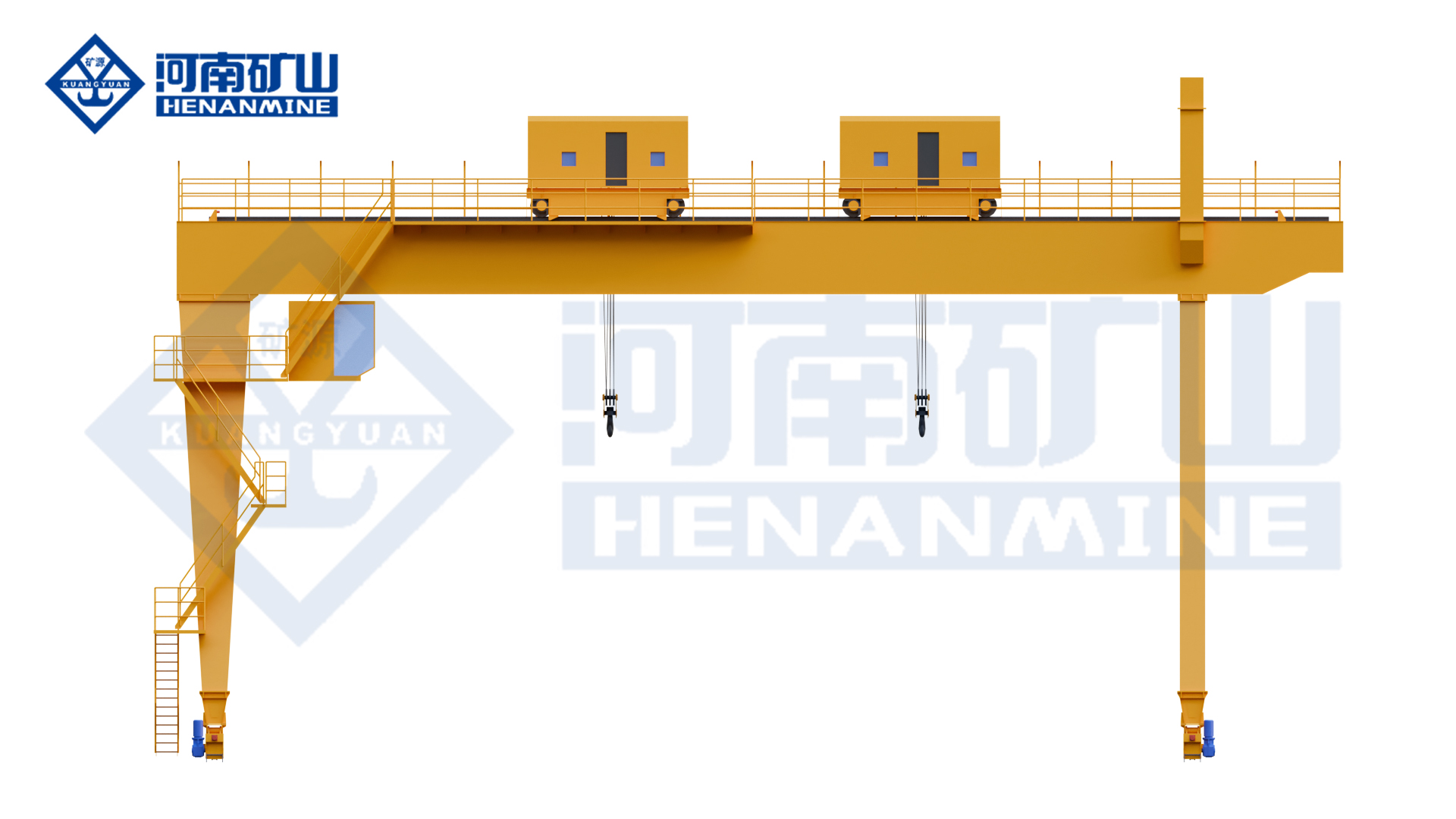
    Henan Mine Crane manufactured Shipbuilding Gantry Crane

    Henan Mine Crane manufactured Shipbuilding Gantry Crane

    Control System

    The control system of shipbuilding gantry cranes mainly has two ways: cab control and remote control, and some large-scale equipment will also adopt integrated control system to realise multi-agency cooperative control.

    The cab is usually installed under the main beam or on the outrigger side, with a wide field of vision, the operator can intuitively observe the lifting situation, and accurately control the action of each mechanism; remote control is suitable for some poor vision scenarios, the operator can be remotely controlled from the ground, to enhance the safety of the operation.

    For the lifting of large hull segments, co-ordinated action and speed control are particularly important, and the control system needs to accurately co-ordinate the actions of the three mechanisms of lifting, travelling, and trolley, to ensure that the materials move smoothly and avoid shaking.

    Safety and Load Monitoring

    Shipyard lifting operations are high-risk, so the safety system of shipbuilding gantry cranes is crucial, and every safety device should not be sloppy.

    Overload protection is the foundation, when the lifting load exceeds the rated lifting capacity, the equipment will automatically shut down to avoid structural damage and material falling due to overload; limit switches can limit the lifting height, travelling distance and trolley movement range to prevent the equipment from operating beyond the safety range.

    In addition, according to the shipyard’s outdoor working conditions, some of the equipment will also be equipped with anti-collision, anti-running, wind protection system – for example, when the windy weather, the windproof device can fix the equipment to avoid being blown by the wind, to protect the equipment and personnel safety. Henan Mine Crane’s shipbuilding gantry cranes are fully equipped with these safety devices, and can also be customised with additional safety protection solutions according to the risk level of the shipyard.

    Key Structural Components of a Shipbuilding Gantry Crane

    The structure of a shipbuilding gantry crane is complex, and each component plays an important role, especially for heavy load lifting, which requires high strength and stability of each component. Here is a breakdown of its core structural components.

    Main Girder (or Double Girders)

    The main girder is the ‘backbone’ of the shipbuilding gantry crane, the main role is to load-bearing, all the lifting mechanism, trolley mechanism are installed on the main girder, the heavy load lifted through the main girder to the outriggers and ground track.

    The structural rigidity of the main beam is crucial as it needs to carry hundreds of tonnes of load – if it is not rigid enough, deformation will occur when lifting heavy loads, which not only affects the positioning accuracy, but may also lead to structural damage.

    The shipbuilding sector mostly adopts the double girder shipbuilding gantry crane design, which is more rigid and has a better load-bearing capacity, and is better adapted to heavy lifting needs. Henan Mine Crane manufactured shipbuilding gantry cranes, the main girder is made of high-strength steel, through the precision welding process, to ensure the structural rigidity and load-bearing capacity, to meet the needs of heavy-duty operations in shipyards.

    Legs and Saddle Structures

    Legs and Saddle Structures are the ‘supporting feet’ of the crane, responsible for transferring the load of the main girder to the travelling trolley and the ground track, supporting the stable operation of the whole equipment.

    The design of the outriggers will be adjusted according to the layout requirements of the shipyard, some use straight outriggers, some use inclined outriggers, the main purpose is to avoid obstacles in the assembly area, while ensuring the stability of support.

    The saddle structure connects the outriggers and travelling trolley, plays the role of cushioning and load transfer, reduces the vibration of the equipment when running, and protects the outriggers and the track. Henan Mine Crane will customise the design of the outriggers according to the layout of the shipyard to ensure that the equipment can be adapted to the actual space requirements of the shipyard.

    Trolley and Hoist Assembly

    The trolley and hoist assembly is a whole unit, which includes spreader, hook, wire rope and other components in addition to the main hoisting and sub hoisting mechanism mentioned earlier.

    The type of spreader will be adjusted according to the different materials to be lifted, e.g. suction cup spreader for lifting steel plates, and special lifting beams and frames for lifting hull segments, to ensure that the materials can be stably fixed to avoid slipping during the lifting process.

    Hooks and wire ropes are the direct load-bearing parts, which need to have extremely high strength and wear resistance. Henan Mine Crane selects high-quality hooks and wire ropes, and conducts regular testing and replacement to ensure the safety of lifting.

    Travelling Bogies and Wheel Sets

    Travelling Bogies and Wheel Sets are the ‘moving parts’ of the crane, responsible for driving the whole equipment to move along the track, and the number and specification of the wheel sets will be adjusted according to the lifting capacity and span of the crane.

    Wheel sets need to be accurately matched with the track to ensure smooth operation, and at the same time, they have to bear the weight of the whole equipment and lifting materials, so wear resistance and load-bearing capacity is crucial.

    Henan Mine Crane manufactured the travelling dollies and wheelsets with wear-resistant materials, which have undergone rigorous strength tests to adapt to the long-time and heavy-duty operation of the shipyard, reduce the wear and tear of the wheelsets, and lower the maintenance cost.

    Electrical System and Power Supply

    The electrical system is the ‘brain’ of the crane, which is responsible for controlling the action of each organisation, including the drive, control panel, motor, braking system, etc. The power supply is usually supplied by cable reel.

    The power supply method usually has cable reel, slip line, etc., according to the running length of the crane and the site conditions to choose, to ensure stable power supply, to avoid equipment downtime due to power outages, affecting the work schedule.

    The braking system can firmly fix the equipment and materials to prevent sliding when the equipment stops and materials are lifted. Henan Mine Crane’s electrical system adopts reliable driving and braking components to ensure stable and safe operation of the equipment.
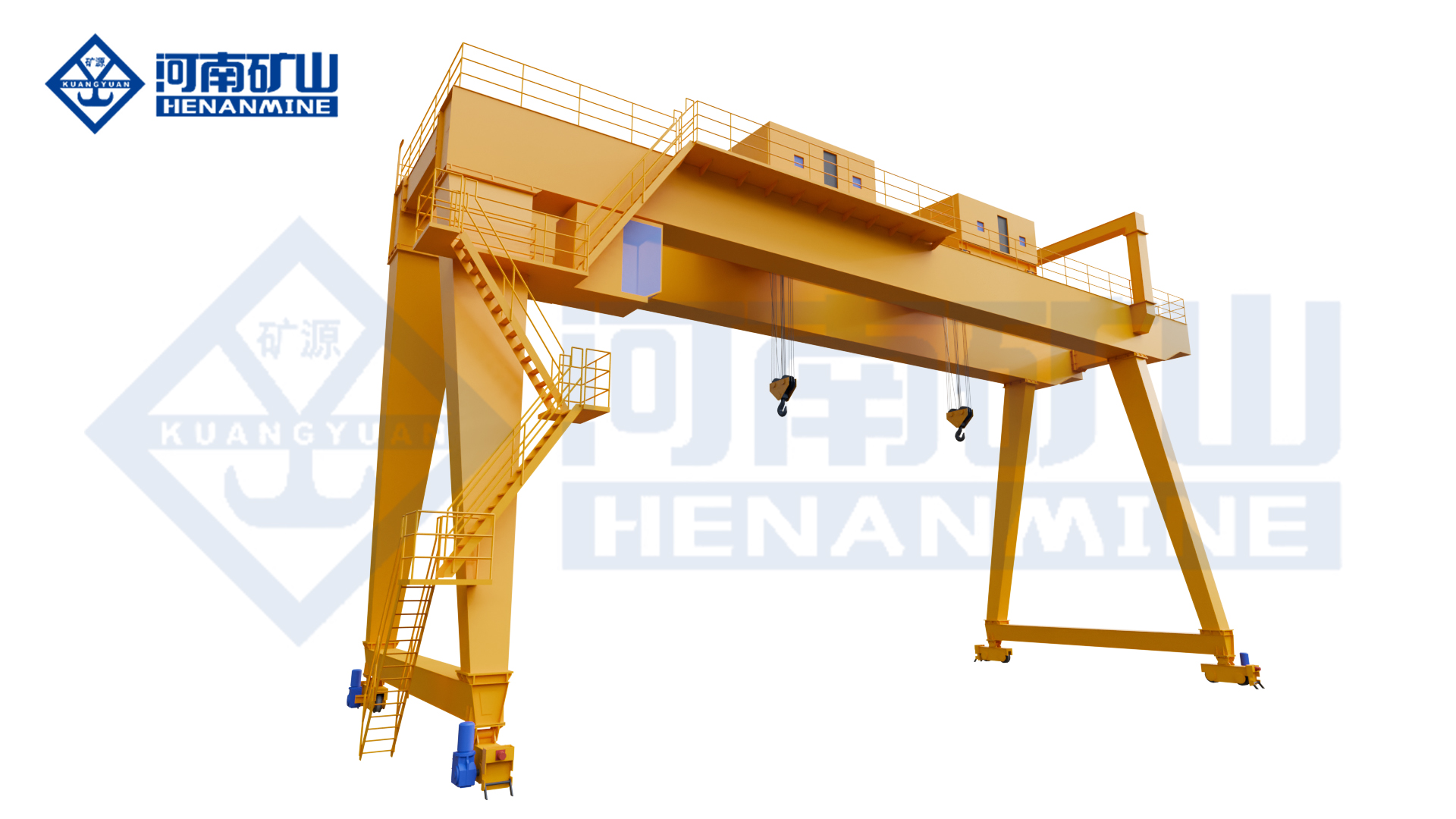
    Henan Mine Crane manufactured Shipbuilding Gantry Crane

    Henan Mine Crane manufactured Shipbuilding Gantry Crane

    Operator Cabin and Monitoring Devices

    The design of the operator cabin mainly considers the field of vision and operational convenience – the cabin needs to have a wide field of vision, so that the operator can clearly observe the lifting area, materials and the surrounding environment, avoiding safety accidents caused by blind spots.

    At the same time, the cab will be equipped with all kinds of monitoring equipment, such as cameras, sensors, real-time monitoring of the operating status of the equipment, the load situation, once there is an abnormality, it will send out an alarm in time to remind the operator to deal with it.

    Types of Shipbuilding Gantry Cranes

    There are many types of shipbuilding gantry cranes, mainly based on the structure, spreader, layout and other divisions, different types of cranes, adapted to different scenarios and needs, the choice should be combined with the actual working conditions of the shipyard to determine.

    Single-Girder vs Double-Girder (brief comparison)

    Single-girder and double-girder are the two main types of shipbuilding gantry cranes, the difference between the two is mainly in the load-bearing capacity and rigidity.

    Single Girder Shipbuilding Gantry Cranes have relatively small lifting capacity and narrow span, which are mainly suitable for small shipyards, light hull manufacturing, or used for auxiliary lifting operations; Double Girder Shipbuilding Gantry Cranes are the mainstream of the shipbuilding field, with a large lifting capacity, wide span, and strong rigidity, which can satisfy the needs of large hull segments and heavy equipment lifting.

    Single Trolley vs Double Trolley / Multiple Hoists

    According to the number of trolley and hoisting mechanism, it can be divided into three types: single trolley, double trolley and multiple hoists.

    Single trolley crane has only one trolley and one set of hoisting mechanism, which is simple in structure and suitable for lifting a single load, such as steel plate and small segment handling; double trolley or multiple hoisting mechanism is suitable for lifting large and irregular loads, such as large hull segments, and it is possible to better control the balance and positioning of the load through the co-operation of two trolleys.

    Henan Mine Crane can customise the single trolley or double trolley configuration according to the lifting task of the shipyard to meet different productivity requirements.

    Hook-Type vs Specialised Lifting Attachments

    Hook-Type is the most basic configuration, which is suitable for lifting most general materials, such as small structural parts, equipment, etc.; while for the special materials in the shipyard, it needs to be equipped with specialised lifting attachments.

    For example, vacuum suction cup spreader for lifting steel plates, lifting beam and frame for lifting hull segments, and special fixture for lifting long and thin profiles, these special spreaders can better fix the materials and improve the safety and stability of lifting.

    Henan Mine Crane can provide specialised spreaders according to the type of materials to be lifted by the shipyard, avoiding additional purchasing by the user and ensuring the suitability of the spreaders and cranes.

    Semi-Goliath / Full Goliath Configurations (if relevant to article angle)

    Full Goliath and Semi-Goliath cranes are classified according to the outrigger structure and are mainly adapted to different shipyard layouts.

    Full gantry cranes have outriggers on both sides and run along the track, covering a wide range of areas, suitable for large assembly areas; Semi-gantry cranes have outriggers on one side only, and the other side relies on the walls or other structures of the shipyard, which is suitable for areas with limited space, such as the edges of the drydock and small assembly areas.

    Henan Mine Crane’s shipbuilding gantry cranes can be customised with full-gantry or half-gantry configurations according to the shipyard’s site layout, making full use of the shipyard’s space and enhancing operational flexibility.

    Custom Configurations for Block Construction Yards

    The needs of block construction yards vary greatly, for example, some yards focus on the manufacture of small segments, some focus on the assembly of large hulls, general-purpose cranes are difficult to fully adapt.

    At this time, customised configuration is particularly important, according to the actual needs of the shipyard, customised span, lifting capacity, operating speed, working level and control mode, so that the crane is fully adapted to the shipyard’s production process.

    Henan Mine Crane manufactured in the customisation of a wealth of experience, in-depth understanding of the production conditions and needs of shipyards, to provide exclusive custom solutions, from design, manufacturing to installation, to provide technical support to ensure that the equipment can be quickly put into use.

    Key Specifications to Understand Before Selection

    Selection is a key step in the procurement of shipbuilding gantry cranes, many shipyards do not understand the core specifications, resulting in the selection of equipment does not fit, and later either can not meet the lifting requirements, or cause cost waste. Below we will talk about the core specifications that must be understood before selection.

    Lifting Capacity

    Lifting capacity is the most basic specification, mainly divided into the main lifting capacity and secondary lifting capacity, when selecting the type should be combined with the shipyard’s maximum lifting load to determine, can not only look at the main lifting capacity, but also consider the secondary lifting auxiliary needs.

    At the same time, we have to consider the demand of single crane and synchronous crane – if we need to lift large hull segments, we may need two cranes to work synchronously, then we have to make sure that the lifting capacity and synchronous accuracy of the two devices are matched.

    Henan Mine Crane’s engineers will recommend the appropriate lifting capacity configuration according to the maximum load and type of lifting in the shipyard, so as to avoid selecting too large or too small.

    Span

    Span refers to the length of the main beam of the crane, which directly determines the coverage of the equipment, and the selection should be combined with the width of the assembly area of the shipyard and the layout of the track.

    For example, if the width of the assembly area is 50 metres, you need to choose a crane with a span of not less than 50 metres to ensure that it can cover the entire assembly area and avoid blind spots.

    Lifting Height

    Lifting height refers to the maximum height that can be lifted by the hook, which is mainly determined according to the stacking height and assembly height of the hull segments.

    If the segments need to be stacked and stored or assembled at a high level, a higher lifting height is needed to avoid insufficient lifting height, which may affect the operation.

    When selecting the model, the height of hooks and spreaders should also be considered to ensure that the actual lifting height can meet the assembly requirements. Henan Mine Crane will accurately calculate the required lifting height by combining with the assembly process of the shipyard.

    Working Duty / Classification

    Working Duty / Classification is mainly classified according to the frequency of operation, load spectrum and production intensity, and the working intensity of shipyards is different, so is the required working duty.

    For example, large shipyards with continuous production, high operating frequency and stable loads need to choose high working class cranes; small shipyards with low operating frequency can choose medium working class equipment to avoid cost waste.
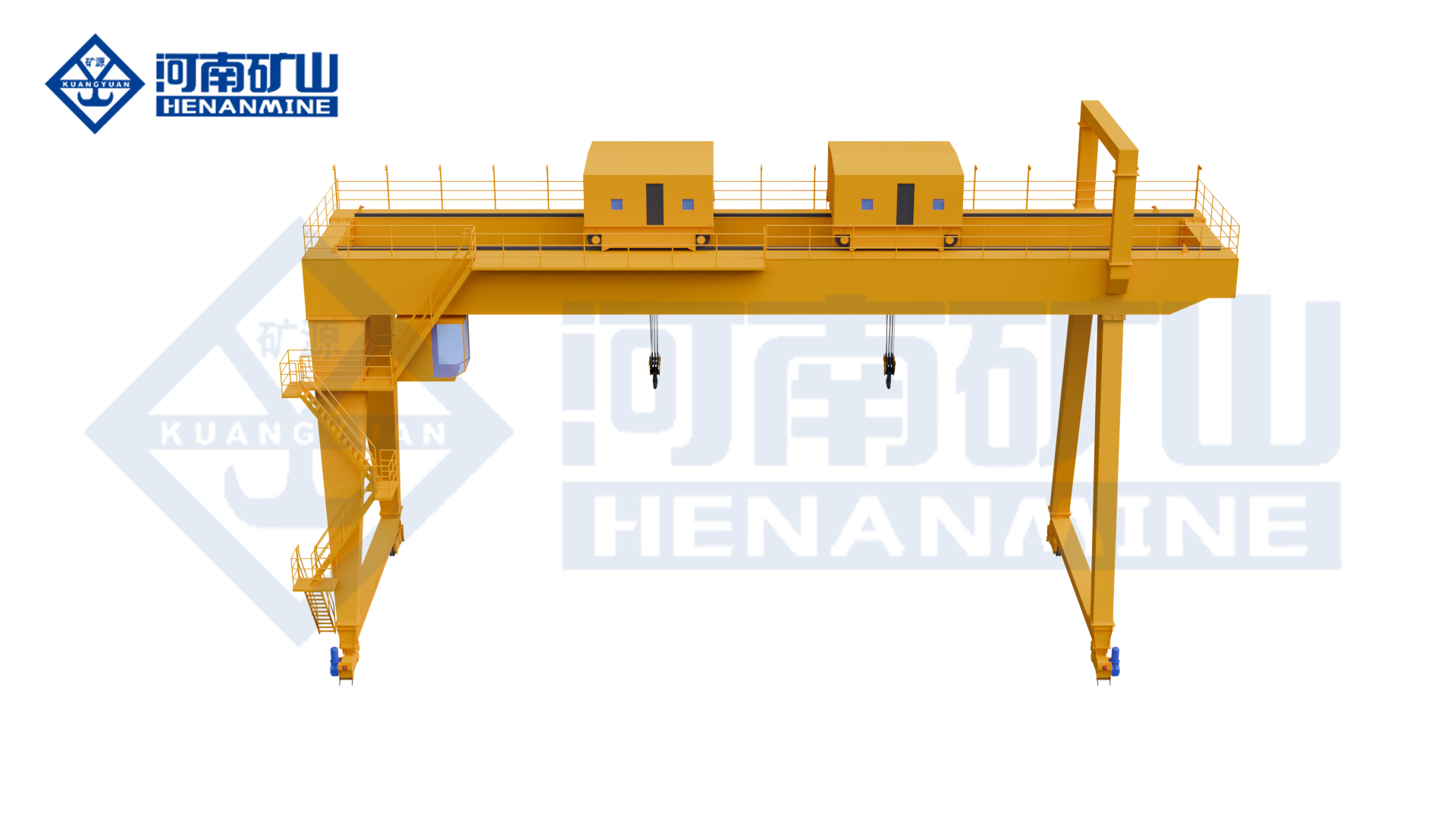
    Henan Mine Crane manufactured Shipbuilding Gantry Crane

    Henan Mine Crane manufactured Shipbuilding Gantry Crane

    Speeds

    Crane speed mainly includes hoisting speed, trolley moving speed, crane travelling speed, different operational scenarios, the speed requirements are different.

    When lifting heavy loads, the lifting speed should be slow to ensure smoothness; when lifting light loads, the speed can be appropriately accelerated to enhance efficiency; trolley movement and crane travelling speed should be combined with the operating distance and positioning accuracy to determine.

    Power Supply and Site Conditions

    Power supply specifications should be combined with the actual power supply conditions of the shipyard, such as voltage and frequency, to ensure that the equipment can be properly powered; at the same time, the outdoor environment of the shipyard should be taken into account, such as temperature, humidity, wind speed, corrosion conditions.

    Shipyards are mostly close to the sea, high salt, humid environment is easy to corrode equipment, selection should be selected with anti-corrosion ability of the equipment; outdoor operation should also consider the wind speed, to avoid windy weather affects the operation of the equipment.

    Henan Mine Crane’s shipbuilding gantry cranes, for the corrosive environment of seaside shipyards, using special anti-corrosion coating and sealing design, can effectively resist corrosion and extend the service life of the equipment.

    Rail and Foundation Requirements

    Rail and foundation is the basis of stable operation of the crane, the selection of the type of track, alignment requirements, and wheel pressure distribution, to ensure that the track can withstand the weight of the equipment and load.

    The bearing capacity of the foundation should also meet the requirements to avoid foundation settlement, affecting the operation of the equipment; at the same time, the installation accuracy of the track should be considered to avoid excessive deviation of the track, resulting in equipment deflection, wheel set wear too fast.

    Benefits of Using Shipbuilding Gantry Cranes

    For shipyards, the use of appropriate shipbuilding gantry cranes can not only enhance productivity, but also ensure operational safety and reduce long-term operating costs, specific advantages are reflected in these areas.

    Higher Lifting Capacity for Large Ship Components

    Shipbuilding process, all kinds of heavy components lifting is the core of the problem, ordinary lifting equipment is not competent, shipbuilding gantry cranes with high lifting capacity, can easily lift dozens of tonnes to hundreds of tonnes of hull segments, large equipment.

    It can support the promotion of modular shipbuilding mode, so that the prefabrication and assembly of hull segments are more efficient, shorten the shipbuilding cycle, which is also an important guarantee for the large-scale production of modern shipyards.

    Improved Yard Productivity

    Shipbuilding gantry cranes have a wide operating range and flexible operation, which can quickly complete the transfer and positioning of materials, reduce manual intervention and improve operational efficiency.

    For example, a shipbuilding gantry crane can complete the lifting of segments that originally required multiple equipment, which not only saves equipment investment, but also reduces the operational links and improves the production rhythm. Henan Mine Crane’s shipbuilding gantry cranes, which run smoothly and are accurately positioned, can further enhance the operational efficiency of shipyards.

    Better Space Utilization in Outdoor Yards

    Outdoor working areas in shipyards are limited. The shipbuilding gantry crane adopts a rail-type design and runs along the rail without occupying the working space on the ground, which can effectively utilise the vertical and horizontal space in the shipyard.

    Its wide span design can cover the entire assembly area, avoiding blind spots, making the layout of the shipyard more reasonable and improving the utilisation of space.

    Safer Handling of Heavy and Oversized Loads

    The lifting of heavy components is high-risk, and in the event of a fall or collision, not only will the materials be damaged, but also may cause casualties. Shipbuilding gantry cranes are equipped with comprehensive safety systems to achieve precise control and stable lifting of loads.

    Long-Term Reliability in Harsh Industrial Environments

    The harsh outdoor environment of shipyards, with high salt, humidity and high winds, requires high durability of the equipment. Shipbuilding gantry cranes adopt heavy-duty design, with high strength and wear-resistant parts, which can adapt to the intensity of long-time outdoor operation.

    High-quality materials and perfect anti-corrosion design can extend the service life of the equipment, reduce maintenance costs, ensure long-term stable operation of the equipment, and provide protection for the continuous production of the shipyard.

    Challenges and Common Problems in Shipyard Gantry Crane Operations

    Although the advantages of shipbuilding gantry cranes are obvious, but in actual operation, by the shipyard environment and the impact of the intensity of the operation, will also encounter some problems, in advance to understand these problems, can be better prepared to deal with measures to reduce equipment failure and downtime.

    Wind Load and Outdoor Safety

    Most shipbuilding gantry cranes operate outdoors, and windy weather is a common safety hazard – when the wind speed is too high, the equipment will be blown by the wind, resulting in shaking, deflection, and even causing safety accidents.

    The main countermeasure is to equip perfect windproof devices, such as windproof rail clamps and anchoring devices, to fix the equipment on the track to avoid moving in windy weather; at the same time, install wind speed alarms to stop the machine in time when the wind speed exceeds the safety range to avoid operation.

    Rail Alignment and Travel Accuracy

    The alignment accuracy of the rail directly affects the running stability and positioning accuracy of the crane. If the rail deviation is too large, it will lead to equipment deflection, rapid wear and tear of the wheelset, and even affect the structural safety.

    Long-term operation, the track may also appear settlement, deformation, need to be regularly tested and adjusted to ensure the track alignment accuracy; at the same time, we should regularly check the wear and tear of the wheelset, and timely replacement of badly worn wheelset.

    Load Sway and Positioning Precision

    When lifting heavy and large loads, the materials are prone to shaking, which not only affects the positioning precision, but also may collide with the surrounding equipment and materials, causing damage.

    This requires skilled operators to control the speed and movement of the equipment; at the same time, the equipment’s synchronised control and frequency conversion function can also effectively reduce material swaying and improve positioning precision.

    Corrosion and Harsh Environment

    The shipyard is close to the seashore, and the high salt and humid environment will easily corrode the metal parts and electrical system of the equipment, which will lead to equipment failure and shorten the service life.

    The main countermeasures are to do a good job of anti-corrosion maintenance, regular descaling of equipment, painting, checking the sealing of the electrical system to avoid corrosion; at the same time, the use of anti-corrosion components to improve the corrosion-resistant ability of the equipment.

    Downtime Risk in Continuous Production

    Shipyards have a fast production rhythm and high requirements for continuous operation, so if the crane fails, it will lead to schedule delays and economic losses.

    It is necessary to do a good job of preventive maintenance, regular inspection of various parts of the equipment, lubrication, replacement, timely detection and treatment of potential malfunctions; at the same time, reserve the necessary spare parts to ensure that when the equipment fails, you can quickly replace the spare parts to reduce downtime.

    How to Choose the Right Shipbuilding Gantry Crane (Buyer’s Guide)

    Selection is a complex process, not just look at the price, but also with the actual needs of the shipyard, working conditions, comprehensive consideration of various factors, in order to choose the right equipment. The following is a set of practical selection guide to avoid selection errors.

    Start with the Lifting Task, Not Just Capacity

    Many buyers come up to ask ‘what is the maximum lifting capacity’, but ignore the core lifting task – what exactly to lift? Is it a hull segment, a steel plate, or a large piece of equipment?

    The maximum weight, size, centre of gravity and lifting point of the material should be clearly defined, and this information directly determines the lifting capacity, span and spreader configuration of the crane. For example, lifting irregular hull segments requires consideration of the centre of gravity offset, which may require double trolley operation.

    Review Yard Layout and Process Flow

    The layout and production process of the shipyard directly affects the selection and configuration of the crane, such as the length of the track, the distribution of assembly stations, the location of obstacles, will affect the crane span, running length and outrigger design.

    Before selecting the model, it is necessary to sort out the layout of the shipyard in detail, clarify the direction and length of the track, the location and size of the assembly stations, avoid collision with obstacles when the crane is running, and ensure that the equipment can cover all the operating areas.

    Define Duty Cycle and Productivity Targets

    The frequency of operation, the number of lifts per day, the peak load, the required duty cycle, which determines the crane’s working level and speed configuration, should be clearly defined.

    For example, large shipyards with a high number of lifts per day and large peak loads need to choose a high working level and high speed equipment; small shipyards with a low operating frequency can choose a medium working level and moderate speed equipment to avoid cost waste.

    Confirm Safety and Compliance Requirements

    Shipyard lifting operation is high risk, must comply with local safety standards and industry norms, selection to confirm the safety configuration of the equipment, such as overload protection, limit switches, windproof device, etc., whether to meet the safety requirements.

    At the same time, it is necessary to consider the protection level and anti-corrosion requirements of the electrical system to ensure that the equipment can operate safely in the harsh environment of the shipyard, so as to avoid non-compliance with the specifications, resulting in the equipment can not be put into use.

    Evaluate Supplier Engineering Capability

    Shipbuilding gantry cranes belong to customised heavy equipment, the supplier’s engineering capability is crucial, to choose a supplier with rich experience in customisation, can provide professional technical support.

    For example, can the supplier according to the needs of the shipyard, structural design, finite element analysis, to provide detailed technical documents; whether there are shipyard project cases, can provide reference.

    Compare Total Cost of Ownership (TCO), Not Only Purchase Price

    Many buyers tend to fall into the misunderstanding of ‘Only Purchase Price’, ignoring the long-term operating costs – energy consumption, maintenance costs, spare parts supply, downtime losses, which will affect the long-term investment.

    For example, a lower-priced equipment may have high energy consumption, frequent maintenance, and difficulty in purchasing spare parts, resulting in higher operating costs in the long run; whereas a reliable piece of equipment, although slightly higher in purchase price, has low energy consumption, low maintenance costs, and fewer downtime, resulting in a more cost-effective solution in the long run.

    Ask for the Right Technical Documents Before Ordering

    Ask for the right technical documents before ordering, including assembly drawings, load charts, wheel pressure data, power supply requirements, foundation and rail interface requirements, and operation and maintenance manuals.

    These documents can help the shipyard to do a good job of foundation construction, track installation, and later operation and maintenance, to avoid the lack of documents, resulting in equipment installation and use of problems.

    Shipbuilding Gantry Crane vs Other Cranes Used in Shipyards

    In addition to shipbuilding gantry cranes, shipyards will also use bridge cranes, mobile cranes, gantry cranes and other equipment, the use of different equipment and adapt to different scenarios, to understand the difference between them, you can better choose the right equipment.

    vs Overhead Bridge Cranes

    Overhead bridge cranes are mainly used for indoor work, such as steel plate processing and prefabrication of small parts in workshops, with relatively small lifting capacity and span, and limited coverage.

    On the other hand, shipbuilding gantry cranes are mainly used for outdoor work, with large lifting capacity and wide span, covering a wide range of areas, and can be adapted to the lifting needs of large hull segments, the application scenarios of the two are very different.

    Shipyards usually combine the advantages of both, indoor bridge cranes, outdoor shipbuilding gantry cranes, forming a complete lifting system.

    vs Mobile Cranes

    The advantage of mobile cranes is that they are flexible and can move freely within the shipyard, which is suitable for temporary lifting and maintenance work, such as lifting equipment during ship overhaul.

    However, its lifting capacity is relatively limited, and its working efficiency is not as good as shipbuilding gantry cranes, which is not suitable for continuous and large-scale lifting operations. Although shipbuilding gantry cranes are not flexible enough, they have high working efficiency and precise positioning, which is suitable for long-term and continuous lifting tasks.

    vs Portal Cranes / Jib Cranes (brief)

    Portal cranes are mainly used for loading and unloading ships in harbours and wharves, with large lifting capacity, but lack of flexibility and are not suitable for assembly work in shipyards; jib cranes are mainly used for lifting small parts, with small lifting capacity and limited coverage.

    In contrast, shipbuilding gantry cranes are more adaptable and can cover most of the lifting needs of shipyards, and are the core lifting equipment of shipyards.

    Maintenance Tips for Long Service Life

    Shipbuilding gantry cranes are a big investment, and good maintenance can extend the service life of the equipment, reduce failures and downtime, and reduce long-term operating costs. Here are some practical maintenance tips for you.

    Daily / Weekly Inspection Priorities

    Daily and weekly inspections are the basis for checking hooks, ropes, brakes, limit switches, tracks, wheelsets and lubrication points.

    Check hooks for cracks and wear, wire ropes for broken wires and corrosion, brakes for sensitivity, limit switches for proper functioning, rails for deviation and wear, wheelsets for flexibility, and lubrication points for adequate lubrication.
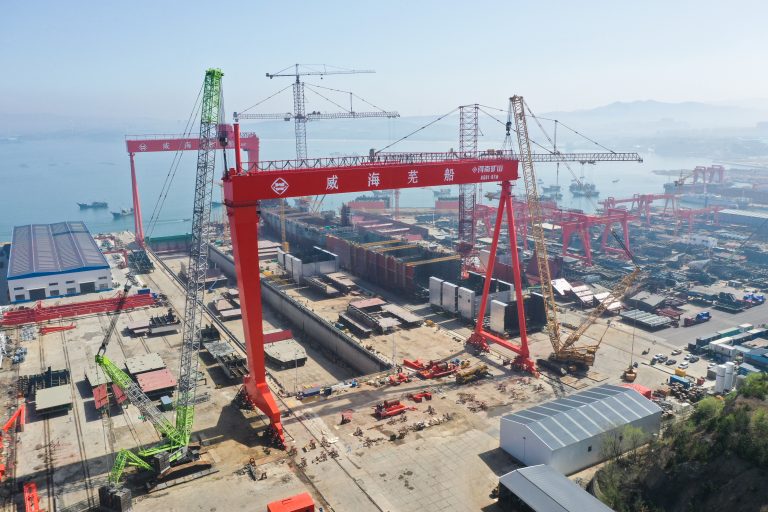
    Henan Mine Crane manufactured Shipbuilding Gantry Crane

    Periodic Mechanical and Electrical Maintenance

    Periodic mechanical and electrical maintenance, such as checking the operation of the drive system, adjusting the brake clearance, checking whether the fasteners are loosened, cleaning the dust of the control cabinet, checking the operation status of the motor and cable.

    Regularly replace the wearing parts, such as wire rope, bearings, seals, to ensure that all parts of the equipment can operate normally. Henan Mine Crane will provide regular maintenance guidance to help shipyards do a good job of maintenance.

    Corrosion Protection and Paint Maintenance

    For the high salt and humid environment of the shipyard, it is necessary to carry out regular corrosion protection and maintenance, such as removing rust and spraying paint on the metal parts of the equipment, and checking the sealing condition of the electrical system to avoid corrosion.

    Detailed coating maintenance plan is formulated, the integrity of the coating is regularly checked, and timely repainting is carried out to ensure the corrosion resistance of the equipment.

    Predictive Maintenance Opportunities

    For large, high-value shipbuilding gantry cranes, predictive maintenance can be used, through sensors, monitoring equipment, real-time monitoring of motor, brake, gearbox and other components of the operating state, in advance to find potential failures.

    This can take countermeasures in advance to avoid sudden failures, reduce downtime, and improve the operational reliability of the equipment. Henan Mine Crane can equip large equipment with predictive maintenance systems to help shipyards achieve intelligent maintenance.

    Common Questions Buyers Ask Before Purchasing (pre-FAQ bridge)

    In the process of purchasing shipbuilding gantry cranes, many buyers will have some questions, the following is combined with my daily contact with the case, to answer some of the most common questions, to help you clear your mind.

    Many shipyards will ask, a crane can not take into account both heavy-duty segment lifting and general material transfer? In fact, this depends on the configuration of the equipment, if equipped with a dual-lift mechanism, the main lift is responsible for heavy lifting, the secondary lift is responsible for light transfer, it can be taken into account, but to clarify the needs in advance, so that the supplier to do a good job of configuration design.

    Another question is whether a single or double lift is required. This depends on the lifting task. If you mainly lift heavy and irregular segments, a double lift is more suitable to improve positioning accuracy and stability; if you mainly lift ordinary materials, a single lift is sufficient and can save costs.

    Regarding what data need to be prepared before enquiry, it is actually very simple, as long as the load weight and size, span, lifting height, running length, operating frequency, as well as the power supply and site conditions of the shipyard, the supplier will be able to give accurate quotations and solutions.

    The design and manufacturing lead time usually depends on the specification and degree of customisation of the equipment. For common specifications, the manufacturing lead time is 3-6 months; for highly customised equipment, the lead time may be 6-12 months.

    In terms of installation support, most suppliers will provide installation guidance and on-site commissioning services, Henan Mine Crane not only provides installation guidance, but also arranges professional team on-site commissioning, to ensure that the equipment can be put into use normally, and also provide operator training.

    FAQ

    What is the difference between a shipbuilding gantry crane and a container gantry crane?

    The core difference between a shipbuilding gantry crane and a container gantry crane is in the application, type of load, spreader and operating environment. Shipbuilding gantry cranes are mainly used in shipyards, lifting hull segments, steel plates and other heavy, irregular materials, spreaders are mostly special lifting beams, lifting frames, the operating environment is outdoor in shipyards, high requirements for corrosion and wind protection.

    Container gantry cranes are mainly used in ports, lifting standard containers, spreader is a special container spreader, the operating environment is the port terminal, focusing on high-efficiency loading and unloading, the lifting speed and running speed is faster, the two designs and configurations are very different.

    What lifting capacity is typical for shipbuilding gantry cranes?

    There is no set standard, it depends on the size of the shipyard and the lifting task. The lifting capacity of shipbuilding gantry cranes for small shipyards is usually 50-100 tonnes; for medium-sized shipyards, it is 100-300 tonnes; for large shipyards, the lifting capacity of heavy shipbuilding gantry cranes can be up to 300-1000 tonnes or even higher.

    Henan Mine Crane can provide shipbuilding gantry cranes with lifting capacity of 50-4000 tonnes, and customise the appropriate lifting capacity according to the actual needs of shipyards.

    Are shipbuilding gantry cranes always rail-mounted?

    Most of the time they are rail-mounted, because the operation area of shipyards is fixed, and the rail-mounted design can ensure the stability and coverage of the equipment, which is suitable for continuous operation.

    But there are also a few special scenarios, such as small shipyards, temporary operating areas, will be used without rail-mounted design, but the lifting capacity and span of this design is limited, as opposed to rail-mounted wide range of applications. Henan Mine Crane mainly focuses on the rail type, but also can be customised according to the special needs of the trackless configuration.

    What information should I prepare before requesting a quote?

    The core information includes: the maximum weight, size and centre of gravity of the material to be lifted; the span, lifting height and running length of the crane; the number of lifts per day, peak load and other operating frequency information; the shipyard’s power supply specifications (voltage and frequency); the site environment (temperature, humidity, wind speed, corrosion).
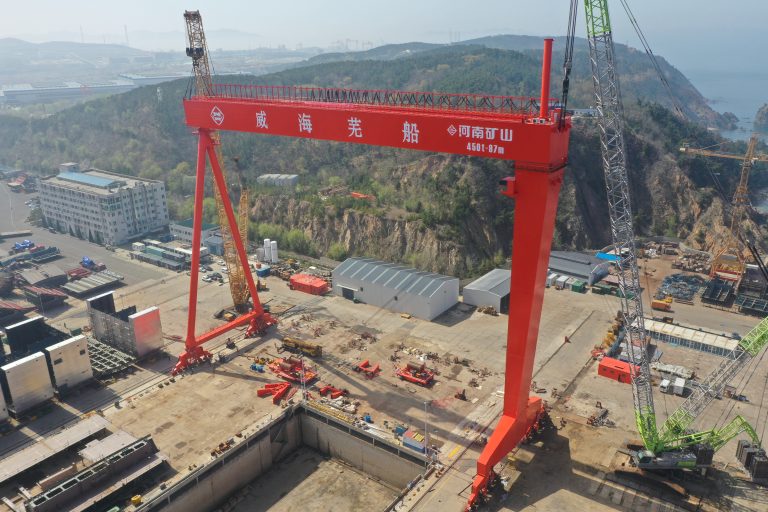
    Henan Mine Crane manufactured Shipbuilding Gantry Crane

    Conclusion

    If your shipyard has large-scale segment lifting, heavy equipment handling and other needs, Henan Mine Crane can be customised according to your site layout, operating conditions, and provide technical support and after-sales protection, so that heavy lifting is safer, more efficient, more worry-free!

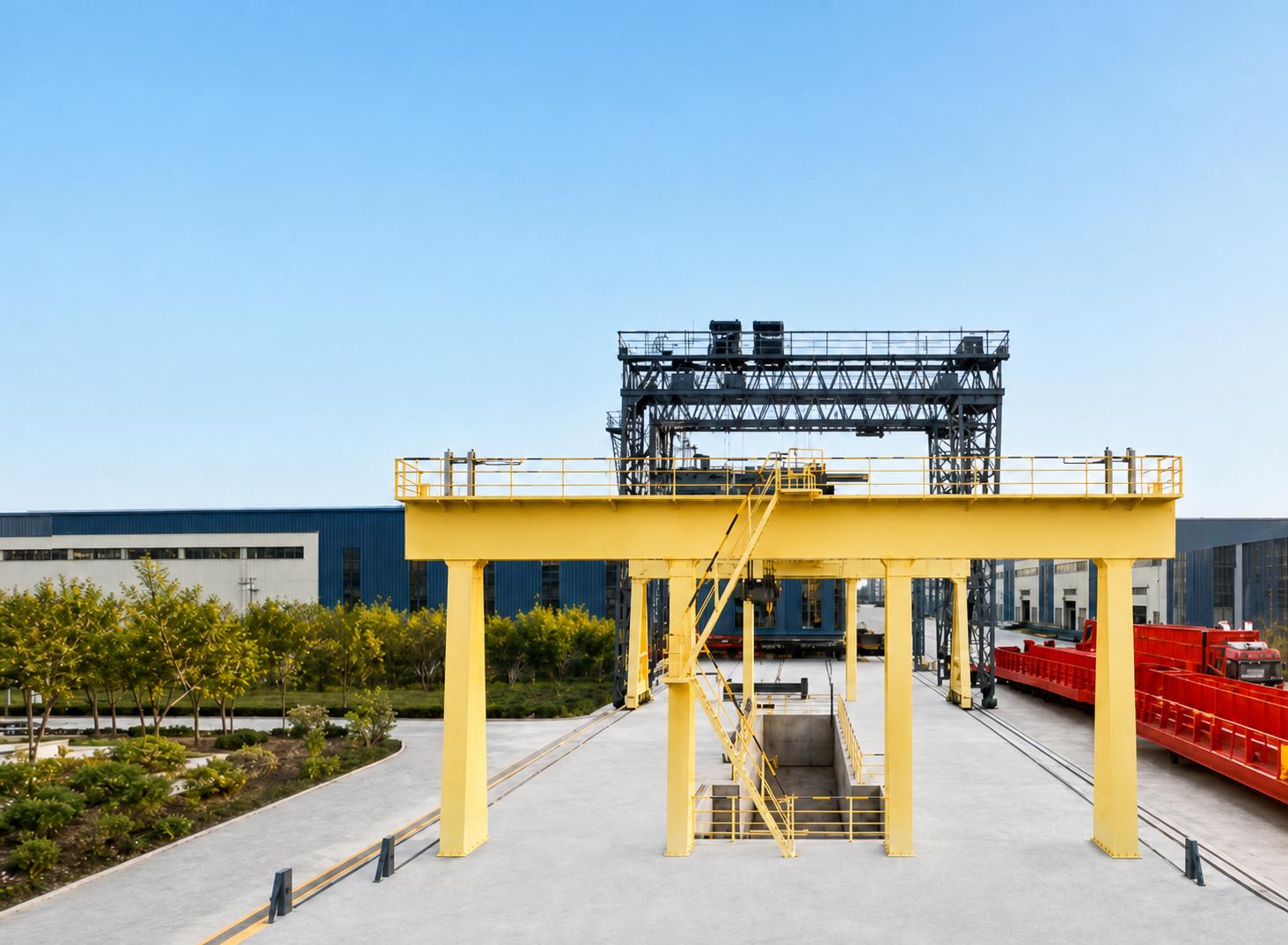
    Henan Mine CraneDiscuss your requirements ↗