Engineering · Manufacturing · Project support
info@hnksglobal.comWhatsApp +86 18836207779 ↗

作者: YUWEI, YUWEI

  • How to Choose a Ship-to-Shore (STS) Crane for Your Container Terminal

    How to Choose a Ship-to-Shore (STS) Crane for Your Container Terminal

    How to Choose a Ship-to-Shore (STS) Crane for Your Container Terminal

    A ship-to-shore crane is a 25-to-30-year commitment. Get the outreach wrong, underestimate throughput needs, or skip the total cost of ownership math, and the consequences show up on every vessel call for the life of the asset. Yet many terminals still approach STS crane selection the way they’d buy a piece of yard equipment, spec sheet in hand, price as the deciding factor.

    That approach breaks down fast. An STS crane is the single largest driver of a terminal’s berth productivity, and its specification locks in decisions about vessel size, automation strategy, and quay infrastructure that are extremely expensive to reverse. This guide walks through a structured, six-step framework for choosing the right STS crane, covering vessel profiling, throughput matching, automation level, infrastructure compatibility, total cost of ownership, and manufacturer qualification , so your terminal ends up with a crane that fits both today’s vessels and tomorrow’s.

    What Is a Ship-to-Shore Crane and Why the Choice Matters

    Henan Mine Crane manufactured ship-to-shore (STS) crane, also called a quay crane or portainer, is a large rail-mounted gantry crane installed along a container terminal’s berth. Its job is simple to describe and hard to execute at scale: lift containers off a vessel and place them on yard transport equipment, or reverse the sequence during loading. A modern crane repeats this cycle dozens of times per hour, every hour a vessel is alongside.

    Because STS cranes are structurally fixed to the quay and rated for a specific vessel envelope, the specification decision is largely irreversible. A crane with too little outreach cannot be stretched later without a major (and costly) boom replacement. A quay designed for a lighter crane class can’t simply absorb a heavier one without civil works. That’s why the selection process has to start with vessel and traffic forecasting, not a manufacturer’s catalog.

    The financial stakes reinforce this. Vessel turnaround time is one of the most expensive variables in container shipping economics, every extra hour at berth is an hour of lost capacity for both the carrier and the terminal. A well-specified crane fleet directly shortens that time; a poorly specified one becomes a permanent bottleneck that no amount of yard-side efficiency can fix.

    Key STS Crane Specifications Explained

    Before working through the selection framework, it helps to have a shared vocabulary. These are the specifications that appear on every STS crane data sheet and drive both performance and cost:

    Specification What It Means Typical Range (Modern Cranes)
    Waterside outreach Distance the boom extends over the vessel from the waterside rail 40–70+ meters
    Lift height (above rail) Maximum height the spreader can reach, covering deck stacking Up to 40+ meters
    Safe working load (SWL) Maximum rated lifting capacity, single or twin-lift 40–100+ tonnes
    Trolley/hoist speed Speed of horizontal and vertical container movement Varies by automation level
    Backreach Distance the girder extends landward of the portal frame 15–25 meters
    Rail gauge Distance between waterside and landside rails 30–100+ feet depending on crane generation

    Two of these, outreach and lift height, are non-negotiable once fixed, which is why Step 1 below is dedicated entirely to getting them right.

    Step 1: Define Your Design Vessel and Outreach Requirement

    Start with the largest vessel your terminal expects to serve over the crane’s operating life, not just today’s calling fleet. This “design vessel” sets the floor for outreach and lift height requirements.

    Outreach calculation. A commonly used formula is:

    Required outreach = (vessel beam ÷ 2) + (quay face-to-waterside-rail distance) + safety margin (2–3 meters)

    For example, a 60-meter-beam ultra-large container vessel (ULCV) with an 8-meter quay setback needs roughly 40.5 meters of outreach from the waterside rail — which typically translates to a 65–70 meter boom-tip outreach once structural offsets are included.

    Match Henan Mine Crane manufactured STS crane class to vessel class. Use this as a starting reference point, then confirm against your specific design vessel’s dimensions:

    • Panamax:fits vessels through the original Panama Canal locks; roughly 13 container rows across; moderate outreach and lift height.
    • Post-Panamax:built for beam widths beyond the original locks; roughly 18 rows across; greater outreach and taller structure.
    • Super-Post-Panamax:designed for the largest vessels in service, 22–24+ rows, with ultra-long outreach and higher lift capacity.
    • ULCV-class:latest generation for mega-ships exceeding 24 rows, typically paired with tandem or twin-lift spreaders.

    Plan for a 20-year vessel outlook, not just current calls. Vessel sizes have grown steadily for decades, and a crane specified only for today’s largest ship risks becoming obsolete well before the end of its structural life. Underspecifying outreach is one of the most common and costly mistakes in STS procurement, it’s a permanent structural constraint that can’t be corrected after commissioning.

    STS

    Step 2: Match Crane Class to Terminal Throughput Targets

    Reach defines what vessels the Henan Mine Crane manufactured STS crane can serve. Throughput capacity defines how quickly it can serve them. This step is about matching a crane’s productivity measured in gross moves per hour (GMPH) to your terminal’s business objectives.

    • Medium-scale terminalsgenerally need standard efficiency levels and can operate effectively with single-lift cranes at moderate hoist speeds.
    • High-volume terminals(roughly 5 million TEU or more annually) typically require 25–40 moves per crane hour, which usually means tandem or twin-lift spreader technology capable of handling two 20-foot containers simultaneously.
    • Multi-crane gangsare standard at major hub terminals, with combined gang productivity of 100–150 GMPH across three to five cranes working a single vessel simultaneously.

    Trolley and hoist speed are the mechanical levers behind these numbers, but faster movement also means higher energy draw, a trade-off worth weighing against your terminal’s actual throughput requirement rather than defaulting to the fastest available option.

    Step 3: Evaluate Automation Level

    Automation is the point at which STS crane selection most directly addresses labor strategy, safety objectives, and capital budget. There are four major levels:

    1. Manual operation an operator in the crane cab (fully automated movement). Lower capital investment, increase longer-term dependence on labor.
    2. Semi-automated the trolley move and the container positioning over the ship are semi-automated; a remote operator is used to safely perform the final lowering and twist-lock connection.
    3. Remote/remote-assist operators are in a control-room on the deck instead of the crane cab, which results in a better working environment and a single operator is able to operate a number of cranes.
    4. Fully automated systems which involve very little human involvement throughout the cycle and are co-related with the use of automated stacking cranes and AGVS in the yard.

    Two real-world reference points illustrate where terminals land on this spectrum. Shanghai International Port Group’s Yangshan Phase 4 terminal operates as a largely automated deep-sea facility, combining automated STS cranes with AGVs and automated stacking cranes. APM Terminals’ Maasvlakte II facility in Rotterdam, by contrast, runs semi-automated STS cranes with remote cabin operation from a shore-based control room, a middle-ground approach that many terminals find more operationally practical than full automation.

    The decision should follow from your business case, not from an appetite for the newest technology. Full automation delivers the biggest efficiency gains at high-volume hub and transshipment terminals where consistent, round-the-clock throughput is the competitive differentiator. Mid-size terminals, or those with variable trade patterns, often get better returns from semi-automated or remote-assist configurations that improve safety and consistency without the full infrastructure investment automation demands.

    Step 4: Confirm Quay and Site Infrastructure Readiness

    Henan Mine Crane Factory supply STS crane is only as reliable as the infrastructure that supports it. Prior to specification closure, check:

    • Rail system:Confirm rail gauge, alignment, and condition, proper spacing and leveling are critical for safe, smooth crane travel along the berth.
    • Ground-bearing capacity: The quay foundation must be capable of bearing the total weight of the crane (which can be anywhere between 800-2500 tonnes, depending on class)and the dynamic loads from working and wind. A ground survey and review of the structural engineer calculations should be undertaken prior to selecting a crane class.
    • Electrical supply:Electric and hybrid cranes need voltage, phase, and connection specifications confirmed against terminal power infrastructure; shore power voltage for modern cranes commonly runs in the 4,000–13,200-volt range.
    • Clearance and obstructions:Check overhead clearance restrictions (for example, near airports), private utility corridors, and existing crane rail spacing if you’re adding to an existing fleet.

    Retrofitting an existing quay for a heavier or longer-reach crane class is possible but often involves substantial civil works, reinforcing rails, upgrading electrical capacity, or even widening the quay apron. It’s far cheaper to confirm compatibility before signing a purchase order than to discover a mismatch during commissioning.

    Step 5: Build Your Total Cost of Ownership Model

    Purchase price is the most visible number in an STS crane deal, but it’s rarely the number that determines whether the investment pays off. A complete TCO model should include:

    • Initial purchase price:New Post-Panamax and Super-Post-Panamax cranes commonly range from roughly 8 to 15 million dollars per unit, with fully automated ULCV-class cranes trending higher depending on scope, region, and customization.
    • Automation premium:Semi-automated or fully automated configurations — with remote control, anti-sway systems, and intelligent positioning, can add 20–40% to total investment compared with manual cranes.
    • Financing structure:Outright purchase, structured financing, and operating leases all shift the cash-flow profile differently; leasing can preserve capital for yard-side investment but typically costs more over the crane’s full life.
    • Operating and maintenance costs:Factor in electricity or fuel consumption, scheduled maintenance, spare parts availability, and expected downtime, regenerative drive systems, for instance, can recover energy during load lowering and cut power consumption by 20–30%.
    • Expected service life:Most STS cranes are engineered for 25–30 years of service; amortize the investment against that horizon rather than a shorter planning window.

    Running these numbers side by side for two or three shortlisted configurations, rather than comparing sticker price alone, is usually what separates a crane investment that pays for itself from one that quietly erodes terminal margins for a decade.

    Step 6: Qualify and Compare Manufacturers

    With specifications and budget defined, the final step is vetting suppliers. Qualified means more than brand recognition. Look for:

    • Reference installations:at terminals with a similar vessel profile and throughput target to yours, ideally ones you can visit or contact directly.
    • Component quality and sourcing:Electrical system components from established suppliers (Henan Mine Crane Factory) tend to improve long-term reliability, though they also affect price.
    • Standards compliance:Confirm the manufacturer designs to relevant international standards, including ISO 4301-1 for crane classification, FEM 1.001 for hoisting appliance design, and EN 13135 for safety design requirements.
    • Warranty, spares, and service support:Long-term parts availability and local service capability matter more over a 25-year asset life than a marginally lower upfront quote.
    • Customization capability:Terminals in high-wind, seismic, or extreme-temperature regions need engineering adjustments that not every manufacturer handles equally well.

    Sustainability and Energy Efficiency Considerations

    Energy efficiency has moved from a nice-to-have to a standard evaluation criterion in Henan Mine Crane Factory supply STS crane procurement. A few features are worth specifying explicitly:

    • Regenerative braking/drive systems, which recapture energy during container lowering and can meaningfully cut overall power consumption.
    • Connectivity to shore power, removing the need for onboard diesel generation and reducing direct emissions at the quay.
    • Variable speed drives are used to increase energy efficiency and allow more flexible control of the hoist and trolley speeds.
    • Hybrid Power configurations where the power system can be switched from shore power or on board generation, as for terminals with weak grid infrastructure.

    These features increase the capital cost but generally pay back in the form of lower energy bills plus, more and more, in premiums attached to meeting port sustainability targets which will be a consideration for carriers in selecting terminals.

    Common Mistakes in STS Crane Procurement

    A few recurring errors show up across terminal projects:

    1. Only defining outreach for the present fleet, as no account is taken of increasing vessel size during the crane’s life.
    2. Treatment of quay infrastructure as an afterthought only learning ground bearing or power restrictions when the crane has been ordered.
    3. This definition is overly reliant on full automation without any throughput or labor-cost business case to justify the premium.
    4. Comparing purchase price alone, ignoring financing structure, energy costs, and maintenance over a 25–30 year horizon.
    5. Underweighting manufacturer track recordin favor of the lowest quoted price, then absorbing the cost of poor spares availability or slower service response later.

    Frequently Asked Questions

    What outreach does an STS crane need to cover a ULCV?

    Most terminals serving ultra-large container vessels need a waterside outreach of roughly 65 to 70 meters, calculated from half the vessel’s beam plus the quay setback and a safety margin.

    What is the difference between an STS crane and an RTG crane?

    An STS crane is a fixed, rail-mounted crane that moves containers between a vessel and the quay, while an RTG crane is a mobile, rubber-tired crane that stacks and moves containers within the storage yard. The two work as complementary parts of the same handling chain rather than substitutes for each other.

    Is full automation worth it for a mid-size container terminal?

    Full automation is usually justified only at high-volume hub terminals; mid-size terminals often get a better return from semi-automated or remote-operated cranes that improve safety and consistency without the full infrastructure cost.

    Can an existing quay be upgraded to support a larger STS crane?

    Yes, but it requires engineering review of rail gauge, ground-bearing capacity, and power supply, and may involve significant civil works if the existing quay was not designed for the new crane’s weight and reach.

    Henan Mine Crane Factory Custom

    Selecting the appropriate ship to shore crane is simply about designing a dependable container handling package that shall meet the needs of today and tomorrow. From vessel size and handling capacity, to automation needs, infrastructure conditions and life-cycle costs, each factor will influence the long-term efficiency and ROI of the system. A sound STS crane system maximizes a terminal‘s productivity for many years to come by helping minimize vessel.

    Backed by rich experience of producing heavy duty cranes and providing equipment customization, our engineering team specializes in offering STS cranes designed for specific terminal needs, ship conditions and working environments to various customers. From technical consultation and equipment design, manufacturing, installation support to after sales service, Henan Mine Crane Factory is committed to becoming a dedicated partner of your safe, productive and reliable container handling projects for dependable and cost-effective investments.

    Henan Mine CraneDiscuss your requirements ↗
  • How to Choose a Rubber Tired Gantry Crane (RTG) Manufacturer

    How to Choose a Rubber Tired Gantry Crane (RTG) Manufacturer

    How to Choose a Rubber Tired Gantry Crane (RTG) Manufacturer

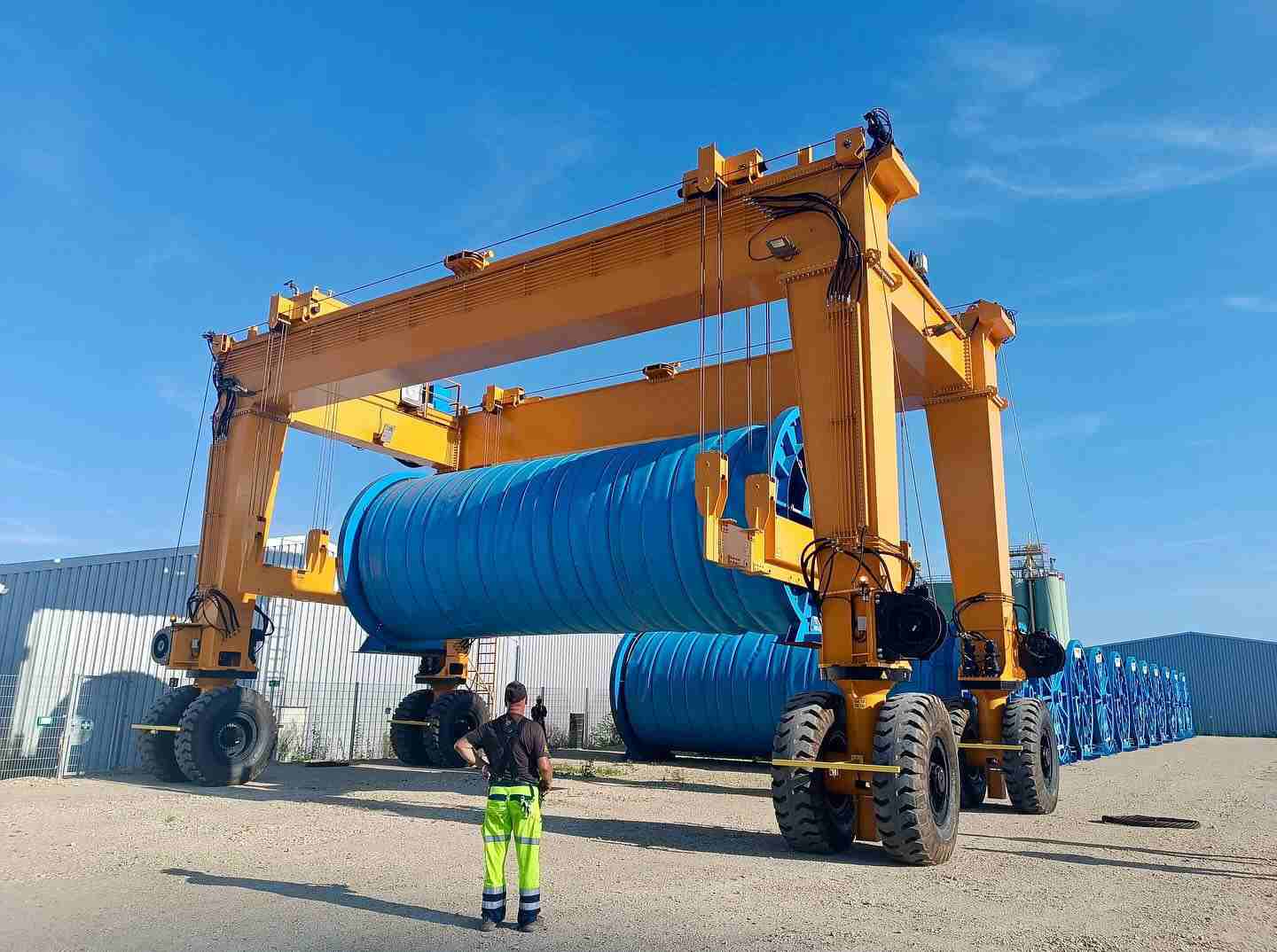
    Rubber Tired Gantry Crane (RTG), commonly known as RTG Crane in the industry, is the core equipment of container terminals, inland yards and intermodal hubs. Unlike rail-type equipment, this type of equipment relies on rubber tires to walk, no fixed track infrastructure, site adaptability is stronger, is the key equipment for modern logistics yard standardized operations.

    Many port operators, logistics companies and overseas engineering procurement team, in the purchase of tire gantry crane manufacturers, most of them are only concerned about the equipment parameters and quotations. But after the actual project landing, we will find that the comprehensive strength of the manufacturer, directly determines the stability of the yard operation, daily energy consumption, annual maintenance expenses, as well as the service life of the equipment for more than ten years.

    A RTG crane that is suitable for working conditions and solid workmanship can maintain stable operation for a long time. The equipment with rough design and weak quality control not only affects the operation progress with frequent downtime, but also generates high fuel, parts replacement and maintenance costs. In this article, from the first-line engineering practice and overseas project delivery experience, from technology, production, business, after-sales multiple dimensions, to share the reliable RTG Crane manufacturers screening methods.

    What is a tire gantry crane (RTG)

    Basic Definition

    The tire gantry crane is a mobile gantry lifting equipment equipped with a rubber tire travel system, which is mainly used for standardized yard operations such as container stacking, in-field transfer, cargo loading and unloading. The whole equipment does not need to lay a fixed track, can be hardened and leveled field free walking, flexible steering, adapt to the needs of multi-scene transfer operations.

    Different from ordinary workshop gantry cranes, RTG Crane is designed for outdoor all-weather heavy-duty working conditions, structural strength, walking stability, wind and corrosion resistance are in accordance with the standards of the port yard to build, more suitable for long-term and high-frequency container operation scenarios.

    Mainstream Application Scenarios

    Container terminal yard is the most important application scenario of RTG equipment, which mainly undertakes core operations such as container stacking and storage, on-site transfer, and truck loading after ship unloading. The flexible mobile capability of the equipment can be adapted to the simultaneous operation requirements of multiple berths and regions of the terminal.

    Inland container freight station, railroad freight yard is also the core use of RTG scene. This type of site operating range of flexible, dynamic line of change, no rail restrictions on the container yard Crane, can be better adapted to the railroad container grouping, transit, temporary storage operations.

    Various types of integrated logistics hubs, multimodal transportation parks, RTG cranes are commonly used to complete the road, rail, waterway cargo transfer. The equipment can be flexibly adjusted according to the yard planning operation area, adapted to different cargo flow rhythm and site layout.

    Why RTG manufacturer selection is critical

    RTG Crane does not belong to the ordinary standardized lifting equipment, is a set of integrated steel structure, power drive, walking steering, electronic control system, wind anti-corrosion complex complete sets of equipment. The design and assembly precision of each system will affect the operating status of the whole machine.

    Outdoor port yards have complex working conditions, often experiencing high winds, sun exposure, temperature changes, rain erosion, and some coastal sites also have salt spray corrosion problems. Only port crane manufacturers who are deeply engaged in the field of port equipment can optimize the structure and configuration of the equipment to adapt to the harsh outdoor operating environment.

    Ordinary general-purpose Crane manufacturers lack experience in the design of yard conditions, the production of equipment is prone to rapid tire wear, travel offset, stacking inaccuracy, excessive energy consumption and other problems, long-term use will bring many hidden problems to the yard operation.

    The core value of choosing the right RTG crane manufacturers

    Equipment stability directly determines the yard capacity

    The throughput efficiency of the container yard is completely dependent on the continuous operation capability of the lifting equipment. Once the RTG crane fails and stops, it will directly cause the interruption of container stacking and transfer, and the entire operation rhythm of the yard will be disrupted.

    High-quality manufacturers of tire gantry cranes, low machine failure rate, stable operating conditions, able to adapt to high-intensity, long-time continuous operation of the yard. Inferior equipment frequent breakdowns and downtime, will directly pull down the overall throughput of the yard, resulting in hidden economic losses.

    Engineering design level determines the core performance of the equipment

    The stability of RTG equipment, container stacking accuracy, anti-swaying effect and energy consumption all depend on the engineering design capability of the manufacturer. Reasonable structural force design can effectively reduce equipment operation shaking and ensure neat and accurate stacking of high-level containers.

    Mature power and electronic control matching design can reduce the impact of equipment start and stop, so that the whole machine runs more smoothly. Many common problems of low-priced equipment, such as large alignment deviations, walking jams, and serious shaking, are essentially the result of pre-design defects.

    Manufacturer strength affects the whole life cycle cost of equipment

    Many purchasers are only concerned about the unit price of equipment purchases, ignoring the later long-term operating costs. Professional RTG Crane suppliers will optimize the power system and structural configuration according to the site conditions, effectively reducing fuel or power consumption.

    At the same time, the excellent production process and high-quality parts with, can reduce the frequency of replacement of wearing parts, reduce annual maintenance costs, reduce the loss of unplanned downtime.

    In the long run, the comprehensive utilization cost of equipment from reliable manufacturers is much lower than that of low-priced and low-matched equipment.

    Supporting services to ensure long-term stable operation

    RTG belongs to the high-value port special equipment, the service life can reach more than ten years, later troubleshooting, parts replacement, equipment debugging are inseparable from the manufacturer’s support. A perfect after-sales system is an important guarantee for long-term stable operation of the yard.

    Lack of service capability of the manufacturer, equipment delivery response lag, slow supply of parts, small faults dragged into a big problem, will significantly affect the normal operating rhythm of the yard.
    Define the core requirements of your RTG project first

    Confirmation of equipment application scenarios

    First of all, clarify the core operational use of the equipment, whether it is purely used for multi-layer stacking of containers, or taking into account the field of container transfer, truck loading and unloading operations. Different operational focus, the corresponding equipment configuration and parameter design will be significantly different.

    If it is a railroad terminal operation, it needs to adapt to the operational rhythm of railroad container grouping and transfer; if it is an intermodal yard, it needs to take into account the flexible operational needs of multiple cargo flows and multiple lines of movement. Precise positioning of the scene, in order to avoid configuration redundancy or lack of functionality.

    Sort out the core technical parameters

    Before purchasing, you need to sort out the complete equipment parameters, including rated lifting capacity, equipment span, the number of rows of suitable containers, the maximum lifting height, the number of layers of stacked containers. With the cantilever operation needs of the yard, but also clear cantilever length and operating range.

    At the same time need to determine the operating parameters of the equipment, including the traveling speed of large vehicles, trolley operating speed, lifting speed. These parameters directly match the efficiency of the yard operation, and is the core basis for manufacturers to issue customized solutions.

    Determine the type of power drive

    Currently the mainstream RTG equipment is divided into four power forms, suitable for different site conditions and environmental requirements. Traditional diesel-driven RTG is suitable for remote yards without stable utility power, with strong mobility and wide adaptability.

    The all-electric RTG relies on utility power supply, with lower energy consumption and no exhaust emission, and is suitable for standardized port yards with high compliance requirements and long-term regular operation. Hybrid RTGs take into account mobility and energy saving, and can switch power modes according to operation scenarios, making them suitable for small and medium-sized integrated yards.

    Battery-type RTG is a new environmentally friendly model in recent years, with zero emission and low noise, suitable for green smart ports, urban logistics parks and other sites with strict requirements on environmental protection and noise.

    Mapping the site operating environment

    The natural environment of the outdoor yard is an important reference for equipment selection and design. It is necessary to confirm the perennial temperature range of the site, the maximum wind level, rainfall frequency, coastal sites need to focus on verifying the degree of salt spray corrosion.

    At the same time to confirm the yard ground hardening conditions, flatness, and local environmental protection tailpipe emission standards. These environmental parameters, determines the equipment wind level, anti-corrosion process, power configuration and protection standards.

    Verify whether the supplier is the source manufacturer

    Verify the core significance of the identity of the manufacturer

    Source tire gantry crane manufacturer, the whole process of controlling the equipment design, steel selection, structural welding, machine assembly, factory testing. In the program customization, quality control control, schedule adjustment, problem rectification has the absolute initiative.

    Trade suppliers do not have their own production workshops and rely on external OEM for their equipment, so they cannot do in-depth customization according to the site conditions and have very little room for configuration adjustment. Once there is a quality or adaptation problem, the docking process is cumbersome and the rectification efficiency is extremely low.

    Factory strength verification method

    Purchasers can take the initiative to ask for factory photos, production workshop operation video, large-scale steel structure processing equipment information, and visually check the manufacturer’s production scale and hardware conditions. At the same time, verify the formal registration qualification of the enterprise and the export record in the past years to confirm the export experience of the manufacturer.

    Focus on requesting the same type of RTG landing project cases, including the same tonnage, the same working conditions, the same area of the yard project records. Regular manufacturers, can be ready to cooperate with online video factory inspection or offline field inspection, the production process is transparent and can be checked.

    Adaptive cooperation scenarios for trading companies

    If the procurement of standardized conventional models, no special working conditions customization needs, no requirements for equipment modification projects, trading companies with mature project coordination capabilities can be included in the alternative.

    This kind of high-quality traders usually have long-term fixed cooperation with reliable factories, in the export documents, international logistics docking, customs clearance and other aspects of experience, can simplify the docking process of overseas customers. However, for complex non-standard projects and demanding port projects, the source manufacturers are still preferred.
    Evaluate the engineering design and customization ability of manufacturers

    Customize the design to fit the actual working conditions of the yard.

    A professional RTG design team will not directly apply common drawings to mass-produce equipment. They will optimize the overall structure and operating parameters of the equipment by taking into account the overall layout of the customer’s yard, the logic of container storage, the frequency of daily operations, and the wind conditions of the site.

    The design program will fully match the dynamic line of the yard, avoiding problems such as blind spots, walking interference, stacking deviation, etc., so that the rhythm of the equipment operation is fully adapted to the daily operational needs of the yard, and to improve the overall smoothness of the operation.

    Optimized structure design and wheel pressure parameters

    The degree of tire wear, the stability of the whole machine, the value of ground pressure, and the smoothness of travel of RTG equipment are all determined by the preliminary structural design. Reliable manufacturers will accurately calculate the weight distribution of the whole machine, optimize the wheel pressure ratio, and adapt to the ground loading conditions of the yard.

    Reasonable structural optimization can effectively reduce abnormal tire wear, ground settlement, walking offset and other common problems, reduce the later operation and maintenance costs, and extend the service life of the equipment and the site.

    Diversified customized solutions

    Manufacturers can adjust the container span configuration and cantilever structure style according to customer needs, and install anti-sway system, automatic deflection correction steering, and remote equipment monitoring module as required. For the automated yard, OCR recognition, yard management system linkage and other intelligent supporting functions can be adapted.

    Meanwhile, it can be equipped with energy-saving control system and regenerative braking system to optimize the power solution according to the environmental protection and energy consumption requirements of the site, which can be adapted to different scenarios such as common yard, green port and automated terminal.

    Provide a complete set of technical information

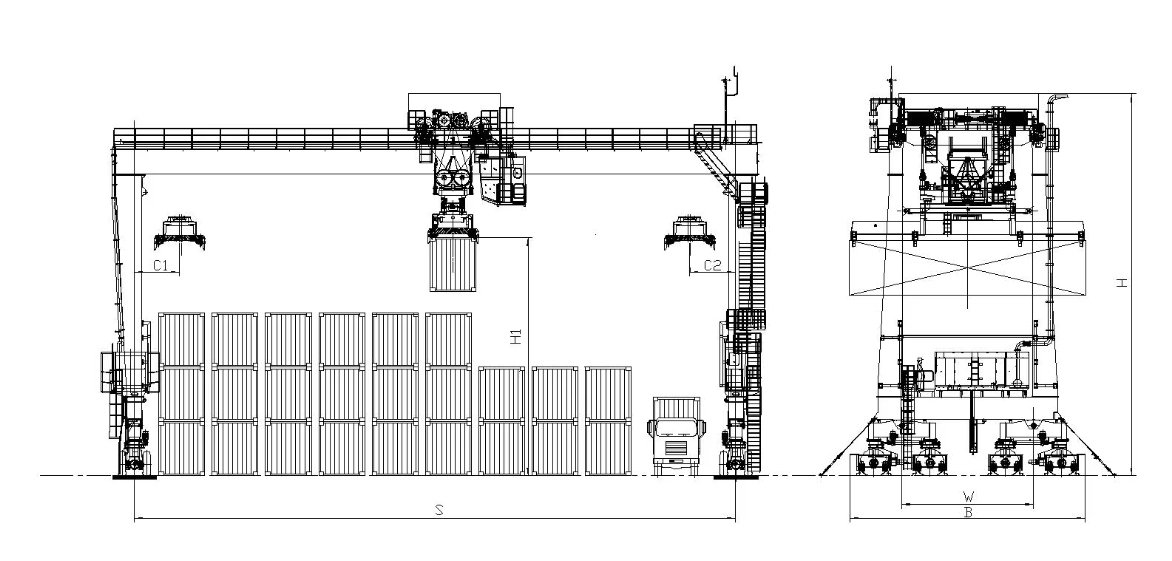
    Regular tire gantry crane manufacturers, delivery of equipment at the same time, will provide a full set of standardized technical documents. Including equipment overall layout drawings, ground wheel pressure data, energy consumption parameters, electrical schematic diagrams, foundation construction reference materials.

    Supporting the provision of equipment operation manuals, maintenance guidelines, factory inspection reports and other documents, to fully meet the acceptance of overseas projects, for the record, the later maintenance and bidding data review needs.

    Examination of production strength and quality control system

    Steel Structure Processing and Manufacturing Capability

    RTG gantry crane main beam, gantry, end beams and other core steel structure, determines the overall stability and service life of the equipment. Professional manufacturers have a full set of large-scale cutting, welding, machining, precision calibration equipment, to ensure that the steel structure size is accurate, solid welding.

    Full control of the whole process of material preparation, assembly, welding, grinding and assembling effectively avoids production problems such as welding deformation, dimensional deviation and structural loosening, and ensures the structural stability of the equipment for long-term outdoor heavy-duty operation.

    Selection standard of core parts

    The core parts of the power system, traveling system and control system of the equipment directly affect the equipment failure rate and operation performance. Focus on verifying the brand and specification of diesel engine/motor, generator set, reducer, brake, PLC control system, container spreader, special tires, steering accessories.

    Reliable manufacturers will choose the industry mainstream mature parts, parts of strong generality, high stability, global replacement procurement is convenient, can significantly reduce the difficulty and cost of late maintenance.

    Standardized factory inspection process

    Perfect quality control system is the guarantee of equipment quality. Regular manufacturers will carry out a number of testing procedures, such as random inspection of raw materials, non-destructive testing of welded seams, review of overall dimensions, and testing of electrical circuits.

    After the equipment assembly is completed, the whole machine will be carried out no-load test run, graded load test, full-load operation test, walking and steering debugging, all-round checking of hidden equipment, to ensure that the performance of each factory RTG equipment is up to standard.

    Outdoor anti-corrosion and anti-rust treatment process

    RTG equipment operates in the open air all year round, so the wind, sun, rain and coastal salt fog will accelerate the aging of the equipment. The surface anti-corrosion coating process directly determines the outdoor service life of the equipment.

    High-quality manufacturers will use professional rust removal process, with multi-layer anticorrosion primer, intermediate paint, weather-resistant topcoat, to form a complete protection system, effectively resisting the harsh outdoor environment, to avoid rusting of the steel structure, paint peeling and other problems.

    Verification of similar RTG project experience

    The importance of similar project experience

    Tire gantry crane belongs to the port yard special equipment, and ordinary workshop gantry crane design standards, working condition requirements, operating logic is completely different. No port yard project experience manufacturers, it is difficult to control the outdoor heavy load, high frequency operation, wind and corrosion resistance and other core details.

    Deeply cultivated in the field of port equipment RTG suppliers, familiar with different regions of the world’s climatic conditions, yard operation habits, project acceptance standards, can avoid all kinds of landing pitfalls in advance, to ensure that the equipment adapted to the local working conditions.

    Ask for high matching project cases

    When screening manufacturers, do not just look at the general publicity cases, and prioritize the request and their own projects to highly match the landing project. Focus on checking the same lifting capacity, the same container span, the same stacking height parameters, the same kind of yard scene, the same climate area of the completed project.

    Inland yards, ordinary ports, coastal high corrosion terminal equipment configuration varies greatly, matching the high degree of cases, in order to truly reflect the actual delivery capacity of manufacturers.

    Verification of project authenticity credentials

    Manufacturers can be asked to provide project site photos, equipment operation video, complete project case reports, factory commissioning records. Conditionally, you can verify the end customer feedback, intuitive understanding of the long-term operational status of the equipment.

    Regular export manufacturers will accumulate a large number of traceable overseas landfill project information, which can prove their own project landing strength in all aspects.
    Evaluation of drive system and energy consumption control capability

    Scenarios of various RTG power solutions

    There are obvious differences in the technical accumulation of different manufacturers in various types of power systems. Diesel-driven RTGs are suitable for remote yards without stable utility power and with high mobility requirements; pure electric RTGs are suitable for standardized terminals with regular operations and the pursuit of low operating costs.

    Hybrid RTGs are suitable for small and medium-sized integrated logistics yards, taking into account the needs for flexible transfer and energy saving; battery-driven RTGs are more in line with the construction standards of green ports and low-carbon parks, and are suitable for regions with stringent environmental control.

    Energy consumption determines long-term operating costs

    The energy consumption of equipment is one of the biggest operating expenses of the yard all year round. Excellent manufacturers will reduce the energy consumption of equipment operations through power system optimization, electronic control program debugging, brake energy recovery and other designs.

    The seemingly small difference in energy consumption in a single shift, after years of high-frequency operation, will form a huge cost difference, which directly affects the overall profitability of the project.

    Adaptation to local environmental emission requirements

    The exhaust emission and noise control standards of ports and logistics parks around the world are different. Professional manufacturers will adjust the engine configuration, exhaust gas treatment device, and noise reduction structure according to the environmental policy of the region where the project is located.

    Matching the local compliance standards in advance can effectively avoid the problem that the equipment cannot be put into use due to excessive emissions and noise after landing.

    Long-term value of energy-saving design

    The energy-saving design equipped with regenerative braking, frequency conversion speed control, and intelligent start/stop can recover excess energy when the equipment is decelerating, braking, and standing idle. This proven energy-saving solution can continuously reduce equipment fuel or electricity consumption, with obvious cost advantages for long-term use.

    Evaluate automation and intelligent control capabilities

    Adaptation to different levels of control

    Automation planning varies greatly from one yard to another, with some traditional yards retaining manual operation modes and new smart yards adopting semi-automatic or fully-automatic operation modes. Reliable manufacturers will accurately match the corresponding control system according to the actual operation planning of customers.

    They will not blindly pile up high-end automation functions to increase the procurement cost, nor will they reduce the necessary configurations to make it impossible to meet the upgrading needs of the yard.

    Core practical automation functions

    Currently, the mainstream practical configurations include precise anti-swing control, automatic container alignment, automatic deviation correction, remote troubleshooting, real-time operation data monitoring and other functions. The automated yard can also realize data interoperability and cooperative operation between equipment and yard management system.

    These functions can reduce manual operation errors, lower operational risks, simplify equipment operation and maintenance processes, and meet the management needs of modernized yards.

    Practical significance of intelligent configuration

    Modern ports and logistics yards pay more and more attention to operational safety, labor cost control and digital management. A mature intelligent control system not only improves operational stability, but also provides data support for digital operation and maintenance and fine management of the yard.

    Verification of qualification certification and export compliance capability

    Enterprise and product core qualification

    The basic ISO quality management system certification is the basic guarantee for equipment production. RTG Cranes exported globally must have CE, FEM, EAC and other international general lifting equipment certification to meet the overseas market access standards.

    Some countries and regions have exclusive industry certification requirements, professional manufacturers can provide the corresponding qualification documents to ensure the smooth acceptance of the equipment through the local project.

    A full set of export documents handling capacity

    Overseas project delivery, need to be supported by a complete set of foreign trade documents. Regular export manufacturers can provide one-stop packing lists, commercial invoices, certificates of origin, factory quality inspection reports, compliance certification documents, shipping documents and other complete sets of information.

    All documents are in standardized format, complete information, and can be directly used for customs clearance, project filing, project acceptance, without the need for secondary modification and supplementation.

    The necessity to verify the compliance in advance

    Lack of qualification, incomplete documents and substandard compliance will directly lead to obstruction of customs clearance and delay of project acceptance after the arrival of equipment. This may result in delayed customs clearance and acceptance of the project after the arrival of the equipment, which may result in port demurrage costs, or affect the overall progress of the project and cause large economic losses.

    Therefore, the compliance qualification and documentation capabilities must be completed in the procurement of a comprehensive verification of the pre-purchase.
    Scientific comparison of RTG Crane offers

    Reject the single price comparison thinking

    Low-priced offers often have hidden shrinkage, many suppliers by simplifying the anti-corrosion process, replacement of low-end accessories, deletion of ancillary services, shrinking equipment materials to suppress the offer. Short-term procurement cost reduction, later operation and maintenance, rectification, downtime losses will increase exponentially.

    Procurement selection should be a comprehensive configuration, process, service, qualification, delivery ability to judge, not just look at the final offer.

    Check the complete scope of supply item by item

    Carefully check all the items included in the offer to confirm whether it covers the main steel structure, lifting mechanism, trolley operation system, power unit, electronic control system, special container spreader, wear-resistant tires, operating cab, a full set of safety protection devices.

    At the same time to clarify whether the offer includes basic spare parts, factory commissioning, technical guidance services, to distinguish between standard items and value-added payment items, to avoid the later generation of invisible add-ons.

    Check the brand specifications of core parts

    The brand and model of core parts such as engine, motor, reducer, PLC control system, spreader, tires, etc. directly determine the operating performance, failure rate and service life of the equipment.

    Need to be clearly labeled in the offer and contract accessories brand specifications, lock the configuration standards, to eliminate the problem of high with publicity, low with delivery.

    Clear foreign trade terms of business

    Finalize EXW, FOB, CIF and other trade terms in advance, and clearly delineate the rights and responsibilities and costs of production and delivery, shipping logistics, customs clearance, and transportation at destination ports, so as to avoid budget overruns and disputes over rights and responsibilities in the later stage.

    Evaluate delivery, project management and docking capability

    Delivery cycle directly affects project progress

    The duration of port and yard projects is extremely rigid, and the delivery time of the equipment directly determines the pace of commissioning and operation of the site. Reliable manufacturers with stable production capacity and standardized scheduling can specify a fixed production cycle and complete production, packing and shipment delivery in strict accordance with the agreed time.

    Professional Project Coordination Capability

    Mature manufacturers will be equipped with an exclusive project docking team to follow up the whole process of drawing review, production progress, factory quality inspection, packing and shipping, and data docking. We take the initiative to synchronize the project nodes and coordinate and solve all kinds of docking problems in time.

    At the same time, we plan in advance for equipment packaging, fixing, moisture protection, to avoid cargo damage, moisture, deformation and other problems in the process of sea transportation.

    Communication efficiency reflects the reliability of manufacturers

    Overseas projects have long docking cycles and many technical details. A professional docking team can quickly respond to technical inquiries and accurately answer questions on working conditions, parameter adjustments, compliance requirements, after-sales policies and other issues.

    Clear and efficient technical communication can reduce information deviation and program repetition, ensure the smooth progress of the project, and is also a visual reflection of the manufacturer’s execution ability.

    Evaluation of installation and commissioning and full-cycle after-sales support

    Installation and assembly support services

    For overseas long-distance projects, manufacturers can provide full remote technical guidance, real-time follow-up of the whole process of equipment assembly, docking and fixing. For large-scale key projects, we can arrange professional engineers to be on-site to supervise the installation.

    Machine commissioning and training services

    After the equipment assembly is completed, the manufacturer will complete a full set of procedures such as no-load test, graded load test, full-load operation test, walking steering calibration, spreader function debugging, etc., to ensure that the equipment operating parameters are up to standard.

    After the commissioning is completed, the manufacturer will provide on-site operators with hands-on training, basic troubleshooting instruction, and daily maintenance guidance to ensure that on-site personnel are skillful in operating the equipment.

    Warranty and spare parts supply guarantee

    Before cooperation, we will clarify the warranty period of the whole machine, warranty coverage, after-sales response time, and distinguish between free warranty parts and paid consumables. High-quality manufacturers are always prepared with all kinds of mechanical and electrical spare parts, which can be quickly arranged for cross-border delivery and shorten the equipment downtime.

    Long-term equipment service capability

    Reliable manufacturers can provide long-term equipment preventive maintenance guidance, remote troubleshooting, old equipment upgrading, function optimization and other value-added services, all-round support for more than ten years of stable equipment operation.

    Before placing an order, we must ask the core questions of RTG manufacturers.

    Is your company an independent production source manufacturer, or a foreign trade intermediary? Can you provide real RTG landing cases that match the working conditions and parameters of this project?

    Can you provide diesel, electric, hybrid and battery power solutions? Can you optimize the power configuration according to local environmental standards?

    What international certifications can the equipment provide, and does it meet the access and acceptance standards of the region where the project is located?

    What are the specific equipment configurations, accessory lists, and supporting services included in this offer, and what are the contents that require additional charges?

    What brands and specific models are used for the core power, electric control, traveling and spreader accessories of the whole machine?

    How long is the standard production and delivery cycle from order confirmation to equipment shipment?

    Does it provide overseas commissioning, personnel training, long-term after-sales response and spare parts supply services?
    Common Misconceptions in Purchasing RTG Cranes

    Simply selecting the cooperative manufacturer with the lowest price offer, ignoring the equipment materials, processes, configuration and service gaps, and the later comprehensive costs soar.

    Only focus on the procurement unit price, ignoring the equipment long-term energy consumption, maintenance, downtime losses and other hidden operating costs, the overall cost-effective is extremely low.

    No verification of the manufacturer’s experience in similar yard RTG projects, the choice of general-purpose Crane manufacturers, equipment can not be adapted to the port outdoor heavy-duty working conditions.

    Blindly superimpose automation functions, or oversimplify the control configuration, and do not match with their own yard operation planning.

    Failure to confirm the supply of overseas spare parts and after-sales response mechanism in advance, no one to dock after equipment failure, no parts replacement, long-term downtime.

    Failure to check the quotation list item by item, omitting core configurations and services, and incurring a large number of invisible incremental costs at a later stage.

    Quality RTG manufacturers screening process

    Sort out complete project technical parameters, operation scenarios, environmental conditions, automation needs and service requirements to form a clear list of procurement requirements.

    Screen 3-5 formal manufacturers with complete qualifications and rich experience in similar RTG projects, and collect technical solutions and quotations in a unified manner.

    Prioritize the comparison of each solution’s working condition suitability, design rationality, configuration standards, not a single comparison of price.

    Confirm the manufacturers’ production strength and project landing ability through video factory inspection, data verification and case verification.

    In the end, we combine the delivery cycle, export compliance ability, after-sales system, comprehensive cost-effective, and finalize the optimal cooperation manufacturer.

    RTG manufacturers selection of actual case reference

    An overseas inland container yard, plans to purchase more than one tire gantry crane, for daily container stacking and yard transfer operations, for a number of manufacturers to solicit proposals and quotations.

    The first manufacturer offers the lowest price, but the power system parameters are vague, energy consumption data is not transparent, can not provide the same size inland yard RTG project cases, after-sales response mechanism and spare parts supply system is not perfect.

    The second professional port Crane manufacturer offers in the industry’s reasonable range, power program fits the local power supply and environmental conditions, energy-saving design is mature. The manufacturer provides a large number of landed cases with the same climate and working conditions, complete technical data, transparent configuration, and a clear commitment to overseas commissioning, training and long-term spare parts supply services.

    The yard finally chose the second manufacturer to cooperate with. After the delivery of the equipment into production, stable operation, controlled energy consumption, low failure rate, fully match the yard’s high-intensity operational needs, long-term operational advantages are very prominent.

    Tire gantry crane procurement FAQ

    What is the difference between RTG specialized manufacturers and common gantry crane suppliers?

    Ordinary gantry crane manufacturers focus on indoor plant lifting equipment, not familiar with the port outdoor conditions, container operating standards and wind and corrosion requirements. Professional RTG manufacturers specialize in the field of port yards, for outdoor heavy-duty, high-frequency operations, changing climate to do special design, equipment adaptability, stability, durability is far better than the general equipment.

    How to choose between diesel, electric and hybrid RTG?

    For remote yards with no stable utility power and high transfer flexibility requirements, choose diesel RTG; for standardized terminals with normal operation, low operating costs and high environmental requirements, choose pure electric RTG; for comprehensive yards that take into account mobility and energy-saving requirements, give preference to oil-electric hybrid RTG.

    How important is the automation function of RTG?

    Traditional small manual yard, basic manual, remote control configuration can meet the demand. For large-scale container hubs and new smart yards, automated alignment, anti-swing, and remote monitoring functions can effectively reduce labor costs and improve operational regularity, and are key configurations for improving yard operational efficiency.

    What core information do I need to request before placing an order?

    Manufacturers are required to provide overall drawings, wheel pressure data, electrical schematics, energy consumption parameters, factory quality inspection reports, international qualification certificates, operation and maintenance manuals, and a full set of customs clearance and acceptance documents.

    How important is after-sales service for RTG equipment?

    RTG is the core operation equipment of the yard, once the downtime directly leads to the stagnation of cargo flow. Perfect after-sales response, fast spare parts supply and long-term technical support are the core support to ensure the continuous and stable operation of the yard.

    In addition to price, the procurement of RTG should also focus on what to verify?

    Focusing on the verification of the design of the working conditions, anticorrosion and windproof technology, experience in similar projects, quality of core parts, energy consumption control level, delivery performance ability, export compliance qualification and full-cycle after-sales system.

    Summarize

    Selection of reliable tire gantry crane manufacturers, not a simple price comparison procurement, but the manufacturers of engineering design capabilities, large equipment manufacturing expertise, overseas project experience, quality control standards, energy consumption technology, after-sales system of comprehensive screening.

    Real quality RTG Crane suppliers will not use low prices to reduce the configuration, lower process standards, but according to customer project scenarios, to provide customized solutions to fit, taking into account the stability of the equipment, energy performance, delivery efficiency and long-term operation and maintenance convenience.

    Before finalizing the cooperation, overseas procurement customers must confirm the scope of supply, technical standards, compliance qualifications, after-sales rights and responsibilities, and comprehensively assess the whole life cycle cost of the equipment, rather than only looking at the price of a single purchase.

    Henan Mine Crane (Crane Industrial) as a professional manufacturer of tire gantry cranes, deep into the global ports, inland yards, intermodal hub projects, can be customized diesel, electric, hybrid, battery-driven full range of RTG Crane, suitable for all types of climate and working conditions. We have a full set of international export qualification, can provide overseas installation and commissioning, personnel training, long-term spare parts supply and technical maintenance services.

    If you have RTG equipment procurement planning, you can provide equipment tonnage, span, stacking height, operating scenarios, power requirements and site drawings, we will quickly produce exclusive adaptive solutions and transparent quotes.

    Henan Mine CraneDiscuss your requirements ↗
  • How to Choose a Reliable Gantry Crane Manufacturer | Complete Buying Guide

    How to Choose a Reliable Gantry Crane Manufacturer | Complete Buying Guide

    How to Choose a Reliable Gantry Crane Manufacturer | Complete Buying Guide

    The stability of outdoor industrial lifting, the core depends on the appropriate gantry crane solutions, rather than simply stacking equipment parameters. The climatic environment of different sites, lifting loads, the frequency of operation varies greatly, the general-purpose models often can not be adapted to complex outdoor working conditions.

    Henan Mine Crane, as a professional manufacturer of gantry cranes, has been deeply engaged in global outdoor lifting projects for many years, and is well aware of the core pain points of overseas procurement.

    Selecting a reliable gantry crane manufacturer directly determines the operational stability of the equipment, delivery cycle, installation and landing effect, as well as the operation and maintenance costs and operational safety in the coming years.

    Mainstream application projects of gantry cranes

    Gantry cranes cover most of the open-air industrial lifting scenarios by virtue of their large span, no plant dependency, and adaptability to outdoor work, and are the mainstream lifting equipment for overseas industrial projects. Different projects are suitable for different models, operational use, the following table clearly summarizes the various mainstream application scenarios, to facilitate the procurement of rapid matching needs.

    Application Scenarios Recommended Crane Types Core Working Functions
    Outdoor Storage Yards Single Girder Gantry Crane, Standard Gantry Crane Handling stacking, transferring, loading and unloading of steel, pipes, machinery parts, precast components and heavy raw materials for daily outdoor operations.
    Mining & Quarry Projects Heavy-duty Industrial Gantry Crane, Double Girder Gantry Crane Equipment maintenance, spare parts replacement and heavy material transportation, adapting to dusty and harsh outdoor mining conditions.
    Precast Concrete Yards Single/Double Girder Gantry Crane (Optional) Moving production molds, finished precast components and raw materials to support frequent and regular cyclic lifting tasks.
    Shipyards & Fabrication Yards Double Girder Gantry Crane, Custom Gantry Crane Lifting oversized and heavy steel structures and ship components to meet high-load and high-stability assembly requirements.
    Ports, Logistics Bases & Industrial Yards Rail-mounted Gantry Crane, Rubber-tyred Gantry Crane Cargo transfer, large equipment movement and yard arrangement, adapting to variable outdoor weather and batch cargo operations.
    Workshop Extension & Semi-outdoor Areas Semi-gantry Crane, Light-duty Gantry Crane Suitable for open workshops without complete overhead rail systems, requiring no complex foundation for temporary or long-term semi-outdoor lifting work.

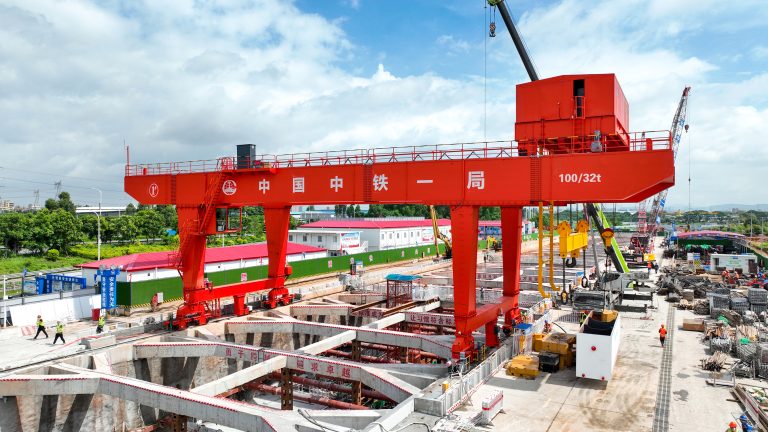
    double girder gantry crane manufacturer

    Core Procurement Requirements for Gantry Crane Projects

    The uncertainty of outdoor working conditions makes the procurement standard of gantry cranes much higher than that of ordinary indoor lifting equipment, and is also the core basis for overseas buyers to screen suppliers of outdoor gantry cranes.

    Stable outdoor adaptability

    Open-air equipment is exposed to wind and rain, sand and dust, and temperature changes all year round, and some coastal and arid areas are also subject to corrosion and strong winds. The equipment must be equipped with basic windproof, rainproof, dustproof and anti-corrosion configurations in order to ensure uninterrupted and stable operation throughout the year.

    Heavy-duty and stable structural design

    Users choose gantry cranes, mostly to solve the heavy-duty, large-scale lifting problems. The material thickness and welding process of the main beam, outriggers and traveling structure of the equipment directly determine the load carrying capacity and service life of the equipment, which is also the key to distinguish the quality of the equipment.

    Adapt to the site layout

    Different plants have different site widths, traveling distances, foundation bearing capacity, and operating lines. High-quality manufacturers will not apply the standard model, but will adjust the equipment span, travel length, and leg height according to the actual layout of the site, so as to adapt to the exclusive working conditions of the project.

    Simple installation and low operation and maintenance costs

    The difficulty of installation and commissioning of outdoor equipment directly affects the progress of the project. The convenience of daily maintenance and parts replacement can also effectively reduce the time and capital cost of long-term operation and maintenance in the plant.

    Complete technical data and engineering support

    Overseas project customs clearance, local acceptance, equipment operation and maintenance, all need a full set of formal technical documents. Reliable gantry crane manufacturers can provide equipment drawings, load data, operation manuals, testing records, as well as supporting the pre-work condition survey, program optimization engineering services.

    Long-term spare parts supply and after-sales response

    Yards, mines, ports project once the equipment downtime, will produce huge production losses. Manufacturers’ after-sales response speed, general spare parts reserve capacity, and long-term maintenance services are important guarantees for the stable operation of the project.

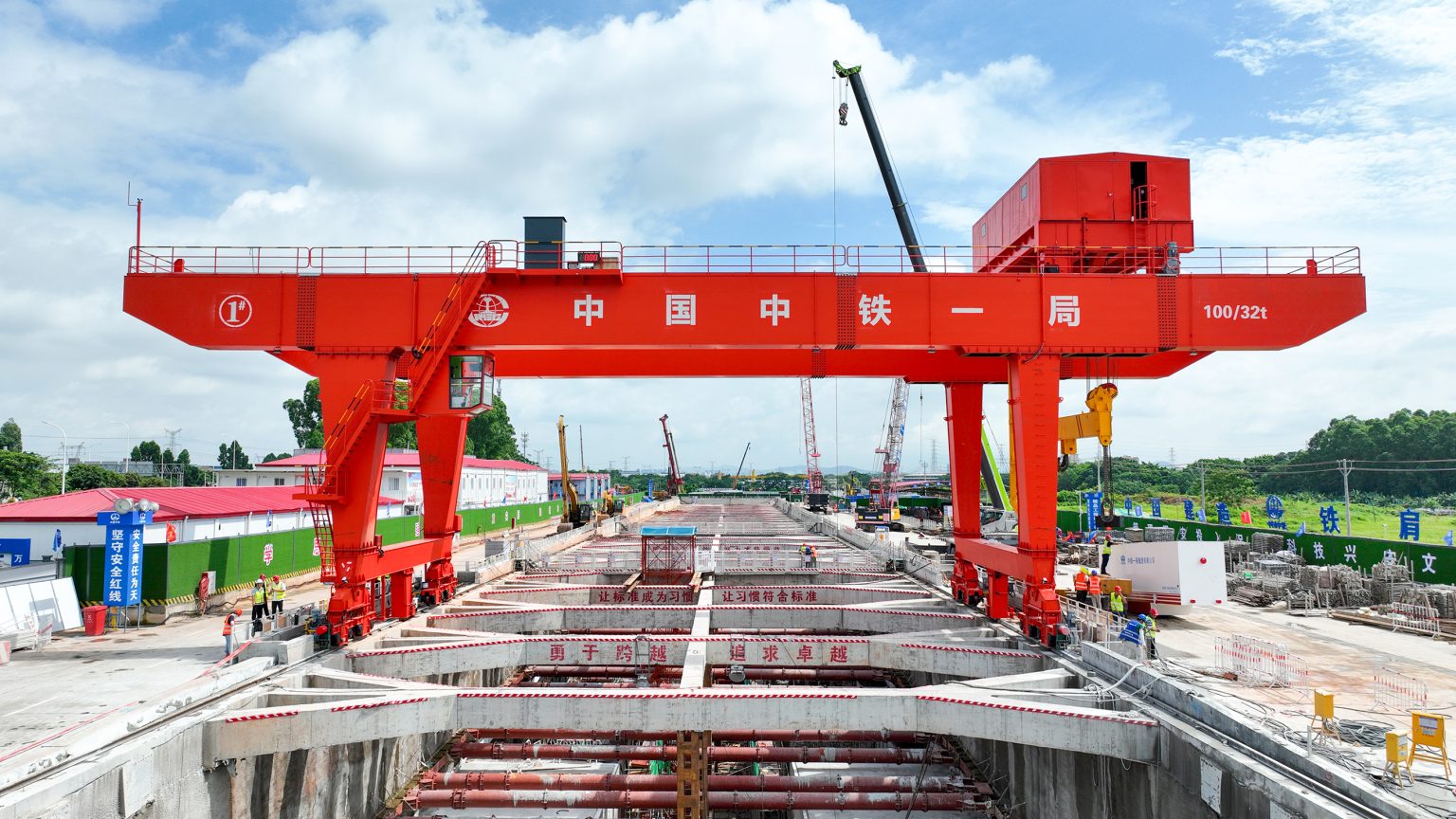
    double girder gantry crane manufacturer

    Procurement must verify the core technical parameters

    Parameter adaptation is the basis for stable operation of the equipment, any parameter deviation will result in the equipment not being able to adapt to the site conditions, affecting the commissioning of the project. When overseas procurement selection, you can check the core parameters one by one against the following table to avoid selection errors and ensure that the equipment is adapted to local working conditions and production needs.

    Key Technical Parameters Selection Requirements Site Adaptation Instructions
    Lifting Capacity Calculated based on maximum load, lifting tool weight and safety margin Avoid overloading operation. Reserve sufficient load margin for long-term heavy-duty working conditions.
    Span Fully match the effective working width of the yard Eliminate working blind spots and space waste to ensure full coverage of lifting operations.
    Lifting Height Fit stacking and maintenance height with safety clearance reserved Prevent cargo collision and insufficient limit height during lifting procedures.
    Travel Length Layout according to on-site operation route Ensure full coverage of the working area and improve overall yard operation fluency.
    Duty Class Classified as light, medium and heavy; choose heavy grade for frequent operations Match daily operation frequency to avoid excessive equipment wear under long-term high-intensity work.
    Working Environment Adapt to on-site wind, dust, humidity, corrosion and temperature changes Equip customized anti-corrosion, dust-proof, wind-proof and high-temperature resistant devices for complex outdoor conditions.
    Control Method Pendant control, wireless remote control, cabin control optional Select according to operation accuracy requirements, working habits and actual application scenarios.
    Power Supply Voltage and frequency conform to local infrastructure standards Confirm on-site power parameters in advance to avoid commissioning and operation failures.
    Rail & Foundation Condition Match rail specification and foundation bearing capacity Strictly check foundation data for rail-mounted cranes to ensure stable and safe travelling performance.

    Common Misconceptions in Procurement

    Many buyers are accustomed to simply price selection, ignoring the core differences in equipment configuration, process, service, and later frequent failure and downtime problems.

    Arbitrary application of common models, not combined with the actual working conditions selection, will lead to poor adaptability of equipment, unable to meet the operational needs.

    Neglect outdoor corrosion, sand, high temperature and other environmental factors, omit the exclusive protection configuration, significantly shorten the service life of the equipment.

    Neglecting the working level of the equipment, using light load equipment to cope with high-frequency heavy-duty operations, long-term overload operation is very likely to cause safety hazards.

    Do not verify the manufacturer’s experience in similar projects, do not confirm the scope of the offer, ignore the after-sales responsibility, will lead to project delays, additional additions and other issues.

    double girder gantry crane manufacturer

    Summarize

    Selecting a reliable gantry crane manufacturer is never simply looking for a low price quote, the core is a comprehensive solution to match the project conditions. Model suitability, accuracy of technical parameters, production process, quality inspection standards, manufacturer experience and long-term service, far more important than the price of a single purchase.

    Henan Mine Crane, as a professional global gantry crane source manufacturers, with mature overseas project landing experience, can provide model selection, non-standard customization, protection upgrades, technical docking, installation and after-sales service for all kinds of outdoor complex working conditions. We always take the actual needs of the project as the core, and provide highly adaptable and stable gantry crane solutions for global industrial customers.

    There are gantry crane procurement and selection needs, you can provide equipment tonnage, span, lifting height, site conditions and drawings, Henan Mine Crane engineers team for your one-on-one customization of exclusive lifting solutions.

    Henan Mine CraneDiscuss your requirements ↗
  • How to Choose a QZ Grab Crane for Coal Power Plants

    How to Choose a QZ Grab Crane for Coal Power Plants

    How to Choose a QZ Grab Crane for Coal Power Plants

    Coal-fired stacking and transportation in thermal power plants are under severe working conditions. The type selection of QZ grab crane directly affects production efficiency, operation and maintenance cost and operation safety.Improper type selection is easy to cause equipment failure, low efficiency of operation, dust prevention is not up to standard and other problems, increasing additional operation and maintenance and transformation costs.

    This paper focuses on the thermal power plant scenario, explains in detail the core points of QZ grab crane such as specification selection, grab type, working level, dust prevention safety, etc., and is equipped with procurement list to assist enterprises in scientific selection, avoid misunderstandings, eliminate cost loss and potential safety hazards, and ensure stable production compliance.

    What Is a QZ Grab Crane?

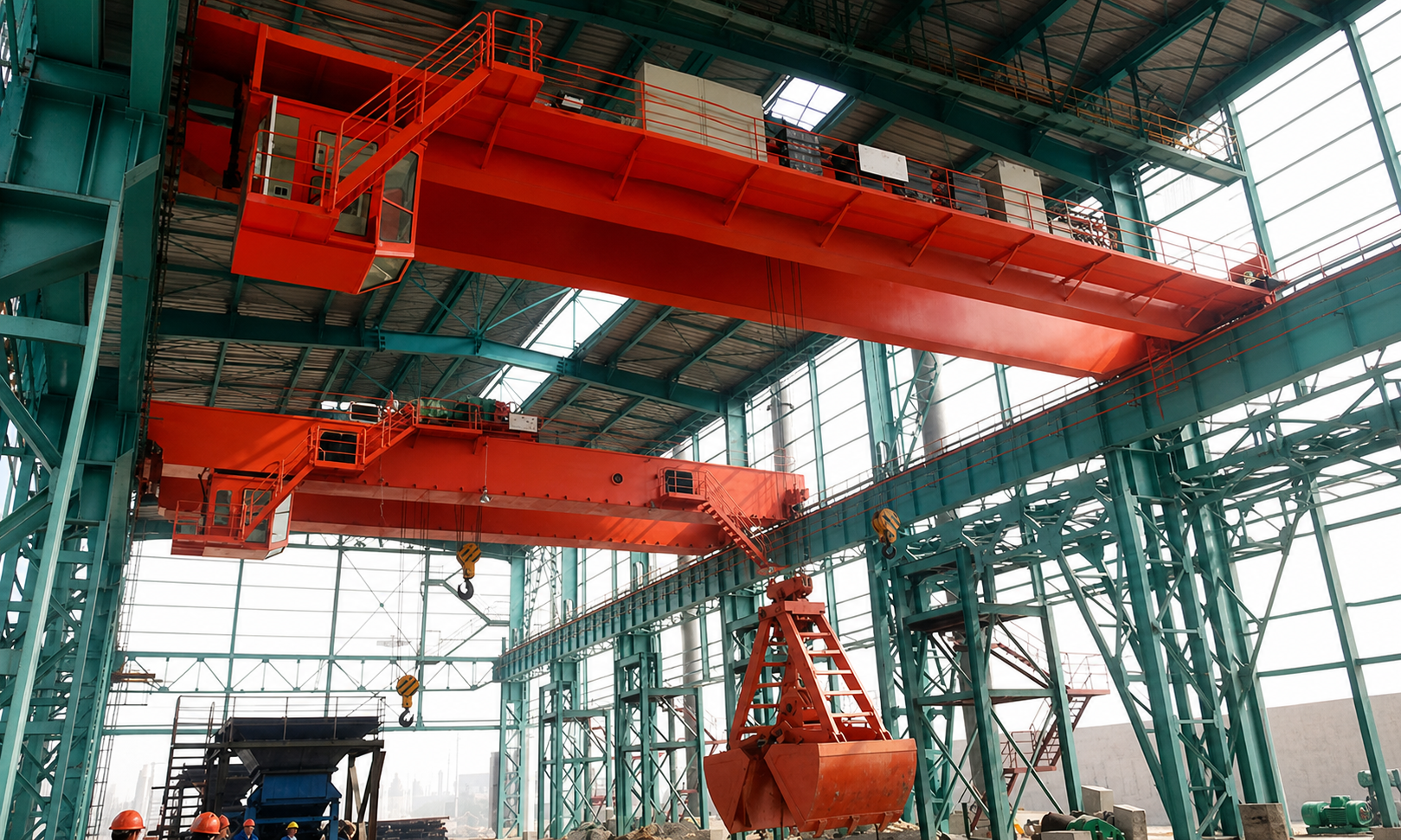
    A QZ grab crane is a double-girder overhead traveling crane equipped with a specialized grab bucket instead of a standard hook. It works by lowering an open clamshell or orange peel bucket into a pile of loose material, closing the jaws to capture a load, lifting it, and releasing it at a discharge point. The “QZ” designation is a standard Chinese crane classification indicating a double-girder bridge crane built specifically for grab-bucket operation, distinct from general-purpose QD (hook) cranes.

    QZ cranes matter in coal power plants because they solve a problem hook cranes can’t: coal doesn’t come in discrete units that can be slung or hooked. It arrives as loose, free-flowing bulk material that has to be scooped, not lifted. The grab mechanism is what makes continuous, unattended handling of thousands of tons of coal per day possible.

    Why Coal Power Plants Use QZ Cranes

    Coal moves through a power plant in a defined sequence, and the QZ crane typically operates at two to three points in that chain:

    1. Coal yard to bunker.Incoming coal is stockpiled in an open or covered yard. A QZ crane grabs coal from the pile and transfers it into intermediate storage bunkers that feed the boiler.
    2. Bunker to feeder.In some plant layouts, an indoor QZ crane moves coal from bunkers directly toward the crushing and pulverizing stage.
    3. Ash and slag removal.The same crane class, often with a different grab, handles bottom ash or slag removal from the boiler area.

    This is why the crane is usually specified for round-the-clock, high-duty-cycle operation rather than occasional lifting it is effectively part of the plant’s fuel supply chain, and downtime translates directly into constrained boiler feed.

    Key Specifications to Match to Your Plant

    Before comparing suppliers, four numbers define whether a QZ crane will actually fit your operation:

    • lifting capacity: thermal power plant QZ grab crane conventional tonnage of 5 – 20 tons, large high-throughput power plants can choose larger tonnage.The core error of type selection is that only coal load is calculated, and rated lifting weight must include grab weight.
    • Span:The standard QZ crane span is 16.5 – 31.5 meters, which needs to strictly match the width of coal bunker and yard.Non-standard span can adapt to special sites, but it will increase procurement costs and prolong delivery cycle.
    • Lifting height: The normal lifting height under coal-fired conditions is 20 – 30 meters.The calculation standard shall not be based on the distance from the ground to the roof, but shall be calculated according to the actual distance from the lowest operating point of the equipment to the highest point of the hook in combination with the height of the coal pile, the depth of the coal bunker and the safety margin.
    • work level: for the selection of the most error-prone key parameters.According to FEM and ISO 4301 standards, thermal power plant equipment needs continuous operation and supply, and A6/A7 working level must be selected, and ordinary industrial A4/A5 level is prohibited.Low-level selection will cause structural fatigue, premature aging of equipment and greatly shorten service life.

    Sizing the Grab to Your Coal Handling Needs

    Most procurement teams are prone to high-cost selection errors: only based on volume selection grab, ignoring weight load and material density.The paper parameters compliance grab, after taking into account the coal stacking density and grab weight, easily lead to crane overload operation.

    Standard selection calculation steps

    • The rated safe working load (SWL) of the crane is the only core calculation benchmark. This value is the standard rated load calibrated by the equipment manufacturer. It is the upper limit standard to ensure the safe operation of the crane structure, traveling mechanism and lifting mechanism. All grab selection calculations shall not exceed the parameter range.
    • Accurately deduct the self-weight of the supporting grab. The self-weight of the grab is greatly affected by the material, structure form and size size. The self-weight of the small light grab is only several hundred kilograms, and the self-weight of the large grab dedicated to the heavy load of the thermal power plant can reach several tons. It is a core load variable that is easily ignored.
    • By subtracting the grab weight from the rated load, the maximum effective load of coal materials that the equipment can carry can be accurately calculated. This value is the maximum weight of materials allowed to be loaded in actual operation, which is the core basic data for subsequent volume calculation.
    • combined with the actual bulk density of coal grab volume conversion, thermal power coal bulk density conventional range of 0.7 – 0.9 t/m³, will be due to coal type, dry and wet moisture content, particle size dynamic changes, need to combine the actual coal parameters of the plant accurate calculation, get the grab theoretical maximum operating volume.
    • Reserve 10%-15% safety margin on the basis of theoretical volume, which can offset load deviation caused by uneven material taking, fluctuation of material density and cyclic wear of equipment, avoid overload risk and ensure safe and stable operation of equipment.

    Worked example: A crane with a 10-ton SWL fitted with a grab weighing 1.5 tons leaves 8.5 tons of usable payload. At a coal bulk density of 0.85 t/m³, that translates to a maximum grab capacity of roughly 10 m³. Applying a 10–15% safety margin brings the practical working capacity down to approximately 8.5–9 m³ per cycle.

    The takeaway for procurement: never give a supplier a target grab volume alone. Give them your crane’s SWL, your coal’s bulk density range, and your required safety margin. Volume is an output of that calculation, not an input to it.

    Choosing the Right Grab Type for Coal

    Coal is a loose, free-flowing, relatively low-density bulk material, which narrows the grab selection considerably compared to handling scrap metal or ore.

    Bucket Type Selection

    Shell grab is the mainstream choice of coal handling operation in thermal power plants.Symmetrical hinged hopper body opens and closes smoothly, can smoothly cut into coal pile, airtight lock material, effectively reduce material leakage, adapt to the characteristics of strong loose coal fluidity, suitable for stacking and reclaiming operation of coal yard and coal bunker of power plant.

    Plum blossom grab is mostly used for scrap steel, construction waste and other hard irregular materials, relying on multi-petal claw body puncture grab.Coal operation only needs to shovel the stored material, without piercing and biting, so the plum blossom grab has poor adaptability, low operation efficiency and insufficient economy, which is not suitable for coal conveying conditions in thermal power plants.

    Shell Structure Selection

    For coal-burning conditions, the high-sealing closed shell grab with overlapping edge structure is preferred.The enclosed hopper body is specially designed for fluidized fine materials such as pulverized coal and loose coal, which can effectively reduce the material spillage during transportation, inhibit dust overflow, and meet the operation requirements of environmental protection, dust prevention, loss reduction and consumption reduction of power plants.

    The open grab is more suitable for heavy wear-resistant materials such as sand and ore, and the bucket body has poor sealing performance, large operation leakage and serious dust diffusion. It cannot take into account the environmental protection compliance and material loss control requirements of thermal power plants, and is not suitable for coal loading and unloading.

    Drive Mode Selection

    • Mechanical rope grab: simple structure, high cost performance, is a general selection of conventional coal-fired operations.It relies on crane winch mechanism to realize opening and closing, without independent power source, convenient operation and maintenance, low failure rate, and is suitable for conventional extensive stacking and reclaiming operation of power plant.
    • Electro-hydraulic grab bucket: bucket body integrated motor and hydraulic pump, only need a single lifting wire rope to work, accurate opening and closing, strong unloading controllability, suitable for power plant automation, semi-automatic coal bunker loading conditions, suitable for refined operation scenarios.
    • Electric grab: performance between mechanical and electro-hydraulic, control accuracy is better than pure mechanical grab, at the same time do not have to bear the complex operation and maintenance costs of hydraulic system, moderate cost performance.

    closed shell grab is preferred for coal-fired operation in thermal power plant.Mechanical rope type is selected for conventional general scenarios, and electro-hydraulic type is preferred for automatic coal bunker feeding scenarios, which can be flexibly matched according to the automation degree of the plant area.

    Coal Dust and Explosion-Proofing Requirements

    This is the single most commonly overlooked safety requirement in QZ crane procurement for coal service, and it’s specific to this application in a way that generic crane buying guides don’t address.

    Coal dust is a combustible dust. When airborne in sufficient concentration and exposed to an ignition source, it presents a genuine explosion hazard a risk that doesn’t exist in the same way for cranes handling ore, sand, or scrap metal. This has direct implications for how a QZ crane should be specified for coal service:

    1. Electrical explosion-proof configuration: electrical parts such as motors, control cabinets, junction boxes and cable drums in pulverized coal area shall be equipped with dust explosion-proof specifications according to the hazard level of the plant, and shall comply with NFPA and IEC/ATEX standards to prevent dust ignition and explosion risks.
    2. Dust suppression protection measures: dust suppression devices are equipped at the grab material taking and unloading points, which can effectively reduce the risk of dust explosion and reduce the dust on the surface area of the equipment structure.Dust accumulation not only affects the clean operation and maintenance of equipment, but also forms secondary fire hazards. Dust suppression design can avoid safety risks doubly.
    3. Closedgrab advantage: the closed grab structure mentioned above has a double protective effect, not only can reduce the leakage of coal-fired materials, but also can greatly reduce the amount of fine pulverized coal dust, control dust diffusion from the source, adapt to the dust prevention and control of thermal power plants and safety production requirements.

    Buyers should raise hazard classification explicitly with suppliers rather than assuming standard industrial-grade electricals are adequate. A crane quoted without this consideration may be materially cheaper and non-compliant with plant safety requirements the moment it’s installed.

    Throughput and Duty Cycle Planning

    Even if the crane rated load selection compliance, if the throughput does not match the actual coal consumption of the unit, there will still be insufficient coal bunker supply, boiler can not be stable combustion problems.

    The model selection shall take the hourly coal consumption of boiler as the core benchmark, reverse calculate the number of operation cycles required by crane per hour, and comprehensively consider three key factors: rated loading capacity of single grab, complete operation cycle time (lowering, closing, lifting, walking, unloading and resetting), effective operation time of equipment and standby redundancy capacity of coal bunker.

    Some crane load parameters meet the standard, but the operation cycle frequency is low, and the feeding speed cannot keep up with the boiler consumption speed, which will form the upstream feeding bottleneck of the combustion system.This problem is extremely costly to investigate and rectify after equipment installation and must be avoided in advance at the selection stage.

    At the same time, the A6/A7 high-level work level mentioned earlier is directly linked to device throughput.High-frequency continuous cycle operation crane, need to match the corresponding structure and mechanical performance level, can effectively avoid high-intensity operation of equipment accelerated wear, early aging failure.

    Safety Systems and Standards to Require

    Beyond dust-specific protections, a coal-service QZ crane should include the safety systems standard to heavy-duty grab operation:

    • Overload protection device: It can effectively limit the operation of equipment exceeding rated load, eliminate structural damage, equipment failure and safety accident caused by overload operation from the source, and ensure the compliance and safety of lifting operation.
    • Full-stroke limit switch: equipped with lifting, cart and trolley operation limit device, accurately limit the equipment operation stroke, prevent over-stroke collision, derailment and other mechanical failures, and ensure the stability of the whole machine operation.
    • laser height measurement configuration: suitable for automatic, semi-automatic coal bunker feeding conditions, can accurately control the discharge height, ensure the height of the operation is uniform, improve the accuracy of automatic operation and operation standardization.
    • electrical safety protection: integrated low voltage, phase sequence protection function, and configuration of emergency stop device, can deal with abnormal voltage, phase sequence fault and other electrical problems, emergency conditions can be quickly shut down to avoid electrical safety risks.
    • Remote control system: It has become the mainstream configuration of coal conveying operation in thermal power plants, which can avoid long-term exposure of operators to dust and noise, and greatly improve operation safety and operation convenience.

    On the standards side, ask suppliers to confirm compliance with recognized frameworks commonly FEM (European crane design standards) and ISO 4301 for duty classification and request documentation, not just a verbal assurance. If your plant operates under an insurer-mandated inspection regime, confirm the crane’s duty class rating is compatible with what your inspection authority requires; a mismatch can affect operating certification at annual inspection.

    Conclusion

    QZ grab crane selection in thermal power plant should comprehensively consider coal characteristics, grab volume, working grade, explosion-proof standard, operation frequency and other indicators, rather than a single lifting capacity, so as to ensure safe and efficient operation of coal conveying system.Complete working condition parameters shall be provided when purchasing, so as to facilitate the manufacturer to customize the equipment.

    Henan mine crane can customize all kinds of lifting and intelligent handling equipment, adapt to power plants, mines, ports and other bulk material conditions, provide one-stop services such as selection, design, working condition analysis, etc., to ensure safe and long-term operation of equipment.

    Henan Mine CraneDiscuss your requirements ↗
  • How to choose a quality crane manufacturer

    How to choose a quality crane manufacturer

    How to choose a quality crane manufacturer

    How to choose a quality crane manufacturer

    Cranes are industrial core equipment, directly related to operational safety, productivity and long-term operating costs. If you choose the right one, it will save your heart and durability, but if you choose the wrong one, it will be prone to failure, downtime, and possible after-sale disputes.

    the supplier background and credibility

    Judge whether the manufacturer is reliable, the first thing to find out its ‘background’. Background information can intuitively reflect the strength and stability of the enterprise, to avoid co-operation with the purse company or short-term workshop.

    Years of establishment and shareholding structure are the basic thresholds. Long-established enterprises are more experienced, more mature and more risk-resistant. Priority is given to manufacturers with clear shareholdings, no disputes and their own factories, which are better able to control the production process and are more secure than pure traders.

    The size and capacity of the factory directly determines the delivery capacity, and you need to pay attention to the core information such as its floor space and the configuration of the production equipment. Strong manufacturers are usually equipped with advanced production equipment and have sufficient production capacity. It is recommended to verify through on-site inspections and other means to visually understand their production and management level.

    Export experience and international market layout can side by side confirm product quality and compliance. Manufacturers with stable export business usually have products that meet international standards. Verification of export countries, relevant qualifications and successful cases can be more convincing than manufacturers’ boasts.

    Benchmarking projects and customer testimonials are the most direct endorsement of trust. High-quality manufacturers must have industry cases of cooperation with large customers, you can ask them to provide project information, customer feedback, and even take the initiative to contact past customers to verify the operation of the equipment and after-sales service.

    certification and compliance

    Cranes belong to special equipment, safety and compliance is the bottom line. Various types of certification is not ‘ornamental’, but the product in line with industry standards, with market access to the core of the credentials.

    ISO9001 quality management system certification is the foundation, can prove that the manufacturer has the ability to control the whole process of quality. When verifying the certificate, in addition to confirming the existence of, but also focus on the validity period, the authority of the certification body and regular supervision and audit records.

    Export to different markets need to correspond to the special certification: the European Union needs CE certification, Russia and the Eurasian Union needs EAC certification, North America needs to comply with OSHA/NRTL system. If you have export needs, make sure the manufacturer has the corresponding qualifications to avoid compliance risks.

    Welding, electrical and safety certifications are directly related to operational safety. High-quality manufacturers usually have welding certificates such as AWS, EN 1090, etc., and electrical components in accordance with IEC standards, as well as equipment safety devices (anti-overloading, anti-collision, etc.) to meet the standards.

    Third party testing (e.g. SGS, BV, TUV) is an important safeguard. Only look at the manufacturer’s self-inspection report is not enough, give priority to accept the third-party testing of manufacturers, the authoritative report can be issued to avoid quality risks to the greatest extent.

    engineering and technical capabilities

    The core competitiveness of cranes lies in engineering capabilities. The demand for different working conditions vary greatly, standardised products often can not be adapted, which requires manufacturers to have a strong R & D and customisation capabilities.

    The core competitiveness of cranes is ultimately reflected in the engineering capabilities. Especially in different industries, different working conditions of the demand varies greatly, standardised products often can not be fully adapted, which requires manufacturers to have a strong technical research and development and customisation capabilities.

    Internal R&D team is the core of technology. High-quality manufacturers have professional R&D teams covering mechanical, electrical, structural and other fields of engineers. The R&D strength can be verified by the team size, experience of core members and patent achievements.

    Customisation capability is the key to dealing with complex working conditions. In the face of scenarios such as low headroom, abnormal span and special lifting goods, manufacturers need to design adapted solutions through professional modelling after on-site research.

    Load calculation and structural analysis determine the safety and durability of the equipment. High-quality manufacturers use finite element analysis and other tools to calibrate the strength and stiffness of core components, such as main beams and end beams, to ensure the safe operation of the equipment.

    Compliance with international standards is a prerequisite for product entry. Regardless of domestic and international use, the equipment must comply with the corresponding standards (e.g. GB/T 3811, EN 13000, ASME B30), which manufacturers need to strictly comply with in order to guarantee the availability of the equipment.

    Product Configuration and Core Components

    Equipment performance and life, the core depends on the configuration and quality of core components. Some manufacturers cut corners when competing at low prices, which can lead to a spike in the failure rate in the later stage, but increase operating costs.

    Crane performance and service life, the core depends on the product configuration and the quality of core components. Many manufacturers seem to offer a very low price, but cut corners on the core components, the subsequent failure rate of the equipment will rise sharply, the long-term operating costs are higher.

    Steel grade and manufacturing process is the equipment ‘skeleton’. High-quality manufacturers choose Q355B, Q460 and other high-strength steel, welding precision, rust removal and painting processes, directly affecting the corrosion resistance of the equipment and life.

    Motor, reducer, brake, etc. is the equipment ‘heart’. Priority is given to the core components of Siemens, SEW and other well-known brands of manufacturers, although the cost is slightly higher, but the stability is strong, can reduce the failure and maintenance costs, to avoid the hidden dangers of miscellaneous parts.

    The control system needs to be adapted to the operational scenarios, mainly handheld button box, remote control, automation of three ways. High-quality manufacturers can recommend the right type according to the needs of the site to ensure accurate and stable control.

    Safety devices are the last line of defence for operational safety. The equipment should be fully equipped with overload limitation, position limitation, anti-collision and other devices, and be sensitive and reliable. Special working conditions also need to be equipped with additional special protective equipment.

    Quality control and testing

    Quality design and configuration, need strict quality control and testing support. High-quality manufacturers to establish a full-process quality control system, from raw materials to finished products factory, each link has a clear testing standards.

    No matter how good the design and configuration, without strict quality control and testing process, it is impossible to ensure product quality. High-quality manufacturers will establish a full-process quality control system, from raw materials to the finished product factory, each link has strict testing standards.

    Incoming material inspection is the source of quality control. Steel, core components and other incoming, need to check the qualification and performance test, qualified before put into production, from the source to eliminate quality hazards.

    Load and function test is the core performance verification link. The equipment needs to complete no-load, full-load, 110%-125% overload test, and at the same time comprehensively verify the control, braking, safety and other system functions to ensure that the performance meets the standard.

    Factory Acceptance Test (FAT) is the key to buyers’ rights protection. High-quality manufacturers have standardised FAT process, inviting buyers to witness the test, and all data records are filed and signed by both parties before the equipment is shipped.

    Quality traceability records facilitate follow-up maintenance and responsibility definition. Priority is given to manufacturers who can provide full-process traceability records, covering procurement, production, testing and other aspects, to facilitate troubleshooting and responsibility determination.

    business and contract terms

    Commercial and contract terms are the core of cooperation, clear and reasonable terms can clarify the rights and responsibilities, avoid disputes and ensure the smooth progress of the project.

    In addition to products and technologies, commercial and contract terms are also the core of cooperation. Clear and reasonable terms can clarify the rights and obligations of both parties, avoid subsequent cooperation disputes, and ensure the smooth progress of the project.

    Clarity of quotation is the key to avoid late additions. When checking the quotation, in addition to the total price, you need to clarify the scope of the cost of equipment, installation, training, transport, etc., to confirm that the parameters of the configuration is clear and there are no hidden clauses.

    Delivery time needs to be agreed in conjunction with the project requirements, the contract is clear production, delivery, arrival and commissioning completion time. Require manufacturers to provide progress plans and regular synchronisation, customised equipment need to set aside sufficient production cycle, to avoid rushing to affect the quality.

    FOB, CIF, DDP and other trade terms, responsibilities and costs are divided into different. You can choose according to your own logistics ability: FOB for mature channels, DDP for worry-free needs, and match according to your needs.

    Payment terms are suggested to adopt the mode of ‘prepayment + progress payment + final payment’ to take into account the rights and interests of both parties. Warranty can be agreed, to be paid after the expiry of the warranty period without quality problems, to further avoid the risk of co-operation.

    After-sales service and support

    After-sales service directly affects the long-term operational efficiency of the equipment and maintenance costs, high-quality manufacturers will provide perfect after-sales service and technical support, which should not be ignored when purchasing.

    Many buyers in the procurement, easy to ignore the after-sales service, but in fact, the quality of after-sales service, directly affecting the long-term operational efficiency of the equipment and maintenance costs. High-quality manufacturers will provide perfect after-sales service and technical support.

    Warranty period and scope need to be clear in the contract. Conventional equipment warranty is mostly 12-24 months, the core components can be extended to 24-36 months, while clarifying the free maintenance, door-to-door service and other rights and responsibilities, to exclude man-made and force majeure factors.

    Spare parts supply capacity is related to fault repair efficiency. High-quality manufacturers have spare parts warehouses at home and abroad, commonly used spare parts can be delivered in 24-48 hours, no more than 7-10 days for special spare parts, while the need to confirm the lifelong spare parts supply capacity.

    Installation and commissioning of professional, high-quality manufacturers to provide free on-site guidance and commissioning services, as well as training of operators to ensure the smooth commissioning of equipment.

    Fast technical response can reduce downtime losses. Domestic customers are preferred to choose 24-hour response, 48 hours to the manufacturer, overseas customers are concerned about the 72-hour response capability, while confirming the 24-hour technical advice channels.

    logistics and export capabilities

    For buyers exporting or purchasing large cranes, logistics and export capabilities are critical, directly affecting whether the equipment can be delivered safely and on time to protect the project progress.

    For buyers with export demand, or procurement of large, super-large crane buyers, logistics and export capability is a dimension that must be focused on. Whether the equipment can be delivered to the site safely and on time directly affects the project progress.

    Export packaging needs to comply with international transport standards. Cranes are large-scale equipment, and high-quality manufacturers use rust-proof, moisture-proof and shock-proof packaging to reinforce large components and avoid deformation and damage during transport.

    Complete documentation and customs clearance support can avoid delays in customs clearance. High-quality manufacturers with rich export experience can assist in the preparation of a full set of customs clearance documents, provide consulting services to ensure smooth customs clearance of equipment.

    Large transport experience is the core guarantee for large equipment delivery. High-quality manufacturers have long-term cooperation with large logistics partners, according to the weight and size of the equipment, the development of land transport, sea transport, port loading and unloading integrated programme.

    Good co-ordination between ports and freight forwarders can improve transport efficiency. High-quality manufacturers dock with ports and freight forwarders in advance to arrange loading and unloading, warehousing and customs clearance processes, so as to avoid equipment stranded in the port.

    Choosing the right manufacturer is choosing the right long-term partner

    Selecting a high-quality crane manufacturer is essentially selecting a long-term partner, which is directly related to equipment safety, productivity and long-term operating costs.

    Conditions allow, it is recommended to visit the manufacturer on the spot, verify the production process and testing procedures, refer to the feedback of past customers, to maximise the risk of avoiding and selecting a reliable partner.

    I hope this article can provide help for your selection, if you have specific questions or needs, welcome to communicate at any time.

    Henan Mine CraneDiscuss your requirements ↗
  • How to Choose a QDY Casting Crane for Molten Metal Handling

    How to Choose a QDY Casting Crane for Molten Metal Handling

    How to Choose a QDY Casting Crane for Molten Metal Handling

    QDY casting crane is suitable for molten metal lifting operation under high temperature and heavy load conditions in foundry.According to the requirements of on-site production, the load, working level and safety system can be reasonably matched, and the molten steel and molten iron transfer and pouring procedures can be stably completed to ensure safe and efficient production.The scientific selection method will be introduced below to assist accurate supporting equipment.

    What Is a QDY Casting Crane?

    A QDY casting crane (also called a ladle crane or casting ladle crane) is a double-girder overhead crane engineered specifically to lift and transport ladles filled with molten iron or steel. Unlike a standard bridge crane, it is built to survive continuous radiant heat, dust, and the catastrophic consequences of a dropped load.

    QDY series ladle cranes transport molten iron ladles to the basic oxygen furnace, or transfer molten steel from the basic oxygen furnace and electric arc furnace to the continuous casting machine, and can also be used for teeming and casting.As with charging cranes, safety and reliability come first because the crane is handling molten steel.

    Design and Standards

    QDY bridge foundry cranes with hooks are used wherever molten metal is lifted, with the complete machine rated to working class A7, and a thermal-protective coating added to the bottom of the main girder. Casting ladle crane design and manufacture conforms to the notification requirements of JB/T7688-1 and JB/T7688, along with the National Quality Supervision Bureau’s opinions on metallurgy lifting machinery.

    Where QDY Sits in The Product Range

    Casting overhead cranes for hot ladle handling are typically available as single girder up to 10 tons, double girder from 5 to 75 tons under the QDY series, 75/20 to 125/32 tons under the YZ series, and 125/32 to 320/80 tons under the four-girder YZS series. If your ladle capacity exceeds roughly 74–75 tons, you’re generally shopping for a YZ or YZS crane, not QDY.

    Key Applications in Molten Metal Handling

    QDY cranes appear at nearly every hot-metal handoff point in a steel plant or foundry:

    • Charging operation: Responsible for the transfer of molten iron after tapping from the blast furnace. The ladle is carried by lifting equipment to smoothly lift and transfer the high-temperature molten iron from the blast furnace discharging station to the designated charging station of the oxygen top-blown converter for subsequent steelmaking. The smelting process provides raw material guarantee and is the core transfer process at the front end of steel smelting.
    • Refinery transfer operation: Throughout the whole process of steelmaking production, it can complete the processes of converter molten iron charging, crude steel lifting and refining, and molten steel transportation to continuous casting turntable, realizing efficient connection between smelting and continuous casting processes and ensuring continuous and stable operation of production lines.
    • Casting and forming operation: It belongs to the core process of metal forming. Through precise operation of lifting equipment, qualified molten metal is poured into ingot mold or continuous casting equipment to complete metal shaping and stably produce finished products such as ingot and billet.
    • Casting workshop pouring station operation: adapt to the high temperature, heavy load and high frequency operation conditions of the casting workshop, mainly complete the cross-station transfer of molten metal in the workshop, fixed-point lifting, and the handling of heavy molds and tooling components, so as to ensure the efficient and continuous development of the casting process.

    Because the crane also has to tip the ladle to pour, most QDY units pair a main hoist with an auxiliary hoist. The main hook works as the primary lifting device for the ladle, while the auxiliary hook works with the main hook to dump the molten iron and perform other subsidiary lifting operations.

    Core Selection Criteria: Load Capacity and Span

    Capacity is the first filter, but it’s not just about the ladle’s dead weight you need headroom for future production growth.

    QDY ladle double girder bridge cranes are rated from 5 to 74 tons and used in metallurgy, casting, and other molten-metal-lifting applications, classified as working level A7. QDY cranes in this range typically span 10.5m to 31.5m.

    When sizing capacity, account for:

    1. Load value shall be calculated according to ladle dead weight + full load total weight of molten metal. It is strictly prohibited to calculate the weight of molten metal alone, so as to ensure that the rated load of equipment completely covers the actual lifting total load and eliminate potential safety hazards caused by load calculation deviation.
    2. The rated lifting capacity shall reserve sufficient safety margin on the basis of the maximum casting load, and the mature selection standard of the industry shall be 10%-20% higher than the actual rated demand, so as to effectively cope with unexpected situations such as fluctuation of working conditions and instantaneous overload, so as to ensure the safety and stability of high temperature and heavy load lifting operation.
    3. Taking into account future capacity expansion: the initial cost of double-beam cranes is higher, but compared with single-beam models, the bearing capacity is stronger, the stability is better, the life is longer, and it is more suitable for enterprise capacity upgrading. The long-term comprehensive value is higher.

    Span and lifting height must match your bay’s rail-to-rail distance and the vertical clearance from furnace floor to runway beam get this wrong and the crane simply won’t clear your pouring pits or furnace tops.

    Duty Class and Working Environment

    Duty classification (also called working class or FEM grade) tells you how much continuous stress the crane is engineered to absorb, critical for 24-hour steelmaking operations.

    QDY cranes are typically rated at working level A7, while heavier YZ series cranes above 74 tons are rated A7 to A8. The working class of the complete QDY machine is FEM 4M.

    Temperature tolerance is equally important and varies by manufacturer: some QDY series cranes are rated for a temperature range of -20°C to +60°C, while others specify -10°C to +50°C. Confirm the manufacturer’s rated ambient range against your plant’s actual worst-case shop-floor temperature, not the average.

    Safety Systems That Matter Most

    Given that a single dropped ladle can be fatal and shut down a plant for weeks, safety hardware is where buyers should spend the most scrutiny not the least.

    Redundant Braking and Lifting

    The main hoisting mechanism uses double motors and double brakes on a single drum, and steel-core wire rope rated for high-temperature environments provides a high safety factor. <cite index=”10-1″>Double sets of independent crane brakes are used on the lifting mechanism to ensure high safety.

    Overload and Limit Protection

    Lifting mechanisms are equipped with overload limit protection and double limit protection with rising limit, at a safety protection level higher than an ordinary double-beam bridge crane. <cite index=”10-1″>Heavy hammer and rotary lifting position limiters, plus down position limiters, are installed when hoisting height exceeds 20 meters.

    • Anti-sway and load monitoring.Anti-sway controls reduce lateral movement of the ladle during travel, improving control and reducing spill risk, and integrated load monitoring systems continuously measure the weight of the molten metal, alerting operators to overloads or imbalances.
    • Emergency stop and fault protection.Positive and negative contactors are installed to prevent dangerous conditions in case of a power outage, and emergency stop buttons plus limit switches guard against overload.

    Structural and Material Requirements for High Heat

    Radiant heat from a 1,500°C+ ladle degrades ordinary crane components fast, so the structure itself needs heat-specific engineering.

    An insulating layer is installed at the bottom of the main girders to prevent thermal radiation from molten steel damaging the structure and to extend the girders’ service life. The radiation temperature reaching the forging hook and plate hook should not exceed 300°C even under full load.

    Other structural specs to verify with any supplier:

    • The main beam adopts 16Mn high-strength steel plate welded box structure, which has high overall rigidity, stable structure and excellent fatigue resistance. It can withstand high-frequency, heavy-duty and reciprocating operations in the foundry industry for a long time, and the structure is not easy to deform.
    • The trolley system is equipped with high temperature resistant special power supply cable, which can adapt to the continuous high temperature radiation environment of the casting workshop. It has the characteristics of high temperature resistance, aging resistance and difficult breakdown, and ensures the safety and stability of the equipment power supply.
    • The cab adopts integral heat insulation and sealing design and is equipped with air conditioning system, which can effectively block external high temperature heat radiation and hot air intrusion, create a constant temperature and comfortable operating environment, reduce high temperature fatigue, and ensure safe operation of operators.
    • The core transmission components such as motors, reducers and bearings adopt fully sealed protection structure, which effectively isolates dust, water vapor and corrosive smoke from foundry workshops, avoids component stagnation, wear and corrosion, and significantly improves equipment durability and operation reliability.

    Control Systems: Cabin, Remote, and PLC Options

    Control method affects both operator safety and cycle efficiency. >Ladle cranes can use advanced speed control methods such as stator voltage regulation or frequency conversion, with PLC control used to display speed, crane work status, and safety faults; remote control is also an option to better reflect the crane’s performance.

    • Cab control: The operator works in the insulated air-conditioned cab, the environment is comfortable, the vision is clear, especially suitable for continuous high-frequency casting conditions, accurate visual alignment can be ensured, and the lifting casting accuracy and operation stability can be guaranteed.
    • Wireless/handle remote control: keep operators away from high temperature heat radiation areas, avoid high temperature operation risks from the root, and have higher safety factors. It is the preferred solution for casting enterprises that pay attention to safety production.
    • PLC intelligent automation control: support automatic recording and storage of load data, equipment failure, operation cycle and other operation data, provide data support for production control, and lay an intelligent foundation for subsequent access to the Internet of Things and predictive maintenance of equipment.

    QDY vs. YZ vs. YZS: Which Series Do You Need?

    Feature QDY Series YZ Series YZS Series
    Capacity <cite index=”6-1″>5–75 tons <cite index=”6-1″>75/20–125/32 tons <cite index=”6-1″>125/32–320/80 tons
    Girder configuration Double girder Double girder Four girder
    Typical duty class A7 A7–A8 A8
    Best for Small-to-mid foundries, standard steel mills Mid-to-large steel mills, higher-capacity ladles Very large integrated steel plants

    The takeaway: QDY is the right call for most foundries and mid-sized steel mills. Once ladle weight or throughput pushes past the mid-70-ton range, budget for a YZ or YZS solution instead of over-stretching a QDY crane’s design limits.

    Total Cost of Ownership and Maintenance

    The purchase price is only the entry cost. Ladle bridge cranes require higher safety performance than ordinary bridge cranes, which makes them more expensive driven not just by design and motor specification but by operating-system customization and ongoing maintenance, with maintenance being one of the main contributors to overall lifetime cost.

    Before signing a contract, evaluate the supplier on:

    • Accessibility for inspection: choose a crane with easily accessible components for inspection and servicing, clear maintenance manuals and lubrication schedules, and a modular design for quick replacement of worn parts
    • Local parts and service support: availability of local service technicians and spare parts inventory should factor directly into the purchase decision
    • Predictive maintenance readiness:sensors monitoring temperature, vibration, motor current, and lubrication in real time can predict failures before they occur, reducing unplanned downtime
    • Energy efficiency:variable frequency drives regulate motor speed to load requirements, cutting unnecessary power use and extending motor life, while regenerative braking can capture and reuse kinetic energy

    Standards and Certification Checklist

    Don’t take a supplier’s safety claims on faith verify against recognized standards:

    • Domestic industry standards: strictly follow JB/T7688-1, JB/T7688 series standards, fully meet the design specifications and manufacturing acceptance technical requirements of domestic casting ladle cranes, equipment structure, performance parameters and production processes are in line with industry official standards.
    • European FEM standard: standard EN 14492-2 and other authoritative lifting equipment standards and FEM classification specifications, strictly control the safety performance and operation stability of equipment, can meet the strict use and acceptance standards of overseas high-end projects.
    • American ASME/OSHA standard: adapt to American market operation code, strictly comply with ASME B20.1 bridge and gantry crane safety standard, OSHA 1910.179 safety regulations, and complete operator training system and preventive maintenance program to ensure overseas compliance and safe production.
    • Special equipment production qualification: The equipment strictly complies with the national special equipment safety supervision management regulations, has the formal special equipment manufacturing license, the complete set of design documents has passed the type test certification, and the qualification is complete and the compliance is reliable.

    Ask any shortlisted supplier for certificates, not just brochure claims, and request references from plants running a similar tonnage and pour frequency to yours.

    What to Prepare Before Requesting a Quote

    Suppliers can’t give you an accurate quote or the right crane without complete operating data. Before you reach out, gather:

    1. Rated lifting capacity: check the rated load of equipment according to the maximum total weight of ladle full load, comprehensively cover the extreme full load lifting conditions, eliminate the hidden danger of insufficient load, and ensure the safety of heavy load operation.
    2. Span and lifting height: accurately confirm the center span of crane track and effective lifting height of hook, conform to the actual space size of workshop, and meet the travel requirements of field lifting operation.
    3. Operating track conditions: verify the installation of on-site running track. If there is no supporting track on site, the manufacturer can provide professional track specifications, design and complete supporting solutions.
    4. Power supply parameters: define the core electrical parameters such as on-site power supply voltage, frequency and phase number to ensure that the crane electrical system accurately adapts to the on-site working conditions and realizes stable and safe operation.
    5. Operating conditions: Clarify the material type of molten metal lifting, high temperature environment parameters, provide accurate basis for equipment working level, protection configuration, material selection, and adapt to severe casting conditions.
    6. Site drawings: provide workshop civil engineering, station layout, equipment layout and other related drawings, convenient for manufacturers to quickly complete customized design, effectively shorten equipment production and project delivery cycle.

    Suppliers commonly ask for exactly this information, span length, lifting height, power supply specs, and the material and temperature being lifted, plus plant drawings, before they can propose a suitable design and solution. Preparing it in advance shortens your procurement cycle significantly.

    Conclusion

    QDY casting crane selection is very important, related to plant safety production, production efficiency and equipment life.The model selection shall be combined with load, heat resistance, structural strength, safety configuration and maintenance conditions, adapt to metallurgical casting high temperature and heavy load conditions, effectively avoid operation risks, reduce shutdown failures, and ensure long-term stable operation of equipment.

    Henan Mine Cranes offers customizable QDY cast-steel cranes, gantry and overhead cranes, electric hoists, and smart lifting equipment, suitable for heavy industry applications such as steel, metallurgy, and foundries. With its professional technical team, the company provides one-stop services including operational condition analysis, structural design, and safety assessments to create safe, efficient, durable, and stable lifting systems for its customers.

    Henan Mine CraneDiscuss your requirements ↗
  • How to Choose a Portal Slewing Crane for Shipyard?

    How to Choose a Portal Slewing Crane for Shipyard?

    How to Choose a Portal Slewing Crane for Shipyard?

    Shipyards require a crane that can handle heavy loads of hull blocks, ship sections, large outfitting modules at the quayside. For this, a shipyard portal slewing crane. A portal slewing crane, with a rail-mounted gantry frame and a 360 degrees rotating jib, provides the lifting capacity and flexibility expected of a fixed-boom gantry crane but with the advantages of a rail-mounted frame. This brochure covers specifications, uses and choosing your right shipyard portal slewing crane.

    What Is a Portal Slewing Crane?

    Henan Mine Crane manufactured portal slewing crane is a rail mounted gantry crane with a traveling jib or boom that slews and lifts loads through 360 °. They are used in ship yards, ports and heavy industry yards. This type of crane consists of a portal frame on a pair of parallel rails that carry loads over a work area, usually a dry dock, slipway or fabrication yard, and this frame is fixed to a pair of rails for travel across the work area. A jib is mounted onto the top of the gantry can rotate independently of the travel motions of the gantry itself. This allows the load to be hovered at any point within the working radius of the crane without traveling the whole gantry between pick points. This type of crane is found in shipyards to assemble hull blocks, rotate ship sections and install equipment, often where the gantry travel between pick points is not sufficient to reach the locations.

    How It Works

    1. The portal frame runs along fixed rails through the work bay, powered by electric travel motors (one per leg).
    2. The slewing jib has a turntable bearing on top of the portal which rotates independently of the gantry travel.
    3. The load radius from the pivot is either increased or decreased as the hoist trolley moves on the jib.
    4. The main hoist lifts and lowers large loads. the auxiliary hoist lifts lighter loads more rapidly.
    5. Operator monitoring of travel, slewing and hoisting at the same time from cab or remote pendant for accuracy placement.

    Travel, slew and hoist together form three independent motions, which when combined in different directions allow a single crane to serve the entire dry dock.

    Key Specifications and Technical Parameters

    Parameter Value / Range
    Lifting Capacity 5–100 t standard; up to 300+ t heavy-duty (verify with manufacturer)
    Rail Gauge (Span) 8–30 m
    Slewing Angle 270°–360°
    Jib / Boom Length 10–40 m
    Lifting Height 15–45 m
    Travel Speed 20–40 m/min
    Slewing Speed 0.3–1.0 rpm
    Main Hoist Speed 3–10 m/min
    Auxiliary Hoist Speed 8–20 m/min
    Power Supply 380V/400V, 50/60Hz, three-phase (configurable)
    Duty Class ISO 4301 A5–A7 / FEM 1Bm–3m (verify with manufacturer)
    In-Service Wind Resistance Up to 20 m/s

    Core Benefits

    • 360° slewing jib: reaches every point around a dry dock from one rail position, cutting crane repositioning time
    • Heavy lift capacity (up to 300+ t): handles complete hull blocks and pre-outfitted sections in a single lift, reducing crane cycles per vessel
    • Dual hoist configuration: separates heavy main lifts from fast auxiliary moves, increasing daily lift throughput
    • Rail-mounted portal frame: distributes load across a wide rail gauge, allowing taller lifts with better stability than mobile cranes
    • Variable-frequency drive control: enables smooth, low-shock load placement critical for precision hull alignment
    • Modular customization:boom length, capacity, and rail gauge configured to existing dry dock dimensions, avoiding costly civil works changes

    Applications and Use Cases

    Portal slewing cranes serve shipyards wherever heavy loads need precise, rotational placement around a fixed work area. Their combination of rail travel and 360° slewing suits tasks that straight-line gantry cranes handle poorly, particularly hull block turning and section transfer near dry docks. Typical shipyard applications include:

    • Hull block lifting and turning during dry dock assembly
    • Pre-outfitted module installation onto ship sections
    • Engine and generator set installation during outfitting
    • Steel plate and prefabricated panel handling in fabrication bays
    • Ship section transfer between fabrication hall and slipway
    • Offshore platform jacket section assembly
    • Rudder, propeller, and shaft installation at the stern
    • Dry dock blocking and keel block positioning support

    Shipyard Portal Slewing Crane

    How to Choose the Right Portal Slewing Crane — Buying Guide

    Choosing a Henan Mine Crane Supply portal slewing crane involves a multi-step engineering decision process, not a single capacity number. The following considerations are used to determine an appropriate crane for a 20+ year service life.

    1. Capacity and the full load chart, not just headline tonnage Determine match capacity to your biggest planned lift plus a safety margin of 10-15 percent.  However, look at the full load chart over the working radius–as the jib extends away from the pivot point,  the capacity diminishes;  so what your crane labeled “100 ton” can lift “what,  a third, a fourth ” of that weight at full extension? Make sure to use the rated capacity at the radius of your largest lift.
    2. Span and rail gauge Span must be consistent with width of your dry dock or fabrication bay area.  Determine the exact distance between the proposed rail centerlines prior to specifying changing rail foundations after the fact is very costly and will create disturbances to yard operations for weeks.
    3. Working radius/jib length Longer jib will increase working radius, yet decrease working capacity at maximum reach and increase wind loading at upper sections of the structure.  Try mapping your dry dock’s pick points over candidate jib lengths before settling on a size excessive jib length merely adds to the structure and investment.
    4. Duty class,  and structural design life Need to specify duty class (ISO 4301 or FEM 1001) according to actual working load, not choose by default.  A shipyard with several shifts of heavy lifts will choose duty class A6-A7, while a shipyard with light lifting may choose A5, thus saving money. Duty class is a primary factor in size of steel sections,  selection of bearings and final fatigue life of the structure.
    5. Site and civil works survey Verify soil bearing capacity, foundation design, and existing rail condition (retrofit) before determine crane weight and wheel load.  Ensure foundation design is verified by a structural engineer based on the supplier wheel-load data, as this is one of the most common causes for delay in installation.
    6. Electrical infrastructure Confirm that the site voltage, frequency, and available power capacity are capable of supporting the total installed power of the crane. If power supply is erratic on the site, check with supplier that appropriate mitigating measures are in place to prevent nuisance trips during heavy lifts.
    7. Corrosion protection for maritime conditions Use hot-dip galvanized structural components or clear multi-coat marine grade epoxy/polyurethane paint system for salt-air recommended.  It is definite for crane within several hundred meters of open water – under coated systems will require excessive Structural repairs 5–8 years.
    8. Control System and Operator Ergonomics Decide on an operator cab, ground level pendant or radio remote control, as determined by sight lines and size of work area. Larger dry docks tend to need cabs with anti-glare glazing and controls for long radius lifts, whereas the smaller bays are more suited to radio remote control.
    9. Safety and anti-collision systems When more than one crane operates on the same track,  normal overload protection must include anti-collision sensors and zone-limiting software. Wind speed recording with automatic alarm or lock-out is necessary for any crane operating over water.
    10. Total cost of ownership in addition to purchase price Lower purchase costs by comparing energy consumption and spares availability with the quotations from the supplier.  Selecting a supplier who does not have a regional service team available, may be very costly during its 20 year life span, if down time occurs during a breakdown.
    11.  Track record of the supplier and after sales support For reference installations, request references at similar shipyards. Ensure warranty conditions, spare parts delivery time, and whether the supplier offers operator training or commissioning support on site.
    12. Certifications to confirm Confirm CE marking,  class society approval (ABS, DNV, LR) or ASME B30.2 in accordance with your shipyard’s regulations and any vessel class requirements related to the lift.

    Safety Systems and Maintenance Considerations

    Henan Mine Crane manufactured portal slewing crane in a shipyard has to be fitted with engineered safety devices and maintained in order to be able to operate at its rated duty class throughout the lifetime of the machine.

    Conventional safety devices consist of overload limit devices which interrupt the hoist movement prior to weights exceeding rated capacity, anti-collision detectors on cranes operating on shared rail tracks, wind speed sensors (anemometers) with automated alarm or travel lock-outs, and the presence of emergency stop controls at the cab, ground level, and remotely on a pendant.

    Recommended maintenance intervals:

    • Daily visual survey of wire ropes, hooks and brakes prior to working shift
    • Monthly lubrication of the slewing bearing, wheel bogies and hoist gearboxes.
    • Each yearcomprehensive structural examination, load testing, electrical system assessment to be carried out as per ISO 9927 or its equal.
    • Every 5 yearsnon-destructive testing (NDT) of critical welds and the slewing bearing, especially for cranes above duty class A6.

    Shipyards should allocate scheduled down time for these planned breaks rather than being reactive to maintenance unplanned crane down time during a docking schedule is significantly more costly than planned maintenance window.

    Portal Slewing Crane vs. Gantry Crane

    Feature Portal Slewing Crane Standard Gantry Crane
    Rotation 270°–360° slewing jib None — straight travel only
    Reach pattern Circular/radial coverage Linear coverage along rails
    Best for Dry dock hull block handling, ship turning Straight-line material transfer, container handling
    Footprint flexibility High — one position covers a wide arc Low — must travel to align with load
    Typical capacity 5–300+ t 5–500+ t (heavier-duty models common)
    Relative cost Higher (slewing mechanism, turntable bearing) Lower for equivalent capacity

    Neither type is universally “better” , gantry cranes suit high-throughput linear transfer, while portal slewing cranes suit shipyards needing radial coverage around a fixed dry dock or assembly bay.

    Compliance and Certifications

    • ISO 4301 / FEM 1001: classifies crane duty/usage group, ensuring structural design matches actual lift cycles.
    • CE Marking (EU): confirms compliance with EU Machinery Directive safety requirements for sale and use in Europe.
    • ABS / DNV / LR Classification: required when the crane forms part of a classed shipyard facility or vessel-related lifting operation.
    • ASME B30.2: US standard covering overhead and gantry crane design, inspection, and operating safety.
    • RoHS / REACH: relevant for electrical and control components exported to EU markets.

    Frequently Asked Questions

    Q: How much can a portal slewing crane lift?

    Typical shipyard portal slewing cranes lift from about 5 to 100 tons, heavy duty cranes over 300 tons (check with manufacturer). Lifting capacity varies according to duration of jib, radius of slewing and width of rail. Shipyards constructing large ships tend to specify larger capacity cranes to lift entire hull segments in one lift.

    Q:-How a portal slewing crane is different from a tower crane?

    A portal slewing crane rides on rails between two fixed points across the working area; a tower crane is fixed on one foundation point. A portal crane is used in shipyards for long dry-docks, whereas tower cranes are used for vertical construction, but have a limited horizontal axis.

    Q: What duty class should be specified to the shipyard?

    ISO 4301 duty class A6–A7 (check with manufacturer) is often used as appropriate for shipyards frequently lifting heavy weights, being high-duty duty class and a wide load spectrum less so for quartermasts. Lower duty classes should be specified for less frequent light lifting. Duty class influences structure sizes and fatigue life.

    Q: Are the cranes suitable for adaptation to an existing dry dock?

    In general, rail gauge, jib length and lifting height are proven to dimensions of an existing dry dock, site conditions will usually be surveyed by the manufacturers before the final design is completed, thus preventing expensive modification to existing rails or quay structures.

    Q: Is any special foundations needed for the portal slewing crane?

    Rail mounted portal cranes must be provided with reinforced concrete rail foundations sized to carry the wheel loads and travel distance of the crane. Final foundation design depends on the nature of the ground, the entire weight of the crane and the maximum lift load. The requirements must be checked by a structural engineer prior to installation.

    Q: Are operators’ training needed in the case of portal slewing cranes?

    Operator shall have certified training on simultaneous movement, travel, slewing, and hoisting controls this combination is more hazardous than basic gantry movement. Many of the stands and classification societies may require agentat least documentary evidence of operatores certification prior to operation.

    Henan Mine Crane Factory Custom

    Selecting the right portal slewing crane is a long-term investment in safety, productivity, and operational efficiency. The ideal solution depends on your lifting capacity, working radius, rail layout, duty cycle, and the specific requirements of your shipyard or industrial facility. Careful engineering at the planning stage helps reduce downtime, improve lifting accuracy, and lower maintenance costs throughout the crane’s service life.

    As an experienced crane manufacturer, Henan Mine Crane Factory provide customized portal slewing crane solutions for shipyards, ports, and heavy-duty industrial applications. Every project is engineered to match your operating conditions, with support covering design, manufacturing, quality inspection, installation guidance, and after-sales service. Whether you need a standard configuration or a fully customized solution, our engineering team is ready to help you find the most efficient and cost-effective crane for your project.

    Henan Mine CraneDiscuss your requirements ↗
  • How to Choose a Port Crane for Future Expansion

    How to Choose a Port Crane for Future Expansion

    How to Choose a Port Crane for Future Expansion

    Terminal procurement of port cranes often focuses only on current loading and unloading conditions and prioritizes the selection of low-cost equipment, ignoring the long-term expansion needs of the terminal.The large investment and long service cycle of port cranes, as well as the high cost of replacement, transformation or migration after installation, will directly restrict the terminal’s throughput capacity and operational efficiency.In the stage of terminal upgrading and foreign trade business expansion, the selection of port lifting should take into account the business development of the next 3 to 10 years, plan the expansion plan in advance, reduce the repeated investment caused by the early scrapping of equipment, calmly cope with the increase in cargo volume, the berthing of large ships, the update of operating standards and other changes, and rely on reasonable planning to achieve long-term stable and efficient operation of equipment.

    Why Future Expansion Matters When Buying a Port Crane

    Growing cargo throughput

    With the recovery of global cross-border trade and the upgrading of the domestic logistics industry chain, the cargo throughput of most coastal and inland ports is on a steady upward trend.Whether it is mainstream freight categories such as containers, bulk groceries, ore, grain, etc., the increase in annual loading and unloading volume year by year will put forward higher requirements for the operating efficiency, single-day processing capacity, and continuous operation capacity of Henan Mine Crane Factory supply port cranes.If the equipment is purchased only in accordance with the current throughput matching parameters, in just 2-3 years, the crane will be saturated with production capacity and overloaded, which will directly lead to terminal congestion, reduced loading and unloading timeliness, ship stagnation and other problems, seriously affecting the customer cooperation experience and terminal revenue.Planning equipment parameters based on future throughput growth in advance allows the crane to match the pace of terminal capacity upgrading for a long time, continuously guarantee efficient operations, and build a solid equipment foundation for terminal business expansion.

    Changing vessel requirements

    The large-scale development of the shipping industry has promoted the continuous upgrading of transportation ships to large-scale and heavy-duty.In the early years, port cranes adapted to small and medium-sized freighters and container ships were no longer able to meet the current loading and unloading needs of ultra-large ships and wide-body ships.The continuous changes in the hull width, draft depth, deck operating range, and cargo stacking height of the ship have put forward new standards for the core parameters of the crane’s operating radius, lifting height, and extension distance.The type of ship docking at the terminal will not be fixed for a long time. With the expansion of the business, it is highly likely that the company will undertake larger tonnage and more categories of shipping orders.If the parameters of the purchased port crane are solidified and the adaptability is single, it will not be able to operate normally in the face of new types of ships, directly limiting the scope of the terminal’s business and missing a lot of cooperation opportunities.Predicting the iteration trend of ship specifications in advance is the key to the long-term adaptation of port cranes to the needs of operations.

    Avoiding early replacement

    Port cranes are heavy-duty industrial equipment. Procurement costs, installation costs, commissioning costs, and operation and maintenance costs are all high, and the equipment relocation, scrap, and replacement cycle is long, and the process is complex. It will also cause the terminal to shut down and stop production, resulting in high indirect losses.Many terminal companies lack expansion thinking due to initial procurement, and the equipment is forced to be eliminated and replaced due to insufficient production capacity, inconsistent parameters, and unsuitable working conditions after 3-5 years of use, resulting in serious waste of funds and idle resources.Purchasing equipment based on future expansion needs can maximize the service life of port lifting, allow cranes to cover multiple stages of terminal development, and completely avoid the pain points of “short-term procurement, rapid elimination, and repeated investment” in the industry.At the same time, the lifting preservation rate of ports adapted to the needs of expansion is higher, and subsequent retrofits, subleases and resales are required, which also have stronger flexibility and cost performance.

    What Should You Consider Before Buying?

    Future handling capacity

    Before purchasing cranes from the Henan Mine Crane Factory supply in the port, companies must combine their own development plans, industry market trends, and regional freight increments to accurately calculate the carrying capacity of terminal operations in the next 3-10 years.The core needs to clarify two core data. One is the growth range of annual cargo throughput and single-day peak loading and unloading volume, and the other is the trend of changes in the weight, category, and stacking form of the main operating cargo. Many traditional procurement plans only match the current peak production capacity, and there is no reserved production capacity margin at all. Once the terminal business expands and orders skyrocket during the peak season, the port lifting will operate at full load, speeding up the wear of parts, increasing the probability of failure, and shortening the service life of equipment.In the early planning, it is necessary to reserve 15%-30% of the future operating margin to ensure that the equipment can still maintain a stable, efficient and safe operating state under long-term high-load operations and capacity expansion scenarios, and calmly cope with business increments.

    Vessel size and reach

    The size of the ship is the core index that determines the selection of port cranes, and directly determines the extension distance, lifting height, and operating coverage of the equipment.In the procurement research stage, it is not only necessary to refer to the current normalized ship specifications, but also to combine port planning, shipping route upgrading, and business development directions to predict the parameters of large-scale ships that will be docked in the future.It is necessary to focus on the maximum width of the ship, the maximum draft depth, the maximum stacking height of the deck cargo, and the operating coverage of the cabin to ensure that the operating extension of the crane can completely cover the whole area of the ship’s deck, and the lifting height can meet the high-level loading and unloading of heavy-duty cargo and the operating requirements of changing tide levels.Adapting to larger ships in advance can help the terminal break operating restrictions, expand more large-scale shipping cooperation business, and enhance the core competitiveness of the terminal.

    Wharf and yard layout

    The size of the terminal berth, the length of the shoreline, the load-bearing of the ground, the range of track laying, as well as the layout of the rear yard, the cargo stacking area, and the planning of the transportation channel directly determine the installation size, operating range, and expansion space of the port crane.Many terminal companies want to expand their capacity and upgrade their equipment in the later stage, but they are limited by the solid site layout, insufficient track spacing, and insufficient ground load-bearing. They cannot be retrofitted and upgraded. They can only re-purchase equipment and retrofit the site, and the cost has increased significantly.In the early stage of procurement, it is necessary to comprehensively survey the existing site parameters of the terminal, and at the same time, combined with the overall expansion plan of the terminal, reserve space for port lifting operation, track extension, and yard expansion.For the renovation projects of old docks, it is necessary to focus on verifying the load-bearing capacity of the ground foundation and the bearing capacity of the shoreline to ensure that the newly purchased cranes are not only adapted to the current site, but also match the needs of future site transformation and layout optimization, so as to avoid site restrictions and equipment expansion and upgrading.

    Operating conditions

    The operating environment of different ports is very different. Seaside ports face corrosion conditions of high salt spray, strong winds, and high humidity. Inland ports have problems such as large water level gaps, large winds and waves during the flood season, and low temperature and frost in winter. Some terminals also have 24-hour uninterrupted operation, high-frequency start-stop, and heavy-duty continuous operation. Working conditions are required.Operating conditions directly affect the material selection, protection configuration, working level, and wear-resistant and anticorrosive design of the crane.If equipment is only purchased in accordance with conventional standards, in the future, as the operating time increases and the working conditions and environment deteriorate, the equipment will be prone to corrosion, aging, frequent failures, etc., and will not be able to support high-intensity operations after expansion.Therefore, the pre-procurement must be combined with the current and future long-term working conditions to customize the adapted port lifting protection plan and operation configuration to ensure the long-term stable operation of the equipment.

    port crane expansion

    How to Choose a Port Crane for Future Capacity

    Lifting capacity

    Lifting load is the core parameter of Henan Mine Crane Factory supply port crane, which directly determines the heavy-duty operating capacity of the equipment and the upper limit of future expansion.In the selection process, it is necessary to accurately match the maximum weight of the current cargo, and sufficient load margin must be reserved.With the upgrading of terminal business, heavy-duty operation scenarios such as heavy-duty cargo, large containers, and complete sets of equipment will continue to increase. If the load margin is insufficient, the equipment will not be able to undertake heavy-duty orders, directly limiting business expansion.The selection of professional expansion cranes will be combined with the needs of future heavy-duty operations, and on the basis of meeting existing operating standards, 10%-25% of the rated load margin will be reserved.At the same time, it matches the configuration of high-strength main beams, wear-resistant lifting trolleys, thickened wire ropes, etc. to ensure the stability and safety of heavy-duty operations, so that the equipment can be adapted to the development trend of heavy-duty cargo for a long time.

    Outreach and span

    The outer extension distance determines the operating range of the crane extending to the sea surface, which is the key to adapting to the loading and unloading operations of large ships and wide-body ships.The span determines the coverage of the port’s lifting along the dock track, which directly affects the efficiency of loading, unloading and transshipment of goods in the yard.In the future, under the development trend of terminal expansion and large-scale ships, cranes with small outstretched and small spans will inevitably be gradually eliminated by the market.When selecting the type, it is necessary to combine the terminal shoreline planning, the maximum width of mainstream ships, and the coverage area of the yard to choose a port crane that can be adapted to a large span and a large extension distance.At the same time, priority is given to equipment models that can fine-tune the span and expand the scope of operation in the later stage. Without the need to significantly transform the main structure, it can be adapted to the needs of future terminal layout optimization and ship specification upgrading, greatly improving the flexibility of port lifting adaptation.

    Lifting height

    The lifting height of port operations is affected by multiple factors such as the draft depth of the ship, changes in tide level, the height of cargo stacking, and the height difference of the dock floor.Many terminal cranes have operational limitations in the late stage. The core reason is that the lifting height is insufficient, the high-altitude position cannot load and unload high-altitude cargo, the large-scale ship stacking cargo cannot be hoisted, and the deep-water berth operation is limited.The selection of expanded equipment needs to comprehensively consider the extreme tide level, the maximum deck height of the ship, and the maximum stacking size of the cargo, and reserve sufficient lifting height margin to ensure that the full range of loading and unloading operations can be completed under various complex water levels and ship working conditions.Adequate lifting height redundancy can completely solve the problems of restricted operations caused by future ship upgrades and water level changes, and extend the effective service cycle of equipment.

    Duty cycle

    The work level is the core index to measure the continuous operation capacity and wear-resistant and consumption-resistant performance of Henan Mine Crane Factory supply port cranes, which directly determines whether the equipment can be adapted to high-intensity operations after future expansion.After the expansion of the terminal, the most important changes are a significant increase in the frequency of operations, an extension of the length of single-day operations, and a doubling of the number of starts and stops.If the level of port lifting work is low and it is only suitable for intermittent conventional operations, long-term high-intensity operation will quickly cause structural fatigue, aging of parts, frequent failures and other problems.For terminals with expansion needs, priority must be given to port cranes with high working levels and long operating cycles. The equipment structure, motor, reducer, braking system, and electrical control system are all configured in accordance with the standard configuration of high-frequency continuous operation, which can be adapted to 24-hour uninterrupted operation and peak season overload operation scenarios to ensure the stable improvement of terminal operation efficiency after expansion.

    How to Make a Port Crane Ready for Expansion

    Reserve capacity

    The redundant carrying capacity of equipment is the core foundation for low-cost expansion in the future, covering the three core dimensions of structural carrying capacity, power system margin, and electrical system load margin.In the equipment manufacturing stage, by optimizing the main beam structure, thickening key load-bearing components, upgrading the power motor, and reserving the electrical load, the main structure and core system of the equipment have a carrying capacity that exceeds the current demand.Reserve sufficient redundant cranes. In the future, when the terminal capacity is expanded and the operating conditions are upgraded, there is no need to replace the main structure or retrofit the basic power system. Only by fine-tuning the parameters and upgrading auxiliary accessories, the operating capacity can be improved and the new operating requirements can be quickly adapted.This kind of pre-redundant design can avoid the high cost of large-scale transformation in the later stage and greatly improve the efficiency of equipment expansion.

    Plan for automation

    Port intelligence and automation are the inevitable development trends of the industry. Automation systems such as fully automatic loading and unloading, unattended operations, intelligent dispatching, and automatic correction have become the core standard for the expansion and upgrading of modern ports.The old manual cranes not only have low operating efficiency and high labor costs, but they are also unable to adapt to the operating standards of future smart ports, and they can easily be eliminated by the industry.When purchasing new port hoisting, priority needs to be given to port cranes that support automation upgrades, and the equipment reserves intelligent control system interfaces, sensor installation points, and data transmission modules, which are compatible with subsequent intelligent dispatching systems, automatic positioning systems, and remote monitoring systems. Installation and upgrade.The layout of the automation expansion space in advance can allow the equipment to be seamlessly connected to the transformation of smart ports in the future, realize a smooth transition from manual operation to intelligent and efficient operation, and seize the competitive advantage of the industry.

    Upgrade electrical systems

    The electrical system controls all operating processes such as start-stop, speed regulation, braking, and safety protection of port cranes, and is also the key carrier for later equipment expansion and functional upgrading.Ordinary low-distribution electrical systems have limited load and single functions, and cannot support the upgrading of port lifting parameters, automation transformation, and high-frequency and high-intensity operations.In order to meet the future expansion needs, the procurement phase needs to directly upgrade the high-configuration modular electrical system, and choose well-known brand frequency conversion control system, overload protection system, intelligent monitoring system, and anti-collision system.The modular electrical system has strong compatibility and high expandability. In the later stage, various intelligent modules can be quickly installed, control procedures can be upgraded, and operating parameters can be optimized according to the operation needs. There is no need to replace the electrical equipment as a whole, which greatly reduces the difficulty and cost of expansion and transformation.

    Allow future modifications

    There is no static demand for terminal operations. In the future, the iteration of cargo categories, the update of ship specifications, the adjustment of terminal layout, and the upgrade of industry policies and standards will all put forward new requirements for cranes.Therefore, the purchased port crane must have a flexible space that can be modified and adjusted to avoid complete curing of equipment parameters and structure.In the equipment design stage, space for structural transformation, accessory installation, and parameter adjustment needs to be reserved to support late-stage extension distance fine-tuning, lifting height optimization, load parameter upgrading, auxiliary operating equipment installation and other transformation operations.At the same time, the equipment adopts modular assembly design, various parts are standardized and generalized, and it is more convenient to replace and upgrade accessories in the later stage. It can quickly adapt to various new operating requirements, so that the equipment can maintain high adaptability for a long time.

    How to Control Expansion Costs

    Compare expansion and replacement

    When many companies upgrade their terminal capacity, they will blindly choose to directly replace the lifting of the new port, resulting in a great waste of funds.In fact, for port cranes that reserve expansion space and are in good working conditions, the cost of capacity expansion through local transformation, parameter upgrading, and accessory updates is much lower than the cost of brand-new equipment.In the expansion planning stage, enterprises need to fully account for the comprehensive costs of the two options, including equipment procurement/transformation costs, installation and commissioning costs, downtime losses, operation and maintenance costs, equipment depreciation, etc.Priority is given to the expansion and transformation plan to revitalize existing equipment resources, and only when the equipment structure is aging, there is no room for transformation, and it is seriously behind the industry standard, then consider brand-new replacement to maximize the savings in capital investment and improve the utilization rate of funds.

    Plan infrastructure early

    The expansion and upgrading of port cranes is not only the transformation of the equipment itself, but also the support of the basic supporting facilities of the terminal, including the track foundation, ground load-bearing, power supply system, drainage system, security facilities, etc.If the infrastructure cannot be matched after the equipment upgrade is completed, it will directly cause the expanded equipment to fail to operate normally, and the infrastructure will need to be retrofitted twice, resulting in repeated costs.In the early stage of purchasing equipment and planning expansion plans, it is necessary to complete the infrastructure upgrade planning and transformation simultaneously.According to the parameter standards, operating loads, and operating requirements of future port lifting, strengthen the ground foundation in advance, upgrade power supply lines, optimize track laying, and improve security supporting facilities, so as to realize the simultaneous landing of equipment upgrades and infrastructure upgrades, avoid secondary transformation, effectively control the overall expansion cost, and shorten the project landing cycle.

    Consider modular designs

    Modular design is one of the best solutions for adapting port cranes to long-term expansion and controlling transformation costs.Unlike traditional integral curing equipment, the modular Henan Mine Crane Factory supply port crane splits the main beam, lifting system, power system, electrical system, and protection system into independent standard modules, which can be flexibly combined, individually upgraded, and quickly replaced according to operating needs.In the future, when the terminal is expanded and upgraded, there is no need to transform the overall structure of the equipment. Only the core components such as the load module, the extension distance module, and the intelligent control module can be upgraded in a targeted manner to quickly improve the port’s lifting operation capacity.This upgrade method has a short construction period, low cost and high stability. At the same time, the modular accessories are versatile and the procurement cost is low, which can minimize the comprehensive investment in long-term operation and maintenance expansion.

    Calculate long-term costs

    The procurement of port cranes cannot only look at the initial purchase price. Low-cost and low-configuration port cranes seem to save the initial cost, but the late failure rate is high, the operation and maintenance cost is high, the service life is short, and the capacity cannot be expanded and upgraded. On the contrary, the long-term comprehensive cost far exceeds that of high-configuration and expanded equipment.A truly cost-effective procurement plan must be based on the whole life cycle cost accounting.Accounting for long-term costs needs to cover equipment procurement costs, installation and commissioning costs, annual operation and maintenance costs, fault maintenance costs, energy consumption costs, depreciation costs, late expansion costs, equipment residual value and other dimensions.Priority is given to port cranes with moderate initial investment, sufficient expansion space, convenient operation and maintenance, lower energy consumption, and longer service life. Although the initial investment is slightly higher, it can achieve stable operation for more than ten years, no repeated purchases, no frequent retrofits, and a long-term comprehensive price ratio far exceeds that of low-profile port hoisting.

    Henan Mine Crane Factory Custom

    Purchase a port crane, look at the adaptation in the short term, and look at the expansion in the long term.The core of competition in the terminal industry is the competition for equipment efficiency, production capacity reserves, and upgrade flexibility.The port lifting procurement model that simply meets the current operating needs has long been unable to adapt to the rapid development of the port. It will only cause rapid equipment elimination, repeated investment in procurement costs, and the inability to increase terminal production capacity. Many problems seriously restrict the long-term development of the terminal.

    Relying on systematic expansion procurement planning, from early demand research and evaluation, on-site working conditions research, accurate equipment selection, to reserved upgrade margin and strict control of expansion costs, Henan Mine Crane Factory allows port cranes to fully match the full-cycle development rhythm of the terminal, and calmly undertake business iterative needs such as cargo volume growth, large-scale ship operations, and intelligent upgrades.Through scientific and forward-looking procurement, the terminal can effectively reduce the cost of equipment iteration, improve the throughput of operations, expand the scope of business undertaking, and steadily maintain the long-term competitive advantage in the industry.

    Henan Mine CraneDiscuss your requirements ↗
  • How to Choose a New Hook Overhead Crane for Machinery Plant

    How to Choose a New Hook Overhead Crane for Machinery Plant

    How to Choose a New Hook Overhead Crane for Machinery Plant

    Choosing the wrong overhead crane doesn’t just waste budget, it creates a lifting bottleneck that follows your machinery plant for the next 20 years. A crane specified with too little capacity or too low a duty class wears out early and forces production stoppages. One overspecified for the job inflates both the purchase price and the building steel needed to support it.

    For plants that manufacture, assemble, or maintain heavy machinery, the hook overhead crane is the workhorse of the material handling fleet. Unlike grab or magnet cranes built for bulk materials, a hook crane is designed to lift finished parts, fabricated assemblies, and machine components with precision and control. This guide walks through that determine whether your next hook overhead crane fits your operation for the long term.

    What Is a Hook Overhead Crane?

    Henan Mine Crane manufactured hook overhead crane is a bridge-mounted lifting system in which a hoist equipped with a standard lifting hook travels along a trolley, which in turn travels along a bridge girder spanning the width of the workshop. The bridge runs on elevated rails supported by the building’s columns or a dedicated runway structure.

    The hook is what distinguishes this crane type from its close relatives. Grab cranes use a clamshell or orange-peel bucket to handle loose bulk materials like coal, scrap, or grain. Magnet cranes use an electromagnetic lifter for ferrous scrap and plate. A hook crane, by contrast, is built for discrete, engineered loads, castings, gearboxes, tooling, structural steel, and finished machinery, making it the standard choice for machinery manufacturing, assembly lines, and maintenance bays.

    Hook overhead cranes come in two structural configurations, single girder and double girder, and are further defined by capacity, span, lift height, and duty class, the five specifications your supplier will ask for on day one.

    Step 1: Define Your Load Capacity and Lifting Attachments

    Capacity planning starts with the heaviest single load the crane will ever lift, not the average load. Underestimating this number is the single most common and most expensive crane-selection mistake.

    How to calculate required capacity:

    1. Identify the heaviest individual component or assembly the crane must lift.
    2. Add the weight of any below-the-hook lifting devices,slings, spreader bars, lifting beams, or custom fixtures, since these count against rated capacity.
    3. Add a 10–20% safety margin to accommodate future production changes, heavier tooling, or measurement uncertainty.
    4. Round up to the nearest standard capacity your manufacturer offers (for example, 5, 10, 15, 20, or 25 tons) rather than custom-ordering an exact match.

    Machinery plants should also account for growth. If a new product line is likely to introduce heavier assemblies within the crane’s expected 20-plus year service life, specifying one capacity tier higher now is far cheaper than a structural retrofit later.

    Worked example: Suppose your heaviest assembly is a 4.3-ton gearbox housing. Add a 200 kg (roughly 0.2-ton) lifting beam and slings, bringing the raw load to 4.5 tons. Apply a 15% growth margin: 4.5 × 1.15 ≈ 5.2 tons. The nearest standard capacity offered by most manufacturers is 5 tons, but since your calculated requirement already sits right at that ceiling with no buffer left, ordering a 6- or 7.5-ton crane is the safer, longer-lasting choice. This is exactly the kind of rounding decision that determines whether a crane still fits your operation five years from now, after tooling or fixtures have grown heavier.

    It also helps to document this calculation and share it with every supplier you quote. Manufacturers sometimes quote to the capacity you state without flagging that your margin is thin, an engineer reviewing your worked numbers, rather than a single final figure, is far more likely to catch a fit issue before the crane is built.

    Step 2: Measure Span, Lift Height, and Building Constraints

    Span and lift height are dictated by your building, not your preference, get these measurements before talking to any supplier.

    • Spanis the horizontal distance between the crane’s runway rails, typically measured from column centerline to column centerline (or the inside faces of the runway beams, depending on the supplier’s convention). Wider spans increase bridge deflection, which reduces effective capacity at a given girder size.
    • Lift heightis the vertical distance the hook must travel, measured from the floor (or pit, if used) to the underside of the runway beam, minus the headroom the hoist itself consumes.
    • Runway clearanceincludes any existing overhead obstructions, ductwork, lighting, sprinkler lines, or mezzanines, that could conflict with the bridge or trolley.

    Bring accurate facility drawings to this step. A crane specified from approximate measurements is one of the most common causes of costly on-site rework during installation.

    Don’t stop at the crane’s own dimensions, check whether your existing building columns and runway beams can actually carry the loads a new crane will impose. Retrofitting an older machinery plant with a crane heavier than the original structure was designed for often means reinforcing columns, adding bracing, or installing an independent runway support system, and that work can add materially to the total project cost. If your building predates the crane you’re planning to install, ask your supplier or a structural engineer to review the existing runway beam capacity before you commit to a specific girder type or capacity, it’s far cheaper to learn this during planning than during installation.

    Step 3: Single Girder vs. Double Girder, Which Fits a Machinery Plant?

    This is the decision that most affects both upfront cost and long-term capability. Henan Mine Crane manufactured single girder cranes use one bridge beam with the hoist and trolley running along its lower flange. Double girder cranes use two parallel beams with the trolley running on top, giving more hook height, higher capacity, and greater rigidity.

    Factor Single Girder Double Girder
    Typical capacity Up to 15–20 tons 5–500 tons
    Typical span Under ~65 ft (20 m) 20–100+ ft (10.5–31.5 m and beyond)
    Hook height Reduced (under-running hoist) Maximum (top-running hoist)
    Duty cycle fit Light to medium, occasional use Continuous, heavy, multi-shift use
    Installed cost 20–30% lower 40–50% higher for equivalent capacity
    Best fit Machine shops, assembly lines, maintenance bays Heavy fabrication, foundries, large-component machinery plants

    For most machinery workshops, assembly plants, and maintenance areas, a single girder crane is the practical starting point: it is lighter, cheaper to install, and imposes less structural load on the building. Machinery plants handling oversized assemblies, requiring wider spans, or running continuous multi-shift production are usually better served by a double girder crane, which trades higher upfront cost for greater capacity, hook height, and duty-cycle durability.

    Key takeaway: Don’t default to double girder “to be safe.” Match the girder type to your actual load, span, and duty cycle,over-specifying inflates both equipment and building costs without adding usable capability.

    Hook overhead cranes for machinery plants

    Step 4: Match Duty Class to Your Work Cycle

    Duty classification determines how the crane’s structure, hoist, and mechanical components are engineered for your actual usage pattern, not just the maximum weight it can lift. Getting this wrong is a quieter but equally costly mistake than misjudging capacity.

    Two classification systems are common:

    • CMAA (Crane Manufacturers Association of America):Classes A through F, used primarily in the U.S., Canada, and Mexico.
    • FEM/ISO 4301:Classes A1 through A8, used internationally, with A1–A4 considered light duty, A5–A6 medium duty, A7 heavy duty, and A8 severe duty.

    Rule of thumb for machinery plants: Standard machinery assembly and maintenance work generally falls into CMAA Class C or D (FEM A4–A6), moderate, fairly frequent lifting at well below full rated capacity most of the time. Continuous multi-shift operations lifting near full capacity may require Class E or higher.

    Selecting too low a duty class accelerates fatigue and shortens service life; selecting too high inflates cost without operational benefit. If your production volume is expected to grow, choosing one duty class above your current need is a low-cost way to avoid a future upgrade.

    Quick-reference guide by usage pattern:

    Usage Pattern CMAA Class FEM/ISO Class Typical Machinery-Plant Example
    Infrequent, precise handling A–B A1–A3 Occasional maintenance or installation lifts
    Moderate, regular lifting C A4–A5 Standard assembly-line material handling
    Frequent, near-capacity lifting D A6 Multi-shift assembly with heavier components
    Continuous, heavy-duty service E–F A7–A8 Foundries, heavy fabrication, high-tonnage plants

    Use this table as a starting point, not a final answer, a duty class selected purely from a table without validating your actual lifts-per-hour and average load percentage is still a guess. Ask your crane supplier to walk through your production schedule with you before locking in a class.

    Step 5: Choose the Right Hoist, Wire Rope vs. Chain

    The hoist is the component that actually lifts and lowers the load, and it’s typically the first part to reach end of life, so match it carefully to your duty cycle, not just your capacity number.

    Wire rope hoists are the standard choice above roughly 5–7.5 tons. They offer faster lifting speeds, smoother operation under sustained use, and are readily available in capacities from 1 to over 100 tons. They’re the right call for heavier, more frequent lifting cycles typical of machinery manufacturing.

    Chain hoists suit lighter loads, generally under 2–3 tons, and situations where headroom is limited or precise, low-speed vertical positioning matters, for example, positioning a component into a tight assembly fixture. They cost less upfront and are simpler to maintain, but they lift more slowly and have a lower practical capacity ceiling than wire rope systems.

    Selection checklist:

    • Capacity:Confirm the hoist is rated for your calculated load, including attachments.
    • Headroom:Wire rope hoists need more vertical clearance for the drum assembly than chain hoists.
    • Speed:Faster wire rope lifting speeds suit high-cycle production; chain hoists suit precision, lower-speed positioning.
    • Environment:Dusty or contaminated environments can affect chain hoist performance more than sealed wire rope systems.
    • Duty class:The hoist’s duty rating must match the crane’s overall duty classification, don’t pair a light-duty hoist with a heavy-duty bridge.

    Step 6: Controls, Safety, and Compliance

    Every hook overhead crane installed in the U.S. must meet OSHA 1910.179 requirements for design, construction, and operation. Beyond baseline compliance, the control system you choose shapes daily operator safety and productivity.

    • Pendant controlsare simple, low-cost, and tethered to the hoist, well suited to fixed-position lifting tasks.
    • Radio remote controlslet the operator move freely around the load, improving sightlines and reducing the risk of being caught between the load and fixed obstructions, increasingly the default for machinery plants with complex floor layouts.
    • Variable frequency drives (VFDs)provide smoother acceleration and deceleration, reducing load sway and mechanical wear compared with single-speed controls.

    Also account for environmental exposure, heat, dust, or outdoor conditions, which affects motor ratings, enclosure types, and maintenance intervals.

    Real-World Sizing Example: A Machinery Assembly Plant

    To see how these seven steps fit together, consider a mid-sized machinery assembly plant that builds industrial pumps and needs to replace an aging jib crane with a full-bay Henan Mine Crane Factory supply hook overhead crane.

    Load and attachments: The heaviest single assembly , a fully housed pump unit on a lifting fixture , weighs 8.5 tons including the fixture itself. Applying a 15% margin brings the target to roughly 9.8 tons, which the plant rounds up to a 10-ton rated capacity.

    Span and building fit: The bay is 58 feet wide, measured column centerline to column centerline, with 22 feet of clear lift height available above the assembly floor. Both figures sit comfortably within single girder territory, and the existing columns , originally built for a lighter jib crane , need modest reinforcement to carry the new runway load.

    Girder decision: At 10 tons and a 58-foot span, this plant sits right at the upper edge of single girder territory. Because the production schedule calls for two shifts of moderate, non-continuous lifting rather than round-the-clock heavy use, a single girder crane remains the more cost-effective choice , a double girder system would add capacity and hook height the plant doesn’t currently need.

    Duty class: Two-shift, moderate-frequency lifting at well under full capacity most of the time maps to CMAA Class C. The plant’s engineer opts for Class D anyway, anticipating a planned expansion to heavier pump models within the next five years , a one-class upgrade that adds a modest premium now rather than a full crane replacement later.

    Hoist: At 10 tons, a wire rope hoist is the clear choice over a chain hoist, both for its higher practical capacity ceiling and its faster cycle speed on a two-shift schedule.

    Controls: Given the assembly floor’s tight aisles and frequent operator movement around fixtures, the plant selects a radio remote control with a VFD-equipped hoist, trading the lower upfront cost of a pendant control for better sightlines and smoother load handling.

    Result: A single girder, 10-ton, Class D hook overhead crane with a wire rope hoist and radio remote control , a specification built from actual measurements and production data rather than a generic “10-ton crane” quote. This is the level of detail worth bringing to every supplier conversation.

    Common Mistakes That Lead to Over- or Under-Specifying a Crane

    • Sizing to average load instead of peak load.Capacity must cover the heaviest single lift, not the typical one.
    • Ignoring below-the-hook attachment weight.Slings, spreader bars, and fixtures all count against rated capacity.
    • Choosing double girder “just in case.”This adds 40–50% to upfront cost without benefit if your loads and duty cycle don’t require it.
    • Underestimating duty class for future growth.A crane sized for today’s light usage may need premature replacement if production intensifies.
    • Treating quoted price as total cost.Installation, building modification, and long-term parts availability often outweigh the sticker price difference between suppliers.

    Frequently Asked Questions

    Q: What is a hook overhead crane used for?

    A hook overhead crane lifts, moves, and positions finished or fabricated loads , machine tools, molds, engine blocks, steel assemblies , using a standard lifting hook rather than a grab bucket or magnet. It’s the standard configuration for machinery manufacturing, maintenance bays, and general workshop lifting.

    Q: How do I calculate the crane capacity I need?

    Take the heaviest single load you’ll lift, add the weight of any below-the-hook attachments like slings or spreader bars, then add a 10–20% safety margin. Round up to the nearest standard capacity your supplier offers rather than down.

    Q: Should a machinery plant choose a single girder or double girder crane?

    Most machinery plants with loads under 15–20 tons and spans under roughly 65 feet do well with a single girder crane, which costs less and installs faster. Plants handling heavier assemblies, longer spans, or continuous multi-shift lifting typically need a double girder crane for the added capacity, hook height, and duty rating.

    Q: What duty class does a machinery plant need?

    Most machinery manufacturing and assembly operations fall into CMAA Class C or D (FEM/ISO A4–A6), reflecting moderate to fairly frequent lifting at less than full capacity most of the time. Continuous multi-shift heavy lifting may require Class E or higher.

    Q: Wire rope hoist or chain hoist for a machinery plant crane?

    Wire rope hoists suit heavier loads, faster cycle times, and capacities generally above 5–7.5 tons. Chain hoists suit lighter loads under roughly 2–3 tons, tighter headroom, and applications needing precise, low-speed vertical positioning.

    Henan Mine Crane Factory Custom

    Selecting the proper hook overhead crane is not just about getting business done today but laying the foundation for a productive operation for years into the future. Machinery plants must weigh the economic benefits of a more powerful crane against the opportunity cost of efficiency down the road by considering lifting capacity, span, duty classification, type of hoist, safety protocol, and building the shop‘s equipment fleet on a sound plan.

    By being an established professional crane maker and material handling equipment supplier, Henan Mine Crane Factory will provide tailor-made hook overhead crane system to meet your industrial lifting demands, available workshop space and manufactory objectives. We are committed to providing quality, cost effective lifting equipment to increase productivity and benefit customers in long term.

    Henan Mine CraneDiscuss your requirements ↗
  • How to Choose a New Electric Hoist Crane for Warehouse?

    How to Choose a New Electric Hoist Crane for Warehouse?

    How to Choose a New Electric Hoist Crane for Warehouse?

    The service life of warehouse cranes is as long as 1525 years, and improper selection can easily lead to cost waste, premature aging of equipment and delay in production.  With the continuous increase of storage, logistics and manufacturing load, electric hoist crane is the core equipment to improve the efficiency and safety of heavy load operation in the factory.

    This guide summarizes the core factors of crane selection in all dimensions, covering load, lifting height, span, working level, equipment configuration, operating environment, safety configuration, control system, maintenance, energy consumption and compliance standards, helping enterprises to select lifting equipment suitable for current production conditions and long-term practical use.

    What Is an Electric Hoist Crane?

    An electric hoist crane is a motorized lifting device that raises, lowers, and often horizontally repositions heavy loads using an electric motor rather than manual effort. At its core, the hoist consists of a motor, a gearbox, a braking system, a load-bearing chain or wire rope, and a control system .

    The hoist itself handles vertical lifting. To move loads horizontally across a warehouse bay, the hoist is mounted on a trolley that travels along a bridge girder, which in turn runs along runway beams fixed to the building structure or support columns. Together, these components let an operator position a load precisely in three dimensions up and down, side to side across the bay, and forward and back along its length.

    Why Choosing the Right Warehouse Crane Matters

    Getting this decision right pays off across the entire life of the equipment:

    1. Improve operation efficiency: accurately match the lifting speed and rated load of on-site handling conditions, solve problems such as insufficient equipment power and operation jam, reduce manual auxiliary intervention, and significantly improve storage turnover efficiency.
    2. Ensure operation safety: scientific matching of equipment load and working conditions, with standardized maintenance, can effectively avoid safety hazards such as heavy load failure and sudden failure, reduce lifting risks from the source, and stabilize the plant safety production system.
    3. Reduce downtime: the equipment working level conforms to the actual operation frequency, greatly reduces the probability of sudden failure and unplanned downtime, and ensures the continuous and stable operation of warehousing and production line handling operations.
    4. Reducemaintenance costs: the whole machine and accessories adapt to the real operation intensity, according to the original design standard normal loss, eliminate the selection mismatch, overload caused by abnormal wear, effectively save the late maintenance and replacement costs of accessories.
    5. Extendthe life of the equipment: according to the actual frequency of accurate selection of equipment operating conditions, to eliminate blind selection of equipment caused by premature aging, so that equipment wear fit the design life, effectively prolong the service cycle of the whole machine.
    6. Adapt to future expansion: Moderately advanced scientific selection can match the subsequent capacity upgrades and business expansion needs of the warehouse, avoid the high investment caused by equipment elimination and complete machine replacement in the short term, and improve the long-term cost performance of equipment.

    Key Factors to Consider When Choosing an Electric Hoist Crane

    Determine the Required Load Capacity

    Lifting height refers to the vertical effective travel of the hook from the lowest position to the highest position. The selection needs to integrate three field conditions: the vertical lifting travel required for goods, the internal clearance height of the plant, and the storage height of the shelf.If you need to access goods to high shelves, sufficient safety margin should be reserved at the highest point of the hook to avoid scratch collision.

    At the same time, pay attention to the clearance height parameter: when the hoist body rises to the top, it will occupy the upper space.For the scenario of limited plant height and compact top clearance, low clearance hoist can be selected to maximize the use of limited floor height and improve the effective lifting stroke.

    Measure Lifting Height

    Crane span selection can not only be limited to the current width of the operation, but also need to be combined with the long-term development planning of the enterprise.If there are upgrading requirements such as plant expansion, shelf densification, operation roadway widening, storage area expansion, etc. in the later stage, reasonable span allowance shall be reserved in advance in the selection stage.

    Bridge crane span late transformation process cumbersome, high cost, reserve allowance in advance can avoid the late transformation, equipment replacement high expenses, adapt to long-term production needs, improve equipment investment cost performance.

    Evaluate Crane Span

    Service level is the core parameter that is most easily overlooked and most affects the life of the equipment.It is easy to cause equipment fatigue damage in advance or budget waste only by empirical estimation, which must be accurately calculated according to actual operation conditions.

    The equipment working class follows FEM, ISO, ASME/CMAA international standards and measures structural fatigue resistance in terms of the number of life cycle operating cycles rather than single loads.Under the same load, the high-equipped model has stronger structure and technology, and its service life can reach 4 times that of ordinary models.

    Combined with the intensity of storage and mining operations, the industry divides lifting conditions into three standard grades, corresponding to different equipment working levels, and accurately adapts to various operation scenarios:

    • Light load condition (FEM 1Bm / ISO M3): suitable for storage low frequency operation, few lifting times in a single day, loose interval, no continuous operation requirements, meet the foundation sporadic lifting use.
    • Medium load condition (FEM 2m/ ISO M5): adapt to the regular shift operation of logistics storage, the whole operation frequency is stable, and the start and stop frequency is frequent, which is the mainstream adaptation level of standardized storage circulation.
    • Heavy load conditions (FEM 3m+ / ISO M6 and above): suitable for manufacturing workshop and other high-intensity scenarios, support nearly uninterrupted, 24 hours continuous cycle operation, strong fatigue resistance, long-term response to high-frequency heavy load conditions.

    Understand Duty Cycle and Frequency of Use

    • Single-speed mode: simple structure, economical and practical, low operation and maintenance cost, specially designed for low-frequency, conventional material lifting conditions, can efficiently meet the basic lifting operation requirements, suitable for general storage scenarios without precise alignment requirements.
    • Two-speed mode: support fast and slow flexible switching, high-speed gear to achieve rapid material transfer, effectively improve operation efficiency; low-speed gear to ensure accurate alignment of the end, smooth material dropping, considering efficiency and accuracy, adapt to all kinds of fine lifting operations with positioning requirements.
    • Frequency conversion speed regulation (VFD): adopts stepless smooth speed regulation technology, which can greatly reduce the mechanical impact of goods, equipment body and plant structure, eliminate shaking and collision, and is specially adapted to the safe and stable lifting operation of precision parts and high-value materials.

    Working condition selection can be matched with speed control scheme according to needs: high-frequency, high-throughput storage operation, high-speed model is preferred to improve material turnover efficiency; precision assembly, high-level access, fragile high-priced material lifting scene, VFD frequency conversion speed control system is preferred to ensure the accuracy, stability and safety of the operation.

    Choose the Appropriate Hoist Speed

    In addition to vertical lifting speed, the traveling speed of crane track and the transverse speed of trolley girder are the key factors affecting the overall handling efficiency.According to the high-frequency circulation of fixed points in the warehouse, reasonably adapt the high-speed walking configuration, which can continuously improve the shift operation capacity and shorten the material turnover time.

    For fine scenarios that pay attention to operation accuracy and gentle working rhythm, moderate operation speed and stable control system can effectively balance operation efficiency and operation safety, and avoid problems such as material shaking and positioning deviation caused by high-speed operation.

    Consider Travel Speed

    Beyond vertical lifting speed, both bridge traveland trolley travel speeds affect how quickly a load moves from pickup to placement. In warehouses where the crane cycles frequently between fixed points a receiving dock and a storage zone, for example faster travel speeds compound into meaningful productivity gains over a shift. In slower-paced or precision-sensitive operations, moderate travel speeds with better control may be the better trade-off.

    Select the Right Crane Configuration

    Single Girder vs. Double Girder

    Procurement cost

    Single-girder crane structure is simple, accessories configuration is simple, manufacturing and installation technology is mature, the overall pre-procurement and construction costs are lower, cost-effective, very suitable for enterprises with limited budget and only conventional lightweight lifting operations.

    Double-girder crane adopts double-girder bearing structure, which has higher supporting configuration specifications, more manufacturing consumables, complicated installation and debugging process, and higher initial investment cost. However, its structural strength is high and redundancy is large, which can meet the requirements of heavy load and high frequency industrial lifting operations.

    Bearing and span capacity

    Limited by the single girder structure, the single girder crane has limited bearing capacity, only suitable for light and medium tonnage low load, low frequency operation, mostly used for general warehouse material transfer, light equipment loading and unloading, is a common basic lifting equipment for small and medium-sized enterprises.

    Double-girder crane relies on double main beams to carry load cooperatively, so its structural stability and bearing capacity are greatly improved. It can be competent for large-tonnage heavy-load lifting work, and support longer operation span. It can adapt to complex operation scenarios such as large-scale factory buildings, heavy industry production, heavy equipment installation, etc.

    Suitability of building clearance

    Single-girder crane trolley is a bottom-mounted structure, the operating parts occupy a large amount of vertical space, and the requirements for the clearance height of the workshop are relatively high. In the old workshop with insufficient floor height and low warehouse, the adaptability is poor, and the lifting height is easy to be limited.

    Double-girder crane adopts overhead trolley design, which does not occupy the vertical space below the main beam. Under the same lifting height, the required workshop clearance is smaller, which can effectively improve the utilization rate of workshop space and adapt to the operation site with limited floor height.

    Maintaining  

    Single-girder crane has simple structure, few parts, few fault points and stable operation.  Daily maintenance only needs to check basic components, simple operation, no professional equipment, ordinary operation and maintenance personnel can complete, and the later maintenance cost is low.

    Double-girder crane has complex structure, many linkage accessories, and relatively many wear points during equipment operation.  The daily maintenance process is complicated, and many works such as clearance debugging, wear detection, lubrication and fastening need to be completed, which requires higher operation and maintenance professionalism, and the maintenance cost and difficulty are relatively high.

    Comprehensive working condition adaptation principle: most ordinary warehouses, moderate load conventional operation scenarios, single-girder crane are sufficient to meet the needs, is the most cost-effective choice.

    If there is a large tonnage load on site, an extra long working span, or a limited workshop clearance, the comprehensive use value and adaptation advantages of the  double-girder crane will be more prominent, and it is a more appropriate selection scheme.

    Evaluate Warehouse Environment

    Indoor vs. Outdoor Operation

    Standard electric hoists are engineered for stable indoor conditions normal temperature, humidity, and dust levels typical of a warehouse floor. If any part of the crane’s operation extends outdoors or into an uncontrolled environment, you’ll need additional corrosion protection and weather-resistant components rated for direct exposure to moisture.

    Special Environmental Conditions

    Environmental exposure should shape both the hoist’s protective rating and, in some cases, the entire equipment category:

    • Dust and humidity environment: high protection electrical enclosure shall be equipped for humid and dusty working conditions.  IP54 protection is applicable to conventional dust and occasional humidity scenes; IP65 and above protection level shall be adopted for outdoor and direct water spraying conditions to ensure stable operation of equipment.
    • High temperature operation environment: kiln, oven and other high temperature areas of operation, need to configure high temperature resistant parts, and match the appropriate working system, avoid high temperature caused by aging, overload problems, improve equipment heat stability.
    • Low temperature cold storage environment: cold storage and other long-term low temperature conditions, need to select low-temperature special accessories, to ensure that the equipment in the continuous low temperature environment stable start and stop operation, to avoid common parts low temperature embrittlement, performance attenuation caused by failure and safety hazards.
    • Chemical corrosion environment: in the presence of chemical medium corrosion conditions, the equipment needs to adopt appropriate anti-corrosion materials and protective coatings to effectively resist medium corrosion, prevent corrosion damage of components, and ensure long-term safe operation of the equipment.
    • Explosion-proof high-risk environment: chemical plants, paint spraying, grain and oil processing and other dangerous places with combustible gases and dust must use compliant explosion-proof winches.  Common equipment is easy to cause explosion risk, so it is necessary to select certified explosion-proof models according to regional grade. Cost reduction is strictly prohibited in this link, and the safety bottom line shall be adhered to.

    Essential Safety Features

    A warehouse crane should never be specified on lifting performance alone. Look for:

    • Overload protection: strictly control the rated lifting capacity, eliminate overload operation, effectively prevent equipment damage due to overload, and avoid safety accidents such as heavy objects falling.
    • Emergency stop button: In case of sudden failure or dangerous working conditions, emergency stop can be pressed to quickly cut off the power of the equipment and avoid sudden safety risks in time.
    • Upper and lower limit switches: accurately limit the lifting limit travel of the hook, prevent the hook from over-travel, impact the equipment structure, and eliminate equipment damage and safety hazards.
    • Anti-collision system: Adapt to multi-crane common rail operation scenario, can sense equipment spacing in real time, effectively avoid collision when multiple cranes are running, and ensure the safety of multi-equipment cooperative operation.
    • Reliable braking system: equipped with automatic braking device, equipment can automatically lock the moment of power failure, prevent heavy objects from slipping and falling, and ensure the stability and safety of the whole operation.
    • Load monitoring function: real-time collection, accurate display of real-time lifting load, convenient for operators to master the operating conditions in real time, standardize the operation, and eliminate illegal overload operation.
    • Remote control function: support remote control, so that the operator away from the suspended operation area, completely avoid the safety hazards of close operation, improve the safety and flexibility of operation.
    • Acousto-optic alarm device: during the operation of the equipment, the acousto-optic early warning prompt shall be started synchronously to remind the surrounding personnel to avoid in time, and the warning is strong, effectively ensuring the safety of the personnel and equipment on site.

    Energy Efficiency and Operating Costs

    The purchase price is only one part of what a crane costs over its working life. Consider:

    • High-efficiency motors: which reduce electricity draw during frequent lifting cycles
    • Variable frequency drives:which cut energy waste from abrupt starts and stops while also reducing mechanical wear
    • Reduced power consumption:translating directly into lower utility costs at scale
    • Lower lifecycle costs:from equipment properly matched to duty class, which needs less unplanned maintenance and fewer part replacements
    • Total cost of ownership (TCO):weigh purchase price against expected maintenance, energy use, downtime risk, and service life before comparing quotes on price alone

    Conclusion

    Warehouse crane selection can not only look at the rated load, but also comprehensively consider the lifting height, working span, working mode, safety standard, energy consumption and later expansion requirements.  Lifting equipment adapted to working conditions can effectively improve handling efficiency, reduce maintenance costs, and ensure long-term stable, economical and efficient operation.

    Before inquiry, confirm plant layout, load characteristics, operation frequency and site environment.  Accurate and complete project parameters, convenient for manufacturers to provide customized solutions, eliminate the problem of poor adaptability and unreasonable selection of general models.

    Henan Mine Crane can provide electric hoist, bridge type, portal type, cantilever type and intelligent customized lifting equipment, suitable for all kinds of factory buildings, warehouses, logistics center scenes.  Supporting to provide working condition analysis, selection, custom design and technical support, to help customers improve operation safety, efficiency and long-term benefits of equipment.

    Henan Mine CraneDiscuss your requirements ↗