

Henan Mine Crane · Industrial Material Handling Systems
Factory and Workshop Cranes
Factory and workshop cranes provide controlled lifting, cross-bay transfer and workstation coverage for production, assembly, maintenance, warehousing and internal logistics. Henan Mine Crane configures overhead bridge cranes, underhung systems, double-trolley cranes and gantry solutions around the load, process route, building structure and operating duty.
Each project is engineered from verified plant data. Rated capacity alone is not a complete specification: span, lifting height, headroom, runway reactions, duty class, motion speeds, controls, environment, electrical supply and installation scope determine the correct crane system and commercial offer.
SYSTEM FAMILY
Overhead, Underhung or Gantry
RATED CAPACITY
Defined by Maximum Lifted Load
LAYOUT BASIS
Bay, Runway and Process Route
PRICE BASIS
Project-Specific Quotation
What Are Factory and Workshop Cranes?
Factory cranes and workshop cranes are industrial lifting systems selected to move machinery, components, tooling, fabricated structures, raw materials and maintenance loads within a defined production area. The search term describes an application family rather than one fixed crane model.
A top-running overhead bridge crane is commonly selected when full-bay coverage, unobstructed floor space and regular production lifting are required. An underhung crane can suit light or moderate loads where a suitable roof structure exists. A freestanding runway separates crane loads from the building. Gantry and semi-gantry cranes are alternatives when legs and floor-level travel rails are acceptable.
Production Handling
Movement of workpieces between machining, welding, assembly, inspection and dispatch stations.
Equipment Assembly
Controlled positioning of frames, modules, molds, fixtures, engines and large machine components.
Plant Maintenance
Planned removal and replacement of motors, pumps, dies, rollers and production-line equipment.
Internal Logistics
Transfer between receiving, buffer storage, process cells and outbound staging without occupying floor aisles.
Selection Considerations
01 / LOAD
Maximum Load and Attachment
Record the heaviest regular and occasional loads, dimensions, center of gravity, pick points and the mass of hooks, beams, magnets, grabs or fixtures.
02 / PROCESS
Travel Path and Coverage
Map loading points, machines, assembly positions, storage areas, obstructions, restricted zones and required hook approaches throughout the bay.
03 / DUTY
Cycles and Load Spectrum
Define lifts per hour, operating hours, typical load distribution, travel distances, starts, inching demand and expected service life.
04 / GEOMETRY
Span, Lift and Headroom
Confirm rail span, highest load position, floor-to-rail elevation, roof clearance, end approaches and hook side-approach requirements.
05 / STRUCTURE
Building and Runway Capacity
Verify column spacing, brackets, roof steel, runway beams, rail condition, wheel-load limits, deflection criteria and foundation capacity.
06 / ENVIRONMENT
Indoor Operating Conditions
State temperature, humidity, dust, fumes, corrosive agents, hazardous-area classification, washdown exposure and any hot-material duty.
07 / MOTION
Speed, Control and Accuracy
Specify required lifting and travel speeds, positioning tolerance, anti-sway needs, radio control, cabin operation and automation interfaces.
08 / SCOPE
Standards and Project Boundary
Define applicable standards, runway responsibility, power supply, freight terms, erection, commissioning, load testing, training, spares and documentation.
A dependable quotation requires a plant layout or bay dimensions, maximum load data, required lifting height, operating frequency, runway information, local power supply, installation location and required delivery scope.
Factory and Workshop Crane System Comparison
The correct configuration is determined by the lifting task and supporting structure. The following systems address different operating and building conditions.
| Crane System | Suitable Operating Profile | Structural Requirement | Principal Selection Boundary |
|---|---|---|---|
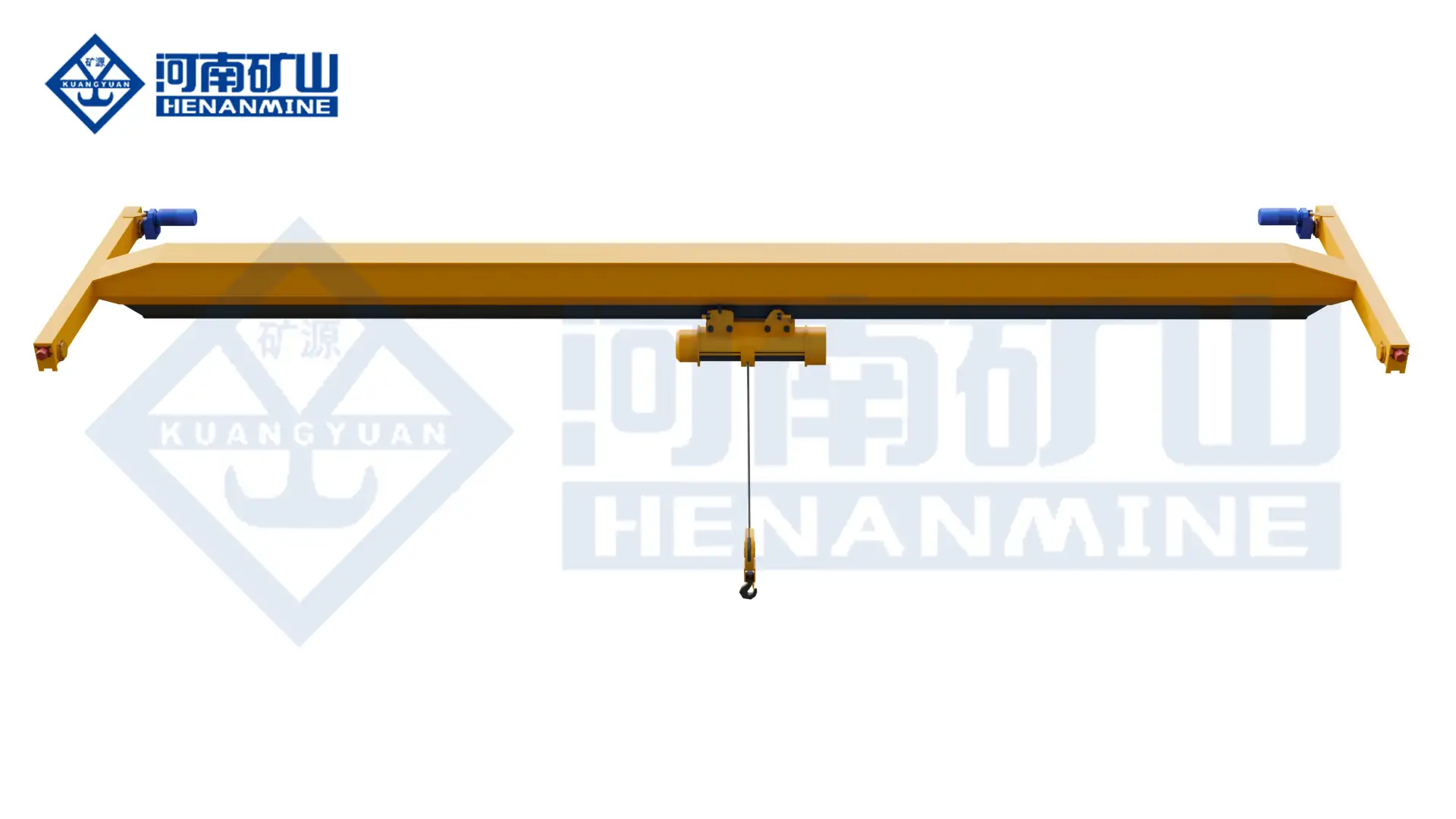
| Single-Girder Bridge Crane | General production, maintenance and material transfer with moderate capacity and duty | Top-running runway supported by building brackets or independent columns | Economical full-bay coverage when load, span and service intensity remain within the selected design |
| Low-Headroom Electric Overhead Crane | New or existing workshops requiring efficient vertical space and controlled motion | Runway geometry coordinated with compact hoist and end-carriage arrangement | Selected where hook height, smooth control and reduced wheel loads provide project value |
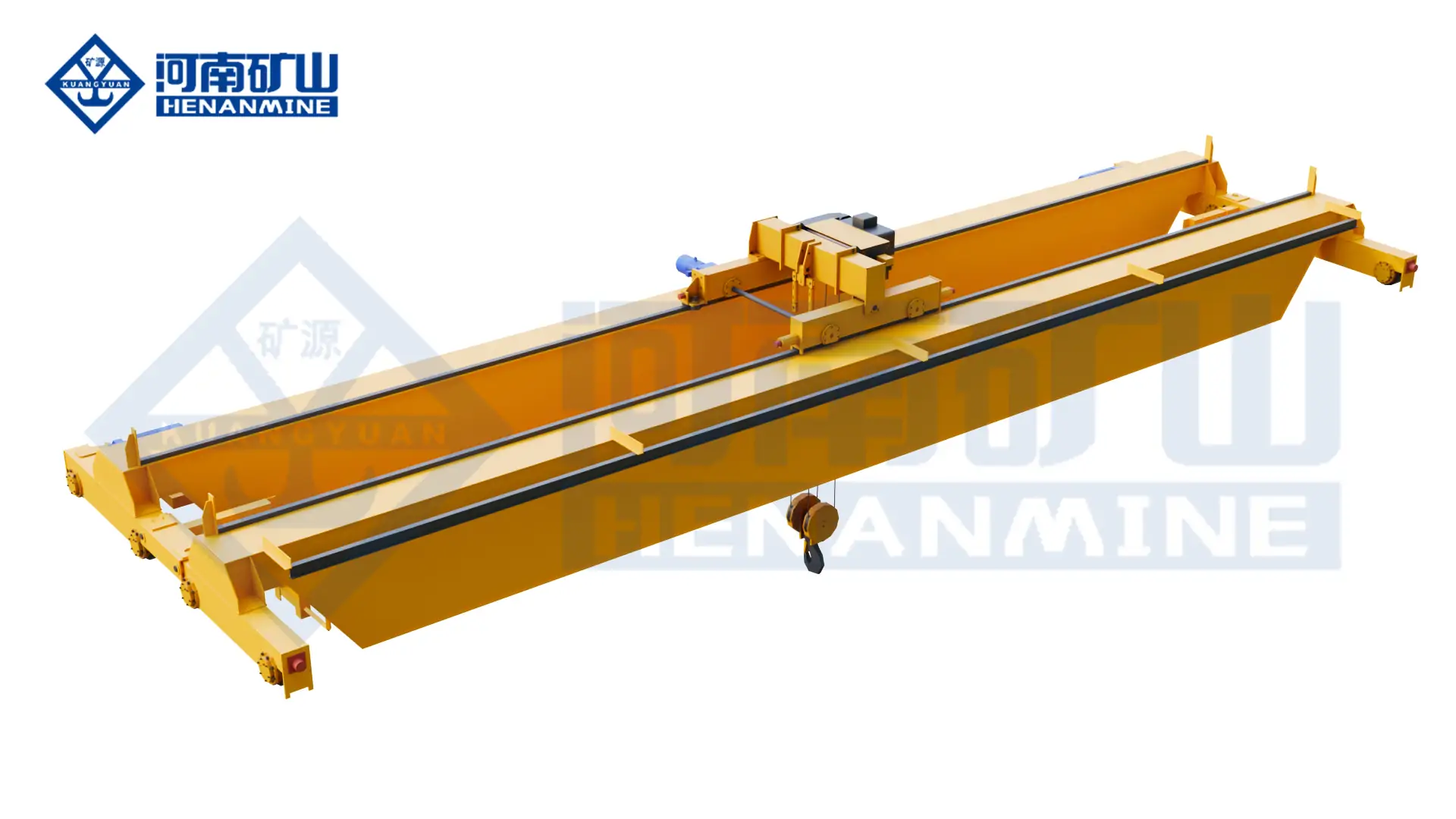
| Double-Girder Bridge Crane | Heavier loads, wider spans, higher duty, maintenance platforms or specialized trolleys | Top-running runway designed for the calculated vertical, horizontal and dynamic reactions | Preferred when performance and serviceability justify greater equipment and runway requirements |
| Underhung Workshop Crane | Light or moderate handling where floor columns must be minimized | Runway suspended from verified roof framing or dedicated overhead steelwork | Building support capacity and permissible roof deflection must be confirmed before selection |
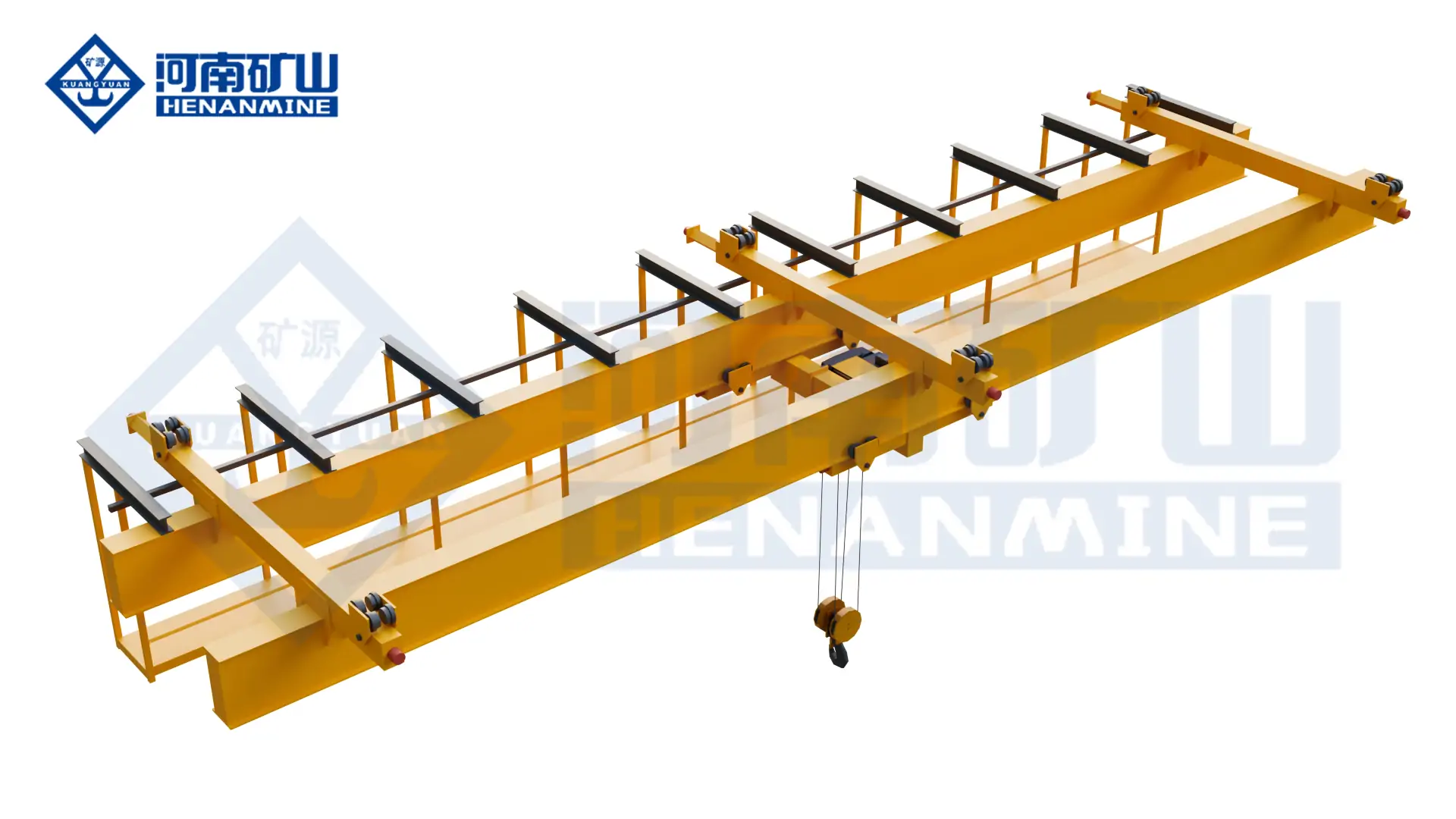
| Double-Trolley Overhead Crane | Long, flexible or off-center loads requiring two lifting points and coordinated movement | Bridge and runway sized for trolley positions, combined loads and governing wheel reactions | Load-sharing logic, lifting-beam design and allowable skew must form part of the operating procedure |
| Gantry or Semi-Gantry Crane | Indoor bays without suitable elevated runway support or with a partial building runway | Crane legs transfer loads to floor rails, foundations or a combined floor-and-building arrangement | Legs and rails occupy floor zones and must be separated from personnel, vehicles and production equipment |
Crane Systems for Factory and Workshop Workflows
Machining and Fabrication
Cranes transfer plate, structural sections, fixtures and workpieces between cutting, machining, welding and inspection areas. Hook approaches and travel routes are coordinated with machine envelopes and safe access zones.
Assembly and Positioning
Variable-speed drives, low-speed hoisting and suitable below-the-hook devices support controlled alignment of frames, modules, dies and mechanical assemblies.
Maintenance and Tool Change
Maintenance coverage can include production machinery, utilities and service pits. Occasional heavy lifts still govern rated capacity, even when daily loads are lighter.
Receiving and Dispatch
End approaches, building doors and loading areas are considered so material can move efficiently between transport, staging and production without unsafe cross-traffic.
Workshop Layout and Supporting Structure
Crane performance depends on the interaction between bridge geometry, runway alignment, building stiffness and operating clearances. Layout coordination should begin before the crane specification is frozen.
Existing Building Assessment
Available drawings, actual dimensions, rail survey data and structural calculations establish whether existing columns, brackets, roof members and foundations can accept crane reactions.
Independent Runway Option
A freestanding steel runway can isolate crane reactions from the building. Column positions, foundation loads, aisle clearance and installation access require coordination with plant equipment.
New Factory Coordination
Early crane data allows the building designer to reserve rail elevation, column brackets, roof clearance, maintenance access, conductor routing and erection openings.
Configurable Factory Crane Specification
The final data sheet is issued for the selected crane and project conditions. The schedule below identifies the principal procurement inputs and engineering decisions.
| Specification Item | Project Definition | Engineering Significance |
|---|---|---|
| Rated capacity | Maximum lifted load plus applicable attachment allowance | Governs hoist, bridge, trolley, brakes and structural reactions |
| Span and runway length | Verified rail center distance and required longitudinal coverage | Determines girder design, end carriages, conductor length and travel limits |
| Lifting height and headroom | Lowest pick point, highest load position, rail elevation and roof clearance | Defines rope length, hook path and low-headroom requirement |
| Duty classification | Service based on cycles, load spectrum and operating time | Aligns mechanism and structure life with actual production demand |
| Hoisting and travel speeds | Main speeds, low-speed range and acceleration requirements | Balances cycle time, load control, motor power and wheel behavior |
| Control method | Pendant, radio remote, cabin, fixed station or automated interface | Matches operator position, visibility, process risk and control architecture |
| Electrical supply | Site voltage, frequency, phases, earthing and control voltage | Establishes motors, panels, protection and conductor arrangement |
| Environment and protection | Temperature, dust, humidity, corrosion, hazardous zones and indoor exposure | Sets enclosure, insulation, coating, component and special-protection requirements |
Hoisting, Controls and Production Integration
Wire-Rope Hoist or Open-Winch Trolley
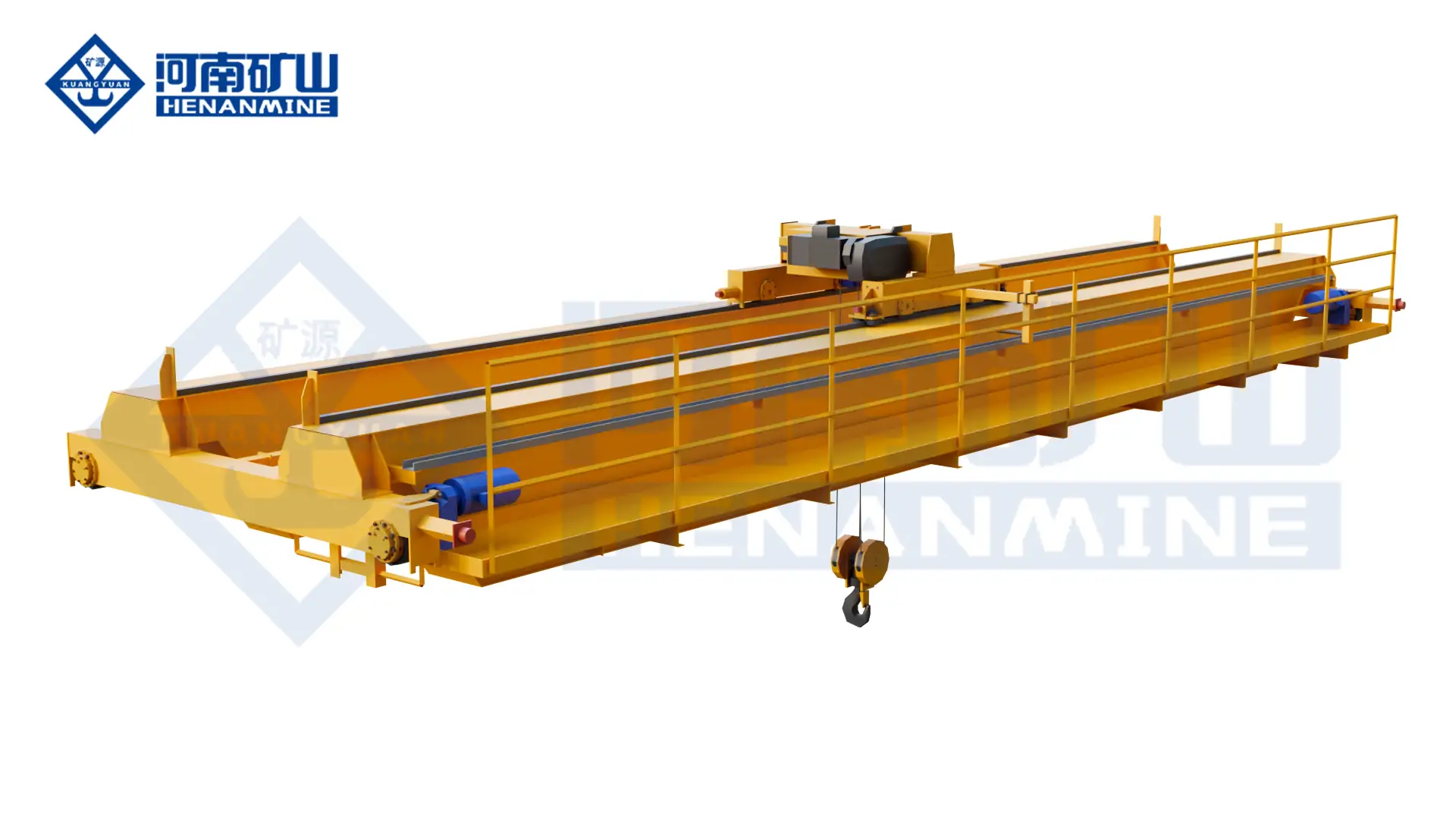
Compact electric wire-rope hoists suit many general workshop duties. Open-winch trolleys support heavier capacity, higher duty, greater lifting height, redundant arrangements and specialized process requirements.
Variable-Frequency Motion
Variable-frequency drives can provide controlled acceleration and deceleration, low-speed positioning and reduced load swing. Speed ranges are selected from process cycle and control requirements.
Operator Interface
Pendant control supports close-range handling; radio remote control improves mobility and viewing position; a cabin can suit intensive or elevated operations. Control mode follows the risk assessment and operating procedure.
Monitoring and Automation
Available functions can include load display, operating-hour records, fault diagnostics, restricted zones, position feedback, anti-sway logic and data exchange with plant control or manufacturing systems.
Safety and Reliability Configuration
Protective functions are selected from the crane type, operating risk, applicable standard and plant rules. Safety devices support a controlled lifting system but do not replace trained operation, planned inspection or a site-specific safe system of work.
Lifting Protection
Upper and lower travel limits, overload protection, brake monitoring where specified and rope-guidance provisions.
Travel Protection
End limits, buffers, rail sweeps, audible or visual warnings and anti-collision functions for multiple cranes.
Electrical Protection
Main isolation, emergency stop, phase and circuit protection, earthing and enclosure ratings matched to the site.
Maintenance Access
Service platforms, guarded access, lighting, inspection points and maintainable component arrangement where required.
Factory Crane Project Applications
Completed manufacturing applications demonstrate why production route, building interfaces and operational data must be considered together. Project scope and specifications remain specific to each facility.
Smart Factory Crane Application
A customized lifting package supports non-excavation equipment manufacturing, with the crane arrangement developed for large workpieces, high-bay workshop conditions, controlled motion and intelligent factory integration.
Industrial Manufacturing Crane Application
Batch crane supply for construction-machinery manufacturing addresses production-line handling, operational reliability, monitoring functions and interfaces with digital plant-management systems.
Manufacturing and Factory Inspection
Factory-production scenes provide additional visibility into structural fabrication, component assembly and crane manufacturing capability before technical and commercial evaluation.
Engineering, Manufacturing and Documentation
ENGINEERING
Design Input Review
Load cases, classification, crane geometry, wheel reactions, power, controls and building interfaces are reviewed before detailed design.
FABRICATION
Controlled Manufacturing
Material traceability, cutting, welding, dimensional inspection, machining, assembly and coating follow the approved manufacturing plan.
TESTING
Inspection and Functional Checks
Dimensional checks, electrical inspection, mechanism operation, limit functions and specified factory tests are recorded before dispatch.
DOCUMENTATION
Project Document Package
Approved drawings, data sheets, component information, manuals, certificates and test records are supplied as defined by the contract.
Typical Technical Submittals
- General arrangement drawing with span, approaches, hook path, rail level and principal dimensions
- Wheel loads, power demand, conductor data and equipment interface schedule
- Mechanism, motor, brake, rope, hook, wheel and electrical component data
- Electrical schematics, control description and terminal or communication interfaces
- Operation, inspection, maintenance, lubrication and recommended spare-parts information
Installation, Commissioning and Maintenance
Pre-Installation Verification
Runway span, rail alignment, elevation, clearances, power availability, erection access and lifting resources are confirmed before assembly begins.
Erection and Commissioning
The agreed scope can cover assembly guidance, mechanical alignment, electrical connection, functional checks, commissioning, load testing and operator or maintenance training.
Planned Maintenance
Inspection intervals reflect operating duty, local regulations and component instructions. Brakes, ropes, hooks, wheels, rails, fasteners, lubrication, electrical protection and limit devices require documented attention.
Lifecycle Support
Recommended commissioning spares and operating spares can be quoted with the crane. Accurate equipment identification supports future parts supply and technical service.

Factory and Workshop Crane Price
Factory crane price varies substantially because public figures often cover different supply boundaries. Equipment-only quotations may exclude runway steel, columns, electrification, freight, duties, erection, commissioning and testing. A valid commercial comparison requires the same capacity, span, duty, controls, components, standards and delivery scope.
Public 2026 market listings provide only broad budget context. Basic China-export single-girder crane equipment is commonly advertised from approximately US$3,000, with many 5–10 ton equipment packages appearing around US$5,000–15,000. Public 10–20 ton double-girder examples frequently appear around US$25,000–60,000, while large or heavy-duty systems can exceed US$130,000. North American freestanding workstation systems can be substantially higher: published 0.5 ton system-and-support packages appear around US$12,000–27,000, and one published 3 ton two-cell system is approximately US$82,660. These figures are not Henan Mine Crane quotations and should not be used without scope normalization.
Crane Equipment
Bridge or gantry structure, hoist or trolley, end carriages, drives, electrical equipment, controls and selected safety functions.
Supporting Infrastructure
Runway beams, columns, rails, foundations, conductor system, access platforms, building modifications and plant power interfaces.
Delivery and Site Work
Packing, inland transport, ocean freight, insurance, import charges, erection resources, commissioning, testing and training.
Information Required for an Accurate Price
Maximum load and attachment · span · lifting height · runway length · operating cycles · duty classification · required speeds · control method · building or runway data · environment · voltage and frequency · installation country · delivery terms · erection, testing and documentation scope.
Factory and Workshop Crane FAQ
Which crane type is most suitable for a general workshop?
A single-girder top-running overhead crane is often suitable for general light and medium production duties. Capacity, span, duty and building support must still be verified. Double-girder, underhung or gantry designs may be more appropriate under different conditions.
How is factory crane capacity selected?
Rated capacity must cover the maximum lifted load and any lifting attachment included in the suspended mass. Load geometry, center of gravity, dynamic effects and occasional maintenance lifts also require consideration.
Can an overhead crane be installed in an existing factory?
Installation is possible when dimensions, clearances, runway condition and structural capacity are verified. If the building cannot support the calculated reactions, an independent runway or gantry arrangement can be evaluated.
What information is needed to confirm crane span?
Crane span is normally based on the verified center-to-center distance between runway rails. Building width alone is insufficient. Rail geometry, end clearance and hook approaches are also required.
When is a double-girder workshop crane required?
Double-girder construction is commonly evaluated for heavier loads, wider spans, higher operating duty, greater lifting height, maintenance platforms or specialized trolley and attachment arrangements.
What is the difference between an underhung crane and a top-running crane?
An underhung crane travels on the lower flange of a suspended runway, while a top-running crane travels on rails above the runway beams. Capacity, span, approach, building reactions and headroom differ between the systems.
Can one crane serve several production machines?
One overhead crane can serve multiple stations within its hook coverage when travel routes, machine clearances, cycle demand and scheduling are compatible. Overlapping cranes or local lifting devices may be required for simultaneous operations.
Does a crane quotation include the runway and installation?
Not automatically. Crane equipment, runway steel, rails, electrification, freight, erection, commissioning and load testing can be separate scope items. The commercial schedule should state every inclusion, exclusion and interface.
Can workshop cranes use radio remote control?
Radio remote control can be specified for many workshop cranes. The final control concept considers operator visibility, emergency controls, interference management, backup operation and site safety rules.
How can comparable factory crane quotations be evaluated?
Compare rated load, span, duty, speeds, motor and brake data, structural weights, wheel loads, electrical brands, safety functions, runway scope, documentation, testing, freight terms, installation and lifecycle parts support.
Project Engineering and Commercial Proposal
Request a Factory and Workshop Crane Quote
Submit the maximum load, workshop dimensions, span, lifting height, runway information, operating frequency, power supply, installation location and required project scope. Henan Mine Crane will prepare a configuration and quotation based on the verified application data.