
Henan Mine Crane · Engineered Lifting Systems for Aviation Maintenance
Aircraft Maintenance Crane
Underhung, low-headroom and double girder crane systems for engine removal and installation, landing gear work, component backshops and dock-side maintenance in MRO and airline hangars.
Henan Mine Crane engineers aircraft maintenance cranes around the aircraft type, component weights, hangar geometry and docking layout of each facility. Each proposal defines the crane, hoist and control system, suspension or runway interface, safety functions, electrical boundary, documentation, delivery and requested site services.
PRIMARY SYSTEM
Underhung & Low-Headroom Cranes
CAPACITY RANGE
0.5 t – 50 t
CRITICAL DIMENSION
Hook Height Under Roof
CONTROL OPTIONS
Micro-Speed, Sync & Anti-Sway
What an Aircraft Maintenance Crane Has to Do
An aircraft maintenance crane lifts aircraft components in hangars, MRO facilities and component backshops — engines on and off pylons, landing gear, flight control surfaces, APUs, wheels, brakes, seats, galleys and tooling. What defines these systems is not maximum tonnage but the combination the aviation environment creates: expensive and delicate loads, tight vertical space, wide bays, docking structures that steal the volume above the aircraft, and a cost of downtime that turns every maintenance hour into schedule pressure.
Engine work shows the requirement in its purest form. A large turbofan arrives as an assembly with its cradle, transport stand or quick engine change kit, and the suspended weight lands well above the bare engine figure. The crane must lower it onto the pylon at a controlled crawl speed, hold position without drift while it is aligned, and set it down without shock — cycle after cycle, on aircraft worth more than the hangar around them. The same discipline applies to landing gear, flap tracks and tail components that are long, flexible or awkward to support.
The hangar itself constrains the machine. Roof heights are fixed, tail and dock structures occupy the working volume, and maintenance docks, platforms and scaffolding stand in the path a workshop crane would normally ignore. Suspended underhung systems that ride on the roof steel, low-headroom hoist designs that recover every centimetre of hook height, and multi-support runs that carry one crane line across wide, irregular bays exist precisely because aviation buildings rarely leave room for anything else.
Henan Mine Crane supplies aircraft maintenance cranes as engineered packages: the suspended, low-headroom or double girder crane platform, the hoist and control system with its precision functions, the suspension or runway interface to the hangar structure, safety functions and documentation — configured against the aircraft types and facility geometry of the specific operator.
Where Cranes Work in an Aviation Facility
Engine Removal and Installation
Engines travel with cradles, QEC kits and transport stands, so the rated load is the full assembly. Micro-speed hoisting, stable holding and shock-free set-down onto the pylon decide both the schedule and the risk of the engine change.
Landing Gear and Flight Controls
Gear assemblies, flap tracks, elevator and rudder components are heavy, long or cantilevered. Synchronised two-point lifting with controlled speed keeps them straight and unstressed through the whole removal path.
Component Backshops
Wheels, brakes, APUs, seats, galleys and test equipment move through repair cells and benches. Workstation and suspended systems place these loads exactly where the work stands needs them, at ergonomic heights.
Dock-Side Structural Work
Fuselage panels, doors and wing components are handled beside docking towers that occupy the hook’s natural path. Coverage, reach around docks and clearance planning matter as much as capacity in these bays.
Paint and Composite Hangars
Paint and composite shops add atmosphere and cleanliness constraints to every crane operating inside them. Enclosure class, surface finish and absence of dripping or contamination are specified with the environment in mind.
GSE and Material Logistics
Ground support equipment, tooling, containers and consumables flow between stores, staging areas and the aircraft. General bay cranes keep this logistics stream moving around the maintenance schedule.
Crane Configurations for Aviation Maintenance
The configuration follows the hangar before it follows the load. These are the platforms that aviation facilities actually build their lifting systems around, and where each one wins.
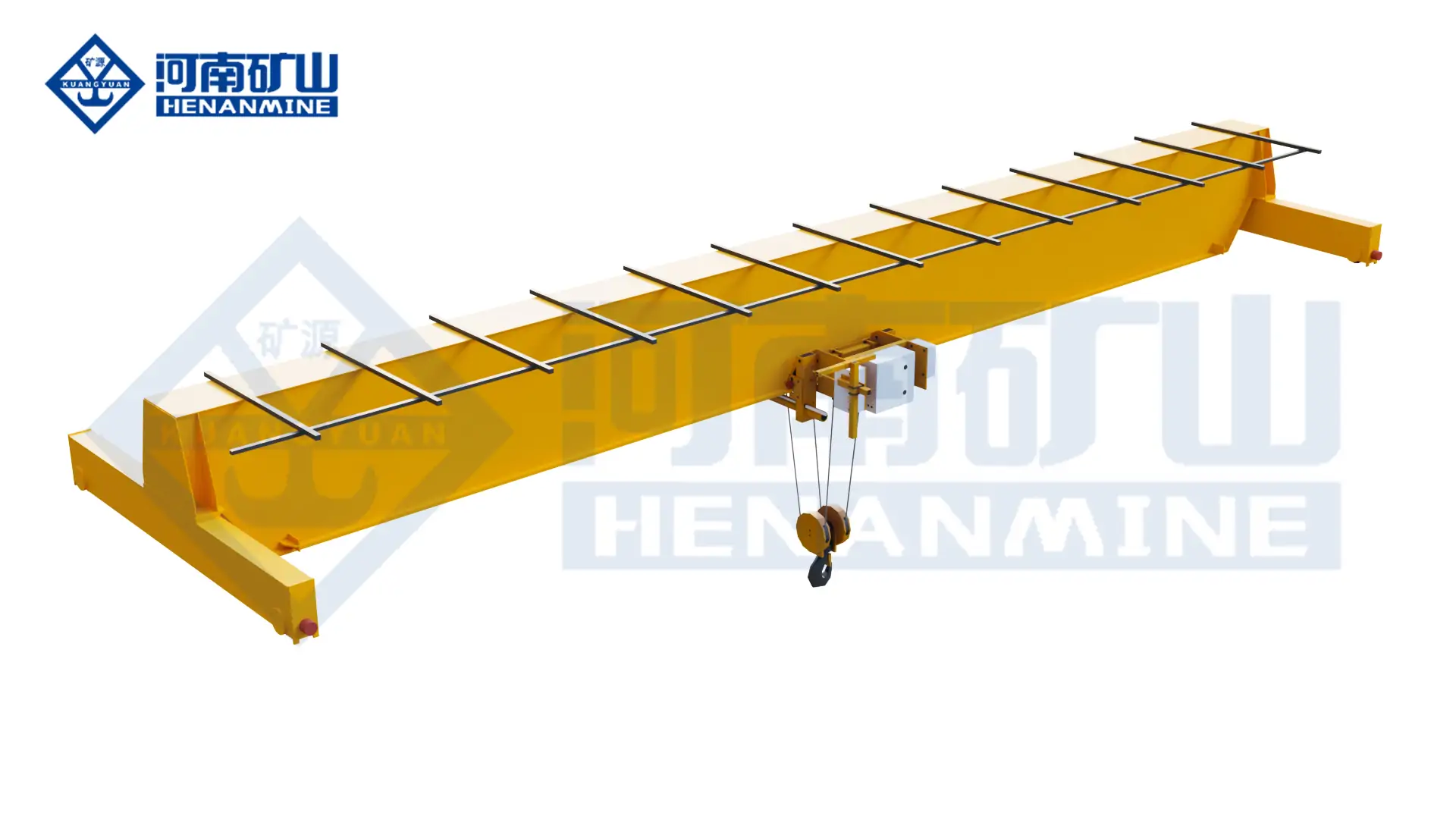
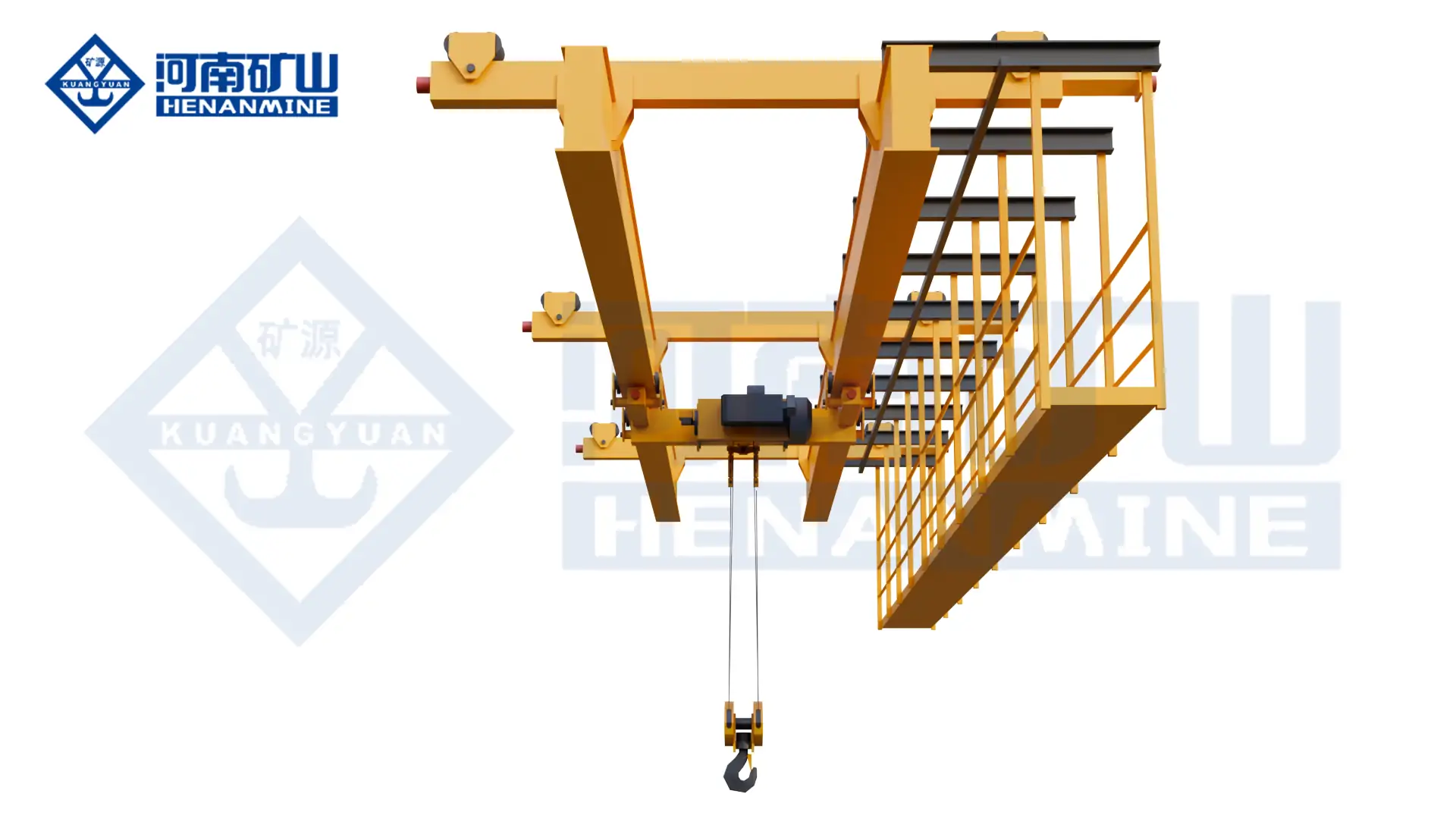
Where the roof steel allows it, underhung and European-style suspended cranes are the backbone of aviation lifting. They hang from the building structure with no elevated runway steel, run at low height directly over the work, and place the hook in the station instead of above it. Multi-point suspension extends the same principle across wide or irregular bays, and multi-support double girder underhung systems carry one crane line along long production and hangar runs.
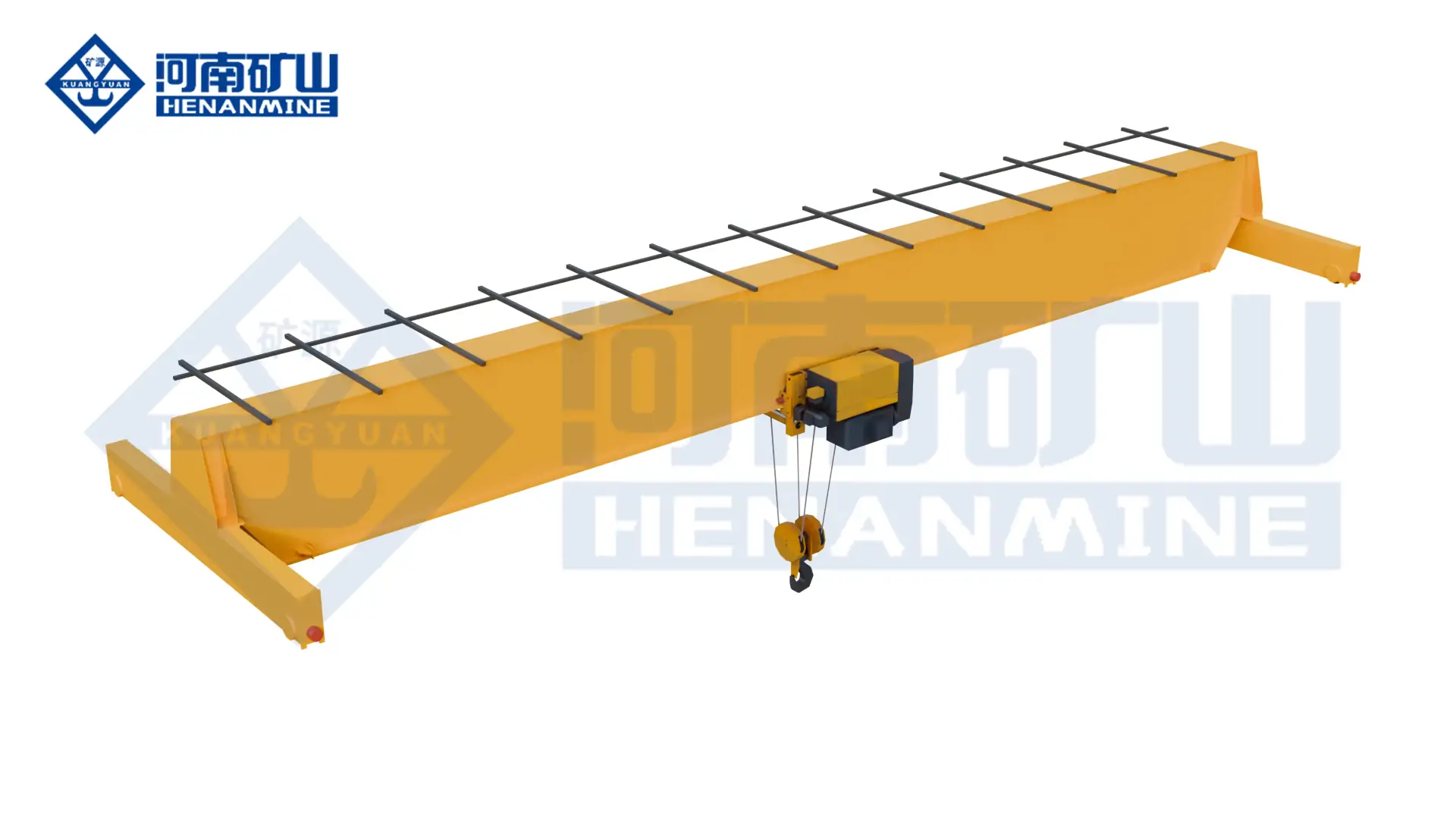
Where a runway exists or heavier loads demand it, low-headroom single girder cranes recover hook height that standard designs lose to the hoist trolley — critical under hangar roofs — and double girder cranes take the heaviest assemblies, gear units and special tooling. Intelligent hoist cranes add closed-loop positioning, monitored lifting and dual braking for the highest-value loads in the facility.
Whatever the platform, the aviation build centres on control quality: frequency inverter travel and hoisting with micro-speed steps for engine and component set-down, anti-sway behaviour for long lifts across the bay, and synchronised two-point handling for gear, tracks and long parts.
Aircraft Maintenance Crane Selection Considerations
Selection starts with the aircraft and the components actually handled in the facility, then works outward to the building. These parameters establish the specification a quotation must be built against.
01 · Aircraft and Component Weights
List every lift with its complete suspended weight — engine with cradle or QEC kit, gear assemblies, tooling. A large turbofan that weighs six tonnes bare can impose well over ten tonnes on the hook by the time it is rigged.
02 · Hangar Geometry and Headroom
Roof height, tail heights of the largest aircraft type, dock and platform positions, and the vertical distance from hook to hangar steel define which configurations are even possible. In aviation, headroom eliminates options before price does.
03 · Coverage and Dock Interference
Map every pick-up and set-down position against docks, scaffolding and the aircraft envelope. Wide or irregular bays are covered with multi-point suspension or multi-support runs instead of losing coverage to runway steel.
04 · Precision and Micro-Speed
Define the required creep speed for engine set-down, the holding behaviour under load, and the positioning tolerance at each station. These select between standard dual-speed and frequency-controlled hoisting with defined micro-speed ratios.
05 · Cleanliness and FOD Prevention
Loads destined for open engine bays and composite work demand drip-free hoists, enclosed components, controlled surface finishes and wheels that run clean. Cleanliness is a specification item, not a housekeeping outcome.
06 · Duty and Dependability
Cycles are moderate but the cost of failure is extreme — a crane out of service can hold an aircraft in the hangar. Mechanism classifications, brake redundancy and maintenance access are set for availability, not just load.
07 · Control and Safety Functions
Radio control for sight-line management, overload protection, limit functions, anti-sway and synchronised two-point lifting are specified per station. Where engines are involved, dual braking on the hoist belongs in the base specification.
08 · Certification and Project Boundary
Load tests, documentation and acceptance criteria for the operator’s QA system, plus the suspension or runway interface, installation, commissioning and training scope — all assigned in writing before offers are compared.
Hangar Crane Configurations Compared
The right configuration covers the required positions at the required precision without spending headroom or roof steel capacity the hangar does not have to give.
| Configuration | Where It Fits Best | Typical Capacity | Headroom Demand | Critical Limit |
|---|---|---|---|---|
| European-style suspended crane | Backshops, component cells, line stations | 0.5–10 t | Lowest — rides on roof steel | Loads carried by the building structure |
| Multi-point suspension crane | Wide or irregular hangar bays | 0.5–10 t | Low — suspension designed to the roof | Coverage shaped by the suspension layout |
| Multi-support double girder underhung crane | Long hangar and production runs | Project-defined along the run | Low to moderate | Support spacing tied to roof steel capacity |
| Low-headroom single girder crane | Bays where every centimetre of hook height counts | 1–32 t class | Recovered — hoist beside the girder | Needs runway rails on hangar steel |
| Double girder bridge crane | Heavy assemblies, gear units, tooling, logistics bays | 5–50 t and above | Highest hook position, trolley on top | Heaviest runway and wheel load demands |
| Intelligent hoist crane | Highest-value loads and repeatable precision lifts | Model-specific | Per platform selected | Premium controls need a defined precision need |
Aircraft Maintenance Crane Technical Specification Framework
Henan Mine Crane maintains several crane families applied to aviation maintenance service. The ranges below support preliminary configuration and are not guaranteed combinations. Final capacity, span, lift, working class, speeds and wheel or suspension loads are confirmed on the approved technical schedule and general arrangement drawing, together with the hangar structure interface.
| Product Family | Published Capacity Position | Published Span Position | Lifting Height Position | Working Class Position | Primary Aviation Use |
|---|---|---|---|---|---|
| European-style electric single beam suspended crane | Light to medium component classes | Suspended track length by bay | Defined by roof height | A3–A5 component duty | Backshops, component cells and line stations |
| Multi-point suspension crane | 0.5–10 t typical | Wide or irregular bays by suspension design | Project-defined by roof geometry | A3–A5 | Wide-bay hangar coverage without runway steel |
| Multi-support double girder underhung crane | Project-configured along the run | Long runs with multiple support points | Project-defined | A4–A6 by duty | Long hangar and production line coverage |
| Low clearance single beam crane | 1–20 t class | 7.5–22.5 m or project-defined | Maximized within restricted height | A3–A5 | Hangar bays where hook height is the constraint |
| Double girder bridge crane | 5–50 t class | 10.5–35 m | 6–30 m or project-defined | A5–A6 by duty | Heavy assemblies, gear units, tooling and logistics |
| Intelligent electric hoist overhead crane | Model-specific | Model-specific | Model-specific | A5–A6 | Monitored, precision lifting of the highest-value loads |
A capacity shown within one family does not confirm suitability at every span, lift or duty. Hangar steel verification, dock clearances and precision functions require project-specific calculation and interface definition.
Hangar Structure and Building Interface
In a hangar, the crane and the building are one system. These interface points decide which configurations are possible and what the project must include beyond the crane itself.
Roof Steel Capacity
Suspended systems hang the full crane and load from the hangar roof structure. Truss capacity, bracing positions and allowable deflection are verified before any suspension layout is fixed.
Clearance to Aircraft and Docks
Hook paths are mapped against the tallest aircraft tail, docking towers and platforms in the bay. The crane must reach every working position without crossing protected volumes.
Runway Rails on Hangar Steel
Top-running cranes need rails, wheel load verification and often local reinforcement of the hangar structure — work that belongs in the project scope, not in a surprise during installation.
Power Feed and Control Positions
Conductor or festoon systems are routed with isolation points and maintenance positions that do not interfere with dock movement or floor traffic, and control stations are placed for sight-line management.
Precision, Control and Safety Functions
Aviation lifting is decided at the last centimetre of the move. These control functions are what separate a hangar crane from a general workshop crane of the same tonnage.
Micro-Speed Hoisting
Frequency-controlled hoisting with defined creep steps lowers engines and assemblies at a controlled crawl and holds position without drift — the core requirement of engine set-down.
Synchronised Two-Point Handling
Gear assemblies, flap tracks and long components travel level on two synchronised hoists, preventing the bending and twisting that a single hook point would impose.
Anti-Sway and Smooth Travel
Anti-sway behaviour and stepless travel control keep long lifts across wide bays calm and predictable, protecting both the load and the aircraft parked below it.
Radio Control and Safety Functions
Radio control keeps the operator at the load with full sight lines, while overload protection, limit functions and dual hoist braking belong in the base specification for engine work.
Engineering and Supply Scope for Aviation Lifting Projects
An aviation lifting project typically combines several systems in one facility: suspended and workstation cranes through the backshops and line stations, low-headroom or multi-support cranes covering the hangar bays, and a double girder crane for the heaviest assemblies and tooling. Henan Mine Crane plans these projects around a common engineering baseline — one control behaviour, one spare parts standard and one documentation set across every crane family in the facility.
A complete supply definition states the crane platform and hoist specification, the control and precision functions required at each station, the suspension or runway interface to the hangar structure, the safety functions with their acceptance criteria, the overload and load test regime, and the delivery, installation, commissioning and training responsibilities. Documentation is aligned with the operator’s maintenance and quality system so every acceptance step is evidenced.
Standard configurations are typically delivered within 30 to 45 days after drawing approval. Engineered systems with synchronisation, anti-sway or multi-support runs are delivered on confirmed project schedules agreed before production starts.
SYSTEM CAPACITY CLASSES
0.5 t – 50 t
CRANE FAMILIES APPLIED
6 Product Platforms
STANDARD DELIVERY
30 – 45 Days
CONTROL BASELINE
Micro-Speed Standard
Aircraft Maintenance Crane Price Reference
Current market positions for Chinese-manufactured crane equipment, expressed as indicative ranges. An equipment price covers the crane ex-works; an installed project adds suspension or runway steel, power systems, freight, duty, installation and commissioning.
| Crane Scope | Typical Capacity | Indicative Equipment Price | What Moves the Number |
|---|---|---|---|
| Workstation bridge crane | 0.25–3 t | US$2,000 – 45,000 | Covered rail length, bridge count, hoist grade |
| Underhung / suspended crane | 0.5–10 t | US$3,500 – 60,000 | Suspension length, track layout, hoist specification |
| Low-headroom single girder crane | 1–32 t class | US$3,000 – 70,000 | Headroom design, span, speed control level |
| Double girder crane (engine and heavy assembly) | 5–50 t | US$5,000 – 110,000 | Span, duty, micro-speed ratios, dual braking |
| Precision control and synchronisation | On any platform | Added control scope, priced per function | Micro-speed, anti-sway, sync hoists, monitoring |
| Freight, duty and installation | On equipment price | Typically +20 – 50 % on FOB | Destination, installation scope, local certification |
Normalize every quotation to the same boundary before comparing — rated capacity including rigging, span, hook height within the actual hangar clearance, speed control and micro-speed ratios, safety functions, suspension or runway interface, installation, testing and documentation. A mid-range 10 t double girder crane of around US$20,000 and a 50 t heavy unit near US$53,000 illustrate how span, duty and control scope, not tonnage alone, drive the final figure.
Quote Information and Frequently Asked Questions
A complete enquiry should state the aircraft types served, every lift with its complete suspended weight, hangar dimensions and roof steel condition, dock layout, required precision functions, power supply, destination and the required supply boundary.
Aircraft and Load Data
Aircraft types, engine and component weights with cradles and QEC kits, landing gear assemblies, and the heaviest complete suspended load in the facility.
Hangar and Geometry Data
Roof height and steel capacity, bay spans, dock and platform positions, tail heights, travel lengths and every pick-up and set-down position the cranes must cover.
Precision and Function Data
Required creep speeds, holding behaviour, positioning tolerances, synchronised handling needs and the safety functions required for engine and component work.
Commercial and Site Data
Voltage and frequency, destination and Incoterm, installation responsibility, required certifications and documentation, spares level and requested delivery schedule.
What crane is used for aircraft maintenance?
Suspended and underhung cranes for backshops and line stations, low-headroom single girder cranes for height-restricted hangar bays, multi-support runs for wide or long coverage, and double girder cranes for engines, gear and heavy tooling — with micro-speed control wherever components are set down precisely.
What capacity does an engine change need?
The rating follows the complete suspended assembly, not the bare engine. A large turbofan of around six tonnes can impose well over ten tonnes on the hook once its cradle, QEC kit or transport stand is rigged, so the crane is rated to that total.
Why is low headroom so important in hangars?
Hangar roof heights are fixed, and docks, platforms and aircraft tails consume the volume below them. Every centimetre the hoist takes above the hook is a centimetre the maintenance process loses, so underhung and low-headroom designs exist to give it back.
How much does an aircraft maintenance crane cost?
Workstation and suspended systems for component work typically run from about US$2,000 for light stations to US$60,000 for long underhung runs. Low-headroom single girder cranes span roughly US$3,000–70,000, and double girder cranes for engine and heavy assembly work from about US$5,000 to 110,000 depending on span, duty and control scope. Freight, duty and installation typically add 20–50 % on top.
Can one crane system cover the whole hangar bay?
Wide and irregular bays are covered with multi-point suspension or multi-support underhung runs, where one crane line travels along the bay on several suspension points. The layout is engineered against the roof steel and the dock positions, not against a catalogue span.
What is the delivery time?
Standard configurations are typically delivered within 30 to 45 days after drawing approval. Systems with synchronised handling, anti-sway or multi-support runs run on confirmed project schedules agreed before production starts.
Related Crane Products for Aviation Maintenance
Product selection follows the aircraft types, hangar geometry, precision requirements and load schedule of each facility. Each linked model represents a separate configuration platform.
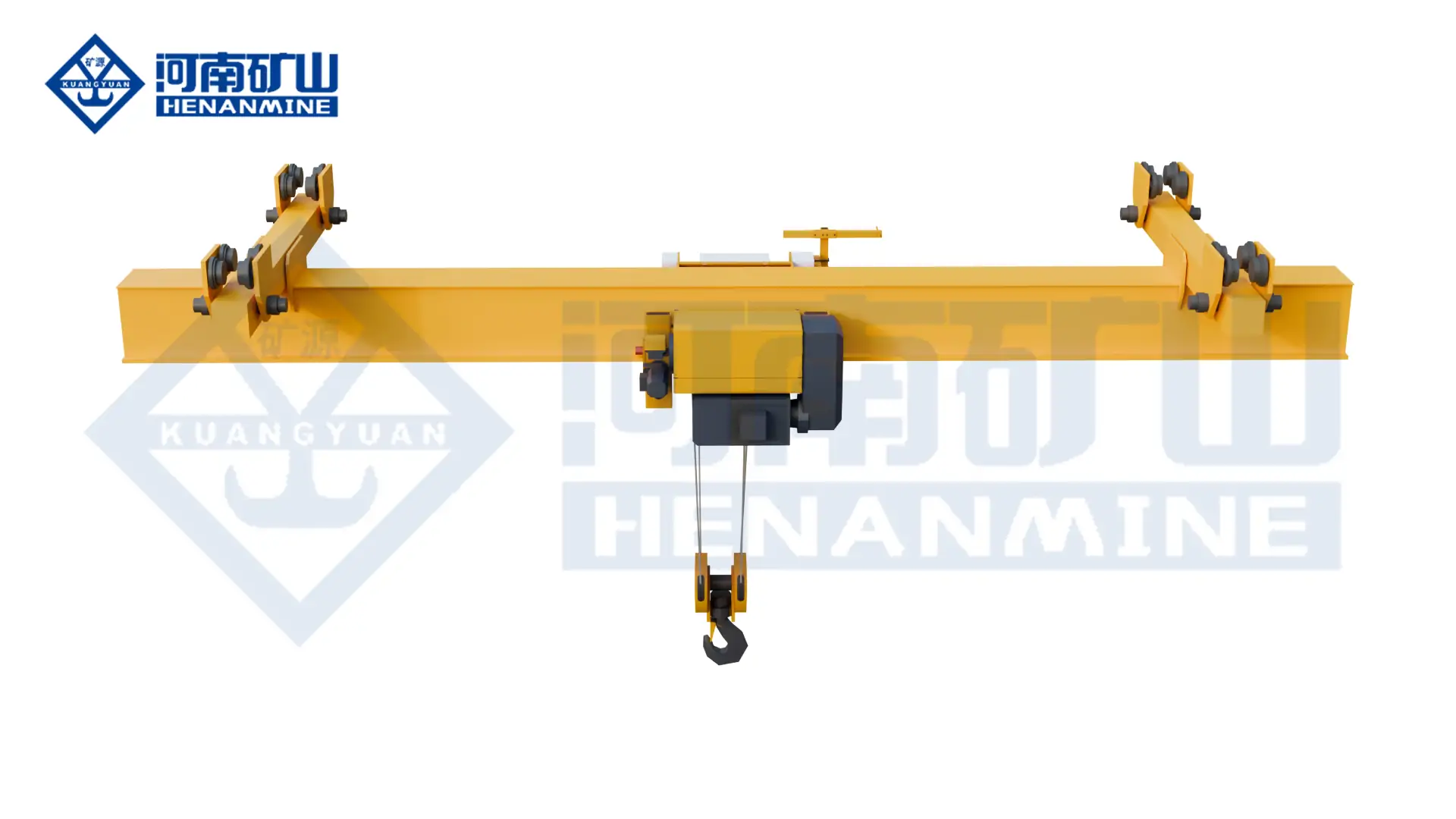
European Style Electric Single Beam Suspended Crane
Roof-suspended platform for component backshops and line stations with smooth travel and low overall height.
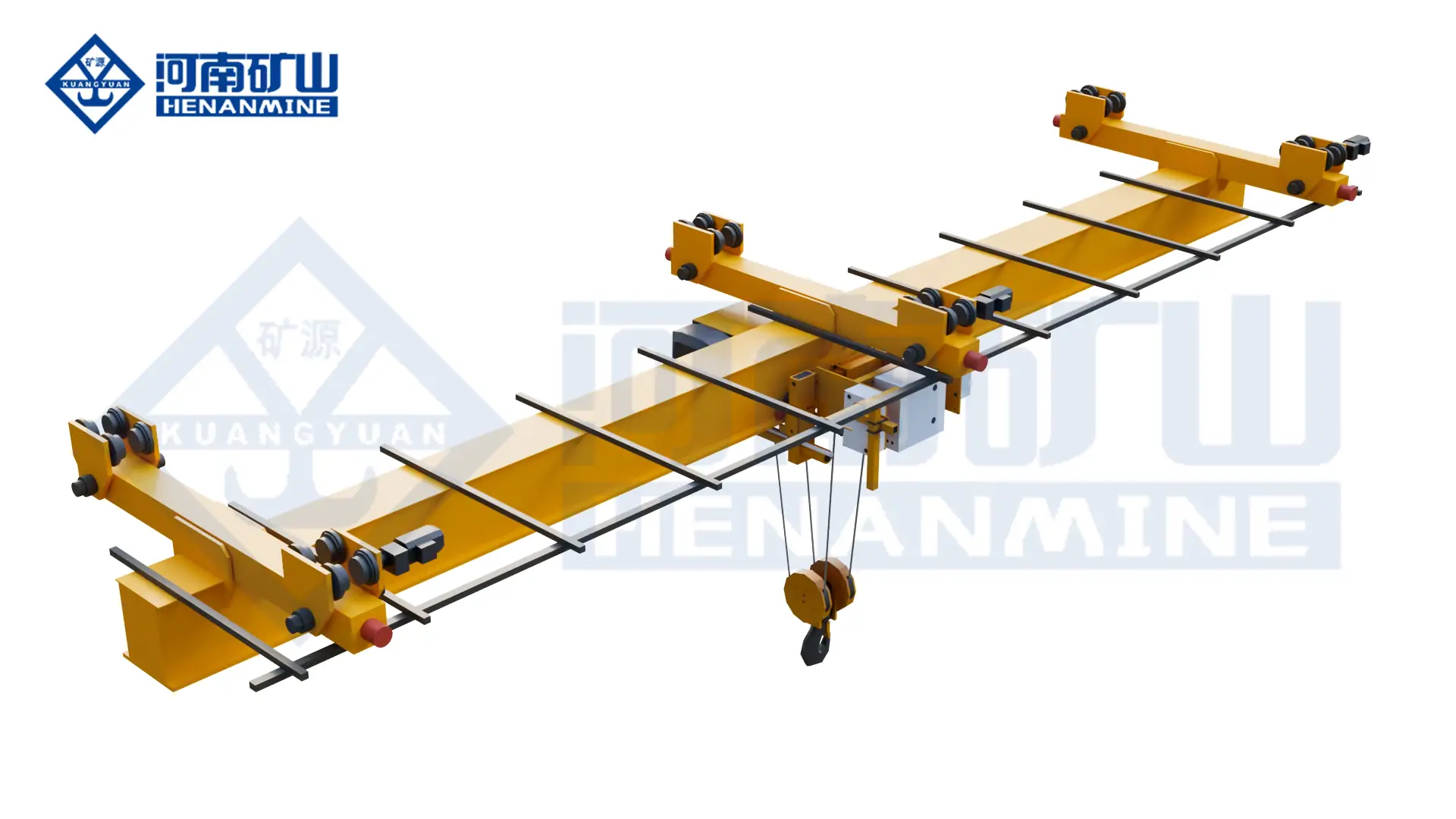
Multi-Point Suspension Crane
Suspension crane covering wide or irregular hangar bays with hook reach directly at the working position.
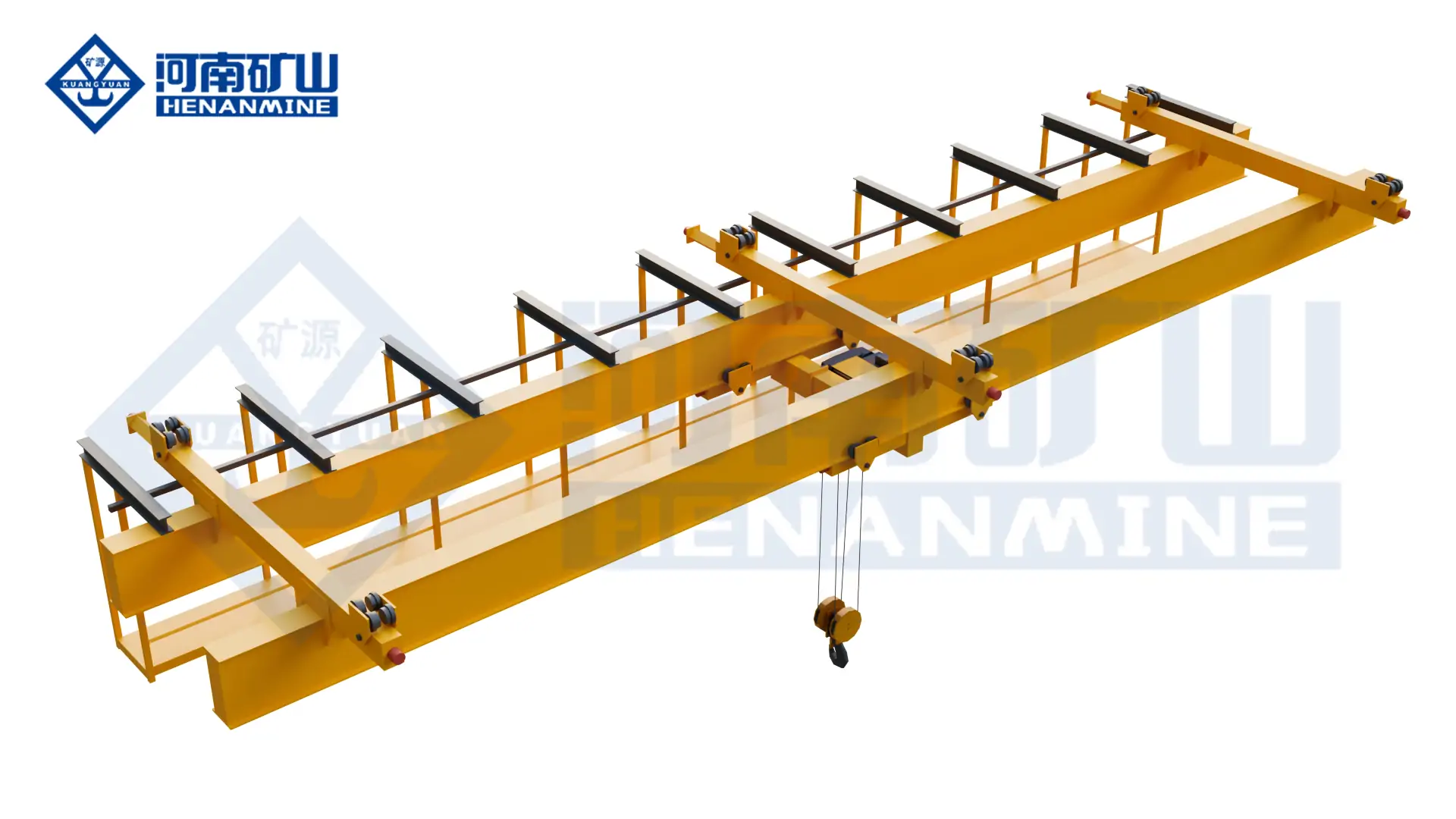
Multi-Support Double Girder Underhung Crane
One crane line on multiple suspension points, carrying long hangar and production runs without elevated runway steel.
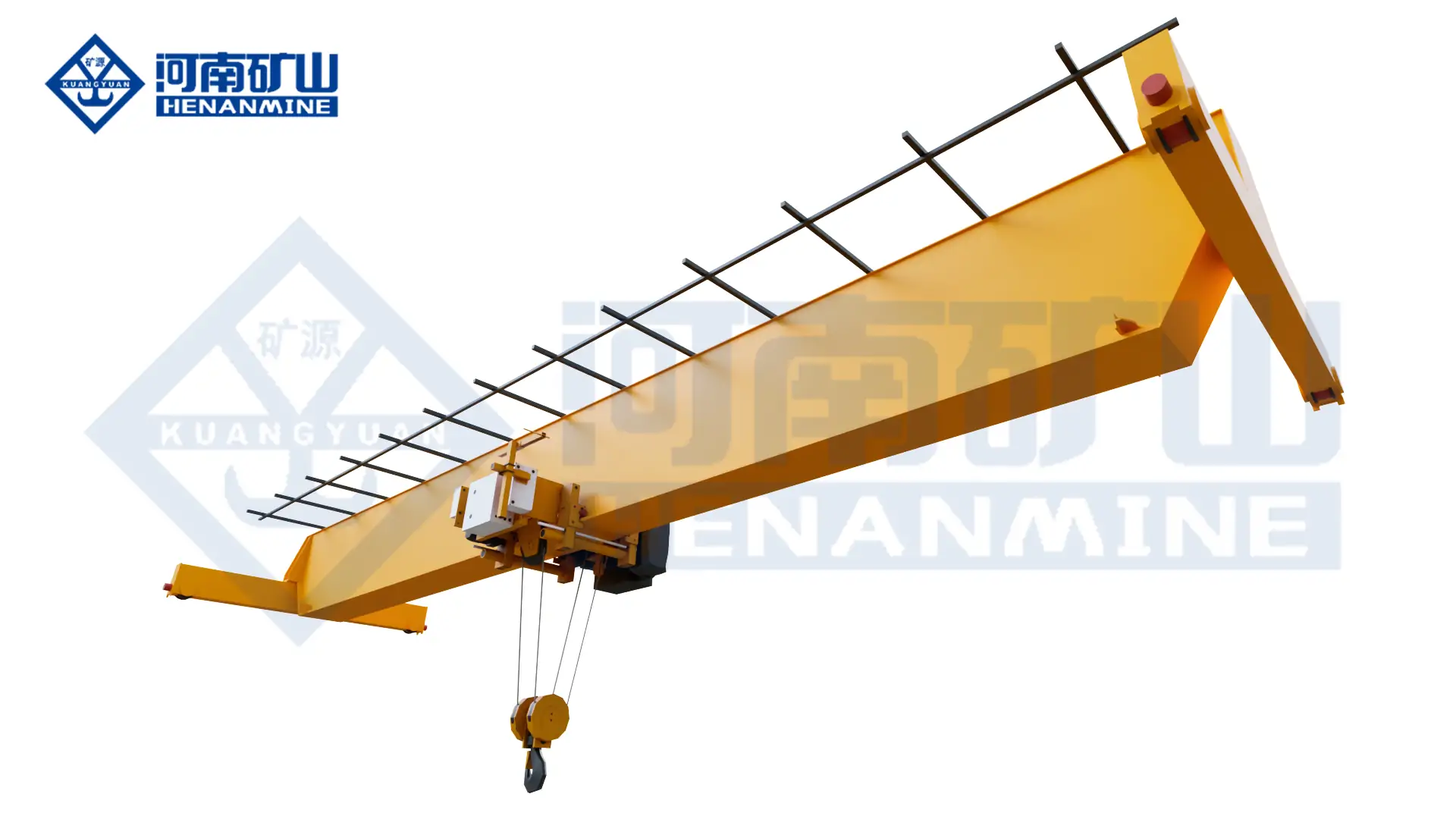
Electric Single Beam Crane for Low Clearance
Low-headroom crane recovering hook height in bays where the roof, docks and aircraft tails set the limit.
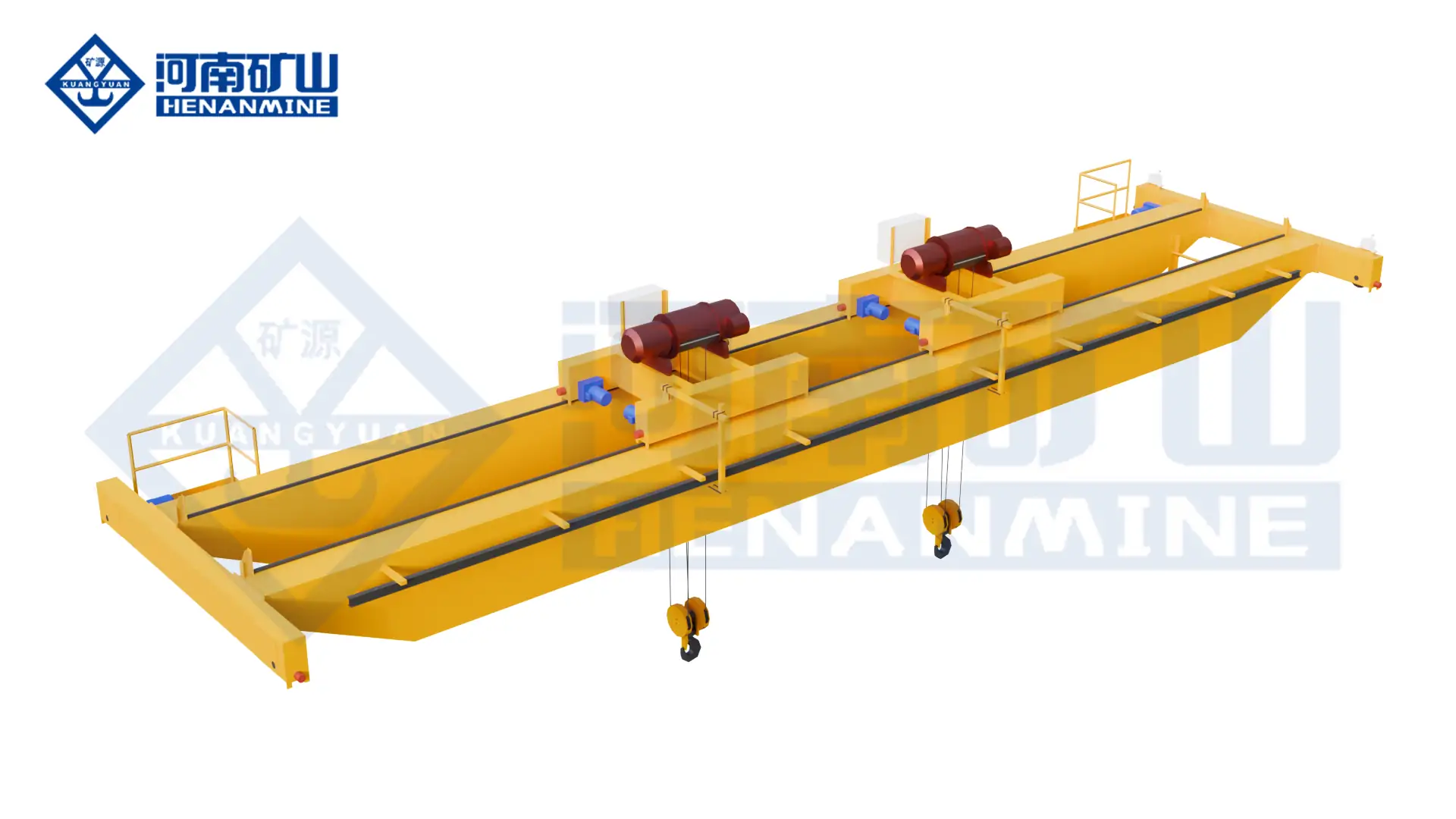
Double Girder Bridge Crane
Heavy-duty platform for engines, gear units, special tooling and logistics bays with the highest hook position.
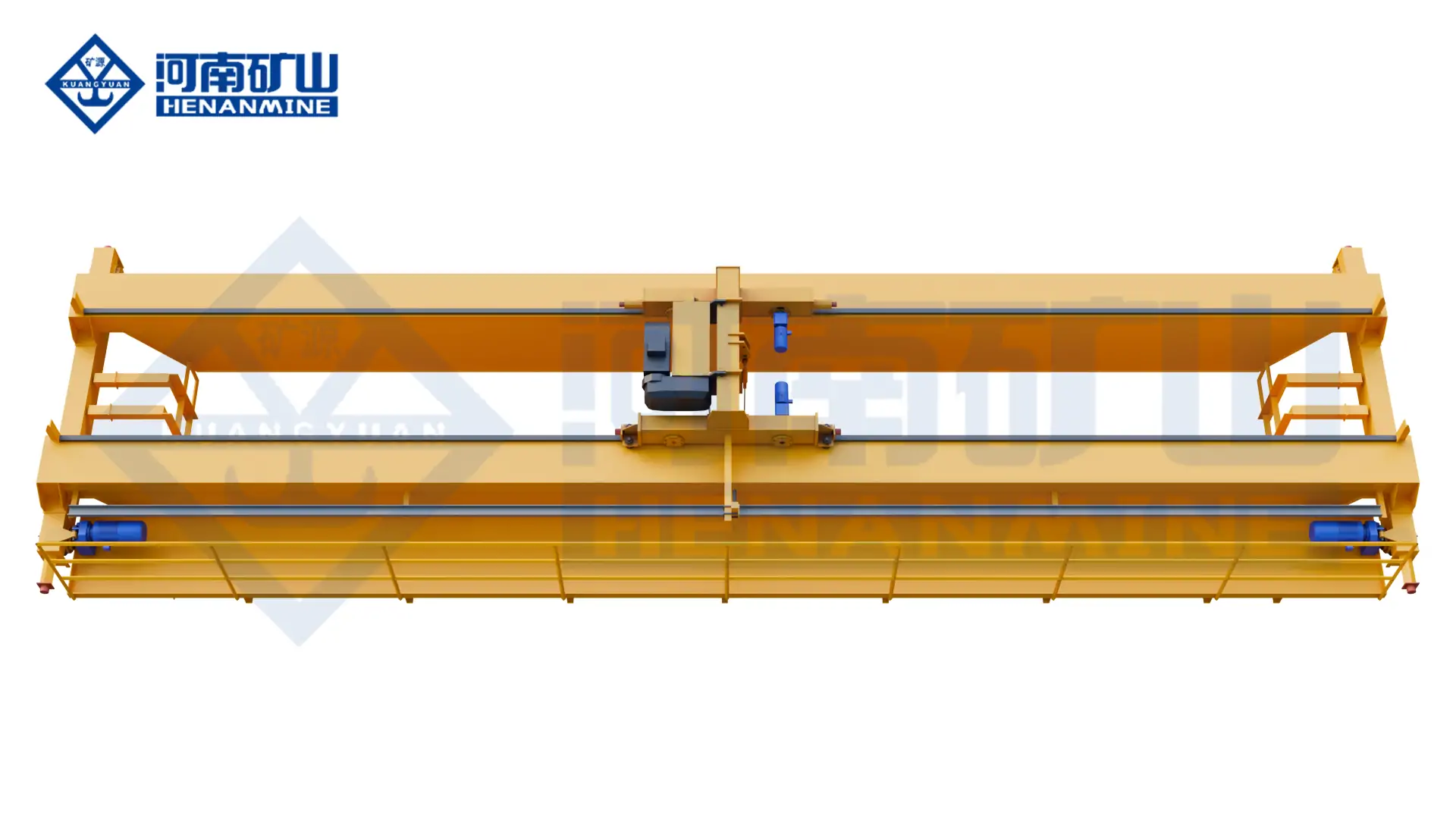
Intelligent Electric Hoist Overhead Crane
Monitored hoist crane with closed-loop positioning and dual braking for the facility’s highest-value loads.
Get a Maintenance Crane System Engineered for Your Hangar
Send the aircraft types, load schedule, hangar dimensions and dock layout and receive a configured proposal with the crane platform, precision functions, building interface, documentation and delivery schedule for your facility.