
Henan Mine Crane · Engineered Overhead Lifting Systems
Overhead Bridge Crane for Sale
New single-girder, double-girder, underhung and process overhead bridge cranes configured around load, span, lifting height, duty, building structure and complete project scope.
Henan Mine Crane supplies bridge structures, hoists or trolleys, end carriages, electrification, controls, safety functions and project documentation. Runway steel, installation, commissioning and testing can be defined as separate or coordinated scope items.
BRIDGE OPTIONS
Single or Double Girder
RUNWAY OPTIONS
Top Running or Underhung
CONTROL OPTIONS
Pendant, Radio, Cabin or PLC
QUOTE BASIS
Equipment + Project Scope
What Is an Overhead Bridge Crane?
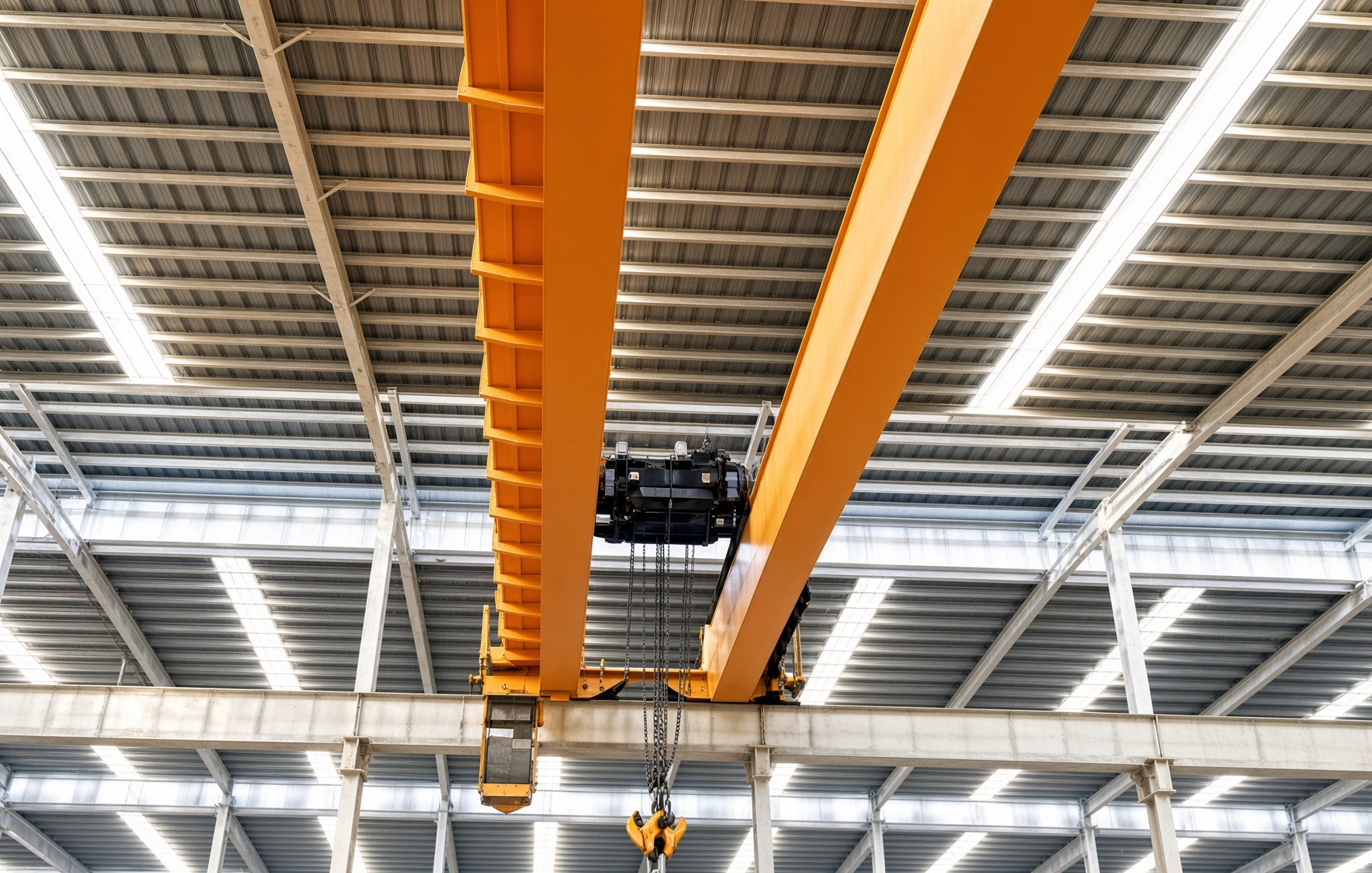
An overhead bridge crane is a travelling lifting system in which a bridge spans two parallel runways. A hoist or trolley moves across the bridge, while the bridge travels along the building bay. Vertical lifting, trolley cross travel and bridge long travel provide rectangular working coverage without occupying primary production floor space.
Bridge crane, overhead crane, overhead travelling crane and EOT crane commonly describe the same equipment family. A complete purchasing description also identifies bridge structure, runway arrangement, lifting mechanism, rated capacity, span, lifting height, working class, speed, control method, environment and attachment.
An overhead bridge crane offered for sale is not a standard commodity identified by tonnage alone. A 10 t crane for occasional machine maintenance has a different mechanism and structural basis from a 10 t process crane making repeated production lifts. The runway and building also form part of the load path, even when they are excluded from the crane supplier’s commercial scope.
Henan Mine Crane supplies new equipment configured for the declared application. A technically complete proposal identifies what is included, what remains site responsibility and which information must be approved before manufacturing. This distinction prevents an equipment-only price from being compared with a complete installed system.
Overhead Bridge Crane Types Available
01 · Single-Girder Overhead Crane
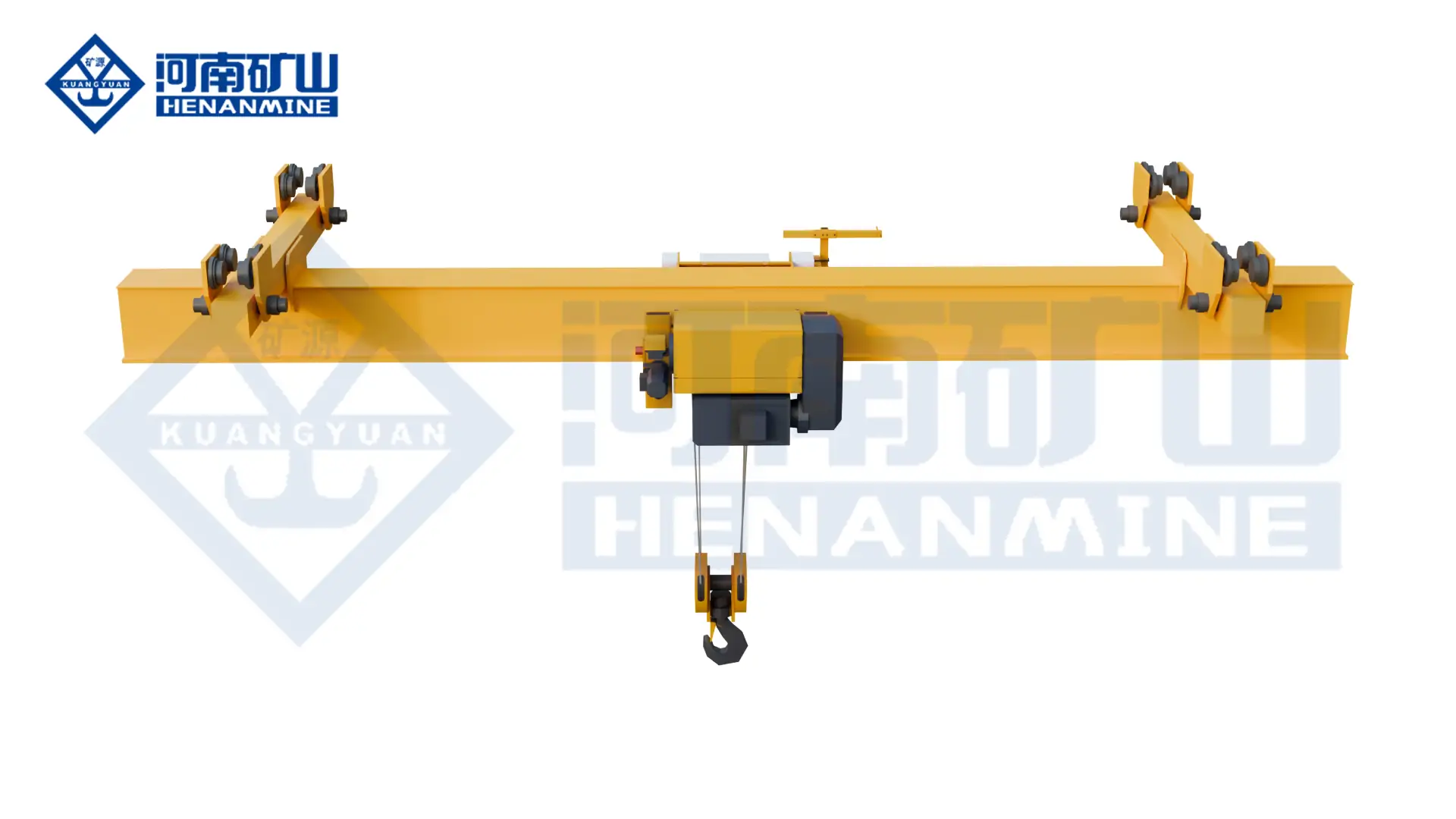
One bridge girder supports an electric chain or wire-rope hoist. The structure controls self-weight and equipment cost for general workshop, warehouse, assembly and maintenance handling.
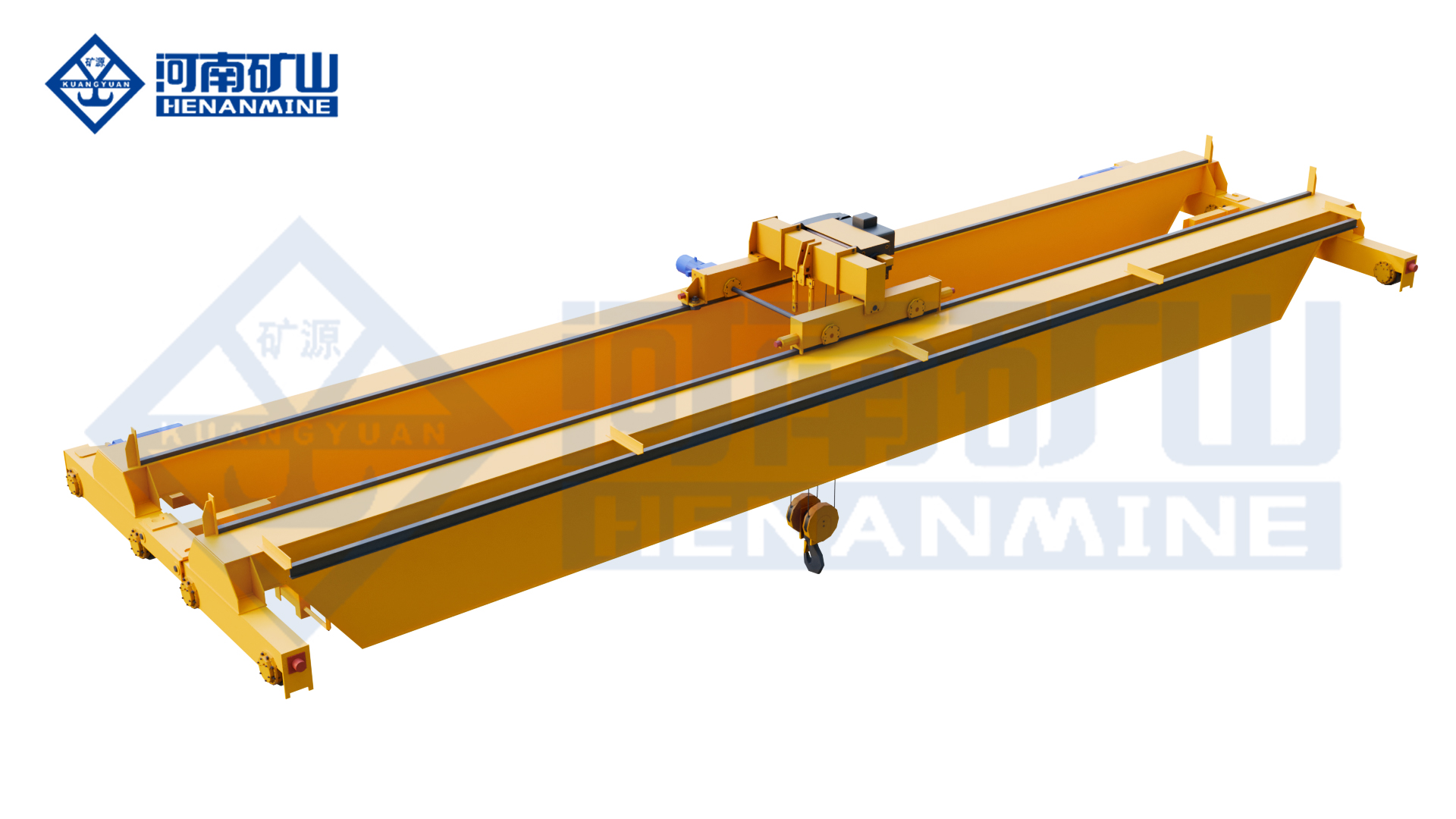
02 · Double-Girder Overhead Crane
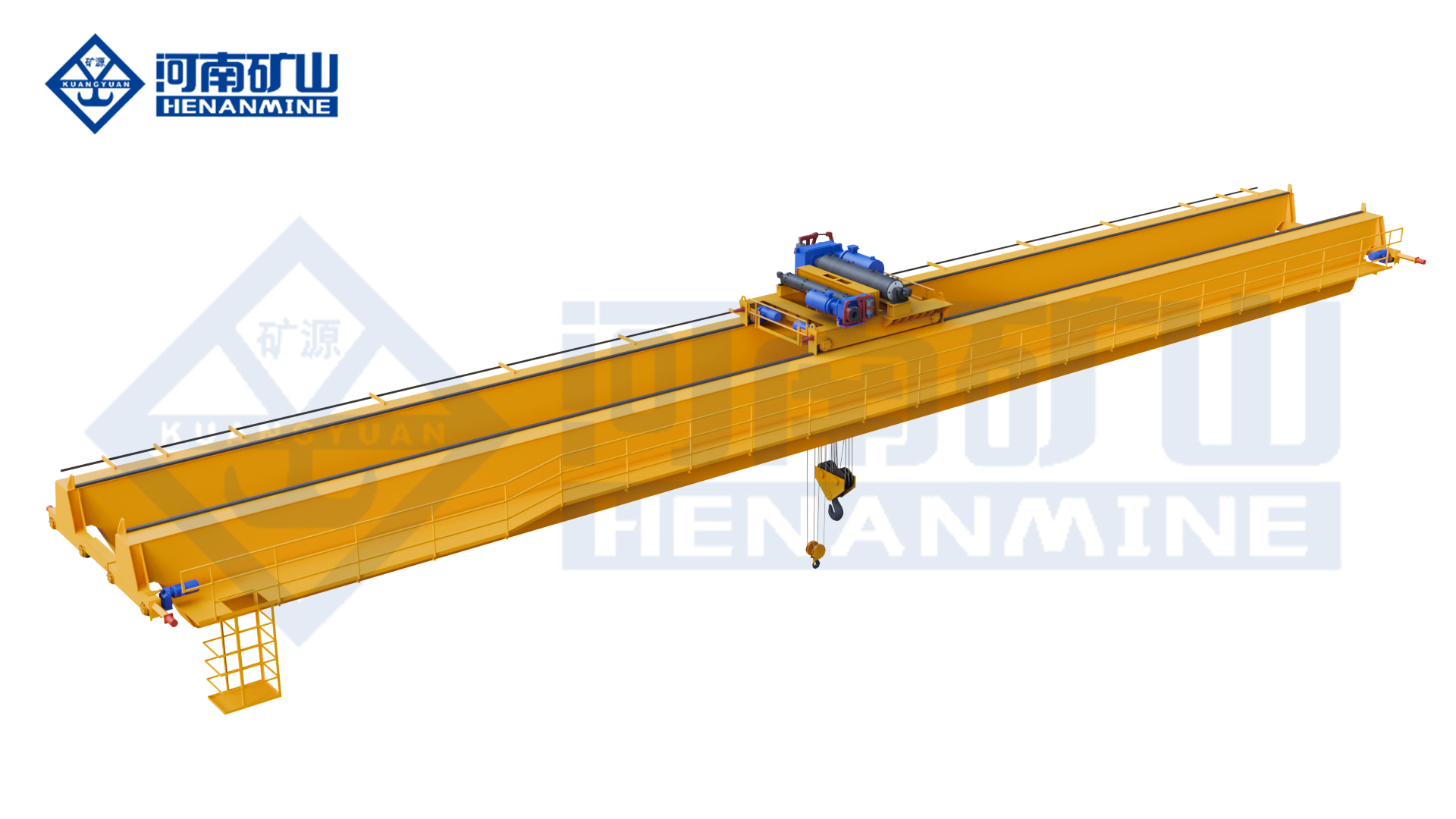
Two bridge girders support a packaged hoist or top-running trolley. The arrangement suits higher capacities, longer spans, heavier duty, improved hook height and process equipment.
03 · Underhung Bridge Crane
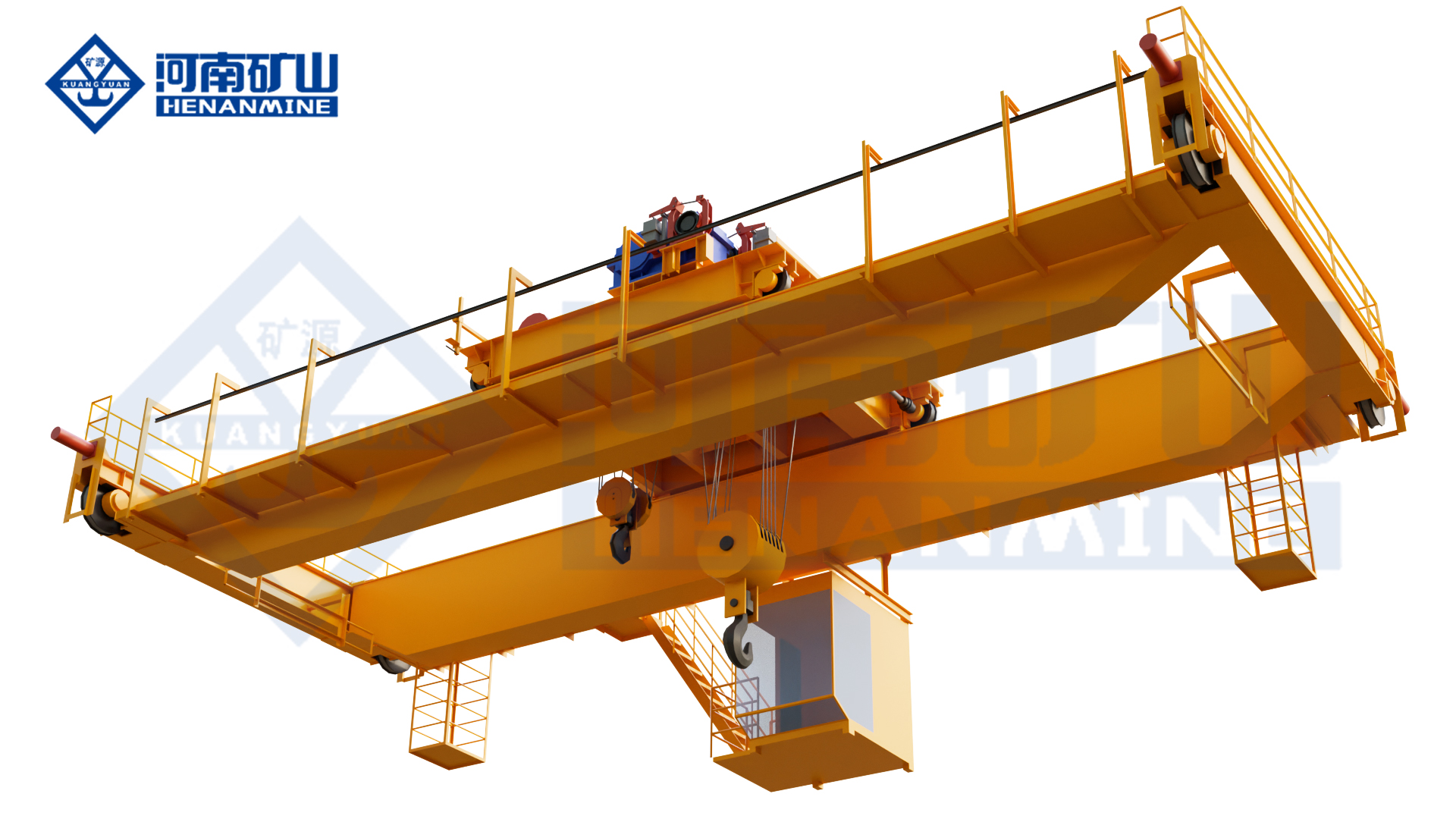
End carriages travel beneath suspended runway beams. The configuration preserves floor clearance and can improve end approach where the building is verified for suspended runway reactions.
04 · Freestanding Bridge Crane System
Independent columns, runway beams and bracing carry crane loads when the existing building cannot accept them. Foundation and floor interfaces become part of the project.
05 · Special-Purpose Bridge Crane
Grab, magnet, clamp, rotating beam, C-hook, ladle beam or another attachment integrates the crane with a specific material-handling process and risk profile.
06 · Automated Bridge Crane
Position feedback, PLC control, anti-sway, collision management and plant interfaces support repeatable semi-automatic or unmanned material flow.
Top-running and underhung identify the bridge-to-runway relationship; single girder and double girder identify the bridge structure. These terms should not be treated as competing descriptions. A crane can be a top-running single-girder system or a top-running double-girder system.
The correct commercial short list follows the load, usable hook height, building support, production cycle and process consequence rather than a fixed capacity threshold.
Selection Considerations
A reliable overhead bridge crane purchase begins with the handling process and facility geometry. The following inputs determine whether the proposed equipment can meet production, structural and acceptance requirements.
01 · Gross Suspended Load
Record maximum and normal payloads, hook block, lifting beam, clamp, magnet, C-hook, slings and every component carried below the hoist.
02 · Span and Coverage
State runway rail-center span, bridge travel length, pickup and placement zones, side approach, end approach and any transfer area.
03 · Lift and Headroom
Define lowest pickup, highest hook elevation, rail level, roof obstruction, load height, rigging depth and required extraction distance.
04 · Duty and Load Spectrum
Provide lifts per hour, shifts, annual operating hours, travel distance, normal load and frequency of operation near rated capacity.
05 · Runway and Building
Confirm rail profile, runway beams, column spacing, brackets, foundations, allowable reactions and available structural drawings.
06 · Motion and Control
Specify lifting and travel speeds, low-speed range, positioning tolerance, pendant, radio, cabin, variable-frequency drives and automation.
07 · Environment and Material
Identify temperature, dust, humidity, corrosion, hazardous classification, outdoor exposure, hot material and cleanliness requirements.
08 · Delivery and Acceptance
Define destination, power supply, governing requirements, documentation language, inspection authority, installation and commissioning boundary.
Procurement control: capacity, span and lifting height do not define a complete crane. Working class, runway reactions, hoist architecture, environment, documentation and commercial exclusions must be compared at the same time.
Overhead Bridge Crane Configurations Compared
| Configuration | Bridge and Runway | Lifting Mechanism | Typical Application | Primary Commercial Decision |
|---|---|---|---|---|
| Single-girder top-running crane | One girder above runway rails | Chain or wire-rope hoist | General workshop, assembly, maintenance and warehousing | Lower self-weight and cost where load, span and duty permit |
| Double-girder top-running crane | Two girders above runway rails | Electric hoist or open-winch trolley | Heavy loads, long spans, high duty and process handling | Higher capacity platform, improved hook envelope and service access |
| Single-girder underhung crane | Bridge suspended beneath runway beams | Chain or wire-rope hoist | Compatible buildings, lighter manufacturing and extended side approach | Roof structure, flange capacity and suspended connections govern feasibility |
| Multi-support underhung crane | Bridge supported by three or more runway lines | Single or double girder with project-specific hoist | Hangars, wide workshops and long-span assembly facilities | Support load sharing, alignment and building reaction map |
| Freestanding bridge crane | Independent columns and runway structure | Single or double girder bridge | Retrofit facilities without suitable building support | Foundation, column spacing, bracing and installation access |
| Process bridge crane | Single, double or multi-girder engineered bridge | Open winch, multiple hooks or special attachment | Steel, foundry, bulk handling, power and automated production | Process risk, duty, redundancy, attachment and acceptance criteria |
Technical Specification Framework
Product-family ranges support preliminary selection but do not replace project engineering. Final parameters remain subject to load, span, duty, building structure and governing requirements.
| Parameter | Available Direction | Engineering Basis | Quotation Requirement |
|---|---|---|---|
| Rated capacity | General and engineered ranges from light workshop service to major project lifting | Maximum payload plus every suspended component | State main, auxiliary and combined capacities separately |
| Span | Selected from runway rail centerlines; published families extend from compact bays to multi-support spans | Building bay, rail geometry and bridge stiffness | Submit a dimensioned plan rather than building width |
| Lifting height | Project-specific vertical travel based on process | Lowest pickup, highest placement, rigging and attachment depth | State usable hook height and pit or floor levels |
| Working class | A3–A8 across general and process product families | Load spectrum, starts, travel, shifts and annual operating hours | Crane and mechanism classifications may differ |
| Hoisting mechanism | Chain hoist, wire-rope hoist or open-winch trolley | Capacity, lift, speed, duty, redundancy and environment | Define rope reeving, hooks and maintenance access |
| Control mode | Pendant, radio remote, cabin or PLC automation | Visibility, travel distance, process risk and positioning requirement | Define control authority and fallback mode |
| Power supply | Configured for the project grid within the approved electrical design | Voltage, frequency, phase, tolerance and earthing | State transformer, cable and isolator scope |
| Safety and monitoring | Limits, overload protection, emergency stop, buffers, alarms and optional advanced functions | Risk assessment and governing requirements | Identify standard, optional and site-supplied functions |
ASME B30.2 covers applicable top-running single- or multiple-girder cranes with top-running trolley hoists. Underhung systems, special-purpose cranes and projects in other jurisdictions may require different or additional standards. The governing basis and edition should be stated in the contract.
Purchase Scope and Quotation Comparison
The phrase overhead bridge crane for sale can describe a bridge kit, complete crane, crane with runway or fully installed system. Commercial comparison is valid only after the supply boundary has been normalized.
Crane Equipment
Bridge girders, end trucks, hoist or trolley, motors, brakes, wheels, hook block, buffers and onboard electrical equipment.
Runway and Supports
Rails, runway beams, brackets, columns, bracing, foundations and building reinforcement. Design and supply responsibility should be separated.
Power and Electrification
Main isolator, runway conductor, festoon or energy chain, control power, grounding, cable route and plant connection point.
Controls and Safety
Pendant, radio, cabin, VFDs, limits, overload protection, warning devices, anti-collision, anti-sway and production interfaces.
Documentation and Testing
Drawings, calculations, certificates, manuals, inspection plan, factory testing, site acceptance and load-test records.
Packing and International Freight
Export packing, shipping splits, container or break-bulk plan, port charges, insurance, trade term and destination delivery.
Installation and Commissioning
Unloading, assembly, erection, alignment, power connection, drive setup, functional checks, proof testing and training.
New, Used or Modernized Equipment
New equipment provides an application-specific design basis. Used or modernized cranes require records, structural assessment, component condition review and runway compatibility verification.
Applications and Working Conditions
| Industry | Typical Loads | Crane Direction | Operating Objective | Critical Input |
|---|---|---|---|---|
| Machining and fabrication | Raw material, weldments, dies, fixtures and machines | Single- or double-girder top-running crane | Full-bay coverage and controlled equipment placement | Heaviest lift, machine layout, duty and hook approach |
| Assembly and manufacturing | Components, tooling, subassemblies and finished equipment | Single girder, double girder or automated crane | Repeatable flow between workstations | Cycle rate, accuracy, production interfaces and future expansion |
| Warehouse and logistics | Coils, long products, pallets, molds and inventory | General or automated bridge crane | Clear floor space and organized storage access | Rack height, truck route, storage map and collision zones |
| Steel mill and foundry | Ladles, slabs, billets, coils, rolls and scrap | Heavy-duty process bridge crane | High duty, heat protection and specialized attachments | Material temperature, load consequence, attachment and redundancy |
| Power and energy | Turbines, generators, transformers and wind-power components | Double-girder or double-trolley crane | Heavy assembly, maintenance and precision lifting | Load geometry, lifting points, synchronized motion and long-term service |
| Bulk and waste handling | Ore, coal, biomass, clinker, waste and slag | Grab or automated double-girder crane | Repeated stockpile, hopper and process transfer | Bulk density, grab volume, cycle target and material behavior |
Hazardous areas, molten metal, corrosive chemicals, outdoor exposure, high temperature, clean production and seismic conditions require dedicated engineering. A standard workshop crane cannot be converted into a compliant special-purpose system by changing only one component.
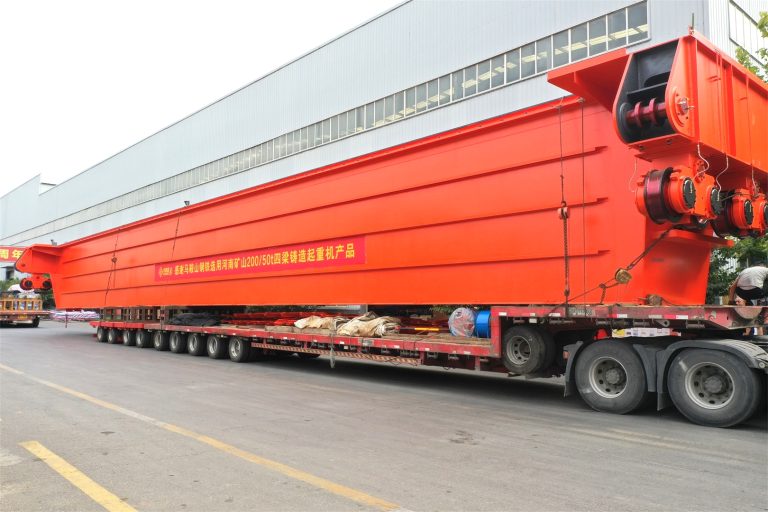
Project Case: 300 t Double Girder Crane for Major Bridge Construction
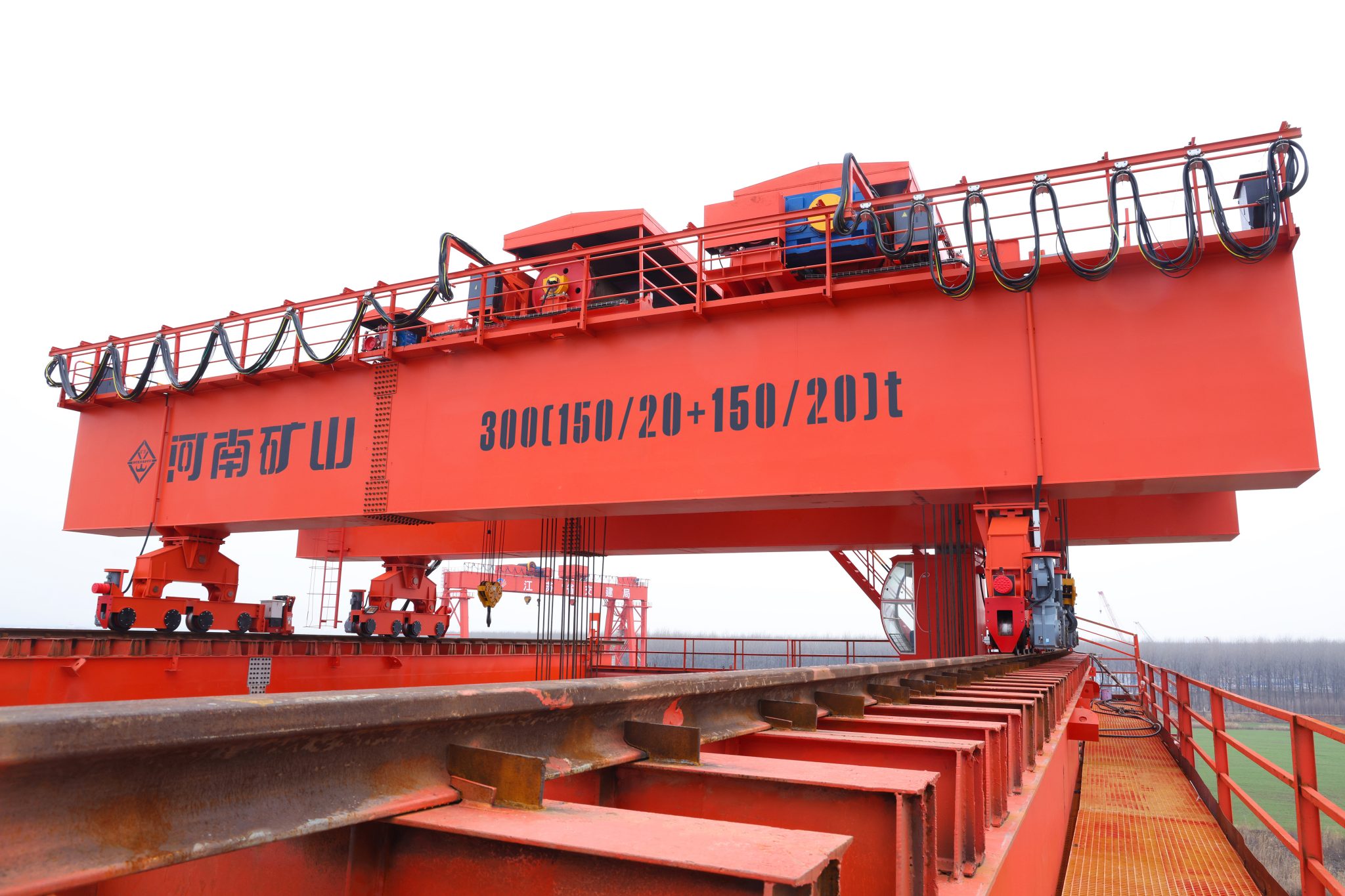
A major Yangtze River bridge project required a 300 t double girder overhead travelling crane for heavy material handling and large-component installation. The equipment was configured as project-specific lifting machinery rather than an enlarged general workshop crane.
The crane used a modular design, hardened-gear transmission, integrated electrical system and full variable-frequency control. Controlled acceleration and low-speed motion supported heavy-component positioning, while modular component selection simplified future maintenance and spare-parts management.
Reserved interface capacity allowed later functional upgrades without redesigning the complete machine. The project demonstrates the importance of matching structural design, mechanisms, controls, runway reactions, transport splits and site commissioning to one approved operating basis. The same engineering sequence applies to smaller industrial bridge-crane purchases even when capacity and complexity are lower.
RATED CAPACITY
300 t
BRIDGE STRUCTURE
Double Girder
MOTION CONTROL
Full VFD
DESIGN BASIS
Modular System
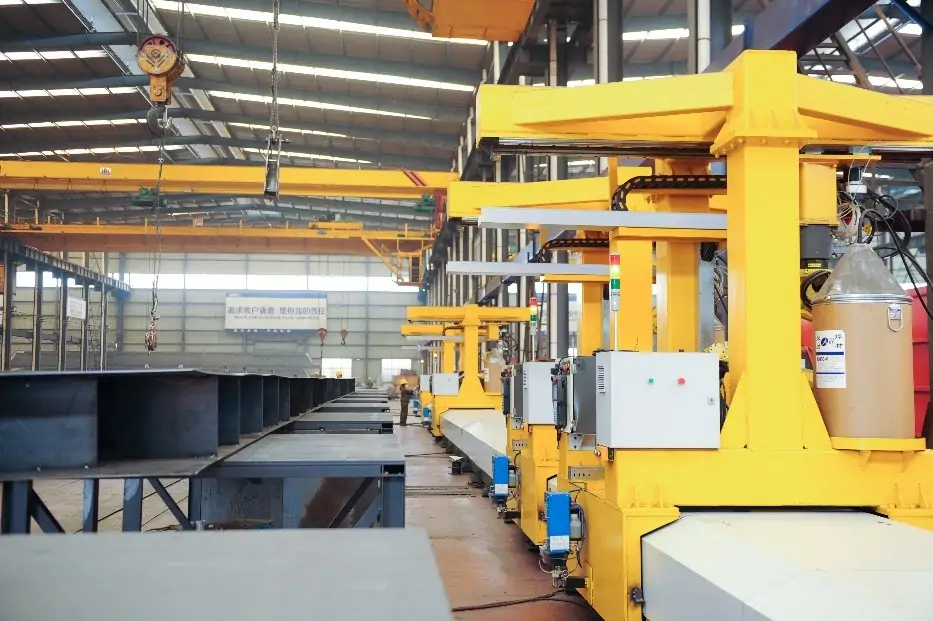
Engineering, Manufacturing and Quality Documentation
A commercial offer should define how approved operating data becomes a controlled bridge, hoist or trolley, electrical system and acceptance package. Required records should be included in the contract before manufacturing begins.
Design Package
General arrangement, hook approaches, wheel loads, runway reactions, working class, electrical demand and control narrative.
Structural Records
Material identification, welding procedures, welder qualifications, dimensions and specified nondestructive examination.
Mechanism Data
Hoist, drum, rope or chain, hook, motor, gearbox, brake, wheel, bearing and lubrication data matched to service.
Electrical Documents
Single-line diagram, schematics, drive parameters, protection settings, conductor details and interface schedule.
Inspection and Tests
Inspection plan, witness points, dimensions, brakes, limits, alarms, interlocks and contracted factory or site testing.
Handover Package
Final drawings, certificates, test records, manuals, spare-parts list, maintenance schedule and configured settings.
Delivery, Installation and Commissioning
Pre-Production Approval
Freeze layout, parameters, wheel loads, interfaces, power supply, documents, inspection points and commercial boundary before manufacturing release.
Packing and Shipping Plan
Coordinate bridge shipping splits, component protection, lifting points, container or break-bulk transport and destination handling.
Runway Survey
Verify rail span, elevation, straightness, joints, end stops, conductor route and structural information before crane erection.
Assembly and Installation
Plan unloading, assembly area, lifting equipment, work-at-height controls, roof clearance, alignment and production shutdown.
Electrical Integration
Install runway power, isolators, grounding, festoons, control stations, sensors and any production-system interfaces.
Functional Commissioning
Verify motor direction, drives, brakes, limits, buffers, alarms, emergency functions and control authority without load.
Load and Acceptance Tests
Execute the approved proof, rated-load and operating tests with calibrated instruments, assigned witnesses and documented results.
Training and Lifecycle Support
Transfer operating limits, inspection points, maintenance schedules, troubleshooting logic, spare parts and emergency procedures.
Overhead Bridge Crane Price and Total Project Cost
Overhead bridge crane price changes with girder structure, capacity, span, lift, working class, runway, controls, environment and installation scope. Current North American market examples provide early budget context only and are not fixed Henan Mine Crane prices.
| Budget Example | Indicative Market Position | Published Scope Position | Main Cost Drivers | Commercial Control |
|---|---|---|---|---|
| 5 t single-girder bridge crane | Around US$40,000 | Base bridge, trolley and hoist near or below a 40 ft span | Span, lift, duty, runway, controls and destination | Installation inclusion requires confirmation |
| 10 t single-girder bridge crane | Around US$65,000 | Installation included in the published example | Building interface, labor, access, testing and region | Runway and structural work remain scope-dependent |
| 5 t double-girder bridge crane | Around US$60,000 | General double-girder market benchmark | Trolley type, headroom, span, runway and controls | Confirm installation, freight and testing |
| 10 t double-girder bridge crane | Close to US$100,000 | General double-girder market benchmark | Duty, speeds, electrical scope, access and regional labor | Not a fixed international project price |
| Runway and support structure | Separate project quotation | Rails, runway beams, columns, brackets, bracing and foundations | Travel length, wheel loads, column spacing and building capacity | State design, supply and installation responsibility |
| International delivery and commissioning | Separate project quotation | Packing, freight, erection, startup, load test and training | Shipping dimensions, destination, site access and test weights | State trade term, taxes, permits and exclusions |
Commercial normalization: compare bridge equipment, hoist or trolley, runway steel, electrification, controls, documentation, packing, freight, erection, commissioning, load testing, training, spare parts and exclusions line by line.
Information Required for an Overhead Bridge Crane Quote
A technically comparable quotation requires load, facility, duty and commercial information together. Dimensioned building plans, runway drawings, load sketches and site photographs should accompany the following data.
Load Data
Maximum and normal mass, dimensions, center of gravity, pickup points, rigging, attachment weight and possible future load.
Crane Geometry
Runway rail-center span, travel length, rail elevation, required lift, hook approaches, building section and obstructions.
Duty and Throughput
Lifts per hour, shifts, annual hours, load spectrum, full-load frequency, travel distance and production consequence.
Runway and Structure
Rail profile, runway beams, column spacing, brackets, allowable reactions, foundation information and existing condition.
Hoist and Motion
Chain or wire rope, packaged hoist or open winch, main and auxiliary hooks, speeds, low-speed range and positioning need.
Controls and Safety
Pendant, radio or cabin operation, VFDs, anti-sway, anti-collision, monitoring, automation and plant interlocks.
Environment and Power
Voltage, frequency, phase, ambient temperature, dust, humidity, corrosion, hazardous classification and indoor or outdoor service.
Commercial Boundary
Destination, trade term, runway, installation, inspection, load testing, training, spare parts, documents and required schedule.
Overhead Bridge Crane for Sale FAQ
What is included in an overhead bridge crane sale?
The included scope may range from a bridge kit to a complete installed system. A valid proposal should identify the bridge, hoist or trolley, runway, electrification, controls, documents, freight, installation and testing separately.
How is single girder selected instead of double girder?
Single girder normally controls self-weight and cost for moderate load, span and duty. Double girder supports higher capacity, longer span, demanding duty, improved hook height and larger trolley arrangements.
What is the difference between top-running and underhung cranes?
A top-running bridge travels above runway rails. An underhung bridge travels below suspended runway beams and can preserve floor clearance, subject to verified roof and runway capacity.
Can an overhead bridge crane be installed in an existing building?
Yes, after structural and dimensional verification. The project may require building reinforcement, new runway beams or a freestanding support structure.
How much does an overhead bridge crane cost?
Current market examples place common 5–10 t single- and double-girder systems around US$40,000–100,000 depending on configuration and installation scope. A project quotation remains necessary.
Why do quotations for the same tonnage differ?
Span, lifting height, working class, hoist architecture, speeds, runway scope, electrical equipment, documentation, freight, installation and testing can differ even when rated capacity is identical.
Is a used overhead bridge crane suitable for a new facility?
Suitability depends on structural records, remaining life, mechanism condition, electrical compliance, runway compatibility, spare-parts support and the cost of modification, transport and recertification.
Which control method is normally selected?
Pendant control suits local operation, radio control improves mobility, and a cabin supports long travel or severe environments. Automated systems add positioning, anti-sway and plant interfaces.
What standards apply to an overhead bridge crane?
The governing basis depends on destination and crane type. ASME B30.2 applies to defined top-running bridge cranes, while EN, ISO, FEM and national requirements may govern other projects.
What information produces the fastest accurate quotation?
Capacity, span, lifting height, duty, load description, runway drawings, control method, power supply, environment, destination and a written scope boundary provide the essential basis.
Related Overhead Bridge Crane Products
Compare bridge structures and special-purpose configurations after load, span, lifting height, duty, runway and operating environment have been established.

Single-Girder Overhead Crane
Cost-controlled bridge configuration for workshops, warehouses, assembly areas and maintenance bays.
Double-Girder Overhead Crane
Two-girder platform for higher capacities, longer spans, heavy duty and process-specific trolley systems.
European-Style Suspended Crane
Building-suspended configuration for clear production floors and controlled industrial handling.
Explosion-Proof Bridge Crane
Project-specific crane for formally classified gas or dust environments and matched protection requirements.
Metallurgical Overhead Crane
Heavy-duty bridge crane for high-temperature steelmaking, material transfer and demanding production service.
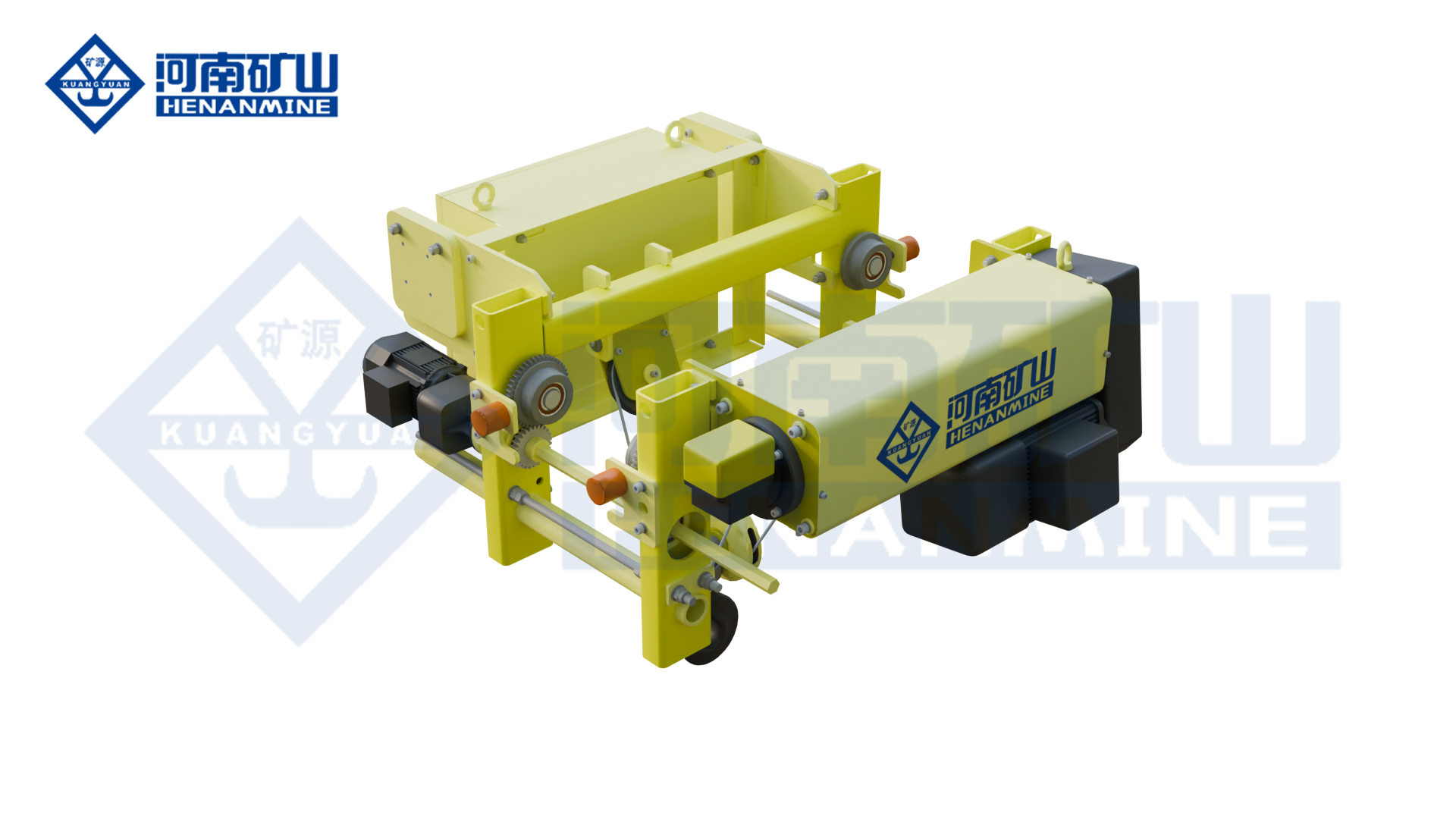
Compact Electric Hoist
Space-efficient wire-rope hoist for compatible single-girder and selected double-girder applications.
Request an Overhead Bridge Crane Quote
Submit the load list, capacity, span, lifting height, runway drawings, operating duty, required speeds, control mode, power supply, environment, delivery boundary and destination. Henan Mine Crane will prepare a coordinated technical configuration and commercial quotation.