
Henan Mine Crane · Engineered 5 Tonne Gantry Systems
5 Ton Gantry Crane for Sale
New 5 metric ton gantry cranes configured for workshops, fabrication yards, precast operations, maintenance areas, warehouses and outdoor material handling.
Henan Mine Crane supplies single-girder, double-girder, semi-gantry, truss and offset-leg configurations with electric hoists, motorized travel, project-specific controls and defined delivery scope. Span, lifting height, duty, travel length, outdoor protection and installation interfaces are engineered for the operating site.
RATED CAPACITY
5 Metric Tons
STRUCTURE OPTIONS
Single, Double or Semi
TRAVEL OPTIONS
Rail-Mounted & Motorized
QUOTE BASIS
Equipment + Project Scope
What Is a 5 Ton Gantry Crane?
A 5 ton gantry crane is a lifting system rated for a maximum gross suspended load of 5 metric tons, approximately 11,023 lb. The bridge is supported by legs that transfer operating forces to ground-level wheels, rails, foundations or an approved floor system. An electric hoist or trolley moves across the bridge, while powered end carriages move the complete gantry along its travel path.
The capacity rating applies to the complete suspended load at the hook. Payload, lifting beam, clamp, magnet, spreader, slings and other below-hook equipment must remain within the 5 t limit unless the approved design states another basis. Load weight, center of gravity and lifting-point arrangement therefore belong in the purchasing specification.
A 5 ton crane is not defined by capacity alone. A short-span maintenance gantry with occasional lifts differs materially from a long-span outdoor crane handling fabricated steel throughout two production shifts. Bridge structure, hoist duty, speeds, wheel loads, wind controls, corrosion protection, runway design and electrical supply must match the application.
For general industrial service, a single-girder electric-hoist gantry is usually the most economical starting point. A double-girder configuration becomes relevant where span, hook approach, lifting height, duty, stiffness, maintenance access or process equipment justify the additional structure. Semi-gantry and offset-leg arrangements solve site-specific access and building-interface constraints.
5 Ton Gantry Crane Configurations for Sale
01 · Single-Girder Full Gantry Crane
One box or rolled-section bridge girder carries an electric wire-rope hoist. The arrangement controls self-weight and equipment cost for workshops, yards, fabrication and general material transfer.
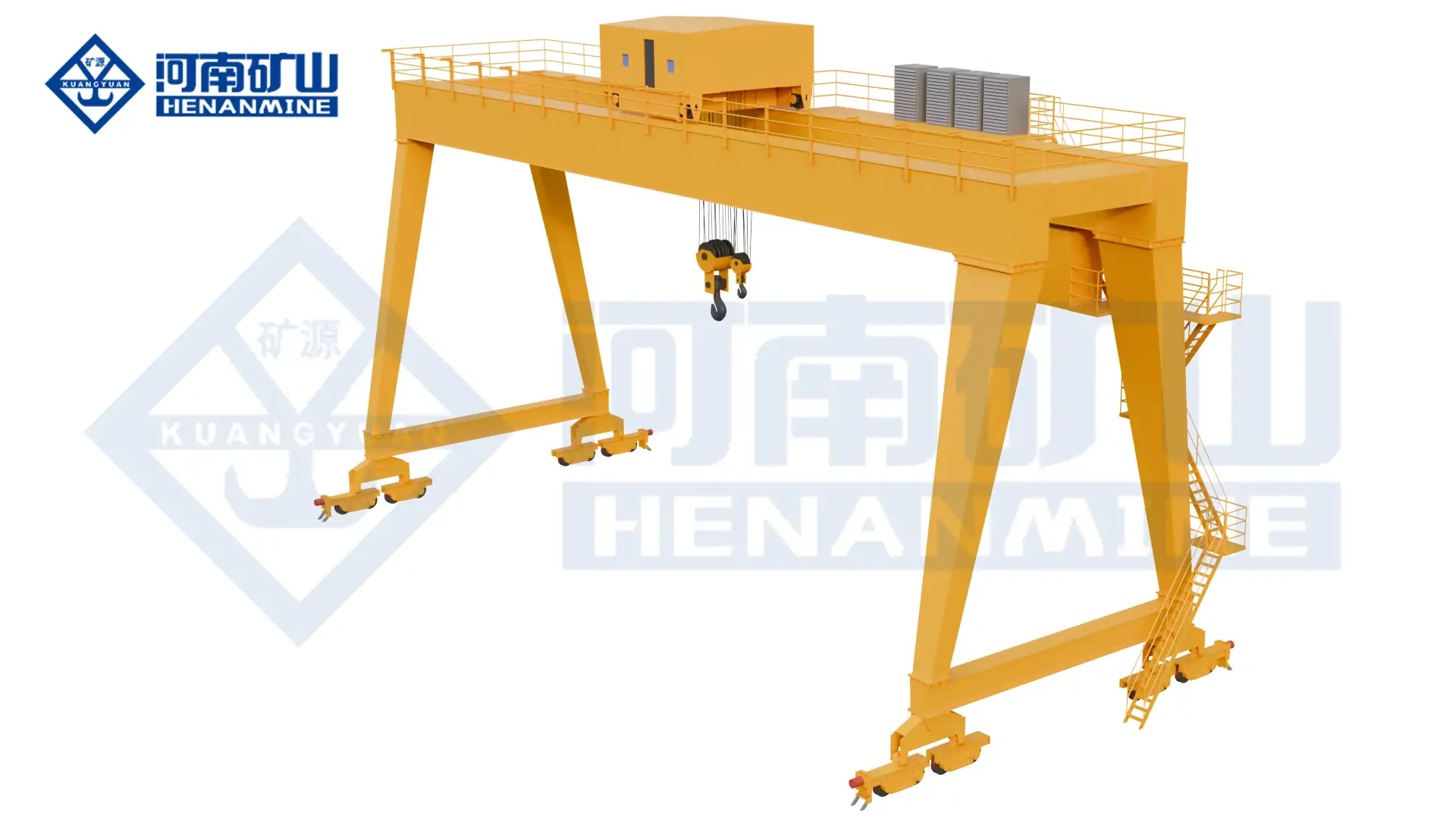
02 · Double-Girder Gantry Crane
Two bridge girders support a hoist or top-running trolley. Greater bridge stiffness, improved hook height and maintenance access support longer spans, higher duty and process-oriented operation.
03 · Semi-Gantry Crane
One end travels at an elevated building runway while the opposite leg travels at floor level. The configuration serves a defined production zone without installing two ground runways.
04 · Truss Gantry Crane
A lattice bridge structure reduces exposed area and structural mass for selected outdoor or transportation-sensitive projects. Connection, corrosion and inspection requirements remain part of the engineering basis.
05 · L-Type or Offset-Leg Gantry Crane
An offset leg and cantilever can improve side loading, truck access and material transfer beyond the runway. Wheel reactions and lateral stability require project-specific verification.
06 · Indoor or Outdoor Engineered System
The same 5 t rating can be configured with indoor electrification or outdoor weather protection, wind monitoring, rail clamps, storm anchoring and project-specific coating systems.
Portable caster-mounted frames also appear in the 5 ton gantry crane market. They are compact lifting frames rather than automatic substitutes for a powered industrial gantry. Travel under load, floor condition, caster rating, permitted motion, hoist compatibility and assembly procedure must be confirmed from the specific portable-crane design.
For repeated material flow across a workshop or yard, a rail-mounted powered gantry normally provides better travel control, defined alignment, longer coverage and easier integration with pendant or radio control.
Selection Considerations
A technically complete purchase begins with the handling process and operating site. The following inputs determine configuration, structural loads, mechanism duty, protection and commercial scope.
01 · Gross Suspended Load
Record maximum payload, normal payload, attachment, spreader, sling and every component carried below the hook. Confirm center of gravity and lifting points.
02 · Span and Travel
State rail-center span, total crane travel, cantilever length, pickup zones, placement zones, end approach and side-loading requirements.
03 · Lift and Clearance
Define lowest pickup, highest placement, rail elevation, leg clearance, bridge clearance, load height, rigging depth and required hook approach.
04 · Duty and Load Spectrum
Provide lifts per hour, shifts, annual hours, average load, full-load frequency, travel distance and any production-critical operating cycle.
05 · Ground and Runway
Identify indoor slab, outdoor foundation, rails, embedded plates, drainage, settlement limits, runway straightness and allowable wheel reactions.
06 · Motion and Control
Specify lifting and travel speeds, low-speed range, pendant or radio control, variable-frequency drives, positioning needs and multiple-crane interaction.
07 · Environment
Declare temperature, rain, snow, wind, dust, humidity, corrosive exposure, hazardous classification, washdown and outdoor storage conditions.
08 · Delivery and Acceptance
Define destination, power supply, governing requirements, documentation language, inspection authority, installation boundary and load-test responsibility.
5 Ton Gantry Crane Configurations Compared
| Configuration | Lifting Arrangement | Typical Application | Commercial Advantage | Selection Condition |
|---|---|---|---|---|
| Single-girder full gantry | Electric wire-rope hoist below one girder | General workshops, yards, precast and fabrication | Lower structural mass and controlled equipment cost | Span, duty and hook approach remain suitable for the hoist arrangement |
| Double-girder full gantry | Hoist or trolley supported by two girders | Longer spans, higher duty and process-oriented handling | Greater stiffness, improved hook height and service access | Additional structure and higher wheel loads are justified by operating need |
| Single-girder semi-gantry | One elevated runway and one floor-running leg | Production zones beside an existing building support | Reduced ground-runway footprint and clear access on one side | Building runway and floor runway can accept coordinated reactions |
| Truss gantry crane | Lattice bridge with full or semi-gantry legs | Outdoor yards and transport-sensitive project sites | Lower exposed area and structural mass in selected layouts | Corrosion, connections and inspection access are properly controlled |
| Portable steel gantry frame | Fixed or adjustable beam on casters or V-groove wheels | Localized maintenance and occasional lifts | Low infrastructure requirement and repositioning flexibility | Movement rules, floor rating, hoist compatibility and limited coverage are acceptable |
Configuration principle: a 5 t single-girder gantry is the normal commercial baseline for general service. Double-girder, semi-gantry, truss and offset-leg designs should solve a defined span, clearance, duty, environment or material-flow requirement.
Technical Specification Framework
The following framework establishes the minimum technical information for a comparable proposal. Published product-family ranges identify available engineering coverage; final parameters depend on the selected structure and approved site data.
| Specification Item | 5 Ton Project Basis | Engineering Requirement | Procurement Control |
|---|---|---|---|
| Rated capacity | 5 metric tons at the hook | Gross suspended load includes every below-hook component | Load list and center of gravity approved before design release |
| Gantry structure | Single girder, double girder, truss, semi-gantry or offset leg | Box, rolled or lattice structure selected from span and duty | General arrangement identifies rigid leg, flexible leg and cantilever geometry |
| Span | Project-specific; Henan Mine Crane product families cover approximately 4–35 m for common electric-hoist gantries | Measured between runway rail centers | Site survey and operating clearances govern final value |
| Lifting height | Project-specific; common product-family coverage extends approximately 4–30 m by configuration | Hook travel from lowest pickup to highest required position | Attachment depth and below-rail clearance included |
| Working class | Typically A3–A5 for general 5 t electric-hoist service; higher duty requires separate engineering | Selected from load spectrum and operating frequency | Crane and hoist mechanism classifications stated in proposal |
| Hoisting mechanism | Electric wire-rope hoist or engineered trolley | Single or dual speed, variable-frequency option | Hoist arrangement matched to headroom, duty and maintenance access |
| Crane and trolley travel | Project-selected speeds with motorized drives | Variable-frequency control available for smoother acceleration | Wheel, motor, brake and gearbox basis included |
| Control | Pendant, radio remote, cabin or PLC interface | Emergency stop and operating indications integrated | Control station, travel direction and restricted zones defined |
| Power supply | Configured for project voltage, frequency and phase | Conductor, cable reel or festoon selected from travel and environment | Electrical demand and site isolation point stated |
| Outdoor protection | Coating, enclosure, wind alarm, rail clamp and anchoring as required | Weather and corrosion system follows site conditions | Operating and out-of-service wind basis established before approval |
Supply Scope and Quotation Comparison
| Scope Package | Typical Content | Required Definition | Commercial Check |
|---|---|---|---|
| Gantry crane equipment | Bridge girder, legs, lower beams, end carriages, hoist or trolley, travel drives and required access components | Approved arrangement, capacity, span, lift and duty | Structural connections, fasteners and assembly items listed |
| Electrical and controls | Panels, pendant or radio, limit switches, alarms, cabling and crane-mounted electrification | Voltage, frequency, control method and enclosure protection | Runway power feed and site cable excluded or included explicitly |
| Runway and rail system | Rails, clips, base plates, stops, conductor supports and alignment components where contracted | Travel length, rail type, gauge and allowable tolerances | Civil foundations and embedded items assigned by party |
| Outdoor safety equipment | Rail clamps, storm anchors, wind-speed monitoring, wheel chocks and weather protection where required | Operating wind and parked-crane design basis | Automatic and manual devices identified separately |
| Documentation | Drawings, reaction data, manuals, inspection records, electrical diagrams and packing list | Language, format, approval stages and handover quantity | Statutory and third-party documents defined before order |
| Logistics | Export packing, inland transport, ocean freight, insurance and destination handling as contracted | Incoterm, destination port, package limits and route restrictions | Taxes, duties, unloading and local storage allocated clearly |
| Installation and commissioning | Mechanical assembly, rail alignment, electrification, settings, functional checks and operator familiarization where contracted | Site readiness, work permits, access equipment and power availability | Travel, accommodation, local labor and lifting equipment stated |
| Testing and acceptance | Factory checks, site commissioning, proof load and operational acceptance as specified | Test weights, witness authority, procedure and acceptance criteria | Responsibility for test load and certified weights identified |
A low equipment figure can exclude the electric hoist, powered trolley, rails, foundation work, conductor system, freight, erection or load testing. Commercial comparison should normalize every quotation to the same technical and delivery boundary.
Applications and Working Conditions
Fabrication Yard
Moves frames, beams, welded assemblies and production fixtures between fabrication, inspection and dispatch zones. Side loading and cantilever reach may be important.
Precast Concrete Operation
Handles molds, reinforcement cages, inserts and approved precast components. Outdoor duty, load geometry, rigging and frequent travel require early definition.
Workshop Maintenance
Removes motors, gearboxes, pumps, dies and machine modules where an overhead runway cannot be installed or the lifting area changes over time.
Warehouse and Logistics Yard
Transfers machinery, bundled materials and industrial goods between storage positions and trucks. Clear width, stacking height and traffic segregation control layout.
Equipment Assembly
Supports staged assembly, alignment and testing of industrial equipment. Low-speed control, hook approach and radio visibility can be more important than maximum speed.
Outdoor Stockyard
Handles steel, timber, building products or long materials along a defined rail path. Wind, rain, drainage, corrosion and storm anchoring become part of the crane specification.
Environmental boundary: standard weather protection does not establish explosion protection, marine corrosion resistance or high-temperature suitability. Hazardous classification, corrosive chemicals, salt exposure and hot loads require a dedicated compliance and material schedule.
Project Configuration and Gantry Engineering Experience
Representative 5 Ton Fabrication-Yard Basis
A practical starting configuration for general outdoor fabrication is a 5 t single-girder electric-hoist gantry with approximately 10–15 m span, project-defined lifting height, A3–A5 service, motorized long travel, motorized trolley travel, pendant and radio control, variable-frequency motion and a defined rail path. Final dimensions and duty remain subject to the actual load cycle, site survey and runway design.
Delivered Infrastructure Project Evidence
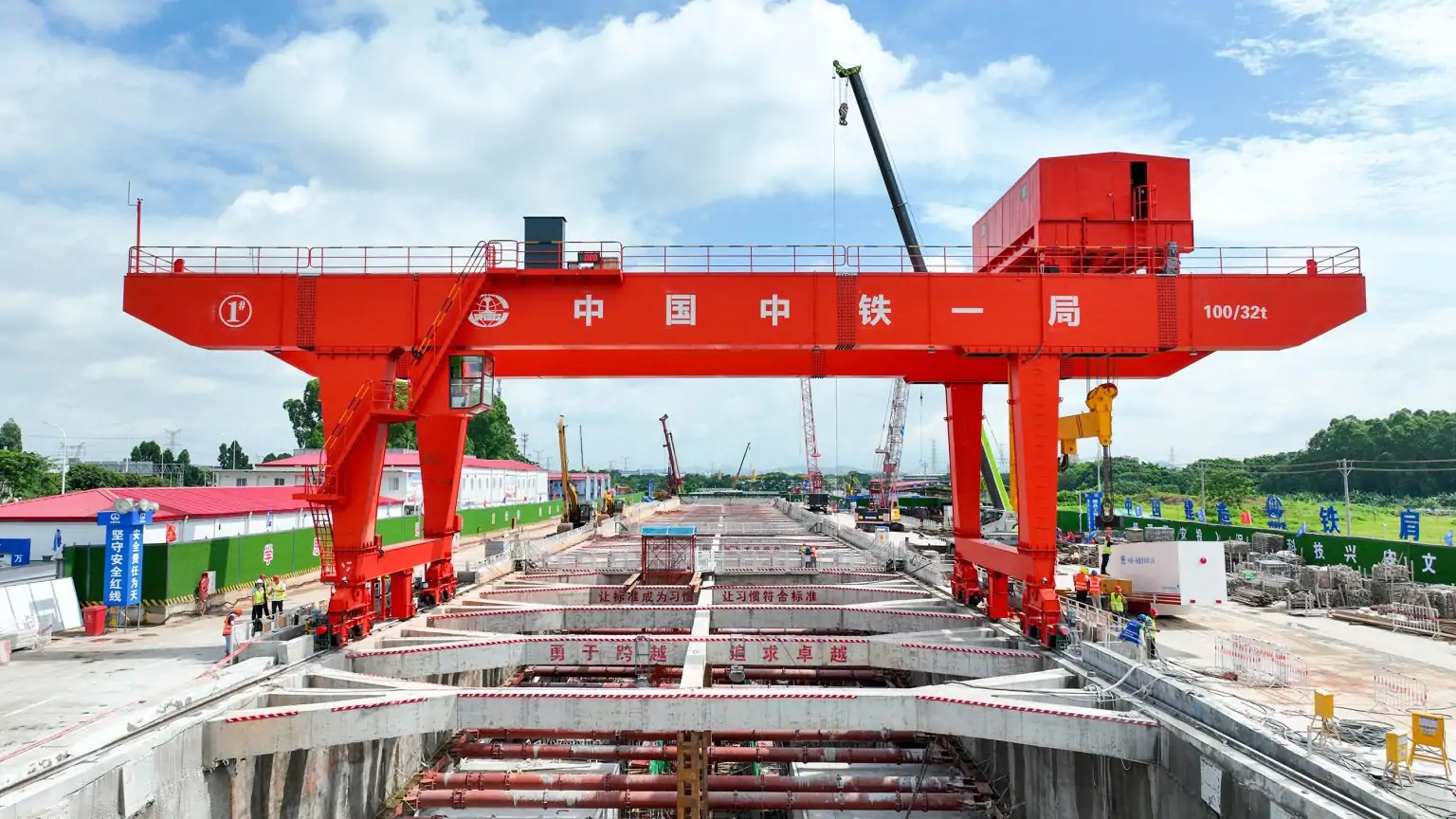
Henan Mine Crane supplied a 100/32 t double-girder gantry crane for subway debris removal on the Guangfo Ring Line project. The equipment was configured for deep construction handling with an under-rail lifting depth reaching 40 m, computer-aided gantry optimization and project-specific safety functions.
The delivered project is not presented as a 5 t model or price example. It demonstrates the engineering process used for load definition, structural optimization, long-lift mechanisms, site constraints, electrical integration, inspection and project documentation. A 5 t proposal applies the same control logic at the appropriate scale.
Engineering, Manufacturing and Quality Documentation
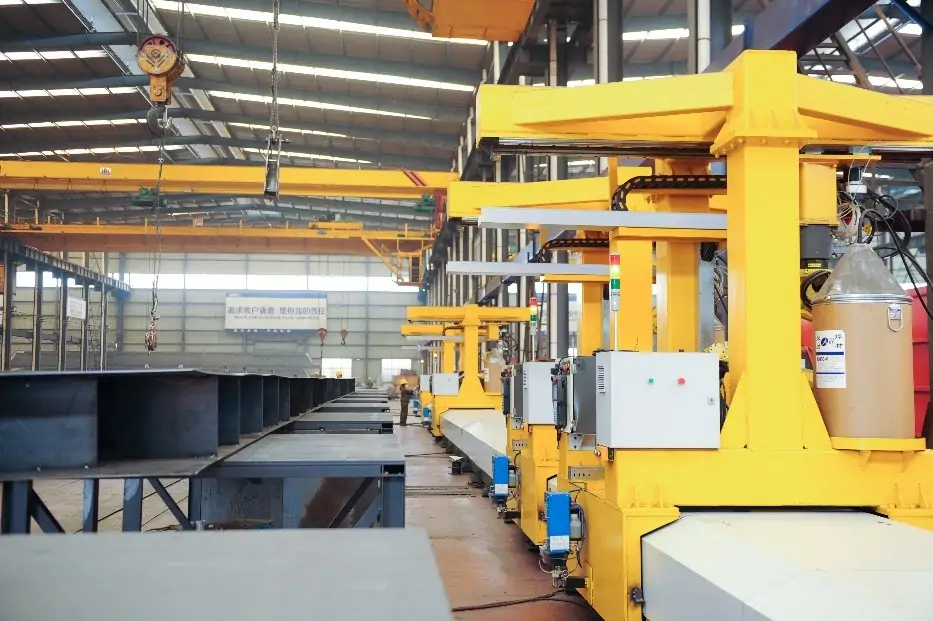
A 5 ton gantry crane purchase should connect approved operating data to structural design, mechanism selection, fabrication, inspection, factory checks and final handover. Required records should be agreed before manufacturing release.
Design Package
General arrangement, wheel reactions, hook approaches, mechanism duty, electrical demand, control narrative and runway interface.
Structural Records
Material identification, welding procedures, welder qualifications, dimensions, connections and specified examination records.
Mechanism Data
Hoist, motor, gearbox, brake, rope, wheel, bearing, buffer and lubrication information matched to declared service.
Electrical Documents
Single-line diagram, schematics, drive data, protection settings, conductor details, control voltage and configured parameters.
Inspection and Tests
Inspection plan, dimensions, drives, brakes, limits, alarms, interlocks and contracted load-test records.
Handover Package
Final drawings, manuals, test records, spare-parts list, maintenance schedule and commissioning settings.
Delivery, Installation and Commissioning
Site Survey and Readiness
Verify travel length, rail centers, clearance, foundations, embedded items, access route, assembly area, power supply and installation equipment.
Packing and Delivery
Separate bridge, legs, lower beams, hoist, electrical equipment and accessories into identified packages compatible with transport and site lifting limits.
Gantry Assembly
Assemble the structure in the approved sequence, control temporary stability and verify fasteners, joints, diagonals, platforms and access components.
Rail and Alignment
Check rail gauge, straightness, elevation, joints, stops, clips and foundation condition before powered crane travel and final wheel alignment.
Electrical Installation
Install crane power supply, festoon or conductor, panels, pendant or radio, grounding, limits, alarms and site isolation equipment.
Functional Commissioning
Verify travel directions, speeds, brakes, limits, emergency stop, warning devices, rail clamps, wind functions and control interlocks without load.
Load and Acceptance Tests
Complete proof, rated-load and operational checks under the approved procedure with assigned responsibility for test weights and witness points.
Maintenance Handover
Establish inspection intervals for structure, rails, wheels, brakes, rope, hook, electrification, weather protection and storm-security equipment.
5 Ton Gantry Crane Price and Total Project Cost
Market pricing varies sharply because a portable frame, an electric-hoist gantry and a complete installed rail system are different commercial packages. The following positions support preliminary budgeting only; a binding price requires approved dimensions, duty, environment and supply scope.
| 5 Ton Market Configuration | Indicative Budget Position | Normally Included | Items Requiring Confirmation |
|---|---|---|---|
| Fixed-height portable steel frame | Approximately US$5,500–7,000 | Steel gantry frame and caster or wheel package | Hoist, trolley, electrification, freight, assembly and use-under-load limitations |
| Large adjustable portable steel frame | Approximately US$7,000–15,000 | Adjustable steel frame and specified wheel package | Hoist and trolley frequently excluded; span and height strongly affect price |
| Powered industrial single-girder gantry | Approximately US$18,000–30,000 for common 5–15 m market configurations | Gantry structure, electric hoist, drives and basic controls in a defined equipment package | Rail length, foundations, outdoor protection, freight, installation and testing |
| Double-girder, long-span or severe-duty system | Project quotation; normally above a comparable single-girder system | Heavier structure and project-selected hoist or trolley | Duty, hook height, wind system, access, runway reactions and special controls |
| Runway, civil and site works | Quoted separately unless explicitly included | Rails, clips or defined interface materials where contracted | Foundations, embedded steel, drainage, grounding, site power and local permits |
| International delivery and commissioning | Destination-specific | Export packing and contracted service scope | Incoterm, ocean freight, insurance, duties, unloading, local labor, test weights and travel |
Price control: compare capacity, span, lifting height, working class, hoist duty, travel drives, rail scope, outdoor equipment, electrical supply, documentation, freight and installation on the same basis. Tonnage alone cannot produce a dependable project price.
Information Required for a 5 Ton Gantry Crane Quote
A complete inquiry permits faster structural selection, more accurate wheel reactions and a commercially comparable scope. The following information should accompany the request.
Load Data
Maximum and normal load, dimensions, center of gravity, lifting points, attachment, sling and any fragile or hazardous characteristic.
Capacity Basis
Confirm 5 metric tons at the hook and identify every below-hook component included in the gross suspended load.
Required Coverage
Rail-center span, crane travel length, cantilever reach, pickup zones, placement zones and truck or machine access.
Vertical Dimensions
Rail elevation, required lifting height, lowest pickup, highest placement, bridge clearance and available installation headroom.
Operating Cycle
Lifts per hour, shifts, annual hours, average load, full-load frequency, travel distance and required operating speeds.
Site and Foundation
Indoor or outdoor location, slab or foundation information, proposed rail support, drainage, settlement and available drawings.
Environment
Temperature, wind, rain, snow, dust, humidity, corrosion, hazardous classification and coating requirement.
Power and Control
Voltage, frequency, phase, pendant or radio control, speed requirements, automation interface and preferred power-feed system.
Commercial Scope
Destination, Incoterm, packing, freight, rails, installation, commissioning, testing, training and spare-parts requirement.
Compliance and Documents
Destination jurisdiction, governing standard, inspection authority, certification boundary and required document language.
5 Ton Gantry Crane for Sale FAQ
Is single girder or double girder better for a 5 ton gantry crane?
Single girder is normally the economical baseline for general service. Double girder becomes appropriate when longer span, greater stiffness, higher duty, improved hook height, trolley access or process equipment creates a clear engineering advantage.
How much does a 5 ton gantry crane cost?
Portable steel frames appear around US$5,500–15,000 in current market examples, often without the hoist and trolley. Powered industrial single-girder systems commonly require an equipment budget around US$18,000–30,000 before project-specific rails, foundations, freight and installation.
Does a 5 ton rating equal 10,000 lb?
Five metric tons equal approximately 11,023 lb. A 10,000 lb rated crane is approximately 4.54 metric tons and should not be represented as a 5 metric ton crane.
Can a 5 ton gantry crane operate outdoors?
Yes, when structure, coating, enclosures, electrification, drainage and wind-security equipment are designed for the declared site. Operating-wind and parked-crane requirements must be established for the project.
Can the crane be moved while carrying 5 tons?
A motorized rail-mounted industrial gantry is designed for controlled travel with the rated load under approved operating conditions. Portable caster-mounted frames follow model-specific movement restrictions and should never be assumed suitable for loaded travel.
Are rails and foundations included?
They are included only when identified in the commercial scope. Many equipment quotations provide crane wheel reactions and rail requirements while civil foundations, embedded steel, drainage and local installation remain site responsibility.
What working class is suitable?
A3–A5 is a common range for general electric-hoist gantries, but final classification follows load spectrum, lift frequency, shifts, annual hours and travel distances. Production service should not be specified from capacity alone.
How is an accurate quotation prepared?
Provide the load, span, lifting height, travel length, duty, environment, power supply, site drawings, destination and required delivery scope. The resulting proposal should state inclusions, exclusions, technical assumptions and approval documents.
Related Gantry Crane Products
Compare structural and hoisting arrangements before fixing the 5 ton project specification.

European Single-Girder Gantry Crane
Compact electric-hoist gantry configuration for workshops, yards and general industrial material transfer.

Double-Girder Gantry Crane
Two-girder platform for longer spans, higher duty, improved hook height and process-specific trolley systems.
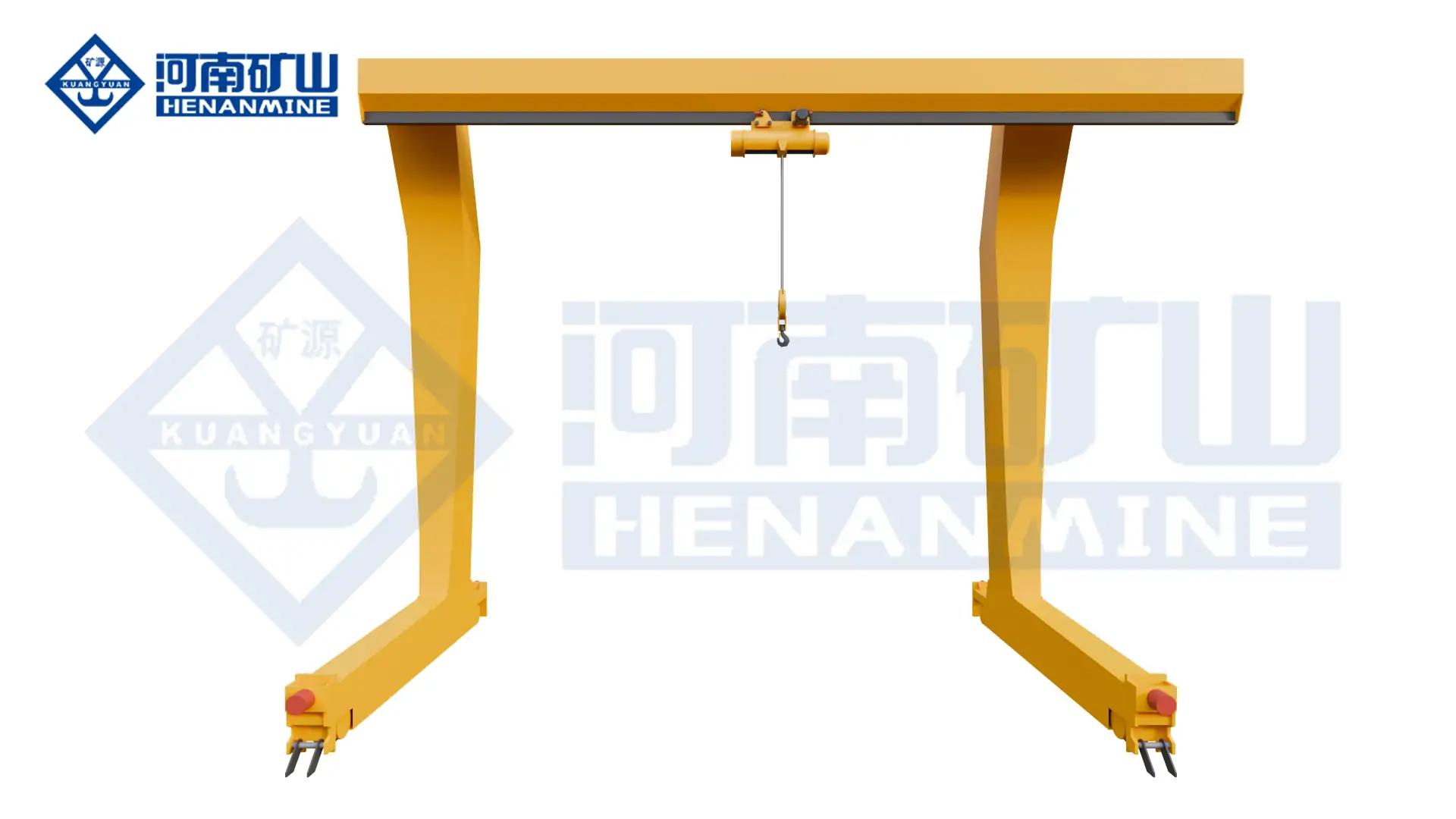
L-Type Offset Gantry Crane
Offset-leg arrangement supporting truck access, side loading and cantilever coverage beyond the runway.
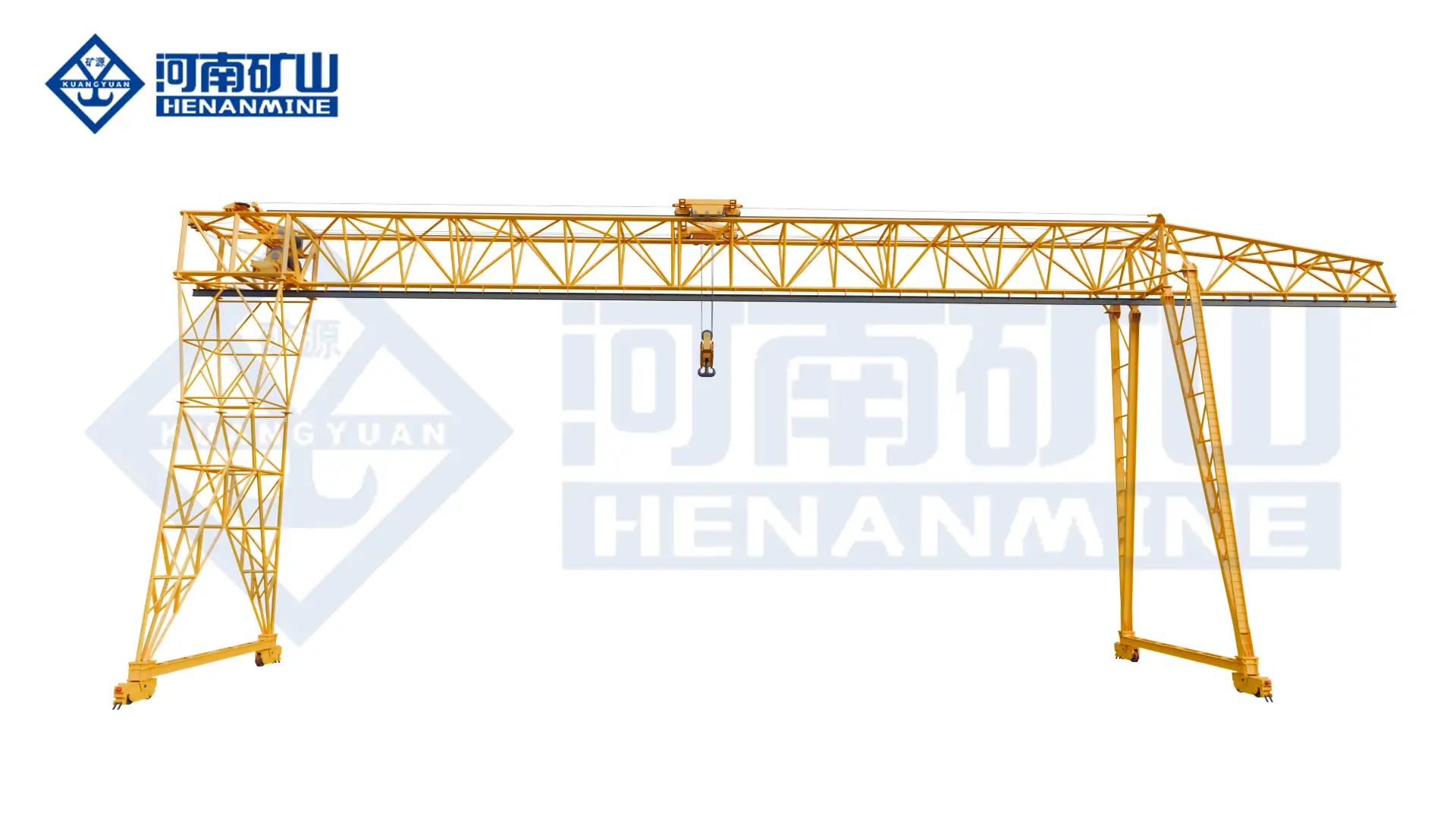
Truss Gantry Crane
Lattice bridge option for selected outdoor, large-span and transport-sensitive handling projects.
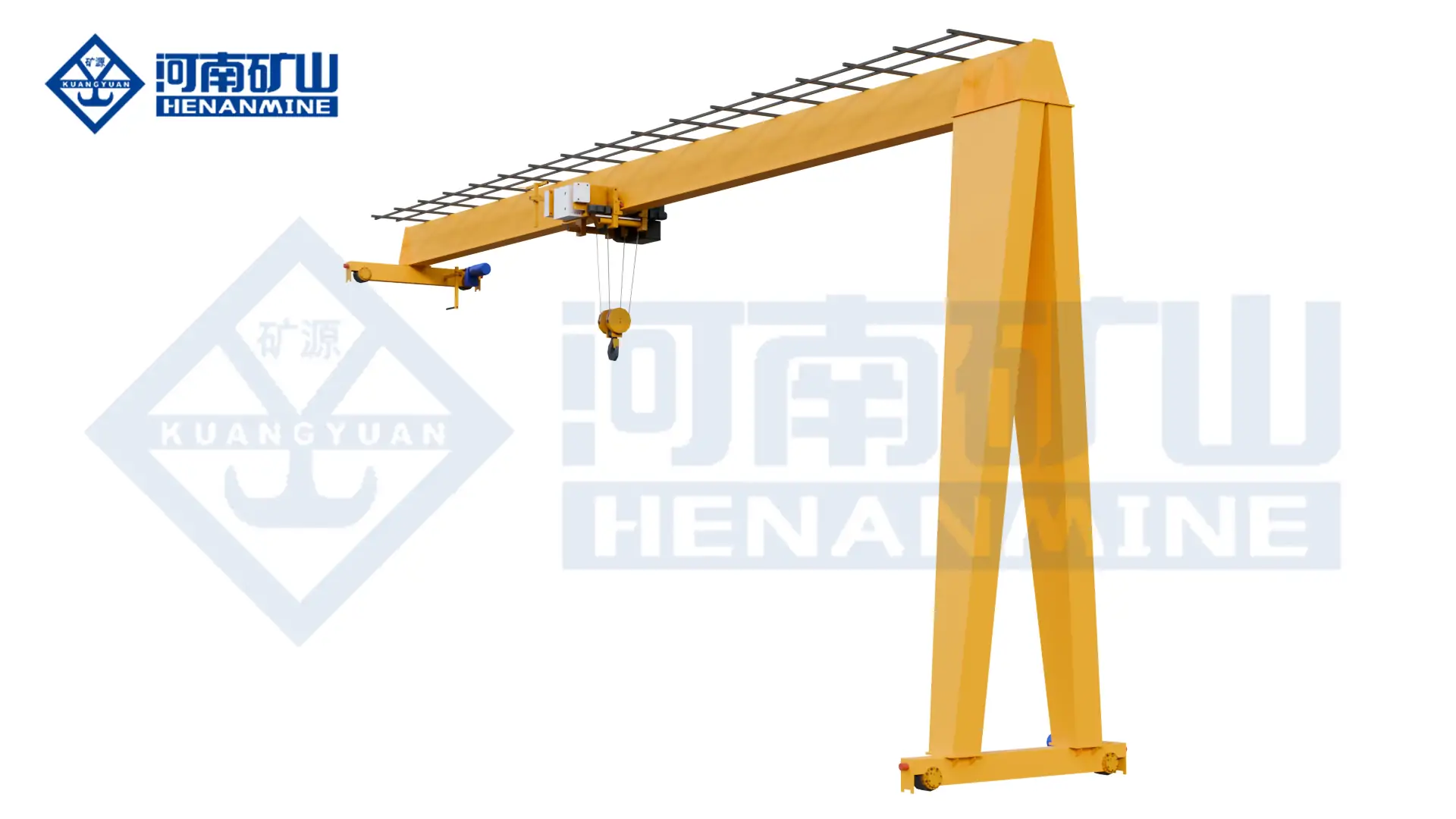
Single-Girder Semi-Gantry Crane
One elevated runway and one floor-running leg for defined production areas beside a building support.
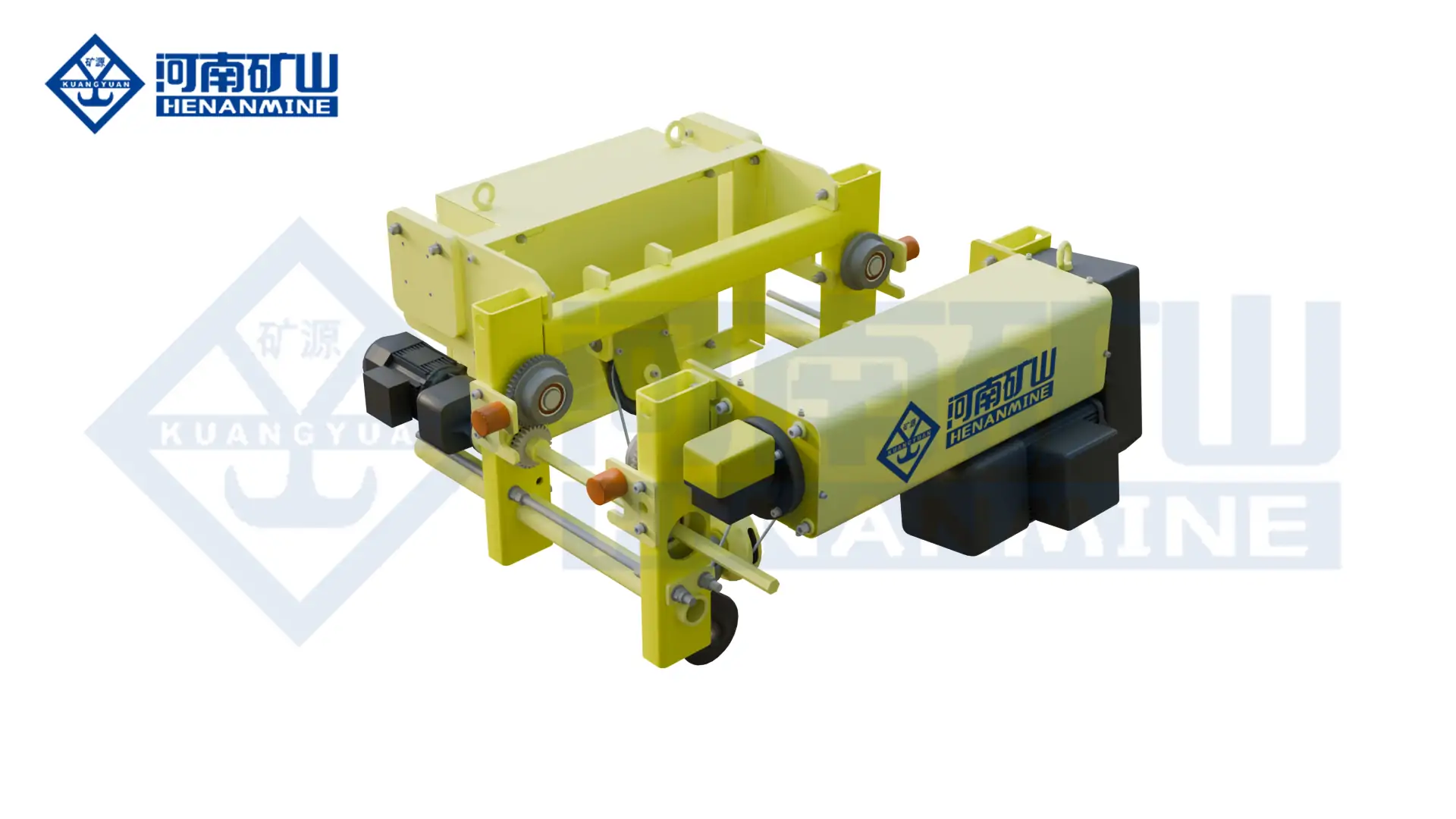
Compact Electric Hoist
Space-efficient wire-rope hoist for compatible single-girder and selected double-girder gantry configurations.
Request a 5 Ton Gantry Crane Quote
Submit load data, span, lifting height, travel length, duty, environment, power supply, destination and required delivery scope for a project-specific gantry crane proposal.