
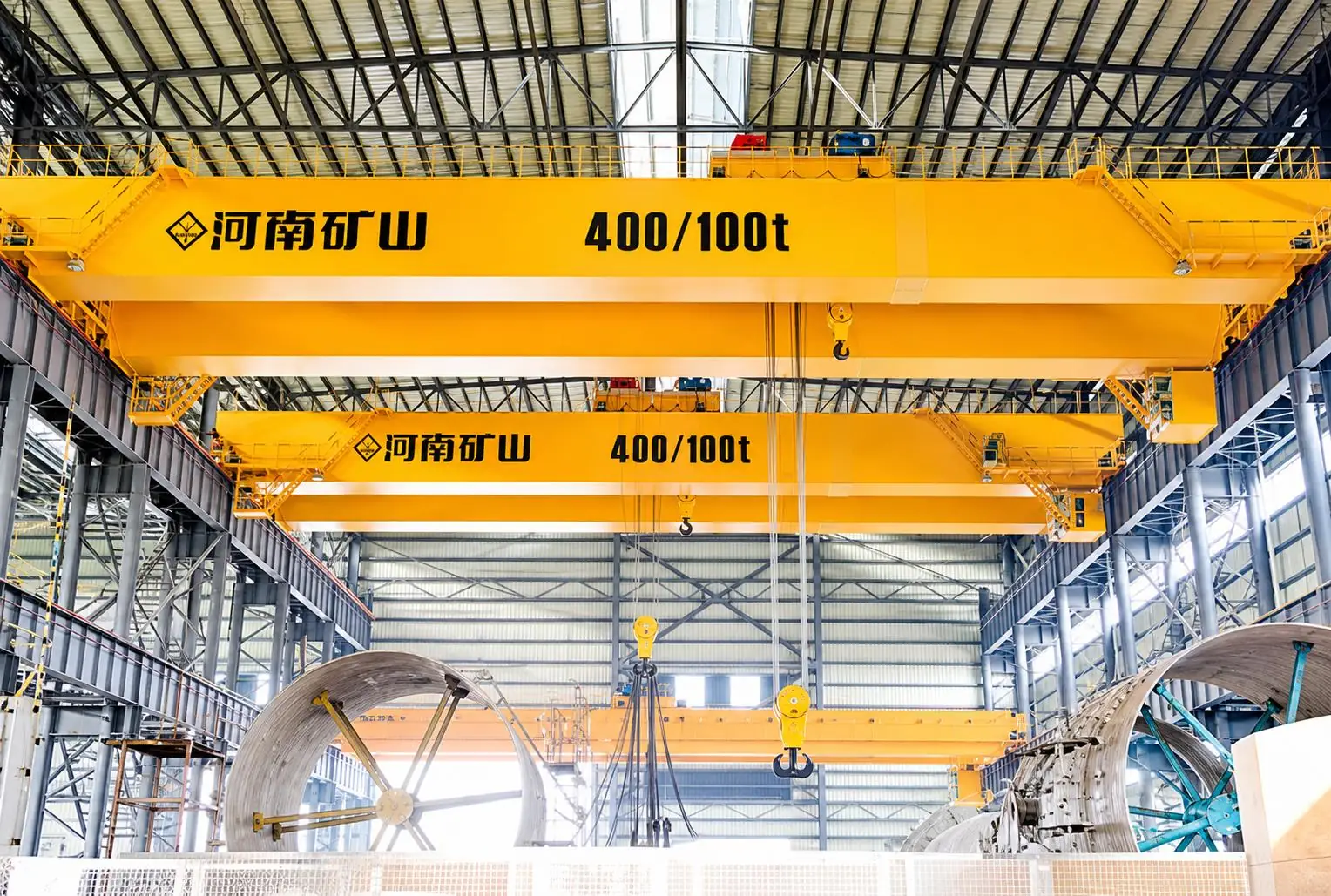
The coastal high-humidity salt spray environment puts forward higher requirements for the structural strength, corrosion resistance and operating stability of outdoor cranes.Docks, shipyards and coastal depots have long been affected by salt spray erosion, humid air and strong winds and rains. If ordinary outdoor cranes lack targeted protection design, they are prone to steel structure corrosion, electrical component failure and wear of key components, which increase maintenance costs and affect the service life of equipment and operational safety.Therefore, when selecting the type, it is necessary to combine the on-site environment, operating requirements and long-term operating conditions to reasonably determine the structural design, protection level and configuration of key components of the crane to ensure that the equipment can adapt to complex coastal working conditions.
Key Environmental Factors to Assess Before Specifying an Outdoor Crane
Salt exposure and coastal distance
The closer you are to the coastline, the higher the concentration of salt spray sedimentation, and the corrosion rate of crane steel structures, fasteners, and moving parts increases exponentially.Within 1 kilometer from the coast, it belongs to a strong salt spray area, and the chloride ions in the splash area will continue to attach to the surface of the equipment, even if it is simply washed by rain, it cannot be completely removed.Before selecting the type, it is necessary to collect the salt spray level, sea breeze direction, and sea splash range of the project site, and distinguish between two types of scenes: offshore terminals and inland coastal factories.Projects close to the coastline cannot apply the standards of ordinary inland outdoor cranes, and a full set of marine-grade anticorrosive systems must be upgraded.Ignoring the salt spray level and purchasing equipment directly will cause the equipment to rust in advance and the welds to crack, greatly shortening the design and service life of the Henan Mine Crane Factory supply crane and increasing the risk of safety accidents.
Humidity and condensation
The relative humidity in coastal areas is high all year round, and the temperature difference between day and night is large. Condensate can easily form inside the steel structure box and motor shell.Humid air will continue to penetrate into the crevices of the equipment, and combine with salt to form a highly corrosive electrolyte, which accelerates metal corrosion and the aging of electrical components.In the season of high temperature and humidity, after the equipment is shut down for cooling, the problem of condensate inside the closed cavity will become more prominent, which is also the core cause of frequent failures of the electronic control system of coastal cranes.In the early evaluation stage, it is necessary to record the temperature and humidity changes of the site throughout the year and the length of the rainy season. We cannot only focus on external waterproofing.When selecting the type, the dehumidification design of the cavity should be reserved to avoid relying solely on the sealing of the shell to resist the continuous humid environment and reduce the continuous erosion of the parts of the whole machine by condensate.
Wind loads and extreme weather
In addition to the regular monsoon, coastal areas also face extreme weather tests such as typhoons and storm surges. Wind load calculation is the basis for the stable operation of outdoor cranes.The wind load value directly determines the cross-section of the main beam, the strength of the outrigger structure, and the configuration of the windproof device of the cart.If the design is only in accordance with the conventional inland wind load standards, the crane is at risk of slipping and overturning in strong winds.During the evaluation phase, it is necessary to obtain meteorological data at the location of the project to determine the maximum instantaneous wind speed, and at the same time consider the wind resistance requirements of the equipment under no-load parking conditions.In addition to structural strength, it is also necessary to support windproof anchoring, rail clamps, and storm parking schemes to lock the whole machine when the equipment is idle, resist sudden strong winds, and avoid major safety accidents caused by extreme weather.
How to Specify Corrosion Protection for Outdoor Crane Structures
Protective coating systems
The coating system of coastal cranes needs to follow the ISO 12944 marine environment anticorrosive standard, and the C5-M marine corrosive environment should adopt a multi-layer composite coating scheme, including sandblasting and rust removal primer, intermediate sealing paint, and weather-resistant topcoat.The sandblasting treatment level of the substrate must be up to standard to ensure the adhesion of the coating and prevent peeling and shedding in the later stage.The coating thickness needs to be adjusted according to the salt spray level, and the thickness of the dry coating film of the whole machine at offshore terminals is higher than that of inland outdoor models.The topcoat gives priority to polyurethane or fluorocarbon coatings that are resistant to ultraviolet rays and chloride ion erosion, and are resistant to continuous aging by sea breeze, rain, and ultraviolet rays.A complete coating system is the first protective barrier for steel structures. A good coating process can significantly delay corrosion and reduce the workload of large-scale paint repair and maintenance in the later stage.
Galvanizing vs. Industrial coatings
Hot-dip galvanized relies on the sacrificial anode protection mechanism of the zinc layer. When the surface surface is scratched and damaged, zinc will give priority to corrosion to protect the internal steel, which is suitable for bolts, guardrails, and small steel components.Industrial multi-layer paint coating relies on physical isolation and protection, which is suitable for large welded structural parts such as main beams and outriggers.Pure galvanized steel loses quickly in a continuous salt spray environment, while once the simple paint coating is damaged, the steel will rust quickly.For coastal high-salt spray scenarios, it is recommended to use a composite dual protection scheme of galvanized and topcoat to take into account sacrificial protection and isolation protection.In the procurement phase, it is necessary to compare the construction cycle, cost, and life expectancy of the two options, and match them reasonably according to the type of components to balance the initial investment and long-term anticorrosive maintenance costs.
Protecting welds and joints
Welds and bolted connection nodes are the weakest anti-corrosion locations of Henan Mine Crane Factory supply cranes. High welding temperature will destroy the original protective layer, and the pores and burrs on the surface of the welds can easily accumulate salt and moisture, giving priority to corrosion.Factory prefabricated welds need to be polished and leveled before coating, and repaired with zinc-rich primer.After the on-site welding is completed, the welding slag must be cleaned up and the welding area must be re-treated with a full set of anticorrosive treatment.Assembly gaps such as bolts and flanges are prone to salt spray and stagnant water. The design should minimize dead corners of stagnant water and avoid groove structures.During the acceptance, focus on checking the quality of anti-corrosion repair of welds. Many coastal crane corrosion failures begin to spread from the joints of the welds. Doing a good job of joint protection can effectively extend the service life of the steel structure of the whole machine.
How to Protect Crane Electrical Systems From Moisture and Salt
Electrical enclosure IP ratings
The IP protection level represents the dust-proof and waterproof ability of the electrical shell. Ordinary indoor electric control box IP54 cannot meet the coastal outdoor working conditions. At least IP65 and above protection levels are selected for coastal crane control cabinets and junction boxes.The IP65 shell can block the intrusion of dust, resist high-pressure water spray, and reduce the entry of salt spray and water vapor into the cavity.However, it should be noted that the high IP rating is only a basic condition, and the shell sealing cannot be relied on alone to solve the condensate problem.When selecting the type, it is necessary to distinguish the IP requirements of different electrical components such as motors, control cabinets, limit switches, and remote controls. Small sensors and stroke switches must also match the marine environment version.The minimum IP level must be clearly marked in the procurement RFQ document to prevent suppliers from using inland ordinary electrical parts instead, causing frequent circuit failures in the later stage.
Protecting motors and control panels
The motor and control cabinet are the core of the crane’s electrical system. The attachment of salt spray will cause corrosion of metal terminals and short circuit of circuit boards, and the probability of failure will increase significantly after the shutdown is dampened.For coastal model motors, fully enclosed marine anticorrosive motors are preferred, with anticorrosive coatings for stators and rotors, and sealed anticorrosive treatment for terminal blocks.The internal circuit boards and copper bars of the control cabinet need to be sprayed with three anti-salt spray coatings to isolate chloride ion erosion.Add a rainproof and shading structure outside the cabinet to avoid direct sunlight exposure and rainwater erosion.At the same time, an external cleaning and maintenance interface is reserved to facilitate operation and maintenance personnel to regularly clean up the accumulation of salt and dust inside the cabinet.Doing a good job of motor and control cabinet protection can greatly reduce electrical downtime and improve the stability of continuous operation of equipment.
Condensation prevention
The condensate generated by the temperature difference between day and night in the closed electrical box is the invisible culprit of coastal electrical failure. Simple sealing cannot prevent the generation of condensate.The electronic control cabinet and motor cavity of the coastal crane should be equipped with a constant temperature heater or a semiconductor dehumidification module to control the relative humidity in the cavity and inhibit the condensation of water vapor.The cabinet has a reasonably designed ventilation valve to balance the internal and external air pressure and avoid negative pressure inhalation of humid salt spray air.When the equipment is down for a long time, the dehumidification device is recommended to keep it powered on to prevent water from corroding the components during standing.Do not omit dehumidification accessories when purchasing. Many projects delete dehumidification devices to compress the initial cost, which will eventually cause the circuit board to corrode and scrap, resulting in higher replacement costs.
Which Outdoor Crane Type Is Best for Coastal Applications?
Gantry cranes for ports and yards
Henan Mine Crane Factory supply gantry crane does not need to rely on the factory building, and the ground track can be installed, which is suitable for open-air operation scenarios such as port depots, prefabricated parts factories, and seaside yards.The whole machine’s outriggers are landing, the wind-resistant structure design is mature, the carrying range is flexible, and it can cover the needs of large-span material transportation.Gantry cranes are commonly used in port depots to carry containers, heavy-duty components, and ship accessories. The models can be made into heavy-duty versions with double main beams, which are suitable for high-level work.When selecting the type, the gantry crane outriggers, the cart walking mechanism, and the track pressure plate all need to be upgraded with marine anticorrosion and equipped with heavy-duty rail clamps to prevent wind.In open and unobstructed coastal sites, gantry cranes are the most cost-effective outdoor lifting solution and are widely used in various coastal loading and unloading projects.
Overhead cranes for coastal workshops
The bridge crane is suitable for coastal workshops and shipyard assembly plants with enclosed structures. The track is erected above the column of the plant, which takes up less ground space and is suitable for hoisting workpieces in the workshop.Although installed inside the plant, the air in the coastal plant still carries salt spray and high humidity, and ordinary indoor bridge cranes cannot be used directly.The main beams, trolleys, hoists, and electrical components must all adopt coastal anticorrosive versions. The sea breeze on the doors and windows of the plant will continue to bring in chloride ions, which will cause corrosion due to long-term accumulation.The bridge crane in the Binhai workshop focuses on the salt spray protection of the hoist and trolley operating mechanism, and the dehumidification system is added to the electrical cabinet.It is suitable for segmented assembly in shipyards and lifting of heavy-duty workpieces in coastal processing plants, with high operating efficiency and excellent space utilization.
Matching crane capacity and duty class
In coastal scenarios, cranes frequently start and stop frequently and continue to operate. The rated load cannot be selected only based on the maximum lifting weight, but also the corresponding working level must be matched.For continuous operation scenarios in ports and shipyards, it is recommended to choose A4 to A6 high-level models.A3 level can be selected for intermittent light-load operations.The rated lifting weight needs to reserve a safety margin to avoid long-term full-load operation and accelerate component wear.The load and working level determine the cross-section of the main beam, the specifications of the wire rope, and the selection of the reducer bearing. The placement of low-working-level equipment in a high-intensity coastal operating environment will accelerate mechanical loss.Sort out the number of daily operation cycles and load change curves in the early stage of procurement, accurately match the capacity and work level, and take into account the service life of the equipment and the project budget.
Essential Mechanical and Safety Specifications for Coastal Cranes
Hoists, bearings, and gearboxes
Lifting hoists, bearings, and gearboxes are the core moving parts of cranes. Coastal salt spray and water vapor will invade the sealing gap, causing lubrication failure, bearing jamming, and gear wear.The gearboxes of coastal models use multiple sealing structures, the bearings are made of anticorrosive materials, and they are equipped with long-lasting salt spray-resistant greases.Anti-corrosion coating is added to the shell of the lifting hoist, and the internal parts are passivated to reduce the risk of corrosion and stagnation.The seals are made of aging-resistant fluorine rubber to resist the aging and failure of the humid, hot and salt spray environment.Daily maintenance requires regular inspection of the sealing state and replacement of lubricating oil to prevent water vapor from entering the cavity.Once the moving parts are corroded and stuck, it will directly cause a lifting safety accident, which is a key concern for the maintenance of coastal cranes.
Wire ropes and lubricants
Ordinary steel wire ropes are prone to pitting corrosion and broken wire in coastal salt spray environments. It is recommended to choose hot-dip galvanized steel wire ropes, and stainless steel composite steel wire ropes can be used for some construction terminals.The surface of the steel wire rope needs to be coated with marine special anticorrosive lubricating grease, which can not only reduce friction and wear between the steel wires, but also isolate the attachment of salt spray and water vapor.During the operation and maintenance phase, the surface of the wire rope should be cleaned of salt and dust regularly, and anti-corrosion grease should be applied, and broken wires and corrosion pits should be checked in time.The loss rate of wire rope in coastal environments is much higher than that of inland areas. Spare parts are stocked simultaneously when purchasing, and regular flaw detection and replacement plans are formulated.Wire rope is a vulnerable safety piece, and corrosion damage is not easy to fully identify with the naked eye. Regular testing can prevent wire rope fracture from causing hoisting accidents.
Wind protection and storm parking
Coastal outdoor cranes must be equipped with multiple windproof devices, which generally include manual rail clamps, electric rail clamps, and windproof anchoring devices.Daily operations rely on rail clamps to lock the walking mechanism of the cart. Before the typhoon comes, the equipment drives into the designated storm parking position and uses anchoring bolts to fix the whole machine to prevent it from slipping and overturning in high winds.In the design stage, the anti-overturning stability of the whole machine should be verified according to the limit wind speed of the project, and the track foundation should also be equipped with a windproof embedded structure.The operating specifications need to clarify the storm parking process, and windproof locking must be implemented when the equipment is idle.Many coastal crane accidents originate from strong winds and weather without fixed equipment. Improving windproof hardware and parking management solutions is an indispensable part of the safe operation of outdoor cranes.
What Should Buyers Include in an Outdoor Crane RFQ?
Load capacity, span, and lifting height
The first part of the RFQ inquiry document needs to clarify the basic geometry and load parameters of the crane, including the rated lifting weight, working level, main beam span, effective lifting height, and the length of the operating track of the cart.At the same time, mark the maximum partial load conditions, material type, and the number of daily operating cycles to facilitate manufacturers to calculate the structural strength.It is necessary to specify the basic conditions of the on-site track, the ground carrying capacity, and the power supply voltage.The parameter description should be quantified as much as possible, avoid vague expressions, and prevent suppliers from quoting low-profile models.Complete and clear load and size parameters make it easy for multiple manufacturers to give consistent benchmark quotations, reduce late plan deviations, on-site installation size discrepancies and other problems, and shorten the project delivery cycle.
Environmental and coating requirements
The RFQ must indicate the level of corrosion environment where the project is located, the distance from the coastline, salt spray, humidity, extreme temperature, and maximum design wind speed.Clarify the standards of the anticorrosive system, the rust removal grade of the substrate, the thickness of the dry film of the coating, the brand of the coating material, or the dual anticorrosive scheme of hot-dip galvanized and composite coating.Mark the components that need to focus on strengthening anti-corrosion, such as welds, bolts, walking mechanisms, gourds, etc.Write the anticorrosive acceptance requirements into the inquiry document, including the coating adhesion test and salt spray test requirements.Lock in the environment and coating standards in advance to avoid crane suppliers from simplifying the anticorrosive process in order to lower the quotation, and the equipment will rust quickly after delivery, resulting in a large number of maintenance disputes.
Electrical protection specifications
Clarify the protection level of all electrical components in the RFQ file, the IP level of the motor, control cabinet, limit switch, and junction box, and require the electrical components to have three anti-salt spray treatments.Specify the configuration requirements of the dehumidification and heating devices of the electric control cabinet, the cables are made of marine-grade weather-resistant and anticorrosive cables, and the terminals are sealed with anticorrosive treatment.The electrical system needs to clarify whether it supports remote monitoring and fault alarm functions.At the same time, mark the brand range of electrical components to prevent suppliers from choosing low-quality ordinary electrical components.Clear electrical protection clauses allow crane suppliers to accurately understand the requirements of coastal working conditions, and reduce the problem that the electrical system is not adapted to the on-site environment and frequent failures after arrival.
Testing, warranty, and spare parts
The RFQ document needs to specify the factory test items before leaving the factory and the acceptance test items after on-site installation, including no-load, rated load, overload test, steel structure coating test, and a full set of electrical function tests.Clarify the warranty period of the whole machine, the individual warranty period of the core components, the motor and the reducer, and the timeliness of on-site service response within the scope of the warranty.Make a list of recommended standard parts, such as wire ropes, seals, sensors, contactors, lubricants, etc., and agree on the quotation and delivery cycle of spare parts.At the same time, crane manufacturers are required to provide operation manuals, maintenance manuals, and anti-corrosion maintenance guidelines.Improve testing, quality assurance and spare parts terms, ensure compliance with equipment delivery and acceptance, and reduce the difficulty of purchasing spare parts for later operation and maintenance.
Henan Mine Crane Factory Custom
In the coastal high-humidity salt spray environment, the selection of outdoor cranes should not only look at the weight and purchase price, but also consider the anti-corrosion, electrical protection, wind resistance and long-term maintenance needs of steel structures.Henan Mine Crane Factory can provide customized crane solutions according to the lifting weight, span, lifting height, operating frequency and on-site environment of the project to help ports, shipyards, open-air depots and other projects match the actual working conditions to avoid equipment configuration inconsistent with on-site requirements.
In view of the use challenges brought about by salt spray, strong winds and high humidity, marine-grade anticorrosive coatings, windproof devices and corresponding electrical protection measures can be configured in accordance with the project requirements, and they can be matched in the design, manufacturing, installation, commissioning and follow-up maintenance links.Whether it is a heavy-duty gantry crane in a port yard or a long-span shipbuilding gantry crane used in a shipyard, Henan Mine Crane Factory can provide corresponding customized solutions according to specific working conditions to help customers improve the durability and operational reliability of equipment in the coastal environment.